The Molecular Architects
How Chemical Tools Are Rewriting the Code of Life
Introduction: The Chemical Bridge Between Blueprint and Machinery
Imagine the nucleus of every cell in your body as a vast reference library. This library—your genome—contains thousands of instruction manuals written in the language of DNA. For decades, biologists have been learning to read these manuals, but chemists are now bringing something revolutionary to the table: the ability not just to read, but to rewrite the text, highlight crucial passages, and even equip the library with a sophisticated security system that alerts when important changes occur. This is the story of how we're learning to observe and engineer the most fundamental processes of life with the eyes of a chemist.
While your DNA contains the instructions for building you, the actual work of living happens through proteins—the molecular machines that digest your food, fire your neurons, and contract your muscles.
If the genome is the blueprint, then the proteome is the constantly shifting population of workers, tools, and materials that bring that blueprint to life. The ability to sense, measure, and engineer both these realms is opening unprecedented possibilities: from correcting disease-causing genetic errors to designing smart molecules that can diagnose and treat illness from within our cells. At this fascinating intersection, chemistry provides the tools, the vision, and the language to bridge the static code of life with its dynamic expression.
The Genome and Proteome: Life's Blueprint and Its Dynamic Workforce
To appreciate the recent breakthroughs, we must first understand the fundamental relationship between the genome and proteome. Your genome remains largely constant throughout your life—a stable set of genetic instructions inherited from your parents and written in the four-letter alphabet of DNA (A, T, C, G). In contrast, your proteome is remarkably dynamic, changing by the hour, even by the minute. Proteins are constantly being synthesized, modified, and degraded in response to your environment, health, and even your thoughts 1 .
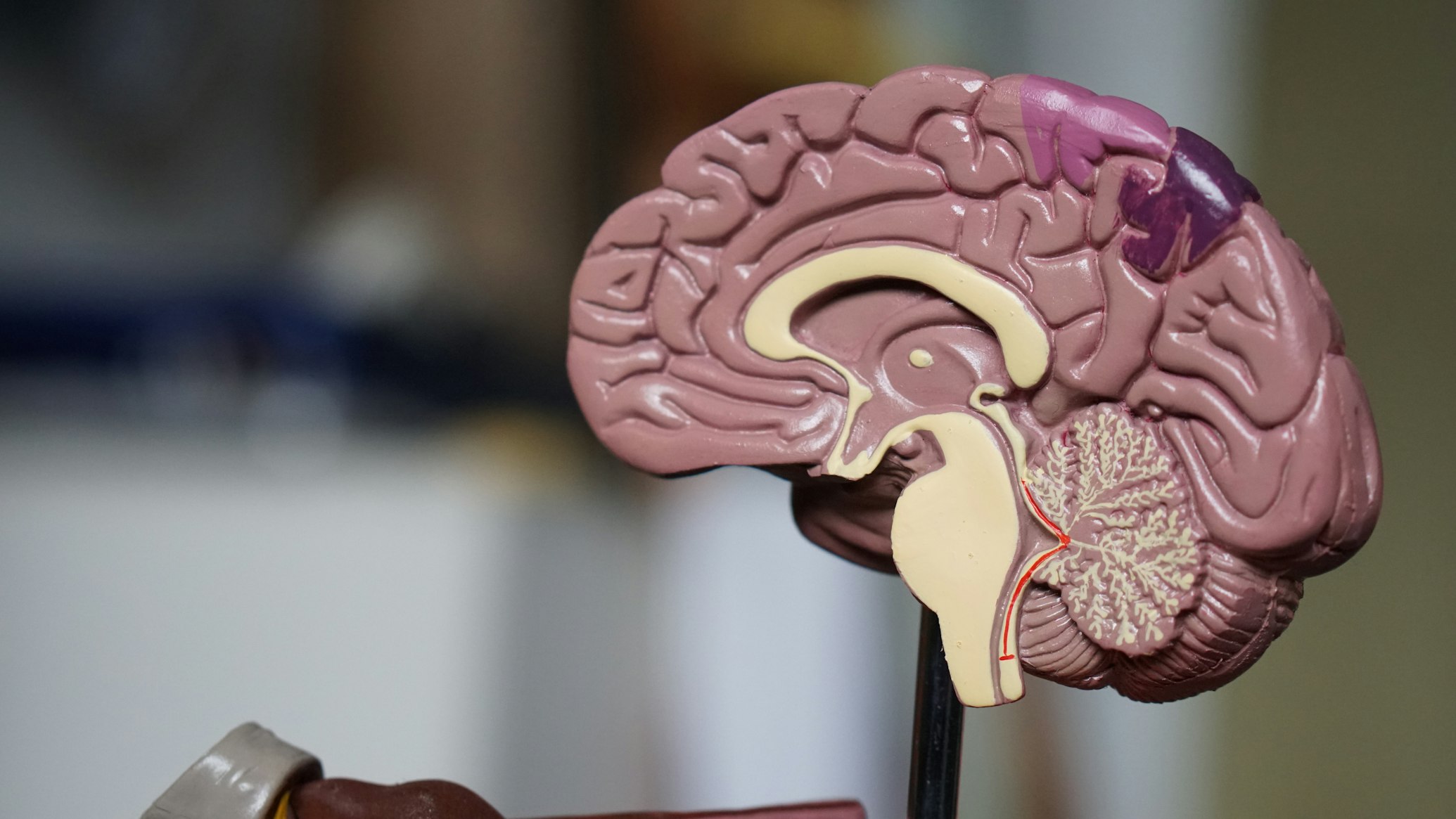

Genome
The complete set of genetic instructions in an organism, written in DNA. Relatively stable throughout life.
Proteome
The entire set of proteins expressed by a genome. Highly dynamic and responsive to environment.
A useful analogy is to think of the genome as an architectural blueprint for a factory, while the proteome represents the factory itself—with thousands of specialized workers (proteins) operating machinery, assembling products, and communicating with each other. A chemist looking at this factory wouldn't just see the blueprint; they would observe the workers in action, measure their productivity, and perhaps even design new tools to enhance their function or correct their mistakes.
This perspective is transforming biomedicine. While reading our genetic blueprint has become routine through technologies like DNA sequencing, the real challenge lies in understanding how that blueprint manifests as the dynamic, living proteome—and how to intervene when things go wrong. This is where engineered molecular tools come into play, allowing us to not only read but write and edit at both the genetic and protein levels.
Engineering the Genome: From Scissors to AI-Designed Editors
The CRISPR-Cas9 system, often described as "genetic scissors," revolutionized biology by allowing scientists to make precise cuts in DNA at predetermined locations. The system consists of two key components: a guide RNA that navigates to a specific genetic address, and the Cas9 enzyme that cuts the DNA at that location. This breakthrough, honored with the 2020 Nobel Prize in Chemistry, opened the possibility of correcting genetic diseases at their source.
CRISPR-Cas9 Mechanism
But the story doesn't end there. Chemists and biologists have been working to improve these tools, making them more precise, safer, and more versatile. Recent advances have taken this even further through artificial intelligence-designed editors that surpass what evolution has produced. In a landmark 2025 study, researchers used large language models trained on biological data to generate entirely new gene editors 5 . One of these AI-designed proteins, called OpenCRISPR-1, performs as well as the natural Cas9 editor but with hundreds of mutations in its sequence—making it virtually a new creation rather than a modified natural one 5 .
Next-Generation Genome Editing Tools
| Editor Name | Origin | Key Features | Applications |
|---|---|---|---|
| CRISPR-Cas9 | Natural bacterial protein | Precise DNA cutting; widely adopted | Gene knockout, basic research |
| Base Editors | Engineered from Cas9 | Changes single DNA letters without cutting | Correcting point mutations |
| Prime Editors | Engineered from Cas9 | Can insert new DNA sequences | Precise gene repair |
| OpenCRISPR-1 | AI-designed | Novel sequence, high activity and specificity | Therapeutic development |
| NovaIscB | Engineered bacterial protein | Compact size, efficient in human cells | Gene therapy (fits easily in delivery viruses) |
Table 1: Evolution of Genome Editing Technologies
The engineering challenge goes beyond just creating effective editors—they must also be deliverable to the right cells. This is where size matters. NovaIscB, a recently engineered editor from a bacterial protein, is only one-third the size of Cas9 while maintaining similar efficiency . This compactness allows it to be easily packaged into adeno-associated viruses (AAVs)—the delivery vehicles of choice for most gene therapies—giving it significant potential for treating human diseases.
Spotlight Experiment: Accelerating Evolution in the Test Tube
While AI-designed editors represent a top-down approach to protein design, a complementary bottom-up revolution is happening in protein evolution. In August 2025, scientists at Scripps Research unveiled T7-ORACLE, a synthetic biology platform that can evolve proteins with new or improved functions thousands of times faster than nature 8 .
Methodology: How T7-ORACLE Works
As co-senior author Christian Diercks explained, "Instead of one round of evolution per week, you get a round each time the cell divides—so it really accelerates the process" 8 .
Results and Analysis: From Proof-of-Concept to Therapeutic Potential
| Evolution Time | Antibiotic Concentration | Key Mutations Observed | Resistance Level vs. Original |
|---|---|---|---|
| Day 2 | 10x original | Single mutation | 15x improvement |
| Day 4 | 100x original | Two complementary mutations | 200x improvement |
| Day 7 | 5,000x original | Novel combination of mutations | 5,000x improvement |
Table 2: Evolution of Antibiotic Resistance Using T7-ORACLE
The most striking finding was how closely the laboratory-evolved mutations matched those found in clinical settings where bacteria develop antibiotic resistance in hospitals. "In some cases, we saw new combinations that worked even better than those you would see in a clinic," noted Diercks 8 .
| Platform | Mutations Per Round | Time Required | Labor Intensity | Best For |
|---|---|---|---|---|
| Traditional Directed Evolution | Limited | Weeks to months | High | Single property optimization |
| OrthoRep (Yeast) | Moderate | Days to weeks | Moderate | Eukaryotic protein optimization |
| T7-ORACLE | High (100,000x normal) | Days | Low | Rapid exploration of vast mutation space |
Table 3: Comparison of Protein Engineering Platforms
The significance of T7-ORACLE extends far beyond antibiotic resistance. The platform can be adapted to evolve virtually any protein, including therapeutic antibodies for cancer treatment, enzymes for correcting metabolic disorders, or proteases that target proteins involved in neurodegenerative diseases. As the researchers emphasized, the antibiotic resistance gene was merely a proof-of-concept—what matters is the platform's ability to evolve proteins with useful new properties at unprecedented speeds 8 .
Sensing the Proteome: Chemical Tools for Observing Cellular Machinery
If genome editing is about rewriting instructions, then proteome sensing is about understanding what those instructions actually do inside living cells. This is where chemistry provides an entirely different toolbox, allowing researchers to observe proteins in their native environment with unprecedented clarity.
Chemical proteomics uses specially designed chemical tools to map the molecular interactions and functional activities of proteins within cells 1 . Unlike traditional methods that simply measure protein abundance, these approaches can reveal which proteins are active, how they're modified, and what other molecules they're interacting with.
Activity-Based Protein Profiling (ABPP)
Reactive Warhead
Binds only to proteins with specific catalytic mechanisms
Spacer Linker
Connects warhead to reporter tag
Reporter Tag
Fluorescent molecule or biotin for visualization or isolation
One powerful technique is Activity-Based Protein Profiling (ABPP), which uses chemical probes containing three key elements 1 :
These probes function like "smart labels" that only attach to functionally active proteins, not their inactive counterparts. This allows researchers to create activity profiles of entire enzyme families directly in living cells or tissues—a crucial capability for understanding disease states and developing targeted therapies.
Mapping the Surfaceome
Particularly important is the surfaceome—the collection of proteins on cell surfaces that serve as communication hubs between the inside and outside of cells. These proteins are prime targets for drugs because they're accessible without needing to enter the cell. Recent advances in chemical proteomics have enabled comprehensive mapping of these surface proteins, identifying new therapeutic targets for diseases ranging from cancer to autoimmune disorders 6 .
The Scientist's Toolkit: Essential Reagents and Technologies
The breakthroughs in genome and proteome engineering wouldn't be possible without a sophisticated array of research reagents and technologies. These tools form the foundation of modern molecular research and therapeutic development.
Key Research Reagent Solutions
| Reagent/Technology | Function | Application Examples |
|---|---|---|
| CRISPR-Cas9 Reagents | Programmable DNA cutting | Gene knockout, genetic screening |
| Base Editing Systems | Single DNA letter conversion | Correcting point mutations |
| Activity-Based Probes | Label active enzymes | Drug target identification, functional proteomics |
| High-Purity Buffers | Maintain optimal reaction conditions | Protein crystallization, enzymatic assays |
| AAV Delivery Vectors | Safe gene delivery to human cells | Gene therapy clinical trials |
| NGS Library Prep Kits | Prepare DNA/RNA for sequencing | Genome sequencing, transcriptomics |
| Polymerase Enzymes | Amplify DNA sequences | PCR, DNA cloning, diagnostics |
| Click Chemistry Reagents | Bio-orthogonal linking | Protein labeling, imaging |
| Magnetic Separation Beads | Isolate biomolecules | Protein purification, immunoprecipitation |
| Cell Culture Media | Support cell growth | Therapeutic protein production |
Table 4: Essential Molecular Tools for Genome and Proteome Research
The global laboratory reagents market, valued at approximately $9.24 billion in 2025, reflects the critical importance of these tools across research and clinical applications 7 . Key players like Thermo Fisher Scientific, Merck, and Danaher collectively hold over 45% of this market, investing heavily in developing more sensitive, specific, and stable reagent formulations 7 .
Reagent Market Trends
Recent Trends in Reagent Development
-
Automation-compatible formulations for high-throughput screening
-
Room-temperature-stable PCR master mixes
-
Sustainable and eco-friendly alternatives to traditional chemical formulations
-
Application-specific kits that streamline complex workflows
The availability of these sophisticated reagents has democratized advanced research, allowing scientists to focus on biological questions rather than tool development.
Conclusion: A New Era of Molecular Medicine
As we stand at the intersection of chemistry, biology, and medicine, the engineered tools for observing and manipulating the genome and proteome are converging toward a common goal: the ability to understand and treat disease with molecular precision. The AI-designed editors, accelerated evolution platforms, and sensitive chemical probes emerging from laboratories worldwide represent more than incremental advances—they signal a fundamental shift in how we approach human health.
What makes this moment particularly exciting is how these technologies are beginning to work together. The same bio-orthogonal chemistry that enables protein sensing can be used to monitor the effects of gene editing. The delivery systems developed for gene therapies can be adapted for protein-based diagnostics. And the AI and machine learning methods that design new editors can be applied to predict protein structures and functions 9 .
The journey from viewing the cell as a black box to understanding it as a complex but engineerable system has been long, but the pace of discovery is accelerating dramatically. As these molecular tools become increasingly sophisticated and accessible, we move closer to a future where diseases are corrected before symptoms appear, where treatments are tailored to our individual molecular makeup, and where our fundamental understanding of life's processes continues to deepen. Through the eyes of a chemist, the boundary between observing nature and engineering it becomes increasingly blurred—opening possibilities limited only by our imagination.