Target Deconvolution Strategies: Bridging Phenotypic Screening to Mechanistic Insight in Drug Discovery
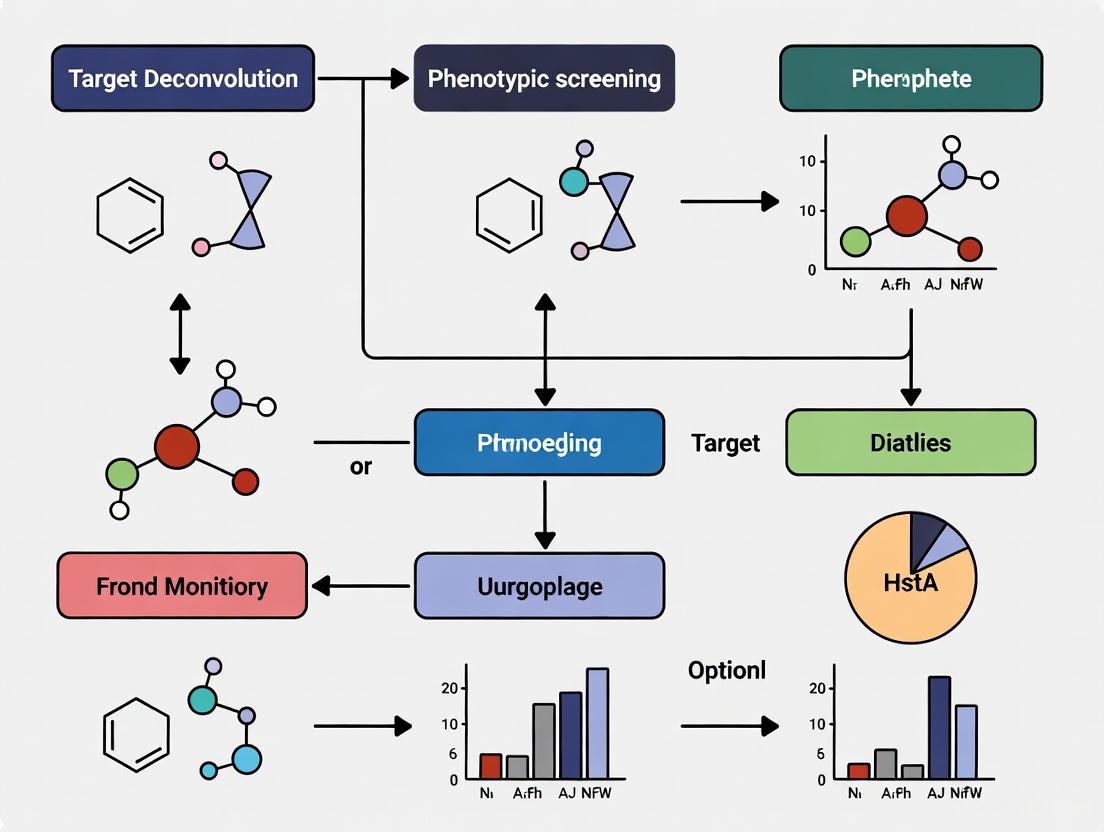
This article provides a comprehensive overview of target deconvolution, the essential process of identifying the molecular targets of bioactive compounds discovered through phenotypic screening.
Target Deconvolution Strategies: Bridging Phenotypic Screening to Mechanistic Insight in Drug Discovery
Abstract
This article provides a comprehensive overview of target deconvolution, the essential process of identifying the molecular targets of bioactive compounds discovered through phenotypic screening. Aimed at researchers, scientists, and drug development professionals, it explores the foundational principles driving the resurgence of phenotypic approaches, details the core methodologies from affinity-based proteomics to novel computational tools, and addresses key challenges in implementation. Furthermore, it examines validation strategies and compares the relative advantages of phenotypic and target-based discovery paradigms, offering a holistic guide for integrating these techniques to accelerate the development of first-in-class therapeutics.
The Renaissance of Phenotypic Screening and the Imperative for Target Deconvolution
The landscape of drug discovery has been historically shaped by two foundational strategies: phenotypic drug discovery (PDD) and target-based drug discovery (TDD). The former identifies compounds based on their observable effects in biologically relevant systems without requiring prior knowledge of the specific molecular target, while the latter begins with a predefined, validated molecular target and employs rational design to develop modulating compounds [1] [2]. After a period dominated by reductionist target-based approaches, the field has witnessed a resurgence of phenotypic screening, driven by analyses revealing that between 1999 and 2008, a majority of first-in-class medicines were discovered through phenotypic methods [2]. Furthermore, from 2012 to 2022, the application of PDD in large pharmaceutical portfolios grew from less than 10% to an estimated 25-40% [3]. This shift is largely attributable to PDD's ability to identify therapeutics with novel mechanisms of action for complex diseases, effectively expanding the "druggable target space" [2]. Modern drug discovery now increasingly embraces integrated workflows that leverage the strengths of both paradigms, accelerated by advancements in artificial intelligence, multi-omics technologies, and high-content screening [1]. This application note examines these complementary approaches within the critical context of target deconvolution, providing researchers with structured comparisons, detailed protocols, and strategic frameworks for implementation.
Comparative Analysis of Screening Approaches
Core Principles and Strategic Applications
The fundamental distinction between phenotypic and target-based screening lies in their starting point and underlying philosophy.
Phenotypic Drug Discovery (PDD) is defined by its focus on modulating a disease phenotype or biomarker in a realistic model system without a pre-specified target hypothesis [2]. This biology-first, empirical strategy is particularly valuable when the therapeutic goal is to discover first-in-class drugs with novel mechanisms of action, or when the underlying disease biology is too complex or poorly understood to pinpoint a single causal target [1] [2]. It captures the complexity of cellular systems and can reveal unanticipated biological interactions or polypharmacology [1].
Target-Based Drug Discovery (TDD) is a hypothesis-driven approach that begins with the selection of a specific molecular target—typically a protein—with a well-established or strongly postulated role in the disease pathogenesis [1]. This strategy relies on a reductionist understanding of disease mechanisms and is highly effective for optimizing drug selectivity and potency against known pathways, especially for follow-on or best-in-class drugs [1] [2].
Table 1: Strategic Comparison of Phenotypic and Target-Based Screening Paradigms
| Feature | Phenotypic Screening | Target-Based Screening |
|---|---|---|
| Starting Point | Disease phenotype in a biologically relevant system (cell-based, tissue, or whole organism) [2] | Predefined molecular target (e.g., enzyme, receptor) [1] |
| Key Advantage | Identifies novel targets/mechanisms; captures system complexity and polypharmacology [1] [2] | Rational design; streamlined optimization; generally simpler target deconvolution [1] |
| Primary Challenge | Complex, often lengthy target identification/deconvolution [1] | Relies on imperfect or incomplete target validation; can suffer from lack of efficacy in clinic [1] [2] |
| Ideal Application | First-in-class drugs, complex/polygenic diseases, poorly understood pathways [2] | Best-in-class drugs, well-validated targets, "druggable" target classes [1] |
| Throughput | Often medium, due to complex assays | Typically high, amenable to automation |
Quantitative Success Metrics and Notable Drug Discoveries
The value of both strategies is ultimately demonstrated by their track record in delivering new medicines. Analysis of new FDA-approved treatments from 1999 to 2017 shows that PDD contributed to the development of 58 out of 171 total drugs, while traditional TDD accounted for 44 approvals [3]. PDD has been notably prolific in generating first-in-class medicines [2].
Table 2: Exemplary Drugs Discovered Through Phenotypic and Target-Based Approaches
| Drug Name | Discovery Paradigm | Indication | Key Target/Mechanism |
|---|---|---|---|
| Risdiplam [2] [3] | Phenotypic | Spinal Muscular Atrophy | Modulates SMN2 pre-mRNA splicing [2] |
| Daclatasvir [2] [3] | Phenotypic | Hepatitis C | Targets HCV NS5A protein [3] |
| Ivacaftor/Lumacaftor [2] [3] | Phenotypic | Cystic Fibrosis | CFTR potentiator and corrector [2] |
| Lenalidomide [1] [2] | Phenotypic | Multiple Myeloma | Binds cereblon, degrades IKZF1/3 [1] |
| Vamorolone [3] | Phenotypic | Duchenne Muscular Dystrophy | Dissociative steroid, mineralocorticoid receptor antagonist [3] |
| Imatinib [2] | Target-Based | Chronic Myeloid Leukemia | BCR-ABL kinase inhibitor [2] |
| Sunitinib [4] | Target-Based | Renal Cell Carcinoma | Multi-targeted receptor tyrosine kinase inhibitor [4] |
| Bispecific Antibodies [1] | Target-Based | Various Cancers | Engages two different antigens (e.g., immune cells and tumor cells) [1] |
The Critical Role of Target Deconvolution in Phenotypic Screening
Target deconvolution—the process of identifying the molecular target(s) responsible for a compound's observed phenotypic effect—is a critical, often bottleneck, step in phenotypic screening workflows. While not always strictly required for drug approval, as demonstrated by the post-approval target elucidation of lenalidomide [2], it is highly valuable for understanding the mechanism of action (MoA), derisking safety profiles, and guiding subsequent optimization of lead compounds [2].
The following diagram illustrates the integrated modern drug discovery workflow, highlighting the central role of target deconvolution in bridging phenotypic and target-based paradigms.
Experimental Protocols for Target Deconvolution
Several methodologies have been established for target deconvolution. The choice of technique depends on the suspected nature of the target (e.g., protein, RNA), the available tools, and the project timeline.
Protocol 3.1.1: Affinity-Based Pull-Down and Proteomics
Purpose: To directly identify proteins that physically interact with a small molecule of interest [1]. Principle: A functionalized derivative of the hit compound (e.g., with a biotin tag) is synthesized and used as bait to capture binding proteins from a cell lysate. The captured protein complexes are then identified via mass spectrometry.
Materials:
- Functionalized compound (e.g., biotinylated)
- Streptavidin-coated beads
- Cell lysate from a relevant model system
- Lysis buffer (with protease/phosphatase inhibitors)
- Mass spectrometer (LC-MS/MS)
Procedure:
- Compound Immobilization: Incubate the functionalized compound with streptavidin-coated beads. Include a control with beads alone or an inactive analog.
- Lysate Preparation: Lyse cells and clarify the lysate by centrifugation.
- Pull-Down: Incubate the compound-bound beads with the cell lysate for 1-2 hours at 4°C.
- Washing: Wash the beads extensively with lysis buffer to remove non-specifically bound proteins.
- Elution: Elute bound proteins using a competitive ligand (e.g., excess untagged compound) or by boiling in SDS-PAGE buffer.
- Analysis: Subject the eluted proteins to tryptic digestion and analysis by LC-MS/MS. Compare the results from the experimental sample to the control to identify specifically bound proteins.
- Validation: Confirm the interaction using orthogonal methods like Surface Plasmon Resonance (SPR) or Cellular Thermal Shift Assay (CETSA).
Protocol 3.1.2: Functional Genomics for MoA Elucidation
Purpose: To identify genes whose loss-of-function (or gain-of-function) mimics or rescues the phenotypic effect of the compound. Principle: Genome-wide CRISPR-Cas9 knockout or RNAi screens are performed in the presence of a sub-lethal or sub-effective concentration of the compound. Genes whose perturbation alters cellular sensitivity to the drug are candidate targets or members of the same pathway.
Materials:
- Genome-wide CRISPR knockout or RNAi library
- Cells relevant to the phenotypic assay
- Viral packaging system (for lentiviral delivery)
- Puromycin or other selection agents
- Next-generation sequencing platform
Procedure:
- Library Transduction: Transduce cells with the CRISPR/RNAi library at a low MOI to ensure single guide RNA integration per cell.
- Selection: Select transduced cells with the appropriate antibiotic.
- Compound Challenge: Treat the library-containing cells with a sub-effective dose (IC10-IC20) of the compound. Maintain a DMSO-treated control arm in parallel.
- Harvesting: Harvest genomic DNA from both treated and control cells after 10-14 population doublings.
- Amplification & Sequencing: Amplify the integrated guide RNA sequences by PCR and subject them to next-generation sequencing.
- Bioinformatic Analysis: Identify guide RNAs that are significantly enriched or depleted in the treated population compared to the control using specialized algorithms (e.g., MAGeCK). The genes targeted by these guides are high-priority candidates for the compound's MoA.
- Validation: Validate candidate genes using individual siRNA/shRNA or CRISPR constructs in the original phenotypic assay.
The Scientist's Toolkit: Key Reagent Solutions
Successful implementation of integrated screening strategies requires a suite of reliable reagents and computational tools.
Table 3: Essential Research Reagents and Tools for Screening and Deconvolution
| Reagent / Tool Category | Example(s) | Primary Function |
|---|---|---|
| Target Prediction Software | MolTarPred [5], SwissTargetPrediction [4] | In silico prediction of potential protein targets for a small molecule, generating initial MoA hypotheses. |
| Genome-Editing Library | Genome-wide CRISPR-Cas9 knockout library [6] | Systematic loss-of-function screening to identify genes critical for compound activity. |
| Affinity Purification Tag | Biotin-Streptavidin System [1] | Immobilization of small molecule baits for direct pull-down of binding proteins from complex lysates. |
| Multi-Omics Profiling | Transcriptomics (e.g., Connectivity Map) [7], Proteomics | Generating global molecular signatures of drug action to infer MoA via pattern matching. |
| AI/ML Phenotypic Analysis | DrugReflector [7], High-Content Screening (HCS) AI platforms [3] | Automated analysis of complex phenotypic data (e.g., cell images) to predict bioactivity and MoA. |
The Rise of Integrated and Computational Approaches
The distinction between PDD and TDD is increasingly blurred by the adoption of hybrid workflows and powerful computational tools. A key integration point is the use of phenotypic assays to validate the functional effects of compounds initially identified through target-based design [1]. Conversely, phenotypic hits are now more rapidly characterized using in silico and multi-omics approaches.
Artificial Intelligence (AI) and Machine Learning (ML) are playing a transformative role. For instance, the DrugReflector framework uses a closed-loop active reinforcement learning process on transcriptomic data to improve the prediction of compounds that induce desired phenotypic changes, reportedly increasing hit rates by an order of magnitude compared to random library screening [7]. These AI tools are also enhancing the analysis of high-content screening data, extracting subtle morphological features to cluster phenotypes and predict MoA [3].
The following diagram illustrates how computational biology, particularly AI, integrates with and enhances both discovery paradigms.
The historical dichotomy between phenotypic and target-based drug discovery is evolving into a synergistic, integrated model. Phenotypic screening offers an unbiased path to first-in-class medicines with novel mechanisms, as evidenced by breakthroughs in cystic fibrosis, spinal muscular atrophy, and oncology [2] [3]. Target-based discovery remains a powerful engine for developing highly specific, optimized therapies against validated pathways [1]. The critical bridge between these paradigms is effective target deconvolution, which transforms phenotypic observations into mechanistic understanding. As the field moves forward, the adoption of AI-driven tools [7] [8], functional genomics [6], and multi-omics integration [1] will continue to accelerate discovery cycles. For researchers, the strategic decision is no longer a binary choice but requires a thoughtful combination of both approaches, leveraging their complementary strengths to improve the efficiency and success of bringing new, impactful therapies to patients.
Why Target Deconvolution is the Critical Bridge from Phenotypic Hit to Viable Drug Candidate
Target deconvolution, the process of identifying the molecular targets of bioactive compounds, represents a pivotal stage in modern phenotypic drug discovery. This application note delineates the critical role of target deconvolution in transforming empirically-derived phenotypic hits into therapeutically viable drug candidates. We provide a comprehensive analysis of contemporary deconvolution strategies, detailed experimental protocols for key methodologies, and a curated toolkit of research solutions. By bridging the gap between observed phenotypic effects and understood molecular mechanisms, systematic target deconvolution significantly de-risks drug development and accelerates the translation of screening hits into clinically effective therapeutics.
Phenotypic drug discovery has experienced a significant resurgence as an alternative to purely target-based approaches, with evidence suggesting that compounds discovered through phenotypic techniques may be more efficiently translated into clinical innovations [9]. This paradigm shift acknowledges that complex biological contexts often reveal therapeutic effects that reductionist target-focused strategies might miss.
However, phenotypic screening presents a fundamental challenge: while it efficiently identifies compounds that produce desirable biological effects, it provides limited information about the specific molecular mechanisms through which these effects are mediated. This knowledge gap creates significant obstacles for downstream drug optimization, safety profiling, and clinical development. Target deconvolution directly addresses this limitation by identifying the precise molecular target(s) responsible for observed phenotypic responses [9] [10].
The critical importance of target deconvolution extends beyond mere mechanistic understanding. It enables researchers to:
- Guide medicinal chemistry efforts for compound optimization
- Identify potential safety liabilities through off-target profiling
- Discover polypharmacology that may contribute to efficacy
- Develop biomarkers for clinical development
- Reveal novel therapeutic targets for future drug discovery programs [10]
Experimental Approaches for Target Deconvolution
Multiple orthogonal methodologies have been developed for target deconvolution, each with distinct strengths, limitations, and appropriate applications. The most robust deconvolution strategies typically combine multiple complementary approaches to validate findings [10].
Affinity-Based Chemoproteomics
This "workhorse" technology involves modifying a compound of interest to create an immobilized bait that can capture binding proteins from biological samples [9].
Key Steps:
- Chemical Probe Design: The compound is modified with a functional handle (e.g., biotin) for immobilization without disrupting target binding
- Sample Preparation: Cell lysates or intact cellular systems are prepared under native conditions
- Affinity Enrichment: The immobilized bait captures direct binding partners from complex protein mixtures
- Target Identification: Captured proteins are eluted and identified via mass spectrometry
- Dose-Response Profiling: Quantitative measures (e.g., IC50 values) can be generated to characterize binding affinity [9]
This approach works well for a wide range of target classes but requires a high-affinity chemical probe that can be successfully immobilized without compromising target engagement [9].
Activity-Based Protein Profiling (ABPP)
ABPP employs bifunctional probes containing both a reactive group and a reporter tag to covalently label molecular targets based on their enzymatic activity [9].
Principal Variations:
- Direct Labeling: An electrophilic compound of interest is functionalized to directly label its binding targets
- Competitive ABPP: Samples are treated with a promiscuous electrophilic probe with and without the compound of interest; targets are identified as sites where probe occupancy is reduced by compound competition [9]
This approach is particularly powerful for profiling enzymes with conserved reactive residues but requires the presence of accessible reactive residues in target proteins [9].
Photoaffinity Labeling (PAL)
PAL utilizes trifunctional probes containing the compound of interest, a photoreactive moiety, and an enrichment handle to capture often transient drug-target interactions [9].
Mechanism of Action:
- The probe binds target proteins under physiological conditions
- UV exposure activates the photoreactive group, forming covalent bonds with neighboring target proteins
- The handle enables enrichment and identification of interacting proteins via mass spectrometry
PAL is particularly valuable for studying integral membrane proteins and identifying compound-protein interactions that may be too transient for detection by other methods [9].
Thermal Proteome Profiling (TPP)
TPP leverages the principle that drug binding often alters protein thermal stability, enabling proteome-wide identification of direct targets and downstream effects [11].
Experimental Workflow:
- Sample Treatment: Cells or lysates are treated with compound or vehicle control
- Heat Gradients: Samples are subjected to a range of temperatures (e.g., 37-67°C)
- Soluble Protein Isolation: Heat-stable proteins remain soluble while denatured proteins precipitate
- Protein Quantification: Soluble proteins are quantified using multiplexed quantitative mass spectrometry
- Melting Curve Analysis: Shifted melting curves in compound-treated samples indicate potential target engagement [11]
Recent advances have improved TPP throughput and accessibility. Data-Independent Acquisition (DIA) methods now provide cost-effective alternatives to traditional tandem mass tag (TMT) approaches, with library-free DIA-NN performing comparably to TMT-DDA in detecting target engagement [11]. Furthermore, the Matrix-Augmented Pooling Strategy (MAPS) enables concurrent testing of multiple drugs by mixing them in specific combinations followed by mathematical deconvolution, increasing experimental throughput by 60-fold compared to classic TPP [12].
Label-Free Target Deconvolution
Label-free strategies enable compound-protein interactions to be evaluated under native conditions without chemical modifications that might disrupt conformation or function [9].
Solvent-Induced Denaturation Shift Assays:
- Leverage changes in protein stability that occur with ligand binding
- Compare kinetics of physical or chemical denaturation before and after compound treatment
- Identify compound targets proteome-wide by detecting stabilization effects
- Particularly valuable for targets where probe modification is challenging [9]
Comparative Analysis of Deconvolution Methods
Table 1: Key Methodological Approaches for Target Deconvolution
| Method | Key Principle | Throughput | Sensitivity | Special Applications | Key Limitations |
|---|---|---|---|---|---|
| Affinity-Based Chemoproteomics | Immobilized compound captures binding proteins | Medium | High for abundant proteins | Broad target classes, dose-response profiling | Requires modifiable high-affinity probe |
| Activity-Based Protein Profiling (ABPP) | Reactive probes label active site residues | Medium-High | High for enzymes with reactive residues | Enzyme families, covalent inhibitors | Limited to proteins with reactive residues |
| Photoaffinity Labeling (PAL) | Photoreactive groups capture transient interactions | Medium | Medium-High | Membrane proteins, transient interactions | Potential for non-specific labeling |
| Thermal Proteome Profiling (TPP) | Ligand binding alters protein thermal stability | Low-Medium (classic); High (MAPS) | Medium-High | Proteome-wide, direct and indirect targets | May miss targets without stability changes |
| Label-Free Methods | Native compound-protein interactions under physiological conditions | Medium | Variable | Native conditions, challenging targets | Can be challenging for low-abundance proteins |
Table 2: Quantitative Performance Metrics for Advanced TPP Methodologies
| Methodological Advance | Throughput Gain | Proteome Coverage | Cost Efficiency | Key Applications |
|---|---|---|---|---|
| Data-Independent Acquisition (DIA) | 2-3x vs. TMT-DDA | Comparable to TMT-DDA (library-free DIA-NN) | Significant improvement | Large-scale profiling, resource-limited settings |
| Matrix-Augmented Pooling Strategy (MAPS) | 60x vs. classic TPP; 15x vs. iTSA | Maintained with optimized pooling | Dramatic reduction in reagents and MS time | Multi-drug profiling, cell line comparisons |
| iTSA (single temperature) | 4x vs. classic TPP | Targeted to shifted proteins | High for focused studies | Rapid validation, high-throughput screening |
Research Reagent Solutions for Target Deconvolution
Table 3: Essential Research Tools for Experimental Target Deconvolution
| Research Tool | Function/Application | Example Platforms |
|---|---|---|
| TargetScout | Affinity-based pull-down and profiling service | Commercial service for immobilized compound screening [9] |
| CysScout | Proteome-wide profiling of reactive cysteine residues | ABPP platform for cysteine-reactive compounds [9] |
| PhotoTargetScout | Photoaffinity labeling with optimization and identification modules | PAL service for membrane proteins and transient interactions [9] |
| SideScout | Proteome-wide protein stability assays | Label-free target deconvolution service [9] |
| Tandem Mass Tags (TMT) | Multiplexed protein quantification for thermal profiling | TMTpro 16-plex/18-plex for deep proteome coverage [11] |
| SISPROT | Sample preparation for multiplexed proteomics | Streamlined protocol for TMT-based experiments [12] |
Advanced Protocols: Thermal Proteome Profiling with MAPS
MAPS Experimental Workflow
The Matrix-Augmented Pooling Strategy revolutionizes thermal profiling by enabling concurrent assessment of multiple compounds through optimized sample pooling and computational deconvolution [12].
MAPS Experimental and Computational Workflow
Key Protocol Steps:
Sensing Matrix Design:
- Utilize a genetic algorithm to design an optimal binary sensing matrix (e.g., 9×15 for 15 drugs)
- Ensure each drug is represented in at least 3 sample pools
- Minimize correlation among drug mixtures to maximize information entropy [12]
Sample Preparation and Pooling:
- Prepare cell lysates or intact cells from relevant biological systems
- Add drugs to samples according to the sensing matrix design
- Include verification compounds with known targets as positive controls
- Consider structural diversity to minimize target overlap among pooled drugs [12]
Thermal Denaturation and Protein Processing:
- Subject pooled samples to a single denaturing temperature (optimized for the system)
- Separate soluble and insoluble fractions by centrifugation
- Digest soluble proteins and label with TMT reagents
- Pool labeled samples for multiplexed analysis [12]
Mass Spectrometry and Data Analysis:
- Perform LC-MS/MS analysis using high-resolution mass spectrometry
- Extract protein abundance values across samples
- Apply LASSO regression algorithm to deconvolve individual drug effects
- Compute LASSO paths and scores for each drug-protein pair
- Prioritize targets based on LASSO coefficients and statistical significance [12]
Critical Validation Steps for Deconvoluted Targets
Successful target deconvolution requires rigorous orthogonal validation to establish direct binding and functional relevance.
Orthogonal Validation Methods:
- Surface Plasmon Resonance (SPR): Quantify binding affinity and kinetics in purified systems [11]
- Cellular Thermal Shift Assay (CETSA): Confirm target engagement in intact cellular environments [13]
- Functional Assays: Demonstrate that target modulation produces the observed phenotypic effect [10]
- Genetic Perturbation: Use CRISPRi/a or RNAi to validate target necessity for compound activity [10]
Case Study: Integrated Knowledge Graph and Experimental Approach
A recent innovative approach demonstrated the power of combining computational prediction with experimental validation for challenging target deconvolution problems, specifically for p53 pathway activators [14].
Integrated Workflow:
- Phenotypic Screening: Identify UNBS5162 as a p53 pathway activator using a high-throughput luciferase reporter system
- Knowledge Graph Construction: Build a protein-protein interaction knowledge graph (PPIKG) centered on p53 signaling
- Target Prioritization: Use PPIKG to narrow candidate targets from 1088 to 35 potential direct targets
- Molecular Docking: Perform virtual screening to identify USP7 as a high-probability target of UNBS5162
- Experimental Validation: Confirm USP7 binding and functional modulation through biochemical and cellular assays [14]
This integrated approach demonstrates how combining AI-driven target prediction with experimental validation can dramatically accelerate target deconvolution while reducing resource requirements.
Target deconvolution represents the essential bridge that connects empirically discovered phenotypic hits with mechanistically understood drug candidates. By employing the systematic approaches and detailed protocols outlined in this application note, researchers can effectively transform phenotypic screening outcomes into viable therapeutic development programs.
The future of target deconvolution lies in the intelligent integration of multiple orthogonal methods, leveraging the complementary strengths of chemoproteomic, biophysical, and computational approaches. Emerging technologies such as advanced mass spectrometry, CRISPR-based functional genomics, and artificial intelligence are rapidly expanding our capacity to resolve complex mechanisms of drug action across diverse biological contexts [15] [14] [16].
As these technologies mature, the field will increasingly move toward multi-dimensional deconvolution strategies that simultaneously map primary targets, off-target interactions, downstream pathway effects, and cell-type specific responses. This comprehensive understanding will ultimately enable more efficient development of safer and more effective therapeutics, fully realizing the promise of phenotypic drug discovery.
The Growing Pipeline of First-in-Class Drugs Originating from Phenotypic Approaches
Phenotypic Drug Discovery (PDD) has re-emerged as a powerful strategy for identifying first-in-class medicines, outperforming target-based approaches in generating pioneering therapies. By focusing on therapeutic effects in realistic disease models without a pre-specified molecular target hypothesis, PDD has expanded the "druggable" target space to include previously inaccessible cellular processes and mechanisms of action [2]. Between 1999 and 2008, a surprising majority of first-in-class drugs were discovered empirically without a target hypothesis, sparking renewed interest in modern phenotypic approaches that combine original concepts with contemporary tools and strategies [2]. This application note examines the growing pipeline of therapeutics originating from phenotypic screening, detailing key successes, experimental protocols for phenotypic screening and target deconvolution, and emerging technologies that enhance this productive discovery paradigm.
Recent Successes in Phenotypic Drug Discovery
Notable First-in-Class Therapies
Phenotypic screening has yielded numerous first-in-class therapies across diverse therapeutic areas, particularly for diseases with complex or poorly understood biology. These successes demonstrate PDD's unique ability to identify novel mechanisms and targets that would likely remain undiscovered through target-based approaches.
Table 1: Notable First-in-Class Drugs Discovered Through Phenotypic Screening
| Drug Name | Therapeutic Area | Molecular Target/Mechanism | Key Phenotypic Screen |
|---|---|---|---|
| Ivacaftor, Tezacaftor, Elexacaftor [2] | Cystic Fibrosis | CFTR channel gating and folding correction | Cell lines expressing disease-associated CFTR variants |
| Risdiplam, Branaplam [2] | Spinal Muscular Atrophy | SMN2 pre-mRNA splicing modulation | SMN2 splicing and SMN protein level assays |
| Lenalidomide, Pomalidomide [1] | Multiple Myeloma | Cereblon E3 ligase modulation (IKZF1/3 degradation) | TNF-α production in human peripheral blood mononuclear cells |
| Daclatasvir [2] | Hepatitis C | NS5A protein modulation (non-enzymatic target) | HCV replicon system |
| SEP-363856 [2] | Schizophrenia | Novel mechanism (target elucidated post-discovery) | Behavioral and neurochemical models |
| Crisaborole [2] | Atopic Dermatitis | Phosphodiesterase 4 (PDE4) inhibition | Anti-inflammatory effects in cellular models |
Expansion of Druggable Target Space
PDD has significantly expanded the "druggable" target space to include unexpected cellular processes and novel target classes:
- Pre-mRNA splicing modulation: Risdiplam and branaplam stabilize the U1 snRNP complex to correct SMN2 splicing, an unprecedented drug target and mechanism [2]
- Pharmacological chaperones: Correctors such as tezacaftor and elexacaftor enhance the folding and plasma membrane insertion of misfolded CFTR proteins [2]
- Targeted protein degradation: Thalidomide analogs redirect cereblon substrate specificity to degrade specific transcription factors, pioneering the "molecular glue" concept [2]
- Non-enzymatic viral targets: Daclatasvir modulates NS5A, a HCV protein with no known enzymatic activity [2]
These successes demonstrate how phenotypic strategies reveal novel biology while delivering transformative therapies, particularly for diseases with unmet medical needs.
Experimental Protocols for Phenotypic Screening
Phenotypic Screening Workflow
The following diagram illustrates the comprehensive workflow for phenotypic drug discovery, from assay development through lead optimization:
Protocol 1: High-Content Phenotypic Screening Using Cell Painting
Purpose: To identify compounds that induce biologically relevant phenotypic changes in disease models using high-content image-based profiling [17] [18].
Materials:
- Cell Line: U2OS osteosarcoma cells or disease-relevant primary cells
- Assay Kit: Cell Painting reagent kit (Thermo Fisher Scientific)
- Compounds: Diverse chemical library or focused collection
- Imaging Platform: High-content microscope (e.g., Yokogawa CQ1, ImageXpress)
- Analysis Software: CellProfiler, Deep Learning models (e.g., CNN, Vision Transformer)
Procedure:
- Cell Seeding and Treatment:
- Seed cells in 384-well plates at optimized density
- Treat with compounds at appropriate concentration (typically 1-10 μM) and time points
- Include appropriate controls (DMSO, positive/negative controls)
Staining and Fixation:
- Fix cells with 4% formaldehyde for 20 minutes
- Stain with Cell Painting cocktail:
- Mitochondria: MitoTracker Deep Red
- Nuclei: Hoechst 33342
- Endoplasmic reticulum: Concanavalin A, Alexa Fluor 488 conjugate
- Golgi apparatus: Wheat Germ Agglutinin, Alexa Fluor 555 conjugate
- Actin cytoskeleton: Phalloidin, Alexa Fluor 647 conjugate
- Wash with PBS and seal plates
Image Acquisition:
- Acquire images using 20x or 40x objective
- Capture 9-25 fields per well to ensure adequate cell sampling
- Image all fluorescent channels
Feature Extraction and Analysis:
- Process images using CellProfiler to extract morphological features
- Generate ~1,500 morphological features per cell
- Apply machine learning for profile analysis and hit identification
- Use dimensionality reduction (t-SNE, UMAP) for visualization
Validation: Compare profiles to known reference compounds; assess reproducibility across replicates.
Protocol 2: Phenotypic Reporter Assay for Pathway Activation
Purpose: To identify compounds that modulate specific pathway activity using luciferase-based transcriptional reporters [14].
Materials:
- Reporter Cell Line: Stable cell line with pathway-specific response element driving luciferase expression
- Detection Reagent: Luciferase assay substrate (e.g., Steady-Glo, Bright-Glo)
- Compounds: Test compounds in DMSO
- Detection Platform: Plate reader capable of luminescence detection
Procedure:
- Cell Seeding:
- Seed reporter cells in white-walled 384-well plates
- Incubate for 24 hours to allow adherence
Compound Treatment:
- Treat cells with test compounds using automated liquid handling
- Include controls: DMSO (negative), pathway activator (positive)
- Incubate for appropriate time (typically 6-48 hours)
Luciferase Detection:
- Equilibrate plates to room temperature
- Add luciferase substrate according to manufacturer's protocol
- Incubate for 5-10 minutes to stabilize signal
- Measure luminescence using plate reader
Data Analysis:
- Normalize values to positive and negative controls
- Calculate Z'-factor for assay quality assessment
- Identify hits as compounds producing statistically significant activation
Validation: Confirm hits in secondary assays; dose-response analysis (EC50 determination).
Target Deconvolution Strategies
Target Deconvolution Workflow
The following diagram illustrates the integrated approach for target deconvolution following phenotypic screening:
Protocol 3: Affinity-Based Chemoproteomics for Target Deconvolution
Purpose: To identify direct molecular targets of phenotypic hits using affinity enrichment and mass spectrometry [9] [19].
Materials:
- Chemical Probe: Phenotypic hit modified with affinity handle (biotin, alkyne, or photoaffinity group)
- Cell Lysate: Disease-relevant cell line or primary cells
- Affinity Matrix: Streptavidin beads (for biotinylated probes)
- Mass Spectrometry: LC-MS/MS system with high-resolution mass analyzer
Procedure:
- Probe Design and Synthesis:
- Derivatize hit compound with minimal modification to preserve activity
- Include negative control probe (inactive enantiomer or scrambled compound)
- Validate probe activity in phenotypic assay
Sample Preparation:
- Prepare cell lysates from relevant tissue or cell lines
- Incubate lysate with chemical probe (0.1-10 μM) for binding equilibrium
- For photoaffinity labeling: irradiate with UV light (365 nm) for crosslinking
Affinity Enrichment:
- Incubate probe-treated lysate with streptavidin beads
- Wash extensively with buffer to remove non-specific binders
- Elute bound proteins with Laemmli buffer or competitive elution
Protein Identification and Quantification:
- Digest proteins with trypsin
- Analyze peptides by LC-MS/MS
- Compare experimental samples to negative controls
- Identify significantly enriched proteins over controls
Validation: Confirm target engagement using cellular thermal shift assay (CETSA), siRNA knockdown, or biophysical methods.
Protocol 4: Knowledge Graph-Enhanced Target Identification
Purpose: To prioritize potential targets for phenotypic hits using protein-protein interaction knowledge graphs and computational analysis [14].
Materials:
- Knowledge Graph: Protein-protein interaction database (e.g., STRING, BioGRID)
- Computational Tools: Molecular docking software (AutoDock, Schrödinger)
- Data Integration Platform: Custom scripts for data analysis (Python/R)
Procedure:
- Knowledge Graph Construction:
- Compile protein-protein interactions for disease-relevant pathways
- Annotate with functional relationships and pathway information
- Incorporate genetic and chemical perturbation data
Candidate Target Prioritization:
- Input phenotypic screening data and pathway context
- Identify proteins central to relevant phenotypic networks
- Filter candidate targets based on network topology and druggability
Molecular Docking:
- Prepare protein structures from PDB or homology modeling
- Generate compound 3D structures and optimize geometry
- Perform flexible docking simulations
- Analyze binding poses and interaction energies
Experimental Triangulation:
- Test compound against prioritized targets in biochemical assays
- Use selective tool compounds to validate target-phenotype relationship
- Confirm functional effects of target engagement
Validation: Correlate compound activity with target expression; validate with genetic perturbation (CRISPR, RNAi).
Research Reagent Solutions
Table 2: Essential Research Reagents for Phenotypic Screening and Target Deconvolution
| Reagent/Category | Supplier Examples | Key Applications | Considerations |
|---|---|---|---|
| Cell Painting Kits [17] | Thermo Fisher Scientific | High-content morphological profiling | Standardization across screens, batch effects |
| Affinity Purification Reagents [9] | Thermo Fisher Scientific, Sigma-Aldrich | Target identification via pull-down | Probe design, non-specific binding |
| Photoaffinity Labeling Probes [9] | Tocris, TargetMol | Covalent target capture | Photocrosslinking efficiency, probe reactivity |
| Selective Compound Libraries [19] | Selleckchem, MedChemExpress | Target hypothesis testing | Annotation quality, chemical diversity |
| CRISPR Screening Libraries [20] | Dharmacon, Sigma-Aldrich | Functional genomic validation | Coverage, efficiency, off-target effects |
| Mass Spectrometry Platforms [9] | Thermo Fisher Scientific, Bruker | Proteomic target identification | Sensitivity, resolution, quantification |
Discussion and Future Directions
The pipeline of first-in-class drugs originating from phenotypic approaches continues to grow, fueled by advances in disease modeling, profiling technologies, and target deconvolution strategies. Integration of phenotypic and target-based approaches represents the future of innovative drug discovery [1]. Key emerging trends include:
AI-Enhanced Predictive Modeling: Combining chemical structures with morphological and gene expression profiles improves bioactivity prediction, potentially increasing the number of predictable assays from 37% (chemical structures alone) to 64% when combined with phenotypic data [18]
Multi-Omic Integration: Combining functional genomics, proteomics, and transcriptomics with phenotypic data provides comprehensive systems-level understanding of compound mechanisms [1]
Advanced Disease Models: More physiologically relevant models including primary cells, co-cultures, and organoids increase the translational predictive power of phenotypic screens [2]
Hybrid Screening Approaches: Combining phenotypic screening with selective compound libraries facilitates preliminary target deconvolution while maintaining phenotypic relevance [19]
Despite these advances, challenges remain in phenotypic screening, including the limited coverage of chemogenomic libraries (interrogating only 1,000-2,000 of ~20,000 human genes) and the inherent difficulties in transitioning from phenotypic hits to target-optimized leads [20]. Continued innovation in experimental and computational methods will be essential to fully leverage the potential of phenotypic approaches for delivering transformative first-in-class medicines.
In modern drug discovery, elucidating the precise interactions between a small molecule and a biological system is paramount for developing effective and safe therapeutics. This document defines three pivotal concepts—Mechanism of Action (MoA), On-Target Interactions, and Off-Target Interactions—within the critical context of target deconvolution in phenotypic screening research. Phenotypic screening identifies compounds based on their ability to produce a desired change in a cell or organism, without prior knowledge of the specific molecular target[sitation:3]. The subsequent process of identifying the compound's molecular target(s) is known as target deconvolution[sitation:2][sitation:5]. Understanding whether the resulting phenotypic effects are driven by on-target or off-target interactions is a core objective of this process and is essential for lead optimization and human risk assessment[sitation:1].
Core Conceptual Definitions
Mechanism of Action (MoA)
The Mechanism of Action (MoA) describes the specific biochemical interaction through which a drug substance produces its pharmacological effect[sitation:4]. It typically includes mention of the specific molecular targets to which the drug binds, such as an enzyme or receptor, and the functional consequence of that binding (e.g., inhibition or activation)[sitation:4]. It is important to distinguish MoA from the related term "Mode of Action" (MoA), which describes the functional or anatomical changes at the cellular level that result from exposure to a substance[sitation:4].
On-Target Interactions
An on-target interaction refers to the desired, primary pharmacological effect that occurs when a drug binds to its intended molecular target[sitation:1]. However, the term "on-target" toxicity or side effect describes an adverse effect that arises from the drug binding to the intended target in healthy tissues, where its activity is not desired[sitation:1][sitation:7]. For example, skin rash is an on-target side effect observed with inhibitors of the MAP kinase pathway, as the target is present in both tumor and normal skin cells[sitation:7].
Off-Target Interactions
An off-target interaction occurs when a drug produces an adverse or unintended effect as a result of modulating biological targets that are unrelated to its primary intended target[sitation:1]. These effects are often unexpected and can be due to the compound's interaction with other proteins or a consequence of the drug's specific chemical structure[sitation:7]. Off-target interactions are a major source of compound toxicity and attrition in drug development.
Table 1: Summary and Comparison of Core Concepts
| Concept | Definition | Key Characteristics | Implication for Drug Discovery |
|---|---|---|---|
| Mechanism of Action (MoA) | The specific biochemical interaction by which a drug produces its pharmacological effect[sitation:4]. | - Defines the molecular target- Describes the biochemical outcome (e.g., agonism, antagonism)- Distinct from "Mode of Action" | Enables rational drug design, patient stratification, and combination therapy strategies[sitation:4]. |
| On-Target Interaction | Interaction with the intended therapeutic target, or an adverse effect from modulating the intended target in normal tissues[sitation:1][sitation:7]. | - Primary desired pharmacologic effect- Can lead to mechanism-based toxicity- Effect is consistent with the target's known biology | Risk assessment involves understanding target expression and function in both diseased and healthy tissues[sitation:1]. |
| Off-Target Interaction | An adverse effect resulting from the modulation of biological targets unrelated to the primary therapeutic target[sitation:1][sitation:7]. | - Unintended and often unexpected- Can be predicted by comparing plasma concentration to off-target Ki[sitation:10]- Related to compound's polypharmacology | A major focus of safety pharmacology; requires thorough profiling to de-risk candidate compounds[sitation:10]. |
The following diagram illustrates the logical relationship between a small molecule, its direct interactions, and the downstream effects that define its MoA and on/off-target profiles.
The Central Role in Phenotypic Screening and Target Deconvolution
Phenotypic Drug Discovery (PDD) is a strategy to identify substances that alter the phenotype of a cell or organism in a desired manner, without prior hypothesis about the molecular target[sitation:3]. A key limitation of this approach is that it provides little initial information on the compound's target or MoA[sitation:6]. Target deconvolution is the retrospective process of identifying the molecular target(s) that underlie the observed phenotypic response[sitation:2][sitation:5]. This process is crucial because:
- It bridges the gap between initial phenotypic hits and downstream lead optimization[sitation:5].
- It elucidates both on-target (therapeutic and toxic) and off-target (potentially toxic) interactions, informing human risk assessment[sitation:1].
- It can reveal novel biological targets and pathways for treating disease[sitation:6].
The following workflow maps the integrated process from phenotypic screening through target deconvolution and mechanistic validation.
Experimental Protocols for Target Identification and Validation
A broad panel of experimental strategies can be applied for target deconvolution[sitation:2]. The choice of method depends on the properties of the small molecule and the biological system[sitation:5]. Below are detailed protocols for key methodologies.
Affinity-Based Pull-Down and Mass Spectrometry
This "workhorse" method uses an immobilized version of the compound to capture and identify binding proteins directly from a complex biological mixture [21] [9].
Detailed Protocol:
- Probe Synthesis: Modify the compound of interest to include a linker and an affinity handle (e.g., biotin) or a solid support for immobilization. A cleavable linker is recommended for gentle elution [9].
- Sample Preparation: Prepare a cell lysate from a disease-relevant cell line. Include protease and phosphatase inhibitors to maintain protein integrity. Pre-clear the lysate with bare beads to reduce non-specific binding.
- Affinity Enrichment: Incubate the cell lysate with the immobilized compound (the "bait"). Typically, this is performed for 1-2 hours at 4°C with gentle agitation. A control sample (e.g., with bare beads or an inactive analog) must be run in parallel.
- Wash: Wash the beads extensively with a non-denaturing buffer (e.g., PBS with 0.1% Tween-20) to remove non-specifically bound proteins.
- Elution: Elute the bound proteins. This can be achieved by:
- Competitive Elution: Incubating with excess free compound of interest.
- Denaturing Elution: Using a low-pH buffer or SDS-PAGE loading buffer.
- On-Bead Digestion: Directly digesting the proteins while still on the beads.
- Protein Identification: Subject the eluted proteins to tryptic digestion and analysis by Liquid Chromatography-Tandem Mass Spectrometry (LC-MS/MS). Identify proteins by searching the resulting spectra against a protein sequence database.
- Data Analysis: Compare the list of proteins from the compound pull-down to the control pull-down. Specific binders are significantly enriched in the compound sample. Dose-response profiles and IC₅₀ values can be generated by performing the pull-down in the presence of increasing concentrations of free compound [9].
Photoaffinity Labeling (PAL)
PAL is particularly useful for studying integral membrane proteins and transient compound-protein interactions that may be difficult to capture with standard affinity methods [9].
Detailed Protocol:
- Probe Design and Synthesis: Synthesize a trifunctional probe containing:
- The small molecule of interest.
- A photoreactive moiety (e.g., aryl azide, diazirine).
- An enrichment handle (e.g., alkyne for subsequent "click chemistry" conjugation to biotin).
- Cell Treatment and Cross-Linking: Treat living cells or cell lysates with the photoaffinity probe. Allow the probe to bind its cellular targets under physiological conditions. Subsequently, expose the sample to UV light (at a wavelength specific to the photoreactive group) to activate it and form a covalent bond between the probe and its target protein(s).
- Cell Lysis and "Click" Chemistry: Lyse the cells. If the enrichment handle is an alkyne, perform a copper-catalyzed azide-alkyne cycloaddition ("click reaction") with a biotin-azide tag to conjugate biotin to the captured proteins.
- Streptavidin Pull-Down: Incubate the biotinylated protein mixture with streptavidin-coated beads to isolate the covalently tagged protein complexes.
- Wash and Elution: Wash the beads stringently to remove non-specifically bound proteins. Elute the captured proteins by boiling in SDS-PAGE buffer or via other denaturing conditions.
- Target Identification: Analyze the eluate by SDS-PAGE and Western blotting or by in-gel digestion followed by LC-MS/MS for protein identification.
Label-Free Target Deconvolution: Thermal Protein Profiling
This method identifies compound targets by measuring ligand-induced changes in protein thermal stability without requiring chemical modification of the compound [9].
Detailed Protocol:
- Sample Treatment: Divide a cell lysate into two aliquots. Treat one with the compound of interest (or vehicle control) for a sufficient time to allow binding.
- Heat Denaturation: Divide each treated lysate into multiple aliquots and heat each to a different temperature (e.g., ranging from 37°C to 67°C) for a fixed time (e.g., 3 minutes).
- Solubility Separation: Centrifuge the heated samples to separate the soluble (non-denatured) protein fraction from the insoluble (aggregated) fraction.
- Proteomic Analysis: Digest the soluble protein fractions from all temperature points for both compound-treated and control samples and analyze them by LC-MS/MS using a label-free quantitation method.
- Data Analysis and Target Identification: For each protein, plot the soluble amount against the temperature to generate a melting curve. A ligand-induced shift in a protein's melting curve (i.e., thermal stability) is a strong indicator of direct binding. Proteins that are stabilized (shift to a higher melting temperature) in the compound-treated sample are considered potential direct targets.
Table 2: Summary of Key Target Deconvolution Methods
| Method | Principle | Key Requirement | Strengths | Common Readout |
|---|---|---|---|---|
| Affinity Pull-Down [21] [9] | Immobilized compound captures binding proteins from lysate. | High-affinity chemical probe that can be immobilized. | - Workhorse method- Provides dose-response data [9]- Wide target class applicability | LC-MS/MS |
| Photoaffinity Labeling (PAL) [9] | Photoreactive probe covalently cross-links to targets in live cells or lysate. | Trifunctional probe with photoreactive group and handle. | - Captures transient interactions- Ideal for membrane proteins [9] | LC-MS/MS, Western Blot |
| Activity-Based Protein Profiling (ABPP) [9] | Bifunctional probe with reactive group covalently labels target enzyme families. | Reactive residue in accessible region of target protein. | - Directly reports on functional state- Can map binding sites | LC-MS/MS |
| Label-Free (Thermal Profiling) [9] | Ligand binding alters protein thermal stability. | No compound modification needed. | - Studies native interactions- No chemical synthesis required | LC-MS/MS, Thermal Melt Curves |
| Genomic Profiling (CRISPR/siRNA) [22] | Genetic perturbation identifies genes that abolish compound effect. | Functional genomic tools (e.g., CRISPR library). | - Functional validation built-in- Identifies pathway dependencies | Phenotypic Rescue, Next-Gen Sequencing |
The Scientist's Toolkit: Key Research Reagent Solutions
Successful target deconvolution relies on a suite of specialized reagents and tools. The table below lists essential materials and their functions in the featured experiments.
Table 3: Essential Research Reagents for Target Deconvolution
| Research Reagent / Tool | Function in Experiment |
|---|---|
| Biotin-Azide / Alkyne Handles | Serve as affinity handles for "click chemistry" conjugation, enabling pulldown and visualization of target proteins in affinity-based and PAL methods [9]. |
| Photoreactive Groups (e.g., Diazirines, Aryl Azides) | Incorporated into photoaffinity probes; upon UV exposure, these groups generate highly reactive carbenes or nitrenes that form covalent bonds with nearby target proteins [9]. |
| Streptavidin-Coated Magnetic Beads | Used for the highly specific capture and purification of biotin-tagged protein complexes in affinity enrichment and PAL workflows [9]. |
| Stable Isotope Labeling with Amino Acids in Cell Culture (SILAC) | A quantitative proteomics method that uses isotopic labeling to accurately compare protein abundance between compound-treated and control samples, distinguishing specific binders from background [22]. |
| CRISPR/siRNA Knockdown Libraries | Tools for functional genomics used in genetic modifier screening to identify genes whose loss abolishes or enhances the compound's phenotypic effect, validating target engagement and pathway context [22]. |
| Activity-Based Probes (ABPs) | Bifunctional chemical probes containing a reactive group that covalently labels the active site of enzyme families (e.g., kinases, proteases), used in ABPP for functional proteomics [9]. |
| Liquid Chromatography-Tandem Mass Spectrometry (LC-MS/MS) | The core analytical platform for identifying proteins from complex mixtures. It separates peptides by liquid chromatography and identifies them by mass spectrometry and database searching [21] [9]. |
Case Study: Deconvolution of a Chondrocyte Differentiation Inducer
A seminal study demonstrates the power of combining phenotypic screening with modern MoA elucidation [22]. Researchers screened primary human bone marrow-derived mesenchymal stem cells (MSCs) using an image-based assay to identify compounds that induce chondrocyte differentiation, a potential therapy for osteoarthritis. The small molecule Kartogenin (KGN) was identified as a potent hit.
To determine its MoA, the team:
- Synthesized a Photoaffinity Probe: Created a KGN analog with a biotin tag and a phenyl azide photo-crosslinker.
- Identified the Target Protein: After treating cells, UV cross-linking, and streptavidin pull-down, they identified the protein Filamin A (FLNA) as the primary binding target.
- Validated the Target and Pathway: Knockdown of FLNA via shRNA recapitulated the chondrocyte differentiation phenotype. Further investigation revealed that KGN binding to FLNA disrupts its interaction with the transcription factor co-regulator CBFβ, causing CBFβ to translocate to the nucleus and activate RUNX-family transcription drivers of chondrogenesis.
This case highlights a complete workflow: from a therapeutically inspired phenotypic screen, through target deconvolution via affinity methods, to the validation of a novel on-target mechanism involving the disruption of a specific protein-protein interaction.
A Practical Guide to Modern Target Deconvolution Techniques and Technologies
Affinity-based chemoproteomics has established itself as a foundational methodology in modern phenotypic screening research, serving as the critical link between observed biological effects and their underlying molecular mechanisms. In target-based drug discovery, researchers begin with a known molecular target, while phenotypic drug discovery identifies compounds based on a desired biological response in cells or organisms, requiring subsequent target deconvolution to identify the specific proteins responsible for the observed phenotype [9]. As a core component of chemoproteomics, affinity-based protein profiling (ABPP) enables the systematic and unbiased determination of protein interaction profiles for bioactive small molecules, providing a powerful strategy for comprehensive target identification [23] [24]. By leveraging affinity chromatography with immobilized bioactive compounds, researchers can capture protein targets directly from complex biological systems, followed by identification through advanced mass spectrometry techniques [25]. This approach has become indispensable for validating compound mechanisms, identifying off-target interactions, and accelerating the development of novel therapeutics, particularly for challenging target classes that have historically been difficult to study using conventional methods [23].
Principles and Methodological Framework
Core Components of Affinity-Based Workflows
Affinity-based chemoproteomics relies on the strategic design of chemical probes that retain the biological activity of the parent compound while incorporating functionality for target capture and identification. These probes typically consist of three key elements: the bioactive small molecule responsible for specific protein binding, a spacer or linker region that minimizes steric interference, and an enrichment handle such as biotin or an alkyne for conjugation to solid supports or fluorescent tags [24] [26]. The fundamental principle involves incubating these functionalized probes with biological samples—including cell lysates, intact cells, or tissue extracts—to allow formation of compound-protein complexes, followed by affinity enrichment and subsequent protein identification via liquid chromatography-mass spectrometry (LC-MS/MS) [25].
A significant challenge in these workflows is that immobilized molecules on solid supports frequently exhibit reduced affinity for their target proteins compared to the free parent compounds, potentially leading to failure in capturing specific targets or unacceptable losses during washing steps [26]. To circumvent this limitation, innovative approaches such as small molecule-peptide conjugates (SMPCs) have been developed, enabling more efficient capturing of protein targets from both cell lysates and intact cells while preserving functional activity [26].
Quantitative Proteomics and Experimental Design
Robust target identification requires careful experimental design incorporating appropriate controls and quantitative proteomics strategies to distinguish specific binding partners from non-specific interactions. Competitive binding experiments using excess parent compound alongside the probe enable researchers to identify proteins that show reduced binding in the presence of the competitor, indicating specific, saturable interactions [23]. Modern quantitative approaches employ isobaric mass tags (TMT), stable isotope labeling by amino acids in cell culture (SILAC), or label-free quantification to accurately compare protein enrichment across experimental conditions [24].
Recent advances in quantitative ABPP methods have significantly enhanced throughput and precision. Tandem mass tag (TMT/TMTpro) approaches now enable simultaneous analysis of up to 35 samples in a single LC-MS/MS run, while streamlined workflows like SLC-ABPP incorporate iodoacetamide-based probes with post-proteolysis TMT labeling for comprehensive cysteine profiling [24]. For improved quantitative accuracy at the protein level, sCIP (silane-based cleavable isotopically labeled proteomics) employs a dialkoxydiphenylsilane acid-cleavable linker that incorporates stable isotopes early in the process, allowing sample pooling immediately after labeling and reducing variability [24].
Experimental Protocols
Protocol 1: Affinity Pull-Down with Immobilized Compound
This foundational protocol describes the standard workflow for target identification using small molecules immobilized on solid supports, suitable for initial target discovery and validation [25].
Materials
- Bioactive compound with known phenotypic activity
- Control compound (structurally similar but inactive)
- Agarose resin (e.g., NHS-activated Sepharose)
- Lysis buffer: 50 mM HEPES (pH 7.4), 150 mM NaCl, 0.5% NP-40, protease inhibitors
- Wash buffer: 50 mM HEPES (pH 7.4), 150 mM NaCl, 0.1% NP-40
- Elution buffer: 1× SDS-PAGE loading buffer or 2 M urea/100 mM glycine (pH 2.5)
- Pre-cleared cell lysate (1-5 mg/mL total protein)
- SDS-PAGE and Western blot equipment
- Mass spectrometry system (LC-MS/MS)
Procedure
Compound Immobilization
- Covalently conjugate the bioactive compound to NHS-activated agarose resin according to manufacturer's instructions.
- Prepare control resin with inactive compound using identical chemistry.
- Block remaining active groups with ethanolamine (1 M, pH 8.0) for 2 hours.
- Wash resins extensively with alternating pH buffers (0.1 M acetate/0.5 M NaCl, pH 4.0 followed by 0.1 M Tris/0.5 M NaCl, pH 8.0).
Affinity Purification
- Incubate immobilized compound resin (50 μL bed volume) with 1 mg of pre-cleared cell lysate for 2 hours at 4°C with gentle rotation.
- Perform parallel incubation with control resin.
- Pellet resin by gentle centrifugation (500 × g, 2 minutes) and remove supernatant.
- Wash resin sequentially with 10 bed volumes of:
- Wash buffer
- High-salt wash buffer (wash buffer + 500 mM NaCl)
- Low-salt wash buffer (wash buffer without NaCl)
Target Elution and Analysis
- Elute bound proteins with 2 bed volumes of SDS-PAGE loading buffer (95°C, 5 minutes) or low-pH elution buffer.
- For mass spectrometry analysis, separate proteins by SDS-PAGE and perform in-gel tryptic digestion.
- For specific detection, analyze eluates by Western blotting if candidate targets are known.
- Identify proteins by LC-MS/MS and database searching (e.g., MaxQuant, Proteome Discoverer).
Data Analysis
- Compare protein identification between bioactive and control pull-downs.
- Prioritize proteins enriched in bioactive compound samples.
- Validate specific binding through orthogonal approaches (cellular thermal shift assay, surface plasmon resonance).
Protocol 2: Photoaffinity Labeling-Based Chemoproteomics
Photoaffinity labeling (PAL) represents a more advanced strategy that captures transient and low-affinity interactions in live cells, making it particularly valuable for membrane proteins and dynamic complexes [23] [24].
Materials
- Photoactivatable probe (diazirine or aryl azide-containing)
- UV light source (365 nm, 0.5-5 J/cm²)
- Click chemistry reagents: CuSO₄, THPTA, sodium ascorbate
- Biotin-azide or fluorescent azide
- Streptavidin beads
- Lysis buffer (as above, but without primary amines if using click chemistry)
- Mass spectrometry-compatible detergents (e.g., SDS, DOC)
Procedure
Live Cell Labeling
- Treat intact cells with photoactivatable probe (1 nM-10 μM) for predetermined time (typically 30 minutes to 2 hours) in culture medium.
- Include control samples with excess parent compound (100×) to compete specific binding.
- Wash cells with cold PBS and irradiate with UV light (365 nm, 1-5 minutes, 4°C) to activate crosslinking.
- Harvest cells by scraping or trypsinization.
Sample Processing and Enrichment
- Lyse cells in lysis buffer with sonication or passage through narrow-gauge needle.
- Perform copper-catalyzed azide-alkyne cycloaddition (CuAAC) with biotin-azide:
- Add final concentrations: 100 μM biotin-azide, 1 mM CuSO₄, 100 μM THPTA, 1 mM sodium ascorbate
- React for 1 hour at room temperature with rotation
- Pre-clear lysate with control beads (30 minutes, 4°C)
- Incubate with streptavidin beads (2 hours, 4°C)
- Wash beads stringently as in Protocol 1
On-Bead Digestion and MS Analysis
- Wash beads with 50 mM ammonium bicarbonate
- Reduce proteins with 5 mM DTT (30 minutes, 56°C)
- Alkylate with 10 mM iodoacetamide (30 minutes, room temperature, dark)
- Digest with trypsin (1:50 w/w, overnight, 37°C)
- Acidify with trifluoroacetic acid (0.5% final) and desalt peptides using C18 stage tips
- Analyze by LC-MS/MS
Data Processing and Target Validation
- Process raw files using standard proteomics software
- Normalize protein intensities and calculate enrichment ratios (probe/control)
- Perform statistical analysis (t-tests, ANOVA) to identify significantly enriched proteins
- Validate top candidates through cellular assays (siRNA, functional rescue) [25]
Research Reagent Solutions
Table 1: Essential Research Reagents for Affinity-Based Chemoproteomics
| Reagent Category | Specific Examples | Key Functions | Application Notes |
|---|---|---|---|
| Solid Supports | NHS-activated Sepharose, Streptavidin Beads | Compound immobilization, target enrichment | NHS chemistry for amine coupling; streptavidin for biotinylated probes [26] [25] |
| Photoactivatable Groups | Diazirines, Aryl Azides | UV-induced covalent crosslinking to proteins | Diazirines offer smaller size and broader reactivity; aryl azides require higher energy UV [27] [24] |
| Bioorthogonal Handles | Alkyne, Azide, Biotin | Enrichment and detection | Enable click chemistry conjugation to tags after binding [27] [24] |
| Mass Tags | TMTpro, SILAC, DiGly | Multiplexed quantification | TMTpro allows 16-plex analysis; SILAC for metabolic labeling [24] |
| Protease Systems | Trypsin, Lys-C | Protein digestion for MS | Generate peptides suitable for LC-MS/MS analysis [24] |
Table 2: Key Small Molecule Probe Designs and Their Applications
| Probe Type | Structural Features | Advantages | Limitations |
|---|---|---|---|
| Directly Immobilized | Compound linked to solid support via covalent bond | Simple design, cost-effective | Potential loss of binding affinity, accessibility issues [26] |
| Small Molecule-Peptide Conjugate (SMPC) | Compound linked to customized peptide sequence | Preserves functional activity, enables live-cell application | More complex synthesis, potential immunogenicity [26] |
| Photoaffinity Probe | Compound with photoreactive group and enrichment handle | Captures transient interactions, works in live cells | Requires UV irradiation, potential non-specific labeling [27] [23] |
| Branched Design | Multiple functional groups on branched linker | Enhanced presentation to targets, improved capture | Larger size may affect cell permeability [27] |
Case Study: Target Profiling of MDM2 Inhibitor Navtemadlin
A recent implementation of affinity-based protein profiling demonstrates the power of this approach for characterizing clinical-stage therapeutics. Researchers developed photoactivatable clickable probes of Navtemadlin, a potent MDM2 inhibitor currently in Phase III clinical trials, to comprehensively map its cellular target engagement and selectivity [27].
Probe Design and Validation
Two distinct probe designs were synthesized, both incorporating a diazirine photoactivatable group and an alkyne handle for subsequent conjugation, but differing in their linker architecture—probe 1 featured a linear tag while probe 2 incorporated a branched design [27]. Competitive fluorescence anisotropy binding assays confirmed that both probes maintained sub-micromolar binding affinity for MDM2, albeit with a 4-fold and 10-fold reduction compared to the parent Navtemadlin for probes 1 and 2, respectively [27]. Critically, both probes retained the phenotypic activity of Navtemadlin, demonstrated by dose-dependent upregulation of p53-downstream proteins p21 and MDM2 in SJSA-1 and MCF-7 cell lines [27].
Cellular Target Identification
Application of these probes in ABPP experiments enabled robust identification of MDM2 as the primary cellular target across multiple cell lines [27]. The consistency of MDM2 engagement across different probe designs and cellular contexts reinforced Navtemadlin's high selectivity for its intended target. While some off-targets were detected, their inconsistent appearance across cell lines and probe designs suggested they likely represented non-specific interactions rather than biologically relevant off-target binding [27]. Whole proteome profiling at different time points further confirmed the expected p53-mediated phenotypic activity and revealed novel expression patterns for key proteins in the p53 pathway, providing a systems-level view of drug mechanism [27].
Data Analysis and Interpretation
Effective analysis of affinity-based chemoproteomics data requires rigorous statistical approaches to distinguish true binding partners from background interactions. The following table outlines key analytical considerations:
Table 3: Data Analysis Framework for Affinity-Based Chemoproteomics
| Analytical Step | Key Parameters | Best Practices |
|---|---|---|
| Protein Identification | Peptide spectral matches, false discovery rate (FDR) | Use target-decoy approach with 1% FDR cutoff; require ≥2 unique peptides per protein [24] |
| Quantification | Enrichment ratios, significance testing | Calculate fold-change (probe/control); apply moderated t-tests with multiple testing correction [24] |
| Specificity Assessment | Competition profile, dose-response | Prioritize targets showing saturable competition with parent compound [23] |
| Functional Annotation | Gene ontology, pathway enrichment | Use DAVID, GeneOntology for biological process mapping; KEGG for pathway analysis [27] |
| Validation Prioritization | Abundance, phenotypic correlation | Focus on targets expressed in relevant cells/tissues; consistent with observed phenotype [25] |
Integration with Phenotypic Screening Workflows
Affinity-based chemoproteomics serves as the crucial bridge between phenotypic screening and mechanistic understanding in modern drug discovery. The strategic placement of this methodology within a comprehensive phenotypic screening framework is illustrated below:
This workflow demonstrates how affinity-based chemoproteomics enables the transition from phenotypic observations to target-driven optimization, forming the core of modern drug discovery pipelines.
Troubleshooting and Technical Considerations
Successful implementation of affinity-based chemoproteomics requires careful attention to potential technical challenges. Common issues include non-specific binding to solid supports, inadequate blocking of immobilization resins, insufficient washing stringency leading to high background, and loss of weak interactions during processing. Optimization should include titration of probe concentrations, evaluation of different blocking agents (BSA, casein, ethanolamine), and adjustment of wash buffer stringency based on target affinity [26]. For photoaffinity labeling approaches, UV dose optimization is critical to balance crosslinking efficiency against protein damage, and control experiments with excess parent compound are essential to distinguish specific from non-specific labeling [23].
Recent innovations address several historical limitations of affinity-based approaches. Small molecule-peptide conjugates (SMPCs) circumvent the affinity loss often observed with direct solid-support immobilization, while advanced quantitative workflows like sCIP-TMT merge custom capture reagents with commercially available TMT tags to enhance multiplexing capabilities without extensive custom synthesis [24] [26]. The integration of advanced separation technologies such as high-field asymmetric ion mobility spectrometry (FAIMS) further improves quantitative accuracy by effectively filtering interfering ions [24].
Affinity-based chemoproteomics has evolved into a sophisticated, indispensable platform for target deconvolution in phenotypic screening research. By enabling direct capture and identification of protein targets within biologically relevant systems, this methodology provides critical mechanistic insights that drive rational drug optimization. The continuing development of more sensitive probes, advanced quantitative mass spectrometry, and innovative enrichment strategies will further expand the applications of affinity-based chemoproteomics, solidifying its role as the workhorse of pull-down and profiling assays in modern drug discovery.
In the modern phenotypic drug discovery pipeline, identifying the molecular target of a bioactive compound—a process known as target deconvolution—remains a significant challenge [9]. Activity-Based Protein Profiling (ABPP) has emerged as a powerful functional proteomic technology that directly addresses this challenge by enabling the selective profiling of enzyme activities within complex proteomes [28] [29]. Unlike conventional methods that measure protein abundance, ABPP uses designed chemical probes to report directly on functional state of enzymes, categorically distinguishing active enzymes from their inactive forms [28] [30]. This capability is particularly valuable for profiling enzyme classes like hydrolases and proteases, which are often regulated by endogenous inhibitors and post-translational modifications, making them prominent targets in disease research [30] [31].
ABPP operates at the intersection of chemistry and proteomics, utilizing small molecule probes that covalently bind to the active sites of mechanistically related classes of enzymes [30]. Since its inception in the 1990s, the technology has evolved from a qualitative tool for studying specific enzyme families to a versatile, quantitative platform integral to drug discovery and development [28] [32] [29]. By directly interrogating the functional pockets of proteins, ABPP facilitates the identification of therapeutic targets, the discovery of highly selective inhibitors, and the validation of drug mechanism of action, thereby accelerating the translation of phenotypic hits into viable drug candidates [28] [9].
Fundamental Principles of ABPP
Core Components of Activity-Based Probes
The efficacy of ABPP hinges on the rational design of activity-based probes (ABPs), which typically consist of three fundamental components:
- Reactive Group (Warhead): This is an electrophilic moiety designed to covalently bind to nucleophilic residues (e.g., serine, cysteine) in the enzyme's active site [28] [29]. The warhead determines the scope of enzyme classes the probe can target. For instance, fluorophosphonate (FP) warheads are broadly reactive against serine hydrolases, while other warheads target cysteine proteases or metalloproteases [32] [30].
- Linker Region: A spacer that connects the reactive group to the reporter tag. The linker modulates the reactivity and specificity of the probe, and its length and composition can be optimized to reduce steric hindrance, enhancing access to the enzyme's active site [28] [29].
- Reporter Tag: This group enables the detection, enrichment, and identification of probe-labeled proteins. Common tags include fluorophores (e.g., for in-gel fluorescence scanning), biotin (for affinity enrichment), or small bio-orthogonal handles like alkynes or azides [28]. The use of small bio-orthogonal groups enables a two-step labeling strategy via "click chemistry," which improves cell permeability and allows for greater experimental flexibility [28] [29].
Probe Design Strategies: ABPs vs. AfBPs
ABPP strategies primarily employ two classes of probes, which differ in their mechanism of selectivity:
- Activity-Based Probes (ABPs): These probes rely on the intrinsic catalytic mechanism of an enzyme class for selectivity. The warhead is designed to irreversibly label conserved active-site nucleophiles, making ABPs ideal for profiling entire families of enzymes, such as the serine hydrolases, without requiring prior knowledge of individual members [28] [32].
- Affinity-Based Probes (AfBPs): These probes utilize a high-affinity recognition motif for a specific protein, coupled with a photo-affinity group (e.g., benzophenone, diazirine) that forms a covalent bond upon UV irradiation [28] [31]. AfBPs are particularly useful for targeting proteins that lack a catalytic nucleophile or for studying specific, known protein-ligand interactions [28].
Table 1: Key Probe Types and Their Applications in ABPP
| Probe Type | Basis of Selectivity | Reactive Group | Primary Application | Example |
|---|---|---|---|---|
| Activity-Based Probe (ABP) | Enzyme mechanism | Electrophile (e.g., FP) | Profiling enzyme families | Serine hydrolase profiling [32] |
| Affinity-Based Probe (AfBP) | Protein-ligand binding | Photo-activatable group (e.g., diazirine) | Targeting specific proteins | Targeting γ-secretase [31] |
ABPP Experimental Workflow
The standard ABPP workflow involves a series of coordinated steps, from probe incubation to target identification and validation. The following diagram outlines this general process, with key decision points for different detection methods.
Step-by-Step Protocol
The following protocol details the mass spectrometry-based workflow for proteome-wide identification of active enzyme targets.
Protocol: Identification of Active Enzyme Targets Using ABPP and LC-MS/MS
Sample Preparation and Probe Incubation
- Sample Source: Prepare cell lysates, tissue homogenates, or use live-cell systems. For lysates, use ice-cold PBS or Tris buffer to maintain protein function and folding. For live cells, culture them to 70-80% confluence [33] [29].
- Probe Incubation: Incubate the biological sample with the designed ABP (e.g., a biotin- or alkyne-conjugated probe). A typical reaction might use 1-10 µM probe for 1-2 hours at a controlled temperature (e.g., 37°C for live cells, 4°C for lysates) [33]. Critical: Include a negative control (e.g., sample with vehicle only) for background subtraction.
- Competitive Assay (Optional): To identify specific targets of an inhibitor, pre-treat separate samples with the inhibitor of interest or a vehicle control for 1 hour before adding the broad-spectrum ABP [28] [29].
Protein Enrichment and Digestion
- Cell Lysis: If using live cells, lyse them using a RIPA buffer supplemented with protease inhibitors. Centrifuge at 14,000 x g for 15 minutes to remove insoluble debris [33].
- Click Chemistry (If required): For probes with a bio-orthogonal handle (e.g., alkyne), perform a copper-catalyzed azide-alkyne cycloaddition (CuAAC) to attach a biotin-azide tag for enrichment. Use standard click chemistry reagents (e.g., CuSO₄, TBTA ligand, sodium ascorbate) and incubate for 1-2 hours at room temperature [28] [29].
- Protein Enrichment: Incubate the labeled protein mixture with streptavidin-coated magnetic beads for 1-2 hours at room temperature with gentle agitation [33].
- Stringent Washing: Wash the beads sequentially with SDS buffer, PBS, and water to remove non-specifically bound proteins thoroughly [33].
- On-Bead Digestion: On the beads, reduce, alkylate, and digest the captured proteins with sequencing-grade trypsin (or LysC) overnight at 37°C. A typical protocol uses 1:50 (w/w) enzyme-to-protein ratio [33].
Mass Spectrometric Analysis and Data Processing
- LC-MS/MS Analysis: Desalt the resulting peptides and analyze them using a high-resolution LC-MS/MS system (e.g., an Orbitrap Exploris 480 mass spectrometer). Peptides are typically separated on a C18 reversed-phase column with a gradient of increasing acetonitrile [33].
- Database Search: Identify proteins by searching the MS/MS spectra against a protein sequence database (e.g., Swiss-Prot) using search engines like MaxQuant or Proteome Discoverer. Criteria for identification typically include a false discovery rate (FDR) of < 1% [28] [33].
- Quantitative Analysis: Compare protein abundance between experimental groups (e.g., drug-treated vs. control). Proteins showing a significant reduction in ABP labeling in the drug-treated group are potential targets of the inhibitor [33]. Statistical significance is often determined by a p-value < 0.05 and a fold-change threshold (e.g., > 2) [33].
Advanced ABPP Strategies for Target Deconvolution
Competitive ABPP
This is the most widely applied ABPP strategy for target deconvolution. It involves comparing the labeling profile of an ABP in proteomes pre-treated with a compound of interest versus a vehicle control [28] [29]. Proteins for which labeling is reduced in the compound-treated sample represent specific enzyme targets. This approach is highly effective for screening potential inhibitors against entire enzyme families directly in native biological systems and has been instrumental in developing clinical candidates for endocannabinoid hydrolases [32].
IsoTOP-ABPP
The isotopic Tandem Orthogonal Proteolysis-ABPP (isoTOP-ABPP) platform represents a significant advancement for quantitative profiling of specific amino acid residues, notably cysteines, across the entire proteome [29]. This method uses a probe with a cleavable linker and isotopic tags, enabling the quantitative identification of hyper-reactive cysteines that are often associated with functional sites, such as those involved in catalysis, metal binding, or allosteric regulation [32]. This strategy has radically expanded the scope of ligandable sites beyond classical active centers, revealing cryptic functional pockets on diverse proteins, including those considered "undruggable" [32].
The Scientist's Toolkit: Essential Research Reagents
Successful implementation of ABPP relies on a suite of specialized reagents and tools. The following table details the key components of an ABPP experiment and their functions.
Table 2: Essential Research Reagents for ABPP Experiments
| Reagent / Tool | Function / Description | Key Considerations |
|---|---|---|
| Activity-Based Probes | Small molecules that covalently label active enzymes. | Choose based on target enzyme class (e.g., FP for serine hydrolases). |
| Bio-Orthogonal Handles | Alkyne or azide tags for post-labeling conjugation. | Enable flexible two-step labeling; improve cell permeability [28]. |
| Click Chemistry Reagents | CuSO₄, TBTA, Sodium Ascorbate (for CuAAC). | Facilitate attachment of reporter tags (biotin/fluorophore) post-labeling [28]. |
| Streptavidin Magnetic Beads | Solid support for affinity purification of biotinylated proteins. | High-performance beads reduce non-specific binding and streamline washes [33]. |
| Mass Spectrometry Platform | High-resolution LC-MS/MS system (e.g., Orbitrap). | Enables precise identification of labeled proteins from complex mixtures [33]. |
Application in Phenotypic Screening: A Case Study
The power of ABPP in a phenotypic screening context is illustrated by the discovery of a small molecule that blocks host cell invasion by Toxoplasma gondii [31]. An inhibitor (WRR-086) identified from the phenotypic screen was subsequently converted into an ABP by attaching an alkyne group. This probe was then used to identify its molecular target as TgDJ-1, a protein involved in oxidative stress response that plays a critical role in the invasion process [31]. This case demonstrates how ABPP seamlessly bridges the gap between a phenotypic hit and the identification of a specific protein target, thereby elucidating the mechanism of action.
The following diagram summarizes this integrated workflow, showcasing how ABPP directly connects a phenotypic observation to target identification and validation.
In phenotypic screening research, identifying the macromolecular targets of a small molecule—a process known as target deconvolution—is a central challenge. Photoaffinity Labeling (PAL) has emerged as an indispensable chemical proteomics technique for this purpose, enabling the covalent capture of transient, low-affinity molecular interactions that are often intractable by other methods [34]. The core principle of PAL involves incorporating a photoreactive group into a bioactive small molecule probe. Upon irradiation with UV light, this group generates a highly reactive species that forms an irreversible covalent bond with the target protein, effectively "freezing" the interaction in place [35]. This capability is particularly valuable for studying difficult target classes such as membrane proteins and for characterizing the binding sites of natural products and small molecule inhibitors with previously unknown mechanisms of action [34] [36].
A significant advantage of PAL over other target identification techniques is its ability to provide direct, physical evidence of binding within a native cellular environment. While methods like the Cellular Thermal Shift Assay (CETSA) and Drug Affinity Responsive Target Stability (DARTS) infer binding through altered protein stability, PAL creates an irreversible covalent linkage that facilitates subsequent isolation and identification steps [34]. Furthermore, unlike Activity-Based Protein Profiling (ABPP), which primarily targets enzymatically active sites, PAL can be applied to investigate virtually all protein classes, including those without catalytic activity [34]. This versatility, combined with the potential for high-throughput applications, makes PAL particularly powerful for comprehensive target deconvolution campaigns following phenotypic screens.
Core Principles and Design of Photoaffinity Probes
Key Components of PAL Probes
Effective PAL probes are sophisticated chemical tools that integrate multiple functional elements. The design typically includes three critical components:
- Bioactive Ligand: This is the core small molecule derived from the phenotypic hit, responsible for the initial non-covalent binding to the target protein. Its structure-activity relationship (SAR) should be well-characterized to ensure that incorporation of other elements does not significantly disrupt its binding affinity and specificity [34].
- Photoreactive Group: This moiety generates highly reactive intermediates upon UV irradiation, enabling covalent crosslinking with proximal amino acid residues. The most commonly used photoreactive groups are diazirines, aryl azides, and benzophenones [34] [37]. Diazirines are often preferred due to their small size, efficient crosslinking, and relative stability under ambient light conditions [38].
- Reporter Tag: An handle such as an alkyne enables downstream bioorthogonal conjugation (via click chemistry) to affinity tags like biotin for streptavidin-based enrichment or to fluorophores for visualization [34] [39]. This tag is typically incorporated via a chemical linker.
Table 1: Comparison of Common Photoreactive Groups Used in PAL
| Photoreactive Group | Reactive Intermediate | Activation Wavelength | Key Advantages | Key Limitations |
|---|---|---|---|---|
| Diazirine | Carbene | ~350-365 nm | Small size; relatively low nonspecific labeling; stable in ambient light [37] [38] | Can be quenched by solvents; may exhibit preference for acidic side chains [37] |
| Aryl Azide | Nitrene | ~250-350 nm | Well-established chemistry | Can form intramolecular rearrangements (dehydroazepines); may require shorter, more damaging UV wavelengths [37] |
| Benzophenone | Diradical | ~350-365 nm | Can be reactivated if initial insertion fails; high specificity for C-H bonds [37] | Larger size; lower crosslinking efficiency [37] |
Probe Design Strategy
The strategic placement of the photoreactive group and reporter tag is paramount to success. The linker connecting these elements to the bioactive ligand must be of sufficient length and flexibility to allow for efficient crosslinking and conjugation without sterically hindering the target engagement [34]. A critical step in probe validation is confirming that the modified probe retains the biological activity of the parent compound through relevant functional assays [40] [41]. For instance, in developing a PAL probe for the splice modulator NV1, researchers confirmed that the probe (NV1-PAL) maintained comparable splicing correction activity in a cellular reporter assay, ensuring it faithfully reported on the interactions of the original hit [40].
Applications in Target Deconvolution for Phenotypic Screening
PAL has successfully identified novel therapeutic targets and elucidated mechanisms of action for diverse phenotypic screening hits. The following applications highlight its utility.
Deconvoluting Targets of Natural Products and Anti-Tumor Agents
Many natural products exhibit potent anti-tumor activity, but their complex mechanisms of action and elusive cellular targets hinder their development as targeted therapies. PAL technology has been instrumental in addressing this challenge. For example, vinblastine derivatives containing a piperazine pharmacophore have shown activity against non-small cell lung cancer and breast cancer. PAL probes based on these conjugates can be used to directly identify their intracellular anti-cancer targets, bypassing the complex and time-consuming research traditionally associated with bioactive small-molecule compounds [34]. This approach provides a direct route to link a phenotypic outcome (e.g., cancer cell death) to a specific molecular target.
Identifying Functional Targets of Phenotypic Hits
A classic example of PAL-driven target deconvolution is the identification of Liver X Receptor β (LXRβ) as the functional target of a pyrrolidine-based hit from a phenotypic screen for enhancers of astrocytic apolipoprotein E (apoE) secretion [41]. Researchers designed a clickable photoaffinity probe and performed quantitative chemical proteomics in human astrocytoma cells. The target, LXRβ, was identified by specifically enriching it with the probe, and binding was further validated using Cellular Thermal Shift Assay (CETSA), which demonstrated ligand-induced stabilization of the receptor [41]. This study underscores how PAL can definitively connect a phenotypic screening hit (increased apoE secretion) to its direct protein target, clarifying its mechanism of action.
Mapping the Interactome of Unusual Signaling Lipids
PAL also excels at investigating the binding partners of non-proteinaceous molecules, such as lipids. The unusual phospholipid N-acylphosphatidylethanolamine (NAPE) contains three hydrophobic tails and accumulates during myocardial infarction and ischemia, yet its signaling functions were poorly understood [42]. To distinguish NAPE-specific interactions from those of its metabolic products, a sophisticated PAL probe was designed with a diazirine on the N-acyl chain and alkynes on the sn-1 and sn-2 acyl tails. This design ensured that metabolic degradation would yield products lacking both functional groups, minimizing false positives [42]. This PAL-driven interactome analysis identified several novel NAPE-binding proteins, including the transmembrane proteins CD147 and CD44, and subsequent functional studies revealed that NAPE stimulates lactate efflux via monocarboxylate transporters (MCTs) [42].
Profiling the Selectivity of Kinase Inhibitors
Kinase inhibitors are prone to off-target interactions due to the conserved nature of the ATP-binding pocket. PAL provides a robust method to profile their proteome-wide selectivity. Research on probes derived from the imidazopyrazine scaffold (found in inhibitors like KIRA6, linsitinib, and acalabrutinib) revealed a wide range of off-targets, both within and outside the kinome [38]. Competitive profiling with different inhibitors showed partial overlap in their target profiles, suggesting shared off-targets. This application demonstrates PAL's power in identifying off-targets that could explain adverse effects or reveal new therapeutic opportunities, information that is crucial for lead optimization in drug discovery [38].
Table 2: Summary of Key PAL Applications in Target Deconvolution
| Application Context | Phenotypic Hit / Molecule of Interest | Identified Target(s) | Key Finding/Impact |
|---|---|---|---|
| Oncology & Natural Products | Vinblastine-piperazine conjugates [34] | Intracellular anti-cancer targets (specific targets under investigation) | Direct identification of intracellular targets aids the rational design of novel anti-tumor agents. |
| Neuroscience & Lipid Signaling | NAPE lipid [42] | CD147, CD44 | Revealed a novel signaling role for NAPE in modulating lactate transport, with implications for ischemia. |
| Phenotypic Screening | Pyrrolidine lead (apoE secretion enhancer) [41] | LXRβ (Liver X Receptor β) | Clarified the mechanism of action of a phenotypic hit and provided tools for further LXR pathway evaluation. |
| Kinase Inhibitor Selectivity | Imidazopyrazine-based inhibitors (e.g., KIRA6) [38] | Multiple kinase and non-kinase off-targets (e.g., HSP60) | Provided a proteome-wide selectivity profile critical for understanding drug polypharmacology and potential toxicity. |
Experimental Protocols
Protocol for Clickable PAL and Quantitative Chemical Proteomics in Live Cells
This protocol outlines a standard workflow for identifying the cellular targets of a small molecule using PAL [39] [41].
- Probe Design and Synthesis: Incorporate a photoreactive group (e.g., diazirine) and a clickable handle (e.g., alkyne) into the structure of the bioactive small molecule. Validate that the probe retains the biological activity of the parent compound.
- Cell Culture and Treatment:
- Culture adherent cells (e.g., CCF-STTG1 astrocytoma cells) to ~80% confluency.
- Prepare a 10 mM stock of the PAL probe in DMSO.
- Treat cells with the PAL probe (typical working concentration 1-10 µM) in fresh culture medium. Include control treatments: DMSO (vehicle) and PAL probe with a large excess (e.g., 20-fold) of the parent, non-tagged compound for competition.
- Incubate for the desired time (e.g., 1-3 hours) under standard culture conditions (37°C, 5% CO₂).
- Photo-Crosslinking:
- Place the culture dish on a pre-chilled surface.
- Irradiate with UV light at 365 nm for 15-20 minutes to activate the diazirine group.
- For competition controls, pre-treat cells with the parent compound for 1 hour before adding the PAL probe and proceeding with UV irradiation [40].
- Cell Lysis and Protein Extraction:
- Wash cells with cold PBS.
- Lyse cells using a suitable lysis buffer (e.g., RIPA buffer) supplemented with protease inhibitors.
- Centrifuge the lysate at high speed (e.g., 16,000 × g for 15 min at 4°C) to remove insoluble debris. Determine the protein concentration of the supernatant.
- Click Chemistry Conjugation:
- To the clarified lysate, add the components for copper-catalyzed azide-alkyne cycloaddition (CuAAC): a biotin-azide tag (e.g., 50 µM), CuSO₄ (e.g., 1 mM), a ligand such as TBTA (tris((1-benzyl-1H-1,2,3-triazol-4-yl)methyl)amine; 100 µM), and a reducing agent such as sodium ascorbate (e.g., 1 mM) [39] [42].
- Incubate the reaction for 1-2 hours at room temperature with gentle rotation.
- Enrichment of Labeled Proteins:
- Pre-clear the lysate with streptavidin-coated beads for 30 minutes.
- Incubate the pre-cleared lysate with fresh streptavidin-coated beads for 2 hours to capture biotinylated proteins.
- Wash the beads stringently with sequential buffers (e.g., SDS-based buffer, high-salt buffer, and PBS) to remove non-specifically bound proteins.
- Sample Processing for Mass Spectrometry (MS):
- On-bead, digest the captured proteins with trypsin.
- Elute the resulting peptides for analysis by liquid chromatography-tandem mass spectrometry (LC-MS/MS).
- Data Analysis and Target Identification:
Protocol for PAL-Based Chem-CLIP to Identify RNA Targets
Splice-modulating small molecules can have complex transcriptomic effects, and PAL can distinguish direct RNA binding from indirect consequences. This protocol, adapted from Shah et al. (2025), details how to identify direct RNA targets [40].
- Cell Treatment and Crosslinking:
- Treat native, wild-type cells (e.g., SH-SY5Y) with the PAL probe (e.g., NV1-PAL, 1 µM) for 3 hours. For competition, pre-treat with excess parent compound (e.g., 20 µM NV1) for 1 hour prior to probe addition.
- Irradiate cells with UV light (365 nm) for 20 minutes to crosslink the probe to bound RNA targets.
- RNA Isolation and Click Chemistry:
- Lyse cells and purify total RNA.
- Perform copper-free click chemistry to attach a biotin tag to the alkyne-bearing, crosslinked RNA complexes. Clean up the total RNA after the reaction.
- Enrichment of Crosslinked RNA:
- Incubate the biotinylated RNA with magnetic streptavidin beads to capture the probe-bound RNA targets.
- Wash the beads thoroughly to remove non-specifically bound RNA.
- Library Preparation and Sequencing:
- Perform on-bead first-strand cDNA synthesis.
- Treat with RNase H to release the cDNA.
- Construct barcoded, strand-specific cDNA libraries and pool them for next-generation sequencing (NGS).
- Data Analysis:
- Identify RNA targets that are significantly enriched in the PAL probe sample compared to a control probe (e.g., B1-PAL).
- Apply a competition filter: true direct binding targets should show significantly reduced enrichment in the sample pre-treated with the parent compound [40].
The Scientist's Toolkit: Essential Research Reagent Solutions
Successful implementation of PAL requires careful selection of reagents and tools. The following table details key materials and their functions.
Table 3: Essential Reagents for Photoaffinity Labeling Experiments
| Reagent / Material | Function | Key Considerations |
|---|---|---|
| Minimalist Alkyne Diazirine Reagent [38] | A building block for synthesizing PAL probes, containing both the photoreactive diazirine and a clickable alkyne. | Its small size helps minimize perturbation of the parent compound's bioactivity and binding. |
| Photo-Crosslinker Instrument | Provides controlled UV irradiation at specific wavelengths (e.g., 365 nm). | Must deliver consistent energy output; some systems have cooling platforms to maintain cell viability during irradiation. |
| Biotin-PEG₃-Azide | An azide-containing tag for click chemistry, used to conjugate biotin to the alkyne-bearing, crosslinked proteins/RNA. | The polyethylene glycol (PEG) spacer reduces steric hindrance during streptavidin enrichment. |
| Magnetic Streptavidin Beads | Solid support for affinity purification of biotinylated protein/RNA complexes. | Magnetic beads facilitate easy handling and multiple stringent wash steps to reduce background. |
| Mass Spectrometer (Q-TOF) | High-sensitivity instrument for identifying labeled proteins and mapping the exact site of crosslinking. | High mass accuracy and resolution are critical for confident peptide and photoadduct identification [35]. |
| CuAAC Click Chemistry Kit | A optimized mixture of reagents (CuSO₄, ligand, reducing agent) for efficient copper-catalyzed azide-alkyne cycloaddition. | Pre-formulated kits ensure reproducibility and save preparation time. |
Photoaffinity Labeling stands as a powerful and versatile methodology within the target deconvolution arsenal for phenotypic screening. Its unique capacity to covalently capture low-affinity and transient interactions within native biological systems—live cells or native lysates—provides unambiguous evidence of direct target engagement that is often unattainable with indirect methods. As exemplified by its successful application in identifying protein targets for natural products, phenotypic hits, and lipids, as well as in profiling the selectivity of kinase inhibitors, PAL directly bridges the gap between an observed phenotype and its molecular cause. The continued integration of PAL with advanced proteomics, bioinformatics, and multi-omics approaches promises to further solidify its role as an irreplaceable technique for accelerating the development of innovative therapeutics and advancing our understanding of complex biological systems [34].
Within phenotypic drug discovery, confirming the mechanism of action of a hit compound is a critical but often laborious step. Target deconvolution—the process of identifying the direct molecular target(s) of a bioactive compound—bridges the gap between observing a phenotypic effect and understanding its underlying molecular cause [9]. Label-free strategies that leverage thermal stability shifts have emerged as powerful, unbiased tools for this purpose, as they enable the study of compound-target interactions without requiring chemical modification of the compound or protein [43] [9].
The fundamental principle is that a protein's thermal stability, often represented by its melting temperature (Tm), frequently changes upon ligand binding [43] [44]. This ligand-induced stabilization or destabilization is a thermodynamic consequence of the binding event and can be detected to identify and validate target engagement. A key advantage of these thermal stability assays (TSAs) is their ability to detect interactions under native or near-native conditions, from simple biochemical setups to complex cellular lysates and even intact cells [43]. This document details the application of these label-free TSAs for native interaction mapping within target deconvolution workflows.
Thermal Shift Assay (TSA) Platforms for Target Deconvolution
Several TSA platforms have been developed, each with varying degrees of biological complexity and throughput. Choosing the right platform depends on the stage of the deconvolution process and the specific research question.
Table 1: Overview of Thermal Shift Assay Platforms
| Assay Platform | Description | Context | Throughput | Key Applications in Target Deconvolution |
|---|---|---|---|---|
| Differential Scanning Fluorimetry (DSF) | Tracks protein unfolding using a fluorescent, polarity-sensitive dye with purified protein [43]. | Cell-free (Biochemical) | Very High | Primary screening of large compound libraries; hit confirmation [43]. |
| Protein Thermal Shift Assay (PTSA) | Uses immuno-detection (e.g., Western blot) to monitor the stability of a specific recombinant protein [43]. | Cell-free (Biochemical) | Medium | Validation of hits from DSF; used when compound fluorescence interferes with DSF [43]. |
| Cellular Thermal Shift Assay (CETSA) | Measures target engagement in a biologically relevant context using intact cells or cell lysates [43]. | Cell-based (Biological) | Medium | Confirming cell membrane permeability and target engagement in a native cellular environment [43]. |
| Thermal Proteome Profiling (TPP) | A proteome-wide extension of CETSA that uses mass spectrometry to monitor thermal stability for thousands of proteins simultaneously [45]. | Cell-based (Biological) | Lower (but proteome-wide) | Unbiased deconvolution of on- and off-targets without prior knowledge of the target [45]. |
| Membrane-Mimetic TPP (MM-TPP) | A variant of TPP that uses membrane mimetics (e.g., Peptidisc) to study integral membrane proteins in a detergent-free, soluble state [45] [46]. | Cell-free (Mimetic) | Lower (but proteome-wide) | Deconvolution of targets for complex phenotypic screens where membrane proteins are key players [45]. |
The following workflow diagram illustrates a typical integrated strategy for using these TSAs in a target deconvolution pipeline, from initial screening to proteome-wide target identification.
Detailed Experimental Protocols
Differential Scanning Fluorimetry (DSF) for Primary Screening
Objective: To rapidly screen a compound library for binders that stabilize a purified recombinant target protein.
Materials:
- Purified recombinant target protein.
- Compound library (e.g., dissolved in DMSO).
- SYPRO Orange dye (or equivalent).
- Real-time PCR instrument compatible with 384-well plates.
- Appropriate assay buffer.
Protocol:
- Sample Preparation: In a 384-well plate, prepare a 20 µL reaction mixture containing:
- 1-5 µM of purified protein.
- A final concentration of 1-5X of SYPRO Orange dye.
- 1% (v/v) DMSO (for negative control) or test compound.
- Assay buffer. Note: Include a negative control (DMSO only) and a positive control (known binder) on each plate [43].
Thermal Denaturation: Seal the plate and place it in the real-time PCR instrument. Set the thermal ramp protocol:
- Temperature range: 25°C to 95°C.
- Ramp rate: 1°C per minute.
- Fluorescence data collection: Continuously monitored with filters appropriate for SYPRO Orange (e.g., Ex/Em ~470/570 nm) [43].
Data Analysis:
- Export the raw fluorescence data versus temperature.
- Fit the data to a Boltzmann sigmoidal curve to determine the melting temperature (Tm) for each well.
- Calculate the ΔTm (Tmcompound - Tmcontrol). A significant positive or negative shift typically indicates binding.
Troubleshooting:
- Irregular Melt Curves: Can be caused by compound auto-fluorescence, compound-dye interactions, or protein aggregation. Confirm compound solubility and consider using a PTSA as an orthogonal approach [43].
- Buffer Effects: Ensure the buffer is compatible with the dye and does not cause high background fluorescence. Avoid detergents and viscosity-enhancing agents if possible [43].
Cellular Thermal Shift Assay (CETSA) for Cellular Target Engagement
Objective: To verify that the compound engages its intended target in a live-cell context, accounting for cell permeability and metabolism.
Materials:
- Relevant cell line.
- Compound of interest and vehicle control (e.g., DMSO).
- PBS or other physiological buffer.
- Cell culture incubator and standard tissue culture materials.
- Thermal cycler or precise heating block.
- Lysis buffer (e.g., with protease inhibitors).
- Centrifuge and equipment for protein quantification and Western blotting (or alternative detection method).
Protocol:
- Compound Treatment:
- Culture cells to ~80% confluency.
- Treat cells with the compound of interest or vehicle control for a predetermined duration (e.g., 1-6 hours) at 37°C under standard culture conditions [43].
Heat Challenge:
- Harvest the cells by gentle scraping or trypsinization. Wash once with PBS.
- Resuspend the cell pellet in PBS (supplemented with protease inhibitors). Divide the cell suspension into equal aliquots (e.g., 6-10) for different temperature points.
- Transfer aliquots to PCR tubes and heat each to a distinct temperature (e.g., a gradient from 37°C to 65°C) for 3 minutes in a thermal cycler, followed by a 3-minute hold at 25°C [43].
Sample Processing and Analysis:
- Lyse the heated cells by freeze-thawing (e.g., liquid nitrogen) or using a non-denaturing detergent.
- Centrifuge the lysates at high speed (e.g., 20,000 x g) to separate soluble protein from aggregates.
- Analyze the soluble fraction for the target protein by Western blotting. Quantify band intensity using densitometry.
Data Analysis:
- Plot the relative amount of soluble target protein remaining versus temperature for both treated and control samples.
- Generate melt curves and determine the Tm shift. A rightward shift in the melt curve for the compound-treated sample indicates thermal stabilization and successful cellular target engagement.
Troubleshooting:
- No Observed Shift: The compound may not be cell-permeable, or the target protein may be highly abundant or inherently very stable. Optimize compound incubation time and concentration. Use the lysate-based CETSA format to bypass permeability issues [43].
- High Background: Optimize lysis conditions and antibody specificity for a clean Western blot signal.
The Scientist's Toolkit: Research Reagent Solutions
Table 2: Essential Reagents for Thermal Shift Assays
| Reagent / Material | Function | Example Uses & Notes |
|---|---|---|
| SYPRO Orange | Polarity-sensitive fluorescent dye that binds hydrophobic patches exposed upon protein unfolding [43] [47]. | Standard dye for DSF; incompatible with detergents. |
| Real-time PCR Instrument | Provides precise temperature control and fluorescence detection in a high-throughput plate format [43] [47]. | Essential for DSF and high-throughput TSA. |
| Peptidisc Membrane Mimetic | A synthetic amphipathic peptide that solubilizes and stabilizes integral membrane proteins in a native-like, detergent-free state [45] [46]. | Critical for MM-TPP to study membrane protein targets like GPCRs and transporters. |
| Heat-Stable Loading Control Proteins | Proteins used for normalization in Western blot-based TSAs (PTSA, CETSA) [43]. | SOD1 and APP-αCTF are stable up to 95°C; GAPDH and β-actin are less stable alternatives. |
| Mass Spectrometer | Enables proteome-wide quantification of protein solubility after heat challenge in TPP [45]. | Core equipment for unbiased TPP and MM-TPP workflows. |
Data Analysis and Interpretation
Quantitative analysis of TSA data can extend beyond simple Tm shifts to determine binding affinities (Kd). The thermodynamic linkage between ligand binding and protein stabilization allows for the calculation of Kd across a wide dynamic range (millimolar to picomolar) from a single experiment [44].
The data analysis workflow involves fitting the melt curve data to a thermodynamic model that accounts for the protein's unfolding enthalpy and the concentration-dependent stabilization by the ligand. Web-based tools like ThermoTT are available to perform these complex calculations and fit the data to extract Kd values [44].
For proteome-wide TPP data, specialized bioinformatic pipelines are used. The analysis involves comparing the soluble protein abundance across temperature gradients for treated versus control samples. Proteins are considered "hits" if they show a statistically significant stabilization or destabilization curve shift, as determined by methods like Thermoprofile [45]. The following diagram illustrates the data analysis workflow for a TPP experiment.
Thermal shift assays provide a versatile and powerful suite of label-free techniques for mapping native protein-ligand interactions. By strategically implementing a cascade from the high-throughput simplicity of DSF to the biological relevance of CETSA and the unbiased power of TPP, researchers can effectively deconvolute the molecular targets of phenotypically active compounds. The ongoing development of methods like MM-TPP, which extends robust thermal profiling to the challenging yet critical class of membrane proteins, ensures that these strategies will remain at the forefront of functional proteomics and drug discovery.
Functional overexpression, the intentional elevation of gene expression to elicit a discernible phenotype, has emerged as a powerful parallel approach to loss-of-function analysis in target deconvolution and phenotypic screening research. By forcing genes to operate in excess, researchers can uncover novel biological pathways, identify drug targets, and clarify mechanisms of action (MoA) for compounds discovered in phenotypic screens. This protocol details the methodology for implementing cDNA overexpression and related genetic tools, providing a structured framework for their application in modern drug discovery pipelines. We outline key experimental workflows, from library design and delivery to hit validation, and present a curated toolkit of research reagents to facilitate the adoption of these gain-of-function strategies.
In the phenotypic drug discovery framework, identifying the molecular target of a compound that produces a desired cellular effect—a process known as target deconvolution—remains a significant challenge [9]. While loss-of-function screening (e.g., with CRISPRko or RNAi) has been widely adopted, functional overexpression provides a complementary and equally powerful genetic approach [48]. This method involves the deliberate overproduction of a wild-type gene product to disrupt cellular processes and cause a mutant phenotype [49].
The theoretical foundation for this approach rests on the principle that balanced gene expression is critical for cellular function. Just as reducing expression below a critical threshold can cause a phenotype, increasing gene dosage can similarly disrupt biological systems by altering the stoichiometry of protein complexes, saturating regulatory networks, or activating pathways inappropriately [49]. Historically, the utility of overexpression was established when screens in yeast identified genes involved in chromosome segregation (MIF1, MIF2) that had been missed by traditional loss-of-function mutant hunts [49]. In modern drug discovery, this approach is particularly valuable for identifying genes that confer resistance or sensitivity to therapeutic compounds, thereby revealing potential drug targets and resistance mechanisms [48].
Theoretical Foundation and Key Applications
Mechanisms of Overexpression Phenotypes
Overexpression can cause phenotypes through several distinct mechanisms, which researchers should consider when interpreting screening results. The primary mechanisms include:
- Altered Stoichiometry: Disruption of multi-protein complexes by overproducing a single subunit, as demonstrated by the overexpression of histone gene pairs causing chromosome segregation defects [49].
- Saturation of Regulatory Systems: Exceeding the capacity of cellular degradation, localization, or modification systems, leading to aberrant accumulation or activity of the overexpressed protein.
- Ectopic Activation: Activation of signaling pathways or transcriptional programs in inappropriate cellular contexts or developmental stages.
- Dominant-Negative Effects: Although less common, some overexpressed proteins can interfere with the function of endogenous wild-type proteins.
Applications in Phenotypic Screening and Drug Discovery
Functional overexpression screening serves multiple critical functions in target deconvolution and drug development:
- Target Identification: Discovering novel drug targets by identifying genes whose overexpression modifies disease-relevant phenotypes [49] [48].
- Mechanism of Action Elucidation: Uncovering pathways affected by drug treatments by identifying genes whose overexpression confers resistance or sensitivity [48].
- Pathway Mapping: Placing genes within functional pathways through suppression or enhancement of mutant phenotypes.
- Drug Target Validation: Providing supporting evidence for potential therapeutic targets by demonstrating that their manipulation alters disease phenotypes.
Table 1: Comparison of Genetic Screening Approaches in Phenotypic Drug Discovery
| Feature | Functional Overexpression (Gain-of-Function) | Loss-of-Function (CRISPRko/RNAi) |
|---|---|---|
| Primary Mechanism | Increased gene dosage or ectopic expression | Gene ablation or transcript degradation |
| Phenotype Interpretation | Phenotypes suggest pathway activation or stoichiometric disruption | Phenotypes suggest essential function or pathway requirement |
| Optimal for Identifying | Resistance mechanisms, synthetic dosage lethality, drug targets | Essential genes, synthetic lethality, vulnerability genes |
| Key Advantage | Can reveal functions missed by loss-of-function screens | Directly models drug inhibition for many targets |
| Common Technologies | cDNA libraries, CRISPRa, ORF expression | CRISPRko, CRISPRi, siRNA/shRNA |
| Library Complexity | Typically requires full-length or near-full-length coding sequences | Can use short guide RNAs or siRNAs |
Experimental Design and Workflow
A well-designed functional overexpression screen requires careful consideration of multiple parameters to ensure biologically relevant results. The following workflow outlines the key decision points and experimental steps.
Key Experimental Considerations
Model System Selection
The choice between simple 2D cell cultures and more complex 3D models depends on the biological question and desired translational relevance. 2D monolayers (e.g., epithelial cancer cell lines) offer technical simplicity and reproducibility, while 3D models (e.g., organoids, spheroids) provide more physiologically relevant cellular contexts and microenvironmental interactions [48]. For initial screening, 2D systems are often preferred due to their compatibility with high-throughput workflows, with validation progressing to more complex models.
Technology Approach
The two primary technological approaches for functional overexpression are cDNA expression libraries and CRISPR activation (CRISPRa) systems:
- cDNA Libraries: Collections of full-length or partial coding sequences cloned into expression vectors. These can be arrayed (individual clones in separate wells) or pooled (all clones mixed together) [49] [50]. Traditional cDNA libraries typically express genes under strong viral or constitutive promoters and may include full coding sequences with native or tagged constructs.
- CRISPRa Systems: Utilize a catalytically dead Cas9 (dCas9) fused to transcriptional activation domains (e.g., VP64, p65AD) targeted to gene promoters by guide RNAs [48]. CRISPRa offers the advantage of endogenous gene regulation without the need for cDNA cloning but may produce more modest expression changes.
Each approach has distinct strengths: cDNA libraries often achieve higher expression levels, while CRISPRa maintains endogenous splicing, regulation, and protein dosage. Some researchers employ both technologies in parallel to confirm results through orthogonal validation [48].
Screening Scope and Library Design
The scope of the screening effort—whole-genome versus focused—determines library selection and experimental design. Whole-genome screens provide unbiased discovery but require greater resources and more complex data analysis. Focused libraries targeting specific gene families (e.g., kinases, GPCRs) or pathways offer deeper coverage of relevant targets with fewer constructs [48].
For cDNA libraries, critical considerations include:
- Clone Verification: Sequence validation of library clones
- Coverage: Ensuring adequate representation of target genes
- Vector Design: Selection of promoters, tags, and selection markers appropriate for the model system
For CRISPRa screens:
- Guide RNA Design: Multiple guides per gene to account for varying efficacy
- Activation Efficiency: Validation of expression enhancement for target genes
Phenotypic Readouts
The choice of phenotypic readout should align with the biological question and be compatible with high-throughput assessment. Common readouts include:
- Viability and Cell Death: Measured by metabolic activity, ATP content, or dye exclusion
- Morphological Changes: Assessed through high-content imaging and analysis
- Differentiation Markers: Detected by antibody staining or reporter expression
- Transcriptional Reporters: Luciferase or fluorescent protein expression under pathway-responsive promoters [14]
- Surface Marker Expression: Analyzed by flow cytometry
Selecting a robust, quantitative, and reproducible readout is critical for distinguishing true hits from background variation.
Screening Format: Arrayed vs. Pooled
The choice between arrayed and pooled screening formats depends on the phenotypic readout and available resources:
Table 2: Comparison of Arrayed and Pooled Screening Formats
| Parameter | Arrayed Screening | Pooled Screening |
|---|---|---|
| Format | Each perturbation in separate well | All perturbations mixed in single culture |
| Phenotypic Readouts | Multiple complex readouts possible (imaging, multiplexed assays) | Typically limited to viability or FACS-based selection |
| Hit Identification | Direct from well position | Requires sequencing deconvolution |
| Cost and Reagent Use | Higher | Lower |
| Throughput | Lower | Higher |
| Automation Requirements | Significant | Minimal |
| Best Suited For | Complex phenotypes, time-resolved assays, non-dividing cells | Simple survival-based selections, genome-wide coverage |
Arrayed screens are particularly beneficial for studying non-dividing cells (e.g., neurons) and in co-culture systems where researchers need to assess the phenotype of a cell type not directly being edited [48].
Detailed Methodologies
cDNA Library Screening Protocol
The following protocol adapts established methodologies for functional cDNA library screening [49] [50] to modern drug target identification:
Library Amplification and Quality Control
- Materials: cDNA library (commercial or custom), appropriate bacterial strain, LB medium with selection antibiotic, plasmid purification kit.
- Procedure:
- Thaw library aliquot on ice and transform into competent cells by electroporation.
- Plate a dilution series to determine library complexity and amplify the remainder in liquid culture.
- Harvest bacteria and purify plasmid DNA using maxiprep kits.
- Verify library quality by transforming an aliquot and sequencing 20-50 random clones to assess insert size and diversity.
Library Delivery to Target Cells
- Materials: Retroviral or lentiviral packaging plasmids, transfection reagent, target cells, appropriate culture media.
- Procedure:
- Seed packaging cells (e.g., HEK293T) in appropriate vessels for viral production.
- Co-transfect with cDNA library vector and packaging plasmids using preferred transfection method.
- Collect viral supernatant at 48 and 72 hours post-transfection, filter through 0.45μm membrane.
- Transduce target cells at low MOI (<0.3) to ensure single-copy integration, adding polybrene (4-8μg/mL) to enhance infection efficiency.
- Apply selection pressure (e.g., puromycin, blasticidin) 24-48 hours post-transduction for 3-7 days to eliminate untransduced cells.
Phenotypic Screening and Hit Isolation
- Materials: Selection compound or appropriate phenotypic assay reagents, cell culture supplies, PCR reagents.
- Procedure:
- Split transduced cells into experimental and control groups once selection is complete.
- Treat experimental group with compound of interest or condition that induces desired phenotype; maintain control group under standard conditions.
- Apply phenotypic selection for predetermined duration (e.g., 7-21 days depending on phenotype kinetics).
- Israte surviving cells or cells exhibiting desired phenotype using FACS, drug selection, or manual picking.
- Expand hit populations and recover integrated cDNA sequences by PCR using vector-specific primers.
- Clone PCR products and sequence to identify genes conferring the phenotype.
CRISPRa Screening Protocol
Library Design and Preparation
- Materials: CRISPRa library (commercially available or custom-designed), bacterial culture reagents.
- Procedure:
- Select validated CRISPRa library targeting gene transcription start sites (typically 3-10 guides per gene).
- Amplify library as with cDNA protocol, maintaining high complexity throughout amplification.
- Purify plasmid DNA and verify guide representation by sequencing.
Viral Production and Cell Line Engineering
- Materials: Lentiviral packaging plasmids, dCas9-VPR expression system, target cells.
- Procedure:
- Generate stable cell line expressing dCas9-activation domain fusion protein (e.g., dCas9-VPR) using lentiviral transduction and selection.
- Produce lentiviral CRISPRa guide library using the same method as for cDNA library.
- Transduce dCas9-expressing cells with guide library at MOI~0.3 to ensure single guide incorporation.
- Select transduced cells with appropriate antibiotics for 5-7 days.
Screening and Hit Calling
- Materials: Next-generation sequencing reagents, bioinformatics tools.
- Procedure:
- Split transduced cells into experimental and control groups, treating with compound or condition of interest.
- Harvest genomic DNA from populations before and after selection using standard methods.
- Amplify integrated guide sequences by PCR with indexing primers for multiplexed sequencing.
- Sequence amplified fragments using next-generation sequencing platform.
- Analyze guide abundance changes between pre- and post-selection samples using specialized software (e.g., MAGeCK, CERES).
- Identify significantly enriched or depleted guides and aggregate statistics at the gene level.
The Scientist's Toolkit: Research Reagent Solutions
Successful implementation of functional overexpression screens requires carefully selected reagents and systems. The following table catalogs essential research tools and their applications.
Table 3: Essential Research Reagents for Functional Overexpression Screens
| Reagent/Solution | Function/Application | Examples/Notes |
|---|---|---|
| cDNA Libraries | Expression of full-length coding sequences | Commercial libraries (e.g., Origene, TransOMIC); vector systems with strong promoters (CMV, EF1α) |
| CRISPRa Systems | Targeted transcriptional activation | dCas9-VPR, SunTag systems; commercially available guide libraries (e.g., Addgene, Sigma) |
| Viral Packaging Systems | Efficient delivery of genetic elements | Lentiviral (for diverse cell types), retroviral (for dividing cells); psPAX2, pMD2.G packaging plasmids |
| Vector Systems | Genetic element delivery and expression | Inducible (doxycycline-regulated) vs. constitutive; fluorescent or antibiotic selection markers |
| Specialized Delivery Systems | High-throughput transfection/transduction | 384-well Nucleofector Systems compatible with automation (Tecan, Beckman, Hamilton LHS) [51] |
| Cell Culture Models | Biological context for screening | Immortalized lines, primary cells, iPSC-derived models; 2D vs. 3D culture systems |
| Assay Kits | Phenotypic readout measurement | Cell viability (CellTiter-Glo), apoptosis (caspase assays), high-content imaging reagents |
| Analysis Software | Data processing and hit identification | Image analysis (CellProfiler), sequencing analysis (MAGeCK), pathway enrichment (GSEA) |
Data Analysis and Interpretation
Hit Identification and Validation
Following the primary screen, candidate hits must be rigorously validated to confirm their biological relevance:
- Secondary Screening: Retest individual hits in arrayed format using the original phenotypic assay.
- Dose-Response Analysis: Evaluate phenotype strength across a range of expression levels or compound concentrations.
- Orthogonal Validation: Confirm findings using alternative overexpression systems or complementary loss-of-function approaches [48].
Pathway and Network Analysis
Once validated hits are identified, pathway analysis places them within broader biological contexts:
- Enrichment Analysis: Identify overrepresented biological processes, molecular functions, and pathways among hit genes using tools like DAVID, Enrichr, or GSEA.
- Network Mapping: Visualize hit genes within protein-protein interaction networks using databases like STRING or BioGRID.
- Cross-Platform Integration: Correlate overexpression screening results with complementary datasets (e.g., transcriptomics, proteomics) to build comprehensive mechanistic models.
Troubleshooting and Limitations
Common Technical Challenges
- Low Viral Titer: Optimize packaging system, transfection efficiency, and viral concentration methods.
- Poor Library Representation: Minimize bottlenecks during amplification, use sufficient cells during transduction.
- High Background Noise: Include appropriate controls, optimize selection stringency, use replicate screens.
- False Positives: Implement counter-screens and orthogonal validation approaches.
Methodological Limitations
Functional overexpression approaches have inherent limitations that should inform experimental design and interpretation:
- Stoichiometric Imbalance Artifacts: Overexpression may create non-physiological effects unrelated to normal gene function [49].
- Cellular Buffering Capacity: Cells may compensate for overexpression through adaptive responses, masking true phenotypes.
- Technical Constraints: cDNA libraries may not include all splice variants or poorly expressed genes [20].
- Context Dependence: Results may be cell type- or condition-specific, limiting generalizability [20].
As with any screening approach, functional overexpression is most powerful when integrated with complementary methodologies as part of a comprehensive target deconvolution strategy [48] [20].
Functional overexpression screening represents a powerful approach for target identification and mechanism elucidation in phenotypic drug discovery. When properly designed and executed, these gain-of-function strategies can reveal novel biological insights and therapeutic targets that might remain undetected using loss-of-function approaches alone. By following the detailed protocols and considerations outlined in this application note, researchers can effectively implement these methods to accelerate their drug discovery pipelines and overcome the challenge of target deconvolution in phenotypic screening.
Target deconvolution, the process of identifying the molecular targets of bioactive compounds discovered in phenotypic screens, represents a critical bottleneck in modern drug discovery [9]. While phenotypic screening can identify compounds that produce a desired therapeutic effect, the lengthy and costly process of identifying their specific protein targets has historically hindered its efficiency [14]. Traditional experimental methods for target deconvolution, including affinity-based pulldown and photoaffinity labeling, remain technically challenging and low-throughput [9]. However, the integration of artificial intelligence (AI) with knowledge graphs is revolutionizing this field by enabling systematic prioritization of potential targets, dramatically accelerating discovery timelines, and providing mechanistic insights into compound activity [14] [52].
Knowledge graphs, which structure biological information into entities (e.g., proteins, drugs, diseases) and their relationships, offer a powerful framework for representing complex biological systems [14] [53]. When combined with AI methods such as graph neural networks and knowledge graph embedding, researchers can now predict novel drug-target interactions (DTIs) with unprecedented accuracy, even for previously uncharacterized compounds [52] [53]. This paradigm shift is particularly valuable for elucidating compounds that act on complex signaling pathways, such as the p53 pathway, where multiple regulatory elements and feedback mechanisms complicate target identification [14].
This Application Note provides detailed protocols and strategies for implementing AI-driven knowledge graph approaches within phenotypic screening workflows, enabling researchers to efficiently bridge the gap between observed phenotypes and their molecular mechanisms.
Key Technological Foundations
Knowledge Graph Architectures for Biological Data
Knowledge graphs organize biological information into structured networks where nodes represent entities (proteins, compounds, diseases, biological processes) and edges represent their relationships (interacts-with, inhibits, treats, regulates) [14] [53]. In target deconvolution, specialized knowledge graphs such as Protein-Protein Interaction Knowledge Graphs (PPIKG) enable researchers to model complex cellular pathways and prioritize candidate targets based on their network proximity to phenotype-associated proteins [14].
Table 1: Essential Components of Biological Knowledge Graphs for Target Prediction
| Component Type | Description | Example Data Sources |
|---|---|---|
| Entity Nodes | Fundamental biological entities | Proteins (UniProt), Compounds (PubChem), Diseases (OMIM), Biological Processes (Gene Ontology) |
| Relationship Edges | Connections between entities | Protein-protein interactions (STRING), Drug-target interactions (DrugBank), Disease-gene associations (DisGeNET) |
| Embedding Models | Algorithms that vectorize graph elements | TransE, PairRE, Graph Neural Networks |
| Query Interfaces | Tools for graph traversal and reasoning | Cypher (Neo4j), SPARQL, GraphQL |
AI Models for Drug-Target Interaction Prediction
Graph neural networks (GNNs) have emerged as particularly powerful tools for DTI prediction, achieving state-of-the-art performance with AUC values exceeding 0.95 on benchmark datasets [52] [53]. These models learn to represent molecular structures as graphs (atoms as nodes, bonds as edges) and protein sequences as feature vectors, then predict interactions through specialized architectures that integrate these multimodal representations [52]. Advanced frameworks like Hetero-KGraphDTI further enhance performance by incorporating knowledge-based regularization using biological ontologies, ensuring predictions align with established biological principles [52].
Application Note: Target Deconvolution for p53 Pathway Activators
Background and Challenge
The p53 tumor suppressor protein is regulated by complex mechanisms involving multiple regulators including MDM2, MDMX, and USP7 [14]. Identifying the direct targets of p53-activating compounds discovered through phenotypic screening has proven challenging due to the pathway's complexity. For example, the mechanism of PRIMA-1, discovered in 2002, remained elusive until 2009 [14]. This case study demonstrates an integrated AI-knowledge graph approach that successfully identified USP7 as the direct target of the p53 pathway activator UNBS5162.
Integrated Workflow Protocol
The following workflow illustrates the target deconvolution process for p53 pathway activators, combining phenotypic screening, knowledge graph analysis, and computational validation:
Figure 1: Target deconvolution workflow for p53 pathway activators. The process begins with phenotypic screening, proceeds through knowledge graph analysis and molecular docking, and concludes with experimental validation.
Protocol Steps
Phenotypic Compound Screening
- Utilize a p53-transcriptional-activity-based high-throughput luciferase reporter system to identify activators
- Screen compound libraries (e.g., UNBS5162) for significant p53 activation
- Confirm activity through secondary assays measuring p53 protein stabilization and downstream target expression
Knowledge Graph-Based Target Prioritization
- Construct a specialized PPIKG focused on the p53 signaling pathway
- Incorporate proteins with established connections to p53 activity and stability
- Execute graph traversal algorithms to identify proteins network-proximal to p53
- Apply graph embedding models (e.g., PairRE) to rank candidate targets by predicted relevance
- Expected Outcome: Reduction from 1088 potential proteins to approximately 35 high-confidence candidates [14]
Computational Validation via Molecular Docking
- Prepare protein structures for prioritized candidates from Protein Data Bank or homology modeling
- Perform molecular docking simulations with the active compound (UNBS5162)
- Analyze binding poses, interaction fingerprints, and predicted binding affinities
- Prioritize USP7 based on favorable docking geometry and interaction energy
Experimental Target Validation
- Conduct affinity purification assays with UNBS5162-based probes
- Perform competitive binding assays with recombinant USP7
- Validate functional consequences through USP7 activity assays and monitoring p53 stabilization
Performance Metrics
Table 2: Quantitative Outcomes of p53 Activator Target Deconvolution
| Methodological Step | Input Scope | Output Scope | Efficiency Gain | Key Result |
|---|---|---|---|---|
| Initial Phenotypic Screen | Compound library | 1 active (UNBS5162) | N/A | Identified p53 pathway activator |
| PPIKG Analysis | 1088 human proteins | 35 candidates | 96.8% reduction | Drastically narrowed target space |
| Molecular Docking | 35 candidate proteins | 1 prioritized target (USP7) | 97.1% reduction | Successful identification of direct target |
| Experimental Validation | 1 predicted target | 1 confirmed target | ~6 months vs. historical 7+ years | Validated USP7 as direct target of UNBS5162 |
Extended Experimental Protocols
Protocol 1: Construction of Protein-Protein Interaction Knowledge Graphs (PPIKG)
Purpose: To build a specialized knowledge graph for target deconvolution in phenotypic screening campaigns.
Materials and Software Requirements:
- Protein-protein interaction data from STRING, BioGRID, or IntAct
- Gene ontology annotations
- Compound-target interaction data from DrugBank, ChEMBL
- Graph database platform (Neo4j, Amazon Neptune) or in-memory graph processing library (NetworkX, igraph)
Procedure:
- Data Collection and Curation
- Download protein-protein interactions for your organism of interest
- Filter interactions by confidence score (e.g., >0.7 in STRING)
- Integrate domain-specific knowledge (e.g., p53 pathway members and regulators)
Graph Schema Design
- Define node types: Protein, Compound, Disease, Biological Process
- Define relationship types: INTERACTSWITH, REGULATES, TARGETEDBY, ASSOCIATED_WITH
- Establish node properties: identifier, name, sequence, expression profile
Knowledge Graph Population
- Implement ETL (Extract, Transform, Load) pipelines to import data into graph database
- Establish index on node identifiers for efficient querying
- Validate graph completeness through known pathway reconstruction
Application to Target Deconvolution
- Start traversal from phenotype-associated proteins
- Identify first and second-degree interaction partners as candidate targets
- Apply graph algorithms (PageRank, community detection) to prioritize candidates
Protocol 2: AI-Enhanced Drug-Target Interaction Prediction
Purpose: To predict novel drug-target interactions using graph representation learning.
Materials and Software Requirements:
- Known drug-target interactions from DrugBank, BindingDB
- Molecular structures in SMILES format
- Protein sequences in FASTA format
- Deep learning framework (PyTorch, TensorFlow) with graph neural network extensions (PyTorch Geometric, DGL)
Procedure:
- Data Preparation
- Represent drugs as molecular graphs (atoms as nodes, bonds as edges)
- Extract protein sequence features or use pre-trained protein language model embeddings
- Split data into training/validation/test sets with stratified sampling
Model Architecture Implementation
- Implement graph neural network for molecular representation
- Implement protein encoder using CNN or transformer architecture
- Design interaction decoder using neural tensor network or factorization machine
Model Training with Knowledge Regularization
- Train model to predict known DTIs using binary cross-entropy loss
- Incorporate knowledge-based regularization using ontological constraints
- Apply negative sampling strategies to handle class imbalance
Prediction and Interpretation
- Generate interaction predictions for novel compound-target pairs
- Visualize attention weights to identify important molecular substructures and protein domains
- Validate top predictions through literature mining and experimental assays
Table 3: Key Research Reagent Solutions for AI-Enhanced Target Deconvolution
| Resource Category | Specific Tool/Service | Application in Target Deconvolution | Key Features |
|---|---|---|---|
| Target Deconvolution Services | TargetScout [9] | Affinity-based pull-down and target identification | Immobilized compound screening; identifies binders from cell lysates |
| PhotoTargetScout [9] | Target ID for membrane proteins and transient interactions | Photoaffinity labeling; captures weak/transient interactions | |
| SideScout [9] | Label-free target identification | Solvent-induced denaturation shifts; no compound modification needed | |
| Knowledge Graph Platforms | Hetionet [14] | Biomedical knowledge graph for drug repurposing | Integrates 29 types of nodes and 24 types of edges across biomedical data |
| UKEDR Framework [53] | Drug repositioning with cold-start capability | Unified knowledge-enhanced deep learning; handles novel entities | |
| AI-DTI Prediction Tools | Hetero-KGraphDTI [52] | Drug-target interaction prediction | Integrates multiple data types; knowledge-based regularization |
| Graph Neural Networks [52] [53] | Molecular representation learning | Learns from graph-structured data; captures complex relationships |
The integration of AI and knowledge graphs has transformed target deconvolution from a laborious, serendipity-driven process into a systematic, data-driven discipline. The case study presented demonstrates how these methods can efficiently identify the molecular targets of phenotypic screening hits, even in complex pathway contexts like p53 activation. As these technologies continue to mature, with improvements in model interpretability, handling of cold-start scenarios, and integration of multi-omics data, they promise to further accelerate the translation of phenotypic discoveries into targeted therapeutic agents [53]. Researchers are encouraged to adopt these integrated computational-experimental workflows to enhance the efficiency and success rates of their target deconvolution efforts.
Overcoming Major Bottlenecks and Optimizing Your Deconvolution Workflow
In phenotypic screening, the discovery of a bioactive compound is a starting point, not an end point. The subsequent process of target deconvolution, identifying the molecular target responsible for the observed phenotype, is essential for understanding a compound's mechanism of action (MoA) and for its development into a chemical probe or therapeutic [9] [31]. A cornerstone of this process is the design and synthesis of chemical probes—derivatized versions of the hit compound that retain biological activity while incorporating functional handles for target isolation [31].
This presents a central dilemma: the very process of adding affinity tags or photoreactive groups can alter the compound's physiochemical properties, potentially disrupting its potency, membrane permeability, or binding affinity [31]. This application note, framed within a broader thesis on target deconvolution strategies, details protocols and best practices for designing functional probes that minimize biological perturbation, enabling successful target identification in phenotypic screening research.
Core Principles of Probe Design
The primary goal is to modify the parent compound without impairing its interaction with the biological target. This requires a strategic approach grounded in two key principles:
- Leverage Structure-Activity Relationship (SAR) Data: The modification site should be chosen based on known SAR. Handles must be attached at positions on the molecule that are tolerant to substitution and do not participate in critical interactions with the target protein [31].
- Minimize Structural Perturbation: Use small, minimally invasive tags initially. Azide or alkyne groups, for example, serve as "clickable" handles that allow for the subsequent attachment of larger biotin or fluorescent tags via bioorthogonal chemistry after the probe has bound to its target within the native cellular environment [31].
Quantitative Assessment of Probe Perturbation
Before embarking on target identification, the functionalized probe must be rigorously validated to ensure it recapitulates the phenotype induced by the parent compound. The table below outlines key phenotypic assays for this validation.
Table 1: Phenotypic Assays for Validating Functionalized Probes
| Assay Type | Measured Parameters | Validation Criteria | Experimental Readout |
|---|---|---|---|
| High-Content Imaging [54] | Cell morphology, organelle structure, protein localization via fluorescent probes (e.g., Cell Painting) [55] | Probe induces similar morphological clustering as parent compound. | Phenotypic clusters derived from multivariate analysis of morphological features [55]. |
| Gene Expression Profiling [22] | Transcriptional changes via RNA-Seq or microarray. | High correlation between gene expression signatures of probe and parent compound. | Pearson correlation coefficient of significantly differentially expressed genes. |
| Functional Response Assay | Viability, differentiation, secretion, or other phenotype-specific functional outputs. | Probe's EC~50~ is within a predetermined fold-change (e.g., <3-fold) of the parent compound's EC~50~. | Dose-response curves and calculated potency metrics. |
Experimental Protocols for Probe Design and Application
Protocol: Design and Synthesis of a Minimalist "Clickable" Probe
This protocol outlines the creation of a probe with a small, minimally perturbing handle.
- SAR Analysis: Review available SAR data to identify a synthetically accessible site on the molecule predicted to be tolerant to substitution.
- Chemical Synthesis:
- Synthesize an analog of the hit compound incorporating a terminal alkyne or azide group at the chosen site.
- Purify the compound to >95% purity using standard techniques (e.g., HPLC, flash chromatography).
- Confirm structure using analytical methods (NMR, LC-MS).
- Phenotypic Validation:
- Treat the model cell system with a dose range of the parent compound and the new "clickable" probe.
- Perform a high-content imaging assay (e.g., Cell Painting) as described in [55].
- Extract morphological features and compute the Mahalanobis Distance (MD) between treatment and control groups.
- Success Criterion: The clickable probe should produce an MD and phenotypic cluster profile highly similar to the parent compound [55].
Protocol: Target Identification using Photoaffinity Labeling (PAL)
This protocol uses a trifunctional probe (parent compound, photoreactive moiety, affinity handle) for target isolation.
- Probe Design and Synthesis:
- Design a probe incorporating a photoreactive group (e.g., diazirine, benzophenone) and an affinity handle (e.g., alkyne for biotin conjugation) at SAR-tolerant sites.
- Synthesize and purify the probe, confirming its structure and activity.
- Cell Treatment and Crosslinking:
- Treat cells with the PAL probe at a concentration near its validated EC~50~. Include a control group co-treated with a high concentration of the parent compound to compete for binding and identify specific targets.
- Irradiate the cells with UV light (e.g., 365 nm) to activate the photoreactive group and covalently crosslink the probe to its target protein(s).
- Target Enrichment and Identification:
- Lyse the cells.
- Perform a "click" reaction to conjugate a biotin-azide tag to the alkyne handle on the probe.
- Incubate the lysate with streptavidin-coated magnetic beads to isolate biotinylated protein complexes.
- Wash the beads extensively to remove non-specifically bound proteins.
- Elute the bound proteins and identify them by liquid chromatography-tandem mass spectrometry (LC-MS/MS) [9] [31].
Diagram 1: Photoaffinity Labeling Workflow
Protocol: Competitive Activity-Based Protein Profiling (ABPP)
This protocol is ideal when the hit compound is suspected to covalently modify its target, often an enzyme.
- Probe Design: If the compound is a covalent inhibitor, attach a reporter tag (e.g., alkyne) to create an Activity-Based Probe (ABP). ABPs typically have a reactive electrophile, a specificity group, and a reporter tag [31].
- Competitive Labeling:
- Prepare two samples of cell lysate.
- Pre-treat one sample with the parent hit compound (experimental), and the other with vehicle (control).
- Treat both samples with the broad-spectrum ABP that targets the relevant enzyme class.
- Detection and Analysis:
- Perform a click reaction to attach a fluorescent dye (e.g., TAMRA-azide) to the ABP.
- Separate the proteins by gel electrophoresis.
- Visualize fluorescence. Proteins whose labeling is reduced in the parent compound-treated sample are specific targets of the hit [31].
Diagram 2: Competitive ABPP Workflow
The Scientist's Toolkit: Research Reagent Solutions
Table 2: Essential Reagents for Probe Design and Target Deconvolution
| Reagent / Material | Function / Application | Key Considerations |
|---|---|---|
| Alkyne/Azide-modified Building Blocks | Synthesis of "clickable" probes for minimal perturbation. | Commercial availability (e.g., from Sigma-Aldrich, Thermo Fisher). Enables bioorthogonal conjugation post-binding. |
| Photoreactive Crosslinkers | Incorporating diazirine or benzophenone groups for PAL. | Diazirines offer smaller size; benzophenones offer higher crosslinking efficiency. Choice depends on SAR constraints. |
| Biotin-Azide / TAMRA-Azide | Post-binding conjugation for enrichment or visualization. | Biotin for MS-based identification; fluorophores for gel-based detection. |
| Streptavidin Magnetic Beads | Efficient enrichment of biotinylated protein complexes. | High-performance beads reduce non-specific binding and simplify washing steps [31]. |
| Cell Painting Dyes [55] | High-content morphological profiling for probe validation. | Multiplexed dyes (e.g., Hoechst, MitoTracker, Phalloidin) provide comprehensive phenotypic data. |
| One-Bead One-Compound Libraries [56] | Identifying peptide-based targeting moieties for novel targets. | Useful when no small-molecule hit is available; allows screening of immense peptide diversity. |
Successfully navigating the probe design dilemma is a critical step in translating phenotypic screening hits into biologically relevant mechanistic insights. By adhering to the principles of minimal perturbation, employing strategic validation using quantitative phenotypic assays, and applying robust protocols for photoaffinity labeling or activity-based profiling, researchers can effectively deconvolute the targets of their most promising compounds. The reagents and methodologies detailed in this application note provide a foundational toolkit for advancing chemical biology and drug discovery campaigns.
Combating High Background and False Positives in Affinity Purification
In phenotypic screening research, identifying the molecular targets of bioactive compounds is a crucial step following the discovery of a desired cellular effect. Affinity Purification (AP) serves as a cornerstone technique within target deconvolution workflows, enabling the isolation of a protein of interest (the "bait") along with its direct interaction partners from complex biological mixtures [9] [57]. However, the utility of standard AP is frequently compromised by high levels of non-specific binding and a limited ability to capture weak, transient, or membrane-associated interactions, leading to significant background noise and false positives in mass spectrometry (MS) readouts [58] [59]. These challenges can obscure true targets and complicate the mechanistic interpretation of phenotypic screening hits. This application note details integrated strategies and optimized protocols to enhance the specificity and sensitivity of affinity purification, thereby producing more reliable data for target identification and validation.
Key Challenges and Innovative Solutions
The primary challenges in traditional AP-MS stem from its fundamental methodology. Non-specific binding of proteins to the solid support, matrix, or tag itself generates a high background, making it difficult to distinguish true interactors from contaminants [58] [57]. Furthermore, conventional AP is often performed in non-native conditions using cell lysates, which can disrupt delicate, transient, or spatially constrained protein-protein interactions (PPIs), particularly those involving membrane proteins [58] [60].
To address these limitations, the field has developed advanced strategies that combine improved biochemical techniques with computational rigor. The table below summarizes the major sources of false positives and the corresponding solutions explored in this document.
Table 1: Major Challenges and Corresponding Solutions in Affinity Purification
| Challenge | Impact on Data | Proposed Solution |
|---|---|---|
| Non-specific Binding [57] [61] | High background; false positives in MS | Optimized wash buffers; controlled tag density; appropriate solid support [57] [61] |
| Indirect/Co-complex Associations [59] | Misidentification of direct interactors | Topological analysis (e.g., BINM); cross-linking [59] [60] |
| Weak/Transient Interactions [58] | False negatives; incomplete interactome | Proximity labeling (e.g., APPLE-MS) [58] |
| Membrane Protein Interactions [58] | Poor recovery and identification | In situ proximity labeling; optimized detergents [58] |
| Tag Interference [61] | Altered protein function & interactions | Endogenous tagging (CRISPR); smaller tags; tag cleavage [60] |
A leading innovative solution is Affinity Purification coupled with Proximity Labeling-MS (APPLE-MS). This method integrates the high specificity of a Twin-Strep tag enrichment with PafA-mediated proximity labeling in a single, streamlined workflow. The enzyme PafA is recruited to the bait protein and catalyzes the biotinylation of nearby proteins in living cells, marking potential interactors before cell lysis. This allows for the capture of weak, transient, and membrane PPIs in their native context. Compared to standard AP-MS, APPLE-MS has been reported to achieve a 4.07-fold improvement in specificity while maintaining high sensitivity, as demonstrated in mapping the dynamic interactome of SARS-CoV-2 ORF9B [58].
Experimental Protocols
Protocol 1: Standard Affinity Purification with Optimized Washing
This protocol outlines a robust AP procedure designed to minimize non-specific binding, serving as a baseline or control for more advanced techniques.
Materials:
- Affinity Resin: Crosslinked 4% or 6% beaded agarose (e.g., Agarose CL-4B), known for low non-specific binding and high porosity [57] [61].
- Binding/Wash Buffer: Phosphate-buffered saline (PBS) or Tris-buffered saline (TBS), pH 7.4. Add low levels of non-ionic detergent (e.g., 0.1% Tween-20) or moderate salt (e.g., 150-300 mM NaCl) to reduce ionic background [57].
- Elution Buffers:
Procedure:
- Prepare Cell Lysate: Lyse cells expressing tagged bait protein using a mild lysis buffer compatible with the binding interaction. Keep samples cold to preserve complex integrity.
- Incubate with Resin: Incubate the clarified lysate with the pre-equilibrated affinity resin for 30-60 minutes at 4°C with gentle agitation.
- Wash Stringently: Transfer resin to a column and wash with 10-15 column volumes of wash buffer. For higher stringency, a second wash with buffer containing 500 mM NaCl can be performed.
- Elute Target: Apply elution buffer in 2-3 column volumes. Collect fractions and immediately neutralize if using low-pH elution.
- Analyze: Analyze eluates by SDS-PAGE and western blotting, or proceed to tryptic digest and LC-MS/MS for interactor identification [57] [61].
Protocol 2: APPLE-MS for Enhanced Specificity and Native Context Interactions
This protocol leverages proximity labeling to overcome key limitations of standard AP.
Materials:
- Plasmids: Constructs for bait protein fused to Twin-Strep tag and PafA.
- Proximity Labeling Reagent: Biotin.
- Lysis & Binding Buffer: Standard buffers supplemented with protease inhibitors and biotin-quenching agents.
- Streptavidin-Magnetic Beads: For capturing biotinylated proteins.
Procedure:
- Express and Label: Express the bait-PafA fusion construct in your cell system. Induce proximity labeling by adding biotin to the culture medium for a defined period (e.g., 5-30 min).
- Cell Lysis and Capture: Lyse cells and incubate the lysate with Streptactin resin to purify the bait protein via the Twin-Strep tag.
- On-Bead Digestion and Streptavidin Enrichment: Following bait purification, digest the proteins on the bead. Subsequently, incubate the resulting peptides with streptavidin-magnetic beads to specifically capture the biotinylated peptides representing proteins that were in close proximity to the bait.
- Wash and Elute: Wash the streptavidin beads stringently to remove non-specifically bound peptides. Elute the biotinylated peptides.
- LC-MS/MS Analysis: Identify the purified peptides via Liquid Chromatography with Tandem Mass Spectrometry (LC-MS/MS) [58].
Data Analysis and Computational Filtering
Following MS, computational scoring is essential to distinguish true interactors from contaminants.
- Controls: Always run parallel purifications with control baits (e.g., empty tag, non-related protein) to define a background contaminant profile.
- Scoring Algorithms: Use algorithms like SAINT or CompPASS to statistically compare bait purifications to controls and assign confidence scores to identified prey proteins [59] [60].
- Binary Interaction Network Model (BINM): For co-complex data, tools like BINM can analyze network topology to predict which observed co-complex associations are likely direct physical interactions, refining the interaction map [59].
The Scientist's Toolkit: Essential Research Reagents
Table 2: Key Reagents for High-Fidelity Affinity Purification
| Reagent | Function & Mechanism | Key Considerations |
|---|---|---|
| Twin-Strep-Tag [58] [61] | Short peptide tag (WSHPQFEK) with high affinity for Strep-Tactin resin (KD ~300 nM). | Elution with desthiobiotin is mild and preserves protein activity. High specificity. |
| Poly-Histidine Tag (His-tag) [61] [62] | 6-14 histidine residues bind immobilized metal ions (Ni²⁺, Co²⁺). | High binding capacity, but prone to non-specific binding with metal-charged resins. Elution with imidazole. |
| FLAG-Tag [61] [62] | Short, hydrophilic peptide (DYKDDDDK) recognized by specific antibodies. | High specificity, but antibody-based purification can have lower yields. Elution with FLAG peptide is mild. |
| Crosslinked Agarose Beads [57] [61] | Porous, hydrophilic solid support. The "gold standard" for protein purification. | Low non-specific binding. Suitable for gravity flow and low-pressure applications. |
| Magnetic Agarose Beads [61] | Agarose beads with a magnetic core. | Enable rapid "pull-down" assays without the need for columns or centrifugation. |
| PafA [58] | Engineered biotin ligase used in proximity labeling. | Catalyzes biotinylation of lysine residues on proteins within a 10-20 nm radius in living cells. |
Workflow Visualization
The following diagrams illustrate the core workflows and strategic positioning of the methods discussed.
AP-MS vs APPLE-MS Workflow
Strategy for Target Deconvolution
Combating high background and false positives is paramount for deriving meaningful biological insights from affinity purification, especially in the target-rich environment of phenotypic screening. By moving beyond basic protocols and adopting integrated strategies—including optimized biochemical conditions, novel methods like APPLE-MS that capture interactions in living cells, and robust computational analysis—researchers can significantly enhance the reliability of their interactome data. These advanced approaches provide a clearer, more accurate picture of the molecular machinery underlying phenotypic changes, ultimately accelerating the journey from hit identification to validated therapeutic target.
Target deconvolution, the process of identifying the molecular target(s) of a chemical compound within a biological context, serves as a critical bridge between phenotypic screening and downstream drug development [9]. While phenotypic screening offers the advantage of identifying active compounds in biologically relevant systems without prior target knowledge, its value is fully realized only when the mechanisms of action are clarified [1]. This process becomes particularly challenging when dealing with difficult target classes such as membrane proteins, low-abundance proteins, and compounds with multi-target mechanisms. These target classes resist conventional approaches due to their physical properties, scarcity, or complex interaction networks, requiring specialized methodologies for successful identification and validation [9] [63].
The strategic importance of effective target deconvolution is underscored by the historical observation that the majority of first-in-class drugs approved by the FDA originated from phenotypic assays [1]. Furthermore, with the emergence of novel therapeutic modalities like targeted protein degradation, the need for advanced deconvolution strategies has intensified, as these compounds often operate through complex, multi-component mechanisms [64] [65]. This document provides detailed application notes and protocols for addressing these challenging target classes, integrating both established and cutting-edge methodological approaches.
Strategic Approaches by Target Class
Membrane Proteins
Membrane proteins represent nearly half of all FDA-approved drug targets yet pose significant challenges for deconvolution due to their hydrophobicity, low natural abundance, and complex structural dynamics [63]. Their inherent properties make large-scale expression, purification, and characterization difficult, necessitating specialized workflows.
Table 1: Membrane Protein Target Deconvolution Strategies
| Strategy | Key Principle | Advantages | Limitations |
|---|---|---|---|
| Photoaffinity Labeling (PAL) | Uses trifunctional probes with photoreactive moieties to capture transient interactions [9] | Identifies transient interactions; suitable for integral membrane proteins [9] | Requires chemical modification; may not work for shallow binding sites [9] |
| Native Mass Spectrometry | Direct analysis of membrane protein complexes in near-physiological environments [63] | Studies proteins in native states; identifies binding in intact complexes [63] | Technical complexity; requires specialized instrumentation [63] |
| Affinity Selection MS | Immobilized compounds used to capture binding partners from native membranes [63] | Works with complex protein mixtures; can identify weak binders [63] | Requires sufficient binding affinity; potential for false positives [63] |
| Activity-Based Protein Profiling (ABPP) | Uses reactive probes to label functional residues in enzyme active sites [9] | Maps ligandable sites; profiles functional states [9] | Limited to enzymes with reactive residues in accessible regions [9] |
Protocol 2.1.1: Photoaffinity Labeling for Membrane Protein Identification
Principle: Photoaffinity labeling (PAL) employs trifunctional probes containing the compound of interest, a photoreactive group (e.g., diazirine, aryl azide), and an enrichment handle (e.g., biotin, alkyne) [9]. Upon UV irradiation, the photoreactive group forms covalent bonds with proximal amino acids, capturing even transient interactions common with membrane protein targets.
Procedure:
- Probe Design and Synthesis: Synthesize PAL probe by conjugating the compound of interest to a photoreactive group (e.g., trifluoromethylphenyl diazirine) and an enrichment tag (e.g., biotin-azide via PEG linker).
- Cell Treatment: Incubate living cells or native membrane preparations with the PAL probe (1-10 µM) for 1-4 hours at 37°C in physiological buffer.
- Photo-Crosslinking: Irradiate samples with UV light (365 nm) for 5-15 minutes on ice to initiate covalent bonding.
- Cell Lysis and Protein Extraction: Lyse cells using mild detergent conditions (e.g., 1% digitonin) to maintain membrane protein complexes.
- Enrichment: Capture biotinylated proteins using streptavidin magnetic beads with overnight incubation at 4°C.
- Stringent Washing: Wash beads sequentially with:
- High-salt buffer (1 M NaCl, 20 mM Tris, pH 7.5)
- Denaturing buffer (1% SDS in PBS)
- Organic solvent (10% isopropanol) to remove nonspecific interactions
- On-Bead Digestion: Digest captured proteins with sequencing-grade trypsin (2 µg/mL) overnight at 37°C.
- LC-MS/MS Analysis: Analyze peptides using high-resolution tandem mass spectrometry with 2-hour gradient separation.
- Data Analysis: Identify proteins using MaxQuant or similar platform, with significance threshold of ≥2-fold enrichment over DMSO controls and FDR <0.01.
Troubleshooting Notes: For low-abundance targets, incorporate a competitive displacement step with unmodified compound (10-100× excess) to confirm specificity. Optimize UV exposure time to balance crosslinking efficiency with protein damage. For deeply embedded membrane proteins, consider incorporating lipid bilayer mimetics during lysis.
Low-Abundance Proteins
Low-abundance proteins, including transcription factors, signaling intermediates, and regulatory proteins, present unique challenges due to their limited copy numbers within cells, which often fall below detection limits of conventional proteomic methods [66]. Specialized enrichment and amplification strategies are required for their identification.
Protocol 2.2.1: PROTAC-Based Target Enrichment for Low-Abundance Proteins
Principle: Proteolysis-Targeting Chimeras (PROTACs) leverage the ubiquitin-proteasome system to degrade target proteins and offer unique advantages for target deconvolution of low-abundance proteins [66]. PROTAC probes require only catalytic doses and can function with weak binding interactions, making them ideal for identifying challenging targets [66].
Procedure:
- PROTAC Probe Design: Construct bifunctional molecules comprising:
- Target-binding "warhead" (even with modest affinity)
- E3 ligase recruiting ligand (e.g., for VHL, CRBN, IAPs)
- Flexible linker (PEG, alkyl chains) with incorporation of click chemistry handle
- Cellular Treatment: Treat cells with PROTAC probe (0.1-1 µM) for 4-16 hours to induce target degradation.
- Validation of Degradation: Confirm target reduction via Western blotting or cellular thermal shift assay.
- Competition with Parent Compound: Pre-treat cells with unmodified compound (10× excess) for 2 hours before PROTAC addition to establish specificity.
- CRISPR/Cas9 Screening: Perform genome-wide knockout screens to identify E3 ligases and co-factors essential for degradation activity.
- Quantitative Proteomics: Utilize tandem mass tag (TMT) or label-free quantification to monitor protein level changes across the proteome.
- Ternary Complex Capture: Employ crosslinking strategies (e.g., formaldehyde) to stabilize and identify PROTAC-induced protein complexes.
- Data Integration: Integrate degradation profiles with genetic dependency data to confirm primary targets.
Key Considerations: PROTACs can identify targets with shallow binding pockets that are difficult to address with conventional inhibitors [66]. The catalytic nature of PROTAC action enables detection of low-abundance targets that would be missed by conventional affinity-based methods [66].
Table 2: Comparison of Strategies for Low-Abundance Protein Detection
| Method | Detection Limit | Throughput | Special Requirements | Applicability |
|---|---|---|---|---|
| PROTAC Probes [66] | Sub-picomole (catalytic amplification) | Medium | Requires functional ubiquitin-proteasome system | Low-abundance proteins with degradable motifs |
| Stability-Based Profiling [9] | ~10-100 femtomole | High | Relies on ligand-induced stabilization | Proteins amenable to thermal stabilization |
| Activity-Based Profiling [9] | ~1-10 picomole | Medium | Needs reactive cysteine/nucleophile | Enzymes with reactive residues |
| Affinity Enrichment MS [9] | ~100 femtomole | Low | Requires high-affinity probes | Targets with well-defined binding pockets |
Multi-Target Compounds
Multi-target compounds (polypharmacology) represent a particular challenge for deconvolution as they engage multiple targets simultaneously, often through complex interaction networks. Traditional one-compound-one-target approaches fail to capture this complexity, requiring system-level methodologies.
Protocol 2.3.1: Knowledge Graph-Enabled Target Deconvolution for Multi-Target Compounds
Principle: Protein-protein interaction knowledge graphs (PPIKG) integrate diverse biological data to create structured networks that enable efficient prediction of compound targets through link prediction and knowledge inference [14]. This approach is particularly valuable for understanding the complex mechanisms of multi-target compounds.
Procedure:
- Knowledge Graph Construction:
- Assemble data from multiple sources: protein-protein interactions, drug-target interactions, pathway databases, gene ontology annotations
- Structure data as subject-predicate-object triples (e.g., "UNBS5162-impacts-p53_pathway")
- Implement graph database (e.g., Neo4j) for efficient querying
- Candidate Generation:
- Input compound structure and initial phenotypic screening data
- Execute graph traversal algorithms to identify potential targets within 2-3 steps from phenotypic nodes
- Apply network proximity measures to rank candidates by relevance
- Multi-scale Data Integration:
- Incorporate transcriptional profiling data to identify affected pathways
- Integrate proteomic changes from thermal stability assays
- Include structural information for binding pocket similarity assessment
- Molecular Docking:
- Prepare protein structures through homology modeling if needed
- Perform flexible docking with compound of interest
- Calculate binding energies and interaction profiles
- Experimental Validation:
- Select top-ranked candidates for biochemical validation
- Use selective inhibitors or activators for pathway confirmation
- Implement CRISPRi/a for functional validation
Case Study Application: In a study targeting p53 pathway activators, this approach narrowed candidate proteins from 1,088 to 35, significantly accelerating target identification and leading to the discovery of USP7 as a direct target for UNBS5162 [14].
The Scientist's Toolkit: Essential Research Reagents and Platforms
Table 3: Research Reagent Solutions for Challenging Target Classes
| Reagent/Platform | Supplier/Service | Key Application | Special Features |
|---|---|---|---|
| TargetScout [9] | Momentum Bio | Affinity pull-down and profiling | Workhorse technology for broad target classes; provides dose-response data |
| CysScout [9] | Momentum Bio | Reactive cysteine profiling | Proteome-wide mapping of reactive cysteines; customizable non-cysteine probes |
| PhotoTargetScout [9] | Momentum Bio (OmicScouts) | Photoaffinity labeling | Specialized for membrane proteins and transient interactions; includes optimization module |
| SideScout [9] | Momentum Bio | Protein stability profiling | Label-free target deconvolution; works under native conditions |
| High-Selectivity Compound Libraries [67] [19] | Custom assembly from commercial suppliers | Phenotypic screening with built-in target hypotheses | Data-driven selection from ChEMBL; annotated with selectivity scores |
| PROTAC Probe Systems [66] | Academic and commercial sources | Low-abundance target identification | Catalytic mode of action; works with weak binders; targets undruggable proteins |
| PPIKG Framework [14] | Open-source (GitHub) | Multi-target compound deconvolution | Integrates heterogeneous data; enables knowledge inference and link prediction |
Integrated Workflow for Comprehensive Target Deconvolution
For the most challenging targets, an integrated approach combining multiple strategies often yields the best results. The following workflow represents a comprehensive protocol for systematic target deconvolution across difficult target classes.
Protocol 4.1: Integrated Multi-Method Deconvolution Workflow
Phase 1: Initial Triage and Hypothesis Generation
- Compound Characterization: Determine physicochemical properties, cellular permeability, and stability.
- Phenotypic Profiling: Conduct high-content imaging and transcriptomic analysis to identify affected pathways.
- Selectivity Screening: Utilize high-selectivity compound libraries to generate preliminary target hypotheses [67] [19].
- Knowledge Graph Analysis: Implement PPIKG framework to prioritize candidate targets [14].
Phase 2: Primary Target Identification
- Affinity-Based Chemoproteomics: For targets with expected moderate-to-high affinity:
- Immobilize compound on solid support
- Incubate with cell lysates (both native and denatured conditions)
- Perform affinity enrichment and LC-MS/MS analysis
- Validate with competitive displacement [9]
- Stability-Based Profiling: For challenging cellular contexts:
- Apply thermal proteome profiling or solvent-induced denaturation shifts
- Identify targets through ligand-induced stabilization
- Confirm membrane proteins through detergent-compatible protocols [9]
- Activity-Based Profiling: For enzyme targets:
- Utilize broad-spectrum or targeted ABPP probes
- Monitor changes in labeling patterns with compound treatment
- Identify engaged functional sites [9]
Phase 3: Mechanistic Validation and Systems Biology
- Functional Genomics: Implement CRISPR-based screens to identify essential genes for compound activity.
- Ternary Complex Identification: For degraders and molecular glues, characterize full degradation machinery [65].
- Pathway Mapping: Integrate targets into biological networks to understand polypharmacology.
- Counter-Screening: Test against related targets to establish selectivity profile.
Phase 4: Prioritization and Translation
- Target-Disease Linkage: Evaluate genetic and functional association between identified targets and disease pathology.
- Chemical Optimization: Use target structural information to guide medicinal chemistry.
- Biomarker Development: Identify pharmacodynamic markers for clinical translation.
This integrated approach leverages the complementary strengths of multiple methodologies to overcome the limitations of any single technique, providing a robust framework for target deconvolution even for the most challenging target classes.
In phenotypic drug discovery, identifying the molecular target of a compound that produces a desired biological effect—a process known as target deconvolution—presents a significant challenge [9]. This critical step bridges the gap between initial discovery and downstream drug optimization [9]. Orthogonal methodologies are multiple, independent analytical techniques used to corroborate findings, thereby reducing the potential for bias or methodological artifacts and greatly enhancing the reliability of results [68]. In the context of target deconvolution, employing an orthogonal strategy is not merely best practice; it is a fundamental requirement for validating complex biological interactions and advancing credible therapeutic candidates [14] [9] [68]. Technical replication, the repeated application of these orthogonal methods, further strengthens data robustness, ensuring that findings are reproducible and not the result of chance. This integrated approach is paramount for boosting the success rates of drug discovery pipelines rooted in phenotypic screening.
Orthogonal Methodologies for Target Deconvolution: Application Notes
Target deconvolution requires a multifaceted approach where different techniques illuminate various aspects of compound-target interaction. The following application notes detail key methodologies.
Affinity-Based Pull-Down Assays
Principle: A compound of interest is modified with a handle (e.g., biotin) to immobilize it on a solid support (e.g., streptavidin beads). When exposed to a cell lysate, proteins bound to the "bait" compound are captured, isolated via affinity enrichment, and identified using mass spectrometry [9].
Protocol:
- Probe Synthesis: Chemically modify the hit compound to incorporate a biotin tag or other affinity handle without disrupting its biological activity.
- Sample Preparation: Lyse cells under non-denaturing conditions to preserve native protein structures and interactions.
- Affinity Enrichment: Incubate the cell lysate with the immobilized compound probe. Use a control probe (a structurally similar but inactive compound) to identify non-specific binders.
- Wash: Thoroughly wash the beads with lysis buffer to remove non-specifically bound proteins.
- Elution: Elute the bound protein complexes using a competitive ligand, a denaturing agent (e.g., SDS), or by boiling in Laemmli buffer.
- Analysis: Identify the eluted proteins using liquid chromatography with tandem mass spectrometry (LC-MS/MS). Compare results from the active probe and control probe to pinpoint specific interactors.
Photoaffinity Labeling (PAL)
Principle: This technique uses a trifunctional probe containing the compound of interest, a photoreactive group (e.g., diazirine), and an enrichment handle (e.g., alkyne). Upon binding to target proteins in living cells or lysates, UV irradiation activates the photogroup, forming a covalent bond with the target. The handle is then used to enrich and identify the interacting proteins [9].
Protocol:
- Probe Design & Synthesis: Construct a probe with the compound, a photoreactive moiety, and a bio-orthogonal handle like an alkyne for subsequent click chemistry.
- Labeling: Treat live cells or cell lysates with the photoaffinity probe in the dark. Include a competition experiment by pre-treating with an excess of unmodified compound to confirm specific binding.
- Photo-Crosslinking: Irradiate the sample with UV light (e.g., 365 nm) to induce covalent cross-linking.
- Cell Lysis: Lyse the cells if using live cells.
- Click Chemistry: Use a copper-catalyzed azide-alkyne cycloaddition (CuAAC) reaction to conjugate a tag (e.g., biotin-azide) to the alkyne handle on the probe.
- Enrichment & Identification: Capture biotinylated proteins on streptavidin beads, followed by on-bead digestion and LC-MS/MS analysis.
Label-Free Target Deconvolution: Thermal Proteome Profiling (TPP)
Principle: This label-free method leverages the principle that a protein's thermal stability often increases upon ligand binding. By measuring the shift in protein melting curves in the presence versus absence of a compound, researchers can identify direct targets across the entire proteome without chemical modification of the compound [9].
Protocol:
- Sample Treatment: Divide a cell lysate or intact cells into two aliquots. Treat one with the compound of interest and the other with vehicle (e.g., DMSO).
- Heat Denaturation: Subject multiple aliquots of each sample to a range of elevated temperatures (e.g., 37°C to 67°C).
- Protein Solubility Separation: Separate the soluble (non-denatured) protein from the insoluble (denatured) fraction by centrifugation or a filter-aided approach.
- Digestion and Mass Spectrometry: Digest the soluble proteins from each temperature point and analyze them using quantitative mass spectrometry (e.g., TMT or LFQ).
- Data Analysis: Calculate the melting curves for thousands of proteins. Identify proteins that exhibit a significant shift in their thermal stability (Tm shift) in the compound-treated sample compared to the vehicle control, as these are potential direct targets.
Knowledge Graph-Based Computational Prediction
Principle: This emerging orthogonal approach uses structured biological knowledge to predict potential targets. A knowledge graph integrates diverse data (protein-protein interactions, gene ontology, pathways), and AI algorithms can infer novel drug-target relationships, which are then validated experimentally [14].
Protocol:
- Graph Construction: Build or access a comprehensive protein-protein interaction knowledge graph (PPIKG) integrating data from public databases.
- Phenotypic Context: Define the nodes and pathways relevant to the observed phenotype (e.g., p53 signaling pathway).
- AI-Driven Link Prediction: Use graph algorithms or embedding methods to rank proteins within the network that are most likely to be targeted by the compound to produce the phenotype.
- Virtual Screening: Take the top candidate proteins and perform in silico molecular docking with the compound to assess binding affinity and pose.
- Experimental Triangulation: The computational shortlist serves to guide and prioritize experimental validation using the biochemical methods described above [14].
Quantitative Comparison of Deconvolution Methods
The following table summarizes the key characteristics, advantages, and limitations of the primary orthogonal methodologies discussed.
Table 1: Comparative Analysis of Target Deconvolution Methods
| Method | Key Readout | Required Compound Modification | Throughput | Key Advantage | Primary Limitation |
|---|---|---|---|---|---|
| Affinity Pull-Down [9] | Protein identification via MS | Yes | Medium | Workhorse method; provides dose-response data | Requires high-affinity probe; immobilization may disrupt activity |
| Photoaffinity Labeling (PAL) [9] | Covalently bound protein identification via MS | Yes | Medium | Captures transient/weak interactions; good for membrane proteins | Probe synthesis can be complex; potential for non-specific labeling |
| Thermal Proteome Profiling (TPP) [9] | Ligand-induced thermal stability shift (Tm) | No | Low to Medium | Label-free; works under native conditions | Challenging for low-abundance and membrane proteins |
| Knowledge Graph Prediction [14] | Ranked list of candidate targets | No | High (computational) | Highly scalable; guides experimental design | Predictive only; requires experimental validation |
Integrated Workflow for Orthogonal Target Deconvolution
A robust deconvolution strategy integrates multiple methods to triangulate on the true target. The diagram below outlines a sequential workflow that leverages computational and experimental techniques orthogonally.
Orthogonal Target Deconvolution Workflow
The Scientist's Toolkit: Research Reagent Solutions
Successful implementation of these protocols relies on specific reagents and tools. The following table details essential materials for setting up these experiments.
Table 2: Essential Research Reagents for Target Deconvolution
| Reagent / Material | Function / Application | Key Considerations |
|---|---|---|
| Biotin-Azide / Streptavidin Beads [9] | Handle and solid support for affinity enrichment of biotinylated proteins in pull-down and PAL assays. | Choose beads with low non-specific binding; optimize blocking conditions. |
| Photoaffinity Probes (e.g., with Diazirine) [9] | Trifunctional probes for covalent cross-linking in Photoaffinity Labeling (PAL) assays. | Probe design is critical to maintain compound potency and incorporate photoreactive group. |
| Click Chemistry Reagents (CuSO₄, TBTA, Sodium Ascorbate) [9] | Enable bio-orthogonal conjugation of an affinity tag (e.g., biotin-azide) to alkyne-handled probes after PAL. | Use cell-permeable variants for live-cell studies; optimize reaction conditions to preserve protein integrity. |
| Stable Isotope Labeling (e.g., TMT, SILAC) | Enable multiplexed, quantitative mass spectrometry for methods like TPP and affinity pull-downs. | Choose labeling method compatible with cell model (SILAC for cells, TMT for tissues/lysates). |
| Protein Interaction Knowledge Graph (PPIKG) [14] | Computational resource for AI-driven target prediction and pathway analysis. | Ensure the graph is comprehensive and integrates high-quality, current data sources. |
| LC-MS/MS System [9] [68] | Core analytical platform for identifying and quantifying proteins in most target deconvolution workflows. | High resolution and sensitivity are required for detecting low-abundance targets. |
Target deconvolution from phenotypic screens is markedly enhanced by a rigorous strategy of orthogonal methodologies and technical replication. By integrating computational predictions with label-free and affinity-based experimental techniques, researchers can systematically converge on high-confidence molecular targets while mitigating the risk of artifact-based conclusions. The structured protocols and comparative analysis provided here serve as a foundational guide for employing this powerful, multi-faceted approach, ultimately boosting the efficiency and success of modern drug discovery.
Evaluating Commercial Services and Platforms for Scalable Target Deconvolution
Target deconvolution is an essential component of the phenotypic drug discovery pipeline, serving as the critical link between the identification of a bioactive compound and the understanding of its mechanism of action [9]. In contrast to target-based discovery, which begins with a known molecular target, phenotypic screening identifies compounds based on their ability to evoke a desired cellular or organismal phenotype [9]. The subsequent process of identifying the specific molecular target(s) through which these active hits function is known as target deconvolution [31]. This process is crucial for elucidating mechanistic underpinnings, optimizing compound properties, evaluating feasibility as drug candidates, and understanding potential off-target effects [9].
The renaissance in phenotypic screening approaches has been driven by analyses showing that phenotypic methods may more efficiently generate first-in-class small-molecule drugs compared to strictly target-based approaches [31]. However, a significant challenge remains the identification of molecular targets for hits emerging from phenotypic screens. Recent advances in 'omics' technologies, computational methods, and chemical biology have dramatically improved the workflow of target deconvolution, making it more accessible and scalable for drug discovery programs [31]. This application note evaluates current commercial services and experimental platforms for scalable target deconvolution, providing researchers with practical guidance for implementing these strategies within phenotypic screening workflows.
Commercial Service Platforms for Target Deconvolution
Several specialized service providers offer robust, commercially available platforms for target deconvolution. These services provide standardized protocols, specialized expertise, and advanced instrumentation that may be challenging to maintain in-house. The table below summarizes key commercial services available for different target deconvolution approaches.
Table 1: Commercial Services for Target Deconvolution
| Service Platform | Provider | Technology Principle | Key Applications | Considerations |
|---|---|---|---|---|
| TargetScout | Momentum Bio | Affinity-based chemoproteomics using immobilized bait compounds [9] | Isolation and identification of target proteins from cell lysate; provides dose-response and IC50 information [9] | Requires high-affinity chemical probe that can be immobilized without disrupting function [9] |
| CysScout | Momentum Bio | Activity-based protein profiling (ABPP) focusing on reactive cysteine residues [9] | Proteome-wide profiling of reactive cysteines; identifies targets through competition with promiscuous probes [9] | Dependent on accessible reactive cysteine residues in target proteins [9] |
| PhotoTargetScout | Momentum Bio | Photoaffinity labeling (PAL) with trifunctional probes containing photoreactive moieties [9] | Identification of membrane protein targets; capture of transient compound-protein interactions [9] | Optimization required for photoreactive group positioning; may not suit shallow binding sites [9] |
| SideScout | Momentum Bio | Label-free protein stability assays measuring solvent-induced denaturation shifts [9] | Identification of targets under native conditions; proteome-wide profiling of thermal stability [9] | Challenging for low-abundance proteins, very large proteins, and membrane proteins [9] |
| PROTAC Probes | Various Providers | Proteolysis-targeting chimeras for targeted protein degradation and target identification [66] | Identification of low-abundance or difficult-to-target proteins; requires only catalytic doses [66] | Can overcome limitations of traditional probes for undruggable targets [66] |
These commercial services can be strategically selected based on the specific compound properties and target hypotheses. Affinity-based approaches like TargetScout serve as versatile workhorses for many applications, while specialized techniques like photoaffinity labeling or activity-based profiling address specific challenges such as membrane protein targets or reactive residue profiling [9]. Label-free methods offered by platforms like SideScout are particularly valuable when chemical modification of the compound is problematic or when studying interactions under native physiological conditions is preferred [9].
Experimental Protocols for Target Deconvolution
Affinity-Based Chemoproteomics Protocol
Affinity purification remains a widely employed technique for isolating specific target proteins from complex proteomes [31]. The following protocol outlines the key steps for affinity-based target deconvolution:
Probe Design and Immobilization: Modify the compound of interest to incorporate a functional handle (e.g., azide or alkyne) for conjugation to solid support. Critical consideration: Attachment site should be determined through structure-activity relationship studies to minimize disruption of binding activity [31]. For minimal perturbation, use small "click chemistry" tags (azide/alkyne) that can be conjugated to affinity handles after cellular binding [31].
Sample Preparation and Incubation: Prepare cell lysates or intact cellular systems in physiologically relevant buffer conditions. Incubate with immobilized compound (typically 1-4 hours at 4°C with gentle agitation). For weak interactions, consider cross-linking strategies to stabilize compound-target complexes [31].
Affinity Enrichment and Washing: Transfer lysate-compound mixture to appropriate chromatography system. Wash extensively with buffer (typically 10-20 column volumes) to remove non-specifically bound proteins. Optimization of wash stringency (salt concentration, detergents) is crucial for reducing background while retaining genuine interactors [31].
Target Elution and Preparation: Elute bound proteins using either specific elution (with excess free compound) or non-specific elution (with denaturing buffers such as SDS or low pH glycine). Precipitate proteins and digest with trypsin for mass spectrometry analysis [31].
Protein Identification and Validation: Analyze peptides by liquid chromatography-tandem mass spectrometry (LC-MS/MS). Identify proteins through database searching of acquired spectra. Validate putative targets through orthogonal approaches such as cellular thermal shift assays, siRNA knockdown, or functional assays [31].
Recent innovations in this protocol include the use of high-performance magnetic beads to streamline washing and separation steps, significantly reducing processing time and improving reproducibility [31]. Additionally, photoaffinity labeling variants incorporate photoreactive groups (benzophenone, diazirine, or arylazide) that enable covalent cross-linking upon UV irradiation, capturing transient or weak interactions that might be missed in standard affinity approaches [31].
Thermal Proteome Profiling (TPP) Protocol
Thermal Proteome Profiling (TPP) measures drug-induced changes in protein thermal stability to identify direct targets and off-targets on a proteome-wide scale [11]. The protocol leverages the principle that drug binding often stabilizes proteins against thermal denaturation.
Sample Treatment and Heating: Divide cell populations or lysates into equal aliquots (typically 10). Treat with compound of interest or vehicle control. Heat individual aliquots across a temperature gradient (typically 8-12 points between 37°C-67°C) for precisely 3 minutes [11].
Soluble Protein Extraction and Digestion: Centrifuge heated samples to separate soluble proteins from denatured aggregates. Collect soluble fraction and digest proteins with trypsin. Newer approaches utilize limited proteolysis (LiP) to detect structural changes through altered protease accessibility [69].
Peptide Labeling and Quantification (for TMT approaches): Label peptides from different temperature points with isobaric tandem mass tags (TMT). Pool labeled samples for simultaneous LC-MS/MS analysis. Alternatively, for label-free approaches, analyze individual samples using data-independent acquisition (DIA) methods [11].
Data Acquisition and Analysis: Acquire MS data using either data-dependent acquisition (DDA) for TMT-labeled samples or DIA for label-free approaches. For each protein, plot melting curves (remaining soluble fraction versus temperature) and calculate compound-induced shifts in melting temperature (ΔT_m) [11].
Target Identification: Identify significant thermal shifts (typically ΔT_m > 1-2°C) between compound-treated and vehicle control samples. Proteins showing significant stabilization are considered potential direct targets [11].
Recent benchmarking studies comparing TMT-DDA with label-free DIA approaches for TPP have demonstrated that both methods reliably detect known drug-target interactions, with DIA offering cost advantages and reduced sample preparation time while maintaining comparable sensitivity [11]. The emergence of library-free DIA analysis using software such as DIA-NN has further simplified the workflow while maintaining performance comparable to traditional TMT approaches [11].
Table 2: Comparison of Quantitative Mass Spectrometry Methods for TPP
| Parameter | TMT-DDA | Label-free DIA |
|---|---|---|
| Quantification Precision | High due to sample multiplexing [11] | Improved with modern DIA algorithms [11] |
| Proteome Coverage | Deep with fractionation, but can suffer from missing values across batches [11] | High and consistent with reduced missing values [11] |
| Cost per Sample | High (reagent costs) [11] | Lower (no labeling reagents) [11] |
| Sample Preparation Time | Extended (multiple processing steps) [11] | Reduced (streamlined workflow) [11] |
| Throughput | Limited by multiplexing capacity (e.g., 16-18 samples per run) [11] | Flexible, instrument-dependent [11] |
| Ion Interference | Can suffer from ratio compression in MS2; improved with SPS-MS3 [11] | Minimal due to direct peptide measurement [11] |
Visualization of Target Deconvolution Workflows
Affinity-Based Target Deconvolution Workflow
Thermal Proteome Profiling Workflow
Integrated Knowledge Graph Approach for Target Deconvolution
Recent innovations in computational approaches have demonstrated the utility of knowledge graphs for target deconvolution. As exemplified by a study on p53 pathway activators, researchers constructed a protein-protein interaction knowledge graph (PPIKG) that integrated diverse biological data sources [14]. This approach narrowed candidate proteins from 1088 to 35, significantly accelerating target identification when combined with molecular docking [14]. The workflow integrated phenotypic screening of p53 activators with the PPIKG system and computational docking to identify USP7 as a direct target of UNBS5162, demonstrating how multidisciplinary approaches can streamline the traditionally laborious process of target deconvolution [14].
Research Reagent Solutions for Target Deconvolution
Table 3: Essential Research Reagents for Target Deconvolution Studies
| Reagent Category | Specific Examples | Key Functions | Application Notes |
|---|---|---|---|
| Affinity Matrices | High-performance magnetic beads, Agarose/sepharose resins [31] | Immobilization of bait compounds for target pull-down | Magnetic beads reduce processing steps and improve reproducibility [31] |
| Chemical Tagging Reagents | Azide/alkyne tags, Biotinylation reagents, Photo-reactive groups (diazirine, benzophenone) [31] | Compound functionalization for conjugation and detection | Small "click chemistry" tags minimize structural perturbation [31] |
| Activity-Based Probes | Cysteine-reactive probes, Serine hydrolase probes, Broad-spectrum electrophiles [9] [31] | Covalent labeling of enzyme active sites for ABPP | Enable screening and target identification simultaneously [31] |
| Mass Spectrometry Tags | Tandem Mass Tags (TMT), Isobaric Tags for Relative and Absolute Quantitation (iTRAQ) [11] | Multiplexed sample analysis for quantitative proteomics | TMTpro 16-plex/18-plex enables comprehensive thermal profiling [11] |
| PROTAC Probes | Binary compounds with E3 ligase ligands and target-binding warheads [66] | Catalytic degradation of targets for identification | Effective for low-abundance or difficult-to-target proteins [66] |
Scalable target deconvolution requires strategic selection of appropriate methodologies based on compound properties, biological context, and available resources. Commercial services provide standardized platforms for specific applications, while in-house implementations offer flexibility for specialized needs. The ongoing development of novel approaches, such as PROTAC probe technology [66] and knowledge graph-based prediction systems [14], continues to expand the toolkit available for this critical step in phenotypic drug discovery. As mass spectrometry technologies advance and computational methods become more sophisticated, target deconvolution is poised to become increasingly accessible, efficient, and informative, ultimately accelerating the translation of phenotypic screening hits into viable therapeutic candidates.
Validating Discoveries and Placing Phenotypic Screening in the Modern Portfolio
In phenotypic screening research, discovering a compound that produces a desired biological effect is merely the first step. The subsequent and more challenging phase is target deconvolution—the process of identifying the specific molecular target(s) through which a compound exerts its activity [9]. As phenotypic screens identify hits based on cellular responses rather than predefined target binding, elucidating the mechanism of action is critical for downstream drug optimization and safety profiling [70]. However, initial target identification represents only a hypothesis; confirmation requires rigorous orthogonal validation employing multiple independent methodological approaches.
Orthogonal validation fundamentally involves cross-referencing results from an initial experimental method with data obtained from technique(s) based on different principles [71]. In statistical terms, "orthogonal" describes statistically independent variables, and this concept translates experimentally to using unrelated methodologies to verify findings [71]. This approach controls for methodological biases and artifacts, providing more conclusive evidence of target specificity and engagement. Within the International Working Group on Antibody Validation's framework, orthogonal strategies represent one of five conceptual pillars for confirming reagent specificity [71]. Similarly, in computational biology, the term "experimental validation" is increasingly being reconsidered in favor of "experimental corroboration" or "calibration" to better reflect how independent methods collectively strengthen scientific inference [72].
The necessity for orthogonal approaches is particularly acute in phenotypic screening, where the journey from candidate to confirmed target demands multiple lines of evidence. As noted by Katherine Crosby of Cell Signaling Technology, "Just as you need a different, calibrated weight to check if a scale is working correctly, you need antibody-independent data to cross-reference and verify the results of an antibody-driven experiment" [71]. This principle extends throughout the target deconvolution pipeline, where integrating computational, biochemical, and cellular data builds the comprehensive evidence required to confidently advance drug candidates.
Core Principles of Orthogonal Validation
Conceptual Framework
Orthogonal validation operates on the fundamental principle that independent methodological approaches that rely on different biochemical or physical principles provide stronger corroborative evidence than repetitions of the same technique. When results from multiple independent methods converge on the same conclusion, confidence in that conclusion increases substantially [71] [72]. This approach mitigates the limitations and potential artifacts inherent in any single methodology.
A key conceptual shift in modern validation practices involves moving from hierarchical to integrative verification. Traditionally, researchers often privileged certain "gold standard" methods over others. However, as technologies advance, the relative strengths of different approaches have shifted. For example, high-throughput methods like RNA-seq or mass spectrometry now often provide superior resolution and statistical power compared to traditional low-throughput techniques [72]. Consequently, the field is increasingly recognizing that orthogonal strategies should integrate the most appropriate methods for each specific validation context, rather than automatically defaulting to historical standards.
Application-Specific Considerations
Validation must be application-specific, as the performance of any method depends heavily on experimental context [71]. For example, an antibody validated for western blotting may not perform reliably in immunohistochemistry due to differences in sample processing and epitope accessibility [71]. Similarly, a target engagement method validated in cell lysates may not reflect compound behavior in intact cellular environments.
The choice of orthogonal methods should be guided by several factors:
- Biological context: Cellular versus cell-free systems, subcellular localization
- Compound properties: Cell permeability, reactivity, binding affinity
- Target characteristics: Abundance, stability, post-translational modifications
- Technical considerations: Throughput, resolution, quantitative capabilities
Experimental Approaches for Orthogonal Validation
A diverse toolkit of orthogonal methods is available for confirming compound-target interactions identified during initial deconvolution. These approaches can be broadly categorized into affinity-based, stability-based, and functional methods, each with distinct strengths and applications.
Table 1: Orthogonal Methods for Target Validation
| Method Category | Key Principles | Strengths | Common Applications |
|---|---|---|---|
| Affinity Purification | Immobilized compound pulls down direct binding partners from complex lysates [9] | Identifies direct binders; works for many target classes | Primary target identification; off-target profiling |
| Photoaffinity Labeling (PAL) | Photoreactive compound crosslinks to targets upon UV irradiation for covalent capture [9] | Captures transient interactions; suitable for membrane proteins | Low-affinity binders; integral membrane targets |
| Cellular Thermal Shift Assay (CETSA) | Ligand binding increases target protein thermal stability [70] | Native cellular environment; no compound modification required | Cellular target engagement; functional confirmation |
| Activity-Based Protein Profiling (ABPP) | Bifunctional probes label active sites; competition with test compound reveals engagement [9] | Monitors functional state; high specificity | Enzyme families; mechanistically informed profiling |
| Genetic Perturbation | CRISPR, RNAi, or overexpression modulates target expression to examine phenotypic concordance [64] | Functional causality; direct link to phenotype | Mechanism of action studies; pathway mapping |
Affinity-Based Methods
Affinity Purification represents a cornerstone approach for direct target identification. This method involves modifying the compound of interest with a linker or handle for immobilization on solid support, followed by incubation with cell or tissue lysates to capture binding partners [9]. After washing, specifically bound proteins are eluted and identified typically by mass spectrometry. The requirement for compound modification represents a potential limitation, as the introduced handle may alter bioactivity or binding properties. The commercially available TargetScout service exemplifies implementation of this technology [9].
Photoaffinity Labeling (PAL) extends affinity-based approaches through use of trifunctional probes containing the compound of interest, a photoreactive group (e.g., diazirines, benzophenones), and an enrichment handle (e.g., biotin, alkyne) [9]. After the compound binds its cellular targets in living systems or lysates, UV irradiation activates the photoreactive group, forming covalent bonds with proximal target proteins. These crosslinked complexes are then purified using the handle and identified by mass spectrometry. PAL is particularly valuable for capturing transient or low-affinity interactions and studying integral membrane proteins [9]. Services such as PhotoTargetScout offer optimized PAL workflows for target deconvolution [9].
Stability-Based Profiling Methods
Cellular Thermal Shift Assay (CETSA) and related thermal proteome profiling methods leverage the principle that ligand binding typically increases target protein stability against thermal or chemical denaturation [70]. In CETSA, compound-treated and control cells are heated to different temperatures, followed by separation of soluble proteins from denatured aggregates. Target stabilization manifests as increased protein levels in the soluble fraction at elevated temperatures compared to controls. This approach can be implemented in multiple formats, including western blot-based detection for individual candidates or mass spectrometry-based proteome-wide profiling [70].
Solvent-Induced Denaturation Shift Assays represent a label-free alternative that monitors protein stability changes under chemical denaturation. By comparing denaturation kinetics with and without compound treatment, researchers can identify stabilized targets across the proteome [9]. This technology is commercially available through services like SideScout, which enables proteome-wide assessment of protein stability changes without requiring compound modification [9].
Functional and Genetic Approaches
Activity-Based Protein Profiling (ABPP) utilizes bifunctional chemical probes containing a reactive group that covalently binds to enzyme active sites and a reporter tag for detection/enrichment [9]. In the competitive ABPP format, samples are treated with activity-based probes with and without the test compound; targets are identified as probe-labeled proteins whose signal decreases in the presence of the competing compound. This approach directly monitors functional engagement rather than mere physical binding, providing mechanistically rich data. CysScout represents a commercial implementation enabling proteome-wide profiling of reactive cysteine residues [9].
Genetic Perturbation strategies provide functional validation by modulating target expression levels and assessing concordant phenotypic effects. CRISPR knockout, RNA interference, or target overexpression can establish whether phenotypic responses to the compound depend on the putative target [64]. When genetic reduction or ablation of the target mimics compound treatment or confers resistance, this provides strong orthogonal evidence for target engagement in a biologically relevant context.
Figure 1: Orthogonal Validation Workflow for Target Deconvolution. This integrated approach combines multiple independent methods to progressively build confidence in target identification.
Implementing Orthogonal Strategies: Case Studies and Applications
Case Study: p53 Pathway Activator Discovery
A compelling example of integrated orthogonal validation comes from p53 pathway activator research [14]. In this study, researchers first identified UNBS5162 as a p53 pathway activator through phenotypic screening using a high-throughput luciferase reporter system. For target deconvolution, they initially employed a protein-protein interaction knowledge graph (PPIKG) analysis, which narrowed candidate proteins from 1,088 to 35, dramatically focusing subsequent experimental efforts [14].
The computational predictions were then tested through molecular docking studies, which suggested USP7 (ubiquitin-specific protease 7) as a potential direct target of UNBS5162 [14]. Finally, experimental biological validation confirmed USP7 engagement. This sequential approach combining computational filtering, structure-based docking, and experimental verification exemplifies how orthogonal methods can be stacked to efficiently converge on a bona fide target. The strategy significantly streamlined the traditionally laborious and expensive process of reverse target discovery through phenotypic screening [14].
Orthogonal Approaches in 'Omics Technologies
Orthogonal validation plays a crucial role in genomics and transcriptomics, where initial findings from high-throughput methods require confirmation through independent approaches. For example, in copy number aberration (CNA) detection, whole-genome sequencing (WGS) data may be orthogonally validated using fluorescence in situ hybridization (FISH), though notably WGS often provides superior resolution for subclonal and sub-chromosomal events [72].
In transcriptomics, a comprehensive analysis comparing five RNA-seq pipelines with wet-lab qPCR for over 18,000 protein-coding genes found that while 15-20% of genes showed non-concordant results depending on the workflow, the vast majority (93%) of these had fold changes lower than 2 [73]. This underscores that orthogonal validation is most critical for genes with low expression levels or small fold changes, while high-confidence RNA-seq results for strongly differentially expressed genes may not require additional confirmation [73].
Table 2: Orthogonal Method Pairings for Genomic Validation
| Primary Method | Orthogonal Approach | Application Context | Considerations |
|---|---|---|---|
| RNA-seq | RT-qPCR | Transcriptional profiling | Most valuable for low-fold-change or low-expression genes [73] |
| WGS CNA calling | FISH/karyotyping | Copy number alteration detection | WGS often provides superior resolution [72] |
| WES/WGS variant calling | Sanger sequencing | Mutation verification | Sanger cannot reliably detect VAF <0.5 [72] |
| Mass spectrometry proteomics | Western blot/ELISA | Protein expression/identification | MS typically provides higher confidence [72] |
| Integrated WES+RNA-seq | Targeted sequencing | Comprehensive genomic profiling | Enhances detection of fusions, improves variant calling [74] |
Researchers can leverage publicly available databases containing antibody-independent data to support orthogonal validation efforts:
- Cancer Cell Line Encyclopedia (CCLE): Provides genomic data and analysis for over 1,100 cancer cell lines [71]
- Human Protein Atlas: Offers transcriptomics and proteomics data across tissues and cell lines [71]
- DepMap Portal: Contains cancer dependency screening data to correlate target expression with cellular fitness [71]
- COSMIC (Catalogue Of Somatic Mutations In Cancer): Curated database of somatic mutations with pathological annotations [71]
These resources enable researchers to cross-reference findings against existing large-scale datasets, providing population-level context for target expression patterns and genetic dependencies.
Research Reagent Solutions for Validation Experiments
Successful implementation of orthogonal validation strategies requires access to high-quality reagents and specialized tools. The following table summarizes key solutions mentioned in the literature.
Table 3: Research Reagent Solutions for Target Deconvolution
| Reagent/Service | Provider Examples | Primary Application | Key Features |
|---|---|---|---|
| TargetScout | Momentum Bio | Affinity purification | Compound immobilization; affinity enrichment; target identification [9] |
| PhotoTargetScout | OmicScouts | Photoaffinity labeling | Photoactive probes; covalent crosslinking; membrane protein targets [9] |
| CysScout | Momentum Bio | Activity-based profiling | Cysteine-reactive probes; competition studies; functional engagement [9] |
| SideScout | Momentum Bio | Stability-based profiling | Label-free; thermal/chemical denaturation; proteome-wide [9] |
| Validated Antibodies | Cell Signaling Technology | Target detection | Orthogonally validated; application-specific testing [71] |
| Nectin-2/CD112 (D8D3F) | CST | Western Blot | Recombinant monoclonal; validated with RNA expression data [71] |
| DLL3 (E3J5R) Rabbit mAb | CST | Immunohistochemistry | Validated with LC-MS peptide counts; IHC optimized [71] |
Orthogonal validation represents an indispensable framework for transforming preliminary target candidates into confidently confirmed mechanisms of action in phenotypic screening research. By integrating multiple independent lines of evidence—spanning computational predictions, affinity-based capture, stability profiling, functional engagement assays, and genetic dependency studies—researchers can build compelling cases for compound-target relationships. The strategic combination of these approaches, tailored to the specific compound and biological context, accelerates the transition from phenotypic hit to validated therapeutic target while reducing the risk of costly late-stage attritions due to insufficient target validation.
As technological capabilities advance, the orthogonal validation toolkit continues to expand, with emerging methods in chemical proteomics, structural biology, and single-cell analysis providing increasingly sophisticated approaches for target confirmation. By adopting the rigorous multi-method framework outlined in this application note, researchers can navigate the complex journey from candidate to confirmed target with greater efficiency and confidence, ultimately advancing more promising therapeutic candidates into clinical development.
Within phenotypic screening research, target deconvolution—the process of identifying the molecular targets of bioactive compounds—is a critical bridge between initial discovery and downstream development [9] [31]. The renaissance of phenotype-based drug discovery has intensified the need for efficient and accurate deconvolution strategies [21] [31]. This application note provides a structured, quantitative comparison of modern deconvolution methods, offering detailed protocols to guide researchers in selecting and implementing the optimal tools for their drug discovery pipelines. By framing this analysis within the context of a broader thesis on deconvolution strategies, we aim to equip scientists with the data and methodologies necessary to quantify success in their exploratory research.
Quantitative Comparison of Deconvolution Methods
The performance of deconvolution methods varies significantly based on the data type, biological context, and algorithmic approach. The tables below summarize key performance metrics across spatial transcriptomics, bulk transcriptomics, and phenotypic screening applications.
Table 1: Performance Benchmarking of Spatial Transcriptomic Deconvolution Methods
| Method | Algorithm Type | Key Performance Metrics | Best Use Cases |
|---|---|---|---|
| ST-deconv [75] | Deep Learning (Contrastive Learning, DANN) | RMSE: 0.03 (high spatial correlation), 0.07 (low spatial correlation; 13-60% RMSE reduction vs. traditional methods. | Integrating spatial context, improving generalization across datasets. |
| SpatialDecon [76] | Log-Normal Regression | MSE: 0.009 (vs. 0.075 for NNLS) in cell mixing experiment; superior accuracy in spatial data with high background. | Spatial gene expression data (e.g., GeoMx), tumor immune microenvironment. |
| CARD [75] | Non-negative Matrix Factorization (NMF) | Outperforms earlier NMF-based methods; optimizes spatial information usage. | Spatial transcriptomics data where precise spatial modeling is required. |
| GraphST [75] | Deep Learning | Outperforms cell2location; shows challenges in spatial interpretability vs. traditional models. | Inferring cellular locations in spatial transcriptomic data. |
| CellDART [75] | Deep Learning (Domain-Adversarial) | Superior AUC values for cell type deconvolution vs. cell2location, SPOTlight, RCTD. | Classifying cell types in spatial transcriptomics across biological tissues. |
Table 2: Performance Benchmarking of Bulk Transcriptomic and Phenotypic Deconvolution Methods
| Method | Application Context | Key Performance Metrics | Notable Advantages |
|---|---|---|---|
| CIBERSORT [77] | Bulk Transcriptome (Brain) | Mean r = 0.87 across major brain cell types; normalised mean absolute error: 0.035 (RNA mixtures). | High accuracy for major cell types; outperforms other partial deconvolution methods. |
| MuSiC [77] [78] | Bulk Transcriptome (scRNA-based) | Mean r = 0.82 (brain data); accounts for cross-subject and cell-specific expression variance. | Leverages single-cell data; suitable for data with cellular heterogeneity. |
| DEBay [79] | qPCR Data (Heterogeneous Populations) | Estimates Normalized Gene Expression Coefficient (NGEC); handles time-dependent experiments. | Bayesian approach for parameter estimation; ideal for small-scale qPCR studies. |
| PPIKG [14] | Phenotypic Screening (Target ID) | Narrowed candidate proteins from 1088 to 35 for p53 activator UNBS5162. | Integrates knowledge graphs with molecular docking; saves time/cost. |
| Affinity Purification [31] | Phenotypic Screening (Chemoproteomics) | Isolates target proteins from complex proteomes; provides dose-response & IC50 data. | Workhorse technology; wide applicability for target isolation. |
Detailed Experimental Protocols
Protocol for Spatial Transcriptomics Deconvolution using ST-deconv
Principle: This protocol uses a deep learning model integrating contrastive learning (CL) and domain-adversarial networks (DANN) to deconvolute spatial transcriptomics (ST) data, enhancing spatial feature extraction and cross-dataset generalization [75].
Reagents & Materials:
- Input Data: Single-cell RNA sequencing (scRNA-seq) data and spatially-resolved transcriptomics data (e.g., from 10x Visium, Slide-seq).
- Computing Environment: Python with deep learning frameworks (PyTorch/TensorFlow).
- Reference Profiles: Cell-type-specific gene expression signatures derived from scRNA-seq.
Procedure:
- Data Simulation and Pre-processing:
- Simulate spatial transcriptome data with cell type proportions due to the lack of ground truth labels. Use a randomized approach to generate data reflecting cell type proportions within spatial spots [75].
- Apply k-means clustering to generated data to optimize coordinates for spatial proximity, correlating with expression similarity.
Model Training with Contrastive Learning:
- Construct positive sample pairs from spatially adjacent spots and negative pairs from distant spots.
- Train the model using a contrastive loss function to enhance the spatial representation of adjacent spots, improving the inference of spatial relationships [75].
Domain-Adversarial Training:
- Incorporate a domain-adversarial neural network (DANN) to reduce domain shifts between different data distributions (e.g., across datasets or technologies).
- This adversarial component improves the model's generalization capability by learning a domain-invariant feature space [75].
Deconvolution and Prediction:
- Feed pre-processed ST data into the trained ST-deconv model.
- The model outputs the estimated cell type composition for each spot in the spatial transcriptomics data.
Validation:
- Validate results using benchmark metrics such as Root Mean Square Error (RMSE) and correlation coefficients on datasets with known cell type proportions (e.g., mouse olfactory bulb, human pancreatic ductal adenocarcinoma) [75].
Protocol for Target Deconvolution in Phenotypic Screening using Affinity-Based Chemoproteomics
Principle: This protocol identifies protein targets of a hit compound from a phenotypic screen by immobilizing the compound as a "bait" to isolate and identify binding proteins from a complex biological sample [9] [31].
Reagents & Materials:
- Compound of Interest: Hit from a phenotypic screen.
- Solid Support: Affinity beads (e.g., magnetic beads, agarose resin).
- Cell Lysate: From relevant cell lines or tissues.
- Mass Spectrometry System: For protein identification.
Procedure:
- Probe Design and Immobilization:
- Chemically modify the compound of interest to incorporate a functional handle (e.g., an alkyne or azide group) for conjugation. The modification site should be chosen based on structure-activity relationship (SAR) data to minimize disruption of biological activity [31].
- Immobilize the modified compound onto a solid support (e.g., magnetic beads) via click chemistry or direct coupling [31]. Alternatively, create a trifunctional probe for photoaffinity labeling (PAL) that includes the compound, a photoreactive moiety, and an enrichment handle [9].
Affinity Enrichment:
- Incubate the immobilized compound ("bait") with the cell lysate to allow target proteins to bind.
- Wash the beads extensively with a suitable buffer to remove non-specifically bound proteins.
- For PAL, after incubation with the lysate or living cells, expose the mixture to UV light to cross-link the probe covalently to its binding proteins [9].
Target Elution and Preparation:
- Elute the bound proteins from the beads. This can be done using competitive elution (with an excess of the free compound), low-pH buffer, or SDS-PAGE loading buffer.
- Denature and digest the eluted proteins (e.g., with trypsin) to generate peptides for mass spectrometry analysis.
Target Identification via Mass Spectrometry:
- Analyze the resulting peptides using liquid chromatography coupled with tandem mass spectrometry (LC-MS/MS).
- Identify proteins by searching the acquired spectra against a protein sequence database.
Validation:
- Validate putative targets using orthogonal techniques such as:
- Cellular Thermal Shift Assay (CETSA): To confirm drug-target engagement in a cellular context.
- RNA Interference (RNAi) or CRISPR-Cas9 Knockdown: To see if target knockdown phenocopies the drug effect.
- Surface Plasmon Resonance (SPR) or Isothermal Titration Calorimetry (ITC): To biophysically characterize binding affinity [21] [31].
- Validate putative targets using orthogonal techniques such as:
Signaling Pathways and Experimental Workflows
The following diagrams illustrate the logical workflow for two primary deconvolution strategies in phenotypic screening and the integration of spatial deconvolution.
Diagram 1: Phenotypic Target Deconvolution Workflow
Diagram 2: Spatial Transcriptomics Deconvolution Pipeline
The Scientist's Toolkit: Research Reagent Solutions
Table 3: Essential Reagents and Platforms for Deconvolution Experiments
| Tool/Reagent | Function/Application | Key Characteristics |
|---|---|---|
| GeoMx Digital Spatial Profiler [76] | Platform for spatially resolved RNA/protein expression analysis. | Allows profiling of precisely targeted tissue regions; enables flexible segmentation (e.g., PanCK+ tumor vs. microenvironment). |
| SafeTME Matrix [76] | Cell profile matrix for deconvoluting immune and stromal cells in tumors. | Contains only genes with <20% of transcripts from cancer cells, minimizing contamination in tumor deconvolution. |
| Affinity Beads (Magnetic) [31] | Solid support for immobilizing compound baits in affinity purification. | High-performance beads reduce non-specific binding and simplify washing/separation steps. |
| Click Chemistry Tags [31] | Small tags (azide, alkyne) for minimal perturbation of compound activity during probe synthesis. | Enable subsequent conjugation of a bulky affinity tag (e.g., biotin) after target binding. |
| Photoaffinity Probes (PAL) [9] | Trifunctional probes for covalently cross-linking targets in live cells or lysates. | Contain compound, photoreactive group, and enrichment handle; ideal for membrane proteins or transient interactions. |
| CIBERSORTx [78] | Computational tool for deconvolution using scRNA-seq-derived signatures. | Provides signature matrices and deconvolution algorithms for bulk or spatial data. |
| PPIKG (Protein-Protein Interaction Knowledge Graph) [14] | Computational system for predicting direct drug targets. | Integrates biological knowledge with molecular docking to narrow candidate targets efficiently. |
In the field of drug discovery, two principal screening strategies have emerged as cornerstones for identifying novel therapeutic agents: phenotypic screening and target-based screening [1]. Phenotypic drug discovery (PDD) involves identifying active compounds based on their ability to modulate observable biological processes or disease phenotypes in cells, tissues, or whole organisms, without requiring prior knowledge of a specific molecular target [80] [81]. In contrast, target-based drug discovery employs a mechanistic approach, screening compounds against a specific, purified molecular target hypothesized to play a critical role in disease pathogenesis [80] [1].
The pharmaceutical industry has witnessed a resurgence of interest in phenotypic screening approaches after decades of dominance by target-based strategies, driven by phenotypic screening's track record in delivering first-in-class medicines and its ability to address the incompletely understood complexity of diseases [82]. Modern advances in high-content imaging, artificial intelligence (AI)-powered data analysis, and physiologically relevant disease models have further enhanced the efficiency and scalability of phenotypic screening [81]. Meanwhile, target-based screening has been revolutionized by breakthroughs in structural biology, genomics, and computational modeling [1].
This application note provides a data-driven comparison of these complementary approaches, with particular emphasis on their integration with target deconvolution strategies in phenotypic screening research. We present structured experimental protocols, quantitative comparisons, and pathway visualizations to guide researchers in selecting and implementing appropriate screening strategies for their drug discovery programs.
Comparative Analysis of Screening Approaches
Fundamental Principles and Characteristics
Table 1: Fundamental Characteristics of Phenotypic and Target-Based Screening Approaches
| Characteristic | Phenotypic Screening | Target-Based Screening |
|---|---|---|
| Discovery Bias | Unbiased, allows for novel target identification [81] | Hypothesis-driven, limited to known pathways [81] |
| Mechanism of Action | Often unknown at discovery, requires later deconvolution [81] | Defined from the outset [81] |
| Biological Complexity | Captures complex biological interactions in physiological systems [81] | Reduces biology to single target interactions [80] |
| Throughput Potential | Moderate to high (depends on assay complexity) [81] | Typically high [81] |
| Technological Requirements | High-content imaging, functional genomics, AI analysis [81] | Structural biology, computational modeling, enzyme assays [1] [81] |
| Target Validation | Required after hit identification (target deconvolution) [1] [14] | Completed before screening initiation [1] |
| Clinical Translation | Better captures system-level efficacy and toxicology [81] [82] | May fail due to inadequate target validation or pathway redundancy [1] |
Phenotypic screening evaluates compounds based on their functional effects in biologically relevant systems, ranging from simple cell cultures to complex whole-organism models [80] [81]. This approach is particularly valuable when the molecular drivers of a disease are poorly characterized or when the therapeutic objective involves modulating multifaceted, system-level biological responses [1]. The historical success of phenotypic screening is exemplified by Alexander Fleming's discovery of penicillin in 1928 through observation of bacterial colony death near Penicillium rubens mold [81].
Target-based screening employs a reductionist strategy, focusing on well-characterized molecular targets, typically proteins or enzymes with established roles in disease pathways [80] [1]. This approach leverages advances in molecular biology and structural determination techniques, including X-ray crystallography and cryo-electron microscopy, to facilitate rational drug design [1]. The target-based paradigm has dominated pharmaceutical discovery for the past three decades, though its limitations in addressing complex diseases have become increasingly apparent [82].
Performance Metrics and Outcomes
Table 2: Comparative Performance of Screening Approaches
| Performance Metric | Phenotypic Screening | Target-Based Screening |
|---|---|---|
| First-in-Class Drug Discovery | Contributes to a larger proportion of first-in-class drugs [1] [82] | Less efficient at identifying first-in-class mechanisms [1] |
| Overall Approval Rates | Lower overall approval rates but higher innovation potential [82] | Higher overall approval rates but fewer novel mechanisms [82] |
| Attrition Reasons | More failures due to unknown mechanisms and toxicity [82] | More failures due to lack of clinical efficacy [1] |
| Target Deconvolution Timeline | Can be lengthy (months to years) [14] | Not applicable (target known) |
| Polypharmacology Detection | Excellent - captures multi-target effects naturally [83] [84] | Poor - requires specific design for polypharmacology |
| Technical Reproducibility | More variable due to biological complexity [80] | Typically high due to controlled conditions [80] |
The performance disparities between these approaches reflect their fundamental differences in strategy. Phenotypic screening's strength in identifying first-in-class therapies stems from its unbiased nature, allowing for the discovery of previously unknown mechanisms of action [1] [81]. However, this strength is counterbalanced by challenges in target deconvolution and higher attrition rates due to unknown toxicity profiles [82].
Target-based screening typically yields higher overall approval rates but produces fewer novel therapeutic mechanisms, as this approach is constrained by existing knowledge of disease pathophysiology [1]. The most significant limitation of target-based strategies is the frequent failure of candidates in clinical trials due to lack of efficacy, often resulting from flawed target hypotheses or incomplete understanding of compensatory biological pathways [1].
Experimental Protocols and Methodologies
Protocol 1: Phenotypic High-Throughput Screening Using Zebrafish Models
Principle: This protocol describes a phenotypic screening approach using zebrafish embryos to identify compounds that modify cardiovascular development and function, without prior knowledge of molecular targets [80].
Materials:
- Wild-type or transgenic zebrafish embryos
- 96-well microtiter plates
- DIVERSet or similar small-molecule library (1,000-5,000 compounds)
- Robotic liquid-handling system
- Stereo microscope with imaging capabilities
- Embryo medium (E3 medium: 5mM NaCl, 0.17mM KCl, 0.33mM CaCl₂, 0.33mM MgSO₄)
Procedure:
- Embryo Preparation: Collect zebrafish embryos naturally spawned and maintain at 28.5°C in E3 medium. Stage embryos according to standard developmental stages [80].
- Plate Arraying: At 6 hours post-fertilization (hpf), array 3 embryos per well into 96-well plates containing 200μL E3 medium using automated liquid handling.
- Compound Treatment: At 24 hpf, add individual compounds from screening library to test wells (final concentration 1-10μM). Include DMSO-only controls for baseline phenotype assessment.
- Incubation: Incubate treated embryos at 28.5°C for 48 hours, monitoring daily for viability and gross developmental abnormalities.
- Phenotypic Assessment: At 72 hpf, evaluate embryos for:
- Cardiovascular development and circulation
- Morphological abnormalities
- Behavioral responses
- Tissue-specific phenotypes using transgenic reporter lines if available
- Hit Identification: Score phenotypes against control embryos. Compounds inducing reproducible, specific phenotypes are designated as primary hits.
- Dose-Response Validation: Retest primary hits in concentration-response curves (0.1-50μM) to confirm efficacy and determine EC₅₀ values.
- Counter-Screening: Perform parallel toxicity and specificity screens in other cell types or developmental contexts to exclude non-specific hits.
Statistical Analysis: Apply Z-score or B-score normalization to account for plate-to-plate variability and positional effects within plates [80]. The B-score method is particularly advantageous as it minimizes measurement bias and is resistant to statistical outliers.
Protocol 2: Target-Based Screening for Kinase Inhibitors
Principle: This protocol outlines a target-based screening approach to identify inhibitors of a specific kinase target using purified enzyme and biochemical activity measurements.
Materials:
- Purified kinase protein (≥95% purity)
- ATP, kinase substrate peptide
- γ-³²P-ATP or ADP-Glo Kinase Assay Kit
- 384-well assay plates
- Small-molecule library (10,000-100,000 compounds)
- Automated liquid handling system
- Microplate reader (luminescence/fluorescence capable)
Procedure:
- Assay Development:
- Determine Kₘ values for ATP and substrate through kinetic studies.
- Optimize enzyme concentration to maintain linear reaction kinetics.
- Establish Z'-factor >0.5 for robust high-throughput screening.
Screening Reaction Setup:
- Dispense 10μL enzyme solution (in reaction buffer) to each well.
- Pin-transfer compounds from library (final concentration 10μM).
- Pre-incubate enzyme-compound mixture for 15 minutes at room temperature.
- Initiate reaction with 10μL substrate/ATP mixture.
Reaction Incubation: Incubate for appropriate time (typically 30-60 minutes) under linear reaction conditions.
Reaction Detection:
- For radiometric assays: terminate reaction with phosphoric acid, transfer to P81 filter plates, wash, and quantify radioactivity.
- For luminescent assays: add ADP-Glo reagent, incubate, then add kinase detection reagent, and measure luminescence.
Data Analysis:
- Calculate percentage inhibition relative to controls (no compound = 0% inhibition; no enzyme = 100% inhibition).
- Apply normalization algorithms to correct for plate-based artifacts.
- Set hit threshold (typically >50% inhibition at screening concentration).
Hit Confirmation:
- Retest hits in concentration-response (8-point, 3-fold serial dilution).
- Determine IC₅₀ values using four-parameter logistic curve fitting.
- Assess compound interference through counter-screens (redox activity, aggregation, fluorescence interference).
Validation: Confirm mechanism of action through orthogonal assays such as surface plasmon resonance (direct binding), crystallography (structural confirmation), or cellular target engagement assays.
Protocol 3: Integrated Phenotypic Screening with AI-Powered Target Deconvolution
Principle: This protocol combines phenotypic screening with computational target prediction and experimental validation, using knowledge graphs and molecular docking to accelerate target deconvolution [14].
Diagram 1: Target deconvolution workflow integrating phenotypic screening with computational approaches.
Materials:
- Cell-based phenotypic assay system (e.g., p53 transcriptional reporter assay [14])
- Protein-protein interaction databases (STRING, BioGRID, IntAct)
- Molecular docking software (AutoDock, Glide, MOE)
- AI-based target prediction tools (MolTarPred, TargetNet, CMTNN [83])
- Affinity chromatography reagents (sepharose beads, cross-linkers)
- Western blot equipment and target-specific antibodies
Procedure: Phase 1: Phenotypic Screening
- Implement a phenotypic high-throughput screen (e.g., p53 transcriptional activation using luciferase reporter [14]).
- Identify confirmed hits that robustly modulate the target phenotype.
- Prioritize one lead compound for target deconvolution (e.g., UNBS5162 for p53 activation [14]).
Phase 2: Knowledge Graph Construction
- Extract protein-protein interaction data from public databases focusing on pathway of interest.
- Construct a protein-protein interaction knowledge graph (PPIKG) centered around core pathway components.
- Annotate edges with interaction types and data sources.
Phase 3: Computational Target Prediction
- Ligand-Based Prediction:
- Input compound structure into multiple target prediction algorithms (MolTarPred, PPB2, RF-QSAR) [83].
- Compare molecular fingerprints (Morgan, MACCS) against known bioactive compounds.
- Generate ranked list of potential targets based on similarity scores.
- Structure-Based Prediction:
- Perform molecular docking against potential targets identified in step 1.
- Prioritize targets based on docking scores and interaction quality.
- Knowledge Graph Analysis:
- Apply graph embedding algorithms to identify potential targets within the PPIKG.
- Rank candidates based on network topology and functional annotation.
Phase 4: Experimental Validation
- Direct Binding Studies:
- Immobilize compound on solid support (e.g., sepharose beads).
- Incubate with cell lysates, wash, and elute bound proteins.
- Identify bound targets through mass spectrometry.
- Functional Validation:
- Knock down/out candidate targets using siRNA/CRISPR.
- Assess if genetic perturbation mimics compound phenotype.
- Test if compound loses efficacy when target is absent.
- Biochemical Confirmation:
- Measure direct binding affinity (SPR, ITC).
- Determine functional consequences in biochemical assays.
Data Integration: Combine computational predictions with experimental results to build confidence in target identification. A target is considered "deconvoluted" when multiple lines of evidence converge.
The Scientist's Toolkit: Essential Research Reagents and Solutions
Table 3: Key Research Reagent Solutions for Screening and Target Deconvolution
| Reagent Category | Specific Examples | Function and Application |
|---|---|---|
| Cell-Based Assay Systems | A549 cells, H9C2 cells, J774 cells, iPSC-derived models [80] [81] | Provide physiologically relevant screening environments for phenotypic discovery |
| Whole-Organism Models | Zebrafish embryos, C. elegans, Drosophila [80] [81] | Enable systemic compound evaluation in complex biological contexts |
| Chemical Libraries | DIVERSet collection, LOPAC, ICCB Known Bioactives [80] | Source of diverse small molecules for screening campaigns |
| Detection Reagents | Phospho-nucleolin antibodies, DiI-HDL, luciferase reporters [80] | Enable quantitative measurement of phenotypic and target engagement endpoints |
| Target Prediction Tools | MolTarPred, PPB2, RF-QSAR, TargetNet, CMTNN [83] | Computational platforms for ligand-based target fishing and polypharmacology prediction |
| Knowledge Bases | ChEMBL, BindingDB, DrugBank, Protein Data Bank [83] | Curated databases of chemical, biological, and structural information for hypothesis generation |
| Protein Interaction Resources | STRING, BioGRID, IntAct [14] | Databases for constructing biological networks and knowledge graphs |
| Molecular Docking Software | AutoDock, Glide, MOE, GOLD [83] [14] | Structure-based tools for predicting compound-target interactions |
The selection of appropriate research reagents is critical for implementing successful screening strategies. For phenotypic screening, the choice of biological model significantly influences the translational relevance of findings. Advanced model systems such as 3D organoids, induced pluripotent stem cell (iPSC)-derived cultures, and organ-on-chip technologies offer enhanced physiological relevance compared to traditional 2D cell cultures [81]. For target-based approaches, the quality of purified protein targets and the robustness of biochemical assays determine screening outcomes.
Computational tools have become indispensable for both screening approaches, particularly for target deconvolution in phenotypic screening. Recent advances in AI and machine learning have significantly improved the accuracy of target prediction methods [83] [85]. Among available tools, MolTarPred has demonstrated superior performance in systematic comparisons, with Morgan fingerprints and Tanimoto scores providing optimal predictive accuracy [83].
Integrated Approaches and Future Directions
The historical dichotomy between phenotypic and target-based screening is increasingly being replaced by integrated approaches that leverage the strengths of both strategies [1] [86]. These hybrid workflows typically employ phenotypic screening for initial hit identification, followed by target-based approaches for lead optimization and mechanism elucidation.
Diagram 2: Integrated drug discovery workflow combining phenotypic and target-based approaches.
The integration of multi-omics technologies (genomics, transcriptomics, proteomics, metabolomics) provides a comprehensive framework for linking observed phenotypic outcomes to discrete molecular pathways [1]. Artificial intelligence and machine learning play increasingly central roles in parsing complex, high-dimensional datasets generated by these integrated approaches, enabling identification of predictive patterns and emergent mechanisms [1] [85].
Future directions in screening technologies will focus on enhancing the physiological relevance of assay systems while improving throughput and efficiency. Advanced microphysiological systems, single-cell technologies, and CRISPR-based functional genomics will further bridge the gap between phenotypic complexity and mechanistic understanding [81] [82]. Additionally, the growing emphasis on polypharmacology – the design of compounds to selectively modulate multiple targets – will require continued refinement of integrated screening strategies that capture both efficacy and safety profiles early in the discovery process [83] [85].
For researchers engaged in target deconvolution from phenotypic screens, we recommend a multidisciplinary approach that combines computational prediction with experimental validation. The strategic integration of knowledge graphs with molecular docking, as demonstrated in the p53 agonist case study [14], represents a powerful framework for accelerating target identification while conserving resources. As these technologies continue to mature, the distinction between phenotypic and target-based screening will likely further blur, ultimately leading to more efficient discovery of transformative medicines.
Target deconvolution—the process of identifying the molecular targets of compounds discovered in phenotypic screens—represents a critical challenge in modern drug development. This process is particularly complex when investigating pivotal signaling pathways such as the p53 tumor suppressor network, which is dysregulated in a majority of human cancers. The regulation of p53 involves myriad stress signals and regulatory elements, adding layers of complexity to the discovery of effective pathway activators [14]. This application note details a structured framework for deconvoluting molecular targets of p53 pathway activators, integrating knowledge graph technology with molecular docking validation. We present a detailed case study demonstrating the identification of USP7 as a direct target of the p53 pathway activator UNBS5162, providing researchers with a reproducible protocol for streamlining target discovery in phenotypic screening campaigns [14] [87].
Results and Data Analysis
Knowledge Graph-Driven Candidate Reduction
The initial phase of the deconvolution workflow employed a Protein-Protein Interaction Knowledge Graph (PPIKG) to systematically narrow the field of potential targets. The PPIKG incorporated comprehensive data on proteins, their interactions, and functional relationships within the p53 signaling pathway [14].
Table 1: Candidate Reduction through PPIKG Analysis
| Analysis Stage | Number of Candidate Proteins | Reduction Factor |
|---|---|---|
| Initial Protein Set | 1,088 | - |
| Post-PPIKG Filtering | 35 | 96.8% |
This analytical step demonstrated a 96.8% reduction in candidate targets, successfully focusing downstream validation efforts on a tractable number of high-probability candidates and significantly conserving computational and experimental resources [14].
Molecular Docking Identifies USP7 as a Direct Target
Following the knowledge graph analysis, the 35 candidate proteins advanced to molecular docking studies. This computational technique predicts how a small molecule, such as UNBS5162, binds to a protein target [14]. Subsequent experimental validation confirmed USP7 (Ubiquitin Specific Protease 7) as a direct target of UNBS5162 [14] [87]. USP7 is a known regulator of p53 stability, deubiquitinating both p53 and its negative regulator MDM2, thereby playing a complex role in the p53 signaling network [14].
Expansion of p53-Related Therapeutic Targets
Independent research corroborates the value of detailed p53 pathway analysis for discovering novel therapeutic targets. A recent study employed robust p53 phenotyping in telomerase-immortalized human cells to identify new downstream targets of clinical relevance [88].
Table 2: Novel p53-Regulated Targets with Therapeutic Potential
| Target Gene | Function | Therapeutic Relevance |
|---|---|---|
| ALDH3A1 | Detoxification of harmful substances, oxidative stress response | Impacts cancer cell resistance to oxidative stress [88]. |
| NECTIN4 | Cell adhesion protein | Target of enfortumab vedotin (FDA-approved for bladder cancer); found in aggressive breast and bladder cancers [88]. |
Experimental Protocols
Protocol 1: Constructing a Protein-Protein Interaction Knowledge Graph (PPIKG) for Target Prioritization
Purpose: To build a structured knowledge graph for the systematic prioritization of drug targets from a large initial protein set.
Materials:
- Protein-protein interaction data from databases (e.g., HIPPIE [89])
- Knowledge graph construction software (e.g., Python with graph libraries)
- Computational environment (e.g., high-performance computing cluster)
Procedure:
- Data Curation: Compile a list of proteins within the pathway of interest (e.g., p53 signaling). Extract known interactions for these proteins from curated PPI databases.
- Graph Construction: Represent proteins as nodes and their interactions as edges in a computational graph structure.
- Link Prediction: Apply knowledge graph embedding algorithms or other link prediction techniques to infer novel relationships and identify key intermediary proteins.
- Candidate Filtering: Implement algorithms to score and rank nodes based on topological features (e.g., centrality within the network, proximity to the phenotypic anchor point). Filter the initial list to a focused set of high-priority candidates for validation.
Notes: The integrity and completeness of the source PPI data are critical for the success of this method. The code for the PPIKG described in the case study is available at https://github.com/Xiong-Jing/PPIKG [14].
Protocol 2: Molecular Docking for Target Validation
Purpose: To computationally predict the binding mode and affinity of a hit compound (e.g., UNBS5162) to a specific protein target (e.g., USP7).
Materials:
- 3D protein structure (from Protein Data Bank or homology modeling)
- Compound structure file (e.g., SDF, MOL2)
- Molecular docking software (e.g., AutoDock Vina, Glide)
- Visualization software (e.g., PyMOL, Chimera)
Procedure:
- Protein Preparation:
- Obtain the 3D crystal structure of the target protein.
- Remove water molecules and co-crystallized ligands.
- Add hydrogen atoms and assign correct protonation states.
- Define the binding site coordinates.
- Ligand Preparation:
- Obtain the 3D structure of the small molecule.
- Assign correct bond orders and optimize geometry through energy minimization.
- Docking Execution:
- Configure the docking software parameters (search space, exhaustiveness).
- Run the docking simulation to generate multiple binding poses.
- Score each pose based on predicted binding affinity (e.g., kcal/mol).
- Analysis:
- Visually inspect the top-ranked poses for plausible binding interactions (e.g., hydrogen bonds, hydrophobic contacts).
- Select the most promising complexes for experimental validation.
Protocol 3: Network-Informed Discovery of Drug Target Combinations
Purpose: To identify optimal co-target combinations that can overcome drug resistance by analyzing protein-protein interaction networks [89].
Materials:
- Somatic mutation data (e.g., from TCGA, AACR GENIE) [89]
- High-confidence PPI network (e.g., HIPPIE database) [89]
- Pathfinding software (e.g., PathLinker [89])
Procedure:
- Identify Co-existing Mutations: Analyze genomic data from relevant cancer types to identify statistically significant pairs of co-occurring mutations [89].
- Calculate Shortest Paths: For each significant mutation pair, use a pathfinding algorithm (e.g., PathLinker with k=200) to compute the k shortest paths between the two proteins in the PPI network [89].
- Analyze Subnetworks: Compile all proteins on the identified shortest paths to form a disease-relevant subnetwork.
- Target Selection: Prioritize proteins within this subnetwork that serve as critical bridges or connectors, especially oncogenic proteins like RTKs and transcription factors. These represent candidates for combination therapy designed to disrupt alternate resistance pathways [89].
The Scientist's Toolkit: Research Reagent Solutions
Table 3: Essential Reagents and Resources for Target Deconvolution
| Reagent / Resource | Function / Application | Example/Source |
|---|---|---|
| High-Selectivity Compound Library | Tool compounds for phenotypic screening; their known targets provide immediate hypotheses for target deconvolution [19]. | Curated from databases like ChEMBL based on selective bioactivity data [19]. |
| PPI Database | Provides the foundational data for constructing knowledge graphs and interaction networks for analysis. | HIPPIE Database [89] |
| Pathfinding Algorithm | Identifies key communication pathways and bridge proteins within biological networks. | PathLinker [89] |
| Molecular Docking Software | Computational prediction of small molecule-protein binding for virtual screening and target validation. | AutoDock Vina, Glide |
| Knowledge Graph Framework | Integrates disparate biological data to enable reasoning and candidate prioritization. | PPIKG [14] |
Visualizing Workflows and Pathways
Diagram: Integrated Target Deconvolution Workflow
Diagram: p53 Signaling Pathway and USP7 Role
Discussion
This application note outlines a powerful, integrated strategy that combines the broad, hypothesis-generating capability of knowledge graphs with the focused, predictive power of molecular docking. The case study demonstrates that this approach can successfully deconvolve the molecular target of a p53 pathway activator, UNBS5162, by identifying USP7 with high efficiency [14]. The significant reduction of candidate targets from 1088 to 35 prior to docking saved considerable time and computational resources, while also enhancing the interpretability of the molecular docking results [14].
The parallel discovery of novel p53-regulated targets like ALDH3A1 and NECTIN4 further highlights the rich potential of detailed p53 pathway analysis [88]. These findings open new avenues for targeted therapies, especially for cancers that retain wild-type p53 function.
The presented protocols provide a clear roadmap for implementing this deconvolution strategy. The key to success lies in the multidisciplinary integration of computational and experimental techniques—leveraging knowledge graphs and network analysis for intelligent prioritization, followed by rigorous computational and biochemical validation. This structured methodology holds significant promise for accelerating the discovery of novel therapeutic targets from phenotypic screens, ultimately enhancing the efficiency of oncological drug development.
Modern drug discovery is characterized by a paradigm shift from siloed approaches to integrated workflows that leverage the complementary strengths of phenotypic screening and targeted methodologies. Phenotypic drug discovery (PDD) identifies bioactive compounds based on their ability to induce desired changes in cells or whole organisms, without requiring prior knowledge of specific molecular targets [2] [81]. This approach has disproportionately contributed to first-in-class therapies, as it captures biological complexity and enables serendipitous discovery of novel mechanisms of action [2] [81]. However, a significant challenge persists: once a phenotypically active compound is identified, determining its precise mechanism of action—a process termed target deconvolution—remains resource-intensive and often prolongs development timelines [14] [9].
This Application Note outlines a structured framework for integrating initial phenotypic discovery with targeted follow-up, creating an efficient pipeline that connects therapeutic effects to molecular mechanisms. By combining the unbiased nature of phenotypic screening with the precision of modern deconvolution technologies, researchers can accelerate the development of novel therapeutics, particularly for diseases with poorly understood pathogenesis or complex polygenic origins [1] [90].
Phenotypic Screening: Strategic Foundations and Experimental Design
Core Principles and Applications
Phenotypic screening operates on the fundamental principle of selecting compounds based on functional outcomes in biologically relevant systems rather than predefined molecular interactions. This approach has identified groundbreaking therapies across diverse disease areas:
- Immunomodulatory Drugs: Thalidomide and its analogs (lenalidomide, pomalidomide) were discovered through phenotypic screening for their ability to downregulate TNF-α production, with their molecular target (cereblon) and mechanism (modulation of E3 ubiquitin ligase activity) elucidated only years later [1] [2].
- Antiviral Agents: Daclatasvir, a key component of hepatitis C combination therapies, was identified through phenotypic screening using HCV replicon systems, revealing NS5A—a protein with no known enzymatic function—as an essential antiviral target [2].
- Rare Disease Therapies: Risdiplam for spinal muscular atrophy emerged from phenotypic screens identifying small molecules that modulate SMN2 pre-mRNA splicing to increase functional SMN protein levels [2].
Experimental Model Selection
Choosing appropriate biological systems is critical for phenotypically relevant screening outcomes. The table below compares available model systems for phenotypic screening:
Table 1: Comparison of Phenotypic Screening Model Systems
| Model Type | Throughput | Physiological Relevance | Key Applications | Limitations |
|---|---|---|---|---|
| 2D Monolayer Cultures | High | Low | Primary cytotoxicity, basic functional assays | Limited tissue architecture, simplified signaling [81] |
| 3D Organoids/Spheroids | Medium-High | Medium-High | Cancer biology, neurobiology, developmental studies | Higher complexity, costlier imaging [81] |
| iPSC-Derived Models | Medium | Medium-High | Patient-specific screening, disease modeling | Differentiation variability, technical expertise [81] |
| Whole Organism Models (zebrafish, C. elegans) | Medium | High | Systemic effects, toxicity, behavior studies | Lower throughput, ethical considerations [81] |
Integrated Workflow: From Phenotypic Hit to Validated Target
The following diagram illustrates the comprehensive workflow for integrating phenotypic screening with target deconvolution and validation:
Integrated Phenotypic-to-Targeted Workflow
Target Deconvolution: Methodologies and Protocols
Experimental Deconvolution Strategies
Once phenotypically active compounds are validated and prioritized, target deconvolution begins. The table below compares major experimental approaches:
Table 2: Comparison of Target Deconvolution Methodologies
| Method | Principle | Resolution | Throughput | Key Requirements | Best Applications |
|---|---|---|---|---|---|
| Affinity Chromatography | Compound immobilization & pull-down [9] [31] | Direct target identification | Medium | High-affinity probe, immobilization site | Soluble targets, stable interactions |
| Photoaffinity Labeling (PAL) | Photoreactive cross-linking to targets [9] [31] | Direct target identification | Medium | Photoreactive group, handle attachment | Membrane proteins, transient interactions |
| Activity-Based Protein Profiling (ABPP) | Directed against enzyme classes with ABPs [90] [31] | Enzyme family activity | High | Reactive electrophile, specificity group | Enzyme classes, mechanism studies |
| Label-Free Methods (e.g., thermal stability shifts) | Protein stability changes upon binding [9] | Proteome-wide | Medium-High | Native conditions, no modification | Native interactions, fragile complexes |
Detailed Protocol: Affinity Chromatography for Target Identification
Purpose: Identify direct molecular targets of phenotypically active compounds through affinity enrichment.
Materials:
- Affinity Matrix: NHS-activated Sepharose, Streptavidin-coated magnetic beads
- Chemical Probe: Hit compound modified with primary amine, biotin, or "click chemistry" handle (azide/alkyne)
- Cell Lysate: From relevant cell lines/tissues (1-10 mg total protein)
- Binding/Wash Buffers: PBS, TBS, or physiological buffer with 0.1% NP-40
- Elution Buffers: SDS-PAGE sample buffer, high-salt (1-2 M NaCl), competitive elution with excess compound
- Mass Spectrometry: Equipment for LC-MS/MS analysis
Procedure:
Probe Design & Validation (1-2 weeks)
- Modify hit compound with minimal functionalization (biotin, primary amine, or "click chemistry" handle)
- Validate modified compound potency in phenotypic assay compared to parent compound
- Immobilize validated probe on appropriate solid support (e.g., NHS-Sepharose)
Affinity Enrichment (2-3 days)
- Prepare cell lysate in appropriate buffer with protease inhibitors
- Pre-clear lysate with bare affinity matrix (1 hour, 4°C)
- Incubate pre-cleared lysate with compound-immobilized matrix (2-4 hours, 4°C)
- Wash matrix extensively (6-10 column volumes) to remove non-specific binders
- Elute bound proteins using one of the following methods:
- Competitive Elution: Incubate with excess parent compound (2-5 mM, 1 hour)
- Denaturing Elution: Boil in 1× SDS-PAGE sample buffer (5 minutes, 95°C)
Target Identification (1 week)
- Separate eluted proteins by SDS-PAGE and silver stain
- Excise unique bands for in-gel tryptic digestion
- Analyze peptides by LC-MS/MS
- Identify proteins by database searching (Mascot, MaxQuant)
- Validate candidates through orthogonal methods
Troubleshooting Notes:
- High background: Increase wash stringency (salt, detergent concentration)
- No specific binders: Verify probe activity, reduce wash stringency
- Multiple candidates: Use concentration-dependent binding studies
Computational Approaches: Knowledge Graph-Enhanced Deconvolution
Emerging computational methods complement experimental approaches by leveraging existing biological knowledge:
Protocol: Protein-Protein Interaction Knowledge Graph (PPIKG) Analysis
Application Example: Based on successful implementation for p53 pathway activator UNBS5162, which identified USP7 as a direct target through PPIKG analysis combined with molecular docking [14].
Materials:
- Knowledge Graph: Integrated PPI data from STRING, BioGRID, IntAct
- Compound of Interest: Phenotypically active compound with unknown target
- Docking Software: AutoDock Vina, Glide, GOLD
- Analysis Tools: Python/R for graph analysis, Cytoscape for visualization
Procedure:
Graph Construction
- Compile protein-protein interaction data from public databases
- Annotate with compound-phenotype associations
- Build knowledge graph with proteins as nodes and interactions as edges
Candidate Prioritization
- Input phenotypic context (e.g., "p53 activation")
- Traverse graph to identify proteins closely associated with phenotype
- Apply network proximity metrics to rank candidate targets
Molecular Docking
- Prepare protein structures from PDB or homology modeling
- Prepare compound structure and generate conformers
- Perform molecular docking to assess binding feasibility
- Integrate graph-based prioritization with docking scores
Experimental Cross-Validation
- Select top-ranked candidates for biochemical validation
- Use targeted knockdown/knockout to confirm functional relevance
The Scientist's Toolkit: Essential Research Reagents
Successful implementation of integrated phenotypic-targeted discovery requires carefully selected reagents and tools:
Table 3: Essential Research Reagents for Integrated Phenotypic Screening
| Reagent Category | Specific Examples | Function & Application |
|---|---|---|
| Phenotypic Assay Systems | 3D organoid cultures, iPSC-derived neurons, zebrafish models | Provide physiologically relevant screening environments that capture disease complexity [81] |
| Affinity Matrices | NHS-activated Sepharose, streptavidin magnetic beads, epoxy-activated supports | Enable immobilization of compound probes for target pull-down experiments [9] [31] |
| Chemical Biology Probes | Photo-crosslinkers (diazirine, benzophenone), "click chemistry" handles (azide, alkyne), biotin tags | Facilitate target capture and identification through minimal compound modification [9] [31] |
| Activity-Based Probes | Broad-spectrum serine hydrolase probes, caspase-specific probes, cysteine protease probes | Enable monitoring of enzyme family activities and identification of enzyme targets [90] [31] |
| Multi-omics Platforms | Single-cell RNA sequencing, thermal proteome profiling, phosphoproteomics | Provide systems-level insights into compound mechanisms and pathway alterations [1] [31] |
Validation Framework: From Candidate Targets to Therapeutic Mechanisms
Orthogonal Validation Strategies
Candidate targets identified through deconvolution require rigorous validation to establish causal relationships:
Genetic Validation Protocol:
- CRISPR Knockout: Generate knockout cell lines for candidate targets
- siRNA/shRNA Knockdown: Transient or stable knockdown approaches
- Rescue Experiments: Express RNAi-resistant cDNA variants to confirm specificity
- Phenotypic Correlation: Assess whether genetic manipulation recapitulates compound effect
Biochemical Validation Protocol:
- Cellular Thermal Shift Assay (CETSA): Measure target stabilization upon compound binding
- Surface Plasmon Resonance (SPR): Quantify direct binding kinetics and affinity
- Cellular Target Engagement: Use nanoBRET or other proximity assays in live cells
Case Study: Integrated Antibiotic Discovery
A recent implementation of this integrated framework identified novel antibiotic targets:
Application Example: Phenotypic screening of cysteine-reactive fragments against ESKAPE pathogens identified 10-F05 as a growth inhibitor. Subsequent activity-based protein profiling and affinity purification identified FabH (fatty acid synthesis) and MiaA (tRNA modification) as dual targets, demonstrating polypharmacology that slows resistance development [90].
The future portfolio for drug discovery lies in systematic integration of phenotypic screening with targeted follow-up, creating a virtuous cycle where phenotypic observations inform mechanistic understanding, and target knowledge refines phenotypic models. This framework leverages the strengths of both approaches: the unbiased, biologically relevant discovery power of phenotypic screening combined with the precision and optimization potential of target-based methods. As deconvolution technologies continue advancing—particularly through AI-enhanced knowledge graphs and improved chemoproteomic methods—this integrated strategy will become increasingly essential for addressing complex diseases and identifying novel therapeutic mechanisms.
Conclusion
Target deconvolution has evolved from a notorious bottleneck into a powerful, multidisciplinary engine driving modern phenotypic drug discovery. The synergy between established chemoproteomic methods and emerging computational tools like AI and knowledge graphs is progressively enhancing the speed, accuracy, and success rates of identifying a compound's mechanism of action. For biomedical and clinical research, the strategic integration of phenotypic screening with robust deconvolution pipelines is no longer optional but essential for uncovering novel biology and delivering first-in-class therapeutics, particularly for complex diseases with polygenic origins. Future progress will hinge on continued technological refinement to tackle challenging protein classes, the expansion of comprehensive biological databases, and the wider adoption of integrated, data-driven workflows that seamlessly connect phenotypic observation to mechanistic understanding.
References
- 1. Phenotypic and targeted drug discovery in immune therapeutics [https://pubs.rsc.org/en/content/articlehtml/2025/ra/d5ra03914b]
- 2. Phenotypic Drug Discovery: Recent successes, lessons ... [https://pmc.ncbi.nlm.nih.gov/articles/PMC9708951/]
- 3. Recent Successes in AI Phenotypic Drug Discovery and ... [https://ardigen.com/recent-successes-in-phenotypic-drug-discovery-and-the-future-of-ml-ai-methods/]
- 4. Target screening and optimization of candidate ... [https://pmc.ncbi.nlm.nih.gov/articles/PMC12098522/]
- 5. A precise comparison of molecular target prediction methods [https://pubs.rsc.org/en/content/articlelanding/2025/dd/d5dd00199d]
- 6. The limitations of small molecule and genetic screening in ... [https://pubmed.ncbi.nlm.nih.gov/41232535/]
- 7. Improving phenotypic screening | Nature Chemical Biology [https://www.nature.com/articles/s41589-025-02093-x]
- 8. Artificial intelligence revolution in drug discovery [https://www.sciencedirect.com/science/article/pii/S037851732500626X]
- 9. The Deconvolution Revolution: Strategies for Target ... [https://momentum.bio/content/the-deconvolution-revolution-strategies-for-target-identification/]
- 10. Combining experimental strategies for successful target ... [https://www.sciencedirect.com/science/article/abs/pii/S1359644620303731]
- 11. Comparison of Quantitative Mass Spectrometric Methods ... [https://pmc.ncbi.nlm.nih.gov/articles/PMC10407934/]
- 12. Target deconvolution with matrix-augmented pooling ... [https://pmc.ncbi.nlm.nih.gov/articles/PMC10840709/]
- 13. Comprehensive chemical proteomics for target ... [https://www.sciencedirect.com/science/article/pii/S2213231720302433]
- 14. A novel approach for target deconvolution from phenotype ... [https://www.nature.com/articles/s41598-025-86166-w]
- 15. 2025年最新455篇论文《综述基于深度学习的药物-靶标相互 ... [https://hub.baai.ac.cn/view/43706]
- 16. The Future of Drug Discovery: Integrating Phenotypic Data ... [https://ardigen.com/the-future-of-drug-discovery-integrating-phenotypic-data-with-omics-and-ai/]
- 17. Decoding phenotypic screening: A comparative analysis of ... [https://www.sciencedirect.com/science/article/pii/S2001037024000461]
- 18. Predicting compound activity from phenotypic profiles and ... [https://www.nature.com/articles/s41467-023-37570-1]
- 19. A data-driven journey using results from target-based drug ... [https://pmc.ncbi.nlm.nih.gov/articles/PMC12062751/]
- 20. The limitations of small molecule and genetic screening in ... [https://www.sciencedirect.com/science/article/pii/S2451945625003459?dgcid=rss_sd_all]
- 21. Target deconvolution strategies in drug discovery [https://www.nature.com/articles/nrd2410]
- 22. The power of sophisticated phenotypic screening and ... [https://pmc.ncbi.nlm.nih.gov/articles/PMC4779180/]
- 23. A Photoaffinity Labeling-Based Chemoproteomics Strategy ... [https://pubmed.ncbi.nlm.nih.gov/28808992/]
- 24. Recent Advances in Chemical Proteomics for Protein ... [https://pmc.ncbi.nlm.nih.gov/articles/PMC12445971/]
- 25. Target Deconvolution and Mechanism of Action [https://selvita.com/drug-discovery/small-molecules/expertise-areas/in-vitro-and-ex-vivo-pharmacology/target-deconvolution-and-mechanism-of-action]
- 26. Affinity-Based Chemoproteomics With Small Molecule ... [https://www.genscript.com/reference_peer-reviewed_literature_1647.html]
- 27. Affinity-based protein profiling of MDM2 inhibitor Navtemadlin [https://pubs.rsc.org/en/content/articlehtml/2025/sc/d5sc00120j]
- 28. Activity-based protein profiling: A graphical review - PMC [https://pmc.ncbi.nlm.nih.gov/articles/PMC10484978/]
- 29. Advanced Activity-Based Protein Profiling Application ... [https://www.frontiersin.org/journals/pharmacology/articles/10.3389/fphar.2018.00353/full]
- 30. Activity-based proteomics [https://en.wikipedia.org/wiki/Activity-based_proteomics]
- 31. Target deconvolution techniques in modern phenotypic ... [https://pmc.ncbi.nlm.nih.gov/articles/PMC3594516/]
- 32. Activity-based protein profiling – finding general solutions ... [https://pmc.ncbi.nlm.nih.gov/articles/PMC10191372/]
- 33. How to Identify Active Enzyme Targets Using ABPP ... [https://www.mtoz-biolabs.com/how-to-identify-active-enzyme-targets-using-abpp-technology.html]
- 34. Discovery of Anti-tumor Targets Based on Photo-affinity ... [https://www.sciencedirect.com/science/article/abs/pii/S022352342501013X]
- 35. Photoaffinity Labelling [https://www.domainex.co.uk/services/photoaffinity-labelling]
- 36. Discovery of anti-tumor targets based on photo-affinity ... [https://pubmed.ncbi.nlm.nih.gov/41106067/]
- 37. Photoaffinity labeling coupled to MS to identify peptide ... [https://pmc.ncbi.nlm.nih.gov/articles/PMC12327187/]
- 38. Proteome selectivity profiling of photoaffinity probes ... [https://www.nature.com/articles/s42004-025-01436-y]
- 39. Protocol for clickable photoaffinity labeling and quantitative ... [https://www.sciencedirect.com/science/article/pii/S2666166721003002]
- 40. Photoaffinity enabled transcriptome-wide identification of ... [https://pubs.rsc.org/en/content/articlehtml/2025/cb/d4cb00266k]
- 41. Photoaffinity Labeling and Quantitative Chemical ... [https://www.sciencedirect.com/science/article/pii/S2451945620303433]
- 42. Photoaffinity Labeling Reveals a Role for the Unusual ... [https://pmc.ncbi.nlm.nih.gov/articles/PMC12416769/]
- 43. Thermal shift assays in drug discovery [https://www.sciencedirect.com/science/article/abs/pii/S1056871925008007]
- 44. Thermal shift assay for protein–ligand dissociation constant ... [https://www.sciencedirect.com/science/article/abs/pii/S0165993623005046]
- 45. Membrane-mimetic thermal proteome profiling (MM-TPP ... [https://pmc.ncbi.nlm.nih.gov/articles/PMC12611261/]
- 46. Membrane-mimetic thermal proteome profiling (MM-TPP) ... [https://elifesciences.org/articles/104549]
- 47. Quantitation of protein–protein interactions by thermal stability ... [https://pmc.ncbi.nlm.nih.gov/articles/PMC3189529/]
- 48. Unlocking drug secrets: how functional genomic screening ... [https://www.revvity.co.jp/blog/unlocking-drug-secrets-how-functional-genomic-screening-reveals-valuable-mechanism-action]
- 49. Gene Overexpression: Uses, Mechanisms, and Interpretation [https://pmc.ncbi.nlm.nih.gov/articles/PMC3296252/]
- 50. Efficient functional screening of a cellular cDNA library to ... [https://www.nature.com/articles/s41598-020-62876-1]
- 51. What is high-throughput screening (HTS) and how can ... [https://bioscience.lonza.com/lonza_bs/CH/en/what-is-high-throughput-screening-and-how-can-lonza-help]
- 52. Enhancing drug-target interaction prediction with graph ... [https://www.frontiersin.org/journals/bioinformatics/articles/10.3389/fbinf.2025.1649337/full]
- 53. A fused deep learning approach to transform drug ... [https://www.nature.com/articles/s42004-025-01712-x]
- 54. Validation of control cells in phenotypic screening and ... [https://www.microscope.healthcare.nikon.com/en_AOM/resources/application-notes/validation-of-control-cells-in-phenotypic-screening-and-selection-of-analysis-methods-according-to-cell-morphology]
- 55. Scalable, compressed phenotypic screening using pooled ... [https://www.nature.com/articles/s41587-024-02403-z]
- 56. Techniques for Molecular Imaging Probe Design - PMC [https://pmc.ncbi.nlm.nih.gov/articles/PMC3224676/]
- 57. Overview of Affinity Purification [https://www.thermofisher.com/us/en/home/life-science/protein-biology/protein-biology-learning-center/protein-biology-resource-library/pierce-protein-methods/overview-affinity-purification.html]
- 58. Sensitive and specific affinity purification-mass ... [https://www.sciencedirect.com/science/article/pii/S2667237525002024]
- 59. Identifying binary protein-protein interactions from affinity ... [https://bmcgenomics.biomedcentral.com/articles/10.1186/s12864-015-1944-z]
- 60. Recent Advances in Mass Spectrometry-Based Protein ... [https://pmc.ncbi.nlm.nih.gov/articles/PMC11745815/]
- 61. Affinity Chromatography | Principles [https://cube-biotech.com/our-science/protein-purification/affinity-chromatography/]
- 62. Overview of Affinity Tags for Protein Purification - PMC [https://pmc.ncbi.nlm.nih.gov/articles/PMC4527311/]
- 63. Mass spectrometry-based strategies for membrane protein ... [https://pubmed.ncbi.nlm.nih.gov/41271450/]
- 64. Phenotypic Screening for Targeted Protein Degradation [https://pubmed.ncbi.nlm.nih.gov/40875351/]
- 65. Mechanisms that matter: unbiased cellular screening for ... [https://www.nature.com/articles/s44386-025-00028-z]
- 66. PROTAC technology: From drug development to probe ... [https://www.sciencedirect.com/science/article/abs/pii/S0223523424006068]
- 67. A data-driven journey using results from target-based drug ... [https://pubs.rsc.org/en/content/articlelanding/2025/md/d4md01051e]
- 68. Orthogonal method in pharmaceutical product analysis [https://alphalyse.com/orthogonal-method/]
- 69. Benchmarking of Quantitative Proteomics Workflows for ... [https://www.sciencedirect.com/science/article/pii/S153594762500043X]
- 70. Target deconvolution from phenotype-based drug ... [https://www.sciencedirect.com/science/article/abs/pii/S1570963918301249]
- 71. Antibody Validation Essentials: Orthogonal Strategy - CST Blog [https://blog.cellsignal.com/hallmarks-of-validation-orthogonal-strategy]
- 72. Re-evaluating experimental validation in the Big Data Era [https://genomebiology.biomedcentral.com/articles/10.1186/s13059-021-02292-4]
- 73. Do results obtained with RNA-sequencing require ... [https://pmc.ncbi.nlm.nih.gov/articles/PMC7823214/]
- 74. Clinical and analytical validation of a combined RNA ... [https://www.nature.com/articles/s43856-025-00934-3]
- 75. ST-deconv: an accurate deconvolution approach for spatial ... [https://pmc.ncbi.nlm.nih.gov/articles/PMC12390763/]
- 76. Advances in mixed cell deconvolution enable ... [https://www.nature.com/articles/s41467-022-28020-5]
- 77. Comprehensive evaluation of deconvolution methods for ... [https://www.nature.com/articles/s41467-022-28655-4]
- 78. A Comprehensive Overview of RNA Deconvolution ... [https://pmc.ncbi.nlm.nih.gov/articles/PMC9982058/]
- 79. DEBay: A computational tool for deconvolution of ... [https://pmc.ncbi.nlm.nih.gov/articles/PMC7381708/]
- 80. The Application of Phenotypic High-Throughput Screening ... [https://pmc.ncbi.nlm.nih.gov/articles/PMC2836266/]
- 81. Phenotypic Screening: A Powerful Tool for Drug Discovery [https://www.technologynetworks.com/drug-discovery/articles/phenotypic-screening-a-powerful-tool-for-drug-discovery-398572]
- 82. Opportunities and challenges in phenotypic drug discovery [https://www.nature.com/articles/nrd.2017.111]
- 83. A precise comparison of molecular target prediction methods [https://pubs.rsc.org/en/content/articlehtml/2025/dd/d5dd00199d]
- 84. Combined Analysis of Phenotypic and Target-Based ... [https://www.sciencedirect.com/science/article/pii/S2472555222073737]
- 85. Target fishing: from “needle in haystack” to “precise guidance” [https://pmc.ncbi.nlm.nih.gov/articles/PMC12635624/]
- 86. Better together? Phenotypic screening and target-based ... [https://www.tecan.com/blog/phenotypic-screening-target-based-screening]
- 87. A novel approach for target deconvolution from phenotype ... [https://pubmed.ncbi.nlm.nih.gov/39827292/]
- 88. Researchers Identify New p53 Targets to Combat Cancer ... [https://www.oncotarget.com/news/pr/researchers-identify-new-p-targets-to-combat-cancer-growth/]
- 89. Discovering anticancer drug target combinations via ... [https://www.nature.com/articles/s43856-025-01150-9]
- 90. Antibiotic target discovery by integrated phenotypic and ... [https://www.sciencedirect.com/science/article/pii/S2451945625000339]