Structure-Based vs. Ligand-Based Virtual Screening: A Comprehensive Guide for Drug Discovery
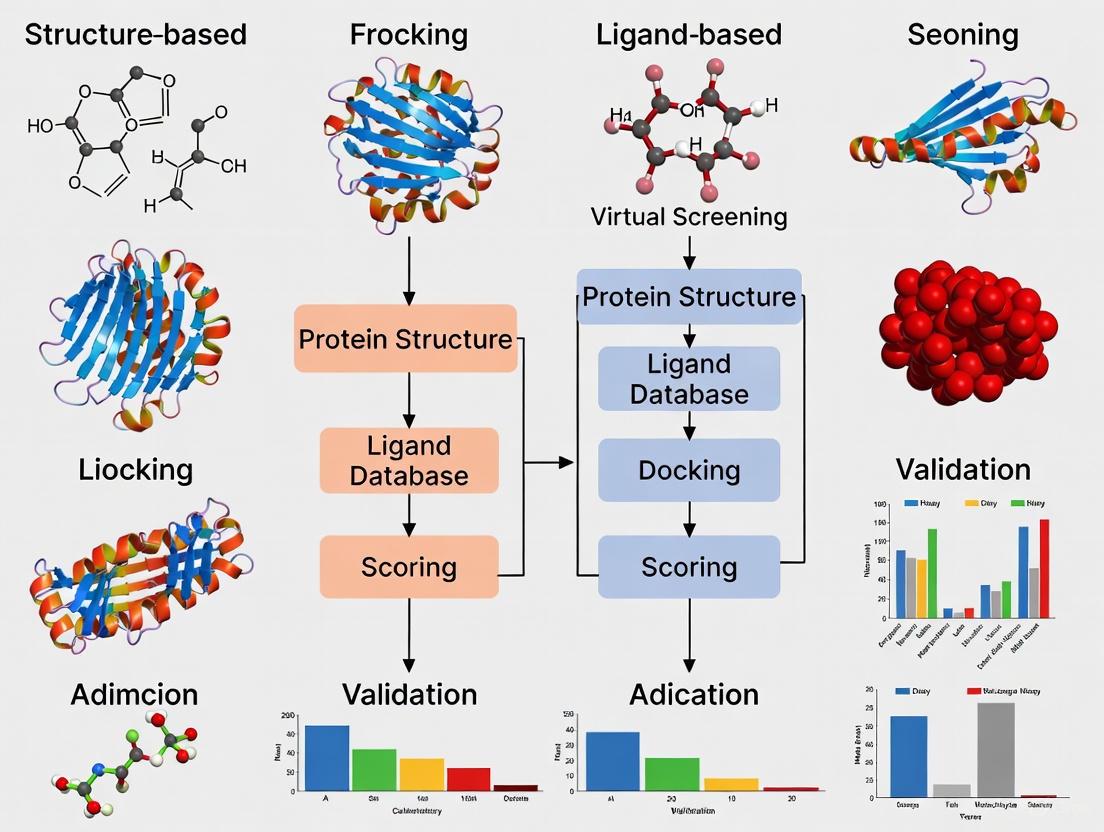
This article provides a comparative analysis of structure-based (SBVS) and ligand-based virtual screening (LBVS) for researchers and drug development professionals.
Structure-Based vs. Ligand-Based Virtual Screening: A Comprehensive Guide for Drug Discovery
Abstract
This article provides a comparative analysis of structure-based (SBVS) and ligand-based virtual screening (LBVS) for researchers and drug development professionals. It explores the foundational principles of both approaches, detailing key methodologies like molecular docking and pharmacophore modeling. The content delves into practical applications, troubleshooting common pitfalls, and advanced optimization strategies, including the integration of machine learning. Finally, it offers a framework for the validation and comparative assessment of both techniques, highlighting their synergistic potential through real-world case studies to guide effective implementation in hit identification and lead optimization campaigns.
Virtual Screening Foundations: Core Principles of SBVS and LBVS
Structure-Based Virtual Screening (SBVS) is a computational approach used in the early stages of drug discovery to identify novel bioactive molecules from extensive chemical compound libraries by leveraging the three-dimensional (3D) structure of a biological target [1]. This method involves computationally "docking" millions of small molecules into the binding site of a target protein and using scoring functions to rank these compounds based on their predicted binding affinity [2] [3]. The primary goal is to select a subset of promising "hit" compounds for further experimental validation, thereby accelerating the hit-finding process and reducing the high costs and time associated with traditional drug development [3].
The indispensability of SBVS stems from its foundation on the physical structure of the target. Unlike ligand-based methods that rely on the similarity to known active compounds, SBVS utilizes the 3D structural information to predict how a ligand will interact with the protein's binding pocket [4]. This provides a powerful mechanism for identifying novel chemical scaffolds, even in the absence of known active compounds, making it a cornerstone of modern computer-aided drug design (CADD) [3].
SBVS in the Virtual Screening Landscape: A Comparative Framework
Virtual screening methods broadly fall into two categories: structure-based and ligand-based. Understanding how SBVS compares to its ligand-based counterpart is crucial for selecting the appropriate tool in a drug discovery campaign.
The table below outlines the core distinctions:
| Feature | Structure-Based Virtual Screening (SBVS) | Ligand-Based Virtual Screening (LBVS) |
|---|---|---|
| Fundamental Principle | Uses the 3D structure of the protein target to dock and score compounds [4]. | Uses known active ligands to identify new compounds with similar structural or pharmacophoric features [4]. |
| Primary Requirement | A reliable 3D structure of the target (from X-ray, Cryo-EM, NMR, or homology modeling) [1] [5]. | A set of known active compounds for the target of interest [4]. |
| Key Advantage | Can identify novel, diverse chemotypes without prior knowledge of active ligands; provides atomic-level interaction insights [4]. | Fast, computationally cheap; excellent at pattern recognition across diverse chemistries [4]. |
| Main Challenge | Dependence on the quality and accuracy of the protein structure; handling protein flexibility; accuracy of scoring functions [5] [3]. | Limited to finding compounds similar to known actives; cannot identify truly novel scaffolds [4]. |
| Ideal Use Case | Hit discovery when a protein structure is available and for scaffold hopping [1] [2]. | Prioritizing large chemical libraries, especially when no protein structure is available [4]. |
A powerful trend in the field is the move towards hybrid approaches, which combine the strengths of both methods. This can be done either sequentially (e.g., using fast ligand-based filtering to narrow a library before detailed structure-based docking) or in parallel (e.g., using consensus scoring from both methods to increase confidence in the final hit list) [4]. Evidence suggests that such hybrid strategies can outperform either method used alone by reducing prediction errors and increasing the confidence in identified hits [4].
The SBVS Workflow: From Protein Structure to Hit Identification
The process of conducting an SBVS campaign is a multi-stage pipeline where the quality of each step is critical to the overall success. The workflow can be broken down into four key stages, as visualized below.
SBVS Workflow Overview
Stage 1: Target Structure Preparation
This foundational step involves obtaining and preparing a high-quality 3D structure of the target protein.
- Experimental Structures: The gold standard is an experimental structure determined by X-ray crystallography, Cryo-Electron Microscopy (Cryo-EM), or NMR spectroscopy [5] [2].
- Computational Models: In the absence of an experimental structure, homology modeling (also known as comparative modeling) is a widely used and effective alternative. This method predicts the 3D structure of a target protein based on its amino acid sequence and the known structure of a homologous protein (the template) [5] [6]. The accuracy of a homology model is paramount for SBVS success [5].
- Addressing Flexibility: Proteins are dynamic. A significant challenge is accounting for protein and binding site flexibility, as a single static structure may not capture all relevant states for ligand binding. Advanced techniques like Ligand-Steered Modelling (LSM) incorporate information from known ligands during the modeling process to generate more accurate binding site conformations, which often outperforms docking into static models [5] [6].
Stage 2: Compound Library Preparation
This stage involves assembling and curating the virtual chemical library to be screened.
- Sources: Libraries can be sourced from public or commercial databases (e.g., ZINC) or custom-designed in-house collections [2].
- Preparation: Each compound in the library is processed to generate plausible 3D conformations and correct protonation states at a physiological pH, typically using tools like OpenBabel [1].
Stage 3: Molecular Docking & Scoring
This is the computational heart of SBVS.
- Docking: Automated algorithms (e.g., in AutoDock Vina) position each compound from the library into the defined binding site of the target, sampling millions of possible orientations and conformations (called "poses") [1].
- Scoring: Each pose is evaluated and ranked using a scoring function. These mathematical functions estimate the binding affinity based on factors like van der Waals forces, hydrogen bonding, and electrostatic interactions [3]. The choice and accuracy of the scoring function are major determinants of SBVS success, and different software can yield varying results [3].
Stage 4: Hit Analysis & Selection
The top-ranked compounds from the docking simulation are analyzed.
- Post-processing: This involves visual inspection of the predicted protein-ligand complexes using visualization tools like UCSF Chimera [1]. Researchers assess the rationality of the binding interactions (e.g., key hydrogen bonds, hydrophobic contacts).
- Consensus Techniques: To improve reliability, consensus virtual screening (CVS) can be employed, where results from multiple docking programs or scoring functions are combined to reduce false positives and increase the likelihood of selecting true active compounds [3].
Experimental Data & Performance Comparison
The practical value of SBVS is demonstrated through both retrospective validation and prospective applications that have led to clinical candidates.
Performance of Homology Models in SBVS
A critical question is how well SBVS performs when using computationally predicted protein models instead of experimental structures. A comprehensive survey of 322 prospective SBVS campaigns provided insightful data [5]:
| Structure Type | Number of Prospective SBVS Studies | Reported Performance Note |
|---|---|---|
| X-ray Crystal Structures | 249 | The established standard for SBVS. |
| Homology Models | 73 | The potency of the hits identified was on average higher than for hits identified by docking into X-ray structures [5]. |
This counter-intuitive result highlights that a well-built homology model, potentially optimized for ligand binding, can be highly effective in virtual screening.
Methodology for Validating SBVS Performance
To quantitatively evaluate the performance of an SBVS protocol (e.g., a specific docking program or a new homology model), researchers use a retrospective screening experiment. The standard methodology is as follows:
- Prepare a Test Library: Create a virtual library containing a set of known active compounds for the target and a large number of "decoy" molecules that are presumed inactives. Databases like the Directory of Useful Decoys (DUD) are often used for this purpose.
- Run the SBVS Protocol: Perform the virtual screening workflow (docking and scoring) on the entire test library.
- Analyze the Enrichment: Analyze the ranking of compounds to see if the known active compounds are preferentially ranked higher than the decoys. A successful protocol will "enrich" the top of the list with true actives.
- Calculate Metrics: Common metrics to report include:
- Enrichment Factor (EF): Measures the concentration of actives in the top fraction of the ranked list compared to a random selection.
- Area Under the Receiver Operating Characteristic Curve (AUC-ROC): Represents the overall ability of the method to correctly rank actives above inactives.
This validation process is crucial for establishing confidence in an SBVS setup before committing to expensive experimental testing [5].
The Scientist's Toolkit: Key Reagents & Software for SBVS
A successful SBVS project relies on a suite of specialized software tools and databases. The table below details essential "research reagents" for the field.
| Tool / Resource Name | Type | Primary Function in SBVS |
|---|---|---|
| Protein Data Bank (PDB) | Database | The single global archive for experimentally determined 3D structures of proteins and nucleic acids [2]. |
| AutoDock Vina | Software | A widely used, open-source program for molecular docking and scoring [1]. |
| UCSF Chimera | Software | A powerful tool for interactive visualization and analysis of molecular structures, used for inspecting docking results [1]. |
| OpenBabel | Software | A chemical toolbox used to convert file formats and prepare compound structures for docking [1]. |
| Homology Modeling Tools (e.g., MODELLER, SWISS-MODEL) | Software | Platforms used to generate 3D protein models from amino acid sequences when experimental structures are unavailable [5] [6]. |
| ZINC Database | Database | A free public database of commercially available compounds for virtual screening, containing over 230 million molecules [2]. |
Structure-Based Virtual Screening is a powerful and established method for mining chemical space to discover new lead compounds in drug discovery. Its unique reliance on the 3D structure of the biological target allows for the de novo identification of bioactive molecules. While challenges remain in scoring function accuracy and handling protein flexibility, the integration of SBVS with ligand-based methods and the successful use of high-quality homology models have significantly expanded its utility and impact. As computational power increases and algorithms become more sophisticated, SBVS will continue to be an indispensable tool for researchers and scientists aiming to bring new therapeutics to the market more efficiently.
Ligand-Based Virtual Screening (LBVS) is a foundational computational technique in drug discovery, employed to identify new potential drug candidates by leveraging the chemical information of known bioactive molecules. This approach is particularly valuable when the three-dimensional structure of the target protein is unavailable or difficult to obtain [7]. This guide provides a objective comparison of LBVS methodologies, supported by experimental data and detailed protocols.
Core Principles and Methodologies of LBVS
LBVS operates on the principle that molecules structurally similar to a known active compound are likely to share its biological activity [8]. It bypasses the need for a protein structure by using one or more known active ligands as templates to search large chemical databases for similar compounds.
The main computational strategies in LBVS include:
- 2D Similarity Methods: These methods use molecular fingerprints—binary vectors representing the presence or absence of specific chemical substructures—to compute similarity. Common fingerprints include ECFP (Extended Connectivity Fingerprint) and FCFP (Functional Class Fingerprint) [9]. The similarity between two molecules is typically quantified using the Tanimoto coefficient [7] [9].
- 3D Shape-Based Methods: These methods compare the three-dimensional molecular shapes and pharmacophoric features (e.g., hydrogen bond donors/acceptors, hydrophobic regions) of a query ligand against database compounds. The goal is to find molecules that can adopt a similar conformation and orientation in the binding site [7] [10]. Tools like ROCS (Rapid Overlay of Chemical Structures) are industry standards for this approach [4] [7].
- Pharmacophore Modeling: A pharmacophore model abstracts the essential steric and electronic features necessary for a molecule to interact with a biological target. LBVS uses this model to search for compounds that embody these features [4].
The following workflow illustrates how these methods are typically applied in sequence for an effective screening campaign:
Quantitative Performance Comparison
The performance of LBVS methods is rigorously evaluated using benchmark datasets like the Directory of Useful Decoys (DUD/DUD-E+) [7] [10]. Key metrics include the Area Under the ROC Curve (AUC), which measures overall screening performance, and the Enrichment Factor (EF), which indicates how much a method concentrates active compounds at the top of the ranked list compared to a random selection.
Table 1: Performance of LBVS Methods Across Diverse Protein Targets
| Target Protein | LBVS Method | Performance (AUC) | Key Findings / Comparative Advantage |
|---|---|---|---|
| Multiple Targets (DUD-E+) | HWZ Score (Shape-Based) | Average AUC: 0.84 ± 0.02 [7] | Showed improved overall performance and was less sensitive to the choice of target compared to other methods [7]. |
| Multiple Targets (DUD-E+) | PharmScreen & Phase Shape (3D-Based) | Varies by target and query conformation [10] | Performance is highly dependent on the query conformation, especially when 2D structural similarity between the template and actives is low [10]. |
| SARS-CoV-2 Mpro | LBVS with Boceprevir Template | N/A | Successfully identified potential inhibitors (C3, C5, C9) with higher computed binding affinity (-9.9 to -8.0 kcal mol⁻¹) than the reference compound (-7.5 kcal mol⁻¹) [11]. |
Table 2: LBVS vs. Structure-Based VS (SBVS) and Hybrid Methods
| Screening Approach | Description | Typical Use Case | Reported Performance |
|---|---|---|---|
| Ligand-Based (LBVS) | Uses known active ligands as templates for similarity search. [7] | No protein structure available; early library filtering. [4] | Fast; effective for finding structurally similar actives; performance can be query-dependent. [10] |
| Structure-Based (SBVS) | Docks compounds into the 3D structure of the target protein. [12] | High-quality protein structure is available. [4] | Can identify novel scaffolds; scoring function inaccuracies can lead to false positives. [7] |
| Hybrid / Sequential | Combines LBVS and SBVS, e.g., LBVS for fast filtering followed by SBVS for refinement. [12] [4] | Leveraging strengths of both; balancing speed and precision. [4] | Can outperform individual methods; provides more reliable results and increases confidence in hits. [4] |
| FIFI Fingerprint (Hybrid) | An Interaction Fingerprint combining ligand and structure information for machine learning. [12] | When limited active compounds and a protein structure are available. [12] | Showed higher prediction accuracy than other IFPs for 5 out of 6 targets in retrospective evaluation. [12] |
Detailed Experimental Protocols
Protocol 1: Shape-Based Screening with the HWZ Score
This protocol, which demonstrated high performance on the DUD benchmark, involves a sophisticated shape-overlapping procedure and a robust scoring function [7].
Query and Database Preparation:
- Identify a known high-affinity ligand to serve as the query structure.
- Prepare the compound database by converting structures into a standardized format and generating 3D conformations for each molecule.
Molecular Superposition:
- For each candidate molecule, identify and map common chemical functional groups (e.g., rings, chains) between the candidate and the query.
- Perform an initial superposition by aligning the centers of mass and the principal moments of inertia of the two molecules.
- Refine the alignment by treating the candidate as a rigid body and optimizing the shape-density overlap (V~AB~) with the query using a steepest descent algorithm. An efficient quaternion-based algorithm is used for rotations [7].
Scoring and Ranking:
- Calculate the HWZ score, a robust scoring function designed to overcome the limitations of the traditional Tanimoto score, particularly for molecules of different sizes [7].
- Rank all candidate molecules in the database based on their HWZ score against the query.
Protocol 2: 3D-LBVS with Multiple Query Conformations
This protocol addresses a critical factor in 3D-LBVS performance: the selection of the query conformation [10].
Template Selection and Query Generation:
- From a set of known active ligands, select a template molecule, ideally one with several rotatable bonds to maximize conformational diversity.
- Generate five distinct query conformations for the template [10]:
- QXR: The experimental crystallographic structure.
- QEMXR: The energy-minimized crystallographic structure (using MMFF94 force field).
- QLEG: The lowest-energy conformer sampled in the gas phase (generated with RDKit's ETKDG method).
- QLEW: The lowest-energy conformer sampled in water.
- Q_ENS: An ensemble of accessible conformers from clustering the conformational space.
Virtual Screening Execution:
- Perform parallel virtual screening campaigns against the target database (e.g., DUD-E+) using each of the five query definitions.
- Use a 3D-LBVS tool like PharmScreen (which relies on hydrophobic/philic pattern similarity) or Phase Shape (which refines volume overlap) [10].
Performance Analysis:
- For each screening run, calculate enrichment metrics (e.g., AUC, EF).
- Analyze the impact of the different query conformations on the recovery rate of active compounds, particularly in datasets where the 2D structural similarity between template and actives is low [10].
The relationship between query conformation and screening performance can be complex, as illustrated below:
The Scientist's Toolkit: Essential Research Reagents and Solutions
Successful implementation of LBVS relies on a suite of software tools and chemical databases.
| Resource Name | Type | Function in LBVS |
|---|---|---|
| RDKit | Cheminformatics Software | Open-source platform for molecular informatics; used for fingerprint generation, conformer generation, and molecular standardization [9] [10]. |
| VSFlow | Open-Source Software Tool | A command-line tool that integrates substructure, fingerprint, and shape-based screening into a single workflow [9]. |
| ROCS | Commercial Software | Industry-standard tool for 3D shape-based screening and molecular overlay [4] [7]. |
| DUD-E+ Database | Benchmarking Dataset | A public database of actives and decoys used to validate and benchmark virtual screening methods [10]. |
| ChEMBL / PubChem / ZINC | Chemical Databases | Public repositories containing vast amounts of chemical structures and bioactivity data used for screening and model building [11] [9]. |
| QuanSA | 3D-QSAR Method | Constructs physically interpretable binding-site models from ligand data to predict quantitative affinity, guiding compound design [4]. |
Virtual screening (VS) has become an integral part of the modern drug discovery process, serving as a computational approach to identify promising hit compounds from extensive chemical libraries [13] [14]. The two primary methodologies in this field are Structure-Based Virtual Screening (SBVS) and Ligand-Based Virtual Screening (LBVS), each with distinct knowledge requirements, operational frameworks, and application domains [15]. SBVS relies on the three-dimensional structure of the biological target, typically employing molecular docking to predict how small molecules interact with a protein binding site [16]. In contrast, LBVS operates without target structure information, instead utilizing known active ligands to search for structurally or physiochemically similar compounds under the similarity-property principle, which posits that similar molecules often exhibit similar biological activities [16] [15] [14]. This analysis systematically compares the fundamental knowledge prerequisites for implementing these complementary approaches, providing researchers with a framework for selecting appropriate methodologies based on available information and project requirements.
The successful implementation of SBVS and LBVS requires fundamentally different types of input data and technical knowledge. The table below summarizes the core prerequisites for each approach.
Table 1: Fundamental Knowledge Prerequisites for SBVS and LBVS
| Prerequisite Category | Structure-Based VS (SBVS) | Ligand-Based VS (LBVS) |
|---|---|---|
| Primary Data Input | 3D Structure of the target protein (from X-ray crystallography, NMR, or Cryo-EM) [16] [17] | Set of known active ligands for the target [16] [15] |
| Structural Knowledge | Detailed atomic-level architecture of the binding site [16] | Not required |
| Key Technical Methods | Molecular docking, scoring functions, binding site analysis [16] [15] | Molecular similarity searching, pharmacophore modeling, QSAR [16] [15] |
| Computational Demand | High (requires significant processing power and time) [18] [15] | Relatively Low (faster, can run on standard workstations) [18] [15] |
| Ideal Application Scenario | Target with a known or modelable structure; seeking novel scaffolds [13] [19] | Target structure unknown; sufficient known actives available [16] [17] |
Detailed Methodological Workflows
Understanding the procedural flow of each method is crucial for planning and resource allocation. The following diagrams outline the standard workflows for SBVS and LBVS, highlighting key decision points and technical steps.
SBVS Workflow
The SBVS process is a structure-driven pipeline that begins with target preparation and ends with the selection of potential hits. The workflow is primarily sequential, with feedback loops for validation and optimization.
Diagram 1: Structure-Based Virtual Screening (SBVS) Workflow. This protocol visualizes the sequential steps for screening compounds against a known protein structure, featuring critical validation checkpoints.
LBVS Workflow
The LBVS process is ligand-centric, building models from known actives to screen large chemical databases. The workflow emphasizes chemical data analysis and model building rather than structural bioinformatics.
Diagram 2: Ligand-Based Virtual Screening (LBVS) Workflow. This protocol outlines the process of screening compounds based on similarity to known active molecules, featuring a feedback loop for model optimization.
Experimental Protocols & Technical Implementation
Key Experimental Protocol: Structure-Based Virtual Screening using Molecular Docking
Molecular docking represents the most widely used SBVS technique [16]. The following protocol details its key steps, with an example based on a benchmark study of adenosine deaminase (ADA) [19].
Table 2: Key Steps in a Molecular Docking Protocol for SBVS
| Step | Action | Purpose & Technical Details | Common Tools & Resources |
|---|---|---|---|
| 1. Target Acquisition | Obtain 3D structure of the target protein. | Use experimental (X-ray, NMR) or predicted structures. If using homology modeling (e.g., with MODELLER), validate model quality [19]. | PDB, MODELLER, AlphaFold2 [20] [19] |
| 2. Binding Site Prep | Define the protein's binding site. | Identify key residues and features. Remove water molecules unless critical. Add hydrogen atoms and assign partial charges [19]. | SYBYL, DMS, SiteHound, fPocket [17] [19] |
| 3. Ligand Library Prep | Prepare the small molecule database. | Convert 2D structures to 3D, assign correct tautomers, protonation states, and generate conformers. | LigPrep, CORINA, OMEGA [21] |
| 4. Docking Execution | Perform the docking simulation. | Systematically search for optimal ligand poses within the binding site. Use a validated docking algorithm and parameters [19]. | DOCK, AutoDock VINA, GOLD, Glide [17] [21] [19] |
| 5. Scoring & Ranking | Evaluate and rank ligand poses. | Use a scoring function to predict binding affinity. Consensus scoring from multiple functions can improve reliability [16]. | Various scoring functions (e.g., ChemScore, GoldScore) [15] |
| 6. Hit Analysis | Visually inspect top-ranked complexes. | Verify sensible binding modes, key interactions (H-bonds, hydrophobic contacts), and chemical合理性. | Maestro, PyMOL, UCSF Chimera [21] |
Key Experimental Protocol: Ligand-Based Screening using 3D Similarity Methods
When a 3D protein structure is unavailable, LBVS using 3D molecular similarity offers a powerful alternative [18]. This protocol often employs shape-based or field-based comparisons.
Table 3: Key Steps in a 3D Similarity Protocol for LBVS
| Step | Action | Purpose & Technical Details | Common Tools & Resources |
|---|---|---|---|
| 1. Query Selection | Choose one or more known active ligands as the query. | Select a bioactive conformation if known. Using multiple diverse queries can increase scaffold diversity in results [13] [15]. | NCI Database, ZINC, In-house libraries [17] |
| 2. Conformational Analysis | Generate a representative set of 3D conformations for each molecule. | Account for ligand flexibility. Ensure the bioactive conformation is represented in the set [18]. | OMEGA, CONFGEN, CORINA [18] |
| 3. Molecular Description | Calculate 3D molecular descriptors. | Encode shape, electrostatic, or pharmacophoric properties. Methods include Gaussian functions (ROCS), atomic distances (USR), or surface descriptors [18]. | ROCS, USR, USRCAT, ESHAPE3D [18] |
| 4. Similarity Calculation | Compare database molecules to the query. | Align molecules and compute a similarity score (e.g., Volume Tanimoto Coefficient). Better superposition yields a higher score [18]. | ROCS, MolShaCS [18] |
| 5. Ranking & Prioritization | Rank the database compounds by similarity score. | Higher scores indicate greater 3D similarity to the query, suggesting a higher probability of activity. | In-house scripts, KNIME, Pipeline Pilot |
Successful virtual screening campaigns rely on a suite of computational tools and compound libraries. The following table catalogs key resources mentioned in the literature.
Table 4: Essential Virtual Screening Resources
| Resource Type | Name | Primary Function | Relevance to VS Type |
|---|---|---|---|
| Software Tools | MODELLER [19] | Comparative protein structure modeling | SBVS (when experimental structure is unavailable) |
| DOCK, AutoDock VINA, Glide [17] [21] [19] | Molecular docking and scoring | SBVS | |
| ROCS (Rapid Overlay of Chemical Structures) [18] [15] | 3D shape-based similarity screening | LBVS | |
| Machine Learning Algorithms (SVM, kNN, ANN) [13] [14] | Building predictive QSAR and activity classification models | LBVS | |
| Compound Libraries | ZINC Library [17] | >20 million purchasable compounds for screening | SBVS & LBVS |
| NCI Open Database [17] | ~265,000 compounds available for screening | SBVS & LBVS | |
| Directory of Universal Decoys (DUD) [19] | Benchmarking set with actives and property-matched decoys | SBVS & LBVS (for method validation) | |
| Computing Infrastructure | Minerva HPC [17] | High-performance computing cluster for large-scale screening | SBVS (essential), LBVS (beneficial) |
Integrated and Machine Learning-Enhanced Approaches
The distinction between SBVS and LBVS is increasingly blurred by hybrid strategies that leverage the strengths of both paradigms [16] [20]. These integrated approaches can be categorized as sequential, parallel, or hybrid. A sequential approach might use fast LBVS methods to pre-filter a massive library before applying more computationally intensive SBVS [16] [20]. A parallel approach runs LBVS and SBVS independently and then combines the results using data fusion algorithms to create a unified ranking [16] [20].
Furthermore, machine learning (ML) and deep learning (DL) are profoundly impacting both SBVS and LBVS [13] [20] [14]. In LBVS, ML models such as Support Vector Machines (SVM), Random Forest, and Neural Networks can build robust quantitative structure-activity relationship (QSAR) models from ligand data [13] [14]. In SBVS, ML is being used to develop more accurate scoring functions and to enable the direct prediction of binding affinity from protein and ligand structures, potentially bypassing traditional docking [20]. The rise of large, ultra-large libraries (e.g., Enamine REAL with 36 billion compounds) in competitions like CACHE makes these efficient ML-powered hybrid approaches essential for modern drug discovery [20].
SBVS and LBVS offer distinct yet complementary pathways for hit identification in drug discovery. The choice between them is fundamentally dictated by the available knowledge prerequisites: SBVS requires detailed 3D structural information of the target protein, while LBVS depends on a set of known active ligands. SBVS is often favored for its potential to discover novel chemical scaffolds, whereas LBVS is computationally more efficient and applicable when structural data is absent [13] [18] [16]. The emerging trend leans toward hybrid methods that synergistically combine both approaches, augmented by machine learning, to maximize the strengths and mitigate the limitations of each individual method [16] [20]. This integrated philosophy, leveraging all available chemical and structural information, represents the most powerful and robust strategy for navigating the vast chemical universe in the search for new therapeutic agents.
Historical Context and Evolution in Modern Drug Discovery
The escalating costs and high attrition rates associated with traditional drug discovery have propelled computational methods to the forefront of modern pharmaceutical research [22]. Virtual screening, a cornerstone of this digital transformation, provides a fast and cost-effective alternative to wet-lab high-throughput screening (HTS) by computationally narrowing vast chemical libraries to identify promising hits [4] [9]. These in silico approaches have evolved into two primary methodological streams: structure-based virtual screening (SBVS) and ligand-based virtual screening (LBVS).
SBVS relies on the 3D structure of a protein target, typically obtained through X-ray crystallography, NMR spectroscopy, or computational modeling, to dock and score small molecules [22] [19]. In contrast, LBVS operates without a target structure, leveraging known active ligands to identify new hits based on structural or pharmacophoric similarity [4] [9]. This guide provides a comparative analysis of these complementary approaches, examining their historical context, methodological underpinnings, performance metrics, and protocols to inform strategic decisions in contemporary drug discovery pipelines.
Historical Context and Evolution
The evolution of virtual screening is inextricably linked to advancements in structural biology and cheminformatics. The completion of the Human Genome Project unveiled a wealth of druggable targets, while parallel progress in X-ray crystallography and NMR spectroscopy provided the structural details necessary for SBVS to flourish [22]. Early docking programs like DOCK pioneered the field by using a negative image of the receptor site to match small molecule atoms [19].
Concurrently, LBVS methods matured from simple substructure searches to sophisticated similarity metrics using molecular fingerprints and 3D shape alignment [9]. The recent decade has witnessed a paradigm shift with the integration of artificial intelligence (AI) and machine learning (ML). AI now routinely informs target prediction, compound prioritization, and scoring functions, with some platforms reporting hit enrichment rates boosted by more than 50-fold compared to traditional methods [23]. The field is further transforming with the advent of ultra-large library screening, the application of models like AlphaFold to predict protein structures, and the creation of rigorous new benchmarks to address data leakage in ML model validation [24] [4].
Key Methodological Differences and Workflows
The fundamental distinction between SBVS and LBVS lies in their required inputs and operational logic. The workflows for each approach, and how they can be integrated, are visualized below.
Virtual Screening Workflow Comparison: This diagram illustrates the parallel pathways of structure-based and ligand-based virtual screening, and their convergence in a hybrid consensus approach.
Comparative Performance Analysis
The utility of SBVS and LBVS is ultimately gauged by their performance in retrospective benchmarks and prospective discovery campaigns. Key metrics include the enrichment factor (EF), which measures a model's ability to prioritize active compounds over inactives compared to random selection, and the hit rate, the proportion of tested compounds that show experimental activity [24] [25].
Performance Metrics from Benchmark Studies
Table 1: Comparative Performance of Virtual Screening Methods
| Method / Tool | Key Metric | Reported Performance | Context / Benchmark | Key Requirements |
|---|---|---|---|---|
| Docking (SBVS) | Median EF1% | 7.0 - 21 | Varies by program & scoring function [24] | Protein 3D Structure |
| LBVS (Fingerprint) | Processing Speed | ~Seconds per million cmpds. [9] | Efficient for large library pre-filtering | Known Active Ligands |
| AI-Enhanced Screening | Hit Enrichment | >50-fold increase [23] | Compared to traditional methods | Curated Training Data |
| Hybrid (LBVS + SBVS) | Mean Unsigned Error (MUE) | Significant reduction [4] | LFA-1 inhibitor affinity prediction | Both inputs available |
Recent work has proposed an improved metric, the Bayes enrichment factor (EFB), to address a fundamental limitation of the standard EF, which cannot estimate model performance on very large libraries due to its dependence on the ratio of actives to inactives in the benchmark set [24]. The EFB requires only random compounds instead of presumed inactives, avoids the ceiling effect of the traditional EF, and allows for enrichment estimation at much lower selection fractions, providing a better indicator of real-world screening utility [24].
Quantitative modeling of large-scale docking campaigns reveals that while current scoring functions are noisy predictors of binding affinity, they can still effectively enrich for hits. Performance is heavily influenced by the virtual library's intrinsic hit rate, highlighting the importance of pre-filtering for properties like charge and hydrophobicity, especially with tera-scale libraries [25].
Experimental Protocols and Workflows
Protocol for Structure-Based Virtual Screening (Docking-Based)
A typical SBVS pipeline involves sequential steps of target and compound library preparation, docking, and post-processing [22] [19].
- Target Preparation: The protein structure (experimental or homology model) is prepared by assigning proper protonation states, adding hydrogen atoms, and handling missing residues. For flexible targets, an ensemble of conformations may be generated via molecular dynamics (MD) [22] [19].
- Compound Library Preparation: A database of small molecules (e.g., ZINC, ChEMBL) is curated. Compounds are standardized, their tautomeric and protonation states are assigned, and 3D conformers are generated [22] [9]. Pre-filtering based on drug-likeness (e.g., Rule of Five) or structure-based pharmacophores is often applied to enrich the library [22].
- Molecular Docking: Each prepared compound is computationally posed into the target's binding site. Programs like AutoDock, DOCK, or Glide use algorithms to sample possible orientations and conformations (poses) [22] [19].
- Scoring and Ranking: A scoring function evaluates the complementarity of each pose. Compounds are ranked based on their predicted binding score, and the top-ranked molecules are selected for experimental validation [22] [24].
Protocol for Ligand-Based Virtual Screening
LBVS workflows are generally faster and rely on establishing a similarity hypothesis from known actives [9].
- Query Definition and Preparation: One or more known active compounds are defined as the query set. For 3D methods, their bioactive conformations are identified or generated [9].
- Database Screening:
- 2D Fingerprint Similarity: Molecular fingerprints (e.g., ECFP, FCFP) are computed for both query and database molecules. Similarity is calculated using the Tanimoto coefficient or related metrics, and compounds are ranked by similarity [9].
- 3D Shape-Based Screening: The 3D shape of the query molecule(s) is compared to conformers of database molecules using methods like ROCS or the open-source VSFlow. A combined score incorporating shape and pharmacophore similarity is often used for ranking [4] [9].
- Hit Selection and Validation: The top-ranking compounds from the similarity search are selected for further analysis and experimental testing.
Protocol for a Hybrid Screening Approach
A hybrid consensus strategy leverages the strengths of both SBVS and LBVS, often yielding more reliable results than either method alone [4].
- Sequential Integration: A large compound library is first rapidly filtered using a ligand-based method (e.g., fingerprint similarity) to identify a subset of compounds with desired features. This enriched library is then subjected to more computationally expensive structure-based docking for final refinement and selection [4].
- Parallel Screening with Consensus Scoring: The same compound library is screened independently using both SBVS and LBVS. The results are combined by either:
- Parallel Scoring: Selecting top candidates from both ranked lists to maximize the chance of recovering actives.
- Hybrid Scoring: Creating a single unified ranking by averaging or multiplying normalized scores from both methods, which increases confidence in selected hits by favoring compounds that rank highly by both criteria [4].
The Scientist's Toolkit: Essential Research Reagents and Software
Successful virtual screening relies on a suite of software tools and compound databases. The table below details key resources cited in experimental protocols.
Table 2: Key Research Reagents and Software Solutions
| Item Name | Type / Category | Primary Function in Virtual Screening | Example Tools / Databases |
|---|---|---|---|
| Protein Structure Database | Data Repository | Provides experimentally-solved 3D structures for SBVS targets or templates. | Protein Data Bank (PDB) [19] |
| Compound Library | Data Repository | Curated collections of small molecules for screening; can be public or commercial. | ZINC, ChEMBL, PubChem, ChemBridge [22] [9] |
| Homology Modeling Software | Software Tool | Generates 3D protein models for SBVS when no experimental structure is available. | MODELLER [19] |
| Molecular Docking Suite | Software Tool | Poses and scores compounds in a protein binding site (core SBVS engine). | DOCK, AutoDock, Glide, GOLD [22] [19] |
| Cheminformatics Toolkit | Software Tool | Provides foundational functions for molecule handling, fingerprinting, and substructure search. | RDKit [9] |
| Ligand-Based Screening Tool | Software Tool | Performs 2D/3D similarity searches and shape-based comparisons. | VSFlow, ROCS, SwissSimilarity [9] [4] |
Structure-based and ligand-based virtual screening are both powerful, yet imperfect, technologies that have become indispensable in modern drug discovery. The choice between them is often dictated by available data: LBVS is the go-to option when ligand information is abundant but protein structures are lacking, while SBVS shines when a reliable target structure is available, providing atomic-level insights into binding interactions.
The future of virtual screening lies not in choosing one over the other, but in their strategic integration. As evidenced by the performance data, hybrid approaches that combine the pattern-recognition strength of LBVS with the mechanistic insights of SBVS consistently outperform individual methods, reducing errors and increasing confidence in hit identification [4]. The field is rapidly evolving with trends such as the integration of AI and machine learning to develop target-biased scoring functions [22], the application of AlphaFold-predicted structures to expand the scope of SBVS [4], the development of more rigorous benchmarks to prevent data leakage in ML models [24], and the ability to screen ultra-large chemical libraries containing billions of molecules [25] [4]. For research teams, aligning with these trends by adopting integrated, data-driven workflows is no longer optional but a strategic necessity to mitigate risk, compress timelines, and improve the odds of translational success.
Methodologies in Action: Implementing SBVS and LBVS Workflows
Structure-Based Virtual Screening (SBVS) is a cornerstone of modern computer-aided drug design, enabling researchers to rapidly identify potential drug candidates by computationally screening large chemical libraries against three-dimensional protein structures [26]. At the heart of SBVS lie molecular docking programs and their scoring functions, which predict how small molecules bind to target proteins and estimate their binding affinity. Among the numerous docking tools available, AutoDock Vina, Glide, and DOCK have emerged as widely used solutions across academic and industrial settings. These tools employ different sampling algorithms and scoring functions, leading to variations in their performance across different protein targets and screening scenarios. This guide provides an objective comparison of these three docking programs, supported by experimental data from benchmarking studies, to inform researchers and drug development professionals in selecting appropriate tools for their virtual screening campaigns.
Fundamental Concepts in Molecular Docking
Molecular docking comprises two main components: a sampling algorithm that generates putative ligand orientations and conformations (poses) within the protein binding site, and a scoring function that evaluates and ranks these poses [26]. The performance of docking programs is typically assessed using two key metrics: the ability to reproduce experimental binding modes (measured by Root Mean Square Deviation, RMSD, between predicted and crystallographic poses), and the effectiveness in virtual screening (measured by enrichment factors and Area Under the Curve, AUC, from Receiver Operating Characteristic, ROC, analysis) [26]. An RMSD value of less than 2.0 Å is generally considered a successful pose prediction [26] [27].
Table 1: Key Characteristics of AutoDock Vina, Glide, and DOCK
| Characteristic | AutoDock Vina | Glide | DOCK |
|---|---|---|---|
| Developer | The Scripps Research Institute | Schrödinger | University of California, San Francisco |
| License | Open Source | Commercial | Open Source |
| Sampling Algorithm | Hybrid of genetic algorithm and Broyden-Fletcher-Goldfarb-Shanno (BFGS) method | Systematic torsionally-enhanced energy search | Shape-matching and anchor-and-grow |
| Scoring Function | Empirical scoring function with machine learning optimization | GlideScore (Empirical force field-based) | Chemical matching and grid-based scoring |
| Speed | Very Fast [27] | Moderate to Slow [27] | Moderate [27] |
| Key Strengths | Speed, ease of use, good performance | High pose prediction accuracy, comprehensive scoring | Flexibility in handling various molecular features |
Performance Comparison and Benchmarking Data
Pose Prediction Accuracy
The ability to correctly predict the binding mode of a ligand as found in crystallographic structures is a fundamental test for docking programs. Multiple studies have evaluated this capability across different protein families:
COX-1 and COX-2 Enzymes: In a benchmark study of 51 cyclooxygenase-inhibitor complexes, Glide demonstrated superior performance by correctly predicting binding poses (RMSD < 2.0 Å) for 100% of studied co-crystallized ligands. Other programs showed lower success rates: GOLD (82%), AutoDock (59%), and FlexX (82%) [26].
Macrolide and Macrocyclic Complexes: A study evaluating 20 protein-macrolide complexes found that AutoDock Vina, Glide, and DOCK performed comparably in self-docking tests, with mean RMSD values of 0.55 Å, 0.94 Å, and 0.57 Å, respectively. When docking conformational ensembles, the mean RMSD values were 1.31 Å for Glide, 1.34 Å for DOCK, and 1.29 Å for AutoDock Vina [27].
General Performance Assessment: A comprehensive evaluation using the PDBBind dataset demonstrated that conventional docking workflows like Glide and Surflex-Dock achieve success rates of 67-68% for top-ranked poses at the 2.0 Å RMSD threshold in cognate re-docking scenarios with defined binding sites [28].
Virtual Screening Enrichment
The effectiveness of docking programs in distinguishing active compounds from inactive ones in virtual screening is typically measured using enrichment factors and ROC analysis:
Cyclooxygenase Virtual Screening: ROC analysis of virtual screening performance against cyclooxygenase enzymes revealed AUC values ranging between 0.61-0.92 across different docking methods, with enrichment factors of 8-40 folds [26].
DUD Dataset Benchmarking: A study across 40 protein targets from the Directory of Useful Decoys (DUD) found that the mean screening performance of AutoDock Vina combined with the NNScore 1.0 rescoring function was not statistically different from Glide's performance [29].
Scoring Biases in Reverse Docking: Large-scale reverse docking studies have revealed that all three programs exhibit scoring biases toward proteins with certain pocket properties, such as large contact areas or high hydrophobicity, which can lead to false positives in target identification [30].
Table 2: Summary of Performance Metrics from Benchmarking Studies
| Docking Program | Pose Prediction Success Rate (RMSD < 2.0 Å) | Virtual Screening Performance (AUC Range) | Notable Strengths |
|---|---|---|---|
| AutoDock Vina | 48-81%* [28] [27] | 0.61-0.92* [26] | Excellent speed, good overall performance |
| Glide | 67-100%* [28] [26] | 0.61-0.92* [26] | High pose prediction accuracy, robust scoring |
| DOCK | ~57%* [27] | 0.61-0.92* [26] | Strong performance with macrocyclic compounds |
Note: Performance metrics vary significantly across different protein targets and test sets. The ranges represent values reported across multiple studies rather than direct comparisons within a single study.
Experimental Protocols and Methodologies
Standardized Benchmarking Workflow
To ensure fair and reproducible comparison of docking programs, researchers typically follow a standardized workflow for benchmarking studies:
Figure 1: Standard workflow for docking benchmarking studies.
Key Methodological Components
Data Set Collection and Preparation
Protein Structure Preparation: Crystal structures of protein-ligand complexes are downloaded from the Protein Data Bank. Proteins are typically prepared by removing redundant chains, water molecules, and cofactors, followed by adding hydrogen atoms and assigning proper protonation states at physiological pH [26] [29]. For instance, in the COX enzyme study, 51 complexes were selected and prepared using DeepView software [26].
Ligand Preparation: Small molecules are prepared using tools like Schrödinger's LigPrep to generate appropriate tautomeric, isomeric, and ionization states. Energy minimization is performed to ensure proper geometry [29]. In macrolide docking studies, conformational ensembles of ligands are often generated to account for flexibility, with conformers lying 0-10 kcal/mol above the global minimum included in docking calculations [27].
Docking Parameters and Execution
Binding Site Definition: The binding site is typically defined based on the location of the cognate ligand in the crystal structure, often using a grid box centered on the ligand. For AutoDock Vina, box dimensions are frequently taken from reference studies or defined to encompass the entire binding pocket [29].
Docking Protocols: Each program is run with its default parameters or with parameters optimized for specific systems. For example, in the Glide assessment, multiple precision modes (HTVS, SP, XP) are often employed in sequential screening to balance accuracy and computational cost [29].
Performance Evaluation Metrics
Pose Prediction Accuracy: The root mean square deviation (RMSD) between heavy atoms of the docked pose and the experimental crystal structure pose is calculated. Success rates are reported for thresholds of 2.0 Å and sometimes 1.0 Å for high-precision requirements [28].
Virtual Screening Performance: Enrichment factors, Area Under the ROC Curve (AUC), and Boltzmann-Enhanced Discrimination of ROC (BEDROC) metrics are used to evaluate the ability of docking programs to prioritize active compounds over decoys in screening scenarios [26] [31].
Table 3: Key Research Reagents and Computational Resources for Docking Studies
| Resource Category | Specific Tools/Solutions | Function in Docking Workflow |
|---|---|---|
| Protein Structure Resources | Protein Data Bank (PDB) [26], PDBBind [28] | Sources of experimentally determined protein-ligand complex structures for benchmarking and method development |
| Compound Libraries | NCI Diversity Set [29], DUD/E Decoys [30] [29] | Curated sets of active compounds and matched decoys for virtual screening validation |
| Structure Preparation | Schrödinger Protein Preparation Wizard [29], MGLTools [29] | Tools for adding hydrogens, assigning bond orders, optimizing hydrogen bonding, and correcting structural issues |
| Ligand Preparation | Schrödinger LigPrep [29], Open Babel | Generation of 3D structures, tautomers, stereoisomers, and ionization states at physiological pH |
| Performance Analysis | ROC Curve Analysis [26], Enrichment Factors [26], RMSD Calculations [26] | Quantitative metrics for evaluating pose prediction and virtual screening performance |
Context-Dependent Performance and Selection Guidelines
The performance of docking programs is highly system-dependent, with each tool exhibiting strengths in specific scenarios:
For High-Precision Pose Prediction: Glide consistently demonstrates superior performance in reproducing experimental binding modes across multiple benchmarking studies, making it suitable for projects requiring accurate binding mode analysis [26] [28].
For Large Virtual Screens: AutoDock Vina offers an excellent balance of speed and accuracy, particularly valuable when screening large compound libraries where computational efficiency is paramount [27] [29].
For Specialized Applications: DOCK shows particular strength with macrocyclic and macrolide compounds, and its shape-matching algorithm can be advantageous for certain target classes [27].
Addressing Scoring Biases and Limitations
All docking programs exhibit scoring biases that researchers should acknowledge and address:
Size and Polarizability Bias: Scoring functions tend to favor larger, more polarizable compounds regardless of the target, which can lead to artificial enrichment in virtual screening [29].
Pocket Property Bias: Programs may show preference for proteins with specific pocket characteristics, such as large contact areas or high hydrophobicity, potentially leading to false positives in target fishing applications [30].
Mitigation Strategies: Score normalization approaches and the use of composite scoring functions tailored to specific receptor classes can help mitigate these biases and improve virtual screening performance [30] [29].
Future Directions and Method Development
The field continues to evolve with several promising developments:
Machine Learning Scoring Functions: Neural network-based approaches like NNScore show comparable performance to established methods and offer potential for further improvement [29].
Hybrid Workflows: Combining multiple docking programs and rescoring strategies often yields better results than relying on a single method, taking advantage of the complementary strengths of different approaches [32].
Deep Learning Methods: New approaches like DiffDock have emerged but require careful validation, as their performance may be influenced by training set composition and may not yet surpass properly implemented conventional docking workflows [28].
In conclusion, AutoDock Vina, Glide, and DOCK each offer distinct advantages for structure-based virtual screening. Glide generally provides superior pose prediction accuracy, AutoDock Vina excels in speed and efficiency, while DOCK remains a robust open-source option with particular strengths for certain molecular classes. Researchers should select tools based on their specific requirements, considering factors such as target protein characteristics, desired balance between speed and accuracy, and available computational resources. Incorporating positive controls and using multiple complementary approaches can further enhance the reliability of virtual screening campaigns in drug discovery.
Ligand-Based Virtual Screening (LBVS) is a foundational computational strategy in drug discovery, employed when the three-dimensional structure of the target protein is unknown or unavailable. Its core principle is the "Similarity-Property Principle," which posits that structurally similar molecules are likely to exhibit similar biological activities and properties [33] [20]. By leveraging information from known active compounds, LBVS provides a powerful means to identify new hit molecules from vast chemical libraries, significantly accelerating the early stages of drug development. This approach stands in contrast to Structure-Based Virtual Screening (SBVS), which relies on the 3D structure of the biological target. LBVS is particularly valuable for targets like G Protein-Coupled Receptors (GPCRs), where obtaining high-resolution structural data can be challenging [34] [35]. The primary methodologies underpinning LBVS are Quantitative Structure-Activity Relationship (QSAR) modeling, pharmacophore mapping, and chemical similarity searches, each offering distinct mechanisms for comparing and prioritizing compounds.
The relevance of LBVS continues to grow in the modern computational landscape. While SBVS often demands substantial computational resources, limiting its application in screening ultra-large chemical libraries, LBVS offers a computationally efficient alternative or complement [20]. Furthermore, the integration of machine learning (ML) and artificial intelligence (AI) is revolutionizing LBVS, evolving it from traditional similarity measures towards sophisticated chemical language models and deep learning algorithms that can leverage vast amounts of experimental data to improve predictive accuracy [36] [20]. This review will objectively compare the core LBVS methods based on their operational protocols, performance metrics, and practical applications, providing a clear guide for researchers in selecting and implementing these tools.
The three principal LBVS techniques—QSAR modeling, pharmacophore mapping, and similarity searching—operate on related principles but differ significantly in their implementation and the type of molecular information they prioritize. The typical workflow for applying these methods, from data preparation to hit identification, is visualized below.
Core Methodologies and Data Requirements
- QSAR Modeling: This approach develops a mathematical model that correlates quantitative molecular descriptors (e.g., logP, polar surface area, topological indices) of a training set of compounds with their biological activity [33]. The resulting model predicts the activity of new, untested compounds. It requires a high-quality dataset with quantitative activity data (e.g., IC₅₀, Kᵢ) and is highly dependent on the choice of molecular descriptors and machine learning algorithms [35].
- Pharmacophore Mapping: A pharmacophore is defined as an abstract representation of the steric and electronic features necessary for molecular recognition at a target site [37] [38]. Pharmacophore models can be generated in a ligand-based manner by identifying common features shared by multiple known active molecules [37]. These models are then used as 3D queries to screen compound databases for molecules that can adopt a conformation matching the feature arrangement.
- Similarity Searching: This is the most rapid LBVS method. It calculates the structural or physicochemical similarity between a query molecule (known active) and each compound in a database [33] [34]. Similarity is typically measured using molecular fingerprints (e.g., ECFP6) or 2D/3D molecular descriptors. It requires only one or a few known active compounds and is less computationally intensive than other methods.
Performance Comparison and Experimental Data
Direct comparison of LBVS methods in real-world case studies provides the most objective performance data. The following table summarizes key metrics and outcomes from selected prospective and retrospective screening campaigns.
Table 1: Comparative Performance of LBVS Methods in Virtual Screening
| Method Category | Specific Method / Software | Target / Case Study | Key Performance Metric | Result & Hit Rate | Key Finding / Advantage |
|---|---|---|---|---|---|
| Similarity Search | ECFP6 Fingerprints | CRF1 Receptor [34] | Retrospective Enrichment | Lower enrichment than 3D methods | Fast and straightforward, but may find fewer novel scaffolds. |
| Similarity Search | ROCS (Shape Tanimoto) | CRF1 Receptor [34] | Retrospective Enrichment & Scaffold Recovery | High enrichment; retrieved more active scaffolds | 3D shape-based methods show superior performance in identifying actives. |
| Pharmacophore Modeling | Ligand-based Pharmacophore | Various Targets [38] | Prospective Hit Rate (General) | Typical hit rates range from 5% to 40% | Significantly higher hit rates than random screening (<1%). |
| QSAR Modeling | kNN-QSAR | Multiple GPCRs [35] | Prediction Accuracy (vs. Similarity Methods) | Highest predictive power compared to PASS and SEA | Superior when sufficient training data is available. |
| Similarity Search | SEA (Similarity Ensemble Approach) | Multiple GPCRs [35] | Prediction Accuracy (vs. QSAR) | Lowest predictive power in the study | Chemical similarity alone may be less accurate than QSAR models. |
Experimental Protocols and Validation
The performance data presented in Table 1 is derived from rigorous experimental protocols. For prospective studies, the standard workflow involves:
- Model/Query Generation: A model is built using known active compounds. For QSAR, this involves dividing data into training and test sets [35]. For pharmacophores, active molecules are aligned to derive common features [38].
- Virtual Screening: The model or query is used to screen a large database of commercially or synthetically accessible compounds (e.g., ZINC15, Enamine REAL) [39] [20].
- Experimental Validation: A selection of top-ranking virtual hits is procured and tested in vitro for biological activity (e.g., binding affinity or functional assays) [38] [34]. The hit rate is calculated as the percentage of tested compounds confirmed active.
In retrospective validations, a dataset with known active and inactive compounds is used [34] [35]. The virtual screening method is applied, and its ability to "enrich" actives at the top of the ranked list is measured using metrics like Enrichment Factor (EF) and Area Under the ROC Curve (AUC). This measures how much better the method is than random selection [38].
The Scientist's Toolkit: Essential Research Reagents and Software
Successful implementation of LBVS relies on a combination of computational tools, software, and chemical databases. The table below details key resources used in the featured studies and the broader field.
Table 2: Key Research Reagents and Software for LBVS
| Resource Name | Type | Primary Function in LBVS | Application Example |
|---|---|---|---|
| RDKit | Software Library | Open-source toolkit for cheminformatics; used for descriptor calculation, fingerprint generation, and molecular modeling [39]. | Converting SMILES strings to molecular graphs; generating molecular fingerprints for similarity searches [39]. |
| ROCS (Rapid Overlay of Chemical Structures) | Commercial Software | Performs 3D shape-based and "color" (feature-based) similarity comparisons between molecules [34]. | Scaffold hopping by finding molecules with similar shape/features but different chemical structures [34]. |
| PubChem / ChEMBL | Chemical Database | Public repositories of chemical structures and their associated bioactivity data [39] [38]. | Source of known active compounds for model building; source of decoy molecules for validation [38]. |
| ZINC / Enamine REAL | Purchasable Compound Database | Large, commercially available libraries of small molecules for virtual screening (e.g., >75 billion make-on-demand compounds) [39] [20]. | The target database for performing the virtual screen to find purchasable hits [39]. |
| Decoy Sets (e.g., DUD-E) | Validation Resource | Libraries of molecules with similar properties to actives but presumed inactive, used for retrospective validation [38]. | Benchmarking and validating the performance of a pharmacophore or QSAR model to ensure it can distinguish actives from inactives [38]. |
Integrated Approaches and Future Outlook
While each LBVS method has its strengths, the most powerful modern applications often involve their combination with each other or with structure-based methods. A sequential or parallel combination of LBVS and SBVS is a recognized strategy to leverage their complementary strengths and mitigate their individual limitations [20]. For instance, a fast LBVS method like similarity searching can first filter a multi-billion compound library down to a manageable size, which is then subjected to more computationally intensive SBVS (docking) or detailed pharmacophore screening [20].
The future of LBVS is inextricably linked to Artificial Intelligence (AI). Machine learning, particularly deep learning, is being applied to enhance all LBVS approaches [36] [20]. QSAR is evolving with more complex descriptors and neural networks. Similarity searching is being transformed by chemical language models that can learn complex molecular representations from SMILES strings or molecular graphs [20]. These AI-driven advancements promise to further improve the efficiency, accuracy, and scaffold-hopping potential of LBVS, solidifying its role as a critical tool in the era of big data and ultra-large library screening.
This guide objectively compares the performance of structure-based virtual screening (SBVS), ligand-based virtual screening (LBVS), and their integrated approaches across three critical target classes in drug discovery: enzymes, G protein-coupled receptors (GPCRs), and protein-protein interactions (PPIs). The content is framed within the broader thesis that a hybrid strategy, often enhanced by machine learning (ML), consistently outperforms either method alone by mitigating their inherent limitations.
Virtual screening is a computational cornerstone of modern drug discovery, designed to efficiently identify hit compounds from vast chemical libraries. The two primary strategies are:
- Structure-Based Virtual Screening (SBVS): Relies on the 3D structure of the target protein, typically using molecular docking to predict how small molecules bind to a specific binding pocket and estimate their binding affinity [4] [20].
- Ligand-Based Virtual Screening (LBVS): Applied when the protein structure is unknown but active ligands are available. It identifies novel hits based on their similarity to known active compounds, using methods like pharmacophore modeling or Quantitative Structure-Activity Relationship (QSAR) [4] [20].
These approaches are highly complementary. SBVS can identify novel scaffolds but is computationally expensive and depends on high-quality protein structures. LBVS is computationally efficient but may miss chemically novel hits. The integration of both methods, particularly with advances in artificial intelligence (AI), is revolutionizing the field [4] [20] [36].
Performance Comparison Across Target Classes
The following case studies and summarized data demonstrate the application and performance of these methods across different target types.
Targeting Enzymes: The Case of PfDHFR
Malaria, caused by Plasmodium falciparum, remains a major global health challenge. The enzyme Dihydrofolate Reductase (PfDHFR) is a vital drug target, and mutations in its binding site are a primary cause of drug resistance [40].
Experimental Protocol: A comprehensive benchmarking study evaluated three docking tools (AutoDock Vina, PLANTS, and FRED) against both wild-type (WT) and quadruple-mutant (Q) PfDHFR variants. The DEKOIS 2.0 benchmark set was used, which includes known active molecules and challenging decoys. The docking outputs were further re-scored by two pretrained machine learning scoring functions (MLSFs): CNN-Score and RF-Score-VS v2. Performance was measured using the Enrichment Factor at 1% (EF1%), which indicates how many more active compounds are found in the top 1% of the ranked list compared to a random selection [40].
Table 1: Benchmarking Results for PfDHFR Virtual Screening
| Target Variant | Docking Tool | Standard EF1% | ML Re-scoring Method | Enhanced EF1% |
|---|---|---|---|---|
| Wild-Type (WT) | AutoDock Vina | Worse-than-random | RF-Score-VS v2 / CNN-Score | Better-than-random |
| Wild-Type (WT) | PLANTS | Not Specified | CNN-Score | 28.0 |
| Quadruple-Mutant (Q) | FRED | Not Specified | CNN-Score | 31.0 |
Performance Summary: The study demonstrated that re-scoring docking results with MLSFs, particularly CNN-Score, consistently and significantly enhanced screening performance. This was evident in the high EF1% values achieved and the ability to retrieve diverse, high-affinity binders for both the wild-type and resistant mutant variants of PfDHFR [40].
Targeting GPCRs: The GPCRVS Platform
G protein-coupled receptors (GPCRs) are the largest family of membrane proteins and drug targets, but their structural flexibility and similarity pose challenges for selective drug design [41] [42].
Experimental Protocol: The GPCRVS platform is an AI-driven decision support system that overcomes the limitations of individual LBVS and SBVS methods. It integrates:
- Ligand-based predictions using deep neural networks and gradient boosting machines trained on data from ChEMBL and patents.
- Structure-based docking using AutoDock Vina for flexible ligand docking into defined orthosteric and allosteric sites.
- A unique six-residue peptide truncation method to handle peptide ligands, which are common for GPCRs, by focusing on the key N-terminal "message" fragment responsible for receptor activation [42].
Table 2: GPCRVS Performance on Class B GPCRs and Chemokine Receptors
| GPCR Subfamily | Ligand Type | Key Challenge | GPCRVS Solution | Validation Outcome |
|---|---|---|---|---|
| Class B (e.g., GLP-1R, GIPR) | Peptides & Small Molecules | Large peptide ligands | 6-residue truncation + unified model | Accurate activity prediction and selectivity assessment |
| Chemokine Receptors (e.g., CCR1, CXCR3) | Inhibitors (Small Molecules) | Subtype selectivity | Combined LB/SB screening and off-target prediction | Successful identification of selective patent compounds |
Performance Summary: By combining ligand- and structure-based methods, GPCRVS allows for the evaluation of compounds ranging from small molecules to peptides, predicting their activity range, pharmacological effect (e.g., agonist, antagonist), and potential binding mode. This integrated approach provides a more robust and selective screening tool for complex GPCR targets compared to using either method in isolation [42].
Targeting Protein-Protein Interactions: The HelixVS Platform
Protein-protein interactions (PPIs) are increasingly important therapeutic targets but often feature large, shallow interfaces that are difficult for small molecules to disrupt. The HelixVS platform was applied to these challenging targets [43].
Experimental Protocol: HelixVS employs a deep learning-enhanced, multi-stage SBVS workflow:
- Stage 1 - Rapid Docking: Uses QuickVina 2 to generate multiple binding poses for millions of molecules.
- Stage 2 - Deep Learning Refinement: A more accurate, RTMscore-based deep learning model re-scores the docking poses to improve affinity predictions.
- Stage 3 - Binding Mode Filtering: An optional step to filter results based on specific, pre-defined interaction patterns (e.g., key hydrogen bonds) [43].
The platform was tested on the standard DUD-E benchmark and in real-world drug development pipelines targeting PPIs, such as the TLR4/MD-2 and cGAS immune modulators [43].
Table 3: HelixVS Performance on DUD-E Benchmark and Real-World PPI Targets
| Application Context | Metric | AutoDock Vina | HelixVS | Improvement |
|---|---|---|---|---|
| DUD-E Benchmark (102 targets) | EF₁% (Enrichment Factor) | 10.022 | 26.968 | ~169% increase |
| DUD-E Benchmark | EF₀.₁% (Early Enrichment) | 17.065 | 44.205 | ~159% increase |
| Real-World PPI Projects | Experimental Hit Rate (μM/nM activity) | Not Specified | >10% of tested molecules | Successful hit identification |
Performance Summary: HelixVS demonstrated a substantial performance gain over classical docking tools like Vina in both benchmark settings and challenging real-world applications. Its ability to identify active molecules against difficult PPI targets underscores the power of integrating deep learning models into the SBVS pipeline to achieve superior enrichment and hit rates [43].
The Hybrid Approach: Sequential, Parallel, and Integrated Workflows
The case studies above highlight a common theme: the growing dominance of hybrid approaches. These can be implemented in several ways [4] [20]:
- Sequential Combination: A funnel-based workflow where LBVS (e.g., pharmacophore screening) rapidly filters an ultra-large library, and the resulting smaller subset is analyzed with more computationally expensive SBVS (e.g., molecular docking). This conserves resources while leveraging the strengths of both methods [4].
- Parallel Combination: LBVS and SBVS are run independently on the same library, and their results are combined. This can be done by:
- Parallel Scoring: Selecting top candidates from both lists to maximize the chance of finding hits.
- Consensus Scoring: Creating a single unified ranking, which increases confidence in the final selection [4].
- Fully Integrated AI Models: Newer platforms like GPCRVS and HelixVS represent a deeper integration, where machine learning models are trained on both ligand chemical data and protein-structural information, creating a unified and powerful prediction engine [20] [42] [43].
The Scientist's Toolkit: Essential Research Reagents and Solutions
Table 4: Key Research Reagents and Computational Tools for Virtual Screening
| Item / Resource | Function / Application | Relevance to VS Workflow |
|---|---|---|
| DEKOIS 2.0 Benchmark Sets | Public datasets containing known active molecules and carefully selected decoys for specific protein targets. | Essential for objectively evaluating and benchmarking the performance of virtual screening pipelines [40]. |
| AlphaFold3 Predicted Structures | AI-predicted protein-ligand complex structures, useful when experimental structures are unavailable. | Provides structural models for SBVS; supplying an active ligand during prediction can improve model accuracy for screening [44]. |
| Machine Learning Scoring Functions (e.g., CNN-Score, RF-Score-VS v2) | Pretrained ML models that re-score docking poses to more accurately predict binding affinity. | Used after classical docking to significantly improve enrichment and distinguish true actives from decoys [40]. |
| CACHE Competition Data & Targets | An independent benchmark for evaluating computational hit-finding methods on unpublished targets with experimental validation. | Provides a rigorous, real-world standard for comparing and validating new virtual screening strategies [20]. |
The comparative analysis across enzymes, GPCRs, and PPIs leads to a clear and evidence-based conclusion: while classical LBVS and SBVS methods are powerful, their synergistic integration consistently delivers superior results. The sequential application of LBVS for rapid library enrichment followed by SBVS for detailed interaction analysis represents a robust and resource-efficient strategy. Furthermore, the emerging paradigm of using machine learning and deep learning models to augment or integrate these approaches—exemplified by platforms like GPCRVS and HelixVS—is setting a new standard for performance. These hybrid systems address fundamental limitations of traditional methods, enabling higher hit rates, better affinity prediction, and the successful targeting of challenging protein classes, thereby accelerating the early stages of drug discovery.
In modern drug discovery, virtual screening (VS) serves as a critical computational technique for identifying promising hit compounds from vast chemical libraries, significantly reducing the time and cost associated with experimental screening [45]. VS methodologies are broadly classified into two categories: structure-based virtual screening (SBVS), which relies on three-dimensional protein structures to predict ligand binding through docking, and ligand-based virtual screening (LBVS), which utilizes known active ligands to identify compounds with similar structural or pharmacophoric features [4]. While SBVS provides atomic-level insights into binding interactions, it is computationally demanding and requires high-quality protein structures. LBVS, though faster and less resource-intensive, is limited by the known ligand data and may lack structural novelty [20].
The emerging paradigm recognizes that these approaches are highly complementary rather than mutually exclusive. Hybrid strategies that integrate LBVS and SBVS mitigate their individual limitations and leverage their synergistic potential to enhance screening efficiency and hit rates [20] [4]. This guide objectively compares the three principal hybrid workflows—sequential, parallel, and integrated—by examining their underlying protocols, performance metrics, and practical applications in contemporary drug discovery research.
Experimental Protocols for Hybrid Workflows
To ensure valid comparisons, benchmarking studies follow standardized protocols. The DEKOIS 2.0 benchmark set is widely used to evaluate virtual screening performance. It provides bioactive molecules alongside carefully selected, property-matched decoy molecules for specific protein targets, enabling the assessment of a method's ability to prioritize true actives [40]. Common performance metrics include the Enrichment Factor at 1% (EF1%), which measures how enriched the top 1% of the ranked library is with true actives, and the Area Under the Receiver Operating Characteristic Curve (ROC-AUC), which evaluates the overall ranking quality of actives over decoys [40].
The following experimental protocol is typical in benchmarking studies, such as those evaluating performance against wild-type and mutant Plasmodium falciparum Dihydrofolate Reductase (PfDHFR) [40]:
- Protein Preparation: Experimentally determined protein structures (e.g., from PDB) are prepared by removing water molecules, adding hydrogen atoms, and optimizing side-chain conformations using tools like OpenEye's "Make Receptor" [40].
- Ligand Library Preparation: A library of known active compounds and decoys is prepared. Tools like Omega are used to generate multiple conformations for each ligand, and formats are standardized for different docking programs [40].
- Docking and Scoring: The prepared library is screened using docking tools such as AutoDock Vina, FRED, or PLANTS. The grid box is defined to encompass the binding site of interest [40].
- Machine Learning Re-scoring: Poses generated by classical docking tools are often re-scored using Machine Learning Scoring Functions (ML SFs) like CNN-Score or RF-Score-VS v2 to improve binding affinity predictions and active enrichment [40].
- Performance Analysis: The final ranked lists from different workflows are evaluated using EF1% and ROC-AUC to quantify screening performance [40].
Comparison of Core Hybrid Strategies
Hybrid strategies are categorized based on how LBVS and SBVS methods are combined. The table below summarizes the key characteristics, typical workflows, and performance data for the three main hybrid models.
Table 1: Comparison of Sequential, Parallel, and Integrated Hybrid Workflows
| Strategy | Description | Typical Workflow | Performance & Experimental Data |
|---|---|---|---|
| Sequential Combination | A funnel strategy that applies LBVS and SBVS in consecutive steps to filter large compound libraries [20]. | 1. LBVS Filter: Rapid ligand-based screening (e.g., pharmacophore model, 2D similarity) reduces library size [4].2. SBVS Refinement: The smaller, enriched subset undergoes more computationally expensive structure-based docking [20] [4]. | Efficiency: Drastically reduces computational cost by reserving SBVS for a small compound subset [20]. Case studies show this workflow effectively identifies novel scaffolds early, providing chemically diverse starting points [4]. |
| Parallel Combination | LBVS and SBVS are run independently on the same library; results are combined post-screening using data fusion algorithms [20]. | 1. Independent Screening: The same compound library is screened separately by LBVS and SBVS methods.2. Result Fusion: Rankings from each method are combined using consensus scoring (e.g., averaging ranks) or parallel selection (pooling top ranks from both) [4]. | Hit Recovery: Mitigates limitations of individual methods, increasing the likelihood of recovering potential actives and reducing false negatives [4]. In practice, parallel screening with consensus scoring can achieve better enrichment than either method alone [20]. |
| Integrated Combination | LBVS and SBVS are fused into a single, unified framework that leverages synergistic information during the screening process itself [20]. | 1. Unified Framework: Uses machine learning models trained on both ligand descriptors and protein-ligand interaction fingerprints or complex 3D structures [20].2. Simultaneous Evaluation: Compounds are scored based on a model that inherently considers both ligand similarity and structural compatibility. | Performance Gains: This strategy can cancel out prediction errors from individual methods. A cited case study on LFA-1 inhibitors showed a hybrid model averaging LBVS (QuanSA) and SBVS (FEP+) predictions performed better than either method alone, achieving a lower mean unsigned error (MUE) and high correlation with experimental affinities [4]. |
Workflow Visualization
The following diagram illustrates the logical flow and decision points within the three core hybrid strategies.
Diagram 1: Hybrid Virtual Screening Workflows
Performance Benchmarking and Case Studies
Benchmarking Data on Sequential and ML-Re-scoring
Quantitative benchmarking demonstrates the tangible benefits of hybrid workflows. A study on PfDHFR compared the performance of three docking tools (AutoDock Vina, PLANTS, FRED) with and without ML-based re-scoring, a form of sequential combination [40].
Table 2: Performance Benchmarking of Docking and ML Re-scoring for PfDHFR [40]
| Target | Docking Tool | ML Scoring Function | Performance (EF1%) | Key Finding |
|---|---|---|---|---|
| Wild-Type PfDHFR | PLANTS | CNN-Score | 28 | Re-scoring significantly improved enrichment over docking alone. |
| Wild-Type PfDHFR | AutoDock Vina | (None) | Worse-than-random | Re-scoring with RF-Score-VS v2 and CNN-Score improved its performance from worse-than-random to better-than-random. |
| Quadruple-Mutant PfDHFR | FRED | CNN-Score | 31 | Demonstrated the method's effectiveness against a resistant variant. |
The study concluded that re-scoring with CNN-Score consistently augmented SBVS performance and enriched diverse, high-affinity binders for both PfDHFR variants [40].
Case Study: Parallel Consensus in LFA-1 Inhibitor Optimization
A collaboration between Optibrium and Bristol Myers Squibb on LFA-1 inhibitors provides a compelling case for parallel consensus strategies. Predictions from a ligand-based method (QuanSA) and a structure-based method (FEP+) were averaged to create a hybrid model [4]. This hybrid model performed better than either method alone, achieving a higher correlation with experimental affinities and a significantly lower mean unsigned error (MUE) through the partial cancellation of errors from the individual methods [4].
The Scientist's Toolkit: Essential Research Reagents and Software
Successful implementation of hybrid virtual screening strategies relies on a suite of specialized software tools and databases.
Table 3: Key Research Reagent Solutions for Hybrid Virtual Screening
| Tool/Resource Name | Type | Primary Function in Workflow |
|---|---|---|
| DEKOIS 2.0 [40] | Benchmarking Set | Provides validated sets of active compounds and property-matched decoys to fairly evaluate and benchmark virtual screening methods. |
| AlphaFold3 [44] | Protein Structure Prediction | Generates predicted protein-ligand complex (holo) structures for targets lacking experimental crystal structures, crucial for SBVS. |
| AutoDock Vina, FRED, PLANTS [40] | Molecular Docking Tool | Performs the core structure-based docking step by predicting the binding pose and affinity of small molecules within a protein's binding site. |
| CNN-Score, RF-Score-VS v2 [40] | Machine Learning Scoring Function | Re-scores docking poses to improve the ranking of true active compounds, often used sequentially after classical docking. |
| InfiniSee, exaScreen [4] | Ultra-Large Library Screening | Enables ligand-based screening of synthetically accessible chemical spaces containing tens of billions of compounds. |
| ROCS, FieldAlign, eSim [4] | 3D Ligand-Based Screening | Aligns and compares 3D molecular shapes and electrostatic fields to identify compounds similar to known active ligands. |
| QuanSA [4] | 3D-QSAR Method | Constructs physically interpretable binding-site models from ligand data to predict both pose and quantitative affinity, bridging LBVS and SBVS. |
The evidence from benchmarking studies and real-world applications firmly establishes that hybrid strategies—sequential, parallel, and integrated—consistently outperform reliance on a single virtual screening method [20] [40] [4]. The choice of strategy depends on the project's goals, resources, and available data. Sequential workflows offer computational efficiency for screening ultra-large libraries, parallel strategies maximize hit recovery and reduce false negatives, while integrated methods show great promise for achieving superior prediction accuracy and guiding compound optimization [4].
Future developments will be shaped by several key trends: the increased use of predicted protein structures from tools like AlphaFold3, though careful validation of their utility for docking is still required [4] [44]; the deeper integration of machine learning to create more robust and interpretable hybrid models [20]; and the application of these advanced workflows in public challenges like the CACHE competition to independently validate their performance on difficult targets with no known ligands [20]. As these technologies mature, hybrid workflows will become even more central to accelerating the discovery of new therapeutic agents.
Overcoming Challenges: Optimization Strategies for Enhanced Screening Performance
Structure-based virtual screening (SBVS) is a cornerstone of modern computational drug discovery, enabling the rapid identification of potential drug candidates from vast chemical libraries by predicting how they interact with a target protein's three-dimensional structure [46] [47]. Despite its widespread use, SBVS faces two persistent and major challenges that can limit its predictive accuracy and real-world utility: the inherent flexibility of protein structures and the limited accuracy of traditional scoring functions [47] [48].
Proteins are dynamic entities whose shapes, especially in the binding site, can change upon ligand binding. Traditional SBVS often treats the receptor as a rigid static structure, which can lead to inaccurate predictions of how a drug candidate will actually fit and interact [47] [48]. Compounding this issue, conventional scoring functions, which estimate the strength of binding, often rely on simplified physical models or parameters that fail to capture the complexity of molecular interactions, leading to poor correlation between predicted and experimental binding affinities [46] [49].
This guide provides a comparative analysis of innovative computational strategies developed to overcome these limitations. We will objectively evaluate methods ranging from machine-learning enhanced scoring functions and flexible docking algorithms to hybrid workflows that integrate multiple techniques, supported by experimental data and benchmarking studies.
Advanced Strategies for Protein Flexibility
The assumption of a rigid protein structure is a significant simplification in molecular docking. In reality, ligand binding often induces conformational changes in the protein, a phenomenon known as "induced fit." Ignoring this flexibility can result in the failure to identify true binding poses and active compounds [48]. The following strategies have been developed to address this challenge.
Multi-State Modeling (MSM) with AlphaFold2
Concept: Instead of relying on a single, static protein structure for docking, Multi-State Modeling (MSM) uses a collection of structures (an ensemble) that represent different conformational states of the protein. This approach is particularly powerful when combined with modern protein structure prediction tools like AlphaFold2 (AF2) [47].
Experimental Protocol:
- State Classification: Known experimental structures of the target protein (e.g., kinases) are analyzed and classified based on key conformational markers, such as the DFG motif (indicating active or inactive states) [47].
- State-Specific Template Selection: For a target protein of unknown structure, state-specific template structures are selected and used to guide the AF2 prediction.
- Ensemble Generation: AF2 is run multiple times with different state-specific templates to generate a set of protein models that reflect distinct conformational states.
- Ensemble Docking: Each compound from a virtual library is docked into every protein model in the ensemble.
- Result Fusion: The docking scores for each compound across all models are aggregated (e.g., by taking the best score or an average) to produce a final ranking [47].
Performance: A study on kinases demonstrated that MSM-based ensemble screening outperformed standard AF2 models. It excelled at identifying diverse hit compounds, particularly for kinases with structurally diverse active sites, thereby reducing the bias towards a single type of inhibitor (e.g., Type I) and enabling the discovery of novel scaffolds [47].
Full-Atom Flexible Docking with DiffBindFR
Concept: Unlike ensemble docking, which uses multiple pre-generated rigid structures, full-atom flexible docking explicitly models the flexibility of the protein's binding site side chains during the docking simulation itself [48].
Experimental Protocol:
- Problem Formulation: Flexible docking is framed as a joint optimization problem in the space of ligand movements (rotation and translation), ligand torsion angles, and pocket side chain torsion angles [48].
- Diffusion-Based Sampling: DiffBindFR uses a diffusion model, a type of generative machine learning model, to explore this complex space. The process starts from a noisy, unbound state and iteratively "denoises" the system to find a low-energy, native-like binding structure [48].
- Equivariant Neural Networks: The model employs SE(3)-equivariant graph neural networks to encode the intricate interactions between the full-atom protein pocket and the ligand, ensuring predictions are physically realistic regardless of molecular orientation [48].
Performance: In benchmark tests, DiffBindFR demonstrated superior accuracy in predicting ligand binding poses and protein side-chain conformations compared to both traditional docking methods (like AutoDock Vina) and other deep learning-based approaches. It produced physically plausible binding structures with minimal atomic clashes, making it particularly suitable for docking into Apo (unbound) and AlphaFold2-predicted structures [48].
The table below summarizes the characteristics of these two primary approaches to handling flexibility.
Table 1: Comparison of Strategies for Handling Protein Flexibility in SBVS
| Strategy | Description | Key Advantage | Considerations |
|---|---|---|---|
| Multi-State Modeling (MSM) & Ensemble Docking [47] | Uses multiple protein structures representing different conformations for docking. | Captures a broader range of native protein states; reduces bias toward a single inhibitor type. | Performance depends on the diversity and quality of the conformational ensemble. |
| Full-Atom Flexible Docking (DiffBindFR) [48] | Explicitly models side-chain movements during the docking process. | Produces highly accurate, physically plausible binding structures with refined side chains. | Computationally more intensive than rigid docking; requires advanced ML models. |
The following diagram illustrates the typical workflow for implementing these strategies in a virtual screening pipeline.
Machine Learning-Enhanced Scoring Functions
Scoring functions are mathematical models used to predict the binding affinity of a protein-ligand complex. Traditional functions often struggle with accuracy and generalizability. Machine learning (ML) models, capable of learning complex patterns from large datasets, have emerged as a powerful solution [20] [49].
Target-Specific Machine Learning Scoring Functions (TSSFs)
Concept: Instead of a one-size-fits-all scoring function, target-specific scoring functions (TSSFs) are trained on data specific to a single protein target or a closely related target family. This allows the model to learn the unique interaction patterns critical for that particular target [50] [49].
Experimental Protocol:
- Data Curation: Collect a set of known active and inactive/decoy molecules for the target (e.g., cGAS, kRAS, or METTL3). Data is sourced from databases like ChEMBL, BindingDB, and PubChem [46] [50].
- Feature Engineering: Molecular complexes are represented using features that capture relevant interactions. These can include:
- Structural Protein-Ligand Interaction Fingerprints (SPLIF): Convert 3D interaction patterns into a machine-readable format, capturing nuances like cation-π interactions [46].
- Graph Representations: Model the protein-ligand complex as a graph, where atoms are nodes and bonds are edges, suitable for graph convolutional networks (GCNs) [50].
- Physics-Based Terms: Incorporate terms from molecular mechanics, such as van der Waals energy, electrostatic energy, and solvation effects [49].
- Model Training: Train ML models, such as 3D Convolutional Neural Networks (CNNs), Graph Convolutional Networks (GCNs), or Random Forests, on the curated dataset and selected features. Attention mechanisms can be added to help the model focus on critical interaction features [46] [50].
- Validation: The model is rigorously validated using scaffold-based data splitting and external test sets to ensure it can generalize to new chemical structures [46].
Performance: A study on cGAS and kRAS proteins showed that GCN-based TSSFs significantly outperformed generic scoring functions in distinguishing active from inactive compounds, demonstrating remarkable robustness and accuracy [50]. Similarly, DeepMETTL3, a 3D CNN model with multihead attention and SPLIF features, achieved superior performance in virtual screening for METTL3 inhibitors compared to traditional methods [46].
ML-Based Rescoring of Docking Poses
Concept: A highly effective and practical strategy involves using fast traditional docking to generate ligand poses, which are then rescored with a more accurate ML scoring function. This combines the sampling power of docking programs with the superior ranking power of ML [40].
Experimental Protocol:
- Initial Docking: A large compound library is docked into the target protein using a standard docking tool (e.g., AutoDock Vina, FRED, or PLANTS) to generate multiple poses per ligand [40].
- Pose Rescoring: The generated poses are fed into a pre-trained ML scoring function, such as CNN-Score or RF-Score-VS v2 [40].
- Ranking: The ML score is used to re-rank the compounds, prioritizing those with the highest predicted affinity.
Performance: In a benchmarking study on wild-type and quadruple-mutant Plasmodium falciparum Dihydrofolate Reductase (PfDHFR), rescoring with CNN-Score consistently enhanced screening performance. For the wild-type, PLANTS docking combined with CNN rescoring achieved an enrichment factor (EF1%) of 28. For the resistant mutant, FRED docking with CNN rescoring achieved an even higher EF1% of 31, successfully retrieving diverse and high-affinity actives [40].
Table 2: Comparison of Machine Learning Scoring Function Approaches
| Approach | Description | Key Advantage | Validated Performance |
|---|---|---|---|
| Target-Specific Scoring (DeepMETTL3) [46] | 3D CNN with attention & SPLIF features trained on target-specific data. | Captures intricate, target-specific 3D interaction patterns. | Superior accuracy/robustness vs. traditional SFs on METTL3; handles novel scaffolds. |
| Graph Neural Networks (GCN) [50] | Uses graph representations of complexes for target-specific prediction. | Learns complex binding patterns; generalizes well to heterogeneous data. | Significant superiority over generic SFs for cGAS & kRAS targets. |
| Physics-Informed ML (DockTScore) [49] | Combines MMFF94S force-field terms with ML regression (SVM, RF). | Offers a more physically interpretable model of binding. | Competitive with best SFs on DUD-E sets; good for proteases & protein-protein interactions. |
| ML Rescoring (CNN-Score) [40] | Uses a pre-trained CNN to re-score poses from standard docking. | Easy to implement; significantly boosts performance of existing docking tools. | EF1% of 28-31 on PfDHFR variants; consistently better-than-random enrichment. |
Integrated & Hybrid Screening Strategies
Given the complementary strengths and weaknesses of different methods, a synergistic combination often yields the best results. Two primary hybrid strategies are commonly employed [20] [4].
Sequential Combination of LBVS and SBVS
Concept: This funnel-based approach uses fast ligand-based virtual screening (LBVS) to narrow down a massive chemical library to a manageable size, which is then analyzed with more computationally expensive SBVS.
Experimental Workflow:
- LBVS Filtering: Ultra-large compound libraries are screened using LBVS methods, such as pharmacophore similarity searching (e.g., infiniSee, exaScreen) or 3D shape-based tools (e.g., ROCS). This step rapidly prioritizes compounds that are structurally similar to known actives [4].
- SBVS Refinement: The top-ranked compounds from the LBVS step are then subjected to detailed molecular docking and scoring. This provides atomic-level insight into binding interactions and helps confirm the LBVS hypotheses [20] [4].
Advantage: This workflow conserves computational resources by applying the most expensive calculations only to a small, pre-filtered set of compounds that are likely to succeed [4].
Parallel Screening with Consensus Scoring
Concept: LBVS and SBVS are run independently on the same compound library, and their results are fused to create a final ranking [20] [4].
Experimental Workflow:
- Parallel Execution: Run LBVS (e.g., using QuanSA) and SBVS (e.g., using FEP+ or docking) simultaneously on the initial library [4].
- Result Fusion: The results from both methods are combined using a data fusion algorithm. Strategies include:
- Parallel Selection: Taking the top candidates from each list without forcing consensus, which maximizes the chance of finding hits [4].
- Consensus Scoring: Creating a unified ranking by averaging or multiplying normalized scores from both methods, which increases confidence in the selected compounds [20] [4].
Performance and Advantage: A collaboration between Optibrium and Bristol Myers Squibb on LFA-1 inhibitors showed that while QuanSA (LBVS) and FEP+ (SBVS) individually had high accuracy, a simple average of their predictions resulted in a significant drop in the mean unsigned error (MUE), demonstrating error cancellation and improved predictive power [4]. This highlights the robustness of hybrid approaches.
The Scientist's Toolkit: Essential Research Reagents & Software
The following table lists key computational tools and resources mentioned in this guide that are essential for implementing advanced SBVS protocols.
Table 3: Key Research Reagents and Software for Advanced SBVS
| Tool/Resource Name | Type/Category | Primary Function in SBVS |
|---|---|---|
| AlphaFold2 [47] | Protein Structure Prediction | Generates high-quality 3D protein models when experimental structures are unavailable. |
| DiffBindFR [48] | Flexible Docking Software | Performs full-atom, flexible docking accounting for ligand and protein side-chain movements. |
| DeepMETTL3 [46] | Target-Specific ML Scoring Function | A deep learning-based scoring function for accurate virtual screening against METTL3. |
| SPLIF [46] | Feature Engineering Method | Creates high-dimensional fingerprints representing 3D protein-ligand interaction patterns. |
| CNN-Score / RF-Score-VS v2 [40] | ML Rescoring Functions | Pre-trained ML models for re-scoring docking poses to improve enrichment. |
| DEKOIS 2.0 [40] | Benchmarking Dataset | Provides sets of known active and decoy molecules for evaluating virtual screening performance. |
| QuanSA [4] | 3D Ligand-Based Screening | Constructs binding-site models from ligand data to predict affinity and guide optimization. |
| PDBbind [49] | Curated Database | A large, high-quality dataset of protein-ligand complexes with binding affinity data for training and testing scoring functions. |
The field of SBVS is rapidly evolving to overcome its traditional limitations. Through a comparative analysis of current methodologies, it is evident that no single approach is universally superior; rather, the choice depends on the specific target and project goals.
For handling protein flexibility, Multi-State Modeling provides a robust solution for targets with known distinct conformational states, while full-atom flexible docking methods like DiffBindFR offer a more detailed, physical approach for refining binding site conformations during docking. For improving scoring function accuracy, target-specific ML scoring functions deliver top-tier performance by leveraging specialized data, whereas ML-rescoring provides a highly accessible and effective way to boost the performance of existing docking pipelines.
Ultimately, the most robust and effective virtual screening campaigns often leverage hybrid strategies that combine the pattern-recognition strength of LBVS with the atomic-level insight of SBVS, either sequentially or in parallel. As machine learning and protein structure prediction continue to advance, the integration of these powerful, complementary techniques will undoubtedly remain a central theme in the ongoing development of reliable and effective virtual screening.
Ligand-based virtual screening (LBVS) is a cornerstone technique in computer-aided drug discovery, applied when the three-dimensional structure of the biological target is unavailable. This methodology identifies potential bioactive compounds by measuring their similarity to known active molecules, using molecular descriptors and fingerprints that encode structural or physicochemical properties [51]. However, LBVS faces two fundamental constraints: its inherent dependency on known active ligands and its limited capacity to explore chemical space beyond structural analogs of existing actives. This comparative guide objectively analyzes these limitations and evaluates computational strategies designed to overcome them, providing drug development professionals with data-driven insights for method selection.
The core challenge of LBVS lies in its conceptual foundation. As a knowledge-driven approach, its performance is intrinsically linked to the quantity, quality, and structural diversity of known active compounds used as reference points [52]. When this data is sparse or structurally homogeneous, LBVS methods struggle to identify novel chemotypes through "scaffold hopping," as they are fundamentally designed to find molecules similar to what is already known [53]. This review directly compares LBVS with alternative and complementary approaches, focusing on their capabilities to mitigate these inherent drawbacks and expand into unexplored chemical territory.
Comparative Performance Analysis of Virtual Screening Approaches
We evaluated the performance of LBVS, Structure-Based Virtual Screening (SBVS), and emerging hybrid methods across six diverse biological targets using curated benchmarking data. The following table summarizes the key performance metrics, highlighting the strengths and limitations of each approach in different screening scenarios.
Table 1: Performance Comparison of Virtual Screening Approaches Across Multiple Targets
| Biological Target | VS Approach | Enrichment Factor (EF1%) | Scaffold Diversity | Key Limitations |
|---|---|---|---|---|
| Beta-2 Adrenergic Receptor (ADRB2) | LBVS (ECFP4) | 25.4 | Low | High 2D bias; limited novel chemotypes |
| SBVS (Docking) | 18.7 | Medium | Dependent on binding site conformation | |
| Hybrid (FIFI+ML) | 31.2 | High | Requires both active ligands and protein structure | |
| Caspase-1 (Casp1) | LBVS (ECFP4) | 22.1 | Low | Performance drops with diverse test sets |
| SBVS (Docking) | 20.5 | Medium | Sensitive to protein flexibility | |
| Hybrid (FIFI+ML) | 28.9 | High | Complex workflow implementation | |
| Kappa Opioid Receptor (KOR) | LBVS (ECFP4) | 35.7 | Medium | Exceptional performance for this target |
| SBVS (Docking) | 12.3 | Low | Poor pose prediction accuracy | |
| Hybrid (FIFI+ML) | 24.6 | Medium | Outperformed by LBVS in this case | |
| Lysosomal Alpha-Glucosidase (LAG) | LBVS (ECFP4) | 15.8 | Low | Limited by known chemotype diversity |
| SBVS (Docking) | 19.2 | Medium | Better exploration of binding sub-pockets | |
| Hybrid (FIFI+ML) | 26.4 | High | Balanced performance and diversity | |
| MAP Kinase ERK2 (MAPK2) | LBVS (ECFP4) | 19.5 | Low | Analog bias in results |
| SBVS (Docking) | 22.6 | Medium | Good for kinase-targeted libraries | |
| Hybrid (FIFI+ML) | 27.8 | High | Superior enrichment and diversity | |
| Cellular Tumor Antigen p53 | LBVS (ECFP4) | 14.2 | Low | Challenging target for similarity methods |
| SBVS (Docking) | 16.9 | Medium | Difficult protein-protein interaction target | |
| Hybrid (FIFI+ML) | 21.5 | High | Best overall performance |
Performance data adapted from Maeda et al. (2024) [12]. EF1% represents the enrichment factor at 1% of the screened database, measuring early recognition capability. Scaffold Diversity is a qualitative assessment of the structural variety of identified hits.
The comparative data reveals that while LBVS (using ECFP4 fingerprints) can show excellent performance for specific targets like the Kappa Opioid Receptor, it generally produces hits with lower scaffold diversity compared to other methods. SBVS demonstrates more consistent performance across targets and better ability to identify structurally distinct compounds, though it is dependent on the quality of the protein structure. The hybrid approach (FIFI with Machine Learning) consistently achieves high enrichment and the greatest scaffold diversity, effectively mitigating the primary limitation of LBVS by integrating structural information with ligand data [12].
Understanding LBVS Limitations and Mitigation Strategies
Data Dependency and the "Analog Bias"
LBVS fundamentally relies on the principle of molecular similarity, which creates a significant constraint: the method can only find what structurally resembles known actives. This "analog bias" manifests practically when benchmarking sets contain compounds with high 2D structural similarity to the template ligands, which can artificially inflate performance estimates [53]. In real-world screening scenarios against diverse compound libraries, this bias translates to limited scaffold-hopping capability and an inability to identify truly novel chemotypes that interact with the target through different interaction patterns.
Mitigation Approach: Curated benchmarking sets like DUD-E+-Diverse specifically minimize 2D structural resemblance between template and actives, providing a more realistic assessment of LBVS performance [51]. When applying LBVS prospectively, researchers should utilize such unbiased sets for method validation and implement rigorous similarity thresholds to control the degree of structural exploration during screening.
Conformational Sensitivity in 3D-LBVS
For 3D-LBVS methods that use spatial molecular representations, performance is highly dependent on the query conformation selected for the template compound. These methods attempt to approximate the bioactive conformation without structural target information, which introduces uncertainty. Research indicates that while the query conformation often has a modest overall impact on enrichment rates, for specific targets it can drastically affect the recovery of actives [51]. Factors such as the induction of conformational strain in the template and the degree of shared structural features between template and actives significantly influence this sensitivity.
Mitigation Approach: Using multiple query conformations, including the crystallographic bioactive conformation (when available), energy-minimized structures, and low-energy solution conformers, can create a more robust screening query [51]. Ensemble approaches that screen against multiple conformational states of the template have demonstrated improved performance in identifying diverse active chemotypes.
Emerging Solutions: Hybrid and AI-Driven Approaches
Hybrid Virtual Screening with Interaction Fingerprints
Hybrid VS represents a methodological advancement that merges ligand-based and structure-based information at the computational level. The Fragmented Interaction Fingerprint (FIFI) approach exemplifies this strategy by combining extended connectivity fingerprints (ECFP) of ligands with interaction information from the protein binding site [12]. Unlike traditional LBVS, FIFI encodes information about which specific ligand substructures interact with particular amino acid residues, retaining the sequence order of residues in the fingerprint. This creates a hybrid representation that captures both ligand structural features and their corresponding interaction patterns with the biological target.
Table 2: Key Research Reagent Solutions for Advanced Virtual Screening
| Reagent/Resource | Type | Primary Function | Access |
|---|---|---|---|
| FIFI (Fragmented Interaction Fingerprint) | Software Algorithm | Generates hybrid structure-ligand fingerprints for ML models | Research Implementation [12] |
| RDKit ETKDG | Conformer Generator | Samples low-energy 3D conformations for LBVS queries | Open Source [51] |
| DUD-E+-Diverse | Benchmarking Set | Evaluates VS performance with reduced 2D bias | Public Database [51] |
| Chemical Space Docking | Screening Methodology | Enables structure-based screening of billion-compound libraries | Proprietary/Research [54] |
| Enamine REAL Space | Compound Library | Provides access to synthetically feasible virtual compounds | Commercial [54] |
| PLEC Fingerprint | Interaction Fingerprint | Encodes protein-ligand interaction patterns for machine learning | Open Source [12] |
The experimental implementation of FIFI involves docking known active compounds to generate their interaction patterns, then using these patterns to train machine learning models that can predict the activity of new compounds. This approach has demonstrated consistently high and stable prediction accuracy across multiple biological targets, effectively bridging the gap between purely ligand-based and purely structure-based methods [12].
Chemical Space Docking for Ultra-Large Libraries
For scenarios with known protein structures but limited ligand information, Chemical Space Docking offers a powerful alternative to LBVS by enabling structure-based screening of unprecedented library sizes. This methodology avoids full library enumeration by docking building block fragments and then combinatorially expanding only the most promising fragments into full products using validated reaction rules [54]. This approach scales with the number of reagent building blocks rather than the number of virtual products, making it computationally feasible to screen billions of compounds.
In a practical application to discover ROCK1 kinase inhibitors, Chemical Space Docking screened nearly one billion commercially available compounds, resulting in a remarkable 39% hit rate (27 of 69 purchased compounds had Ki values < 10 µM) with 19% showing submicromolar potency [54]. This demonstrates the power of structure-based approaches to explore vast chemical spaces without dependency on known active ligands, effectively overcoming the primary limitation of LBVS.
Experimental Protocols for Method Evaluation
Protocol 1: Evaluating LBVS Query Conformation Impact
Objective: Assess the influence of template conformation selection on 3D-LBVS performance [51].
- Template Selection: Choose the cognate ligand with the highest number of rotatable bonds from available target structures to maximize conformational complexity.
- Query Generation: Prepare five distinct query conformations:
- QXR: Experimental crystallographic structure
- QEMXR: Energy-minimized crystallographic structure (using MMFF94 force field)
- QLEG: Lowest energy gas-phase conformer (generated with RDKit ETKDG)
- QLEW: Lowest energy aqueous solution conformer (RDKit ETKDG with solvation)
- Q_ENS: Ensemble of accessible conformers (clustered using PCA of dihedral angles)
- Screening Execution: Perform parallel virtual screens using each query conformation against the DUD-E+-Diverse dataset using 3D-LBVS tools (e.g., PharmScreen, Phase Shape).
- Performance Analysis: Calculate enrichment factors (EF1%) and assess structural diversity of hits for each query. Identify factors leading to performance variations.
Protocol 2: Implementing Hybrid VS with FIFI
Objective: Apply the Fragmented Interaction Fingerprint approach for enhanced screening [12].
- Data Curation: Collect known active compounds and inactive decoys from public databases (ChEMBL, PubChem). Organize actives into Structure-Activity Relationship Matrices (SARMs).
- Structure Preparation: Obtain the 3D protein structure from PDB. Prepare the protein by adding hydrogen atoms, optimizing side-chain orientations, and defining the binding site.
- Pose Generation: Dock all training compounds to the binding site using molecular docking software (e.g., AutoDock Vina, DOCK).
- FIFI Generation: For each docked pose, generate the FIFI fingerprint by identifying ECFP atom environments of the ligand proximal to protein residues. Encode each unique ligand substructure within each amino acid residue as a bit while retaining sequence order.
- Model Training: Train machine learning classifiers (e.g., Random Forest, SVM) using FIFI representations as features and activity as the response variable.
- Virtual Screening: Apply the trained model to screen large compound libraries. Rank compounds by predicted activity scores and select top-ranked candidates for experimental testing.
Figure 1: Hybrid Virtual Screening Workflow with FIFI and Machine Learning. This workflow integrates structure-based and ligand-based approaches to overcome limitations of individual methods.
The comparative analysis presented in this guide demonstrates that while LBVS remains a valuable tool in drug discovery, its inherent limitations regarding data dependency and restricted chemical space exploration are significant. Hybrid approaches that integrate ligand-based and structure-based information, particularly those utilizing interaction fingerprints with machine learning, show the most consistent performance in achieving high enrichment while identifying structurally diverse hit compounds.
For research teams facing limited known active ligands, SBVS approaches like Chemical Space Docking provide a powerful alternative for exploring ultra-large chemical spaces without dependency on ligand information. When known actives are available but structural diversity is desired, hybrid methods offer the optimal balance of enrichment capability and scaffold-hopping potential. The continued development and validation of these integrated approaches represents the most promising direction for overcoming the historical limitations of LBVS and expanding the accessible chemical space for novel therapeutic development.
Virtual screening is a cornerstone of modern computational drug discovery, serving as a fast and cost-effective method to identify promising hit compounds from vast chemical libraries. These approaches broadly fall into two categories: structure-based virtual screening (SBVS), which relies on the three-dimensional structure of a target protein to dock and score ligands, and ligand-based virtual screening (LBVS), which leverages known active ligands to identify new hits based on similarity or quantitative structure-activity relationship (QSAR) models [4]. Despite their widespread use, both methodologies possess inherent limitations. SBVS, often employing molecular docking, struggles with the accurate scoring of binding poses and affinities, while LBVS can be constrained by the chemical diversity of known actives [20].
The emergence of machine learning (ML) presents a paradigm shift, offering tools to mitigate these flaws by leveraging vast amounts of structural and bioactivity data. ML techniques are now being applied to rescore docking poses with superior accuracy and to build more predictive QSAR models, thereby increasing the confidence and success rate of virtual screening campaigns [20] [55]. This guide objectively compares the performance of these ML-accelerated methods against traditional approaches, providing a detailed analysis of their protocols, benchmarks, and practical applications in contemporary research.
Machine Learning for Re-scoring Docking Poses
A critical challenge in SBVS is that traditional docking scoring functions, while fast, often fail to correctly rank potential active compounds, leading to poor enrichment of true hits [56] [57]. Machine learning offers a powerful solution by training on complex datasets of known protein-ligand complexes to recognize subtle patterns that distinguish high-affinity binders.
Methodologies and Workflows
ML-based rescoring strategies generally follow a workflow where initial docking poses are generated by a conventional program, after which an ML model evaluates them based on learned features.
- Feature-Based ML Scoring Functions: Models like RF-Score-VS are trained on protein-ligand complexes described by structural features, such as intermolecular interactions and atom-type pair counts [55]. These models learn the non-linear relationships between these features and binding affinity/activity.
- Negative Image-Based (NIB) Rescoring: This innovative method compares docking poses directly to a negative image of the target protein's binding cavity—an inverted representation of its shape and electrostatics. The similarity between the ligand pose and this negative image provides a powerful rescoring metric that focuses purely on shape and electrostatics complementarity [56].
- Refinement with Molecular Dynamics (MD): Tools like Binding Estimation After Refinement (BEAR) implement a post-docking workflow that refines poses using short molecular dynamics simulations before rescoring them with more rigorous methods like MM-PB(GB)SA. This process accounts for flexibility and solvation effects that are often poorly handled by standard docking [57].
- Physics-Informed ML Models: Newer platforms, such as the OpenVS platform incorporating RosettaVS, enhance physics-based force fields with ML-accelerated active learning. This hybrid approach allows for efficient screening of ultra-large libraries by using an ML model to triage compounds for more expensive, accurate physics-based docking [58].
The diagram below illustrates a generalized workflow that integrates these ML-powered rescoring strategies into a virtual screening pipeline.
Comparative Performance Data
The following table summarizes key performance metrics from validation studies of various ML-based rescoring methods against classical scoring functions on established benchmarks like the Directory of Useful Decoys (DUD-E).
Table 1: Performance Comparison of Docking Rescoring Methods
| Method | Type | Key Metric | Performance | Benchmark | Reference |
|---|---|---|---|---|---|
| RF-Score-VS | Machine Learning | Hit Rate (Top 1%) | 55.6% | DUD-E (102 targets) | [55] |
| AutoDock Vina | Classical SF | Hit Rate (Top 1%) | 16.2% | DUD-E | [55] |
| RF-Score-VS | Machine Learning | Hit Rate (Top 0.1%) | 88.6% | DUD-E | [55] |
| AutoDock Vina | Classical SF | Hit Rate (Top 0.1%) | 27.5% | DUD-E | [55] |
| RosettaVS | Physics-Informed ML | Enrichment Factor (EF1%) | 16.72 | CASF-2016 | [58] |
| BEAR (MD+Rescore) | MD Refinement | Enrichment Factor | Significantly higher than docking | PfDHFR & others | [57] |
| R-NiB Rescoring | Negative Image-Based | Early Enrichment | Improved 2.5 to 8.7-fold | 11 target benchmarks | [56] |
The data unequivocally demonstrates the superior performance of ML-driven approaches. For instance, RF-Score-VS achieves a hit rate more than three times higher than Vina in the critical top 1% of ranked compounds [55]. Similarly, RosettaVS shows a top-tier enrichment factor, indicating its exceptional ability to prioritize active compounds early in the ranked list [58].
Experimental Protocol: Implementing ML Rescoring
A typical protocol for benchmarking an ML rescoring function, as detailed in studies like that for RF-Score-VS, involves several key stages [55]:
- Data Curation: Use a benchmark dataset like DUD-E, which contains multiple targets, known active ligands, and property-matched decoys. The inactivity of decoys is not experimentally confirmed but they are highly likely to be inactive.
- Pose Generation: Generate docking poses for all actives and decoys using one or more docking programs (e.g., AutoDock Vina, Dock, or rDock).
- Model Training and Validation:
- Vertical Split: To simulate a realistic scenario for novel targets, split the data so that the training and test sets contain completely different protein targets. This tests the model's generalizability.
- Stratified k-Fold Cross-Validation: Partition the data into 'k' folds (e.g., 5-fold), ensuring each fold maintains the original proportion of actives and decoys. Train the model on k-1 folds and validate on the held-out fold, repeating the process k times.
- Performance Assessment: Evaluate the model using metrics such as:
- Enrichment Factor (EF): The ratio of found actives in the top X% of the ranked list compared to a random selection.
- Hit Rate: The percentage of true actives within a specific top fraction of the ranked list.
- Area Under the Curve (AUC) of the Receiver Operating Characteristic (ROC) curve.
Machine Learning for Improving QSAR Predictions
Quantitative Structure-Activity Relationship (QSAR) modeling is a fundamental LBVS technique that relates numerical descriptors of molecular structures to a biological activity. ML has revolutionized QSAR by enabling the modeling of highly complex, non-linear relationships within large chemical datasets.
Methodologies and Workflows
The modern QSAR workflow heavily integrates ML for both descriptor calculation and model building.
- Data Preparation and Cleaning: This initial step involves curating a dataset of compounds with associated experimental activity values. Data cleaning is critical and can consume up to 90% of the project time, handling issues like missing values and outliers [59].
- Molecular Descriptor Calculation: Molecular structures (e.g., from SMILES strings) are converted into numerical descriptors using software like
rdkit. These descriptors can represent topological, geometric, or electronic properties. Advanced models may use custom or quantum-chemical descriptors [60] [59]. - Model Training with ML Algorithms: The descriptor matrix is used to train a variety of ML models. Common algorithms include:
- Ridge and Lasso Regression: Linear models effective for handling multicollinearity and preventing overfitting, often serving as robust baselines [60].
- Random Forest Regression: An ensemble method that performs well with default parameters and captures non-linear trends [59].
- Gradient Boosting (e.g., XGBoost): Another powerful ensemble method that can achieve high accuracy after careful hyperparameter tuning [60].
- Neural Networks: Capable of learning complex patterns in high-dimensional data, as demonstrated in models predicting nanoparticle toxicity [61].
- Validation and Visualization: Models are validated using a held-out test set to estimate real-world performance. Metrics like R² score, Mean Squared Error (MSE), and Mean Absolute Error (MAE) are used. Visualizations, such as scatter plots of predicted vs. experimental values, are essential for diagnosing model issues [60] [59].
Comparative Performance Data
Studies consistently show that the choice of ML model significantly impacts QSAR prediction accuracy. The table below compares different ML models used in a study predicting drug properties using topological indices.
Table 2: Performance of ML Models in QSAR for Drug Property Prediction
| Machine Learning Model | Test MSE | R² Score | Key Findings | Reference |
|---|---|---|---|---|
| Lasso Regression | 3540.23 | 0.9374 | Most effective, handles multicollinearity | [60] |
| Ridge Regression | 3617.74 | 0.9322 | Very effective, prevents overfitting | [60] |
| Linear Regression | 5249.97 | 0.8563 | Robust for datasets with linear relationships | [60] |
| Gradient Boosting (Tuned) | 1494.74 | 0.9171 | Performance improved significantly after tuning | [60] |
| Random Forest Regression | 6485.45 | 0.6643 | Performance varied; outperformed by simpler models here | [60] |
| Neural Network (NN)-QSAR | R²test = 0.911 | - | Excellent predictive power for nanoparticle toxicity | [61] |
The results indicate that simpler, regularized linear models like Lasso and Ridge Regression can outperform more complex ensemble methods for certain datasets, highlighting the importance of model selection and hyperparameter tuning [60]. Furthermore, advanced models like Neural Networks demonstrate high predictive power for challenging endpoints, such as the mixture toxicity of engineered nanoparticles [61].
Integrated Approaches and Future Outlook
The distinction between SBVS and LBVS is blurring with the rise of integrated strategies that leverage the strengths of both. ML serves as the perfect glue for this integration, leading to more robust virtual screening pipelines.
- Sequential Combination: This funnel-based strategy uses fast LBVS (e.g., QSAR or pharmacophore models) to filter ultra-large libraries down to a manageable size, which is then passed to more computationally expensive SBVS (docking and rescoring) for detailed analysis [4] [20].
- Parallel Consensus Screening: LBVS and SBVS are run independently on the same library, and their results are combined. A hybrid consensus creates a unified ranking, favoring compounds that rank highly by both methods, which significantly increases confidence in the selected hits [4] [20]. Evidence from a collaboration between Optibrium and Bristol Myers Squibb showed that a simple average of predictions from a ligand-based method (QuanSA) and a structure-based method (FEP+) performed better than either method alone, achieving a lower mean unsigned error through partial cancellation of errors [4].
The recent CACHE competition, a blind challenge for computational hit-finding, provides real-world validation of these trends. The top-performing teams frequently employed a combination of docking and various filtering strategies, underscoring the practical effectiveness of hybrid methods in finding hits for targets with no previously known ligands [20].
The Scientist's Toolkit: Essential Research Reagents & Software
Table 3: Key Resources for ML-Enhanced Virtual Screening
| Resource Name | Type | Primary Function | Reference |
|---|---|---|---|
| RF-Score-VS | Machine Learning Scoring Function | Rescoring docking poses to improve virtual screening enrichment | [55] |
| RosettaVS / OpenVS | Virtual Screening Platform | A physics-based docking and ML-accelerated platform for screening ultra-large libraries | [58] |
| BEAR (Binding Estimation After Refinement) | Post-Docking Tool | Refining docking poses with MD and rescoring with MM-PB(GB)SA | [57] |
| Negative Image-Based (NIB) Screening | Rescoring Method | Comparing docking poses to a cavity negative image for pose ranking | [56] |
| StarDrop | Commercial Software Suite | Provides robust QSAR modeling and multi-parameter optimization tools for drug discovery | [59] |
| scikit-learn | Python Library | A general-purpose library for implementing ML models (e.g., Random Forest, Ridge Regression) | [59] |
| DUD-E Dataset | Benchmark Database | A curated dataset for validating virtual screening methods, containing actives and decoys for many targets | [55] |
The drug discovery process is being transformed by the availability of ultra-large chemical libraries, which contain billions of readily available compounds and offer unprecedented opportunities to identify novel starting points for therapeutic development. The number of possible drug-like molecules is estimated to exceed 10^60, vastly exceeding what can be physically screened [62]. Make-on-demand libraries now contain over 70 billion synthetically accessible molecules, providing diverse scaffolds that represent a major opportunity for early drug discovery [62]. However, this wealth of opportunity comes with a significant challenge: identifying the minuscule fraction of compounds relevant to a specific biological target within this enormous chemical space requires computational methods that are both efficient and effective.
This article examines two foundational computational approaches—structure-based and ligand-based virtual screening—and explores how modern strategies like active learning and consensus methods are bridging the gap between these paradigms to enable efficient navigation of ultra-large libraries. We compare these methods through quantitative performance metrics, detail experimental protocols for their implementation, and provide visual workflows that illustrate how they are reshaping virtual screening in pharmaceutical research.
Comparing Virtual Screening Approaches: Structure-Based vs. Ligand-Based Methods
Virtual screening methods fall into two broad categories: structure-based and ligand-based approaches. Each has distinct strengths, limitations, and optimal use cases, which are summarized in the table below.
Table 1: Comparison of Structure-Based and Ligand-Based Virtual Screening Methods
| Feature | Structure-Based Methods | Ligand-Based Methods |
|---|---|---|
| Required Data | 3D protein structure (from X-ray, cryo-EM, or modeling) [4] | Known active ligands [4] |
| Core Principle | Docks compounds into binding pocket to assess complementarity [4] | Identifies compounds with similar structural or pharmacophoric features to known actives [4] |
| Primary Strength | Better library enrichment; insights into atomic-level interactions [4] | Faster computation; no protein structure needed; excels at pattern recognition [4] |
| Key Limitation | Computationally expensive; scoring pose challenges [4] | Limited to known chemical space; dependent on quality of reference ligands [4] |
| Typical Library Size | Millions to billions of compounds [63] [62] | Thousands to billions of compounds [4] |
| Affinity Prediction | Qualitative ranking common; FEP offers quantitative but is highly demanding [4] | Qualitative ranking common; 3D QSAR methods (e.g., QuanSA) can provide quantitative predictions [4] |
The selection between these approaches often depends on available data, computational resources, and project goals. Structure-based methods typically provide better enrichment when high-quality protein structures are available, while ligand-based methods offer speed advantages and are invaluable when structural data is limited [4].
Performance Benchmarks: Quantitative Comparisons
Recent studies have provided quantitative data on the performance of various virtual screening strategies, particularly when applied to ultra-large libraries. The following table synthesizes key performance metrics from recent implementations.
Table 2: Performance Metrics of Advanced Screening Strategies on Ultra-Large Libraries
| Methodology | Library Size | Performance Metrics | Key Outcome |
|---|---|---|---|
| Machine Learning-Accelerated Docking [62] | 3.5 billion compounds | Up to 1,000-fold reduction in computational cost vs. standard docking; Sensitivity: 87-88% | Efficient identification of GPCR ligands; discovery of dual-target A2A/D2 receptor ligands |
| Synthon-Based Screening (V-SYNTHES) [63] | 11 billion compounds | Not specified | Validated hits for GPCR and kinase targets |
| Hybrid Consensus Model (QuanSA + FEP+) [4] | Chronological test set | Reduced error vs. either method alone | Improved affinity prediction for LFA-1 inhibitors in collaboration with Bristol Myers Squibb |
| Sequence-Based Deep Learning (Ligand-Transformer) [64] | 9,090 compounds | 58% hit rate; two ligands with low-nanomolar potency (1.2 nM and 5.5 nM) | Identification of EGFRLTC kinase inhibitors |
The data demonstrates that advanced computational strategies can dramatically improve the efficiency and success rate of virtual screening campaigns. The machine learning-accelerated approach is particularly notable for its computational efficiency, while the hybrid consensus model shows how combining methods can improve predictive accuracy.
Experimental Protocols for Next-Generation Virtual Screening
Machine Learning-Accelerated Virtual Screening Pipeline
The integration of machine learning with molecular docking creates a powerful workflow for screening ultra-large libraries. One recently validated protocol involves the following steps [62]:
Initial Docking & Training Set Creation: Perform molecular docking on a randomly selected subset of 1 million compounds from the larger multi-billion compound library. The top-scoring 1% of these compounds are labeled as the "active" class for machine learning training.
Classifier Training: Train a machine learning classifier (CatBoost using Morgan2 fingerprints has been identified as optimal) to distinguish between top-scoring and other compounds based on their molecular features.
Conformal Prediction: Apply the trained model to the entire ultra-large library using the conformal prediction framework. This statistical framework allows researchers to control the error rate of predictions and identify a greatly reduced subset of compounds likely to be top-scoring.
Final Docking & Validation: Perform molecular docking only on this much smaller, enriched subset (typically 1,000-fold smaller than the original library) [62]. Experimental validation of selected compounds confirms the presence of true actives.
This workflow effectively reverses the traditional screening paradigm—instead of docking first and applying filters later, it uses a fast ML model to prioritize which compounds deserve the computationally expensive docking analysis.
Hybrid Consensus Scoring Methodology
Consensus methods that combine structure-based and ligand-based approaches have demonstrated superior performance compared to either method alone. A proven protocol involves [4]:
Parallel Screening Execution: Run both ligand-based (e.g., QuanSA) and structure-based (e.g., FEP+) screening independently on the same compound library.
Affinity Prediction: Each method generates its own set of affinity predictions (e.g., pKi values) for the compounds in the library.
Prediction Averaging: Create a hybrid model that averages the predictions from both approaches. Research has shown that this averaging leads to partial cancellation of errors from each individual method, resulting in a lower mean unsigned error (MUE) and higher correlation with experimental affinities [4].
Multi-Parameter Optimization: The final ranked list from the consensus model should be further prioritized using multi-parameter optimization (MPO) that incorporates additional drug-like properties including potency, selectivity, ADME, and safety profiles.
This consensus approach is particularly valuable in later stages of hit optimization where quantitative affinity predictions are crucial for compound design.
Workflow Visualization
Machine Learning-Accelerated Screening
The following diagram illustrates the machine learning-accelerated virtual screening workflow that enables the efficient traversal of ultra-large chemical spaces:
Consensus Scoring Framework
The diagram below shows the parallel workflow of a hybrid consensus approach that combines structure-based and ligand-based virtual screening methods:
Essential Research Reagents and Computational Tools
Successful implementation of advanced virtual screening strategies requires specialized computational tools and libraries. The following table details key resources mentioned in recent literature.
Table 3: Key Research Reagent Solutions for Advanced Virtual Screening
| Tool/Resource | Type | Primary Function | Key Application |
|---|---|---|---|
| Enamine REAL Space [62] | Chemical Library | Ultra-large collection of synthetically accessible compounds | Source of billions of screening compounds for virtual screening |
| ZINC15/20 [63] | Chemical Database | Free ultralarge-scale chemical database for ligand discovery | Source of commercially available compounds for virtual screening |
| CatBoost [62] | Machine Learning Library | Gradient boosting algorithm for classification tasks | ML-accelerated screening with Morgan fingerprints |
| ROCS [4] | Ligand-Based Software | Rapid overlay of chemical structures for 3D shape similarity | Ligand-based virtual screening and scaffold hopping |
| QuanSA [4] | Ligand-Based Software | 3D quantitative structure-activity relationship modeling | Quantitative affinity prediction without protein structure |
| FEP+ [4] | Structure-Based Software | Free energy perturbation calculations | High-accuracy binding affinity prediction for lead optimization |
| Ligand-Transformer [64] | Deep Learning Model | Sequence-based prediction of protein-ligand interactions | Affinity and conformational landscape prediction from sequence |
The field of virtual screening is undergoing a revolutionary transformation driven by the emergence of ultra-large chemical libraries and sophisticated computational methods. Through comprehensive comparison of structure-based and ligand-based approaches, along with experimental data on their performance, this review demonstrates that hybrid strategies combining the strengths of multiple methods consistently outperform individual approaches.
The integration of active learning principles through machine learning-accelerated screening enables researchers to efficiently navigate billions of compounds with manageable computational resources. Similarly, consensus methods that leverage both the atomic-level insights from structure-based approaches and the pattern recognition capabilities of ligand-based methods provide more reliable predictions and reduce the error rates inherent in any single method.
As these technologies continue to mature, they promise to democratize the early drug discovery process, enabling the rapid identification of diverse, potent, and drug-like ligands against therapeutic targets. Researchers who strategically combine these approaches while leveraging the growing ecosystem of computational tools will be best positioned to capitalize on the unprecedented opportunities presented by ultra-large chemical spaces.
Benchmarking and Validation: Measuring Success in Virtual Screening
In the field of computer-aided drug design, virtual screening (VS) serves as a fundamental technique for identifying novel bioactive compounds by computationally screening large libraries of molecules against therapeutic targets [65] [3]. The success of structure-based virtual screening (SBVS) campaigns depends critically on the accuracy of computational methods to predict ligand binding, necessitating robust performance metrics to evaluate and compare different approaches [58]. As pharmaceutical researchers increasingly rely on these computational tools to navigate ultra-large chemical libraries containing billions of compounds, the choice of appropriate evaluation metrics becomes paramount for distinguishing true hits from false positives [58]. This guide provides a comprehensive comparison of key performance metrics—Enrichment Factors, Area Under the Curve (AUC), and Early Recovery metrics—within the context of structure-based virtual screening, offering experimental protocols and quantitative comparisons to inform method selection in drug discovery pipelines.
Fundamental Metrics for Virtual Screening Assessment
Area Under the ROC Curve (AUC)
The Area Under the Receiver Operating Characteristic Curve (AUC-ROC) represents the overall accuracy of a virtual screening method across all possible classification thresholds [66]. The ROC curve itself is a graphical representation that plots the True Positive Rate (sensitivity) against the False Positive Rate (1-specificity) at various threshold settings [67] [68]. The AUC metric provides a single scalar value that represents the probability that a randomly chosen active compound will be ranked higher than a randomly chosen inactive compound [69] [70].
Calculation and Interpretation: AUC values range from 0 to 1, where 1 indicates perfect classification of active and inactive compounds, while a value of 0.5 represents performance equivalent to random ranking [66]. The theoretical perfect classifier would have an AUC of 1.0, indicating all active compounds are ranked before all inactive compounds [69]. In practical virtual screening applications, AUC values of 0.7-0.8 are considered reasonable, 0.8-0.9 good, and above 0.9 excellent [67].
Limitations: While AUC provides an overview of overall ranking performance, it has significant limitations for virtual screening applications [67] [66]. The metric equally weights early and late portions of the ranking, potentially masking poor early recognition performance—which is critical in real-world screening scenarios where researchers typically only test the top-ranked compounds due to experimental constraints [66]. As illustrated in Figure 1B, two different virtual screening methods can yield identical AUC values while having markedly different early enrichment behaviors [66].
Enrichment Factor (EF)
The Enrichment Factor (EF) measures the concentration of active compounds within a specific top fraction of the ranked database compared to a random distribution [68] [66]. This metric directly addresses the practical objective of virtual screening: to enrich a selected subset of compounds with true hits [68].
Calculation: The EF at a given cutoff χ is calculated as:
Where N is the total number of compounds, Ns is the number of compounds selected at cutoff χ, n is the total number of active compounds, and ns is the number of active compounds in the selection set [68].
Interpretation and Limitations: EF values range from 0 (no enrichment) up to a maximum of 1/χ when all active compounds are concentrated in the selected fraction [68]. EF is highly intuitive and directly relates to the purpose of virtual screening, but it suffers from dependency on the ratio of active to inactive compounds in the dataset and exhibits a "saturation effect" where the metric cannot distinguish between good and excellent models once all actives are recovered early in the ranking [68].
Addressing Early Recognition: Specialized Metrics
Virtual screening applications in drug discovery prioritize early recognition, as researchers typically only experimentally test the top 1-5% of ranked compounds due to resource constraints [66]. This requirement has led to the development of specialized metrics that specifically evaluate early enrichment performance.
ROC Enrichment (ROCE): ROC Enrichment is defined as the fraction of actives found when a given fraction of inactives has been found [68]. It is calculated as:
ROCE addresses the early recognition problem better than AUC, though it still lacks a well-defined upper boundary and retains some saturation effect [68].
BEDROC (Boltzmann-Enhanced Discrimination of ROC): The BEDROC metric assigns exponentially higher weights to early-ranked molecules than late-ranked molecules [66]. Active compounds are weighted according to their position in the ranking, ranging from 1.0 for the top-ranked compound to nearly zero for the lowest-ranked compound [66]. While effective for early recognition assessment, BEDROC depends on both the ratio of active/inactive compounds and an adjustable exponential factor that determines how strongly the metric focuses on the top of the list [66].
Power Metric: A more recently proposed metric, the Power Metric, is defined as the fraction of the true positive rate divided by the sum of the true positive and false positive rates at a given cutoff threshold [68]. This metric demonstrates robustness against variations in the applied cutoff threshold and the ratio of active to inactive compounds, while maintaining sensitivity to variations in model quality [68].
Quantitative Comparison of Performance Metrics
Table 1: Characteristics of Key Virtual Screening Metrics
| Metric | Calculation | Range | Strengths | Limitations |
|---|---|---|---|---|
| AUC | Area under ROC curve | 0-1 | Overall performance assessment; threshold-agnostic | Poor early recognition characterization; equal weight to all ranking positions [67] [66] |
| Enrichment Factor (EF) | (N × nₛ) / (n × Nₛ) | 0 to 1/χ | Intuitive interpretation; directly addresses VS goal | Depends on active/inactive ratio; saturation effect [68] |
| ROC Enrichment (ROCE) | (nₛ × (N - n)) / (n × (Nₛ - nₛ)) | 0 to 1/χ | Better early recognition than AUC; population discrimination | No well-defined upper boundary; some saturation effect [68] |
| BEDROC | Exponentially weighted rank | 0-1 | Focuses on early ranks; configurable sensitivity | Depends on active/inactive ratio; adjustable parameter [66] |
| Power Metric | TPR/(TPR+FPR) | 0-1 | Statistically robust; insensitive to cutoff and ratio variations | Less established in literature [68] |
Table 2: Performance Comparison of Docking Methods on DUD Dataset
| Method | AUC | EF (1%) | Early Recognition Performance | Receptor Flexibility |
|---|---|---|---|---|
| RosettaVS | 0.78 | 16.72 | State-of-the-art early enrichment [58] | Full side-chain and limited backbone flexibility [58] |
| Surflex-dock | Varies by target | Varies by target | Good performance | Limited flexibility [67] |
| ICM | Varies by target | Varies by target | Moderate to good performance | Moderate flexibility [67] |
| AutoDock Vina | Varies by target | Varies by target | Standard performance | Limited flexibility [67] [58] |
Experimental Protocols for Metric Evaluation
Standard Benchmarking Protocol
To ensure fair comparison between virtual screening methods, researchers should adhere to standardized benchmarking protocols:
Dataset Preparation: Utilize established benchmarking datasets such as the Directory of Useful Decoys (DUD), which contains 40 pharmaceutical-relevant protein targets with over 100,000 small molecules, including known active compounds and decoys (presumed inactives) [67] [58]. For each target, the corresponding DUD-own dataset comprises associated active compounds and decoys with similar physicochemical properties but dissimilar 2D structures to ensure proper evaluation [67].
Protein Structure Preparation: Select protein structures from experimental sources (X-ray crystallography recommended) when available [67]. Add hydrogen atoms using standardized tools such as Chimera [67]. Define binding sites consistently across methods, typically at 4Å around the co-crystallized ligand [67].
Virtual Screening Execution: Perform docking calculations using identical parameters and computational resources for all compared methods [58]. Employ consensus approaches where appropriate to reduce false positives [3]. For ultra-large libraries, implement active learning techniques to efficiently triage compounds [58].
Performance Assessment: Calculate all metrics (AUC, EF, ROCE, BEDROC) using standardized implementations [68]. Report results at multiple early recognition thresholds (typically 0.5%, 1%, 2%, and 5%) to provide comprehensive performance characterization [66]. Perform statistical testing to determine significant differences between methods [67].
Performance Evaluation Workflow
The following diagram illustrates the standardized experimental workflow for evaluating virtual screening performance metrics:
The Scientist's Toolkit: Essential Research Reagents
Table 3: Key Research Tools for Virtual Screening Evaluation
| Tool/Resource | Type | Function | Access |
|---|---|---|---|
| DUD Dataset | Benchmarking Dataset | Provides known actives and decoys for 40 targets to standardize VS evaluation [67] | Publicly available |
| CASF Benchmark | Benchmarking Dataset | Standardized set of 285 protein-ligand complexes for scoring function assessment [58] | Publicly available |
| AutoDock Vina | Docking Software | Widely used open-source docking program for virtual screening [67] [58] | Open source |
| RosettaVS | Docking Software | State-of-the-art physics-based method with receptor flexibility [58] | Open source |
| ROC Curve Analysis | Statistical Tool | Graphical assessment of classifier performance at all thresholds [67] [66] | Various implementations |
| Enrichment Factor Calculator | Evaluation Metric | Quantifies early enrichment in top fraction of ranked list [68] | Custom implementation |
| BEDROC Implementation | Evaluation Metric | Measures early recognition with exponential weighting [66] | Specialized packages |
Metric Selection Guidelines for Virtual Screening Applications
Context-Dependent Metric Selection
The choice of appropriate performance metrics should align with the specific goals of the virtual screening campaign:
Early Hit Discovery: For projects focused on identifying novel chemical starting points with limited experimental capacity, prioritize early recognition metrics (EF, BEDROC, Power Metric) at stringent cutoffs (0.5%-2%) [66]. These metrics best reflect the practical scenario where only the top-ranked compounds will undergo experimental testing [67].
Methodology Development: When developing or benchmarking new virtual screening algorithms, report comprehensive metric profiles including AUC, EF at multiple percentages (1%, 5%, 10%), and specialized early recognition metrics [68]. This multifaceted approach ensures thorough characterization across different aspects of performance [58].
Scaffold Hopping and Diversity: For projects aiming to identify structurally diverse hits, consider weighted metrics such as awROC (average-weighted ROC) and awAUC (average-weighted AUC) that account for chemical diversity by weighting compounds based on scaffold cluster size [66].
Emerging Trends and Future Directions
Recent advances in virtual screening incorporate artificial intelligence and machine learning to accelerate screening of ultra-large libraries [58]. The development of the OpenVS platform demonstrates how active learning techniques can efficiently triage billions of compounds while maintaining screening accuracy [58]. Additionally, there is growing emphasis on predictiveness curves as complementary tools to ROC analysis, providing enhanced visualization of score distributions and early recognition capabilities [67].
The field continues to evolve toward standardized benchmarking practices and comprehensive metric reporting to enable reliable comparison of virtual screening methods [66]. Researchers should maintain awareness of emerging metrics and evaluation frameworks as the discipline advances toward more efficient and effective drug discovery pipelines.
Virtual screening (VS) is a cornerstone of modern computer-aided drug design, enabling researchers to efficiently identify potential hit compounds from vast chemical libraries. The reliability of VS methods, whether structure-based (SBVS) or ligand-based (LBVS), depends critically on rigorous validation using established benchmarking datasets. These benchmarks provide standardized frameworks to assess the "screening power" of various approaches—their ability to differentiate true active compounds from inactive molecules [71] [72]. Among the most prominent benchmarks in the field are DUD (Directory of Useful Decoys) and its enhanced version DUD-E, DEKOIS (DErivative Knowledge-based Decoy Set) 2.0, and CASF (Comparative Assessment of Scoring Functions). Each offers unique characteristics and challenges, with their composition significantly influencing virtual screening outcomes and method evaluations. Understanding their distinct designs, applications, and limitations is essential for researchers to select appropriate validation frameworks and interpret screening results accurately, ultimately guiding effective drug discovery campaigns.
Key Characteristics and Design Philosophies
The DUD, DEKOIS 2.0, and CASF benchmarks were developed to address specific challenges in virtual screening validation, with distinct design philosophies impacting their applications and limitations.
DUD-E (Directory of Useful Decoys: Enhanced) serves as an enhanced version of the original DUD benchmark, addressing some of its predecessor's limitations. It was specifically designed to evaluate molecular docking algorithms by providing challenging decoy molecules that resemble actives in physicochemical properties but differ in 2D topology [24] [73]. This design creates a rigorous test for distinguishing true binders from non-binders based on specific binding interactions rather than simple physicochemical filters.
DEKOIS 2.0 emphasizes high-quality decoy generation with optimized chemical diversity and maximum dissimilarity to known active compounds. This benchmark pays particular attention to potential biases in previous datasets and aims to provide a more challenging evaluation set [74]. The careful curation process includes property-matching while ensuring decoys are chemically distinct from actives, preventing simple machine learning models from exploiting trivial chemical patterns.
CASF (Comparative Assessment of Scoring Functions) adopts a different approach by focusing on the comprehensive evaluation of scoring functions across multiple tasks beyond virtual screening. The CASF-2016 benchmark is specifically designed to assess four key capabilities: scoring power (binding affinity prediction), ranking power (relative affinity prediction), docking power (pose prediction), and screening power (active-inactive discrimination) [75]. This multifaceted design provides a more complete picture of scoring function performance across different drug discovery applications.
Comparative Dataset Characteristics
Table 1: Key Characteristics of Major Virtual Screening Benchmarks
| Feature | DUD-E | DEKOIS 2.0 | CASF |
|---|---|---|---|
| Primary Focus | SBVS performance evaluation [73] | SBVS performance with emphasis on decoy quality [74] | Comprehensive scoring function assessment [75] |
| Decoy Selection | Property-matched but topologically dissimilar [24] | Maximum dissimilarity to actives with property matching [74] | Varies by specific benchmark year and focus |
| Target Coverage | 40 protein targets [73] | 18 diverse target classes [74] | Focused set from PDBbind core set |
| Key Metrics | Enrichment Factor, ROC curves [24] | pROC-AUC, Enrichment Factor [74] | Multiple metrics across four assessment categories [75] |
| Special Features | Large scale, widely adopted | Focus on avoiding bias, high-quality decoys | Multi-task evaluation framework |
Experimental Protocols and Assessment Methodologies
Benchmarking Workflow and Validation Procedures
The standardized experimental protocols for utilizing these benchmarks ensure consistent and comparable evaluation of virtual screening methods across different studies. A typical benchmarking workflow involves several critical stages, from initial data preparation to final performance assessment.
Figure 1: Virtual Screening Benchmarking Workflow
Data Preparation represents a critical first step where protein structures and ligand molecules are prepared for docking. Research indicates that choices made during preparation—such as protonation states, tautomerization, and initial conformations—can significantly impact virtual screening outcomes [74]. For example, different commercial preparation packages (e.g., MOE vs. Maestro) can lead to substantial variations in screening performance for certain targets, particularly metal-containing enzymes where microenvironments are complex [74].
Molecular Docking involves generating binding poses for each compound in the benchmark using docking software such as GOLD, Glide, or AutoDock Vina. The stochastic nature of some docking algorithms may require multiple runs to ensure result stability, while deterministic approaches provide consistent outcomes across repetitions [74].
Performance Assessment employs standardized metrics to evaluate virtual screening effectiveness. The Enrichment Factor (EF) remains a fundamental metric, measuring the concentration of active compounds in the top-ranked fraction compared to random selection [71] [24]. ROC (Receiver Operating Characteristic) and pROC (semi-logarithmic ROC) curves provide additional insights, with pROC specifically emphasizing early enrichment by using a logarithmic scale for the false positive rate [74]. The BEDROC (Boltzmann-Enhanced Discrimination of ROC) metric further weights early recognition, addressing the critical importance of top-ranked compounds in practical virtual screening applications [71].
Performance Comparison Across Benchmarks
Comparative studies reveal how virtual screening methods perform across different benchmarks, highlighting the importance of multi-dataset validation. The performance of various scoring functions can differ substantially depending on the benchmark used, reflecting their distinct design characteristics and difficulty levels.
Table 2: Representative Virtual Screening Performance Across Benchmarks (Enrichment Factor at 1%)
| Method | DUD-E | DEKOIS 2.0 | CASF-2016 | Method Type |
|---|---|---|---|---|
| BIND | High [71] | Highest [71] | 14.91 [71] | Sequence-based (PLM) |
| GenScore | - | - | 28.20 [71] | Deep Learning (Structure-based) |
| RTMScore | - | - | 28.00 [71] | Deep Learning (Structure-based) |
| PIGNet2 | - | - | 24.90 [71] | Physics-based Deep Learning |
| DeepDock | - | - | 16.41 [71] | Deep Learning (Structure-based) |
| ChemPLP (GOLD) | ~11.91* [71] | Variable [74] | ~11.91* [71] | Empirical |
| Glide-SP | ~11.44* [71] | Variable [74] | ~11.44* [71] | Empirical |
| AutoDock Vina | ~7.70* [71] | Variable [74] | ~7.70* [71] | Empirical |
Note: Values marked with * are approximate representations from comparable benchmarks. Performance can vary significantly based on specific targets and preparation protocols.
Recent advances in machine learning-based scoring functions have demonstrated remarkable performance improvements on these benchmarks. The BIND model, which employs protein language models and graph neural networks without requiring 3D protein structures, achieves screening power comparable to state-of-the-art structure-based models across multiple benchmarks [71]. This approach highlights the growing capability of AI-driven methods to extract structural information implicitly from sequence data, potentially revolutionizing structure-free virtual screening.
Critical Considerations in Benchmark Design and Application
Limitations and Methodological Challenges
While standardized benchmarks have dramatically improved virtual screening methodology, researchers must recognize several critical limitations affecting their application and interpretation.
Data Leakage and Bias present significant challenges in benchmark design, particularly for machine learning approaches. Improper splitting of protein-ligand activity data can lead to overoptimistic performance when training and test sets contain highly similar sequences or structures [24] [76]. The BayesBind benchmark was specifically introduced to address this issue by ensuring structural dissimilarity between training and test proteins [24] [76].
Decoy Selection Strategy profoundly influences benchmark difficulty and method evaluation. Traditional property-matched decoys may introduce biases that don't reflect real screening libraries [77]. Alternative approaches using property-unmatched decoys or experimentally confirmed inactives (e.g., from high-throughput screening) provide more realistic assessment scenarios [77] [78]. Studies show that machine learning models can exploit specific decoy selection patterns, potentially overstating real-world performance [77].
Enrichment Factor Limitations include its dependence on the ratio of actives to decoys in the benchmark set, which caps the maximum achievable value [24] [76]. In real virtual screening campaigns with millions of compounds, models must achieve much higher enrichments to be useful. The recently proposed Bayes Enrichment Factor (EFB) addresses this by using random compounds instead of presumed inactives, eliminating the ratio dependency and providing better estimates of real screening performance [24] [76].
Best Practices for Benchmark Application
Based on current research, several best practices emerge for effectively utilizing virtual screening benchmarks:
- Multi-Benchmark Validation: Employ multiple benchmarks to assess method robustness, as performance can vary significantly across datasets [71] [74].
- Preparation Protocol Consistency: Standardize protein and ligand preparation procedures across comparisons, as variations can significantly impact results [74].
- Decoy Strategy Consideration: Align decoy selection with intended application scenarios, considering both property-matched and unmatched approaches where appropriate [78].
- Multiple Metric Reporting: Supplement enrichment factors with additional metrics like ROC-AUC, BEDROC, and early enrichment measures for comprehensive assessment [71] [74].
Table 3: Key Research Reagents and Computational Tools for Virtual Screening Benchmarking
| Resource Category | Examples | Primary Function | Application Notes |
|---|---|---|---|
| Benchmarking Datasets | DUD-E, DEKOIS 2.0, CASF-2016, LIT-PCBA [71] [24] | Standardized performance assessment | Use multiple datasets to ensure robust evaluation |
| Docking Software | GOLD, Glide, AutoDock Vina, DOCK [72] [74] | Pose generation and initial scoring | Consider stochastic vs. deterministic algorithms |
| Scoring Functions | Classical: ChemPLP, GlideScore ML-based: BIND, RTMScore, GenScore [71] [75] | Binding affinity estimation and compound ranking | ML methods show improved performance but consider data requirements |
| Preparation Tools | MOE, Maestro, RDKit [74] [75] | Structure preparation and optimization | Protonation states and tautomerization critically impact results |
| Performance Metrics | Enrichment Factor, ROC/AUC, BEDROC [71] [24] [74] | Method evaluation and comparison | EFB proposed for better real-world performance estimation |
The landscape of virtual screening benchmarks has evolved significantly from early datasets like DUD to more sophisticated frameworks including DEKOIS 2.0 and CASF. Each benchmark offers distinct advantages—DUD-E's breadth, DEKOIS 2.0's emphasis on decoy quality, and CASF's comprehensive multi-task assessment. The emergence of machine learning-based scoring functions has driven substantial performance improvements across these benchmarks, with methods like BIND demonstrating that sequence-based approaches can rival structure-based methods in screening power [71]. However, methodological challenges around decoy selection, data leakage, and metric limitations remain active research areas. As the field progresses, integrating newer benchmarks with improved statistical measures like the Bayes Enrichment Factor will provide more realistic assessment of virtual screening methods, ultimately accelerating drug discovery through more reliable computational approaches.
Virtual screening (VS) has become a cornerstone of modern drug discovery, providing a computational strategy to identify promising hit compounds from extensive chemical libraries efficiently and cost-effectively [16] [20]. These computational approaches are broadly classified into two main categories: structure-based virtual screening (SBVS) and ligand-based virtual screening (LBVS). The choice between SBVS, LBVS, or a combination of both is a critical strategic decision that can significantly impact the success of a drug discovery campaign. This guide provides an objective comparison of these approaches, supported by experimental data and performance benchmarks, to help researchers select the optimal path based on their specific project constraints and the information available for their biological target.
Structure-Based Virtual Screening (SBVS)
SBVS relies on the three-dimensional (3D) structure of the biological target, typically obtained from X-ray crystallography, cryo-electron microscopy, or computational models [65] [16]. The most common SBVS technique is molecular docking, which predicts how a small molecule (ligand) binds to a protein's binding site and estimates the interaction strength using a scoring function [16] [79]. The process involves sampling possible ligand conformations (poses) within the binding site and ranking them based on predicted complementarity and binding affinity [65].
Figure 1: A typical SBVS workflow begins with protein structure preparation and proceeds through docking and scoring of compound libraries to identify top-ranked hits.
Ligand-Based Virtual Screening (LBVS)
LBVS does not require the 3D structure of the target protein. Instead, it leverages the principle of molecular similarity, which posits that structurally similar molecules are likely to have similar biological activities [16] [80]. LBVS methods utilize known active ligands as reference compounds to identify potential hits from virtual libraries. Common LBVS approaches include:
- Pharmacophore modeling: Identifies the spatial arrangement of steric and electronic features necessary for molecular recognition [16].
- Quantitative Structure-Activity Relationship (QSAR): Uses statistical models to correlate molecular descriptors or fingerprints with biological activity [20].
- Shape similarity methods: Compares the 3D shape and electrostatic properties of molecules to known actives [4].
Decision Framework: When to Use Which Approach
The decision to use SBVS, LBVS, or a combined approach depends primarily on the availability of structural information for the target and known active ligands. The following table outlines the key decision criteria.
Table 1: Decision Framework for Selecting Virtual Screening Approaches
| Approach | Prerequisite Information | Best-Suited Scenarios | Major Strengths | Key Limitations |
|---|---|---|---|---|
| SBVS | High-quality 3D structure of the target (from X-ray, Cryo-EM, or high-confidence computational models like AlphaFold) [58] [4] | Target-centric discovery; Identifying novel chemotypes; Structure-based lead optimization [65] [79] | Can identify structurally novel scaffolds; Provides atomic-level interaction insights [65] [4] | Computationally expensive; Sensitive to protein flexibility and scoring function inaccuracies [16] [58] |
| LBVS | Known active compounds (one or more) with measured activity [16] [80] | Lead hopping and scaffold optimization; When protein structure is unavailable or unreliable [20] [4] | Computationally efficient; Excellent for library pre-filtering; Not limited by protein flexibility [16] [4] | Limited chemical novelty (template bias); Cannot explain binding mechanism [16] [20] |
| Combined | Both target structure and known active ligands [16] [12] | Maximizing hit rates and confidence; Mitigating limitations of individual methods; Identifying selective inhibitors [12] [4] | Synergistic effect improves success rates; Reduces false positives through consensus [16] [4] | Increased complexity in workflow design and interpretation [16] [20] |
Performance Comparison and Experimental Data
Benchmarking Studies
Rigorous benchmarking on standardized datasets provides objective performance measures for different VS approaches. The following table summarizes key performance metrics from retrospective studies.
Table 2: Performance Benchmarks of Virtual Screening Approaches on Standard Datasets
| Screening Method | Dataset | Key Performance Metric | Result | Reference/Platform |
|---|---|---|---|---|
| SBVS (Physics-based) | CASF-2016 (285 complexes) | Top 1% Enrichment Factor (EF1%) | 16.72 | RosettaGenFF-VS [58] |
| SBVS (Docking) | DUD (40 targets) | Average AUC & Early Enrichment | Varies significantly by target and method [58] | Multiple Docking Programs [58] |
| Hybrid (IFP with ML) | Six diverse targets (ADRB2, Casp1, KOR, etc.) | Stable, high prediction accuracy across 5/6 targets | Superior to individual LBVS/SBVS for most targets | FIFI Fingerprint [12] |
| LBVS (ECFP with ML) | Kappa Opioid Receptor (KOR) | Prediction accuracy for distinct chemotypes | Outperformed other approaches by wide margins | ECFP4 Fingerprint [12] |
Case Study Evidence
Prospective applications in real drug discovery projects further validate these approaches:
- SBVS Success: A prospective SBVS campaign using the RosettaVS platform against the ubiquitin ligase KLHDC2 and sodium channel NaV1.7 identified hit compounds with 14% and 44% hit rates, respectively, with all hits demonstrating single-digit micromolar affinity. Crucially, an X-ray cocrystal structure confirmed the predicted binding pose for a KLHDC2 hit [58].
- Combined Approach Success: A sequential LBVS/SBVS strategy identified nanomolar inhibitors of histone deacetylase 8 (HDAC8). A pharmacophore model (LBVS) screened 4.3 million molecules, followed by docking (SBVS) of the top candidates, yielding inhibitors with IC₅₀ values of 9.0 and 2.7 nM [16] [80].
Combined Strategies: Sequential, Parallel, and Hybrid
To leverage the complementary strengths of SBVS and LBVS, three main combination strategies have been established [16] [20].
Sequential Combination
This funnel-based approach applies LBVS and SBVS in consecutive steps to progressively filter large compound libraries [16] [4].
Figure 2: The sequential approach uses fast LBVS methods for initial filtering, reserving computationally expensive SBVS for a refined compound subset.
Parallel Combination
In this strategy, LBVS and SBVS are run independently on the same compound library. The results are then merged using data fusion algorithms to create a consolidated ranking [16] [20].
Table 3: Common Data Fusion Algorithms for Parallel Virtual Screening
| Algorithm | Description | Advantages | Disadvantages |
|---|---|---|---|
| Rank Sum | Sums the rank positions from each method. | Simple to implement. | Does not account for differences in score distributions. |
| Z-Score Fusion | Normalizes scores from each method to Z-scores before combining. | Accounts for different scales and units in scoring functions. | Requires a sufficient number of compounds for stable statistics. |
| Multiplicative Fusion | Multiplies the normalized scores from each method. | Strongly favors compounds that rank highly in all methods. | Can be overly punitive if a compound scores poorly in one method. |
Hybrid Integration
Hybrid methods integrate LB and SB information into a single, unified framework. A prominent example is the use of Interaction Fingerprints (IFPs). IFPs encode the pattern of interactions between a ligand and its target as a bit string, which can then be used with machine learning models to predict activity [12] [20]. Recent innovations like the Fragmented Interaction Fingerprint (FIFI) explicitly incorporate ligand substructure information relative to specific amino acid residues, demonstrating stable and high prediction accuracy across multiple biological targets [12].
Experimental Protocols for Key Methodologies
Standard SBVS/Docking Protocol
Protein Preparation [65]:
- Obtain the 3D structure from the PDB or via homology modeling.
- Add hydrogen atoms and assign protonation states using tools like PROPKA [65] or H++ [65].
- Optimize hydrogen-bonding networks and perform energy minimization to relieve steric clashes.
- Remove crystallographic water molecules unless they are critical for binding.
Ligand Library Preparation:
- Generate plausible 3D structures for each compound.
- Assign correct bond orders, tautomeric, and protonation states at biological pH.
Docking Execution:
- Define the binding site coordinates based on a co-crystallized ligand or known binding site residues.
- Use a docking program (e.g., AutoDock Vina, Glide, GOLD, RosettaVS) to generate multiple binding poses per ligand.
- Score each pose using the program's scoring function.
Post-Processing:
- Visually inspect top-scoring poses for sensible interactions.
- Apply additional filters (e.g., drug-likeness, interaction patterns).
Standard LBVS/Pharmacophore Screening Protocol
Pharmacophore Model Generation:
- Select a set of known active compounds with diverse structures but similar activity.
- Generate a multiple conformation database for these actives.
- Identify common chemical features (hydrogen bond donors/acceptors, hydrophobic regions, charged groups) and their spatial relationships.
Model Validation:
- Test the model's ability to retrieve known actives from a decoy set containing inactives.
- Optimize feature definitions and tolerances to maximize enrichment.
Database Screening:
- Screen the virtual library using the validated pharmacophore model as a 3D search query.
- Retrieve compounds that match the pharmacophore features within defined spatial constraints.
Protocol for a Sequential LBVS-SBVS Workflow
Phase 1 - LBVS:
- Perform similarity searching or pharmacophore screening on the entire library.
- Select the top 1-5% of compounds ranked by similarity or best fit value.
Phase 2 - SBVS:
- Dock the reduced library from Phase 1 against the prepared protein structure.
- Rank the resulting compounds by docking score.
Final Selection:
- Select the top 0.1-1% of compounds from the SBVS ranking for experimental testing.
The Scientist's Toolkit: Essential Research Reagents and Software
Table 4: Key Software and Resources for Virtual Screening
| Category | Tool/Resource | Function | License |
|---|---|---|---|
| SBVS Software | AutoDock Vina [58] | Molecular docking | Free |
| RosettaVS [58] | High-accuracy docking and screening | Free for Academics | |
| GLIDE [58] | Accurate molecular docking | Commercial | |
| LBVS Software | ROCS [4] | Shape-based similarity screening | Commercial |
| QuanSA [4] | 3D-QSAR and affinity prediction | Commercial | |
| Protein Preparation | PROPKA [65] | Predicts pKa values of protein residues | Free |
| PDB2PQR [65] | Prepares structures for docking | Free | |
| Compound Libraries | ZINC [79] | Curated library of commercially available compounds | Free |
| Enamine REAL [20] | Ultra-large library of make-on-demand compounds | Commercial |
SBVS and LBVS are powerful, complementary tools in computational drug discovery. The optimal choice is dictated by the available information. SBVS is preferable when a reliable protein structure is available and the goal is to discover novel chemotypes or understand binding interactions. LBVS is the method of choice when known active ligands exist but the protein structure is lacking, making it ideal for lead hopping and analog optimization. For most projects, a combined approach—whether sequential, parallel, or hybrid—offers the most robust strategy by leveraging the strengths of both methodologies to maximize the probability of success while mitigating their respective limitations. The integration of machine learning with both SBVS and LBVS, particularly through hybrid interaction fingerprints, represents a promising direction for improving the accuracy and efficiency of virtual screening.
Virtual screening (VS) is a cornerstone of modern drug discovery, enabling researchers to computationally sift through vast chemical libraries to identify promising hit compounds that bind to a therapeutic target. [15] The two predominant computational approaches are structure-based virtual screening (SBVS), which relies on the three-dimensional structure of the target protein, and ligand-based virtual screening (LBVS), which leverages the structural and physicochemical properties of known active molecules. [16] [15] While each method has demonstrated individual success, their complementary strengths and weaknesses have spurred interest in integrated strategies. [16] [4]
The CACHE (Critical Assessment of Computational Hit-finding Experiments) Challenge provides a unique, real-world platform for objectively benchmarking these computational methods. [81] Often described as the "Olympics of computational hit-finding," CACHE offers an open competition where researchers from academia and industry deploy their best computational methods to predict molecules that bind to a predefined disease target. [81] Their predictions are then experimentally validated in a state-of-the-art laboratory by partners at the Structural Genomics Consortium (SGC), with all results and chemical structures made publicly available. [81] This process generates invaluable, unbiased data for comparing the performance of virtual screening approaches under standardized conditions.
The CACHE Experimental Framework
Challenge Design and Execution
Each CACHE Challenge is a meticulously organized process that unfolds over approximately two years, designed to ensure a rigorous and fair comparison of computational methods. [81]
Diagram 1: The CACHE Challenge Workflow.
The process begins with the Target Selection Committee choosing a specific protein target linked to a disease. [81] Once launched, research teams submit applications to participate, which are reviewed by an Applications Review Committee to select successful applicants. [81] In the first round, selected teams submit their computationally predicted compounds. The Experimental Screening Team at the SGC then tests these predictions in the laboratory. [81] Successful teams from the first round are invited to submit a second, follow-up set of compounds in Round 2. [81] Finally, a Hit Evaluation Committee assesses the bioactivity and chemistry of the resulting compounds before all benchmarked results are shared openly with the world. [81]
Objective Benchmarking
A key strength of the CACHE Challenge is its function as a neutral testing ground. By having all participants work on the same target problem under identical conditions, CACHE allows for a direct comparison of the performance of diverse computational hit-finding methods. [81] This eliminates the variables that typically complicate cross-study comparisons, much like how standardizing track conditions allows for a true determination of the best running team. [81] The experimental validation conducted by the SGC provides the definitive "ground truth" against which all computational predictions are measured, generating high-quality public data that accelerates the entire field. [81]
Performance Comparison of Screening Methodologies
Data from CACHE and related rigorous benchmarking studies reveal how different virtual screening strategies perform in practice. The table below summarizes the core characteristics, strengths, and weaknesses of structure-based and ligand-based approaches, which are the two primary methodologies tested in these challenges.
Table 1: Core Characteristics of Structure-Based and Ligand-Based Virtual Screening
| Feature | Structure-Based Virtual Screening (SBVS) | Ligand-Based Virtual Screening (LBVS) |
|---|---|---|
| Required Data | 3D structure of the target protein (from X-ray, Cryo-EM, or models). [16] [15] [4] | Known active ligand(s) and their structures. [16] [15] [4] |
| Primary Method | Molecular docking into a defined binding pocket. [16] [15] | Molecular similarity, pharmacophore mapping, or QSAR models. [16] [15] |
| Key Strength | Provides atomic-level insight into binding interactions; can identify novel scaffolds. [4] | Fast, computationally cheap; excellent for pattern recognition across diverse chemistries. [4] |
| Major Challenge | Scoring function inaccuracy; handling protein flexibility. [16] [58] | Bias towards the chemical features of the known template ligands. [16] |
| Best Use Case | When a high-quality protein structure is available; for binding site analysis. [4] | For screening very large libraries early on or when no protein structure exists. [4] |
Quantitative Benchmarking Data
Independent studies complement CACHE findings by providing quantitative performance metrics for various methods on standardized datasets. A 2024 study in Nature Communications introduced RosettaVS, a state-of-the-art SBVS method, and benchmarked it against other leading tools. [58] Furthermore, a 2024 study on consensus screening provides comparative data on multiple VS techniques. [82]
Table 2: Virtual Screening Performance Benchmarks on Standardized Datasets
| Method | Type | Key Metric | Performance | Benchmark / Context |
|---|---|---|---|---|
| RosettaVS (RosettaGenFF-VS) [58] | Structure-Based | Top 1% Enrichment Factor (EF1%) | 16.72 | CASF-2016 Benchmark |
| Other Top Physics-Based Methods [58] | Structure-Based | Top 1% Enrichment Factor (EF1%) | 11.9 (2nd best) | CASF-2016 Benchmark |
| Consensus Holistic Screening [82] | Hybrid (LB+SB) | AUC (Area Under Curve) | 0.90 (PPARG target) | Multi-target Study |
| Consensus Holistic Screening [82] | Hybrid (LB+SB) | AUC (Area Under Curve) | 0.84 (DPP4 target) | Multi-target Study |
Insights from Hybrid and Consensus Approaches
The limitations of using any single method have led to the development of integrated strategies that combine LB and SB techniques to leverage their complementary advantages. [16] [82] [4] These hybrid approaches generally fall into three categories:
- Sequential Workflows: This cost-effective strategy uses fast LB methods (e.g., pharmacophore or 2D similarity) to filter down very large libraries to a manageable size. This shorter list is then subjected to more computationally expensive, high-precision SB methods like molecular docking. [16] [4] This workflow optimizes the trade-off between computational cost and predictive accuracy.
- Parallel Screening: LBVS and SBVS are run independently on the same compound library, and the top-ranked compounds from each list are selected for further consideration. [16] [4] This approach casts a wider net, mitigating the risk of missing potential hits due to the inherent limitations of any single method.
- Hybrid (Consensus) Scoring: This advanced strategy involves running both LB and SB methods and then combining their scores into a single, unified ranking. [82] [4] This can be done through simple averaging or more complex machine learning models. A 2024 study demonstrated that a consensus score integrating QSAR, pharmacophore, docking, and 2D shape similarity outperformed any single method on several protein targets. [82]
Diagram 2: Hybrid Virtual Screening Strategies.
A compelling case study in collaboration with Bristol Myers Squibb on LFA-1 inhibitors showed that a hybrid model averaging predictions from a ligand-based method (QuanSA) and a structure-based method (FEP+) performed better than either method alone, achieving a lower mean unsigned error through a partial cancellation of errors from each individual technique. [4]
Successful participation in rigorous virtual screening exercises like the CACHE Challenge relies on a suite of computational and experimental resources. The following table details key solutions and their functions in the virtual screening workflow.
Table 3: Essential Reagents and Resources for Virtual Screening
| Research Reagent / Resource | Function in Virtual Screening |
|---|---|
| Protein Structures (PDB, AlphaFold) [4] | Provides the 3D target for structure-based docking; the quality and accuracy (e.g., in side-chain positioning) are critical for success. |
| Chemical Libraries (ZINC, Enamine) [81] [58] | Large, commercially available collections of small molecules that represent the "chemical space" screened for potential hits. |
| Directory of Useful Decoys: Enhanced (DUD-E) [82] [58] | A public dataset of active compounds and matched decoys used to train, test, and benchmark virtual screening methods. |
| Molecular Docking Software (ROSETTA, AutoDock Vina, Glide) [58] [15] | Programs that predict how a small molecule binds to a protein target and scores its binding affinity. |
| Ligand-Based Screening Tools (ROCS, QuanSA, eSim) [4] | Software that performs molecular shape comparison, 3D similarity analysis, and pharmacophore mapping based on known actives. |
| High-Performance Computing (HPC) Cluster [15] [58] | Essential computing infrastructure to handle the massive parallel processing required for docking billions of compounds in a feasible time. |
Real-world benchmarking platforms like the CACHE Challenge provide critical, unbiased insights that are difficult to glean from theoretical studies alone. The evidence consistently shows that while both structure-based and ligand-based virtual screening are powerful, neither is universally superior. The most effective strategy for computational hit-finding involves a pragmatic, integrated approach that leverages the complementary strengths of both methods.
Sequential, parallel, and consensus hybrid workflows have been proven to enhance hit rates, improve confidence in selections, and mitigate the individual weaknesses of LBVS and SBVS. [16] [82] [4] As the field progresses, the continued generation of high-quality experimental validation data through initiatives like CACHE will be vital for training more robust machine learning models and refining these hybrid strategies, ultimately accelerating the discovery of new therapeutics.
Conclusion
Structure-based and ligand-based virtual screening are not mutually exclusive but are powerful, complementary strategies in the computational drug discovery pipeline. SBVS excels in exploring novel chemical space and identifying new scaffolds, especially for targets with known 3D structures, while LBVS is highly efficient and reliable for targets with rich ligand bioactivity data. The integration of both methods, supercharged by machine learning and AI, represents the future of virtual screening, as evidenced by their successful application in competitive benchmarks and real-world discovery campaigns. Future directions point towards more sophisticated handling of protein dynamics, improved scoring functions, and the seamless integration of these computational methods with experimental validation to accelerate the delivery of new therapeutics into clinical research.
References
- 1. Structure-Based Virtual Screening [https://pubmed.ncbi.nlm.nih.gov/28150235/]
- 2. Structure-based Virtual Screening [https://drug-discovery.creative-biostructure.com/structure-based-virtual-screening-p36]
- 3. Structure-Based Virtual Screening: From Classical to ... [https://www.frontiersin.org/journals/chemistry/articles/10.3389/fchem.2020.00343/full]
- 4. Combining Ligand- and Structure-Based Methods for More ... [https://www.genengnews.com/topics/drug-discovery/combining-ligand-and-structure-based-methods-for-more-effective-virtual-screening/]
- 5. Modelling three-dimensional protein structures for ... [https://pmc.ncbi.nlm.nih.gov/articles/PMC4112578/]
- 6. Modelling three-dimensional protein structures for ... [https://www.sciencedirect.com/science/article/abs/pii/S1359644613003942]
- 7. Ligand-Based Virtual Screening Approach Using a New ... [https://pmc.ncbi.nlm.nih.gov/articles/PMC3405195/]
- 8. Accelerating Ligand-Based Virtual Screening with AI and ... [https://oxfordglobal.com/discovery-development/resources/accelerating-ligand-based-virtual-screening]
- 9. VSFlow: an open-source ligand-based virtual screening tool [https://jcheminf.biomedcentral.com/articles/10.1186/s13321-023-00703-1]
- 10. On the relevance of query definition in the performance ... [https://link.springer.com/article/10.1007/s10822-024-00561-5]
- 11. Ligand-based virtual screening to discover potential ... [https://pubs.rsc.org/en/content/articlelanding/2025/cp/d5cp01814e]
- 12. Bridging Structure- and Ligand-Based Virtual Screening ... [https://pmc.ncbi.nlm.nih.gov/articles/PMC11411525/]
- 13. Advances in virtual screening - PMC [https://pmc.ncbi.nlm.nih.gov/articles/PMC7105922/]
- 14. Virtual Screening Algorithms in Drug Discovery: A Review ... [https://www.mdpi.com/2813-2998/2/2/17]
- 15. Virtual screening [https://en.wikipedia.org/wiki/Virtual_screening]
- 16. Merging Ligand-Based and Structure-Based Methods in ... [https://pmc.ncbi.nlm.nih.gov/articles/PMC7587536/]
- 17. Drug Discovery Institute Resources and FAQs [https://icahn.mssm.edu/research/ddi/capabilities/drug-discovery/resources]
- 18. Three-Dimensional Compound Comparison Methods and ... [https://pmc.ncbi.nlm.nih.gov/articles/PMC5005041/]
- 19. Virtual Ligand Screening Against Comparative Protein ... [https://pmc.ncbi.nlm.nih.gov/articles/PMC3386294/]
- 20. Combined usage of ligand- and structure-based virtual ... [https://www.sciencedirect.com/science/article/abs/pii/S0223523424010444]
- 21. Virtual screening with integrated physics & machine learning [https://www.schrodinger.com/life-science/learn/education/courses/virtualscreening/]
- 22. Structure-Based Virtual Screening for Drug Discovery [https://pmc.ncbi.nlm.nih.gov/articles/PMC3282008/]
- 23. Top 5 Drug Discovery Trends 2025 Driving Breakthroughs [https://www.pelagobio.com/cetsa-drug-discovery-resources/blog/drug-discovery-trends-2025/]
- 24. An Improved Metric and Benchmark for Assessing the ... [https://pmc.ncbi.nlm.nih.gov/articles/PMC10980085/]
- 25. A quantitative model of structure-based virtual screening ... [https://chemrxiv.org/engage/chemrxiv/article-details/69037e08113cc7cfff050553]
- 26. Benchmarking different docking protocols for predicting the ... [https://pmc.ncbi.nlm.nih.gov/articles/PMC10945300/]
- 27. The Performance of Several Docking Programs at ... [https://www.mdpi.com/1420-3049/22/1/136]
- 28. Fair Comparisons to Conventional Docking Workflows [https://arxiv.org/html/2412.02889v1]
- 29. Comparing Neural-Network Scoring Functions and the ... [https://pmc.ncbi.nlm.nih.gov/articles/PMC3735370/]
- 30. The scoring bias in reverse docking and ... - Research journals [https://journals.plos.org/plosone/article?id=10.1371/journal.pone.0171433]
- 31. Computational evaluation and benchmark study of 342 ... [https://www.nature.com/articles/s41598-024-65228-5]
- 32. of Comparison - and structure - ligand ... based virtual screening [https://pubmed.ncbi.nlm.nih.gov/19908272/]
- 33. Ligand-based Virtual Screening - Creative Biostucture Drug Discovery [https://drug-discovery.creative-biostructure.com/ligand-based-virtual-screening-p37]
- 34. A comparison of ligand based virtual screening methods ... [https://www.sciencedirect.com/science/article/abs/pii/S1093326309000059]
- 35. Comparative Analysis of QSAR-based vs. Chemical Similarity ... [https://pubmed.ncbi.nlm.nih.gov/27491652/]
- 36. On the application of artificial intelligence in virtual screening [https://pubmed.ncbi.nlm.nih.gov/40388244/]
- 37. Drug Design by Pharmacophore and Virtual Screening ... [https://pmc.ncbi.nlm.nih.gov/articles/PMC9145410/]
- 38. Concepts and Applications Exemplified on Hydroxysteroid ... [https://pmc.ncbi.nlm.nih.gov/articles/PMC6332202/]
- 39. How Cheminformatics is Used in Drug Discovery in 2025? [https://neovarsity.org/blogs/how-cheminformatics-is-used-in-drug-discovery]
- 40. Benchmarking the Structure-Based Virtual Screening ... [https://pmc.ncbi.nlm.nih.gov/articles/PMC12363558/]
- 41. G protein-coupled receptors (GPCRs): advances in ... [https://www.nature.com/articles/s41392-024-01803-6]
- 42. GPCRVS - AI-driven Decision Support System for GPCR ... [https://pmc.ncbi.nlm.nih.gov/articles/PMC11900134/]
- 43. HelixVS: Deep Learning Enhanced Structure-based Virtual ... [https://arxiv.org/html/2508.10262v1]
- 44. Generation of appropriate protein structures for virtual ... [https://www.sciencedirect.com/science/article/pii/S2950363925000286]
- 45. Editorial: Approaches to improve the performance of virtual ... [https://www.frontiersin.org/journals/pharmacology/articles/10.3389/fphar.2025.1658699/abstract]
- 46. SPLIF-Enhanced Attention-Driven 3D CNNs for Precise ... [https://pmc.ncbi.nlm.nih.gov/articles/PMC12044449/]
- 47. Advancing Drug Discovery with Multi-State Modeling - Simple Science [https://scisimple.com/en/articles/2025-10-30-advancing-drug-discovery-with-multi-state-modeling--a3z8mee]
- 48. DiffBindFR: an SE(3) equivariant network for flexible –ligand... protein [https://pmc.ncbi.nlm.nih.gov/articles/PMC11134415/]
- 49. New machine learning and physics-based scoring ... [https://www.nature.com/articles/s41598-021-82410-1]
- 50. Graph convolutional neural networks improved target- ... [https://www.sciencedirect.com/science/article/pii/S2001037025001886]
- 51. On the relevance of query definition in the performance ... [https://pmc.ncbi.nlm.nih.gov/articles/PMC10995064/]
- 52. Virtual ligand screening: strategies, perspectives and limitations [https://pmc.ncbi.nlm.nih.gov/articles/PMC7108249/]
- 53. Benchmarking methods and data sets for ligand ... [https://www.sciencedirect.com/science/article/abs/pii/S1046202314003788]
- 54. Chemical space docking enables large-scale structure ... [https://www.nature.com/articles/s41467-022-33981-8]
- 55. Performance of machine-learning scoring functions in ... [https://www.nature.com/articles/srep46710]
- 56. Improving Docking Performance Using Negative Image ... [https://pmc.ncbi.nlm.nih.gov/articles/PMC5879118/]
- 57. Refinement and Rescoring of Virtual Screening Results [https://www.frontiersin.org/journals/chemistry/articles/10.3389/fchem.2019.00498/full]
- 58. An artificial intelligence accelerated virtual screening ... [https://www.nature.com/articles/s41467-024-52061-7]
- 59. Machine Learning 101: How to train your first QSAR model [https://optibrium.com/knowledge-base/machine-learning-101-how-to-train-your-first-qsar-model-blog/]
- 60. Improved QSAR methods for predicting drug properties ... [https://pubmed.ncbi.nlm.nih.gov/40346395/]
- 61. Machine learning-driven QSAR models for predicting the ... [https://www.sciencedirect.com/science/article/pii/S0160412023002982]
- 62. Rapid traversal of vast chemical space using machine ... [https://pmc.ncbi.nlm.nih.gov/articles/PMC12021657/]
- 63. Computational approaches streamlining drug discovery [https://www.nature.com/articles/s41586-023-05905-z]
- 64. Sequence-based virtual screening using transformers [https://www.nature.com/articles/s41467-025-61833-8]
- 65. Structure-Based Virtual Screening for Drug Discovery [https://pmc.ncbi.nlm.nih.gov/articles/PMC4443793/]
- 66. Measuring Virtual Screening Accuracy [https://pharmacelera.com/blog/science/measuring-virtual-screening-accuracy/]
- 67. Predictiveness curves in virtual screening - PMC [https://pmc.ncbi.nlm.nih.gov/articles/PMC4631717/]
- 68. The power metric: a new statistically robust enrichment-type ... [https://jcheminf.biomedcentral.com/articles/10.1186/s13321-016-0189-4]
- 69. Classification: ROC and AUC | Machine Learning [https://developers.google.com/machine-learning/crash-course/classification/roc-and-auc]
- 70. ROC and AUC with a Binary Predictor [https://pmc.ncbi.nlm.nih.gov/articles/PMC7695228/]
- 71. Protein language models are performant in structure-free ... [https://pmc.ncbi.nlm.nih.gov/articles/PMC11427677/]
- 72. Empirical Scoring Functions for Structure-Based Virtual ... [https://www.frontiersin.org/journals/pharmacology/articles/10.3389/fphar.2018.01089/full]
- 73. Comprehensive comparison of ligand-based virtual ... [https://pubmed.ncbi.nlm.nih.gov/21090728/]
- 74. Applying DEKOIS 2.0 in structure-based virtual screening to ... [https://jcheminf.biomedcentral.com/articles/10.1186/s13321-015-0074-6]
- 75. A generalized protein–ligand scoring framework with ... [https://pubs.rsc.org/en/content/articlehtml/2023/sc/d3sc02044d]
- 76. An Improved Metric and Benchmark for Assessing the ... [https://arxiv.org/html/2403.10478v1]
- 77. Recent progress on the prospective application of machine ... [https://www.sciencedirect.com/science/article/abs/pii/S1367593121000612]
- 78. Efficient decoy selection to improve virtual screening using ... [https://jcheminf.biomedcentral.com/articles/10.1186/s13321-025-01107-z]
- 79. Docking and Virtual Screening in Drug Discovery [https://deeporigin.com/blog/docking-and-virtual-screening-in-drug-discovery-finding-the-right-hit]
- 80. Merging Ligand-Based and Structure-Based Methods in ... [https://www.mdpi.com/1420-3049/25/20/4723]
- 81. CACHE Challenges - Conscience [https://conscience.ca/cache-challenge/]
- 82. Consensus holistic virtual screening for drug discovery [https://pmc.ncbi.nlm.nih.gov/articles/PMC11134635/]