Strategies for Reducing False Positives in Chemogenomic Screening: A Comprehensive Guide for Drug Discovery
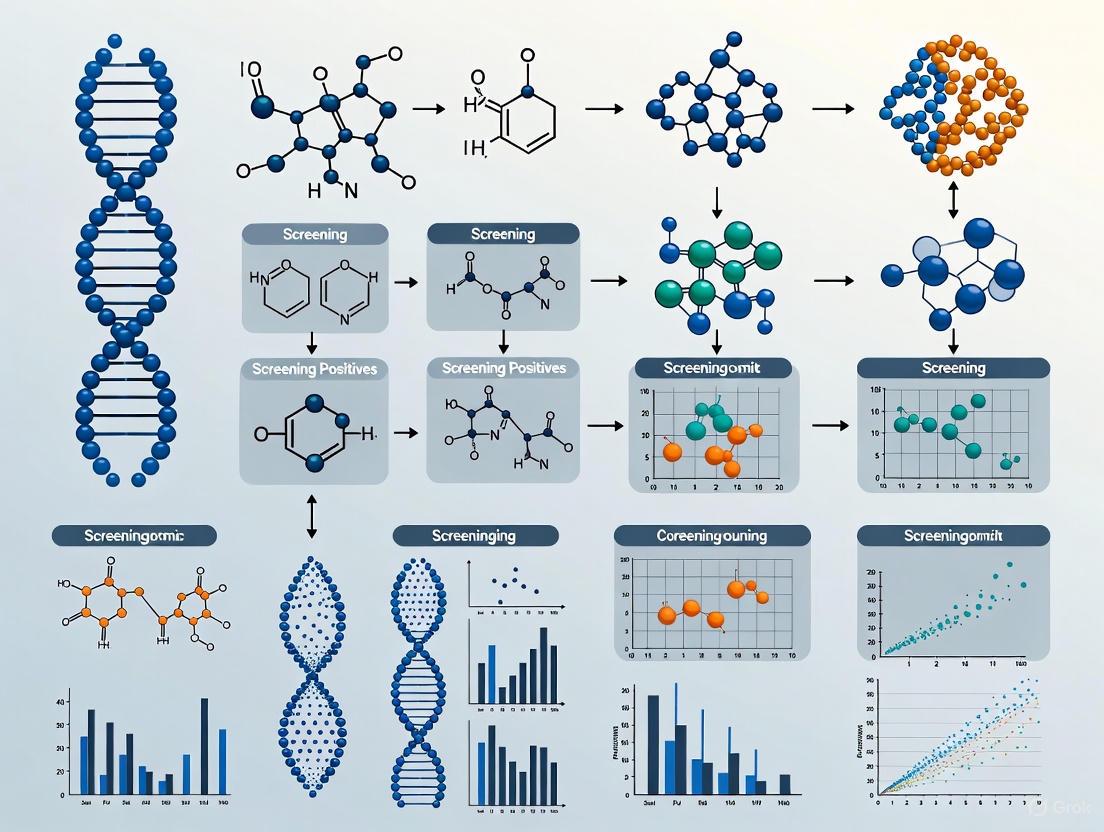
Chemogenomic screening has become a cornerstone of modern drug discovery, enabling the systematic exploration of chemical-genetic interactions on a genome-wide scale.
Strategies for Reducing False Positives in Chemogenomic Screening: A Comprehensive Guide for Drug Discovery
Abstract
Chemogenomic screening has become a cornerstone of modern drug discovery, enabling the systematic exploration of chemical-genetic interactions on a genome-wide scale. However, the high rate of false positives remains a significant challenge, leading to wasted resources and delayed projects. This article provides a comprehensive overview of strategies to mitigate false positives, covering foundational principles, advanced methodological applications, practical troubleshooting, and rigorous validation techniques. We explore computational target prediction, machine learning triage, experimental design optimization, and integrative multi-omics approaches. Designed for researchers, scientists, and drug development professionals, this guide synthesizes current best practices and emerging technologies to enhance the precision and efficiency of chemogenomic screening campaigns.
Understanding the Root Causes of False Positives in Chemogenomic Assays
In chemogenomic screening research, false positives represent activity in an assay that is not related to the targeted biology but arises from surreptitious compound interference with the assay detection system. These false results can be particularly problematic because they are often reproducible and concentration-dependent—characteristics typically attributed to genuine actives. With genuine active compounds being exceptionally rare (approximately 0.01–0.1% of screening libraries), they can be easily obscured by a high incidence of false positives [1]. This technical support center provides comprehensive troubleshooting guidance to help researchers identify, understand, and mitigate these deceptive signals across common screening platforms.
Section 1: Understanding Reporter Gene Assay False Positives
Reporter gene assays (RGAs) are particularly susceptible to specific interference mechanisms that can generate misleading results.
FAQ: What are the most common causes of false positives in Reporter Gene Assays?
Q: Why does my RGA screen show an unusually high hit rate? A: Elevated hit rates in RGAs often stem from compounds acting as "frequent hitters" that interfere with the assay system rather than modulating the intended biological target. Statistical models built from testing 650,000 compounds have identified that these frequent hitters often share specific chemical structures and can be prioritized computationally before costly follow-up studies [2].
Q: Can compounds directly inhibit the reporter enzyme itself? A: Yes, direct inhibition of firefly luciferase is a well-documented source of false positives. For example, substituted N-pyridin-2-ylbenzamides have been identified as competitive inhibitors with respect to the substrate luciferin, with IC₅₀ values reaching as low as 0.069 μM [3]. These inhibitors can accommodate themselves in the luciferin binding site, effectively competing with the natural substrate.
Q: How can I distinguish true actives from luciferase inhibitors? A: Implement a counter-screen using purified luciferase enzyme with KM levels of substrate. Compounds showing activity in both your primary RGA and this counter-screen are likely direct luciferase inhibitors rather than specific modulators of your biological target [1].
Experimental Protocol: Identifying Direct Luciferase Inhibitors
Purpose: To differentiate compounds that directly inhibit firefly luciferase from genuine modulators of your biological pathway.
Materials:
- Purified firefly luciferase enzyme
- Luciferin substrate at KM concentration
- Test compounds
- Luciferase assay buffer
- Luminescence plate reader
Procedure:
- Prepare a concentration series of each test compound in luciferase assay buffer
- Pre-incubate luciferase with compounds for 15-30 minutes at room temperature
- Initiate the reaction by adding luciferin at KM concentration
- Measure luminescence immediately
- Calculate inhibition curves and IC₅₀ values for each compound
- Compare activity patterns with primary RGA results
Interpretation: Compounds exhibiting potent inhibition in this purified enzyme assay (typically IC₅₀ < 10 μM) that also showed activity in your cellular RGA are likely false positives due to direct luciferase inhibition [3].
Section 2: High-Content Screening (HCS) False Positives
High-content screening generates multidimensional data where artifacts can manifest in various forms, from subtle morphological changes to complete assay interference.
FAQ: Addressing Common HCS Artifacts
Q: Why do I see inconsistent staining across my HCS plates? A: Inconsistent staining often results from technical variations in sample processing. Inadequate deparaffinization can cause spotty, uneven background staining, while slides losing signal over time during storage can create plate-edge effects. Always use freshly cut tissue sections and fresh xylene for deparaffinization to minimize these artifacts [4] [5].
Q: How does compound autofluorescence affect HCS results? A: Compound fluorescence can significantly impact assays using light-based detection, particularly those utilizing blue-shifted spectral ranges. In some cases, fluorescent compounds can constitute up to 50% of actives in certain assays. This interference is reproducible and concentration-dependent, making it initially challenging to identify [1].
Q: What causes high background in my HCS images? A: High background stems from multiple potential sources including insufficient blocking, endogenous enzyme activity, non-specific antibody binding, or inadequate washing. For HRP-based detection systems, endogenous peroxidase activity in tissue samples may produce excess background signal if not properly quenched [4].
Troubleshooting Guide: HCS Image Artifacts
Table: Common HCS Image Artifacts and Solutions
| Problem | Possible Causes | Recommended Solutions |
|---|---|---|
| Weak or No Staining | Epitope masking due to fixation; insufficient antibody concentration; inactive antibodies | Optimize antigen retrieval methods; increase primary antibody concentration; include positive controls to verify antibody activity [4] [5] |
| High Background | Inadequate blocking; endogenous enzyme activity; non-specific secondary antibody binding | Increase blocking time to 30+ minutes; quench endogenous peroxidases with 3% H₂O₂; use polymer-based detection systems [4] |
| Non-Specific Staining | Inadequate deparaffinization; insufficient washing; section drying out | Increase deparaffinization time; extend washing to 3×5 minutes with TBST; ensure sections remain covered in liquid [5] |
| Uneven Staining | Inconsistent antigen retrieval; uneven reagent distribution | Use microwave oven for consistent heat distribution during antigen retrieval; ensure complete coverage of tissue sections with all reagents [4] |
Section 3: Quantitative Analysis of False Positive Mechanisms
Understanding the prevalence and characteristics of different interference mechanisms enables more effective screening triage strategies.
Table: Prevalence and Characteristics of Common Assay Interferences
| Interference Type | Prevalence in Library | Enrichment in Actives | Key Characteristics | Prevention Strategies |
|---|---|---|---|---|
| Aggregation | 1.7–1.9% | Up to 90-95% in some biochemical assays | Non-specific inhibition; detergent-sensitive; steep Hill slopes | Add 0.01–0.1% Triton X-100 to assay buffer [1] |
| Compound Fluorescence | EX340nm/EM450nm: 2–5%EX480nm/EM540nm: 0.01–0.2% | Up to 50% in blue-shifted assays | Reproducible, concentration-dependent | Use orange/red-shifted fluorophores; include pre-read step [1] |
| Firefly Luciferase Inhibition | At least 3% | Up to 60% in some cell-based assays | Competitive inhibition with respect to luciferin | Counter-screen against purified luciferase; use orthogonal assays [1] [3] |
| Redox Cycling Compounds | ~0.03% generate H₂O₂ at appreciable levels | Up to 85% in some assays | DTT-dependent; time-dependent inactivation | Replace DTT/TCEP with weaker reducing agents; use [DTT] ≥10mM [1] |
Section 4: Computational and Chemogenomic Solutions
Advanced computational methods and chemogenomic approaches provide powerful tools for prioritizing and understanding false positives.
FAQ: Computational Mitigation Strategies
Q: How can in silico models help identify potential false positives before screening? A: In silico chemogenomics approaches can create "frequent hitter" models that prioritize potential false positives based on chemical structure. These models have successfully identified nonspecific actives in RGAs, achieving a 50% hit rate compared to normal hit rates as low as 2% [2]. The most frequently predicted cellular targets for these frequent hitters relate to apoptosis and cell differentiation, including kinases, topoisomerases, and protein phosphatases.
Q: What is the role of target prediction methods in false positive identification? A: Modern target prediction methods like MolTarPred, which uses 2D similarity searching with Morgan fingerprints, can help identify off-target effects that may be responsible for false positive signals. These ligand-centric methods leverage known ligand-target interactions to hypothesize mechanisms for observed off-target responses [6].
Q: How can chemogenomic libraries address transporter-mediated false positives? A: Double gene deletion libraries for membrane transporters can systematically identify import/export routes that contribute to compound susceptibility or resistance. For example, studies using Saccharomyces cerevisiae have identified specific transporters like Itr1 responsible for importing triazole and imidazole antifungal compounds, while ABC transporter Pdr5 may play roles in both import and export of different compounds [7].
Research Reagent Solutions
Table: Essential Reagents for False Positive Mitigation
| Reagent/Category | Function in False Positive Reduction | Example Applications |
|---|---|---|
| Polymer-based Detection Reagents | More sensitive than avidin/biotin systems; reduce background in IHC/HCS | SignalStain Boost IHC Detection Reagents for enhanced sensitivity with minimal background [4] |
| Antigen Retrieval Buffers | Unmask epitopes masked by fixation; improve specific signal | Optimized buffers for microwave or pressure cooker retrieval methods [4] |
| Non-ionic Detergents | Reduce aggregation-based inhibition by disrupting compound aggregates | Triton X-100 at 0.01–0.1% in assay buffers to prevent nonspecific inhibition [1] |
| Enzyme Inhibitors | Quench endogenous enzyme activity that causes background | 3% H₂O₂ for peroxidase; 2mM Levamisole for phosphatase [5] |
| Normal Sera & Blocking Reagents | Reduce non-specific antibody binding | 5% normal goat serum for 30 minutes before primary antibody incubation [4] |
Section 5: Integrated Experimental Workflows for False Positive Identification
Implementing systematic workflows that combine computational and experimental approaches provides the most robust false positive mitigation.
Integrated Workflow for False Positive Identification
Experimental Protocol: Orthogonal Assay Validation
Purpose: To confirm that compound activity is directed toward the biological target of interest rather than being assay format-dependent.
Principle: Orthogonal assays use different reporters or detection technologies to test compounds identified as actives in the primary screen. Compounds inactive in orthogonal assays are removed from consideration, as this indicates the original activity was likely assay format-dependent [1].
Implementation Strategy:
- For luminescence-based primary screens, implement fluorescence-based orthogonal assays
- For imaging-based primary screens, implement biochemical or transcriptional readouts
- Ensure orthogonal assays measure the same biological pathway but through different detection mechanisms
- Prioritize compounds that show consistent activity across multiple assay formats
Interpretation: Compounds showing activity only in the primary screen but not in orthogonal assays are likely false positives resulting from specific interference with the detection system of the primary assay.
Section 6: Visualization of False Positive Mechanisms
Understanding the molecular mechanisms underlying common false positives enables more effective experimental design.
False Positive Mechanisms and Detection Strategies
Successfully navigating the challenge of false positives in chemogenomic screening requires integrated strategies that combine computational pre-screening, rigorous experimental design, and systematic follow-up validation. By implementing the troubleshooting guides, experimental protocols, and computational approaches outlined in this technical support center, researchers can significantly improve the efficiency of their screening campaigns, saving both time and resources while increasing confidence in screening results. The most effective false positive reduction strategies employ multiple orthogonal approaches, recognizing that no single method can identify all potential sources of interference in complex biological systems.
Frequently Asked Questions
What are the most common types of assay-interfering compounds? The most prevalent mechanisms of assay interference include chemical reactivity (e.g., thiol-reactive and redox-active compounds), inhibition of reporter enzymes (e.g., luciferase), and the formation of colloidal aggregates. These compounds generate false positive signals by interfering with the detection technology rather than through a specific biological interaction [8].
How can I proactively identify frequent hitters in my screening library? Computational tools can filter libraries before screening. Instead of relying solely on oversensitive substructure alerts (like traditional PAINS filters), use modern Quantitative Structure-Interference Relationship (QSIR) models. Tools like "Liability Predictor" are trained on large high-throughput screening (HTS) datasets to more reliably predict compounds with nuisance behaviors, allowing for better library design and prioritization [8].
What are the best practices for confirming that a screening hit is not a false positive? A multi-pronged approach is essential:
- Use orthogonal assays that employ a different detection technology (e.g., switch from a luminescence-based to a fluorescence-based readout) [8].
- Inspect dose-response curves for shapes characteristic of interference, such as a steep, "all-or-nothing" response [9].
- Perform experimental counter-screens specifically designed to detect reactivity, aggregation, or reporter enzyme inhibition [8].
- Apply computational triaging with QSIR models to flag potential interferers for closer scrutiny [8].
Beyond small molecules, what other screening technologies have off-target effects? CRISPR-Cas-based genetic screening is also susceptible to off-target effects. The CRISPR-Cas complex can bind and cleave DNA at sites with high sequence similarity to the intended target, leading to unintended mutations and potential genotoxicity. These effects are influenced by guide RNA design, the type of Cas protein used, and the delivery method [10] [9].
Troubleshooting Guides
Guide 1: Triage of Small Molecule Screening Hits
This guide outlines a step-by-step process to identify and eliminate false positives from small molecule screening campaigns.
1. Initial In-Silico Triage
- Action: Subject your hit list to computational analysis.
- Methodology: Use a tool like Liability Predictor to score compounds for potential thiol reactivity, redox activity, and luciferase inhibition. Additionally, screen for potential colloidal aggregators [8].
- Goal: Flag compounds with high probability of assay interference for deprioritization or require stronger confirmatory evidence.
2. Orthogonal Assay Confirmation
- Action: Test hits in a secondary assay that does not rely on the primary assay's detection technology.
- Methodology: If the primary screen was luminescence-based, develop a fluorescence-based or cell viability counter-assay to confirm the biological effect [8] [9].
- Goal: Verify that the observed activity is genuine and not an artifact of the detection system.
3. Analytical Characterization
- Action: Investigate the behavior of the compound in solution.
- Methodology: Use dynamic light scattering (DLS) to detect the formation of colloidal aggregates. Check for compound fluorescence that could overlap with the assay's detection window [8].
- Goal: Rule out physical chemical phenomena that cause nonspecific inhibition.
4. Dose-Response Analysis
- Action: Carefully analyze the hit's dose-response curve.
- Methodology: Look for non-standard curve shapes, such as a steep Hill slope, which can be indicative of assay interference mechanisms [9].
- Goal: Identify spurious activity patterns that differ from a typical target-binding event.
The workflow for this triage process is summarized below:
Guide 2: Managing Off-Target Effects in CRISPR Screening
This guide details strategies to minimize and identify off-target effects in CRISPR-Cas9 genome editing experiments.
1. Careful gRNA Design
- Action: Select guide RNAs (gRNAs) with maximal specificity.
- Methodology: Use in-silico tools to design gRNAs with a unique spacer sequence that has minimal homology to other genomic sites. Consider the chromatin state of the target locus and avoid sequences with multiple near-matches in the genome [10].
- Goal: Reduce the inherent potential for the CRISPR complex to bind off-target sites.
2. Employ High-Fidelity Cas Variants
- Action: Choose engineered Cas proteins with improved specificity.
- Methodology: Replace the standard SpCas9 with high-fidelity variants (e.g., SpCas9-HF1, eSpCas9) or alternative Cas proteins like Cas12a that have different recognition and cleavage properties [10].
- Goal: Utilize enzymes with stricter binding requirements to decrease off-target cleavage.
3. Detect and Quantify Off-Target Activity
- Action: Empirically measure off-target editing.
- Methodology: After editing, use methods like targeted deep sequencing of predicted off-target sites or unbiased genome-wide assays (e.g., GUIDE-seq, CIRCLE-seq) to identify and quantify unintended mutations [10].
- Goal: Gain a comprehensive understanding of the editome to assess potential genotoxic risk.
4. Consider Alternative Editing Modalities
- Action: Use editors that do not cause double-strand breaks.
- Methodology: For certain applications, employ base editing or prime editing systems. These technologies can introduce precise changes without inducing double-strand breaks, thereby significantly reducing the generation of indels at off-target sites [10].
- Goal: Achieve the desired genetic outcome with a safer editing profile.
The following diagram illustrates the logical decision points for managing CRISPR off-target effects:
Quantitative Data on Assay Interference
The table below summarizes key quantitative data on different types of assay interference, which can aid in risk assessment during hit triage [8].
| Interference Mechanism | Typical Assay Readouts Affected | Common Functional Groups or Behaviors | QSIR Model Performance (Balanced Accuracy) |
|---|---|---|---|
| Thiol Reactivity | Fluorescence-based assays, cell viability | Electrophilic centers (e.g., α,β-unsaturated carbonyls, alkyl halides) | 58-78% |
| Redox Activity | Assays with reducing agents, phenotypic assays | Quinones, polyphenols | 58-78% |
| Luciferase Inhibition | Luciferase reporter gene assays | Some heterocycles, non-specific enzyme inhibitors | 58-78% |
| Colloidal Aggregation | Biochemical inhibition assays | Compounds forming sub-micrometer aggregates in aqueous solution | (Most common cause of artifacts) |
Experimental Protocols
Protocol 1: Liability Triage Using a QSIR Web Tool
This protocol uses the publicly available "Liability Predictor" webtool to triage a list of screening hits [8].
- Input Preparation: Compile the chemical structures of your hit compounds in a supported digital format, such as a list of SMILES strings or a SDF file.
- Tool Access: Navigate to the "Liability Predictor" website at https://liability.mml.unc.edu/.
- Job Submission: Upload your chemical structure file or input the SMILES strings directly into the web interface. Select the desired prediction models (e.g., thiol reactivity, redox activity, luciferase inhibition).
- Result Interpretation: After processing, the tool will return a score or classification for each compound. Hits flagged as high-risk by multiple models should be considered low-priority unless their activity is confirmed in a highly orthogonal assay.
Protocol 2: Counter-Screen for Luciferase Reporter Interference
This protocol describes a direct counter-screen to identify compounds that inhibit common luciferase reporter enzymes [8].
- Reagent Preparation: Prepare a solution containing only the luciferase enzyme (firefly or nano) and its required substrate/buffer components. Do not include any biological target.
- Compound Treatment: Add the hit compounds directly to the reagent solution at the same concentration used in the primary screen. Include a DMSO-only vehicle control.
- Signal Measurement: Incubate according to the reagent's protocol and measure the luminescent signal.
- Data Analysis: Compare the luminescence in compound wells to the vehicle control. A significant decrease in signal indicates that the compound directly inhibits the luciferase reporter, marking it as a likely false positive.
Research Reagent Solutions
The table below lists key computational and experimental tools for addressing common pitfalls in chemogenomic screening.
| Tool or Reagent | Type | Primary Function | Application in False Positive Reduction |
|---|---|---|---|
| Liability Predictor [8] | Computational Webtool | Predicts compounds with thiol reactivity, redox activity, and luciferase inhibition. | Triage of HTS hit lists and design of screening libraries. |
| RDKit [11] | Open-Source Cheminformatics Library | Calculates molecular descriptors, fingerprints, and handles chemical data. | Managing chemical libraries, filtering compounds, and similarity analysis. |
| MolTarPred [6] | Computational Tool | Ligand-centric target prediction using 2D similarity searching. | Identifying potential off-targets and generating mechanisms of action hypotheses. |
| ChEMBL Database [6] | Public Bioactivity Database | Curated database of bioactive molecules with drug-like properties. | Provides annotated chemical and bioactivity data for model training and validation. |
| High-Fidelity Cas9 [10] | Engineered Protein | CRISPR-Cas nuclease variant with reduced off-target activity. | Increases specificity in genetic screens and therapeutic genome editing. |
| Base Editors / Prime Editors [10] | Genome Editing Tool | CRISPR-based systems that edit nucleotides without double-strand breaks. | Reduces indel-related off-target effects and genotoxicity in editing experiments. |
The Impact of Chemical Libraries and Compound Properties on False Positive Rates
FAQs and Troubleshooting Guides
Frequently Asked Questions (FAQs)
Q1: What are the most common chemical features that cause false positives in high-throughput screening?
Compounds with certain chemical moieties are prone to cause false positive results through various interference mechanisms. The following table summarizes key structural alerts and their reasoning for exclusion from screening libraries:
Table: Common Chemical Moieties Excluded to Reduce False Positives
| Chemical Moiety | Primary Reason for Exclusion | Examples |
|---|---|---|
| Acyl halides | Covalent bonding | Acid chlorides |
| Aldehydes | Covalent bonding | Aminoformyl moieties |
| Epoxides | Covalent bonding | Oxiranes |
| Thiols | Toxicity/Covalent bonding | Benzene thiol |
| Anhydrides | Covalent bonding | Maleic anhydride |
| Hydrazines | Covalent bonding | Phenylhydrazine |
| Michael acceptors | Covalent bonding | Vinyl ketones, chalcones |
| Activated halides | Covalent bonding | 2-Chloronitrobenzene |
| Azides | Toxicity | Organic azides |
| Nitrosos | Toxicity | C-nitroso compounds |
These compounds are proactively excluded from quality-controlled screening libraries like the Maybridge collection to minimize false leads [12].
Q2: How can I distinguish between true actives and false positives caused by inorganic impurities?
Zinc and other metal impurities can cause false positives that mimic genuine activity in biochemical assays. To identify these false positives:
Run a TPEN Counter-Screen: Include the zinc-selective chelator TPEN (N,N,N′,N′,-tetrakis(2-pyridylmethyl)ethylenediamine) in your assay. A potency shift greater than 7-fold in the presence of TPEN (typically at 10-50 µM) suggests zinc contamination [13].
Check Synthesis Routes: Review compound synthesis history for steps involving zinc, titanium, or other metal reagents, as these are common contamination sources [13].
Elemental Analysis: For critical hits, perform elemental analysis to detect metal contamination. Active batches of truly inactive compounds may contain up to 20% zinc by mass [13].
Table: Zinc Sensitivity Across Various Assay Types
| Target Class | Example Target | Zinc IC₅₀ (µM) |
|---|---|---|
| Enzyme | Pad4 | 1.0 |
| Kinase | Jak3 | 14.9 |
| Protein-Protein Interaction | Various | 2.7-4.9 |
| Signaling Protein | Ras/Raf | <47 |
Q3: What computational tools can help identify frequent hitters before experimental screening?
The ChemFH platform provides integrated virtual evaluation of potential false positives using:
Machine Learning Models: Multi-task directed message-passing neural networks (DMPNN) combining uncertainty estimation, achieving an average AUC of 0.91 across multiple interference mechanisms [14].
Structural Alert Libraries: 1,441 representative alert substructures derived from analysis of 823,391 compounds [14].
Multiple Screening Rules: Incorporates ten commonly used frequent hitter screening rules including PAINS, Aggregator Advisor, and Lilly Medchem rules [14].
ChemFH is freely available at https://chemfh.scbdd.com/ and has been validated across five virtual screening libraries with reliable performance on natural products and FDA-approved drugs [14].
Q4: How does the DNA linker in DNA-encoded libraries (DELs) affect hit identification?
The DNA-conjugation linker in DELs can significantly influence hit detection and create false negatives:
Linker-Induced Bias: The presence of the linker can prevent detection of otherwise active compounds, leading to widespread false negatives where active molecules are missed in selection data [15].
Apparent Selectivity: Linkers can create artificial target selectivity, where the same molecule without a linker shows broad activity across related targets, but the DNA-conjugated version appears selective [15].
Validation Imperative: Always synthesize and test DEL hits without the DNA linker to confirm true activity and selectivity [15].
Troubleshooting Common Experimental Issues
Problem: Inconsistent activity across different batches of the same compound
Solution: This often indicates inorganic contamination or decomposition.
- Resynthesis Analysis: Resynthesize compounds using alternative routes that avoid metal reagents [13].
- Purity Assessment: Employ multiple analytical techniques (NMR, LC-MS, elemental analysis) to identify inorganic contaminants not detected by standard purity methods [13].
- Biological Validation: Test multiple batches in concentration-response curves alongside positive controls.
Problem: High hit rate with unusual structure-activity relationships
Solution: This may indicate assay interference rather than true target engagement.
- Orthogonal Assays: Confirm hits using multiple detection technologies (e.g., switch from fluorescence to luminescence or ELISA) [13].
- Cytotoxicity Profiling: Implement multiplexed cell health assays to distinguish specific activity from general cytotoxicity [16].
- Aggregation Testing: Add non-ionic detergents (e.g., 0.01% Triton X-100) to identify colloidal aggregators [14].
Problem: DNA-encoded library selections yield surprisingly target-specific hits despite target homology
Solution: This may reflect linker bias rather than true selectivity.
- Cross-Target Testing: Synthesize hits without linker and test across related targets [15].
- Linker Variants: Explore different linker lengths and compositions if developing PROTACs or other bivalent molecules [15].
- Machine Learning Correction: Account for linker effects in ML models trained on DEL data [15].
Experimental Protocols
Protocol 1: TPEN Counter-Screen for Metal-Induced False Positives
Purpose: Identify false positives caused by zinc contamination in compound samples [13].
Materials:
- TPEN (N,N,N′,N′,-tetrakis(2-pyridylmethyl)ethylenediamine), stock solution in DMSO
- Test compounds in DMSO
- Standard assay reagents for your target
Procedure:
- Prepare two sets of identical assay plates with your test compounds at appropriate concentrations.
- To the experimental set, add TPEN at 10-50 µM final concentration.
- To the control set, add equivalent DMSO without TPEN.
- Run your standard assay protocol in parallel.
- Calculate fold-shift in IC₅₀ values: Fold shift = IC₅₀ (+TPEN) / IC₅₀ (-TPEN)
- Compounds with >7-fold potency shift are likely zinc-contaminated false positives [13].
Interpretation: True targets are unaffected by TPEN, while metal-sensitive assays show significant potency shifts.
Protocol 2: High-Content Cellular Health Assessment for Phenotypic Screening
Purpose: Comprehensively characterize compound effects on cellular health to distinguish specific activity from general toxicity [16].
Materials:
- HeLa, U2OS, or HEK293T cells
- Live-cell dyes: Hoechst33342 (50 nM), MitotrackerRed or MitotrackerDeepRed, BioTracker 488 Green Microtubule Cytoskeleton Dye
- Multi-parameter high-content imaging system
Procedure:
- Plate cells in appropriate multi-well imaging plates and incubate overnight.
- Treat with test compounds and controls for 6-72 hours with live-cell imaging capability.
- Image at multiple time points using standardized exposure settings.
- Analyze images for multiple parameters:
- Nuclear morphology (pyknosis, fragmentation)
- Mitochondrial mass and membrane potential
- Microtubule cytoskeleton integrity
- Cell count and viability
Interpretation: Classify compounds based on time-dependent effects on cellular health. Specific inhibitors show distinct profiles from general toxins [16].
The Scientist's Toolkit: Essential Research Reagents
Table: Key Reagents for False Positive Investigation
| Reagent/Tool | Primary Function | Application Notes |
|---|---|---|
| TPEN | Selective zinc chelator | Counter-screen for metal contamination; use at 10-50 µM [13] |
| Triton X-100 | Non-ionic detergent | Identify colloidal aggregators; use at 0.01% [14] |
| Hoechst 33342 | Nuclear stain | Live-cell imaging; use at 50 nM to avoid toxicity [16] |
| Mitotracker Red/Deep Red | Mitochondrial stain | Assess mitochondrial health in live cells [16] |
| ChemFH Platform | Computational prediction | Virtual screening for frequent hitters [14] |
| Multi-parameter Cytotoxicity Assay | Cellular health assessment | Distinguish specific from toxic compounds [16] |
Table: Comprehensive False Positive Mitigation Strategies
| False Positive Type | Detection Methods | Prevention Strategies |
|---|---|---|
| Metal Contamination | TPEN counter-screen, elemental analysis | Alternative synthesis routes, rigorous purification [13] |
| Colloidal Aggregation | Detergent addition, dynamic light scattering | Library pre-filtering for aggregators, use of chemoinformatic tools [14] |
| Assay Interference | Orthogonal assay formats, counter-screens | Fluorescence/luminescence profiling, assay design optimization [14] |
| Cytotoxic Compounds | Multiplexed cell health assays | Early cytotoxicity profiling, time-dependent analysis [16] |
| Reactive Compounds | Structural alert screening, covalent binding assays | Exclusion of reactive moieties from libraries [12] |
| DEL Linker Artifacts | Off-DNA synthesis and testing | Understanding linker bias in data interpretation [15] |
Troubleshooting Guide: Addressing False Positives in Chemogenomic Screens
This guide helps diagnose and resolve common issues in chemogenomic screening related to cellular context.
Symptom: High hit rate with non-reproducible or non-mechanistic activity in a cell-based assay.
| Potential Cause | Diagnostic Experiments | Solutions & Preventative Strategies |
|---|---|---|
| Compound Aggregation [1] | - Test for detergent sensitivity (e.g., add 0.01-0.1% Triton X-100).- Analyze inhibition curves for steep Hill slopes (>2-3).- Measure IC50 shift with increasing enzyme concentration. | - Include non-ionic detergent in assay buffer.- Use an orthogonal, non-biochemical assay (e.g., cellular phenotype) to confirm activity.- Assess compound behavior using dynamic light scattering. |
| Off-Target Assay Interference (e.g., Luciferase Inhibition) [1] | - Test compounds in a counter-screen against the isolated reporter (e.g., purified firefly luciferase).- Check if activity is consistent in an orthogonal assay with a different readout (e.g., β-lactamase, GFP). | - Use alternative, structurally unrelated reporters in assay design.- Consult published databases of known interferers (e.g., luciferase inhibitors) to flag problematic chemotypes.- Employ cell-free target-based assays to isolate direct target engagement. |
| Cellular Context-Specific Toxicity [17] | - Perform a cell viability counter-screen under identical assay conditions.- Use high-content imaging to confirm the desired phenotypic outcome, not just cell death. | - Shorten compound incubation times to reduce cytotoxic effects.- Tiered screening: only progress hits that show desired activity without concomitant cytotoxicity. |
| Presence of Redox-Active or Reactive Compounds [1] | - Test for activity loss upon addition of a reducing agent (e.g., DTT) or a nucleophile (e.g., glutathione).- Measure activity in the presence of catalase to scavenge hydrogen peroxide. | - Replace strong reducing agents (DTT, TCEP) with weaker ones (cysteine) in assay buffers.- Filter out compounds with known reactive functional groups (e.g., alkyl halides, Michael acceptors) from screening libraries. |
Symptom: A gene target identified as essential in one cell line is non-essential in another, confounding validation.
| Potential Cause | Diagnostic Experiments | Solutions & Preventative Strategies |
|---|---|---|
| Genetic Compensation & Pathway Redundancy [18] | - Use multi-parametric phenotypic assays (e.g., transcriptomics, proteomics) to assess if different pathways are activated upon gene loss in different contexts.- Perform double knockout of paralogous genes to test for synthetic lethality. | - Screen across a diverse panel of cell lines to map context-specific dependencies.- Utilize multi-omics data (proteomic, transcriptomic) from the cell line to understand baseline pathway activity and redundancy. |
| Differential Protein Complex Assembly [18] | - Use co-immunoprecipitation (Co-IP) to compare protein-protein interactions of the target in sensitive vs. resistant cell lines.- Employ proximity ligation assays (PLA) to visualize complex formation in situ. | - Characterize protein complex stoichiometry and composition in the relevant cellular context before initiating a screen. |
| Altered Metabolic State or Nutrient Availability [19] | - Measure metabolite levels or nutrient consumption in different cell media.- Test gene essentiality under different nutrient conditions (e.g., galactose vs. glucose media). | - Use physiologically relevant culture conditions that mimic the in vivo environment.- Consider the metabolic profile of the cell model during experimental design and data interpretation. |
Frequently Asked Questions (FAQs)
Q1: Our high-throughput screen yielded a high hit rate. What are the first steps to triage these results and identify true positives?
A1: The immediate priority is to identify and remove compounds causing assay interference. Follow this systematic triage workflow [1]:
- Remove Promiscuous Binders: Identify compounds that are active in multiple, unrelated assays.
- Confirm Dose-Response: Confirm that activity is concentration-dependent.
- Employ Orthogonal Assays: Test hits in an assay that uses a completely different detection technology (e.g., switch from a luminescence readout to fluorescence or cell imaging). Hits that fail in the orthogonal assay are likely false positives.
- Conduct Counter-Screens: Use targeted assays to rule out common interferers like firefly luciferase inhibition, cytotoxicity, or aggregation (e.g., by adding detergent).
Q2: Why does a genetic knockout (e.g., via CRISPR) produce a strong phenotype in one cell line and no phenotype in another, even if the target is expressed?
A2: This "context specificity" is a core feature of biological complexity. The phenotype arising from a gene's loss depends on the larger molecular network in that specific cell [17]. Key factors include:
- Genetic Background: The presence of mutations in complementary pathways can bypass the need for your target gene (synthetic lethality/rescue) [19].
- Molecular Redundancy: Another gene, often a paralog, may perform the same essential function in one cell line but not the other [18].
- Cellular State & Lineage: The baseline metabolic, signaling, and differentiation state of the cell determines which genes are critical for survival [20]. A one-size-fits-all approach does not work in functional genomics.
Q3: How can we better account for cellular compartmentalization in our analysis of signaling pathways?
A3: Traditional "well-stirred" biochemical models are often insufficient. To account for compartmentalization [18]:
- Spatial Techniques: Use high-resolution imaging (e.g., FRET, confocal microscopy) with specific organelle markers to confirm the localization of your target and its effectors.
- Subcellular Fractionation: Biochemically isolate organelles (e.g., plasma membrane, cytoplasm, nucleus) to measure pathway activity and protein modifications in each compartment.
- Mathematical Modeling: Develop computational models that explicitly include different cellular compartments and the rates of molecular translocation between them. This can reveal how the same molecule can carry different signals in different locations.
Q4: What are some emerging computational strategies to predict and account for cell-type specificity in screening data?
A4: Machine learning (ML) is a powerful new tool. One approach involves building models that use a small set of "sentinel" CRISPR knockouts to predict genome-wide loss-of-function effects across diverse cell lines [17]. This allows for:
- Data Compression: Predicting phenotypes for unmeasured genes, reducing the scale and cost of experiments.
- Network Analysis: Identifying core functional modules that drive cellular behavior, moving beyond single-gene analysis.
- Improved Prediction: ML models that integrate multiple data types (e.g., CRISPR phenotypes, transcriptomics, lineage) significantly outperform univariate models based on a single genomic feature.
Visual Guide to Experimental Workflows
Troubleshooting False Positives in HTS
Mapping Context Specificity with CRISPR
The Scientist's Toolkit: Key Reagents & Methods
| Tool / Reagent | Function / Description | Application in Reducing False Positives |
|---|---|---|
| Non-ionic Detergent (Triton X-100) [1] | Disrupts colloidal compound aggregates that cause non-specific inhibition. | Added to biochemical assay buffers (0.01-0.1%) to eliminate aggregation-based false positives. |
| Orthogonal Assay [1] | An assay with a different detection method or biological readout than the primary screen. | Confirms that compound activity is due to the targeted biology, not the assay format. |
| Counter-Screen Assay [1] | A targeted assay to identify compounds that interfere with the detection system. | Examples include a standalone luciferase enzyme assay or a general cytotoxicity assay. |
| Haploinsufficiency Profiling (HIP) [19] | A chemogenomic method in yeast that identifies a compound's protein target by measuring fitness defects in heterozygous deletion strains. | Provides direct, in vivo evidence of target engagement, moving beyond phenotypic artifacts. |
| TKOv3 Library [21] | A genome-scale CRISPR knockout library for human cells, containing ~71,000 sgRNAs targeting ~18,000 genes. | Enables systematic identification of context-specific genetic dependencies across diverse cell lines. |
| Cofitness Network Analysis [19] | A computational method that identifies genes whose knockout phenotypes are correlated across many conditions. | Reveals functional relationships and buffering mechanisms that explain context specificity. |
Advanced Methodologies for Enhanced Specificity in Screening
Core Concepts and FAQs
What is the primary goal of computational pre-screening in chemogenomics?
Computational pre-screening aims to prioritize compounds from vast libraries that are most likely to be true bioactives, thereby increasing phenotypic hit rates and reducing the costs and inefficiencies associated with experimental screening of random compound collections [22].
How does compound pre-selection directly address the problem of false positives?
Pre-selection enriches screening libraries for compounds with desirable properties (e.g., cellular permeability, lower assay interference potential), which reduces the proportion of false positives resulting from artifacts like colloidal aggregation, spectroscopic interference, or chemical reactivity. This directly improves the signal-to-noise ratio in subsequent experimental assays [14].
What are the main categories of false positives that these methods aim to eliminate?
- Colloidal Aggregators: Compounds that form colloids in assay buffers, non-specifically inhibiting many proteins [14].
- Spectroscopic Interference Compounds: These include autofluorescent compounds and firefly luciferase (FLuc) inhibitors, which interfere with common detection methods [14].
- Chemically Reactive Compounds: Molecules that react covalently with protein targets non-specifically [14].
- Promiscuous Compounds: Molecules that inhibit multiple unrelated targets due to undesirable structural features [14].
Troubleshooting Common Experimental Issues
Issue: High rate of non-specific cytotoxicity or inhibition across multiple assay types.
Potential Cause: The compound library is enriched with promiscuous or pan-assay interference compounds (PAINS) [14]. Solution:
- Apply a comprehensive false-positive filter like ChemFH before purchase or screening. This platform uses a multi-task deep learning model to identify various assay interferents with high accuracy (Average AUC of 0.91) [14].
- Implement a simple two-property filter based on physicochemical properties. For example, filtering for compounds with a calculated LogP ≥ 2 and hydrogen bond acceptors ≤ 6 can enrich for bioactives while removing many undesirable compounds, potentially achieving a 30% cost saving in library acquisition [22].
Issue: Confirmed bioactivity in initial screening, but the compound shows no specificity in follow-up target identification assays.
Potential Cause: The compound may be a frequent hitter or its physicochemical properties are not conducive for specific target engagement [14]. Solution:
- Perform chemo-genomic profiling, such as HaploInsufficiency Profiling (HIP) in yeast. This genome-wide assay can identify specific hypersensitive strains, pointing to a compound's potential target and mechanism of action, thus distinguishing specific from non-specific agents [22].
- Utilize in-silico target prediction to narrow down potential targets. Ensemble chemogenomic models that integrate multi-scale chemical and protein sequence information can rank potential targets for a query compound. High-ranking targets can then be prioritized for experimental validation [23].
Issue: Low hit rate in a phenotypic screen on a model organism (e.g.,C. elegans).
Potential Cause: The compound library lacks molecules with sufficient bioavailability or cellular permeability in the chosen organism. Solution:
- Pre-select compounds based on bioactivity in a surrogate system. For instance, screening a library for growth inhibitors in S. cerevisiae (yeast) first, and then using these "yactive" compounds in the target organism. This strategy has been shown to increase phenotypic hit-rates by 6.6-fold in C. elegans compared to random compound screening [22].
- Build a organism-specific predictive model. A Naïve Bayes model trained on the physicochemical properties of known growth-inhibitory compounds can be used to rank-order purchasable compounds for screening, dramatically improving hit rates [22] [24].
Experimental Protocols for Validation
Protocol 1: Two-Property Filter for Library Design
This protocol provides a cost-effective method to pre-filter compound libraries before purchase to enrich for bioactives [22].
Methodology:
- Data Source: Start with a commercially available compound library (e.g., ZINC20, containing over 20 million compounds).
- Property Calculation: For each compound, calculate two key physicochemical properties:
- LogP: The calculated octanol-water partition coefficient, a measure of lipophilicity.
- H-Acceptors: The number of hydrogen bond acceptors.
- Application of Filter: Select only compounds that satisfy both of the following criteria:
- LogP ≥ 2
- H-Acceptors ≤ 6
- Outcome: This filter is empirically derived and has been shown to retain ~91% of known growth-inhibitory compounds while reducing the library size by approximately 30%, leading to significant cost savings [22].
Table: Two-Property Filter Specifications
| Property | Description | Filter Criteria | Rationale |
|---|---|---|---|
| LogP | Calculated octanol-water partition coefficient | ≥ 2 | Enriches for compounds with sufficient lipophilicity for passive cell membrane permeability [22]. |
| H-Acceptors | Number of hydrogen bond acceptors | ≤ 6 | Limits compounds to those more likely to be passively transported across cell membranes [22]. |
Protocol 2: Machine Learning-Assisted Hit Prioritization from HTS Data
This protocol uses machine learning to distinguish true bioactives from assay artifacts directly from HTS data [25].
Methodology:
- HTS Campaign: Perform a high-throughput screen on your compound library.
- Model Training: Train a gradient boosting model on the noisy HTS data.
- Influence Analysis: Analyze the learning dynamics during model training using a novel formulation of sample influence. This step allows the model to distinguish compounds exhibiting desired biological responses from those producing assay artifacts without relying on pre-defined interference mechanisms.
- Prioritization: The model outputs a prioritized list of compounds, effectively excluding assay interferents with different mechanisms. This approach has been shown to be more efficient at prioritizing biologically relevant compounds than standard baselines [25].
Workflow Visualization
In-silico Chemogenomics Hit Prioritization
The Scientist's Toolkit: Research Reagent Solutions
Table: Essential Computational Tools and Resources for Hit Prioritization
| Tool / Resource | Type | Primary Function | Application in Hit Prioritization |
|---|---|---|---|
| ChemFH [14] | Integrated Online Platform | Predicts multiple types of assay interferents (aggregators, fluorescent compounds, etc.) using a DMPNN model. | Virtual screening of compound libraries to remove frequent hitters before experimental screening. |
| ZINC20 [26] | Free Ultralarge Chemical Database | Provides access to over 20 million commercially available compounds in ready-to-dock formats. | Source of purchasable compounds for virtual screening and library design. |
| Ensemble Chemogenomic Model [23] | Target Prediction Algorithm | Predicts protein targets for a query compound by integrating multi-scale chemical and protein sequence information. | Identifying potential mechanisms of action for hits and assessing polypharmacology or off-target effects. |
| Naïve Bayes Model / 2-Property Filter [22] [24] | Pre-screening Prioritization Model | Ranks compounds based on likelihood of bioactivity or applies a simple physicochemical filter. | Cost-effective pre-purchase prioritization to increase phenotypic hit rates in model organism screens. |
| "Yactive" Compound Set [22] [24] | Pre-plated Chemical Library | A collection of ~7,500 compounds known to inhibit S. cerevisiae growth. | A empirically validated resource for screening in diverse model organisms to achieve higher hit rates. |
In chemogenomic screening research, the high rate of false positives poses a significant challenge, often leading to wasted resources and delayed drug discovery pipelines. Random Forest classifiers have emerged as a powerful machine learning tool to address this issue, leveraging ensemble learning to improve the accuracy of target identification and validation. This technical support center provides practical guidance for researchers implementing these methods, featuring troubleshooting guides, FAQs, and detailed experimental protocols directly applicable to chemogenomic false positive reduction.
Research Reagent Solutions
The table below outlines essential computational tools and their functions for implementing Random Forest classifiers in chemogenomic screening.
Table 1: Essential Research Reagents and Computational Tools
| Item | Function in Research |
|---|---|
| Random Forest Algorithm | An ensemble machine learning method that constructs multiple decision trees for robust classification and regression tasks. |
| Molecular Descriptors | Quantitative representations of chemical structures used as input features for predictive modeling. |
| Molecular Fingerprints | Binary vectors representing the presence or absence of specific structural features in a molecule. |
| Hyperparameter Tuning Tools (e.g., GridSearchCV) | Software utilities for systematically optimizing the settings of the Random Forest model to maximize performance. |
| Feature Selection Methods (e.g., Boruta) | Algorithms that identify the most relevant molecular descriptors or features to improve model interpretability and reduce overfitting. |
Experimental Protocols & Data
Protocol: Building a Random Forest Classifier for False Positive Reduction
This protocol outlines the key steps for constructing a Random Forest model to distinguish true positive from false positive hits in chemogenomic screening data.
Data Preparation and Feature Engineering
- Compile Actives and Decoys: Gather a dataset of confirmed active drug-target pairs and a set of "compelling decoys" (inactive pairs that are structurally similar to actives) to create a challenging classification scenario [27].
- Generate Molecular Features: Calculate molecular descriptors (e.g., using MOE software) and/or molecular fingerprints (e.g., Extended-Connectivity Fingerprints, ECFP) for all compounds [28].
- Integrate Target Information: Incorporate relevant target protein features or descriptors to create a comprehensive feature set for each drug-target pair [29].
Model Training and Validation
- Implement Cross-Validation: Use a nested cross-validation strategy, where an outer loop (e.g., 75:25 train-test split repeated 100 times) assesses generalizability, and an inner loop (e.g., 10-fold CV) is used for hyperparameter optimization [30].
- Apply Feature Selection: Utilize stable feature selection methods like Boruta to identify the most predictive biomarkers or features, reducing noise and model complexity [30].
- Train Random Forest Model: Train the classifier on the training subset, using a "balanced" class weight setting to automatically adjust for imbalanced datasets [28].
Performance Evaluation and Prospective Validation
- Evaluate Model Performance: Assess the model on the held-out test set using metrics such as Area Under the Curve (AUC), Positive Predictive Value (PPV), and Negative Predictive Value (NPV) [28].
- Prospective Screening: Apply the trained model to a new, external chemical library to predict and prioritize high-confidence compounds for experimental validation [27] [28].
Experimental Workflow
The following diagram illustrates the logical workflow for the described experimental protocol.
Quantitative Performance Data
The table below summarizes the performance of a Random Forest classifier in reducing false positives for various metabolic disorders, demonstrating the potential of this approach in screening contexts [31].
Table 2: Example False Positive Reduction in Newborn Screening (NBS) using Random Forest
| Disorder | Confirmed Positives | First-Tier NBS False Positives | False Positives After RF Analysis | Reduction in False Positives |
|---|---|---|---|---|
| GA-1 | 48 | 1344 | 150 | 89% |
| MMA | 103 | 502 | 276 | 45% |
| OTCD | 24 | 496 | 11 | 98% |
| VLCADD | 60 | 200 | 196 | 2% |
Troubleshooting Guides & FAQs
Frequently Asked Questions
Q1: Our Random Forest model is overfitting to the training data. What are the key hyperparameters we should tune to control this?
A: Overfitting is a common issue where the model performs well on training data but poorly on unseen test data. To mitigate this, focus on the following hyperparameters:
max_depth: Limits the maximum depth of each tree. A shallow tree may underfit, while a deep tree may overfit [32] [33].min_samples_split: Specifies the minimum number of samples required to split an internal node. Increasing this value prevents the tree from creating nodes that learn from very small, noisy data subsets [33].min_samples_leaf: Sets the minimum number of samples that must be present in a leaf node. A higher value creates a more generalized model [33].max_features: Limits the number of features considered for the best split at each node. Using fewer features (e.g.,"sqrt"or"log2") introduces more randomness and helps control overfitting [32] [33].
Q2: How can we effectively identify the most important molecular features driving our classifier's predictions?
A: Stable feature selection is critical for model interpretability. We recommend:
- Boruta Algorithm: This method compares the importance of your real features against the importance of "shadow" features (randomly permuted versions). Features that are significantly more important than the best shadow feature are deemed important [30].
- Permutation-Based Feature Selection: This involves randomly shuffling each feature and measuring the drop in the model's performance. A large drop indicates an important feature. This can be done with raw or multiple-testing-corrected p-values [30].
Q3: Our dataset is highly imbalanced, with very few confirmed active compounds compared to inactives. How can we adjust the Random Forest model for this?
A: Class imbalance can bias the model toward the majority class. To address this:
- Use the
class_weight="balanced"parameter insklearn.ensemble.RandomForestClassifier. This penalizes misclassifications of the minority class more heavily, encouraging the model to pay more attention to the active compounds [28]. - In one study, applying this setting increased the Positive Predictive Value (PPV) from 61.1% to 65.6%, improving the model's ability to correctly identify true actives [28].
Q4: What is the trade-off between using more trees (n_estimators) and computational cost?
A: While increasing the number of trees generally improves performance and stability, it comes with diminishing returns and a linear increase in computational time.
- Guidance: Start with a default of 100 trees. If performance is acceptable, this is often sufficient. You can try increasing this to 200 or 500, but performance typically stabilizes, and the significant increase in computation time may not be justified [34] [33]. Using parallel processing (
n_jobs=-1) can significantly reduce fitting and prediction times [34].
Common Error Guide
Problem: Poor performance on the test set despite good training accuracy.
- Possible Cause 1: Overfitting due to overly complex trees.
- Solution: Tune hyperparameters like
max_depth,min_samples_leaf, andmax_featuresto constrain the model [33]. - Possible Cause 2: Data leakage, where information from the test set is inadvertently used during training.
- Solution: Ensure a rigorous nested cross-validation setup and avoid performing feature selection before splitting the data into training and test sets [27] [30].
Problem: The model takes too long to train.
In chemogenomic screening, false positives remain a significant barrier to efficient drug discovery. They lead to wasted resources, misdirected research efforts, and delayed identification of truly promising compounds. Multi-parameter approaches, which integrate high-content data from morphological profiling and the Cell Painting assay, provide a powerful strategy to overcome this challenge. By capturing a broad spectrum of cellular responses in an untargeted manner, these methods create distinctive bioactivity signatures that help distinguish true mechanistic effects from nonspecific or artifactual signals [35] [36]. This technical support center provides the essential troubleshooting guidance and methodologies needed to successfully implement these approaches while minimizing false positives in your research.
Frequently Asked Questions (FAQs)
Q1: How does morphological profiling specifically help reduce false positives in screening? Morphological profiling captures hundreds to thousands of quantitative cellular features in an unbiased manner, creating a distinctive "fingerprint" for each compound's effect on cells. Unlike targeted assays that measure a single predefined outcome, this comprehensive profiling allows researchers to compare unknown compounds against reference profiles of known mechanisms of action (MOAs). Compounds that show similar morphological profiles to established references are more likely to share the same biological target, while false positives often demonstrate aberrant or inconsistent profiles that don't cluster with known bioactivities [36] [37]. This approach has proven particularly effective for identifying frequently encountered off-target activities, such as tubulin binding, which might otherwise be missed in conventional assays [37].
Q2: What is the difference between conventional Cell Painting and the newer Cell Painting PLUS (CPP) assay? The table below summarizes the key differences between these two approaches:
Table: Comparison of Cell Painting and Cell Painting PLUS Assays
| Feature | Conventional Cell Painting | Cell Painting PLUS (CPP) |
|---|---|---|
| Imaging Channels | Typically 4-5 channels | Up to 7 separate channels |
| Signal Merging | Dyes with overlapping spectra often merged (e.g., RNA+ER, Actin+Golgi) | Each dye imaged in separate channel |
| Cellular Compartments | 8 standard compartments | 9+ compartments, including additional lysosome staining |
| Staining Approach | Single staining procedure | Iterative staining-elution cycles |
| Organelle Specificity | Moderate due to channel merging | High due to spectral separation |
| Customization | Fixed dye set | Flexible dye selection based on research needs |
| Cost Considerations | Lower reagent costs | Higher due to additional dyes and processing [35] |
Q3: Can brightfield images alone provide sufficient data for bioactivity prediction? Yes, recent research demonstrates that in many cases, deep learning models trained solely on brightfield images can achieve high performance in predicting compound bioactivity across diverse targets and assays. One large-scale study found that brightfield-only predictions could achieve performance comparable to multi-channel fluorescence in many assays, with an average ROC-AUC of 0.744 across 140 diverse assays [38]. However, fluorescence imaging provides higher specificity for particular subcellular structures and is recommended when investigating specific organelle-level effects.
Q4: What are the most common technical challenges that affect data quality in morphological profiling? The most frequent issues include:
- Batch effects across different experimental runs or sites
- Poor segmentation accuracy due to suboptimal staining or cell density
- Spectral bleed-through between fluorescence channels
- Signal intensity variability caused by inconsistent staining or imaging parameters
- Cell health issues that create confounding morphological changes [36] [39] Implementing rigorous standardization protocols and quality control measures is essential to minimize these effects.
Troubleshooting Guides
Poor Image Segmentation and Feature Extraction
Table: Troubleshooting Image Segmentation Issues
| Problem | Possible Causes | Solutions |
|---|---|---|
| Weak fluorescence signal | Inadequate dye concentration, photobleaching, insufficient exposure time | Optimize dye concentrations and exposure times; include fresh controls; protect samples from light [35] |
| Inaccurate cell boundary detection | Overlapping cells, incorrect parameter settings, poor contrast | Adjust cell seeding density; optimize segmentation algorithm parameters; verify stain performance [39] |
| High background noise | Non-specific antibody binding, autofluorescence, insufficient washing | Include appropriate controls; use brighter fluorophores for low-abundance targets; increase wash steps [40] |
| Inconsistent staining across plates | Variation in fixation, permeabilization, or staining time | Standardize protocol timing; use fresh reagents; implement quality control checks [35] |
Addressing Batch Effects and Technical Variability
Batch effects represent a major source of false positives and false negatives in high-content screening. The following strategies can help mitigate these issues:
- Implement cross-site standardization: As demonstrated in large-scale morphological profiling resources, extensive assay optimization across multiple imaging sites significantly improves data reproducibility [41]
- Use reference compounds: Include compounds with known morphological profiles in every experiment to monitor technical variability
- Apply batch correction algorithms: Computational methods can help remove technical artifacts while preserving biological signals [36]
- Standardize preprocessing pipelines: Establish consistent data preprocessing workflows, being particularly cautious with transformations like randomization that can negatively affect downstream analysis [42]
Optimization of Multiplexed Fluorescence Detection
Effective multiparameter approaches require careful optimization of fluorescence detection to minimize spectral overlap and maximize signal quality:
- Perform voltage walks: For each detector, determine the minimum voltage requirement (MVR) that allows clear resolution of dim fluorescent signals from background noise [43]
- Titrate all antibodies: Use stain index calculations to identify separating concentrations that provide good distinction between labeled and unlabeled cells while minimizing spillover spreading [43]
- Implement appropriate controls: Always include fluorescence minus one (FMO) controls for gate setting and viability controls to exclude dead cells that nonspecifically bind antibodies [43]
- Validate dye stability: Characterize fluorescence properties over time, as some dyes (particularly lysosomal markers) may show significant signal decay within 24 hours [35]
Standard Operating Protocols
Core Cell Painting Protocol Workflow
Diagram: Cell Painting Experimental and Computational Workflow
Step-by-Step Methodology:
- Cell Culture Seeding: Plate adherent cells in multiwell plates at optimized density to ensure proper cell spreading without overcrowding [39]
- Compound Treatment/Perturbation: Treat wells with specific compounds or genetic perturbations, including appropriate controls (untreated, vehicle, and reference compounds) [39]
- Staining with Fluorescent Dyes: Apply the standard Cell Painting dye cocktail:
- Nuclear DNA: Hoechst or DAPI (blue channel)
- Endoplasmic Reticulum: Concanavalin A (green channel)
- Mitochondria: MitoTracker (red channel)
- Golgi Apparatus & Actin: Phalloidin and Wheat Germ Agglutinin (yellow channel)
- Nucleoli & Cytoplasmic RNA: SYTO 14 (far-red channel) [39]
- Multichannel Fluorescence Imaging: Acquire images using high-content imaging systems with appropriate filters for each fluorescence channel [36]
- Image Pre-processing: Correct for background fluorescence, flat-field illumination, and apply quality control filters [39]
- Cell Segmentation & Feature Extraction: Use automated algorithms to identify individual cells and subcellular compartments, then extract morphological features (size, shape, texture, intensity) [36] [39]
- Data Normalization: Apply appropriate normalization to remove technical variation while preserving biological signals [42]
- Morphological Profiling & Analysis: Generate multivariate profiles and perform similarity analysis to identify compounds with related mechanisms of action [37]
Cell Painting PLUS (CPP) Iterative Staining Protocol
The CPP assay expands multiplexing capacity through iterative staining-elution cycles:
Diagram: Cell Painting PLUS Iterative Staining Workflow
Key Steps for CPP Implementation:
- Perform initial staining cycle for a subset of cellular targets
- Complete imaging of all stained structures in separate channels
- Apply elution buffer (0.5 M L-Glycine, 1% SDS, pH 2.5) to remove dyes while preserving cellular morphology [35]
- Repeat staining and imaging cycles for additional cellular targets
- Ensure image registration to align images from different cycles for the same cells
- Process and analyze data as in conventional Cell Painting, with enhanced compartment specificity
Essential Research Reagent Solutions
Table: Key Reagents for Morphological Profiling and Cell Painting Assays
| Reagent Category | Specific Examples | Function & Application Notes |
|---|---|---|
| Fluorescent Dyes - Standard CP | Hoechst 33342, DAPI; Phalloidin; Concanavalin A; MitoTracker Deep Red; SYTO 14; Wheat Germ Agglutinin | Labels nuclear DNA; stains actin cytoskeleton; labels endoplasmic reticulum; stains mitochondria; stains nucleoli and RNA; labels Golgi and plasma membrane [39] |
| Fluorescent Dyes - CPP | LysoTracker; Additional compartment-specific dyes | Labels lysosomes (requires live staining in CPP); customizable based on research questions [35] |
| Fixation & Permeabilization | Formaldehyde (4%, methanol-free); Ice-cold methanol (90%); Triton X-100; Saponin | Preserves cellular structure; use for permeabilization (add drop-wise while vortexing); alternative permeabilization agents [40] |
| Elution Buffers (CPP) | Glycine-SDS buffer (0.5 M L-Glycine, 1% SDS, pH 2.5) | Efficiently removes dye signals between staining cycles while preserving morphology [35] |
| Viability Indicators | Propidium Iodide; 7-AAD; Fixable viability dyes (eFluor) | Identifies dead cells for exclusion from analysis; use with fixed cells for intracellular staining [43] |
| Image Analysis Tools | CellProfiler; IKOSA Platform; ResNet50 models | Open-source image analysis; commercial AI-based platform; deep learning for bioactivity prediction [38] [39] |
Data Analysis and Quality Control Pipeline
Morphological Profiling Data Analysis Workflow
Diagram: Morphological Profiling Data Analysis Pipeline
Critical Steps for Robust Analysis:
- Single-Cell Feature Extraction: Extract hundreds of morphological features from each cell using standardized feature sets [36]
- Data Quality Assessment: Implement quality control metrics including:
- Cell count thresholds per well
- Signal-to-noise ratios for each channel
- Segmentation accuracy validation
- Batch Effect Correction: Apply established methods (e.g., Combat, Z-score normalization) to remove technical variation while preserving biological signals [42]
- Profile Aggregation: Compute median feature values per well while preserving single-cell data for subpopulation analysis [39]
- Similarity Analysis: Calculate correlation distances between compound profiles using appropriate similarity metrics [37]
- MOA Prediction: Employ machine learning approaches (1-nearest-neighbor classification, deep learning) to predict mechanisms of action [36] [37]
- Hit Confirmation: Validate predictions through orthogonal assays and dose-response experiments
Performance Metrics for MOA Prediction
Table: Evaluation Metrics for Morphological Profiling Performance
| Metric | Definition | Interpretation | Benchmark Values |
|---|---|---|---|
| NSC (Not-Same-Compound) | Accuracy in predicting MOA when test compound profiles are excluded from training | Measures model generalizability to new compounds | Varies by dataset; ~0.7-0.9 AUC in benchmark studies [36] |
| NSCB (Not-Same-Compound-and-Batch) | Accuracy when excluding same compound AND same experimental batch | Evaluates robustness to batch effects | Lower than NSC; indicates batch sensitivity [36] |
| Drop | Difference between NSC and NSCB | Quantifies batch effect magnitude | Ideally minimal; <0.1 indicates good batch handling [36] |
| ROC-AUC | Area Under Receiver Operating Characteristic curve | Overall prediction performance | 0.744±0.108 average across 140 assays in one study [38] |
Validation Strategies for Hit Compounds
To minimize false positives in chemogenomic screening, implement a comprehensive validation strategy:
- Orthogonal assay confirmation: Test hit compounds in biologically relevant functional assays unrelated to morphological profiling
- Dose-response analysis: Verify that phenotypic effects are concentration-dependent
- Structure-activity relationship (SAR) examination: Confirm that structural analogs produce similar morphological profiles
- Target-based validation: Use genetic approaches (CRISPR, RNAi) or direct binding assays to verify suspected targets
- Chemical-genetic interaction profiling: Compare morphological profiles from chemical perturbations with genetic perturbation profiles targeting the same pathway [36]
The integration of these multi-parameter approaches provides a powerful framework for distinguishing true bioactivities from artifactual signals, ultimately accelerating the drug discovery process while reducing resource waste on false leads.
FAQs: Core Principles of Screening Design
1. What is a screening design and when should I use it? Screening designs are a type of designed experiment used as an initial step to identify the most influential factors among many potential variables. They are an efficient way to systematically separate "the vital few from the trivial many" factors, using a relatively small number of experimental runs. You should use them when you have many potential factors to study, the important factors are unknown, or the effects of the factors are unknown [44].
2. What statistical principles make screening designs effective? The effectiveness of screening designs relies on four key principles [44]:
- Sparsity of Effects: Out of many candidate factors, only a small portion will be important.
- Hierarchy: Lower-order effects (like main effects) are more likely to be important than higher-order effects (like interactions).
- Heredity: Important higher-order terms (e.g., interactions) are usually associated with important lower-order effects of the same factors.
- Projection: A good design will retain reliable statistical properties when unimportant factors are removed and the analysis focuses on the vital few.
3. How can I ensure my A/B test results are reliable? To ensure reliable causal inference from your experiments, two key statistical assumptions must be met [45]:
- Independence between Groups: The outcome for one experimental group should not influence the other. Violations can occur through network effects or confounding variables.
- Independence and Identical Distribution (i.i.d.) within Groups: The collection of one sample should not impact another, and the underlying distribution of the metric should not trend or change variance during the experiment (it should be stationary).
4. What are common pitfalls that lead to false positives in screening? Common pitfalls include [46]:
- Selection Bias: When your test group is not representative of the population.
- Confounding Variables: When an unaccounted factor changes simultaneously with your experimental variable.
- Insufficient Sample Size: When you don't have enough data to detect a genuine effect.
- Data Quality Issues: When outliers or errors skew your results.
Troubleshooting Guides
Problem: Inconclusive or Unreproducible Screening Results
| Potential Cause | Diagnostic Check | Solution |
|---|---|---|
| Confounding Factors | Check if data collection for test/control groups happened under different conditions (e.g., different days, operators). | Randomize the allocation of samples to test and control groups to balance even unmeasured confounding factors [45]. |
| Violated Independence | Check for possible "network effects" where the treatment in one group affects the control group's behavior [45]. | Isolate groups or assign treatments at a level (e.g., user vs. visit) that prevents cross-pollution [45]. |
| Unclear Hypothesis | Review your experiment document. Is your hypothesis vague and open to interpretation? | Craft a precise, measurable hypothesis. Instead of "improve engagement," specify "increase task completion rate by 10%." [46] |
| Insufficient Power | Perform a power analysis before the experiment. Was the sample size too small to detect a meaningful effect? | Determine the required sample size upfront using a power analysis to avoid inconclusive results [46]. |
Problem: High Signal-to-Noise Ratio Obscuring True Hits
| Potential Cause | Diagnostic Check | Solution |
|---|---|---|
| Noisy Metric | Analyze the variance of your primary metric. Is it inherently highly variable? | Formulate "fast-twitch" metrics that are sensitive to the change you are testing and have lower inherent variance [45]. |
| Incorrect Factor Ranges | Review prior knowledge. Are the chosen factor levels too narrow to produce a detectable change? | Based on subject matter expertise, choose factor ranges and levels large enough to produce a detectable signal over the background noise [44]. |
| Unaccounted Interactions | After identifying main effects, check for significant lack of fit, which can suggest missing interaction or quadratic terms [44]. | Include center points in your design to detect curvature. Use the projection property of your design to run follow-up experiments that estimate interactions among the vital few factors [44]. |
Experimental Protocol: Genome-Scale Chemogenomic CRISPR Screen
This detailed protocol is adapted for conducting high-confidence, dropout CRISPR screens to identify genetic interactions with small molecules [21].
1. Key Research Reagent Solutions
| Item | Function |
|---|---|
| TKOv3 Library | A CRISPR sgRNA library containing 70,948 guides targeting 18,053 human genes. It is used to systematically knock out genes across the genome [21]. |
| RPE1-hTERT p53-/- Cell Line | A human retinal pigment epithelial cell line with telomerase immortalization and p53 knockout. It provides a stable, genetically defined background for screening [21]. |
| Lentiviral Packaging System | Produces lentiviral particles to deliver the TKOv3 sgRNA library into the target cells, ensuring efficient and stable genomic integration [21]. |
| Selection Antibiotic (e.g., Puromycin) | Selects for cells that have been successfully transduced with the sgRNA-containing virus, creating a uniformly edited population for the screen [21]. |
| Genotoxic Agent (or other compound of interest) | The chemical perturbation whose genetic interactions are being probed. The concentration must be pre-determined to be sub-lethal [21]. |
| Illumina Sequencing Platform | Used for high-throughput sequencing of the sgRNA barcodes from the screened cell population to quantify guide abundance [21]. |
2. Detailed Workflow
Step 1: Determine Critical Parameters
- Transduction Efficiency: Perform a pilot transduction to establish the viral titer needed to achieve a low Multiplicity of Infection (MOI), ensuring most cells receive only one sgRNA. This is critical for clear genotype-phenotype mapping [21].
- Compound Concentration: Titrate the genotoxic agent (or other compound) to find a sub-lethal concentration that induces a selective pressure without killing all cells. This allows for the detection of genes that confer sensitivity or resistance [21].
Step 2: Library Transduction and Selection
- Transduce a large population of RPE1-hTERT p53-/- cells with the TKOv3 lentiviral library at the pre-determined MOI. The population size must be sufficient to maintain high representation of every sgRNA (typically 500-1000x coverage) [21].
- Treat cells with puromycin for 3-5 days to select for successfully transduced cells [21].
Step 3: Conduct the Dropout Screen
- Split the selected cell population into two arms: Control (vehicle-treated) and Treatment (compound-treated).
- Culture both arms, passaging cells as needed, for a duration sufficient for a phenotypic dropout to occur (typically 14-21 days, or ~15 population doublings). Maintain minimum coverage for each sgRNA throughout [21].
Step 4: Sample Preparation and Sequencing
- At the end of the screen, harvest genomic DNA from both the control and treatment cell populations.
- Amplify the integrated sgRNA sequences from the genomic DNA via PCR and prepare the libraries for high-throughput sequencing on an Illumina platform [21].
Step 5: Bioinformatic Analysis
- Sequence Alignment: Map the sequenced reads to the reference TKOv3 library to count the abundance of each sgRNA in the control and treatment groups.
- Enrichment/Depletion Analysis: Use specialized algorithms (e.g., MAGeCK, drugZ) to statistically compare sgRNA abundances between groups. sgRNAs that are significantly depleted in the treatment group versus control identify genes whose loss makes cells sensitive to the compound (synthetic lethality) [21].
Essential Materials and Reagents Table
| Category | Item | Specification / Purpose |
|---|---|---|
| Library & Cells | CRISPR sgRNA Library | e.g., TKOv3 (70,948 sgRNAs) [21] |
| Immortalized Cell Line | Genetically stable background; e.g., RPE1-hTERT p53-/- [21] | |
| Delivery & Selection | Lentiviral Packaging System | For high-efficiency sgRNA delivery [21] |
| Selection Antibiotic | e.g., Puromycin, for stable cell pool generation [21] | |
| Screening Tools | Genotoxic/Chemical Agent | Sub-lethal concentration to induce selective pressure [21] |
| Illumina Sequencer | For high-throughput sgRNA abundance quantification [21] | |
| Design Foundation | Statistical Software | For power analysis, randomization, and data analysis [44] [46] |
| Experimental Plan Document | Pre-registers hypothesis, metrics, and analysis plan [46] |
Practical Strategies for Optimizing Screening Performance and Parameters
In chemogenomic screening research, the reliability of experimental results is profoundly dependent on the quality of the underlying data resources. False positives, which incorrectly indicate biological activity where none exists, can derail research programs, wasting valuable time and resources. A significant source of these artifacts stems from inadequately curated reference databases and a lack of robust experimental controls. This technical support center provides troubleshooting guides and FAQs to help researchers address specific issues encountered during their experiments, with a focus on strategies for reducing false positives through improved database curation and quality control practices. The following sections outline common pitfalls and provide actionable protocols to enhance the reliability of your screening outcomes.
Troubleshooting Guides & FAQs
Database Curation Issues
Q1: What are the common issues with reference sequence databases that can lead to false positives in metagenomic classification?
Reference sequence database issues are a pervasive source of error in metagenomic analysis, potentially leading to significant false positive taxonomic classifications. Below are ten common issues and their mitigation strategies [47].
Table 1: Common Reference Sequence Database Issues and Mitigation Strategies
| Issue | Description | Mitigation Strategies |
|---|---|---|
| 1. Incorrect Taxonomic Labelling | Wrong taxonomic identity assigned to a sequence, causing false positives/negatives. | Compare sequences against type material; extensive database testing and use [47]. |
| 2. Unspecific Taxonomic Labelling | Vague labels (e.g., "bacterium sp.") reduce classification precision. | Review label distribution across ranks; identify unspecific names like "sp." [47]. |
| 3. Taxonomic Underrepresentation | Lack of sequences for specific taxa lowers detection sensitivity. | Use broad database inclusion criteria; source sequences from multiple repositories [47]. |
| 4. Taxonomic Overrepresentation | Over-abundance of certain taxa can bias classification results. | Apply selective inclusion criteria; perform sequence deduplication or clustering [47]. |
| 5. Inappropriate Inclusion/Exclusion | Database may wrongly include/exclude host, vector, or non-microbial sequences. | Include best available host genome; intentionally tailor taxa for the ecological niche [47]. |
| 6. Partitioned Sequence Contamination | Contaminant sequences are present but span multiple entries. | Use assessment tools like BUSCO, CheckM, EukCC, and compleasm [47]. |
| 7. Chimeric Sequence Contamination | Single sequence is composed of fragments from different organisms. | Screen with tools like GUNC, CheckV, Kraken2, or Conterminator [47]. |
| 8. Poor Quality Reference Sequences | Sequences are fragmented, incomplete, or have other quality issues. | Implement strict quality control for completeness, fragmentation, and circularity [47]. |
| 9. Lack of Low-Complexity Masking | Simple, repetitive sequences can cause false alignments. | Mask low-complexity sequences if the classification algorithm allows it [47]. |
| 10. Inadequate Database Maintenance | Outdated databases with unaddressed errors and no versioning. | Adopt a team-based management approach; automate quality control and updates [47]. |
Q2: How can an incomplete host reference genome lead to false biological conclusions?
Insufficient host filtration using an incomplete human reference genome can introduce severe artifacts. One study found that using the GRCh38 reference, which lacked a complete Y chromosome, led to a false, statistically significant difference in the microbial profiles of male versus female metastatic tumor samples [48]. This artifactual sex bias was abolished when the same data was re-analyzed using the more complete T2T-CHM13v2.0 reference genome, which includes the first complete Y chromosome [48]. The missing Y chromosome sequences in the older reference were not being filtered out and were instead being misclassified as microbial taxa, such as Toxoplasma gondii and Bifidobacterium tibiigranuli, thereby skewing the results [48].
Q3: What are the consequences of poor data quality in general screening contexts?
Poor data quality, driven by errors, duplication, and inconsistency, leads to incorrect information being used for business and research decisions. This results in reduced efficiency, increased operational costs, and decreased revenue or research output [49]. In a screening context, this directly translates to false hits, wasted resources on follow-up studies, and incorrect conclusions.
Experimental Design & Validation
Q4: How can I reduce false hits from compound-reporter interactions in luciferase-based screens?
A primary caveat of standard luciferase reporter assays is the frequency of false hits resulting from compounds directly interacting with the luciferase reporter protein itself, rather than the target pathway [50]. This issue can be effectively mitigated by implementing a coincidence reporter system. In this approach, a bicistronic transcript is stoichiometrically translated into two non-homologous reporters (e.g., firefly luciferase and NanoLuc luciferase) via a 2A "ribosomal skipping" sequence [50]. Because it is highly unlikely for a compound to directly inhibit both distinct reporter enzymes, a true "coincident" response in both signals indicates on-target biological activity, while a signal in only one reporter likely indicates a false hit [50].
Q5: What is hypothesis-driven screening and how does it differ from process-driven HTS?
Process-driven High-Throughput Screening (HTS) aims to industrialize lead finding by maximizing throughput, but it often lacks the flexibility for iterative, hypothesis-based experiments [51]. In contrast, Hypothesis-driven screening is an iterative paradigm where complex phenotypic chemogenomics studies account for unknown mechanisms of action and high frequencies of false positives/negatives. Results from one round of screening are used to form new hypotheses, which then inform the design of the next round of experiments [51]. This approach requires flexible systems, such as High Throughput Cherry Picking (HTCP), to design and execute these tailored experiments effectively [51].
Experimental Protocols
Protocol: A Chemogenomic CRISPR Screen in Human Cells
This protocol outlines the steps for performing a genome-scale chemogenomic dropout CRISPR screen using the TKOv3 library in human RPE1-hTERT cells to identify genes essential for fitness or drug response [21].
1. Library and Cell Line Preparation
- Cell Line: Use the near-diploid human cell line RPE1-hTERT p53−/−.
- CRISPR Library: The TKOv3 library contains 70,948 sgRNAs targeting 18,053 human genes.
- Key Step - Estimation of Transduction Efficiency: Perform a pilot transduction to determine the correct viral titer necessary to achieve a low multiplicity of infection (MOI ~0.3-0.4). This ensures most cells receive only one sgRNA, which is critical for screen quality [21].
2. Screen Setup and Transduction
- Transduce a large population of cells (e.g., 200 million) with the lentiviral TKOv3 library at the predetermined MOI. Maintain a high library representation (e.g., 500-1000 cells per sgRNA) to prevent stochastic loss of guides [21].
- After transduction, select cells with puromycin for 5-7 days to eliminate untransduced cells.
3. Compound Treatment and Passaging
- Key Step - Genotoxic Agent Concentration: Estimate the correct concentration of the genotoxic agent or compound of interest to be used in the screen. This often requires a separate dose-finding experiment to identify a concentration that induces a robust, but not overwhelming, selective pressure [21].
- Split the transduced cell population into control and treatment arms. Culture the cells for approximately 21 population doublings, passaging them regularly to maintain representation and allow for dropout of sgRNAs targeting genes essential for survival under the treatment condition.
4. Sequencing and Analysis
- Harvest cells and extract genomic DNA at the endpoint (and optionally at the beginning as a reference).
- Amplify the integrated sgRNA sequences by PCR and prepare the libraries for next-generation sequencing on an Illumina platform.
- Bioinformatic Analysis: Process the sequencing results to count the abundance of each sgRNA in control versus treated samples. Use specialized software (e.g., MAGeCK) to identify sgRNAs and genes that are significantly depleted in the treated sample, indicating essentiality under that selective condition [21].
The workflow for this protocol is summarized in the following diagram:
Protocol: A Yeast-Based Phenotypic Screen for HSP90 Modulators
This protocol describes a liquid culture-based phenotypic screen in yeast to identify novel small-molecule modulators of Hsp90 biology using a focused chemogenomic approach [52].
1. Yeast Strain Selection and Preparation
- Strains: Use a focused set of haploid yeast deletion strains with known sensitivities to Hsp90. This includes wild-type (BY4741) and deletion mutants (e.g.,
sst2Δ,ydj1Δ,hsp82Δ). - Culture: Streak strains from frozen stocks onto YPD agar plates and incubate at 30°C for 2 days. Inoculate single colonies into liquid YPD medium and grow overnight. Prepare frozen working stocks in medium with DMSO [52].
2. Compound Library Preparation
- Library: Use a library of ~3680 compounds (e.g., from the NCI or LOPAC).
- Dilution: Prepare compound master plates as DMSO stocks. For screening, dilute compounds in Minimal Proline Medium (MPD) containing 0.003% SDS to enhance yeast permeability [52].
3. Phenotypic Plate Screen and Data Acquisition
- Dilute overnight yeast cultures 1/100 in MPD.
- In a 384-well plate, pipette 25 µL of diluted compound and add 25 µL of diluted yeast culture per well. Include DMSO-only controls.
- Key Step - Growth Kinetics: Seal the plates with transparent tape and incubate at 30°C in a plate reader. Measure the optical density at 600 nm (OD600) every hour for 48-60 hours to capture full growth curve kinetics, not just an endpoint [52].
4. Data Analysis and Hit Prioritization
- Curve Analysis: Normalize the optical density curves. Instead of relying only on endpoint growth, use computed curve functions and distance metrics to classify strain responses. Calculate the time for each culture to reach a set OD threshold (e.g., OD600 = 0.8) [52].
- Hit Identification: Filter hits based on single-strain selectivity, identifying compounds that show a significant effect on one deletion strain but not on the wild-type or other strains.
- Secondary Screening: Prioritize primary hit compounds by re-screening them against a larger panel of Hsp90-sensitive strains at multiple concentrations (e.g., 100 µM and 20 µM) to confirm the phenotype and mechanism.
The logical workflow for hit identification and validation is as follows:
The Scientist's Toolkit: Research Reagent Solutions
Table 2: Key Research Reagents for Reliable Chemogenomic Screening
| Reagent / Resource | Type | Primary Function | Key Feature for Reducing False Positives |
|---|---|---|---|
| Coincidence Reporter System [50] | Assay System | Simultaneously measures two distinct reporters from a single transcript. | Distinguishes on-target activity from compound-reporter interference artifacts. |
| TKOv3 Library [21] | CRISPR Library | Targets 18,053 human genes with 70,948 sgRNAs. | Enables genome-scale identification of gene-compound interactions in a near-diploid human cell line. |
| Chemical Probes (e.g., SGC Probes) [53] | Small Molecules | High-quality, selective inhibitors for target validation. | Meet strict criteria (e.g., in vitro Kd < 100 nM, >30-fold selectivity) to ensure phenotypic effects are on-target. |
| NCI Compound Sets [53] [52] | Compound Library | Diverse collections of chemical scaffolds for screening. | Provides a broad basis for discovering novel chemotypes with unique mechanisms. |
| LOPAC Library [52] | Compound Library | Library of Pharmacologically Active Compounds. | Contains well-annotated compounds, useful for assay validation and as benchmarking controls. |
| Yeast Deletion Strains [52] | Biological Model | Haploid strains with single gene deletions. | Identifies buffered pathways and genes sensitive to chemical perturbations in a chemogenomic framework. |
| RefSeq & GTDB [47] [48] | Reference Database | Curated sequence databases for taxonomic classification. | Mitigates misclassification; RefSeq is broad, GTDB offers curated prokaryotic taxonomy. |
| T2T-CHM13v2.0 [48] | Reference Genome | A complete, gapless human reference genome. | Prevents false positives in host DNA filtration, especially in low-biomass metagenomic studies. |
FAQs: Core Concepts and Common Issues
What do "sensitivity" and "specificity" mean in the context of chemogenomic screening?
In chemogenomic screening, Sensitivity measures the ability of your tool or analysis to correctly identify true positive interactions (e.g., a true drug-target binding event). High sensitivity means fewer true positives are missed. Specificity measures the ability to correctly identify true negative interactions; high specificity means fewer false positives are reported. There is often a trade-off: increasing sensitivity can decrease specificity, and vice versa. Balancing them is critical for reducing false positives without missing genuine hits [54].
My analysis is producing too many false positive hits. What are the first parameters I should check?
When facing high false positive rates, your initial focus should be on parameters that control the stringency of similarity or binding predictions:
- Similarity Score Thresholds: If using ligand-centric tools (e.g., MolTarPred), increase the minimum similarity score (e.g., Tanimoto) required for a target prediction.
- P-value or E-value Cut-offs: For statistical models, tighten the significance threshold (e.g., from ( p < 0.05 ) to ( p < 0.01 ) ).
- Gap Penalties: In sequence alignment tools (e.g., EMBOSS Needle), increasing gap opening and extension penalties makes alignments more stringent and reduces the chance of aligning unrelated sequences [55].
How can the underlying data quality affect my tool's performance?
The principle of "garbage in, garbage out" is critical. The quality of the bioactivity data used to train or benchmark a model directly impacts the reliability of its predictions. Using databases with highly confident, experimentally validated interactions (e.g., ChEMBL with a high confidence score) for training can significantly improve the specificity of your predictions. A study on target prediction found that using a filtered database with a minimum confidence score of 7 improved data quality for subsequent analyses [6].
Are there optimization methods that automatically balance sensitivity and specificity?
Yes, advanced modeling approaches can systematically optimize this balance. The Regression Optimal (RO) and Threshold Bayesian Probit Binary (TGBLUP) with an optimal probability threshold (BO) are two methods that train a model and then fine-tune a classification threshold to minimize the difference between sensitivity and specificity. Research in genomic selection has shown that the RO method can outperform other models in terms of the F1 score and Kappa coefficient, which are metrics that account for the balance between sensitivity and specificity [54].
Troubleshooting Guides
High False Positive Rate in Target Prediction
Symptom: Your target prediction workflow returns an unreasonably high number of potential drug targets, many of which are likely non-physiological.
| Potential Cause | Solution | Rationale |
|---|---|---|
| Overly permissive similarity threshold | Increase the minimum similarity score (e.g., Tanimoto, Dice) required for a target prediction. | Raises the bar for what constitutes a "similar" ligand, prioritizing high-confidence matches [6]. |
| Low-confidence training data | Use a filtered version of your database (e.g., ChEMBL) that includes only high-confidence interactions. | Ensures the model learns from reliable drug-target interactions, reducing noise [6]. |
| Suboptimal fingerprint or metric | Switch the molecular fingerprint or similarity metric. For example, Morgan fingerprints with Tanimoto scores were found to outperform MACCS fingerprints with Dice scores in the MolTarPred tool [6]. | Different representations capture different aspects of molecular structure, affecting similarity calculations. |
High False Negative Rate in Chemogenomic CRISPR Screens
Symptom: Your dropout screen fails to identify known essential genes or known drug-gene interactions.
| Potential Cause | Solution | Rationale |
|---|---|---|
| Excessively stringent significance threshold | Loosen the adjusted p-value or false discovery rate (FDR) cut-off (e.g., from 1% to 5%). | Allows more potentially significant hits to pass the statistical filter [21]. |
| Poor sgRNA library design or low coverage | Ensure your library (e.g., TKOv3) has high sgRNA coverage per gene and confirm high transduction efficiency. | Improves the statistical power and reliability of the screen to detect true dropouts [21]. |
| Incorrect genotoxic agent concentration | Titrate the drug or agent concentration to ensure it is not immediately lethal to all cells. | A very high dose can mask specific genetic interactions by causing universal cell death [21]. |
Performance Data of Common Tools
The following table summarizes the sensitivity and specificity of various bioinformatic tools as reported in benchmark studies. This data can guide your selection and expectation of tools for chemogenomic research.
Table 1: Performance Metrics of Select Bioinformatics Tools
| Tool / Method | Application Context | Reported Sensitivity | Reported Specificity | Key Finding / Note |
|---|---|---|---|---|
| RO (Regression Optimal) Model [54] | Genomic Prediction (Plant Breeding) | Outperformed comparator models by 86-250% | Balanced automatically | Achieved superior F1 and Kappa scores by optimizing the threshold. |
| AlphaMissense [56] | Missense Variant Pathogenicity | 0.77 | 0.46 | Benchmark on human data showed high accuracy (auROC up to 0.95); specificity lower when applied to animal variants. |
| ESM-1b [56] | Missense Variant Pathogenicity | 0.86 | 0.32 | Shows high sensitivity but struggled with specificity in cross-species application. |
| PolyPhen-2 [56] | Missense Variant Pathogenicity | 0.90 | 0.20 | Highest sensitivity but lowest specificity on the animal variant benchmark, indicating a high false positive rate. |
| High-Confidence Filtering [6] | Target Prediction | Reduced Recall | Implied Increase | Applying a high-confidence filter reduces recall (sensitivity) but is expected to improve precision (related to specificity). |
Experimental Protocols
Protocol: Optimizing Parameters for a Target Prediction Tool
This protocol provides a general workflow for optimizing stand-alone target prediction tools like MolTarPred to maximize performance for your specific dataset.
Key Research Reagent Solutions
| Item | Function in Experiment |
|---|---|
| ChEMBL Database [6] | A manually curated database of bioactive molecules with drug-like properties. Provides high-quality, experimentally validated bioactivity data for training and benchmarking. |
| Morgan Fingerprints [6] | A type of circular fingerprint that captures atomic environments in a molecule. Found to be effective for similarity comparisons in target prediction. |
| Tanimoto Coefficient [6] | A metric for calculating chemical similarity. Used to compare molecular fingerprints and identify similar compounds. |
| Benchmark Dataset of FDA-Approved Drugs [6] | A set of known drugs with well-characterized targets. Used as a ground truth to validate the accuracy and assess the sensitivity/specificity of prediction methods. |
Methodology:
Data Curation:
- Obtain a benchmark dataset of molecules with known targets. A set of FDA-approved drugs, excluding any molecules present in your training database, is ideal [6].
- Prepare your training database (e.g., ChEMBL). For higher specificity, filter interactions to include only those with a high confidence score (e.g., ≥7) [6].
Parameter Grid Setup:
- Identify key adjustable parameters in your tool. These often include:
- Fingerprint Type: (e.g., MACCS, Morgan).
- Similarity Metric: (e.g., Tanimoto, Dice).
- Similarity Threshold: The minimum score to consider two molecules similar.
- Number of Top Similar Ligands: How many of the most similar known ligands to consider for prediction.
- Identify key adjustable parameters in your tool. These often include:
Iterative Testing and Validation:
- Run the target prediction tool on your benchmark dataset using different combinations of parameters from your grid.
- For each combination, compare the predictions against the known targets in the benchmark set.
Performance Calculation:
- For each parameter set, calculate performance metrics, including Sensitivity (True Positives / [True Positives + False Negatives]) and Specificity (True Negatives / [True Negatives + False Positives]).
Optimal Parameter Selection:
- Plot the Sensitivity and Specificity for all parameter combinations. The optimal set is often the one that maximizes both, for example, the point closest to the top-left corner on a Receiver Operating Characteristic (ROC) curve.
Protocol: Genome-Scale Chemogenomic CRISPR Screen with TKOv3 Library
This protocol outlines the key experimental steps for a chemogenomic dropout screen to identify gene-drug interactions, with a focus on steps that influence sensitivity and specificity [21].
Methodology:
Screen Setup:
- Cell Line: Use a genetically stable, telomerase-immortalized cell line such as RPE1-hTERT ( p53^{-/-} ) to prevent senescence during the screen.
- Library Transduction: Transduce cells with the TKOv3 lentiviral library (70,948 sgRNAs targeting 18,053 genes) at a low Multiplicity of Infection (MOI ~0.3) to ensure most cells receive only one sgRNA. Critical: Determine viral titer beforehand to achieve the desired MOI and maintain a high representation of the library (e.g., 500x coverage per sgRNA) to ensure statistical power and reduce false negatives [21].
Drug Treatment & Cell Passage:
- Drug Concentration Optimization: Before the main screen, perform a dose-response curve to determine the appropriate drug concentration. The ideal concentration is the one that causes a modest but significant growth defect (e.g., 20-40% reduction in fitness) without being immediately lethal. An incorrect concentration is a major source of false negatives/positives [21].
- Treat transduced cells with the selected drug concentration or a DMSO vehicle control. Passage cells continuously for ~14 population doublings to allow for a clear dropout of sgRNAs targeting genes that sensitize cells to the drug.
Sequencing and Analysis:
- Sample Collection & Sequencing: Harvest cells at the start (T0) and end (Tfinal) of the screen. Isolate genomic DNA and amplify the sgRNA region by PCR for next-generation sequencing.
- Bioinformatic Analysis: Process sequencing results to count sgRNA reads. Use specialized analysis packages (e.g., MAGeCK) to identify significantly enriched or depleted sgRNAs/genes in the drug-treated group compared to the control.
- Threshold Optimization: Adjust the FDR and log-fold-change thresholds based on the positive and negative controls in your screen to balance the sensitivity (finding true hits) and specificity (excluding false positives).
Visualization of Workflows and Strategies
Parameter Optimization Workflow
Diagram Title: Iterative Parameter Optimization Process
Sensitivity-Specificity Balance Strategy
Diagram Title: Troubleshooting Sensitivity and Specificity
In chemogenomic screening, the initial identification of "hits" is only the first step in a long discovery journey. The primary challenge researchers face is the high rate of false positives that can emerge from initial high-throughput screens. These false signals can derail research programs, wasting precious time and resources. Confirmation pipelines are systematic approaches designed to address this critical issue through rigorous secondary assays and orthogonal validation methods. By implementing these strategies, researchers can effectively triage hits, confirm true biological activity, and advance only the most promising candidates toward development.
This technical resource center addresses the most common challenges faced during validation, providing actionable troubleshooting guidance and proven protocols to enhance the reliability of your chemogenomic screening outcomes.
Core Concepts: Building Your Validation Knowledge Base
Table 1: Key Validation Terminology and Definitions
| Term | Definition | Primary Function |
|---|---|---|
| Orthogonal Validation | Confirmation of results using a method based on different biological or chemical principles [57] | Eliminates method-specific artifacts by providing independent verification |
| Secondary Assays | Follow-up experiments to confirm activity and mechanism of primary screen hits [58] | Distinguishes true positives from false positives through deeper biological interrogation |
| Hit Triage | The process of prioritizing primary screen hits for further investigation [58] | Enables efficient resource allocation by ranking hits based on multiple criteria |
| Chemogenomic Signature | The pattern of genetic sensitivities or resistances to a compound [59] | Reveals mechanism of action and identifies potential off-target effects |
| Z'-Factor | A statistical measure of assay quality and robustness [60] | Quantifies assay suitability for high-throughput screening (values >0.5 are desirable) |
Orthogonal confirmation significantly improves specificity but also results in increased turnaround time and cost of testing [57]. The fundamental principle is that using a method with different potential artifacts and sources of error provides much stronger evidence for a real biological effect than simple replication of the same method.
Troubleshooting Guide: Common Validation Challenges & Solutions
FAQ 1: How can we reduce the cost and time of orthogonal confirmation without compromising quality?
Challenge: Traditional orthogonal confirmation methods like Sanger sequencing for genetic tests or secondary binding assays for compound screens create significant bottlenecks, increasing both turnaround time and experimental costs [57].
Solution: Implement machine learning frameworks to identify and filter probable false positives before committing to costly confirmatory testing.
Protocol: Machine Learning-Based Filtering for Genetic Variants [57]
- Training Set Generation: Sequence well-characterized reference samples (e.g., Genome in a Bottle Consortium samples) with established truth sets.
- Data Processing: Process sequences through your standard alignment and variant calling pipeline.
- Feature Extraction: Extract quality metrics (e.g., read depth, mapping quality, variant frequency) from the variant call format (VCF) files.
- Model Training: Train machine learning models (e.g., using Random Forest or similar algorithms) on these datasets to classify variants as true or false positives.
- Implementation: Apply the trained model to new clinical or research samples to flag high-confidence variants unlikely to require confirmation.
Results: This approach reduced orthogonal confirmatory testing by 71% while maintaining a high false-positive detection rate of 99.5% [57].
FAQ 2: Our phenotypic screening hits have unknown mechanisms of action. How do we prioritize them for follow-up?
Challenge: Unlike target-based screening where mechanisms are predefined, phenotypic screening hits act through a variety of mostly unknown mechanisms within a large and poorly understood biological space [58].
Solution: Employ a structured triage process that leverages existing biological knowledge and strategic secondary screening.
- Protocol: Hit Triage for Phenotypic Screening [58]
- Exclude Pan-Assay Interference Compounds (PAINS): Filter out compounds with known non-specific reactivity or assay interference patterns.
- Assess Chemical Tractability: Prioritize compounds with favorable medicinal chemistry properties for potential optimization.
- Leverage Biological Knowledge: Use three types of biological knowledge for prioritization:
- Known Mechanisms: Compare to compounds with established mechanisms of action.
- Disease Biology: Evaluate relevance to the disease pathway or phenotype.
- Safety Profiles: Consider potential toxicity based on structural or known target attributes.
- Implement Chemogenomic Profiling: Test compounds in a platform like ChemoGenix, which uses a genome-wide pooled CRISPR/Cas9 knockout screening to identify genes whose knockout sensitizes or suppresses the growth inhibition induced by a compound [59]. This generates a genetic signature that can confirm or reveal the mechanism of action (MOA).
FAQ 3: How do we design a secondary screening strategy that captures complex biology?
Challenge: Single-endpoint adult parasite screens are encumbered by low throughput, high cost, and extreme phenotypic heterogeneity [60].
Solution: Develop a multivariate, tiered screening strategy that leverages abundantly accessible stages or models for primary screening, followed by multiplexed secondary assays.
Protocol: Multivariate Macrofilaricidal Screening [60]
- Primary Bivariate Screen: Use abundantly accessible microfilariae for a high-throughput primary screen assessing two phenotypes (e.g., motility and viability) at multiple time points.
- Hit Progression: Divert primary hits to a secondary, multivariate screen against adult parasites.
- Parallelized Phenotypic Endpoints: In the secondary screen, assess multiple relevant fitness traits in parallel:
- Neuromuscular control
- Fecundity
- Metabolic activity
- Direct viability
- Data Integration: Identify compounds with strong effects on key adult traits and differential potency across life stages.
Key Benefit: This approach achieved a >50% hit rate for identifying submicromolar macrofilaricidal leads by thoroughly characterizing compound activity [60].
FAQ 4: What orthogonal methods can confirm target engagement for a novel compound?
Challenge: Validating the direct interaction between a small molecule and its proposed protein target is crucial but challenging.
Solution: Combine biochemical and genetic orthogonal approaches to build compelling evidence for target engagement.
- Protocol: Orthogonal Target Engagement Strategies
- Biochemical Binding Assays:
- Technology: Use universal assay platforms like Transcreener which detects reaction products (e.g., ADP for kinases) via competitive immunoassays in a homogenous "mix-and-read" format [61].
- Format: Fluorescence polarization (FP) or time-resolved FRET (TR-FRET) readouts.
- Advantage: Homogeneous formats are amenable to high-throughput screening and reduce variability.
- Genetic Validation (Chemogenomic Profiling):
- Platform: Utilize a genome-wide CRISPR/Cas9 knockout screening platform [59].
- Process: Screen your compound in a human cancer cell line (e.g., NALM-6) and identify genetic vulnerabilities (synthetic lethals) and suppressors.
- Outcome: The resulting chemogenomic signature helps confirm the compound's mechanism of action and reveals potential off-target effects [59].
- Biochemical Binding Assays:
FAQ 5: How do we establish appropriate validation metrics for a new assay?
Challenge: Determining whether an assay is robust enough for reliable hit confirmation.
Solution: Implement standardized statistical measures during assay development and validation.
- Protocol: Assay Performance Validation [61] [60]
- Define Key Parameters:
- Signal-to-Background Ratio: Adequate separation between positive and negative controls.
- Coefficient of Variation (CV): Measures precision and reproducibility.
- Z'-Factor: A statistical characteristic of an assay reflecting the separation between positive and negative controls and the data variation.
- Validation Thresholds:
- Define Key Parameters:
Experimental Workflow: From Primary Hit to Validated Lead
The following diagram illustrates a comprehensive confirmation pipeline integrating multiple validation strategies discussed in this guide.
The Scientist's Toolkit: Essential Research Reagent Solutions
Table 2: Key Reagents and Platforms for Validation Experiments
| Resource | Function in Validation | Application Context |
|---|---|---|
| ChemoGenix Platform [59] | Genome-wide pooled CRISPR/Cas9 knockout screening to generate chemogenomic signatures. | MOA confirmation, identification of synthetic lethal interactions and resistance mechanisms. |
| Transcreener ADP² Assay [61] | Universal, homogeneous immunoassay for direct detection of ADP produced by kinase reactions. | Biochemical confirmation of kinase inhibitor activity; target engagement studies. |
| GIAB Reference Samples [57] | Well-characterized human genome samples with established "truth set" variants. | Benchmarking and training machine learning models for NGS variant validation. |
| Tocriscreen Chemogenomic Library [60] | A library of bioactive compounds with known human targets. | As a reference set for profiling and understanding novel compound mechanisms. |
| MolTarPred [6] | A ligand-centric in silico target prediction method based on 2D chemical similarity. | Generating testable hypotheses for a compound's potential molecular targets. |
Key Implementation Takeaways
Successful implementation of confirmation pipelines requires strategic planning from the earliest stages of assay development. The most effective approaches share several common characteristics: they employ multiple orthogonal methods based on different biological principles, establish clear statistical thresholds for assay robustness early in the process, leverage publicly available reference standards for benchmarking, and implement machine learning frameworks where possible to streamline validation workflows without compromising quality. By integrating these principles into your screening infrastructure, you can significantly enhance the reliability of your hit confirmation process and accelerate the discovery of truly bioactive compounds.
Troubleshooting Common Issues in Data Analysis and Interpretation
Frequently Asked Questions
1. How can I distinguish a true hit from a false positive in a primary screen? False positives in chemogenomic screens can arise from various factors, including general cellular toxicity or off-target effects. To distinguish true hits, implement a multivariate screening approach that assesses multiple phenotypic endpoints (e.g., motility, viability, fecundity) rather than relying on a single readout [60]. This helps identify compounds with specific, mechanism-based activity. Furthermore, hit validation should include rigorous dose-response experiments to confirm potency and phenotype reproducibility [52] [60].
2. What strategies can reduce false positives from non-specific toxic compounds? A powerful strategy is to use isogenic yeast strains with differing sensitivities to the pathway of interest. Screening compounds against a panel of strains (e.g., including wild-type and specific deletion mutants) allows you to identify compounds that show selective effects toward one strain, indicating a targeted mechanism rather than general toxicity [52]. Computational analysis of growth curve functions can further classify these selective responses [52].
3. My hit compound did not validate in secondary assays. How can I improve the primary screen's predictive power? Optimizing primary screen parameters is crucial for predictive power. This includes:
- Assay Robustness: Calculate the Z'-factor to ensure your assay has a high signal-to-noise ratio; a Z' > 0.5 is acceptable, but > 0.7 is excellent [60].
- Phenotypic Depth: Incorporate multiple time points to capture drug dynamics and potential recovery, which can help reduce false negatives and provide a more comprehensive activity profile [60].
- Sample Quality: Improve the health and purity of biological samples used in the screen. For instance, column filtration of parasites significantly reduced noise in a microfilariae viability assay [60].
4. How can I prioritize hit compounds for further investigation? Prioritization should be based on multiple criteria. Begin with compounds that demonstrate a strong and reproducible phenotype in dose-response validation. Then, use a focused secondary screen against a set of strains with known, differential sensitivities to the target pathway. A lead hit, like "NSCI45366" from one study, will emerge by showing a distinct sensitivity profile that aligns with the intended mechanism, which can then be confirmed through biochemical studies [52].
Troubleshooting Guide: Common Data Issues and Solutions
| Issue | Potential Cause | Recommended Solution |
|---|---|---|
| High false positive rate | General cytotoxicity; single phenotypic endpoint. | Implement multivariate phenotyping [60]; use selective strain panels to identify targeted activity [52]. |
| Poor assay robustness (Low Z'-factor) | High variability in biological samples; suboptimal assay conditions. | Improve sample preparation/purity [60]; optimize parameters (e.g., seeding density, incubation time) [60]. |
| Hit compounds not reproducing in validation | Inconsistent compound handling; liberal hit-selection threshold. | Use fresh compound dilutions for validation; set a more stringent primary hit threshold (e.g., Z-score >1) [60]. |
| Inability to determine mechanism of action | Lack of chemogenomic profile for the compound. | Screen compound against a comprehensive deletion mutant array (DMA) to identify hypersensitive and hypertolerant mutants, revealing involved pathways [62]. |
Experimental Protocols for Key Cited Experiments
1. Protocol for a Yeast Phenotype Plate Screen [52]
- Strain Preparation: Grow haploid yeast deletion strains to saturation in YPD medium. Dilute the cultures 1/100 in minimal proline medium (MPD).
- Compound Preparation: Dilute compound stocks in MPD medium to the desired screening concentration (e.g., 200 μM or 40 μM).
- Assay Setup: In a 384-well plate, pipette 25 μL of diluted compound and add 25 μL of diluted yeast culture. Include multiple replicates (e.g., quadruplicate) and controls (e.g., 16 replicates of a 1% DMSO-treated strain per plate).
- Incubation and Reading: Seal the plates with transparent tape and incubate at 30 °C. Read the optical density (OD600) every hour for 48-60 hours using a plate reader.
- Data Analysis: Normalize the optical density curves. Calculate fitness values and growth rates for each strain under treatment compared to controls. Use metrics like "time to reach OD600 of 0.8" or curve distance functions to quantify and classify strain responses.
2. Protocol for a Bivariate Microfilariae Screen [60]
- Sample Preparation: Isolate microfilariae (mf) and use column filtration to obtain a healthy, pure preparation, reducing assay noise.
- Compound Treatment: Treat mf in assay plates with compound library (e.g., at 100 μM or 1 μM). Include positive controls (e.g., heat-killed mf).
- Phenotypic Assessment:
- Motility: At 12 hours post-treatment (hpt), record a short video (e.g., 10 frames) for each well. Calculate motility, normalizing by the segmented worm area to avoid bias from worm count.
- Viability: At 36 hpt, perform an endpoint viability measurement.
- Data Processing: Normalize values from treatment wells against staggered controls on the same plate to account for temporal drift. Calculate Z-scores for each phenotype to identify hits.
Data Visualization Workflows
The following diagrams illustrate key experimental and analytical workflows to help visualize the processes described in the troubleshooting guides.
Hit Identification Workflow
Hit Validation Pipeline
The Scientist's Toolkit: Research Reagent Solutions
| Item | Function in Experiment |
|---|---|
| S. cerevisiae Haploid Deletion Mutant Array (DMA) | A collection of yeast deletion strains used in chemogenomic screens to identify genes conferring sensitivity or tolerance to a compound, revealing mechanisms of toxicity and potential drug targets [62]. |
| Minimal Proline Medium (MPD) | A defined growth medium that enhances yeast strain sensitivity and permeability to compound treatment, improving the detection of chemical-genetic interactions [52]. |
| Tocriscreen / LOPAC / NCI Compound Libraries | Curated libraries of bioactive compounds or diverse chemical scaffolds used for high-throughput screening to identify novel chemotypes and probe biological pathways [52] [60]. |
| ATP-binding Cassette (ABC) Transporter Reporters (e.g., Pdr12) | Transmembrane pumps studied to understand cellular export mechanisms for organic acids and other toxins, which is critical for investigating compound efflux and resistance [62]. |
| Z'-Factor Calculation | A statistical measure used to assess the robustness and quality of a high-throughput screening assay, ensuring the signal dynamic range is sufficient for reliable hit detection [60]. |
Validation Frameworks and Comparative Analysis of Reduction Strategies
FAQs and Troubleshooting Guides
Performance and Methodology
Q1: What is the most effective target prediction method according to recent benchmarks?
A1: A precise 2025 comparison of seven target prediction methods, including stand-alone codes and web servers, identified MolTarPred as the most effective method. The study evaluated MolTarPred, PPB2, RF-QSAR, TargetNet, ChEMBL, CMTNN, and SuperPred using a shared benchmark dataset of FDA-approved drugs. For MolTarPred, the use of Morgan fingerprints with Tanimoto scores was found to outperform configurations using MACCS fingerprints with Dice scores [6].
Q2: How can I reduce the number of false positive predictions from my model?
A2: A primary source of false positives is statistical bias in Drug-Target Interaction (DTI) databases. To mitigate this, employ a balanced sampling strategy for selecting negative examples during training. This strategy ensures that each protein and each drug appears an equal number of times in both positive and negative interaction sets. Research has demonstrated that this method corrects database bias, decreases the number of false positives among top-ranked predictions, and improves the rank of true positive targets [63] [64].
Q3: Does using a high-confidence filter on training data improve prediction quality?
A3: Using high-confidence filters (e.g., a confidence score of 7 or higher in ChEMBL) can enhance the precision of predictions by ensuring only well-validated interactions are used. However, this comes at a cost: it reduces the overall recall of the model. This trade-off makes high-confidence filtering less ideal for applications like drug repurposing, where the goal is to identify all potential targets, including novel ones [6].
Data and Implementation
Q4: Which database is most suitable for training target prediction models for novel targets?
A4: While DrugBank is excellent for predicting new indications for known targets, ChEMBL is often more suitable for predicting interactions with novel protein targets due to its extensive and experimentally validated chemogenomic data. The ChEMBL database (version 34) contains over 2.4 million compounds and 15,000 targets, providing a broad foundation for training [6].
Q5: My model performance seems inconsistent. How should I structure a benchmark to ensure its robustness?
A5: Robust benchmarking requires strong alignment with best practices. Key considerations include:
- Ground Truth Selection: Carefully choose your source of validated drug-indication or drug-target mappings (e.g., CTD, TTD). Performance can vary significantly depending on the database used [65].
- Data Splitting: Use appropriate data splitting protocols such as k-fold cross-validation or, more realistically, temporal splits where models are trained on older data and tested on newer approvals to simulate real-world prediction [65].
- Meaningful Metrics: Go beyond Area Under the Curve (AUC). Report interpretable metrics like precision and recall at a specific threshold (e.g., top 10 ranked predictions) to better reflect the practical utility of the predictions for experimental validation [65].
Performance Metrics and Data
The following table summarizes the key findings from a 2025 benchmark study of seven target prediction methods [6].
Table 1: Performance and Characteristics of Target Prediction Methods in a 2025 Benchmark
| Method Name | Type | Source / Availability | Underlying Algorithm | Key Database | Key Finding |
|---|---|---|---|---|---|
| MolTarPred | Ligand-centric | Stand-alone code | 2D similarity | ChEMBL 20 | Most effective method in the benchmark; Morgan fingerprints with Tanimoto score recommended. |
| PPB2 | Ligand-centric | Web Server | Nearest Neighbor/Naïve Bayes/Deep Neural Network | ChEMBL 22 | Uses multiple fingerprint types (MQN, Xfp, ECFP4). |
| RF-QSAR | Target-centric | Web Server | Random Forest | ChEMBL 20 & 21 | Uses ECFP4 fingerprints. |
| TargetNet | Target-centric | Web Server | Naïve Bayes | BindingDB | Uses multiple fingerprint types (FP2, MACCS, E-state, etc.). |
| ChEMBL | Target-centric | Web Server | Random Forest | ChEMBL 24 | Uses Morgan fingerprints. |
| CMTNN | Target-centric | Stand-alone code | ONNX Runtime | ChEMBL 34 | Uses Morgan fingerprints. |
| SuperPred | Ligand-centric | Web Server | 2D/Fragment/3D similarity | ChEMBL & BindingDB | Uses ECFP4 fingerprints. |
Experimental Protocols
Protocol 1: Benchmarking a Target Prediction Method
This protocol outlines the steps for a robust performance assessment of a target prediction method, adapted from current benchmarking practices [6] [65].
Objective: To quantitatively evaluate the performance of a target prediction method against a curated set of known drug-target pairs.
Workflow Overview:
Materials:
- Source Database: A comprehensive database of drug-target interactions, such as ChEMBL or DrugBank [6] [64].
- Computational Resources: Access to the target prediction method(s) to be benchmarked (e.g., stand-alone code or web server access).
- Software: Data processing and analysis environment (e.g., Python/R, pgAdmin4 for database querying).
Procedure:
- Database Selection and Query: Select a primary database (e.g., ChEMBL 34). Host it locally or access it remotely. Query relevant tables (
molecule_dictionary,target_dictionary,activities) to retrieve compound structures (canonical SMILES), target information, and bioactivity data (e.g., IC50, Ki) [6]. - Data Preparation and Filtering:
- Filter bioactivity records to include only those with standard values (e.g., IC50, Ki) below a threshold (e.g., 10,000 nM) to ensure high-affinity interactions.
- Remove entries associated with non-specific or multi-protein targets by filtering out target names containing keywords like "multiple" or "complex."
- Remove duplicate compound-target pairs to retain only unique interactions [6].
- (Optional) Apply a high-confidence filter (e.g., ChEMBL confidence score ≥ 7) to create a refined dataset, noting the potential impact on recall [6].
- Define Benchmark Dataset:
- From the prepared database, extract a subset of molecules with known, validated targets (e.g., FDA-approved drugs from ChEMBL). To prevent over-optimistic performance, ensure these benchmark molecules are excluded from the main database used by the prediction method to prevent data leakage [6].
- Randomly select a sample (e.g., 100 drugs) for validation. The known targets of these drugs serve as the ground truth [6].
- Run Target Predictions:
- Input the benchmark set of query molecules into the target prediction method(s) and execute the predictions.
- Collect the ranked list of predicted targets for each query molecule.
- Performance Evaluation:
- Compare the predicted targets against the ground truth for each molecule.
- Calculate relevant metrics. For a fixed cutoff, calculate Precision@K (e.g., number of true positives in the top 10 predictions) and Recall@K. For rank-based assessment, calculate the rank of the true target in the predicted list [63] [65]. The area under the precision-recall curve (AUPRC) is also informative.
Protocol 2: Implementing Balanced Negative Sampling
This protocol details a method to minimize false positives by creating a balanced training dataset [64].
Objective: To generate a set of negative drug-target examples that counteracts the statistical bias present in most DTI databases.
Workflow Overview:
Materials:
- Positive DTI Set: A curated list of known, positive drug-target interactions from a database like DrugBank or ChEMBL.
Procedure:
- Initialize Counters: For each protein and each molecule in your positive DTI set, initialize a counter with a value equal to its number of known ligands (for proteins) or known targets (for molecules) in the positive set [64].
- Iterative Selection:
- Start with the proteins (or molecules) that have the highest counter value.
- For a given protein, randomly select a molecule that meets two criteria: (a) it is not known to interact with this protein (i.e., not a positive DTI), and (b) its current counter is greater than or equal to 1 [64].
- Create Negative DTI and Update:
- Designate the selected (protein, molecule) pair as a negative DTI.
- Decrease the counter for that protein and that molecule by one [64].
- Loop and Check: Repeat steps 2 and 3, proceeding to proteins with progressively lower initial counters. The process continues until all protein and molecule counters are reduced to zero [64].
- Output: The resulting collection of pairs is your balanced negative dataset. This can be combined with your positive set to train a machine learning model (e.g., SVM or Random Forest) that is less prone to predicting false positives [63] [64].
The Scientist's Toolkit: Research Reagent Solutions
Table 2: Essential Resources for Target Prediction and Benchmarking Experiments
| Resource Name | Type | Primary Function in Research | Relevance to Reducing False Positives |
|---|---|---|---|
| ChEMBL Database | Bioactivity Database | Provides a large corpus of experimentally validated bioactive molecules and drug-target interactions for model training and benchmarking [6]. | Its confidence score system allows for filtering high-quality interactions, improving training data reliability [6]. |
| DrugBank Database | Drug & Target Database | Provides detailed, curated information on approved and investigational drugs, their targets, and mechanisms [64]. | Useful for creating high-quality benchmark sets of approved drugs with well-characterized targets [64]. |
| Balanced Negative Sampling | Computational Method | A strategy for selecting non-interacting drug-target pairs for machine learning training [64]. | Directly addresses statistical bias in DTI databases, a major cause of false positives, by creating a balanced training set [63] [64]. |
| Morgan Fingerprints | Molecular Representation | A type of circular fingerprint that encodes the structure of a molecule around each atom. Used to compute molecular similarity [6]. | In similarity-based methods like MolTarPred, their use with the Tanimoto coefficient was shown to optimize prediction accuracy [6]. |
| Support Vector Machines (SVM) | Machine Learning Algorithm | A classifier that finds the optimal hyperplane to separate interacting from non-interacting drug-target pairs in a high-dimensional space [64]. | Effective for DTI prediction; its performance is significantly enhanced when trained with balanced negative datasets, reducing false positive rates [64]. |
Troubleshooting Guide: Frequent Hitter Interference
This guide addresses common issues researchers face when dealing with false positives in high-throughput screening (HTS).
Q: A high proportion of my initial hits are being invalidated by secondary assays. What are the likely causes and solutions?
A: Your hits are likely "frequent hitters" (FHs)—compounds that show activity across multiple assays through interference mechanisms rather than true biological activity [14].
Diagnosis Steps:
- Perform a dose-response curve. Aggregator-based false positives often show non-linear or non-sigmoidal response curves.
- Add a non-ionic detergent (e.g., Triton X-100 or Tween-20) to the assay buffer. A reduction or loss of activity suggests colloidal aggregation [14].
- Conduct a counter-screen using the same detection technology (e.g., fluorescence, luminescence) but without the biological target. An apparent "hit" in this system indicates spectroscopic interference [14].
Preventative Solution: Use a computational screening tool like ChemFH to virtually evaluate compound libraries before running HTS. This platform predicts various interference mechanisms using high-quality models with an average AUC of 0.91 [14].
Q: My mass spectrometry (MS)-based screen should be immune to interference, but I am still seeing implausible hits. Why?
A: While MS is less prone to spectroscopic interference, novel false-positive mechanisms can occur. A 2025 study identified a specific phenomenon in a RapidFire MRM-based screen where compounds directly interfered with the MS system's solid-phase extraction (SPE) cartridge, leading to signal suppression or enhancement that mimicked real activity [66].
- Solution: The researchers developed a mitigation pipeline. Re-run your putative hits in a simplified assay that bypasses the SPE cartridge (e.g., direct injection). If the activity disappears, the hit is likely a false positive related to the SPE process [66].
Q: My virtual screening process uses target prediction tools for drug repurposing. How can I increase the confidence in my predictions?
A: Inconsistent predictions across different tools are a common challenge. A systematic comparison of seven target prediction methods revealed that performance varies significantly [6].
- Best Practice: According to the study, MolTarPred was identified as the most effective method. To enhance reliability:
- Use a high-confidence benchmark dataset (e.g., FDA-approved drugs with well-annotated targets) for validation [6].
- For ligand-centric methods like MolTarPred, Morgan fingerprints with Tanimoto similarity were found to outperform other fingerprint and metric combinations [6].
- Apply a high-confidence filter, which, while it may reduce recall, improves the precision of your predictions [6].
Experimental Protocols for False-Positive Mitigation
Protocol 1: Validating Hits Against Colloidal Aggregation
This protocol details a wet-lab method to confirm if a hit compound is a colloidal aggregator [14].
Materials:
| Research Reagent | Function |
|---|---|
| Non-ionic detergent (Triton X-100) | Disrupts colloidal aggregates, breaking up non-specific binding. |
| Dynamic Light Scattering (DLS) | Instrumentation to physically confirm the presence of colloidal particles. |
| Negative Control Compounds | A set of known inert compounds to establish a baseline. |
Methodology:
- Primary Assay with Detergent: Re-test all initial hit compounds in the original primary assay, but include a condition with a non-ionic detergent (e.g., 0.01% Triton X-100).
- Data Analysis: Compounds that lose activity in the presence of the detergent are highly likely to be colloidal aggregators.
- Orthogonal Confirmation (Optional): Use Dynamic Light Scattering (DLS) to physically detect the presence of particles in the 50-1000 nm size range in the assay buffer for the suspected aggregator compounds.
Protocol 2: Computational Pre-Screening with ChemFH
This protocol describes using the ChemFH platform to triage compound libraries before expensive HTS experiments [14].
Materials:
| Research Reagent | Function |
|---|---|
| ChemFH Online Platform | Integrated tool for predicting multiple types of assay interference. |
| Compound Library (SMILES format) | The digital representation of the chemical library to be screened. |
| Standardized Data File (.csv) | Formatted file containing compound identifiers and SMILES strings. |
Methodology:
- Data Preparation: Standardize your compound library. Convert all structures to canonical SMILES at pH 7.0 and remove salts and duplicates.
- Model Selection: Upload the prepared data file to the ChemFH platform. Select the prediction models for the desired endpoints (e.g., aggregators, fluorescent compounds, reactive compounds).
- Results Interpretation: Review the predictions. Compounds flagged as high-risk for being frequent hitters should be considered for removal from the screening library or flagged for lower-priority testing.
Quantitative Performance Data
Table 1: Performance Metrics of the ChemFH Prediction Platform [14]
| Model Endpoint | Sensitivity | Specificity | AUC (Area Under Curve) |
|---|---|---|---|
| Colloidal Aggregators | 0.85 | 0.93 | 0.95 |
| Fluorescent Compounds | 0.82 | 0.95 | 0.94 |
| Luciferase Inhibitors | 0.88 | 0.91 | 0.95 |
| Reactive Compounds | 0.84 | 0.94 | 0.95 |
| Overall Model Average | - | - | 0.91 |
Table 2: Comparison of Target Prediction Methods for Virtual Screening [6]
| Prediction Method | Type | Algorithm / Basis | Key Finding |
|---|---|---|---|
| MolTarPred | Ligand-centric | 2D Similarity (Morgan FP) | Most effective method in study; optimal for repurposing. |
| RF-QSAR | Target-centric | Random Forest (ECFP4) | Performance varies with the number of top similar ligands. |
| PPB2 | Ligand-centric | Nearest Neighbor/Naive Bayes | Depends on a large set of top similar ligands (2000). |
| TargetNet | Target-centric | Naive Bayes (Multiple FPs) | Algorithm and key parameters are not clearly reported. |
Experimental Workflow Visualizations
ChemFH Screening Pipeline
RapidFire MRM False-Positive Mitigation
Frequently Asked Questions (FAQs)
Q: What are Pan-Assay Interference Compounds (PAINS), and how should they be used? A: PAINS are a set of 480 structural alerts designed to flag compounds with a high probability of behaving as frequent hitters. However, their use has limitations, as the specific screening endpoints for many rules are ambiguous. It is recommended to use them cautiously as a supplementary tool alongside more robust prediction models like ChemFH, which uses alerts derived from clearly defined mechanisms [14].
Q: Can a compound be a frequent hitter through multiple mechanisms simultaneously? A: Yes. A single compound can be both a colloidal aggregator and a fluorescent compound. This is why integrated tools like ChemFH, which screen for multiple interference mechanisms concurrently, are particularly valuable [14].
Q: Is target-based screening immune to false positives? A: No. While target-based approaches are more precise than phenotypic screening, they are still susceptible to false positives from various interference mechanisms, including colloidal aggregation, chemical reactivity, and inhibition of reporter enzymes (e.g., firefly luciferase) [14] [6].
Troubleshooting Guides
Poor Correlation Between Genomic Variants and Metabolite Abundance
Problem: Expected correlations between genetic markers and metabolite levels are not detected, or detected correlations are weak and statistically insignificant.
Solutions:
- Confirm Data Preprocessing: Ensure both genomic and metabolomics data have been properly normalized and scaled. Technical noise from different platforms can obscure biological signals. Standardize raw data to ensure compatibility, as data from different omics technologies have their own specific characteristics, including different measurement units [67].
- Increase Sample Size: A lack of statistical power is a common cause of missed correlations. Use tools like MultiPower to perform sample size estimations during study design to ensure your experiment is adequately powered [68].
- Check for Batch Effects: If samples were processed in different batches, use linear models (e.g., in the
limmapackage) to identify and regress out these technical factors before integration. MOFA models will otherwise focus on capturing this major technical variability and miss smaller biological sources of variation [69]. - Review ID Mapping: Inconsistent mapping of gene or protein identifiers between genomic data and pathway databases (like KEGG) can lead to outdated or incorrect associations, breaking correlation analysis [68].
High False Positive Rates in Integrated Networks
Problem: Gene-metabolite correlation networks are overly dense and contain many associations that are not biologically plausible.
Solutions:
- Apply Multiple Testing Correction: Use stringent statistical corrections (e.g., Bonferroni or Benjamini-Hochberg) for the massive number of hypotheses tested in correlation analyses.
- Incorporate Prior Knowledge: Constrain your network analysis using known metabolic pathways from databases like KEGG or Reactome. This provides a biological framework to prioritize more likely interactions.
- Filter by Variance: Before integration, filter out low-variance features (genes and metabolites) in each data set. Uninformative features contribute mostly noise. When data modalities have very different sizes, the larger one can dominate the model, increasing the risk of false findings in the smaller data set [69].
- Validate with Independent Data: Split your dataset into discovery and validation cohorts, or use external public data to confirm key findings.
Inconsistent Biological Interpretation from Different Integration Tools
Problem: Different data integration methods (e.g., correlation-based vs. machine learning) yield conflicting biological insights.
Solutions:
- Align Method with Question: Ensure the integration method matches your biological goal. Correlation-based strategies (e.g., WGCNA) are excellent for identifying co-regulated modules, while machine learning approaches (e.g., MOFA) are better for dimensionality reduction and predictive modeling [70] [71].
- Harmonize Data Inputs: Confirm that all tools are being fed data processed in the same way. Inconsistencies in normalization, transformation, or feature selection will lead to different results.
- Perform Sensitivity Analysis: Systematically vary key parameters in your analysis (e.g., correlation thresholds, number of factors in a factor analysis model) to see if results are robust.
- Use a Tiered Approach: Start with an unsupervised method like MOFA to identify major sources of variation, and then use correlation-based analyses to drill down into specific factors of interest.
Excessive Missing Data in Metabolomics
Problem: A significant number of metabolites have missing values, complicating integrated analysis with dense genomic data.
Solutions:
- Understand Source of Missingness: Determine if data is Missing Completely at Random (MCAR) or Missing Not at Random (MNAR), as often happens with metabolites below the detection limit of the instrument. This informs the best imputation strategy [68].
- Apply Appropriate Imputation: Use methods like k-Nearest Neighbors (kNN) or Random Forest-based imputation (e.g.,
missForest) for data MCAR. For MNAR data, use left-censored imputation methods (e.g., replacing with half the minimum detected value) or model-based approaches. - Leverage Model Tolerance: Some integration methods, like MOFA, are inherently robust to missing values and simply ignore them in the likelihood calculation without needing imputation [69].
- Choose a High-Quality Platform: Mitigate the problem at the source by using metabolomics vendors with large, well-annotated metabolite databases (Level 1 and 2 identifications) to maximize the number of confidently identified features [68].
Frequently Asked Questions (FAQs)
Data Processing and Normalization
Q: How should I normalize my genomics and metabolomics data before integration? A: Proper normalization is critical. For count-based genomic data (e.g., RNA-seq), we recommend size factor normalization (e.g., DESeq2) followed by variance-stabilizing transformation. For metabolomics data, use sample-specific normalization (e.g., based on total ion count or internal standards) followed by general log-transformation to stabilize variance. The goal is to make the data distributions from the two omics layers as compatible as possible for downstream integration [69].
Q: Should I remove batch effects before integration? A: Yes. If clear technical batches (e.g., different processing dates) are present, we strongly encourage regressing them out a priori using a linear model. If not removed, the integration model will dedicate its main factors to capturing this dominant technical variation, and smaller sources of biological variability may be missed [69].
Q: How do I handle the different dimensionalities of genomic and metabolomic data? A: It is good practice to filter uninformative features (e.g., low variance genes or metabolites) to bring the different data views within the same order of magnitude. If this is not done, the larger data modality will tend to be overrepresented in the integrated model, risking that small but important sources of variation in the smaller data set are missed [69].
Method Selection and Application
Q: When should I use a correlation-based approach versus a machine learning approach? A:
- Correlation-based approaches (e.g., WGCNA, Pearson correlation) are ideal when your goal is to identify specific pairwise relationships between genes and metabolites or to find tightly co-regulated modules. They are more interpretable for generating specific hypotheses [70].
- Machine learning approaches (e.g., MOFA, mixOmics) are better suited when you want to identify the major, overarching sources of variation that drive multiple omics layers simultaneously. They are powerful for data reduction and for finding latent structures that are not apparent from pairwise analyses [70] [71].
Q: How many factors should I use when training a model like MOFA? A: The optimal number is context-dependent. If the goal is to identify the major sources of biological variation, a model with ~10 factors is often a good start. For tasks like imputation of missing values, even small sources of variation can be important, so training a model with a larger number of factors (e.g., 15-25) may be preferable. It is best to train the model with a slightly excessive number of factors and then inspect the variance explained to decide which ones to retain for downstream analysis [69].
Q: Can I include known sample covariates (like age or sex) directly in the integration model? A: It is generally not recommended to force known covariates into unsupervised models like MOFA. The reason is that covariates are often imperfect proxies for the underlying molecular biology. It is more effective to learn the factors in a completely unsupervised manner and then relate them to your biological covariates after the model has been built. If your covariate is a strong driver of variability, the model will find it on its own [69].
Interpretation and Validation
Q: How do I interpret the factors from a multi-omics factor analysis? A: Each factor captures a single, global source of variability across all omics. Samples are ordinated along a one-dimensional axis centered at zero. Only the relative positioning of samples is important. Samples with different signs show opposite "effects" along the inferred axis, with a higher absolute value indicating a stronger effect. The interpretation is analogous to principal components in PCA [69].
Q: How can I be confident that an integrated gene-metabolite association is not a false positive? A: Cross-validate using multiple lines of evidence:
- Statistical: Apply strict multiple-testing corrections.
- Biological: Check if the association fits within a known metabolic pathway or protein complex.
- Experimental: See if the association has been replicated in independent public datasets or can be validated with a different analytical method (e.g., a different correlation metric).
- Literature: Search for existing support in published studies.
Experimental Workflows & Signaling Pathways
Workflow for Correlation-Based Integration
Logical Relationship in Multi-Omics Factor Analysis
Research Reagent Solutions
Table 1: Key Computational Tools for Multi-Omics Integration
| Tool Name | Function | Application Context | Key Consideration |
|---|---|---|---|
| WGCNA [70] | Weighted Gene Co-expression Network Analysis | Identifies modules of highly correlated genes and links them to metabolite abundance patterns. | Requires a sufficient sample size (n > 15) to build robust networks. Biological conditions for both omics must be the same. |
| MOFA2 [69] | Multi-Omics Factor Analysis | Unsupervised discovery of the principal sources of variation across multiple omics data sets. | Powerful for data reduction. Interpretation of factors requires careful downstream analysis. |
| Cytoscape [70] | Network Visualization and Analysis | Visualizes and analyzes complex gene-metabolite interaction networks. | Essential for interpreting correlation results. Supports community detection and hub identification. |
| MultiPower [68] | Sample Size Calculation | Estimates the optimal sample size for multi-omics experiments during the design phase. | Critical for ensuring statistical power and avoiding under-powered studies. |
| mixOmics [67] | Multivariate Data Integration | Provides a wide range of statistical methods for integration and visualization of omics data. | Available as an R package. Good for exploratory data analysis and biomarker identification. |
Establishing Standardized Validation Protocols for Reproducible Research
Frequently Asked Questions
Q1: Why does our chemogenomic CRISPR screen identify essential genes in genomically amplified regions that are not confirmed by orthogonal methods?
This is a classic false positive signal. In CRISPR-based screens, targeting genomic regions with high copy number amplifications can induce a potent DNA damage response (DDR) and cell death, independent of the actual gene's function [72]. This "copy number effect" means that reduced proliferation is caused by the high number of DNA double-strand breaks, not by the loss of an essential gene [72]. Validation requires complementary approaches like RNAi or CRISPR transcriptional inactivation [72].
Q2: How can we distinguish between a true essential gene and a false positive hit caused by excessive DNA damage?
The correlation between CRISPR-induced lethality and target site copy number is a key indicator. If sgRNAs targeting intergenic sequences within the same amplified region are as lethal as those targeting genes, the effect is likely false [72]. Furthermore, true essential gene knockout shows sgRNA depletion after protein loss, while the false positive shows an early anti-proliferative DNA damage response [72]. Measuring DDR markers like gamma-H2AX phosphorylation can confirm this mechanism [72].
Q3: Our research involves custom computational scripts for data analysis. What is the minimal standard for ensuring we can reproduce our own results in the future?
As a minimum standard, you should [73]:
- Record all details: For every result, note the exact sequence of steps, including program names, versions, and parameters.
- Archive software: Store the exact versions of all external programs used.
- Version control scripts: Use a system like Git to track changes to all custom scripts. At a bare minimum, regularly archive copies of your scripts to mark different stages of development.
Q4: What specific steps in our experimental workflow are most critical to document for a chemogenomic screen?
The table below outlines the critical phases and the key documentation required for each to ensure reproducibility.
| Workflow Phase | Critical Elements to Document |
|---|---|
| sgRNA Library Design | sgRNA sequences, genomic target sites, rules for minimizing off-target effects (e.g., number of perfect genomic matches) [72]. |
| Cell Line Preparation | Cell line identity (e.g., STR profiling), copy number variation/amplification status, ploidy [72]. |
| Screen Execution | Lentiviral transduction details (Multiplicity of Infection - MOI), duration of screen, selection agent and concentration. |
| Data Analysis | Random seed used [73], raw and normalized read counts, specific statistical model and thresholds for hit calling, version of all custom analysis scripts [73]. |
Troubleshooting Guides
Issue: High False Positive Rates in Aneuploid Cell Lines
Problem: CRISPR screens performed in aneuploid cancer cell lines, or those with high copy number amplifications, generate an unacceptably high number of false-positive essential genes.
Investigation & Solution:
Confirm the Mechanism:
- Assay DNA Damage: Perform immunofluorescence staining for gamma-H2AX and monitor for increased G2/M cell cycle arrest in cells treated with sgRNAs from your hit list. A strong DDR is indicative of the copy-number effect [72].
- Use Intergenic Controls: Design sgRNAs that target intergenic regions within the amplified genomic segments. If these control sgRNAs are as lethal as those targeting genes, it confirms the effect is gene-independent [72].
Implement Analytical Correction:
- Filter by Genomic Copy Number: Correlate the lethality score of each sgRNA (e.g., log-fold depletion) with the local copy number of its target site. Genes within amplified regions that show a strong correlation should be treated as potential false positives.
- Utilize Copy-Normalized Models: Employ statistical models that explicitly account for copy number variation when calculating gene essentiality.
Orthogonal Validation (Mandatory):
- Any candidate essential gene residing in an amplified region must be validated using a method that does not rely on inducing DNA double-strand breaks. The preferred approaches are:
- RNAi Knockdown: Uses a different mechanism (mRNA degradation) to reduce gene expression.
- CRISPR Inhibition (CRISPRi): Uses a catalytically "dead" Cas9 to block transcription without cutting DNA.
- Pharmacological Inhibition: If a small-molecule inhibitor exists, use it to confirm the phenotype.
- cDNA Rescue: Re-introducing a wild-type copy of the gene back into the knockout cells to see if it reverses the lethal phenotype [72].
- Any candidate essential gene residing in an amplified region must be validated using a method that does not rely on inducing DNA double-strand breaks. The preferred approaches are:
Issue: Inability to Reproduce Computational Analysis Results
Problem: You cannot reproduce the figures or results from your own analysis six months later, or a collaborator cannot replicate your computational workflow.
Investigation & Solution:
Diagnose the Root Cause: The issue typically stems from one of the "Three P's": Programs, Parameters, or Pathways.
- Programs: You are using an updated version of a software package that behaves differently.
- Parameters: You cannot recall the exact command-line flags or settings used.
- Pathways: The exact sequence of steps (the workflow) has been lost or forgotten.
Apply Corrective and Preventive Practices:
- For Immediate Recovery:
- Check your archived program versions and re-install the exact one used initially [73].
- Search through lab notebooks, email, or shell history for the original commands.
- To Prevent Recurrence (Adopt these rules):
- Rule 1: Keep Track of How Results Were Produced: Use executable workflows (e.g., shell scripts, Snakemake, Nextflow) instead of manual point-and-click steps [73].
- Rule 3: Archive Exact Versions of All External Programs: Use containerization technologies like Docker or Singularity to capture the entire software environment [73].
- Rule 4: Version Control All Custom Scripts: Use Git to track every change to your analysis code [73].
- Rule 6: For Analyses That Include Randomness, Note Underlying Random Seeds: Set and record a fixed random number generator seed to ensure statistical analyses yield identical results upon re-run [73].
- For Immediate Recovery:
Experimental Protocols
Protocol: Orthogonal Validation of Essential Genes Using RNAi
Purpose: To confirm that a candidate essential gene identified in a CRISPR screen produces a loss-of-function phenotype through a DNA cleavage-independent mechanism, thereby ruling out false positives from the DNA damage response [72].
Methodology:
- Selection of Target Sequences: Design at least 3-5 distinct shRNAs targeting different exons of the candidate essential gene.
- Cell Transduction: Transduce the original cell line used in the CRISPR screen with lentiviral particles containing the shRNAs. Use a non-targeting shRNA as a negative control and an shRNA against a known essential gene as a positive control.
- Phenotypic Assay: Monitor cell viability over 5-10 days using a robust assay like ATP-based luminescence (e.g., CellTiter-Glo).
- Efficiency Validation: Quantify mRNA knockdown efficiency via qRT-PCR 72-96 hours post-transduction.
Key Considerations:
- The shRNA validation may show a less severe phenotype than CRISPR knockout, as RNAi typically results in knockdown rather than complete gene ablation. A significant reduction in viability is the key confirmation.
- This protocol can be adapted for CRISPRi by using a dead Cas9 (dCas9) fused to a transcriptional repressor domain.
Protocol: Quantifying DNA Damage Response in CRISPR-Treated Cells
Purpose: To determine if the observed cell death or proliferation arrest from a specific sgRNA is associated with a potent DNA damage response, suggesting a false positive mechanism [72].
Methodology:
- Cell Treatment: Transduce cells with the sgRNA of interest and a non-targeting control sgRNA.
- Immunofluorescence Staining (72-96 hours post-transduction):
- Fix and permeabilize cells.
- Incubate with a primary antibody against phospho-histone H2A.X (Ser139), known as gamma-H2AX.
- Incubate with a fluorescently-labeled secondary antibody.
- Counterstain nuclei with DAPI.
- Microscopy and Analysis: Image cells using a fluorescence microscope. Quantify the number of gamma-H2AX foci per nucleus in both the test and control populations. A statistically significant increase in foci count indicates activation of the DNA damage response.
The Scientist's Toolkit: Research Reagent Solutions
The following table details key materials and their functions for establishing reproducible chemogenomic screens.
| Reagent / Material | Function & Importance |
|---|---|
| Validated Cell Lines | Cell lines with characterized ploidy and copy number status are crucial. Using highly aneuploid or amplified lines without proper controls guarantees false positives [72]. |
| CRISPR sgRNA Library | The library should be designed with sgRNAs that have minimal perfect matches across the genome to reduce off-target cutting. Using 6-20 sgRNAs per gene improves statistical confidence [72]. |
| Copy Number Atlas | A reference database of genomic copy number variations for your cell lines. This is essential for post-hoc analysis to filter hits that correlate with amplification [72]. |
| Version-Controlled Analysis Scripts | Custom scripts for processing sequencing data and calculating essentiality. Version control (e.g., Git) ensures the exact code used for publication can be retrieved and re-used [73]. |
| Orthogonal Validation Tools | Pre-validated shRNA libraries or CRISPRi/a systems. These are non-negotiable for confirming true essential genes and are a cornerstone of reproducible screen interpretation [72]. |
| Containerized Software Environment | A Docker or Singularity container that encapsulates all software, versions, and dependencies. This guarantees that anyone, anywhere, can run the exact same analysis pipeline [73]. |
Experimental Workflow & Validation Pathways
The following diagram illustrates the integrated workflow for conducting a reproducible chemogenomic screen, from initial design through final validation, highlighting key decision points to mitigate false positives.
This workflow ensures systematic identification and filtering of false positives arising from genomic amplifications.
Conclusion
Reducing false positives in chemogenomic screening requires a multifaceted approach that integrates computational prediction, careful experimental design, machine learning triage, and rigorous validation. The strategies discussed—from understanding root causes to implementing advanced bioinformatics pipelines—collectively enhance the reliability and efficiency of drug discovery. Future directions will likely involve greater integration of artificial intelligence, expanded use of multi-omics data for cross-validation, and the development of standardized benchmarking datasets. As chemogenomic technologies continue to evolve, these precision-enhancing approaches will be crucial for translating screening hits into viable therapeutic candidates, ultimately accelerating the development of new treatments for complex diseases. The field is moving toward more predictive, systems-level understanding of compound effects, where reducing false positives is not merely a technical challenge but a fundamental requirement for success.
References
- 1. Apparent Activity in High-Throughput Screening: Origins ... [https://pmc.ncbi.nlm.nih.gov/articles/PMC2878863/]
- 2. Understanding false positives in reporter gene assays [https://pubmed.ncbi.nlm.nih.gov/17608469/]
- 3. False positives in a reporter gene assay [https://pubmed.ncbi.nlm.nih.gov/18646744/]
- 4. Immunohistochemistry (IHC) Troubleshooting Guide & the ... [https://www.cellsignal.com/learn-and-support/troubleshooting/ihc-troubleshooting-guide?srsltid=AfmBOoqn056m0vR4BzecVVRpzO6nToi6hbbvpvB9mWuXTN8U5wUntPjy]
- 5. IHC Troubleshooting Guide | Common Issues & Fixes [https://www.bosterbio.com/protocol-and-troubleshooting/ihc-troubleshooting?srsltid=AfmBOorfAhuW0aFV4k9uPehkSzvMY8q24Af-tjojCRYHHAYKgzoB1ZOu]
- 6. A precise comparison of molecular target prediction methods [https://pubs.rsc.org/en/content/articlehtml/2025/dd/d5dd00199d]
- 7. A Chemogenomic Toolkit to Evaluate the “Ins and Outs” ... [https://pmc.ncbi.nlm.nih.gov/articles/PMC9239070/]
- 8. Lies and Liabilities: Computational Assessment of High- ... [https://pmc.ncbi.nlm.nih.gov/articles/PMC11724736/]
- 9. The limitations of small molecule and genetic screening in ... [https://www.sciencedirect.com/science/article/pii/S2451945625003459?dgcid=rss_sd_all]
- 10. Off-target effects in CRISPR-Cas genome editing for ... [https://pmc.ncbi.nlm.nih.gov/articles/PMC12329535/]
- 11. How Cheminformatics is Used in Drug Discovery in 2025? [https://neovarsity.org/blogs/how-cheminformatics-is-used-in-drug-discovery]
- 12. Maybridge Exclusion Criteria to Reduce False Positives [https://www.thermofisher.com/us/en/home/industrial/pharma-biopharma/drug-discovery-development/screening-compounds-libraries-hit-identification/high-throughput-screening-drug-discovery/maybridge-exclusion-criteria-reduce-false-positives.html]
- 13. Metal Impurities Cause False Positives in High-Throughput ... [https://pmc.ncbi.nlm.nih.gov/articles/PMC4027514/]
- 14. ChemFH: an integrated tool for screening frequent false ... [https://pmc.ncbi.nlm.nih.gov/articles/PMC11223804/]
- 15. Widespread false negatives in DNA-encoded library data [https://pubs.rsc.org/en/content/articlehtml/2025/sc/d5sc00844a]
- 16. Image-Based Annotation of Chemogenomic Libraries for ... [https://www.mdpi.com/1420-3049/27/4/1439]
- 17. A pan-CRISPR analysis of mammalian cell specificity ... [https://www.nature.com/articles/s41467-022-28045-w]
- 18. Complexity in Biological Signaling Systems - PMC [https://pmc.ncbi.nlm.nih.gov/articles/PMC3773983/]
- 19. Mapping the Cellular Response to Small Molecules Using ... [https://pmc.ncbi.nlm.nih.gov/articles/PMC4254748/]
- 20. Versatile system cores as a conceptual basis for generality ... [https://www.sciencedirect.com/science/article/pii/S2405471224002096]
- 21. Genome-scale chemogenomic CRISPR screens in human ... [https://www.sciencedirect.com/science/article/pii/S2666166721000289]
- 22. Compound prioritization methods increase rates of chemical probe... [https://pmc.ncbi.nlm.nih.gov/articles/PMC4193902/]
- 23. In-silico target prediction by ensemble chemogenomic model ... [https://jcheminf.biomedcentral.com/articles/10.1186/s13321-023-00720-0]
- 24. Chemical Probe Prioritization Methods [http://chemogenomics.pharmacy.ubc.ca/supplemental/bioactive/]
- 25. Machine learning assisted hit for high throughput... prioritization [https://chemrxiv.org/engage/chemrxiv/article-details/656cd7d2cf8b3c3cd7b436a5]
- 26. Computational approaches streamlining drug discovery [https://www.nature.com/articles/s41586-023-05905-z]
- 27. Machine learning classification can reduce false positives ... [https://pmc.ncbi.nlm.nih.gov/articles/PMC7414157/]
- 28. Random forest classification for predicting lifespan- ... [https://www.nature.com/articles/s41598-021-93070-6]
- 29. Genome-Scale Screening of Drug-Target Associations ... [https://journals.plos.org/plosone/article?id=10.1371/journal.pone.0057680]
- 30. A random forest based biomarker discovery and power ... [https://bmcmedgenomics.biomedcentral.com/articles/10.1186/s12920-020-00826-6]
- 31. Reducing False-Positive Results in Newborn Screening ... [https://pmc.ncbi.nlm.nih.gov/articles/PMC7080200/]
- 32. Random Forest Hyperparameter Tuning in Python [https://www.geeksforgeeks.org/machine-learning/random-forest-hyperparameter-tuning-in-python/]
- 33. Random Forest Hyperparameter Tuning in Python [https://www.analyticsvidhya.com/blog/2020/03/beginners-guide-random-forest-hyperparameter-tuning/]
- 34. A Visual Guide to Tuning Random Forest Hyperparameters [https://towardsdatascience.com/a-visual-guide-to-tuning-random-forest-hyperparameters/]
- 35. Cell Painting PLUS: expanding the multiplexing capacity of ... [https://pmc.ncbi.nlm.nih.gov/articles/PMC12022024/]
- 36. Morphological profiling for drug discovery in the era of ... [https://pmc.ncbi.nlm.nih.gov/articles/PMC11182685/]
- 37. Morphological profiling by means of the Cell Painting ... [https://www.sciencedirect.com/science/article/pii/S2451945621005237]
- 38. Cell Painting-based bioactivity prediction boosts high ... [https://pmc.ncbi.nlm.nih.gov/articles/PMC11043326/]
- 39. New App Breaks Barriers Cell Painting Methods [https://www.kolaido.com/morphological-cell-profiling-using-ikosa-cell-painting-assay/]
- 40. Flow Cytometry Troubleshooting Guide [https://www.cellsignal.com/learn-and-support/troubleshooting/flow-cytometry-troubleshooting-guide?srsltid=AfmBOoqa8PaGA07iRFz5_PU6lULPfdqgVSkMtVrIwLf5UzbxJozYSDYh]
- 41. Morphological profiling data resource enables prediction of ... [https://www.sciencedirect.com/science/article/pii/S2589004225007060]
- 42. Challenges in the Multivariate Analysis of Mass Cytometry ... [https://pmc.ncbi.nlm.nih.gov/articles/PMC7027760/]
- 43. Best Practices for Multiparametric Flow Cytometry [https://www.thermofisher.com/us/en/home/references/newsletters-and-journals/bioprobes-journal-of-cell-biology-applications/bioprobes-79/best-practices-multiparametric-flow-cytometry.html]
- 44. Screening Designs | Statistics Knowledge Portal [https://www.jmp.com/en/statistics-knowledge-portal/design-of-experiments/screening-designs]
- 45. Robust Experiment Design [https://towardsdatascience.com/robust-experiment-design-244f835c6874/]
- 46. Experiment design best practices: Building insights [https://www.statsig.com/perspectives/experiment-design-best-practices-insights]
- 47. Ten common issues with reference sequence databases ... [https://pmc.ncbi.nlm.nih.gov/articles/PMC10978663/]
- 48. Incomplete human reference genomes can drive false sex ... [https://www.nature.com/articles/s41467-025-56077-5]
- 49. General Data Quality FAQ [https://www.dqglobal.com/faqs/general-data-quality-faq/]
- 50. Avoid False Hits During Compound Screening for Drug ... [https://www.promegaconnections.com/a-new-way-to-avoid-false-hits-during-compound-screening-for-drug-discovery/]
- 51. Hypothesis-driven screening [https://pubmed.ncbi.nlm.nih.gov/19727621/]
- 52. A Chemogenomic Screening Platform Used to Identify ... [https://pmc.ncbi.nlm.nih.gov/articles/PMC6521697/]
- 53. P&D Compound Sets [https://www.probes-drugs.org/compoundsets]
- 54. Balancing Sensitivity and Specificity Enhances Top and ... [https://www.mdpi.com/2223-7747/14/3/308]
- 55. Mastering Needle Alignment: The Complete Guide to Global ... [https://www.maggieframes.com/blogs/embroidery-blogs/mastering-needle-alignment-the-complete-guide-to-global-sequence-alignment-in-bioinformatics]
- 56. Human genomic tools to assess missense variant ... [https://pmc.ncbi.nlm.nih.gov/articles/PMC12613190/]
- 57. Reducing Sanger confirmation testing through false ... [https://www.nature.com/articles/s41436-021-01148-3]
- 58. Review Hit Triage and Validation in Phenotypic Screening [https://www.sciencedirect.com/science/article/pii/S2451945620303317]
- 59. Frequently Asked Questions - ChemoGenix - IRIC [https://chemogenix.iric.ca/faq]
- 60. Multivariate chemogenomic screening prioritizes new ... [https://www.nature.com/articles/s42003-023-04435-8]
- 61. Biochemical Assay Development: Strategies to Speed Up ... [https://bellbrooklabs.com/accelerate-biochemical-assay-development/?srsltid=AfmBOopth46pevKpQwY1Exd21WsB_7Mpl-r0ZMRB2K7xRYNdzuwa0slf]
- 62. A yeast chemogenomic screen identifies pathways that ... [https://pmc.ncbi.nlm.nih.gov/articles/PMC8050732/]
- 63. Drug Target Identification with Machine Learning [https://pubmed.ncbi.nlm.nih.gov/34066072/]
- 64. Drug Target Identification with Machine Learning [https://www.mdpi.com/1422-0067/22/10/5118]
- 65. Strategies for robust, accurate, and generalizable ... [https://pmc.ncbi.nlm.nih.gov/articles/PMC12607264/]
- 66. Overcoming a false-positive mechanism in RapidFire MRM ... [https://www.sciencedirect.com/science/article/pii/S2472555225000450]
- 67. Ten quick tips for avoiding pitfalls in multi-omics data ... [https://pmc.ncbi.nlm.nih.gov/articles/PMC10325053/]
- 68. Chapter 2 — Designing a Multiomics Study [https://www.metabolon.com/multiomics-guide/designing-a-multiomics-study/]
- 69. FAQ | Multi-Omics Factor Analysis [https://biofam.github.io/MOFA2/faq.html]
- 70. Strategies for Comprehensive Multi-Omics Integrative Data ... [https://pmc.ncbi.nlm.nih.gov/articles/PMC11592251/]
- 71. A guide to multi-omics [https://frontlinegenomics.com/a-guide-to-multi-omics/]
- 72. Genomic amplifications cause false positives in CRISPR ... [https://pmc.ncbi.nlm.nih.gov/articles/PMC4975541/]
- 73. Ten Simple Rules for Reproducible Computational Research [https://pmc.ncbi.nlm.nih.gov/articles/PMC3812051/]