Strategic Designs in Chemogenomic Libraries: A Comparative Analysis of Pfizer, GSK, and NCATS Approaches for Modern Drug Discovery
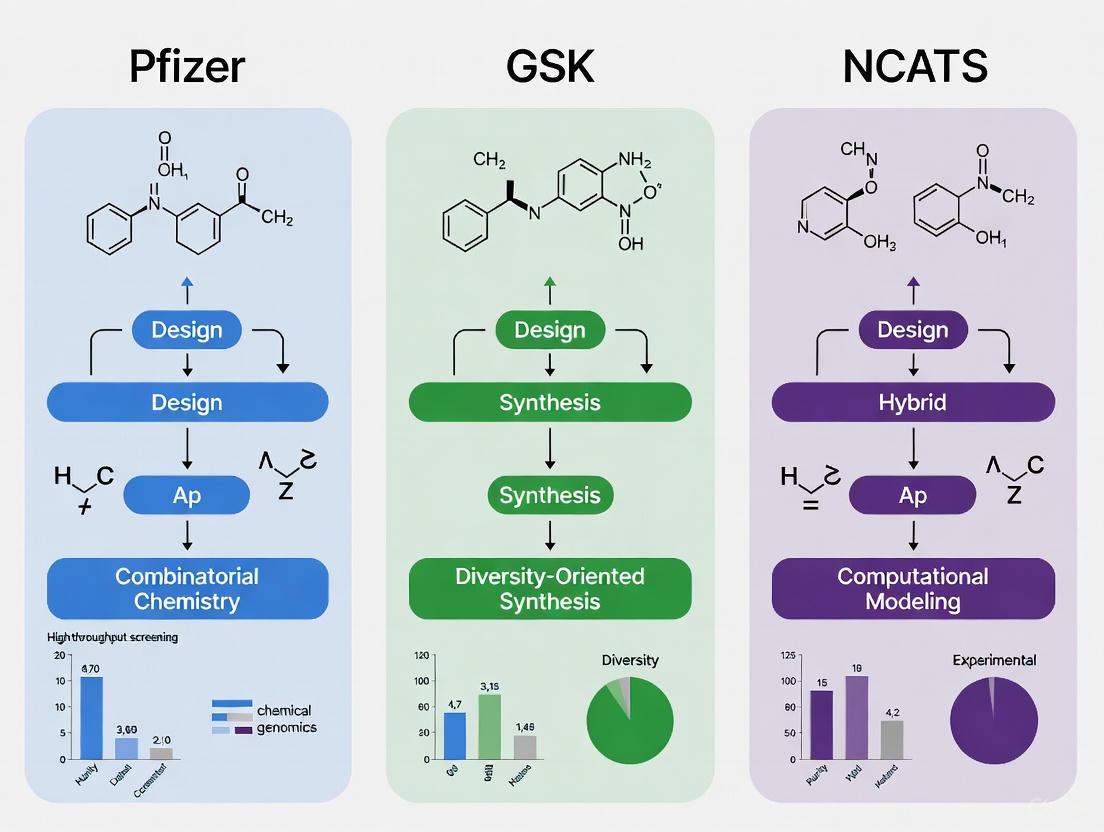
This article provides a comprehensive comparative analysis of chemogenomic library design strategies employed by leading pharmaceutical organizations Pfizer and GlaxoSmithKline (GSK), alongside the National Center for Advancing Translational Sciences (NCATS).
Strategic Designs in Chemogenomic Libraries: A Comparative Analysis of Pfizer, GSK, and NCATS Approaches for Modern Drug Discovery
Abstract
This article provides a comprehensive comparative analysis of chemogenomic library design strategies employed by leading pharmaceutical organizations Pfizer and GlaxoSmithKline (GSK), alongside the National Center for Advancing Translational Sciences (NCATS). Targeting researchers, scientists, and drug development professionals, it explores the foundational philosophies, methodological applications, troubleshooting considerations, and validation frameworks that distinguish each library. By examining Pfizer's DNA-encoded collaboration models, GSK's Biologically Diverse Compound Set, and NCATS' Genesis and NPACT libraries, we synthesize key insights for selecting and utilizing these powerful resources in phenotypic screening, precision oncology, and translational research, ultimately guiding strategic implementation in complex drug discovery initiatives.
Foundational Principles and Strategic Objectives in Industrial Chemogenomic Library Design
The drug discovery paradigm has fundamentally shifted from a reductionist "one target—one drug" vision to a more complex systems pharmacology perspective that acknowledges a "one drug—several targets" reality [1]. This transition is largely driven by the recognition that complex diseases like cancers, neurological disorders, and diabetes are often caused by multiple molecular abnormalities rather than resulting from a single defect [1]. The limitations of the single-target approach became apparent through numerous failures of drug candidates in advanced clinical stages due to insufficient efficacy and safety concerns [1].
Within this new framework, chemogenomics has emerged as a powerful discipline that systematically investigates the interactions between chemical spaces and genomic spaces [2]. By studying how small molecules interact with biological target families, researchers can now simultaneously probe multiple targets and pathways, accelerating the identification of novel therapeutic strategies [1] [2]. This approach represents a significant departure from traditional methods that focused on highly selective compounds for individual targets.
The development of advanced chemogenomic libraries by leading pharmaceutical organizations and research institutions embodies this paradigm shift. These libraries contain carefully selected compounds designed to modulate diverse protein targets across the human proteome, enabling researchers to investigate complex biological networks and polypharmacology—where a single compound intentionally interacts with multiple targets to achieve therapeutic efficacy [1] [2]. This comparative guide examines the strategic approaches, experimental methodologies, and practical applications of chemogenomic library designs from Pfizer, GlaxoSmithKline (GSK), and the National Center for Advancing Translational Sciences (NCATS), providing researchers with essential insights for navigating this transformed drug discovery landscape.
Comparative Analysis of Industrial Chemogenomic Library Designs
Strategic Approaches and Library Composition
Table 1: Comparative Analysis of Industrial Chemogenomic Libraries
| Library Characteristic | Pfizer Chemogenomic Library | GSK Biologically Diverse Compound Set (BDCS) | NCATS Mechanism Interrogation PlatE (MIPE) |
|---|---|---|---|
| Primary Strategic Focus | Target-specific pharmacological probes with broad biological and chemical diversity [2] | Biologically diverse compounds targeting key target families like GPCRs and kinases [2] | Oncology-focused screening with emphasis on phenotypic assays [1] [2] |
| Target Class Emphasis | Ion channels, GPCRs, and kinases [2] | GPCRs, kinases, and diverse mechanisms [2] | Kinase inhibitors dominate, covering broad anticancer targets [2] |
| Compound Selection Criteria | Target-specific pharmacological probe-based selection [2] | Biological diversity and chemical space coverage [2] | Functional coverage of disease-relevant mechanisms, especially in oncology [1] |
| Key Applications | Lead generation, polypharmacology profiling, target validation [2] | Phenotypic screening, target deconvolution [1] [2] | Identification of novel therapeutic mechanisms, public screening programs [1] |
| Accessibility | Proprietary | Proprietary | Available for public screening programs [1] |
| Notable Features | Emphasis on chemical probes as starting points for drug discovery [3] | Designed for diverse phenotypic responses [1] | Part of NIH's commitment to open-access research tools [1] |
The comparative analysis of major chemogenomic libraries reveals distinct strategic approaches tailored to specific research objectives. The Pfizer Chemogenomic Library exemplifies a target-focused strategy, prioritizing compounds with well-defined pharmacological activity against specific protein classes, particularly ion channels, GPCRs, and kinases [2]. This approach facilitates rapid lead optimization and detailed mechanistic studies, as compounds serve as validated starting points for medicinal chemistry campaigns [3].
In contrast, the GSK Biologically Diverse Compound Set (BDCS) emphasizes biological diversity, encompassing compounds that target various mechanisms beyond traditional target families [2]. This design supports phenotypic screening strategies where the precise molecular targets may not be fully characterized upfront, allowing for novel target discovery and investigation of complex biological systems [1].
The NCATS Mechanism Interrogation PlatE (MIPE) represents a more disease-oriented approach, with a pronounced focus on oncology and a composition dominated by kinase inhibitors [1] [2]. As a publicly accessible resource, MIPE significantly expands the research community's capacity to investigate therapeutic mechanisms, particularly for anticancer phenotype development [1].
Experimental Design and Methodological Frameworks
Table 2: Experimental Methodologies in Modern Chemogenomics
| Methodological Component | Description | Application in Library Design & Screening |
|---|---|---|
| Cell Painting Assay | High-content morphological profiling using fluorescent dyes to capture complex cellular phenotypes [1] | Phenotypic screening and target deconvolution in GSK and NCATS libraries [1] |
| Network Pharmacology | Integration of drug-target-pathway-disease relationships using graph databases (Neo4j) [1] | Systems-level analysis of compound effects; used in library design and validation [1] |
| Scaffold Analysis | Hierarchical decomposition of molecules into core structural frameworks using tools like ScaffoldHunter [1] | Ensuring chemical diversity in library design; structure-activity relationship studies [1] |
| Quantitative Systems Pharmacology (QSP) | Mathematical modeling of drug-target interactions and patient responses [4] | Prediction of clinical outcomes; particularly emphasized in Pfizer's approach [4] |
| Machine Learning Chemogenomics | Deep learning models predicting drug-target interactions across chemical and biological spaces [2] | Target identification and polypharmacology profiling in all major libraries [2] |
| Morphological Profiling | Automated image analysis measuring 1,779+ cellular features using CellProfiler [1] | Phenotypic screening and compound clustering in BDCS and MIPE [1] |
The experimental frameworks supporting modern chemogenomics integrate high-content phenotypic screening with computational target prediction. The Cell Painting assay, a cornerstone of this approach, uses multiple fluorescent dyes to label various cellular components, enabling quantitative measurement of morphological features that constitute a "phenotypic fingerprint" for each compound [1]. This method generates extensive data, with studies typically capturing over 1,779 morphological features related to cell size, shape, texture, and organelle distribution [1].
Network pharmacology represents another critical methodological advancement, implemented through graph databases like Neo4j that integrate heterogeneous data sources including chemical bioactivity (ChEMBL), pathways (KEGG), gene ontologies, and disease associations [1]. This infrastructure enables researchers to traverse complex relationships between compounds, targets, and diseases, facilitating mechanism of action prediction for phenotypic screening hits [1].
Quantitative Systems Pharmacology (QSP) extends these approaches by developing mathematical models that simulate drug effects from cellular to whole-organism levels [4]. As Dr. Cynthia J. Musante, Pfizer's Vice President of Scientific Research, explains, "We're an in-silico pharmacology group that's trying to predict what happens to our potential treatments when we put them into a patient for the first time" [4]. These models create a "mathematical sandbox" where researchers can run virtual clinical trials to optimize dosing regimens and predict patient responses before initiating actual clinical studies [4].
Experimental Protocols for Chemogenomic Library Screening
Integrated Phenotypic and Target-Based Screening Workflow
Detailed Methodological Protocols
High-Content Morphological Profiling Using Cell Painting
The Cell Painting assay provides a comprehensive protocol for phenotypic screening applicable to all featured chemogenomic libraries. The methodology begins with cell plating, typically using U2OS osteosarcoma cells or disease-relevant cell models, in multiwell plates followed by compound perturbation [1]. Cells are then stained with a cocktail of fluorescent dyes including:
- Hoechst 33342: Nuclear staining
- Phalloidin: F-actin cytoskeleton labeling
- Wheat Germ Agglutinin: Golgi apparatus and plasma membrane
- Concanavalin A: Mitochondrial staining
- SYTO 14: Nucleolar staining [1]
After staining and fixation, automated high-throughput microscopy captures multiple images per well, which are subsequently processed using CellProfiler software for feature extraction [1]. The image analysis pipeline identifies individual cells and measures morphological features across different cellular compartments (cell, cytoplasm, nucleus), quantifying parameters including intensity, size, shape, texture, entropy, correlation, granularity, and spatial relationships [1]. For robust analysis, compounds are typically tested in replicate (4-8 technical repeats), with average feature values calculated for each compound and features exhibiting high correlation (>95%) removed to reduce dimensionality [1].
Network Pharmacology Analysis for Target Identification
Following phenotypic screening, target deconvolution employs network pharmacology approaches to identify potential mechanisms of action. This protocol involves:
Data Integration: Compound-target interaction data from ChEMBL (version 22+), pathway information from KEGG, gene ontologies, and disease associations from Disease Ontology are integrated into a Neo4j graph database [1].
Morphological Feature Mapping: Cell Painting profiles are mapped onto the network pharmacology framework, creating connections between compound-induced morphological changes and potential protein targets [1].
Enrichment Analysis: Using R packages (clusterProfiler, DOSE), Gene Ontology, KEGG pathway, and Disease Ontology enrichment analyses are performed with Bonferroni adjustment and p-value cutoff of 0.1 to identify statistically overrepresented biological themes among putative targets [1].
Scaffold-Based Clustering: Compounds are hierarchically decomposed into molecular scaffolds using ScaffoldHunter, enabling structure-activity relationship analysis across different levels of structural abstraction [1].
The Scientist's Toolkit: Essential Research Reagents and Solutions
Table 3: Essential Research Reagents for Chemogenomic Studies
| Reagent/Resource | Function/Application | Key Features & Considerations |
|---|---|---|
| Cell Painting Dye Cocktail | Multiplexed fluorescent staining for phenotypic profiling [1] | Five-dye combination covering major organelles; requires optimized staining protocol [1] |
| ChEMBL Database | Curated bioactivity data for target prediction [1] | Version 22+ contains 1.6M+ molecules with 11,224 unique targets; essential for network pharmacology [1] |
| Neo4j Graph Database | Network integration of multi-omics data [1] | NoSQL architecture ideal for complex drug-target-pathway-disease relationships [1] |
| ScaffoldHunter Software | Hierarchical scaffold analysis for chemoinformatics [1] | Enables structure-based clustering and diversity analysis [1] |
| CellProfiler | Automated image analysis for morphological feature extraction [1] | Open-source platform measuring 1,779+ cellular features [1] |
| BBBC022 Dataset | Reference morphological profiles for 20,000 compounds [1] | Benchmark for phenotypic screening; available from Broad Bioimage Benchmark Collection [1] |
| clusterProfiler R Package | Functional enrichment analysis [1] | Statistical analysis of GO, KEGG, and Disease Ontology enrichment [1] |
Data Interpretation and Practical Applications
Analytical Framework for Screening Data
The interpretation of chemogenomic screening data requires a multifaceted analytical approach. Morphological profiling data from Cell Painting assays is typically analyzed using unsupervised machine learning methods, including principal component analysis (PCA) and clustering algorithms, to identify compounds inducing similar phenotypic changes [1]. This enables the grouping of compounds into functional pathways and the identification of signatures of disease [1].
For target prediction, chemogenomic neural networks (CNNs) have emerged as powerful tools that integrate molecular graph representations of compounds with protein sequence encoders to predict novel drug-target interactions [2]. These models leverage large-scale biological and chemical data to identify unexpected "off-targets" and guide experimental validation of predicted interactions with high probability scores [2].
The integration of phenotypic and target-based screening data through network pharmacology creates a powerful framework for understanding polypharmacology. As research demonstrates, "network pharmacology combines network sciences and chemical biology allowing the integration of heterogeneous sources of data and the possibility to look over the action of a drug on several protein targets and their related biological regulatory processes in system biology" [1].
Case Studies in Therapeutic Development
The practical impact of chemogenomic approaches is evident in several successful therapeutic development campaigns:
BET Bromodomain Inhibitors: The discovery of (+)-JQ1 as a chemical probe for BET bromodomains illustrates how target-focused probes can inspire clinical candidates [3]. Despite its unsuitable pharmacokinetic profile for direct clinical development, (+)-JQ1 served as the structural inspiration for multiple clinical candidates including I-BET762 (GSK525762/molibresib), OTX015/MK-8628, and CPI-0610 [3]. These optimized compounds maintained the core triazolodiazepine scaffold while addressing drug-like properties, demonstrating the progression from chemical probe to clinical candidate [3].
Precision Oncology Applications: In glioblastoma research, a minimal screening library of 1,211 compounds targeting 1,386 anticancer proteins identified patient-specific vulnerabilities through phenotypic profiling of patient-derived glioma stem cells [5]. This approach demonstrated highly heterogeneous phenotypic responses across patients and molecular subtypes, highlighting the importance of chemogenomic libraries tailored for patient-specific therapeutic discovery [5].
Drug Repurposing for Neglected Diseases: Chemogenomic approaches have enabled systematic repurposing of approved drugs for neglected tropical diseases, identifying novel therapeutic applications through large-scale screening of compound libraries against pathogenic targets [6]. This strategy offers efficient paths to treatments for diseases that may not otherwise attract significant pharmaceutical investment due to economic considerations [6].
The paradigm shift from single-target to systems pharmacology represents a fundamental transformation in drug discovery philosophy, enabled by methodological advances in chemogenomics and network biology. The comparative analysis of industrial chemogenomic libraries reveals distinctive strategic approaches: Pfizer's target-focused library prioritizes well-characterized pharmacological probes [2], GSK's BDCS emphasizes biological diversity [2], and NCATS MIPE provides publicly accessible tools for mechanism interrogation, particularly in oncology [1] [2].
The integration of high-content phenotypic screening with computational target prediction creates a powerful framework for addressing biological complexity in therapeutic development. As the field advances, the convergence of chemogenomics with artificial intelligence and machine learning promises to further accelerate the identification of novel therapeutic strategies for complex diseases [4]. This integrated approach, leveraging the complementary strengths of diverse chemogenomic library designs, positions the drug discovery community to more effectively navigate the transition from single-target reductionism to systems-level therapeutic intervention.
In the modern drug discovery landscape, chemogenomic libraries represent critical resources for identifying and validating novel therapeutic candidates. The strategic design of these libraries primarily follows two competing philosophies: one focused on comprehensive target coverage across the human proteome and another prioritizing phenotypic diversity in cellular responses. This guide objectively compares how major research organizations—including Pfizer, GlaxoSmithKline (GSK), and the National Center for Advancing Translational Sciences (NCATS)—have implemented these philosophies in their library designs, with supporting experimental data and protocols.
Library Design Philosophies: A Comparative Analysis
Target-Centric Library Design
The target-centric approach designs libraries around modulating specific protein families or targets with known therapeutic relevance, facilitating mechanism-based discovery.
- Pfizer and GSK Libraries: These industrial libraries consist of "known kinase inhibitors" or "GPCR-focused libraries" screened against corresponding protein families to identify hit compounds for medicinal chemistry programs [1]. They represent collections of selective small molecules modulating protein targets across the human proteome [1].
- NCATS NPACT Library: The NCATS Pharmacologically Active Chemical Toolbox (NPACT) is a 11,000-compound library of annotated, pharmacologically active agents covering "more than 7,000 mechanisms and phenotypes" [7]. It aims for broad coverage of biological mechanisms with known target annotations, incorporating "best-in-class compounds with non-redundant chemotypes" [7].
Phenotypic-Centric Library Design
Phenotypic approaches prioritize observable cellular changes over predefined molecular targets, requiring libraries that produce diverse morphological profiles.
- NCATS Genesis Library: The 100,000-compound Genesis library is designed for "large-scale deorphanization of novel biological mechanisms" and incorporates "sp3-enriched chemotypes" inspired by natural products to enhance phenotypic response diversity [7]. Its composition provides "shape and electrostatic diversity" while maintaining drug-like properties, and its chemical space largely does not overlap with publicly available libraries [7].
- Academic Chemogenomic Library: One developed library of 5,000 small molecules was designed specifically for phenotypic screening, built by filtering scaffolds to represent a diverse panel of drug targets and biological effects. It integrates morphological profiling data from the "Cell Painting" assay to connect chemical structures to phenotypic outcomes [1].
Quantitative Library Comparison
The table below summarizes key characteristics of the different chemogenomic libraries:
Table 1: Comparative Analysis of Industrial and Public Chemogenomic Libraries
| Library Name | Developer | Library Size | Primary Design Philosophy | Key Characteristics | Target/Phenotypic Coverage |
|---|---|---|---|---|---|
| Pfzer / GSK Libraries | Industry (Pfzer, GSK) | Not Specifed | Target Coverage | Focused collections (e.g., kinases, GPCRs); selective ligands [1]. | Specifc protein families |
| NPACT | NCATS | ~11,000 compounds | Target Coverage | Annotated pharmacological agents; >7,000 mechanisms; best-in-class compounds [7]. | Broad mechanistic coverage |
| Genesis | NCATS | ~100,000 compounds | Phenotypic Diversity | sp3-enriched, natural product-inspired chemotypes; novel scafolds; qHTS format [7]. | Novel mechanism deorphanization |
| Academic Phenotypic Library | Academic Research | ~5,000 compounds | Phenotypic Diversity | Integrates Cell Painting data; diverse scafolds representing the druggable genome [1]. | Diverse morphological profles |
Experimental Protocols for Library Validation
Protocol 1: Cell Painting for Phenotypic Profiling
The Cell Painting assay is a high-content, image-based method used to characterize compound-induced morphological changes [1].
- Cell Culture and Perturbation: Plate U2OS osteosarcoma cells in multiwell plates and perturb with test compounds [1].
- Staining and Imaging: Stain cells with fluorescent dyes targeting multiple cellular components, then fix and image on a high-throughput microscope [1].
- Image Analysis: Use CellProfiler software to identify individual cells and measure ~1,779 morphological features (e.g., size, shape, texture, intensity) across different cellular compartments [1].
- Data Processing: For replicated compounds, calculate the average value for each feature. Retain features with non-zero standard deviation and inter-correlation below 95% [1].
- Profile Generation: Compare treated and control cell profiles to group compounds by functional similarity and identify phenotypic signatures [1].
Protocol 2: Network Pharmacology for Target Deconvolution
This bioinformatics approach helps identify potential targets and mechanisms for phenotypically active compounds [1].
- Data Integration: Build a network database (e.g., using Neo4j) integrating drug-target data from ChEMBL, pathway information from KEGG, disease ontologies (DO), and Gene Ontology (GO) terms [1].
- Morphological Data Mapping: Incorporate morphological profiling data from the Cell Painting assay (e.g., from the Broad Bioimage Benchmark Collection BBBC022) and link it to compounds in the database [1].
- Scaffold Analysis: Process library compounds using ScaffoldHunter software to generate hierarchical scaffold trees, identifying core chemical structures [1].
- Enrichment Analysis: For a set of compounds inducing a similar phenotype, use R packages (clusterProfiler, DOSE) to perform GO, KEGG, and DO enrichment analyses to identify overrepresented biological processes, pathways, and diseases (Bonferroni adjustment, p-value cutoff 0.1) [1].
Visualizing the Phenotypic Screening Workflow
The diagram below illustrates the integrated experimental and computational workflow for phenotypic drug discovery using a chemogenomic library.
The Scientist's Toolkit: Key Research Reagent Solutions
Table 2: Essential Reagents and Resources for Chemogenomic Library Research
| Resource/Reagent | Function in Research | Key Features / Examples |
|---|---|---|
| Cell Painting Assay | High-content phenotypic profiling using fluorescent dyes to label cellular components [1]. | Uses U2OS cells; measures ~1,779 morphological features; data available via BBBC022 dataset [1]. |
| ChEMBL Database | A curated database of bioactive molecules with drug-like properties, used for drug-target annotation [1]. | Contains over 1.6 million molecules with bioactivities (Ki, IC50) against 11,000+ unique targets [1]. |
| Network Pharmacology Database (e.g., Neo4j) | Integrates heterogeneous biological data (drug-target-pathway-disease) to aid mechanism deconvolution [1]. | Connects compounds to protein targets, pathways (KEGG), and diseases (DO) in a graph structure [1]. |
| ScaffoldHunter Software | Analyzes and organizes chemical libraries based on hierarchical scaffold trees to assess structural diversity [1]. | Cuts molecules into core scaffolds and fragments, helping to select diverse chemotypes for library design [1]. |
| NPACT Library | A well-annotated library for probing known biological mechanisms and phenotypes [7]. | Contains >11,000 compounds covering >7,000 mechanisms; includes clinical drugs and tool compounds [7]. |
| Genesis Library | A modern chemical library designed for deorphanizing novel biological mechanisms via phenotypic screening [7]. | 100,000 compounds with novel, sp3-enriched scaffolds in qHTS format; minimal overlap with public databases [7]. |
Chemogenomic libraries are strategically designed collections of small molecules used to probe the functions of biological targets across the genome. While specific details on Pfizer's proprietary chemogenomic library are not publicly disclosed, analysis of industry-wide practices and available commercial and public libraries reveals distinct design philosophies. This guide objectively compares the overarching approaches of industry leaders like Pfizer and GSK with public-sector initiatives such as those from NCATS, focusing on their target prioritization, compound selection strategies, and applications in modern drug discovery.
Comparative Analysis of Chemogenomic Library Attributes
The design of a chemogenomic library directly influences its application in target identification and validation. The table below summarizes the key characteristics of library strategies associated with major research entities.
Table 1: Comparison of Industrial and Public Chemogenomic Library Strategies
| Attribute | Industrial (Pfizer/GSK) Model | Public/Partnership (NCATS) Model |
|---|---|---|
| Primary Design Goal | Target and pathway de-risking for internal pipeline; lead compound identification [1] | Tool compound provision for basic biology and target discovery in academia and non-profits [1] [8] |
| Typical Library Size | Large, diverse collections (e.g., GSK's BDCS contains thousands of compounds) [1] | Focused sets for specific goals (e.g., MIPE library) [1] |
| Target Focus | Emphasis on historically "druggable" target families (e.g., kinases, GPCRs) and internal project priorities [1] | Broader coverage of the druggable genome, including less-studied targets [1] |
| Innovation Highlight | DNA-encoded library technology (DEL) for ultra-high-throughput screening; extensive use of phenotypic screening [1] | Integration of public data resources (e.g., ChEMBL, PubChem) and collaborative platforms (e.g., CDD Vault) [8] |
| Accessibility | Primarily for internal R&D; select assets may be shared via joint ventures or out-licensing [9] | Generally accessible to the research community via application or open data policies [1] [8] |
Experimental Protocols for Library Utilization and Validation
Phenotypic Screening and Target Deconvolution via Morphological Profiling
Objective: To identify compounds that induce a phenotypic change in a disease-relevant cell model and subsequently identify the compound's molecular target(s).
Methodology:
- Cell Painting Assay: Seed disease-relevant cells (e.g., U2OS osteosarcoma cells) in multi-well plates. Treat cells with compounds from the chemogenomic library. After incubation, stain cells with a cocktail of fluorescent dyes to mark various cell components (nucleus, endoplasmic reticulum, etc.) [1].
- High-Content Imaging and Analysis: Acquire high-resolution images using a high-throughput microscope. Use automated image analysis software (e.g., CellProfiler) to extract quantitative morphological features from thousands of individual cells. Features can include size, shape, texture, and intensity measurements for different cellular compartments [1].
- Profile Generation and Comparison: Create a normalized morphological profile for each compound treatment. Compare profiles using multivariate analysis (e.g., principal component analysis) to cluster compounds with similar mechanisms of action [1].
- Target Identification: Integrate morphological profiles with a systems pharmacology network. This network links drugs, targets, pathways, and diseases. Correlate the compound's phenotypic profile with known profiles of compounds with established targets to generate hypotheses about its mechanism of action [1].
DNA-Encoded Library (DEL) Selection for Target-Based Screening
Objective: To rapidly screen billions of small molecules against a purified protein target to identify high-affinity binders.
Methodology:
- Library Design and Synthesis: Construct DNA-encoded libraries by synthesizing small molecules where each compound is covalently tagged with a unique DNA barcode that records its synthetic history. This allows for the pooled screening of vast molecular repertoires.
- Selection (Panning): Incubate the pooled DEL with the immobilized protein target of interest. Remove unbound and weakly bound compounds through stringent washing steps.
- Elution and Amplification: Elute the tightly bound compounds and their associated DNA barcodes from the target. Amplify the recovered DNA barcodes using the polymerase chain reaction (PCR).
- Sequencing and Hit Identification: Sequence the amplified DNA barcodes using high-throughput sequencing. Decode the sequences to identify the chemical structures of the small molecules that bound to the target. Confirm the binding affinity and selectivity of the decoded "hit" compounds through follow-up assays.
Visualizing Workflows and Signaling Pathways
Phenotypic Screening to Target Identification
DNA-Encoded Library Screening
The Scientist's Toolkit: Essential Research Reagents and Platforms
The application and analysis of chemogenomic libraries rely on a suite of specialized public databases and software tools.
Table 2: Key Research Reagents and Platforms for Chemogenomics
| Resource Name | Type | Primary Function in Chemogenomics |
|---|---|---|
| ChEMBL [1] [10] | Public Database | A manually curated database of bioactive molecules with drug-like properties, providing bioactivity data (e.g., IC₅₀, Kᵢ) for target annotation and validation. |
| CDD Vault [8] | Collaborative Software | A hosted platform for securely storing and sharing diverse chemistry and biology data, facilitating collaboration in public-private partnerships. |
| CellProfiler [1] | Image Analysis Software | Open-source software for automated quantitative analysis of cellular images from high-content screening, enabling morphological profiling. |
| ScaffoldHunter [1] | Cheminformatics Tool | Software for the hierarchical visualization and analysis of chemical compound data based on molecular scaffolds, aiding in library diversity analysis. |
| Probes & Drugs Portal [10] [11] | Curated Compound Sets | A portal aggregating high-quality chemical probes and drugs from multiple sources, useful for identifying tool compounds and benchmarking. |
| GyroB [8] | Experimental Target | An essential bacterial enzyme (DNA gyrase B) often used as a model target in antibacterial drug discovery campaigns using chemogenomic libraries. |
| Neo4j [1] | Graph Database | A NoSQL graphics database used to build system pharmacology networks that integrate drug-target-pathway-disease relationships for mechanism deconvolution. |
Industrial chemogenomic libraries, exemplified by the strategies of Pfizer and GSK, are engineered with a strong focus on druggable target families and leverage proprietary innovations like DNA-encoded library technology to enhance hit-finding efficiency. In contrast, public-sector libraries from organizations like NCATS prioritize broad accessibility and coverage of the druggable genome for basic research. The choice between these approaches depends heavily on the research objective—whether it is de-risking a specific pathway for drug development or exploring novel biology. The continued evolution of both models, especially the integration of high-content phenotypic data with sophisticated computational networks, is crucial for advancing the identification of new therapeutic mechanisms.
The drug discovery paradigm has significantly shifted from a reductionist "one target—one drug" vision to a more complex systems pharmacology perspective that acknowledges a single drug often interacts with several targets [1]. This evolution has been driven by the recognition that complex diseases like cancers, neurological disorders, and diabetes frequently result from multiple molecular abnormalities rather than a single defect [1]. Within this context, phenotypic drug discovery (PDD) strategies have re-emerged as powerful approaches for identifying novel therapeutics, especially when combined with advanced technologies like high-content imaging and induced pluripotent stem (iPS) cell technologies [1].
To accelerate discovery, systematic screening programs using targeted chemical libraries against specific protein families have become essential. Chemogenomic libraries represent collections of selective small molecules that can modulate protein targets across the human proteome, enabling researchers to perturb biological systems and observe phenotypic consequences [1]. Among these resources, GlaxoSmithKline's Biologically Diverse Compound Set (BDCS) stands as a significant contribution to the public screening ecosystem, alongside other major industrial collections like the Pfizer chemogenomic library and public resources such as the NCATS Mechanism Interrogation PlatE (MIPE) library [1]. This guide objectively compares the design and application of these industrial chemogenomic libraries, with particular focus on how GSK's BDCS expands chemical space for phenotypic screening.
Comparative Analysis of Major Industrial Chemogenomic Libraries
Table 1: Key Characteristics of Major Chemogenomic Libraries
| Library Characteristic | GSK BDCS | Pfizer Chemogenomic Library | NCATS MIPE |
|---|---|---|---|
| Library Size | 1.8 million compounds (screening collection) [12] | Information limited | Information limited |
| Design Philosophy | Biologically diverse; represents broad panel of drug targets involved in diverse biological effects and diseases [1] | Targeted systematic screening against protein families [1] | Optimized for public screening programs; includes tool compounds, probes, and drugs [1] |
| Primary Applications | Phenotypic screening, target deconvolution, lead identification for infectious and complex diseases [12] | Kinase inhibitor libraries, GPCR-focused libraries [1] | Providing chemical probes for basic research, target validation [1] |
| Public Accessibility | Selectively available through collaborations and public datasets [12] | Limited public information on accessibility | Publicly available for screening programs [1] |
| Notable Features | Filtered based on scaffolds to represent druggable genome; used in large-scale phenotypic campaigns [1] [12] | Similar industrial compound collection approach [1] | Part of NIH Molecular Libraries Program; includes optimized chemical probes [1] |
Table 2: Experimental Outcomes from Published Screening Campaigns
| Screening Parameter | GSK Kinetoplastid Screening [12] | Typical Phenotypic Screening [1] |
|---|---|---|
| Primary Assay Types | Whole-cell phenotypic assays against parasites | Cell Painting, high-content imaging-based morphological profiling |
| Hit Rates | 1.5%-7.7% across different parasites | Varies by assay; ~4% in some Cell Painting experiments |
| Confirmatory Approaches | Orthogonal intracellular assays, cytotoxicity testing (HepG2) | Dose-response, selectivity profiling, counter-screens |
| Chemical Triaging | cPFI <8, <5 aromatic rings, MW <500 Da | Scaffold diversity, lead-like properties, drug-likeness |
| Resulting Compound Sets | 192-222 compounds per "Chemical Box" | ~5,000 molecules in annotated chemogenomic libraries |
Experimental Protocols and Methodologies
GSK's Phenotypic Screening Protocol for Kinetoplastid Parasites
GSK's approach to phenotypic screening exemplifies the industrial application of diverse compound sets. In a landmark study against kinetoplastid parasites, GSK implemented a comprehensive screening cascade [12]:
Primary Screening: The entire 1.8 million compound diversity set was tested against Leishmania donovani, Trypanosoma cruzi, and Trypanosoma brucei using whole-cell phenotypic assays at concentrations of 4.2-5 μM [12].
Hit Confirmation: Active compounds from primary screens underwent confirmatory testing in the same assay format, with activity required in at least one replicate [12].
Orthogonal Assays: Confirmed hits were tested in biologically distinct secondary assays to verify genuine activity and rule out assay interference:
Selectivity and Cytotoxicity Assessment: All compounds were tested for cytotoxicity against HepG2 cells and relevant host cells (e.g., NIH-3T3 fibroblasts) to establish selectivity indices [12].
Chemical Triaging: Compounds were filtered using stringent physicochemical parameters including molecular weight <500 Da, calculated Property Forecast Index (cPFI) <8, and fewer than 5 aromatic rings [12].
Chemical Box Assembly: Final compounds were clustered by structural similarity, and representative compounds from each cluster were selected based on potency to create focused "Chemical Boxes" of 192-222 compounds per disease area [12].
Comparative Library Design Methodologies
The construction of effective chemogenomic libraries follows distinct methodological approaches across organizations:
Diagram 1: Chemogenomic library design strategies compared. The GSK BDCS emphasizes scaffold-based diversity and physicochemical filtering, while other libraries incorporate different combinations of these design principles.
The Scientist's Toolkit: Essential Research Reagents and Platforms
Table 3: Key Research Reagent Solutions for Chemogenomic Screening
| Reagent/Platform | Function in Screening | Example Use Case |
|---|---|---|
| Cell Painting Assay | High-content morphological profiling using fluorescent dyes to capture multiple cellular features [1] | Creating morphological profiles for 20,000 compounds in BBBC022 dataset [1] |
| ScaffoldHunter Software | Analyzes molecular scaffolds and fragments to assess chemical diversity and relationships [1] | Stepwise fragmentation of molecules to characterize "core structures" in library design [1] |
| Neo4j Graph Database | Integrates heterogeneous data sources (drug-target-pathway-disease) into unified network pharmacology models [1] | Building system pharmacology networks for phenotypic screening data integration [1] |
| LINCS Database | Provides information on how drugs affect gene expression patterns in cells [13] | Identifying drugs that reverse disease-associated gene expression signatures (e.g., glioblastoma) [13] |
| ChEMBL Database | Curated bioactivity database containing drug-like molecules, targets, and bioassays [1] | Annotating compounds with known target activities and physicochemical properties [1] |
Signaling Pathways and Experimental Workflows in Phenotypic Screening
Diagram 2: Phenotypic screening workflow integrating BDCS. The workflow shows how compound libraries are screened in multiple assay types, with data integrated through network pharmacology to enable target deconvolution and mechanism of action elucidation.
Discussion: Advantages and Limitations in Library Design Strategies
GSK BDCS Strengths and Applications
The GSK BDCS demonstrates particular utility in phenotypic screening scenarios where target-agnostic approaches are required. Its biological diversity enables researchers to probe complex biological systems without predefined target hypotheses, making it invaluable for novel target identification. The library's design, which encompasses a "large and diverse panel of drug targets involved in diverse biological effects and diseases" [1], provides broad coverage of pharmacological space. Furthermore, the application of scaffold-based filtering ensures that the library represents the druggable genome while maintaining structural diversity [1].
The kinetoplastid screening campaign exemplifies the successful application of the BDCS, where the library enabled identification of novel chemical starting points against challenging infectious disease targets [12]. The resulting "Chemical Boxes" showed minimal overlap (only one compound common to all three boxes), demonstrating the library's ability to generate pathogen-specific chemical matter despite screening the same compound collection against related parasites [12].
Comparative Performance Considerations
When comparing library performance, the source and curation history of compounds significantly influence screening outcomes. Industrial libraries like GSK's BDCS benefit from extensive historical annotation accumulated through previous drug discovery programs [14]. This annotation provides valuable information on chemical tractability, synthetic accessibility, and preliminary structure-activity relationships that can accelerate hit-to-lead optimization.
However, phenotypic screening with diverse compound sets presents distinct challenges, particularly in target deconvolution. While the BDCS provides excellent phenotypic starting points, follow-up studies require integration with chemical biology approaches to identify therapeutic targets and mechanisms of action [1]. This often necessitates additional experimental work, such as chemical proteomics or resistance generation studies, to complement the initial screening data.
The strategic selection of chemogenomic libraries depends fundamentally on research objectives. GSK's Biologically Diverse Compound Set offers distinct advantages for phenotypic screening initiatives where broad coverage of chemical and target space is paramount. Its design philosophy prioritizes biological relevance and structural diversity, making it particularly suitable for exploratory biology and novel target identification.
In contrast, more focused libraries like the NCATS MIPE collection may prove more efficient for target-based screening or when validated chemical probes for specific target classes are required [1]. The Pfizer chemogenomic library represents another industrial-scale resource with similar advantages in historical annotation and compound quality, though detailed public comparisons remain limited.
For research teams engaged in phenotypic drug discovery, the GSK BDCS represents a powerful resource for expanding chemical space and exploring novel biology. Its successful application in large-scale screening campaigns against kinetoplastid parasites demonstrates its utility in addressing challenging disease areas with high unmet medical need. As phenotypic screening strategies continue to evolve alongside advanced technologies like CRISPR-Cas9 gene editing and high-content imaging, biologically diverse compound sets will remain essential tools for mapping the complex relationship between chemical structure, biological target space, and phenotypic outcome.
The drug discovery paradigm has significantly shifted from a reductionist "one target—one drug" vision to a more complex systems pharmacology perspective recognizing that complex diseases often result from multiple molecular abnormalities rather than a single defect [1]. This evolution has driven the development of chemogenomic libraries—systematic collections of small molecules designed to modulate protein targets across the human proteome. These libraries enable researchers to probe biological systems and identify chemical starting points for therapeutic development. Within this landscape, distinct library design philosophies have emerged, particularly contrasting industrial approaches from Pfizer and GSK with the publicly-oriented strategy of the National Center for Advancing Translational Sciences (NCATS). Industrial libraries typically prioritize target families with historical drug discovery success, while NCATS emphasizes comprehensive coverage of clinically approved compounds to facilitate therapeutic repurposing and systematic investigation of treatment opportunities across diverse diseases [15] [6].
Comparative Analysis of Major Chemogenomic Libraries
Quantitative Comparison of Library Characteristics
Table 1: Direct comparison of key chemogenomic library features and applications
| Characteristic | NCATS Pharmaceutical Collection | Pfizer Chemogenomic Library | GSK Biologically Diverse Compound Set (BDCS) |
|---|---|---|---|
| Collection Size | ~2,900 approved compounds [15] | Not publicly specified | Not publicly specified |
| Content Focus | Clinically approved molecular entities [15] | Known kinase inhibitors, targeted protein families [1] | Diverse biological targets [1] |
| Primary Screening Application | Drug repurposing, validation of disease models [15] | Kinase-targeted drug discovery [1] | Broad phenotypic screening [1] |
| Data Accessibility | Publicly accessible via dedicated browser [15] | Proprietary | Proprietary |
| Notable Features | Includes regulatory status, supplier information, targets, indications [15] | Focused on established drug target families [1] | Emphasis on chemical and biological diversity [1] |
| Translational Bridge | Direct path from screening to clinical application [15] | Traditional drug discovery pipeline [1] | Balanced diversity and druggability [1] |
Experimental Data and Performance Metrics
Table 2: Experimental screening data and performance outcomes
| Experimental Metric | NCATS Libraries | Industrial Counterparts | Translational Impact |
|---|---|---|---|
| Cell Line Screening Scale | 183 cancer cell lines, including rare tumors [16] | Typically standardized cell panels | Broader disease representation |
| Compound Coverage | 2,675 compounds with activity data [16] | Varies by program | Extensive clinical compound profiling |
| Public Data Integration | Linked to genomic data via CellMinerCDB [16] | Limited external data sharing | Enables correlation studies across databases |
| Neglected Disease Focus | Screened >10,000 compounds for SARS-CoV-2 [15] | Limited economic incentive [6] | Addresses unmet medical needs |
| Mechanism Deconvolution | Combines screening with morphological profiling [1] | Often target-first approaches | Enhanced phenotypic screening utility |
Methodologies: Experimental Protocols and Workflows
High-Content Phenotypic Screening Using Cell Painting
Protocol Overview: The Cell Painting assay provides a comprehensive morphological profiling approach that has been integrated with chemogenomic library screening to facilitate mechanism of action studies [1].
Detailed Methodology:
- Cell Preparation: Plate U2OS osteosarcoma cells in multiwell plates
- Compound Treatment: Perturb cells with library compounds at appropriate concentrations
- Staining and Fixation: Employ multi-channel fluorescent staining targeting:
- Nuclei
- Cytoplasm
- Mitochondria
- Endoplasmic reticulum
- Actin cytoskeleton
- Image Acquisition: Utilize high-throughput microscopy for automated image capture
- Feature Extraction: Apply CellProfiler software to identify individual cells and measure morphological features (1,779 features measuring intensity, size, area shape, texture, entropy, correlation, granularity in initial dataset)
- Profile Generation: Create standardized morphological profiles for each treatment condition
- Data Analysis: Compare profiles to identify patterns and classify compounds by functional similarity [1]
Cross-Database Integration for Precision Oncology
CellMinerCDB: NCATS Integration Protocol:
- Data Compilation: Aggregate drug response data from NCATS screens (2,675 compounds across 183 cancer cell lines)
- Molecular Annotation: Link compound activity data to genomic features from Broad and Sanger Institutes
- Database Federation: Establish connections between NCATS data and existing CellMinerCDB resources
- Correlation Analysis: Enable researchers to identify relationships between molecular features and drug sensitivity
- Tool Deployment: Provide web-accessible interface for querying and data extraction [16]
Database Integration Workflow: This diagram illustrates how NCATS data connects with genomic resources through CellMinerCDB to support precision cancer therapy development.
High-Throughput Repurposing Screens for Neglected Diseases
NCATS Repurposing Screening Protocol:
- Library Assembly: Curate comprehensive collection of approved drugs and clinical candidates
- Assay Development: Design disease-relevant phenotypic or target-based assays
- Primary Screening: Test compound libraries in quantitative high-throughput format
- Concentration-Response: Confirm hits with dose-ranging studies
- Data Deposition: Publicly share results through portals like PubChem
- Clinical Translation: Advance promising candidates toward experimental therapeutic applications [15] [6]
The Scientist's Toolkit: Essential Research Reagent Solutions
Table 3: Key research reagents and computational tools for chemogenomic library screening
| Tool/Resource | Function | Application in Translational Research |
|---|---|---|
| Cell Painting Assay | Morphological profiling using multiplexed fluorescence [1] | Mechanism of action studies, functional compound classification |
| CellMinerCDB | Database integrating drug sensitivity and molecular data [16] | Biomarker discovery, drug repurposing, precision oncology |
| CDD Vault | Web-based collaborative research platform [8] | Secure data sharing in public-private partnerships (e.g., MM4TB) |
| ChEMBL Database | Bioactivity data for drug-like molecules [1] | Target annotation, polypharmacology prediction |
| Neo4j Graph Database | Network pharmacology integration [1] | Systems biology analysis, drug-target-pathway mapping |
| ScaffoldHunter | Scaffold analysis and chemotype visualization [1] | Structural diversity assessment, compound prioritization |
Bridging the Gap: NCATS' Unique Value Proposition
Facilitating Academic-Industrial Translation
NCATS libraries effectively bridge the gap between academic discovery and clinical application through several distinctive approaches. Unlike traditional industrial collections focused on specific target classes, the NCATS Pharmaceutical Collection encompasses nearly 3,000 approved drugs, creating a direct path from screening to clinical application [15]. This strategy dramatically shortens the traditional therapeutic development timeline by focusing on compounds with established safety profiles. The availability of this collection through initiatives like the Therapeutics for Rare and Neglected Diseases program and the Toxicology in the 21st Century initiative provides researchers with tools that have immediate clinical relevance [15].
The integration of NCATS data with the CellMinerCDB platform exemplifies how translational bridge resources can empower both academic and industrial researchers. This database links drug activity data to detailed molecular information from cancer cell lines, enabling researchers to explore relationships between molecular features and therapeutic responses [16]. Such resources are particularly valuable for identifying precision medicine approaches and understanding how tumor genomics influences drug sensitivity. The inclusion of non-oncology drugs in cancer screens further enhances repurposing opportunities that might be overlooked in traditional development pipelines [16].
Addressing Neglected Diseases Through Collaborative Science
NCATS libraries have proven particularly valuable in areas typically underserved by traditional industrial screening, including neglected tropical diseases and emerging viral threats. The center's open-data approach during the COVID-19 pandemic exemplifies this commitment, with researchers screening over 10,000 compounds—including the entire NCATS Pharmaceutical Collection—for anti-SARS-CoV-2 activity [15]. This rapid response capability demonstrates how structured compound collections can accelerate therapeutic development during public health emergencies.
For neglected diseases such as tuberculosis, malaria, and kinetoplastid infections, NCATS resources have enabled collaborative drug discovery efforts that address the economic challenges that often limit commercial investment [6] [8]. The use of collaborative informatics platforms like CDD Vault in conjunction with NCATS compound data has supported projects like the More Medicines for Tuberculosis (MM4TB) initiative, which involved over 20 research groups sharing chemical and biological data [8]. These partnerships leverage the unique composition of NCATS libraries to identify new therapeutic uses for existing drugs, creating viable development pathways for diseases that disproportionately affect global health.
Translational Research Pathway: This diagram shows how NCATS libraries create a shortened path from basic research to clinical application, particularly through drug repurposing.
Future Directions in Chemogenomic Library Design and Application
The evolution of chemogenomic libraries continues as technological advances create new opportunities for phenotypic screening and systems pharmacology. The integration of morphological profiling with traditional activity screening represents a significant step toward deconvoluting complex mechanism-of-action relationships [1]. Future library designs will likely incorporate more sophisticated annotation systems, including predicted polypharmacology profiles and safety signatures, to enhance screening efficiency.
Emerging areas such as the Illuminating the Druggable Genome program at NCATS focus on characterizing understudied proteins, potentially expanding the target space for future therapeutic development [17]. These initiatives, combined with advances in artificial intelligence and machine learning, promise to further refine chemogenomic library design principles and create more predictive models of compound behavior in complex biological systems. As these resources become more accessible and integrated with multi-omics data, they will continue to bridge critical gaps between academic discovery and clinical translation, ultimately accelerating the development of new treatments for diverse human diseases.
Comparative Analysis of Primary Strategic Objectives Across Organizations
The shift from traditional, single-target drug discovery to a more complex systems pharmacology perspective has necessitated the development of advanced chemical tools. Chemogenomic libraries—curated collections of small molecules designed to perturb specific biological targets and pathways—sit at the heart of this modern approach. These libraries are not mere compound assortments; they are strategic assets that reflect the research philosophies and primary objectives of their parent organizations. This guide provides an objective comparison of the chemogenomic library designs from three major entities: Pfizer, GlaxoSmithKline (GSK), and the National Center for Advancing Translational Sciences (NCATS). By analyzing their distinct strategic goals, library compositions, and associated experimental protocols, this article aims to inform the decisions of researchers, scientists, and drug development professionals in selecting the most appropriate tools for their projects.
Strategic Objectives and Library Profiles
The strategic design of a chemogenomic library is directly influenced by the overarching goals of the organization, which range from early-stage target discovery to late-stage clinical development.
Table 1: Comparative Strategic Objectives and Library Characteristics
| Organization | Primary Strategic Objective | Library Name & Size | Key Design Principles | Typical Applications |
|---|---|---|---|---|
| Pfizer | Target-Focused Hit Identification [1] | Pfizer Chemogenomic Library (Size not specified in search results) | Focused libraries for specific protein families (e.g., kinases, GPCRs); prioritizes known inhibitor scaffolds for efficient lead discovery [1]. | Kinase inhibitor screening, GPCR-focused screening, lead optimization for specific target classes [1]. |
| GlaxoSmithKline (GSK) | Broad Biological Diversity & Phenotypic Screening [1] | Biologically Diverse Compound Set (BDCS) (Size not specified in search results) | Emphasis on wide chemical and biological diversity; optimized for cell-based phenotypic screening to uncover novel biology [1]. | Phenotypic drug discovery (PDD), identification of novel mechanisms of action, target deconvolution [1]. |
| NCATS | Translation of Basic Research to Therapies [1] [11] | Mechanism Interrogation PlatE (MIPE) (Size not specified in search results) | Publicly available; designed for mechanism-of-action studies; supports the development of chemical probes to study gene and pathway function [1] [11]. | Public-sector screening; identification of chemical probes; studying gene, cell, and biochemical pathway functions in health and disease [1] [11]. |
Experimental Applications and Data
The utility of these libraries is demonstrated through their application in specific experimental workflows, which generate quantitative data on compound efficacy and selectivity.
Application of a Diverse Library in Phenotypic Screening
A 2021 study exemplifies the use of a system pharmacology approach, integrating morphological profiling from the "Cell Painting" assay to build a chemogenomic library of 5,000 small molecules. This library was designed to assist in target identification and mechanism deconvolution for phenotypic assays [1].
- Experimental Protocol:
- Cell Culture and Perturbation: U2OS osteosarcoma cells are plated in multiwell plates and perturbed with small molecules from the library.
- Staining and Imaging: Cells are stained, fixed, and imaged using a high-throughput microscope (e.g., as part of the Broad Bioimage Benchmark Collection BBBC022).
- Image Analysis: An automated image analysis pipeline using CellProfiler software identifies individual cells and measures hundreds of morphological features (e.g., size, shape, texture, intensity) for each cell, creating a morphological profile.
- Data Analysis: Profiles from treated cells are compared to controls. Compounds with similar profiles are grouped, and features are linked to pathways and targets via an integrated network pharmacology database (e.g., built using Neo4j) that connects drugs, targets, and diseases [1].
Application in Precision Oncology
A 2023 study designed a targeted chemogenomic library for precision oncology, specifically for profiling glioblastoma patient cells. The design process involved analytical procedures to balance library size, cellular activity, chemical diversity, availability, and target selectivity. A physical library of 789 compounds covering 1,320 anticancer targets was used in a pilot screen [18].
- Experimental Protocol:
- Library Design: Compounds were selected to cover a wide range of protein targets and pathways implicated in cancer. Selectivity was a key criterion.
- Patient-Derived Cells: Glioma stem cells were derived directly from patients with glioblastoma (GBM).
- Phenotypic Screening: The patient-derived cells were treated with the library compounds, and cell survival was measured, often using high-content imaging or viability assays.
- Data Analysis: Phenotypic responses (e.g., cell survival) were analyzed across patients and GBM subtypes to identify patient-specific vulnerabilities and heterogeneous responses [18].
Table 2: Key Research Reagent Solutions and Their Functions
| Reagent / Resource | Primary Function in Chemogenomics Research |
|---|---|
| CellPainting Assay | A high-content, high-throughput morphological profiling assay that uses fluorescent dyes to label multiple cell components. It generates a rich dataset of morphological features to characterize compound-induced phenotypes [1]. |
| ChEMBL Database | A large-scale bioactivity database containing curated information on drug-like molecules, their properties, and their documented targets. It is a foundational resource for building and validating chemogenomic libraries [1]. |
| ScaffoldHunter | A software tool used for hierarchical classification and visualization of chemical compounds based on their molecular scaffolds. It aids in analyzing structural diversity and selecting representative core structures for a library [1]. |
| Neo4j | A graph database management system ideal for building network pharmacology models. It integrates heterogeneous data (e.g., drug-target-pathway-disease relationships) to enable complex queries and deconvolution of mechanisms [1]. |
| Clinico-Genomic Database (CGDB) | A real-world data (RWD) source that links clinical patient data with genomic information. It can be used to construct synthetic control arms for comparative effectiveness research [19]. |
Analysis and Workflow Visualization
The strategic differences in library design directly shape the research workflows they enable. The following diagram illustrates a generalized experimental workflow for phenotypic drug discovery that leverages a diverse chemogenomic library.
The workflow for a target-focused library, such as Pfizer's, would differ by beginning with a specific protein target of interest (e.g., a kinase). The library would be screened in a target-based assay (e.g., binding or enzymatic activity), and active "hit" compounds would then be optimized for potency and selectivity against that specific target before progressing to cellular and animal models [1].
Critical Data Comparison and Interpretation
The data generated from these different approaches requires careful interpretation. For example, a 2022 study on pralsetinib for non-small cell lung cancer (NSCLC) demonstrates the use of real-world data (RWD) to construct synthetic control arms (SCAs) when randomized trials are infeasible.
- Experimental Protocol for SCA:
- Cohort Definition: Define the trial cohort (e.g., patients with RET fusion-positive aNSCLC receiving pralsetinib in the ARROW trial) and the RWD cohort (e.g., patients receiving standard pembrolizumab therapy from a clinico-genomic database).
- Data Adjustment: Use statistical methods like Inverse Probability of Treatment Weighting (IPTW) to balance baseline characteristics (e.g., age, smoking history, ECOG performance status) between the trial and RWD cohorts, minimizing confounding.
- Outcome Comparison: Compare time-to-event outcomes such as Overall Survival (OS) and Progression-Free Survival (PFS) between the adjusted cohorts using hazard ratios (HR).
- Bias Analysis: Conduct quantitative bias analyses to test the robustness of the results to potential data missingness and residual confounding [19].
In the pralsetinib study, the adjusted analysis showed a significant survival benefit for pralsetinib over the RWD-based control (HR for OS: 0.33-0.36), and these results were robust to sensitivity analyses [19]. This highlights how comparative effectiveness can be rigorously evaluated even outside a traditional randomized controlled trial.
The comparative analysis of Pfizer, GSK, and NCATS chemogenomic libraries reveals a spectrum of strategic design objectives. Pfizer's strategy is oriented towards efficient target-based discovery, GSK's towards uncovering novel biology through diversity and phenotypic screening, and NCATS's towards fostering open-source research and tool development for the broader scientific community. There is no single "best" library; rather, the optimal choice is dictated by the research question. For projects centered on a validated target, a focused library may be most efficient. For exploratory research aimed at discovering new biology or mechanisms, a diverse library optimized for phenotypic screening is indispensable. Understanding these strategic distinctions enables scientists to better select, utilize, and even design chemical tools that accelerate the journey from basic research to transformative therapies.
Methodological Implementation and Practical Applications in Disease Research
Chemogenomics represents a systematic approach to drug discovery that investigates the interaction space between small molecules and biological targets on a genomic scale. This methodology shifts the traditional paradigm from "one drug–one target" to a systems pharmacology perspective where compounds are profiled against multiple targets or entire protein families simultaneously. The fundamental premise of chemogenomics is that the comprehensive analysis of chemical–target interactions enables more efficient identification of hits and leads, while also facilitating the functional annotation of novel targets [20] [2]. For researchers and drug development professionals, the strategic design of chemogenomic libraries is paramount, with two particularly critical considerations being scaffold diversity (the structural foundation of compound collections) and selectivity filters (methodologies to ensure target specificity) [20].
Leading pharmaceutical organizations and research institutions, including Pfizer, GlaxoSmithKline (GSK), and the National Center for Advancing Translational Sciences (NCATS), have developed distinct chemogenomic libraries tailored to their specific research missions. These libraries vary substantially in size, composition, and curation methodologies, reflecting different strategic priorities in drug discovery. This guide provides an objective comparison of these industrial chemogenomic library designs, with particular emphasis on their approaches to scaffold diversity and implementation of selectivity filters, supported by experimental data and protocols [20] [21] [2].
Comparative Analysis of Major Chemogenomic Libraries
Table 1: Composition and Characteristics of Major Chemogenomic Libraries
| Library Name | Size (Compounds) | Primary Focus | Scaffold Diversity Approach | Selectivity Filter Implementation |
|---|---|---|---|---|
| Pfizer Chemogenomic Library | Not specified in search results | Target families (kinases, GPCRs, ion channels) | Target-specific pharmacological probe-based selection [2] | Balanced potency and selectivity for specific targets [2] |
| GSK Biologically Diverse Compound Set (BDCS) | Not specified in search results | Diverse target families (GPCRs, kinases) | Emphasis on broad biological and chemical diversity [2] | Varied mechanisms of action across target classes [2] |
| NCATS Genesis | 126,400 (as of June 2023) [21] | Novel mechanism deorphanization | >1,000 scaffolds with 20-100 compounds per chemotype; sp³-enriched inspired by natural products [7] | Shape and electrostatic diversity while maintaining drug-like properties [7] |
| NCATS NPACT | 5,099 (as of June 2023) [21] | Phenotypic screening and mechanism annotation | Best-in-class compounds with non-redundant chemotypes representing >7,000 biological mechanisms [7] | Annotated compounds informing on novel phenotypes and pathways [7] |
| NCATS MIPE | 2,803 (v6.0, as of June 2023) [21] | Oncology-focused screening | Equal representation of approved, investigational, and preclinical compounds; target redundancy [21] | Compound target redundancy for data aggregation by target [21] |
| Tox21 Library | ~8,900 compounds [22] | Toxicology and environmental chemical assessment | Environmental, industrial, commercial, and pharmaceutical compounds [22] | Quality control via analytical techniques (76% >90% purity after thawing) [22] |
Table 2: Experimental Methodologies for Library Assessment and Quality Control
| Methodology | Application in Library Curation | Key Experimental Parameters | Representative Implementation |
|---|---|---|---|
| Liquid Chromatography Mass Spectroscopy (LC-MS) | Compound purity assessment | Purity grading (>90% threshold); degradation monitoring [22] | Tox21 quality control: 76% of newly thawed samples >90% pure [22] |
| Scaffold Hunter Software | Scaffold diversity analysis | Stepwise ring removal to identify core structures; hierarchical scaffold classification [20] | NCATS library design: Identification of >1,000 core scaffolds for Genesis library [20] [7] |
| Cell Painting Morphological Profiling | Phenotypic screening assessment | 1,779 morphological features measuring intensity, size, shape, texture; high-content imaging [20] | Integration with ChEMBL database for target-pathway-disease relationships [20] |
| Network Pharmacology | Target identification and mechanism deconvolution | Integration of drug-target-pathway-disease relationships in Neo4j graph database [20] | Development of chemogenomic library of 5,000 small molecules representing diverse drug targets [20] |
Scaffold Diversity Methodologies
Computational Approaches for Scaffold Analysis
The systematic analysis of molecular scaffolds is fundamental to designing diverse chemogenomic libraries. One prominent methodology utilizes Scaffold Hunter software, which deconstructs compounds through a stepwise process to identify core structural frameworks [20]. The experimental protocol involves: (1) removing all terminal side chains while preserving double bonds directly attached to rings, and (2) iteratively removing one ring at a time using deterministic rules to preserve the most characteristic core structure until only one ring remains [20]. This process generates a hierarchical scaffold tree where scaffolds are distributed across different levels based on their relational distance from the original molecule node.
The NCATS Genesis library exemplifies the practical application of this approach, incorporating over 1,000 distinct scaffolds with representation varying from 20 to 100 compounds per chemotype [7]. This library specifically emphasizes sp³-enriched chemotypes inspired by naturally occurring compounds, which retain complex pharmacophores while reducing synthetic complexity. A strategic advantage of this design is the focus on commercially purchasable core scaffolds, enabling rapid derivatization during medicinal chemistry optimization [7].
Structural Diversity Implementation
The compositional strategy for scaffold diversity varies significantly across libraries based on their research objectives:
Target-Focused Libraries (Pfizer, GSK kinase sets): These employ pharmacological probe-based selection, prioritizing compounds with demonstrated activity against specific target families. The scaffold diversity is curated to cover the chemical space relevant to these target classes while maintaining sufficient variety to enable structure-activity relationship studies [2].
Phenotype-Focused Libraries (NCATS NPACT): These emphasize mechanistic diversity with best-in-class compounds representing over 7,000 documented biological mechanisms. The scaffold selection prioritizes non-redundant chemotypes that provide diversity in both physicochemical properties and pharmacological activities [7].
Novelty-Focused Libraries (NCATS Genesis): These intentionally incorporate scaffolds scarcely represented in existing literature or patent spaces, providing opportunities for first-in-class compounds and intellectual property development [7].
Selectivity Filters in Library Design and Screening
Computational and Experimental Selectivity Assessment
Selectivity filters encompass both computational predictions and experimental validations to ensure compounds interact with intended targets specifically. The integration of chemoinformatic approaches with experimental data creates a robust framework for selectivity assessment [2].
In the context of ion channel targeting, such as acid-sensing ion channels (ASICs), sophisticated molecular dynamics simulations and free energy calculations have been employed to understand selectivity mechanisms. Experimental protocols for these assessments include unnatural amino acid incorporation, channel stoichiometry engineering, and electrophysiological measurements of ion conductance and relative permeabilities [23]. For example, research on ASIC1a revealed that a band of glutamate and aspartate side chains at the intracellular end of the pore enables preferential sodium conduction, rather than the previously hypothesized "GAS belt" constriction [23].
Selectivity Implementation Strategies
Different libraries implement selectivity filters through distinct methodologies:
Target Redundancy Approach (NCATS MIPE): This library incorporates multiple compounds per target, enabling aggregation of screening data by target and comparative analysis of compound behavior across related targets [21].
Quality Control Filters (Tox21): This program implements rigorous analytical quality control using LC-MS, flow-injection analysis, GC-MS, and NMR spectroscopy to verify compound purity and integrity after storage and handling procedures. Their experimental protocol tests chemicals at two time points: (1) immediately after removal from storage and thawing, and (2) after four months of room temperature storage simulating testing conditions [22].
Annotation-Based Filters (NCATS NPACT): This library employs comprehensive mechanistic annotation, where compounds are documented with their known biological interactions, enabling researchers to select compounds with appropriate selectivity profiles for their specific experimental needs [7].
Experimental Workflows and Visualization
Integrated Workflow for Library Design and Screening
The development and implementation of chemogenomic libraries follows a systematic workflow integrating computational design, experimental screening, and data analysis components. The diagram below illustrates this integrated process:
Selectivity Filter Mechanism for Ion Channels
For target-based libraries focusing on ion channels, the selectivity filter mechanism represents a critical component of compound design and evaluation. The following diagram illustrates the molecular determinants of ion selectivity based on recent research:
The Scientist's Toolkit: Essential Research Reagents and Materials
Table 3: Key Research Reagent Solutions for Chemogenomic Library Research
| Reagent/Resource | Function in Library Research | Application Examples |
|---|---|---|
| Scaffold Hunter Software | Hierarchical scaffold analysis and visualization | Identification of core structural frameworks in library design [20] |
| Neo4j Graph Database | Network pharmacology integration | Modeling drug-target-pathway-disease relationships [20] |
| Cell Painting Assay | High-content morphological profiling | Phenotypic screening and mechanism deconvolution [20] |
| ChEMBL Database | Bioactivity data resource | Access to standardized bioactivity, molecule, target and drug data [20] |
| LC-MS Instrumentation | Compound quality control | Purity verification and degradation monitoring [22] |
| CDD Vault Platform | Collaborative data management | Secure sharing of chemistry and biology data in collaborative projects [8] |
The comparative analysis of industrial chemogenomic libraries reveals distinct strategic approaches to balancing scaffold diversity and selectivity filters. Pfizer and GSK libraries emphasize target-family coverage with compounds selected for demonstrated pharmacological activity, while NCATS libraries employ diverse strategies ranging from novel scaffold exploration (Genesis) to comprehensive mechanistic annotation (NPACT) and therapeutic-area focus (MIPE). The experimental methodologies supporting these libraries—including hierarchical scaffold analysis, network pharmacology integration, and rigorous quality control—provide robust frameworks for compound selection and evaluation.
For researchers selecting libraries for specific projects, key considerations include: (1) the trade-off between novelty and validation, where libraries like Genesis prioritize unprecedented scaffolds while NPACT emphasizes annotated mechanisms; (2) the balance between target-focused and phenotypic approaches, with MIPE offering oncology-focused redundancy while Cell Painting-enabled libraries support phenotypic discovery; and (3) the importance of quality control, as demonstrated by the Tox21 program's comprehensive compound verification. These complementary approaches collectively advance drug discovery by providing optimized chemical starting points for diverse research applications.
The pursuit of novel therapeutic compounds has been revolutionized by the emergence of DNA-Encoded Library (DEL) technology, a transformative approach that synergistically combines principles of combinatorial chemistry with genetic sequencing. This platform enables the screening of extraordinarily diverse chemical spaces—containing billions of distinct molecules—through affinity-based selection followed by DNA barcode sequencing. Pfizer's strategic collaboration with X-Chem represents a significant implementation of this technology, leveraging ultra-large DNA-encoded libraries to address challenging therapeutic targets in inflammatory and orphan diseases. DEL technology has resurrected combinatorial chemistry from decades past by solving the critical analytical bottleneck: the inability to efficiently determine hit structures from highly complex mixtures. The technology now stands as a cornerstone of modern early-stage drug discovery, with the global DEL market demonstrating substantial growth and innovation.
This objective analysis examines Pfizer's DEL technology through the X-Chem collaboration, comparing it with other industrial chemogenomic library designs from organizations including GSK, NCATS, and pre-competitive consortium models. We evaluate architectural differences, performance characteristics, and practical applications to provide researchers with a comprehensive framework for understanding the current landscape of high-throughput screening technologies.
Core Principles and Workflow
DEL technology operates on the fundamental principle of assigning a unique DNA barcode to each individual small molecule member within a vast combinatorial library. These DNA sequences serve as amplifiable, sequenceable records of the chemical synthesis history for each compound. The typical DEL screening workflow involves several critical phases, as visualized below:
Figure 1: DNA-Encoded Library (DEL) screening workflow. The process begins with combinatorial library synthesis using a split-and-pool approach, followed by affinity selection against a protein target, PCR amplification of bound species, DNA sequencing, and finally data analysis and hit validation.
The workflow begins with library synthesis using a split-and-pool approach where chemical building blocks are iteratively coupled to a growing compound scaffold, with DNA tags appended at each step to record the reaction history [24]. This process generates exceptional library diversity; for example, X-Chem's proprietary library contains more than 100 billion DNA-encoded compounds [25]. The resulting DEL is then screened as a mixture through affinity selection, where rare molecules binding to an immobilized protein target are captured while non-binders are washed away. The DNA barcodes from bound compounds are subsequently amplified via PCR and identified through high-throughput sequencing, revealing enriched structures that serve as starting points for drug development [25] [24].
Key Advantages Over Conventional Screening
DEL technology provides several distinct advantages compared to traditional high-throughput screening (HTS):
Unprecedented Screening Scale: While HTS typically screens 100,000-5,000,000 individually prepared compounds, DEL technology enables the simultaneous screening of billions to hundreds of billions of compounds in a single tube, expanding accessible chemical space by orders of magnitude [25] [24].
Resource Efficiency: DEL screening requires minimal target protein (typically microgram quantities) compared to milligram amounts needed for conventional HTS, enabling work with difficult-to-express targets [24].
Rich Structure-Activity Relationship (SAR) Data: Because DELs contain entire families of structurally related compounds, screening results often provide immediate preliminary SAR, guiding subsequent medicinal chemistry optimization [25].
Access to Challenging Targets: The technology has proven particularly valuable for target classes considered "difficult" or "intractable" through conventional screening methods, including protein-protein interactions [25].
Industrial Chemogenomic Library Designs: A Comparative Analysis
Pfizer's DEL Strategy: Collaborative and Consortium-Based Approaches
Pfizer has implemented a multi-faceted strategy for DEL utilization, combining targeted collaborations with participation in pre-competitive industry consortia. The company's partnership with X-Chem, initiated in 2014, focuses on generating novel small molecule leads for inflammatory and orphan diseases using X-Chem's proprietary library of over 100 billion DNA-encoded compounds [25]. This collaboration exemplifies the external innovation model, where Pfizer accesses specialized DEL capabilities and diversity without maintaining complete internal infrastructure.
More recently, Pfizer joined the DEL Consortium (established 2022) with peers including AstraZeneca, Bristol Myers Squibb, Johnson & Johnson, Merck, and Roche [26]. This pre-competitive collaboration addresses the fundamental challenge of DEL construction: the high cost (millions of dollars) and extended timeframe (several years) required to build high-quality, diverse DELs internally. The consortium operates on a shared resource model, with members pooling building blocks, synthetic expertise, and financial resources to construct DELs of greater diversity than any single member could achieve independently [26].
Comparative Library Architectures and Design Principles
Table 1: Comparison of Industrial Chemogenomic Library Designs
| Design Parameter | Pfizer/X-Chem DEL | GSK BDCS | NCATS MIPE | DEL Consortium |
|---|---|---|---|---|
| Library Size | >100 billion compounds [25] | Not specified; "Biologically Diverse Compound Set" | ~5,000 compounds (MIPE v6) [27] | Multiple libraries of pooled diversity [26] |
| Chemical Diversity Source | Proprietary DNA-encoded library [25] | Focused libraries for target classes (e.g., kinases, GPCRs) [1] | Annotated bioactive compounds & mechanistic probes [27] | Shared building blocks from multiple companies [26] |
| Screening Methodology | Affinity selection with DNA sequencing [25] | Varied (HTS, phenotypic) [1] | Phenotypic screening [27] | Affinity selection with DNA sequencing [26] |
| Primary Application | Hit identification for difficult targets [25] | Targeted screening against protein families [1] | Phenotypic screening & mechanism deconvolution [27] | Shared library resource for hit identification [26] |
| Key Innovation | Highly diverse library with informatics capabilities [25] | Focused diversity for specific target classes | Mechanistic annotation & system pharmacology [27] | Pre-competitive collaboration & cost-sharing [26] |
| Access Model | Exclusive collaboration [25] | Internal use | Collaboration with NCATS [7] | Consortium members only [26] |
Design Philosophy and Strategic Implementation
Each organization's approach to chemogenomic library design reflects distinct strategic priorities and operational models:
Pfizer's Dual Approach: Combines targeted collaborations for specific pipeline needs (X-Chem) with consortium participation for foundational capability building. This hybrid model balances immediate project needs with long-term strategic positioning in emerging technologies [25] [26].
GSK's BDCS: Employs a more traditional focused library strategy, assembling compound sets targeting specific protein families like kinases and GPCRs. This approach aligns with target-based screening paradigms and leverages historical expertise in these target classes [1].
NCATS MIPE Library: Prioritizes mechanistic understanding and phenotypic screening applications. The library contains approximately 5,000 well-annotated compounds with known mechanisms of action, facilitating target deconvolution in phenotypic assays [27].
DEL Consortium Model: Represents a fundamental shift from proprietary to pre-competitive library development. This collaborative approach addresses the resource-intensive nature of DEL construction while maximizing chemical diversity through shared building block collections [26].
Experimental Protocols and Methodologies
DEL Screening Protocol: Affinity Selection and Hit Identification
The core experimental methodology for DEL screening involves a series of carefully optimized steps to identify protein binders from highly complex mixtures:
Materials and Reagents:
- Purified target protein (≥95% purity, correctly folded)
- DNA-encoded library (X-Chem: >100 billion compounds)
- Solid support for protein immobilization (streptavidin beads for biotinylated proteins)
- Binding buffer (PBS or similar with 0.01-0.1% Tween-20)
- Wash buffer (PBS with varying stringency modifiers)
- Elution buffer (denaturing conditions or specific competitors)
- PCR reagents for amplification
- Next-generation sequencing platform
Procedure:
- Protein Immobilization: Incubate purified target protein with appropriate solid support (e.g., streptavidin beads for biotinylated proteins) for 1-2 hours at 4°C with gentle rotation.
Blocking: Add nonspecific blocking agents (BSA, salmon sperm DNA, etc.) to minimize nonspecific binding of DEL compounds to the solid support or protein surfaces.
Library Incubation: Incubate immobilized protein with the DEL (typically 1-100 nM library concentration) in binding buffer for 2-16 hours at room temperature with gentle rotation.
Washing: Perform sequential washes with binding buffer (low stringency) followed by wash buffers with increasing stringency (e.g., added salt, detergent) to remove weakly bound compounds while retaining specific binders.
Elution: Release specifically bound compounds using denaturing conditions (heat, urea) or specific competitors (excess small molecule ligands, if available).
PCR Amplification: Amplify eluted DNA barcodes using high-fidelity PCR with 12-18 cycles to maintain sequence representation while generating sufficient material for sequencing.
Sequencing and Analysis: Sequence amplified DNA using next-generation sequencing platforms. Compare sequence frequency in selected samples versus control samples (no protein or irrelevant protein) to identify significantly enriched compounds.
Critical Experimental Considerations:
- Library Quality: Assess library integrity through quality control sequencing before screening.
- Target Integrity: Verify protein folding and functionality after immobilization.
- Selection Stringency: Optimize wash conditions to balance specificity and sensitivity.
- Control Experiments: Include relevant controls to identify background binding and false positives.
- Data Normalization: Apply statistical methods to account for sequencing depth and library representation biases.
Hit Validation and Progression
Following DEL screening, putative hits require rigorous validation through off-DNA synthesis and conventional biochemical assays:
Off-DNA Compound Synthesis: Resynthesize identified hit compounds without DNA tags using traditional medicinal chemistry approaches.
Biochemical Affinity Determination: Measure binding affinity (Kd, IC50) using surface plasmon resonance (SPR), isothermal titration calorimetry (ITC), or similar biophysical techniques.
Functional Activity Assessment: Evaluate functional effects in cell-free or cell-based assays relevant to the target biology.
Selectivity Profiling: Test against related targets to assess selectivity and potential off-target effects.
Structural Characterization: When possible, determine co-crystal structures of compounds bound to the target protein to guide optimization.
Research Reagent Solutions: Essential Tools for DEL Technology
Table 2: Key Research Reagents and Platforms for DEL Implementation
| Reagent/Platform | Function | Example Implementation |
|---|---|---|
| DNA-Encoded Libraries | Source of chemical diversity for screening | X-Chem's >100 billion compound library; Consortium-built DELs [25] [26] |
| Next-Generation Sequencing Platforms | Decoding DNA barcodes from selected compounds | Illumina, PacBio, or Oxford Nanopore systems [24] |
| Building Block Collections | Chemical inputs for library synthesis | Commercially available or proprietary compound collections [26] |
| Affinity Selection Materials | Protein immobilization and selection | Streptavidin beads, nickel-NTA resins, antibody-coupled supports [24] |
| Bioinformatics Pipelines | Data analysis and hit identification | Custom or commercial software for sequence analysis and enrichment calculation [25] |
| DEL-Compatible Chemistry Toolkits | Synthetic methods for library construction | Click chemistry, SuFEx, and other aqueous-compatible reactions [24] |
Strategic Implications and Future Directions
Performance Comparison and Strategic Positioning
The various chemogenomic library designs offer complementary strengths for different drug discovery scenarios:
Pfizer/X-Chem DEL excels in addressing challenging targets through massive diversity, with demonstrated success in generating novel leads for programs that failed using conventional screening methods [25]. The technology provides exceptional value for target classes with limited chemical starting points or those requiring unconventional chemical matter.
GSK's BDCS offers efficiency for well-precedented target families where established structure-activity relationships exist. The focused nature of these libraries can accelerate lead identification for targets with known ligandability [1].
NCATS MIPE provides superior capabilities for phenotypic screening and mechanism deconvolution, where annotated bioactivity is more valuable than raw chemical diversity [27]. The library's mechanistic annotation supports rapid target identification following phenotypic screening.
DEL Consortium libraries represent a sustainable model for maintaining cutting-edge DEL capabilities while distributing costs across multiple organizations. This approach may become increasingly important as DEL technology advances and requires greater investment [26].
Emerging Innovations and Technology Trajectories
The DEL landscape continues to evolve with several significant innovations shaping future capabilities:
AI and Machine Learning Integration: Advanced algorithms are being deployed to optimize DEL design, predict synthetic success, and prioritize hits from screening data. Companies including X-Chem have established collaborations with technology partners like Google Research to implement AI-driven DEL design [28].
Covalent DEL Platforms: Specialized libraries incorporating reactive warheads enable discovery of covalent inhibitors for challenging targets. X-Chem and others have developed methodologies for covalent DEL synthesis and screening [29].
Three-Dimensional Library Design: Moving beyond flat aromatic architectures, new DELs incorporate stereochemistry and three-dimensional scaffolds to access under-explored chemical space. HitGen has pioneered 3D DNA-encoded libraries with improved shape diversity [28].
Advanced DEL-Compatible Chemistry: Expanding reaction scope remains a critical focus, with recent developments in photoredox catalysis, C-H activation, and other transformative methodologies adapted for DEL compatibility [30] [24].
Structural Integration: Combining DEL screening with structural biology techniques like cryo-EM provides powerful insights into binding modes and facilitates structure-based optimization [28].
The relationships between these strategic approaches and their respective applications in the drug discovery workflow can be visualized as follows:
Figure 2: Strategic positioning of different chemogenomic library approaches within the drug discovery ecosystem. Each library design addresses specific screening paradigms, with Pfizer's DEL technology particularly suited for difficult targets requiring exceptional chemical diversity.
Pfizer's DNA-Encoded Library technology, particularly through its collaboration with X-Chem and participation in the DEL Consortium, represents a sophisticated approach to modern hit identification that leverages massive chemical diversity to address challenging therapeutic targets. When evaluated against other industrial chemogenomic library designs, each platform demonstrates distinct strengths and optimal applications: Pfizer/X-Chem DEL for unprecedented diversity and difficult targets; GSK BDCS for focused target class screening; NCATS MIPE for phenotypic screening and mechanism deconvolution; and the DEL Consortium for sustainable, pre-competitive capability development.
The continued evolution of DEL technology—driven by AI integration, expanded reaction scope, and specialized applications like covalent targeting—promises to further enhance its impact on drug discovery. As these platforms mature, the strategic combination of multiple library designs within organizations' screening portfolios will likely yield the most robust pipelines, balancing the complementary strengths of each approach to maximize the probability of success in identifying novel therapeutic candidates.
Modern drug discovery has progressively shifted from a traditional "one target—one drug" model to a more comprehensive systems pharmacology perspective that acknowledges a single drug often interacts with multiple protein targets [1]. This evolution has been accelerated by the persistent high failure rates of drug candidates in advanced clinical stages, often due to insufficient efficacy or safety concerns related to unexpected off-target effects [1]. Within this landscape, chemogenomic libraries have emerged as critical tools for systematically mapping interactions between small molecules and biological targets, enabling researchers to explore pharmacological space more efficiently [31]. These libraries vary significantly in their design philosophy, composition, and intended application. The NCATS Genesis Library represents a strategic approach focused specifically on novel mechanism deorphanization—the process of identifying biological targets for previously uncharacterized compounds or pathways [7]. This guide objectively compares the Genesis Library against other industrial and academic chemogenomic collections, examining their respective designs, performance characteristics, and utilities in translational research.
Library Design Philosophies and Composition
Comparative Analysis of Major Chemogenomic Libraries
Table 1: Design Philosophy and Composition of Major Chemogenomic Libraries
| Library Name | Size (Compounds) | Primary Design Focus | Scaffold Diversity | Key Distinctive Features |
|---|---|---|---|---|
| NCATS Genesis | 100,000–126,400 [7] [21] | Novel mechanism deorphanization [7] | >1,000 scaffolds [7] | sp³-enriched chemotypes; commercially purchasable cores [7] |
| Pfizer Chemogenomic Library | Not publicly specified | Not explicitly detailed in search results | Information limited | Industrial pharmaceutical collection [1] |
| GSK BDCS | Not publicly specified | Biological diversity [1] | Information limited | Industrial pharmaceutical collection [1] |
| NPACT | 5,099–11,000 [7] [21] | Phenotypic screening & mechanism annotation [7] | Information limited | Annotated pharmacological agents; clinical & tool compounds [7] |
| MIPE | 1,978–2,803 [21] | Oncology-focused screening [21] | Target redundancy built-in [21] | Equal representation of approved, investigational, and preclinical compounds [21] |
The Genesis Library's architecture emphasizes high-quality chemical starting points and novel chemotypes that show minimal overlap with public databases like PubChem, providing distinct advantages for developing first-in-class compounds and potential intellectual property [7]. Unlike target-focused libraries such as the MIPE collection, Genesis is designed for large-scale deorphanization of unprecedented biological mechanisms through quantitative high-throughput screening (qHTS) formats [7] [21]. The library incorporates years of accumulated knowledge in chemical library design, particularly in achieving optimal drug-like properties while maintaining shape and electrostatic diversity [7].
Structural and Property Considerations
Table 2: Molecular Property and Diversity Considerations
| Library Attribute | NCATS Genesis | Traditional Diversity Libraries | Focused Target Libraries |
|---|---|---|---|
| sp³ Character | Enriched [7] | Typically lower | Variable |
| Scaffold Origin | Natural product-inspired [7] | Synthetic diversity | Often target-family directed |
| Commercial Availability | Core scaffolds purchasable [7] | Variable | Variable |
| Public Database Overlap | Minimal [7] | Significant | Moderate to high |
The Genesis Library specifically incorporates sp³-enriched chemotypes inspired by naturally occurring compounds, which typically exhibit improved solubility and more complex three-dimensional structures compared to traditional flat aromatic compounds [7]. This design strategy retains desirable pharmacophores found in natural products while reducing synthetic complexity, making these compounds more tractable for medicinal chemistry optimization [7]. The strategic decision to use commercially purchasable core scaffolds enables rapid derivatization during hit-to-lead optimization, addressing a critical bottleneck in early drug discovery [7].
Experimental Applications and Workflows
Deorphanization Screening Protocols
The primary application of the Genesis Library involves quantitative high-throughput screening (qHTS) protocols designed to identify bioactive compounds against novel targets or pathways [7]. A typical experimental workflow proceeds through several validated stages:
Library Formatting: The Genesis collection is plated in 1,536-well plates in dose-response format, enabling immediate concentration-response evaluation without requiring follow-up reformatting [7].
Assay Implementation: Screening campaigns employ target-agnostic phenotypic approaches or target-specific biochemical/biophysical assays. For phenotypic screening, technologies such as high-content imaging and morphological profiling using assays like Cell Painting are implemented [1]. These approaches capture multiparametric data on cellular changes induced by compound treatment.
Hit Identification: Bioactives are identified based on statistical significance and magnitude of effect across multiple concentrations. The qHTS format enables immediate assessment of compound potency and efficacy [7].
Target Deconvolution: For phenotypic screens, hit compounds undergo mechanism-of-action studies using various chemogenomic approaches, including comparison of morphological profiles to annotated reference compounds [1].
Representative Case Study: Target Class Profiling
A documented application of the Genesis Library includes target class profiling of small molecule methyltransferases [21]. This study exemplifies the library's utility in exploring underutilized target classes:
Experimental Design: The screening protocol involved biochemical assays monitoring methyl transfer using appropriate substrates and detection methods. Dose-response curves were generated for all library compounds against multiple methyltransferase targets.
Outcome: The study identified novel chemotypes with inhibitory activity against specific methyltransferases, providing new starting points for chemical probe development and target validation [21].
Advantage Demonstrated: The Genesis Library's inclusion of novel chemotypes with minimal public domain presence reduced the likelihood of rediscovering known chemotypes, accelerating the identification of truly novel starting points [7].
Diagram Title: Genesis Library Screening Workflow
Performance Comparison with Alternative Approaches
Hit Identification Efficiency
Table 3: Screening Performance Metrics Across Library Types
| Performance Metric | Genesis Library | NPACT Library | MIPE Library | Diversity Collections |
|---|---|---|---|---|
| Novel Hit Rate | High (novel mechanisms) [7] | Moderate (annotated mechanisms) [7] | High (oncology targets) [21] | Variable |
| Chemical Novelty | High (minimal PubChem overlap) [7] | Moderate (known bioactives) [7] | Low to moderate (known targets) [21] | High |
| Medicinal Chemistry Tractability | High (purchasable cores) [7] | High (known drugs/tools) [7] | Moderate | Variable |
| Target Coverage | Broad (novel mechanism focus) [7] | Broad (5,000+ mechanisms) [7] | Focused (oncology) [21] | Unbiased |
The Genesis Library demonstrates distinct advantages in identifying novel chemical matter for previously undrugged targets or pathways. Its design specifically addresses the challenge that approximately 60% of disease-related proteins are currently classified as "undruggable" using conventional approaches [32]. By incorporating natural product-inspired scaffolds with enhanced three-dimensional character, the library samples chemical space distinct from conventional synthetic collections, increasing the probability of identifying novel bioactives [7].
Evidence from Comparative Studies
While direct head-to-head comparisons of library performance are rarely published, the strategic advantage of the Genesis approach is evidenced through its application in various NCATS research programs:
In target class profiling of methyltransferases, the library successfully identified novel inhibitors, demonstrating its utility for targeting challenging protein families [21].
The library's composition facilitates hit-to-lead optimization due to the commercial availability of core scaffolds, addressing a common limitation in early drug discovery where promising hits prove difficult to optimize due to synthetic complexity [7].
The dose-response formatting enables immediate assessment of compound potency and efficacy, reducing the time and resources required for follow-up confirmation studies [7].
Research Reagent Solutions for Implementation
Table 4: Key Research Reagents and Platforms for Chemogenomic Screening
| Reagent/Platform | Primary Function | Application in Genesis Screening |
|---|---|---|
| qHTS Platform | High-throughput dose-response screening | Enables full concentration-response testing without reformatting [7] |
| Cell Painting Assay | Morphological profiling using fluorescent dyes | Phenotypic characterization & mechanism hypothesis generation [1] |
| ScaffoldHunter Software | Hierarchical scaffold analysis & visualization | Identifies structure-activity relationships across chemotypes [1] |
| Neo4j Graph Database | Network pharmacology data integration | Maps drug-target-pathway-disease relationships [1] |
| Tissue Chips/MPS | Physiologically relevant human model systems | Assesses compound efficacy in realistic biological contexts [32] |
The Genesis Library is optimally deployed with supporting technologies that enhance its deorphanization capabilities. The Cell Painting assay [1] provides a particularly valuable phenotypic profiling approach that captures comprehensive morphological information across multiple cellular compartments. When combined with the novel chemotypes in the Genesis Library, this approach can reveal unexpected compound activities and mechanism-of-action insights.
Diagram Title: Genesis Library Design Strategy
The NCATS Genesis Library represents a strategically designed chemogenomic resource optimized for novel mechanism deorphanization and first-in-class compound discovery. Its distinctive value proposition centers on several key attributes: (1) novel chemotypes with minimal overlap to public compound collections; (2) sp³-enriched, natural product-inspired scaffolds that probe distinct regions of chemical space; (3) commercially accessible core structures that facilitate rapid medicinal chemistry optimization; and (4) dose-response formatting that enables efficient quantitative high-throughput screening.
When compared to alternative approaches, the Genesis Library demonstrates particular strength in addressing challenging or underexplored target classes, where conventional chemical libraries may fail to provide suitable starting points. Its performance in identifying novel bioactives against targets such as methyltransferases validates its design strategy and underscores its utility for expanding the druggable genome. For research teams focused on pioneering new therapeutic mechanisms rather than optimizing known target classes, the Genesis Library offers a uniquely powerful screening collection that balances novelty with practical synthetic tractability.
In modern drug discovery, chemogenomic libraries have emerged as indispensable tools for bridging the gap between phenotypic screening and target-based approaches. These carefully curated collections of biologically active compounds enable researchers to deconvolute complex biological mechanisms by providing starting points with known or annotated target specificities [20] [33]. Within this landscape, the NCATS Pharmacologically Active Chemical Toolbox (NPACT) represents a strategic resource designed specifically for translational science, distinguishing itself through its comprehensive annotation of mechanisms and phenotypes [7]. Unlike traditional chemical libraries optimized primarily for target identification, NPACT incorporates diverse chemical matter including synthetically derived small molecules and purified natural products, creating a platform for understanding mechanism-to-phenotype relationships across biological systems [7].
The development of NPACT responds to a fundamental shift in drug discovery from a reductionist "one target—one drug" vision toward a more complex systems pharmacology perspective that acknowledges most therapeutic compounds interact with multiple targets [20]. This library exists within a ecosystem of other notable chemogenomic collections, including the Pfizer chemogenomic library, the GlaxoSmithKline (GSK) Biologically Diverse Compound Set (BDCS), and the Prestwick Chemical Library, each with distinct design philosophies and applications [20]. What sets NPACT apart is its explicit focus on providing annotated compounds that inform on novel phenotypes, biological pathways, and cellular processes, making it particularly valuable for researchers seeking to understand not just what a compound does, but how it produces observable biological effects [7].
Library Design Philosophies and Comparative Analysis
Quantitative Comparison of Major Chemogenomic Libraries
Table 1: Key Characteristics of Major Chemogenomic Libraries
| Library Name | Size (Compounds) | Primary Design Focus | Key Features | Annotation Level |
|---|---|---|---|---|
| NCATS NPACT | ~11,000 | Broad mechanistic coverage across biological systems | Annotated compounds covering >7,000 mechanisms and phenotypes; includes natural products and synthetic molecules | High (mechanism and phenotype annotations) |
| Genesis | ~100,000 | Large-scale deorphanization of novel biological mechanisms | sp3-enriched chemotypes; shape and electrostatic diversity; non-overlapping with public libraries | Moderate (structural annotation) |
| Pfizer Chemogenomic Library | Not specified in search results | Targeted protein families | Known kinase inhibitors; focused on specific target classes [20] | High for specific target classes |
| GSK BDCS | Not specified in search results | Biological diversity | Structurally diverse compounds covering broad target space [20] | Moderate to high |
| Sigma-Aldrich LOPAC | 1,280 (cited in ALDH study) | Pharmacologically active compounds | Bioactive compounds with known mechanisms; used for validation studies [34] | High for established targets |
Distinctive Design Strategies and Applications
The NPACT library employs a mechanism-centric design strategy that aims to cover as many known biological mechanisms as possible from literature and worldwide patents [7]. This approach results in a collection where many known mechanisms are represented by a few best-in-class compounds with non-redundant chemotypes that provide diversity of physicochemical and pharmacological properties [7]. The library's dynamic nature ensures it remains current with the state of translational research as new biological processes and approaches are revealed [7]. This makes NPACT particularly valuable for phenotypic screening approaches that have re-emerged as promising strategies for identifying novel drugs, especially for complex diseases like cancers, neurological disorders, and diabetes that often involve multiple molecular abnormalities rather than single defects [20].
In contrast, the Genesis library employs a structure-centric design focused on novel chemotypes that incorporate valuable lessons learned from chemical library design over many years [7]. A portion of this library features sp3-enriched chemotypes inspired by naturally occurring compounds, retaining valuable pharmacophores found in natural products while reducing extreme complexity to make them synthetically tractable [7]. The library's composition provides shape and electrostatic diversity while maintaining known drug-like properties, with its compound space largely non-overlapping with PubChem or any publicly available chemical library [7]. This design makes Genesis particularly suitable for large-scale deorphanization of novel biological mechanisms [7].
Industrial libraries from Pfizer and GSK typically follow target-class-focused strategies, such as collections of known kinase inhibitors or GPCR-focused libraries, which are valuable for discovering new drugs to treat specific conditions where these target classes are well-established [20]. These libraries often emerge from proprietary compound collections developed through internal drug discovery programs and represent the pharmaceutical industry's traditional approach to targeted drug discovery.
Experimental Applications and Workflow Integration
NPACT in Integrated Screening Platforms
The practical utility of the NPACT library is demonstrated in its application to complex target families, such as the Aldehyde Dehydrogenase (ALDH) superfamily [34]. In a comprehensive study to identify selective inhibitors across multiple ALDH isoforms, researchers employed NPACT alongside other compound collections in a quantitative high-throughput screening (qHTS) approach [34]. The study screened approximately 13,000 annotated compounds against both biochemical and cellular assays, utilizing the rich annotation of NPACT to facilitate hit identification and in silico screening [34]. This integrated approach combined experimental qHTS with advanced machine learning (ML) and pharmacophore (PH4) modeling to rapidly identify selective inhibitors, demonstrating how annotated libraries like NPACT can accelerate probe development for challenging target families [34].
Table 2: Key Research Reagent Solutions for Chemogenomic Screening
| Reagent/Technology | Function in Screening | Application Example |
|---|---|---|
| Cell Painting Assay | High-content morphological profiling | Capturing morphological features in U2OS cells treated with compounds; generating phenotypic profiles [20] |
| ALDEFLUOR Assay | Cellular ALDH activity measurement | Assessing compound effects on ALDH activity in cellular contexts [34] |
| Cellular Thermal Shift Assay (CETSA) | Target engagement validation | Confirming compound binding to intended targets in cells [34] |
| High-Content Live-Cell Imaging | Multiparametric cytotoxicity assessment | Classifying cells based on nuclear morphology as indicator of apoptosis and necrosis [35] |
| ScaffoldHunter Software | Chemical scaffold analysis | Hierarchical organization of compounds based on structural scaffolds [20] |
Workflow for Phenotypic Screening and Target Deconvolution
Diagram 1: Phenotypic Screening Workflow. This workflow illustrates how annotated compound libraries enable target identification through phenotypic screening and morphological profiling.
The application of NPACT in phenotypic screening follows a logical workflow that begins with treatment of disease-relevant cell systems with library compounds, often using high-throughput compatible assays [35]. The subsequent morphological profiling captures hundreds of cellular features measuring intensity, size, area shape, texture, entropy, correlation, granularity, and other parameters across different cellular compartments [20]. Advanced image analysis software like CellProfiler enables automated identification of individual cells and measurement of morphological features to produce detailed cellular profiles [20]. The comparison of these profiles across different compound treatments allows researchers to group compounds into functional pathways and identify signatures of disease [20].
Experimental Protocols for Library Utilization
High-Content Phenotypic Profiling Protocol
The Cell Painting assay represents a standardized protocol for collecting morphological information about cultured cells treated with compounds from libraries like NPACT [20]. The following protocol details the key steps:
Cell Preparation: Plate U2OS osteosarcoma cells (or other relevant cell lines) in multiwell plates optimized for high-content imaging [20].
Compound Treatment: Perturb cells with treatments from the chemogenomic library, typically using concentration ranges to establish dose-response relationships [20].
Staining and Fixation: Employ a standardized staining cocktail to mark key cellular components including:
Image Acquisition: Image stained cells using a high-throughput microscope capable of capturing multiple fluorescence channels [20].
Image Analysis: Process images using CellProfiler to identify individual cells and measure hundreds of morphological features for each cellular compartment [20].
Data Processing: Average feature values across technical replicates and filter features with non-zero standard deviation and inter-feature correlation less than 95% to reduce dimensionality [20].
Profile Comparison: Use statistical methods to compare morphological profiles across treatments and identify compounds with similar or distinct phenotypic impacts [20].
Live-Cell Viability and Mechanism Annotation Protocol
To comprehensively annotate compound effects on cellular health, researchers have developed modular live-cell high-content viability assays that extend beyond fixed-cell endpoints [35]. This protocol enables real-time assessment of compound effects:
Cell Seeding: Plate appropriate cell lines (e.g., HeLa, U2OS, HEK293T, MRC9) in imaging-compatible microplates [35].
Dye Optimization: Apply optimized concentrations of live-cell compatible fluorescent dyes:
Continuous Imaging: Acquire time-lapse images over extended periods (up to 72 hours) using an environmentally controlled live-cell imaging system [35].
Multiparametric Analysis: Classify cells into distinct populations based on supervised machine learning algorithms using features such as:
- Nuclear morphology (healthy, pyknotic, fragmented)
- Mitochondrial mass and distribution
- Cytoskeletal organization
- Membrane integrity [35]
Kinetic Profiling: Calculate time-dependent IC50 values and population distribution profiles to capture compound-specific cytotoxic signatures [35].
Data Analysis and Interpretation Framework
Chemogenomic Network Construction and Analysis
The integration of heterogeneous data sources represents a critical step in maximizing the value of NPACT and similar libraries. Researchers have developed sophisticated network pharmacology databases that integrate:
Compound-Target Relationships: Bioactivity data from sources like ChEMBL (containing >1.6 million molecules with bioactivities and >11,000 unique targets) [20].
Pathway Context: Incorporation of the Kyoto Encyclopedia of Genes and Genomes (KEGG) pathway database to place compound-target interactions within biological pathway contexts [20].
Gene Ontology Annotations: Integration of the Gene Ontology (GO) resource providing computational models of biological systems at molecular, cellular, and pathway levels [20].
Disease Associations: Connection to the Human Disease Ontology (DO) resource providing classification of human disease terms and associations [20].
Morphological Profiles: Incorporation of high-content screening data from assays like Cell Painting to connect compound-induced morphological changes to target and pathway modulation [20].
This integrated data structure is typically implemented using graph databases like Neo4j, which enables efficient querying of complex relationships between compounds, targets, pathways, and diseases [20]. The resulting network facilitates target identification and mechanism deconvolution for phenotypic screening hits by connecting observed phenotypes to known target annotations in the library [20].
Pathway Mapping and Mechanism Deconvolution
Diagram 2: Mechanism Deconvolution Pathway. This diagram illustrates the logical flow from compound-target interaction to observed phenotype, enabling mechanism deconvolution in phenotypic screening.
The analysis workflow for mechanism deconvolution follows a logical pathway that connects compound-target interactions to observable phenotypes. When a compound from the NPACT library produces a phenotypic effect in a screening assay, researchers can leverage its annotation to generate testable hypotheses about the underlying mechanism [33]. The process involves:
Target Identification: Using the known target annotations of active compounds to identify potential macromolecules involved in the observed phenotype [33].
Pathway Enrichment Analysis: Employing tools like clusterProfiler R package to calculate GO and KEGG enrichment, identifying biological pathways significantly overrepresented among the targets of active compounds [20].
Disease Association Mapping: Connecting the identified targets and pathways to human diseases using resources like the Disease Ontology, facilitated by enrichment analysis with the DOSE R package [20].
Selectivity Assessment: Evaluating whether multiple compounds with shared targets but diverse chemical scaffolds produce similar phenotypes, increasing confidence in target-phenotype associations [35].
Chemical Probe Validation: Applying established criteria for high-quality chemical probes, including potent target activity (<100 nM), cell activity, target engagement, and selectivity (>30-fold within target families) to validate findings [3].
This comprehensive analysis framework enables researchers to move from observed phenotypic effects to understanding of biological mechanisms, potentially identifying novel therapeutic targets or repurposing opportunities for existing compounds [33].
The NCATS NPACT library represents a strategic resource within the broader landscape of chemogenomic libraries, distinguished by its comprehensive mechanism annotation and focus on translational science. While libraries like Genesis emphasize structural novelty and deorphanization of novel mechanisms, and pharmaceutical company libraries target specific protein families, NPACT provides unparalleled coverage of known biological mechanisms and phenotypes [7]. This makes it particularly valuable for phenotypic screening approaches that require subsequent target deconvolution and mechanism elucidation [20] [33].
The implementation of NPACT in integrated screening platforms—combining experimental qHTS with advanced computational approaches like machine learning and pharmacophore modeling—demonstrates its utility in accelerating the identification of selective chemical probes for challenging target families [34]. Furthermore, its application in high-content phenotypic profiling and live-cell viability assays enables comprehensive characterization of compound effects on cellular health and function [35]. As drug discovery continues to evolve toward system-level approaches that acknowledge the polypharmacology of most effective therapeutics, strategically annotated libraries like NPACT will play an increasingly important role in connecting compound chemistry to biological function and, ultimately, to clinical translation [20] [7].
Phenotypic screening has re-emerged as a powerful strategy in drug discovery for complex diseases like glioblastoma (GBM), where single-target approaches have largely failed. This strategy does not rely on preconceived molecular targets but instead identifies compounds that induce desirable changes in disease-relevant cellular models [20]. A significant challenge in phenotypic screening, however, is the deconvolution of mechanisms of action—understanding which specific targets and pathways a hit compound engages to produce the observed phenotype [20] [36].
To address this, chemogenomic libraries—collections of small molecules carefully selected to represent a broad diversity of drug targets and biological pathways—have become essential tools [20]. These libraries enable researchers to not only discover active compounds but also to generate hypotheses about their mechanisms of action based on the known targets of the library's compounds. This guide objectively compares the application and performance of chemogenomic library designs from major industrial and public research entities—Pfizer, GSK, and NCATS—in the context of phenotypic screening using glioblastoma patient-derived cells (PDCs).
Library Design Philosophies and Compositions
The design of a chemogenomic library dictates its utility in phenotypic screening. Different organizations curate their libraries based on distinct strategic priorities, ranging from maximizing target coverage to emphasizing clinical translatability.
Table 1: Comparison of Key Chemogenomic Libraries for Phenotypic Screening
| Library Name / Source | Size (Number of Compounds) | Key Design Principle & Description | Relevance to Phenotypic Screening |
|---|---|---|---|
| Pfizer Chemogenomic Library [20] | Not explicitly stated | A historically significant industrial library representing a diverse panel of drug targets. | Provides a large and diverse panel of drug targets involved in diverse biological effects and diseases [20]. |
| GSK Biologically Diverse Compound Set (BDCS) [20] | Not explicitly stated | Designed to maximize biological and chemical diversity from an industrial compound collection. | Optimized for use in systematic screening programmes against specific protein families [20]. |
| NCATS Mechanism Interrogation PlatE (MIPE) [21] | 2,803 (v6.0) | A collection with equal representation of approved, investigational, and preclinical compounds, and compound target redundancy. | Enables data aggregation by compound and reported target, crucial for mechanism deconvolution in phenotypic assays [21]. |
| NCATS Pharmacologically Active Chemical Toolbox (NPACT) [21] | 5,099 | An annotated collection of compounds that inform on novel phenotypes, biological pathways, and cellular processes. | Specifically designed to elucidate novel phenotypes and biological pathways, directly assisting in target identification [21]. |
| Published Chemogenomic Library [20] | 5,000 | Developed by integrating drug-target-pathway-disease relationships and morphological profiles from the Cell Painting assay. | Explicitly designed for phenotypic screening; integrates morphological profiling to link chemical structure to cellular phenotype [20]. |
Case Study: Phenotypic Screening in Glioblastoma Patient-Derived Cells
Glioblastoma remains one of the most aggressive and treatment-resistant cancers. The use of patient-derived glioma cells (PDGCs) in screening has become a gold standard as these models better recapitulate the genomic and transcriptomic features of parental tumors compared to traditional, serum-cultured cell lines [37].
Experimental Models and Subtype Considerations
- Patient-Derived Glioma Cell (PDGC) Models: PDGCs cultured in serum-free neural stem cell medium faithfully maintain the amplification of key GBM driver genes like
EGFRand the mutational spectra of the original tumors [37]. - Molecular Subtypes: PDGCs can be classified into transcriptional subtypes, including Mesenchymal (MES), Proneural (PN), and Oxidative Phosphorylation (OXPHOS), which demonstrate distinct drug response profiles [37]. For instance, PN subtype PDGCs are often sensitive to tyrosine kinase inhibitors, while OXPHOS subtypes are sensitive to HDAC and oxidative phosphorylation inhibitors [37].
Application of a Rational Library Enrichment Strategy
A targeted approach to phenotypic screening involves enriching a chemical library based on the specific genomic profile of the tumor. One study created a rational library for GBM by [36]:
- Identifying overexpressed genes and somatic mutations from The Cancer Genome Atlas (TCGA) GBM data.
- Mapping these genes onto a large-scale human protein-protein interaction network to create a GBM-specific subnetwork.
- Identifying proteins within this network with druggable binding pockets.
- Using structure-based molecular docking to screen an in-house library of ~9,000 compounds against these druggable sites, selecting molecules predicted to bind multiple key proteins simultaneously [36].
This workflow links genomic data directly to library design, creating a focused set of compounds for phenotypic assessment.
Phenotypic Screening Protocol and Hit Validation
Screening the enriched library of 47 candidates against patient-derived GBM spheroids identified several active compounds. The detailed experimental protocol for a confirmed hit, compound IPR-2025, is summarized below [36].
- Phenotypic Screening Assay: Low-passage patient-derived GBM spheroids were used in a 3D cell viability assay. This model more accurately represents the tumor microenvironment than 2D monolayers.
- Counter-Screening for Selectivity: Hit compounds were tested for toxicity in non-transformed primary cell lines, including:
- 3D spheroids of primary hematopoietic CD34+ progenitor cells.
- 2D monolayers of astrocytes.
- Anti-angiogenesis Assay: The effect on angiogenesis was tested using a brain endothelial cell tube formation assay on Matrigel.
- Mechanism Deconvolution: The mechanism of action for the hit compound IPR-2025 was investigated using:
- RNA Sequencing of treated vs. untreated cells to observe transcriptomic changes.
- Thermal Proteome Profiling to experimentally identify direct protein targets engaged by the compound in cells.
Table 2: Key Experimental Findings from GBM Phenotypic Screening [36]
| Experimental Assay / Parameter | Result for Compound IPR-2025 | Implication and Comparison to Standard Care |
|---|---|---|
| GBM Spheroid Viability (IC₅₀) | Single-digit micromolar values | Substantially better than standard-of-care temozolomide |
| Endothelial Cell Tube Formation (IC₅₀) | Sub-micromolar values | Suggests a potent anti-angiogenesis effect |
| Viability of Primary CD34+ Progenitors | No effect | Demonstrates selective toxicity for GBM cells over normal progenitor cells |
| Viability of Astrocytes | No effect | Suggests a favorable safety profile for normal brain cells |
| Confirmed Mechanism | Engages multiple targets (via Thermal Proteome Profiling) | Confirms desired selective polypharmacology |
The Scientist's Toolkit: Essential Research Reagents and Solutions
Successful phenotypic screening in glioblastoma relies on a suite of specialized reagents and tools. The following table details key solutions used in the featured experiments and the broader field.
Table 3: Essential Research Reagent Solutions for GBM Phenotypic Screening
| Reagent / Resource | Function and Application in GBM Screening | Example Source / Context |
|---|---|---|
| Patient-Derived Glioma Cells (PDGCs) | Serum-free cultured cells that better maintain genomic and transcriptomic features of parent GBM tumors for more clinically relevant screening. | [37] |
| Cell Painting Assay | A high-content, image-based morphological profiling assay that generates a high-dimensional readout of chemical effects on cells. | [20] |
| 3D Spheroid Culture Platforms | Advanced culture models that better capture the 3D tumor microenvironment, cell-cell interactions, and drug penetration effects than 2D monolayers. | [36] |
| NCATS MIPE Library | A chemogenomic library with built-in target redundancy, enabling mechanistic deconvolution in phenotypic screens. | [21] |
| Thermal Proteome Profiling | A mass spectrometry-based method to directly identify protein targets engaged by a compound in a complex cellular lysate or living cells. | [36] |
| Collaborative Drug Discovery (CDD) Vault | A web-based platform for securely managing and sharing diverse chemistry and biology data in collaborative projects. | [8] |
Pathway and Workflow Diagrams
The following diagram synthesizes the key signaling pathways and cellular processes in GBM that are frequently targeted in phenotypic screening campaigns, informed by the multi-omics characterization of PDGCs.
Discussion and Comparative Performance
- Library Design and Utility: The case study demonstrates that a rationally enriched, focused library can yield hits with promising efficacy and selective polypharmacology. The success of this approach contrasts with the historical use of larger, less-focused chemogenomic libraries. The key differentiator is the direct linkage between the library's composition and the specific disease's genomic landscape [36].
- Mechanism Deconvolution: The NCATS MIPE library, with its built-in target redundancy, is explicitly designed to facilitate mechanism deconvolution, a common bottleneck in phenotypic screening [21]. The use of advanced techniques like thermal proteome profiling on hit compounds from any library source provides a powerful, unbiased method for target identification, moving beyond inferences from library annotations [36].
- Model System Relevance: The consistent finding that PDGCs retain critical features of parent tumors, including subtype-specific drug sensitivities, underscores the non-negotiable importance of using these biologically relevant models for screening [37]. The performance of any compound or library is highly dependent on the quality of the biological system in which it is tested.
Cell Painting is a high-content, image-based assay that has become a standard tool in phenotypic drug discovery and chemogenomic library profiling. This multiplexed morphological profiling method uses fluorescent dyes to stain up to eight cellular components, including the nucleus, endoplasmic reticulum, mitochondria, Golgi apparatus, and actin cytoskeleton, which are then imaged across five channels using fluorescence microscopy [38] [39]. The resulting high-dimensional datasets capture thousands of morphological features per cell, creating "phenotypic fingerprints" that can help researchers infer mechanisms of action (MOA), identify off-target effects, and classify compounds based on their morphological impact rather than predetermined molecular targets [38] [20]. For researchers evaluating chemogenomic libraries from industry leaders such as Pfizer, GSK, and NCATS, Cell Painting offers an unbiased approach to compare compound bioactivity and predict therapeutic potential across diverse chemical spaces [40] [20].
The integration of Cell Painting with chemogenomic libraries enables a systems pharmacology perspective that aligns with the modern shift from reductionist "one target—one drug" paradigms to more comprehensive "one drug—several targets" approaches [20]. This is particularly valuable for complex diseases like cancer, neurological disorders, and diabetes, which often involve multiple molecular abnormalities rather than single defects [20]. By capturing system-level phenotypic responses to genetic and chemical perturbations, Cell Painting provides complementary information to transcriptomic and proteomic data, creating a more holistic view of compound activity [41] [40].
Experimental Protocols and Methodologies
Standard Cell Painting Protocol
The foundational Cell Painting assay follows a well-established protocol that begins with cell plating in multiwell plates, typically using cell lines such as U2OS (osteosarcoma) or Hep G2 (hepatocellular carcinoma) [40] [42]. Cells are perturbed with test compounds, then stained with a cocktail of six fluorescent dyes that target specific cellular compartments: Hoechst 33342 (nuclei), Concanavalin A (endoplasmic reticulum), Wheat Germ Agglutinin (Golgi apparatus and plasma membrane), Phalloidin (actin cytoskeleton), SYTO 14 (cytoplasmic RNA), and MitoTracker (mitochondria) [20] [39]. After staining and fixation, images are acquired using high-throughput confocal microscopes across five fluorescence channels [39].
Image analysis traditionally relies on automated feature extraction pipelines using software such as CellProfiler, which identifies individual cells and measures morphological features including size, shape, intensity, texture, granularity, and spatial relationships between organelles [20] [43]. This process typically generates 1,500-2,000 morphological features per cell, which are then aggregated and normalized to create profiles for each perturbation [20]. The entire workflow, from staining to feature extraction, requires careful optimization and standardization, especially when generating data across multiple imaging sites [40] [42].
Advanced Methodological Variations
Recent advancements have introduced several optimized protocols that address limitations of the standard Cell Painting assay:
Cell Painting PLUS (CPP) utilizes an iterative staining-elution cycle that enables multiplexing of at least seven fluorescent dyes labeling nine different subcellular compartments, including the addition of lysosomes [39]. This approach images each dye in a separate channel, eliminating spectral overlap issues that occur in traditional Cell Painting when signals from multiple organelles are captured in the same channel [39]. The CPP method employs a specialized elution buffer (0.5 M L-Glycine, 1% SDS, pH 2.5) to remove staining signals between cycles while preserving subcellular morphologies [39].
cpDistiller incorporates a triple-effect correction method specifically designed to address technical artifacts in Cell Painting data, including batch effects and gradient-influenced row and column effects (well-position effects) [41]. This computational approach leverages a pre-trained segmentation model coupled with a semi-supervised Gaussian mixture variational autoencoder (GMVAE) that utilizes contrastive and domain-adversarial learning [41]. The method processes CP images at 1080 × 1080 pixel resolution and extracts features using both CellProfiler and a deep learning extractor module, then aligns them through an attention mechanism [41].
Self-Supervised Learning (SSL) Methods offer a segmentation-free alternative to traditional feature extraction. Approaches like DINO (distillation with no labels), MAE (masked autoencoder), and SimCLR (simple framework for contrastive learning of visual representations) train directly on Cell Painting images without requiring cell segmentation or manual annotations [43]. These methods use vision transformer architectures adapted for 5-channel Cell Painting images and have demonstrated superior performance in drug target identification and gene family classification while significantly reducing computational time compared to CellProfiler [43].
Figure 1: Cell Painting Workflow and Technology Evolution
Comparative Performance Analysis
Cell Painting Versus Alternative Profiling Methods
When compared to other high-content screening approaches, Cell Painting demonstrates distinct advantages and limitations for chemogenomic library profiling. The table below summarizes key performance characteristics based on recent studies:
Table 1: Performance Comparison of Morphological Profiling Technologies
| Method | Multiplexing Capacity | Data Output | Limitations | Optimal Use Cases |
|---|---|---|---|---|
| Cell Painting | 5-6 dyes, 8 organelles [39] | 1,500-2,000 features/cell [20] | Spectral overlap, batch effects, computational complexity [38] [41] | Unbiased phenotypic screening, MOA prediction [40] |
| Cell Painting PLUS | 7+ dyes, 9 organelles [39] | Enhanced organelle-specific features | Extended protocol time, specialized elution buffers required [39] | Detailed mode-of-action studies, organelle-specific effects [39] |
| Fluorescent Ligands | Target-dependent (typically 1-3 targets) [38] | Highly specific target engagement data | Limited to known targets, reduced phenotypic breadth [38] | Target-based screening, structure-activity relationship studies [38] |
| Transcriptomics | Genome-wide (10,000+ genes) [41] | Gene expression profiles | Does not capture cellular morphology [41] | Pathway analysis, gene regulation studies [41] |
Quantitative Performance Metrics
Recent large-scale studies have provided quantitative data on Cell Painting performance across multiple dimensions:
Table 2: Quantitative Performance Metrics for Cell Painting and Advanced Alternatives
| Performance Metric | Traditional Cell Painting | AI-Enhanced Methods | Improvement |
|---|---|---|---|
| Target Identification Accuracy | 65-75% [43] | 80-92% (DINO) [43] | ~25% increase [43] |
| Data Processing Time | ~4 hours/plate (CellProfiler) [43] | ~0.5 hours/plate (DINO) [43] | 8x faster [43] |
| Batch Effect Correction | Moderate (requires normalization) [38] | High (cpDistiller triple-effect correction) [41] | Significant improvement in well-position effects [41] |
| MOA Prediction Accuracy | 70-80% [40] [44] | 85-95% (MorphDiff) [44] | 16.9% improvement over baseline [44] |
| Cross-Site Reproducibility | High with extensive optimization (r=0.85-0.95) [40] | Comparable to traditional methods [40] | Maintained with reduced protocol optimization [43] |
The DINO self-supervised learning approach has demonstrated particularly strong performance in drug target classification, achieving 80-92% accuracy compared to 65-75% with CellProfiler features, while reducing computational time from approximately 4 hours to 0.5 hours per plate [43]. Similarly, the MorphDiff transcriptome-guided diffusion model has shown 16.9% improvement in MOA retrieval accuracy compared to baseline methods, achieving performance comparable to ground-truth morphology [44].
Key Research Reagents and Solutions
Successful implementation of Cell Painting assays requires specific research reagents and computational tools. The following table details essential components for establishing a robust morphological profiling pipeline:
Table 3: Essential Research Reagents and Solutions for Cell Painting
| Reagent Category | Specific Examples | Function | Protocol Variations |
|---|---|---|---|
| Fluorescent Dyes | Hoechst 33342, Concanavalin A, Wheat Germ Agglutinin, Phalloidin, SYTO 14, MitoTracker Deep Red [20] [39] | Label specific cellular compartments | Cell Painting PLUS adds Lysotracker and separates channel acquisition [39] |
| Cell Lines | U2OS (osteosarcoma), Hep G2 (hepatocellular carcinoma), MCF-7 (breast cancer) [40] [42] [39] | Provide cellular context for perturbations | Choice affects physiological relevance and detectable phenotypes [40] |
| Compound Libraries | EU-OPENSCREEN Bioactive Compounds, NCATS Mechanism Interrogation PlatE (MIPE), Pfizer/GSK chemogenomic libraries [40] [20] [11] | Source of chemical perturbations | Library composition biases detectable phenotypes and structure-activity relationships [20] |
| Image Analysis Tools | CellProfiler, DeepProfiler, cpDistiller, DINO/MAE/SimCLR models [41] [43] [44] | Feature extraction and analysis | AI methods reduce segmentation needs and computational time [43] |
| Data Correction Methods | cpDistiller (triple-effect correction), Harmony, Scanorama, scVI [41] | Address batch and well-position effects | Specialized methods needed for gradient-influenced technical effects [41] |
Integration with Chemogenomic Library Design
The application of Cell Painting to chemogenomic library assessment has revealed several important considerations for library design and evaluation. Studies have demonstrated that morphological profiling can successfully cluster compounds with similar mechanisms of action, even when they possess divergent chemical structures [20] [44]. This capability makes it particularly valuable for assessing the functional diversity of chemogenomic libraries beyond structural chemistry metrics.
When profiling libraries such as the Pfizer chemogenomic set, GSK Biologically Diverse Compound Set (BDCS), or NCATS MIPE library, Cell Painting can identify redundant phenotypic coverage and reveal unexpected compound behaviors, including off-target effects and cellular toxicity [20] [11]. The integration of morphological profiles with chemoinformatic analyses creates a multi-dimensional assessment framework that enhances the predictive power of both approaches [20].
Recent advances have also enabled the prediction of cellular morphology changes under perturbations using computational approaches like MorphDiff, which employs a transcriptome-guided latent diffusion model to simulate morphological responses to unseen compounds [44]. This capability is particularly valuable for prioritizing compounds from extensive chemogenomic libraries for experimental testing, potentially accelerating the early stages of drug discovery [44].
Figure 2: Chemogenomic Library Assessment Framework
Cell Painting and advanced morphological profiling technologies have established themselves as powerful tools for the comprehensive assessment of chemogenomic libraries in industrial and academic settings. The technology continues to evolve with innovations such as Cell Painting PLUS, self-supervised learning methods, and AI-powered prediction models addressing initial limitations in multiplexing capacity, computational efficiency, and predictive accuracy [43] [39] [44].
For researchers working with industry-standard chemogenomic libraries from Pfizer, GSK, and NCATS, the integration of these advanced morphological profiling approaches provides a multi-dimensional assessment framework that complements traditional target-based and structural evaluation methods [20] [11]. The growing availability of public datasets, such as the JUMP Cell Painting collection with over 135,000 chemical and genetic perturbations, further enhances the utility of these approaches by providing reference maps for compound classification and mechanism of action prediction [41] [43].
As the field advances, the convergence of high-content imaging with artificial intelligence and transcriptomic data integration promises to further accelerate phenotypic drug discovery and chemogenomic library optimization [43] [44]. These developments will continue to enhance our ability to navigate complex chemical spaces and identify compounds with novel therapeutic potential across diverse disease areas.
Troubleshooting Common Challenges and Optimization Strategies for Screening Success
Addressing Polypharmacology and Selectivity Concerns in Library Design
An objective comparison of industrial chemogenomic library design strategies from Pfizer, GSK, and NCATS, revealing how distinct approaches balance targeted efficacy with broad phenotypic discovery.
Chemogenomic libraries are carefully curated collections of small molecules designed to systematically probe protein families and biological pathways. Their construction represents a critical strategic balance in modern drug discovery: designing compounds with sufficient selectivity to minimize off-target effects while harnessing polypharmacology to address complex diseases involving multiple molecular abnormalities. The design philosophies of leading pharmaceutical organizations and research centers have evolved distinct approaches to resolve this fundamental tension, each offering unique advantages for different discovery contexts.
Strategic Library Design Philosophies
Drug discovery has progressively shifted from a reductionist "one target—one drug" model toward a more nuanced systems pharmacology perspective that acknowledges a single drug often interacts with several targets [1]. This evolution demands sophisticated library design strategies that consciously navigate the selectivity-polypharmacology spectrum. The following table compares the core design philosophies of three prominent approaches:
| Library / Organization | Primary Design Strategy | Size & Composition | Key Design Features | Primary Screening Applications |
|---|---|---|---|---|
| Pfizer (via Array BioPharma) | Integrated platform combining phenotypic screening with chemogenomic deconvolution [45] | Not explicitly specified; platform has produced multiple clinical-stage inhibitors [45] | • Cell-based phenotypic screen for kinase inhibitors• Chemoinformatic tools for target deconvolution• Knowledge of co-crystal structures for difficult targets [45] | Kinase inhibitor discovery, targeted therapy development, combination therapies [45] |
| GSK PKIS/PKIS2 | Broad kinome coverage with diverse chemical scaffolds to avoid over-representation [46] | 367 well-annotated kinase inhibitors in original PKIS [46] | • Publicly available compounds and data• Selected for diversity in chemical scaffolds• Profiled against hundreds of human kinases [46] | Probe development for understudied kinases, high-content phenotypic assays, illuminating "dark" kinome [46] [47] |
| NCATS MIPE | Surveying literature for mechanistically defined small molecules to populate screening library [27] | Sixth generation library (MIPE-6) used in myriad phenotypic studies [27] | • Focus on mechanistically defined tools• Includes approved drugs and preclinical probes• Profiling for selectivity and off-target potential [27] | Phenotypic screening across NCATS teams, polypharmacology-informed optimization [27] |
Experimental Protocols and Validation Methodologies
Each organization employs rigorous experimental protocols to validate their libraries, though the methodologies differ according to their strategic goals.
Pfizer-Array's Phenotypic Screening & Target Deconvolution
The platform gained by Pfizer through its acquisition of Array BioPharma exemplifies an industrial-scale integrated approach [45]. Its key experimental workflows include:
- Cell-Based Phenotypic Screening: Compounds are screened in complex cellular models that recapitulate disease biology without presupposing specific molecular targets.
- Chemogenomic Library Integration: Hit compounds from phenotypic screens are cross-referenced against a curated chemogenomic library of kinase inhibitors.
- Target Deconvolution: Advanced chemoinformatic tools analyze screening results to identify the most likely molecular targets responsible for the observed phenotypic effects [45].
- Structure-Based Optimization: For traditionally difficult-to-drug targets like Ras, the platform utilizes co-crystal structure knowledge to identify optimal modulation sites [45].
This integrated methodology has proven highly productive, generating clinical-stage kinase inhibitors including larotrectinib, selumetinib, and tucatinib [45].
GSK's Published Kinase Inhibitor Set (PKIS) Profiling
The PKIS library employs a target-centric approach with extensive biochemical profiling to thoroughly annotate compound activity [46]. Key validation steps include:
- Broad Kinase Profiling: Compounds are screened against large panels of recombinant human kinases (e.g., 260-403 kinases) using binding or enzymatic assays [46].
- Orthogonal Assay Confirmation: Promising inhibitors undergo dose-response characterization in multiple assay formats (e.g., Eurofins enzymatic radiometric assays) to confirm potency and selectivity [46].
- Cellular Target Engagement: Techniques like NanoBRET assay measure direct compound-target engagement in live cells. For example, GW296115 demonstrated cellular engagement of BRSK2 with an IC50 = 107 ± 28 nM [46].
- Functional Pathway Validation: Downstream functional effects are confirmed by monitoring phosphorylation status of kinase substrates and related pathway components using Western blotting with phospho-specific antibodies [46].
NCATS MIPE Library and Phenotypic Screening
The NCATS MIPE (Mechanistic Interrogation PlatE) library supports a different research paradigm focused on mechanistic understanding across diverse biological systems [27]. Its applications include:
- Diverse Phenotypic Screening: The library is used in a "myriad of phenotypic screening studies across NCATS teams" to explore basic biology and translational potential [27].
- Selectivity Profiling: For key target classes like kinases, the NCATS team conducts profiling efforts to "gauge selectivity and the possibility for off-target positioning into new indications" [27].
- Polypharmacology Optimization: The profiling data informs "polypharmacology-informed optimization efforts" to rationally design compounds with desired multi-target profiles [27].
Experimental Workflow and Pathway Analysis
The following diagram illustrates the general experimental workflow for developing and applying chemogenomic libraries, integrating common elements from the different organizational approaches:
The Scientist's Toolkit: Essential Research Reagents
The following table details key reagents and methodologies commonly employed in chemogenomic library development and validation, as reflected in the search results:
| Reagent / Methodology | Function in Library Design & Validation |
|---|---|
| High-Throughput Kinase Profiling (DiscoverX scanMAX, Eurofins enzymatic assays) | Provides broad selectivity profiling against hundreds of human kinases to assess polypharmacology potential and identify off-target effects [46]. |
| Cell Painting Assay | A high-content, image-based morphological profiling method that uses multiplexed fluorescent dyes to capture complex phenotypic changes, enabling functional annotation of compounds [1] [48]. |
| NanoBRET Target Engagement | A bioluminescence resonance energy transfer technique used to confirm direct binding of compounds to their intended targets in live cells, providing critical cellular context for biochemical data [46]. |
| Scaffold Hunter Software | Used to analyze and organize chemical libraries based on molecular scaffolds, helping ensure structural diversity and identify core structures responsible for activity [1]. |
| Neo4j Graph Database | A high-performance NoSQL database used to integrate heterogeneous data sources (drug-target-pathway-disease) into a unified network pharmacology model for systems-level analysis [1]. |
The comparative analysis of Pfizer, GSK, and NCATS library strategies reveals several strategic trade-offs:
- Target Coverage vs. Phenotypic Discovery: GSK's PKIS exemplifies deep, target-class coverage (kinases), while Pfizer-Array's platform and NCATS MIPE leverage phenotypic screening for potentially novel biology.
- Data Accessibility: GSK's commitment to public distribution of PKIS data fosters broad academic collaboration, whereas Pfizer's platform remains a proprietary asset driving internal pipeline development.
- Mechanistic Depth vs. Therapeutic Breadth: NCATS emphasizes understanding mechanism across systems for potential repurposing, while Pfizer's platform is explicitly therapeutic-focused.
Each design philosophy offers distinct advantages, and the optimal choice depends entirely on the research context—whether illuminating fundamental biology, repurposing existing drugs, or developing novel therapeutics. The continued evolution of these approaches will likely further blur the lines between target-based and phenotypic discovery, creating more integrated strategies that systematically harness polypharmacology while maintaining control over selectivity.
Balancing Chemical Diversity with Cellular Activity and Availability
In modern drug discovery, the design of chemogenomic libraries represents a critical strategic endeavor that balances multiple, often competing, priorities. Researchers must navigate the complex interplay between achieving sufficient chemical diversity to probe biological space, ensuring cellular activity for phenotypic relevance, and maintaining practical availability for screening campaigns. This balance is particularly crucial as the drug discovery paradigm shifts from a reductionist "one target—one drug" vision toward a more complex systems pharmacology perspective that acknowledges most therapeutics interact with multiple targets [1]. The strategic approaches to this balance vary significantly among leading organizations in the field, including pharmaceutical giants like Pfizer and GlaxoSmithKline (GSK), and public research entities such as the National Center for Advancing Translational Sciences (NCATS).
This comparison guide objectively examines the design strategies, compositional attributes, and experimental applications of chemogenomic libraries from these leading organizations. By synthesizing available data on their respective compound collections, we aim to provide drug development professionals with a practical framework for selecting and utilizing these resources based on specific research requirements. The analysis pays particular attention to how each organization's library design philosophy addresses the fundamental challenge of balancing chemical diversity with cellular activity and availability, with implications for both target-based and phenotypic screening approaches.
Library Design Philosophies and Comparative Analysis
Design Principles and Strategic Objectives
Each organization approaches chemogenomic library design with distinct strategic priorities that reflect their overarching research missions:
Pfizer's Chemogenomic Library: As an industrial leader, Pfizer has developed a library that emphasizes target family coverage, particularly focusing on protein classes with established druggability such as kinases and GPCRs [1]. This approach prioritizes the efficient identification of chemical starting points against known target families, balancing diversity with proven relevance to disease pathways.
GSK's Biologically Diverse Compound Set (BDCS): GlaxoSmithKline's library is explicitly designed to maximize biological relevance and phenotypic response coverage [1]. The BDCS incorporates extensive annotation of compounds' biological activities and mechanisms of action, facilitating deconvolution of phenotypic screening results and target identification.
NCATS Genesis Library: With its public mission, NCATS designed the Genesis library specifically for large-scale deorphanization of novel biological mechanisms [7]. The library incorporates years of lessons learned in chemical library design, with particular emphasis on sp3-enriched chemotypes inspired by naturally occurring compounds that provide distinctive shape and electrostatic diversity while maintaining drug-like properties.
NCATS NPACT Library: This "Pharmacologically Active Chemical Toolbox" serves as a world-class collection of annotated compounds that inform on novel phenotypes, biological pathways, and cellular processes [7]. NPACT aims to cover over 7,000 documented biological mechanisms across mammalian, microbial, plant, and other model systems.
Quantitative Library Composition and Properties
Table 1: Comparative Analysis of Chemogenomic Library Characteristics
| Library Characteristic | Pfizer Chemogenomic Library | GSK BDCS | NCATS Genesis | NCATS NPACT |
|---|---|---|---|---|
| Library Size | Not specified in results | Not specified in results | ~100,000 compounds | ~11,000 compounds |
| Chemical Scaffolds | Diverse panel representing drug targets | Biologically diverse compounds | >1,000 scaffolds | Comprehensive mechanistic coverage |
| Scaffold Distribution | Not specified | Not specified | 20-100 compounds per chemotype | Multiple chemotypes per mechanism |
| Key Chemical Features | Target family focus | Cellular activity profiling | sp3-enriched, natural product-inspired | Pharmacologically active agents |
| Screening Format | Not specified | Not specified | 1,536-well plates (dose-response) | 1,536-well & 384-well plates (dose-response) |
| Novelty/Uniqueness | Not specified | Not specified | Largely non-overlapping with PubChem | Annotated with known mechanisms |
| Primary Application | Target-focused screening | Phenotypic response profiling | Novel mechanism deorphanization | Pathway and phenotype annotation |
The comparative analysis reveals distinctive profiles for each library. The NCATS Genesis library stands out for its substantial size and unique chemical space, with deliberate design to minimize overlap with publicly available compounds in resources like PubChem [7]. This strategic design provides advantages for developing potential intellectual property and discovering first-in-class compounds. The library's composition provides shape and electrostatic diversity while maintaining drug-like properties such as solubility, lipophilicity, and appropriate molecular weight.
In contrast, the NCATS NPACT library takes a different approach, prioritizing comprehensive coverage of known biological mechanisms with carefully selected compounds representing each mechanism [7]. The library includes both synthetically derived small molecules and purified natural products from microbial and plant sources, creating a resource that spans clinical and basic research applications with both approved drugs and validated tool compounds.
Meanwhile, industrial libraries from Pfizer and GSK appear more oriented toward practical drug discovery constraints, with emphasis on target families and biological relevance that align with their product development pipelines [1]. These libraries likely incorporate more extensive data on ADMET properties and developability considerations, though specific details were not available in the search results.
Experimental Applications and Case Studies
Phenotypic Screening Applications
The utility of thoughtfully designed chemogenomic libraries is particularly evident in phenotypic screening, which has re-emerged as a powerful approach in drug discovery. With advances in cell-based screening technologies—including induced pluripotent stem (iPS) cells, CRISPR-Cas gene-editing tools, and imaging assays—phenotypic drug discovery strategies are increasingly valuable for identifying novel therapeutics, especially for complex diseases caused by multiple molecular abnormalities [1].
A key application highlighted in the literature involves combining phenotypic screening with high-content imaging and morphological profiling. For example, researchers have developed system pharmacology networks integrating drug-target-pathway-disease relationships with morphological profiles from the "Cell Painting" assay [1]. This high-content imaging-based high-throughput phenotypic profiling method measures 1,779 morphological features across different cellular compartments, generating rich datasets that can connect compound-induced morphological changes to biological targets and pathways.
In practice, a chemogenomic library of 5,000 small molecules representing a diverse panel of drug targets was built using scaffold-based filtering to encompass the druggable genome within a network pharmacology framework [1]. This library assists in target identification and mechanism deconvolution for phenotypic assays by linking morphological profiles to specific targets and pathways.
Precision Oncology Implementation
Another significant application comes from precision oncology, where researchers have implemented analytic procedures for designing anticancer compound libraries adjusted for library size, cellular activity, chemical diversity, availability, and target selectivity [18]. In a pilot screening study, investigators utilized a physical library of 789 compounds covering 1,320 anticancer targets to profile glioma stem cells from patients with glioblastoma (GBM).
This approach revealed highly heterogeneous phenotypic responses across patients and GBM subtypes, demonstrating how tailored chemogenomic libraries can identify patient-specific vulnerabilities [18]. The resulting compound collections cover a wide range of protein targets and biological pathways implicated in various cancers, making them widely applicable to precision oncology approaches that match specific cancer dependencies with targeted therapeutic options.
Experimental Workflow for Phenotypic Screening
The typical experimental workflow for utilizing these libraries in phenotypic screening involves several standardized steps:
Table 2: Key Research Reagent Solutions for Chemogenomic Screening
| Research Reagent | Function in Experimental Workflow | Application Example |
|---|---|---|
| Cell Painting Assay | High-content morphological profiling using multiplexed fluorescence imaging | Measuring 1,779 morphological features in U2OS cells [1] |
| ScaffoldHunter Software | Hierarchical decomposition of molecules into representative scaffolds and fragments | Identifying characteristic core structures for chemotype analysis [1] |
| Neo4j Graph Database | Integration of heterogeneous data sources (compounds, targets, pathways, diseases) | Building system pharmacology networks for mechanism deconvolution [1] |
| Quantitative HTS (qHTS) | Dose-response screening in 1,536-well plate format | NCATS Genesis library profiling [7] |
| Cluster Profiler R Package | Statistical analysis of functional profiles for genes and gene clusters | Performing GO, KEGG, and Disease Ontology enrichment analyses [1] |
Diagram 1: Experimental workflow for chemogenomic library screening. The process begins with strategic library design and progresses through compound selection, phenotypic screening, morphological profiling, data integration, and ultimately target identification.
Performance Comparison and Experimental Data
Functional Performance Metrics
While direct head-to-head comparisons of these libraries are rarely published, we can derive performance insights from their documented applications:
Coverage of Biological Space: The NCATS NPACT library demonstrates exceptional coverage with its representation of over 7,000 documented biological mechanisms across multiple model systems [7]. This comprehensive coverage provides researchers with a higher probability of identifying compounds that modulate specific pathways of interest.
Novelty and IP Potential: The NCATS Genesis library is explicitly designed for novelty, with chemical space "largely non-overlapping with PubChem or any publicly available chemical library" [7]. This distinctive composition provides advantages for intellectual property development and discovery of first-in-class compounds.
Phenotypic Relevance: Libraries like the GSK BDCS are optimized for phenotypic screening, with compounds selected based on their ability to produce diverse biological responses in cellular assays [1]. This design increases the likelihood of identifying compounds with meaningful cellular activity during phenotypic screens.
Target Deconvolution Capability: The annotated nature of libraries like NPACT facilitates rapid target identification following phenotypic screens, as compounds come with pre-existing mechanism of action information that can help explain observed phenotypes [7].
Case Study: Glioblastoma Patient Cell Profiling
A concrete example of chemogenomic library application comes from a precision oncology study where researchers designed a targeted screening library of 789 bioactive small molecules covering 1,320 anticancer targets [18]. This library was specifically optimized for library size, cellular activity, chemical diversity, availability, and target selectivity.
When applied to glioma stem cells from patients with glioblastoma, the library revealed highly heterogeneous phenotypic responses across patients and molecular subtypes [18]. This heterogeneity underscores the importance of chemical libraries that encompass diverse mechanisms and targets to identify patient-specific vulnerabilities. The success of this approach demonstrates how balancing chemical diversity with demonstrated cellular activity can yield biologically and clinically relevant insights.
Design Strategy Visualization
Diagram 2: The core challenge of chemogenomic library design involves balancing three competing priorities: chemical diversity (coverage of structural space), cellular activity (biological relevance), and practical availability for screening.
Discussion and Future Perspectives
The comparative analysis of chemogenomic libraries from Pfizer, GSK, and NCATS reveals distinctive approaches to the fundamental challenge of balancing chemical diversity with cellular activity and availability. Each organization's strategy reflects their primary mission—industrial libraries prioritize target families and developability, while public resource libraries emphasize novelty and mechanistic coverage.
As phenotypic screening technologies continue to advance, particularly with improvements in high-content imaging and automated image analysis, the value of well-designed chemogenomic libraries will only increase [1]. Future library design will likely incorporate more machine learning approaches to optimize the balance between diversity, activity, and practical constraints. Additionally, the growing emphasis on complex disease models and patient-derived cells in screening will demand libraries that can reveal disease-relevant phenotypes while maintaining practical screening feasibility.
The ideal library design strategy ultimately depends on the specific research context. For novel target identification, libraries with high chemical diversity and novelty like the NCATS Genesis collection may be preferable. For phenotypic screening with subsequent target deconvolution, annotated libraries like NPACT or biologically diverse sets like the GSK BDCS offer significant advantages. For target-family focused campaigns, industrial libraries from organizations like Pfizer provide efficient coverage of established target classes.
What remains constant across all contexts is the critical importance of strategically balancing chemical diversity to explore novel biological space, cellular activity to ensure phenotypic relevance, and practical availability to enable successful screening campaigns. As chemogenomic approaches continue to evolve, this balancing act will remain central to effective drug discovery.
The drug discovery paradigm has significantly evolved, shifting from a reductionist "one target–one drug" vision to a more complex systems pharmacology perspective that acknowledges a single drug often interacts with several targets [20]. This shift is particularly crucial for complex diseases like cancers, neurological disorders, and diabetes, which often result from multiple molecular abnormalities rather than a single defect [20]. Chemogenomics, the systematic screening of targeted chemical libraries against specific protein families, has emerged as a powerful strategy to accelerate research. It connects the chemical and biological domains to establish ligand-target relationships that are not evident from individual disciplines [2]. This guide objectively compares the design and application of industrial chemogenomic libraries from major organizations, focusing on the challenging and therapeutically significant kinase and G protein-coupled receptor (GPCR) target classes. GPCRs alone constitute 4% of human genes, transduce signals for two-thirds of physiological ligands, and are targets for 34% of all FDA-approved drugs, yet only about 15% of the 800 human GPCRs are targeted by marketed drugs, leaving substantial opportunity for discovery [49] [50].
Comparative Analysis of Major Industrial Chemogenomic Libraries
Various industrial and public institutions have developed distinct chemogenomic libraries, each with unique design philosophies, contents, and optimized applications. The table below summarizes the key characteristics of major platforms relevant to kinase and GPCR research.
Table 1: Comparison of Major Chemogenomic Libraries for Kinase and GPCR Research
| Library Name | Developer/Provider | Key Features & Composition | Primary Screening Applications | Notable Advantages |
|---|---|---|---|---|
| Pfizer Chemogenomic Library [20] [2] | Pfizer | Target-specific pharmacological probes; rich in compounds for kinases, GPCRs, and ion channels; broad biological and chemical diversity. | Target-based screening for hit identification and lead optimization. | Selection based on high-quality probes; extensive coverage of key target families. |
| GSK Biologically Diverse Compound Set (BDCS) [20] [2] | GlaxoSmithKline | Focus on GPCR and kinase targets with varied mechanisms of action; designed for broad biological diversity. | Phenotypic and target-based screening. | Emphasis on mechanistic diversity and biological relevance. |
| Mechanism Interrogation PlatE (MIPE) [20] [2] | NCATS | Oncology-focused; dominated by kinase inhibitors; includes probes for other target classes. | Phenotypic screening in disease-relevant models (e.g., anticancer phenotypes). | Publicly accessible platform; optimized for deconvoluting mechanisms of action. |
| Protein Kinase Inhibitor Set [2] | GlaxoSmithKline | Collection of published GSK kinase chemical probes; open-source. | Collaborative kinase research and validation. | Comprises well-characterized, selective probes for academic and industry collaborations. |
| Prestwick Chemical Library [20] [2] | Prestwick Chemical | Comprises FDA, EMA, and other agencies-approved drugs; selected for target diversity, bioavailability, and safety. | Repurposing screens, phenotypic screening, and assessment of drug safety. | High proportion of bioavailable, clinically validated compounds. |
Library Design Principles for Challenging Target Classes
Kinase-Focused Library Design
Protein kinases represent one of the largest and most biologically important enzyme families, with serine/threonine kinases (STKs) alone accounting for over 70% of the kinome [51]. The primary challenge in targeting kinases is the high conservation of the ATP-binding site, leading to risks of off-target binding and dose-limiting toxicity [51]. Consequently, kinase-focused libraries are engineered with several key principles in mind.
First, there is a strong emphasis on scaffold diversity to enable the discovery of inhibitors that can bind to various kinase conformational states (active, inactive, DFG-in, DFG-out) [51]. Libraries like the Protein Kinase Inhibitor Set are built around known, selective chemical probes to provide a foundation for understanding selectivity profiles [2]. Second, to overcome the limitations of traditional screening, modern library design and utilization heavily integrate computational methods. Molecular docking and molecular dynamics (MD) simulations are essential for predicting binding poses, understanding flexibility, and characterizing potential allosteric sites that are not readily apparent from static structures [51]. Furthermore, machine learning methodologies are now being employed to more efficiently map compound-kinase interactions by leveraging diverse bioactivity data types, including both single-dose and dose-response measurements [52].
GPCR-Focused Library Design
GPCRs are dynamic molecules that sample a wide range of conformations, and their functionality is deeply tied to this flexibility and their interaction with membrane lipids and intracellular transducers [53]. GPCR-focused libraries are thus designed to probe this complex biology.
A major design goal is coverage of diverse ligand types, including antagonists, (partial) agonists, inverse agonists, and allosteric modulators [53]. This is crucial because different ligand types can stabilize distinct receptor conformations and elicit biased signaling. For instance, large-scale MD simulations have revealed that allosteric sites in GPCRs frequently adopt closed states in the absence of a molecular modulator, highlighting the need for specialized chemical matter to probe these pockets [53]. The rise of public resources like GPCRdb provides reference data, analysis, and visualization tools that are instrumental in designing these libraries. The database includes structures, homology models, and information on physiological ligands and their interactions, facilitating structure-based design [49]. Moreover, the development of genome-wide pan-GPCR cell libraries provides a powerful platform for high-throughput screening against the entire GPCRome, enabling novel target identification and ligand discovery on an unprecedented scale [50].
Experimental Protocols and Data Generation
Protocol for a Typical Kinase Inhibition Screening Campaign
The following workflow outlines a standard protocol for a kinase inhibition screen, integrating both experimental and computational steps as reflected in recent literature [51] [52].
- Library Preparation: Source compounds from a kinase-focused library (e.g., GSK's Protein Kinase Inhibitor Set or a customized set from the Pfizer library). Dissolve compounds in DMSO to create a master stock plate.
- Biochemical Assay: Conduct a biochemical kinase assay using a purified kinase domain. Common formats include mobility shift, fluorescence polarization, or time-resolved fluorescence resonance energy transfer (TR-FRET) assays. The reaction typically contains ATP at a concentration near its Km value to ensure sensitivity to competitive inhibitors.
- Dose-Response Testing: For hits identified in the primary screen, perform a multi-point dose-response curve to determine the half-maximal inhibitory concentration (IC50). Test compounds at a range of concentrations (e.g., from 0.1 nM to 10 µM) in duplicate or triplicate.
- Data Analysis: Fit the dose-response data to a four-parameter logistic equation to derive IC50 values, which are then converted to pIC50 (-log10(IC50)) for modeling.
- Computational Validation: Use molecular docking to predict the binding pose of confirmed hits against a high-resolution kinase structure. Follow this with molecular dynamics (MD) simulations (e.g., 100-500 ns) to assess the stability of the ligand-protein complex and calculate binding free energy using methods like MM-PBSA [51].
Diagram 1: Kinase screening workflow.
Protocol for a GPCR Ligand Screening Campaign
Screening for GPCR ligands often involves cell-based assays that can detect various functional outcomes. The following protocol is commonly used, leveraging technologies like PRESTO-Tango [50].
- Cell System Generation: Utilize a genome-wide pan-GPCR cell library or engineer a cell line stably expressing the GPCR of interest. For the PRESTO-Tango method, the receptor is C-terminally fused to a TEV protease cleavage site and a tTA transcription factor [50].
- Compound Treatment: Plate cells in 384-well plates and treat with compounds from a GPCR-focused library (e.g., the Pfizer or GSK BDCS libraries). Include reference controls (full agonist, partial agonist, antagonist, and vehicle).
- Signal Detection: After a suitable incubation period (e.g., 6-24 hours), lyse the cells and measure the functional response. In the Tango assay, agonist-induced receptor activation leads to arrestin recruitment and TEV protease-mediated release of tTA, which drives the expression of a luciferase reporter. The luminescent signal is then quantified.
- Counter-Screening and Orthogonal Assays: Confirm hits in orthogonal assays, such as cAMP accumulation for Gs-coupled receptors or calcium mobilization for Gq-coupled receptors, to validate the functional response and detect potential assay artifacts.
- Investigation of Allostery and Dynamics: For promising allosteric modulators, conduct MD simulations starting from a high-resolution GPCR structure (available from GPCRdb or GPCRmd) to understand the ligand's interaction with allosteric sites and its effect on receptor dynamics [53]. Simulation times of 500 ns to 1 µs per replicate are typical to capture relevant conformational changes.
Diagram 2: GPCR screening workflow.
The Scientist's Toolkit: Key Research Reagents and Solutions
Successful screening campaigns rely on a suite of well-characterized reagents and computational resources. The following table details essential tools for kinase and GPCR-focused research.
Table 2: Essential Research Reagent Solutions for Kinase and GPCR Studies
| Resource/Solution | Type | Primary Function | Relevance to Target Class |
|---|---|---|---|
| GPCRdb [49] | Database | Provides reference data, analysis, visualization, and structure-based design tools for GPCRs. | GPCRs |
| GPCRmd [53] | Database/Platform | Online repository for sharing, visualizing, and analyzing GPCR molecular dynamics simulations. | GPCRs |
| Cell Painting Assay [20] | Phenotypic Profiling | High-content imaging assay that uses fluorescent dyes to label cellular components, generating morphological profiles. | Phenotypic Screening |
| ChEMBL [20] [52] | Database | Manually curated database of bioactive molecules with drug-like properties and their bioactivities. | Kinases & GPCRs |
| Pan-GPCR Cell Library [50] | Research Tool | Genome-wide cell libraries (e.g., using PRESTO-Tango) for high-throughput screening of GPCR ligands. | GPCRs |
| Kinase Inhibitor Set (e.g., GSK) [2] | Compound Library | A collection of selective, well-characterized kinase chemical probes for target validation and screening. | Kinases |
| FoldSeek [49] | Software Tool | Rapid protein structure search tool; used in GPCRdb to find structurally similar receptors. | Kinases & GPCRs |
| CDD Vault [8] | Software Platform | Hosted collaborative solution for securely managing and sharing diverse chemistry and biology data. | Collaborative Research |
The strategic design of chemogenomic libraries by industry leaders like Pfizer, GSK, and NCATS provides critical lessons for tackling challenging target classes. Kinase libraries excel through their integration of structural insights and computational profiling to navigate selectivity challenges, while GPCR libraries are increasingly leveraging an understanding of receptor dynamics and allosteric modulation to uncover novel therapeutic opportunities. The ongoing integration of high-throughput data, machine learning, and sophisticated simulation techniques across both domains is transforming library design from a static collection of compounds into a dynamic, knowledge-driven discovery engine. As these tools and datasets continue to mature and become more accessible, they promise to significantly accelerate the delivery of new medicines for a wide range of human diseases.
Strategies for Minimizing Assay Interference and False Positives
In the high-stakes environment of drug discovery, assay interference and false positives present formidable challenges that can derail research programs, consume valuable resources, and delay the development of life-saving therapies. These issues are particularly prevalent in high-throughput screening (HTS) campaigns and immunogenicity testing, where artifactual signals can mimic genuine biological activity. The problem extends across multiple domains, from anti-drug antibody (ADA) assays crucial for evaluating biological therapeutics to enzyme activity assays used for target validation and compound screening.
Within the context of industrial chemogenomic library design, leading organizations like Pfizer, GSK, and NCATS have implemented systematic approaches to mitigate these challenges. The design of targeted compound libraries—such as the Pfizer chemogenomic library, GSK's Biologically Diverse Compound Set (BDCS), and NCATS's NPACT library—incorporates strategies to minimize compound-mediated interference from the outset [1]. These initiatives recognize that false positives not only inflate hit rates artificially but also complicate structure-activity relationships and impede the reliable identification of genuine therapeutic candidates. As phenotypic drug discovery experiences a revival, the need for robust assays resistant to interference becomes increasingly critical for accurate target identification and mechanism deconvolution [1].
Assay interference can manifest through diverse mechanisms, each requiring specific detection and mitigation strategies. A comprehensive understanding of these sources is fundamental to developing robust screening approaches.
Target Interference in Immunoassays
In bridging anti-drug antibody (ADA) assays, a significant source of false positives stems from soluble multimeric targets. These molecules can bridge between the capture and detection reagents, mimicking the signal produced by genuine ADAs [54]. This interference is particularly problematic when dealing with dimeric soluble targets, as seen with biotherapeutics like BI X, a single-chain variable fragment (scFv) molecule [54]. The industry-standard drug bridging immunoassay format, while advantageous for detecting all isotypes of ADA, is especially vulnerable to this form of interference, potentially compromising assay specificity and leading to inaccurate immunogenicity assessments.
Compound-Mediated Interference in Enzyme Activity Assays
Small molecule screening campaigns face distinct challenges from compound-mediated interference, which frequently arises in assays employing indirect detection methods. In coupled enzyme assays for detecting kinase or ATPase activity, test compounds may inhibit or activate the coupling enzymes rather than the target enzyme, generating false positive or negative results [55]. Additional complications include optical interference from colored or fluorescent compounds, compound aggregation, and chemical reactivity with assay components. These issues are particularly prevalent in luciferase-based detection systems, where compounds affecting luciferase activity or ATP levels can produce misleading signals that obscure true structure-activity relationships.
Comparative Analysis of Interference Mitigation Strategies
Multiple methodological approaches have been developed to address assay interference, each with distinct advantages, limitations, and applicability to different assay formats. The tables below provide a systematic comparison of these strategies across two key domains: immunogenicity testing and enzyme activity detection.
Table 1: Strategies for Mitigating Target Interference in Immunogenicity Assays
| Strategy | Mechanism of Action | Advantages | Limitations | Application Context |
|---|---|---|---|---|
| Acid Dissociation with Neutralization [54] | Disrupts non-covalent interactions in multimeric targets using acid panel, followed by pH neutralization | Simple, time-efficient, cost-effective; no need for additional reagents | May require optimization of acid type/concentration; potential protein denaturation concerns | ADA assays with soluble dimeric/multimeric targets |
| Heat Treatment [56] | Sample pre-treatment at elevated temperatures to disrupt target complexes | Effectively reduces dimerization interference; can be combined with other methods | Not ideal for all targets; requires optimization of time/temperature parameters | ADA assays for targets with dimerization interfaces (e.g., HER2) |
| Immunodepletion [54] | Uses anti-target antibodies or receptors to remove soluble targets | Directly addresses interference source | Reagent availability issues; potential decreased sensitivity; labor-intensive | When high-affinity, specific depletion reagents are available |
| High Ionic Strength Dissociation [54] | Uses salts (e.g., MgCl₂) to disrupt non-covalent bonds | Simple, novel strategy for routine use | Can reduce assay sensitivity (e.g., 25% signal loss) | ADA methods with non-covalently bonded dimeric targets |
Table 2: Comparison of ADP Detection Methods for Enzyme Activity Assays
| Attribute | Coupled Enzyme Assays [55] | Transcreener ADP² (Direct Detection) [55] | Colorimetric/Malachite Green [55] | HPLC/LC-MS Based [55] |
|---|---|---|---|---|
| Detection Mechanism | Indirect via multiple enzyme steps | Direct immunodetection of ADP | Detects inorganic phosphate | Direct separation and quantification |
| False Positive Rate | Moderate to high | Minimal | Moderate | Minimal |
| Throughput | High | High | Moderate | Low |
| Key Source of Interference | Compounds inhibiting coupling enzymes | Very low | Colored compounds | Minimal assay interference |
| Z′ Factor | 0.5–0.7 typical | 0.7–0.9 typical | Variable | Not applicable |
Experimental Protocols for Key Mitigation Approaches
Acid Dissociation Protocol for ADA Assays
The acid dissociation method provides a robust approach for mitigating interference from soluble multimeric targets in bridging ADA assays. The following protocol has been optimized for both cynomolgus monkey plasma and human serum matrices [54]:
Step 1: Acid Selection and Preparation Prepare a panel of acids including both weak and strong acids such as hydrochloric acid (HCl) at varying concentrations. Evaluate different acids across a range of concentrations (e.g., 0.1-0.5 M) to identify the optimal condition for specific assay requirements.
Step 2: Sample Treatment Mix sample with selected acid solution at a predetermined ratio (typically 1:1 to 1:5 sample:acid ratio). Incubate for 15-120 minutes at room temperature or 2-8°C. The optimal incubation time should be determined empirically for each assay system.
Step 3: Neutralization Add neutralization buffer (e.g., Tris-base solution) to return samples to physiological pH. The neutralization step is critical to prevent protein denaturation or aggregation of master mix reagents during subsequent bridging steps.
Step 4: Assay Implementation Proceed with standard bridging ELISA or ECL assay protocol. The method reduces target interference without requiring additional assay development or complex depletion strategies, providing a simpler and more cost-effective alternative to immunodepletion approaches.
This protocol has demonstrated significant reduction of target interference in both cynomolgus monkey and human matrices, enabling reliable ADA detection where previous methods produced false positive rates as high as 80% [56].
Direct ADP Detection Protocol for Kinase and ATPase Assays
The Transcreener ADP² Assay employs direct immunodetection to minimize false positives common in coupled enzyme systems, using fluorescence polarization (FP), fluorescence intensity (FI), or time-resolved FRET (TR-FRET) readouts [55]:
Step 1: Reaction Setup Prepare enzyme reaction in appropriate buffer with ATP concentration ranging from 0.1 μM to 1 mM, depending on enzyme Km. Include test compounds, controls, and reference inhibitors.
Step 2: Enzyme Reaction Incubate reactions at optimal temperature for the enzyme (typically 30 minutes to 2 hours). The homogeneous format allows real-time monitoring for kinetic studies.
Step 3: Detection Add single detection mix containing ADP antibody and fluorescent tracer. Incubate for 30-60 minutes at room temperature. The competitive immunoassay format measures tracer displacement directly proportional to ADP concentration.
Step 4: Signal Measurement Read plates using FP, FI, or TR-FRET detection on compatible plate readers. The mix-and-read protocol eliminates washing steps, reducing variability and hands-on time.
This direct detection approach avoids interference from compounds affecting coupling enzymes and provides a universal platform for kinases, ATPases, helicases, and other ATP-dependent enzymes with Z′ factors typically ranging from 0.7-0.9 [55].
Diagram 1: Strategic Pathways for Minimizing Assay Interference. This workflow illustrates the primary sources of interference in ADA and enzyme activity assays and the corresponding mitigation strategies that lead to reduced false positives.
The Scientist's Toolkit: Essential Research Reagent Solutions
Successful implementation of interference mitigation strategies requires specific reagents and tools. The following table details key solutions mentioned in the experimental protocols and their critical functions in minimizing false positives.
Table 3: Essential Research Reagents for Interference Mitigation
| Reagent/Tool | Function | Application Context |
|---|---|---|
| Acid Panel (HCl, etc.) [54] | Disrupts non-covalent interactions in multimeric targets | ADA assays with soluble target interference |
| Neutralization Buffer (Tris) [54] | Restores physiological pH after acid treatment | Prevents protein denaturation in acid-treated samples |
| SULFO-TAG conjugated drug [54] | Detection reagent in ECL-based bridging assays | ADA assay development |
| Biotin-PEG4 conjugated drug [54] | Capture reagent in bridging assays | ADA assay development |
| Transcreener ADP² Assay [55] | Direct immunodetection of ADP via antibody competition | Kinase, ATPase, helicase assays |
| Anti-target antibodies [54] | Immunodepletion of interfering soluble targets | Target removal prior to ADA testing |
| Polyclonal Positive Control Antibody [54] | Assay control for sensitivity determination | ADA assay development and validation |
The systematic comparison of interference mitigation strategies reveals a consistent theme: direct detection methods consistently outperform indirect approaches in minimizing false positives across diverse assay formats. In immunogenicity testing, acid dissociation with neutralization provides a simpler, more cost-effective alternative to immunodepletion for addressing soluble target interference [54]. For enzyme activity assays, direct immunodetection of ADP eliminates artifacts inherent in coupled enzyme systems [55].
The integration of these strategies within industrial chemogenomic library design—as evidenced by the approaches of Pfizer, GSK, and NCATS—demonstrates the pharmaceutical industry's commitment to assay quality from the earliest stages of drug discovery [1] [7]. As drug discovery continues to evolve toward more complex biological systems and phenotypic screening approaches, the implementation of robust interference mitigation strategies will become increasingly critical for distinguishing genuine biological activity from assay artifacts, ultimately accelerating the development of novel therapeutics.
Scaffold-Based Design Approaches for Enhanced Intellectual Property Potential
The modern drug discovery paradigm has shifted from a reductionist "one target—one drug" vision to a more complex systems pharmacology perspective that acknowledges a single drug often interacts with several protein targets [1]. This evolution, coupled with the high failure rates of drug candidates in advanced clinical trials, has spurred the revival of phenotypic screening strategies [1]. However, phenotypic approaches present a significant challenge: deconvoluting the mechanism of action and identifying the specific molecular targets responsible for observed effects [1].
Scaffold-based design has emerged as a pivotal strategy bridging target identification and IP potential. By focusing on core molecular frameworks, researchers can generate novel chemical entities with distinct patent landscapes while maintaining or improving therapeutic efficacy. This approach is particularly valuable for complex diseases like cancer, neurological disorders, and diabetes, which often result from multiple molecular abnormalities rather than a single defect [1]. This guide objectively compares industrial chemogenomic library design strategies, with a specific focus on how scaffold-based approaches enhance intellectual property potential across major pharmaceutical research initiatives.
Comparative Analysis of Industrial Chemogenomic Libraries
Library Design Philosophies and Scaffold Considerations
Industrial chemogenomic libraries are designed with distinct strategic priorities that significantly influence their scaffold composition and subsequent IP potential.
Pfizer's Chemogenomic Library appears to prioritize diversity-oriented synthesis with emphasis on comprehensive target coverage. While specific size figures for their traditional chemogenomic library are not provided in the search results, the company's more recent investment in DNA-encoded library (DEL) technology through a multi-company consortium demonstrates a strategic shift toward ultra-high-throughput screening approaches [26]. This consortium model allows Pfizer to pool building block resources with other major pharmaceutical companies, creating libraries "much more diverse than any single member could do alone" [26]. The collaborative approach to DEL synthesis represents an innovative strategy for expanding scaffold diversity while distributing development costs.
GSK's Biologically Diverse Compound Set (BDCS) is recognized as a significant industrial chemogenomic library, though specific details regarding its size and scaffold characteristics are not elaborated in the available search results [1]. As a historically important collection, it likely embodies a target-family approach focused on covering diverse biological target classes.
NCATS Mechanism Interrogation PlatE (MIPE) represents a publicly accessible resource designed specifically for translational research [1]. Unlike proprietary industrial libraries, MIPE exemplifies a trend toward open science initiatives in chemical probe development. While specific size metrics are not provided, its designation as a mechanism interrogation platform suggests emphasis on target deconvolution and pathway mapping—functions particularly relevant to phenotypic screening follow-up.
Quantitative Comparison of Library Attributes
Table 1: Comparative Analysis of Industrial Chemogenomic Libraries
| Library Attribute | Pfizer | GSK BDCS | NCATS MIPE |
|---|---|---|---|
| Primary Design Strategy | Diversity-focused; Consortium DEL model [26] | Biologically diverse target coverage [1] | Mechanism-based interrogation [1] |
| Access Model | Proprietary & Consortium-based [26] | Proprietary [1] | Publicly accessible [1] |
| Scaffold Diversity Source | Pooled building blocks from multiple companies [26] | Not specified in results | Not specified in results |
| IP Generation Focus | High through novel scaffold discovery [26] | Presumed high through diverse bioactivity | Tool compounds for public research |
| Phenotypic Screening Utility | Not explicitly stated | Not explicitly stated | Optimized for phenotypic discovery [1] |
Table 2: Scaffold Analysis Methodologies Across Libraries
| Methodology | Application | IP Advantage |
|---|---|---|
| ScaffoldHunter Software [1] | Stepwise removal of side chains and rings to identify core structures | Enables systematic analysis of chemical space and identification of novel, patentable cores |
| Bemis-Murcko Scaffold | Common standard for scaffold definition | Provides consistent framework for patent claims around core structures |
| ScaffoldGraph Method [57] | Second-level extraction for more comprehensive core identification | Identifies deeper scaffold relationships, enabling broader IP protection |
| Multi-view Graph Neural Networks [57] | Advanced scaffold generation and hopping using deep learning | Generates novel scaffolds with maintained activity, creating patentable chemical matter |
Experimental Protocols for Scaffold-Based Library Evaluation
Scaffold Extraction and Analysis Protocol
The foundational step in scaffold-based library design involves standardized extraction of molecular cores from existing compounds.
Materials and Reagents:
- Compound datasets (e.g., ChEMBL database [1] [57])
- Scaffold analysis software (ScaffoldHunter [1] or ScaffoldGraph [57])
- Chemical standardization tools (for charge standardization, fragment removal)
Methodology:
- Data Curation: Retrieve small molecules in canonical SMILES format from source databases (e.g., ChEMBL). Perform charge standardization, remove small fragments, metals, duplicates, and invalid SMILES [57].
- Molecular Filtering: Apply filters based on molecular weight, heavy atom composition, medicinal chemistry filters, and PAINS filters to ensure drug-likeness [57].
- Scaffold Extraction:
- Option A (ScaffoldHunter): Remove terminal side chains preserving double bonds directly attached to a ring. Iteratively remove one ring at a time using deterministic rules until a single ring remains [1].
- Option B (ScaffoldGraph): Perform hierarchical scaffold extraction that goes beyond simple substituent removal to capture core structural components more comprehensively [57].
- Scaffold Filtering: Apply criteria including (1) minimum one ring (excluding ubiquitous benzene rings), (2) maximum 20 heavy atoms, and (3) no more than three rotatable bonds [57].
- Representative Selection: For molecules yielding multiple scaffolds, randomly select one scaffold per molecule to create a dataset of molecule-scaffold pairs [57].
Phenotypic Screening Integration Protocol
Integrating scaffold-based libraries with phenotypic screening requires specialized approaches to leverage the full IP potential.
Materials and Reagents:
- Cell painting assay components [1]
- High-content imaging system
- Cell culture reagents for relevant cell lines (e.g., U2OS osteosarcoma cells [1])
Methodology:
- Cell Preparation: Plate cells (e.g., U2OS osteosarcoma cells) in multiwell plates [1].
- Compound Treatment: Perturb cells with scaffold-based library compounds at appropriate concentrations.
- Staining and Fixation: Process cells with Cell Painting stain cocktail to visualize multiple cellular components [1].
- Image Acquisition: Image stained cells using a high-throughput microscope [1].
- Feature Extraction: Use automated image analysis software (e.g., CellProfiler) to identify individual cells and measure morphological features (intensity, size, shape, texture, granularity) [1].
- Profile Generation: Create morphological profiles for each scaffold-based compound by averaging features across replicates and removing correlated features [1].
- Network Integration: Incorporate morphological profiles with drug-target-pathway-disease relationships in a systems pharmacology network to enable target deconvolution [1].
Scaffold Hopping Validation Protocol
Advanced scaffold-based design employs generative models to create novel cores with maintained activity.
Materials and Reagents:
- Active compounds against target of interest
- ScaffoldGVAE model or similar scaffold-hopping algorithm [57]
- Validation assays (e.g., GraphDTA, LeDock, MM/GBSA [57])
Methodology:
- Model Training: Pre-train scaffold generation model (e.g., ScaffoldGVAE) on large-scale dataset (e.g., ChEMBL) using multi-view graph neural networks to separately encode node and edge information [57].
- Scaffold-Side Chain Separation: Divide molecular embedding into scaffold embedding (projected to Gaussian mixture distribution) and side-chain embedding (maintained unchanged) [57].
- Fine-Tuning: Fine-tune pre-trained model using target-specific active compounds extracted from databases with activity criteria (e.g., IC50, Ki < 10 μM) [57].
- Novel Scaffold Generation: Use decoder component with RNN to generate novel scaffold SMILES while preserving side-chain information [57].
- Validation: Evaluate generated scaffold-hopped molecules using computational binding affinity prediction (GraphDTA), molecular docking (LeDock), and binding free energy calculations (MM/GBSA) [57].
Visualization of Scaffold-Based Design Workflows
Scaffold-Centric Chemogenomic Library Design Pipeline
Scaffold-Based Design Pipeline for IP Enhancement
Multi-Company DEL Consortium Model
Consortium Model for Diverse Library Development
The Scientist's Toolkit: Essential Research Reagents
Table 3: Essential Research Reagents for Scaffold-Based Library Development
| Reagent/Resource | Function | Application in Scaffold-Based Design |
|---|---|---|
| ChEMBL Database [1] [57] | Public repository of bioactive molecules | Primary source for scaffold extraction and structure-activity relationship analysis |
| ScaffoldHunter Software [1] | Scaffold decomposition and visualization | Systematic identification of core molecular frameworks from compound collections |
| ScaffoldGraph Method [57] | Hierarchical scaffold extraction | Comprehensive scaffold analysis beyond simple substituent removal |
| Cell Painting Assay [1] | High-content morphological profiling | Phenotypic screening to connect scaffold structures to cellular phenotypes |
| ScaffoldGVAE Model [57] | Deep learning for scaffold generation & hopping | AI-driven design of novel scaffolds with maintained bioactivity |
| Neo4j Graph Database [1] | Network pharmacology data integration | Connecting scaffold structures to targets, pathways, and diseases |
| DEL Consortium Libraries [26] | Ultra-high-throughput screening resource | Access to billions of compounds for testing scaffold-based hypotheses |
| C3L Explorer Platform [5] | Web-based data visualization for cancer compound libraries | Analysis of scaffold-target relationships in precision oncology contexts |
Adapting Library Strategies for Difficult or Intractable Targets
The drug discovery paradigm has fundamentally shifted from a reductionist "one target—one drug" vision to a more complex systems pharmacology perspective that acknowledges a "one drug—several targets" reality [1]. This evolution is largely a response to the high rate of failure in advanced clinical trials, particularly for complex diseases like cancers, neurological disorders, and diabetes, which often stem from multiple molecular abnormalities rather than a single defect [1]. Traditional target-based screening approaches frequently prove inadequate for these challenging disease areas, necessitating innovative strategies for chemogenomic library design and application.
Difficult or intractable targets—including understudied "dark" kinases, protein-protein interaction interfaces, and targets with unknown structure or function—present unique challenges for conventional screening methods. These targets often lack well-defined binding pockets or established chemical starting points, rendering standard compound libraries ineffective. In response, leading pharmaceutical companies and research organizations have developed specialized chemogenomic libraries and screening methodologies designed to illuminate these biological blind spots. This review compares the strategic approaches of Pfizer, GlaxoSmithKline (GSK), and the National Center for Advancing Translational Sciences (NCATS) in designing and implementing chemogenomic libraries to tackle these challenging targets, with a focus on practical experimental frameworks and their applications in phenotypic drug discovery.
Comparative Analysis of Industrial Chemogenomic Library Designs
The strategic approaches to chemogenomic library design vary significantly across organizations, reflecting different priorities in target coverage, compound selection, and intended applications. The table below provides a systematic comparison of key library designs from Pfizer, GSK, and NCATS:
Table 1: Comparative Analysis of Industrial Chemogenomic Library Designs
| Organization | Library Name | Size & Composition | Key Design Strategy | Primary Applications |
|---|---|---|---|---|
| Pfizer | Collaborative DNA-encoded Library | >100 billion DNA-encoded compounds | Ultra-large diversity library using DNA-tagged synthesis for lead identification against challenging targets [25] | Inflammatory and orphan diseases; difficult targets that failed conventional screening [25] |
| GlaxoSmithKline (GSK) | Published Kinase Inhibitor Set (PKIS) | 367 well-annotated kinase inhibitors [46] | Broad kinome coverage with diverse chemical scaffolds; avoidance of over-representation per kinase [46] | Kinase-focused phenotypic screening; starting points for dark kinase probes [46] [47] |
| GSK | Biologically Diverse Compound Set (BDCS) | Not specified in results | Diverse biological activity coverage across target classes [1] | General phenotypic screening and target identification |
| NCATS | Mechanism Interrogation PlatE (MIPE) | 2,803 compounds (v6.0) [21] | Oncology-focused with target redundancy; equal representation of approved, investigational, and preclinical compounds [21] | Phenotypic screening; mechanism deconvolution through target aggregation [27] [21] |
| NCATS | NPACT | 5,099 annotated compounds [21] | High-quality pharmacological agents covering >5,000 mechanisms/ phenotypes across biological systems [7] | Pathway and phenotype annotation; novel mechanism identification [7] |
| NCATS | Genesis | 126,400 compounds [21] | Novel, modern library with sp³-enriched chemotypes; commercially available core scaffolds for rapid derivatization [7] | Large-scale deorphanization of novel biological mechanisms [7] |
Each organization's strategy reflects its unique position within the drug discovery ecosystem. Pfizer's DNA-encoded library collaboration with X-Chem represents an industry approach to massively expand chemical space, leveraging DNA recording to navigate unprecedented compound diversity [25]. This technology enables the screening of libraries containing over 100 billion compounds through affinity-based selection, bypassing the limitations of conventional screening formats. The DNA-encoded approach is particularly valuable for targets that have proven intractable to traditional high-throughput screening methods, as it allows for the efficient sampling of an enormous chemical space that includes fragment-like molecules, heterocyclic compounds, and macrocyclic structures [25].
In contrast, GSK's PKIS library exemplifies a focused, target-class specific strategy designed to address the challenges of kinome screening. The library was carefully curated to provide broad coverage of the kinome while maintaining diversity in chemical scaffolds and avoiding over-representation of inhibitors for any single kinase [46]. This balanced approach has proven particularly valuable for investigating understudied "dark kinases" identified by the NIH's Illuminating the Druggable Genome (IDG) program, as demonstrated by the identification of GW296115 as a cell-active inhibitor of multiple dark kinases including BRSK1 and BRSK2 [46].
NCATS libraries reflect a translational science mission, with designs optimized for mechanism elucidation and repurposing. The MIPE library specifically incorporates target redundancy, enabling screening data aggregation by both compound and reported target—a critical feature for deconvoluting mechanisms of action in phenotypic screening [21]. Similarly, the NPACT library emphasizes comprehensive pharmacological annotation, connecting compounds to known mechanisms and phenotypes across biological systems [7]. The Genesis library represents a forward-looking approach to library design, incorporating years of lessons learned with an emphasis on sp³-enriched chemotypes inspired by natural products but with reduced complexity for improved synthetic tractability [7].
Experimental Applications and Case Studies
Phenotypic Screening and Mechanism Deconvolution
Phenotypic drug discovery (PDD) has re-emerged as a powerful approach for identifying novel therapeutics, particularly for complex diseases where target-based approaches have struggled. However, a significant challenge in PDD lies in identifying the therapeutic targets and mechanisms of action responsible for observed phenotypic effects [1]. Advanced chemogenomic libraries have been specifically designed to address this challenge through integrated system pharmacology networks.
A groundbreaking study developed a system pharmacology network integrating drug-target-pathway-disease relationships with morphological profiles from the "Cell Painting" assay, a high-content imaging-based phenotypic profiling method [1]. From this network, researchers built a chemogenomic library of 5,000 small molecules representing a diverse panel of drug targets involved in various biological effects and diseases. The experimental workflow integrated:
- Morphological profiling data from 20,000 compounds from the Broad Bioimage Benchmark Collection (BBBC022), measuring 1,779 morphological features across cell, cytoplasm, and nucleus objects [1]
- Bioactivity data from ChEMBL database (version 22) containing 1,678,393 molecules with defined bioactivities against 11,224 unique targets [1]
- Pathway and disease annotations from KEGG, Gene Ontology (GO), and Human Disease Ontology (DO) resources [1]
- Scaffold analysis using ScaffoldHunter software to categorize compounds by core structural elements [1]
This integrated approach was implemented in a Neo4j graph database, enabling complex queries across compound-target-pathway-disease relationships. The resulting platform assists in target identification and mechanism deconvolution by connecting morphological profiles induced by compound treatment to known target and pathway activities [1].
Diagram: Integrated Phenotypic Screening and Mechanism Deconvolution Workflow
Targeting Dark Kinases: A PKIS Case Study
The Published Kinase Inhibitor Set (PKIS) has proven particularly valuable for investigating understudied "dark kinases" from the Illuminating the Druggable Genome (IDG) list. A detailed case study demonstrates how GW296115, an indolocarbazole compound included in PKIS based on promising selectivity against 260 human kinases, was further characterized as a cell-active inhibitor of multiple dark kinases [46].
The experimental characterization followed this comprehensive workflow:
- Biochemical profiling: GW296115 was profiled against 403 wild-type human kinases using the DiscoverX scanMAX competition binding assay, identifying 25 kinases with >90% inhibition at 1μM [46]
- Enzymatic validation: Dose-response curves were generated for kinases inhibited ≥75%, confirming potent activity (IC50 < 100nM) against six IDG kinases including BRSK1 and BRSK2 [46]
- Cellular target engagement: NanoBRET assays in HEK293 cells confirmed direct engagement of BRSK2 with cellular IC50 = 107 ± 28nM [46]
- Functional validation: Treatment with GW296115 ablated BRSK2-induced phosphorylation of AMPK substrates without affecting phosphorylation at the T172 activation site [46]
This multi-tiered experimental approach transformed GW296115 from a screening hit to a validated chemical tool for dark kinase research, enabling functional characterization of poorly understood kinases like BRSK2 in cellular contexts [46].
Diagram: Dark Kinase Inhibitor Validation Workflow
Precision Oncology Applications
Chemogenomic libraries have shown particular promise in precision oncology, where tumor heterogeneity and evolving resistance mechanisms demand targeted therapeutic approaches. A recent study implemented analytic procedures for designing anticancer compound libraries adjusted for library size, cellular activity, chemical diversity, and target selectivity [5].
The researchers developed a minimal screening library of 1,211 compounds targeting 1,386 anticancer proteins, which was subsequently refined to a physical library of 789 compounds covering 1,320 anticancer targets for pilot screening [5]. This library was applied to profile glioma stem cells from glioblastoma (GBM) patients, revealing highly heterogeneous phenotypic responses across patients and GBM subtypes [5]. The experimental framework included:
- Library design prioritizing compounds with known cellular activity, target selectivity, and coverage of cancer-related pathways
- High-content imaging of patient-derived glioma stem cells treated with library compounds
- Phenotypic profiling of cell survival and morphological responses
- Data integration through a web-based exploration platform (C3L Explorer) for analyzing patient-specific vulnerabilities [5]
This approach demonstrates how strategically designed chemogenomic libraries can identify patient-specific vulnerabilities in complex cancers, potentially informing personalized treatment strategies based on functional screening of patient-derived cells [5].
The Scientist's Toolkit: Essential Research Reagents and Methodologies
Successful investigation of difficult targets requires specialized reagents and methodologies. The table below details key resources referenced in the studies discussed:
Table 2: Essential Research Reagents and Methodologies for Investigating Intractable Targets
| Resource/Methodology | Description | Application in Intractable Target Research |
|---|---|---|
| Cell Painting Assay | High-content morphological profiling using fluorescent dyes to label cellular components [1] | Generates rich phenotypic profiles for connecting compound effects to mechanisms [1] |
| DNA-encoded Libraries | Massive compound libraries (>100 billion) with DNA barcodes recording synthetic history [25] | Affinity-based screening against challenging targets that resist conventional methods [25] |
| Neo4j Graph Database | NoSQL graph database for integrating heterogeneous biological data [1] | Network pharmacology analysis connecting compounds, targets, pathways, and diseases [1] |
| DiscoverX scanMAX | Competition binding assay platform profiling compound binding against hundreds of kinases [46] | Comprehensive kinase selectivity profiling for tool compound validation [46] |
| NanoBRET Target Engagement | Bioluminescence resonance energy transfer assay for measuring cellular target engagement [46] | Confirmation of compound binding to intended targets in live cells [46] |
| ScaffoldHunter | Software for hierarchical scaffold analysis and visualization of chemical libraries [1] | Identification of core structural motifs and compound clustering [1] |
The comparative analysis of Pfizer, GSK, and NCATS library strategies reveals several convergent principles for addressing difficult or intractable targets. First, comprehensive annotation of compounds with target, mechanism, and phenotypic data is essential for mechanism deconvolution in phenotypic screening [1] [7]. Second, balanced coverage of target families with diverse chemical scaffolds increases the probability of identifying starting points for challenging targets [46]. Third, integration of heterogeneous data types—including biochemical, cellular, and morphological profiles—enables more robust validation of screening hits [1] [46].
As the field advances, we observe increasing emphasis on library designs optimized for specific applications rather than one-size-fits-all approaches. The strategic incorporation of emerging technologies such as DNA-encoded libraries for unprecedented chemical diversity [25], artificial intelligence for library design [21], and high-content phenotypic profiling for functional characterization [1] [5] will continue to expand the boundaries of druggability. For researchers facing particularly challenging targets, leveraging these specialized chemogenomic resources through collaborations with NCATS [7] [21], accessing publicly available datasets from PKIS screens [46] [47], or exploring partnership opportunities with industrial library providers may offer the most efficient path to identifying chemical starting points for future therapeutic development.
Validation Frameworks and Comparative Performance Across Library Platforms
Chemogenomic libraries are systematically designed collections of small molecules that target diverse protein families across the human genome. These libraries serve as critical tools in modern drug discovery, enabling researchers to explore biological pathways, identify novel therapeutic targets, and characterize compound mechanisms of action. The pharmaceutical industry has invested significantly in developing specialized chemogenomic libraries, with major contributions from Pfizer, GlaxoSmithKline (GSK), and the National Center for Advancing Translational Sciences (NCATS). Each organization has developed unique approaches to library design, reflecting their distinct research priorities and therapeutic areas of focus.
Validating compounds from these libraries requires rigorous assessment across multiple parameters, with cellular potency, selectivity, and clinical relevance representing the fundamental triad of validation metrics. Cellular potency measures biological activity in physiologically relevant systems, selectivity determines target specificity to minimize off-target effects, and clinical relevance assesses translational potential through pharmacokinetic-pharmacodynamic relationships. This guide compares experimental approaches and metrics used to evaluate compounds from major industrial chemogenomic libraries, providing researchers with frameworks for objective cross-library comparisons.
Comparative Analysis of Industrial Chemogenomic Libraries
The design principles and composition of chemogenomic libraries significantly influence their application in drug discovery. Major industrial players have developed distinct libraries with unique characteristics and strengths.
Table 1: Comparison of Major Industrial Chemogenomic Libraries
| Library | Developer | Size | Key Characteristics | Primary Applications | Notable Features |
|---|---|---|---|---|---|
| PKIS/PKIS2 | Pfizer, GSK, Takeda | 1,183 compounds | High structural diversity, 64 chemotypes, drug-like properties | Kinase research, chemical probe development | Result of open-source collaboration between multiple pharmaceutical companies |
| KCGS | Industrial & Academic Partners | 187 compounds | High potency, stringent selectivity criteria | Kinase signaling studies, target validation | Rigorously validated for selectivity across large kinase panels |
| NPACT | NCATS | ~11,000 compounds | Annotated pharmacological agents, natural products | Mechanism-to-phenotype association, translational research | Covers >7,000 biological mechanisms across multiple organism systems |
| Genesis | NCATS | ~100,000 compounds | sp3-enriched chemotypes, naturally-inspired scaffolds | Large-scale deorphanization of novel biological mechanisms | Minimal overlap with public chemical libraries; designed for rapid derivatization |
The PKIS (Published Kinase Inhibitor Set) and its successor PKIS2 represent collaborative efforts between Pfizer, GSK, and Takeda to create openly available kinase-focused compound collections. These sets contain structurally diverse inhibitors with drug-like properties that have been profiled across multiple assay platforms [58]. The Kinase Chemogenomic Set (KCGS) was developed through industry-academic partnerships with more stringent selectivity criteria, requiring compounds to demonstrate potent kinase inhibition and high selectivity across large panels of biochemical assays [58].
NCATS has developed two complementary libraries with distinct purposes. The NPACT (NCATS Pharmacologically Active Chemical Toolbox) library contains annotated compounds with known pharmacological activities, including approved drugs, investigational agents, and well-characterized tool compounds. This library aims to cover as many biological mechanisms as possible, allowing researchers to associate specific mechanisms with observable phenotypes [7]. In contrast, the Genesis library was designed for de novo discovery, featuring novel sp3-enriched chemotypes inspired by natural products but with reduced structural complexity to enhance synthetic tractability [7].
Assessing Cellular Potency: Metrics and Methodologies
Cellular potency represents a compound's effectiveness in eliciting a biological response within intact cellular systems, providing more physiologically relevant data than biochemical assays alone. Accurate measurement requires careful consideration of assay design and experimental conditions.
Key Experimental Protocols for Cellular Potency
cAMP Accumulation Assay for GLP-1 Receptor Agonists
- Cell Lines: Stable CHO cells expressing human GLP-1R or EndoC-βH1 cells endogenously expressing GLP-1R
- Assay Buffer: Hanks' balanced salt solution (HBSS) with 25mM HEPES and 0.5mM IBMX
- Non-Specific Binding Blockers: Variable concentrations of BSA (0.1%), ovalbumin (0.1%), or human serum albumin (4.4% to replicate physiological conditions)
- Compound Dilution: 11-point dose-response curve prepared using acoustic liquid handling
- Incubation: 30 minutes at room temperature
- Detection: cAMP Dynamic 2 HTRF kit with anti-cAMP cryptate and cAMP-d2 in lysis buffer
- Measurement: Envision plate reader with data conversion to %Delta F
- Analysis: 4-Parameter Logistical Analysis with % activation plots [59]
Kinobeads Competition Binding Profiling
- Cell Lines: Lysates from five cancer cell lines (K-562, COLO-205, MV-4-11, SK-N-BE(2), and OVCAR-8)
- Compound Concentrations: 100 nM and 1 µM for high-throughput screening
- Bead Composition: Seven broad-spectrum kinase inhibitors immobilized on Sepharose beads
- Protein Input: 2.5 mg protein per experiment with 17 µL settled Kinobeads
- Controls: DMSO vehicle controls included in random order on each 96-well plate
- Quantification: Label-free mass spectrometry with MaxQuant/Andromeda for protein identification
- Data Analysis: Random forest classifier for target annotation based on residual binding, peptide count, and intensity variations [58]
Critical Considerations in Potency Assessment
Cellular potency measurements are highly dependent on assay conditions. For GLP-1 receptor agonists, research has demonstrated that the choice of non-specific binding blocker significantly impacts potency estimates. Studies show that assay buffer containing ovalbumin or no albumin provides better correlation with clinical efficacy compared to buffers containing human serum albumin, which may overestimate required therapeutic exposures [59]. Additionally, the presence of serum albumin at physiologically relevant concentrations (4.4%) is essential for properly evaluating lipidated peptides like semaglutide and liraglutide, as their albumin binding directly influences half-life and exposure [59].
Cell line selection also profoundly impacts potency measurements. Assays using recombinant cell lines with overexpression of target receptors may show different compound potency compared to systems using endogenously expressing cells due to differences in receptor reserve and coupling efficiency [59].
Quantifying Selectivity: Metrics and Experimental Approaches
Selectivity profiling ensures that observed phenotypic effects result from modulation of the intended target rather than off-target activities. Multiple complementary approaches and metrics have been developed to quantify compound selectivity.
Selectivity Metrics and Their Calculations
Table 2: Selectivity Metrics for Kinase Inhibitor Profiling
| Metric | Calculation | Interpretation | Advantages | Limitations |
|---|---|---|---|---|
| Standard Selectivity Score (S) | S(x) = (number of values ≥ x) / (total number of values) | Lower values indicate higher selectivity | Simple to calculate, easy interpretation | Highly dependent on threshold selection; loses nuance around threshold boundaries |
| Window Score (WS) | Not specified in detail | Evaluates selectivity based on activity window between primary target and off-targets | Provides different viewpoint for compound prioritization | Requires complete dataset for accurate calculation |
| Ranking Score (RS) | Not specified in detail | Ranks compounds based on selectivity profile | Offers additional information for compound selection | Complex calculation compared to standard metrics |
| Gini Coefficient | Statistical measure of inequality in potency distribution | Values from 0-1; higher values indicate greater selectivity | Comprehensive use of entire potency range; well-established metric | Can be difficult to interpret for non-economists |
| Selectivity Entropy | Information-theoretic approach measuring disorder in potency profile | Lower entropy indicates greater selectivity | Captures overall distribution characteristics | Less intuitive than threshold-based methods |
| Partition Index | Ratio of activities against target versus off-targets | Higher values indicate better selectivity | Direct comparison of desired vs. undesired activities | Sensitive to outlier values |
The Window Score (WS) and Ranking Score (RS) represent novel approaches to selectivity assessment that address limitations of traditional metrics. These metrics can be applied to various data types including IC50, Ki, Kd, and cellular potency measurements, providing complementary perspectives for compound prioritization [60]. Unlike threshold-based methods that categorize kinases simply as "hit" or "non-hit," these newer metrics capture more nuanced aspects of selectivity profiles.
Experimental Platforms for Selectivity Profiling
Kinobeads Profiling has emerged as a powerful proteome-wide approach for selectivity assessment, enabling quantitative evaluation of compound interactions with hundreds of endogenous kinases and non-kinase targets simultaneously. This platform employs a mixture of seven immobilized broad-spectrum kinase inhibitors that collectively enrich approximately 300 protein and lipid kinases from native cell lysates [58]. The technology measures physical interaction between compounds and endogenous proteins under near-physiological conditions, providing apparent Kd (Kd^app^) values through competition experiments.
The Kinobeads platform demonstrates high reproducibility, with triplicate measurements of the tyrosine kinase inhibitor lestaurtinib across 98 experiments identifying the same 76 targets with consistent affinities. The assay shows 93.2% sensitivity and 99.8% specificity with low false positive (0.16%) and false negative (6.8%) rates [58]. This platform has been applied to profile 1,183 tool compounds, identifying 5,341 nanomolar interactions with 235 kinases, demonstrating that approximately half of the kinome can be targeted with the compound sets analyzed [58].
Biochemical Profiling Panels from commercial providers (e.g., KINOMEscan, Nanosyn) offer complementary approaches using recombinant kinases. However, correlations between biochemical assays and cellular binding assays like Kinobeads can be limited (Pearson's r = 0.385-0.302), reflecting differences in ATP concentrations, protein modifications, and cellular context [58].
Establishing Clinical Relevance: Translation from Bench to Bedside
Clinical relevance represents the ultimate validation metric, bridging the gap between preclinical observations and therapeutic utility. Establishing this connection requires integrated analysis of pharmacokinetic-pharmacodynamic relationships and target engagement.
Correlation of In Vitro Potency with Clinical Efficacy
Research on GLP-1 receptor agonists demonstrates a framework for establishing clinical relevance through systematic comparison of in vitro potency and clinical outcomes. Analysis of five approved GLP-1RAs (exenatide, lixisenatide, liraglutide, semaglutide, and dulaglutide) revealed that:
- In vitro potency data generated in the absence of serum albumin or using ovalbumin showed the best correlation with in vivo efficacy
- Exposures exceeding 100-fold in vitro EC50 in the no-albumin assay correlated with >1.5% point HbA1c reduction
- A 5% body weight reduction required approximately 3-fold higher exposures than those needed for glycemic control [59]
These relationships enable prediction of efficacious human exposures for new drug candidates during discovery phases, informing dose selection and trial design.
Experimental Protocols for Clinical Translation
Plasma Protein Binding Measurement
- Purpose: Determine free drug fraction available for target engagement
- Methodology: Equilibrium dialysis or ultrafiltration
- Key Considerations: Use of physiologically relevant albumin concentrations (4.4% HSA)
- Interpretation: Unbound fraction used to calculate free drug exposure [59]
Target Coverage Analysis
- Calculation: Ratio between steady-state drug exposure and unbound in vitro potency
- Application: Relate target coverage to clinical efficacy endpoints (HbA1c, body weight)
- Utility: Supports human dose prediction and trial design [59]
Signaling Pathways and Experimental Workflows
Understanding the biological context of drug targets is essential for proper interpretation of validation metrics. The following diagrams illustrate key signaling pathways and experimental workflows relevant to chemogenomic library validation.
Diagram 1: GSK-3 Signaling Pathway and Inhibition. This diagram illustrates the central role of GSK-3 in multiple cellular processes and its regulation through GPCR signaling. GSK-3 inhibitors from chemogenomic libraries target this kinase for various CNS applications [61].
Diagram 2: Kinobeads Profiling Workflow. This experimental pipeline enables proteome-wide selectivity assessment by quantifying competition between test compounds and immobilized kinase inhibitors for binding to endogenous proteins in cell lysates [58].
The Scientist's Toolkit: Essential Research Reagents
Successful validation of compounds from chemogenomic libraries requires specialized reagents and tools. The following table details essential resources for comprehensive characterization.
Table 3: Essential Research Reagents for Validation Studies
| Reagent/Tool | Function | Example Applications | Key Characteristics |
|---|---|---|---|
| Kinobeads | Affinity enrichment of kinases from native cell lysates | Proteome-wide selectivity profiling, target identification | Seven immobilized kinase inhibitors; captures ~300 endogenous kinases |
| Cell Painting Assay | High-content morphological profiling | Phenotypic screening, mechanism of action studies | 1,779 morphological features; links compounds to phenotypic changes |
| cAMP HTRF Assay | Quantification of cAMP accumulation in intact cells | GPCR agonist potency, functional activity assessment | Homogeneous time-resolved fluorescence; minimal washing steps |
| ChEMBL Database | Bioactivity data for small molecules | Selectivity assessment, target annotation | >1.6M compounds; >11,000 targets; standardized bioactivity data |
| ProteomicsDB | Repository for proteomics data | Selectivity analysis, target engagement studies | 500,000 compound-target interactions from Kinobeads profiling |
| KEGG Pathway Database | Curated pathway maps | Pathway analysis, mechanism interpretation | Manually drawn pathway maps for metabolism, cellular processes, diseases |
Validation of compounds from chemogenomic libraries requires integrated assessment across cellular potency, selectivity, and clinical relevance metrics. The approaches developed by Pfizer, GSK, and NCATS reflect complementary strategies for library design and compound characterization. Pfizer and GSK's kinase-focused sets (PKIS/PKIS2) emphasize structural diversity and open collaboration, while NCATS' libraries (NPACT, Genesis) prioritize broad mechanism coverage and novel chemotypes.
Emerging technologies like chemical proteomics and high-content morphological profiling are transforming validation paradigms by enabling comprehensive characterization of compound activities in physiologically relevant systems. The integration of these multidimensional data streams with sophisticated selectivity metrics like Window Score and Ranking Score provides researchers with powerful frameworks for selecting high-quality chemical probes and therapeutic candidates.
As chemogenomic libraries continue to evolve, increased emphasis on clinical translatability through improved in vitro-in vivo correlation will further enhance their utility in bridging the gap between basic research and therapeutic development. The systematic comparison frameworks and experimental approaches outlined in this guide provide researchers with standardized methodologies for objective evaluation of compounds across library platforms.
Comparative Analysis of Target Coverage and Pathway Representation
Within modern drug discovery, chemogenomic libraries are indispensable tools for interrogating biological systems and identifying novel therapeutic strategies. These libraries, composed of small molecules with known or predicted protein targets, enable the systematic exploration of cellular pathways and functions. The design philosophy behind a chemogenomic library—whether emphasizing breadth of target coverage, depth within specific protein families, or suitability for phenotypic screening—profoundly influences its application and output in research. This guide provides a comparative analysis of the target coverage and pathway representation of chemogenomic libraries developed by major industrial and public research entities, including Pfizer, GlaxoSmithKline (GSK), and the National Center for Advancing Translational Sciences (NCATS). The objective is to furnish researchers with a clear, data-driven understanding of how these libraries perform, underpinned by experimental data and structured to inform selection for specific drug discovery campaigns.
Library Design Philosophies and Core Characteristics
The strategic approach to library design varies significantly across organizations, reflecting distinct goals and research environments.
- Pfizer's Collaborative DNA-Encoded Library (DEL) Approach: Pfizer has invested in DNA-encoded library (DEL) technology, a powerful hit-identification tool. Recognizing the immense cost and resource challenge of building diverse DELs alone, Pfizer helped pioneer a pre-competitive DEL Consortium with other major pharmaceutical companies. The primary goal is to pool building block resources and chemistry learnings to create libraries of unparalleled diversity, which are then screened against proprietary targets to identify novel hits [26].
- GSK's Focus on Biological Diversity: GlaxoSmithKline's contribution is exemplified by its Biologically Diverse Compound Set (BDCS). This library is designed to encompass a wide range of biological activities by including compounds with diverse structures and mechanisms of action. The emphasis is on maximizing the probability of encountering bioactive molecules in phenotypic screens, where the molecular target may not be predefined [20].
- NCATS's Emphasis on Tool Compounds and Public Screening: As a public-sector entity, NCATS develops libraries like the Mechanism Interrogation PlatE (MIPE), which are optimized for use in academic research. These libraries are rich in well-annotated chemical probes and tool compounds, facilitating the deconvolution of mechanisms of action in phenotypic assays. NCATS also provides access to large-scale public screening programs, such as the 1,785-compoment library screened against PANC-1 pancreatic cancer cells [20] [62].
Table 1: Core Characteristics of Industrial and Public Chemogenomic Libraries
| Library / Source | Reported Size | Primary Design Strategy | Key Annotations | Notable Features |
|---|---|---|---|---|
| Pfizer / DEL Consortium | Billions of compounds [26] | DNA-encoded; consortium-based diversity building [26] | DNA barcodes for target screening [26] | Ultra-high-throughput; pooled screening; shared pre-competitive resource |
| GSK BDCS | Not explicitly stated [20] | Biologically diverse; phenotypic screening-optimized [20] | Bioactivity data [20] | Aims for broad coverage of biological activities |
| NCATS MIPE | ~1,785 compounds (example screen) [62] | Publicly accessible; high-quality chemical probes & drugs [20] | Mechanism of Action (MoA), potency (IC50) [62] | Designed for academic and translational research; used in large-scale combination studies |
| SGC Open Science Probes | 875 compounds (as of 2025) [10] | High-quality, selective chemical probes [11] | Primary target, selectivity data, control compounds [11] | Open-source model; often available free of charge for research |
| "High-Quality Chemical Probe" Set (P&D) | 875 compounds for 637 targets [10] | Curation from multiple high-quality sources (e.g., SGC, ChemicalProbes.org) [10] [11] | Selectivity, cell-based activity ratings, probe control tags [10] | Community-vetted; stringent selectivity and potency criteria |
Quantitative Analysis of Target and Pathway Coverage
A direct, quantitative comparison of target coverage reveals the strengths of different library design philosophies. A 2023 study in iScience systematically designed virtual libraries for precision oncology, culminating in a minimal physical screening library of 1,211 compounds predicted to target 1,386 anticancer proteins [5]. This library was piloted on glioblastoma stem cells, demonstrating its utility in uncovering patient-specific vulnerabilities [5]. In a practical application, a screening study used a 789-compound subset of this library, which covered 1,320 anticancer targets, to profile glioma stem cells [5].
For specific protein families, focused libraries provide exceptional depth. The kinase family is a prime example, with libraries like the Kinase Chemogenomic Set (KCGS) and the Published Kinase Inhibitor Set (PKIS) being widely used. A 2024 study screened a kinase inhibitor library against triple-negative breast cancer cells, identifying novel targetable pathways [47]. Furthermore, a comprehensive chemical proteomics study characterized the target landscape of 1,183 kinase inhibitors, creating an extensive resource for the scientific community [47].
Table 2: Experimentally Demonstrated Target and Pathway Coverage
| Library / Study | Library Size | Reported Target Coverage | Key Pathways/Processes Investigated | Experimental Context |
|---|---|---|---|---|
| C3L Minimal Library [5] | 1,211 compounds | 1,386 anticancer proteins | Broad coverage of oncogenic signaling, cell cycle, apoptosis | Phenotypic profiling of patient-derived glioblastoma stem cells |
| C3L Physical Subset [5] | 789 compounds | 1,320 anticancer targets | Patient-specific vulnerabilities in glioblastoma subtypes | High-content imaging for cell survival and phenotypic response |
| Kinase Inhibitor Set (Reinecke et al.) [10] [47] | 1,183 compounds | Extensive kinome coverage (activity pKd for many kinases) | Kinase signaling networks in cancer | Chemical proteomics profiling in cancer cell lysates |
| NCATS Pancreatic Cancer Study [62] | 32 compounds (from 1,785) | Focused on active anticancer agents | Apoptosis, cell proliferation, resistance mechanisms | Screening for synergistic combinations in PANC-1 pancreatic cancer cells |
Experimental Protocols for Library Evaluation
The comparative value of these libraries is determined through standardized experimental workflows. The following are detailed protocols for key assays used to characterize library performance.
High-Throughput Phenotypic Profiling with Cell Painting
This protocol is used to assess the biological impact of library compounds in a non-target-based manner, generating rich morphological data.
- Cell Culture and Plating: Plate U2OS osteosarcoma cells (or other relevant cell lines) in multiwell plates.
- Compound Perturbation: Treat cells with library compounds across a range of concentrations and time points.
- Staining and Fixation: Stain cells with a cocktail of fluorescent dyes (e.g., for nuclei, cytoplasm, mitochondria, endoplasmic reticulum, Golgi apparatus, and F-actin) and then fix them.
- High-Throughput Microscopy: Image the stained plates using an automated high-content microscope.
- Image Analysis and Feature Extraction: Use software like CellProfiler to identify individual cells and measure 1,779 morphological features related to size, shape, texture, intensity, and granularity across different cellular compartments.
- Data Analysis and Profile Generation: Normalize data and create a morphological profile for each compound. Profiles can be compared to identify compounds with similar mechanisms of action or to cluster compounds based on phenotypic impact [20].
High-Throughput Combination Synergy Screening
This protocol, as employed by NCATS, is used to identify synergistic drug pairs from a library.
- Single-Agent Dose-Response: Screen a large compound library (e.g., 1,785 compounds) against a disease-relevant cell line (e.g., PANC-1 pancreatic cancer cells) to determine IC50 values and select the most active compounds (e.g., 32 compounds).
- Combination Matrix Setup: Perform an all-pairs combination of the selected compounds in a matrix format (e.g., 10x10 dose-response matrices).
- Cell Viability Assay: Incubate the combination matrices with the cell line and measure cell viability.
- Synergy Scoring: Calculate synergy scores (e.g., Gamma score) for each combination using specialized software. A Gamma score below 0.95 typically indicates synergism.
- Machine Learning and Prediction: Use the dataset of tested combinations to train machine learning models (e.g., Random Forest, Graph Convolutional Networks) to predict synergy in a much larger virtual library of combinations.
- Experimental Validation: Test the top predicted synergistic combinations experimentally to validate the model and identify novel effective pairs [62].
Quantitative High-Throughput Screening (qHTS) Assay for Neurotoxicity Biomarker
This specialized protocol demonstrates how libraries can be screened against a specific, engineered pathway readout.
- Cell Line Engineering: Use CRISPR/Cas9 technology to insert a HiBiT tag (a small peptide with high affinity for LgBiT to form a luminescent enzyme) into the MT1G gene of a dopaminergic neuronal cell line (e.g., LUHMES).
- Assay Development: Scale the engineered cell line to a 3D-suspension culture in 1536-well microplates.
- Library Screening: Screen a compound library (e.g., the Library of Pharmacologically Active Compounds - LOPAC) and measure the HiBiT luminescence as a direct readout of MT1G gene activation.
- Cytotoxicity Counter-Screening: Run a parallel assay (e.g., measuring ATP levels) to assess compound cytotoxicity.
- Hit Triage: Identify confirmed hits as compounds that significantly increase MT1G-HiBiT activity, and classify them based on the ratio of their activation potency (AC50) to their cytotoxicity (IC50) [63].
Cell Painting Assay Workflow
Combination Synergy Screening Workflow
The Scientist's Toolkit: Key Research Reagent Solutions
Successfully deploying chemogenomic libraries requires a suite of supporting reagents and informatics tools.
Table 3: Essential Research Reagents and Tools for Chemogenomic Studies
| Reagent / Tool | Function / Purpose | Example Use Case |
|---|---|---|
| CDD Vault | A hosted collaborative platform for securely managing and sharing diverse chemistry and biology data [8]. | Used in the MM4TB tuberculosis project to share data across 20+ academic and industry groups [8]. |
| CellProfiler | Open-source software for automated image analysis of biological cells, used to extract morphological features [20]. | Quantifying 1,779 cellular features from Cell Painting assay images [20]. |
| Chemical Probe Control Compounds | Inactive or less potent analogs used to confirm that observed phenotypes are due to on-target modulation [10] [11]. | Distinguishing specific target-mediated effects from off-target toxicity in probe experiments. |
| Neo4j Graph Database | A high-performance NoSQL database ideal for integrating and querying complex network pharmacology data (drug-target-pathway-disease) [20]. | Building a systems pharmacology network for phenotypic screening data integration [20]. |
| Nuisance Compound Sets (e.g., CONS) | A collection of compounds known to interfere with common assay readouts (e.g., luciferase inhibition, tubulin modulation) [10]. | Validating the integrity of HTS assays and flagging potential false positives. |
| ScaffoldHunter | Software for hierarchical decomposition of molecules into scaffolds and fragments, aiding in structural diversity analysis [20]. | Analyzing the scaffold representation and diversity of a chemogenomic library during its design [20]. |
The comparative analysis of chemogenomic libraries from Pfizer, GSK, and NCATS reveals a landscape of complementary, rather than competing, resources. The choice of library is dictated by the specific research question. For initial hit discovery against a defined target with ultra-high throughput, Pfizer's consortium-based DELs offer unparalleled scale and diversity. For phenotypic screening where the target is unknown, GSK's BDCS and other biologically diverse sets provide a broad basis for discovering novel biology. For academic and translational research requiring well-annotated, high-quality tools for mechanism deconvolution, the NCATS MIPE library and community-vetted resources like the SGC probes and the P&D High-Quality Chemical Probe Set are indispensable.
The experimental data from glioblastoma and pancreatic cancer studies demonstrate that even compact, well-designed libraries of ~1,000 compounds can achieve remarkable coverage of the druggable genome, particularly in oncology. The ongoing integration of machine learning with rich experimental datasets, as seen in the NCATS synergy study, promises to further enhance the predictive power and utility of these libraries, accelerating the discovery of new therapeutic strategies.
This guide provides an objective, data-driven comparison of chemogenomic libraries from leading industrial and research institutions—Pfizer, GlaxoSmithKline (GSK), and the National Center for Advancing Translational Sciences (NCATS). As precision oncology evolves beyond single-gene biomarkers, the strategic design of these small-molecule libraries is critical for deconvoluting complex disease biology and identifying novel therapeutic strategies [64] [1]. We directly compare the library designs, their performance in phenotypic screens, and their application in patient-derived model systems to guide researchers in selecting and utilizing these powerful resources.
Library Design Philosophies and Composition
Chemogenomic libraries are strategically designed collections of small molecules that modulate a wide range of protein targets. Their value in phenotypic screening lies in providing a starting point for understanding the mechanism of action (MOA) of observed effects [1].
Table 1: Key Characteristics of Profiled Chemogenomic Libraries
| Library Characteristic | Pfizer Library | GSK Biologically Diverse Compound Set (BDCS) | NCATS MIPE/Informer Sets |
|---|---|---|---|
| Design Philosophy | Focused on target coverage and chemical diversity [5] | Emphasis on biological and chemical diversity [1] | Data-driven; maximizes performance diversity and bioactivity [65] |
| Typical Size | Part of large corporate collection (specific size N/A) | Part of large corporate collection (specific size N/A) | Varies; e.g., ~2200 compounds for performance diversity [65] |
| Target Coverage | Interrogates 1,000-2,000 out of ~20,000 genes [66] | Wide range of targets and pathways [1] | Targeted; e.g., 256-1,000 compounds for kinases [65] |
| Key Strengths | Well-annotated chemogenomics libraries [66] | Publicly available for screening [1] | High hit-rate efficiency; curated for specific goals (e.g., PPI inhibition) [65] |
The design strategies represent a spectrum from broad coverage to focused efficiency. Pfizer and GSK exemplify large-scale industrial collections, with the Pfizer library noted for its well-annotated chemogenomic sets that nevertheless only interrogate a fraction of the human genome [66]. The GSK BDCS is also highlighted for its diversity and public availability [1]. In contrast, the NCATS approach often employs smaller, smarter "informer sets" derived from massive historical screening data. For example, one NCATS informer set of ~2200 compounds was selected from an initial set of ~30,000 based on Cell Painting and gene-expression analysis to capture maximum performance diversity [65]. Another focused set for protein-protein interaction (PPI) inhibition, FrPPIChem, demonstrated a staggering 15.7% hit rate in a primary screen, a 46-fold enrichment over a standard library [65].
Experimental Comparison in Preclinical Models
Screening Protocols and Hit Identification
To ensure a fair and reproducible comparison of different libraries, a standardized phenotypic screening protocol must be employed.
Table 2: Representative Experimental Data from Library Screening
| Library/Source | Screening Assay | Key Experimental Findings | Hit Rate/ Efficiency |
|---|---|---|---|
| GSK Antitubercular Set | PROSPECT platform (Mtb hypomorph pool) [67] | 38% (65 compounds) predicted to target QcrB; novel MOA identification [67] | High sensitivity for MOA prediction (69% sensitivity, 87% precision) [67] |
| Targeted Design (C3L Library) | Imaging of glioma stem cells (GSCs) [5] | Identified patient-specific vulnerabilities; highly heterogeneous responses across GBM subtypes [5] | Successfully profiled 789 compounds covering 1,320 anticancer targets [5] |
| NCATS-style Informer Set | Phenotypic screening (e.g., Cell Painting) [65] | FrPPIChem library showed 46-fold enrichment over standard collection for PPI target [65] | 15.7% primary hit rate for PPI inhibition [65] |
Detailed Screening Methodology:
- Cell Model Preparation: Patient-derived glioma stem cells (GSCs) or other relevant cancer models are cultured under standard conditions. The use of patient-derived models like PDXs or organoids is crucial for preserving tumor heterogeneity [5] [68].
- Compound Handling: Libraries are stored as DMSO stock solutions. Compounds are transferred to assay plates via acoustic dispensing or pin tools to ensure nanoliter-level accuracy and minimize solvent effects.
- Phenotypic Profiling: Cells are treated with compounds at multiple concentrations (e.g., 1 nM to 10 µM). The assay endpoint can be:
- High-Content Imaging (Cell Painting): Cells are stained with multiplexed fluorescent dyes (e.g., for nuclei, cytoskeleton, organelles). Hundreds of morphological features are extracted per cell [1] [65].
- Viability/Profiling Assays: Cell Titer-Glo or analogous assays measure cell survival and proliferation [5].
- Data Analysis: For imaging data, extracted features are analyzed to generate a morphological profile for each compound. Viability data is normalized to controls. Hit calling is typically based on a Z-score or strictly standardized mean difference (SSMD) threshold.
Mechanism of Action Deconvolution
A primary advantage of chemogenomic libraries is the accelerated path to target identification. A powerful method is the Reference-based MOA Prediction, as exemplified by the PROSPECT platform [67].
Experimental Protocol for MOA Deconvolution:
- Generate Chemical-Genetic Interaction (CGI) Profiles: Screen compounds against a pooled library of hypomorphic mutant cells (e.g., each with a different essential gene depleted). Quantify the sensitivity of each mutant using DNA barcode sequencing [67].
- Construct a Reference Database: Curate a set of compounds with known MOAs and their corresponding CGI profiles [67].
- Compare and Predict: For a new hit compound, compare its CGI profile to the reference database using computational methods (e.g., Perturbagen Class (PCL) analysis). The MOA of the closest-matching reference compound(s) is assigned as the predicted MOA [67]. This method has demonstrated 69% sensitivity and 87% precision in validation studies [67].
The following diagram illustrates the core workflow for this reference-based MOA deconvolution strategy.
The Scientist's Toolkit: Essential Research Reagents
Table 3: Key Reagent Solutions for Chemogenomic Screening
| Reagent / Resource | Function in Screening | Example Application |
|---|---|---|
| Patient-Derived Xenografts (PDX) & Organoids | Preclinical models that retain tumor heterogeneity and patient-specific biology [68]. | Used in the C3L library study to identify patient-specific vulnerabilities in glioblastoma [5]. |
| Cell Painting Assay Kits | Multiplexed fluorescent dyes for high-content imaging and morphological profiling [1]. | Used to create morphological profiles for informer set design and MOA analysis [1] [65]. |
| CRISPR-Cas9 Gene Editing Tools | For functional genomics and creating engineered cell lines (e.g., hypomorphs) [66]. | Essential for building pools of hypomorphic strains used in platforms like PROSPECT for MOA deconvolution [67]. |
| ChEMBL Database | Public repository of bioactive molecules with drug-like properties and annotated targets [1]. | A primary data source for building network pharmacology models and annotating library compounds [1]. |
| Graph Database (e.g., Neo4j) | Integrates heterogeneous data (drug-target-pathway-disease) into a system pharmacology network [1]. | Enables complex queries to link compound-induced phenotypes to potential targets and mechanisms [1]. |
This head-to-head comparison reveals that the choice of a chemogenomic library is not one-size-fits-all but should be dictated by the specific research goal. Pfizer and GSK-style libraries offer broad coverage and are valuable for unbiased discovery on a large scale. In contrast, NCATS-style informer sets provide exceptional efficiency and higher hit rates for focused questions, such as modulating specific target classes like PPIs [65].
The future of precision oncology screening lies in integrating these chemical tools with multi-omics data (genomics, transcriptomics, proteomics) and spatial biology to fully capture tumor heterogeneity [64] [68]. Furthermore, combining chemical and genetic screening modalities can help overcome the inherent limitations of each approach alone, creating a more robust engine for discovering first-in-class therapies [66]. As library design strategies continue to evolve, they will be instrumental in moving precision oncology from a genomics-guided stratified medicine to a truly personalized and systems-level discipline [64].
Integration with Bioinformatics and Cheminformatics Validation Tools
Chemogenomics represents a systematic approach in modern drug discovery that investigates the interaction space between small molecules and biological targets on a genomic-wide scale [2]. The core premise involves screening targeted chemical libraries against families of related drug targets—such as kinases, GPCRs, and ion channels—to identify novel therapeutic agents and elucidate protein functions [2]. This strategy has emerged as a powerful alternative to traditional reductionist approaches, acknowledging that complex diseases often arise from multiple molecular abnormalities rather than single defects [20].
The development of chemogenomic libraries requires sophisticated integration of bioinformatics and cheminformatics tools to navigate the complex relationship between chemical and biological spaces [2]. Industrial and public research organizations, including Pfizer, GlaxoSmithKline (GSK), and the National Center for Advancing Translational Sciences (NCATS), have pioneered distinct design strategies for these libraries, each with unique characteristics and applications [20] [2]. This guide provides a comprehensive comparison of these approaches, focusing on their integration with computational validation tools and their performance in phenotypic screening applications.
Library Design Philosophies and Strategic Objectives
Comparative Analysis of Industrial Design Strategies
Industrial chemogenomic libraries reflect distinct philosophical approaches to compound selection, target coverage, and intended applications. The table below summarizes the key characteristics of three prominent designs:
Table 1: Design Philosophies of Major Chemogenomic Libraries
| Library | Design Strategy | Target Focus | Chemical Diversity | Primary Applications |
|---|---|---|---|---|
| Pfizer Chemogenomic Library | Target-specific pharmacological probe-based selection [2] | Majorly ion channels, GPCRs, and kinases [2] | Broad biological and chemical diversity [2] | Target-based screening, mechanism of action studies |
| GSK Biologically Diverse Compound Set (BDCS) | Biologically oriented diversity [20] | Targets of GPCR & kinase with varied mechanisms [2] | Biologically and chemically diverse [20] | Phenotypic screening, polypharmacology profiling |
| NCATS Mechanism Interrogation PlatE (MIPE) | Phenotypic screening optimization [20] | Focused on oncology, kinase inhibitors dominated [2] | Focused diversity for phenotypic relevance [20] | Phenotypic screening, target deconvolution |
The Pfizer library employs a target-centric approach, selecting compounds based on their known activity as pharmacological probes against specific protein families [2]. This design prioritizes well-characterized compounds with defined mechanism of action, making it particularly valuable for hypothesis-driven research and target validation studies.
In contrast, the GSK Biologically Diverse Compound Set emphasizes broad coverage of biological space, incorporating compounds that modulate targets across multiple protein families through diverse mechanisms [2]. This approach recognizes the polypharmacological nature of many effective drugs and aims to capture a wider spectrum of bioactivity.
The NCATS MIPE library represents a more specialized design optimized for phenotypic screening, particularly in oncology [20]. With a composition dominated by kinase inhibitors, this library addresses the specific needs of phenotypic discovery by including compounds capable of producing observable morphological changes in cellular systems [2].
Bioinformatics Integration in Library Design
The construction of modern chemogenomic libraries relies heavily on bioinformatics resources to establish comprehensive drug-target-pathway-disease relationships. The following workflow illustrates the typical data integration process:
Figure 1: Bioinformatics Data Integration Workflow for Chemogenomic Library Design
This integration process combines heterogeneous data sources including bioactivity data from ChEMBL, pathway information from KEGG, ontological annotations from Disease Ontology and Gene Ontology resources, and morphological profiling data from high-content screening technologies like Cell Painting [20]. These elements are synthesized into a network pharmacology database, typically implemented using graph database technologies like Neo4j, which enables complex relationship mapping between compounds, targets, pathways, and diseases [20].
Cheminformatics Platforms for Library Validation and Screening
Comparative Analysis of Cheminformatics Tools
The validation and application of chemogenomic libraries depend heavily on cheminformatics platforms that provide capabilities for virtual screening, molecular analysis, and activity prediction. The table below compares key platforms used in chemogenomic research:
Table 2: Cheminformatics Platform Capabilities Comparison
| Platform | Library Management | Virtual Screening | Fingerprinting & Similarity | ADMET Prediction | Integration Capabilities |
|---|---|---|---|---|---|
| RDKit | PostgreSQL cartridge for large libraries [69] | Ligand-based: substructure, 2D/3D similarity; no internal docking engine [69] | Multiple algorithms: Morgan, RDKit, Atom Pair fingerprints; Tanimoto similarity [69] | Computes relevant descriptors but no built-in models; foundation for external tools [69] | Python, C++, Java bindings; KNIME nodes; docking software integration [69] |
| ChemAxon Suite | Enterprise-level chemical data management [69] | Not specified in sources | Not specified in sources | Not specified in sources | Not specified in sources |
| CDD Vault | Hosted collaborative platform for diverse data [8] | Integrated with third-party tools for docking & machine learning [8] | Capabilities for substructure and similarity searches [8] | Bayesian machine learning models for ADMET [8] | Web-based; supports collaborations; combines with third-party software [8] |
RDKit stands out as a comprehensive open-source toolkit that provides robust capabilities for molecular fingerprinting, similarity searching, and descriptor calculation [69]. Its integration with database systems via the PostgreSQL cartridge enables efficient management of large compound collections, while its Python bindings facilitate custom screening pipeline development [69].
CDD Vault offers a specialized collaborative environment that has been successfully deployed in large-scale drug discovery projects, including the MM4TB (More Medicines for Tuberculosis) consortium [8]. This platform demonstrated its utility in managing diverse chemistry and biology data across multiple research groups, with one implementation housing over 130,000 molecules and nearly 600,000 data readouts [8].
Experimental Protocols for Library Validation
Morphological Profiling Using Cell Painting
Cell Painting is a high-content imaging assay that provides multidimensional morphological profiles for compounds in chemogenomic libraries [20]. The standard experimental protocol involves:
- Cell Culture and Treatment: U2OS osteosarcoma cells are plated in multiwell plates and perturbed with library compounds at appropriate concentrations [20].
- Staining and Imaging: Cells are stained with fluorescent dyes targeting multiple cellular components (nucleus, endoplasmic reticulum, mitochondria, etc.), then fixed and imaged using high-throughput microscopy [20].
- Image Analysis: Automated analysis using CellProfiler identifies individual cells and extracts morphological features (size, shape, texture, intensity, granularity) for each cellular compartment [20].
- Profile Generation: The resulting data matrix (compounds × morphological features) enables comparison of phenotypic profiles across library compounds [20].
This approach was utilized in the development of a 5,000-compound chemogenomic library, where morphological profiles facilitated target identification and mechanism deconvolution for phenotypic screening hits [20].
Machine Learning Model Development
Bayesian machine learning models represent another validation approach for chemogenomic libraries, as demonstrated in tuberculosis drug discovery efforts [8]. The typical workflow includes:
- Data Collection: Assembling compound screening data from consortium partners, including whole-cell activity, target-based assays, and cytotoxicity measurements [8].
- Descriptor Calculation: Computing molecular descriptors and fingerprints for all library compounds using cheminformatics tools [8].
- Model Training: Developing Bayesian models with ECFP6 fingerprints to prioritize compounds based on predicted activity and selectivity [8].
- Prospective Validation: Using trained models to score commercial libraries and select compounds for experimental testing, thereby validating prediction accuracy [8].
In the MM4TB project, this approach successfully identified novel inhibitors for multiple tuberculosis targets, including topoisomerase I and ThyX [8].
Performance Comparison in Practical Applications
Case Study: Phenotypic Screening for Glioblastoma
A comparative analysis of chemogenomic library performance was conducted in a phenotypic screening study for glioblastoma (GBM) treatment [5]. Researchers developed a minimal screening library of 1,211 compounds targeting 1,386 anticancer proteins, with the following experimental design:
Figure 2: Glioblastoma Phenotypic Screening Workflow
The study revealed highly heterogeneous phenotypic responses across patients and GBM subtypes, demonstrating how targeted chemogenomic libraries can identify patient-specific vulnerabilities [5]. This approach successfully covered a wide range of protein targets and biological pathways implicated in cancer while maintaining practical screening scalability through careful compound selection [5].
Performance Metrics and Validation Outcomes
Direct comparative data on the performance of industrial library designs is limited in the available literature, as most organizations do not publicly disclose comprehensive screening results. However, some general observations can be made:
- GSK's BDCS has been utilized in public screening programs and incorporates biologically diverse compounds targeting multiple protein families [20] [2].
- NCATS MIPE is specifically optimized for phenotypic screening applications, with particular strength in oncology [20] [2].
- Pfizer's library emphasizes target-specific pharmacological probes, providing well-characterized tools for mechanism of action studies [2].
The table below summarizes available information on library composition and performance characteristics:
Table 3: Library Composition and Performance Characteristics
| Library | Reported Size | Target Coverage | Key Performance Observations | Validation Methods |
|---|---|---|---|---|
| Pfizer Library | Not specified | Ion channels, GPCRs, kinases [2] | High-quality pharmacological probes [2] | Target-based assays [2] |
| GSK BDCS | Not specified | Targets of GPCR & kinase with varied mechanisms [2] | Biologically diverse compound set [20] [2] | Multiple screening paradigms [20] |
| NCATS MIPE | Not specified | 1,320 anticancer targets (in comparable design) [5] | Effective for phenotypic screening in glioblastoma [5] | Phenotypic profiling in patient-derived cells [5] |
| Academic Design (iScience) | 1,211 compounds | 1,386 anticancer proteins [5] | Identified patient-specific vulnerabilities [5] | High-content imaging of glioma stem cells [5] |
Essential Research Reagent Solutions
Successful implementation of chemogenomic library screening campaigns requires specific research reagents and computational resources. The following table details key solutions referenced in the literature:
Table 4: Essential Research Reagent Solutions for Chemogenomic Studies
| Reagent/Tool | Function | Application Context |
|---|---|---|
| Cell Painting Assay | High-content morphological profiling using fluorescent dyes [20] | Phenotypic screening and target deconvolution [20] |
| ChEMBL Database | Bioactivity data for small molecules [20] | Compound selection and target annotation [20] |
| KEGG Pathway Database | Manually drawn pathway maps for molecular interactions [20] | Pathway analysis and network pharmacology [20] |
| RDKit | Open-source cheminformatics toolkit [69] | Molecular fingerprinting, similarity searching, and descriptor calculation [69] |
| CDD Vault | Collaborative platform for chemical and biological data [8] | Secure data sharing across research consortia [8] |
| Neo4j | Graph database platform [20] | Network pharmacology database implementation [20] |
| ScaffoldHunter | Software for molecular scaffold analysis [20] | Chemical diversity assessment and library design [20] |
Industrial chemogenomic library designs reflect complementary strategies for navigating chemical-biological interaction space. The Pfizer approach offers high-quality pharmacological probes for targeted studies, GSK's BDCS provides broad biological diversity, and NCATS MIPE specializes in phenotypic screening applications [20] [2]. Each design demonstrates strengths in different screening contexts, with selection dependent on research objectives.
Future developments in chemogenomic library design will likely emphasize improved integration of bioinformatics and cheminformatics validation tools, with particular focus on leveraging artificial intelligence and machine learning approaches [70] [71]. Initiatives such as OpenADMET, which combines high-throughput experimentation with computational modeling, represent promising directions for enhancing prediction of compound properties and off-target interactions [71]. Additionally, increased emphasis on collaborative platforms like CDD Vault will facilitate data sharing across organizations, potentially accelerating the identification of novel therapeutic agents through precompetitive research efforts [8].
Cross-Platform Performance in Phenotypic Screening and Target Deconvolution
The drug discovery paradigm has significantly shifted from a reductionist, single-target approach to a more complex systems pharmacology perspective that acknowledges most therapeutic effects arise from polypharmacology interactions [1]. This evolution has been fueled by the high failure rates of drug candidates in advanced clinical stages due to insufficient efficacy or safety concerns, particularly for complex diseases like cancer, neurological disorders, and diabetes that typically involve multiple molecular abnormalities rather than single defects [1]. Chemogenomic libraries represent strategically designed collections of small molecules that systematically target diverse protein families, enabling researchers to probe biological systems comprehensively without prior target knowledge [2].
Within industrial drug discovery, phenotypic screening has re-emerged as a powerful approach for identifying novel therapeutic agents, facilitated by advances in cell-based technologies including induced pluripotent stem (iPS) cells, CRISPR-Cas gene-editing tools, and high-content imaging assays [1]. However, a significant challenge persists: while phenotypic screening can identify compounds that produce desirable observable changes in cells (phenotypes), it does not automatically reveal the specific molecular targets responsible for these effects [1] [72]. Target deconvolution—the process of identifying the precise protein targets through which small molecules exert their phenotypic effects—remains a critical bottleneck in the phenotypic drug discovery pipeline [72] [73].
This guide objectively compares the performance of leading industrial chemogenomic library designs from Pfizer, GlaxoSmithKline (GSK), and the National Center for Advancing Translational Sciences (NCATS) in addressing the intertwined challenges of phenotypic screening and target deconvolution. By examining their respective architectures, screening methodologies, and deconvolution capabilities, we provide researchers with a practical framework for selecting appropriate platforms for specific drug discovery applications.
Comparative Analysis of Major Industrial Chemogenomic Libraries
Library Design Philosophies and Composition
Table 1: Comparative Composition of Major Chemogenomic Libraries
| Library Characteristic | Pfizer Chemogenomic Library | GSK Biologically Diverse Compound Set (BDCS) | NCATS MIPE (Mechanism Interrogation PlatE) |
|---|---|---|---|
| Primary Design Strategy | Target-specific pharmacological probe-based selection | Emphasis on broad biological and chemical diversity | Focused on oncology, with kinase inhibitor dominance |
| Key Target Classes | Ion channels, GPCRs, kinases [2] | GPCRs & kinases with varied mechanisms [2] | Kinases dominate, with broader disease relevance |
| Compound Selection Basis | Known target annotations and pharmacological profiles | Structural diversity and biological relevance | Mechanism-based with phenotypic screening utility |
| Therapeutic Strengths | Broad coverage of major druggable target families | Balanced coverage across target classes | Optimized for anticancer phenotype identification |
| Accessibility | Proprietary | Proprietary | Available for public screening programs [1] |
The Pfizer Chemogenomic Library employs a target-centric design philosophy, selecting compounds based on their status as characterized pharmacological probes for specific target classes [2]. This approach ensures high-quality annotations but may limit discovery of novel mechanisms. The library heavily emphasizes three major druggable protein families: ion channels, G-protein-coupled receptors (GPCRs), and kinases, which collectively represent a significant portion of modern drug targets [2].
In contrast, the GSK Biologically Diverse Compound Set (BDCS) prioritizes structural diversity and varied mechanisms of action across its composition [2]. This design strategy aims to maximize the probability of identifying novel chemical matter with interesting biological activities, particularly in phenotypic screening scenarios where the molecular targets are unknown. The BDCS provides balanced coverage across target classes while maintaining emphasis on GPCRs and kinases.
The NCATS Mechanism Interrogation PlatE (MIPE) represents a more focused approach, with composition dominated by kinase inhibitors and particular utility in anticancer phenotypic screening [1] [2]. As a publicly accessible resource, MIPE enables broader academic participation in chemogenomic screening while maintaining mechanism-based organization that facilitates target deconvolution.
Performance in Phenotypic Screening Applications
Table 2: Phenotypic Screening Performance Metrics
| Performance Metric | Pfizer Library | GSK BDCS | NCATS MIPE |
|---|---|---|---|
| Hit Identification Rate | High for known target classes | Broad across multiple target classes | Optimized for oncology phenotypes |
| Target Agnosticism | Moderate (designed around known targets) | High (structurally diverse) | Mechanism-informed yet phenotypically applicable |
| Morphological Profiling Compatibility | Compatible with Cell Painting [1] | Well-suited for high-content imaging | Used in generative adversarial networks for structure proposal [1] |
| Chemical Space Coverage | Focused on privileged pharmacophores | Extensive and diverse | Disease-focused with kinase emphasis |
| Documented Success Cases | Target family hit identification | Novel mechanism discovery | Oncology target identification |
In phenotypic screening applications, the GSK BDCS demonstrates particular strength due to its structural diversity and balanced target coverage. This library has proven valuable in image-based high-content screening (HCS) approaches such as Cell Painting, which uses automated microscopy and image analysis to quantify morphological changes across hundreds of cellular features [1]. The broad biological diversity of the BDCS increases the likelihood of identifying compounds with novel mechanisms of action when screening in disease-relevant cellular models.
The Pfizer Library delivers excellent performance in phenotypic screens where modulation of specific target classes (GPCRs, kinases, ion channels) is desired. Its probe-based design enables researchers to quickly connect phenotypic observations to potential molecular targets, streamlining the early deconvolution process. However, this target-informed design may potentially limit discovery of truly novel mechanisms outside these established target families.
The NCATS MIPE platform shows specialized utility in oncology-focused phenotypic screening, particularly through its integration with advanced computational approaches. For example, MIPE has been used in conjunction with generative adversarial networks to propose new small molecule structures that share morphological profiles with active compounds identified in screening [1]. This integration of phenotypic screening and computational design represents an emerging frontier in chemogenomics.
Target Deconvolution Methodologies and Library Performance
Experimental Approaches for Target Identification
Successful target deconvolution requires multidisciplinary approaches that combine experimental and computational techniques. Affinity capture methods represent a widely employed experimental strategy, where compounds are linked to solid supports (beads) and used to extract potential protein targets from cellular lysates [73]. This approach has proven effective for identifying targets of kinase, PARP, and HDAC inhibitors, with recent extensions to novel target classes [73]. Key to successful affinity capture is the implementation of rigorous controls and analytical methods, including the use of "uniqueness indices" to discriminate between bona fide targets and non-specific background binders [73].
Machine learning-driven approaches represent a powerful complementary strategy for target deconvolution. Methods such as idTRAX relate cell-based compound screening results to kinase inhibition profiles using machine learning algorithms to identify kinases whose inhibition is likely to mediate observed phenotypic outcomes [74]. This approach effectively captures both generic kinase dependencies (such as PLK1 and PI3K essentiality) and cell line-selective dependencies, as demonstrated in triple-negative breast cancer models where it identified unique sensitivities to FGFR2 and AKT inhibition [74].
Knowledge graph-based methods have emerged as another innovative deconvolution strategy. For example, Protein-Protein Interaction Knowledge Graphs (PPIKG) integrate diverse biomedical data sources to predict potential drug targets, significantly narrowing candidate proteins from thousands to manageable numbers for experimental validation [72]. This approach proved successful in identifying USP7 as a direct target of the p53 pathway activator UNBS5162, demonstrating how knowledge graphs can streamline the traditionally laborious process of target deconvolution [72].
Library-Specific Deconvolution Capabilities
The structural and annotational qualities of each chemogenomic library significantly impact their utility in target deconvolution workflows. The Pfizer Library's well-annotated probe compounds provide a strong foundation for computational target prediction, as the known pharmacological profiles of its constituents enable similarity-based mapping to potential targets. This annotation-rich design facilitates faster mechanistic hypothesis generation following phenotypic screening.
The GSK BDCS benefits from its diverse scaffold representation in machine learning approaches, as the structural diversity provides broader coverage of chemical space for model training. This diversity enables more robust prediction of structure-activity relationships through methods like graph convolutional networks, which can learn complex patterns from molecular graphs and protein sequence data [2].
The NCATS MIPE library, with its emphasis on mechanism-based organization, offers particular advantages in kinase-centric deconvolution workflows. Its compatibility with methods like idTRAX enables efficient identification of kinase dependencies directly from phenotypic screening data, bridging the gap between phenotypic observations and specific kinase targets [74].
Integrated Workflow for Target Deconvolution
The integration of multiple deconvolution strategies creates a powerful framework for efficient target identification. Complementary experimental and computational approaches maximize the strengths of each chemogenomic library while mitigating their individual limitations. For example, combining affinity capture with machine learning prediction creates a validation cycle where computational hypotheses can be tested experimentally and experimental results can refine computational models [74] [73].
Library selection strategy should align with deconvolution goals: the Pfizer Library excels in scenarios where specific target classes are suspected; the GSK BDCS provides advantages in completely unexplored systems; and the NCATS MIPE offers specialized utility in kinase-centric phenotypes, particularly in oncology [2]. The growing availability of public screening resources like MIPE has significantly enhanced academic access to high-quality chemogenomic screening, accelerating the translation of basic research discoveries toward therapeutic applications [1].
The Scientist's Toolkit: Essential Research Reagents and Solutions
Table 3: Key Research Reagents for Chemogenomic Screening and Target Deconvolution
| Reagent Category | Specific Examples | Function and Application |
|---|---|---|
| Curated Compound Libraries | Pfizer Chemogenomic Library, GSK BDCS, NCATS MIPE, Prestwick Chemical Library | Provide systematically organized small molecules for phenotypic screening and mechanism studies [2] |
| Cell Painting Assay Components | U2OS cells, CellProfiler software, morphological feature sets | Enable high-content morphological profiling for phenotypic characterization [1] |
| Target Deconvolution Platforms | Bead-based affinity capture systems, mass spectrometry instrumentation | Identify direct protein targets from phenotypic hits [73] |
| Computational Tools | ScaffoldHunter, Neo4j, clusterProfiler R package, machine learning algorithms (idTRAX) | Analyze chemical scaffolds, build network pharmacology databases, and predict targets [1] [74] |
| Bioinformatics Databases | ChEMBL, KEGG, Gene Ontology, Disease Ontology, Protein-Protein Interaction databases | Provide annotation data for target identification and pathway analysis [1] [72] |
The Cell Painting assay represents a particularly valuable tool in modern phenotypic screening, employing multiple fluorescent dyes to label different cellular components and extract hundreds of morphological features automatically [1]. This approach generates rich phenotypic profiles that can connect compound treatments to specific morphological changes, providing clues to potential mechanisms of action.
Bead-based affinity capture platforms serve as essential experimental workhorses for target deconvolution, with optimized protocols for distinguishing specific binding from background interactions [73]. When combined with quantitative mass spectrometry, these platforms can identify protein targets directly from complex cellular lysates, even for compounds with unknown mechanisms.
Computational infrastructure including graph databases (Neo4j) and chemical informatics tools (ScaffoldHunter) enables the integration of heterogeneous data sources—molecules, proteins, pathways, diseases—into unified network pharmacology models [1]. These integrated networks powerfully support target hypothesis generation by revealing connections between compound structures, protein targets, and disease biology.
The comparative analysis of Pfizer, GSK, and NCATS chemogenomic libraries reveals distinctive strengths aligned with different screening and deconvolution scenarios. The Pfizer Library demonstrates superior performance in hypothesis-driven research focused on major druggable target families, with excellent annotation quality that facilitates rapid target identification. The GSK BDCS excels in exploratory phenotypic screening where target novelty is prioritized, with its structural diversity enabling discovery of unexpected mechanisms. The NCATS MIPE provides specialized utility in oncology-focused applications and offers the advantage of public accessibility for academic research.
Future directions in chemogenomic library development will likely emphasize even greater integration of experimental and computational approaches, with machine learning playing an increasingly central role in both library design and target deconvolution. The expanding availability of high-quality public screening resources will continue to democratize access to chemogenomic technologies, accelerating the translation of basic biological insights into therapeutic advances across a broadening spectrum of human diseases.
This guide provides an objective comparison of chemogenomic library design and accessibility between industrial and academic/public partnership models. Industrial libraries from Pfizer and GSK emphasize proprietary target coverage and internal throughput, while publicly-accessible resources like the NCATS compound collections prioritize collaborative discovery and tool compounds for the research community. Experimental data from phenotypic screening applications demonstrate how these complementary approaches address different phases of the drug discovery pipeline.
Chemogenomic libraries are strategically designed collections of small molecules that collectively modulate a wide range of protein targets and biological pathways. These libraries enable systematic exploration of chemical biology space through two primary screening approaches: target-based screening against specific proteins and phenotypic screening in complex biological systems [20]. The design philosophy and accessibility of these libraries differ significantly between industrial and academic models, reflecting their distinct operational priorities and resource constraints.
Industrial libraries from organizations like Pfizer and GlaxoSmithKline (GSK) typically emphasize comprehensive coverage of target families with therapeutic relevance, often incorporating extensive structure-activity relationship data to optimize potency and selectivity [20]. In contrast, publicly-accessible libraries from entities like NCATS (National Center for Advancing Translational Sciences) often prioritize chemical diversity, tool compounds for target validation, and collaborative potential for the broader research community [21].
Comparative Analysis of Library Designs and Characteristics
Quantitative Comparison of Representative Libraries
Table 1: Direct comparison of industrial, public, and specialized academic chemogenomic libraries
| Library Name / Sponsor | Compound Count | Primary Design Focus | Key Characteristics | Access Model |
|---|---|---|---|---|
| GSK Biologically Diverse Compound Set (BDCS) | Not specified in sources | Target family diversity | Balanced potency & selectivity; emphasis on drug-like properties | Proprietary |
| Pfizer Chemogenomic Library | Not specified in sources | Therapeutic target coverage | Extensive SAR data; optimized for high-throughput screening | Proprietary |
| NCATS Genesis Collection | 126,400 | Novel chemical starting points | High-quality scaffolds for derivatization; modern chemical space | Available for collaborative screening |
| NCATS MIPE (Version 6.0) | 2,803 | Oncology-focused mechanisms | Equal representation of approved, investigational, preclinical compounds; target redundancy | Available for collaborative screening |
| NCATS NPACT | 5,099 | Annotated phenotypic effects | >5,000 mechanisms & phenotypes; informs on biological pathways | Available for collaborative screening |
| Precision Oncology Minimal Library | 1,211 (virtual) 789 (physical) | Anticancer target coverage | Targets 1,386 anticancer proteins; optimized for cellular activity | Academic research [5] |
| SMACC Antiviral Database | 32,500 entries | Broad-spectrum antiviral activity | 13 emerging viruses; phenotypic & target-based assay data | Publicly accessible online [75] |
Design Philosophy and Strategic Applications
Industrial Library Design Principles: Pfizer and GSK libraries are engineered for comprehensive target coverage across key protein families with established therapeutic relevance, such as kinases and GPCRs. These libraries prioritize compounds with favorable drug-like properties and extensive medicinal chemistry optimization, supporting high-throughput screening campaigns against specific molecular targets [20]. The primary accessibility model is proprietary, with limited external collaboration occurring mainly through structured partnerships.
Public/Academic Library Design Principles: NCATS collections emphasize chemical diversity and mechanistic breadth to serve broader research communities. The MIPE library specifically incorporates target redundancy (multiple compounds per target) to facilitate data aggregation and validation across screening campaigns [21]. The design philosophy centers on providing annotated chemical tools for hypothesis testing rather than optimized drug candidates, with accessibility models that enable broader research community access through collaborative agreements.
Experimental Applications and Methodologies
Phenotypic Screening Workflow Using Chemogenomic Libraries
Table 2: Key research reagents for phenotypic screening with chemogenomic libraries
| Reagent / Resource | Function | Application Example |
|---|---|---|
| Cell Painting Assay | Multiparametric morphological profiling | U2OS cells stained with fluorescent dyes to capture ~1,800 morphological features [20] |
| U2OS Osteosarcoma Cells | Cellular model for phenotypic screening | Compound profiling in BBBC022 dataset; standardized cellular context [20] |
| ScaffoldHunter Software | Hierarchical scaffold analysis | Decomposition of molecules into core structures for SAR analysis [20] |
| Neo4j Graph Database | Network pharmacology integration | Relationship mapping between compounds, targets, pathways, and diseases [20] |
| CDD Vault Platform | Collaborative data management | Secure sharing of chemistry and biology data across 20+ research groups [8] |
The following diagram illustrates a typical integrated workflow for phenotypic screening and target deconvolution using chemogenomic libraries:
Case Study: Phenotypic Profiling in Glioblastoma
A 2023 precision oncology study implemented a minimal screening library of 1,211 compounds targeting 1,386 anticancer proteins for phenotypic profiling of glioblastoma patient cells [5] [18]. The experimental protocol included:
- Library Design: Compounds were selected based on cellular activity, target selectivity, and chemical diversity, with emphasis on coverage of cancer-relevant pathways
- Patient-Derived Cells: Glioma stem cells were obtained from glioblastoma patients representing different molecular subtypes
- Phenotypic Imaging: High-content imaging captured multiple morphological and survival endpoints following compound treatment
- Heterogeneity Analysis: Patient-specific vulnerabilities were identified through differential compound sensitivity patterns across GBM subtypes
The study utilized a physical library of 789 compounds covering 1,320 anticancer targets, revealing highly heterogeneous phenotypic responses across patients and subtypes, demonstrating how targeted chemogenomic libraries can identify patient-specific therapeutic vulnerabilities [5].
Case Study: Collaborative Tuberculosis Drug Discovery
The More Medicines for Tuberculosis (MM4TB) project exemplified academic-industry collaboration using the CDD Vault platform to share data across 20+ research groups [8]. Key methodological aspects included:
- Data Integration: The collaborative vault contained 130,240 molecules (38,541 without structures from pharma partners), 160 protocols, and 592,669 readout rows
- Target-Based Approaches: Combined computational methods (homology modeling, docking) with experimental validation for targets including topoisomerase I, gyrase B, and ThyX
- Library Enhancement: Bayesian machine learning models prioritized compounds from commercial libraries based on public TB screening data
- Cross-Sector Collaboration: Pharma partners contributed proprietary compounds with masked structures, balancing collaboration with intellectual property protection
This collaborative model enabled the identification of multiple novel antitubercular compound series while addressing the challenges of data sharing in pre-competitive partnerships [8].
Accessibility and Collaboration Models
The following diagram illustrates the distinct accessibility pathways and collaboration models for industrial versus academic/public chemogenomic libraries:
Industrial Collaboration Frameworks
Industrial partners typically engage in external collaboration through structured partnership models that preserve intellectual property while enabling resource sharing:
- Selective Compound Sharing: Pharmaceutical companies may provide subsets of their chemogenomic libraries with structure masking to protect chemical IP, as demonstrated in the MM4TB project where AstraZeneca contributed compounds without structural information [8]
- Public-Private Partnerships (PPPs): Initiatives like the European Lead Factory create shared compound collections from multiple pharma companies for academic screening, using platforms like BIOVIA ScienceCloud for data management [8]
- Pre-competitive Consortia: Organizations contribute resources and expertise to address fundamental biological questions with therapeutic relevance, sharing outcomes while protecting proprietary insights
Academic and Public Accessibility Models
Publicly-funded resources employ diverse accessibility models to maximize research impact:
- Full Public Access: Databases like SMACC (Small Molecule Antiviral Compound Collection) provide complete open access to curated compound data online at https://smacc.mml.unc.edu, enabling virologists worldwide to identify broad-spectrum antiviral candidates [75]
- Collaborative Screening Platforms: NCATS offers comprehensive compound plating and dose-response services for external researchers, with physical screening conducted through collaborative agreements rather than compound distribution [21]
- Data-Sharing Mandates: Publicly-funded research initiatives often require deposition of screening data in public databases, accelerating discovery through collective knowledge building
Industrial and academic chemogenomic libraries represent complementary resources with distinct strengths and applications. Industrial libraries from organizations like Pfizer and GSK offer extensively optimized compounds with comprehensive target coverage, accessible primarily through structured partnerships that protect intellectual property. Academic and public libraries from entities like NCATS provide broader accessibility, chemical diversity, and specialized tool compounds for target validation and neglected disease research.
The evolving landscape of drug discovery is increasingly characterized by hybrid collaboration models that leverage the strengths of both sectors. Platforms like CDD Vault enable secure data sharing across organizational boundaries, while public resources like the SMACC database facilitate open science initiatives. These collaborative frameworks demonstrate how strategic partnerships between industry and academia can accelerate therapeutic discovery while addressing the distinct operational requirements of each sector.
Conclusion
The comparative analysis of Pfizer, GSK, and NCATS chemogenomic libraries reveals distinctive yet complementary approaches to advancing drug discovery. Pfizer's industry-focused strategy leverages massive DNA-encoded diversity for lead identification, while GSK's BDCS emphasizes biological relevance across disease areas. NCATS bridges translational gaps with specialized libraries like Genesis and NPACT, designed for mechanism deorphanization and pathway annotation. Critical success factors across all platforms include balancing chemical diversity with cellular activity, implementing robust validation frameworks, and integrating with advanced phenotypic profiling technologies. Future directions will likely involve increased personalization for precision medicine applications, enhanced AI-driven library design, and broader accessibility models to accelerate therapeutic development across academia and industry. These strategic library designs collectively represent powerful resources for addressing the ongoing challenges of complex diseases and accelerating the delivery of novel therapeutics.
References
- 1. Development of a chemogenomics library for phenotypic ... [https://pmc.ncbi.nlm.nih.gov/articles/PMC8611952/]
- 2. Chemogenomics - an overview [https://www.sciencedirect.com/topics/pharmacology-toxicology-and-pharmaceutical-science/chemogenomics]
- 3. Chemogenomics for drug discovery: clinical molecules from ... [https://pmc.ncbi.nlm.nih.gov/articles/PMC8341094/]
- 4. How Quantitative Systems Pharmacology Steers Safer ... [https://www.pfizer.com/news/articles/mathematical_sandbox_how_quantitative_systems_pharmacology_steers_safer_faster_drug_development]
- 5. Chemogenomic library design strategies for precision ... [https://www.sciencedirect.com/science/article/pii/S2589004223012865]
- 6. High Throughput and Computational Repurposing for ... [https://link.springer.com/article/10.1007/s11095-018-2558-3]
- 7. Chemical Libraries: Genesis and NPACT [http://ncats.nih.gov/research/research-activities/compound-management/chemical-libraries]
- 8. Collaborative drug discovery for More Medicines for ... [https://pmc.ncbi.nlm.nih.gov/articles/PMC5362323/]
- 9. Announces Closing of Joint Venture With Pfizer to... GlaxoSmithKline [https://www.pfizer.com/news/press-release/press-release-detail/pfizer_announces_closing_of_joint_venture_with_glaxosmithkline_to_create_a_premier_global_consumer_healthcare_company]
- 10. P&D News [https://www.probes-drugs.org/news]
- 11. P&D Compound Sets [https://www.probes-drugs.org/compoundsets]
- 12. New Compound Sets Identified from High Throughput ... [https://www.nature.com/articles/srep08771]
- 13. NCATS Team Creates Novel Computational Pipeline to Find ... [http://ncats.nih.gov/news-events/news/NCATS-team-creates-novel-computational-pipeline-find-new-ways-treat-glioblastoma]
- 14. Composition and applications of focus libraries to phenotypic ... [https://pmc.ncbi.nlm.nih.gov/articles/PMC4109565/]
- 15. NCATS Pharmaceutical Collection [http://ncats.nih.gov/research/research-resources/preclinical-research-toolbox/npc]
- 16. With new database, NCATS data is poised to support ... [https://ccr.cancer.gov/news/article/with-new-database-ncats-data-is-poised-to-support-development-of-precision-cancer-therapies]
- 17. National Center for Advancing Translational Sciences (NCATS) [http://ncats.nih.gov/]
- 18. Chemogenomic library design strategies for precision ... [https://pubmed.ncbi.nlm.nih.gov/37485377/]
- 19. Addressing challenges with real-world synthetic control ... [https://www.nature.com/articles/s41467-022-30908-1]
- 20. Development of a chemogenomics library for phenotypic ... [https://jcheminf.biomedcentral.com/articles/10.1186/s13321-021-00569-1]
- 21. Compound Management [http://ncats.nih.gov/research/research-activities/compound-management]
- 22. Comprehensive Testing Confirms Quality of Tox21 Library's ... [http://ncats.nih.gov/news-events/news/comprehensive-testing-confirms-quality-tox21-librarys-chemical-compounds]
- 23. A selectivity filter at the intracellular end of the acid-sensing ... [https://pmc.ncbi.nlm.nih.gov/articles/PMC5449180/]
- 24. DNA-Encoded Chemistry: Drug Discovery From a Few Good ... [https://pmc.ncbi.nlm.nih.gov/articles/PMC8345262/]
- 25. X-Chem Enters into Multi-Target Collaboration with Pfizer Inc. [https://www.pfizer.com/news/press-release/press-release-detail/x-chem-enters-multi-target-collaboration-pfizer-inc]
- 26. Pharma Peers Unite to Build DNA-Encoded Libraries [https://www.pfizer.com/news/articles/pharma_peers_unite_to_build_dna_encoded_libraries]
- 27. Active Chemistry Technology Projects [http://ncats.nih.gov/research/research-activities/chemistry-technology/projects]
- 28. DNA Encoded Library Market Size, Share, Industry Trends ... [https://www.maximizemarketresearch.com/market-report/dna-encoded-library-market/279491/]
- 29. DNA-Encoded Library Technology ─ A Catalyst for ... [https://www.x-chemrx.com/projects/dna-encoded-library-technology-%E2%94%80-a-catalyst-for-covalent-ligand-discovery/]
- 30. Recent advances in DNA-encoded libraries [https://pubs.rsc.org/en/content/articlelanding/2025/cc/d5cc02904j]
- 31. Chemogenomic approaches to rational drug design - PMC [https://pmc.ncbi.nlm.nih.gov/articles/PMC1978269/]
- 32. Advisory Council Concept Clearances [http://ncats.nih.gov/about/advisory-committees/advisory-council/concept-clearances]
- 33. Applications of chemogenomic library screening in drug discovery - PubMed [https://pubmed.ncbi.nlm.nih.gov/28104905/]
- 34. Integrated approach of Machine Learning and High ... [https://pmc.ncbi.nlm.nih.gov/articles/PMC12519302/]
- 35. Image-Based Annotation of Chemogenomic Libraries for Phenotypic Screening [https://www.mdpi.com/1420-3049/27/4/1439]
- 36. Phenotypic Screening of Chemical Libraries Enriched by ... [https://pmc.ncbi.nlm.nih.gov/articles/PMC7919753/]
- 37. Multi-omics and pharmacological characterization of ... [https://www.nature.com/articles/s41467-024-51214-y]
- 38. A more scalable alternative to cell painting in HCS [https://www.celtarys.com/science-highlights/cell-painting-high-content-screening.html]
- 39. Cell Painting PLUS: expanding the multiplexing capacity of ... [https://pmc.ncbi.nlm.nih.gov/articles/PMC12022024/]
- 40. Morphological profiling data resource enables prediction of ... [https://www.sciencedirect.com/science/article/pii/S2589004225007060]
- 41. Triple-effect correction for Cell Painting data with ... [https://www.nature.com/articles/s41467-025-62193-z]
- 42. Morphological profiling data resource enables prediction of ... [https://pubmed.ncbi.nlm.nih.gov/40384930/]
- 43. Self-supervision advances morphological profiling by ... [https://www.nature.com/articles/s41598-025-88825-4]
- 44. Prediction of cellular morphology changes under ... [https://www.nature.com/articles/s41467-025-63478-z]
- 45. Pfizer lured by Array's cancer know-how [https://www.nature.com/articles/s41587-019-0221-0]
- 46. PKIS deep dive yields a chemical starting point for dark ... [https://www.nature.com/articles/s41598-020-72869-9]
- 47. KCGS and PKIS Publications [https://www.sgc-unc.org/kcgs-and-pkis-publications]
- 48. Toward performance-diverse small-molecule libraries for ... [https://pmc.ncbi.nlm.nih.gov/articles/PMC4121832/]
- 49. GPCRdb in 2025: adding odorant receptors, data mapper ... [https://pmc.ncbi.nlm.nih.gov/articles/PMC11701689/]
- 50. Genome-wide pan-GPCR cell libraries accelerate drug ... [https://www.sciencedirect.com/science/article/pii/S2211383524002545]
- 51. Molecular docking and dynamics in protein serine/threonine ... [https://pmc.ncbi.nlm.nih.gov/articles/PMC12598042/]
- 52. Leveraging multiple data types for improved compound ... [https://www.nature.com/articles/s41467-024-52055-5]
- 53. Large scale investigation of GPCR molecular dynamics ... [https://www.nature.com/articles/s41467-025-57034-y]
- 54. Overcoming target interference in bridging anti-drug ... [https://pmc.ncbi.nlm.nih.gov/articles/PMC12413034/]
- 55. How to Minimize False Positives in ADP Detection [https://bellbrooklabs.com/how-to-minimize-false-positives-in-adp-detection/?srsltid=AfmBOooPKGenCRnHqiyHJXH9yRS8KtZmf90miA76mdfniAe4Or4pYEBw]
- 56. Applying a Novel Approach to Minimize False Positive ADA ... [https://www.bioagilytix.com/blog/novel-approach-to-minimize-false-positive-ada-assay-results/]
- 57. ScaffoldGVAE: scaffold generation and hopping of drug ... [https://jcheminf.biomedcentral.com/articles/10.1186/s13321-023-00766-0]
- 58. Chemical proteomics reveals the target... | Nature Chemical Biology [https://www.nature.com/articles/s41589-023-01459-3?error=cookies_not_supported&code=31b3d739-e7dc-49c2-99c6-a8fe6c2d8cd5]
- 59. Establishing a Relationship between In Vitro Potency in Cell -Based... [https://pmc.ncbi.nlm.nih.gov/articles/PMC11510446/]
- 60. The use of novel selectivity in kinase research metrics [https://bmcbioinformatics.biomedcentral.com/articles/10.1186/s12859-016-1413-y]
- 61. Frontiers | Glycogen Synthase Kinase-3 Inhibitors: Preclinical and... [https://www.frontiersin.org/journals/molecular-neuroscience/articles/10.3389/fnmol.2021.792364/full]
- 62. AI-driven discovery of synergistic drug combinations ... [https://pmc.ncbi.nlm.nih.gov/articles/PMC12041571/]
- 63. MT1G activation in dopaminergic neurons identifies ... [https://www.sciencedirect.com/science/article/pii/S2472555225000371]
- 64. Precision cancer medicine 2025: some concerns - PMC [https://pmc.ncbi.nlm.nih.gov/articles/PMC12439214/]
- 65. The use of informer sets in screening: Perspectives on an ... [https://pmc.ncbi.nlm.nih.gov/articles/PMC8991386/]
- 66. The limitations of small molecule and genetic screening in ... [https://www.sciencedirect.com/science/article/abs/pii/S2451945625003459]
- 67. Reference-based chemical-genetic interaction profiling to ... [https://www.nature.com/articles/s41467-025-64662-x]
- 68. The Future of Clinical Trials: Incorporating 'Omics for ... [https://blog.crownbio.com/the-future-of-clinical-trials-incorporating-omics-for-enhanced-stratification]
- 69. A Comparative Analysis of Cheminformatics Platforms [https://intuitionlabs.ai/articles/cheminformatics-platforms-comparison]
- 70. Top 9 Applications of Cheminformatics in the Biopharma ... [https://neovarsity.org/blogs/cheminformatics-applications-biopharma-2025]
- 71. Time For a New Adventure - Practical Cheminformatics [https://patwalters.github.io/Time-For-a-New-Adventure/]
- 72. A novel approach for target deconvolution from phenotype ... [https://www.nature.com/articles/s41598-025-86166-w]
- 73. Target Identification of Compounds from a Cell Viability ... [https://www.sciencedirect.com/science/article/pii/S2472555222070721]
- 74. Phenotypic screening combined with machine learning for ... [https://pmc.ncbi.nlm.nih.gov/articles/PMC6642004/]
- 75. Small molecule antiviral compound collection (SMACC) [https://www.sciencedirect.com/science/article/abs/pii/S0166354223000980]