Strategic Chemogenomic Library Design: Principles, Applications, and Best Practices for Target Discovery
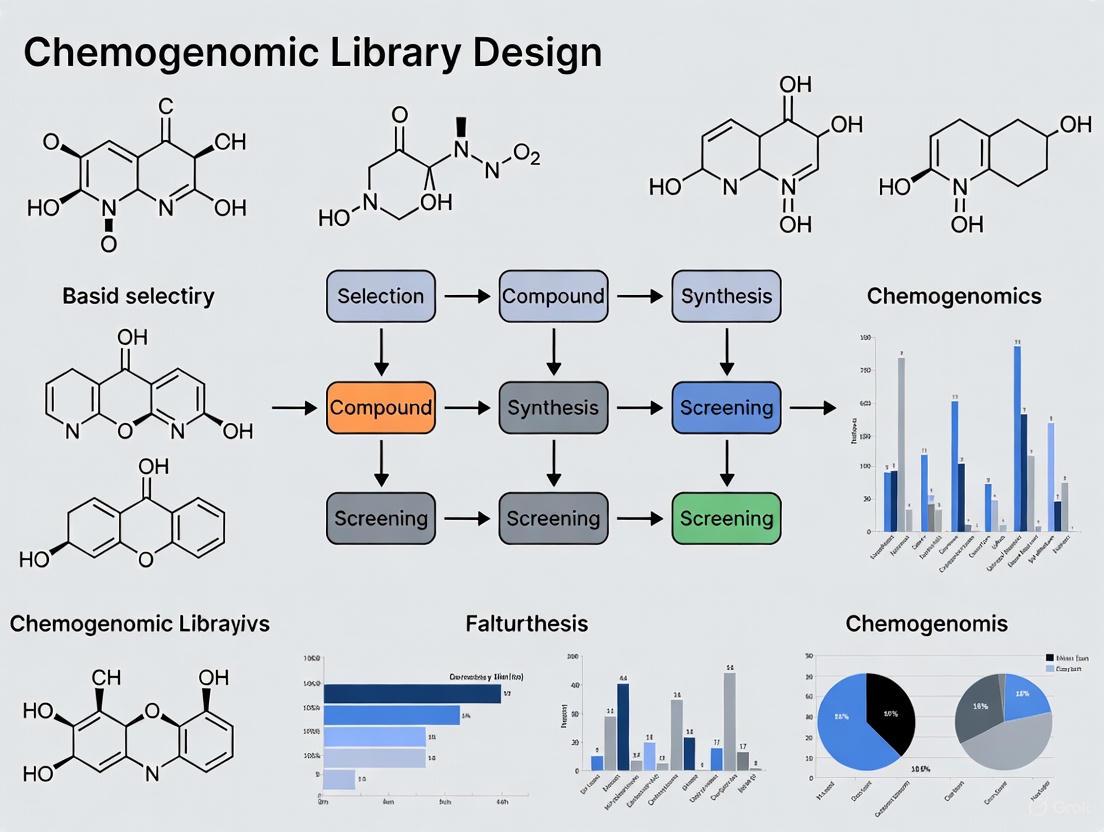
This article provides a comprehensive guide to the basic principles of chemogenomic library design for researchers, scientists, and drug development professionals.
Strategic Chemogenomic Library Design: Principles, Applications, and Best Practices for Target Discovery
Abstract
This article provides a comprehensive guide to the basic principles of chemogenomic library design for researchers, scientists, and drug development professionals. It explores the foundational concepts of systematically screening small molecules against target families to identify novel drugs and targets. The scope covers strategic methodologies for compound selection based on cellular activity, chemical diversity, and target selectivity, alongside practical applications in areas like precision oncology. It also addresses common challenges and optimization strategies, concluding with rigorous validation and comparative profiling approaches to ensure the generation of robust, high-quality chemical tools for effective target identification and validation in phenotypic drug discovery.
Foundations of Chemogenomics: From Basic Concepts to Strategic Target Family Screening
Chemogenomics represents a modern paradigm in chemical biology and drug discovery that investigates the systematic interplay between small molecules and biological target families on a genomic scale [1] [2]. This approach integrates combinatorial chemistry with genomic and proteomic sciences to comprehensively study the response of biological systems to chemical perturbations [2]. The primary goal is the parallel identification of novel drug targets and biologically active compounds that modulate phenotypic outcomes [2]. Unlike traditional single-target approaches, chemogenomics operates on the principle that focused chemical libraries can probe entire families of related proteins, such as G-protein-coupled receptors (GPCRs), kinases, nuclear receptors, and proteases [1]. This strategy leverages the structural and functional similarities within protein families, enabling the identification of ligands for less-characterized family members based on their similarity to well-established targets [1] [3].
The completion of the human genome project revealed a vast landscape of potential therapeutic targets, many with unknown functions and no known ligands—classified as orphan receptors [1]. Chemogenomics provides a powerful framework to elucidate the function of these novel targets by identifying small molecules that modulate their activity [1]. Furthermore, the hits discovered for these targets serve as valuable starting points for drug discovery campaigns [1]. The approach is characterized by its two-dimensional screening methodology, where the first dimension consists of a chemical library and the second dimension comprises a library of different cell types or protein targets [4]. This generates a rich data matrix that enables the correlation of chemical structures with biological responses across multiple dimensions, facilitating the deconvolution of complex mechanism-of-action relationships [4].
Fundamental Principles and Strategic Approaches
Core Concepts and Definitions
At its foundation, chemogenomics operates through several interconnected paradigms. Chemical genetics involves the modulation of protein function using small molecules, allowing researchers to probe biological systems with temporal and dose-dependent control [4]. This approach treats small molecules as conditional mutagens that can reversibly alter protein function, enabling real-time observation of phenotypic changes upon compound addition or withdrawal [1]. The chemical space—defined as the entirety of theoretically possible arrangements of atoms that result in small molecules—provides the universe from which screening libraries are derived [4]. Systematic exploration of this chemical space against biological target families forms the operational core of chemogenomics [1].
A key operational principle in chemogenomics is the use of targeted chemical libraries designed around known ligands of specific protein families [1]. Since ligands designed for one family member frequently show affinity for other related family members, such libraries collectively bind to a high percentage of the target family [1]. This approach significantly increases the probability of identifying modulators for orphan receptors within well-characterized protein families [1]. The underlying similarity principle enables knowledge transfer from characterized to uncharacterized family members, maximizing the information gained from screening efforts [3].
Forward versus Reverse Chemogenomics
Chemogenomics employs two complementary experimental strategies, each with distinct applications and workflows.
Table 1: Comparison of Forward and Reverse Chemogenomics Approaches
| Feature | Forward Chemogenomics | Reverse Chemogenomics |
|---|---|---|
| Starting Point | Phenotype of interest with unknown molecular mechanism | Known protein target with established in vitro assay |
| Screening Approach | Phenotypic screening for desired phenotype | Target-based screening for modulators of specific protein |
| Primary Challenge | Designing assays that enable target identification | Translating in vitro hits to cellular and organismal phenotypes |
| Typical Applications | Pathway discovery, phenotypic drug discovery | Target validation, mechanism confirmation |
| Target Identification | Required after hit identification—often complex | Known from the outset |
Forward chemogenomics (also called classical chemogenomics) begins with a phenotypic screen where the molecular basis of the observed phenotype is unknown [1]. Researchers identify small molecules that induce or suppress a specific phenotype in cells or whole organisms, then use these bioactive compounds as tools to identify the protein targets responsible for the observed effect [1]. For example, a loss-of-function phenotype might manifest as inhibition of tumor growth, with subsequent target identification necessary to understand the mechanism [1]. The main challenge lies in designing phenotypic assays that facilitate eventual target deconvolution [1].
Reverse chemogenomics follows a target-based approach where small molecules are first identified for their ability to perturb the function of a specific enzyme or receptor in an in vitro assay [1]. Once modulators are confirmed, the phenotypes induced by these compounds are analyzed in cellular or whole-organism contexts [1]. This strategy, enhanced by parallel screening capabilities across multiple targets within a family, helps confirm the biological role of the targeted protein and establishes therapeutic relevance [1]. Reverse chemogenomics closely resembles traditional target-based drug discovery but with the advantage of family-wide profiling [1].
Chemogenomic Library Design and Composition
Library Design Principles
The construction of targeted chemical libraries represents a critical success factor in chemogenomics. These libraries are strategically designed to maximize coverage of relevant chemical space while maintaining focus on specific protein families [3]. A proven design protocol involves chemogenomic classification of protein binding sites into subsites, followed by the collection of bioactive molecular fragments and virtual library generation [5]. This approach was successfully applied to the design of a focused library for 5-HT7 receptor ligands, where principal component analysis of molecular descriptors demonstrated effective focusing of the targeted library into regions of chemical space defined by known actives [5]. Computational validations indicated an enrichment factor of 5-HT7 ligand-like molecules in the range of 2-4 for the targeted library compared to a diverse reference library [5].
Effective library design incorporates several key considerations. Chemical diversity must be balanced with target family relevance to ensure sufficient variety while maintaining a higher probability of identifying hits against the protein family of interest [3] [6]. Additionally, drug-likeness and lead-likeness parameters such as those defined by Lipinski's Rule of Five ensure that library members possess physicochemical properties associated with successful drug development [4]. The inclusion of annotated chemical libraries—collections where some bioactivity data is already available—facilitates knowledge transfer and structure-activity relationship analysis across target families [4].
Composition of Representative Libraries
Several well-characterized chemogenomic libraries have been developed by academic and industrial groups, each with distinct characteristics and applications.
Table 2: Characteristics of Representative Chemogenomic Libraries
| Library Name | Size | Key Characteristics | Primary Applications |
|---|---|---|---|
| GSK Biologically Diverse Compound Set (BDCS) | Not specified | High chemical and biological diversity | Broad phenotypic screening |
| Pfizer Chemogenomic Library | Not specified | Focused on privileged structures | Target family screening |
| Prestwick Chemical Library | 1,280 compounds | High percentage of approved drugs | Repurposing, phenotypic screening |
| Sigma-Aldrich LOPAC | 3,200 compounds | Pharmacologically active compounds | Mechanism of action studies |
| NCATS MIPE | Not specified | Annotated with mechanism data | Translational research |
| Developed Library [6] | 5,000 compounds | Represents diverse drug targets | Phenotypic screening, target ID |
Contemporary chemogenomic libraries increasingly incorporate structural annotation and pathway mapping to facilitate mechanism deconvolution. For example, one recently developed library of 5,000 small molecules was designed to represent a large and diverse panel of drug targets involved in various biological effects and diseases [6]. This library was constructed through systematic analysis of drug-target-pathway-disease relationships integrated with morphological profiling data from high-content imaging assays [6]. The incorporation of morphological profiling from assays such as "Cell Painting" enables the characterization of cell states based on microscopic imaging, providing rich phenotypic fingerprints that can connect compound treatment to specific biological pathways [6].
Experimental Methodologies and Workflows
Screening Technologies and Platforms
Chemogenomic screening employs diverse experimental platforms tailored to specific research questions. Two-dimensional screening methodologies form the core approach, combining chemical libraries with genetic variant libraries [4]. For yeast models, three primary mutant library types are utilized: heterozygous deletions (sensitive to haploinsufficiency), homozygous deletions (identifying compensatory mechanisms), and overexpression libraries (detecting synthetic lethality) [4]. Each library type offers distinct advantages for probing chemical-genetic interactions and identifying mechanism of action.
Detection methods in chemogenomic screens primarily fall into two categories: non-competitive arrays and competitive mutant pools [4]. In non-competitive arrays, each mutant strain is cultured separately, providing robust quantitative data but requiring significant resources [4]. Competitive mutant pools culture all strains together, using molecular barcodes to quantify relative fitness through microarray hybridization or sequencing—a more efficient approach suitable for larger screens [4]. The choice between these methods depends on the specific research question, available resources, and required data resolution.
Workflow for Chemogenomic Screening and Target Identification
The following diagram illustrates the integrated workflow for chemogenomic screening and target identification, incorporating both experimental and computational components:
Data Analysis and Interpretation Methods
The interpretation of chemogenomic data requires specialized computational approaches to extract meaningful biological insights. Principal component analysis (PCA) of molecular descriptors helps visualize the distribution of compound libraries in chemical space, demonstrating the focusing of targeted libraries into regions populated by known active compounds [5]. Genetic interaction mapping creates epistatic profiles that reveal functional relationships between genes and compounds, while morphological clustering groups compounds with similar phenotypic effects based on high-content screening data [6] [4].
Network pharmacology approaches integrate chemogenomic data with biological pathway information, creating multi-scale networks that connect compound-target interactions to downstream phenotypic effects [6]. These networks typically incorporate diverse data types, including:
- Chemical structures and properties from databases such as ChEMBL [7] [6]
- Protein-target information including family classification and functional annotations [1] [6]
- Pathway data from resources like KEGG and Gene Ontology [6]
- Disease associations from Disease Ontology and other biomedical resources [6]
- Morphological profiles from high-content imaging assays [6]
The integration of these diverse data types enables the identification of complex relationships between chemical structures, biological targets, and phenotypic outcomes, facilitating the prediction of mechanism of action for novel compounds [6].
Applications in Biotechnology and Drug Discovery
Target Identification and Validation
Chemogenomics provides powerful approaches for identifying and validating novel drug targets. In one application, researchers capitalized on an existing ligand library for the bacterial enzyme murD involved in peptidoglycan synthesis [1]. Using chemogenomics similarity principles, they mapped the murD ligand library to other members of the mur ligase family (murC, murE, murF, murA, and murG) to identify new targets for known ligands [1]. Structural and molecular docking studies revealed candidate ligands for murC and murE ligases, demonstrating how chemogenomic approaches can expand the utility of existing compound collections against related targets [1].
Another innovative application involved the identification of genes in biological pathways through chemogenomic profiling [1]. Researchers utilized Saccharomyces cerevisiae cofitness data—representing similarity of growth fitness under various conditions between different deletion strains—to identify the enzyme responsible for the final step in diphthamide biosynthesis [1]. By identifying strains with high cofitness to known diphthamide biosynthesis genes, they discovered YLR143W as the missing diphthamide synthetase, subsequently confirmed through experimental validation [1]. This demonstrates how chemogenomic data can elucidate even long-standing biological mysteries.
Mechanism of Action Deconvolution
Determining the mechanism of action (MOA) for bioactive compounds represents a major application of chemogenomics. This approach has been successfully applied to traditional medicine systems, including Traditional Chinese Medicine (TCM) and Ayurveda, where the complex mixture of natural products presents significant challenges for target identification [1]. Compounds from traditional medicines often possess "privileged structures" with favorable solubility and safety profiles, making them attractive starting points for drug development [1]. Chemogenomic analysis of these compounds using target prediction programs has identified relevant protein targets linked to observed phenotypes, such as sodium-glucose transport proteins and PTP1B for hypoglycemic activity, or steroid-5-alpha-reductase and P-gp for anti-cancer formulations [1].
The integration of chemogenomics with phenotypic screening creates a powerful framework for MOA deconvolution. In one implementation, researchers developed a system pharmacology network integrating drug-target-pathway-disease relationships with morphological profiles from the Cell Painting assay [6]. This platform enabled the connection of compound-induced morphological changes to specific biological targets and pathways, facilitating rapid hypothesis generation about mechanism of action for hits from phenotypic screens [6]. Such integrated approaches are particularly valuable for complex disease models where the relevant molecular targets may not be known in advance.
Essential Research Reagents and Materials
Successful chemogenomic screening requires carefully selected reagents and materials designed to maximize information content and reproducibility.
Table 3: Essential Research Reagents for Chemogenomic Studies
| Reagent Category | Specific Examples | Function and Application |
|---|---|---|
| Chemical Libraries | Pfizer Chemogenomic Library, GSK BDCS, Prestwick Library, LOPAC, NCATS MIPE [6] | Source of chemical diversity for screening |
| Cell Line Libraries | Yeast deletion strains (heterozygous/homozygous), Cancer cell line panels, IPSC-derived cells [4] | Genetic diversity for chemical-genetic interaction studies |
| Assay Reagents | Cell Painting dyes, Viability indicators, Reporter constructs [6] | Phenotypic profiling and response measurement |
| Target Annotation Databases | ChEMBL, KEGG, Gene Ontology, Disease Ontology [6] | Biological context and target identification |
| Computational Tools | ScaffoldHunter, Neo4j, RDKit, Chemaxon JChem [7] [6] | Structural analysis and data integration |
The selection of appropriate chemical libraries represents a critical decision point in chemogenomic study design. Two fundamentally different approaches exist: diverse libraries that sample broad chemical space and focused libraries that target specific regions of chemical space [4]. Diverse libraries maximize the chance of discovering novel chemotypes but may require larger screening efforts, while focused libraries provide higher hit rates against specific target families but may limit serendipitous discoveries [4]. Many successful chemogenomic campaigns employ a hybrid approach, using diverse libraries for initial discovery followed by focused libraries for target family exploration.
Chemogenomics has established itself as a powerful integrative approach that systematically explores the interface between chemical compounds and biological systems. By combining targeted library design with high-throughput screening and computational analysis, this methodology enables the parallel identification of bioactive small molecules and their protein targets. The continued development of more sophisticated chemical libraries, screening technologies, and data integration platforms will further enhance the utility of chemogenomics in both basic research and drug discovery. As the field evolves, emphasis on data quality and reproducibility—through rigorous curation practices and standardized workflows—will ensure that chemogenomic approaches deliver robust, translatable insights into the complex relationship between chemical structure and biological function.
Chemogenomics represents a systematic approach in modern drug discovery that involves screening targeted libraries of small molecules against families of functionally related proteins, such as G-protein-coupled receptors (GPCRs), kinases, proteases, and nuclear receptors [8] [1]. The fundamental goal is the parallel identification of novel drugs and their biological targets by studying the intersection of all possible chemical compounds against all potential therapeutic targets derived from genomic information [9] [1]. This strategy marks a significant evolution from traditional one-drug-one-target approaches, instead considering the complex interactions between small molecules and biological systems on a broader scale.
The field operates on the principle that targeting entire gene families rather than individual proteins enables more efficient exploration of chemical and biological spaces [8]. Since a portion of ligands designed to bind one family member frequently bind to additional family members, collectively, compounds in a targeted chemical library should bind to a high percentage of the target family [1]. Chemogenomics integrates target and drug discovery by using active compounds as probes to characterize proteome functions, with the interaction between a small compound and a protein inducing a phenotype that can be systematically studied [1].
Core Conceptual Frameworks
Forward Chemogenomics
Forward chemogenomics, also termed classical chemogenomics, begins with the investigation of a specific phenotype of interest, such as inhibition of cancer cell growth or induction of cell death [9] [1]. Researchers identify small molecules that produce this desired phenotype through systematic screening of compound libraries against cellular or organismal model systems [1]. The molecular basis of the phenotype is initially unknown, and the identified active compounds serve as tools to pinpoint the protein targets responsible for the observed effect [1].
The primary challenge in forward chemogenomics lies in designing phenotypic assays that efficiently lead from screening to target identification [1]. A prominent example includes the Developmental Therapeutics Program of the National Cancer Institute (NCI), which screens compound libraries against a panel of representative cancer cell lines (NCI60) [9]. The anti-proliferative effects are recorded and analyzed to differentiate various classes of cytotoxic compounds, allowing researchers to generate hypotheses about mechanisms of action for novel agents [9]. This approach has shown particular utility in cancer biology, where patient-specific vulnerabilities can be identified through phenotypic profiling [10] [11].
Reverse Chemogenomics
Reverse chemogenomics adopts a target-first strategy, beginning with specific protein targets of interest [9] [1]. Gene sequences are cloned and expressed as target proteins, which are then screened against compound libraries using high-throughput, target-based assays [9]. These assays monitor compound effects on specific targets, cellular pathways, or whole-cell phenotypes [9]. Once modulators are identified, the phenotype induced by the molecule is analyzed in cellular or whole-organism contexts to validate biological function [1].
This approach resembles traditional target-based drug discovery but is enhanced by parallel screening capabilities and the ability to perform lead optimization across multiple targets belonging to the same gene family [1]. Reverse chemogenomics benefits from well-established methods including combinatorial chemistry, high-throughput screening, computational chemistry, structural biology, and bioinformatics [9]. The availability of protein structures from gene families, obtained through crystallography, NMR, or biological homology modeling, facilitates in silico chemogenomics approaches that predict molecules active against additional family members [8].
Table 1: Core Characteristics of Forward and Reverse Chemogenomics
| Feature | Forward Chemogenomics | Reverse Chemogenomics |
|---|---|---|
| Starting Point | Phenotype of interest | Known protein target |
| Screening Approach | Phenotypic screening | Target-based screening |
| Primary Goal | Identify drug targets | Validate biological function |
| Key Challenge | Target deconvolution | Phenotypic validation |
| Common Assays | Cell-based, whole organism | Cell-free, enzymatic, binding |
| Information Flow | Phenotype → Compound → Target | Target → Compound → Phenotype |
Experimental Methodologies and Workflows
Forward Chemogenomics Workflow
The experimental workflow for forward chemogenomics typically involves several standardized stages. First, a suitable model system is selected based on the phenotype of interest—this may include cancer cell lines, yeast strains, or other cellular/organismal models [9] [12]. A compound library is then screened against this model system under controlled conditions, with phenotypic responses quantitatively measured [10] [12]. Hit compounds that produce the desired phenotype are selected for target identification, which may involve various deconvolution strategies such as affinity chromatography, protein microarrays, or genetic approaches [9] [1]. Finally, confirmed target-compound pairs are validated through secondary assays and mechanistic studies [12].
Reverse Chemogenomics Workflow
The reverse chemogenomics workflow initiates with target selection and characterization, typically focusing on members of pharmaceutically relevant gene families [8] [1]. Target proteins are produced through cloning and expression systems, then used to develop specific screening assays [9]. Compound libraries are screened against these targets using high-throughput approaches, with hit compounds evaluated for selectivity across related targets [8] [1]. Promising compounds are then advanced to phenotypic characterization in cellular or organismal models to confirm biological relevance and therapeutic potential [1].
Implementation in Drug Discovery
Library Design Considerations
Designing appropriate compound libraries is crucial for successful chemogenomics approaches. Targeted screening libraries of bioactive small molecules must be carefully constructed considering library size, cellular activity, chemical diversity and availability, and target selectivity [10]. Most compounds modulate their effects through multiple protein targets with varying degrees of potency and selectivity, requiring analytic procedures to optimize library composition [10] [11]. The resulting compound collections should cover a wide range of protein targets and biological pathways implicated in the disease area of interest [10].
In practice, chemogenomic libraries can be constructed to include known ligands of at least one—and preferably several—members of the target family [1]. For example, specialized libraries include the GlaxoSmithKline Biologically Diverse Compound Set (targeting GPCRs and kinases), the LOPAC1280 (Library of Pharmacologically Active Compounds), Pfizer's Chemogenomic library (focusing on ion channels, GPCRs, and kinases), and the Prestwick Chemical Library (comprising approved drugs selected for target diversity, bioavailability, and safety) [8]. The design of a minimal screening library of 1,211 compounds targeting 1,386 anticancer proteins demonstrates how virtual libraries can be translated into physical screening collections for experimental validation [10] [11].
Research Reagent Solutions
Table 2: Essential Research Reagents in Chemogenomics
| Reagent/Category | Function & Application | Examples |
|---|---|---|
| Compound Libraries | Small molecule collections for screening | LOPAC1280, Prestwick Chemical Library, NCI Sets [8] [12] |
| Biological Models | Organismal/cellular systems for phenotypic screening | Yeast deletion strains, cancer cell lines, patient-derived cells [10] [12] |
| Target Proteins | Expressed and purified proteins for target-based screens | Recombinant kinases, GPCRs, nuclear receptors [8] [1] |
| Screening Assays | Test systems for compound evaluation | Cell-free binding, cell-based phenotypic, enzymatic assays [9] [12] |
Case Study: Glioblastoma Patient Cell Profiling
A recent application of chemogenomics in precision oncology demonstrated the power of phenotypic screening in identifying patient-specific vulnerabilities [10] [11]. Researchers implemented analytic procedures for designing anticancer compound libraries adjusted for library size, cellular activity, chemical diversity and availability, and target selectivity [10]. In a pilot screening study, they used a physical library of 789 compounds covering 1,320 anticancer targets to image glioma stem cells from patients with glioblastoma (GBM) [10] [11]. The cell survival profiling revealed highly heterogeneous phenotypic responses across patients and GBM subtypes, highlighting the potential of forward chemogenomics approaches to identify personalized therapeutic strategies [10].
The experimental protocol involved several key steps: (1) Design of virtual compound libraries covering a wide range of cancer-related targets; (2) Creation of a minimal screening library of 1,211 compounds targeting 1,386 anticancer proteins; (3) Culture of patient-derived glioma stem cells representing different GBM subtypes; (4) High-throughput phenotypic screening using automated imaging; (5) Quantification of cell survival and morphological parameters; and (6) Identification of patient-specific compound sensitivities based on differential responses [10].
Comparative Analysis and Strategic Applications
Advantages and Limitations
Both forward and reverse chemogenomics offer distinct advantages and face particular limitations. Forward chemogenomics enables discovery of novel biological mechanisms without predefined target hypotheses, potentially identifying unexpected therapeutic strategies [9] [1]. However, it faces significant challenges in target deconvolution and may involve complex mechanistic follow-up studies [1]. Reverse chemogenomics provides clear intellectual property positions and straightforward structure-activity relationship development but may produce compounds that lack cellular efficacy due to permeability or metabolic issues [9].
The main advantage of chemogenomics overall is its predictive power using enormous biological datasets, with information on drugs' and targets' nucleotide sequences and chemical structures available in public databases for predicting drug-target interactions [8]. Limitations include the need for meticulous integration of cheminformatics and bioinformatics data, developing rational methods for hit selection from vast virtual possibilities, and constructing information-specific catalogs [8].
Application Scenarios
Table 3: Application Scenarios for Forward and Reverse Chemogenomics
| Application | Forward Chemogenomics | Reverse Chemogenomics |
|---|---|---|
| Target Identification | Primary approach for novel target discovery | Limited to known target families |
| Mechanism of Action Studies | Identifying mechanisms of phenotypic effects | Confirming target engagement |
| Drug Repurposing | Discovering new indications through phenotypic screening | Predicting new targets for existing compounds |
| Pathway Elucidation | Mapping novel biological pathways | Validating hypothesized pathways |
| Personalized Medicine | Identifying patient-specific vulnerabilities | Developing targeted therapies |
Chemogenomics has been successfully applied to determine mechanisms of action for traditional medicines, identify new drug targets, and discover genes in biological pathways [1]. For example, chemogenomics approaches helped identify the enzyme responsible for the final step in the synthesis of diphthamide, a modified histidine residue found on translation elongation factor 2, thirty years after the compound was first characterized [1]. In antibacterial drug discovery, chemogenomics profiling has identified new therapeutic targets by capitalizing on existing ligand libraries for enzymes in the peptidoglycan synthesis pathway and mapping these to other members of the enzyme family [1].
Forward and reverse chemogenomics represent complementary strategies in modern drug discovery, each with distinct strengths and application domains. Forward chemogenomics begins with phenotypic observation and progresses to target identification, making it ideal for exploring novel biology and identifying unexpected therapeutic strategies. Reverse chemogenomics starts with defined molecular targets and progresses to phenotypic validation, providing a more structured approach for optimizing compounds against well-characterized target families.
The integration of both approaches within chemogenomics frameworks provides powerful capabilities for addressing the complexity of biological systems and drug interactions. As chemogenomics continues to evolve with advances in screening technologies, bioinformatics, and chemical biology, it offers increasingly sophisticated approaches for the systematic exploration of biological and chemical spaces, ultimately accelerating the discovery of novel therapeutic agents and their molecular targets. The strategic application of these core approaches will be essential for addressing unmet medical needs through more efficient and targeted drug discovery pipelines.
The Role of Chemogenomics in Bridging Target and Drug Discovery
Chemogenomics represents a paradigm shift in modern drug discovery, moving away from the traditional "one drug, one target" model toward a more holistic, systematic investigation of the interactions between chemical compounds and biological systems. Fundamentally, chemogenomics is defined as the investigation of classes of compounds (libraries) against families of functionally related proteins [13]. This strategy, in principle, searches for all molecules capable of interacting with any biological target, though in practice focuses on the systematic analysis of chemical-biological interactions using congeneric series of chemical analogs to investigate their action on specific target classes such as GPCRs, kinases, phosphodiesterases, and ion channels [13].
The discipline operates through two complementary approaches: reverse chemogenomics, where gene sequences of interest are expressed as target proteins and screened in a high-throughput manner against compound libraries, and forward chemogenomics, where active compounds are identified based on their phenotypic effects on whole biological systems, followed by mechanistic investigation of the phenotype [14]. This integrated framework enables the parallel identification of therapeutic targets and bioactive compounds, significantly accelerating the early drug discovery pipeline [14].
Theoretical Foundations and Strategic Approaches
Key Principles and Concepts
The theoretical framework of chemogenomics rests on several foundational concepts that differentiate it from traditional drug discovery approaches. The structure-activity relationship (SAR) homology concept enables the parallel exploration of gene and protein families by leveraging the premise that similar targets often bind similar ligands [14]. This principle allows researchers to extrapolate knowledge from well-characterized targets to less-studied members of the same protein family.
Another pivotal concept is that of "privileged structures" – molecular scaffolds that frequently produce biologically active analogs across a target family [13]. For example, benzodiazepines have demonstrated remarkable versatility in generating active compounds, particularly within the G-protein-coupled receptor class. The identification and utilization of such privileged structures enables more efficient library design and increases the probability of discovering novel bioactive compounds.
The SOSA (Selective Optimization of Side Activities) approach provides another strategic foundation, focusing on modifying the selectivity of biologically active compounds to generate new drug candidates from the side activities of therapeutically used drugs [13]. This approach leverages the extensive pharmacological characterization of existing drugs to identify new therapeutic applications, potentially reducing development risks and timelines.
Chemogenomics in Precision Oncology
The application of chemogenomics strategies has proven particularly transformative in oncology, where the approach helps identify treatment strategies that selectively target the multiple and complex molecular alterations observed in human tumors [14]. Recent advances have demonstrated the power of phenotypic screening in identifying patient-specific vulnerabilities, as evidenced by a pilot study on glioblastoma (GBM) patient cells that revealed highly heterogeneous responses across patients and GBM subtypes [10] [15].
Precision oncology applications require carefully designed chemogenomic libraries that cover a wide range of protein targets and biological pathways implicated in various cancers. Modern library design strategies emphasize cellular activity, chemical diversity, and target selectivity, with one proposed minimal screening library comprising 1,211 compounds targeting 1,386 anticancer proteins [10]. This targeted approach enables researchers to efficiently map the complex landscape of cancer vulnerabilities while managing screening costs and logistical constraints.
Chemogenomic Library Design: Methodologies and Protocols
Fundamental Design Strategies
Designing a targeted screening library of bioactive small molecules presents significant challenges, as most compounds modulate their effects through multiple protein targets with varying degrees of potency and selectivity [10]. Effective library design must balance several competing factors: library size, cellular activity, chemical diversity, compound availability, and target selectivity. Analytic procedures for designing anticancer compound libraries have been developed that systematically address these constraints, resulting in collections widely applicable to precision oncology initiatives [10] [15].
A critical consideration in library design is the concept of library focus. Broadly, libraries can be categorized as either target-family-focused or diversity-oriented. Target-family-focused libraries concentrate on compounds likely to interact with specific protein families (e.g., kinases, GPCRs), leveraging privileged structures and known pharmacophores. Diversity-oriented libraries aim to cover maximum chemical space to facilitate the discovery of novel chemotypes, often employing complex scaffold architectures with high stereochemical diversity.
Practical Implementation and Optimization
The practical implementation of chemogenomic library design involves a multi-step process beginning with target selection and compound identification. Researchers must first define the target space of interest, which in oncology might include proteins involved in apoptosis, cell cycle regulation, DNA repair, and signaling pathways commonly dysregulated in cancer [10]. Subsequently, compounds are selected based on their documented activity against these targets, with careful attention to potency, selectivity, and chemical tractability.
Compound filtering represents a crucial step in library optimization. This process typically employs physicochemical property filters (e.g., molecular weight <1000 Da, organic compounds without metal atoms) to remove non-drug-like molecules while retaining sufficient chemical diversity [16]. The resulting compound collections balance comprehensive target coverage with practical screening constraints, as demonstrated by a physical library of 789 compounds that covers 1,320 anticancer targets successfully applied to profile glioma stem cells from glioblastoma patients [10].
The continuous refinement of library design represents an ongoing trend in chemogenomics that increasingly emphasizes data quality rather than merely the number of data points generated [14]. This quality-focused approach recognizes that well-annotated, highly characterized compounds of moderate chemical diversity often yield more valuable insights than massive libraries with poor annotation and questionable data quality.
Figure 1: Chemogenomic Library Design Workflow. This flowchart outlines the systematic process for designing targeted compound libraries, from initial target definition through experimental validation.
Data Curation and Quality Control Protocols
Integrated Curation Workflow
The accuracy and reproducibility of chemogenomics data fundamentally determine the success of downstream modeling and discovery efforts. Numerous studies have alerted the scientific community to concerning rates of errors in both chemical structures and biological measurements within public databases [7]. To address these challenges, a comprehensive chemical and biological data curation workflow must be implemented prior to model development or database deposition [7].
The proposed integrated workflow encompasses both chemical structure verification and bioactivity data validation. For chemical structures, this includes identification and correction of structural errors, removal of problematic compound classes (inorganics, organometallics, mixtures), structural cleaning (detection of valence violations, abnormal bond parameters), ring aromatization, normalization of specific chemotypes, and standardization of tautomeric forms [7]. The treatment of stereochemistry demands particular attention, as compounds with multiple asymmetric centers show increased likelihood of erroneous assignments.
Biological Data Standardization
Bioactivity data curation presents unique challenges, as there are no absolute rules defining the "true" value of a biological measurement [7]. Nevertheless, systematic approaches can flag suspicious entries through processing of bioactivities for chemical duplicates – instances where the same compound is recorded multiple times within or across databases [7]. When duplicates are identified, bioactivity values must be carefully compared and potentially aggregated, with the best potency measurement typically selected as the representative value.
The standardization of bioactivity data requires careful attention to experimental details and measurement contexts. For example, the type of dispensing technology (tip-based versus acoustic) used in high-throughput screening can significantly influence experimental responses measured for the same compounds in the same assay [7]. These technical variations can dramatically affect both prediction performance and interpretation of computational models, highlighting the importance of comprehensive assay annotation.
Table 1: Key Steps in Chemogenomics Data Curation
| Curation Phase | Specific Procedure | Tools & Techniques |
|---|---|---|
| Chemical Structure Curation | Structure standardization; Tautomer normalization; Stereochemistry verification; Removal of inorganics/metallics | Chemaxon JChem; RDKit; Schrodinger LigPrep; KNIME workflows |
| Bioactivity Data Curation | Identification of chemical duplicates; Aggregation of multiple measurements; Unit conversion; Outlier detection | Custom scripts; AMBIT; Database-specific tools |
| Target Annotation | Standardization of target identifiers; Gene symbol verification; Orthologue mapping | Entrez ID; NCBI gene2accession; Orthologue tables |
| Assay Annotation | Mode of action classification; Technology type documentation; Experimental condition standardization | Controlled vocabularies; Ontologies (e.g., BioAssay Ontology) |
Experimental Protocols and Research Applications
Phenotypic Screening in Glioblastoma
A recent pilot study exemplifies the application of chemogenomics in precision oncology, specifically in profiling glioblastoma (GBM) patient cells [10] [15]. The experimental protocol began with the establishment of glioma stem cell cultures derived from patient tumors, preserving the cellular heterogeneity and phenotypic characteristics of the original malignancies. These cells were then screened against a physical library of 789 compounds carefully selected to cover 1,320 anticancer targets, with particular emphasis on pathways implicated in GBM pathogenesis.
The screening methodology employed high-content imaging to quantify multiple phenotypic endpoints, including cell viability, morphology, and more complex phenotypic signatures. This multi-parameter approach enabled the identification of subtle compound-induced phenotypes beyond simple cytotoxicity, providing richer information on mechanism of action and patient-specific vulnerabilities. The resulting data revealed highly heterogeneous responses across patients and established GBM molecular subtypes, underscoring the value of chemogenomic approaches in capturing the complexity of cancer biology and therapy resistance.
Chemogenomic Library Screening Protocol
A standardized protocol for chemogenomic library screening involves several critical stages. First, library preparation requires compound dissolution in appropriate solvents (typically DMSO) at standardized concentrations, followed by transfer to assay-ready plates using precision liquid handling systems. Next, cell seeding optimizes cell density and culture conditions to maintain physiological relevance while ensuring robust assay performance. The compound treatment phase typically employs a concentration-response format (e.g., 8-point serial dilution) to enable quantitative assessment of compound potency and efficacy.
Following an appropriate incubation period (typically 72-144 hours for viability assays), phenotypic readouts are captured using methods appropriate to the biological endpoints of interest. For cell viability assays, this might include ATP quantification (CellTiter-Glo), resazurin reduction, or high-content imaging of nuclear and cellular morphology. Finally, data analysis involves normalization to positive and negative controls, curve-fitting to calculate IC50/EC50 values, and identification of hits based on statistically defined thresholds. Throughout this process, quality control measures including Z'-factor calculation and plate uniformity assessment ensure data reliability.
Table 2: Essential Research Reagents and Tools in Chemogenomics
| Reagent/Tool Category | Specific Examples | Function in Research |
|---|---|---|
| Compound Libraries | Targeted anticancer library; Diversity-oriented synthesis collections; Annotated compound libraries with known bioactivity | Source of chemical probes for systematic target perturbation; enables connection of chemical structure to biological effect |
| Cell-Based Assay Systems | Glioblastoma stem cell cultures; Engineered isogenic cell lines; Patient-derived organoids | Biologically relevant screening platforms that preserve disease pathophysiology and cellular context |
| Detection Technologies | High-content imaging systems; Luminescence/fluorescence plate readers; Label-free biosensors | Multiparametric phenotypic assessment; quantitative measurement of compound effects |
| Bioinformatics Resources | ExCAPE-DB; ChEMBL; PubChem; Connectivity Map | Publicly accessible chemogenomics data repositories enabling data integration and meta-analysis |
Public Chemogenomics Databases
The growth of chemogenomics has been facilitated by the development of extensive public databases that compile chemical structures and associated bioactivity data. Key resources include ChEMBL, a manually curated database of bioactive molecules with drug-like properties extracted from the scientific literature; PubChem, a comprehensive repository of chemical substances and their bioactivities primarily from high-throughput screening efforts; and ExCAPE-DB, an integrated large-scale dataset specifically designed to facilitate big data analysis in chemogenomics [16].
The ExCAPE-DB represents a particularly significant resource, comprising over 70 million structure-activity relationship data points from PubChem and ChEMBL with standardized chemical structures, target information, and activity annotations [16]. This database employs rigorous curation protocols including chemical structure standardization (using ambitcli and the Chemistry Development Kit), bioactivity data standardization with controlled vocabularies, and aggregation of multiple activity records for the same compound-target pair. The resulting resource reflects industry-scale data quality and serves as a valuable foundation for building predictive models of polypharmacology and off-target effects.
Data Standardization and Integration Challenges
The integration of heterogeneous chemogenomics data presents substantial challenges, as publicly available data often lack standardized annotation for biological endpoints, mode of action, and target identifiers [16]. Addressing these inconsistencies requires the implementation of controlled vocabularies and standardization protocols for key data elements including target identifiers (preferably Entrez ID or UniProt ID), activity values (with uniform units), assay type classification, and experimental technology documentation.
Chemical structure representation presents particular standardization challenges, with error rates in public and commercial databases ranging from 0.1% to 3.4% depending on the database [7]. Common issues include incorrect stereochemistry, inaccurate tautomer representation, and presence of unwanted counterions or salts. The use of community-established standards such as InChI (International Chemical Identifier) and implementation of automated structure-checking pipelines can significantly improve data quality and interoperability across different platforms and research groups.
Figure 2: Chemogenomics Data Flow from Sources to Applications. This diagram illustrates the pathway from raw experimental data through standardization and integration into publicly accessible databases that enable various research applications.
Future Directions and Concluding Perspectives
The evolution of chemogenomics continues to transform early drug discovery by systematically investigating the complex interface between chemical space and biological systems. Current trends emphasize data quality over quantity, with refined integration of bioinformatics and chemoinformatics data enabling more rational selection of designed compounds from virtually infinite synthetic possibilities [14]. This quality-focused approach, combined with advances in library design and screening technologies, promises to enhance the efficiency of identifying both validated therapeutic targets and novel drug candidates.
The application of chemogenomics strategies in precision oncology particularly illustrates the power of this approach to address complex disease biology. By enabling the systematic mapping of patient-specific vulnerabilities against targeted compound libraries, chemogenomics provides a framework for developing more personalized treatment approaches that match the molecular heterogeneity of diseases like glioblastoma [10] [15]. As chemogenomics continues to evolve, its integration with emerging technologies including CRISPR-based functional genomics, proteomics, and artificial intelligence will further accelerate the identification and validation of novel therapeutic targets and corresponding chemical probes.
In conclusion, chemogenomics represents a powerful strategy that has matured from a niche concept to a central paradigm in modern drug discovery. By systematically exploring the intersection of chemical and biological space, it provides a robust framework for simultaneously addressing the key challenges of target identification and compound optimization. As data quality initiatives advance and integration with complementary technologies deepens, chemogenomics is poised to play an increasingly central role in bridging the critical gap between target discovery and therapeutic development across a broad spectrum of human diseases.
Chemogenomics represents a strategic paradigm in modern drug discovery, connecting the chemical and biological domains to establish ligand-target relationships on a systematic scale. This approach enables target classification, focused library design, and the interrogation of selectivity and polypharmacology profiles [17]. By organizing chemical libraries around specific protein families, researchers can leverage conserved structural and functional knowledge to accelerate the identification of novel therapeutic agents. This guide details the core principles and practical methodologies for designing chemogenomic libraries focused on three of the most therapeutically significant target families: G protein-coupled receptors (GPCRs), kinases, and nuclear receptors (NRs). The strategic selection of these families allows for the efficient exploration of chemical space by applying family-specific design rules, ultimately enabling more effective deconvolution of phenotypic screening outcomes and target validation in complex biological systems [10] [18] [19].
Core Design Principles for Chemogenomic Libraries
The development of a high-quality chemogenomic library requires adherence to several interconnected design principles that ensure both broad target coverage and interpretable screening results. These principles guide the selection and annotation of compounds to create resources that are maximally informative for biological discovery.
- Cellular Activity and Potency: Priority selection goes to compounds with demonstrated cellular activity (typically potency ≤ 10 µM, preferably ≤ 1 µM) to ensure relevance in biological systems [18] [19].
- Selectivity and Orthogonality: While absolute selectivity for a single target is rare and often unnecessary, libraries should be optimized for complementary selectivity profiles. This orthogonality allows for the deconvolution of mechanisms when observing phenotypic outcomes [20] [18].
- Target Coverage and Diversity: Libraries should aim for broad coverage across the target family, including understudied ("dark") members. Including multiple chemotypes per target increases confidence in linking biology to specific targets [20].
- Chemical Diversity and Drug-Likeness: Structural diversity in scaffolds and frameworks helps explore a wider swath of chemical space and minimizes redundancy. Compounds should generally exhibit drug-like properties (e.g., MW = 200-550, ClogP = -1.5-5.5) to enhance cellular permeability and reduce toxicity liabilities [21] [19].
- Data Annotation and Availability: Comprehensive bioactivity annotation, including primary potency, selectivity profiles, and known off-targets, is essential for interpreting screening data. Open access to data and compounds fosters broader scientific utility [10] [20].
The following workflow outlines the sequential stages of a target-family focused chemogenomic library design process, integrating these core principles from initial conceptualization to final deployment for screening.
Library Design Strategies by Target Family
Kinase-Focused Library Design
Kinases represent one of the most successfully targeted protein families for therapeutic intervention, with over 60 FDA-approved small molecule inhibitors. The design of kinase chemogenomic sets leverages the deep understanding of the conserved ATP-binding site while seeking to achieve selectivity through unique interactions with variable regions.
Key Design Considerations: The primary challenge is managing selectivity given the high conservation of the ATP-binding pocket across the 500+ human kinome. Successful libraries prioritize compounds with defined and narrow selectivity profiles rather than absolute specificity. For example, the Kinase Chemogenomic Set (KCGS) selects inhibitors based on a binding constant (K_D) < 100 nM for the primary target and a strict selectivity index (S10), meaning they inhibit fewer than 2.5% of the kinome panel tested at 1 µM [20]. This ensures tools are potent yet sufficiently selective for meaningful biological inference. Another critical strategy is maximizing kinome coverage, with special emphasis on understudied "dark" kinases nominated by initiatives like the Illuminating the Druggable Genome (IDG) program. The KCGS, for instance, covers 215 human kinases, providing starting points for understudied targets [20]. Furthermore, including multiple chemotypes per kinase is essential. Using two or more structurally distinct inhibitors for a single target builds confidence that observed phenotypic effects are due to the intended kinase inhibition and not to a shared off-target effect of a particular chemotype [20].
Case Study: The Kinase Chemogenomic Set (KCGS) The KCGS represents an open-science resource that exemplifies these principles. It was assembled through a collaborative community effort, with pharmaceutical companies and academic labs donating compounds. Each candidate inhibitor was profiled against a panel of 401 wild-type human kinases using a binding assay (DiscoverX scanMAX) at 1 µM [20]. Compounds meeting the initial selectivity threshold underwent full dose-response experiments to determine K_D values. The final selection of 187 inhibitors was manually triaged to maximize kinome coverage and chemical diversity, intentionally avoiding over-representation of well-studied kinases [20]. This rigorous process ensures KCGS is a highly annotated set of selective kinase inhibitors optimized for use in cell-based phenotypic screens to elucidate kinase biology.
GPCR-Focused Library Design
GPCRs are the largest and most successful family of druggable targets, with over one-third of all approved drugs acting on them. Designing GPCR-focused libraries involves unique strategies to target both orthosteric and allosteric binding sites.
Key Design Considerations: A major focus is leveraging privileged scaffolds—structural motifs that recur in known GPCR ligands. Library design often involves framework 2D-fingerprint similarity searches and the careful selection of these GPCR-privileged scaffolds, extended by 3D pharmacophore searches to identify novel chemotypes with potential activity [21]. Furthermore, explicitly targeting allosteric sites is a powerful strategy to achieve subtype selectivity and explore novel modes of modulation. Allosteric ligands can modulate receptor function more subtly than orthosteric ligands, offering new therapeutic opportunities. Libraries can contain dedicated sublibraries for allosteric modulators [17] [21]. Given the diversity of GPCRs and their ligands, achieving high chemical diversity is paramount. This involves designing novel, sp3-enriched scaffolds and ensuring drug-like molecular properties (e.g., MW 200-550, ClogP -1.5-5.5) to create high-quality starting points for optimization [21].
Implementation Example: Commercial GPCR Libraries Commercial providers have created large GPCR-focused libraries using integrated in silico approaches. For instance, one provider's library of 53,440 compounds was designed using a combination of 2D similarity, privileged scaffold selection, and 3D pharmacophore searches, followed by medicinal chemistry filtering [21]. This library also includes specialized sublibraries, such as an Allosteric GPCR Library (14,160 compounds) and a Lipid GPCR Library (6,400 compounds), enabling targeted research into specific GPCR classes and modes of action [21].
Nuclear Receptor-Focused Library Design
Nuclear receptors (NRs) are ligand-activated transcription factors that regulate gene expression. The NR1 family, which includes receptors for hormones, vitamins, and lipids, presents a unique opportunity for chemogenomic library design due to its partially explored therapeutic potential.
Key Design Considerations: A critical aspect is covering diverse modes of action. Unlike kinases and many GPCRs, NR ligands can function as agonists, antagonists, or inverse agonists. A high-quality NR library must include compounds representing these different functional outcomes to fully probe NR biology [18]. Comprehensive in-family selectivity profiling is also essential due to structural similarities within NR subfamilies. This involves profiling each candidate compound not just against its primary target, but against all NRs in its subfamily using uniform cellular assays (e.g., hybrid reporter gene assays) to map cross-reactivity and identify selective tools [18]. Additionally, stringent liability profiling is necessary. Candidates should be triaged in cell viability assays and screened against common off-targets like kinases and bromodomains, which are highly ligandable and can cause confounding phenotypic effects [18].
Case Study: An NR1 Chemogenomic Set A recent effort compiled a CG set for the 19 members of the NR1 family. The process began with curated public bioactivity data, identifying 30,862 annotated NR1 ligands [18]. Candidates were filtered for potency (≤ 10 µM), selectivity (up to five off-targets), commercial availability, and chemical diversity. The final selection of 69 compounds was rigorously profiled for identity/purity, cytotoxicity in multiple cell lines, and activity on liability targets like BRD4 and AURKA. In-family selectivity was confirmed using reporter gene assays, resulting in a set of highly annotated tools suitable for probing NR1 biology in phenotypic screens related to autophagy, neuroinflammation, and cancer cell death [18].
Table 1: Comparative Overview of Target Family Library Design Strategies
| Design Principle | Kinase Libraries (e.g., KCGS) | GPCR Libraries | Nuclear Receptor Libraries (e.g., NR1 Set) |
|---|---|---|---|
| Primary Selectivity Metric | Selectivity Index (S10 < 0.025-0.04 at 1 µM) [20] | Target-focused similarity & 3D pharmacophores [21] | Up to five known off-targets; in-family selectivity profiling [18] |
| Key Screening Assay | Binding assays (e.g., DiscoverX scanMAX) [20] | Functional and binding assays, often proprietary | Uniform cellular reporter gene assays [18] |
| Coverage Goal | 215+ kinases; 2+ chemotypes per kinase [20] | Broad coverage across GPCR families; specialized sublibraries [21] | Full coverage of a defined family (e.g., all 19 NR1 receptors) [18] |
| Typical Library Size | ~200-1200 compounds [10] [20] | ~40,000-50,000+ compounds [21] [22] | ~70-5000 compounds [18] [19] |
| Unique Challenge | Achieving selectivity in a conserved ATP-binding site | Identifying selective ligands for ~800 receptors | Distinguishing agonists from antagonists/inverse agonists |
Experimental Protocols for Library Validation and Screening
Standardized Selectivity and Liability Profiling
A defining feature of a high-quality chemogenomic library is the comprehensive experimental profiling of its constituents. This involves a cascade of assays to validate identity, purity, potency, selectivity, and absence of toxicity.
Key Experimental Protocols:
- Quality Control and Compound Integrity: All compounds must undergo rigorous quality control prior to inclusion. This is typically done via NMR, LC-UV, and LC-MS analyses to confirm chemical identity and ensure a purity of ≥95% [18].
- Primary Potency and Selectivity Profiling:
- Kinases: The standard is a broad panel binding assay, such as the DiscoverX scanMAX platform, which quantitatively measures compound binding against 400+ human kinases at a single concentration (e.g., 1 µM). Compounds passing an initial selectivity threshold then undergo full dose-response (K_D determination) for all kinases inhibited beyond a cut-off (e.g., >90%) [20].
- Nuclear Receptors: Uniform cellular reporter gene assays are used to profile compound activity (agonism/antagonism) across all members of a subfamily. This ensures data comparability and accurate in-family selectivity assessment [18].
- Liability and Toxicity Profiling:
- Cell Viability: Candidates are screened in cell viability assays across multiple cell lines (e.g., HEK293T, U-2 OS). Growth rates (GR) are measured over time to identify compounds with growth-inhibiting (GR < 1) or cytotoxic (GR < 0) effects [18].
- High-Content Phenotypic Screening: Compounds of concern can be further evaluated in multiplex high-content microscopy assays. These assays use orthogonal stains to capture phenotypic features related to cell health, such as apoptosis, cytoskeleton alterations, and mitochondrial mass, over extended time periods (12-48h) [18].
- Liability Target Screening: Differential scanning fluorimetry (DSF) is used to screen for binding to common, highly ligandable off-targets that cause strong phenotypes, such as representative kinases (AURKA, CDK2) and bromodomains (BRD4). A compound-induced increase in protein melting temperature (ΔTm > 1.8°C) is considered a significant interaction [18].
Application in Phenotypic Screening and Target Deconvolution
Validated chemogenomic libraries are powerful tools for phenotypic drug discovery. The key to their utility lies in the strategic deconvolution of screening results.
Workflow for Phenotypic Screening: Cells (e.g., patient-derived glioma stem cells, iPSCs) are treated with the chemogenomic library and analyzed using a phenotypic endpoint, such as cell survival, high-content imaging (e.g., Cell Painting), or a specific functional readout [10] [19]. The resulting phenotypic profiles are clustered to identify "hits" that induce a desired phenotypic change.
Target Deconvolution Strategies: Once hits are identified, the rich annotation of the library enables mechanistic hypotheses.
- Profile Matching: The phenotypic profile of a hit compound is compared to a database of reference profiles (e.g., from the Cell Painting assay) generated by known tool compounds. Similarity to the profile of a compound with a known mechanism can implicate a specific target or pathway [19].
- Connectivity Analysis: If multiple compounds sharing a common primary target (or off-target) all produce the same phenotypic outcome, this provides strong evidence for the involvement of that target in the observed phenotype. This is most powerful when different chemotypes for the same target are available, as in the KCGS [20].
- Cross-reactivity Analysis: For a single hit compound, its known selectivity profile is used to generate a list of candidate targets responsible for the phenotype. This list can be prioritized for further validation using genetic techniques like CRISPR [10] [23].
Table 2: The Scientist's Toolkit: Key Research Reagent Solutions
| Resource Name | Target Family | Key Features & Function | Source/Reference |
|---|---|---|---|
| Kinase Chemogenomic Set (KCGS) | Kinases | 187 inhibitors; pre-defined potency/selectivity; covers 215 kinases; ideal for phenotypic screening and probe discovery [20]. | www.randomactsofkinase.org [20] |
| NR1 Chemogenomic Set | Nuclear Receptors | 69 agonists/antagonists; comprehensively profiled for in-family selectivity and low toxicity; for target ID in autophagy, inflammation [18]. | Zenodo (10.5281/zenodo.10474037) [18] |
| GPCR-Focused Libraries | GPCRs | Large libraries (40,000-50,000+ cmpds) designed using privileged scaffolds & pharmacophore models; includes allosteric sub-libraries [21] [22]. | Commercial providers (e.g., Enamine, ChemDiv) [21] [22] |
| DiscoverX scanMAX | Kinases | Service platform for broad kinome profiling (400+ kinases); essential for validating inhibitor selectivity during library construction and hit follow-up [20]. | Discovery Life Sciences |
| Cell Painting Assay | Pan-target | High-content imaging assay that quantifies ~1,800 morphological features; generates rich phenotypic profiles for mode-of-action analysis [19]. | Broad Bioimage Benchmark Collection (BBBC022) [19] |
The strategic design of target-family-focused chemogenomic libraries provides a powerful framework for systematic biological and therapeutic exploration. By applying the core principles of cellular potency, orthogonal selectivity, broad coverage, and chemical diversity—tailored to the specific characteristics of GPCRs, kinases, and nuclear receptors—researchers can create unparalleled resources for both target-based and phenotypic drug discovery. The rigorous, multi-stage experimental validation of compound properties, as detailed in the protocols above, is what transforms a simple compound collection into a deeply annotated chemogenomic toolset.
The future of this field lies in the continued expansion of library coverage to understudied "dark" targets, the deepening of mechanistic annotations to include multi-omics data, and the development of even more sophisticated computational models to predict and deconvolve polypharmacology. As these libraries become more accessible to the global research community through open-science initiatives, they will undoubtedly accelerate the identification and validation of novel therapeutic targets for complex diseases.
Methodologies and Real-World Applications in Oncology and Beyond
Chemogenomic libraries are strategically designed collections of small molecules that enable the systematic exploration of biological targets and pathways. The primary objective of these libraries is to modulate protein function to understand disease mechanisms and identify therapeutic opportunities. The design and construction of these libraries are governed by three fundamental pharmacological criteria: potency, selectivity, and cellular activity [10] [24]. These parameters ensure that chemical tools produce reliable, interpretable data in biological systems, ultimately supporting robust target validation and drug discovery efforts.
These design principles have gained prominence through initiatives like Target 2035, a global effort aiming to develop pharmacological modulators for most human proteins by 2035 [24]. Within this framework, public-private partnerships such as the EUbOPEN consortium are creating openly available chemical tools annotated to high standards, emphasizing the critical importance of well-characterized compounds for biomedical research [24]. The rigorous application of potency, selectivity, and cellular activity criteria during library design ensures maximum biological relevance and utility across diverse research applications, particularly in precision oncology where understanding patient-specific vulnerabilities is paramount [10].
Defining the Core Design Criteria
Quantitative Standards for Chemical Probes and Tool Compounds
The minimal fundamental criteria for high-quality chemical tools, often referred to as "fitness factors," have been established through community consensus among chemical biologists and pharmacologists [25]. These criteria provide quantitative benchmarks for evaluating compounds suitable for mechanistic biological investigations.
Table 1: Quantitative Criteria for High-Quality Chemical Probes
| Criterion | Target Profile | Justification |
|---|---|---|
| Potency | In vitro activity < 100 nM | Ensures strong target engagement at physiologically relevant concentrations [25] |
| Selectivity | ≥30-fold against related targets | Minimizes confounding off-target effects in cellular assays [25] |
| Cellular Activity | Target engagement < 1 μM (10 μM for challenging targets) | Demonstrates compound functionality in biologically complex environments [24] [25] |
| Toxicity Window | Reasonable separation between efficacy and toxicity | Confirms phenotypic effects are target-mediated rather than general toxicity [24] |
While these standards represent the gold standard for chemical probes, chemogenomic libraries often employ compounds with slightly modified profiles. Chemogenomic (CG) compounds may exhibit narrower but not exclusive target selectivity while maintaining well-characterized polypharmacology [24]. These tools remain valuable for target deconvolution when used in sets with overlapping selectivity patterns, enabling researchers to identify the target responsible for a specific phenotype through pattern recognition [24].
Experimental Methodologies for Criteria Assessment
Potency Assessment Protocols
Potency evaluation requires a multi-assay approach to determine compound effectiveness across different biological contexts:
- In vitro biochemical assays: Measure direct binding affinity or functional inhibition of purified target proteins using techniques such as fluorescence polarization, surface plasmon resonance, or enzymatic activity assays. These establish fundamental compound-target interactions absent cellular complexity [26].
- Cellular target engagement assays: Employ techniques like cellular thermal shift assays (CETSA) or nanoBRET to confirm compound interaction with intended targets in live cells, providing critical context for biochemical potency [25].
- Phenotypic response measurements: Quantify functional consequences of target engagement through imaging-based viability assays, apoptosis markers, or pathway-specific reporters in disease-relevant cell models [10].
Selectivity Validation Methods
Comprehensive selectivity profiling employs complementary approaches to identify off-target interactions:
- Profiling panels against related targets: Screen compounds against panels of sequence-related proteins (e.g., kinase families, GPCR arrays) to identify selectivity within target families [24] [26].
- Broad-scale profiling platforms: Utilize high-throughput methodologies like chemical proteomics to assess interactions across thousands of proteins simultaneously, identifying unexpected off-target engagements [24].
- Family-specific selectivity criteria: Apply target class-specific guidelines that account for binding site conservation, ligandability, and available chemical matter, as implemented by EUbOPEN's expert committees [24].
Cellular Activity Confirmation
Demonstrating target modulation in biologically relevant systems requires:
- Pathway modulation assays: Measure downstream biomarkers of target engagement, such as phosphorylation status, gene expression changes, or metabolic alterations [10] [25].
- Primary cell testing: Evaluate compound activity in patient-derived cells or physiologically relevant models to confirm functionality in disease-relevant contexts [10] [24].
- Functional rescue experiments: Demonstrate reversal of phenotypic effects through genetic complementation or orthogonal targeting to establish causal relationships between target engagement and phenotypic outcomes [25].
Figure 1: Experimental Framework for Characterizing Chemical Tools. This workflow illustrates the multi-dimensional assessment required to establish compound quality across potency, cellular activity, and selectivity domains, culminating in phenotypic validation.
Implementation in Library Design and Screening
Practical Application in Library Design Strategies
The translation of potency, selectivity, and cellular activity criteria into practical library design involves balancing ideal characteristics with practical constraints:
- Target-family-focused design: Libraries for well-established target families (e.g., kinases, GPCRs) leverage abundant structural information to design compounds with conserved interaction motifs while incorporating selectivity elements through strategic substitution [26]. For example, kinase-focused libraries may include scaffolds capable of binding multiple kinase conformations (active, DFG-out) with substituents that access diverse pocket environments to enable both broad coverage and potential selectivity [26].
- Druggable genome coverage: Minimal screening libraries aim to maximize target coverage within practical screening constraints. Research demonstrates that approximately 1,200 carefully selected compounds can target over 1,300 anticancer proteins when selected based on rigorous potency, selectivity, and cellular activity criteria [10] [27].
- Cell-active compound prioritization: Library design prioritizes compounds with demonstrated cellular activity, as cellular target engagement represents a significant bottleneck in tool compound development. In the EUbOPEN consortium, all compounds undergo comprehensive characterization including primary patient cell profiling to confirm biological relevance [24].
The Scientist's Toolkit: Essential Research Reagents
Table 2: Key Research Reagents and Resources for Chemogenomic Studies
| Resource Type | Specific Examples | Function and Utility |
|---|---|---|
| Chemical Probes | Peer-reviewed compounds from EUbOPEN, SGC, Donated Chemical Probes [24] | High-quality, selective modulators for specific target validation; typically satisfy all key design criteria [25] |
| Matched Inactive Controls | Structurally similar but target-inactive analogs [25] | Critical negative controls to distinguish target-mediated from off-target effects; should be used alongside active probes [25] |
| Orthogonal Probes | Chemically distinct compounds targeting same protein [25] | Confirm phenotypic effects through different chemical matter; essential for validating biological findings [25] |
| Chemogenomic Compound Sets | EUbOPEN CG library (covers 1/3 of druggable proteome) [24] | Well-annotated compounds with overlapping selectivity patterns enable target deconvolution through phenotypic screening [24] |
| Online Assessment Portals | Chemical Probes Portal, Probe Miner, Probes & Drugs [25] | Community-vetted resources for identifying appropriate chemical tools and usage guidelines including recommended concentrations [25] |
Current Research Context and Implementation Challenges
The Reality of Chemical Probe Use in Biomedical Research
Despite established guidelines and available resources, implementation of optimal practices remains challenging. A systematic review of 662 publications revealed significant gaps in chemical probe implementation [25]:
- Only 25% of studies used chemical probes within the recommended concentration range
- Just 21% employed available inactive control compounds
- Merely 15% utilized orthogonal chemical probes targeting the same protein
- A mere 4% of publications adhered to all three best practices simultaneously
This implementation gap demonstrates the critical need for continued education and adherence to established design criteria when employing chemical tools in research settings.
Addressing Implementation Challenges Through Structured Frameworks
To improve experimental rigor, researchers have proposed "the rule of two" framework: employing at least two chemical probes (either orthogonal target-engaging probes and/or a pair of an active probe and matched target-inactive compound) at recommended concentrations in every study [25]. This approach directly addresses the validation gaps observed in current literature.
Figure 2: The "Rule of Two" Framework for Robust Chemical Biology. This systematic approach to experimental design emphasizes multiple lines of pharmacological evidence to increase confidence in research findings.
The fundamental design criteria of potency, selectivity, and cellular activity provide the pharmacological foundation for informative chemogenomic libraries and reliable chemical tools. These principles enable the construction of screening collections that maximize biological relevance while minimizing misleading results from poorly characterized compounds. As chemical biology continues to evolve, with new modalities such as PROTACs and molecular glues expanding the druggable proteome [24], adherence to these core principles will remain essential for generating chemically driven biological insights. The research community's continued emphasis on compound quality through initiatives like Target 2035 and EUbOPEN promises to enhance tool availability and experimental standards across biomedical research [24].
Optimizing for Chemical Diversity and Scaffold Variety
Chemogenomic libraries are strategically designed collections of small molecules used to systematically probe biological systems and identify therapeutic starting points. Their power lies not merely in size, but in the deliberate optimization of chemical diversity and scaffold variety. This approach enables comprehensive exploration of the chemical-biological interaction space, moving beyond the traditional "one target–one drug" paradigm to a systems pharmacology perspective where a single compound can engage multiple targets [19]. In precision oncology, for example, libraries designed to cover a wide range of protein targets and biological pathways have successfully identified patient-specific vulnerabilities in heterogeneous diseases like glioblastoma [10]. The fundamental objective is to create a library that is maximally efficient in its structural and functional coverage, increasing the probability of identifying novel bioactive compounds and uncovering new biological insights.
Core Principles and Analytical Strategies
Defining Chemical Diversity and Scaffold Variety
- Chemical Diversity: A measure of the structural and property differences between molecules in a collection. It is typically assessed using structural fingerprints (e.g., MACCS keys, ECFP) and physicochemical properties (e.g., molecular weight, logP) [28].
- Scaffold Variety: Refers to the diversity of core molecular frameworks (scaffolds) present. A scaffold is the central core structure of a molecule, often obtained by systematically removing side chains and peripheral groups [19]. High scaffold variety is crucial for discovering new chemotypes and enabling scaffold hopping—identifying novel core structures that retain biological activity [29].
Quantitative Metrics for Diversity Analysis
A comprehensive diversity analysis employs multiple metrics to provide a holistic view. The following table summarizes key metrics and their applications.
Table 1: Key Metrics for Assessing Library Diversity
| Assessment Criterion | Specific Metric | Interpretation | Application in Library Design |
|---|---|---|---|
| Scaffold Diversity | Scaffold Count & Singleton Fraction [28] | Number of unique cores; fraction represented by a single molecule. | High counts and singleton fractions indicate broad exploration of chemical space. |
| Cyclic System Recovery (CSR) AUC/F50 [28] | AUC: Area Under the CSR curve. F50: Fraction of scaffolds needed to cover 50% of a library. | Low AUC and high F50 values indicate high scaffold diversity. | |
| Scaled Shannon Entropy (SSE) [28] | Measures the evenness of compound distribution across scaffolds (0 to 1). | Higher SSE indicates a more even distribution, avoiding over-representation of specific scaffolds. | |
| Structural Fingerprint Diversity | Mean Pairwise Tanimoto Similarity [28] | Average structural similarity based on fingerprint comparisons (e.g., MACCS, ECFP). | A lower mean similarity indicates greater structural diversity within the library. |
| Physicochemical Property Diversity | Principal Component Analysis (PCA) & Euclidean Distance [28] | Analyzes the spread of compounds in a property space (e.g., MW, logP, HBD, HBA). | A broader spread in PCA plots indicates coverage of a wider property space, aligning with drug-like rules. |
The Consensus Diversity Plot (CDP) is a powerful method that integrates these independent metrics into a single, two-dimensional visualization. A CDP typically plots scaffold diversity on one axis and fingerprint diversity on the other, allowing for the direct comparison of multiple libraries and a rapid assessment of their "global diversity" [28].
Experimental Protocol: Diversity Analysis of a Compound Library
This protocol provides a step-by-step methodology for conducting a comprehensive diversity assessment of a chemical library, as cited in foundational research [28].
- Data Curation: Process the molecular library using cheminformatics software (e.g., MOE). This involves standardizing structures, disconnecting metal salts, removing simple components, and rebalancing protonation states.
- Scaffold Generation: Derive molecular scaffolds for all compounds using a consistent algorithm, such as the method described by Johnson and Xu, which systematically removes side chains to reveal the core structure.
- Calculate Scaffold Metrics:
- Generate the Cyclic System Recovery (CSR) curve by plotting the cumulative fraction of scaffolds (X-axis) against the cumulative fraction of compounds they cover (Y-axis).
- From the CSR curve, calculate the Area Under the Curve (AUC) and the F50 value.
- Calculate the Scaled Shannon Entropy (SSE) considering the top n most populated scaffolds (e.g., n=5 to 70) to understand the distribution evenness.
- Calculate Fingerprint-Based Diversity:
- Generate structural fingerprints (e.g., 166-bit MACCS keys, ECFP_4) for all compounds.
- Calculate the Tanimoto similarity for all pairwise combinations of compounds.
- Compute the mean pairwise Tanimoto similarity for the entire library.
- Calculate Property-Based Diversity:
- Compute key physicochemical properties (Molecular Weight, logP, Hydrogen Bond Donors, Hydrogen Bond Acceptors, Topological Polar Surface Area, Number of Rotatable Bonds) for all molecules.
- Use Principal Component Analysis (PCA) on the scaled property data to visualize the library's coverage of the physicochemical space.
- Visualize with a Consensus Diversity Plot: Integrate the results by creating a CDP. Plot a metric of scaffold diversity (e.g., AUC) on the Y-axis and a metric of fingerprint diversity (e.g., mean Tanimoto similarity) on the X-axis. Each library is represented as a single point on the plot, providing an at-a-glance comparison of global diversity.
Library Design and Implementation
Strategies for Designing Diverse Libraries
Designing a diverse, target-focused library requires a multi-faceted strategy that balances several competing demands.
- Coverage of the Druggable Genome: Modern chemogenomic libraries aim to interrogate a significant portion of the ~20,000 human genes. However, even the best libraries typically only cover 1,000-2,000 targets, highlighting the need for strategic compound selection to maximize biological relevance [30].
- Integration of Multi-faceted Data: Library design is increasingly informed by system pharmacology networks that integrate drug-target-pathway-disease relationships, as well as data from phenotypic profiling assays like Cell Painting. This allows for the creation of libraries where compounds are annotated not just with targets, but with associated pathways and potential morphological impacts [19].
- Balancing Diversity and Focus: The library must be broadly diverse to uncover novel biology but also contain enough focused, target-annotated compounds to facilitate mechanism of action (MoA) deconvolution after a phenotypic screen [10] [19]. This is often achieved by assembling a collection that includes both chemically diverse compounds and a core set of well-annotated, selective tool compounds.
- Employing Advanced Informatics: The "informacophore" concept, which combines minimal chemical structures with computed molecular descriptors and machine-learned representations, is shaping modern library design. This data-driven approach helps identify the essential molecular features for biological activity, reducing biased intuitive decisions and accelerating discovery [31].
Table 2: Key Resources for Chemogenomic Library Research and Screening
| Resource Category | Specific Examples | Function in Research |
|---|---|---|
| Public Compound Libraries | NCATS MIPE (Mechanism Interrogation PlatE) [19] | Provides a publicly available set of annotated compounds for phenotypic and target-based screening. |
| Commercial & Targeted Libraries | Epigenetic-Focused Library [28]; Pfizer, GSK BDCS, Prestwick, Sigma-Aldrich LOPAC [19] | Focused sets for probing specific target families (e.g., kinases, epigenetic enzymes) or collections of known bioactives. |
| Virtual & "Make-on-Demand" Libraries | Enamine (65B+ compounds), OTAVA (55B+ compounds) [31] | Ultra-large virtual libraries used for in silico screening; "tangible" compounds can be synthesized on demand after computational hit identification. |
| Bioactivity Databases | ChEMBL [19] | A manually curated database of bioactive molecules with drug-like properties, providing essential data for target annotation and library design. |
| Pathway & Ontology Databases | KEGG, Gene Ontology (GO), Disease Ontology (DO) [19] | Used to annotate compounds with biological pathway and disease information, enriching system pharmacology networks. |
| Morphological Profiling Data | Cell Painting (e.g., BBBC022 dataset) [19] | A high-content imaging assay that generates morphological profiles for compounds, enabling phenotypic clustering and functional insights. |
Workflow Visualization and Data Interpretation
Chemogenomic Library Design and Screening Workflow
The following diagram illustrates the integrated computational and experimental workflow for designing a diverse chemogenomic library and applying it in a phenotypic drug discovery campaign.
Interpreting Diversity Analysis and Screening Results
- Interpreting CDPs: In a Consensus Diversity Plot, libraries falling in the lower-left quadrant (low scaffold AUC, low fingerprint similarity) are the most globally diverse. This positioning indicates a wide variety of core structures and high overall structural dissimilarity, which is often a primary design goal for an exploratory library [28].
- Validating with Phenotypic Data: The ultimate test of a library's design is its performance in biological screens. For example, a library of 789 compounds covering 1,320 anticancer targets revealed highly heterogeneous phenotypic responses in patient-derived glioblastoma cells. This result validates that the library's design successfully captured biologically relevant chemical diversity capable of identifying patient-specific vulnerabilities [10].
- Addressing Limitations: It is critical to recognize that even a well-designed small-molecule library interrogates only a fraction of the human genome. Furthermore, phenotypic screening with such libraries faces challenges in target deconvolution. These limitations can be mitigated by viewing small-molecule and genetic (e.g., CRISPR) screening as complementary technologies [30].
The strategic optimization of chemical diversity and scaffold variety is a cornerstone of effective chemogenomic library design. By employing a multi-faceted approach that leverages quantitative metrics like Consensus Diversity Plots, integrates diverse biological data sources, and balances broad diversity with targeted coverage of the druggable genome, researchers can construct powerful screening collections. These purpose-built libraries are indispensable for advancing phenotypic drug discovery, enabling the systematic identification of novel therapeutic starting points and the deconvolution of complex biological mechanisms. As informatics and machine learning continue to evolve, the principles of diversity and variety will remain central to unlocking new regions of therapeutically relevant chemical space.
Chemogenomics is a foundational strategy in modern drug discovery that employs systematically designed libraries of small molecules to probe biological systems and validate therapeutic targets. The core objective of chemogenomic (CG) library design is to create highly annotated sets of bioactive compounds that collectively modulate a broad spectrum of targets within a protein family or biological pathway. Unlike conventional screening libraries, CG libraries are characterized by their extensive characterization of compound-target interactions, enabling researchers to connect phenotypic outcomes to specific molecular targets through pattern recognition [24].
The strategic incorporation of diverse modes of action—including agonists, antagonists, and emerging degrader technologies—represents a critical advancement in chemogenomic library design. This multi-mechanistic approach significantly expands the investigative power of CG libraries, allowing researchers to not only inhibit protein function but also to activate desired biological pathways or eliminate pathogenic proteins entirely. By integrating compounds with varied mechanistic actions, CG libraries can reveal elusive biological effects and provide a more comprehensive understanding of target biology in disease-relevant contexts [32].
Current small-molecule drug development has historically focused on a limited set of well-established target families, leaving substantial portions of the druggable proteome unexplored. The EUbOPEN consortium, a major public-private partnership, reports that while prominent public repositories contain over 566,735 compounds with target-associated bioactivity, these predominantly cover only 2,899 human proteins, with kinase inhibitors and GPCR ligands disproportionately represented [24]. This coverage gap highlights the necessity for strategically designed CG libraries that incorporate diverse modalities to investigate understudied target families and expand the druggable genome.
Fundamental Principles of Mode-of-Action Diversity
Defining Mechanistic Classes
The pharmacological efficacy of small molecules in chemogenomic libraries derives from their specific interactions with target proteins and the consequent biological effects. Agonists are compounds that activate a biological response by binding to and stabilizing the active conformation of a target protein. Traditional agonists include full agonists that produce maximum response and partial agonists that elicit submaximal response even with full receptor occupancy. In contrast, antagonists prevent agonist-mediated responses by binding to targets without activating them, effectively blocking natural ligands or signaling pathways. Antagonist classes include competitive antagonists that bind reversibly to the active site, and inverse agonists that stabilize inactive conformations of constitutively active receptors [32].
A transformative addition to the mode-of-action arsenal is the class of degraders, which induce the selective removal of target proteins from cells via the ubiquitin-proteasome system or other degradation pathways. Unlike occupancy-driven pharmacology of agonists and antagonists, degraders employ an event-driven mechanism, catalytically inducing target destruction at substoichiometric concentrations [33]. This class includes heterobifunctional proteolysis-targeting chimeras (PROTACs) that simultaneously bind to a target protein and an E3 ubiquitin ligase, as well as molecular glue degraders (MGDs) that induce or enhance interactions between a target and ligase without separate target-binding and ligase-recruitment moieties [34] [35].
Comparative Analysis of Mechanistic Properties
Table 1: Comparative Properties of Different Modes of Action in Chemogenomic Libraries
| Property | Agonists | Antagonists | Degraders |
|---|---|---|---|
| Mechanism | Stabilizes active conformation | Blocks active site or stabilizes inactive state | Induces target ubiquitination and degradation |
| Pharmacology | Occupancy-driven | Occupancy-driven | Event-driven, catalytic |
| Target Scope | Receptors with functional outputs | Receptors, enzymes | Potentially any protein with ligase-proximal lysines |
| Temporal Effects | Acute, reversible | Acute, reversible | Prolonged (dependent on resynthesis rate) |
| Selectivity Mechanisms | Binding affinity, functional selectivity | Binding affinity, allosteric modulation | Ternary complex geometry, lysine proximity |
| Key Advantages | Activates desired pathways | Blocks pathological signaling | Abolishes all functions (catalytic, scaffolding) |
| Limitations | Potential desensitization | May not affect non-catalytic functions | Requires compatible E3 ligase expression |
The event-driven mechanism of degraders offers distinctive pharmacological advantages. As noted in recent research, "degraders may be developed as covalent compounds" and "the pharmacology of degraders can lead to a disconnect between pharmacokinetic (PK) and pharmacodynamic (PD) properties," with target proteins potentially remaining absent long after the degrader has been cleared from circulation [35]. This prolonged functional response contrasts with the rapid reversibility of most agonistic and antagonistic effects, offering potential therapeutic advantages for certain disease contexts.
Strategic Design of Multi-Mechanistic Libraries
Compound Selection and Annotation
The construction of CG libraries with diverse modes of action requires rigorous, multi-parameter selection criteria. A recent implementation for nuclear hormone receptors (NR3 family) demonstrated a systematic approach beginning with the identification of 9,361 potential ligands from public compound/bioactivity databases, followed by sequential filtering based on potency (typically ≤1 μM), commercial availability, and selectivity profiles [32]. The selection process prioritized chemical diversity, evaluated using pairwise Tanimoto similarity computed on Morgan fingerprints, and mechanistic diversity by incorporating multiple modes of action where available [32].
Comprehensive characterization of selected compounds is essential for establishing reliable structure-activity relationships. The EUbOPEN consortium has established strict criteria for chemical probes, requiring "potency measured in in vitro assays of less than 100 nM, a selectivity of at least 30 fold over related proteins, evidence of target engagement in cells at less than 1 μM or 10 μM for shallow protein–protein interaction targets, and a reasonable cellular toxicity window" [24]. For degrader compounds, additional parameters include DC50 (concentration for half-maximal degradation), Dmax (maximum degradation achieved), and rate of degradation, alongside assessment of ternary complex formation [35].
Coverage Optimization and Library Validation
Strategic optimization of target coverage within CG libraries involves careful analysis of the available chemical tools for each target and the complementary information provided by different mechanistic classes. The final NR3 CG library exemplifies this approach, comprising 34 compounds that fully cover nine NR3 receptors with at least two modes of action per subfamily, incorporating 12 NR3A ligands, 7 NR3B ligands, and 17 NR3C ligands representing 29 distinct chemical scaffolds [32]. This strategic diversity ensures that unknown off-target effects are unlikely to overlap across multiple compounds for the same target, enabling reliable target deconvolution.
Functional validation of multi-mechanistic libraries requires rigorous experimental assessment of cytotoxicity and selectivity. In the NR3 CG library development, cytotoxicity was evaluated in HEK293T cells by measuring growth rate, metabolic activity, and apoptosis/necrosis induction, while selectivity was profiled using uniform hybrid reporter gene assays across twelve nuclear receptors from different families and differential scanning fluorimetry against ten liability targets including highly ligandable kinases and bromodomains [32]. This comprehensive validation ensures that observed phenotypes can be confidently attributed to the intended targets rather to secondary effects or toxicity.
Experimental Framework for Library Implementation
Profiling Assays and Selectivity Panels
The reliable deployment of multi-mechanistic CG libraries requires standardized experimental protocols for assessing compound effects across different modalities. For agonist/antagonist characterization, uniform reporter gene assays provide consistent assessment of functional activity. The protocol for nuclear receptors involves transfection of appropriate receptor expression vectors and reporter constructs into relevant cell lines, followed by treatment with test compounds and measurement of luminescent or fluorescent outputs [32]. For antagonism assessment, cells are co-treated with test compounds and reference agonists to measure inhibitory potency.
Degrader characterization employs distinct methodological approaches centered on target depletion quantification. Standard protocols include time-course and dose-response immunoblotting to determine DC50 and Dmax values, complemented by cellular viability assays in wildtype versus hypo-neddylated cells to confirm E3 ligase dependency [34]. Pulse-chase experiments can further characterize degradation kinetics and target resynthesis rates, while washout studies demonstrate reversibility of the degradation effect for non-covalent degraders [34].
Table 2: Essential Characterization Assays for Multi-Mechanistic Libraries
| Assay Type | Key Measurements | Application Across Modalities |
|---|---|---|
| Binding Assays | Kd, Ki, IC50 | All modalities |
| Functional Cellular Assays | EC50, IC50, efficacy | Agonists, antagonists |
| Target Engagement | Cellular thermal shift, nanoBRET | All modalities |
| Degradation Metrics | DC50, Dmax, degradation rate | Degraders |
| Selectivity Profiling | Counter-screening panels, proteomics | All modalities |
| Cytotoxicity Assessment | Growth rate, apoptosis, necrosis | All modalities |
Target Deconvolution and Phenotypic Screening
The integration of multiple mechanistic classes in phenotypic screening enables sophisticated target deconvolution through comparative analysis of compound effects. When a phenotype is observed with a subset of compounds targeting the same protein but through different mechanisms, confidence in target association increases significantly. The orthogonal information provided by agonists, antagonists, and degraders targeting the same protein can reveal nuances of biological function that would remain obscured with single-mechanism compound sets [32].
A proof-of-concept application of the NR3 CG library in endoplasmic reticulum stress resolution demonstrated how multi-mechanistic libraries can reveal novel biology. Subsets of the library containing ERR and GR ligands produced phenotypic effects that enabled researchers to connect stress resolution to specific NR3 receptors, validating the library's utility for identifying unprecedented roles of steroid hormone receptors [32]. This approach exemplifies how mechanistic diversity expands the investigative power of CG libraries in complex biological contexts.
Emerging Technologies and Methodologies
Advanced Degrader Technologies
Targeted protein degradation has emerged as a transformative modality in chemogenomic library design, with both heterobifunctional PROTACs and molecular glue degraders offering unique advantages. PROTACs consist of three key elements: a target-binding warhead, an E3 ligase-binding ligand, and a connecting linker that orchestrates proper ternary complex geometry [33]. The rational design of PROTACs has been facilitated by systematic approaches to evaluating target tractability, with recent analyses identifying 1,067 candidate targets for which no PROTACs have yet been reported [33].
Molecular glue degraders represent a particularly promising addition to chemogenomic libraries due to their favorable drug-like properties. Unlike PROTACs, which often exceed traditional rule-of-five parameters, molecular glues are generally compact with low molecular weight, simplifying optimization processes [35]. Discovery approaches for molecular glues have advanced from serendipitous identification to more systematic strategies, including comparative chemical screening in hypo-neddylated cells with broadly abrogated ligase activity, as demonstrated in the discovery of cyclin K degraders that reprogram CRL4 ligase complexes [34].
Cheminformatics and Library Design Tools
The construction and optimization of multi-mechanistic CG libraries relies heavily on advanced cheminformatics tools and platforms. Open-source packages like RDKit, the Chemistry Development Kit (CDK), and MayaChemTools provide comprehensive capabilities for molecular descriptor calculation, chemical fingerprint generation, and substructure searching [36]. These tools enable critical design decisions regarding chemical diversity, physicochemical properties, and scaffold representation.
Specialized platforms have been developed specifically for CG library design and analysis. The online tool SmallMoleculeSuite.org implements a data-driven approach to scoring and creating libraries based on binding selectivity, target coverage, induced cellular phenotypes, chemical structure, and user preference [37]. This platform assembles compound sets with minimal off-target overlap and has been used to design optimized libraries like the LSP-OptimalKinase collection that outperforms existing collections in target coverage and compact size [37].
Diagram 1: Chemogenomic Library Design Workflow. This flowchart illustrates the systematic process for constructing multi-mechanistic chemogenomic libraries, from target family definition to experimental validation.
The Scientist's Toolkit: Essential Research Reagents
Table 3: Key Research Reagents for Multi-Mechanistic Library Implementation
| Reagent Category | Specific Examples | Function in CG Library Research |
|---|---|---|
| Validated Chemical Probes | EUbOPEN donor chemical probes, peer-reviewed inhibitors | Benchmark compounds with established potency and selectivity for target validation |
| E3 Ligase Recruitment Molecules | CRBN ligands (lenalidomide), VHL ligands | Core components for PROTAC design and degrader functionality assessment |
| Selectivity Panels | Kinase profiling panels, GPCR screening sets | Counter-screening tools to assess compound specificity across target families |
| Cheminformatics Platforms | RDKit, CDK, SmallMoleculeSuite | Computational tools for library design, diversity analysis, and property calculation |
| Cellular Model Systems | Primary patient-derived cells, isogenic cell pairs | Biologically relevant screening platforms for phenotypic assessment |
| Ubiquitin-Proteasome Reagents | NEDD8-activating enzyme inhibitors, proteasome inhibitors | Mechanistic tools for validating degrader mode of action and dependency |
The EUbOPEN consortium has established critical resources for the research community, including a chemogenomic compound library covering one-third of the druggable proteome and 100 high-quality chemical probes, all profiled in patient-derived assays [24]. These resources are freely available to researchers worldwide without restrictions, significantly accelerating target validation and drug discovery efforts. Additionally, the consortium has developed a project-specific data resource for exploring EUbOPEN outputs, complementing existing public data repositories where hundreds of datasets have been deposited [24].
Diagram 2: Targeted Protein Degradation Mechanism. This diagram illustrates the molecular mechanism of targeted protein degradation, showing how degraders induce ternary complex formation leading to polyubiquitination and proteasomal degradation of the target protein.
The strategic incorporation of diverse modes of action—encompassing agonists, antagonists, and degraders—represents a fundamental advancement in chemogenomic library design that significantly expands the scope of biological inquiry. This multi-mechanistic approach enables researchers to probe complex biological systems with unprecedented precision, connecting phenotypic outcomes to specific molecular targets through orthogonal pharmacological mechanisms. As the field evolves, the integration of advanced degrader technologies alongside traditional modalities will continue to illuminate new biological pathways and expand the druggable proteome.
The implementation of rigorously designed, multi-mechanistic libraries requires sophisticated experimental frameworks and computational tools, but offers substantial returns in the form of more reliable target validation and reduced attrition in downstream drug discovery efforts. By embracing mechanistic diversity and adhering to strict criteria for compound qualification, researchers can construct chemogenomic libraries that serve as powerful, versatile resources for exploring biological complexity and identifying novel therapeutic opportunities across a broad spectrum of human diseases.
Precision oncology represents a paradigm shift in cancer treatment, aiming to tailor therapies based on the unique molecular characteristics of an individual's tumor. This approach is particularly critical for glioblastoma (GBM), the most aggressive primary brain tumor in adults, characterized by extensive heterogeneity, resistance to conventional therapies, and a dismal median survival of 14 to 20 months [38] [39]. Standard care involving surgical resection, radiotherapy, and temozolomide chemotherapy provides only modest survival benefits, underscoring the urgent need for more effective strategies [40] [39].
Chemogenomic library design has emerged as a powerful methodology for identifying novel therapeutic vulnerabilities in cancer. This approach utilizes systematically designed collections of bioactive small molecules to probe disease biology and discover potential therapeutic agents [10] [11] [27]. When applied to glioblastoma, chemogenomic screening enables the identification of patient-specific sensitivities and combination therapies that can overcome the challenges posed by tumor heterogeneity and treatment resistance.
This case study examines the application of chemogenomic library screening in glioblastoma precision oncology, focusing on library design principles, experimental methodologies, key findings, and clinical translation opportunities. We frame this within the broader context of basic principles of chemogenomic library design research, highlighting how strategic compound selection and screening approaches can accelerate therapeutic discovery for this devastating disease.
Chemogenomic Library Design: Core Principles and Strategies
Fundamental Design Considerations
Designing a targeted screening library of bioactive small molecules presents significant challenges, as most compounds modulate their effects through multiple protein targets with varying degrees of potency and selectivity [10] [11]. Effective chemogenomic library design requires careful consideration of multiple factors to ensure comprehensive coverage of target space while maintaining practical utility.
The analytic procedures for designing anticancer compound libraries must be adjusted for library size, cellular activity, chemical diversity and availability, and target selectivity [10]. The resulting compound collections should cover a wide range of protein targets and biological pathways implicated in various cancers, making them widely applicable to precision oncology [10]. For glioblastoma specifically, additional considerations include blood-brain barrier penetrability and activity against glioma stem cells, which are critical for addressing treatment resistance and recurrence [39] [41].
Implementation in Glioblastoma Research
In practice, researchers have implemented these principles to create specialized libraries for glioblastoma research. One notable effort developed a minimal screening library of 1,211 compounds targeting 1,386 anticancer proteins, with a physical library of 789 compounds covering 1,320 anticancer targets used in pilot screening studies [10] [11] [27]. This library was specifically applied to phenotypic profiling of glioblastoma patient-derived cells, revealing highly heterogeneous phenotypic responses across patients and GBM subtypes [10].
Another approach focused on repurposable neuroactive drugs, leveraging their inherent blood-brain barrier penetrability and known safety profiles [41]. This strategy screened 132 drugs (67 neuroactive and 65 oncology compounds) across 27 glioblastoma patients, identifying several promising candidates with anti-glioblastoma activity [41].
Table 1: Key Metrics of Glioblastoma-Focused Chemogenomic Libraries
| Library Characteristic | Targeted Anticancer Library | Neuroactive Repurposing Library |
|---|---|---|
| Total Compounds | 1,211 (virtual), 789 (physical) | 132 (67 NADs + 65 ONCDs) |
| Target Coverage | 1,386 anticancer proteins | Focus on neural signaling pathways |
| Screening Scale | Pilot study with patient-derived cells | 2,589 ex vivo drug responses across 27 patients |
| Key Advantages | Comprehensive target coverage, phenotypic screening | BBB penetrability, known safety profiles |
| Primary Application | Identifying patient-specific vulnerabilities | Leveraging neural dependencies of GBM |
Experimental Workflows and Methodologies
Integrated Screening Workflow
A comprehensive chemogenomic screening approach for glioblastoma involves multiple integrated steps from library design to validation. The following diagram illustrates this workflow:
Phenotypic Screening Protocols
The core experimental methodology in chemogenomic screening involves phenotypic profiling of patient-derived cells using image-based platforms. One advanced approach, pharmacoscopy (PCY), was adapted for glioblastoma by defining a clinically relevant marker profile that captures the majority of glioblastoma cells across patient samples [41].
Cell Preparation and Characterization:
- Patient-derived glioblastoma stem cells (GSCs) are obtained from surgical specimens and maintained under conditions that preserve stemness properties [10] [41].
- Cells are characterized using neural progenitor markers (Nestin) and astrocyte lineage markers (S100B, GFAP), with exclusion of immune cells (CD45-) [41].
- Single-cell transcriptome analysis confirms that Nestin+/S100B+/CD45- cells capture the majority of malignant cells and express markers associated with malignancy (SOX2, CD133, EGFR, Ki67) [41].
Screening Protocol:
- Patient samples are dissociated on the day of surgery and directly incubated with library compounds for 48 hours [41].
- Immunofluorescence staining of the marker panel is performed, followed by automated microscopy and image analysis [41].
- Drug-induced "on-target" tumor reduction is quantified, where a positive PCY score indicates greater reduction of glioblastoma cells relative to tumor microenvironment cells [41].
- Clinical concordance is validated by correlating ex vivo temozolomide sensitivity with patient outcomes and MGMT promoter methylation status [41].
Target Deconvolution and Validation
Following primary screening, hit compounds undergo rigorous target deconvolution and validation:
Functional Genomics Integration:
- High-throughput screening is combined with target deconvolution and functional genomics to reveal targetable vulnerabilities [42].
- RNA interference (e.g., CRISPR-engineered GBM models) validates target genes and pathways [40] [42].
- Reverse-Phase Protein Array (RPPA) profiling and Western blotting elucidate molecular mechanisms and pathway modulation [40].
Synergy Screening:
- Combination drug screens using custom-made compound libraries identify pharmacological synergisms [42].
- Synergistic combinations are validated in 3D spheroid models, organotypic ex vivo cultures, and syngeneic orthotopic mouse models [40] [42].
- Interaction analyses (e.g., Bliss independence or Loewe additivity models) quantify combination effects [40].
Key Findings and Therapeutic Insights
Patient-Specific Vulnerabilities and Heterogeneity
Chemogenomic screening of glioblastoma patient cells has revealed extensive heterogeneity in therapeutic responses, highlighting the necessity of personalized approaches. In one study, cell survival profiling across patients and GBM subtypes demonstrated "highly heterogeneous phenotypic responses" [10] [11]. This heterogeneity was observed not only between patients with different molecular subtypes but also within individual tumors, reflecting the complex clonal architecture of glioblastoma.
The screening identified numerous patient-specific vulnerabilities, including sensitivities to compounds targeting diverse pathways such as kinase signaling, epigenetic regulation, and metabolic processes [10] [41]. This suggests that despite common pathological features, individual glioblastomas may rely on distinct molecular dependencies that can be therapeutically targeted.
Promising Therapeutic Strategies
Several promising therapeutic strategies have emerged from chemogenomic screening approaches:
Combination Therapies:
- FAK and MEK Inhibition: Combining FAK inhibitors (e.g., VS4718) with MEK inhibitors (e.g., trametinib) demonstrated synergistic effects across diverse patient-derived GBM stem cells, suppressing spheroid growth and invasion [40]. This combination significantly reduced tumor volume in orthotopic transplantation models and addressed tumor heterogeneity by targeting complementary pathways [40].
- AURKA and BET Inhibition: A combination screen identified AURKA/BET inhibitor associations as among the most potent of 528 tested pairwise combinations [42]. This dual inhibition showed high synergism in ex vivo and in vivo glioblastoma models without detectable toxicity, providing strong preclinical evidence for efficacy [42].
- CHK1 and MEK Inhibition: Another synergistic combination emerging from systematic screening, targeting DNA damage response and signaling pathways simultaneously [42].
Novel Therapeutic Targets:
- Myosin Motors: An out-of-the-box strategy targeting non-muscle myosin II (NMII) with the experimental compound MT-125 showed promising results [43]. This approach renders resistant glioblastoma cells newly sensitive to radiation and chemotherapy, blocks invasion, and creates multinucleated cells that are marked for cell death [43]. MT-125 received FDA approval to move to clinical trials as a possible first-line treatment.
- Neuroactive Drug Repurposing: Systematic screening of repurposable neuroactive drugs identified several candidates with potent anti-glioblastoma activity, including the antidepressant vortioxetine, which synergized with standard-of-care chemotherapies in vivo [41]. Machine learning of drug-target networks revealed convergence on AP-1/BTG-driven glioblastoma suppression [41].
Table 2: Promising Therapeutic Strategies from Chemogenomic Screening
| Therapeutic Approach | Key Compounds | Proposed Mechanism | Validation Model |
|---|---|---|---|
| FAK/MEK Inhibition | VS4718 + Trametinib | Suppresses integrin-mediated signaling and MAPK pathway | Orthotopic mouse models, patient-derived GSCs [40] |
| AURKA/BET Inhibition | Alisertib + JQ1 | Targets mitotic regulation and epigenetic readers | 3D spheroids, ex vivo, in vivo models [42] |
| Myosin II Inhibition | MT-125 | Blocks cellular motors, impairs invasion, sensitizes to radiation | Orthotopic mouse models [43] |
| Neuroactive Drug Repurposing | Vortioxetine | Induces Ca2+-driven AP-1/BTG pathway suppression | Orthotopic models, synergizes with TMZ [41] |
The Scientist's Toolkit: Essential Research Reagents
Implementing chemogenomic screening for glioblastoma research requires specialized reagents and tools. The following table details key resources and their applications:
Table 3: Essential Research Reagents for Glioblastoma Chemogenomic Studies
| Reagent/Tool Category | Specific Examples | Function/Application | Reference |
|---|---|---|---|
| Patient-Derived Models | Glioma stem cells (GSCs), 3D spheroids, organotypic cultures | Preserve tumor heterogeneity and stemness properties for clinically relevant screening | [10] [41] |
| Cell Type Markers | Nestin, S100B, GFAP, CD45 | Identification and quantification of malignant cells versus TME components in phenotypic screens | [41] |
| Chemogenomic Libraries | Targeted anticancer library (789 compounds), Neuroactive drug library (67 compounds) | Systematic probing of therapeutic vulnerabilities across diverse target space | [10] [41] |
| Pathway Analysis Tools | Reverse-Phase Protein Array (RPPA), Western blot, scRNA-seq | Elucidation of mechanism of action and pathway modulation following treatment | [40] [41] |
| In Vivo Validation Systems | Orthotopic transplantation models, genetically engineered mouse models | Preclinical validation of candidate therapies in physiologically relevant context | [40] [42] [43] |
Signaling Pathways and Mechanisms of Action
Chemogenomic screening has identified several key pathways as critical vulnerabilities in glioblastoma. The following diagram illustrates the primary signaling networks targeted by effective therapeutic strategies:
The pathway diagram illustrates how successful therapeutic strategies target multiple interconnected processes in glioblastoma pathogenesis. FAK inhibitors disrupt integrin-mediated signaling, impairing invasion and migration [40]. MEK inhibitors target the MAPK/ERK pathway downstream of growth factor receptors, reducing proliferation signals [40]. The combination of these approaches simultaneously attacks complementary pathways, explaining their observed synergy.
Emerging targets include myosin II motors, whose inhibition impairs cellular mechanics and sensitizes tumors to conventional therapies [43]. The AURKA/BET combination simultaneously targets mitotic regulation and epigenetic programming [42]. Notably, neuroactive drugs appear to converge on the AP-1/BTG pathway, exploiting glioblastoma's neural origins as an therapeutic vulnerability [41].
Chemogenomic library screening represents a powerful approach for advancing precision oncology in glioblastoma. By systematically probing patient-derived tumor cells with comprehensively designed compound collections, researchers have identified patient-specific vulnerabilities, synergistic drug combinations, and novel therapeutic targets that address the profound heterogeneity of this disease.
The future of this field will likely involve several key developments. First, the integration of multi-omics data (genomics, transcriptomics, proteomics, metabolomics) with chemogenomic screening results will enable more precise patient stratification and target identification [39] [44]. Second, advanced machine learning approaches applied to drug-target networks will facilitate in silico prediction of therapeutic responses and guide library optimization [41]. Finally, the clinical translation of these findings through biomarker-driven trials and functional precision medicine approaches will determine the ultimate impact on patient outcomes.
As chemogenomic strategies continue to evolve, they offer hope for addressing the formidable challenges of glioblastoma treatment by matching the right therapies to the right patients based on the unique molecular dependencies of their tumors. This case study demonstrates how fundamental principles of chemogenomic library design—thoughtful compound selection, comprehensive target coverage, and clinically relevant screening systems—can generate actionable insights for overcoming one of oncology's most difficult problems.
A foundational principle in modern chemogenomic research is the design of targeted small-molecule libraries that maximize the coverage of biological target space while minimizing the number of compounds required for screening [45]. This balance is critical for empirical target identification in complex phenotypic assays, particularly in precision oncology and other areas of complex disease biology [45] [19]. The design process is approached as a multi-objective optimization problem, where the goal is to simultaneously guarantee cellular potency and selectivity, achieve broad coverage of cancer-associated targets, and maintain a practically manageable library size for physical screening [45]. This technical guide outlines the systematic strategies and detailed methodologies for transitioning from comprehensive virtual libraries to optimized physical screening collections, framed within the broader thesis that rational, data-driven library design is paramount for effective probe and drug discovery.
Strategic Frameworks for Library Design
Target-Based versus Drug-Based Design Approaches
Two complementary design strategies form the cornerstone of chemogenomic library construction: the target-based and the drug-based approaches [45].
The target-based approach begins with a carefully defined list of proteins and gene products implicated in disease pathogenesis. For an anticancer library, this process starts by aggregating targets from resources like The Human Protein Atlas and PharmacoDB, resulting in a target space of 1,655 proteins spanning all categories of the "hallmarks of cancer" [45]. Subsequently, researchers identify small-molecule inhibitors and probes for these targets through manual curation of public databases and scientific literature. This process typically generates a large theoretical compound set, which is progressively filtered through iterative steps based on activity, selectivity, and commercial availability to yield a final, tractable screening set [45].
In contrast, the drug-based approach curates compounds that are already approved for clinical use or are in advanced investigational stages. This collection includes marketed drugs and clinical candidates, offering the advantage of known human safety profiles and making them prime candidates for drug repurposing applications. This set is further refined by removing duplicate molecules and applying similarity searches using extended connectivity fingerprints (ECFP4/6) and molecular ACCess system (MACCS) fingerprints to ensure structural diversity [45].
The Multi-Objective Optimization Problem
Library design is fundamentally a multi-objective optimization challenge, requiring careful balancing of several, often competing, parameters [45] [46]. The primary objectives include:
- Maximizing Target Coverage: Ensuring the library interrogates a wide range of proteins, pathways, and biological processes relevant to the disease context.
- Minimizing Library Size: Keeping the physical compound count manageable to reduce screening costs and complexity, especially in resource-limited academic settings.
- Ensuring Cellular Potency: Prioritizing compounds with demonstrated biological activity in cellular systems, rather than just biochemical binding.
- Maintaining Chemical Diversity: Incorporating structurally distinct compounds and chemotypes to broadly explore chemical space and reduce redundancy.
- Guaranteeing Synthetic Accessibility: Focusing on compounds that are readily available from commercial sources or can be synthesized with reasonable effort.
Advanced computational methods, including multi-objective evolutionary algorithms and Pareto-based optimization, are increasingly employed to navigate this complex design space and identify optimal compound subsets [46].
Quantitative Metrics and Performance Benchmarks
Case Study: The C3L Anticancer Library
A pilot application of these principles led to the development of the Comprehensive anti-Cancer small-Compound Library (C3L). The design process demonstrates a significant refinement from a theoretical virtual library to a minimal physical screening set without sacrificing critical target coverage [45].
Table 1: Optimization Stages of a Target-Based Anticancer Library
| Library Stage | Number of Compounds | Target Coverage | Key Filtering Criteria |
|---|---|---|---|
| Theoretical Set | 336,758 | 1,655 targets (Full space) | Compound-target pairs from databases |
| Large-Scale Set | 2,288 | ~1,655 targets (Full space) | Activity & similarity filtering |
| Final Screening Set (C3L) | 1,211 | 1,386 targets (84% of total) | Cellular activity, potency, commercial availability |
This data illustrates a 150-fold reduction in compound space from the initial theoretical set to the final screening library, while still covering 84% of the predefined anticancer targets [45]. The final C3L physical library of 789 compounds used in a glioblastoma pilot screen covered 1,320 targets, demonstrating the efficiency of this approach [45].
Assessing Polypharmacology
The polypharmacology of a library—the tendency of its compounds to bind to multiple targets—is a critical factor in design. A highly polypharmacologic library can complicate target deconvolution in phenotypic screens [47]. A quantitative Polypharmacology Index (PPindex) has been developed to compare libraries, where a larger absolute value indicates a more target-specific library [47].
Table 2: Polypharmacology Index (PPindex) for Various Compound Libraries
| Library Name | PPindex (All Data) | PPindex (Without 0-Target Bin) | Key Characteristics |
|---|---|---|---|
| DrugBank | 0.9594 | 0.7669 | Broad drug library; many compounds with single annotated targets |
| LSP-MoA | 0.9751 | 0.3458 | Optimized for target-specificity within the kinome |
| MIPE 4.0 | 0.7102 | 0.4508 | NIH library of probes with known mechanisms of action |
| Microsource Spectrum | 0.4325 | 0.3512 | Collection of bioactive compounds |
This analysis reveals that libraries often contain a significant number of compounds with no annotated targets (the largest single bin in distributions), highlighting a key challenge in chemogenomics [47]. When this bin and the single-target bin are removed to reduce bias, the PPindex values for most libraries converge, suggesting similar underlying polypharmacology among the remaining compounds [47].
Experimental Protocols and Methodologies
Protocol for Constructing a Target-Annotated Library
Objective: To design a focused, target-annotated compound library for phenotypic screening, optimized for size, cellular activity, and target coverage. Inputs: A predefined set of disease-relevant protein targets; public bioactivity databases (e.g., ChEMBL, DrugBank); commercial compound catalogs. Methodology:
- Define Target Space: Compile a list of proteins implicated in the disease from databases such as The Human Protein Atlas, KEGG, and Gene Ontology [45] [19]. Categorize targets by biological pathways and functions.
- Virtual Library Curation: Query bioactivity databases to extract all compounds with reported activity (Ki, IC50, EC50) against the target list. This forms the initial Theoretical Set [45].
- Activity and Potency Filtering: Apply global, target-agnostic filters to remove compounds lacking evidence of cellular activity. Subsequently, for each target, select the most potent compounds (lowest IC50/Ki) to create a Large-Scale Set [45].
- Selectivity and Similarity Filtering: Use tools like ScaffoldHunter to analyze molecular scaffolds [19]. Apply Tanimoto or Dice similarity thresholds (e.g., 0.99 for ECFP4/6 fingerprints) to remove structurally redundant compounds, thereby enhancing chemical diversity [45].
- Availability Filtering: Cross-reference the filtered virtual library with available compound stocks from commercial vendors or in-house collections. This final step yields the physical Screening Set [45].
- Validation: Perform pilot phenotypic screens (e.g., cell survival profiling, Cell Painting) on relevant disease models to validate the library's utility and identify patient-specific vulnerabilities [45] [19].
Protocol for Polypharmacology Analysis
Objective: To quantitatively assess the target-specificity of a given chemogenomic library. Inputs: A list of compounds in the library (with SMILES strings or other identifiers); a source of drug-target interaction data (e.g., ChEMBL) [47]. Methodology:
- Target Annotation: For each compound in the library, query the ChEMBL database to retrieve all recorded molecular targets with binding affinities (Ki, IC50). Include targets for compounds with a Tanimoto similarity >0.99 to account for salts and analogs [47].
- Data Binning: Count the number of annotated targets for each compound. Create a histogram where the x-axis represents the number of targets per compound, and the y-axis represents the frequency of compounds [47].
- Distribution Fitting: Fit a Boltzmann distribution to the histogram data. Linearize the distribution by taking the natural logarithm of the frequency values [47].
- PPindex Calculation: The slope of the linearized distribution's shoulder is the Polypharmacology Index. A steeper slope (larger absolute value) indicates a more target-specific library [47].
Visualization of Workflows and Relationships
Diagram 1: From virtual design to a physical screening library. This workflow shows the key filtering stages that reduce library size while maintaining high target coverage.
Diagram 2: The impact of library polypharmacology on phenotypic screening. A library with a high PPindex (more target-specific) facilitates clearer mechanistic interpretation.
Table 3: Key Resources for Chemogenomic Library Design and Implementation
| Resource / Tool | Type | Primary Function in Library Design | Example/Reference |
|---|---|---|---|
| ChEMBL Database | Bioactivity Database | Source of curated compound-target interaction data (IC50, Ki) for virtual library creation. | [19] [47] |
| SMILES/SMARTS | Chemical Notation | Linear notation for unambiguous molecular representation; SMARTS for substructure pattern matching and filtering. | [48] |
| ScaffoldHunter | Software Tool | Deconstructs molecules into scaffolds and fragments to analyze and ensure chemical diversity. | [19] |
| Extended Connectivity Fingerprints (ECFP) | Computational Chemistry | Molecular fingerprints for calculating structural similarity and removing redundant compounds. | [45] |
| Cell Painting Assay | Phenotypic Profiling | High-content imaging assay to validate library utility and generate morphological profiles for MoA analysis. | [19] |
| Neo4j | Graph Database | Platform for integrating heterogeneous data (compounds, targets, pathways) into a systems pharmacology network. | [19] |
| Commercial Compound Vendors | Supply Source | Providers of physically available compounds for assembling the final screening library. | [49] |
The strategic balance between library size and target coverage is not merely a logistical consideration but a fundamental principle in chemogenomic research. By applying systematic, multi-objective design strategies—progressing from expansive virtual libraries to refined, target-annotated physical collections—researchers can create powerful tools for phenotypic screening. These optimized libraries, characterized by broad target coverage, minimal redundancy, and controlled polypharmacology, significantly accelerate the identification of disease mechanisms and patient-specific therapeutic vulnerabilities, thereby advancing the goals of precision medicine.
Navigating Challenges and Optimization Strategies in Library Assembly
The fundamental goal of chemogenomic library design is to create collections of small molecules that can systematically perturb the human proteome, enabling the discovery of novel therapeutic targets and mechanisms of action. However, a significant limitation persists: existing libraries interrogate only a fraction of the human genome. Current best-in-class chemogenomic libraries cover approximately 1,000–2,000 targets out of the 20,000+ protein-coding genes in the human genome [30]. This represents a coverage gap of nearly 90%, leaving vast regions of biological space unexplored and effectively "undrugged." This whitepaper examines the origins, implications, and innovative strategies being developed to address this critical limitation in basic chemogenomic research.
The coverage gap is not uniformly distributed across target classes. Historically, libraries have been biased toward traditionally druggable target families such as kinases, G-protein-coupled receptors (GPCRs), and enzymes, which possess well-defined binding pockets amenable to small molecule interaction [50]. In contrast, target classes such as transcription factors, protein-protein interaction (PPI) interfaces, and RNA-binding proteins remain substantially underrepresented. This bias stems from the historical foundations of library construction, which predominantly utilized compounds derived from past drug-discovery campaigns against established target families [50]. Consequently, the chemical phenotypes, or "chemotypes," required to modulate novel targets—particularly those involved in PPIs—are often poorly sampled in conventional libraries [50].
Table 1: Quantitative Analysis of the Small Molecule Library Coverage Gap
| Metric | Current Status | Theoretical Maximum | Coverage Gap |
|---|---|---|---|
| Annotated Protein Targets | 1,000-2,000 [30] | ~20,000 (protein-coding genes) | ~90% |
| Common Target Classes | Kinases, GPCRs, Enzymes [50] | All protein classes (e.g., PPI, RNA-binding) | High for non-classical targets |
| Chemical Space for PPI | Poorly sampled [50] | Vast and largely unexplored | Significant |
Root Causes of the Coverage Gap
Historical and Chemical Biases
The composition of most modern screening libraries reflects the accumulated output of decades of medicinal chemistry efforts, which have disproportionately focused on a narrow set of therapeutically validated target families [50]. This has created a self-reinforcing cycle where libraries are enriched for chemotypes known to bind certain protein families but lack the structural diversity necessary to probe more challenging targets. Protein-protein interactions, for example, often feature large, shallow binding surfaces that lack the deep hydrophobic pockets characteristic of traditional enzyme active sites, necessitating entirely new chemotypes that are scarce in existing libraries [50].
Limitations in Screening Technology
Traditional high-throughput screening (HTS), which tests compounds in a one-compound-one-well format, is inherently resource-intensive, limiting the practical size and diversity of screening campaigns [51]. This throughput limitation often precludes the use of complex, disease-relevant phenotypic assays that are difficult to miniaturize and automate. Consequently, researchers are often forced to choose between screening large, diverse compound libraries in simplified biochemical assays or screening focused, target-annotated chemogenomic libraries in more physiologically complex models [30] [51]. This trade-off directly constrains the biological space that can be interrogated in a single experiment.
Innovative Strategies to Bridge the Gap
DNA-Encoded Libraries (DELs)
Overview: DNA-Encoded Library (DEL) technology represents a paradigm shift in screening methodology. It involves covalently linking each small molecule in a vast library to a unique DNA barcode that serves as an amplifiable record of the compound's chemical structure [52]. This allows billions of distinct compounds to be pooled and screened simultaneously in a single tube against a protein target of interest. Bound molecules are isolated, and their identity is decoded via high-throughput DNA sequencing [52] [53].
Protocol: Typical DEL Selection Experiment
- Library Synthesis: A combinatorial library is synthesized through iterative cycles of chemical coupling, with each step adding a new building block and encoding it with a corresponding DNA tag [53].
- Incubation: The pooled DEL is incubated with an immobilized target protein.
- Washing: Unbound and weakly bound library members are washed away.
- Elution: Specifically bound compounds are eluted from the target.
- PCR Amplification & Sequencing: The DNA tags of the eluted compounds are amplified by PCR and sequenced.
- Data Analysis: Sequencing reads are decoded to identify enriched chemical structures, which represent potential binders to the target [53].
Impact: DEL technology dramatically increases the scale and efficiency of screening. As noted by Amgen scientists, screening 2 billion compounds with traditional HTS would take an estimated 50 years, but can be accomplished with DEL in a single morning [52]. This enables the exploration of unprecedented chemical space and the targeting of previously "undruggable" proteins.
Mining Phenotypic Screening Data for "Gray Chemical Matter"
Overview: This computational approach leverages existing large-scale phenotypic high-throughput screening (HTS) data to identify compounds with novel mechanisms of action (MoAs) that are absent from annotated chemogenomic libraries. These compounds, termed Gray Chemical Matter (GCM), exhibit selective bioactivity but lack defined target annotations [51].
Protocol: GCM Cheminformatics Workflow
- Data Aggregation: Compile data from numerous cell-based HTS assays (e.g., from public repositories like PubChem).
- Chemical Clustering: Cluster compounds based on structural similarity.
- Assay Enrichment Analysis: For each chemical cluster, perform a Fisher's exact test to identify assays in which the cluster's members are significantly enriched for activity compared to the overall assay hit rate.
- Cluster Prioritization: Prioritize clusters that show selective activity profiles (enriched in a limited number of assays) and that do not correspond to known MoAs.
- Compound Selection: From each prioritized cluster, select the compound whose activity profile best represents the overall cluster's profile using a custom "profile score" [51].
Impact: This method provides a data-driven strategy to expand the MoA search space for throughput-limited phenotypic assays. By focusing on chemotypes with demonstrated, selective cellular activity, researchers can curate screening sets biased toward novel biology, effectively widening the coverage of biological space without requiring prior target knowledge [51].
Advanced Virtual Screening and Library Design
Overview: Structure-based virtual screening uses computational models to dock and score millions of compounds from virtual libraries against a 3D protein structure, prioritizing a much smaller subset for experimental testing [50]. This is particularly valuable for targeting novel proteins where few known modulators exist.
Protocol: Structure-Based Virtual Screening Pipeline
- Receptor Preparation: Obtain and prepare a 3D structure of the target (e.g., from Protein Data Bank), defining the binding site and adding hydrogens.
- Compound Library Preparation: Generate 3D conformers for a virtual library of small molecules.
- Molecular Docking: Use docking software (e.g., AutoDock Vina, Glide) to computationally predict the binding pose and affinity of each compound in the binding site.
- Pose Scoring & Ranking: Rank compounds using a scoring function (force-field-based, empirical, or knowledge-based). Recent advances include convolutional neural nets (CNNs) for improved scoring [50].
- Experimental Validation: Synthesize or procure the top-ranked virtual hits for biochemical or cellular validation.
Impact: Virtual screening allows for the efficient exploration of ultra-large chemical spaces, including those specifically designed for difficult targets like PPIs. For instance, anchor-biased libraries built using multicomponent reactions (MCR) provide novel chemotypes tailored for PPI interfaces [50]. The key to success often lies in selecting the optimal receptor structure and accounting for protein flexibility through methods like ensemble docking [50].
Table 2: Comparison of Technologies for Expanding Genome Coverage
| Technology | Mechanism | Scale | Key Advantage | Consideration |
|---|---|---|---|---|
| DNA-Encoded Libraries (DELs) | Combinatorial chemistry with DNA barcoding [52] | Billions to trillions of compounds [53] | Unprecedented screening efficiency; single-tube format | Requires specialized DNA-compatible chemistry; data analysis is a bottleneck [53] |
| Gray Chemical Matter (GCM) | Cheminformatics mining of historical HTS data [51] | Curated sets from millions of existing compounds | Identifies compounds with novel, cellularly active MoAs | Dependent on quality and diversity of legacy data |
| Advanced Virtual Screening | Computational prediction of binding [50] | Ultra-large virtual libraries (>>10^9 compounds) | Can screen arbitrarily large chemical spaces; no synthesis until hit ID | Accuracy of scoring functions remains a challenge for novel targets |
The Scientist's Toolkit: Research Reagent Solutions
Table 3: Essential Reagents and Resources for Advanced Library Screening
| Reagent / Resource | Function in Experiment | Example / Specification |
|---|---|---|
| DELs (Commercial/Academic) | Provide vast chemical diversity for affinity-based selection. | WuXi, HitGen, Charles River Labs, or in-house designs (e.g., UNC DEL006 [53]). |
| Chemogenomic Library | Focused set of compounds with known MoAs for phenotypic screening. | Novartis, Selleck Chemicals; typically 1,000-10,000 compounds [51]. |
| Open-Source DEL Informatics | Decodes sequencing data from DEL selections; performs enrichment analysis. | DELi package for library design, NGS decoding, and analysis [53]. |
| Cellular HTS Datasets | Raw data for mining novel bioactivity (GCM). | PubChem BioAssay; >1 million unique compounds in 171+ cellular assays [51]. |
| Docking Software | Predicts binding pose and affinity of small molecules to a target. | AutoDock Vina, Smina, Glide, GOLD [50]. |
| Error-Correcting Barcodes | Reduces sequencing errors in DEL screens, improving data quality. | Hamming code-based barcodes (e.g., from DELi design.barcode module [53]). |
The genome coverage gap of small molecule libraries is a fundamental challenge in chemogenomic research. While current libraries provide powerful tools for investigating a core set of druggable targets, they leave the majority of the proteome unexplored. Closing this gap requires a multi-faceted approach that integrates transformative wet-lab technologies like DNA-encoded libraries with sophisticated dry-lab strategies such as mining phenotypic data for Gray Chemical Matter and conducting advanced virtual screening of bespoke chemical libraries. The future of chemogenomic library design lies in the intelligent integration of these complementary approaches, leveraging large-scale data and synthesis to systematically illuminate the dark corners of the human genome and unlock new therapeutic possibilities.
Mitigating Toxicity and Off-Target Effects in Cellular Assays
The pursuit of novel therapeutic agents through phenotypic screening is fundamentally linked to the quality and design of the tools used for biological interrogation. Chemogenomic libraries—curated collections of small molecules with known biological activities—serve as critical reagents for deconvoluting complex biological systems and identifying new therapeutic targets [30]. However, the utility of these screens is inherently constrained by two pervasive challenges: toxicity and off-target effects. Toxicity can manifest as non-specific cell death or stress responses, confounding the interpretation of phenotypic outcomes. Off-target effects, where a compound or genetic tool modulates unintended biological targets, introduce false positives and obscure genuine biological signals [30]. These issues are not merely technical hurdles but represent core considerations that dictate the success of any screening campaign. Within the broader thesis of chemogenomic library design, mitigating these artifacts is paramount for ensuring that research outputs accurately reflect disease biology and are translatable into viable drug discovery programs. This guide details the principles and practical methodologies for identifying, understanding, and mitigating these confounding factors to enhance the reliability of cellular assay data.
Chemogenomic Library Design: Foundations for Specificity
The design of a screening library is the first and most crucial line of defense against off-target effects and non-informative toxicity. A well-designed library maximizes the coverage of biological targets while minimizing redundancy and compounds with poor physicochemical or toxicological profiles.
Core Design Principles
Systematic design strategies for targeted anticancer libraries must balance several competing demands: library size, cellular activity, chemical diversity, availability, and target selectivity [10]. The primary goal is to achieve broad coverage of therapeutically relevant targets. Even optimized chemogenomic libraries interrogate only a fraction of the human genome, typically covering approximately 1,000–2,000 targets out of over 20,000 genes [30]. This limitation underscores the importance of strategic compound selection. Key design criteria include:
- Cellular Activity: Prioritizing compounds with demonstrated efficacy in cellular models, rather than just in vitro biochemical activity.
- Target Selectivity: Favoring compounds with well-characterized and selective target profiles, though perfect selectivity is often unattainable.
- Chemical Diversity: Ensuring structural variety to mitigate class-specific toxicity and increase the probability of engaging diverse target classes.
- Practical Availability: Selecting compounds that are readily available to facilitate follow-up studies and hit validation.
An example of this approach in practice resulted in a minimal screening library of 1,211 compounds targeting 1,386 anticancer proteins, which was successfully deployed for phenotypic profiling of patient-derived glioblastoma cells [10] [11]. This demonstrates that a library of manageable size can still achieve significant coverage of the cancer-relevant target space.
Research Reagent Solutions
The table below outlines essential materials and reagents used in the construction and application of chemogenomic libraries for cellular screening.
Table 1: Key Research Reagents in Chemogenomic Screening
| Reagent or Solution | Primary Function | Key Considerations |
|---|---|---|
| Bioactive Compound Libraries | Modulation of protein targets to probe biology and identify vulnerabilities [10]. | Selectivity is often imperfect; compounds may have multiple known and unknown targets [30]. |
| CRISPR/Cas9 Components (sgRNA, Cas9) | Targeted gene knockout for functional genomics and target validation [54]. | Prone to sgRNA-dependent and sgRNA-independent off-target effects that can confound results [54]. |
| High-Fidelity Cas9 Variants | Gene editing with reduced off-target cleavage [55]. | Examples include eSpCas9, SpCas9-HF1, and HiFi Cas9; may trade some on-target efficiency for specificity [55]. |
| dsODN Donors (for GUIDE-seq) | Experimental detection of CRISPR off-target sites by integrating into DSBs [54]. | Requires efficient delivery into cells; highly sensitive and has a low false-positive rate [54]. |
| Cell Viability/Phenotypic Assays | Readout for screening outcomes and compound/guide toxicity (e.g., imaging, cell titer assays) [10]. | Can reveal highly heterogeneous responses across different patients or cell models [10]. |
Off-Target Effects in Genetic Screening: CRISPR-Cas9
The advent of CRISPR-Cas9 technology has revolutionized genetic screening, but its application is complicated by significant off-target activity that can generate confounding fitness effects, especially in screens for essential non-coding regulatory elements [56].
Detection and Validation Methods
A combination of in silico prediction and experimental validation is required for comprehensive off-target assessment. The following workflow outlines a standardized protocol for this process.
Diagram 1: Workflow for CRISPR off-target mitigation.
1In SilicoPrediction Tools
Computational tools are the first step for nominating potential off-target sites. These are broadly divided into two categories [54] [55]:
- Alignment-based tools (e.g., Cas-OFFinder, CasOT) identify genomic sites with sequence similarity to the sgRNA, allowing for a user-defined number of mismatches and bulges.
- Scoring-based models (e.g., CCTop, CFD score, DeepCRISPR) use more complex algorithms to weight mismatches based on their position and sequence context to predict the likelihood of off-target cleavage.
It is critical to note that in silico tools insufficiently consider the cellular microenvironment, such as chromatin state and accessibility, and thus their predictions require experimental validation [54].
Experimental Detection Protocols
Several highly sensitive experimental methods have been developed to profile the off-target activity of CRISPR-Cas9 systems genome-wide.
Table 2: Methods for Detecting CRISPR-Cas9 Off-Target Effects
| Method | Principle | Advantages | Disadvantages |
|---|---|---|---|
| GUIDE-seq [54] | Integration of double-stranded oligodeoxynucleotides (dsODNs) into DNA double-strand breaks (DSBs) followed by sequencing. | Highly sensitive, cost-effective, low false-positive rate. | Limited by transfection efficiency of dsODNs. |
| CIRCLE-seq [54] [55] | Circularized sheared genomic DNA is incubated with Cas9-sgRNA RNP; linearized cleaved DNA is sequenced. | In vitro cell-free method; high sensitivity; does not require a reference genome. | Lacks cellular chromatin context; may have lower validation rate. |
| Digenome-seq [54] | Purified genomic DNA is digested with Cas9-sgRNA ribonucleoprotein (RNP) and subjected to whole-genome sequencing (WGS). | Highly sensitive. | Expensive; requires high sequencing coverage and a reference genome. |
| SITE-seq [54] [55] | A biochemical method using selective biotinylation and enrichment of fragments after Cas9 digestion. | Requires minimal read depth; eliminates background. | Lower sensitivity and validation rate. |
Detailed Protocol: GUIDE-seq [54]
- Transfection: Co-transfect cultured cells with plasmids encoding Cas9 and the sgRNA of interest, along with the proprietary dsODN donor.
- Genomic DNA Extraction: Harvest cells 48-72 hours post-transfection and extract genomic DNA.
- Library Preparation & Sequencing: Prepare a next-generation sequencing library using primers specific to the dsODN. Sequence the library to high depth.
- Data Analysis: Map the sequencing reads to the reference genome to identify genomic locations where the dsODN was integrated, which correspond to Cas9-induced DSBs.
Mitigation Strategies for CRISPR-Cas9
- Use of High-Fidelity Cas9 Variants: Engineered mutants like eSpCas9(1.1), SpCas9-HF1, and HiFi Cas9 incorporate amino acid changes that reduce off-target binding and cleavage by strengthening the interaction between Cas9 and the sgRNA DNA backbone, thereby increasing fidelity without completely compromising on-target activity [55].
- sgRNA Engineering and Selection: The design of the sgRNA itself is a critical factor. Strategies include:
- Truncated sgRNAs (tru-gRNAs): Shortening the sgRNA by 2-3 nucleotides at the 5' end reduces off-target effects without necessarily affecting on-target efficiency [55].
- Specificity Scoring: Filtering sgRNA libraries using aggregated specificity scores, such as the GuideScan Cutting Frequency Determination (CFD) score, effectively removes sgRNAs with confounding off-target activity. This approach has been shown to be more effective than simply filtering based on the number of predicted off-target sites [56].
- Cas9 Nickases: Using a Cas9 mutant that cuts only one DNA strand (a nickase) and requiring two adjacent sgRNAs to generate a DSB can dramatically improve specificity, as it is unlikely that two off-target nicks will occur in close proximity [55].
Toxicity and Off-Target Effects in Small Molecule Screening
In small molecule screening, the line between on-target therapeutic effect and off-target toxicity is often blurred. A compound's promiscuity can lead to complex phenotypic outcomes that are difficult to deconvolute.
Characterization and Mitigation
Understanding a compound's full target profile is essential for interpreting screening results. Key considerations include:
- Lead triage and validation is a critical step to prioritize compounds with genuine on-target activity. This involves using orthogonal assays, such as biophysical target engagement assays and chemical proteomics, to confirm the mechanism of action [30].
- Recognize Library Limitations: Even the best chemogenomic libraries cover only a small fraction of the human proteome. A significant portion of hits from a phenotypic screen may act through unknown targets, a phenomenon referred to as the "target-agnostic" nature of phenotypic screening [30].
- Address Chemogenetic Mismatches: There is a fundamental difference between the acute, often incomplete, pharmacological inhibition by a small molecule and the permanent, complete knockout of a gene by CRISPR. These differences can lead to divergent phenotypic outcomes and must be considered when comparing screening modalities [30].
The following diagram illustrates a recommended workflow for triaging hits from a small molecule screen to mitigate toxicity and off-target effects.
Diagram 2: Hit triage workflow for small molecule screens.
Experimental Protocols for Compound Profiling
Protocol: Selectivity Profiling Using a Counter-Screen [30]
- Primary Screen: Conduct the initial phenotypic screen to identify active compounds ("hits").
- Counter-Screen Design: Design and execute a secondary assay that is mechanistically distinct but likely to capture common off-target activities. For example, a screen for cytotoxicity or a pathway-specific assay unrelated to the primary disease biology.
- Data Analysis: Compare the potency and efficacy of hits in the primary screen versus the counter-screen. Compounds that are potent in the primary screen but also show strong activity in the counter-screen are likely acting through a promiscuous or toxic mechanism and should be deprioritized.
- Hit Prioritization: Prioritize compounds that show selective activity in the primary phenotypic assay over the counter-screen.
Protocol: Assessing Structural Variations and Large Deletions While often discussed in the context of genetic screens, small molecules can also cause genomic instability. To assess this:
- Cell Treatment: Treat cells with the compound of interest at a relevant concentration and time course.
- Genomic DNA Extraction: Harvest cells and extract high-quality, high-molecular-weight genomic DNA.
- Analysis by Karyotyping or FISH: Perform karyotypic analysis or fluorescence in situ hybridization (FISH) to visually identify large-scale chromosomal abnormalities.
- Analysis by Long-Range PCR or WGS: For a more detailed view, use long-range PCR across the target locus or whole-genome sequencing (WGS) to detect structural variations such as large deletions, inversions, or translocations [55].
Mitigating toxicity and off-target effects is not a single step but an integrative philosophy that must be embedded throughout the lifecycle of a chemogenomic screening project. The principles outlined—ranging from careful initial library design and the application of orthogonal CRISPR detection methods to rigorous small molecule hit triage—form a defensive matrix against misleading results. As screening technologies evolve, so too must the strategies to ensure their precision. The future of effective drug discovery hinges on our ability to distinguish true biological signal from mechanistic noise, a goal that is only achievable through the diligent application of these mitigation strategies. By framing these efforts within the core principles of chemogenomic library design, researchers can systematically enhance the validity, reproducibility, and translational potential of their findings in cellular assays.
Strategies for Orphan Targets and Underrepresented Protein Families
The exploration of orphan targets and underrepresented protein families represents a frontier in drug discovery and protein science. These targets, often associated with rare diseases or evolutionary distinct protein folds, have traditionally been neglected due to scientific and economic challenges. Orphan drugs are defined as those targeting rare diseases affecting fewer than 200,000 people in the United States, making patient recruitment difficult and development costs high [57]. Meanwhile, underrepresented protein families occupy regions of the protein functional universe that natural evolution has largely bypassed, creating significant knowledge gaps [58].
The pharmaceutical industry faces a fundamental tension in addressing these areas. While orphan drugs are projected to constitute 20% of the forecast $1.6 trillion in worldwide prescription drug sales by 2030 [59], developing treatments for rare diseases presents unique obstacles including limited patient populations, poorly characterized natural history, and higher per-patient clinical trial costs [57]. Similarly, conventional protein engineering methods like directed evolution remain tethered to existing biological templates, performing merely "local searches" within the vast protein functional universe and struggling to access genuinely novel functional regions [58].
Table 1: Key Challenges in Orphan Target and Protein Family Research
| Challenge Category | Specific Challenges | Impact on Research & Development |
|---|---|---|
| Scientific & Technical | Limited animal models, few expert physicians, poorly characterized disease biology | Difficult to design safe clinical trials; requires significant educational efforts for regulators [57] |
| Economic & Resource | High manufacturing costs for small batches, perceived lower ROI, fierce competition for patients | Securing funding difficult; large pharma often prioritizes non-rare disease development [57] |
| Protein Engineering | Evolutionary constraints, combinatorial explosion of sequence space, physical force field inaccuracies | Vast regions of sequence-structure space remain inaccessible to conventional methods [58] |
| Regulatory & Clinical | Difficult efficacy outcome measurement, unclear pathways, statistical power limitations in small populations | FDA has introduced new "Plausible Mechanism Pathway" to address these challenges [60] |
This technical guide examines innovative strategies to overcome these challenges, focusing on the integration of chemogenomic principles, artificial intelligence-driven protein design, and regulatory innovations that collectively enable systematic exploration of these neglected biological territories.
Chemogenomic Library Design: Fundamental Principles
Chemogenomics represents a paradigm shift from traditional "one target—one drug" approaches to a more comprehensive systems pharmacology perspective that acknowledges most compounds modulate effects through multiple protein targets with varying potency and selectivity [19]. This approach is particularly valuable for orphan targets, where limited prior knowledge necessitates efficient strategies for target identification and validation.
Foundational Concepts and Approaches
Chemogenomics systematically screens targeted chemical libraries of small molecules against specific drug target families with the dual goals of identifying novel drugs and elucidating novel drug targets [1]. The fundamental premise is that ligands designed for one family member will often bind to additional family members, enabling efficient mapping of chemical space to biological space.
Two complementary experimental approaches define chemogenomic strategies:
Forward Chemogenomics: Begins with a phenotypic screen to identify compounds that produce a desired phenotype, then works to identify the protein targets responsible for that phenotype. This approach is particularly valuable when the molecular basis of a disease phenotype is unknown [1].
Reverse Chemogenomics: Starts with specific protein targets and identifies compounds that modulate their activity in vitro, then characterizes the phenotypic effects of these compounds in cellular or whole-organism models [1]. This approach effectively validates target-phenotype relationships.
The power of chemogenomics lies in its ability to simultaneously explore multiple dimensions of the target-ligand interaction landscape, making it ideally suited for initial investigations of underrepresented protein families where limited structural and functional data exists.
Design Strategies for Targeted Libraries
Designing effective chemogenomic libraries requires balancing multiple competing constraints: comprehensive target coverage, chemical diversity, cellular activity, availability, and target selectivity [10]. Several distinct strategies have emerged for constructing libraries tailored to orphan targets and underrepresented protein families:
Target-Family Focused Libraries: These libraries concentrate on compounds known to bind at least one member of a protein family (e.g., kinases, GPCRs, nuclear receptors). Since protein families often share structural features and binding mechanisms, such libraries efficiently probe orphan family members. For example, a study leveraging a ligand library for the bacterial enzyme murD successfully identified ligands for the orphan family members murC and murE through structural similarity and molecular docking [1].
Phenotypically-Optimized Libraries: These libraries are designed specifically for phenotypic drug discovery (PDD) applications, incorporating compounds that represent a diverse panel of drug targets involved in diverse biological effects and diseases. One such published library contains 5,000 small molecules selected to cover a large portion of the druggable genome while maintaining structural diversity through scaffold-based filtering [19].
Minimal Screening Libraries: For maximum efficiency in resource-constrained scenarios, minimal libraries provide extensive target coverage with minimal compound counts. One rigorously designed example features 1,211 compounds targeting 1,386 anticancer proteins, demonstrating that strategic library design can achieve broad coverage with focused resources [10].
Table 2: Chemogenomic Library Design Strategies and Applications
| Library Strategy | Compound Count | Target Coverage | Primary Applications | Key Advantages |
|---|---|---|---|---|
| Target-Family Focused | Variable (typically 1,000-5,000) | Specific protein family | Target deorphanization, mechanism elucidation | High efficiency for protein families; leverages conserved binding features |
| Phenotypically-Optimized | 5,000 (in published example) | Broad druggable genome | Phenotypic screening, target identification | Balanced diversity and coverage; enables mechanism deconvolution |
| Minimal Screening | 1,211 (in published example) | 1,386 anticancer targets | Resource-constrained screening, precision oncology | Maximum efficiency; ideal for proof-of-concept studies |
AI-Driven Exploration of Protein Functional Space
Artificial intelligence is fundamentally transforming our ability to explore underrepresented protein families and design proteins with novel functions. AI-driven de novo protein design overcomes the constraints of natural evolution by enabling the computational creation of proteins with customized folds and functions [58].
Overcoming Evolutionary Constraints
Natural evolution exhibits what might be termed "evolutionary myopia" – proteins are optimized for biological fitness in specific niches rather than for human utility as tools or therapeutics [58]. Comparative analyses suggest that known protein functions represent only a tiny subset of the diversity nature can produce, and evidence indicates that known protein fold space may be nearing saturation, with recent functional innovations predominantly arising from domain rearrangements rather than truly novel folds [58].
The sequence-structure challenge is astronomically complex: a mere 100-residue protein theoretically permits 20^100 (≈1.27 × 10^130) possible amino acid arrangements, exceeding the estimated number of atoms in the observable universe (~10^80) by more than fifty orders of magnitude [58]. This combinatorial explosion renders unguided experimental screening profoundly inefficient and economically infeasible for most orphan targets.
AI-Based Methodologies
Modern AI-augmented strategies have emerged to complement and extend traditional physics-based protein design [58]. Several complementary computational vectors are accelerating discovery:
Exploring Novel Folds and Topologies: AI models can generate proteins with folds not observed in nature, moving beyond the constraints of natural evolutionary pathways. The 2003 design of Top7 using Rosetta demonstrated early capability to create novel folds [58], but AI approaches have dramatically accelerated and expanded this capability.
Designing Functional Sites De Novo: Rather than modifying existing active sites, AI models can design entirely new functional geometries optimized for specific catalytic or binding activities.
Exploring Sequence-Structure-Function Landscapes: Machine learning models trained on large-scale biological datasets establish high-dimensional mappings between sequence, structure, and function, enabling prediction of functional properties from sequence or structural data alone.
These approaches leverage multiple representation learning strategies, including feature-based, sequence-based, structure-based, and multimodal approaches that integrate diverse data types [61]. Sequence-based methods, in particular, treat protein sequences as a "biological language" and adapt natural language processing techniques to learn the statistical patterns embedded within evolutionary data [61].
Experimental Validation Workflows
Computational designs require rigorous experimental validation through a structured workflow:
In Silico Design and Ranking: AI-generated protein designs are ranked using multiple computational metrics including structural stability metrics (e.g., Rosetta energy scores), phylogenetic novelty, and predicted functional efficacy.
Gene Synthesis and Protein Production: Top-ranking designs proceed to gene synthesis and protein expression in suitable host systems (e.g., E. coli, yeast, mammalian cells). For orphan targets, this may require optimization of expression conditions due to the absence of natural homologs.
Biophysical Characterization: Expressed proteins undergo biophysical characterization including circular dichroism for secondary structure assessment, thermal shift assays for stability profiling, and size exclusion chromatography for oligomeric state determination.
Functional Assays: Customized functional assays validate intended activities. For enzyme designs, this includes kinetic parameter determination; for binding proteins, surface plasmon resonance or similar techniques quantify affinity and specificity.
Iterative Refinement: Experimental results feed back into computational models to refine subsequent design iterations, creating a continuous design-build-test cycle that progressively improves protein properties.
This integrated computational-experimental approach has produced notable successes including novel enzymes with catalytic functions not found in nature, therapeutic proteins optimized for enhanced stability and reduced immunogenicity, and designed binders for targets that have proven intractable to conventional approaches.
Specialized Strategies for Orphan Drug Development
Orphan drug development requires specialized strategies that address both scientific and regulatory challenges unique to small patient populations. Recent innovations have created new pathways specifically designed for these contexts.
Regulatory Innovations for Ultra-Rare Conditions
The FDA has introduced several initiatives to address the challenges of orphan drug development, most notably the "Plausible Mechanism Pathway" unveiled in 2025 [60]. This pathway targets products for which randomized trials are not feasible, particularly for fatal or severely disabling childhood conditions.
The Plausible Mechanism Pathway comprises five core elements:
- Identification of a specific molecular or cellular abnormality, not a broad set of consensus diagnostic criteria
- The medical product targets the underlying or proximate biological alterations
- The natural history of the disease in the untreated population is well-characterized
- Confirmation exists that the target was successfully drugged, edited, or both
- There is an improvement in clinical outcomes or course of disease [60]
This pathway leverages the expanded access single-patient Investigational New Drug (IND) paradigm as a vehicle for product marketing applications, treating successful single-patient outcomes as an evidentiary foundation for future applications [60]. The approach aligns with statutory standards by permitting effectiveness to be demonstrated through confirmation that the target was successfully modulated, with clinical data strong enough to exclude regression to the mean.
Complementing this pathway, the FDA's Rare Disease Evidence Principles (RDEP) process facilitates approval of drugs for conditions with known genetic defects that are major drivers of pathophysiology, very small patient populations (e.g., fewer than 1,000 persons in the U.S.), and significant unmet medical need [60]. For eligible products, FDA anticipates that substantial evidence of effectiveness can be established through one adequate and well-controlled trial, potentially with a single-arm design accompanied by robust confirmatory evidence from external controls or natural history studies.
Addressing Immunogenicity Challenges
Protein-based orphan therapies face particular challenges with immunogenicity, as anti-drug antibodies (ADAs) can diminish drug efficacy and contribute to significant adverse events [62]. Innovative platforms are emerging to address this challenge, including:
ADA-X Technology: Designed to create drug-specific agents that neutralize anti-drug antibodies when combined with approved therapeutics. In vivo studies have demonstrated near-complete elimination of ADAs for several approved drugs [62].
BCR-X Technology: Enables development of next-generation "ADA-stealth" protein therapeutics inherently resistant to ADA activity through modifications that reduce immunogenicity while maintaining therapeutic efficacy [62].
These technologies are particularly valuable for orphan diseases where patients may require long-term treatment with protein therapeutics, and where even modest reductions in efficacy due to immunogenicity can significantly impact clinical outcomes in already vulnerable populations.
The Scientist's Toolkit: Research Reagent Solutions
Research on orphan targets and underrepresented protein families requires specialized reagents and tools. The following table summarizes key resources for experimental work in this domain.
Table 3: Essential Research Reagents for Orphan Target and Protein Family Research
| Reagent Category | Specific Examples | Function & Application | Key Considerations |
|---|---|---|---|
| Chemical Libraries | Targeted anticancer library (1,211 compounds) [10], Phenotypic screening library (5,000 compounds) [19] | Screening against orphan targets; identifying starting points for drug discovery | Select libraries based on target coverage, diversity, and applicability to phenotypic assays |
| Protein Design Tools | Rosetta [58], AI-driven de novo protein design platforms [58] | Creating novel protein folds and functions; optimizing stability and activity | Consider complementarity of physics-based and AI-based approaches for best results |
| Data Resources | ChEMBL database [19], Protein Structure Databases (AlphaFold, ESM Atlas) [58] | Providing bioactivity, structural, and functional data for model training and validation | Address biases in public datasets toward well-explored regions of protein space |
| Validation Assays | Cell Painting morphological profiling [19], Surface plasmon resonance, Enzyme kinetics | Characterizing compound effects and protein function; validating computational predictions | Adapt standardized assays for rare disease contexts with limited biological materials |
Integrated Workflows and Experimental Protocols
Successful investigation of orphan targets and underrepresented protein families requires integrated workflows that combine computational and experimental approaches. The following diagram illustrates a comprehensive protocol for target deorphanization and characterization.
Detailed Methodological Protocols
Protocol 1: Chemogenomic Library Screening for Orphan Targets
Target Family Analysis: Identify protein family membership and conserved structural features through sequence alignment (e.g., using ClustalOmega, MUSCLE) and structural comparison (e.g., using DALI, Foldseek).
Library Customization: Select or create a targeted library covering relevant chemical space:
- Include known ligands for well-characterized family members
- Incorporate diverse scaffolds to maximize exploration of chemical space
- Apply filters for drug-like properties (e.g., Lipinski's Rule of Five) if therapeutic development is the goal
Primary Screening:
- Implement appropriate assay format (biochemical, binding, or cellular phenotypic)
- Include controls for assay quality (Z'-factor >0.5 recommended)
- Use appropriate concentration (typically 10μM for initial screens)
Hit Validation:
- Conduct dose-response experiments to determine IC50/EC50 values
- Assess compound purity and identity (LC-MS verification)
- Perform counter-screens against related targets to evaluate selectivity
Target Identification (Forward Chemogenomics):
- Employ affinity-based methods (magnetic beads, affinity chromatography) with hit compounds as bait
- Utilize genetic approaches (CRISPR screening, resistance mutation mapping) in cellular models
- Apply computational target prediction tools based on chemical similarity
This protocol can be completed in 4-8 weeks for the initial screening phase, with target identification requiring additional 2-4 months depending on methodology.
Protocol 2: AI-Driven Protein Design for Underrepresented Families
Data Curation and Multiple Sequence Alignment:
- Collect homologous sequences from databases (UniRef, MGnify)
- Generate multiple sequence alignment using specialized tools (HHblits, Jackhmmer)
- Extract co-evolutionary signals and conservation patterns
Structural Modeling and Analysis:
- Generate structural models using AlphaFold2 or RoseTTAFold
- Identify potential functional sites through surface cleft analysis and conservation mapping
- Compare with known structures to identify unique structural features
Generative Design:
- Implement protein language models (ESM, ProtGPT2) for sequence generation
- Use structure-based generative models (RFdiffusion, Chroma) for fold design
- Apply constraints for specific functions (e.g., catalytic triads, binding pockets)
Computational Filtering and Ranking:
- Assess designed sequences for stability (using tools like FoldX, Rosetta)
- Evaluate novelty through comparison to natural sequences (BLAST search)
- Predict function using specialized models (e.g., DeepFRI for functional residues)
Experimental Characterization:
- Express and purify designed proteins
- Determine structures experimentally (X-ray crystallography, cryo-EM) when possible
- Characterize biophysical properties (stability, oligomerization state)
- Assess functional capabilities through relevant biochemical assays
This protocol typically requires 2-3 months for computational design and 3-6 months for experimental characterization, depending on protein complexity and expression success.
Future Directions and Concluding Remarks
The field of orphan target and underrepresented protein family research is rapidly evolving, driven by methodological advances and regulatory innovations. Several emerging trends are likely to shape future research:
Integration of Multi-Omics Data: Combining genomics, proteomics, and chemoproteomics data will provide more comprehensive maps of protein function and chemical interactions, particularly for poorly characterized protein families.
Enhanced AI Models with Explainability: Next-generation AI models will not only predict protein structures and functions but will provide explanations for their predictions, building trust and providing biological insights for experimental validation.
Democratization of Protein Design: As computational tools become more accessible, more researchers will be able to engage in protein design projects, potentially accelerating progress on orphan targets through distributed efforts.
Regulatory Science Evolution: The implementation experience with new pathways like the Plausible Mechanism Pathway will likely lead to further refinements of regulatory frameworks for ultra-rare diseases.
The systematic exploration of orphan targets and underrepresented protein families represents both a scientific imperative and an opportunity to develop transformative therapies for neglected diseases. By integrating chemogenomic principles with AI-driven protein design and adaptive regulatory strategies, researchers can overcome the historical challenges in this domain and unlock new therapeutic possibilities. As these approaches mature, they promise to transform our understanding of protein function and expand the druggable genome to include targets previously considered intractable.
The Critical Role of Compound Availability and Purity
Chemogenomic libraries are strategically designed collections of small molecules used to elucidate interactions between chemical compounds and biological systems. These libraries enable the systematic screening of chemical matter against therapeutic targets or cellular phenotypes, facilitating drug discovery and target deconvolution [19]. The foundational principles of chemogenomic library design extend beyond mere target coverage to encompass critical parameters of library size, cellular activity, chemical diversity, and target selectivity [11] [27]. However, two often-underestimated factors fundamentally determine the success of any chemogenomic screening campaign: compound availability and purity.
The resurgence of phenotypic drug discovery has heightened the importance of these quality parameters. As researchers employ increasingly complex cellular models with detailed readouts such as high-content imaging and gene expression profiling, the limited screening capacity of these assays necessitates carefully curated compound sets [63]. Within this context, the physical availability of compounds with confirmed purity becomes paramount, transforming these parameters from mere logistical concerns to fundamental determinants of experimental validity and reproducibility.
Strategic Importance of Availability and Purity in Library Design
The Compound Availability Imperative
Compound availability directly influences library design strategies. Virtual compound libraries, while comprehensive in computational analyses, must be reconciled with physical availability for screening. Research indicates that practical library design involves analytic procedures adjusted for chemical diversity and availability, resulting in physical screening libraries that balance comprehensive target coverage with practical accessibility [11] [27]. For instance, one described minimal screening library of 1,211 compounds was designed to target 1,386 anticancer proteins, while a physical implementation utilized 789 compounds covering 1,320 targets—demonstrating the necessary compromise between virtual design and practical availability [11].
The transition from virtual to physical libraries represents a critical bottleneck in chemogenomics. Large-scale phenotypic screening datasets, such as those from PubChem BioAssay, provide valuable resources for identifying chemotypes with novel mechanisms of action [63]. However, without physical availability for follow-up studies, these virtual hits represent dead ends in the drug discovery pipeline. This challenge has prompted initiatives like the EUbOPEN project, which aims to create an open-access chemogenomic library covering more than 1,000 proteins with well-annotated compounds [64], explicitly addressing the availability gap.
Purity as a Determinant of Experimental Fidelity
Compound purity directly impacts experimental interpretation by minimizing false positives and misleading results caused by contaminants or degradation products. The presence of impurities can lead to off-target effects and misleading phenotypic responses, complicating the deconvolution of mechanisms of action [64]. This is particularly critical in chemogenomic studies where multiple compounds are screened to associate phenotypic readouts with molecular targets [64] [19].
Comprehensive annotation of chemogenomic libraries must include purity assessment alongside other quality metrics. As noted in research on library annotation, "each compound should ideally be comprehensively characterized regarding its effects on general cell functions" [64], with purity forming the foundational layer of this characterization. Impurities can interfere with basic cellular functions, leading to false signals in phenotypic screens that utilize multiplexed assays measuring nuclear morphology, cytoskeletal organization, cell cycle, and mitochondrial health [64].
Table 1: Key Quality Metrics for Chemogenomic Libraries
| Quality Dimension | Impact on Screening | Assessment Methods |
|---|---|---|
| Compound Purity | Prevents off-target effects from contaminants; ensures observed phenotype reflects primary compound | HPLC, LC-MS, NMR |
| Structural Identity | Confirms intended chemical structure for accurate target annotation | Mass spectrometry, NMR |
| Solubility | Ensures adequate dissolution for cellular exposure; prevents assay interference | Kinetic solubility assays |
| Compound Stability | Maintains structural integrity throughout screening duration | Stability profiling under assay conditions |
| Cellular Toxicity | Distinguishes target-specific from non-specific cytotoxic effects | Viability assays, high-content imaging |
Practical Implementation: Quality Assurance Protocols
Compound Sourcing and Curation
Establishing a high-quality chemogenomic library begins with strategic compound sourcing from repositories with rigorous quality control standards. Publicly available resources provide valuable starting points:
- ChEMBL Database: A manually curated database of bioactive molecules with drug-like properties that brings together chemical, bioactivity, and genomic data [65].
- SGC Chemical Probes: Small molecules meeting specific criteria including in vitro IC50 or Kd < 100 nM, >30-fold selectivity over proteins in the same family, and significant on-target cellular activity [66].
- Chemical Probes.org: A community-driven resource that recommends appropriate chemical probes for biological targets and provides guidance on their use and limitations [66].
- Probe Miner: Provides computational and statistical assessment of compounds in the medicinal chemistry literature, scoring them for suitability as chemical probes [66].
These resources employ varying quality thresholds, necessitating careful selection based on intended screening applications. For example, the SGC Chemical Probes enforce strict selectivity requirements, while other collections may include compounds with broader polypharmacology [66].
Analytical Methods for Purity Verification
Robust analytical characterization forms the cornerstone of purity assurance in chemogenomic libraries. The following methodologies provide complementary verification:
- Liquid Chromatography-Mass Spectrometry (LC-MS): Provides information on both compound identity (mass detection) and purity (chromatographic separation). This method is particularly valuable for detecting synthetic impurities and degradation products.
- High-Performance Liquid Chromatography (HPLC) with UV/Vis Detection: Offers quantitative purity assessment through chromatographic separation and peak integration. Method development should optimize separation conditions for each chemotype.
- Nuclear Magnetic Resonance (NMR) Spectroscopy: Especially 1H NMR, provides structural verification and can identify and quantify impurities without requiring reference standards.
Regular compound integrity checks are essential, as some compounds may degrade during storage. Implementation of quality control workflows should include periodic re-analysis of library subsets, particularly for compounds susceptible to hydrolysis, oxidation, or photodegradation.
Integrated Quality Control Workflow
The following diagram illustrates a comprehensive quality control workflow integrating both availability and purity considerations in chemogenomic library development:
Experimental Protocols for Quality Assessment
High-Content Cellular Viability and Health Assessment
The following protocol, adapted from image-based annotation of chemogenomic libraries, provides a comprehensive assessment of compound effects on cellular health, serving as a phenotypic purity test:
Experimental Workflow for Cellular Health Profiling:
- Cell Seeding: Plate appropriate cell lines (e.g., U2OS, HEK293T, MRC9) in multiwell plates optimized for high-content imaging.
- Compound Treatment: Treat cells with test compounds across a concentration range (typically 8-point dilution series), including appropriate controls (DMSO vehicle, cytotoxic positive controls).
- Multiplexed Staining: Apply live-cell compatible dyes at optimized concentrations:
- Nuclear Stain: Hoechst33342 (50 nM) for nuclear morphology assessment
- Mitochondrial Stain: MitotrackerRed or MitotrackerDeepRed for mitochondrial health
- Cytoskeletal Stain: BioTracker 488 Green Microtubule Cytoskeleton Dye for tubulin morphology
- Image Acquisition: Perform live-cell imaging over extended time periods (up to 72 hours) using high-content imaging systems.
- Image Analysis and Machine Learning Classification:
- Segment cells and extract morphological features
- Classify cells into distinct populations (healthy, early/late apoptotic, necrotic, lysed) using supervised machine learning algorithms
- Analyze nuclear morphology features (pyknosis, fragmentation) as sensitive indicators of cellular stress
This protocol enables the detection of non-specific cytotoxic effects that may result from compound impurities, providing a biological relevance layer to chemical purity assessments [64].
Target Engagement and Selectivity Profiling
For chemogenomic libraries, confirming intended target engagement and assessing off-target activity are crucial for validating compound quality:
Experimental Protocol for Selectivity Assessment:
- In Vitro Binding Assays: Utilize binding assays (e.g., Kinobeads profiling) to assess target selectivity across large panels of proteins. One study profiled 1,183 compounds from drug discovery projects in cancer cell line lysates, generating 500,000 compound-target interactions [66].
- Cellular Target Engagement: Employ cellular assays such as:
- Cellular thermal shift assays (CETSA)
- Resonance energy transfer-based biosensors
- Chemogenomic Profiling in Genetically Diverse Systems: As demonstrated in Plasmodium falciparum profiling, screen compounds against mutant libraries to generate chemogenomic profiles that reveal mechanism of action and potential off-target effects [67].
- Data Integration: Integrate selectivity data with structural information to identify structure-activity relationships (SAR) and compound-specific impurity profiles.
Table 2: Research Reagent Solutions for Quality Control
| Reagent/Resource | Function in Quality Assessment | Application Example |
|---|---|---|
| ChEMBL Database | Provides bioactivity data for compound validation | Cross-referencing expected vs. observed activity [65] |
| Cell Painting Assay | Comprehensive morphological profiling for phenotypic annotation | Detecting non-specific cytological effects from impurities [19] |
| Kinobeads Profiling | Proteome-wide assessment of compound-target interactions | Identifying off-target binding potentially caused by impurities [66] |
| Hoechst33342 | Nuclear staining for viability and morphology assessment | Detecting apoptosis/necrosis in cellular health assays [64] |
| Mitotracker Dyes | Mitochondrial staining for organelle health assessment | Identifying mitochondrial toxicity patterns [64] |
| ScaffoldHunter Software | Scaffold analysis for chemical diversity assessment | Ensuring structural diversity and identifying potential impurity scaffolds [19] |
Compound availability and purity are not secondary considerations but fundamental pillars of robust chemogenomic library design. As the field moves toward more physiologically relevant but throughput-limited phenotypic assays, the strategic curation of high-quality, physically available compound collections becomes increasingly critical. By implementing rigorous quality control protocols, leveraging comprehensive biological annotation, and maintaining focus on both chemical and biological fidelity, researchers can construct chemogenomic libraries that deliver meaningful insights and accelerate the discovery of novel therapeutic strategies.
The integration of these principles—where availability enables screening feasibility and purity ensures experimental fidelity—represents a necessary evolution in chemogenomic library design. This integrated approach ultimately transforms chemical libraries from mere compound collections into powerful, reliable tools for deciphering complex biological systems and advancing precision medicine.
Validation, Profiling, and Comparative Analysis for Quality Assurance
In the field of chemogenomic library design and drug discovery, ensuring the reliability and specificity of research findings is paramount. This whitepaper details the establishment of a robust validation framework centered on orthogonal assays and comprehensive selectivity profiling. Orthogonal validation—the practice of verifying results through independent, non-overlapping experimental methods—is a critical defense against false findings and technological artifacts. This guide provides researchers with both the theoretical foundation and practical methodologies, including detailed protocols and data presentation standards, to implement this rigorous framework effectively within a basic research context, thereby enhancing the integrity of chemogenomic and drug development research.
Orthogonal validation is a cornerstone principle for ensuring data robustness in biological research. It involves cross-referencing results from an antibody- or probe-dependent experiment with data obtained using methods that operate on fundamentally different principles [68]. This strategy is akin to using a calibrated weight to verify the accuracy of a scale; it leverages an independent mechanism to control for bias and provide conclusive evidence of specificity [68]. The International Working Group on Antibody Validation has formally recognized this approach as one of its five conceptual pillars, underscoring its importance in the scientific community [68].
In the specific context of chemogenomic library design and precision oncology, where researchers employ targeted screening libraries of bioactive small molecules, the challenge of selectivity is ever-present [11]. Most compounds exert their effects through multiple protein targets with varying potency and selectivity. Implementing an orthogonal validation framework is therefore not merely a best practice but a necessity to deconvolute complex phenotypes, confirm on-target engagement, and build confidence in the identification of patient-specific vulnerabilities [11]. This approach moves beyond single-method verification, creating a synergistic use of different technologies to generate robust gene function data [69].
Core Principles and Methodologies
The Orthogonal Assay Strategy
An orthogonal assay strategy is fundamentally about employing multiple, independent lines of evidence. The core principle is that different methods have different strengths, weaknesses, and potential off-target effects. Corroborating evidence from disparate methods significantly reduces the likelihood that an observed phenotype is the result of an experimental artifact.
Key Tenets of Orthogonal Validation:
- Statistical Independence: The methods should be based on different biochemical or physical principles (e.g., nucleic acid hybridization vs. antibody-based detection vs. mass spectrometry) [68] [69].
- Application Specificity: Validation must be performed for each specific application (e.g., Western Blot, IHC, CRISPR screening). An antibody validated for Western Blot is not automatically validated for IHC due to differences in sample processing and epitope accessibility [68].
- Tiered Confidence: Confidence in a result increases with the number of independent orthogonal methods that corroborate it.
Researchers can leverage both publicly available data and generate new experimental data for orthogonal validation.
Table 1: Sources for Orthogonal Data
| Source Category | Examples | Description | Use Case |
|---|---|---|---|
| Public Data Resources | Human Protein Atlas, BioGPS, DepMap Portal [68] | Provide pre-existing, antibody-independent data such as transcriptomics (RNA-seq) from various cell lines and tissues. | Selecting cell lines with high/low target expression for binary validation experiments. |
| Antibody-Independent Experimental Methods | In Situ Hybridization, qPCR, RNA-seq [68] | Detects and quantifies DNA or RNA levels, independent of protein detection methods. | Verifying that changes in protein level correspond to changes in mRNA level. |
| Antibody-Independent Proteomic Methods | Mass Spectrometry (e.g., LC-MS) [68] | Identifies and quantifies proteins based on mass-to-charge ratios, without relying on antibodies. | Correlating protein abundance from IHC with peptide counts from mass spectrometry. |
| Alternative Gene Perturbation Technologies | RNAi (siRNA/shRNA), CRISPRko, CRISPRi, CRISPRa [69] | Using different technologies (e.g., knockdown vs. knockout) to modulate the same gene and observe if they produce concordant phenotypes. | Confirming a hit from a genetic screen by targeting the same gene with a different perturbation method. |
Experimental Protocols for Key Orthogonal Methods
Protocol 1: Orthogonal Validation for a Western Blot Antibody Using Public Transcriptomics Data
This protocol validates antibody specificity in Western Blot by leveraging public RNA expression data [68].
- Leverage Orthogonal Data: Query a database like the Human Protein Atlas for normalized RNA expression data (e.g., in nTPM) of your target gene across a panel of cell lines [68].
- Select Binary Model System: Based on the RNA data, select at least two cell lines: one with notably high RNA expression and one with minimal to no RNA expression of the target gene [68].
- Perform Western Blot: Prepare protein extracts from the selected cell lines and perform a standard Western blot procedure using the antibody under validation.
- Analyze Specificity: A specific antibody will produce a strong signal in the cell line with high RNA expression and a minimal to absent signal in the cell line with low RNA expression. The band should also be at the expected molecular weight.
Protocol 2: Orthogonal Validation for IHC Using Mass Spectrometry
This protocol uses mass spectrometry to provide orthogonal data for an IHC antibody validation [68].
- LC-MS/MS Analysis: Subject a set of tissue samples (e.g., small cell lung carcinoma) to Liquid Chromatography with Tandem Mass Spectrometry (LC-MS/MS). Use methods like iBAQ or TOMAHAQ for intensity-based absolute quantification to obtain peptide counts for the target protein [68].
- Sample Selection: Based on the LC-MS results, select tissue samples that demonstrate a range (high, medium, low) of peptide counts for your target protein.
- Perform IHC Staining: Process the selected tissue samples for IHC using standard protocols and the antibody under validation.
- Correlate Data: The IHC staining results should correlate with the mass spectrometry data. Tissues with high peptide counts should show strong IHC staining, medium counts should show moderate staining, and low counts should show minimal to no staining [68].
Protocol 3: Orthogonal Validation of Genetic Perturbation Hits
This protocol uses complementary gene modulation technologies to validate hits from a genetic screen [69].
- Primary Screening: Conduct a primary screen (e.g., a CRISPRko or siRNA screen) to identify genes of interest that modulate a specific phenotype (e.g., cell survival).
- Secondary Validation with Orthogonal Technology: Select top hits from the primary screen. For each hit, design a validation experiment using a different gene perturbation technology.
- If the primary screen used CRISPRko (permanent gene knockout), validate with siRNA (transient knockdown) or CRISPRi (transcriptional repression) [69].
- If the primary screen used CRISPRi, validate with siRNA or CRISPRa (for genes where overexpression produces an opposite, confirmatory phenotype) [69].
- Phenotypic Re-assessment: Measure the same phenotypic output (e.g., cell viability, reporter activity) in the validation experiment.
- Confirm Specificity: A validated hit will produce a concordant phenotypic effect when targeted by the orthogonal gene modulation method, strengthening the evidence that the phenotype is due to on-target effects.
Implementation and Workflow
Implementing a robust validation framework requires a structured workflow. The following diagram outlines the key decision points and processes for orthogonal validation, integrating both genetic and protein-level assays.
The Scientist's Toolkit: Essential Research Reagents and Materials
A successful orthogonal validation strategy relies on a suite of reliable research reagents and tools. The following table details key solutions and their functions in the context of the experiments described in this guide.
Table 2: Key Research Reagent Solutions for Orthogonal Validation
| Reagent / Material | Function in Orthogonal Validation |
|---|---|
| Validated Primary Antibodies | Core reagents for protein detection in applications like Western Blot (WB) and Immunohistochemistry (IHC). Specificity must be application-validated [68]. |
| siRNA/shRNA Libraries | Synthetic double-stranded RNAs (siRNA) or expressed short hairpin RNAs (shRNA) for transient or stable gene knockdown via the RNAi pathway, used to orthogonalize CRISPR-based results [69]. |
| CRISPR Reagents (Cas9, sgRNA) | Tools for permanent gene knockout (CRISPRko), transcriptional repression (CRISPRi), or activation (CRISPRa). Used as orthogonal approaches to RNAi and to each other [69]. |
| LC-MS/MS Instrumentation and Reagents | Liquid Chromatography-Tandem Mass Spectrometry systems and associated chemicals for antibody-independent protein identification and absolute quantification (e.g., iBAQ, TOMAHAQ) [68]. |
| Nucleic Acid Probes for In Situ Hybridization | Labeled DNA or RNA probes for detecting specific DNA/RNA sequences in cells/tissues, providing an antibody-independent method for locating gene expression [68]. |
| qPCR or RNA-seq Reagents | Reagents for Quantitative PCR or RNA-sequencing to quantify transcript levels, providing orthogonal data to protein-level analyses [68]. |
Data Presentation and Analysis
Effective data presentation is critical for communicating the results of orthogonal validation. Structured tables and clear visual summaries enhance comprehension and allow for easy comparison of complex data.
Presenting Orthogonal Validation Data
The table below provides a template for summarizing the key evidence gathered during an orthogonal validation campaign, which is more efficient for detailed comparisons than charts alone [70].
Table 3: Orthogonal Validation Data Summary Template
| Validation Method | Experimental Readout | Result | Correlation with Primary Data | Conclusion on Specificity |
|---|---|---|---|---|
| Primary Method (e.g., WB) | Band intensity at expected MW | Strong signal in RT4, no signal in HDLM-2 | N/A | Target-specific signal in binary model. |
| Orthogonal - Transcriptomics | RNA nTPM (Human Protein Atlas) | High in RT4, Low in HDLM-2 | Mirrors WB expression pattern | Supports antibody specificity for WB [68]. |
| Orthogonal - Mass Spectrometry | Peptide Counts (LC-MS) | High, Medium, Low in 3 tissues | IHC staining intensity correlates with peptide counts | Supports antibody specificity for IHC [68]. |
| Orthogonal - Genetic (e.g., siRNA) | Phenotypic reassessment (e.g., viability) | Concordant phenotype with primary CRISPRko screen | Confirms phenotype is on-target | Increases confidence in screening hit [69]. |
In the rigorous field of chemogenomic library design and precision oncology, a "one-experiment-proof" mindset is a liability. The implementation of a systematic framework for orthogonal assays and selectivity profiling is fundamental to generating reliable, reproducible, and impactful data. By deliberately employing independent methodological lines of evidence—such as correlating protein and transcript data, leveraging mass spectrometry, or using complementary gene perturbation tools—researchers can effectively control for technological biases and off-target effects. This multifaceted approach transforms tentative findings into validated discoveries, ultimately accelerating the drug development process and strengthening the very foundation of basic research principles.
The NR4A subfamily of nuclear receptors, comprising NR4A1 (Nur77), NR4A2 (Nurr1), and NR4A3 (NOR-1), represents a class of ligand-activated transcription factors with considerable therapeutic potential in pathologies including cancer, neurodegenerative diseases, and metabolic disorders [71] [72]. These receptors are characterized as immediate-early genes with high constitutive, ligand-independent activity, yet they remain molecular orphans for which endogenous ligands and high-quality chemical tools are scarce [73]. This deficit poses a significant challenge for target validation and pharmacological exploitation within chemogenomic research frameworks.
Chemogenomics aims to systematically identify chemical probes for entire protein families, thereby enabling functional annotation and therapeutic discovery [74]. The design of effective chemogenomic libraries requires careful consideration of chemical diversity, target coverage, and tool compound reliability. The NR4A receptors serve as an exemplary case study in this field, highlighting both the challenges and methodologies pertinent to orphan nuclear receptors. This review provides a comparative profiling of reported NR4A ligands, details experimental protocols for their validation, and integrates these findings into the broader principles of chemogenomic library design.
The NR4A Receptor Family: Structure and Function
Structural Biology and Activation Mechanisms
The NR4A receptors share a common nuclear receptor architecture but possess an atypical ligand-binding domain (LBD). Unlike classical nuclear receptors, the NR4A LBD features a hydrophilic surface and a ligand-binding pocket occupied by bulky amino acid side chains, resulting in a constitutively active conformation [72] [73]. This structural characteristic suggests that their primary regulation occurs through mechanisms other than classic ligand binding, including control of protein expression, post-translational modifications, and protein-protein interactions [73].
These receptors regulate transcription by binding to specific DNA response elements as monomers, homodimers, or heterodimers. Key binding sites include the Nur77 binding response element (NBRE: 5’-AAAGGTCA-3’) and the Nur response element (NurRE), an inverted repeat of the NBRE [72]. Their activity is integral to numerous physiological processes, from dopamine neurotransmission and immune cell differentiation to metabolism and cellular apoptosis [75] [72] [76].
Therapeutic Relevance
- Cancer: NR4A receptors demonstrate context-dependent roles in oncogenesis. They can act as both tumor suppressors and promoters, influencing apoptosis, autophagy, and ferroptosis. For instance, specific ligands can induce NR4A1 translocation to mitochondria, triggering apoptotic pathways in cancer cells [77] [78].
- Neurodegeneration: NR4A2 is critical for the development and maintenance of midbrain dopamine neurons, making it a promising target for Parkinson's disease therapy [79].
- Immunology: The NR4A family is pivotal in T cell regulation and differentiation, including the development and function of regulatory T cells (Tregs), which impacts antitumor immunity and autoimmune disease [76].
- Metabolism: NR4A receptors are involved in glucose and lipid metabolism. NR4A1 agonists have been shown to modulate the LKB1/AMPK pathway, thereby reducing blood glucose levels in diabetic models [77].
Current Landscape of NR4A Ligands
The search for NR4A ligands has identified several chemical scaffolds, primarily through phenotypic screening and structure-based design. These modulators can be broadly classified into agonists and inverse agonists, with varying degrees of potency and selectivity.
Table 1: Profiled Agonists of NR4A Receptors
| Compound Name | Chemical Class | Reported Potency (EC₅₀) | NR4A Subtype Activity | Key Findings and Applications |
|---|---|---|---|---|
| Fatty Acid Mimetic Fragments [71] | Diverse carboxylic acids | Low micromolar to sub-micromolar (e.g., Fragment 22: EC₅₀ = 8-13 µM) | Pan-NR4A agonists and selective agonists identified | Identified via fragment screening; 4-benzyloxybenzoic acid is a potent, privileged scaffold. |
| Cytosporone B (Csn-B) [77] | Natural product (fungal) | Not specified | NR4A1 agonist | First natural agonist identified for NR4A1; basis for a 300+ compound derivative library. |
| THPN [77] | Synthetic derivative of Csn-B | Not specified | NR4A1 agonist | Induces NR4A1 mitochondrial translocation and autophagic cell death in melanoma. |
| PDNPA [77] | Synthetic derivative of Csn-B | Not specified | NR4A1 agonist | Modulates NR4A1 interaction with LKB1, activating AMPK and lowering glucose. |
Table 2: Profiled Inverse Agonists of NR4A Receptors
| Compound Name | Chemical Class | Reported Potency (IC₅₀) | NR4A Subtype Activity | Key Findings and Applications |
|---|---|---|---|---|
| Bis-indole Derivatives (CDIM/DIM) [78] | Bis-indole compounds (e.g., DIM-3,5-CI2) | Low micromolar (e.g., 15 µM) | Dual NR4A1/2 inverse agonists | Downregulate pro-oncogenic genes (e.g., BCL-2, c-Myc); induce ferroptosis in triple-negative breast cancer. |
| Vidofludimus [71] | Fatty acid mimetic drug | Not specified | Validated NR4A ligand scaffold | Used as a reference compound in comparative profiling studies. |
A recent comparative profiling study evaluated many reported NR4A modulators under uniform conditions, revealing a critical lack of on-target binding and modulation for several putative ligands [79]. This underscores the necessity for rigorous, orthogonal validation of chemical tools before their application in chemogenomic studies. The study successfully validated a chemically diverse set of direct NR4A modulators, which were subsequently used to link NR4A activity to novel physiological roles in endoplasmic reticulum stress and adipocyte differentiation [79].
Figure 1: Workflow for the Identification and Validation of NR4A Ligands. The diagram illustrates the primary chemical classes investigated, the key experimental methods used for their profiling, and the resulting pharmacological activities confirmed through these studies.
Experimental Protocols for Ligand Profiling
A multi-faceted approach is essential for the comprehensive profiling and validation of putative NR4A ligands. The following section details key experimental methodologies.
Reporter Gene Assays
Purpose: To measure the functional activity of ligands on NR4A-dependent transcription. Detailed Protocol:
- Construct Design: HEK293T cells are transiently transfected with a plasmid encoding a chimeric receptor. This receptor fuses the ligand-binding domain (LBD) of the human NR4A receptor (Nur77, Nurr1, or NOR-1) to the DNA-binding domain of the yeast transcription factor Gal4 [71].
- Reporter System: A second plasmid contains a firefly luciferase gene under the control of a promoter containing Gal4 binding sites (UAS).
- Normalization: A third plasmid constitutively expressing Renilla luciferase (e.g., under an SV40 or CMV promoter) is co-transfected to normalize for transfection efficiency and cell viability.
- Ligand Treatment: 24-48 hours post-transfection, cells are treated with the test compound (e.g., at 100 µM for initial screening) or a vehicle control (DMSO) for a further 6-24 hours.
- Dual-Luciferase Measurement: Luciferase activity is measured using a dual-luciferase reporter assay system. Firefly luciferase activity is divided by Renilla luciferase activity to yield normalized reporter activity.
- Data Analysis: Compounds causing ≥125% activity relative to the DMSO control are classified as agonists. Those causing ≤70% activity are classified as inverse agonists [71]. Full dose-response curves are generated for validated hits to determine EC₅₀ or IC₅₀ values.
Differential Scanning Fluorimetry (DSF)
Purpose: To orthogonally assess direct ligand binding to the receptor LBD by measuring thermal stability shifts. Detailed Protocol:
- Protein Purification: The purified LBD of the NR4A receptor (e.g., Nurr1 LBD) is prepared in a suitable buffer.
- Sample Preparation: The protein is mixed with a fluorescent dye (e.g., SYPRO Orange), which binds to hydrophobic patches exposed upon protein denaturation. The test compound or a reference ligand (e.g., simvastatin for Nurr1 [71]) is added to the mixture.
- Thermal Denaturation: The sample is subjected to a controlled temperature gradient (e.g., from 25°C to 95°C) in a real-time PCR instrument. Fluorescence is monitored continuously as the protein unfolds.
- Data Analysis: The melting temperature (Tₘ) is defined as the inflection point of the fluorescence-versus-temperature curve. A significant change in Tₘ (ΔTₘ) upon ligand addition, particularly a decrease, indicates binding and potential complex destabilization [71].
Functional Assays for Cellular Phenotypes
Purpose: To link NR4A modulation to relevant downstream biological effects.
- Ferroptosis Induction: In triple-negative breast cancer cells, treatment with inverse agonists like DIM-3,5 compounds is assessed by measuring key markers of ferroptosis [78]:
- Lipid Peroxidation: Using the BODIPY 581/591 C11 dye, which shifts fluorescence from red to green upon oxidation.
- Reactive Oxygen Species (ROS): Detected using cell-permeable dyes like H₂DCFDA.
- Malondialdehyde (MDA) Formation: Quantified via thiobarbituric acid reactive substances (TBARS) assays.
- Western Blotting: Confirming downregulation of ferroptosis-related proteins like GPX4 and SLC7A11, and upregulation of CD71.
- Apoptosis Assays: Standard protocols for detecting apoptosis include:
- Western Blotting for cleaved PARP and cleaved caspase-3.
- Flow Cytometry using Annexin V/propidium iodide staining.
Figure 2: Signaling Pathway for NR4A Ligand-Induced Ferroptosis. This diagram outlines the molecular mechanism by which specific NR4A inverse agonists, such as DIM-3,5 compounds, induce ferroptosis in cancer cells by modulating key genes including CD71, SLC7A11, and GPX4.
The Scientist's Toolkit: Key Research Reagents
Table 3: Essential Research Reagents for NR4A Ligand Profiling
| Reagent / Tool | Function and Application | Example Use in NR4A Research |
|---|---|---|
| Gal4-Hybrid Reporter System | Measures receptor LBD-specific transcriptional activity in a cellular context. | Core of the reporter gene assay for quantifying agonist/inverse agonist efficacy and potency [71]. |
| Purified NR4A LBD | Required for biophysical binding assays like DSF and structural studies. | Used in DSF to detect ligand-induced thermal stability shifts (ΔTₘ) [71]. |
| Validated Chemical Tools | Pharmacological probes for loss-of-function (inverse agonists) or gain-of-function (agonists) studies. | DIM-3,5 compounds as inverse agonists; cytosporone B derivatives as agonists [77] [78] [79]. |
| siRNA/shRNA for NR4A1/2 | Validates on-target effects via genetic knockdown. | Confirms that phenotypic effects of ligands (e.g., gene regulation, ferroptosis) are NR4A-dependent [78]. |
| Phenotypic Assay Kits | Quantifies downstream biological effects like cell death mechanisms. | BODIPY 581/591 C11 for lipid peroxidation; H₂DCFDA for ROS in ferroptosis studies [78]. |
Comparative profiling of putative NR4A ligands underscores a critical principle in chemogenomic library design: chemical diversity alone is insufficient without rigorous, orthogonal validation of compound activity. The journey from initial screening hits to validated chemical tools for the NR4A family has revealed both promising scaffolds and the pitfalls of previously reported ligands. The integration of fragment-based screening, structure-activity relationship (SAR) studies, and phenotypic analysis has begun to yield compounds with submicromolar potency and clear mechanisms of action, enabling their use in target identification and functional studies [71] [79].
Future efforts in this field should focus on:
- Deepening the Chemical Toolbox: Expanding the structural diversity of high-quality, well-validated modulators, particularly for the less-explored NR4A3 and for developing subtype-selective compounds.
- Leveraging Structural Insights: Utilizing the atypical structure of the NR4A LBD for rational drug design, potentially targeting novel allosteric sites or protein-protein interaction interfaces.
- Advancing In Vivo Probes: Translating the most promising in vitro tools into compounds suitable for studying NR4A biology in complex physiological and disease models.
The case of the NR4A receptors exemplifies a successful chemogenomic workflow. It demonstrates how a systematic, critical approach to ligand profiling can transform orphan receptors into pharmacologically tractable targets, thereby unlocking their potential for therapeutic intervention.
Liability screening, the process of assessing small molecule interactions with off-target panels, is a critical component of modern drug discovery. It operates within the fundamental principle of polypharmacology, which recognizes that most small-molecule drugs modulate multiple protein targets rather than acting with absolute specificity [80]. This systematic profiling for off-target interactions has become indispensable because such interactions are a major reason for candidate failure in clinical trials and post-market withdrawals, accounting for significant economic losses and health risks to patients [80].
Within the framework of chemogenomic library design, liability screening provides essential data for compound annotation, enabling researchers to distinguish target-specific effects from non-specific toxicity [81]. Well-annotated chemogenomic libraries incorporate comprehensive liability profiles, allowing for more accurate target deconvolution in phenotypic screening and supporting the goals of initiatives like Target 2035, which aims to develop pharmacological modulators for most human proteins by 2035 [82]. This technical guide examines the core principles, methodologies, and practical implementations of liability screening for assessing interactions with off-target panels.
The Critical Role of Liability Screening in Drug Discovery
Off-target drug interactions represent a substantial cause of attrition in drug development programs. Recent analyses indicate that small molecule drugs typically bind to 6-11 distinct off-targets beyond their intended primary target [80]. The clinical consequences of these interactions are significant, with specific organ toxicities representing the most common reasons for failure: cardiovascular toxicity (17%), hepatotoxicity (14%), renal toxicity (8%), and central nervous system toxicity (7%) [80].
Comprehensive liability profiling addresses this challenge by identifying potential adverse effects early in the discovery process, thereby reducing health risks to patients, minimizing animal testing, and containing development costs [80]. For chemogenomic library design, liability screening is particularly valuable as it helps establish the selectivity patterns necessary for effective target identification and validation in phenotypic settings [83] [81]. When multiple compounds with known but divergent off-target profiles are screened, researchers can more accurately associate observed phenotypic outcomes with specific molecular targets [81].
Designing Comprehensive Off-Target Panels
Strategic Selection of Liability Targets
The composition of off-target panels should be guided by both the specific project needs and broader safety considerations. A strategic approach selects targets representative of different protein families known to cause adverse effects or produce strong phenotypic outcomes when modulated.
Table 1: Core Liability Target Categories and Representative Proteins
| Liability Category | Representative Targets | Rationale for Inclusion |
|---|---|---|
| Cardiovascular Toxicity | KCNH2 (hERG) | Mandatory for regulatory requirements; linked to cardiac arrhythmias [80] |
| Bromodomains | BRD4, TRIM24, BRPF1 | Highly ligandable; BRD4 inhibition elicits strong phenotypes [83] |
| Kinases | AURKA, CDK2, MAPK1, GSK3B, CSNK1D, ABL1, FGFR3 | Represent diverse subfamilies; highly ligandable; critical cellular roles [83] |
| Nuclear Receptors | Various NR1 family members | Regulate transcription; pharmacological modulation affects multiple pathways [83] |
| Central Nervous System | Multiple CNS targets | Avoid neurotoxicity, which accounts for 7% of candidate failures [80] |
The NR1 family nuclear receptor profiling exemplifies a targeted approach to liability assessment. This family comprises 19 receptors subdivided into seven subfamilies (NR1A, NR1B, NR1C, NR1D, NR1F, NR1H, NR1I) based on phylogenetic relationship [83]. Including these in liability panels is crucial because they regulate transcription in response to hormones, vitamins, and lipid metabolites, and their modulation can lead to diverse physiological effects [83].
Practical Implementation of Target Panels
In practice, liability panels often combine direct protein-binding assays with functional cellular assays to capture different aspects of compound-target interactions. The EUbOPEN consortium, as part of the Target 2035 initiative, has established comprehensive profiling workflows that include both biochemical and cell-based assays, including those derived from primary patient cells, to annotate their chemogenomic library compounds [82].
A key consideration in panel design is the representation of diverse protein families known to be highly ligandable and/or cause strong phenotypic outcomes when inhibited. For example, a well-designed liability assessment might include bromodomain-containing proteins (BRD4, TRIM24, BRPF1) representing three diverse bromodomain subfamilies, and kinases from different subfamilies (AURKA, CDK2, MAPK1, GSK3B/CSNK1D, ABL1, FGFR3) [83]. This approach ensures broad coverage of the potential liability space.
Experimental Methodologies for Liability Screening
Biophysical Binding Assays
Differential Scanning Fluorimetry (DSF) serves as a powerful primary screening method for detecting compound binding to liability targets. This method monitors thermal protein denaturation in the presence and absence of test compounds.
Protocol: Differential Scanning Fluorimetry (DSF) for Liability Screening
- Protein Preparation: Purify recombinant human proteins for each liability target at concentrations optimized for the assay (typically 1-5 µM).
- Compound Handling: Prepare test compounds in DMSO at 100x final concentration; include controls (DMSO only for baseline, known binders for positive control).
- Assay Setup: In a 96-well or 384-well PCR plate, mix protein, compound (final concentration 10-20 µM), and fluorescent dye (e.g., SYPRO Orange).
- Thermal Denaturation: Perform controlled heating (e.g., 25°C to 95°C with 1°C increments) while measuring fluorescence.
- Data Analysis: Calculate melting temperature (Tm) for each sample; determine ΔTm (compound Tm - control Tm).
- Hit Criteria: Define significant binding as ΔTm > 1.8°C (≥ 2 × standard deviation of control measurements) [83].
DSF profiling in NR1 chemogenomic set development identified seven compounds with significant binding to at least one liability target from a panel of representative kinases and bromodomains [83]. This method provides initial binding data but may be followed by more quantitative approaches for confirmed hits.
Functional and Binding Assays
Uniform Reporter Gene Assays provide functional assessment of compound effects on nuclear receptors and other transcriptional regulators. These assays typically use cell lines engineered with reporter constructs (e.g., luciferase) under control of response elements specific to the target of interest.
Protocol: Hybrid Reporter Gene Assay for Nuclear Receptors
- Cell Culture: Maintain engineered cell lines (e.g., HEK293T) under standard conditions.
- Compound Treatment: Seed cells in assay plates; treat with test compounds across a concentration range (e.g., 1 µM, 3 µM, 10 µM) for 24 hours.
- Reporter Measurement: Lyse cells and measure reporter signal (e.g., luciferase activity).
- Data Analysis: Normalize signals to vehicle controls; calculate fold activation or inhibition relative to controls.
- Selectivity Assessment: Perform parallel assays across all NRs in the same subfamily to determine in-family selectivity [83].
This approach was used to profile NR1 chemogenomic set candidates, leading to the exclusion of compounds that failed to show intended activity or demonstrated undesirable off-target effects [83].
High-Content Phenotypic Screening
Multiplexed High-Content Imaging provides comprehensive assessment of compound effects on cellular health and functions, capturing phenotypic changes indicative of toxicity.
Protocol: HighVia Extend Multiplexed Viability Assay
- Cell Preparation: Seed human cell lines (e.g., HEK293T, U-2 OS, MRC-9 fibroblasts) in multiwell plates.
- Compound Treatment: Treat cells with test compounds at multiple concentrations (e.g., 1 µM, 10 µM) and time points (12 h, 24 h, 48 h).
- Live-Cell Staining: Incubate with fluorescent dyes:
- 50 nM Hoechst33342 (nuclear morphology)
- MitotrackerRed/DeepRed (mitochondrial mass/function)
- BioTracker 488 Green Microtubule Cytoskeleton Dye (tubulin cytoskeleton)
- Membrane integrity dyes
- Image Acquisition: Capture images using high-content microscope at multiple time points.
- Image Analysis: Use automated analysis to quantify:
- Cell count and confluence
- Nuclear morphology (pyknosis, fragmentation)
- Mitochondrial mass and membrane potential
- Cytoskeletal organization
- Membrane permeability
- Phenotype Classification: Apply machine learning algorithms to classify cells into populations: "healthy," "early/late apoptotic," "necrotic," and "lysed" [81].
This protocol enables simultaneous assessment of multiple toxicity parameters in living cells over time, providing kinetic information about compound effects [81].
Figure 1: Multiplexed Cellular Liability Screening Workflow. This high-content assay simultaneously monitors multiple cellular health parameters to classify compound-induced phenotypic effects.
In Silico Approaches for Liability Prediction
Computational methods have emerged as efficient first-tier screening tools for liability assessment, particularly valuable for profiling large compound collections.
AI-Driven Liability Profiling Platforms like ProfhEX represent the state-of-the-art in predictive liability screening. This platform comprises 46 OECD-compliant machine learning models that profile small molecules across 7 critical liability groups: cardiovascular, central nervous system, gastrointestinal, endocrine, renal, pulmonary, and immune system toxicities [80].
Protocol: AI-Based Liability Profiling with ProfhEX
- Data Collection: Curate experimental affinity data from public (ChEMBL) and commercial (GOSTAR) sources spanning 210,116 unique compounds.
- Feature Encoding: Generate 2,059 molecular features including physicochemical properties and extended connectivity fingerprints.
- Model Training: Employ ensemble methods combining gradient boosting and random forest algorithms.
- Validation: Perform robust internal (cross-validation, bootstrap, y-scrambling) and external validation.
- Performance Standards: Champion models achieve Pearson correlation coefficient of 0.84, R² of 0.68, and enrichment factor at 5% of 13.1 [80].
This computational approach enables rapid prioritization of compounds for experimental testing, significantly reducing resource requirements for early-stage liability assessment.
Research Reagent Solutions for Liability Screening
Table 2: Essential Research Reagents for Liability Screening
| Reagent Category | Specific Examples | Function in Liability Assessment |
|---|---|---|
| Fluorescent Dyes | Hoechst33342, MitotrackerRed/DeepRed, BioTracker 488 Microtubule Dye | Live-cell multiplexed staining for nuclear morphology, mitochondrial health, and cytoskeletal integrity [81] |
| Cell Lines | HEK293T, U-2 OS, MRC-9 fibroblasts | Representative cell models for general cytotoxicity and phenotypic profiling [83] [81] |
| Engineered Reporter Cells | NR-specific reporter gene cell lines | Functional assessment of nuclear receptor activity and selectivity [83] |
| Recombinant Proteins | Kinases (AURKA, CDK2), Bromodomains (BRD4, TRIM24) | Direct binding assays (DSF) for specific liability targets [83] |
| Reference Compounds | Staurosporine, Camptothecin, JQ1, Torin, Digitonin | Assay controls and validation with known mechanisms [81] |
Data Integration and Interpretation
Effective liability screening requires systematic approaches to data integration and interpretation. Establishing appropriate thresholds for significance is essential for accurate hit identification.
In DSF assays, a compound-induced increase in protein melting temperature (ΔTm) > 1.8°C (≥ 2 × standard deviation of control measurements) typically indicates significant binding [83]. For cellular toxicity assessments, growth rate (GR) values provide quantitative metrics: GR < 1 indicates growth inhibition, while GR < 0 indicates cytotoxicity [83].
The context of concentration dependence is crucial for interpreting liability data. For example, a compound might show weak interaction with several liability targets at 20 µM but no effect at 1 µM, suggesting a suitable concentration range for chemogenomic applications [83]. This nuanced interpretation helps distinguish relevant liabilities from artifacts of excessive concentration.
Comprehensive liability screening through off-target panel assessment represents an indispensable component of modern chemogenomic library design and drug discovery. By integrating biophysical, functional, and computational approaches, researchers can develop richly annotated compound collections with well-characterized selectivity profiles. These datasets enable more accurate target identification and validation in phenotypic screening, supporting the systematic exploration of biological targets as envisioned by initiatives like Target 2035.
As the field advances, the continued development of more predictive models, expanded liability panels, and standardized reporting standards will further enhance our ability to anticipate and mitigate off-target effects early in the discovery process. The integration of these comprehensive liability assessments into chemogenomic library design ultimately accelerates the development of safer, more effective therapeutic agents.
Linking Phenotypic Outcomes to Specific Targets via Validated Libraries
Chemogenomics describes a method that utilizes well-annotated and characterized tool compounds for the functional annotation of proteins in complex cellular systems and the discovery and validation of targets [84]. In contrast to highly selective chemical probes, the small molecule modulators used in chemogenomic studies may not be exclusively selective for a single target. This less stringent selectivity criteria enables the coverage of a much larger target space, which is crucial for comprehensive biological investigation [84]. The druggable proteome is currently estimated to comprise approximately 3,000 targets, though continued efforts exploiting new target areas are steadily expanding this number [84].
The fundamental challenge in modern drug discovery lies in effectively linking observed phenotypic outcomes to the specific molecular targets that mediate them. This challenge is compounded by two critical issues: target deconvolution (identifying the target biomolecule responsible for a phenotypic response) and polypharmacology (the fact that most drugs act on multiple target biomolecules rather than a single one) [85]. Chemogenomic approaches address these challenges through systematically designed libraries of compounds with known target annotations, creating a powerful framework for connecting cellular phenotypes to their molecular mechanisms.
Core Principles of Chemogenomic Library Design
Strategic Design Considerations
Designing a targeted screening library of bioactive small molecules presents significant challenges because most compounds modulate their effects through multiple protein targets with varying degrees of potency and selectivity [10] [15] [27]. Effective chemogenomic library design requires the implementation of analytic procedures adjusted for multiple factors including library size, cellular activity, chemical diversity and availability, and target selectivity [10] [15]. The resulting compound collections should cover a wide range of protein targets and biological pathways implicated in the disease area of interest, making them widely applicable to precision medicine approaches such as oncology [10].
Systematic design strategies enable the creation of optimized compound collections that balance practical constraints with scientific comprehensiveness. Research has demonstrated that a minimal screening library of 1,211 compounds can effectively target 1,386 anticancer proteins, while a physical library of 789 compounds can cover 1,320 anticancer targets in practical screening scenarios [10] [15]. These libraries enable the identification of patient-specific vulnerabilities through phenotypic screening of patient-derived cells, as demonstrated in glioblastoma stem cells where survival profiling revealed highly heterogeneous responses across patients and cancer subtypes [10] [15] [27].
Quantitative Library Specifications
Table 1: Chemogenomic Library Composition and Coverage
| Library Type | Compound Count | Target Coverage | Primary Application | Key Characteristics |
|---|---|---|---|---|
| Virtual Library | 1,211 | 1,386 anticancer proteins | Target identification | Comprehensive target space coverage |
| Physical Screening Library | 789 | 1,320 anticancer targets | Phenotypic profiling | Cellular activity, availability |
| EUbOPEN Chemogenomic Set | Not specified | ~30% of druggable proteome | Functional annotation | Organized by target families |
Table 2: Compound-Target Interaction Data Sources and Standards
| Data Source | Compound Records | Target Proteins | Potency Threshold | Protein Families Covered |
|---|---|---|---|---|
| ChEMBL Database | 789,708 | 1,103 | <30 μM (Ki, EC50, IC50) | GPCR, kinase, ion channel, transporter, nuclear receptor, protease |
Integrating Phenotypic and Target-Based Approaches
Complementary Drug Discovery Paradigms
Historically, drug discovery has been guided by two main strategies: phenotypic and target-based approaches [86]. Phenotypic drug discovery entails the identification of active compounds based on measurable biological responses, often without prior knowledge of their molecular targets or mechanisms of action [86]. This approach has been pivotal in discovering first-in-class agents and uncovering novel therapeutic mechanisms, capturing the complexity of cellular systems and proving particularly effective in identifying immunomodulatory compounds that affect T cell activation, cytokine secretion, and other immune functions [86].
Target-based drug discovery begins with identifying a well-characterized molecular target, grounded in established biological insights [86]. This approach leverages advances in structural biology, genomics, and computational modeling to guide rational therapeutic design, enabling the development of highly specific small molecules, antibodies, and peptide drugs through high-resolution methods like X-ray crystallography and cryo-EM [86]. While targeted discovery is highly effective for optimizing compounds against known pathways, it is fundamentally limited by its reliance on validated targets, restricting its applicability to poorly characterized or emerging disease mechanisms [86].
Computational Integration Framework
To overcome the inherent limitations of both phenotypic and target-based approaches, researchers have developed innovative computational methods that integrate both paradigms. One such method utilizes a probabilistic framework to estimate relevant networks from compound to phenotype via target proteins [85]. This machine learning technique integrates compound-target protein interactions obtained from target-based approaches with compound-phenotype associations obtained from phenotypic approaches [85].
The method operates through two sequential steps: First, it infers multiple protein candidates that a compound might target using a prediction model trained on compound-target protein interaction data. Second, it selects the target proteins related to a phenotype from the predicted protein candidates using a lasso model constructed by learning from compound-phenotype association data [85]. This integrated approach enables researchers to computationally execute target deconvolution while considering polypharmacology, providing keys for understanding the pathway and molecular mechanism from compound to phenotype [85].
Diagram 1: Integrated Drug Discovery Approaches. This diagram illustrates how compounds interact with multiple target proteins (target-based approach) while simultaneously producing phenotypic responses (phenotypic approach), with polypharmacology contributing to the final phenotypic outcome.
Experimental Protocols and Methodologies
Compound-Target Interaction Prediction
The prediction of compound-protein interactions (CPIs) employs machine learning methods based on linear logistic regression, similar to the CGBVS method [85]. Compounds are represented by 894-dimensional DRAGON descriptors, while proteins are represented by 1,080-dimensional PROFEAT descriptors [85]. The protocol involves:
Data Preparation: Extract compound-protein pairs with binding affinity less than 30 μM (at Ki, EC50, and IC50) from databases like ChEMBL as active interaction pairs [85]. Define compound-protein pairs below the set potency threshold as non-interaction pairs.
Feature Engineering: Calculate molecular descriptors for compounds using software such as DRAGON descriptor (Version 6.0-2014) and protein descriptors using PROFEAT descriptor calculators [85].
Model Training: Use linear logistic regression with L1- or L2-regularization as classifier, implemented through the LIBLINEAR suite of programs [85]. Prepare datasets classified by protein family (GPCR, kinase, ion channel, transporter, nuclear receptor, protease) for cross-validation experiments.
Validation: Evaluate performance of CPI prediction using gold standard data in cross-validation experiments, ensuring robust prediction of all possible compounds interacting with each protein in the six families [85].
Phenotypic Screening and Target Deconvolution
For phenotypic screening applications, such as profiling glioblastoma patient cells, the experimental workflow involves:
Library Preparation: Select 789 compounds that cover 1,320 anticancer targets from the minimal screening library, prioritizing cellular activity, chemical diversity, and availability [10] [15].
Cell Culture: Maintain glioma stem cells from patients with glioblastoma under appropriate culture conditions, preserving stem cell properties and patient-specific characteristics [10].
Treatment and Imaging: Treat patient-derived cells with chemogenomic library compounds using appropriate controls and replicates. Monitor cell survival and phenotypic responses using high-content imaging techniques [10] [15].
Data Analysis: Process imaging data to quantify cell survival and phenotypic parameters. Analyze the highly heterogeneous phenotypic responses across patients and GBM subtypes to identify patient-specific vulnerabilities [10].
Target Annotation: Link phenotypic responses to potential molecular targets using the annotated chemogenomic library, facilitating initial hypothesis generation for mechanism of action [10] [84].
Diagram 2: Computational Target Deconvolution Workflow. This workflow illustrates the two-step machine learning approach for identifying relevant target proteins from compound screening data, integrating both target-based and phenotypic information.
The Scientist's Toolkit: Research Reagent Solutions
Table 3: Essential Research Reagents and Resources for Chemogenomic Studies
| Resource Type | Specific Examples | Function and Application | Key Features |
|---|---|---|---|
| Compound Libraries | Minimal screening library (1,211 compounds) [10] | Target identification and validation | Covers 1,386 anticancer proteins |
| Physical screening library (789 compounds) [10] [15] | Phenotypic profiling | Covers 1,320 anticancer targets | |
| Bioactivity Databases | ChEMBL database [85] | Compound-target interaction data | 789,708 compounds, 1,103 targets |
| PubChem Bioassay [85] | Compound-phenotype associations | 34,959,972 associations, 900,688 compounds, 548 phenotypes | |
| Computational Tools | DRAGON descriptors [85] | Compound representation | 894-dimensional chemical descriptors |
| PROFEAT descriptors [85] | Protein representation | 1,080-dimensional protein descriptors | |
| LIBLINEAR [85] | Machine learning classification | Linear logistic regression with L1/L2-regularization | |
| Target Families | Kinase, GPCR, ion channel [85] | Major druggable target classes | Well-annotated with known binders |
| Transporter, nuclear receptor, protease [85] | Additional target classes | Expanding druggable proteome |
Applications in Precision Oncology
The application of chemogenomic libraries in precision oncology represents a particularly advanced use case. In glioblastoma (GBM), researchers have employed physical compound libraries to image glioma stem cells from patients, identifying patient-specific vulnerabilities through cell survival profiling [10] [15]. This approach revealed highly heterogeneous phenotypic responses across patients and GBM subtypes, highlighting the potential for personalized treatment strategies based on chemogenomic profiling [10].
The integration of phenotypic and targeted approaches has accelerated through advancements in computational modeling, artificial intelligence, and multi-omics technologies, reshaping drug discovery pipelines [86]. These hybrid approaches connect functional and mechanistic insights to accelerate therapeutic development, particularly in complex areas like immuno-oncology where immune checkpoint inhibitors, bispecific antibodies, and small-molecule modulators have enhanced antitumor immunity and addressed therapeutic resistance [86].
Future directions in chemogenomic library development will likely focus on expanding target coverage beyond the current approximately 30% of the druggable proteome, particularly through exploration of new target areas such as the ubiquitin system and solute carriers [84]. As these libraries grow in comprehensiveness and quality, they will increasingly enable researchers to effectively link phenotypic outcomes to specific targets, accelerating the development of novel therapeutics for complex diseases.
Conclusion
The strategic design of a chemogenomic library is a cornerstone of modern drug discovery, enabling the systematic exploration of biological target space. By adhering to core principles—rigorous compound selection based on potency and selectivity, optimization for chemical diversity, and comprehensive validation—researchers can create powerful tools for deconvoluting complex phenotypes and identifying novel therapeutic targets. Future directions will involve expanding coverage of the under-explored human proteome, integrating functional genomics data, and leveraging these validated libraries to uncover new biology in areas such as immuno-oncology, neurodegeneration, and metabolic diseases, ultimately accelerating the translation of basic research into clinical breakthroughs.
References
- 1. Chemogenomics [https://en.wikipedia.org/wiki/Chemogenomics]
- 2. An Introduction to Chemogenomics [https://pubmed.ncbi.nlm.nih.gov/37558937/]
- 3. Compound Library for Design Families | SpringerLink Target [https://link.springer.com/protocol/10.1007/978-1-60761-274-2_2]
- 4. Chemogenomics and biotechnology [https://www.sciencedirect.com/science/article/abs/pii/S0167779908000590]
- 5. Generalization of a targeted : application to... library design protocol [https://pubmed.ncbi.nlm.nih.gov/15554691/]
- 6. Development of a chemogenomics library for phenotypic ... [https://jcheminf.biomedcentral.com/articles/10.1186/s13321-021-00569-1]
- 7. A Practical Guide to Chemogenomics Data Curation - PMC [https://pmc.ncbi.nlm.nih.gov/articles/PMC5657146/]
- 8. Chemogenomics - an overview [https://www.sciencedirect.com/topics/pharmacology-toxicology-and-pharmaceutical-science/chemogenomics]
- 9. Chemogenomics: Is A Promising Area for Drug Target and ... [https://article.innovationforever.com/JMBDD/20220173.html]
- 10. Chemogenomic library design strategies for precision ... [https://www.sciencedirect.com/science/article/pii/S2589004223012865]
- 11. Chemogenomic library design strategies for precision ... [https://pubmed.ncbi.nlm.nih.gov/37485377/]
- 12. A Chemogenomic Screening Platform Used to Identify ... [https://pmc.ncbi.nlm.nih.gov/articles/PMC6521697/]
- 13. Chemogenomics in drug discovery - PubMed [https://pubmed.ncbi.nlm.nih.gov/16708995/]
- 14. Chemogenomics: an emerging strategy for rapid target and drug discovery | Nature Reviews Genetics [https://www.nature.com/articles/nrg1317]
- 15. Chemogenomic library design strategies for precision ... [https://www.tdi.ox.ac.uk/publications/1494300]
- 16. ExCAPE-DB: an integrated large scale dataset facilitating Big ... [https://jcheminf.biomedcentral.com/articles/10.1186/s13321-017-0203-5]
- 17. Chemogenomics of allosteric binding sites in GPCRs [https://pubmed.ncbi.nlm.nih.gov/24050282/]
- 18. Chemogenomics for NR1 nuclear hormone receptors - PMC [https://pmc.ncbi.nlm.nih.gov/articles/PMC11189487/]
- 19. Development of a chemogenomics library for phenotypic ... [https://pmc.ncbi.nlm.nih.gov/articles/PMC8611952/]
- 20. The Kinase Chemogenomic Set (KCGS): An Open Science ... [https://pmc.ncbi.nlm.nih.gov/articles/PMC7826789/]
- 21. GPCR Library [https://enamine.net/compound-libraries/targeted-libraries/gpcr-library]
- 22. GPCR Targeted Library [https://www.chemdiv.com/catalog/focused-and-targeted-libraries/gpcr-target-platform-library/]
- 23. PKIS deep dive yields a chemical starting point for dark ... [https://www.nature.com/articles/s41598-020-72869-9]
- 24. Toward target 2035: EUbOPEN - a public–private ... [https://pmc.ncbi.nlm.nih.gov/articles/PMC11605244/]
- 25. Systematic literature review reveals suboptimal use of ... [https://www.nature.com/articles/s41467-023-38952-1]
- 26. The Design and Application of Target-Focused Compound ... [https://pmc.ncbi.nlm.nih.gov/articles/PMC3182092/]
- 27. Chemogenomic library design strategies for precision ... [https://www.broadinstitute.org/publications/broad1339876]
- 28. Consensus Diversity Plots: a global diversity analysis of ... [https://jcheminf.biomedcentral.com/articles/10.1186/s13321-016-0176-9]
- 29. Recent advances in molecular representation methods and ... [https://www.nature.com/articles/s44386-025-00017-2]
- 30. The limitations of small molecule and genetic screening in ... [https://www.sciencedirect.com/science/article/pii/S2451945625003459?dgcid=rss_sd_all]
- 31. From Patterns to Pills: How Informatics Is Shaping Medicinal ... [https://pmc.ncbi.nlm.nih.gov/articles/PMC12114992/]
- 32. Chemogenomics for steroid hormone receptors (NR3) [https://www.nature.com/articles/s42004-025-01427-z]
- 33. PROTAC'ing oncoproteins: targeted protein degradation for ... [https://molecular-cancer.biomedcentral.com/articles/10.1186/s12943-022-01707-5]
- 34. Rational discovery of molecular glue degraders via ... [https://pmc.ncbi.nlm.nih.gov/articles/PMC7116640/]
- 35. Breaking Bad Proteins—Discovery Approaches and the ... [https://www.mdpi.com/2073-4409/13/7/578]
- 36. A Curated List of Cheminformatics Software and Libraries [https://neovarsity.org/blogs/curated-list-cheminformatics-software-libraries]
- 37. Cheminformatics Tools for Analyzing and Designing ... - PubMed [https://pubmed.ncbi.nlm.nih.gov/30956147/]
- 38. Liquid Biopsy-Derived Tumor Biomarkers for Clinical ... [https://pmc.ncbi.nlm.nih.gov/articles/PMC12108610/]
- 39. Glioblastoma metabolomics: uncovering biomarkers for ... [https://jeccr.biomedcentral.com/articles/10.1186/s13046-025-03497-2]
- 40. Drug Combinations Targeting FAK and MEK Overcomes ... [https://pubmed.ncbi.nlm.nih.gov/40430842/]
- 41. High-throughput identification of repurposable neuroactive ... [https://www.nature.com/articles/s41591-024-03224-y]
- 42. Combination drug screen targeting glioblastoma core ... [https://www.sciencedirect.com/science/article/pii/S2352396423003171]
- 43. Scientists Wipe Out Aggressive Brain Cancer Tumors by ... [https://wertheim.scripps.ufl.edu/2025/07/01/scientists-wipe-out-aggressive-brain-cancer-tumors-by-targeting-cellular-motors/]
- 44. Analysis of 10478 cancer genomes identifies candidate ... [https://www.nature.com/articles/s41588-024-01785-9]
- 45. Chemogenomic library design strategies for precision oncology, applied to phenotypic profiling of glioblastoma patient cells - PMC [https://pmc.ncbi.nlm.nih.gov/articles/PMC10359939/]
- 46. Molecular Library - an overview | ScienceDirect Topics [https://www.sciencedirect.com/topics/biochemistry-genetics-and-molecular-biology/molecular-library]
- 47. How polypharmacologic is each chemogenomics library? [https://pmc.ncbi.nlm.nih.gov/articles/PMC7052528/]
- 48. Chemoinformatics-based enumeration of chemical libraries [https://jcheminf.biomedcentral.com/articles/10.1186/s13321-020-00466-z]
- 49. In-house Diversity and Fragment Libraries - BioAscent | Integrated Drug Discovery Services" [https://www.bioascent.com/integrated-drug-discovery/compound-libraries/in-house-diversity-and-fragment-libraries]
- 50. Improving small molecule virtual screening strategies for ... [https://pmc.ncbi.nlm.nih.gov/articles/PMC6089075/]
- 51. Enhancing the Small-Scale Screenable Biological Space ... [https://pmc.ncbi.nlm.nih.gov/articles/PMC11040606/]
- 52. Driving Drug Design Using DNA Encoded Libraries [https://www.amgen.com/stories/2025/04/driving-drug-design-using-dna-encoded-libraries]
- 53. Open-Source DNA-Encoded Library informatics Package for ... [https://pmc.ncbi.nlm.nih.gov/articles/PMC11888370/]
- 54. Off-target effects in CRISPR/Cas9 gene editing - PMC [https://pmc.ncbi.nlm.nih.gov/articles/PMC10034092/]
- 55. evaluating and mitigating off-target effects in CRISPR gene ... [https://www.frontiersin.org/journals/bioengineering-and-biotechnology/articles/10.3389/fbioe.2023.1339189/full]
- 56. Mitigation of off-target toxicity in CRISPR-Cas9 screens for ... [https://pmc.ncbi.nlm.nih.gov/articles/PMC6731277/]
- 57. Orphan Drug Development Challenge's [https://facetlifesciences.com/2025/06/17/orphan-drug-development/]
- 58. The Role of AI-Driven De Novo Protein Design in the ... [https://pmc.ncbi.nlm.nih.gov/articles/PMC12467925/]
- 59. 2025 Orphan Drug Report: Are Orphans That Different? [https://www.evaluate.com/thought-leadership/orphan-drugs-2025-report/]
- 60. FDA's New “Plausible Mechanism Pathway” and Other ... [https://www.arnoldporter.com/en/perspectives/advisories/2025/11/fda-plausible-mechanism-pathway-and-other-initiatives-drugs-for-ultra-rare-conditions]
- 61. Advances in Protein Representation Learning: Methods ... [https://arxiv.org/html/2503.16659v2]
- 62. OncoC4 to Present at the 2025 Orphan Drug Summit on ... [https://oncoc4.com/press-releases/oncoc4-to-present-at-the-2025-orphan-drug-summit-on-strategies-to-eliminate-anti-drug-antibodies-in-orphan-therapies/]
- 63. Enhancing the Small-Scale Screenable Biological Space ... [https://www.sciencedirect.com/org/science/article/pii/S1554893724001109]
- 64. Image-Based Annotation of Chemogenomic Libraries for ... [https://pmc.ncbi.nlm.nih.gov/articles/PMC8878468/]
- 65. ChEMBL [https://www.ebi.ac.uk/chembl/]
- 66. P&D Compound Sets [https://www.probes-drugs.org/compoundsets]
- 67. Chemogenomic profiling of Plasmodium falciparum as a ... [https://www.nature.com/articles/srep15930]
- 68. Antibody Validation Essentials: Orthogonal Strategy - CST Blog [https://blog.cellsignal.com/hallmarks-of-validation-orthogonal-strategy]
- 69. Orthogonal Validation: A Multifaceted Approach to Robust ... [https://www.labcompare.com/10-Featured-Articles/593490-Orthogonal-Validation-A-Multifaceted-Approach-to-Robust-Gene-Function-Data-Generation/]
- 70. 7 Types of Comparison Charts for Effective Data Visualization [https://ninjatables.com/types-of-comparison-charts/?srsltid=AfmBOooG4-aqGqTeK0tjoUVkled1BuNeBUmCtC82mm_fsSnXEd8SMTAX]
- 71. Exploring Fatty Acid Mimetics as NR4A Ligands - PMC [https://pmc.ncbi.nlm.nih.gov/articles/PMC10683012/]
- 72. Nuclear receptor 4A1 [https://en.wikipedia.org/wiki/Nuclear_receptor_4A1]
- 73. NR4A nuclear receptors are orphans but not lonesome [https://www.sciencedirect.com/science/article/pii/S0167488914002134]
- 74. Comparative Evaluation and Profiling of Chemical Tools for ... [https://pmc.ncbi.nlm.nih.gov/articles/PMC7617459/]
- 75. NR4A Gene Expression Is Dynamically Regulated in the ... [https://pmc.ncbi.nlm.nih.gov/articles/PMC3280384/]
- 76. Comparison Between Nr4a Transcription Factor ... [https://www.frontiersin.org/journals/immunology/articles/10.3389/fimmu.2022.866339/full]
- 77. Phenotype and target-based chemical biology investigations ... [https://pmc.ncbi.nlm.nih.gov/articles/PMC8291603/]
- 78. Orphan nuclear receptor 4A1 (NR4A1) and NR4A2 are ... [https://www.nature.com/articles/s41419-025-08143-5]
- 79. Comparative Profiling and Chemogenomics Application of ... [https://pubmed.ncbi.nlm.nih.gov/40968635/]
- 80. ProfhEX: AI-based platform for small molecules liability profiling [https://jcheminf.biomedcentral.com/articles/10.1186/s13321-023-00728-6]
- 81. Image-Based Annotation of Chemogenomic Libraries for ... [https://www.mdpi.com/1420-3049/27/4/1439]
- 82. Toward target 2035: EUbOPEN - a public–private partnership ... [https://pubs.rsc.org/en/content/articlehtml/2025/md/d4md00735b]
- 83. Chemogenomics for NR1 nuclear hormone receptors [https://www.nature.com/articles/s41467-024-49493-6]
- 84. Chemogenomics [https://www.eubopen.org/chemogenomics]
- 85. An in silico Approach for Integrating Phenotypic and Target ... [https://pmc.ncbi.nlm.nih.gov/articles/PMC7050533/]
- 86. Phenotypic and targeted drug discovery in immune therapeutics [https://pubs.rsc.org/en/content/articlehtml/2025/ra/d5ra03914b]