Strategic ADME Optimization in Chemogenomic Libraries: From AI-Driven Design to Clinical Translation
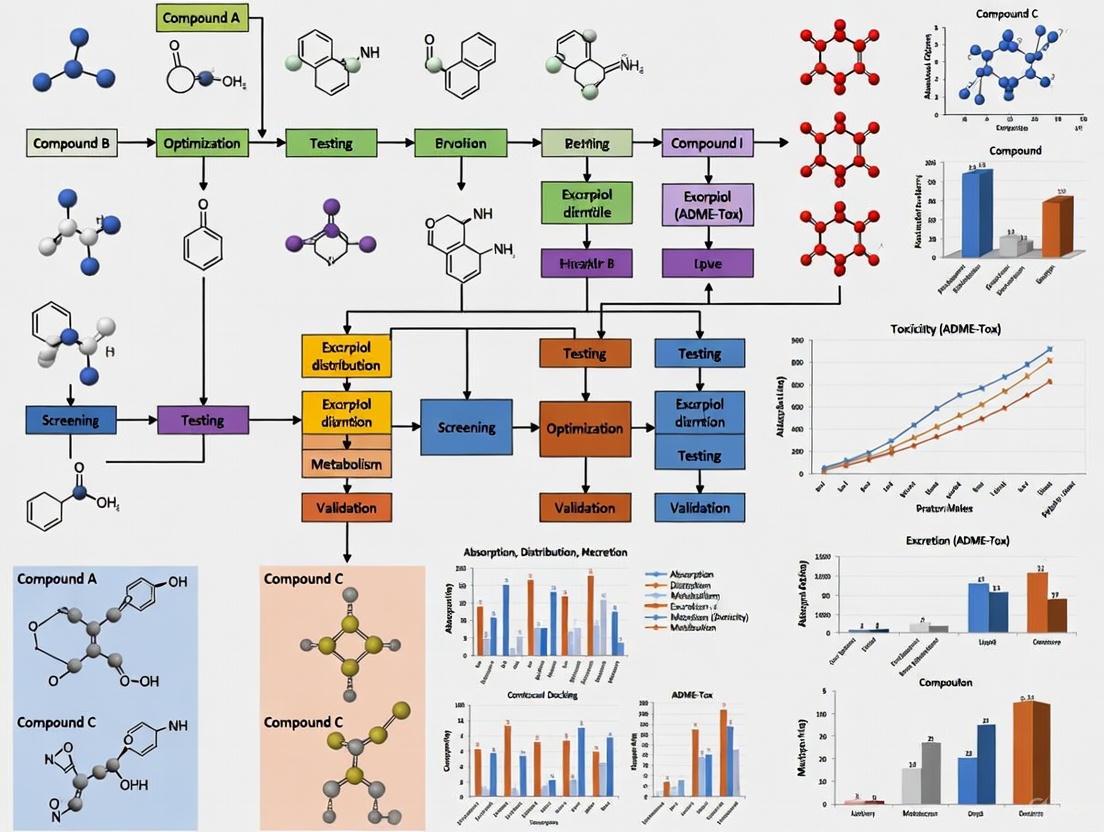
This article provides a comprehensive framework for optimizing Absorption, Distribution, Metabolism, and Excretion (ADME) properties within chemogenomic libraries, which are essential tools for modern phenotypic and target-based drug discovery.
Strategic ADME Optimization in Chemogenomic Libraries: From AI-Driven Design to Clinical Translation
Abstract
This article provides a comprehensive framework for optimizing Absorption, Distribution, Metabolism, and Excretion (ADME) properties within chemogenomic libraries, which are essential tools for modern phenotypic and target-based drug discovery. It explores the foundational principles of library design that balance target diversity with favorable pharmacokinetic profiles. The content details cutting-edge methodological approaches, including multitask artificial intelligence (AI) models, free computational tools like SwissADME, and integrated experimental strategies. It further addresses common troubleshooting scenarios for problematic compounds and outlines rigorous validation protocols to assess predictive model accuracy and library performance. Designed for researchers, scientists, and drug development professionals, this guide aims to bridge the gap between chemical probe discovery and the development of clinically viable drug candidates by embedding ADME optimization early in the research pipeline.
Laying the Groundwork: Core ADME Principles and Chemogenomic Library Design
Defining the ADME Challenge in Chemogenomic Libraries
In modern drug discovery, chemogenomic libraries—systematic collections of small molecules designed to interact with a wide range of biological targets—have become indispensable tools for identifying novel therapeutic candidates and deconvoluting complex biological pathways [1] [2]. However, the ultimate translational success of hits identified from these libraries is frequently hampered by suboptimal Absorption, Distribution, Metabolism, and Excretion (ADME) properties. Despite advancements in phenotypic screening technologies and target identification, ADME-related failures remain a significant bottleneck in the drug development pipeline [3]. This technical support center addresses the most common ADME challenges encountered when working with chemogenomic libraries, providing troubleshooting guidance, detailed protocols, and strategic frameworks to optimize these critical properties early in the discovery process.
Troubleshooting Guides
Poor Metabolic Stability
Problem: Test compounds show unacceptably rapid clearance in metabolic stability assays.
| Possible Cause | Recommendation |
|---|---|
| Susceptibility to cytochrome P450 metabolism | Incorporate metabolically resistant groups (e.g., deuterium substitution; block sites of metabolism). Test in human liver microsome assays early [3]. |
| Esterase/amidase-mediated hydrolysis | Replace labile ester groups with more stable bioisosteres (e.g., amides, heterocycles). Use liver S9 fraction assays for broader metabolic assessment [3]. |
| Inappropriate logP/logD | Optimize compound lipophilicity (aim for logD ~1-3) to reduce nonspecific binding to metabolic enzymes [3]. |
Low Permeability
Problem: Compounds demonstrate poor cellular permeability in Caco-2 or PAMPA models, predicting inadequate oral absorption.
| Possible Cause | Recommendation |
|---|---|
| High molecular weight/rotatable bonds | Apply "Rule of 5" principles: MW <500, HBD <5, HBA <10. Reduce flexibility to improve membrane diffusion [3]. |
| Low passive permeability | Use PAMPA to confirm passive diffusion mechanism. For Caco-2 assays with P-gp efflux ratio >2, consider structural modifications to evade efflux transporters [3]. |
| Poor solubility | Improve thermodynamic solubility through salt formation or formulation approaches. Assess kinetic vs. thermodynamic solubility for formulation development [3]. |
Inaccurate Prediction of Human Pharmacokinetics
Problem: Discrepancies exist between in vitro ADME predictions and in vivo PK results in animal models.
| Possible Cause | Recommendation |
|---|---|
| Species differences in metabolism | Use human-derived reagents (hepatocytes, microsomes) for all primary assays. Cross-validate with relevant animal models [3]. |
| Underestimation of tissue distribution | Incorporate plasma protein binding assays to determine free drug fraction. Perform quantitative tissue distribution studies [3]. |
| Overlooked transporter effects | Screen for key transporter interactions (e.g., P-gp, BCRP, OATPs) early. Use transfected cell systems for specific transporter assessment [3]. |
Hepatocyte Assay Challenges
Problem: Suboptimal results in hepatocyte-based assays for metabolism or transporter studies.
| Possible Cause | Recommendation |
|---|---|
| Improper thawing technique | Thaw cryopreserved hepatocytes rapidly (<2 mins at 37°C). Use specialized hepatocyte thawing medium (HTM) to remove cryoprotectant [4]. |
| Low attachment efficiency | Use qualified plateable hepatocyte lots and collagen I-coated plates. Ensure proper seeding density and allow sufficient time for attachment [4]. |
| Incorrect handling | Mix hepatocytes slowly with wide-bore pipette tips. Avoid rough handling during counting and plate immediately after preparation [4]. |
Frequently Asked Questions (FAQs)
Q1: Why should ADME profiling be integrated early into the chemogenomic screening workflow? Early ADME profiling prevents costly late-stage failures. Historically, 40-50% of drug candidates failed due to ADME issues; this has been reduced to approximately 10% through early, high-throughput in vitro screening. Integrating ADME data early helps prioritize lead compounds with higher probability of clinical success [3].
Q2: How do I determine the most relevant ADME assays for my chemogenomic library? Focus on a tiered approach:
- Tier 1 (High-Throughput): Metabolic stability (liver microsomes), passive permeability (PAMPA), and solubility.
- Tier 2 (Mechanistic): CYP inhibition, transporter assays (Caco-2), plasma protein binding.
- Tier 3 (Specialized): Metabolite identification, enzyme induction, and targeted toxicology assays. This cascaded approach balances throughput with mechanistic understanding [3].
Q3: What are the key advantages of using human-derived reagents in ADME assays? Human liver microsomes, hepatocytes, and tissue fractions provide more physiologically relevant data for predicting human pharmacokinetics, overcoming the limitations of species differences in enzyme expression, specificity, and metabolic pathways [3].
Q4: How can I address the challenge of poor solubility in chemogenomic library compounds? Differentiate between kinetic and thermodynamic solubility. For formulation, consider amorphous solid dispersions, lipid-based formulations, or nano-sizing. Structurally, reduce crystal lattice energy by introducing ionizable groups or reducing molecular symmetry [3].
Q5: What in vitro data is essential for building a predictive PBPK model? A robust Physiologically Based Pharmacokinetic (PBPK) model requires: permeability (e.g., from Caco-2 assays), metabolic stability data, plasma protein binding values, blood-to-plasma partitioning, and specific enzyme kinetic parameters (e.g., Vmax, Km) from reaction phenotyping studies [3].
Experimental Protocols & Workflows
Protocol 1: Metabolic Stability Assay Using Human Liver Microsomes
Purpose: To determine the in vitro half-life and intrinsic clearance of compounds.
Materials:
- Human liver microsomes (pooled, 20 mg/mL)
- Test compound (10 mM stock in DMSO)
- NADPH regenerating system (Solution A: NADP+, Solution B: Glucose-6-phosphate, Solution C: Glucose-6-phosphate dehydrogenase)
- Phosphate buffer (0.1 M, pH 7.4)
- Stop solution (acetonitrile with internal standard)
- LC-MS/MS system for analysis
Procedure:
- Preparation: Dilute microsomes to 0.5 mg/mL protein concentration in phosphate buffer. Prepare 1 µM compound working solution in buffer.
- Pre-incubation: Mix 178 µL microsome solution, 10 µL compound working solution, and 10 µL NADPH regenerating system Solution A in a 96-well plate. Pre-incubate for 5 minutes at 37°C.
- Reaction Initiation: Add 2 µL of NADPH regenerating system Solutions B and C to start the reaction. Final reaction volume is 200 µL.
- Time Points: Remove 25 µL aliquots at T=0, 5, 15, 30, and 60 minutes. Immediately mix with stop solution to precipitate proteins and terminate the reaction.
- Analysis: Centrifuge samples, dilute supernatant, and analyze by LC-MS/MS to determine parent compound remaining at each time point.
- Calculations: Plot Ln(% parent remaining) vs. time. The slope (k) is used to calculate in vitro half-life (t₁/₂ = 0.693/k) and intrinsic clearance [3].
Protocol 2: Parallel Artificial Membrane Permeability Assay (PAMPA)
Purpose: To assess passive transcellular permeability.
Materials:
- PAMPA plate (filter membrane)
- Phospholipid solution (e.g., lecithin in dodecane)
- Test compound (100 µM in pH 7.4 buffer)
- Donor and acceptor plates
- UV plate reader or LC-MS system
Procedure:
- Membrane Preparation: Coat filter membranes with phospholipid solution and allow to set.
- Loading: Add compound solution to donor well. Add blank buffer to acceptor well.
- Incubation: Assemble the plate and incubate for 2-6 hours at room temperature.
- Sampling: Sample from both donor and acceptor compartments.
- Analysis: Measure compound concentration in both compartments. Calculate permeability (Papp) using the equation: Papp = (VA × CA) / (A × T × CD), where VA is acceptor volume, CA is acceptor concentration, A is membrane area, T is time, and CD is initial donor concentration [3].
Protocol 3: Caco-2 Permeability and Efflux Assay
Purpose: To evaluate intestinal permeability and potential for active efflux.
Materials:
- Caco-2 cells (passage 40-60)
- Transwell plates (e.g., 12-well, 1.12 cm² surface area, 3.0 µm pore size)
- Transport buffer (HBSS with 10 mM HEPES, pH 7.4)
- Test compound (10 µM in transport buffer)
- Lucifer Yellow (integrity marker)
- LC-MS/MS system for analysis
Procedure:
- Cell Culture: Seed Caco-2 cells at high density (~100,000 cells/cm²) and culture for 21 days to form differentiated monolayers. Confirm integrity by measuring Transepithelial Electrical Resistance (TEER > 300 Ω·cm²).
- Bidirectional Transport:
- A-to-B (Apical to Basolateral): Add compound to apical chamber, sample from basolateral chamber over 2 hours.
- B-to-A (Basolateral to Apical): Add compound to basolateral chamber, sample from apical chamber over 2 hours.
- Analysis: Measure apparent permeability (Papp) in both directions. Calculate efflux ratio: Papp (B-to-A) / Papp (A-to-B). An efflux ratio >2 suggests active efflux transport [3].
Workflow Visualization
ADME Screening Cascade for Chemogenomic Libraries
Research Reagent Solutions
| Reagent/Assay | Function in ADME Profiling | Key Considerations |
|---|---|---|
| Human Liver Microsomes | Evaluate Phase I metabolic stability; identify high-clearance compounds [3]. | Use pooled donors to represent population diversity; confirm CYP activity upon receipt. |
| Cryopreserved Hepatocytes | Assess both Phase I/II metabolism and transporter effects; more physiologically complete than microsomes [4] [3]. | Verify viability (>80%) post-thaw; use plateable lots for attachment-required assays; handle gently. |
| Caco-2 Cells | Model intestinal absorption; identify compounds subject to efflux transporters (e.g., P-gp) [3]. | Requires 21-day differentiation; monitor TEER for monolayer integrity. |
| PAMPA Plate | High-throughput assessment of passive transmembrane permeability [3]. | Does not model active transport; excellent for early compound ranking. |
| Recombinant CYP Enzymes | Reaction phenotyping to identify specific enzymes responsible for metabolism [3]. | Essential for predicting drug-drug interactions; use with chemical inhibitors for confirmation. |
| Plasma (Human) | Determine plasma protein binding to estimate free drug fraction [3]. | Use fresh or properly stored plasma; consider interspecies differences in binding. |
The Crucial Link Between Chemical Probes, Clinical Candidates, and ADME Properties
In modern drug discovery, chemical probes are indispensable tools for validating novel disease targets. However, transitioning a selective chemical probe into a clinical candidate requires extensive optimization of its Absorption, Distribution, Metabolism, and Excretion (ADME) properties. This technical support center provides targeted guidance for researchers navigating the challenges of optimizing ADME properties in chemogenomic library compounds, helping to derisk the path from probe to clinic.
Frequently Asked Questions (FAQs)
Q1: What distinguishes a high-quality chemical probe from a potential drug candidate? A high-quality chemical probe is defined by its potency and selectivity, not drug-like properties. Key criteria include [5]:
- Potency: Minimal in vitro potency of <100 nM.
- Selectivity: >30-fold selectivity over related proteins.
- Cellular Activity: On-target effects at >1 µM. In contrast, a clinical candidate must also possess optimized ADME properties—such as good oral bioavailability, acceptable metabolic stability, and low drug-drug interaction potential—to ensure efficacy and safety in humans [6].
Q2: Why do many chemical probes fail to become clinical candidates? Failure is often due to inadequate ADME profiles. Common liabilities include:
- Poor Metabolic Stability: Rapid degradation, leading to a short half-life in vivo [5] [3].
- Low Solubility/Permeability: Resulting in insufficient oral absorption and bioavailability [7].
- Unfavorable Pharmacokinetics (PK): For example, the BET inhibitor probe (+)-JQ1, while highly valuable for target validation, had a short half-life that precluded its clinical use [5].
Q3: What are the key ADME parameters to profile early when deriving a candidate from a probe? A tiered approach is recommended. Initial profiling should focus on [8] [9]:
- Absorption: Permeability (e.g., PAMPA, Caco-2) and solubility.
- Metabolism: Metabolic stability in liver microsomes and cytochrome P450 inhibition.
- Distribution: Plasma protein binding. Early identification of issues in these areas allows for timely chemical modification and prioritization of lead compounds.
Q4: Our lead compound shows promising efficacy but poor bioavailability. What could be the cause? Poor oral bioavailability can stem from several factors [7] [3]:
- Low Permeability: The compound may not efficiently cross intestinal membranes.
- Active Efflux: It could be a substrate for efflux transporters like P-glycoprotein (P-gP).
- High First-Pass Metabolism: The compound is extensively metabolized in the liver or gut wall before reaching systemic circulation.
- Poor Solubility: The compound does not dissolve adequately in the gastrointestinal fluids.
Q5: What are the major red flags in an ADME study? Key red flags include [7]:
- Signs of Toxicity: Observed at or near the therapeutic dose.
- Poor PK Reproducibility: Data generated in vitro cannot be replicated in animal models.
- High CYP Inhibition: Significant inhibition of major Cytochrome P450 enzymes (e.g., CYP3A4), indicating a high risk for drug-drug interactions.
- Irreversible (Mechanism-Based) Inhibition: This can lead to long-lasting and dangerous drug interactions.
Troubleshooting Guides
Issue 1: Poor Metabolic Stability
Problem: Your compound shows rapid degradation in human liver microsomes, predicting a short half-life in vivo.
Background: Metabolic stability reflects how quickly a compound is broken down by hepatic enzymes. Low stability can lead to insufficient exposure and reduced efficacy [8].
Step-by-Step Resolution:
- Assay Confirmation: Confirm the result using a standard metabolic stability assay with human liver microsomes or hepatocytes. Measure the half-life and intrinsic clearance [3] [8].
- Metabolite Identification: Use High-Resolution Mass Spectrometry (HRMS) to identify the primary sites of metabolism on your molecule [3].
- Structure Modification:
- Block Labile Sites: Introduce stable substituents (e.g., fluorine, deuterium) at or near the labile metabolic soft spot.
- Reduce Lipophilicity: High lipophilicity (LogP >3) often correlates with faster metabolic clearance. Introduce polar groups to lower LogP/D [9].
- Steric Shielding: Add steric hindrance around vulnerable functional groups to shield them from enzymatic attack.
- Re-profiling: Re-test the new analogs for improved stability and confirm that target potency is maintained.
Issue 2: Low Permeability and Suspected Efflux
Problem: Your compound shows good potency but poor cellular activity, potentially due to low permeability or being a substrate for efflux transporters.
Background: Permeability is critical for oral absorption and reaching intracellular targets. Efflux by transporters like P-gP can significantly limit intracellular concentrations [8].
Step-by-Step Resolution:
- Assay Permeability: Use PAMPA to assess passive permeability and a cell-based model (Caco-2 or MDCK-MDR1) to evaluate active transport and efflux [3] [8].
- Analyze Physicochemical Properties: Calculate properties like polar surface area (PSA) and LogP. High PSA (>140 Ų) and high LogP can negatively impact permeability [10].
- Mitigation Strategies:
- Reduce PSA: If possible, reduce the hydrogen bond count or polar surface area of the molecule.
- Modify Structure to Avoid Efflux: Sometimes, subtle structural changes can help the compound evade recognition by efflux transporters.
- Functional Confirmation: Re-test the optimized compounds in the cellular activity assay to confirm improved efficacy.
Issue 3: In Vitro-to-In Vivo Translation Failure
Problem: PK data generated in vitro does not correlate with data from animal models.
Background: This disconnect can arise from limitations in physiological relevance of in vitro models or interspecies differences [7].
Step-by-Step Resolution:
- Audit Experimental Conditions:
- Check for non-specific binding in your in vitro system (e.g., to plastics or proteins) that could skew results [7].
- Ensure assays are conducted in physiologically relevant media.
- Leverage Advanced Models: Bridge the gap using more predictive models:
- Organ-on-a-Chip (OOC): Use human liver- or gut-on-a-chip models for longer-term, more physiologically relevant metabolic and absorption data [7].
- PBPK Modeling: Use Physiologically Based Pharmacokinetic (PBPK) modeling to integrate in vitro ADME data with physiological parameters and simulate in vivo conditions, helping to explain discrepancies [11] [3].
- Re-evaluate in Multiple Species: Compare metabolic stability and plasma protein binding across multiple species (e.g., human, rat, dog) to understand interspecies differences and select the most relevant animal model for further testing [9].
ADME Data and Experimental Protocols
Key ADME Assays and Their Interpretation
Table 1: Core In Vitro ADME Assays and Their Role in De-risking Clinical Candidates [3] [8] [9].
| ADME Property | Common Assays | Key Parameters | Interpretation & Ideal Range |
|---|---|---|---|
| Absorption | PAMPA, Caco-2/MDCK permeability, Solubility | Apparent Permeability (Papp), Solubility (µg/mL) | High Papp suggests good passive absorption. Good solubility is critical for oral drugs. |
| Distribution | Plasma Protein Binding (PPB) | Fraction Unbound (fu) | Only the unbound fraction is pharmacologically active. High PPB (>90%) may limit efficacy. |
| Metabolism | Liver Microsomal/Hepatocyte Stability, CYP Inhibition | Half-life (t₁/₂), Intrinsic Clearance (CLint), IC₅₀ | Long t₁/₂/low CLint is desirable. Low CYP inhibition (IC₅₀ > 10 µM) reduces DDI risk. |
| Excretion | Biliary/Renal Clearance (in vivo) | Clearance (CL), % recovered in urine/feces | Identifies primary elimination route. High clearance may require frequent dosing. |
Detailed Experimental Protocol: Metabolic Stability in Liver Microsomes
This protocol determines the metabolic half-life of a compound, predicting its in vivo clearance [3] [8].
Materials:
- Test compound (10 mM stock in DMSO)
- Human or animal liver microsomes (e.g., 0.5 mg/mL protein)
- NADPH regenerating system
- Phosphate buffer (0.1 M, pH 7.4)
- Methanol or acetonitrile (pre-chilled)
- Water bath or thermostated incubator (37°C)
- LC-MS/MS system
Method:
- Pre-incubation: In a 96-well plate, add liver microsomes and test compound (final concentration 1 µM) to pre-warmed phosphate buffer. A negative control without NADPH should be included.
- Initiate Reaction: Start the reaction by adding the NADPH regenerating system. The final incubation volume is typically 100-200 µL.
- Time Points: Immediately remove aliquots (e.g., 25 µL) at T = 0, 5, 15, 30, and 60 minutes. Quench each aliquot immediately with an equal volume of ice-cold methanol or acetonitrile to stop the reaction.
- Sample Analysis: Centrifuge the quenched samples to precipitate proteins. Analyze the supernatant by LC-MS/MS to determine the peak area of the parent compound remaining at each time point.
- Data Analysis: Plot the natural logarithm of the parent compound remaining (%) versus time. The slope of the linear regression is -k, where k is the elimination rate constant. Calculate the in vitro half-life as t₁/₂ = 0.693 / k.
Visualization of Workflows
From Chemical Probe to Clinical Candidate
Tiered ADME Screening Strategy
The Scientist's Toolkit: Research Reagent Solutions
Table 2: Essential Tools and Resources for ADME and Probe Research.
| Tool / Resource | Function / Description | Example Providers / Sources |
|---|---|---|
| chemicalprobes.org | A curated, community-driven database that rates the quality of chemical probes based on potency, selectivity, and characterization. | SAB Members [6] |
| Caco-2 Cells | A human colorectal adenocarcinoma cell line that forms monolayers mimicking the intestinal barrier, used for permeability and efflux studies. | ATCC, Commercial Vendors [3] |
| Human Liver Microsomes | Subcellular fractions containing cytochrome P450 enzymes, used for high-throughput metabolic stability and CYP inhibition screening. | BioIVT, Xenotech, Corning [3] [8] |
| PBPK Software | Physiologically Based Pharmacokinetic modeling software that integrates in vitro ADME data to simulate drug behavior in vivo. | Simulations Plus, Certara [11] [10] |
| Organ-on-a-Chip (OOC) | Microphysiological systems using primary human cells under fluidic flow to model human organ functionality for more predictive ADME and toxicity testing. | CN Bio, Emulate [7] |
| Probe Miner | An online resource for the objective, data-driven analysis of potential chemical probes based on public medicinal chemistry data. | Public Database [6] |
In the context of optimizing ADME properties in chemogenomic library compounds research, early and accurate evaluation of key pharmacokinetic parameters is crucial for identifying viable drug candidates. Absorption, Distribution, Metabolism, and Excretion (ADME) properties represent significant failure points in drug development, particularly for central nervous system (CNS) targets where additional constraints like blood-brain barrier (BBB) penetration must be considered [11] [12]. The transition from traditional in vivo methods to integrated approaches combining in vitro, in silico, and advanced microphysiological systems has dramatically improved predictive accuracy while conserving resources [13]. This technical support center provides targeted guidance for researchers navigating the complex landscape of ADME optimization, with specific troubleshooting advice and methodological frameworks for evaluating compound libraries.
Key ADME Parameters and Their Optimal Ranges
The following parameters provide a critical framework for evaluating compounds in early discovery phases. These benchmarks help prioritize candidates with the highest probability of success.
| Parameter Category | Specific Parameter | Optimal Range/Target | Significance in Drug Discovery |
|---|---|---|---|
| Absorption | Intestinal Permeability (logPapp) | > 6.5 | Supports good oral bioavailability |
| Distribution | Plasma Protein Binding (PPB) | < 90% | Ensures sufficient free drug concentration for therapeutic effect |
| Metabolism | CYP3A4 Inhibition Potential | < 0.5 | Reduces risk of drug-drug interactions |
| Metabolism | Likelihood of being a CYP3A4 substrate | Probability < 0.5 | Predictable metabolism |
| Elimination | Hepatic Clearance (Hepatocytes) | < 30 μL/min/million cells | Suggests longer half-life and reduced dosing frequency |
| Elimination | Hepatic Clearance (Microsomes) | < 50 μL/min/mg protein | Indicates slower metabolism |
| Parameter Category | Specific Parameter | Optimal Range/Target | Significance in Drug Discovery |
|---|---|---|---|
| Distribution | Blood-to-Plasma Ratio (Rb, rat) | Data dependent on compound | Informs appropriate dosing regimens |
| Distribution | Fraction Unbound in Brain (fubrain) | Higher values preferred | Critical for understanding brain penetration |
| Distribution | Fraction Unbound in Plasma (fup human/rat) | Balanced value preferred | Indicates available drug for target engagement |
| Permeability | Caco-2/LLC-PK1 Permeability (Papp) | Higher values preferred | Predicts absorption and membrane penetration |
FAQs: Addressing Common ADME Evaluation Challenges
Q: What are the most common issues affecting the accuracy of in vitro ADME assays, and how can they be mitigated?
A common challenge is variability in experimental conditions, including temperature, pH, enzyme concentrations, and presence of inhibitors, which can significantly impact results [14]. To mitigate this, implement rigorous standardization and control of all variables. Additionally, differences between in vitro systems and actual biological environments present a fundamental limitation [13]. Use a combination of in vitro data with in silico modeling and, when possible, selective in vivo studies to build a comprehensive understanding. For metabolic stability assays using hepatocytes, ensure proper thawing techniques (<2 minutes at 37°C), use appropriate thawing medium, handle cells gently with wide-bore pipette tips, and plate immediately after counting [4].
Q: Why is there often a weak correlation between animal and human bioavailability data, and how can this be addressed?
A seminal study investigating 184 compounds found weak correlation between animal and human bioavailability data (mouse R²=0.25, rat R²=0.28, dog R²=0.37) [13]. This stems from fundamental differences in physiology and metabolic capacity between species. While non-human primates show better correlation (R²=0.69), ethical considerations and costs limit their use. To address this, supplement traditional approaches with advanced human-relevant in vitro models, such as microphysiological systems (MPS) that fluidically link human gut and liver tissues to better simulate first-pass metabolism and oral absorption [13].
Q: How can we better account for intestinal metabolism in our predictions of drug-drug interactions (DDIs)?
Traditional Caco-2 cell assays often underestimate intestinal cytochrome P450 (CYP) metabolism as they express varying and generally lower levels of these enzymes compared to human intestine [13]. This can lead to discrepancies in predicting first-pass metabolism and bioavailability. Incorporate data on intestinal CYP metabolism specifically into DDI prediction models. Consider using advanced models that utilize primary human intestinal cells fluidically linked to liver models for a more accurate estimation of a drug's first-pass metabolism and potential for DDIs [13].
Q: What computational tools are available for early ADME prediction, and how reliable are they?
Free web tools like SwissADME provide robust predictions for physicochemical properties, pharmacokinetics, and drug-likeness [15]. These tools use various predictive models, including the BOILED-Egg model for brain and intestinal barrier penetration and the Bioavailability Radar for quick drug-likeness assessment. More recently, graph neural networks with multitask learning have shown improved performance for predicting multiple ADME parameters simultaneously, even with limited data [16]. While these in silico tools are highly valuable for early screening, their predictions should be verified with experimental data as compounds advance.
Essential Experimental Protocols
Purpose: To properly prepare cryopreserved hepatocytes for assessing metabolic stability, a key parameter for predicting in vivo clearance.
Materials:
- Cryopreserved hepatocytes
- Water bath (37°C)
- HTM Medium (thawing medium)
- Williams Medium E with Plating and Incubation Supplement Packs (culture medium)
- Pre-warmed collagen I-coated plates
- Wide-bore pipette tips
Procedure:
- Thawing: Thaw vial of cryopreserved hepatocytes rapidly (<2 minutes) in a 37°C water bath.
- Transfer: Gently transfer cell suspension to a tube containing pre-warmed HTM Medium.
- Centrifuge: Centrifuge at appropriate speed (100 x g for 10 min at room temperature for human hepatocytes).
- Resuspend: Carefully aspirate supernatant and resuspend cell pellet in appropriate culture medium.
- Count: Count cells using a hemocytometer. Do not let cells sit in trypan blue for >1 minute before counting.
- Plate: Plate cells immediately at recommended density (check lot-specific specifications).
- Distribute: Ensure even distribution by moving plate in a slow figure-eight and back-and-forth motion.
- Incubate: Place plates in incubator and allow cells to attach before overlaying with extracellular matrix if required.
Troubleshooting:
- Low viability: Ensure proper thawing technique and use recommended thawing medium.
- Low attachment efficiency: Verify hepatocyte lot is qualified for plating; use collagen I-coated plates; ensure correct seeding density.
- Sub-optimal monolayer confluency: Check lot-specific characterization for appropriate seeding density; ensure proper cell dispersion during plating.
Purpose: To rapidly evaluate pharmacokinetic properties and drug-likeness of compound libraries during early discovery.
Procedure:
- Access: Navigate to http://www.swissadme.ch in a web browser.
- Input: Draw chemical structures directly using the Marvin JS molecular sketcher or paste SMILES strings into the input list (one molecule per line).
- Run: Click the "Run" button to submit compounds for analysis.
- Interpret: Review results in the output panels, which include:
- Bioavailability Radar: Provides immediate visual assessment of drug-likeness across six key parameters.
- Physicochemical Properties: Molecular weight, polarity, solubility, and other key descriptors.
- Lipophilicity: Consensus log Po/w value from multiple prediction methods.
- BOILED-Egg Model: Prediction of brain access and passive gastrointestinal absorption.
Research Reagent Solutions
Table 3: Essential Materials for ADME Studies
| Reagent/Assay Type | Specific Examples | Function/Application |
|---|---|---|
| Hepatocyte Systems | Cryopreserved hepatocytes, HepaRG cells | Metabolic stability assessment, enzyme induction studies, transporter interactions |
| Cell-Based Assay Systems | Caco-2 cells, LLC-PK1 cells, MDCK cells | Permeability screening, transporter studies |
| Software/Tools | SwissADME, Physiologically Based Pharmacokinetic (PBPK) Modeling | In silico prediction of ADME parameters, extrapolation to human pharmacokinetics |
| Specialized Media | Williams Medium E with Plating Supplements, HTM Medium | Hepatocyte culture and thawing |
| Coated Plates | Collagen I-Coated Plates, Geltrex Matrix | Improved cell attachment for hepatocyte cultures |
Emerging Technologies and Future Directions
The field of ADME prediction is rapidly evolving with several promising technologies. Artificial intelligence and machine learning are transforming pharmacokinetics by enabling faster, more accurate predictions of drug behavior from large datasets [11]. Graph neural networks with multitask learning address data scarcity issues for certain ADME parameters and provide insights into which structural features influence properties [16]. Microphysiological systems (MPS), or organ-on-a-chip technologies, now allow multiple organs (e.g., gut and liver) to be fluidically linked to simulate integrated processes like absorption and first-pass metabolism, enabling in vitro profiling of human oral bioavailability [13]. For complex modalities like PROTACs and biologics, these advanced systems help overcome challenges related to poor bioavailability and prediction of tissue-specific distribution [13] [17].
ADME Experimental Workflow
ADME Parameter Relationships
Frequently Asked Questions (FAQs)
Q1: What are the most common data quality issues when integrating ChEMBL and Guide to Pharmacology? Data from these sources often contains duplicates, missing fields, and conflicting formats due to years of manual entry and a lack of standardized validation processes in legacy systems [18]. This can manifest as multiple entries for the same compound with slight variations in spelling or structure, leading to faulty data analysis [18].
Q2: How can we handle different compound identifiers across databases to avoid duplicates? The solution involves implementing a data governance framework with clear standards and appointing data stewards to oversee how data is defined and used [19]. Technically, you should use ETL (Extract, Transform, Load) tools or modern ELT platforms to standardize data formats and identifiers before integration, and track data lineage to trace where duplicates originate [19] [18].
Q3: Our integration workflows fail silently. How can we improve error management? Silent failures often occur due to a lack of proactive monitoring and adequate error handling [18]. To address this, use integration platforms with full lifecycle error management that include AI-powered resolution, automatic recovery workflows for issues like API throttling, and proactive alerting that distinguishes critical issues from routine notifications [18].
Q4: How can we ensure our data integration infrastructure scales with our research needs? Solutions that work for small data volumes often fail at production scale [18]. Conduct load testing before go-live using production-scale data volumes, not just samples. Adopt platforms with elastic scaling capabilities and intelligent throttling to handle volume spikes, such as during high-throughput screening analysis [18].
Q5: What is the best strategy to bring together diverse data formats from these pharmacological resources? A central challenge is that one system might store data differently than another (e.g., different field structures for compound names) [19]. The most effective solution is to use a central integration platform or server that collects, cleanses, and transforms data into a uniform format, creating a centralized repository like a data lake for a single source of truth [19].
Troubleshooting Guides
Issue 1: Proliferation of Data Silos and Inconsistent Formats
Problem Description Data is trapped within specific departments or source systems, leading to inefficient processes as teams struggle to access comprehensive datasets. Inconsistent data formats across ChEMBL, GtoPdb, and other sources create difficulties in merging datasets into a coherent whole [19] [20].
Step-by-Step Resolution
- Audit and Map: Conduct a thorough data source audit before implementation. Map business and research requirements back to the system of record for each data element (e.g., bioactivity, target information) [18].
- Establish Governance: Define clear data standards and appoint data stewards to enforce these policies across departments [19].
- Standardize and Centralize: Implement a consistent data format across all systems. Use a managed integration platform with ETL/ELT capabilities to standardize data and create a centralized repository like a data lake [19] [20].
- Iterate and Validate: Plan for iterative implementation that can accommodate the discovery of new data sources. Build validation rules into workflows to catch problems early [18].
Issue 2: Poor Data Quality and Duplicate Records
Problem Description Source system data isn't integration-ready, with duplicates, incomplete required fields, and outdated information. This undermines analytics and can mislead decision-making in ADME optimization projects [18] [20].
Step-by-Step Resolution
- Assess Quality: Run a pre-integration data quality assessment to identify duplicates, missing fields, and inaccuracies [18].
- Clean at Source: Clean source data before deployment. Where possible, validate data at the point of entry to prevent bad data from contaminating systems [19] [18].
- Deduplicate: Use the deduplication features of integration tools. Foster a culture of collaboration where teams share updates openly to prevent redundant records [19].
- Document: Once cleaned, document the data requirements and standardized processes to maintain quality [18].
Issue 3: Integration Failure Due to System Complexity and API Changes
Problem Description Custom scripts for integration break when underlying APIs change or when faced with the true complexity of interconnected systems (e.g., discovering that data pulls require seven to ten sources instead of the anticipated two or three) [18].
Step-by-Step Resolution
- Move from Custom Scripts: Replace fragile custom scripts and manual CSV dumps with a dedicated data integration platform featuring built-in error management, governance, and visual workflow documentation [18].
- Document Dependencies: Create clear documentation of all data sources, including their APIs, data formats, and update frequencies [19].
- Implement Robust Connections: Use platforms with pre-built connectors for common pharmacological data sources and robust error-handling for API interruptions.
- Transfer Knowledge: Ensure knowledge is transferred from developers to the operators who manage day-to-day execution to avoid single points of failure [18].
Table 1: Common Data Integration Challenges and Impact
| Challenge | Frequency of Occurrence | Typical Project Delay | Common Business Impact |
|---|---|---|---|
| Underestimating System Complexity [18] | Very Common | Weeks to Months | Scope creep, budget overruns, incomplete reporting |
| Data Quality Issues [18] | Extremely Common | Varies (Pre-go-live to ongoing) | Delayed go-live, ongoing maintenance burden, lost confidence in data |
| Failed Custom Scripts [18] | Common | Unpredictable | Missing data discovered by executives, security and compliance risks |
| Inadequate Error Management [18] | Common | Days of data loss | Lost business, emergency calls, wasted time on manual work |
| Scalability Limitations [18] | Occurs during growth/peaks | Hours to Days (during peaks) | Failed operations during peak seasons, delayed reporting |
Table 2: Core Color Palette for Workflow Visualization
| Color Name | Hex Code | RGB Code | Suggested Use in Diagrams |
|---|---|---|---|
| Blue | #174EA6 | rgb(23, 78, 166) | Primary Process Nodes |
| Red | #A50E0E | rgb(165, 14, 14) | Error Nodes or Critical Issues |
| Orange | #E37400 | rgb(227, 116, 0) | Warning or Data Transformation Nodes |
| Green | #0D652D | rgb(13, 101, 45) | Success/Validation Nodes |
| Medium Blue | #4285F4 | rgb(66, 133, 244) | Secondary Process/Data Nodes |
| Medium Red | #EA4335 | rgb(234, 67, 53) | API Endpoints or External Sources |
| Yellow | #FBBC04 | rgb(251, 188, 4) | Highlighting Key Information |
| Medium Green | #34A853 | rgb(52, 168, 83) | Output/Result Nodes |
| Light Blue | #D2E3FC | rgb(210, 227, 252) | Background/Container Shapes |
| Light Red | #FAD2CF | rgb(250, 210, 207) | Background for Error Areas |
| Light Yellow | #FEEFC3 | rgb(254, 239, 195) | Background for Highlighted Areas |
| Light Green | #CEEAD6 | rgb(206, 234, 214) | Background for Output Areas |
| Light Grey | #F1F3F4 | rgb(241, 243, 244) | Diagram Background |
| Grey | #9AA0A6 | rgb(154, 160, 166) | Connector Lines or Text |
| Black | #202124 | rgb(32, 33, 36) | All Node Text |
Experimental Protocols for Data Integration
Protocol 1: Pre-Integration Data Quality Assessment
Methodology
- Data Extraction: Extract a statistically significant sample of data from each source (ChEMBL, GtoPdb) using their public APIs or data dumps.
- Profiling Analysis: Run automated data profiling tools to analyze the sample for:
- Completeness: Percentage of missing values in critical fields (e.g., compound SMILES, target UniProt ID, IC50 values).
- Uniqueness: Count of duplicate records based on key identifiers.
- Consistency: Identify variations in formats for fields like dates, units of measurement, and gene nomenclature.
- Cross-Source Comparison: Map key entities (e.g., a well-known drug target like the β2-adrenergic receptor) across all databases to identify conflicts in associated data (e.g., conflicting bioactivity values or assigned gene names).
- Report Generation: Document the types and frequencies of anomalies found to guide the data cleaning and transformation strategy.
Protocol 2: Building a Resilient ELT Pipeline for Pharmacological Data
Methodology
- Extract (E):
- Configure API connectors or database readers with intelligent throttling and rate limit handling to respect the limits of the source databases [18].
- Implement incremental extraction where possible, using timestamps to only pull new or updated records, reducing strain on both source and target systems [19].
- Load (L):
- Load the raw, untransformed data directly into a staging area within a cloud data warehouse (e.g., Snowflake, BigQuery). This preserves the original data for auditability.
- Transform (T):
- Execute SQL-based transformation scripts within the warehouse to clean, standardize, and merge the data. This includes:
- Standardization: Converting all compound identifiers to a standard format (e.g., InChIKey).
- Deduplication: Using SQL
ROW_NUMBER()functions or similar to identify and flag duplicate records based on a set of business rules. - Curating a Unified View: Creating SQL views that join the cleansed data from all sources into a single, queryable layer for researchers.
- Execute SQL-based transformation scripts within the warehouse to clean, standardize, and merge the data. This includes:
Workflow and Pathway Visualizations
Unified Data Integration Workflow
Data Validation Logic Pathway
The Scientist's Toolkit: Research Reagent Solutions
Table 3: Essential Tools for Pharmacological Data Integration
| Tool or Resource | Function | Application in ADME Context |
|---|---|---|
| ETL/ELT Platform (e.g., Celigo, Apache NiFi) | Extracts, transforms, and loads data from disparate sources into a unified repository [19] [18]. | Automates the pipeline for integrating bioactivity data from ChEMBL and GtoPdb with in-house ADME assay results. |
| Cloud Data Warehouse (e.g., Snowflake, BigQuery) | Provides a central storage and massive processing power for integrated data, enabling in-warehouse transformation and analysis [18]. | Serves as the unified platform for storing and cross-analyzing large-scale chemogenomic libraries and their associated ADME properties. |
| Data Quality Management System | Provides tools for profiling, cleansing, and standardizing data to ensure accuracy and reliability [19]. | Identifies and corrects inconsistencies in compound structures or assay values before building predictive ADME models. |
| API Management Tools | Facilitate secure and reliable connections to external data sources like ChEMBL and GtoPdb, handling authentication and rate limiting [18]. | Ensures robust and uninterrupted data flow from public pharmacological databases into the internal research platform. |
| PBPK Modelling Software (e.g., GastroPlus, Simcyp) | Uses integrated data to build physiologically-based pharmacokinetic models for predicting human ADME outcomes [21]. | Leverages the unified dataset to simulate and optimize the in vivo pharmacokinetic profile of chemogenomic library compounds. |
Advanced Tools and Workflows for Proactive ADME Profiling
Harnessing AI and Multitask Graph Neural Networks for Data-Scarce ADME Endpoints
Frequently Asked Questions
Q1: Why does my Multitask GNN model fail to generalize on external test sets, showing high training but low validation accuracy? This is a classic sign of overfitting, common with small ADME datasets. Implement a combined regularization strategy:
- Apply Dropout with a rate of 0.2-0.5 on GNN layers and 0.5 on fully connected layers.
- Use L2 regularization (weight decay) with a lambda of 1e-5 on all model parameters.
- Employ Early Stopping by monitoring the validation loss with a patience of 20-50 epochs.
- Leverage Multitask Learning itself, as sharing representations across related tasks acts as a powerful regularizer [22].
Q2: How can I interpret my GNN's predictions for a specific molecule to gain insights for lead optimization? Use post-hoc interpretability methods like Integrated Gradients (IG). The IG method quantifies the contribution of each input feature (e.g., an atom or bond) to the final predicted ADME value. By visualizing the atoms with the highest attribution scores, you can identify substructures that favorably or adversely impact the property, providing a data-driven rationale for molecular design [22].
Q3: My dataset sizes for different ADME tasks are highly imbalanced. How do I prevent the model from biasing towards tasks with more data? Adjust the multitask learning loss function. Instead of a simple sum of losses, use a weighted sum where the loss for each task is scaled. A common and effective method is to weight each task's loss by the inverse of the number of samples for that task or by the historical variance of the task's loss [22].
Q4: What is the recommended way to represent a molecule from a SMILES string for a Graph Neural Network? The most robust method is a graph representation derived directly from the SMILES string. This involves:
- Nodes: Representing atoms, with a feature vector encoding atomic number, formal charge, hybridization, and whether the atom is in a ring.
- Edges: Representing bonds, with the adjacency matrix capturing the molecular connectivity. You can use separate adjacency matrices for different bond types (single, double, triple, aromatic) to help the model focus on specific substructures [23].
Q5: How can I perform a sanity check to ensure my model's ADME predictions are thermodynamically consistent? Subject your model to a series of logical and thermodynamic constraint tests. For instance, evaluate its predictions on a set of congeneric molecules (a series with small, systematic changes). The model's predictions for properties like lipophilicity or boiling point should change in a logical and physically plausible direction with each molecular modification [24].
Troubleshooting Guides
Problem: Exploding or Vanishing Gradients during GNN Training
- Symptoms: Model loss becomes NaN (Not a Number) or fails to decrease.
- Solution:
- Apply Gradient Clipping by norm, typically setting the max norm to 1.0 or 5.0.
- Use Graph Normalization techniques (e.g., Batch Normalization adapted for graphs) within the GNN layers.
- Ensure your node feature vectors are properly normalized or standardized before training.
Problem: Poor Contrast Between Text and Background in Model Explanation Diagrams
- Symptoms: Text within colored nodes of explanation diagrams is difficult to read.
- Solution:
- Automate Text Color: Use an algorithm to set the text color based on the node's background fill color. A reliable method is to calculate the perceptual lightness (
L) of the fill color and set the text to white ifLis below 50, and black otherwise [25]. - Manual Palette Definition: For a predefined color palette (e.g., Google's brand colors), explicitly set high-contrast text colors. The table below provides safe pairings.
- Automate Text Color: Use an algorithm to set the text color based on the node's background fill color. A reliable method is to calculate the perceptual lightness (
| Node Fill Color | Text Color | Contrast Ratio (Approx.) |
|---|---|---|
#4285F4 (Google Blue) |
#FFFFFF (White) |
4.5:1 |
#EA4335 (Google Red) |
#FFFFFF (White) |
4.3:1 |
#FBBC05 (Google Yellow) |
#202124 (Dark Gray) |
6.8:1 |
#34A853 (Google Green) |
#FFFFFF (White) |
4.6:1 |
#F1F3F4 (Light Gray) |
#202124 (Dark Gray) |
14.3:1 |
Problem: Model Performance is Inconsistent Across Different Data Splits
- Symptoms: Significant variation in performance metrics when the random seed for data splitting is changed.
- Solution:
- Move beyond a single random train/validation/test split.
- Implement 5-Fold or 10-Fold Cross-Validation to obtain a more robust estimate of model performance and reduce the variance of your results [23].
- Perform a statistical test (e.g., a paired t-test) on the results from multiple folds to confirm the significance of performance differences between models.
Experimental Protocols & Data Presentation
Protocol: Building a Multitask GNN for ADME Prediction
- Data Collection & Curation: Gather datasets for multiple ADME endpoints from public repositories like TDC (Therapeutics Data Commons) [23]. Apply rigorous data cleaning: remove duplicates, standardize SMILES notation, and handle activity cliffs.
- Molecular Graph Construction: Convert each SMILES string into a graph.
- Nodes (Atoms): Encode features using one-hot vectors for atomic number, formal charge, hybridization, etc. [23].
- Edges (Bonds): Create an adjacency matrix. Optionally, create separate matrices for different bond types.
- Model Architecture:
- GNN Backbone: Use 3-5 Graph Attention (GAT) or Graph Convolutional Network (GCN) layers to learn atom-level embeddings.
- Global Readout: Apply a global pooling operation (e.g., mean or sum) on the atom embeddings to generate a single, fixed-size molecular representation.
- Task-Specific Heads: Feed the molecular representation into separate, fully connected neural networks for each ADME prediction task (e.g., Regression for solubility, Classification for CYP inhibition).
- Training Loop:
- Loss Function:
Total Loss = Σ (weight_task * loss_task)for all tasks. - Optimizer: Adam or AdamW optimizer.
- Regularization: As described in the FAQ on overfitting.
- Loss Function:
Quantitative Performance Benchmarking The following table summarizes the expected performance of a well-tuned Multitask GNN compared to conventional methods on standard ADME benchmarks [22] [23].
| ADME Parameter | Dataset Size | Metric | Conventional Model (e.g., RF) | Multitask GNN (Proposed) |
|---|---|---|---|---|
| Lipophilicity (LogD) | ~4,500 | RMSE | 0.68 | 0.59 |
| Solubility (LogS) | ~4,200 | RMSE | 1.15 | 0.98 |
| CYP3A4 Inhibition | ~12,000 | AUC-ROC | 0.83 | 0.87 |
| CYP2D6 Inhibition | ~8,500 | AUC-ROC | 0.81 | 0.85 |
| hERG Inhibition | ~5,500 | BA | 0.72 | 0.78 |
Mandatory Visualization
Workflow for ADME Prediction with Interpretable GNNs
The Scientist's Toolkit: Research Reagent Solutions
| Reagent / Resource | Function in Experiment |
|---|---|
| Therapeutics Data Commons (TDC) | A platform providing curated, publicly available datasets for various ADME and toxicity endpoints, essential for benchmarking [23]. |
| Graph Neural Network Library (PyTorch Geometric) | A library built upon PyTorch that provides efficient implementations of common GNN layers, graph pooling, and utilities, drastically reducing development time. |
| Integrated Gradients (IG) Implementation | An algorithm (available in libraries like Captum) used to explain the predictions of the GNN by attributing importance to each input atom [22]. |
| RDKit | An open-source cheminformatics toolkit used to parse SMILES strings, generate molecular graphs, and calculate traditional molecular descriptors for baseline comparisons. |
| Sanity Check Dataset (Congeneric Series) | A custom dataset of closely related molecules used to verify the thermodynamic and logical consistency of the model's predictions [24]. |
Troubleshooting Guide: Common SwissADME Issues and Solutions
This guide addresses specific technical issues researchers may encounter when using the SwissADME web tool for evaluating chemogenomic library compounds.
Input and Structure Handling
Problem: "Cannot retrieve sketcher instance from iframe" error message.
- Cause: This is an issue with the ChemAxon Marvin JS sketcher connection to its remote server, often occurring after refreshing the browser page [26].
- Solution: Do not refresh the SwissADME page. Instead, click on the "Home" button in the top toolbar to reload the page properly [26].
Problem: Broken image appears in the result panel instead of the chemical structure.
- Cause: The SMILES entry could not be interpreted, indicating an invalid or unprocessable molecular structure [26].
- Solution: Double-check the SMILES input. Regenerate it using the molecular sketcher to ensure correct formatting [26].
Problem: Inconsistent computation times for similar molecules.
- Cause: Computation time depends on molecular size (atom count), number of submitted structures, and current server load [26].
- Solution: Expect 1-5 seconds per drug-like molecule. For large batches, submit during off-peak hours and avoid launching multiple simultaneous calculations [26].
Results Interpretation
Problem: Conflicting log P predictions from different calculation methods.
- Cause: Each predictor uses different algorithms (fragmental, atomistic, topological, physics-based), each with strengths and weaknesses for different chemical classes [26].
- Solution: Use the consensus log Po/w value (arithmetic mean of all five methods) as a balanced approach. Examine the chemical structure to understand variations [26].
Problem: Discrepancy between H-bond acceptor counts and Lipinski rule violations.
- Cause: Lipinski counts all nitrogens and oxygens as acceptors, while SwissADME uses more elaborated rules (e.g., aliphatic fluorines as acceptors, aniline nitrogens as neither donor nor acceptor) [26].
- Solution: Refer to the specific "NorO" and "NHorOH" notations in the Druglikeness section for accurate Lipinski rule assessment [26].
Problem: Poor bioavailability prediction despite favorable physicochemical properties.
- Cause: The molecule may be a substrate for efflux transporters like P-glycoprotein, which actively pumps compounds out of cells [27] [28].
- Solution: Check the "P-glycoprotein substrate" prediction in the Pharmacokinetics section and the BOILED-Egg plot, where blue points indicate PGP+ compounds [27].
Frequently Asked Questions (FAQs)
Q: What is the maximum number of molecules I can submit in a single batch? A: You should not exceed 200 entries per list. For larger libraries, wait for each batch calculation to complete before running the next. The total recommended submissions should not exceed 10,000 molecules in sequential batches [26].
Q: Should I input the neutral or ionized form of my molecules? A: Always input the neutral form. Most predictive models are trained on neutral compounds, and submitting ionized structures can lead to severe prediction biases. The user is responsible for the microspecies submitted [26].
Q: How reliable are the pharmacokinetic predictions? A: Predictions for characteristics like P-glycoprotein substrate and CYP450 inhibition use Support Vector Machine models trained on known compounds. They are suitable for early discovery prioritization but should be verified with experimental assays for candidate selection [26].
Q: Can SwissADME handle peptides or macromolecules? A: While technically possible if represented as SMILES, most models are optimized for drug-like organic compounds. Predictions for peptides, proteins, or other macromolecules may not be reliable [26].
Q: Why does my molecule pass some drug-likeness filters but fail others? A: Different filters use different property ranges tailored to various companies' compound collections. A consensus view across multiple filters provides the most balanced assessment of drug-likeness [26].
Key Parameters and Experimental Benchmarks
Table 1: Key ADME Properties and Their Optimal Ranges for Chemogenomic Libraries
| Property | Optimal Range | Calculation Method | Interpretation Notes |
|---|---|---|---|
| Lipophilicity (Log Po/w) | <5 | Consensus of 5 methods (iLOGP, XLOGP, WLOGP, MLOGP, SILICOS-IT) [15] | Higher values indicate poor solubility; lower values indicate poor permeability |
| Molecular Weight | ≤500 g/mol | OpenBabel [15] | Part of Lipinski's Rule of Five |
| Topological Polar Surface Area (TPSA) | ≤140 Ų | Ertl et al. method [26] | Predictive of cell permeability and blood-brain barrier penetration |
| Water Solubility (Log S) | >-4 | ESOL method [15] | Lower values indicate poorer aqueous solubility |
| GI Absorption | High | BOILED-Egg model [27] | White ellipse region indicates high probability of gastrointestinal absorption |
| BBB Permeation | Variable by target | BOILED-Egg model [27] | Yellow ellipse region indicates high probability of brain access |
| P-glycoprotein Substrate | No (for CNS drugs) | SVM model [26] | PGP+ compounds may have reduced absorption and brain penetration |
| CYP450 Inhibition | No inhibition preferred | SVM models [26] | Reduces potential for drug-drug interactions |
Table 2: Drug-likeness Filters Available in SwissADME
| Filter | Key Criteria | Best Application Context |
|---|---|---|
| Lipinski | MW ≤500, Log P ≤5, HBD ≤5, HBA ≤10 [15] | Oral drugs |
| Ghose | Log P -0.4 to 5.6, MW 160-480, MR 40-130, atoms 20-70 [29] | Drug-like compounds |
| Veber | Rotatable bonds ≤10, TPSA ≤140 [29] | Oral bioavailability |
| Egan | TPSA ≤131.6, Log P ≤5.88 [29] | Passive absorption |
| Muegge | MW 200-600, TPSA ≤150, -2 ≤ Log P ≤5 [29] | Comprehensive drug-likeness |
Workflow Visualization for ADME Optimization
SwissADME Optimization Workflow for Chemogenomic Libraries
Research Reagent Solutions for ADME Studies
Table 3: Essential Materials and Computational Tools for ADME Research
| Resource | Type | Function/Application | Access |
|---|---|---|---|
| SwissADME | Web Tool | Predicts physicochemical properties, pharmacokinetics, drug-likeness [15] | Free: http://www.swissadme.ch |
| Marvin JS Sketcher | Molecular Editor | Draw, import, and edit 2D chemical structures for SMILES generation [27] | Integrated in SwissADME |
| BOILED-Egg Model | Predictive Model | Estimates gastrointestinal absorption and brain penetration [27] | Integrated in SwissADME |
| Liver Microsomes | In Vitro System | Investigates metabolic stability of compounds [30] | Commercial suppliers (e.g., Xenotech) |
| Caco-2 Cell Line | In Vitro System | Studies intestinal permeability and efflux transport [28] | ATCC and commercial suppliers |
| OpenBabel | Software | Computes molecular descriptors and canonical SMILES [15] | Open-source, integrated in SwissADME |
| PreADMET | Web Tool | Additional ADME toxicity prediction for validation [31] | Commercial with academic options |
Incorporating Phenotypic Profiling Data (e.g., Cell Painting) for Holistic Compound Assessment
Frequently Asked Questions (FAQs)
FAQ 1: How can I interpret Cell Painting features to understand specific biological mechanisms?
Cell Painting features extracted by software like CellProfiler are often statistical and not readily biologically interpretable. To address this, you can map these features to a biologically synthesized space.
- The BioMorph Space Approach: This method integrates Cell Painting data with targeted Cell Health assays. It maps Cell Painting features into a five-level space:
- Cell Health Assay Type: e.g., Viability Assay, Cell Cycle Assay.
- Cell Health Measurement Type: e.g., Apoptosis, DNA Damage, Cell Death, S phase.
- Specific Cell Health Phenotypes: e.g., Fraction of cells in G1, G2, or S-phase.
- Cell Process Affected: e.g., Chromatin modification, DNA damage, metabolism.
- Cell Painting Features: The subset of image-based features linked to the levels above [32].
- Utility: This mapping connects morphological changes to specific cellular processes and mechanisms of action (MOA), transforming abstract features into biologically relevant hypotheses [32].
FAQ 2: Our Cell Painting data is complex and high-dimensional. What are some strategies for analysis and hit triage?
Effectively analyzing Cell Painting data requires a structured workflow and biological knowledge for hit triage.
- Structured Data Analysis Workflow:
- Feature Extraction: Use image analysis software (e.g., IN Carta, CellProfiler) to segment cells and organelles, extracting hundreds of measurements related to intensity, shape, texture, and spatial relationships [33] [34].
- Data Processing and QC: Perform plate-level quality control (e.g., exclude wells with low cell counts or features with high coefficient of variation), normalize data, and scale features [33] [34].
- Dimensionality Reduction and Clustering: Use techniques like Principal Component Analysis (PCA) to reduce data dimensions. Subsequently, cluster compounds based on their morphological profiles; compounds with similar mechanisms of action often cluster together [34].
- Hit Triage Strategy: Successful triage relies on biological knowledge rather than purely structural analysis. Prioritize hits using knowledge of known biological mechanisms, disease biology, and safety profiles to identify the most promising compounds for further validation [35].
FAQ 3: Can the Cell Painting assay be applied across different cell lines, and what optimization is required?
Yes, the Cell Painting assay can be ported across biologically diverse human-derived cell lines, which is crucial for comprehensive assessment.
- Protocol Consistency: The same cytochemistry staining protocol can typically be used across different cell lines (e.g., U-2 OS, A549, HepG2) without modification [36].
- Required Optimization: Key parameters that need cell line-specific optimization include:
- Image Acquisition: Adjusting z-offsets, laser power, and acquisition times for confocal imaging.
- Cell Segmentation: Optimizing parameters for identifying and segmenting cells and subcellular structures, which can vary significantly with cell morphology [36].
- Outcome: For many reference chemicals, similar phenotypic profiles and potency thresholds are observed across diverse cell lines, confirming the assay's robustness [36].
FAQ 4: How can phenotypic profiling data be integrated with ADME properties for a more holistic view?
Integrating these data types bridges the gap between a compound's morphological impact and its pharmacokinetic profile.
- ADME-Informed Embedding Spaces: Leverage molecular foundation models (MFMs) that have been trained on a wide range of ADME endpoints (e.g., Caco-2 permeability, CYP450 inhibition, plasma protein binding). This creates an embedding space that encodes pharmacokinetic information, which can then be used to enrich the analysis of phenotypic profiles [37].
- The ADME-Space Tool: An alternative method involves describing molecules by their predicted ADME properties from QSPR models, rather than by structural descriptors. This "ADME-Space" allows for the simultaneous visualization and optimization of multiple ADME properties in the context of phenotypic outcomes [38].
- Sequential Multi-Task Learning: Advanced frameworks like ADME-DL model the natural flow of a drug in the body (Absorption → Distribution → Metabolism → Excretion), capturing the interdependencies between these properties and leading to more biologically grounded predictions of drug-likeness [37].
Troubleshooting Guides
Issue 1: Poor Cell Segmentation in the Cell Painting Assay
Problem: The software fails to accurately identify (segment) individual cells or subcellular structures, leading to unreliable feature extraction.
Solutions:
- Check Staining Quality: Ensure fluorescent dyes are fresh and used at correct concentrations. Confirm that fixation and permeabilization steps were performed correctly [34] [36].
- Optimize Segmentation Parameters: Adjust parameters for each cell line, as morphology can vary.
- Use Deep Learning Tools: Leverage semantic segmentation modules (e.g., SINAP in IN Carta software) that offer pre-trained models for nuclei or cells, or allow you to train custom models on your specific image set for more robust segmentation [34].
- Review Image Focus: If using an automated microscope, ensure the Z-stack settings are optimized for your cell type to maintain focus across the well [34].
Issue 2: High Variability in Cell Painting Data
Problem: High well-to-well or plate-to-plate variability, indicated by high coefficients of variation (CV) in control wells.
Solutions:
- Implement Rigorous QC: Calculate the standard deviation and CV for each feature from solvent control wells (e.g., 32 wells). Consider excluding plates where control well CVs exceed a threshold (e.g., 25%) [33].
- Standardize Cell Culture: Use consistent cell passage numbers, seeding densities, and incubation times. Ensure cells are healthy and not over-confluent at the time of treatment.
- Normalize Data: Normalize cell count and other features to the mean of the solvent control wells to account for plate-to-plate variation [33].
- Control for Edge Effects: Use plate layouts that account for potential evaporation in edge wells, or use plates designed to minimize these effects.
Issue 3: Integrating Phenotypic and ADME Data is Technically Challenging
Problem: Difficulty in combining high-dimensional morphological profiles with ADME parameters into a unified analysis framework.
Solutions:
- Adopt a Mapping Framework: Use established methods like the BioMorph space, which provides a structured way to link Cell Painting features to functional Cell Health readouts, making the data more interpretable in a biological context [32].
- Leverage Publicly Available Tools and Data:
- Therapeutic Data Commons (TDC): Use this resource to access curated datasets for numerous ADME endpoints (e.g., Caco-2, CYP inhibition, solubility) for model building or benchmarking [39] [37].
- ADME-Space: Explore this tool for visualizing compounds based on their predicted ADME behavior, which can help in understanding the ADME profile of compounds with similar phenotypic signatures [38].
- Utilize Advanced Modeling: Implement or build upon pipelines like ADME-DL, which uses sequential multi-task learning on ADME properties to create enriched molecular representations that are more predictive of clinical success [37].
Essential Research Reagent Solutions
The table below lists key materials and their functions for setting up and running a Cell Painting assay.
| Item Name | Function/Biological Target | Key Consideration |
|---|---|---|
| Hoechst 33342 [34] [36] | DNA stain, labels nuclei | A standard for nuclear segmentation. |
| MitoTracker Deep Red [34] [36] | Labels mitochondria | Used in live cells before fixation. |
| Phalloidin (e.g., Alexa Fluor 568) [34] [36] | Binds F-actin, labels cytoskeleton | Critical for visualizing cell shape and structure. |
| Concanavalin A (e.g., Alexa Fluor 488) [34] [36] | Binds glycoproteins, labels endoplasmic reticulum (ER) | |
| Wheat Germ Agglutinin (WGA) [34] [36] | Binds Golgi apparatus and plasma membrane | Often conjugated to a fluorophore like Alexa Fluor 555. |
| SYTO 14 [34] [36] | RNA stain, labels nucleoli and cytoplasmic RNA | |
| CellCarrier-384 Ultra Microplates [36] | Optically clear bottom plates for high-content imaging | Ensure plates are compatible with your imager's objectives. |
| IN Carta Image Analysis Software [34] | Software for image segmentation and feature extraction | Offers both custom and AI-powered segmentation. |
Workflow and Data Integration Diagrams
Cell Painting Assay Workflow
Diagram 1: Key steps in a typical Cell Painting assay workflow [33] [34].
BioMorph Space Data Integration
Diagram 2: Integrating Cell Painting and Cell Health data to create an interpretable BioMorph space [32].
Holistic ADME and Phenotypic Profiling
Diagram 3: A framework for holistic assessment by integrating phenotypic and ADME data [37].
Troubleshooting Guides
Guide 1: Addressing Frequent False Positives in High-Throughput Screening (HTS)
Problem: A high hit rate is observed during a high-throughput screen of a chemogenomic library, but many compounds fail in subsequent confirmation assays, suggesting potential false positives.
Diagnosis and Solution:
| Step | Action | Rationale & Technical Details |
|---|---|---|
| 1. Initial Triage | Filter hit list against established PAINS and nuisance compound libraries. | PAINS (pan-assay interference compounds) contain chemotypes that promiscuously signal in various assay formats via non-specific mechanisms, dominating hit lists with non-optimizable compounds [40] [41]. |
| 2. Check for Aggregators | Perform dose-response assays in the presence and absence of non-ionic detergent (e.g., 0.01% Triton X-100). | Colloidal aggregates inhibit enzymes non-specifically; detergent disrupts aggregates, abolishing this inhibition. Classic aggregators include clotrimazole and Tetraiodophenolphthalein (TIPT) [41]. |
| 3. Confirm Activity in Cell-Based Assays | Test hits in a orthogonal, cell-based phenotypic assay. | Compounds that interfere with assay optics (e.g., fluorescent, quenching) or are chemically reactive may show activity in a biochemical but not a cell-based assay, indicating assay-specific interference [41] [42]. |
| 4. Profile for Redox Activity | Use a counter-screen like a redox-sensitive dye or an assay requiring a reducing environment. | Quinones and catechols can undergo redox cycling, generating reactive oxygen species and leading to false positives in target-based assays [41]. |
Guide 2: Optimizing a Virtual Screening Pipeline for ADME Properties
Problem: Virtual screening identifies compounds with high predicted binding affinity, but these molecules have poor predicted or measured ADME properties, hindering their utility in chemogenomic research.
Diagnosis and Solution:
| Step | Action | Rationale & Technical Details |
|---|---|---|
| 1. Pre-Filter Library | Apply drug-likeness rules (e.g., Lipinski's Rule of 5) and remove compounds with undesirable functional groups before docking. | This prioritizes compounds with a higher probability of oral bioavailability. The Rule of 5 states that a compound is more likely to have poor absorption if it has >5 H-bond donors, >10 H-bond acceptors, MW>500, or LogP>5 [43]. |
| 2. Integrate ADME/T Prediction | Process the top virtual hits through in silico ADME/T (Absorption, Distribution, Metabolism, Excretion, and Toxicity) models. | Use QSAR (Quantitative Structure-Activity Relationship) models to predict key properties like solubility, permeability, and metabolic stability. This refines the hit list based on pharmacokinetic criteria [43] [44]. |
| 3. Assess for Promiscuity | Screen final candidate molecules for known nuisance behaviors using specialized filters. | Beyond PAINS, check for properties like cationic amphiphilicity (high cLogP and basic pKa), which can cause phospholipidosis, or strong metal-chelating ability, which can disrupt metalloenzymes [41]. |
Frequently Asked Questions (FAQs)
FAQ 1: What is the fundamental difference between PAINS filters and general drug-likeness rules?
Answer: While both are in silico filters, they address different problems. Drug-likeness rules (e.g., Lipinski's Rule of 5) are predictive filters based on physicochemical properties, designed to flag compounds that may have poor oral bioavailability. In contrast, PAINS and nuisance compound alerts are diagnostic filters based on chemical structure; they identify compounds known to demonstrate assay interference or promiscuous bioactivity through mechanisms like chemical reactivity, redox cycling, or fluorescence, which are not progressable in drug discovery [40] [41].
FAQ 2: How can we validate that a promising hit compound is not a PAINS compound?
Answer: A multi-pronged experimental approach is required:
- Run a counter-screen: Use a different assay technology (e.g., switch from fluorescence to luminescence) to rule out technology-specific interference [42].
- Determine IC50 curves: PAINS and aggregators often exhibit steep or non-sigmoidal dose-response curves.
- Use a curated nuisance compound set: Screen your assay against a collection of known nuisance compounds (e.g., the "CONS" set of over 100 compounds). If your assay is sensitive to many of these, it is particularly prone to false positives from these chemotypes [41].
- Check for covalent binding: Use mass spectrometry or other techniques to see if the compound forms a covalent adduct with the target, which may be undesirable.
FAQ 3: Our team is building a target-focused chemogenomic library. What is the recommended sequence for applying these in silico filters?
Answer: A typical workflow to prioritize lead-like, non-promiscuous compounds is illustrated below.
FAQ 4: Are there specific nuisance compounds we should be aware of in phenotypic screening that differ from target-based assays?
Answer: Yes. While many PAINS are problematic in both assay formats, phenotypic (cell-based) screens are uniquely susceptible to additional nuisance compounds. Key categories include:
- Phenols and "Invalid Metabolic Panaceas" (IMPs): Compounds like curcumin, resveratrol, and EGCG can integrate into the membrane bilayer and disrupt membrane protein function non-specifically, rather than acting on a specific target [41].
- Cationic Amphiphilic Drugs (CADs): Lipophilic amines can induce phospholipidosis and other cytotoxic effects, appearing as hits in phenotypic assays [41].
Essential Research Reagent Solutions
The following table lists key tools and resources for implementing robust in silico and experimental filtering protocols.
| Reagent / Resource | Function / Application | Key Details |
|---|---|---|
| Curated Nuisance Compound Set (CONS) | To empirically test an assay's susceptibility to known interferers. | A defined set of over 100 compounds, including PAINS, aggregators, redox cyclers, and optical interferers, available in assay-ready plates [41]. |
| Non-ionic Detergent (Triton X-100) | To identify and eliminate false positives caused by colloidal aggregation. | Add at 0.01% concentration to assay buffer; loss of activity suggests aggregate-based inhibition [41]. |
| Computational Filtering Software (e.g., RDKit) | To manage chemical libraries, calculate molecular descriptors, and apply structural filters. | An open-source toolkit for cheminformatics used for structural standardization, fingerprint generation, and similarity analysis [44]. |
| In Silico ADME/T Prediction Platforms | To predict pharmacokinetic and toxicity properties of virtual hits. | Use QSAR models and tools like ADMET Predictor to forecast human oral bioavailability, metabolic stability, and potential toxicity early in the screening cascade [21] [43] [42]. |
| AlphaLISA & TR-FRET Assay Kits | To employ robust, homogeneous assay formats for secondary confirmation. | "No-wash" assay technologies like AlphaLISA are less prone to certain types of interference and are well-suited for HTS follow-up [45] [42]. |
Experimental Protocol: Differentiating Specific Inhibitors from Colloidal Aggregators
Objective: To confirm that a compound's inhibitory activity is due to specific target binding and not non-specific colloidal aggregation.
Materials:
- Compound of interest (in DMSO)
- Assay buffer
- 10% (v/v) Triton X-100 stock solution in water
- Standard assay components (enzyme, substrate, etc.)
Methodology:
- Prepare Assay Plates: Set up two identical plates for the dose-response assay. The final concentration of DMSO should be equal in all wells (typically ≤1%).
- Add Detergent: To the experimental plate, add Triton X-100 to a final concentration of 0.01% from the stock solution. Add an equivalent volume of assay buffer to the control plate.
- Run Dose-Response Curves: Serially dilute the test compound and add it to both plates. Initiate the reaction by adding the enzyme/substrate and run the assay under standard conditions.
- Data Analysis:
- Calculate the IC50 value for the compound in both the presence and absence of Triton X-100.
- Interpretation: A significant right-shift (e.g., >10-fold increase) or complete abolition of the IC50 in the presence of detergent is a strong indicator that the inhibition is caused by colloidal aggregation. A minimal change in IC50 suggests specific, target-based inhibition [41].
Solving Common Pitfalls: From Hit-to-Lead ADME Optimization
Frequently Asked Questions (FAQs)
Q1: What is the primary advantage of using a Multitask Graph Neural Network (GNN) for ADME prediction over single-task models? Multitask learning allows the model to share information across related ADME prediction tasks. This is particularly beneficial for parameters with limited experimental data, as it increases the effective number of usable samples and improves the model's generalization performance. After this shared learning, fine-tuning on individual tasks further enhances predictive accuracy [46] [16].
Q2: Why are Integrated Gradients (IG) well-suited for explaining ADME predictions in lead optimization? The Integrated Gradients method quantifies the contribution of each atom or substructure in a molecule to the predicted ADME value. It works by calculating the path integral of the model's gradients from a baseline input to the actual input. This provides a visual and quantitative explanation that helps researchers understand which structural features lead to undesirable properties, guiding targeted molecular modifications [16].
Q3: Our model performs well on training data but poorly on new compound series. How can we improve its generalization? This is often a data scarcity issue. Employing transfer learning can be effective. Leverage a model pre-trained on a large, general biochemical database and fine-tune it on your specific, smaller ADME dataset. This approach allows the model to apply learned general principles to your specialized task [47].
Q4: When we apply Integrated Gradients, some atom attributions seem counter-intuitive or noisy. How can we verify the explanations? First, ensure that the baseline (typically a "zero" molecule) is chosen appropriately. Noisy attributions can sometimes be smoothed by increasing the number of integration steps. The most robust verification is to correlate the explanations with established chemical knowledge. If the model highlights a substructure known to cause metabolic liability, this builds trust in the explanation [46] [16].
Q5: Can this approach be used for multi-parameter optimization? Yes. You can run the IG method for each relevant ADME parameter your model predicts. The challenge is to synthesize these explanations into a unified optimization strategy. This often involves identifying and prioritizing modifications to substructures that negatively impact multiple key parameters simultaneously [16].
Troubleshooting Guides
Problem: Low Predictive Performance on Specific ADME Tasks
- Potential Cause 1: Insufficient Task-Specific Data. Parameters like fraction unbound in brain tissue (fubrain) often have limited data [16].
- Potential Cause 2: Inadequate Model Architecture.
- Solution: Utilize a Graph Neural Network that directly processes molecular structures as graphs. This allows the model to effectively characterize complex molecular structures, leading to more accurate predictions than methods relying solely on pre-defined molecular descriptors [16].
Problem: Unexplainable or Unreliable Model Predictions
- Potential Cause: The model is a "black box," making it difficult to trust and act upon its predictions.
- Solution: Integrate explainable AI (XAI) techniques like Integrated Gradients into the workflow. Apply IG to compound pairs from before and after known lead optimization. This allows you to visualize and quantify how structural changes affect the prediction, validating the model's reasoning against empirical knowledge [16].
Problem: Inefficient Lead Optimization Cycle
- Potential Cause: Reliance on iterative experimental trial-and-error, which is slow and resource-intensive.
- Solution: Use the AI model with IG explanations as a pre-screening tool. Before synthesizing new compounds, generate virtual candidates and use the model to predict their ADME properties. The IG explanations will highlight potential structural liabilities, enabling a more focused and efficient design of new molecules [46] [47].
Experimental Data and Performance
The following table summarizes the performance and data requirements for predicting key ADME parameters using the described GNN model.
Table 1: ADME Parameter Prediction Performance and Data
| ADME Parameter | Parameter Name | Number of Compounds (Dataset) | Key Model Performance Insight |
|---|---|---|---|
| fubrain | Fraction unbound in brain homogenate | 587 | A primary beneficiary of multitask learning due to scarce and costly experimental data [16]. |
| CLint | Hepatic intrinsic clearance | 5,256 | The proposed GNN model achieved top performance on this and six other ADME parameters [46] [16]. |
| Solubility | Solubility | 14,392 | The model was trained on a large, diverse dataset for this parameter [16]. |
| Papp Caco-2 | Permeability coefficient (Caco-2) | 5,581 | Model explanations can identify structural features hindering permeability [16]. |
Detailed Experimental Protocol: Applying Integrated Gradients for Lead Optimization Analysis
Objective: To interpret a trained Multitask GNN model's predictions on a pair of compounds (pre- and post-optimization) using Integrated Gradients, identifying the structural features responsible for improved ADME properties.
Materials:
- A trained Multitask GNN model for ADME prediction [16].
- A pair of compounds in SMILES format: the original lead and its optimized derivative.
- The experimental ADME property value (e.g., CLint, solubility) for the optimized compound, if available, for validation.
- Python environment with libraries:
kMoL(or other GNN frameworks),numpy,rdkit.
Methodology:
- Model Inference: Input the SMILES strings of both compounds into the trained GNN model to obtain the predicted ADME values.
- Baseline Selection: Choose a baseline input. A common choice is a "zero" molecule or a neutral baseline that represents the absence of features.
- Integrated Gradients Calculation:
- For each compound, compute the path integral of the gradients of the model's prediction with respect to the input features (atoms) along a straight line path from the baseline to the actual input.
- Use the following formula as a guide for the computation: Attribution(atom) = (input - baseline) × ∫[α=0 to 1] (Gradients of output w.r.t. baseline + α×(input - baseline)) dα [16].
- This calculation assigns an attribution score to each atom in the molecule.
- Visualization and Analysis:
- Map the computed attribution scores back to the molecular structure.
- Visualize the molecule, coloring atoms based on their attribution scores (e.g., red for negative contributions, blue for positive contributions).
- Comparative Analysis:
- Compare the attribution maps of the original and optimized compounds.
- Identify the substructures that have changed and note how their contribution scores differ. The goal is to see if the optimization successfully mitigated a substructure with a high negative contribution.
Expected Outcome: The visualization will highlight specific atoms and bonds that the model identifies as major contributors to the ADME property. The analysis should reveal that the lead optimization step modified a substructure that was negatively impacting the property, and this change should be reflected in the attribution maps [16].
The Scientist's Toolkit: Essential Research Reagents and Materials
Table 2: Key Research Reagents and Computational Tools
| Item | Function in the Experiment |
|---|---|
| DruMAP Dataset | A public data source from NIBIOHN providing experimentally measured ADME values and corresponding compound structures (SMILES) for model training [16]. |
| Graph Neural Network (GNN) | The core AI model architecture that directly processes molecular structures as graphs, enabling effective learning from complex structural data [16]. |
| kMoL Package | A software package used for constructing and training the GNN models on molecular data [16]. |
| Integrated Gradients (IG) | The explainable AI algorithm used to compute feature attributions, quantifying each atom's contribution to the predicted ADME value [16]. |
| Journal of Medicinal Chemistry Compound Pairs | A source of validated compound pairs from before and after lead optimization, used for evaluating the model's explainability [16]. |
Workflow and System Diagrams
Diagram 1: ADME Optimization with AI Explanation Workflow
Diagram 2: Multitask GNN Model Architecture
Bromodomain and Extra-Terminal (BET) proteins are epigenetic "readers" that recognize acetylated lysine residues on histones and regulate gene transcription. The BET family, comprising BRD2, BRD3, BRD4, and BRDT, has emerged as a promising therapeutic target for cancers, inflammatory diseases, and other conditions [48] [49]. Despite significant preclinical success, the clinical advancement of BET inhibitors has faced substantial challenges related primarily to suboptimal Absorption, Distribution, Metabolism, and Excretion (ADME) properties, leading to dose-limiting toxicities, limited efficacy as monotherapies, and unsatisfactory tolerability profiles [48] [50]. This case study examines specific structural modification strategies that have improved the ADME characteristics of BET-targeted therapeutics, providing a framework for optimizing chemogenomic library compounds within epigenetic drug discovery programs.
BET Protein Structure and Function: Foundation for Rational Design
Structural Basis for Inhibition
BET proteins contain two tandem bromodomains (BD1 and BD2) that recognize acetylated lysine residues, and an extra-terminal (ET) domain that mediates protein-protein interactions [49] [51]. Each bromodomain forms a left-handed four-helix bundle (αZ, αA, αB, and αC) with hydrophobic ZA and BC loops that create a binding pocket for acetylated lysine recognition [49]. Sequence variations in the ZA and BC loops between BD1 and BD2 domains enable differential binding preferences and biological roles, providing opportunities for domain-selective inhibitor design [48].
Biological Significance in Disease
BET proteins, particularly BRD4, function as critical transcriptional co-activators by recruiting the positive transcription elongation factor (P-TEFb) to phosphorylate RNA polymerase II, facilitating the transition from transcriptional initiation to elongation [49]. This mechanism regulates the expression of key oncogenes such as MYC, making BET proteins attractive cancer targets. However, the ubiquitous role of BET proteins in transcription creates significant challenges for achieving therapeutic windows, necessitating sophisticated ADME optimization [51].
Structural Modification Strategies for ADME Optimization
Domain-Selective Inhibitor Design
Traditional pan-BET inhibitors that target both BD1 and BD2 domains have demonstrated limited clinical utility due to dose-limiting toxicities, including thrombocytopenia and gastrointestinal effects [48]. Recent strategies have focused on developing domain-selective inhibitors that preferentially target either BD1 or BD2, leveraging structural differences between these domains to improve therapeutic windows.
Key Structural Considerations:
- BD1-Selective Designs: Exploit the deeper binding cavity and presence of polar residues (Asn140, Asp144 in BRD4) that create a stable polar binding pocket [48]
- BD2-Selective Designs: Utilize the greater conformational flexibility of the BC loop and interactions with residues (Asn429, His437) through the Asp144/His437 switch mechanism [48]
- Differential Binding Pockets: Hydrophobic amino acids (Tyr390, Pro375) contribute to distinct hydrophobic binding interfaces between BD1 and BD2 domains [48]
ADME Advantages: Domain-selective inhibitors demonstrate comparable or superior therapeutic efficacy with reduced toxicity profiles compared to pan-inhibitors, addressing a major clinical limitation of first-generation BET inhibitors [48] [50]. This selective targeting approach minimizes disruption of essential biological processes, potentially improving safety margins and allowing for higher therapeutic exposure.
Table 1: Domain-Selective BET Inhibitors and ADME Improvements
| Inhibitor | Selectivity Profile | Key Structural Features | ADME Advantages | Clinical Status |
|---|---|---|---|---|
| ABBV-744 | BD2-Selective | BD2-binding chemotype | Reduced hematological toxicity | Clinical trials |
| GNE-207 | Domain-Selective | Optimized for BD specificity | Improved therapeutic window | Preclinical development |
| BI 894999 | Domain-Selective | Selective binding motif | Better tolerability profile | Clinical trials |
| INCB057643 | Domain-Selective | Structural differentiation | Reduced dose-limiting toxicities | Clinical trials |
Bivalent Inhibitor Design for Enhanced Potency and Selectivity
Bivalent BET inhibitors simultaneously engage both bromodomains of a single BET protein, offering significant advantages in binding affinity and selectivity through protein-protein interactions induced by dimerization [52]. These compounds connect two bromodomain-binding pharmacophores through optimized linkers, creating compounds with unique properties.
Structural Design Principles:
- Linker Optimization: Spacer length and composition critically influence binding mode and selectivity
- Symmetric vs. Unsymmetric Connections: Both approaches can achieve similar dimeric states
- Chemotype Selection: Different warheads induce distinct dimer conformations with varying selectivity profiles
ADME Advantages: Research demonstrates that bivalent inhibitors like the methylisoquinolinone-based NC-III-49-1 and diaminopyrimidine-based GXH series show significantly increased binding affinity for BRDT over BRD4 (up to 100-fold for tandem bromodomains), enabling improved target selectivity and potentially reduced off-target effects [52]. This differential plasticity of BET bromodomains upon inhibitor-induced dimerization represents a promising approach for achieving intra-BET selectivity, which could translate to better clinical safety profiles.
PROTAC Degraders for Catalytic Activity and Tissue Retention
Proteolysis-Targeting Chimeras (PROTACs) represent a revolutionary approach in BET inhibitor design, leveraging the cell's natural protein degradation machinery rather than traditional occupancy-driven inhibition. These heterobifunctional molecules consist of a BET-binding ligand connected via a optimized linker to an E3 ubiquitin ligase recruiter, facilitating targeted polyubiquitination and proteasomal degradation of BET proteins [48] [53].
Structural Design Principles:
- Linker Optimization: Critical for forming productive ternary complexes and influencing physicochemical properties
- Ligand Selection: Balanced affinity for both targets enhances degradation efficiency
- Exit Vector Geometry: Proper spatial orientation ensures effective E3 ligase engagement
ADME Advantages: PROTACs offer several significant ADME advantages over traditional inhibitors:
- Catalytic Activity: A single PROTAC molecule can facilitate multiple rounds of target degradation, reducing the required drug exposure for sustained pharmacological effect [53]
- Tissue Retention: The inherent physicochemical properties of PROTACs (high lipophilicity, limited solubility, basic groups) promote lung and skin retention, ideal for inhaled or topical administration [53]
- Hit-and-Run Mechanism: Transient binding is sufficient to induce degradation, allowing pharmacological effects to outlast drug exposure [53]
- Reduced Systemic Exposure: Inhaled or topical administration routes minimize systemic circulation and associated toxicities
Recent work on inhaled BET PROTACs for idiopathic pulmonary fibrosis demonstrates how structural modifications can optimize local lung exposure while minimizing systemic toxicity, addressing the dose-limiting toxicities observed with oral BET inhibitors in cancer trials [53]. These designs specifically exploit the high lipophilicity and low solubility of PROTACs for tissue retention rather than viewing these properties as disadvantages.
Table 2: BET PROTAC Degraders and ADME Properties
| PROTAC | E3 Ligase Binder | Key ADME Features | Administration Route | Therapeutic Advantage |
|---|---|---|---|---|
| QCA570 | CRBN-based | High potency, tissue retention | Systemic (investigational) | Catalytic degradation |
| ARV-825 | CRBN-based | Improved tissue distribution | Systemic (investigational) | Sustained target degradation |
| BETd-260 | CRBN-based | Favorable degradation kinetics | Systemic (investigational) | Reduced dosing frequency |
| AZD5153 | Bivalent-PROTAC hybrid | Balanced pharmacokinetics | Oral (investigational) | Improved exposure profile |
| Inhaled BET PROTACs (AstraZeneca) | CRBN-based | Lung retention, minimal systemic exposure | Inhaled | Local lung targeting |
Dual-Target Inhibitors for Synergistic Effects
Dual-target BET inhibitors simultaneously inhibit BET proteins and additional targets, most commonly kinases, to create synergistic therapeutic effects while potentially improving overall ADME profiles through optimized polypharmacology [48] [51]. These compounds typically feature hybrid structures that incorporate recognition elements for both targets within a single molecule.
Structural Design Principles:
- Scaffold Hybridization: Integration of pharmacophores for both targets
- Balanced Potency: Optimization of affinity for each target to achieve desired polypharmacology
- Physicochemical Property Optimization: Fine-tuning of properties to support desired ADME profile
ADME Advantages: Dual-target inhibitors can potentially reduce pill burden and simplify dosing regimens while maintaining synergistic therapeutic effects. The integrated design may also offer improved overall physicochemical properties compared to combination therapy with two separate agents.
Experimental Protocols for ADME Optimization
Protocol: Inhaled PROTAC Design and Characterization
Objective: Design BET PROTACs optimized for inhaled delivery with limited systemic exposure for treating pulmonary fibrosis [53].
Methodology:
- Ligand Selection: Choose BET-binding scaffolds with low intrinsic lipophilicity to accommodate inevitable increases in molecular weight and lipophilicity upon linker and E3-ligase binder attachment
- Linker Design: Incorporate polar linkers (e.g., polyethylene glycol chains) to modulate physicochemical properties and maintain solubility
- Ternary Complex Analysis: Use structural biology (X-ray crystallography) to guide linker attachment points that enable productive ternary complex formation
- In Vitro Degradation Assessment:
- Utilize NanoGlo degradation assays in HEK293 cells expressing BRD4-HiBit fusion at endogenous levels
- Determine DC50 (half-maximal degradation concentration) and Dmax (maximum degradation)
- Physicochemical Property Profiling:
- Measure distribution coefficients (logD7.4) between octanol and phosphate buffer (pH 7.4)
- Assess membrane permeability using Caco-2 cell models
- In Vivo Lung Retention Studies:
- Administer via inhalation to rodent models
- Measure lung and plasma concentrations over time
- Calculate lung-to-plasma ratio as indicator of tissue retention
Expected Outcomes: PROTACs with DC50 values in low nanomolar range, favorable lung retention (lung-to-plasma ratio >10), and minimal systemic exposure.
Protocol: Bivalent Inhibitor Design and Selectivity Profiling
Objective: Develop bivalent BET inhibitors with enhanced selectivity for specific BET family members [52].
Methodology:
- Warhead Optimization:
- Develop monovalent inhibitors with substitutions to enhance binding potential (e.g., ethanesulfonamide group at 3-position of 4-phenyl-2-methylisoquinolinone to form H-bond with conserved lysine)
- Determine Kd values for individual bromodomains using surface plasmon resonance or differential scanning fluorimetry
- Exit Vector Identification: Use cocrystal structures to identify suitable positions for linker attachment that project toward WPF shelf
- Linker Optimization:
- Synthesize series with varying linker lengths and compositions
- Evaluate effect on binding affinity and selectivity profile
- Cellular Activity Assessment:
- Perform cell titer blue assays to determine IC50 values for cell growth inhibition
- Use isogenic cell lines to assess selectivity for specific BET proteins
- Structural Characterization:
- Determine cocrystal structures of bivalent inhibitors with target bromodomains
- Analyze dimeric states induced by different chemotypes
Expected Outcomes: Bivalent inhibitors with 10-100 fold improved binding affinity for tandem bromodomains compared to monovalent counterparts and demonstrated selectivity for specific BET family members.
The Scientist's Toolkit: Essential Research Reagents
Table 3: Key Research Reagents for BET Inhibitor ADME Optimization
| Reagent/Resource | Function | Application in ADME Optimization |
|---|---|---|
| DiscoveRx Binding Assay | Quantitative binding affinity measurement | Determines Kd values for individual bromodomains and tandem domains |
| NanoGlo Degradation Assay | Cellular degradation efficiency | Measures DC50 and Dmax for PROTAC degraders |
| Caco-2 Cell Model | Intestinal permeability prediction | Assesses membrane permeability and absorption potential |
| HEK293 BRD4-HiBit Cell Line | Endogenous degradation monitoring | Evaluates PROTAC activity at physiological expression levels |
| Surface Plasmon Resonance | Real-time binding kinetics | Characterizes binding on-rates and off-rates |
| Crystal Structure Databases | Structural guidance for design | Informs rational modifications based on protein-ligand interactions |
| In Vivo Pharmacokinetic Models | Comprehensive ADME profiling | Evaluates tissue distribution, clearance, and bioavailability |
Troubleshooting Guide: Common Experimental Challenges
FAQ 1: How can I reduce systemic toxicity of BET inhibitors while maintaining efficacy?
Challenge: Dose-limiting toxicities, particularly thrombocytopenia and gastrointestinal effects, limit the clinical utility of pan-BET inhibitors.
Solutions:
- Implement Domain-Selective Design: Develop BD1 or BD2-selective inhibitors that maintain therapeutic efficacy while reducing side effects [48]. The structural differences between BD1 and BD2 domains can be exploited to create selective inhibitors with improved therapeutic windows.
- Explore Local Administration Routes: Design PROTACs or inhibitors optimized for inhaled or topical administration to minimize systemic exposure while achieving effective local concentrations [53]. The inherent tissue retention properties of PROTACs can be leveraged for this purpose.
- Utilize Bivalent Approaches: Develop bivalent inhibitors that achieve increased potency and selectivity through induced dimerization, potentially allowing for lower effective doses [52].
FAQ 2: What strategies can improve the metabolic stability of BET inhibitors?
Challenge: Rapid metabolism and clearance limit exposure and require frequent dosing.
Solutions:
- Structural Metabolism Soft Spot Identification: Incorporate metabolically stable motifs such as substituted benzimidazoles or isoquinolinones while identifying and modifying metabolic soft spots [53].
- PROTAC Approach: Utilize the catalytic mechanism of PROTACs where transient exposure produces sustained pharmacological effects through target degradation, reducing the need for continuous high systemic exposure [53].
- Property-Based Design: Optimize physicochemical properties within the bRo5 (beyond Rule of 5) space while maintaining acceptable metabolic stability through careful balancing of lipophilicity, hydrogen bond donors/acceptors, and polar surface area [53].
FAQ 3: How can I achieve tissue-specific targeting with BET inhibitors?
Challenge: Ubiquitous expression of BET proteins leads to on-target toxicity in non-diseased tissues.
Solutions:
- Leverage Physicochemical Properties: Design compounds with properties that promote retention in target tissues (e.g., high lipophilicity and limited solubility for lung retention in inhaled PROTACs) [53].
- Exploit Tissue-Specific Expression: Develop inhibitors selective for testis-specific BRDT for male contraception applications, taking advantage of natural tissue restriction [52].
- Utilize Tissue-Specific Administration: Formulate for local delivery (inhaled, topical) to maximize local exposure while minimizing systemic circulation [53].
The optimization of ADME properties through strategic structural modifications has become essential for advancing BET inhibitors toward clinical utility. The evolution from pan-BET inhibitors to domain-selective compounds, bivalent inhibitors, and PROTAC degraders represents a maturation of the field toward more sophisticated targeting approaches that address the fundamental challenges of toxicity and exposure. The continued integration of structural biology, computational design, and innovative chemistry will likely yield further improvements in BET inhibitor ADME properties, potentially enabling the successful clinical development of these promising epigenetic therapeutics. As these strategies demonstrate, viewing ADME optimization as an integral component of the initial design process rather than a subsequent optimization step is crucial for success in epigenetic drug discovery.
Strategies for Optimizing Low Solubility, High Clearance, and Poor Permeability
Troubleshooting Guides
Troubleshooting Poor Permeability in Caco-2 Assays
Problem: Inconsistent or unexpectedly low apparent permeability (Papp) values in Caco-2 assays.
| Possible Cause | Recommendation |
|---|---|
| High nonspecific binding | Use low-binding pipette tips and assay plates. Add serum proteins (e.g., BSA) to receiver wells to create sink conditions [54]. |
| Enzymatic degradation during assay | Add protease inhibitors (e.g., aprotinin, AEBSF) to the system to reduce peptide proteolysis [54]. |
| Improper cell monolayer integrity | Check transepithelial electrical resistance (TEER) values before and after experiments to validate monolayer integrity [54]. |
Troubleshooting High Clearance in Metabolic Stability Assays
Problem: Test compound is rapidly degraded in human liver microsome or hepatocyte assays.
| Possible Cause | Recommendation |
|---|---|
| Low cell viability in hepatocytes | Ensure proper thawing technique (<2 mins at 37°C), use recommended thawing medium, and avoid rough handling during counting [55]. |
| Sub-optimal incubation conditions | Verify hepatocyte concentration and monitor confluency; typical seeding density for human hepatocytes is ~0.7×10^6 viable cells/well in 24-well plates [55]. |
| Test compound toxicity | If hepatocyte monolayer shows rounding, debris, or holes, the test compound itself may be cytotoxic. Consider this in data interpretation [55]. |
Troubleshooting Low Solubility in Physicochemical Profiling
Problem: Compound precipitation in aqueous buffers, leading to unreliable ADME data.
| Possible Cause | Recommendation |
|---|---|
| Inherently low aqueous solubility | Utilize kinetic/thermodynamic solubility assays early. Consider salt formation, cocrystals, or amorphous solid dispersions for improvement [8] [56]. |
| High lipophilicity | Measure logD at pH 7.4. Compounds with logD >3 often face solubility challenges; aim for an optimal range during lead optimization [56]. |
Frequently Asked Questions (FAQs)
What are the key in vitro assays to profile a compound with poor ADME properties?
A broad panel of tiered in vitro assays is recommended for a comprehensive profile [8]:
- Permeability: PAMPA, Caco-2, MDCK [54] [57] [8]
- Metabolic Stability: Liver microsomes (human/animal), hepatocytes [57] [8]
- Solubility: Kinetic/Thermodynamic Solubility assays [8]
- Drug-Drug Interactions (DDI): Cytochrome P450 Inhibition, Reactive Metabolite Screening [57] [8]
- Plasma Protein Binding (PPB) [57] [8]
How can in silico tools be used to address these challenges early in research?
In silico methods help identify promising compounds from large chemogenomic libraries [58] [56].
- Permeability Prediction: Use atomistic physical models or algorithms using dynamic molecular surface properties to predict passive membrane permeability (e.g., PAMPA) [54] [58].
- Solubility and Lipophilicity: Machine Learning (ML) and QSPR models can estimate aqueous solubility and logP/logD to guide the design of compounds with better developability [56].
- Rule-of-Five: Apply this filter early; poor permeation is more likely with MW >500 Da, logP >5, H-bond donors >5, H-bond acceptors >10 [58].
What structural modification strategies can improve poor permeability and high clearance?
- Prodrug Design: A highly effective strategy to modulate permeability. About 13% of FDA-approved drugs (2012-2022) are prodrugs, with ~35% of design goals aimed at enhancing permeability [58].
- Lead Optimization: Use metabolic stability data from microsomes/hepatocytes to guide structural changes that reduce metabolic soft spots, thereby lowering clearance [57] [8].
- Conformational Restriction: For peptides and macrocycles, strategies like cyclization can reduce the number of rotatable bonds and hydrogen bond donors, enhancing permeability [54].
Experimental Protocols & Data
Key Experimental Protocols
Protocol 1: Metabolic Stability Assay in Human Liver Microsomes
Objective: To determine the in vitro half-life and intrinsic clearance of a test compound.
- Preparation: Thaw human liver microsomes on ice. Prepare 0.1 M phosphate buffer (pH 7.4) and a 1 mM stock solution of the test compound in DMSO (final DMSO concentration <1%).
- Incubation: Pre-incubate microsomes (0.5 mg/mL protein concentration) and test compound (1 µM) in buffer at 37°C for 5 minutes. Initiate the reaction by adding NADPH regenerating system.
- Sampling: At predetermined time points (e.g., 0, 5, 15, 30, 45 min), withdraw an aliquot and quench the reaction with cold acetonitrile containing an internal standard.
- Analysis: Centrifuge samples, analyze the supernatant using LC-MS/MS to determine the percentage of parent compound remaining over time.
- Calculations: Plot Ln(% parent remaining) vs. time. The slope is used to calculate the in vitro half-life (t~1/2~) and intrinsic clearance (CL~int~) [57] [8].
Protocol 2: Parallel Artificial Membrane Permeability Assay (PAMPA)
Objective: To evaluate the passive transcellular permeability of a compound.
- Preparation: Prepare a solution of phospholipid (e.g., 2% lecithin in dodecane) in an organic solvent. Use a 96-well filter plate as the acceptor chamber and a matching 96-well plate as the donor chamber.
- Assay Setup: Add the lipid solution to the filter of the acceptor plate to form the artificial membrane. Fill the donor well with test compound (e.g., 50 µM in pH 7.4 buffer). Fill the acceptor well with buffer containing a sink agent like BSA.
- Incubation: Assemble the plate and incubate for a set time (e.g., 4-16 hours) at room temperature.
- Analysis: Sample from both donor and acceptor compartments and quantify compound concentration using UV spectroscopy or LC-MS/MS.
- Calculations: Determine the apparent permeability (Papp) using the formula derived from Fick's law, which considers the initial donor concentration, the concentration in the acceptor well over time, and the membrane surface area [54] [57].
Quantitative Data for Key ADME Parameters
The following table summarizes ideal ranges and critical thresholds for key ADME parameters to aid in candidate selection and optimization [56].
| Parameter | Ideal Range / Target | Red Flag / Undesirable | Associated Assays |
|---|---|---|---|
| Aqueous Solubility | >100 µg/mL (pH 1-7.5) | <10 µg/mL | Kinetic Solubility, Thermodynamic Solubility [56] |
| Lipophilicity (logD~7.4~) | 1 - 3 | >5 | Shake-flask, UPLC-derived LogD [8] [56] |
| Microsomal Stability (Human) | CL~int~ < 10 mL/min/kg | CL~int~ > 50% liver blood flow | Liver Microsomes, Hepatocytes [57] |
| Caco-2 Permeability (Papp, 10^-6^ cm/s) | >10 (High) | <1 (Low) | Caco-2 cell model [54] [57] |
| Plasma Protein Binding (% Unbound) | >5% | <1% (Highly bound) | Equilibrium Dialysis, Ultracentrifugation [57] |
The Scientist's Toolkit: Key Research Reagent Solutions
| Reagent / Material | Function in ADME Optimization |
|---|---|
| Cryopreserved Hepatocytes | Gold-standard cell-based system for predicting hepatic metabolism, clearance, and enzyme induction [57] [55]. |
| Liver Microsomes | Subcellular fraction containing CYP450 enzymes; used for high-throughput metabolic stability screening [57] [8]. |
| Caco-2 Cell Line | Human colon adenocarcinoma cell line that differentiates into enterocyte-like monolayers; standard model for predicting intestinal permeability [54] [57]. |
| PAMPA Plate | Non-cell-based, high-throughput tool for assessing passive transcellular permeability [54] [57]. |
| NADPH Regenerating System | Provides essential cofactors for CYP450 enzyme activity in metabolic stability assays [57] [8]. |
| Williams' E Medium (with Supplements) | Specialized medium for culturing and maintaining plateable cryopreserved hepatocytes [55]. |
| Protease Inhibitor Cocktail | Added to permeability assays to prevent enzymatic degradation of peptide-based or labile compounds [54]. |
| Low-Binding Tips & Plates | Minimizes nonspecific binding of compounds to plasticware, critical for accurate quantification of low-solubility/permeability compounds [54]. |
Experimental Workflows and Pathways
Workflow for Lead Compound ADME Profiling
Decision Tree for Permeability Issues
Balancing Potency and Pharmacokinetics in Scaffold Design and Selection
Frequently Asked Questions (FAQs)
1. Why is balancing potency and ADME properties so challenging in scaffold design? Achieving this balance is difficult because chemical modifications to improve a molecule's binding affinity (potency) often negatively impact its Absorption, Distribution, Metabolism, and Excretion (ADME) properties. This is a classic multi-parameter optimization problem where improving one property can worsen another. For instance, increasing molecular weight and lipophilicity to enhance potency often leads to poorer solubility and higher metabolic clearance, making oral bioavailability challenging [59] [60].
2. What is scaffold hopping and how can it improve my compounds? Scaffold hopping is a lead optimization strategy that identifies compounds with novel core structures (scaffolds) while maintaining similar biological activities. This approach can help you discover chemical matter with improved pharmacokinetic profiles, reduced toxicity, or the ability to bypass intellectual property restrictions. Successful examples include the transformation from morphine to the less rigid tramadol, which resulted in reduced side effects, and the ring closure in antihistamines that increased potency by reducing molecular flexibility [61].
3. Which in vitro DMPK assays are most critical for early scaffold evaluation? Early-stage screening should prioritize assays that identify major liabilities. Key assays include:
- Metabolic Stability Assays (using liver microsomes or hepatocytes): Predict a compound's half-life and clearance rate.
- Permeability Assays (Caco-2, PAMPA): Assess the ability to cross intestinal membranes for oral absorption.
- CYP450 Inhibition and Induction Assays: Identify potential for drug-drug interactions.
- Plasma Protein Binding Assays: Determine the free fraction of drug available for pharmacological activity [57].
4. How can computational models like Generative AI help in scaffold design? Generative AI (GenAI) models can systematically explore vast chemical spaces to propose novel scaffolds with desired properties. These models can be trained to perform multi-parameter optimization (MPO), balancing potency, synthesizability, and ADMET properties simultaneously. However, their success depends on the accuracy of the underlying property prediction models and integration of human expert feedback (Reinforcement Learning with Human Feedback, or RLHF) to guide the generation towards "beautiful," therapeutically aligned molecules [59].
5. What are the typical target values for a good ADME profile in an oral drug candidate? While optimal values can vary by project, the following benchmarks provide a general guide for desirable ADME properties [62]:
Table 1: Benchmark Values for Key ADME Properties in Oral Drug Candidates
| ADME Property | Target Value | Measurement Method |
|---|---|---|
| Absorption | High Intestinal Permeability (logPapp > 6.5) | Permeability Assay (e.g., Caco-2) |
| Distribution | Low Plasma Protein Binding (< 90%) | Plasma Protein Binding Assay |
| Metabolism | Low CYP3A4 Inhibition Potential (< 0.5) | CYP450 Inhibition Assay |
| Metabolism | Low likelihood of being a CYP3A4 substrate (< 0.5 probability) | Computational Prediction / Assay |
| Elimination | Low Clearance (< 30 μL/min/million cells in hepatocytes) | Hepatocyte or Microsomal Stability Assay |
Troubleshooting Guides
Problem: Poor Oral Bioavailability
Potential Causes and Solutions:
Cause: Low Solubility or Permeability.
- Solution: Employ scaffold hopping to modify the core structure. Consider reducing planar surface area or introducing hydrogen bond donors/acceptors to improve solubility. Use permeability assays (PAMPA, Caco-2) early to guide these modifications [57].
- Protocol (Caco-2 Permeability Assay):
- Culture Caco-2 cells on a semi-permeable membrane until they form a confluent monolayer (about 21 days).
- Confirm monolayer integrity by measuring Transepithelial Electrical Resistance (TEER).
- Add the test compound to the donor compartment (apical for A→B transport, basolateral for B→A transport).
- Incubate at 37°C and sample from the receiver compartment at set time points.
- Analyze samples using LC-MS/MS to determine the apparent permeability (Papp). A Papp > 10 x 10⁻⁶ cm/s typically indicates high permeability.
Cause: High First-Pass Metabolism.
- Solution: Identify metabolic soft spots. Use metabolic stability assays in human liver microsomes to determine half-life. If metabolism is rapid, use scaffold hopping to block vulnerable sites on the molecule, for example, by introducing steric hindrance or replacing labile functional groups [61] [57].
Problem: High Clearance and Short Half-Life
Potential Causes and Solutions:
- Cause: Rapid Phase I Metabolism.
- Solution:
- Run Metabolic Stability Assays: Incubate your compound with human liver microsomes and measure the parent compound depletion over time.
- Identify Metabolites: Use LC-MS to identify major metabolites and pinpoint the site of metabolism.
- Design Stable Scaffolds: Guide scaffold hopping or core modification to protect the labile site. This could involve replacing a hydrogen with a fluorine, changing a ring size, or altering the scaffold's topology to shield a vulnerable position [61] [63].
- Protocol (Human Liver Microsome Stability Assay):
- Prepare a solution of test compound in phosphate buffer with human liver microsomes (e.g., 0.5 mg/mL protein).
- Start the reaction by adding NADPH regenerating system. Maintain at 37°C.
- Aliquot the reaction mixture at time points (e.g., 0, 5, 15, 30, 60 minutes) and quench with cold acetonitrile.
- Analyze the concentration of the parent compound remaining at each time point.
- Calculate the in vitro half-life and intrinsic clearance.
- Solution:
Problem: Promiscuous Binding or Off-Target Toxicity
Potential Causes and Solutions:
- Cause: Inherent scaffold properties leading to non-selective interactions (e.g., PAINS).
- Solution: Perform counter-screening early. If the scaffold itself is promiscuous, a larger "hop" to a structurally distinct core may be necessary. Topology-based scaffold hopping is particularly useful here, as it can generate scaffolds with significant structural novelty, potentially escaping the problematic interaction profile of the original series [61].
- Protocol (In vitro Panel Screening):
- Screen your lead compound against a panel of related and unrelated targets (e.g., a kinase panel if your target is a kinase).
- Use cell-free binding assays or cell-based functional assays for key off-targets (e.g., hERG channel for cardiac toxicity).
- Prioritize scaffolds that maintain target potency while showing a clean profile against the off-target panel.
Key Experimental Protocols
Protocol: In vitro Metabolic Stability using Hepatocytes
Objective: To determine the metabolic half-life and intrinsic clearance of a new scaffold in a more physiologically relevant system than microsomes, as hepatocytes contain both phase I and phase II enzymes.
Materials:
- Cryopreserved human hepatocytes
- Williams' E Medium with supplements
- Test compound dissolved in DMSO
- LC-MS/MS system for bioanalysis
Method:
- Thaw Hepatocytes: Rapidly thaw cryopreserved hepatocytes in a 37°C water bath and suspend in pre-warmed Williams' E Medium. Assess viability via Trypan Blue exclusion (should be >80%).
- Incubation: Dilute the hepatocyte suspension to 0.5-1.0 million cells/mL. Add test compound (final concentration typically 1 µM). Incubate at 37°C under gentle shaking.
- Sampling: At predetermined time points (e.g., 0, 15, 30, 60, 90, 120 minutes), remove an aliquot and quench it with a cold solution of acetonitrile containing an internal standard.
- Analysis: Centrifuge the quenched samples, and analyze the supernatant by LC-MS/MS to determine the peak area of the parent compound relative to the internal standard.
- Data Calculation: Plot the natural log of the percent parent remaining versus time. The slope of the linear regression (k) is used to calculate the in vitro half-life (t₁/₂ = 0.693/k) and intrinsic clearance [57].
Protocol: Assessing Efflux Transporter Liability (e.g., P-gp)
Objective: To determine if a scaffold is a substrate for efflux transporters like P-glycoprotein (P-gp), which can limit brain penetration or oral absorption.
Materials:
- MDCKII or LLC-PK1 cells transfected with human MDR1 (P-gp)
- Transport buffer (e.g., HBSS)
- Test compound and a known P-gp substrate (e.g., Digoxin) as a positive control
- P-gp inhibitor (e.g., Verapamil or Cyclosporine A)
Method:
- Cell Culture: Seed MDR1-transfected cells on semi-permeable membranes and culture until a confluent monolayer forms (monitor with TEER).
- Bidirectional Transport: Add the test compound to both the apical (A) and basolateral (B) sides in separate wells. For the inhibition study, co-incubate with a P-gp inhibitor.
- Incubate and Sample: Incubate the plates at 37°C. Sample from the opposite compartment at set times.
- Analysis and Calculation: Quantify the drug concentration by LC-MS/MS. Calculate the efflux ratio (ER): Papp(B→A) / Papp(A→B). An ER > 2-3 suggests the compound is a P-gp substrate, which is confirmed if the ratio significantly decreases in the presence of an inhibitor [57].
Essential Research Reagent Solutions
Table 2: Key Research Reagents for Scaffold ADME Optimization
| Reagent / Assay | Function in Scaffold Optimization |
|---|---|
| Cryopreserved Hepatocytes | Provides a complete metabolic system (Phase I & II enzymes) for evaluating intrinsic clearance and metabolite identification. |
| Liver Microsomes | Contains cytochrome P450 enzymes for standardized, high-throughput assessment of metabolic stability. |
| Caco-2 Cell Line | A human colon adenocarcinoma cell line that models the intestinal barrier for predicting oral absorption potential. |
| Transfected Cell Lines (e.g., MDCK-MDR1) | Engineered to overexpress specific transporters (e.g., P-gp) to assess transporter-mediated efflux liabilities. |
| Recombinant CYP Enzymes | Used to identify which specific CYP isoform is responsible for metabolizing a scaffold. |
| Plasma (Human, rat, etc.) | Used in plasma protein binding assays to determine the free fraction of drug available for pharmacological activity. |
| Chemical Probes & Approved Drug Sets | Reference compounds for validating assays and understanding property ranges of successful drugs (e.g., from ChemicalProbes.org or DrugBank) [64]. |
| Focused Chemical Libraries (Good ADME Library) | Libraries pre-designed for favorable ADME properties provide a useful starting point or benchmark for your own scaffold designs [62]. |
Visualization of Workflows and Concepts
Scaffold Hopping and Optimization Workflow
Diagram Title: Iterative Scaffold Optimization Process
Multi-Parameter Optimization (MPO) in Scaffold Design
Diagram Title: Key Parameters Balanced in Scaffold MPO
Benchmarking Success: Model Validation and Library Performance Assessment
Frequently Asked Questions (FAQs)
Q1: Why is my predictive model performing well on training data but failing to generalize to experimental results?
This common issue typically indicates overfitting, where your model has learned sample-specific noise instead of generalizable patterns [65]. To address this:
- Ensure Data Independence: Keep training and testing data completely separate throughout model development [65]
- Implement Cross-Validation: Use k-fold cross-validation to assess model performance across multiple data subsets, reducing bias and providing a more reliable accuracy measure [66]
- Apply Regularization Techniques: Penalize model complexity to prevent over-reliance on any single feature
- Expand Your Dataset: Collect more diverse experimental data that better represents the chemical space you're modeling
Q2: What metrics should I use to properly evaluate my ADME prediction model against experimental data?
Choosing appropriate metrics depends on whether you're building a classification or regression model. The table below summarizes key evaluation metrics:
Table 1: Evaluation Metrics for Predictive ADME Models
| Model Type | Metric | Interpretation | Best Use Cases |
|---|---|---|---|
| Classification | Accuracy | Proportion of correct predictions | Balanced datasets with equal class importance |
| Precision | Ratio of true positives to all positive predictions | Minimizing false positives is critical | |
| Recall (Sensitivity) | Ratio of true positives to all actual positives | Minimizing false negatives is crucial [66] | |
| F1-Score | Harmonic mean of precision and recall | Balanced view when class imbalance exists [66] | |
| ROC-AUC | Area under Receiver Operating Characteristic curve | Overall model discrimination ability [67] [66] | |
| Regression | Mean Absolute Error (MAE) | Average absolute difference between predicted and actual values | Less sensitive to outliers [67] |
| Root Mean Squared Error (RMSE) | Square root of average squared differences | More emphasis on large errors [67] | |
| R² (Coefficient of Determination) | Proportion of variance explained by the model | Overall goodness of fit [67] | |
| Q² (Cross-validated R²) | R² based on cross-validation | Model robustness and predictive ability [67] |
Q3: How can I determine if discrepancies between my predictions and experimental results are due to model flaws or experimental variability?
To identify the source of discrepancies:
- Replicate Experiments: Conduct multiple experimental replicates to quantify technical variability
- Review Experimental Protocols: Check for consistency in experimental conditions (e.g., hepatocyte handling, incubation times) [4]
- Analyze Error Patterns: Systematic errors may indicate model issues, while random errors suggest experimental variability
- Implement Confidence Estimation: Use techniques like conformal prediction to quantify uncertainty in individual predictions [66]
Q4: My model works well for some compound classes but fails for others. How can I address this?
This reflects the "no one model fits all" principle in predictive modeling [65]. Solutions include:
- Ensemble Modeling: Combine multiple specialized models, each optimized for different chemical domains
- Transfer Learning: Pre-train on broad chemical data, then fine-tune on specific compound classes
- Apply Domain Adaptation: Techniques that adjust models trained on source domains to perform well on target domains with different distributions
- Define Applicability Domain: Clearly specify the chemical space where your model provides reliable predictions
Troubleshooting Guides
Problem: Consistently Poor Correlation Between Predicted and Experimental ADME Values
Possible Causes and Solutions:
Table 2: Troubleshooting Poor Model-Experiment Correlation
| Symptoms | Potential Causes | Diagnostic Steps | Resolution Strategies |
|---|---|---|---|
| Systematic overprediction across all compounds | Incorrect assumption of linear relationships | Perform residual analysis | Apply mathematical transformations; try non-linear algorithms |
| High variance in prediction errors for similar compounds | Inadequate feature representation | Analyze chemical similarity vs. error patterns | Incorporate advanced molecular descriptors (e.g., graph neural networks) [46] |
| Good performance in training but poor in validation | Data leakage or overfitting | Implement nested cross-validation [65] | Apply regularization; simplify model; collect more data |
| Specific failure on certain molecular scaffolds | Limited training data diversity | Identify underrepresented chemical classes in training set | Targeted data acquisition; transfer learning; ensemble methods |
Problem: Unreliable Hepatocyte Assay Results Affecting Model Validation
Troubleshooting Steps:
Verify Hepatocyte Handling
Assess Cell Quality and Functionality
Review Experimental Timing
Problem: Inconsistent Results Across Different Validation Datasets
Diagnosis and Resolution:
Experimental Protocols for Model Validation
Protocol 1: Standardized Workflow for Validating ADME Predictions
Detailed Methodology:
Compound Selection Strategy
- Select 100-200 compounds representing diverse chemical space
- Include compounds within and slightly outside your model's expected applicability domain
- Balance molecular weight, lipophilicity, and structural features
Experimental Assay Standards
- Hepatocyte Studies: Use viability >80%, proper plating density, and validated incubation conditions [4]
- Permeability Assays: Standardize Caco-2 passage number, culture conditions, and measurement timing
- Metabolic Stability: Use consistent enzyme sources (specific P450 isoforms) and incubation conditions
- Protein Binding: Employ validated methods (equilibrium dialysis, ultrafiltration) with appropriate controls
Data Collection and Processing
- Collect experimental data in triplicate minimum
- Include positive and negative controls in each experimental batch
- Document all experimental parameters and potential sources of variability
- Apply consistent data normalization across all datasets
Protocol 2: Cross-Validation Framework for ADME Models
Implementation Steps:
Data Partitioning
- Apply k-fold cross-validation (typically k=5 or 10) [66]
- Ensure each fold represents overall chemical diversity
- Maintain temporal splits if relevant (newer compounds in test sets)
Performance Assessment
- Calculate metrics for each fold (refer to Table 1)
- Compute overall performance as mean ± standard deviation across folds
- Assess performance consistency - high variance indicates instability
External Validation
- Reserve completely independent dataset not used in model development
- Test final model on this external set for unbiased performance estimate
- Compare internal vs. external performance to detect overfitting
Table 3: Research Reagent Solutions for ADME Model Validation
| Reagent/Resource | Function | Key Considerations | Expert Tips |
|---|---|---|---|
| Cryopreserved Hepatocytes | Study hepatic metabolism, clearance, and transporter effects | Verify viability (>80%), proper storage (-135°C or below), and lot-specific qualifications [68] [4] | Use within 4-6 hours after thawing for suspension assays [68] |
| Caco-2 Cell Lines | Assess intestinal permeability and absorption potential | Monitor passage number, culture conditions, and monolayer integrity | Validate with reference compounds; standardize assay conditions |
| Recombinant CYP Enzymes | Study specific metabolic pathways and enzyme kinetics | Confirm activity levels and appropriate expression systems | Use for reaction phenotyping and enzyme-specific clearance predictions |
| Plasma/Serum Proteins | Evaluate protein binding and distribution characteristics | Source consistently (species-specific), handle properly to maintain stability | Use validated methods (equilibrium dialysis) for binding assessments |
| Commercial ADME Software | Generate in silico predictions for comparison | Understand model applicability domains and limitations [69] | Consider tools like ADMET Predictor, SwissADME, or ACD/ADME Suite [67] [69] |
| Open-Access Databases | Access experimental data for model training and validation | Assess data quality, experimental methods, and curation standards | Utilize resources like OCHEM, SwissADME, pkCSM for academic research [67] |
Advanced Validation Techniques
Confidence Estimation and Uncertainty Quantification
For reliable deployment of predictive models in drug discovery, implement these advanced validation approaches:
Conformal Prediction Framework
- Reserve calibration dataset (∼1000 samples) from training data
- Calculate conformal scores based on prediction confidence
- Determine quantile thresholds for desired confidence levels (e.g., 90%)
- Generate prediction sets/intervals with statistical guarantees [66]
Model Calibration Techniques
- Use reliability diagrams to assess probability calibration
- Calculate Expected Calibration Error (ECE) as quantitative metric
- Apply temperature scaling or Platt scaling for post-hoc calibration
- Implement label smoothing during training to improve calibration
Ensemble Methods
- Train multiple models with different architectures or training subsets
- Aggregate predictions to reduce variance and estimate uncertainty
- Monitor prediction variance across ensemble as confidence indicator
- Deploy ensemble for production use or use to train final model
By implementing these comprehensive validation practices, researchers can develop more reliable ADME prediction models that effectively bridge in silico predictions and experimental results, ultimately accelerating chemogenomic compound optimization in drug discovery pipelines.
Comparative Analysis of AI Models vs. Traditional QSAR for ADME Prediction
Within chemogenomic library research, the optimization of Absorption, Distribution, Metabolism, and Excretion (ADME) properties is crucial for identifying viable drug candidates. Predictive modeling has evolved from traditional Quantitative Structure-Activity Relationship (QSAR) methods to modern artificial intelligence (AI) approaches. This technical support center provides troubleshooting guidance and experimental protocols to help researchers navigate this evolving landscape and effectively implement these tools in their compound optimization workflows.
Performance Comparison: AI Models vs. Traditional QSAR
Table 1: Comparative Performance Metrics of ADME Prediction Models
| Model Type | Representative Algorithms | Typical R² Values | Data Efficiency | Interpretability | Best Use Cases |
|---|---|---|---|---|---|
| Traditional QSAR | Multiple Linear Regression (MLR), Partial Least Squares (PLS) | ~0.65 with 6069 training compounds [70] | Lower performance with limited data (R² dropped to 0.24 with smaller training sets) [70] | High - Simple linear models with clear descriptor relationships [71] | Preliminary screening, regulatory toxicology, explainable models [71] |
| Machine Learning | Random Forest (RF), Support Vector Machines (SVM) | ~0.90 with 6069 training compounds [70] | Maintains performance (R² 0.84) even with smaller training sets [70] | Moderate - Feature importance available via SHAP/LIME [71] [72] | Virtual screening, complex nonlinear relationships [71] |
| Deep Learning | Deep Neural Networks (DNN), Graph Neural Networks (GNN) | Up to 0.94 with optimized architectures [70] [16] | Highest efficiency with limited data [70] | Lower (black box) - Requires explainable AI techniques [72] [16] | High-dimensional data, novel chemical space exploration [71] [16] |
Frequently Asked Questions: Model Selection & Implementation
Q1: How do I choose between traditional QSAR and AI models for my specific ADME endpoint?
Answer: The choice depends on your data availability, required interpretability, and endpoint complexity. For well-established ADME endpoints with linear relationships and small datasets (<100 compounds), traditional QSAR methods like PLS or MLR may suffice, especially when explainability is prioritized for regulatory submissions [71] [73]. For complex endpoints with larger datasets (>1000 compounds) or nonlinear relationships, machine learning (RF, SVM) or deep learning (DNN, GNN) approaches typically provide superior predictive performance [70]. For challenging endpoints with limited data (e.g., fubrain, with ~587 compounds in public datasets), consider multitask GNNs that leverage information across multiple ADME parameters [16].
Q2: Why does my AI model perform well on validation splits but poorly on new chemogenomic library compounds?
Answer: This typically indicates dataset shift or scaffold bias. Traditional random splits often overestimate performance because similar compounds may appear in both training and test sets. Implement scaffold-based splitting to ensure distinct chemical scaffolds are separated between training and test sets [74]. Additionally, use time-based splits that mirror real-world usage by training on data collected before a certain date and testing on subsequently acquired data [72]. Regularly retrain models with newly synthesized compounds from your library to maintain relevance to your evolving chemical space [72].
Q3: How can I improve predictions for ADME endpoints with very limited training data?
Answer: Several strategies can address data scarcity:
- Multitask Learning: Train a single model on multiple related ADME parameters simultaneously, allowing information sharing across tasks [16]. For example, a GNN trained on 10 ADME parameters simultaneously showed improved performance for data-scarce endpoints through knowledge transfer [16].
- Transfer Learning: Fine-tune pre-trained "global" models (trained on large public datasets) with your limited "local" program data [72]. One study demonstrated that fine-tuned global models outperformed both global-only and local-only models across multiple ADME assays [72].
- Data Augmentation: Use generative models to create synthetic training examples, though this requires careful validation to ensure generated compounds are chemically plausible [75].
Q4: How can I make "black box" AI models more interpretable for medicinal chemistry decisions?
Answer: Implement Explainable AI (XAI) techniques:
- SHAP (SHapley Additive exPlanations): Quantifies the contribution of each molecular descriptor to the final prediction [71] [76].
- Integrated Gradients: For GNNs, this method identifies which atoms and substructures influence the prediction [16].
- Attention Mechanisms: In transformer-based models, attention weights can highlight important molecular regions [76]. Provide chemists with visualizations of important molecular features alongside predictions to build trust and guide design [72] [16].
Q5: What are the most common data quality issues that affect ADME model performance?
Answer: Key data quality challenges include:
- Experimental Variability: Same compounds tested under different conditions (e.g., solubility at different pH levels) yield different values [74]. Standardize experimental conditions when possible.
- Inconsistent Annotation: Public datasets often contain errors, positive publication bias, or missing critical metadata [75] [74].
- Insufficient Metadata: Lack of detailed experimental protocols (buffer composition, cell passage number) limits data harmonization [73] [74]. Use automated data curation pipelines with LLM-based extraction of experimental conditions from assay descriptions to standardize datasets [74].
Troubleshooting Guides
Problem: Model Performance Degradation Over Time
Symptoms: Predictions become less accurate as new compounds are synthesized, especially when moving to new chemical series.
Solutions:
- Implement Weekly Retraining: Update models with newly acquired experimental data on a weekly basis. One study showed that using models deployed one month prior to data collection reduced Spearman R from 0.65 to 0.55 for HLM stability predictions [72].
- Activity Cliff Detection: Monitor for small structural changes that cause large ADME property shifts. Regular retraining helps models rapidly adapt to observed cliffs [72].
- Model Performance Monitoring: Track model accuracy by chemical series and trigger alerts when performance drops below thresholds for specific scaffolds [72].
Problem: Inconsistent In Vitro to In Vivo Extrapolation
Symptoms: Accurate in vitro ADME predictions fail to correlate with in vivo outcomes.
Solutions:
- Mechanistic Integration: Combine AI predictions with physiologically-based pharmacokinetic (PBPK) modeling to account for systemic factors [73].
- Multi-scale Modeling: Incorporate both molecular structure data and tissue-level properties in predictive frameworks.
- Species-Specific Modeling: Develop separate models for human versus rodent ADME properties, as significant differences exist (e.g., RLM compounds exhibited median 8 times higher clearance than HLM in one study) [72].
Problem: Handling Diverse ADME Assay Protocols and Conditions
Symptoms: Models trained on combined datasets from multiple sources show inconsistent performance.
Solutions:
- Experimental Condition Extraction: Use multi-agent LLM systems to automatically extract critical experimental conditions (buffer type, pH, cell type) from assay descriptions [74].
- Condition-Stratified Modeling: Build separate models for different experimental conditions or include condition parameters as model inputs.
- Data Filtering: Standardize and filter data based on drug-likeness, experimental values, and conditions before training [74].
Experimental Protocols
Protocol 1: Building a Multitask GNN for Data-Scarce ADME Endpoints
Purpose: Overcome limited training data for specific ADME parameters by leveraging information across multiple endpoints.
Materials:
- Compound structures (SMILES format)
- Experimental values for multiple ADME parameters
- Computational resources (GPU recommended for GNN training)
Methodology:
- Data Preparation: Compile ADME dataset with standardized values. Include both data-rich (e.g., solubility - 14,392 compounds) and data-scarce (e.g., fubrain - 587 compounds) endpoints [16].
- Multitask Pretraining: Train a GNN simultaneously on all available ADME parameters using a shared graph embedding network. The loss function should account for missing values across tasks [16]:
L_MT = Σ_m (1/|D_m|) Σ_(G_i,y_i)∈D_m L(y_i^(m), ŷ_i^(m)) - Task-Specific Fine-tuning: Initialize individual task models with the multitask-pretrained weights and fine-tune on each specific ADME parameter:
L_FT^(m) = (1/|D_m|) Σ_(G_i,y_i)∈D_m L(y_i^(m), ŷ_i^(m)) - Explainability Analysis: Apply Integrated Gradients method to identify influential substructures for model predictions [16].
Validation: Use scaffold-based splitting and temporal validation to assess real-world performance [72].
Protocol 2: Implementing Model Retraining and Updating Cycle
Purpose: Maintain model relevance as chemogenomic libraries evolve.
Materials:
- Initial trained model (global or program-specific)
- Automated data pipeline for new experimental results
- Model performance tracking system
Methodology:
- Baseline Establishment: Evaluate initial model performance using time-based split, withholding most recent compounds for testing [72].
- Weekly Update Cycle:
- Collect new experimental ADME data from weekly assays
- Retrain model incorporating new data
- Evaluate performance on held-out recent compounds
- Deploy updated model for compound design
- Series-Level Monitoring: Track performance metrics separately for each chemical series to identify domain shift [72].
- Activity Cliff Handling: Flag dramatic prediction changes for small structural modifications and prioritize experimental testing for these compounds.
Research Reagent Solutions
Table 2: Essential Resources for ADME Modeling
| Resource Type | Specific Tools/Databases | Function | Key Features |
|---|---|---|---|
| Public Data Repositories | ChEMBL [74], PubChem [74], BindingDB [76], DruMAP [16] | Provide experimental ADME data for model training | ChEMBL contains manually curated SAR data; DruMAP offers specialized ADME parameters |
| Benchmark Datasets | PharmaBench [74], MoleculeNet [74], Therapeutics Data Commons [74] | Standardized datasets for model comparison | PharmaBench includes 52,482 entries across 11 ADME properties with standardized conditions |
| Model Development Platforms | scikit-learn [71], KNIME [71], kMoL [16], RDKit [71] | Implement and compare different algorithms | kMoL provides GNN implementations; RDKit offers molecular descriptor calculation |
| Explainability Tools | SHAP [71] [76], LIME [71], Integrated Gradients [16] | Interpret model predictions and identify important features | Integrated Gradients provides atom-level contributions for GNNs |
| Specialized ADME Assays | Caco-2 permeability [16], HLM/RLM stability [72], P-gp efflux ratio [16] | Generate experimental training data and validate predictions | Critical for building program-specific models with relevant assay systems |
Workflow Integration Strategy
Best Practice Implementation:
- Start with Fit-for-Purpose Models: Use simpler traditional QSAR for early-stage screening when data is limited, then transition to AI models as chemical space expands and data accumulates [73].
- Create Feedback Loops: Feed experimental results back into model training to create continuous improvement cycles [72] [76].
- Balance Global and Local Knowledge: Combine large public datasets with program-specific data through fine-tuning for optimal performance [72].
- Prioritize Interpretability: Especially in lead optimization, provide chemists with structural insights alongside predictions to guide design [72] [16].
By implementing these troubleshooting guides, experimental protocols, and best practices, researchers can effectively leverage both traditional QSAR and modern AI approaches to optimize ADME properties in chemogenomic library compounds, accelerating the identification of viable drug candidates.
Troubleshooting Guides and FAQs
Common Experimental Issues and Solutions
Problem: Low Hepatocyte Attachment Efficiency You are getting low attachment efficiency with your plated cryopreserved hepatocytes.
| Possible Cause | Recommendation |
|---|---|
| Improper thawing technique | Review thawing, plating, and counting protocols. Thaw cells for <2 minutes at 37°C [4]. |
| Sub-optimal substratum | Use Gibco Collagen I-Coated Plates to improve attachment [4]. |
| Hepatocyte lot not characterized as plateable | Check lot specifications to ensure it is qualified for plating [4]. |
| Insufficient dispersion during plating | Disperse cells evenly by moving the plate slowly in a figure-eight and back-and-forth pattern [4]. |
Problem: Sub-optimal Monolayer Confluency The hepatocyte monolayer is not confluent enough for your assay.
| Possible Cause | Recommendation |
|---|---|
| Seeding density too low | Check the lot-specific characterization sheet for the appropriate seeding density [4]. |
| Not enough time for cells to attach | Wait before overlaying with Geltrex Matrix to see if attachment increases [4]. |
| Some animal lots not >80% confluent | Note that some animal species naturally form chains or islands of cells rather than a 100% confluent layer [4]. |
Problem: Poor Enzyme Induction Response Your hepatocytes are showing a weak response in enzyme induction assays.
| Possible Cause | Recommendation |
|---|---|
| Sub-optimal monolayer confluency | Please see recommendations above for "Sub-optimal Monolayer Confluency" [4]. |
| Poor monolayer integrity | Please see recommendations for dying cells (rounding up, debris, holes in monolayer) [4]. |
| Inappropriate positive control | Check the positive control for suitability and use the correct concentration [4]. |
Problem: Low Functional Bile Canaliculi Formation Your hepatocytes are not forming functional bile canaliculi networks.
| Possible Cause | Recommendation |
|---|---|
| Hepatocyte lot not transporter-qualified | Check lot specifications to ensure it is transporter-qualified [4]. |
| Not enough time for network formation | In general, at least 4–5 days in culture is required for the bile canalicular network to form [4]. |
| Sub-optimal culture medium | Use Williams Medium E with Plating and Incubation Supplement Packs [4]. |
FAQ: Advanced ADME-Tox Topics
Q: What are the key ADME property benchmarks for a high-quality compound library? A high-quality library should prioritize compounds with the following profiles [62]:
| ADME Property | Target Benchmark | Rationale |
|---|---|---|
| Absorption | High intestinal permeability (logPapp > 6.5) | Supports good oral bioavailability [62]. |
| Distribution | Low plasma protein binding (< 90%) | Ensures sufficient free drug concentration for therapeutic effect [62]. |
| Metabolism | Low CYP3A4 inhibition (< 0.5) & low substrate probability (< 0.5) | Reduces risk of drug-drug interactions and allows for predictable metabolism [62]. |
| Elimination | Low clearance (< 30 μL/min/million cells for hepatocytes) | Suggests longer half-life and reduced dosing frequency [62]. |
Q: How is Artificial Intelligence transforming ADMET prediction? AI and machine learning (ML) are shifting the paradigm from experience-driven to data-driven evaluation [77]. Key advancements include:
- Enhanced Predictions: Deep learning algorithms, like graph neural networks (GNNs), automatically extract molecular structural features to identify latent relationships with toxicity profiles, improving predictive accuracy for endpoints like hepatotoxicity and cardiotoxicity [77].
- Multi-endpoint Modeling: The field is transitioning from single-endpoint predictions to multi-endpoint joint modeling, incorporating multimodal features for a more comprehensive assessment [77].
- Large Language Models (LLMs): Emerging applications of LLMs include literature mining, knowledge integration, and even molecular toxicity prediction, offering new avenues for efficient data synthesis [77].
Q: What types of databases are available for training and validating ADMET models? Toxicological databases are crucial for model development and can be broadly categorized as follows [77] [78]:
| Database Category | Example Databases | Key Utility |
|---|---|---|
| Chemical Toxicity | admetSAR, SIDER, SuperToxic [78] | Provides data on adverse drug reactions and general chemical toxicity [77]. |
| Environmental Toxicology | TOXNET, PHYSPROP [78] | Contains data on hazardous chemicals and environmental health [77]. |
| Alternative Toxicology | t3db, PROMISCUOUS [78] | Includes data on toxins, targets, and drug-protein interactions for mechanistic studies [77]. |
| Biological Toxin & Metabolism | HMDB, SuperCyp [78] | Offers detailed information on human metabolites and cytochrome P450 enzymes [77]. |
Experimental Protocols & Methodologies
Protocol: Thawing and Plating Cryopreserved Hepatocytes
Purpose: To properly revive and plate cryopreserved hepatocytes for use in downstream ADME assays (e.g., metabolic stability, enzyme induction).
Workflow Overview: The following diagram illustrates the key stages and decision points in the hepatocyte plating process.
Key Materials and Reagents:
- Cryopreserved Hepatocytes: Ensure the lot is qualified for plating and, if needed, for transporter studies [4].
- HTM Medium: Used during thawing to remove cryoprotectant effectively [4].
- Williams Medium E with Plating and Incubation Supplement Packs: The recommended sub-optimal culture medium for maintaining hepatocytes [4].
- Gibco Collagen I-Coated Plates: Used to improve cell attachment efficiency [4].
- Geltrex Matrix: Used for overlaying plated cells to support complex functionality [4].
Critical Steps:
- Thawing: Thaw the vial quickly in a 37°C water bath for less than 2 minutes [4].
- Centrifugation: Use the correct species-specific centrifugation speed and time (e.g., for human hepatocytes, 100 x g for 10 minutes at room temperature) [4].
- Handling: Always mix cells slowly and use wide-bore pipette tips to avoid damaging the fragile hepatocytes [4].
- Counting: Perform cell counting promptly after resuspension. Do not let cells sit in trypan blue for more than 1 minute before loading [4].
- Plating: Plate cells immediately after counting at the density recommended on the lot-specific characterization sheet. Ensure even dispersion by moving the plate in a slow figure-eight and back-and-forth motion in the incubator [4].
Protocol: In Silico ADMET Profiling of a Compound Library
Purpose: To computationally screen a chemogenomic library for favorable ADMET properties early in the drug discovery pipeline, helping to prioritize compounds with a higher potential for success and reduce late-stage failures [62].
Workflow Overview: This diagram outlines the workflow for building and applying a predictive ADMET model.
Key Resources and Tools:
- Curated Toxicity Databases: Essential for training and validating models. Examples include admetSAR, TOXNET, and the Leadscope Toxicity Database, which provide manually curated data on diverse chemicals [78].
- Chemoinformatics Software (e.g., RDKit, Scopy): Used to compute fundamental physicochemical properties (e.g., molecular weight, logP, TPSA) that serve as foundational features for ML models [77].
- ML/AI Prediction Platforms: Utilize algorithms like Support Vector Machines (SVMs), Random Forests (RFs), and Graph Neural Networks (GNNs) to build classification or regression models for various ADMET endpoints [77].
- Therapeutics Data Commons (TDC) Framework: An advanced framework that can be used to build reliable predictive models for key ADME parameters [62].
Methodology:
- Data Sourcing and Preprocessing: Gather high-quality data from curated toxicological databases [77] [78]. Apply rigorous data cleaning and standardization processes to improve reliability [62].
- Feature Engineering: Calculate physicochemical properties and use advanced ML/AI models to extract meaningful features from molecular structures [77] [62].
- Model Training & Validation: Train machine learning models on historical experimental data. These models can be tailored for specific tasks, such as classifying compounds as CYP inhibitors or predicting continuous values like clearance rates [77].
- Library Profiling and Prioritization: Apply the trained model to screen the compound library in silico. Compounds can then be prioritized based on their predicted adherence to desirable ADMET benchmarks [62].
The Scientist's Toolkit
Key Research Reagent Solutions
| Item | Function |
|---|---|
| Cryopreserved Hepatocytes | Primary liver cells used for in vitro assessment of metabolic stability, metabolite identification, and transporter-mediated uptake [4] [79]. |
| HepaRG Cells | A human hepatoma cell line that can be differentiated into hepatocyte-like cells, providing a stable model for enzyme induction and chronic toxicity studies [4]. |
| Liver Microsomes | Subcellular fractions containing cytochrome P450 enzymes, used for high-throughput metabolic stability and reaction phenotyping assays [79]. |
| Collagen I-Coated Plates | A quality substratum that is critical for promoting the attachment and spreading of plated hepatocytes, forming a stable monolayer [4]. |
| Williams Medium E with Supplements | The recommended culture medium for maintaining the viability and functionality of plated hepatocytes over several days [4]. |
| HTM Medium | A specialized thawing medium used to dilute hepatocytes after thawing, which helps to remove cryoprotectant and improve cell viability [4]. |
| Geltrex Matrix | A basement membrane matrix used to overlay plated hepatocytes, which helps in promoting the formation of polarized cells and functional bile canaliculi networks [4]. |
Optimizing the Absorption, Distribution, Metabolism, and Excretion (ADME) properties of a drug molecule is often the most difficult and challenging part of the drug discovery process, with a major impact on the likelihood of a drug's success [9]. For researchers working with chemogenomic libraries, this involves a critical journey from in silico predictions to in vivo validation. A robust ADME profile ensures that compounds not only hit their intended targets but also reach them in effective concentrations and are properly eliminated from the body. However, the path is frequently fraught with discrepancies between computational forecasts and experimental pharmacokinetic (PK) outcomes. This technical support center addresses the specific challenges faced by scientists in this field, providing targeted troubleshooting guides and FAQs to bridge the gap between prediction and experimental reality, thereby enhancing the developability of chemogenomic compounds.
Frequently Asked Questions (FAQs)
Q1: Why do my in vivo plasma levels not show dose proportionality, despite favorable in silico predictions for absorption?
This is a classic indication of absorption issues [9]. While your in silico models might have predicted good permeability, the underlying cause could be poor solubility at higher doses, leading to non-linear absorption. Begin troubleshooting by experimentally measuring the solubility and logP/D of your compounds across the relevant dose range to confirm they remain in solution.
Q2: We observe good compound plasma levels, but see little efficacy in the brain. What could explain this?
Good plasma levels with poor brain exposure often point towards active efflux, for instance, the compound being a substrate for P-glycoprotein (PGP) [9]. Your in silico models may not have adequately accounted for this specific transporter interaction. To address this, implement 96-well assays for cell penetration and specific efflux transporters, such as PAMPA, MDCK, or MDCK-hMDR1 assays [9].
Q3: How can we trust machine learning (ML) predictions for ADME properties when our chemical space is novel?
Trust in ML models is built through rigorous, program-specific evaluation [72]. Do not rely solely on global models. Instead, use a model that is fine-tuned on a combination of large, curated global data sets and your own local program data. It is critical to perform time-based and series-level evaluations to get a realistic picture of model performance on your unique chemotypes [72].
Q4: What does it mean if the duration of pharmacological action does not match the predicted plasma half-life of my compound?
A disconnect between duration of action and plasma half-life can be indicative of active metabolites or slow dissociation from the target [9]. Your in silico model may have only predicted the fate of the parent compound. Further investigation should include metabolite identification studies and binding kinetics assays to understand the true mechanism of action [9].
Troubleshooting Guides
Troubleshooting In Vitro-In Vivo Correlation (IVIVC)
| Problem | Possible Cause | Recommended Action |
|---|---|---|
| Poor correlation between predicted and observed human PK parameters (AUC, Cmax, half-life) | Inadequate in vitro data quality or scale. | Apply best practices from successful pipelines: use robust in vitro metabolic stability data (e.g., human liver microsomes) and physiologically based scaling for volume of distribution [80]. |
| Model not calibrated to program's chemical space. | For ML models, implement weekly retraining with new experimental data to allow the model to learn local structure-activity relationships (SAR) and adjust to activity cliffs [72]. | |
| Unexpectedly high in vivo clearance | In silico model failed to predict a major metabolic pathway. | Conduct in vitro metabolite identification studies using human hepatocytes or microsomes to identify soft spots. Use this data to refine computational metabolic rule sets. |
| Under-prediction of drug-drug interaction (DDI) potential | In silico screening only covered major CYP enzymes like 3A4. | Expand in vitro CYP inhibition and induction screening to multiple isoforms. Follow FDA guidance for clinical DDI studies, supported by in vitro investigations [9]. |
Troubleshooting Cellular Assays for Phenotypic Screening
Accurate annotation of chemogenomic libraries requires reliable cellular health data. The table below outlines common issues in high-content, live-cell assays used for phenotypic screening.
| Problem | Possible Cause | Recommended Action |
|---|---|---|
| Low cell viability in control wells | Improper thawing or handling of cells. | Thaw cells quickly (<2 mins at 37°C). Use wide-bore pipette tips for gentle mixing and plate cells immediately after counting [4]. |
| Toxicity from live-cell imaging dyes. | Optimize dye concentrations (e.g., 50 nM for Hoechst33342) and validate that dye combinations do not impair viability over the assay duration [81]. | |
| Sub-optimal monolayer confluency | Seeding density too low or high. | Check cell line-specific recommended seeding density. Ensure even dispersion of cells by moving the plate in a figure-eight pattern after plating [4]. |
| High fluorescent background in image-based readouts | Compound autofluorescence. | Test compounds for inherent fluorescence. If present, rely on multiplexed readouts that are less affected, such as nuclear morphology analysis from a single, clean channel [81]. |
| Poor bile canaliculi formation in hepatocyte cultures | Insufficient culture time. | Allow at least 4–5 days in culture for the bile canalicular network to form fully [4]. |
Methodologies & Best Practices
A General Strategy for Integrating ADME in Drug Discovery
A proactive, stage-gated approach to ADME integration is crucial for success. The following workflow outlines key activities from hit identification to candidate selection.
An In Vitro-In Silico Workflow for Predicting Human PK
For drug combinations, particularly in complex areas like cancer therapy, a combined in vitro-in silico approach can powerfully predict in vivo performance. The methodology below, adapted from recent research, details this process [82].
Experimental Protocol:
- In Vitro Cell Growth Inhibition: Seed human cell lines (e.g., prostate PC-3, lung A549) at an optimized density (e.g., 4 × 10⁴ cells/mL) in 96-well plates [82].
- Dose-Response Curves: Treat cells with serial dilutions of single agents and combinations. Include a repurposed drug (e.g., itraconazole, verapamil) with a standard anticancer drug (e.g., gemcitabine, 5-fluorouracil) [82].
- Viability Assay: After a defined incubation period (e.g., 72h), assess cell viability using an assay like MTT. Measure the absorbance to determine the percentage of cell growth inhibition.
- Data Analysis: Calculate the Area Under the dose-response-time Curve (AUCeffect) for the combinations to quantify and compare their effects [82].
In Silico Modeling:
- Model Development: Develop a two-compartment PK model using specialized software (e.g., STELLA or GastroPlus) [82].
- Parameterization: Populate the model with the in vitro AUCeffect data and known human PK parameters (e.g., clearance, volume of distribution) for the drugs from the literature.
- Simulation: Run simulations to predict human plasma concentration-time profiles and tissue-level cell growth inhibition for the drug combinations.
- Optimization: Use the model to predict outcomes of different dosing regimens (e.g., continuous vs. pulsed administration) to guide clinical study design [82].
Best Practices for Machine Learning ADME Model Deployment
The effective use of Machine Learning (ML) in ADME prediction requires more than just a performant algorithm. The following table summarizes key guidelines derived from recent industrial practice [72].
| Guideline | Implementation | Impact |
|---|---|---|
| Build Trust with Realistic Evaluation | Use time-based splits and stratify performance by chemical series, rather than random splits. | Prevents over-optimism and gives chemists realistic expectations, building trust for practical use [72]. |
| Combine Global and Local Data | Train models on a combination of large, curated global datasets and fine-tune them with local project data. | Achieves better performance than using either dataset alone, especially for novel chemotypes [72]. |
| Retrain Models Frequently | Update models weekly or monthly with new experimental data as the project progresses. | Allows models to quickly adapt to new chemical space and learn from activity cliffs, maintaining accuracy [72]. |
| Ensure Integration & Interpretability | Integrate models into interactive, real-time design tools used by chemists, providing atom-level visualizations. | Maximizes impact by making predictions actionable and understandable, directly influencing compound design [72]. |
Key Data and Reagents
Quantitative ADME Property Benchmarks for Developability
The following table summarizes key physicochemical property ranges that influence the developability of compounds, providing a reference for optimizing chemogenomic libraries [9].
| Parameter | Optimal Range (High Developability) | Sub-Optimal Range (Lower Chance of Success) |
|---|---|---|
| Molecular Weight (MWt) | < 400 | > 400 |
| Calculated LogP (cLogP) | < 4 | > 4 |
| Developability Score | High | Low (though some developable molecules exist) |
Research Reagent Solutions
The table below lists essential materials and tools used in advanced ADME research, as cited in the literature.
| Research Reagent / Tool | Function in ADME/PK Research |
|---|---|
| STELLA Software | A simulation software for building compartmental PK models and studying system dynamics through graphical representation [82]. |
| GastroPlus (with ADMET Predictor & PKPlus) | An advanced PBPK (Physiologically Based Pharmacokinetic) modeling software for predicting absorption and disposition, including drug-drug interactions [82]. |
| Cryopreserved Hepatocytes | Primary liver cells used for in vitro studies of metabolism, transporter effects, and enzyme induction. Require specific thawing media (e.g., HTM Medium) and gentle handling [4]. |
| Williams' E Medium with Supplements | A specialized culture medium optimized for plating and maintaining functional hepatocyte cultures for in vitro ADME studies [4]. |
| Hoechst33342, Mitotracker Red/DeepRed, BioTracker 488 | A panel of live-cell fluorescent dyes for high-content analysis of nuclear morphology, mitochondrial health, and cytoskeletal integrity in phenotypic screening [81]. |
| HepaRG Cell Line | A bipotent human progenitor cell line that differentiates into hepatocyte-like cells, used as a more physiologically relevant model for hepatocyte function in vitro [4]. |
Conclusion
Optimizing ADME properties in chemogenomic libraries is no longer a secondary consideration but a fundamental requirement for improving the efficiency and success rate of drug discovery. By integrating foundational ADME principles, leveraging advanced AI and computational tools like multitask GNNs and SwissADME, proactively troubleshooting structural issues, and rigorously validating predictions, researchers can significantly de-risk the journey from chemical probe to clinical candidate. Future advancements will be driven by more sophisticated AI explainability, the integration of complex phenotypic data from sources like Cell Painting, and the development of even more accurate in vitro-in vivo extrapolation (IVIVE) models. Embracing this integrated, data-driven approach will empower scientists to build smarter, more effective chemogenomic libraries that consistently yield compounds with a higher probability of clinical success, ultimately accelerating the delivery of new therapies.
References
- 1. Development of a chemogenomics library for phenotypic ... [https://jcheminf.biomedcentral.com/articles/10.1186/s13321-021-00569-1]
- 2. Chemogenomic library design strategies for precision ... [https://www.sciencedirect.com/science/article/pii/S2589004223012865]
- 3. Comprehensive Guide to In Vitro ADME Studies in Drug ... [https://www.creative-biolabs.com/drug-discovery/therapeutics/comprehensive-guide-to-in-vitro-adme-studies-in-drug-discovery.htm]
- 4. ADME/Tox Support—Troubleshooting [https://www.thermofisher.com/us/en/home/technical-resources/technical-reference-library/drug-discovery-development-support-center/adme-tox-support/adme-tox-support-troubleshooting.html]
- 5. Chemogenomics for drug discovery: clinical molecules from ... [https://pmc.ncbi.nlm.nih.gov/articles/PMC8341094/]
- 6. Chemical Probes [https://www.cambridgemedchemconsulting.com/resources/chemicalprobes.html]
- 7. ADME Studies: Determining Promising Drug Compounds [https://www.pharmtech.com/view/adme-studies-determining-promising-drug-compounds]
- 8. In Vitro ADME - Drug Discovery [https://selvita.com/drug-discovery/small-molecules/expertise-areas/dmpk/in-vitro-adme]
- 9. ADME Properties [https://www.cambridgemedchemconsulting.com/resources/ADME/]
- 10. Predicting ADME properties in silico: methods and models [https://www.sciencedirect.com/science/article/abs/pii/S1359644602022882]
- 11. ADME Properties in Drug Delivery - PMC - PubMed Central [https://pmc.ncbi.nlm.nih.gov/articles/PMC12114914/]
- 12. Drug Metabolism and Pharmacokinetics, the Blood-Brain ... [https://pmc.ncbi.nlm.nih.gov/articles/PMC1201315/]
- 13. Addressing 6 Major Challenges in ADME Drug Development [https://cn-bio.com/6-challenges-in-adme-drug-development/]
- 14. What are common issues in in vitro ADME assays? [https://synapse.patsnap.com/article/what-are-common-issues-in-in-vitro-adme-assays]
- 15. SwissADME: a free web tool to evaluate pharmacokinetics ... [https://www.nature.com/articles/srep42717]
- 16. Improving ADME Prediction with Multitask Graph Neural ... [https://pmc.ncbi.nlm.nih.gov/articles/PMC12606635/]
- 17. Challenges and Opportunities in Absorption, Distribution ... [https://pmc.ncbi.nlm.nih.gov/articles/PMC3475845/]
- 18. 7 Data Integration Challenges (And How to Solve Them) [https://www.celigo.com/blog/data-integration-challenges/]
- 19. Top 12 Data Integration Challenges & Solutions in 2025- ... [https://www.ksolves.com/blog/big-data/data-integration-challenges-and-solutions]
- 20. Fix Data Integration Challenges Quickly [https://datadecoded.com/mcr/news/fix-data-integration-challenges-quickly/]
- 21. ADME Optimisation 2025 | Accelerate Drug Development [https://www.pharmaron.com/pharmaron-stories/adme-optimisation-2025/]
- 22. Improving ADME Prediction with Multitask Graph Neural ... [https://chemrxiv.org/engage/chemrxiv/article-details/68d60081f2aff16770a09ee9]
- 23. Predicting ADMET Properties from Molecule SMILE [https://pmc.ncbi.nlm.nih.gov/articles/PMC11207804/]
- 24. Application of interpretable group-embedded graph neural ... [https://www.sciencedirect.com/science/article/pii/S0098135423001618]
- 25. How can I set a text color to always contrast with the fill ... [https://stackoverflow.com/questions/62800823/how-can-i-set-a-text-color-to-always-contrast-with-the-fill-color-of-a-chart]
- 26. FAQ [https://www.swissadme.ch/faq.php]
- 27. Molecular sketcher [https://www.swissadme.ch/help.php]
- 28. Artificial Intelligence-driven Strategies and Modern ... [https://www.xiahepublishing.com/m/2572-5505/JERP-2025-00025]
- 29. An overview on applications of SwissADME web tool in the ... [https://www.sciencedirect.com/science/article/abs/pii/S0022286022003854]
- 30. In Vitro and In Vivo Assessment of ADME and PK Properties ... [https://www.ncbi.nlm.nih.gov/books/NBK326710/]
- 31. In silico evaluation of pharmacokinetic properties and ... [https://www.sciencedirect.com/science/article/pii/S1476927125002877]
- 32. From pixels to phenotypes: Integrating image-based ... [https://pmc.ncbi.nlm.nih.gov/articles/PMC10916876/]
- 33. Cell Painting Assay [https://www.evotec.com/solutions/drug-discovery-preclinical-development/cyprotex-adme-tox-solutions/toxicology/mechanistic-toxicity/cell-painting]
- 34. High-Content Phenotypic Profiling with Cell Painting Assay [https://www.moleculardevices.com/en/assets/app-note/dd/img/high-content-phenotypic-profiling-using-the-cell-painting-assay]
- 35. Review Hit Triage and Validation in Phenotypic Screening [https://www.sciencedirect.com/science/article/pii/S2451945620303317]
- 36. Phenotypic Profiling of Reference Chemicals Across ... - PMC [https://pmc.ncbi.nlm.nih.gov/articles/PMC9710725/]
- 37. ADME-drug-likeness: enriching molecular foundation ... [https://pmc.ncbi.nlm.nih.gov/articles/PMC12261486/]
- 38. ADME-Space: a new tool for medicinal chemists to explore ... [https://www.nature.com/articles/s41598-017-06692-0]
- 39. ADME - TDC [https://tdcommons.ai/single_pred_tasks/adme/]
- 40. Nuisance Compounds, PAINS Filters, and Dark Chemical ... [https://www.sciencedirect.com/science/article/pii/S2472555222068800]
- 41. A Collection of Useful Nuisance Compounds (CONS) for ... [https://pmc.ncbi.nlm.nih.gov/articles/PMC11672131/]
- 42. High Throughput Screening Assays for Drug Discovery [https://bellbrooklabs.com/high-throughput-screening-assays-drug-discovery/?srsltid=AfmBOoqEt6TLknJRt4WLdPd681tv-Cj9xa99UrKJldoLMCzwd_to5cNI]
- 43. Structure-based virtual screening and ADME/T ... [https://pmc.ncbi.nlm.nih.gov/articles/PMC6072327/]
- 44. How Cheminformatics is Used in Drug Discovery in 2025? [https://neovarsity.org/blogs/how-cheminformatics-is-used-in-drug-discovery]
- 45. A High-Throughput Screening Method for Small-Molecule ... [https://pmc.ncbi.nlm.nih.gov/articles/PMC3580275/]
- 46. Improving ADME Prediction with Multitask Graph Neural ... [https://chemrxiv.org/engage/chemrxiv/article-details/680aee7350018ac7c512f652]
- 47. Advances in machine learning for optimizing ... [https://www.sciencedirect.com/science/article/pii/S1570164625000153]
- 48. Recent Advances and Strategies in BET Bromodomain ... [https://www.sciencedirect.com/science/article/abs/pii/S022352342500995X]
- 49. Bromodomain and extraterminal (BET) proteins: biological ... [https://www.nature.com/articles/s41392-023-01647-6]
- 50. Recent advances and strategies in BET bromodomain ... [https://pubmed.ncbi.nlm.nih.gov/41056820/]
- 51. BET Bromodomain Inhibitors: Novel Design Strategies and ... [https://www.mdpi.com/1420-3049/28/7/3043]
- 52. Bivalent BET bromodomain inhibitors confer increased ... [https://pmc.ncbi.nlm.nih.gov/articles/PMC11727429/]
- 53. Topical BET PROTACs for locally restricted protein ... [https://pubs.rsc.org/en/content/articlehtml/2025/md/d5md00173k]
- 54. Strategic Approaches to Optimizing Peptide ADME Properties [https://pmc.ncbi.nlm.nih.gov/articles/PMC4287298/]
- 55. /Tox Support— ADME | Thermo Fisher Scientific - BR Troubleshooting [https://www.thermofisher.com/br/pt/home/technical-resources/technical-reference-library/drug-discovery-development-support-center/adme-tox-support/adme-tox-support-troubleshooting.html?open=hh]
- 56. Overcoming Challenges in Small-Molecule Drug ... [https://www.mdpi.com/1422-0067/25/23/13121]
- 57. How In Vitro DMPK Studies Can Prevent Late-Stage Drug ... [https://blog.crownbio.com/how-in-vitro-dmpk-studies-can-prevent-late-stage-drug-development-failures]
- 58. Prodrug Approach as a Strategy to Enhance Drug Permeability [https://pmc.ncbi.nlm.nih.gov/articles/PMC11946379/]
- 59. In Search of Beautiful Molecules: A Perspective on Generative ... [https://pmc.ncbi.nlm.nih.gov/articles/PMC12458704/]
- 60. STELLA provides a drug design framework enabling ... [https://www.nature.com/articles/s41598-025-12685-1]
- 61. Classification of Scaffold Hopping Approaches - PMC [https://pmc.ncbi.nlm.nih.gov/articles/PMC3328312/]
- 62. Good ADME properties library [https://www.chemdiv.com/catalog/focused-and-targeted-libraries/good-adme-properties-library/]
- 63. ScaffoldGVAE: scaffold generation and hopping of drug ... [https://jcheminf.biomedcentral.com/articles/10.1186/s13321-023-00766-0]
- 64. P&D Compound Sets [https://www.probes-drugs.org/compoundsets]
- 65. Ten simple rules for predictive modeling of individual ... [https://pmc.ncbi.nlm.nih.gov/articles/PMC6521850/]
- 66. Best Practices For Evaluating Predictive Analytics Models [https://www.linkedin.com/top-content/artificial-intelligence/machine-learning-models-for-predictive-analytics/best-practices-for-evaluating-predictive-analytics-models/]
- 67. The Trends and Future Prospective of In Silico Models from the... [https://pmc.ncbi.nlm.nih.gov/articles/PMC10675155/]
- 68. ADME/Tox FAQs [https://www.thermofisher.com/us/en/home/industrial/pharma-biopharma/drug-discovery-development/adme-tox/admetox-resources/adme-tox-faqs.html]
- 69. Pharmacokinetics Software | Predict ADME Properties | ACD/Labs [https://www.acdlabs.com/products/percepta-platform/adme-suite/]
- 70. Comparative study between deep learning and QSAR ... [https://www.nature.com/articles/s41598-020-73681-1]
- 71. AI-Integrated QSAR Modeling for Enhanced Drug Discovery [https://pmc.ncbi.nlm.nih.gov/articles/PMC12525248/]
- 72. Machine Learning ADME Models in Practice [https://pmc.ncbi.nlm.nih.gov/articles/PMC11318014/]
- 73. Opportunities and Challenges Using Artificial Intelligence ... [https://pmc.ncbi.nlm.nih.gov/articles/PMC6594826/]
- 74. PharmaBench: Enhancing ADMET benchmarks with large ... [https://www.nature.com/articles/s41597-024-03793-0]
- 75. AI-Assisted Drug Design: Realities, Challenges and Future ... [https://syoligo.sylentis.com/ai-assisted-drug-design-realities-challenges-and-future-prospects/]
- 76. Recent advances in AI-based toxicity prediction for drug ... [https://www.frontiersin.org/journals/chemistry/articles/10.3389/fchem.2025.1632046/full]
- 77. Computational toxicology in drug discovery: applications of ... [https://pmc.ncbi.nlm.nih.gov/articles/PMC12499773/]
- 78. Directory of computer-aided Drug Design tools [https://www.click2drug.org/directory_ADMETDatabases.php]
- 79. ADME/Tox Protocols [https://www.thermofisher.com/us/en/home/references/protocols/drug-discovery/adme-tox-protocols.html]
- 80. Improving the Accuracy of Predicted Human ... [https://www.sciencedirect.com/science/article/pii/S0165614720300687]
- 81. Image-Based Annotation of Chemogenomic Libraries for Phenotypic Screening [https://www.mdpi.com/1420-3049/27/4/1439]
- 82. New In Vitro-In Silico Approach for the Prediction of In Vivo ... [https://pmc.ncbi.nlm.nih.gov/articles/PMC8304213/]