Scaffold Hopping in Drug Discovery: AI-Driven Strategies for Optimized Chemical Libraries
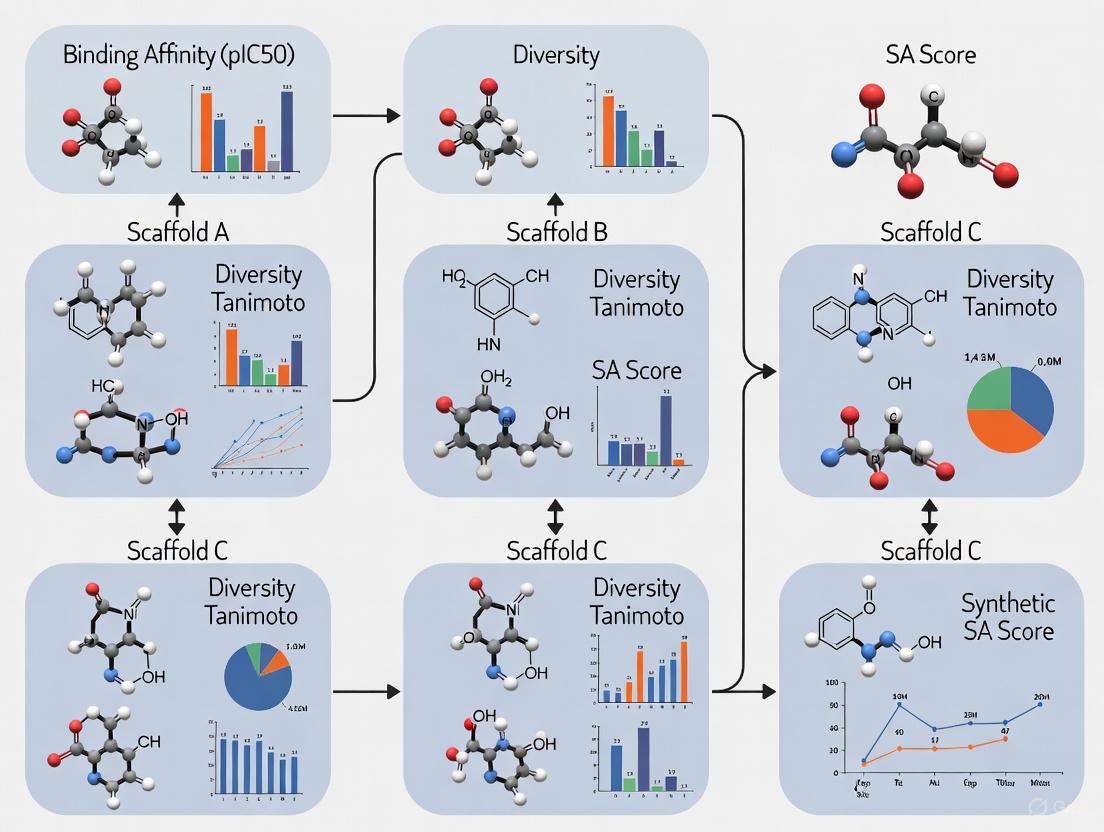
This article provides a comprehensive guide to scaffold hopping, a pivotal strategy in modern medicinal chemistry for generating novel and patentable drug candidates.
Scaffold Hopping in Drug Discovery: AI-Driven Strategies for Optimized Chemical Libraries
Abstract
This article provides a comprehensive guide to scaffold hopping, a pivotal strategy in modern medicinal chemistry for generating novel and patentable drug candidates. Tailored for researchers and drug development professionals, it explores the foundational principles of scaffold hopping, from its historical context and standard classifications to cutting-edge computational methodologies. It details practical applications for hit expansion and lead optimization, addresses common challenges and troubleshooting strategies, and offers a comparative analysis of current tools and validation techniques. By synthesizing traditional approaches with the latest AI-driven advances, this resource serves as a strategic roadmap for effectively leveraging scaffold hopping to enhance the diversity, quality, and success of chemical libraries.
What is Scaffold Hopping? Core Concepts and Strategic Importance in Drug Discovery
FAQ 1: What is scaffold hopping and why is it used in drug discovery?
Answer: Scaffold hopping is a strategic drug discovery process that involves identifying or generating new chemical compounds that have significantly different molecular core structures (scaffolds) but retain similar biological activity to a parent compound [1] [2].
This technique is primarily used for two critical reasons:
- To Overcome Compound Liabilities: If a promising lead compound has a scaffold with undesirable properties—such as toxicity, metabolic instability, or poor solubility—scaffold hopping can replace it with a superior core while preserving the biological function [1] [2].
- To Create Novel Intellectual Property: By designing a new scaffold that performs the same biological job, researchers can invent around existing patents and create new, patentable chemical entities [1] [3]. This is often referred to as developing "me-better" or "fast-follower" drugs [3].
The concept was formally introduced by Schneider et al. in 1999, emphasizing the two key components: a different core structure and similar biological activity [2] [4].
FAQ 2: What are the main categories of scaffold hopping?
Answer: Scaffold hopping approaches can be classified into four major categories based on the structural changes made to the core. The table below summarizes these categories, ranging from minor to major structural changes.
Table 1: Classification of Scaffold Hopping Approaches
| Category | Degree of Change | Description | Example |
|---|---|---|---|
| Heterocycle Replacements [2] [4] | Small (1° hop) | Swapping or replacing atoms (e.g., C, N, O, S) within a ring system. | The development of Vardenafil from Sildenafil by swapping a carbon and nitrogen atom in the fused ring system [1] [2]. |
| Ring Opening or Closure [2] [4] | Medium (2° hop) | Breaking open a ring to increase flexibility or forming a new ring to reduce it and lock a bioactive conformation. | The transformation of the rigid morphine into the more flexible Tramadol via ring opening [2] [4]. |
| Peptidomimetics [2] [4] | Large (3° hop) | Replacing a peptide backbone with non-peptide moieties to improve metabolic stability and oral bioavailability. | Mimicking a therapeutic peptide with a small, synthetic non-peptide molecule [2] [3]. |
| Topology-Based Hopping [2] [4] | Very Large (4° hop) | Identifying cores that maintain the overall spatial arrangement of key functional groups but have a completely different 2D connectivity. | This approach can lead to highly novel chemotypes and often relies on 3D shape and pharmacophore similarity searches [1] [2]. |
FAQ 3: My virtual screening for new scaffolds is yielding molecules with poor synthetic accessibility. How can I improve this?
Answer: This is a common challenge. Solutions focus on constraining your search to more drug-like and synthetically feasible chemical space.
- Use Synthesis-Validated Scaffold Libraries: Employ computational tools that use scaffold libraries derived from known, synthesized compounds. For example, the ChemBounce framework uses a curated library of over 3 million fragments from the ChEMBL database, which ensures high synthetic accessibility for its proposed molecules [5].
- Apply Drug-Likeness Filters: During the virtual screening or post-processing phase, filter generated compounds using established rules like Lipinski's Rule of Five or quantitative estimates of drug-likeness (QED) [5]. This helps prioritize molecules with properties typical of successful oral drugs.
- Incorporate Synthetic Accessibility (SA) Scores: Use computational metrics that predict how difficult a molecule is to synthesize. Tools like ChemBounce report SA scores, allowing you to rank and select compounds with higher synthetic feasibility [5].
FAQ 4: How do I handle scaffold replacements that involve forming or breaking rings in free energy calculations?
Answer: Relative binding free energy (RBFE) calculations are highly accurate but traditionally struggle with bond breaking/forming. A modern solution is the auxiliary restraint method [6].
Protocol: Auxiliary Restraint Method for Ring Opening/Closure [6]:
- Identify the Bond: Select the bond in the ring to be broken (or formed) that will make the molecular topology most similar to the target compound.
- Apply Dihedral Restraints: To maintain the geometry during the alchemical transformation, apply auxiliary dihedral restraints on the atoms of the ring. For an N-membered ring, you will need N-3 dihedral restraints.
- Two-Stage Perturbation:
- Stage 1: Simultaneously break the selected bond (scale off its bond interaction) and turn on the auxiliary dihedral restraints as the alchemical parameter (λ) goes from 0 to 1.
- Stage 2: With the bond fully broken, gradually release (turn off) the auxiliary dihedral restraints as λ goes from 0 to 1.
- Calculate Free Energy: The total free energy change for the scaffold hop is the sum of the free energy changes from Stage 1 and Stage 2.
This method allows these complex perturbations to be performed with standard molecular dynamics software without requiring code modifications [6].
FAQ 5: What are the key computational methods for scaffold hopping?
Answer: The choice of method often depends on the available information (e.g., is the protein structure known?) and the desired degree of structural change. The following workflow diagram illustrates how these methods can be applied.
Diagram 1: Computational Scaffold Hopping Workflow.
Table 2: Key Computational Methods for Scaffold Hopping
| Method | Type | Key Principle | Best For |
|---|---|---|---|
| Structure-Based Virtual Screening [1] | Structure-Based | Docking compound libraries into a protein's binding site to predict binding modes and affinities. | Discovering chemically unrelated candidates when a 3D protein structure is available. |
| Topological Replacement [1] | Structure-Based | Searching for fragments that can geometrically match the connection points of the original scaffold. | Replacing a core while maintaining the spatial vector of attached groups. |
| Shape Similarity Screening [1] | Ligand-Based | Screening for compounds that share a similar 3D shape and orientation of key functionalities with the query. | Projects where no binding mode information is available (Ligand-Based Drug Discovery). |
| Fuzzy Pharmacophores (FTrees) [1] | Ligand-Based | Comparing molecules based on overall topology and fuzzy pharmacophore properties rather than exact structure. | Finding distant chemical relatives that share similar interaction patterns. |
| AI-Driven Molecular Generation [7] [5] | AI-Based | Using deep learning models (e.g., VAEs, Transformers) to generate novel molecular structures with desired properties from scratch. | Exploring vast, uncharted chemical spaces and generating highly novel scaffolds absent from existing libraries. |
FAQ 6: Can you provide a concrete example of a scaffold hopping protocol?
Answer: Yes. Below is a detailed protocol for the ChemBounce tool, an open-source framework designed specifically for scaffold hopping.
Experimental Protocol: Scaffold Hopping with ChemBounce [5]
Objective: To generate novel chemical structures with high synthetic accessibility by replacing the core scaffold of a known active compound while preserving its pharmacophore.
Required Input: A valid SMILES string of the input molecule.
Step-by-Step Workflow:
Fragmentation & Scaffold Identification:
- ChemBounce takes the input SMILES and fragments the molecule using the HierS algorithm via the ScaffoldGraph library.
- The algorithm decomposes the molecule into ring systems, side chains, and linkers, generating all possible scaffolds through recursive fragmentation.
Query and Library Search:
- One of the identified scaffolds is selected as the query.
- The tool searches its curated in-house library of over 3 million unique scaffolds derived from the ChEMBL database for scaffolds similar to the query.
- Similarity is calculated using the Tanimoto coefficient based on molecular fingerprints.
Scaffold Replacement & Molecule Generation:
- The query scaffold in the original molecule is replaced with each candidate scaffold from the library search, generating new molecular structures.
Rescreening & Output:
- The generated molecules are rescreened to ensure they maintain similar pharmacophores and potential biological activity.
- This is done by calculating both Tanimoto similarity and ElectroShape similarity (which compares 3D shape and charge distribution) against the original input molecule.
- Only compounds passing user-defined similarity thresholds are outputted.
Command Line Example:
(This example would generate up to 100 structures for the input ethanol ("CCO") using a Tanimoto similarity threshold of 0.5) [5].
Diagram 2: ChemBounce Scaffold Hopping Process.
The Scientist's Toolkit: Essential Research Reagents & Software
Table 3: Key Resources for Scaffold Hopping Research
| Tool / Resource Name | Type | Primary Function in Scaffold Hopping |
|---|---|---|
| ChEMBL Database [5] | Database | A manually curated database of bioactive molecules with drug-like properties. Used as a source of synthesis-validated scaffolds and bioactivity data. |
| ChemBounce [5] | Software | An open-source Python framework specifically designed to generate novel compounds via scaffold hopping from an input SMILES. |
| ScaffoldGraph [5] | Software | A Python library for the analysis of molecular scaffolds, including hierarchy generation and fragmentation. |
| SeeSAR (with ReCore) [1] | Software | A commercial molecular design tool that includes the "ReCore" function for topological replacement of scaffolds. |
| FTrees / infiniSee [1] | Software | Commercial software (BioSolveIT) for similarity searching based on Feature Trees (FTrees), enabling fuzzy pharmacophore comparisons and navigation of chemical space. |
| OpenMM [6] | Software | A high-performance toolkit for molecular simulation. It is one of the few packages that supports advanced free energy methods for scaffold perturbations. |
| ZINC Database [1] | Database | A free database of commercially-available compounds for virtual screening, often used as a source of purchable fragments and scaffolds. |
| ElectroShape [5] | Algorithm/Descriptor | A method for calculating molecular similarity based on both 3D shape and electrostatic potential, crucial for maintaining biological activity during a hop. |
FAQs: Scaffold Hopping for Library Optimization
Q1: How can scaffold hopping help us design around existing patents? Scaffold hopping is a strategic approach to generate novel, patentable drug candidates by modifying the core molecular structure of a known active compound. By creating a structurally distinct chemotype that retains the desired biological activity, you can establish a strong intellectual property (IP) position. This strategy was successfully used in the development of drugs like Vardenafil, a PDE5 inhibitor, which was created by swapping a carbon and a nitrogen atom in the fused ring of Sildenafil—a change significant enough to be covered by a new patent [2].
Q2: Our lead compound shows promising potency but poor metabolic stability. Can scaffold hopping address this? Yes, improving metabolic instability is a primary application of scaffold hopping. By altering the core scaffold, you can eliminate or modify metabolic soft spots susceptible to enzymatic degradation (e.g., specific heterocycles or substituents) while preserving the pharmacophores necessary for activity. This approach directly enhances pharmacokinetic properties [8].
Q3: What are the main categories of scaffold hopping, and when should each be used? Scaffold hopping is typically classified into four main categories based on the degree of structural change [2] [7]:
- Heterocycle Replacements (1° hop): Involves swapping or replacing atoms within a ring system (e.g., replacing a carbon atom with a nitrogen). Use this for small, strategic changes to improve properties like solubility or potency, or to establish novel IP.
- Ring Opening or Closure (2° hop): Involves making a ring system larger, smaller, or opening a ring to increase flexibility (or closing one to reduce it). Apply this to modulate molecular rigidity, which can affect potency, absorption, and membrane penetration [9].
- Peptidomimetics (3° hop): Focuses on replacing peptide backbones with non-peptide moieties. This is crucial for overcoming the poor metabolic stability and bioavailability often associated with peptide-based drugs [9].
- Topology-Based Hopping: This involves more significant changes to the overall molecular topology. Use this for ambitious projects aiming for high degrees of structural novelty, though it may carry a higher risk of losing activity [2].
Q4: Our in-silico scaffold hops retain 2D pharmacophore similarity but lose activity. What could be wrong? This common issue often arises from an over-reliance on 2D similarity. Biological activity is profoundly influenced by the 3D orientation of pharmacophores. A successful hop must preserve the three-dimensional molecular shape and electronic distribution (e.g., charge, polar surfaces) to maintain binding interactions with the target protein. Always validate proposed hops using 3D shape similarity and molecular docking studies [5] [10].
Q5: How can we ensure that our newly designed scaffolds are synthetically accessible? To ensure high synthetic accessibility, leverage computational frameworks like ChemBounce, which uses a curated library of over 3 million fragments derived from the ChEMBL database—a source of synthesis-validated compounds [5]. Additionally, you can use synthetic complexity scores (like SAscore) as a filter during the virtual screening and design process [5].
Troubleshooting Guides
Guide 1: Troubleshooting Intellectual Property (IP) Generation
| Symptom | Possible Cause | Solution / Recommended Action |
|---|---|---|
| Generated analogs are too structurally similar to prior art. | Over-reliance on small, incremental changes (e.g., only 1° hops). | Action: Employ topology-based hopping or combine multiple hop types (e.g., ring closure with heterocycle replacement) for greater novelty [2] [8]. |
| New scaffold has desired novelty but lost all activity. | The essential 3D pharmacophore was not conserved during the hop. | Action: Use 3D shape-based similarity metrics (like ElectroShape) and molecular docking to screen candidate scaffolds before synthesis. Prioritize scaffolds that maintain key interactions in docking poses [5] [11]. |
| Difficulty in identifying viable, novel chemical space. | Limited by the diversity of your in-house compound library. | Action: Utilize large public databases (e.g., PubChem) for similarity searches and leverage generative AI models (e.g., DeepHop) that are trained to propose novel structures with high 3D similarity to your query molecule [11] [10]. |
Guide 2: Troubleshooting Toxicity and ADMET Limitations
| Symptom | Possible Cause | Solution / Recommended Action |
|---|---|---|
| Improved potency but high cytotoxicity. | The new scaffold or its metabolites may have off-target effects or reactive functional groups. | Action: Perform predictive in-silico toxicity profiling early. Consider a 2° scaffold hop (ring opening) to reduce planarity and intercalation potential, or replace problematic heterocycles [2] [9]. |
| Good in-vitro potency, but poor oral bioavailability. | Poor solubility or permeability due to high lipophilicity or excessive molecular weight. | Action: Use scaffold hopping to reduce logP and molecular weight. A ring opening (2° hop) can increase flexibility and improve solubility, as demonstrated in the BACE-1 inhibitor project at Roche [12]. |
| Short half-life due to rapid metabolic clearance. | The scaffold contains motifs that are substrates for metabolic enzymes (e.g., specific heterocycles). | Action: Identify the metabolic soft spot. Use a 1° or 2° hop to replace the labile ring system with a more metabolically stable isostere (e.g., replacing a phenyl ring with a trans-cyclopropylketone) [12]. |
| Low solubility leading to formulation challenges. | High crystallinity or strong intermolecular interactions of the planar scaffold. | Action: Introduce mild polarity or slightly disrupt symmetry via heterocycle replacement (1° hop) or ring opening (2° hop) to disrupt crystal packing and enhance aqueous solubility [8] [9]. |
Experimental Protocols for Key Experiments
Protocol 1: A Computational Workflow for Stability-Guided Scaffold Hopping
This protocol outlines a structure-based virtual screening pipeline for identifying novel tankyrase inhibitors for colorectal cancer research, as detailed in the referenced study [11].
1. Protein and Query Ligand Preparation:
- Obtain the 3D structure of your target protein from the Protein Data Bank (PDB). Select a structure with high resolution and a relevant co-crystallized ligand.
- Preprocess the protein structure using software like UCSF Chimera: remove water molecules, add hydrogens for pH 7.4, and assign partial charges.
- Extract the co-crystallized ligand (e.g., RK-582) to use as the reference query for similarity searching [11].
2. Compound Library Generation via Similarity Search:
- Perform a structural similarity search in the PubChem database using the query ligand.
- Set a similarity cutoff (e.g., 80%) to retrieve a focused library of structurally related compounds. Download the resulting compounds in SDF format [11].
3. Virtual Screening and Docking:
- Filter the library using drug-likeness rules (e.g., Lipinski's Rule of Five).
- Dock the filtered compounds into the active site of the prepared protein using a docking program like AutoDock Vina.
- Select top-ranking compounds based on docking score and analysis of key binding interactions (hydrogen bonds, hydrophobic contacts) [11].
4. Density Functional Theory (DFT) Analysis:
- Perform DFT calculations on the top candidate molecules using a quantum chemistry library like PySCF.
- Calculate the energy of the Highest Occupied Molecular Orbital (HOMO) and Lowest Unoccupied Molecular Orbital (LUMO). A larger HOMO-LUMO gap (e.g., ~4.5-5.0 eV) indicates higher electronic stability, which is desirable for a drug candidate [11].
5. Molecular Dynamics (MD) Simulations:
- Run MD simulations (e.g., for 500 ns) on the protein-ligand complexes of the top candidates.
- Analyze Root Mean Square Deviation (RMSD) and Root Mean Square Fluctuation (RMSF) to evaluate the conformational stability of the ligand in the binding pocket over time. Lower fluctuations suggest a stable complex [11].
6. Machine Learning-Based Activity Prediction:
- Train a machine learning model (e.g., using a dataset of known inhibitors for your target) to predict pIC₅₀ values.
- Use this model to predict the biological activity of your final candidate compounds, providing an additional validation metric before experimental testing [11].
The following workflow diagram illustrates this multi-step computational process:
Protocol 2: Ligand-Based Scaffold Hopping with Generative AI
This protocol uses a deep learning model to generate novel scaffolds based on a known active molecule and its target [10].
1. Data Curation and Pair Construction:
- From a bioactivity database (e.g., ChEMBL), curate pairs of molecules
(X, Y)that bind to the same target proteinZ. - Define a scaffold hop as a pair where molecule
Yhas:- Significantly improved bioactivity over
X(e.g., pChEMBL value ≥ 1 higher). - Low 2D scaffold similarity (e.g., Tanimoto similarity of Bemis-Murcko scaffolds ≤ 0.6).
- High 3D shape similarity (e.g., Shape and Color score ≥ 0.6) [10].
- Significantly improved bioactivity over
2. Model Training (DeepHop):
- Use a multimodal transformer neural network architecture.
- Input the reference molecule's SMILES (2D structure) and its 3D conformer (via a spatial graph neural network).
- Integrate information about the target protein's sequence (via a transformer encoder).
- Train the model to translate the input reference molecule
Xinto an improved, hopped moleculeY[10].
3. Molecule Generation and Validation:
- Input your novel query molecule and target protein into the trained DeepHop model.
- The model will generate candidate molecules with novel 2D scaffolds but similar 3D shapes.
- Validate the generated molecules using a separate deep QSAR model to predict their bioactivity against the target [10].
Research Reagent Solutions
The following table details key computational tools and databases essential for executing modern scaffold hopping campaigns.
| Item Name | Type / Category | Function & Application in Scaffold Hopping |
|---|---|---|
| ChemBounce [5] | Open-Source Framework | Generates novel scaffolds by replacing the core of an input molecule using a curated library of ChEMBL fragments; evaluates candidates based on Tanimoto and 3D electron shape similarity. |
| DeepHop Model [10] | Generative AI Model | A multimodal transformer that performs supervised molecule-to-molecule translation, generating novel scaffolds with high 3D similarity and improved bioactivity for a given target. |
| ReCore (BioSolveIT) [12] BROOD (OpenEye) [12] Spark (Cresset) [12] | Commercial Software | Suite of commercial tools designed specifically for scaffold hopping. They typically work by searching fragment libraries to replace a defined core while maintaining the geometry of key substituents. |
| ChEMBL Database [5] | Bioactivity Database | A large, open-source repository of bioactive molecules with drug-like properties. Used to build curated, synthesis-validated fragment and scaffold libraries for hopping. |
| PubChem [11] | Chemical Database | A public database containing millions of compound structures. Used for performing similarity searches to find existing compounds that are structurally related to a query molecule. |
| RDKit | Cheminformatics Toolkit | An open-source toolkit for cheminformatics. Used for fundamental tasks like SMILES parsing, molecular normalization, fingerprint calculation (e.g., Morgan fingerprints), and conformer generation [10]. |
| ADMETlab 2.0 [11] | Predictive Tool | A web server that uses a graph attention model to predict Absorption, Distribution, Metabolism, Excretion, and Toxicity (ADMET) properties of molecules in silico. |
| OEChem (OpenEye) | Toolkit | Provides the foundational chemistry functions for manipulating molecules and calculating properties, often used within larger software suites like BROOD [12]. |
Technical Support Center: Scaffold Hopping Troubleshooting
Frequently Asked Questions (FAQs)
Q1: My heterocycle replacement led to a complete loss of binding affinity. What are the primary factors I should investigate? A: This is often due to disregarding key pharmacophore elements or conformational changes. Focus on:
- Electron Density Distribution: Use computational tools (e.g., molecular electrostatic potential maps) to compare the original and new heterocycle. A change in hydrogen bond acceptor/donor patterns is a common culprit.
- Aromaticity and Planarity: A switch from an aromatic to a non-aromatic ring, or vice-versa, can disrupt crucial pi-stacking interactions.
- Tautomeric States: The new heterocycle may exist in a dominant tautomeric form that misaligns functional groups. Check the predominant tautomer at physiological pH.
Q2: When performing a ring-opening hop, how can I prevent the resulting chain from adopting too many unproductive conformations? A: Conformational restraint is key. Consider these strategies:
- Introduce Steric Hindrance: Add substituents to the chain that limit rotational freedom around single bonds.
- Incorporate Rigid Linkers: Use amide bonds, alkynes, or small, rigid rings (e.g., cyclopropyl) within the opened chain to lock the conformation.
- Macrocyclization: If structurally feasible, tether the ends of the opened chain to form a macrocycle, effectively creating a new, rigid scaffold.
Q3: My peptidomimetic design shows good binding in silico but poor cell-based activity. What could be the issue? A: This typically points to a pharmacokinetic (PK) problem rather than a pharmacodynamic (PD) one.
- Cell Permeability: The mimetic may still be too polar. Check the calculated LogP and introduce hydrophobic substituents or bioisosteres to improve passive diffusion.
- Metabolic Instability: Look for remaining peptide bonds that could be cleaved by proteases. Replace them with non-cleavable isosteres like olefin, fluoroplefin, or retro-inverso amide bonds.
- Efflux Transport: The compound may be a substrate for efflux pumps like P-glycoprotein. Run an assay to confirm and consider structural modifications to evade recognition.
Q4: In topology-based hopping, how do I validate that the topological similarity translates to functional similarity? A: Computational prediction must be followed by experimental validation.
- Pharmacophore Mapping: Superimpose the topologically similar hop onto the original scaffold's pharmacophore model to ensure key interaction points are preserved.
- Molecular Dynamics (MD): Run short MD simulations to see if the new compound maintains stable interactions with the target protein.
- Benchmark with a Control: Include a topologically dissimilar compound in your assay to confirm that the observed activity is not a non-specific effect.
Troubleshooting Guides
Issue: Low Synthetic Yield in Heterocycle Synthesis
- Step 1: Check Reagent Purity. Degraded catalysts (e.g., Palladium for cross-couplings) are a common cause. Use fresh, high-quality reagents.
- Step 2: Optimize Solvent System. Screen a range of anhydrous, degassed solvents (DMF, DMSO, 1,4-dioxane) to find the optimal polarity and coordination properties.
- Step 3: Control Moisture/Oxygen. For air- and moisture-sensitive reactions, ensure rigorous Schlenk line or glovebox techniques are used.
Issue: High Off-Target Activity in Peptidomimetics
- Step 1: Perform a Selectivity Panel. Screen against a panel of related targets (e.g., kinase panel, GPCR panel) to identify the source of off-target activity.
- Step 2: Analyze the Binding Pocket. Compare the crystal structures (or homology models) of the primary and off-targets. Identify key residue differences.
- Step 3: Introduce Selective Substituents. Modify the mimetic to add steric bulk or functionality that clashes with the off-target pocket but is tolerated by the primary target.
Experimental Protocols
Protocol 1: Standardized Assay for Evaluating Ring-Opening/Closure Hopping Analogs
Objective: To determine the IC₅₀ of novel ring-opened/closed analogs against Target Enzyme X.
Materials:
- Recombinant Target Enzyme X
- Fluorogenic substrate for Enzyme X
- Test compounds (DMSO stock solutions)
- Assay Buffer (e.g., 50 mM HEPES, pH 7.4, 10 mM MgCl₂, 1 mM DTT)
- 384-well black, flat-bottom microplates
- Plate reader capable of fluorescence detection
Methodology:
- Dilution: Serially dilute test compounds in DMSO, then further dilute in assay buffer to a 2X final concentration, keeping the DMSO concentration constant (e.g., ≤1%).
- Plate Setup: Add 10 µL of the 2X compound solution to designated wells. Include controls (no inhibitor for 100% activity, known potent inhibitor for 0% activity).
- Reaction Initiation: Add 10 µL of a pre-mixed solution containing Enzyme X and its substrate (both at 2X final concentration) to all wells.
- Incubation: Incubate the plate at 25°C for 60 minutes, protected from light.
- Detection: Measure fluorescence (ex/cm as per substrate specifications).
- Data Analysis: Plot fluorescence vs. log[inhibitor]. Fit the data to a four-parameter logistic model to calculate IC₅₀ values.
Table 1: Example IC₅₀ Data for Ring-Opened Analogs
| Compound ID | Core Modification | IC₅₀ (nM) | Comment |
|---|---|---|---|
| RH-001 | Original (Lactam) | 10.5 | Reference compound |
| RO-101 | Ring-Opened (Linear Amide) | 1,250 | Significant flexibility penalty |
| RO-102 | Ring-Opened (Stapled) | 45.2 | Conformational restraint effective |
Protocol 2: Computational Workflow for Topology-Based Hopping
Objective: To identify novel topologically equivalent scaffolds from a large chemical database.
Software: RDKit, Python, a chemical database (e.g., ZINC, ChEMBL).
Methodology:
- Query Definition: Define the query scaffold by removing all variable substituents from the lead compound, focusing on the core ring system and connecting bonds.
- Descriptor Calculation: Calculate topological descriptors (e.g., Extended Connectivity Fingerprints (ECFPs), MACCS keys) for the query.
- Database Screening: Screen the target database, calculating the same descriptors for all compounds.
- Similarity Scoring: Compute the Tanimoto similarity between the query fingerprint and every database compound's fingerprint.
- Hit Selection & Filtering: Rank compounds by similarity score. Apply filters for drug-likeness (e.g., MW < 500, LogP < 5) and structural novelty relative to the query.
- Visual Inspection & Docking: Manually inspect top hits for chemical feasibility and perform molecular docking to assess potential binding mode conservation.
Table 2: Key Parameters for Topological Fingerprint Screening
| Parameter | Typical Setting | Purpose |
|---|---|---|
| Fingerprint Type | ECFP4 | Balances specificity and generalization |
| Similarity Metric | Tanimoto Coefficient | Standard measure for molecular similarity |
| Similarity Cutoff | ≥ 0.4 | Threshold for considering a "hit" |
| MW Filter | 200 - 550 Da | Focuses on lead-like/drug-like space |
The Scientist's Toolkit: Research Reagent Solutions
| Item | Function / Application in Scaffold Hopping |
|---|---|
| T3P (Propylphosphonic Anhydride) | A coupling reagent for amide bond formation in peptidomimetic synthesis; offers low epimerization and easy work-up. |
| Palladium Catalysts (e.g., Pd(PPh₃)₄) | Essential for Suzuki-Miyaura and other cross-coupling reactions to create diverse heterocycle replacements. |
| Chiral Separation Columns (e.g., Chiralpak) | For the resolution of enantiomers generated during ring-closure hops or asymmetric synthesis of mimetics. |
| SPR Biosensor Chips (e.g., CM5) | For Surface Plasmon Resonance (SPR) analysis to directly measure binding kinetics (KA, KD) of hop analogs to the target protein. |
| Cryo-EM Grids (e.g., Quantifoil) | For structural validation of topologically hopped compounds bound to large protein targets or complexes. |
Visualizations
Title: Topology-Based Hopping Workflow
Title: Peptidomimetic Design Strategies
Scaffold hopping is a fundamental strategy in medicinal chemistry and drug discovery aimed at identifying novel molecular core structures (scaffolds) while retaining or improving the biological activity of a parent compound [7] [2]. This approach allows researchers to discover new chemical entities that overcome limitations of existing leads, such as toxicity, metabolic instability, poor pharmacokinetics, or intellectual property constraints [5]. The concept, formally introduced by Schneider et al. in 1999, has since become an integral part of modern lead optimization workflows [2].
The success of scaffold hopping relies on the principle that structurally diverse compounds can share similar biological activities if they conserve key pharmacophoric elements—the spatial arrangement of functional groups essential for target interaction [2]. This strategy has led to several marketed drugs, demonstrating its significant real-world impact. This technical guide explores these successful case studies and provides practical troubleshooting advice for researchers implementing scaffold hopping in their library optimization research.
Technical Framework & Classification
Classification of Scaffold Hopping Approaches
Scaffold hopping strategies are systematically classified based on the structural modifications applied to the original scaffold [2]. The table below outlines the primary categories and their characteristics.
Table 1: Classification of Scaffold Hopping Approaches
| Hop Category | Degree of Change | Description | Key Challenge |
|---|---|---|---|
| Heterocyclic Replacements (1° Hop) [2] | Small | Swapping or replacing atoms within a ring system (e.g., C, N, O, S). | Achieving sufficient novelty for new IP while retaining activity. |
| Ring Opening or Closure (2° Hop) [2] | Medium | Breaking bonds to open fused rings or forming new bonds to create cyclic systems. | Managing conformational flexibility and its impact on binding entropy. |
| Peptidomimetics [2] | Large | Replacing peptide backbones with non-peptide moieties to improve stability and oral bioavailability. | Faithfully mimicking the spatial orientation of key pharmacophore elements. |
| Topology-Based Hopping [2] | Large | Significant alteration of the core scaffold's connectivity and shape while preserving pharmacophore geometry. | Navigating vast chemical space to identify viable, novel scaffolds. |
Case Studies of Marketed Drugs
Case Study 1: From Morphine to Tramadol (Ring Opening)
a. Original Drug: Morphine Morphine, a potent natural product analgesic, acts on the μ-opioid receptor. Its use is limited by significant adverse effects, including respiratory depression, nausea, and high addictive potential [2].
b. Scaffold Hop & Resulting Drug: Tramadol Tramadol was developed through a ring-opening scaffold hop. Six ring bonds in morphine's rigid, T-shaped, fused-ring system were broken, resulting in a more flexible and simplified structure [2].
c. Experimental Protocol & Validation
- 3D Pharmacophore Modeling: The key pharmacophore features of morphine were identified: a positively charged tertiary amine, an aromatic ring, and a phenolic hydroxyl group.
- Molecular Superposition: 3D superposition of Tramadol and morphine (e.g., using Flexible Alignment in MOE) confirmed conservation of these features in space, despite the 2D structural divergence. The methoxyl group in Tramadol serves as a bioisostere for the hydroxyl group, as it is demethylated in vivo by CYP2D6 [2].
- Biological Evaluation: In vitro and in vivo assays confirmed μ-opioid receptor agonism, validating the scaffold hop.
d. Real-World Impact Tramadol retains effective analgesic properties but with a dramatically improved safety profile. It exhibits reduced addictive liability and side effects compared to morphine. Furthermore, it is well-absorbed orally and has a longer duration of action [2].
Case Study 2: The Evolution of Antihistamines (Ring Closure & Heterocyclic Replacement)
This case study demonstrates sequential scaffold hopping to optimize an initial lead.
a. Original Drug: Pheniramine Pheniramine is a first-generation antihistamine that competes with histamine for the H1-receptor. It features a flexible structure with two aromatic rings connected to a central carbon atom [2].
b. Scaffold Hop 1: Pheniramine → Cyproheptadine (Ring Closure) Cyproheptadine was created by locking the aromatic rings of Pheniramine into their active conformation via ring closure, and introducing a piperidine ring to further reduce flexibility [2].
c. Experimental Protocol & Validation
- Conformational Analysis: Analysis of Pheniramine's bound conformation informed the design of a rigidified analog.
- 3D Superposition: Confirmed that the spatial positions of the basic nitrogen and the two aromatic rings were conserved.
- Binding Assays: Results showed significantly improved binding affinity to the H1-receptor due to reduced entropy loss upon binding.
d. Scaffold Hop 2: Cyproheptadine → Pizotifen (Heterocyclic Replacement) A heterocyclic replacement was performed, substituting one phenyl ring in Cyproheptadine with a thiophene ring, resulting in Pizotifen [2].
e. Real-World Impact
- Cyproheptadine: Not only a more potent antihistamine but also a 5-HT2 serotonin receptor antagonist, leading to its use in migraine prophylaxis.
- Pizotifen: The scaffold hop successfully specialized the drug's profile, making it a superior medicine for migraine treatment [2].
Table 2: Summary of Marketed Drug Case Studies
| Case Study | Scaffold Hop Type | Key Structural Change | Primary Therapeutic Improvement |
|---|---|---|---|
| Morphine → Tramadol | Ring Opening | Opened three fused rings into a flexible chain. | Reduced addictive potential and side effects. |
| Pheniramine → Cyproheptadine | Ring Closure | Rigidified flexible structure by fusing rings. | Increased H1-receptor potency; gained anti-serotonin activity. |
| Cyproheptadine → Pizotifen | Heterocyclic Replacement | Replaced phenyl ring with thiophene. | Optimized specificity for migraine prophylaxis. |
The following workflow summarizes the logical process of analysis and validation used in these case studies:
Diagram 1: Scaffold Hopping Validation Workflow
The Scientist's Toolkit: Research Reagent Solutions
Table 3: Essential Tools for Modern Scaffold Hopping Research
| Tool/Reagent | Function/Description | Example/Note |
|---|---|---|
| SMILES Strings [7] | A string-based molecular representation used as input for many computational tools. | Ensure valid SMILES syntax; preprocess to remove salts. |
| Molecular Fingerprints (e.g., ECFP) [7] | Encodes molecular structure as a bitstring for rapid similarity searching and machine learning. | Used in tools like ChemBounce for initial candidate screening [5]. |
| Scaffold Library [5] | A curated collection of molecular scaffolds/fragments for replacement. | ChemBounce uses a library of 3+ million fragments from ChEMBL [5]. |
| 3D Pharmacophore Model | Abstraction of interaction features (H-bond donor/acceptor, hydrophobic, charged) essential for activity. | Critical for validating hops, as seen in the Tramadol case [2]. |
| Shape Similarity Metrics (e.g., ElectroShape) [5] | Quantifies 3D molecular shape and electron density overlap to maintain bioactivity. | Used in ChemBounce for post-replacement rescreening [5]. |
Frequently Asked Questions (FAQs) & Troubleshooting
Q1: Our scaffold-hopped compounds consistently show a significant drop in biological activity. What is the most likely cause?
A: This is often a pharmacophore misalignment issue.
- Troubleshooting Guide:
- Verify the 3D Model: Re-examine your 3D pharmacophore hypothesis. Ensure it is derived from solid experimental data (e.g., a co-crystal structure, robust SAR).
- Conformational Analysis: The novel scaffold might stabilize a different low-energy conformation that does not present the pharmacophore correctly. Perform a conformational analysis and compare the overlay of the new scaffold with the original.
- Check Critical Interactions: Ensure that all key interactions (e.g., a specific hydrogen bond or a crucial hydrophobic contact) are preserved in the new design. A small shift in atom position can break a critical interaction.
Q2: How can we ensure that the novel compounds designed through scaffold hopping are synthetically accessible?
A: Synthetic accessibility (SA) is a common bottleneck.
- Troubleshooting Guide:
- Leverage Validated Libraries: Use scaffold and fragment libraries derived from known synthetic compounds, like the ChEMBL-derived library in ChemBounce, to increase the probability of SA [5].
- Incorporate SA Scoring: Use computational SA score filters (e.g., SAscore) during the virtual screening and design phase to prioritize tractable molecules [5].
- Early Medicinal Chemistry Input: Involve synthetic chemists early in the design cycle to vet proposed scaffolds and suggest realistic modifications.
Q3: We are struggling to achieve sufficient structural novelty to establish new IP space. What strategies can we use?
A: You may be relying too heavily on small-step hops (1° hops).
- Troubleshooting Guide:
- Pursue Topology-Based Hops: Move beyond heterocyclic replacements and explore larger changes in scaffold connectivity and shape [2]. This carries higher risk but offers greater novelty.
- Utilize Advanced Generative AI: Employ reinforcement learning (RL) frameworks like RuSH or diffusion models that are explicitly trained to optimize for both 3D similarity (to maintain activity) and low 2D scaffold similarity (to maximize novelty) [13] [14].
- Combine Multiple Hop Types: Consider sequential or combined hops, such as a ring closure followed by a heterocyclic replacement, to create a more significant structural departure.
Q4: Our molecular representations (like SMILES) seem to be limiting our AI models' ability to perform effective scaffold hopping. Are there better alternatives?
A: Yes, this is a recognized limitation. Traditional SMILES can struggle to represent scaffolds as contiguous fragments [15].
- Troubleshooting Guide:
- Adopt Fragment-Based Representations: Explore novel representations like SAFE (Sequential Attachment-based Fragment Embedding), which explicitly represents molecules as a sequence of connected fragments, making tasks like scaffold decoration and hopping more natural for AI models [15].
- Use Graph-Based Models: Directly work with molecular graphs, which natively represent atoms and bonds. Graph Neural Networks (GNNs) are inherently better at capturing structural relationships beyond sequential tokens [7] [14].
A Toolbox for Innovation: Traditional and AI-Driven Scaffold Hopping Methods
Frequently Asked Questions (FAQs)
1. What is scaffold hopping and why is it important for library optimization? Scaffold hopping is a key strategy in drug discovery aimed at identifying novel compounds with different core structures (scaffolds) that retain similar biological activity to a known active molecule [5]. This approach is vital for library optimization as it helps overcome challenges such as intellectual property constraints, poor physicochemical properties, metabolic instability, and toxicity issues associated with existing lead compounds [5] [2]. It enables the exploration of new chemical entities and can lead to improved efficacy and safety profiles [7].
2. How can the ChEMBL database be leveraged for scaffold hopping? The ChEMBL database is a rich, publicly available resource of bioactive, drug-like molecules [16]. It can be systematically mined to build a diverse, synthesis-validated scaffold library. For instance, the computational framework ChemBounce created an in-house library of over 3 million unique fragments derived from the ChEMBL database using the HierS fragmentation algorithm [5]. This library serves as a foundational resource for replacing core scaffolds in query molecules to generate novel compounds.
3. What are the common computational methods used for scaffold hopping? Computational methods for scaffold hopping can be broadly categorized as follows [7] [2]:
- Ligand-Based Methods: These include techniques based on molecular fingerprints (e.g., Tanimoto similarity), pharmacophore models, and electron shape similarity [5] [7].
- Structure-Based Methods: These involve molecular docking and analyzing interactions between a ligand and the amino acids in its target protein's binding site [17].
- AI-Driven Methods: Modern approaches use deep learning models like variational autoencoders (VAEs) and graph neural networks (GNNs) to generate novel scaffolds with desired properties [7] [16] [18].
4. What file formats are typically required for input, and what are common errors? Most tools require input molecules in SMILES (Simplified Molecular-Input Line-Entry System) format [5]. Common input failures include:
- Invalid atomic symbols not present in the periodic table.
- Incorrect valence assignments.
- Salt or complex forms containing multiple components separated by "."
- Malformed syntax such as unbalanced brackets or invalid ring closure numbers [5]. It is recommended to preprocess and validate SMILES strings using standard cheminformatics tools prior to analysis.
5. How is the synthetic accessibility of generated compounds evaluated? The synthetic accessibility (SA) of compounds generated through scaffold hopping is a critical consideration. Tools like ChemBounce use scaffold libraries derived from known, synthesis-validated compounds (like those in ChEMBL) to inherently favor synthetically tractable structures [5]. Furthermore, computed SAscore values provide a quantitative measure, where lower scores indicate higher synthetic accessibility [5]. This helps prioritize compounds for further investigation.
Troubleshooting Guides
Issue 1: Low Structural Diversity in Scaffold Hopping Output
Problem: The generated compounds are structurally too similar to the input query, failing to achieve a meaningful "hop."
Solution:
- Adjust Similarity Thresholds: Lower the Tanimoto similarity threshold (e.g., from 0.7 to 0.5) to allow for more structurally diverse candidates [5].
- Utilize Different Molecular Representations: Relying solely on 2D fingerprint similarity can limit diversity. Incorporate 3D shape-based and electrostatic similarity metrics (e.g., ElectroShape) to identify scaffolds that share similar volumetrics and charge distribution but differ in atomic connectivity [5] [17].
- Employ Multi-Dimensional Scaffold Analysis: Use tools like "Molecular Anatomy" that define scaffolds at multiple levels of abstraction (e.g., cyclic skeletons, Bemis-Murcko scaffolds). This helps cluster molecules based on different hierarchical views, potentially revealing diverse scaffolds that share key activity-determining moieties [19].
Issue 2: Generated Compounds Have Poor Drug-Likeness or Synthetic Accessibility
Problem: The proposed molecules exhibit unfavorable physicochemical properties or appear difficult to synthesize.
Solution:
- Apply Strict Filtering: Implement robust medicinal chemistry filters during library generation. This includes rules for molecular weight, lipophilicity (LogP), hydrogen bond donors/acceptors, and the number of rotatable bonds [20] [16].
- Leverage Synthesis-Validated Libraries: Base your in-house scaffold library on known chemical reactions and retrosynthetic rules, as done in lead-oriented synthesis, to ensure practical synthetic pathways exist [20].
- Analyze Quantitative Metrics: Calculate and use scores like SAscore (Synthetic Accessibility score) and QED (Quantitative Estimate of Drug-likeness) to quantitatively evaluate and rank the generated compounds [5].
Issue 3: Scaffold-Hopped Compounds Lose Biological Activity
Problem: The newly generated scaffold, while structurally novel, no longer binds to the intended target.
Solution:
- Incorporate Pharmacophore Constraints: Ensure the scaffold hopping algorithm is configured to retain key pharmacophore features—the specific arrangement of functional groups (e.g., hydrogen bond donors/acceptors, hydrophobic regions) critical for target interaction [5] [2].
- Use Hybrid Screening Methods: Integrate ligand-based approaches with structure-based insights. For example, the AI-AAM method uses Amino Acid Interaction Mapping (AAM) as a descriptor. This identifies compounds that, despite having different scaffolds, maintain a similar interaction profile with the target protein's binding site residues [17].
- Validate with Docking Studies: For targets with known 3D structures, perform molecular docking to confirm that the new scaffold can adopt a binding pose similar to the original molecule and form key interactions [17] [16].
Issue 4: Handling Large-Scale Database Processing and Workflow Errors
Problem: The computational workflow fails or becomes intractable when processing large databases like the entire ChEMBL library.
Solution:
- Implement Efficient Scaffold Mining: Use optimized algorithms like those in ScaffoldGraph to systematically decompose large compound collections (like ChEMBL) into hierarchical scaffolds. This allows for efficient storage and querying [5] [16].
- Pre-process and Curate the Database: Before scaffold extraction, rigorously pre-process the database. This includes standardizing chemical structures, removing duplicates, and applying relevant property filters to create a clean, manageable input set [5] [16].
- Check for Invalid Molecular Representations: Ensure all input structures from your database are valid. Common workflow failures can be traced back to invalid SMILES strings or unexpected molecular formats [5].
Experimental Protocols & Data
Table 1: Key Performance Metrics from Scaffold Hopping Validation Studies
| Metric / Method | Description | Example from Literature |
|---|---|---|
| Tanimoto Similarity | Measures 2D structural similarity based on molecular fingerprints. A lower threshold (e.g., 0.5) allows for more diversity [5]. | ChemBounce uses this to pre-filter candidate scaffolds from its library [5]. |
| Electron Shape Similarity | Measures 3D similarity considering molecular volume and electrostatic potential. Crucial for maintaining biological activity [5]. | Implemented in ChemBounce using the ElectroShape method in the ODDT Python library [5]. |
| AAM Similarity Score | Measures similarity based on predicted interactions with amino acid residues. A score >0.7 was used to select active compounds [17]. | In the AI-AAM method, this successfully identified XC608, a scaffold-hop of BIIB-057, with nearly identical IC50 (3.3 nM vs 3.9 nM) for SYK kinase [17]. |
| Enrichment Factor (EF) | Measures the effectiveness of a virtual screening method in enriching active compounds compared to a random selection [17]. | The AI-AAM method improved hit rates by 10 to 100 times over random screening in retrospective studies [17]. |
| Synthetic Accessibility (SA)score | Quantitative measure of how easy a molecule is to synthesize. Lower scores are better [5]. | ChemBounce tended to generate structures with lower SAscores than several commercial tools, indicating higher synthetic accessibility [5]. |
Table 2: Essential Research Reagent Solutions for Scaffold Hopping
| Item | Function in Scaffold Hopping | Example / Specification |
|---|---|---|
| ChEMBL Database | A curated, public database of bioactive molecules used to build a foundation of synthesis-validated scaffolds and fragments [5] [16]. | Version 31 contains over 1.9 million small molecules. Pre-processing (standardization, filtering) is required before use [16]. |
| ScaffoldGraph Library | A computational tool for hierarchical scaffold decomposition and analysis, enabling systematic fragmentation of large compound libraries [5] [16]. | Used by ChemBounce and ScaffoldGVAE to generate basis scaffolds and superscaffolds from input molecules [5] [16]. |
| In-House Fragment Library | A custom collection of molecular scaffolds and building blocks, often derived from large databases and curated for synthetic feasibility and drug-likeness [5] [20]. | Life Chemicals offers a collection of 193,000 compounds based on 1,580 scaffolds. Curated for novelty and optimal physicochemical properties [20]. |
| Validated Bioactive Compounds | Known active molecules serve as reference or query compounds to initiate the scaffold hopping process [17]. | Sources include approved drugs, clinical candidates, or potent inhibitors from databases like DDrare and DUD-E [17]. |
| Computational Tools (e.g., Spark) | Specialized software for performing scaffold hopping and exploring chemical space, often integrated into larger drug discovery suites [21]. | Cresset's Spark is a commercial tool specifically designed for scaffold hopping to help escape IP and toxicity traps [21]. |
Detailed Methodology: Implementing a ChemBounce-Based Workflow
The following workflow diagram outlines the key steps for a typical scaffold-hopping experiment using a tool like ChemBounce, which integrates the ChEMBL database.
Step-by-Step Protocol:
Input Preparation:
Query Decomposition:
Scaffold Library Search:
- Select one specific scaffold from the decomposed query as the "query scaffold."
- Search a pre-compiled, curated scaffold library (e.g., derived from ChEMBL) for candidate scaffolds using Tanimoto similarity based on molecular fingerprints [5]. The
-tparameter controls the similarity threshold.
Molecule Generation & Rescreening:
- Generate new molecules by replacing the query scaffold with the candidate scaffolds from the library.
- Rescreen the generated structures using a combination of Tanimoto similarity and electron shape similarity (e.g., using the ElectroShape method) to ensure the retention of pharmacophores and potential biological activity [5]. The
-nparameter controls the number of structures to generate per fragment.
Output & Analysis:
- The final output is a set of novel compounds with high synthetic accessibility. These can be further evaluated using properties like SAscore and QED, and filtered based on drug-likeness rules (e.g., Lipinski's Rule of Five) [5].
Troubleshooting Guides
Pharmacophore Model Troubleshooting
Problem: Poor enrichment of active compounds during virtual screening.
- Potential Cause 1: Model features are too rigid or do not reflect essential interactions.
- Potential Cause 2: Exclusion volumes are too restrictive or not accurate.
- Potential Cause 3: The model is over-fitted to the training set.
- Solution: Validate the model with a test set of known active and inactive compounds. Use metrics like enrichment factor, yield of actives, or ROC-AUC to assess performance and refine the model by deleting non-essential features [22].
Problem: Model fails to identify novel scaffold-hopped compounds.
- Potential Cause: The ligand-based model is derived from compounds with high structural similarity.
- Solution: Incorporate a structure-based approach if a protein structure is available. Use a complex with a bound ligand to extract the essential interaction pattern directly from the target [22] [23]. Alternatively, use multiple active compounds with different scaffolds for ligand-based modeling [7].
Molecular Fingerprint Troubleshooting
Problem: Low performance in similarity-based virtual screening for natural products.
- Potential Cause: Use of a fingerprint type that poorly captures the complex features of natural products.
- Solution: Natural products often have higher molecular complexity than typical drug-like compounds. Benchmark various fingerprints on your specific dataset. Consider using circular fingerprints (ECFP) or pharmacophore-based fingerprints (PH2, PH3), which may outperform others for this chemical space [24].
Problem: Inconsistent similarity results with different fingerprint types.
- Potential Cause: Different fingerprints encode different molecular information (e.g., substructures vs. pharmacophores).
Problem: Fingerprint selection for QSAR modeling.
- Potential Cause: The chosen fingerprint does not effectively correlate with the target bioactivity.
Shape Similarity Troubleshooting
Problem: Shape similarity search misses active compounds with different scaffolds.
- Potential Cause: Reliance on shape-only metrics.
- Solution: Combine shape with pharmacophore scoring. Protocols like ShapeAlign, which perform shape alignment followed by pharmacophore feature matching, significantly improve the identification of scaffold-hopped compounds [25].
Problem: Low enrichment in target prediction using 3D similarity.
- Potential Cause: Suboptimal 3D similarity metric.
- Solution: Screen multiple 3D similarity metrics. Combo scores that integrate shape Tanimoto indices with the number of matching pharmacophore points (e.g., ShapeAlign-ComboScore) often provide superior enrichment for scaffold hopping [25].
Frequently Asked Questions (FAQs)
Q1: What is the key difference between structure-based and ligand-based pharmacophore modeling, and when should I use each?
- A1: Structure-based pharmacophore modeling extracts interaction features directly from a 3D structure of a ligand-target complex (from PDB or docking). It is ideal when the target structure is known, as it directly reflects the binding site geometry [22]. Ligand-based pharmacophore modeling identifies common features from a set of 3D structures of known active molecules. Use this approach when the target structure is unknown but several active ligands are available [22] [23]. For scaffold hopping, structure-based models can be more effective as they are not biased towards existing scaffolds.
Q2: For a project focused on scaffold hopping, which molecular fingerprint type is most suitable?
- A2: Pharmacophore-based and circular fingerprints are generally most suitable. Specifically:
- Functional Class Fingerprints (FCFP) encode atoms based on their perceived pharmacophoric roles (e.g., hydrogen bond acceptor/donor), making them less dependent on specific atom types and better for finding functionally similar but structurally different compounds [24].
- ErG fingerprints are another pharmacophore fingerprint demonstrated to connect structurally distinct ligands active against the same target, facilitating scaffold hopping [26].
- Extended Connectivity Fingerprints (ECFP) are a versatile default choice, but for specialized chemical spaces like natural products, other fingerprints may outperform them [24].
Q3: How can I validate a pharmacophore model before using it for virtual screening?
- A3: A robust validation involves several steps [22]:
- Theoretical Validation: Screen a dataset containing known active and inactive compounds (or decoys). A good model should:
- Enrich active molecules early in the hit list.
- Have high specificity (correctly exclude inactives) and sensitivity (correctly identify actives).
- Achieve a high ROC-AUC value.
- Use Quality Metrics: Calculate the enrichment factor (EF) and yield of actives.
- Prospective Validation: The ultimate test is to use the model in a prospective virtual screen and experimentally test the selected compounds. A hit rate of 5-40% is typical for successful pharmacophore-based VS [22].
- Theoretical Validation: Screen a dataset containing known active and inactive compounds (or decoys). A good model should:
Q4: My shape similarity search returns molecules that are chemically similar. How can I force more diverse results?
- A4: To enhance scaffold hopping, adjust your search strategy:
- Prioritize 3D Pharmacophore Similarity: Use methods like CSNAP3D that combine shape alignment with 3D pharmacophore matching. This identifies molecules that occupy similar 3D space and share key interaction points, even if their 2D structures are dissimilar [25].
- Use a Combination of Metrics: Rely on combo scores (shape + pharmacophore) rather than pure shape scores.
- Leverage Advanced Generative Models: Tools like TransPharmer use pharmacophore fingerprints as prompts to generate novel molecules with desired pharmacophoric features but entirely new scaffolds [26].
Q5: What are the best practices for constructing a reliable ligand-based pharmacophore model?
- A5:
- Training Set Curation: Select a set of known active compounds that are:
- Conformational Sampling: Ensure the 3D conformations of your training set molecules are representative of their bioactive state.
- Feature Selection: The model should represent the "ensemble of steric and electronic features" necessary for biological activity. Avoid overloading it with unnecessary features [23].
- Validation: As per Q3, validate the model with a test set of active and inactive compounds [22].
Experimental Protocols & Workflows
Protocol: Structure-Based Pharmacophore Model Generation
This protocol is adapted for creating a pharmacophore model from a protein-ligand complex structure [22].
1. Input Data Preparation:
- Obtain a 3D structure of the target protein with a bound ligand (e.g., from PDB).
- Prepare the structure: add hydrogens, assign bond orders, and optimize hydrogen bonds as required by your software.
2. Feature Extraction:
- Using software like Discovery Studio or LigandScout, load the protein-ligand complex.
- Automatically or manually identify key interactions between the ligand and the protein binding site.
- Common features to map: Hydrogen Bond Donor (HBD), Hydrogen Bond Acceptor (HBA), Positive/Negative Ionizable areas, Hydrophobic (H) regions, and Aromatic (AR) rings.
3. Model Generation:
- The software will generate an initial set of pharmacophore features based on the extracted interactions.
- Add Exclusion Volumes (XVols) to represent the steric constraints of the binding pocket, preventing clashes in virtual screening.
4. Model Refinement and Validation:
- Refine the initial model by adjusting feature definitions, tolerances (sphere radii), and weights.
- Validate the model by screening a test set with known actives and inactives. Calculate enrichment metrics to ensure quality.
Protocol: Ligand-Based 3D Shape Similarity Search
This protocol outlines the steps for identifying scaffold-hopped compounds using 3D shape and pharmacophore similarity [25].
1. Query and Database Preparation:
- Select a known active compound as the query.
- Generate a low-energy, "bioactive" conformation for the query molecule. Molecular mechanics programs (e.g., MOE) can be used.
- Prepare a database of 3D compound conformations to be screened.
2. Molecular Alignment:
- Use a program like Shape-it or ROCS to perform a shape-based alignment of each database molecule against the query conformation.
- This step maximizes the overlap of molecular volumes.
3. Similarity Scoring:
- For each aligned molecule, calculate a combination similarity score.
- The optimal metric is often a Combo Score that integrates:
- Shape Tanimoto Index: Measures volume overlap.
- Pharmacophore Score (np): Counts the number of matching pharmacophore points (e.g., HBD, HBA, hydrophobic).
- The ShapeAlign protocol uses Shape-it for initial alignment, followed by Align-it for pharmacophore scoring and ComboScore calculation [25].
4. Hit Identification and Analysis:
- Rank the database compounds based on the combo score.
- Visually inspect the top-ranking compounds to verify meaningful alignments and pharmacophore overlap.
- Select diverse, high-scoring compounds for experimental testing.
Key Data and Benchmarking Tables
Performance of Molecular Fingerprints on Natural Product Bioactivity Prediction
Table 1: Example classification performance (Avg. ROC-AUC) of selected fingerprint categories on 12 NP bioactivity datasets. Adapted from [24].
| Fingerprint Category | Example Algorithm | Average ROC-AUC | Strengths / Notes |
|---|---|---|---|
| Circular | ECFP4 | 0.75 | Good overall performance, widely used. |
| Pharmacophore Pairs/Triplets | PH2/PH3 | ~0.76 | Can match or outperform ECFP; good for scaffold hopping. |
| Path-Based | Atom Pair (AP) | 0.73 | Captures longer-range patterns. |
| String-Based | MHFP | 0.74 | SMILES-based, can capture unique NP sequences. |
| Substructure-Based | MACCS | 0.70 | Interpretable, but may be less effective for complex NPs. |
Interpretation Guide: A higher ROC-AUC (closer to 1.0) indicates better classification performance. For natural products, pharmacophore and circular fingerprints generally show strong results, but performance is task-dependent [24].
Comparison of 3D Similarity Metrics for Scaffold Hopping Enrichment
Table 2: Performance of different 3D similarity metrics for enriching target-specific scaffolds, measured by Area-Under-Curve (AUC). Higher AUC is better. Based on data from [25].
| Similarity Metric Type | Example Metric | Average AUC | Key Characteristic |
|---|---|---|---|
| Shape + Pharmacophore Combo | ShapeAlign-ComboScore | 0.60 | Best overall performance for scaffold hopping. |
| Shape + Pharmacophore Combo | ROCS-TanimotoCombo | 0.60 | Robust performance, similar to ShapeAlign. |
| Pharmacophore Only | Align-it (np) | <0.60 | Good, but may be less effective than combo scores. |
| Shape Only | Shape-it (Tanimoto) | <0.60 | Can miss compounds with similar shape but different key interactions. |
Interpretation Guide: Metrics that combine shape and pharmacophore (combo scores) consistently outperform those based on shape or pharmacophore alone when the goal is to find active compounds with different chemical scaffolds [25].
Research Reagent Solutions
Table 3: Essential software and data resources for implementing traditional computational workhorses in scaffold hopping.
| Resource Name / Type | Function / Application | Key Features / Notes |
|---|---|---|
| Software & Tools | ||
| LigandScout [22] | Structure & Ligand-based Pharmacophore Modeling | Creates 3D pharmacophore models from PDB structures or ligand sets. |
| ROCS & Shape-it/Align-it [25] | 3D Shape & Pharmacophore Similarity Search | Rapid overlay of chemical structures for shape-based screening and scaffold hopping. |
| RDKit [24] | Open-Source Cheminformatics | Calculates molecular descriptors, fingerprints (e.g., PH2, PH3), and handles molecule standardization. |
| CSNAP3D [25] | Target Profiling & Scaffold Hopping | Network approach combining 2D and 3D similarity for improved target prediction. |
| TransPharmer [26] | Pharmacophore-informed Generative Model | Uses pharmacophore fingerprints to generate novel scaffolds; validated for scaffold hopping. |
| Databases & Libraries | ||
| Protein Data Bank (PDB) [22] | Source for Protein-Ligand Structures | Essential for structure-based pharmacophore modeling and docking. |
| ChEMBL [22] | Bioactivity Database | Source for known active/inactive compounds for model training and validation. |
| COCONUT/CMNPD [24] | Natural Product Databases | Curated collections for benchmarking and screening against NP chemical space. |
| DUD-E [22] | Directory of Useful Decoys | Provides optimized decoy molecules for rigorous virtual screening validation. |
Frequently Asked Questions (FAQs)
Q1: What is the primary advantage of using generative AI for scaffold hopping over traditional methods? Traditional scaffold hopping methods rely on searching predefined molecular databases and using hand-crafted molecular fingerprints. These methods are limited by the database's size and the engineer's ability to define relevant features [7]. Generative AI models, in contrast, can automatically design novel molecular structures from scratch, exploring a virtually infinite chemical space beyond existing compound libraries. They learn complex structure-activity relationships directly from data, enabling the discovery of truly novel scaffolds that traditional similarity searches might miss [10] [27].
Q2: How do Graph Neural Networks (GNNs) represent molecules, and why is this beneficial? GNNs natively represent a molecule as a graph, where atoms are nodes and bonds are edges [28] [7]. This is a more natural and information-rich representation compared to simplified string notations like SMILES. By processing this graph structure, GNNs can accurately model molecular topology and intricate interactions with biological targets, leading to superior predictions of molecular properties, bioactivity, and binding affinities [28] [10].
Q3: My generative model produces invalid molecular structures. What could be wrong? Invalid structures, particularly from models using SMILES strings, are a common challenge. This often occurs due to syntactical errors during the sequence generation process [27]. Consider these solutions:
- Switch to Robust Representations: Use alternative molecular representations like SELFIES (Self-Referencing Embedded Strings), which are designed to be inherently syntactically valid, or graph-based models that build molecules atom-by-atom [27].
- Incorporate Validity Checks: Implement reinforcement learning (RL) strategies where the model receives a positive reward for generating chemically valid molecules, penalizing invalid ones during training [27].
- Apply Post-Processing: Use rule-based systems to identify and correct common invalid patterns in generated SMILES strings.
Q4: What does "mode collapse" mean in the context of Generative Adversarial Networks (GANs)? Mode collapse is a common failure mode in GANs where the generator learns to produce only a limited diversity of outputs, often a few very similar molecular structures, instead of exploring the full chemical space [27]. It happens when the generator finds a few outputs that reliably fool the discriminator and stops innovating. To mitigate this, researchers use techniques like minibatch discrimination, unrolled GANs, or alternative generative architectures such as Variational Autoencoders (VAEs) or diffusion models, which are less prone to this issue [29] [27].
Troubleshooting Guides
Problem 1: Poor Bioactivity or Specificity in Generated Scaffolds Your model generates novel scaffolds, but they show weak binding or poor target specificity in validation assays.
| Potential Cause | Diagnostic Steps | Recommended Solution |
|---|---|---|
| Insufficient Target Context | Check if the model was trained only on ligand structures without protein information. | Integrate target-specific data. Use a multimodal architecture that incorporates protein sequence or structure (e.g., via a protein sequence Transformer) alongside the molecular graph [10]. |
| Limited Training Data for Specific Target | Evaluate the size and diversity of the bioactivity dataset for your target of interest. | Employ transfer learning. Pre-train the model on a large, general molecular dataset (e.g., ChEMBL), then fine-tune it on a smaller, target-specific dataset [10] [27]. |
| Over-reliance on 2D Similarity | Analyze if generated molecules have high 2D similarity to the training set. | Reframe the objective to prioritize 3D shape and pharmacophore similarity. Use loss functions that maximize 3D similarity (e.g., SC score) while minimizing 2D scaffold similarity (e.g., Tanimoto on Morgan fingerprints) [10]. |
Problem 2: Generated Molecules Have Unfavorable Drug-like Properties The generated scaffolds are active but exhibit poor solubility, high lipophilicity, or other undesirable ADMET (Absorption, Distribution, Metabolism, Excretion, Toxicity) properties.
| Potential Cause | Diagnostic Steps | Recommended Solution |
|---|---|---|
| Unconstrained Generation | Check if the generative process is purely focused on bioactivity. | Implement multi-objective optimization. Use a reinforcement learning (RL) framework where the reward function combines bioactivity with drug-likeness metrics like QED (Quantitative Estimate of Drug-likeness), SAscore (Synthetic Accessibility score), and predicted LogP [27]. |
| Bias in Training Data | Analyze the property distribution (e.g., molecular weight, LogP) of your training dataset. | Curate a higher-quality training set. Apply filters to remove compounds with undesirable properties. Use data augmentation techniques to balance the chemical space representation [27]. |
Problem 3: Model Fails to Generalize to New Protein Targets The scaffold hopping model performs well on trained targets but fails to generate active compounds for novel targets.
| Potential Cause | Diagnostic Steps | Recommended Solution |
|---|---|---|
| Overfitting to Training Targets | Evaluate performance on a held-out test set of entirely unseen targets. | Adopt a few-shot learning approach. Design your model architecture, like DeepHop, to be fine-tuned on a small set of active compounds (e.g., 10-50) for the new target, leveraging knowledge from a broad pre-training phase [10]. |
| Lack of Protein Family Context | Verify if the model can capture relationships between protein families. | Incorporate protein descriptors. Use protein sequence embeddings (e.g., from ESM models) or family information to help the model generalize across related targets [10]. |
Experimental Data & Protocols
Table 1: Performance Comparison of Generative Models in Scaffold Hopping Data adapted from benchmark studies evaluating the ability of models to generate bioactive molecules with novel scaffolds and improved potency [10] [27].
| Model Architecture | Key Feature | Success Rate* | Novelty (Scaffold) | 3D Similarity | Activity Improvement (pChEMBL) |
|---|---|---|---|---|---|
| Multimodal Transformer (DeepHop) | Integrates 3D molecular structure & protein sequence | ~70% | High | High (SC Score ≥ 0.6) | ≥ 1.0 |
| Reinforcement Learning (RL) | Optimizes for multiple property objectives | ~45% | Medium-High | Variable | ≥ 0.8 |
| Generative Adversarial Network (GAN) | Adversarial training for realistic outputs | ~35% | Medium | Low-Medium | ~0.5 |
| Variational Autoencoder (VAE) | Smooth latent space for exploration | ~40% | High | Low | ~0.6 |
| Rule-Based Database Search | Predefined chemical rules & fragments | ~25% | Low | High | ~0.3 |
*Success Rate: Percentage of generated molecules achieving defined criteria of bioactivity improvement, high 3D similarity, and low 2D similarity.
Protocol 1: Building a Multimodal Transformer for Target-Aware Scaffold Hopping
This protocol outlines the methodology for building a model like DeepHop [10].
Data Curation:
- Source: Extract bioactivity data (IC50, Ki, Kd) from public databases like ChEMBL.
- Preprocessing: Normalize molecules (remove salts, neutralize charges) using RDKit. Convert activity to pChEMBL value (-log(molar concentration)).
- Construct Hopping Pairs: For a given target, identify pairs of molecules (X, Y) where:
- pChEMBL(Y) - pChEMBL(X) ≥ 1.0 (Bioactivity improvement)
- Tanimoto(Morgan Fingerprint(X), Morgan Fingerprint(Y)) ≤ 0.6 (Low 2D similarity)
- SC-Score(3D Conformer(X), 3D Conformer(Y)) ≥ 0.6 (High 3D similarity)
Model Architecture:
- Molecular Encoder: A Graph Neural Network (GNN) processes the 3D conformer of the input molecule to create a spatial graph representation.
- Protein Encoder: A Transformer model processes the target protein's amino acid sequence to create a context vector.
- Fusion & Decoder: The encoded molecular and protein representations are fused and fed into a Transformer-based decoder to generate the output molecule's structure (e.g., as a SMILES string).
Training:
- Train the model end-to-end to accurately translate the input molecule X to the hopped molecule Y, conditioned on the target protein Z.
- Use standard sequence-to-sequence loss (e.g., cross-entropy) for the decoder.
Validation:
- Use a held-out test set of protein targets.
- Evaluate success metrics from Table 1.
- Use a separate, trained QSAR model to virtually profile the bioactivity of generated molecules.
Diagram: Multimodal Transformer Architecture for scaffold hopping, integrating 3D molecular and protein sequence information [10].
Protocol 2: Optimizing Molecules with Reinforcement Learning (RL)
This protocol is for refining generated molecules against multiple objectives [27].
Define the Agent and Environment:
- Agent: The generative model (e.g., a RNN or Transformer that produces SMILES strings).
- Environment: A chemical space simulator that evaluates the agent's outputs (generated molecules).
Design the Reward Function:
- The reward (R) is a weighted sum of scores promoting desired properties:
- R = w1 * BioactivityPrediction + w2 * QED + w3 * (1 - SAscore) + w4 * ValidityCoefficient
- Bioactivity can be predicted by a separate QSAR model. QED measures drug-likeness. SAscore penalizes synthetically complex molecules. Validity_Coefficient rewards chemically valid structures.
- The reward (R) is a weighted sum of scores promoting desired properties:
Training Loop:
- The agent (generator) produces a molecule.
- The environment calculates the reward based on the defined function.
- A policy gradient algorithm (e.g., REINFORCE) uses this reward to update the generator's parameters, increasing the probability of generating molecules with high rewards.
Diagram: Reinforcement Learning loop for multi-objective molecular optimization [27].
The Scientist's Toolkit: Research Reagent Solutions
Table 2: Essential Computational Tools for AI-Driven Scaffold Hopping
| Item/Resource | Function/Benefit | Example Use Case |
|---|---|---|
| RDKit | An open-source cheminformatics toolkit for molecule manipulation, fingerprint generation, and descriptor calculation. | Preprocessing molecular datasets, calculating Morgan fingerprints for 2D similarity, generating 3D conformers [10]. |
| ChEMBL Database | A large, open-source bioactivity database containing drug-like molecules and their assay results. | Sourcing curated data for training generative and predictive QSAR models [10]. |
| SELFIES Representation | A robust molecular string representation that guarantees 100% syntactical validity. | Preventing invalid molecule generation in string-based (SMILES) generative models [27]. |
| Directed MPNN | A type of Graph Neural Network for message passing on molecular graphs. | Building accurate QSAR models for virtual profiling of generated compounds [10]. |
| pChEMBL Value | A standardized measure of bioactivity (-log of molar IC50/Ki/Kd). | Creating a consistent scale for comparing compound potency and training models across different assay types [10]. |
| Temporal Knowledge Graph | (Concept from IT) A map of system relationships that evolves over time. | Proposed Application: Tracking the evolution of a chemical series, including synthesis attempts, assay results, and structural changes, to inform future AI-driven design cycles [30]. |
Core Concepts: Understanding Scaffold Hopping
What is scaffold hopping and why is it used in drug discovery? Scaffold hopping, also known as lead or core hopping, is a strategy in medicinal chemistry that involves replacing the core structure of a biologically active molecule with a novel backbone while maintaining its biological activity. This approach is critical for generating novel and patentable drug candidates, overcoming intellectual property constraints, improving physicochemical properties, addressing metabolic instability, and reducing toxicity issues. The goal is to design molecules with novel scaffolds that share similar target biological activities toward known hit molecules. [5] [2] [12]
What are the main computational approaches to scaffold hopping? Computational scaffold hopping methods can be broadly categorized into several approaches:
- Fragment-based replacement: Tools like ChemBounce identify core scaffolds and replace them using curated fragment libraries. [5]
- Shape-based similarity searching: Approaches like ROCS (Rapid Overlay of Chemical Structures) align compounds based on optimal shape overlap and pharmacophoric feature matching. [31]
- Pharmacophore-based methods: These define the spatial arrangement of chemical features essential for biological activity and search for novel scaffolds that match this arrangement. [31]
- Machine learning and deep learning: Modern approaches like DeepHop use transformer neural networks to generate novel scaffolds based on learned patterns from existing bioactive compounds. [10]
Step-by-Step Workflow: From SMILES to Novel Compounds
Input Preparation and Validation
What are the common causes of SMILES input failures and how can they be resolved? According to ChemBounce documentation, common input failures include:
| Failure Type | Examples | Resolution |
|---|---|---|
| Invalid Atomic Symbols | Symbols not in periodic table | Validate using periodic table |
| Incorrect Valence | Violates standard bonding rules | Check atom valences |
| Multi-component Systems | Salts/complexes with "." notation | Preprocess to extract primary compound |
| Syntax Errors | Unbalanced brackets, invalid ring closures | Use standard cheminformatics tools for validation |
When invalid inputs are encountered, ChemBounce provides detailed error messages with specific remediation strategies. Users should preprocess multi-component systems to extract the primary active compound and validate SMILES strings using standard cheminformatics tools prior to analysis. [5]
How do I specify which molecular fragments to preserve during scaffold hopping?
ChemBounce provides users with the flexibility to retain specific substructures of interest during the scaffold hopping process through the --core_smiles option. This enables tailored molecular design when particular motifs must be conserved for biological activity. Users can constrain the search space to preserve critical pharmacophoric elements while exploring structural diversity in non-essential regions. Similarly, TandemAI's TandemViz platform allows selective core replacement while maintaining R-group orientations for retained functionality. [5] [32]
Execution and Parameter Optimization
What is a typical command-line workflow for scaffold hopping? For ChemBounce, a typical command-line execution follows this structure:
Where:
OUTPUT_DIRECTORY: Location for resultsINPUT_SMILES: File containing small molecules in SMILES formatNUMBER_OF_STRUCTURES: Controls how many structures to generate for each fragmentSIMILARITY_THRESHOLD: Tanimoto similarity threshold between input and generated SMILES (default: 0.5) [5]
The following diagram illustrates the complete scaffold hopping workflow:
How do I choose the appropriate similarity threshold for my project? The similarity threshold balances novelty against retained activity:
| Threshold | Use Case | Trade-offs |
|---|---|---|
| Lower (0.3-0.5) | High novelty exploration | Higher risk of activity loss |
| Medium (0.5-0.7) | Balanced approach | Moderate novelty/success balance |
| Higher (0.7-1.0) | Conservative hopping | Lower novelty, higher success rate |
ChemBounce's default threshold of 0.5 provides a balanced approach. Performance profiling under varying parameters shows that higher thresholds (0.7) generate structures with higher similarity but lower novelty, while lower thresholds increase structural diversity but may not retain biological activity. [5]
Advanced Configuration
Can I use custom scaffold libraries instead of default ones?
Yes, advanced users can incorporate domain-specific or proprietary scaffold collections. ChemBounce supports the --replace_scaffold_files option to operate with user-defined scaffold sets instead of the default ChEMBL-derived library. This enables researchers to perform scaffold hopping within the constraints of specialized chemical space, such as natural product-focused libraries or synthetic building block databases. Users must provide appropriately formatted scaffold files for this functionality. [5]
How are generated compounds evaluated for synthetic accessibility and drug-likeness? Generated compounds undergo multiple evaluation filters:
| Evaluation Metric | Method/Tool | Purpose |
|---|---|---|
| Synthetic Accessibility | SAscore | Assess synthetic feasibility |
| Drug-likeness | QED (Quantitative Estimate of Drug-likeness) | Evaluate drug-like properties |
| Property Profiling | Lipinski's Rule of Five | Filter for oral bioavailability |
| Shape Similarity | ElectroShape (ODDT Python library) | Maintain 3D pharmacophore alignment |
ChemBounce tends to generate structures with lower SAscores (indicating higher synthetic accessibility) and higher QED values (reflecting more favorable drug-likeness profiles) compared to existing scaffold hopping tools. [5]
Troubleshooting Common Experimental Issues
Why do my generated compounds have poor synthetic accessibility scores? Poor synthetic accessibility (SAscore) typically results from:
- Overly complex ring systems: Generated scaffolds with complicated fused ring systems
- Uncommon structural motifs: Scaffolds containing rare or difficult-to-synthesize fragments
- Steric congestion: Molecules with high levels of steric hindrance
Solution: Adjust similarity thresholds to increase structural constraints, or use synthetic accessibility filters during the generation process. ChemBounce's curated library of synthesis-validated fragments from ChEMBL helps ensure generated structures exhibit high synthetic accessibility. [5]
How can I address generated compounds that maintain shape similarity but lose biological activity? This discrepancy typically occurs when:
- Critical pharmacophore elements are not preserved during scaffold replacement
- Protein-ligand interaction patterns are disrupted despite shape similarity
- Electrostatic complementarity is not maintained
Solution: Implement stricter pharmacophore matching constraints. Tools like SHOP maintain 3D interaction capabilities and consider synthetic feasibility simultaneously. Additionally, platforms like TandemAI's Core Hopping Binding Free Energy (CBFE) technology enable accurate assessment of binding affinity for structurally dissimilar compounds from core hopping. [33] [32]
What should I do when scaffold hopping generates insufficient structural novelty? Insufficient novelty (high 2D similarity) can result from:
- Overly strict similarity thresholds
- Limited scaffold library diversity
- Inadequate exploration of chemical space
Solution: Lower Tanimoto similarity thresholds, incorporate larger or more diverse scaffold libraries, or employ generative AI approaches like DeepHop that explicitly optimize for 3D similarity with 2D dissimilarity. DeepHop generates approximately 70% of molecules having improved bioactivity together with high 3D similarity but low 2D scaffold similarity to template molecules. [10]
Experimental Protocols & Validation
Performance Validation Across Molecule Types
Scaffold hopping tools have been validated across diverse molecular classes:
| Molecule Type | Examples Tested | Processing Time | Key Findings |
|---|---|---|---|
| Peptides | Kyprolis, Trofinetide, Mounjaro | 4s to 21min | Scalable across compound classes |
| Macrocyclic Compounds | Pasireotide, Motixafortide | Varies by complexity | Maintains constrained conformations |
| Small Molecules | Celecoxib, Rimonabant, Lapatinib | Faster processing | High success rates for drug-like compounds |
Performance validation demonstrates that processing times vary from 4 seconds for smaller compounds to 21 minutes for complex structures, showing scalability across different compound classes. [5]
Comparative Tool Performance
How do different scaffold hopping tools compare in generated compound quality? Comparative analyses using approved drugs (losartan, gefitinib, fostamatinib, darunavir, ritonavir) against commercial platforms (Schrödinger's Ligand-Based Core Hopping, BioSolveIT's FTrees, SpaceMACS, SpaceLight) revealed:
| Evaluation Metric | ChemBounce Performance | Comparative Tools |
|---|---|---|
| Synthetic Accessibility | Lower SAscores | Higher SAscores |
| Drug-likeness (QED) | Higher QED values | Lower QED values |
| Structural Novelty | Balanced diversity | Varies by approach |
Overall, ChemBounce tended to generate structures with lower SAscores, indicating higher synthetic accessibility, and higher QED values, reflecting more favorable drug-likeness profiles compared to existing scaffold hopping tools. [5]
Research Reagent Solutions
Essential computational tools and resources for scaffold hopping workflows:
| Resource | Function | Application Context |
|---|---|---|
| ChemBounce | Open-source scaffold hopping framework | Academic research, patent-free exploration |
| SHOP | Pharmacophore-guided scaffold hopping | GRID-based similarity searches |
| ROCS | Shape-based similarity searching | Rapid overlay of chemical structures |
| ReCore | Fast scaffold hopping | Crystal structure conformation-based |
| TandemViz | Cloud-based core hopping platform | Industrial drug discovery with CBFE validation |
| DeepHop | Deep learning scaffold generation | Target-centric hopping with bioactivity improvement |
| ChEMBL Database | Bioactive molecule database | Source of synthesis-validated fragments |
| RDKit | Cheminformatics toolkit | SMILES validation, conformation generation |
This technical support center provides troubleshooting guides and FAQs for researchers applying scaffold hopping techniques to optimize natural products and peptidomimetics in library design and lead optimization.
What is the fundamental workflow for a scaffold hopping experiment? A robust scaffold hopping workflow involves sequential stages from input preparation to output validation. The core process maintains biological activity while exploring novel chemical space through systematic core structure modifications [5].
Which scaffold hopping classification system should I adopt for experimental design? The established classification system defines three primary hopping strategies based on structural modification degree [2] [8]:
Table: Scaffold Hopping Classification System
| Hop Degree | Structural Change | Novelty Level | Example Modifications |
|---|---|---|---|
| 1° (Small-step) | Heterocycle replacements | Low | Swapping carbon/nitrogen atoms in aromatic rings; replacing carbon with heteroatoms |
| 2° (Medium-step) | Ring opening or closure | Medium | Converting morphine to tramadol (ring opening); rigidifying flexible antihistamines (ring closure) |
| 3° (Large-step) | Topology-based changes | High | Peptidomimetics; complete scaffold redesign with conserved pharmacophores |
Troubleshooting Common Experimental Issues
Input Preparation and Validation
FAQ: Why does my input molecule fail during scaffold identification? Invalid input structures represent the most common failure point in scaffold hopping workflows. The ChemBounce framework reports that approximately 65% of initial processing errors originate from malformed inputs [5].
Table: Common Input Failures and Remediation Strategies
| Error Type | Root Cause | Validation Method | Remediation Strategy |
|---|---|---|---|
| Invalid SMILES | Malformed syntax; unbalanced brackets; incorrect ring closures | SMILES validation using RDKit or OpenBabel | Pre-process with cheminformatics tools; extract primary active compound from multi-component systems |
| Atomic Validation | Invalid atomic symbols not in periodic table; incorrect valence assignments | Molecular graph analysis | Correct atomic valences; remove non-standard elements |
| 3D Conformation | Missing or incorrect stereochemistry; planar representation of chiral centers | 3D conformation generation | Use tools like Tencent iDrug "Get 3D conformation" or RDKit conformation generation [34] |
| Multi-component Systems | Salt forms or complexes with "." notation confusing fragmentation algorithms | Component separation | Isolate primary bioactive component; process salts separately |
Experimental Protocol: Input Structure Preparation
- SMILES Validation: Process input through RDKit's
Chem.MolFromSmiles()function to detect syntax errors - Salt Stripping: Use the
MolStandardizemodule to remove salt and counterion components - Tautomer Standardization: Generate canonical tautomer representation to ensure consistent scaffold identification
- 3D Conformation Generation: Employ ETKDG method for accurate 3D coordinate generation when using shape-based similarity [34]
- Manual Verification: Visually inspect input structure in molecular viewer to confirm stereochemistry and core structure
Scaffold Matching and Replacement
FAQ: Why does the platform fail to match my specified scaffold in the reference molecule? Scaffold matching failures typically occur due to mismatched atom environments or incorrect fragmentation. The Tencent iDrug platform reports matching failures in approximately 15% of submissions, primarily from these technical issues [34].
Troubleshooting Guide:
- Verify Substructure Exact Match:
- Confirm the scaffold SMILES represents an exact substructure of the parent molecule
- Check that ring systems are identically specified in both molecules
- Ensure stereochemistry matches precisely if specified
Assess Fragmentation Methodology:
- Different algorithms (HierS, Murcko) produce different scaffold definitions
- HierS methodology decomposes molecules into ring systems, side chains, and linkers [5]
- If using custom scaffolds, verify compatibility with the algorithm's fragmentation rules
Handle Multiple Matching Positions:
- When multiple scaffold positions match, platforms typically require manual selection of one position [34]
- Systematically evaluate each matched position for biological relevance
- Select the position containing known pharmacophoric elements
Experimental Protocol: Scaffold Matching Validation
- Manual Scaffold Extraction: Use the "Match Scaffold" function in Tencent iDrug to visually verify matching positions [34]
- Pharmacophore Conservation: Confirm that critical functional groups for biological activity are preserved in the matched region
- Alternative Algorithms: Cross-validate scaffold identification using multiple methods (ScaffoldGraph, RDKit Murcko scaffolds)
- Custom Scaffold Libraries: For advanced applications, employ the
--replace_scaffold_filesoption in ChemBounce to incorporate domain-specific scaffold sets [5]
Similarity Assessment and Output Validation
FAQ: How do I optimize similarity thresholds to balance novelty and maintained activity? Similarity threshold selection represents a critical parameter that directly influences the trade-off between structural novelty and preserved biological activity. Evidence suggests optimal thresholds vary by target class and chemical series [5].
Table: Similarity Threshold Optimization Guide
| Similarity Type | Default Threshold | Conservative Range | Exploratory Range | Application Context |
|---|---|---|---|---|
| Tanimoto Similarity | 0.5 (default in ChemBounce) [5] | 0.7-0.8 | 0.3-0.5 | Lead optimization with strict activity preservation |
| Electron Shape Similarity | System-dependent | >0.7 | 0.5-0.7 | Targets with strong shape complementarity requirements |
| Pharmacophore Overlap | Minimum 3 key features | 4-5 key features | 2-3 key features | When crystal structures or detailed SAR available |
Experimental Protocol: Multi-parameter Similarity Optimization
- Establish Baseline: Calculate similarity between known actives with conserved scaffolds to determine target-specific baseline
- Iterative Threshold Testing:
- Run scaffold hopping with thresholds from 0.3-0.8 in 0.1 increments
- Analyze the correlation between threshold value and structural diversity
- Shape Similarity Integration:
- Use ElectronShape similarity in ODDT Python library for 3D similarity assessment [5]
- Align generated compounds to reference conformation before calculation
- Bioactivity Correlation:
- Test a subset of compounds with varying similarity scores in bioassays
- Establish project-specific similarity-activity relationship
Specialized Applications
Natural Product Optimization
FAQ: What specific strategies apply to natural product scaffold hopping? Natural products present unique challenges including molecular complexity, stereochemical richness, and suboptimal drug-like properties. Successful NP scaffold hopping requires specialized approaches [35].
Troubleshooting Guide for Natural Products:
- Address Molecular Obesity:
- Problem: Overly complex NPs with high molecular weight and rotatable bonds
- Solution: Strategic truncation to identify minimal pharmacophore while maintaining potency [35]
Handle Reactive Functional Groups:
- Problem: NPs often contain toxicophores (e.g., α,β-unsaturated carbonyls in Apratoxin A) [35]
- Solution: Bioisosteric replacement or saturation while maintaining binding interactions
Manage Stereochemical Complexity:
- Problem: Multiple chiral centers complicate synthesis and optimization
- Solution: Identify essential stereochemistry through analogue testing; simplify where possible
Experimental Protocol: Natural Product Derivatization
- Pharmacophore Identification: Determine key functional groups through SAR analysis or structural biology
- Scaffold Deconstruction: Apply systematic fragmentation to identify activity-bearing core
- Complexity Reduction: Implement ring opening, stereochemistry reduction, or atom removal
- Property Optimization: Introduce "medicinophore" elements to improve ADMET properties [35]
- Synthetic Accessibility Assessment: Prioritize scaffolds with feasible synthetic routes
Peptidomimetics Design
FAQ: How do I successfully convert peptide ligands to small molecules through scaffold hopping? Peptide-to-small-molecule conversion represents one of the most challenging applications of scaffold hopping, requiring careful preservation of key interactions while drastically altering molecular properties [36].
Troubleshooting Guide for Peptidomimetics:
- Pharmacophore Identification Failure:
- Problem: Inability to determine essential peptide residues for activity
- Solution: Use alanine scanning, peptide truncation studies, or structural biology to map interactions
Poor Permeability and Metabolic Stability:
- Problem: Generated peptidomimetics retain peptide-like properties
- Solution: Incorporate non-natural amino acids, N-methylation, or macrocyclization [36]
Conformational Flexibility:
- Problem: Excessive rotatable bonds prevent pre-organization for binding
- Solution: Introduce ring closure or conformational constraints as demonstrated in antihistamine optimization [2]
Experimental Protocol: Peptidomimetic Scaffold Design
- Backbone Identification: Determine key hydrogen bond donors/acceptors in peptide backbone
- Bioisostere Replacement: Replace amide bonds with heterocycles, olefins, or sulfonamides
- Side Chain Conservation: Maintain critical side chain functionalities at appropriate spatial positions
- Macrocyclization: For medium-length peptides, consider cyclization to reduce flexibility and improve permeability
- Property Verification: Assess LogP, HBD/HBA count, and molecular weight to ensure small molecule-like properties
Case Study: Successful Implementation
Experimental Protocol: Molecular Glue Optimization for 14-3-3/ERα Complex [37]
This case study demonstrates a successful scaffold hopping application for molecular glue development, highlighting key decision points and troubleshooting strategies.
Starting Point Analysis:
- Initial ligand: Compound 127 with demonstrated molecular glue activity
- Challenges: Covalent warhead requirement, suboptimal synthetic accessibility
- Strategy: Scaffold hopping to identify non-covalent alternatives with improved properties
Computational Screening Setup:
- Tool: AnchorQuery with pharmacophore-based screening of 31M+ synthetically accessible compounds [37]
- Anchor: p-chloro-phenyl ring maintained as "phenylalanine anchor"
- Pharmacophore: Three-point complementary pharmacophore based on crystal structure interactions
- Filter: Molecular weight <400 Da for drug-likeness
Scaffold Identification:
- Result: Groebke-Blackburn-Bienaymé (GBB) three-component reaction scaffold
- Advantage: Increased rigidity, drug-like properties, privileged scaffold status
- Validation: Docking pose maintenance of key interactions and shape complementarity
Experimental Validation:
- Synthesis: GBB-MCR chemistry enabling rapid SAR exploration
- Biophysical Assays: Intact mass spectrometry, TR-FRET, SPR for binding confirmation
- Cellular Assessment: NanoBRET assay demonstrating cellular target engagement
- Outcome: Novel molecular glue series with low micromolar stabilization potency
Essential Research Reagents and Tools
Table: Key Research Reagent Solutions for Scaffold Hopping
| Reagent/Tool | Function | Application Context | Implementation Example |
|---|---|---|---|
| ChemBounce | Open-source scaffold hopping framework | General small molecule optimization | GitHub: jyryu3161/chembounce; Google Colab implementation [5] |
| AnchorQuery | Pharmacophore-based screening of synthetically accessible compounds | Molecular glue and PPI stabilizer development | Screening of 31M+ MCR compounds for 14-3-3/ERα molecular glues [37] |
| ScaffoldGraph with HierS | Systematic molecular fragmentation | Natural product decomposition and scaffold identification | Ring system, side chain, and linker decomposition for library generation [5] |
| ElectroShape in ODDT | Electron density and shape similarity calculation | 3D similarity assessment for activity preservation | Python library for shape-based rescreening of generated compounds [5] |
| Tencent iDrug Scaffold Hopping | Cloud-based scaffold replacement platform | General scaffold hopping with ADMET prediction | Web platform for custom scaffold input and 3D conformation generation [34] |
| RDKit Cheminformatics | SMILES validation, molecular manipulation | Input preparation and preprocessing | Open-source toolkit for molecular standardization and validation |
| Groebke-Blackburn-Bienaymé MCR Chemistry | Diverse heterocyclic scaffold synthesis | Rapid SAR exploration for hit optimization | Synthesis of imidazo[1,2-a]pyridine-based molecular glues [37] |
Navigating Pitfalls and Enhancing Success in Scaffold Hopping Campaigns
Scaffold hopping is an indispensable strategy in modern drug discovery, aimed at generating novel chemical entities with improved properties while maintaining the biological activity of a parent compound. The core challenge lies in navigating the intricate trade-off: introducing significant structural novelty to overcome intellectual property constraints or improve pharmacokinetics, while preserving the key pharmacophoric elements essential for target binding. This technical support center provides troubleshooting guides and detailed methodologies to help researchers successfully navigate this balancing act in their library optimization research.
Theoretical Foundations: Defining the Scaffold Hop
What is the fundamental objective of a scaffold hop?
The primary goal is to replace the central core structure (scaffold) of a known active molecule with a novel chemotype, creating a new compound that retains similar biological activity against the same target protein [2] [4]. A successful hop results in a structure that is patentably distinct but functionally equivalent or superior.
How is a successful scaffold hop quantitatively defined?
A successful hop is typically characterized by a combination of structural and functional metrics [10]:
- 2D Scaffold Similarity (Low): Tanimoto similarity of Bemis-Murcko scaffolds ≤ 0.6, ensuring core structure novelty.
- 3D Shape/Pharmacophore Similarity (High): Shape and feature similarity score (SC score) ≥ 0.6, preserving binding geometry.
- Bioactivity: Improved or equipotent biological activity (e.g., pChEMBL value increase ≥ 1) compared to the original molecule.
Troubleshooting Guide: Common Experimental Challenges
FAQ 1: Why do my scaffold-hopped compounds show a complete loss of biological activity?
Potential Cause: Disruption of critical pharmacophore elements or essential protein-ligand interactions during the scaffold replacement.
Solutions:
- Conformational Analysis: Perform 3D pharmacophore alignment between the original and hopped compound using tools like ROCS (Rapid Overlay of Chemical Structures) or MOE Flexible Alignment to verify conservation of key feature spatial orientation [2] [31].
- Interaction Fingerprinting: Analyze the original protein-ligand co-crystal structure (if available) to identify essential hydrogen bonds, hydrophobic contacts, and salt bridges. Ensure the new scaffold can support these same interactions, even via different atoms [31].
- Field-Based Similarity: Use electrostatic and steric field comparison tools (e.g., Cresset's Blaze or Spark software) to evaluate if the new scaffold replicates the original molecule's molecular interaction fields [3].
FAQ 2: How can I systematically control the degree of structural novelty in my hops?
Solution: Implement a tiered scaffold hopping strategy, as classified in the literature [2] [4]. The following table outlines the categories, their characteristics, and typical success rates.
Table 1: Classification of Scaffold Hopping Approaches by Structural Novelty
| Hop Degree | Description | Typical Structural Change | Advantages & Limitations |
|---|---|---|---|
| 1° Hop (Heterocycle Replacement) | Swapping or replacing atoms within a ring system (e.g., C, N, O, S). | Replacing a phenyl ring with a pyridine or thiophene [2]. | High success rate but low structural novelty and potential patent issues. |
| 2° Hop (Ring Opening/Closure) | Breaking or forming rings to alter molecular flexibility. | Transforming morphine (fused rings) to tramadol (opened chain) [2]. | Can optimize pharmacokinetics; requires careful conformational analysis to preserve bioactive pose. |
| 3° Hop (Peptidomimetics) | Replacing peptide backbones with non-peptide moieties. | Converting a therapeutic peptide into a small synthetic molecule [3]. | Greatly improved metabolic stability; design is complex and often requires structural biology data. |
| 4° Hop (Topology-Based) | Changing the core scaffold to a structurally distinct topology. | Identifying a new chemotype via virtual screening with a 3D pharmacophore query [31]. | Highest structural novelty and patent freedom, but has the lowest empirical success rate [2]. |
FAQ 3: My generated hopped scaffolds have poor synthetic accessibility. How can I improve this?
Potential Cause: The replacement fragments or scaffolds are structurally complex or lack available synthetic routes.
Solutions:
- Use Synthesis-Validated Libraries: Employ scaffold hopping platforms like ChemBounce, which uses a curated library of over 3 million fragments derived from the synthesized compounds in the ChEMBL database, inherently favoring synthetically accessible motifs [5].
- Apply Synthetic Accessibility (SA) Filters: Implement SAscore or other synthetic realism metrics (e.g., PReal from AnoChem) during the virtual screening and design phase to prioritize readily accessible compounds [5].
- Leverage Fragment Replacement Tools: Use software like Spark, which performs fragment-based replacement informed by known chemistry, ensuring that suggested linkers and cores are synthetically feasible [3].
FAQ 4: How do I validate a scaffold hop before committing to synthesis?
Recommended Pre-Synthesis Validation Protocol:
- 3D Similarity Check: Confirm shape and pharmacophore overlay using ElectroShape or ROCS [5] [31].
- Docking Studies: Perform molecular docking into the target's binding site to verify that the new scaffold maintains critical interactions and achieves a favorable binding pose and score [11].
- DFT Analysis: Conduct Density Functional Theory (DFT) calculations to evaluate the electronic stability of the new compound. A suitable HOMO-LUMO gap (e.g., ~4.5 eV) indicates a stable molecule that is not overly reactive [11].
- MD Simulations: Run molecular dynamics (MD) simulations (e.g., for 50-500 ns) to assess the stability of the protein-ligand complex over time. Look for low Root-Mean-Square Deviation (RMSD) and Root-Mean-Square Fluctuation (RMSF) values [11].
- ADMET Prediction: Use tools like ADMETlab 2.0 to predict absorption, distribution, metabolism, excretion, and toxicity profiles, ensuring the new scaffold does not introduce undesirable properties [11].
Detailed Experimental Protocols
Protocol 1: Performing a Scaffold Hop with the ChemBounce Framework
ChemBounce is an open-source tool designed to generate novel scaffolds with high synthetic accessibility [5].
Workflow: The following diagram illustrates the ChemBounce scaffold hopping process.
Methodology:
- Input: Provide the input structure as a valid SMILES string. Common input failures include invalid atomic symbols, incorrect valence, or salt forms [5].
- Fragmentation: The tool uses the HierS algorithm within ScaffoldGraph to decompose the molecule into ring systems, side chains, and linkers, generating all possible basis scaffolds and superscaffolds [5].
- Library Search: The query scaffold is compared against a curated library of over 3.2 million unique scaffolds derived from ChEMBL using Tanimoto similarity [5].
- Replacement & Filtering: The query scaffold is replaced with candidate scaffolds from the library. The generated molecules are then rescreened based on Tanimoto and electron shape similarities (using the ElectroShape method in the ODDT library) to preserve pharmacophores and biological activity potential [5].
- Output: The final output is a set of novel compounds that maintain shape and electronic similarity to the original molecule but possess different core structures.
Protocol 2: Deep Learning-Based Scaffold Hopping with DeepHop
DeepHop formulates scaffold hopping as a supervised molecule-to-molecule translation problem, integrating 3D and target information [10].
Workflow: The following diagram illustrates the DeepHop model training and application process.
Methodology:
- Data Curation:
- Collect bioactivity data (e.g., from ChEMBL) for the target protein family of interest (e.g., kinases).
- Construct scaffold-hopping pairs where the new compound (Y) has significantly improved bioactivity (pChEMBL value ≥ 1), low 2D scaffold similarity (Tanimoto ≤ 0.6), but high 3D similarity (SC score ≥ 0.6) to the original compound (X) [10].
- Model Architecture:
- The DeepHop model is a multimodal transformer that integrates:
- Molecular 3D conformer information via a spatial graph neural network (SGNN).
- Protein sequence information via a transformer encoder.
- This architecture allows the model to learn the complex relationships between 3D molecular structure, target protein, and biological activity [10].
- The DeepHop model is a multimodal transformer that integrates:
- Application:
- Given a reference molecule and a target protein, the trained model generates candidate molecules (Y) predicted to have novel scaffolds, similar 3D shapes, and improved potency.
The Scientist's Toolkit: Essential Research Reagents & Software
Table 2: Key Software and Resources for Scaffold Hopping Experiments
| Tool/Resource Name | Type/Function | Key Application in Scaffold Hopping |
|---|---|---|
| ChemBounce [5] | Open-source computational framework | Rule-based scaffold replacement using a vast library of synthesis-validated fragments. |
| DeepHop [10] | Deep generative model (AI) | Target-aware molecule-to-molecule translation for generating hops with improved activity. |
| ROCS (Rapid Overlay of Chemical Structures) [31] | 3D shape & pharmacophore similarity tool | Virtual screening for topology-based hops by aligning molecules based on shape and chemical features. |
| Spark & Blaze [3] | Fragment & molecule replacement software | Bioisostere replacement (Spark) and virtual screening of commercial compounds (Blaze) for new scaffolds. |
| SHOP (Scaffold HOPping) [33] | Client/server application | Database searching using geometric constraints, GRID force field interaction patterns, and shape criteria. |
| CAVEAT [31] | Core replacement algorithm | Pioneering method that uses the relative orientation of exit vectors from a core to find replacement scaffolds. |
| Molecular Operating Environment (MOE) [2] | Comprehensive modeling suite | Flexible alignment of molecules for 3D pharmacophore superposition and analysis. |
| ChEMBL Database [5] | Bioactivity database | Source of synthesis-validated molecules for building custom scaffold libraries and training models. |
In the pursuit of optimizing compound libraries through scaffold hopping, a critical challenge emerges: the transition from computationally designed molecules to physically synthesized compounds. The "generation-synthesis gap" represents a significant bottleneck, where many theoretically promising molecules generated by artificial intelligence (AI) prove difficult or impossible to synthesize in laboratory settings [38]. For researchers, scientists, and drug development professionals, prioritizing synthetic accessibility and drug-likeness is not merely an optimization step but a fundamental requirement for ensuring the practical value and viability of novel chemical entities. This technical support guide addresses specific, actionable methodologies to evaluate and enhance synthesizability within scaffold hopping workflows, providing troubleshooting guidance for common experimental challenges.
Frequently Asked Questions (FAQs)
FAQ 1: Why is synthetic accessibility (SA) scoring insufficient on its own for evaluating proposed scaffold hops?
Synthetic accessibility scoring provides a rapid, computational estimate of how easily a drug-like molecule might be synthesized, typically based on molecular fragment contributions and complexity metrics [39]. However, it operates primarily as a heuristic filter and has notable limitations:
- Lacks Synthetic Pathways: SA scoring does not provide actual reaction pathways or consider the availability of specific building blocks [39] [40].
- Oversimplification: It may fail to capture complexities of modern synthetic chemistry, such as poor yields or expensive reagents, potentially labeling some synthesizable molecules as difficult [39].
- Database Bias: Methods like SAScore, which derive fragment popularity from databases like PubChem, can be overly pessimistic about molecules containing fragments that are common in building blocks but rare in the database [40].
For comprehensive assessment, SA scoring should be combined with AI-based retrosynthesis analysis, which, while computationally more intensive, provides actionable synthetic routes and considers reaction context [39].
FAQ 2: How can we balance the need for structural novelty in scaffold hopping with maintaining synthesizability?
Scaffold hopping aims to discover novel core structures (chemotypes) while retaining biological activity [2] [7]. The relationship between structural novelty and synthesizability involves a fundamental trade-off. The following table summarizes the relationship between the degree of hopping and its implications for synthesizability:
Table: Scaffold Hopping Degrees and Their Synthesis Implications
| Degree of Hop | Description | Structural Novelty | Synthesizability Consideration |
|---|---|---|---|
| 1° (Small-step) | Heterocycle replacements; atom swapping [2]. | Low | Generally higher success rate; familiar synthetic routes. |
| 2° (Medium-step) | Ring opening or closure [2]. | Medium | Altered molecular complexity requires new route planning. |
| N/A (Topology-based) | Fundamental change in scaffold connectivity [2] [7]. | High | Highest risk; often requires novel, complex synthesis. |
Strategies to balance this include:
- Integrated Workflows: Employ a tiered strategy that uses fast SA scoring for initial filtering of generated libraries, followed by a more detailed retrosynthetic analysis for the most promising candidates [39].
- Reaction-Aware Generation: Utilize generative models that incorporate synthetic chemistry knowledge, such as SynFrag, which learns stepwise molecular construction patterns, thereby designing for synthesizability from the outset [38].
FAQ 3: What are the key indicators of a "synthesis difficulty cliff," and how can they be identified?
A "synthesis difficulty cliff" occurs when a minor structural modification to a molecule leads to a substantial increase in its synthesis difficulty [38]. Key indicators and identification methods include:
- Fragment Criticality: Introduction of rare or complex fragments not readily available from building blocks or easily formed by known reactions. Tools like BR-SAScore explicitly score fragments based on building block (BScore) and reaction-driven (RScore) knowledge to pinpoint such issues [40].
- Complexity Spikes: A sharp increase in molecular complexity features, such as the introduction of multiple stereocenters, bridgehead or spiro atoms, or macrocycles [40]. The
complexityPenaltyterm in SAScore and BR-SAScore quantifies this global feature. - Retrosynthetic Failure: The inability of a Computer-Aided Synthesis Planning (CASP) program like AizynthFinder or Retro* to find a viable synthetic route within a reasonable number of steps (e.g., 10 steps) [40]. Rapid predictors like RAScore or BR-SAScore can forecast this failure without running the full, time-consuming CASP analysis [40] [41].
Troubleshooting Guides
Problem 1: High Synthetic Accessibility Score but No Viable Retrosynthetic Pathway
Explanation: A molecule might receive a favorable SA score based on its fragments and complexity, but a dedicated retrosynthesis analysis fails to find a viable route. This discrepancy often arises because standard SA scores are based on statistical fragment occurrence in large databases (e.g., PubChem) and may not reflect the constraints of actual chemical reactions and available building blocks [40].
Solution:
- Employ a Reaction-Aware Scoring Function: Use a tool like BR-SAScore, which differentiates between fragments inherent in available building blocks (BFrags) and those formed by chemical reactions (RFrags). This provides a more realistic assessment aligned with synthesis planning programs [40].
- Manual Inspection of Problematic Fragments: If a CASP tool fails, inspect the molecule for substructures that are known to be problematic, such as:
- Exotic ring systems with unusual strain or substitution patterns.
- Unstable functional groups in the proposed context.
- Stereochemical complexity that is difficult to control.
- Iterative Molecular Optimization: Use the interpretable output from BR-SAScore or similar tools to identify the specific fragment contributing to the high synthesis difficulty. This fragment then becomes the target for a follow-up scaffold hop or structural modification to a more synthetically tractable isostere [40].
Problem 2: Successful Scaffold Hop with Novel Core but Poor Predicted Bioactivity
Explanation: A generated molecule achieves the desired novelty (low 2D similarity) but is predicted to have lost the target biological activity. This breaks the core scaffold hopping requirement of maintaining similar topology and pharmacophore in 3D space [10].
Solution:
- Enforce 3D Similarity Constraints: Reformulate the scaffold hopping task from a 2D search to a supervised molecule-to-molecule translation that explicitly optimizes for similar 3D structure. Models like DeepHop use a multimodal architecture that integrates the 3D conformer of the reference molecule to ensure generated scaffolds preserve the bioactive geometry [10].
- Validate with a Profiling Model: Before experimental testing, employ a rapid and accurate deep QSAR (Quantitative Structure-Activity Relationship) model, such as a Multi-Task Deep Neural Network (MTDNN), to virtually profile the bioactivity of the hopped molecule against the desired target. This helps filter out inactive candidates early [10].
- Review the Pharmacophore: Perform a 3D alignment and pharmacophore analysis between the original and hopped molecule. Ensure key features like hydrogen bond donors/acceptors, hydrophobic regions, and aromatic rings are conserved in three-dimensional space [10].
The Scientist's Toolkit: Research Reagent Solutions
Table: Essential Computational Tools for Synthesizable Scaffold Hopping
| Tool Name | Type | Primary Function in Research |
|---|---|---|
| RDKit | Open-source Cheminformatics | A fundamental toolkit for cheminformatics in Python; used for molecule normalization, fingerprint calculation (e.g., Morgan fingerprints), scaffold analysis, and conformer generation [10]. |
| SAScore / BR-SAScore | Rule-based SA Scoring | Provides a fast, interpretable estimate of synthetic accessibility. BR-SAScore enhances this by incorporating building block and reaction knowledge, helping prioritize molecules that are easier to make [40]. |
| IBM RXN for Chemistry | AI-based Retrosynthesis | Performs data-driven retrosynthetic analysis to propose viable reaction pathways and provides a confidence score (CI) for the proposed route [39]. |
| AizynthFinder / Retro* | Computer-Aided Synthesis Planning (CASP) | More comprehensive synthesis planning programs used to definitively determine if a synthesis route exists for a target molecule within a set number of steps; often used to label data for training faster SA predictors [40]. |
| DeepHop Model | Multimodal Generative Model | A specialized deep learning model for target-aware scaffold hopping that generates novel scaffolds with high 3D similarity and improved predicted bioactivity [10]. |
| SynFrag | SA Predictor / Generator | An SA prediction model that uses fragment assembly autoregressive generation, learning dynamic patterns of molecular construction to assess and interpret synthesis difficulty [38]. |
Experimental Protocols and Workflows
Protocol 1: A Tiered Workflow for Predictive Synthetic Feasibility Analysis
This integrated methodology balances speed and detail, favoring simple synthesis routes to avoid the risk of pursuing non-synthesizable compounds [39].
Diagram Title: Predictive Synthetic Feasibility Workflow
Detailed Methodology:
- Input: Begin with a set of novel molecules generated by an AI model. For example, a dataset (D) of 123 novel lead drug molecules [39].
- SA Scoring (Φscore): Calculate the synthetic accessibility score for every molecule in the library using a tool like RDKit's implementation of SAScore. This provides a quick, quantitative estimate. A violin plot can be used to visualize the distribution of Φscore across the library [39].
- Retrosynthesis Confidence (CI): For the same library, calculate a retrosynthesis confidence index (CI) using an AI-based tool like IBM RXN for Chemistry. This score represents the model's confidence in proposing a viable synthetic route [39].
- Predictive Feasibility Analysis (Γ): Integrate the two scores by plotting the Φscore-CI characteristics for the entire library. Establish thresholds (Th1 for Φscore and Th2 for CI) to identify molecules with the most promising "predictive synthesis feasibility." This balances the fast heuristic of SA scoring with the deeper insight of retrosynthesis confidence [39].
- Full Pathway Analysis: Conduct a full, detailed retrosynthetic analysis only on the top candidates identified in the previous step. This provides the actionable synthetic pathways required for laboratory synthesis [39].
Protocol 2: Data Preparation for Target-Aware Scaffold Hopping Model Training
This protocol outlines the construction of scaffold-hopping pairs for training advanced models like DeepHop [10].
Diagram Title: Scaffold Hopping Pair Construction
Detailed Methodology:
- Data Curation: From a public bioactivity database like ChEMBL, filter for a specific target family (e.g., kinases) with a sufficient number of bioactivity data points. Preprocess the molecules using RDKit to remove salts, isotopes, and neutralize charges [10].
- Deep QSAR Model: Train a robust virtual profiling model, such as a Multi-Task Deep Neural Network (MTDNN), on the preprocessed data to predict bioactivity (e.g., pChEMBL values). This model will be used to ensure the generated molecules have improved activity [10].
- Define Constraints for Hopping Pairs: Construct scaffold-hopping pairs ((X; Y)|Z) from the dataset that meet strict criteria mimicking a successful hop [10]:
- Bioactivity Improvement: pChEMBL value of Y ≥ pChEMBL value of X + 1.
- 2D Dissimilarity: Scaffold Tanimoto similarity (based on Morgan fingerprints of Bemis-Murcko scaffolds) ≤ 0.6.
- 3D Similarity: 3D molecular similarity (e.g., Shape and Color Score, SC) ≥ 0.6.
- Output: The resulting pairs of molecules (X, Y) for a given target Z form the high-quality dataset for training a scaffold hopping model like DeepHop, ensuring it learns to generate molecules that are novel, synthesizable, and bioactive [10].
Scaffold hopping is a critical strategy in medicinal chemistry for generating novel, potent, and patentable drug candidates by identifying compounds with different core structures that retain similar biological activities [5]. This approach helps overcome challenges such as intellectual property constraints, poor physicochemical properties, and toxicity issues [5]. Free Energy Perturbation (FEP) has emerged as a powerful computational technique to guide this process by providing accurate predictions of binding affinities for newly designed compounds, significantly reducing the time and cost associated with traditional experimental methods [42].
While traditional Relative Binding Free Energy (RBFE) calculations excel at predicting affinity changes for congeneric series with minor modifications, they struggle with the significant topological changes involved in scaffold hopping, typically being limited to about a 10-atom change between molecule pairs [43] [42]. Absolute Binding Free Energy (ABFE) calculations offer greater freedom for independent ligand evaluation but come with substantially higher computational costs—approximately 10 times greater than RBFE for equivalent studies [43]. To address these limitations, Core Hopping Binding Free Energy (CBFE) technology has been developed, enabling researchers to digitally assay structurally dissimilar compounds from core hopping with accuracy comparable to RBFE but at significantly lower computational cost than ABFE [32].
This technical support center provides comprehensive guidance for researchers implementing FEP and CBFE methodologies in scaffold hopping projects, with troubleshooting advice, detailed protocols, and essential resources to optimize your drug discovery workflow.
Troubleshooting Guides and FAQs
Frequently Asked Questions
Q: Why do my FEP calculations for scaffold hopping show high hysteresis between forward and reverse transformations?
A: Hysteresis often results from inconsistent hydration environments between the starting and ending ligands in the perturbation map [43]. The hydration state of the binding pocket can differ significantly for diverse scaffolds. To resolve this:
- Use hydration analysis techniques like 3D-RISM and GIST to identify regions with insufficient water molecules [43]
- Implement Grand Canonical Non-equilibrium Candidate Monte-Carlo (GCNCMC) techniques to ensure adequate ligand hydration by simultaneously adding/removing water molecules during sampling [43]
- Extend simulation times for transformations involving significant scaffold changes to improve convergence [43]
Q: How can I handle charge changes during scaffold hopping with FEP?
A: Charge changes present challenges but can be managed effectively:
- Introduce counterions to neutralize charged ligands, maintaining the same formal charge across the perturbation map [43]
- Run longer simulation times for transformations involving charge changes compared to neutral transformations [43]
- For Absolute FEP (ABFE) approaches, consider using different protein structures with appropriate protonation states tailored to each ligand [43]
Q: What force field issues should I consider when hopping to novel scaffolds?
A: Force field limitations are a common source of error in scaffold hopping:
- Standard force fields often provide poor descriptions of novel ligand torsions [43]
- Implement quantum mechanics (QM) calculations to generate improved parameters for specific torsions in novel scaffolds [43]
- For covalent inhibitors, note that standard force fields lack parameters to connect ligand and protein worlds; specialized parameterization is required [43]
- Consider using ongoing developments from initiatives like the Open Force Field Initiative for improved ligand descriptions [43]
Q: My scaffold-hopped compounds show poor synthetic accessibility. How can I address this?
A: This is a common challenge in computational scaffold hopping:
- Utilize tools like ChemBounce that leverage curated scaffold libraries derived from synthesis-validated ChEMBL fragments [5]
- Filter generated compounds using synthetic accessibility scores (SAscore) during the design phase [5] [32]
- Implement active learning approaches that combine FEP accuracy with QSAR methods for rapid evaluation of larger compound sets [43]
Q: When should I use CBFE instead of traditional FEP for core hopping?
A: CBFE is specifically designed for core hopping scenarios:
- Use CBFE when evaluating structurally dissimilar compounds with different cores [32]
- Traditional RBFE is suitable for congeneric series with limited structural changes [42]
- ABFE can handle diverse scaffolds but requires significantly more computational resources [43]
- CBFE provides accuracy similar to RBFE for core hopping at computational costs between RBFE and ABFE [32]
Troubleshooting Common Experimental Issues
Problem: Poor Correlation Between Calculated and Experimental Binding Affinities
Table: Troubleshooting FEP Prediction Accuracy
| Issue | Diagnosis Steps | Solution |
|---|---|---|
| Force Field Inadequacy | Check for unusual torsion angles or bond types in novel scaffolds | Perform QM calculations to refine specific torsion parameters [43] |
| Inadequate Sampling | Monitor hysteresis in forward/reverse transformations | Increase simulation time; implement adaptive lambda scheduling [43] |
| Poor Hydration | Analyze water positions in binding site | Use GCNCMC to ensure proper hydration; extend equilibration time [43] |
| Charge Change Errors | Verify charge distribution matches chemical intuition | Add counterions; use longer simulations for charged ligands [43] |
Problem: High Computational Costs for Large Scaffold Libraries
- Implement active learning workflows: use FEP on a subset of compounds and QSAR for rapid prediction of larger sets [43]
- For membrane protein targets, experiment with system truncation to reduce atom count without significantly impacting result quality [43]
- Use automatic lambda scheduling to optimize the number of lambda windows, reducing wasteful GPU usage [43]
- Consider CBFE technology specifically designed for efficient core hopping evaluations [32]
Problem: Limited Chemical Diversity in Scaffold Hopping Results
- Expand scaffold library sources; ChemBounce uses over 3 million fragments from ChEMBL [5]
- Adjust similarity thresholds; very high Tanimoto similarity constraints (e.g., >0.7) may limit diversity [5]
- Implement shape-based similarity metrics (ElectroShape) rather than solely fingerprint-based approaches [5]
- Use generative AI approaches like TandemGen to create more diverse core libraries [32]
Experimental Protocols and Methodologies
Protocol 1: FEP-Guided Scaffold Hopping for Novel Inhibitor Discovery
This protocol outlines the successful approach used to discover potent PDE5 inhibitors with novel scaffolds, as demonstrated in the first reported FEP-guided scaffold hopping study [42].
Initial Setup and System Preparation:
- Starting Point Selection: Identify reference compounds with known binding modes and experimental affinities. For PDE5 inhibitors, tadalafil (IC50 = 1.8 nmol/L) served as the reference structure [42]
- Pharmacophore Analysis: Identify critical interaction features. For PDE5, this included an aromatic ring as an H-bond donor to Gln817 and hydrophobic pharmacophores for π-π stacking with Phe820 and Phe786 [42]
- Scaffold Design: Design novel scaffolds retaining key pharmacophore elements while changing core structure. The designed compound L1 maintained necessary interactions but with an azepino[5,4,3-cd]indol-1-one core [42]
Computational Evaluation:
- Molecular Docking: Dock designed compounds into the target binding site using programs like Glide [42]
- FEP-ABFE Calculations: Implement absolute binding free energy calculations using an established FEP-ABFE protocol [42]
- Validation: Compare theoretical binding free energies (ΔGFEP) with experimental values (ΔGEXP). Successful implementations showed mean absolute deviations < 2 kcal/mol [42]
Experimental Verification:
- Synthesis: Prepare top-ranked compounds based on FEP predictions
- Bioassay: Determine experimental IC50 values. For L1, experimental IC50 was 55 nmol/L versus predicted affinity of -10.98 kcal/mol ΔGFEP [42]
- Structural Validation: Determine crystal structures of complexes to verify predicted binding modes. The PDE5-L1 complex confirmed a unique binding pattern with an additional H-bond to Tyr612 [42]
Protocol 2: Integrated Core Hopping Workflow with CBFE
This protocol describes a modern, integrated approach to scaffold hopping using advanced computational platforms [32].
Scaffold Identification and Replacement:
- Input Preparation: Provide starting molecule by sketching or importing structures. Visualize as 2D or 3D model for analysis [32]
- Core Selection: Identify the specific scaffold to replace by selecting bonds on either side of the core structure [32]
- Library Generation: Use generative AI (e.g., TandemGen) to create diverse core libraries (100s of cores). The geometry-based approach evaluates distance and angle between substituents to maintain similar R-group orientations [32]
Library Triage and Evaluation:
- Property Filtering: Use real-time filtering and sorting based on drug-like properties [32]
- Synthetic Accessibility Assessment: Review synthetic accessibility scores plotted interactively to identify feasible compounds [32]
- Visual Exploration: Analyze library diversity using t-SNE plots and chemical space visualization [32]
Binding Affinity Prediction:
- CBFE Calculations: Implement Core Hopping Binding Free Energy calculations for accurate affinity predictions across diverse cores [32]
- Interaction Analysis: Use analytics interfaces (e.g., TandemAnalytics) to visualize key interactions driving binding [32]
- Pose Examination: Investigate binding conformations with docking tools (e.g., TandemPose) to explore alternative binding modes [32]
Workflow Visualization
FEP-Guided Scaffold Hopping Workflow: This diagram illustrates the integrated computational and experimental workflow for scaffold hopping, highlighting the cyclical nature of design, prediction, and validation.
CBFE-Based Core Hopping Process: This visualization shows the streamlined computational workflow for core hopping using CBFE technology, from initial scaffold selection to final candidate identification.
Table: Performance Comparison of Free Energy Methods for Scaffold Hopping
| Method | Application Scope | Computational Cost | Accuracy (MAD) | Key Limitations |
|---|---|---|---|---|
| RBFE | Congeneric series (<10 atom changes) [42] | ~100 GPU hours for 10 ligands [43] | <1-2 kcal/mol [42] | Limited to minor modifications; requires structural similarity [43] |
| ABFE | Diverse scaffolds; independent ligand evaluation [43] | ~1000 GPU hours for 10 ligands [43] | <2 kcal/mol [42] | High computational cost; potential offset errors [43] |
| CBFE | Structurally dissimilar cores [32] | Intermediate (between RBFE & ABFE) [32] | Within 10-20 fold of biological assay [32] | Newer technology with less established track record [32] |
| MM-PBSA/MM-GBSA | Rapid screening of diverse compounds [42] | Low | Limited accuracy for scaffold hopping [42] | Less reliable for binding affinity predictions [42] |
Table: Experimental Validation of FEP-Guided Scaffold Hopping for PDE5 Inhibitors
| Compound | Scaffold Type | Predicted ΔGFEP (kcal/mol) | Experimental IC50 (nmol/L) | Experimental ΔGEXP (kcal/mol) | Deviation (kcal/mol) |
|---|---|---|---|---|---|
| Tadalafil | Reference | -11.99 | 1.8 | -11.92 | -0.07 [42] |
| LW1607 | Reference | -13.54 | 5.6 | -11.24 | -2.30 [42] |
| L1 | Novel Azepino-indol-one | -10.98 | 55.0 | -9.89 | -1.09 [42] |
| L3 | Optimized Derivative | -8.42 | 346.0 | -8.81 | 0.39 [42] |
| L6 | Optimized Derivative | -9.10 | 10.0 | -10.88 | 1.78 [42] |
| L12 | Optimized Derivative | -10.98 | 8.7 | -10.98 | ~0 [42] |
Table: Key Computational Tools for FEP and Scaffold Hopping
| Tool/Resource | Function | Application in Scaffold Hopping |
|---|---|---|
| Flare FEP [43] | Free Energy Perturbation | Relative and absolute binding free energy calculations for protein-ligand systems |
| ChemBounce [5] | Scaffold Hopping Framework | Generates novel scaffolds using curated library of 3+ million fragments from ChEMBL |
| TandemViz/TandemFEP [32] | Integrated Drug Discovery Platform | Core hopping with CBFE technology for efficient evaluation of diverse scaffolds |
| Open Force Field Initiative [43] | Force Field Development | Improved ligand force field parameters for more accurate small molecule modeling |
| ElectroShape [5] | Molecular Similarity | Shape-based similarity calculations considering charge distribution and 3D shape |
| ScaffoldGraph [5] | Scaffold Analysis | Implements HierS algorithm for molecular decomposition and scaffold identification |
| 3D-RISM/GCNCMC [43] | Hydration Analysis | Identifies and corrects hydration deficiencies in binding sites |
Table: Experimental Validation Resources
| Resource | Function | Implementation Notes |
|---|---|---|
| Surface Plasmon Resonance (SPR) | Binding affinity measurement | Provides experimental Kd values for correlation with FEP predictions |
| X-ray Crystallography | Binding mode verification | Essential for confirming predicted poses of scaffold-hopped compounds |
| IC50 Determination Assays | Functional activity measurement | Enzyme or cell-based assays to validate theoretical predictions |
| Synthetic Chemistry Tools | Compound preparation | Enables preparation of top-ranked computational designs for experimental testing |
Frequently Asked Questions (FAQs)
Q1: Why does my model generate invalid SMILES strings, and is this always a problem? The generation of invalid SMILES is a common characteristic of chemical language models and is not necessarily a flaw. Research indicates that the ability to produce invalid outputs acts as a self-corrective mechanism, filtering out low-likelihood, low-quality samples from the model. Enforcing 100% valid SMILES generation can introduce structural biases, impair the model's ability to learn the true data distribution, and limit its generalization to unexplored chemical space [44]. Invalid SMILES are typically sampled with higher loss (lower likelihood) than valid ones. Filtering them out post-generation often results in a higher-quality final set of generated molecules [44].
Q2: During scaffold hopping, how can I ensure the new scaffolds maintain potential biological activity? To maintain biological activity during scaffold hopping, it is crucial to preserve the pharmacophoric elements of the original molecule. Computational frameworks like ChemBounce achieve this by evaluating generated compounds using Tanimoto similarity (based on molecular fingerprints) and electron shape similarity. These metrics help ensure that the new scaffolds retain the core functional groups and three-dimensional shape necessary for interacting with the biological target, even as the central core structure changes [5].
Q3: What are the most common sources of invalid SMILES in my input data? Invalid SMILES in input data often stem from a few specific syntax and chemical errors [45]:
- Invalid Atomic Symbols: Atoms not present in the periodic table.
- Incorrect Valence: Atoms violating standard chemical bonding rules (e.g., a carbon with five bonds).
- Syntax Errors: Unbalanced parentheses, invalid ring closure numbers, or incorrect stereochemistry symbols.
- Malformed Complexes: SMILES strings containing multiple components (e.g., salts) separated by "." notation without proper handling. It is recommended to preprocess and validate all SMILES strings using cheminformatics toolkits like RDKit before training or inference [45].
Q4: Why does my AI model produce chemically unrealistic or overly conservative molecules? Unrealistic outputs can stem from several data and model-related issues [46] [47]:
- Data Bias: Models trained on narrow regions of chemical space struggle to generate valid structures outside that distribution.
- Overly Strict Constraints: Imposing hard valency constraints (as in some alternative molecular representations) can limit exploration and bias output towards molecules with specific properties [44].
- Lack of Creativity: Some AI applications are perceived as too conservative, sticking too closely to known chemical space and missing the "serendipity" of unexpected discoveries [47]. Addressing this may require techniques that encourage exploration or the use of more diverse training datasets.
Q3: What practical steps can I take to correct invalid SMILES? The most straightforward method is to use a cheminformatics library to parse and validate the SMILES string visually [45].
For large datasets, automated validation and standardization pipelines are essential.
Troubleshooting Guides
Problem 1: Invalid SMILES Strings in Input or Output
Invalid SMILES can halt workflows and skew results. The following table summarizes common errors and their solutions.
| Error Type | Example Invalid SMILES | Cause | Solution / Correction |
|---|---|---|---|
| Unmatched Parentheses | C(C(C) |
Missing closing parenthesis. | Check the SMILES string and ensure all parentheses are balanced. C(C(C)) |
| Ambiguous Ring Label | CC1CC1C1 |
Reusing a ring closure label (e.g., 1) before the ring is properly closed. |
Use unique labels for distinct rings or ensure labels are correctly paired. CC1CCC1C2CC2 |
| Invalid Atom | C(XYZ)O |
Using symbols not recognized as atomic symbols. | Enclose non-organic atoms in brackets or correct the symbol. C([Na])O or CCO |
| Incorrect Valence | C(=O)=O |
Formally assigning five bonds to a carbon atom. | Correct the bonding pattern based on chemical rules. O=C=O (Carbon dioxide) |
| Bond without Second Atom | CN=C(C) |
A bond symbol (e.g., =) is not followed by a valid atom. |
Complete the molecular structure. CN=C(C)C |
Experimental Protocol: Validating and Curating a SMILES Dataset This protocol ensures your input data is clean before model training or scaffold hopping.
- Data Collection: Gather your SMILES strings from source databases (e.g., ChEMBL [5]).
- Standardization: Use RDKit to parse each SMILES and convert it to a canonical form.
- Validity Check: Pass each standardized SMILES through
Chem.MolFromSmiles(). Any that returnNoneare invalid. - Sanity Check (Optional): For large-scale work, calculate basic chemical properties (e.g., molecular weight, logP) to identify outliers that may be valid SMILES but chemically unrealistic.
- Canonicalization: Output a cleaned dataset of canonical, validated SMILES for your experiments.
Problem 2: Unrealistic or Unsynthesizable Model Outputs
Models can sometimes generate molecules that are chemically implausible or extremely difficult to synthesize. The table below outlines mitigation strategies.
| Problem Manifestation | Potential Cause | Corrective Strategy |
|---|---|---|
| Molecules with strained rings or impossible stereochemistry. | Model has not learned fundamental chemical rules. | Use a grammar-based model or post-hoc rule-based filtering. Incorporate valency checks during generation. |
| Low synthetic accessibility (high SAscore). | Model is optimized for property prediction without considering synthesizability. | Use a fragment-based approach with a curated library of synthesis-validated scaffolds [5]. Fine-tune the model on synthesizable compounds. |
| Outputs are overly similar to training data (lack of novelty). | Excessive constraints or biased training data. | Adjust sampling parameters (e.g., temperature) to encourage exploration. Use data augmentation with enumerated SMILES [44]. |
| Molecules lack drug-likeness (poor QED). | Training data was not filtered for drug-like properties. | Post-filter generated molecules using quantitative estimate of drug-likeness (QED) or other desirable property profiles [5]. |
Experimental Protocol: Scaffold Hopping with Activity Retention This protocol uses tools like ChemBounce to generate novel compounds with high synthetic accessibility while aiming to retain biological activity [5].
- Input: Provide a known active molecule as a valid SMILES string.
- Fragmentation: Decompose the input molecule to identify its core scaffold(s) using a method like the HierS algorithm [5].
- Replacement: Replace the query scaffold with a candidate from a large, curated library of synthesizable scaffolds (e.g., a library derived from ChEMBL).
- Rescreening: Filter the newly generated molecules based on Tanimoto similarity and electron shape similarity to the original input to ensure key pharmacophoric elements are preserved.
- Output: A set of novel compounds with high synthetic accessibility and a high potential for retained biological activity.
Workflow and Data Diagrams
The following diagrams visualize key troubleshooting workflows and conceptual relationships.
Diagram 1: A logical workflow for identifying and correcting invalid SMILES strings.
Diagram 2: How invalid SMILES act as a self-correcting filter for model output [44].
The Scientist's Toolkit: Essential Research Reagents & Solutions
This table lists key computational tools and resources for handling SMILES and performing scaffold hopping.
| Item Name | Function / Purpose | Example / Standard |
|---|---|---|
| RDKit | An open-source cheminformatics toolkit used for parsing, validating, and canonicalizing SMILES strings, and calculating molecular properties [45]. | Chem.MolFromSmiles() function to validate a SMILES string. |
| Scaffold Hopping Tool (e.g., ChemBounce) | A computational framework designed to replace core molecular scaffolds to generate novel compounds with high synthetic accessibility [5]. | Replaces a core scaffold with a candidate from a ChEMBL-derived library. |
| Scaffold Library | A curated collection of molecular scaffolds used for replacement in hopping algorithms. Ensures generated molecules are synthesizable [5]. | An in-house library of >3 million unique scaffolds derived from ChEMBL [5]. |
| SMILES Tokenizer | Converts a SMILES string into a sequence of chemically meaningful tokens for machine learning models. Prevents misinterpretation of multi-character atoms [45]. | A regex-based tokenizer that correctly splits "Cl" and "[NH+]" as single tokens. |
| Similarity Metrics | Algorithms to quantify the similarity between molecules, crucial for retaining activity after scaffold hopping [5]. | Tanimoto Similarity (based on fingerprints) and Electron Shape Similarity (3D charge and shape). |
Measuring Success: Benchmarking Tools and Validating Scaffold-Hopped Compounds
FAQs: Troubleshooting Guide for Key Performance Metrics
FAQ 1: Why is Synthetic Accessibility (SA) scoring crucial in scaffold hopping projects, and how is the SAscore calculated?
In scaffold hopping, the goal is to discover novel core structures (chemotypes) that are both bioactive and practical to synthesize [2]. A promising novel scaffold is of little value if it cannot be feasibly synthesized for testing and development. The SAscore helps prioritize candidates that are not only active but also synthesizable, avoiding costly synthetic bottlenecks [48].
The SAscore is a computational estimate of synthetic ease, typically on a scale from 1 (very easy) to 10 (very difficult to synthesize). It is calculated as a combination of two components [49]:
- Fragment Score: This captures historical synthetic knowledge by analyzing the frequency of molecular fragments (substructures) in large databases of already synthesized molecules, such as PubChem. Common fragments contribute to a lower (better) score [48] [49].
- Complexity Penalty: This penalizes molecules for complex structural features that make synthesis challenging. Penalties are applied for features such as the presence of large or fused rings, high molecular weight, numerous stereocenters, and non-standard ring fusions [48] [49].
Table: Common Molecular Features and Their Impact on SAscore
| Molecular Feature | Impact on SAscore | Rationale |
|---|---|---|
| Common molecular fragments | Lowers score (improves) | Indicates available building blocks and known synthetic pathways [49]. |
| Large molecular weight / many heavy atoms | Increases score (worsens) | Suggests more synthetic steps and overall complexity [48]. |
| Many stereocenters | Increases score (worsens) | Requires stereoselective synthesis and purification [48]. |
| Complex ring systems (fused, spiro, bridgehead atoms) | Increases score (worsens) | Synthesizing complex ring systems is often challenging [48]. |
| Unusual functional groups or bond types | Increases score (worsens) | May require special reagents or reaction conditions [48]. |
FAQ 2: Our scaffold hopping campaign generated a novel scaffold with excellent predicted potency but a high SAscore (~9). What are our options?
A high SAscore indicates significant synthetic challenges. Your troubleshooting options include:
Action: Scaffold Simplification
- Protocol: Analyze the structural contributors to the high score using a tool like RDKit's
sascorer.pyor by examining molecular descriptors [48]. Systematically modify the structure by:- Reducing the number of stereocenters.
- Replacing or removing complex, fused ring systems.
- Replacing rare fragments with more common bioisosteres [2].
- Goal: Design a synthetically simpler analog while attempting to preserve the key pharmacophore elements responsible for bioactivity [2].
- Protocol: Analyze the structural contributors to the high score using a tool like RDKit's
Action: Evaluate the Trade-off
- Protocol: Compare the predicted potency and SAscore of the difficult-to-synthesize candidate against other candidates in your optimized library. A molecule with slightly lower predicted potency but a much more feasible synthesis (SAscore of 3-5) may represent a better lead candidate for initial synthesis and testing [48].
Action: Consult a Medicinal Chemist
- Protocol: Computational scores are approximations. A chemist can assess whether the perceived complexity is fundamental or if a novel, non-obvious synthetic route exists. Computational retrosynthetic tools can also be explored for route planning [48].
FAQ 3: How do we balance drug-likeness (QED) with synthetic accessibility when selecting hops?
The most successful scaffold hops achieve a balance between multiple parameters. A scaffold with excellent drug-like properties is impractical if it cannot be synthesized, and an easily synthesized scaffold is useless if it has poor bioavailability or toxicity.
- Protocol for Multi-Parameter Optimization:
- Generate a Ranked List: Calculate SAscore, QED, and predicted activity (e.g., pIC50) for all candidate molecules from your hopping exercise.
- Apply Filters: Set minimum thresholds for each key metric (e.g., SAscore < 6, QED > 0.5, pIC50 > 7).
- Create a Priority Score: Develop a weighted scoring function that combines these normalized metrics based on your project's priorities. For example:
Priority Score = (0.5 * Norm(pIC50)) + (0.3 * (10 - SAscore)/9) + (0.2 * Norm(QED)). - Visualize the Trade-offs: Use a 3D scatter plot (Potency vs. SAscore vs. QED) to visually identify candidates that cluster in the optimal region of high potency, low SAscore, and high QED.
Table: Balancing Act – Key Metrics for Scaffold Hopping
| Metric | Primary Goal | Ideal Range | Considerations for Scaffold Hopping |
|---|---|---|---|
| Synthetic Accessibility (SAscore) | Ensure feasible laboratory synthesis | 1 (Easy) to 10 (Hard); aim for <6 [48] | A novel scaffold often has a higher initial SAscore; simplification is key [2]. |
| Drug-Likeness (QED) | Prioritize compounds with favorable ADMET properties | 0 to 1; higher is more drug-like [7] | Scaffold hopping can improve profiles by replacing problematic cores [2] [7]. |
| Predicted Potency/Binding | Maintain or enhance biological activity | Project-dependent (e.g., pIC50 > 7) | The new scaffold must present key pharmacophores correctly [2] [12]. |
FAQ 4: What are the main categories of scaffold hopping, and how does the hopping strategy impact SAscore?
Scaffold hopping is classified into categories based on the degree of structural change, which directly influences the synthetic accessibility of the resulting molecule [2] [7].
- Heterocycle Replacements (1° hop): Involves swapping a heterocyclic ring for another with similar properties (e.g., replacing a phenyl ring with a pyridine or thiophene). This is a small change and typically results in a minimal change to the SAscore, as the synthetic complexity remains similar [2].
- Ring Opening or Closure (2° hop): Involves breaking bonds to open a ring system or forming bonds to create new rings. This is a medium-level change that can significantly alter the SAscore. For example, ring closure can rigidify a molecule but may also create a complex, strained system [2].
- Peptidomimetics: Replacing peptide bonds with non-peptide moieties to improve metabolic stability. This can either simplify or complicate synthesis, depending on the replacement [2].
- Topology-Based Hopping: This represents a large-step hop, often leading to a high degree of structural novelty. The resulting scaffolds can be quite different from the original and are more likely to have a higher SAscore due to their unique and often complex structures [2].
Experimental Protocols for Key Metrics
Protocol 1: Calculating and Interpreting the Synthetic Accessibility (SA) Score
Methodology: This protocol uses the method established by Ertl and Schuffenhauer to estimate synthetic accessibility [49].
Procedure:
- Input: Prepare the molecular structure of your compound in a standard format (e.g., SMILES, SDF).
- Fragmentation: Fragment the molecule into all possible extended connectivity fragments (ECFC_4#). This identifies all unique substructures within the molecule [49].
- Fragment Score Calculation:
- Query a pre-computed database of fragment contributions derived from the statistical analysis of millions of known compounds (e.g., from PubChem).
- Calculate the
fragmentScoreas the sum of contributions from all fragments in the molecule, divided by the total number of fragments [49].
- Complexity Penalty Calculation:
- Calculate a
complexityScorebased on molecular features. The penalty increases with:- Molecular size and number of heavy atoms.
- Presence of non-standard ring features (large rings, spiro atoms, bridgehead atoms).
- Number of stereocenters [49].
- Calculate a
- Final SAscore Calculation:
Troubleshooting:
- High SAscore: If the score is high (>7), use a tool like RDKit or Mordred to calculate molecular descriptors (e.g., BertzCT, number of bridgehead atoms, number of stereocenters) to identify the primary complexity drivers [48].
- Validation: For critical compounds, computational scores should be validated by an experienced medicinal chemist.
Protocol 2: A Workflow for Integrating SAscore into a Scaffold Hopping Pipeline
Methodology: This workflow integrates synthetic accessibility assessment early in the computational design process to ensure realistic outputs [48].
The Scientist's Toolkit: Research Reagent Solutions
Table: Essential Computational Tools for Scaffold Hopping and Metric Evaluation
| Tool / Resource | Function | Application in Scaffold Hopping |
|---|---|---|
RDKit (sascorer.py) |
Calculates the SAscore based on Ertl & Schuffenhauer's method [48]. | Provides a fast, standardized metric to filter out synthetically infeasible scaffold hops early in the design process. |
| Neurosnap eTox | Predicts both toxicity probability and a synthetic accessibility score (1-10) [48]. | Allows for simultaneous assessment of two critical failure points in drug discovery within a single tool. |
| Neurosnap Mordred | Calculates ~1,614 molecular descriptors (constitutional, topological, etc.) [48]. | Used for in-depth analysis of what drives a high SAscore (e.g., high BertzCT, many spiro atoms) and for building custom models. |
| Specialized Software (e.g., ReCore, BROOD) | Algorithms designed specifically for scaffold hopping [12]. | Systematically generates potential scaffold replacements by searching large structural databases and ensuring key substituents are oriented correctly. |
| Graph Neural Networks (GNNs) | Modern AI for molecular property prediction and representation [7]. | Learns complex structure-activity relationships to predict the activity of novel scaffolds and can be integrated with uncertainty estimation to flag unreliable predictions [50]. |
Scaffold hopping is a critical strategy in modern drug discovery, aimed at discovering novel compounds with similar biological activity but distinct core structures from a known active molecule. This approach helps overcome intellectual property constraints, improve bioactivity, and optimize pharmacokinetic properties. The emergence of powerful computational tools has transformed this process from a serendipitous discovery to a rational design paradigm. This technical support center provides researchers with a comprehensive comparison between leading open-source tools (ChemBounce and ScaffoldGVAE) and commercial platforms, along with practical troubleshooting guidance for implementing these technologies in library optimization research.
Tool Capabilities at a Glance
Table 1: Key Characteristics of Scaffold Hopping Tools
| Feature | ChemBounce | ScaffoldGVAE | Commercial Platforms |
|---|---|---|---|
| Core Approach | Fragment replacement via curated library [51] [5] | Variational Autoencoder (VAE) with graph neural networks [16] | Varies (e.g., shape similarity, pharmacophore matching) [52] [53] |
| Primary Strength | High synthetic accessibility of outputs [5] | Explores unseen chemical space; high novelty [16] | Integrated workflows; extensive support [52] |
| Scaffold Definition | HierS algorithm (ring systems, linkers, side chains) [5] | Graph-based separation of scaffold/side chains [16] | Often proprietary or based on Bemis-Murcko [52] |
| Key Metric | Tanimoto & Electron Shape similarity [5] | Multiple general & scaffold hopping-specific metrics [16] | Vendor-specific performance metrics |
| Synthetic Accessibility | Explicitly prioritized via synthesis-validated fragments [5] | Implicitly learned from training data (ChEMBL) [16] | Typically included in advanced suites [52] |
| License | Open-Source [51] [5] | Open-Source [16] | Commercial [52] |
Essential Research Reagent Solutions
Table 2: Key Computational Resources for Scaffold Hopping Experiments
| Resource Category | Specific Tool / Database | Primary Function in Workflow |
|---|---|---|
| Cheminformatics Toolkit | RDKit [52] | Core functionality for molecule I/O, fingerprint calculation, and substructure search. |
| Scaffold Processing | ScaffoldGraph [16] [5] | Standardized extraction and decomposition of molecular scaffolds. |
| Benchmarking Database | ChEMBL [16] [5] | Public source of bioactive molecules for pre-training models and building fragment libraries. |
| Shape Similarity | ElectroShape (via ODDT Python library) [5] | Calculating 3D electron shape similarity to retain pharmacophores. |
| Property Prediction | GraphDTA, LeDock, MM/GBSA [16] | Validating the activity and binding of generated scaffold-hopped molecules. |
Experimental Protocols for Tool Evaluation
Protocol 1: Benchmarking Scaffold Novelty and Diversity
Objective: Quantitatively compare the ability of different tools to generate structurally novel scaffolds that are distinct from the input compound.
Methodology:
- Input Preparation: Select a dataset of known active compounds against a specific target (e.g., from ChEMBL). Define the input molecule's scaffold using the HierS method for ChemBounce or the graph-based method for ScaffoldGVAE [5] [16].
- Generation: Use each tool to generate 1000 candidate molecules per input.
- Analysis:
- Novelty: Calculate the Tanimoto similarity (using Morgan fingerprints) between the generated scaffolds and the input scaffold. A lower average similarity indicates higher novelty [5].
- Diversity: Calculate the pairwise Tanimoto similarity among all generated scaffolds. A lower average pairwise similarity indicates higher diversity.
- SAscore: Evaluate the synthetic accessibility of the generated molecules using the SAscore metric [5].
Protocol 2: Prospective Validation via Molecular Docking
Objective: Experimentally validate that scaffold-hopped compounds maintain biological activity by assessing their binding to the target protein.
Methodology:
- Generation: Generate candidate molecules using the tools under evaluation.
- Pre-Screening: Filter candidates based on drug-likeness rules (e.g., Lipinski's Rule of Five) and synthetic accessibility [5].
- Docking: Perform molecular docking simulations (using tools like LeDock) for the top candidates against the target protein structure [16].
- Validation: Select compounds with favorable docking scores and binding poses for in vitro testing to confirm biological activity. This protocol was used to validate ScaffoldGVAE-generated LRRK2 inhibitors [16].
Frequently Asked Questions (FAQs)
Q1: What are the primary technical differences between a fragment-based tool like ChemBounce and a generative model like ScaffoldGVAE?
The core difference lies in their fundamental approach. ChemBounce operates through a fragment replacement strategy. It uses a pre-defined, curated library of millions of scaffolds derived from ChEMBL. When given an input molecule, it breaks it into fragments, identifies the core scaffold, and replaces it with a similar scaffold from its library, finally filtering the results based on shape and similarity constraints [5]. In contrast, ScaffoldGVAE uses a deep generative model. It encodes the molecular graph into a latent space, separates the scaffold and side-chain information, and then learns to generate novel scaffold structures directly from the data. This allows it to explore a broader, "unseen" chemical space rather than being limited to a pre-existing library [16].
Q2: My scaffold-hopped molecules show good shape similarity but poor predicted binding affinity. What could be wrong?
This is a common issue where global shape is preserved but critical local interactions are lost. First, verify that your tool's parameters are correctly configured to conserve key pharmacophoric elements. For example, in ChemBounce, you can use the --core_smiles option to force the retention of specific functional groups known to be critical for activity [5]. Second, consider that the original and new scaffold may be positioning side chains differently, leading to a loss of key hydrogen bonds or hydrophobic contacts. Always inspect the binding mode of your top candidates visually via docking studies, rather than relying solely on 2D similarity or global shape [53].
Q3: How can I assess the synthetic accessibility of compounds generated by these open-source tools?
For a quick assessment, you can calculate the SAscore (Synthetic Accessibility score), which is a standard metric for this purpose. Both ChemBounce and ScaffoldGVAE have been evaluated using this metric [5] [54]. ChemBounce has a built-in advantage as its fragment library is derived from synthesis-validated compounds in ChEMBL, inherently biasing results toward synthetically accessible structures [5]. For a more practical assessment, tools like RDKit can be integrated into your workflow to compute the SAscore for any generated molecule [52].
Q4: Can I use my proprietary compound library to generate custom scaffolds for ChemBounce?
Yes, ChemBounce supports this functionality through the --replace_scaffold_files option. This allows advanced users to supply their own custom, formatted scaffold libraries instead of the default ChEMBL-derived set. This is particularly useful for tailoring scaffold hopping to a specific chemical series or proprietary chemical space [5].
Troubleshooting Guides
Issue: Installation and Dependency Errors
Problem: Failure to install the tool or its dependencies (e.g., missing RDKit, ODDT, or specific Python packages).
Solution:
- Use Containerized Environments: For ChemBounce, avoid local installation issues by using the provided Google Colaboratory notebook, which offers a pre-configured, cloud-based environment [5].
- Check Official Documentation: Both ScaffoldGVAE and ChemBounce have source code available on GitHub (e.g., https://github.com/ecust-hc/ScaffoldGVAE and https://github.com/jyryu3161/chembounce). Always refer to the
README.mdor installation guide for an up-to-date list of dependencies. - Utilize Conda Environments: Create an isolated environment using Conda or virtualenv. Install RDKit, a common dependency, via
conda install -c conda-forge rdkitbefore installing the target tool [52].
Issue: Invalid SMILES or Input Parsing Errors
Problem: The tool fails to process the input SMILES string.
Solution:
- Pre-validate Inputs: Ensure your input SMILES are valid and canonical. Use a cheminformatics toolkit like RDKit to sanitize and standardize your SMILES strings before using them as input [52].
- Remove Salts and Fragments: Tools often require a single, contiguous molecule. Pre-process your input to remove salts, solvents, and metal ions, which are often indicated by disconnected parts in the SMILES (separated by a ".") [5].
- Check for Common Errors: Look for invalid atomic symbols, incorrect valence, or malformed syntax like unbalanced brackets. ChemBounce provides detailed error messages to aid in remediation [5].
Issue: Low Diversity in Generated Output
Problem: The tool generates many very similar compounds, failing to explore a wide chemical space.
Solution:
- Adjust Generation Parameters: In ChemBounce, lower the
-t(Tanimoto similarity threshold) parameter to allow for more structurally diverse candidates to pass the filter [5]. - Explore Latent Space: For ScaffoldGVAE, the diversity is tied to sampling from the Gaussian mixture model in the latent space. Ensure you are sampling from a broad region of the latent space rather than a narrow point to increase output diversity [16].
- Use a Custom Library: If using ChemBounce with a custom scaffold library, ensure the library itself is structurally diverse.
Workflow Visualization
Scaffold Hopping Workflow Diagram
FAQs and Troubleshooting Guides
Q1: After a successful scaffold hop, my new compound shows poor binding affinity in molecular docking. What could be the cause?
This is a common challenge in scaffold hopping. The primary cause often lies in the insufficient preservation of key pharmacophoric elements or critical protein-ligand interactions during the core structure replacement.
- Troubleshooting Steps:
- Verify Pharmacophore Conservation: Use your scaffold-hopping tool (e.g., ChemBounce) to ensure the generated compounds were screened for Tanimoto and electron shape similarities to retain essential pharmacophores [5]. Re-run the analysis with a stricter similarity threshold.
- Analyze Binding Mode: Examine the docking pose of your new compound versus the original ligand. Look for lost key interactions (e.g., hydrogen bonds, pi-pi stacking, hydrophobic contacts) that were present in the original complex. The AI-AAM method, which uses amino acid interaction mapping, can help identify compounds that preserve these key interactions with the target protein [17].
- Check for Steric Clashes: The new scaffold might introduce steric hindrance, preventing the ligand from adopting an optimal binding conformation. Validate the geometry of the new core structure.
- Consider Flexibility: Rigid docking protocols may not account for protein or ligand flexibility. If possible, use induced-fit docking or a method like ColdstartCPI, which is inspired by induced-fit theory and treats both compounds and proteins as flexible entities during prediction, potentially offering a more realistic interaction model [55].
Q2: How can I validate that my in silico binding affinity predictions (from tools like GraphDTA) are reliable before moving to costly experimental assays?
Reliability is built on model robustness and cross-validation with complementary computational techniques.
- Troubleshooting Steps:
- Benchmark Against Known Data: Test the model (e.g., GraphDTA, GLCN-DTA) on benchmark datasets like Davis or KIBA, for which extensive experimental data exists, to ensure it achieves state-of-the-art performance metrics (e.g., Concordance Index (CI), Mean Squared Error (MSE)) [56] [57] [58].
- Use Consensus Scoring: Do not rely on a single in silico method. Compare predictions from sequence-based models (GraphDTA, DeepDTA) with structure-based predictions from molecular docking tools (LeDock, AutoDock Vina) [59] [58]. High agreement between different methods increases confidence.
- Employ Explainability Analyses: Use model interpretation techniques. For instance, SEGSA_DTA utilizes SHapley Additive exPlanations (SHAP) to identify which atoms or substructures in the ligand and which residues in the protein are most critical for the predicted affinity, providing a rational basis for the prediction [60].
- Start with a Test Set: If resources allow, perform a small-scale experimental validation on a few diverse compounds (both high and low predicted affinity) to calibrate your model's predictions against your specific target before full-scale testing.
Q3: My scaffold-hopped compound has good binding affinity in simulations but shows no activity in cell-based assays. What should I investigate?
This discrepancy often points to issues beyond simple target binding.
- Troubleshooting Steps:
- Assess Cell Permeability: Use in silico tools to predict key physicochemical properties like LogP, polar surface area, and compliance with rules like Lipinski's Rule of Five. Poor permeability can prevent the compound from reaching its intracellular target.
- Evaluate Metabolic Stability: The compound may be rapidly metabolized and deactivated before it can act. Check for metabolically labile substructures.
- Investigate Off-Target Effects: The scaffold hop might have inadvertently introduced affinity for other proteins, leading to toxicity or neutralization of effect. Perform kinase profiling or other selectivity assays, as was done for the SYK inhibitor XC608 [17].
- Verify Solubility: Ensure the compound has sufficient aqueous solubility for the assay conditions. Precipitation will lead to false negatives.
Key Computational Tools and Datasets
The following table summarizes essential software and data resources for scaffold hopping and validation.
Table 1: Essential Research Reagent Solutions for Scaffold Hopping and Validation
| Item Name | Type | Function/Brief Explanation | Availability |
|---|---|---|---|
| ChemBounce | Software Tool | Facilitates scaffold hopping by identifying core scaffolds and replacing them from a curated library; evaluates Tanimoto and electron shape similarity [5]. | GitHub, Google Colab [5] |
| GraphDTA | Software Tool | Predicts drug-target binding affinity (DTA) by representing drugs as molecular graphs and using Graph Neural Networks (GNNs) [56]. | GitHub [57] |
| GLCN-DTA | Software Tool | A DTA prediction model that integrates graph learning with graph convolution to learn a refined context structure of molecular graphs for richer feature representation [58]. | Research Paper Code |
| ColdstartCPI | Software Tool | Predicts compound-protein interactions (CPI) for warm and cold-start scenarios, inspired by induced-fit theory for modeling flexible molecules [55]. | Research Paper Code |
| SEGSA_DTA | Software Tool | Predicts DTA using SuperEdge Graph convolution (fusing node/edge features) and supervised attention; offers interpretability via SHAP [60]. | GitHub [60] |
| ChEMBL Database | Dataset | A large-scale bioactivity database. Used to derive validated, synthesis-accessible scaffold libraries for tools like ChemBounce [5]. | https://www.ebi.ac.uk/chembl/ |
| RDKit | Software Library | Open-source cheminformatics used to manipulate molecules, calculate descriptors, and generate molecular fingerprints. Often used internally by other tools. | http://www.rdkit.org |
Experimental Protocols and Workflows
Protocol 1: Integrated Workflow for Scaffold Hopping and In Silico Validation
This protocol outlines a standard methodology for generating novel compounds via scaffold hopping and initially validating them using computational tools.
Table 2: Detailed Methodology for Integrated Scaffold Hopping and Validation
| Step | Procedure | Purpose | Key Parameters |
|---|---|---|---|
| 1. Input Preparation | Provide the SMILES string of the known active compound (the "query"). | To define the starting point for scaffold hopping and similarity comparisons. | Ensure the SMILES string is valid and represents the correct tautomer and protonation state. |
| 2. Scaffold Identification & Hopping | Run a tool like ChemBounce to fragment the input molecule and identify its core scaffold(s). Replace the query scaffold with candidate scaffolds from a library (e.g., derived from ChEMBL) [5]. | To generate novel compounds with different core structures but potential retained bioactivity. | -n: number of structures to generate per fragment. -t: Tanimoto similarity threshold (e.g., 0.5-0.7). |
| 3. Pharmacophore & Shape Screening | Screen the generated compounds using ElectroShape or similar methods within the workflow to evaluate electron shape and charge distribution similarity to the query [5]. | To filter out compounds unlikely to maintain the key interactions necessary for binding. | Electron shape similarity threshold. |
| 4. Binding Affinity Prediction | Input the generated compounds into a Graph Neural Network-based DTA model (e.g., GraphDTA, SEGSA_DTA) to predict their binding affinity to the target [60] [56]. | To obtain a quantitative estimate of binding strength and prioritize top candidates. | Use a model pre-trained on a relevant dataset (e.g., Davis for kinases). |
| 5. Molecular Docking | Perform molecular docking (e.g., with LeDock, AutoDock Vina) for the top-ranked compounds from Step 4 into the target's binding site [59]. | To visualize the binding mode, confirm key ligand-protein interactions, and perform a structure-based sanity check. | Docking grid box size and center, exhaustiveness. |
| 6. Consensus Ranking | Rank the final list of candidates based on a weighted score combining predicted affinity, docking score, and similarity metrics. | To select the most promising compounds for synthesis and experimental testing. | Weights assigned to each scoring component. |
The following diagram illustrates the logical workflow of this protocol.
Protocol 2: Experimental Validation of Binding Affinity and Selectivity
After in silico prioritization, selected compounds must be validated experimentally. This protocol details key assays for confirming binding and specificity.
Table 3: Methodology for Experimental Binding and Selectivity Assays
| Step | Procedure | Purpose | Key Parameters / Reagents |
|---|---|---|---|
| 1. In Vitro Binding Assay | Perform a biochemical assay to determine the half-maximal inhibitory concentration (IC50) or dissociation constant (Kd). Example: Kinase assay using time-resolved fluorescence resonance energy transfer (TR-FRET). | To quantitatively measure the compound's potency in inhibiting the target protein's activity [17]. | Purified target protein, substrate, ATP, detection reagents (e.g., fluorescent antibodies). |
| 2. Selectivity Profiling | Test the compound against a panel of related proteins (e.g., a kinase panel of 24-50 kinases) at a single concentration (e.g., 1 µM) and measure the percentage of inhibition [17]. | To identify potential off-target effects and assess the compound's selectivity, which is critical for avoiding toxicity. | Panel of purified off-target proteins. |
| 3. Cellular Activity Assay | Treat a relevant cell line with the compound and measure a downstream phenotypic or biochemical readout (e.g., cell viability, phosphorylation status of a target protein). | To confirm activity in a more physiologically relevant environment, accounting for cell permeability and metabolism. | Cell line, cell culture reagents, assay kits (e.g., MTT, Western blot). |
| 4. Data Analysis | Calculate IC50 values from dose-response curves. For selectivity, compare inhibition percentages across the panel to identify problematic off-target hits. | To make a final go/no-go decision on the scaffold-hopped compound for further development. | Software for curve fitting (e.g., GraphPad Prism). |
The relationship between these computational and experimental stages can be visualized as a validation cascade.
This technical support center provides troubleshooting guides and frequently asked questions (FAQs) for researchers applying scaffold hopping techniques in drug discovery. The content is framed within the context of library optimization research, offering practical solutions for common experimental challenges.
Frequently Asked Questions (FAQs)
FAQ 1: What is the fundamental principle that allows scaffold hopping to work without losing biological activity? The core principle is the preservation of pharmacophores—the key spatial arrangements of functional groups necessary for interacting with the biological target. While the molecular backbone (scaffold) changes, the critical features for binding, such as hydrogen bond donors/acceptors, hydrophobic regions, and charged groups, are maintained. This is often guided by the similarity property principle, which states that similar molecules tend to have similar properties, though the relationship is not perfectly linear due to factors like protein and ligand flexibility [2] [4]. Successful scaffold hopping demonstrates that significantly different 2D structures can share similar 3D shapes and electrostatic potentials, enabling them to fit into the same binding pocket [2].
FAQ 2: How do I choose the right degree of scaffold modification for my project? The choice involves a trade-off between structural novelty and the risk of losing activity. The following table outlines the established classification of scaffold hops [2] [61]:
| Degree of Hop | Type of Modification | Key Characteristics | Typical Success Rate |
|---|---|---|---|
| 1° Hop | Heterocycle Replacement [2] [61] | Replacing/swapping atoms in a ring (e.g., C, N); high structural similarity. | High [2] |
| 2° Hop | Ring Opening or Closure [2] [61] | Alters molecular flexibility and entropy; can improve absorption or potency. | Medium [2] |
| 3° Hop | Peptidomimetics [2] [4] | Replaces peptide backbones with stable, bioavailable non-peptide motifs. | Varies |
| 4° Hop | Topology-Based Hopping [2] [4] | Major structural overhaul; highest novelty but most challenging. | Low (rare in literature) [4] |
For initial lead optimization, 1° or 2° hops are recommended due to their higher probability of retaining activity. For creating novel intellectual property or addressing significant drawbacks like toxicity, 3° or 4° hops are more appropriate [2] [61].
FAQ 3: My scaffold-hopped compound is chemically similar but biologically inactive. What went wrong? This common issue can stem from several factors:
- Disrupted Key Interactions: The new scaffold might have subtly altered the geometry or electronics of a critical functional group, breaking a specific hydrogen bond or hydrophobic contact. Troubleshooting: Re-examine the original ligand-target co-crystal structure or docking pose. Pay special attention to groups involved in bidentate hydrogen bonds (e.g., with kinase hinge regions) or halogen bonds [62] [37].
- Poor Synthetic Accessibility: The proposed molecule might be difficult to synthesize, leading to impurities or an incorrect structure. Troubleshooting: Use tools like the Synthetic Accessibility Score (SAScore) to evaluate your designs prospectively. Frameworks like ChemBounce integrate synthetic accessibility assessment by using curated, synthesis-validated fragment libraries [5].
- Inadequate 3D Similarity: 2D fingerprints (e.g., Tanimoto similarity) might be high, but the 3D shape or electron distribution is different. Troubleshooting: Incorporate 3D molecular similarity calculations into your screening pipeline, such as ElectroShape, which considers both shape and charge distribution [5].
Troubleshooting Guides
Issue: Computational Scaffold Hopping Yields Chemically Unfeasible Structures
Problem: Your in-silico scaffold hopping workflow generates molecules that are synthetically inaccessible or violate drug-likeness rules.
Solution: Implement a multi-stage filtering pipeline.
Experimental Protocol:
- Apply Drug-Likeness Filters Early: As a first pass, filter generated scaffolds using rules like Lipinski's Rule of Five [5]. This removes compounds with a low probability of being oral drugs.
- Incorporate Synthetic Accessibility (SA) Scoring: Use computational tools to predict SAScores. Prefer tools that leverage libraries derived from synthesized molecules, as they are grounded in real-world chemistry. For example, ChemBounce uses a scaffold library derived from the ChEMBL database, which contains synthesis-validated fragments [5].
- Utilize Multi-Component Reaction (MCR) Chemistry: For novel scaffold design, consider using software like AnchorQuery to screen virtual libraries of compounds synthesizable via one-step MCR chemistry. This ensures that the proposed scaffolds are not only novel but also readily accessible for rapid synthesis and SAR exploration [37].
Issue: Maintaining Target Potency While Improving Pharmacokinetics
Problem: Your scaffold-hopped compound has improved metabolic stability or solubility but shows a significant drop in potency against the target.
Solution: Use a combination of structure-based design and AI-driven property prediction to guide optimization.
Experimental Protocol:
- Identify Critical Interactions: Perform molecular docking studies to understand the binding mode of the original scaffold. Identify essential interactions (e.g., hydrogen bonds in the hinge region of a kinase) that must be preserved. In the LATS inhibitor case, docking revealed that the positions of two amine groups in the bicyclic heterocycle were crucial for forming bidentate hydrogen bonds with the backbone of Met156 and Glu154 [62].
- Prospective Stability Prediction: Integrate AI-based metabolic stability predictors early in the design cycle. For instance, the PredMS tool can predict the percentage of a compound remaining after 30 minutes in human liver microsomes, allowing you to select promising scaffolds with better PK profiles before synthesis [62].
- Rational Rigidification: If the original scaffold is flexible, consider ring closure or introducing conformational constraints. This can reduce the entropy penalty upon binding, potentially increasing potency and improving metabolic stability. The development of Cyproheptadine from Pheniramine is a classic example where ring closure rigidified the molecule and significantly improved receptor affinity [2].
Experimental Protocols for Cited Success Stories
Methodology:
- Scaffold Identification: The known 1H-pyrrolo[2,3-b]pyridine core of existing LATS inhibitors was systematically replaced with diverse 5,6-bicyclic heterocycles. Modifications included ring deletions, amine relocations, and heteroatom additions.
- Molecular Docking: Designed compounds were docked using a ROCK1-7-azaindole crystal structure (a highly similar surrogate) to predict binding poses and affinities.
- Metabolic Stability Screening: The AI-based tool PredMS was used to predict human liver microsomal stability, prioritizing compounds with >50% remaining after 30 minutes.
- Synthesis & Evaluation: Selected compounds (e.g., 5a-m, 6a-e) were synthesized and tested for in vitro kinase inhibition against LATS1 and LATS2.
Key Quantitative Results:
- The original inhibitor (Truli, compound 1) showed a binding score of -8.2 kcal/mol and 3% enzymatic activity at 1 µM.
- A successful hopped scaffold, compound 5l, exhibited excellent inhibitory activity (8% for LATS1, 1% for LATS2 at 1 µM) and a favorable predicted metabolic stability profile.
Methodology:
- Anchor Definition: The deeply buried p-chloro-phenyl ring of a known molecular glue (127) was defined as a constant "phenylalanine anchor" using the AnchorQuery software.
- Pharmacophore Search: A three-point pharmacophore model, based on other key interactions of compound 127, was used to screen a virtual library of ~31 million synthesizable MCR compounds.
- Scaffold Selection: The top-ranked hits, all based on the Groebke-Blackburn-Bienaymé (GBB) MCR, were selected. The GBB scaffold offered superior rigidity and drug-likeness.
- Biophysical & Cellular Validation: The stabilization of the 14-3-3/ERα complex by the new GBB-based compounds was confirmed using TR-FRET, SPR, and a cellular NanoBRET assay.
The following table details key computational and experimental resources for conducting scaffold hopping campaigns.
| Resource Name | Function / Application | Relevant Case Study |
|---|---|---|
| ChemBounce | An open-source framework for scaffold hopping; uses a curated library of ChEMBL fragments and evaluates compounds via Tanimoto and electron shape similarity [5]. | General library optimization [5]. |
| AnchorQuery | A software for pharmacophore-based screening of a vast virtual library of compounds synthesizable via Multi-Component Reactions (MCRs) [37]. | 14-3-3/ERα Molecular Glues [37]. |
| PredMS | An AI-based web tool that predicts the metabolic stability of small molecules in human liver microsomes [62]. | LATS Inhibitors [62]. |
| ODDT Python Library | Contains the ElectroShape algorithm for calculating 3D electron shape similarity, crucial for maintaining biological activity [5]. | General scaffold hopping [5]. |
| ChEMBL Database | A large-scale bioactivity database used to build validated, synthesis-accessible scaffold libraries [5]. | General library construction [5]. |
| Groebke-Blackburn-Bienaymé (GBB) Reaction | A specific MCR used to rapidly generate complex, drug-like imidazo[1,2-a]pyridine scaffolds for SAR testing [37]. | 14-3-3/ERα Molecular Glues [37]. |
Workflow and Pathway Visualizations
Scaffold Hopping Experimental Workflow
Scaffold Hopping Classification
Conclusion
Scaffold hopping has evolved from a conceptual framework into an indispensable, technology-driven discipline in drug discovery. The synergy between well-established classification systems—heterocycle replacement, ring opening/closure, peptidomimetics, and topology-based hops—and revolutionary AI-powered generative models now enables unprecedented exploration of chemical space. Success hinges on a balanced strategy that pursues novelty while rigorously maintaining pharmacophore integrity, synthetic feasibility, and optimal drug-like properties. As open-source platforms like ChemBounce and ScaffoldGVAE mature and computational predictions gain accuracy through advanced free energy calculations, the future of scaffold hopping points toward more automated, predictive, and efficient design cycles. This progression will undoubtedly accelerate the delivery of novel, efficacious, and safer therapeutic candidates into clinical development, solidifying scaffold hopping's role as a cornerstone of modern medicinal chemistry.
References
- 1. Scaffold Hopping [https://www.biosolveit.de/application-academy/scaffold-hopping/]
- 2. Classification of Scaffold Hopping Approaches - PMC [https://pmc.ncbi.nlm.nih.gov/articles/PMC3328312/]
- 3. What does scaffold hopping mean to you? - Cresset Group [https://cresset-group.com/science/science-resources/what-does-scaffold-hopping-mean-to-you/]
- 4. Classification of scaffold-hopping approaches [https://www.sciencedirect.com/science/article/abs/pii/S1359644611003813]
- 5. ChemBounce: a computational framework for scaffold hopping ... [https://pmc.ncbi.nlm.nih.gov/articles/PMC12449259/]
- 6. Scaffold Hopping Transformations Using Auxiliary ... [https://pmc.ncbi.nlm.nih.gov/articles/PMC8215533/]
- 7. Recent advances in molecular representation methods and ... [https://www.nature.com/articles/s44386-025-00017-2]
- 8. Molecular medicinal insights into scaffold hopping-based ... [https://www.sciencedirect.com/science/article/abs/pii/S1359644623003616]
- 9. Targeting cancer using scaffold-hopping approaches [https://www.sciencedirect.com/science/article/abs/pii/S135964462400240X]
- 10. Deep scaffold hopping with multimodal transformer neural ... [https://jcheminf.biomedcentral.com/articles/10.1186/s13321-021-00565-5]
- 11. Structural stability-guided scaffold hopping and computational ... [https://journals.plos.org/plosone/article?id=10.1371/journal.pone.0332798]
- 12. Hop To It! The World of Scaffold Hopping | Eureka blog [https://www.criver.com/eureka/hop-it]
- 13. Scaffold Hopping with Generative Reinforcement Learning [https://chemrxiv.org/engage/chemrxiv/article-details/67b74e176dde43c908b99585]
- 14. Scaffold Hopping: Methods & Applications [https://www.emergentmind.com/topics/scaffold-hopping-task]
- 15. Gotta be SAFE: A New Framework for Molecular Design [https://arxiv.org/html/2310.10773v2]
- 16. ScaffoldGVAE: scaffold generation and hopping of drug ... [https://jcheminf.biomedcentral.com/articles/10.1186/s13321-023-00766-0]
- 17. A novel in silico scaffold-hopping method for drug ... [https://www.nature.com/articles/s41598-023-46648-1]
- 18. Approaches to Scaffold Hopping for Identifying New ... [https://pubmed.ncbi.nlm.nih.gov/41208066/]
- 19. “Molecular Anatomy”: a new multi-dimensional hierarchical ... [https://jcheminf.biomedcentral.com/articles/10.1186/s13321-021-00526-y]
- 20. Scaffolds and Scaffold-based Compounds [https://lifechemicals.com/screening-libraries/scaffolds-and-scaffold-based-compounds]
- 21. Advance your drug discovery workflow with in-house or ... [https://www.massbio.org/news/member-news/advance-your-drug-discovery-workflow-with-in-house-or-outsourced-solutions/]
- 22. Concepts and Applications Exemplified on Hydroxysteroid ... [https://pmc.ncbi.nlm.nih.gov/articles/PMC6332202/]
- 23. Pharmacophore modeling: advances, limitations, and ... [https://www.dovepress.com/pharmacophore-modeling-advances-limitations-and-current-utility-in-dru-peer-reviewed-fulltext-article-JRLCR]
- 24. Effectiveness of molecular fingerprints for exploring the ... [https://jcheminf.biomedcentral.com/articles/10.1186/s13321-024-00830-3]
- 25. 3D Chemical Similarity Networks for Structure-Based Target ... [https://pmc.ncbi.nlm.nih.gov/articles/PMC5511031/]
- 26. Accelerating discovery of bioactive ligands with ... [https://pmc.ncbi.nlm.nih.gov/articles/PMC11894060/]
- 27. Generative artificial intelligence based models optimization ... [https://pmc.ncbi.nlm.nih.gov/articles/PMC12323263/]
- 28. Graph neural networks driven acceleration in drug discovery [https://www.sciencedirect.com/science/article/pii/S2211383525006884]
- 29. Types of Generative AI Models You Should Know in 2025 [https://www.youngurbanproject.com/types-of-generative-ai/]
- 30. Chronosphere Launches AI-Guided Troubleshooting [https://chronosphere.io/news/ai-guided-troubleshooting-redefines-observability/]
- 31. The scaffold hopping potential of pharmacophores [https://www.sciencedirect.com/science/article/abs/pii/S1740674910000284]
- 32. Accelerate discovery with TandemAI's revolutionary core ... [https://tandemai.com/scaffold-hopping-workflow/]
- 33. SHOP - Scaffold HOPping [https://www.moldiscovery.com/software/shop/]
- 34. Scaffold Hopping User Guide - Tencent iDrug [https://drug.ai.tencent.com/introduction_en/SCAFFOLD_Userguide/]
- 35. How to nurture natural products to create new therapeutics ... [https://www.sciencedirect.com/science/article/abs/pii/S1359644624003465]
- 36. Transformation of peptides to small molecules in medicinal ... [https://www.sciencedirect.com/science/article/pii/S2211383524002508]
- 37. Scaffold-hopping for molecular glues targeting the 14-3-3/ ... [https://www.nature.com/articles/s41467-025-61176-4]
- 38. SynFrag: Synthetic Accessibility Predictor based on ... [https://chemrxiv.org/engage/chemrxiv/article-details/68e867fddfd0d042d1c5032e]
- 39. Integrating Synthetic Accessibility Scoring and AI-Based ... [https://www.mdpi.com/2813-2998/4/2/26]
- 40. Estimating the synthetic accessibility of molecules with ... [https://jcheminf.biomedcentral.com/articles/10.1186/s13321-024-00879-0]
- 41. Elements must meet minimum color contrast ratio thresholds [https://dequeuniversity.com/rules/axe/4.8/color-contrast]
- 42. Free energy perturbation (FEP)-guided scaffold hopping [https://pmc.ncbi.nlm.nih.gov/articles/PMC9072250/]
- 43. FEP in 2025: We're Going to Need a Bigger Drug Discovery ... [https://cresset-group.com/science/science-resources/fep-in-2025/]
- 44. Invalid SMILES are beneficial rather than detrimental to ... [https://www.nature.com/articles/s42256-024-00821-x]
- 45. How Machine Learning Models Learn Chemistry from ... [https://neovarsity.org/blogs/how-ml-models-learn-chemistry-from-smiles]
- 46. Addressing the Data Challenges in AI-Driven Drug Discovery [https://ai.creative-biolabs.com/blog/addressing-the-data-challenges-in-ai-driven-drug-discovery-strategies-for-progress/]
- 47. Five potential problems with overhyping AI in drug discovery [https://www.ddw-online.com/five-potential-problems-with-overhyping-ai-in-drug-discovery-34511-202504/]
- 48. Synthetic Accessibility: Definition, Importance, and How to ... [https://neurosnap.ai/blog/post/synthetic-accessibility-definition-importance-and-how-to-assess-it-with-neurosnap/68cb0899cec8a8b395412c77]
- 49. Estimation of synthetic accessibility score of drug-like ... [https://pmc.ncbi.nlm.nih.gov/articles/PMC3225829/]
- 50. Reducing overconfident errors in molecular property ... [https://pmc.ncbi.nlm.nih.gov/articles/PMC11240180/]
- 51. ChemBounce: a computational framework for scaffold ... [https://pubmed.ncbi.nlm.nih.gov/40973478/]
- 52. A Comparative Analysis of Cheminformatics Platforms [https://intuitionlabs.ai/articles/cheminformatics-platforms-comparison]
- 53. Scaffold Hopping? It's Complicated [http://practicalcheminformatics.blogspot.com/2018/08/scaffold-hopping-its-complicated.html]
- 54. Multi-objective drug design with a scaffold-aware variational ... [https://pubs.rsc.org/en/content/articlehtml/2025/sc/d4sc08736d]
- 55. ColdstartCPI: Induced-fit theory-guided DTI predictive model ... [https://pmc.ncbi.nlm.nih.gov/articles/PMC12254244/]
- 56. predicting drug-target binding affinity with graph neural ... [https://pubmed.ncbi.nlm.nih.gov/33119053/]
- 57. GraphDTA: Predicting drug-target binding affinity with ... [https://github.com/thinng/GraphDTA]
- 58. Drug–target affinity prediction with extended graph learning ... [https://bmcbioinformatics.biomedcentral.com/articles/10.1186/s12859-024-05698-6]
- 59. A Guide to In Silico Drug Design - PMC - PubMed Central [https://pmc.ncbi.nlm.nih.gov/articles/PMC9867171/]
- 60. Protein–ligand binding affinity prediction with edge ... [https://www.sciencedirect.com/science/article/pii/S2589004222021654]
- 61. Scaffold Hopping in Tuberculosis Drug Discovery [https://pmc.ncbi.nlm.nih.gov/articles/PMC12557394/]
- 62. Discovery of selective LATS inhibitors via scaffold hopping [https://pmc.ncbi.nlm.nih.gov/articles/PMC11428031/]