SAR Matrix Analysis: From Ligand-Target Predictions to Accelerated Drug Discovery
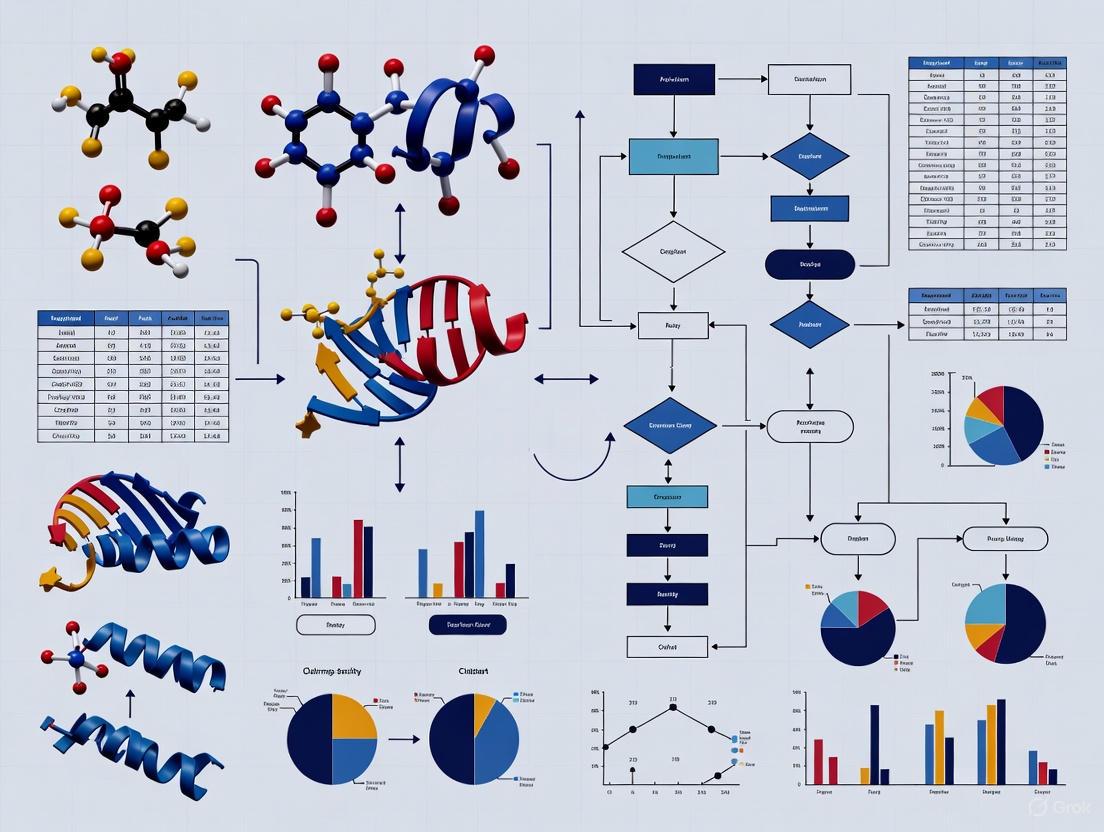
This article provides a comprehensive overview of Structure-Activity Relationship (SAR) matrix analysis for ligand-target prediction, a critical computational approach in modern drug discovery.
SAR Matrix Analysis: From Ligand-Target Predictions to Accelerated Drug Discovery
Abstract
This article provides a comprehensive overview of Structure-Activity Relationship (SAR) matrix analysis for ligand-target prediction, a critical computational approach in modern drug discovery. It covers foundational concepts of polypharmacology and SAR transfer, explores diverse methodological frameworks including ligand-centric, target-centric, and advanced deep learning models like DeepSARM for dual-target design. The content details common optimization challenges and solutions, alongside rigorous validation protocols and performance benchmarking of state-of-the-art tools such as MolTarPred, RF-QSAR, and proteochemometric modeling. Aimed at researchers and drug development professionals, this resource synthesizes current computational strategies to efficiently identify drug targets, repurpose existing therapeutics, and design novel polypharmacological agents.
Understanding SAR Matrices: The Bedrock of Modern Drug Discovery
Defining SAR Matrices and Ligand-Target Interactions
Structure-Activity Relationships (SAR) are foundational to modern drug discovery, providing a systematic framework for understanding how the chemical structure of a molecule influences its biological activity against a specific target [1]. At its core, SAR analysis is based on the principle that similar compounds tend to exhibit similar biological effects, a concept often referred to as the principle of similarity [2]. The primary objective of SAR studies is to rationally explore chemical space—which is essentially infinite in the absence of guiding principles—to identify structural modifications that optimize molecular properties such as potency, selectivity, and bioavailability [1].
A ligand-target interaction describes the molecular recognition between a drug-like molecule (the ligand) and its biological target, typically a protein. These interactions are local events determined by the physical-chemical properties of the target's binding site and the complementary substructures of the ligand [3]. Cell proliferation, differentiation, gene expression, metabolism, and signal transduction all require the participation of ligands and targets, making their interaction a fundamental biological process worthy of detailed investigation [3].
The SAR matrix provides a structured format for organizing and analyzing SAR data, typically consisting of chemical structures and their corresponding biological activities. This matrix serves as the analytical backbone for understanding how systematic structural variations translate into changes in biological activity, forming the basis for rational drug design [4].
Computational Approaches for SAR Matrix Analysis
Ligand-Based and Target-Based Methods
Computational methods for analyzing SAR matrices and predicting ligand-target interactions can be broadly categorized into ligand-based and target-based approaches, with recent hybrid methods combining elements of both [5] [3].
Ligand-based methods operate on the principle of similarity, where candidate ligands are compared with known active compounds for a given target. These approaches include similarity searching, pharmacophore modeling, and Quantitative Structure-Activity Relationship (QSAR) models [5] [3]. The 3D-QSAR methods like Comparative Molecular Field Analysis (CoMFA) align ligands capable of binding to a given target and measure field intensities around the aligned molecules, then regress these intensities with activity values to create predictive models [3].
Target-based methods utilize structural information about the biological target to predict interactions. Molecular docking is a prominent target-based approach that predicts the preferred orientation of a ligand when bound to a target protein through conformation searching and energy minimization [6] [3]. Other target-based methods compare target similarities using sequences, EC numbers, domains, or 3D structures [3].
Hybrid methods that consider both target and ligand information have proven particularly promising. For example, the Fragment Interaction Model (FIM) describes interactions between ligand substructures and binding site fragments, generating an interaction matrix that can predict unknown ligand-target relationships while providing binding details [3].
Key Methodological Considerations
When employing these computational approaches, several critical factors must be addressed to ensure reliable results:
Domain of Applicability: All QSAR models have a defined scope beyond which predictions become unreliable. The domain of applicability can be determined by assessing the similarity of new molecules to the training set, using approaches such as similarity to the nearest neighbor or the number of neighbors within a defined similarity cutoff [1].
Model Interpretability: For SAR exploration, models must be interpretable to provide insights into how specific structural features influence observed activity. Linear regression and random forests are examples of interpretable models, while more complex "black box" models may require specialized visualization techniques [1] [7].
Activity Landscapes and Cliffs: The activity landscape concept views SAR data as a topographic map where structural similarity forms the x-y plane and activity represents the z-axis. Smooth regions indicate gradual activity changes with structural modifications, while activity cliffs represent sharp changes in activity resulting from small structural modifications, highlighting key structural determinants [1].
Table 1: Comparison of Computational Approaches for SAR Analysis
| Method Type | Key Features | Common Algorithms/Tools | Primary Applications |
|---|---|---|---|
| Ligand-Based | Relies on compound similarity; used when target structure is unknown | 2D/3D similarity, QSAR, Pharmacophore modeling | Virtual screening, lead optimization, toxicity prediction |
| Target-Based | Utilizes target structure information; requires 3D protein structure | Molecular docking, Molecular dynamics | Binding mode prediction, structure-based design |
| Hybrid Methods | Integrates both ligand and target information | Fragment Interaction Model (FIM), BLM-NII | Comprehensive interaction analysis, novel target prediction |
Experimental Protocols for SAR Matrix Construction
Data Curation and Preparation
The foundation of any robust SAR analysis is high-quality, well-curated data. The following protocol outlines key steps for preparing SAR data:
Data Source Identification: Extract bioactivity data from curated databases such as ChEMBL, BindingDB, or PubChem. ChEMBL is particularly valuable for its extensive, experimentally validated bioactivity data, including drug-target interactions, inhibitory concentrations, and binding affinities [5].
Data Filtering: Apply confidence filters to ensure data quality. For example, in ChEMBL, use a minimum confidence score of 7 (indicating direct protein complex subunits assigned) to include only well-validated interactions [5].
Redundancy Removal: Eliminate duplicate compound-target pairs, retaining only unique interactions to prevent bias in the analysis [5].
Activity Data Standardization: Convert all activity measurements (IC₅₀, Ki, EC₅₀) to consistent units (typically nM) and apply appropriate thresholds (e.g., <10,000 nM) to focus on relevant interactions [5].
Structural Standardization: Generate canonical representations of chemical structures (e.g., canonical SMILES) and compute molecular descriptors or fingerprints for subsequent analysis [5].
SAR Expansion and Exploration
Once a preliminary dataset is established, systematic SAR exploration can proceed through the following methodology:
Scaffold Pruning: Iteratively remove functional group substitutions from the core scaffold of initial hit compounds to identify the basic structural requirements for activity (pharmacophore identification) [4].
SAR Expansion: Identify commercially available compounds possessing the hit scaffold with varying functional group substitutions using chemical database search tools (e.g., CAS SciFinder, ChEMBL) [4].
Compound Validation: Rigorously assess commercially acquired compounds for purity and identity using established methods (LC-MS and NMR) before biological testing [4].
Rational Analog Selection: Follow systematic approaches such as the Topliss scheme for analog selection, which provides a decision tree for choosing substituents based on their electronic and hydrophobic properties [4].
QSAR Model Development: When sufficient compounds are available, develop preliminary QSAR models to quantitatively correlate structural features with biological activity, informing the hit advancement process [4].
Diagram 1: SAR Matrix Construction and Analysis Workflow. This diagram illustrates the iterative process of building and analyzing SAR matrices, from initial data collection through lead optimization.
Advanced Analytical Frameworks
Fragment Interaction Model (FIM)
The Fragment Interaction Model (FIM) provides an advanced framework for understanding the structural basis of ligand-target interactions at the atomic level. This approach is based on the premise that target-ligand interactions are local events determined by interactions between specific substructures [3].
The FIM methodology proceeds through these key steps:
Complex Data Extraction: Obtain target-ligand complexes from structural databases such as the sc-PDB database, an annotated archive of druggable binding sites from the Protein Data Bank [3].
Binding Site Definition: Define binding sites as amino acid residues possessing at least one atom within 8Å around the ligand, capturing the immediate interaction environment [3].
Target Dictionary Creation:
- Represent each amino acid by its physical-chemical properties (e.g., residue volume, polarizability, solvation free energy)
- Reduce dimensionality using Principal Component Analysis (PCA) to create 5-dimensional feature vectors
- Permutate and combine twenty amino acids into 4200 trimers
- Cluster trimers into 199 clusters based on chemical properties using hierarchical clustering (Ward's algorithm) [3]
Ligand Substructure Dictionary: Create a dictionary of chemical substructures from sources like PubChem fingerprints, removing single atoms and bonds to maintain appropriate structural granularity [3].
Interaction Matrix Generation: Build the FIM by generating an interaction matrix M representing the fragment interaction network, which can subsequently predict unknown ligand-target interactions and provide binding details [3].
Diagram 2: Fragment Interaction Model (FIM) Framework. This diagram outlines the process of building a Fragment Interaction Model, from structural data to predictive capability.
Visual Validation of SAR Models
Visual validation complements statistical validation by enabling graphical inspection of QSAR model results, helping researchers understand how endpoint information is employed by the model. The CheS-Mapper software implements this approach through:
Chemical Space Mapping: Compounds are embedded in 3D space based on chemical similarity, with each compound represented by its 3D structure [7].
Feature Space Analysis: Model predictions are compared to actual activity values in feature space, revealing whether endpoints are modeled too specifically or generically [7].
Activity Cliff Inspection: Researchers can visually identify activity cliffs—pairs of structurally similar compounds with large activity differences—which highlight critical structural determinants [7].
Model Refinement: Visual validation helps identify misclassified compounds, potentially revealing data quality issues, inappropriate feature selection, or model over/underfitting [7].
Research Reagent Solutions for SAR Studies
Table 2: Essential Research Resources for SAR Matrix and Ligand-Target Interaction Studies
| Resource Category | Specific Resource | Function and Application in SAR Studies |
|---|---|---|
| Bioactivity Databases | ChEMBL | Provides experimentally validated bioactivity data, drug-target interactions, and binding affinities for SAR modeling [5] |
| BindingDB | Curated database of protein-ligand interaction affinities, focusing primarily on drug targets [5] | |
| PubChem | Repository of chemical molecules and their activities against biological assays, including patent-extracted structures [4] [3] | |
| Structural Databases | Protein Data Bank (PDB) | Primary repository for 3D structural data of proteins and nucleic acids, essential for structure-based methods [6] |
| sc-PDB | Annotated archive of druggable binding sites extracted from PDB, specifically focused on ligand-binding sites [3] | |
| Computational Tools | Molecular Docking Software (GOLD, AutoDock) | Predicts binding orientation and affinity of small molecules to protein targets using genetic algorithms [6] |
| CheS-Mapper | 3D viewer for visual validation of QSAR models, enabling exploration of small molecules in virtual 3D space [7] | |
| QsarDB Repository | Digital repository for archiving, sharing, and executing QSAR models in a standardized format [8] | |
| Target Prediction Methods | MolTarPred | Ligand-centric target prediction method based on 2D similarity searching against ChEMBL database [5] |
| RF-QSAR | Target-centric prediction using random forest QSAR models built from ChEMBL data [5] |
SAR matrices and ligand-target interaction analyses represent a sophisticated framework for understanding the molecular basis of drug action and optimizing therapeutic compounds. The integration of computational approaches—ranging from traditional QSAR to advanced fragment-based models—with experimental validation provides a powerful paradigm for modern drug discovery. As structural databases expand and computational methods evolve, particularly with the incorporation of machine learning and artificial intelligence, the precision and predictive power of these analyses will continue to improve. The resources and methodologies outlined in this technical guide provide researchers with a comprehensive toolkit for advancing ligand-target SAR matrix analysis, ultimately contributing to more efficient and effective drug development.
The Critical Role of Polypharmacology in Drug Efficacy and Repurposing
For much of the past century, drug discovery was dominated by a "one target–one drug" paradigm, focused on developing highly selective ligands for individual disease proteins. While this strategy achieved some successes, it has major limitations, with approximately 90% of such candidates failing in late-stage trials due to lack of efficacy or unexpected toxicity [9]. These failures often stem from the reductionist oversight of the complex, redundant, and networked nature of human biology. In contrast, polypharmacology—the rational design of small molecules that act on multiple therapeutic targets—offers a transformative approach to overcome biological redundancy, network compensation, and drug resistance [9].
The clinical success of many "promiscuous" drugs that were later found to hit multiple targets has shifted the paradigm toward deliberately designing multi-target-directed ligands (MTDLs). This "magic shotgun" approach provides a holistic strategy to restore perturbed network homeostasis in complex diseases, particularly in areas where single-target therapies have consistently failed, such as oncology, neurodegenerative disorders, and metabolic diseases [9].
Scientific Rationale for Polypharmacology in Complex Diseases
Therapeutic Advantages of Multi-Target Engagement
Polypharmacology provides several distinct advantages over single-target approaches, particularly for complex diseases with multifactorial etiologies [9]:
- Synergistic Therapeutic Effects: Simultaneously modulating several key disease pathways can yield synergistic effects greater than single-target approaches.
- Mitigation of Drug Resistance: Pathogens and cancer cells frequently develop resistance to highly specific drugs through mutations. A drug inhibiting several unrelated targets substantially lowers the probability that a single genetic change confers full resistance.
- Reduced Adverse Effects: By distributing pharmacological activity across multiple pathways, multi-target agents can produce the desired therapeutic outcome without excessively pushing any single target to the point of toxicity.
- Improved Patient Compliance: A single polypharmacological agent simplifies treatment regimens compared to combination therapies, improving adherence particularly in elderly populations.
Disease Applications of Polypharmacology
Oncology
Cancer is a polygenic disease that activates multiple redundant signaling pathways. Multi-kinase inhibitors such as sorafenib and sunitinib suppress tumor growth and delay resistance by blocking multiple pathways simultaneously. Polypharmacology is especially advantageous in cancers driven by intricate networks (e.g., PI3K/Akt/mTOR), as multi-target agents can induce synthetic lethality and prevent compensatory mechanisms [9].
Neurodegenerative Disorders
Diseases like Alzheimer's (AD) and Parkinson's (PD) involve complex pathological processes including β-amyloid accumulation, tau hyperphosphorylation, oxidative stress, neuroinflammation, and neurotransmitter deficits. Multi-target-directed ligands (MTDLs) integrate activities like cholinesterase inhibition with anti-amyloid or antioxidant effects within one molecule. For example, the MTDL "memoquin" was designed to inhibit acetylcholinesterase while combating β-amyloid aggregation and oxidative damage [9].
Metabolic and Infectious Diseases
In metabolic syndrome, drugs that simultaneously address glycemic control, weight loss, and cardiovascular risk provide superior outcomes. The dual GLP-1/GIP receptor agonist tirzepatide has shown superior glucose-lowering and weight reduction compared to single-target drugs [9]. For infectious diseases, antibiotic hybrids—single molecules that attack multiple bacterial targets—reduce resistance risk since bacteria would need simultaneous mutations in different pathways to survive [9].
Computational Framework for Polypharmacology
Ligand-Target SAR Matrix Analysis
The prediction of drug-target interactions is fundamental to rational polypharmacology. Research employs various computational methods to fill the ligand-target interaction matrix, where rows correspond to ligands and columns to targets [10]. Four primary virtual screening scenarios exist:
- Scenario S0: Search for new interactions where each ligand and each protein are represented by some number of interactors
- Scenario S1: Prediction of the activity of a new ligand towards targets with known ligand spectra
- Scenario S2: Prediction of the activity of a new protein towards ligands with known target spectra
- Scenario S3: Prediction of the interaction of a new ligand and a new protein
Scenarios S2 and S3 can be implemented only with proteochemometric (PCM) modeling, which represents both targets and ligands by their descriptors in a single model, while S1 is typical for SAR models based on structural descriptions of ligands [10].
Comparative Performance of Target Prediction Methods
Recent systematic comparisons of target prediction methods have evaluated stand-alone codes and web servers using shared benchmark datasets of FDA-approved drugs. The table below summarizes the key characteristics and performance metrics of major prediction methods [5].
Table 1: Comparative Analysis of Target Prediction Methods for Polypharmacology
| Method | Type | Algorithm | Data Source | Key Application | Performance Notes |
|---|---|---|---|---|---|
| MolTarPred | Ligand-centric | 2D similarity, MACCS fingerprints | ChEMBL 20 | Drug repurposing | Most effective method in comparative studies; optimal with Morgan fingerprints |
| PPB2 | Ligand-centric | Nearest neighbor/Naïve Bayes/deep neural network | ChEMBL 22 | Polypharmacology profiling | Uses MQN, Xfp and ECFP4 fingerprints; examines top 2000 similar ligands |
| RF-QSAR | Target-centric | Random forest | ChEMBL 20 & 21 | Target prediction | Employs ECFP4 fingerprints; considers multiple similarity thresholds |
| TargetNet | Target-centric | Naïve Bayes | BindingDB | Target profiling | Uses multiple fingerprint types including FP2, MACCS, E-state |
| CMTNN | Target-centric | ONNX runtime | ChEMBL 34 | Multi-target prediction | Stand-alone code with neural network architecture |
| SuperPred | Ligand-centric | 2D/fragment/3D similarity | ChEMBL & BindingDB | Target fishing | Uses ECFP4 fingerprints for similarity assessment |
The evaluation reveals that MolTarPred demonstrates superior performance for drug repurposing applications, particularly when using Morgan fingerprints with Tanimoto scores rather than MACCS fingerprints with Dice scores [5]. High-confidence filtering of interaction data (using confidence score ≥7) improves prediction reliability but reduces recall, making it less ideal for comprehensive drug repurposing where broader target identification is valuable.
SAR vs. Proteochemometric Modeling Performance
Comparative studies between SAR and PCM modeling under the S1 scenario (predicting activity of new ligands against known targets) have yielded important insights. Research utilizing data from nuclear receptors (NR), G protein-coupled receptors (GPCRs), chymotrypsin family proteases (PA), and protein kinases (PK) from the Papyrus dataset (based on ChEMBL) demonstrates that including protein descriptors in PCM modeling does not necessarily improve prediction accuracy for S1 scenarios [10].
The validation employed a rigorous five-fold cross-validation using ligand exclusion repeated five times. For SAR models, separate models were created for each distinct protein target using training sets of ligands classified by their target identifiers. For PCM models, both ligand and protein descriptors were incorporated, with the same ligand-based splitting to ensure comparable validation [10].
Table 2: SAR vs. PCM Model Performance Comparison (S1 Scenario)
| Protein Family | SAR Model R² | PCM Model R² | Performance Advantage | Interpretation |
|---|---|---|---|---|
| Nuclear Receptors | 0.58 | 0.55 | SAR superior | Limited protein diversity reduces PCM benefits |
| GPCRs | 0.62 | 0.59 | SAR superior | High ligand specificity favors ligand-based models |
| Protein Kinases | 0.65 | 0.63 | SAR superior | Conservative binding pockets limit PCM value |
| Proteases | 0.61 | 0.60 | Comparable | Mixed protein characteristics show similar performance |
The findings indicate that increasing the dimensionality of the feature space by including protein descriptors may lead to an unjustified increase in computational costs without improving predictive accuracy for the common S1 virtual screening scenario [10].
Experimental Protocols for Polypharmacology Validation
Workflow for Multi-Target Drug Discovery
The integrated computational and experimental workflow for polypharmacology research involves multiple stages from initial design to final validation [9] [5].
Detailed Methodological Protocols
Target Prediction Protocol Using MolTarPred
Purpose: To identify potential protein targets for a query small molecule using the optimal ligand-centric approach [5].
Materials:
- Query molecule in SMILES format
- Local installation of ChEMBL database (version 34 recommended)
- MolTarPred stand-alone code
- PostgreSQL with pgAdmin4 for database management
Procedure:
- Database Preparation:
- Retrieve bioactivity records from ChEMBL with standard values (IC50, Ki, or EC50) below 10000 nM
- Filter out targets with names containing "multiple" or "complex"
- Remove duplicate compound-target pairs
- Apply high-confidence filtering (confidence score ≥7) for improved reliability
Similarity Calculation:
- Convert query molecule to Morgan fingerprints (radius 2, 2048 bits)
- Calculate Tanimoto similarity against all compounds in the database
- Retrieve targets of the top 1, 5, 10, and 15 most similar compounds
Target Prioritization:
- Rank targets based on similarity scores and occurrence frequency
- Apply consensus scoring from multiple similarity thresholds
- Generate mechanism of action hypotheses for further validation
Validation:
- Use five-fold cross-validation with ligand exclusion
- Repeat validation five times with different random seeds
- Benchmark against known FDA-approved drugs excluded from training data
SAR vs. PCM Comparative Validation Protocol
Purpose: To rigorously compare the predictive performance of SAR and PCM models under the S1 virtual screening scenario [10].
Materials:
- Papyrus dataset or ChEMBL database with "Medium" and "High" quality entries
- Protein targets from major families (NR, GPCRs, PA, PK)
- Standardized molecular descriptors for ligands (e.g., ECFP4, Morgan fingerprints)
- Protein descriptors (e.g., amino acid composition, domain information)
Procedure:
- Data Curation:
- Select data for four protein families: nuclear receptors, GPCRs, proteases, kinases
- Exclude mutant variants to maintain consistency
- Standardize pKi values for uniform activity measurement
Model Training:
- For SAR: Create separate models for each protein target using random forest classifiers
- For PCM: Build unified models incorporating both ligand and protein descriptors
- Use identical training/test splits for fair comparison
Validation Scheme:
- Implement five-fold cross-validation using ligand exclusion
- Repeat the process five times with different random partitions
- Evaluate using R², RMSE, and concordance index metrics
Analysis:
- Compare performance metrics between SAR and PCM approaches
- Conduct statistical significance testing (e.g., paired t-tests)
- Analyze computational requirements and scalability
The Scientist's Toolkit: Research Reagent Solutions
Table 3: Essential Research Tools for Polypharmacology Studies
| Resource Category | Specific Tools/Platforms | Key Function | Application Context |
|---|---|---|---|
| Bioactivity Databases | ChEMBL, BindingDB, PubChem, DrugBank | Provide experimentally validated drug-target interactions | Foundation for ligand-centric prediction and model training |
| Target Prediction Servers | MolTarPred, PPB2, SuperPred, TargetNet | Identify potential targets for query molecules | Initial hypothesis generation for drug repurposing |
| Chemical Informatics | RDKit, OpenBabel, CDK | Compute molecular descriptors and fingerprints | Feature generation for QSAR and machine learning models |
| Structure-Based Tools | AutoDock, Schrödinger, MOE | Molecular docking and structure-based design | Target-centric polypharmacology for targets with 3D structures |
| AI/ML Frameworks | TensorFlow, PyTorch, Scikit-learn | Build predictive models for multi-target activity | Deep learning approaches for polypharmacology optimization |
| Validation Assays | SPR, HTRF, AlphaScreen | Experimental confirmation of multi-target engagement | In vitro validation of predicted polypharmacological profiles |
AI-Driven Advancements in Polypharmacology
Artificial Intelligence has dramatically accelerated polypharmacology research through several key technological approaches [9] [11]:
Machine Learning and Deep Learning Applications
Machine learning (ML) algorithms, including random forest, support vector machines, and naïve Bayes classifiers, enable the prediction of multi-target activities from chemical structures. Deep learning (DL) approaches, particularly multilayer perceptrons (MLP), convolutional neural networks (CNN), and long short-term memory recurrent neural networks (LSTM-RNN), show superior performance in handling large and complex datasets for polypharmacology prediction [11].
These AI methods can identify complex, non-linear relationships between chemical features and biological activities across multiple targets, enabling the de novo design of dual and multi-target compounds. Several AI-generated compounds have demonstrated biological efficacy in vitro, validating the computational predictions [9].
Network Biology and Systems Pharmacology
Network-based approaches study relationships between molecules, emphasizing their location affinities to reveal drug repurposing potentials. By analyzing protein-protein interactions (PPIs), drug-disease associations (DDAs), and drug-target associations (DTAs), these methods provide a systems-level understanding of how multi-target drugs modulate biological networks [9].
The integration of omics data, CRISPR functional screens, and pathway simulations further enhances the rational design of polypharmacological agents tailored to the complexity of human disease networks [9].
Polypharmacology has evolved from a controversial concept to a mainstream principle in drug discovery. The intentional design of multi-target therapeutics represents a paradigm shift that acknowledges the network nature of human disease. Computational approaches, particularly AI-driven methods, have been instrumental in this transition, enabling the prediction and optimization of polypharmacological profiles with increasing accuracy.
The integration of robust computational prediction with rigorous experimental validation provides a powerful framework for addressing the complexity of multifactorial diseases. As these methodologies continue to mature, AI-enabled polypharmacology is poised to become a cornerstone of next-generation drug discovery, with the potential to deliver more effective therapies tailored to the complex network pathophysiology of human diseases [9]. The critical role of polypharmacology extends beyond initial drug discovery to drug repurposing, where understanding multi-target profiles can reveal new therapeutic applications for existing drugs, accelerating the delivery of treatments to patients while reducing development costs and risks.
Structure-Activity Relationship (SAR) data mining is a cornerstone of modern rational drug design, enabling researchers to understand how chemical modifications influence a compound's biological activity. By analyzing SAR patterns, medicinal chemists can optimize lead compounds for enhanced potency, selectivity, and favorable pharmacokinetic properties. This whitepaper provides an in-depth technical guide to three pivotal databases—ChEMBL, DrugBank, and BindingDB—for SAR data mining within the context of ligand-target SAR matrix analysis research. These databases provide complementary data types and functionalities that, when used collectively, offer a powerful infrastructure for investigating the complex relationships between chemical structures and their biological effects against therapeutic targets. The integration of these resources enables the construction of comprehensive SAR matrices that map multiple chemical series against diverse biological targets, facilitating pattern recognition and predictive model building essential for accelerating drug discovery pipelines.
Database Origins and Specializations
ChEMBL is a manually curated database of bioactive molecules with drug-like properties, maintained by the European Bioinformatics Institute. It brings together chemical, bioactivity, and genomic data to aid the translation of genomic information into effective new drugs [12]. Since its first public launch in 2009, ChEMBL has grown significantly to become a Global Core Biodata Resource recognized by the Global Biodata Coalition [13]. The database predominantly contains bioactivity data extracted from scientific literature and patents, with a focus on quantitative measurements such as IC50, Ki, and EC50 values essential for SAR analysis.
DrugBank is a comprehensive database containing detailed information about FDA-approved and experimental drugs, along with their targets, mechanisms, and pharmacokinetic properties [14]. Unlike ChEMBL, DrugBank places greater emphasis on clinical and regulatory information, making it particularly valuable for understanding established drug-target relationships and repurposing opportunities. The database contains over 17,000 drug entries and 5,000 protein targets, with information meticulously validated through both manual and automated processes [14].
BindingDB specializes in measured binding affinities, focusing primarily on the interactions of proteins considered to be candidate drug-targets with small, drug-like molecules [15]. As the first public molecular recognition database, BindingDB contains approximately 3.2 million binding data points for 1.4 million compounds and 11.4 thousand targets [16] [15]. The database derives its data from various measurement techniques, including enzyme inhibition and kinetics, isothermal titration calorimetry, NMR, and radioligand and competition assays [15].
Quantitative Database Comparison
Table 1: Key Characteristics of SAR Mining Databases
| Characteristic | ChEMBL | DrugBank | BindingDB |
|---|---|---|---|
| Primary Focus | Bioactive molecules & drug-target interactions | Approved drugs & clinical candidates | Protein-ligand binding affinities |
| Total Compounds | ~2.4 million research compounds [13] | ~17,000 drugs [14] | ~1.4 million compounds [16] |
| Bioactivity Measurements | ~20.3 million [14] | Not specifically quantified | ~3.2 million binding data [15] |
| Target Coverage | Broad, including proteins, cell lines, tissues | ~5,000 protein targets [14] | ~11,400 proteins [16] |
| Curation Approach | Manual expert curation [14] | Hybrid (manual + automated) [14] | Hybrid (manual + automated) [14] |
| Data Types | IC50, Ki, EC50, ADMET, clinical candidates | Mechanisms, pharmacokinetics, pathways | Kd, Ki, IC50, ITC, NMR data |
| Access | Free and open [14] | Free for non-commercial use [13] | Free and open [14] |
| Update Frequency | Periodic major releases [13] | Regularly updated | Monthly updates [16] |
Table 2: Data Content and SAR Applications
| Feature | ChEMBL | DrugBank | BindingDB |
|---|---|---|---|
| SAR-Ready Data | Extensive quantitative bioactivities | Limited quantitative data | Focused on binding affinities |
| Clinical Context | Clinical candidate drugs [13] | Comprehensive drug information | Limited clinical context |
| Target Validation | Strong for early-stage discovery | Strong for clinical targets | Strong for biophysical studies |
| Specialized Content | Natural product-likeness, chemical probes | Drug metabolism, pathways | Host-guest systems, CSAR data |
| Polypharmacology | Extensive via target cross-screening | Drug-focused interactions | Limited to binding data |
| Structure Formats | SMILES, Standardized InChIs | SMILES, 2D structures | SMILES, 2D/3D SDF files [16] |
Methodologies for SAR Data Mining
Workflow for Comprehensive SAR Matrix Construction
Diagram 1: SAR data mining workflow
Protocol 1: Multi-Database SAR Extraction
Objective: Extract comprehensive SAR data for a target protein family across all three databases.
Materials:
- Database access credentials (where required)
- Chemical structure standardization toolkit (e.g., RDKit)
- Data integration platform (e.g., KNIME, Python pandas)
Procedure:
- Target Identification: Define UniProt IDs or gene symbols for target proteins of interest.
- ChEMBL Query:
- Use ChEMBL web services or direct database queries to retrieve bioactivity data
- Filter for specific assay types (e.g., 'B' for binding) and measurement types (IC50, Ki)
- Extract associated chemical structures, standard InChI keys, and exact activities
- DrugBank Query:
- Search for approved drugs and clinical candidates targeting protein family
- Extract known mechanisms of action, therapeutic indications, and structural data
- Cross-reference with ChEMBL compounds to identify clinical-stage molecules
- BindingDB Query:
- Data Integration:
- Standardize chemical structures using consistent representation
- Align activity measurements using uniform units (nM preferred)
- Resolve conflicts through source priority ranking (curated > literature-derived)
Protocol 2: SAR Matrix Analysis for Lead Optimization
Objective: Construct and analyze SAR matrices to guide chemical optimization.
Materials:
- Molecular fingerprinting methods (Morgan, MACCS)
- Similarity calculation algorithms (Tanimoto, Dice)
- Data visualization tools (Matplotlib, Spotfire)
Procedure:
- Chemical Series Identification:
- Cluster compounds based on structural similarity (Tanimoto > 0.7)
- Identify core scaffolds and R-group substitution patterns
- SAR Matrix Population:
- Create compound-target activity matrices with cells representing -log(activity) values
- Highlight data gaps for future testing priorities
- Pattern Recognition:
- Identify activity cliffs (small structural changes leading to large potency changes)
- Map selectivity profiles across related targets
- Corrogate substituent effects with potency and physicochemical properties
- Visualization:
- Generate heatmaps with hierarchical clustering of compounds and targets
- Create R-group decomposition diagrams to visualize substituent effects
- Plot matched molecular pairs to isolate specific structural transformations
Database-Specific Technical Implementation
ChEMBL: Advanced SAR Mining Techniques
ChEMBL provides several specialized features for deep SAR analysis. The database includes approximately 17,500 approved drugs and clinical candidate drugs in addition to its 2.4 million research compounds, enabling researchers to contextualize their SAR within the landscape of known therapeutics [13]. For SAR matrix analysis, particularly valuable features include:
Target Family Profiling: ChEMBL's extensive target classification system enables systematic analysis of compound selectivity across protein families. Researchers can extract all bioactivity data for kinase, GPCR, or protease families to build comprehensive selectivity profiles.
Time-Resolved SAR Analysis: The database includes temporal information about when compounds were published, allowing analysis of how SAR for particular targets has evolved over time, revealing trends in medicinal chemistry strategies.
Activity Confidence Grading: ChEMBL assigns confidence scores to target-compound interactions, enabling data quality filtering to ensure robust SAR interpretations. High-confidence interactions (score 9) provide the most reliable basis for SAR modeling.
DrugBank: Clinical SAR Contextualization
While DrugBank contains fewer quantitative bioactivity measurements than ChEMBL or BindingDB, it provides crucial clinical context for SAR analysis. Key SAR-relevant features include:
Drug-Target Pathway Mapping: DrugBank links drugs to their protein targets within biological pathways, enabling systems-level SAR analysis where compound effects can be understood in the context of network perturbations rather than isolated target interactions.
Pharmacokinetic SAR Integration: The database provides extensive ADMET (Absorption, Distribution, Metabolism, Excretion, Toxicity) data for drugs, allowing correlation of structural features not just with potency but with drug-like properties essential for clinical success.
Mechanism of Action Annotations: Precise mechanism data (e.g., agonist, antagonist, allosteric modulator) enables researchers to classify SAR by mechanism type, recognizing that different mechanisms may have distinct structural requirements even for the same target.
BindingDB: High-Quality Affinity Data for Structure-Based SAR
BindingDB specializes in providing detailed binding affinity data particularly suited for structure-based SAR analysis and computational method validation:
Biophysical Method Annotation: BindingDB tags data with measurement methods (ITC, SPR, etc.), enabling method-specific SAR analysis important because different techniques may yield systematically different affinity measurements [15].
Structure-Ready Data: The database provides compounds in ready-to-dock 2D and 3D formats, facilitating direct integration with molecular modeling workflows [16]. The 3D structures are computed with Vconf conformational analysis, ensuring biologically relevant geometries.
Validation Sets: BindingDB offers specifically curated validation sets for benchmarking SAR prediction methods, including time-split sets useful for assessing model performance on novel chemotypes [16].
The Scientist's Toolkit: Essential Research Reagents
Table 3: Key Research Reagents for SAR Mining Experiments
| Reagent/Resource | Function in SAR Analysis | Implementation Example |
|---|---|---|
| KNIME Analytics Platform | Workflow-based data integration and analysis | BindingDB-provided KNIME workflows for data retrieval and target prediction [16] |
| RDKit Cheminformatics Library | Chemical structure standardization and descriptor calculation | Generating Morgan fingerprints for compound similarity analysis [17] |
| MolTarPred | Target prediction for novel chemotypes | Generating hypotheses for off-target effects in SAR matrices [17] |
| Surface Plasmon Resonance (SPR) | Validation of binding affinities for key compounds | Orthogonal confirmation of SAR trends from database mining [18] |
| FASTA Sequence Files | Target similarity analysis and selectivity assessment | BindingDB target sequences for understanding cross-reactivity [16] |
| Structure-Activity Modeling Tools | Quantitative SAR model development | Converting SAR matrices to predictive models for compound prioritization |
Integrated SAR Mining Case Study: Kinase Inhibitor Profiling
To illustrate the power of integrating all three databases, consider a case study on kinase inhibitor profiling:
Step 1: Using ChEMBL, extract all available bioactivity data for compounds tested against kinase targets, focusing on IC50 values from enzymatic assays. This yields a preliminary SAR matrix covering multiple chemical series.
Step 2: Query DrugBank to identify approved kinase inhibitors and their specific clinical indications, adding important therapeutic context to the SAR analysis.
Step 3: Access high-quality binding affinity data from BindingDB for key kinase-compound pairs, particularly those measured using biophysical methods like SPR that provide precise Kd values.
Step 4: Integrate data sources to build a comprehensive kinase inhibitor SAR matrix, highlighting how different chemical scaffolds achieve selectivity across the kinome.
Step 5: Validate SAR trends using experimental data from the original publications referenced across all three databases.
This integrated approach reveals structure-selectivity relationships that would be difficult to discern from any single database, enabling more informed design of selective kinase inhibitors with reduced off-target effects.
ChEMBL, DrugBank, and BindingDB provide complementary and powerful resources for SAR data mining within ligand-target matrix analysis research. ChEMBL offers broad coverage of bioactive compounds with quantitative activities, DrugBank provides essential clinical context, and BindingDB delivers high-quality binding affinity data suitable for structural studies. By leveraging the unique strengths of each database through the methodologies outlined in this technical guide, researchers can construct comprehensive SAR matrices that accelerate the identification and optimization of novel therapeutic agents. The continued evolution of these databases, particularly their increasing integration with computational modeling and AI approaches, promises to further enhance their utility in future drug discovery campaigns.
In the field of computational drug discovery, predicting the interaction between small molecules and their biological targets is a fundamental challenge. Two dominant computational paradigms have emerged: target-centric and ligand-centric prediction approaches [19] [20]. These methodologies address the reverse problem of virtual screening and serve crucial roles in polypharmacology prediction, drug repositioning, and target deconvolution of phenotypic screening hits [19] [20]. Within the broader context of structure-activity relationship (SAR) matrix analysis research, understanding the fundamental principles, relative strengths, and limitations of these approaches is essential for designing effective drug discovery pipelines. This foundational comparison examines the core architectures of these methodologies, their technical implementation, and performance characteristics, providing researchers with a framework for selecting appropriate strategies for specific applications.
Core Conceptual Frameworks
Target-Centric Approaches
Target-centric methods operate on the principle of building a dedicated predictive model for each individual biological target [19] [20]. In this architecture, a panel of models is constructed, with each model trained to estimate the likelihood that a query molecule will interact with its specific protein target. These methods typically employ supervised learning techniques, using known active and inactive compounds for each target to train classifiers such as Random Forest, Naïve Bayes, or Support Vector Machines [5] [21]. The model training process utilizes quantitative structure-activity relationship (QSAR) principles, where molecular descriptors or fingerprints of ligands are correlated with biological activity against a specific target [10] [21].
A significant limitation of target-centric approaches is their restricted coverage of the proteome. These methods can only evaluate targets for which sufficient bioactivity data exists to build a reliable model [19] [20]. For instance, some methods require a minimum number of known ligands per target (e.g., 5-30 ligands) to qualify for model construction [19] [20]. This constraint inherently limits target-centric methods to a fraction of the potential target space, making them potentially blind to thousands of biologically relevant targets that lack comprehensive ligand annotation.
Ligand-Centric Approaches
Ligand-centric approaches fundamentally differ by shifting the focus from target models to chemical similarity principles [19] [20]. These methods predict targets for a query molecule by comparing its chemical features to a large knowledge base of target-annotated molecules. The underlying hypothesis is that structurally similar molecules are likely to share biological targets [21] [20]. This strategy does not require building individual target models but instead relies on comprehensive databases of known ligand-target interactions, such as ChEMBL or BindingDB [5] [20].
The primary advantage of ligand-centric methods is their extensive coverage of the target space. Since these approaches can interrogate any target that has at least one known ligand, they typically evaluate thousands more potential targets compared to target-centric methods [19] [20]. This comprehensive coverage makes ligand-centric approaches particularly valuable for exploratory research where the relevant targets may not be known in advance, such as in target deconvolution of phenotypic screening hits [19].
Methodological Implementation
Data Requirements and Preparation
Both prediction approaches rely heavily on comprehensive, high-quality bioactivity data for training and validation. The ChEMBL database is widely utilized across both paradigms due to its extensive collection of experimentally validated bioactivity data, including drug-target interactions, inhibitory concentrations, and binding affinities [5] [19]. Proper data curation is essential for building reliable models, typically involving several standardization steps:
- Activity Data Filtering: Selecting bioactivity records with standard values (IC₅₀, Kᵢ, EC₅₀, Kd) below a specific threshold (commonly 10 µM for active compounds) [21]
- Confidence Scoring: Applying minimum confidence scores (e.g., 7-9 in ChEMBL) to ensure only well-validated direct target interactions are included [5] [20]
- Redundancy Removal: Eliminating duplicate compound-target pairs and filtering out non-specific or multi-protein targets [5]
- Data Partitioning: Implementing temporal splits or scaffold-based splits to avoid artificial inflation of performance metrics [10]
For ligand-centric methods, the knowledge base must be extensively populated to maximize target coverage. Recent implementations have utilized databases containing over 500,000 molecules annotated with more than 4,000 targets, representing nearly 900,000 ligand-target associations [20].
Algorithmic Approaches and Technical Execution
Target-Centric Workflow: Target-centric implementation involves training individual machine learning models for each qualifying target. The standard protocol includes:
- Target Selection: Identifying targets with sufficient bioactivity data (typically ≥20-30 known ligands) [19]
- Feature Engineering: Encoding molecular structures using fingerprints (ECFP, MACCS, Morgan) or chemical descriptors [5] [21]
- Model Training: Applying classification algorithms (Random Forest, Naïve Bayes, Neural Networks) to distinguish active from inactive compounds [5] [21]
- Model Validation: Using cross-validation techniques appropriate for the virtual screening scenario (S1 scenario: new compounds against known targets) [10]
Ligand-Centric Workflow: Ligand-centric implementation focuses on similarity searching and requires the following steps:
- Molecular Encoding: Representing both query and database molecules using appropriate fingerprints (Morgan, ECFP, MACCS) [5] [20]
- Similarity Metric Selection: Calculating molecular similarity using Tanimoto, Dice, or other appropriate coefficients [5]
- Nearest Neighbor Identification: Retrieving the top K most similar database molecules to the query (typically K=1-15) [5] [20]
- Target Inference: Transferring target annotations from nearest neighbors to the query molecule, often with confidence scoring [20]
Table 1: Core Methodological Differences Between Prediction Approaches
| Aspect | Target-Centric Approach | Ligand-Centric Approach |
|---|---|---|
| Unit of Modeling | Individual target proteins | Entire chemical space |
| Core Algorithm | QSAR classification per target | Similarity searching |
| Data Requirements | Multiple ligands per target | Single ligand per target suffices |
| Typical Features | Molecular fingerprints/descriptors | Molecular fingerprints |
| Coverage Scope | Limited to modeled targets | Comprehensive (any target with known ligands) |
| Implementation Examples | RF-QSAR, TargetNet, CMTNN [5] | MolTarPred, PPB2, SuperPred [5] |
Performance Comparison and Benchmarking
Quantitative Performance Metrics
Rigorous benchmarking studies have provided insights into the relative performance of target-centric and ligand-centric approaches. A precise comparison study evaluating seven target prediction methods revealed that optimal performance depends on the specific application requirements [5]. The following table summarizes key performance characteristics based on recent systematic evaluations:
Table 2: Performance Comparison Based on Systematic Studies
| Performance Metric | Target-Centric (Best Performing) | Ligand-Centric (Best Performing) | Notes |
|---|---|---|---|
| Precision | 0.75 [21] | 0.348 [20] | Varies significantly with query molecule |
| Recall | 0.61 [21] | 0.423 [20] | Dependent on target coverage |
| False Negative Rate | 0.25 [21] | N/A | Higher for approved drugs [19] |
| Target Space Coverage | Limited (hundreds of targets) [19] | Extensive (4,000+ targets) [20] | Ligand-centric covers 8-10x more targets |
| Drug Target Prediction | Challenging [19] | More challenging than non-drugs [19] | Drugs have harder-to-predict targets |
Application-Specific Performance
The suitability of each approach varies significantly depending on the application context:
Target-Centric Strengths:
- Scenario S1 Applications: Superior performance when predicting new ligands for established targets with abundant bioactivity data [10]
- Model Optimization: Capable of achieving high precision (f1-score >0.8) for well-characterized targets [21]
- Consensus Strategies: Combining multiple target-centric models can achieve true positive rates of 0.98 with minimal false negatives in top predictions [21]
Ligand-Centric Strengths:
- Exploratory Research: Maximum target space coverage enables discovery of unexpected off-target effects [19] [20]
- Novel Target Identification: Ability to identify targets with limited ligand information (as few as one known ligand) [19]
- Polypharmacology Profiling: Comprehensive mapping of drug-target interactions reveals an average of 8-11.5 targets per drug below 10 µM [19] [20]
Experimental Protocols and Research Toolkit
Standardized Benchmarking Protocol
To ensure fair comparison between prediction approaches, researchers should implement standardized benchmarking protocols:
Dataset Curation:
Performance Assessment:
Validation Strategies:
Essential Research Reagent Solutions
Table 3: Key Research Tools and Resources for Target Prediction Research
| Resource Category | Specific Tools/Databases | Application Context | Key Features |
|---|---|---|---|
| Bioactivity Databases | ChEMBL [5] [19], BindingDB [5], PubChem [19] | Data sourcing for both approaches | Experimentally validated interactions, confidence scoring |
| Target-Centric Platforms | RF-QSAR [5], TargetNet [5], CMTNN [5] | Target-specific QSAR modeling | Random Forest, Naïve Bayes, Neural Network implementations |
| Ligand-Centric Platforms | MolTarPred [5], PPB2 [5], SuperPred [5] | Similarity-based target fishing | Multiple fingerprint support, similarity metrics |
| Fingerprint Methods | Morgan fingerprints [5], ECFP [5] [21], MACCS [5] | Molecular representation | Tanimoto and Dice similarity metrics |
| Validation Frameworks | TF-benchmark [19], Custom temporal splits [21] | Method performance assessment | Specialized for drug target prediction challenges |
Target-centric and ligand-centric prediction approaches represent complementary paradigms in computational target prediction, each with distinct advantages and optimal application domains. Target-centric methods excel in precision for well-characterized targets with abundant bioactivity data, making them suitable for lead optimization projects. In contrast, ligand-centric approaches provide unparalleled coverage of the target space, enabling discovery of novel drug-target interactions and comprehensive polypharmacology profiling. The choice between these approaches should be guided by the specific research objectives, with target-centric methods preferred for focused interrogation of known target families and ligand-centric methods superior for exploratory research and target deconvolution. As bioactivity databases continue to expand and machine learning methodologies advance, both approaches will play increasingly important roles in accelerating drug discovery and repositioning efforts. Future developments will likely focus on hybrid methodologies that leverage the strengths of both paradigms while addressing their respective limitations in coverage and precision.
Structure-Activity Relationship (SAR) analysis is a cornerstone of medicinal chemistry, providing the fundamental basis for compound optimization during hit-to-lead and lead optimization campaigns [22]. Traditionally, SAR exploration has been a target-dependent endeavor, where structural analogues are generated and tested against a specific protein target to elucidate the relationship between molecular structure and biological activity [23]. However, a transformative concept known as SAR transfer has emerged, enabling researchers to leverage SAR information across different protein targets [23]. This approach recognizes that pairs of analogue series (AS) consisting of compounds with corresponding substituents and comparable potency progression can represent SAR transfer events for the same target or across different targets [23].
SAR transfer plays a crucial role when an analogue series with desirable potency progression exhibits unfavorable in vitro or in vivo properties, necessitating its replacement with another series displaying comparable SAR characteristics [23]. This strategy effectively transfers medicinal chemistry knowledge from one structural context to another, potentially accelerating the discovery of novel therapeutics with improved properties. The systematic computational identification of SAR transfer events has revealed that this phenomenon occurs frequently across different targets, suggesting that generally applied medicinal chemistry strategies—such as using hydrophobic substituents of increasing size to "fill" hydrophobic binding pockets—may underlie many cross-target SAR patterns [23] [24].
Table 1: Key Terminology in SAR Transfer Analysis
| Term | Definition | Significance |
|---|---|---|
| Analogue Series (AS) | A set of compounds sharing a common core structure with different substitutions at one or more sites [25] | Forms the basic unit for SAR analysis and transfer |
| SAR Transfer | Transfer of potency progression patterns from one analogue series to another, potentially across different targets [23] | Enables knowledge transfer and scaffold hopping |
| Matched Molecular Pair (MMP) | A pair of compounds differing only at a single site [25] | Facilitates intuitive SAR analysis through minimal structural changes |
| Matched Molecular Series (MMS) | Series of compounds with a common core and systematic variations at a single site [25] | Extends MMP concept to series with multiple analogues |
| Proteochemometric (PCM) Modeling | Modeling approach that uses descriptors of both ligands and proteins [10] | Enables prediction of interactions for novel targets |
Computational Methodologies for Identifying SAR Transfer Events
Foundation Concepts and Analogue Series Identification
The systematic identification of SAR transfer events begins with the extraction of analogue series from large compound databases. Modern databases such as ChEMBL and PubChem contain millions of compounds with associated activity annotations, providing a rich resource for SAR analysis [25]. An analogue series is typically defined as a set of three or more compounds sharing the same core structure (key) with different substituents (value fragments) at one or more sites [23]. The Bemis-Murcko scaffold approach represents an early method for scaffold decomposition, defining scaffolds as combinations of ring systems and linker chains while ignoring acyclic terminal side chains [25]. However, this approach does not allow ring substitutions, limiting its applicability for comprehensive SAR transfer analysis.
The Matched Molecular Pair (MMP) concept has become fundamental to modern analogue series identification. An MMP is defined as a pair of compounds that differ only at a single site, enabling clear interpretation of SAR resulting from specific structural changes [25]. The fragmentation-based MMP algorithm introduced by Hussain and Rea systematically applies fragmentation rules to each molecule, cutting exocyclic single bonds to generate potential core-fragment pairs [23] [25]. This approach efficiently processes large datasets without relying on predefined transformations or costly pairwise comparisons. Extending the MMP concept leads to Matched Molecular Series (MMS), which comprise compounds with a common core and systematic variations at a single site, forming the basis for identifying analogue series with SAR transfer potential [25].
Context-Dependent Similarity Assessment Using NLP Techniques
A groundbreaking advancement in SAR transfer analysis involves the adaptation of Natural Language Processing (NLP) methodologies for assessing context-dependent similarity of molecular substituents. This innovative approach, conceptually novel in computational medicinal chemistry, treats value fragments (substituents) as "words" and analogue series as "sentences" [23]. The Continuous Bag of Words (CBOW) variant of Word2vec generates embedded fragment vectors (EFVs) by predicting fragments based on surrounding fragments in a sequence, effectively capturing the context in which specific substituents appear [23].
This context-dependent similarity assessment offers significant advantages over conventional fragment representation (CFR), which typically relies on Morgan fingerprints and molecular quantum number (MQN) descriptors [23]. While CFR quantifies structural and property similarity through fixed descriptors, EFVs capture the contextual relationships between substituents based on their occurrence patterns across multiple analogue series, enabling the identification of non-classical bioisosteres and more nuanced substituent-property relationships [23].
Analogue Series Alignment and SAR Transfer Detection
The core computational methodology for identifying SAR transfer events involves the alignment of analogue series based on substituent similarity. The Needleman-Wunsch dynamic programming algorithm, typically used for biological sequence alignment, is adapted to align pairs of analogue series by maximizing the overall similarity of their substituent sequences [23]. The alignment score is calculated using the recurrence relation:
[D{i,j} = \max\begin{cases} D{i-1,j-1} + s(qi,tj) \ D{i-1,j} - \text{gap} \ D{i,j-1} - \text{gap} \end{cases}]
where (qi) represents the i-th fragment of the query AS, (tj) represents the j-th fragment of the target AS, (s(qi,tj)) denotes the similarity between fragments (qi) and (tj), and gap represents the gap penalty [23]. For SAR transfer applications, the gap penalty is typically set to zero due to the short length of analogue series compared to biological sequences [23].
This alignment methodology enables the detection of SAR transfer events by identifying pairs of analogue series with different core structures but analogous potency progression patterns across corresponding substituents [23]. Furthermore, it facilitates the prediction of potent analogues for a query series by identifying "SAR transfer analogues" in target series that represent potential extensions to the query series with likely increased potency [23].
Diagram 1: Computational Workflow for SAR Transfer Analysis. The pipeline begins with compound database processing, proceeds through analogue series identification and embedding, and concludes with SAR transfer detection and analogue prediction.
Experimental Validation and Platform Technologies
Structural Dynamics Response (SDR) Assay Platform
The validation of SAR transfer events requires experimental platforms capable of efficiently profiling compound activity across multiple targets. Recent advances have led to the development of the Structural Dynamics Response (SDR) assay, a general platform for studying protein pharmacology using ligand-dependent structural dynamics [26]. This innovative approach exploits the finding that ligand binding to a target protein can modulate the luminescence output of N- or C-terminal NanoLuc luciferase (NLuc) fusions or its split variants utilizing α-complementation [26].
The SDR assay format provides several advantages for SAR transfer studies. First, it offers a gain-of-signal output accompanying ligand binding, contrary to the loss-of-signal typical for enzymatic inhibition assays [26]. Second, it enables direct detection of ligand binding without reliance on functional activity, making it applicable to diverse enzyme classes and even non-enzyme proteins [26]. Third, it can reveal mechanistic subtleties such as cofactor-dependent binding and allosteric effects that might be obscured in conventional activity-based assays [26]. The platform has been successfully applied to multiple protein families, including kinases, isomerases, reductases, and ligases, demonstrating its general applicability for SAR studies [26].
Experimental Protocol: SDR Assay for SAR Analysis
Purpose: To quantitatively measure ligand binding and detect SAR transfer events across different protein targets using the Structural Dynamics Response assay platform [26].
Materials:
- Target proteins of interest with C-terminal or N-terminal NLuc or HiBiT fusions
- NLuc substrate (furimazine)
- Ligand compounds for screening
- Assay buffers appropriate for each target protein
- White solid-bottom assay plates
- Luminescence plate reader
Procedure:
- Protein Preparation: Express and purify target proteins as NLuc fusions or prepare cell lysates containing endogenously expressed gene-edited proteins with HiBiT tags [26].
- Assay Setup: In a low-volume assay plate, mix the target protein with ligands across a concentration range suitable for generating concentration-response curves. Include appropriate controls (vehicle-only, reference ligands) [26].
- Signal Detection: Add NLuc substrate (furimazine) and immediately measure luminescence output using a plate reader. For HiBiT-tagged proteins, first supplement with LgBiT to enable α-complementation before substrate addition [26].
- Data Analysis: Calculate SDR50 values (concentration producing half-maximal signal response) from the concentration-response data. Compare SDR50 values with conventional IC50 values from functional assays where available [26].
- SAR Transfer Detection: Identify analogous potency progression patterns across different analogue series and target proteins by comparing the relative potencies of corresponding substituents [26].
Table 2: Research Reagent Solutions for SAR Transfer Studies
| Reagent/Technology | Function in SAR Transfer Studies | Key Features |
|---|---|---|
| NanoLuc Luciferase (NLuc) | Reporter protein for SDR assays [26] | Small size, bright signal, ATP-independent |
| HiBiT/LgBiT System | Split luciferase for α-complementation [26] | Enables tagging with minimal perturbation |
| CHEMBL Database | Source of compound activity data [23] [10] | Curated bioactivity data, standardized targets |
| RDKit | Cheminformatics toolkit [23] | MMP fragmentation, descriptor calculation |
| Matched Molecular Pairs Algorithm | Identifies analogous compounds [23] [25] | Systematic single-cut fragmentation |
Analysis and Applications in Drug Discovery
Comparative Efficiency of SAR and Proteochemometric Modeling
The effectiveness of SAR transfer must be evaluated against alternative approaches for predicting bioactivity across multiple targets. Proteochemometric (PCM) modeling represents a complementary methodology that uses descriptors of both ligands and target proteins to build unified models for entire families of related targets [10]. PCM extends the applicability domain beyond traditional SAR models and enables virtual screening according to multiple scenarios, including prediction of activity for new ligands against known targets (S1), new targets against known ligands (S2), and completely novel ligand-target pairs (S3) [10].
Comparative studies have revealed that for the S1 scenario (predicting activity of new ligands against known targets), SAR models based solely on ligand descriptors can perform equally well or better than PCM models that include both ligand and protein descriptors [10]. This finding suggests that including protein descriptors does not necessarily improve prediction accuracy for this specific scenario and may unnecessarily increase computational complexity [10]. However, for scenarios S2 and S3, which involve predicting interactions with novel targets, PCM modeling provides capabilities beyond traditional SAR approaches [10].
Practical Applications and Impact on Drug Discovery
SAR transfer analysis directly enables several impactful applications in drug discovery. First, it facilitates scaffold hopping—the identification of novel core structures that retain biological activity—which is crucial for addressing intellectual property constraints, improving drug-like properties, or overcoming toxicity issues associated with existing series [27]. Modern computational methods, particularly those utilizing deep learning-generated molecular representations, have significantly expanded scaffold hopping capabilities by capturing nuanced structure-activity relationships that may be overlooked by traditional similarity-based approaches [27].
Second, SAR transfer supports lead optimization by providing structural hypotheses for potency improvement based on analogous series. The identification of SAR transfer analogues in aligned series can suggest specific substituents likely to enhance potency in the query series [23]. This approach effectively leverages the extensive medicinal chemistry knowledge embedded in large compound databases, enabling data-driven decision-making in lead optimization campaigns.
Diagram 2: Impact Pathway of SAR Transfer Technologies. Computational analysis of compound databases combined with experimental validation enables multiple applications that accelerate drug discovery.
SAR transfer represents a paradigm shift in how medicinal chemists leverage structure-activity relationship information across different structural classes and protein targets. By combining innovative computational methodologies—such as context-dependent similarity assessment based on natural language processing principles—with advanced experimental platforms like the Structural Dynamics Response assay, researchers can systematically identify and validate SAR transfer events [23] [26]. This approach enables more efficient utilization of the vast repository of medicinal chemistry knowledge embedded in large compound databases, potentially accelerating lead optimization and scaffold hopping efforts.
The integration of SAR transfer analysis with other emerging technologies in drug discovery—including targeted protein degradation, DNA-encoded libraries, and artificial intelligence-driven molecular design—promises to further enhance its impact [22]. As these methodologies continue to mature, SAR transfer is poised to become an increasingly central component of the drug discovery toolkit, enabling more efficient navigation of chemical space and facilitating the development of novel therapeutics with optimized properties. Future advances will likely focus on improving the prediction accuracy for cross-target SAR patterns and expanding the applicability of these approaches to challenging target classes traditionally considered undruggable.
Computational Methods and Practical Applications in SAR Analysis
Target fishing, the computational prediction of a small molecule's protein targets, is a crucial discipline in modern drug discovery for elucidating mechanisms of action, understanding polypharmacology, and predicting off-target effects [28] [5]. This process fundamentally relies on analyzing the structure-activity relationship (SAR) matrix, which maps compounds to their biological targets. Within this context, machine learning (ML) models have emerged as powerful tools for ligand-based target prediction, leveraging known chemical structures and bioactivity data to infer new interactions [29] [28]. This technical guide provides an in-depth examination of three predominant ML algorithms—Support Vector Machine (SVM), Random Forest, and Naïve Bayes—for target fishing applications. We detail their underlying mechanisms, implementation protocols, and performance benchmarks, providing researchers with the practical knowledge required to deploy these models within a broader ligand-target SAR matrix analysis framework.
Core Machine Learning Models in Target Fishing
Support Vector Machine (SVM)
Principle and Application: SVM is a discriminative classifier that finds the optimal hyperplane to separate data points of different classes in a high-dimensional feature space. For target fishing, this typically translates to separating active from inactive compounds for a specific protein target [30]. Its effectiveness is particularly notable in scenarios with clear margins of separation, and its capability to handle high-dimensional data is beneficial for complex chemical descriptor sets.
A key strength of SVM is its use of kernel functions, which allow it to perform non-linear classification without explicitly transforming the feature space. This makes it particularly suited for the complex, non-linear relationships often found in chemical data. In one application to HIV-1 protease inhibition, researchers used Molecular Interaction Energy Components (MIECs) as descriptors for SVM training, achieving a significant enrichment in virtual screening with an area under the curve (AUC) of 0.998, even when true positives accounted for only 1% of the screening library [30].
Technical Implementation: The MIEC-SVM approach combined structure modeling with statistical learning to characterize protein-ligand binding based on docked complex structures. The MIEC descriptors included van der Waals and electrostatic interaction energies between protease residues and the ligand, solvation energy, hydrogen bonding, and geometric constraints. A linear kernel function was identified as optimal for this classification task, especially when dealing with highly unbalanced datasets where active compounds represent a very small fraction (1% or 0.5%) [30]. To handle this imbalance, a weight parameter for positive samples (K+) was optimized, with values of 0.8 and 2.6 found to be optimal for positive-to-negative ratios of 1:100 and 1:200, respectively.
Random Forest
Principle and Application: Random Forest is an ensemble learning method that constructs multiple decision trees during training and outputs the mode of the classes (classification) or mean prediction (regression) of individual trees [31]. This "wisdom of the crowd" approach capitalizes on the collective decision-making of multiple models, typically resulting in superior performance compared to individual classifiers.
The algorithm introduces randomness through bootstrapping (creating multiple training subsets with replacement) and feature randomness (randomly selecting a subset of features for each tree) [31]. This randomness ensures the trees are diverse and decorrelated, reducing overfitting and increasing model robustness. Random Forest provides native feature importance metrics, offering valuable insights into which molecular descriptors most significantly contribute to target prediction—critical information for SAR analysis.
Technical Implementation and OOB Error: A distinctive advantage of Random Forest is its built-in validation mechanism through the Out-of-Bag (OOB) error. During bootstrap sampling, approximately one-third of the original data is left out of each tree's training set; these "out-of-bag" samples serve as a natural validation set [31] [32]. The OOB error is calculated by aggregating predictions for each data point from only the trees that did not include it in their bootstrap sample, providing an unbiased estimate of model generalization without requiring a separate validation set.
Implementation requires setting key parameters including the number of trees (n_estimators), maximum tree depth (max_depth), and the number of features to consider for each split. The OOB score can be enabled by setting oob_score=True, with the error calculated as 1 - clf.oob_score_ [32]. This feature is particularly valuable for hyperparameter tuning and diagnosing overfitting, especially with limited bioactivity data.
Naïve Bayes
Principle and Application: Naïve Bayes classifiers are probabilistic models based on applying Bayes' theorem with strong feature independence assumptions. Despite this simplifying assumption, they perform remarkably well in chemical informatics tasks, offering rapid training and prediction times along with relative insensitivity to noise [29] [33].
These classifiers are particularly effective for target prediction when integrated with large-scale bioactivity data. For example, a Bernoulli Naïve Bayes algorithm trained on over 195 million bioactivity data points achieved a mean recall and precision of 67.7% and 63.8% for active compounds, and 99.6% and 99.7% for inactive compounds, respectively [29]. The explicit inclusion of inactive data during training produces models with superior early recognition capabilities and area under the curve compared to models trained solely on active data.
Technical Implementation: In the MOST (MOst-Similar ligand-based Target inference) approach, Naïve Bayes was employed alongside other classifiers to predict targets using fingerprint similarity and explicit bioactivity of the most-similar ligands [33]. The probability of a compound being active ((p_a)) is calculated using the algorithm's native method, often incorporating both structural similarity and potency information of known ligands. Studies comparing fingerprint schemes and machine learning methods found that while Naïve Bayes performed well, Logistic Regression and Random Forest methods generally achieved higher accuracy in cross-validation and temporal validation scenarios [33].
Performance Comparison and Benchmarking
Table 1: Comparative Performance of Machine Learning Models in Target Fishing
| Model | Key Strengths | Typical Performance Metrics | Data Requirements | Computational Efficiency |
|---|---|---|---|---|
| SVM | Effective in high-dimensional spaces; Strong theoretical foundations; Memory efficient with support vectors | AUC: 0.998 (HIV-1 protease) [30]; High enrichment in virtual screening | Requires careful feature scaling; Performs better with normalized descriptors | Training time can be long for very large datasets; Prediction is fast |
| Random Forest | Robust to outliers and noise; Provides native feature importance; Handles mixed data types | High accuracy in cross-validation; OOB error provides built-in validation [31] [32] | Handles large datasets well; Less sensitive to feature scaling | Training parallelizable; Memory intensive with many trees |
| Naïve Bayes | Fast training and prediction; Works well with high-dimensional features; Handles irrelevant features | Active recall: 67.7%; Inactive recall: 99.6% [29]; Good for large-scale screening | Requires independent features; Performance suffers with correlated descriptors | Very fast training and prediction; Minimal memory requirements |
Table 2: Model Performance in Recent Benchmarking Studies
| Study Context | Best Performing Model | Key Performance Metrics | Comparison Notes |
|---|---|---|---|
| Ligand-based Target Prediction [28] | Target-Centric Models (TCM) with multiple algorithms | F1-score >0.8; TPR: 0.75; TNR: 0.61; FPR: 0.38 | Outperformed web-tool models (WTCM); Consensus strategies improved results |
| Multiple Method Comparison [5] | MolTarPred (Similarity-based) | Morgan fingerprints with Tanimoto scores outperformed MACCS with Dice scores | Evaluated on FDA-approved drugs; High-confidence filtering reduced recall |
| Kinase-Targeted QSAR [34] | Machine Learning-integrated QSAR | Significantly improved selective inhibitor design for CDKs, JAKs, PIM kinases | ML-enhanced QSAR surpassed traditional methods in community challenges |
Recent systematic comparisons of target prediction methods provide critical insights for model selection. One study examining 15 target-centric models (TCM) employing different molecular descriptions and ML algorithms found that these models could achieve f1-score values greater than 0.8, with the best TCM achieving true positive/negative rates (TPR, TNR) of 0.75 and 0.61, respectively, outperforming 17 third-party web tool models [28]. Furthermore, consensus strategies that combine predictions from multiple models demonstrated particularly relevant results in the top 20% of target profiles, with TCM consensus reaching TPR values of 0.98 and false negative rates (FNR) of 0.
Another precise comparison of seven target prediction methods using a shared benchmark dataset of FDA-approved drugs identified MolTarPred as the most effective method, though this study focused more on similarity-based approaches [5]. For kinase-targeted applications, which represent a major drug discovery area, the integration of QSAR with machine learning has shown significant improvements in designing selective inhibitors for CDKs, JAKs, and PIM kinases, outperforming traditional methods in community challenges like the IDG-DREAM Drug-Kinase Binding Prediction Challenge [34].
Experimental Protocols and Methodologies
Data Preparation and Curation
The foundation of any successful target prediction model lies in rigorous data curation. The standard protocol involves:
- Data Source Selection: Public bioactivity databases such as ChEMBL, PubChem, and BindingDB serve as primary sources. ChEMBL is particularly valued for its extensive, experimentally validated bioactivity data, including drug-target interactions, inhibitory concentrations, and binding affinities [5].
- Activity Data Retrieval: Retrieve direct binding data (e.g., Ki, IC50) with high confidence scores. For example, filter for confidence score ≥7 in ChEMBL, which indicates direct protein complex subunits are assigned [5] [33].
- Data Cleaning and Standardization: Convert all units to a consistent measurement (e.g., µM); for multiple records of the same target-ligand pair, apply statistical methods like median absolute deviation for outlier detection and use the median value [28].
- Activity Thresholding: Define binary labels (active/inactive) using established cutoffs. A common approach is classifying interactions with IC50 ≤ 10 µM as active and those with IC50 > 10 µM as inactive [28]. For Ki values, pKi ≥ 5 or 6 are standard thresholds [33].
- Dataset Balancing: Ensure minimum class representation (e.g., ≥10 active and ≥10 inactive compounds per target) to maintain model stability [28]. Apply clustering techniques to ensure structural diversity and prevent data leakage between training and test sets.
Model Training and Validation Framework
A robust validation strategy is essential for reliable performance assessment:
- Cross-Validation: Implement k-fold cross-validation (typically k=5 or k=7) with multiple repetitions to account for variability [29] [33]. Use ligand-based splitting (Leave-One-Compound-Out or scaffold-based splitting) to simulate real-world prediction scenarios where novel chemotypes are encountered [10].
- Temporal Validation: For the most realistic performance estimate, train models on older data (e.g., ChEMBL release 19) and validate on newly deposited data (e.g., ChEMBL release 20) [33]. This approach tests the model's ability to predict for truly novel compounds.
- External Validation: Reserve a completely held-out test set that includes both targets and compounds not present in the training phase [28].
- Performance Metrics: Utilize a comprehensive set of metrics including precision, recall, F1-score, AUC-ROC, and Matthews Correlation Coefficient (MCC). The latter is particularly informative for unbalanced datasets [30].
Visualization of Workflows and Relationships
Target Fishing Model Building and Validation Workflow
Ligand-Target SAR Matrix Analysis Concept
Table 3: Essential Computational Tools and Databases for Target Fishing
| Resource Name | Type | Primary Function | Application in Target Fishing |
|---|---|---|---|
| ChEMBL | Database | Curated bioactivity data | Primary source for training data; contains experimentally validated interactions between compounds and targets [5]. |
| RDKit | Software Library | Cheminformatics and ML | Generation of molecular fingerprints (e.g., Morgan); calculation of molecular descriptors; integration with ML algorithms [33]. |
| scikit-learn | Software Library | Machine Learning | Implementation of SVM, Random Forest, and Naïve Bayes algorithms; model training and validation [32]. |
| PubChem | Database | Chemical structure and bioactivity | Supplementary source of bioactivity data, including inactive compounds crucial for model training [29]. |
| Morgan Fingerprints | Molecular Representation | 2D chemical structure encoding | Creates fixed-length bit vectors representing molecular structure; slightly outperforms other fingerprints in some studies [33]. |
| Tanimoto Coefficient | Similarity Metric | Chemical similarity calculation | Measures structural similarity between compounds; foundational for similarity-based methods and feature construction [33]. |
SVM, Random Forest, and Naïve Bayes each offer distinct advantages for target fishing within ligand-target SAR matrix research. SVM excels in high-dimensional descriptor spaces and provides robust theoretical foundations. Random Forest offers built-in validation through OOB error and native feature importance metrics. Naïve Bayes provides exceptional computational efficiency for large-scale screening applications. The selection of an appropriate model depends on specific research constraints, including dataset size, computational resources, and interpretability requirements. Consensus strategies that leverage predictions from multiple algorithms consistently demonstrate superior performance, particularly for high-confidence predictions. As bioactivity databases continue to expand and algorithms evolve, these machine learning approaches will play an increasingly vital role in accelerating drug discovery and elucid complex polypharmacology profiles.
Proteochemometric (PCM) modeling represents an advanced computational framework that unifies chemical and biological information for predicting interactions between ligands and their protein targets. As an extension of conventional Quantitative Structure-Activity Relationship (QSAR) models, PCM simultaneously models the relationships between multiple compounds and multiple targets within a single unified computational system [35]. This approach fundamentally differs from traditional methods by explicitly incorporating both compound descriptors and target descriptors as inputs, enabling the prediction of bioactivity relationships across extensive chemical and biological spaces [36]. The core principle underpinning PCM is the similarity principle, which posits that similar compounds interacting with similar targets are likely to exhibit comparable bioactivity profiles [37] [38].
The significance of PCM modeling in modern drug discovery is substantial, as it directly addresses the critical challenge of polypharmacology—the understanding that most therapeutic compounds interact with multiple physiological targets rather than single proteins [39]. This capability is particularly valuable for predicting off-target effects, identifying drug repurposing opportunities, and understanding adverse effect mechanisms early in the drug development pipeline. Furthermore, PCM enables researchers to optimize compounds not just for affinity toward a single target, but for selectivity profiles across entire protein families [37] [38]. The integration of public bioactivity databases such as ChEMBL, which contain hundreds of thousands of compound-target interactions, has significantly accelerated the development and application of PCM approaches in recent years [39] [21] [40].
Theoretical Foundations and Core Concepts
The PCM Framework and Its Relationship to Other Modeling Approaches
The PCM framework occupies a distinct position in the landscape of computational drug discovery approaches, bridging the gap between ligand-based and structure-based methods. Table 1 compares the fundamental characteristics of PCM against other established modeling techniques.
Table 1: Comparison of PCM with Other Computational Drug Discovery Approaches
| Modeling Approach | Input Data | Target Scope | Key Capabilities | Main Limitations |
|---|---|---|---|---|
| Single-Target QSAR | Compound descriptors only | Single target | Established methodology, interpretable | Cannot predict for new targets |
| Multi-Target QSAR | Compound descriptors only | Fixed multiple targets | Leverages correlations between targets | Cannot predict for new targets |
| Structure-Based (Docking) | Compound structures + target 3D structures | Single or multiple targets | Physical simulation of binding | Requires 3D structures; computationally intensive |
| Proteochemometrics (PCM) | Compound descriptors + target descriptors | Multiple, including unseen targets | Extrapolation to new targets; selectivity analysis | Dependent on quality of descriptors |
PCM fundamentally extends traditional QSAR by enabling simultaneous interpolation and extrapolation across both the chemical and target spaces [36] [37]. This capability allows PCM models to predict interactions for novel target proteins that share sequence or structural similarities with proteins in the training data, a task impossible for single-target and multi-target QSAR models [36]. The PCM framework incorporates cross-terms that explicitly model the interaction between compound and protein features, capturing the complex relationships that determine binding affinity and specificity [35].
Mathematical Formulation
In PCM modeling, the bioactivity \(A_{ij}\) of compound \(i\) with target \(j\) is expressed as a function of both compound and target descriptors:
\[ A{ij} = f(Xi, Yj, Xi \otimes Yj) + \epsilon{ij} \]
Where \(Xi\) represents the feature vector of compound \(i\), \(Yj\) represents the feature vector of target \(j\), \(Xi \otimes Yj\) denotes the cross-term interactions between compound and target features, and \(\epsilon_{ij}\) represents the error term [35]. The cross-term descriptors are particularly important as they capture interaction effects that neither compound nor target descriptors alone can represent, such as specific chemical groups that interact with particular amino acid residues [35].
The learning function \(f\) can be implemented using various machine learning algorithms, including Support Vector Machines (SVM), Random Forests, Gaussian Processes (GP), and Deep Neural Networks [37] [40]. The choice of algorithm depends on the dataset size, dimensionality, and the desired properties of the model, such as uncertainty quantification or interpretability.
Implementation and Methodological Framework
Workflow and Experimental Design
A standardized PCM workflow incorporates multiple critical stages from data collection through model deployment. The following diagram illustrates the key components and their relationships:
Diagram 1: Comprehensive PCM workflow integrating compound and target information for bioactivity prediction
Data Preparation and Curation
The foundation of any robust PCM model is high-quality, well-curated bioactivity data. Public databases such as ChEMBL provide extensive compound-target interaction data suitable for PCM modeling [39] [21]. The data curation process typically involves several critical steps:
Bioactivity Data Extraction: Collect bioactivity measurements (Ki, Kd, IC50, EC50) with standardized units and confidence scores, typically filtering for high-confidence data (e.g., confidence score ≥ 8 in ChEMBL) [39].
Compound Standardization: Process chemical structures using tools like the ChemAxon Standardizer to neutralize charges, aromatize rings, remove duplicates, and generate canonical representations [39].
Activity Thresholding: Classify interactions as active or inactive using appropriate concentration thresholds, commonly 10μM for active associations [21].
Data Splitting Strategies: Implement rigorous dataset splitting methods to avoid over-optimistic performance estimates. Network-based splitting that considers compound-compound similarities, target-target similarities, and compound-target interactions simultaneously has been shown to produce more realistic evaluations than random splitting [36].
A critical consideration in dataset preparation is ensuring appropriate coverage of both chemical and target spaces. Sparse matrices with completeness as low as 2.43% have been successfully modeled, demonstrating PCM's capability to handle real-world data sparsity [37] [38].
Compound and Target Featurization
Effective representation of compounds and targets as numerical feature vectors is essential for PCM model performance. Table 2 summarizes the primary descriptor types used in PCM modeling.
Table 2: Compound and Target Descriptors in PCM Modeling
| Descriptor Category | Specific Types | Key Features | Applications |
|---|---|---|---|
| Compound Descriptors | ECFP fingerprints [37] | Circular topology patterns, hashed to fixed length | Captures chemical substructures relevant to binding |
| CDDD descriptors [40] | Continuous, data-driven embeddings from autoencoders | Compact representation capturing chemical similarity | |
| MolBert descriptors [40] | Transformer-based molecular representations | Context-aware embeddings from self-supervised learning | |
| Target Descriptors | Amino acid z-scales [37] [38] | Physicochemical properties of amino acids | Interpretable representation of protein properties |
| UniRep, SeqVec embeddings [40] | LSTM-based protein sequence embeddings | Learned representations capturing evolutionary information | |
| ESM embeddings [40] | Transformer-based protein language models | State-of-the-art embeddings from masked language modeling | |
| Cross-Term Descriptors | Tensor products [35] | Mathematical interactions between compound and target features | Explicit modeling of compound-target interactions |
Recent advances in representation learning have demonstrated that unsupervised learned embeddings for both compounds and targets frequently outperform traditional handcrafted descriptors [40]. For proteins, embeddings from models like Evolutionary Scale Modeling (ESM) and SeqVec capture evolutionary information and physicochemical properties directly from sequences without requiring alignment or structural data [40]. Similarly, for compounds, embeddings such as CDDD and MolBERT provide compact, continuous representations that capture complex chemical relationships [40].
Table 3: Key Research Reagents and Computational Tools for PCM Implementation
| Resource Category | Specific Tools/Databases | Primary Function | Application Context |
|---|---|---|---|
| Bioactivity Databases | ChEMBL [39] [21] | Public repository of drug-like molecule bioactivities | Training data source for PCM models |
| BindingDB | Public database of protein-ligand binding affinities | Supplementary binding data source | |
| Compound Processing | ChemAxon Standardizer [39] | Chemical structure standardization and normalization | Preprocessing compound structures |
| RDKit | Open-source cheminformatics toolkit | Compound descriptor calculation | |
| Protein Sequence Databases | UniProt [39] | Comprehensive protein sequence and functional information | Source of target sequences and annotations |
| InterPro [39] | Protein family, domain, and functional site classification | Target annotation and domain-based similarity | |
| Machine Learning Libraries | Scikit-learn | Traditional machine learning algorithms | Implementation of SVM, RF, and other ML methods |
| PyTorch/TensorFlow | Deep learning frameworks | Neural network-based PCM implementations | |
| Specialized PCM Tools | Custom R/Python scripts [37] | Implementation of specific PCM methodologies | Flexible model development and experimentation |
Advanced Modeling Techniques and Applications
Machine Learning Approaches in PCM
Various machine learning algorithms have been successfully applied to PCM modeling, each with distinct advantages:
Gaussian Processes (GP) provide a Bayesian framework that offers natural uncertainty quantification for predictions, enabling assessment of model applicability domain and providing confidence intervals for individual predictions [37] [38]. GP models have demonstrated performance comparable to Support Vector Machines while offering additional probabilistic interpretation capabilities [37].
Support Vector Machines (SVM) and Random Forests represent established workhorses in PCM modeling, providing robust performance across diverse protein families and compound classes [21] [37]. These methods are particularly valuable when interpretability is prioritized, as feature importance can be extracted to identify chemical substructures or protein residues critical for binding.
Deep Neural Networks have shown increasing promise in PCM applications, particularly when combined with learned representations for compounds and targets [40]. The ability of deep learning models to automatically learn relevant features from raw data complements the representation learning approach, potentially reducing dependence on handcrafted feature engineering.
Performance Benchmarking and Validation
Robust validation of PCM models requires careful consideration of dataset splitting strategies and evaluation metrics. Studies have demonstrated that random splitting of datasets often produces over-optimistic performance estimates due to structural similarities between training and test compounds [36]. More rigorous approaches include:
Network-based splitting: Considers compound-compound similarities, target-target similarities, and compound-target interactions simultaneously to create more challenging and realistic evaluation scenarios [36].
Temporal splitting: Uses time-based separation to simulate real-world discovery scenarios where future compounds are predicted based on past data [36].
Cold-start scenarios: Evaluate model performance on completely novel compounds or targets not present in the training data [36].
Quantitative performance metrics commonly include R² and RMSE for regression tasks, and accuracy, precision-recall, and MCC (Matthews Correlation Coefficient) for classification tasks [21] [37]. Table 4 presents benchmark performance values from published PCM studies.
Table 4: Performance Benchmarks from Published PCM Studies
| Study System | Data Points | Algorithm | Performance Metrics | Key Findings |
|---|---|---|---|---|
| Adenosine Receptors [37] | 10,999 | Gaussian Process | R²~0.68-0.92, RMSEP close to experimental error | Performance statistically comparable to SVM with uncertainty quantification |
| Aminergic GPCRs [37] [38] | 24,593 | Gaussian Process | Statistically significant models despite 2.43% matrix completeness | Demonstrated capability to handle highly sparse datasets |
| DHFR Inhibitors [39] | 3,099 | PCM vs QSAR | PCM: R²~0.79; QSAR: R²~0.63 | PCM outperformed ligand-only QSAR models |
| Benchmark Dataset [40] | 310,000 | Deep Learning + Embeddings | Superior to handcrafted representations | Unsupervised learned embeddings outperformed traditional descriptors |
Application Scopes and Case Studies
PCM modeling has been successfully applied to diverse biological targets and therapeutic areas:
G Protein-Coupled Receptors (GPCRs): PCM models have been developed for aminergic GPCR families, enabling prediction of compound selectivity across related receptor subtypes [37] [38]. These models facilitate the design of compounds with improved safety profiles by minimizing off-target interactions.
Antimicrobial Targets: The application of PCM to dengue virus NS3 proteases demonstrated the ability to model interactions between peptide substrates and enzyme variants, providing insights into substrate specificity [37] [38].
Kinase Inhibitors: Kinase families represent ideal candidates for PCM approaches due to their structural similarity and the importance of selectivity in kinase inhibitor development.
Polypharmacology Prediction: Integrated approaches combining PCM with target prediction algorithms enable comprehensive evaluation of compound polypharmacology, as demonstrated in the discovery of Plasmodium falciparum DHFR inhibitors [39].
The application scope of PCM continues to expand beyond traditional protein-ligand interactions to include protein-peptide, protein-DNA, and even protein-protein interactions [35]. Emerging applications include the prediction of interactions in Target-Catalyst-Ligand systems, further broadening the utility of the PCM framework [35].
Integrated Drug Discovery Pipeline
The true power of PCM emerges when integrated with complementary computational approaches in a unified drug discovery pipeline. The following diagram illustrates how PCM combines with target prediction for comprehensive polypharmacology assessment:
Diagram 2: Integrated drug discovery pipeline combining qualitative target prediction with quantitative PCM modeling
This integrated approach was successfully demonstrated in the discovery of Plasmodium falciparum DHFR inhibitors, where target prediction identified potential mechanisms of action for anti-malarial compounds, while PCM modeling provided quantitative affinity predictions [39]. The synergy between these methods enabled the identification of high-priority compounds with confirmed activity, validating the practical utility of the integrated framework.
Emerging Trends and Development Opportunities
The field of PCM modeling continues to evolve rapidly, with several promising research directions emerging:
Representation Learning: The success of unsupervised learned embeddings for both compounds and targets suggests that future advances will increasingly leverage protein language models and molecular graph representations that capture complex structural and functional relationships without explicit feature engineering [40].
Hybrid Modeling Approaches: Combining PCM with structural information from molecular docking or molecular dynamics simulations could enhance model accuracy and provide deeper insights into the structural determinants of binding specificity.
Transfer Learning and Few-Shot Learning: Developing approaches that can effectively leverage information from well-characterized protein families to make predictions for understudied targets with limited bioactivity data would significantly expand the applicability of PCM in novel target discovery.
Integration with Multi-Omics Data: Incorporating additional biological context through genomic, transcriptomic, and proteomic data could enhance the physiological relevance of PCM predictions, particularly for understanding cellular and tissue-specific effects.
Uncertainty Quantification and Explainability: Advanced Bayesian methods like Gaussian Processes provide natural uncertainty quantification [37], while emerging explainable AI techniques could enhance interpretation of PCM models, building trust and facilitating practical application in decision-making processes.
Proteochemometric modeling represents a powerful unified framework that effectively integrates chemical and biological information to predict ligand-target interactions across multiple targets simultaneously. By explicitly modeling both compound and target properties, PCM enables predictions for novel targets and compounds beyond the training data, addressing fundamental limitations of traditional QSAR approaches. The integration of advanced machine learning methods with high-quality bioactivity data from public resources has established PCM as a valuable tool for polypharmacology prediction, selectivity optimization, and drug repurposing.
As the field advances, the incorporation of representation learning, improved validation strategies, and integration with complementary computational approaches will further enhance the accuracy and applicability of PCM models in drug discovery. The continued growth of public bioactivity data and development of more sophisticated algorithms position PCM as an increasingly critical component in the computational drug discovery toolkit, with the potential to significantly accelerate the identification and optimization of therapeutic compounds.
The pursuit of compounds designed to modulate multiple biological targets simultaneously, known as polypharmacology, represents a paradigm shift in drug discovery for complex diseases such as cancer and neurodegenerative disorders [41]. Traditional single-target strategies often prove insufficient in treating multifactorial diseases, leading to increased interest in dual-target ligands [41]. The Structure-Activity Relationship (SAR) Matrix (SARM) methodology and its extension, DeepSARM, have emerged as powerful computational frameworks that systematically organize structural relationships between compound series and incorporate deep generative modeling to expand chemical space for targeted drug design [41]. This technical guide explores the adaptation of the DeepSARM approach for the specific challenge of dual-target ligand design, providing researchers with detailed methodological protocols and conceptual frameworks to advance polypharmacology-oriented drug discovery.
Core Methodological Foundations
SAR Matrix (SARM) Methodology
The SARM approach provides a systematic data structure for extracting structurally related compound series from diverse datasets and organizing them in matrices reminiscent of medicinal chemistry R-group tables [41]. This methodology enables both the identification of structural relationships between series of active compounds and the design of novel analogs through systematic exploration of unexplored core structure and substituent combinations [41].
The SARM generation process employs a dual-step compound fragmentation scheme adapted from Matched Molecular Pair (MMP) analysis [41]. The technical workflow proceeds as follows:
- Primary Compound Fragmentation: Database compounds undergo systematic fragmentation at exocyclic single bonds, producing "key" (core structures) and "value" (substituents) fragments stored in an initial index table [41].
- Core Structure Fragmentation: The resulting cores are re-submitted to the same fragmentation protocol to identify structurally analogous cores distinguished by a chemical change at a single site [41].
- SARM Assembly: Each subset of structurally analogous cores and their associated compounds form an individual SARM, where rows represent analog series (shared core) and columns represent compounds from different series sharing the same substituent [41].
The resulting SARM data structure contains cells representing all possible combinations of cores and substituents from related analog series, encompassing both existing compounds and virtual analogs (unexplored core-substituent combinations) [41]. This organization facilitates SAR visualization through color-coding of potency values and enables potency prediction for virtual candidates using local Quantitative Structure-Activity Relationship (QSAR) models based on Free-Wilson additivity principles [41].
Table 1: SARM Data Structure Components and Functions
| Component | Description | Function in Analysis |
|---|---|---|
| Rows | Analog series sharing a common core structure | Enables vertical SAR analysis across different substituents on the same core |
| Columns | Compounds from different series sharing identical substituents | Enables horizontal SAR analysis across different cores with the same substituent |
| Cells | Individual core-substituent combinations (key-value pairs) | Represents existing compounds or virtual analogs for design |
| Matrix Neighborhood | Local environment of virtual candidates and experimental analogs | Supports local QSAR modeling and potency prediction |
Molecular Grid Maps for Meta-Visualization
The Molecular Grid Map (MGM) serves as a meta data structure for visualizing the global distribution of existing and virtual compounds across multiple SARMs [41]. The MGM generation workflow involves:
- Calculating pairwise molecular fingerprint similarities between all SARM compounds to establish a reference frame [41].
- Generating a 2D projection of the resulting fingerprint space through dimensionality reduction [41].
- Algorithmically mapping compound positions to a regularly spaced grid with combinatorial optimization to achieve final similarity-based organization [41].
- Applying color-coded displays to represent the entire compound population from a set of SARMs [41].
The MGM structure enables researchers to visualize all relationships between existing and virtual compounds from SARMs and identify regions rich in SAR information or containing consistently predicted potent compounds [41].
DeepSARM Architecture and Implementation
Neural Network Architecture
DeepSARM extends the SARM methodology through integration with a recurrent neural network architecture featuring three encoder-decoder generator components, each comprising two Long Short-Term Memory (LSTM) units [41]. This architecture enables sequence-to-sequence (Seq2Seq) modeling for transforming one data sequence into another [41].
Key architectural components and workflow:
- Fragment Representation: Key and value fragments from SARM fragmentation are represented as SMILES strings and vectorized for processing [41].
- Key 2 Generator: The first Seq2Seq model learns to construct new Key 2 structures (from core fragmentation) from input Key 2 fragments [41].
- Value 2 Generator: The second Seq2Seq model derives new Value 2 fragments using the Key 2 structures obtained from the previous step [41].
- Value 1 Generator: The third Seq2Seq model uses Key 1 fragments (resulting from Key 2 and Value 2 combinations) as input to produce new Value 1 fragments [41].
- Fragment Filtering: Filters between Seq2Seq models rank fragments based on log-likelihood scores derived from the probability distribution of the decoder [41].
The newly generated Key 1 and Value 1 fragments expand original SARMs with novel virtual compounds through unexplored key-value combinations [41].
Model Training Protocol
The DeepSARM framework employs a two-phase training procedure to enrich extrapolative compound design with structural information from compounds active against related targets [41]:
- Pre-training Phase: Seq2Seq model components are initially trained on a large collection of compounds with activity against a target family or group (e.g., a kinase family). During this phase, the recurrent neural network learns both SMILES syntax and the structural spectrum of the source compounds [41].
- Fine-tuning Phase: The resulting model is adjusted by focusing on compounds with activity against a specific target of interest (e.g., a member of the target family used for pre-training), leading to modification of initially derived transferred model weights [41].
This training strategy enables the incorporation of key and value fragments not present in compounds active against the primary target but deemed structurally related based on log-likelihood scores from Seq2Seq models [41]. New fragments meeting pre-defined log-likelihood criteria are added to respective SARMs, and their combinations generate novel virtual analogs that expand the design space [41].
Iterative DeepSARM for Compound Optimization
The DeepSARM framework has been extended through iDeepSARM (iterative DeepSARM), which incorporates multiple cycles of deep generative modeling and fine-tuning to progressively optimize compounds for targets of interest [42]. This iterative approach enhances the hit-to-lead and lead optimization capabilities of the DeepSARM framework, enabling more efficient exploration of chemical space and identification of increasingly promising candidates [42].
Adaptation for Dual-Target Ligand Design
Conceptual Framework
The adaptation of DeepSARM for dual-target ligand design leverages its inherent capability to combine chemical space from different targets and corresponding target classes [41]. The conceptual framework involves modifying the two-phase training procedure to accommodate the requirements of polypharmacology:
For designing dual-target ligands with activity against Target A and Target B, the DeepSARM training protocol is modified such that during pre-training, the model is exposed to compounds active against targets related to both A and B (or combinations of their respective target families) [41]. The fine-tuning phase then focuses on known active compounds for both Target A and Target B, enabling the model to learn structural features relevant to both targets simultaneously [41].
This approach allows generative modeling to expand SARMs with novel analogs that incorporate structural elements from both target contexts, facilitating the design of compounds with improved potential for dual-target activity [41].
Experimental Protocol for Dual-Target Compound Design
Objective: To computationally design candidate inhibitors with desired activity against two distinct anti-cancer targets using DeepSARM.
Methodology:
Data Curation and Preparation:
- Collect known active compounds for Target A and Target B from public databases (e.g., ChEMBL) and proprietary sources [41].
- Apply the dual-step SARM fragmentation protocol to all compounds to generate initial SARMs for each target [41].
- Standardize chemical structures and activity measurements (e.g., IC50, Ki) to ensure consistency [5].
Cross-Target SARM Analysis:
- Identify structurally analogous cores between Target A and Target B SARMs.
- Establish cross-target SARMs that incorporate compound series from both target contexts.
Dual-Target DeepSARM Model Training:
- Pre-training: Train Seq2Seq models on a combined dataset of compounds active against target families related to both A and B [41].
- Fine-tuning: Fine-tune the pre-trained model using known active compounds for both Target A and Target B [41].
- Model Validation: Validate model performance through retrospective testing and cross-validation.
Generative Design and Virtual Compound Expansion:
- Employ trained DeepSARM models to generate novel key and value fragments with high log-likelihood scores for both target contexts [41].
- Expand cross-target SARMs with new virtual analogs resulting from combinations of generated fragments [41].
- Prioritize virtual candidates based on summed log-likelihood scores of constituent fragments [41].
Potency Prediction and Compound Selection:
- Apply local QSAR models within SARM neighborhoods to predict potency of virtual candidates for both targets [41].
- Select top candidates for experimental validation based on predicted dual-target activity and structural novelty.
Table 2: Key Research Reagent Solutions for DeepSARM Implementation
| Reagent/Resource | Type | Function in DeepSARM Workflow |
|---|---|---|
| ChEMBL Database | Bioactivity Database | Source of known active compounds for model training and validation [5] |
| RDKit or OpenBabel | Cheminformatics Toolkit | Chemical structure standardization, fingerprint generation, and molecular descriptor calculation |
| Keras with TensorFlow | Deep Learning Framework | Implementation of LSTM-based Seq2Seq models for generative modeling [41] |
| PostgreSQL with pgAdmin4 | Database Management System | Storage and querying of chemical structures, bioactivity data, and fragmentation tables [5] |
| Molecular Fingerprints (ECFP, FCFP) | Molecular Representation | Calculation of structural similarities for MGM generation and similarity-based modeling [43] |
Analytical Techniques and Validation Methods
Performance Assessment Metrics
The evaluation of DeepSARM-generated compounds employs multiple analytical approaches:
- Log-likelihood Scoring: Generated fragments and their combinations are ranked based on log-likelihood scores derived from decoder probability distributions [41].
- QSAR Prediction Accuracy: Assess prediction accuracy of local QSAR models using metrics such as R² for continuous activity values and area under the receiver operating characteristic curve (AUC-ROC) for classification tasks [43].
- Structural Novelty Assessment: Evaluate the structural diversity and novelty of generated compounds compared to training set molecules using molecular similarity metrics and scaffold analysis [41].
Comparative Methodological Analysis
DeepSARM represents one of several advanced computational approaches in modern drug discovery. The table below situates DeepSARM within the broader landscape of computational drug design methods:
Table 3: Comparative Analysis of Computational Drug Discovery Methods
| Method | Approach | Key Features | Applications | Considerations |
|---|---|---|---|---|
| DeepSARM | Hybrid (Generative + SAR Analysis) | SARM data structure; deep generative modeling; dual-target design [41] | Hit expansion; lead optimization; polypharmacology [41] | Dependent on available bioactivity data; requires careful model training |
| Knowledge Graph-Enhanced Models (e.g., KANO) | Knowledge-Enhanced Deep Learning | Incorporates chemical knowledge graphs; functional prompts; improved interpretability [44] | Molecular property prediction; mechanism of action analysis [44] | Requires construction of comprehensive knowledge bases |
| Deep Neural Networks (DNN) | Deep Learning | High prediction accuracy; feature weighting; works with limited training data [43] | Virtual screening; activity prediction; toxicity assessment [43] | Black-box nature; limited interpretability |
| Target Prediction Methods (e.g., MolTarPred) | Ligand-Centric Similarity Search | 2D similarity searching; uses large annotated compound databases [5] | Target identification; drug repurposing; mechanism elucidation [5] | Dependent on knowledge of known ligands |
The DeepSARM approach represents a significant advancement in computational drug design by integrating systematic SAR analysis with deep generative modeling. Its adaptation for dual-target ligand design offers a rational framework for addressing the challenges of polypharmacology, enabling researchers to explore expanded chemical spaces that incorporate structural features relevant to multiple therapeutic targets. The methodology outlined in this guide provides researchers with comprehensive protocols for implementing DeepSARM in dual-target ligand discovery campaigns, from initial data preparation through model training and virtual compound generation. As the field continues to evolve, the integration of DeepSARM with emerging technologies such as knowledge graphs [44] and advanced contrastive learning approaches [44] promises to further enhance its capabilities for rational polypharmacology design.
Leveraging Functional Group Annotations for Interpretable SAR Insights
In modern drug discovery, understanding the Structure-Activity Relationship (SAR) is fundamental for optimizing lead compounds and elucidating their mechanisms of action. The SAR Matrix (SARM) methodology provides a powerful framework for systematically extracting structurally related compound series from diverse datasets and organizing them into a matrix format reminiscent of medicinal chemistry R-group tables [41]. This approach integrates structural analysis with compound design by identifying unexplored core and substituent combinations, generating virtual analogs that extend the investigational chemical space [41]. Within this context, functional group annotations serve as critical interpretable features that bridge molecular structure with biological activity, enabling researchers to decode the intricate relationships between chemical modifications and pharmacological properties. This technical guide explores advanced methodologies for annotating, analyzing, and leveraging functional group information to derive meaningful SAR insights within the SARM framework, providing researchers with practical protocols for enhancing the interpretability and effectiveness of their ligand-target interaction studies.
The Role of Functional Groups in Structure-Activity Relationships
Functional groups, defined as specific atoms or groups of atoms with distinct chemical properties, play a crucial role in determining molecular characteristics and biological activities [45]. They serve as key determinants in molecular recognition, binding affinity, and metabolic stability, making them essential components for SAR analysis. The SCAGE framework demonstrates that assigning unique functional groups to each atom enhances the understanding of molecular activity at the atomic level, providing valuable insights into quantitative structure-activity relationships (QSAR) [45].
In SARM analysis, functional groups constitute the substituents that populate the vertical and horizontal axes of the matrix. Each cell within the SARM represents a specific core-substituent combination, where functional group modifications directly correlate with changes in biological activity [41]. This organization enables systematic visualization of SAR patterns, facilitating the identification of critical functional groups that drive potency, selectivity, and other pharmacological properties. The DeepSARM extension further enhances this approach by incorporating novel fragments from compounds active against related targets, expanding the exploration of functional group chemical space through deep generative modeling [41].
Table 1: Key Functional Group Properties Influencing SAR
| Functional Group | Chemical Properties | Typical SAR Impact | Common Target Interactions |
|---|---|---|---|
| Hydroxyl (-OH) | Polar, hydrogen bond donor/acceptor | Improved solubility, binding affinity | Hydrogen bonding with amino acid residues |
| Carboxyl (-COOH) | Acidic, hydrogen bond donor/acceptor | pH-dependent solubility, salt formation | Ionic interactions with basic residues |
| Amino (-NH₂) | Basic, hydrogen bond donor | Improved solubility, binding affinity | Ionic interactions with acidic residues |
| Carbonyl (C=O) | Polar, hydrogen bond acceptor | Binding affinity, molecular recognition | Hydrogen bonding with backbone amides |
| Phenyl | Hydrophobic, π-electron rich | Hydrophobic interactions, π-π stacking | Aromatic stacking with phenylalanine |
Computational Frameworks for Functional Group-Aware Molecular Representation
The SCAGE Architecture
The Self-Conformation-Aware Graph Transformer (SCAGE) represents an innovative deep learning architecture pretrained with approximately 5 million drug-like compounds for molecular property prediction [45]. This framework incorporates a multitask pretraining paradigm called M4, which integrates four supervised and unsupervised tasks: molecular fingerprint prediction, functional group prediction using chemical prior information, 2D atomic distance prediction, and 3D bond angle prediction [45]. This comprehensive approach enables the model to learn conformation-aware prior knowledge, enhancing its generalization across various molecular property tasks.
A key innovation of SCAGE is its functional group annotation algorithm that assigns a unique functional group to each atom, significantly enhancing the understanding of molecular activity at the atomic level [45]. This atomic-level annotation provides granular insights into which specific functional groups contribute most significantly to biological activity, offering unprecedented interpretability in SAR analysis. Additionally, the model incorporates a Data-Driven Multiscale Conformational Learning (MCL) module that guides the understanding and representation of atomic relationships across different molecular conformation scales without manually designed inductive biases [45].
DeepSARM for Functional Group-Centric Compound Design
The DeepSARM approach extends traditional SARM methodology by integrating deep generative modeling to expand the structural diversity of functional groups available for analog design [41]. This framework employs a recurrent neural network structure with three encoder-decoder generator components, each consisting of two long short-term memory (LSTM) units [41]. The model processes key and value fragments (cores and substituents) represented as SMILES strings, learning to generate novel structural fragments that maintain biological relevance while exploring new chemical space.
For dual-target ligand design—a critical application in polypharmacology—DeepSARM can be adapted to combine chemical space for different targets [41]. This approach enables the rational design of compounds with predefined activity against two distinct targets by leveraging functional group combinations that exhibit appropriate affinity profiles for both targets. The model undergoes a two-phase training procedure: initial pre-training with compounds active against a target family, followed by fine-tuning for specific individual targets or target combinations [41].
Diagram Title: Integrated SARM Framework with Functional Group Analysis
Experimental Protocols for Functional Group-Centric SAR Analysis
Functional Group Annotation Methodology
The SCAGE framework employs a sophisticated functional group annotation algorithm with the following detailed protocol [45]:
Molecular Graph Representation: Convert input molecules into molecular graph data structures where atoms represent nodes and chemical bonds represent edges.
Conformational Analysis: Utilize the Merck Molecular Force Field (MMFF) to obtain stable molecular conformations. Select the lowest-energy conformation as it represents the most stable state under given conditions.
Multiscale Conformational Learning: Process molecular graph data through a modified graph transformer incorporating a Multiscale Conformational Learning (MCL) module to extract both global and local structural semantics.
Atomic-Level Functional Group Assignment: Implement the functional group annotation algorithm that assigns a unique functional group identifier to each atom based on its chemical environment and connectivity patterns.
Multitask Pretraining: Train the model using the M4 framework, which incorporates four pretraining tasks including specific functional group prediction using chemical prior information.
For benchmarking functional group annotation performance, the FGBench dataset provides 625K molecular property reasoning problems with precisely annotated and localized functional group information [46]. This dataset employs a validation-by-reconstruction strategy to ensure annotation accuracy, particularly addressing challenges such as overlapping functional groups and positional isomers.
SARM Construction and Analysis Protocol
The standard protocol for SARM construction and analysis involves [41]:
Compound Fragmentation:
- Perform systematic fragmentation of exocyclic single bonds in database compounds
- Generate keys (core structures) and values (substituents)
- Store fragments in an index table
Core Structure Analysis:
- Re-submit obtained cores to the same fragmentation protocol
- Identify cores distinguished by chemical changes at single sites
- Generate a second index table for structurally analogous cores
SARM Assembly:
- Organize subsets of structurally analogous cores and their compounds into individual SARMs
- Arrange analog series in rows (shared core structures)
- Arrange substituents in columns (shared functional groups)
SAR Visualization and Analysis:
- Color-code cells containing existing compounds by potency values
- Identify virtual analogs (unexplored core-substituent combinations)
- Analyze SAR patterns across rows and columns
Potency Prediction:
- Apply local QSAR models following Free-Wilson additivity principles
- Alternatively, use machine learning models derived across multiple SARMs
Table 2: Performance Comparison of Molecular Property Prediction Methods
| Method | Approach Type | Database | Algorithm | Key Fingerprints | Reported Advantage |
|---|---|---|---|---|---|
| SCAGE | Hybrid 2D/3D Graph | ~5M drug-like compounds | Graph Transformer | Multiscale Conformational Features | State-of-the-art on 9 molecular properties and 30 activity cliff benchmarks [45] |
| MolTarPred | Ligand-centric | ChEMBL 20 | 2D similarity | MACCS | Most effective in independent comparison [5] |
| RF-QSAR | Target-centric | ChEMBL 20&21 | Random forest | ECFP4 | Top 4, 7, 11, 33, 66, 88 and 110 similar ligands [5] |
| TargetNet | Target-centric | BindingDB | Naïve Bayes | FP2, Daylight-like, MACCS, E-state | Multiple fingerprint integration [5] |
| CMTNN | Target-centric | ChEMBL 34 | ONNX runtime | Morgan | Utilizes latest ChEMBL data [5] |
DeepSARM Implementation for Dual-Target Ligand Design
The DeepSARM protocol for dual-target ligand design involves [41]:
Data Preparation:
- Collect compounds with known activity against both target A and target B
- Include additional compounds active against related targets
- Apply standard fragmentation to generate keys and values
Model Architecture Setup:
- Implement three encoder-decoder generator components with LSTM units
- Configure sequence-to-sequence models for transforming data sequences
- Vectorize key and value fragments as SMILES strings
Two-Phase Training:
- Pre-training phase: Train model on compounds active against target family
- Fine-tuning phase: Adjust model weights focusing on dual-target activity
Fragment Generation and Filtering:
- Generate new key and value fragments using trained models
- Rank fragments based on log_likelihood scores from probability distribution
- Apply pre-defined log_likelihood threshold for fragment selection
SARM Expansion and Compound Design:
- Add qualified fragments to respective SARMs
- Generate new virtual analogs through key-value combinations
- Prioritize compounds using summed log_likelihood scores of constituent fragments
Case Studies and Validation
SCAGE for Functional Group Interpretation in BACE Inhibitors
Case studies on the BACE target demonstrate SCAGE's ability to accurately identify sensitive regions of query drugs, with results highly consistent with molecular docking outcomes [45]. The model successfully captures crucial functional groups at the atomic level that are closely associated with molecular activity, providing valuable insights into quantitative structure-activity relationships. Through attention-based and representation-based interpretability analyses, SCAGE identifies sensitive substructures (i.e., functional groups) closely related to specific properties, effectively avoiding activity cliffs [45].
DeepSARM for Kinase Inhibitor Design
In a proof-of-concept application focusing on cancer targets, DeepSARM demonstrated efficacy in generating candidate inhibitors for two prominent anti-cancer targets [41]. The approach successfully expanded original SARMs with novel virtual compounds containing functional group combinations not present in the original dataset but predicted to maintain activity against both targets. This highlights the potential of functional group-centric generative modeling for polypharmacological agent design.
Diagram Title: Functional Group-Driven SAR Analysis Workflow
Table 3: Key Research Reagent Solutions for Functional Group SAR Studies
| Resource/Reagent | Type | Primary Function | Key Features |
|---|---|---|---|
| ChEMBL Database | Bioinformatics Database | Source of bioactive molecule data and target annotations | 15598 targets, 2.4M+ compounds, 20.7M+ interactions (v34) [5] |
| FGBench Dataset | Benchmark Dataset | Functional group-level property reasoning | 625K molecular property problems with precise FG annotations [46] |
| SCAGE Framework | Deep Learning Architecture | Molecular property prediction with FG interpretability | Self-conformation-aware graph transformer with M4 pretraining [45] |
| DeepSARM Platform | Generative Modeling | SARM expansion and virtual analog design | Recurrent neural network with encoder-decoder architecture [41] |
| MolTarPred | Target Prediction Method | Ligand-centric target fishing | 2D similarity based on ChEMBL data, top-performing in benchmarks [5] |
| MMFF Force Field | Computational Chemistry | Molecular conformation generation | Produces stable conformations for 3D structural analysis [45] |
| Morgan Fingerprints | Molecular Representation | Molecular similarity calculations | Hashed bit vector fingerprint with radius two and 2048 bits [5] |
Functional group annotations provide an essential bridge between chemical structure and biological activity within the SARM analytical framework. The integration of advanced computational methods like SCAGE and DeepSARM with traditional SAR analysis creates a powerful paradigm for interpretable molecular design. These approaches enable researchers to move beyond black-box predictions toward actionable insights that directly inform medicinal chemistry optimization. As demonstrated through benchmark studies and case applications, functional group-centric analysis enhances prediction accuracy while providing the interpretability necessary for rational drug design. Future directions in this field will likely focus on integrating these approaches with experimental validation cycles, expanding into underrepresented target classes, and developing more sophisticated methods for quantifying functional group interactions in polypharmacological profiles.
The paradigm of drug discovery has progressively shifted from traditional phenotypic screening to precise target-based approaches, with an increased focus on understanding the mechanisms of action (MoA) and target identification [5]. Within this framework, Structure-Activity Relationship (SAR) analysis serves as a foundational pillar, enabling researchers to decipher the complex relationships between the chemical structure of a molecule and its biological activity. SAR-driven target prediction is particularly powerful for revealing hidden polypharmacology—the ability of a single drug to interact with multiple targets—which can facilitate drug repurposing by identifying new therapeutic applications for existing drugs [5]. This case study details the application of MolTarPred, a ligand-centric target prediction tool, to fenofibric acid, leading to the generation of novel MoA hypotheses and showcasing its potential for repurposing in oncology and virology. By integrating computational predictions with experimental validation, this analysis provides an in-depth technical guide for researchers aiming to leverage SAR and target fishing in drug development.
Background and Theoretical Framework
The Role of SAR in Modern Drug Discovery
SAR analysis systematically investigates how modifications to a compound's molecular structure affect its potency, selectivity, and efficacy against a biological target. The core principle is that structurally similar molecules are likely to exhibit similar biological activities. This principle is leveraged by ligand-centric target prediction methods like MolTarPred, which compare the query molecule to a knowledge base of known bioactive compounds to identify potential targets [5] [47]. The successful application of SAR principles has been demonstrated in various computational frameworks, such as the SARM (SAR Matrix) method, which systematically extracts and organizes structurally related compound series to visualize SAR patterns and aid in compound design [42]. Furthermore, quantitative SAR (QSAR) modeling employs machine learning algorithms to construct predictive models that relate molecular descriptors to biological activity, as seen in the development of models for Free Fatty Acid Receptor 1 (FFA1) agonists [48].
MolTarPred: A Ligand-Centric Target Prediction Tool
MolTarPred is a web-accessible tool designed for comprehensive target prediction of small organic compounds. Its functionality and value are characterized by several key features [47]:
- Knowledge Base: It is powered by an extensive knowledge base comprising 607,659 compounds and 4,553 macromolecular targets curated from the ChEMBL database.
- Algorithm: It operates on a 2D chemical similarity principle, comparing the query molecule against its knowledge base to identify the most similar known ligands and their associated targets.
- Output and Reliability: It provides a list of predicted protein targets within approximately one minute. A critical feature is its incorporation of a reliability score, which helps users estimate the confidence of each prediction and prioritize targets for experimental validation.
- Performance: A precise, independent comparison of seven target prediction methods identified MolTarPred as the most effective method for target prediction [5].
The following workflow diagram illustrates the core process of MolTarPred's ligand-centric prediction approach:
Methodology: Experimental Protocols for SAR-Driven Repurposing
Computational Target Prediction with MolTarPred
The initial phase of the repurposing pipeline involves the use of MolTarPred for in silico target fishing. The protocol is as follows [5] [47]:
- Input Preparation: The canonical SMILES (Simplified Molecular-Input Line-Entry System) string or a 2D chemical structure of fenofibric acid is prepared as the query molecule.
- Similarity Search: The tool generates a molecular fingerprint (e.g., MACCS or Morgan fingerprints) for the query and conducts a similarity search against its internal knowledge base of known ligands. The similarity can be computed using metrics such as the Tanimoto score.
- Target Assignment: Targets associated with the most similar reference ligands in the knowledge base are assigned to the query molecule as potential interactions.
- Reliability Estimation: A reliability score is computed for each target prediction, allowing researchers to focus on the highest-confidence results for downstream validation. The underlying database for such predictions is critical; ChEMBL is often preferred for its extensive, experimentally validated bioactivity data, which is particularly suitable for predicting novel protein targets [5].
Experimental Validation of Predicted Targets
Computational predictions require experimental confirmation. The following table summarizes key reagents and assays used for this purpose in related studies:
Table 1: Research Reagent Solutions for Experimental Validation
| Reagent/Assay | Function in Validation | Specific Application Example |
|---|---|---|
| Binding Affinity Assays | Measure the strength and kinetics of ligand-target interaction. | Used to confirm direct binding of fenofibric acid to predicted targets like THRB [5]. |
| Molecular Docking | Predicts the preferred orientation of a ligand bound to a protein target. | Employed with AutoDock Vina to study FA's binding to the SARS-CoV-2 RBD cryptic site [49]. |
| Molecular Dynamics (MD) Simulations | Simulates physical movements of atoms and molecules over time to assess complex stability. | GROMACS was used for 2000 ns simulations to analyze FA-induced conformational changes in RBD [49]. |
| MM/GBSA Calculations | Estimates binding free energy from MD trajectories. | gmx_MMPBSA software was used to calculate binding affinities for FA-RBD complexes [49]. |
| In Vitro Cell-Based Assays | Tests functional biological activity in a controlled laboratory environment. | Used to demonstrate inhibition of SARS-CoV-2 infection by fenofibric acid [49]. |
The quality of predictions is contingent on the underlying data. For a robust benchmark, a shared dataset of FDA-approved drugs can be compiled from sources like ChEMBL (e.g., version 34). Critical data preparation steps include [5]:
- Bioactivity Filtering: Selecting bioactivity records (e.g., IC₅₀, Kᵢ, EC₅₀) with standard values below a threshold (e.g., 10,000 nM).
- Data De-duplication: Removing duplicate compound-target pairs to ensure data integrity.
- Confidence Scoring: Applying a minimum confidence score (e.g., 7 in ChEMBL, indicating a direct assigned target) to create a high-confidence filtered database for more reliable predictions.
Case Study Analysis: Fenofibric Acid Repurposing
Target Prediction and Repurposing Hypothesis
The systematic application of MolTarPred to fenofibric acid, the active metabolite of the hyperlipidemia drug fenofibrate, yielded a high-confidence prediction for the thyroid hormone receptor beta (THRB) [5]. This prediction formed the core repurposing hypothesis that fenofibric acid could act as a THRB modulator, suggesting its potential investigation for the treatment of thyroid cancer.
orthogonal Findings: SARS-CoV-2 Inhibitory Activity
Independent of the THRB prediction, subsequent research uncovered fenofibric acid's ability to inhibit SARS-CoV-2 infection by destabilizing the viral spike protein's receptor-binding domain (RBD) and blocking its interaction with the human ACE2 receptor [49]. A combined computational and experimental approach was used to elucidate this novel mechanism:
- Cryptic Site Identification: CavityPlus, a geometry-based binding site detection server, was used to identify potential allosteric pockets on the RBD [49].
- MD Simulations and Binding Mode Analysis: Extensive (2000 ns) MD simulations revealed that fenofibric acid binds to a cryptic site near the T470-F490 loop of the RBD. This binding induces conformational changes that stabilize the loop and alter the RBD's structure [49].
- Energetic Basis for Inhibition: MM/GBSA binding free energy calculations confirmed a stable interaction between FA and the cryptic site. Crucially, comparative analysis of the RBD-ACE2 complex with and without FA bound showed that FA reduces the binding affinity between RBD and ACE2, providing an energetic rationale for the observed inhibition [49].
The following diagram synthesizes the multi-step process from initial prediction to mechanistic validation, integrating both the THRB and SARS-CoV-2 RBD pathways:
The case study generated key quantitative data from both computational and experimental studies, summarized in the table below:
Table 2: Summary of Key Quantitative Findings for Fenofibric Acid Repurposing
| Parameter | Finding | Context / Method |
|---|---|---|
| Primary Predicted Target | Thyroid Hormone Receptor Beta (THRB) | MolTarPred prediction with reliability score [5]. |
| SARS-CoV-2 Inhibition | Destabilizes Spike RBD, inhibits infection | In vitro cell-based assays [49]. |
| Cryptic Binding Site Volume | 372.5 ų (Cavity 1) | CavityPlus detection on SARS-CoV-2 RBD (PDB: 6VW1) [49]. |
| MD Simulation Time | 2000 ns | Used to characterize FA binding to SARS-CoV-2 RBD [49]. |
| Binding Affinity Change | Reduction in RBD-ACE2 affinity | MM/GBSA calculations on FA-bound vs. unbound RBD [49]. |
| Key Molecular Descriptor | Morgan Fingerprints (radius 2, 2048 bits) | Optimal fingerprint for similarity in MolTarPred [5]. |
Discussion and Implications for Drug Development
Integration into a Ligand-Target SAR Matrix Research Framework
The fenofibric acid case study exemplifies the power of integrating ligand-centric target prediction into a broader ligand-target SAR matrix research framework. In such a framework, the interactions between a diverse set of ligands (including approved drugs) and a wide array of biological targets are systematically mapped. The predictions generated by tools like MolTarPop contribute critical data points to this matrix, enriching the chemical-biological space from which repurposing hypotheses can be drawn [5] [50]. This approach aligns with advanced methods like the SARM method, which systematically organizes structurally related compound series to visualize SAR patterns and guide compound design [42]. The resulting expansive interaction maps can reveal unexpected polypharmacology, positioning drugs like fenofibric acid as multi-target therapeutic agents.
Broader Applications and Impact
The methodology outlined extends beyond a single case. The strategic combination of in silico target fishing with experimental validation creates a robust pipeline for drug repurposing, which can significantly reduce the time and cost associated with traditional drug discovery [5]. This is particularly valuable for rapidly addressing emerging threats, as demonstrated by the identification of fenofibric acid's anti-SARS-CoV-2 activity. Furthermore, the discovery of its action via a cryptic allosteric site on the RBD provides new structural insights and opportunities for designing more potent and specific inhibitors targeting this novel site [49].
This technical guide has detailed a comprehensive SAR-driven repurposing workflow for fenofibric acid, anchored by the MolTarPred target prediction tool. The case study demonstrates that ligand-centric computational methods, when integrated with rigorous experimental validation and embedded within a ligand-target SAR matrix research context, can effectively generate high-value repurposing hypotheses. The successful prediction of THRB modulation for potential oncology applications, coupled with the orthogonal validation of its antiviral activity against SARS-CoV-2, underscores fenofibric acid's polypharmacological potential. This workflow provides a scalable and efficient template for researchers aiming to uncover new therapeutic indications for existing drugs, thereby accelerating drug development and expanding treatment options for various diseases.
Overcoming Challenges and Optimizing SAR Model Performance
Addressing Data Quality and Curation Hurdles in Large-Scale Biomolecular Databases
In the context of ligand-target Structure-Activity Relationship (SAR) matrix analysis, the reliability of computational models is fundamentally constrained by the quality of the underlying biomolecular data. SAR matrix (SARM) methodologies systematically extract and organize analog series and their associated SAR information from large compound data sets, enabling activity prediction and compound design [51] [41]. The foundational step in SARM generation involves a dual-step fragmentation of compounds to identify structurally analogous series, which are then organized in a matrix format reminiscent of R-group tables [41]. The integrity of this process, and consequently the predictive power of derived models, is entirely dependent on the accuracy and consistency of the original ligand-target interaction data. This technical guide examines the primary data quality hurdles within widely used repositories like ChEMBL and outlines established protocols for curating robust datasets suitable for high-quality SAR matrix research and drug discovery applications.
Key Data Quality Challenges in Biomolecular Databases
Large-scale biomolecular databases aggregate experimental bioactivity data from diverse sources, introducing several critical challenges that can compromise SAR analysis.
- Data Inconsistency and Heterogeneity: Bioactivity measurements (e.g., IC₅₀, Kᵢ) are reported under different experimental conditions and assay types, leading to significant variability. Data entries can include non-specific or multi-protein targets, creating ambiguity in interaction assignments [5].
- Annotation Errors and Ambiguity: Inconsistent target nomenclature and incomplete protein identifier mapping complicate data integration. Entries associated with targets named "multiple" or "complex" lack the specificity required for target-based model development [5].
- Confidence and Standardization Gaps: Without standardized confidence scores, it is challenging to distinguish high-quality, direct interactions from indirect or poorly characterized ones. This variability can introduce noise and bias into SAR models and polypharmacology predictions [5].
A Protocol for Curating High-Quality SAR Datasets
A rigorous, multi-stage curation protocol is essential to transform raw database exports into a refined dataset suitable for SAR matrix construction and ligand-target prediction. The following workflow, adapted from benchmarking studies, ensures data integrity [5].
Data Retrieval and Initial Processing
The first stage involves extracting data from a source database and applying initial filters.
- Database Selection: Select a database with extensive, experimentally validated bioactivity data. ChEMBL is often preferred for its broad coverage of drug-target interactions and inhibitory concentrations [5].
- Initial Query and Export: Query key tables (e.g.,
molecule_dictionary,target_dictionary,activities) to retrieve canonical SMILES strings, standard activity values (IC₅₀, Kᵢ, EC₅₀), and target information. Export this data to a structured file (e.g., CSV) for processing [5]. - Activity Thresholding: Filter records to include only those with activity values (IC₅₀, Kᵢ, EC₅₀) below a defined cutoff (e.g., 10,000 nM) to focus on meaningful interactions [5].
Data Cleansing and Standardization
This stage focuses on removing ambiguity and redundancy to create a unified dataset.
- Target Specificity Filtering: Remove entries associated with non-specific or multi-protein complexes by filtering out target names containing keywords such as "multiple" or "complex" [5].
- Duplicate Removal: Identify and retain only unique compound-target pairs to prevent skewed statistics or model overfitting [5].
- High-Confidence Filtering: Apply a minimum confidence score threshold to select only well-validated interactions. For example, in ChEMBL, a confidence score of 7 or higher corresponds to a "direct protein complex subunit assigned," ensuring direct binding interactions [5].
Benchmark Set Preparation for SAR Modeling
For model training and validation, a dedicated benchmark set must be prepared to prevent data leakage and overestimation of performance.
- Temporal or Structural Splitting: To simulate real-world prediction scenarios, separate a subset of data that was not used in building the primary database. A common approach is to use FDA-approved drugs with recent approval years, ensuring these molecules are excluded from the main database used for similarity searches or model training [5].
- Data Structuring for SARMs: For SAR matrix analysis, consolidate all known targets for a single ligand into one record to facilitate the analysis of polypharmacology. The final dataset should be structured with ChEMBL IDs, canonical SMILES, and annotated targets [5].
The following diagram illustrates the complete curation workflow:
Quantitative Impact of Data Curation on Prediction Accuracy
The stringency of data curation directly influences the performance of predictive models. The following table summarizes a comparative analysis of target prediction methods when evaluated on a shared benchmark of FDA-approved drugs, highlighting the trade-offs introduced by high-confidence filtering [5].
Table 1: Impact of Data Curation on Target Prediction Method Performance
| Prediction Method | Type | Primary Algorithm | Key Finding | Impact of High-Quality Data |
|---|---|---|---|---|
| MolTarPred [5] | Ligand-centric | 2D similarity | Most effective method; performance optimized with Morgan fingerprints and Tanimoto scores. | High-confidence data improves precision but reduces recall, a critical trade-off for repurposing. |
| RF-QSAR [5] | Target-centric | Random Forest | Model performance depends on quality and quantity of bioactivity data for each target. | Directly relies on comprehensive, high-confidence data for robust QSAR model building. |
| CMTNN [5] | Target-centric | Multitask Neural Network | Benefits from learning across targets, but requires large, consistent datasets. | Data consistency across targets is essential for successful multi-task learning. |
| High-confidence Filtering [5] | Curation Strategy | Confidence Score (≥7) | Increases reliability of individual predictions but reduces overall recall. | Essential for validating mechanistic hypotheses; less ideal for exploratory drug repurposing. |
Experimental Validation of Curated Interactions
Predictions derived from SAR models must be validated experimentally. Orthogonal biophysical techniques are required to confirm ligand-target interactions.
Affinity Selection Mass Spectrometry (AS-MS) Protocol
AS-MS is a powerful, label-free method for identifying and characterizing ligand-target interactions directly, even in complex mixtures [52].
- Procedure:
- Incubation: The target protein is incubated with a library of small molecules under physiological conditions.
- Size Separation: The mixture is subjected to size-exclusion chromatography or ultrafiltration to separate protein-ligand complexes from unbound compounds.
- Ligand Identification: The bound ligands are released from the target and identified using mass spectrometry.
- Application: AS-MS is particularly valuable for determining equilibrium dissociation constants (K_D), screening fragment libraries, and investigating interactions with challenging targets like membrane proteins [52]. It provides a direct readout of binding without requiring fluorescent or radioactive labels.
Case Study: Validating a Repurposed Drug
A practical example involves the reinvestigation of fenofibric acid. After in silico target prediction using a curated database suggested its potential interaction with the thyroid hormone receptor beta (THRB), subsequent in vitro experiments confirmed this interaction, proposing a new repurposing avenue for thyroid cancer treatment [5]. This underscores the critical link between computational prediction on a quality-controlled dataset and experimental validation.
The following diagram illustrates the iterative cycle of prediction and validation:
The Scientist's Toolkit: Essential Research Reagents and Materials
Successful execution of the described protocols relies on specific reagents and computational tools. The following table details these essential components.
Table 2: Key Research Reagent Solutions for Database Curation and SAR Analysis
| Reagent / Tool | Function / Description | Application in SAR Workflow |
|---|---|---|
| ChEMBL Database [5] | A manually curated database of bioactive molecules with drug-like properties. | Primary source for extracting experimentally validated ligand-target interactions, bioactivity values, and confidence scores. |
| PostgreSQL & pgAdmin4 [5] | Open-source relational database system and management tool. | Hosting and querying local instances of biomolecular databases (e.g., ChEMBL) for efficient data retrieval and processing. |
| Morgan Fingerprints [5] | A circular fingerprint representing the atomic environment within a molecule. | Used as a molecular descriptor in similarity-based target prediction methods (e.g., in MolTarPred) to compare query molecules to known ligands. |
| Confidence Score (ChEMBL) [5] | A numeric score (0-9) indicating the evidence level for a target assignment. | Key filter parameter during data curation to select only high-confidence, direct binding interactions for model building. |
| AS-MS Kit Components [52] | Reagents for size-exclusion chromatography and mass spectrometry standards. | Enables experimental validation of predicted ligand-target interactions through label-free affinity selection and mass spectrometry. |
The construction of reliable ligand-target SAR matrices is predicated on a foundation of meticulously curated biomolecular data. The outlined protocols for data retrieval, cleansing, standardization, and validation provide a roadmap for overcoming the inherent quality and curation hurdles in large-scale databases. By implementing these rigorous procedures, researchers can generate high-fidelity datasets that significantly enhance the predictive accuracy of SAR models, thereby accelerating drug discovery and repurposing efforts. The integration of robust computational curation with orthogonal experimental validation creates a powerful, iterative framework for advancing the field of chemogenomics and polypharmacology.
Active Learning Strategies for Efficient Exploration of Chemical Space
The systematic exploration of chemical space is a fundamental challenge in modern drug discovery. The sheer vastness of this space, estimated to contain over 10^60 drug-like molecules, renders exhaustive screening approaches intractable [53]. This challenge is further compounded within the context of ligand-target Structure-Activity Relationship (SAR) matrix analysis, which aims to comprehensively map the interactions between small molecules and biological targets across an entire protein family or proteome. The ligand-target SAR matrix represents a multidimensional data structure where chemical compounds and their biological targets form the axes, with the matrix cells containing quantitative bioactivity data [51] [54].
Active learning (AL) has emerged as a powerful machine learning paradigm to address this challenge by intelligently selecting the most informative compounds for evaluation, thereby dramatically reducing the number of expensive experimental or computational assays required to navigate chemical space efficiently [55] [56]. By iteratively refining a predictive model and using it to guide the selection of subsequent compounds, active learning creates a closed-loop optimization system that closely mimics the industrial design-make-test-analyze (DMTA) cycle [57]. This review provides an in-depth technical examination of active learning methodologies for chemical space exploration, with a specific focus on their application in expanding the bioactive regions of the ligand-target SAR matrix.
Fundamental Concepts and Terminology
The Chemical Space Challenge
Chemical space encompasses the total set of all possible organic molecules, representing a virtually infinite landscape for exploration. The concept of a "ligand-target SAR matrix" formalizes the relationship between chemical structures and their biological activities across multiple targets [51] [54]. Systematic expansion of this matrix requires efficient strategies to explore the physically available chemical space and identify regions with potential bioactivity [54].
Active Learning Core Components
Active learning frameworks for molecular design typically consist of three key components:
- Surrogate Model: A machine learning model trained to predict properties of interest (e.g., binding affinity) based on molecular features.
- Acquisition Function: A strategy for selecting the most promising candidates for evaluation by the oracle.
- Oracle: The expensive computational or experimental method used to evaluate selected compounds [55] [56].
Active Learning Methodologies for Chemical Space Exploration
Virtual Screening with Active Learning (VS-AL)
Traditional virtual screening involves exhaustively evaluating large compound libraries, which becomes computationally prohibitive when using expensive scoring functions like free energy perturbation or molecular docking. VS-AL addresses this by employing an iterative process where only a small subset of compounds is selected for evaluation in each cycle [56].
Experimental Protocol for VS-AL:
- Initial Sampling: Randomly select a small initial subset (e.g., 1%) from the virtual library.
- Oracle Evaluation: Evaluate the selected compounds using the expensive scoring function.
- Surrogate Model Training: Train a machine learning model (e.g., random forest, neural network) to predict oracle scores based on molecular descriptors.
- Candidate Selection: Use an acquisition function (e.g., expected improvement, upper confidence bound) to select the next batch of compounds for evaluation.
- Iterative Refinement: Repeat steps 2-4 until a stopping criterion is met (e.g., budget exhaustion or performance plateau) [56].
This approach has demonstrated substantial efficiency improvements, recovering 35-42% of hit molecules with only 5,000 oracle calls compared to millions required for exhaustive screening [56].
Reinforcement Learning with Active Learning (RL-AL)
For de novo molecular design, reinforcement learning (RL) can be combined with active learning to guide the generation of novel compounds with desired properties. In this framework, a generative model (e.g., REINVENT) serves as the proposal mechanism, while active learning optimizes the sample efficiency of the training process [56].
Figure 1: RL-AL workflow combining reinforcement learning with active learning.
Experimental Protocol for RL-AL:
- Policy Initialization: Initialize the RL policy with a pretrained chemical language model.
- Compound Generation: Use the current policy to generate a batch of candidate molecules.
- Surrogate Prediction: Apply the active learning surrogate model to predict properties of generated compounds.
- Policy Update: Update the RL policy using rewards based on surrogate predictions.
- Oracle Evaluation: Select a subset of high-priority compounds for expensive oracle evaluation.
- Model Retraining: Update the surrogate model with new experimental data.
- Iteration: Repeat steps 2-6 until convergence [56].
This hybrid approach has demonstrated 5-66-fold increases in hit discovery efficiency and 4-64-fold reductions in computational time compared to standard RL [56].
Multi-Vector Expansion with SALSA
For combinatorial chemistry spaces where compounds are built from multiple fragments, the Scalable Active Learning via Synthon Acquisition (SALSA) algorithm provides an efficient search strategy. SALSA extends pool-based active learning to non-enumerable spaces by factoring modeling and acquisition over synthon or fragment choices [58].
Experimental Protocol for SALSA:
- Space Definition: Define the combinatorial chemistry space by enumerating available cores, linkers, and R-groups.
- Initialization: Randomly select an initial set of fragment combinations for oracle evaluation.
- Factorized Modeling: Train separate surrogate models for different fragment types (e.g., core, linker, R-group).
- Acquisition Optimization: Use the surrogate models to predict promising fragment combinations.
- Batch Selection: Select the next batch of compounds for oracle evaluation based on joint acquisition scores.
- Iterative Refinement: Update models with new data and repeat until optimal compounds are identified [58].
This approach enables efficient navigation of ultra-large combinatorial spaces containing trillions of compounds while maintaining chemical diversity [58].
Quantitative Performance Comparison
Table 1: Efficiency gains of active learning approaches over baseline methods
| Method | Application | Efficiency Gain | Key Performance Metric |
|---|---|---|---|
| VS-AL [56] | Virtual screening with docking | 7-11 fold | 0.25-2.54% hit rate vs 0.03-0.37% for brute force |
| RL-AL [56] | De novo molecular design | 5-66 fold | Increase in unique hits per oracle call |
| SALSA [58] | Multi-vector combinatorial optimization | High sample efficiency | Effective navigation of trillion-compound spaces |
| GAL [57] | Generative AI with FEP simulations | Effective sampling | Discovery of higher-scoring, diverse molecules |
Table 2: Active learning applications across molecular optimization tasks
| Oracle Type | Example Methods | Computational Cost | Suitable AL Strategy |
|---|---|---|---|
| Physical Properties | QSAR, ML predictions | Low | Large batch sizes, high parallelism |
| Structure-Based | Molecular docking, Pharmacophore | Medium | VS-AL, batch diversity selection |
| Free Energy | FEP, NEQ | High | RL-AL, careful candidate pre-screening |
| Experimental | HTS, biochemical assays | Very High | Multi-fidelity, transfer learning |
The Scientist's Toolkit: Essential Research Reagents and Software
Table 3: Key software tools and resources for active learning in chemical space exploration
| Tool/Resource | Type | Function | Application Context |
|---|---|---|---|
| FEgrow [55] | Software package | Building and scoring congeneric series in protein pockets | Structure-based lead optimization |
| REINVENT [57] [56] | Generative AI model | SMILES-based de novo molecular design | RL-based molecular optimization |
| SALSA [58] | Active learning algorithm | Efficient search in combinatorial fragment spaces | Multi-vector hit expansion |
| Enamine REAL [55] | Compound database | Source of purchasable compounds for virtual screening | Experimental validation of computational hits |
| RDKit [55] | Cheminformatics toolkit | Molecular manipulation and descriptor calculation | Fundamental chemistry operations |
| OpenMM [55] | Molecular dynamics | Energy minimization and pose optimization | Structure-based compound scoring |
Advanced Integration: Multi-Level Bayesian Optimization
For particularly complex optimization tasks involving expensive free energy calculations, a multi-level Bayesian optimization approach with hierarchical coarse-graining can be employed. This method uses transferable coarse-grained models to compress chemical space into varying levels of resolution, balancing combinatorial complexity and chemical detail [59].
Figure 2: Multi-level optimization with hierarchical coarse-graining.
Experimental Protocol for Multi-Level Bayesian Optimization:
- Space Transformation: Transform discrete molecular spaces into smooth latent representations using dimensionality reduction techniques.
- Coarse-Grained Optimization: Perform initial optimization using fast, approximate models to identify promising regions.
- Resolution Refinement: Iteratively increase model resolution in promising regions while maintaining coarse representation elsewhere.
- Free Energy Validation: Apply precise but expensive free energy calculations only to top candidates.
- Neighborhood Exploitation: Use information from lower-resolution optimizations to guide higher-resolution searches [59].
This funnel-like strategy efficiently balances exploration and exploitation across different resolutions of chemical space representation.
Active learning strategies represent a transformative approach for efficient exploration of chemical space within the framework of ligand-target SAR matrix analysis. By intelligently selecting informative compounds for evaluation, these methods dramatically reduce the computational and experimental resources required to map structure-activity relationships. The integration of active learning with virtual screening, reinforcement learning, and multi-vector expansion provides a comprehensive toolkit for navigating ultra-large chemical spaces. As molecular optimization objectives become increasingly complex and incorporate more expensive evaluation methods, the sample efficiency provided by active learning will be essential for advancing drug discovery campaigns. Future developments in multi-fidelity optimization, transfer learning, and experimental design will further enhance our ability to systematically expand the bioactive regions of the ligand-target SAR matrix.
Selecting Optimal Molecular Descriptors and Fingerprints (Morgan, MACCS, ECFP)
In ligand-target structure-activity relationship (SAR) matrix analysis, the quantitative representation of chemical structures is a foundational step. Molecular fingerprints, which encode molecular structures into numerical vectors, are indispensable tools for this task, enabling the comparison, similarity assessment, and predictive modeling of compounds in drug discovery campaigns [1]. The selection of an appropriate fingerprint—whether a predefined structural key like MACCS or a circular fingerprint like Morgan/ECFP—directly influences the outcome of virtual screening, SAR analysis, and machine learning (ML) model performance [60] [61]. This guide provides an in-depth technical examination of these prevalent fingerprints, detailing their operational mechanisms, comparative performance, and practical implementation protocols within the context of ligand-target interaction studies. A critical consideration in this selection is that different fingerprints capture complementary chemical information; combining them can create a more holistic representation for SAR modeling [62].
Theoretical Foundations and Fingerprint Specifications
Molecular descriptors are broadly classified by their dimensionality. This guide focuses on two-dimensional (2-D) fingerprints, which are derived from the molecular graph structure and are widely used for ligand-based SAR analysis [63]. The two primary types are structural keys and hashed fingerprints.
Structural keys, such as MACCS keys, use a predefined dictionary of structural fragments. A molecule is represented as a fixed-length binary vector where each bit indicates the presence (1) or absence (0) of a specific fragment [63]. MACCS is one of the most commonly used structural keys, comprising 166 public keys implemented in open-source software like RDKit [63].
Conversely, hashed fingerprints do not rely on a predefined fragment library. The Extended Connectivity Fingerprint (ECFP) is a prominent example of a circular fingerprint that falls into this category [61]. It is generated using an algorithm that iteratively captures circular atom neighborhoods around each non-hydrogen atom in the molecule, effectively encoding substructures of increasing diameter [61]. The resulting features are hashed into a fixed-length bit string. The Morgan fingerprint from RDKit is a direct implementation of the ECFP algorithm [64] [61].
The table below summarizes the core specifications of these key fingerprint methods.
Table 1: Core Specifications of Common Molecular Fingerprints
| Fingerprint | Type | Bit Length | Key Parameters | Core Representation Principle |
|---|---|---|---|---|
| MACCS [63] | Structural Key | 166 (public) | Predefined fragment dictionary | Presence/absence of specific 2D substructures |
| PubChem [63] | Structural Key | 881 | Predefined fragment dictionary | Presence/absence of 881 distinct substructural features |
| Morgan (ECFP) [64] [61] | Hashed (Circular) | Configurable (e.g., 512, 1024, 2048) | Radius (default=2), FP Size | Circular atom neighborhoods around each atom |
| ECFP [61] | Hashed (Circular) | Configurable (default=1024) | Diameter, Length, Use of Counts | Circular atom neighborhoods; diameter is twice the radius |
A critical advancement in fingerprint representation is the use of count-based versus binary vectors. The traditional binary Morgan Fingerprint (B-MF) only records the presence or absence of a substructure. In contrast, the count-based Morgan Fingerprint (C-MF) quantifies the number of times each substructure appears in the molecule [65]. Studies have demonstrated that C-MF can outperform B-MF in predictive regression models for various contaminant properties, offering enhanced model performance and interpretability by elucidating the effect of atom group counts on the target property [65].
Experimental Protocols and Methodologies
This section provides detailed protocols for generating fingerprints and conducting a standard similarity-based virtual screening experiment, a cornerstone of SAR analysis.
Fingerprint Generation with RDKit
The following code demonstrates the generation of MACCS, binary Morgan, and count-based Morgan fingerprints using the RDKit library in Python, starting from SMILES strings.
Workflow for Similarity-Based Virtual Screening
The following diagram visualizes a standard workflow for conducting similarity-based virtual screening using molecular fingerprints.
Diagram 1: Similarity screening workflow.
Calculating Molecular Similarity
The most common metric for comparing binary fingerprint vectors is the Tanimoto coefficient [60] [66]. For two fingerprint vectors, A and B, the Tanimoto coefficient is calculated as:
( T(A, B) = \frac{|A \cap B|}{|A \cup B|} )
Where ( |A \cap B| ) is the number of bits set to 1 in both A and B, and ( |A \cup B| ) is the number of bits set to 1 in either A or B [60]. The resulting value ranges from 0 (no similarity) to 1 (identical fingerprints).
For count-based fingerprints, an analogous similarity metric, such as the Dice similarity coefficient, is often employed.
Comparative Analysis and SAR Applications
Selecting the optimal fingerprint is context-dependent. The following table summarizes key performance considerations and recommended applications based on published studies.
Table 2: Fingerprint Performance and Application Guide
| Fingerprint | Key Advantages | Potential Limitations | Ideal Use-Cases in SAR Analysis |
|---|---|---|---|
| MACCS | High interpretability; fast computation; well-established [64] [63] | Limited to predefined features; may miss novel substructures [63] | Initial rapid similarity screening; when interpretability is paramount [60] |
| Morgan (ECFP) | Captures novel features; no predefined dictionary required; configurable detail [64] [61] | Less directly interpretable than structural keys; hashing can cause collisions [61] | Lead optimization; ML-based QSAR/QSPR models [61] [65] |
| Count-Based Morgan (C-MF) | Superior performance in regression tasks; more interpretable than B-MF [65] | Increased vector complexity | Predicting continuous properties (e.g., IC₅₀, LogP) [65] |
The Challenge of Related Fingerprints
A critical factor in similarity-based SAR analysis is the presence of "related fingerprints" – bits in the feature set that have a quasi-linear relationship with others [60]. These related features can inflate or deflate molecular similarity scores, potentially biasing the outcome of virtual screening and SAR interpretation [60]. Research analyzing the MACCS and PubChem fingerprint schemes on metabolite and drug datasets has identified many such related fingerprints. Their presence can mildly lower overall similarity scores and, in some cases, substantially alter the ranking of similar compounds [60]. This underscores the importance of feature selection or the use of fingerprints less prone to this phenomenon for robust SAR analysis.
Integrating Ligand-Target Interaction (LTI) Descriptors
While conventional 2D fingerprints are powerful, a key limitation of traditional QSAR is its dependency on ligand information alone. Emerging research demonstrates that integrating ligand-target interaction (LTI) descriptors can significantly enhance model performance. A 2025 study on angiogenesis receptors developed a receptor-dependent 4D-QSAR model by computing protein-ligand interaction fingerprints from docked conformers [67]. This approach outperformed traditional 2D-QSAR, achieving over 70% accuracy in most datasets, including those with fewer than 30 compounds, and showed robust predictive power across receptor classes [67]. This highlights a growing trend toward hybrid descriptor sets that encode both ligand structure and its predicted interaction with the biological target.
The Scientist's Toolkit
Table 3: Essential Research Reagents and Software Solutions
| Tool/Resource | Function/Brief Description | Example Use in Protocol |
|---|---|---|
| RDKit | Open-source cheminformatics library [64] | Fingerprint generation (MACCS, Morgan), molecular descriptor calculation, and similarity searching. |
| PubChem Database | Public repository of chemical molecules and their activities [66] | Source of compound structures (SMILES, SDF) and associated bioactivity data for training and validation sets. |
| CDK (Chemistry Development Kit) [60] | Open-source Java library for chemo-informatics | Alternative library for computing molecular fingerprints and descriptors, used in computational analysis pipelines. |
| DrugBank Database [68] | Database containing approved drug molecules and drug targets | Curated source of approved drugs for repurposing studies and building reference ligand sets for targets. |
| PCA & k-Means Clustering [68] | Unsupervised machine learning techniques | Dimensionality reduction and clustering of drugs based on molecular descriptors to identify patterns and repurposing candidates. |
| ContaminaNET [65] | Platform for predictive models using count-based fingerprints | Deployment of C-MF-based ML models for predicting activities and properties of environmental contaminants. |
The strategic selection of molecular fingerprints is a critical determinant of success in ligand-target SAR matrix analysis. MACCS keys offer speed and interpretability for initial screening, while Morgan/ECFP fingerprints provide greater flexibility and detail for modeling complex structure-activity landscapes. The emerging evidence favoring count-based representations over binary fingerprints suggests a path toward more accurate and interpretable predictive models. Furthermore, the integration of ligand-target interaction descriptors with conventional 2D fingerprints represents the cutting edge, promising to overcome key limitations of traditional QSAR, especially for small, diverse datasets common in early-stage drug discovery. By understanding the technical specifications, generation protocols, and appropriate application contexts for each fingerprint type, researchers can make informed decisions that enhance the efficacy of their SAR-driven research.
In ligand-target structure-activity relationship (SAR) matrix analysis, the development of predictive computational models is hampered by the high-dimensionality of chemical descriptor data and often limited experimental bioactivity data points. This combination creates a perfect environment for overfitting, where models learn noise and spurious correlations from the training data rather than underlying biological principles, ultimately failing to generalize to new chemical entities. The financial and temporal costs of drug discovery, which can exceed $2.3 billion and 10-15 years per approved drug, make model reliability paramount [69]. Overfit models directly contribute to the high attrition rates in drug development by providing misleading predictions during virtual screening and lead optimization. This technical guide provides researchers with advanced validation schemes and regularization strategies specifically tailored for SAR matrix analysis, ensuring models capture genuine pharmacophoric patterns rather than statistical artifacts.
Theoretical Foundations of Overfitting in SAR Modeling
The Data Sparsity Challenge in Chemical Space
The fundamental challenge in ligand-target SAR analysis stems from the vastness of the potential chemical space, estimated to contain over 10^60 feasible compounds [70], contrasted with the relatively sparse experimental bioactivity data available in public repositories like ChEMBL [71] and BindingDB [72]. This discrepancy creates a scenario where the dimensionality of molecular descriptors (features) frequently approaches or exceeds the number of available activity observations (samples). Models with excessive complexity or insufficient constraints can easily memorize training examples rather than learning the true structure-activity relationships, performing excellently on training data but failing on novel chemotypes.
Manifestations in Different SAR Model Types
Overfitting manifests differently across SAR modeling approaches:
- QSAR Models: Traditional Quantitative Structure-Activity Relationship models establish mathematical relationships between molecular descriptors and biological activity [73]. Overfitting occurs when models include irrelevant descriptors or complex interactions that lack physicochemical meaning, often detectable through a large gap between R² (goodness-of-fit) and Q² (predictive power) metrics [73].
- Deep Learning for DTI Prediction: Modern deep learning models for drug-target interaction prediction, including graph neural networks and transformer architectures, face overfitting through excessive parameterization [69] [70]. These models may learn dataset-specific biases in chemical representations rather than generalizable binding principles.
- Chemical Language Models: Generative models like GPT-like architectures for molecular design can overfit to the syntactic patterns in training SMILES strings without capturing meaningful bioactivity constraints, generating molecules with high internal likelihood but poor drug-like properties or target affinity [70].
Robust Validation Schemes for SAR Models
Effective validation strategies are the first line of defense against overfitting, providing realistic estimates of model performance on unseen chemical matter.
Advanced Data Splitting Strategies
Moving beyond simple random splitting, specialized partitioning methods better simulate real-world generalization:
- Temporal Splitting: Compounds are split based on their discovery date, training on older compounds and validating on newer ones, directly testing a model's ability to predict future chemical discoveries.
- Scaffold-Based Splitting: This approach groups compounds by their molecular core structure (Bemis-Murcko scaffolds) and ensures that training and test sets contain distinct scaffolds [71]. It rigorously assesses a model's ability for "scaffold hopping" – predicting activity for novel chemotypes, which is crucial for lead optimization in drug discovery.
- Target-Based Splitting: In proteochemometric models predicting interactions across multiple targets, leaving entire protein families out during training tests generalization to novel target classes.
Table 1: Comparison of Data Splitting Strategies for SAR Models
| Splitting Method | Generalization Tested | Difficulty | Recommended Use |
|---|---|---|---|
| Random Split | Performance on similar chemical space | Low | Initial model prototyping |
| Scaffold-Based Split | Performance on novel chemotypes (scaffold hopping) | Medium | Recommended for lead optimization stages [71] |
| Temporal Split | Performance on future compounds | Medium | Validating models for prospective deployment |
| Target-Based Split | Performance on novel protein targets | High | Proteochemometric models and target fishing applications |
Cold-Start Evaluation Protocols
The most rigorous validation for SAR models involves "cold-start" scenarios that simulate real-world discovery challenges where no prior information is available for specific chemical or biological entities [69]:
- Cold Target: Evaluating model performance on proteins that were not present in the training data, critical for predicting targets for new drug classes.
- Cold Ligand: Assessing predictions for compounds with scaffolds not represented in training, directly testing the model's ability to explore novel chemical space.
These protocols are especially important for assessing models used in target fishing – identifying protein targets for active compounds – where generalization to novel chemical structures is essential [74].
Mathematical Metrics for Validation
A multi-faceted evaluation approach using complementary metrics provides a comprehensive view of model performance and potential overfitting:
- Cross-Validation Metrics: Use Q² (cross-validated R²) for regression models and cross-validated accuracy/F1-score for classification models. A significant drop (>0.3) from R² to Q² indicates overfitting [73].
- External Validation: The definitive test using a held-out test set, reporting R²ₑₓₜ and RMSEₑₓₜ for regression models.
- Y-Randomization: Shuffling the target activity values while keeping descriptors intact should destroy the model's predictive power. A model that still appears predictive after Y-randomization is likely overfit.
- Applicability Domain Analysis: Defining the chemical space where models make reliable predictions, often using leverage or distance-based methods, helps identify when models are extrapolating beyond their reliable boundaries [73].
Regularization Techniques for SAR Models
Regularization techniques introduce constraints during model training to prevent overfitting and improve generalization.
Traditional and Modern Regularization Methods
Table 2: Regularization Techniques for Different SAR Modeling Approaches
| Model Type | Regularization Technique | Mechanism | Implementation Considerations |
|---|---|---|---|
| QSAR/Linear Models | L1 (Lasso) & L2 (Ridge) Regularization | Penalizes coefficient magnitudes, with L1 promoting sparsity | Automated descriptor selection; improves interpretability [73] |
| Deep Learning (DTI Prediction) | Dropout, Weight Decay, Early Stopping | Randomly disables neurons during training; adds penalty to large weights; halts before overfit | Prevents co-adaptation of features; requires validation monitoring [69] |
| Chemical Language Models | Layer Normalization, Residual Connections, Label Smoothing | Stabilizes training dynamics; prevents gradient explosion/vanishing | Essential for training stability on complex SMILES syntax [70] |
| All Models | Descriptor Dimensionality Reduction | PCA, Autoencoders, or Feature Selection | Reduces feature space; removes collinearity; requires careful validation of information loss |
Multi-Task and Transfer Learning Regularization
Beyond explicit penalty terms, specific training paradigms inherently regularize models:
- Multi-Task Learning: Training a single model to predict activities across multiple related targets (e.g., kinase family profiling) acts as a form of implicit regularization by sharing statistical strength across tasks and preventing over-specialization to single targets [72].
- Transfer Learning with Pre-training: Models like TamGen [70] and other chemical language models are first pre-trained on large, diverse chemical databases (e.g., PubChem) to learn general chemical principles, then fine-tuned on specific bioactivity data. This "warm start" from general chemical knowledge significantly reduces overfitting on limited bioactivity datasets.
Experimental Protocols for Implementation
Protocol 1: Implementing Scaffold-Based Cross-Validation
Purpose: To rigorously evaluate a model's ability to generalize to novel chemical scaffolds. Materials: Bioactivity dataset (e.g., from ChEMBL), cheminformatics toolkit (e.g., RDKit), modeling environment. Procedure:
- Scaffold Analysis: Generate Bemis-Murcko scaffolds for all compounds in the dataset using RDKit.
- Stratified Splitting: Group compounds by their scaffold and sort scaffolds by frequency.
- Iterative Validation: For k-fold cross-validation:
- Reserve all compounds from ~20% of scaffolds as test set
- Use remaining 80% of scaffolds for training
- Ensure no scaffold overlap between training and test sets
- Performance Assessment: Calculate metrics on the held-out scaffolds after each fold, then average across folds.
Protocol 2: Regularized Deep Learning for DTI Prediction
Purpose: To train a robust deep learning model for drug-target interaction prediction that generalizes to novel compounds. Materials: DTI dataset (e.g., from BindingDB), deep learning framework (e.g., PyTorch, TensorFlow), molecular featurization tools. Procedure:
- Model Architecture: Implement a dual-stream network processing compound fingerprints and protein sequences.
- Regularization Setup:
- Apply dropout (rate=0.3-0.5) between fully connected layers
- Add L2 weight decay (λ=1e-4-1e-5) to all trainable parameters
- Implement learning rate scheduling with reduction on plateau
- Training with Early Stopping:
- Monitor validation loss at each epoch
- Stop training when validation loss fails to improve for 10-20 consecutive epochs
- Restore weights from the epoch with best validation performance
Visualization of Robust SAR Modeling Workflows
Comprehensive Model Development and Validation
SAR Model Development
Regularization Techniques Integration
Regularization Integration Points
The Scientist's Toolkit: Research Reagent Solutions
Table 3: Essential Computational Tools for Robust SAR Modeling
| Tool/Resource | Type | Primary Function in Overfitting Mitigation | Application Context |
|---|---|---|---|
| RDKit | Cheminformatics Library | Scaffold analysis for data splitting; molecular descriptor calculation | Open-source foundation for data preprocessing and splitting [70] [71] |
| DeepChem | Deep Learning Library | Implementations of cold-start evaluation protocols; molecular graph models | Building and validating deep learning models for drug-target interaction prediction [69] |
| TensorFlow/PyTorch | ML Frameworks | Built-in regularization (dropout, weight decay); custom training loops | Implementing custom deep learning architectures with regularization [70] |
| CrossDocked2020 | Benchmark Dataset | Standardized evaluation of generalization performance | Benchmarking target-aware generative models and docking pipelines [70] |
| SwissTargetPrediction | Web Server | External validation of target prediction on novel compounds | Comparative analysis for target fishing applications [74] [75] |
| AlphaFold DB | Protein Structure DB | Provides predicted structures for cold-target evaluation | Expanding target space for structure-based drug design validation [69] |
Mitigating overfitting through robust validation schemes and strategic regularization is not merely a technical exercise in model tuning but a fundamental requirement for producing reliable SAR models that can genuinely accelerate drug discovery. The framework presented in this guide – combining scaffold-based validation, cold-start evaluation, multi-faceted regularization, and rigorous performance monitoring – provides researchers with a systematic approach to developing models that capture true structure-activity relationships rather than dataset-specific artifacts. As chemical language models and other deep learning approaches continue to transform computational drug discovery [72] [70], these foundational principles of model validation and regularization will become increasingly critical for bridging the gap between promising algorithmic performance and genuine therapeutic breakthroughs.
Balancing Exploration and Exploitation in Iterative SAR Campaigns
Structure-Activity Relationship (SAR) campaigns represent a critical phase in modern drug discovery, where researchers systematically modify compound structures to optimize their interactions with biological targets. At the heart of every iterative SAR campaign lies a fundamental challenge: the exploration-exploitation trade-off. This dilemma requires medicinal chemists to balance two competing objectives—exploration of novel chemical space to identify new promising scaffolds versus exploitation of known active regions to refine potency and properties of existing leads. The strategic management of this balance directly impacts the efficiency, cost, and ultimate success of drug discovery programs.
In the context of ligand-target SAR matrix analysis research, this trade-off manifests in resource allocation decisions at each iteration of the design-synthesize-test cycle. Exploration-dominant strategies prioritize chemical diversity and information gain, potentially discovering new interaction patterns but risking inefficiency. Exploitation-dominant strategies focus on local optimization around proven chemotypes, enabling rapid refinement but potentially overlooking superior chemical scaffolds. This technical guide examines computational frameworks, experimental methodologies, and strategic implementations for quantitatively managing this balance to accelerate the development of viable drug candidates.
Theoretical Foundations and Computational Frameworks
Multi-Objective Optimization for Explicit Trade-off Management
Traditional SAR optimization often relies on scalar metrics that implicitly combine exploration and exploitation components, concealing the underlying trade-off. Emerging approaches reformulate this challenge as a multi-objective optimization (MOO) problem where exploration and exploitation represent explicit, competing objectives [76]. Within this framework, classical acquisition functions correspond to specific Pareto-optimal solutions, providing a unifying perspective that connects traditional and Pareto-based approaches.
The MOO formulation generates a Pareto front of non-dominated solutions representing optimal trade-offs between exploration and exploitation. From this set, several selection strategies can be employed:
- Knee point identification: Selecting the solution where a small improvement in one objective would require a large sacrifice in the other
- Compromise solution: Choosing the point minimizing the distance to an ideal reference
- Adaptive trade-off adjustment: Dynamically adjusting the balance based on campaign progress and reliability estimates [76]
Across benchmark studies, adaptive strategies have demonstrated particular robustness, consistently reaching strict targets while maintaining relative errors below 0.1% [76].
Ligand-Centric versus Target-Centric Prediction Methods
The exploration-exploitation balance is further influenced by the selection of target prediction methodologies, which broadly fall into two categories with distinct trade-off characteristics:
Table 1: Comparison of Target Prediction Methods in SAR Campaigns
| Method Type | Key Algorithms | Exploration Strength | Exploitation Strength | Optimal Use Case |
|---|---|---|---|---|
| Ligand-Centric | MolTarPred, 2D similarity, nearest neighbor | High (novel scaffold identification) | Moderate (similarity-based optimization) | Early-stage scaffold hopping, de novo design |
| Target-Centric | RF-QSAR, Naïve Bayes, neural networks | Moderate (limited to target model applicability) | High (precise affinity prediction) | Late-stage potency optimization, ADMET profiling |
| Hybrid Approaches | Proteochemometrics, multi-task learning | Balanced (cross-target knowledge transfer) | Balanced (leveraging related target data) | Polypharmacology optimization, selectivity engineering |
Recent benchmarking studies indicate that MolTarPred with Morgan fingerprints and Tanimoto scores demonstrates particularly effective performance for exploration tasks, while RF-QSAR models excel in exploitation phases for specific targets [5]. Critically, validation schemes must align with virtual screening scenarios—S1 scenarios (predicting new ligands for known targets) typically favor target-centric exploitation, while S3 scenarios (new ligand-new target prediction) require exploration-biased approaches [10].
Experimental Protocols and Methodologies
Strategic Validation Frameworks for SAR Modeling
Proper validation is paramount when comparing SAR approaches. Studies demonstrate that validation methodology significantly impacts perceived model performance, with inappropriate schemes potentially misleading campaign strategy [10]. Recommended protocols include:
Ligand-Based Cross-Validation for S1 Scenarios:
- Apply five-fold cross-validation using ligand exclusion
- For each distinct protein target, create separate SAR models
- Repeat validation five times with different random seeds
- Use temporal splits when historical data exists to simulate real-world progression
This approach correctly evaluates exploitation-dominated scenarios where the goal is predicting new compounds against known targets. For exploration-dominated scenarios involving new targets, LOTO (Leave-One-Target-Out) validation provides more realistic assessment [10].
SAR versus Proteochemometric (PCM) Modeling Protocols
Proteochemometric modeling expands traditional SAR by incorporating both ligand and target descriptors, potentially altering exploration-exploitation dynamics:
SAR-Specific Protocol:
- Training Set Curation: Collect known actives and inactives for specific target
- Descriptor Calculation: Generate molecular fingerprints (ECFP, Morgan) or physicochemical descriptors
- Model Training: Implement random forest, support vector machine, or deep learning algorithms
- Validation: Use ligand-based cross-validation as described above
- Application: Predict new compounds against single target
PCM Protocol:
- Training Set Curation: Collect bioactivity data across multiple protein targets
- Descriptor Integration: Combine ligand descriptors with target descriptors (sequence-based, structural, or phylogenetic)
- Model Training: Implement multi-task learning or cross-target models
- Validation: Employ both ligand-based and target-based exclusion
- Application: Predict new compound-target pairs across multiple targets
Comparative studies reveal that in S1 scenarios (predicting new ligands for known targets), including protein descriptors does not significantly improve accuracy over standard SAR models, suggesting exploitation may not benefit from PCM's expanded feature space [10]. However, for exploration across targets, PCM approaches provide distinct advantages.
Implementation Toolkit and Workflow Strategies
Research Reagent Solutions for SAR Campaigns
Table 2: Essential Research Reagent Solutions for Balanced SAR Campaigns
| Reagent/Material | Function in SAR Campaign | Exploration-Exploitation Role |
|---|---|---|
| ChEMBL Database | Source of experimentally validated bioactivity data | Provides foundation for both similarity searching (exploitation) and chemical space analysis (exploration) |
| Morgan Fingerprints | Molecular representation using circular substructures | Enables both similarity calculations (exploitation) and diversity selection (exploration) |
| Affinity Selection Mass Spectrometry | Label-free technique for identifying ligand-target interactions | Facilitates exploration through selective screening of diverse compound collections |
| Molecular Docking Software | Structure-based prediction of binding poses | Supports exploitation through precise binding mode analysis and exploration through virtual screening |
| QSAR Modeling Software | Quantitative Structure-Activity Relationship modeling | Enables exploitation through local model refinement and exploration through applicability domain expansion |
Adaptive Workflow for Iterative Campaigns
Effective SAR campaigns dynamically adjust their exploration-exploitation balance based on progression and results. The following workflow visualization illustrates this adaptive process:
Molecular Similarity Assessment Workflow
Central to managing the exploration-exploitation balance is the quantitative assessment of molecular similarity, which informs both ligand-based prediction and diversity analysis:
Quantitative Assessment and Metrics
Performance Evaluation Framework
Systematic evaluation requires metrics that specifically quantify both exploration and exploitation performance:
Exploration-Specific Metrics:
- Chemical space coverage: Percentage of relevant chemical space sampled
- Scaffold diversity: Number of distinct molecular frameworks identified
- Novelty rate: Percentage of compounds representing significant departures from known actives
- SAR information gain: Reduction in predictive uncertainty across chemical space
Exploitation-Specific Metrics:
- Potency improvement: Increase in binding affinity or functional activity
- Selectivity optimization: Improvement in target specificity versus anti-targets
- Property enhancement: Progress on ADMET and physicochemical parameters
- Synthetic efficiency: Reduction in synthesis complexity or cost
Studies demonstrate that qualitative SAR models often achieve higher balanced accuracy (0.80-0.81) for classification tasks compared to quantitative QSAR models (0.73-0.76), suggesting potential exploitation advantages for categorical decision-making in later campaign stages [77]. However, quantitative models provide superior specificity and continuous optimization guidance.
Multi-Objective Optimization Assessment
The MOO framework introduces specific evaluation approaches for assessing trade-off management:
Table 3: Multi-Objective Optimization Performance Metrics
| Metric | Calculation Method | Interpretation in SAR Context |
|---|---|---|
| Hypervolume Indicator | Volume of objective space dominated by solutions | Measures overall campaign progress considering both exploration and exploitation |
| Pareto Front Spread | Distribution of non-dominated solutions across objectives | Assesses diversity of strategic options available |
| Inverted Generational Distance | Distance between obtained and reference Pareto fronts | Quantifies how close campaign outcomes are to ideal trade-offs |
| Success Rate | Percentage of campaigns achieving target product profile | Ultimate measure of strategic effectiveness |
Implementation studies show that MOO approaches can maintain relative errors below 0.1% while consistently reaching strict optimization targets, outperforming single-metric approaches in complex optimization landscapes [76].
Strategic management of the exploration-exploitation trade-off represents a critical success factor in iterative SAR campaigns. By implementing explicit multi-objective optimization frameworks, employing appropriate validation methodologies, and adaptively adjusting strategy based on quantitative metrics, research teams can significantly enhance the efficiency and outcomes of their drug discovery efforts. The integrated approaches presented in this technical guide provide a roadmap for navigating this fundamental dilemma through computational frameworks, experimental protocols, and strategic workflows tailored to specific campaign stages and objectives.
Future directions in this field include the development of deep learning approaches that automatically balance exploration and exploitation, integration of reinforcement learning for adaptive campaign management, and advancement of proteochemometric models that effectively leverage cross-target information without sacrificing single-target optimization precision. As artificial intelligence continues transforming drug discovery, principles of optimal information acquisition and resource allocation will remain foundational to successful SAR campaigns.
Benchmarking, Validation, and Comparative Analysis of SAR Tools
Within the broader context of ligand-target Structure-Activity Relationship (SAR) matrix analysis research, the precise prediction of small-molecule targets is a cornerstone for advancing polypharmacology and drug repurposing. The transition from traditional phenotypic screening to target-based approaches has increased the need for reliable in silico methods to identify mechanisms of action (MoA) and off-target effects [78] [5]. Computational target prediction methods have emerged as essential tools for revealing hidden polypharmacology, potentially reducing both time and costs in drug discovery [5]. Despite their potential, the reliability and consistency of these methods remain a significant challenge, necessitating systematic benchmarking to guide researchers and professionals in selecting and applying the most appropriate tools for specific tasks [79] [80]. This review provides a comprehensive technical evaluation of four prominent target prediction methods—MolTarPred, PPB2, RF-QSAR, and TargetNet—framed within the rigorous principles of SAR matrix analysis. We summarize quantitative performance data, detail experimental protocols for benchmarking, and visualize key workflows to serve as a definitive guide for practitioners in the field.
Target prediction methods can be broadly categorized into ligand-centric and target-centric approaches, each with distinct underlying algorithms and data requirements [80]. Ligand-centric methods, such as MolTarPred, operate on the similarity principle, which posits that structurally similar molecules are likely to share similar biological targets [5] [80]. These methods typically utilize molecular fingerprints to quantify and compare the physicochemical properties of small molecules, bypassing the need for structural information on the biomacromolecular targets [5] [80]. In contrast, target-centric methods, including RF-QSAR and TargetNet, often build predictive models for individual targets using machine learning techniques like random forest or Naïve Bayes classifiers trained on quantitative structure-activity relationship (QSAR) data [5]. Structure-based approaches, a subset of target-centric methods, rely on 3D protein structures and molecular docking simulations but are limited by the availability of high-quality target structures and accurate scoring functions [5]. The emerging field of chemogenomics or proteochemometrics integrates information from both ligands and targets to build predictive models, offering a more holistic approach but requiring extensive and well-curated datasets [80]. The following workflow diagram illustrates the general process of computational target prediction, highlighting the roles of both ligand and target information.
Figure 1. General Workflow for Computational Target Prediction. The diagram illustrates the two primary computational paths for predicting small-molecule targets: the ligand-centric path (blue) and the target-centric path (red). Both paths leverage reference databases of known bioactivities to generate a ranked list of potential targets for a query molecule.
Methodologies for Rigorous Benchmarking
The performance of computational methods must be evaluated through statistically rigorous validation strategies to obtain realistic estimates of their predictive power [80]. Internal validation, such as n-fold cross-validation, is commonly used during model development and parameter optimization. However, this approach can produce over-optimistic performance results due to selection bias, especially when the training and testing sets share similar compounds or targets [80]. External validation using a fully blinded testing set that was not involved in any stage of model training provides a more realistic representation of a method's generalized performance [80]. For benchmarking studies, it is critical to prepare a dedicated benchmark dataset. A recent study on molecular target prediction utilized a shared benchmark dataset of FDA-approved drugs, from which query molecules were randomly selected and any known interactions for these drugs were excluded from the main database to prevent overestimation of performance [5]. Data quality directly impacts benchmarking outcomes; filtering interactions by a high-confidence score can ensure only well-validated data is used [5]. The benchmarking process must also account for data biases, as bioactivity data is often skewed towards certain small-molecule scaffolds and target families [80]. Employing challenging data-partitioning schemes, such as clustering compounds by structural similarity before splitting into training and testing sets, can provide a more rigorous and realistic assessment of a method's ability to generalize to novel chemotypes [80].
Experimental Protocol for Benchmarking Target Prediction Methods
The following protocol provides a step-by-step methodology for conducting a standardized benchmark of target prediction methods, based on established principles for rigorous benchmarking studies [79] and a recent application in the field [5].
Database Curation
- Source: Obtain bioactivity data from a comprehensive, experimentally validated database such as ChEMBL (e.g., version 34) [5].
- Filtering: Retrieve records with standard values (IC₅₀, Kᵢ, or EC₅₀) below a threshold (e.g., 10,000 nM). Exclude entries associated with non-specific or multi-protein targets by filtering out target names containing keywords like "multiple" or "complex" [5].
- De-duplication: Remove duplicate compound-target pairs, retaining only unique interactions.
- Confidence Scoring: Apply a confidence score filter (e.g., a minimum score of 7 in ChEMBL) to retain only high-confidence, direct target interactions [5].
Benchmark Dataset Preparation
- Query Set: Select a set of molecules not present in the curated database used for model building. For drug repurposing applications, a set of FDA-approved drugs with their known targets can serve this purpose [5].
- Hold-out: Ensure all known interactions for these query molecules are removed from the main database to prevent data leakage and over-optimistic performance estimation [5].
Method Execution and Parameter Optimization
- Installation: Install stand-alone codes (e.g., MolTarPred, CMTNN) locally. For web servers (e.g., PPB2, RF-QSAR, TargetNet), prepare for manual query submission or automated API calls if available [5].
- Parameterization: For each method, use the parameters recommended by the developers or identified as optimal through internal validation. Document all commands and parameters used for execution [79].
Performance Evaluation
- Metrics: Calculate standard performance metrics such as recall, precision, and area under the curve (AUC) for each method. The primary metric should be chosen based on the application (e.g., high recall for drug repurposing to minimize false negatives) [5].
- Analysis: Compare the ranked list of predicted targets against the known, held-out targets for the query molecules.
Comparative Performance Analysis
A recent independent study provides a direct performance comparison of several target prediction methods, including MolTarPred, PPB2, RF-QSAR, and TargetNet, on a shared benchmark dataset of FDA-approved drugs [5]. The benchmarking was conducted using ChEMBL version 34 as the reference database, with a confidence score filter applied to ensure high-quality interaction data [5]. The results indicated that MolTarPred was the most effective method among those tested [5]. Furthermore, the study explored model optimization strategies, finding that for MolTarPred, the use of Morgan fingerprints with Tanimoto scores outperformed the use of MACCS fingerprints with Dice scores [5]. It was also noted that high-confidence filtering, while improving precision, reduces recall, making it a less ideal strategy for drug repurposing applications where the goal is to identify all potential targets [5].
Table 1. Summary of Benchmarking Results for Target Prediction Methods
| Method | Type | Algorithm / Basis | Key Finding / Performance |
|---|---|---|---|
| MolTarPred | Ligand-centric | 2D similarity (MACCS or Morgan fingerprints) | Most effective method overall; Morgan fingerprints with Tanimoto score performed best [5]. |
| PPB2 | Ligand-centric | Nearest neighbor/Naïve Bayes/deep neural network | Performance evaluated; method was part of the comparative benchmark [5]. |
| RF-QSAR | Target-centric | Random forest (ECFP4 fingerprints) | Performance evaluated; method was part of the comparative benchmark [5]. |
| TargetNet | Target-centric | Naïve Bayes (multiple fingerprints) | Performance evaluated; method was part of the comparative benchmark [5]. |
| High-confidence Filtering | Optimization | Applying a confidence score threshold | Increases precision but reduces recall; suboptimal for drug repurposing [5]. |
Table 2. Essential Research Reagents and Computational Tools
| Item | Function in Benchmarking | Example / Specification |
|---|---|---|
| Bioactivity Database | Serves as the source of ground truth for known ligand-target interactions and for model building. | ChEMBL, BindingDB [5] |
| Molecular Fingerprints | Numerical representation of molecular structure used for similarity calculations and machine learning. | MACCS Keys, Morgan fingerprints [5] |
| Similarity Metric | Algorithm to quantify the structural similarity between two molecules based on their fingerprints. | Tanimoto coefficient, Dice score [5] |
| Confidence Score | A metric to filter database entries, ensuring only high-quality, well-validated interactions are used. | ChEMBL confidence score ≥ 7 [5] |
| Containerization Software | Packages software with all dependencies to ensure reproducibility and portability across computing environments. | Docker [79] |
Implications for SAR Matrix Research and Drug Discovery
The benchmarking findings have profound implications for ligand-target SAR matrix analysis. The superior performance of ligand-centric methods like MolTarPred in a standardized benchmark underscores the critical role of comprehensive ligand-based bioactivity data for successful prediction [5]. This aligns perfectly with the core premise of SAR matrix (SARM) methodology, which systematically organizes compound series and their substituents to visualize SAR patterns and design new analogs [41] [42]. The ability to accurately predict targets for a query molecule directly informs the expansion of SARMs by suggesting new biological contexts for existing compound series. Furthermore, the exploration of deep learning extensions to SARM, such as DeepSARM, demonstrates how generative modeling can incorporate structural information from compounds active against related targets to design novel analogs with desired polypharmacological profiles [41]. The rigorous benchmarking of target prediction methods provides a reliable foundation for these advanced applications, ensuring that computational designs are grounded in accurate target hypotheses. For the drug discovery pipeline, robust target prediction accelerates hit expansion and lead optimization by identifying potential off-targets that could cause adverse effects or reveal new therapeutic indications, thereby facilitating drug repurposing [78] [5]. The following diagram illustrates how target prediction integrates into a broader drug discovery workflow based on SAR matrix analysis.
Figure 2. Integration of Target Prediction in SAR-Driven Drug Discovery. This workflow shows how target prediction acts as a central node that connects SAR matrix analysis with various downstream applications, including analog design, generative modeling, and drug repurposing.
Systematic benchmarking is indispensable for advancing the field of computational target prediction and its application in ligand-target SAR matrix research. Independent evaluations reveal that while multiple methods show promise, ligand-centric approaches like MolTarPred, particularly when optimized with specific fingerprints and similarity metrics, can achieve leading performance [5]. The choice of method and its configuration should be guided by the specific application, such as favoring high recall for drug repurposing campaigns. The integration of these validated prediction tools into the SAR matrix framework empowers a more rational and efficient approach to exploring polypharmacology and accelerating drug discovery. Future developments will likely involve tighter coupling between generative SARM methodologies and robust target prediction engines, creating a closed-loop design cycle for multi-target ligand development.
In ligand-target structure-activity relationship (SAR) matrix analysis, the selection of appropriate evaluation metrics is paramount for accurately assessing model performance and guiding drug discovery efforts. This technical guide provides an in-depth examination of three critical metrics—Recall, F1 Score, and Spearman Rank Correlation—within the context of SAR research. We explore their theoretical foundations, computational methodologies, and practical applications in virtual screening, binding affinity prediction, and compound prioritization. By establishing standardized protocols for metric implementation and interpretation, this work aims to enhance the reliability and reproducibility of SAR modeling outcomes, ultimately accelerating the identification of novel therapeutic candidates.
Ligand-target SAR matrix research represents a cornerstone of modern computational drug discovery, enabling the systematic prediction of bioactivity across chemical libraries and target proteins. The complexity of these interactions, spanning from categorical binding classification to continuous affinity measurements, necessitates a multifaceted approach to performance evaluation. Within this framework, Recall and F1 Score serve as essential indicators for classification tasks such as active/inactive compound prediction, while Spearman Rank Correlation provides robust assessment of ordinal relationships in affinity ranking and virtual screening prioritization [81] [5]. The integration of these metrics into standardized evaluation protocols ensures comprehensive model assessment across different aspects of SAR prediction, from identifying true active compounds to preserving the critical rank-order relationships that guide lead optimization.
The emerging trends in drug discovery, including the shift toward polypharmacology and multi-target ligand design, have further amplified the importance of these metrics [74] [72]. In such contexts, Recall ensures comprehensive identification of potential multi-target compounds, while Spearman correlation validates the preservation of affinity hierarchies across related targets. This whitepaper establishes rigorous methodological standards for implementing these metrics within SAR research workflows, addressing both theoretical considerations and practical applications relevant to drug development professionals.
Theoretical Foundations and Computational Formulae
Recall: Maximizing Active Compound Identification
Recall, also known as sensitivity or true positive rate, quantifies a model's ability to identify all relevant instances within a dataset. In SAR classification tasks, this translates to the proportion of truly active compounds correctly identified by a predictive model. Recall is formally defined as:
Recall = True Positives / (True Positives + False Negatives)
In practical SAR applications, high Recall is particularly crucial in early virtual screening stages where missing potentially active compounds (false negatives) is more costly than investigating some inactive ones [81]. For example, in screening for antiproliferative activity against cancer cell lines, maximizing Recall ensures comprehensive identification of potential therapeutic candidates while recognizing that subsequent validation assays will filter false positives.
F1 Score: Balancing Precision and Recall
The F1 Score represents the harmonic mean of Precision and Recall, providing a single metric that balances the competing priorities of identifying active compounds accurately (Precision) and comprehensively (Recall). The computational formula is:
F1 Score = 2 × (Precision × Recall) / (Precision + Recall)
This balanced measure becomes particularly valuable in scenarios of class imbalance, which frequently occurs in SAR datasets where active compounds are significantly outnumbered by inactive molecules [81]. Unlike overall accuracy, which can be misleading in such contexts, the F1 Score provides a more realistic assessment of model performance by giving equal weight to both false positives and false negatives.
Spearman Rank Correlation: Assessing Monotonic Relationships
Spearman Rank Correlation (ρ) evaluates the monotonic relationship between two ranked variables, making it ideal for assessing how well computational predictions align with experimental binding affinities or activity values. Unlike Pearson correlation, Spearman does not assume linearity and is less sensitive to outliers, which frequently occur in experimental SAR data. The coefficient is calculated as:
ρ = 1 - (6 × Σdᵢ²) / (n × (n² - 1))
where dᵢ represents the difference in ranks for each compound and n is the total number of compounds. In SAR applications, Spearman correlation validates that models correctly prioritize compounds by potency, which is essential for efficient lead optimization and virtual screening workflows [82].
Table 1: Metric Applications in SAR Research Contexts
| Metric | Primary SAR Application | Interpretation in SAR Context | Optimal Value Range |
|---|---|---|---|
| Recall | Initial virtual screening | Proportion of true actives identified | 0.7-1.0 (context-dependent) |
| F1 Score | Balanced classification performance | Harmonized measure of precision and recall in compound classification | >0.7 (varies with dataset balance) |
| Spearman ρ | Affinity prediction, compound ranking | Agreement between predicted and experimental activity rankings | >0.6 (strength increases with value) |
Experimental Protocols and Methodologies
Benchmarking Classification Models with Recall and F1 Score
The evaluation of classification models in SAR research requires rigorous experimental protocols to ensure meaningful metric interpretation. Based on established practices in cheminformatics, the following methodology provides a standardized approach for assessing Recall and F1 Score [81]:
Dataset Preparation and Curation
- Source bioactive compounds from authoritative databases such as ChEMBL, ensuring consistent activity thresholds (e.g., IC50/EC50/Ki ≤ 10 μM for "active") [5]
- Implement rigorous preprocessing including normalization, duplicate removal, and structural standardization
- Address class imbalance through techniques such as stratified sampling or synthetic minority oversampling
- Partition data using stratified splits (typically 70-80% training, 20-30% testing) to maintain class distribution
Model Training and Validation
- Employ tree-based algorithms (Random Forest, XGBoost, GBM) or deep learning architectures appropriate for chemical data
- Utilize molecular representations including ECFP4 fingerprints, MACCS keys, RDKit descriptors, or learned representations from graph neural networks [81] [82]
- Implement cross-validation strategies (5-10 folds) with independent test set holdout for final evaluation
- Apply hyperparameter optimization focused on maximizing F1 Score while maintaining acceptable Recall
Performance Assessment Protocol
- Calculate confusion matrix from prediction results on independent test set
- Compute Recall, Precision, and F1 Score using standard formulae
- Benchmark against baseline models and reported literature values
- Perform statistical significance testing (e.g., McNemar's test for classification performance)
This protocol was successfully implemented in a study of antiproliferative activity against prostate cancer cell lines (PC3, LNCaP, DU-145), where models achieved F1-scores above 0.8 and MCC values above 0.58, demonstrating satisfactory accuracy and precision in compound classification [81].
Validating Ranking Models with Spearman Correlation
For affinity prediction and compound prioritization tasks, Spearman correlation provides critical validation of ranking quality. The following experimental methodology establishes best practices for SAR applications:
Experimental Data Preparation
- Curate continuous affinity data (Ki, IC50, Kd) from reliable sources such as BindingDB or ChEMBL, applying consistent unit standardization [5]
- Apply logarithmic transformation (pKi, pIC50) to normalize affinity value distributions
- Implement quality controls to exclude unreliable measurements or obvious outliers
- Ensure adequate sample size (typically n ≥ 30) for statistically meaningful correlation analysis
Ranking Model Implementation
- Develop regression or ranking models using appropriate algorithms (Random Forest, GBNN, or deep learning architectures)
- Utilize feature representations that capture structural and physicochemical properties relevant to binding affinity
- Implement pairwise or listwise ranking objectives when using neural network architectures
- Apply ensemble methods to improve ranking stability and robustness
Correlation Assessment Protocol
- Generate predicted affinity values or ranks for test compounds
- Compute Spearman's ρ between predicted and experimental ranks
- Calculate confidence intervals using bootstrapping or analytical methods
- Perform significance testing against null hypothesis of no correlation (ρ = 0)
- Compare with alternative correlation measures (Pearson, Kendall) to assess robustness
This approach is particularly valuable in target fishing applications, where correct ranking of potential targets for a query compound enables efficient experimental validation [5] [74].
Table 2: Key Research Reagent Solutions for SAR Metric Evaluation
| Resource Category | Specific Examples | Function in SAR Metric Evaluation |
|---|---|---|
| Bioactivity Databases | ChEMBL, BindingDB, PubChem BioAssay | Provide experimental data for model training and benchmarking [5] |
| Chemical Representation | RDKit descriptors, ECFP4 fingerprints, MACCS keys | Encode molecular structures for machine learning algorithms [81] |
| Machine Learning Frameworks | Scikit-learn, XGBoost, DeepChem | Implement classification and ranking models with standardized metric calculation [81] |
| Validation Tools | SHAP analysis, Cross-validation, Y-randomization | Ensure metric reliability and model interpretability [81] |
| Specialized SAR Platforms | MolTarPred, PPB2, RF-QSAR, TargetNet | Provide benchmark comparisons for target prediction tasks [5] |
Comparative Analysis and Interpretation Guidelines
Strategic Metric Selection for SAR Applications
The appropriate selection and interpretation of evaluation metrics depends heavily on the specific goals and constraints of the SAR research project. The following guidelines facilitate informed metric selection:
Virtual Screening Prioritization
- Primary metric: Recall - Maximizes identification of true actives
- Secondary metric: F1 Score - Maintains balance with precision
- Application context: Early-stage screening where false negatives are costlier than false positives
- Interpretation: Recall ≥0.8 typically indicates comprehensive coverage, with F1 ≥0.7 indicating acceptable balance [81]
Lead Optimization Prioritization
- Primary metric: Spearman ρ - Validates potency ranking accuracy
- Secondary metric: Recall - Ensures comprehensive activity class coverage
- Application context: Series optimization where relative potency trends guide synthetic efforts
- Interpretation: ρ ≥0.6 indicates practically useful ranking, with ρ ≥0.8 representing strong predictive performance [82]
Multi-Target Profile Assessment
- Primary metrics: Recall (per target), F1 Score (overall)
- Application context: Polypharmacology and selectivity profiling
- Interpretation: Target-specific Recall assesses profile completeness, while F1 Score evaluates overall classification balance [72]
Table 3: Metric Interpretation Guidelines in SAR Contexts
| Performance Level | Recall | F1 Score | Spearman ρ |
|---|---|---|---|
| Excellent | ≥ 0.9 | ≥ 0.85 | ≥ 0.8 |
| Good | 0.7 - 0.89 | 0.7 - 0.84 | 0.6 - 0.79 |
| Moderate | 0.5 - 0.69 | 0.5 - 0.69 | 0.4 - 0.59 |
| Poor | < 0.5 | < 0.5 | < 0.4 |
Advanced Integration and Interpretation Strategies
Beyond individual metric values, sophisticated SAR analysis requires integrated assessment approaches:
Confidence-Based Threshold Optimization Research demonstrates that prediction confidence thresholds significantly impact metric values. Studies have implemented adaptive thresholding using SHAP values and raw feature ranges to identify misclassified compounds, with the "RAW OR SHAP" filtering rule successfully retrieving up to 63% of misclassified compounds in certain test sets [81]. This approach enables optimization of Recall/F1 tradeoffs based on application requirements.
Cross-Target Performance Analysis Metric interpretation should account for target-specific variations in predictability. Membrane proteins and promiscuous targets may exhibit different performance baselines compared to well-behaved enzymes. Establishing target-class-specific benchmarks provides more meaningful performance assessment [52].
Temporal Validation Protocols Progressive time-split validation, where models trained on older data predict recently discovered compounds, provides the most realistic assessment of real-world performance, particularly for Recall in prospective screening scenarios [5].
The critical evaluation of SAR models through appropriate metrics constitutes an essential discipline in computational drug discovery. Recall, F1 Score, and Spearman Rank Correlation provide complementary insights into model performance, addressing distinct aspects of the ligand-target interaction prediction problem. Recall ensures comprehensive identification of active compounds, F1 Score balances this against precision constraints, and Spearman Correlation validates the critical rank-order relationships that guide lead optimization.
As SAR research evolves to address increasingly complex challenges—including multi-target profiling, complex bioactivity endpoints, and heterogeneous data integration—the sophisticated application of these metrics will remain fundamental to progress in the field. By establishing standardized protocols and interpretation frameworks, this whitepaper provides researchers with the foundational principles necessary for rigorous, reproducible, and impactful SAR matrix analysis.
In the field of computational drug discovery, the accurate prediction of interactions between small molecules and biological targets is paramount for efficient ligand-target matrix analysis. Two predominant in silico methodologies employed for this task are Structure-Activity Relationship (SAR) modeling and Proteochemometric (PCM) modeling. SAR modeling establishes a relationship between the chemical structure of compounds and their biological activity against a single protein target. In contrast, PCM modeling represents a more integrative approach, extending SAR by incorporating descriptors of the protein targets alongside ligand descriptors into a unified model, thereby enabling the simultaneous prediction of interactions across multiple protein targets [83] [5]. The central thesis of this whitepaper is that while PCM modeling theoretically offers a broader scope for polypharmacology prediction, its practical efficiency and performance advantages over traditional SAR models are highly context-dependent and contingent upon a rigorous, transparent validation scheme [83]. This guide provides an in-depth technical comparison of these methods, detailing their theoretical foundations, experimental protocols, and comparative performance to inform their application in modern drug development pipelines.
Theoretical Foundations and Key Distinctions
Core Principles of SAR and PCM Modeling
Structure-Activity Relationship (SAR) Modeling is a ligand-centric approach rooted in the principle that the biological activity of a compound can be predicted from its chemical structure and molecular features [5]. It operates by comparing the structural fingerprints or molecular descriptors of a query molecule to those of a database of known active and inactive compounds. The model's predictive capability is based on the similarity property principle, which posits that structurally similar molecules are likely to exhibit similar biological activities [84]. Common implementations include similarity searching, quantitative SAR (QSAR) models using machine learning algorithms like Random Forest, and read-across techniques.
Proteochemometric (PSM) Modeling is a target-aware extension of SAR. A PCM model integrates information from both the ligand and the protein target into a single, unified framework [83]. This is achieved by creating a combined descriptor space that includes chemical descriptors for the ligands and relevant descriptors for the protein targets (e.g., based on sequence, structure, or physicochemical properties). By learning from the interaction space of multiple ligands with multiple targets, PCM models aim to capture the cross-pharmacology inherent to biological systems, allowing them to predict interactions for new targets or ligands that were not part of the training set.
Fundamental Methodological Differences
The primary distinction between SAR and PCM lies in their model scope and descriptor space. Table 1 summarizes the core conceptual differences between the two approaches.
Table 1: Core Conceptual Differences Between SAR and PCM Modeling
| Aspect | SAR Modeling | PCM Modeling |
|---|---|---|
| Model Scope | Single-target specific; predicts activity for one protein. | Multi-target; predicts activities across multiple proteins simultaneously. |
| Descriptor Space | Ligand-based only (e.g., molecular fingerprints, physicochemical properties). | Combined ligand and target descriptors. |
| Primary Application | Virtual screening for a known target with established ligands. | Predicting ligands for new targets and exploring polypharmacology. |
| Data Requirement | Bioactivity data for one target. | Bioactivity data for a family or set of related targets. |
| Underlying Assumption | Similar ligands have similar activities for a specific target. | Interactions can be modeled by correlating ligand and target properties. |
The following diagram illustrates the fundamental workflow and information flow differences between SAR and PCM modeling approaches.
Quantitative Performance Comparison
A critical 2025 comparative study developed a specialized validation scheme to fairly assess the performance of SAR and PCM models in predicting ligands for proteins with established ligand spectra [83]. The findings challenge some common assumptions in the field.
Table 2: Comparative Performance of SAR vs. PCM from a Rigorous Validation Study [83]
| Performance Metric | SAR Modeling | PCM Modeling | Notes |
|---|---|---|---|
| Prediction for Known Targets | No significant advantage found for PCM over SAR. | No significant advantage found for PCM over SAR. | For proteins with known ligands, SAR is equally efficient. |
| Prediction for Novel Targets | Not applicable. | Superior; PCM is the required method. | PCM can extrapolate to targets with unknown ligand spectra. |
| Validation Scheme Impact | Fair evaluation under rigorous, specialized scheme. | Inflated evaluation scores under common validation schemes. | Common PCM validation can overstate advantages vs. SAR. |
| General Efficiency Conclusion | Highly efficient and sufficient for single-target screening. | Essential for polypharmacology & new target prediction. | Choice depends on the research question. |
This study underscores that the perceived superiority of PCM is often a consequence of the validation procedure itself. Widespread use of a particular validation scheme can lead to conclusions that PCM holds a great advantage over SAR, a finding not supported under a more stringent and transparent comparative framework [83]. Therefore, for the specific task of virtual screening against a known target, a well-constructed SAR model remains a highly efficient and powerful tool.
Experimental Protocols and Methodologies
Protocol for Benchmarking SAR and PCM Models
To ensure a fair and transparent comparison between SAR and PCM models, as advocated in recent literature, the following experimental protocol is recommended [83] [5].
Dataset Curation:
- Source: Utilize a comprehensive, high-quality bioactivity database such as ChEMBL (e.g., version 34) [5].
- Curation: Filter for unique ligand-target pairs, excluding non-specific or multi-protein complexes. Ensure a minimum confidence score (e.g., 7 in ChEMBL, indicating a direct protein target) to include only well-validated interactions [5].
- Splitting: Partition the data into training and test sets using time-split or clustered split methods to avoid artificial inflation of performance metrics through random splitting, which can lead to data leakage.
Model Training:
- SAR Model Implementation: For a given target, train a model using only ligand descriptors. Common choices include Random Forest on ECFP4 or Morgan fingerprints [5] [84].
- PCM Model Implementation: Train a unified model using descriptors for both ligands and targets. The ligand descriptors can be the same as in SAR, while target descriptors can include sequence-based features, physicochemical properties, or structural descriptors if available.
Validation and Evaluation:
- Application of Specialized Scheme: Implement a validation scheme designed specifically for comparative method evaluation, which rigorously separates the data used for training and testing to prevent over-optimistic performance estimates for PCM [83].
- Metrics: Use standard metrics such as AUC-ROC, precision-recall, and enrichment factors to quantitatively compare model performance on the held-out test set.
Protocol for Target Prediction Using Ligand-Centric Methods
For practical target identification (or "target fishing"), the ligand-centric approach is widely used. A systematic evaluation of seven target prediction methods, including both stand-alone codes and web servers, identified MolTarPred as one of the most effective methods [5]. The workflow for such an analysis is detailed below.
The specific steps for a MolTarPred-like protocol are [5]:
- Database Preparation: Host a local copy of a bioactivity database (e.g., ChEMBL 34). Filter interactions to retain only high-confidence data (e.g., IC50, Ki, EC50 < 10,000 nM). Remove duplicates and non-specific targets.
- Query Processing: Input the query molecule as a canonical SMILES string. Calculate its molecular fingerprint (e.g., Morgan fingerprint with radius 2 and 2048 bits).
- Similarity Calculation and Ranking: Compute the pairwise similarity (e.g., Tanimoto similarity) between the query fingerprint and every ligand fingerprint in the pre-processed database. Rank all database ligands by their similarity to the query.
- Target Prediction and Hypothesis Generation: The predicted targets for the query molecule are the known protein targets associated with the top-N most similar ligands from the database (e.g., top 1, 5, 10, or 15). This list provides a testable MoA hypothesis for experimental validation.
Successful implementation of SAR and PCM modeling relies on a suite of software tools, databases, and computational resources. Table 3 catalogs key resources for researchers in this field.
Table 3: Essential Resources for SAR and PCM Modeling Research
| Resource Name | Type | Primary Function | Relevance |
|---|---|---|---|
| ChEMBL [5] | Database | Curated repository of bioactive molecules, targets, and ADMET data. | Primary source of high-quality bioactivity data for model training and validation. |
| MolTarPred [5] | Software/Tool | Stand-alone code for ligand-centric target prediction. | Efficiently identifies potential protein targets for a query molecule via similarity searching. |
| RF-QSAR [5] | Web Server | Target-centric QSAR prediction server. | Builds random forest QSAR models for specific targets using ChEMBL data. |
| PPB2 (Polypharmacology Browser 2) [5] | Web Server | Predicts polypharmacology profiles of small molecules. | Uses nearest neighbor, Naïve Bayes, or DNN to find targets for query compounds. |
| ECFP4 / Morgan Fingerprints [5] [84] | Molecular Descriptor | Algorithmic molecular representation for machine learning. | Standard, interpretable structural representation used as input for both SAR and PCM models. |
| Modelica / CFD Tools [85] | Modeling Software | Platform for reduced numerical modeling and detailed fluid dynamics. | Used in specialized PCM (Phase Change Material) analysis for thermal storage; highlights the importance of context when interpreting the "PCM" acronym. |
The comparative analysis between SAR and PCM modeling reveals that the "most efficient" method is not absolute but is determined by the specific research objective. For the focused task of virtual screening and activity prediction against a single, well-characterized protein target, traditional SAR modeling remains a robust, efficient, and often sufficient approach. Its simplicity, interpretability, and strong performance under rigorous validation make it a dependable tool. Conversely, PCM modeling is indispensable for problems requiring a broader systems biology perspective, such as predicting interactions for novel protein targets, comprehensive off-target effect profiling, and deliberate polypharmacology engineering. The principal caveat is that the perceived performance advantages of PCM can be inflated by inappropriate validation schemes. Therefore, researchers must insist on transparent and rigorous benchmarking, such as the specialized scheme highlighted in recent literature [83], when evaluating and selecting a model for their ligand-target matrix analysis. The future of computational drug discovery lies in leveraging the complementary strengths of both approaches, selecting the right tool for the question at hand, and applying it with a critical understanding of its capabilities and limitations.
The Impact of High-Confidence Filtering and Data Confidence Scores on Predictive Accuracy
In the field of ligand-target structure-activity relationship (SAR) matrix research, the accuracy of predictive computational models is fundamentally constrained by the quality of the underlying bioactivity data. The application of high-confidence filtering using data confidence scores has emerged as a critical preprocessing step to enhance predictive reliability. This methodology directly addresses the challenges of data sparsity, noise, and experimental variability that plague public bioactivity databases. Within drug discovery pipelines, particularly for target prediction and drug repurposing, this practice significantly influences the trade-off between model precision and recall, shaping the ultimate utility of computational predictions in experimental validation campaigns. This technical guide examines the implementation, quantitative impacts, and strategic implications of high-confidence filtering on predictive accuracy in SAR matrix research.
Theoretical Foundation: Data Confidence in SAR Matrices
Defining Data Confidence Scores
In chemogenomic databases such as ChEMBL, confidence scores represent a standardized metric for assessing the reliability of individual drug-target interaction records. These scores typically range from 0 to 9, with each level corresponding to specific experimental evidence types and validation levels [5]. The confidence score framework operationalizes the "guilt-by-association" principle that underpins many ligand-centric prediction methods, providing a systematic approach to weight evidence quality [69].
- Low-Score Interactions (0-4): Often include indirect evidence, inferred interactions, or data from high-throughput screens with limited validation. These entries frequently contribute to signal noise in unsupervised models.
- Medium-Score Interactions (5-6): Typically represent interactions with direct biochemical evidence but lacking comprehensive orthogonal validation.
- High-Score Interactions (7-9): Indicate direct protein target assignments with strong experimental evidence, often including quantitative binding assays, crystallographic confirmation, or results from carefully controlled experiments [5].
The High-Confidence Filtering Operation
High-confidence filtering constitutes a database preprocessing operation where only interactions exceeding a predefined confidence threshold are retained for model training or validation. In formal terms, for a SAR matrix M with elements m_{i,j} representing the interaction between ligand i and target j, the filtering operation generates a refined matrix M' where each element is retained only if its associated confidence score c_{i,j} ≥ t, where t is the threshold value (typically ≥7) [5]. This operation directly impacts the ligand-target adjacency matrix that serves as input for machine learning algorithms, fundamentally altering the chemical and biological space represented in training data.
Quantitative Impact Analysis: Evidence from Systematic Comparisons
Recent large-scale benchmarking studies provide quantitative evidence of how high-confidence filtering influences key performance metrics in target prediction tasks. The following table summarizes findings from a systematic comparison of seven target prediction methods evaluated with and without confidence filtering:
Table 1: Impact of High-Confidence Filtering on Target Prediction Performance
| Performance Metric | Unfiltered Data | High-Confidence Filtered (Score ≥7) | Change | Implication |
|---|---|---|---|---|
| Precision | Variable across methods | Increased by 7-15% across methods | ↑ | Reduced false positive predictions |
| Recall | Method-dependent | Significant reduction (15-30%) | ↓ | Decreased target coverage |
| Model Specificity | Baseline | Substantially improved | ↑ | Enhanced reliability for validated targets |
| Data Sparsity | Baseline level | Increased sparsity | ↑ | Fewer training examples per target |
| Applicability Domain | Broad | Narrowed to better-characterized targets | ↓ | Reduced scope for novel target prediction |
This systematic analysis revealed that while high-confidence filtering consistently improves precision, it concurrently reduces recall, creating a fundamental trade-off that must be strategically managed based on application goals [5]. For drug repurposing applications where novel target identification is paramount, the recall reduction may outweigh precision benefits, whereas for lead optimization phases, precision is often prioritized.
Case Study: MolTarPred Performance Optimization
The ligand-centric method MolTarPred demonstrated particularly pronounced sensitivity to data quality interventions. Beyond confidence filtering, fingerprint selection and similarity metrics significantly influenced performance:
Table 2: MolTarPred Optimization Through Data and Parameter Selection
| Parameter | Standard Configuration | Optimized Configuration | Performance Impact |
|---|---|---|---|
| Confidence Threshold | No filtering | Score ≥7 | Precision ↑ 12% |
| Molecular Fingerprint | MACCS | Morgan fingerprint | Accuracy ↑ 8% |
| Similarity Metric | Dice coefficient | Tanimoto coefficient | Ranking quality ↑ 5% |
| Similarity Cutoff | Top 1, 5, 10, 15 neighbors | Optimized per target | Recall ↑ 3% |
The combination of high-confidence filtering with Morgan fingerprints and Tanimoto similarity scoring established MolTarPred as the top-performing method in the benchmark, achieving the most favorable balance between precision and recall across 100 FDA-approved drugs [5].
Experimental Protocols for Filtering Impact Assessment
Database Preparation with Confidence Filtering
Objective: To create a refined SAR matrix for model training by applying confidence score thresholds.
Materials:
- ChEMBL Database: PostgreSQL instance of ChEMBL (version 34 or newer) containing bioactivity data [5].
- Query Interface: pgAdmin4 or equivalent database management tool.
- Processing Environment: Python/R computational environment with chemical informatics libraries (RDKit, ChemPy).
Methodology:
- Data Extraction: Query the
activitiestable joiningmolecule_dictionaryandtarget_dictionarytables to retrieve compound-target pairs with standardtype ('IC50', 'Ki', 'EC50') and standardvalue ≤ 10000 nM [5]. - Confidence Filtering: Apply WHERE clause to retain only records with
confidence_score ≥ 7(direct protein complex subunits assigned). - Redundancy Reduction: Remove duplicate compound-target pairs, retaining only the highest-confidence instance where duplicates exist.
- Non-Specific Target Exclusion: Filter out targets containing "multiple" or "complex" in their names to ensure precise target assignment.
- Matrix Construction: Export ChEMBL IDs, canonical SMILES, and annotated targets to a structured CSV file for model training.
Validation Step: Perform manual verification of a random sample (≥50 records) to confirm accurate confidence score application and target specificity.
Benchmarking Framework for Filtering Impact Analysis
Objective: To quantitatively evaluate how confidence filtering affects model performance across diverse algorithms.
Materials:
- Benchmark Dataset: 100 FDA-approved drugs with known targets, carefully excluded from training data to prevent overlap [5].
- Prediction Methods: Multiple target prediction tools (MolTarPred, PPB2, RF-QSAR, TargetNet, CMTNN, SuperPred).
- Evaluation Metrics: Precision, recall, F1-score, area under precision-recall curve (AUPRC).
Methodology:
- Model Training: Train each prediction method using two datasets: (a) unfiltered bioactivity data, (b) high-confidence filtered data (score ≥7).
- Performance Assessment: Evaluate each model on the benchmark dataset of FDA-approved drugs, calculating standard performance metrics.
- Statistical Analysis: Employ paired t-tests or Wilcoxon signed-rank tests to determine significant performance differences between filtered and unfiltered training conditions.
- Error Analysis: Manually examine false positives/negatives to identify systematic patterns introduced by filtering.
Visualization of Experimental Workflows
The following diagram illustrates the complete experimental workflow for assessing the impact of confidence filtering on predictive accuracy:
Figure 1: Experimental workflow for assessing confidence filtering impact on predictive accuracy.
Table 3: Key Research Reagent Solutions for SAR Matrix Analysis
| Resource Category | Specific Tools/Databases | Primary Function | Application Notes |
|---|---|---|---|
| Bioactivity Databases | ChEMBL (v34+), BindingDB, DrugBank | Source of experimentally validated drug-target interactions | ChEMBL provides confidence scores essential for filtering; contains 2.4M+ compounds, 15K+ targets, 20M+ interactions [5] |
| Target Prediction Methods | MolTarPred, PPB2, RF-QSAR, DeepTarget | Ligand-centric and target-centric prediction of drug-target interactions | MolTarPred performs best with high-confidence data; DeepTarget integrates multi-omics data for context-specific predictions [5] [86] |
| Molecular Representation | Morgan fingerprints, MACCS keys, ECFP4 | Convert chemical structures to computable representations | Morgan fingerprints with Tanimoto similarity outperform MACCS in high-confidence regimes [5] |
| Validation Resources | FDA-approved drug benchmark sets, TCGA drug response data | Independent validation of prediction accuracy | Curated benchmark of 100 FDA-approved drugs prevents data leakage [5] |
| Computational Frameworks | CMTNN, MVGCN, BridgeDPI | Implement "guilt-by-association" and network-based prediction | BridgeDPI combines network- and learning-based approaches [69] |
Strategic Implementation Guidelines
Context-Dependent Filtering Strategies
The optimal application of high-confidence filtering depends substantially on the research objective and stage in the drug discovery pipeline:
- Drug Repurposing Applications: Prioritize recall to identify novel therapeutic opportunities. Implement moderate confidence thresholds (score ≥5) or utilize ensemble approaches combining filtered and unfiltered data.
- Lead Optimization Applications: Prioritize precision to avoid misleading structure-activity relationships. Implement stringent confidence thresholds (score ≥7) with complementary experimental validation.
- Novel Target Discovery: Balance precision and recall through tiered approaches, using high-confidence data for model training followed by lower-confidence data for hypothesis generation.
Mitigating Filtering-Induced Data Sparsity
High-confidence filtering inevitably increases data sparsity, particularly for emerging targets with limited characterization. Several strategies can mitigate this effect:
- Transfer Learning: Leverage models pre-trained on high-confidence data, fine-tuned with lower-confidence data for specific targets.
- Multi-Task Learning: Implement architectures that share representations across related targets, effectively increasing sample size per parameter.
- Data Augmentation: Utilize carefully validated similarity-based imputation to expand training datasets while maintaining reliability.
High-confidence filtering through data confidence scores represents a powerful yet double-edged methodology in ligand-target SAR matrix research. The empirical evidence demonstrates consistent improvements in predictive precision at the cost of reduced recall and increased data sparsity. The strategic implementation of confidence thresholds must be carefully aligned with research objectives, with drug repurposing benefiting from more inclusive approaches and lead optimization demanding stringent filtering. As computational drug discovery increasingly relies on large-scale public bioactivity data, the thoughtful application of confidence filtering will remain essential for translating predictive models into biologically meaningful results. Future methodological developments should focus on adaptive confidence integration that preserves the benefits of high-quality data while mitigating the challenges of data sparsity.
In the field of ligand-target structure-activity relationship (SAR) matrix analysis, the validation of predictive models is paramount. These models, which aim to forecast the biological activity of chemical compounds against specific protein targets, form the cornerstone of modern computer-aided drug discovery [87] [80]. The fundamental challenge lies in ensuring that these models perform reliably not just on the data used to create them, but on new, previously unseen compounds and targets—a critical requirement for successful real-world application [88] [89]. Validation protocols, particularly cross-validation techniques, serve as the essential safeguard against overoptimistic performance estimates and model overfitting.
Leave-one-out cross-validation (LOOCV) represents one of the most rigorous approaches within this validation paradigm, especially relevant for the initial stages of model development where data may be limited [80]. In the context of SAR matrix analysis, where the goal is to build predictive models that generalize across both chemical and target spaces, understanding the strengths, limitations, and proper implementation of LOOCV is essential for researchers, scientists, and drug development professionals. This technical guide examines LOOCV within the broader framework of validation strategies, providing detailed methodologies and practical considerations for its application in ligand-based and structure-based drug discovery pipelines.
Leave-One-Out Cross-Validation: Theoretical Foundations and Methodologies
Core Principles and Algorithm
Leave-one-out cross-validation is a special case of k-fold cross-validation where k equals the number of observations (N) in the dataset [80]. For each iteration i (where i = 1 to N), the model is trained on all observations except the i-th one, which is held out as a single-item test set. The performance metric is calculated based on the prediction for this left-out observation, and the final performance estimate is the average of all N iterations [89].
The mathematical foundation of LOOCV is particularly well-established for factorizable models where data points are conditionally independent given the model parameters. In such cases, the likelihood can be expressed as:
[ p(y \,|\, \theta) = \prod{i=1}^N p(yi \,|\, \theta) ]
where y represents the response values and θ represents the model parameters [90]. However, LOOCV can also be extended to non-factorizable models, such as those dealing with spatially or temporally correlated data, through specialized computational approaches [90].
Computational Implementation
For Bayesian models, particularly those with multivariate normal or Student-t distributions, efficient computation of exact LOOCV is possible without the prohibitive cost of refitting the model N times [90]. This is achieved through integrated importance sampling with Pareto smoothed importance sampling (PSIS-LOO) to stabilize the importance weights [90].
In standard machine learning workflows, LOOCV implementation involves the following steps:
- Data Preparation: Standardize the dataset and ensure it is properly formatted for the modeling task.
- Iteration Loop: For each observation in the dataset:
- Partition the data into a training set (all observations except i) and a test set (observation i)
- Train the model on the training set
- Generate a prediction for the held-out observation
- Calculate the chosen performance metric for this prediction
- Performance Aggregation: Average the performance metrics across all N iterations.
Table 1: Comparison of Cross-Validation Methods in SAR Modeling
| Validation Method | Description | Advantages | Limitations | Typical Use Cases in SAR |
|---|---|---|---|---|
| Leave-One-Out (LOO) | Each compound serves as test set once; training on N-1 samples [80] | Maximizes training data; low bias; deterministic results [91] | Computationally expensive; high variance with noisy data; can be over-optimistic [80] [89] | Small datasets; initial model validation |
| k-Fold CV | Data split into k folds; each fold tested on model trained remaining k-1 folds [89] | Better variance-bias tradeoff; computationally efficient [89] | Smaller training set per fold; results depend on random splitting [80] | Standard practice; model selection |
| Stratified k-Fold | k-Fold CV preserving class distribution in each fold [89] | Maintains imbalance ratio; more reliable for classification | Implementation complexity | Imbalanced bioactivity data [87] |
| Leave-One-Compound-Out | All instances of a specific compound held out [80] | Tests scaffold generalization; challenging evaluation | May underestimate performance for similar compounds | Assessing scaffold hopping capability |
| Time-Split/Realistic Split | Training on earlier data; testing on later data [80] | Simulates real-world deployment; prevents temporal bias | Requires timestamped data | Prospective model validation |
LOOCV in the Context of Ligand-Target SAR Analysis
Special Considerations for SAR Data
The application of LOOCV to ligand-target SAR matrices presents unique challenges that extend beyond standard machine learning applications. SAR datasets often exhibit significant class imbalance, with inactive compounds substantially outnumbering active ones—a characteristic that can severely bias performance metrics if not properly addressed [87]. In highly imbalanced datasets, such as those derived from high-throughput screening where imbalance ratios can reach 1:100 or higher, the high variance of LOOCV estimates becomes particularly problematic [87].
Additionally, the fundamental principle of molecular similarity in cheminformatics—that structurally similar compounds tend to have similar biological activities—creates potential for overoptimistic performance estimates with LOOCV [80]. When a test compound has close structural analogs in the training set, prediction becomes substantially easier than in real-world scenarios where novel chemotypes are being explored.
Advanced Validation Strategies for SAR Modeling
To address these limitations, more rigorous validation schemes have been developed specifically for SAR modeling:
Cluster-Based Cross-Validation: This approach clusters compounds based on structural similarity before assigning entire clusters to training or test sets [80]. This ensures that structurally similar compounds don't leak between training and testing phases, providing a more realistic assessment of a model's ability to generalize to novel chemotypes.
Leave-One-Target-Out Validation: For proteochemometric models that predict interactions across multiple targets, this method tests generalization to entirely new protein targets rather than just new compounds [80].
Realistic Split Validation: As proposed by Martin et al., this approach mimics real-world scenarios by training on larger compound clusters (representing well-established chemotypes) and testing on smaller clusters and singletons (representing novel scaffolds) [80].
The following workflow diagram illustrates a comprehensive validation approach for SAR modeling that incorporates LOOCV within a broader validation strategy:
Diagram 1: SAR Model Validation Workflow
Experimental Protocols and Implementation
Detailed LOOCV Protocol for SAR Modeling
Implementing LOOCV effectively for ligand-target SAR analysis requires careful attention to experimental design and computational details. The following protocol provides a step-by-step methodology:
Phase 1: Data Preparation
- Data Sourcing: Curate bioactivity data from public databases such as PubChem Bioassays, ChEMBL, or BindingDB [87] [92].
- Standardization: Apply molecular standardization using tools like RDKit's MolVS, including charge neutralization, salt removal, and tautomer canonicalization [92].
- Descriptor Calculation: Compute molecular descriptors or fingerprints (e.g., ECFP, FCFP, MACCS keys) using cheminformatics toolkits [92].
- Imbalance Handling: For highly imbalanced datasets, consider implementing K-ratio random undersampling (K-RUS) to determine optimal imbalance ratios, with studies showing a 1:10 ratio often enhancing model performance [87].
Phase 2: Model Training and Validation
- Iteration Setup: For each of N total compounds in the dataset, designate one compound as the test instance and the remaining N-1 as training.
- Feature Selection: Perform feature selection independently within each training fold to prevent data leakage [89].
- Model Training: Train the chosen algorithm (RF, XGBoost, GCN, etc.) on the N-1 training compounds.
- Prediction: Generate activity predictions for the held-out compound.
- Performance Tracking: Record appropriate performance metrics for the prediction.
Phase 3: Performance Aggregation and Analysis
- Metric Calculation: Compute average performance across all N iterations.
- Statistical Analysis: Calculate confidence intervals using statistical methods appropriate for LOOCV estimates.
- Comparison: Compare LOOCV results with those from other validation methods to assess optimism in performance estimates.
Research Reagent Solutions for SAR Validation
Table 2: Essential Tools and Resources for SAR Model Validation
| Tool/Resource | Type | Function in Validation | Implementation Example |
|---|---|---|---|
| RDKit | Cheminformatics Library | Molecular standardization, fingerprint generation, substructure search [92] | preparedb tool in VSFlow for database preparation [92] |
| VSFlow | Ligand-Based Virtual Screening Tool | Substructure search, fingerprint similarity, shape-based screening [92] | Open-source command line tool for rapid similarity assessment [92] |
| RosettaVS | Structure-Based Screening Platform | Protein-ligand docking pose prediction, binding affinity ranking [93] | Virtual screening express (VSX) and high-precision (VSH) modes [93] |
| DrugProtAI | Druggability Prediction Tool | Predicts protein druggability using sequence and biophysical features [94] | Partition Ensemble Classifier (PEC) for balanced performance [94] |
| PSIS-LOO | Bayesian Validation Method | Efficient LOO-CV for non-factorizable models using Pareto smoothing [90] | Implementation in Stan modeling language for Bayesian models [90] |
| PubChem Bioassay | Bioactivity Database | Source of experimental data for model training and testing [87] | Curated datasets for infectious diseases (HIV, Malaria, etc.) [87] |
Case Studies and Real-World Applications
Case Study: AI-Based Drug Discovery for Infectious Diseases
A recent study on AI-based drug discovery for infectious diseases highlights both the application and limitations of LOOCV in real-world scenarios. Researchers trained multiple machine learning and deep learning algorithms on highly imbalanced PubChem bioassay datasets targeting HIV, Malaria, Human African Trypanosomiasis, and COVID-19 [87]. The original datasets exhibited severe class imbalance with ratios ranging from 1:82 to 1:104 (active:inactive compounds) [87].
In this context, while LOOCV provided an initial assessment of model performance, the researchers found it necessary to implement more robust validation strategies including external validation on completely held-out datasets. Through systematic experimentation with various imbalance ratios, they discovered that a moderate imbalance ratio of 1:10 significantly enhanced model performance across most algorithms [87]. This finding demonstrates how initial LOOCV results must often be supplemented with targeted validation approaches to address specific characteristics of SAR data.
Case Study: DrugProtAI for Druggability Prediction
The development of DrugProtAI offers another instructive example of advanced validation in SAR-related prediction tasks. To address significant class imbalance in druggable protein prediction (only 10.93% of human proteins are classified as druggable), researchers implemented a Partition Ensemble Classifier (PEC) approach [94]. This method divided the majority class into multiple partitions, with each partition trained against the full druggable set to reduce class imbalance effects [94].
Notably, the developers created a Partition Leave-One-Out Ensemble Classifier (PLOEC) that specifically nullified the influence of the partition containing the test protein during training, ensuring an unbiased assessment [94]. This hybrid approach, which incorporates LOOCV principles within a partitioning framework, achieved an AUC of 0.87 in target prediction and demonstrated superior performance on blinded validation sets compared to existing methods [94].
Leave-one-out cross-validation remains a valuable tool in the initial assessment of ligand-target SAR models, particularly when dealing with limited data where maximizing training set size is crucial. Its theoretical properties, including low bias and deterministic results, make it well-suited for preliminary model screening and algorithm comparison. However, the unique challenges of SAR data—including pronounced class imbalance, structural redundancy in compound libraries, and the fundamental importance of generalization to novel chemotypes—necessitate a more comprehensive validation strategy.
The most effective approach for real-world applicability combines LOOCV with more rigorous validation methods such as cluster-based cross-validation, time-split validation, and external validation on completely held-out datasets. This multi-faceted validation strategy provides a more realistic assessment of model performance in genuine drug discovery scenarios where predicting activities for truly novel compound classes is the ultimate goal.
As the field advances, incorporating validation approaches that specifically address the emerging challenges of ultra-large chemical libraries [93], multi-target profiling, and increasingly complex deep learning architectures will be essential. By understanding both the capabilities and limitations of LOOCV within this broader context, researchers and drug development professionals can make more informed decisions about model selection, deployment, and ultimately, resource allocation in the drug discovery pipeline.
Conclusion
SAR matrix analysis represents a powerful and evolving paradigm in computational drug discovery, successfully bridging ligand chemistry and biological target space. The integration of diverse methodologies—from similarity-based target fishing and proteochemometric modeling to advanced deep learning architectures—enables the systematic prediction of polypharmacology and accelerates drug repurposing. Critical to success are robust validation frameworks and benchmarked tools like MolTarPred, which help ensure predictive reliability. Future directions point toward the increased use of explainable AI (XAI) for elucidating complex structure-activity relationships, the generation of fine-grained functional group-level datasets to enhance reasoning, and the tailored design of multi-target ligands for complex diseases. Ultimately, these advances in SAR analysis promise to streamline the drug development pipeline, reducing both time and costs while opening new avenues for therapeutic intervention.
References
- 1. On Exploring Structure Activity Relationships - PMC [https://pmc.ncbi.nlm.nih.gov/articles/PMC4852705/]
- 2. A review of quantitative structure-activity relationship [https://www.sciencedirect.com/science/article/abs/pii/S0169743924002181]
- 3. Predicting target-ligand interactions using protein ligand ... [https://bmcsystbiol.biomedcentral.com/articles/10.1186/1752-0509-9-S1-S2]
- 4. Structure-Activity Relationship - an overview [https://www.sciencedirect.com/topics/chemistry/structure-activity-relationship]
- 5. A precise comparison of molecular target prediction methods [https://pubs.rsc.org/en/content/articlehtml/2025/dd/d5dd00199d]
- 6. Structure-based molecular modeling in SAR analysis and ... [https://pmc.ncbi.nlm.nih.gov/articles/PMC7979990/]
- 7. CheS-Mapper 2.0 for visual validation of (Q)SAR models [https://jcheminf.biomedcentral.com/articles/10.1186/s13321-014-0041-7]
- 8. QSAR DataBank repository: open and linked qualitative ... [https://pmc.ncbi.nlm.nih.gov/articles/PMC4479250/]
- 9. AI-Driven Polypharmacology in Small-Molecule Drug Discovery [https://pmc.ncbi.nlm.nih.gov/articles/PMC12295758/]
- 10. Comparative efficiency of structure activity relationship and ... [https://www.sciencedirect.com/science/article/abs/pii/S1093326325001949]
- 11. AΙ-Driven Drug Repurposing: Applications and Challenges [https://www.mdpi.com/2305-6320/12/4/28]
- 12. ChEMBL [https://www.ebi.ac.uk/chembl/]
- 13. Drug and Clinical Candidate Drug Data in ChEMBL - PMC [https://pmc.ncbi.nlm.nih.gov/articles/PMC12516679/]
- 14. 10 Most-used Cheminformatics Databases for the ... [https://neovarsity.org/blogs/most-used-cheminformatics-databases]
- 15. Info [https://www.bindingdb.org/rwd/bind/info.jsp]
- 16. BDB Download [https://www.bindingdb.org/rwd/bind/chemsearch/marvin/Download.jsp]
- 17. A precise comparison of molecular target prediction methods [https://www.sciencedirect.com/org/science/article/pii/S2635098X25001597]
- 18. Comprehensive report on biochemical, pharmacological, and ... [https://pubs.rsc.org/en/content/articlehtml/2025/pm/d4pm00331d]
- 19. How Reliable Are Ligand-Centric Methods for Target ... [https://pmc.ncbi.nlm.nih.gov/articles/PMC4830838/]
- 20. Predicting the Reliability of Drug-target Interaction ... [https://www.nature.com/articles/s41598-017-04264-w]
- 21. Prediction of compound-target interaction using several ... [https://pmc.ncbi.nlm.nih.gov/articles/PMC10919000/]
- 22. New strategies to enhance the efficiency and precision of ... [https://www.frontiersin.org/journals/pharmacology/articles/10.3389/fphar.2025.1550158/full]
- 23. Context-dependent similarity analysis of analogue series for ... [https://pmc.ncbi.nlm.nih.gov/articles/PMC11734349/]
- 24. Visually Accessible Data Visualization - Plaid Design [https://medium.com/plaid-design/visually-accessible-data-visualization-ff884121479b]
- 25. Automatic Identification of Analogue Series from Large ... [https://www.mdpi.com/1420-3049/26/17/5291]
- 26. A general assay platform to study protein pharmacology ... [https://www.nature.com/articles/s41467-025-59658-6]
- 27. Recent advances in molecular representation methods and ... [https://www.nature.com/articles/s44386-025-00017-2]
- 28. Prediction of compound-target interaction using several ... [https://jcheminf.biomedcentral.com/articles/10.1186/s13321-024-00816-1]
- 29. Target prediction utilising negative bioactivity data covering ... [https://pmc.ncbi.nlm.nih.gov/articles/PMC4619454/]
- 30. Characterization of Small Molecule Binding. I. Accurate ... - PMC [https://pmc.ncbi.nlm.nih.gov/articles/PMC3584174/]
- 31. Understanding Random Forest and OOB error | by Jainvidip [https://medium.com/@jainvidip/understanding-random-forest-0ca15aaa443c]
- 32. OOB Errors for Random Forests in Scikit Learn [https://www.geeksforgeeks.org/machine-learning/oob-errors-for-random-forests-in-scikit-learn/]
- 33. MOST: most-similar ligand based approach to target prediction [https://bmcbioinformatics.biomedcentral.com/articles/10.1186/s12859-017-1586-z]
- 34. Tracking protein kinase targeting advances: integrating QSAR ... [https://pmc.ncbi.nlm.nih.gov/articles/PMC11980485/]
- 35. The recent progress in proteochemometric modelling: focusing on target descriptors, cross-term descriptors and application scope - PubMed [https://pubmed.ncbi.nlm.nih.gov/26873661/]
- 36. How to approach machine learning-based prediction of drug ... [https://jcheminf.biomedcentral.com/articles/10.1186/s13321-023-00689-w]
- 37. Proteochemometric modeling in a Bayesian framework | Journal of Cheminformatics | Full Text [https://jcheminf.biomedcentral.com/articles/10.1186/1758-2946-6-35]
- 38. Proteochemometric modeling in a Bayesian framework - PMC [https://www.ncbi.nlm.nih.gov/pmc/articles/PMC4083135/]
- 39. Proteochemometric modelling coupled to in silico target prediction: an integrated approach for the simultaneous prediction of polypharmacology and binding affinity/potency of small molecules - PMC [https://www.ncbi.nlm.nih.gov/pmc/articles/PMC4413554/]
- 40. Unsupervised Representation Learning for ... [https://www.mdpi.com/1422-0067/22/23/12882]
- 41. Adapting the DeepSARM approach for dual-target ligand design [https://pmc.ncbi.nlm.nih.gov/articles/PMC8131309/]
- 42. Iterative DeepSARM modeling for compound optimization [https://www.sciencedirect.com/science/article/pii/S2667318521000155]
- 43. Comparative study between deep learning and QSAR ... [https://www.nature.com/articles/s41598-020-73681-1]
- 44. Knowledge graph-enhanced molecular contrastive ... [https://www.nature.com/articles/s42256-023-00654-0]
- 45. A self-conformation-aware pre-training framework for ... [https://www.nature.com/articles/s41467-025-59634-0]
- 46. FGBench: A Dataset and Benchmark for Molecular ... [https://arxiv.org/html/2508.01055v1]
- 47. MolTarPred: A web tool for comprehensive target ... [https://pubmed.ncbi.nlm.nih.gov/30916462/]
- 48. In Silico Searching for Alternative Lead Compounds to ... [https://pmc.ncbi.nlm.nih.gov/articles/PMC8879932/]
- 49. Novel Inhibitory Role of Fenofibric Acid by Targeting Cryptic ... [https://pmc.ncbi.nlm.nih.gov/articles/PMC9953482/]
- 50. Artificial Intelligence/Machine Learning-Driven Small ... [https://www.mdpi.com/2305-6304/11/10/875]
- 51. The 'SAR Matrix' method and its extensions for applications ... [https://pmc.ncbi.nlm.nih.gov/articles/PMC4215758/]
- 52. Breaking the boundaries of affinity selection-mass ... [https://www.sciencedirect.com/science/article/pii/S2095177925001960]
- 53. A (Comprehensive) Review of the Application ... [https://www.mdpi.com/2076-3417/15/3/1206]
- 54. Chemogenomic strategies to expand the bioactive ... [https://pubmed.ncbi.nlm.nih.gov/19835567/]
- 55. Active learning driven prioritisation of compounds from on ... [https://pubs.rsc.org/en/content/articlehtml/2025/dd/d4dd00343h]
- 56. Sample efficient reinforcement learning with active learning for ... [https://pubs.rsc.org/en/content/articlehtml/2024/sc/d3sc04653b]
- 57. Optimal Molecular Design: Generative Active Learning ... [https://pubmed.ncbi.nlm.nih.gov/39225482/]
- 58. Active Learning on Synthons for Molecular Design [https://arxiv.org/abs/2505.12913]
- 59. Navigating Chemical Space: Multi-Level Bayesian ... [https://arxiv.org/abs/2505.04169]
- 60. Analysis of the effects of related fingerprints on molecular ... [https://jcheminf.biomedcentral.com/articles/10.1186/s13321-021-00506-2]
- 61. Extended Connectivity Fingerprint (ECFP) [https://docs.chemaxon.com/display/docs/extended-connectivity-fingerprint-ecfp.md]
- 62. Expanding Chemical Representation with k-mers and ... [https://arxiv.org/html/2403.19844v1]
- 63. 6.1: Molecular Descriptors [https://chem.libretexts.org/Courses/Intercollegiate_Courses/Cheminformatics/06%3A_Molecular_Similarity/6.01%3A_Molecular_Descriptors]
- 64. Representation of Molecular Fingerprints with Python and ... [https://zoehlerbz.medium.com/representation-of-molecular-fingerprints-with-python-and-rdkit-for-ai-models-8b146bcf3230]
- 65. Count-Based Morgan Fingerprint: A More Efficient and ... [https://pubmed.ncbi.nlm.nih.gov/37406199/]
- 66. Chemical Similarity Search [https://www.rcsb.org/docs/search-and-browse/advanced-search/chemical-similarity-search]
- 67. The role of descriptors extracted from ligand-target ... [https://pubmed.ncbi.nlm.nih.gov/40827389/]
- 68. Molecular descriptor analysis of approved drugs using ... [https://www.sciencedirect.com/science/article/abs/pii/S0010482521006508]
- 69. In silico methods for drug-target interaction prediction - PMC [https://pmc.ncbi.nlm.nih.gov/articles/PMC12570315/]
- 70. TamGen: drug design with target-aware molecule ... [https://www.nature.com/articles/s41467-024-53632-4]
- 71. A new computational cross-structure-activity relationship (C ... [https://www.sciencedirect.com/science/article/abs/pii/S0010482525005207]
- 72. Automated design of multi-target ligands by generative ... [https://www.nature.com/articles/s41467-024-52060-8]
- 73. Advancing QSAR models in drug discovery for best ... [https://www.sciencedirect.com/science/article/abs/pii/S0169743925002291]
- 74. Target fishing: from “needle in haystack” to “precise ... [https://www.frontiersin.org/journals/pharmacology/articles/10.3389/fphar.2025.1673688/full]
- 75. Target screening and optimization of candidate ... [https://pmc.ncbi.nlm.nih.gov/articles/PMC12098522/]
- 76. Balancing the exploration-exploitation trade-off in active ... [https://arxiv.org/abs/2508.18170]
- 77. Comparison of Quantitative and Qualitative (Q)SAR Models ... [https://pmc.ncbi.nlm.nih.gov/articles/PMC6192375/]
- 78. A precise comparison of molecular target prediction methods [https://pubs.rsc.org/en/content/articlelanding/2025/dd/d5dd00199d]
- 79. Systematic benchmarking of omics computational tools - PMC [https://pmc.ncbi.nlm.nih.gov/articles/PMC6437167/]
- 80. Validation strategies for target prediction methods [https://pmc.ncbi.nlm.nih.gov/articles/PMC7299289/]
- 81. Improving Machine Learning Classification Predictions ... [https://pmc.ncbi.nlm.nih.gov/articles/PMC12606625/]
- 82. A Survey of Graph Neural Networks for Drug Discovery [https://arxiv.org/html/2509.07887v1]
- 83. Comparative efficiency of structure activity relationship and ... [https://pubmed.ncbi.nlm.nih.gov/40782387/]
- 84. Topological regression as an interpretable and efficient ... [https://www.nature.com/articles/s41467-024-49372-0]
- 85. Model-based design and experimental analysis of a ... [https://www.sciencedirect.com/science/article/pii/S1359431125002650]
- 86. New Computational Tool Shows Strong Accuracy in ... [https://ascopost.com/news/november-2025/new-computational-tool-shows-strong-accuracy-in-predicting-cancer-drug-targets/]
- 87. Adjusted imbalance ratio leads to effective AI-based drug ... [https://www.nature.com/articles/s41598-025-15265-5]
- 88. Stabilizing machine learning for reproducible and ... [https://www.sciencedirect.com/science/article/pii/S0169260725003165]
- 89. Cross validation – a safeguard for machine learning models [https://ardigen.com/cross-validation-a-safeguard-for-machine-learning-models/]
- 90. Leave-one-out cross-validation for non-factorizable models • loo [https://mc-stan.org/loo/articles/loo2-non-factorizable.html]
- 91. Efficient leave-one-out cross-validation for Bayesian non- ... [https://statmodeling.stat.columbia.edu/2023/01/25/efficient-leave-one-out-cross-validation-for-bayesian-non-factorized-normal-and-student-t-models/]
- 92. VSFlow: an open-source ligand-based virtual screening tool [https://jcheminf.biomedcentral.com/articles/10.1186/s13321-023-00703-1]
- 93. An artificial intelligence accelerated virtual screening ... [https://www.nature.com/articles/s41467-024-52061-7]
- 94. DrugProtAI - PubMed Central - NIH [https://pmc.ncbi.nlm.nih.gov/articles/PMC12236430/]