Optimizing NGS Workflows for Chemogenomics: A Strategic Guide to Enhance Drug Discovery
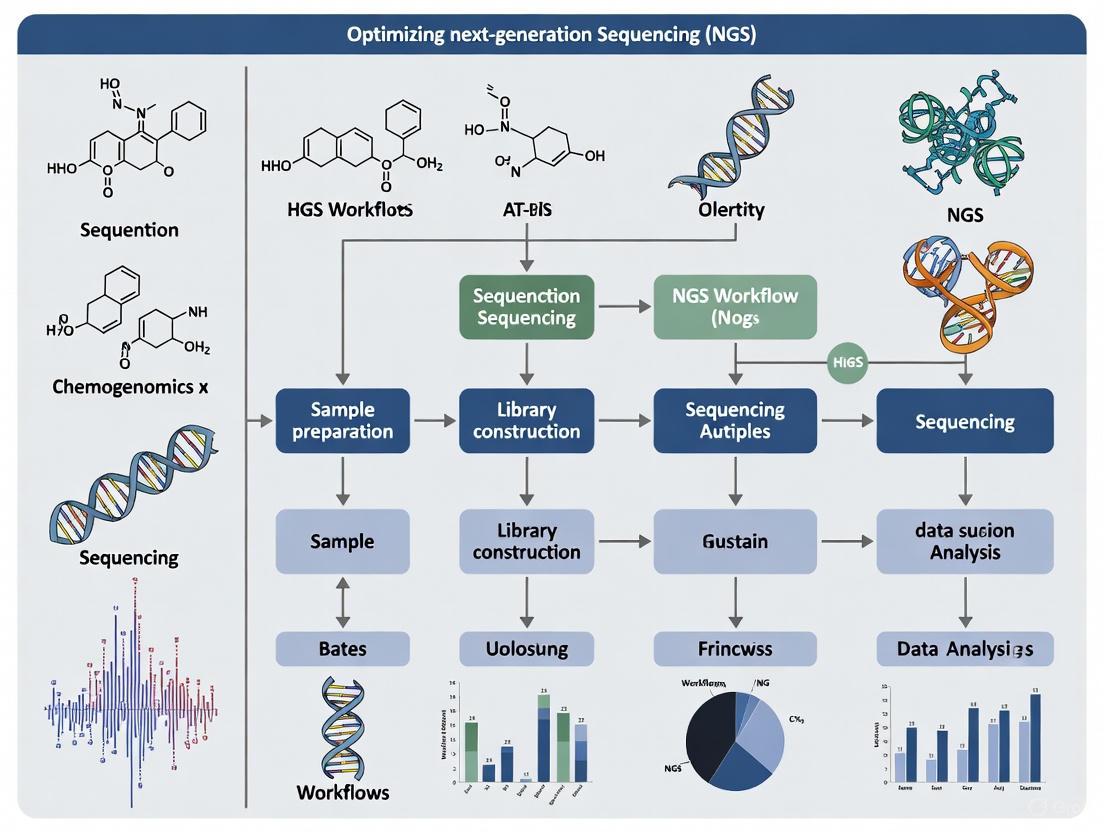
This article provides a comprehensive guide for researchers and drug development professionals on optimizing Next-Generation Sequencing (NGS) workflows specifically for chemogenomics applications.
Optimizing NGS Workflows for Chemogenomics: A Strategic Guide to Enhance Drug Discovery
Abstract
This article provides a comprehensive guide for researchers and drug development professionals on optimizing Next-Generation Sequencing (NGS) workflows specifically for chemogenomics applications. It covers foundational principles, from understanding the synergy between NGS and chemogenomics in identifying druggable targets, to advanced methodological applications that leverage automation and machine learning for drug-target interaction (DTI) prediction. The content delivers practical strategies for troubleshooting and optimizing critical workflow stages, including sample-specific nucleic acid extraction and host depletion, and concludes with robust frameworks for the analytical and clinical validation of results. By integrating these elements, the guide aims to enhance the efficiency, accuracy, and translational impact of chemogenomics-driven research.
Laying the Groundwork: How NGS and Chemogenomics Converge in Modern Drug Discovery
NGS in Chemogenomics: Core Concepts
Question: What is the role of NGS in modern chemogenomic analysis?
Next-Generation Sequencing (NGS) accelerates chemogenomics by enabling unbiased, genome-wide profiling of how a cell's genetic makeup influences its response to chemical compounds. In practice, this involves using NGS to analyze complex pooled libraries of genetic mutants (e.g., yeast deletion strains) grown in the presence of drugs. This allows for the rapid identification of drug-target interactions and mechanisms of synergy between drug pairs on a massive scale, moving beyond targeted studies to discover novel biological pathways and combination therapies [1].
Question: What are the primary NGS workflows used in chemogenomics?
The foundational NGS workflow for chemogenomics mirrors standard genomic approaches but is tailored for specific assay outputs. The key steps are [2]:
- Nucleic Acid Extraction: Isolating high-quality genetic material from the pooled chemogenomic assay (e.g., extracting genomic DNA from a pooled pool of yeast deletion mutants after drug treatment).
- Library Preparation: Converting the extracted DNA into a sequenceable library by fragmenting, adding adapters, and amplifying the genetic barcodes that uniquely identify each strain in the pool.
- Sequencing: Using high-throughput NGS platforms to sequence these barcodes.
- Data Analysis: Using bioinformatics tools to quantify the relative abundance of each barcode from the sequencer output. This abundance data reveals which genetic mutants are sensitive or resistant to the drug, indicating potential drug targets [1] [2].
Troubleshooting NGS in Chemogenomic Assays
Question: Our chemogenomic HIP-HOP assay shows flat coverage and high duplication rates after sequencing. What could be wrong?
This is a classic sign of issues during library preparation. The root cause often lies in the early steps of the workflow. The table below summarizes common problems and solutions [3].
| Problem Category | Typical Failure Signals | Common Root Causes & Corrective Actions |
|---|---|---|
| Sample Input / Quality | Low library complexity, smear in electropherogram [3] | • Cause: Degraded genomic DNA or contaminants (phenol, salts) from extraction.• Fix: Re-purify input DNA; use fluorometric quantification (e.g., Qubit) instead of UV absorbance alone [3] [4]. |
| Fragmentation & Ligation | Unexpected fragment size; sharp ~70-90 bp peak (adapter dimers) [3] | • Cause: Over- or under-fragmentation; inefficient ligation due to poor enzyme activity or incorrect adapter-to-insert ratio.• Fix: Optimize fragmentation parameters; titrate adapter concentration; ensure fresh ligase and buffer [3]. |
| Amplification / PCR | High duplicate rate; overamplification artifacts [3] | • Cause: Too many PCR cycles during library amplification.• Fix: Reduce the number of amplification cycles; use an efficient polymerase. It is better to repeat the amplification from leftover ligation product than to overamplify a weak product [3]. |
| Purification & Cleanup | Incomplete removal of adapter dimers; significant sample loss [3] | • Cause: Incorrect bead-to-sample ratio during clean-up steps.• Fix: Precisely follow manufacturer's ratios for magnetic beads; avoid over-drying the bead pellet [3]. |
Question: Our Ion S5 system fails a "Chip Check" before a run. What should we do?
A failed Chip Check can halt an experiment. Follow these steps [5]:
- Inspect the Chip: Open the chip clamp, remove the chip, and look for signs of physical damage or water outside the flow cell.
- Reseat or Replace: If the chip appears damaged, replace it with a new one. If it looks intact, try reseating it properly in the socket.
- Re-run Check: Close the clamp and repeat the Chip Check.
- Contact Support: If the chip continues to fail, the issue may be with the chip socket itself, and you should contact Technical Support [5].
Question: We observe low library yield after preparation. How can we improve this?
Low yield is often a result of suboptimal conditions in the early preparation stages. The primary causes and corrective actions are [3]:
- Verify Input Quality: Re-purify your input DNA to remove enzyme inhibitors like salts or phenol. Check sample purity via absorbance ratios (260/280 ~1.8, 260/230 >1.8) [3].
- Check Quantification: Use fluorometric methods (Qubit) for accurate template quantification instead of NanoDrop, which can overestimate concentration by counting contaminants [3] [4].
- Optimize Ligation: Ensure your ligase is active and that you are using the correct molar ratio of adapters to DNA insert. An excess of adapters can lead to adapter-dimer formation, while too few will reduce yield [3].
- Review Purification: Avoid overly aggressive size selection and ensure you are not losing sample during clean-up steps by using the correct bead-to-sample ratio [3].
Experimental Protocols & Reagent Solutions
Question: Can you provide a methodology for a chemogenomic drug synergy screen using NGS?
The following protocol, adapted from foundational research, outlines the key steps for a pairwise drug synergy screen analyzed by NGS [1].
- Strain Pool and Growth: Use a comprehensive pooled library of barcoded yeast deletion mutants (e.g., the homozygous or heterozygous deletion collections).
- Checkerboard Drug Screening: Screen drug pairs in a checkerboard matrix. Along each axis of a 96-well plate, add one drug at progressively higher doses (e.g., IC0, IC2, IC5, IC10, IC20, IC50). Grow the pooled mutant library in each drug combination condition [1].
- Growth Phenotyping: Measure optical density (OD600) at regular intervals over 24-48 hours to generate growth curves for each condition.
- Synergy Calculation (Bliss Model):
- Calculate the growth inhibition ratio for each well (Area under the curve for drug / Area for no-drug control).
- Calculate the Bliss independence expectation: (Drug Aratio × Drug Bratio).
- Calculate epsilon (ε): ε = Observed GrowthAB – Expected GrowthAB.
- A negative epsilon indicates a synergistic interaction, where the combination is more effective than predicted [1].
- Sample Prep for NGS: After determining synergistic conditions, harvest cells from the assay. Isolate genomic DNA from the pooled mutants. Prepare an NGS library where the amplified product is the unique molecular barcode from each yeast deletion strain [1].
- Sequencing and Analysis: Sequence the barcodes and use bioinformatics to quantify the relative fitness of each strain under the synergistic drug condition compared to a control. Identify "combination-specific sensitive strains" that reveal the mechanism of synergy [1].
Question: What are the essential research reagent solutions for these experiments?
Key reagents are critical for success, especially those that enhance workflow robustness. The following table details several essential components [1] [6].
| Research Reagent | Function in Chemogenomic NGS Workflow |
|---|---|
| Barcoded Deletion Mutant Collection | A pooled library of genetic mutants (e.g., yeast deletion strains), each with a unique DNA barcode. This is the core reagent for genome-wide HIP-HOP chemogenomic profiling [1]. |
| Glycerol-Free, Lyophilized NGS Enzymes | Enzymes for end-repair, A-tailing, and ligation that are stable at room temperature. They eliminate the need for cold chain shipping and storage, reduce costs, and are ideal for miniaturized or automated workflows [6]. |
| Optimized Reaction Buffers | Specialized buffers that combine multiple enzymatic steps (e.g., end repair and A-tailing in a single step), streamlining the library preparation process and reducing hands-on time [6]. |
| High-Sensitivity DNA Assay Kits | Fluorometric-based quantification kits (e.g., Qubit dsDNA HS Assay) for accurate measurement of low-abundance input DNA and final libraries, preventing over- or under-loading in sequencing reactions [3] [4]. |
Workflow Visualization
The following diagram illustrates the logical flow of a chemogenomic NGS experiment, from assay setup to data interpretation.
Diagram Title: Chemogenomic NGS Workflow for Drug Synergy
This integrated troubleshooting guide and FAQ provides a foundation for optimizing your NGS workflows, ensuring that technical challenges do not hinder the discovery of powerful synergistic drug interactions in your chemogenomic research.
Foundational NGS Technologies for Chemogenomics
What is the role of Next-Generation Sequencing (NGS) in modern chemogenomics research?
Next-Generation Sequencing (NGS) is a foundational DNA analysis technology that reads millions of genetic fragments simultaneously, making it thousands of times faster and cheaper than traditional methods [7]. This revolutionary technology has transformed chemogenomics research by enabling comprehensive analysis of how chemical compounds interact with biological systems.
Key Capabilities of NGS in Chemogenomics:
- Speed: Sequences an entire human genome in hours instead of years [7]
- Cost: Reduced sequencing costs from billions to under $1,000 per genome [7]
- Scale: Processes millions of DNA fragments in parallel [7]
- Applications: Used in cancer research, rare disease diagnosis, drug discovery, and population studies [7] [8]
How do different NGS generations compare for chemogenomics applications?
Table 1: Comparison of Sequencing Technology Generations
| Feature | First-Generation (Sanger) | Second-Generation (NGS) | Third-Generation (Long-Read) |
|---|---|---|---|
| Speed | Reads one DNA fragment at a time (slow) | Millions to billions of fragments simultaneously (fast) | Long reads in real-time [7] |
| Cost | High, billions for a whole human genome | Low, under $1,000 for a whole human genome | Higher cost compared to short-read platforms [9] |
| Throughput | Low, suitable for single genes or small regions | Extremely high, suitable for entire genomes or populations | High for complex genomic regions [7] |
| Read Length | Long (500-1000 base pairs) | Short (50-600 base pairs, typically) | Very long (10,000-30,000 base pairs average) [9] |
| Primary Chemogenomics Use | Target validation, confirming specific variants | Whole-genome sequencing, transcriptome analysis, target identification | Solving complex genomic puzzles, structural variations [7] |
Troubleshooting NGS Workflows for Chemogenomics
What are the most common NGS library preparation failures and how can they be resolved?
Table 2: Troubleshooting Common NGS Library Preparation Issues
| Problem Category | Typical Failure Signals | Common Root Causes | Corrective Actions |
|---|---|---|---|
| Sample Input / Quality | Low starting yield; smear in electropherogram; low library complexity [3] | Degraded DNA/RNA; sample contaminants (phenol, salts); inaccurate quantification [3] | Re-purify input sample; use fluorometric methods (Qubit) rather than UV for template quantification; ensure proper storage conditions [3] |
| Fragmentation & Ligation | Unexpected fragment size; inefficient ligation; adapter-dimer peaks [3] | Over-shearing or under-shearing; improper buffer conditions; suboptimal adapter-to-insert ratio [3] | Optimize fragmentation parameters; titrate adapter:insert molar ratios; ensure fresh ligase and buffer [3] |
| Amplification & PCR | Overamplification artifacts; bias; high duplicate rate [3] | Too many cycles; inefficient polymerase or inhibitors; primer exhaustion or mispriming [3] | Reduce PCR cycles; use high-fidelity polymerases; optimize annealing temperatures [3] |
| Purification & Cleanup | Incomplete removal of small fragments or adapter dimers; sample loss; carryover of salts [3] | Wrong bead ratio; bead over-drying; inefficient washing; pipetting error [3] | Optimize bead:sample ratios; avoid over-drying beads; implement pipette calibration programs [3] |
How can researchers diagnose and prevent intermittent NGS failures in core facilities?
Intermittent failures often correlate with operator, day, or reagent batch variations. A case study from a shared core facility revealed that sporadic failures were primarily caused by:
Root Causes Identified:
- Deviations from protocol details: mixing method (vortex vs pipetting) or timing differences between operators [3]
- Ethanol wash solutions losing concentration over time through evaporation [3]
- Accidental discarding of beads instead of supernatant (or vice versa) during repetitive steps [3]
Corrective Steps & Impact:
- Introduced "waste plates" to temporarily catch discarded material, allowing retrieval in case of mistake [3]
- Highlighted critical steps in the SOP with bold text or color to draw attention [3]
- Switched to master mixes to reduce pipetting steps and errors [3]
- Enforced cross-checking, operator checklists, and redundant logging of steps [3]
Target Deconvolution Methodologies
What experimental approaches are available for target deconvolution in phenotypic screening?
Target deconvolution refers to the process of identifying the molecular target or targets of a particular chemical compound in a biological context [10]. This is essential for understanding the mechanism of action of compounds identified through phenotypic screens.
Diagram 1: Target Deconvolution Workflow Strategies
What are the key reagent solutions for chemical proteomics approaches?
Table 3: Research Reagent Solutions for Target Deconvolution
| Reagent Category | Specific Examples | Function & Application | Key Considerations |
|---|---|---|---|
| Affinity Probes | Immobilized compound on solid support [11] [10] | Isolate specific target proteins from complex proteome; identify direct binding partners | Requires knowledge of structure-activity relationship; modification may affect binding affinity [11] |
| Activity-Based Probes (ABPs) | Broad-spectrum cathepsin-C specific probe [11] | Monitor activity of specific enzyme classes; covalently label active sites | Requires reactive electrophile for covalent modification; targets specific enzyme families [11] |
| Photoaffinity Labels | Benzophenone, diazirine, or arylazide-containing probes [11] [10] | Covalent cross-linking upon light exposure; secures weakly bound interactions | Useful for integral membrane proteins and transient interactions; requires photoreactive group [10] |
| Click Chemistry Tags | Azide or alkyne tags [11] | Minimal structural perturbation for intracellular target identification; enables conjugation after binding | Particularly useful for intracellular targets; minimizes interference with membrane permeability [11] |
| Multifunctional Scaffolds | Benzophenone-based small molecule library [11] | Integrated screening and target isolation; combines photoreactive group, CLICK tag and protein-interacting functionality | Accelerates process from phenotypic screening to target identification [11] |
Polypharmacology and Drug Repositioning Strategies
How can polypharmacology guide drug repositioning efforts?
Polypharmacology involves the interactions of drug molecules with multiple targets of different therapeutic indications/diseases [12]. This approach is increasingly valuable for identifying new therapeutic uses for existing drugs.
Successful Applications:
- SARS-CoV-2 Treatment: Polypharmacology approaches identified drugs such as dihydroergotamine, ergotamine, bisdequalinium chloride, midostaurin, temoporfin, tirilazad, and venetoclax as multi-targeting agents against multiple SARS-CoV-2 proteins [13].
- Cancer Therapeutics: Drugs with multi-targeting potential are particularly interesting for repurposing because this dual synergistic strategy could offer better therapeutic alternatives and useful clinical candidates [12].
What computational and experimental workflows support polypharmacology research?
Diagram 2: Polypharmacology Drug Discovery Pipeline
What are the key reagent solutions for chemogenomics library development?
The development of specialized compound libraries is crucial for systematic exploration of target families. A recent example includes the NR3 nuclear hormone receptor chemogenomics library:
NR3 CG Library Characteristics:
- Comprehensive Coverage: 34 highly annotated and chemically diverse ligands covering all NR3 steroid hormone receptors [14]
- Selectivity Optimization: Compounds selected considering complementary modes of action, activity, selectivity, and lack of toxicity [14]
- Chemical Diversity: High scaffold diversity with 34 compounds representing 29 different skeletons [14]
- Validation: Proof-of-concept application validated endoplasmic reticulum stress resolving effects of NR3 CG subsets [14]
Integrating AI and Multi-Omics in Chemogenomics
How is artificial intelligence transforming genomic data analysis in drug discovery?
AI and machine learning algorithms have become indispensable in genomic data analysis, uncovering patterns and insights that traditional methods might miss [8].
Key AI Applications:
- Variant Calling: Tools like Google's DeepVariant utilize deep learning to identify genetic variants with greater accuracy than traditional methods [8]
- Disease Risk Prediction: AI models analyze polygenic risk scores to predict an individual's susceptibility to complex diseases [8]
- Drug Discovery: By analyzing genomic data, AI helps identify new drug targets and streamline the drug development pipeline [8]
What is the role of multi-omics integration in understanding polypharmacology?
Multi-omics approaches combine genomics with other layers of biological information to provide a comprehensive view of biological systems [8].
Multi-Omics Components:
- Transcriptomics: RNA expression levels [8]
- Proteomics: Protein abundance and interactions [8]
- Metabolomics: Metabolic pathways and compounds [8]
- Epigenomics: Epigenetic modifications such as DNA methylation [8]
This integrative approach provides a comprehensive view of biological systems, linking genetic information with molecular function and phenotypic outcomes, which is particularly valuable for understanding the complex mechanisms underlying polypharmacological effects [8].
Chemogenomics research leverages chemical, genomic, and interaction data to discover new drug targets and therapeutic compounds, particularly for neglected tropical diseases (NTDs). Protein kinases represent a prime target class for these efforts due to their crucial roles in biological processes like signaling pathways, cellular communication, division, metabolism, and death [15]. The foundation of successful chemogenomics research lies in sourcing high-quality, validated data from public repositories and integrating it effectively within optimized Next-Generation Sequencing (NGS) workflows. This technical support center provides targeted troubleshooting guides and FAQs to address specific issues researchers encounter when working with these complex data types and NGS methodologies, framed within the broader context of thesis research on optimizing NGS workflows for chemogenomics.
Essential Public Data Repositories
Publicly available datasets are invaluable for validating methods and benchmarking workflows in chemogenomics research. The table below summarizes essential repositories for sourcing chemical, genomic, and interaction data.
Table 1: Essential Public Data Repositories for Chemogenomics Research
| Repository Name | Data Type | Primary Use Case | Access Method |
|---|---|---|---|
| EPI2ME (Oxford Nanopore) [16] | Real-time long-read sequencing data | Validation of NGS workflows against validated datasets (e.g., Genome in a Bottle, T2T assembly) | Cloud-based platform |
| PacBio SRA Database [16] | High-fidelity (HiFi) long-read sequences | Resolving complex genomic regions; benchmarking assembly and structural variant detection | PacBio website / NCBI SRA |
| 1000 Genomes Project (Phase 3) [16] | Human genetic variation from diverse populations | Studying population genetics and disease association; validating variant calls | IGSR / EBI portals |
| European Genome-Phenome Archive [16] | Exon Copy Number Variation (CNV) data | Orthogonal assessment of exon CNV calling accuracy in NGS | EGA portal |
| Chemogenomics Resources [15] | Protein kinase targets & ligand interactions | Prioritizing kinase drug targets and identifying potential inhibitors | Specialized tools (e.g., ChemBioPort, Chromohub, UbiHub) |
Troubleshooting NGS Workflows for Chemogenomics
Common NGS Preparation Failures and Solutions
Library preparation is a critical step where many NGS failures originate. The following table outlines common issues, their root causes, and corrective actions [3].
Table 2: Troubleshooting Common NGS Library Preparation Failures
| Problem Category | Typical Failure Signals | Root Causes | Corrective Actions |
|---|---|---|---|
| Sample Input & Quality [3] | Low yield; smear in electropherogram; low complexity | Degraded DNA/RNA; contaminants (phenol, salts); inaccurate quantification | Re-purify input; use fluorometric quantification (Qubit); check purity ratios (260/230 >1.8) |
| Fragmentation & Ligation [3] | Unexpected fragment size; inefficient ligation; adapter-dimer peaks | Over-/under-shearing; improper buffer conditions; suboptimal adapter-to-insert ratio | Optimize fragmentation parameters; titrate adapter:insert ratios; ensure fresh ligase/buffer |
| Amplification & PCR [3] | Overamplification artifacts; high duplicate rate; bias | Too many PCR cycles; polymerase inhibitors; primer exhaustion | Reduce PCR cycles; re-purify to remove inhibitors; optimize primer and template concentrations |
| Purification & Cleanup [3] | Adapter dimer carryover; significant sample loss | Incorrect bead:sample ratio; over-dried beads; inadequate washing | Precisely follow bead cleanup protocols; avoid over-drying beads; use fresh wash buffers |
FAQs on Data Integration and Analysis
Q1: My NGS data has a high duplicate read rate. What are the primary causes and solutions?
A: A high duplicate rate often stems from over-amplification during library PCR (too many cycles) or from insufficient starting input material, which reduces library complexity [3]. To resolve this:
- Wet-Lab: Optimize your library prep by reducing the number of PCR cycles and ensuring accurate quantification of input DNA using fluorometric methods (e.g., Qubit) instead of UV absorbance [3].
- Bioinformatics: During data analysis, use tools like FastQC to visualize the duplication levels and consider using deduplication tools in your pipeline, keeping in mind that some level of duplication is expected in targeted sequencing [17].
Q2: How can I minimize batch effects when scaling up my NGS experiments for a large chemogenomics screen?
A: Batch effects, often caused by researcher-to-researcher variation and reagent lot changes, can be mitigated by:
- Automation: Implementing automated sample prep systems to eliminate manual pipetting variability and improve consistency [18].
- Standardization: Using master mixes for reactions to reduce pipetting steps and inter-assay variation [3].
- Experimental Design: Processing cases and controls across different batches and dates, and including control samples in every batch for normalization during data analysis [18].
Q3: I suspect adapter contamination in my sequencing reads. How can I confirm and fix this?
A: Adapter contamination results from inefficient cleanup or ligation failures and produces sharp peaks at ~70-90 bp in an electropherogram [3].
- Confirmation: Use quality control tools like FastQC to detect overrepresented sequences, which will often match your adapter sequences [17].
- Solution:
- Wet-Lab: Optimize bead-based cleanup steps by using the correct bead-to-sample ratio to exclude small fragments effectively. Titrate adapter concentrations to find the optimal ratio that minimizes dimer formation [3].
- Bioinformatics: Use trimming tools like Trimmomatic or Cutadapt to remove adapter sequences from your raw FASTQ files before alignment and analysis [17].
Q4: What is the most critical step to ensure high-quality data from a publicly available NGS dataset?
A: The most critical first step is to perform thorough quality control on the raw data. Before starting any analysis, you must [17]:
- Verify file type and structure (e.g., FASTQ, BAM, paired-end/single-end).
- Check read quality distribution using a tool like FastQC to identify issues with base quality, adapter contamination, or overrepresented sequences.
- Confirm metadata to ensure the reference genome version and experimental conditions are compatible with your research question.
Experimental Workflow and Visualization
Integrated Chemogenomics NGS Workflow
The following diagram illustrates the optimized end-to-end workflow for chemogenomics research, integrating data sourcing, sample preparation, and data analysis.
NGS Library Preparation Troubleshooting Logic
For diagnosing failed NGS library preparation, follow this logical troubleshooting pathway.
The Scientist's Toolkit: Research Reagent Solutions
Essential Materials for NGS and Chemogenomics Experiments
The following table details key reagents, their functions, and troubleshooting notes essential for robust NGS and chemogenomics workflows.
Table 3: Essential Research Reagents and Their Functions in NGS Workflows
| Reagent / Material | Function | Troubleshooting Notes |
|---|---|---|
| Fluorometric Quantification Kits (Qubit) [3] | Accurately measures nucleic acid concentration without counting non-template contaminants. | Prefer over UV absorbance (NanoDrop) to avoid overestimation of usable input material, a common cause of low yield. |
| Bead-Based Cleanup Kits [3] | Purifies and size-selects nucleic acid fragments after enzymatic reactions. | An incorrect bead-to-sample ratio can cause loss of desired fragments or adapter dimer carryover. Avoid over-drying beads. |
| High-Fidelity DNA Ligase & Buffer [3] | Binds adapters to fragmented DNA for sequencing. | Sensitive to enzyme activity and buffer conditions. Use fresh reagents and maintain optimal temperature for efficient ligation. |
| High-Fidelity PCR Mix [3] | Amplifies the library to add indexes and generate sufficient sequencing material. | Too many cycles cause overamplification artifacts and high duplicate rates. Use the minimum number of cycles necessary. |
| Fragmentation Enzymes [3] | Shears DNA to the desired insert size for library construction. | Over- or under-shearing reduces ligation efficiency. Optimize time and enzyme concentration for your sample type (e.g., FFPE, GC-rich). |
| Bioinformatics QC Tools (FastQC) [17] | Provides visual report on raw read quality, adapter content, and sequence duplication. | Essential first step for analyzing any dataset, public or private, to identify issues before proceeding with analysis. |
The journey of genomics in cancer research has been marked by pivotal breakthroughs that have reshaped our understanding of disease mechanisms and treatment paradigms. The discoveries surrounding KRAS and BRAF oncogenes represent landmark achievements in molecular oncology, revealing critical nodes in cancer signaling pathways that drive tumor progression. These historical discoveries laid the essential groundwork for large-scale genomic initiatives, most notably the 100,000 Genomes Project, which has dramatically expanded our ability to identify disease-causing genetic variants across diverse patient populations [19] [20]. This project, completed in December 2018, sequenced 100,000 whole genomes from patients with rare diseases and cancer, creating an unprecedented resource for the research community [20]. The convergence of foundational oncogene research with cutting-edge genomic sequencing has established new standards for personalized cancer treatment and diagnostic precision, while simultaneously introducing novel technical challenges that require sophisticated troubleshooting approaches within next-generation sequencing (NGS) workflows [21].
Troubleshooting Guide & FAQs
Sample Quality & Preparation
Q: What are the primary causes of low DNA quality in FFPE samples and how can they be mitigated? A: DNA from Formalin-Fixed, Paraffin-Embedded (FFPE) specimens suffers from fragmentation, crosslinks, abasic sites, and deamination artifacts that generate C>T mutations during sequencing. The 100,000 Genomes Project addressed this through optimized extraction protocols and bioinformatic correction methods to distinguish true variants from formalin-induced artifacts [20].
Q: How does sample quality impact variant calling sensitivity? A: Degraded samples exhibit reduced coverage uniformity and increased false positives, particularly in GC-rich regions. The project implemented rigorous QC thresholds, requiring minimum DNA integrity numbers (DIN > 7) and fragment size distributions for reliable variant detection [21].
Library Preparation & Sequencing
Q: What factors contribute to low library complexity in WGS experiments? A: Common causes include insufficient input DNA, PCR over-amplification, and suboptimal fragment size selection. The project utilized qualified automated library preparation systems with integrated size selection and qc checkpoints to maintain complexity while reducing hands-on time [22].
Q: How can batch effects in large-scale sequencing be minimized? A: The project employed standardized protocols across sequencing centers, including calibrated robotic liquid handling, matched reagent lots, and inter-run controls. Vendor-qualified workflows with predefined acceptance criteria ensured consistency across 100,000 genomes [22].
Data Analysis & Interpretation
Q: What bioinformatic approaches improve detection of structural variants in cancer genomes? A: The analysis pipeline incorporated multiple calling algorithms with integrated local assembly. For the KRAS and BRAF loci specifically, the project used duplicate marking, local realignment, and machine learning classifiers trained on validated variants to distinguish true oncogenic mutations from sequencing artifacts [21].
Q: How are variants of uncertain significance (VUS) handled in clinical reporting? A: The project established a tiered annotation system with evidence-based prioritization. Variants were cross-referenced against PanelApp gene panels and population frequency databases. Functional domains and known cancer hotspots (including specific KRAS codons 12/13/61 and BRAF V600) received prioritized interpretation [20].
Experimental Protocols & Methodologies
Protocol 1: Whole Genome Sequencing from Blood and Tissue
The 100,000 Genomes Project established this core methodology for generating comprehensive genomic data [21] [20]:
Sample Collection: Paired samples collected from cancer patients (blood and tumor tissue) or rare disease participants (blood from patient and parents)
DNA Extraction:
- Blood: Automated extraction from 3-5mL whole blood using magnetic bead-based platforms
- Tissue: Macro-dissection of FFPE sections with >70% tumor content or fresh-frozen equivalent
- Quality Control: Spectrophotometric (A260/280 ratio 1.8-2.0) and fluorometric quantification (minimum 1μg)
Library Preparation:
- Fragmentation: Acoustic shearing to 350bp insert size
- End Repair & A-tailing: Standard enzymatic treatment
- Adapter Ligation: Illumina paired-end adapters with dual-index barcodes
- PCR Amplification: Limited-cycle enrichment (4-6 cycles)
Sequencing:
- Platform: Illumina NovaSeq 6000
- Configuration: 150bp paired-end reads
- Coverage: 30X minimum for germline, 60X for tumor samples
- Quality Metrics: >80% bases ≥Q30
Protocol 2: Targeted Validation of KRAS/BRAF Mutations
This orthogonal confirmation method was employed for clinically actionable variants:
Variant Identification: Initial calling from WGS data using optimized parameters for oncogenic hotspots
Amplicon Design: Primers flanking KRAS codons 12/13/61 and BRAF V600 region
PCR Conditions:
- Template: 10ng DNA from original extraction
- Cycling: 95°C × 2min, [95°C × 30sec, 60°C × 30sec, 72°C × 45sec] × 35 cycles
- Purification: Exo-SAP treatment of amplicons
Sanger Sequencing:
- Chemistry: BigDye Terminator v3.1
- Capillary Electrophoresis: ABI 3730xl platform
- Analysis: Mutation confirmation via bidirectional sequencing
Table 1: Prognostic Genetic Factors Identified in the 100,000 Genomes Project [21]
| Gene | Cancer Types with Prognostic Association | Mutation Impact on Survival | Frequency in Cohort |
|---|---|---|---|
| TP53 | Breast, Colorectal, Lung, Ovarian, Glioma | Hazard Ratio: 1.2-2.1 | 8.7% |
| BRAF | Colorectal, Lung, Glioma | Hazard Ratio: 1.5-2.3 | 3.2% |
| PIK3CA | Breast, Colorectal, Endometrial | Hazard Ratio: 1.1-1.8 | 6.4% |
| PTEN | Endometrial, Glioma, Renal | Hazard Ratio: 1.4-2.0 | 2.9% |
| KRAS | Colorectal, Lung, Pancreatic | Hazard Ratio: 1.3-2.2 | 5.1% |
Table 2: Technical Performance Metrics of the 100,000 Genomes Project [21] [20]
| Parameter | Blood-Derived DNA | FFPE-Derived DNA | Fresh-Frozen Tissue |
|---|---|---|---|
| Average Coverage | 35X | 58X | 62X |
| Mapping Rate | 99.2% | 97.8% | 98.9% |
| PCR Duplicates | 8.5% | 14.2% | 9.1% |
| Variant Concordance | 99.8% | 98.5% | 99.6% |
| Sensitivity (SNVs) | 99.5% | 97.2% | 99.1% |
The Scientist's Toolkit
Table 3: Essential Research Reagents and Platforms for NGS Workflows [22] [21] [20]
| Reagent/Platform | Function | Application in Featured Studies |
|---|---|---|
| Illumina NovaSeq 6000 | Massive parallel sequencing | Primary sequencing platform for 100,000 Genomes Project |
| Magnetic bead-based NA extraction | Nucleic acid purification | Standardized DNA isolation from blood and tissue samples |
| FFPE DNA restoration kits | Repair of formalin-damaged DNA | Improved sequence quality from archival clinical samples |
| Illumina paired-end adapters | Library molecule identification | Sample multiplexing and tracking across batches |
| PanelApp virtual gene panels | Evidence-based gene-disease association | Variant prioritization and clinical interpretation |
| Automated liquid handling robots | Library preparation automation | Improved reproducibility and throughput for 100,000 samples |
Workflow Diagrams
NGS Data Generation and Analysis Pipeline
Cancer Signaling Pathway with Therapeutic Implications
100,000 Genomes Project Cohort Selection Process
From Data to Discovery: Implementing NGS-Chemogenomics Workflows in the Lab
In chemogenomics research, the success of Next-Generation Sequencing (NGS) workflows critically depends on the quality and integrity of the input nucleic acids. Inadequate extraction methods can introduce biases, artifacts, and failures in downstream applications, ultimately compromising drug discovery and development efforts. This guide provides targeted troubleshooting and strategic guidance for extracting various nucleic acid types from diverse biological samples, enabling researchers to optimize this crucial first step in the NGS pipeline. [23] [24]
Frequently Asked Questions (FAQs)
1. What are the five universal steps in any nucleic acid extraction protocol? Regardless of the specific chemistry or sample type, most nucleic acid purification protocols consist of five fundamental steps: 1) Creation of Lysate to disrupt cells and release nucleic acids, 2) Clearing of Lysate to remove cellular debris and insoluble material, 3) Binding of the target nucleic acid to a purification matrix, 4) Washing to remove proteins and other contaminants, and 5) Elution of the purified nucleic acid in an aqueous buffer. [24]
2. When should I consider magnetic bead-based purification over column-based methods? Magnetic bead-based systems are particularly advantageous for automated, high-throughput workflows. They offer higher purity and yields due to thorough mixing and exposure to target molecules, gentle separation that minimizes nucleic acid shearing (critical for HMW DNA), and scalability for processing many samples simultaneously. They also provide flexibility to target nucleic acids of specific fragment sizes. [25]
3. Why is the co-purification of cfDNA and cfRNA from liquid biopsies recommended? Co-purification is a powerful strategy to maximize the analytical sensitivity of liquid biopsy assays. Since the vast majority of circulating nucleic acids are non-cancerous, isolating both cfDNA and cfRNA from the same plasma aliquot increases the chance of capturing tumor-derived molecules. This approach is also cost- and time-effective and allows for the maximal use of valuable patient samples. [26]
4. How can I increase the detection sensitivity for low-abundance nucleic acids like cfDNA? For low-abundance targets, sensitivity can be enhanced by: a) Increasing the input volume of the starting sample (e.g., using more plasma), b) Increasing the volume of the extracted nucleic acid eluate added to a downstream digital PCR reaction (provided it does not cause inhibition), and c) Employing advanced error-correcting molecular methods. [26]
5. What is a key indicator of high-quality, pure cell-free DNA? High-quality cfDNA should show a characteristic fragment size distribution averaging around ~170 bp when analyzed by microfluid electrophoresis (e.g., TapeStation). A high percentage of fragments in this range (e.g., 64-94%) indicates good quality cfDNA with low fractions of high molecular weight (HMW) DNA contamination from lysed cells. [26]
Troubleshooting Common Extraction Issues
Problem: Low Yield from Plasma or Serum Samples
- Potential Cause: Inefficient binding of nucleic acids to the purification matrix due to improper buffer conditions or overloading.
- Solution:
- Ensure the lysate contains the correct concentration of chaotropic salts (e.g., guanidine hydrochloride) or other binding agents as specified in the kit protocol. [24]
- Do not exceed the recommended binding capacity of the kit. If processing large plasma volumes (>1 mL), select a kit validated for that scale. [26]
- For magnetic bead-based systems, ensure thorough resuspension and mixing during the binding step to maximize contact with the target molecules. [25]
Problem: Co-purified DNA and RNA are not compatible with my downstream assays.
- Potential Cause: Carryover of contaminants like salts, alcohols, or enzymes from the extraction process.
- Solution:
- Ensure all wash buffers are prepared correctly and that wash steps are performed thoroughly. [24]
- After the final wash, briefly spin the column or plate and remove any residual wash buffer with a pipette.
- If using a column, allow it to air-dry for a few minutes before elution to let residual ethanol evaporate.
- To obtain pure DNA, add RNase A to the elution buffer. To obtain pure RNA, perform an on-column DNase digestion step. [24]
Problem: Genomic DNA is Sheared or Degraded
- Potential Cause: Overly vigorous physical disruption during lysis or excessive centrifugation.
- Solution:
- For tissues, use gentle homogenization methods and avoid generating heat.
- When extracting High Molecular Weight (HMW) DNA, use specialized kits designed to minimize fragmentation, such as those based on magnetic bead technology that avoids columns, filters, and excessive centrifugation. [25]
- Process samples quickly and on ice to inhibit endogenous nucleases.
Problem: Inconsistent Results Between Samples
- Potential Cause: Sample-to-sample variation in lysis efficiency or human error in manual protocols.
- Solution:
- Standardize sample input amounts and lysis times as much as possible.
- For complex or difficult-to-lyse samples (e.g., tissue, plants, bacteria), use a combination of physical, chemical, and enzymatic lysis methods. [24]
- Transition to semi-automated or automated purification systems to enhance reproducibility and reduce hands-on time. [26] [25]
Experimental Protocols and Data Comparison
Protocol 1: Sequential DNA/RNA Co-purification from a Single Sample
This protocol is ideal for maximizing information from precious samples like patient biopsies or blood. [25]
- Lysis: Apply a powerful, proprietary lysis solution to the sample (e.g., whole blood, bone marrow, or FFPE tissue) to completely disrupt cells and release both DNA and RNA simultaneously.
- Separation: The lysate is treated to separate the genomic DNA from the total RNA.
- Parallel Binding: The divided lysate is transferred to a purification plate where DNA binds to one set of wells and RNA binds to another.
- Washing and Elution: Independent wash and elution steps are performed for the DNA and RNA bound to their respective matrices, yielding separate, ready-to-use eluates.
Protocol 2: Evaluation of cfDNA/cfRNA Co-purification Kit Performance Using dPCR
This digital PCR (dPCR) framework allows for the precise quantification of extraction efficiency. [26]
- Sample Processing: Extract nucleic acids from a range of plasma input volumes (e.g., 0.06–4 mL) using the co-purification kits under evaluation.
- DNase Treatment: Treat an aliquot of the eluate with DNase to remove DNA, allowing for specific cfRNA quantification.
- dPCR Quantification: Use optimized duplex dPCR assays targeting highly abundant genes (e.g., CAVIN2/NRGN and AIF1/B2M) to quantify both cfDNA and cfRNA concentrations in the eluate.
- Data Analysis: Calculate the concentration (copies/µL) and total yield for both cfDNA and cfRNA to compare the performance of different kits across input volumes.
Performance Comparison of Nucleic Acid Extraction Methods
Table 1: Comparison of short-read sequencing technologies and their characteristics. [9]
| Platform | Sequencing Technology | Amplification Type | Read Length (bp) | Key Limitations |
|---|---|---|---|---|
| Illumina | Sequencing-by-synthesis | Bridge PCR | 36-300 | Overcrowding on the flow cell can spike error rate to ~1% |
| Ion Torrent | Sequencing-by-synthesis | Emulsion PCR | 200-400 | Inefficient determination of homopolymer length |
| 454 Pyrosequencing | Sequencing-by-synthesis | Emulsion PCR | 400-1000 | Deletion/insertion errors in homopolymer regions |
| SOLiD | Sequencing-by-ligation | Emulsion PCR | 75 | Substitution errors; under-represents GC-rich regions |
Table 2: Characteristics of different DNA sample types and purification challenges. [24]
| DNA Sample Type | Source | Expected Size | Typical Yield | Key Purification Challenge |
|---|---|---|---|---|
| Genomic (gDNA) | Cells (nucleus) | 50kb–Mb | Varies, high (µg–mg) | Shearing during extraction; contamination with proteins/RNA |
| High Molecular Weight (HMW) | Blood, cells, tissue | >100 kb | Varies, high (µg–mg) | Extreme sensitivity to fragmentation; requires very gentle handling |
| Cell-free (cfDNA) | Plasma, serum | 160–200 bp | Very low (<20 ng) | Low abundance; contamination with genomic DNA |
| FFPE DNA | FFPE tissue | Typically <1kb | Low (ng) | Cross-linked and fragmented; requires special deparaffinization |
The Scientist's Toolkit: Key Research Reagent Solutions
Table 3: Essential reagents and kits for nucleic acid extraction, categorized by primary application.
| Item | Function | Example Application |
|---|---|---|
| MagMAX Cell-Free DNA Isolation Kit [25] | Magnetic bead-based isolation of circulating cfDNA from plasma, serum, or urine. | Liquid biopsy for cancer genomics; non-invasive cancer diagnostics. |
| MagMAX HMW DNA Kit [25] | Isolates high-integrity DNA with large fragments >100 kb using gentle magnetic bead technology. | Long-read sequencing (e.g., PacBio, Nanopore) for structural variation studies. |
| MagMAX Sequential DNA/RNA Kit [25] | Sequentially isolates high-quality gDNA and total RNA from a single sample of whole blood or bone marrow. | Hematological cancer studies; maximizing data from precious clinical samples. |
| MagMAX FFPE DNA/RNA Ultra Kit [25] | Enables sequential isolation of DNA and RNA from the same FFPE tissue sample after deparaffinization. | Archival tissue analysis; oncology research using biobanked samples. |
| miRNeasy Serum/Plasma Advanced Kit [26] | Manual spin-column kit for co-purification of cfDNA and cfRNA (including miRNA) from neat plasma. | Liquid biopsy workflows focusing on both DNA and RNA biomarkers. |
| Chaotropic Salts (e.g., guanidine HCl) [24] | Disrupt cells, denature proteins (inactivate nucleases), and enable nucleic acid binding to silica matrices. | Essential component of lysis and binding buffers in silica-based purification. |
| RNase A [24] | Enzyme that degrades RNA. Added to the elution buffer to remove contaminating RNA from DNA preparations. | Production of pure, RNA-free genomic DNA for sequencing or PCR. |
| DNase I | Enzyme that degrades DNA. Used in on-column treatments to remove contaminating DNA from RNA preparations. | Production of pure, DNA-free total RNA for transcriptomic applications like RNA-seq. |
Workflow Visualization
Nucleic Acid Extraction Workflow. The process begins with sample-specific lysis, followed by a critical separation step where the purification path is chosen based on the target molecule(s). Final purification and elution yield nucleic acids ready for NGS.
Technical Support Center
Troubleshooting Guides
Issue 1: Low or Inconsistent Library Yields
Problem: Automated runs produce DNA libraries with lower or more variable concentrations compared to manual preparation.
| Potential Cause | Diagnostic Check | Corrective Action |
|---|---|---|
| Inaccurate liquid handling | Check pipette calibration logs; verify dispensed volumes in clean-up steps. | Recalibrate the liquid handling module; use liquid level detection for viscous reagents [27]. |
| Inefficient bead mixing | Observe bead resuspension during clean-up steps; look for pellet consistency. | Optimize the mixing speed and duration in the protocol; ensure the magnetic module is correctly engaged/disengaged [28]. |
| Suboptimal reagent handling | Confirm reagents are stored and thawed according to the kit manufacturer's instructions. | Ensure all reagents are kept on a cooling block during the run; minimize freeze-thaw cycles by creating single-use aliquots [4]. |
Issue 2: Poor Sequencing Quality or Coverage Uniformity
Problem: Libraries pass QC but produce low-quality sequencing data with uneven coverage.
| Potential Cause | Diagnostic Check | Corrective Action |
|---|---|---|
| Cross-contamination | Review sample layout on the deck; check for splashes or carryover between wells. | Use fresh pipette tips for every transfer; increase spacing between sample rows on the deck [27]. |
| Incomplete enzymatic reactions | Verify incubation times and temperatures for tagmentation and PCR steps. | Validate the accuracy of the heating/cooling module; ensure lids are heated to prevent condensation [29]. |
| Inaccurate library normalization | Re-quantify pooled libraries after automated normalization. | Confirm the normalization algorithm and input concentrations; use fluorometric methods over spectrophotometric for DNA quantification [28]. |
Issue 3: System Integration and Software Errors
Problem: The robotic platform fails to execute the protocol or interfaces poorly with other systems.
| Potential Cause | Diagnostic Check | Corrective Action |
|---|---|---|
| File or format mismatch | Check that the protocol file is the correct version for the software and deck layout. | Re-upload the protocol from a verified source; use scripts provided and validated by the platform vendor [29] [27]. |
| Hardware communication failure | Review error logs for communication timeouts with deck modules (heater, magnet). | Power cycle the instrument; reseat all cable connections for deck modules [30]. |
| LIMS integration failure | Confirm sample and reagent ID formats match between the LIMS and automation software. | Standardize naming conventions; work with IT/automation specialists to validate the data transfer pipeline [27]. |
Frequently Asked Questions (FAQs)
Q1: Our automated library preps are consistent but our DNA yields are consistently lower than manual preps. What should we check? A1: First, verify the calibration of the liquid handler, specifically for small volumes (< 10 µL) which are common in library prep kits. Second, focus on the bead-based clean-up steps. Ensure the bead mixture is homogenous before aspiration and that the mixing steps post-elution are vigorous and long enough to fully resuspend the pellets. Incomplete resuspension is a common cause of DNA loss [27] [28].
Q2: How can we validate the performance of a new automated NGS library prep workflow? A2: A robust validation should include three key components:
- Yield and Quality Metrics: Compare the DNA concentration and size distribution of automated vs. manual libraries using a fragment analyzer [28].
- Sequencing Performance: Sequence the libraries and compare key metrics such as Q30 scores, coverage uniformity, and GC bias. The results should be highly comparable [29].
- Reproducibility: Process the same sample across multiple automated runs and by different operators. Assess the coefficient of variation for library yield and sequencing metrics to confirm consistency [29].
Q3: What are the critical steps to automate for the biggest gain in reproducibility? A3: The most significant gains come from automating steps prone to human timing and technique variations. Prioritize:
- Reagent Dispensing: Automated pipetting eliminates volume inconsistencies [27].
- Bead-Based Clean-ups: Robots provide precise and consistent control over incubation and mixing times, which is critical for reproducible recovery [29] [28].
- Library Normalization and Pooling: Automation ensures precise, volumetric normalization leading to balanced multiplexing [28].
Q4: How does automation help with regulatory compliance in a diagnostic or chemogenomics setting? A4: Automated systems enhance compliance by providing an audit trail, standardizing protocols to minimize batch-to-batch variation, and enabling integration with Laboratory Information Management Systems (LIMS) for complete traceability. This supports adherence to standards like ISO 13485 and IVDR, which require strict documentation and process control [27].
Experimental Data & Protocols
The following table summarizes quantitative data from studies that compared automated and manual NGS library preparation, demonstrating the equivalence and advantages of automation [29] [28].
| Performance Metric | Manual Workflow | Automated Workflow | Result |
|---|---|---|---|
| Hands-on Time (for 8 samples) | ~125 minutes [29] | ~25 minutes [29] | 80% Reduction |
| Total Turn-around Time | ~200 minutes [29] | ~170 minutes [29] | 30 minutes faster |
| Library Yield (DNA concentration) | Variable (e.g., 10.9 ng/µl in one case) [29] | Consistent, median 1.5-fold difference from manual [29] | Comparable, more reproducible |
| cgMLST Typing Concordance | 100% (Reference) [29] | 100% [29] | Full concordance |
| Barcode Balance Variability | Higher variability (manual pooling) [28] | Lower variability (automated pooling) [28] | Improved multiplexing |
| Sequencing Quality (Q30 Score) | >90% [28] | >90% [28] | Equally high quality |
Detailed Automated Protocol: Illumina DNA Prep
This protocol, adapted for a robotic liquid handler like the flowbot ONE or Myra, details the key steps for a reproducible automated workflow [29] [28].
Experimental Setup:
- Instrument: flowbot ONE (with 1- and 8-channel pipetting modules, heating/cooling, and magnetic devices) or Myra liquid handler.
- Samples: 8-24 samples per run (e.g., bacterial genomic DNA).
- Input: 20-150 ng of DNA per sample.
- Consumables: Use DNase/RNAse-free, low-retention tips and plates to prevent enzymatic inhibition and sample loss [4].
Methodology:
- Pre-Run Setup:
- Thaw all Illumina DNA Prep reagents and keep on a cooling block on the deck.
- Manually add unique Illumina DNA/RNA UD Indexes to each sample well to minimize freeze-thaw cycles of master stocks [29].
- Load the validated protocol script onto the liquid handler.
Automated Run:
- Tagmentation: The robot dispenses the tagmentation mix onto the DNA samples and transfers the plate to the off-deck thermal cycler.
- Post-Tagmentation Clean-up: The plate is returned to the deck. The system adds bead-based clean-up buffer, executes the incubation, engages the magnetic module, and removes the supernatant after bead pelleting.
- PCR Amplification: The robot dispenses the PCR mix into the samples. The user transfers the plate to a thermal cycler for amplification.
- Post-Amplification Clean-up: The plate is returned to the robot for a final bead-based clean-up and elution of the final library in a resuspension buffer. The workflow includes safe stopping points after major steps [29] [28].
Post-Processing:
- The finished libraries are quantified (e.g., via fluorometry or qPCR).
- The liquid handler is used to normalize and pool the libraries based on their concentrations [28].
Workflow Visualization
The Scientist's Toolkit: Essential Research Reagents & Materials
| Component | Function | Key Considerations for Automation |
|---|---|---|
| Library Prep Kit (e.g., Illumina DNA Prep) | Provides enzymes and buffers for DNA fragmentation, end-repair, adapter ligation, and PCR. | Select kits validated for automation. Ensure reagent viscosities are compatible with automated liquid handling [29] [4]. |
| Magnetic Beads | Used for size selection and purification of DNA fragments between enzymatic steps. | Consistency in bead size and binding capacity is critical. Optimize mixing steps to keep beads in suspension [28]. |
| Index Adapters (Barcodes) | Uniquely identify each sample for multiplexing in a single sequencing run. | Manually add these expensive reagents to minimize freeze-thaw cycles and reduce the risk of robot error [29]. |
| DNase/RNAse-Free Consumables | Plates, tubes, and pipette tips. | Use low-retention tips and plates certified to be free of contaminants that can inhibit enzymatic reactions [4]. |
| Liquid Handling Robot | Automates pipetting, mixing, and incubation steps. | Platforms like flowbot ONE or Myra are equipped with magnetic modules, heating/cooling, and precise pipetting for end-to-end automation [29] [28]. |
Chemogenomics represents a powerful paradigm in modern drug discovery, integrating vast chemical and biological information to understand the complex interactions between drugs and their protein targets. The accurate prediction of Drug-Target Interactions (DTI) sits at the core of this field, serving as a critical component for accelerating therapeutic development, identifying new drug indications, and advancing precision medicine. Traditional experimental methods for DTI identification are notoriously time-consuming, resource-intensive, and low-throughput, often requiring years of laboratory work and substantial financial investment. The emergence of sophisticated machine learning (ML) and deep learning (DL) methodologies has revolutionized this landscape, offering computational frameworks capable of predicting novel interactions with remarkable speed and accuracy by learning complex patterns from chemogenomic data.
These computational approaches, however, are deeply intertwined with the quality and nature of the biological data they utilize. The rise of Next-Generation Sequencing (NGS) technologies has provided an unprecedented volume of genomic and transcriptomic data, enriching the feature space available for DTI models and creating new opportunities and challenges for model performance and interpretation. This technical support document provides a comprehensive overview of modern chemogenomic approaches for DTI prediction, framed within the context of optimizing NGS workflows. It is designed to equip researchers and drug development professionals with the practical knowledge to implement, troubleshoot, and optimize these integrated experimental-computational pipelines.
Core Machine Learning Methodologies in DTI Prediction
Fundamental Approaches and Feature Representation
Modern DTI prediction models rely on informative numerical representations (features) of both drugs and target proteins. The choice of feature representation significantly influences model performance and its applicability to novel drug or target structures.
Drug Feature Representation: Molecular structure is commonly encoded using MACCS keys (Molecular ACCess System), a type of structural fingerprint that represents the presence or absence of 166 predefined chemical substructures. This provides a fixed-length binary vector that captures key functional groups and topological features [31]. Other popular representations include extended connectivity fingerprints (ECFPs) and learned representations from molecular graphs.
Protein Feature Representation: Target proteins are often described by their amino acid composition (the frequency of each amino acid) and dipeptide composition (the frequency of each adjacent amino acid pair). These compositions provide a global, sequence-order-independent profile of the protein that is effective for machine learning models. More advanced methods use evolutionary information from position-specific scoring matrices (PSSMs) or learned embeddings from protein sequences [31] [32].
The integration of these heterogeneous data sources is a active research area. Frameworks like DrugMAN exemplify this trend, leveraging multiple drug-drug and protein-protein networks to learn robust features using Graph Attention Networks (GATs), followed by a Mutual Attention Network (MAN) to capture intricate interaction patterns [33].
Advanced Deep Learning Architectures
Deep learning architectures have pushed the boundaries of DTI prediction by automatically learning relevant features from raw or minimally processed data.
- Convolutional Neural Networks (CNNs): Effective at extracting local, translation-invariant patterns from protein sequences (treated as 1D data) or from 2D structural representations of molecules [32].
- Recurrent Neural Networks (RNNs) and Transformers: Particularly suited for sequential data like protein sequences. RNNs, especially Long Short-Term Memory (LSTM) networks, can capture long-range dependencies. Transformer-based models, with their self-attention mechanisms, have shown superior performance in modeling complex contextual relationships within sequences [32].
- Graph Neural Networks (GNNs): As molecules are inherently graphs (atoms as nodes, bonds as edges), GNNs provide a natural and powerful framework for learning drug representations. Models like MDCT-DTA utilize multi-scale graph diffusion convolution to capture intricate atomic interactions [31].
- Hybrid Models: Many state-of-the-art approaches combine multiple architectures. For instance, DeepLPI integrates a ResNet-based 1D CNN for initial feature extraction from raw sequences with a bi-directional LSTM to model temporal dependencies, culminating in a multi-layer perceptron (MLP) for final prediction [31].
Table 1: Summary of Advanced Deep Learning Models for DTI Prediction
| Model Name | Core Architecture | Key Innovation | Reported Performance (Dataset) |
|---|---|---|---|
| GAN+RFC [31] | Generative Adversarial Network + Random Forest | Uses GANs for data balancing to address class imbalance. | Accuracy: 97.46%, ROC-AUC: 99.42% (BindingDB-Kd) |
| DrugMAN [33] | Graph Attention Network + Mutual Attention Network | Integrates multiplex heterogeneous functional networks. | Best performance under four different real-world scenarios. |
| MDCT-DTA [31] | Multi-scale Graph Diffusion + CNN-Transformer | Combines multi-scale diffusion and interactive learning for DTA. | MSE: 0.475 (BindingDB) |
| DeepLPI [31] | ResNet-1D CNN + bi-directional LSTM | Processes raw drug and protein sequences end-to-end. | AUC-ROC: 0.893 (BindingDB training set) |
| BarlowDTI [31] | Barlow Twins Architecture + Gradient Boosting | Focuses on structural properties of proteins; resource-efficient. | ROC-AUC: 0.9364 (BindingDB-kd benchmark) |
Integrating and Optimizing NGS Workflows for Chemogenomics
The predictive power of any DTI model is contingent on the quality and relevance of the underlying biological data. NGS technologies provide deep insights into the genomic and functional context of drug targets, but the resulting data must be carefully integrated and the NGS workflows meticulously optimized to ensure they serve the goals of chemogenomic research.
The Role of NGS Data in DTI Prediction
NGS data enhances DTI prediction in several key ways:
- Target Identification and Validation: Whole-genome sequencing (WGS) and genome-wide association studies (GWAS) help identify genes associated with diseases, highlighting potential new drug targets [8].
- Understanding Target Variability: NGS reveals genetic variations (SNPs, indels) in target proteins across populations. This information is crucial for pharmacogenomics, predicting variable drug responses, and personalizing treatments [7] [8].
- Multi-omics Integration: Combining genomics with transcriptomics (RNA-Seq) and epigenomics provides a systems-level view of cellular states. This helps in understanding how gene expression and regulation in specific tissues or disease conditions (e.g., cancer) influence a drug's effect, moving beyond static sequence information [34] [8].
Key NGS Considerations for Robust DTI Models
To generate data that reliably informs DTI models, specific NGS parameters must be prioritized.
- Read Length and Coverage: For variant calling in target genes, short-read sequencing (e.g., Illumina) with high coverage depth is often preferred due to its base-level accuracy and cost-effectiveness for large cohorts [35]. For resolving complex genomic regions, repetitive sequences, or full-length transcript isoforms, long-read sequencing (e.g., PacBio HiFi, Oxford Nanopore) is invaluable [36].
- Spatial Context: Emerging spatial transcriptomics technologies allow for the mapping of gene expression within the context of tissue architecture. This is particularly relevant for oncology drug discovery, as it can reveal tumor heterogeneity and the interaction between cancer cells and their microenvironment [34].
Troubleshooting Guides and FAQs
This section addresses common experimental and computational challenges faced when integrating NGS workflows with DTI prediction pipelines.
Frequently Asked Questions (FAQs)
Q1: My DTI model performs well on training data but generalizes poorly to novel protein targets. What could be the issue? A: This is a classic problem of model overfitting and data scarcity, particularly for proteins with low sequence homology to those in the training set. To address this:
- Utilize Transfer Learning: Leverage pre-trained protein language models (e.g., from Transformer architectures) that have learned generalizable features from vast, diverse protein sequence databases [32].
- Incorporate Heterogeneous Data: Use models like DrugMAN that integrate multiple sources of biological information (e.g., protein-protein interaction networks, Gene Ontology terms) to create richer, more context-aware protein representations that extend beyond the primary sequence [33].
- Data Augmentation: Employ sequence-based augmentation techniques or use generative models to create synthetic, realistic training examples for underrepresented target families.
Q2: My NGS data on target expression is noisy and is leading to inconsistent DTI predictions. How can I improve data quality? A: Noisy NGS data often stems from upstream library preparation. Focus on:
- Rigorous QC: Use fluorometric methods (e.g., Qubit) for accurate DNA quantification instead of UV absorbance, and an instrument like the BioAnalyzer to check for adapter contamination and fragment size distribution [3].
- Optimized Library Prep: If using amplicon-based approaches (e.g., for variant validation), ensure precise primer design and optimize PCR conditions to minimize off-target amplification and artifacts. Consider two-step indexing to reduce index hopping [3].
- Host Depletion in Relevant Samples: When working with clinical samples (e.g., tumor biopsies, infected tissue), a high host DNA background can obscure microbial or viral target signals or waste sequencing depth. Implement host depletion methods, such as the novel ZISC-based filtration, which can achieve >99% white blood cell removal and significantly enrich for microbial pathogen content [37].
Q3: What is the most significant data-related challenge in DTI prediction, and how can it be mitigated? A: Data imbalance is a pervasive issue, where the number of known interacting drug-target pairs (positive class) is vastly outnumbered by non-interacting or unlabeled pairs. This leads to models that are biased toward the majority class and exhibit high false-negative rates.
- Solution: A highly effective approach is the use of Generative Adversarial Networks (GANs). As demonstrated in a 2025 study, GANs can generate high-quality synthetic data for the minority class (interacting pairs), effectively balancing the dataset. This approach, combined with a Random Forest classifier, achieved a sensitivity of 97.46% and a notable reduction in false negatives on the BindingDB-Kd dataset [31].
Q4: How do I choose between a traditional ML model and a more complex DL model for my DTI project? A: The choice depends on your data and goals.
- Traditional ML (e.g., SVM, Random Forest): Preferable when working with well-curated, fixed-length feature vectors (like fingerprints and compositions) and when the dataset is small to medium in size. These models are often more interpretable and computationally less demanding [31].
- Deep Learning (e.g., GNNs, Transformers): Necessary when learning directly from raw data (e.g., SMILES strings, FASTA sequences), when dealing with highly complex and non-linear structure-activity relationships, or when integrating heterogeneous, high-dimensional data. They typically require large amounts of training data to avoid overfitting [31] [32].
Troubleshooting Common Experimental Workflows
Problem: Low Library Yield in NGS Sample Preparation Low yield can cause poor sequencing coverage, leading to insufficient data for downstream analysis and unreliable feature extraction for DTI models.
- Root Causes and Corrective Actions:
- Cause: Poor input DNA/RNA quality or contamination from salts, phenol, or EDTA.
- Fix: Re-purify the input sample using clean columns or beads. Ensure 260/230 and 260/280 ratios are within optimal ranges (e.g., ~1.8 and ~2.0 respectively) [3].
- Cause: Inaccurate quantification via UV spectrophotometry.
- Fix: Use fluorometric methods (Qubit, PicoGreen) for accurate quantification of usable nucleic acid, as UV methods can overestimate concentration due to contaminants [3].
- Cause: Overly aggressive purification or size selection leading to sample loss.
- Fix: Optimize bead-based cleanup ratios and avoid over-drying the bead pellet, which makes resuspension inefficient [3].
Problem: High Duplicate Read Rates in NGS Data High duplication rates indicate low library complexity, meaning you are sequencing the same original molecule multiple times, which reduces effective coverage and can introduce bias.
- Root Causes and Corrective Actions:
- Cause: Insufficient input material, leading to over-amplification during PCR.
- Fix: Use the recommended amount of input DNA/RNA and minimize the number of PCR cycles. If yield is low, it is better to repeat the amplification from leftover ligation product than to over-amplify a weak product [3].
- Cause: Fragmentation bias, where certain genomic regions are over-represented.
- Fix: Optimize fragmentation parameters (time, energy) to ensure a uniform and random distribution of fragment sizes [3].
Essential Research Reagent Solutions
The following table details key reagents and materials critical for successful NGS and DTI prediction experiments.
Table 2: Key Research Reagent Solutions for Integrated NGS and DTI Workflows
| Item Name | Function / Application | Specific Example / Kit |
|---|---|---|
| Host Depletion Filter | Selectively removes human host cells from blood or tissue samples to enrich microbial pathogen DNA for mNGS. | ZISC-based filtration device (e.g., "Devin" from Micronbrane); achieves >99% WBC removal [37]. |
| Microbiome DNA Enrichment Kit | Post-extraction depletion of CpG-methylated host DNA to enrich for microbial sequences. | NEBNext Microbiome DNA Enrichment Kit (New England Biolabs) [37]. |
| DNA Microbiome Kit | Uses differential lysis to selectively remove human host cells while preserving microbial integrity. | QIAamp DNA Microbiome Kit (Qiagen) [37]. |
| NGS Library Prep Kit | Prepares fragmented DNA for sequencing by adding adapters and barcodes; critical for data quality. | Ultra-Low Library Prep Kit (Micronbrane) used in sensitive mNGS workflows [37]. |
| MACCS Keys | A standardized set of 166 structural fragments used to generate binary fingerprint features for drug molecules in machine learning. | Used as a core drug feature representation method in DTI studies [31]. |
| Spike-in Control Standards | Validates the entire mNGS workflow, from extraction to sequencing, by providing a known quantitative signal. | ZymoBIOMICS Spike-in Control (Zymo Research) [37]. |
Workflow Diagrams and Data Presentation
Integrated NGS and DTI Prediction Workflow
The following diagram visualizes the integrated pipeline from biological sample to DTI prediction, highlighting key steps where optimization is critical.
Performance Comparison of DTI Models
The table below quantitatively summarizes the performance of various state-of-the-art DTI models as reported in recent literature, providing a benchmark for expected outcomes.
Table 3: Quantitative Performance Metrics of Recent DTI Models on BindingDB Datasets [31]
| Model / Dataset | Accuracy (%) | Precision (%) | Sensitivity (%) | Specificity (%) | F1-Score (%) | ROC-AUC (%) |
|---|---|---|---|---|---|---|
| GAN+RFC (Kd) | 97.46 | 97.49 | 97.46 | 98.82 | 97.46 | 99.42 |
| GAN+RFC (Ki) | 91.69 | 91.74 | 91.69 | 93.40 | 91.69 | 97.32 |
| GAN+RFC (IC50) | 95.40 | 95.41 | 95.40 | 96.42 | 95.39 | 98.97 |
| BarlowDTI (Kd) | - | - | - | - | - | 93.64 |
Frequently Asked Questions (FAQs)
Q1: What is the core difference between mNGS and tNGS in pathogen detection?
The core difference lies in the breadth of sequencing. Metagenomic Next-Generation Sequencing (mNGS) is a comprehensive, hypothesis-free approach that sequences all nucleic acids in a sample, allowing for the detection of any microorganism present [38]. In contrast, Targeted Next-Generation Sequencing (tNGS) uses pre-designed primers or probes to enrich and sequence only specific genetic targets of a predefined set of pathogens, which increases sensitivity for those targets and allows for simultaneous detection of DNA and RNA pathogens [38] [39].
Q2: When should I choose tNGS over mNGS for my pathogen identification study?
Targeted NGS (tNGS) is preferable for routine diagnostic testing when you have a specific suspect and want to detect antimicrobial resistance genes or virulence factors. mNGS is better suited for detecting rare, novel, or unexpected pathogens that would not be included on a targeted panel [39]. The decision can also be influenced by cost and turnaround time, as tNGS is generally less expensive and faster than mNGS [39].
Q3: What are the common causes of low library yield in NGS preparation, and how can I fix them?
Low library yield can stem from several issues during sample preparation. The table below outlines common causes and their solutions [3].
Table: Troubleshooting Low NGS Library Yield
| Root Cause | Mechanism of Yield Loss | Corrective Action |
|---|---|---|
| Poor Input Quality/Contaminants | Enzyme inhibition from residual salts, phenol, or EDTA. | Re-purify input sample; ensure 260/230 > 1.8; use fresh wash buffers. |
| Inaccurate Quantification | Suboptimal enzyme stoichiometry due to concentration errors. | Use fluorometric methods (e.g., Qubit) over UV; calibrate pipettes. |
| Fragmentation Issues | Over- or under-fragmentation reduces adapter ligation efficiency. | Optimize fragmentation time/energy; verify fragment distribution beforehand. |
| Suboptimal Adapter Ligation | Poor ligase performance or incorrect adapter-to-insert ratio. | Titrate adapter:insert ratio; use fresh ligase/buffer; optimize incubation. |
Q4: How can I use in silico target prediction for drug repurposing in antimicrobial research?
In silico target prediction methods, such as MolTarPred, can systematically identify potential off-target effects of existing drugs by calculating the structural similarity between a query drug molecule and a database of known bioactive compounds [40]. This "target fishing" can reveal hidden polypharmacology, suggesting new antimicrobial indications for approved drugs, which saves time and resources compared to de novo drug discovery [40]. For example, this approach has suggested the rheumatoid arthritis drug Actarit could be repurposed as a Carbonic Anhydrase II inhibitor for other conditions [40].
Troubleshooting Guides
Guide 1: Diagnosing and Correcting Pathogen Detection Failures in tNGS
Problem: A tNGS run for BALF samples returns no detectable signals for expected pathogens, or shows high background noise.
Investigation Flowchart: The following diagram outlines a systematic diagnostic workflow.
Detailed Corrective Actions:
- Re-purify Sample: If input quality is poor, use a clean-column or bead-based purification kit to remove contaminants like phenol, salts, or polysaccharides. Always validate quantity with a fluorometric method (e.g., Qubit) rather than absorbance alone, as the latter can overestimate concentration [3].
- Optimize Ligation and PCR: A sharp peak at ~70-90 bp on an electropherogram indicates adapter dimers. To fix this, titrate the adapter-to-insert molar ratio and avoid excessive PCR cycles during library amplification, as overcycling can also skew representation and increase duplicates [3].
Guide 2: Addressing Poor Specificity in mNGS Wet-Lab Workflow
Problem: mNGS results report a high number of background or contaminating microbes, making true pathogens difficult to distinguish.
Investigation Flowchart: Follow this logic to resolve specificity issues.
Detailed Corrective Actions:
- Improve Host DNA Depletion: Use a commercial human DNA depletion kit (e.g., MolYsis) during nucleic acid extraction. This is a critical step for samples with high host content, like BALF, as it increases the proportion of microbial reads available for sequencing [38].
- Apply Rigorous Bioinformatics Thresholds: Use a reads-per-million (RPM) threshold to filter out background noise. For example, one protocol defines a positive result if the RPM ratio of the sample to the negative control is ≥ 10 for pathogens present in the control, or if the sample RPM is ≥ 0.05 for pathogens absent from the control [39].
Guide 3: Resolving Data Analysis and Interpretation Challenges
Problem: After sequencing, the data analysis pipeline produces confusing or unreliable variant calls or pathogen identifications.
Investigation Flowchart: Diagnose bioinformatics issues with this pathway.
Detailed Corrective Actions:
- Re-trim Raw Reads: Use tools like Fastp to remove low-quality bases, adapter sequences, and short reads. Inadequate QC can lead to inaccurate alignment and variant calling, undermining all downstream analysis [38] [41].
- Optimize Alignment Parameters: Fine-tune the settings of aligners like BWA to achieve an optimal balance between sensitivity and specificity. Avoid using only default settings, as the ideal parameters can depend on the genome size, read length, and experimental design [41] [42].
- Utilize Interactive Visualization: Leverage integrated visual analysis environments like Trackster within the Galaxy platform. This allows you to dynamically adjust analysis parameters (e.g., for transcript assembly with Cufflinks) and immediately visualize the impact, enabling rapid parameter space exploration without computationally expensive, full-dataset re-runs [42].
Experimental Protocols & Data Presentation
Protocol 1: Parallel mNGS and tNGS Testing from BALF Specimens
This protocol is adapted from a clinical study comparing diagnostic performance [38].
1. Sample Preparation:
- Collect BALF specimens via standard bronchoscopy procedure.
- For viscous samples, perform liquefaction treatment prior to nucleic acid extraction.
- Aliquot the same sample for parallel mNGS and tNGS workflows.
2. Nucleic Acid Extraction and Processing for mNGS:
- Treat sample with a human DNA depletion kit (e.g., MolYsis Basic5) to remove host genetic material [38].
- Extract total nucleic acids using a magnetic bead-based Pathogen DNA/RNA Kit.
- Measure DNA concentration using a fluorometric assay (e.g., Qubit dsDNA HS Assay Kit).
3. Library Preparation and Sequencing:
- mNGS Library: Construct DNA libraries using a universal library prep kit (e.g., VAHTS Universal Plus DNA Library Prep Kit for MGI) with a low input (e.g., 2 ng) [38]. Quality control is performed using an Agilent 2100 bioanalyzer. Sequence on a platform like BGISEQ to generate 10-20 million single-end 50-bp reads per library.
- tNGS Library (Amplification-based): Use a Respiratory Pathogen Detection Kit. Perform ultra-multiplex PCR amplification with a set of 198 microorganism-specific primers to enrich target sequences [39]. Sequence on an Illumina MiniSeq platform to generate approximately 0.1 million single-end 100-bp reads per library.
4. Bioinformatic Analysis:
- mNGS Data: Remove low-quality reads and adapter sequences using Fastp. Filter out human sequences by aligning to a reference genome (e.g., hg38) with BWA. Align remaining reads to a comprehensive, curated microbial genome database for identification [38].
- tNGS Data: Perform quality filtering (e.g., Q30 > 75%). Align reads to a clinical pathogen database to determine the read count of specific amplification targets [39].
Protocol 2: In Silico Target Prediction for Drug Repurposing
This protocol is based on a systematic comparison of prediction methods [40].
1. Database Curation:
- Use a database of bioactive molecules with annotated targets (e.g., ChEMBL).
- Filter the database for high-confidence interactions (e.g., confidence score ≥ 7) and well-defined single protein targets.
- Export data including compound ChEMBL IDs, canonical SMILES strings, and annotated target IDs.
2. Target Prediction Execution:
- Select a prediction method (e.g., MolTarPred, a ligand-centric method that uses 2D structural similarity).
- For the query molecule (e.g., an existing drug), the method calculates molecular fingerprints (e.g., MACCS keys or Morgan fingerprints) and compares them to all molecules in the database.
- The top similar ligands are identified, and their known targets are reported as potential targets for the query molecule.
3. Validation and Hypothesis Generation:
- Compare predictions across multiple methods to increase confidence.
- Generate a MoA hypothesis for the top-ranked, biologically plausible target.
- Prioritize predictions for further experimental validation (e.g., in vitro binding assays).
Comparative Performance Data: mNGS vs. tNGS
Table: Comparative Diagnostic Performance of mNGS and tNGS in BALF Specimens
| Performance Metric | mNGS | tNGS (Amplification-based) | tNGS (Capture-based) | Source |
|---|---|---|---|---|
| Microbial Detection Rate | 95.18% (79/83) | 92.77% (77/83) | Not reported in study | [38] |
| Number of Species Identified | 80 | 65 | 71 | [39] |
| Cost (USD) | ~$840 | Lower than mNGS | Lower than mNGS | [39] |
| Turnaround Time (hours) | ~20 | Shorter than mNGS | Shorter than mNGS | [39] |
| Diagnostic Accuracy | Lower than capture-based tNGS | Lower than capture-based tNGS | 93.17% | [39] |
| DNA Virus Detection | Lower | Variable (74.78% specificity for amp-tNGS) | High sensitivity, lower specificity | [38] [39] |
| Gram-positive Bacteria Detection | High | Poor sensitivity (40.23%) | High | [39] |
The Scientist's Toolkit: Research Reagent Solutions
Table: Essential Reagents and Kits for Comparative Chemogenomics Workflows
| Item Name | Function/Application | Specific Example |
|---|---|---|
| Human DNA Depletion Kit | Selectively degrades human host DNA to increase the proportion of microbial reads in mNGS. | MolYsis Basic5 [38] |
| Magnetic Pathogen DNA/RNA Kit | For integrated extraction and purification of nucleic acids from challenging clinical samples like BALF. | Tiangen Magnetic Pathogen DNA/RNA Kit [38] |
| Universal DNA Library Prep Kit | Prepares sequencing libraries from low-input, fragmented DNA for mNGS on various platforms. | VAHTS Universal Plus DNA Library Prep Kit for MGI [38] |
| Targeted Pathogen Detection Panel | A multiplex PCR-based kit containing primers to enrich for specific pathogens and resistance genes. | KingCreate Respiratory Pathogen Detection Kit (198-plex) [39] |
| Fluorometric DNA Quantification Kit | Accurately measures double-stranded DNA concentration, critical for library prep input normalizing. | Qubit dsDNA HS Assay Kit [38] |
| Bioanalyzer / Fragment Analyzer | Provides high-sensitivity assessment of library fragment size distribution and quality before sequencing. | Agilent 2100 Bioanalyzer [38] |
Enhancing Efficiency and Output: Practical Strategies for NGS Workflow Optimization
Troubleshooting Guides
Guide 1: Troubleshooting Low Library Yield in Automated NGS Preparation
Problem: Unexpectedly low final library yield following an automated NGS library preparation run.
Explanation: Low yield can stem from issues at multiple points in the workflow, including sample input, reagent dispensing, or purification steps on an automated platform. Systematic diagnosis is required to identify the root cause [3].
Diagnosis and Solutions:
| Cause | Diagnostic Signs | Corrective Actions |
|---|---|---|
| Sample Input Quality | Low starting yield; smear in electropherogram; low library complexity [3]. | Re-purify input sample; ensure wash buffers are fresh; target high purity (260/230 > 1.8, 260/280 ~1.8) [3]. |
| Automated Purification Loss | Incomplete removal of small fragments; sample loss; carryover of salts [3]. | Verify bead homogeneity with on-deck vortexing [43]; confirm bead-to-sample ratio is accurate; check for over-drying of magnetic beads [3]. |
| Ligation Efficiency | Unexpected fragment size; high adapter-dimer peaks [3]. | Titrate adapter-to-insert molar ratios; ensure reagent dispensing units (e.g., ReagentDrop) are calibrated and functioning [43]. |
| Liquid Handling Error | Sporadic failures across a run; inconsistent yields between samples [3]. | Check pipette head calibration and tip seal; use liquid level sensing if available; implement "waste plates" in the protocol to catch accidental discards [43] [3]. |
Guide 2: Resolving Suspected Cross-Contamination in Vendor-Agnostic Workflows
Problem: Detection of unexpected sequences or high background in sequencing data, suggesting cross-contamination between samples.
Explanation: In open, vendor-agnostic systems that use various kits and labware, contamination can arise from aerosol generation, carryover from labware, or inadequate cleaning procedures [43] [3].
Diagnosis and Solutions:
| Cause | Diagnostic Signs | Corrective Actions |
|---|---|---|
| Aerosol Generation | Contamination appears random; no clear pattern. | Adjust aspirating and dispensing speeds on the liquid handler to avoid splashing [43]. Use disposable tips exclusively to eliminate carryover contamination [43]. |
| Inadequate Enclosure Cleaning | Contamination persists across multiple runs. | Utilize systems with HEPA/UV/LED enclosures to keep the environment contamination-free; implement regular UV decontamination cycles between runs [43]. |
| Suspected Reagent Contamination | High background or adapter-dimer peaks in negative controls. | Run negative control samples through the full workflow; review reagent logs and lot numbers for anomalies [3]. |
| Carryover from Magnetic Beads | Consistent low-level contamination. | Ensure the automated protocol includes sufficient wash steps; use a dedicated magnetic bead vortex module to maintain homogeneous suspension and distribution [43]. |
Frequently Asked Questions (FAQs)
Q1: What are the key features to look for in an automated NGS workstation to ensure it is truly vendor-agnostic?
A truly vendor-agnostic system offers open compatibility with commercially available kits from major vendors like Illumina and Thermo Fisher, without being locked into proprietary reagents [43]. Key features include:
- Flexible Deck Configuration: A deck with sufficient capacity (e.g., 15 positions) to accommodate various labware types and necessary modules [43].
- Modular Design: The availability of specialized modules like a temperature regulation block for enzymatic steps, a magnetic block for cleanups, and a plate shaker for efficient mixing [43].
- Programmable Liquid Handling: The ability to easily adjust and optimize protocols for different reagent viscosities and volumes.
Q2: How can we validate that our vendor-agnostic automated system is producing contamination-free libraries?
Validation requires a multi-faceted approach:
- Run Controls: Regularly process negative control samples (e.g., nuclease-free water) through the entire workflow and check sequencing results for any contaminating reads [3].
- Utilize On-board Decontamination: If your system has a HEPA/UV/LED enclosure, run the UV decontamination cycle between batches to eliminate nucleic acids from the environment [43].
- Monitor Data Metrics: Track key quality metrics like the percentage of reads aligning to unexpected regions or the level of adapter content across multiple runs to identify emerging contamination trends.
Q3: Our automated workflow sometimes fails during magnetic bead cleanups. What could be wrong?
Failures in magnetic bead cleanups on automated systems are often linked to:
- Bead Settling: Magnetic beads can settle quickly, leading to uneven dispensing. A system with a dedicated Magnetic Bead Vortex module is crucial to ensure a homogeneous suspension before dispensing [43].
- Incorrect Bead-to-Sample Ratio: Verify that the liquid handler is accurately dispensing the correct bead volume. A wrong ratio can lead to inefficient binding or unwanted size selection [3].
- Over-drying Beads: If the method allows beads to become over-dried (appearing matte or cracked), they become difficult to resuspend, leading to significant sample loss. Ensure the protocol has optimized drying times [3].
Q4: Are there automated systems that provide a complete, walk-away solution for NGS library prep?
Yes, some systems are designed as integrated, push-button solutions. For example, the MagicPrep NGS System is a category of equipment that provides a complete solution including the instrument, software, pre-optimized scripts, and proprietary reagents for a fully automated, walk-away experience for Illumina sequencing platforms, with a setup time of under 10 minutes [44]. In contrast, open vendor-agnostic platforms offer more flexibility but may require more hands-on protocol development and optimization.
The Scientist's Toolkit: Key Research Reagent Solutions
| Item | Function in NGS Workflow |
|---|---|
| Magnetic Beads | Used for DNA/RNA purification, cleanup, size selection, and normalization in automated protocols. Homogeneous suspension is critical for success [43]. |
| Universal Adapters & Indexes | Allow for sample multiplexing and are designed to be compatible with a wide range of sequencing platforms and library prep kits in vendor-agnostic workflows. |
| Enzymatic Fragmentation Mix | Provides a controlled, enzyme-based method for shearing DNA into desired fragment sizes, an alternative to mechanical shearing that is more amenable to automation [44]. |
| Master Mixes | Pre-mixed solutions of enzymes, dNTPs, and buffers reduce pipetting steps, minimize human error, and improve consistency in automated reaction setups [3]. |
| HEPA/UV Enclosure | Not a reagent, but an essential system component. It provides a contamination-free environment for open library preparation systems by filtering air and decontaminating surfaces with UV light [43]. |
Experimental Workflow Visualization
Frequently Asked Questions (FAQs)
Q1: What is the primary benefit of using a pre-extraction host depletion method like Fase? Pre-extraction host depletion methods work by removing mammalian cells and cell-free DNA before the DNA extraction step, leaving behind intact microbial cells for processing. The primary benefit is a significant increase in microbial sequencing reads. For example, the Fase method can increase the proportion of microbial reads by over 65-fold, which dramatically improves the sensitivity for detecting low-abundance pathogens that would otherwise be masked by host DNA [45].
Q2: My host-depleted samples show microbial reads, but also high contamination. What could be the cause? The introduction of contamination is a known challenge with host depletion procedures. All methods can introduce some level of contamination and alter microbial abundance profiles. To troubleshoot, it is critical to include negative controls (such as saline processed through the same bronchoscope or unused swabs) that undergo the exact same experimental protocol. Sequencing these controls allows you to identify contaminating species and subtract them from your experimental results during bioinformatics analysis [45].
Q3: Why might some pathogens, like Prevotella spp. or Mycoplasma pneumoniae, be diminished after host depletion? Host depletion processes can cause varying degrees of damage to microorganisms, often depending on the fragility of their cell walls. This can lead to a loss of specific microbial taxa, a phenomenon known as taxonomic bias. This effect should be confirmed using a mock microbial community with a known composition to understand the specific biases of the host depletion method you are using [45].
Q4: How does the F_ase filtration method compare to commercial kits for host DNA removal? Performance varies by sample type. The table below summarizes a comparative benchmark of several methods in Bronchoalveolar Lavage Fluid (BALF) samples [45]:
| Method | Type | Median Microbial Reads in BALF (Fold-Increase vs. Raw) | Key Characteristics |
|---|---|---|---|
| K_zym (HostZERO Kit) | Commercial Kit | 2.66% (100.3-fold) | Highest host removal efficiency; some bacterial DNA loss |
| S_ase (Saponin + Nuclease) | Pre-extraction | 1.67% (55.8-fold) | High host removal efficiency; alters microbial abundance |
| F_ase (Filter + Nuclease) | Pre-extraction (Novel) | 1.57% (65.6-fold) | Balanced performance; good microbial read recovery |
| K_qia (QIAamp Kit) | Commercial Kit | 1.39% (55.3-fold) | Good bacterial DNA retention rate |
| R_ase (Nuclease Digestion) | Pre-extraction | 0.32% (16.2-fold) | High bacterial DNA retention; lower host depletion |
Troubleshooting Guide
Common Problems and Solutions in Host Depletion
| Problem | Potential Causes | Corrective Actions |
|---|---|---|
| Low Final Library Yield | Overly aggressive purification; sample loss during filtration; insufficient bacterial DNA retention after host lysis. | Optimize bead-based cleanup ratios; avoid over-drying magnetic beads; verify bacterial DNA retention rates with fluorometric quantification (e.g., Qubit) post-depletion [45] [3]. |
| High Duplicate Read Rates & Low Library Complexity | Over-amplification of the limited microbial DNA post-depletion; starting microbial biomass is too low. | Reduce the number of PCR cycles during library amplification; use PCR additives to reduce bias; ensure sufficient sample input volume to maximize microbial material [3]. |
| Persistently High Host DNA in Sequencing Data | Inefficient host cell lysis or filtration; overloading the filter; large amount of cell-free microbial DNA. | Confirm optimized concentration for lysis agents (e.g., 0.025% for saponin); ensure filter pore size (e.g., 10μm) is appropriate to retain human cells; note that pre-extraction methods cannot remove cell-free microbial DNA [45]. |
| Inconsistent Results Between Technicians | Manual pipetting errors; minor deviations in protocol steps like mixing or incubation timing. | Implement detailed, step-by-step SOPs with critical steps highlighted; use master mixes to reduce pipetting steps; introduce temporary "waste plates" to prevent accidental discarding of samples [3]. |
| Inhibition in Downstream Enzymatic Steps | Carryover of salts or reagents from the host depletion process. | Ensure complete removal of wash buffers during cleanup steps; re-purify the DNA using clean columns or beads if inhibition is suspected [3]. |
The Scientist's Toolkit: Key Research Reagent Solutions
| Item | Function in Host Depletion Workflow |
|---|---|
| Filtration Units (10μm pore size) | The core of the F_ase method; physically traps human cells while allowing smaller microbial cells to pass through or be retained for extraction [45]. |
| Nuclease Enzymes | Digests host DNA released during the lysis step, preventing it from being co-extracted with microbial DNA [45]. |
| Saponin-based Lysis Buffers | A detergent that selectively lyses mammalian cells by disrupting their membranes, releasing host DNA for subsequent nuclease digestion [45]. |
| Magnetic Beads (SPRI) | Used for post-digestion cleanup to remove enzymes, salts, and digested host DNA fragments, purifying the intact microbial cells or DNA [3]. |
| High-Fidelity Master Mixes | For the limited amplification of microbial DNA post-extraction; high fidelity minimizes errors, and optimized formulations reduce bias [46]. |
| Fluorometric Quantification Kits (e.g., Qubit) | Accurately measures the concentration of microbial DNA without being influenced by residual RNA or salts, unlike UV absorbance [3] [46]. |
Experimental Protocol: Implementing the F_ase Filtration Method
Summary: This protocol details the steps for the F_ase (Filter-based + nuclease) host depletion method, which was benchmarked in a 2025 study and shown to provide a balanced performance profile for respiratory samples like BALF and oropharyngeal swabs [45].
Key Optimization Notes:
- Cryopreservation: Adding 25% glycerol to samples before cryopreservation was found to be optimal for maintaining sample integrity [45].
- Sample Type Considerations: The method is particularly effective for sample types with high host cellular content. Note that a large proportion of microbial DNA in BALF (over 68%) can be cell-free and will not be captured by this pre-extraction method [45].
Workflow Diagram: F_ase Host Depletion and NGS Library Prep
Step-by-Step Procedure:
Sample Preparation and Preservation:
- Collect respiratory samples (e.g., BALF or oropharyngeal swabs) in appropriate transport media.
- For cryopreservation, mix the sample with a final concentration of 25% glycerol and store at -80°C until processing [45].
Filtration to Deplete Host Cells (F_ase Core Step):
- Thaw the preserved sample on ice if frozen.
- Pass the sample through a 10μm filter unit. This pore size is designed to retain larger human cells while allowing most bacterial and viral cells to pass through or be captured in the filter matrix for subsequent lysis [45].
- Retain the filtrate, which is now enriched for microbial cells and depleted of intact host cells.
Nuclease Digestion:
- To the filtrate, add a nuclease enzyme (e.g., benzonase) according to the manufacturer's instructions. This step is critical to digest any residual host DNA that may have been released from lysed cells during filtration.
- Incubate the mixture at the recommended temperature (e.g., 37°C) for a specified time to allow for complete digestion of free-floating host DNA.
Microbial DNA Extraction:
- Following nuclease digestion and inactivation, concentrate the microbial cells by centrifugation.
- Proceed with a standard microbial DNA extraction kit to lyse the microbial cells and purify the genomic DNA. This DNA is now highly enriched for microbial content.
Library Preparation and Sequencing:
- Quantify the extracted DNA using a fluorometric method like Qubit to accurately measure the low concentrations of microbial DNA.
- Prepare sequencing libraries using a high-fidelity library prep kit. Avoid over-amplifying the libraries to maintain complexity and minimize duplicates [3] [46].
- Perform shotgun sequencing on an appropriate NGS platform (e.g., Illumina). The study benchmarked with a median of 14 million reads per sample [45].
Frequently Asked Questions (FAQs)
FAQ 1: What are the primary benefits of using a cloud-based system over a local server for NGS data analysis?
Cloud computing offers several critical advantages for managing the large-scale data and computational demands of NGS:
- Scalability and Cost-Effectiveness: Cloud resources can be scaled up or down on-demand to meet variable computing and storage requirements. This "pay-as-you-go" model eliminates large upfront investments in physical hardware and allows you to pay only for the resources you use [47] [48].
- Advanced Data Management and Security: Cloud platforms provide high-performance, reliable data transfer services (e.g., Globus Transfer) for moving large datasets and incorporate robust security measures. These include data encryption, controlled user access, and compliance with standards like HIPAA, GDPR, and ISO27001, which are crucial for protecting sensitive genomic data [47] [49].
- Access to Managed Workflow Platforms: Cloud services often provide access to user-friendly, web-based platforms like Galaxy or Closha. These platforms integrate numerous bioinformatics tools, allowing researchers, including those with limited programming experience, to design, execute, and reproduce complex analytical pipelines through a graphical interface [47] [50].
FAQ 2: My data upload speeds to the cloud are very slow. How can I improve this bottleneck?
Slow data transfer is a common challenge with large NGS datasets. To improve performance:
- Utilize High-Speed Transfer Tools: Instead of standard HTTP or FTP, use specialized file transfer solutions that are designed for large-scale scientific data. For example, platforms like Closha integrate high-speed tools like GBox, and other systems use Globus Transfer to automate and accelerate the movement of big datasets across geographical distances [47] [50].
- Consider Physical Shipping: For extremely large datasets, some providers allow you to ship physical storage devices (hard disks) directly to the cloud data center, a process often called "data ingestion via sneakernet." This can be more time-effective than uploading over the internet for terabytes of data [47].
FAQ 3: How can I control and predict the costs of running my NGS workflows in the cloud?
Managing cloud costs requires proactive strategy:
- Leverage Auto-Scaling: Use cloud features that automatically add or remove computing nodes from your cluster based on the current workload. This prevents you from paying for idle resources [47].
- Monitor Resource Utilization: Keep a close watch on the computing and storage resources your workflows consume. Cloud providers offer detailed usage dashboards and cost-management tools to help with this [48].
- Design for Reentrancy: Build or use workflows that can resume from the last successfully executed step in case of an interruption. This "reentrancy" avoids the need to re-compute from the beginning, saving significant computational resources and cost [50].
FAQ 4: What quality control (QC) steps should I perform on my NGS data in the cloud?
Rigorous QC is essential for generating accurate downstream results. Best practices include:
- Conduct QC at Every Stage: Perform quality checks after sample preparation, library preparation, and sequencing [51].
- Use Multiple QC Tools: Employ tools like FastQC to assess key data quality metrics. Follow this with tools like Trimmomatic or Cutadapt to detect and remove adapter contamination and eliminate low-quality reads [51].
- Use a Consolidated Platform: Consider using a hosted bioinformatics platform that consolidates these QC tools into one place, making the process more efficient and easier to interpret [51].
Troubleshooting Guides
Problem 1: Low Final Library Yield After Preparation
Unexpectedly low library yield is a frequent issue that can halt a workflow before sequencing.
| Cause | Mechanism of Yield Loss | Corrective Action |
|---|---|---|
| Poor Input Quality / Contaminants | Enzyme inhibition from residual salts, phenol, or EDTA. | Re-purify input sample; ensure wash buffers are fresh; check purity via 260/230 and 260/280 ratios [3]. |
| Inaccurate Quantification / Pipetting | Suboptimal enzyme stoichiometry due to concentration errors. | Use fluorometric quantification (e.g., Qubit) over UV absorbance; calibrate pipettes; use master mixes [3]. |
| Fragmentation Inefficiency | Over- or under-fragmentation reduces adapter ligation efficiency. | Optimize fragmentation parameters (time, energy); verify fragmentation profile before proceeding [3]. |
| Suboptimal Adapter Ligation | Poor ligase performance or incorrect adapter-to-insert ratio. | Titrate adapter:insert molar ratios; ensure fresh ligase and buffer; maintain optimal temperature [3]. |
Diagnostic Workflow: The following diagram outlines a logical sequence for diagnosing the root cause of low library yield.
Problem 2: Workflow Execution Failure or Performance Bottlenecks in the Cloud
When a bioinformatics pipeline fails to run or runs unacceptably slow on a cloud platform, follow these steps.
Step-by-Step Resolution Protocol:
Verify Compute Resource Configuration:
- Methodology: Check the configuration of your virtual machine (VM) instances (e.g., AWS EC2). Ensure the instance type (which defines CPU power and memory) is appropriate for the computational demands of the specific tools in your workflow. For example, alignment and variant calling tools are often compute-intensive and require high-memory instances [47].
- Expected Outcome: Selecting a correctly sized instance prevents failures due to running out of memory and significantly improves processing speed.
Check for Integrated Auto-Scaling:
- Methodology: Investigate if your cloud platform is configured to use a scheduler like HTCondor. This tool can dynamically manage a pool of compute resources, automatically adding nodes to the cluster when workload increases and removing them when idle [47].
- Expected Outcome: Auto-scaling ensures that large, multi-step workflows can be executed in parallel, drastically reducing total runtime and improving resource utilization without manual intervention [47].
Validate Containerization and Dependencies:
- Methodology: Ensure that each tool in your workflow is running in a containerized environment (e.g., Docker/Podman). Containerization packages a tool with all its dependencies, preventing conflicts between different software versions [50].
- Expected Outcome: A stable and isolated environment for each analytical step, eliminating "works on my machine" errors and ensuring reproducibility.
Utilize Reentrancy to Resume Workflows:
- Methodology: If a long-running workflow fails midway, use a platform that supports reentrancy. Instead of restarting, the workflow should be able to resume from the last successfully completed step [50].
- Expected Outcome: Saves significant time and computational costs by avoiding re-calculation of already completed steps.
Problem 3: High Duplication Rates or Bias in Sequencing Data
Abnormally high duplication rates or systematic biases can compromise data integrity and lead to incorrect biological conclusions.
Diagnosis and Solution Table:
| Symptom | Potential Root Cause | Corrective Action |
|---|---|---|
| High Duplicate Read Rate | Over-amplification during PCR, leading to redundant sequencing of identical templates [3]. | Reduce the number of PCR cycles during library prep; use PCR-free library preparation kits if possible [3]. |
| Systematic Bias (e.g., GC bias) | Uneven fragmentation, often affecting regions with high GC content or secondary structure [3]. | Optimize fragmentation parameters (e.g., time, sonication energy); use validated protocols for your sample type (e.g., FFPE, GC-rich) [3]. |
| Adapter Contamination | Inefficient cleanup after library prep, leaving adapter sequences which can be misidentified as sample content [51]. | Use tools like Trimmomatic or Cutadapt to detect and remove adapter sequences from the raw reads as a standard pre-processing step [51]. |
| Cross-Contamination | Improper handling during manual sample preparation, leading to the introduction of foreign DNA/RNA [18]. | Integrate automated sample prep systems to minimize human handling; use closed, consumable-free clean-up workflows [18]. |
The Scientist's Toolkit: Essential Research Reagent Solutions
The following table details key materials and their functions in a robust, cloud-supported NGS workflow for chemogenomics.
| Item | Function in NGS Workflow |
|---|---|
| High-Fidelity Polymerase | Ensures accurate amplification during PCR steps of library preparation, minimizing introduction of sequencing errors [3]. |
| DNase/RNase-Free, Low-Binding Consumables | Prevents contamination and sample loss due to adsorption to tube and plate walls, crucial for reproducibility and yield [4]. |
| Fluorometric Quantification Kits (e.g., Qubit) | Provides highly accurate measurement of nucleic acid concentration, superior to UV absorbance, ensuring optimal input into library prep [3]. |
| Automated Library Prep Master Mixes | Reduces pipetting error and inter-user variation, increasing throughput and reproducibility while saving time [18]. |
| Cloud-Based Bioinformatics Platform (e.g., Galaxy, Closha, Basepair) | Provides a centralized, user-friendly interface for a vast array of pre-configured bioinformatics tools, enabling reproducible workflow execution, quality control, and analysis without local software installation [47] [50] [51]. |
| Secure Cloud Object Storage (e.g., Amazon S3) | Offers durable, scalable, and secure storage for massive raw and processed NGS datasets with built-in version control and access management [49] [48]. |
Core Principles of a Flexible NGS Workflow
A flexible Next-Generation Sequencing (NGS) workflow is designed from the start to adapt to changing project needs, technologies, and regulations without requiring a complete overhaul. This involves strategic planning in three key areas: scalability, vendor-agnostic design, and data management.
- Scalability: Your workflow should efficiently handle increases in sample volume. This often means integrating automation, such as automated liquid handling systems, to standardize processes, reduce hands-on time, and increase throughput while maintaining consistency [27].
- Vendor-Agnostic Design: To avoid being locked into a single supplier, select systems and platforms that are "vendor-agnostic" [4]. This allows you to easily switch between different kit chemistries or even technology vendors as your research goals or budget change.
- Cloud-Based Data Management: The large volume of data generated by NGS can create bottlenecks. Cloud-based systems provide scalable storage, high-performance computing, and efficient data-sharing capabilities, facilitating remote access and collaboration [4]. These platforms also help manage updates, allowing labs to access the latest features without overhauling local infrastructure [4].
Troubleshooting Common NGS Workflow Challenges
FAQ: What are the most common causes of NGS library preparation failure?
Common failures often stem from sample quality, human error during manual steps, or suboptimal reagent handling. Key issues include degraded nucleic acids, contaminants inhibiting enzymes, pipetting inaccuracies, and inefficient purification leading to adapter dimer formation [3].
FAQ: How can we reduce variability when switching to a new library prep kit?
Standardize protocols using automation. Automated systems enforce strict adherence to validated protocols by precisely dispensing reagents, ensuring every sample follows the exact same steps under controlled conditions. This eliminates inconsistencies caused by manual technique and improves reproducibility [27].
FAQ: Our data analysis is becoming a bottleneck. How can we keep up with increasing sequencing throughput?
Implement a cloud-based data management strategy. Cloud platforms offer scalable computing resources to handle large datasets, provide remote access, and facilitate collaboration [4]. Furthermore, integrating AI-powered bioinformatics tools can drastically accelerate analysis, with some reports noting cuts in processing time by half while improving accuracy [52].
Troubleshooting Guide: Library Preparation Failures
The table below outlines common issues, their root causes, and recommended solutions.
| Problem & Symptoms | Root Cause | Corrective Action |
|---|---|---|
| Low Library Yield• Low concentration• Broad/faint electropherogram peaks | • Poor input DNA/RNA quality (degraded, contaminated)• Inaccurate quantification (e.g., relying only on UV absorbance)• Overly aggressive purification | • Re-purify input sample; use fluorometric quantification (Qubit)• Calibrate pipettes; use master mixes to reduce error [3] [27] |
| High Adapter Dimer PeaksSharp ~70-90 bp peak on BioAnalyzer | • Suboptimal adapter-to-insert molar ratio• Inefficient cleanup or size selection• Over-cycling during PCR | • Titrate adapter:insert ratio• Optimize bead-based cleanup parameters (e.g., bead:sample ratio) [3] |
| Overamplification Artifacts• High duplicate rate• Size bias in library | • Too many PCR cycles• Inefficient polymerase or presence of inhibitors | • Reduce the number of amplification cycles• Ensure fresh, clean reagents and proper reaction conditions [3] |
The following diagram illustrates a strategic decision-making pathway for transitioning between sequencing technologies or platforms while maintaining workflow integrity.
Key Research Reagent Solutions for Robust NGS Workflows
Selecting the right reagents and understanding their compatibility with your hardware is crucial for success and flexibility.
| Reagent / Material | Critical Function | Selection & Flexibility Considerations |
|---|---|---|
| Library Prep Kits | Facilitates fragmentation, adapter ligation, and amplification of DNA/RNA for sequencing. | Choose vendor-agnostic platforms that allow kit switching [4]. Compare kits based on panel type (e.g., targeted vs. whole-genome). |
| Nuclease-Free Water | Serves as a pure solvent for reactions, free of enzymatic contaminants. | A foundational reagent for reconstituting and diluting other components across different kits. |
| Magnetic Beads | Used for post-reaction clean-up and size selection of DNA fragments. | Bead:sample ratio and handling (avoid over-drying) are critical for yield and purity [3]. |
| Compatible Consumables | Labware such as 96-well plates and tubes. | Select consumables labeled "DNase/RNase-free" or "endotoxin-free" to avoid contaminants that inhibit enzymatic reactions [4]. Ensure compatibility with automated liquid handlers. |
Strategies for Scaling and Future-Proofing
FAQ: Our lab is processing more samples than ever. How can we scale up efficiently?
Integrate automation and modular platforms. Automated liquid handling not only increases throughput but also improves consistency by eliminating pipetting variability and reducing cross-contamination risks [27]. For wet-lab workflows, select systems that allow for modular hardware upgrades, such as adding heating/cooling capabilities or readers for sample quantification [4].
FAQ: How do we prepare for new software and bioinformatic tools?
Adopt cloud-based informatics platforms. These systems help manage the flood of NGS data and ensure you can access the latest software features through remote updates [4]. Furthermore, leveraging AI-powered tools is becoming essential; AI models are reshaping variant calling, increasing accuracy, and cutting processing time significantly [52].
FAQ: How can we ensure our workflows remain compliant as regulations evolve?
Implement a digital Quality Management System (QMS) and use compliant software. Resources like the CDC's NGS Quality Initiative provide tools for building a robust QMS [53]. For clinical or regulated environments, software with built-in compliance features supports adherence to standards like FDA 21 CFR Part 11 and IVDR, ensuring data integrity and audit readiness [54] [27].
Implementation Checklist for a Future-Proof NGS Lab
Hardware & Automation
Informatics & Data
Process & Personnel
Ensuring Accuracy and Impact: Validating and Benchmarking Chemogenomic Findings
Metagenomic next-generation sequencing (mNGS) has revolutionized pathogen detection in chemogenomics and infectious disease research. However, the overwhelming abundance of host DNA in clinical samples remains a significant bottleneck, often consuming over 99% of sequencing reads and obscuring microbial signals. The choice between genomic DNA (gDNA) and cell-free DNA (cfDNA) approaches, coupled with the selection of appropriate host depletion methods, critically impacts diagnostic sensitivity, cost-effectiveness, and workflow efficiency. This technical support center provides troubleshooting guides and FAQs to help researchers optimize their NGS workflows for superior pathogen detection and microbiome profiling.
gDNA vs. cfDNA: Core Comparison and Workflows
Comparative Analysis: gDNA vs. cfDNA for mNGS
| Parameter | gDNA-based mNGS | cfDNA-based mNGS |
|---|---|---|
| Starting Material | Whole blood cell pellet [55] | Plasma supernatant [55] |
| Host DNA Background | Very high (requires depletion) [56] | Lower (native reduction) |
| Compatibility with Host Depletion | High (pre-extraction methods possible) [55] | None (post-extraction only) |
| Pathogen Detection Scope | Intact microbial cells | Cell-free pathogen DNA |
| Best For | Comprehensive pathogen profiling | Rapid detection of circulating DNA |
| Sensitivity (Clinical Samples) | 100% (with optimal depletion) [55] | Inconsistent [55] |
| Microbial Read Enrichment | >10-fold with filtration [55] | Limited improvement with filtration [55] |
Experimental Protocol: gDNA Workflow with Host Depletion
- Sample Collection: Collect whole blood in EDTA tubes [55].
- Host Cell Depletion: Process 3-13 mL blood through ZISC-based filtration device (>99% WBC removal) [55].
- Alternative: Use saponin-based lysis (0.025% concentration) for respiratory samples [56].
- Microbial Pellet Isolation: Centrifuge filtered blood at 16,000×g to obtain pellet [55].
- DNA Extraction: Use enzymatic lysis (e.g., MetaPolyzyme) for HMW DNA or mechanical lysis for difficult-to-lyse pathogens [57].
- Library Preparation & Sequencing: Prepare libraries using Ultra-Low Library Prep Kit. Sequence on Illumina or Nanopore platforms [55].
Experimental Protocol: cfDNA Workflow
- Plasma Separation: Centrifuge whole blood at 400×g for 15 minutes [55].
- cfDNA Extraction: Isolve cfDNA from plasma using commercial kits [55].
- Library Preparation: Use kits designed for low-input DNA [55].
- Sequencing: Sequence on standard NGS platforms (minimum 10 million reads recommended) [55].
Host Depletion Methods: Performance Benchmarking
Quantitative Performance of Host Depletion Methods
| Method | Principle | Host DNA Reduction | Microbial Read Increase | Key Limitations |
|---|---|---|---|---|
| ZISC-based Filtration | Physical retention of WBCs [55] | >99% [55] | 10-fold (vs. unfiltered) [55] | New technology, limited validation |
| Saponin + Nuclease (S_ase) | Selective lysis of human cells [56] | To 0.01% of original [56] | 55.8-fold [56] | Diminishes some commensals/pathogens [56] |
| HostZERO Kit (K_zym) | Differential lysis [56] | To below detection limit [56] | 100.3-fold [56] | High cost, reduces bacterial biomass [56] |
| Filtration + Nuclease (F_ase) | Size exclusion + digestion [56] | Significant reduction [56] | 65.6-fold [56] | Balanced performance [56] |
| Methylation-Based Kits | CpG-methylated DNA removal [56] | Poor for respiratory samples [56] | Limited [56] | Inefficient for clinical samples [56] |
Experimental Protocol: ZISC-Based Filtration for Blood Samples
- Filter Setup: Connect ZISC-based fractionation filter to syringe [55].
- Sample Loading: Transfer 3-13 mL whole blood to syringe [55].
- Filtration: Gently depress plunger to push blood through filter [55].
- Efficiency Check: Measure WBC count in pre-filtration and post-filtration samples [55].
- Downstream Processing: Use filtrate for gDNA extraction and library preparation [55].
Experimental Protocol: Saponin-Based Depletion for Respiratory Samples
- Sample Preparation: Use BALF or oropharyngeal swab samples [56].
- Saponin Treatment: Apply 0.025% saponin concentration (optimized) [56].
- Nuclease Digestion: Digest released host DNA with benzonase [56].
- Microbial DNA Extraction: Proceed with standard DNA extraction protocols [56].
- Quality Control: Verify host DNA depletion via qPCR [56].
Troubleshooting Guides and FAQs
Frequently Asked Questions
Q1: Which is superior for sepsis diagnosis: gDNA or cfDNA mNGS? A: gDNA-based mNGS with host depletion demonstrates superior performance. In clinical validation, filtered gDNA detected pathogens in 100% of blood culture-positive samples with an average of 9,351 microbial reads per million, outperforming cfDNA-based methods which showed inconsistent sensitivity [55].
Q2: Does host depletion alter microbial community composition? A: Yes, all methods introduce some taxonomic bias. Some commensals and pathogens (including Prevotella spp. and Mycoplasma pneumoniae) can be significantly diminished. The F_ase method demonstrates the most balanced performance with minimal composition alteration [56] [55].
Q3: What is the optimal saponin concentration for respiratory samples? A: 0.025% saponin concentration provides optimal performance for respiratory samples like BALF and oropharyngeal swabs, balancing host DNA removal with bacterial DNA preservation [56].
Q4: How does DNA extraction method impact long-read sequencing? A: Enzymatic-based lysis methods increase average read length by 2.1-fold compared to mechanical lysis, providing more complete genome assembly and better taxonomic resolution for Nanopore sequencing [57].
Common Experimental Issues and Solutions
| Problem | Possible Causes | Solutions |
|---|---|---|
| Low microbial read yield after host depletion | Overly aggressive lysis conditions | Reduce saponin concentration to 0.025%; use gentler enzymatic lysis [56] [57] |
| Incomplete host DNA removal | Insufficient nuclease digestion; incorrect filter pore size | Extend digestion time; verify filter specifications; include DNase treatment [56] |
| Reduced detection of Gram-positive bacteria | Harsh cell lysis methods | Incorporate lysozyme treatment; use enzymatic lysis instead of bead-beating [57] [58] |
| High contamination in negative controls | Kitome contaminants; cross-contamination | Include multiple negative controls; use UV-irradiated workstations [56] |
Research Reagent Solutions
Essential Materials for Optimized mNGS Workflows
| Reagent/Kit | Function | Key Features |
|---|---|---|
| ZISC-based Filtration Device | Host cell depletion from whole blood | >99% WBC removal; preserves microbial integrity [55] |
| MetaPolyzyme | Enzymatic cell lysis | Gentle extraction; increases read length 2.1-fold for long-read sequencing [57] |
| Quick-DNA HMW MagBead Kit | HMW DNA purification | Optimal for Nanopore sequencing; accurate detection in mock communities [59] |
| QIAamp DNA Microbiome Kit | Differential host cell lysis | Efficient for respiratory samples; high host DNA removal [56] |
| NucleoSpin Soil Kit | DNA extraction from complex matrices | Highest alpha diversity estimates; suitable for various sample types [58] |
| ZymoBIOMICS Microbial Standards | Process controls | Defined microbial communities for method validation [59] [55] |
Successful implementation of mNGS for chemogenomics research requires careful consideration of the sample type, research objectives, and available resources. For comprehensive pathogen detection in blood samples, gDNA-based approaches with ZISC filtration or saponin depletion provide superior sensitivity. For respiratory samples, saponin-based methods at 0.025% concentration offer balanced performance. Always validate methods using mock microbial communities and include appropriate negative controls to account for technical variability and contamination. As NGS technologies continue evolving toward multiomic analyses and AI-assisted discovery, robust host depletion and optimal nucleic acid extraction remain foundational to generating meaningful biological insights.
Core Concepts and Best Practices
What are the fundamental goals of analytical validation for an NGS assay? Analytical validation establishes the performance characteristics of a next-generation sequencing (NGS) assay, ensuring the results are reliable, accurate, and reproducible for clinical or research use. The primary goals are to determine key metrics including analytical sensitivity (the ability to detect true positives, often expressed as the limit of detection or LOD), analytical specificity (the ability to avoid false positives), accuracy, precision (repeatability and reproducibility), and robustness [60] [61]. This process employs a structured, error-based approach to identify and mitigate potential sources of error throughout the analytical workflow [60].
Why are spiked controls and reference materials indispensable for this process? Spiked controls and reference materials provide a known truth against which assay performance can be benchmarked. They are essential for:
- Quantifying Performance: Determining the exact concentration at which an analyte can be reliably detected (LOD) [61].
- Challenging the Assay: Appropriately testing the entire workflow, from nucleic acid extraction through detection [61].
- Establishing Accuracy: Verifying that the assay correctly identifies the presence or absence of specific variants or organisms.
- Assessing Precision: Evaluating whether the assay yields consistent results across different runs, days, and operators [62].
| Validation Component | Recommended Best Practice | Key Details & Purpose |
|---|---|---|
| Analytical Sensitivity (LOD) | Perform at least 20 measurements at, near, and below the anticipated LOD [61]. | This rigorous replication provides statistical confidence in the lowest detectable concentration and helps characterize the assay's failure rate. |
| Reference Materials | Use whole bacteria or viruses as control material for assays involving nucleic acid extraction [61]. | Whole-organism controls challenge the entire sample preparation process, not just the amplification and sequencing steps, providing a more realistic assessment. |
| Analytical Specificity | Conduct interference studies for each specimen matrix used with the assay [61]. | Ensures that common sample matrices (e.g., blood, sputum) do not interfere with the test's ability to specifically detect the intended target. |
| Variant Detection | Determine positive percentage agreement and positive predictive value for each variant type (SNV, indel, CNA, fusion) [60]. | Different variant types have different error profiles; each must be validated independently to establish reliable performance. |
| Precision | Assess both within-run (repeatability) and between-run (reproducibility) precision [62]. | Repeatability is tested with triplicates in a single run, while reproducibility is tested across multiple runs, operators, and instruments. |
Troubleshooting Guides and FAQs
FAQ: Our LOD study showed inconsistent results near the detection limit. What could be the cause? Inconsistent results near the LOD often stem from input material or library preparation issues. To troubleshoot, systematically investigate the following areas [3]:
Problem: Input Material Quality and Quantity
- Root Causes: Degraded DNA/RNA, inaccurate quantification (e.g., relying solely on absorbance methods like NanoDrop), or the presence of contaminants (phenol, salts, EDTA) that inhibit enzymes.
- Corrective Actions:
- Re-purify the input sample using clean columns or beads.
- Use fluorometric quantification methods (e.g., Qubit, PicoGreen) for more accurate measurement of usable material.
- Check purity ratios (260/280 ~1.8, 260/230 >1.8) and ensure wash buffers are fresh [3].
Problem: Library Preparation Inefficiency
- Root Causes: Over- or under-fragmentation, inefficient adapter ligation due to poor enzyme activity or incorrect adapter-to-insert molar ratios, and over-amplification during PCR.
- Corrective Actions:
- Optimize fragmentation parameters for your specific sample type (e.g., FFPE, GC-rich).
- Titrate the adapter-to-insert ratio to minimize adapter-dimer formation and maximize yield.
- Reduce the number of PCR cycles to avoid over-amplification artifacts and high duplicate rates [3].
FAQ: We are observing false-positive variant calls in our data. How can we improve specificity? False positives can arise from several sources, including sample cross-contamination, sequencing errors, and bioinformatics artifacts.
Wet-Lab Strategies:
- Include Negative Controls: Use no-template controls (NTCs) containing molecular grade water throughout the entire process, from extraction to sequencing, to detect reagent or environmental contamination [62].
- Use High-Fidelity Enzymes: Employ high-fidelity DNA polymerases during amplification to reduce errors introduced by PCR [63] [64].
- Automate Liquid Handling: Integrate automated liquid handlers to minimize pipetting errors and cross-contamination during the tedious library preparation steps [65].
Dry-Lab Strategies:
- Establish a Robust Bioinformatics Pipeline: Implement and validate a bioinformatics workflow that includes sophisticated variant-calling algorithms capable of distinguishing true low-frequency variants from sequencing noise [60] [63].
- Utilize k-mer Based Workflows: Consider k-mer based analysis, which has been validated to demonstrate high accuracy (≥99.76%), specificity, and reproducibility for variant calling and antimicrobial resistance marker detection in microbiology applications [62].
FAQ: How do we define a successful LOD for our targeted oncology panel? A successful LOD is determined by both the variant type and the intended use of the test. The Association for Molecular Pathology (AMP) and the College of American Pathologists (CAP) recommend using an error-based approach [60]. Key considerations include:
- Variant-Type Specific LOD: The LOD must be established separately for single nucleotide variants (SNVs), insertions and deletions (indels), copy number alterations (CNAs), and gene fusions. Each has different technical challenges.
- Tumor Fraction: The LOD is heavily dependent on the fraction of tumor cells in the sample. The validation should account for this by using samples with defined tumor purity [60].
- Statistical Rigor: The LOD concentration should be determined through testing multiple replicates, as previously noted in the best practices table.
Experimental Protocols
Detailed Protocol: Determining Limit of Detection (LOD) using Spiked Controls
This protocol outlines the steps to establish the analytical sensitivity of an NGS assay for detecting a specific pathogen or variant in a background of wild-type or negative sample material.
1. Principle The LOD is the lowest concentration of an analyte that can be reliably distinguished from a blank and detected in at least 95% of replicates. This is determined by testing serial dilutions of a known positive control (spiked into a negative matrix) across many replicates [61].
2. Reagents and Equipment
- Reference Material: Characterized positive control (e.g., whole virus, bacteria, or synthetic DNA with target variant) at a known concentration [61].
- Negative Sample Matrix: The typical sample material that is negative for the target (e.g., negative plasma, human genomic DNA).
- Standard nucleic acid extraction kit and NGS library preparation kit.
- Real-time PCR instrument for quantification (optional but recommended).
- NGS sequencing platform.
3. Step-by-Step Procedure
- Step 1: Preparation of Spiked Samples Create a dilution series of the positive reference material in the negative sample matrix. The series should span concentrations above, near, and below the suspected LOD.
- Step 2: Sample Processing Process a minimum of 20 replicates for each concentration level in the dilution series [61]. This must include the full sample preparation workflow: nucleic acid extraction, library preparation, and sequencing.
- Step 3: Data Analysis Sequence the samples and analyze the data using the established bioinformatics pipeline. For each replicate, record a binary result: detected or not detected.
- Step 4: LOD Calculation Calculate the detection rate (percentage of positive calls) for each concentration level. The LOD is the lowest concentration at which ≥95% of the replicates are successfully detected.
Workflow Diagram: LOD Establishment for an NGS Assay
The following diagram illustrates the logical flow of the LOD determination experiment:
The Scientist's Toolkit: Key Research Reagent Solutions
The following table lists essential materials required for robust analytical validation studies.
Table: Essential Reagents for Validation Experiments
| Reagent / Material | Function in Validation | Critical Considerations |
|---|---|---|
| Characterized Reference Standards | Provides a ground truth for evaluating assay accuracy and determining LOD. | Should be traceable to an international standard. Can be cell line DNA, synthetic constructs, or whole organisms [60] [61]. |
| Whole-Organism Controls (e.g., ACCURUN) | Serves as a positive control that challenges the entire workflow, including nucleic acid extraction [61]. | Ensures the extraction efficiency is monitored and validated, which is a CAP requirement for all nucleic acid isolation processes [61]. |
| Linearity and Performance Panels (e.g., AccuSeries) | Pre-made panels of samples across a range of concentrations/alleles to streamline verification of LOD, sensitivity, and specificity. | Expedites and simplifies the validation process with an "out-of-the-box" solution [61]. |
| No-Template Controls (NTC) | Detects contamination in reagents or during the library preparation process. | Must be included in every run. A positive signal in the NTC indicates a potential source of false positives [62]. |
| Reference Materials for Different Variant Types | Validates assay performance for SNVs, indels, CNAs, and fusions, which have different error profiles [60]. | Must be sourced or developed for each variant class your panel is designed to detect. |
Troubleshooting Guides and FAQs
Data Interpretation and Analysis
Q: Our NGS data analysis has identified numerous genomic variants of unknown significance (VUS). How can we prioritize them for clinical correlation?
A: Prioritizing VUS requires a multi-faceted approach that integrates genomic data with functional and clinical information.
Actionable Steps:
- Functional Prediction: Utilize in-silico prediction tools (e.g., SIFT, PolyPhen-2) and splicing effect predictors (e.g., SpliceAI) to assess potential pathogenicity [66].
- Segregation Analysis: If family members are available, perform segregation analysis to see if the variant co-occurs with the disease phenotype [66].
- Multi-Omics Integration: Correlate genomic findings with transcriptomic (RNA-seq) or proteomic data. The absence of a transcript from one allele (allelic expression imbalance) can support the pathogenicity of a non-coding or splice-site variant [66].
- Phenotype Matching: Use tools like genomiser to match the patient's phenotype with known disease genes or to find other patients with similar genotypic and phenotypic profiles [66].
- Consult Guidelines: Adhere to established guidelines, such as the ACMG-AMP standards, for variant interpretation.
Example Protocol: Validating a Non-Coding Variant
- Identify a non-coding VUS from whole-genome sequencing (WGS) data.
- Perform RNA Sequencing (RNA-seq) on patient-derived tissue or cell lines.
- Analyze the RNA-seq data for aberrant splicing, allelic imbalance, or changes in expression levels.
- Correlate any detected transcriptomic abnormality with the genomic location of the VUS.
- Classify the VUS as likely pathogenic if a functional impact on the transcript is confirmed [66].
Q: How can we link specific chemogenomic profiles (e.g., mutations in the PI3K/AKT/mTOR pathway) to patient treatment response?
A: This involves creating predictive models that integrate genomic profiles with clinical outcome data.
- Actionable Steps:
- Comprehensive Genomic Profiling: Use targeted NGS panels or WGS to detect single-nucleotide variants (SNVs), insertions/deletions (indels), copy number alterations (CNAs), and structural variants (SVs) in key pathway genes [60] [67].
- Outcome Data Collection: Systematically collect data on patient progression-free survival (PFS), overall survival (OS), and objective response rates (ORR) following specific treatments [67] [68].
- Statistical Modeling: Employ machine learning or deep learning methods to build classifiers. For instance, a model can be trained to predict the risk of tumor progression based on genomic characteristics and pathological image features [67].
- Clinical Validation: Validate the model in independent patient cohorts or clinical trials to ensure its predictive power.
The following table summarizes key quantitative metrics from clinical studies linking genomic profiling to patient outcomes:
Table 1: Clinical Outcomes with Genomically-Guided Therapies
| Study / Trial | Patient Population | Intervention | Key Outcome Metric | Result with Matched Therapy | Result with Non-Matched/Standard Therapy |
|---|---|---|---|---|---|
| Meta-analysis (UCSD) [68] | 13,203 patients (Phase I trials) | Precision Medicine vs. Standard | Objective Response Rate | >30% | 4.9% |
| NCI-MATCH [68] | Treatment-resistant solid tumors | Therapy based on tumor molecular profile | Substudies meeting efficacy endpoint | 25.9% (7 of 27) | Not Applicable |
| ROME Study [68] | Advanced cancer | Mutation-based treatment | Median Progression-Free Survival | 3.7 months | 2.8 months |
| ICMBS (NSCLC) [67] | 162 advanced NSCLC patients | Immunotherapy + Chemotherapy | Area Under Curve (AUC) for PFS prediction | 0.807 (with multimodal model) | Not Reported |
Technical and Workflow Optimization
Q: We are experiencing consistently low library yield during NGS preparation. What are the primary causes and solutions?
A: Low library yield is a common issue often stemming from sample quality or protocol-specific errors.
- Actionable Steps:
- Verify Input Sample Quality: Assess DNA/RNA integrity (e.g., via BioAnalyzer) and purity (check 260/280 and 260/230 ratios). Re-purify samples if contaminated with salts, phenol, or other inhibitors [3].
- Accurate Quantification: Use fluorometric methods (e.g., Qubit) instead of UV absorbance (NanoDrop) for precise quantification of input nucleic acids [3].
- Optimize Enzymatic Steps: Review fragmentation/tagmentation efficiency and adapter ligation conditions. Titrate adapter-to-insert molar ratios to avoid adapter dimer formation [3].
- Avoid Over-Aggressive Cleanup: Optimize bead-based purification ratios and techniques to prevent loss of desired fragments [3].
The following table outlines common NGS preparation problems and their root causes:
Table 2: Troubleshooting Common NGS Library Preparation Issues
| Problem Category | Typical Failure Signals | Common Root Causes |
|---|---|---|
| Sample Input / Quality | Low starting yield, smear in electropherogram, low complexity | Degraded DNA/RNA; sample contaminants; inaccurate quantification [3] |
| Fragmentation & Ligation | Unexpected fragment size, inefficient ligation, adapter-dimer peaks | Over- or under-shearing; improper buffer conditions; suboptimal adapter-to-insert ratio [3] |
| Amplification / PCR | Overamplification artifacts, high duplicate rate, bias | Too many PCR cycles; inefficient polymerase; primer exhaustion [3] |
| Purification & Cleanup | Incomplete removal of small fragments, high sample loss | Wrong bead ratio; bead over-drying; inefficient washing; pipetting error [3] |
Q: What are the key considerations for validating an NGS panel for clinical somatic variant detection?
A: Clinical NGS testing requires rigorous validation to ensure accurate and reliable results.
- Actionable Steps:
- Define Scope and Design: Clearly define the intended use, including types of variants (SNVs, indels, CNAs, fusions), target regions, and sample types (e.g., FFPE, blood) [60].
- Establish Performance Metrics: Determine and validate the assay's positive percentage agreement (sensitivity) and positive predictive value (specificity) for each variant type [60].
- Use Reference Materials: Incorporate well-characterized reference cell lines or synthetic controls to evaluate assay performance across different variant types and allele frequencies [60].
- Set Coverage Requirements: Establish a minimum depth of coverage (e.g., 500x-1000x for targeted panels) to ensure sensitive detection of low-frequency variants [60].
- Error-Based Approach: The laboratory director should identify potential sources of error throughout the analytical process and address them through test design and quality controls [60].
Q: When exome sequencing is non-diagnostic for a rare disease, what are the recommended next-step technologies?
A: Exome sequencing has a diagnostic yield of 25-35%; for non-diagnosed cases, consider the following technologies.
- Actionable Steps:
- Genome Sequencing (GS): Adopt GS to detect variants in non-coding regions, structural variants (SVs), and short tandem repeats (STRs) that are missed by ES. Use tools like ExpansionHunter for STR analysis [66].
- Transcriptomics (RNA-seq): Sequence RNA to identify aberrant splicing, allelic expression imbalance, and gene expression outliers that can pinpoint the functional effect of a non-coding variant [66].
- Methylation Profiling: Use methyl arrays or long-read sequencing to detect episignatures associated with specific imprinting disorders [66].
- Metabolomics/Proteomics: For inborn errors of metabolism, these functional omics layers can reveal biochemical perturbations that direct genomic analysis to the causative genes [66].
Workflow and Pathway Visualizations
Diagram 1: Multi-Omic Diagnostic Strategy
Diagram 2: NGS Chemogenomics Clinical Correlation Workflow
The Scientist's Toolkit: Research Reagent Solutions
Table 3: Essential Materials for NGS-Chemogenomics Workflows
| Reagent / Material | Function / Application | Key Considerations |
|---|---|---|
| Hybrid-Capture Probes | Solution-based biotinylated oligonucleotides for enriching genomic regions of interest. | Probe length tolerates mismatches, reducing allele dropout. Can be designed to cover full genes or hotspots [60]. |
| Reference Cell Lines | Well-characterized controls (e.g., from Coriell Institute) for assay validation and quality control. | Essential for establishing assay performance metrics like sensitivity and specificity for different variant types [60]. |
| CpG-Methylated DNA Removal Kits | Chemical or enzymatic methods for host depletion in metagenomic studies (e.g., from blood). | Reduces human DNA background to enrich for microbial pathogen sequences [69]. |
| PCR-Free Library Prep Kits | Library preparation without amplification steps to reduce bias and improve genome assembly. | Crucial for accurate detection of structural variants and short tandem repeats in whole-genome sequencing [66]. |
| Bead-Based Cleanup Kits | Size selection and purification of NGS libraries (e.g., SPRI beads). | The bead-to-sample ratio is critical; incorrect ratios cause fragment loss or inefficient adapter dimer removal [3]. |
Frequently Asked Questions (FAQs)
Q1: Why is the availability of a 3D protein structure so critical for initial target prioritization?
The 3D structure of a therapeutic molecule or its protein target is a primary factor in determining the strength and selectivity of protein-ligand interactions. Understanding the conformation of inhibitors in their bound states contributes significantly to the energetic favorability of binding. Non-covalent interactions such as hydrogen bonding, halogen bonding, salt bridges, and pi-pi stacking can be optimized through structure-activity relationships (SAR) to develop potent and selective drugs. The diversity of druggable protein targets necessitates structural and conformational variability in ligands to generate effective pharmaceuticals [70] [71].
Q2: What are the common characteristics of small molecules in existing drug libraries, and how does this impact my target list?
Analyses of databases like DrugBank and the Protein Data Bank (PDB) reveal that the vast majority of approved drugs and bioactive compounds tend toward linearity and planarity, with very few possessing highly 3-dimensional (3D) conformations. Specifically, nearly 80% of DrugBank structures have a low 3D character score, and only about 0.5% are considered "highly" 3D. This historical bias is often attributed to the synthetic challenge of making 3D organic molecules and adherence to rules for oral bioavailability like the 'rule-of-five'. When curating a target list, be aware that this prevalence of planar compounds may create a blind spot for targets whose active sites require or favor highly 3D ligands for effective binding [70].
Q3: How can I leverage public structural databases in my curation process?
Two primary databases are essential for this work:
- The Protein Data Bank (PDB): The premier repository for 3D structural data of biological macromolecules. You can search and download coordinates of proteins and protein-ligand complexes.
- DrugBank: A bioinformatics and cheminformatics database that provides detailed drug and drug target information, including links to structural data for many entries [70].
Cross-referencing targets of interest between these databases can provide a powerful starting point, linking known drugs to their protein targets and available structural information.
Q4: My NGS data reveals a novel target; how do I handle targets without a publicly available 3D structure?
The absence of a solved structure does not necessarily preclude a target from your list. Several strategies can be employed:
- Investigate Homology Models: If the target has sequence similarity to a protein with a solved structure, you can generate a computational homology model.
- Prioritize for Structure Determination: The target can be prioritized for experimental structure determination via X-ray crystallography or cryo-EM, though this is resource-intensive.
- Utilize AI-Powered Prediction: Explore powerful AI-based protein structure prediction tools that can generate highly accurate models from amino acid sequences, effectively expanding the universe of "druggable" targets.
Troubleshooting Guide
Problem 1: Inadequate or Poor-Quality Structural Data for a High-Priority Target
Issue: A target is genetically validated (e.g., through NGS data) as being important in a disease, but the available structural data is low-resolution, incomplete, or entirely absent, hampering drug design efforts.
Solution:
- Step 1: Database Interrogation. Perform an exhaustive search of the PDB for the target and its close homologs. Use multiple search terms, including gene name, synonyms, and protein family.
- Step 2: Assess Model Quality. For existing structures, check resolution, R-factor, and electron density maps. High-resolution structures (e.g., <2.5 Å) are generally preferred. For AI-predicted models, check confidence scores per residue.
- Step 3: Explore Alternative States. If available, look for structures of the target bound to endogenous substrates, co-factors, or other ligands. These can reveal key conformational changes and allosteric sites [71].
- Step 4: Consider Construct Design. If no suitable structure exists, consider designing a protein construct (e.g., a stable domain) for experimental structure determination or high-quality prediction.
Problem 2: Integrating NGS Workflows with Structural Biology Pipelines
Issue: Disconnects between the genomic/biomarker discovery pipeline (NGS) and the structural biology and drug design pipeline cause delays and inefficiencies in target prioritization.
Solution:
- Step 1: Standardize Bioinformatics Pipelines. Implement robust, standardized NGS bioinformatics practices for variant calling to ensure the genetic data feeding your target list is accurate. This includes using the latest genome builds (e.g., hg38), multiple calling tools for structural variants, and validated truth sets [72].
- Step 2: Implement a Cross-Functional Curation Workflow. Develop a clear, staged workflow that connects genomic findings directly to structural assessment. The diagram below illustrates a logical, integrated pipeline.
Problem 3: Overcoming Planarity Bias in Compound Libraries for 3D Targets
Issue: Your curated target list includes proteins with deep or highly contoured active sites that require 3D ligands, but your screening libraries are predominantly composed of flat, planar compounds, leading to poor hit rates.
Solution:
- Step 1: Characterize Your Library. Perform a shape-diversity analysis (e.g., using Principal Moment of Inertia (PMI)) on your in-house and commercial screening libraries to quantify their 3D character [70].
- Step 2: Augment with 3D-Rich Libraries. Actively seek out and incorporate commercial or academic compound libraries that are specifically designed with enhanced 3D topology. These may include:
- Step 3: Consider Inorganic Scaffolds. Explore libraries based on inorganic or metallocentric scaffolds, which can provide access to privileged 3D chemical space not typically available in traditional organic chemistry [70].
Table 1: Common Issues in Integrating NGS and Structural Workflows
| Problem Area | Common Failure Signals | Corrective Action |
|---|---|---|
| NGS Data Quality | Low coverage, high duplication rates, false positive/negative variant calls. | Adopt standardized bioinformatics pipelines; use validated truth sets (e.g., GIAB); implement rigorous QC [72]. |
| Structural Data Quality | Poor electron density for ligands, low resolution, irrelevant protein construct. | Prioritize high-resolution structures; verify ligand density; check biological relevance of the protein construct. |
| Target List Curation | List is overly large; contains targets with no realistic path for drug discovery. | Implement a strict scoring/filtering system that integrates genetic evidence, biological mechanism, and structural feasibility. |
The Scientist's Toolkit: Research Reagent Solutions
Table 2: Key Resources for Curating Structurally-Annotated Target Lists
| Resource / Solution | Function in Workflow | Example / Note |
|---|---|---|
| Automated NGS Library Prep | Ensures high-quality, reproducible sequencing data as the foundation for target identification. Reduces human error and bias in upstream data generation [4] [18]. | Systems like the G.STATION NGS Workstation automate pipetting and cleanup, improving consistency [73]. |
| Standardized Bioinformatics Pipeline | Processes raw NGS data into accurate, annotated variant calls, forming the basis for a genetically-validated target longlist. | Recommendations include using hg38 genome build, multiple SV calling tools, and GIAB truth sets for validation [72]. |
| Protein Data Bank (PDB) | The central repository for experimentally-determined 3D structural data of proteins and nucleic acids. Used to confirm and analyze structural availability for targets. | Essential for assessing active sites, binding pockets, and existing ligand interactions [70]. |
| AI-Based Structure Prediction | Generates high-quality 3D protein models from amino acid sequences, overcoming the absence of experimentally-solved structures. | Tools like AlphaFold and RoseTTAFold can dramatically expand the list of "druggable" targets. |
| 3D-Enriched Compound Libraries | Provides screening compounds with high shape complexity, increasing the likelihood of finding hits for targets with complex binding sites. | Sourced from specialized vendors; characterized by high sp3 carbon count and PMI analysis [70]. |
Conclusion
The optimization of NGS workflows is paramount for unlocking the full potential of chemogenomics in biomedical research and drug discovery. A successful strategy requires an integrated approach, combining foundational knowledge with robust, automated wet-lab methodologies, sophisticated in silico prediction models, and rigorous validation frameworks. Future directions will be shaped by advancing technologies such as more efficient host-depletion filters, long-read sequencing integration, and increasingly powerful AI-driven DTI prediction algorithms. By adopting these optimized workflows, researchers can systematically translate vast genomic and chemical datasets into precise, actionable insights, ultimately accelerating the development of novel therapeutics for complex diseases like cancer and rare genetic disorders, and solidifying the role of precision medicine in clinical practice.
References
- 1. Systematic Prediction of Antifungal Drug Synergy by ... [https://pmc.ncbi.nlm.nih.gov/articles/PMC10512392/]
- 2. NGS Workflow Steps - Next-Generation Sequencing [https://www.illumina.com/science/technology/next-generation-sequencing/beginners/ngs-workflow.html]
- 3. How to Troubleshoot Sequencing Preparation Errors (NGS ... [https://www.cd-genomics.com/resource-sequencing-preparation-troubleshooting.html]
- 4. Key Strategies for Optimizing NGS Workflows [https://www.technologynetworks.com/genomics/articles/key-strategies-for-optimizing-ngs-workflows-395232]
- 5. NGS Sequencing Support-Troubleshooting [https://www.thermofisher.com/us/en/home/technical-resources/technical-reference-library/next-generation-sequencing-support-center/ngs-support/ngs-support-troubleshooting.html]
- 6. Next-Gen Synergies: Innovating POCT and NGS for ... [https://www.meridianbioscience.com/lifescience-blog/next-gen-synergies-innovating-poct-and-ngs-for-enhanced-molecular-diagnostics/]
- 7. Next-generation sequencing: 2025 Revolution [https://lifebit.ai/blog/next-generation-sequencing/]
- 8. 2025 and Beyond: The Future of Genomic Data Analysis ... [https://blog.crownbio.com/2025-and-beyond-the-future-of-genomic-data-analysis-and-innovations-in-genomics-services]
- 9. Next-Generation Sequencing Technology: Current Trends ... [https://pmc.ncbi.nlm.nih.gov/articles/PMC10376292/]
- 10. The Deconvolution Revolution: Strategies for Target ... [https://momentum.bio/content/the-deconvolution-revolution-strategies-for-target-identification/]
- 11. Target deconvolution techniques in modern phenotypic ... [https://pmc.ncbi.nlm.nih.gov/articles/PMC3594516/]
- 12. A synergistic approach in multi-target based drug discovery [https://pmc.ncbi.nlm.nih.gov/articles/PMC9808379/]
- 13. Polypharmacology guided drug repositioning approach for ... [https://journals.plos.org/plosone/article?id=10.1371/journal.pone.0289890]
- 14. Chemogenomics for steroid hormone receptors (NR3) [https://www.nature.com/articles/s42004-025-01427-z]
- 15. Chemogenomics and bioinformatics approaches for ... [https://pubmed.ncbi.nlm.nih.gov/33632465/]
- 16. Exploring Publicly Available NGS Data Sources [https://www.goldenhelix.com/blog/exploring-publicly-available-ngs-data-sources/]
- 17. Troubleshooting Your First NGS Dataset [https://genomebeans.com/blog/troubleshooting-your-first-ngs-dataset-how-genomebeans-simplifies-it]
- 18. Overcoming Challenges in NGS Workflows with Automated ... [https://dispendix.com/blog/overcoming-challenges-in-ngs-workflows-with-automated-sample-prep]
- 19. 100000 Genomes Project leads to first rare disease ... [https://www.wired.com/story/first-diagnoses-through-genome-sequencing/]
- 20. The 100000 Genomes Project: What is it, What is its Status ... [https://www.trilinkbiotech.com/blog/the-100000-genomes-project-what-is-it-what-is-its-status-and-what-comes-next/]
- 21. Prognostic determinants in cancer survival - PubMed Central [https://pmc.ncbi.nlm.nih.gov/articles/PMC11402888/]
- 22. Scientific Note: Optimise your NGS workflows [https://www.ddw-online.com/scientific-note-optimise-your-ngs-workflows-33366-202501/]
- 23. Garbage In, Garbage Out: Dealing with Data Errors ... [https://blog.omni-inc.com/blog/garbage-in-garbage-out-dealing-with-data-errors-bioinformatics]
- 24. DNA Purification | DNA Extraction Methods [https://www.promega.com/resources/guides/nucleic-acid-analysis/dna-purification/]
- 25. Automated Nucleic Acid Extraction with MagMAX Kits [https://www.thermofisher.com/us/en/home/life-science/dna-rna-purification-analysis/automated-purification-extraction/automated-magmax-kits-nucleic-acid-extraction.html]
- 26. Digital PCR-based evaluation of nucleic acid extraction kit ... [https://pmc.ncbi.nlm.nih.gov/articles/PMC9805675/]
- 27. How NGS Automation Improves Library Preparation Efficiency and Accuracy - Euformatics [https://www.euformatics.com/blog-post/how-ngs-automation-improves-library-preparation-efficiency-and-accuracy]
- 28. Automated NGS Library Prep Workstation | Myra Applications [https://biomolecularsystems.com/applications/ngs-library-prep/]
- 29. Automating the Illumina DNA library preparation kit for whole genome sequencing applications on the flowbot ONE liquid handler robot | Scientific Reports [https://www.nature.com/articles/s41598-024-58963-2]
- 30. Troubleshooting Robotic Process Automation Solutions [https://synergy.net.pk/blog-troubleshooting-robotic-process-automation-solutions]
- 31. Predicting drug-target interactions using machine learning ... [https://www.nature.com/articles/s41598-025-03932-6]
- 32. Deep Learning for Drug-Target Interaction Prediction [https://pubmed.ncbi.nlm.nih.gov/41121622/?utm_source=FeedFetcher&utm_medium=rss&utm_campaign=None&utm_content=1xohA8CjI3Mbd_FbJG2H2iT4mxAcDEqLt2WPyOtUUMt9TgxkMM&fc=None&ff=20251022203002&v=2.18.0.post22+67771e2]
- 33. Drug-target interaction prediction by integrating ... [https://arxiv.org/abs/2404.03516]
- 34. 2025 Trends: NGS [https://www.genengnews.com/topics/genome-editing/2025-trends-ngs/]
- 35. Next Generation Sequencing Platform: Ultimate Guide 2025 [https://lifebit.ai/blog/next-generation-sequencing-platform/]
- 36. A Primer on NGS Technologies and Their Specs (2025) [https://blog.latch.bio/p/a-primer-on-ngs-technologies-and]
- 37. Optimization of Metagenomic Next-Generation Sequencing ... [https://link.springer.com/article/10.1007/s40291-025-00797-3]
- 38. Comparative analysis of metagenomic and targeted next ... [https://pmc.ncbi.nlm.nih.gov/articles/PMC11385274/]
- 39. Comparative diagnostic performance of metagenomic and ... [https://www.nature.com/articles/s41598-025-11834-w]
- 40. A precise comparison of molecular target prediction methods [https://pubs.rsc.org/en/content/articlehtml/2025/dd/d5dd00199d]
- 41. NGS Data Analysis: Best Practices and Common Pitfalls [https://dromicsedu.com/blog-details/ngs-data-analysis-best-practices-and-common-pitfalls]
- 42. NGS analyses by visualization with Trackster - PMC [https://pmc.ncbi.nlm.nih.gov/articles/PMC3889118/]
- 43. Automated Next Generation Sequencing Library Preparation [https://www.aurorabiomed.com/product/automated-next-generation-sequencing-ngs-library-preparation/?srsltid=AfmBOooCBD82OidJobjrbL4EYdY5qBx845hIqtL08Zp1gZywR9gYBrMJ]
- 44. MagicPrep® NGS Instrument [https://lifesciences.tecan.com/magicprep-ngs]
- 45. Benefits and challenges of host depletion methods in ... [https://pmc.ncbi.nlm.nih.gov/articles/PMC12234985/]
- 46. Six tips to achieve next-generation sequencing success [https://diagnostics.roche.com/gb/en/article-listing/six-tips-to-achieve-next-generation-sequencing-success.html]
- 47. Cloud-based bioinformatics workflow platform for large- ... [https://pmc.ncbi.nlm.nih.gov/articles/PMC4203338/]
- 48. A cloud-based bioinformatic analytic infrastructure and Data ... [https://pmc.ncbi.nlm.nih.gov/articles/PMC8057481/]
- 49. Genomic & NGS Data Storage [https://www.illumina.com/informatics/infrastructure-pipeline-setup/genomic-data-storage-security.html]
- 50. Closha 2.0: a bio-workflow design system for massive genome ... [https://bmcbioinformatics.biomedcentral.com/articles/10.1186/s12859-024-05963-8]
- 51. Best Practices for Quality Control of NGS Data [https://www.basepairtech.com/blog/best-practices-for-quality-control-and-pre-processing-of-ngs-data-a-guide-for-academic-researchers/]
- 52. The 2025 Bioinformatics Toolkit: From Sample Prep to AI- ... [https://blog.omni-inc.com/blog/the-2025-bioinformatics-toolkit-from-sample-prep-to-ai-driven-analysis]
- 53. The Next-Generation Sequencing Quality Initiative and ... [https://wwwnc.cdc.gov/eid/article/31/13/24-1175_article]
- 54. Industry Experiences in Bringing NGS-Based Biosafety and ... [https://www.genedata.com/resources/learn/details/blog/industry-experiences-in-bringing-ngs-based-workflows-in-house]
- 55. Optimization of Metagenomic Next-Generation Sequencing ... [https://pmc.ncbi.nlm.nih.gov/articles/PMC12436562/]
- 56. Benefits and challenges of host depletion methods in ... [https://www.nature.com/articles/s41522-025-00762-2]
- 57. Comparison Analysis of Different DNA Extraction Methods ... [https://pmc.ncbi.nlm.nih.gov/articles/PMC9273838/]
- 58. Comparison of DNA extraction methods on different ... [https://www.nature.com/articles/s41598-024-59086-4]
- 59. Comparison of 6 DNA extraction methods for isolation of high ... [https://bmcgenomics.biomedcentral.com/articles/10.1186/s12864-023-09537-5]
- 60. Guidelines for Validation of Next-Generation Sequencing–Based Oncology Panels: A Joint Consensus Recommendation of the Association for Molecular Pathology and College of American Pathologists - PMC [https://pmc.ncbi.nlm.nih.gov/articles/PMC6941185/]
- 61. Molecular Diagnostics - Part 5: Analytical Sensitivity and Analytical Specificity Best Practices [https://blog.seracare.com/molecular-serology-blog/verification-part5]
- 62. Frontiers | Analytical Performance Validation of Next-Generation Sequencing Based Clinical Microbiology Assays Using a K-mer Analysis Workflow [https://www.frontiersin.org/journals/microbiology/articles/10.3389/fmicb.2020.01883/full]
- 63. Methods to improve the accuracy of next-generation sequencing [https://pmc.ncbi.nlm.nih.gov/articles/PMC9895957/]
- 64. Optimized high-throughput whole-genome sequencing ... [https://genomemedicine.biomedcentral.com/articles/10.1186/s13073-025-01512-x]
- 65. Streamlining NGS Assay Development Challenges for ... [https://dispendix.com/blog/ngs-assay-development-challenges]
- 66. A guide for the diagnosis of rare and undiagnosed disease [https://genomemedicine.biomedcentral.com/articles/10.1186/s13073-022-01026-w]
- 67. Integrating genomic and pathological characteristics to ... [https://www.nature.com/articles/s41698-025-01056-8]
- 68. New Clinical Evidence Shows 85% Better Patient Outcomes [https://globalrph.com/2025/04/genomics-and-personalized-medicine-new-clinical-evidence-shows-85-better-patient-outcomes/]
- 69. Optimization of Metagenomic Next-Generation Sequencing ... [https://pubmed.ncbi.nlm.nih.gov/40670871/]
- 70. Evaluation of 3-Dimensionality in Approved and ... [https://pmc.ncbi.nlm.nih.gov/articles/PMC7294711/]
- 71. The Role of 3D Structures in Next-Generation Drug ... [https://www.sciencedirect.com/science/article/pii/S1074552113000872]
- 72. Recommendations for bioinformatics in clinical practice [https://genomemedicine.biomedcentral.com/articles/10.1186/s13073-025-01543-4]
- 73. 5 Best Practices for NGS Library Prep Success [https://dispendix.com/blog/5-best-practices-for-ngs-library-prep-success]