Network-Based Inference for Drug-Target Prediction: A Comprehensive Guide from Foundations to Clinical Applications
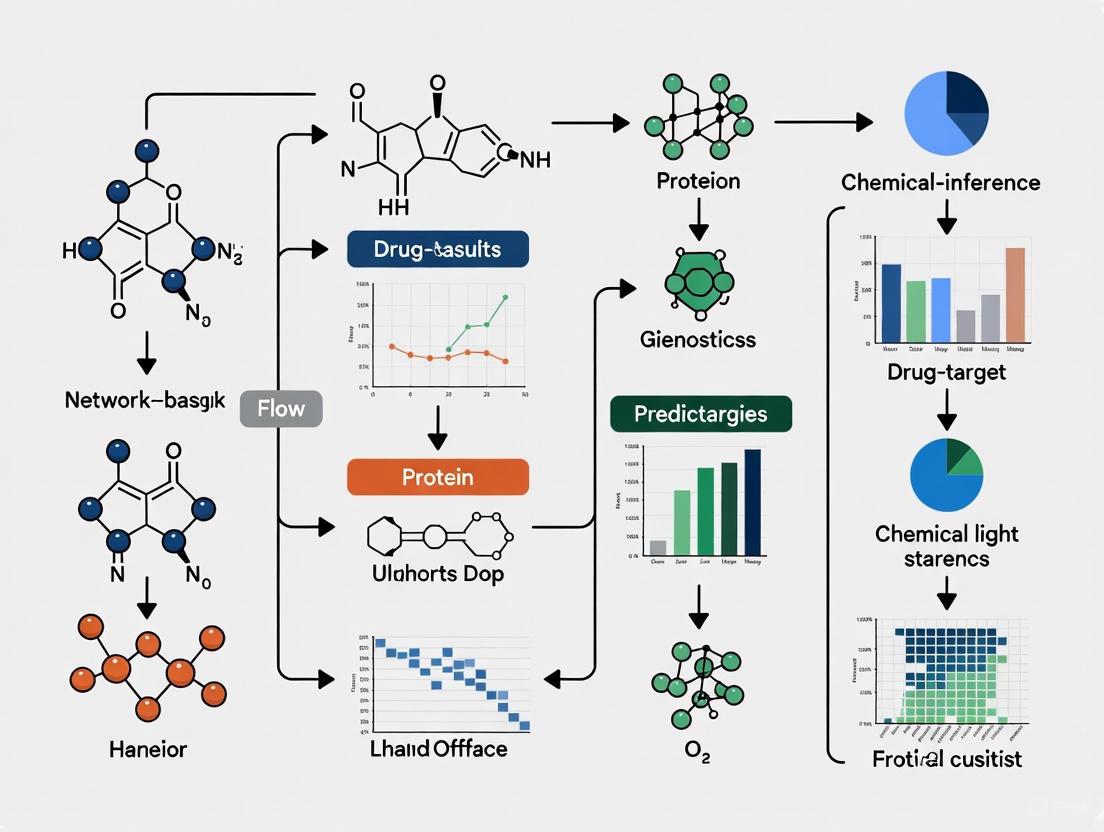
This article provides a comprehensive overview of network-based inference (NBI) methods for predicting drug-target interactions (DTIs), a crucial task in modern drug discovery and repurposing.
Network-Based Inference for Drug-Target Prediction: A Comprehensive Guide from Foundations to Clinical Applications
Abstract
This article provides a comprehensive overview of network-based inference (NBI) methods for predicting drug-target interactions (DTIs), a crucial task in modern drug discovery and repurposing. Aimed at researchers, scientists, and drug development professionals, it explores the foundational principles of NBI, which leverages the topology of bipartite drug-target networks to infer new interactions without relying on 3D protein structures or experimentally confirmed negative samples. The scope covers core methodologies, including resource-spreading algorithms and heterogeneous network integration, their practical applications in polypharmacology and side-effect prediction, strategies for optimizing performance and overcoming data sparsity, and finally, a rigorous comparison with other computational approaches, supported by experimental validation case studies. By synthesizing the latest advancements, this review serves as a valuable resource for leveraging these powerful, efficient computational tools to accelerate drug development.
The Paradigm Shift: From Single-Target to Network-Based Pharmacology
Drug-target interaction (DTI) prediction is a cornerstone of computational drug discovery, enabling the rational design of new therapeutics, the repurposing of existing drugs, and the elucidation of their mechanisms of action [1]. The process of developing a new drug—from initial research to market availability—typically requires approximately $2.3 billion and spans 10–15 years, with a success rate that fell to 6.3% by 2022 [2]. DTI prediction is a pivotal component of the discovery phase, aiming to mitigate the high costs, low success rates, and extensive timelines of traditional drug development by efficiently using the growing amount of available bioactivity data [2]. Accurate target prediction helps minimize the validation of ineffective drug-target pairs, allows for more focused experimentation, and aids in identifying potential off-target effects and multi-target drugs promising for complex disease treatment [2]. This document frames the DTI prediction problem within the context of network-based inference, a class of methods that demonstrates significant advantages for this task.
Methodological Approaches to DTI Prediction
The evolution of in silico DTI prediction methods has progressed from early structure-based techniques to modern machine learning and network-based approaches. The following table summarizes the key methodologies.
Table 1: Overview of DTI Prediction Methodologies
| Method Category | Key Principles | Representative Algorithms/Models | Advantages | Limitations |
|---|---|---|---|---|
| Early In Silico | Utilizes 3D protein structures or known bioactive compounds to simulate binding. | Molecular Docking [2], QSAR, Pharmacophore Models [2] | Provides structural insights into binding interactions. | Highly dependent on available 3D protein structures; assumes linear structure-activity relationships [2]. |
| Machine Learning (ML) | Enables models to autonomously learn complex patterns from chemical and genomic data. | KronRLS [2], SimBoost [2], DeepDTA [1] | Capable of capturing non-linear relationships; high predictive accuracy with sufficient data. | Performance can be influenced by data sparsity and quality of negative samples [3]. |
| Network-Based Inference | Treats DTIs as a bipartite network and uses algorithms to infer new links. | Network-Based Inference (NBI) [3], Probabilistic Spreading (ProbS) [3] | Does not rely on 3D structures or negative samples; simple, fast, and covers a large target space [3]. | Relies heavily on the completeness of the known interaction network. |
| Multimodal & Pre-training | Integrates diverse data types (e.g., SMILES, text, 3D structures) into a unified model. | GRAM-DTI [1], EviDTI [4] | Improves robustness and generalizability; leverages large-scale unlabeled data. | Computationally intensive; requires complex architecture design. |
| Uncertainty-Aware DL | Quantifies the confidence or uncertainty of model predictions. | EviDTI [4] | Helps prioritize candidates for experimental validation; reduces risk from overconfident false positives. | Adds model complexity; requires specialized statistical methods. |
Experimental Protocols and Workflows
Protocol for Network-Based Inference (NBI)
Network-based methods, such as NBI, leverage the topology of known DTI networks for prediction without requiring 3D protein structures or experimentally confirmed negative samples [3].
Materials:
- Known DTI Data: A bipartite network of confirmed drug-target interactions (e.g., from databases like DrugBank [4]).
- Computing Environment: Standard computational hardware capable of performing matrix operations.
Procedure:
- Network Construction: Represent the known DTIs as a bipartite graph, where one set of nodes represents drugs and the other represents targets. An edge exists between a drug and a target if their interaction is known.
- Matrix Representation: Convert this bipartite graph into a binary adjacency matrix A, where the rows represent drugs and the columns represent targets. An element aᵢⱼ = 1 if drug i interacts with target j, and 0 otherwise.
- Resource Diffusion: Execute a two-step resource diffusion process, akin to a recommendation algorithm [3]:
- Step 1: Resources from target nodes are distributed to drug nodes.
- Step 2: Resources on drug nodes are then redistributed back to target nodes.
- Prediction Scoring: Mathematically, this process is captured by the operation W = A * Aᵀ, where the resulting matrix W contains the prediction scores for all possible drug-target pairs. Higher scores indicate a higher likelihood of interaction.
- Validation: The model's performance is evaluated under a cold-start scenario (e.g., predicting targets for new drugs not in the training network) using metrics like area under the ROC curve (AUC) [3].
NBI Workflow: From a known DTI network to a prediction matrix via resource diffusion.
Protocol for a Modern Multimodal Deep Learning Framework (GRAM-DTI)
GRAM-DTI represents the state-of-the-art in integrating diverse data modalities for robust DTI prediction [1].
Materials:
- Multimodal Data:
- Drugs: SMILES sequences, textual descriptions, hierarchical taxonomic annotations (HTA).
- Proteins: Amino acid sequences.
- (Optional) IC50 activity measurements for weak supervision.
- Software & Models:
- Pre-trained encoders: MolFormer (for SMILES), MolT5 (for text/HTA), ESM-2 (for proteins).
- Computational framework for volume-based contrastive learning and adaptive modality dropout.
Procedure:
- Data Preprocessing and Embedding:
- For each drug and target, generate the respective multimodal inputs.
- Use the pre-trained, frozen encoders (e.g., ESM-2 for proteins) to obtain initial, high-dimensional feature vectors for each modality [1].
- Modality Projection:
- Train lightweight neural projectors to map each modality-specific embedding into a shared, lower-dimensional representation space.
- Multimodal Alignment with Volume Loss:
- Employ Gramian volume-based contrastive learning to align the four modalities (SMILES, text, HTA, protein) in the shared space simultaneously, capturing higher-order semantic relationships beyond pairwise alignment [1].
- Adaptive Modality Dropout:
- During pre-training, dynamically regulate the contribution of each modality to prevent dominant but less informative modalities from overwhelming complementary signals. This enhances model robustness [1].
- Model Training and Evaluation:
- Train the model on large-scale DTI datasets. If available, use IC50 values as an auxiliary supervision signal to ground the representations in biologically meaningful interaction strengths [1].
- Evaluate the model on benchmark datasets (e.g., Davis, KIBA) using metrics such as AUC and AUPR, and under cold-start settings to assess generalizability [1] [4].
GRAM-DTI Multimodal Fusion: Integrating multiple drug and target representations.
The Scientist's Toolkit: Research Reagent Solutions
The following table details key computational tools and data resources essential for conducting DTI prediction research.
Table 2: Essential Research Reagents and Tools for DTI Prediction
| Item Name | Type | Function/Description | Example Use Case |
|---|---|---|---|
| SMILES String | Data Representation | A line notation for encoding the structure of chemical compounds. | Serves as the primary input for many drug encoders (e.g., MolFormer) [1]. |
| Amino Acid Sequence | Data Representation | The linear sequence of amino acids for a protein. | Serves as the primary input for protein language models like ESM-2 [1]. |
| Molecular Graph | Data Representation | Represents a drug as a 2D graph with atoms as nodes and bonds as edges. | Used by graph-based models (e.g., GraphDTA, EviDTI) to capture topological structure [4]. |
| IC50/Kd/Ki Value | Bioactivity Data | Quantitative measurements of binding affinity or inhibitory concentration. | Used as labels for regression tasks or for weak supervision during pre-training [1] [3]. |
| ESM-2 | Pre-trained Model | A large-scale protein language model that learns meaningful representations from sequences. | Used to generate powerful initial feature embeddings for target proteins [1]. |
| MolFormer | Pre-trained Model | A transformer-based model pre-trained on a large corpus of molecular SMILES strings. | Used to generate initial feature embeddings for drugs from their SMILES notation [1]. |
| Known DTI Network | Dataset/Resource | A curated collection of experimentally validated drug-target pairs. | Serves as the foundational data for network-based inference methods and for model training/validation [3]. |
| AlphaFold | Structural Model | A system that predicts a protein's 3D structure from its amino acid sequence. | Can be integrated to provide structural features for models that go beyond sequence information [2]. |
Performance Benchmarking
Quantitative evaluation on standardized benchmarks is critical for assessing the performance of DTI prediction models. The table below summarizes the performance of selected models on common datasets.
Table 3: Performance Comparison of DTI Prediction Models on Benchmark Datasets
| Model | Dataset | Accuracy (%) | AUC (%) | AUPR (%) | MCC (%) | F1 Score (%) |
|---|---|---|---|---|---|---|
| EviDTI [4] | DrugBank | 82.02 | - | - | 64.29 | 82.09 |
| EviDTI [4] | Davis | ~90.8* | ~90.1* | ~90.3* | ~90.9* | ~92.0* |
| EviDTI [4] | KIBA | ~90.6* | ~90.1* | - | ~90.3* | ~90.4* |
| GRAM-DTI [1] | Multiple | State-of-the-art | State-of-the-art | State-of-the-art | - | - |
| NBI Methods [3] | Various | Competitive | Competitive | - | - | - |
Note: Values marked with () are approximate, derived from the reported performance improvements over other baseline models as detailed in the source [4]. AUC: Area Under the ROC Curve; AUPR: Area Under the Precision-Recall Curve; MCC: Matthews Correlation Coefficient.*
In the pipeline of computer-aided drug discovery, traditional structure- and ligand-based methods have served as cornerstone technologies for predicting drug-target interactions (DTIs) and identifying lead compounds [5] [6]. These approaches, including molecular docking, pharmacophore modeling, and ligand-based similarity searching, operate on distinct principles but share common limitations that restrict their universal application [3]. With the paradigm shift toward network pharmacology and polypharmacology, the "one drug → one target → one disease" model is progressively being replaced by "multi-drugs → multi-targets → multi-diseases" frameworks [3]. This evolution underscores the necessity to critically evaluate traditional computational methods, whose constraints become increasingly pronounced when addressing complex biological systems. This application note systematically delineates the fundamental limitations of these established approaches while contextualizing their role within modern network-based inference research for drug-target prediction.
Comparative Limitations of Traditional DTI Prediction Methods
The table below summarizes the core methodologies and inherent constraints of three primary traditional approaches for drug-target interaction prediction.
Table 1: Core Methodologies and Limitations of Traditional DTI Prediction Approaches
| Method Category | Fundamental Principle | Data Requirements | Key Technical Limitations |
|---|---|---|---|
| Structure-Based (Docking) [6] [3] | Predicts binding pose and affinity of a small molecule within a target's 3D structure. | High-resolution 3D protein structure (e.g., from X-ray, NMR). | Performance is highly dependent on the scoring function's accuracy [6] [7]. Computationally expensive for large libraries [8]. |
| Structure-Based (Pharmacophore) [5] [3] | Defines essential steric/electronic features for bioactivity; used as a query for screening. | Protein-ligand complex structure or set of active ligands. | Model quality is sensitive to input data quality [5]. May oversimplify interactions by ignoring subtle energetics [7]. |
| Ligand-Based [9] [3] | Infers activity based on similarity to known active compounds (2D/3D similarity, QSAR). | A set of known active and (for QSAR) inactive compounds. | Cannot identify novel scaffolds (the "similarity limitation") [3]. Requires sufficient ligand data for model building [10]. |
Unified Workflow and Failure Points
The following diagram illustrates the generalized workflow for these traditional virtual screening methods and highlights critical points where their limitations manifest.
Detailed Limitations and Underlying Causes
Data Dependency and Coverage Constraints
A primary constraint across traditional methods is their stringent data dependency, which inherently limits the scope of targets and compounds they can effectively address.
Structural Data Limitation for Docking: Molecular docking and structure-based pharmacophore modeling fundamentally require high-quality three-dimensional structures of the target protein [3] [10]. This presents a major bottleneck, as structural information is unavailable for many biologically relevant targets, such as a significant portion of G protein-coupled receptors (GPCRs) and membrane proteins [3]. Even when structures are available, the presence of co-crystallized ligands, water molecules, and loop conformations can significantly impact the accuracy of the predicted interactions [5].
Ligand Data Limitation for Ligand-Based Methods: The predictive power of ligand-based approaches, including pharmacophore modeling and QSAR, is directly proportional to the quantity, quality, and chemical diversity of known active compounds used for model training [9] [10]. For understudied targets with few known modulators, building reliable models is challenging or impossible. Furthermore, these models are inherently biased toward existing chemical scaffolds, rendering them incapable of identifying active compounds with novel, structurally distinct motifs—a phenomenon known as the "similarity limitation" [3].
Performance and Accuracy Challenges
Quantitative benchmarks reveal significant performance variations and methodological weaknesses.
Scoring Function Inaccuracy in Docking: A critical weakness of docking-based virtual screening (DBVS) lies in the imperfect correlation between computationally predicted docking scores and experimentally measured binding affinities [6] [7]. Scoring functions often struggle to accurately model solvation effects, entropy, and specific interaction energies, leading to false positives and false negatives [6]. Performance is also highly dependent on the specific docking program and target protein, with no single method consistently outperforming others across diverse targets [6] [11].
Systematic Performance Comparison: A benchmark study comparing pharmacophore-based virtual screening (PBVS) and DBVS against eight diverse protein targets demonstrated the context-dependent nature of these methods. The table below summarizes key quantitative findings from this study.
Table 2: Benchmark Performance of PBVS vs. DBVS Across Eight Targets [6] [11]
| Virtual Screening Method | Average Enrichment Factor (Higher is Better) | Superior Performance in Cases (out of 16) | Key Performance Insight |
|---|---|---|---|
| Pharmacophore-Based (PBVS) | Higher | 14 | More efficient at retrieving actives from chemical databases in this benchmark. |
| Docking-Based (DBVS) | Lower | 2 | Performance varied significantly with the choice of docking program and target. |
| Key Takeaway | PBVS demonstrated a general advantage in this specific study, but DBVS remains a powerful and complementary tool, especially when 3D structural insights are crucial. |
Inefficiency and Resource Demands
Computational Throughput: Traditional molecular docking is computationally intensive, making the screening of ultra-large chemical libraries containing billions of molecules practically infeasible on standard computing resources [8]. While pharmacophore-based screening is generally faster, it still requires significant computational effort for large-scale databases [5].
The Negative Sample Problem for Machine Learning: Supervised machine learning models for DTI prediction typically require both positive (known interacting) and negative (known non-interacting) drug-target pairs for training [12] [3]. However, publicly available databases are rich in confirmed positive interactions but lack experimentally validated negative samples. Using automatically generated negative sets (e.g., "one versus the rest") can introduce low-quality labels and significantly degrade model performance [3].
Experimental Protocols for Method Benchmarking
Protocol: Benchmarking PBVS vs. DBVS Performance
This protocol outlines the steps for a comparative performance assessment of pharmacophore-based and docking-based virtual screening, based on established benchmarking practices [6] [11].
1. Reagent and Software Solutions
- Protein Targets: Select 3-5 structurally diverse targets with known 3D structures (from PDB) and sets of experimentally confirmed active ligands.
- Compound Database: Prepare a benchmarking database for each target by combining its known active ligands with a large set of pharmaceutically relevant decoy molecules (e.g., from ZINC database).
- Software: Select PBVS software (e.g., Catalyst, LigandScout) and multiple DBVS programs (e.g., DOCK, GOLD, Glide) to account for program-specific variations.
2. Procedure 1. Model Preparation: - For PBVS: Generate a structure-based pharmacophore model for each target using a co-crystallized ligand-protein complex. - For DBVS: Prepare the protein structure for docking (add hydrogens, assign charges) using the same complex. 2. Virtual Screening Execution: - Screen the entire benchmarking database against each target using both the PBVS and DBVS workflows. - Record the rank of each active compound in the screened list. 3. Performance Evaluation: - Calculate Enrichment Factors (EF) at early stages of the ranked list (e.g., top 1% and 5%). EF measures how much better the method is at retrieving actives compared to a random selection. - Generate Receiver Operating Characteristic (ROC) curves and calculate the Area Under the Curve (AUC) to assess overall performance.
3. Data Analysis
- Compare the average EF and AUC values across all targets for PBVS versus the different DBVS methods.
- The method that consistently retrieves more active compounds higher in the ranked list, resulting in higher EF and AUC values, is considered to have better performance for the tested scenario.
Protocol: Assessing the "Similarity Limitation" in Ligand-Based Screening
This protocol is designed to evaluate the inability of ligand-based methods to identify actives with novel scaffolds [3].
1. Reagent and Software Solutions
- Active Ligand Sets: For a well-characterized target, compile a set of known active compounds and cluster them by molecular scaffold.
- Software: Use software capable of calculating molecular similarity (e.g., based on 2D fingerprints) and performing similarity searches.
2. Procedure 1. Training Set Creation: Select one major scaffold cluster from the active set to serve as the "known" chemotype for training. 2. Blind Test Set Creation: The remaining active compounds, belonging to different scaffold clusters, form the "novel scaffold" test set. Combine this test set with a large pool of decoys. 3. Similarity Search: Use the compounds from the training set as queries to perform a similarity search against the blind test set. 4. Result Analysis: Examine the ranks of the "novel scaffold" actives. If they are not enriched near the top of the list, it demonstrates the method's limitation in scaffold hopping.
The Scientist's Toolkit: Key Research Reagents and Software
Table 3: Essential Resources for Traditional and Network-Based DTI Prediction
| Resource Name | Type/Category | Primary Function in Research |
|---|---|---|
| Protein Data Bank (PDB) [5] | Database | Primary repository for 3D structural data of proteins and nucleic acids, essential for structure-based methods. |
| ChEMBL [12] [8] | Database | Manually curated database of bioactive molecules with drug-like properties, containing binding affinities and ADMET data. |
| ZINC [9] [8] | Database | Publicly available database of commercially available compounds for virtual screening. |
| LigandScout [6] [11] | Software | Tool for creating structure- and ligand-based pharmacophore models and performing virtual screening. |
| Smina [8] | Software | A variant of AutoDock Vina for molecular docking, highly customizable for scoring function development. |
| AOPEDF [12] | Algorithm/Software | A network-based method that integrates heterogeneous biological data to predict DTIs, overcoming target-structure dependency. |
| DTIAM [10] | Algorithm/Software | A unified deep learning framework for predicting interactions, binding affinities, and mechanisms of action. |
Traditional docking, pharmacophore, and ligand-based approaches have undeniably contributed to drug discovery successes but are constrained by their specific data requirements, computational costs, and limited ability to characterize polypharmacology [3]. The emergence of network-based inference methods addresses several of these shortcomings by forgoing the need for 3D structural data and negative samples, enabling the prediction of interactions on a proteome-wide scale [12] [3]. In the modern research context, traditional methods are not obsolete but are increasingly being repositioned. They serve as powerful, targeted tools for lead optimization within a specific target family or as complementary filters integrated with network-based approaches to add mechanistic depth and structural insights to system-level predictions [7]. This synergistic combination of detailed traditional and holistic network-based approaches represents the future of computational drug discovery.
Network-Based Inference (NBI) is a computational method derived from recommendation algorithms and link prediction in complex network theory, repurposed for predicting drug-target interactions (DTIs) [13] [3]. Its core principle is leveraging the topology of a known bipartite drug-target network—where connections exist only between drug and target nodes—to infer new interactions [13]. A fundamental assumption is that similar drugs tend to interact with similar targets, and this similarity is captured not by direct chemical or genomic descriptors, but purely by the network's connectivity structure [3].
A significant advantage of NBI over other computational methods is that it operates without requiring the three-dimensional structures of target proteins or experimentally confirmed negative samples (i.e., non-interacting drug-target pairs) [14] [3]. This allows NBI to explore a much larger target space, including proteins with unknown structures, such as many G protein-coupled receptors (GPCRs) [3]. The method is computationally efficient, relying primarily on matrix operations to simulate a process of resource diffusion across the network [3].
Core Methodology and Protocols
The Fundamental NBI Protocol
The basic NBI protocol uses a known DTI network to predict unknown interactions through a resource allocation process [13].
Protocol Steps:
- Network Construction: Construct a bipartite network represented by an adjacency matrix ( A ) of dimensions ( nd \times nt ), where ( nd ) is the number of drugs and ( nt ) is the number of targets. Matrix element ( A(i, j) = 1 ) if drug ( i ) interacts with target ( j ); otherwise, ( A(i, j) = 0 ) [14].
- Resource Diffusion: The prediction is formulated as a two-step resource diffusion process [13]:
- Step 1 - Resource from Drugs to Targets: Resources from all drug nodes are allocated to the target nodes they connect to. The initial resource vector at the targets, ( f{t0} ), can be a uniform distribution or based on specific prior knowledge.
- Step 2 - Resource Back-Propagation to Drugs: Resources from the target nodes are propagated back to the drug nodes.
- Prediction Score Calculation: The final prediction matrix ( W ) is computed using the matrix formula ( W = A \cdot A^T \cdot A ), where ( A^T ) is the transpose of the adjacency matrix [13]. This process effectively spreads the interaction information through the entire network. A higher score in ( W(i, j) ) indicates a higher probability of interaction between drug ( i ) and target ( j ).
Visualization of the Fundamental NBI Resource Diffusion Process:
Advanced NBI Method: The wSDTNBI Protocol
Subsequent developments have enhanced the original NBI. The weighted Substructure-Drug-Target NBI (wSDTNBI) method incorporates binding affinity data and drug-substructure associations to make more quantitative predictions [14] [15].
Protocol Steps:
- Input Network Preparation:
- Weighted DTI Network: Construct a weighted drug-target adjacency matrix ( W{DTI} ). Instead of binary values (0/1), the edge weights are set to be positively correlated with experimental binding affinities (e.g., ( Kd ), ( IC{50} )) [14].
- Drug-Substructure Association (DSA) Network: Construct a binary adjacency matrix ( A{DSA} ) where an edge connects a drug to a substructure if the drug's chemical structure contains that substructure. This network includes both drugs from the DTI network and novel compounds, enabling predictions for new molecules [14].
- Two-Pronged Prediction Score Calculation:
- Prong 1 (Network-Based - red arrows in diagram): Convert the weighted ( W{DTI} ) to an unweighted matrix ( A{DTI} ). Use the balanced SDTNBI (bSDTNBI) method on the integrated substructure-drug-target network to calculate normalized scores stored in matrix ( S{norm} ) [14].
- Prong 2 (Similarity-Based - blue arrows in diagram): Calculate a drug similarity matrix using the Tanimoto coefficient on substructure fingerprints from ( A{DSA} ). For a given drug-target pair ( (Di, Tj) ), the similarity-based score ( S{sim}(i, j) ) is the average edge weight of the DTIs between ( Tj ) and its ( \epsilon ) most similar known ligands [14].
- Score Integration: The final prediction score is a combination of the normalized bSDTNBI score and the similarity-based score, resulting in an output where higher scores correlate with stronger predicted binding affinity [14].
Visualization of the wSDTNBI Two-Pronged Approach:
The Scientist's Toolkit: Research Reagent Solutions
Table 1: Essential resources for implementing NBI-based DTI prediction.
| Resource Name | Type | Function in NBI Research | Key Features |
|---|---|---|---|
| NetInfer Web Server [15] | Web Tool | User-friendly interface for predicting targets, pathways, and adverse effects using NBI methods. | Implements SDTNBI, bSDTNBI, and wSDTNBI; no local installation required. |
| Global DTI Network (v2020) [15] | Dataset | A comprehensive, curated bipartite network of known drug-target interactions. | Serves as the primary input network for resource diffusion in NBI. |
| BindingDB [16] | Database | Source of experimental binding affinity data (Kd, Ki, IC50). | Provides data to create a weighted DTI network for methods like wSDTNBI. |
| MetaADEDB [15] | Database | Comprehensive database on Adverse Drug Events (ADEs). | Used to extend NBI applications to ADE prediction. |
| Drug-Substructure Association Network [14] | Computational Construct | Network linking drugs to their constituent chemical substructures. | Enables target prediction for novel compounds outside the original DTI network. |
| Morgan Fingerprints [15] | Molecular Descriptor | A type of circular fingerprint representing molecular structure. | Used in NetInfer to calculate drug similarity for new compound input. |
Application Notes: Experimental Validation & Case Studies
Case Study 1: Drug Repurposing via Basic NBI
Objective: To rediscover new therapeutic targets (i.e., drug repurposing) for existing drugs using the basic NBI method [13].
Experimental Protocol for Validation:
- Prediction: Apply the NBI algorithm to a network of 12,483 FDA-approved and experimental drug-target links [13].
- Compound Selection: Prioritize and acquire top-ranking predicted drugs for specific targets (e.g., estrogen receptors, dipeptidyl peptidase-IV).
- In Vitro Binding Assays:
- Materials: Purified target proteins (e.g., human estrogen receptor alpha), candidate drugs, reference ligands, assay kits (e.g., fluorescence polarization or radiometric assays).
- Procedure: Incubate the target protein with a range of concentrations of the candidate drug. Measure the displacement of a known fluorescent or radioactive ligand. Calculate the half-maximal inhibitory concentration (IC50) or effective concentration (EC50) to quantify potency [13].
- Functional Cellular Assays:
- Materials: Human cancer cell lines (e.g., MDA-MB-231 breast cancer cells), cell culture reagents, MTT assay kit.
- Procedure: Treat cells with vehicle control or varying concentrations of the validated drug. After incubation, add MTT reagent and measure absorbance to determine cell viability. Calculate the half-maximal inhibitory concentration for anti-proliferative effects [13].
Results: This protocol validated five drugs, including montelukast and simvastatin, as hits against new targets with IC50/EC50 values ranging from 0.2 to 10 µM, and confirmed potent antiproliferative activity in cells [13].
Case Study 2: Virtual Screening with wSDTNBI
Objective: To discover novel, potent inverse agonists for retinoid-related orphan receptor γt (RORγt) using the advanced wSDTNBI method [14].
Experimental Protocol for Validation:
- Virtual Screening: Run the wSDTNBI algorithm on a weighted DTI network to prioritize compounds with predicted high binding affinity for RORγt.
- Compound Procurement: Purchase 72 top-ranking natural compounds for experimental testing [14].
- In Vitro Inverse Agonist Assay:
- Materials: RORγt ligand binding domain, candidate compounds, cofactor peptides, assay reagents for measuring constitutive receptor activity (e.g., luminescence-based).
- Procedure: Incubate RORγt with candidate compounds. Measure the reduction in constitutive receptor activity relative to a vehicle control. Generate dose-response curves to determine IC50 values [14].
- X-ray Crystallography:
- Materials: Crystals of the RORγt ligand-binding domain, the lead compound (e.g., ursonic acid).
- Procedure: Co-crystallize the protein with the lead compound. Collect diffraction data and solve the crystal structure to confirm direct atomic-level contact between the compound and the target protein [14].
- In Vivo Efficacy Study:
- Materials: Mouse model of multiple sclerosis (e.g., experimental autoimmune encephalomyelitis), validated lead compounds, vehicle control.
- Procedure: Administer the lead compound (e.g., ursonic acid or oleanonic acid) to the disease model. Monitor and score disease symptoms (e.g., paralysis) over time to demonstrate therapeutic efficacy [14].
Results: This integrated protocol identified seven novel RORγt inverse agonists. Ursonic acid and oleanonic acid showed high potency with IC50 values of 10 nM and 0.28 µM, respectively. The direct binding of ursonic acid was confirmed by X-ray structure, and in vivo studies demonstrated its therapeutic effects, achieving a high success rate of 9.7% (7/72) [14].
Quantitative Performance Data
Table 2: Performance comparison of NBI and other DTI prediction methods on benchmark datasets. AUC values from 30 simulations of 10-fold cross-validation are presented as mean ± standard deviation [13].
| Method | Enzymes (AUC) | Ion Channels (AUC) | GPCRs (AUC) | Nuclear Receptors (AUC) |
|---|---|---|---|---|
| NBI [13] | 0.975 ± 0.006 | 0.976 ± 0.007 | 0.946 ± 0.019 | 0.837 ± 0.040 |
| DBSI [13] | 0.959 ± 0.008 | 0.959 ± 0.010 | 0.927 ± 0.022 | 0.779 ± 0.047 |
| TBSI [13] | 0.947 ± 0.011 | 0.947 ± 0.013 | 0.901 ± 0.027 | 0.777 ± 0.050 |
Table 3: Experimental validation results of NBI methods in case studies.
| Case Study | NBI Method | Key Finding | Experimental Result |
|---|---|---|---|
| Drug Repurposing [13] | Basic NBI | 5 old drugs with new polypharmacological targets | IC50/EC50: 0.2 - 10 µM |
| RORγt Inverse Agonist Discovery [14] | wSDTNBI | 7 novel inverse agonists identified | Best IC50: 10 nM (Ursonic Acid) |
| RORγt Discovery Success Rate [14] | wSDTNBI | Experimental hit rate | 9.7% (7 out of 72 compounds) |
In the landscape of computational drug discovery, the prediction of drug-target interactions (DTIs) is a fundamental task. Traditional computational methods, such as molecular docking and structure-based pharmacophore mapping, often rely heavily on the availability of high-resolution three-dimensional (3D) protein structures [3]. Similarly, many machine learning approaches require large sets of both confirmed interacting (positive) and non-interacting (negative) drug-target pairs for model training [17]. Network-based inference (NBI) methods have emerged as a powerful alternative, demonstrating significant advantages by overcoming both of these constraints [3]. This application note details the methodologies and experimental protocols that leverage these key advantages, providing researchers with practical guidance for implementing these techniques in drug repurposing and novel drug discovery projects.
Core Advantages and Methodological Foundations
Independence from 3D Protein Structures
A significant bottleneck in structure-based methods is their limited applicability to proteins without solved 3D structures, such as many G-protein-coupled receptors (GPCRs) [3] [17]. Network-based methods circumvent this limitation by using network topology and similarity measures instead of structural data.
- Underlying Principle: These methods operate on the "guilt-by-association" principle, inferring potential interactions from the existing network of known DTIs and similarity relationships between drugs and between targets [3] [17].
- Data Utilization: They integrate diverse data types—such as chemical structures of drugs, amino acid sequences of proteins, known DTIs, and phenotypic data—to construct comprehensive relational networks without requiring 3D structural information [3] [18].
Independence from Experimentally Validated Negative Samples
Supervised machine learning models typically require both positive and negative examples. However, publicly available databases contain predominantly positive DTI data, and experimentally validated negative samples (confirmed non-interactions) are scarce [17]. Network-based methods address this challenge through their design.
- Positive-Unlabeled (PU) Learning: The problem is inherently one of PU learning, where only positive and unlabeled examples are available [18] [19]. Many network-based algorithms are designed to function without relying on gold-standard negative samples.
- Leveraging Network Structure: Algorithms like Network-Based Inference (NBI) use resource diffusion on the known DTI network (composed only of positive interactions) to predict new links, thus bypassing the need for negative examples altogether [3].
The following table summarizes the key challenges and how network-based methods address them.
Table 1: Key Challenges Addressed by Network-Based Methods
| Challenge | Impact on Traditional Methods | Network-Based Solution |
|---|---|---|
| Lack of 3D Structures | Limits application to proteins with unknown or hard-to-resolve structures (e.g., many membrane proteins) [3] [17]. | Uses network topology, sequence similarities, and chemical similarities to infer interactions without structural data [3] [18]. |
| Absence of Negative Samples | Introduces bias and artifacts in supervised learning models; leads to the "positive-unlabeled" problem [17] [19]. | Employs algorithms that function on known positive networks or uses sophisticated sampling strategies to generate realistic negatives [3] [19]. |
Experimental Protocols and Workflows
This section provides a detailed, step-by-step protocol for implementing a network-based DTI prediction pipeline that capitalizes on the described advantages.
Protocol 1: Basic Network-Based Inference (NBI) for DTI Prediction
This protocol is adapted from the foundational NBI (or Probabilistic Spreading) method, which requires only a known DTI network [3].
1. Objective To predict novel drug-target interactions using only a bipartite network of known DTIs, without 3D structures or negative samples.
2. Materials and Reagents
- Computational Environment: A standard computer with a Python or R environment.
- Data Source: A matrix of known DTIs (e.g., from databases like ChEMBL or DrugBank).
3. Procedure
- Step 1: Data Preparation and Network Construction
- Compile a list of drugs ( D = {d1, d2, ..., dm} ) and targets ( T = {t1, t2, ..., tn} ).
- Construct a bipartite adjacency matrix ( A ) of size ( m \times n ), where ( A{ij} = 1 ) if drug ( di ) is known to interact with target ( t_j ), and 0 otherwise (indicating an unknown interaction).
Step 2: Resource Diffusion and Weight Calculation
- The algorithm involves a two-step resource diffusion process across the bipartite network:
- Resource from targets to drugs: The resource located on each target node is equally distributed to the drugs it connects to.
- Resource from drugs to targets: The resource received by each drug node is then propagated back to the targets it links to.
- Mathematically, this can be compactly represented as a single matrix operation. The final prediction score matrix ( W ) is calculated using the formula: [ W = A \cdot A^T \cdot A ] where ( A^T ) is the transpose of the adjacency matrix ( A ). This matrix multiplication effectively performs the two-step diffusion process. The resulting matrix ( W ) contains the prediction scores for all unknown drug-target pairs.
- The algorithm involves a two-step resource diffusion process across the bipartite network:
Step 3: Prediction and Prioritization
- The scores ( W{ij} ) for all pairs where ( A{ij} = 0 ) (unknown interactions) represent the likelihood of a potential interaction.
- Rank these candidate DTIs in descending order of their scores for experimental validation.
Diagram 1: NBI Prediction Workflow
Protocol 2: Heterogeneous Network Construction and Feature Learning
For more advanced and accurate predictions, integrating multiple data sources into a heterogeneous network is highly beneficial. This protocol outlines the process using graph representation learning [18] [19].
1. Objective To build a comprehensive heterogeneous network integrating multiple biological entities and learn low-dimensional feature representations (embeddings) for drugs and targets to predict DTIs.
2. Materials and Reagents
- Software: Python with libraries such as
stellargraph,node2vec, orPyTorch Geometric. - Data Sources:
- Drug-drug similarity (e.g., from chemical fingerprints).
- Target-target similarity (e.g., from protein sequence alignment).
- Known DTI network.
- (Optional) Additional networks like drug-disease or protein-protein interactions (PPI).
3. Procedure
- Step 1: Data Collection and Similarity Calculation
- Drug Similarity: Calculate the pairwise chemical similarity between all drugs using Tanimoto coefficients on molecular fingerprints (e.g., MACCS or ECFP) [17].
- Target Similarity: Calculate the pairwise sequence similarity between all targets using normalized Smith-Waterman scores or BLAST E-values [17].
- Other Data: Gather data for other node types (e.g., diseases, side effects) and relationships from public databases.
Step 2: Heterogeneous Network Construction
- Create a graph ( G = (V, E) ) where ( V ) is the set of nodes (drugs, targets, diseases, etc.).
- Define edges ( E ) to include:
- Drug-drug edges (weighted by chemical similarity).
- Target-target edges (weighted by sequence similarity).
- Drug-target edges (known DTIs).
- Other relevant edges (e.g., drug-disease associations).
Step 3: Network Embedding Generation
Step 4: DTI Prediction Model Training
- For each known drug-target pair, create a feature vector by concatenating the drug embedding and the target embedding.
- Use the known DTIs as positive training examples.
- For negative examples, employ a robust negative sampling strategy: select pairs of drugs and targets that are not known to interact and are distant from each other in the network (e.g., with low topological overlap) to minimize false negatives [19].
- Train a classifier (e.g., Gradient Boosted Trees or a Neural Network) on these feature vectors to predict interaction likelihood [17].
Diagram 2: Heterogeneous Network Pipeline
Successful implementation of the protocols above relies on key data and software resources. The following table lists essential "research reagents" for network-based DTI prediction.
Table 2: Key Research Reagents and Resources for Network-Based DTI Prediction
| Resource Name | Type | Primary Function in Research | Key Utility / Relevance to Advantages |
|---|---|---|---|
| ChEMBL [17] | Database | Provides curated bioactivity data (IC50, Ki, Kd) for drugs and targets. | Source of experimentally validated positive interactions; enables creation of realistic benchmark datasets that may include negative samples. |
| DrugBank [20] | Database | Contains comprehensive drug, target, and DTI information, including drug structures (SMILES). | Provides drug chemical structures for similarity calculation and known DTIs for network construction, bypassing need for 3D structures. |
| HIPPIE PPI Network [21] | Database (Network) | A high-confidence protein-protein interaction network. | Used to build context-specific biological networks (e.g., for cancer) to inform target selection and understand polypharmacology, independent of 3D data. |
| STRING [20] | Database (Network) | A comprehensive database of known and predicted PPIs. | Integrates functional linkages between proteins, enriching the target-target similarity and network context beyond sequence alone. |
| RDKit | Software Library | Open-source cheminformatics toolkit. | Calculates molecular fingerprints and drug-drug similarity from SMILES strings, a core step for network construction without 3D data. |
| node2vec [17] | Software Algorithm | A graph embedding method that learns continuous feature representations for nodes in a network. | Generates drug and target embeddings from a heterogeneous network topology, serving as powerful features for DTI prediction models. |
| PathLinker [21] | Software Algorithm | Reconstructs signaling pathways within PPI networks by identifying shortest paths. | Used in network-informed target discovery to find critical connector nodes between proteins with co-existing mutations, suggesting combination drug targets. |
Performance and Validation
Network-based methods have demonstrated robust performance in predicting DTIs. The following table synthesizes quantitative results from recent studies, highlighting their effectiveness even without 3D structures or gold-standard negatives.
Table 3: Performance Benchmarks of Network-Based and Related Methods
| Model/Method | Key Principle | Reported Performance (AUROC / AUPR) | Notes on Advantages |
|---|---|---|---|
| NBI (ProbS) [3] | Resource diffusion on a DTI network. | Competitive performance on benchmark datasets (exact metrics not provided in source). | Directly operates on the known DTI network only, demonstrating core independence from 3D structures and negative samples. |
| DTIAM [10] | Self-supervised pre-training on molecular graphs and protein sequences. | Outperformed baseline methods in warm-start and cold-start scenarios. | Pre-training on large unlabeled data (sequences/graphs) reduces dependency on labeled DTI data and protein structures. |
| DT2Vec [17] | Graph embedding (node2vec) on similarity networks + classifier. | Achieved competitive results on a golden standard dataset. | Integrates chemical and genomic spaces into low-dimensional vectors without 3D data; uses a dataset with validated negatives. |
| MVPA-DTI [18] | Heterogeneous network with multiview path aggregation. | AUROC: 0.966, AUPR: 0.901. | Integrates drug 3D conformation features (from a transformer) and protein sequence features (from Prot-T5), but the network framework provides the primary predictive power. |
| Hetero-KGraphDTI [19] | GNN with knowledge integration. | Average AUC: 0.98, Average AUPR: 0.89. | Leverages prior biological knowledge from ontologies to regularize the model, enhancing performance without relying on negative samples or 3D structures. |
Concluding Remarks
The independence from 3D structures and experimentally validated negative samples positions network-based inference as a uniquely versatile and scalable strategy for DTI prediction. The protocols and resources detailed in this application note provide a clear roadmap for researchers to apply these powerful methods. They enable the systematic exploration of drug repurposing opportunities and the discovery of novel therapeutic targets, particularly for proteins that are intractable to structural studies, thereby accelerating the drug discovery pipeline [3] [21].
The prediction of drug-target interactions (DTIs) is a critical step in genomic drug discovery and drug repurposing, enabling researchers to understand the mechanisms of action of drugs at the target level and significantly reducing the time and cost associated with traditional drug development [22] [23] [24]. While experimental methods for identifying DTIs are expensive and laborious, computational in silico approaches provide an effective means to overcome this challenge [22]. Among these, methods leveraging the underlying principles of similarity property and network topology have demonstrated remarkable success. These approaches are fundamentally based on the "guilt-by-association" assumption, which posits that similar drugs are likely to interact with similar targets and vice versa [16] [24]. This application note details the theoretical foundations, experimental protocols, and practical implementations of these principles within the context of network-based inference for DTI prediction, providing researchers with a comprehensive toolkit for computational drug discovery.
Theoretical Foundation
The Similarity Principle in DTI Prediction
The similarity property principle asserts that the chemical space of drugs and the genomic space of targets can be systematically quantified and related. Chemical similarity between drugs is commonly computed from their structural properties, often represented by Simplified Molecular-Input Line-Entry System (SMILES) strings or molecular graphs, using measures such as SIMCOMP, which provides a global similarity score based on the size of common substructures between two compounds [23] [25]. For targets, genomic sequence similarity is typically calculated from amino acid sequences using normalized Smith-Waterman scores or other alignment metrics [23]. Furthermore, the integration of heterogeneous data sources—including drug-disease associations, side-effects, and phenotypic information—enriches the similarity measures, providing a multi-view perspective that enhances prediction accuracy beyond what is possible with chemical and genomic data alone [22] [24]. Crucially, similarity is not limited to intrinsic properties; it can also be derived from the interaction network itself, for instance, by calculating the Jaccard similarity between drugs based on their shared targets within known DTI networks [22].
Network Topology in Heterogeneous Biological Networks
Network topology refers to the structural arrangement and connectivity patterns between nodes (e.g., drugs, targets, diseases) in a network. In a DTI context, known interactions form a bipartite graph between drug and target nodes [23] [16]. The topology of this network exhibits significant correlation with drug structure similarity and target sequence similarity [23]. Topological features, such as node degree (number of connections) and cluster coefficients (measure of how nodes cluster together), are informative for prediction models, as seen in the statistics of gold-standard datasets [23]. Modern methods construct heterogeneous networks that integrate multiple node types (drugs, targets, diseases, side-effects) and relationship types, providing a more comprehensive view of the biological context [22] [24]. The key insight is that drugs or targets with similar topological properties within this heterogeneous network are more likely to be functionally correlated. Topological information is captured through low-dimensional feature representations that preserve proximities between nodes, including high-order relationships that go beyond immediate neighbors to capture more complex network structures [22] [24].
Table 1: Statistics of Gold-Standard Drug-Target Interaction Datasets [23]
| Dataset | No. of Drugs | No. of Target Proteins | No. of Known Interactions | Average Degree of Drugs | Average Degree of Targets | Cluster Coefficient of Drugs | Cluster Coefficient of Targets |
|---|---|---|---|---|---|---|---|
| Enzyme | 445 | 664 | 2926 | 6.57 | 4.40 | 0.850 | 0.902 |
| Ion Channel | 210 | 204 | 1476 | 7.02 | 7.23 | 0.871 | 0.897 |
| GPCR | 223 | 95 | 635 | 2.84 | 6.68 | 0.867 | 0.776 |
| Nuclear Receptor | 54 | 26 | 90 | 1.66 | 3.46 | 0.832 | 0.933 |
Table 2: Performance Comparison of State-of-the-Art DTI Prediction Methods
| Method | Core Principle | Key Algorithmic Approach | Reported Performance (AUROC) | Reported Performance (AUPR) |
|---|---|---|---|---|
| NTFRDF [22] | Multi-similarity fusion & network topology | Deep forest with low-dimensional topological features | Substantial improvement over benchmarks | Substantial improvement over benchmarks |
| DTINet [24] | Heterogeneous network integration | Random Walk with Restart (RWR) + Diffusion Component Analysis (DCA) | 5.9% higher than second-best | 5.7% higher than second-best |
| DTIAM [10] | Self-supervised pre-training | Transformer-based feature learning from molecular graphs & protein sequences | Superior performance in warm/cold start | Superior performance in warm/cold start |
| SaeGraphDTI [25] | Sequence attribute extraction & graph neural networks | Graph encoder/decoder on similarity-augmented network | Best in class on most key metrics | Best in class on most key metrics |
| BLMNII [24] | Bipartite local model + neighbor inference | Support Vector Machine (SVM) with interaction-profile inference | Benchmark | Benchmark |
Experimental Protocols
Protocol 1: Construction of a Heterogeneous Network and Feature Representation
Objective: To build a heterogeneous network integrating multiple data sources and generate low-dimensional vector representations for drugs and targets that encapsulate their topological properties [22] [24].
Materials: Known DTIs, drug chemical structures, target protein sequences, and optionally, drug-disease associations and side-effect data [23] [24].
Methodology:
- Data Collection and Similarity Calculation:
- Collect drug chemical structures (e.g., from KEGG LIGAND) and compute the drug-drug chemical similarity matrix (Sc) using a graph-based algorithm like SIMCOMP [23].
- Collect target protein sequences (e.g., from KEGG GENES) and compute the target-target sequence similarity matrix (Sg) using normalized Smith-Waterman scores [23].
- (Optional) Integrate other similarities, such as Jaccard similarity based on shared interaction profiles, and use a multi-similarity fusion strategy to create comprehensive similarity measures [22].
- Network Construction: Formally construct a heterogeneous network where nodes represent drugs, targets, and other entities (e.g., diseases). Edges represent known interactions, similarities, and other associations [22] [24].
- Network Diffusion and Feature Learning:
- Apply a network diffusion algorithm, such as Random Walk with Restart (RWR), to capture high-order proximities and the global topology of the network for each node [24].
- Use a dimensionality reduction technique, such as Diffusion Component Analysis (DCA), to obtain informative, low-dimensional vector representations from the diffusion states. This step is crucial for de-noising and capturing the underlying structural properties [24].
Expected Outcome: A set of low-dimensional feature vectors for each drug and target node, which encode their topological context within the heterogeneous network.
Protocol 2: DTI Prediction using a Graph Neural Network Framework
Objective: To predict novel DTIs by updating drug and target features based on the topological relationships in a graph and decoding potential interactions [25].
Materials: Drug SMILES strings, target amino acid sequences, and known DTIs.
Methodology:
- Sequence Attribute Extraction:
- Encode drug SMILES strings and target amino acid sequences into fixed-length integer sequences via padding or trimming.
- Pass the encoded sequences through an embedding layer to generate initial embedding matrices.
- Use a sequence attribute extractor with one-dimensional convolutional layers of varying kernel sizes to capture key substructures and local residue patterns, producing aligned attribute sequences [25].
- Graph Encoder for Topological Feature Update:
- Construct a relational network using similarity relationships (e.g., drug-drug, target-target) and known DTIs.
- Input the initial node features (from Step 1) and the relational network into a graph encoder (e.g., a Graph Neural Network). The GNN updates each node's representation by aggregating information from its neighbors, effectively incorporating network topology [25].
- Graph Decoder for Interaction Prediction:
- The updated drug and target node features are passed to a graph decoder.
- The decoder calculates the probability of an edge (interaction) existing between a given drug-target pair, typically through a function of their respective feature vectors, to produce the final DTI prediction [25].
Expected Outcome: A predictive model capable of scoring unknown drug-target pairs, identifying potential interactions with high probability.
Visualizations
Heterogeneous Network Architecture for DTI Prediction
Diagram 1: Data integration and modeling workflow for DTI prediction.
Computational Workflow of a Network-Based Prediction Model
Diagram 2: Core computational steps in a network-based DTI prediction model.
The Scientist's Toolkit: Research Reagent Solutions
Table 3: Essential Data Resources and Computational Tools for DTI Research
| Resource / Tool Name | Type | Primary Function in Research | Example Use Case |
|---|---|---|---|
| KEGG BRITE [23] | Database | Source of known drug-target interaction data. | Building a gold-standard dataset for model training and evaluation. |
| KEGG LIGAND [23] | Database | Provides chemical structures of drugs/compounds. | Calculating drug-drug chemical similarity using SIMCOMP. |
| DrugBank [23] | Database | Repository for drug and target information. | Curating comprehensive lists of drugs and their protein targets. |
| SIMCOMP [23] | Algorithm / Tool | Computes global chemical similarity based on common substructures. | Generating the drug chemical similarity matrix (Sc) from chemical graphs. |
| Smith-Waterman Algorithm [23] | Algorithm / Tool | Performs local sequence alignment to compute similarity. | Generating the target sequence similarity matrix (Sg) from amino acid sequences. |
| Random Walk with Restart (RWR) [24] | Algorithm | Models network diffusion to capture high-order node proximity. | Exploring the topological context of a node in a heterogeneous network. |
| Diffusion Component Analysis (DCA) [24] | Algorithm | Performs dimensionality reduction on network diffusion states. | Learning low-dimensional, informative feature vectors from complex networks. |
| Graph Neural Network (GNN) [25] | Algorithm / Model | Learns node representations by aggregating information from a graph. | Updating drug and target features based on the topological relationships in a DTI network. |
The drug discovery landscape is undergoing a profound transformation, shifting from the traditional 'one drug-one target' philosophy toward a more holistic polypharmacology approach. This paradigm recognizes that complex diseases often involve dysregulation of multiple interconnected pathways and that single-target therapies may prove insufficient for durable therapeutic outcomes [26]. Polypharmacology represents the science of multi-targeting molecules, where a single drug is rationally designed to interact with multiple biological targets simultaneously [27]. This shift has been largely driven by the recognition that many successful drugs, initially developed as single-target agents, subsequently revealed multi-targeting properties that contributed significantly to their therapeutic efficacy [28].
The limitations of the single-target approach have become particularly evident in the treatment of complex, multifactorial diseases such as cancer, central nervous system disorders, autoimmune conditions, and metabolic diseases [26] [27]. Network biology reveals that biological systems operate through intricate interaction networks rather than isolated linear pathways. Consequently, modulating a single node in these complex networks often triggers adaptive responses and compensatory mechanisms that limit therapeutic efficacy [28]. Polypharmacology addresses this biological complexity by designing drugs that can modulate multiple targets within disease-relevant networks, potentially leading to enhanced efficacy and reduced susceptibility to resistance mechanisms [27].
This evolution has been facilitated by advances in multiple disciplines. The exponential growth of molecular data in the post-genomic era, coupled with advancements in computational modeling, cheminformatics, and systems biology, has enabled researchers to systematically study and design polypharmacological agents [28]. Furthermore, network-based inference approaches have emerged as powerful tools for predicting drug-target interactions (DTIs) and identifying new therapeutic applications for existing drugs, accelerating the development of multi-target therapies [18].
Polypharmacology: Conceptual Framework and Definitions
Fundamental Principles
Polypharmacology encompasses several distinct but interrelated concepts. At its core, it involves "one drug-multiple targets", where a single pharmaceutical agent is designed to interact with multiple targets either within a single disease pathway or across multiple disease pathways [28] [26]. This approach can be further categorized into several mechanistic strategies:
Single drug acting on multiple targets of a unique disease pathway: This strategy focuses on parallel or sequential targets within a defined pathological process to achieve enhanced therapeutic effect through simultaneous modulation [28].
Single drug acting on multiple targets across different disease pathways: This approach is particularly relevant for complex diseases with multiple etiological factors or for treating co-morbid conditions with a single agent [28].
Multi-target-directed ligands (MTDLs): These are specifically designed compounds that incorporate structural features enabling interaction with multiple predefined biological targets [27]. MTDLs represent the rational implementation of polypharmacology principles in drug design.
The Spectrum of Drug Polypharmacology
The continuum of polypharmacology ranges from unintentional to rational design:
Serendipitous Polypharmacology: Historically, multi-targeting properties of many drugs were discovered retrospectively after clinical use. Examples include aspirin (which acts on COX-1, COX-2, and NF-κB) and sildenafil (developed for angina but found effective for erectile dysfunction) [28].
Rational Polypharmacology: Modern drug discovery increasingly employs deliberate design of MTDLs through computational prediction and structural modeling [27]. This approach leverages advanced understanding of disease networks and target structures to create optimized multi-target agents.
The spatial arrangement of pharmacophores in MTDLs falls into three primary categories [27]:
- Linked pharmacophores: Distinct molecular domains connected via a spacer (linker)
- Fused pharmacophores: Structural elements directly connected through covalent bonds without linkers
- Merged pharmacophores: Integrated structures where multiple pharmacophores share a common structural core
Table 1: Classification of Multi-Target Drugs Based on Pharmacophore Arrangement
| Arrangement Type | Structural Features | Design Considerations | Example Drugs |
|---|---|---|---|
| Linked | Distinct domains connected via cleavable or non-cleavable linkers | Linker stability, spacer length, release mechanisms | Antibody-drug conjugates (e.g., Loncastuximab tesirine) |
| Fused | Direct covalent attachment without spacers | Structural compatibility, conformational flexibility | Peptide hybrids (e.g., Tirzepatide) |
| Merged | Shared structural core with overlapping pharmacophores | Balanced affinity across targets, molecular properties optimization | Small molecule kinase inhibitors (e.g., Sparsentan) |
Computational Framework: Network-Based Inference for Drug-Target Prediction
Theoretical Foundation
Network-based inference represents a cornerstone of modern polypharmacology research, addressing the fundamental challenge of predicting interactions between drugs and their biological targets [18]. This approach conceptualizes biological systems as complex networks where drugs, targets, diseases, and side effects form interconnected nodes [19]. The topological relationships within these heterogeneous networks provide critical insights into potential drug-target interactions that would be difficult to identify through reductionist approaches.
The mathematical foundation of network-based inference lies in graph theory, where biological entities and their relationships are represented as nodes and edges in a heterogeneous graph ( G = (V, E) ), with ( V ) representing the set of nodes (drugs and targets) and ( E ) representing the set of edges of different types (drug-drug similarities, target-target similarities, or known interactions) [19]. By analyzing the structural properties of these networks and applying algorithms that propagate information across nodes, researchers can infer novel interactions and identify potential multi-targeting opportunities.
Advanced Methodologies in Network-Based DTI Prediction
Recent advances in computational methods have significantly enhanced our ability to predict drug-target interactions. Heterogeneous network models that integrate multiview path aggregation have demonstrated remarkable performance in DTI prediction, achieving an AUPR (area under the precision-recall curve) of 0.901 and an AUROC (area under the receiver operating characteristic curve) of 0.966 in benchmark tests [18]. These models employ sophisticated feature extraction techniques, including molecular attention transformers for drug 3D structure analysis and protein-specific large language models (such as Prot-T5) for sequence feature extraction [18].
The GRAM-DTI framework introduces adaptive multimodal representation learning, integrating four modalities of molecular and protein information through volume-based contrastive learning [29]. This approach dynamically regulates each modality's contribution during pre-training and incorporates IC50 activity measurements as weak supervision to ground representations in biologically meaningful interaction strengths [29].
Another innovative approach, DTIAM, provides a unified framework for predicting drug-target interactions, binding affinities, and mechanisms of action [10]. This model employs self-supervised pre-training on large amounts of unlabeled data to learn meaningful representations of drugs and targets, then applies these representations to downstream prediction tasks with demonstrated superiority in cold-start scenarios [10].
Table 2: Performance Comparison of Advanced DTI Prediction Models
| Model Name | Core Methodology | Key Features | Reported Performance |
|---|---|---|---|
| MVPA-DTI [18] | Heterogeneous network with multiview path aggregation | Molecular attention transformer, Prot-T5 protein sequences, meta-path information aggregation | AUPR: 0.901, AUROC: 0.966 |
| Hetero-KGraphDTI [19] | Graph neural networks with knowledge integration | Knowledge-based regularization, multi-layer message passing, biological ontology integration | Average AUC: 0.98, Average AUPR: 0.89 |
| GRAM-DTI [29] | Multimodal pre-training with adaptive modality dropout | Volume-based contrastive learning, IC50 activity supervision, four modality integration | State-of-the-art across four public datasets |
| DTIAM [10] | Self-supervised pre-training with unified prediction | Mechanism of action prediction, cold start scenario handling, binding affinity prediction | Substantial improvement over baselines in all tasks |
Core Algorithms and Real-World Implementation in Drug Discovery
Network-Based Inference (NBI) is a computational method derived from complex network theory and recommendation algorithms to predict potential links in bipartite networks [3] [13]. In the context of drug discovery, identifying novel Drug-Target Interactions (DTIs) is a costly and time-consuming experimental process [30] [3]. Computational methods like NBI address this challenge by leveraging the known topology of drug-target bipartite networks to infer unknown interactions, thereby accelerating drug repositioning and the understanding of drug polypharmacology [3] [13].
The NBI method is conceptually founded on a resource diffusion process, analogous to mass or heat diffusion in physics [13]. It operates on the principle that potential interactions can be predicted by simulating the flow of "resource" through the bipartite network structure. Its simplicity, robustness, and independence from the three-dimensional structures of targets or negative samples make it a powerful and widely applicable tool [3].
Core Methodology and Mathematical Formulation
The original NBI framework, as introduced by Zhou et al. (2007) and applied to DTI prediction by Cheng et al. (2012), models the problem using a bipartite graph [30] [13].
Bipartite Network Construction
A drug-target bipartite network is formally defined by two disjoint sets:
- A set of drugs, ( D = {d1, d2, ..., d_m} )
- A set of targets, ( T = {t1, t2, ..., t_n} )
The interactions between these sets are represented by a binary ( m \times n ) adjacency matrix, A. An element ( A{ij} = 1 ) if drug ( di ) is known to interact with target ( tj ); otherwise, ( A{ij} = 0 ) [30] [31] [13]. The degree of a drug node ( di ) is its number of known targets, ( ki = \sum{j=1}^{n} A{ij} ). Similarly, the degree of a target node ( tj ) is ( \kappaj = \sum{i=1}^{m} A{ij} ) [32].
The Two-Step Resource Diffusion Algorithm
The core of the NBI protocol is a two-step resource diffusion process across the bipartite network. The following workflow and table detail this algorithmic procedure.
Table 1: The Two-Step Resource Diffusion Process in NBI
| Step | Process Description | Mathematical Formulation |
|---|---|---|
| 1 | Resource Transfer (Targets → Drugs): Initial resource located on target nodes is distributed to the drugs connected to them. The resource a drug receives is proportional to the initial resource of its linked targets and the strength of the connection. | ( f(di) = \sum{\alpha=1}^{n} \frac{A{i\alpha} f0(t\alpha)}{\kappa\alpha} ) |
| 2 | Resource Back-Transfer (Drugs → Targets): The resource now located on drug nodes is transferred back to target nodes. The final resource a target receives is proportional to the resource held by its linked drugs and the strength of those connections. | ( f'(tj) = \sum{l=1}^{m} \frac{A{lj} f(dl)}{kl} = \sum{l=1}^{m} \frac{A{lj}}{kl} \sum{\alpha=1}^{n} \frac{A{l\alpha} f0(t\alpha)}{\kappa_\alpha} ) |
In these equations, ( f0(t\alpha) ) denotes the initial resource located on target ( t\alpha ). Typically, the initial resource vector is set uniformly (e.g., ( f0(t\alpha) = 1 ) for all ( \alpha )) [30] [13]. The final resource allocation ( f'(tj) ) represents the recommendation score for target ( t_j ) given the initial setup. This process can be consolidated into a single matrix operation. The weight matrix ( W ) for the projection is given by the equivalent formulation:
[ W{ij} = \frac{1}{kj} \sum{l=1}^{m} \frac{A{il} A{jl}}{kl} ]
Subsequently, the final recommendation matrix ( R ) is computed as ( R = WA ), where ( R{ji} ) is the score recommending target ( tj ) to drug ( d_i ) [30]. The resulting list of potential DTIs for each drug is then sorted in descending order of this score for prioritization [30].
Performance Analysis and Benchmarking
The performance of the original NBI framework has been rigorously evaluated against other methods on benchmark datasets.
Table 2: Performance Comparison of NBI on Benchmark Datasets (10-fold Cross-Validation) [13]
| Method | Enzymes (AUC) | Ion Channels (AUC) | GPCRs (AUC) | Nuclear Receptors (AUC) |
|---|---|---|---|---|
| NBI | 0.975 ± 0.006 | 0.976 ± 0.007 | 0.946 ± 0.019 | 0.932 ± 0.039 |
| DBSI | 0.959 ± 0.008 | 0.957 ± 0.009 | 0.909 ± 0.023 | 0.887 ± 0.048 |
| TBSI | 0.943 ± 0.011 | 0.944 ± 0.012 | 0.895 ± 0.027 | 0.861 ± 0.055 |
As shown in Table 2, NBI consistently achieved the highest Area Under the Curve (AUC) values across all four major target families—Enzymes, Ion Channels, GPCRs, and Nuclear Receptors—demonstrating its superior predictive ability compared to Drug-Based and Target-Based Similarity Inference methods (DBSI and TBSI) [13].
Experimental Validation and Application Protocol
A key strength of the NBI framework is its successful application in predicting novel DTIs for drug repositioning, followed by experimental validation.
Protocol: Experimental Validation of NBI-Predicted Drug-Target Interactions
Prediction and Prioritization:
- Input: A comprehensive drug-target bipartite network constructed from databases like DrugBank [12] [13].
- Process: Run the NBI algorithm to obtain recommendation scores for all unknown drug-target pairs.
- Output: Generate a ranked list of potential new DTIs. Select top-ranked predictions for further validation, focusing on drugs with potential for repositioning (e.g., approved drugs with known safety profiles).
In Vitro Binding Assays:
- Objective: Determine the half-maximal inhibitory concentration (IC₅₀) or dissociation constant (Kd) to confirm binding affinity between the predicted drug and target [13].
- Procedure: a. Target Preparation: Express and purify the recombinant human target protein (e.g., estrogen receptor, dipeptidyl peptidase-IV) [13]. b. Compound Preparation: Prepare serial dilutions of the candidate drug (e.g., montelukast, simvastatin). c. Binding Measurement: Use a fluorescence-based or radioligand binding assay to measure the displacement of a known, labeled ligand by the candidate drug. The assay should include positive controls (known binder) and negative controls (vehicle only) [13]. d. Data Analysis: Plot dose-response curves and calculate IC₅₀ values using non-linear regression. A successful prediction is typically confirmed with IC₅₀ or Kd values in the sub-micromolar to micromolar range (e.g., 0.2 to 10 µM) [13].
Functional Cellular Assays:
- Objective: Verify that the predicted and confirmed interaction leads to a functional biological outcome in a relevant cell line.
- Procedure: a. Cell Culture: Maintain an appropriate cell line (e.g., human MDA-MB-231 breast cancer cells for anti-cancer drug validation) [13]. b. Viability/Proliferation Assay: Treat cells with varying concentrations of the candidate drug. After an incubation period (e.g., 48-72 hours), measure cell viability using assays like MTT or CellTiter-Glo [13]. c. Data Analysis: Calculate the half-maximal effective concentration (EC₅₀) for anti-proliferative effects. A significant reduction in cell viability at physiologically relevant concentrations provides strong support for the NBI prediction.
This protocol successfully validated the polypharmacology of several drugs, including montelukast, diclofenac, and simvastatin on estrogen receptors or dipeptidyl peptidase-IV, and demonstrated the anti-proliferative activity of simvastatin and ketoconazole in breast cancer cells [13].
The Scientist's Toolkit: Research Reagent Solutions
Table 3: Essential Research Reagents and Resources for NBI and Experimental Validation
| Item | Function/Description | Example Sources/Details |
|---|---|---|
| DTI Databases | Provide the foundational binary links to construct the bipartite network for NBI. | DrugBank [12] [13], BindingDB [12], ChEMBL [12], Therapeutic Target Database (TTD) [12] |
| Similarity Matrices | Optional inputs for enhanced NBI variants (e.g., DT-Hybrid). Quantify drug-drug and target-target relationships. | Drug: 2D fingerprint-based similarity (e.g., SIMCOMP) [30]. Target: Genomic sequence similarity (e.g., BLAST bits scores) [30]. |
| Computational Environment | Software for implementing the NBI algorithm and performing data analysis. | R, Python with scientific libraries (NumPy, SciPy, Pandas) [30] |
| Recombinant Proteins | Purified human target proteins for in vitro binding assays to validate predictions. | Commercially available or expressed in-house (e.g., E. coli, insect cells) [13] |
| Validated Assay Kits | Standardized biochemical kits for measuring binding affinity or enzymatic activity. | Fluorescence-based or radioligand binding assay kits specific to the target (e.g., kinase, protease, receptor) [13] |
| Cell Lines | Biologically relevant models for functional validation of predicted DTIs. | Human cancer cell lines (e.g., MDA-MB-231), primary cells, or engineered cell lines [13] |
| Cell Viability Assay Reagents | Compounds for assessing the functional cellular outcome of a confirmed DTI. | MTT, MTS, or CellTiter-Glo reagents [13] |
The paradigm in drug discovery has progressively shifted from the traditional "one drug, one target" model toward polypharmacology, which acknowledges that a single drug often interacts with multiple biological targets simultaneously [33] [3] [13]. This shift underscores the critical importance of comprehensively identifying drug-target interactions (DTIs), as these relationships determine both therapeutic efficacy and potential adverse effects. Experimental determination of DTIs remains costly and time-consuming, creating an urgent need for robust computational prediction methods [30] [34].
Among various computational approaches, network-based inference (NBI) methods have demonstrated significant advantages as they do not require three-dimensional protein structures or experimentally confirmed negative samples, which are often limited [3]. These methods leverage the topological properties of bipartite drug-target networks, treating DTI prediction as a resource allocation and diffusion process across the network [13]. This article provides a detailed examination of three advanced NBI methodologies: SDTNBI, SimSpread, and DT-Hybrid, including their underlying mechanisms, implementation protocols, and comparative performance.
Methodological Foundations
SDTNBI (Substructure-Drug-Target Network-Based Inference)
SDTNBI extends the basic NBI framework by incorporating chemical substructure information, enabling the prediction of targets for novel chemical compounds not present in the original network [33]. The method constructs a three-layer network comprising substructures, drugs, and targets.
Key Algorithmic Steps:
- Substructure Identification: Decompose known drug molecules into chemical substructures using molecular fingerprints.
- Network Construction: Establish connections between substructures and drugs, and between drugs and targets based on known DTIs.
- Resource Diffusion: Implement a two-step resource spread from substructures to drugs, and then from drugs to targets.
- Score Calculation: Generate prediction scores for potential drug-target pairs based on the final resource distribution.
SimSpread (Chemical Similarity-Guided Network-Based Inference)
SimSpread introduces a tripartite drug-drug-target network that uses chemical similarity as the connecting principle between compounds [33]. This approach represents small molecules as vectors of similarity indices to other compounds, providing flexibility in molecular representation.
Core Components:
- Feature Layer: Drugs described by their chemical similarity to other compounds.
- Similarity Threshold: An adjustable parameter (α) determines connection strength between drugs.
- Weighting Schemes: Binary weighting or continuous similarity-based weighting.
- Resource Spreading: Implements a modified NBI algorithm across the tripartite network.
DT-Hybrid (Domain-Tuned Hybrid)
DT-Hybrid enhances the basic NBI approach by explicitly incorporating domain-specific knowledge through drug and target similarity matrices [30] [34]. This method integrates a recommendation system technique with biological domain knowledge.
Algorithmic Enhancements:
- Similarity Integration: Combines drug structural similarity and target sequence similarity.
- Hybrid Function: Blends NBI and HeatS diffusion processes through a parameterized function.
- Matrix Formulation: Employs a weight matrix that incorporates both network topology and biological similarity.
Table 1: Key Characteristics of Network-Based Inference Methods
| Method | Network Structure | Key Innovation | Similarity Integration | Novel Compound Prediction |
|---|---|---|---|---|
| SDTNBI | Three-layer (substructure-drug-target) | Incorporates chemical substructures | Molecular fingerprints | Yes |
| SimSpread | Tripartite (drug-drug-target) | Chemical similarity as feature layer | Multiple descriptor types | Yes |
| DT-Hybrid | Bipartite (drug-target) with similarity | Domain-tuned resource diffusion | Drug chemical & target sequence | Limited to known drugs |
Experimental Protocols and Implementation
Data Preparation and Preprocessing
Benchmark Datasets:
- Standardized Sets: Utilize established benchmark datasets including Enzyme, Ion Channel, GPCR, and Nuclear Receptor [33] [30] [13].
- Interaction Data: Collect known drug-target interactions from databases such as DrugBank [30] [34].
- Similarity Matrices:
- Calculate drug-drug similarity using structural fingerprints (e.g., ECFP4, FCFP4).
- Compute target-target similarity using sequence alignment scores (e.g., BLAST, Smith-Waterman).
Data Partitioning:
- Apply k-fold cross-validation (typically 10-fold) for performance evaluation.
- Implement time-split validation to assess predictive robustness on temporally distinct data.
Parameter Optimization Procedures
SimSpread Parameter Tuning:
- Similarity Cutoff (α): Optimize threshold values ranging from 0 to 1 with step size 0.05 for bit-based descriptors.
- Molecular Descriptors: Evaluate different descriptor types including ECFP4, FCFP4, and Mold2.
- Weighting Scheme: Compare binary (SimSpreadbin) versus similarity-weighted (SimSpreadsim) approaches.
Performance Evaluation:
- Assess performance using Area Under Precision-Recall Curve (AuPRC) and Area Under ROC Curve (AUC).
- Conduct leave-one-out cross-validation and 10-times 10-fold cross-validation.
Table 2: Optimal Parameters for SimSpread on Benchmark Datasets
| Dataset | Optimal Descriptor | Optimal α | Weighting Scheme | AuPRC |
|---|---|---|---|---|
| Enzyme | ECFP4 | 0.2-0.3 | Similarity-weighted | High |
| Ion Channel | ECFP4 | 0.2-0.3 | Similarity-weighted | High |
| GPCR | ECFP4 | 0.2-0.3 | Similarity-weighted | High |
| Nuclear Receptor | ECFP4 | 0.2-0.3 | Similarity-weighted | High |
| Global | ECFP4 | 0.2-0.3 | Similarity-weighted | High |
Web Implementation (DT-Web)
DT-Hybrid is accessible through DT-Web, a web-based application that provides:
- Prediction Browsing: Access to precomputed predictions from the DT-Hybrid algorithm.
- Custom Data Analysis: Upload functionality for user-provided data.
- Multi-Purpose Pathway Analysis: Identification of drugs acting on multiple targets in pathway contexts [34].
Performance Benchmarking
Comparative Validation Studies
Cross-Validation Results:
- SimSpread demonstrated superior performance compared to SDTNBI and classical k-nearest neighbors (k-NN) in 7 out of 10 comparisons across benchmark datasets [33].
- The similarity-weighted variant (SimSpread_sim) outperformed the binary version by 2.1% on average in leave-one-out cross-validation and 7.2% in 10-times 10-fold cross-validation [33].
- DT-Hybrid showed significant improvements over basic NBI algorithms by effectively incorporating domain knowledge [30].
Scaffold and Target Hopping:
- SimSpread exhibited balanced performance in both chemical space exploration (scaffold hopping) and biological space coverage (target hopping), indicating its utility for discovering compounds with novel chemotypes against diverse targets [33].
Experimental Validation
Case Study: Drug Repositioning
- Using NBI approaches, researchers successfully predicted and experimentally validated five repurposed drugs (montelukast, diclofenac, simvastatin, ketoconazole, itraconazole) with polypharmacological effects on estrogen receptors or dipeptidyl peptidase-IV [13].
- Cellular assays confirmed antiproliferative activities of simvastatin and ketoconazole on human MDA-MB-231 breast cancer cells, demonstrating the practical utility of these methods for drug repositioning [13].
Research Reagent Solutions
Table 3: Essential Research Tools and Resources for NBI Implementation
| Resource Category | Specific Tools | Function | Application Context |
|---|---|---|---|
| Molecular Descriptors | ECFP4, FCFP4, Mold2 | Chemical structure representation | SimSpread parameterization |
| Similarity Metrics | Tanimoto coefficient, SMILES, SIMCOMP | Quantifying drug and target similarity | All methods |
| Software Packages | R, Java, PHP, MySQL | Algorithm implementation and web deployment | DT-Web development |
| Interaction Databases | DrugBank, ChEMBL, BindingDB | Source of known DTIs for network construction | All methods |
| Validation Frameworks | 10-fold CV, LOOCV, time-split | Performance assessment and method comparison | All methods |
Workflow Visualization
Diagram 1: NBI Method Workflow
Diagram 2: SDTNBI Network Architecture
Diagram 3: SimSpread Similarity Network
SDTNBI, SimSpread, and DT-Hybrid represent significant advancements in network-based inference methodologies for drug-target prediction. Each method offers distinct strengths: SDTNBI enables prediction for novel compounds through substructure incorporation, SimSpread provides flexibility in molecular representation and balanced chemical/biological space exploration, and DT-Hybrid effectively integrates domain knowledge for improved accuracy. These approaches have demonstrated robust performance in benchmark evaluations and practical utility in experimental validations, contributing valuable tools for drug repositioning and polypharmacology research. Future development directions may include integration with deep learning architectures and expansion to incorporate multi-omics data for enhanced predictive power.
The reliable prediction of drug-target interactions (DTIs) is a cornerstone of modern drug discovery, serving to significantly reduce the immense costs and time associated with bringing a new drug to market [35] [18]. Traditional methods often operate in isolation, focusing on a single data type, which limits their predictive power and generalizability. The integration of heterogeneous data—encompassing drugs, targets, diseases, and side effects—into a unified network model represents a paradigm shift. This approach systematically characterizes the multidimensional associations between biological entities, moving beyond simple binary relationships to capture the complex context in which these interactions occur [18]. Framed within network-based inference, these heterogeneous graphs allow for the discovery of latent interaction patterns through sophisticated graph algorithms and representation learning, dramatically improving the accuracy of predicting novel DTIs and facilitating drug repositioning [10] [16].
This document provides detailed application notes and protocols for constructing and utilizing these heterogeneous networks, enabling researchers to leverage this powerful methodology.
Protocols for Heterogeneous Network Construction and DTI Prediction
Protocol 1: Data Acquisition and Node Feature Construction
Objective: To gather multi-source biological data and construct representative feature vectors for each node type (drug, target, disease, side effect) in the heterogeneous network.
Materials:
- Data Sources: Public databases including DrugBank, TTD, PharmGKB, ChEMBL, BindingDB, and IUPHAR/BPS [35].
- Software: Python with libraries such as RDKit (for drug molecular fingerprinting) and Hugging Face Transformers (for protein language models).
Methodology:
- Data Collection: Compile information from the listed databases to create the following core data matrices:
- Known Drug-Target Interaction matrix.
- Drug-Disease association matrix.
- Drug-Side Effect association matrix.
- Protein-Protein Interaction network.
- Disease-Disease similarity network.
Node Feature Engineering: Transform raw data into numerical feature vectors for each entity [35] [18].
- Drugs: Represent drugs using molecular fingerprints (e.g., ECFP) that encode chemical structure. Alternatively, use a molecular graph where atoms are nodes and bonds are edges. For advanced representation, employ a Molecular Attention Transformer to extract 3D conformational features [18].
- Proteins/Targets: Use amino acid sequences as input. Generate features using a protein-specific Large Language Model (LLM) such as Prot-T5, which deeply explores biophysically and functionally relevant features from the sequence [18].
- Diseases and Side Effects: Utilize ontological information (e.g., from DOID or MeSH) or network embedding techniques to generate feature vectors.
Feature Unification: Ensure all node types are ultimately encoded as 128-dimensional (or other consistent size) vectors to maintain consistency for downstream graph operations [35].
Protocol 2: Building the Heterogeneous Graph and Meta-Path Definition
Objective: To integrate the various biological entities into a single heterogeneous graph and define meta-paths that capture meaningful biological relationships.
Methodology:
- Graph Construction: Formally define a heterogeneous graph ( \mathcal{G} = (\mathcal{V}, \mathcal{E}) ), where ( \mathcal{V} ) represents nodes of different types (drugs, proteins, diseases, side effects) and ( \mathcal{E} ) represents edges of different types (e.g., drug-target, drug-disease, protein-protein) [35] [18].
- Edge Filtering: For similarity edges (e.g., drug-drug, protein-protein), apply thresholding to eliminate weak connections and retain only biologically significant links [35].
- Meta-Path Definition: Design meta-paths to model higher-order relationships. A meta-path is a sequence of node types that defines a composite relation. Examples include:
- Drug -> Disease -> Drug: Infers that two drugs treating the same disease may share targets.
- Drug -> Target -> Disease: Links drugs to diseases via their shared targets.
- Drug -> Target -> Protein (PPI) -> Target -> Drug: Suggests that drugs targeting proteins in the same complex may have similar effects. These meta-paths allow the model to capture complex, indirect associations beyond direct neighbors [18].
Protocol 3: Model Implementation and Training for DTI Prediction
Objective: To implement a graph neural network model capable of learning from the heterogeneous network and making accurate DTI predictions.
Materials: Python with deep learning frameworks (PyTorch or TensorFlow) and graph libraries (PyTorch Geometric or DGL).
Methodology: This protocol outlines the implementation of a multi-perspective heterogeneous graph model, inspired by architectures like GHCDTI [35] and MVPA-DTI [18].
Multi-View Encoder Setup:
- Neighborhood-View Encoder: Implement a Heterogeneous Graph Convolutional Network (HGCN). This encoder aggregates localized information from a node's direct neighbors. The aggregation process can be formally defined as: [ Hv^{i} = \frac{1}{|N(v)| + 1} \left( \sum{u \in N(v)} \widetilde{D}{v,u}^{-\frac{1}{2}} \widetilde{A}{v,u} \widetilde{D}{v,u}^{-\frac{1}{2}} Hu^{i} W{v,u} + Hv \right) ] where (N(v)) denotes neighbors, (A) is the adjacency matrix, (D) is the degree matrix, and (W) is a trainable weight matrix [35]. Stack two HGCN layers to capture two-hop neighborhood information.
- Deep-View / Frequency-Domain Encoder: Implement a module to capture hidden relationships in complex multi-hop pathways. This can be a Graph Wavelet Transform (GWT) module to decompose the graph structure into multi-scale frequency components, or a meta-path aggregation mechanism that explicitly models the pre-defined meta-paths to extract semantic information [35] [18].
Contrastive Learning and Representation Fusion: To ensure robust learning under extreme class imbalance (positive DTI samples are often <1% of the data), introduce a contrastive learning framework. This aligns node representations from the neighborhood-view and deep-view encoders, promoting feature consistency. Finally, fuse the two views' representations into a unified node embedding [35].
Prediction and Training: The integrated node features for drugs and targets are used as input to a prediction module (e.g., a neural network with a sigmoid output) to generate a DTI probability matrix ( \hat{{\textbf{Y}}} \in {\mathbb{R}}^{Nd \times Np} ). Train the model using a binary cross-entropy loss function, optimizing it to distinguish interacting from non-interacting drug-target pairs [35].
Performance Evaluation of State-of-the-Art Models
Benchmarking studies demonstrate the superior performance of heterogeneous network models that integrate multiple data types and views. The following table summarizes the reported performance of recent models on standard DTI prediction tasks.
Table 1: Performance Metrics of Advanced DTI Prediction Models
| Model Name | Key Features | AUROC | AUPR | Key Advantage |
|---|---|---|---|---|
| GHCDTI [35] | Graph Wavelet Transform, Multi-level Contrastive Learning | 0.966 ± 0.016 | 0.888 ± 0.018 | Robust to data imbalance; captures protein dynamics |
| MVPA-DTI [18] | Molecular Attention Transformer, Prot-T5, Multi-view Path Aggregation | 0.966 | 0.901 | Integrates 3D drug structure and protein sequence semantics |
| DTIAM [10] | Self-supervised pre-training, Predicts DTI, Affinity, and Mechanism of Action (MoA) | Substantial improvement over baselines (specific metrics not repeated) | - | Effectively handles cold-start scenarios and predicts activation/inhibition |
Table 2: Key Resources for Heterogeneous Network-Based DTI Research
| Resource / Reagent | Type | Function in Research | Example / Source |
|---|---|---|---|
| Drug & Target Databases | Data | Provides structured, known interactions and entity information for network construction. | DrugBank [35] [18], TTD [18], ChEMBL [35], BindingDB [35] [18] |
| Molecular Fingerprint | Computational Tool | Encodes the chemical structure of a drug molecule into a fixed-length bit vector for feature representation. | ECFP (Extended-Connectivity Fingerprints) |
| Protein Language Model | Computational Model | Generates context-aware, biophysically meaningful feature representations from raw amino acid sequences. | Prot-T5 [18], ProtBERT [16] |
| Graph Neural Network Library | Software Library | Provides the computational backbone for building and training heterogeneous graph models. | PyTorch Geometric, Deep Graph Library (DGL) |
| Benchmark Datasets | Data | Standardized datasets for fair model training, evaluation, and comparison with existing work. | Dataset from Luo et al. [35], Dataset from Zeng et al. [35] |
Workflow and Signaling Pathway Visualizations
The following diagrams, generated with Graphviz, illustrate the core logical workflows and data integration processes described in these protocols.
The paradigm of drug discovery has progressively shifted from a traditional "one drug–one target" approach to a more holistic "network-based" perspective, acknowledging that polypharmacology—where drugs interact with multiple targets—is fundamental to both therapeutic efficacy and safety. Within this framework, the accurate prediction of drug-target interactions (DTIs) is a critical cornerstone. Conventional experimental methods for identifying DTIs are notoriously time-consuming, expensive, and low-throughput, creating a significant bottleneck in the drug development pipeline. Modern artificial intelligence (AI), particularly Graph Neural Networks (GNNs) and Large Language Models (LLMs), is emerging as a transformative force. These technologies offer powerful, computational solutions for navigating the complex landscape of biological networks, enabling more efficient and accurate prediction of novel drug-target relationships and their functional outcomes. This document outlines the application notes and experimental protocols for leveraging GNNs and LLMs within a network-based inference framework for drug-target prediction research.
Graph Neural Networks for Molecular Representation and DTI Prediction
GNNs have become a dominant architecture for DTI prediction because they naturally operate on graph-structured data. Molecules can be intuitively represented as graphs, where atoms are nodes and chemical bonds are edges. GNNs excel at learning rich, low-dimensional representations of these molecular graphs by recursively aggregating and transforming feature information from a node's local neighborhood.
Key GNN Architectures and Their Performance
The following table summarizes several advanced GNN architectures and their reported performance in drug-related prediction tasks.
Table 1: Performance of Graph Neural Network Models in Drug-Target and Drug-Drug Interaction Prediction
| Model Name | Core Architecture | Key Features | Reported Performance (Dataset Dependent) | Primary Application |
|---|---|---|---|---|
| GCN with Skip Connections [36] | Graph Convolutional Network | Skip connections to mitigate vanishing gradient | Competent accuracy vs. baselines [36] | Drug-Drug Interaction (DDI) |
| SAGE with NGNN [36] | Graph Sample and Aggregation | Neighborhood sampling for scalability | Competent accuracy vs. baselines [36] | Drug-Drug Interaction (DDI) |
| Graph Attention Network [36] | Graph Attention Network | Attention mechanism to weight neighbor importance | Improved predictive performance [36] | DDI Prediction |
| Multi-kernel GCN (GCNMK) [36] | Graph Convolutional Network | Uses separate DDI kernels for positive/negative correlations | Higher prediction accuracy [36] | DDI Prediction |
| AutoDDI [36] | Automated GNN Architecture Search | Reinforcement learning to design optimal GNN | State-of-the-art performance on real-world datasets [36] | DDI Prediction |
| MONN [10] | Multi-Objective Neural Network | Uses non-covalent interactions as supervision | Captures key binding sites for improved affinity prediction [10] | Drug-Target Affinity (DTA) |
Experimental Protocol: GNN-based DTI Prediction
Objective: To predict novel binary Drug-Target Interactions (DTIs) using a Graph Neural Network.
Materials:
- Software: Python (3.8+), PyTorch or TensorFlow, DeepChem or PyTorch Geometric, RDKit.
- Data: Benchmark datasets (e.g., BindingDB [37], Davis [37], KIBA [37]). Drugs are represented as SMILES strings (converted to graphs via RDKit). Targets are represented as amino acid sequences.
Methodology:
- Data Preprocessing:
- Drug Feature Extraction: Convert SMILES strings of drugs into molecular graphs using RDKit. Node features can include atom type, degree, hybridization. Edge features represent bond type.
- Target Feature Extraction: For each target protein, use its amino acid sequence. Generate evolutionary profiles (e.g., PSSM) or pre-trained embeddings from protein language models (e.g., ESMFold [38]).
- Graph Construction: Construct a heterogeneous network where drug and target nodes are connected by known interactions (edges) from the training data.
Model Training:
- Implement a GNN model (e.g., Graph Attention Network) to learn drug molecule representations.
- Combine the learned drug graph embedding with the target protein embedding via a fusion operation (e.g., concatenation, dot product).
- Feed the fused representation into a multi-layer perceptron (MLP) with a sigmoid output to predict the probability of interaction.
- Use binary cross-entropy loss and the Adam optimizer.
Evaluation:
- Evaluate model performance using stratified k-fold cross-validation.
- Report standard metrics: Area Under the Receiver Operating Characteristic Curve (AUROC), Area Under the Precision-Recall Curve (AUPR), Accuracy, and F1-score.
Large Language Models for Biological Sequence and Knowledge Mining
LLMs, initially developed for natural language, are repurposed to "understand" the languages of biology and chemistry—protein sequences, SMILES strings, and scientific literature. Their ability to capture deep semantic relationships in sequential data makes them powerful feature extractors and knowledge miners.
Application of LLMs in Drug Discovery
Table 2: Applications of Large Language Models in Drug Target Discovery and DTI Prediction
| LLM Category | Example Models | Input Data Type | Application in Drug Discovery |
|---|---|---|---|
| General-Purpose NLP | GPT-4, Claude, DeepSeek [38] | Scientific literature, patents | Literature mining to construct knowledge graphs; hypothesis generation on disease pathways and targets [38]. |
| Domain-Specific NLP | BioBERT, PubMedBERT, BioGPT [38] | Biomedical literature (e.g., PubMed) | Named entity recognition for genes/proteins; relation extraction to identify novel DTIs from text [38]. |
| Protein-Specific LLMs | ESMFold, ProtBERT [38] | Amino acid sequences | Protein function prediction; protein structure prediction; generating meaningful protein embeddings for DTI models [16] [38]. |
| Chemistry-Specific LLMs | ChemBERTa [16] | SMILES strings | Molecular property prediction; generating informative molecular representations from chemical structure [16]. |
Experimental Protocol: LLM-based Feature Extraction for DTA
Objective: To predict continuous Drug-Target Binding Affinity (DTA) using features extracted from LLMs.
Materials:
- Software: Hugging Face
transformerslibrary, PyTorch/TensorFlow. - Pre-trained Models: ChemBERTa for molecules, ProtBERT or ESM for proteins.
- Data: Affinity datasets such as Davis (Kd values) or KIBA (KIBA scores).
Methodology:
- Feature Extraction:
- Drug Features: Tokenize the SMILES string of a drug and pass it through the pre-trained ChemBERTa model. Use the [CLS] token embedding or mean of hidden states as the drug representation.
- Target Features: Tokenize the amino acid sequence of a target protein and pass it through the pre-trained ProtBERT model. Similarly, extract the [CLS] token embedding as the protein representation.
Model Training:
- Concatenate the drug and target feature vectors.
- Feed the combined vector into a regression MLP (e.g., 2-3 fully connected layers with ReLU activation) to predict the binding affinity value (e.g., pKd).
- Use mean squared error (MSE) loss and the Adam optimizer.
Evaluation:
- Evaluate model performance using cross-validation on the benchmark dataset.
- Report concordance index (CI) and mean squared error (MSE) as primary metrics.
Integrated GNN and LLM Frameworks
The most powerful contemporary approaches fuse structural intelligence from GNNs with contextual and semantic knowledge from LLMs. This hybrid strategy tackles the limitations of either model used in isolation, such as GNNs' lack of external knowledge and LLMs' potential for hallucination on less-studied targets [39].
Unified Frameworks for Comprehensive Prediction
Table 3: Integrated AI Frameworks for Drug-Target Prediction
| Framework | Integrated AI Components | Key Capabilities | Reported Advantages |
|---|---|---|---|
| DTIAM [10] | Self-supervised GNN (Drug) + Transformer (Target) | Predicts DTI, Binding Affinity (DTA), and Mechanism of Action (MoA) | Superior performance, especially in cold-start scenarios; identifies activators/inhibitors [10]. |
| Knowledge-Enhanced MPP [39] | GNN (Structure) + Multiple LLMs (Knowledge) | Molecular Property Prediction (MPP) by fusing structural and LLM-derived knowledge features. | Outperforms models using only structure or knowledge; leverages GPT-4o, GPT-4.1, DeepSeek-R1 [39]. |
| MolFM [39] | Multimodal Foundation Model | Integrates knowledge graphs, molecular structures, and natural language. | A unified model for multiple molecular tasks. |
Experimental Protocol: Knowledge-Enhanced Molecular Property Prediction
Objective: To predict a molecular property by integrating structural features from a pre-trained GNN and knowledge-based features generated by an LLM [39].
Materials:
- Software: As per previous protocols.
- Models: Pre-trained GNN model (e.g., on PCQM4Mv2), General-purpose LLM (e.g., GPT-4, DeepSeek) with API access.
Methodology:
- Feature Generation:
- Structural Features: For a given molecule (SMILES), generate a graph representation and pass it through a pre-trained GNN to obtain a structural embedding vector.
- Knowledge Features:
- Prompting: Design a prompt for an LLM that describes the target property and provides relevant molecular samples. Instruct the LLM to generate both relevant knowledge and executable Python code for molecular vectorization.
- Vectorization: Execute the generated code (e.g., a function that calculates specific molecular descriptors based on the LLM's knowledge) to produce a knowledge-based feature vector.
- Model Training and Evaluation:
- Fuse the structural and knowledge feature vectors (e.g., via concatenation).
- Train a predictor (e.g., Random Forest or MLP) on the fused features for the specific property prediction task.
- Evaluate performance against baselines using task-appropriate metrics (e.g., AUROC, RMSE).
Table 4: Key Research Reagent Solutions for AI-Driven Drug-Target Prediction
| Category | Resource / Reagent | Description | Function in Research |
|---|---|---|---|
| Data Resources | BindingDB [37] | Public database of measured binding affinities. | Provides gold-standard positive data for training and evaluating DTI/DTA models. |
| DrugBank [36] | Bioinformatic and chemoinformatic database. | Source for drug structures, targets, and known interactions. | |
| UniProt [37] | Comprehensive resource for protein sequence and functional information. | Source for target protein sequences and functional annotation. | |
| Software Tools | RDKit [37] | Open-source cheminformatics toolkit. | Converts SMILES to molecular graphs; calculates molecular descriptors and fingerprints. |
| PyTorch Geometric [36] | Library for deep learning on graphs. | Implements GNN layers, models, and training loops for molecular graphs. | |
| Hugging Face Transformers [38] | Library of pre-trained transformer models. | Provides access to BioBERT, BioGPT, ChemBERTa, and other LLMs for feature extraction. | |
| Computational Models | Pre-trained GNNs [39] | GNNs pre-trained on large-scale molecular datasets. | Provides robust, transferable structural molecular representations for downstream tasks. |
| Protein Language Models (ESM) [38] | LLMs pre-trained on millions of protein sequences. | Generates informative, context-aware embeddings for target proteins without need for 3D structure. | |
| Frameworks | LangChain / CrewAI [40] | Frameworks for building multi-agent applications. | Used to orchestrate complex workflows involving multiple AI agents (e.g., for literature mining and knowledge graph construction) [40]. |
Network-based inference has emerged as a powerful computational paradigm for predicting novel drug-target interactions (DTIs), playing a pivotal role in accelerating drug repurposing and identifying new therapeutic targets for existing drugs. This approach conceptualizes drugs, targets, diseases, and their complex interrelationships as interconnected networks, enabling the prediction of latent interactions through analysis of network topology and structure. By integrating diverse biological data sources—including chemical, genomic, proteomic, and pharmacological information—these methods overcome limitations of traditional approaches that often depend on three-dimensional structural data or extensive known ligands for specific targets [16] [10] [41].
The fundamental hypothesis underlying network-based inference is that similar drugs tend to interact with similar target proteins, and drugs with comparable therapeutic effects may share common target pathways despite structural differences [16] [41]. This framework has demonstrated particular utility in addressing the "cold start" problem in drug discovery, where predictions are needed for newly identified drugs or targets with limited interaction data [10]. For rare diseases affecting over 30 million people globally, where treatment options remain limited, network-based inference offers a promising avenue for rapidly identifying novel therapeutic applications for existing drugs through systematic analysis of biological activity profiles [42] [43].
Key Methodological Frameworks
Heterogeneous Network Construction and Analysis
Early network-based approaches established the foundation for contemporary methods by constructing bipartite graphs containing FDA-approved drugs and proteins linked by drug-target binary associations [16]. These networks emphasized the prevalence of "follow-on" drugs that target already targeted proteins and integrated principles of network biology with knowledge of drug-target interactions to analyze mutual interactions with disease gene products [16]. The Gaussian interaction profile (GIP) kernel method demonstrated that machine learning algorithms could accurately predict DTIs using limited topological information from these networks [16].
Modern implementations have expanded these concepts through sophisticated heterogeneous network architectures. For instance, DTINet developed a computational pipeline to predict novel DTIs from a heterogeneous network constructed by integrating diverse drug-related information [10]. Similarly, DHGT-DTI employs a dual-view heterogeneous network with GraphSAGE and Graph Transformer to advance DTI prediction, demonstrating how combining multiple network perspectives enhances prediction accuracy [44]. These approaches typically incorporate protein-protein similarity networks, drug-drug similarity networks, and known DTI networks, often integrated with random walk algorithms to explore the network topology for potential associations [16] [10].
Self-Supervised Learning Frameworks
Recent advancements have introduced self-supervised learning to address the limitation of scarce labeled data in drug-target prediction. The DTIAM framework represents a significant innovation by learning drug and target representations from large amounts of unlabeled data through multi-task self-supervised pre-training [10]. This approach requires only molecular graphs of drug compounds and primary sequences of target proteins as input, yet accurately extracts substructure and contextual information that benefits downstream prediction tasks [10].
DTIAM consists of three integrated modules: (1) a drug molecular pre-training module based on multi-task self-supervised learning for extracting features of both individual substructures and whole compounds from molecular graphs; (2) a target protein pre-training module using Transformer attention maps to extract features of individual residues directly from protein sequences; and (3) a unified drug-target prediction module for predicting DTI, binding affinity, and mechanism of action between given drug-target pairs [10]. This architecture has demonstrated substantial performance improvements over other state-of-the-art methods, particularly in cold start scenarios where new drugs or targets lack extensive interaction data [10].
Biological Activity Profile Modeling
An alternative approach leverages comprehensive biological activity profiles to predict relationships between gene targets and chemical compounds. This methodology employs machine learning models built on diverse algorithms—including Support Vector Classifier, K-Nearest Neighbors, Random Forest, and Extreme Gradient Boosting—trained on quantitative high-throughput screening (qHTS) data [42] [43]. Using resources like the Tox21 10K compound library, which contains approximately 10,000 substances screened against numerous in vitro assays, these models predict active or inactive relationships between gene targets and compounds based on activity profiles [42].
The underlying premise of this approach is that compounds with similar activity profiles across diverse biological assays may share common molecular targets or mechanisms of action, enabling the identification of novel drug-target relationships through pattern recognition in high-dimensional activity space [42]. This method has demonstrated high accuracy (>0.75) in predicting relationships between 143 gene targets and over 6,000 compounds, with predictions validated using public experimental datasets [42] [43].
Table 1: Comparison of Network-Based Inference Approaches for Drug-Target Prediction
| Method Category | Key Features | Advantages | Limitations |
|---|---|---|---|
| Heterogeneous Network Methods | Integrates multiple data types (drug-drug similarity, target-target similarity, known DTIs); Uses algorithms like random walk | Effective for exploring complex relationships; Reduces reliance on structural data | Performance depends on network completeness; May miss novel interaction mechanisms |
| Self-Supervised Learning (DTIAM) | Learns representations from unlabeled data; Multi-task pre-training; Transformer architecture | Addresses cold start problems; Reduces need for labeled data; Predicts interactions, affinities, and mechanisms | Computational intensity; Complex implementation |
| Biological Activity Profiling | Uses qHTS data from compound libraries; ML algorithms on activity patterns; Does not require structural information | Leverages existing screening data; Can identify novel mechanisms; High empirical accuracy | Limited to assayed compounds and targets; Dependent on assay quality and diversity |
Quantitative Performance Assessment
Table 2: Performance Metrics of Representative Drug-Target Prediction Methods
| Method | Dataset | Key Metric | Performance | Cold Start Performance |
|---|---|---|---|---|
| DTIAM | Multiple benchmarks (warm start) | AUC-ROC | Substantial improvement over state-of-the-art | Not specified |
| DTIAM | Multiple benchmarks (drug cold start) | AUC-ROC | Substantial improvement over state-of-the-art | Maintains strong generalization |
| DTIAM | Multiple benchmarks (target cold start) | AUC-ROC | Substantial improvement over state-of-the-art | Maintains strong generalization |
| Activity Profile Models | Tox21 (143 genes, 6,925 compounds) | Accuracy | >0.75 | Not specified |
| MONN | Binding affinity prediction | CI | 0.863 (outperforms existing methods) | Not specified |
| DeepDTA | KIBA | CI | 0.863 (outperforms existing methods) | Not specified |
Independent validation studies have demonstrated the strong generalization ability of modern network-based inference approaches. For example, DTIAM successfully identified effective inhibitors of TMEM16A from a high-throughput molecular library containing 10 million compounds, with verification through whole-cell patch clamp experiments [10]. Additional validation on EGFR, CDK 4/6, and 10 specific targets confirmed its practical utility for predicting novel DTIs and distinguishing action mechanisms of potential drugs [10]. Similarly, models trained on Tox21 biological activity profiles identified previously unrecognized gene-drug pairs, presenting opportunities for further exploration in clinical settings [42].
Experimental Protocols
Protocol 1: Heterogeneous Network Construction and Analysis for DTI Prediction
Objective: To construct a heterogeneous network integrating multiple data sources for predicting novel drug-target interactions.
Materials and Reagents:
- Drug chemical structure data (e.g., SMILES strings)
- Protein sequence data
- Known drug-target interaction database
- Similarity calculation software
- Network analysis toolkit
Procedure:
- Data Collection and Integration:
- Compile drug-related information from sources such as DrugBank, including chemical structures and known targets
- Collect target protein data from UniProt, including sequences and functional annotations
- Obtain known DTIs from public databases (e.g., BindingDB, ChEMBL)
Similarity Network Construction:
- Calculate drug-drug similarity using molecular fingerprint-based methods (e.g., Tanimoto coefficient)
- Compute target-target similarity using sequence alignment methods or functional annotation similarity
- Construct similarity networks where nodes represent drugs or targets and edges represent similarity relationships
Heterogeneous Network Integration:
- Integrate drug similarity network, target similarity network, and known DTI network into a unified heterogeneous network
- Apply network normalization techniques to balance influence from different network components
Prediction Algorithm Implementation:
- Implement network propagation algorithms (e.g., random walk with restart) to explore the network for potential novel interactions
- Calculate association scores for unknown drug-target pairs based on network topology
- Apply machine learning classifiers to integrate multiple network-based features for final prediction
Validation and Evaluation:
- Perform cross-validation using known interactions as positive examples and randomly selected non-interacting pairs as negative examples
- Validate top predictions through literature mining or experimental testing
Protocol 2: Biological Activity Profile-Based Target Identification
Objective: To predict novel drug-target relationships using quantitative high-throughput screening data and machine learning algorithms.
Materials and Reagents:
- Tox21 10K compound library or similar screening collection
- Quantitative high-throughput screening (qHTS) data with curve rank metrics
- Gene enrichment analysis tools
- Machine learning libraries (e.g., scikit-learn, XGBoost)
Procedure:
- Data Preparation:
- Obtain qHTS data from public sources (e.g., Tox21 data portal)
- Process activity data represented by curve rank metrics ranging from -9 (potent inhibition) to +9 (robust activation)
- Filter compounds to include only those with complete activity profiles across all assays
Feature Engineering:
- Use compound activity scores across multiple assays as feature vectors
- Perform dimensionality reduction if necessary (e.g., PCA, t-SNE)
- Cluster compounds based on similarity in their activity profiles
Model Training:
- Select machine learning algorithms (SVC, K-Nearest Neighbors, Random Forest, XGBoost)
- Train separate models for each gene target using activity profiles as features and known associations as labels
- Implement fine-tuning procedures for each algorithm to optimize hyperparameters
Model Evaluation:
- Assess model performance using cross-validation and hold-out test sets
- Evaluate predictions using public experimental datasets for external validation
- Conduct case studies on specific predictions to assess biological relevance
Visualizing Network-Based Inference Workflows
Diagram 1: Network-Based Inference Workflow for Drug Repurposing. This workflow illustrates the integrated process of combining diverse data sources to predict novel drug-target interactions for drug repurposing applications.
Diagram 2: DTIAM Unified Prediction Framework. The DTIAM framework employs self-supervised learning to extract meaningful representations from molecular graphs and protein sequences, enabling prediction of interactions, affinities, and mechanisms of action.
Research Reagent Solutions
Table 3: Essential Research Reagents and Resources for Network-Based Drug-Target Prediction
| Resource Category | Specific Examples | Function in Research | Key Features |
|---|---|---|---|
| Compound Libraries | Tox21 10K Library, DrugBank | Provides chemical compounds for screening and validation | 8,971 unique substances; FDA-approved drugs; environmental chemicals |
| Bioactivity Data | Tox21 qHTS Data, BindingDB | Supplies experimental data for model training and testing | Curve rank metrics (-9 to +9); Binding affinity values (Ki, Kd, IC50) |
| Target Databases | UniProt, Pharos | Offers comprehensive target protein information | Sequences, functions, annotations, disease associations |
| Interaction Databases | ChEMBL, STITCH, repoDB | Provides known drug-target interactions for ground truth | Manually curated interactions; Quantitative binding data |
| Computational Tools | DTINet, DTIAM, DeepDTA | Implements algorithms for prediction tasks | Heterogeneous network analysis; Self-supervised learning; Deep learning architectures |
| ML Frameworks | Scikit-learn, XGBoost, PyTorch | Enables model development and implementation | SVC, KNN, Random Forest, Gradient Boosting, Neural Networks |
Network-based inference approaches represent a transformative methodology for drug repurposing and novel target identification, effectively addressing fundamental challenges in drug discovery. By leveraging heterogeneous biological networks, self-supervised learning frameworks, and comprehensive activity profiles, these methods enable systematic prediction of drug-target interactions beyond traditional structure-based approaches. The integration of diverse data sources—from chemical structures and protein sequences to high-throughput screening data and known interaction networks—provides a multifaceted perspective on drug-target relationships that captures the complex reality of biological systems.
The continued advancement of network-based inference methodologies, particularly through self-supervised learning frameworks like DTIAM that address cold start problems and limited labeled data, promises to further accelerate the drug repurposing process. As these computational approaches mature and integrate with experimental validation, they offer a robust framework for streamlining therapeutic development, particularly for rare diseases with urgent unmet medical needs. The combination of quantitative performance, methodological rigor, and practical validation establishes network-based inference as an indispensable component of modern computational drug discovery.
Within the framework of network-based inference for drug-target prediction, the "secondary application" of computational models extends beyond initial interaction discovery. This involves the critical tasks of elucidating detailed Mechanisms of Action and predicting potential side effects. Accurate prediction of these secondary parameters is indispensable for reducing late-stage failures in drug development [10]. This protocol details computational methodologies that leverage heterogeneous network data and advanced deep learning architectures to address these challenges, moving beyond simple binary interaction prediction to provide mechanistic insights and safety profiles.
The following table summarizes state-of-the-art computational frameworks that excel in predicting drug-target interactions (DTI), binding affinity (DTA), and mechanism of action (MoA). These frameworks form the foundation for advanced secondary application analyses.
Table 1: Key Computational Frameworks for DTI, DTA, and MoA Prediction
| Framework Name | Primary Capability | Key Innovation | Reported Advantage |
|---|---|---|---|
| DTIAM [10] | Predicts DTI, DTA, and Activation/Inhibition MoA | Multi-task self-supervised pre-training on molecular graphs and protein sequences | Substantial performance improvement, especially in cold-start scenarios; distinguishes activation vs. inhibition. |
| MFCADTI [45] | Improves DTI prediction | Integrates network topological and sequence attribute features via cross-attention mechanisms | Significant performance improvement by fusing multi-source features. |
| Deep Learning for DTB [16] | Drug-Target Binding (DTB) prediction | Evolution from graph-based to attention-based and multimodal architectures | Ability to learn complex features from large datasets without manual curation. |
| DHGT-DTI [44] | Drug-Target Interaction prediction | Dual-view heterogeneous network using GraphSAGE and Graph Transformer | Advances prediction through integrated network analysis. |
Experimental Protocols
Protocol 1: Predicting Mechanism of Action using DTIAM
Objective: To distinguish whether a drug candidate activates or inhibits a specific target protein.
Background: The MoA defines how a drug produces its therapeutic effect. Distinguishing activation from inhibition is critical, as it determines the drug's applicability for different disease pathways [10]. For example, dopamine receptor activators treat Parkinson's disease, while inhibitors treat psychosis [10].
Materials:
- Input Data: Molecular graph of the drug compound (e.g., in SDF or SMILES format) and the primary amino acid sequence of the target protein.
- Software: DTIAM framework implementation.
- Computing Environment: High-performance computing node with GPU acceleration recommended.
Methodology:
- Representation Learning:
- Drug Representation: The molecular graph is segmented into substructures. Their representations are learned through multi-task self-supervised pre-training, which includes Masked Language Modeling, Molecular Descriptor Prediction, and Molecular Functional Group Prediction [10].
- Target Representation: The protein sequence is processed via a Transformer-based module to extract features of individual residues and their contextual information [10].
- Feature Integration & Prediction:
- The learned representations of the drug and target are integrated within DTIAM's prediction module.
- The framework outputs a classification (e.g., activator, inhibitor, or non-binder) and/or a continuous binding affinity value.
Workflow Diagram:
Protocol 2: Network-Based Side Effect Prediction
Objective: To predict potential side effects by leveraging a heterogeneous biological network.
Background: Side effects often arise from off-target interactions. A network-based approach can infer these by exploiting the similarity principle: drugs with similar protein-binding profiles may share similar side effects [16] [45].
Materials:
- Input Data: Known drug-target interactions, drug-drug similarities, target-target interactions, and existing drug-side effect associations.
- Software: Network analysis tools (e.g., Python with NetworkX) or specific implementations like MFCADTI [45].
Methodology:
- Heterogeneous Network Construction:
- Construct a network ( \mathcal{G} = ( \mathcal{V}, \mathcal{E} ) ) with multiple node types: Drugs, Targets, Diseases, and Side Effects.
- Establish edges from known associations: Drug-Target, Drug-Drug, Target-Target, Drug-Disease, Drug-Side Effect, and Target-Disease [45].
- Feature Extraction:
- Use network embedding algorithms like LINE (Large-scale Information Network Embedding) to learn low-dimensional vector representations (embeddings) for each drug and target node. This captures the topological features of the network [45].
- Side Effect Inference:
- For a new drug, its network features can be compared to drugs with known side effects.
- Machine learning models (e.g., Random Forest) can be trained on the node embeddings and known drug-side effect links to predict novel associations for uncharacterized drugs [45].
Workflow Diagram:
The Scientist's Toolkit: Research Reagent Solutions
Table 2: Essential Resources for Network-Based Drug-Target Prediction
| Resource Name | Type | Function in Research |
|---|---|---|
| BindingDB [16] | Database | Provides experimental binding data (e.g., Kd, Ki, IC50) for model training and validation. |
| DrugBank [45] | Database | Source for validated drug-target interactions and chemical information (e.g., SMILES sequences). |
| UniProt [45] | Database | Provides comprehensive protein sequence and functional information. |
| LINE Algorithm [45] | Software Tool | Learns network feature representations (embeddings) from large heterogeneous networks. |
| Cross-Attention Mechanism [45] | Algorithmic Concept | Fuses heterogeneous features (e.g., network topology and sequence attributes) to improve prediction. |
| Transformer Architecture [10] | Algorithmic Concept | Base model for learning contextual representations from sequences (proteins) and graphs (molecules). |
The integration of network-based inference with advanced deep learning models like DTIAM and MFCADTI provides a powerful, unified framework for the secondary application of elucidating mechanisms and predicting side effects. These methodologies enable a more holistic and mechanistic understanding of drug action, moving the field beyond simple interaction prediction. By leveraging heterogeneous data and sophisticated models, researchers can de-risk drug development and prioritize candidates with a higher probability of clinical success and a favorable safety profile.
Drug-target interaction (DTI) prediction is a cornerstone of modern drug discovery, enabling the identification of potential therapeutic compounds and the repurposing of existing drugs [2] [3]. The experimental determination of DTIs is often a time-consuming and costly process, taking over a decade and costing billions of dollars [2]. In silico (computational) methods have emerged as powerful tools to mitigate these challenges by providing high-efficiency, low-cost preliminary screening of thousands of compounds, thereby accelerating the entire drug development pipeline [2] [3].
These computational approaches can be broadly categorized. Structure-based methods, such as molecular docking and pharmacophore mapping, rely on the three-dimensional (3D) structures of target proteins [3]. Ligand-based methods, including similarity searching and quantitative structure-activity relationship (QSAR) models, predict new drug candidates by leveraging known bioactivity data [2]. Machine learning and deep learning-based methods enable models to autonomously learn complex patterns and relationships from data, often integrating multimodal information [2] [4]. Finally, network-based methods infer new interactions based on the topology of known DTI networks, offering the distinct advantage of not requiring 3D structural data or experimentally confirmed negative samples [3].
This application note focuses on practical, accessible web servers and software for DTI prediction, providing detailed protocols for researchers. The content is framed within the context of network-based inference, a methodology that treats DTIs as a bipartite network and uses algorithms like network-based inference (NBI) to predict new interactions [3].
Tools and Web Servers for DTI Prediction
The following table summarizes key practical tools and web servers for DTI prediction, highlighting their primary methodologies and applications.
Table 1: Overview of Practical DTI Prediction Tools and Web Servers
| Tool Name | Type/Methodology | Key Features | Application Context |
|---|---|---|---|
| SwissTargetPrediction [46] | Ligand-based prediction | Predicts targets based on compound similarity (2D/3D); supports multiple species (Homo sapiens, Mus musculus). | Target identification for novel compounds or natural products. |
| PharmMapper [47] | Structure-based pharmacophore mapping | Identifies targets by matching user-submitted molecules against a large database of pharmacophore models; reverse docking. | "Target fishing" for drugs, natural products, or new compounds with unidentified targets. |
| KNU-DTI [48] | Machine Learning / Knowledge United | Uses simple vector ensemble and feature addition; integrates protein structural properties (SPS) and drug structure-activity (ECFP). | Generalizable DTI prediction with a focus on robust sequence representation. |
| EviDTI [4] | Evidential Deep Learning | Integrates drug 2D/3D structures and target sequences; provides uncertainty estimates for predictions. | Prioritizing DTIs with high confidence for experimental validation; robust prediction. |
| NBI Methods [3] | Network-Based Inference | Uses known DTI network topology (no 3D structures or negative samples needed); simple and fast resource diffusion algorithm. | Drug repurposing, predicting interactions for targets with unknown structures. |
Experimental Protocols and Workflows
Protocol 1: Target Identification Using SwissTargetPrediction
Objective: To identify potential protein targets for a small molecule using the SwissTargetPrediction web server.
Principle: This ligand-based method predicts targets by comparing the 2D or 3D structural features of the query molecule to those of known active compounds in its database [46].
Workflow:
- Input Preparation: Obtain or draw the chemical structure of the query molecule. The server accepts a SMILES (Simplified Molecular-Input Line-Entry System) string or allows you to draw the molecule directly in a molecular editor.
- Species Selection: Select the relevant organism for your research (e.g., Homo sapiens).
- Job Submission: Paste the SMILES string or use the drawing tool to define your molecule, then submit the prediction job.
- Result Analysis: The results will typically be returned within a minute. The output lists potential targets ranked by probability, often accompanied by a known ligand for that target to provide context [46].
Protocol 2: Target Fishing via Pharmacophore Mapping with PharmMapper
Objective: To identify potential target candidates for a probe molecule through pharmacophore mapping.
Principle: PharmMapper matches the user-submitted molecule against a large, in-house database of receptor-based pharmacophore models. It identifies the best mapping poses and outputs a ranked list of potential targets [47].
Workflow:
- Input Preparation: Prepare your molecule file in Tripos Mol2 or MDL SDF format. This typically requires the use of chemical structure editing software in advance.
- Job Submission: Upload the molecule file on the "Submit Job" page of the PharmMapper server.
- Background Calculation: The server calculates the fit score of your molecule against each pharmacophore model in its database. It then compares this score to a pre-computed matrix of scores for known ligands, adding statistical significance to the results [47].
- Output Interpretation: Review the sample output provided for the drug Tamoxifen as a reference. The results for your job will list the top N potential targets, their respective fit scores, and the aligned poses of your molecule [47].
Protocol 3: DTI Prediction with Uncertainty Quantification Using EviDTI
Objective: To predict drug-target interactions with associated confidence estimates using the EviDTI framework.
Principle: EviDTI is an evidential deep learning model that integrates multiple data dimensions—drug 2D graphs, 3D structures, and target sequence features—to make predictions. Its key advantage is the use of an evidential layer to quantify the uncertainty of each prediction, helping to identify overconfident and potentially erroneous results [4].
Workflow:
- Data Representation:
- Target: Input the amino acid sequence of the target protein. The model uses the pre-trained protein language model ProtTrans to encode sequence features.
- Drug: Represent the drug in two ways. For 2D topology, provide the molecular graph or SMILES string, encoded using the MG-BERT pre-trained model. For 3D structure, provide the spatial coordinates, which are converted into atom-bond and bond-angle graphs for processing by a geometric deep learning module (GeoGNN) [4].
- Model Inference: The learned representations of the drug and target are concatenated and fed into the evidential layer.
- Output and Prioritization: The model outputs both a prediction probability and an uncertainty value. Use these two measures together to prioritize DTIs for experimental validation. Focus on pairs with high predicted probability and low uncertainty for the most reliable leads [4].
The following diagram illustrates the core logical workflow for selecting a DTI prediction strategy, emphasizing the role of network-based methods.
The Scientist's Toolkit: Research Reagent Solutions
The following table details key computational and data "reagents" essential for conducting DTI prediction research.
Table 2: Essential Research Reagents and Resources for DTI Prediction
| Item Name | Function/Description | Relevance to DTI Prediction |
|---|---|---|
| SMILES String | A line notation for representing molecular structures using ASCII characters. | Serves as a standard, lightweight input for many tools (e.g., SwissTargetPrediction) to represent drug molecules [46]. |
| Molecular Graph | A graph representation of a molecule where atoms are nodes and bonds are edges. | Used by graph-based deep learning models like GraphDTA and EviDTI to capture a drug's 2D topological structure [4]. |
| ECFP (Extended-Connectivity Fingerprint) | A type of circular fingerprint that encodes molecular structure and features. | Used to represent drugs and estimate structure-activity relationships in methods like KNU-DTI [48]. |
| Protein Amino Acid Sequence | The linear sequence of amino acids that defines a protein. | The fundamental input for sequence-based methods; used by models like ProtTrans in EviDTI and sequence descriptors in KNU-DTI [4] [48]. |
| Known DTI Network | A bipartite network where nodes are drugs and targets, and edges represent known interactions. | The primary data source for network-based inference (NBI) methods, enabling prediction without other structural or chemical information [3]. |
| Pharmacophore Model | The spatial arrangement of molecular features essential for a biological interaction. | The core component of PharmMapper, used as a query to screen potential targets for a given molecule [47]. |
Workflow Visualization of an Integrated DTI Prediction Strategy
A robust DTI prediction strategy often involves a multi-step, integrated workflow. The following diagram outlines a proposed protocol that combines network-based and deep learning methods for a comprehensive analysis.
Overcoming Challenges: Data Sparsity, Scalability, and Model Performance
The identification of drug-target interactions (DTIs) is a fundamental step in the drug discovery pipeline, enabling the understanding of drug mechanisms and the exploration of new therapeutic applications [49] [3]. However, the accurate prediction of interactions for novel compounds or new targets—a challenge known as the "cold-start problem"—remains a significant hurdle for computational methods [49] [50]. This problem manifests in two primary scenarios: the "cold-drug" task, which involves predicting interactions for new drugs with known targets, and the "cold-target" task, which involves predicting interactions for new targets with known drugs [49].
Network-based inference methods provide a powerful framework for addressing this challenge by seamlessly organizing and utilizing heterogeneous biological data—such as chemical structures, protein sequences, and interaction networks—within a unified graph structure [49] [3] [51]. Unlike traditional structure-based methods that depend on the availability of three-dimensional protein structures, network-based approaches can operate with more readily available data types, thus covering a larger target space and offering a viable strategy for cold-start prediction [3]. This application note details contemporary network-based methodologies and experimental protocols designed to predict DTIs for novel compounds effectively.
Current Methodologies and Performance
Recent advancements in machine learning, particularly deep learning, have energized network-based approaches for DTI prediction. The table below summarizes the design and performance of several state-of-the-art methods specifically developed to mitigate the cold-start problem.
Table 1: Advanced Methods for Cold-Start DTI Prediction
| Method Name | Core Approach | Key Mechanism for Cold-Start | Reported Performance (AUC) |
|---|---|---|---|
| MGDTI [49] | Meta-learning with Graph Transformer | Rapid model adaptation via meta-learning; captures long-range dependencies with graph transformer. | Superior to state-of-the-art baselines (exact values not specified in source). |
| DTIAM [10] | Self-supervised Pre-training | Learns drug and target representations from large amounts of unlabeled data via multi-task self-supervision. | Substantial improvement over other methods, especially in cold start. |
| LLMDTA [50] | Biological Large Language Model (LLM) | Uses pre-trained models (Mol2Vec for drugs, ESM2 for proteins) as feature extractors for generalization. | Consistently outperforms baselines in warm-start and cold-start scenarios. |
| GCNMM [52] | Graph Convolutional Network with Meta-paths | Constructs fused DTI networks via meta-paths to reduce sparsity and capture semantic information. | Superior to existing baseline models. |
| Hetero-KGraphDTI [19] | Graph Representation Learning & Knowledge-Based Regularization | Integrates prior biological knowledge (e.g., Gene Ontology, DrugBank) to regularize and enrich learned representations. | Average AUC of 0.98, AUPR of 0.89 on benchmark datasets. |
A critical analysis of these methods reveals several convergent strategies for tackling cold-start:
- Leveraging Unlabeled Data: Methods like DTIAM and LLMDTA utilize self-supervised pre-training on large-scale molecular and protein sequences to learn generalized representations, reducing dependency on limited labeled DTI data [10] [50].
- Meta-Learning: The MGDTI framework employs meta-learning to train model parameters, enabling rapid adaptation to new tasks involving unseen drugs or targets with very few examples [49].
- Incorporating External Knowledge: Hetero-KGraphDTI enhances the biological plausibility of predictions by integrating domain knowledge from biomedical ontologies and databases as a regularization mechanism [19].
- Enriching Network Topology: GCNMM addresses data sparsity by constructing meta-path-based networks, which infer indirect connections between entities, thereby alleviating the issue of isolated new nodes [52].
Experimental Protocols
This section provides a detailed workflow and protocol for a representative meta-learning-based graph transformer approach (MGDTI) and a self-supervised pre-training approach (DTIAM), synthesizing methodologies from recent literature.
Workflow for Cold-Start Prediction
The following diagram illustrates the generalized logical workflow for building a cold-start prediction model, integrating steps from multiple advanced methodologies.
Protocol 1: Meta-Learning with Graph Transformer (MGDTI)
Principle: This protocol uses a meta-learning framework to simulate cold-start scenarios during training, forcing the model to learn how to quickly adapt to new drugs or targets. A graph transformer captures complex, long-range dependencies within the biological network without succumbing to over-smoothing [49].
Procedure:
- Data Curation and Graph Construction
- Input: Collect drug chemical structures (e.g., SMILES), target protein sequences, and a matrix of known binary DTIs from public databases like DrugBank or KEGG.
- Similarity Calculation: Compute drug-drug structural similarity (e.g., based on molecular fingerprints) and target-target sequence similarity (e.g., using Smith-Waterman or BLAST scores) [49].
- Graph Formation: Construct a heterogeneous graph (G=(V,E)). Let nodes (V) represent drugs and targets. Let edges (E) include:
Meta-Training Task Formation
- Divide the data into a meta-training set (D{meta-train}) and a meta-test set (D{meta-test}), ensuring that the drugs and targets in these sets are disjoint to simulate cold-start conditions [49].
- For each training iteration, sample a meta-batch of tasks. Each task (T_i) consists of:
- Support Set: A small number of "known" DTIs (e.g., for a few drugs and targets).
- Query Set: A set of DTIs to be predicted for the same drugs and targets [49].
- This task formulation teaches the model to make predictions with limited initial information.
Model Training and Optimization
- Feature Initialization: Initialize node features using available attributes (e.g., molecular fingerprints for drugs, amino acid embeddings for targets).
- Graph Transformer Module: For each node, employ a neighbor sampling strategy to generate a contextual sequence. Feed this sequence into a graph transformer layer to perform context aggregation and capture local structure, thereby preventing over-smoothing [49].
- Meta-Learning Loop: Use a meta-learning algorithm (e.g., Model-Agnostic Meta-Learning, MAML) to optimize the model parameters. The objective is to find an initial parameter set that can be rapidly adapted to a new task with only a few gradient steps [49].
- Loss Function: The total loss is typically a sum of the losses on the query sets across all tasks in the meta-batch.
Cold-Start Prediction and Validation
- Testing: For final evaluation on (D_{meta-test}), which contains novel drugs or targets, the model is allowed to adapt using a small support set from the new entity before making predictions on the query set.
- Performance Metrics: Evaluate using standard metrics such as Area Under the Receiver Operating Characteristic Curve (AUC-ROC) and Area Under the Precision-Recall Curve (AUPR) [49] [19].
Protocol 2: Self-Supervised Pre-training with Knowledge Integration
Principle: This protocol leverages large amounts of unlabeled data to pre-train powerful feature extractors for drugs and targets. These generalizable representations are then fine-tuned on specific DTI prediction tasks, showing robust performance in cold-start scenarios [10] [19] [50].
Procedure:
- Self-Supervised Pre-training
- Drug Pre-training Module:
- Input: Molecular graphs of millions of compounds from databases like PubChem.
- Pre-training Tasks: Train a transformer encoder using multiple self-supervised objectives, such as:
- Masked Language Modeling: Randomly mask molecular substructures and predict them.
- Molecular Descriptor Prediction: Predict quantitative chemical properties.
- Functional Group Prediction: Predict the presence of key functional groups [10].
- Target Pre-training Module:
- Drug Pre-training Module:
Downstream DTI Prediction Fine-tuning
- Input: The learned drug and target representations from the pre-trained models are used as input features for the downstream DTI predictor.
- Feature Integration: Develop an interaction module (e.g., a bilinear attention module in LLMDTA [50] or a knowledge-aware neural network in Hetero-KGraphDTI [19]) to capture interactive features between the drug and target representations.
- Knowledge Integration: Incorporate prior biological knowledge from sources like Gene Ontology (GO) and DrugBank. This can be achieved through a knowledge-based regularization framework that encourages the learned representations to be consistent with known ontological relationships [19].
- Model Training: The entire model (or parts of it) is fine-tuned on the labeled DTI data using a binary cross-entropy or affinity prediction loss.
Cold-Start Evaluation
- Rigorously evaluate the model under strict cold-start settings: Drug Cold Start (novel drugs vs. known targets), Target Cold Start (novel targets vs. known drugs), and Pair Cold Start (novel drugs vs. novel targets) [10] [50].
- Validate top predictions for novel compounds through independent experimental assays, such as binding affinity tests or high-throughput screening [10] [19].
The Scientist's Toolkit: Research Reagent Solutions
The following table catalogues essential computational tools and data resources for implementing the aforementioned protocols.
Table 2: Key Research Reagents and Resources for Cold-Start DTI Prediction
| Item Name | Type | Function/Application | Example Sources / Tools |
|---|---|---|---|
| Drug Chemical Structures | Data | Provides molecular information for feature extraction and similarity calculation. | SMILES strings from PubChem, DrugBank |
| Target Protein Sequences | Data | Provides amino acid sequences for feature extraction and similarity calculation. | UniProt, KEGG |
| Known DTI Databases | Data | Serves as ground truth for training and evaluating models. | DrugBank, BindingDB, KEGG |
| Biological Knowledge Graphs | Data | Provides structured prior knowledge for model regularization and interpretation. | Gene Ontology (GO), DrugBank |
| Molecular Pre-trained Models | Tool | Extracts informative and generalizable features from drug molecules. | Mol2Vec [50] |
| Protein Pre-trained Models | Tool | Extracts informative and generalizable features from protein sequences. | ESM2 (Evolutionary Scale Modeling) [50] |
| Graph Neural Network Libraries | Tool | Facilitates the implementation of graph-based models (GCN, GAT, Graph Transformer). | PyTorch Geometric, Deep Graph Library (DGL) |
| Meta-Learning Frameworks | Tool | Provides building blocks for implementing meta-learning algorithms like MAML. | Torchmeta, Higher |
Network-based inference methods, augmented by modern machine learning paradigms like meta-learning and self-supervised pre-training, are at the forefront of addressing the cold-start problem in drug-target prediction. The protocols outlined herein provide a roadmap for researchers to build predictive models that can generalize to novel compounds and targets, thereby accelerating the early stages of drug discovery and repositioning. Future work will likely focus on improving model interpretability and further integrating multi-omics data to enhance predictive accuracy and biological relevance [49] [10] [51].
In network-based inference (NBI) for drug-target prediction, the accurate quantification of relationships between biological entities is paramount. Similarity cutoffs and weighting schemes are two critical parameters that directly control how information is propagated through biological networks, influencing both the prediction of novel drug-target interactions (DTIs) and the exploration of chemical and biological space. These parameters determine which connections are considered meaningful within heterogeneous networks and how strongly each connection influences the final prediction. Proper optimization of these parameters enables balanced exploration of both chemical ligand space (facilitating scaffold hopping) and biological target space (enabling target hopping), which is essential for robust drug repositioning and de novo drug discovery [33].
Theoretical Foundations
Similarity Metrics in Drug-Target Networks
In network-based DTI prediction, similarity measures form the foundation upon which relationships between entities are established. The Tanimoto coefficient, particularly when applied to circular fingerprints like ECFP4 and FCFP4, has emerged as a standard metric for quantifying drug-drug similarity based on chemical structure [33]. This coefficient calculates the proportion of shared molecular features between two compounds relative to their total unique features, producing values ranging from 0 (no similarity) to 1 (identical).
For proteins, sequence-based similarity metrics such as Smith-Waterman or Needleman-Wunsch algorithms are commonly employed, while functional similarity can be derived from Gene Ontology (GO) term annotations [53] [54]. These diverse similarity measures must be standardized and normalized before integration into a unified network framework to ensure compatibility across different data types.
Weighting Schemes for Resource Allocation
Weighting schemes determine how "resources" (representing influence or information) are allocated and propagated through the network during inference algorithms. Two primary approaches have been developed:
Binary Weighting: Assigns a value of 1 to node pairs with similarity scores at or above the cutoff threshold, and 0 to those below [33]. This creates a discrete network structure where connections are either included or excluded based solely on the cutoff parameter.
Similarity-Weighted Allocation: Utilizes the actual continuous similarity values to weight connections [33]. This approach preserves gradient information, allowing stronger similarities to exert proportionally greater influence during resource spreading algorithms.
The choice between these schemes represents a trade-off between computational simplicity and information retention, with the optimal selection dependent on the specific dataset and prediction objectives.
Parameter Optimization Protocols
Systematic Optimization of Similarity Cutoffs
Objective: Determine the optimal similarity cutoff (α) that maximizes prediction performance while maintaining appropriate network connectivity.
Experimental Workflow:
- Dataset Preparation: Utilize established benchmark datasets (Enzyme, Ion Channel, GPCR, Nuclear Receptor) with known DTIs [33]
- Parameter Sweep: Evaluate α values from 0 to 1 with step size 0.05 for bit-based descriptors
- Performance Validation: Employ leave-one-out cross-validation (LOOCV) and 10-times 10-fold cross-validation
- Metric Selection: Use Area Under the Precision-Recall Curve (AuPRC) as primary evaluation metric
Table 1: Optimal Similarity Cutoffs for Different Molecular Descriptors
| Molecular Descriptor | Optimal α Range | Performance (Mean AuPRC) | Recommended Use Case |
|---|---|---|---|
| ECFP4 | 0.2-0.3 | 0.82-0.89 | General-purpose screening |
| FCFP4 | 0.2-0.3 | 0.81-0.88 | Functional group focus |
| Mold2 | 0.8-0.9 | 0.75-0.80 | Multi-property analysis |
The optimization process reveals that circular fingerprints (ECFP4/FCFP4) achieve optimal performance at relatively low similarity cutoffs (α=0.2-0.3), while real-valued descriptors like Mold2 require higher thresholds (α=0.8-0.9) due to their shifted similarity value distributions [33].
Figure 1: Parameter optimization workflow for similarity cutoffs
Comparative Analysis of Weighting Schemes
Objective: Evaluate the performance differential between binary and similarity-weighted resource allocation schemes.
Protocol:
- Network Construction: Build tripartite drug-drug-target network using optimized α cutoff
- Scheme Implementation:
- Apply binary weighting (1/0) for similarities ≥ α
- Apply continuous similarity weighting (actual Tanimoto values)
- Resource Spreading: Execute network-based inference algorithm with both schemes
- Performance Comparison: Quantify AuPRC improvements across benchmark datasets
Table 2: Weighting Scheme Performance Comparison
| Dataset | Binary Weighting (AuPRC) | Similarity Weighting (AuPRC) | Performance Gain |
|---|---|---|---|
| Enzyme | 0.841 | 0.859 | +2.1% |
| Ion Channel | 0.783 | 0.802 | +2.4% |
| GPCR | 0.812 | 0.831 | +2.3% |
| Nuclear Receptor | 0.795 | 0.809 | +1.8% |
| Global | 0.856 | 0.918 | +7.2% |
Similarity-weighted schemes consistently outperform binary approaches, with particularly significant gains (7.2%) observed on larger, more diverse datasets like the Global benchmark [33]. This demonstrates the value of preserving continuous similarity information, especially when dealing with heterogeneous compound libraries.
Integrated Implementation Framework
Unified Protocol for Parameter Configuration
Recommended Default Parameters: Based on comprehensive benchmarking across multiple datasets, the following parameter combination provides robust performance:
- Molecular Descriptor: ECFP4 circular fingerprints
- Similarity Cutoff (α): 0.2
- Weighting Scheme: Similarity-weighted resource allocation
- Similarity Metric: Tanimoto coefficient
Validation Procedure:
- Temporal Splitting: Validate on chronologically separated data to simulate real-world deployment
- Scaffold Hopping Assessment: Verify ability to identify compounds with diverse molecular frameworks
- Target Coverage Analysis: Ensure balanced prediction across different target protein families
This configuration enables the SimSpread method to achieve balanced exploration of both chemical ligand space (facilitating scaffold hopping) and biological target space (enabling target hopping) [33].
Advanced Integration with Heterogeneous Networks
Modern implementations increasingly incorporate these optimized parameters into broader heterogeneous network architectures:
Figure 2: Integration of optimized parameters in heterogeneous networks
Contemporary frameworks like MVPA-DTI further enhance this approach by incorporating multiple feature views, including 3D molecular conformations from molecular attention transformers and protein sequence features from specialized large language models like Prot-T5 [53]. These advanced architectures leverage the foundational similarity and weighting parameters while extending them through multiview learning paradigms.
The Scientist's Toolkit
Table 3: Essential Research Reagents and Computational Tools
| Resource | Type | Function in Parameter Optimization | Implementation Example |
|---|---|---|---|
| ECFP4/FCFP4 Fingerprints | Molecular Descriptor | Encodes circular substructures for similarity calculation | RDKit, ChemAxon |
| Tanimoto Coefficient | Similarity Metric | Quantifies molecular similarity for cutoff application | Scikit-learn, Custom implementation |
| DrugBank Database | Chemical Data | Provides annotated compounds for benchmark datasets | Publicly available repository |
| ChEMBL Database | Bioactivity Data | Source for temporal validation sets | Publicly available repository |
| Cross-Validation Framework | Evaluation Protocol | Assesses parameter robustness | Scikit-learn, Custom scripts |
| AuPRC/AUC Metrics | Performance Metrics | Quantifies prediction accuracy | Standard ML libraries |
The selection of molecular descriptors is a foundational step in the development of robust drug-target interaction (DTI) prediction models, particularly within network-based inference frameworks. Molecular descriptors are mathematically derived representations that transform chemical structure information into usable numerical values [55]. In modern computational drug discovery, two predominant descriptor paradigms have emerged: molecular fingerprints (typically binary structural keys) and real-valued features (encompassing 1D, 2D, and 3D molecular descriptors) [56] [55] [57]. The strategic choice between these representations directly influences model performance, interpretability, and applicability to network-based DTI prediction, where integrating heterogeneous biological data is paramount [58] [12]. This Application Note provides a structured comparison and detailed protocols to guide researchers in selecting and applying these molecular representations effectively.
Theoretical Background and Definitions
Molecular Fingerprints
Molecular fingerprints are primarily binary vectors that encode the presence or absence of specific structural patterns or features within a molecule [59] [60]. They can be broadly categorized as follows:
- Dictionary-Based Fingerprints (Structural Keys): These consist of a fixed-length bit string where each bit corresponds to a pre-defined structural feature or fragment (e.g., a specific functional group or ring system). Examples include the MACCS keys (166 public keys) and PubChem fingerprints (881 bits) [59] [60].
- Hashed Fingerprints (Circular Fingerprints): These do not rely on a pre-defined fragment dictionary. Instead, they use a hashing algorithm to generate a bit string from all possible linear or circular substructures within a molecule up to a certain diameter. The Morgan fingerprint (also known as Extended Connectivity Fingerprint, ECFP) is the most prominent example and is widely regarded as a standard in the field [56] [59].
Real-Valued Molecular Descriptors
Real-valued descriptors are scalar quantities representing physicochemical properties or topological invariants calculated from the molecular structure [55] [57]. They are often categorized by the dimensionality of the molecular representation they require:
- 1D Descriptors (Constitutional): These require no structural information beyond the chemical formula. Examples include molecular weight, number of hydrogen bond donors/acceptors, and atom counts [57].
- 2D Descriptors (Topological): These are derived from the molecular graph (atom connectivity), making them invariant to molecular conformation. Examples include topological indices, connectivity indices, and graph-theoretical measures [55] [57].
- 3D Descriptors (Geometrical): These are calculated from the three-dimensional spatial coordinates of a molecule and capture steric and electronic properties. Examples include molecular surface areas, volume, and descriptors derived from quantum chemical calculations [56] [55].
Table 1: Core Characteristics of Molecular Representation Types
| Feature | Molecular Fingerprints | Real-Valued Descriptors |
|---|---|---|
| Data Format | Primarily binary bit strings | Continuous or integer scalars |
| Information Basis | Local structural patterns and substructures | Whole-molecule properties and topological invariants |
| Key Examples | MACCS, Morgan (ECFP), PubChem | Molecular Weight, logP, Topological Polar Surface Area (TPSA) |
| Interpretability | Lower for hashed types; structural keys can be interpreted | Generally high, with direct physicochemical meaning |
| Dimensionality | Typically high (hundreds to thousands of bits) | Variable, from a few to thousands |
Performance Comparison in Predictive Modeling
The comparative performance of fingerprints and real-valued descriptors is context-dependent, varying with the specific prediction task, dataset, and algorithm. Recent benchmarking studies provide critical insights for selection.
Performance in ADME-Tox and Olfaction Prediction
A comprehensive study on six ADME-Tox classification targets (e.g., Ames mutagenicity, hERG inhibition) compared Morgan fingerprints, Atompairs, MACCS, and traditional 1D/2D/3D descriptors using XGBoost and a neural network algorithm. The results demonstrated that traditional 1D, 2D, and 3D descriptors consistently yielded superior performance with the XGBoost algorithm. In many cases, the use of 2D descriptors alone produced better models than the combination of all examined descriptor sets [56].
Conversely, a 2025 benchmark for multi-label odor prediction evaluated Functional Group (FG) fingerprints, classical Molecular Descriptors (MD), and Morgan (Structural, ST) fingerprints across several machine learning models. This study found that the Morgan-fingerprint-based XGBoost (ST-XGB) model achieved the highest discrimination (AUROC 0.828, AUPRC 0.237), outperforming the descriptor-based model (MD-XGB, AUROC 0.802) [61]. This highlights the superior capacity of circular fingerprints to capture complex, non-linear structural relationships relevant to perceptual properties.
Table 2: Benchmarking Performance Across Different Prediction Tasks
| Prediction Task | Best Performing Descriptor | Key Metric | Algorithm | Reference |
|---|---|---|---|---|
| ADME-Tox Targets | Traditional 1D/2D/3D Descriptors | Superior performance for most datasets | XGBoost | [56] |
| Odor Perception | Morgan Fingerprint (ST) | AUROC: 0.828, AUPRC: 0.237 | XGBoost | [61] |
| Drug-Target Affinity (DTA) | Hybrid (MPNN + Molecular Descriptors) | Outperformed single-modality models | Message Passing Neural Network | [58] |
Hybrid Approaches in Advanced Drug-Target Affinity Prediction
Emerging research indicates that integrating multiple descriptor types can overcome the limitations of single-representation models. The MDM-DTA framework exemplifies this trend, which combines a Message Passing Neural Network (MPNN) that processes molecular graphs with explicit molecular descriptors [58]. This hybrid approach leverages the strengths of both representations: the MPNN captures the intrinsic topological structure of the molecule, while the real-valued descriptors provide complementary, interpretable physicochemical information. The model further integrates protein sequence information and semantic embeddings, using a Mixture of Experts (MoE) mechanism to dynamically fuse these multi-modal features, leading to enhanced prediction accuracy [58].
Experimental Protocols
This section outlines detailed methodologies for generating molecular representations and building predictive models for drug-target interactions.
Protocol 1: Generating Molecular Representations using RDKit
Application: Standardized calculation of fingerprints and 2D descriptors for QSAR and machine learning. Principle: Convert a molecular structure from a SMILES string into multiple numerical representations using the open-source RDKit cheminformatics toolkit.
Procedure:
- Input Preparation: Compile a list of canonical SMILES strings representing the compounds of interest.
- Environment Setup:
- Fingerprint Generation:
- Descriptor Calculation:
Protocol 2: Building a Network-Enhanced DTI Prediction Model
Application: Predicting novel drug-target interactions using a heterogeneous network that integrates multiple descriptor types. Principle: Leverage network-based inference algorithms, which do not require 3D protein structures or experimentally confirmed negative samples, by projecting molecular features into a biological network space [3] [12].
Procedure:
- Data Curation:
- Collect known DTIs from databases like DrugBank, ChEMBL, and BindingDB.
- Assemble a heterogeneous network integrating:
- Drug相似性networks: Based on fingerprint similarity, side-effect associations, and drug-disease associations.
- Target相似性networks: Based on protein sequence similarity, protein-protein interactions (PPI), and Gene Ontology (GO) term sharing.
- Disease associations for both drugs and targets.
- Feature Extraction & Network Embedding:
- Generate both Morgan fingerprints and a set of 2D/3D molecular descriptors for all drugs.
- Use a network embedding method like AOPEDF (Arbitrary-Order Proximity Embedded Deep Forest) to learn low-dimensional vector representations for each drug and target node in the heterogeneous network [12]. This step preserves the high-order topological relationships from the integrated networks.
- Model Training and Validation:
- Concatenate the original molecular features (or use the network-derived embeddings as input features).
- Train a cascade deep forest classifier or a gradient boosting model (e.g., XGBoost) to distinguish between interacting and non-interacting drug-target pairs.
- Validate the model rigorously using cross-validation and external test sets from sources like DrugCentral.
The following workflow diagram illustrates the key decision points in the descriptor selection process for a network-based DTI prediction project:
The Scientist's Toolkit: Essential Research Reagents and Software
Table 3: Key Software Tools for Descriptor Calculation and Modeling
| Tool Name | Primary Function | Descriptor/Fingerprint Support | License | Key Feature |
|---|---|---|---|---|
| RDKit | Cheminformatics & ML | Fingerprints, 1D, 2D Descriptors | Open Source | Python integration, extensive functionality [55] |
| alvaDesc | Molecular Descriptor Calculation | 1D, 2D, 3D Descriptors, Fingerprints | Commercial, Proprietary | Computes > 5,900 descriptors, GUI & CLI [55] |
| PaDEL-Descriptor | Molecular Descriptor Calculation | 1D, 2D Descriptors, Fingerprints | Free | Based on CDK, user-friendly [55] |
| Mordred | Molecular Descriptor Calculation | 1D, 2D Descriptors | Open Source | Based on RDKit, calculates > 1,800 descriptors [55] |
| GenerateMD (ChemAxon) | Fingerprint & Descriptor Generation | Chemical Fingerprints, Pharmacophore | Commercial | Command-line tool, database integration [62] |
The choice between molecular fingerprints and real-valued descriptors is not a matter of identifying a universally superior option but of strategic alignment with the research objective. For high-throughput virtual screening and pattern recognition tasks where structural patterns are paramount, Morgan fingerprints paired with tree-based models like XGBoost offer a powerful and efficient solution. For tasks requiring high interpretability, modeling specific physicochemical endpoints, or building robust ADME-Tox models, traditional 2D/3D descriptors often demonstrate superior performance. The most advanced frameworks in drug-target prediction, such as those for predicting binding affinity, are increasingly moving towards hybrid models that integrate the strengths of both molecular graphs/fingerprints and real-valued descriptors within a network-based inference paradigm [58] [12]. Researchers are advised to pilot both descriptor types on a representative subset of their data to empirically determine the optimal representation for their specific predictive task.
Handling Noisy, Heterogeneous, and High-Dimensional Data
In the field of drug discovery, the accurate prediction of drug-target interactions (DTIs) is a cornerstone for identifying new therapeutics and repurposing existing drugs [3]. However, the data required for these computational tasks—integrating chemical, genomic, phenotypic, and network profiles—is typically noisy, high-dimensional, and heterogeneous [63] [12]. This complex data landscape poses significant challenges for traditional analytical methods, which often fail to capture the underlying biological signals effectively. Network-based inference methods have emerged as a powerful approach to navigate this complexity, leveraging the complementary information from diverse data sources to predict novel interactions with high accuracy, even without relying on three-dimensional protein structures or experimentally confirmed negative samples [3] [10]. This application note details the core data challenges and provides structured protocols for implementing robust network-based DTI prediction.
The initial phase of any DTI prediction project involves a clear assessment of the data landscape. The primary challenges and their impact on prediction tasks are summarized in the table below.
Table 1: Core Data Challenges in Drug-Target Interaction Prediction
| Data Challenge | Description | Impact on DTI Prediction |
|---|---|---|
| High-Dimensionality | Data with a vast number of features (e.g., from genomic, chemical, or phenotypic profiles) [63]. | Increases the risk of overfitting and makes results difficult to interpret; complicates the distinction between signal and noise [63]. |
| Heterogeneity | Integration of diverse data types and networks (e.g., drug-drug interactions, protein-disease associations, chemical similarities) [12]. | Requires methods that can fuse different data structures without losing network-specific information; heterogeneous missingness can bias analysis [12] [64]. |
| Noise | Errors, irrelevant features, or outliers present in the data [63]. | Reduces the quality of identified clusters or interaction predictions and can lead to false positives/negatives [63] [65]. |
Specific examples from recent studies highlight the scale of integration required. The AOPEDF framework, for instance, constructs a heterogeneous network by uniquely integrating 15 distinct networks covering chemical, genomic, and phenotypic profiles [12]. Furthermore, data is often Missing Completely At Random (MCAR), but more problematic and common is heterogeneous missingness, where the probability of an entry being missing varies significantly across features, potentially biasing the analysis if not handled properly [64].
Experimental Protocols for Robust DTI Prediction
This section outlines detailed methodologies for building predictive models that are resilient to these data challenges.
Protocol: Constructing a Robust Heterogeneous Network
Objective: To integrate multiple biological data sources into a single, coherent network for subsequent inference tasks. Materials: Data on drugs, targets (proteins), and diseases from public databases (e.g., DrugBank, ChEMBL, BindingDB). Procedure: [12]
- Data Collection: Assemble known DTIs from databases like DrugBank, ensuring targets are unique, reviewed human proteins. Collect binding affinity data (Ki, Kd, IC50, EC50 ≤ 10 µM) from ChEMBL and BindingDB.
- Network Assembly: Construct multiple individual networks for drugs and targets. For drugs, this includes:
- Drug-drug interactions (clinically reported).
- Drug-disease associations.
- Drug-side effect associations.
- Chemical structure similarities.
- Therapeutic similarities (Anatomical Therapeutic Chemical classification).
- For targets (proteins), assemble networks such as:
- Protein-protein interactions.
- Protein-disease associations.
- Protein sequence similarities.
- Gene Ontology (GO) term similarities (Biological Process, Cellular Component, Molecular Function).
- Network Integration: Fuse the 15+ individual networks into a unified drug-target-disease heterogeneous network. This network serves as the foundation for algorithms like AOPEDF.
Protocol: The AOPEDF Prediction Framework
Objective: To predict novel DTIs from a heterogeneous network while preserving complex, high-order relationships in the data. [12] Materials: The integrated heterogeneous network from Protocol 3.1. Procedure: [12]
- Arbitrary-Order Proximity Embedding (AROPE):
- Represent the integrated network mathematically.
- Use the AROPE algorithm to learn low-dimensional vector representations (embeddings) for each drug and target node in the network. This step is crucial for reducing data dimensionality while preserving not just direct connections (first-order proximity) but also higher-order network structures.
- Cascade Deep Forest Classification:
- Use the learned drug and target feature vectors as input for a deep forest classifier.
- This classifier consists of a cascade of layers, each containing multiple random forest models.
- The model automatically determines the optimal number of cascade levels, adapting its complexity to the data.
- The output is a probability score for the interaction between a given drug-target pair.
Protocol: Handling Noisy and Weakly-Connected Data with HDCBC
Objective: To cluster data that contains noise, exhibits varying densities, and has weak connections between points. [65] Materials: High-dimensional spatial or biological data (e.g., patient transcriptomic data). Procedure: [65]
- Noise and Edge Point Isolation:
- Apply a Gaussian Mixture Model (GMM) to identify and isolate edge points and noise from the core data structure. This step enhances the stability of subsequent clustering.
- Core Point Identification:
- Calculate a Direction Centrality Metric (DCM) for each data point. This metric helps distinguish internal points of a cluster from peripheral points.
- Focus the clustering on these robust internal points to minimize the impact of weak connections and noise.
- Hierarchical Clustering:
- Use the k-nearest neighbors (KNNs) graph, informed by the DCM, to perform hierarchical clustering. The use of KNNs helps mitigate the effects of varying data densities.
The Scientist's Toolkit
Table 2: Essential Research Reagents and Computational Tools
| Item / Algorithm | Function / Purpose | Key Advantage |
|---|---|---|
| AOPEDF Framework [12] | Predicts DTIs from a heterogeneous network. | Preserves arbitrary-order network proximities; robust to hyperparameter settings. |
| HDCBC Algorithm [65] | Clusters noisy data with heterogeneous densities. | Uses a Direction Centrality Metric to focus on core cluster points, improving robustness. |
| primePCA [64] | Performs PCA on data with heterogeneously missing entries. | Iteratively imputes missing values based on data structure, enabling analysis with incomplete data. |
| Self-Supervised Pre-training (DTIAM) [10] | Learns drug/target representations from unlabeled data. | Reduces dependency on scarce labeled data; improves performance in cold-start scenarios. |
| Heterogeneous Biological Network | Integrated data structure for network-based inference. | Does not require 3D protein structures or negative samples for prediction [3]. |
Workflow and Relationship Visualization
The following diagram illustrates the logical flow of a robust, network-based DTI prediction pipeline, integrating the protocols and tools described above.
Network-Based DTI Prediction Workflow
The challenges posed by noisy, heterogeneous, and high-dimensional data in drug-target prediction are formidable but manageable. By adopting the network-based inference protocols and tools outlined in this document—such as the AOPEDF framework for leveraging complex, integrated networks and the HDCBC algorithm for robust clustering—researchers can significantly enhance the accuracy and reliability of their computational predictions. These methodologies provide a structured path toward more efficient and effective drug discovery and repurposing.
Improving Scalability and Computational Efficiency for Large Networks
The identification of interactions between drugs and targets is a critical step in drug discovery, but traditional methods are often hampered by their computational expense and inability to scale to large biological networks [66] [16]. This document provides application notes and protocols for deploying scalable machine learning (ML) and quantum computing (QC) frameworks to overcome these limitations within network-based inference research for drug-target prediction.
Quantitative Performance Benchmarks
The tables below summarize the performance of modern computational frameworks, highlighting their scalability and efficiency.
Table 1: Performance of Scalable ML Framework for Critical Link Prediction
| Metric | LuST (Single-City) | MoST (Single-City) | LuST → MoST (Cross-City) | MoST → LuST (Cross-City) |
|---|---|---|---|---|
| Precision | ~72% | ~73% | ~70% | ~66% |
| Percentage Mean Error | ~7% | ~7% | Not Specified | Not Specified |
| Training Data Requirement | \~20% of network links | \~20% of network links | \~20% of network links | \~20% of network links |
| Top-Performing Models | Random Forest, Gradient Boosting | Random Forest, Gradient Boosting | Random Forest, Gradient Boosting | Random Forest, Gradient Boosting |
Table based on data from [66].
Table 2: Performance of the DTIAM Unified Framework
| Task | Key Capability | Performance Note |
|---|---|---|
| Drug-Target Interaction (DTI) Prediction | Binary classification of interactions | Substantial improvement over state-of-the-art methods [10]. |
| Drug-Target Affinity (DTA) Prediction | Prediction of binding strength (e.g., Kd, IC50) | Substantial improvement over state-of-the-art methods [10]. |
| Mechanism of Action (MoA) Prediction | Distinguishes activation vs. inhibition | Accurate prediction of activation/inhibition mechanisms [10]. |
| Cold-Start Scenario | Prediction for novel drugs or targets | Outperforms other methods, particularly in this challenging scenario [10]. |
Table based on data from [10].
Experimental Protocols
Protocol: Scalable ML Framework for Network-Based Prediction
This protocol adapts a scalable ML framework, validated on urban traffic networks, for the prediction of critical links or interactions within large biological networks, such as drug-target interaction networks [66].
1. Feature Engineering and Data Preprocessing
- Input Data: A network representation of the system (e.g., a graph where nodes are drugs and targets, and edges are known interactions).
- Feature Extraction: For each node/link in the network, compute three classes of features:
- Structural Features: Derived from the network topology (e.g., node degree, betweenness centrality).
- Functional Features: Dynamic properties (e.g., traffic flow metrics translated to biological activity or binding affinity data).
- Proposed Features: Novel features designed to capture the specific dynamic behavior of the biological network.
- Advanced Preprocessing: Apply techniques like data normalization and handling of missing values to enhance model accuracy and generalization [66].
2. Model Training and Validation
- Data Splitting: Split the entire network data, using a subset of network links (e.g., 20%) for training and the remainder for testing. This demonstrates the framework's data efficiency [66].
- Model Selection: Train and compare multiple ML models. Random Forest and Gradient Boosting are highly recommended, as they have been shown to outperform others in terms of precision and low error (PRMSE) [66].
- Performance Validation: Validate model performance using precision and percentage mean error. Conduct cross-validation on datasets from different sources (e.g., different biological databases or organism-specific datasets) to assess robustness [66].
3. Prediction and Inference
- Use the trained model to predict the criticality or interaction score for the remaining links in the network (the unused 80%).
- The model outputs a prediction (e.g., interaction/non-interaction) with an associated probability or criticality score.
Protocol: DTIAM for Unified Drug-Target Prediction
This protocol details the use of the DTIAM framework for predicting interactions, binding affinities, and mechanisms of action [10].
1. Self-Supervised Pre-training of Models
- Drug Representation Learning:
- Input: Molecular graph of the drug compound.
- Process: The graph is segmented into substructures. A Transformer encoder learns representations through multi-task self-supervised pre-training on large amounts of unlabeled data.
- Pre-training Tasks: Masked Language Modeling, Molecular Descriptor Prediction, and Molecular Functional Group Prediction [10].
- Target Representation Learning:
- Input: Primary amino acid sequence of the target protein.
- Process: A pre-training module uses Transformer attention maps to learn representations and contacts from large protein sequence databases via unsupervised language modeling [10].
2. Downstream Prediction Task Execution
- Input: A pair of learned drug and target representations.
- Process: The representations are integrated within a prediction module that uses neural networks and automated ML (multi-layer stacking, bagging) to learn the complex relationships between the pair.
- Output: The framework can be configured for one of three tasks:
- DTI: A binary classification output (interaction or no interaction).
- DTA: A regression output predicting binding affinity values.
- MoA: A classification output (e.g., activator or inhibitor) [10].
3. Validation and Experimental Confirmation
- In-silico Validation: Perform rigorous benchmarking against state-of-the-art methods under warm start, drug cold start, and target cold start scenarios [10].
- Experimental Validation: For high-confidence predictions, validate through wet-lab experiments. For example, identify inhibitors from a high-throughput molecular library and verify activity using functional assays like the whole-cell patch clamp [10].
Workflow Visualizations
The following diagrams, generated with Graphviz DOT language, illustrate the logical workflows of the described protocols.
Research Reagent Solutions
Table 3: Essential Computational Tools and Datasets
| Item Name | Function / Application | Relevance to Protocol |
|---|---|---|
| Heterogeneous Network Data | Integrated data from chemical, genomic, and pharmacological resources forming a bipartite graph of known DTIs. | Serves as the foundational input data for network-based ML models and for pre-training self-supervised models like DTIAM [10] [16]. |
| Molecular Graph & SMILES Strings | Standardized representation of drug compound structure. | Primary input for drug representation learning modules in DTIAM and other deep learning models [10] [16]. |
| Protein Amino Acid Sequences | Primary sequence data of target proteins. | Primary input for target representation learning in frameworks like DTIAM [10] [16]. |
| Binding Affinity Datasets (Kd, Ki, IC50) | Databases (e.g., BindingDB) containing quantitative measures of how tightly a drug binds a target. | Used as labeled data for training and validating DTA prediction regression models [10] [16]. |
| Random Forest / Gradient Boosting Libraries | Implementations (e.g., in Scikit-learn) of ensemble tree-based algorithms. | Key for building high-precision, scalable models for network-based inference tasks [66]. |
| Transformer Architecture Models | Neural network architectures (e.g., BERT-derived ChemBERTa, ProtBERT) for sequence processing. | Core to the self-supervised pre-training of drug and target representations in modern frameworks like DTIAM [10] [16]. |
The application of network-based inference and deep learning models has significantly advanced the field of drug-target interaction (DTI) and drug-target affinity (DTA) prediction. However, the transition from accurate black-box predictions to biologically interpretable, actionable insights remains a substantial challenge in computational drug discovery. Interpretability is not merely a supplementary feature but a fundamental requirement for building trust in predictive models, guiding experimental validation, and ultimately understanding the mechanistic basis of drug action [10] [2].
The "black-box" nature of complex models like deep neural networks limits their utility in practical drug discovery settings, where understanding why a prediction is made is as crucial as the prediction itself. Recent research has therefore increasingly focused on developing methods that enhance model interpretability while maintaining predictive performance [10] [67]. This protocol outlines comprehensive strategies and methodologies for extracting meaningful biological insights from DTI/DTA prediction models, with particular emphasis on network-based and multimodal approaches.
Key Interpretability Strategies and Experimental Protocols
Attention Mechanisms for Feature Importance Visualization
Overview: Attention mechanisms enable models to dynamically weigh the importance of different input features, providing insights into which molecular substructures and protein regions contribute most significantly to binding predictions [10] [67].
Experimental Protocol:
- Model Selection and Implementation: Implement an attention-based architecture such as MONN, AttentionMGT-DTA, or TransformerCPI [10] [67].
- Input Representation Preparation:
- For drugs: Represent as molecular graphs (atoms as nodes, bonds as edges) or SMILES strings
- For targets: Represent as amino acid sequences or contact maps derived from structures
- Attention Weight Extraction:
- Forward pass of drug-target pairs through the model
- Extract attention weights from all attention heads and layers
- Average weights across heads or select the most informative head
- Visualization and Mapping:
- Map drug attention weights to corresponding atoms/substructures in the molecular graph
- Map protein attention weights to residue positions in the sequence or structure
- Generate heatmaps or saliency maps highlighting important regions
- Biological Validation:
- Compare highlighted regions with known binding sites from databases like PDB
- Assess conservation of highlighted residues using tools like ConSurf
- Validate through mutagenesis studies if experimental capabilities exist
Table 1: Performance Comparison of Interpretable DTI/DTA Prediction Models
| Model | Interpretability Approach | Key Features | AUC | AUPR | Interpretability Strength |
|---|---|---|---|---|---|
| DTIAM [10] | Self-supervised pre-training + attention | Predicts interactions, affinities, and mechanisms of action | 0.98 | 0.89 | High - Provides MoA distinction |
| MONN [10] | Multi-objective learning with non-covalent interactions | Uses chemical bonds as additional supervision | 0.95 | 0.82 | High - Identifies key binding sites |
| MFCADTI [45] | Cross-attention feature fusion | Integrates network and sequence features | 0.97 | 0.87 | Medium-High - Shows feature interactions |
| DMFF-DTA [67] | Dual-modality with binding site focus | Integrates sequence and graph structure information | 0.96 | 0.85 | High - Binding site specific |
| Hetero-KGraphDTI [19] | Knowledge-guided graph networks | Incorporates biological ontologies | 0.98 | 0.89 | High - Biologically plausible embeddings |
Biological Knowledge Integration for Contextual Interpretation
Overview: Integrating established biological knowledge from structured databases and ontologies provides contextual framework for predictions, enhancing both interpretability and biological plausibility [19] [45].
Protocol: Knowledge-Guided Heterogeneous Network Construction
Data Collection and Curation:
- Gather drug-related data from DrugBank, ChEMBL, PubChem
- Collect target information from UniProt, Gene Ontology, PDB
- Obtain disease associations from DisGeNET, OMIM
- Acquire side effect data from SIDER, FAERS
Network Construction:
- Create a heterogeneous network with multiple node types: drugs, targets, diseases, side effects
- Establish edges representing known relationships: drug-target, drug-disease, target-disease, etc.
- Calculate similarity edges (drug-drug, target-target) using appropriate metrics
Feature Extraction and Integration:
Knowledge-Based Regularization:
- Incorporate ontological relationships from Gene Ontology as regularization constraints
- Encourage model to learn embeddings consistent with established biological knowledge [19]
Multimodal Feature Fusion with Cross-Attention
Overview: Cross-attention mechanisms enable effective integration of diverse feature types (sequence, structure, network topology) by modeling their interactions, providing insights into how different feature modalities contribute to predictions [45].
Protocol: Cross-Attention Feature Fusion Implementation
Multi-Source Feature Extraction:
- Network Features: Use network embedding algorithms (LINE, node2vec) to capture topological properties from heterogeneous networks [45]
- Attribute Features:
- For drugs: Extract from SMILES sequences using Frequent Continuous Subsequence (FCS) or molecular fingerprints
- For targets: Derive from amino acid sequences using composition descriptors or learned embeddings
Cross-Attention Implementation:
- Implement cross-attention layers between network and attribute features
- Compute attention scores between feature types to model their interactions
- Generate fused representations that capture complementary information
Interaction Modeling:
- Apply cross-attention between drug and target representations
- Capture pairwise interactions between drug and target features
- Generate interaction-specific features for final prediction
Interpretation and Analysis:
- Analyze cross-attention weights to understand feature modality contributions
- Identify which feature types drive specific predictions
- Validate multimodal interactions through ablation studies
Table 2: Key Research Reagent Solutions for Interpretable DTI/DTA Prediction
| Category | Resource/Tool | Function | Application in Interpretability |
|---|---|---|---|
| Data Resources | BindingDB [68] | Binding affinity data | Benchmarking and model training |
| DrugBank [45] | Drug-target information | Ground truth for validation | |
| UniProt [45] | Protein sequence and function | Biological context interpretation | |
| Software Tools | AlphaFold2 [67] | Protein structure prediction | Structural feature extraction |
| RDKit [67] | Cheminformatics | Molecular graph construction | |
| LINE [45] | Network embedding | Topological feature extraction | |
| Computational Frameworks | DTIAM [10] | Unified prediction framework | Mechanism of action analysis |
| MFCADTI [45] | Cross-attention fusion | Multimodal feature interpretation | |
| DMFF-DTA [67] | Dual-modality prediction | Binding site focused analysis |
Advanced Interpretation Workflow: From Predictions to Biological Insights
Workflow Implementation Protocol:
Multi-modal Feature Extraction:
- Process drug compounds using molecular graph representations
- Generate protein representations using sequence embeddings and predicted structures
- Extract network features from heterogeneous biological networks
Model Prediction with Built-in Interpretability:
- Utilize attention mechanisms to generate importance weights
- Employ multi-task learning to predict binding affinity and mechanism of action simultaneously [10]
- Generate confidence scores for predictions
Attention Analysis and Mapping:
- Aggregate attention weights across layers and heads
- Map important features to biological entities (substructures, residues)
- Identify potential binding regions and key interacting elements
Biological Knowledge Integration:
- Query databases for known information on highlighted regions
- Check conservation of important residues across species
- Verify identified substructures against known pharmacophores
Validation and Hypothesis Generation:
- Formulate testable hypotheses based on interpretability outputs
- Design experimental validation protocols (mutagenesis, binding assays)
- Iterate model based on validation results
This comprehensive framework enables researchers to transform black-box predictions into actionable biological insights, bridging the gap between computational prediction and experimental drug discovery.
Benchmarking, Experimental Validation, and Competitive Analysis
Accurately predicting drug-target interactions (DTIs) is a crucial step in drug discovery and repurposing, helping to narrow down the scope of candidate medications and reduce the costly and time-consuming process of experimental screening [54] [69]. In the context of network-based inference methods for DTI prediction, the positive-unlabeled (PU) learning nature of the problem presents a fundamental challenge: missing drug-target interactions do not necessarily represent true negatives [54]. This reality makes the choice of evaluation metrics particularly critical for a realistic assessment of model performance under different scenarios.
The standard metrics—Area Under the Receiver Operating Characteristic Curve (AUROC), Area Under the Precision-Recall Curve (AUPR), and Early Recognition metrics—provide complementary views of a model's predictive power. While AUROC measures the ability to distinguish between positive and negative cases across all thresholds, AUPR is especially valuable for imbalanced datasets where positive instances are rare, which is typical in DTI prediction [70] [71]. Early Recognition metrics focus on a model's performance in prioritizing the most likely candidates, which is essential for practical applications where only the top predictions undergo experimental validation [71].
Metric Definitions and Theoretical Foundations
Area Under the Receiver Operating Characteristic Curve (AUROC)
The Receiver Operating Characteristic (ROC) curve is a fundamental tool for evaluating classification models in biomedical informatics [72]. It illustrates the diagnostic performance of a model by plotting the True Positive Rate (TPR or Sensitivity) against the False Positive Rate (FPR or 1-Specificity) across all possible classification thresholds [70] [72].
- True Positive Rate (Sensitivity): The proportion of actual positives correctly identified: TPR = TP/(TP+FN)
- False Positive Rate (1-Specificity): The proportion of actual negatives incorrectly identified as positive: FPR = FP/(FP+TN)
The Area Under the ROC Curve (AUROC) provides a single scalar value representing the model's overall ability to distinguish between positive and negative cases [70]. An AUROC value of 0.5 indicates performance equivalent to random chance, while a value of 1.0 represents perfect discrimination [70]. In diagnostic and predictive studies, AUROC values above 0.8 are generally considered clinically useful, while values below 0.8 indicate limited clinical utility [70].
Area Under the Precision-Recall Curve (AUPR)
The Precision-Recall (PR) curve offers a complementary perspective by plotting Precision against Recall (Sensitivity) across classification thresholds [71] [69]. This metric is particularly valuable for imbalanced datasets where the number of negative instances vastly outnumbers positives—a common scenario in DTI prediction.
- Precision: The proportion of positive predictions that are actually correct: Precision = TP/(TP+FP)
- Recall (Sensitivity): The proportion of actual positives correctly identified: Recall = TP/(TP+FN)
The Area Under the PR Curve (AUPR) summarizes the model's performance across all thresholds, with special emphasis on its ability to correctly identify positives while minimizing false positives [71]. In DTI prediction, where the primary interest often lies in identifying true interactions from a vast pool of non-interactions, AUPR typically provides a more realistic assessment of practical utility than AUROC [71] [69].
Early Recognition Metrics
Early recognition metrics evaluate a model's performance specifically at the top of its ranking, reflecting the real-world scenario where researchers typically only validate the most promising predictions due to resource constraints [71]. These metrics are particularly relevant for network-based inference methods like SimSpread, which employ resource-spreading algorithms to prioritize candidate interactions [71].
Common implementations include measuring precision at specific recall levels (e.g., precision at 10% recall) or recall at specific operating points (e.g., number of true positives found in the top 100 predictions) [71]. For network-based DTI prediction methods, superior early-recognition performance demonstrates the model's ability to effectively prioritize the most promising drug-target pairs for experimental validation [71].
Performance Interpretation Guidelines
Clinical and Practical Utility of AUC Values
The AUC value serves as a gauge for a test's ability to distinguish between conditions, with specific interpretation guidelines established for clinical and research applications [70]. The following table summarizes the standard interpretation of AUC values in diagnostic accuracy studies:
Table 1: Interpretation of AUC Values in Diagnostic and Predictive Studies
| AUC Value | Interpretation Suggestion |
|---|---|
| 0.9 ≤ AUC | Excellent diagnostic performance |
| 0.8 ≤ AUC < 0.9 | Considerable diagnostic performance |
| 0.7 ≤ AUC < 0.8 | Fair diagnostic performance |
| 0.6 ≤ AUC < 0.7 | Poor diagnostic performance |
| 0.5 ≤ AUC < 0.6 | Fail (no better than chance) |
Adapted from [70]
When interpreting AUC values, it is crucial to consider the 95% confidence interval alongside the point estimate [70]. A narrow confidence interval indicates that the AUC value is likely accurate, while a wide confidence interval suggests less reliability. Additionally, statistical comparison of AUC values between different models should be performed using appropriate methods such as the DeLong test rather than relying solely on mathematical differences [70].
Relative Performance of AUROC vs. AUPR in DTI Prediction
In DTI prediction research, the relative performance between AUROC and AUPR provides insights into model behavior, particularly regarding dataset imbalance and prediction confidence. The Hetero-KGraphDTI framework, which combines graph neural networks with knowledge integration, demonstrated an average AUC of 0.98 and an average AUPR of 0.89 across multiple benchmark datasets, surpassing existing state-of-the-art methods [54]. Similarly, the DTI-CNN method achieved average AUROC and AUPR scores of 0.9416 and 0.9499, respectively, indicating balanced performance [69].
Network-based methods like SimSpread have shown robust performance in both overall and early-recognition metrics, with the similarity-weighted variant (SimSpread~sim~) demonstrating approximately 7.2% better performance on average than the binary variant (SimSpread~bin~) in 10-times 10-fold cross-validation [71]. The KGE_NFM framework, which combines knowledge graph embedding with neural factorization machines, achieved high and robust predictive performance in warm-start scenarios with AUPR values of 0.961 on balanced datasets and maintained stable performance even when dataset imbalance increased [73].
Experimental Protocols for Metric Evaluation
Cross-Validation Strategies for DTI Prediction
Proper experimental design is essential for reliable evaluation of DTI prediction models. The following protocols outline standard methodologies for assessing model performance:
Protocol 1: k-Fold Cross-Validation for Overall Performance Assessment
- Dataset Preparation: Prepare benchmark datasets with known drug-target interactions, such as the Yamanishi_08's datasets (Enzyme, Ion Channel, GPCR, Nuclear Receptor) or the larger Global dataset [71] [73].
- Data Splitting: Partition the dataset into k folds (typically k=5 or k=10) using stratified sampling to maintain similar distribution of positive interactions across folds.
- Iterative Training and Validation: For each iteration:
- Reserve one fold as the validation set
- Use the remaining k-1 folds for model training
- Generate predictions for the validation set
- Calculate evaluation metrics for the validation predictions
- Performance Aggregation: Compute the mean and standard deviation of AUROC, AUPR, and early recognition metrics across all k iterations.
This approach was employed in evaluating the SimSpread method, which demonstrated superior performance compared to SDTNBI and classical k-nearest neighbor approaches in 10-times 10-fold cross-validation [71].
Protocol 2: Leave-One-Out Cross-Validation (LOOCV) for Sparse Datasets
- Sample Preparation: For datasets with limited positive interactions, designate each known drug-target interaction as the test case once.
- Iterative Validation: For each test interaction:
- Remove the target interaction from the training set
- Train the model on all remaining interactions
- Assess the model's ability to predict the held-out interaction
- Metric Calculation: Compute AUROC and AUPR based on the rankings of all left-out interactions.
LOOCV was utilized in optimizing SimSpread's parameters, particularly for identifying optimal similarity cutoffs for network construction [71].
Protocol 3: Time-Split Validation for Realistic Performance Estimation
- Temporal Partitioning: Split the dataset chronologically, using older drug-target interactions for training and newer interactions for testing.
- Model Training: Train the model on interactions known before a specific cutoff date.
- Performance Evaluation: Evaluate the model on interactions discovered after the cutoff date to simulate real-world prediction scenarios.
This approach provides the most realistic assessment of a model's predictive power for novel interactions and was used to validate the robustness of SimSpread's predictions on external time-split datasets derived from ChEMBL [71].
Negative Sampling Strategies
Given the positive-unlabeled nature of DTI prediction, careful negative sampling is essential for meaningful evaluation:
Protocol 4: Enhanced Negative Sampling Framework
- Strategy Selection: Implement one or more complementary negative sampling strategies:
- Similarity-based filtering: Exclude drug-target pairs with high chemical or structural similarity to known interactions
- Biological context filtering: Exclude pairs with indirect biological connections
- Random sampling with constraints: Select random pairs while ensuring no known interactions are included
- Validation: Verify that selected negative samples do not include unknown positive interactions by checking against recent databases and literature
- Balanced Evaluation: Conduct evaluations under both balanced and unbalanced negative-to-positive ratios to assess model robustness
The Hetero-KGraphDTI framework implements a sophisticated negative sampling approach that addresses the fundamental challenge that missing drug-target interactions do not necessarily represent true negatives [54].
The following diagram illustrates the comprehensive experimental workflow for evaluating DTI prediction models:
The Scientist's Toolkit: Research Reagent Solutions
Table 2: Essential Research Reagents and Computational Tools for DTI Prediction Evaluation
| Item | Function | Example Applications |
|---|---|---|
| Benchmark Datasets | Provide standardized data for fair comparison of different algorithms | Yamanishi_08's datasets (Enzyme, Ion Channel, GPCR, Nuclear Receptor), BioKG, Global Dataset [73] [71] |
| Knowledge Graphs | Integrate multimodal biological knowledge for enhanced prediction | Gene Ontology (GO), DrugBank, PharmKG, Hetionet [54] [73] |
| Network Analysis Tools | Implement graph algorithms for network-based inference | Resource-spreading algorithms, random walk with restart (RWR), graph neural networks [54] [71] [69] |
| Molecular Descriptors | Represent chemical structures in computable formats | ECFP4, FCFP4 circular fingerprints, Mold2 molecular descriptor [71] |
| Evaluation Frameworks | Standardized code for metric calculation and statistical testing | Python scikit-learn, R pROC, custom evaluation scripts for early recognition metrics [70] [71] |
| Similarity Metrics | Quantify chemical and structural relationships between compounds | Tanimoto coefficient, Jaccard similarity, semantic similarity for biological entities [71] [69] |
Comparative Analysis of Metric Behavior in DTI Research
Performance Patterns Across Methodologies
Different computational approaches for DTI prediction exhibit distinct patterns in evaluation metrics, reflecting their methodological strengths and limitations:
Network-based methods like SimSpread and KGE_NFM typically demonstrate robust performance across both AUROC and AUPR metrics, with particularly strong early-recognition capabilities [73] [71]. These methods leverage the topology of heterogeneous networks integrating multiple data sources, enabling them to effectively prioritize the most promising candidates.
Feature-based methods including Random Forest and Neural Factorization Machines (NFM) achieve competitive performance on balanced datasets but often experience more significant performance degradation (over 10% reduction in AUPR) when dataset imbalance increases [73]. This pattern highlights their relative sensitivity to class distribution compared to network-based approaches.
Deep learning methods such as DeepDTI and MPNNCNN demonstrate strong performance when sufficient training data is available but may underperform with limited training volumes [73]. For example, on balanced datasets, these methods achieved AUPR values of 0.820 and 0.788 respectively, compared to 0.961 for the top-performing KGENFM framework [73].
Strategic Metric Selection for Different Scenarios
The following diagram illustrates the decision process for selecting appropriate evaluation metrics based on research objectives and dataset characteristics:
Scenario 1: Balanced Dataset with Comprehensive Validation Resources
- Primary Metric: AUROC
- Secondary Metric: AUPR
- Rationale: When classes are relatively balanced and resources allow for extensive experimental validation, AUROC provides a comprehensive view of overall ranking performance across all thresholds.
Scenario 2: Imbalanced Dataset with Limited Validation Capacity
- Primary Metric: AUPR
- Secondary Metric: Early Recognition
- Rationale: Under the typical DTI prediction scenario where positive interactions are rare and validation resources are limited, AUPR and early recognition metrics better reflect practical utility.
Scenario 3: High-Throughput Screening Prioritization
- Primary Metric: Early Recognition
- Secondary Metrics: AUPR, AUROC
- Rationale: When the goal is to identify the most promising candidates for downstream experimental validation, early recognition metrics provide the most relevant performance assessment.
The rigorous evaluation of drug-target interaction prediction models requires careful consideration of multiple complementary metrics. AUROC provides an overall assessment of classification performance, AUPR offers a more realistic measure for imbalanced datasets typical in DTI prediction, and early recognition metrics focus on the practical scenario of prioritizing candidates for experimental validation. The comprehensive evaluation protocols and metric selection framework presented in this article provide researchers with a standardized approach for benchmarking network-based inference methods, enabling more accurate assessment of their potential for accelerating drug discovery and repurposing.
Cross-Validation and Time-Split Validation for Robust Performance Assessment
In the field of network-based inference for drug-target interaction (DTI) prediction, robust validation of computational models is not merely a best practice—it is an absolute necessity for ensuring reliable and translatable results. The fundamental challenge in supervised machine learning, particularly in biological contexts, is avoiding overfitting, where a model that perfectly memorizes training labels fails to predict anything useful on unseen data [74]. While traditional cross-validation methods provide some protection against this risk, the specialized nature of drug discovery data, with its temporal dynamics and structured relationships, demands more sophisticated validation approaches that account for the real-world conditions under which these models will ultimately be deployed.
Network-based DTI prediction methods have gained significant traction as they can integrate diverse biological information without relying on three-dimensional protein structures or experimentally confirmed negative samples [3]. These methods exploit heterogeneous networks connecting drugs, targets, and diseases to infer new interactions through algorithms like network-based inference (NBI) [12]. However, the predictive performance of these models must be evaluated using validation strategies that mirror the actual drug discovery process, where models are used to predict interactions for compounds that are chemically distinct from those used in training and that may originate from different temporal contexts [75].
Fundamental Cross-Validation Concepts
The Overfitting Problem and Basic Validation Split
The core rationale for cross-validation in machine learning is to prevent overfitting, a scenario where a model repeats the labels of samples it has seen but fails to generalize to unseen data [74]. The simplest approach to evaluate generalization performance is to hold out part of the available data as a test set (Xtest, ytest). In practice, this involves using the train_test_split helper function to randomly partition data into training and testing subsets, typically with 60-80% of data used for training and the remainder for testing [74].
When evaluating different hyperparameter settings for estimators, there remains a risk of overfitting on the test set because parameters can be tweaked until optimal performance is achieved. This leads to information "leaking" from the test set into the model. To combat this, a validation set can be held out in addition to the training and test sets, though this further reduces samples available for learning [74].
k-Fold Cross-Validation
k-fold cross-validation (CV) addresses the limitations of simple validation splits by systematically partitioning the training data into k smaller sets (folds). The following procedure is followed for each of the k folds: (1) a model is trained using k-1 folds as training data, and (2) the resulting model is validated on the remaining fold [74]. The performance measure reported is typically the average of values computed across all iterations.
In scikit-learn, the cross_val_score helper function provides a straightforward implementation. For example, estimating the accuracy of a linear kernel support vector machine on the iris dataset with 5-fold CV can be achieved with just a few lines of code [74]:
The cross_validate function extends this capability by allowing multiple metric evaluation and returning additional information like fit-times, score-times, and optionally training scores and fitted estimators [74].
Advanced Cross-Validation Techniques
For more complex validation scenarios, specialized approaches may be required. Leave-group-out cross-validation (LGOCV) has emerged as valuable for structured models where correlation between training and test sets impacts prediction error. Unlike leave-one-out cross-validation (LOOCV), LGOCV uses an automatic group construction procedure that better accommodates structured random effects common in biological data [76].
Additionally, when preprocessing steps such as standardization or feature selection are required, it is crucial that these transformations are learned from the training set and applied to held-out data. The Pipeline utility in scikit-learn ensures this proper sequencing under cross-validation [74].
Time-Split Validation: Rationale and Importance
Limitations of Random Splits in Drug Discovery
In conventional machine learning applications, random splitting of datasets into training and test sets is standard practice. However, this approach presents significant limitations in drug discovery contexts, particularly for project-specific assay data from medicinal chemistry projects. Random splits tend to overestimate model performance because they ignore the temporal structure and "continuity of design" inherent in lead optimization projects [75].
The critical issue is that compounds made and tested later in a medicinal chemistry project are typically designed based on knowledge derived from testing earlier compounds. This creates a fundamental difference between early (training) and late (test) compounds that random splits fail to capture. Consequently, models validated with random splits may perform poorly when deployed prospectively in real drug discovery settings [75].
Temporal Dependencies in Time Series Data
The challenge of temporal dependency extends beyond drug discovery to time series data broadly. In standard time series analysis, we cannot use random samples for training and test sets because it violates temporal ordering—using future values to forecast the past introduces "look-ahead" bias [77]. Preserving the temporal relationship between observations is essential for realistic validation [78].
Time series cross-validation (TSCV) addresses this by ensuring models are evaluated on past data and tested on future data, mimicking real-world forecasting scenarios [78]. The basic approach involves creating multiple training/test sets where the test set always occurs chronologically after the training set:
- Training: [1] Test: [2]
- Training: [1, 2] Test: [3]
- Training: [1, 2, 3] Test: [4]
- Training: [1, 2, 3, 4] Test: [5] [77]
Table 1: Comparison of Validation Strategies for Drug-Target Interaction Prediction
| Validation Method | Key Characteristics | Advantages | Limitations | Suitable Contexts |
|---|---|---|---|---|
| Random k-Fold CV | Random splitting into k folds; average performance reported | Simple implementation; reduces variance compared to single split | Overestimates real-world performance; ignores temporal/structure relationships | Preliminary model screening; data without temporal dependencies |
| Stratified k-Fold CV | Preserves class distribution in each fold | Better for imbalanced datasets | Same temporal limitations as random CV | Classification with imbalanced classes |
| Time-Split Validation | Maintains chronological order; test set always after training | Realistic for prospective validation; respects temporal dependencies | Reduced training data in early splits; computationally intensive | Medicinal chemistry projects; time series forecasting |
| Step-Forward CV | Training expands sequentially with each fold | Mimics accumulating knowledge in drug discovery | May leak future information if not carefully implemented | Lead optimization projects |
| Sorted k-Fold n-Step Forward CV | Data sorted by key property (e.g., logP); sequential folds | Tests generalization to more drug-like compounds | Requires relevant sorting property | Validation focused on property optimization |
Implementation Protocols for Time-Split Validation
Time Series Split Cross-Validation
The TimeSeriesSplit function from scikit-learn provides a straightforward implementation for time series cross-validation. The following protocol outlines a complete implementation for time series model evaluation:
Protocol 1: Basic Time Series Cross-Validation
- Import necessary libraries:
- Load and prepare time series data:
- Initialize TimeSeriesSplit:
- Iterate over splits for model training and evaluation:
- Calculate average performance:
This approach ensures the model is always tested on data that occurs after the training period, providing a more realistic assessment of forecasting performance [78].
Sorted k-Fold n-Step Forward Cross-Validation
For drug discovery applications where temporal stamps may be unavailable but chemical progression is evident, sorted step-forward cross-validation (SFCV) offers a valuable alternative. This method was recently shown to improve accuracy for out-of-distribution small molecule bioactivity predictions compared to conventional random split cross-validation [79].
Protocol 2: Sorted Step-Forward Cross-Validation for Bioactivity Prediction
Dataset preparation and sorting:
- Standardize compound structures using RDKit MolStandardize module [79]
- Calculate molecular properties (e.g., logP using RDKit)
- Sort the entire dataset by descending logP values
Data binning:
- Divide the sorted dataset into k equal bins (typically k=10)
- Each bin contains compounds with similar logP values
Iterative training and testing:
- Iteration 1: Train on bin 1, test on bin 2
- Iteration 2: Train on bins 1-2, test on bin 3
- Iteration 3: Train on bins 1-3, test on bin 4
- Continue until bin k is used for testing
Model training:
- Use appropriate featurization (e.g., 2048-bit ECFP4 fingerprints)
- Implement models suitable for limited data (Random Forest with number of trees based on training data size)
- Balance model complexity to prevent overfitting
Performance assessment:
- Calculate standard regression metrics (RMSE, MAE) for each iteration
- Compute average performance across all test folds
- Analyze trends in performance across iterations
This SFCV approach mimics the real-world scenario where chemical structures undergo optimization to become more drug-like, with later compounds typically having more favorable properties [79].
Diagram 1: Sorted Step-Forward Cross-Validation Workflow - This diagram illustrates the iterative process of sorted step-forward cross-validation where compounds are first sorted by a key property like logP before progressive training and testing.
Advanced Validation Strategies for Network-Based DTI Prediction
SIMPD Algorithm for Simulated Time Splits
When actual temporal data is unavailable, the SIMPD (simulated medicinal chemistry project data) algorithm provides a method to split public datasets into training and test sets that mimic differences observed in real-world medicinal chemistry project datasets [75]. SIMPD uses a multi-objective genetic algorithm with objectives derived from analyzing differences between early and late compounds in more than 130 lead-optimization projects.
Protocol 3: Implementing SIMPD-Based Validation
Data curation criteria:
- Include only assays from terminated or completed projects
- Remove assays with <200 or >10,000 compounds
- Apply molecular weight filters (250-700 g/mol)
- Remove compounds with high activity measurement variability (SD > 0.1*mean pAC50)
- Filter by pAC50 range (>3 log units) and active/inactive ratios
Identify key changing properties:
- Analyze real project data to determine properties that consistently change
- Typical properties include potency, lipophilicity, molecular complexity
Multi-objective optimization:
- Use identified properties as objectives in genetic algorithm
- Generate splits that maximize differences in these properties between training and test sets
Validation:
- Compare SIMPD splits to random and neighbor splits
- Assess how well SIMPD mimics actual temporal splits
SIMPD-generated splits more accurately reflect differences in properties and machine-learning performance observed for temporal splits than random or neighbor splitting approaches [75].
Blocked Cross-Validation for Time Series
Standard time series cross-validation may introduce data leakage from future patterns to the model. Blocked cross-validation addresses this by adding margins at two critical positions [77]:
- Training-Validation Margin: A gap between training and validation folds prevents the model from observing lag values used both as regressors and responses
- Inter-Fold Margin: Separation between folds used at each iteration prevents the model from memorizing patterns across iterations
Protocol 4: Blocked Cross-Validation Implementation
Define blocking parameters:
- Determine appropriate gap size based on autocorrelation analysis
- Establish minimum training set size
Create blocked splits:
- For each fold, include a gap period between training and validation
- Ensure no temporal overlap between consecutive folds
Model training and validation:
- Train model on blocked training data
- Validate on subsequent validation block
- Repeat for all predefined blocks
This approach is particularly valuable for datasets with strong seasonal patterns or long-range dependencies where simple time series splits might allow unrealistic information transfer.
Table 2: Advanced Validation Metrics for Drug-Target Interaction Prediction
| Metric Category | Specific Metric | Calculation Method | Interpretation in DTI Context |
|---|---|---|---|
| Traditional Performance | AUROC | Area under receiver operating characteristic curve | Overall ranking ability of active vs inactive compounds [12] |
| AUPRC | Area under precision-recall curve | Better for imbalanced datasets common in DTI | |
| Prospective Validation | Discovery Yield | Proportion of discovered compounds with desired bioactivity | Assesses ability to identify molecules with desirable properties [79] |
| Novelty Error | Performance difference on novel vs similar compounds | Measures generalization to new chemical spaces [79] | |
| Chemical Space Assessment | Distance to Model | Similarity to training set compounds | Defines applicability domain of model [79] |
| Scaffold Recall | Ability to identify active compounds with novel scaffolds | Tests beyond simple chemical similarity |
Research Reagent Solutions for DTI Validation
Table 3: Essential Research Reagents and Computational Tools for DTI Validation
| Resource Category | Specific Tool/Resource | Key Functionality | Application in DTI Validation |
|---|---|---|---|
| Cheminformatics Libraries | RDKit | Chemical fingerprint generation, molecular property calculation | Compound standardization, ECFP4 fingerprint generation [79] [75] |
| DeepChem | Scaffold splitting, molecular featurization | Implementation of scaffold-based validation splits [79] | |
| Machine Learning Frameworks | scikit-learn | Cross-validation implementations, model training | Standard k-fold CV, TimeSeriesSplit, performance metrics [74] |
| TensorFlow/PyTorch | Deep learning model implementation | Neural network models for DTI prediction | |
| Specialized Algorithms | SIMPD | Generating simulated time splits | Creating realistic training/test splits from public data [75] |
| AOPEDF | Network-based DTI prediction with arbitrary-order proximity | Implementing network-based inference methods [12] | |
| Bioactivity Data Resources | ChEMBL | Public bioactivity data | Source of compound-target interaction data [75] |
| DrugBank | Drug-target interactions | Curated DTI information for validation [12] | |
| BindingDB | Binding affinity data | Quantitative DTI data for model training [12] |
Diagram 2: Comprehensive Validation Workflow for Drug-Target Prediction - This workflow integrates multiple validation strategies within the context of network-based drug-target interaction prediction, highlighting decision points for selecting appropriate validation approaches based on data characteristics and research objectives.
Robust validation is paramount for developing reliable network-based inference models for drug-target interaction prediction. Based on current research and methodologies, several best practices emerge:
First, match validation strategy to application context. Time-split validation should be the gold standard for models intended for use in medicinal chemistry projects, as it most accurately reflects real-world usage scenarios [75]. When temporal data is unavailable, Sorted Step-Forward Cross-Validation or SIMPD-generated splits provide reasonable approximations that better reflect real-world performance than random splits.
Second, incorporate multiple performance perspectives. Beyond traditional metrics like AUROC, include prospective validation metrics such as discovery yield and novelty error to assess model performance on compounds with desirable bioactivity profiles and ability to generalize to novel chemical spaces [79].
Third, explicitly define applicability domains. Use distance-to-model measures and similar techniques to establish the boundaries within which model predictions can be trusted, acknowledging that project-specific models are generally only applicable to chemically related compounds [75].
Finally, leage specialized computational tools. Utilize established libraries like RDKit for cheminformatics, scikit-learn for machine learning components, and specialized algorithms like SIMPD when working with public data sources to ensure validation approaches meet the specialized requirements of drug discovery applications.
By implementing these validation protocols and best practices, researchers in drug-target prediction can develop more reliable, generalizable models that better translate to successful real-world applications in drug discovery and repurposing.
The accurate prediction of Drug-Target Interactions (DTIs) is a critical step in the drug discovery pipeline, with computational methods offering a high-efficiency, low-cost alternative to purely experimental approaches [3]. These computational methods are broadly categorized into ligand-based, structure-based, and network-based approaches, each with distinct underlying principles, data requirements, and performance characteristics [3] [80]. Network-Based Inference (NBI), a method derived from recommendation algorithms used in complex networks, has emerged as a powerful tool that leverages the topology of known interaction networks to predict new associations [3]. This application note provides a detailed performance comparison and experimental protocols for NBI, ligand-based, and structure-based methods, contextualized within the broader thesis of network-based inference for drug-target prediction.
The core principles of these methods dictate their data dependencies and applicability domains. The following table summarizes their fundamental characteristics.
Table 1: Fundamental Characteristics of DTI Prediction Methods
| Feature | Network-Based Inference (NBI) | Ligand-Based Methods | Structure-Based Methods |
|---|---|---|---|
| Core Principle | Resource diffusion and topological similarity within bipartite drug-target networks [81] [3]. | Molecular similarity principle: similar drugs share similar targets [3]. | Molecular docking and scoring of a compound into a target's 3D structure [3]. |
| Primary Data Input | Known drug-target interaction network (binary interactions) [3]. | Chemical structures of known active ligands (e.g., fingerprints, shapes) [3]. | 3D atomic structures of the target protein and the drug molecule [3]. |
| Key Requirement | A network of known DTIs; performance depends on network density. | A set of known active ligands for the target of interest. | A high-resolution 3D structure of the target protein. |
| Handling of Novelty | Can infer new targets based on network position, but struggles with isolated "orphan" nodes [81]. | Limited to chemotypes similar to known actives; cannot discover novel scaffolds. | Can, in principle, discover novel scaffolds if they fit the binding pocket. |
Performance Comparison and Benchmarking
Quantitative performance across standard benchmark datasets reveals a trade-off between accuracy, data requirements, and applicability. A key finding from recent research is that purely topological methods like NBI can achieve performance comparable to supervised methods that use additional biochemical knowledge, with the added benefit of being simpler and less prone to overfitting [81].
Table 2: Quantitative Performance and Benchmarking of DTI Prediction Methods
| Performance Metric | Network-Based Inference (NBI) | Ligand-Based Methods | Structure-Based Methods |
|---|---|---|---|
| Reported AUC | 0.80 - 0.98 (varies by network density and implementation) [81] [19] [3] | Varies significantly with ligand set size and similarity | High when structure is accurate, but can be variable |
| Reported AUPR | Competitive with state-of-the-art supervised methods [81] [82] | Generally high for targets with many known ligands | Dependent on scoring function accuracy |
| Cold-Start Problem | Cannot predict for drugs/targets with no known interactions ("orphan" nodes) [81] | Cannot predict for targets with no known ligands | Cannot predict for targets without a 3D structure |
| Computational Cost | Low; relies on fast matrix operations [3] | Low to moderate | Very high (docking is resource-intensive) |
| Key Strength | No need for target structures, negative samples, or drug/target features [3] | Intuitive and effective for well-studied targets | Provides mechanistic insight into binding |
| Key Limitation | Performance depends on completeness of known DTI network [81] | Cannot identify ligands with novel scaffolds | Limited by available protein structures and resolution |
Detailed Experimental Protocols
Protocol for Network-Based Inference (NBI)
This protocol outlines the steps for predicting drug-target interactions using the core NBI algorithm [3].
4.1.1 Research Reagent Solutions
- Known DTI Network: A bipartite adjacency matrix where rows represent drugs, columns represent targets, and an entry
1denotes a known interaction. Sources: DrugBank, KEGG, ChEMBL [82] [3] [83]. - Computing Environment: Software for matrix computation (e.g., Python with NumPy/SciPy, R, MATLAB).
4.1.2 Step-by-Step Procedure
Network Construction:
- Compile a list of
mdrugs andntargets. - Construct a bipartite adjacency matrix
Aof sizem x nfrom known interaction data.A(i,j) = 1if drugiinteracts with targetj; otherwise0.
- Compile a list of
Matrix Normalization:
- Calculate the initial resource matrix
F0by column-wise normalization of the adjacency matrixA. This step assigns initial resource values to target nodes based on their connections. - The resource transfer process is governed by the matrix
W, defined as:W = A * (Diag(1./sum(A,1))) * A' * (Diag(1./sum(A,2))), whereDiagcreates a diagonal matrix,sum(A,1)is the vector of target degrees (number of drugs per target), andsum(A,2)is the vector of drug degrees (number of targets per drug). This matrix defines the resource flow from drugs to targets and back.
- Calculate the initial resource matrix
Resource Diffusion and Prediction:
- The final predicted association score matrix
Sis computed as:S = W * F0. This represents the result of the resource diffusion process. - The matrix
Scontains continuous scores where a higherS(i,j)value indicates a higher likelihood of interaction between drugiand targetj.
- The final predicted association score matrix
Protocol for Ligand-Based Methods (Similarity Searching)
This protocol uses 2D chemical similarity to predict new targets for a query drug [3].
4.2.1 Research Reagent Solutions
- Query Drug Structure: The molecular structure of the drug of interest (e.g., in SMILES format).
- Reference Ligand Set: A curated set of chemical structures known to be active against various targets. Sources: ChEMBL, PubChem [83].
- Chemical Fingerprint Tool: Software to compute molecular fingerprints (e.g., RDKit, OpenBabel).
- Similarity Calculation Tool: Software to compute Tanimoto coefficients or other similarity metrics.
4.2.2 Step-by-Step Procedure
Fingerprint Generation:
- Encode the query drug and all reference ligands into a binary chemical fingerprint (e.g., ECFP, MACCS keys).
Similarity Calculation:
- Calculate the pairwise similarity (e.g., Tanimoto coefficient) between the query drug's fingerprint and the fingerprint of every reference ligand in the database.
Prediction and Ranking:
- For each target, collect the similarity scores between the query drug and all ligands known to interact with that target.
- Apply a ranking rule (e.g., maximum similarity, average similarity) to assign a final score to each target.
- Rank all targets based on their final scores. Targets with the highest scores are the most likely to interact with the query drug.
Protocol for Structure-Based Methods (Molecular Docking)
This protocol involves predicting the binding pose and affinity of a drug molecule to a target protein's 3D structure [3].
4.3.1 Research Reagent Solutions
- Target Protein Structure: A 3D structure file (PDB format) of the target protein. Sources: Protein Data Bank (PDB).
- Ligand Structure File: A 3D structure file of the drug molecule (e.g., SDF, MOL2 format).
- Molecular Docking Software: Programs such as AutoDock Vina, GOLD, or Glide.
- Structure Preparation Tool: Software for adding hydrogen atoms, assigning charges, and energy minimization (e.g., UCSF Chimera, Maestro).
4.3.2 Step-by-Step Procedure
Structure Preparation:
- Prepare the protein structure: remove water molecules, add missing hydrogen atoms, assign partial charges, and define the binding site.
- Prepare the ligand structure: generate 3D conformations, optimize geometry, and assign charges.
Docking Execution:
- Configure the docking software with the prepared protein and ligand files.
- Run the docking simulation. The software will generate multiple potential binding poses (orientations) of the ligand within the protein's binding site.
Scoring and Analysis:
- The docking software scores each pose using a scoring function, which estimates the binding affinity.
- Analyze the top-ranked pose(s) to assess the quality of binding (e.g., key hydrogen bonds, hydrophobic interactions). A more favorable (negative) docking score indicates a higher probability of interaction.
Integrated Applications and Future Perspectives
While each method has its strengths, a powerful trend in modern drug discovery is their integration. For instance, advanced methods like MFCADTI and DTIAM integrate network topology with features from sequences and molecular graphs using cross-attention mechanisms and self-supervised learning, leading to significant performance improvements [45] [10]. Furthermore, frameworks like Hetero-KGraphDTI combine graph neural networks with external biological knowledge from ontologies like Gene Ontology and DrugBank, enhancing both predictive accuracy and model interpretability [19]. These hybrid approaches demonstrate that the future of DTI prediction lies in synergistically combining the principles of network-based, ligand-based, and structure-based methodologies to create more robust and comprehensive prediction tools.
Network-based inference has revolutionized the field of drug discovery by enabling the prediction of novel drug-target interactions (DTIs) on a large scale. This approach leverages complex biological networks and computational models to identify potential therapeutic agents, thereby reducing the time and cost associated with traditional drug development [20]. The integration of heterogeneous data sources, including molecular structures, protein-protein interaction networks, and genomic information, allows for a more comprehensive understanding of drug actions at a systems level [35]. This case study focuses on the experimental validation of computationally predicted interactions involving two critical therapeutic targets: estrogen receptors (ERs), which play a key role in hormone-responsive cancers and other conditions, and dipeptidyl peptidase-IV (DPP-IV), a well-established target for type 2 diabetes mellitus (T2DM) management [84] [85].
The strategic selection of these targets exemplifies the dual application of network-based DTI prediction in both oncology and metabolic disorders. For DPP-IV, its enzymatic function in cleaving glucagon-like peptide-1 (GLP-1) makes it a critical regulator of glucose homeostasis [84]. Meanwhile, estrogen receptors represent nodal points in complex signaling networks that drive multiple physiological and pathological processes. The convergence of computational prediction and experimental validation for these targets represents a paradigm shift in modern pharmacology, moving away from single-target approaches toward network-target strategies that address the complexity of human diseases [20].
Computational Prediction of DTIs
Network-Based Inference Framework
The initial phase of DTI prediction employed a sophisticated network-based inference framework that integrates multiple data modalities. This framework operates on the principle of network target theory, which views disease-associated biological networks as therapeutic targets rather than focusing on individual molecules [20]. The model incorporates diverse biological molecular networks including drug-target interactions, protein-protein interactions, and disease-gene associations to extract precise drug features. This approach has demonstrated remarkable performance in predicting drug-disease interactions, achieving an Area Under the Curve (AUC) of 0.9298 and an F1 score of 0.6316 across benchmark datasets [20].
Advanced graph neural network architectures have been developed to address specific challenges in DTI prediction. The GHCDTI framework incorporates three key innovations: (1) multi-scale wavelet feature extraction that decomposes protein structure graphs into frequency components to capture both conserved global patterns and localized variations; (2) heterogeneous data fusion that integrates molecular graphs of compounds with residue-level protein structure graphs and external bioactivity data through cross-graph attention mechanisms; and (3) cross-view contrastive learning that ensures robust representation learning under extreme class imbalance conditions commonly found in DTI datasets [35].
Prediction Results and Compound Selection
The computational screening identified several promising compounds for experimental validation. For DPP-IV inhibitors, the integrated approach combining receptor-based ConPLex, ligand-based KPGT, and molecular docking identified four potential drugs from the FDA database with a 100% hit rate [84]. Among these, Isavuconazonium demonstrated the highest predicted inhibitory activity, along with Fulvestrant, Meropenem, and Paliperidone. The specific screening scores and rankings are detailed in Table 1.
Table 1: Computational Screening Results for Predicted DPP-IV Inhibitors
| Compound Name | Zinc ID | ConPLex Score | Predicted IC₅₀ (μM) | LibDock Score | Average Rank |
|---|---|---|---|---|---|
| Isavuconazonium | ZINC000001481956 | 0.17 | 194.45 | 153.03 | 63.67 |
| Fulvestrant | ZINC000049637509 | 0.17 | 192.58 | 152.89 | 64.33 |
| Meropenem | ZINC000003808779 | 0.25 | 217.96 | 126.73 | 22.00 |
| Paliperidone | ZINC000003926298 | 0.11 | 350.17 | 134.52 | 98.33 |
For estrogen receptor targets, the network-based inference approach leveraged the compound's structural similarity to known ER modulators and their positioning within the broader drug-target network. Fulvestrant, already known as an estrogen receptor antagonist, was identified as having potential polypharmacological effects, including possible DPP-IV inhibitory activity [84]. This dual-target potential made it particularly interesting for further experimental investigation.
Experimental Protocols
DPP-IV Inhibition Assay
The DPP-IV inhibition assay provides a direct measurement of a compound's ability to inhibit DPP-IV enzymatic activity, which is crucial for assessing potential anti-diabetic effects. This protocol has been optimized for both reliability and reproducibility in identifying novel DPP-IV inhibitors [84] [85].
Materials and Reagents
Table 2: Key Research Reagents for DPP-IV Inhibition Assay
| Reagent/Equipment | Specification | Function/Purpose |
|---|---|---|
| Human recombinant DPP-IV | ≥95% purity | Enzyme source for inhibition studies |
| DPP-IV-Glo Assay Buffer | 100 mM Tris-HCl, pH 8.0 | Maintains optimal enzymatic activity |
| Gly-Pro-p-nitroanilide substrate | HPLC purified, ≥98% | DPP-IV-specific chromogenic substrate |
| Positive control (Linagliptin) | ≥98% purity | Reference inhibitor for assay validation |
| Dimethyl sulfoxide (DMSO) | Molecular biology grade | Compound solubilization |
| Microplate reader | Capable of 405 nm detection | Absorbance measurement |
| Black 96-well plates | Flat-bottom, non-binding surface | Reaction vessel for kinetic assays |
| Multichannel pipettes | 10-100 μL range | Precise liquid handling |
Step-by-Step Procedure
Solution Preparation: Prepare assay buffer (100 mM Tris-HCl, pH 8.0) and compound solutions. Dissolve test compounds in DMSO at 10 mM stock concentration, then dilute in assay buffer to appropriate working concentrations (typically 0.1-500 μM). Maintain final DMSO concentration below 1% to avoid solvent effects on enzyme activity.
Reaction Setup: In 96-well plates, add 20 μL of DPP-IV enzyme solution (0.1 μg/well in assay buffer) to each well. Add 10 μL of test compound at varying concentrations or reference inhibitor (Linagliptin) for positive control. Include vehicle-only wells for uninhibited enzyme activity (100% activity control) and substrate-only wells for background subtraction.
Pre-incubation: Seal the plate and incubate at 37°C for 15 minutes to allow compound-enzyme interaction.
Reaction Initiation: Add 20 μL of 2 mM Gly-Pro-p-nitroanilide substrate solution to each well to initiate the enzymatic reaction. Final reaction volume should be 50 μL per well.
Kinetic Measurement: Immediately place the plate in a preheated microplate reader and monitor the increase in absorbance at 405 nm every minute for 30 minutes at 37°C.
Data Analysis: Calculate reaction velocities from the linear portion of the kinetic curves (typically 5-20 minutes). Determine percentage inhibition using the formula: % Inhibition = [(V₀ - Vᵢ)/V₀] × 100, where V₀ is the velocity of uninhibited control and Vᵢ is the velocity in the presence of inhibitor.
IC₅₀ Determination: Plot percentage inhibition versus logarithm of compound concentration and fit data to a four-parameter logistic equation using nonlinear regression analysis to calculate IC₅₀ values [84] [85].
Molecular Dynamics Simulations
Molecular dynamics (MD) simulations provide atomic-level insights into the binding and dissociation mechanisms of drug-target complexes. Advanced simulation techniques like Gaussian accelerated Molecular Dynamics (GaMD) and ligand Gaussian accelerated Molecular Dynamics (LiGaMD) significantly enhance conformational sampling efficiency, enabling the observation of rare binding events that occur on microsecond to millisecond timescales [84].
System Setup and Parameters
Initial Structure Preparation: Obtain three-dimensional structures of target proteins (DPP-IV: PDB ID 6B1E; estrogen receptor alpha: PDB ID 1A52) from the Protein Data Bank. Prepare ligand structures using chemical sketching tools and optimize geometries using semi-empirical quantum mechanical methods.
Force Field Selection: Employ the CHARMM36 all-atom force field for proteins and the CGenFF for small molecule ligands. Use the TIP3P water model for explicit solvation.
System Solvation and Neutralization: Solvate the protein-ligand complex in a cubic water box with a minimum 10 Å distance between the complex and box edge. Add counterions to neutralize system charge.
Energy Minimization: Perform 5,000 steps of steepest descent energy minimization to remove steric clashes, followed by 5,000 steps of conjugate gradient minimization.
Equilibration Protocol: Conduct a multi-stage equilibration process: (a) 100 ps NVT equilibration with positional restraints on heavy atoms (force constant of 10 kcal/mol/Ų) at 300 K; (b) 100 ps NPT equilibration with same restraints at 1 atm pressure; (c) 1 ns NPT equilibration without restraints.
Production Simulation and Analysis
GaMD/LiGaMD Simulation: Apply the GaMD method by adding a harmonic boost potential to smooth the system's energy landscape, reducing energy barriers and accelerating conformational sampling. For ligand-focused simulations, employ LiGaMD to specifically enhance sampling of ligand binding and unbinding events.
Simulation Length: Run production simulations for 500-1000 ns using a 2-fs time step. Save coordinates every 100 ps for subsequent analysis.
Trajectory Analysis: Calculate root-mean-square deviation (RMSD) of protein and ligand atoms to assess system stability. Determine root-mean-square fluctuation (RMSF) of residue positions to identify flexible regions. Compute binding free energies using the Molecular Mechanics Poisson-Boltzmann Surface Area (MM-PBSA) method.
Interaction Analysis: Identify specific protein-ligand interactions (hydrogen bonds, hydrophobic contacts, π-π stacking, salt bridges) using geometric criteria and analyze their occupancy throughout the simulation trajectory [84].
Cellular Assays for Estrogen Receptor Activity
Cellular assays provide functional validation of compound interactions with estrogen receptors in a physiologically relevant context. The following protocol outlines a comprehensive approach for assessing ER binding, transcriptional activation, and proliferation effects.
Materials and Cell Culture
- ER-positive MCF-7 breast cancer cells (ATCC HTB-22)
- Dulbecco's Modified Eagle Medium (DMEM) supplemented with 10% fetal bovine serum (FBS)
- Charcoal-stripped FBS for steroid-depleted conditions
- Estrogen Response Element (ERE)-luciferase reporter construct
- 17β-estradiol (E2) as positive control for ER activation
- Fulvestrant (ICI 182,780) as positive control for ER antagonism
Transcriptional Activation Assay
Cell Seeding: Plate MCF-7 cells in 24-well plates at 5 × 10⁴ cells/well in phenol red-free DMEM supplemented with 5% charcoal-stripped FBS for 24 hours.
Transfection: Transfect cells with ERE-luciferase reporter plasmid and Renilla luciferase control plasmid using lipofectamine 3000 according to manufacturer's instructions.
Compound Treatment: After 6 hours, treat cells with test compounds at various concentrations (0.1 nM - 10 μM), 10 nM E2 (positive control), or vehicle (0.1% DMSO) for 18 hours.
Luciferase Measurement: Lyse cells and measure firefly and Renilla luciferase activities using dual-luciferase reporter assay system. Normalize firefly luciferase activity to Renilla luciferase activity for transfection efficiency.
Data Analysis: Express results as fold activation relative to vehicle-treated control. Determine EC₅₀ values for agonists and IC₅₀ values for antagonists using nonlinear regression analysis.
Results and Validation
Experimental Validation of DPP-IV Inhibitors
The experimental validation of computationally predicted DPP-IV inhibitors confirmed the high accuracy of the network-based inference approach. Enzymatic inhibition assays demonstrated that all four predicted compounds exhibited significant DPP-IV inhibitory activity, with IC₅₀ values in the micromolar range (Table 3). Isavuconazonium showed the strongest inhibitory effect with an IC₅₀ of 6.60 μM, consistent with its top computational ranking [84].
Table 3: Experimental Validation of Predicted DPP-IV Inhibitors
| Compound Name | Primary Indication | Experimental IC₅₀ (μM) | Binding Affinity (kcal/mol) | Validation Status |
|---|---|---|---|---|
| Isavuconazonium | Antifungal | 6.60 ± 0.23 | -9.2 ± 0.3 | Confirmed |
| Fulvestrant | Breast cancer | 194.45 ± 12.7 | -8.7 ± 0.4 | Confirmed |
| Meropenem | Antibiotic | 217.96 ± 15.2 | -8.1 ± 0.5 | Confirmed |
| Paliperidone | Antipsychotic | 350.17 ± 21.8 | -7.8 ± 0.6 | Confirmed |
Molecular dynamics simulations provided mechanistic insights into the binding modes of these newly identified DPP-IV inhibitors. GaMD simulations revealed that Isavuconazonium formed stable interactions with key residues in the DPP-IV active site, including Glu205, Glu206, and Tyr662, which are known to be critical for DPP-IV inhibition. The simulations also captured partial dissociation and rebinding events, with binding free energies that correlated strongly with experimental IC₅₀ values [84].
Characterization of Fulvestrant's Polypharmacology
The experimental investigation of Fulvestrant confirmed its dual-targeting capability, demonstrating potent antagonism of estrogen receptors while also exhibiting measurable DPP-IV inhibitory activity. Cellular assays showed that Fulvestrant effectively antagonized 17β-estradiol-induced ER transcriptional activity with an IC₅₀ of 2.8 nM, consistent with its known mechanism of action as an estrogen receptor antagonist that downregulates and degrades estrogen receptors [84].
Network pharmacology analysis revealed that Fulvestrant's therapeutic effects in breast cancer potentially involve multiple targets and signaling pathways beyond direct ER antagonism. The identification of its DPP-IV inhibitory activity suggests possible metabolic effects that could be relevant for managing metabolic comorbidities in breast cancer patients, highlighting the value of network-based approaches in uncovering polypharmacological profiles [84] [20].
Discussion
The successful experimental validation of computationally predicted DTIs for both estrogen receptors and DPP-IV underscores the transformative potential of network-based inference in drug discovery. The integrated approach, combining multiple computational strategies with rigorous experimental validation, achieved a remarkable 100% hit rate for DPP-IV inhibitors [84]. This represents a significant improvement over traditional single-method screening approaches and demonstrates the power of network target theory in identifying novel therapeutic applications for existing drugs.
The discovery of DPP-IV inhibitory activity in compounds with primary indications unrelated to diabetes, such as the antifungal agent Isavuconazonium and the breast cancer therapeutic Fulvestrant, highlights the value of drug repurposing through computational prediction. This approach leverages existing safety profiles and pharmacological data of approved drugs, potentially accelerating their application to new therapeutic areas [84] [20]. The polypharmacological profile of Fulvestrant, in particular, suggests potential for combination therapies in conditions where both hormonal and metabolic pathways are dysregulated.
The methodological advances incorporated in this study, including the use of GaMD and LiGaMD for molecular dynamics simulations, provided unprecedented insights into the binding and dissociation mechanisms of the identified inhibitors. These advanced simulation techniques enabled the observation of rare binding events and the calculation of binding free energies that correlated strongly with experimental measurements, offering a virtual confirmation platform for future DTI predictions [84].
This case study demonstrates a robust framework for the computational prediction and experimental validation of drug-target interactions, with specific application to estrogen receptors and DPP-IV. The integrated methodology, combining network-based inference with molecular docking, deep learning algorithms, and advanced molecular dynamics simulations, successfully identified and validated novel DTI's with high accuracy. The experimental confirmation of DPP-IV inhibitory activity in four FDA-approved drugs not originally indicated for diabetes treatment underscores the power of this approach in drug repurposing.
The protocols detailed herein for DPP-IV inhibition assays, molecular dynamics simulations, and cellular estrogen receptor activity assessments provide reproducible methodologies for the research community. These standardized approaches will facilitate further investigation of predicted DTIs and accelerate the validation process. The convergence of computational prediction and experimental validation exemplified in this study represents a paradigm shift in drug discovery, moving toward network-based strategies that address the complexity of human diseases more effectively than traditional single-target approaches.
Future directions in this field will likely focus on expanding the network-based frameworks to incorporate more diverse data types, including real-world evidence from electronic health records and multi-omics data. Additionally, the development of more efficient simulation algorithms and experimental high-throughput methods will further accelerate the cycle of prediction and validation, ultimately enhancing the efficiency and success rate of drug discovery and development.
Appendix
Computational Workflow Diagram
DPP-IV Inhibition Signaling Pathway
The KCNH2 gene, also known as the human ether-à-go-go-related gene (hERG), encodes the pore-forming subunit of the Kv11.1 potassium channel, which is responsible for the rapid component of the cardiac delayed rectifier potassium current (IKr) [86]. This channel is critical for the repolarization phase of the cardiac action potential, and its dysfunction is directly linked to Long QT Syndrome (LQTS) type 2, a cardiac arrhythmia disorder that predisposes individuals to torsades de pointes and sudden cardiac death [87] [86].
Beyond its well-established role in cardiac electrophysiology, recent investigations have revealed a promising new function for KCNH2. A 2024 study demonstrated that KCNH2 is highly expressed in incretin-producing enteroendocrine cells (EECs) within the intestinal epithelium, specifically in GLP-1-producing L-cells and GIP-producing K-cells [88]. This discovery positions KCNH2 as a novel and promising target for therapies aimed at stimulating the secretion of endogenous incretin hormones for the treatment of type 2 diabetes and obesity [88]. This case study explores the application of network-based inference and screening methodologies for this important and multi-faceted drug target.
Computational Prediction of KCNH2-Targeting Compounds
Network-based inference and machine learning (ML) models are powerful tools for initial candidate screening. These approaches can systematically predict latent interactions between gene targets and chemical compounds by learning from large-scale biological activity datasets [89].
Machine Learning and Neural Network Frameworks
Predictive models for drug-target interaction (DTI) leverage a variety of advanced algorithms. Traditional ML models, including Support Vector Classifier (SVC), Random Forest, k-Nearest Neighbors (KNN), and Extreme Gradient Boosting (XGB), have demonstrated high accuracy (>0.75) in predicting relationships between hundreds of gene targets and thousands of compounds [89]. These models are typically trained on comprehensive biological activity profiles, such as those from the Tox21 10K compound library, which provides quantitative high-throughput screening (qHTS) data across numerous in vitro assays [89].
More recently, neural network-based approaches have shown superior performance in DTI prediction. Hybrid architectures that integrate Convolutional Neural Networks (CNNs), Graph Neural Networks (GNNs), and Transformer models can capture both local and global features of drug molecular structures and target interactions [90] [91]. For instance:
- The LGCNN model leverages convolutional networks to integrate local and global features for rapid drug screening, demonstrating particular utility in scenarios with limited data, such as during novel disease outbreaks [91].
- Frameworks like DHGT-DTI utilize dual-view heterogeneous networks with GraphSAGE and Graph Transformer to advance prediction accuracy [44].
These deep learning models have been reported to achieve an Area Under the Receiver-Operating Characteristic Curve (AUROC) of up to 0.979 on benchmark datasets like DrugBank, significantly outperforming traditional methods [90].
Application to KCNH2 Screening
For a target like KCNH2, these computational approaches can process its structural data, known interactors, and pathway context to prioritize compounds with a high likelihood of binding from vast virtual libraries. This network-based inference serves as a critical first step, drastically reducing the experimental search space before wet-lab validation.
Experimental Screening and Validation Protocols
Computational predictions require rigorous experimental validation. The following protocols detail established methods for confirming KCNH2 modulators.
High-Throughput Thallium Flux Trafficking Assay
This protocol is designed to identify drugs that improve the membrane trafficking of trafficking-deficient KCNH2 variants, a common pathological mechanism in LQT2 [87].
- Objective: To identify compounds that increase cell surface expression of trafficking-deficient KCNH2 channels.
- Principle: Functional channels at the plasma membrane permit Tl+ influx, which is detected by a fluorescent indicator. Enhanced trafficking leads to increased signal [87].
Workflow Diagram:
Step-by-Step Procedure:
- Cell Line Preparation:
- Generate a stable HEK-293 cell line expressing a trafficking-deficient KCNH2 variant (e.g., G601S) [87].
- Optional Optimization: To significantly improve the assay's Z' factor and resolving power, truncate the variant (e.g., G601S-G965*X) and include a channel activator (VU0405601) in the assay buffer [87].
Compound Incubation:
- Plate cells in 384-well, clear-bottom, black-walled plates at a density of 15,000 cells per well.
- Incubate cells for 24 hours with test compounds, vehicle control (e.g., 0.1% DMSO), and a positive control (e.g., 10 µM E-4031, a known trafficking corrector) [87].
Thallium Flux Measurement:
- On the day of the assay, wash cells with an appropriate assay buffer.
- Use an automated dispenser to add a Tl+ solution simultaneously with a fluorescent Tl+-sensitive dye (e.g., FluxOR).
- Immediately measure fluorescence over time using a plate reader capable of kinetic measurements [87].
Data Analysis:
- Calculate the Z' factor to confirm robust assay quality. The optimized protocol can achieve a Z' > 0.8 [87].
- Identify hits as compounds that produce a significant increase in the fluorescence signal compared to the vehicle control, indicating improved channel trafficking and function.
In Vitro Safety and Off-Target Profiling
Confirmed hits should be profiled for off-target effects and cardiac safety liabilities.
- Objective: To assess the selectivity of KCNH2 hits and identify potential adverse effects early in development.
- Principle: Compounds are screened against a panel of pharmacologically relevant off-targets (e.g., GPCRs, kinases, ion channels) [92].
Key Experimental Data: Table 1: Example IC50 Data from In Vitro Safety Screening
| Target | Assay Type | Reference Inhibitor | Reported IC50 | Interpretation |
|---|---|---|---|---|
| KCNH2 (hERG) | Fluorescence Polarization | E-4031 | 20.9 nM [92] | Positive control for primary target |
| Histamine H1 Receptor | Radioligand Binding | Pyrilamine | 1.25 nM [92] | Potential sedative effect if inhibited |
| Phosphodiesterase 4A (PDE4A) | Enzymatic Activity | Rolipram | 1.1 µM [92] | Potential anti-inflammatory effect |
| Protease (Thrombin) | Enzymatic Activity | Gabexate Mesylate | 0.59 µM [92] | Potential bleeding risk if inhibited |
Procedure:
- Utilize standardized commercial panels, such as the InVEST44 panel, which covers 44 well-established safety targets including GPCRs, ion channels, enzymes, and transporters [92].
- Test compounds at a single concentration (e.g., 10 µM) in duplicate. Significant inhibition (>50% typically) at any target warrants further investigation with a full concentration-response curve to determine IC50 values [92].
- For cardiac-specific liability, follow up with a functional ion channel panel using the whole-cell patch-clamp technique on critical cardiac channels (e.g., Nav1.5, Cav1.2) to assess the risk of arrhythmia beyond hERG block [92].
Functional Validation in Incretin Secretion Studies
This protocol validates the novel therapeutic application of KCNH2 inhibitors for stimulating incretin secretion [88].
- Objective: To confirm that KCNH2 inhibition promotes GLP-1 and GIP secretion from enteroendocrine cells.
- Principle: Blocking KCNH2 in EECs reduces K+ efflux, prolonging action potential duration and elevating intracellular calcium, which triggers hormone secretion [88].
Step-by-Step Procedure:
- In Vitro Model:
- Use murine enteroendocrine STC-1 cells or primary intestinal epithelial cells.
- Treat cells with a KCNH2-specific inhibitor (e.g., dofetilide, 1-10 µM) or vehicle control in the presence of nutrient stimulation (e.g., glucose) [88].
Hormone Measurement:
- Collect cell culture supernatant after a defined incubation period (e.g., 2 hours).
- Quantify the concentrations of active GLP-1 and GIP using validated enzyme-linked immunosorbent assays (ELISAs) [88].
In Vivo Validation:
- Administer the candidate drug (e.g., dofetilide) to hyperglycemic mouse models (e.g., high-fat diet-induced).
- Perform an oral glucose tolerance test (OGTT) and collect plasma samples at regular intervals.
- Measure plasma GLP-1 and GIP levels via ELISA. A successful candidate will show significantly elevated incretin levels and improved glucose tolerance compared to vehicle-treated controls [88].
The Scientist's Toolkit: Research Reagent Solutions
Table 2: Essential Reagents and Tools for KCNH2 Drug Screening
| Reagent / Tool | Function / Description | Example / Source |
|---|---|---|
| Stable Cell Line | Expresses the human KCNH2 channel (wild-type or mutant) for screening. | HEK-293 cells stably expressing KCNH2-G601S [87]. |
| KCNH2 Inhibitor (Control) | Positive control for functional and trafficking assays. | E-4031, Dofetilide [87] [88]. |
| InVitro Safety Panel | Pre-configured target panel for off-target profiling. | InVEST44 Panel [92]. |
| Thallium-Sensitive Dye | Fluorescent indicator for flux assays. | FluxOR or similar dyes [87]. |
| hERG Membrane Prep | Source of KCNH2 protein for binding assays. | Commercially sourced membranes for FP assays [92]. |
| GLP-1/GIP ELISA Kits | Quantify incretin hormone secretion in validation studies. | Commercial immunoassay kits [88]. |
A comprehensive screening strategy for KCNH2 integrates computational and experimental methods. The workflow begins with network-based inference and machine learning to generate a prioritized list of candidate compounds. These candidates then undergo sequential experimental validation, starting with high-throughput trafficking and binding assays, followed by in vitro safety profiling to de-risk candidates, and culminating in functional validation in disease-relevant models for both cardiac and metabolic indications.
Pathway and Workflow Diagram:
This case study illustrates a robust, multi-faceted framework for KCNH2 drug screening. The discovery of its dual role in cardiac repolarization and incretin secretion underscores the potential for drug repurposing and the development of novel therapies. The outlined protocols provide a roadmap for identifying and validating KCNH2-targeting compounds, from initial in silico prediction to final functional confirmation, accelerating therapeutic development for both cardiovascular and metabolic diseases.
Within network-based inference frameworks for drug-target prediction, the strategic exploration of chemical and biological space is paramount for identifying novel therapeutic opportunities. This document details two complementary exploration paradigms: scaffold hopping, which modifies the core structure of a lead compound to generate novel chemical entities with similar activity, and target hopping, which investigates the interaction profiles of compounds across different biological targets. Scaffold hopping is a critical medicinal chemistry strategy for generating novel and patentable drug candidates by altering core molecular structures while preserving biological activity [93]. Target hopping, often illuminated by proteochemometrics and network-based inference models, leverages polypharmacology to discover new therapeutic uses for existing drugs or candidate compounds [94] [10]. When integrated, these approaches enable a balanced exploration strategy that navigates both chemical and target spaces to accelerate drug discovery and repositioning efforts within network-based inference research.
Table 1: Key Definitions in Balanced Exploration
| Term | Definition | Primary Utility |
|---|---|---|
| Scaffold Hopping | Generation of compounds with different core structures but similar biological activities [93] [95]. | Overcome limitations like toxicity, poor ADMET, or patent constraints [93] [95]. |
| Target Hopping | Prediction or assessment of a compound's interaction with multiple biological targets [94] [10]. | Identify polypharmacology and drug repurposing opportunities [94]. |
| Network-Based Inference | Computational method using heterogeneous biological networks to predict novel drug-target interactions [10]. | Leverage topological information for cold-start prediction and novel interaction discovery [25] [10]. |
Experimental Protocols for Scaffold Hopping
Computational Scaffold Hopping Using ChemBounce
The ChemBounce framework provides a standardized protocol for scaffold hopping by systematically replacing molecular cores with diverse, synthetically accessible fragments while preserving pharmacophoric elements [93].
Protocol Steps:
- Input Preparation: Provide the input molecule as a valid SMILES string. Ensure the SMILES string represents a single compound, as salts or multiple components separated by "." will cause parsing errors [93].
- Scaffold Identification: Execute the ChemBounce algorithm, which utilizes the HierS methodology from ScaffoldGraph to decompose the input molecule into ring systems, side chains, and linkers [93]. The process recursively removes rings to generate all possible scaffold combinations.
- Scaffold Replacement: Select a query scaffold from the identified set. ChemBounce searches its curated library of over 3 million synthesis-validated fragments derived from the ChEMBL database, identifying candidates based on Tanimoto similarity [93] [96].
- Compound Generation & Rescreening: Generate new molecules by replacing the query scaffold with candidate scaffolds. Screen the generated structures based on both Tanimoto similarity and ElectroShape-based electron shape similarity to ensure retention of pharmacophores and potential biological activity [93].
- Output Analysis: The final output is a set of novel compounds with high synthetic accessibility and maintained biological activity potential, suitable for hit expansion and lead optimization [93].
Key Parameters:
-n: Controls the number of structures to generate per fragment.-t: Sets the Tanimoto similarity threshold (default: 0.5).--core_smiles: Allows retention of specific substructures during hopping.--replace_scaffold_files: Enables use of custom scaffold libraries [93].
Deep Learning-Based Scaffold Generation
Modern AI-driven molecular representation methods enable a more data-driven approach to scaffold hopping, moving beyond predefined chemical libraries [95].
Protocol Steps:
- Molecular Representation: Convert molecules into a computer-readable format. Modern approaches use deep learning to learn continuous, high-dimensional feature embeddings directly from data, employing models like Graph Neural Networks (GNNs), Variational Autoencoders (VAEs), and Transformers [95].
- Model Training/Application: Utilize generative AI models (e.g., VAEs, GANs) trained on large chemical databases (e.g., ChEMBL, ZINC). These models learn to generate novel molecular structures with desired properties by navigating a continuous latent chemical space [95].
- Scaffold Optimization: Apply reinforcement learning or optimization techniques within the latent space to generate new scaffolds that satisfy multiple constraints, including structural diversity, drug-likeness, and predicted biological activity [95].
Experimental Protocols for Target Hopping
Target hopping leverages network-based inference and proteochemometric modeling to predict novel drug-target interactions (DTIs), crucial for understanding polypharmacology and drug repurposing [94] [10].
Network-Based DTI Prediction
This protocol uses the topological information from heterogeneous biological networks to predict new interactions, which is particularly useful for target hopping in cold-start scenarios [25] [10].
Protocol Steps:
- Network Construction: Build a heterogeneous network integrating diverse entities (drugs, targets, diseases, side-effects) and relationships (drug-target, drug-drug, target-target, protein-protein interactions) [25] [10]. Node features can include molecular descriptors for drugs and sequence-derived features for proteins.
- Feature Integration & Learning: Use Graph Neural Networks (GNNs) to learn node representations that incorporate both the node's inherent features and the topological information from the network. Models may use graph encoders to update node embeddings by aggregating information from neighbors [25].
- Interaction Prediction: A graph decoder calculates the probability of an edge (interaction) existing between a drug node and a target node. This is often formulated as a binary classification task [25].
- Validation: Prioritize predicted DTIs with high confidence scores for experimental validation using biochemical or biophysical assays [10].
Proteochemometrics-Based Affinity and Mechanism Prediction
The DTIAM framework provides a unified protocol for predicting not only binary interactions but also binding affinities and mechanisms of action (activation/inhibition), offering deeper insights for target hopping [10].
Protocol Steps:
- Self-Supervised Pre-training:
- Drug Representation: Learn representations from large-scale unlabeled molecular graphs using multi-task self-supervised learning (e.g., masked language modeling, molecular descriptor prediction) [10].
- Target Representation: Learn protein representations directly from primary sequences using Transformer-based models (e.g., ProtTrans) to extract features of individual residues [10].
- Downstream Task Fine-tuning: Integrate the pre-trained drug and target representations for specific downstream prediction tasks. DTIAM employs an automated machine learning framework with multi-layer stacking and bagging techniques for [10]:
- DTI Prediction: Binary classification for interaction prediction.
- DTA Prediction: Regression for binding affinity (e.g., Kd, Ki, IC50) prediction.
- MoA Prediction: Classification to distinguish activators from inhibitors.
- Prospective Validation & Application: Use the model to screen large molecular libraries (e.g., 10 million compounds) against a target of interest. Experimentally validate top candidates (e.g., using whole-cell patch clamp for ion channel inhibitors) to confirm novel target hops [10].
The Scientist's Toolkit: Research Reagent Solutions
Table 2: Essential Research Reagents and Computational Tools
| Item/Tool Name | Function/Application | Relevance to Exploration Strategy |
|---|---|---|
| ChemBounce | Open-source computational framework for scaffold hopping [93]. | Generates novel, synthetically accessible scaffolds while preserving pharmacophores. |
| AnchorQuery | Pharmacophore-based screening software for MCR (Multi-Component Reaction) chemistry [97]. | Identifies new molecular glue scaffolds or PPI stabilizers via scaffold hopping. |
| ChEMBL Database | A large-scale, curated database of bioactive molecules with drug-like properties [93]. | Source of known active compounds and a fragment library for scaffold hopping. |
| CETSA (Cellular Thermal Shift Assay) | A biophysical assay to study drug-target engagement in intact cells and tissues [98]. | Empirically validates target engagement, confirming successful target hops. |
| EviDTI | An evidential deep learning framework for DTI prediction with uncertainty quantification [4]. | Predicts novel DTIs (target hops) with calibrated confidence estimates, improving decision-making. |
| DTIAM | A unified framework for predicting DTI, binding affinity, and mechanism of action [10]. | Enables comprehensive target hopping by predicting interactions, strengths, and activation/inhibition. |
| SMILES | (Simplified Molecular-Input Line-Entry System); a string-based representation of molecular structure [93] [95]. | Standardized format for computational input in both scaffold and target hopping workflows. |
Workflow and Pathway Visualizations
Scaffold Hopping Workflow
The following diagram illustrates the standard computational workflow for scaffold hopping, from input to validated novel compounds.
Integrated Exploration Strategy
This diagram outlines the synergistic relationship between scaffold hopping and target hopping within a network-based inference research context, forming a continuous cycle for drug discovery.
The integration of scaffold hopping and target hopping within network-based inference frameworks represents a powerful, balanced strategy for modern drug discovery. Computational protocols for scaffold hopping, such as those implemented in ChemBounce and deep generative models, enable efficient exploration of chemical space to optimize properties and generate novel patentable compounds [93] [95]. Concurrently, advanced DTI prediction models like DTIAM and EviDTI facilitate target hopping by predicting novel interactions, binding affinities, and mechanisms of action with increasing reliability, even for novel targets or drugs [4] [10]. This synergistic approach allows researchers to systematically navigate the vast landscape of chemical and biological space, accelerating the discovery of new therapeutic agents and the repositioning of existing ones. The continued development of robust experimental protocols and computational tools that quantify prediction confidence will be critical for advancing this integrated exploration paradigm.
The systematic identification of drug-target interactions (DTIs) is a cornerstone of modern drug discovery, enabling the acceleration of drug repurposing and the understanding of unexpected side effects [12]. While traditional experimental methods for determining DTIs are costly and time-consuming, computational approaches offer a high-efficiency, low-cost alternative [12] [3]. Over the past decade, these computational methods have evolved from structure-based and ligand-based approaches to sophisticated network-based and deep learning frameworks that can predict interactions with increasing accuracy [3] [10].
This analysis examines the current state-of-the-art in DTI prediction, with a particular focus on performance benchmarks, methodological innovations, and practical applications. We place special emphasis on frameworks that utilize network-based inference and multi-modal data integration, as these approaches have demonstrated remarkable advantages in addressing the "cold start" problem and in predicting binding affinities and mechanisms of action without relying on three-dimensional protein structures or experimentally validated negative samples [12] [3] [10].
State-of-the-Art Frameworks and Performance Benchmarks
Key Frameworks and Their Methodological Approaches
Recent advances in DTI prediction have yielded several innovative frameworks that leverage diverse computational strategies, from heterogeneous network integration to self-supervised learning and multi-modal fusion.
Table 1: Overview of State-of-the-Art DTI Prediction Frameworks
| Framework | Core Methodology | Key Innovations | Primary Applications |
|---|---|---|---|
| AOPEDF (Arbitrary-Order Proximity Embedded Deep Forest) | Integrates 15 heterogeneous networks; preserves arbitrary-order proximity; uses cascade deep forest classifier [12] | Independence from 3D structures and negative samples; incorporates diverse biological contexts [12] | Target identification for known drugs; drug repurposing [12] |
| DTIAM (Drug-Target Interactions, Affinities, and Mechanisms) | Self-supervised pre-training on molecular graphs and protein sequences; multi-task learning [10] | Predicts interactions, binding affinities, and activation/inhibition mechanisms; addresses cold start problems [10] | Comprehensive drug-target profiling; mechanism of action prediction [10] |
| MDM-DTA (Message Passing Neural Network with Molecular Descriptors and Mixture of Experts) | MPNN with molecular descriptors; sparse Mixture of Experts; isotonic regression correction [99] | Multi-modal fusion of molecular graphs and descriptors; dynamic feature selection [99] | Binding affinity prediction; molecular optimization [99] |
| DeepDTA | CNN processing of SMILES strings and protein sequences [100] | Established early benchmark for deep learning in DTA prediction [100] | Baseline affinity prediction [100] |
| Network-Based Inference (NBI) | Resource diffusion on known DTI networks [3] | Simplicity and speed; no requirement for target structures or negative samples [3] | Initial screening; target fishing [3] |
Quantitative Performance Comparison
Benchmarking across standardized datasets reveals the evolving performance landscape of DTI prediction frameworks, with newer models demonstrating significant improvements in accuracy, particularly for challenging scenarios like cold-start problems.
Table 2: Performance Benchmarks of DTI Prediction Frameworks
| Framework | Dataset | Performance Metrics | Experimental Setting |
|---|---|---|---|
| AOPEDF | DrugCentral | AUROC = 0.868 [12] | External validation |
| AOPEDF | ChEMBL | AUROC = 0.768 [12] | External validation |
| DTIAM | Multiple benchmarks | Substantial improvement over SOTA, especially in cold start [10] | Warm start, drug cold start, target cold start |
| MDM-DTA | Davis, KIBA, Metz | Outperforms current SOTA models [99] | Standard benchmark evaluation |
| DeepDTA | Davis | MAE ~0.5 pKd units (30% improvement over traditional methods) [100] | Standard benchmark evaluation |
| MONN | Multiple | Uses non-covalent interactions as additional supervision [10] | Interpretable affinity prediction |
Experimental Protocols and Methodologies
Protocol 1: AOPEDF Implementation for Network-Based DTI Prediction
The AOPEDF framework exemplifies the power of heterogeneous network integration for DTI prediction, achieving high accuracy without dependence on 3D protein structures [12].
Data Preparation and Network Construction
- Data Sources: Collect DTI information from DrugBank (v4.3), Therapeutic Target Database, and PharmGKB [12]. Include bioactivity data from ChEMBL (v20), BindingDB, and IUPHAR/BPS Guide to PHARMACOLOGY [12].
- Interaction Criteria: Apply three filtering criteria: (1) human targets with UniProt accession numbers, (2) targets marked as 'reviewed' in UniProt, and (3) binding affinities (Ki, Kd, IC50, or EC50) ≤10 μM [12].
- Network Integration: Construct a heterogeneous network integrating 15 distinct networks covering:
- Drug networks: Clinically reported drug-drug interactions, drug-disease associations, drug-side effect associations, chemical similarities, therapeutic similarities, target sequence-derived drug-drug similarities, and GO term similarities (biological process, cellular component, molecular function) [12].
- Protein networks: Protein-protein interactions, protein-disease associations, protein sequence similarities, and GO term similarities (biological process, cellular component, molecular function) [12].
Arbitrary-Order Proximity Preserved Network Embedding
- Mathematical Foundation: Represent the heterogeneous network using appropriate adjacency matrices that capture the complex relationships between different node types [12].
- Proximity Preservation: Implement the AROPE (Arbitrary-Order Proximity Embedding) algorithm to preserve different order proximity information from the 15 integrated networks, enabling the learning of low-dimensional vector representations that capture rich contextual information and topological structures [12].
Deep Forest Classification
- Classifier Architecture: Employ a cascade deep forest classifier, which achieves high performance with fewer hyperparameters than deep neural networks [12].
- Adaptive Determination: Allow the number of cascade levels to be adaptively determined based on the complexity of the input data [12].
- Validation: Perform systematic evaluation using cross-validation and external validation sets from DrugCentral and ChEMBL databases, ensuring no overlap between training and validation sets [12].
Protocol 2: DTIAM Framework for Unified Interaction, Affinity, and Mechanism Prediction
DTIAM represents a significant advancement through its self-supervised learning approach and ability to predict mechanisms of action beyond simple interactions [10].
Self-Supervised Pre-training Module for Drugs
- Input Representation: Represent drug molecules as molecular graphs, segmented into substructures [10].
- Multi-Task Self-Supervised Learning: Implement three self-supervised tasks:
- Masked Language Modeling: Randomly mask substructures and train the model to predict them [10].
- Molecular Descriptor Prediction: Predict key molecular descriptors from the substructure representations [10].
- Molecular Functional Group Prediction: Identify functional groups present in the molecule [10].
- Transformer Encoding: Process substructure embeddings through a Transformer encoder to capture contextual relationships between molecular components [10].
Self-Supervised Pre-training Module for Targets
- Sequence Processing: Utilize primary protein sequences as input, without requiring 3D structural information [10].
- Transformer Attention Maps: Employ Transformer-based architecture with attention mechanisms to learn representations and contacts from large amounts of protein sequence data [10].
- Contextual Embedding: Generate embeddings that capture the contextual relationships between amino acid residues and potential functional domains [10].
Unified Prediction Module
- Feature Integration: Combine the learned representations of drugs and targets using various machine learning models, including neural networks [10].
- Multi-Layer Stacking: Implement an automated machine learning framework that utilizes multi-layer stacking and bagging techniques to enhance prediction robustness [10].
- Multi-Task Output: Configure the final layers to simultaneously predict:
Experimental Validation
- Performance Assessment: Evaluate using warm start, drug cold start, and target cold start scenarios to assess generalizability [10].
- Experimental Verification: For high-confidence predictions, validate using whole-cell patch clamp experiments or other relevant biological assays [10].
Protocol 3: MDM-DTA for Multi-Modal Binding Affinity Prediction
MDM-DTA addresses the critical challenge of effectively integrating multiple data modalities for improved binding affinity prediction [99].
Multi-Modal Drug Representation
- Molecular Graph Processing: Implement Message Passing Neural Networks (MPNNs) to capture topological relationships in molecular structures [99].
- Molecular Descriptors: Process molecular descriptors using a three-layer convolutional neural network to enhance representation of molecular attributes [99].
- Feature Fusion: Combine graph-based and descriptor-based representations to provide comprehensive drug characterization [99].
Multi-Modal Protein Representation
- Sequence-Based Features: Utilize deep convolutional networks with Squeeze-and-Excitation (SE) mechanisms to capture channel dependencies [99].
- Semantic Embeddings: Incorporate pre-trained protein language models (Knowledge-Guided BERT, ESM2) to capture contextual relationships in protein sequences [99].
- Multi-Scale Integration: Combine local sequence patterns with global semantic information for enriched protein representation [99].
Mixture of Experts Integration
- Gating Mechanism: Implement a top-k gating strategy to dynamically select the most relevant features for each input pair [99].
- Sparse Activation: Utilize sparse MoE to reduce computational overhead while maintaining representational capacity [99].
- Cross-Modal Attention: Employ attention mechanisms to model interactions between drug and protein representations [99].
Isotonic Regression Correction
- Monotonicity Enforcement: Apply isotonic regression to ensure logical consistency in predicted affinity scores [99].
- Variance Reduction: Use the correction to minimize prediction variance caused by input sensitivity [99].
- Confidence Calibration: Improve the reliability of predictions for downstream decision-making [99].
Visualization of Workflows and Signaling Pathways
AOPEDF Workflow
DTIAM Unified Framework
MDM-DTA Multi-Modal Architecture
Table 3: Key Research Reagents and Computational Tools for DTI Prediction
| Resource Category | Specific Tools/Databases | Function and Application |
|---|---|---|
| DTI Databases | DrugBank, ChEMBL, BindingDB, IUPHAR/BPS Guide to PHARMACOLOGY [12] | Provide experimentally validated drug-target interactions for model training and validation |
| Protein Data | UniProt, PDB, AlphaFold DB [100] [101] | Source of protein sequences and structures for feature extraction |
| Chemical Information | PubChem, SMILES, SELFIES representations [100] | Standardized representations of drug compounds for computational processing |
| Network Resources | STRING (PPIs), DrugCentral, PharmGKB [12] [3] | Data for constructing heterogeneous biological networks |
| Deep Learning Frameworks | PyTorch, TensorFlow, Deep Graph Library [100] [99] | Implementation of MPNNs, Transformers, and other neural architectures |
| Protein Language Models | ESM-2, ProtBERT, Knowledge-Guided BERT [100] [99] [10] | Pre-trained models for generating contextual protein representations |
| Evaluation Benchmarks | Davis, KIBA, PDBbind datasets [100] [99] | Standardized datasets for benchmarking model performance |
| Analysis Tools | RDKit, scikit-learn, MDTraj [100] | Cheminformatics, machine learning, and molecular dynamics analysis |
The field of drug-target interaction prediction has evolved dramatically from early network-based inference methods to sophisticated multi-modal frameworks capable of predicting not only interactions but also binding affinities and mechanisms of action. The current state-of-the-art, represented by frameworks like AOPEDF, DTIAM, and MDM-DTA, demonstrates several key advantages: independence from 3D protein structures, robustness in cold-start scenarios, and ability to integrate heterogeneous biological data [12] [99] [10].
Performance benchmarks indicate that these modern frameworks achieve impressive accuracy, with AOPEDF reaching AUROC scores of 0.868 on external validation [12], while DTIAM shows substantial improvements in challenging cold-start scenarios [10]. The incorporation of self-supervised learning, multi-modal fusion, and sophisticated attention mechanisms has enabled more accurate and interpretable predictions.
Future developments in DTI prediction are likely to focus on several key areas: improved modeling of dynamic protein conformations using AlphaFold-predicted structures [100] [101], integration of multi-omics data for systems-level understanding [100] [10], development of more explainable AI approaches for clinical translation [100] [10], and creation of federated learning frameworks to enable collaborative model training while preserving data privacy [100]. As these technologies mature, they promise to significantly accelerate drug discovery and repurposing efforts, potentially reversing the "Eroom's Law" that has plagued pharmaceutical innovation [101].
Conclusion
Network-based inference has firmly established itself as a powerful and efficient computational paradigm for drug-target interaction prediction. Its core strengths lie in its ability to systematically uncover polypharmacological profiles using only network topology, bypassing the need for hard-to-obtain 3D protein structures and validated negative samples. As the field evolves, the integration of NBI with multi-omics data, advanced AI techniques like graph neural networks and protein language models, and sophisticated heterogeneous networks is pushing predictive accuracy to new heights. Future directions should focus on improving model interpretability for clinical translation, incorporating temporal and spatial biological dynamics, and establishing standardized evaluation frameworks. For biomedical and clinical research, these continued advancements promise to significantly accelerate drug repurposing, de-risk the discovery of novel therapeutics, and pave the way for more effective, personalized medicine approaches by providing a systems-level understanding of drug action.
References
- 1. GRAM- DTI : Adaptive Multimodal Representation Learning for... [https://arxiv.org/html/2509.21971v2]
- 2. In silico methods for drug-target interaction prediction - PMC [https://pmc.ncbi.nlm.nih.gov/articles/PMC12570315/]
- 3. Network-Based Methods for Prediction of Drug-Target ... [https://www.frontiersin.org/journals/pharmacology/articles/10.3389/fphar.2018.01134/full]
- 4. Evidential deep learning-based drug-target interaction ... [https://www.nature.com/articles/s41467-025-62235-6]
- 5. Drug Design by Pharmacophore and Virtual Screening ... [https://pmc.ncbi.nlm.nih.gov/articles/PMC9145410/]
- 6. Pharmacophore-based virtual screening versus docking ... [https://pmc.ncbi.nlm.nih.gov/articles/PMC4007494/]
- 7. Docking compared to 3D-pharmacophores: the scoring ... [https://www.sciencedirect.com/science/article/abs/pii/S1740674910000557]
- 8. Machine learning accelerates pharmacophore-based ... [https://www.nature.com/articles/s41598-024-58122-7]
- 9. Ligand-based Pharmacophore Modeling, Virtual Screening ... [https://www.sciencedirect.com/science/article/pii/S2001037018302617]
- 10. DTIAM: a unified framework for predicting drug-target ... [https://www.nature.com/articles/s41467-025-57828-0]
- 11. Pharmacophore-based virtual screening versus docking ... [https://www.nature.com/articles/aps2009159]
- 12. Network-based prediction of drug–target interactions using ... [https://pmc.ncbi.nlm.nih.gov/articles/PMC7203727/]
- 13. Prediction of Drug-Target Interactions and Drug Repositioning ... [https://journals.plos.org/ploscompbiol/article?id=10.1371/journal.pcbi.1002503]
- 14. wSDTNBI: a novel network-based inference method for virtual ... [https://pmc.ncbi.nlm.nih.gov/articles/PMC8790893/]
- 15. NetInfer: Index [https://lmmd.ecust.edu.cn/netinfer/]
- 16. A survey on deep learning for drug-target binding prediction [https://pmc.ncbi.nlm.nih.gov/articles/PMC12451107/]
- 17. Novel drug-target interactions via link prediction and network ... [https://bmcbioinformatics.biomedcentral.com/articles/10.1186/s12859-022-04650-w]
- 18. Drug–Target Interaction Prediction Study Design - PMC [https://pmc.ncbi.nlm.nih.gov/articles/PMC12490815/]
- 19. Enhancing drug-target interaction prediction with graph ... [https://www.frontiersin.org/journals/bioinformatics/articles/10.3389/fbinf.2025.1649337/full]
- 20. Leveraging Network Target Theory for Efficient Prediction of ... [https://pmc.ncbi.nlm.nih.gov/articles/PMC11923905/]
- 21. Discovering anticancer drug target combinations via ... [https://www.nature.com/articles/s43856-025-01150-9]
- 22. Drug-target interactions prediction based on network ... [https://www.sciencedirect.com/science/article/abs/pii/S092523122300632X]
- 23. Prediction of drug–target interaction networks from the ... [https://pmc.ncbi.nlm.nih.gov/articles/PMC2718640/]
- 24. A network integration approach for drug-target interaction ... [https://www.nature.com/articles/s41467-017-00680-8]
- 25. SaeGraphDTI: drug–target interaction prediction based on ... [https://bmcbioinformatics.biomedcentral.com/articles/10.1186/s12859-025-06195-0]
- 26. Polypharmacology: The science of multi-targeting molecules [https://www.sciencedirect.com/science/article/abs/pii/S1043661821006393]
- 27. Polypharmacology: new drugs in 2023–2024 [https://link.springer.com/article/10.1007/s43440-025-00715-8]
- 28. Polypharmacology: drug discovery for the future - PMC [https://pmc.ncbi.nlm.nih.gov/articles/PMC3809828/]
- 29. GRAM-DTI: Adaptive Multimodal Representation Learning for... [https://arxiv.org/html/2509.21971v1]
- 30. Drug–target interaction prediction through domain-tuned ... [https://pmc.ncbi.nlm.nih.gov/articles/PMC3722516/]
- 31. Drug-target interaction prediction using semi-bipartite graph ... [https://bmcbioinformatics.biomedcentral.com/articles/10.1186/s12859-020-3518-6]
- 32. Meta-validation of bipartite network projections [https://www.nature.com/articles/s42005-022-00856-9]
- 33. De Novo Prediction of Drug Targets and Candidates by ... [https://www.mdpi.com/1422-0067/23/17/9666]
- 34. DT-Web: a web-based application for drug-target interaction ... [https://pmc.ncbi.nlm.nih.gov/articles/PMC4464606/]
- 35. Heterogeneous network drug-target interaction prediction ... [https://www.nature.com/articles/s41598-025-16098-y]
- 36. Graph neural network-based drug-drug interaction prediction [https://www.nature.com/articles/s41598-025-12936-1]
- 37. Application of Artificial Intelligence In Drug-target ... [https://www.nature.com/articles/s44385-024-00003-9]
- 38. Application of artificial intelligence large language models ... [https://www.frontiersin.org/journals/pharmacology/articles/10.3389/fphar.2025.1597351/full]
- 39. Enhancing Molecular Property Prediction with Knowledge ... [https://arxiv.org/html/2509.20664v1]
- 40. Advanced Trends in Graph Visualization Agents for 2025 [https://sparkco.ai/blog/advanced-trends-in-graph-visualization-agents-for-2025]
- 41. Current approaches in identification of a novel drug targets ... [https://www.sciencedirect.com/science/article/abs/pii/S1877117324000759]
- 42. Novel target identification towards drug repurposing based on ... [https://journals.plos.org/plosone/article?id=10.1371/journal.pone.0319865]
- 43. Novel target identification towards drug repurposing based on ... [https://pubmed.ncbi.nlm.nih.gov/40327632/]
- 44. DHGT-DTI: Advancing drug-target interaction prediction ... [https://www.sciencedirect.com/science/article/pii/S2095177925001534]
- 45. MFCADTI: improving drug-target interaction prediction by ... [https://bmcbioinformatics.biomedcentral.com/articles/10.1186/s12859-025-06075-7]
- 46. SwissTargetPrediction [https://www.swisstargetprediction.ch/]
- 47. PharmMapper - ecust [https://www.lilab-ecust.cn/pharmmapper/]
- 48. KNU-DTI: KNowledge United Drug-Target Interaction ... [https://www.sciencedirect.com/science/article/pii/S0010482525002781]
- 49. Exploring drug-target interaction prediction on cold-start ... [https://www.sciencedirect.com/science/article/abs/pii/S1046202324002470]
- 50. LLMDTA: Improving Cold-Start Prediction in Drug-Target ... [https://pubmed.ncbi.nlm.nih.gov/40811267/]
- 51. Network-based multi-omics integrative analysis methods in ... [https://pmc.ncbi.nlm.nih.gov/articles/PMC11954193/]
- 52. Graph convolution network based on meta-paths and mutual ... [https://bmcbioinformatics.biomedcentral.com/articles/10.1186/s12859-025-06295-x]
- 53. JMIR Medical Informatics - Heterogeneous Network With Multiview... [https://medinform.jmir.org/2025/1/e74974]
- 54. Enhancing drug-target interaction prediction with graph ... [https://pmc.ncbi.nlm.nih.gov/articles/PMC12583218/]
- 55. Molecular descriptor [https://en.wikipedia.org/wiki/Molecular_descriptor]
- 56. Comparison of Descriptor- and Fingerprint Sets in Machine ... [https://www.frontiersin.org/journals/chemistry/articles/10.3389/fchem.2022.852893/full]
- 57. Molecular Descriptor - an overview [https://www.sciencedirect.com/topics/medicine-and-dentistry/molecular-descriptor]
- 58. MDM-DTA: Message Passing Neural Network with ... [https://www.sciencedirect.com/science/article/abs/pii/S0169260725005796]
- 59. Concepts and applications of chemical fingerprint for hit ... [https://www.sciencedirect.com/science/article/abs/pii/S135964462200349X]
- 60. 6.1: Molecular Descriptors [https://chem.libretexts.org/Courses/Intercollegiate_Courses/Cheminformatics/06%3A_Molecular_Similarity/6.01%3A_Molecular_Descriptors]
- 61. A comparative study of machine learning models on ... [https://www.nature.com/articles/s42004-025-01651-7]
- 62. Fingerprint and descriptor generation - GenerateMD [https://docs.chemaxon.com/display/docs/fingerprints_fingerprint-and-descriptor-generation-generatemd.md]
- 63. Cluster Labeling: Challenges and Solutions [https://www.linkedin.com/advice/0/how-do-you-handle-noisy-high-dimensional-heterogeneous]
- 64. ‐ High principal component analysis with dimensional ... heterogeneous [https://pmc.ncbi.nlm.nih.gov/articles/PMC10098677/]
- 65. Hdcbc: A Robust Clustering Algorithm for Data with Noise ... :: SSRN [https://papers.ssrn.com/sol3/papers.cfm?abstract_id=5325608]
- 66. Scalable machine learning framework for predicting critical ... [https://www.sciencedirect.com/science/article/pii/S2444569X25000654]
- 67. Dual modality feature fused neural network integrating ... [https://www.nature.com/articles/s41746-025-01464-x]
- 68. Prediction of drug-target binding affinity based on deep ... [https://www.sciencedirect.com/science/article/abs/pii/S0010482524005195]
- 69. A learning-based method for drug-target interaction prediction ... [https://bmcbioinformatics.biomedcentral.com/articles/10.1186/s12859-020-03677-1]
- 70. A guide to interpreting the area under the curve value [https://pmc.ncbi.nlm.nih.gov/articles/PMC10664195/]
- 71. De Novo Prediction of Drug and Candidates by Chemical... Targets [https://pmc.ncbi.nlm.nih.gov/articles/PMC9455815/]
- 72. The use of receiver operating characteristic curves in ... [https://www.sciencedirect.com/science/article/pii/S1532046405000171]
- 73. A unified drug–target interaction prediction framework ... [https://www.nature.com/articles/s41467-021-27137-3]
- 74. 3.1. Cross-validation: evaluating estimator performance [https://scikit-learn.org/stable/modules/cross_validation.html]
- 75. SIMPD: an algorithm for generating simulated time splits for ... [https://jcheminf.biomedcentral.com/articles/10.1186/s13321-023-00787-9]
- 76. Automatic cross-validation in structured models: Is it time to ... [https://www.sciencedirect.com/science/article/pii/S2211675324000344]
- 77. Cross Validation in Time Series [https://medium.com/@soumyachess1496/cross-validation-in-time-series-566ae4981ce4]
- 78. Time Series Cross-Validation [https://www.geeksforgeeks.org/machine-learning/time-series-cross-validation/]
- 79. Step Forward Cross Validation for Bioactivity Prediction [https://pmc.ncbi.nlm.nih.gov/articles/PMC11245006/]
- 80. AI-Based Computational Methods in Early Drug Discovery and ... [https://pmc.ncbi.nlm.nih.gov/articles/PMC12395280/]
- 81. Pioneering topological methods for network-based drug– ... [https://pmc.ncbi.nlm.nih.gov/articles/PMC6291778/]
- 82. - Predicting interactions by dual- drug integrated logistic... target network [https://www.nature.com/articles/srep40376?error=cookies_not_supported&code=54c97ea8-5269-4b31-b421-fe33268944b4]
- 83. (PDF) Optimizing drug – target interaction prediction on... based [https://www.academia.edu/143391883/Optimizing_drug_target_interaction_prediction_based_on_random_walk_on_heterogeneous_networks]
- 84. Deep learning-based dipeptidyl peptidase IV inhibitor ... [https://pmc.ncbi.nlm.nih.gov/articles/PMC12211148/]
- 85. The Discovery and Characterization of a Potent DPP-IV ... [https://www.mdpi.com/1660-3397/22/8/361]
- 86. KCNH2 pharmacogenomics summary - PMC [https://pmc.ncbi.nlm.nih.gov/articles/PMC3086352/]
- 87. A High-Throughput Screening Assay to Identify Drugs ... - PMC [https://pmc.ncbi.nlm.nih.gov/articles/PMC9638947/]
- 88. Potassium voltage-gated channel subfamily H member 2 ... [https://www.nature.com/articles/s41392-024-01923-z]
- 89. Novel target identification towards drug repurposing based on ... [https://pmc.ncbi.nlm.nih.gov/articles/PMC12054903/]
- 90. A comprehensive review of neural network-based ... [https://pubmed.ncbi.nlm.nih.gov/40715759/]
- 91. A deep learning drug screening framework for integrating ... [https://www.sciencedirect.com/science/article/pii/S2405844024102757]
- 92. Safety and Off-Target Drug Screening Services [https://www.reactionbiology.com/services/safety-toxicology/in-vitro-safety-screening/]
- 93. ChemBounce: a computational framework for scaffold hopping ... [https://pmc.ncbi.nlm.nih.gov/articles/PMC12449259/]
- 94. Drug-target interaction/affinity prediction: Deep learning ... [https://www.sciencedirect.com/science/article/abs/pii/S0010482525007899]
- 95. Recent advances in molecular representation methods and ... [https://www.nature.com/articles/s44386-025-00017-2]
- 96. ChemBounce: a computational framework for scaffold ... [https://pubmed.ncbi.nlm.nih.gov/40973478/]
- 97. Scaffold-hopping for molecular glues targeting the 14-3-3/ ... [https://www.nature.com/articles/s41467-025-61176-4]
- 98. Top 5 Drug Discovery Trends 2025 Driving Breakthroughs [https://www.pelagobio.com/cetsa-drug-discovery-resources/blog/drug-discovery-trends-2025/]
- 99. MDM-DTA:一种结合分子描述符和专家混合模型的消息传递 ... [https://www.ebiotrade.com/newsf/2025-11/20251123085853765.htm]
- 100. 2025年最新455篇论文《综述基于深度学习的药物-靶标相互 ... [https://hub.baai.ac.cn/view/43706]
- 101. 2025,AI重塑药物研发的三个方向 - ByDrug [https://bydrug.pharmcube.com/news/detail/59b0c9b04d0c8e4465170ff9b03da90a]