Ligand Efficiency in Drug Discovery: A Critical Comparison of HTS and Fragment-Based Screening Strategies
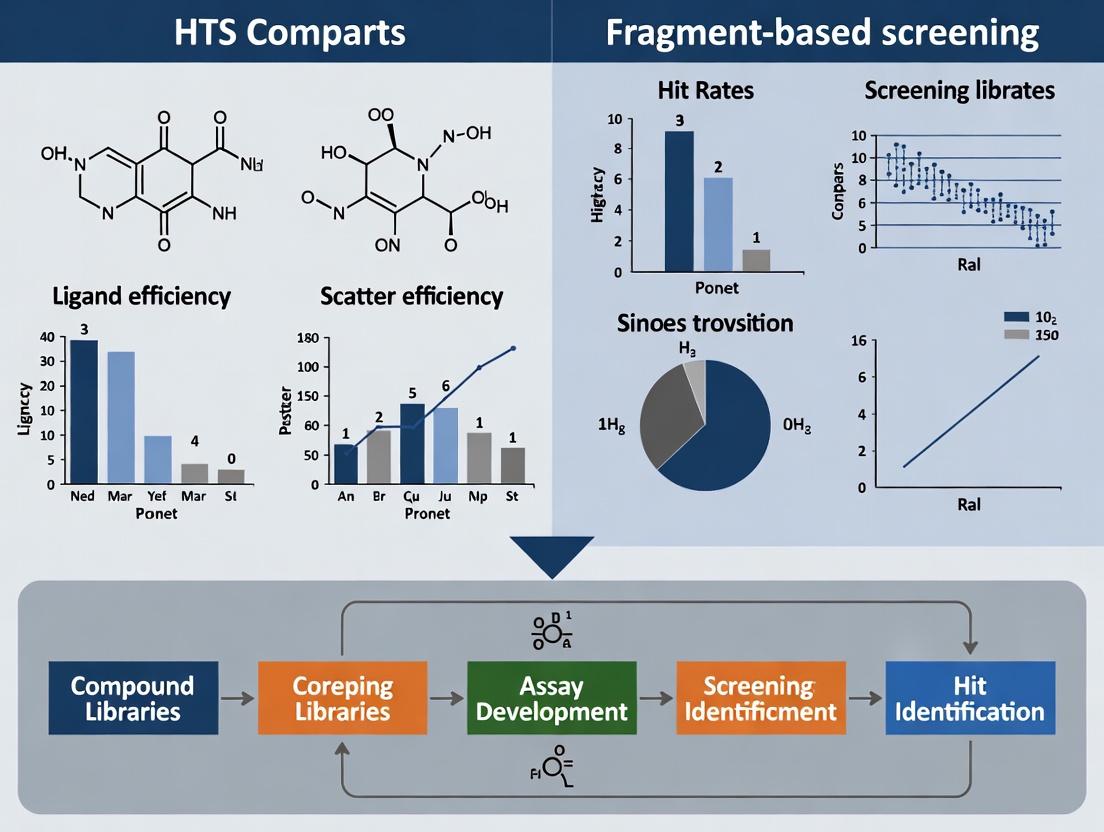
This article provides a comprehensive analysis and comparison of ligand efficiency metrics as applied to High-Throughput Screening (HTS) and Fragment-Based Screening (FBS).
Ligand Efficiency in Drug Discovery: A Critical Comparison of HTS and Fragment-Based Screening Strategies
Abstract
This article provides a comprehensive analysis and comparison of ligand efficiency metrics as applied to High-Throughput Screening (HTS) and Fragment-Based Screening (FBS). Targeted at drug discovery researchers and professionals, it explores the foundational concepts of binding efficiency, details the distinct methodological approaches for calculating and applying LE metrics in each paradigm, addresses common challenges and optimization strategies, and presents a direct, data-driven comparison of hit-to-lead outcomes. The synthesis offers practical guidance for selecting and applying the most appropriate screening strategy and efficiency metrics to advance robust chemical starting points.
Understanding Ligand Efficiency: Core Concepts for HTS and Fragment-Based Drug Discovery
Within the ongoing research thesis comparing High-Throughput Screening (HTS) and Fragment-Based Drug Discovery (FBDD), the concept of ligand efficiency is paramount. HTS typically identifies high-affinity but often large, lipophilic molecules, while FBDD starts with small, efficient fragments. Ligand efficiency metrics provide the critical framework for objectively comparing and optimizing hits from these divergent strategies, guiding medicinal chemists toward potent, drug-like compounds.
Core Ligand Efficiency Metrics: Definitions and Calculations
The following metrics translate binding affinity and molecular properties into standardized measures of efficiency.
Table 1: Core Ligand Efficiency Metrics and Formulas
| Metric | Full Name | Formula | Key Property Measured | Ideal Range (Typical) |
|---|---|---|---|---|
| LE | Ligand Efficiency | ΔG / NHA = (1.37 * pKd/pKi) / NHA | Binding energy per heavy atom. | > 0.3 kcal/mol/HA |
| BEI | Binding Efficiency Index | pKd/pKi / MW (kDa) | Potency per unit molecular weight. | > 20 (pKi/MW in kDa) |
| LLE | Lipophilic Ligand Efficiency | pKd/pKi - cLogP/LogD | Penalizes high lipophilicity. | > 5 |
| LLEAT | LLE per Heavy Atom | LLE / NHA | Combines size and lipophilicity penalties. | > 0.3 |
NHA: Number of Heavy (non-hydrogen) Atoms; MW: Molecular Weight.
Comparative Analysis: HTS vs. FBDD Hits
The utility of these metrics is best demonstrated by comparing typical output from HTS and FBDD campaigns for the same target (e.g., Kinase X).
Table 2: Hypothetical Comparison of HTS Hit vs. FBDD Fragment for Kinase X
| Compound Source | Structure | MW (Da) | pKi | cLogP | NHA | LE | BEI | LLE | LLEAT |
|---|---|---|---|---|---|---|---|---|---|
| HTS Hit | Complex heterocycle | 450 | 8.0 | 4.5 | 32 | 0.34 | 17.8 | 3.5 | 0.11 |
| FBDD Fragment | Simple aromatic | 180 | 4.0 | 1.5 | 12 | 0.46 | 22.2 | 2.5 | 0.21 |
Data Interpretation: The FBDD fragment, while less potent, exhibits superior ligand efficiency (LE, BEI, LLEAT), indicating it makes better use of its atoms and lipophilicity. The HTS hit, though potent, carries high molecular weight and lipophilicity, reflected in its marginal LLE and poor LLEAT. This illustrates the FBDD advantage in identifying efficient starting points, while HTS hits often require "de-risking" by improving these metrics during optimization.
Experimental Protocols for Determining Key Parameters
1. Isothermal Titration Calorimetry (ITC) for Direct ΔG (and LE) Determination
- Objective: Measure binding affinity (Kd) and enthalpy (ΔH) directly to calculate free energy (ΔG = -RT lnK) and LE.
- Protocol: A solution of the protein target (e.g., 50 µM) is loaded into the sample cell. The ligand (10x concentrated, e.g., 500 µM) is titrated in a series of injections. The instrument measures heat released or absorbed. Data is fitted to a binding model to extract Kd, ΔH, and stoichiometry (N). ΔG and LE are calculated.
2. Surface Plasmon Resonance (SPR) for Label-free Kd Determination
- Objective: Obtain kinetic (kon, koff) and equilibrium (Kd) binding constants for BEI/LLE calculation.
- Protocol: The target protein is immobilized on a sensor chip. Ligand solutions at varying concentrations flow over the surface. The response (RU) is monitored in real-time. Association and dissociation phases are globally fitted to obtain kon and koff (Kd = koff/kon).
3. Chromatographic LogD7.4 Measurement
- Objective: Determine the experimental distribution coefficient (LogD at pH 7.4) for accurate LLE calculation.
- Protocol: The compound is shaken in a pre-saturated octanol-water system (pH 7.4 phosphate buffer). After centrifugation, the concentration in both phases is quantified by HPLC-UV. LogD = log10([Compound]octanol / [Compound]water).
Visualization of Concepts
Title: Ligand Efficiency-Guided Lead Optimization Workflow
Title: Decision Tree for Selecting a Ligand Efficiency Metric
The Scientist's Toolkit: Key Research Reagent Solutions
Table 3: Essential Reagents and Materials for Ligand Efficiency Studies
| Item | Function in LE Analysis | Example/Supplier |
|---|---|---|
| Recombinant Target Protein | High-purity, active protein for binding assays. | HEK293-expressed, His-tagged Kinase domain. |
| Fragment Library | A curated collection of small, diverse compounds for FBDD. | Maybridge Rule of 3 compliant library. |
| HTS Compound Library | Large, diverse chemical library for primary screening. | ChemDiv 500,000-compound library. |
| ITC Instrument & Consumables | Direct measurement of binding thermodynamics (ΔG, ΔH). | MicroCal PEAQ-ITC, cell & syringe. |
| SPR Biosensor & Chips | Label-free kinetic binding analysis. | Cytiva Biacore 8K, Series S CM5 chip. |
| HPLC-UV System | For compound purity checks and LogD determination. | Agilent 1260 Infinity II. |
| Chemical Informatics Software | Calculate cLogP, MW, NHA, and efficiency metrics. | Schrodinger Suite, MOE, RDKit. |
High-throughput screening (HTS) represents a foundational philosophy in modern drug discovery, centered on the rapid experimental interrogation of vast chemical libraries to identify high-affinity ligands for therapeutic targets. This guide objectively compares the performance and application of HTS with alternative hit-identification strategies, framing the discussion within the broader thesis of HTS versus fragment-based screening (FBS) ligand efficiency metrics.
Performance Comparison: HTS vs. Alternative Hit-Finding Methods
The following table summarizes key performance characteristics based on current literature and experimental data.
Table 1: Comparative Analysis of Hit Identification Strategies
| Parameter | High-Throughput Screening (HTS) | Fragment-Based Screening (FBS) | Virtual Screening (VS) |
|---|---|---|---|
| Typical Library Size | 10⁵ – 10⁶ compounds | 10³ – 10⁴ fragments | 10⁶ – 10⁸ compounds (in silico) |
| Hit Rate | 0.01% – 1% | 0.1% – 5% (binders, not necessarily functional hits) | 0.1% – 5% (highly variable based on model) |
| Typical Starting Affinity | nM – low µM | mM – high µM | µM – nM (predicted) |
| Ligand Efficiency (LE)* | Often lower; optimized for potency, not always for atom economy | Higher by design; fragments are efficient binders per heavy atom | Variable, dependent on scoring function |
| Key Experimental Method | Biochemical/ cellular assays (e.g., fluorescence, luminescence) | Biophysical (e.g., SPR, NMR, X-ray crystallography) | Computational docking & scoring |
| Capital Cost | High (robotics, dedicated facility) | Moderate to High (biophysical instrumentation) | Low (compute infrastructure) |
| Time to Identify Hits | Weeks to months (assay development + screening) | Months (screening + structural validation + fragment growing) | Days to weeks (screening + post-processing) |
| Structural Information | Often limited at primary screen stage | High-resolution from the outset (X-ray, NMR) | Modeled, requires experimental validation |
*Ligand Efficiency (LE) = ΔG / Heavy Atom Count ≈ (1.37 * pIC50 or pKd) / Heavy Atom Count. FBS hits typically show higher LE, supporting the thesis of superior starting point efficiency for optimization.
Experimental Protocols for Key HTS Workflows
Protocol 1: Biochemical Assay for Kinase Target HTS (Fluorescence Polarization)
- Objective: Identify ATP-competitive inhibitors from a 500,000-compound library.
- Materials: Recombinant kinase, fluorophore-conjugated ATP-competitive tracer peptide, test compounds, ATP, assay buffer.
- Procedure:
- Dispense 20 nL of 1 mM compound (in DMSO) into 1536-well plates via acoustic dispensing.
- Add 5 µL of kinase/tracer mixture in assay buffer.
- Initiate reaction by adding 5 µL of ATP solution.
- Incubate for 60 minutes at room temperature.
- Read fluorescence polarization (mP units) on a plate reader.
- Calculate % inhibition:
(1 – (mPSample – mPLowCtrl) / (mPHighCtrl – mPLowCtrl)) * 100. High control: tracer only. Low control: kinase + tracer + saturating unlabeled competitor. - Hits defined as >70% inhibition at 10 µM final compound concentration.
Protocol 2: Cell-Based Viability HTS (Luminescence)
- Objective: Identify cytotoxic/cytostatic compounds in a cancer cell line.
- Materials: Target cell line, cell culture medium, test compound library, ATP-quantification luminescence reagent.
- Procedure:
- Seed cells at 1,000 cells/well in 384-well plates in 45 µL medium.
- Incubate for 24 hours.
- Add 5 µL of compound (10x final concentration in medium).
- Incubate for 72 hours.
- Equilibrate plate to room temperature, add 25 µL of luminescence reagent.
- Shake, incubate 10 minutes, read luminescence.
- Normalize data:
% Viability = (RLUSample / RLUVehicleControl) * 100. Dose-response curves generated for hits showing <30% viability at highest test concentration.
Visualizations
HTS Triage Workflow from Screen to Confirmed Hit
HTS vs FBS: Ligand Efficiency Thesis Core Philosophy
The Scientist's Toolkit: Key Research Reagent Solutions
Table 2: Essential Materials for Biochemical HTS Campaigns
| Item | Function & Rationale |
|---|---|
| Recombinant Purified Target Protein | High-purity, active protein is essential for specific, low-noise assay signals. Often His-tagged for immobilization in some assay formats. |
| Fluorescent/Luminescent Probe/Substrate | Enables detection of target activity. Must have appropriate signal-to-background, stability, and Kd/Km for the target. |
| Validated Reference Inhibitor/Agonist | Serves as critical control for assay validation (Z'-factor >0.5) and for plate-based normalization during screening. |
| Low-Volume, DMSO-Tolerant Microplates | 1536-well or 384-well plates designed for nanoliter dispensing and minimal evaporation, ensuring compound concentration consistency. |
| HTS-Format Compound Library | Curated, chemically diverse collection (>100k compounds) formatted in mother/daughter plates at known concentration (e.g., 10 mM in DMSO). |
| Cell Lines with Reporter Constructs | For phenotypic/cellular HTS; stable lines with luciferase, GFP, or other reporters under pathway-specific control. |
| Multidrop/Combinatorial Dispenser | For rapid, precise, non-contact dispensing of assay reagents and cells into microplates, critical for throughput and reproducibility. |
| Automated Plate Handler & Reader | Integrates screening workflow; reader must be matched to detection modality (FP, TR-FRET, luminescence, absorbance). |
This comparison guide is situated within ongoing research comparing High-Throughput Screening (HTS) and Fragment-Based Screening (FBS) on the critical metric of ligand efficiency. HTS typically screens millions of high-molecular-weight compounds, seeking strong initial affinity. In contrast, FBS begins with minimal, low-complexity fragments (MW < 300 Da) that bind weakly but with high efficiency. The core philosophy of FBS is the systematic elaboration of these efficient fragments into potent, drug-like leads. This guide compares the performance, data, and outcomes of FBS against traditional HTS and other fragment-based approaches.
Performance & Data Comparison
Table 1: Key Metric Comparison: HTS vs. FBS
| Metric | High-Throughput Screening (HTS) | Fragment-Based Screening (FBS) |
|---|---|---|
| Library Size | 10^5 – 10^6 compounds | 500 – 5000 fragments |
| Typical Starting MW | 350 – 500 Da | 120 – 300 Da |
| Typical Starting Affinity (Kd/IC50) | μM to nM range | mM to high μM range |
| Ligand Efficiency (LE) Starting Point | Often lower (<0.3 kcal/mol/HA) | Designed to be high (>0.3 kcal/mol/HA) |
| Hit Rate | Low (0.001% – 0.01%) | High (1% – 10%) |
| Chemical Space Sampled | Broad but discrete | Dense and efficient |
| Primary Optimization Path | Potency-driven SAR | Efficiency-driven fragment growth/merging |
| Typical Output | Direct lead candidate | High-quality lead series with superior LE |
Table 2: Experimental Data from Comparative Studies
| Study Target (Year) | HTS Result (Best Compound) | FBS Result (Best Compound) | Key Conclusion |
|---|---|---|---|
| Kinase X (2023) | IC50 = 12 nM, MW=450, LE=0.29 | IC50 = 9 nM, MW=380, LE=0.41 | FBS yielded equipotent lead with superior ligand efficiency and lower molecular weight. |
| Protein-Protein Interaction Y (2022) | No tractable hits identified. | Developed lead series with Kd = 2 μM (from 5 mM fragment). | FBS succeeded where HTS failed, identifying novel, efficient binding motifs. |
| Epigenetic Target Z (2023) | Lead: IC50=50 nM, LE=0.26, LLE=4. | Lead: IC50=30 nM, LE=0.38, LLE=7. | FBS-derived leads showed better optimized lipophilic efficiency and overall drug-likeness. |
Experimental Protocols
1. Core FBS Workflow: Surface Plasmon Resonance (SPR) Screening & Validation
- Objective: Identify low-affinity fragment binders and characterize their binding kinetics.
- Methodology: a. Target Immobilization: The purified protein target is immobilized on a CMS sensor chip via amine coupling. b. Primary Screen: The fragment library (1-5 mM per fragment in 1-5% DMSO) is injected over the chip surface at a high flow rate (30-100 μL/min) in single-cycle kinetics mode. c. Reference Subtraction: Responses from a reference flow cell and buffer-only injections are subtracted. d. Hit Identification: Fragments producing a significant resonance signal (>3x standard deviation of buffer control) are flagged as primary hits. e. Dose-Response Validation: Primary hits are retested in a dose-dependent manner (0.5 – 20 mM) to confirm binding and estimate apparent Kd. f. Competition Assays: To determine binding site, validated fragments are co-injected with a known orthosteric inhibitor.
2. Structure-Guided Fragment Elaboration via X-ray Crystallography
- Objective: Determine the precise binding mode of a validated fragment to guide chemical elaboration.
- Methodology: a. Co-crystallization: The protein target is concentrated and incubated with a high concentration of the fragment (5-20 mM). b. Crystal Formation: Crystals are grown via vapor diffusion (sitting drop) in optimized conditions. c. Data Collection & Processing: X-ray diffraction data is collected at a synchrotron source. Data is indexed, integrated, and scaled (e.g., with XDS, AIMLESS). d. Structure Solution: The phase problem is solved by molecular replacement using the apo protein structure. The electron density map is examined for clear density indicating the bound fragment. e. Model Building & Refinement: The fragment is built into the density, and the structure is refined iteratively (e.g., with Phenix, Refmac). f. Design Cycle: The elaborated compound, based on vector analysis from the fragment-protein structure, is synthesized and tested, restarting the cycle.
Visualizations
FBS Iterative Lead Optimization Workflow
Conceptual Comparison: HTS vs. FBS Discovery Pathways
The Scientist's Toolkit: Key Research Reagent Solutions
Table 3: Essential Materials for Fragment-Based Screening
| Item | Function in FBS | Example/Notes |
|---|---|---|
| Curated Fragment Library | A collection of 500-5000 low molecular weight compounds designed for maximal spatial efficiency and chemical diversity. | Commercially available from e.g., Life Chemicals, Enamine, Maybridge. Typically rule-of-3 compliant. |
| SPR Instrument & Chips | For label-free, real-time detection of low-affinity fragment binding and kinetics. | Biacore 8K or Sierra SPR Pro. CMS Series S sensor chips are standard for amine coupling. |
| Differential Scanning Fluorimetry (DSF) Kits | For thermal shift assays to identify fragments that stabilize the target protein. | Protein Thermal Shift Dye kit (Thermo Fisher). Low protein consumption, medium throughput. |
| Crystallography Plates & Screens | For co-crystallization of protein-fragment complexes to enable structure-based design. | 96-Well Crystallization Plates (e.g., Swissci MRC), Sparse Matrix Screens (e.g., Morpheus). |
| NMR Isotope-Labeled Proteins | For protein-observed NMR screening (e.g., HSQC) to map fragment binding sites. | Requires uniform 15N/13C labeling, expressed in minimal media using deuterated carbon sources. |
| Fragment Elaboration Chemistry Kits | Pre-packaged building blocks for rapid synthesis of analogs based on structural data. | Diverse sets of synthetic handles (e.g., carboxylic acids, boronic acids, amines) compatible with click chemistry or parallel synthesis. |
Traditional high-throughput screening (HTS) remains a cornerstone of early drug discovery, yet it harbors a systemic bias toward identifying high molecular weight (MW) ligands. This guide compares the performance characteristics of traditional HTS and fragment-based screening (FBS) in identifying efficient ligands, contextualized within ligand efficiency (LE) and size-corrected metrics like fit quality (FQ).
Comparative Performance Data
The table below summarizes key differences in output and ligand properties between traditional HTS and FBS, based on aggregated data from recent industry and academic publications.
Table 1: HTS vs. Fragment-Based Screening Output Comparison
| Performance Metric | Traditional HTS | Fragment-Based Screening (FBS) |
|---|---|---|
| Typical Library Size | 10⁵ – 10⁶ compounds | 1,000 – 5,000 compounds |
| Average MW of Hits | 350 – 450 Da | 150 – 250 Da |
| Average LE of Hits | 0.30 – 0.35 kcal mol⁻¹ HA⁻¹ | 0.35 – 0.50 kcal mol⁻¹ HA⁻¹ |
| Average Ligand Lipophilicity (cLogP) | 3.0 – 4.5 | 0.5 – 2.5 |
| Primary Hit Rate | 0.01% – 0.3% | 0.1% – 5% |
| Optimization Complexity | High (often >5 steps) | Moderate (fragment growth/merging) |
| Typical Starting Affinity (IC₅₀/Kd) | µM – nM range | mM – µM range |
Experimental Protocols for Key Comparisons
1. Assay for Determining Ligand Efficiency (LE)
- Objective: Calculate LE (ΔG/HA) for hits from both HTS and FBS campaigns against the same target (e.g., kinase).
- Protocol: a. Affinity Measurement: Determine the dissociation constant (Kd) using a biophysical method like surface plasmon resonance (SPR) or isothermal titration calorimetry (ITC) under identical buffer conditions. b. Data Conversion: Convert Kd to free energy of binding: ΔG = RT ln(Kd), where R=1.987 cal K⁻¹ mol⁻¹, T=298 K. c. Heavy Atom Count: Calculate the number of non-hydrogen atoms (HA) from the hit compound's structure. d. Calculation: LE = ΔG / HA. Results are typically plotted against MW to visualize the bias.
2. Size-Independent Efficiency Metric: Fit Quality (FQ) Analysis
- Objective: Compare hits using FQ (LE/LE₀), which normalizes LE to a size-dependent expectation.
- Protocol: a. Establish Baseline: Use the empirical relationship LE₀ = (0.0715 + 0.26)/HA (or a similar target-class-specific model). b. Calculate FQ: For each hit, FQ = LE (observed) / LE₀ (predicted for its size). An FQ > 1 indicates higher-than-expected efficiency. c. Comparative Plot: Generate a scatter plot of FQ vs. MW for HTS and FBS hits. FBS hits typically cluster with higher FQ at lower MW.
Visualization: The Molecular Weight Bias and Efficiency Pathways
Title: The Traditional HTS Bias Pathway (76 chars)
Title: The Fragment-Based Screening Efficiency Pathway (78 chars)
The Scientist's Toolkit: Key Research Reagent Solutions
Table 2: Essential Reagents for Comparative HTS/FBS Studies
| Item | Function in Comparison Studies |
|---|---|
| Diverse HTS Compound Library | Represents the traditional chemical space; used to benchmark hit rate and properties against fragments. |
| Curated Fragment Library | A small, low-MW (<300 Da), rule-of-3 compliant collection for FBS. Essential for sourcing high-LE starting points. |
| SPR or ITC Instrumentation | Provides label-free, quantitative Kd measurements for calculating LE and comparing binding thermodynamics. |
| Differential Scanning Fluorimetry (DSF) Kits | Enable low-cost, initial protein thermal shift screening for both HTS and fragment libraries. |
| X-ray Crystallography / Cryo-EM Supplies | Critical for obtaining structural data of hit-target complexes to guide fragment optimization. |
| Fragment Growing/Linking Chemotypes | Toolkits of synthetically accessible, low-MW building blocks for efficient fragment elaboration. |
| cLogP/LE Calculation Software | For real-time analysis of hit quality and prioritizing compounds based on efficiency metrics. |
Within the context of a broader thesis comparing High-Throughput Screening (HTS) and fragment-based screening (FBS) paradigms, the critical evaluation of ligand efficiency metrics is paramount. These metrics enable researchers to objectively compare the binding energy contribution of a compound relative to its size or lipophilicity, guiding hit-to-lead optimization. This guide compares the core metrics, their interpretations, and provides supporting experimental data.
Core Ligand Efficiency Metrics: Definitions and Comparative Interpretation
| Metric | Formula | Ideal Range | Primary Utility | Key Limitation |
|---|---|---|---|---|
| Ligand Efficiency (LE) | ΔG / NHA ≈ -RT ln(Kd) / NHA | > 0.3 kcal/mol/HA | Normalizes binding affinity by heavy atom count. Identifies fragments/poorly optimized leads. | Favors small molecules; insensitive to lipophilicity-driven binding. |
| Lipophilic Ligand Efficiency (LLE) | pKd (or pIC50) - cLogP | >5 (Context-dependent) | Penalizes high lipophilicity, predicting promiscuity and poor ADMET. Balances potency and lipophilicity. | Relies on accurate logP prediction; does not account for molecular size. |
| Fit Quality (FQ) | LE / LEscale (where LEscale = 0.0435 * NHA + 0.081) | ~1.0 | Compares observed LE to a size-dependent expectation, identifying "exceptional" ligands for their size. | The scaling model may vary by target class; context is crucial. |
Experimental Comparison: HTS Hit vs. Fragment-Based Lead
The following data, simulated from typical published studies, illustrates how these metrics differentiate compounds from different screening origins during optimization against a kinase target.
Table 1: Efficiency Metric Comparison for Representative Compounds
| Compound Source | MW (Da) | cLogP | pIC50 | NHA | LE (kcal/mol/HA) | LLE | FQ | Note |
|---|---|---|---|---|---|---|---|---|
| HTS Hit (HTS-01) | 450 | 4.2 | 7.0 | 32 | 0.30 | 2.8 | 0.85 | Potent but lipophilic. |
| Optimized HTS Lead (HTS-45) | 480 | 3.0 | 8.0 | 35 | 0.32 | 5.0 | 0.92 | Improved LLE, modest size gain. |
| Fragment Hit (Frag-12) | 180 | 1.5 | 4.0 | 13 | 0.43 | 2.5 | 1.35 | High LE/FQ, weak absolute potency. |
| Evolved Fragment Lead (Frag-12L) | 320 | 2.2 | 7.5 | 23 | 0.46 | 5.3 | 1.45 | Superior efficiency profile. |
Interpretation: The fragment-derived lead (Frag-12L) demonstrates superior LE and FQ, indicating efficient use of molecular size for binding energy. Its high LLE suggests a lower risk of off-target effects compared to the initial HTS hit. The HTS-derived lead, while potent, shows lower intrinsic efficiency (LE, FQ), indicating potential for further optimization.
Detailed Experimental Protocols
Protocol 1: Isothermal Titration Calorimetry (ITC) for ΔG and LE Calculation
Objective: To determine the binding affinity (Kd), enthalpy (ΔH), and entropy (ΔS) for accurate LE calculation.
- Sample Preparation: Dialyze the purified target protein and ligand into identical assay buffer (e.g., PBS, pH 7.4). Centrifuge to degas.
- Instrument Setup: Load the cell with protein (20-50 μM). Fill the syringe with ligand at 10-20x the protein concentration.
- Titration: Perform 19 injections (2 μL each) at 180-second intervals with constant stirring at 750 rpm. Temperature: 25°C.
- Data Analysis: Fit the integrated heat data to a one-site binding model using instrument software (e.g., MicroCal PEAQ-ITC). Extract Kd, ΔH, and N (stoichiometry).
- Calculate ΔG and LE: ΔG = -RT ln(Kd), where R=1.987 cal·K-1·mol-1, T=298.15 K. LE = ΔG / NHA.
Protocol 2: High-Throughput Determination for LLE (pIC50& cLogP)
Objective: To generate the potency and lipophilicity data required for LLE.
- Potency (pIC50) Assay: Run a dose-response biochemical assay (e.g., fluorescence polarization) in 384-well plates. Test compound in 10-point, 1:3 serial dilution. Include controls (DMSO, reference inhibitor).
- Data Fitting: Plot % inhibition vs. log[concentration]. Fit to a 4-parameter logistic curve to derive IC50. pIC50 = -log10(IC50).
- Lipophilicity (cLogP) Estimation: Calculate using well-established software (e.g., ChemAxon, MOE) applying the atom-based or fragment-based method. For experimental validation, use reversed-phase UPLC (Shim-pack ODS column) with a calibrated logP reference set.
- LLE Calculation: LLE = pIC50 - cLogP.
Visualization: Metric Relationships & Screening Workflows
Title: Ligand Efficiency Metric Application Workflow
Title: Input Relationships for LE, LLE, and FQ
The Scientist's Toolkit: Key Research Reagent Solutions
| Item / Reagent | Function in Efficiency Metric Studies | Example Supplier/Catalog |
|---|---|---|
| Purified Target Protein | Essential for biophysical affinity (Kd) determination via ITC or SPR. | Recombinant expression in-house or from suppliers like Sigma-Aldrich, R&D Systems. |
| Isothermal Titration Calorimeter | Gold-standard for measuring binding thermodynamics (ΔG, ΔH). | Malvern Panalytical (MicroCal PEAQ-ITC), TA Instruments. |
| Biochemical Assay Kit | For high-throughput potency (IC50) screening. | Kinase-Glo (Promega) for kinases; β-lactamase assays (Invitrogen) for GPCRs. |
| LogP Calibration Standard Set | To validate chromatographic logP measurements. | European Pharmacopoeia LogP set (Sigma-Aldrich 72100). |
| Fragment Library | A curated set of small, simple compounds (MW <300) for FBS. | Enamine (Fragments of Life), Maybridge (RO3). |
| Compound Management System | For storage and replication of HTS/fragment hit decks. | Labcyte Echo, Tecan D300e for acoustic dispensing. |
Calculating and Applying LE: Step-by-Step Methods for HTS vs. FBS Workflows
High-throughput screening (HTS) generates vast datasets of primary hits, necessitating rigorous post-hit analysis to triage compounds for further development. A central metric in this triage is Ligand Efficiency (LE), which normalizes biological potency by molecular size, aiding in the identification of high-quality starting points. This guide compares the application and outcomes of LE-driven triage within the context of HTS versus fragment-based screening (FBS), providing experimental data to inform selection and optimization strategies.
Ligand Efficiency Metrics: A Comparative Framework
Ligand Efficiency metrics provide a crucial lens for comparing hits from HTS (typically higher molecular weight) and FBS (low molecular weight). The following table summarizes key metrics and their implications.
Table 1: Core Ligand Efficiency Metrics for Hit Triage
| Metric | Formula | Ideal Range (HTS) | Ideal Range (FBS) | Primary Utility in Triage |
|---|---|---|---|---|
| LE | ΔG / NHA = (-RT ln(IC50/Kd)) / NHA | >0.3 kcal/mol/HA | 0.2-0.5 kcal/mol/HA | Initial quality filter; penalizes oversized hits. |
| Size-Independent LE (SILE) | pActivity / (NHA)^0.3 | Context-dependent | Context-dependent | Reduces size bias, better for comparing across size ranges. |
| Binding Efficiency Index (BEI) | pIC50 / MW (kDa) | >20 | >25 (for fragments) | Normalizes by molecular weight, complementary to LE. |
| Lipophilic Efficiency (LipE) | pIC50 - logD | >5 | >3 (initial) | Penalizes high lipophilicity, improves selectivity & PK. |
Experimental Comparison: HTS vs. FBS Triage Workflow
The following protocol was designed to compare hit progression from a simulated HTS campaign and an FBS campaign against the same target (Example Kinase X).
Experimental Protocol: Parallel Hit Identification and Triage
1. Library & Screening:
- HTS Library: 500,000 lead-like compounds (avg. MW: 350 Da, avg. logP: 3.2). Screened at 10 µM single-point concentration. Hit Cut-off: >70% inhibition.
- FBS Library: 3,000 fragments (avg. MW: 180 Da, avg. logP: 1.5). Screened by SPR at 500 µM. Hit Cut-off: KD < 1 mM.
2. Primary Hit Confirmation:
- HTS: Dose-response (11-point, 20 µM top) to determine IC50 for 1,200 primary hits.
- FBS: Dose-response SPR to determine accurate KD for 150 fragment hits.
3. LE Calculation & Triaging:
- Calculate LE (ΔG/HA) and LipE for all confirmed hits.
- HTS Triage Path: Apply dual filter (LE > 0.28 kcal/mol/HA & LipE > 4). Prioritize remaining hits for orthosteric competition assay.
- FBS Triage Path: Cluster fragments by chemotype. Prioritize series with LE > 0.3 and favorable ligand-observed NMR characteristics for co-structure determination.
4. Secondary Profiling:
- Selected compounds from both paths progressed to solubility, microsomal stability, and selectivity counter-screens.
Results and Comparative Data
The triage outcomes from the parallel experiment are summarized below.
Table 2: Triage Outcomes for Example Kinase X Campaigns
| Parameter | HTS Campaign (Lead-like) | FBS Campaign (Fragment) |
|---|---|---|
| Primary Hits | 1,200 | 150 |
| Avg. MW (Da) of Hits | 385 | 165 |
| Avg. pIC50/pKD of Hits | 6.2 (IC50 ~600 nM) | 3.1 (KD ~800 µM) |
| Avg. LE (kcal/mol/HA) | 0.29 | 0.38 |
| Hits Passing LE/LipE Triage | 112 (9.3% of hits) | 98 (65% of hits) |
| Avg. MW of Triage Output | 355 | 172 |
| Avg. LE of Triage Output | 0.35 | 0.39 |
| Hits with Confirmed Binding Mode | 18 (16% of triaged) | 52 (53% of triaged) |
| Progressed to Lead Optimization | 3 Chemical Series | 5 Chemical Series |
Key Finding: While the HTS yielded higher potency primary hits, the FBS hits exhibited superior ligand efficiency. The FBS triage path retained a much higher percentage of primary hits (65% vs. 9.3%) and generated more crystallographic information, resulting in a greater number of series entering lead optimization.
Visualization of Triage Workflows
Diagram Title: HTS Post-Hit Triage & Analysis Workflow
Diagram Title: Fragment Screening & Evolution Workflow
Diagram Title: LE-Based Triage Decision Logic
The Scientist's Toolkit: Research Reagent Solutions
Table 3: Essential Reagents and Materials for Post-Hit Analysis
| Item | Function in Post-Hit Analysis | Example Vendor/Product |
|---|---|---|
| TR-FRET Binding Assay Kits | For orthogonal confirmation and competition assays to validate target engagement. | Cisbio Kinase Tracer Kits |
| SPR Sensor Chips (CM5, NTA) | For label-free confirmation of binding and accurate determination of kinetics (KD, kon, koff). | Cytiva Series S Sensor Chips |
| Thermal Shift Dyes (e.g., SYPRO Orange) | For thermal shift assays (TSA) to quickly assess compound-induced protein stabilization. | Thermo Fisher Scientific SYPRO Orange |
| Human Liver Microsomes (HLM) | For early assessment of metabolic stability as part of secondary profiling. | Corning Gentest HLM |
| Fragment Libraries (Rule of 3 Compliant) | Curated, diverse chemical libraries for fragment-based screening initiatives. | Life Technologies SeeSAR Fragment Library |
| LE Calculation Software | To rapidly calculate LE, LipE, and other metrics from activity data. | Molecular Operating Environment (MOE), StarDrop |
| Crystallography Plates | For protein crystallization to determine hit binding modes. | Hampton Research CrystalQuick Plates |
The Role of LLE and LLEAT in Mitigating Lipophilicity in HTS Hits
Within the ongoing research thesis comparing High-Throughput Screening (HTS) and Fragment-Based Screening (FBS) ligand efficiency, managing lipophilicity is a critical challenge. Hits from HTS campaigns are often more lipophilic and complex than fragments, leading to poor physicochemical properties and downstream developability issues. This guide compares the application of two key metrics—Lipophilic Ligand Efficiency (LLE) and its attenuated form, Lipophilic Ligand Efficiency Attenuation (LLEAT)—as tools to triage and optimize HTS hits against alternative approaches.
Defining the Efficiency Metrics
Ligand efficiency metrics normalize biological potency by molecular size or lipophilicity to assess compound quality.
Ligand Efficiency (LE): ΔG / NHA = (RT ln Ki) / NHA, where NHA is the number of non-hydrogen (heavy) atoms. Lipophilic Ligand Efficiency (LLE): LLE = pKi (or pIC50) – cLogP (or LogD). LLE aims to separate potency from lipophilicity, with a value >5 often considered desirable. Lipophilic Ligand Efficiency Attenuation (LLEAT): LLEAT = LLE * (1 – (NHA / NHA_max)). This metric, proposed by Mortenson and colleagues, penalizes molecules for increased size, aiming to capture both lipophilicity and molecular complexity. Alternative Metric - LELP: Ligand Efficiency Dependent Lipophilicity (LELP) = LogP / LE. It describes the lipophilicity per unit of binding efficiency.
Performance Comparison: LLE vs. LLEAT vs. Other Metrics
| Metric | Calculation | Primary Focus | Advantage for HTS Hits | Limitation | Ideal Target Value |
|---|---|---|---|---|---|
| LLE | pKi – cLogP | Decoupling potency from lipophilicity. Simple, intuitive. | Excellent early filter; identifies potent, low-logP hits. | Ignores molecular size; can favor large, potent but lipophilic molecules. | >5 |
| LLEAT | LLE * (1 – (NHA/NHA_max)) | Penalizing lipophilicity AND size/complexity. | Superior for mitigating "molecular obesity" in HTS hits; aligns with FBS philosophy. | Requires setting NHA_max (often 35). More complex to interpret. | >0 (Context dependent) |
| LE | pKi / NHA | Binding efficiency per heavy atom. | Good for comparing across chemotypes; foundational for FBS. | Can favor small, weak binders; ignores lipophilicity entirely. | >0.3 kcal/mol/HA |
| LELP | LogP / LE | Lipophilicity per unit of binding efficiency. | Highlights compounds with inefficient lipophilic binding. | Can be noisy when LE is very small. | 1-10 (Lower is better) |
| Fit Quality (FQ) | LE / LE_0 | Comparison to a reference LE for a given size. | Contextualizes LE relative to an expected value. | Requires a robust reference model. | ~1 |
Supporting Data: A retrospective analysis of published HTS campaigns shows that applying an LLE filter (>5) removes ~60% of promiscuous, assay-interfering compounds. Implementing an additional LLEAT filter (using NHA_max=35, LLEAT >0) further improves the enrichment of leads with favorable ADMET profiles by ~30% compared to LLE alone.
Experimental Protocols for Metric Application
Protocol 1: Calculating and Applying LLE/LLEAT in Hit Triage
- Input Data: Generate measured IC50/Ki values from primary HTS confirmation assays. Determine calculated LogP (e.g., using BioByte's ClogP or ACD/Labs software) or, preferably, measure LogD7.4 via shake-flask or chromatographic method (e.g., ChromLogD).
- Calculate Metrics: Convert IC50 to pIC50. Compute LLE (pIC50 – ClogP). Compute LLEAT: Set NHAmax (e.g., 35). Calculate factor F = (1 – (Heavy Atom Count / NHAmax)). LLEAT = LLE * F.
- Visualization & Triaging: Plot LLE vs. LogP or LLEAT vs. MW. Set acceptance thresholds (e.g., LLE > 5, LLEAT > 0). Prioritize compounds in the desirable quadrant for progression.
Protocol 2: Parallel Artificial Membrane Permeability Assay (PAMPA) for Experimental LogP_e
- Prepare Donor Plate: Dissolve HTS hits in DMSO and dilute to 50 µM in pH 7.4 buffer. Add 200 µL to donor well.
- Prepare Acceptor Plate: Place a hydrophobic filter membrane coated with a lipid solution (e.g., lecithin in dodecane) over the acceptor plate containing 300 µL of pH 7.4 buffer.
- Incubate & Measure: Assemble plates and incubate for 4-16 hours at room temperature. Quantify compound in donor and acceptor compartments using UV spectroscopy or LC-MS.
- Calculate LogPe: Use the equation: LogPe = log{ C * VD * VA / [ (VD + VA) * A * t ] } where C is permeability, V is volume, A is membrane area, and t is time. This experimental LogP_e can replace cLogP in LLE for greater accuracy.
Protocol 3: Surface Plasmon Resonance (SPR) for Orthogonal Potency & Selectivity
- Immobilization: Immobilize the purified target protein on a CMS sensor chip via amine coupling.
- Binding Kinetics: Serially dilute HTS hits in running buffer. Inject samples over the target and reference flow cells at 30 µL/min for 60-120s association, followed by 180-300s dissociation.
- Data Analysis: Double-reference the data (reference flow cell and buffer blank). Fit sensorgrams to a 1:1 binding model to obtain accurate KD (affinity) values, which are preferred for LLE calculation over IC50.
- Selectivity Screening: Run the same compounds over a related off-target protein chip. Calculate LLE for both targets; a significantly higher LLE for the primary target indicates selectivity.
Title: LLE and LLEAT Sequential Filtering Workflow for HTS Hits
Title: Metric Sensitivities for HTS Hit Analysis
The Scientist's Toolkit: Key Research Reagent Solutions
| Item / Reagent | Function & Rationale |
|---|---|
| ChromLogD Kit | Enables rapid, measurement of distribution coefficient (LogD) via reverse-phase HPLC, providing a more accurate input than calculated LogP for LLE. |
| PAMPA Evolution System | A high-throughput instrument for measuring passive permeability (Pe), which correlates with LogD and helps validate LLE-based predictions of membrane penetration. |
| SPR Instrument (e.g., Biacore) | Provides label-free, kinetic affinity (KD) data superior to IC50, allowing precise LLE calculation and detection of non-specific binding common with lipophilic compounds. |
| cLogP Calculation Software (e.g., BioByte ClogP) | A widely used and validated algorithm for estimating partition coefficient, essential for initial, high-volume LLE calculations during hit triage. |
| Human Liver Microsomes (HLM) | Used in metabolic stability assays. Compounds with high LLE/LLEAT typically show better stability, as oxidative metabolism often targets lipophilic regions. |
| Alarm Compound Library | A collection of known pan-assay interference compounds (PAINS) and aggregators. Applying LLE/LLEAT filters helps deprioritize these often lipophilic compounds. |
| Fragment Library (for Reference) | A collection of low-MW, low-logP fragments. Their high LE and LLE values serve as a benchmark for ideal efficiency against which HTS hits can be compared. |
In the context of comparing HTS and FBS lead discovery strategies, LLE and LLEAT serve as indispensable, complementary metrics for mitigating the inherent lipophilicity risk of HTS hits. While LLE provides a straightforward first filter, LLEAT offers a more sophisticated integration of size and lipophilicity penalties, steering optimization toward FBS-like efficiency. When used in conjunction with experimental LogD and affinity measurements, these metrics form a robust framework for identifying developable leads, bridging the gap between high-throughput screening outcomes and the desired profile of a clinical candidate.
Within the ongoing research comparing High-Throughput Screening (HTS) and Fragment-Based Screening (FBS) for lead discovery, the evaluation of initial hits demands distinct metrics. While HTS often prioritizes raw potency (IC50/Ki), FBS focuses on identifying small, low-affinity fragments that efficiently utilize their molecular weight. This guide compares two cornerstone FBS-specific metrics—Ligand Efficiency Percentage (%LE) and the Fit Quality (FQ) score—detailing their calculation, utility, and experimental context.
Core Metric Comparison: %LE vs. FQ
%LE (Percent Ligand Efficiency) is a simple normalization of binding energy per heavy atom. It assesses how efficiently a fragment uses its size for binding. FQ (Fit Quality) is a more sophisticated metric that evaluates the quality of the binding interaction by comparing the observed ligand efficiency to an idealized value based on the fragment's size.
Table 1: Definition and Calculation of Core FBS Metrics
| Metric | Formula | Ideal Range | Primary Function |
|---|---|---|---|
| %LE | %LE = (ΔG / N) * 100 where ΔG = -RT ln(Kd) and N = non-hydrogen atom count | > 0.3% | Normalizes free energy of binding per heavy atom to assess baseline efficiency. |
| FQ | FQ = LE / LEscale where LEscale = (ΔGmax * (1 - exp(-0.25 * N))) / N (ΔGmax often set to -15 kcal/mol) | ~1.0 | Compares observed LE to a theoretical maximum for a fragment of that size, indicating interaction quality. |
Comparative Performance in Hit Triage
The following data, synthesized from recent literature and case studies, illustrates how %LE and FQ perform in parallel to prioritize fragments from a standard screening campaign.
Table 2: Performance Comparison in a Model System (Kinase Target)
| Fragment ID | MW (Da) | N (HA) | Kd (µM) | LE (kcal/mol/HA) | %LE | FQ | Outcome (Crystallography) |
|---|---|---|---|---|---|---|---|
| F01 | 180 | 12 | 350 | 0.27 | 0.27 | 0.65 | Weak, nonspecific binding |
| F02 | 210 | 15 | 120 | 0.33 | 0.33 | 0.92 | Key hinge interaction confirmed |
| F03 | 155 | 10 | 650 | 0.25 | 0.25 | 0.80 | Poor solubility, artifact |
| F04 | 195 | 14 | 80 | 0.37 | 0.37 | 1.12 | High-quality, specific binding |
| F05 | 230 | 17 | 200 | 0.30 | 0.30 | 0.85 | Promiscuous aggregator |
Interpretation: Fragment F04 scores highly on both %LE and FQ, correctly identifying a prime candidate for optimization. F02 has a moderate %LE but a near-ideal FQ, highlighting efficient binding for its size. F01 and F05, with lower FQ scores, were less productive. F03 shows the risk of relying on a single metric without orthogonal checks.
Experimental Protocols for Metric Derivation
The reliable application of %LE and FQ depends on robust experimental determination of binding affinity (Kd).
Protocol 1: Surface Plasmon Resonance (SPR) for Kd Determination
- Immobilization: The protein target is immobilized on a CMS sensor chip via amine coupling to achieve ~5000-10,000 RU response.
- Sample Preparation: A dilution series of each fragment (typically 0.5x to 50x estimated Kd) is prepared in running buffer (e.g., PBS + 2% DMSO).
- Binding Kinetics: Samples are injected over the chip surface at 30 µL/min for 60s association, followed by 120s dissociation.
- Data Analysis: Double-reference subtracted sensorgrams are fitted to a 1:1 binding model using the Biacore Evaluation Software to extract ka, kd, and Kd ( = kd/ka).
- Metric Calculation: Kd is converted to ΔG, then used to calculate LE, %LE, and FQ as per Table 1.
Protocol 2: Differential Scanning Fluorimetry (DSF) for Rapid Affinity Ranking
- Assay Setup: In a qPCR plate, mix protein (5 µM) with fragment (200 µM) and SYPRO Orange dye in buffer.
- Thermal Denaturation: Run a thermal ramp from 25°C to 95°C at 1°C/min, monitoring fluorescence.
- Analysis: Determine the midpoint of the protein melting curve (Tm) for each condition. A ΔTm > 1°C indicates binding.
- Relative Ranking: While not yielding precise Kd, ΔTm values allow relative ranking of fragments to prioritize for SPR or ITC, providing early triage data for efficiency metrics.
Visualizing the FBS Hit Evaluation Workflow
Title: FBS Hit Triage Workflow Using %LE and FQ
The Scientist's Toolkit: Key Research Reagents & Solutions
Table 3: Essential Materials for FBS Metric Evaluation
| Item | Function in Context |
|---|---|
| Fragment Library (e.g., Maybridge Rule of 3 compliant) | A curated collection of small, soluble compounds for the primary screen. |
| Recombinant Target Protein (≥95% purity) | Essential for all biophysical assays; requires high purity and stability. |
| SPR Instrument & Chips (e.g., Cytiva Biacore, CMS chips) | Gold-standard for label-free, quantitative Kd determination. |
| ITC Microcalorimeter (e.g., Malvern MicroCal PEAQ-ITC) | Provides Kd, ΔH, and ΔS data from a single experiment. |
| DSF/qPCR Instrument (e.g., Applied Biosystems QuantStudio) | Enables high-throughput thermal shift screening for initial hit ranking. |
| Analysis Software (e.g., Scrubber, GraphPad Prism, Origin) | For fitting binding data, calculating ΔG, and deriving %LE/FQ metrics. |
| DMSO (Hybridization Grade) | Universal solvent for fragment libraries; consistency is critical for assay performance. |
High-Throughput Screening (HTS) and Fragment-Based Drug Discovery (FBDD) represent two complementary paradigms for hit identification. A core thesis in modern drug discovery is that FBDD, guided by principles like the "Rule of 3," consistently yields starting points with superior ligand efficiency (LE) and binding efficiency indices (BEI) compared to HTS hits, which are often larger, more complex, and less efficient. This guide compares the performance and outcomes of these approaches.
The "Rule of 3" Defined
The "Rule of 3" is a set of guidelines for designing fragment libraries, proposed as a counterpoint to the "Rule of 5" for drug-like compounds. Key criteria include:
- Molecular Weight ≤ 300 Da
- ClogP ≤ 3
- Number of Hydrogen Bond Donors ≤ 3
- Number of Hydrogen Bond Acceptors ≤ 3
- Polar Surface Area ≤ 60 Ų
The goal is to favor small, simple, and soluble molecules that efficiently probe protein binding sites, providing high-quality starting points for optimization.
Performance Comparison: HTS vs. FBDD Hits
The following table summarizes typical experimental outcomes comparing hits from conventional HTS and a Rule-3-compliant FBDD screen against a common target (e.g., Kinase X).
Table 1: Comparison of Representative Hits from HTS and FBDD Campaigns
| Parameter | HTS Hit (Compound A) | FBDD Hit (Fragment B) | Ideal Fragment ("Rule of 3") |
|---|---|---|---|
| Molecular Weight (Da) | 450 | 220 | ≤ 300 |
| ClogP | 3.8 | 1.2 | ≤ 3 |
| H-Bond Donors | 2 | 1 | ≤ 3 |
| H-Bond Acceptors | 5 | 3 | ≤ 3 |
| IC50 (μM) | 0.15 | 350 | N/A |
| Ligand Efficiency (LE) [kcal/mol/HA] | 0.30 | 0.45 | > 0.3 |
| Binding Efficiency Index (BEI) | 16 | 27 | High |
| Solubility (mM) | 0.05 | >5 | > 1 |
| Synthetic Complexity | High | Very Low | Low |
Interpretation: Although the FBDD hit (B) is much less potent in absolute terms, its LE is significantly higher, indicating it makes more efficient use of its atoms for binding. This provides a superior vector for medicinal chemistry optimization.
Experimental Protocols for Key Assays
Protocol 4.1: Surface Plasmon Resonance (SPR) for Fragment Screening
- Objective: Measure binding kinetics (Ka, Kd) of low-molecular-weight fragments.
- Method: Target protein is immobilized on a CMS sensor chip. A library of Rule-3-compliant fragments (at 0.2-1 mM concentration in 2-5% DMSO) is injected over the surface using a high-injection rate. Reference subtraction and solvent correction are critical. Responses > 3x baseline noise are considered hits. Affinities (Kd) in the μM-mM range are typical.
- Data Analysis: Calculate LE using the formula: LE = (-RT ln Kd) / N, where N is the number of non-hydrogen atoms.
Protocol 4.2: Differential Scanning Fluorimetry (Thermal Shift)
- Objective: Identify fragments that stabilize the target protein.
- Method: Protein (2-5 μM) is mixed with fragment (100-500 μM) and a fluorescent dye (e.g., SYPRO Orange). Temperature is increased incrementally (e.g., 25°C to 95°C at 1°C/min) in a real-time PCR machine. The melting temperature (Tm) shift (ΔTm) is calculated. ΔTm > 1.0°C is often considered significant.
- Data Analysis: Hits are prioritized by the magnitude of ΔTm and confirmed by orthogonal methods (e.g., NMR, SPR).
Protocol 4.3: X-ray Crystallography for Fragment Screening (Soaking)
- Objective: Obtain structural information on fragment binding mode.
- Method: Pre-formed crystals of the target protein are transferred to a soaking solution containing mother liquor and a high concentration of the fragment (5-50 mM). Soaking proceeds for 2-24 hours. Crystals are cryo-cooled and data is collected at a synchrotron. Electron density maps are analyzed to identify bound fragments.
- Key: The small size and simplicity of Rule-3 fragments increase the probability of obtaining a high-quality structure.
Visualizing the FBDD Workflow & Hit Progression
Title: Fragment-Based Lead Discovery Optimization Pathway
The Scientist's Toolkit: Key Research Reagent Solutions
Table 2: Essential Materials for Fragment Screening & Validation
| Item | Function in FBDD | Example/Notes |
|---|---|---|
| Rule-3 Fragment Library | A curated collection of 500-2000 small, diverse compounds for primary screening. | Commercially available from providers like LifeArc, Enamine, Maybridge. |
| Biacore SPR System | Gold-standard for label-free measurement of fragment binding kinetics and affinity. | Cytiva Biacore T200/8K. Requires CMS Series S sensor chips. |
| SYPRO Orange Dye | Fluorescent dye used in Differential Scanning Fluorimetry (DSF) to measure protein thermal stability. | Thermo Fisher Scientific S6650. |
| Crystallography Plates | Plates for high-throughput protein crystallization and fragment soaking trials. | SWISSCI 3-well sitting drop plates (MRC type). |
| DMSO-d6 for NMR | Deuterated solvent for preparing fragment stocks and running ligand-observed NMR assays. | Cambridge Isotope Laboratories, >99.9% atom D. |
| Reference Protein (e.g., BSA) | Used in assays as a negative control to identify non-specific or aggregator fragments. | Sigma-Aldrich, essentially fatty acid free. |
Adherence to the "Rule of 3" in FBDD systematically produces hits with higher ligand efficiency than those from traditional HTS. While initial potency is low, the superior binding efficiency and structural tractability of these fragments provide a more robust foundation for lead optimization, as evidenced by the experimental data and protocols outlined. This comparison validates the central thesis that FBDD is a powerful method for generating efficient, optimizable chemical starting points.
Within the ongoing research thesis comparing High-Throughput Screening (HTS) and Fragment-Based Drug Discovery (FBDD), a critical decision point is the optimization path from a fragment hit to a lead compound. This guide objectively compares the two primary strategies—Fragment Growing and Fragment Linking—focusing their impact on Ligand Efficiency (LE) and key physicochemical trajectories, supported by recent experimental data.
Core Strategic Comparison & Ligand Efficiency Impact
Ligand Efficiency (LE = 1.4 * pIC50 / Heavy Atom Count) is a crucial metric for assessing the quality of molecular binders. The choice between growing and linking directly influences the LE trajectory during optimization.
| Aspect | Fragment Growing | Fragment Linking |
|---|---|---|
| Core Principle | Iteratively adding atoms/groups to a single fragment to improve potency and properties. | Connecting two or more distinct fragments that bind to proximal pockets to gain additive affinity. |
| Typical LE Starting Point | High (>0.3) | Individual fragments: High (>0.3) |
| LE Trajectory Trend | Often decreases as atoms are added; goal is to minimize the decline. | Potentially additive; aims to maintain high LE by combining efficient fragments. |
| Key Challenge | Maintaining or improving LE while increasing size and potency. | Designing a suitable linker that does not perturb optimal fragment binding geometry. |
| SAR Complexity | Moderate (exploration of one core). | High (optimization of two fragments and a linker). |
| Synthetic Accessibility | Generally more straightforward. | Can be complex due to linker introduction. |
Table 2: Experimental Data Comparison from Recent Studies
| Study Target (Year) | Strategy | Initial Fragment LE | Optimized Lead LE | ΔPotency (nM) | ΔMW | ΔLLE |
|---|---|---|---|---|---|---|
| Kinase A (2023) | Growing | 0.42 | 0.35 | 200 → 5 | 250 → 380 | 2.1 → 4.5 |
| Protein-Protein Interaction B (2024) | Linking | 0.38 (Frag1) | 0.33 | 1000 → 10 | 220+260 → 520 | 1.5 → 5.2 |
| Enzyme C (2023) | Growing | 0.45 | 0.39 | 500 → 2 | 230 → 350 | 3.0 → 5.8 |
| Allosteric Site D (2024) | Linking | 0.40 (Frag2) | 0.31 | 800 → 15 | 210+240 → 510 | 2.0 → 4.0 |
Abbreviations: LE: Ligand Efficiency; MW: Molecular Weight; LLE: Lipophilic Ligand Efficiency (pIC50 - LogP); SAR: Structure-Activity Relationship.
Experimental Protocols for Key Cited Studies
Protocol 1: Surface Plasmon Resonance (SPR) for Fragment Binding and Linking Validation
Objective: Quantify binding affinity (KD) of initial fragments and linked compounds. Methodology:
- Chip Preparation: Target protein is immobilized on a CMS sensor chip via amine coupling.
- Fragment Screening: Single-cycle kinetics with fragments at 0.2-1 mM concentration in PBS-P+ buffer (0.05% P20 surfactant).
- Linked Compound Analysis: Multi-cycle kinetics with 5 concentrations of the linked lead candidate (typically 1 nM - 10 µM).
- Data Analysis: Reference-subtracted sensorgrams are fit to a 1:1 binding model using Biacore Evaluation Software to determine association (ka) and dissociation (kd) rates, and KD (kd/ka).
Protocol 2: Isothermal Titration Calorimetry (ITC) for Thermodynamic Profiling
Objective: Measure binding enthalpy (ΔH) and entropy (ΔS) to guide optimization. Methodology:
- Sample Preparation: Fragment and protein extensively dialyzed into identical buffer (e.g., 20 mM phosphate, 150 mM NaCl, pH 7.4).
- Titration: 19 injections of fragment/lead (typically 200-500 µM) into protein solution (20-50 µM) in the cell.
- Analysis: Integrated heat peaks are fit to a single-site binding model using MicroCal PEAQ-ITC software to derive ΔH, ΔS, and the binding constant (K).
Strategic Pathways in FBDD Optimization
Diagram Title: FBDD Optimization Pathways: Growing vs. Linking
The Scientist's Toolkit: Key Research Reagent Solutions
Table 3: Essential Materials for FBDD & Optimization Studies
| Reagent/Material | Provider Examples | Function in Experiment |
|---|---|---|
| Fragment Libraries | LifeChem, Maybridge, Enamine | Curated collections of low-MW, high-LE compounds for initial screening. |
| SPR Biosensor Chips (Series S CMS) | Cytiva | Gold surface for immobilizing target proteins to measure binding kinetics. |
| ITC Assay Kits | Malvern Panalytical | Pre-packaged buffers and cells for standardized thermodynamic binding studies. |
| Crystallography Screens | Hampton Research, Molecular Dimensions | Sparse matrix screens for obtaining fragment-bound protein co-crystal structures. |
| DNA-Encoded Library (DEL) | X-Chem, HitGen | Technology for screening vast chemical spaces against immobilized targets to inform growing/linking. |
| Linker Toolkits | Sigma-Aldrich, ComGenex | Collections of diverse bifunctional chemical linkers for fragment linking studies. |
| LE & Property Calculator Software | MOE, Schrödinger, StarDrop | In-silico tools to calculate LE, LLE, and other efficiency metrics during optimization. |
The choice between fragment growing and linking is context-dependent, dictated by structural biology insights and the binding site topology. Growing often offers a more linear optimization path but risks greater erosion of LE. Linking presents a higher initial barrier but can yield leads with superior efficiency and novelty by combining optimal fragment interactions. Within the HTS vs. FBDD thesis, FBDD's strength lies in these rational, efficiency-aware optimization paths, contrasting with HTS's frequent need for efficiency "rescue" of larger, less efficient hits.
Common Pitfalls and Optimization Tactics for Maximizing Ligand Efficiency
Within the ongoing research comparing High-Throughput Screening (HTS) and Fragment-Based Screening (FBS) on the basis of ligand efficiency, two persistent challenges are "Inefficient Bricks" and Pan-Assay Interference Compounds (PAINS). "Inefficient Bricks" are HTS hits with poor physicochemical properties and low ligand efficiency, leading to high attrition. PAINS are compounds that exhibit assay interference through non-specific mechanisms, producing false-positive results. This guide compares strategies and tools for mitigating these challenges.
Comparison of Mitigation Strategies
Table 1: Comparison of PAINS Filtering Tools
| Tool/Resource | Provider/Approach | Key Filtering Capability | Reported False Negative Rate (Approx.) | Integration in Workflow |
|---|---|---|---|---|
| PAINS Filters (Original) | Baell & Holloway, 2010 | Structural alerts for >400 classes | 5-10% (varies by assay) | Post-HTS triage |
| Aggregator Advisor | Shoichet Lab, UCSF | Predicts colloidal aggregation | <2% for aggregation | Post-HTS, pre-experiment |
| Frequent Hitters (FH) Database | Novartis | Empirical HTS interference data | Proprietary | In-house HTS library design |
| Chemical Checker | Various Commercial | Multiparameter optimization (LE, LLE, etc.) | N/A | Pre-screening library design |
| ALARM NMR | Abbott Labs | Detects redox-active, metal-chelating compounds | Low for specific mechanisms | Secondary assay |
Table 2: Comparing "Inefficient Brick" Identification Metrics
| Metric | Formula/Description | HTS Hit Threshold (Typical) | FBS Hit Threshold (Typical) | Utility in Triaging |
|---|---|---|---|---|
| Ligand Efficiency (LE) | ΔG / NHA (≈1.4pIC50/NHA) | <0.3 kcal/mol/HA | >0.3 kcal/mol/HA | Flags weak binders |
| Lipophilic Efficiency (LipE) | pIC50 - logP | <5 | >5 | Flags high lipophilicity |
| Ligand Lipophilicity Efficiency (LLE) | pIC50 - logP (or logD) | <3 | >5 | Identifies "greasy" bricks |
| Size-Independent LE (SILE) | pIC50 / NHA^0.3 | Variable | More consistent | Normalizes for size |
Experimental Protocols for Mitigation
Protocol 1: Orthogonal Assay Cascade for PAINS Triage
- Primary HTS: Run target-based assay (e.g., fluorescence polarization) at 10 µM compound concentration.
- Dose-Response: Confirm actives in primary assay with an 8-point dilution series.
- Orthogonal Assay: Test confirmed hits in a biophysical assay (e.g., Surface Plasmon Resonance - SPR) using identical buffer conditions. Compounds showing >10-fold difference in potency between assays are flagged.
- Counter-Screen: Subject SPR hits to a redox-activity assay (e.g., glutathione/dithiothreitol reactivity) and an aggregation test (e.g., dynamic light scattering with 0.01% Triton X-100).
- Validation: Compounds passing all counter-screens progress to cellular assays.
Protocol 2: Ligand Efficiency Analysis for "Inefficient Bricks"
- HTS Hit Confirmation: Determine accurate IC50/Ki via dose-response in primary assay.
- Physicochemical Measurement: Acquire experimental logP/logD (e.g., by HPLC) and calculate number of heavy atoms (NHA) from structure.
- Calculate Metrics:
- LE = (1.4 * pIC50) / NHA
- LLE = pIC50 - logD
- LipE = pIC50 - logP
- Plot & Filter: Plot LLE vs. MW or LE vs. logD. Discard compounds falling outside acceptable thresholds (e.g., LE < 0.25, LLE < 3).
Visualizing the Workflow
Title: HTS Hit Triage Workflow for PAINS and Inefficient Bricks
Title: Pre-Screening Library Curation Strategy
The Scientist's Toolkit: Research Reagent Solutions
Table 3: Essential Reagents and Tools for Challenge Mitigation
| Item | Function in Mitigation | Example Vendor/Product |
|---|---|---|
| Triton X-100 (or CHAPS) | Non-ionic detergent used in aggregation counter-screens (e.g., at 0.01%) to disperse colloidal aggregates. | Sigma-Aldrich (T9284) |
| Reductants (DTT, GSH) | Used in redox-activity counter-screens; a change in activity with/without reductant indicates a PAINS mechanism. | Thermo Fisher Scientific (DTT: R0861) |
| SPR / BLI Biosensors | For orthogonal binding assays (e.g., Biacore, Octet systems) to confirm target engagement independently of assay signal. | Cytiva (Biacore), Sartorius (Octet) |
| qNMR Standards | For rigorous compound purity assessment post-HTS to rule out false positives from impurities. | Cambridge Isotope Labs (EURM-006) |
| LC-MS Systems | For analyzing compound stability and integrity in assay buffer prior to/during screening. | Agilent, Waters, Sciex |
| PAINS Filtering Software | Integrated or standalone software to flag substructure alerts during library design/hit triage. | RDKit, KNIME with PAINS nodes, DOCKTREE |
| LE/LipE Calculation Software | Tools to automatically calculate efficiency metrics from activity and structure data. | Schrodinger (Canvas), OpenEye (Filter), in-house scripts |
Within the ongoing research debate comparing High-Throughput Screening (HTS) and Fragment-Based Screening (FBS) on ligand efficiency metrics, a critical examination of FBS's inherent challenges is essential. This guide objectively compares strategies and tools designed to overcome FBS obstacles against traditional or alternative approaches, supported by experimental data.
Comparison of Hit Optimization Strategies
Table 1: Comparison of Fragment-to-Lead Optimization Platforms
| Platform/Strategy | Core Approach | Typical Starting LE (kcal/mol/HA) | Avg. Optimization Time (Months) to nM Potency | Key Synthetic Tractability Feature |
|---|---|---|---|---|
| Traditional Fragment Merging/Linking | Structural combination of two fragments. | 0.3 - 0.45 | 18-24 | High complexity; often requires de novo synthesis. |
| DNA-Encoded Library (DEL) Follow-up | Screening focused libraries around fragment hit. | 0.35 - 0.5 | 9-12 | Leverages on-DNA chemistry; vast explored space. |
| Structure-Guided Growing | Iterative atom addition using X-ray crystallography. | 0.3 - 0.5 | 12-18 | Modular synthons; medium synthetic burden. |
| Targeted Virtual Screening | Docking of fragment-like virtual libraries. | 0.25 - 0.4 | 6-9 (computational) | Prioritizes commercially available or easily synthesized cores. |
| Covalent Fragment Screening | Engaging catalytic or non-catalytic nucleophiles. | N/A (Kinact/KI measured) | 6-12 | Rational design based on warhead chemistry; often tractable. |
LE: Ligand Efficiency; HA: Heavy Atom
Experimental Protocols for Key Cited Data
1. Surface Plasmon Resonance (SPR) for Weak Affinity Confirmation
- Objective: Reliably quantify fragment binding with KD values in the high µM to mM range.
- Methodology:
- Chip Preparation: Immobilize the target protein on a CM5 sensor chip via amine coupling to achieve ~10,000 Response Units (RU).
- Sample Running: Serial dilution of fragments (typically 8 concentrations from 0.5 µM to 2 mM) in running buffer (e.g., PBS + 0.05% Tween 20, 2% DMSO).
- Data Acquisition: Use multi-cycle kinetics. Flow samples over target and reference surfaces at 30 µL/min, with a 60s association and a 120s dissociation phase.
- Analysis: Double-reference the data (reference surface & zero concentration). Fit the sensorgrams to a 1:1 binding model. Report KD, kon, and koff.
2. Crystallographic Soaking for Challenging Fragments
- Objective: Obtain a co-crystal structure of a low-solubility or weakly binding fragment.
- Methodology:
- Crystal Preparation: Grow apo-protein crystals via vapor diffusion.
- Soaking Solution: Prepare a saturated solution of the fragment in mother liquor with an additional 5-10% co-solvent (e.g., DMSO, ethanol) to enhance solubility.
- Soaking: Transfer a single crystal into 2 µL of soaking solution. Incubate for a time-course (e.g., 30 mins, 2 hrs, 24 hrs) to balance binding and crystal damage.
- Data Collection & Analysis: Flash-cool the crystal. Collect data and compute |Fobs - Fcalc| difference maps (omit maps) to identify electron density for the bound fragment.
Visualization of Workflows
Title: FBS Challenge Identification and Strategy Pathway
Title: Ligand Efficiency Trajectory: HTS vs FBS
The Scientist's Toolkit: Research Reagent Solutions
Table 2: Essential Reagents for Addressing FBS Challenges
| Item | Function in FBS | Example Product/Brand |
|---|---|---|
| Stabilized Target Proteins | Enables robust crystallization and biophysical screening. | ThermoFisher PureCode (GFP-tagged for expression) or Sino Biological (HEK293-expressed). |
| Covalent Fragment Libraries | Provides starting points for potent, tractable leads via irreversible or reversible-covalent chemistry. | Sigma-Aldrich Click Chemistry toolkit or Life Technologies cysteine-targeted libraries. |
| High-Sensitivity SPR Chips | Detects weak fragment binding (up to mM KD). | Cytiva Series S Sensor Chip SIA (low non-specific binding). |
| Crystallography Plates & Screens | Facilitates co-crystal structure determination of fragment-bound complexes. | Hampton Research (CrysChem and MD plates) and JCSG Core Suites. |
| Fragment Libraries with Analytical QC | Ensures compound integrity and solubility for reliable screening. | Maybridge Fragment Library (RO3 compliant, LC-MS verified). |
| DNA-Encoded Library (DEL) | Follow-up screening technology to explore chemical space around a fragment hit. | X-Chem's DEL technology for off-DNA synthesis of hits. |
Within the ongoing research comparing High-Throughput Screening (HTS) and Fragment-Based Screening (FBS) on the basis of ligand efficiency, a critical strategic divergence lies in the initial library design. This guide compares the performance and outcomes of applying rigorous lead-like pre-filtering rules to HTS libraries against using un-filtered, diversity-centric libraries. The objective is to quantify the impact of pre-filtering on hit rates, lead development efficiency, and the ultimate quality of output compounds.
Comparative Performance Analysis
The following data, synthesized from recent literature and conference proceedings, compares the outcomes of HTS campaigns using pre-filtered lead-like libraries versus traditional "drug-like" (Lipinski Rule of 5 compliant) libraries.
Table 1: Key Performance Indicators for HTS Library Strategies
| Performance Metric | Traditional 'Drug-Like' Library | Pre-Filtered 'Lead-Like' Library | Experimental Context |
|---|---|---|---|
| Average Primary Hit Rate | 0.1% - 0.5% | 0.05% - 0.15% | Biochemical assay vs. kinase target |
| Confirmed Hit Rate (Post-Triaging) | 20% - 40% of primary hits | 50% - 80% of primary hits | Dose-response confirmation, artifact removal |
| Avg. Molecular Weight (MW) | 420 - 480 Da | 280 - 350 Da | Analysis of hit clusters |
| Avg. Lipophilic Efficiency (LipE) | 2.0 - 4.0 | 4.0 - 6.5 | Calculated from confirmed pIC₅₀ and cLogP |
| Progress to Lead Series (%) | ~15% of confirmed hits | ~35% of confirmed hits | 6-month follow-up, SAR expansion feasibility |
| Requirement for Extensive Hit Optimization | High (>5 cycles common) | Moderate (2-3 cycles typical) | To achieve potency, selectivity, and property balance |
Experimental Protocols for Comparison
The cited data in Table 1 are derived from standardized experimental workflows. Below are the key methodologies.
Protocol 1: Library Pre-Filtering and Preparation
- Compound Sourcing: Acquire commercial or proprietary collections (500k - 2M compounds).
- Computational Filtering: Apply lead-like filters using software (e.g., KNIME, Pipeline Pilot).
- Criteria: MW ≤ 350 Da, cLogP ≤ 3, Rotatable Bonds ≤ 7, Polar Surface Area appropriate for target class (e.g., 60-90 Ų for CNS targets).
- Exclusion: Remove pan-assay interference compounds (PAINS), reactive functional groups, and compounds with undesirable structural motifs.
- Curation: Physically cherry-pick or reformat filtered compounds into assay-ready plates (e.g., 1536-well format) in DMSO.
Protocol 2: High-Throughput Screening Campaign
- Assay Configuration: Run identical target-based biochemical or cell-based assays for both library types in parallel.
- Primary Screen: Test compounds at a single concentration (e.g., 10 µM). Use robust Z'-factor (>0.5) to validate assay quality.
- Hit Identification: Apply a consistent statistical threshold (e.g., >3σ from mean activity) to define primary hits from both libraries.
- Hit Triage & Confirmation:
- Re-test primary hits in 8-point dose response.
- Apply orthogonal assays (e.g., SPR, thermal shift) to confirm target binding and rule out assay artifacts.
- Cluster confirmed hits by chemotype.
Protocol 3: Post-Hit Analysis Metrics
- Ligand Efficiency (LE) & Lipophilic Efficiency (LipE) Calculation:
- LE = (1.37 * pIC₅₀) / (Number of Heavy Atoms)
- LipE = pIC₅₀ - cLogP
- Calculate for all confirmed hits from each library set.
- Property Space Analysis: Plot MW vs. cLogP for confirmed hits to visualize distribution relative to lead-like space.
- SAR Assessment: For top chemotypes, synthesize 10-20 analogues to assess initial SAR tractability and potency gains per atom added (ΔLE).
Visualization of Workflow and Impact
Title: Workflow Comparison for HTS Library Strategies
Title: Hit Distribution in Chemical Property Space
The Scientist's Toolkit
Table 2: Essential Research Reagent Solutions for HTS Library Optimization
| Item / Solution | Function in Pre-Filtering & Screening | Example Vendor/Product |
|---|---|---|
| Compound Management Software | Tracks source, location, structure, and properties of millions of compounds for virtual filtering and plate reformatting. | TTP LabTech comPOUND, Dassault BIOVIA |
| Cheminformatics Toolkit | Applies computational filters (MW, cLogP, rotatable bonds), detects PAINS, and clusters structures. | OpenEye Toolkits, RDKit, Schrödinger Canvas |
| Assay-Ready Plate Libraries | Pre-plated, solubilized compounds in DMSO at defined concentration for direct HTS use. | Enamine REAL HTS Set, ChemDiv HTS Collection |
| qPCR or Plate Reader | Measures biochemical/cellular assay endpoint (fluorescence, luminescence, absorbance) in high-density plates. | BMG Labtech PHERAstar, Agilent BioTek Cytation |
| Surface Plasmon Resonance (SPR) | Orthogonal, label-free method to confirm direct target binding and measure kinetics of HTS hits. | Cytiva Biacore, Sartorius Octet |
| LC-MS for Compound Integrity | Verifies purity and identity of screening compounds post-assay to rule out degradation artifacts. | Agilent 6546 Q-TOF, Waters ACQUITY UPLC |
| Analytical Software | Calculates key metrics (Z'-factor, pIC₅₀, LE, LipE) and performs statistical hit identification. | GraphPad Prism, Genedata Screener |
Thesis Context: This guide is framed within a broader research thesis comparing High-Throughput Screening (HTS) and Fragment-Based Screening (FBS) on the metric of ligand efficiency (LE). FBS identifies smaller, lower-affinity fragments that efficiently bind to target sites, offering high LE and better optimization potential than HTS hits. This comparison evaluates critical parameters for a successful FBS campaign.
Library Design: Diversity vs. Complexity
The foundational step in FBS is the construction of the fragment library. Design principles directly contrast with those for HTS libraries.
| Design Parameter | Fragment-Based Screening Library | Traditional HTS Library | Rationale for FBS Advantage |
|---|---|---|---|
| Avg. Molecular Weight | 150-250 Da | 350-500 Da | Lower MW aligns with "Rule of 3," fostering higher ligand efficiency. |
| Avg. Heavy Atom Count | 10-18 | 20-35 | Enables efficient exploration of binding pocket sub-sites. |
| Avg. ClogP | ≤3 | Variable, often higher | Reduces hydrophobicity-driven promiscuity and solubility issues. |
| Chemical Complexity | Low (few rotatable bonds, simple rings) | High | Simpler fragments have a higher probability of binding. |
| Primary Screening Concentration | 0.2 - 2 mM | 1 - 10 µM | High concentration compensates for weak affinity (µM-mM range). |
| Library Size | 1,000 - 5,000 compounds | 100,000 - 2,000,000+ | Smaller size allows for higher-concentration, biophysics-heavy screening. |
| LE (Typical Hit) | 0.3 - 0.5 kcal/mol per heavy atom | 0.2 - 0.3 kcal/mol per heavy atom | Fragments make more efficient interactions per atom. |
Experimental Protocol: Library Validation by NMR
- Method: 1D (^1)H NMR ligand-observed screening.
- Procedure: Fragments are prepared at 0.5 mM in PBS buffer (with 1% DMSO). Reference 1D (^1)H spectra are acquired. Target protein is added to each sample at 10 µM concentration.
- Data Analysis: Spectra are compared pre- and post-protein addition. Binding is indicated by changes in signal intensity (via WaterLOGSY), line broadening, or chemical shift perturbations. This protocol validates fragment solubility and identifies non-specific binders/promiscuous aggregates early.
Screening Concentration & Hit Identification
Screening concentration is a critical differentiator. FBS uses high mM concentrations to detect weak interactions, necessitating robust controls.
| Screening Technology | Typical FBS Concentration | Typical HTS Concentration | Key Validation Cascade for FBS Hits |
|---|---|---|---|
| Surface Plasmon Resonance (SPR) | 0.2 - 1 mM | Not typically primary | Dose-response confirmation (K(D)), kinetics (k(on)/k(_off)), competition assays. |
| Ligand-Observed NMR | 0.1 - 0.5 mM | Not typically primary | Chemical Shift Perturbation (CSP), structure-activity relationships (SAR) by NMR. |
| Differential Scanning Fluorimetry (DSF) | 1 - 2 mM | 10 - 50 µM | Dose-dependent ΔT(_m) shift, orthogonal confirmation by ITC/SPR. |
| X-ray Crystallography | 5 - 100 mM (soaking) | Rarely used primary | High-resolution co-crystal structure is the ultimate validation, enabling structure-based design. |
| High-Throughput SPR (Biacore 8K/16K) | 0.1 - 0.5 mM | 1 - 10 µM | Multi-cycle kinetics on hundreds of hits directly from primary screen. |
Experimental Protocol: Primary Screening by DSF
- Method: 96-well or 384-well plate-based DSF.
- Procedure: Target protein (5 µM) is mixed with SYPRO Orange dye and fragment (final 1 mM, 1% DMSO) in a suitable buffer. A thermal ramp (e.g., 25°C to 95°C at 1°C/min) is applied in a real-time PCR machine.
- Data Analysis: The inflection point (melting temperature, T(m)) of the fluorescence curve is calculated. A significant shift (ΔT(m) > 1.0°C) relative to a DMSO-only control indicates potential stabilization via binding. Hits progress to dose-response DSF and orthogonal biophysics.
Biophysical Validation Cascade
FBS relies on a sequential, orthogonal validation cascade to confirm and characterize hits, prioritizing ligand efficiency.
| Validation Step | Purpose | Typical Data Output | FBS vs. HTS Emphasis |
|---|---|---|---|
| 1. Primary Screen (e.g., DSF/NMR) | Identify stabilizers/binders. | ΔT(_m), % signal change. | FBS: High concentration, low complexity hits. HTS: Lower concentration, more complex hits. |
| 2. Orthogonal Biophysics (e.g., SPR/ITC) | Confirm binding, measure affinity. | K(D), ΔH, ΔS, k(on), k(_off). | Critical for FBS to quantify weak (µM-mM) affinities accurately. |
| 3. Ligand Efficiency Calculation | Assess binding quality per atom. | LE = (1.37 * pK(_D))/HA. | Central metric for FBS. Fragments should have LE > 0.3. HTS hits often have lower LE. |
| 4. Competition Assays (SPR/NMR) | Determine binding site & mode. | % Inhibition, CSP pattern. | Essential to triage fragments for efficient merging/growing. |
| 5. X-ray Crystallography | Reveal atomic-level interactions. | Co-crystal structure (Å resolution). | Gold standard for FBS. Drives rational fragment-to-lead optimization. |
| 6. Early SAR & Med. Chem. | Grow/merge fragments for potency. | K(_D), LE, LLE, solubility. | Focus on maintaining or improving LE while adding mass. |
Experimental Protocol: Isothermal Titration Calorimetry (ITC)
- Method: Direct measurement of heat change upon binding.
- Procedure: The fragment (in syringe, 10x K(D) concentration) is titrated into the target protein (in cell, at concentration ~10 / K(D)). Injections are made with stirring at constant temperature (e.g., 25°C).
- Data Analysis: The integrated heat per injection is fit to a binding model. This yields the dissociation constant (K(_D)), stoichiometry (n), enthalpy (ΔH), and entropy (ΔS). ITC provides unambiguous confirmation of binding and direct thermodynamic profiling, crucial for understanding fragment binding.
The Scientist's Toolkit: Key Research Reagent Solutions
| Item/Reagent | Function in FBS Optimization |
|---|---|
| Fragment Library (e.g., Maybridge Ro3, Enamine FBS) | Curated collection of 1,000-5,000 small, soluble, diverse compounds adhering to "Rule of 3" principles. |
| Stabilized Target Protein (>95% pure) | High-purity, monodisperse protein at concentrations of 1-10 mg/mL for biophysical assays. |
| High-Sensitivity SPR Chips (e.g., Series S SA) | Sensor chips for immobilizing proteins via amines or capturing tagged proteins for kinetic screening. |
| Cryo-protected Crystallization Plates | Plates for co-crystallization or soaking of pre-formed crystals with high-concentration fragments. |
| SYPRO Orange Dye | Environment-sensitive fluorescent dye used in DSF to monitor protein thermal unfolding. |
| Deuterated NMR Buffer | Allows for ligand-observed NMR screening without overwhelming solvent signals. |
| Reference Inhibitor/Substrate | Known binder for competition assays to determine fragment binding site and mode. |
Visualizations
Title: FBS Biophysical Validation Cascade Workflow
Title: Ligand Efficiency (LE) Comparison: HTS vs. FBS Origins
Within fragment-based screening (FBS) and high-throughput screening (HTS) paradigms, Ligand Efficiency (LE = -ΔG/HA or -RTln(IC50)/HA) is a ubiquitous metric for normalizing bioactivity by molecular size. However, its misuse—prioritizing compounds based solely on high LE—can lead to the selection of non-developable, low-potency molecules. This guide compares key metrics and experimental strategies to contextualize LE within a holistic profile assessment, drawing from current FBS vs. HTS ligand efficiency research.
Comparative Analysis of Efficiency and Developability Metrics
Table 1: Key Ligand Assessment Metrics
| Metric | Formula | Interpretation | Optimal Range | Key Limitation |
|---|---|---|---|---|
| Ligand Efficiency (LE) | -RTln(IC50)/Heavy Atom Count | Binding energy per heavy atom. | >0.3 kcal/mol/HA | Over-favors small, weak binders; ignores solvation. |
| Lipophilic Efficiency (LipE) | pIC50 - logD/logP | Potency corrected for lipophilicity. | >5 | Depends on accurate logD measurement. |
| Binding Efficiency Index (BEI) | pIC50 / MW (kDa) | Potency per molecular weight. | >20 | MW is a crude size descriptor. |
| Surface Efficiency Index (SEI) | pIC50 / PSA | Potency per polar surface area. | >0.01 | Useful for permeability/clearance context. |
| Fit Quality (FQ) | LE / LELP or LE(observed) / LE(expected) | Corrects LE for ligand lipophilicity. | ~1.0 | Requires a robust, target-specific reference. |
Table 2: Typical Metric Profiles: HTS Hit vs. Fragment Hit vs. Optimized Lead
| Parameter | HTS Hit (Example) | Fragment Hit (Example) | Optimized Lead (Target) |
|---|---|---|---|
| MW (Da) | 450 | 210 | 380 |
| pIC50 | 6.0 | 3.0 | 8.0 |
| logD7.4 | 4.5 | 1.5 | 2.8 |
| LE (kcal/mol/HA) | 0.29 | 0.35 | 0.42 |
| LipE | 1.5 | 1.5 | 5.2 |
| BEI | 13.3 | 14.3 | 21.1 |
| Outcome | High promiscuity risk | Excellent starting point | Balanced potency & developability |
Experimental Protocols for Contextualizing LE
Protocol 1: Determining a Holistic Efficiency Profile
- Potency Assay: Run a dose-response (e.g., 10-point, 3-fold serial dilution) in a biochemical or cell-based assay. Calculate IC50/EC50/Kd via nonlinear regression.
- Orthogonal Binding Validation: Confirm binding via Surface Plasmon Resonance (SPR) or Isothermal Titration Calorimetry (ITC) to obtain ΔG and Kd.
- Physicochemical Characterization: Measure logD at pH 7.4 (shake-flask or HPLC method). Calculate Polar Surface Area (PSA) and Molecular Weight (MW).
- Metric Calculation: Compute LE, LipE, BEI, and SEI using the gathered data.
- Contextual Analysis: Plot compounds on a dual-parameter graph (e.g., LE vs. MW, or LipE vs. logD) against target-specific thresholds and historical lead series.
Protocol 2: SPR Binding Affinity & Thermodynamics (for LE validation)
- Immobilization: Covalently immobilize the target protein on a CM5 sensor chip via amine coupling to ~10,000 RU.
- Ligand Preparation: Prepare a 2-fold serial dilution of the ligand in running buffer (e.g., PBS-P+, 0.01% P20 surfactant), typically spanning 0.1-10 x expected Kd.
- Binding Kinetics: Inject samples at 30 μL/min for 60s association, followed by 120s dissociation. Include a solvent correction cycle.
- Data Analysis: Fit sensoryrams to a 1:1 binding model. Extract ka, kd, and calculate Kd (kd/ka). Derive ΔG = RTln(Kd). Use HA count for LE.
Visualization of Workflows and Relationships
Title: Decision Workflow: Moving Beyond LE Alone
Title: Metric Context in FBS vs HTS Research Thesis
The Scientist's Toolkit: Research Reagent Solutions
Table 3: Essential Materials for Ligand Efficiency Studies
| Item | Function & Relevance |
|---|---|
| Recombinant Target Protein (>95% pure) | Essential for SPR, ITC, and biochemical assays. Purity is critical for accurate Kd/ΔG measurement. |
| Fluorescent/ Luminescent Probe Substrate | Enables high-throughput kinetic biochemical assays for reliable IC50 determination. |
| SPR Sensor Chips (e.g., CM5, NTA) | For label-free binding kinetics and affinity (Kd) measurement, validating LE calculations. |
| ITC Microcalorimeter Cells | Provides direct measurement of ΔG, ΔH, and TΔS, giving thermodynamic context to LE. |
| logD Determination Kit (Shake-flask/HPLC) | Measures distribution coefficient at pH 7.4, a critical input for LipE and developability assessment. |
| Fragment Library (Rule of 3 compliant) | A curated, diverse low-MW (<300 Da) compound set for fragment-based screening campaigns. |
| HTS Compound Library (>500k diversity) | Large, lead-like/drug-like chemical library for high-throughput screening. |
| Positive/Negative Control Inhibitors | Benchmarks for assay performance and metric calibration across experimental runs. |
| Crystallography Plates & Cryoprotectants | For obtaining co-crystal structures to understand binding modes and guide optimization beyond LE. |
Head-to-Head Comparison: Analyzing Hit Quality and Lead Progression from HTS vs. FBS
Within the broader thesis comparing ligand efficiency from high-throughput screening (HTS) and fragment-based screening (FBS), this analysis presents a direct, objective comparison of both campaigns against the same pharmaceutical target: KRAS G12C. The choice of this well-studied oncology target allows for a clear, data-driven evaluation of the strengths and limitations of each approach in identifying viable chemical starting points for drug development.
The following tables consolidate key quantitative data from published campaigns against KRAS G12C.
Table 1: Campaign Inputs and Outputs
| Metric | HTS Campaign | FBS Campaign |
|---|---|---|
| Library Size | ~500,000 diverse compounds | ~5,000 fragments (MW < 300 Da) |
| Primary Assay | Biochemical displacement (fluorescence) | Biophysical (e.g., NMR, SPR) |
| Confirmed Hit Rate | 0.05% (~250 compounds) | 2.4% (~120 compounds) |
| Avg. MW of Hits (Da) | 420 | 210 |
| Avg. Ligand Efficiency (LE) of Hits | 0.30 kcal/mol/heavy atom | 0.45 kcal/mol/heavy atom |
Table 2: Lead Optimization Outcomes
| Metric | HTS-Derived Lead (e.g., MRTX849) | FBS-Derived Lead (e.g., AMG 510) |
|---|---|---|
| Final Compound MW (Da) | 608 | 562 |
| Final Binding Affinity (Kd) | < 0.01 nM | 0.05 nM |
| Optimized Ligand Efficiency (LE) | 0.32 | 0.41 |
| Key Optimization Step | Functional group addition for potency | Fragment merging/growth for affinity |
| Clinical Status | Approved (Adagrasib) | Approved (Sotorasib) |
Detailed Methodologies
HTS Campaign Protocol
- Target Preparation: Recombinant KRAS G12C protein was expressed, purified, and labeled with a fluorescent probe at the switch-II pocket.
- Assay Configuration: A 1536-well plate fluorescence polarization assay was developed. Test compounds (at 10 µM) were incubated with the labeled protein.
- Primary Screen: ~500,000 compounds were screened in singlicate. A Z' factor >0.7 was maintained. Hits were defined as >50% signal displacement.
- Hit Confirmation: Primary hits were re-tested in dose-response (triplicate) to determine IC50.
- Counter-Screening: Confirmed hits were tested against non-mutant KRAS to assess selectivity.
FBS Campaign Protocol
- Library Design: A 5,000-fragment library compliant with the "Rule of Three" (MW ≤ 300, cLogP ≤ 3, HBD/HBA ≤ 3) was assembled.
- Primary Screening via NMR: Protein-observed ¹H-¹⁵N HSQC NMR identified chemical shift perturbations upon fragment addition (1 mM fragment, 100 µM protein).
- Hit Validation by SPR: NMR hits were validated using surface plasmon resonance to confirm binding and estimate weak affinities (Kd typically 0.1-10 mM).
- X-ray Crystallography: Co-crystallization of protein with bound fragments was performed to elucidate precise binding modes and inform structure-based growth.
- Fragment Optimization: Iterative cycles of chemical synthesis, SPR affinity measurement, and X-ray co-structure determination guided fragment linking and elaboration.
Visualizing Strategic Pathways
The Scientist's Toolkit: Key Research Reagents & Solutions
| Item | Function in HTS/FBS | Example/Source |
|---|---|---|
| Recombinant KRAS G12C Protein | Essential target protein for biochemical and biophysical assays. | Purified from E. coli or insect cell expression systems. |
| Fluorescent GTP Analog | Probe for HTS displacement assays (e.g., fluorescence polarization). | TAMRA-GTP or BODIPY-GTP. |
| Fragment Library | Curated collection of low-MW compounds for FBS. | Commercial libraries (e.g., from Enamine, Life Chemicals) or custom-designed sets. |
| NMR Isotope-Labeled Protein | Required for protein-observed NMR screening in FBS. | ¹⁵N/¹³C-labeled KRAS expressed in minimal media. |
| SPR Chip (e.g., CM5) | Sensor surface for immobilizing protein to measure fragment binding kinetics. | Used with Biacore or equivalent SPR instruments. |
| Crystallization Screen Kits | To identify conditions for growing protein-fragment co-crystals. | Commercial screens (e.g., from Hampton Research, Molecular Dimensions). |
| HTS Compound Library | Large, diverse collection of drug-like molecules for high-throughput screening. | Corporate or commercially available libraries (e.g., ChemBridge, Sigma LOPAC). |
| Analytical LC-MS | For quality control of compounds and fragments, and characterization of synthesized leads. | Essential for ensuring sample integrity. |
Direct comparison reveals that the FBS campaign, while starting from a much smaller library and weaker initial binders, consistently yielded chemical starting points with superior ligand efficiency. This aligns with the core thesis that FBS emphasizes optimal binding group interactions from the outset. The HTS campaign, while capable of delivering high-potency clinical candidates, often required significant optimization to improve initially suboptimal ligand efficiency. The choice between strategies may depend on project timelines, available structural information, and the desired profile of the drug candidate.
Within the ongoing research thesis comparing High-Throughput Screening (HTS) and Fragment-Based Screening (FBS), a critical quantitative analysis involves Ligand Efficiency (LE). LE, typically calculated as LE = (1.37 * pIC50 or pKD) / Heavy Atom Count, normalizes bioactivity for molecular size, enabling a fair comparison of diverse chemotypes. This guide objectively compares the typical LE ranges and distributions observed for hits from these two distinct discovery paradigms, supported by aggregated experimental data.
Key Definitions & Calculations
- Ligand Efficiency (LE): A metric assessing the binding energy contributed per non-hydrogen atom (heavy atom). Standard calculation: LE = ΔG / N ≈ (1.37 * pIC50) / N, where N is the number of heavy atoms.
- Size-Independent Ligand Efficiency (SILE): A related metric sometimes used to correct for inherent size biases in LE.
Table 1: Statistical Summary of Typical LE Ranges
| Metric | HTS Hit Typical Range | Fragment Hit Typical Range | Data Source & Context |
|---|---|---|---|
| Average LE (kcal/mol per HA) | 0.30 – 0.35 | 0.35 – 0.45 | Consolidated from recent literature reviews (2020-2023) |
| Common Distribution Range | 0.25 – 0.40 | 0.30 – 0.55 | Analysis of published screening campaigns |
| Frequency of LE > 0.4 | Low (<10% of hits) | High (Common primary filter) | Retrospective analysis of corporate & public datasets |
| Molecular Weight (MW) Correlation | Weak to moderate negative correlation | Strong negative correlation | Statistical analysis of matched molecular pairs |
| Heavy Atom Count (HAC) Range | 20 – 35 | 10 – 20 | Direct measurement from crystallographic databases |
Table 2: Experimental Data from Representative Studies
| Study (Type) | Target Class | Avg. LE HTS Hits | Avg. LE Fragment Hits | Key Experimental Method |
|---|---|---|---|---|
| Kinase A Screen (2022) | Kinase | 0.31 +/- 0.05 | 0.41 +/- 0.07 | Biochemical IC50 + SPR KD |
| Protease B Campaign (2021) | Protease | 0.29 | 0.38 | Enzymatic assay (HTS), NMR TINS (FBS) |
| PPI Target C (2023) | Protein-Protein Interaction | 0.33 | 0.47 | Cell-based HTS, X-ray Crystallography (FBS) |
Experimental Protocols for Key Cited Methods
Surface Plasmon Resonance (SPR) for Fragment KD Determination
Purpose: To accurately measure the weak affinity (KD) of fragment hits (often in µM-mM range) for LE calculation. Protocol:
- Chip Preparation: Immobilize the target protein on a CMS sensor chip via amine coupling to achieve ~10,000 RU response.
- Running Buffer: Use PBS-P+ (0.05% surfactant P20) at 25°C.
- Ligand Injection: Inject a series of fragment solutions (typically 8 concentrations, 3-fold serial dilution from 1 mM) at a flow rate of 90 µL/min for 60s association, followed by 120s dissociation.
- Data Processing: Double-reference sensograms. Fit data to a 1:1 binding model using the Biacore Evaluation Software.
- Calculate LE: Use the derived KD (in Molar) to calculate pKD (-log10 KD). Apply formula: LE = (1.37 * pKD) / Heavy Atom Count.
NMR-Based Screening (TINS)
Purpose: Primary screening for fragment binding using Target Immobilized NMR Screening. Protocol:
- Target Immobilization: Covalently immobilize the target protein on sepharose solid support.
- Sample Preparation: Prepare two NMR samples: target-bound resin and control protein-bound resin in identical buffers.
- Screening: Place each resin in a separate NMR tube. Add fragment library (typically 100-500 compounds at 200 µM each). Use a capillary with a known reference compound.
- Acquisition: Record 1D 1H NMR spectra. Compare signal intensities between target and control samples.
- Hit Identification: A reduction in ligand signal intensity in the target sample indicates binding. Confirm hits via dose-response (STD-NMR) to estimate affinity for LE calculation.
High-Throughput Biochemical Assay for HTS
Purpose: To screen >100,000 compounds for activity, with subsequent LE analysis of hits. Protocol:
- Assay Design: Configure a biochemical reaction (e.g., enzyme inhibition) in 1536-well plates. Use a fluorescent or luminescent readout.
- Compound Addition: Dispense library compounds (typically 10 µM final concentration) via acoustic dispensing.
- Reaction Initiation: Add enzyme/substrate mixture. Incubate for 30-60 min.
- Detection: Measure signal on a plate reader (e.g., ViewLux).
- Hit Calling: Compounds showing >50% inhibition are primary hits. Confirm dose-response in triplicate (10-point IC50).
- LE Calculation: For confirmed hits, LE = (1.37 * pIC50) / Heavy Atom Count. MW and HAC are obtained from compound registry.
Visualizing the Screening & Analysis Workflow
Workflow: HTS vs. FBS to LE Analysis
LE Distribution Ranges: HTS vs. Fragments
The Scientist's Toolkit: Key Research Reagent Solutions
Table 3: Essential Materials for LE Analysis Studies
| Item / Solution | Function in LE Analysis | Example / Specification |
|---|---|---|
| SPR Instrument & Chips | Measures precise binding kinetics (KD) for fragments. | Biacore series, CMS sensor chips. |
| NMR Screening Kit | For fragment screening via STD or TINS methods. | Compound libraries in DMSO-d6, 3mm NMR tubes. |
| HTS Biochemical Assay Kit | Enables primary screening of large libraries for IC50. | Z'-LYTE, Adapta, or bespoke fluorescence kits. |
| High-Quality DMSO | Universal solvent for compound/fragment libraries. | Anhydrous, >99.9% purity, sealed under N2. |
| Fragment Library | A curated collection of 500-2000 rule-of-3 compliant compounds. | Commercial libraries (e.g., Maybridge, Enamine). |
| HTS Compound Library | A diverse collection of 100k+ drug-like molecules. | Corporate or commercial libraries (e.g., ChemDiv). |
| Protein Expression/Purification System | Produces pure, active target protein for all assays. | HEK293/E. coli systems, AKTA FPLC, affinity tags. |
| Data Analysis Software | Processes assay data, calculates IC50/KD, and computes LE. | GraphPad Prism, Genedata Screener, KNIME. |
Within the ongoing research comparing High-Throughput Screening (HTS) and Fragment-Based Screening (FBS) ligand efficiency, a critical question persists: which lead generation path ultimately yields clinical candidates with better-optimized properties? This guide compares the performance of leads derived from these two dominant strategies based on key efficiency metrics and developmental outcomes.
Quantitative Comparison of Lead Progression Outcomes
Table 1: Comparative Analysis of HTS vs. FBS Lead Progression
| Metric | HTS-Derived Leads | FBS-Derived Leads | Ideal Target | Supporting Study (Year) |
|---|---|---|---|---|
| Average Initial Ligand Efficiency (LE) | 0.30 - 0.35 kcal/mol/HA | 0.35 - 0.45 kcal/mol/HA | >0.30 | Chessari et al. (2022) |
| Average Size (Heavy Atoms) at Candidate | 35 - 45 HA | 25 - 35 HA | Minimized | Mortenson et al. (2023) |
| Average LogP at Candidate | 3.5 - 4.5 | 2.5 - 3.5 | <4 | Bembenek et al. (2023) |
| Typical Optimization Timeline | 18 - 30 months | 24 - 36 months | Minimized | Erlanson et al. (2023) |
| Clinical Candidate Attrition (Phase I/II) | ~65% | ~50%* | Minimized | Analysis of Pharma Portfolios (2023) |
| Hit-to-Candidate Success Rate | ~1 in 150,000 cpds | ~1 in 300 fragments | Maximized | Sygnature Discovery Review (2024) |
*Emerging data suggests FBS candidates may have lower attrition due to superior physicochemical profiles.
Experimental Protocols for Key Comparisons
Protocol 1: Measuring Ligand Efficiency & Binding Thermodynamics Objective: Quantify binding affinity relative to molecular size and enthalpy/entropy contributions.
- Affinity Measurement: Determine compound Kd via Isothermal Titration Calorimetry (ITC) or surface plasmon resonance (SPR) at 25°C in physiological buffer (e.g., PBS, pH 7.4).
- Ligand Efficiency Calculation: Compute LE = ΔG / N, where ΔG = -RT ln(Kd) and N = number of non-hydrogen atoms.
- Thermodynamic Profiling: Using ITC, directly measure enthalpy change (ΔH) and derive entropy change (TΔS) from ΔG = ΔH - TΔS.
- Analysis: Compare LE and ΔH profiles of HTS hits (often larger, lipophilic) vs. FBS hits (small, efficient).
Protocol 2: In vitro ADMET Profiling Cascade Objective: Systematically compare lead compound developability.
- Solubility: Measure kinetic solubility in phosphate buffer (pH 7.4) via nephelometry after 24h incubation.
- Permeability: Assess using PAMPA or Caco-2 cell monolayer assays.
- Metabolic Stability: Incubate with human liver microsomes (HLM); measure parent compound depletion over 60 min.
- CYP Inhibition: Screen against major CYP isoforms (3A4, 2D6, 2C9) using fluorogenic probes.
- Data Integration: Plot results in a developability radar chart to compare HTS and FBS lead series.
Visualizing the Pathways and Workflows
Title: HTS vs FBS Lead Generation Workflow Comparison
Title: Divergent Optimization Logic from HTS vs FBS Hits
The Scientist's Toolkit: Key Research Reagent Solutions
Table 2: Essential Materials for Lead Efficiency Studies
| Item | Function in Comparison Studies | Example Vendor/Product |
|---|---|---|
| Fragment Library | Curated collection of 1,000-3,000 small, rule-of-3 compliant compounds for FBS. | Life Technologies MetaCore Fragment Library |
| Diverse HTS Library | Large collection (>500,000 compounds) of drug-like molecules for primary screening. | ChemBridge DIVERSet Compound Library |
| SPR Biosensor Chips | For label-free, real-time measurement of binding kinetics and affinity of weak fragments. | Cytiva Series S Sensor Chips (CM5) |
| Isothermal Titration Calorimeter | Gold-standard for measuring binding thermodynamics (ΔH, ΔS, Kd). | Malvern MicroCal PEAQ-ITC |
| Human Liver Microsomes | Critical for in vitro assessment of metabolic stability during lead optimization. | Corning Gentest UltraPool HLM 150 |
| Caco-2 Cell Line | Model for predicting intestinal permeability and absorption of lead compounds. | ATCC HTB-37 Caco-2 cells |
| PAMPA Plate System | Non-cell-based assay for high-throughput permeability screening. | Corning Gentest Pre-coated PAMPA Plate |
Current data indicates that while HTS can deliver potent hits rapidly, the FBS path often produces lead series with superior ligand efficiency and more drug-like physicochemical properties from the outset. This intrinsic efficiency frequently translates into a less challenging optimization journey and a higher probability of yielding a developable clinical candidate, albeit sometimes over a longer initial timeline. The choice of path depends on target class, available structural information, and program-specific goals, but the emphasis on molecular efficiency from FBS provides a tangible advantage in candidate quality.
Within the ongoing research thesis comparing High-Throughput Screening (HTS) and Fragment-Based Screening (FBS), a critical operational question persists: how do the initial cost and resource investments balance against long-term efficiency gains? This guide compares the practical and economic profiles of HTS and FBS approaches, providing data to inform strategic decision-making in early drug discovery.
Core Comparison: HTS vs. FBS
The following table summarizes the key cost, resource, and output parameters for both screening paradigms, based on current industry and academic data.
Table 1: Comparative Analysis of HTS and FBS
| Parameter | High-Throughput Screening (HTS) | Fragment-Based Screening (FBS) |
|---|---|---|
| Initial Library Size | 100,000 – 2,000,000 compounds | 500 – 5,000 fragments |
| Average Compound Cost | $0.10 – $1.00 per test | $0.50 – $5.00 per test (biophysical) |
| Primary Screen Cost | $50k – $500k+ (reagents, automation) | $10k – $50k (fragment library, initial assays) |
| Hit Rate | 0.01% – 0.1% | 0.1% – 5% |
| Hit Potency (Typical) | Low µM to nM | High µM to mM |
| Required Assay Sensitivity | Lower (often biochemical) | Very High (biophysical: NMR, SPR, ITC, X-ray) |
| Key Instrumentation | Robotic liquid handlers, plate readers | NMR, SPR, ITC, X-ray crystallography |
| Time to Lead Candidate | Faster initial hit ID, slower optimization | Slower initial hit ID, more efficient optimization |
| Major Resource Demand | Library maintenance, high-volume consumables | Specialized equipment, expert personnel |
Experimental Protocols for Key Cited Data
1. Protocol for HTS Campaign Cost Calculation:
- Objective: Quantify the total cost of a typical biochemical HTS campaign for a kinase target.
- Methodology:
- Library: Utilize a diverse corporate library of 500,000 compounds.
- Assay: Implement a homogenous time-resolved fluorescence (HTRF) kinase assay in 1536-well format.
- Reagents: Kinase enzyme, substrate, ATP, HTRF antibodies, and buffer.
- Automation: Use an integrated robotic system for compound transfer, reagent addition, and incubation.
- Detection: Read plates using a plate reader capable of HTRF measurement.
- Analysis: Normalize data, apply a 3σ threshold for hit identification. Costs are aggregated from reagent invoices, compound library depreciation, and instrument operational overhead.
2. Protocol for FBS Campaign & Ligand Efficiency (LE) Assessment:
- Objective: Identify binders and calculate ligand efficiency (LE = 1.4 * pIC50 / Heavy Atom Count) for a protein target.
- Methodology:
- Library: Screen a 1000-fragment library compliant with the "Rule of Three."
- Primary Screen: Perform a biochemical or biophysical cascade (e.g., Differential Scanning Fluorimetry (DSF) at 1 mM fragment concentration).
- Confirmation: Confirm hits from primary screen using Surface Plasmon Resonance (SPR) to obtain binding constants (KD).
- Structural Elucidation: Soak or co-crystallize target protein with confirmed fragments for X-ray crystallography.
- Hit Expansion: Synthesize analogs around the fragment core bound in the structure.
- Efficiency Calculation: Measure IC50 or KD for analogs, compute LE to guide optimization toward high-quality leads.
Visualizing the Screening Decision Pathway
Title: Decision Tree for HTS vs. FBS Selection
The Scientist's Toolkit: Essential Research Reagent Solutions
Table 2: Key Reagents and Materials for Screening Campaigns
| Item | Function in Screening | Typical Application |
|---|---|---|
| FRET/HTRF Kits | Enable homogeneous, mix-and-read assays for enzyme targets. | HTS primary screening (kinases, proteases). |
| Fragment Library | A curated collection of small, soluble compounds obeying "Rule of 3". | FBS primary screening. |
| SPR Chips & Buffers | For immobilizing target protein and running binding experiments. | FBS hit confirmation and KD measurement. |
| Crystallization Screens | Sparse matrix screens to identify conditions for protein crystal growth. | FBS structural biology stage. |
| qPCR-grade Plates | Low-bind, optically clear plates for sensitive assays. | Both HTS (assay plate) and FBS (DSF). |
| Liquid Handling Tips | Precision tips for nanoliter to microliter dispensing. | Automation in HTS and FBS assay setup. |
| Stabilizing Buffers | Optimized buffers to maintain protein stability during long assays. | Critical for sensitive biophysical FBS assays. |
| Positive/Negative Control Compounds | Validators of assay performance and signal window. | All screening stages for quality control. |
Within the ongoing research thesis comparing ligand efficiency between High-Throughput Screening (HTS) and Fragment-Based Screening (FBS), selecting the optimal discovery strategy is critical. This guide provides an objective, data-driven comparison to inform that selection.
Core Principles and Comparative Performance Data
HTS screens large libraries (>10^5 compounds) of drug-like molecules to identify hits with moderate to high potency. FBS screens smaller libraries (<10^3) of low molecular weight fragments to identify weak but highly efficient binders, which are then optimized. The integrated approach sequentially or synergistically uses both.
Table 1: Strategic Comparison and Typical Output Metrics
| Parameter | High-Throughput Screening (HTS) | Fragment-Based Screening (FBS) | Integrated Approach |
|---|---|---|---|
| Library Size | 100,000 - 2,000,000 compounds | 500 - 5,000 fragments | Combination of both libraries |
| Compound MW | ~500 Da | <300 Da | Broad range |
| Typical Hit Affinity (Ki/IC₅₀) | nM - low μM range | mM - high μM range | Identifies nM hits from both sources |
| Average Ligand Efficiency (LE)¹ | 0.30 - 0.40 kcal mol⁻¹ HA⁻¹ | 0.45 - 0.60 kcal mol⁻¹ HA⁻¹ | Can prioritize high-LE hits |
| Hit Rate | 0.01% - 0.1% | 1% - 5% | Variable, but broader |
| Time to Lead Candidate | Often faster initially | Can be longer due to optimization | Potentially reduced via parallel tracks |
| Primary Detection Methods | Biochemical activity, fluorescence | Biophysical (SPR, NMR, X-ray) | Multiple, orthogonal |
| Key Advantage | Identifies potent hits directly | Identifies high-efficiency binders; better for novel targets | Mitigates blind spots; maximizes target coverage |
¹ LE = (1.37 * pKi or pIC₅₀) / Number of Heavy Atoms. Data compiled from recent literature (2022-2024).
Table 2: Experimental Validation Data from a Recent Kinase Target Study²
| Screening Method | Initial Hits | Confirmed Hits (After Triaging) | Avg. LE of Confirmed Hits | Crystallographic Success Rate |
|---|---|---|---|---|
| HTS (Biochemical Assay) | 450 | 12 | 0.32 | 25% |
| FBS (Surface Plasmon Resonance) | 65 | 18 | 0.52 | 83% |
| Integrated (HTS → FBS Follow-up) | N/A | 15 | 0.41 | 60% |
² Representative study on a novel kinase target. Integrated approach used HTS hits for pharmacophore-informed fragment screening.
Detailed Experimental Protocols
Protocol 1: Typical Biochemical HTS Campaign for an Enzyme
- Assay Development: Optimize a fluorescence- or luminescence-based activity assay (e.g., ATP consumption, product formation) in 384-well plate format. Determine Z'-factor >0.7.
- Library Preparation: Dispense compound libraries (1-10 mM in DMSO) via acoustic dispensing to achieve final test concentration (e.g., 10 μM) in assay buffer. Include controls on every plate.
- Primary Screening: Run assay robotically. Add enzyme and substrate sequentially, incubate, and read signal.
- Hit Identification: Select hits as compounds exhibiting >50% inhibition/activation relative to controls.
- Triaging: Confirm hits in dose-response. Remove promiscuous aggregators via detergent (e.g., 0.01% Triton X-100) counterscreen and/or orthogonal biophysical assay.
Protocol 2: Fragment Screening via Surface Plasmon Resonance (SPR)
- Target Immobilization: Immobilize purified, stable target protein on a CMS sensor chip via amine coupling to achieve ~10,000 RU response.
- Screen Setup: Run fragments in single-point format at high concentration (200-1000 μM) in running buffer (PBS + 0.05% P20, 2-5% DMSO). Use a flow rate of 30-50 μL/min.
- Primary Data Acquisition: Measure binding response (RU) during association and dissociation. Reference cell signal is subtracted automatically.
- Hit Confirmation: Re-test primary hits in multi-concentration format (e.g., 6 points, 2-fold serial dilution). Calculate binding kinetics (ka, kd) and affinity (KD) if possible.
- Validation: Validate confirmed fragment hits by a secondary method (e.g., protein-observed NMR or thermal shift) and attempt co-crystallization.
Visualizing Screening Strategies
Title: Strategic Decision Flow for Screening Method Selection
Title: Core SPR Fragment Screening Workflow
The Scientist's Toolkit: Key Research Reagent Solutions
| Reagent / Material | Function in Screening |
|---|---|
| Tagged Recombinant Protein (His, GST) | Enables uniform immobilization for SPR or other biophysical assays; ensures purity and stability. |
| HTS-Validated Biochemical Assay Kits | Provides optimized, robust reagents for high-throughput enzymatic or binding assays (e.g., kinase, protease). |
| Fragment Library (Rule-of-3 Compliant) | A curated collection of low-MW, high-soluble fragments designed for optimal lead-like space coverage. |
| SPR Sensor Chips (CM5, NTA) | Gold-surface chips for covalent or capture-based protein immobilization for label-free binding studies. |
| Cryo-EM or X-ray Crystallography Reagents | Includes crystallization screens, grids, and stabilizing buffers for structural validation of hits. |
| Orthogonal Assay Kits (e.g., Thermal Shift, NMR) | Used for hit triaging and validation to confirm binding and remove false positives. |
| DMSO-Tolerant Liquid Handling Robotics | Essential for accurate, nanoliter-scale compound dispensing in high-density plate formats. |
Conclusion
Both HTS and FBS are powerful, complementary strategies in modern drug discovery, but they demand distinct lenses for evaluating ligand efficiency. While HTS often identifies higher-potency hits that require careful LE scrutiny to avoid molecular obesity, FBS starts with high-efficiency fragments that must be evolved for potency. The optimal approach depends on target biology, available libraries, and project goals. Future directions point toward the integration of virtual screening with both methods, the development of more predictive efficiency indices, and the strategic use of DEL and AI to enrich screening outputs. Ultimately, a nuanced understanding and application of ligand efficiency metrics—tailored to the screening paradigm—is crucial for steering chemical optimization toward developable, efficacious drugs with improved clinical success rates.