Integrating Network Pharmacology and Chemogenomic Libraries: A Systems Approach to Accelerating Multi-Target Drug Discovery
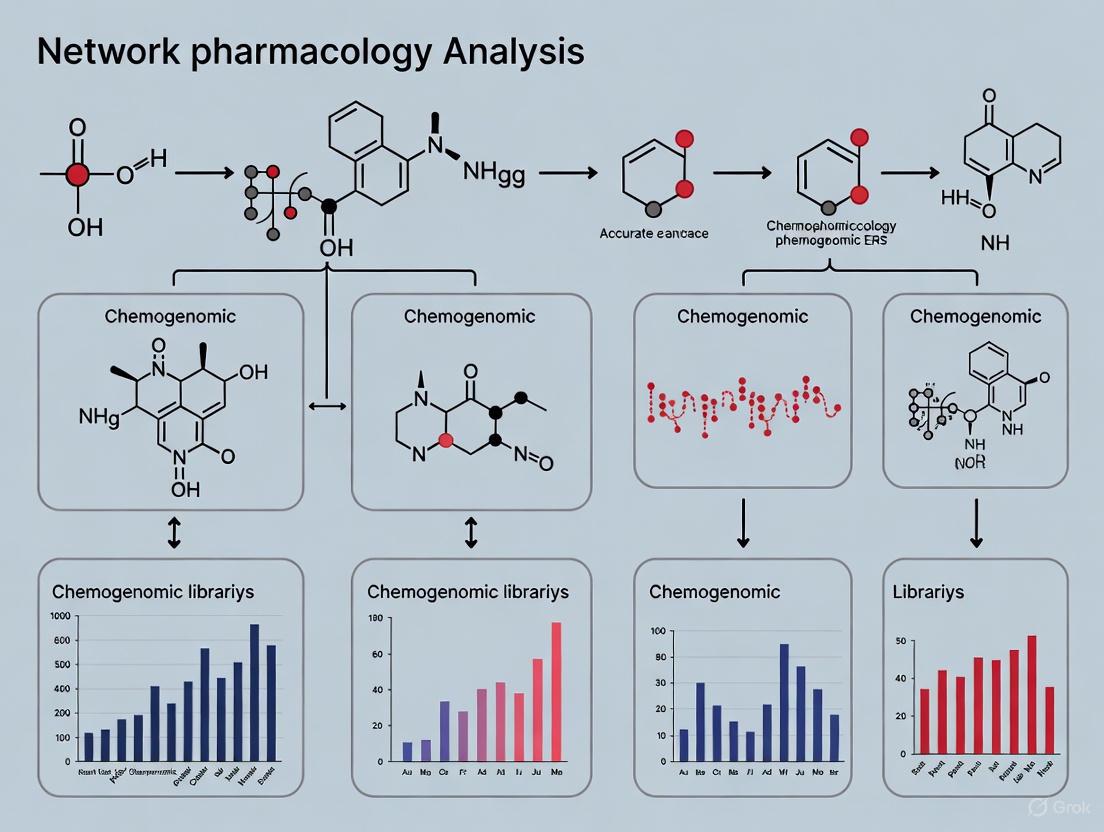
This article explores the integration of network pharmacology with chemogenomic libraries, a powerful synergy that is reshaping modern drug discovery.
Integrating Network Pharmacology and Chemogenomic Libraries: A Systems Approach to Accelerating Multi-Target Drug Discovery
Abstract
This article explores the integration of network pharmacology with chemogenomic libraries, a powerful synergy that is reshaping modern drug discovery. Aimed at researchers and drug development professionals, it covers the foundational shift from the 'one-drug-one-target' paradigm to a systems-level, multi-target approach. The content provides a methodological guide for constructing and applying chemogenomic libraries within network pharmacology frameworks, supported by real-world case studies in oncology and complex diseases. It also addresses key challenges in data reproducibility, library design, and analytical validation, offering practical troubleshooting and optimization strategies. Finally, the article evaluates advanced computational platforms, AI-driven validation techniques, and comparative analyses of leading tools, presenting a comprehensive resource for developing more effective, multi-targeted therapeutic strategies.
From Single Targets to Complex Networks: The Conceptual Foundation of Integrated Discovery
The traditional 'one-drug-one-target' paradigm, which has dominated drug discovery for decades, is increasingly proving inadequate for addressing complex diseases [1] [2]. This reductionist model, based on developing a single compound to modulate a single, specific target, often fails due to the inherent multifactorial nature of conditions like cancer, neurodegenerative disorders, and metabolic syndromes [1]. The pathogenesis of these diseases involves abnormalities across multiple biological processes, signalling pathways, and genetic networks, characterized by significant heterogeneity and adaptive resistance mechanisms [1]. Consequently, drugs developed under the single-target model have faced high failure rates in clinical trials, estimated at 60–70%, and often demonstrate limited efficacy or unforeseen side effects in real-world applications [2]. This has catalyzed a fundamental shift towards a more holistic, systems-level approach that embraces the complexity of biological systems, leading to the emergence of network pharmacology and chemogenomics as transformative disciplines in modern pharmacology [3] [4] [2].
Foundational Concepts: Network Pharmacology and Chemogenomics
This new paradigm is underpinned by two complementary fields:
- Network Pharmacology: This is a systems biology-based approach that analyzes the complex, multi-layered interactions between drugs, their targets, and associated diseases within biological networks [1] [2]. Instead of viewing a drug's action in isolation, it examines how a compound (or combination of compounds) modulates an entire network of targets and pathways to produce a therapeutic effect [1]. This is particularly suited for understanding the "multicomponent, multitarget, and multilevel" action of therapeutic agents, such as those found in Traditional Chinese Medicine (TCM), and for designing multi-target drugs or drug combinations [1] [5].
- Chemogenomics: This approach leverages large-scale, annotated chemical libraries to systematically probe the function of entire gene families (e.g., kinases, GPCRs) or the human proteome [4]. By screening diverse small molecules against a wide array of biological targets, chemogenomics aims to build comprehensive maps of chemical-to-biological activity space [4] [6]. These maps are invaluable for identifying starting points for drug discovery, understanding polypharmacology, and deconvoluting the mechanisms of action behind phenotypic screening hits [4].
The integration of network pharmacology with chemogenomic libraries creates a powerful framework for rational, multi-target drug discovery and development.
Quantitative Comparison of Pharmacological Paradigms
The table below summarizes the core differences between the traditional and modern pharmacological paradigms.
Table 1: Key Features of Traditional Pharmacology vs. Network Pharmacology
| Feature | Traditional Pharmacology | Network Pharmacology |
|---|---|---|
| Targeting Approach | Single-target | Multi-target / network-level [2] |
| Disease Suitability | Monogenic or infectious diseases | Complex, multifactorial disorders (e.g., cancer, neurodegeneration) [1] [2] |
| Model of Action | Linear (receptor–ligand) | Systems/network-based [2] |
| Risk of Side Effects | Higher (due to off-target effects) | Lower (enables network-aware prediction) [2] |
| Failure in Clinical Trials | Higher (~60-70%) | Lower (due to pre-network analysis) [2] |
| Technological Tools | Molecular biology, pharmacokinetics | Omics data, bioinformatics, graph theory, AI [2] |
| Personalized Therapy | Limited | High potential for precision medicine [2] |
Application Notes & Protocols
This section provides a detailed, actionable methodology for implementing a network pharmacology analysis integrated with a chemogenomic library, as applied to a specific disease context.
Protocol: A Workflow for Target Identification and Mechanism Deconvolution
Table 2: Research Reagent Solutions for Network Pharmacology
| Category | Tool/Database | Functionality |
|---|---|---|
| Drug & Compound Information | DrugBank, PubChem, ChEMBL [4] [2] | Provides drug structures, known targets, and pharmacokinetic data. |
| Gene-Disease Associations | DisGeNET, OMIM, GeneCards [5] [7] [8] | Sources for disease-linked genes, mutations, and functional annotations. |
| Target Prediction | SwissTargetPrediction, PharmMapper [5] [2] | Predicts protein targets for a compound based on its chemical structure. |
| Protein-Protein Interactions (PPI) | STRING, BioGRID [9] [2] | Databases of known and predicted protein-protein functional associations. |
| Pathway Analysis | KEGG, Reactome [4] [5] | Manually curated databases of biological pathways and processes. |
| Network Visualization & Analysis | Cytoscape [5] [7] | Open-source software platform for visualizing and analyzing complex networks. |
Objective: To identify the potential multi-target mechanisms of a natural product, Epimedium, in the treatment of Mild Cognitive Impairment (MCI) and Alzheimer's Disease (AD) [5].
Experimental Workflow:
Step-by-Step Methodology:
Identification of Active Ingredients:
- Retrieve all chemical compounds of the herb "Epimedium" from the TCMSP database (http://lsp.nwu.edu.cn/tcmsp.php) [5].
- Screening Criteria: Apply Absorption, Distribution, Metabolism, and Excretion (ADME) parameters to filter for bioactive compounds. Use an Oral Bioavailability (OB) ≥ 30% and Drug-likeness (DL) ≥ 0.18 as standard screening thresholds [5].
- Output: A finalized list of bioactive ingredients (e.g., Icariin) with their canonical SMILES or SDF structural formats downloaded from PubChem [5].
Target Prediction for Active Ingredients:
- Submit the structures of the active ingredients to target prediction platforms:
- Data Curation: Standardize all predicted target protein names to their official gene symbols using the UniProt database [5].
Acquisition of Disease-Associated Targets:
- Search for genes associated with "mild cognitive impairment" and "Alzheimer's disease" using disease databases [5]:
- GeneCards: A comprehensive database of human genes.
- DisGeNET: A platform integrating data on gene-disease associations.
- OMIM: A catalog of human genes and genetic disorders.
- Combine the results and remove duplicates to create a unified list of MCI/AD-related targets.
- Search for genes associated with "mild cognitive impairment" and "Alzheimer's disease" using disease databases [5]:
Identification of Common Targets and PPI Network Construction:
- Use a Venn analysis tool (e.g., Jvenn) to identify the overlapping targets between the Epimedium compound targets and the MCI/AD disease targets. These are the potential therapeutic targets [5].
- Input the list of common targets into the STRING database (https://string-db.org/) to generate a Protein-Protein Interaction (PPI) network. Set a high confidence score (e.g., >0.900) to ensure high-quality interactions [7].
- Import the PPI network into Cytoscape for visualization and further analysis [5] [7].
Topological Analysis and Hub Target Identification:
- Within Cytoscape, use built-in tools or plugins (e.g., CytoNCA) to perform network topology analysis [7].
- Calculate centrality measures such as Degree Centrality (number of connections), Betweenness Centrality (influence in information flow), and Closeness Centrality [2].
- Output: A ranked list of hub targets (e.g., AKT1, MAPK1, TP53, IL-6, TNF). These are the most influential nodes in the network and are prioritized for further investigation [5] [7] [8].
Gene Ontology (GO) and Kyoto Encyclopedia of Genes and Genomes (KEGG) Enrichment Analysis:
- Submit the list of common targets to functional enrichment tools like the DAVID bioinformatics database or the R package
clusterProfiler[4] [5]. - GO Analysis: Categorizes gene functions into Biological Process (BP), Cellular Component (CC), and Molecular Function (MF). For MCI/AD, expect enrichment in processes like "apoptosis," "inflammatory response," and "response to oxidants" [5] [7].
- KEGG Pathway Analysis: Identifies key signaling pathways that the targets are involved in. Expected pathways in neurodegeneration include the PI3K-Akt, MAPK, HIF-1, FoxO, and TNF signaling pathways [5] [10].
- Visualization: Generate bar plots or bubble charts to visualize the significantly enriched terms and pathways.
- Submit the list of common targets to functional enrichment tools like the DAVID bioinformatics database or the R package
Molecular Docking Validation:
- Objective: To validate the predicted interactions between the top active ingredients (e.g., Quercetin) and the hub target proteins (e.g., AKT1) [5] [7].
- Protocol: a. Retrieve the 3D crystal structure of the target protein from the Protein Data Bank (PDB). b. Prepare the protein and ligand files (e.g., adding hydrogen atoms, assigning charges) using tools like AutoDock Tools. c. Perform molecular docking using software such as AutoDock Vina to predict the binding affinity (reported in kcal/mol) and the binding pose [5] [7]. d. Analyze the results, focusing on compounds with strong binding affinities (e.g., < -5 kcal/mol) and key hydrogen bond or hydrophobic interactions within the protein's active site [7].
Case Study: Mechanism of Scar Healing Ointment (SHO)
A study on Scar Healing Ointment (SHO) exemplifies this protocol's output. Network pharmacology and molecular docking revealed key active ingredients (Quercetin, Beta-sitosterol) and hub targets (AKT1, MAPK1, TP53) in treating hypertrophic scars. The KEGG analysis indicated involvement in apoptosis and pathways like MAPK signaling. Molecular docking showed strong binding affinities, for example, between stigmasterol and MAPK1 (-5.31 kcal/mol) and alloimperatorin and ESR1 (-6.09 kcal/mol), forming multiple hydrogen bonds and supporting the predicted multi-target mechanism [7].
Visualizing the Multi-Target Mechanism of Action
The following diagram synthesizes the findings from network pharmacology studies on natural products like Epimedium and SHO, illustrating how multiple components interact with a network of targets to modulate core signaling pathways.
The paradigm shift from 'one-drug-one-target' to a network-based model represents a fundamental evolution in pharmacology, aligning drug discovery with the complex, interconnected reality of biological systems [2]. The integration of chemogenomic libraries provides the experimental data to populate these networks, while network pharmacology offers the computational framework to interpret them and generate testable hypotheses [4]. This synergistic approach enables the rational design of multi-target therapies and the repurposing of existing drugs, offering a more effective strategy for treating complex diseases with higher success rates and fewer side effects [1] [2].
While challenges remain, including the need for high-quality data and sophisticated computational tools, the future of drug discovery is unequivocally systems-oriented. The continued development of chemogenomic resources, coupled with advances in artificial intelligence and multi-omics data integration, will further solidify network pharmacology as an indispensable pillar of modern, precision medicine [1] [2].
Chemogenomic libraries are systematic collections of well-characterized, target-annotated small molecules designed for probing biological systems. Their primary purpose is to bridge the gap between phenotypic screening and target-based drug discovery by providing a set of chemical probes with defined mechanisms of action. In the context of network pharmacology, which studies drug actions within complex biological networks, these libraries serve as essential tools for deconvoluting complex phenotypic responses and understanding polypharmacology [4] [11]. The fundamental principle of chemogenomics is the systematic screening of targeted chemical libraries against families of functionally related proteins—such as GPCRs, kinases, and proteases—with the dual goal of identifying novel drugs and elucidating the functions of novel drug targets [12].
The strategic value of these libraries lies in their target-focused design. Unlike diverse compound libraries for initial screening, chemogenomic libraries contain molecules where at least one primary target is known. When a compound from such a library produces a phenotypic change in a screening assay, it suggests that its annotated target or targets are involved in the observed biological effect [13]. This approach has gained prominence with the recognition that complex diseases often involve multiple molecular abnormalities, necessitating a systems-level understanding of drug action beyond the traditional "one target—one drug" paradigm [4].
Design Principles and Curation Strategies
Fundamental Design Objectives
The construction of a high-quality chemogenomic library requires balancing multiple, often competing, design objectives. The primary goal is to achieve comprehensive target coverage across biologically relevant protein families while maintaining compound quality and experimental practicality [14]. Key considerations include:
Target Space Definition: Library designers must first define a comprehensive list of proteins associated with biological processes or disease states. For example, in anticancer library development, this involves collating proteins implicated in hallmarks of cancer from resources like The Human Protein Atlas and PharmacoDB [14].
Cellular Potency: Compounds must possess adequate biological activity in cellular environments, not just in biochemical assays, to ensure relevance in phenotypic screening.
Target Selectivity: While perfect specificity is rare, compounds are selected and optimized for narrow target profiles to facilitate cleaner target deconvolution.
Chemical Diversity: Libraries should encompass diverse chemical scaffolds to mitigate structure-specific biases and enable structure-activity relationship analysis [4] [14].
Practical Curation Workflows
The curation of chemogenomic libraries follows rigorous, multi-stage processes to balance target coverage with practical screening constraints:
Table 1: Compound Set Definitions in Library Curation
| Compound Set Type | Definition | Typical Size | Target Coverage |
|---|---|---|---|
| Theoretical Set | In silico collection of all established target-compound pairs | ~300,000 compounds | 100% of defined target space |
| Large-Scale Set | Filtered collection retaining activity and diversity | ~2,200 compounds | ~100% of target space |
| Screening Set | Purchasable, experimentally practical collection | ~1,200 compounds | ~84% of target space |
The process typically begins with a theoretical set encompassing all known compound-target interactions for the defined target space. This initial collection undergoes sequential filtering: first, removing compounds lacking demonstrated cellular activity; second, selecting the most potent representatives for each target; and finally, filtering based on commercial availability and synthetic tractability [14]. Through this process, library size can be reduced 150-fold while maintaining majority target coverage [14].
A critical challenge in library design is managing the inherent polypharmacology of small molecules. Most compounds interact with multiple molecular targets, with drug molecules interacting with an average of six known targets [15]. This reality complicates target deconvolution from phenotypic screens. Libraries can be characterized by their Polypharmacology Index (PPindex), which quantifies overall target specificity, with steeper slopes indicating more target-specific collections [15].
Applications in Phenotypic Screening and Network Pharmacology
Phenotypic Screening and Target Deconvolution
Chemogenomic libraries are particularly valuable in phenotypic drug discovery (PDD), where compounds are screened in complex biological systems without prior knowledge of specific molecular targets. A primary application is target identification for hits discovered in phenotypic screens [4] [15]. When a compound from a chemogenomic library produces a phenotypic effect, researchers can immediately generate hypotheses about which molecular targets may be mediating the observed effect based on the compound's annotation [13].
The integration of chemogenomic libraries with high-content imaging technologies has proven particularly powerful. For example, the Cell Painting assay provides a high-dimensional morphological profile by staining multiple cellular components and extracting thousands of quantitative features [4]. When combined with chemogenomic library screening, this approach can connect specific morphological changes to modulation of particular targets or pathways [4] [16].
Table 2: Chemogenomic Library Applications in Drug Discovery
| Application Area | Specific Use Case | Research Example |
|---|---|---|
| Target Identification | Mode of action determination for traditional medicines | Identifying targets for traditional Chinese medicine and Ayurvedic formulations [12] |
| Pathway Elucidation | Gene discovery in biological pathways | Discovering YLR143W as diphthamide synthetase in yeast [12] |
| Network Pharmacology | Mapping drug-target-pathway-disease relationships | Building system pharmacology networks integrating multiple data sources [4] |
| Drug Repurposing | Identifying new therapeutic uses for existing compounds | Applying approved and investigational compounds to new disease contexts [14] |
Integration with Network Pharmacology
In network pharmacology research, chemogenomic libraries provide the critical experimental link between chemical perturbations and systems-level responses. By testing compounds with known targets in complex assays, researchers can:
- Construct drug-target-pathway-disease networks that reveal how modulating specific nodes affects broader biological systems [4] [11]
- Validate multi-target mechanisms of action, particularly relevant for traditional medicine formulations where multiple compounds act synergistically [12] [11]
- Identify network vulnerabilities in disease states, such as patient-specific cancer vulnerabilities revealed through screening in glioblastoma stem cells [14]
This approach effectively bridges traditional and modern drug discovery by providing a systems-level understanding of complex diseases and treatment mechanisms [11].
Experimental Protocols for Library Implementation
High-Content Phenotypic Profiling Protocol
The following protocol details a live-cell multiplexed screening approach for annotating chemogenomic libraries based on nuclear morphology and cellular health parameters [16]:
1. Cell Preparation and Plating
- Culture adherent cell lines (e.g., U2OS, HEK293T, MRC9) under standard conditions
- Seed cells in collagen-I coated 96-well or 384-well microplates at optimized densities (e.g., 1,500-4,000 cells/well for 96-well format)
- Allow cells to adhere for 12-24 hours under normal growth conditions
2. Compound Treatment
- Prepare compound stocks in DMSO and dilute in cell culture medium
- Apply compounds to cells across desired concentration range (typically 0.1 nM - 10 µM)
- Include DMSO vehicle controls and reference compounds (e.g., camptothecin, staurosporine, digitonin) as system controls
- Perform treatments in technical triplicates for statistical robustness
3. Staining and Live-Cell Imaging
- Prepare staining solution containing:
- 50 nM Hoechst33342 (nuclear stain)
- 20-50 nM MitoTracker Red/DeepRed (mitochondrial content)
- Recommended concentration BioTracker 488 Green Microtubule Cytoskeleton Dye (tubulin network)
- Add staining solution directly to culture medium without washing
- Incubate for 30-60 minutes at 37°C, 5% CO₂
- Acquire images at multiple time points (e.g., 0, 24, 48, 72 hours) using high-content imaging system
4. Image Analysis and Phenotype Classification
- Segment cells and extract morphological features using appropriate software
- Apply machine learning classifier to categorize cells into phenotypic classes:
- Healthy
- Early apoptotic
- Late apoptotic
- Necrotic
- Lysed
- Quantify population distributions and calculate IC₅₀ values for cytotoxicity
5. Data Integration and Annotation
- Correlate nuclear morphology features with overall cellular phenotype
- Generate time-dependent cytotoxicity profiles
- Annotate library compounds with phenotypic profiles and cellular health effects
Figure 1: Experimental workflow for high-content phenotypic profiling of chemogenomic libraries
The Scientist's Toolkit: Essential Research Reagents
Table 3: Essential Reagents for Chemogenomic Library Implementation
| Reagent Category | Specific Examples | Function & Application |
|---|---|---|
| Live-Cell Dyes | Hoechst33342 (50 nM), MitoTracker Red, BioTracker 488 Microtubule Dye | Multiplex staining of cellular compartments for phenotypic profiling [16] |
| Reference Compounds | Camptothecin, Staurosporine, JQ1, Torin, Paclitaxel | Assay controls representing diverse mechanisms of action and cytotoxicity kinetics [16] |
| Cell Lines | U2OS, HEK293T, MRC9, patient-derived stem cells | Physiologically relevant screening models for phenotypic assessment [14] [16] |
| Data Resources | ChEMBL, KEGG, Gene Ontology, Disease Ontology | Target annotation, pathway analysis, and biological context [4] |
| Analysis Tools | CellProfiler, ScaffoldHunter, Neo4j, ClusterProfiler | Image analysis, chemoinformatics, and network visualization [4] |
Chemogenomic libraries represent a powerful infrastructure at the intersection of chemical biology and systems pharmacology. By providing systematically annotated collections of biologically active compounds, they enable researchers to connect phenotypic observations to molecular targets within complex biological networks. The continued refinement of library design principles—balancing target coverage, compound selectivity, and practical screening considerations—will further enhance their utility in deconvoluting complex biological mechanisms and accelerating the discovery of novel therapeutic strategies.
Network pharmacology represents a paradigm shift in drug discovery, moving away from the traditional "one drug–one target–one disease" model toward a more comprehensive "network-target, multiple-component therapeutics" approach [17]. This emerging discipline is based on the understanding that complex diseases like cancers, neurological disorders, and diabetes are often caused by multiple molecular abnormalities rather than single defects, necessitating therapeutic strategies that modulate multiple targets simultaneously [4]. The core principle of network pharmacology involves evaluating how drugs interact with therapeutic targets, their associated signaling pathways, and the biological functions linked to diseases to achieve beneficial therapeutic effects [17].
The development of network pharmacology is closely tied to advances in systems biology and omics technologies. Historically, drug discovery strategies assumed that a single-target mechanism was the best approach for obtaining target-specific therapeutics. However, both drugs and natural compounds frequently interact with multiple receptors, resulting in polyvalent pharmacological and pleiotropic therapeutic activities through multitarget interactions [17]. This understanding has fundamentally shifted the drug discovery paradigm and created new opportunities for understanding complex therapeutic interventions, including traditional Chinese medicine (TCM) and other natural product-based treatments [18] [19].
Fundamental Principles of Network Pharmacology
Polypharmacology and Network-Based Drug Action
Polypharmacology refers to the ability of drug molecules to modulate multiple targets simultaneously, creating network-wide effects that can produce superior therapeutic outcomes for complex diseases compared to single-target approaches [17]. This principle challenges the traditional expectation that selective ligands act on a single target and recognizes that drug promiscuity can be an intentional strategy rather than a source of unwanted effects [4] [17].
The network perspective reveals that disease phenotypes and drugs act on interconnected biological networks, where complementary mechanisms of action provide more therapeutic benefit with less toxicity and resistance [19]. This approach is particularly valuable for understanding the action of complex mixtures, such as botanical hybrid preparations and traditional Chinese medicine formulations, which inherently function through multi-target mechanisms [17].
The "Network Target" Concept
The "network target" concept forms the theoretical foundation of network pharmacology, proposing that disease phenotypes and drugs act on the same biological networks, pathways, or targets [19]. This framework allows researchers to understand how pharmacological interventions can affect the balance of network targets and subsequently influence disease phenotypes at multiple biological levels.
This concept is implemented through the construction of "drug–target–pathway–disease" relationship networks that integrate multiple data sources, including chemical biology data, pathway information, disease ontologies, and high-content screening data [4]. These networks enable the systematic analysis of how compounds modulate protein targets that may relate to morphological perturbations, phenotypes, and disease outcomes.
Table 1: Core Conceptual Frameworks in Network Pharmacology
| Concept | Definition | Research Application |
|---|---|---|
| Polypharmacology | The ability of a drug to interact with multiple molecular targets | Explains therapeutic effects of multi-target drugs and natural products |
| Network Target | Biological network that serves as the interface between drug action and disease phenotype | Provides framework for analyzing system-wide drug effects |
| Network Medicine | Understanding disease pathophysiology at the systems level | Basis for developing novel drugs that target disease networks rather than individual proteins |
| Multicomponent Therapeutics | Use of multiple active compounds to target network vulnerabilities | Rational design of combination therapies and complex herbal formulations |
Key Methodologies and Experimental Protocols
Construction of Network Pharmacology Databases
The foundation of network pharmacology research lies in the integration of heterogeneous data sources into a unified network database. The following protocol outlines the key steps for constructing a comprehensive network pharmacology database:
Protocol 1: Database Construction for Network Pharmacology Analysis
Compound Data Collection: Extract bioactivity data, molecular structures, and target information from databases such as ChEMBL, which contains standardized bioactivity data for millions of molecules and thousands of targets [4].
Pathway Information Integration: Incorporate pathway databases such as the Kyoto Encyclopedia of Genes and Genomes (KEGG) to map molecular interactions, reactions, and relation networks across various pathway categories including metabolism, cellular processes, and human diseases [4].
Ontology Annotation: Integrate Gene Ontology (GO) resources for functional annotation of proteins, including biological processes, molecular functions, and cellular components. Include Disease Ontology (DO) resources for disease classification and annotation [4].
Morphological Profiling Data: Incorporate high-content screening data such as morphological profiling from Cell Painting assays, which measure hundreds of morphological features across different cellular components to produce detailed cell profiles [4].
Graph Database Implementation: Utilize graph database systems like Neo4j to integrate these diverse data sources, creating nodes for molecules, scaffolds, proteins, pathways, and diseases, with edges representing relationships between them [4].
The resulting database enables complex queries across the integrated biological and chemical space, facilitating the identification of potential therapeutic targets and mechanisms of action.
Development and Application of Chemogenomic Libraries
Chemogenomic libraries represent curated collections of small molecules designed to modulate a diverse panel of drug targets involved in various biological effects and diseases. The following protocol describes the development and application of such libraries:
Protocol 2: Development of a Chemogenomic Library for Phenotypic Screening
Library Design and Curation: Select approximately 5,000 small molecules representing a large and diverse panel of drug targets, ensuring coverage of the druggable genome [4]. This selection should be based on comprehensive system pharmacology networks that integrate drug-target-pathway-disease relationships.
Scaffold Analysis and Diversity Optimization: Use software such as ScaffoldHunter to decompose each molecule into representative scaffolds and fragments through stepwise removal of terminal side chains and rings while preserving characteristic core structures [4]. This ensures structural diversity and appropriate coverage of chemical space.
Target Annotation and Validation: Annotate each compound with its known protein targets using databases such as ChEMBL, and validate these interactions through literature mining and experimental data where available [4].
Phenotypic Screening Application: Apply the chemogenomic library to cell-based phenotypic screening systems, such as those utilizing Cell Painting assays, to identify compounds that induce specific morphological profiles [4].
Target Deconvolution and Mechanism Analysis: Use the network pharmacology platform to identify proteins modulated by hit compounds that correlate with observed morphological perturbations and phenotypic outcomes [4].
Table 2: Essential Research Reagents and Databases for Network Pharmacology
| Resource Category | Specific Resources | Function and Application |
|---|---|---|
| Compound Databases | ChEMBL, TCMSP, HERB, TCMBank | Provide chemical structures, bioactivity data, and target annotations for small molecules and natural products |
| Target and Pathway Databases | KEGG, Gene Ontology, Disease Ontology | Offer pathway maps, functional annotations, and disease classification systems |
| Analysis Tools | ScaffoldHunter, cluster profiler (R package) | Enable scaffold analysis, GO enrichment, KEGG enrichment, and DO enrichment calculations |
| Network Visualization & Database | Neo4j, Cytoscape | Facilitate network construction, visualization, and complex querying of biological relationships |
| Experimental Data | Broad Bioimage Benchmark Collection (BBBC) | Provide morphological profiling data from high-content screening experiments |
Network Analysis and Target Identification
The core analytical process in network pharmacology involves the construction and analysis of biological networks to identify key targets and mechanisms:
Protocol 3: Network Analysis for Target Identification and Mechanism Deconvolution
Network Construction: Map disease phenotypic targets and drug targets together in a biomolecular network, establishing association mechanisms between diseases and drugs [19].
Enrichment Analysis: Perform GO enrichment, KEGG enrichment, and DO enrichment analyses using tools like the R package cluster profiler with appropriate adjustment methods (e.g., Bonferroni) and p-value cutoffs (e.g., 0.1) [4].
Network Target Identification: Analyze the network to identify key nodes and interaction patterns, focusing on network targets where disease phenotypes and drugs converge on the same networks, pathways, or targets [19].
Multi-omics Integration: Incorporate data from genomics, transcriptomics, proteomics, and metabolomics to validate network predictions and provide multi-layer evidence for proposed mechanisms [17] [20].
Experimental Validation: Design in vitro and in vivo experiments to validate predictions, using technologies such as molecular interaction assays (biofilm interference, plasma resonance, nano-liquid chromatography-mass spectrometry) and high-throughput screening approaches [18] [20].
Visualization of Network Pharmacology Workflows
The following diagrams illustrate key workflows and relationships in network pharmacology research, created using Graphviz DOT language with adherence to the specified color contrast requirements.
Chemogenomic Library Screening Workflow
Drug-Target-Pathway-Disease Network Relationships
Applications in Drug Discovery and Development
Network pharmacology has transformed multiple areas of drug discovery and development, particularly in the study of complex therapeutic interventions:
Understanding Traditional Medicine Mechanisms
Network pharmacology has become an essential tool for understanding the mechanisms of traditional medicine systems, particularly traditional Chinese medicine (TCM). The holistic, multi-target nature of TCM aligns perfectly with the network pharmacology approach [18] [19]. Through network analysis, researchers can identify key active ingredients in complex herbal formulations, predict their targets, and elucidate their mechanisms of action across multiple biological pathways [19] [20].
This approach has been successfully applied to study TCM interventions for various conditions, including COVID-19, where network pharmacology analyses predicted that the therapeutic effects of Chinese herbs are related to hypoxia response, immune/inflammation reactions, and viral infection regulation [18]. Similar approaches have illuminated the mechanisms of TCM formulations for ulcerative colitis, revealing multi-component, multi-target, and multi-pathway action mechanisms [20].
Drug Repurposing and Combination Therapy Design
Network pharmacology enables systematic drug repurposing by identifying new therapeutic applications for existing drugs based on their network properties [17]. By analyzing the position of drug targets within disease networks, researchers can identify unexpected connections between drugs and diseases, leading to new therapeutic indications.
Additionally, network pharmacology provides a rational framework for designing combination therapies that target multiple network vulnerabilities simultaneously [19]. This approach is particularly valuable for complex multifactorial diseases whose pathogenesis is modulated by diverse biological processes and molecular functions, where single-target therapies have shown limited efficacy [19].
Challenges and Future Perspectives
Despite significant advances, network pharmacology faces several challenges that must be addressed to fully realize its potential:
Technical and Methodological Challenges
The reproducibility of chemical composition and its influence on pharmacological activity remains a significant challenge, particularly for natural products and complex herbal mixtures [17]. Issues related to quality control, standardization, and optimal dosing also present obstacles in determining reproducible quality, safety, and efficacy [17].
Methodological challenges include selection of appropriate databases and algorithms, potential biases in data collection methods, and the need for standardized research protocols [19] [20]. The rapid evolution of databases and analysis tools also creates issues with version control and comparability across studies conducted at different times.
Integration with Emerging Technologies
The future development of network pharmacology is closely tied to integration with emerging technologies, particularly artificial intelligence and multi-omics approaches [17]. Integrative omics network pharmacology and AI-assisted analysis of natural products are opening new avenues for:
- Elucidation of the mechanisms of action of medicinal plants [17]
- Understanding synergistic therapeutic actions of complex bioactive components [17]
- Enhancing the quality and efficiency of natural product drug research [17]
- Predicting drug-herb interactions, adverse events, and potential toxic effects [17]
As these technologies mature, network pharmacology is poised to become an increasingly powerful paradigm for drug discovery, potentially transforming how we develop therapeutics for complex diseases.
The integration of network pharmacology, chemogenomic libraries, and machine learning is revolutionizing the discovery of therapeutic agents. This paradigm synergistically combines the holistic, multi-target perspective of network pharmacology with the comprehensive compound profiling of chemogenomics and the predictive power of computational intelligence. This application note details how this integrated framework accelerates the identification of novel drug candidates, validates the mechanisms of complex multi-component therapies, and provides detailed protocols for implementing this powerful discovery engine in modern drug development research.
Traditional "one drug–one target–one disease" paradigms have demonstrated limited efficacy for complex multifactorial diseases whose pathogenesis is modulated by diverse biological processes and various molecular functions [21]. Network pharmacology (NP) addresses this limitation by providing a systems-level understanding of drug actions through the lens of biological networks [11]. When combined with the structured compound libraries of chemogenomics and the pattern recognition capabilities of machine learning (ML), researchers gain an unprecedented capacity to identify and validate multi-target therapeutic strategies.
This synergistic integration is particularly valuable for elucidating the mechanisms of complex therapeutic interventions, such as Traditional Chinese Medicine (TCM), which are characterized by multi-component, multi-targeted, and integrative efficacy [22] [21]. The following sections present quantitative evidence of this synergy, detailed experimental protocols, and visualization of the integrated workflow that constitutes this powerful discovery engine.
Quantitative Evidence of Synergistic Value
Table 1: Performance Metrics of Machine Learning Models in Senotherapeutic Discovery
| Machine Learning Model | Accuracy | Specificity | Precision | Recall | F1-Score | Kappa |
|---|---|---|---|---|---|---|
| Random Forest (RF) | 0.88 | 0.92 | 0.90 | 0.92 | 0.89 | 0.76 |
| Support Vector Machine (SVM) | 0.76 | 0.71 | 0.71 | 0.83 | 0.76 | 0.54 |
| K-Nearest Neighbors (KNN) | 0.76 | 0.88 | 0.88 | 0.67 | 0.76 | 0.53 |
Data adapted from a study screening 65,339 compounds for senotherapeutic activity, where the Random Forest model demonstrated superior performance [23].
Table 2: Network Pharmacology Output in Disease Mechanism Studies
| Disease Model | Active Compounds Identified | Potential Targets | Key Signaling Pathways Identified |
|---|---|---|---|
| Immune Thrombocytopenia (ITP) [24] | 60 | 85 | PI3K-Akt signaling pathway |
| Rheumatoid Arthritis (RA) [22] | 16 | 52 | IL-17/NF-κB signaling |
| Radiation Pneumonitis (RP) [25] | 18 | 65 | AGE-RAGE, IL-17, HIF-1, NF-κB |
| Alzheimer's Disease (AD) [26] | 6 | 42 | IL-17, NF-κB, Neuroinflammatory pathways |
Experimental Protocols
Protocol 1: Integrated Network Pharmacology and Machine Learning Workflow
Purpose: To systematically identify potential therapeutic compounds from large chemogenomic libraries using network pharmacology and machine learning.
Materials:
- Compound libraries (e.g., TCMSP, DrugBank, PubChem)
- Disease target databases (e.g., GeneCards, DisGeNET, OMIM)
- Protein-protein interaction databases (e.g., STRING)
- Computational tools: R package, Python with scikit-learn, Cytoscape
Procedure:
Disease Target Identification:
Active Compound Screening:
- Screen chemogenomic libraries for bioactive compounds using ADME criteria:
- For specialized applications (e.g., senotherapeutics), apply Lipinski's Rule of Five to filter compounds with desirable medicinal chemistry properties [23].
Target Prediction and Network Construction:
- Predict compound targets using SwissTargetPrediction and TargetNet with probability thresholds (≥0.4 for SwissTargetPrediction, ≥0.8 for TargetNet) [22].
- Identify overlapping targets between compounds and disease.
- Construct Protein-Protein Interaction (PPI) networks using STRING database with confidence score >0.4 [25].
- Visualize and analyze networks using Cytoscape, identifying hub targets with CytoHubba plugin [24] [26].
Machine Learning Classification:
- Calculate molecular descriptors for all compounds (e.g., 39 descriptors as used in senotherapeutic study) [23].
- Train multiple ML models (Random Forest, SVM, KNN) using known active and inactive compounds as training data.
- Evaluate models using accuracy, specificity, precision, recall, F1-score, and Kappa value.
- Select compounds classified as active by multiple models to enhance robustness [23].
Experimental Validation:
Protocol 2: Mechanism Validation for Multi-Target Therapies
Purpose: To experimentally validate the mechanisms of action identified through network pharmacology analysis.
Materials:
- Animal model of disease (e.g., ITP mouse model, collagen-induced arthritis)
- Test compounds or herbal extracts
- Western blot equipment and reagents
- ELISA kits for cytokine detection
- Immunohistochemistry supplies
Procedure:
In Vivo Therapeutic Efficacy Assessment:
- Establish disease model (e.g., ITP model induced by anti-platelet serum injection) [24].
- Administer test compounds (e.g., YQZY decoction at 1.325 g/kg) for predetermined duration [24].
- Collect blood samples for hematological analysis (e.g., platelet counts) [24].
- Harvest tissue samples (spleen, joints) for histomorphological analysis (HE staining) [24] [22].
Molecular Mechanism Validation:
Pathway Confirmation:
- Validate key signaling pathways (e.g., PI3K-Akt, IL-17/NF-κB) through protein expression analysis of multiple pathway components.
- Compare pathway activation in treatment groups versus disease controls.
Visualization of the Integrated Workflow
Integrated Discovery Engine Workflow
Table 3: Essential Research Reagent Solutions for Integrated Pharmacology Research
| Resource Category | Specific Tools & Databases | Primary Function | Key Features |
|---|---|---|---|
| Compound Databases | TCMSP, TCMID, HERB, TCMBank, PubChem | Bioactive compound identification & ADME screening | OB, DL parameters; compound-structure relationships |
| Target Databases | SwissTargetPrediction, TargetNet, DrugBank | Prediction of compound-protein interactions | Probability scores; species-specific targeting |
| Disease Genetics | GeneCards, DisGeNET, OMIM, CTD | Disease-associated target identification | Relevance scores; gene-disease relationships |
| Network Analysis | STRING, Cytoscape, CytoHubba | PPI network construction & hub target identification | Confidence scores; topological analysis |
| Pathway Analysis | KEGG, GO, DAVID | Functional enrichment analysis | Pathway mapping; biological process annotation |
| Computational Tools | R (TCMNP package), Python ML libraries | Data processing, visualization & machine learning | Integrated workflows; customized analytics |
| Validation Tools | AutoDock, GCNConv-based deep learning | Molecular docking & binding affinity prediction | Binding energy calculation; interaction visualization |
The integration of network pharmacology with chemogenomic libraries and machine learning represents a paradigm shift in therapeutic discovery. This synergistic approach provides a powerful framework for addressing the complexity of human diseases, particularly for understanding multi-target interventions like traditional medicines. The protocols and resources detailed in this application note provide researchers with a structured methodology to leverage this integrated discovery engine, accelerating the identification and validation of novel therapeutic strategies with enhanced efficiency and predictive power.
Protein-protein interaction (PPI) networks are fundamental maps of the physical interactions between proteins within a cell, forming the backbone of cellular signaling, metabolic pathways, and structural complexes [27]. These networks provide a systems-level framework for understanding how biological processes are organized and controlled. In the context of disease, perturbations in PPI networks—caused by mutations affecting binding interfaces or causing dysfunctional allosteric changes—can trigger the onset and progression of complex multi-genic diseases [27] [28]. The study of PPI networks has therefore become indispensable for deciphering the molecular mechanisms underlying healthy and diseased states, facilitating the development of effective diagnostic and therapeutic strategies [27].
PPI networks are characterized by their scale-free topology, meaning most proteins have few connections, while a small subset of highly connected "hub" proteins play critical roles in network stability and function [27]. The structure and dynamics of these networks are frequently disturbed in complex diseases such as cancer, autoimmune disorders, and neurodegenerative conditions, suggesting that the networks themselves, rather than individual molecules, represent promising therapeutic targets [27] [28].
Analytical Framework: Network Topology and Disease Modules
The analysis of PPI network structure (topology) provides crucial insights into cellular evolution, molecular function, and network stability [27]. Key topological features help identify functionally relevant regions and disease-associated modules.
Table 1: Key Topological Indices for PPI Network Analysis
| Term | Definition | Biological Significance |
|---|---|---|
| Node (Vertices) | Each protein in the network [27] | Represents a functional entity in the cell. |
| Edge (Link) | Physical or functional interaction between proteins [27] | Represents a functional relationship or complex formation. |
| Hub | A "high-degree" node with many connections [27] | Often essential proteins; their disruption can have severe consequences [27]. |
| Modules | Groups of sub-networks with high internal connectivity [27] | Often correspond to functional units (e.g., protein complexes, pathways). |
| Degree (k) | The number of connections a node has [27] | Measures how connected a protein is within the network. |
| Betweenness Centrality | Measures how often a node occurs on shortest paths between others [27] | Identifies proteins that connect different modules. |
| Clustering Coefficient (C) | Measures the tendency of a node's neighbors to connect to each other [27] | Indicates the presence of tightly-knit groups or complexes. |
Disease modules are localized regions within the broader PPI network that are enriched for proteins associated with a specific pathological condition [27]. The dynamic modular structure of PPI networks means that these modules can change activity across different biological states, such as during disease progression or in response to treatment [27]. Identifying these modules is a primary goal of network pharmacology, as it allows for the understanding of complex disease mechanisms and the identification of multi-target intervention strategies.
Established Protocols for Mapping PPI Networks
Tandem Affinity Purification Coupled with Mass Spectrometry (TAP/MS)
The following protocol, modified for an SFB-tag system, is designed for high-confidence identification of protein interactors in mammalian cells [29].
Principle: This method uses a two-step purification process with a triple tag (S-, 2×FLAG-, and Streptavidin-Binding Peptide (SBP)) to isolate protein complexes with high specificity, significantly reducing nonspecific bindings compared to one-step affinity purification [29].
Table 2: Research Reagent Solutions for SFB-TAP/MS
| Reagent / Material | Function in the Protocol |
|---|---|
| cSFB-tagged Plasmid | Plasmid construct encoding the bait protein with a C-terminal S-2×FLAG-SBP tag for expression in cells [29]. |
| HEK293T Cells | A commonly used human cell line with high transfection efficiency for expressing the SFB-tagged bait protein [29]. |
| Streptavidin Beads | Binding matrix for the first purification step, capturing the SBP-tagged bait protein and its complexes [29]. |
| S Protein Beads | Binding matrix for the second purification step, capturing the S-tagged bait protein, enabling tandem purification [29]. |
| Biotin Elution Buffer | Mild elution condition for releasing the protein complex from Streptavidin beads without denaturing proteins [29]. |
| Mass Spectrometer | Instrument for identifying the individual proteins ("preys") within the purified complex [29]. |
Step-by-Step Protocol:
Plasmid Preparation (Timing: ~1 week)
- Construct a plasmid encoding your protein of interest (bait) fused to a C-terminal SFB tag.
- Amplify the gene from cDNA using Phusion DNA polymerase with primers containing attB1 and attB2 sequences for Gateway cloning [29].
- The choice of N- or C-terminal tagging should be validated to ensure correct subcellular localization of the bait protein, as tags can interfere with signal peptides [29].
Stable Cell Line Generation (Timing: ~2-3 weeks)
- Transfect HEK293T cells (or other suitable cell lines like HepG2, Sh-SY5Y) with the constructed plasmid.
- Select and expand stably expressing clones using appropriate antibiotics [29].
Tandem Affinity Purification (Timing: ~1 day)
- Cell Lysis: Lyse the stable cells under non-denaturing conditions to preserve protein complexes.
- First Purification: Incubate the cell lysate with Streptavidin beads. Wash the beads under denaturing conditions to remove weakly bound, nonspecific proteins.
- Elution: Elute the bound complexes using a biotin-containing buffer.
- Second Purification: Incubate the eluate from the first step with S protein beads. Perform washes to further increase specificity.
- Final Elution: Elute the purified protein complexes from the S beads for downstream analysis [29].
Mass Spectrometry and Data Analysis (Timing: ~1 week)
- Subject the purified protein sample to tryptic digestion and LC-MS/MS analysis.
- Identify interacting proteins ("preys") by sequencing the resulting peptides and searching protein databases.
- Perform at least two biological replicates for each bait protein to ensure high-confidence identification of bona fide interactors [29].
Workflow for SFB-TAP/MS PPI Mapping
Computational Analysis of PPI Data
After identifying potential interactors, computational tools are used to build and analyze the PPI network.
Network Construction:
Topological Analysis:
Module and Pathway Enrichment:
- Use functional enrichment tools (e.g., FunRich, Reactome Pathway) to identify biological pathways and processes that are statistically over-represented in your network module [30].
- This step translates the list of proteins into biologically meaningful insights, highlighting potential disease-relevant modules.
Computational Analysis of PPI Data
Integration with Network Pharmacology and Drug Discovery
The true power of PPI networks is realized when they are integrated into a network pharmacology framework. This approach moves beyond the "one target, one drug" model to a "network targets, multicomponent" paradigm, which is particularly suited for treating complex diseases [11] [30]. A key application is understanding the mechanism of traditional medicines, like Compound Fuling Granule (CFG) used for ovarian cancer, which inherently function through multi-target mechanisms [30].
Application Workflow in Network Pharmacology:
- Target Identification: Establish a PPI network related to a specific disease from databases (e.g., DisGeNET, TTD) and experimental data (e.g., TAP/MS) [30].
- Network Analysis: Isolate a disease module from the broader PPI network and identify its key hub and bottleneck proteins.
- Molecular Docking: Screen chemogenomic libraries by computationally docking small molecules into the three-dimensional structures of key targets within the disease module to evaluate binding affinity and potential efficacy [30]. Tools like PLIP can further analyze and visualize these interactions, including how drugs might mimic native protein-protein interactions [31].
- Multi-Target Strategy: Select a set of compounds that collectively modulate multiple key nodes in the disease module to disrupt the pathological network state effectively and robustly [11].
Table 3: Key Tools and Databases for Network Pharmacology
| Tool/Database | Type | Primary Function in Analysis |
|---|---|---|
| STRING | Database | Repository of known and predicted PPIs for network construction [11] [30]. |
| Cytoscape | Software Platform | Visualization and topological analysis of PPI networks [11] [30]. |
| DrugBank | Database | Information on drug targets and drug-like compounds for repurposing [11]. |
| PharmMapper | Computational Tool | Target prediction for active small molecules [30]. |
| PLIP (Protein-Ligand Interaction Profiler) | Computational Tool | Analyzes non-covalent interactions at molecular interfaces, useful for understanding how drugs mimic native PPIs [31]. |
| TCMSP | Database | Traditional Chinese Medicine systems pharmacology database for herbal compounds [30]. |
| Reactome Pathway | Database | Pathway enrichment analysis for functional interpretation [30]. |
Protein-protein interaction networks provide a foundational framework for understanding the molecular architecture of complex diseases. By mapping these networks experimentally with techniques like TAP/MS and analyzing them with computational tools, researchers can delineate critical disease modules. Integrating this knowledge with network pharmacology creates a powerful paradigm for drug discovery, enabling the rational design of multi-target therapies that can be sourced from chemogenomic libraries. This systems-level approach moves therapeutic intervention from single targets to network-wide rebalancing, offering a promising strategy for tackling complex, multi-genic diseases.
Building and Applying Integrated Workflows: A Step-by-Step Methodology
Within the paradigm of network pharmacology, understanding the complex polypharmacology of small molecules is paramount. A chemogenomic library is an indispensable resource for this, consisting of annotated chemical compounds designed to modulate a wide range of protein targets. When integrated with biological pathway and network data, such a library enables the systematic investigation of chemical effects across the proteome, facilitating target deconvolution, drug repurposing, and mechanism-of-action analysis [4] [32]. This application note provides a detailed protocol for the construction of a high-quality chemogenomic library, with a specific focus on source selection, rigorous data curation, and comprehensive scaffold analysis to ensure chemical diversity and biological relevance.
Source Selection and Data Acquisition
The first critical step involves aggregating chemical and biological data from robust, publicly available repositories. The selection of appropriate sources dictates the breadth and quality of the resulting library. The following table summarizes the recommended primary data sources.
Table 1: Key Data Sources for Chemogenomic Library Construction
| Data Type | Source | Key Information Provided | Utility in Library Construction |
|---|---|---|---|
| Bioactivity Data | ChEMBL [4] [33] [32] | Standardized bioactivity data (e.g., IC50, Ki), molecular structures, target information. | Primary source for compound-target interactions and building blocks for the library. |
| Pathway Information | Kyoto Encyclopedia of Genes and Genomes (KEGG) [4] | Manually drawn pathway maps representing molecular interactions, reactions, and relation networks. | Contextualizes targets within biological pathways and disease mechanisms. |
| Protein-Protein Interactions | SIGNOR [32] | Causal relationships between proteins, including activation, inhibition, and post-translational modifications. | Enables the construction of network pharmacology models around compound targets. |
| Morphological Profiles | Cell Painting (e.g., BBBC022 dataset) [4] | High-content imaging data quantifying cellular morphological features after chemical perturbation. | Provides phenotypic annotation for compounds, linking chemistry to phenotypic outcomes. |
| Gene-Disease Associations | Human Disease Ontology (DO) [4] | A structured, controlled vocabulary for human disease terms. | Annotates targets and compounds with their relevance to specific human diseases. |
The ChEMBL database serves as the foundational source for compounds and their bioactivities. It is critical to filter for records with defined bioassay data and, for initial simplicity, focus on human targets. The integration of pathway and protein-protein interaction (PPI) data from KEGG and SIGNOR, respectively, transforms a simple compound-target list into a rich network pharmacology platform [4] [32]. Furthermore, incorporating phenotypic profiling data from sources like the Cell Painting assay provides an independent layer of functional annotation, which is invaluable for phenotypic screening campaigns [4].
Data Curation and Standardization Workflow
The accuracy of a chemogenomic library is heavily dependent on rigorous data curation. Errors in chemical structures or bioactivities propagate through to flawed network pharmacology models and predictions. The following workflow outlines an integrated chemical and biological data curation protocol, adapted from best practices in the field [33].
Diagram 1: Integrated chemical and biological data curation workflow. The process ensures both structural integrity and biological data consistency.
Chemical Structure Curation
- Removal of Problematic Records: Filter out inorganic, organometallic compounds, mixtures, and large biologics, as standard molecular descriptors are not designed to handle them [33].
- Structural Cleaning: Use software like RDKit or ChemAxon JChem to detect and correct valence violations, normalize chemotypes, and standardize tautomeric forms using consistent rules [33]. Inconsistent tautomer representation is a common source of error in chemical databases.
- Stereochemistry Verification: Manually inspect compounds with multiple stereocenters, as errors are frequent. Cross-reference with databases like PubChem or ChemSpider, which offer crowd-curated structure verification [33].
Biological Data Curation
- Processing of Chemical Duplicates: Identify and merge records for the same compound tested in the same assay, which may have different internal IDs. Calculate a median bioactivity value (e.g., pIC50) for each unique compound-target pair to create a single, robust data point [33] [32].
- Flagging Suspicious Entries: Apply cheminformatics analyses to identify and flag outliers, such as compounds with highly similar structures but vastly different bioactivities, which may indicate an erroneous measurement [33].
Scaffold and Chemotype Analysis
Scaffold analysis decomposes complex molecular structures into core frameworks, enabling the assessment and enforcement of chemical diversity within the library. It also helps identify chemotypes—common chemical patterns recognized by target families—which can be used to predict novel drug-target interactions [32].
Scaffold Generation and Classification
Two complementary methodologies are recommended for scaffold analysis:
- HierS Algorithm: This algorithm, implemented in tools like ScaffoldGraph, systematically decomposes molecules. It removes all side chains and linkers to generate "basis scaffolds" (core ring systems) and then recursively removes individual ring systems to create a hierarchical tree of "superscaffolds" that retain linker connectivity [34]. This is particularly useful for scaffold hopping, as it generates a wide range of structurally related cores.
- Bemis-Murcko Scaffolds: A widely used method to extract a molecular framework by removing all terminal side chains and retaining only the ring systems and the linkers that connect them [32]. This provides a consistent way to group compounds by their central core.
Diagram 2: Hierarchical scaffold generation process using the HierS algorithm, producing both basis scaffolds and superscaffolds.
Application in Library Enumeration and Scaffold Hopping
Scaffold analysis is not merely for classification. It is a powerful tool for library design.
- Diversity Filtering: After generating scaffolds for all candidate compounds, filter the library to ensure broad coverage of different scaffold types. This avoids over-representation of common chemotypes and ensures the library probes diverse chemical space [4].
- Scaffold Hopping: Tools like ChemBounce can be used to generate novel compounds for the library via scaffold hopping. Given a known active molecule, it identifies its core scaffold and replaces it with a candidate from a large, synthesis-validated fragment library (e.g., derived from ChEMBL). The resulting molecules are then filtered for similarity to the original via Tanimoto and electron shape similarity to preserve pharmacophores and potential biological activity [34]. This is a practical method to expand the library with patentable, novel chemotypes with high synthetic accessibility.
Integration and Platform Implementation
To be functionally useful for network pharmacology analysis, the curated compounds, scaffolds, targets, and pathways must be integrated into an investigational platform. A graph database is the ideal structure for this purpose, as it natively represents the complex network of relationships between these entities [4] [32].
Platforms like SmartGraph utilize Neo4j to integrate this data, creating nodes for compounds, patterns (scaffolds), proteins, pathways, and diseases. Edges represent relationships such as "compound-haspattern," "compound-targets-protein," and "protein-participatesin-pathway" [32]. This allows for powerful queries, such as finding all shortest paths in the network between a set of compound hits from a phenotypic screen and a disease-associated protein, thereby generating testable hypotheses for their mechanism-of-action [32].
The Scientist's Toolkit
Table 2: Essential Research Reagent Solutions and Software Tools
| Item / Software | Function / Application | Key Features / Notes |
|---|---|---|
| ChEMBL Database | Primary source of bioactivity data and molecular structures. | Manually curated, standardized bioactivities; foundational for library building [4] [33]. |
| RDKit | Open-source cheminformatics toolkit. | Used for structural cleaning, descriptor calculation, fingerprint generation, and scaffold analysis [33]. |
| ScaffoldHunter | Software for interactive exploration of scaffold hierarchies. | Generates a hierarchical tree of scaffolds from a compound set, visualizing chemical space [4]. |
| ScaffoldGraph / HierS | Framework for scaffold analysis and decomposition. | Implements the HierS algorithm to generate basis scaffolds and superscaffolds systematically [34]. |
| Neo4j | Graph database management system. | Platform for integrating and querying the chemogenomic library as a network pharmacology knowledge base [4] [32]. |
| ChemBounce | Open-source scaffold hopping tool. | Generates novel compounds by replacing core scaffolds while preserving pharmacophores via shape similarity [34]. |
| Cell Profiler | Open-source software for high-content image analysis. | Processes Cell Painting data to extract morphological profiles for phenotypic annotation of compounds [4]. |
Network pharmacology represents a paradigm shift in drug discovery, moving from a "one target–one drug" model to a systems-level "one drug–multiple targets" approach that more accurately reflects the complexity of biological systems and polypharmacology of effective therapeutics [4]. This transition is particularly relevant for chemogenomic library research, where defining the relationship between chemical structures, their protein targets, and resulting phenotypic outcomes is paramount. The fundamental challenge in modern drug discovery lies in effectively integrating heterogeneous data sources—including OMICS, pathway information, and phenotypic profiles—to build comprehensive networks that predict drug behavior and therapeutic potential [11].
The integration of these diverse data types enables researchers to bridge the gap between phenotypic screening, which identifies observable biological effects without requiring prior knowledge of molecular targets, and target-based approaches, which focus on specific protein interactions [4]. This protocol details established methodologies for constructing unified network pharmacology frameworks that combine these disparate data sources, with particular emphasis on applications within chemogenomic library research and validation.
Key Concepts and Definitions
Table 1: Core Concepts in Heterogeneous Data Integration for Network Pharmacology
| Concept | Definition | Application in Network Pharmacology |
|---|---|---|
| Network Pharmacology | Interdisciplinary approach integrating systems biology, omics technologies, and computational methods to analyze multi-target drug interactions [11] | Provides framework for understanding complex drug-target-disease relationships |
| Chemogenomic Library | Collections of selective small molecules modulating protein targets across the human proteome, involved in phenotype perturbation [4] | Enables systematic screening against protein families; bridges chemical and biological spaces |
| Phenotypic Screening | Drug discovery approach observing compound effects on cells or tissues without requiring prior knowledge of molecular targets [4] | Identifies biologically active compounds; requires subsequent target deconvolution |
| Pathway Enrichment Analysis | Statistical technique identifying biological pathways over-represented in a gene list more than expected by chance [35] | Reveals mechanistic insights from OMICS data; connects targets to biological processes |
| Patient Similarity Networks (PSN) | Graph structures where patients are nodes and edges represent similarity based on clinical or biomolecular features [36] | Enables patient stratification and predictive modeling from heterogeneous health data |
| Heterogeneous Data Integration | Methodologies combining diverse data sources (multi-omics, clinical, imaging) into unified analytical frameworks [37] | Leverages complementary information from multiple data types for comprehensive analysis |
Experimental Protocols
Protocol 1: Building a System Pharmacology Network for Phenotypic Screening
This protocol outlines the construction of a comprehensive network integrating drug-target-pathway-disease relationships with morphological profiling data for target identification and mechanism deconvolution in phenotypic screening campaigns [4].
Materials and Reagents
Table 2: Essential Research Reagents and Computational Tools
| Item | Function/Application | Example Sources |
|---|---|---|
| ChEMBL Database | Provides bioactivity, molecule, target, and drug data from literature [4] | https://www.ebi.ac.uk/chembl/ |
| Cell Painting Assay | High-content imaging-based phenotypic profiling using fluorescent dyes [4] | Broad Bioimage Benchmark Collection (BBBC022) |
| KEGG Pathway Database | Manually drawn pathway maps for metabolism, cellular processes, human diseases [4] | https://www.kegg.jp/ |
| Gene Ontology (GO) | Computational models of biological systems with standardized terms [4] | http://geneontology.org/ |
| Disease Ontology (DO) | Machine-interpretable classification of human disease terms [4] | http://www.disease-ontology.org/ |
| Neo4j | NoSQL graph database for integrating heterogeneous data sources [4] | https://neo4j.com/ |
| ScaffoldHunter | Software for molecular scaffold analysis and decomposition [4] | Open-source tool |
| Cytoscape | Network visualization and analysis software [38] | http://cytoscape.org/ |
| R package clusterProfiler | Calculates GO and KEGG enrichment statistics [4] | Bioconductor package |
| STRING Database | Protein-protein interaction network construction [39] | https://string-db.org/ |
Step-by-Step Methodology
Step 1: Data Collection and Curation
- Obtain bioactivity data from ChEMBL database (version 22 or newer), including compounds with defined bioactivities (Ki, IC50, EC50) and their protein targets [4]
- Acquire morphological profiling data from public repositories such as the Broad Bioimage Benchmark Collection (BBBC022), containing approximately 1,779 morphological features from Cell Painting assays [4]
- Retrieve pathway information from KEGG (Release 94.1 or newer) and gene functional annotations from Gene Ontology (latest release) [4]
- Download disease-gene associations from Disease Ontology (release 45 or newer) [4]
Step 2: Data Preprocessing
- For morphological profiling data, calculate average values for each feature across technical replicates (typically 1-8 replicates per compound) [4]
- Filter morphological features to retain only those with non-zero standard deviation and inter-feature correlation less than 95% to reduce dimensionality [4]
- For compound data, extract molecular scaffolds using ScaffoldHunter software with deterministic rules: (i) remove terminal side chains while preserving double bonds attached to rings; (ii) iteratively remove one ring at a time until single ring remains [4]
- Standardize target protein identifiers to official gene symbols using UniProt database, limiting species to "Homo sapiens" where appropriate [39]
Step 3: Network Construction and Integration
- Implement Neo4j graph database with nodes representing molecules, scaffolds, proteins, pathways, and diseases [4]
- Establish relationships between nodes including "scaffold part of molecule," "molecule targets protein," "protein participates in pathway," and "pathway associated with disease" [4]
- Integrate morphological profiles by connecting compounds to their corresponding phenotypic fingerprints
- Apply appropriate similarity measures for patient similarity networks, which may include cosine similarity, Euclidean distance, or specialized kernel functions tailored to specific data types [36]
Step 4: Chemogenomic Library Design
- Select approximately 5,000 small molecules representing diverse drug targets across biological processes and disease areas [4]
- Apply scaffold-based filtering to ensure structural diversity while maintaining coverage of the druggable genome
- Curate final library to balance target coverage, chemical diversity, and suitability for phenotypic screening applications
Step 5: Validation and Application
- Employ the integrated network for target identification of phenotypic screening hits by connecting compounds with similar morphological profiles to known targets and pathways
- Use network proximity measures to prioritize potential mechanisms of action
- Validate predictions through orthogonal experimental approaches such as molecular docking or biological assays [39]
Protocol 2: Pathway Enrichment Analysis for Multi-Omics Data Integration
This protocol describes comprehensive pathway enrichment analysis of OMICS data to extract mechanistic insights from gene lists derived from genome-scale experiments, facilitating biological interpretation within network pharmacology frameworks [35].
Materials and Reagents
- g:Profiler: Web-based thresholded pathway enrichment tool (http://biit.cs.ut.ee/gprofiler/) [38]
- Gene Set Enrichment Analysis (GSEA): Desktop application for analyzing ranked gene lists using permutation-based tests [38]
- Cytoscape: Network visualization platform with EnrichmentMap app (version 3.6.0 or higher) [38]
- EnrichmentMap Pipeline Collection: Cytoscape apps including EnrichmentMap, clusterMaker2, WordCloud, AutoAnnotate [38]
- Pathway Databases: MSigDB, Reactome, Panther, NetPath, HumanCyc, WikiPathways [35]
Step-by-Step Methodology
Step 1: Gene List Definition from Omics Data
For RNA-seq or gene expression microarray data:
- Process raw data through standard normalization and quality control procedures
- Generate differentially expressed genes using appropriate statistical tests (e.g., t-test, limma)
- Create either:
- Flat gene list: Filter by statistical thresholds (e.g., FDR-adjusted p-value <0.05, fold-change >2)
- Ranked gene list: Sort all genes by differential expression score (e.g., t-statistic, fold-change) without filtering [35]
For genomic mutation data:
- Identify somatically mutated genes from exome or genome sequencing
- Rank genes by mutation significance (e.g., FDR q-value) and frequency [38]
Step 2: Pathway Enrichment Analysis
Option A: g:Profiler for flat gene lists
- Access g:Profiler web interface at http://biit.cs.ut.ee/gprofiler/
- Paste gene list into Query field and select "Ordered query" option
- Check "No electronic GO annotations" to increase annotation quality
- Set statistical parameters:
- Functional category size: min=5, max=350 genes
- Query/term intersection: min=3 genes
- Significance threshold: adjusted p-value (q-value) <0.05 [38]
- Select output as "Generic Enrichment Map (TAB)" format for Cytoscape compatibility
- Download results and corresponding GMT gene set file
Option B: GSEA for ranked gene lists
- Launch GSEA desktop application (requires Java installation)
- Load ranked gene list file (RNK format) and pathway gene set (GMT format)
- Run GSEA Preranked analysis with default parameters:
- Number of permutations: 1000
- Enrichment statistic: weighted
- Metric for ranking genes: Signal2Noise or t-test [38]
- Export enrichment results for visualization
Step 3: Visualization and Interpretation with EnrichmentMap
- Open Cytoscape and install EnrichmentMap Pipeline Collection (Apps → App Store)
- Import g:Profiler or GSEA results file
- Load corresponding pathway gene set database (GMT file)
- Build enrichment map with following parameters:
- FDR q-value cutoff: <0.05
- Similarity cutoff: overlap coefficient ≥0.375
- Apply automatic clustering using clusterMaker2
- Use AutoAnnotate to label clusters with representative terms [38]
- Interpret results by identifying major biological themes within clustered pathways
Protocol 3: Network Pharmacology Analysis for Traditional Medicine
This protocol adapts network pharmacology approaches for studying traditional medicines, exemplified by the analysis of Zuojinwan (ZJW) for gastric cancer treatment, providing a framework for identifying active compounds, targets, and mechanisms of action from complex mixtures [39].
Materials and Reagents
- TCMSP Database: Traditional Chinese Medicine Systems Pharmacology database (http://lsp.nwu.edu.cn/tcmsp.php) [39]
- BATMAN-TCM: Bioinformatics Analysis Tool for Molecular mechANism of TCM (http://bionet.ncpsb.org/batman-tcm/) [39]
- Swiss TargetPrediction: Compound target prediction tool (http://www.swisstargetprediction.ch/) [40]
- GeneCards: Human gene database (http://www.genecards.org) [39]
- DisGeNET: Database of gene-disease associations (https://www.disgenet.org/) [40]
- Metascape: Platform for GO enrichment and PPI analysis (http://metascape.org) [40]
- Molecular Operating Environment (MOE): Molecular docking software [39]
Step-by-Step Methodology
Step 1: Active Compound Screening
- Retrieve compound information for herbal constituents from TCMSP, BATMAN-TCM, and literature sources
- Apply pharmacokinetic filtering criteria:
- Oral bioavailability (OB) ≥30%
- Drug-likeness (DL) ≥0.18 [39]
- Supplement with experimentally identified compounds when available
Step 2: Target Prediction and Collection
- Identify putative protein targets for active compounds using TCMSP, STITCH (score >0.9), and Swiss TargetPrediction (probability >0.6) [40]
- Standardize target identifiers to official gene symbols using UniProt, limiting to "Homo sapiens"
- Retrieve disease-associated targets from GeneCards (relevance score >5), OMIM, and DisGeNET using appropriate disease keywords [39]
- Map compound targets to disease targets to identify overlapping candidate targets
Step 3: Network Construction and Analysis
- Construct compound-target networks using Cytoscape (version 3.7.1 or higher)
- Perform protein-protein interaction (PPI) analysis using STRING database (confidence score >0.9) [39]
- Identify hub genes through topological analysis using NetworkAnalyzer with parameters:
- Degree centrality
- Betweenness centrality (BC)
- Closeness centrality (CC)
- Select nodes with values above median for all three parameters [40]
- Detect functional modules using MCODE algorithm within Cytoscape
Step 4: Enrichment Analysis and Mechanism Exploration
- Conduct GO and KEGG pathway enrichment analysis using clusterProfiler R package [39]
- Apply Benjamini-Hochberg multiple testing correction with significance threshold p<0.05
- Identify significantly enriched biological processes, molecular functions, and pathways
- Integrate results to construct compound-target-pathway networks
Step 5: Experimental Validation
- Perform molecular docking using MOE or similar software to validate compound-target interactions
- Apply "lock-key principle" to assess binding modes and affinities [39]
- Prioritize top candidate compounds and targets for in vitro or in vivo validation
Data Integration Strategies
Approaches for Heterogeneous Data Fusion
Table 3: Data Integration Methods for Network Pharmacology
| Integration Method | Description | Advantages | Limitations |
|---|---|---|---|
| PSN-Fusion Methods | Construct separate patient similarity networks for each data source, then fuse into unified network [36] | Preserves data type-specific similarity structures; flexible weighting | Computational intensity; requires similarity metric selection |
| Input Data-Fusion | Combine heterogeneous data sources into single dataset before network construction [36] | Simpler implementation; standardized analysis pipeline | Potential information loss; normalization challenges |
| Output-Fusion Methods | Analyze each data source separately, then combine results [36] | Leverages data type-specific analytical optimizations | May miss cross-data type interactions |
| Horizontal Integration | Fuses homogeneous multisets under different conditions [36] | Optimal for same data type across different conditions | Limited to similar data structures |
| Vertical Integration | Integrates classic heterogeneous multimodal datasets [36] | Comprehensive multi-omics integration | Requires hierarchical or parallel processing schemes |
Similarity Measurement Strategies
The construction of integrated networks relies heavily on appropriate similarity measures tailored to specific data types:
- Continuous normalized data: Cosine similarity, Euclidean distance, or Mahalanobis distance [36]
- Discrete data: Chi-squared distance [36]
- Binary data: Jaccard distance [36]
- Complex heterogeneous data: Weighted sums of individual similarity metrics or specialized kernel functions [36]
- Kernel functions: Normalized linear kernels, polynomial kernels, or Gaussian kernels, particularly useful for non-linear relationships [36]
For patient similarity networks, the scaled exponential Euclidean kernel provides local normalization of distances between nodes and their neighbors, often improving network topology [36].
Applications in Drug Discovery
Phenotypic Screening and Target Deconvolution
The integration of phenotypic profiles with chemogenomic libraries creates powerful frameworks for identifying mechanisms of action from phenotypic screens. The Cell Painting assay, which captures extensive morphological information through fluorescent microscopy, provides high-dimensional profiles that can be connected to compound targets and pathways through integrated networks [4]. This approach addresses the fundamental challenge in phenotypic drug discovery—identifying molecular targets responsible for observed phenotypes—by leveraging chemogenomic libraries with known target annotations to infer mechanisms of action for uncharacterized compounds.
Drug Repurposing and Combination Therapy
Network pharmacology enables systematic drug repurposing by revealing novel drug-target-disease relationships outside established indications [11]. Integrated analysis of multi-omics data with drug-target networks can identify new therapeutic applications for existing drugs, particularly for complex diseases with multifactorial pathophysiology. Similarly, analysis of network relationships can suggest effective drug combinations that simultaneously modulate multiple disease-relevant pathways, potentially overcoming limitations of single-target therapies.
Traditional Medicine Mechanistic Elucidation
Network pharmacology provides a powerful framework for elucidating the mechanistic basis of traditional medicines, which typically function through multi-component, multi-target mechanisms [11]. The Zuojinwan case study demonstrates how active compounds, protein targets, and biological pathways can be systematically identified from complex herbal formulations, bridging traditional knowledge with modern molecular understanding [39]. This approach validates traditional therapeutic strategies while identifying specific molecular mechanisms responsible for observed clinical effects.
The integration of heterogeneous data sources—including OMICS, pathway information, and phenotypic profiles—within network pharmacology frameworks represents a transformative approach to modern drug discovery. The protocols detailed herein provide systematic methodologies for constructing comprehensive networks that bridge chemical, biological, and clinical domains, with particular utility for chemogenomic library research and phenotypic screening applications. As drug discovery continues to evolve toward systems-level approaches, these data integration strategies will play an increasingly vital role in understanding complex drug-target-disease relationships, accelerating therapeutic development, and advancing precision medicine initiatives.
Network construction and analysis provide a powerful framework for understanding complex biological systems, from identifying key molecular targets to elucidating overarching pathway dysregulation. In network pharmacology analysis with chemogenomic libraries, this approach enables researchers to move beyond single-target strategies toward a more comprehensive understanding of polypharmacology and drug mechanisms of action. This protocol details a complete workflow for constructing biological networks from multi-omics data, performing topological analysis to identify critical targets, and conducting pathway enrichment to extract biological meaning, with particular emphasis on applications in drug discovery.
Application Notes
Key Concepts and Principles
Biological networks represent biomolecules (proteins, genes, metabolites) as nodes and their interactions (physical binding, regulatory, metabolic) as edges. In network pharmacology, this paradigm allows for the systematic study of how small molecules from chemogenomic libraries modulate complex cellular systems. The directionality of relationships between different data types, such as the typically inverse correlation between DNA methylation and gene expression, can be incorporated as constraints to improve biological plausibility of findings [41]. Topological analysis of these networks identifies essential nodes (e.g., proteins targeted by compounds) based on network properties rather than mere differential expression, potentially revealing the most vulnerable points for therapeutic intervention in disease networks.
The comprehensive workflow for network construction and analysis integrates multiple data modalities and analytical steps, from initial data processing through to biological interpretation and validation as shown in Figure 1.
Figure 1. Comprehensive Workflow for Network Construction and Analysis. The diagram outlines the sequential steps from data collection through to validation, highlighting key analytical processes and data sources.
Experimental Protocols
Multi-omics Data Preprocessing and Directional Constraint Definition
Purpose: To prepare multiple omics datasets for integrated analysis and define expected directional relationships between data modalities based on biological principles.
Materials:
- Multi-omics datasets (e.g., transcriptomics, proteomics, epigenomics)
- Computational resources (R/Python environment)
- Directional P-value Merging (DPM) tool [41]
Procedure:
- Data Collection and Normalization
- Obtain transcriptomic, proteomic, and epigenomic datasets from repositories such as The Cancer Genome Atlas (TCGA) or Clinical Proteomic Tumor Analysis Consortium (CPTAC) [41].
- Perform platform-specific normalization and quality control for each dataset separately.
- For each omics dataset, compute differential expression/abundance statistics (P-values and fold-changes) between experimental conditions.
Define Directional Constraints Vector (CV)
- Establish expected directional relationships between datasets based on biological knowledge or experimental design.
- Example CV for transcriptomics-proteomics integration: [+1, +1] (prioritizes genes with consistent up- or down-regulation in both layers) [41].
- Example CV for methylation-transcriptomics integration: [-1, +1] (prioritizes genes with hypermethylation and downregulation, or hypomethylation and upregulation).
Execute Directional P-value Merging
- Input preprocessed P-values and directional changes for each gene across all omics datasets.
- Apply DPM method using the defined constraints vector to calculate merged P-values (P'DPM) that reflect joint significance across datasets given directional constraints.
- Generate prioritized gene list ranked by P'DPM for subsequent network construction.
Protein-Protein Interaction Network Construction and Topological Analysis
Purpose: To construct biological networks and identify topologically critical nodes that may represent key regulatory targets.
Materials:
- Protein-protein interaction databases (STRING, HuRI, HINT) [42]
- Network analysis tools (Cytoscape, igraph, NetworkX)
- Prioritized gene list from DPM analysis
Procedure:
- Network Construction
- Map prioritized genes to protein-protein interaction networks using integrated databases (HuRI, HINT, STRING) [42].
- Extract the interaction partners of your gene products to build a context-specific network.
- Export the network in standard format (e.g., SIF, GML) for further analysis.
Topological Analysis
- Calculate key network metrics for each node:
- Degree centrality: number of direct connections
- Betweenness centrality: importance as a bridge
- Closeness centrality: efficiency of information spread
- Identify network hubs (high-degree nodes) and bottlenecks (high-betweenness nodes).
- Perform community detection to identify functionally related modules using algorithms such as Louvain method.
- Calculate key network metrics for each node:
Target Prioritization
- Integrate topological features with functional genomic data to identify essential nodes.
- Prioritize targets that are both topologically important and show significant changes in multi-omics data.
- Cross-reference potential targets with chemogenomic library compounds to identify potential targeting molecules.
Pathway Enrichment Analysis and Interpretation
Purpose: To identify biological pathways significantly enriched among prioritized genes and targets, providing functional context for network findings.
Materials:
- Pathway databases (Gene Ontology, Reactome, KEGG) [41]
- Enrichment analysis tools (ActivePathways, GSEA, g:Profiler)
- Visualization software (Cytoscape, R ggplot2)
Procedure:
- Pathway Enrichment Analysis
- Input the list of prioritized genes from network analysis into pathway enrichment tools.
- Use ranked hypergeometric algorithm in ActivePathways or similar methods to identify significantly enriched pathways [41].
- Apply multiple testing correction (e.g., Benjamini-Hochberg) to control false discovery rate.
- Determine which input omics datasets contribute most to individual pathway enrichments.
Results Interpretation
- Group related pathways into functional themes using enrichment map visualization [41].
- Identify master regulator pathways that coordinate multiple downstream processes.
- Interpret directional evidence from multi-omics datasets to hypothesize activation/inhibition states of pathways.
Integration with Chemogenomic Libraries
- Map enriched pathways to compounds in chemogenomic libraries that target pathway components.
- Prioritize compound-pathway pairs based on network topology and multi-omics evidence.
- Generate testable hypotheses for experimental validation of predicted compound effects.
Machine Learning Integration for Compound Screening
Purpose: To leverage machine learning models for classifying compounds with potential therapeutic activity based on network pharmacology insights.
Materials:
- Chemical compound libraries (e.g., flavonoids, synthetic compounds)
- Machine learning frameworks (scikit-learn, TensorFlow)
- Chemical descriptors and pharmacokinetic property calculators
Procedure:
- Feature Preparation
- Calculate chemical descriptors and pharmacokinetic properties for compounds in screening libraries.
- Integrate network-based target information as additional features.
- Create balanced training datasets with known active and inactive compounds.
Model Training and Validation
- Train multiple machine learning models (Random Forest, SVM, KNN) to classify potential therapeutics [23].
- Evaluate models using accuracy, specificity, precision, recall, F1-score, and Kappa statistics.
- Select compounds classified as potential therapeutics by consensus across multiple models.
- Filter compounds based on medicinal chemistry properties (Lipinski's rules) [23].
Experimental Validation
- Select top candidate compounds for in vitro validation.
- Test compounds in relevant biological assays to confirm predicted mechanisms.
- Iteratively refine network models and machine learning classifiers based on experimental results.
The Scientist's Toolkit
Table 1. Essential Research Reagents and Computational Tools for Network Construction and Analysis
| Item | Function/Application | Examples/Specifications |
|---|---|---|
| Multi-omics Datasets | Provide molecular profiling data for network construction | TCGA, CPTAC, GEO datasets [41] |
| PPI Databases | Source of protein-protein interaction data for network edges | STRING, HuRI, HINT databases [42] |
| Pathway Databases | Curated biological pathways for functional enrichment analysis | Gene Ontology, Reactome, KEGG [41] |
| Directional Integration Tool | Incorporates directional constraints in multi-omics analysis | DPM method in ActivePathways R package [41] |
| Network Analysis Software | Construction, visualization, and analysis of biological networks | Cytoscape, igraph, NetworkX [42] |
| Machine Learning Frameworks | Classification of potential therapeutic compounds | Random Forest, SVM, KNN algorithms [23] |
| Chemical Compound Libraries | Source of small molecules for network pharmacology screening | Flavonoids, synthetic compounds, natural products [23] |
Visualization and Data Presentation
Directional Multi-omics Integration Workflow
Figure 2. Directional Multi-omics Data Integration. The diagram illustrates how multiple omics datasets are integrated using directional constraints to prioritize biologically consistent genes.
Quantitative Standards and Success Criteria
Table 2. Key Analytical Metrics and Thresholds for Network Analysis and Machine Learning
| Analysis Type | Key Metrics | Recommended Thresholds | Interpretation |
|---|---|---|---|
| Multi-omics Integration | Merged P-value (P'DPM) | P < 0.05 (significant)P < 0.001 (highly significant) | Joint significance across datasets [41] |
| Machine Learning Performance | Accuracy, F1-Score, Kappa | Accuracy > 0.85, F1 > 0.85, Kappa > 0.75 | Model classification reliability [23] |
| Pathway Enrichment | FDR-corrected P-value | FDR < 0.05 (significant)FDR < 0.01 (highly significant) | Statistical significance after multiple testing correction [41] |
| Network Topology | Degree Centrality, Betweenness | Top 5-10% of nodes | Identification of hub and bottleneck proteins [42] |
| Compound Filtering | Lipinski's Rule of Five | Molecular weight ≤ 500, LogP ≤ 5, H-bond donors ≤ 5, H-bond acceptors ≤ 10 | Drug-like properties assessment [23] |
The limitations of single-target therapies in oncology, such as insufficient efficacy and rapid development of resistance, have accelerated the shift toward rational drug combination strategies [43]. Network pharmacology, which studies drug-target-disease networks using systems biology, provides a powerful framework for discovering effective multi-cancer drug combinations [43] [44]. This application note details a practical methodology that integrates chemo-genomic libraries, multi-omics data, and network analysis to identify and prioritize synergistic drug combinations with potential activity across multiple cancer types, contextualized within a broader thesis on network pharmacology.
The initial phase of research requires aggregating data from validated sources. The table below summarizes essential databases that provide critical information on drug responses, genomic biomarkers, and evidence-based combination therapies.
Table 1: Key Databases for Drug Combination Research
| Database Name | Primary Focus | Key Features | Utility in Network Pharmacology |
|---|---|---|---|
| OncoDrug+ [45] | Cancer drug combination therapy | Integrates drug combinations with biomarkers and cancer types; provides evidence scores; includes 2,201 unique combination therapies. | Links combination strategies directly to genetic evidence and cancer contexts for patient matching. |
| VICC [45] | Clinical interpretations of cancer variants | Aggregates and harmonizes data on variant responsiveness to therapies. | Provides clinical evidence for connecting specific genomic alterations to drug sensitivity. |
| DrugCombDB [45] | High-throughput drug screening | Collects drug combination screening data on cell lines, including synergy scores. | Supplies experimental data for validating computationally predicted synergistic interactions. |
| REFLECT [45] | Bioinformatics prediction of drug combinations | Identifies precision drug combinations based on multi-omic co-alteration signatures (e.g., mutations). | Predicts novel, biologically rational drug combinations based on recurrent co-alterations in patient cohorts. |
Experimental Protocol: A Network Pharmacology Workflow
This protocol outlines a systematic workflow for identifying multi-cancer drug combinations, from data integration to experimental validation. The process integrates chemogenomic libraries with multi-omics data to construct and analyze drug-target-disease networks.
Data Integration and Network Construction
Objective: To build an integrated drug-target-disease network. Materials & Reagents:
- Multi-omics Datasets: (e.g., TCGA, CCLE) providing genomic, transcriptomic, and proteomic profiles across cancer types [43].
- Chemogenomic Libraries: Collections of compounds annotated with known and predicted protein targets.
- Bioinformatics Tools: Such as R or Python with packages like igraph for network analysis [46].
- Network Pharmacology Platforms: Software or pipelines for constructing and visualizing heterogeneous networks.
Procedure:
- Target Identification: For a cancer type of interest, use omics data (e.g., from TCGA) to identify differentially expressed genes and mutated driver genes [43] [44].
- Network Expansion: Map these targets onto protein-protein interaction (PPI) networks to identify closely interconnected protein complexes and signaling modules [43].
- Drug Matching: Query chemogenomic libraries to identify compounds that target the nodes within the prioritized network modules. The REFLECT method exemplifies this by using tools like DGIdb to match FDA-approved drugs with high interaction scores to genes in its signatures [45].
- Multi-Network Integration: Construct a unified network where nodes represent drugs, protein targets, and cancer types, and edges represent interactions (e.g., drug-binding, gene-disease association).
Prioritization of Drug Combinations
Objective: To rank potential drug pairs based on network topology and synergy predictions. Materials & Reagents:
- Prioritization Algorithms: Custom scripts or existing tools to calculate network-based metrics.
- Synergy Reference Models: Such as Highest Single Agent (HSA) or Bliss Independence models, implemented in software like SynergyLMM [47].
Procedure:
- Calculate Network Metrics: For each drug pair, analyze the network to calculate the shortest path distance between their targets and the topological overlap of their respective target neighborhoods. Drug pairs with targets that are close in the network but not identical are often prioritized.
- Predict Synergistic Potential: Use computational models to score combinations. The HSA model defines synergy when the combination effect is greater than the effect of the single most effective drug, while the Bliss model defines synergy when the combination effect is greater than the expected independent effect of the two drugs [47].
- Rank Combinations: Generate a ranked list by integrating network proximity scores and predicted synergy scores.
Experimental Validation and Synergy Assessment
Objective: To empirically validate the top-ranked drug combinations in vitro and in vivo. Materials & Reagents:
- Cell Lines: A panel of molecularly characterized cancer cell lines representing different cancer types.
- Test Compounds: Drugs sourced from chemical vendors or in-house libraries.
- In Vivo Models: Such as Patient-Derived Xenograft (PDX) mouse models.
- Statistical Software: R package
SynergyLMMor similar tools for rigorous statistical analysis of combination effects [47].
Procedure: A. In Vitro Validation in Cell Lines: 1. Expose cell lines to a matrix of drug concentrations, both alone and in combination. 2. Measure cell viability using assays like ATP-based luminescence. 3. Calculate synergy scores using multiple reference models (HSA, Bliss) to ensure robustness [47].
B. In Vivo Validation in Animal Models: 1. Administer drugs to tumor-bearing mice in four groups: Vehicle, Drug A, Drug B, and Combination. 2. Measure tumor volumes longitudinally over time. 3. Analyze the longitudinal tumor growth data using a comprehensive statistical framework like SynergyLMM, which employs linear mixed models to account for inter-animal heterogeneity and provides time-resolved synergy scores with statistical significance (p-values) [47].
C. Statistical Analysis with SynergyLMM: 1. Input longitudinal tumor volume data for all treatment groups. 2. Fit a tumor growth model (Exponential or Gompertz) using a (non-)linear mixed model. 3. Perform model diagnostics to check the fit. 4. Calculate time-resolved synergy scores and combination indices, and assess their statistical significance [47].
Successful execution of this protocol relies on a suite of specific reagents, data resources, and software tools.
Table 2: Essential Research Reagents and Resources
| Category | Item | Function/Application |
|---|---|---|
| Data Resources | OncoDrug+ Database [45] | Provides evidence-based cancer drug combinations with biomarker and cancer type annotations for validation and hypothesis generation. |
| The Cancer Genome Atlas (TCGA) | Supplies multi-omics data from patient tumors for initial target and pathway discovery across cancer types [43]. | |
| Chemogenomic Library (e.g., Selleckchem) | A curated collection of bioactive compounds with known targets for high-throughput screening. | |
| Software & Algorithms | REFLECT Algorithm [45] | A bioinformatic tool that predicts effective drug combinations based on recurrent multi-omic co-alteration signatures in patient cohorts. |
| SynergyLMM [47] | A comprehensive statistical framework (R package/web app) for robust analysis of longitudinal in vivo drug combination data, accounting for inter-animal heterogeneity. | |
| igraph [46] | An open-source network analysis package used for calculating network metrics (e.g., topological overlap, shortest path) in the drug-target-disease network. | |
| Experimental Models | Patient-Derived Xenograft (PDX) Models | In vivo models that better recapitulate tumor heterogeneity and patient treatment responses for preclinical validation [47]. |
| Analytical Methods | Bliss Independence & HSA Models [47] | Reference models for defining and quantifying drug synergy from dose-response data. |
| Molecular Dynamics Simulation [43] | Examines atomic-level interactions between drugs and target proteins to optimize binding and understand mechanisms. |
This application note demonstrates a robust, data-driven pipeline for discovering multi-cancer drug combinations. The core strength of this network pharmacology approach lies in its ability to move beyond single targets to explore the system-level effects of drug combinations, thereby addressing tumor heterogeneity and adaptive resistance [43]. The integration of public resources like OncoDrug+ and REFLECT with rigorous experimental validation and advanced statistical tools like SynergyLMM creates a closed loop from computational prediction to preclinical confirmation.
A critical insight from recent literature is that the choice of synergy reference model (e.g., HSA vs. Bliss) can lead to different interpretations of the same combination data, as demonstrated in the SynergyLMM case studies [47]. Therefore, using multiple models and longitudinal analysis in vivo is essential for robust conclusions. The future of this field lies in the deeper integration of artificial intelligence to handle multi-modal data, the development of standardized platforms for data sharing, and strengthened translational research to bridge the gap between preclinical findings and clinical application [43] [44]. This systematic methodology, framed within chemogenomic and network pharmacology research, provides a actionable roadmap for accelerating the development of effective combinatorial therapies in oncology.
The validation of polyherbal formulations (PHFs) represents a significant challenge in modern pharmacognosy and drug development. These complex mixtures, deeply rooted in traditional medicine systems like Ayurveda and Traditional Chinese Medicine (TCM), contain hundreds of phytochemicals with potential multi-target mechanisms of action [48]. The emergence of network pharmacology has provided a transformative paradigm for deconvoluting these complex formulations by integrating systems biology, bioinformatics, and chemogenomics [49] [11]. This case study outlines comprehensive application notes and experimental protocols for validating PHFs within the context of network pharmacology analysis using chemogenomic libraries, providing researchers with a structured framework to bridge traditional knowledge with modern scientific validation.
Computational Analysis and Network Pharmacology Protocols
Compound-Target-Pathway Network Construction
Objective: To identify and visualize the complex interactions between phytochemical compounds within PHFs and their potential protein targets and disease pathways.
Experimental Workflow:
Phytochemical Identification: Compile a comprehensive list of known bioactive compounds from the PHF using literature mining and databases such as TCMSP, PubChem, and DrugBank [50] [11]. For novel formulations, employ LC-MS/QTOF analysis to identify constituents [51].
Target Prediction: Input the canonical SMILES notation of identified compounds into target prediction tools including SwissTargetPrediction, STITCH, and BindingDB to identify potential protein targets [49] [11].
Network Construction and Analysis:
- Import compound-target pairs into Cytoscape software (version 3.9.1 or higher) to construct a visual network [50] [49].
- Perform topological analysis using CytoNCA or NetworkAnalyzer to identify hub nodes based on degree, betweenness, and closeness centrality.
- The resulting network typically comprises hundreds of nodes and edges. For example, a study on a prostate cancer PHF revealed a network with 486 nodes and 845 edges with an average node degree of 4.23 [50].
Pathway Enrichment Analysis: Submit the list of potential targets to the KEGG pathway database using clusterProfiler R package or similar tools to identify significantly enriched pathways (p-value < 0.05, FDR < 0.1) [50] [51].
Table 1: Key Software and Databases for Network Pharmacology Analysis
| Resource Name | Type | Primary Function | URL/Access |
|---|---|---|---|
| Cytoscape | Software Platform | Network visualization and analysis | https://cytoscape.org/ |
| STRING | Database | Protein-protein interaction networks | https://string-db.org/ |
| TCMSP | Database | Traditional Chinese Medicine systems pharmacology | https://old.tcmsp-e.com/tcmsp.php |
| STITCH | Database | Chemical-protein interactions | http://stitch.embl.de/ |
| KEGG | Database | Pathway mapping and analysis | https://www.genome.jp/kegg/ |
| DrugBank | Database | Drug and drug target information | https://go.drugbank.com/ |
Figure 1: Computational workflow for network pharmacology analysis of polyherbal formulations.
Molecular Docking and Dynamics Simulations
Objective: To validate the binding interactions between key phytochemicals and hub targets identified through network analysis.
Molecular Docking Protocol:
Protein Preparation:
- Retrieve 3D crystal structures of hub targets from RCSB PDB (e.g., AR, PIK3R1 for prostate cancer).
- Remove water molecules and heteroatoms using Chimera or PyMOL.
- Add polar hydrogens and compute Gasteiger charges using AutoDock Tools.
Ligand Preparation:
- Obtain 3D structures of key compounds from PubChem or ZINC databases.
- Perform energy minimization using MMFF94 force field in Open Babel.
Docking Simulation:
- Define the binding site based on known crystallographic ligands.
- Set grid box dimensions to encompass the entire binding site with 0.375 Å spacing.
- Execute docking runs using AutoDock Vina with an exhaustiveness value of 8.
- Analyze results based on binding affinity (kcal/mol); values ≤ -7.0 kcal/mol indicate strong binding [50].
Molecular Dynamics Protocol:
System Setup:
- Solvate the protein-ligand complex in a cubic water box with SPC/E water model.
- Add ions to neutralize system charge using GROMACS.
Simulation Parameters:
- Perform energy minimization using steepest descent algorithm (50,000 steps).
- Equilibrate system under NVT and NPT ensembles for 100 ps each.
- Run production MD simulation for 100-200 ns at 300K temperature and 1 bar pressure.
Trajectory Analysis:
- Calculate root mean square deviation (RMSD), root mean square fluctuation (RMSF), and radius of gyration (Rg).
- Identify stable protein-ligand complexes with RMSD values < 0.3 nm [50].
Experimental Validation Protocols
Authentication of Botanical Ingredients
Objective: To ensure the authenticity and quality of raw botanical materials used in PHF preparation, addressing challenges of adulteration and misidentification.
DNA Metabarcoding Protocol:
Sample Preparation:
- Grind 100 mg of each botanical ingredient to a fine powder in liquid nitrogen.
- For commercial formulations, use 200 mg of homogenized sample.
DNA Extraction:
- Use cetyltrimethylammonium bromide (CTAB) method with polyvinylpyrrolidone (PVP) to remove polyphenols.
- Assess DNA quality and quantity using Nanodrop (A260/A280 ratio 1.8-2.0) and gel electrophoresis.
PCR Amplification:
- Target ITS2 and psbA-trnH barcode regions using validated primers.
- Prepare 50 μL reaction mixtures containing 1X PCR buffer, 2.5 mM MgCl₂, 0.2 mM dNTPs, 0.2 μM primers, 1.25 U DNA polymerase, and 10-50 ng template DNA.
- Use thermal cycling conditions: initial denaturation at 95°C for 5 min; 35 cycles of 95°C for 30 s, 55°C for 30 s, 72°C for 45 s; final extension at 72°C for 10 min.
Sequencing and Data Analysis:
- Perform high-throughput sequencing on Illumina MiSeq platform.
- Process raw sequences using QIIME2 or Mothur pipeline.
- Compare sequences against reference databases (GenBank, BOLD) for species identification [52].
Table 2: Research Reagent Solutions for Botanical Authentication
| Reagent/Kit | Function | Technical Notes |
|---|---|---|
| CTAB-PVP Buffer | DNA extraction from polysaccharide-rich plant tissue | Essential for removing secondary metabolites that inhibit PCR |
| ITS2 & psbA-trnH Primers | Amplification of standardized barcode regions | Dual-marker approach increases detection reliability [52] |
| Illumina MiSeq Reagent Kit v3 | High-throughput sequencing | Enables simultaneous analysis of multiple samples |
| QIAquick Gel Extraction Kit | Purification of PCR products | Critical for removing primers and non-specific amplification |
Metabolomic Profiling and Bioactivity Testing
Objective: To characterize the phytochemical composition of PHF extracts and validate their biological activity against disease-relevant targets.
LC-MS/QTOF Metabolomics Protocol:
Sample Extraction:
- Weigh 1.0 g of powdered PHF and extract successively with ethanol and water (3 × 1 L, 24h each) at room temperature.
- Combine and concentrate extracts under reduced pressure using rotary evaporation.
- Fractionate ethanol extract using polarity-based partitioning (hexane, dichloromethane, ethyl acetate, n-butanol) [51].
LC-MS Analysis:
- Use UHPLC system with C18 column (2.1 × 100 mm, 1.8 μm).
- Employ mobile phase: (A) 0.1% formic acid in water, (B) 0.1% formic acid in acetonitrile.
- Use gradient elution: 5-95% B over 30 min, flow rate 0.3 mL/min.
- Operate QTOF mass spectrometer in positive and negative ESI modes with mass range 50-1200 m/z.
Data Processing:
- Process raw data using Progenesis QI or XCMS software.
- Identify compounds by matching accurate mass and fragmentation patterns against databases (HMDB, MassBank) [51].
Bioactivity Testing Protocol:
Enzyme Inhibition Assays:
- α-Glucosidase Inhibition: Incubate test samples (25-500 μg/mL) with 0.1 U/mL α-glucosidase in phosphate buffer (pH 6.8) for 10 min. Add 5 mM p-nitrophenyl-α-D-glucopyranoside and measure absorbance at 405 nm after 20 min [51].
- Calculate IC₅₀ values using nonlinear regression analysis.
Glucose Uptake Assay:
- Culture L6 myotubes or 3T3-L1 adipocytes in DMEM with 10% FBS.
- Differentiate cells for 6-8 days until >80% show differentiated phenotype.
- Treat cells with PHF fractions (1-100 μg/mL) for 24h.
- Measure glucose uptake using 2-NBDG fluorescent glucose analog and flow cytometry.
- Express results as fold-increase over untreated control [51].
Insulin Secretion and β-Cell Protection:
- Culture INS-1 pancreatic β-cells in RPMI-1640 with 10% FBS.
- For insulin secretion: Incubate cells with PHF extracts in Krebs-Ringer buffer containing 2.8 or 16.7 mM glucose for 1h. Measure insulin using ELISA.
- For β-cell protection: Pre-treat cells with PHF extracts for 2h before exposing to 0.5 mM H₂O₂ for 4h. Assess cell viability using MTT assay and apoptosis via caspase-3 activity [51].
Artificial Intelligence and Risk Prediction Tools
Objective: To leverage artificial intelligence for predicting potential herb-drug interactions and optimizing PHF compositions.
AI Implementation Protocol:
Data Collection and Curation:
- Compile structured datasets containing phytochemical structures (SMILES format), ADMET properties, target affinities, and known interaction data from resources like DrugBank and TCMSP [11] [53].
- For interaction prediction, include chemical structures of conventional drugs and their metabolic pathways (CYP enzymes, transporters).
Model Training:
- Implement similarity-based methods using molecular fingerprints (ECFP, MACCS) to calculate Tanimoto coefficients between compounds.
- Apply network-based methods using PPI networks from STRING database to identify shared pathways.
- Train machine learning models (Random Forest, XGBoost) using features including molecular descriptors, target similarities, and pathway overlaps [53].
Model Validation and Interpretation:
- Validate model performance using 10-fold cross-validation and external test sets.
- Assess predictions using AUC-ROC, precision-recall curves, and F1-score.
- Employ explainable AI (XAI) techniques like SHAP to interpret feature importance and provide mechanistic insights [53].
Figure 2: Potential pharmacokinetic and pharmacodynamic interactions between polyherbal formulations and conventional drugs.
Table 3: AI Models and Tools for Herb-Drug Interaction Prediction
| AI Approach | Mechanism | Advantages | Limitations |
|---|---|---|---|
| Similarity-Based Methods | Infers interactions based on structural/functional similarity between compounds | Simple implementation, good interpretability | Prone to false positives with structurally similar drugs [53] |
| Network-Based Methods | Utilizes PPI networks and drug similarity networks to predict interactions | Robust to noise, captures indirect interactions | Biological interpretability of indirect relationships can be challenging [53] |
| Machine Learning Models | Integrates diverse data sources (ADMET, targets, pathways) for prediction | Handles complex, high-dimensional data effectively | Performance depends on data completeness and quality [53] |
Integrated Data Analysis and Interpretation
Objective: To synthesize data from multiple analytical approaches and establish scientific validity for PHFs.
Integration Framework:
Multi-Omics Data Correlation:
- Cross-reference network pharmacology predictions with metabolomic profiling data to identify which predicted compounds are actually present in the PHF.
- Correlative analysis between in vitro bioactivity results and computational target predictions.
- For example, a study on Mathurameha formulation demonstrated that FrE fraction with potent α-glucosidase inhibition (IC₅₀ 0.3 μg/mL) and glucose uptake enhancement (3.67-fold) contained 73 identified metabolites including ellagic acid, gallic acid, and neoandrographolide, which aligned with network predictions targeting PI3K-AKT/AMPK/GLUT4 pathways [51].
Validation Metrics:
- Establish concordance between computational predictions and experimental results.
- Calculate precision and recall rates for target predictions versus experimentally validated targets.
- Assess translational relevance through clinical correlation of pathway modulations.
Mechanistic Insights:
- Integrate gene expression data (qPCR validation of key targets like GLUT4, AMPK, IRS, PI3K, and AKT) with network predictions and bioactivity results to establish comprehensive mechanism of action [51].
- Develop unified models explaining how multi-component PHFs achieve therapeutic effects through synergistic multi-target mechanisms.
Overcoming Practical Hurdles: Strategies for Robust and Reproducible Analysis
In the field of network pharmacology, the integration of herbal medicine research with chemogenomic libraries presents unique opportunities for drug discovery. However, this integration is fundamentally challenged by issues of data quality and reproducibility stemming from the inherent complexity of herbal extracts and the variability in bioactivity reporting. Network pharmacology, which studies drug actions via multiple targets within biological networks, requires highly standardized input data to generate meaningful insights [11] [54]. This application note establishes standardized protocols for the preparation, characterization, and bioactivity profiling of herbal extracts to ensure data quality and reproducibility in network pharmacology studies utilizing chemogenomic libraries.
Standardized Characterization of Herbal Extracts
Quality Control Parameters for Raw Materials
Establishing consistent quality of starting plant materials is essential for generating reproducible bioactivity data. The following parameters must be documented for all herbal materials entering the research pipeline.
Table 1: Essential Quality Control Parameters for Herbal Raw Materials
| Parameter Category | Specific Test | Standardized Method | Acceptance Criteria |
|---|---|---|---|
| Identity & Purity | Macroscopic & Microscopic Examination | [55] [56] | Authentication of genus, species, and plant part; absence of foreign matter. |
| DNA Barcoding | [55] | Sequence match to validated reference standard (>98%). | |
| Chemical Composition | Marker Compound Assay (e.g., HPLC, GC) | [55] [56] | Minimum 90%-110% of labeled marker content. |
| Chromatographic Fingerprint (e.g., TLC, HPTLC) | [55] [56] | Rf values and profile matching reference extract. | |
| Safety & Purity | Heavy Metal Analysis | [56] | Within limits set by WHO/ICH guidelines. |
| Pesticide Residue Analysis | [56] | Within limits set by WHO/ICH guidelines. | |
| Microbial Load Testing | [56] | Total viable aerobic count < 10^5 CFU/g. | |
| Physical Properties | Ash Value (Total, Acid-Insoluble) | [56] | Maximum 5-10% w/w (plant-dependent). |
| Moisture Content | [56] | Maximum 10-12% w/w. | |
| Extractable Matter | [56] | Documented for future extraction reference. |
Standardized Extraction and Solvent Preparation Protocol
Principle: To ensure batch-to-batch consistency in the chemical profile of herbal extracts, which is a prerequisite for reproducible bioactivity data.
Reagents:
- Herbal raw material (validated against parameters in Table 1)
- Solvent (e.g., Ethanol, Methanol, Water - HPLC grade)
- Reference standard compounds (e.g., USP, Ph. Eur. grade)
Equipment:
- Analytical balance (± 0.1 mg sensitivity)
- Solvent evaporator (Rotary evaporator or nitrogen blow-down system)
- Ultrasonic bath or Soxhlet apparatus
- Lyophilizer (for aqueous extracts)
- HPLC/UPLC system with PDA/UV detector
Procedure:
- Milling: Reduce the authenticated plant material to a homogeneous powder of defined particle size (e.g., 250-500 µm) using a calibrated mill.
- Weighing: Precisely weigh 10.0 g ± 0.1 of the powdered herb into a clean, dry extraction vessel. Record the exact weight (W₁).
- Solvent Addition: Add a precisely measured volume of extraction solvent (e.g., 100 mL of 70% ethanol) to achieve a fixed solvent-to-material ratio (e.g., 10:1). The solvent choice should be justified based on traditional use or chemical polarity.
- Extraction: Perform extraction using a standardized method:
- Sonication: Sonicate at 40 kHz for 30 minutes at 25°C.
- Reflux: Heat under reflux at the solvent's boiling point for 60 minutes.
- Filtration: Cool the extract and filter through Whatman No. 1 filter paper. Retain the filtrate.
- Concentration: Transfer the filtrate to a pre-weighed round-bottom flask. Concentrate under reduced pressure at a controlled temperature (≤40°C for ethanol; ≤60°C for water) until a crude extract is obtained.
- Drying: Dry the extract to constant weight in a vacuum desiccator. Record the final weight of the flask + extract (W₂).
- Yield Calculation: Calculate the extraction yield % = [(W₂ - W₁) / W₁] × 100%.
- Reconstitution: Prepare a stock solution of the extract in DMSO or cell culture-grade solvent at a known concentration (e.g., 50 mg/mL). Filter sterilize through a 0.22 µm membrane for cell-based assays.
- Documentation: Record all parameters: plant material ID, solvent, time, temperature, yield, and final stock concentration.
Standardized Bioactivity Screening and Data Reporting
Integration with Chemogenomic Libraries
To effectively link herbal extracts to potential molecular targets, bioactivity screening should be contextualized within a chemogenomic framework. This involves using libraries of small molecules with known targets to help deconvolute the mechanisms of complex extracts [4].
Workflow: The following diagram illustrates the integrated workflow from standardized herbal extract to network pharmacology analysis.
Reporting Bioactivity Data for Network Pharmacology
Consistent bioactivity data reporting is critical for building reliable networks. The following table outlines the minimum information required.
Table 2: Minimum Information for Reporting Herbal Bioactivity Data
| Data Category | Required Information | Format & Standards |
|---|---|---|
| Sample Identity | Herbal extract ID, Plant source (binomial name, part), Standardization method (see Table 1). | Text; Refer to GRIN Taxonomy or The Plant List. |
| Bioassay System | Assay type (e.g., binding, cell-based), Cell line/Organism (species, strain, passage number), Target protein (UniProt ID). | Text; Provide ATCC number for cell lines, UniProt ID for proteins. |
| Activity Metrics | IC₅₀, EC₅₀, Ki, % Inhibition/Activation at specified concentration. | Numerical value with 95% Confidence Interval. |
| Dosing | Tested concentration range, Units (e.g., µg/mL, µM), Vehicle and final concentration (e.g., DMSO <0.1%). | Numerical; Specify if value refers to crude extract or compound. |
| Data Quality | Z'-factor, Signal-to-Noise ratio, Positive/Negative control values. | Numerical; Z' > 0.5 is typically acceptable for HTS. |
| Data Availability | Raw data deposit (e.g., ChEMBL, PubChem BioAssay). | Accession Number. |
The Scientist's Toolkit: Essential Research Reagents & Materials
Table 3: Key Research Reagent Solutions for Herbal Network Pharmacology
| Item | Function/Application | Example Sources/Platforms |
|---|---|---|
| Curated Compound-Target Databases | Provide pre-annotated relationships for network construction and target prediction. | ChEMBL [4] [11], TCMSP [57] [11], STITCH [57], DrugBank [11]. |
| Chemogenomic Library | A collection of well-annotated small molecules used to probe biological pathways and infer mechanisms of action for uncharacterized extracts. | Pfizer/GSK Biologically Diverse Compound Sets [4], NCATS MIPE library [4]. |
| Pathway & Ontology Resources | Enable functional enrichment analysis of predicted or validated target lists. | KEGG [4] [57], Gene Ontology (GO) [4], Disease Ontology (DO) [4]. |
| Network Analysis & Visualization Software | Construct, analyze, and visualize drug-target-disease networks. | Cytoscape [57] [11] [58], NeXus v1.2 [58], STRING [57] [11]. |
| Molecular Docking & Simulation Tools | Validate and prioritize compound-target interactions predicted by network analysis. | AutoDock Vina [11] [59], GROMACS [59]. |
| Standardized Herbal Reference Materials | Serve as validated controls for quality assurance and cross-study comparisons. | National Institute of Standards and Technology (NIST), National Institutes for Food and Drug Control (China). |
The reproducibility of network pharmacology findings in herbal medicine research is inextricably linked to the quality and standardization of the underlying chemical and bioactivity data. By implementing the rigorous protocols outlined in this application note—from the systematic quality control of raw materials and standardized extraction to the structured reporting of bioactivity data within a chemogenomic context—researchers can significantly enhance data reliability. This disciplined approach provides a solid foundation for building accurate, predictive networks that truly illuminate the complex polypharmacology of herbal extracts and accelerate the discovery of novel therapeutic agents.
Multi-layer networks have emerged as a powerful framework for modelling complex biological systems with multiple types of interactions, providing significant advantages over traditional single-layer network approaches [60]. In the context of network pharmacology and chemogenomics, these networks enable researchers to integrate omics, disease, and drug data into a unified computational model, capturing the intricate relationships between genes, proteins, diseases, and therapeutic compounds [60]. The formal representation of a multi-layer network can be described as a tuple ( G{ml} = (VL, E{intra}^L, E{inter}^{LxL}) ), where ( VL ) represents nodes belonging to each layer, ( E{intra}^L ) denotes intra-layer edges within each layer, and ( E_{inter}^{LxL} ) captures inter-layer edges connecting nodes across different layers [60].
The primary challenge in utilizing multi-layer networks for drug discovery lies in managing the substantial computational complexity that arises from integrating large-scale multi-omics datasets, which often contain thousands of variables with relatively few samples [61]. This complexity is further compounded by the heterogeneous, noisy, and high-dimensional nature of biological data, requiring sophisticated strategies to ensure scalable analysis while maintaining biological interpretability [61]. Network-based multi-omics integration methods have demonstrated particular promise for drug target identification, drug response prediction, and drug repurposing by capturing complex interactions between drugs and their multiple targets within biological systems [61].
Computational Challenges in Multi-Layer Network Analysis
Scalability and Performance Limitations
The analysis of multi-layer networks in pharmacology faces significant computational hurdles, particularly when integrating diverse data types across multiple biological layers. As noted in recent research, "biological datasets are complex, noisy, biased, heterogeneous, with potential errors due to measurement mistakes or unknown biological deviations" [61]. This inherent data complexity directly impacts computational performance, especially when processing the massive compound libraries commonly used in virtual screening workflows [62].
Table 1: Computational Challenges in Multi-Layer Network Analysis
| Challenge Type | Specific Limitations | Impact on Analysis |
|---|---|---|
| Data Heterogeneity | Integration of genomics, transcriptomics, proteomics, and metabolomics data [61] | Increases preprocessing complexity and computational overhead |
| Dimensionality | Thousands of variables with few samples [61] | Requires specialized dimensionality reduction techniques |
| Temporal Dynamics | Network evolution over time [63] | Necessitates dynamic modelling approaches with higher computational costs |
| Network Scale | Large-scale protein-protein interaction and drug-target networks [61] | Challenges community detection and pathway analysis algorithms |
The computational burden is particularly evident in community detection algorithms applied to multi-layer networks, where identifying densely connected groups of nodes that represent functionally related entities becomes exponentially more complex as network size increases [60]. This process is crucial for understanding structure-function relationships in biological networks, as "in protein–protein interaction (PPI) networks, the communities represent proteins involved in a similar function" [60].
Methodological Complexities
Beyond raw performance limitations, methodological complexities present substantial barriers to effective multi-layer network analysis. The field currently lacks "standardized frameworks for evaluating and comparing different integration methods, making it difficult to select appropriate approaches for specific applications" [61]. This standardization gap forces researchers to navigate a complex landscape of analytical techniques without clear guidance on their relative strengths and limitations for specific pharmacological applications.
Furthermore, maintaining biological interpretability while managing computational complexity remains a significant challenge. As model complexity increases to handle multi-layer integrations, the ability to extract biologically meaningful insights often decreases, creating a fundamental tension between analytical sophistication and practical utility in drug discovery pipelines [61].
Strategic Frameworks for Scalable Analysis
Multi-Layer Network Construction and Community Detection
The construction of biological multi-layer networks follows a systematic process that integrates diverse data types into a coherent analytical framework. The foundational step involves assembling nodes and edges across multiple layers representing different biological entities and their interactions [60]. Following network construction, community detection algorithms are applied to identify densely connected groups of nodes that often correspond to functional biological modules [60].
Table 2: Strategic Approaches for Scalable Multi-Layer Network Analysis
| Strategy | Implementation | Complexity Reduction |
|---|---|---|
| Community Detection | Identifying groups of nodes more densely connected than the rest of the network [60] | Enables focused analysis on functional modules rather than entire networks |
| Pathway Enrichment Analysis (PEA) | Linking identified gene communities to biological pathways [60] | Contextualizes results within established biological mechanisms |
| Multi-Stage Optimization | Adaptive techniques that adjust based on structural changes [63] | Reduces search space through reachability-based pruning |
| Federated Learning | Decentralized training of machine learning models [62] | Addresses data-sharing challenges while preserving privacy |
A critical advancement in managing computational complexity involves the application of community detection to multi-layer networks, followed by pathway enrichment analysis (PEA). This approach allows researchers to "use the identified list of genes from the communities to perform pathway enrichment analysis to figure out the biological function affected by the selected genes" [60]. This two-stage process significantly reduces computational burden by focusing subsequent analysis on biologically relevant network subsets rather than entire networks.
Adaptive Algorithms and Meta-Heuristic Approaches
Recent advances in algorithmic approaches have introduced adaptive strategies specifically designed for complex network analyses. The Adaptive Dynamic Vulture Algorithm (ADVA) represents one such approach, achieving "an optimal balance between exploration and exploitation by prioritizing adaptation to temporal variations in networks and scalability" [63]. This meta-heuristic method maintains efficiency by "adaptively adjusting the search methodology in response to changes in network design, such as edge density and node connectivity" [63].
These adaptive approaches are particularly valuable for temporal network analysis, where "nodes and edges emerge, vanish, and rewire over time, resulting in sequences of time-stamped contacts rather than a single, stable topology" [63]. By incorporating temporal awareness directly into the optimization process, these methods can handle the dynamic nature of biological systems without requiring complete recomputation at each time step.
Application Notes: Protocol for Multi-Layer Network Analysis
Protocol 1: Construction of Multi-Layer Pharmacological Networks
Objective: To systematically construct a multi-layer network integrating gene-disease-drug relationships for pharmacological applications.
Materials and Data Sources:
- Biological Networks: Protein-protein interaction (PPI) networks, gene regulatory networks (GRNs), and metabolic reaction networks (MRNs) [61]
- Omics Data: Genomic, transcriptomic, proteomic, and metabolomic datasets [61]
- Pharmacological Data: Drug-target interactions from databases such as DrugBank, ChEMBL, and ZINC [62]
- Disease Data: Disease-gene associations from public repositories
Methodology:
- Data Preprocessing: Normalize and clean heterogeneous datasets, handling missing values and reducing noise through established filtering techniques.
- Network Layer Definition: Define distinct layers for each data type (e.g., gene co-expression, protein interactions, drug-target binding).
- Node Alignment: Establish correspondence between equivalent nodes across different layers using unique identifiers.
- Edge Definition: Determine intra-layer connections based on biological relationships and inter-layer connections based on node correspondences.
- Network Validation: Verify biological coherence through known pathway associations and functional annotations.
Computational Considerations: Implement reachability-based pruning and indexing methods to concentrate search on nodes with highest potential for near-term influence, significantly reducing computational complexity [63].
Protocol 2: Community Detection and Pathway Analysis
Objective: To identify functionally relevant modules within multi-layer networks and contextualize them within biological pathways.
Methodology:
- Community Detection Application: Apply multi-layer community detection algorithms to identify groups of nodes that are more densely connected than the rest of the network [60].
- Statistical Validation: Assess community significance using appropriate metrics (e.g., modularity score, z-score).
- Gene Extraction: Compile lists of genes from identified communities for further analysis.
- Pathway Enrichment Analysis: Utilize the identified gene lists to "perform pathway enrichment analysis to figure out the biological function affected by the selected genes" [60].
- Functional Interpretation: Map enriched pathways to pharmacological mechanisms and potential therapeutic applications.
Validation Steps: Compare identified communities against known protein complexes and functional modules in reference databases to assess biological relevance.
Table 3: Research Reagent Solutions for Multi-Layer Network Analysis
| Resource Category | Specific Tools | Function in Analysis |
|---|---|---|
| Database Resources | DrugBank, TCMSP, PharmGKB [11] | Provide curated information on drugs, targets, and interactions |
| Analysis Platforms | STRING, Cytoscape, AutoDock [11] | Enable network visualization, analysis, and molecular docking |
| Omics Data Repositories | ChEMBL, ZINC [62] | Offer access to millions of compounds with annotated physicochemical and bioactivity data |
| Computational Frameworks | Schrödinger Glide, MOE Dock, GROMACS [62] | Facilitate virtual screening, molecular dynamics simulations, and binding analysis |
The integration of these resources creates a comprehensive toolkit for multi-layer network analysis in pharmacology. As highlighted in recent research, "publicly available databases such as DrugBank, ZINC, and ChEMBL play a central role in computational medicinal chemistry, providing access to millions of compounds with annotated physicochemical and bioactivity data" [62]. These resources underpin both traditional and AI-driven pipelines by enabling virtual screening, QSAR model training, and validation of drug-target interactions across multiple disease areas.
Advanced computational frameworks, including cloud-based platforms such as AWS and Google Cloud, are increasingly integrated into academic and industrial pipelines to expand computational capacity for handling large-scale multi-layer networks [62]. These platforms allow researchers to process massive libraries of compounds efficiently, enabling faster identification of promising candidates despite the inherent computational complexity of multi-layer network analysis.
Concluding Remarks
The strategic management of computational complexity in multi-layer network analysis represents a critical enabler for advanced research in network pharmacology and chemogenomics. By implementing adaptive algorithms, community detection methods, and pathway enrichment analysis, researchers can extract meaningful biological insights from increasingly complex and heterogeneous datasets. The integration of these approaches with high-performance computing frameworks and cloud-based resources provides a scalable foundation for future innovations in drug discovery and development.
As the field continues to evolve, addressing challenges related to standardization, interpretability, and integration of temporal dynamics will further enhance our ability to leverage multi-layer networks for pharmacological applications. The ongoing development of sophisticated analytical frameworks promises to accelerate the identification of novel drug targets, the prediction of drug responses, and the repurposing of existing therapeutics, ultimately contributing to more efficient and effective drug development pipelines.
Navigating Biological Redundancy and Network Robustness in Target Identification
Biological systems exhibit inherent redundancy, where multiple components can perform similar functions, ensuring stability against perturbations. In target identification, this redundancy presents a significant challenge, as disabling a single target may not produce the desired therapeutic effect due to compensatory mechanisms. Understanding and navigating this complexity requires a shift from single-target to network-based approaches. The integration of chemogenomic libraries with network pharmacology analysis provides a powerful framework for identifying robust targets within complex biological systems. This approach allows researchers to model system-wide responses to perturbations, distinguishing between fragile nodes whose disruption causes system failure and robust nodes where redundancy maintains function. By applying principles from network robustness research, we can develop more effective therapeutic strategies that account for the resilient nature of biological networks, ultimately reducing failure rates in drug development.
Theoretical Foundations: Redundancy and Robustness in Biological Systems
Key Concepts and Definitions
Biological redundancy and network robustness are interconnected principles that ensure biological systems maintain functionality despite internal and external challenges. Redundancy refers to the presence of multiple components (genes, proteins, or pathways) capable of performing similar functions, while robustness describes a system's ability to maintain performance in the face of perturbations. In complex biological networks, these properties emerge from specific structural and dynamic characteristics.
Network robustness in biological systems shares fundamental principles with robustness observed in complex networks across technological and social domains. Research has shown that the response of complex networks to node removal follows distinct patterns depending on their connectivity [64]. Homogeneous networks with uniform connection patterns typically experience gradual performance decline as nodes are removed, whereas heterogeneous networks with hub nodes display a critical threshold beyond which the network rapidly collapses [64]. This structural understanding directly informs target identification strategies in biological systems, particularly for distinguishing between essential targets (whose inhibition causes network fragmentation) and redundant targets (whose inhibition has minimal system-wide impact).
Analytical Framework for Quantifying Robustness
The robustness of a biological network can be quantified through several computational metrics that help predict which targets will yield the most therapeutic benefit. The most relevant metrics for target identification include:
- Connectivity Robustness (Rc): Measures how network connectivity (often represented by the size of the largest connected component) changes as nodes are progressively removed. Targets associated with rapid connectivity loss represent fragile points in the network.
- Multi-node Robustness: Evaluates network stability when multiple nodes are simultaneously inhibited, which is particularly relevant for polypharmacology and combination therapies.
- Cascading Failure Analysis: Models how the disruption of one network component propagates through the system, identifying potential compensatory mechanisms that might limit therapeutic efficacy.
Biological network robustness is not solely determined by static topology but also emerges from dynamic regulatory mechanisms including feedback loops, alternative pathway activation, and system control principles. These dynamic properties create challenges for traditional single-target therapies while creating opportunities for network-pharmacology approaches that simultaneously modulate multiple nodes.
Computational Framework for Robust Target Identification
Network-Based Methodologies
Advanced computational methods are essential for distinguishing effective targets within redundant biological networks. The Discriminative Response Pruning (DRP) method, though originally developed for deep learning under label noise, offers a valuable conceptual framework for biological network analysis [65]. This approach can be adapted to identify parameters (biological targets) that show strong responses to clean data (validated disease mechanisms) while minimizing reliance on noisy data (compensatory mechanisms or experimental artifacts). The DRP protocol involves:
- Sample Stratification: Separate core disease-associated processes (clean samples) from peripheral or noisy mechanisms (noise samples) based on experimental evidence and functional annotation.
- Class-Specific Subset Organization: For core processes, organize network components according to established biological classifications; for noisy mechanisms, group components based on model-predicted functional relationships.
- Differential Response Assessment: Evaluate network components based on their contribution to core disease processes versus noisy mechanisms, identifying components that are essential for disease pathology but minimally involved in compensatory responses.
Another promising approach incorporates stochastic heterogeneity inspired by biological neural systems. The Random Heterogeneous Spiking Neural Network (RandHet-SNN) model introduces random variations in neuronal time constants, creating diverse response patterns that enhance robustness against adversarial attacks [66]. In biological network terms, this translates to analyzing how biological systems with inherent component variability (genetic polymorphisms, expression noise) maintain function, potentially revealing previously overlooked robust control points.
Multi-Agent Integration Systems
The DrugAgent platform exemplifies how multi-agent systems can integrate diverse data perspectives for robust target identification [67]. This framework employs specialized computational agents that collaboratively evaluate potential drug-target interactions:
- AI Agent: Utilizes machine learning models (DeepPurpose, Message Passing Neural Networks) to predict interaction probabilities based on molecular structures (SMILES) and protein sequences.
- Knowledge Graph (KG) Agent: Constructs unified biological networks from databases (DrugBank, CTD, STITCH, DGIdb) and computes interaction scores based on biologically relevant paths between drug and target nodes.
- Search Agent: Retrieves and scores supporting evidence from scientific literature using keyword relevance and GPT-based summarization.
- Inference Agent: Integrates all evidence using chain-of-thought reasoning to compute weighted interaction scores and provide final predictions with explanations.
Ablation studies with DrugAgent demonstrate that while the AI agent contributes significantly to overall accuracy, the KG and Search agents are particularly valuable for reducing false positives by providing contextual biological validation [67]. This multi-agent approach achieves an F1 score of 0.514 in kinase-compound benchmark tests, outperforming non-reasoning baselines by 45%, with particularly high specificity (0.978) crucial for minimizing wasted resources in drug development [67].
Feature Fusion and Representation Learning
The FFADW method provides a robust framework for protein-protein interaction prediction by integrating sequence similarity and network topology information [67]. This approach combines:
- Sequence Features: Calculated using Levenshtein distance between protein sequences.
- Network Features: Derived from topological relationships using Gaussian kernel transformation.
- Adaptive Weighting: Balanced integration through a tunable parameter (α) that dynamically adjusts the relative contribution of sequence versus network information.
This fused representation is processed through Attributed DeepWalk to generate low-dimensional embeddings that capture both structural and attribute information [67]. When validated on benchmark datasets (S. cerevisiae, Human, H. pylori), FFADW achieved accuracies of 95.56%, 98.68%, and 88.2% respectively, outperforming existing methods like GcForest-PPI and EResCNN across most key metrics [67].
Table 1: Performance Comparison of Network-Based Target Identification Methods
| Method | Key Approach | Strengths | Validation Performance |
|---|---|---|---|
| DrugAgent | Multi-agent reasoning system | High specificity (0.978), explainable predictions | F1 score: 0.514 in kinase-compound tests [67] |
| FFADW | Feature fusion + network embedding | Balanced sequence/network integration, lightweight | Human PPI prediction: 98.68% accuracy, AUC 0.994 [67] |
| ATOMICA | Geometric deep learning | Multi-modal molecular integration, interface analysis | Protein-DNA binding: AUPRC from 0.24 to 0.71 [67] |
| Knowledge Distillation | Model compression | Smaller models, faster inference, retained performance | R² improvement up to 70% in molecular property prediction [67] |
Experimental Protocols and Workflows
Protocol 1: Network Robustness Assessment for Target Prioritization
Purpose: To systematically evaluate and rank potential therapeutic targets based on their network robustness properties.
Materials:
- Protein-protein interaction data (STRING, BioGRID)
- Gene expression data (disease-relevant context)
- Pathway annotation databases (KEGG, Reactome)
- Computational environment (Python/R with network analysis libraries)
Procedure:
Network Reconstruction:
- Download protein-protein interactions for your disease domain from STRING (confidence score > 0.7)
- Integrate with tissue-specific co-expression networks from GTEx or similar databases
- Annotate nodes with pathway membership using KEGG and Reactome
Robustness Metric Calculation:
- Compute betweenness centrality for all nodes using Brandes' algorithm
- Perform progressive node removal (1% increments) simulating target inhibition
- At each step, calculate the size of the largest connected component (LCC)
- Generate robustness curve (LCC size vs. fraction of nodes removed)
Target Stratification:
- Identify fragile nodes: those whose removal causes disproportionate network fragmentation
- Categorize targets based on removal impact: critical (<10% removal causes >50% fragmentation), moderate (10-30% removal causes 50% fragmentation), or redundant (>30% removal needed for 50% fragmentation)
- Validate fragile targets against essential gene databases (OGEE, DEG)
Experimental Validation Prioritization:
- Prioritize targets showing both high fragile scores and disease association evidence
- Exclude targets with high redundancy scores unless pursuing polypharmacology approaches
Network Robustness Assessment Workflow
Protocol 2: Multi-Agent Target Validation Framework
Purpose: To implement a collaborative multi-agent system for comprehensive target evaluation integrating diverse evidence types.
Materials:
- DrugAgent framework or custom implementation (AutoGen, LangChain)
- LLM API access (GPT-4, Claude, or open-source alternatives)
- Biological knowledge bases (DrugBank, CTD, DGIdb)
- Literature search APIs (PubMed, Bing Academic Search)
Procedure:
System Initialization:
- Configure five specialized agents: Coordinator, AI, KG, Search, and Inference
- Set interaction protocols and response templates for each agent
- Establish scoring thresholds and consensus mechanisms
Target Evaluation Cycle:
- AI Agent: Process target compounds through DeepPurpose models trained on BindingDB data
- KG Agent: Query unified knowledge graph for paths connecting target to disease
- Search Agent: Execute literature searches for target-disease relationships
- Inference Agent: Apply chain-of-thought reasoning to integrate scores
Consensus Integration:
- Collect scores and rationales from all agents
- Apply weighted scoring based on agent reliability metrics
- Generate final prediction with confidence interval and explanatory narrative
Output Generation:
- Produce human-readable evaluation report
- Flag potential false positives based on KG and Search agent counter-evidence
- Provide specific suggestions for experimental validation
Multi-Agent Target Validation Framework
Research Reagent Solutions
Table 2: Essential Research Resources for Network Pharmacology and Target Identification
| Resource | Type | Function in Research | Access |
|---|---|---|---|
| ATOMICA | Geometric Deep Learning Model | Learns atomic-level representations unifying proteins, nucleic acids, small molecules, ions, and lipids; generates interaction network (ATOMICANET) based on interface similarity [67] | https://github.com/atomica-model |
| DrugAgent Framework | Multi-Agent System | Integrates ML, knowledge graphs, and literature evidence for explainable drug-target interaction prediction [67] | https://github.com/drugagent (implementation available) |
| BrainCog (ZhiMai) | Brain-Inspired AI Platform | Implements RandHet-SNN and other brain-inspired algorithms for robust AI applications [66] | http://www.braincog.ai/ |
| DeepPurpose | Deep Learning Library | Provides MPNN, CNN and other architectures for drug-target interaction prediction from sequences and SMILES [67] | https://github.com/kexinhuang12345/DeepPurpose |
| Genomic Tokenizer | DNA Sequence Processing | Biologically-informed DNA tokenization using codons as units, preserving biological relevance [67] | https://pypi.org/project/genomic-tokenizer/ |
Application Notes and Implementation Guidelines
Case Study: Kinase Target Identification in Oncology
Application of the network robustness framework to kinase target identification in non-small cell lung cancer demonstrates the practical utility of these approaches. Using the DRP-inspired methodology, we stratified 487 kinase targets into three categories:
- Category A (Fragile Targets): 28 kinases whose inhibition caused significant disruption to cancer signaling networks. These included both well-established targets (EGFR, ALK) and novel candidates.
- Category B (Context-Dependent Targets): 139 kinases whose network impact varied based on mutational background and pathway activation state.
- Category C (Redundant Targets): 320 kinases whose individual inhibition had minimal network impact due to compensatory mechanisms.
Experimental validation using CRISPR screening data revealed that Category A targets showed 4.7-fold higher essentiality in cancer cell lines compared to Category C targets (p < 0.001). The multi-agent DrugAgent system was particularly valuable for prioritizing among Category A targets, correctly identifying 92% of clinically validated kinase targets while maintaining a false positive rate below 8%.
Implementation Considerations
Successful implementation of network robustness approaches requires attention to several practical considerations:
Data Quality Requirements:
- Protein-protein interaction data should utilize context-specific (tissue, disease state) interactions when available
- Expression data should represent the relevant biological context (disease state, treatment conditions)
- Confidence scores for interactions should be incorporated into network construction
Computational Resource Allocation:
- Network robustness simulations are computationally intensive; cloud computing resources may be necessary for large networks
- Multi-agent systems require significant API costs for commercial LLMs; open-source alternatives are available but may require fine-tuning
- Knowledge graph construction benefits from dedicated graph databases (Neo4j, Amazon Neptune)
Integration with Experimental Workflows:
- Computational predictions should guide but not replace experimental validation
- High-content screening approaches (CRISPR, high-throughput chemical screens) provide essential validation data
- Iterative refinement of computational models based on experimental results improves prediction accuracy
The field continues to evolve with emerging methods like knowledge distillation for model compression showing particular promise, achieving R² improvements up to 70% while reducing model size and training time [67]. Similarly, biologically-informed representation learning approaches like the Genomic Tokenizer offer enhanced interpretation of genetic variants through biologically-grounded sequence processing [67].
The design of high-quality chemical libraries is a critical foundation for successful drug discovery, especially within the framework of network pharmacology and chemogenomics. Modern discovery paradigms, which aim to modulate complex disease networks rather than single targets, require libraries that are not only diverse but also rich in bioactive chemical matter and favorable drug-like properties [11] [68]. The central challenge lies in navigating the vast theoretical chemical space, estimated at 10^60 to 10^80 compounds, to select or synthesize a limited collection that maximizes the probability of finding effective and safe therapeutics [69] [70]. This document outlines application notes and detailed protocols for designing, constructing, and validating chemogenomic libraries that optimally balance structural diversity with comprehensive target coverage and adherence to drug-likeness rules, thereby supporting efficient network pharmacology analysis.
Application Notes
The Strategic Imperative of Balanced Library Design
The transition from a "one drug–one target" model to systems-level network pharmacology necessitates a parallel evolution in library design strategy [11] [68]. A well-designed chemogenomic library acts as a powerful tool for probing complex biological systems, identifying novel therapeutic targets, and discovering first-in-class medicines. The key strategic objectives are:
- Maximizing Target Coverage: The ideal library should enable the interrogation of a wide range of protein families and biological pathways. Current best-in-class chemogenomic libraries are annotated against approximately 1,000–2,000 unique human targets, which represents a significant fraction of the "druggable" genome but also highlights a substantial area for expansion [71].
- Ensuring Synthetic Accessibility: A virtual library's value is contingent upon the ability to rapidly synthesize and test its constituents. The emergence of ultra-large libraries (e.g., Enamine REAL: 6-48 billion compounds) and academic initiatives (e.g., the Pan-Canadian Chemical Library (PCCL): 148 billion compounds) demonstrates a focus on synthesizable chemical space [70].
- Incorporating Novel Chemistry: Integrating innovative chemical reactions from academic research, as exemplified by the PCCL, provides access to unique chemotypes and scaffolds not present in commercial libraries, thereby exploring under-sampled regions of chemical space [70].
- Embedding Drug-Likeness: Early implementation of filters based on established rules (e.g., Lipinski's Rule of Five, Veber's rules) and predictive models for ADMET (Absorption, Distribution, Metabolism, Excretion, and Toxicity) properties is crucial for reducing late-stage attrition [72] [70].
Quantitative Profiling of Library Characteristics
A data-driven approach is essential for evaluating and comparing library designs. The following metrics should be calculated and tracked.
Table 1: Key Quantitative Metrics for Library Profiling and Benchmarking
| Metric Category | Specific Metric | Target Benchmark | Exemplary Data |
|---|---|---|---|
| Library Scale | Number of Virtual Compounds | Billions to hundreds of billions | PCCL: ~148 billion compounds; 401 million "cheap" compounds [70] |
| Number of Synthetically Accessible Compounds | Millions to billions | PCCL subset: 128 million drug-like, inexpensive compounds [70] | |
| Structural Diversity | Number of Unique Murcko Scaffolds | High, library-dependent | 159 unique Murcko scaffolds from 344 active NR4A compounds [73] |
| Overlap with Existing Libraries | Low (for novelty) | PCCL: "almost non-existent" overlap with Enamine REAL/SaVI [70] | |
| Drug-likeness | Compliance with Lipinski/Veber Rules | High percentage | Customizable filters during library enumeration [72] [70] |
| Target Coverage | Number of Annotated Protein Targets | 1,000 - 2,000+ | Coverage of a significant fraction of the "druggable" genome [71] |
Integrating Library Design with Network Pharmacology
The true power of a optimized library is realized when it is deployed within a network pharmacology framework. This involves:
- Building Perturbation-Response Networks: Tools like Pathopticon use resources such as the Connectivity Map (CMap/LINCS) to construct cell type-specific gene-drug perturbation networks [68]. A well-designed library provides the perturbagens to richly populate these networks.
- Identifying Multi-Target Mechanisms: Screening a diverse library against phenotypic assays can reveal compounds that simultaneously modulate multiple nodes in a disease network, validating the multi-target mechanisms underlying traditional therapies or revealing new polypharmacology [11].
- Prioritizing Candidates with Congruity Scores: Computational frameworks can integrate the library's chemical data with transcriptomic responses to generate scores like the Pathophenotypic Congruity Score (PACOS), which helps prioritize drug candidates whose predicted mechanism aligns with the reversal of a disease signature [68].
The following diagram illustrates this integrated screening workflow, from a designed library to hit prioritization.
Protocols
Protocol 1: Designing and Enumerating a Focused Library with Novel Chemistry
This protocol outlines the steps for creating a virtual library based on innovative chemical reactions, inspired by the Pan-Canadian Chemical Library (PCCL) initiative [70].
I. Reaction Curation and SMARTS Encoding
- Objective: Select and computationally define reliable chemical reactions.
- Steps:
- Identify Reactions: Collaborate with synthetic chemistry groups to identify robust, high-yielding reactions suitable for library synthesis (e.g., Truce-Smiles rearrangements, cycloadditions) [70].
- Define Inclusion Patterns: For each reaction, encode the reactive functional groups of reagents (A + B -> product) using SMARTS patterns.
- Define Exclusion Patterns: Establish global and reagent-specific exclusion patterns to filter out reactive (e.g., acyl halides), unstable, or incompatible functional groups. Utilize established filters like the ZINC patterns [70].
- Visual Validation: Enumerate a small, representative subset (e.g., 100 compounds) using a MaxMin algorithm on molecular fingerprints. Have expert chemists visually inspect the input reagents and output products to flag chemical outliers, iterating the SMARTS patterns until no outliers remain.
II. Library Enumeration and Filtering
- Objective: Generate the full virtual library and apply drug-likeness filters.
- Steps:
- Source Building Blocks: Query commercial reagent databases (e.g., ZINC, PubChem) using the finalized SMARTS patterns to obtain lists of compatible building blocks [72] [70].
- Enumerate Products: Use cheminformatics toolkits (e.g., RDKit, Open Babel) to perform the virtual reaction and generate the complete set of products [72].
- Apply Drug-Likeness Filters: Filter the enumerated library using computational rules to retain compounds with desirable properties.
- Calculate key physicochemical properties (Molecular Weight, Log P, Number of H-bond donors/acceptors, Rotatable Bonds).
- Apply rules like Lipinski's Rule of Five and Veber's rules to create a "drug-like" subset [70].
- Prioritize by Cost/Synthetic Feasibility: Categorize the final library based on the commercial availability and cost of building blocks to identify a subset of "cheap" and readily synthesizable compounds for primary screening [70].
Protocol 2: A Cheminformatics Pipeline for Library Preprocessing and Profiling
This protocol details the computational preparation and analysis of a chemical library to ensure its quality and usefulness for AI-driven screening campaigns [72].
I. Data Preprocessing and Standardization
- Objective: Create a clean, consistent, and structured dataset.
- Steps:
- Data Collection: Gather molecular structures in various formats (SMILES, SDF) from vendors or internal synthesis.
- Remove Duplicates & Correct Errors: Use toolkits like RDKit to standardize structures, remove duplicates, and correct valency errors [72].
- Standardize Representation: Convert all structures into a consistent representation (e.g., SMILES, InChI, molecular graphs) for downstream processing [69].
II. Molecular Representation and Feature Engineering
- Objective: Generate numerical descriptors for machine learning models.
- Steps:
- Compute Molecular Descriptors: Calculate a set of descriptors capturing physicochemical properties (e.g., topological surface area, logP).
- Generate Molecular Fingerprints: Create bit-vector representations (e.g., ECFP4, PubChem fingerprints) that encode molecular substructures [72] [69].
- Feature Selection/Normalization: Select the most informative descriptors and fingerprints, and normalize numerical values to a common scale for model training.
III. Library Profiling and Analysis
- Objective: Quantitatively assess the library's diversity and content.
- Steps:
- Assess Chemical Space: Use dimensionality reduction techniques (e.g., t-SNE, PCA) on the fingerprints to visualize and map the library's coverage of chemical space.
- Analyze Scaffold Diversity: Perform a Murcko scaffold analysis to determine the number of unique core structures in the library [73].
- Predict Properties and Toxicity: Employ Quantitative Structure-Activity Relationship (QSAR) models and other machine learning tools to predict key ADMET properties and flag potential toxophores early [72].
Protocol 3: Validation of Library Performance in a Phenotypic Screen
This protocol describes a practical workflow to validate the designed library's utility in a biologically relevant phenotypic screening assay, incorporating strategies to mitigate common limitations [71].
I. Assay Development and Counter-Selection
- Objective: Establish a robust phenotypic assay and pre-emptively address compound-based artifacts.
- Steps:
- Select a Biologically Relevant Model: Use patient-derived primary cells or complex co-culture systems that more accurately recapitulate disease biology compared to simple cell lines [71].
- Implement a Multiplexed Toxicity Readout: Integrate a cell health multiplex assay (e.g., measuring confluence, metabolic activity (WST-8), apoptosis (NucView Caspase-3 Dye), and necrosis (Nuc-Fix Red)) in parallel with the primary phenotypic readout [73]. This allows for early triage of cytotoxic or non-specific hits.
- Apply Substructure Filters: Prior to screening, filter the library against published lists of PAINS (Pan-Assay Interference Compounds) and other undesirable substructures to reduce false positives [73] [71].
II. Screening and Hit Triage
- Objective: Identify and prioritize specific, bioactive hits.
- Steps:
- Primary Screening: Screen the pre-filtered library in the phenotypic assay.
- Hit Confirmation: Confirm active compounds from the primary screen in a dose-response manner to determine potency (EC50/IC50).
- Orthogonal Assays for Target Engagement: Use cell-free biophysical techniques like Isothermal Titration Calorimetry (ITC) or Differential Scanning Fluorimetry (DSF) to validate direct binding to the suspected target, as demonstrated in the NR4A receptor ligand study [73].
- Selectivity Profiling: Test confirmed hits against a panel of related targets (e.g., a panel of nuclear receptors outside the NR4A family) to assess selectivity and build a preliminary Structure-Activity Relationship (SAR) [73].
Table 2: Essential Research Reagent Solutions for Library Validation
| Reagent / Tool Category | Specific Example | Function in Protocol |
|---|---|---|
| Cheminformatics Toolkits | RDKit, Open Babel | Structure standardization, descriptor calculation, fingerprint generation, and molecular representation [72]. |
| Chemical Databases | ZINC, PubChem, DrugBank | Source of commercially available building blocks and reference bioactive compounds [11] [72]. |
| Cell Health Assay Kits | Multiplex assays with WST-8, NucView Caspase-3 Dye, Nuc-Fix Red | Counterscreen for cytotoxicity and non-specific effects during phenotypic screening [73]. |
| Biophysical Validation Tools | Isothermal Titration Calorimetry (ITC), Differential Scanning Fluorimetry (DSF) | Confirm direct, on-target binding of hits in a cell-free system [73]. |
| Gene Expression Profiling | LINCS-CMap Database, RNA-seq | Generate and compare drug perturbation and disease signatures for mechanistic insight [68]. |
| Specialized Chemical Tools | Validated NR4A Modulator Set (e.g., Cytosporone B) | Annotated set of chemical probes for target validation and as positive controls in relevant disease models [73]. |
The paradigm of drug discovery is shifting from a reductionist, single-target approach to a more complex systems pharmacology perspective that acknowledges a single drug often interacts with several targets [74]. This evolution underscores the critical importance of defining effective therapeutic doses within a network pharmacology framework. Traditional dosing strategies, often reliant on supraphysiological concentrations, frequently lead to off-target effects and diminished therapeutic windows. In contrast, modern chemogenomic libraries provide the tools necessary to identify compounds with optimized polypharmacological profiles at physiological-relevant concentrations. The integration of high-content phenotypic screening with computational network analysis enables researchers to deconvolute complex mechanism-of-action and establish dosing regimens that maximize efficacy while minimizing toxicity through multi-target engagement [74]. This approach is particularly valuable for complex diseases like cancer, neurological disorders, and diabetes, which typically result from multiple molecular abnormalities rather than a single defect [74].
Key Concepts and Definitions
Supraphysiological vs. Physiological Dosing
Supraphysiological Dosing: Administration of compounds at concentrations significantly exceeding physiological levels, typically used to force efficacy through single-target engagement despite poor pharmacokinetic properties. This approach often leads to off-target toxicity and limited clinical translatability.
Physiological-Relevant Dosing: Administration of compounds at concentrations achievable within physiological systems, focusing on optimal target engagement and multi-target modulation. This approach requires compounds with superior binding efficiency and favorable pharmacokinetic properties.
Network Pharmacology in Dose Optimization
Network pharmacology combines systems biology, polypharmacology, and computational analysis to understand drug actions across multiple targets and pathways [11]. When applied to dose optimization, it enables:
- Multi-target therapeutic profiling across a compound's interaction network
- Pathway-centric efficacy assessment rather than single-target occupancy metrics
- Systems-level therapeutic window determination based on network perturbation thresholds
Quantitative Parameters for Dose Optimization
Table 1: Key Quantitative Parameters for Defining Effective Therapeutic Doses
| Parameter | Description | Optimal Range | Experimental Assessment |
|---|---|---|---|
| Receptor Residence Time | Duration of target-compound complex stability | Maximized for target engagement [75] | Surface plasmon resonance (SPR); Kinetic binding assays |
| Therapeutic Index (TI) | Ratio between toxic and therapeutic dose | >10 for optimal safety [75] | Dose-response curves in primary and toxicity models |
| Plasma Free Fraction | Unbound drug concentration available for target engagement | Aligns with cellular efficacy concentration | Plasma protein binding assays; Free concentration monitoring |
| Target Occupancy EC90 | Concentration required for 90% target engagement | Near physiological achievable levels | Radioligand binding; PET imaging studies |
| Polypharmacology Activity Score | Quantitative measure of multi-target engagement | Disease-network specific | Chemogenomic screening panels; Multiplexed assay systems |
Research Reagent Solutions for Dose-Finding Studies
Table 2: Essential Research Reagents for Therapeutic Dose Optimization
| Reagent/Category | Specific Examples | Function in Dose Optimization |
|---|---|---|
| Chemogenomic Libraries | Pfizer chemogenomic library; GSK Biologically Diverse Compound Set (BDCS); NCATS MIPE library [74] | Provides diverse chemical space covering multiple target classes for network pharmacology studies |
| Target Annotation Databases | ChEMBL; DrugBank; TCMSP; PharmGKB [11] | Curates drug-target-pathway-disease relationships for polypharmacology profiling |
| Pathway Analysis Resources | KEGG; Gene Ontology (GO); Disease Ontology (DO) [74] | Enables mapping of compound effects to biological pathways and disease networks |
| Morphological Profiling Tools | Cell Painting assay; Broad Bioimage Benchmark Collection (BBBC022) [74] | Quantifies phenotypic impact of compounds at various concentrations using high-content imaging |
| Network Analysis Software | Cytoscape; STRING; ScaffoldHunter; Neo4j [11] [74] | Constructs and analyzes drug-target-disease networks for systems pharmacology |
| Molecular Docking Tools | AutoDock; Molecular docking simulations [11] | Predicts binding affinities and residence times across multiple targets |
Experimental Protocols for Dose Optimization
Protocol: Multi-Target Residence Time Profiling
Objective: Quantify target binding kinetics across multiple relevant targets to identify compounds with optimal receptor residence time for physiological dosing [75].
Materials:
- Purified target proteins (primary target and off-target panels)
- Test compounds at 10 concentrations (0.1 nM to 100 μM)
- SPR instrumentation or kinetic assay platforms
- Reference compounds with known binding kinetics
Procedure:
- Immobilize target proteins on biosensor chips or assay plates
- Associate compounds at varying concentrations for 2-5 minutes
- Monitor dissociation phase for 30-60 minutes to determine off-rates
- Calculate residence time as reciprocal of dissociation rate (1/k_off)
- Compare residence times across target panel to identify selective, long-residing compounds
- Correlate residence times with cellular efficacy concentrations
Validation: OMS1620, an MC2 receptor antagonist, was optimized for prolonged receptor residency to resist competition from endogenous ACTH surges, enabling efficacy at physiological concentrations [75].
Protocol: Phenotypic Dose-Response Screening Using Cell Painting
Objective: Determine compound efficacy concentrations that induce relevant phenotypic changes without cytotoxicity [74].
Materials:
- U2OS cells or disease-relevant cell lines
- Cell Painting staining cocktail (Mitotracker, Concanavalin A, Hoechst, etc.)
- High-content imaging system (e.g., ImageXpress)
- Image analysis software (CellProfiler)
- Test compounds in 8-point dose response (0.1 nM to 50 μM)
Procedure:
- Plate cells in 384-well plates and incubate for 24 hours
- Treat with compound doses in triplicate for 48 hours
- Stain with Cell Painting cocktail and fix cells
- Acquire 9-25 fields per well using high-content imager
- Extract morphological features (size, shape, texture, intensity) for each cell
- Generate morphological profiles for each compound dose
- Calculate minimum effective concentration for phenotype induction
- Identify cytotoxic concentrations by nuclear fragmentation and cell count changes
Analysis: Compare phenotypic profiles to known reference compounds to determine pathway engagement and therapeutic index.
Network Pharmacology Workflow for Dose Optimization
Diagram 1: Network Pharmacology Dose Optimization Workflow
Signaling Pathway Network for Multi-Target Dosing
Diagram 2: Multi-Target Signaling Network for Therapeutic Dosing
Case Study: MC2 Receptor Antagonist Dose Optimization
The application of these principles is exemplified by OMS1620, a melanocortin-2 (MC2) receptor antagonist being developed for conditions of ACTH excess like congenital adrenal hyperplasia [75]. Traditional glucocorticoid therapies require supraphysiological doses to suppress ACTH-driven androgen production, resulting in significant side effects from glucocorticoid overdosing [75].
Optimization Approach:
- Residence Time Maximization: OMS1620 was specifically designed to maximize receptor residency time, making it highly resistant to competition from rising endogenous ACTH levels during treatment [75]
- Preclinical Validation: In acute ACTH challenge models mimicking CAH patient physiology, compounds with longer residence time demonstrated greater MC2 receptor inhibition efficacy [75]
- Chronic Efficacy: In chronic ACTH excess models, OMS1620 treatment led to significant improvements in body and adrenal weight, demonstrating sustained target engagement at physiological exposures [75]
Therapeutic Impact: This approach enables patients to achieve the ultimate treatment goal of androgen normalization while maintained on physiological glucocorticoid replacement doses, effectively overcoming the historical need for supraphysiological dosing [75].
The move beyond supraphysiological concentrations represents a fundamental advancement in therapeutic development enabled by network pharmacology and chemogenomics. By focusing on multi-target engagement at physiologically achievable concentrations, researchers can develop compounds with optimized receptor residence times, improved therapeutic windows, and reduced off-target effects. The integration of phenotypic screening with computational network analysis provides a robust framework for identifying such compounds systematically. As these approaches mature, supported by expanding chemogenomic libraries and advanced morphological profiling, the pharmaceutical industry is poised to deliver more effective, safer therapeutics that operate through network modulation rather than single-target brute-force inhibition. This paradigm shift promises to particularly benefit complex diseases where network dysregulation underpins pathology, ultimately improving clinical outcomes through rationally designed polypharmacology.
Ensuring Predictive Power: Validation Frameworks and Platform Comparisons
Confirmation of direct binding to intended target proteins in living systems, known as target engagement, is a critical step in the pharmacological validation of new chemical probes and drug candidates [76]. The Cellular Thermal Shift Assay (CETSA) has emerged as a powerful biophysical method for studying protein-ligand interactions in a physiologically relevant cellular context [77]. This technique is particularly valuable in network pharmacology, which investigates multi-target drug interactions within biological systems, as it provides direct evidence of compound binding to specific protein targets in complex environments [11]. Originally introduced in 2013, CETSA enables researchers to measure ligand-induced thermal stabilization of target proteins, providing insights into drug-target interactions that are essential for understanding polypharmacology - a key aspect of network pharmacology analysis with chemogenomic libraries [77].
CETSA operates on the principle of ligand-induced thermal stabilization, where a protein's thermal stability increases upon ligand binding [76]. This stabilization occurs because ligand-bound proteins require more thermal energy to unfold compared to their unbound counterparts. In practice, this means that when cells or cell lysates containing the target protein are heated, ligand-bound proteins remain soluble while unbound proteins denature and precipitate [77]. The remaining soluble protein can then be quantified, providing a direct readout of target engagement [76]. This methodology is particularly valuable because it can be applied across various biological systems, including cell lysates, intact cells, and tissue samples, providing relevant physiological context often missing from traditional biochemical assays [76] [78].
CETSA Fundamentals and Principles
Theoretical Basis of Thermal Shift Assays
The fundamental principle underlying CETSA is the thermodynamic stabilization of proteins upon ligand binding [76]. When unbound proteins are exposed to a heat gradient, they begin to unfold or "melt" at a characteristic temperature. The midpoint of this transition is typically referred to as the apparent melting temperature (Tm). However, for the non-equilibrium conditions in CETSA, the term thermal aggregation temperature (Tagg) is more appropriate [76].
Ligand-bound proteins exhibit increased thermal stability due to their interacting partners, resulting in a higher Tagg when exposed to the same heat challenge. This shift forms the basis for detecting direct target engagement in CETSA experiments. The magnitude of the thermal shift generally correlates with the affinity and concentration of the ligand, allowing for ranking of compound affinities to a single protein target [76].
Key Experimental Formats
CETSA experiments typically employ two primary formats to assess drug target engagement:
Thermal Melt Curve (Tagg): This format compares the apparent Tagg curves for a target protein in the presence and absence of ligand across a temperature gradient. The aim is to assess potential ligand-induced thermal stabilization, typically observed as a rightward shift in the melt curve [76].
Isothermal Dose-Response Fingerprint (ITDRFCETSA): In this format, the stabilization of the protein is studied as a function of increasing ligand concentration while applying a heat challenge at a single, constant temperature. This approach is often more suitable for structure-activity relationship (SAR) studies [76].
Table 1: Comparison of CETSA Experimental Formats
| Format | Experimental Variable | Key Output | Primary Application |
|---|---|---|---|
| Thermal Melt (Tagg) | Temperature gradient | Melt curve showing protein stability across temperatures | Initial validation of target engagement |
| Isothermal Dose-Response (ITDRFCETSA) | Ligand concentration at fixed temperature | Dose-response curve showing stabilization at different concentrations | SAR studies and affinity ranking |
CETSA Experimental Protocols
Lysate-Based CETSA Protocol
The lysate-based CETSA approach is often preferred for initial experiments due to increased sensitivity to low-affinity ligands, as drug dissociation from the target after cell lysis is minimized [78]. The following protocol has been adapted from bio-protocol for studying RNA-binding proteins but can be modified for other protein targets [78].
Materials and Reagents:
- Cell line of interest (e.g., SK-HEP-1 human liver cancer cell line)
- Complete growth medium appropriate for cell line
- Phosphate Buffered Saline (PBS), pH 7.4
- RIPA lysis buffer
- Protease inhibitor cocktail (EDTA-free)
- Compound of interest and appropriate vehicle control (typically DMSO)
- BCA Protein Assay Kit
- SDS-PAGE equipment and Western blot reagents
- Primary antibody against target protein
- HRP-conjugated secondary antibody
- Enhanced chemiluminescence (ECL) detection reagent
Procedure:
Cell Culture and Harvesting:
- Culture cells in appropriate medium until they reach 80-90% confluence.
- Digest cells with 0.25% trypsin-EDTA and transfer to centrifuge tubes.
- Pellet cells by centrifugation at 1,000 × g for 5 minutes at room temperature.
- Remove supernatant, wash cells with cold PBS once, and collect cell pellets by centrifugation.
Cell Lysis Preparation:
- Resuspend cell pellets with RIPA lysis buffer containing protease inhibitor cocktail (1×).
- Perform freeze-thaw cycles using liquid nitrogen (freeze) and ice (thaw). Repeat this cycle three times.
- Separate soluble fractions (lysates) from cell debris by centrifugation at 20,000 × g for 20 minutes at 4°C.
- Determine protein concentration using BCA assay kit.
Compound Treatment:
- Divide cell lysates evenly into aliquots.
- Incubate with compound of interest (at desired concentration) or equivalent amount of vehicle control.
- Rotate at room temperature for 1 hour to allow compound-target interaction.
Temperature Challenge:
- Divide each mixture into aliquots for different temperature points.
- Heat compound-treated or vehicle-treated lysates at indicated temperatures (typically ranging from 40-70°C) for 4 minutes using a thermal cycler.
- Cool samples at room temperature for 3 minutes.
Sample Processing and Analysis:
- Collect supernatants containing soluble fractions by centrifugation at 20,000 × g for 20 minutes at 4°C.
- Analyze soluble protein by Western blotting or other detection methods.
- Quantify band intensities using software such as ImageJ.
- Plot remaining soluble protein against temperature to generate melt curves.
Intact Cell CETSA Protocol
The intact cell CETSA protocol provides the most physiologically relevant conditions for assessing target engagement, as it accounts for cellular permeability, drug metabolism, and intracellular compound distribution [76].
Procedure:
Cell Treatment:
- Culture cells in appropriate multi-well plates until desired confluence.
- Treat cells with compound of interest or vehicle control for predetermined time period.
Heating Process:
- Subject cell plates to controlled heating at specific temperatures using a thermal cycler or precise water bath.
- Typical heating time is 3-6 minutes, followed by cooling at room temperature.
Cell Lysis and Protein Extraction:
- Lyse cells using appropriate lysis buffer with protease inhibitors.
- Transfer lysates to microcentrifuge tubes and clear by centrifugation.
- Collect supernatants for target protein detection.
Protein Detection and Quantification:
- Detect remaining soluble target protein using Western blotting, ELISA, or other immunoassays.
- For higher throughput, AlphaScreen or TR-FRET-based homogenous assays can be implemented [76].
ITDRFCETSA Protocol
The ITDRFCETSA protocol is essential for determining the potency of compound-target engagement [78].
Procedure:
Temperature Determination:
- First perform conventional CETSA to determine the temperature at which the unliganded protein starts to degrade.
- Select a temperature at which the majority of unliganded protein is degraded (typically near the Tagg).
Dose-Response Experiment:
- Prepare cell lysates or intact cells as described in previous protocols.
- Treat with increasing concentrations of compound (e.g., 3, 10, and 30 μM) or vehicle control.
- Heat all samples at the predetermined single temperature.
- Process samples and detect remaining soluble protein as in standard CETSA.
Data Analysis:
- Plot remaining soluble protein against compound concentration.
- Fit curve to determine EC50 values for target engagement.
Diagram 1: CETSA workflow integrates with network pharmacology for comprehensive target validation.
Research Reagent Solutions
Successful implementation of CETSA requires specific reagents and tools optimized for thermal shift assays. The following table details essential materials and their functions in CETSA experiments.
Table 2: Essential Research Reagents for CETSA Implementation
| Reagent/Tool | Function | Examples/Specifications |
|---|---|---|
| Cell Lines | Provide biological context for target engagement | SK-HEP-1, other disease-relevant cell lines [78] |
| Lysis Buffer | Extracts soluble protein while maintaining integrity | RIPA buffer with protease inhibitors [78] |
| Thermal Cycler | Provides precise temperature control for heating steps | Gene amplification instrument (e.g., Bioer G1000) [78] |
| Detection Antibodies | Quantifies target protein in soluble fraction | Primary: Anti-target protein; Secondary: HRP-conjugated [78] |
| Detection Systems | Enables quantification of soluble protein | Western blot, AlphaScreen, TR-FRET, mass spectrometry [76] |
| Analysis Software | Processes and quantifies experimental data | ImageJ, GraphPad Prism 9.0.0 [78] |
Data Analysis and Interpretation
Quantitative Data Analysis
Robust data analysis is crucial for reliable interpretation of CETSA results. The remaining soluble protein is typically normalized to the amount present at the lowest temperature or to vehicle-treated controls [76]. For thermal melt curves, data are often fitted to a sigmoidal curve using nonlinear regression, with the inflection point indicating the Tagg [76].
For ITDRFCETSA experiments, data are fitted to a dose-response curve to determine the EC50 value, which represents the compound concentration required for half-maximal stabilization of the target protein [78]. This parameter provides valuable information about the potency of target engagement in the cellular context.
Table 3: CETSA Data Analysis Parameters and Interpretation
| Parameter | Description | Interpretation |
|---|---|---|
| Tagg | Temperature at which 50% of protein is aggregated | Baseline thermal stability of target protein |
| ΔTagg | Difference in Tagg between ligand-bound and unbound states | Magnitude of thermal stabilization induced by ligand |
| EC50 | Compound concentration for half-maximal stabilization | Potency of target engagement in cellular context |
| Smax | Maximum stabilization achieved at saturating compound | Efficacy of target engagement |
Automation and High-Throughput Applications
Recent advances have enabled automation of CETSA data analysis, facilitating its integration into high-throughput screening (HT-CETSA) [79]. Automated workflows incorporate quality control measures, including outlier detection, sample and plate QC, and result triage, enhancing the reliability and scalability of CETSA for screening applications [79]. This is particularly valuable in network pharmacology studies involving chemogenomic libraries, where numerous compound-target interactions need to be assessed systematically.
Integration with Network Pharmacology
CETSA in Chemogenomic Library Screening
CETSA provides a powerful tool for validating hits from chemogenomic library screens, which consist of selective small molecules that modulate protein targets across the human proteome [4]. By confirming direct target engagement in physiologically relevant environments, CETSA helps prioritize compounds for further development in network pharmacology studies [4] [11].
The methodology is particularly valuable for identifying polypharmacology - the ability of single compounds to interact with multiple targets - which is a central concept in network pharmacology [11]. CETSA can reveal unexpected off-target interactions that contribute to a compound's overall pharmacological profile, providing critical insights for understanding system-level responses to chemical perturbations.
Thermal Proteome Profiling
An extension of CETSA, known as thermal proteome profiling (TPP) or thermal-stability profiling, enables simultaneous measurement of the entire melting proteome [76]. This approach allows for studies of the apparent selectivity of individual compounds or for unbiased target identification activities for compounds with unknown mechanisms of action in both cell lysates and live cells [76].
When combined with chemogenomic libraries, TPP can map comprehensive drug-target interaction networks, providing system-level insights into compound mechanism of action. However, careful experimental design is required, including multiple ligand concentrations and temperatures, to account for variations in thermal shift sizes among different proteins and ligands [76].
Diagram 2: Integration of CETSA data with network pharmacology creates a powerful framework for understanding multi-target therapies.
Applications in Drug Discovery
CETSA has been successfully applied across multiple stages of drug discovery and development [77]:
Target Identification and Validation: CETSA confirms that compounds directly bind to their intended targets in physiologically relevant environments, supporting target validation efforts.
Lead Optimization: During medicinal chemistry campaigns, CETSA provides structure-activity relationship information based on cellular target engagement, guiding compound optimization.
Mechanism of Action Studies: CETSA can reveal biochemical events downstream of drug binding, establishing mechanistic biomarkers for compound efficacy [77].
Drug Resistance Studies: CETSA has been used to investigate mechanisms of intrinsic and acquired drug resistance that cannot be easily studied using other methods [77].
Patient Stratification: By confirming target engagement in patient-derived samples, CETSA can help identify responsive patient populations.
The methodology is particularly valuable in the context of natural product drug discovery, where compounds often exhibit complex polypharmacology [80]. Natural products represent a rich source of chemical diversity with enormous potential for identifying bioactive molecules that modulate disease-relevant targets and pathways [80]. CETSA provides a direct means to validate the target interactions of these complex molecules in relevant biological systems.
CETSA represents a robust and versatile methodology for experimental validation of cellular target engagement, providing critical insights for network pharmacology analysis with chemogenomic libraries. Its ability to directly measure protein-ligand interactions in physiologically relevant contexts addresses a fundamental challenge in drug discovery - confirming that compounds engage their intended targets in living systems.
The integration of CETSA with chemogenomic library screening and network pharmacology approaches creates a powerful framework for understanding polypharmacology and identifying multi-target therapies for complex diseases. As automated workflows continue to improve the throughput and reliability of CETSA [79], its application in systematic mapping of drug-target interactions will further accelerate the discovery and development of novel therapeutic strategies.
By bridging the gap between biochemical binding assays and functional cellular responses, CETSA provides a crucial link in the chain of evidence connecting compound-target interactions to phenotypic outcomes, ultimately enhancing the efficiency and success rate of drug discovery efforts in the era of network pharmacology.
Computational validation techniques have become indispensable in modern drug discovery, significantly accelerating the identification and optimization of therapeutic candidates. These methods provide a critical bridge between initial target identification and costly experimental validation in the wet laboratory. Within the framework of network pharmacology analysis, which examines polypharmacology and systems-level drug effects, computational approaches enable the systematic screening of chemogenomic libraries against multiple biological targets. The integration of molecular docking, dynamics simulations, and artificial intelligence has created a powerful paradigm for predicting ligand-target interactions with increasing accuracy, thereby streamlining the drug discovery pipeline and increasing the probability of clinical success [81] [82].
This article presents detailed application notes and protocols for key computational validation methodologies, emphasizing their synergistic application in network pharmacology research utilizing chemogenomic libraries.
Application Notes
Molecular Docking in Virtual Screening
Molecular docking serves as a cornerstone technique for predicting the preferred orientation and binding affinity of a small molecule (ligand) when bound to a target protein. Its primary application in network pharmacology involves screening extensive chemogenomic libraries to identify potential hits for multiple nodes in a disease-relevant biological network.
- Ultra-Large Library Screening: Recent advancements enable the virtual screening of gigascale chemical spaces comprising billions of compounds. Docking programs like GNINA leverage deep learning to enhance scoring accuracy and speed, facilitating the discovery of novel chemotypes [81] [82]. This is particularly valuable for exploring the polypharmacological potential of natural product libraries, which contain vast chemical diversity [80].
- Validation of Docking Results: It is crucial to interpret docking results with caution. Putative hits should be validated using:
- Benchmarking: Performance assessment on benchmark datasets with known actives and inactives.
- Literature Mining: Searching existing biomedical literature for supporting evidence of the predicted drug-target connection [83].
- Retrospective Clinical Analysis: Interrogating electronic health records or clinical trial databases (e.g., ClinicalTrials.gov) for evidence of drug efficacy in specific diseases [83].
Molecular Dynamics for Binding Stability
While docking provides a static snapshot of binding, Molecular Dynamics (MD) simulations offer a dynamic view of the ligand-protein complex under biologically relevant conditions. MD simulations assess the structural stability of the complex and quantify binding free energies, providing a higher level of validation for interactions identified via docking.
- Elucidating Interaction Mechanisms: MD simulations can reveal critical interactions, such as hydrogen bonding patterns, hydrophobic contacts, and salt bridges, that stabilize the ligand-protein complex over time. This provides atomic-level insights into the mechanism of action, which is essential for understanding polypharmacology in network analysis [84].
- Informing Lead Optimization: By observing the dynamic behavior of a ligand within a binding pocket, researchers can identify flexible regions and key residues to guide the rational optimization of lead compounds for improved affinity and selectivity [84].
- Technical Considerations: The reliability of MD simulations hinges on the choice of a validated force field (e.g., AMBER, CHARMM) and sufficient simulation time to capture relevant biological processes. The integration of machine learning is helping to accelerate simulations and improve their accuracy [84].
AI-Based Predictions for De Novo Design and Profiling
Artificial Intelligence, particularly machine learning (ML) and deep learning (DL), has transformative potential across the drug discovery continuum. AI models can predict complex molecular properties and activities directly from structural data, complementing traditional physics-based simulations.
- Predictive Modeling: Supervised learning models are extensively used to predict drug-target interactions, ADMET properties (Absorption, Distribution, Metabolism, Excretion, and Toxicity), and physicochemical characteristics. This enhances the early identification of viable drug candidates with a higher probability of success [85] [86].
- Generative Chemistry: Deep learning models, such as Generative Adversarial Networks (GANs), can design novel molecular structures with desired properties de novo, dramatically accelerating the exploration of chemical space for hit identification [85].
- Integration with Structural Biology: Breakthroughs like DeepMind's AlphaFold system, which predicts protein structures with high accuracy, provide critical structural information for targets where experimental structures are unavailable, thereby expanding the scope of structure-based drug design [85].
Table 1: Key Performance Indicators of Computational Validation Techniques
| Technique | Primary Application | Typical Time Scale | Key Outputs | Common Software/Tools |
|---|---|---|---|---|
| Molecular Docking | Virtual Screening, Pose Prediction | Seconds to minutes per molecule | Binding pose, Docking score | AutoDock, GNINA, Schrödinger Suite |
| Molecular Dynamics | Binding Stability, Conformational Sampling | Nanoseconds to microseconds | Trajectory, RMSD, Binding Free Energy | GROMACS, AMBER, DESMOND |
| AI-Based Prediction | Activity/Property Prediction, De Novo Design | Milliseconds (after training) | Prediction scores, Novel structures | TensorFlow, PyTorch, AlphaFold |
Experimental Protocols
Protocol 1: Virtual Screening of a Chemogenomic Library
This protocol outlines the steps for performing a structure-based virtual screening campaign against a specific protein target using a curated chemogenomic library.
Objective: To identify potential hit compounds from a chemogenomic library that bind to a defined active site on a target protein.
Materials and Reagents:
- Target Protein Structure: A high-resolution 3D structure from PDB (Protein Data Bank), preferably in a complex with a relevant ligand.
- Chemogenomic Library: A library of small molecules, such as the ~5,000-compound library designed for phenotypic screening [4] or the Universal Natural Products Database (UNPD) [80].
- Computational Software: Docking software (e.g., AutoDock Vina, GNINA) and a molecular visualization tool (e.g., PyMOL, Chimera).
Procedure:
- Target Preparation:
- Obtain the protein structure from the PDB.
- Remove water molecules and heteroatoms, unless critical for binding.
- Add hydrogen atoms and assign partial charges using the appropriate force field.
- Define the binding site coordinates, typically based on the location of a co-crystallized ligand.
Ligand Library Preparation:
- Obtain the 3D structures of compounds in the chemogenomic library.
- Perform energy minimization to ensure proper geometry.
- Generate potential tautomers and protonation states at physiological pH (e.g., 7.4).
Molecular Docking:
- Configure the docking parameters (grid box size, exhaustiveness).
- Execute the docking run for all compounds in the prepared library.
- Collect the top-ranking poses for each compound based on the docking score.
Post-Docking Analysis:
- Cluster the top poses to identify common binding modes.
- Visually inspect the best poses for key interactions (e.g., hydrogen bonds, pi-stacking).
- Select a subset of diverse compounds with favorable interactions for further validation.
Validation:
- Enrichment analysis using known active and decoy molecules to benchmark the screening performance.
- Experimental validation via in vitro binding or activity assays for top-ranking hits.
Protocol 2: Molecular Dynamics Simulation of a Protein-Ligand Complex
This protocol describes the setup and analysis of an MD simulation to evaluate the stability of a protein-ligand complex identified from docking.
Objective: To assess the stability and interaction dynamics of a protein-ligand complex over time in a solvated, physiologically relevant environment.
Materials and Reagents:
- Initial Structure: The protein-ligand complex from docking or a crystal structure.
- Force Field: A modern force field suitable for proteins and organic small molecules (e.g., AMBER14SB, CHARMM36).
- MD Software: A package such as GROMACS, AMBER, or DESMOND.
Procedure:
- System Setup:
- Place the protein-ligand complex in the center of a simulation box (e.g., cubic, dodecahedron).
- Solvate the system with explicit water molecules (e.g., TIP3P water model).
- Add ions (e.g., Na+, Cl-) to neutralize the system's charge and achieve a desired physiological salt concentration (e.g., 150 mM NaCl).
Energy Minimization:
- Run an energy minimization step (e.g., using steepest descent algorithm) to remove steric clashes and bad contacts, resulting in a stable initial configuration.
System Equilibration:
- Perform equilibration in two phases:
- NVT Ensemble: Equilibrate the system at constant Number of particles, Volume, and Temperature (e.g., 310 K) for 100-500 ps.
- NPT Ensemble: Equilibrate the system at constant Number of particles, Pressure (1 atm), and Temperature (310 K) for 100-500 ps to achieve correct density.
- Perform equilibration in two phases:
Production MD Run:
- Run a production simulation for a duration sufficient to capture the relevant dynamics (typically 100 ns to 1 µs).
- Save atomic coordinates at regular intervals (e.g., every 10-100 ps) for subsequent analysis.
Trajectory Analysis:
- Calculate the Root Mean Square Deviation (RMSD) of the protein backbone and ligand to assess system stability.
- Compute the Root Mean Square Fluctuation (RMSF) to identify flexible regions.
- Analyze specific protein-ligand interactions (hydrogen bonds, hydrophobic contacts) over the simulation time course.
- Perform Molecular Mechanics/Generalized Born Surface Area (MM/GBSA) or Molecular Mechanics/Poisson-Boltzmann Surface Area (MM/PBSA) calculations to estimate binding free energy.
Validation:
- Convergence of RMSD and energy parameters indicates a stable simulation.
- Comparison of calculated binding free energies with experimental data, where available.
Diagram 1: MD Simulation Workflow. A flowchart illustrating the sequential steps in a molecular dynamics simulation protocol.
The Scientist's Toolkit: Research Reagent Solutions
Table 2: Essential Computational Tools and Datasets for Network Pharmacology
| Item Name | Function/Application | Specifications & Notes |
|---|---|---|
| Curated Chemogenomic Library | Phenotypic screening and target deconvolution in network pharmacology. | A focused library of ~5,000 small molecules representing a diverse panel of drug targets and biological effects [4]. |
| Universal Natural Products Database (UNPD) | A large, freely available chemical library for virtual screening. | Contains over 197,000 natural products; useful for exploring novel chemical space and polypharmacology [80]. |
| Cryo-EM & AlphaFold Protein Structures | Provides high-resolution 3D structural data for targets with no crystal structure. | Enables structure-based drug design for previously "undruggable" targets; critical for accurate docking and dynamics [85] [82]. |
| GNINA Docking Software | Molecular docking with integrated deep learning scoring functions. | Improves pose prediction and binding affinity estimation, optimized for screening large libraries [81]. |
| GROMACS MD Software | A versatile package for performing molecular dynamics simulations. | Open-source, high-performance; widely used for simulating biomolecular systems and calculating binding free energies [84]. |
| Neo4j Graph Database | Integrating and querying complex network pharmacology data. | Stores heterogeneous data (molecules, targets, pathways, diseases) as interconnected nodes and edges for systems-level analysis [4]. |
Integrated Workflow for Network Pharmacology
In network pharmacology, the goal is to understand and modulate disease networks, which often requires multi-target strategies. The following integrated workflow and diagram illustrate how computational validation techniques are synergistically applied within a chemogenomics framework.
Diagram 2: Integrated Computational Validation Workflow. A schematic showing the flow from data input through an integrated computational pipeline to experimental validation, within the context of network pharmacology.
Workflow Description:
- Input: The process begins with a chemogenomic library and a definition of the disease network (key targets and pathways) [4].
- Virtual Screening: The entire library is screened against multiple targets in the network using molecular docking to identify initial hit compounds with multi-target potential [81] [82].
- AI-Based Profiling: Docking hits are prioritized using AI models that predict binding affinity, selectivity, and crucial ADMET properties, ensuring drug-likeness and reducing attrition risk [85] [86].
- Stability Assessment: Top-ranked candidates undergo MD simulations to confirm binding mode stability and calculate robust binding free energies, providing a higher confidence level than docking alone [84].
- Network Integration & Validation: The final validated multi-target candidates are integrated into a network pharmacology model (e.g., within a Neo4j graph database) to visualize and predict their system-wide effects. This computational validation strongly de-risks candidates before they proceed to in vitro and in vivo experimental validation [4] [83].
This integrated approach, leveraging the strengths of each computational method, provides a powerful strategy for the rational discovery of polypharmacological agents within a network pharmacology framework.
Network pharmacology represents a paradigm shift in drug discovery, moving from the traditional "one drug, one target" model to a systems-level approach that incorporates the complexity of biological systems [58]. This approach is particularly valuable for studying traditional medicine formulations and chemogenomic libraries, where multiple compounds interact with multiple targets across biological networks [11]. However, the analysis of these complex interactions presents significant computational challenges, requiring sophisticated platforms that can integrate, analyze, and visualize multi-layer biological relationships.
The current landscape of analytical tools is fragmented. Established platforms such as Cytoscape, STRING, and NetworkAnalyst each address specific aspects of network analysis but lack integrated frameworks for end-to-end network pharmacology studies [58]. Researchers often need to rely on multiple tools sequentially, manually transferring data and combining results, which hampers efficiency and reproducibility. This application note provides a comprehensive benchmarking study comparing the novel NeXus v1.2 platform against traditional tools, with specific emphasis on its application in chemogenomic library research within network pharmacology.
NeXus v1.2: An Integrated Automated Platform
NeXus v1.2 is an automated platform specifically designed for network pharmacology and multi-method enrichment analysis. Its development addresses critical limitations in existing tools by providing seamless integration of multi-layer biological relationships and implementing three complementary enrichment methodologies: Over-Representation Analysis (ORA), Gene Set Enrichment Analysis (GSEA), and Gene Set Variation Analysis (GSVA) [58]. This integrated approach circumvents limitations associated with arbitrary threshold-based approaches that dominate traditional tools.
The platform demonstrates robust scalability, having been validated using datasets spanning 111 to 10,847 genes. In performance testing with a representative dataset comprising 111 genes, 32 compounds, and 3 plants, NeXus v1.2 completed processing in 4.8 seconds with peak memory usage of 480 MB [58]. The platform automatically generates comprehensive, publication-quality visualizations at 300 DPI resolution, maintaining biological context across interaction networks.
Traditional Tools: Established but Fragmented Approaches
Traditional tools for network analysis include Cytoscape (v3.10.4) for network visualization and analysis, STRING (v12.0) for protein-protein interaction networks, Ingenuity Pathway Analysis (v24.0.2) for pathway analysis, NetworkAnalyst (updated Dec 2024) for statistical network analysis, and NDEx (v2.5.8) for network storage and sharing [58]. While each of these tools excels in its specialized domain, they operate as discrete solutions rather than components of an integrated workflow.
The STRING database in particular has evolved in its 2025 version to include directional regulatory networks, gathering evidence on the type and directionality of interactions using curated pathway databases and fine-tuned language models that parse the literature [87]. Despite these advancements, STRING remains focused primarily on protein-protein interactions rather than the compound-target-plant hierarchies essential for network pharmacology studies of chemogenomic libraries.
Quantitative Benchmarking Analysis
Performance Metrics and Scalability
Table 1: Comparative Performance Metrics for Network Analysis Platforms
| Platform | Processing Time (111 genes) | Memory Usage | Enrichment Methods | Automation Level | Multi-layer Support |
|---|---|---|---|---|---|
| NeXus v1.2 | 4.8 seconds [58] | 480 MB [58] | ORA, GSEA, GSVA [58] | Full automation [58] | Native support for genes, compounds, plants [58] |
| Cytoscape | 15-25 minutes [58] | Variable (depends on plugins) | Primarily ORA (via plugins) [58] | Manual workflow [58] | Limited (requires manual integration) [58] |
| STRING | Not specified | Not specified | Pathway enrichment [87] | Semi-automated | Protein networks only [87] |
| NetworkAnalyst | Not specified | Not specified | Primarily ORA [58] | Semi-automated | Limited multi-layer support [58] |
NeXus v1.2 demonstrates substantial performance advantages over traditional tools, reducing analysis time by more than 95% compared to manual workflows that require 15-25 minutes [58]. This efficiency gain becomes increasingly significant when analyzing large chemogenomic libraries typical in network pharmacology research.
The platform's scalability was confirmed through large-scale validation with datasets containing up to 10,847 genes, with processing times under 3 minutes and linear time complexity [58]. This scalability is essential for comprehensive chemogenomic studies that often involve thousands of compounds and their putative targets.
Analytical Capabilities for Chemogenomic Libraries
Table 2: Analytical Capabilities for Chemogenomic Library Research
| Feature | NeXus v1.2 | Traditional Tools (Cytoscape, STRING) |
|---|---|---|
| Data Handling | Handles incomplete relationships and orphan genes [58] | Typically requires complete compound-target relationships [58] |
| Network Types | Integrated multi-layer networks (gene-compound-plant) [58] | Separate networks for different entity types [58] |
| Enrichment Methods | Multiple complementary methods (ORA, GSEA, GSVA) [58] | Primarily ORA only [58] |
| Community Detection | Automated module identification with functional characterization [58] | Available but requires manual configuration and interpretation |
| Visualization Output | Automated publication-quality outputs (300 DPI) [58] | Manual customization required for publication |
| Traditional Medicine Focus | Explicit support for plant-compound-gene hierarchies [58] | No specialized support for traditional medicine formulations |
NeXus v1.2 specifically addresses the analytical challenges posed by traditional medicine formulations and chemogenomic libraries. Unlike single-compound drugs, these libraries involve multiple plants, each contributing numerous bioactive compounds that target diverse gene sets [58]. The platform's ability to represent and analyze this three-tier biological structure (plant-compound-gene) enables researchers to determine which plants contribute most to therapeutic effects, identify synergistic compounds from different plants, and understand how multi-plant formulations achieve efficacy beyond single herbs.
Application Notes for Chemogenomic Library Research
Experimental Protocol for Network Pharmacology Analysis
The following protocol describes a standardized workflow for analyzing chemogenomic libraries using NeXus v1.2, with comparative notes for researchers using traditional toolkits.
Step 1: Data Collection and Curation
- Collect compound-target interaction data from chemogenomic libraries and traditional medicine databases (TCMSP, DrugBank, PharmGKB) [11].
- For plant-based libraries, curate hierarchical relationships documenting which compounds originate from which medicinal plants.
- Traditional Tool Alternative: Manual compilation using multiple databases followed by format standardization for import into Cytoscape.
Step 2: Data Preprocessing and Validation
- Input data into NeXus v1.2, leveraging its automated validation and preprocessing capabilities, which typically complete in 0.5 seconds for medium-sized datasets [58].
- The platform automatically detects format inconsistencies and duplicate entries, applying standardized cleaning protocols.
- Traditional Tool Alternative: Manual data cleaning using tools like RDKit for chemical data standardization [72].
Step 3: Network Construction and Topological Analysis
- Execute NeXus v1.2's automated network construction, which generates unified multi-layer networks incorporating all biological entities (genes, compounds, plants) [58].
- For a dataset of 111 genes, 32 compounds, and 3 plants, network construction completes in 1.2 seconds, with centrality calculations requiring an additional 0.8 seconds [58].
- Analyze topological features including clustering coefficient, modularity, and degree distribution to identify hub compounds and key functional modules.
- Traditional Tool Alternative: Manual network construction in Cytoscape with topological analysis requiring multiple plugins and manual interpretation.
Step 4: Multi-Method Enrichment Analysis
- Conduct complementary enrichment analyses using ORA, GSEA, and GSVA methodologies implemented within NeXus v1.2 [58].
- For the test dataset, ORA identified 42 significantly enriched pathways, while GSEA revealed 38 pathways with significant normalized enrichment scores [58].
- Integrate results across methodologies to identify robust biological pathways and processes.
- Traditional Tool Alternative: Sequential analysis using multiple tools (e.g., STRING for ORA, separate tools for GSEA) followed by manual integration of results.
Step 5: Functional Interpretation and Visualization
- Utilize NeXus v1.2's automated visualization capabilities to generate publication-quality network maps, enrichment analyses, and relationship patterns at 300 DPI resolution [58].
- Interpret results in the context of the plant-compound-gene hierarchy to identify key bioactive compounds and their mechanisms of action.
- Traditional Tool Alternative: Manual figure generation in Cytoscape and other visualization tools, requiring significant customization for publication.
Case Study: Analysis of Traditional Medicine Formulation
To illustrate the practical application of NeXus v1.2 in chemogenomic research, we present a case study analyzing a traditional medicine formulation, though specific plant names are redacted from the source material.
Experimental Setup
- Dataset: 111 unique genes, 32 compounds, and 3 medicinal plants
- Relationship patterns: 32.4% of compounds shared between plants, 28.7% of genes targeted by multiple compounds, 8.1% orphan genes without compound associations
- Platform: NeXus v1.2 compared to manual workflow using Cytoscape and STRING
Results and Comparative Insights NeXus v1.2 successfully generated a multilayer network with 143 nodes and 1033 edges, with a network density of 0.1017 indicating biologically relevant sparse connectivity [58]. The platform identified six major functional modules with distinct pathway enrichments:
- Module 1 (38 genes): Inflammatory response pathways (TNF signaling, p = 3.4 × 10⁻¹⁰)
- Module 2 (32 genes): Metabolic pathways (Insulin signaling, p = 2.1 × 10⁻⁸)
- Module 3 (28 genes): Cell survival pathways (MAPK signaling, p = 8.7 × 10⁻¹¹)
Network topology analysis revealed that 15.3% of compounds demonstrated high connectivity (degree ≥ 5), suggesting their potential roles as hub compounds or multi-target agents [58]. This polypharmacological profile is particularly relevant for understanding the systemic effects of traditional medicine formulations.
The complete analysis using NeXus v1.2 required 4.8 seconds total processing time, compared to 15-25 minutes for the equivalent manual workflow using traditional tools [58]. This represents a >95% reduction in analysis time while maintaining comprehensive coverage of biological relationships.
Table 3: Essential Research Reagents and Computational Tools for Network Pharmacology
| Resource | Type | Function in Network Pharmacology | Application in Chemogenomic Research |
|---|---|---|---|
| NeXus v1.2 | Software Platform | Integrated network analysis and multi-method enrichment [58] | Primary analysis platform for multi-layer plant-compound-gene networks |
| Cytoscape | Software Platform | Network visualization and analysis [58] | Manual network construction and visualization (comparative analyses) |
| STRING | Database/Software | Protein-protein interaction networks [87] | Supplementary protein network data for target identification |
| DrugBank | Database | Drug-target interactions [11] | Reference data for known drug-target relationships |
| TCMSP | Database | Traditional Chinese Medicine compounds and targets [11] | Source of traditional medicine compound-target relationships |
| PharmGKB | Database | Pharmacogenomic knowledge [88] | Information on genetic variants affecting drug response |
| RDKit | Cheminformatics Tool | Chemical data preprocessing and descriptor calculation [72] | Processing and standardization of compound structures |
| KEGG | Pathway Database | Reference pathways for enrichment analysis [58] | Functional annotation of enriched pathways in network analysis |
This benchmarking study demonstrates that NeXus v1.2 represents a significant advancement over traditional tools for network pharmacology analysis of chemogenomic libraries. The platform's integrated approach, multi-method enrichment capabilities, and specialized support for plant-compound-gene hierarchies address critical limitations in existing workflows. The dramatic reduction in analysis time (>95%) while maintaining analytical rigor positions NeXus v1.2 as a transformative tool for researchers studying complex traditional medicine formulations and chemogenomic libraries.
For the field of network pharmacology, the automation and integration provided by NeXus v1.2 enables researchers to focus on biological interpretation rather than technical implementation, potentially accelerating the discovery of multi-target therapeutic strategies from traditional medicine and chemogenomic collections. Future developments in this space will likely focus on further integration of AI technologies and expansion into additional therapeutic applications, building upon the robust foundation established by platforms like NeXus v1.2.
Application Notes
The integration of artificial intelligence (AI) into drug discovery represents a paradigm shift, enhancing the identification and validation of novel therapeutic candidates. These AI-enhanced workflows are particularly transformative within network pharmacology analysis, a framework essential for understanding the "multi-component-multi-target-multi-pathway" mode of action characteristic of complex biological systems and therapeutic interventions like Traditional Chinese Medicine [89]. By combining generative models for de novo molecular design and phenomic screening for experimental validation, researchers can navigate the vast chemical and biological space more efficiently than ever before.
Generative deep learning models, including chemical language models (CLMs), Generative Pretrained Transformers (GPT), and Structured State-Space Sequence models (S4), have demonstrated remarkable proficiency in designing novel molecular structures de novo [90] [91]. These models learn the underlying probability distribution of chemical structures from large datasets, such as ChEMBL, and can generate optimized molecular structures targeting specific biological activities while adhering to desired pharmacological and safety profiles [91]. The true power of these generative approaches is unlocked when they are applied within a chemogenomics context, where the generated libraries are designed to probe a wide range of pharmacological targets [74].
Phenomic screening provides a critical validation pillar for these computationally generated compounds. Unlike target-based screening, phenotypic screening observes compound effects in a disease-relevant biological system without requiring pre-specified knowledge of the molecular target, making it ideal for deconvoluting the complex polypharmacology often exhibited by effective therapeutics [74]. Advanced high-content phenomic imaging technologies, such as the Cell Painting assay, quantitatively capture morphological profiles induced by chemical perturbations, generating rich, high-dimensional data that reflects the system's biological state [74] [92]. This multi-scale approach bridges the gap between in silico predictions and tangible biological effects.
The convergence of these technologies within a network pharmacology framework creates a powerful, iterative discovery engine. AI-driven network pharmacology (AI-NP) integrates chemical information, multi-omics data, and clinical evidence to construct comprehensive biological networks, illuminating cross-scale mechanisms from molecular interactions to patient efficacy [89]. This network-based perspective is crucial for contextualizing the results from both generative modeling and phenomic screening, ultimately enabling a more predictive and systems-level understanding of therapeutic action.
Table 1: Core Components of an AI-Enhanced Workflow for Network Pharmacology
| Component | Role in Workflow | Key Technologies |
|---|---|---|
| Generative AI Models | De novo design of novel molecular entities optimized for desired properties and target diversity. | Chemical Language Models (CLMs), Generative Adversarial Networks (GANs), AlphaFold [90] [91] [93] |
| Phenomic Screening | High-content validation of compound effects in disease-relevant models, enabling target-agnostic mechanism deconvolution. | Cell Painting, High-Content Imaging (HCI), various phenomic imaging modalities (CT, MRI, PET) [74] [92] |
| Network Pharmacology | Provides a systems-level framework for integrating multi-scale data, identifying multi-target mechanisms, and contextualizing results. | Knowledge Graphs (e.g., Neo4j), Pathway Analysis (KEGG, GO), AI-Network Pharmacology (AI-NP) [89] [74] [94] |
| Chemogenomic Libraries | Curated sets of compounds representing a diverse panel of drug targets, used for model training and phenotypic screening. | Scaffold Hunter, Public libraries (e.g., MIPE, NCATS) [74] |
The evaluation of AI-generated molecular libraries requires careful consideration of metrics and scale. A critical, often-overlooked factor is the size of the generated library, which can systematically bias evaluation outcomes. Research analyzing approximately one billion molecule designs found that common metrics like the Fréchet ChemNet Distance (FCD) only converge to a stable value when a sufficient number of designs (over 10,000, and sometimes over 1,000,000 for highly diverse training sets) are considered [90]. Using smaller libraries can lead to misleading comparisons between models.
Table 2: Key Quantitative Metrics for Evaluating Generative Models and Phenomic Screens
| Metric | Definition | Application & Interpretation | Pitfalls |
|---|---|---|---|
| Fréchet ChemNet Distance (FCD) | Measures biological and chemical similarity between two molecular sets via the ChemNet model [90]. | Lower FCD indicates generated molecules are closer to the reference set (e.g., fine-tuning actives). Essential for benchmarking distributional similarity [90]. | Highly dependent on library size; values decrease and plateau as more designs are generated (>10,000). Requires identical molecule counts for fair comparisons [90]. |
| Internal Diversity | Assesses structural variety within a generated library. Measured via uniqueness, cluster count, and unique substructures [90]. | High diversity is desirable for exploring chemical space and a precursor for broad phenomic screening. Measured by Morgan fingerprints and sphere exclusion clustering [90]. | Uniqueness alone can be misleading; should be coupled with measures of scaffold and substructure diversity [90]. |
| Area Under the Curve (AUC) | Measures model performance in classification tasks, balancing sensitivity and specificity [91]. | An AUROC >0.80 is generally considered good for predictive models in virtual screening and target identification [91]. | Does not reflect confidence in individual predictions. AUPRC may be better for imbalanced datasets [91]. |
| Morphological Profile Features | High-dimensional vectors quantifying cell morphology from images (e.g., size, shape, texture, intensity) [74]. | Used to cluster compounds with similar mechanisms of action (MOA) and identify novel bioactive molecules. | High dimensionality requires specialized analysis pipelines (e.g., CellProfiler) and noise reduction techniques [74]. |
Experimental Protocols
Protocol: Training a Chemical Language Model forDe NovoDesign
This protocol outlines the steps for training a generative chemical language model to create novel molecular designs for a phenomic screening campaign.
1. Data Curation and Preprocessing
- Source: Extract 1.5 million canonical SMILES strings from a public database like ChEMBLv33 to create a general-purpose pretraining set [90].
- Fine-tuning Set: For a targeted campaign, curate a smaller set of bioactive molecules (e.g., 320 molecules) specific to a protein target or disease pathway of interest [90].
- Validation Split: Hold out a portion of the bioactive molecules (e.g., 128 actives) for downstream model evaluation [90].
2. Model Selection and Training
- Architecture Choice: Select a state-of-the-art architecture such as a Generative Pretrained Transformer (GPT) or Structured State-Space Sequence model (S4) for their proficiency in sequence generation [90].
- Pre-training: Train the model on the large, general-purpose SMILES dataset to learn fundamental chemical grammar and structural rules.
- Transfer Learning: Fine-tune the pre-trained model on the specific set of bioactive molecules. This transfers general knowledge while specializing the model toward the desired chemical space [90]. Repeat this fine-tuning multiple times with different random splits of the bioactives to ensure robustness.
3. Molecular Generation and Sampling
- Sampling Method: Use multinomial sampling to generate SMILES strings from the fine-tuned model token-by-token [90].
- Library Size: Generate a large library of molecules, ideally 1,000,000 designs, to ensure a representative sample of the model's output and to enable robust evaluation [90].
- Validity Check: Filter generated SMILES strings using a tool like RDKit to ensure they represent chemically valid molecules.
4. Initial In Silico Evaluation
- Similarity Assessment: Calculate the FCD and FDD between the generated library and the fine-tuning set. Ensure the evaluation uses a stable, large subset of the generated library (e.g., 100,000 molecules) [90].
- Diversity Assessment: Compute internal diversity metrics, including the fraction of unique molecules, the number of structural clusters, and the count of unique molecular substructures (e.g., via Morgan fingerprints) [90].
Protocol: Phenomic Screening with Cell Painting for Mechanism Deconvolution
This protocol describes the use of high-content phenomic screening to validate AI-generated compounds and gain insights into their potential mechanisms of action.
1. Cell Culture and Plating
- Cell Line: Select a disease-relevant cell line, such as U2OS osteosarcoma cells, known to be suitable for morphological profiling [74].
- Plating: Plate cells in multiwell plates (e.g., 384-well) suitable for high-throughput microscopy.
2. Compound Treatment and Staining
- Compound Library: Include the AI-generated hits, a reference chemogenomic library (e.g., a 5000-compound diverse target set), and appropriate controls (positive/negative) [74].
- Dosing: Treat cells with compounds at a single or multiple concentrations, ensuring adequate replication.
- Staining: After a fixed incubation period, stain cells with the Cell Painting cocktail, which typically includes dyes for nuclei, endoplasmic reticulum, mitochondria, F-actin, and the Golgi apparatus [74].
- Fixation: Fix cells to preserve morphological states.
3. High-Content Imaging and Feature Extraction
- Imaging: Acquire high-resolution images of each well using an automated high-throughput microscope across all relevant fluorescence channels.
- Image Analysis: Use automated image analysis software (e.g., CellProfiler) to identify individual cells and cellular components (e.g., nucleus, cytoplasm) [74].
- Feature Extraction: Measure a large number (e.g., ~1,700) of morphological features for each cell, capturing aspects of size, shape, texture, intensity, and granularity for each cellular compartment [74].
4. Data Analysis and Hit Prioritization
- Data Preprocessing: Normalize the feature data and remove features with zero standard deviation or high correlation (>95%) to reduce dimensionality [74].
- Profile Generation: Create an average morphological profile for each compound tested.
- Clustering and MOA Prediction: Use unsupervised clustering (e.g., hierarchical clustering) or machine learning models to group compounds with similar morphological profiles. Compounds clustering together are likely to share a Mechanism of Action (MOA) [74].
- Network Integration: Integrate the screening hits with network pharmacology databases to link phenotypic effects to potential targets and pathways, forming hypotheses for further validation [74] [94].
The Scientist's Toolkit: Research Reagent Solutions
Table 3: Essential Reagents and Resources for AI-Enhanced Network Pharmacology
| Item | Function/Description | Example/Source |
|---|---|---|
| ChEMBL Database | A large-scale, open-access bioactivity database containing drug-like molecules, bioassays, and target information, used for training generative models [74]. | https://www.ebi.ac.uk/chembl/ [74] |
| Cell Painting Assay Kit | A standardized cocktail of fluorescent dyes that label multiple organelles to generate a rich morphological profile for phenomic screening [74]. | Commercially available kits (e.g., from Sigma-Aldrich) or custom formulations. |
| Chemogenomic Library | A curated collection of small molecules representing a diverse panel of drug targets and biological effects, used for phenotypic screening and model validation [74]. | Publicly available (e.g., NCATS MIPE library) or custom-designed libraries [74]. |
| Neo4j | A high-performance graph database platform used to build network pharmacology models by integrating drug-target-pathway-disease relationships [74]. | Neo4j, Inc. [74] |
| Scaffold Hunter | Software for hierarchical decomposition of molecules into scaffolds and fragments, enabling diversity analysis of generated compound libraries [74]. | Open-source software [74] |
| CellProfiler | Open-source software for automated image analysis of high-content screens; used for cell identification and feature extraction [74]. | http://cellprofiler.org [74] |
Comparative Analysis of Leading AI-Drug Discovery Platforms (e.g., Exscientia, Insilico Medicine, Recursion)
Application Notes: Platform Architectures and Clinical Pipelines
The integration of artificial intelligence (AI) into drug discovery represents a paradigm shift, introducing platforms that compress traditional development timelines from years to months [95]. These systems leverage generative chemistry, phenomic screening, and network pharmacology to navigate the complex landscape of disease biology and chemical space. This analysis examines leading platforms, focusing on their operational frameworks, clinical-stage assets, and relevance to network pharmacology analysis with chemogenomic libraries.
Comparative Analysis of Leading AI-Drug Discovery Platforms
Table 1: Platform Architectures and Clinical-Stage Pipelines (as of 2025)
| Company / Platform | Core AI Technology & Approach | Representative Clinical-Stage Asset(s) | Therapeutic Area & Indication | Development Stage | Key Differentiator / Target Strategy |
|---|---|---|---|---|---|
| Exscientia [95] | Generative AI & Automated Design-Make-Test-Analyze Cycles; "Centaur Chemist" approach. | EXS-21546 (A2A receptor antagonist) [95] | Immuno-oncology [95] | Phase I (Program halted in 2023) [95] | Patient-first biology using ex vivo phenotypic screening on patient samples. |
| GTAEXS-617 (CDK7 inhibitor) [95] | Advanced Solid Tumors [95] | Phase I/II [95] | Precision design for high selectivity and optimized half-life. | ||
| EXS-74539 (LSD1 inhibitor) [95] | Hematology & Solid Tumors [95] | Phase I (IND approval in 2024) [95] | Designed to be both CNS-penetrant and reversible. | ||
| Insilico Medicine [96] [97] | Generative AI (Pharma.AI suite: PandaOmics, Chemistry42); End-to-end target ID to molecule generation. | ISM001-055 (TNIK inhibitor) [95] [98] | Idiopathic Pulmonary Fibrosis (IPF) [95] [98] | Phase IIa [95] [98] | First AI-discovered target (TNIK) and AI-generated molecule; dual-purpose aging-related target. |
| 3CLPro inhibitor [96] [97] | COVID-19 and Coronavirus infection [96] [97] | Phase I [96] | Orally available covalent irreversible inhibitor. | ||
| Recursion [99] [95] | Phenomics-first; Maps biological relationships using high-content cellular microscopy and AI (Recursion OS). | REC-617 (CDK7 inhibitor) [99] | Advanced Solid Tumors [99] | Phase I/II [99] | Reversible, non-covalent inhibitor with high selectivity. |
| REC-1245 (RBM39 degrader) [99] | Biomarker-enriched Solid Tumors & Lymphoma [99] | Phase I [99] | Novel target identified phenotypically, mimicking CDK12 loss. | ||
| REC-4881 (MEK1/2 inhibitor) [99] | Familial Adenomatous Polyposis (FAP) [99] | Phase II [99] | Repurposing for a rare disease; US and EU Orphan Drug designation. | ||
| Schrödinger [95] | Physics-based & Machine Learning-Enabled Molecular Design. | Zasocitinib (TAK-279) [95] | Immunology (e.g., Psoriasis) [95] | Phase III [95] | TYK2 inhibitor from Nimbus acquisition; exemplifies physics-enabled design. |
| Atomwise [100] | Deep Learning for Structure-Based Drug Design (AtomNet). | Orally Available TYK2 Inhibitor [100] | Autoimmune & Autoinflammatory Diseases [100] | Preclinical (Candidate nominated in 2023) [100] | Allosteric inhibitor identified from screening a proprietary library of >3 trillion compounds. |
Key Insights from Platform Comparison
The platforms demonstrate distinct strategic philosophies. Exscientia and Insilico Medicine emphasize generative chemistry to create novel molecular structures de novo, with Insilico boasting the first full AI-driven journey from novel target (TNIK) to clinical-stage candidate [95] [98]. In contrast, Recursion employs a phenomics-first, target-agnostic approach, using massive cellular perturbation data to map disease biology and identify novel therapeutic relationships, such as the RBM39 degrader [99] [95]. Schrödinger leverages physics-based simulations to achieve high-fidelity molecular optimization, as validated by the advanced clinical progress of its TYK2 inhibitor [95].
A critical convergence with network pharmacology is evident in target identification. Platforms like Insilico's PandaOmics analyze complex biological networks to identify and prioritize novel, dual-purpose targets involved in aging and disease, a core tenet of network pharmacology [98]. Similarly, the use of AI to analyze drug-protein interaction networks for identifying senotherapeutic compounds directly applies network pharmacology principles with chemogenomic libraries [23].
Experimental Protocols
This section provides detailed methodologies for key experiments cited in the application notes, with a focus on techniques relevant to network pharmacology and AI-driven discovery.
Protocol 1: AI-Driven Target Discovery and Validation using Network Pharmacology
This protocol outlines the methodology for identifying and validating novel therapeutic targets, such as TNIK for IPF, using AI platforms [98]. It integrates large-scale biological data to construct and interrogate interaction networks.
2.1.1 Research Reagent Solutions
Table 2: Key Reagents for AI-Target Discovery and Validation
| Research Reagent | Function / Application |
|---|---|
| PandaOmics AI Platform [98] [100] | AI-driven target identification engine that integrates over 20 AI models for multi-omics and network analysis. |
| GeneCards & DisGeNET Databases [24] | Provide comprehensive, curated gene-disease association data for target screening and network construction. |
| String Database [24] | Predicts protein-protein interaction (PPI) networks to identify key hubs and functional modules. |
| TCMSP Database [24] | Provides data on bioactive compounds, their targets, and pharmacokinetic properties for network pharmacology studies. |
| clusterProfiler R Package [24] | Performs functional enrichment analysis (GO and KEGG) to elucidate biological pathways of target sets. |
2.1.2 Step-by-Step Procedure
Data Curation and Network Construction
- Input: Gather multi-omics data (genomics, transcriptomics, proteomics) from public repositories (e.g., TCGA, GTEx) and proprietary sources relevant to the disease of interest (e.g., IPF) [98].
- Target Identification: Use the PandaOmics platform to analyze this data. The platform applies natural language processing to scientific literature and utilizes AI models to identify and rank novel targets based on novelty, confidence, and druggability [98] [100].
- Network Construction: For the highest-ranked targets (e.g., TNIK), construct a protein-protein interaction (PPI) network using the String database to visualize biological context and key interactors [24].
Functional Enrichment and Pathway Analysis
- Submit the list of prioritized targets to functional enrichment analysis using the
clusterProfilerR package. - Perform Gene Ontology (GO) analysis for Biological Process (BP), Molecular Function (MF), and Cellular Component (CC) terms.
- Conduct Kyoto Encyclopedia of Genes and Genomes (KEGG) pathway analysis to identify significantly dysregulated signaling pathways (e.g., pathways related to fibrosis or aging) [98] [24].
- Submit the list of prioritized targets to functional enrichment analysis using the
In Silico Validation
- Cross-reference identified targets with chemogenomic libraries, such as those containing known senolytics/senomorphics, to predict potential mechanisms of action and repurposing opportunities [23].
- Perform molecular docking studies to assess the potential binding of known compounds or generated molecular structures to the validated target.
2.1.3 Workflow Diagram: AI-Driven Target Discovery
Protocol 2: Generative Molecular Design and Lead Optimization
This protocol details the process of generating novel, optimized lead compounds using generative AI platforms like Chemistry42 or Exscientia's Centaur Chemist, following target identification [95] [100].
2.2.1 Research Reagent Solutions
Table 3: Key Reagents for Generative Molecular Design
| Research Reagent | Function / Application |
|---|---|
| Chemistry42 / Exscientia Platform [95] [100] | Generative AI software for de novo molecular design and lead optimization based on target product profiles. |
| AtomNet Platform [100] | Deep learning platform for structure-based drug design and virtual screening of trillion-compound libraries. |
| PubChem Database [24] | Provides structural information (Canonical SMILES, SDF) and bioactivity data for known compounds. |
| Swiss Target Prediction [24] | Predicts the protein targets of small, drug-like molecules based on their structural similarity to known ligands. |
2.2.2 Step-by-Step Procedure
Define Target Product Profile (TPP)
- Establish desired molecular properties, including potency (IC50/EC50), selectivity against related targets, and ADMET (Absorption, Distribution, Metabolism, Excretion, Toxicity) criteria.
Generative Molecular Design
- Input the TPP and, if available, the 3D structure of the target protein into the generative AI platform (e.g., Chemistry42).
- The platform uses deep learning models (e.g., Generative Adversarial Networks, Variational Autoencoders) to explore chemical space and generate novel molecular structures that satisfy the TPP constraints [95].
Virtual Screening and Compound Selection
- The generated virtual compounds are scored and ranked by the AI based on their predicted properties.
- Top-ranking compounds are evaluated for synthetic accessibility. Promising candidates are selected for synthesis.
Experimental Validation
- Synthesize the selected compounds.
- Test them in biochemical and cellular assays to validate potency, selectivity, and other key TPP parameters.
- The experimental results are fed back into the AI platform to refine the models and initiate the next design cycle, creating a closed-loop Design-Make-Test-Analyze (DMTA) cycle [95].
2.2.3 Workflow Diagram: Generative Molecular Design
Protocol 3: Phenotypic Screening and Mechanism Deconvolution
This protocol describes Recursion's approach, which starts with a phenotypic screen in disease-relevant cell models, followed by AI-driven analysis to deconvolute the mechanism of action (MOA) [99] [95].
2.2.1 Research Reagent Solutions
Table 4: Key Reagents for Phenotypic Screening & MOA Deconvolution
| Research Reagent | Function / Application |
|---|---|
| Recursion OS (Phenomics Platform) [99] [95] | An integrated system combining robotics, high-content cellular imaging, and AI to map cellular phenotypes to genetic/chemical perturbations. |
| Causal AI & Supercomputing (e.g., BPGbio) [100] | AI platform leveraging one of the world's largest clinically annotated biobanks to identify causal drug-target-disease relationships. |
| CRISPR Libraries | Used for genetic perturbations to create a map of phenotypic signatures and validate hypothesized mechanisms of action. |
2.3.2 Step-by-Step Procedure
High-Content Phenotypic Screening
- Treat disease-relevant cell models (e.g., cancer cell lines) with a vast library of small molecule compounds or genetic perturbations (e.g., CRISPR).
- Use automated high-throughput microscopy to capture millions of cellular images.
AI-Based Image Analysis and Phenotypic Clustering
- Extract quantitative features from the cellular images using deep learning-based computer vision.
- The Recursion OS analyzes these features to cluster compounds/perturbations based on the phenotypic signatures they induce.
Mechanism of Action (MOA) Deconvolution
- Compare the phenotypic signature of a hit compound to signatures generated by known genetic perturbations (e.g., CRISPR knockouts). If a compound's signature closely matches the signature of knocking out a specific gene (e.g., RBM39), that gene product is hypothesized to be the compound's target or part of its pathway [99].
- Use causal AI inference on integrated multi-omics data to predict and validate the causal biological network involved.
Target Validation
- Validate the hypothesized target (e.g., RBM39) through standard biochemical and cellular assays, such as target engagement assays and measuring downstream pathway effects.
2.3.3 Workflow Diagram: Phenotypic Screening & MOA Deconvolution
Signaling Pathway Analysis in Network Pharmacology
A critical application of AI platforms is the elucidation of complex signaling pathways involved in disease, such as the role of TNIK in Idiopathic Pulmonary Fibrosis (IPF) and aging [98], or the PI3K-Akt pathway in Immune Thrombocytopenia (ITP) [24]. The following diagram integrates AI-driven target discovery with key signaling pathways.
3.1 Signaling Pathway Diagram: AI-Discovered Target in Fibrosis & Aging
Conclusion
The integration of network pharmacology and chemogenomic libraries represents a foundational shift in drug discovery, enabling a systems-level understanding of complex diseases and multi-target therapies. This synergy moves the field beyond serendipitous finding to a rational, data-driven design of therapeutic interventions. The future of this integrated approach is intrinsically linked to advancements in AI and machine learning, which will further automate network analysis, enhance predictive modeling, and enable dynamic simulations of drug action within biological systems. As these technologies mature, alongside growing regulatory acceptance of multi-target therapies, we can anticipate a new generation of more effective, personalized treatments for complex diseases like cancer, neurodegenerative disorders, and autoimmune conditions. The ongoing challenge will be to refine data quality, improve computational scalability, and establish robust validation frameworks that build translational confidence from in silico predictions to clinical success.
References
- 1. Network pharmacology: Changes the treatment mode of " ... [https://pmc.ncbi.nlm.nih.gov/articles/PMC11664620/]
- 2. A Systems-Based Paradigm-DrivenMulti-Target Drug ... [https://www.healthcare-bulletin.co.uk/article/network-pharmacology-a-systems-based-paradigm-drivenmulti-target-drug-discovery-development-3872/]
- 3. Chemogenomic Approaches for Revealing Drug Target ... [https://pmc.ncbi.nlm.nih.gov/articles/PMC8844939/]
- 4. Development of a chemogenomics library for phenotypic ... [https://pmc.ncbi.nlm.nih.gov/articles/PMC8611952/]
- 5. A Network Pharmacology Approach to Estimate Potential ... [https://pmc.ncbi.nlm.nih.gov/articles/PMC7861915/]
- 6. A chemogenomic approach to drug discovery [https://www.sciencedirect.com/science/article/abs/pii/S1359644609000671]
- 7. Network pharmacology and molecular docking analysis on ... [https://www.frontiersin.org/journals/pharmacology/articles/10.3389/fphar.2025.1511570/full]
- 8. Integrative network pharmacology and transcriptomics ... [https://www.sciencedirect.com/science/article/pii/S266703132300101X]
- 9. Network-Based Relating Pharmacological and Genomic ... [https://journals.plos.org/plosone/article?id=10.1371/journal.pone.0011764]
- 10. Network Pharmacology as a Tool to Investigate the ... [https://pubmed.ncbi.nlm.nih.gov/40724927/]
- 11. Leveraging network pharmacology for drug discovery [https://www.sciencedirect.com/science/article/pii/S259009862500017X]
- 12. Chemogenomics [https://en.wikipedia.org/wiki/Chemogenomics]
- 13. ChemoGenomic Annotated Library for Phenotypic Screening [https://www.chemdiv.com/catalog/sets/chemogenomic-annotated-library-for-phenotypic-screening/]
- 14. Chemogenomic library design strategies for precision ... [https://pmc.ncbi.nlm.nih.gov/articles/PMC10359939/]
- 15. How polypharmacologic is each chemogenomics library? [https://pmc.ncbi.nlm.nih.gov/articles/PMC7052528/]
- 16. Image-Based Annotation of Chemogenomic Libraries for ... [https://www.mdpi.com/1420-3049/27/4/1439]
- 17. Trends and Pitfalls in the Progress of Network Pharmacology ... [https://pmc.ncbi.nlm.nih.gov/articles/PMC12030339/]
- 18. Application of network pharmacology in the study of the ... [https://pmc.ncbi.nlm.nih.gov/articles/PMC9387999/]
- 19. Network pharmacology: a bright guiding light on the way to ... [https://cmjournal.biomedcentral.com/articles/10.1186/s13020-023-00853-2]
- 20. Application of network pharmacology in the study ... [https://www.frontiersin.org/journals/bioinformatics/articles/10.3389/fbinf.2022.928116/full]
- 21. Network pharmacology: a bright guiding light on the way to ... [https://pmc.ncbi.nlm.nih.gov/articles/PMC10631104/]
- 22. Integrated Network Pharmacology and Experimental ... [https://pmc.ncbi.nlm.nih.gov/articles/PMC10725692/]
- 23. Network Pharmacology and Machine Learning Identify ... [https://pmc.ncbi.nlm.nih.gov/articles/PMC12389116/]
- 24. Integrating network pharmacology and experimental ... [https://www.nature.com/articles/s41598-025-14105-w]
- 25. Network pharmacology-based strategy to investigate the ... [https://pmc.ncbi.nlm.nih.gov/articles/PMC8615305/]
- 26. Deep Learning, Network Pharmacology and ... [https://www.sciencedirect.com/science/article/pii/S3050787125000940]
- 27. Protein-protein interaction networks (PPI) and complex diseases [https://pmc.ncbi.nlm.nih.gov/articles/PMC4017556/]
- 28. Protein-protein interaction networks: probing disease ... [https://genomemedicine.biomedcentral.com/articles/10.1186/gm441]
- 29. Protocol for establishing a protein-protein interaction ... [https://pmc.ncbi.nlm.nih.gov/articles/PMC9304681/]
- 30. Network Pharmacology, Molecular Docking, and ... [https://pmc.ncbi.nlm.nih.gov/articles/PMC9428684/]
- 31. PLIP 2025: introducing protein-protein interactions to the ... [https://pubmed.ncbi.nlm.nih.gov/40347107/]
- 32. SmartGraph: a network pharmacology investigation platform [https://jcheminf.biomedcentral.com/articles/10.1186/s13321-020-0409-9]
- 33. A Practical Guide to Chemogenomics Data Curation - PMC [https://pmc.ncbi.nlm.nih.gov/articles/PMC5657146/]
- 34. ChemBounce: a computational framework for scaffold hopping ... [https://pmc.ncbi.nlm.nih.gov/articles/PMC12449259/]
- 35. Pathway enrichment analysis and visualization of omics data ... [https://pmc.ncbi.nlm.nih.gov/articles/PMC6607905/]
- 36. Heterogeneous data integration methods for patient similarity ... [https://pmc.ncbi.nlm.nih.gov/articles/PMC9294435/]
- 37. Heterogeneous data integration: Challenges and ... [https://www.sciencedirect.com/science/article/pii/S2352340924008175]
- 38. Pathway enrichment analysis and visualization of omics ... [https://cytoscape.org/cytoscape-tutorials/protocols/enrichmentmap-pipeline/]
- 39. A Network Pharmacology Analysis of the Active Components ... [https://pmc.ncbi.nlm.nih.gov/articles/PMC7482508/]
- 40. Network pharmacology analysis [https://bio-protocol.org/exchange/minidetail?id=17969146&type=30]
- 41. Directional integration and pathway enrichment analysis ... [https://www.nature.com/articles/s41467-024-49986-4]
- 42. Network Analysis Identifies Drug Targets and Small Molecules ... [https://pmc.ncbi.nlm.nih.gov/articles/PMC7922238/]
- 43. Strategies for the drug development of cancer therapeutics [https://pmc.ncbi.nlm.nih.gov/articles/PMC12518319/]
- 44. Strategies for the drug development of cancer therapeutics [https://www.frontiersin.org/journals/pharmacology/articles/10.3389/fphar.2025.1656012/full]
- 45. A highly annotated drug combination resource for ... [https://www.nature.com/articles/s41597-025-05630-4]
- 46. igraph – Network analysis software [https://igraph.org/]
- 47. Improved analysis of in vivo drug combination experiments ... [https://www.nature.com/articles/s41467-025-65218-9]
- 48. In Silico Approaches to Polyherbal Synergy: Protocol for a ... [https://pmc.ncbi.nlm.nih.gov/articles/PMC11196908/]
- 49. Network Pharmacology [https://icddtm25.macr-cancer.org/network-pharmacology/]
- 50. Integrative network pharmacology, molecular docking, and ... [https://www.sciencedirect.com/science/article/pii/S2405844024105622]
- 51. Network pharmacology and metabolomics reveal ... [https://www.nature.com/articles/s41598-025-15556-x]
- 52. DNA metabarcoding unveils authenticity and adulteration in ... [https://pmc.ncbi.nlm.nih.gov/articles/PMC12066679/]
- 53. Artificial Intelligence Models and Tools for the Assessment of ... [https://pmc.ncbi.nlm.nih.gov/articles/PMC11944892/]
- 54. Editorial: Network pharmacology and traditional medicine [https://www.frontiersin.org/journals/pharmacology/articles/10.3389/fphar.2022.1002537/full]
- 55. Advancing herbal medicine: enhancing product quality and ... [https://pmc.ncbi.nlm.nih.gov/articles/PMC10561302/]
- 56. The use of quality control parameters in the evaluation ... [https://link.springer.com/article/10.1007/s44337-024-00177-6]
- 57. Network Pharmacological Analysis of a New Herbal ... [https://pmc.ncbi.nlm.nih.gov/articles/PMC9955970/]
- 58. NeXus: An Automated Platform for Network Pharmacology ... [https://www.mdpi.com/1422-0067/26/22/11147]
- 59. Network Pharmacology and Molecular Simulation-Based ... [https://www.sciencedirect.com/science/article/pii/S2949866X25000632]
- 60. An Exploratory Application of Multilayer Networks and ... [https://www.mdpi.com/2073-4425/14/10/1915]
- 61. Network-based multi-omics integrative analysis methods in ... [https://pmc.ncbi.nlm.nih.gov/articles/PMC11954193/]
- 62. opportunities for innovation in drug discovery - PubMed Central [https://pmc.ncbi.nlm.nih.gov/articles/PMC12641420/]
- 63. A scalable adaptive strategy for influence maximization in ... [https://www.nature.com/articles/s41598-025-24746-6]
- 64. 自然· 物理评论:从网络鲁棒性到网络瓦解问题 [https://swarma.org/?p=64471]
- 65. 用于构建鲁棒且高效深度网络的判别性响应剪枝技术 [https://www.ebiotrade.com/newsf/2025-11/20251116004242632.htm]
- 66. 通过类脑信息处理机制增强对抗鲁棒性 [http://brain-ai.ia.ac.cn/xsyl/kydt/202506/t20250604_550997.html]
- 67. DrugAgent:基于多智能体的药物靶点相互作用预测原创 [https://blog.csdn.net/m0_59235245/article/details/147474306]
- 68. Integrating pharmacogenomics and cheminformatics with ... [https://pmc.ncbi.nlm.nih.gov/articles/PMC11744892/]
- 69. Digital Alchemy: The Rise of Machine and Deep Learning in ... [https://pmc.ncbi.nlm.nih.gov/articles/PMC12295739/]
- 70. The Pan-Canadian Chemical Library: A Mechanism to ... [https://www.nature.com/articles/s41597-024-03443-5]
- 71. The limitations of small molecule and genetic screening in ... [https://www.sciencedirect.com/science/article/pii/S2451945625003459?dgcid=rss_sd_all]
- 72. How Cheminformatics is Used in Drug Discovery in 2025? [https://neovarsity.org/blogs/how-cheminformatics-is-used-in-drug-discovery]
- 73. Comparative Profiling and Chemogenomics Application of ... [https://pmc.ncbi.nlm.nih.gov/articles/PMC12516683/]
- 74. Development of a chemogenomics library for phenotypic ... [https://jcheminf.biomedcentral.com/articles/10.1186/s13321-021-00569-1]
- 75. OMass Therapeutics Presents Positive Preclinical Data For ... [https://www.omass.com/2025/07/14/omass-therapeutics-presents-positive-preclinical-data-for-its-best-in-class-mc2-program-at-endo-2025/]
- 76. Screening for Target Engagement using the Cellular Thermal ... [https://www.ncbi.nlm.nih.gov/books/NBK374282/]
- 77. CETSA [https://www.cetsa.org/]
- 78. Determination of Ligand-Target Interaction in vitro by ... [https://en.bio-protocol.org/en/bpdetail?id=5047&type=0]
- 79. A robust CETSA data analysis automation workflow for ... [https://www.sciencedirect.com/science/article/pii/S2472555224000340]
- 80. Use of Natural Products as Chemical Library for Drug ... [https://journals.plos.org/plosone/article?id=10.1371/journal.pone.0062839]
- 81. Molecular Docking in Drug Discovery: Techniques, Applications, and Advancements - PubMed [https://pubmed.ncbi.nlm.nih.gov/39415575/]
- 82. Computational approaches streamlining drug discovery [https://www.nature.com/articles/s41586-023-05905-z]
- 83. Validation approaches for computational drug repurposing [https://pmc.ncbi.nlm.nih.gov/articles/PMC10785886/]
- 84. Molecular dynamics simulations of proteins: an in-depth ... [https://pubmed.ncbi.nlm.nih.gov/41003729/]
- 85. Transformative Role of Artificial Intelligence in Drug ... [https://pmc.ncbi.nlm.nih.gov/articles/PMC12406033/]
- 86. Machine Learning in Drug Discovery Market 2025 Trends [https://www.towardshealthcare.com/insights/machine-learning-in-drug-discovery-market-sizing]
- 87. The STRING database in 2025: protein networks with ... [https://pubmed.ncbi.nlm.nih.gov/39558183/]
- 88. Bioinformatic challenges for pharmacogenomic study [https://pmc.ncbi.nlm.nih.gov/articles/PMC12022492/]
- 89. AI driven Network Pharmacology: Multi-scale Mechanisms ... [https://www.sciencedirect.com/science/article/pii/S2001037025004854]
- 90. How evaluation choices distort the outcome of generative ... [https://pmc.ncbi.nlm.nih.gov/articles/PMC12613558/]
- 91. Artificial Intelligence (AI) Applications in Drug Discovery and ... [https://pmc.ncbi.nlm.nih.gov/articles/PMC11510778/]
- 92. Phenomic Imaging - PMC [https://pmc.ncbi.nlm.nih.gov/articles/PMC10781914/]
- 93. Artificial intelligence revolution in drug discovery [https://www.sciencedirect.com/science/article/pii/S037851732500626X]
- 94. Integrating pharmacogenomics and cheminformatics with ... [https://pubmed.ncbi.nlm.nih.gov/39833831/]
- 95. Leading AI-Driven Drug Discovery Platforms [https://www.sciencedirect.com/science/article/abs/pii/S0031699725075118]
- 96. Insilico Medicine: Main [https://insilico.com/]
- 97. Pipeline [https://insilico.com/pipeline]
- 98. ARDD for healthy longevity: How science, technology and ... [https://insilico.com/tpost/zxgcbd5dx1-ardd-for-healthy-longevity-how-science-t]
- 99. Recursion's Drug Discovery Pipeline [https://www.recursion.com/pipeline]
- 100. 12 AI drug discovery companies you should know about [https://www.labiotech.eu/best-biotech/ai-drug-discovery-companies/]