In Silico Chemogenomics: The AI-Powered Future of Drug Discovery
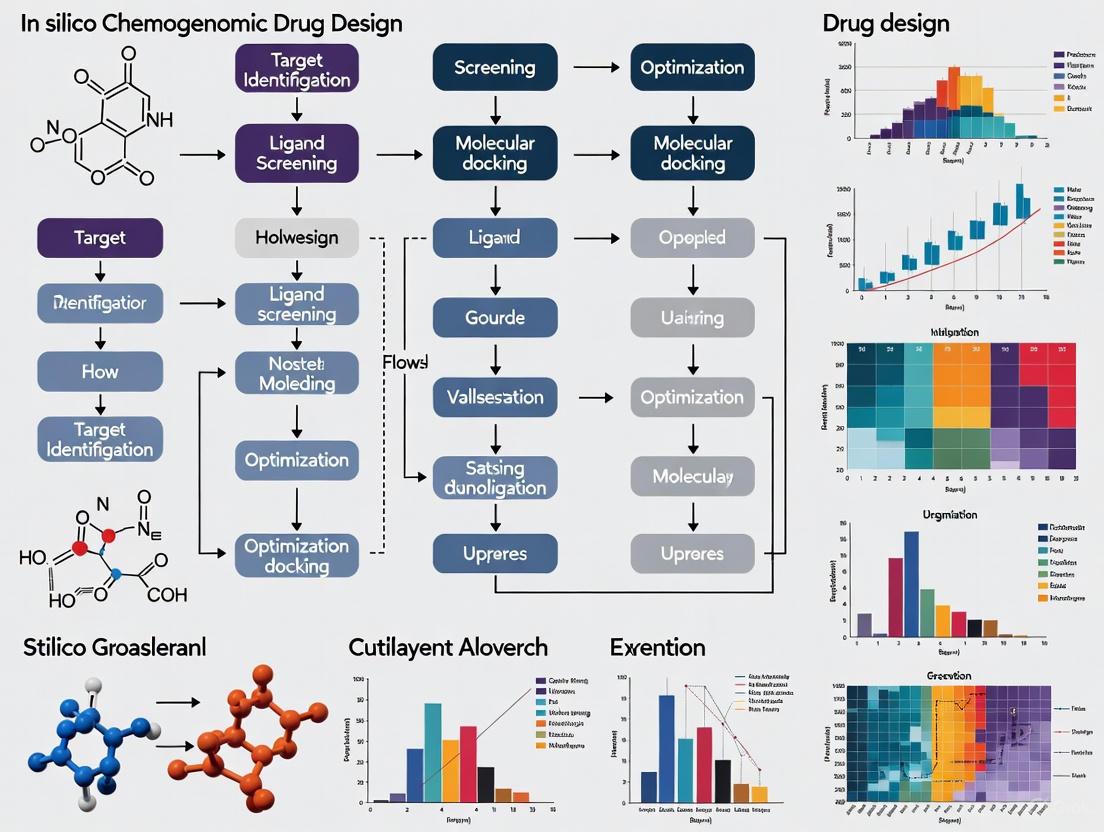
This article provides a comprehensive overview of in silico chemogenomics, a discipline that systematically identifies small molecules for protein targets using computational tools.
In Silico Chemogenomics: The AI-Powered Future of Drug Discovery
Abstract
This article provides a comprehensive overview of in silico chemogenomics, a discipline that systematically identifies small molecules for protein targets using computational tools. It covers foundational concepts, core methodologies like machine learning and molecular docking, and their application in virtual screening and polypharmacology. The content also addresses critical challenges such as data sparsity and model validation, offering troubleshooting strategies. Finally, it explores validation frameworks and comparative analyses of state-of-the-art tools, presenting a forward-looking perspective on how integrating AI and high-quality data is transforming drug discovery for researchers and development professionals.
The Foundations of Chemogenomics: Bridging Chemical and Biological Space
Defining In Silico Chemogenomics and Its Role in Modern Drug Discovery
In silico chemogenomics represents a powerful, interdisciplinary strategy at the intersection of computational biology and chemical informatics. It aims to systematically identify interactions between small molecules and biological targets on a large scale. The core objective of chemogenomics is the exploration of the entire pharmacological space, seeking to characterize the interaction of all possible small molecules with all potential protein targets [1] [2]. However, experimentally testing this vast interaction matrix is an impossible task due to the sheer number of potential small molecules and biological targets. This is where computational approaches, collectively termed in silico chemogenomics, become indispensable [1]. These methods leverage advancements in computer science, including cheminformatics, molecular modelling, and artificial intelligence, to analyze millions of potential interactions in silico. This computational prioritization rationally guides subsequent experimental testing, significantly reducing the associated time and costs [1] [3].
The paradigm has become crucial in modern pharmacological research and drug discovery by enabling the identification of novel bioactive compounds and therapeutic targets, elucidating the mechanisms of action of known drugs, and understanding polypharmacology—the phenomenon where a single drug binds to multiple targets [1] [4]. The growing availability of large-scale public bioactivity databases, such as ChEMBL, PubChem, and DrugBank, has provided the essential fuel for the development and refinement of these computational models, opening the door to sophisticated machine learning and AI applications [1] [5].
Key Methodological Approaches and Experimental Protocols
Protocol 1: Target Prediction Using an Ensemble Chemogenomic Model
Target prediction is a fundamental application of in silico chemogenomics, crucial for identifying the protein targets of a small molecule, which can reveal therapeutic potential and off-target effects early in the discovery process [4].
1. Principle: This protocol uses an ensemble chemogenomic model that integrates multi-scale information from both chemical structures and protein sequences to predict compound-target interactions. The underlying hypothesis is that similar compounds are likely to interact with similar targets, and this relationship can be learned by models that simultaneously consider both the chemical and biological spaces [4] [6].
2. Materials and Reagents:
- Query Compound: The small molecule of unknown target profile.
- Target Database: A comprehensive database of protein targets (e.g., 859 human targets from ChEMBL27) [4].
- Training Data: A large dataset of known compound-target interactions with associated bioactivity data (e.g., Ki ≤ 100 nM for positive set, Ki > 100 nM for negative set) sourced from public databases like ChEMBL and BindingDB [4].
3. Procedure:
- Step 1: Data Preparation and Representation.
- Represent the query compound using multiple molecular descriptors. Common descriptors include:
- Mol2D Descriptors: A set of 188 2D molecular descriptors capturing constitutional, topological, charge, and other properties [4].
- ECFP4 (Extended Connectivity Fingerprint): A circular fingerprint that captures molecular features within a bond diameter of 4, providing a representation of the molecule's topology [4].
- Represent each protein target in the database using protein descriptors. Common descriptors include:
- Protein Sequence Descriptors: Information derived directly from the amino acid sequence.
- Gene Ontology (GO) Terms: Annotations from the GO database covering Biological Process (BP), Molecular Function (MF), and Cellular Component (CC) [4].
- Represent the query compound using multiple molecular descriptors. Common descriptors include:
- Step 2: Model Construction and Training.
- Construct multiple individual chemogenomic models. Each model takes a vector of descriptors representing a single compound-target pair as input and outputs a probability score indicating the likelihood of an interaction [4].
- Combine these individual models into an ensemble model. The ensemble approach integrates predictions from models built on different descriptor sets, improving overall robustness and predictive performance. The best-performing ensemble model is selected as the final predictor [4].
- Step 3: Target Prediction and Ranking.
- Create a set of compound-target pairs by combining the query compound with every protein target in the database.
- Input each pair into the trained ensemble model to obtain an interaction probability score.
- Rank all targets based on their scores. The top-k (e.g., top 1 to top 10) ranked targets are considered the most likely potential targets for the query compound [4].
4. Validation: Performance is typically validated using stratified tenfold cross-validation and external datasets. Key performance metrics include the fraction of known targets identified in the top-k list. For example, one model achieved a 26.78% success rate for top-1 predictions and 57.96% for top-10 predictions, representing approximately 230-fold and 50-fold enrichments, respectively [4].
The following workflow diagram illustrates this multi-step process:
Protocol 2: An Integrated Pipeline for Polypharmacology and Affinity Prediction
This protocol describes an integrated approach that combines qualitative target prediction with quantitative proteochemometric (PCM) modelling to simultaneously predict a compound's polypharmacology and its binding affinity/potency against specific targets [7].
1. Principle: The pipeline first uses a Bayesian target prediction algorithm to qualitatively assess the potential interactions between a compound and a panel of targets. Subsequently, quantitative PCM models are employed to predict the binding affinity or potency of the compound for the identified targets. PCM is a technique that correlates both compound and target descriptors to bioactivity values, building a single model for an entire protein family [7].
2. Materials and Reagents:
- Query Compound(s): The small molecule(s) of interest.
- Qualitative Target Prediction Model: A model trained on a large network of ligand-target associations (e.g., 553,084 associations covering 3,481 targets) [7].
- Quantitative PCM Model: A model trained on a dataset comprising multiple related target sequences (e.g., 20 DHFR sequences) and distinct compounds (e.g., 1,505 compounds) with associated bioactivity data (e.g., pIC50) [7].
3. Procedure:
- Step 1: Qualitative Polypharmacology Prediction.
- Input the query compound into the Bayesian target prediction model.
- The model calculates and returns the probability of interaction between the compound and each target in its panel, providing a qualitative polypharmacology profile [7].
- Step 2: Quantitative Potency Prediction.
- For targets identified in Step 1, use the pre-trained PCM model to predict the binding affinity or potency (e.g., pIC50) of the compound.
- The PCM model utilizes combined descriptors of the compound and the specific target sequence to make a quantitative prediction, outperforming models based solely on compound or target information [7].
- Step 3: Data Integration and Analysis.
- Integrate the results from both models. Compounds identified as active by both the qualitative target predictor and the quantitative PCM model (with a predicted potency above a chosen threshold) are considered high-confidence hits for experimental validation [7].
4. Validation: In a retrospective study on Plasmodium falciparum DHFR inhibitors, the qualitative model achieved a recall of 79% and precision of 100%. The quantitative PCM model exhibited high predictive power with R² test values of 0.79 and RMSEtest of 0.59 pIC50 units [7].
The integrated nature of this pipeline is visualized below:
Performance Data and Comparative Analysis
The performance of in silico chemogenomics methods is rigorously evaluated using cross-validation and external test sets. The table below summarizes quantitative performance data from recent studies for easy comparison.
Table 1: Performance Metrics of In Silico Chemogenomics Methods
| Method / Study | Application / Target | Key Performance Metrics | Outcome / Enrichment |
|---|---|---|---|
| Ensemble Chemogenomic Model [4] | General target prediction for 859 human targets | Fraction of known targets identified in top-k list: 26.78% (Top-1), 57.96% (Top-10) | ~230-fold (Top-1) and ~50-fold (Top-10) enrichment over random |
| Integrated PCM & Target Prediction [7] | Prediction of Plasmodium falciparum DHFR inhibitors | Qualitative recall: 79%, Precision: 100%. Quantitative PCM: R² test = 0.79, RMSEtest = 0.59 pIC50 | Outperformed models using only compound or target information |
| Ligand-Based VS for GPCRs [6] | Virtual screening of G-Protein Coupled Receptors (GPCRs) | Accurate prediction of ligands for GPCRs with known ligands and orphan GPCRs | Estimated 78.1% accuracy for predicting ligands of orphan GPCRs |
Successful implementation of in silico chemogenomics protocols relies on a suite of well-curated data resources and software tools. The following table details key reagents and their functions.
Table 2: Key Research Reagents and Resources for In Silico Chemogenomics
| Resource Name | Type | Primary Function in Protocols | Relevant Protocol |
|---|---|---|---|
| ChEMBL [4] [5] | Bioactivity Database | Source of curated ligand-target interaction data for model training and validation. | Protocol 1, Protocol 2 |
| PubChem [5] | Bioactivity Database | Large repository of compound structures and bioassay data, including inactive compounds. | Protocol 1 |
| ExCAPE-DB [5] | Integrated Dataset | Pre-integrated and standardized dataset from PubChem and ChEMBL for Big Data analysis; facilitates access to a large chemogenomics dataset. | Protocol 1 |
| UniProt [4] | Protein Database | Source of protein sequence and functional annotation (e.g., Gene Ontology terms) for target representation. | Protocol 1 |
| Open PHACTS Discovery Platform [8] | Data Integration Platform | Integrates compound, target, pathway, and disease data from multiple sources; used for annotating phenotypic screening hits and target validation. | Protocol 2 (Annotation) |
| IUPHAR/BPS Guide to PHARMACOLOGY [8] | Pharmacological Database | Provides curated information on drug targets and their prescribed ligands; used for selecting selective probe compounds. | Protocol 2 (Validation) |
| Therapeutic Target Database (TTD) [9] | Drug Target Database | Provides information about known therapeutic protein and nucleic acid targets; used for drug repositioning studies. | Drug Repositioning |
| DrugBank [4] [9] | Drug Database | Contains comprehensive molecular information about drugs, their mechanisms, and targets. | Protocol 1, Drug Repositioning |
In silico chemogenomics has firmly established itself as a cornerstone of modern drug discovery. By providing a systematic computational framework to explore the complex interplay between chemical and biological spaces, it directly addresses critical challenges such as target identification, polypharmacology prediction, and drug repurposing. The protocols outlined here—from ensemble-based target prediction to integrated qualitative-quantitative pipelines—offer researchers detailed methodologies to leverage this powerful strategy. As the volume and quality of public chemogenomics data continue to grow, and machine learning algorithms become increasingly sophisticated, the accuracy and scope of in silico chemogenomics will only expand. This progression promises to further accelerate the efficient and rational discovery of new therapeutic agents, solidifying the discipline's role as an indispensable component of pharmacological research.
The pharmaceutical industry faces a profound innovation crisis, characterized by a 96% overall failure rate in drug development [10]. This inefficiency is a primary driver behind the soaring costs of new medicines, with the journey from preclinical testing to final approval often taking over 12 years and costing more than $2 billion [11]. A staggering 40-50% of clinical failures are attributed to lack of clinical efficacy, while 30% result from unmanageable toxicity [12]. This article examines how in silico chemogenomic approaches—the systematic computational analysis of interactions between small molecules and biological targets—can help overcome these challenges by improving target validation, candidate optimization, and predictive toxicology.
Quantitative Analysis of the Drug Development Pipeline
The following table summarizes key challenges and corresponding chemogenomic solutions across the drug development pipeline:
Table 1: Drug Development Challenges and Chemogenomic Solutions
| Development Stage | Primary Challenge | In Silico Chemogenomic Solution | Impact |
|---|---|---|---|
| Target Identification | High false discovery rate (92.6%) in preclinical research [10] | Genomic-wide association studies (GWAS) & target fishing [10] [13] | Reverses probability of late-stage failure [10] |
| Lead Optimization | Over-reliance on structure-activity relationship (SAR) overlooking tissue exposure [12] | Structure-tissue exposure/selectivity-activity relationship (STAR) [12] | Balances clinical dose/efficacy/toxicity [12] |
| Preclinical Testing | Poor predictive ability of animal models for human efficacy [12] | Virtual screening & molecular dynamics simulations [3] | Reduces time/costs, prioritizes experimental tests [1] [3] |
| Clinical Development | Lack of efficacy (40-50%) and unmanageable toxicity (30%) [12] | Drug repurposing & in silico toxicology predictions [1] | Identifies novel bioactive compounds and mechanisms [1] |
The crisis extends beyond scientific challenges to economic sustainability. Pharmaceutical companies increasingly face diminishing returns on capital investment, prompting a shift toward acquiring innovations from external sources rather than internal R&D [14]. This "productivity-cost paradox" – where increased R&D spending does not correlate with more approved drugs – has led to the emergence of asset-integrating pharma company (AIPCO) models adopted by industry leaders like Pfizer, Johnson & Johnson, and AbbVie [14].
Chemogenomic Approaches to Target Identification & Validation
The Genomics Advantage
Human genomics represents a transformative approach for target identification. Where traditional preclinical studies suffer from a 92.6% false discovery rate, genome-wide association studies offer a more reliable foundation because they "rediscovered the known treatment indication or mechanism-based adverse for around 70 of the 670 known targets of licensed drugs" [10]. This approach systematically interrogates every potential druggable target concurrently in the correct organism – humans – while exploiting the naturally randomized allocation of genetic variants that mimics randomized controlled trial design [10].
In Silico Target Fishing
Computational target fishing technologies enable researchers to "predict new molecular targets for known drugs" and "identify compound-target associations by combining bioactivity profile similarity search and public databases mining" [13]. This approach is particularly valuable for drug repurposing, where existing drugs can be rapidly evaluated against new disease indications. The process involves screening compounds against chemogenomic databases using multiple-category Bayesian models to identify potential target interactions, significantly expanding the potential therapeutic utility of existing chemical entities [13].
Experimental Protocols for In Silico Drug Design
Protocol 1: Virtual Screening for Novel Inhibitors
Purpose: To identify novel inhibitors of disease-associated protein targets through computational screening. Application Example: Identification of inhibitors for Isocitrate dehydrogenase (IDH1-R132C), an oncogenic metabolic enzyme [3].
- Library Preparation: Curate a diverse chemical library (e.g., 1.5 million commercial synthetic compounds) in appropriate format for docking [3].
- Protein Preparation: Obtain 3D structure of target protein (IDH1-R132C mutant). Perform energy minimization and optimize protonation states.
- Molecular Docking: Conduct docking-based virtual screening using software such as AutoDock Vina or Glide.
- Post-Docking Analysis: Rank compounds by docking score and binding pose. Cluster results and select top candidates for further evaluation.
- Cellular Inhibition Assays: Experimentally validate top computational hits (e.g., T001-0657 for IDH1-R132C) in relevant cellular models [3].
- Molecular Dynamics Validation: Perform MD simulations (100-200 ns) and free energy calculations to confirm binding stability and mechanism [3].
Protocol 2: Multi-QSAR Modeling for Compound Optimization
Purpose: To characterize and optimize lead compounds through quantitative structure-activity relationship modeling. Application Example: Characterization of aryl benzoyl hydrazide derivatives as H5N1 influenza virus RNA-dependent RNA polymerase inhibitors [3].
- Dataset Curation: Compile experimental bioactivity data for compound series (30+ derivatives recommended).
- Descriptor Calculation: Generate comprehensive set of molecular descriptors (topological, electronic, steric).
- 2D-QSAR Model Development: Use partial least squares or machine learning regression to correlate descriptors with activity.
- 3D-QSAR Model Development: Perform comparative molecular field analysis (CoMFA) or comparative molecular similarity indices analysis (CoMSIA).
- Pharmacophore Modeling: Generate structure-based pharmacophore model from protein-ligand complexes.
- Model Validation: Use leave-one-out cross-validation and external test sets to validate predictive power.
Protocol 3: Structure-Tissue Exposure/Selectivity-Activity Relationship (STAR)
Purpose: To classify drug candidates based on both potency/selectivity and tissue exposure/selectivity for improved clinical success [12].
- Tissue Exposure Profiling: Determine drug exposure in disease versus normal tissues using advanced PK/PD modeling.
- Selectivity Assessment: Evaluate target specificity against related target families (e.g., kinase panels).
- STAR Classification:
- Class I: High specificity/potency + high tissue exposure/selectivity (needs low dose, superior efficacy/safety)
- Class II: High specificity/potency + low tissue exposure/selectivity (requires high dose, high toxicity)
- Class III: Adequate specificity/potency + high tissue exposure/selectivity (low dose, manageable toxicity)
- Class IV: Low specificity/potency + low tissue exposure/selectivity (inadequate efficacy/safety, terminate early) [12]
- Dose Optimization: Based on STAR classification, optimize clinical dose regimen to balance efficacy/toxicity.
Visualization of Key Workflows
In Silico Chemogenomic Drug Discovery Pipeline
STAR Classification Framework for Lead Optimization
Virtual Screening & Validation Workflow
The Scientist's Toolkit: Essential Research Reagents & Databases
Table 2: Key Research Reagents & Databases for Computational Chemogenomics
| Resource Type | Name | Function & Application |
|---|---|---|
| Chemical Databases | ChEMBL [13] | Bioactivity data for drug-like molecules, target annotations |
| DrugBank [13] | Comprehensive drug-target interaction data | |
| Target Databases | Therapeutic Target Database [13] | Annotated disease targets and targeted drugs |
| Potential Drug Target Database [13] | Focused on potential drug targets | |
| Computational Tools | Docking Software (AutoDock, Glide) | Structure-based virtual screening |
| QSAR Modeling Software | Predictive activity modeling from chemical structure | |
| Molecular Dynamics (GROMACS, AMBER) | Simulation of protein-ligand interactions over time | |
| Specialized Platforms | DBPOM [3] | Database of pharmaco-omics for cancer precision medicine |
| TarFisDock [13] | Web server for identifying drug targets via docking |
The drug discovery crisis demands integrated solutions that leverage the full potential of in silico chemogenomic approaches. By systematically implementing GWAS for target identification, virtual screening for compound selection, STAR frameworks for lead optimization, and rigorous computational validation through molecular dynamics and QSAR modeling, researchers can significantly improve the probability of clinical success. The future of drug discovery lies in the intelligent integration of these computational approaches with experimental validation, creating a more efficient, predictive, and cost-effective pipeline for delivering innovative therapies to patients.
Chemogenomics is a systematic approach in drug discovery that involves screening targeted chemical libraries of small molecules against entire families of drug targets, such as GPCRs, nuclear receptors, kinases, and proteases. The primary goal is the parallel identification of novel drugs and drug targets, leveraging the completion of the human genome project which provided an abundance of potential targets for therapeutic intervention [15]. This field represents a significant shift from traditional "one-compound, one-target" approaches, instead studying the intersection of all possible drugs on all potential targets.
The fundamental strategy of chemogenomics integrates target and drug discovery by using active compounds (ligands) as probes to characterize proteome functions. The interaction between a small compound and a protein induces a phenotype, allowing researchers to associate proteins with molecular events. Compared with genetic approaches, chemogenomics techniques can modify protein function rather than genes and observe interactions in real-time, including reversibility after compound withdrawal [15].
Core Methodological Approaches
Forward and Reverse Chemogenomics
Current experimental chemogenomics employs two distinct approaches, each with specific applications and workflows [15]:
Forward Chemogenomics (Classical Approach):
- Begins with the study of a particular phenotype where the molecular basis is unknown
- Identifies small compounds that interact with this function
- Uses identified modulators as tools to identify the protein responsible for the phenotype
- Main challenge lies in designing phenotypic assays that lead immediately from screening to target identification
Reverse Chemogenomics:
- Identifies small compounds that perturb the function of a specific enzyme in controlled in vitro tests
- Analyzes the phenotype induced by the molecule in cellular or whole-organism tests
- Confirms the role of the enzyme in the biological response
- Enhanced by parallel screening and the ability to perform lead optimization on multiple targets within one family
Table 1: Comparison of Chemogenomics Approaches
| Aspect | Forward Chemogenomics | Reverse Chemogenomics |
|---|---|---|
| Starting Point | Phenotype with unknown molecular basis | Known enzyme or protein target |
| Screening Method | Phenotypic assays on cells or organisms | In vitro enzymatic tests |
| Primary Goal | Identify protein responsible for phenotype | Validate biological role of known target |
| Challenge | Designing assays for direct target identification | Connecting in vitro results to physiological relevance |
| Throughput Capability | Moderate, due to complex phenotypic readouts | High, enabled by parallel screening |
In Silico Chemogenomic Models
Modern chemogenomics increasingly relies on computational approaches, particularly chemogenomic models that combine protein sequence information with compound-target interaction data. These models utilize both ligand and target spaces to extrapolate compound bioactivities, addressing limitations of traditional machine learning methods that consider only ligand information [4].
Advanced implementations use ensemble models incorporating multi-scale information from chemical structures and protein sequences. By combining descriptors representing compound-target pairs as input, these models predict interactions between compounds and targets, with scores indicating association probabilities. This approach allows target prediction by screening a compound against a target database and ranking potential targets by these scores [4].
Table 2: Performance Metrics of Ensemble Chemogenomic Models
| Validation Method | Top-1 Prediction Accuracy | Top-10 Prediction Accuracy | Enrichment Factor |
|---|---|---|---|
| Stratified Tenfold Cross-Validation | 26.78% | 57.96% | ~230-fold (Top-1), ~50-fold (Top-10) |
| External Datasets (Natural Products) | Not Specified | >45% | Not Specified |
Experimental Protocols
Yeast Chemogenomic Profiling Protocol
This protocol is adapted from the genome-wide method for identifying gene products that functionally interact with small molecules in yeast, resulting in inhibition of cellular proliferation [16].
Materials and Reagents:
- Complete collection of heterozygous yeast deletion strains
- Compounds for screening (e.g., anticancer agents, antifungals, statins)
- Growth media appropriate for yeast strains
- Microtiter plates for high-throughput screening
- Plate readers for proliferation assessment
Procedure:
- Strain Preparation: Grow heterozygous yeast deletion strains to mid-log phase in appropriate media.
- Compound Exposure: Treat yeast strains with test compounds at appropriate concentrations in 96-well or 384-well format.
- Proliferation Monitoring: Measure cellular proliferation over 24-48 hours using optical density or metabolic activity assays.
- Data Collection: Record proliferation data for each strain-compound combination.
- Hit Identification: Identify gene deletions showing hypersensitivity or resistance to each compound.
- Validation: Confirm hits through secondary assays and dose-response curves.
Applications: This protocol has identified both previously known and novel cellular interactions for diverse compounds including anticancer agents, antifungals, statins, alverine citrate, and dyclonine. It has also revealed that cells may respond similarly to compounds of related structure, enabling identification of on-target and off-target effects in vivo [16].
In Silico Target Prediction Protocol
This protocol describes the computational prediction of small molecule targets using ensemble chemogenomic models based on multi-scale information of chemical structures and protein sequences [4].
Data Collection and Preparation:
- Target Selection: Collect human target proteins from databases such as ChEMBL. The protocol described 859 human targets covering kinases, GPCRs, proteases, enzymes, and other categories.
- Compound-Target Interactions: Extract bioactivity data (Ki values) from BindingDB and ChEMBL databases. Use a threshold of 100 nM Ki to define positive (Ki ≤ 100 nM) and negative (Ki > 100 nM) samples.
- Data Curation: Resolve multiple bioactivity values for the same compound-target pair by taking the median if differences are below one magnitude; exclude pairs with differences exceeding one magnitude.
Descriptor Calculation:
- Molecular Descriptors: Calculate three types of compound descriptors:
- 188 Mol2D descriptors (molecular constitutional, topological, connectivity indices, etc.)
- Extended Connectivity Fingerprint (ECFP4)
- Additional structural descriptors capturing comprehensive chemical space
- Protein Descriptors: Calculate descriptors representing:
- Physicochemical properties
- Protein sequence information
- Gene Ontology (GO) terms covering biological process, molecular function, and cellular component
Model Training and Validation:
- Model Construction: Build multiple chemogenomic models using different descriptor combinations and machine learning algorithms.
- Ensemble Development: Combine individual models to create an ensemble model with superior prediction performance.
- Performance Validation: Validate using stratified tenfold cross-validation and external datasets including natural products.
- Target Prediction: For a query compound, generate compound-target pairs with all potential targets, input to the model, and rank targets by predicted interaction scores.
Visualization of Chemogenomic Workflows
Forward and Reverse Chemogenomics Pathways
In Silico Target Prediction Workflow
The Scientist's Toolkit: Essential Research Reagents and Materials
Table 3: Key Research Reagents and Materials for Chemogenomic Studies
| Reagent/Material | Function/Application | Examples/Specifications |
|---|---|---|
| Heterozygous Yeast Deletion Collection | Genome-wide screening of gene-compound interactions | Complete set of deletion strains for functional genomics [16] |
| Targeted Chemical Libraries | Systematic screening against target families | Libraries focused on GPCRs, kinases, nuclear receptors, etc. [15] |
| Bioactivity Databases | Source of compound-target interaction data | ChEMBL, BindingDB, DrugBank, TTD [4] |
| Molecular Descriptors | Computational representation of chemical structures | Mol2D descriptors (188 types), ECFP4 fingerprints [4] |
| Protein Descriptors | Computational representation of protein targets | Sequence-based descriptors, Gene Ontology terms [4] |
| Machine Learning Frameworks | Building predictive chemogenomic models | Ensemble models combining multiple descriptor types [4] |
Applications in Drug Discovery
Determining Mechanisms of Action
Chemogenomics has been successfully applied to identify mechanisms of action (MOA) for traditional medicines, including Traditional Chinese Medicine (TCM) and Ayurveda. Compounds in traditional medicines often have "privileged structures" – chemical structures more frequently found to bind different living organisms – and comprehensively known safety profiles, making them attractive for lead structure identification [15].
In one case study on TCM, the therapeutic class of "toning and replenishing medicine" was evaluated. Target prediction programs identified sodium-glucose transport proteins and PTP1B (an insulin signaling regulator) as targets linking to the hypoglycemic phenotype. For Ayurvedic anti-cancer formulations, target prediction enriched for cancer progression targets like steroid-5-alpha-reductase and synergistic targets like the efflux pump P-gp [15].
Identifying Novel Drug Targets
Chemogenomics profiling enables identification of novel therapeutic targets through systematic approaches. In antibacterial development, researchers capitalized on an existing ligand library for the murD enzyme in peptidoglycan synthesis. Using chemogenomics similarity principles, they mapped the murD ligand library to other mur ligase family members (murC, murE, murF, murA, and murG) to identify new targets for known ligands [15].
Structural and molecular docking studies revealed candidate ligands for murC and murE ligases, with expected broad-spectrum Gram-negative inhibitor properties since peptidoglycan synthesis is exclusive to bacteria [15].
Biological Pathway Elucidation
Chemogenomics approaches have helped identify genes in biological pathways that remained mysterious despite years of research. For example, thirty years after diphthamide (a posttranslationally modified histidine derivative) was identified, chemogenomics discovered the enzyme responsible for the final step in its synthesis [15].
Researchers used Saccharomyces cerevisiae cofitness data – representing similarity of growth fitness under various conditions between deletion strains – to identify YLR143W as the strain with highest cofitness to strains lacking known diphthamide biosynthesis genes. Experimental confirmation showed YLR143W was the missing diphthamide synthetase [15].
Chemogenomics represents a powerful, systematic framework for identifying small molecule-target interactions that integrates experimental and computational approaches. The core principles of forward and reverse chemogenomics, combined with advanced in silico modeling using multi-scale chemical and protein information, provide robust methodologies for target identification, mechanism of action studies, and drug discovery. As chemogenomic databases expand and computational methods advance, this approach will continue to transform early drug discovery by efficiently connecting chemical space to biological function, ultimately reducing attrition rates in clinical development through better target validation and understanding of polypharmacology.
Exploring the Relevant Chemical and Biological Spaces for Novel Target Discovery
The discovery of novel therapeutic targets is a critical bottleneck in the drug development pipeline. Modern in silico chemogenomic approaches provide a powerful framework for systematically exploring the vast chemical and biological spaces to identify and validate new drug targets. These methodologies integrate heterogeneous data types—including genomic sequences, protein structures, ligand chemical features, and interaction networks—to predict novel drug-target interactions (DTIs) with high precision. This application note details practical protocols and computational strategies for leveraging chemogenomics in target discovery, underpinned by case studies and quantitative performance data from state-of-the-art machine learning models. The protocols are designed for researchers and scientists engaged in early-stage drug discovery, emphasizing reproducible, data-driven methodologies that reduce the time and cost associated with experimental target validation.
Chemogenomics represents a paradigm shift in drug discovery, moving beyond the traditional "one drug, one target" hypothesis to a more holistic view of polypharmacology and systems biology. It is founded on the principle that similar targets often bind similar ligands, thereby enabling the prediction of novel interactions by extrapolating from known data [17] [18]. The core objective is to systematically map the interactions between the chemical space (encompassing all possible drug-like molecules) and the biological space (encompassing all potential protein targets) [19].
The impetus for this approach is clear: conventional drug discovery is often hampered by high costs, lengthy timelines, and a high attrition rate [20]. In silico methodologies, particularly computer-aided drug design (CADD), have demonstrated a significant impact by rationalizing the discovery process, reducing the need for random screening, and even decreasing experimental animal use [20]. Furthermore, the explosion of available biological and chemical data—from genomic sequences and protein structures to vast libraries of compound bioactivities—has made data-driven target discovery not just feasible, but indispensable [19] [21].
Exploring the chemogenomic space requires the integration of multiple data dimensions, which can be categorized as follows:
- Ligand-Based Information: Utilizing chemical structures, physicochemical properties, and known biological activities of small molecules to infer interactions with novel targets.
- Target-Based Information: Leveraging protein sequences, 3D structures, and functional annotations to identify potential binding sites for chemical ligands.
- Interaction Data: Employing known drug-target pairs, often sourced from public databases, to train machine learning models for predicting novel interactions.
- Network and Systems Biology Data: Incorporating protein-protein interaction (PPI) networks and pathway information to understand the context of a target within the cellular system and to assess potential therapeutic or side effects [22] [23].
This document provides detailed protocols for applying these principles through specific computational techniques, from foundational ligand- and structure-based methods to advanced integrative machine learning models.
Key Computational Methodologies and Protocols
Ligand-Based and Structure-Based Screening
Principle: Ligand-based methods operate on the principle of "chemical similarity," where molecules with similar structures are likely to share similar biological activities. Structure-based methods, conversely, rely on the 3D structure of a protein target to identify complementary ligands through molecular docking [20] [18].
Protocol 1: Ligand-Based Virtual Screening using Pharmacophore Modeling
- Define the Pharmacophore Model: Compile a set of known active ligands for a target of interest. Identify and align their common chemical features essential for biological activity (e.g., hydrogen bond donors/acceptors, hydrophobic regions, aromatic rings, charged groups) using software such as MOE or Discovery Studio.
- Validate the Model: Test the model's ability to distinguish known actives from known inactives in a decoy set. Optimize feature definitions and tolerance settings to maximize enrichment.
- Screen Chemical Libraries: Use the validated pharmacophore model as a 3D query to screen large virtual compound libraries (e.g., ZINC, ChEMBL). Compounds that fit the pharmacophore model are considered potential hits.
- Post-Screening Analysis: Subject the hit compounds to molecular docking (see Protocol 2) and further filtering based on drug-likeness (e.g., Lipinski's Rule of Five) to create a final list for experimental testing.
Protocol 2: Structure-Based Virtual Screening using Molecular Docking
- Protein Preparation: Obtain the 3D structure of the target protein from the Protein Data Bank (PDB) or generate it via homology modeling. Remove water molecules and co-crystallized ligands. Add hydrogen atoms, assign partial charges, and define protonation states of residues at physiological pH.
- Binding Site Definition: Identify the binding site of interest, typically from the location of a co-crystallized native ligand or through computational binding site prediction tools.
- Ligand Preparation: Prepare the library of small molecules for docking by generating 3D structures, optimizing geometry, and assigning correct tautomeric and ionization states at pH 7.4.
- Molecular Docking: Perform docking simulations using software such as AutoDock Vina or GOLD. The software will generate multiple poses for each ligand within the defined binding site.
- Scoring and Ranking: Rank the generated poses based on a scoring function that estimates the binding affinity. Select the top-ranked compounds for further analysis and experimental validation.
Table 1: Summary of Key Virtual Screening Software
| Software/Tool | Methodology | Application | Access |
|---|---|---|---|
| AutoDock Vina | Molecular Docking | Structure-based virtual screening of ligand poses and affinity prediction. | Open Source |
| MOE | Pharmacophore Modeling, Docking | Ligand- and structure-based design, QSAR modeling. | Commercial |
| Schrödinger Suite | Molecular Docking (Glide) | High-throughput virtual screening and lead optimization. | Commercial |
| RDKit | Cheminformatics | Chemical similarity search, descriptor calculation, and molecule manipulation. | Open Source |
Proteochemometric and Machine Learning Modeling
Principle: Proteochemometric (PCM) models, a subset of chemogenomic methods, simultaneously learn from the properties of both compounds and proteins to predict interactions. This overcomes limitations of ligand- or target-only models, especially for proteins with few known ligands [19] [18].
Protocol 3: Building a Proteochemometric Model with Shallow Learning
- Data Curation: Collect a dataset of known drug-target interactions from databases like DrugBank, ChEMBL, or STITCH. Represent each (drug, target) pair with numerical descriptors.
- Compound Descriptors: Calculate molecular fingerprints (e.g., ECFP, MACCS) or physicochemical descriptors (e.g., molecular weight, logP).
- Protein Descriptors: Use amino acid composition, dipeptide composition, or more advanced sequence-derived descriptors like auto-cross covariance (ACC) transformations.
- Feature Combination: For each interacting pair, create a unified feature vector by combining the compound and protein descriptors. A common method is the Kronecker product of their individual descriptor vectors [19].
- Model Training: Train a machine learning model, such as a Support Vector Machine (e.g., kronSVM) or a Regularized Matrix Factorization model (e.g., NRLMF), on the combined feature vectors to classify or rank potential interactions [19] [18].
- Model Validation: Evaluate model performance using cross-validation and hold-out test sets. Common metrics include Area Under the Receiver Operating Characteristic Curve (AUC), precision, and recall.
Protocol 4: Building a Chemogenomic Neural Network with Deep Learning
- Data Representation:
- Molecules: Represent molecules as molecular graphs. Use a Graph Neural Network (GNN) to learn abstract, task-specific molecular representations from node (atom) and edge (bond) features [19].
- Proteins: Represent proteins by their amino acid sequences. Use a recurrent neural network (RNN) or convolutional neural network (CNN) to learn protein representations from the sequence.
- Model Architecture (Chemogenomic Neural Network):
- Encoders: Employ separate GNN and protein sequence encoders to generate numerical representations (embeddings) for each molecule and protein.
- Combiner: Combine the two embeddings, for example, by concatenation or element-wise multiplication.
- Predictor: Feed the combined representation into a feed-forward neural network (multi-layer perceptron) to output a probability of interaction [19].
- Training and Optimization: Train the end-to-end neural network using a binary cross-entropy loss function. For small datasets, employ transfer learning by pre-training the encoders on larger, related datasets (e.g., pre-training the GNN on a general chemical property prediction task) [19].
Table 2: Performance Comparison of Different DTI Prediction Models on Benchmark Datasets
| Model Type | Model Name | Key Features | Reported AUC | Best Suited For |
|---|---|---|---|---|
| Shallow Learning | kronSVM [19] | Kronecker product of drug and target kernels | >0.90 (dataset dependent) | Small to medium datasets |
| Shallow Learning | NRLMF [19] | Matrix factorization with regularization | Outperforms other shallow methods on various datasets [19] | Datasets with sparse interactions |
| Deep Learning | Chemogenomic Neural Network [19] | Learns representations from molecular graph and protein sequence | Competes with state-of-the-art on large datasets [19] | Large, high-quality datasets |
| Network-Based | drugCIPHER [22] | Integrates drug therapeutic/chemical similarity & PPI network | 0.935 (test set) [22] | Genome-wide target identification |
Network-Based and Genome-Wide Target Identification
Principle: This approach integrates pharmacological data (drug similarity) with genomic data (protein-protein interactions) to infer drug-target interactions on a genome-wide scale. It leverages the context that proteins targeted by similar drugs are often functionally related or located close to each other in a PPI network [22].
Protocol 5: Genome-Wide Target Prediction using drugCIPHER
- Construct Similarity Matrices:
- Drug Similarity: Calculate a drug-drug similarity matrix based on either therapeutic indications (phenotypic similarity) or chemical structure (2D fingerprints).
- Target Relevance: From a comprehensive PPI network (e.g., from BioGRID or STRING), calculate the network-based relevance between all pairs of protein targets.
- Model Building (drugCIPHER-MS): Build a linear regression model that relates the drug similarity matrix to the target relevance matrix. The integrated model (drugCIPHER-MS) combines both therapeutic and chemical similarity for enhanced predictive power [22].
- Prediction and Validation: Use the trained model to predict interaction profiles for novel drugs or new targets for existing drugs across the entire genome. The output is a ranked list of potential targets.
- Hypothesis Generation: Analyze the top predictions to identify unexpected drug-drug relations, suggesting potential novel therapeutic applications or side effects. These hypotheses require subsequent experimental validation [22].
Workflow for a General Chemogenomic Analysis
Case Study: Target Discovery for Schistosomiasis
Background: Schistosomiasis, a neglected tropical disease, relies almost exclusively on the drug praziquantel for treatment, creating an urgent need for new therapeutics. A target-based chemogenomics screen was employed to repurpose existing drugs for use against Schistosoma mansoni [17].
Application of Protocol:
- Target Compilation (Data Curation): A set of 2,114 S. mansoni proteins, including differentially expressed genes across life stages and targets from the TDR Targets database, was compiled [17].
- Homology Screening (Ligand/Structure-Based Principle): Each parasite protein was used as a query to search drug-target databases (TTD, DrugBank, STITCH) for human proteins with significant sequence homology (E-value ≤ 10⁻²⁰). The underlying assumption is that an approved drug active against the human target might also be active against the homologous schistosome protein [17].
- Refinement and Validation: Predicted drug-target interactions were refined by analyzing the conservation of functional regions and chemical space. The method successfully retrospectively predicted drugs known to be active against schistosomes, such as clonazepam and artesunate, validating the pipeline [17].
- Novel Predictions: The model identified 115 approved drugs not previously tested against schistosomes, such as aprindine and clotrimazole, providing a prioritized list for experimental assessment and potentially accelerating drug development for a neglected disease [17].
Drug Repurposing via Homology
Successful chemogenomic analysis relies on access to high-quality data and specialized computational tools. The following table details key resources.
Table 3: Essential Resources for Chemogenomic Target Discovery
| Resource Name | Type | Primary Function | Relevance to Target Discovery |
|---|---|---|---|
| DrugBank [17] [18] | Database | Comprehensive drug, target, and interaction data. | Source for known drug-target pairs for model training and validation. |
| ChEMBL [18] | Database | Bioactivity data for drug-like molecules. | Provides quantitative binding data for structure-activity relationship studies. |
| STITCH [17] [18] | Database | Chemical-protein interaction networks. | Integrates data for predicting both direct and indirect interactions. |
| Therapeutic Target Database (TTD) [17] | Database | Information on approved therapeutic proteins and drugs. | Curated resource for validated targets and drugs. |
| STRING/BioGRID [22] [23] | Database | Protein-protein interaction networks. | Provides genomic context for network-based methods like drugCIPHER. |
| EUbOPEN Chemogenomic Library [24] | Compound Library | A collection of well-annotated chemogenomic compounds. | Experimental tool for target deconvolution and phenotypic screening. |
| Cytoscape [25] [23] | Software | Network visualization and analysis. | Visualizes and analyzes complex drug-target-pathway networks. |
| PyTorch/TensorFlow | Software | Deep Learning Frameworks. | Enables building and training custom chemogenomic neural networks. |
| RDKit | Software | Cheminformatics Toolkit. | Calculates molecular descriptors, fingerprints, and handles chemical data. |
Concluding Remarks
The systematic exploration of chemical and biological spaces through in silico chemogenomics has fundamentally transformed the approach to novel target discovery. The protocols outlined herein—spanning ligand-based screening, proteochemometric modeling, deep learning, and network-based integration—provide a robust, multi-faceted toolkit for modern drug discovery scientists. The integration of diverse data types and powerful machine learning algorithms allows for the generation of high-confidence, testable hypotheses regarding new drug-target interactions, thereby de-risking and accelerating the early stages of drug development. As public and private initiatives like Target 2035 and EUbOPEN continue to expand the available open-access chemogenomic resources, these computational methods will become increasingly accurate and impactful, paving the way for the discovery of next-generation therapeutics [24].
The field of in silico chemogenomic drug design is undergoing a transformative shift, primarily propelled by two key drivers: the unprecedented expansion of publicly available bioactivity data and continuous advancements in computational power. These elements are foundational to modern computational methods, enabling the development of more accurate and predictive models for target identification, lead optimization, and drug repurposing. This document provides detailed application notes and experimental protocols that leverage these drivers, framed within the context of a doctoral thesis on advanced chemogenomic research. The contained methodologies are designed for researchers, scientists, and drug development professionals aiming to implement state-of-the-art computational workflows.
The volume of bioactivity data available for research has grown exponentially, creating a robust foundation for data-driven drug discovery. The following table summarizes key quantitative metrics of modern datasets.
Table 1: Key Metrics of Major Public Bioactivity Databases
| Database Name | Approximate Data Points | Unique Compounds | Protein Targets | Key Features and Notes |
|---|---|---|---|---|
| Papyrus [26] | ~60 million | ~1.27 million | ~6,900 | Aggregates ChEMBL, ExCAPE-DB, and other high-quality sources; includes multiple activity types (Ki, Kd, IC50, EC50). |
| ChEMBL30 [26] | ~19.3 million | ~2.16 million | ~14,855 | Manually curated bioactivity data from scientific literature. |
| ExCAPE-DB [26] | ~70.9 million | ~998,000 | ~1,667 | Large-scale compound profiling data. |
| BindingDB [4] | Data integrated into larger studies | Data integrated into larger studies | Data integrated into larger studies | Focuses on measured binding affinities. |
| Dataset from Yang et al. [4] | ~153,000 interactions | ~93,000 | 859 (Human) | Curated for human targets; used for ensemble chemogenomic model training. |
This vast data landscape enables the application of machine learning (ML) algorithms that require large datasets for training. The "Papyrus" dataset, for instance, standardizes and normalizes around 60 million data points from multiple sources, making it suitable for proteochemometric (PCM) modeling and quantitative structure-activity relationship (QSAR) studies [26]. The critical mass of data now available allows researchers to build models with significantly improved generalizability and predictive power for identifying drug-target interactions (DTIs).
Advanced Computational Methodologies in Chemogenomics
Concurrent with data growth, computational methodologies have evolved from single-target analysis to system-level, multi-scale approaches. The table below compares the primary computational paradigms in use today.
Table 2: Comparison of In Silico Drug Discovery Approaches
| Methodology | Key Principle | Data Requirements | Typical Applications | Considerations |
|---|---|---|---|---|
| Network-Based [27] [28] | Analyzes biological systems as interconnected networks (nodes and edges). | Protein-protein interactions, gene expression, metabolic pathways. | Target identification for complex diseases, drug repurposing, polypharmacology prediction. | Provides a system-wide view but requires complex data integration. |
| Ligand-Based [28] | "Similar compounds have similar properties." Compares chemical structures. | 2D/3D molecular descriptors, fingerprints of known active compounds. | Virtual screening, target fishing, hit expansion. | Limited by the chemical space of known actives; can be affected by activity cliffs. |
| Structure-Based [29] [28] | Uses 3D protein structures to predict ligand binding. | Protein crystal structures, homology models. | Molecular docking, de novo drug design, lead optimization. | Dependent on the availability and quality of protein structures. |
| Chemogenomic (PCM) [4] | Integrates both ligand and target descriptor information. | Bioactivity data paired with compound and protein descriptors. | Target prediction, profiling of off-target effects, virtual screening. | Leverages both chemical and biological information; can predict for targets with limited data. |
| Deep Learning (CPI) [30] | Uses complex neural networks to learn from raw or featurized data. | Very large datasets of compound-target interactions (millions of points). | Binding affinity prediction, activity cliff identification, uncertainty quantification. | High predictive performance but requires significant computational resources and data. |
Protocol: Developing an Ensemble Chemogenomic Model for Target Prediction
This protocol details the methodology for constructing a high-performance ensemble model for in-silico target prediction, as described by Yang et al. [4].
Objective
To build a computational model that predicts potential protein targets for a query small molecule by integrating multi-scale information from chemical structures and protein sequences.
Materials and Reagents
- Software & Libraries: Python programming environment (e.g., Anaconda), RDKit for chemical informatics, Scikit-learn for machine learning, DeepChem for deep learning workflows.
- Computing Resources: Multi-core CPU workstation or high-performance computing (HPC) cluster; GPU acceleration is recommended for deep learning components.
- Bioactivity Data: A curated dataset of compound-target interactions with associated binding affinity values (e.g., Ki ≤ 100 nM for positive labels). Example sources include ChEMBL and BindingDB [4].
- Protein Information: UniProt database for retrieving protein sequences and Gene Ontology (GO) terms.
Procedure
Data Curation and Preprocessing:
- Source Data: Collect compound-target interaction data from public databases like ChEMBL and BindingDB. Focus on human targets for relevant drug discovery applications.
- Labeling: Define a binding affinity threshold (e.g., Ki ≤ 100 nM) to create a binary classification dataset (positive interactions vs. negative/non-interactions).
- Data Cleaning: Remove duplicate entries and resolve conflicts where bioactivity values for the same compound-target pair differ by more than one order of magnitude.
Molecular and Protein Descriptor Calculation:
- Compound Representation: Generate multiple descriptor sets for each compound to capture different aspects of chemical structure.
- 2D Descriptors: Calculate 188 Mol2D descriptors encompassing constitutional, topological, and charge-related features [4].
- Molecular Fingerprints: Generate Extended Connectivity Fingerprints (ECFP4) to represent molecular substructures.
- Protein Representation: Generate multiple descriptor sets for each target protein.
- Sequence Descriptors: Compute composition- and transition-based descriptors from the amino acid sequence.
- Gene Ontology (GO) Terms: Annotate proteins with their GO terms related to Biological Process, Molecular Function, and Cellular Component to incorporate functional knowledge.
- Compound Representation: Generate multiple descriptor sets for each compound to capture different aspects of chemical structure.
Model Training and Ensemble Construction:
- Base Model Development: Train several individual machine learning models (e.g., Random Forest, Support Vector Machines, Neural Networks) using different combinations of the compound and protein descriptors.
- Model Validation: Evaluate the performance of each base model using stratified 10-fold cross-validation. Metrics should include AUC-ROC, precision, recall, and enrichment factors in top-k predictions.
- Ensemble Assembly: Select the top-performing base models and combine them into an ensemble model. This can be achieved through stacking or by averaging the prediction scores, which typically yields more robust and accurate predictions than any single model [4].
Target Prediction for a Novel Compound:
- For a query compound, calculate its full set of molecular descriptors.
- Create a set of compound-target pairs by combining the query compound's descriptors with the descriptors of all protein targets in the model's scope.
- Input all compound-target pairs into the trained ensemble model to obtain an interaction probability score for each pair.
- Rank the potential targets based on these scores. The top 1-10 targets with the highest scores are considered the most likely candidates for experimental validation [4].
Workflow Visualization: Ensemble Chemogenomic Modeling
The following diagram illustrates the logical workflow of the ensemble chemogenomic modeling protocol.
Diagram 1: Ensemble chemogenomic modeling and prediction workflow.
The following table details key resources required for conducting in silico chemogenomic research, as featured in the protocols and literature.
Table 3: Essential Research Reagents and Computational Solutions for In Silico Chemogenomics
| Resource Name | Type | Primary Function in Research | Relevant Use Case |
|---|---|---|---|
| Papyrus Dataset [26] | Curated Bioactivity Data | Provides a standardized, large-scale benchmark dataset for training and testing predictive models. | Used for baseline QSAR and PCM model development. |
| ChEMBL Database [27] [4] [26] | Bioactivity Database | A manually curated repository of bioactive molecules with drug-like properties, used for model training and validation. | Source of compound-target interaction data for building classification models. |
| UniProt Knowledgebase [4] | Protein Information Database | Provides comprehensive protein sequence and functional annotation data (e.g., Gene Ontology terms). | Used for calculating protein descriptors in chemogenomic models. |
| RDKit [4] [26] | Cheminformatics Library | Open-source toolkit for cheminformatics, including descriptor calculation, fingerprint generation, and molecular operations. | Used for standardizing compound structures and generating molecular descriptors. |
| Protein Data Bank (PDB) [29] [26] | 3D Structure Database | Repository of experimentally determined 3D structures of proteins, nucleic acids, and complexes. | Essential for structure-based drug design (SBDD) and homology modeling. |
| Deep Learning Frameworks (e.g., TensorFlow, PyTorch) | Computational Library | Provide the foundation for building and training complex deep neural network models for CPI prediction. | Used to implement models like GGAP-CPI for robust bioactivity prediction [30]. |
| Homology Modeling Tools (e.g., MODELLER) | Computational Method | Predicts the 3D structure of a protein based on its sequence similarity to a template with a known structure. | Applied when experimental structures are unavailable for SBDD [29]. |
Core Methodologies and Real-World Applications in Drug Development
Computational chemogenomics represents a pivotal discipline in modern pharmacological research, aiming to systematically identify the interactions between small molecules and biological targets on a large scale [1]. Within this framework, ligand-based drug design provides powerful computational strategies for discovering novel bioactive compounds when the structural information of the target is limited or unavailable. These methods operate on the fundamental principle that molecules with similar structural or physicochemical characteristics are likely to exhibit similar biological activities [31]. The primary ligand-based techniques—Quantitative Structure-Activity Relationships (QSAR), pharmacophore modeling, and molecular similarity searching—enable researchers to extract critical information from known active compounds to guide the optimization of existing leads and the identification of new chemical entities. By abstracting key molecular interaction patterns, these approaches facilitate "scaffold hopping" to discover novel chemotypes with desired biological profiles, thereby expanding the explorable chemical space in drug discovery campaigns [32] [33].
Theoretical Foundations and Key Concepts
Molecular Similarity Principle
The cornerstone of all ligand-based approaches is the molecular similarity principle, which posits that structurally similar molecules are more likely to have similar biological properties [31]. This concept enables virtual screening of large chemical libraries by comparing new compounds to known active molecules using various molecular descriptors. These descriptors range from one-dimensional physicochemical properties to two-dimensional structural fingerprints and three-dimensional molecular fields and shapes [32]. The effectiveness of similarity searching depends heavily on the choice of molecular representation and similarity metrics, with different approaches exhibiting varying performance across different chemical classes and target families [31].
Pharmacophore Theory
A pharmacophore is abstractly defined as "the ensemble of steric and electronic features that is necessary to ensure the optimal supramolecular interactions with a specific biological target structure and to trigger (or to block) its biological response" [34]. In practical terms, a pharmacophore model represents the essential chemical functionalities and their spatial arrangement required for biological activity. The most significant pharmacophoric features include [34]:
- Hydrogen bond acceptors (HBA)
- Hydrogen bond donors (HBD)
- Hydrophobic areas (H)
- Positively and negatively ionizable groups (PI/NI)
- Aromatic rings (AR)
Table 1: Core Pharmacophoric Features and Their Characteristics
| Feature Type | Chemical Groups | Role in Molecular Recognition |
|---|---|---|
| Hydrogen Bond Acceptor | Carbonyl, ether, hydroxyl | Forms hydrogen bonds with donor groups on target |
| Hydrogen Bond Donor | Amine, amide, hydroxyl | Donates hydrogen for bonding with acceptor groups |
| Hydrophobic | Alkyl, aryl rings | Participates in van der Waals interactions |
| Positively Ionizable | Primary, secondary, tertiary amines | Forms salt bridges with acidic groups |
| Negatively Ionizable | Carboxylic acid, tetrazole | Forms salt bridges with basic groups |
| Aromatic Ring | Phenyl, pyridine, heterocycles | Engages in π-π stacking and cation-π interactions |
Quantitative Structure-Activity Relationships (QSAR)
Fundamental Principles and Methodology
QSAR modeling establishes mathematical relationships between the chemical structures of compounds and their biological activities, enabling the prediction of activities for untested compounds [33]. Traditional QSAR utilizes physicochemical descriptors such as hydrophobicity (logP), electronic properties (σ), and steric parameters (Es) to create linear regression models. Contemporary QSAR approaches employ more sophisticated machine learning algorithms and thousands of molecular descriptors derived from 2D and 3D molecular structures [33].
The standard QSAR workflow involves:
- Data Collection - compiling compounds with measured biological activities
- Descriptor Calculation - generating numerical representations of molecular structures
- Model Building - applying statistical or machine learning methods to relate descriptors to activity
- Model Validation - assessing predictive power using internal and external validation techniques
Advanced Protocol: 3D-QSAR with Pharmacophore Fields
3D-QSAR methods extend traditional QSAR by incorporating spatial molecular information. The following protocol outlines the process for developing a 3D-QSAR model using pharmacophore fields, based on the PHASE methodology [33]:
Step 1: Compound Selection and Preparation
- Select a diverse set of 20-50 compounds with measured biological activities spanning at least 3 orders of magnitude
- Generate biologically relevant conformational ensembles for each compound using tools like iConfGen with default settings and a maximum of 25 output conformations [33]
- Ensure consistent protonation states appropriate for physiological conditions
Step 2: Molecular Alignment
- Identify common pharmacophore features across the active compounds
- Perform systematic conformational analysis to determine the bioactive conformation
- Align molecules based on their pharmacophoric features using rigid or flexible alignment algorithms
Step 3: Pharmacophore Field Calculation
- Create a 3D grid around the aligned molecules
- Calculate pharmacophore interaction fields at each grid point, representing the potential for specific molecular interactions (H-bond donation, H-bond acceptance, hydrophobic interactions, etc.)
- Use a grid spacing of 1.0-2.0 Å for optimal resolution
Step 4: Model Development and Validation
- Apply Partial Least Squares (PLS) regression to correlate pharmacophore fields with biological activity
- Use cross-validation (typically 5-fold) to determine the optimal number of components and avoid overfitting
- Validate the model using an external test set not used in model building
- Calculate statistical metrics including R², Q², and RMSE to evaluate model performance
Table 2: Statistical Benchmarks for Valid QSAR Models
| Statistical Parameter | Threshold Value | Interpretation |
|---|---|---|
| R² (Regression Coefficient) | >0.8 | Good explanatory power |
| Q² (Cross-Validation Correlation Coefficient) | >0.6 | Good internal predictive ability |
| RMSE (Root Mean Square Error) | As low as possible | Measurement of prediction error |
| F Value | >30 | High statistical significance |
Pharmacophore Modeling
Ligand-Based Pharmacophore Generation
Ligand-based pharmacophore modeling creates 3D pharmacophore hypotheses using only the structural information and physicochemical properties of known active ligands [34]. This approach is particularly valuable when the 3D structure of the target protein is unavailable. The methodology involves identifying common chemical features and their spatial arrangement conserved across multiple active compounds.
Protocol: Ligand-Based Pharmacophore Model Development
Step 1: Data Set Curation
- Select 10-30 known active compounds with diverse structural scaffolds but similar mechanism of action
- Include 5-10 inactive or weakly active compounds to enhance model selectivity
- Ensure activities span a range of at least 2-3 orders of magnitude for quantitative models
Step 2: Conformational Analysis
- Generate comprehensive conformational ensembles for each compound
- Use energy window of 10-20 kcal/mol above the global minimum to ensure coverage of biologically relevant conformations
- Apply molecular dynamics or stochastic search methods for flexible molecules
Step 3: Common Feature Identification
- Perform systematic comparison of conformational ensembles across active compounds
- Identify pharmacophoric features consistently present in highly active compounds
- Determine optimal spatial tolerances (typically 1.5-2.5 Å) for each feature type
Step 4: Hypothesis Generation and Validation
- Generate multiple pharmacophore hypotheses using algorithms like Hypogen [33]
- Score hypotheses based on their ability to discriminate between active and inactive compounds
- Validate models using test set compounds not included in model building
- Assess enrichment factors through decoy tests to evaluate virtual screening performance
Quantitative Pharmacophore Activity Relationship (QPHAR)
The QPHAR methodology represents a novel approach to building quantitative activity models directly from pharmacophore representations [33]. This method offers advantages over traditional QSAR by abstracting molecular interactions and reducing bias toward overrepresented functional groups.
Protocol: QPHAR Model Implementation [33]
Step 1: Pharmacophore Alignment
- Generate a consensus pharmacophore (merged-pharmacophore) from all training samples
- Align individual pharmacophores to the merged-pharmacophore based on feature correspondence
Step 2: Feature-Position Encoding
- For each aligned pharmacophore, extract information regarding feature positions relative to the merged-pharmacophore
- Encode spatial relationships using appropriate descriptors capturing distances and orientations
Step 3: Model Training
- Apply machine learning algorithms (e.g., Random Forest, PLS) to establish quantitative relationships between pharmacophore features and biological activities
- Use default parameters for initial model building: maximum of 25 conformations per compound, 5-6 PLS components [33]
- For datasets with 15-20 training samples, employ strict cross-validation to ensure model robustness
Step 4: Model Application
- Use the trained model to predict activities of new pharmacophores
- In virtual screening, apply the model to rank pharmacophore models and prioritize those with predicted high activity
Molecular Similarity Searching
Molecular Descriptors and Similarity Metrics
Molecular similarity searching involves comparing chemical structures using various representation schemes to identify compounds similar to known active molecules [31]. The effectiveness of similarity searching depends on the appropriate choice of molecular descriptors and similarity coefficients.
Key Descriptor Categories:
- 2D Fingerprints: Binary vectors representing the presence or absence of structural patterns
- Circular Fingerprints: Capture radial environments around each atom (e.g., ECFP, FCFP series)
- Atom Environment Descriptors: Represent the chemical environment of each heavy atom at topological distances [35]
Similarity Metrics:
- Tanimoto Coefficient: Most widely used metric for fingerprint comparisons
- Cosine Similarity: Alternative metric less sensitive to fingerprint density
- Euclidean Distance: Geometric distance in descriptor space
Protocol: Similarity-Based Virtual Screening
Step 1: Reference Compound Selection
- Choose 1-3 known active compounds with desired activity profile and clean chemical structures
- Consider selecting multiple reference compounds to cover diverse active chemotypes
Step 2: Molecular Representation
- Generate appropriate molecular descriptors for reference compounds and database molecules
- For general screening, use circular fingerprints (ECFP4 or ECFP6) which have demonstrated superior performance in benchmark studies [31]
- For natural products or complex molecules, consider atom environment descriptors (e.g., MOLPRINT 2D) which have shown nearly 10% better retrieval rates in some studies [35]
Step 3: Similarity Calculation
- Compute similarity between each database compound and reference compound(s)
- Apply Tanimoto coefficient for fingerprint-based similarities
- For multiple reference compounds, use maximum similarity or average similarity approaches
Step 4: Result Analysis and Hit Selection
- Rank database compounds by decreasing similarity to reference compounds
- Apply additional filters (e.g., physicochemical properties, structural alerts) to remove undesirable compounds
- Select top-ranked compounds for experimental testing, considering both high-similarity compounds and diverse analogs with moderate similarity
Integrated Workflows and Advanced Applications
Combined Ligand-Based and Structure-Based Approaches
Integrating ligand-based and structure-based methods creates synergistic workflows that overcome the limitations of individual approaches [32]. Three primary integration schemes have been established:
1. Sequential Approaches Ligand-based methods provide initial filtering of large chemical libraries, followed by more computationally intensive structure-based methods on the reduced subset. This strategy optimizes the tradeoff between computational efficiency and accuracy [32].
2. Parallel Approaches Both ligand-based and structure-based methods are run independently, with results combined at the end. The consensus ranking from both methods typically shows increased performance and robustness over single-modality approaches [32].
3. Hybrid Approaches These integrate ligand and structure information simultaneously, such as using pharmacophore constraints in molecular docking or incorporating protein flexibility into similarity searching [32].
Diagram 1: Decision workflow for selecting ligand-based, structure-based, or integrated approaches in virtual screening.
Application in Natural Product Drug Discovery
Natural products present unique challenges for ligand-based methods due to their structural complexity, high molecular weight, and abundance of stereocenters [31]. Specialized approaches have been developed to address these challenges:
Protocol: Similarity Searching for Natural Products [31]
Step 1: Specialized Molecular Representation
- For modular natural products (nonribosomal peptides, polyketides), use biosynthetically-informed descriptors such as those implemented in GRAPE/GARLIC algorithms
- These methods perform in silico retrobiosynthesis and comparative analysis of resulting biosynthetic information
- For general natural product screening, apply circular fingerprints with larger radii (ECFP6) to capture complex structural environments
Step 2: Similarity Assessment
- Leverage the Tanimoto coefficient for standard fingerprint comparisons
- For biosynthetically-informed descriptors, use specialized similarity metrics based on biosynthetic alignment
- Account for macrocyclization patterns and post-assembly tailoring reactions in similarity calculations
Step 3: Result Interpretation
- Prioritize compounds with similar biosynthetic origins when using retrobiosynthetic approaches
- Consider both structural similarity and biosynthetic logic in hit selection
- Apply stricter similarity thresholds for complex natural products due to their structural complexity
Essential Research Reagents and Computational Tools
Table 3: Key Software Tools for Ligand-Based Drug Design
| Tool Name | Application Area | Key Features | Access |
|---|---|---|---|
| PHASE | 3D-QSAR, Pharmacophore Modeling | Pharmacophore field calculation, PLS regression | Commercial (Schrödinger) |
| Catalyst/Hypogen | Pharmacophore Modeling | Quantitative pharmacophore modeling, exclusion volumes | Commercial (BioVia) |
| LEMONS | Natural Product Analysis | Enumeration of modular natural product structures | Open Source |
| QPHAR | Quantitative Pharmacophore Modeling | Direct pharmacophore-based QSAR, machine learning | Methodology [33] |
| MOLPRINT 2D | Similarity Searching | Atom environment descriptors, Bayesian classification | Algorithm [35] |
| LigandScout | Pharmacophore Modeling | Structure-based and ligand-based pharmacophores | Commercial |
| ChEMBL | Data Source | Curated bioactive molecules with target annotations | Public Database |
| RCSB PDB | Data Source | Experimental protein structures with bound ligands | Public Database |
Concluding Remarks
Ligand-based approaches remain indispensable tools in the chemogenomics toolkit, providing efficient and effective methods for hit identification and lead optimization when structural information on biological targets is limited. The continuing evolution of these methods—particularly through integration with structure-based approaches and adaptation to challenging chemical spaces like natural products—ensures their ongoing relevance in modern drug discovery. As chemical and biological data resources continue to expand, and machine learning algorithms become increasingly sophisticated, ligand-based methods will continue to play a crucial role in systematic drug discovery efforts aimed at comprehensively exploring chemical-biological activity relationships.
Structure-Based Drug Design (SBDD) represents a cornerstone of modern pharmaceutical development, utilizing three-dimensional structural information of biological targets to design and optimize therapeutic candidates. Within the broader context of in silico chemogenomic research, SBDD provides a powerful framework for systematically exploring interactions between small molecules and protein targets on a large scale. Chemogenomics aims to identify all possible small molecules that can interact with biological targets, a task that would be impossible to achieve experimentally due to the vast chemical and biological space involved [1]. The integration of computational approaches like molecular docking and dynamics simulations has become indispensable for prioritizing experiments and deriving meaningful biological insights from chemogenomic data [36].
The fundamental premise of SBDD lies in leveraging atomic-level structural insights obtained through techniques such as X-ray crystallography, NMR spectroscopy, and cryo-electron microscopy [37]. These structural biology methods provide the critical starting coordinates for understanding binding sites and molecular recognition events. Molecular docking then predicts how small molecule ligands orient themselves within target binding sites, while molecular dynamics simulations extend these insights by capturing the temporal evolution and flexibility of these interactions under more physiologically relevant conditions [37]. Together, these computational approaches enable researchers to navigate efficiently through both ligand and target spaces, accelerating the identification of novel bioactive compounds and facilitating multi-target drug discovery within chemogenomic paradigms [1].
Application Notes in Chemogenomic Research
Virtual Screening and Target Identification
In chemogenomic research, molecular docking serves as a primary workhorse for large-scale virtual screening campaigns across multiple protein targets simultaneously. This approach enables the systematic identification of novel lead compounds by screening extensive chemical libraries against target families rather than individual proteins. The power of docking in this context lies in its ability to predict binding affinities and modes for thousands to millions of compounds, dramatically reducing the experimental burden [1]. Recent advances incorporate machine learning algorithms to enhance scoring functions and improve prediction accuracy, addressing one of the traditional limitations of molecular docking approaches [37] [38].
The application of docking in target identification, often called "target fishing," represents another critical chemogenomic application. When a small molecule demonstrates interesting phenotypic effects but an unknown mechanism of action, docking against panels of potential protein targets can help elucidate its biological targets and mechanism of action [1]. This reverse approach connects chemical structures to biological functions, expanding our understanding of polypharmacology and facilitating drug repurposing efforts. The integration of pharmacophore-based docking methods further enhances these applications by accounting for ligand flexibility through the use of precomputed conformational ensembles, ensuring more accurate virtual screening results [39].
Lead Optimization and Multi-Target Drug Design
Beyond initial screening, docking and dynamics simulations play crucial roles in lead optimization cycles within chemogenomic frameworks. As researchers navigate structure-activity relationships, these computational tools provide atomic-level insights into binding interactions that guide rational molecular modifications. Dynamics simulations extend these insights by capturing protein flexibility and binding events that static crystal structures cannot reveal, including allosteric mechanisms and induced-fit phenomena [37]. This is particularly valuable for understanding time-dependent interactions and assessing the stability of protein-ligand complexes under simulated physiological conditions.
The multi-target nature of chemogenomic research is particularly well-suited for addressing complex diseases where modulating multiple pathways simultaneously may offer therapeutic advantages. Molecular docking enables the systematic evaluation of compound selectivity and promiscuity across related target families, supporting the design of multi-target directed ligands with optimized polypharmacological profiles [36] [1]. This approach represents a significant departure from traditional single-target drug discovery, embracing the inherent complexity of biological systems and network pharmacology. The combination of docking with free energy calculations further refines these optimization cycles by providing more quantitative predictions of binding affinities for closely related analogs.
Table 1: Key Scoring Functions in Molecular Docking
| Scoring Function Type | Principles | Strengths | Limitations |
|---|---|---|---|
| Force Field-Based | Calculates binding energy based on molecular mechanics force fields | Physically meaningful parameters; Good for energy decomposition | Computationally intensive; Limited implicit solvation models |
| Empirical | Uses weighted energy terms parameterized against experimental data | Fast calculation; Good correlation with experimental binding affinities | Training set dependent; Limited transferability |
| Knowledge-Based | Derived from statistical analysis of atom-pair frequencies in known structures | Fast scoring; Implicit inclusion of solvation effects | Less accurate for novel binding sites |
Computational Protocols
Molecular Docking Workflow
The molecular docking protocol comprises a series of methodical steps designed to predict the optimal binding orientation and affinity of a small molecule within a protein's binding site. The workflow begins with preparation of the protein structure, typically obtained from experimental sources such as the Protein Data Bank (PDB). This preparation involves adding hydrogen atoms, assigning partial charges, and removing water molecules unless they participate in crucial binding interactions. Contemporary docking approaches increasingly incorporate protein flexibility through ensemble docking or side-chain rotamer sampling to better represent the dynamic nature of binding sites [37].
Next, ligand preparation entails generating 3D coordinates, optimizing geometry, and enumerating possible tautomers and protonation states at biological pH. For virtual screening applications, creating conformationally expanded databases addresses ligand flexibility without prohibitive computational costs [39]. The actual docking process then employs search algorithms such as genetic algorithms, Monte Carlo methods, or systematic sampling to explore possible binding orientations. Finally, scoring functions rank these poses based on estimated binding affinity, with consensus scoring often improving reliability [37]. Recent innovations incorporate machine learning to enhance scoring accuracy and account for more complex interaction patterns [38].
Molecular Dynamics Simulation Protocol
Molecular dynamics (MD) simulations complement docking by providing temporal resolution to molecular recognition events. The protocol initiates with system setup, where the docked protein-ligand complex is solvated in an explicit water box and ions are added to achieve physiological concentration and neutrality. Energy minimization follows to remove steric clashes, employing steepest descent or conjugate gradient algorithms until convergence. The system then undergoes equilibration in two phases: first with positional restraints on heavy atoms to allow solvent organization around the biomolecule, then without restraints until temperature and pressure stabilize.
Production dynamics represents the core simulation phase, typically running for nanoseconds to microseconds depending on the biological process of interest. During this phase, equations of motion are numerically integrated at femtosecond timesteps using algorithms like Langevin dynamics or Berendsen coupling to maintain constant temperature and pressure. The resulting trajectory captures protein and ligand flexibility, binding stability, and interaction dynamics that inform lead optimization decisions. Advanced analyses include calculating binding free energies through methods such as MM/PBSA or MM/GBSA, identifying allosteric networks, and assessing conformational changes induced by ligand binding [37].
Research Reagent Solutions
The experimental and computational workflows in structure-based drug design rely on specialized software tools and databases that constitute the essential "research reagents" for in silico chemogenomic studies. These resources enable the prediction, analysis, and visualization of molecular interactions critical to drug discovery efforts.
Table 2: Essential Computational Tools for Molecular Docking and Dynamics
| Tool Category | Representative Software | Primary Function | Application in Chemogenomics |
|---|---|---|---|
| Molecular Docking Suites | DOCK, AutoDock Vina, rDock, PLANTS | Protein-ligand docking and virtual screening | Target fishing and large-scale compound profiling [40] [39] |
| MD Simulation Packages | AMBER, GROMACS, NAMD, CHARMM | Molecular dynamics trajectory calculation | Assessing binding stability and protein flexibility [37] |
| Structure Preparation | PyMOL, Chimera, MOE | Protein cleanup, visualization, and analysis | Binding site characterization and result interpretation [40] |
| Workflow Platforms | Jupyter Dock, DockStream, KNIME | Automated docking pipelines and analysis | High-throughput screening across target families [40] |
| Specialized Docking | DiffDock-Pocket, Uni-3DAR, PocketVina | Pocket-level docking with side chain flexibility | Handling protein flexibility in chemogenomic applications [40] |
Molecular docking and dynamics simulations represent indispensable methodologies within the broader framework of in silico chemogenomic drug design. These structure-based approaches enable the systematic exploration of chemical-biological interaction spaces that would be prohibitively expensive and time-consuming to investigate through experimental means alone. As computational power increases and algorithms become more sophisticated through integration of machine learning and artificial intelligence, the accuracy and scope of these methods continue to expand [38]. The synergy between computational predictions and experimental validation creates an iterative cycle of hypothesis generation and testing that accelerates the drug discovery process.
Looking forward, the field is moving toward more integrated approaches that combine molecular docking with dynamics simulations and free energy calculations to achieve more predictive power. Advances in handling protein flexibility, solvation effects, and allosteric mechanisms will further enhance the relevance of these computational methods to complex biological systems [37]. Within chemogenomics, this progress will enable more comprehensive mapping of the polypharmacological landscapes of small molecules, ultimately supporting the design of safer and more effective therapeutics with tailored multi-target profiles. The continued development and validation of these computational protocols remains essential for realizing their full potential in next-generation drug discovery.
Machine Learning and Deep Learning Models for Drug-Target Interaction Prediction
In the context of in silico chemogenomic drug design, the accurate prediction of Drug-Target Interactions (DTIs) has emerged as a cornerstone for accelerating drug discovery and repurposing [36]. Chemogenomics aims to systematically identify interactions between small molecules and biological targets, moving beyond single-target approaches to consider entire protein families or metabolic pathways [36]. Traditional experimental methods for validating DTIs are notoriously time-consuming, expensive, and resource-intensive, leading to only a fraction of potential interactions being experimentally verified [41]. Consequently, computational approaches have gained significant traction as cost-effective and efficient alternatives for predicting potential interactions before wet-lab validation.
The emergence of machine learning (ML) and deep learning (DL) has revolutionized this field by enabling the analysis of complex, high-dimensional biological data to uncover patterns that might not be apparent through traditional methods [42] [43]. These data-driven approaches can integrate diverse information sources, including chemical structures, protein sequences, and network-based data, to predict novel interactions with increasing accuracy [41] [43]. This application note provides a comprehensive overview of current ML and DL models for DTI prediction, details experimental protocols, and presents key resources essential for researchers in chemogenomic drug design.
Current State of Machine Learning in DTI Prediction
Machine learning approaches for DTI prediction can be broadly categorized into several paradigms, each with distinct strengths and applications. Supervised learning methods form the foundation, requiring labeled datasets of known drug-target pairs to train models for classifying new interactions [44]. More advanced deep learning architectures including Convolutional Neural Networks (CNNs), Recurrent Neural Networks (RNNs), Graph Neural Networks (GNNs), and Transformer-based models have demonstrated remarkable success in capturing intricate relationships in drug and target data [42]. Particularly promising are graph-based methods that represent drugs and targets as nodes in a network, capturing the topological structure of interactions and similarities [41].
Table 1: Overview of Major Deep Learning Architectures for DTI Prediction
| Architecture Type | Primary Applications | Key Advantages | Notable Examples/References |
|---|---|---|---|
| Deep Neural Networks (DNNs) | Binary DTI classification, Affinity prediction | Handles high-dimensional features effectively | DeepLPI [43] |
| Convolutional Neural Networks (CNNs) | Processing protein sequences, Molecular graph features | Extracts local spatial patterns and features | MDCT-DTA [43] |
| Graph Neural Networks (GNNs) | Knowledge graph completion, Multi-relational data | Captures topological structure of interaction networks | DTIOG [41], KGNN [41] |
| Transformer-based Models | Protein sequence understanding, Contextual embedding | Captures long-range dependencies in sequences | ProtBERT [41], BarlowDTI [43] |
Performance Benchmarking
Recent studies have demonstrated significant advancements in predictive performance across various benchmark datasets. Talukder et al. introduced a hybrid framework combining Generative Adversarial Networks (GANs) for data balancing with a Random Forest Classifier (RFC), achieving remarkable results on BindingDB datasets [43] [45]. On the BindingDB-Kd dataset, their GAN+RFC model achieved an accuracy of 97.46%, precision of 97.49%, and ROC-AUC of 99.42% [43]. Similarly, on the BindingDB-IC50 dataset, they reported an accuracy of 95.40% and ROC-AUC of 98.97% [43]. Other notable approaches include BarlowDTI, which achieved a ROC-AUC score of 0.9364 on the BindingDB-kd benchmark [43], and kNN-DTA, which established new records with RMSE values of 0.684 and 0.750 on BindingDB IC50 and Ki testbeds, respectively [43].
Table 2: Performance Metrics of Recent DTI Prediction Models
| Model Name | Dataset | Key Metric | Performance | Reference |
|---|---|---|---|---|
| GAN+RFC | BindingDB-Kd | Accuracy / ROC-AUC | 97.46% / 99.42% | Talukder et al. [43] |
| GAN+RFC | BindingDB-Ki | Accuracy / ROC-AUC | 91.69% / 97.32% | Talukder et al. [43] |
| GAN+RFC | BindingDB-IC50 | Accuracy / ROC-AUC | 95.40% / 98.97% | Talukder et al. [43] |
| BarlowDTI | BindingDB-kd | ROC-AUC | 0.9364 | Schuh et al. [43] |
| kNN-DTA | BindingDB-IC50 | RMSE | 0.684 | Pei et al. [43] |
| kNN-DTA | BindingDB-Ki | RMSE | 0.750 | Pei et al. [43] |
| MDCT-DTA | BindingDB | MSE | 0.475 | Zhu et al. [43] |
| DeepLPI | BindingDB | AUC-ROC (Test) | 0.790 | Wei et al. [43] |
Experimental Protocols and Workflows
Protocol 1: Graph-Based DTI Prediction with Knowledge Graph Embedding
The DTIOG framework represents a sophisticated approach that integrates Knowledge Graph Embedding (KGE) with protein sequence modeling [41].
Step 1: Knowledge Graph Construction
- Compile a comprehensive knowledge graph containing entities (drugs, targets, diseases) and their relationships (interactions, similarities).
- Represent drugs using Simplified Molecular Input Line Entry System (SMILES) notations and targets using amino acid sequences.
- Define relationship types including drug-target interactions, drug-drug similarities, and target-target similarities.
Step 2: Feature Extraction and Embedding Generation
- Generate Knowledge Graph Embeddings (KGE) for drugs and targets using translation-based models such as TransE or complex neural network-based approaches.
- Compute drug-drug similarities based on structural properties derived from KGE vectors.
- For target proteins, generate contextual embeddings using ProtBERT, a protein-specific bidirectional encoder representations from transformers model [41].
- Calculate target-target similarities using cosine similarity or Euclidean distance on the ProtBERT embeddings.
Step 3: Interaction Prediction
- Concatenate drug and target embedding vectors to form feature representations for drug-target pairs.
- Train a classifier (e.g., Random Forest, Deep Neural Network) on known interacting and non-interacting pairs.
- Use the trained model to predict novel interactions by scoring unknown drug-target pairs.
- Validate predictions against holdout test sets and perform case studies on novel interactions.
Protocol 2: Handling Data Imbalance with Generative Adversarial Networks
Data imbalance remains a significant challenge in DTI prediction, as confirmed interactions typically represent only a small fraction of all possible drug-target pairs [43]. This protocol outlines a GAN-based approach to address this issue.
Step 1: Feature Engineering
- For drugs, extract structural features using MACCS (Molecular ACCess System) keys or extended connectivity fingerprints.
- For targets, compute amino acid composition (AAC) and dipeptide composition (DPC) to represent biomolecular properties.
- Create a unified feature representation by concatenating drug and target features for each pair.
Step 2: Data Balancing with GANs
- Identify the minority class (confirmed interactions) and majority class (non-interactions).
- Train a Generative Adversarial Network on the feature vectors of known interacting pairs.
- The generator network learns to create synthetic minority class samples that resemble real interactions.
- The discriminator network learns to distinguish between real and synthetic samples.
- Upon convergence, use the trained generator to create synthetic interaction samples.
Step 3: Model Training and Evaluation
- Combine synthetic minority samples with the original training data to create a balanced dataset.
- Train a Random Forest Classifier or other ML model on the balanced dataset.
- Evaluate model performance on a held-out test set using metrics appropriate for imbalanced data (e.g., ROC-AUC, F1-score, sensitivity, specificity).
- Perform threshold optimization to determine the optimal classification cutoff for interaction prediction.
Successful implementation of DTI prediction models requires familiarity with key computational resources, datasets, and tools. The following table summarizes essential components for establishing a DTI prediction pipeline.
Table 3: Essential Research Reagents and Computational Resources for DTI Prediction
| Resource Category | Specific Tool/Database | Function and Application | Reference |
|---|---|---|---|
| DTI Databases | BindingDB (Kd, Ki, IC50) | Provides curated binding data for model training and validation | Talukder et al. [43] |
| Drug Representation | MACCS Keys, SMILES | Encodes molecular structure as binary fingerprints or string representations | Talukder et al. [43] |
| Target Representation | Amino Acid Sequences, ProtBERT | Represents protein targets using sequence information and contextual embeddings | DTIOG Study [41] |
| Knowledge Graphs | Biomedical KG (Drugs, Targets, Diseases) | Structured representation of entities and relationships for graph-based learning | DTIOG Study [41] |
| Data Balancing | Generative Adversarial Networks (GANs) | Generates synthetic minority class samples to address data imbalance | Talukder et al. [43] |
| Classification Models | Random Forest, Deep Neural Networks | Predicts interaction probability from feature vectors | Talukder et al. [43] |
Critical Challenges and Future Directions
Despite significant progress, several challenges persist in DTI prediction. Data imbalance continues to affect model sensitivity, though approaches using GANs show promise in addressing this issue [43]. The limited explainability of complex deep learning models poses challenges for interpreting predictions and building trust in computational results [44] [42]. Additionally, model performance often suffers with new drugs or targets lacking sufficient similarity to known entities in training data [44].
Future research directions highlighted across multiple studies include advancing self-supervised learning techniques to leverage unlabeled data [42], developing more sophisticated explainable AI (XAI) methods to interpret model predictions [42], and creating frameworks that better integrate multi-omics data for more comprehensive interaction modeling [41]. The integration of structure-based information from advances like AlphaFold 3 with ligand-based approaches also presents promising opportunities for improving prediction accuracy [42].
In conclusion, machine learning and deep learning models have substantially advanced the prediction of drug-target interactions, providing valuable tools for chemogenomic drug design. By implementing the protocols and resources outlined in this application note, researchers can accelerate early-stage drug discovery and contribute to the development of more effective therapeutic interventions.
Within the modern framework of in silico chemogenomic research, which systematically studies the interactions between small molecules and biological targets, Fragment-Based Drug Design (FBDD) has established itself as a cornerstone methodology for lead compound identification [36]. FBDD involves screening low molecular weight compounds (<300 Da) against therapeutically relevant targets, providing a highly efficient means to explore vast chemical spaces [46] [47]. These fragments typically comply with the "Rule of Three" (molecular weight <300, ClogP ≤3, hydrogen bond donors and acceptors ≤3, rotatable bonds ≤3) to ensure optimal starting points for development [47] [48]. The process enables the discovery of novel chemical scaffolds with high ligand efficiency, where each heavy atom contributes significantly to binding affinity [49].
A critical step in FBDD is the deconstruction of known bioactive molecules into logical fragments to build screening libraries. Among various fragmentation methods, the Retrosynthetic Combinatorial Analysis Procedure (RECAP) is a foundational algorithm that applies retrosynthetic rules to break molecules at specific bond types, generating chemically meaningful fragments [50]. When combined with fragment linking strategies—which involve connecting two or more distinct fragments that bind to proximal sites on a target—this approach facilitates the construction of novel, potent lead compounds with improved binding affinity through synergistic effects [46] [51]. This application note details integrated computational protocols for RECAP analysis and fragment linking, positioning them within a chemogenomic research context that leverages the relationships between ligand and target spaces to accelerate drug discovery.
In Silico RECAP Analysis: Protocol and Application
The RECAP algorithm operates by cleaving molecules along chemically privileged bonds derived from retrosynthetic principles, thereby generating fragments with inherent synthetic feasibility [50]. The procedure identifies key bond types, including amide, ester, urea, and ether linkages, among others, ensuring the resulting fragments represent viable chemical entities.
Experimental Protocol for RECAP Analysis
Step 1: Library Preparation and Pre-processing
- Input: Curate a collection of known bioactive molecules relevant to the target family of interest from databases such as AurSCOPE GPS, ChEMBL, or PubChem [49].
- Standardization: Apply chemical standardization to the input structures: neutralize charges, remove counterions, and generate canonical tautomers.
- Format Conversion: Ensure structures are in a compatible format (e.g., SDF or SMILES) for computational processing.
Step 2: RECAP Fragmentation Execution
- Algorithm Application: Implement the RECAP algorithm using cheminformatics toolkits such as RDKit or KNIME, or specialized platforms like MolFrag [50].
- Bond Cleavage: The algorithm systematically identifies and cleaves the defined retrosynthetic bonds. The following table summarizes the key bond types recognized by RECAP:
Table 1: Key Retrosynthetic Bond Types Cleaved by the RECAP Algorithm
| Bond Type | Chemical Example | RECAP Rule |
|---|---|---|
| Amide | C(=O)NC |
Peptide/Lactam |
| Ester | C(=O)OC |
Lactone |
| Urea | N(C=O)N |
|
| Ether | COC |
|
| Olefin | C=C |
|
| Ar-N | ArN |
Aniline |
| Ar-C | ArC |
Aryl-Alkyl |
Step 3: Post-processing and Library Creation
- Fragment Filtering: Filter the generated fragments based on the "Rule of Three" and additional criteria like synthetic accessibility and the absence of unwanted functional groups (e.g., reactive or toxic motifs) [49].
- Deduplication: Remove duplicate fragments to ensure library diversity.
- Descriptor Calculation: Calculate molecular descriptors (e.g., molecular weight, logP, polar surface area) to profile the final fragment library.
Analysis and Output
The output is a tailored, diverse fragment library suitable for virtual screening. The structural diversity of the library can be quantified using metrics such as the number of unique fingerprints and "true diversity" indices, which account for both the richness and evenness of structural features [47]. Quantitative analysis reveals that while library diversity increases with size, an optimal size exists (e.g., around 2,000 fragments can capture the same level of true diversity as a library of over 200,000 fragments), beyond which marginal gains diminish significantly [47]. Compared to other fragmentation methods, RECAP demonstrates robust performance, though newer, AI-driven methods like DigFrag can generate fragments with higher measured structural diversity [50].
The following workflow diagram illustrates the RECAP analysis protocol:
Fragment Linking: Rational Design of Potent Leads
Fragment linking is a powerful structure-based optimization strategy where two or more fragments, identified as binding to proximal sites on a target protein, are connected via a suitable linker to form a single molecule [46] [51]. The primary advantage of this approach is the potential for a super-additive increase in binding affinity, as the binding energy of the linked compound can approximate the sum of the individual fragment binding energies, minus the entropy cost incurred upon linking [51].
Experimental Protocol for In Silico Fragment Linking
Step 1: Identification of Proximal Fragment Pairs
- Structural Prerequisite: Obtain a high-resolution 3D structure of the target protein, ideally with multiple fragments bound, from X-ray crystallography, NMR, or cryo-EM. Computational docking of individual fragments can also suggest proximal binding poses [29] [48].
- Binding Site Analysis: Analyze the binding pocket to identify fragment pairs bound in adjacent sub-pockets with suitable proximity (typically 4-10 Å between potential linking atoms) and complementary vector orientations.
Step 2: Linker Design and Database Screening
- Linker Geometry: Measure the required distance and angle between the connecting atoms on the two fragments to define the geometric constraints for the linker.
- Linker Library: Screen a database of linker scaffolds (e.g., alkyl chains, amides, piperazines, aromatic rings) that satisfy the geometric and chemical constraints. The linker should ideally form favorable interactions with the protein surface without introducing steric clashes.
Step 3: In Silico Assembly and Affinity Prediction
- Molecular Docking: Dock the newly designed linked compound into the target's binding site using programs like GOLD or AutoDock to validate the binding mode and interactions [49].
- Binding Affinity Estimation: Use fast methods like SeeSAR's HyreA scoring or more rigorous molecular dynamics (MD) simulations with MM-PBSA/GBSA to estimate the binding free energy of the linked compound [51].
- Property Profiling: Calculate ADMET and physicochemical properties to ensure the linked compound maintains drug-likeness.
The fragment linking process is summarized in the workflow below:
The Scientist's Toolkit: Essential Research Reagents and Computational Solutions
Successful implementation of the described protocols relies on a suite of specialized software tools and databases.
Table 2: Key Research Reagent Solutions for In Silico FBDD
| Item Name | Type/Provider | Primary Function in Protocol |
|---|---|---|
| RECAP Algorithm | Computational Method [50] | Performs retrosynthetic fragmentation of known drugs/chemicals to generate a foundational fragment library. |
| MolFrag Platform | Web Service [50] | Provides a user-friendly interface for performing multiple molecular fragmentation techniques, including RECAP. |
| SeeSAR | Software (BioSolveIT) [51] | Interactive structure-based design platform for visual fragment growing, linking, and merging with affinity estimation. |
| GOLD | Docking Software [49] | Used for validating the binding pose of fragments and final linked compounds in the protein active site. |
| Pipeline Pilot | Data Analysis Platform [49] | Enables workflow automation for tasks like graph pharmacophore generation and similarity matching in library design. |
| ZINC Database | Commercial Fragment Source [47] | A publicly available resource for obtaining commercially available, rule-of-three compliant fragment structures. |
| GDB-13 Database | Virtual Fragment Source [49] | A massive database of enumerated small molecules used as a source for novel, unique fragment selection. |
Discussion and Concluding Remarks
The integration of RECAP analysis and fragment linking represents a powerful, rational approach within the chemogenomic drug discovery pipeline. RECAP leverages existing chemical and biological knowledge to generate chemically sensible fragments, effectively bootstrapping the library design process. Subsequent fragment linking capitalizes on structural insights to rationally design compounds with significantly enhanced potency.
The field is rapidly evolving with the incorporation of Artificial Intelligence (AI). New digital fragmentation methods like DigFrag, which uses graph neural networks with attention mechanisms to identify important substructures, are emerging. These methods can segment molecules into more unique fragments with higher structural diversity compared to traditional rule-based methods like RECAP [50]. Furthermore, deep generative models (e.g., VAEs, reinforcement learning) are being applied to the fragment growing and linking processes, enabling the exploration of vast chemical spaces and the proposal of synthesizable compounds with optimized properties [52].
In conclusion, the structured protocols outlined herein provide a robust framework for exploiting fragment-based approaches. When contextualized within a broader chemogenomic strategy—which seeks to find patterns across families of targets and ligands—these in silico methods significantly de-risk the early drug discovery process and enhance the probability of identifying novel, efficacious lead compounds.
Modern drug discovery has evolved from a singular focus on one drug and one target toward a holistic, systems-level approach. Chemogenomics embodies this shift, systematically exploring the interaction space between wide arrays of small-molecule ligands and macromolecular targets [53]. This paradigm is predicated on two core principles: first, that chemically similar compounds are likely to exhibit activity against similar targets, and second, that targets binding similar ligands often share similarities in their binding sites [53]. Computer-Aided Drug Design (CADD) provides the essential computational toolkit to navigate this expansive landscape, dramatically reducing the time and cost associated with traditional discovery methods [29] [54]. Within this framework, three methodologies form a critical backbone for identifying and optimizing new therapeutic agents: virtual screening, lead optimization, and de novo drug design. These strategies, particularly when integrated with artificial intelligence (AI), are revolutionizing the efficiency and success rate of pharmaceutical development [55] [56]. This article details practical protocols and applications for these core methodologies within a chemogenomic research context.
Virtual Screening: Protocol for High-Throughput In Silico Filtering
Virtual screening (VS) is a foundational CADD technique for computationally identifying potential hit compounds from vast chemical libraries. Its primary purpose is to prioritize a manageable number of molecules for experimental testing, significantly reducing the resources required for physical high-throughput screening [57] [54]. A robust VS protocol can be structure-based, ligand-based, or a hybrid of both.
Application Notes
Virtual screening serves as the initial triage step in the drug discovery pipeline. By leveraging the known structure of a target protein or the pharmacophoric patterns of active ligands, VS can efficiently explore millions of compounds in silico [57]. Success is measured by the hit rate—the percentage of screened compounds that demonstrate genuine biological activity—which is typically several-fold higher than that from traditional experimental high-throughput screening [57]. The integration of AI for pre-filtering compound libraries or re-ranking docking results is an emerging best practice that further enhances efficiency [55] [58].
Experimental Protocol: Structure-Based Virtual Screening via Molecular Docking
This protocol outlines a structure-based VS workflow using molecular docking to predict how small molecules bind to a target protein.
- Target Preparation: Obtain the 3D structure of the target protein from the Protein Data Bank (PDB) or via homology modeling tools like AlphaFold [29] [58]. Prepare the structure by adding hydrogen atoms, assigning correct protonation states, and optimizing side-chain conformations.
- Binding Site Definition: Identify the binding site of interest. This can be done from experimental data on a known ligand or using binding site prediction tools like fpocket [57].
- Ligand Library Preparation: Acquire a library of small molecules in a standard format (e.g., SDF, SMILES) from databases such as ZINC. Prepare ligands by generating 3D coordinates, optimizing geometry, and enumerating possible tautomers and stereoisomers.
- Molecular Docking: Use docking software (e.g., AutoDock Vina, Glide) to computationally simulate the binding of each prepared ligand into the defined binding site. The algorithm will generate multiple putative binding poses per ligand [54].
- Pose Scoring and Ranking: Evaluate each generated pose using a scoring function. This function estimates the binding affinity, allowing all ligands in the library to be ranked based on their predicted strength of interaction [54].
- Post-Docking Analysis and Hit Selection: Visually inspect the top-ranked poses to check for sensible binding modes and key interactions (e.g., hydrogen bonds, hydrophobic contacts). Select a final, chemically diverse subset of the top-ranking compounds (typically 10-500) for experimental validation.
Table 1: Key Research Reagents & Software for Virtual Screening
| Item Name | Function/Application | Example Tools / Databases |
|---|---|---|
| Protein Structure Database | Source of 3D structural data for target preparation. | Protein Data Bank (PDB) [29] |
| Homology Modeling Tool | Predicts 3D protein structure when experimental data is unavailable. | AlphaFold, RaptorX [55] [58] |
| Compound Library | Large collections of purchasable or virtual molecules for screening. | ZINC, PubChem |
| Docking Software | Predicts binding orientation and affinity of ligand-target complexes. | AutoDock Vina, Glide, GOLD [54] |
| Scoring Function | Algorithm to estimate binding free energy and rank compounds. | Empirical, Force-Field, or Knowledge-Based [54] |
The following workflow diagram illustrates the sequential steps of the structure-based virtual screening protocol.
Lead Optimization: Protocol for Enhancing Drug Properties
Once hit compounds are identified, the hit-to-lead and lead optimization phases aim to improve their properties, including potency, selectivity, and pharmacokinetics (ADMET: Absorption, Distribution, Metabolism, Excretion, and Toxicity) [29] [56].
Application Notes
Lead optimization is an iterative process of designing, synthesizing, and testing analogs of a lead compound. The core strategies involve systematic modifications to the molecular structure [56]:
- Scaffold Hopping: Modifying the core structure of the molecule while maintaining similar biological activity to discover novel chemotypes [56].
- Scaffold Decoration: Adding or modifying functional groups attached to the core scaffold to enhance interactions with the target and improve properties like solubility [56]. Computational models, especially AI, are increasingly used to predict the effects of these structural changes on activity and ADMET profiles before synthesis, dramatically accelerating the cycle [55] [56].
Experimental Protocol: Structure- and Ligand-Based Lead Optimization
This hybrid protocol uses both target and ligand information to guide the optimization of a lead compound.
- Structural Analysis of Lead Complex: Perform molecular dynamics (MD) simulations on the docked pose of the lead compound to assess the stability of the complex and identify key conformational changes over time [57].
- Structure-Activity Relationship (SAR) Establishment: Synthesize and test a series of analogs with systematic structural variations. Record the resulting biological activity data (e.g., IC₅₀) to build a SAR table.
- Quantitative Structure-Activity Relationship (QSAR) Modeling: Use the SAR data to build a computational QSAR model. This model correlates calculated molecular descriptors (e.g., logP, polar surface area) of the analogs with their biological activity, enabling the prediction of activity for new, unsynthesized analogs [57] [54].
- Pharmacophore Model Refinement: Develop or refine a 3D pharmacophore model based on the SAR and structural data. This model abstractly defines the essential steric and electronic features necessary for molecular recognition [54].
- In Silico ADMET Prediction: Use specialized software to predict the ADMET properties of proposed new analogs. This helps prioritize compounds with a higher likelihood of favorable pharmacokinetics and lower toxicity [29] [54].
- Design-Make-Test-Analyze (DMTA) Cycle: The insights from steps 1-5 are used to design a new generation of compounds. This initiates the next iterative cycle of synthesis, testing, and computational analysis until a candidate with an optimal profile is identified [56].
Table 2: Key Strategies and Computational Tools for Lead Optimization
| Strategy | Description | Computational Tools / Methods |
|---|---|---|
| Scaffold Hopping | Identifies novel core structures with similar activity to avoid intellectual property issues and explore new chemical space. | AI-based generative models, Pharmacophore screening [56] |
| Structure-Based Design | Uses 3D target structure to guide modifications that improve binding affinity and selectivity. | Molecular Docking, Molecular Dynamics (MD) Simulations [57] |
| Quantitative Structure-Activity Relationship (QSAR) | Statistical model linking chemical structure to biological activity to predict potency of new analogs. | 2D/3D Molecular Descriptors, Machine Learning [57] [54] |
| In Silico ADMET Prediction | Forecasts pharmacokinetic and toxicity properties to reduce late-stage attrition. | QSPR Models, Proprietary Software (e.g., Schrödinger's QikProp) |
The following diagram maps the iterative DMTA cycle that is central to modern lead optimization.
De Novo Drug Design: Protocol for Generative Molecular Design
De novo drug design refers to the computational generation of novel, synthetically accessible molecular structures from scratch, tailored to fit the constraints of a target binding site or match a desired pharmacophore profile [56] [54].
Application Notes
This approach is particularly valuable for exploring regions of chemical space not covered by existing compound libraries, potentially leading to unprecedented scaffolds and novel intellectual property [56]. Traditional de novo methods often suffered from proposing molecules that were difficult to synthesize. The advent of Generative Artificial Intelligence (AI) has revitalized the field, with algorithms capable of simultaneously optimizing multiple properties such as binding affinity, solubility, and synthetic accessibility [55] [56]. Real-world validation of this approach is emerging, with AI-designed molecules like the TNIK inhibitor Rentosertib (ISM001-055) progressing into mid-stage clinical trials [55].
Experimental Protocol: AI-Driven De Novo Drug Design
This protocol leverages modern generative AI models for the de novo design of drug-like molecules.
- Problem Definition and Constraint Specification: Define the objective clearly. This includes specifying the target (via structure or pharmacophore) and the desired molecular properties (e.g., molecular weight <500, logP <5, high synthetic accessibility score).
- Model Selection and Training: Select a generative AI model architecture suited to the task. Common approaches include:
- Generative Adversarial Networks (GANs): Two neural networks (generator and discriminator) are trained competitively to generate realistic molecules.
- Variational Autoencoders (VAEs): Encode molecules into a latent space, where sampling and interpolation can generate novel structures [56] [58].
- Reinforcement Learning (RL): An agent is trained to make decisions (add atoms/fragments) to maximize a reward function based on desired properties [56].
- Molecular Generation: The trained model is used to generate a large library of novel molecular structures that satisfy the predefined constraints.
- In Silico Validation and Filtering: Subject the generated molecules to rigorous computational validation. This includes virtual screening via docking to predict binding affinity, and QSAR/ADMET models to predict off-target effects and pharmacokinetics.
- Synthesis and Experimental Testing: Prioritize the top candidates for chemical synthesis. Their biological activity is then determined through experimental assays, feeding back into the optimization cycle.
Table 3: Comparison of De Novo Drug Design Methodologies
| Methodology | Key Principle | Advantages | Limitations |
|---|---|---|---|
| Fragment-Based Linking | Constructs molecules by connecting small molecular fragments placed favorably in the binding site. | Intuitively builds drug-like molecules; explores combinations of validated fragments. | Can produce molecules with challenging synthetic routes. |
| Generative AI (GANs/VAEs) | Uses deep learning on large chemical datasets to generate novel molecular structures. | Highly scalable; can optimize multiple properties simultaneously; explores vast chemical space. | "Black box" nature; requires large datasets; generated molecules may be unstable. |
| Reinforcement Learning (RL) | An agent learns to build molecules atom-by-atom or fragment-by-fragment to maximize a reward function. | Highly goal-oriented; excellent for multi-parameter optimization. | Training can be computationally intensive and unstable. |
The workflow for AI-driven de novo design is illustrated below, highlighting its cyclical and goal-oriented nature.
This application note details two pioneering case studies at the intersection of artificial intelligence (AI) and in silico chemogenomics, demonstrating their power to accelerate the discovery of novel therapeutic agents. The first case explores the application of generative AI models to design novel antibiotics targeting drug-resistant bacteria, a critical need in global healthcare [59] [60]. The second case examines a structure-based virtual screening approach to identify and optimize positive allosteric modulators (PAMs) for neurological targets [61]. Framed within a broader thesis on chemogenomic drug design, this document provides detailed protocols, data, and resources to guide researchers in implementing these cutting-edge methodologies.
AI-Driven Antibiotic Discovery
Background and Rationale
The escalating crisis of antimicrobial resistance (AMR), responsible for millions of deaths annually, underscores the urgent need for novel antibiotics [59]. However, the traditional antibiotic discovery pipeline has stagnated, failing to produce a new class of antibiotics in decades [59]. AI and machine learning (ML) are now revolutionizing this field by compressing the discovery timeline and enabling the identification of novel chemical entities from vast, underexplored chemical spaces [59] [60].
Experimental Protocols
Protocol 1: Generative AI forDe NovoAntibiotic Design
This protocol describes the use of generative AI models to design novel antibiotic candidates against methicillin-resistant Staphylococcus aureus (MRSA), as pioneered by researchers at MIT [60].
Model Training and Compound Generation:
- Employ two generative algorithms: a Chemically Reasonable Mutations (CReM) model and a Fragment-based Variational Autoencoder (F-VAE).
- Train the F-VAE model on patterns of fragment modifications using large chemical databases (e.g., ChEMBL, containing over 1 million molecules) [60].
- Allow the models to operate without structural constraints to explore a broad chemical space, generating over 29 million theoretical compounds [60].
Computational Screening:
- Apply sequential filters to the generated compound library using pre-trained ML models [60]:
- Predict antibacterial activity against S. aureus.
- Predict and remove compounds with potential cytotoxicity to human cells.
- Remove candidates with structural similarity to existing antibiotics to prioritize novel mechanisms of action.
- Apply sequential filters to the generated compound library using pre-trained ML models [60]:
Hit Selection and Synthesis:
In Vitro and In Vivo Validation:
Protocol 2: Mining Ancient Proteomes for Antimicrobial Peptides
This protocol, based on the work of de la Fuente's lab, involves using ML to discover antimicrobial peptides from extinct organisms [59].
Data Acquisition and Model Training:
Peptide Synthesis and Testing:
- Chemically synthesize the top predicted peptide sequences (e.g., mammothisin-1, elephasin-2) [59].
- Test the minimum inhibitory concentration (MIC) of synthesized peptides against target pathogens like Acinetobacter baumannii in vitro [59].
- Evaluate anti-infective efficacy in mouse models of skin abscess or thigh infections [59].
Key Research Reagent Solutions
Table 1: Essential reagents and resources for AI-driven antibiotic discovery.
| Reagent/Resource | Function/Application | Source/Example |
|---|---|---|
| REAL Space Library | A vast library of commercially available chemical fragments for generative model building [60]. | Enamine |
| ChEMBL Database | A large, open-access bioactivity database used for training machine learning models [60]. | EMBL-EBI |
| Pathogen Strains | Multi-drug resistant bacterial strains for in vitro and in vivo efficacy testing [59] [60]. | MRSA, N. gonorrhoeae, A. baumannii |
| Mouse Infection Model | An in vivo system to validate the efficacy of lead compounds [59] [60]. | MRSA skin infection model |
Results and Data
Table 2: Quantitative data from AI-driven antibiotic discovery case studies.
| Compound/Peptide | Target Pathogen | Key Efficacy Result (in vivo) | Proposed Mechanism of Action |
|---|---|---|---|
| DN1 | MRSA | Cleared MRSA skin infection in a mouse model [60]. | Disruption of bacterial cell membrane [60]. |
| NG1 | N. gonorrhoeae | Effective in a mouse model of drug-resistant gonorrhea [60]. | Interaction with LptA protein, disrupting outer membrane synthesis [60]. |
| Mammothisin-1 / Elephasin-2 | A. baumannii | Generally as effective as polymyxin B in mouse infection models [59]. | Depolarization of the bacterial cytoplasmic membrane [59]. |
Workflow Diagram
AI-Driven Discovery of Allosteric Modulators
Background and Rationale
Positive allosteric modulators (PAMs) offer a superior therapeutic profile for modulating central nervous system targets compared to direct agonists or antagonists. They enhance the receptor's response to its natural neurotransmitter only when and where it is released, leading to higher specificity and fewer side effects [61] [62]. The following case study focuses on the discovery of a PAM for the NMDA receptor, but the general methodology is applicable to other targets, including mGlu5 receptors, within a chemogenomics framework.
Experimental Protocols
Protocol 3: Structure-Based Virtual Screening for PAM Identification
This protocol outlines the AI-assisted discovery of Y36, a potent GluN2A-selective NMDA receptor PAM, with potential applications in depression [61].
Target Preparation and Virtual Screening:
AI-Assisted Hit Optimization:
- Subject initial hit compounds to AI-driven optimization cycles. This involves generating and predicting the activity of analog structures to improve key properties like potency and selectivity [61].
- The output is an optimized lead compound (e.g., Y36, a benzene-substituted piperidinol derivative) [61].
In Vitro Pharmacological Profiling:
- Characterize the lead compound in cell-based assays expressing the target receptor.
- For Y36, measurements included:
In Vivo Efficacy and Safety Studies:
- Evaluate the lead compound in an animal model of disease (e.g., the chronic restraint stress (CRS) mouse model for depression) [61].
- Assess behavioral changes to determine antidepressant-like effects [61].
- Conduct preliminary pharmacokinetic (PK) profiling to confirm blood-brain barrier (BBB) penetration and assess potential for addiction, weight gain, or organ damage [61].
Key Research Reagent Solutions
Table 3: Essential reagents and resources for allosteric modulator discovery.
| Reagent/Resource | Function/Application | Source/Example |
|---|---|---|
| Target Protein Structure | Required for structure-based virtual screening; can be experimental or homology models [61] [29]. | PDB, Homology Modeling Tools |
| Compound Libraries for HTS/vHTS | Large collections of compounds for initial screening to identify hit compounds [63]. | Commercial & Corporate Libraries |
| Cell Line expressing mGlu5/NMDAR | An in vitro system for testing compound activity on the target receptor [61]. | Recombinant HEK293 cells |
| Chronic Restraint Stress Model | A validated preclinical mouse model for assessing antidepressant efficacy [61]. | C57BL/6 mice |
Results and Data
Table 4: Quantitative data from the AI-driven discovery of NMDAR PAM Y36.
| Assay Parameter | Result for Y36 | Comparative Result (GNE-3419) |
|---|---|---|
| In Vitro Efficacy (Emax) | 397.7% [61] | 196.4% [61] |
| In Vivo Behavioral Tests | Significantly alleviated depression-related behaviors in CRS mice [61]. | Not specified |
| Pharmacokinetics (PK) | Favorable PK profile and confirmed BBB penetration [61]. | Not specified |
| Toxicology | No signs of addiction, weight gain, or organ damage in mice [61]. | Not specified |
Signaling Pathway Diagram
The case studies presented herein exemplify the transformative impact of AI and chemogenomics on modern drug discovery. By leveraging generative AI and structure-based virtual screening, researchers can now navigate the biological and chemical space with unprecedented speed and scale, moving beyond traditional screening methods to design novel and effective therapeutics for pressing medical challenges, from antimicrobial resistance to neurological disorders.
Overcoming Key Challenges: Data, Methods, and Implementation
Addressing Data Sparsity and the 'Cold-Start' Problem in Prediction Models
In the field of in silico chemogenomic drug design, the ability to accurately predict novel drug-target interactions (DTIs) is fundamental to accelerating drug discovery and repurposing efforts [28] [64]. However, two significant computational challenges persistently hinder model performance: data sparsity and the "cold-start" problem. Data sparsity refers to the fundamental reality that experimentally validated drug-target interactions are exceedingly rare compared to the vast space of all possible drug-target pairs, resulting in interaction matrices that are overwhelmingly empty [64]. The "cold-start" problem describes the particular difficulty in making predictions for new drugs or targets that lack any known interactions, and therefore have no historical data on which to base predictions [64] [19]. Within the context of a chemogenomic drug discovery pipeline, these challenges can lead to missed therapeutic opportunities and inefficient resource allocation during the Design-Make-Test-Analyze (DMTA) cycle [65]. This Application Note details structured methodologies and integrative computational strategies to address these limitations, enabling more robust predictive modeling in early-stage drug discovery.
Background and Significance
The drug discovery process is characterized by high costs, extended timelines, and significant attrition rates [66] [67]. In silico methods, particularly those leveraging chemogenomics, have emerged as powerful tools for generating testable hypotheses and prioritizing experimental work [28] [19]. Chemogenomic approaches differ from traditional QSAR methods by simultaneously modeling interactions across multiple proteins and chemical spaces, thereby offering a systems-level perspective [19].
The scale of the prediction task is immense: with over 108 million compounds in PubChem and an estimated 20,000 human proteins, the potential interaction space exceeds 10^13 pairs [64]. Experimentally confirmed interactions cover only a tiny fraction of this space, creating a profoundly sparse positive signal for model training [64] [68]. Furthermore, the continuous introduction of novel chemical entities and newly discovered protein targets epitomizes the "cold-start" scenario, where conventional similarity-based methods fail due to absent interaction profiles [64] [19]. Overcoming these limitations requires sophisticated computational frameworks that can leverage auxiliary information and advanced representation learning techniques.
Computational Strategies and Mechanisms
Knowledge Integration and Hybrid Modeling
Integrating heterogeneous biological knowledge provides critical contextual signals that compensate for sparse interaction data. Heterogeneous graph networks that incorporate multiple entity types (e.g., drugs, targets, diseases, pathways) and relationship types (e.g., interacts-with, participates-in, treats) create a rich semantic framework for inference [64] [68].
Table 1: Knowledge Sources for Addressing Data Sparsity
| Knowledge Type | Example Databases | Application in Prediction Models |
|---|---|---|
| Drug-Related Data | DrugBank, PubChem, ChEMBL | Chemical structure similarity, drug-drug interactions, bioactivity data [28] [68] |
| Target Information | Protein Data Bank (PDB), UniProt | Protein sequence similarity, protein-protein interaction networks, structural motifs [28] [66] |
| Biomedical Ontologies | Gene Ontology (GO), KEGG Pathways | Functional relationships, pathway membership, biological process context [64] |
| Phenotypic Data | SIDER, TWOSIDES | Drug side effects, therapeutic indications, adverse event correlations [68] |
The knowledge-based regularization strategy encourages model parameters to align with established biological principles encoded in knowledge graphs [64]. For example, if a knowledge graph indicates that two proteins participate in the same metabolic pathway, a regularization term can penalize model configurations that assign dramatically different interaction profiles to these proteins, thereby ensuring biologically plausible predictions [64].
Advanced Representation Learning
Representation learning techniques automatically learn informative feature embeddings for drugs and targets from raw data, which is particularly valuable for cold-start scenarios [64] [19].
For molecular representations, Graph Neural Networks (GNNs) process the molecular graph structure through iterative message-passing between atoms and bonds, learning embeddings that capture both structural and electronic properties [19]. The general GNN algorithm involves:
- Initializing atom representations using chemical features (atom type, hybridization, etc.)
- For each graph convolution layer, aggregating information from neighboring atoms
- Combining the aggregated information with the atom's current state
- Generating a molecular-level embedding by pooling atom representations [19]
For protein representations, sequence-based encoders (e.g., convolutional neural networks or transformers) process amino acid sequences to learn embeddings that capture structural and functional motifs without requiring explicit 3D structural data [64] [19].
The chemogenomic neural network framework combines these representations by processing drug and target embeddings through a combination operation (e.g., concatenation, element-wise product) followed by a multi-layer perceptron to predict interaction probabilities [19].
Transfer Learning and Multi-Task Learning
Transfer learning addresses the cold-start problem by pre-training models on auxiliary tasks with abundant data, then fine-tuning on the primary prediction task with sparse data [19]. For example, a model can be pre-trained to predict general drug properties or protein functions from large chemical and genomic databases before being adapted to predict DTIs with limited labeled examples [19].
Multi-task learning jointly models related prediction tasks (e.g., activity against multiple target classes, binding affinity and solubility prediction), allowing the model to leverage shared patterns across tasks and improve generalization despite sparse data for any single task [19].
Experimental Protocols
Protocol 1: Heterogeneous Graph Construction and Modeling for DTI Prediction
This protocol details the construction of a heterogeneous knowledge graph and its application to drug-target interaction prediction, particularly for cold-start scenarios.
Research Reagent Solutions:
- DrugBank: Provides comprehensive drug information, targets, and interactions [68]
- UniProt: Delivers protein sequence and functional annotation data [66]
- KEGG: Offers pathway information and biological context [68]
- Gene Ontology: Supplies functional relationships and ontological hierarchies [64]
- PyTor Geometric: Library for graph neural network implementation [64]
- RDKit: Cheminformatics toolkit for molecular descriptor calculation [19]
Methodology:
- Data Integration:
- Retrieve drug chemical structures from DrugBank and convert to molecular graphs
- Extract protein sequences from UniProt and generate sequence embeddings
- Import known drug-target interactions from DrugBank and STITCH
- Incorporate protein-protein interactions from BioGRID
- Annotate entities with Gene Ontology terms and KEGG pathway membership
Graph Construction:
- Create nodes for each drug, target, pathway, and biological function
- Establish edges representing interactions, participations, and annotations
- Assign node features: molecular fingerprints for drugs, sequence embeddings for targets, one-hot encodings for functions
Model Implementation:
- Implement a graph convolutional network with attention mechanisms
- Configure separate encoders for different node types
- Employ knowledge-aware regularization using ontological relationships
- Train with negative sampling to address class imbalance [64]
Validation:
- Perform temporal validation: train on interactions discovered before a specific date, test on recent discoveries
- Implement cold-start validation: withhold all interactions for specific drugs or targets during training
- Compare against baseline methods (matrix factorization, similarity-based approaches) using AUC and AUPR metrics [64]
Protocol 2: Cross-Domain Transfer Learning for Cold-Start Compounds
This protocol addresses the cold-start problem for novel chemical scaffolds by leveraging transfer learning from related domains.
Methodology:
- Source Task Pre-training:
- Collect large-scale bioactivity data from ChEMBL for diverse targets
- Pre-train a molecular graph encoder on general compound property prediction (e.g., solubility, LogP)
- Alternatively, pre-train on reaction prediction or synthetic accessibility tasks
Target Task Adaptation:
- Initialize the compound encoder with pre-trained weights
- Replace the output layers with task-specific predictors
- Fine-tune the entire model on the sparse DTI dataset using a reduced learning rate
Multi-View Learning:
- Combine learned molecular representations with expert-defined chemical descriptors
- Implement early fusion by concatenating feature vectors
- Use late fusion by averaging predictions from separate models [19]
Evaluation:
- Design leave-one-cluster-out cross-validation, where entire structural clusters are held out during training
- Measure performance on novel scaffold prediction compared to non-transfer learning baselines
- Assess model calibration and uncertainty estimation for cold-start predictions
Quantitative Comparison of Sparsity Mitigation Strategies
Table 2: Performance Comparison of Methods Under Data Sparsity Conditions
| Method | AUC on Sparse Data (<50 interactions) | Cold-Start AUC (Novel Entities) | Training Time (Relative) | Data Requirements |
|---|---|---|---|---|
| Matrix Factorization | 0.72 | 0.51 (Cannot handle cold-start) | 1.0x | Interaction matrix only [64] [19] |
| KronSVM (Similarity-Based) | 0.85 | 0.62 (Requires similarity) | 1.5x | Chemical & genomic similarity matrices [19] |
| Graph Neural Networks | 0.91 | 0.74 | 3.2x | Molecular graphs, protein sequences [64] [19] |
| Hetero-KGraphDTI (Knowledge-Integrated) | 0.96 | 0.83 | 4.5x | Multiple knowledge sources & interactions [64] |
| Transfer Learning + GNN | 0.89 | 0.79 | 5.1x (incl. pre-training) | Pre-training corpus + target task data [19] |
Implementation Considerations
Negative Sampling Strategies
The positive-unlabeled nature of DTI prediction necessitates careful negative sampling. Enhanced negative sampling strategies include:
- Random sampling: Selecting random drug-target pairs not known to interact
- Blind negative sampling: Excluding pairs with any structural similarity to known interactors
- Adversarial negative sampling: Generating challenging negative examples that are structurally similar to known interactors but lack binding evidence [64]
Model Interpretation and Explainability
Beyond prediction accuracy, model interpretability is crucial for building trust and generating biological insights. Attention mechanisms in graph networks can highlight molecular substructures and protein domains driving the predictions [64]. Saliency maps and feature attribution methods identify the most influential input features for specific predictions, enabling hypothesis generation for experimental validation [64].
Addressing data sparsity and the cold-start problem requires integrative approaches that leverage multiple data sources, advanced representation learning, and transfer learning paradigms. The protocols outlined in this Application Note provide structured methodologies for implementing these strategies in chemogenomic drug discovery pipelines. By moving beyond traditional similarity-based methods and incorporating heterogeneous biological knowledge, researchers can extend predictive capabilities to novel chemical space and emerging target classes, ultimately accelerating the identification of new therapeutic opportunities. Future directions include developing more efficient knowledge integration frameworks, improving uncertainty quantification for cold-start predictions, and creating standardized benchmark datasets for rigorous evaluation of sparsity-resistant algorithms.
Ensuring Data Quality and Curation for Reliable Machine Learning Models
In the field of in silico chemogenomic drug design, the reliability of machine learning (ML) models is fundamentally constrained by the quality and curation of the underlying data. Chemogenomics involves the systematic screening of targeted chemical libraries of small molecules against individual drug target families with the ultimate goal of identifying novel drugs and drug targets [15]. This research paradigm generates complex, multi-dimensional datasets at the intersection of chemical compound space and biological target space, creating unique data quality challenges that must be addressed to build predictive models with true translational value. The central thesis of this protocol is that methodical data curation is not merely a preliminary step but an ongoing, integral component of robust chemogenomic model development.
The chemogenomic data matrix—comprising compounds (rows), targets (columns), and bioactivity measurements (values)—presents specific curation challenges [69]. This matrix is inherently sparse, as only a fraction of possible compound-target pairs have experimental measurements. Furthermore, data originates from heterogeneous sources with varying experimental conditions, measurement protocols, and systematic biases. Without rigorous curation, models risk learning artifacts rather than genuine structure-activity relationships, potentially leading to costly failures in downstream experimental validation.
Foundational Principles of Data Quality in Chemogenomics
Data Quality Dimensions
For chemogenomic applications, data quality encompasses several critical dimensions, each requiring specific validation approaches, as detailed in Table 1.
Table 1: Data Quality Dimensions for Chemogenomic Research
| Quality Dimension | Definition | Validation Approach | Impact on ML Models |
|---|---|---|---|
| Accuracy | Degree to which bioactivity values correctly reflect true biological interactions | Cross-reference with orthogonal assays; control compounds; expert curation | Prevents learning from systematic experimental errors |
| Completeness | Extent of missing values in the compound-target matrix | Assessment of assay coverage across chemical and target space | Affects model applicability domain and generalizability |
| Consistency | Uniformity of data representation and measurement conditions | Standardization of units, protocols, and experimental metadata | Enables data integration from multiple sources |
| Balance | Representation of active vs. inactive compounds in assays | Analysis of class distribution; strategic enrichment | Mitigates bias toward majority class (e.g., inactive compounds) |
| Contextual Integrity | Appropriate biological context for target-compound interactions | Verification of target family alignment; cellular context relevance | Ensures biological relevance of predictions |
The Accuracy Paradox in Imbalanced Chemogenomic Data
A critical challenge in chemogenomics is the accuracy paradox, where a model achieves high overall accuracy by correctly predicting the majority class while failing on the biologically most significant minority class [70]. For example, in primary screening assays, where hit rates are typically low (often <5%), a model that simply predicts "inactive" for all compounds can achieve >95% accuracy while being useless for identifying novel bioactive compounds. This necessitates moving beyond simple accuracy metrics to more informative evaluation frameworks.
Alternative performance metrics that provide a more nuanced view of model performance in imbalanced chemogenomic settings include [70]:
- Precision: When false positives are costly (e.g., prioritizing compounds for synthesis)
- Recall/Sensitivity: When missing true positives is unacceptable (e.g., identifying potential drug candidates)
- F1 Score: When a balanced measure of precision and recall is needed
- Matthews Correlation Coefficient (MCC): A comprehensive metric that considers all confusion matrix categories and is reliable for imbalanced classes
- ROC-AUC & PR-AUC: For understanding trade-offs across classification thresholds
Data Curation Protocol for Chemogenomic Applications
Comprehensive Curation Workflow
The following workflow diagram illustrates the integrated data curation process for chemogenomic ML, emphasizing the iterative nature of quality maintenance.
Phase 1: Data Collection and Annotation
Compound Library Curation
Objective: Assemble a comprehensive, well-annotated chemical library with standardized representations and metadata.
Protocol:
- Compound Sourcing: Aggregate structures from public databases (ChEMBL, PubChem), commercial libraries, and proprietary collections.
- Standardization:
- Convert all structures to consistent representation (e.g., canonical SMILES)
- Remove salts, standardize tautomers, and normalize charges
- Generate stereochemistry-aware representations
- Descriptor Calculation: Compute molecular descriptors spanning 1D-3D property spaces [69]:
- 1D descriptors: Molecular weight, heavy atom count, logP, rotatable bonds
- 2D descriptors: Structural fingerprints (ECFP, MACCS), topological indices
- 3D descriptors: Conformation-dependent pharmacophores, molecular shape
- Chemical Space Analysis: Apply dimensionality reduction techniques (PCA, t-SNE) to visualize compound distribution and identify coverage gaps.
Target Protein Annotation
Objective: Create a consistently annotated target protein database with structural and functional metadata.
Protocol:
- Sequence Curation: Collect protein sequences from UniProt, ensuring consistent isoform representation.
- Family Classification: Annotate targets according to standard classification schemes (e.g., GPCRs, kinases, nuclear receptors).
- Binding Site Characterization: For targets with structural data, annotate binding site residues and properties.
- Functional Annotation: Include pathway information, biological process, and disease associations.
Bioactivity Data Standardization
Objective: Harmonize bioactivity measurements from diverse sources into a consistent, modeling-ready format.
Protocol:
- Unit Standardization: Convert all activity values to consistent units (e.g., nM for concentration-based measurements).
- Measurement Type Annotation: Clearly distinguish between different activity types (IC50, EC50, Ki, Kd).
- Experimental Condition Metadata: Capture essential experimental parameters (assay type, cell line, pH, temperature).
- Data Integrity Checks: Identify and flag potential outliers or biologically implausible values.
Phase 2: Data Cleaning and Transformation
Handling Missing Data
Objective: Implement statistically sound approaches for addressing missing values in the compound-target matrix.
Protocol:
- Missingness Pattern Analysis: Determine whether data is missing completely at random (MCAR), at random (MAR), or not at random (MNAR).
- Strategic Imputation:
- For targets with >30% missing data: Consider exclusion from matrix completion approaches
- For compounds with limited activity data: Apply similarity-based imputation using chemical neighbors
- For target families with conserved structure-activity relationships: Use family-based imputation
- Validation of Imputation: Hold out known values to evaluate imputation accuracy; report uncertainty in imputed values.
Noise Reduction and Outlier Detection
Objective: Identify and address experimental noise and outliers that could mislead ML models.
Protocol:
- Replicate Consistency Analysis: For compounds with multiple measurements, assess variability and establish confidence thresholds.
- Structural Artifact Detection: Identify compounds with potential assay interference properties (aggregation, reactivity, fluorescence).
- Contextual Outlier Detection: Flag compounds with activities inconsistent with structural neighbors or target family profile.
Phase 3: Data Integration and Validation
Multi-Source Data Integration
Objective: Create a unified chemogenomic dataset from disparate sources while preserving data integrity.
Protocol:
- Identifier Mapping: Establish cross-references between different compound and target identifier systems.
- Assay Normalization: Apply statistical normalization to correct for systematic between-assay variability.
- Conflict Resolution: Establish rules for handling conflicting measurements from different sources (e.g., prioritization by assay quality).
Data Validation Framework
Objective: Implement comprehensive validation checks to ensure curated data meets quality standards.
Protocol:
- Automated Quality Metrics: Calculate and monitor quality indicators (completeness, consistency, diversity).
- Expert Review: Implement manual curation for high-value targets or chemical series.
- Benchmarking: Validate data quality through performance of standard ML algorithms on benchmark tasks.
Experimental Design and Validation Protocols
Bias-Aware Validation Strategies
The design of test sets is critical for accurate estimation of model performance after deployment. Recent research highlights that hidden groups in datasets (e.g., multiple assessments from one user in mHealth studies) can lead to significant overestimation of ML performance [71]. In chemogenomics, analogous groups may include compounds from the same structural series or measurements from the same laboratory.
Table 2: Validation Strategies for Chemogenomic ML
| Validation Method | Protocol | Use Case | Advantages | Limitations |
|---|---|---|---|---|
| Random Split | Random assignment of compound-target pairs to train/test | Preliminary model screening | Maximizes training data utilization | High risk of overoptimism due to structural redundancy |
| Stratified Split | Maintaining class balance (active/inactive) across splits | Imbalanced classification tasks | Preserves distribution characteristics | Does not address chemical similarity between splits |
| Temporal Split | Chronological split based on assay date | Simulating real-world deployment | Tests temporal generalizability | Requires timestamp metadata |
| Compound-Based (Leave-Cluster-Out) | Clustering by chemical structure; entire clusters in test set | Assessing generalization to novel chemotypes | Tests extrapolation to new chemical space | Dependent on clustering method |
| Target-Based (Leave-Family-Out) | Holding out entire target families | Assessing generalization to novel target classes | Tests ability to predict for new target types | Reduces training data for specific families |
The following diagram illustrates the recommended compound-based validation approach, which most rigorously tests model generalizability to novel chemical matter.
Baseline Establishment and Model Utility Assessment
Before deploying complex ML models, it is essential to establish reasonable baseline performance using simple heuristics. In chemogenomics, relevant baselines include [71]:
- Chemical Similarity Baseline: Predict activity based on nearest chemical neighbor
- Target Family Profile: Predict activity based on target family averages
- Simple Rules-Based Models: Implement straightforward molecular property rules
A complex ML model should demonstrate statistically significant improvement over these baselines to justify its additional complexity and computational cost.
Research Reagent Solutions for Chemogenomic Data Curation
Table 3: Essential Tools and Resources for Chemogenomic Data Curation
| Resource Category | Specific Tools/Databases | Primary Function | Application in Curation Workflow |
|---|---|---|---|
| Chemical Databases | ChEMBL, PubChem, DrugBank | Source of compound structures and bioactivity data | Data collection, chemical space analysis |
| Protein Databases | UniProt, PDB, Pfam | Source of target protein information | Target annotation, family classification |
| Cheminformatics Tools | RDKit, OpenBabel, ChemAxon | Chemical representation and descriptor calculation | Structure standardization, fingerprint generation |
| Data Curation Platforms | LightlyOne, QuaDMix | Automated data selection and quality assessment | Dimensionality reduction, duplicate removal, quality-diversity optimization [72] [73] |
| Bioactivity Databases | BindingDB, GOSTAR | Curated bioactivity data | Data integration, validation |
| Visualization Tools | TSNE, UMAP, PCA | Chemical space visualization | Quality assessment, bias detection |
Advanced Curation Approaches for Specific Chemogenomic Applications
Forward vs. Reverse Chemogenomics Curation
The curation requirements differ significantly between forward and reverse chemogenomics approaches, necessitating specialized protocols [15]:
Forward Chemogenomics Curation (Phenotype → Target Identification):
- Focus on high-quality phenotypic screening data
- Extensive metadata on cellular context and experimental conditions
- Annotation of known mechanism-of-action compounds for benchmarking
- Normalization for systematic phenotypic profiling artifacts
Reverse Chemogenomics Curation (Target → Phenotype Prediction):
- Emphasis on binding site characterization and structural data
- Detailed kinetic parameters for enzyme targets
- Standardization of activity measurements across assay formats
- Careful distinction between functional and binding assays
Unified Optimization of Data Quality and Diversity
Emerging frameworks like QuaDMix demonstrate that jointly optimizing for data quality and diversity, rather than treating them as sequential objectives, yields superior performance in downstream ML tasks [73]. The QuaDMix approach involves:
- Feature Extraction: Annotating each data point with domain labels and multiple quality scores
- Quality Aggregation: Normalizing and merging quality scores using domain-specific parameters
- Quality-Diversity Aware Sampling: Using a parameterized sigmoid function to prioritize higher-quality samples while maintaining domain balance
This unified approach has demonstrated an average performance improvement of 7.2% across multiple benchmarks compared to methods that optimize quality and diversity separately [73].
Ensuring data quality and curation for reliable machine learning models in chemogenomics requires ongoing vigilance rather than one-time interventions. Successful implementation involves:
- Documentation Standards: Maintaining detailed records of all curation steps and decisions
- Version Control: Implementing robust versioning for evolving datasets
- Quality Monitoring: Establishing ongoing quality metrics and alert systems
- Stakeholder Engagement: Ensuring collaboration between data scientists, medicinal chemists, and biologists
By adopting these comprehensive data curation protocols, research teams in chemogenomic drug design can build more reliable, generalizable machine learning models that accelerate the discovery of novel therapeutic agents. The rigorous approach outlined in these application notes addresses the unique challenges of chemogenomic data while providing practical, implementable solutions for research teams.
Within modern in silico chemogenomic drug design, computational methods are indispensable for accelerating target identification, lead compound discovery, and optimization. Structure-based drug design (SBDD), particularly molecular docking, and artificial intelligence (AI) models constitute core pillars of this paradigm [74] [20]. However, their efficacy is critically dependent on rigorous implementation. The misuse of molecular docking often stems from an over-reliance on automated results without sufficient critical validation, while overfitting in AI models occurs when algorithms learn noise and spurious correlations from training data rather than underlying biological principles, severely compromising their predictive power for new, unseen data [75] [76]. These pitfalls can lead to false positives, wasted resources, and ultimately, the failure of drug discovery programs. This application note details these methodological challenges and provides validated protocols to mitigate them, ensuring the reliability of computational predictions within a chemogenomics research framework.
The Misuse of Molecular Docking
Molecular docking is a foundational technique in SBDD, used to predict the preferred orientation of a small molecule (ligand) when bound to a macromolecular target [77] [78]. Its misuse, however, can significantly compromise the validity of virtual screening and lead optimization campaigns.
Common Pitfalls and Their Impact
- Over-reliance on Scoring Functions: Scoring functions are mathematical approximations used to predict binding affinity. A common misuse is interpreting docking scores as exact binding energies. These functions have inherent limitations, as they simplify complex thermodynamic processes and may not accurately account for critical effects like solvent entropy or receptor flexibility [77] [78]. This can lead to the dismissal of true binders with mediocre scores or the promotion of false positives with artificially favorable scores.
- Inadequate Treatment of Flexibility: Many docking protocols treat the protein receptor as a rigid body, which ignores the induced-fit conformational changes that often occur upon ligand binding. This rigid-body approximation can fail to identify correct binding poses for ligands that require minor side-chain or backbone adjustments of the protein for optimal binding [77].
- Poor Preparation of Structures and Ligands: The quality of the initial protein structure is paramount. Using structures with poor resolution, missing loops, or incorrect protonation states will inevitably lead to erroneous results. Similarly, improper preparation of ligand structures, such as generating incorrect tautomers or stereoisomers, invalidates the docking simulation from the outset [78].
- Neglect of Water-Mediated Interactions: Water molecules frequently play a crucial role in ligand binding by forming bridging hydrogen networks. A common oversight is the failure to consider structurally important water molecules in the binding site, which can lead to the incorrect prediction of binding modes and affinities [77].
- Lack of Robust Validation: Perhaps the most significant misuse is the failure to validate docking protocols. This includes a lack of pose prediction validation (checking if the docking algorithm can reproduce a known crystallographic pose) and virtual screening validation (assessing the method's ability to enrich known actives over decoys) [78].
Table 1: Common Pitfalls in Molecular Docking and Proposed Mitigation Strategies
| Pitfall Category | Specific Manifestation | Impact on Research | Mitigation Strategy |
|---|---|---|---|
| Scoring Functions | Interpretation of scores as precise binding energies. | False positives/negatives in virtual screening. | Use consensus scoring; correlate with experimental data [78]. |
| System Flexibility | Treatment of the protein receptor as rigid. | Inability to identify correct binding poses for flexible systems. | Use flexible docking algorithms or ensemble docking [77]. |
| Structure Preparation | Use of low-resolution structures; incorrect ligand protonation. | Fundamentally flawed starting point for simulation. | Use high-resolution structures; careful curation of ligand states. |
| Solvent Effects | Neglect of key, bridging water molecules. | Inaccurate prediction of binding modes and hydrogen bonds. | Include structural waters in the docking simulation [77]. |
| Protocol Validation | No retrospective testing of the docking setup. | Unknown error rate and predictive performance. | Perform pose prediction and enrichment validation tests. |
Recommended Experimental Protocol for Validated Molecular Docking
Objective: To establish a robust molecular docking workflow for virtual screening, minimizing common pitfalls through rigorous preparation and validation. Application Context: Identification of novel hit compounds for a target protein with a known 3D structure in a chemogenomics program.
Materials/Reagents:
- Protein Structure: High-resolution (e.g., < 2.5 Å) X-ray crystal structure from the Protein Data Bank (PDB).
- Ligand Database: Chemically diverse compound library in a suitable format (e.g., SDF, MOL2).
- Software: Docking software (e.g., AutoDock, Glide, GOLD); protein preparation software (e.g., Schrödinger's Protein Preparation Wizard, MOE); visualization tool (e.g., PyMOL, UCSF Chimera).
Procedure:
- Protein Preparation:
- Obtain the target protein structure from the PDB (e.g., PDB ID: 1ABC).
- Add missing hydrogen atoms and assign correct protonation states for residues (especially His, Asp, Glu) in the binding site at physiological pH.
- Optimize hydrogen-bonding networks.
- Remove all native ligands and crystallographic water molecules, except for those forming critical bridging interactions with the protein and a known ligand.
- Perform a restrained energy minimization to relieve steric clashes.
Ligand Database Preparation:
- Curate the compound library by removing duplicates, salts, and metal-containing compounds.
- Generate credible 3D structures and determine reasonable protonation states (e.g., at pH 7.4 ± 0.5) for all ligands.
- Minimize the energy of each ligand using an appropriate molecular mechanics force field.
Docking Protocol Validation:
- Pose Prediction: Re-dock a known co-crystallized ligand from the PDB structure into its binding site. A successful protocol should reproduce the experimental pose with a root-mean-square deviation (RMSD) of less than 2.0 Å.
- Enrichment Factor (EF): Perform a virtual screening benchmark by spiking known active compounds for the target into a large database of decoy molecules. A robust protocol should achieve a significant enrichment factor (EF1%) at early stages of screening (e.g., >10 for the top 1% of the ranked database).
Virtual Screening Execution:
- Define the binding site using the coordinates of the native ligand or a known catalytic site.
- Run the docking simulation on the entire prepared compound library using the validated parameters.
- Use consensus scoring by employing more than one scoring function to rank the docking results, as this increases the reliability of hit identification [78].
Post-Docking Analysis:
- Visually inspect the top-ranked poses for sensible binding interactions (e.g., hydrogen bonds, hydrophobic contacts, salt bridges).
- Do not rely solely on the docking score; prioritize compounds with chemically plausible interaction patterns.
Diagram 1: Validated Docking Workflow. A robust molecular docking protocol requires iterative validation and refinement before application in virtual screening.
Overfitting in AI Models for Chemogenomics
AI and machine learning (ML) are transforming chemogenomics by predicting complex relationships between chemical structures and biological activity [75] [79]. However, the "black box" nature of these models, coupled with the high-dimensionality of chemical and biological data, makes them acutely susceptible to overfitting.
Common Pitfalls and Their Impact
- Insufficient or Biased Training Data: Models trained on small, non-diverse datasets, or datasets with inherent biases (e.g., over-representation of certain chemotypes), will fail to generalize to new chemical space. The model essentially "memorizes" the training examples instead of learning generalizable rules [75] [79].
- High Model Complexity Relative to Data: Using highly complex models (e.g., deep neural networks with millions of parameters) on a limited amount of training data is a primary cause of overfitting. The model has enough capacity to fit the noise in the training data perfectly [75].
- Data Leakage and Improper Validation: A critical error is allowing information from the test set to leak into the training process, for example, by performing feature selection or parameter tuning on the entire dataset before splitting. This creates overly optimistic performance estimates that do not reflect real-world predictive power [76].
- Lack of External Validation: Relying solely on internal validation metrics (e.g., cross-validation score on the training data) is insufficient. A model may perform well on internal tests but fail catastrophically when applied to a truly external, hold-out test set or new experimental data [76] [79].
- Ignoring Model Interpretability: The use of complex "black box" models without efforts to interpret their predictions (e.g., using SHAP analysis, LIME) makes it difficult to identify when a model is relying on spurious, non-causal correlations for its predictions, a hallmark of overfitting [75].
Table 2: Indicators and Consequences of Overfitting in AI-Driven Drug Discovery
| Indicator | Description | Consequence for Drug Discovery |
|---|---|---|
| Large Performance Gap | High accuracy on training data but poor performance on validation/test sets. | Leads to synthesis and testing of compounds predicted to be active that are, in fact, inactive. |
| Non-Causal Features | Model predictions are driven by molecular features with no plausible link to bioactivity. | Inability to guide rational medicinal chemistry optimization; poor scaffold hopping. |
| Overly Complex Model | A model with more parameters than necessary to capture the underlying trend. | Unreliable predictions outside the narrow chemical space of the training set. |
| Failure in Prospective Testing | Inability to identify true hits in experimental validation after promising computational results. | Erosion of trust in AI platforms; wasted financial and time resources [76]. |
Recommended Protocol for Developing Robust AI Models
Objective: To train a predictive QSAR/ML model for biological activity that generalizes effectively to novel chemical structures, avoiding overfitting. Application Context: Building a ligand-based predictive model for a target of interest within a chemogenomic data repository.
Materials/Reagents:
- Dataset: Curated set of chemical structures with associated experimental bioactivity data (e.g., IC50, Ki).
- Software: Machine learning library (e.g., scikit-learn, TensorFlow, PyTorch); cheminformatics toolkit (e.g., RDKit); model interpretation library (e.g., SHAP).
Procedure:
- Data Curation and Splitting:
- Curate a high-quality dataset, removing duplicates and compounds with unreliable data.
- Apply chemical diversity analysis. Split the data into a Training Set (~70-80%), a Validation Set (~10-15%), and a Test Set (~10-15%). The test set must be locked away and used only for the final evaluation.
- Perform the split in a stratified manner (e.g., based on activity cliffs or structural clusters) to ensure all sets are representative.
Feature Engineering and Selection:
- Generate molecular descriptors or fingerprints.
- Perform feature selection using only the training set to reduce dimensionality and avoid overfitting. Methods like recursive feature elimination or variance thresholding are applicable.
Model Training with Regularization and Cross-Validation:
- Train the model exclusively on the training set.
- Use k-fold cross-validation (e.g., k=5 or 10) on the training set to tune hyperparameters. The validation set is used as a final check during this tuning process.
- Implement strong regularization techniques (e.g., L1/L2 regularization, dropout in neural networks) to penalize model complexity.
Model Evaluation and Interpretation:
- Perform the final model assessment on the untouched test set. Report metrics like R², AUC-ROC, etc.
- Use model interpretation tools (e.g., SHAP) on the test set to analyze which molecular features are driving predictions. Ensure these features are chemically plausible.
Prospective Validation and Continuous Monitoring:
- The ultimate test is prospective experimental validation. Synthesize or acquire a small set of top-ranked compounds from the model and test them experimentally.
- Continuously monitor model performance as new data arrives and retrain the model periodically.
Diagram 2: Robust AI Model Development. A strict separation of data, coupled with internal cross-validation and final testing on a held-out set, is critical to prevent overfitting.
The Scientist's Toolkit: Essential Research Reagents and Materials
Table 3: Key Research Reagent Solutions for In Silico Chemogenomic Studies
| Reagent / Resource | Function / Application | Key Considerations |
|---|---|---|
| Protein Data Bank (PDB) | Primary repository for 3D structural data of proteins and nucleic acids. | Select high-resolution structures; check for completeness and relevance to the biological state of interest [77]. |
| ChEMBL / PubChem | Public databases of bioactive molecules with curated bioactivity data. | Essential for model training and validation; critical for assessing chemical diversity and data quality [28]. |
| Molecular Docking Software (AutoDock, Glide, GOLD) | Predicts ligand binding geometry and affinity to a macromolecular target. | Understand the limitations of scoring functions; choose an algorithm that fits the flexibility requirements of the system [78]. |
| Machine Learning Libraries (scikit-learn, TensorFlow) | Provides algorithms for building predictive QSAR and classification models. | Implement cross-validation and regularization by default to mitigate overfitting [75]. |
| Model Interpretation Tools (SHAP, LIME) | Interprets "black box" ML model predictions to identify influential features. | Validates that model decisions are based on chemically plausible structure-activity relationships [75]. |
The adoption of in silico chemogenomic strategies in drug discovery presents a paradigm shift, offering the potential to systematically identify novel drug targets and bioactive compounds across entire gene families or biological pathways [36]. However, implementing these advanced computational approaches requires navigating significant technical and financial hurdles. The initial setup demands substantial investment in specialized computational infrastructure and access to expansive, well-curated biological and chemical databases [80]. Furthermore, the field faces a acute shortage of professionals who possess the unique interdisciplinary expertise bridging computational biology, medicinal chemistry, and data science [27]. These barriers can be particularly daunting for academic research groups and small biotechs. This document outlines structured protocols and application notes designed to help research teams overcome these challenges, maximize resource efficiency, and successfully integrate chemogenomic methods into their drug discovery workflows.
Quantitative Analysis of Hurdles and Solutions
The following tables summarize the core financial, technical, and expertise-related hurdles, alongside practical strategies for mitigation.
Table 1: Financial Hurdles and Cost-Saving Strategies
| Hurdle Category | Specific Challenge | Quantitative Impact | Proposed Mitigation Strategy | Projected Cost Saving |
|---|---|---|---|---|
| R&D Costs | Traditional drug discovery cost | ~\$2.8 billion per approved drug [29] | Adopt integrated in silico workflows | Significant reduction in pre-clinical costs [29] |
| Timeline | Traditional discovery timeline | 10-15 years to market [27] | Utilize virtual screening & AI | Reduce early-stage timeline by over 50% [81] |
| Infrastructure | High-Performance Computing (HPC) | Substantial capital investment [80] | Leverage cloud computing & SaaS models | Convert CAPEX to scalable OPEX [80] |
| Specialized Software | Commercial software licenses | High annual licensing fees | Utilize open-source platforms (e.g., RDKit, CACTI) | Eliminate direct software licensing costs [82] |
Table 2: Technical and Expertise Hurdles and Solutions
| Hurdle Category | Specific Challenge | Technical Consequence | Solution & Required Expertise |
|---|---|---|---|
| Data Integration | Non-standardized compound identifiers across databases [82] | Inefficient data mining; missed connections | Implement canonical SMILES conversion & synonym mapping [82] |
| Target Prediction | High false-positive rates in molecular docking [27] | Resource waste on invalid targets | Apply consensus methods combining homology, chemogenomics, & network analysis [9] |
| Lack of Interdisciplinary Skills | Gap between computational and biological domains | Inability to translate predictions to testable hypotheses | Foster cross-training; build teams with blended skill sets [27] |
Essential Research Reagent Solutions
Successful implementation of in silico chemogenomics requires a core set of computational "reagents" – databases, software tools, and libraries that are fundamental to the workflow.
Table 3: Key Research Reagent Solutions for Chemogenomic Studies
| Item Name | Type / Category | Primary Function in the Workflow | Critical Specifications |
|---|---|---|---|
| ChEMBL | Bioactivity Database | Provides curated data on drug-like molecules, their bioactivities, and mechanisms of action for cross-referencing and validation [82]. | Data curation level, API availability, size of compound collection. |
| CACTI Tool | Target Prediction Pipeline | Enables bulk compound analysis across multiple databases for synonym mapping, analog identification, and target hypothesis generation [82]. | Support for batch queries, integration with major databases, customizable similarity threshold. |
| Therapeutic Target Database (TTD) | Drug Target Database | Contains information on known and explored drug targets, along with their targeted drugs, for homology-based searching [9]. | Number of targets covered, level of annotation, links to disease pathways. |
| RDKit | Cheminformatics Toolkit | Open-source platform for canonical SMILES generation, fingerprinting, and chemical similarity calculations (e.g., Tanimoto coefficient) [82]. | Algorithm accuracy, computational efficiency, programming language (Python/C++). |
| SureChEMBL | Patent Database | Mines chemical and biological information from patent documents to supplement scientific literature evidence [82]. | Patent coverage, data extraction reliability. |
| ZINC20 | Virtual Compound Library | A free database of commercially available compounds for virtual screening, containing billions of molecules [81]. | Library size, drug-likeness filters, available formats for docking. |
Detailed Experimental Protocols
Protocol 1: Target Identification and Validation via Integrated Chemogenomics
This protocol describes a systematic approach to identify and validate novel drug targets for a disease of interest by leveraging chemogenomic databases and homology modeling, minimizing initial experimental costs.
I. Experimental Goals and Applications
- Primary Goal: To identify and prioritize potential disease-relevant drug targets with a high probability of being "druggable" by existing or novel compounds.
- Applications: Drug discovery for neglected diseases, repurposing existing drugs, and identifying targets for polygenic diseases [27] [9].
II. Materials and Equipment
- Hardware: Standard workstation or cloud computing instance.
- Software: CACTI tool or similar pipeline [82]; BLAST software [29]; Homology modeling software (e.g., MODELLER).
- Databases: UniProt [29]; Therapeutic Target Database (TTD) [9]; DrugBank [9]; STITCH [9].
III. Step-by-Step Methodology
- Target Identification:
- Step 1.1: Compile a list of disease-associated genes or proteins from genomic, transcriptomic, or proteomic studies [27].
- Step 1.2: For each candidate protein, perform a BLAST search against the TTD and DrugBank to identify known drug targets with significant sequence homology [9].
- Step 1.3: Prioritize targets based on a combination of criteria: sequence similarity (>30% identity for reliable homology modeling), essentiality to the pathogen or disease pathway, and absence of close homology in humans to avoid off-target effects [29] [27].
- Target Validation via Chemogenomics:
- Step 2.1: For prioritized targets, query chemogenomic databases (e.g., via CACTI) to find existing drugs or compounds known to bind to the homologous targets [82] [9].
- Step 2.2: If no direct homolog is a known drug target, use the tool to identify close analogs of the candidate protein's native ligands and predict their binding affinity.
- Step 2.3: Generate a 3D structural model of the candidate target using homology modeling if an experimental structure is unavailable [29].
IV. Data Analysis and Interpretation
- A successful prediction is one where a candidate target has high sequence similarity to a known drug target, and compounds active against the known target are also predicted (e.g., via molecular docking) to bind to the candidate target. This provides a strong hypothesis for experimental validation.
V. Troubleshooting and Common Pitfalls
- Pitfall: Low sequence identity (<30%) between the candidate and template protein leads to an unreliable homology model.
- Solution: Use ab initio modeling methods or seek a better template through iterative PSI-BLAST searches [29].
- Pitfall: Inability to find compounds for a promising target.
- Solution: Expand the search to include protein structure-based de novo drug design or high-throughput virtual screening of ultra-large libraries [81].
Protocol 2: Hit Identification via Virtual Screening of Gigascale Libraries
This protocol outlines the use of ultra-large virtual screening to identify hit compounds against a validated target, a method that has yielded sub-nanomolar hits for targets like GPCRs and kinases, drastically reducing synthetic and assay costs [81].
I. Experimental Goals and Applications
- Primary Goal: To rapidly identify one or more potent, drug-like hit compounds that bind to a validated target from a library of billions of molecules.
- Applications: Hit discovery for novel targets, lead optimization, and chemical probe discovery [81].
II. Materials and Equipment
- Hardware: High-Performance Computing (HPC) cluster or cloud computing with GPU acceleration.
- Software: Molecular docking software (e.g., AutoDock, FRED); Platform for ultra-large screening (e.g., V-SYNTHES, ZINC20 docking precomputed libraries) [81].
- Databases: ZINC20, Enamine REAL, or other gigascale chemical libraries [81].
III. Step-by-Step Methodology
- Library Preparation:
- Step 1.1: Select a gigascale library (e.g., ZINC20, >11 billion compounds) and prepare it in the appropriate format for docking, often involving pre-generated conformers [81].
- Virtual Screening:
- Step 2.1: Perform a fast, initial filter of the library using a method like iterative screening or a synthon-based approach (e.g., V-SYNTHES) to reduce the library to a manageable size (e.g., millions) [81].
- Step 2.2: Dock the filtered library against the high-resolution 3D structure of the target protein (from X-ray crystallography, cryo-EM, or a high-quality homology model).
- Step 2.3: Rank the docked compounds based on their predicted binding affinity (docking score).
- Hit Analysis:
- Step 3.1: Cluster the top-ranking compounds by structural similarity to ensure chemical diversity.
- Step 3.2: Manually inspect the top compounds from each cluster for drug-likeness (e.g., Lipinski's Rule of Five) and synthetic accessibility.
- Step 3.3: Select 50-500 compounds for purchase and experimental testing.
IV. Data Analysis and Interpretation
- The primary metric is the docking score. However, visual inspection of the binding pose is critical to ensure the ligand makes sensible interactions with the target's binding site. A successful screen will yield confirmed hits with activities in the low micromolar to nanomolar range.
V. Troubleshooting and Common Pitfalls
- Pitfall: High false-positive rate due to docking scoring function inaccuracies.
- Solution: Use consensus scoring from multiple scoring functions or post-process with more computationally expensive methods like molecular dynamics simulations [20].
- Pitfall: Promising virtual hits have poor solubility or chemical stability.
- Solution: Integrate ADMET (Absorption, Distribution, Metabolism, Excretion, Toxicity) prediction tools early in the filtering process [27].
Workflow Visualization
The following diagrams, generated with Graphviz DOT language, illustrate the logical flow of the two primary protocols described above.
Target Identification and Validation Workflow
Hit Identification via Virtual Screening Workflow
Application Note: Enhancing Target Prediction with an Ensemble Chemogenomic Approach
In modern drug discovery, the accurate prediction of compound-target interactions is crucial for identifying therapeutic candidates and understanding polypharmacology. Traditional methods often fail to fully leverage the complex information embedded in both chemical and biological domains. This application note details a robust strategy integrating ensemble modeling, multi-scale descriptor representation, and comprehensive data integration to significantly enhance the performance of in silico target prediction models. The outlined protocol enables researchers to build predictive tools that can narrow potential targets for experimental testing, thereby accelerating the early stages of drug discovery.
Key Performance Metrics
The following table summarizes the performance of the ensemble chemogenomic model for target prediction, demonstrating its high capability for enrichment in identifying true targets.
Table 1: Target Prediction Performance of the Ensemble Chemogenomic Model
| Metric | Performance | Enrichment Fold |
|---|---|---|
| Top-1 Prediction Accuracy | 26.78% of known targets identified | ~230-fold enrichment |
| Top-10 Prediction Accuracy | 57.96% of known targets identified | ~50-fold enrichment |
| External Validation (Natural Products) | >45% of targets in Top-10 list | Not Specified |
Experimental Protocol: Building the Ensemble Target Prediction Model
Dataset Curation and Preprocessing
- Source Data: Extract compound-target interaction data from public chemogenomic databases such as ChEMBL and BindingDB [4] [83].
- Bioactivity Threshold: Define positive and negative samples using a binding affinity (Ki) threshold of 100 nM. Pairs with Ki ≤ 100 nM are positive interactions; pairs with Ki > 100 nM are negative interactions [4] [83].
- Data Cleaning: For compound-target pairs with multiple bioactivity values, use the median value if the differences are within one order of magnitude. Exclude pairs with bioactivity differences exceeding one magnitude [4].
- Scope: Focus on human target proteins. Retrieve associated protein sequences and Gene Ontology (GO) terms from the UniProt database to facilitate protein descriptor calculation [4] [83].
Multi-Scale Molecular Descriptor Calculation
Represent each compound using multiple descriptor types to capture complementary chemical information [4].
- Mol2D Descriptors: Calculate a set of 188 2D molecular descriptors. These should include constitutional descriptors, topological indices, molecular connectivity indices, kappa shape descriptors, charge descriptors, and MOE-type descriptors.
- Extended Connectivity Fingerprints (ECFP): Generate ECFP4 fingerprints with a bond diameter of 4 to capture circular substructures and pharmacophoric features.
- Additional Descriptors: Consider other relevant 2D or 3D descriptor sets based on project requirements.
Multi-Scale Protein Descriptor Calculation
Represent each protein target using information at multiple biological scales [4].
- Physicochemical Descriptors: Compute features based on the amino acid sequence, such as amino acid composition, hydrophobicity, and polarity.
- Sequence-Based Descriptors: Utilize methods that encapsulate evolutionary information or sequence-derived features.
- Gene Ontology (GO) Terms: Incorporate GO terms from the three sub-ontologies: Biological Process (BP), Molecular Function (MF), and Cellular Component (CC) to provide functional and contextual information [4] [83].
Model Training and Ensemble Construction
- Base Model Training: Construct multiple individual chemogenomic models using machine learning algorithms (e.g., XGBoost).` Each model is trained on compound-target pairs represented by a unique combination of the calculated molecular and protein descriptors.
- Ensemble Strategy: Combine the predictions from the individually trained base models into an ensemble model. The ensemble model with the best overall performance, as determined by rigorous cross-validation, should be selected as the final prediction tool [4] [83].
- Validation: Employ stratified tenfold cross-validation to evaluate model performance and prevent overfitting. Use independent external datasets (e.g., containing natural products) for further validation [4].
Workflow Visualization
The following diagram illustrates the integrated workflow for the ensemble chemogenomic target prediction model.
Protocol: Implementing a Multi-Scale Descriptor Framework
The Scientist's Toolkit: Research Reagent Solutions
Table 2: Essential Computational Tools and Data Resources
| Category | Item | Function |
|---|---|---|
| Bioactivity Databases | ChEMBL, BindingDB, DrugBank | Sources of validated compound-target interaction data for model training [4] [28]. |
| Protein Information | UniProt Database | Provides protein sequences and Gene Ontology (GO) terms for protein descriptor calculation [4] [83]. |
| Chemical Descriptors | Mol2D Descriptors, ECFP4 Fingerprints | Compute quantitative representations of molecular structure and properties [4]. |
| Machine Learning Library | XGBoost | Algorithm for building high-performance base classifiers and ensemble models [4] [84]. |
| Validation Datasets | Natural Product Libraries | External datasets for independently testing model generalizability [4]. |
Detailed Procedure for Multi-Scale Data Integration
Compound Representation
- Objective: To create a comprehensive numerical representation of each small molecule.
- Steps:
- Standardize Structures: Prepare and clean all molecular structures (e.g., neutralize charges, remove duplicates) using a toolkit like RDKit.
- Compute 2D Descriptors: Calculate the 188 Mol2D descriptors. This set provides a comprehensive profile of a molecule's physicochemical and topological character [4].
- Generate Fingerprints: Create ECFP4 fingerprints to capture substructure patterns and molecular features in a binary vector format [4].
- Descriptor Fusion: Do not concatenate all descriptors initially. Instead, use different descriptor sets to train separate base models, allowing the ensemble to leverage the unique strengths of each representation.
Protein Representation
- Objective: To translate protein information into a machine-readable format that complements the chemical data.
- Steps:
- Retrieve Sequences: For each target protein, obtain the canonical amino acid sequence from UniProt.
- Calculate Sequence Descriptors: Generate features from the primary sequence that reflect its composition, transition, and distribution properties.
- Incorporate Functional Annotation: Map the protein to its associated GO terms (BP, MF, CC). Use an encoding method (e.g., binary vector) to include this functional context, which helps link targets with similar biological roles despite low sequence similarity [4] [83].
Constructing the Compound-Target Pair Vector
- Objective: To create a unified representation for each compound-target pair.
- Steps:
- For a given compound and a given target, combine their respective descriptor vectors into a single, long feature vector.
- The label for this pair is binary:
1for an interaction (Ki ≤ 100 nM) and0for no interaction (Ki > 100 nM). - This process is repeated for all known compound-target pairs in the training set, creating the complete dataset for model training [4].
Application Note: Protocol for Antimalarial Drug Discovery
The strategy of ensemble modeling and data integration is also successfully applied in targeted drug discovery campaigns. The following protocol summarizes an approach used to develop ensemble machine learning models for predicting inhibitors of Plasmodium falciparum Protein Kinase 6 (PfPK6), a promising antimalarial target [84].
Experimental Protocol: Ensemble Model for PfPK6 Inhibition
Data Preparation and Feature Selection
- Dataset: Curate a dataset of known PfPK6 inhibitors with associated bioactivity data.
- Descriptor Calculation: Compute molecular descriptors for all compounds.
- Feature Refinement: Use Classification and Regression Trees (CART) to identify the most relevant molecular descriptors for the prediction task, reducing dimensionality and focusing on informative features [84].
Ensemble Regression and Classification Modeling
- Base Algorithms: Employ a diverse set of machine learning algorithms to build base models, including Random Forest (RF), Support Vector Machine (SVM), XGBoost, and Artificial Neural Networks (ANN) [84].
- Consensus Model: Develop a consensus/ensemble model that aggregates predictions from the individual base models.
- Performance Validation:
- Robustness Checks:
Workflow Visualization for Targeted Discovery
The diagram below outlines the specific workflow for building a predictive model in a targeted drug discovery project.
Validation Frameworks and Comparative Analysis of State-of-the-Art Tools
In the field of in silico chemogenomic drug design, predictive models are indispensable for accelerating the discovery process, enabling researchers to identify novel drug-target interactions and optimize compound properties. The reliability of these models, however, is entirely contingent on rigorous and appropriate validation. Benchmarking performance through standardized metrics provides the objective evidence needed to assess predictive accuracy, generalize to new data, and compare different modeling approaches. Within chemogenomics, this validation framework ensures that computational predictions on Absorption, Distribution, Metabolism, and Excretion (ADME) properties, target interactions, and binding affinities can be trusted to guide experimental efforts, thereby reducing costly late-stage attrition in drug development [85] [4].
The selection of validation metrics is fundamentally shaped by the model's task—whether it is a classification problem (e.g., predicting active vs. inactive compounds), a regression problem (e.g., predicting binding affinity values like Ki or IC50), or a ranking task (e.g., prioritizing potential targets for a compound from a large database). This document details the core metrics, experimental protocols, and reagent solutions essential for the comprehensive benchmarking of predictive models in chemogenomic research.
Core Performance Metrics
Metric Tables for Different Model Types
Table 1: Key Metrics for Classification Models
| Metric | Definition | Interpretation & Use Case |
|---|---|---|
| Accuracy | Proportion of total correct predictions (both true positives and true negatives) out of all predictions. | A general measure, but can be misleading for imbalanced datasets where one class dominates [85]. |
| Precision | Ratio of true positive predictions to all positive predictions made by the model (TP / (TP + FP)). | Crucial for minimizing false positives. Important when the cost of following up on an incorrect positive prediction is high [85]. |
| Recall (Sensitivity) | Ratio of true positive predictions to all actual positive samples (TP / (TP + FN)). | Crucial for minimizing false negatives. Used when missing a true positive (e.g., a promising lead compound) is unacceptable [85]. |
| F1 Score | Harmonic mean of precision and recall (2 * (Precision * Recall) / (Precision + Recall)). | Balances the trade-off between precision and recall. Useful for providing a single score to compare models when both false positives and false negatives are important [85]. |
| ROC-AUC | Area Under the Receiver Operating Characteristic curve, which plots the True Positive Rate (Recall) against the False Positive Rate at various threshold settings. | Provides an aggregate measure of performance across all classification thresholds. A value of 1.0 indicates perfect classification, while 0.5 indicates a random classifier [85]. |
| Cohen's Kappa | Measures the agreement between predictions and actual outcomes, correcting for the agreement expected by chance. | A more robust metric than accuracy for imbalanced datasets. Values closer to 1 indicate stronger agreement beyond chance [85]. |
Table 2: Key Metrics for Regression Models
| Metric | Definition | Interpretation |
|---|---|---|
| Mean Absolute Error (MAE) | The average of the absolute differences between the actual values and the model's predictions. | Quantifies the average magnitude of errors without considering their direction. Less sensitive to outliers than MSE [85]. |
| Mean Squared Error (MSE) | The average of the squared differences between the actual values and the predictions. | Squaring the errors penalizes larger errors more heavily, making it more sensitive to outliers [85]. |
| Root Mean Squared Error (RMSE) | The square root of the MSE. | Provides a measure of error in the same units as the target variable, making it more interpretable. Also sensitive to outliers [85]. |
| Coefficient of Determination (R²) | The proportion of the variance in the dependent variable that is predictable from the independent variables. | Indicates how well the model replicates the observed outcomes. Values range from 0 to 1, with higher values indicating a better fit [85]. |
| Cross-Validation R² (Q²) | The coefficient of determination calculated based on a cross-validation procedure. | A robust measure of the model's predictive performance on new data, guarding against overfitting [85]. |
Table 3: Key Metrics for Ranking and Target Prediction Models
| Metric | Definition | Interpretation in Chemogenomics |
|---|---|---|
| Top-k Hit Rate | The fraction of known true targets that are identified within the top k ranked predictions from a list of potential target candidates. | A direct measure of a model's utility for narrowing down experimental validation targets. For example, a model achieving a top-10 hit rate of 57.96% means over half of the true targets were found in the top 10 from nearly 860 candidates, a ~50-fold enrichment [4]. |
| Enrichment Factor | The ratio of the true positive rate within the top k predictions to the expected true positive rate by random selection. | Quantifies the performance gain over a random model. High enrichment factors in early retrieval (e.g., top 1% of the list) are particularly valuable [4]. |
Visualization of Metric Selection and Relationship
The following diagram illustrates the logical workflow for selecting appropriate benchmarking metrics based on the model's prediction task and objectives.
Experimental Protocols for Model Benchmarking
Protocol 1: Standardized Validation Using Stratified Cross-Validation
This protocol is designed to provide a robust and generalizable estimate of model performance for classification and regression tasks, minimizing the risk of overfitting.
1. Objective: To reliably estimate the predictive performance of a chemogenomic model on unseen data. 2. Materials:
- Dataset of compound-target pairs with associated experimental bioactivity data (e.g., Ki, IC50). A typical benchmark uses over 150,000 interactions from databases like ChEMBL and BindingDB [4].
- Pre-processed molecular descriptors (e.g., ECFP4 fingerprints, Mol2D descriptors) and protein descriptors (e.g., sequence-based, Gene Ontology terms).
3. Procedure:
a. Data Preparation: Partition the entire dataset into a held-out Test Set (typically 20%), which will not be used in any model training or parameter tuning.
b. Cross-Validation Loop: Use the remaining 80% of data (the training set) for a Stratified k-Fold Cross-Validation (e.g., k=10). Stratification ensures that each fold maintains the same proportion of class labels (for classification) or covers a similar range of response values (for regression) as the whole dataset.
c. Model Training & Validation: For each of the k folds:
- Train the model on k-1 folds.
- Generate predictions on the remaining 1 validation fold.
- Calculate all relevant metrics from Tables 1 and 2 for this validation fold. d. Performance Aggregation: Average the metric values across all k validation folds. This yields the cross-validated performance (e.g., Q² for regression). e. Final Evaluation: Train the final model on the entire 80% training set and evaluate it once on the held-out Test Set to estimate its performance on truly external data. 4. Data Analysis: Report both the cross-validated and the test set performance. A significant drop in test set performance may indicate overfitting. For classification, generate a confusion matrix and ROC curve from the test set predictions.
Protocol 2: External Validation with Temporal or Prospective Data
This protocol provides the most stringent test of a model's real-world applicability by evaluating it on data generated after the model was built or on entirely new compound classes.
1. Objective: To assess the model's predictive power and practical utility in a realistic, prospective drug discovery scenario. 2. Materials:
- A fully trained and internally validated model.
- An external validation set. This can be:
- Temporal Split: Bioactivity data published after the cutoff date of the training data.
- Prospective Set: Newly synthesized compounds or newly assayed targets not present in the training data.
- Natural Products: A set of structurally unique molecules like natural products to test generalizability [4]. 3. Procedure: a. Curation of External Set: Collect and pre-process the external validation set using the same protocols applied to the training data. b. Prediction: Use the final model to generate predictions for the entire external set. c. Experimental Follow-up (for prospective studies): For top-ranking predictions (e.g., top 10 predicted targets for a compound), design and execute experimental assays to confirm the interaction [4]. d. Performance Calculation: Calculate relevant metrics by comparing predictions to the experimental outcomes. For target prediction, the Top-k Hit Rate is the primary metric. 4. Data Analysis: Report the external validation performance. For example, a successful target prediction model might identify over 45% of known targets within the top 10 predictions for natural products [4]. This demonstrates a significant enrichment over random guessing and confirms the model's value in a research setting.
Visualization of the Model Benchmarking Workflow
The diagram below outlines the key stages and decision points in a comprehensive model benchmarking pipeline, integrating both internal and external validation.
The Scientist's Toolkit: Essential Research Reagents & Databases
Successful benchmarking relies on high-quality data and specialized software tools. The table below lists key resources used in the field.
Table 4: Key Research Reagents and Resources for Chemogenomic Modeling
| Resource Name | Type | Primary Function in Benchmarking |
|---|---|---|
| ChEMBL [4] [28] | Public Database | A manually curated database of bioactive molecules with drug-like properties. Provides high-quality bioactivity data (e.g., Ki, IC50) for model training and testing. |
| BindingDB [4] | Public Database | A public database of measured binding affinities for protein-ligand interactions. Used to supplement ChEMBL data for building interaction models. |
| SwissADME [85] | Open-Access Tool | A web tool that provides free computational prediction of ADME parameters. Useful as a benchmark for comparing the performance of novel ADME models. |
| OCHEM [85] | Online Modeling Platform | An online chemical database and modeling environment for building QSAR/QSPR models. Supports collaborative model development and validation. |
| ECFP4 Fingerprints [4] | Molecular Descriptor | A type of circular fingerprint that represents molecular structure. Commonly used as a feature input for machine learning models in chemogenomics. |
| Mol2D Descriptors [4] | Molecular Descriptor | A set of 2D molecular descriptors capturing constitutional, topological, and charge-related properties. Provides complementary information to fingerprints. |
| Gene Ontology (GO) Terms [4] | Protein Descriptor | A structured, controlled vocabulary for describing protein functions. Used as features to represent target proteins in chemogenomic models. |
| Stratified K-Fold Cross-Validation [85] [4] | Statistical Protocol | A resampling procedure used to evaluate model performance, ensuring each fold is a representative subset of the whole data. Guards against overfitting. |
Comparative Analysis of Popular Tools and Platforms (e.g., CACTI, TargetHunter)
Within the modern drug discovery pipeline, in silico chemogenomic approaches have become indispensable for accelerating target identification and lead optimization. Chemogenomics systematically explores the interactions between small molecules and families of biological targets, with the goal of identifying novel drugs and drug targets [15]. This paradigm integrates target and drug discovery by using active compounds as probes to characterize proteome functions [15]. The completion of the human genome project has provided an abundance of potential targets for therapeutic intervention, making systematic computational methods essential for navigating this complex chemical and biological space.
This article provides a comparative analysis of two prominent chemogenomic platforms—CACTI and TargetHunter—framed within the context of in silico drug design research. We examine their underlying methodologies, application protocols, and performance characteristics to guide researchers in selecting appropriate tools for specific drug discovery scenarios. Additionally, we present detailed application notes and experimental protocols to facilitate practical implementation of these platforms in research settings.
Platform Characteristics and Capabilities
Table 1: Comparative Analysis of CACTI and TargetHunter Platforms
| Feature | CACTI | TargetHunter |
|---|---|---|
| Primary Function | Chemical annotation & target hypothesis prediction | Target prediction based on chemical similarity |
| Database Sources | ChEMBL, PubChem, BindingDB, EMBL-EBI, PubMed, SureChEMBL [86] | ChEMBL database [87] [88] |
| Search Method | Multi-database REST API queries with SMILES standardization & synonym expansion [86] | TAMOSIC algorithm (Targets Associated with its MOst SImilar Counterparts) [87] |
| Chemical Scope | Large-scale chemical libraries (e.g., 400+ compounds in Pathogen Box analysis) [86] | Single small organic molecules [87] |
| Key Output | Comprehensive reports with known evidence, close analogs, and target predictions [86] | Predicted biological targets and off-targets [87] |
| Accuracy Metrics | N/A (Prioritizes data integration comprehensiveness) | 91.1% from top 3 predictions on high-potency ChEMBL compounds [87] |
| Unique Features | Batch processing of multiple compounds; 4,315 new synonyms & 35,963 new information pieces generated in Pathogen Box analysis [86] | Integrated BioassayGeoMap for collaborator identification [87] |
Underlying Algorithms and Technical Approaches
CACTI employs a multi-database mining approach that addresses a critical challenge in chemogenomics: the lack of standardized compound identifiers across different databases [86]. The tool implements a cross-reference method to map given identifiers based on chemical similarity scores and known synonyms, substantially expanding the search space for potential target associations. For chemical comparisons, CACTI uses RDKit to convert query SMILES to canonical forms, then generates Morgan fingerprints for similarity calculations using the Tanimoto coefficient [86].
In contrast, TargetHunter implements the TAMOSIC algorithm (Targets Associated with its MOst SImilar Counterparts), which focuses on mining the ChEMBL database to predict targets based on structural similarity [87]. This approach operates on the principle that structurally similar compounds are likely to share biological targets—a fundamental premise in chemogenomics [15]. The tool's prediction accuracy of 91.1% from the top three guesses on high-potency ChEMBL compounds demonstrates the power of this focused approach [87].
Application Notes
Strategic Implementation Guidelines
CACTI is particularly valuable in scenarios involving novel compound screening and target deconvolution, especially for neglected diseases where annotated chemical data may be limited. Its application to the Pathogen Box collection—an open-source set of 400 drug-like compounds active against various microbial pathogens—demonstrates its utility in early discovery phases [86]. The platform's ability to generate thousands of new synonyms and information pieces makes it ideal for data mining and hypothesis generation when investigating compounds with limited prior annotation.
TargetHunter excels in focused target identification for individual compounds with known structural similarities to well-annotated molecules in chemogenomic databases. Its high prediction accuracy for high-potency compounds makes it particularly valuable for lead optimization stages, where understanding potential off-target effects is crucial. The embedded BioassayGeoMap feature further supports experimental validation by identifying potential collaborators [87], creating a bridge between in silico predictions and wet-lab confirmation.
Integration in Drug Discovery Workflow
Both platforms address the high costs and lengthy timelines associated with traditional drug discovery approaches [29]. A synergistic approach involves using CACTI for initial broad-scale analysis of compound libraries, followed by TargetHunter for deeper investigation of prioritized lead compounds. This combination leverages the respective strengths of both platforms, maximizing both breadth of analysis and depth of target prediction.
Experimental Protocols
Protocol 1: Target Identification Using CACTI
Objective: Identify potential biological targets and gather comprehensive annotation for a library of novel compounds using CACTI.
Materials:
- Compound library: SMILES representations of query compounds
- Computational resources: Workstation with internet access and CACTI accessibility
- Software: RDKit (for SMILES standardization if needed)
Procedure:
- Input Preparation: Prepare SMILES strings for all query compounds. Ensure proper formatting according to CACTI specifications.
- SMILES Standardization: Submit query SMILES to CACTI, which automatically converts them to canonical form using RDKit to generate unique notations for querying and comparison [86].
- Database Querying: CACTI executes multi-database searches via REST APIs across ChEMBL, PubChem, BindingDB, EMBL-EBI, PubMed, and SureChEMBL [86].
- Synonym Expansion: The tool expands search to include all known synonyms and identifiers for each compound, applying filters to remove invalid or duplicated records.
- Analog Identification: CACTI identifies structurally similar compounds through Tanimoto coefficient calculations based on Morgan fingerprints [86].
- Data Integration: The platform integrates bioactivity data, naming synonyms, scholarly evidence, and chemical information across all selected databases.
- Report Generation: CACTI compiles a comprehensive report containing known evidence, close analogs, and drug-target predictions for the entire compound library.
Troubleshooting Tip: If initial searches return limited results, verify SMILES formatting and consider manual synonym addition to expand the search space.
Protocol 2: Target Prediction Using TargetHunter
Objective: Predict biological targets for a lead compound using TargetHunter's similarity-based algorithm.
Materials:
- Query compound: SMILES string or chemical structure
- Computational resources: Internet-connected computer with web browser
Procedure:
- Input Submission: Navigate to the TargetHunter web portal (http://www.cbligand.org/TargetHunter) and input the query compound's SMILES notation or chemical structure [87].
- Similarity Search: TargetHunter executes the TAMOSIC algorithm, identifying the most similar counterparts in the ChEMBL database [87].
- Target Association: The tool associates the query compound with targets of its most similar counterparts based on structural similarity.
- Prediction Ranking: TargetHunter ranks predicted targets by confidence metrics, providing up to three top predictions with 91.1% accuracy [87].
- Collaborator Identification: Use the embedded BioassayGeoMap to identify potential collaborators for experimental validation of predicted targets [87].
- Result Interpretation: Analyze top predictions in the context of the query compound's known biological activity and therapeutic area.
Validation Note: For critical applications, consider orthogonal validation using molecular docking or additional target prediction tools.
Visualized Workflows
CACTI Analytical Workflow
TargetHunter Prediction Workflow
Essential Research Reagent Solutions
Table 2: Key Research Reagents and Databases for Chemogenomic Studies
| Resource | Type | Primary Function | Relevance to Platforms |
|---|---|---|---|
| ChEMBL [86] [89] | Chemical Database | Curated database of bioactive molecules with drug-like properties | Primary data source for TargetHunter; secondary for CACTI |
| PubChem [86] [89] | Chemical Database | NIH repository of chemical compounds and their bioactivities | Core database for CACTI annotation |
| BindingDB [86] | Protein-Ligand Database | Binding affinity data for protein-ligand interactions | CACTI data source for binding evidence |
| SureChEMBL [86] | Patent Database | Chemical data extracted from patent documents | CACTI source for patent evidence |
| RDKit [86] | Cheminformatics Library | Open-source cheminformatics and machine learning | CACTI's chemical similarity calculations |
| Morgan Fingerprints [86] | Molecular Representation | Circular fingerprints for chemical similarity searching | CACTI's analog identification method |
The comparative analysis of CACTI and TargetHunter reveals complementary strengths that researchers can leverage at different stages of the drug discovery pipeline. CACTI's comprehensive multi-database approach provides extensive chemical annotation and is particularly valuable for novel compound libraries with limited prior characterization. In contrast, TargetHunter's focused similarity-based algorithm delivers high-accuracy target predictions for individual compounds, making it ideal for lead optimization phases.
The integration of these platforms into chemogenomic research strategies addresses fundamental challenges in modern drug discovery, including the standardization of compound identifiers across databases and the need for efficient target identification methods. By implementing the detailed application notes and experimental protocols provided in this analysis, researchers can systematically incorporate these powerful in silico tools into their drug discovery workflows, potentially reducing the time and resources required for target validation and compound optimization.
The Critical Role of External Validation and Prospective Testing
In modern drug discovery, in silico chemogenomic models have become indispensable for predicting interactions between small molecules and biological targets. These models leverage vast chemogenomic datasets to extrapolate bioactivities, thereby accelerating the identification of novel drug candidates and potential drug repurposing opportunities [4] [3]. However, the true test of any computational model lies not in its performance on internal benchmarks but in its ability to generalize to new, unseen data. External validation and prospective testing are therefore critical steps in transitioning a predictive model from an academic exercise to a trusted tool in the drug development pipeline. This application note details protocols for rigorously evaluating chemogenomic models to ensure their reliability and relevance for practical drug discovery applications.
Quantitative Benchmarks for Model Validation
Rigorous validation employs specific quantitative metrics to assess a model's predictive power. The following table summarizes key performance indicators from a recent ensemble chemogenomic model, demonstrating benchmark values achieved through cross-validation and external testing.
Table 1: Key Performance Metrics from an Ensemble Chemogenomic Model Validation
| Validation Type | Metric | Reported Performance | Interpretation |
|---|---|---|---|
| Stratified 10-Fold Cross-Validation | Top-1 Hit Rate | 26.78% | 26.78% of known targets were correctly identified as the model's top prediction. |
| Top-10 Hit Rate | 57.96% | 57.96% of known targets were found within the model's top 10 predictions. | |
| Enrichment (Top-1) | ~230-fold | Known targets were 230 times more likely to be the top prediction than by random chance. | |
| Enrichment (Top-10) | ~50-fold | Known targets were 50 times more likely to be in the top-10 predictions than by random chance. | |
| External Validation (Natural Products) | Top-10 Hit Rate | >45% | The model correctly identified over 45% of known targets for natural products in its top-10 list. |
The ~50 to 230-fold enrichment factors demonstrate the model's significant value in efficiently narrowing the experimental search space, a crucial advantage for reducing time and costs in target identification [4].
Experimental Protocols for Validation
Protocol for External Dataset Validation
This protocol assesses model generalizability using data not seen during model training.
1. Principle To evaluate the predictive performance and robustness of a chemogenomic model on an independent dataset, such as natural products or new assay data, which have different structural and activity profiles compared to the training set [4].
2. Materials
- Software: A trained chemogenomic model (e.g., an ensemble model integrating multi-scale chemical and protein descriptors).
- Data: An external dataset of compound-target interactions (e.g., bioactivity data for natural products from public databases like ChEMBL or BindingDB).
- Computing Environment: Standard computer workstation or high-performance computing cluster.
3. Procedure
- Step 1: Data Curation. Compound and target data from the external source must be curated and represented using the same descriptor types (e.g., Mol2D, ECFP4 for compounds; protein sequence descriptors, Gene Ontology terms for targets) as those used in model training [4].
- Step 2: Prediction Generation. Input the external compound-target pairs into the model to obtain interaction scores or probability predictions.
- Step 3: Performance Calculation. For each compound, rank all potential targets based on the model's output scores. Calculate the top-k hit rates (e.g., k=1, 5, 10) by determining the frequency with which the known true target appears within the top-k positions of the ranked list.
- Step 4: Enrichment Analysis. Compare the top-k hit rates against a baseline random expectation to calculate the fold-enrichment, demonstrating the model's practical utility [4].
Protocol for Prospective Testing via Virtual Screening
This protocol validates a model's utility in a realistic drug discovery scenario, such as identifying leads for a new target.
1. Principle To use the trained chemogenomic model for a de novo prediction task—such as identifying novel inhibitors for a specific therapeutic target (e.g., ERK2, IDH1-R132C mutant)—and subsequently validate the predictions experimentally [3].
2. Materials
- Software: The chemogenomic model, molecular docking software (e.g., AutoDock Vina, GOLD), and dynamics simulation packages (e.g., for molecular dynamics).
- Data: A virtual library of compounds (e.g., commercial synthetic libraries, natural product collections).
- Experimental: Assays for in vitro and/or in vivo validation of the predicted bioactivity (e.g., cellular inhibition assays).
3. Procedure
- Step 1: Target Selection. Define a protein target of therapeutic interest.
- Step 2: Virtual Screening. Screen the entire compound library against the target using the chemogenomic model to generate a ranked list of candidate hits based on predicted interaction scores [4] [3].
- Step 3: Prioritization & Refinement. Apply additional filters (e.g., predicted ADMETox properties, structural clustering) and/or use structure-based methods (e.g., molecular docking) to further prioritize the top-ranked candidates [3].
- Step 4: Experimental Validation. Procure or synthesize the prioritized compounds and test their activity and selectivity against the target in relevant biochemical or cellular assays [3]. For example, a cellular inhibition assay can confirm selectivity for a mutant enzyme like IDH1-R132C over the wild-type [3].
- Step 5: Interaction Analysis. For confirmed hits, use molecular dynamics simulations and free energy calculations to explore the binding mode and stabilize protein-ligand interactions, providing mechanistic insights [3].
Successful implementation of the above protocols relies on a suite of computational and data resources.
Table 2: Key Research Reagents and Resources for Chemogenomic Modeling and Validation
| Resource Name | Type | Primary Function in Validation/Testing | Relevant Use Case |
|---|---|---|---|
| ChEMBL [4] | Bioactivity Database | Source of external validation data and training data. | Curating compound-target interactions with binding affinity (Ki) data. |
| BindingDB [4] | Bioactivity Database | Source of external validation data and training data. | Supplementing interaction data for model training and testing. |
| KNIME with MoVIZ [90] | Low/No-Code Analytics Platform | Automates chemical grouping, descriptor calculation, and machine learning. | Creating reproducible workflows for model building and analysis. |
| AlphaSpace 2.0 [91] | Protein Pocket Analysis Tool | Identifies and scores targetable binding pockets on protein surfaces. | Guiding target selection and validating the relevance of predicted targets. |
| AutoDock Vina [92] | Molecular Docking Software | Provides structure-based validation of predicted compound-target interactions. | Re-scoring and verifying the binding pose of top-ranked compounds. |
| DBPOM [3] | Pharmaco-omics Database | Provides reversed and adverse effects data for drugs on cancer cells. | Validating predicted drug efficacy and safety profiles in a disease context. |
Workflow Visualization
The following diagram illustrates the integrated logical workflow for the external validation and prospective testing of a chemogenomic model, from initial setup to final experimental confirmation.
In modern drug discovery, in silico chemogenomic approaches are powerful for generating hypotheses about novel drug-target interactions. However, the transition from computational prediction to validated therapeutic intervention requires experimental confirmation that a compound engages its intended target within the complex cellular environment. The Cellular Thermal Shift Assay (CETSA) has emerged as a pivotal label-free technique for directly measuring drug target engagement in physiologically relevant conditions, thereby providing a critical bridge between in silico prediction and biological validation [93] [94].
First introduced in 2013, CETSA is based on the well-established biophysical principle of ligand-induced thermal stabilization [95]. When a small molecule binds to a protein, it often stabilizes the protein's native conformation, increasing its resistance to heat-induced denaturation and aggregation. Unlike traditional biochemical assays using purified proteins, CETSA measures this thermal shift in intact cells, cell lysates, or tissue samples, thereby accounting for critical physiological factors such as cell permeability, intracellular metabolism, and subcellular compartmentalization [96] [93]. This capability makes CETSA an indispensable tool for confirming computational predictions and strengthening the target validation chain in chemogenomic research.
CETSA Methodology and Workflow
A standard CETSA protocol comprises four key stages: (1) compound incubation with a biological system, (2) controlled heating to denature unbound proteins, (3) separation of soluble (native) from aggregated (denatured) proteins, and (4) quantification of the remaining soluble target protein [93] [97]. The fundamental readout is a thermal melting curve, which depicts the fraction of soluble protein remaining across a gradient of temperatures. A rightward shift in this curve (an increase in the apparent melting temperature, Tm) in drug-treated samples compared to vehicle-treated controls provides direct evidence of cellular target engagement [95] [98].
Two primary experimental formats are employed:
- Temperature-Dependent CETSA: Establishes the melting curve of the target protein with and without ligand to detect a stabilizing interaction [97].
- Isothermal Dose-Response Fingerprint (ITDRFCETSA): Measures the dose-dependent stabilization of the protein at a single fixed temperature, enabling quantification of binding affinity (EC50) within the cellular context [98] [97].
The assay can be applied to various biological systems, including cell lysates, intact cells, and tissue samples, allowing for increasing levels of physiological relevance [97].
Workflow Diagram
The following diagram illustrates the core workflow of a CETSA experiment in intact cells.
Key CETSA Formats and Detection Modalities
The versatility of CETSA is enhanced by multiple detection formats, each suited to different stages of the drug discovery pipeline. The choice of format depends on the research objective, required throughput, and available reagents.
Table 1: Comparison of Primary CETSA Detection Formats
| Format | Detection Method | Throughput | Number of Targets | Primary Applications | Key Advantages | Key Limitations |
|---|---|---|---|---|---|---|
| Western Blot (WB)-CETSA | Gel electrophoresis and antibody-based detection [98] | Low (1-10 compounds) | Single | Target engagement assessments; validation studies [93] | Accessible; requires only one specific antibody [97] | Low throughput; antibody-dependent [93] |
| Split Luciferase (SplitLuc)-CETSA | Complementation of split NanoLuc luciferase tags on target protein [99] | High (>100,000 compounds) | Single | Primary screening; hit confirmation; tool finding [93] [99] | Homogeneous, high-throughput; no antibodies needed [99] | Requires genetic engineering (tagged protein) [93] |
| Dual-Antibody Proximity Assays | AlphaLISA, TR-FRET using antibody pairs [97] | Medium to High (>100,000 compounds) | Single | Primary screening; lead optimization [93] | High sensitivity; transferable between matrices [93] | Requires two specific antibodies [93] |
| Mass Spectrometry (MS)-CETSA / TPP | Quantitative mass spectrometry [98] | Low (1-10 compounds) | Proteome-wide (>7,000) | Target identification; MoA studies; selectivity profiling [98] [93] | Unbiased, proteome-wide; no antibodies needed [93] | Resource-intensive; low-abundance proteins challenging [98] [93] |
Advanced CETSA Modalities
For complex research questions, advanced CETSA modalities have been developed:
- Thermal Proteome Profiling (TPP): This MS-based extension of CETSA assesses thermal stability across the entire proteome simultaneously. It is ideal for unbiased target deconvolution for compounds with unknown mechanisms of action and for comprehensive selectivity profiling [98] [93].
- Two-Dimensional TPP (2D-TPP): This method combines a temperature gradient and a compound concentration gradient in a single experiment, providing a high-resolution view of binding dynamics and affinity [98].
- Compressed CETSA/PISA: This variant pools temperature samples per condition before MS analysis, reducing instrument time and allowing for more replicates or concentrations, thereby increasing statistical power [93].
Research Reagent Solutions
Successful implementation of CETSA relies on a suite of specialized reagents and tools.
Table 2: Essential Research Reagents for CETSA
| Reagent / Material | Function and Role in CETSA | Specific Examples |
|---|---|---|
| Cell Models | Provides the physiologically relevant source of the target protein. | Immortalized cell lines; primary cells; tissue samples [97] |
| Tagged Protein Constructs | Enables high-throughput detection via methods like split luciferase. | 86b-tagged IDH1(R132H); HDAC1-86b; DHFR-86b [99] |
| Lysis Buffer | Solubilizes cells after heating to release stable, soluble proteins for detection. | NP-40 detergent [99]; high-salt buffers for nuclear targets [99] |
| Antibody Pairs | Essential for specific target detection in WB-CETSA and proximity assays. | Target-specific primary and secondary antibodies [97] |
| Split-Luciferase Components | For homogeneous, high-throughput detection in SplitLuc CETSA. | 86b (HiBiT) peptide tag; LgBiT (11S) fragment; substrate [99] |
Protocol: CETSA for Validating In Silico Predictions
This protocol outlines the application of the Western Blot CETSA format to validate a putative drug-target interaction predicted by chemogenomic modeling, using intact cells.
Materials and Equipment
- Cell Line: Expressing the endogenous target protein of interest.
- Compound: The predicted inhibitor from in silico screening, dissolved in DMSO or appropriate buffer.
- Controls: Vehicle control (e.g., DMSO); known inhibitor (positive control) if available.
- Lysis Buffer: Phosphate-buffered saline (PBS) supplemented with protease inhibitors and 0.4% NP-40 [99].
- Equipment: Thermal cycler or precise heat block, microcentrifuge, Western blot apparatus, and protein quantification system.
Step-by-Step Procedure
Cell Preparation and Compound Treatment
- Culture cells to ~80% confluency. Harvest and aliquot approximately 1 million cells per condition into microcentrifuge tubes.
- Treat cell pellets with the predicted compound (at a concentration typically 10-100x its predicted Kd), vehicle control, and a positive control compound for 30-60 minutes at 37°C to allow for cellular uptake and binding [97].
Heat Challenge
- Subject the cell aliquots to a series of elevated temperatures (e.g., from 40°C to 65°C in 3-5°C increments) for 3 minutes in a thermal cycler. Include a 37°C control to represent total protein.
- Immediately cool all samples on ice for 30 seconds to halt the denaturation process [97].
Cell Lysis and Soluble Protein Isolation
- Lyse the heated cells using two freeze-thaw cycles (liquid nitrogen and 37°C water bath) or by adding lysis buffer with detergent (e.g., 0.4% NP-40).
- Centrifuge the lysates at high speed (e.g., 20,000 x g for 20 minutes at 4°C) to pellet the denatured and aggregated proteins.
- Carefully collect the supernatant, which contains the heat-stable, soluble proteins [97].
Target Protein Detection and Quantification
- Analyze the supernatants by quantitative Western blotting using an antibody specific for the target protein.
- Quantify the band intensity to determine the fraction of soluble protein remaining at each temperature.
- Plot the fraction soluble versus temperature to generate melting curves for the vehicle- and compound-treated samples [98].
Data Interpretation
A successful validation is indicated by a rightward shift in the melting curve of the compound-treated sample compared to the vehicle control, signifying ligand-induced thermal stabilization. The magnitude of the ∆Tm is related to the binding affinity and concentration of the compound. For a more quantitative assessment, an ITDRFCETSA should be performed, where cells are treated with a dilution series of the compound and heated at a single temperature near the Tm of the unbound protein. The resulting dose-response curve yields an EC50 value, which provides a relative measure of cellular target engagement potency [98] [97].
Integrating CETSA into the Chemogenomic Workflow
CETSA acts as a critical validation node within a broader chemogenomic drug design strategy. The typical iterative cycle is:
- In Silico Prediction: Use ligand-based or structure-based virtual screening to identify potential hits against a therapeutic target.
- CETSA Validation: Subject the top computational hits to CETSA in relevant cell models to confirm direct target engagement, filtering out compounds that fail to engage the target in a cellular milieu.
- Data Integration and Model Refinement: The experimental CETSA data, especially from proteome-wide TPP, feeds back into the computational models. Confirmed binders help refine machine learning algorithms, while unexpected off-targets can reveal new chemogenomic relationships, improving the predictive power of subsequent screening cycles [28].
This integrated approach is powerfully illustrated in studies of novel allosteric inhibitors. For instance, CETSA was used to demonstrate that allosteric and ATP-competitive inhibitors of the kinase hTrkA induced distinct thermal stability perturbations, correlating with their binding to different conformational states of the protein. This finding, supported by structural data, highlights how CETSA can inform on the binding mode of different chemistries predicted in silico [93].
CETSA provides a robust, label-free experimental platform for confirming computational predictions of drug-target interactions directly in the physiological environment of the cell. Its various formats, from target-specific WB-CETSA to proteome-wide TPP, make it adaptable to multiple stages of the drug discovery process. By integrating CETSA-derived target engagement data with functional cellular assays and in silico models, researchers can build a powerful, iterative chemogenomic workflow. This strategy significantly de-risks the journey from computational hypothesis to biologically active lead compound, ensuring that resources are focused on chemical matter with a confirmed mechanism of action.
The in silico drug discovery market is experiencing a phase of rapid expansion, propelled by the need to reduce the immense costs and timelines associated with traditional drug development. The market's growth is underpinned by significant advancements in artificial intelligence (AI), machine learning (ML), and computational biology, which are transforming early-stage discovery and preclinical testing [80] [100].
Table 1: In Silico Drug Discovery Market Size and Growth Projections
| Metric | 2024 Benchmark | 2030-2035 Projection | Compound Annual Growth Rate (CAGR) | Source Highlights |
|---|---|---|---|---|
| Market Size | $3.61 Billion [80] | $7.22 Billion by 2030 [80] | 12.2% (2025-2030) [80] | Projection to 2030 |
| $4.74 Billion [101] | $15.31 Billion by 2035 [101] | 11.25% (2025-2035) [101] | Long-term forecast to 2035 | |
| $3.6 Billion [102] | $6.8 Billion by 2030 [102] | 11.2% (2024-2030) [102] | Focus on AI-led platforms | |
| Key Drivers | >65% of top pharma companies use AI tools; cost savings of 30-50% in preclinical phase; 25-40% shorter lead optimization timelines [102] [100]. |
The consistent double-digit CAGR across multiple analyst reports underscores strong industry confidence. This growth is largely driven by the compelling value proposition of in silico methods: a reported 25-40% reduction in lead optimization timelines and 30-50% cost savings in the preclinical discovery phase compared to traditional methods [100]. Furthermore, over 65% of the top 50 pharmaceutical companies have now implemented AI tools for target screening and hit triaging, signaling widespread industry adoption [102].
Market Segment Analysis
The in silico drug discovery market can be segmented by workflow, therapeutic area, end-user, and component, each with distinct leaders and growth patterns.
Table 2: Market Analysis by Key Segments
| Segment | Largest Sub-Segment | Fastest-Growing Sub-Segment | Key Insights and Trends |
|---|---|---|---|
| Workflow | Preclinical Stage [102] | Clinical-Stage Platforms [102] | Preclinical tools de-risk candidates before animal testing. Clinical tools (e.g., virtual patient cohorts) are growing from a smaller base, validated during COVID-19. |
| Therapeutic Area | Oncology [102] [100] | Infectious Diseases (Contextual) [102] | Oncology's complexity and need for precision therapy make it ideal for AI. Infectious disease saw accelerated adoption during the COVID-19 pandemic for drug repurposing. |
| End User | Contract Research Organizations (CROs) [102] | Biotechnology Companies [101] | CROs have the largest usage share due to pharma outsourcing. Biotech companies are emerging as rapid adopters, using in silico methods to enhance capabilities. |
| Component | Software [101] | Services [101] | Software is critical for simulation and analysis. Demand for specialized expertise is driving rapid growth in consulting, training, and support services. |
Experimental Protocols in In Silico Chemogenomics
Chemogenomics systematically studies the interactions between small molecules and biological targets. The following protocol outlines a standard workflow for a chemogenomic virtual screening campaign to identify novel hit compounds.
Protocol: Virtual Screening for Hit Identification
Objective: To identify novel small-molecule hits for a target of interest by computationally screening large compound libraries. Primary Applications: Early-stage drug discovery, target validation, drug repositioning [29] [63].
Step-by-Step Methodology:
Target Identification and Preparation
- Input: Obtain the 3D structure of the target protein from the Protein Data Bank (PDB) or via homology modeling if an experimental structure is unavailable [29].
- Preparation: Using software like Schrödinger's Maestro or UCSF Chimera, add hydrogen atoms, assign protonation states, and optimize the protein structure through energy minimization [29].
Ligand Library Preparation
- Sourcing: Curate a library of small molecules from databases such as ZINC, ChEMBL, or PubChem.
- Preparation: Convert 2D structures to 3D. Assign correct bond orders and generate possible tautomers and stereoisomers. Energy minimization is performed to ensure stable conformations [29].
Molecular Docking
- Grid Generation: Define the binding site of the target protein.
- Docking Execution: Use docking software (e.g., AutoDock Vina, Glide) to simulate the binding of each compound in the library to the target's binding site.
- Scoring: The software scores and ranks each compound based on the predicted binding affinity (e.g., Gibbs free energy, ΔGbind) [29].
Post-Docking Analysis and Hit Selection
- Visual Inspection: Manually inspect the top-ranking poses for key interactions like hydrogen bonds and hydrophobic contacts.
- Consensus Scoring: Apply multiple scoring functions to improve hit-prediction reliability.
- Selection: Select a final list of 20-100 top-ranking compounds for experimental validation [29] [27].
The workflow for this protocol is summarized in the following diagram:
The Scientist's Toolkit: Key Research Reagent Solutions
Table 3: Essential Tools and Platforms for In Silico Chemogenomics
| Tool Category | Example Platforms & Databases | Primary Function in Research |
|---|---|---|
| Protein Structure Databases | Protein Data Bank (PDB), AlphaFold DB [29] [100] | Source for 3D protein structures essential for structure-based drug design. |
| Compound Libraries | ZINC, ChEMBL, PubChem [100] | Provide vast collections of small molecules for virtual screening. |
| Molecular Docking Software | AutoDock Vina, Glide (Schrödinger), GOLD [29] | Predict the binding orientation and affinity of a small molecule to a target. |
| AI & De Novo Design Platforms | Insilico Medicine (Pharma.AI), Exscientia (Centaur Chemist), Valo Health (Opal) [102] [100] | Use generative AI to design novel drug candidates with specified properties. |
| ADME/Tox Prediction Platforms | Simulations Plus (ADMET Predictor), Certara (Simcyp Simulator) [103] [102] | Predict pharmacokinetics, toxicity, and drug-drug interactions early in discovery. |
Leading Players and Strategic Approaches
The competitive landscape is a mix of established technology firms, AI-native biotechs, and pharmaceutical giants leveraging these tools.
Key Technology and AI Players:
- Schrödinger: Provides a physics-based computational platform for molecular modeling and simulation [80] [102].
- Insilico Medicine: A leader in end-to-end AI-driven drug discovery, with its own pipeline of AI-generated candidates, such as INS018_055 for idiopathic pulmonary fibrosis, now in Phase II trials [80] [102].
- Exscientia: Utilizes AI for automated drug design, demonstrated by progressing an AI-designed drug candidate into clinical trials in under 12 months [100].
- Certara: Specializes in biosimulation, particularly with its FDA-accepted Simcyp Simulator for model-informed drug development [103] [102].
- Atomwise: Employs deep learning for structure-based virtual screening of massive compound libraries [102] [100].
Notable Strategic Collaborations: The market is characterized by deep partnerships between tech companies and pharma, highlighting the adoption of in silico methods.
- Evotec SE & Bristol Myers Squibb: A collaboration focused on AI-powered discovery of molecular glues for oncology, which has resulted in $75 million in milestone payments to Evotec [102].
- Novo Nordisk & Valo Health: A deal potentially worth $1.9 billion to leverage Valo's AI platform for developing treatments for obesity and cardiometabolic diseases [102].
- GSK & Relation Therapeutics: A $300 million partnership applying machine learning to data from human tissue for osteoarthritis and fibrotic diseases [102].
Regional Market Analysis and Future Outlook
Geographical Distribution:
- North America is the dominant market, accounting for over 40% of the global share, driven by a strong AI talent pool, significant R&D investment, and supportive regulatory initiatives from the FDA [80] [103] [102].
- Europe is a significant player, with growth supported by the EMA and initiatives like the EU-funded In-Silico World project to accelerate the adoption of modeling and simulation [80] [103].
- Asia-Pacific is projected to be the fastest-growing region, with a CAGR as high as 17.8% [102]. Growth is fueled by increasing digital health investments, government initiatives, and a burgeoning pharmaceutical sector in China, India, Japan, and South Korea [80] [101] [103].
Future Outlook: The future of the in silico drug discovery market will be shaped by several key trends:
- Generative AI: Increasing use of GANs and VAEs for de novo design of novel chemical entities [100].
- Quantum Computing: Potential to revolutionize molecular dynamics simulations and docking calculations for intractable problems [100].
- Digital Twins: Creation of virtual patient populations to simulate clinical trials, improving trial design and predicting outcomes [103] [100].
- Regulatory Evolution: Growing acceptance of model-informed drug development (MIDD) by regulators, further validating in silico approaches [103] [100].
In conclusion, the in silico drug discovery market is on a robust growth trajectory, firmly establishing computational methods as a core pillar of modern pharmaceutical R&D. The convergence of AI, big data, and powerful computing is set to further accelerate drug discovery, making it more efficient, cost-effective, and successful.
Conclusion
In silico chemogenomics has evolved from a promising concept into a central pillar of modern drug discovery, powerfully demonstrated by its ability to compress discovery timelines from years to days and identify novel drug candidates. The integration of AI, multi-scale modeling, and high-quality, curated data is key to navigating the vast chemical and biological space. However, future success hinges on overcoming persistent challenges: improving data quality and model interpretability, fostering interdisciplinary collaboration, and rigorously validating predictions with experimental evidence. As these computational approaches become more sophisticated and integrated with automated laboratory systems, they promise to usher in a new era of precision drug design, ultimately accelerating the delivery of safer and more effective therapeutics to patients.
References
- 1. Computational Chemogenomics : In tools in pharmacological... silico [https://www.frontiersin.org/research-topics/41090/computational-chemogenomics-in-silico-tools-in-pharmacological-research-and-drug-discovery/magazine]
- 2. : an emerging strategy for rapid target and Chemogenomics ... drug [https://www.nature.com/articles/nrg1317?error=cookies_not_supported]
- 3. Editorial: Computational chemogenomics: In silico tools in pharmacological research and drug discovery - PMC [https://pmc.ncbi.nlm.nih.gov/articles/PMC10064217/]
- 4. - In target prediction by ensemble silico model based... chemogenomic [https://jcheminf.biomedcentral.com/articles/10.1186/s13321-023-00720-0]
- 5. ExCAPE-DB: an integrated large scale dataset facilitating Big Data analysis in chemogenomics | Journal of Cheminformatics | Full Text [https://jcheminf.biomedcentral.com/articles/10.1186/s13321-017-0203-5]
- 6. Virtual screening of GPCRs: An in approach... silico chemogenomics [https://pmc.ncbi.nlm.nih.gov/articles/PMC2553090/]
- 7. Proteochemometric modelling coupled to in silico target prediction: an integrated approach for the simultaneous prediction of polypharmacology and binding affinity/potency of small molecules - PubMed [https://pubmed.ncbi.nlm.nih.gov/25926892/]
- 8. Open PHACTS computational protocols for in target validation... silico [https://pubs.rsc.org/en/content/articlehtml/2016/md/c6md00065g]
- 9. Repositioning- In Strategy Identifies New... Silico Chemogenomics [https://journals.plos.org/plosntds/article?id=10.1371/journal.pntd.0003435]
- 10. Improving the odds of drug development success through human genomics: modelling study | Scientific Reports [https://www.nature.com/articles/s41598-019-54849-w]
- 11. Nature and AI in drug development: a solution to high costs [https://www.weforum.org/stories/2025/01/turning-to-nature-and-ai-in-drug-discovery/]
- 12. Why 90% of clinical drug development fails and how to improve it? - PMC [https://pmc.ncbi.nlm.nih.gov/articles/PMC9293739/]
- 13. Computational target fishing: what should chemogenomics researchers expect for the future of in silico drug design and discovery? - PubMed [https://pubmed.ncbi.nlm.nih.gov/24575960/]
- 14. Innovation 2025 for Big Pharmaceutical Crisis [https://www.azolifesciences.com/article/Innovation-Crisis-for-Big-Pharmaceutical.aspx]
- 15. - Wikipedia Chemogenomics [https://en.wikipedia.org/wiki/Chemogenomics]
- 16. profiling: Chemogenomic the functional identifying of... interactions [https://pubmed.ncbi.nlm.nih.gov/14718668/]
- 17. Repositioning- In Strategy Identifies New... Silico Chemogenomics [https://pmc.ncbi.nlm.nih.gov/articles/PMC4287566/]
- 18. A comparative chemogenic analysis for predicting Drug-Target Pair via Machine Learning Approaches | Scientific Reports [https://www.nature.com/articles/s41598-020-63842-7]
- 19. Evaluation of deep and shallow learning methods in chemogenomics for the prediction of drugs specificity | Journal of Cheminformatics | Full Text [https://jcheminf.biomedcentral.com/articles/10.1186/s13321-020-0413-0]
- 20. Methods for In and Discovery Silico Drug Design [https://www.frontiersin.org/research-topics/10032/in-silico-methods-for-drug-design-and-discovery/magazine]
- 21. 2025 and Beyond: The Future of Genomic Data Analysis and Innovations in Genomics Services [https://blog.crownbio.com/2025-and-beyond-the-future-of-genomic-data-analysis-and-innovations-in-genomics-services]
- 22. Network-based relating pharmacological and genomic spaces for drug target identification - PubMed [https://pubmed.ncbi.nlm.nih.gov/20668676/]
- 23. Network biology methods integrating biological data for translational science - PMC [https://pmc.ncbi.nlm.nih.gov/articles/PMC3404396/]
- 24. Toward target 2035: EUbOPEN - a public–private partnership to enable & unlock biology in the open - PMC [https://pmc.ncbi.nlm.nih.gov/articles/PMC11605244/]
- 25. Journal of Research in Pharmacy » Submission » A NEW APPROACH... [https://dergipark.org.tr/en/pub/jrespharm/issue/91833/1697613]
- 26. Papyrus: a large-scale curated dataset aimed at bioactivity predictions [https://jcheminf.biomedcentral.com/articles/10.1186/s13321-022-00672-x]
- 27. / Computational methods in in target and lead prediction... silico drug [https://pmc.ncbi.nlm.nih.gov/articles/PMC7673338/]
- 28. Frontiers | On the Integration of In Methods for... Silico Drug Design [https://www.frontiersin.org/journals/pharmacology/articles/10.3389/fphar.2017.00298/full]
- 29. A Guide to In Silico Drug Design - PMC [https://pmc.ncbi.nlm.nih.gov/articles/PMC9867171/]
- 30. Deep Learning for Complex Structure-Free... Bioactivity [https://pubmed.ncbi.nlm.nih.gov/40957089/]
- 31. Comparative analysis of chemical similarity methods for modular natural products with a hypothetical structure enumeration algorithm | Journal of Cheminformatics | Full Text [https://jcheminf.biomedcentral.com/articles/10.1186/s13321-017-0234-y]
- 32. Merging Ligand - Based and Structure-Based Methods in Drug ... [https://pmc.ncbi.nlm.nih.gov/articles/PMC7587536/]
- 33. QPHAR: quantitative pharmacophore activity relationship: method and validation | Journal of Cheminformatics | Full Text [https://jcheminf.biomedcentral.com/articles/10.1186/s13321-021-00537-9]
- 34. Drug Design by Pharmacophore and Virtual Screening Approach ... [https://pmc.ncbi.nlm.nih.gov/articles/PMC9145410/]
- 35. Similarity searching of chemical databases using atom environment descriptors (MOLPRINT 2D): evaluation of performance - PubMed [https://pubmed.ncbi.nlm.nih.gov/15446830/]
- 36. approaches to rational Chemogenomic drug design [https://pubmed.ncbi.nlm.nih.gov/17533416/]
- 37. and Molecular - structure : From theory to practice based drug design [https://pubmed.ncbi.nlm.nih.gov/40175038/]
- 38. On the application of artificial intelligence in virtual screening - PubMed [https://pubmed.ncbi.nlm.nih.gov/40388244/]
- 39. Pharmacophore-based molecular docking to account for ligand flexibility - PubMed [https://pubmed.ncbi.nlm.nih.gov/12660987/?dopt=Abstract]
- 40. - molecular · GitHub Topics · GitHub docking [https://github.com/topics/molecular-docking]
- 41. Advancing drug–target interaction prediction: a comprehensive graph-based approach integrating knowledge graph embedding and ProtBert pretraining | BMC Bioinformatics | Full Text [https://bmcbioinformatics.biomedcentral.com/articles/10.1186/s12859-023-05593-6]
- 42. for Deep - Learning ... Drug Target Interaction Prediction [https://pubmed.ncbi.nlm.nih.gov/41121622/]
- 43. Predicting drug-target interactions using machine learning with improved data balancing and feature engineering | Scientific Reports [https://www.nature.com/articles/s41598-025-03932-6]
- 44. Frontiers | Machine -Based Learning - Drug ... Drug Interaction [https://www.frontiersin.org/journals/pharmacology/articles/10.3389/fphar.2025.1632775/abstract]
- 45. - Predicting using drug with... target interactions machine learning [https://research.torrens.edu.au/en/publications/predicting-drug-target-interactions-using-machine-learning-with-i]
- 46. to Support In -to-Lead Optimization in... silico Strategies Fragment [https://pubmed.ncbi.nlm.nih.gov/32133344/]
- 47. How Size Matters: Diversity for Fragment Library Design - PMC [https://pmc.ncbi.nlm.nih.gov/articles/PMC6696339/]
- 48. Computer aided drug Based design ... Fragment Drug Design [https://www.slideshare.net/slideshow/computer-aided-drug-design-fragment-based-drug-design-medicinal-chemistry-insilico-approach-cadd-pharmacy/267606138]
- 49. Design of a High Fragment Efficiency Library by Molecular Graph Theory - PMC [https://pmc.ncbi.nlm.nih.gov/articles/PMC4007847/]
- 50. DigFrag as a digital fragmentation used for artificial... method [https://www.nature.com/articles/s42004-024-01346-5?error=cookies_not_supported&code=16d9db88-ce45-414a-b567-b7157341df3e]
- 51. FBDD: Fragment - Based Discovery • BioSolveIT Drug [https://www.biosolveit.de/application-academy/fbdd-fragment-based-drug-discovery/]
- 52. From part to whole: AI-driven progress in fragment - based ... drug [https://pubmed.ncbi.nlm.nih.gov/39970579/]
- 53. Chemogenomic approaches to rational drug design - PMC [https://www.ncbi.nlm.nih.gov/pmc/articles/PMC1978269/]
- 54. Computer-Aided Drug in Modern Pharmaceutical Research... Design [https://www.ijsrtjournal.com/article/ComputerAided+Drug+Design+in+Modern+Pharmaceutical+Research+An+InSilico+Perspective]
- 55. Improving Drug Discovery With AI [https://www.azolifesciences.com/article/Improving-Drug-Discovery-With-AI.aspx]
- 56. Frontiers | De through artificial intelligence: an... novo drug design [https://www.frontiersin.org/journals/hematology/articles/10.3389/frhem.2024.1305741/full]
- 57. A Review on Applications of Computational Methods in Drug Screening and Design - PMC [https://pmc.ncbi.nlm.nih.gov/articles/PMC7144386/]
- 58. Frontiers | Computational-aided drug design strategies for drug discovery and development against oral diseases [https://www.frontiersin.org/journals/pharmacology/articles/10.3389/fphar.2025.1678652/full]
- 59. Harnessing AI to Revolutionize Antibiotic Discovery [https://asm.org/articles/2025/august/ai-next-frontier-antibiotic-discovery]
- 60. Using generative AI , researchers design compounds that can kill... [https://news.mit.edu/2025/using-generative-ai-researchers-design-compounds-kill-drug-resistant-bacteria-0814]
- 61. -Driven AI and Optimization of Positive Discovery ... Allosteric [https://pubmed.ncbi.nlm.nih.gov/40741898/]
- 62. Global Positive Allosteric Market Analysis: Modulators -Enabled... AI [https://www.linkedin.com/pulse/global-positive-allosteric-modulators-pyrcf]
- 63. A review on computer‐aided chemogenomics and drug repositioning for rational COVID‐19 drug discovery - PMC [https://pmc.ncbi.nlm.nih.gov/articles/PMC9539342/]
- 64. Frontiers | Enhancing drug - target with graph... interaction prediction [https://www.frontiersin.org/journals/bioinformatics/articles/10.3389/fbinf.2025.1649337/full]
- 65. and artificial intelligence for accelerating... Cheminformatics [https://pmc.ncbi.nlm.nih.gov/articles/PMC10716421/]
- 66. A Guide to In Silico Drug Design [https://www.mdpi.com/1999-4923/15/1/49]
- 67. methods and tools for In discovery silico drug [https://pubmed.ncbi.nlm.nih.gov/34520990/]
- 68. - Drug based on deep learning and... drug interactions prediction [https://pmc.ncbi.nlm.nih.gov/articles/PMC10884936/]
- 69. Chemogenomic approaches to rational drug design - PMC [https://pmc.ncbi.nlm.nih.gov/articles/PMC1978269/]
- 70. How to Check the Accuracy of Your Machine in Learning Model 2025 [https://www.deepchecks.com/how-to-check-the-accuracy-of-your-machine-learning-model/]
- 71. Practical approaches in evaluating validation and biases of machine learning applied to mobile health studies | Communications Medicine [https://www.nature.com/articles/s43856-024-00468-0]
- 72. The How-To Guide to Data in Curation Machine Learning [https://www.lightly.ai/blog/data-curation]
- 73. ByteDance Introduces QuaDMix: A Unified AI Framework for Data ... [https://www.marktechpost.com/2025/04/26/bytedance-introduces-quadmix-a-unified-ai-framework-for-data-quality-and-diversity-in-llm-pretraining/]
- 74. Artificial intelligence and the future of diagnostic and therapeutic... [https://pmc.ncbi.nlm.nih.gov/articles/PMC8453048/]
- 75. The Role of AI in Drug Discovery: Challenges, Opportunities, and Strategies - PMC [https://pmc.ncbi.nlm.nih.gov/articles/PMC10302890/]
- 76. Progress, Pitfalls, and Impact of AI‐Driven Clinical Trials - PMC [https://pmc.ncbi.nlm.nih.gov/articles/PMC11924158/]
- 77. Molecular docking as a popular tool in drug , an design trave in silico [https://www.dovepress.com/molecular-docking-as-a-popular-tool-in-drug-design-an-in-silico-travel-peer-reviewed-fulltext-article-AABC]
- 78. Molecular Docking in Modern Drug Discovery: Principles... | IntechOpen [https://www.intechopen.com/chapters/67939]
- 79. Integrating artificial intelligence in drug discovery and early drug development: a transformative approach | Biomarker Research | Full Text [https://biomarkerres.biomedcentral.com/articles/10.1186/s40364-025-00758-2]
- 80. - In Discovery Market Share Analysis | Silico -2030 Drug 2025 [https://www.nextmsc.com/report/in-silico-drug-discovery-market-hc3265]
- 81. Computational approaches streamlining drug discovery | Nature [https://www.nature.com/articles/s41586-023-05905-z]
- 82. CACTI: an in silico chemical analysis tool through the integration of chemogenomic data and clustering analysis | Journal of Cheminformatics | Full Text [https://jcheminf.biomedcentral.com/articles/10.1186/s13321-024-00885-2]
- 83. In-silico target prediction by ensemble chemogenomic model based... [https://pmc.ncbi.nlm.nih.gov/articles/PMC10123967/]
- 84. Advancing antimalarial drug discovery: ensemble machine learning models for predicting PfPK6 inhibitor activity | Molecular Diversity [https://link.springer.com/article/10.1007/s11030-025-11203-9]
- 85. The Trends and Future Prospective of In from the... Silico Models [https://pmc.ncbi.nlm.nih.gov/articles/PMC10675155/]
- 86. : an in silico chemical analysis tool through the integration of... CACTI [https://pmc.ncbi.nlm.nih.gov/articles/PMC11270953/]
- 87. TargetHunter: an in silico target identification tool for predicting therapeutic potential of small organic molecules based on chemogenomic database - PubMed [https://pubmed.ncbi.nlm.nih.gov/23292636/]
- 88. TargetHunter: An In Silico Target Identification Tool for Predicting Therapeutic Potential of Small Organic Molecules Based on Chemogenomic Database | Semantic Scholar [https://www.semanticscholar.org/paper/TargetHunter:-An-In-Silico-Target-Identification-of-Wang-Ma/888588d2e176f4d2f127a1af5947a3f00c8f0778]
- 89. Directory of in silico Drug Design tools [https://www.click2drug.org/]
- 90. Democratizing cheminformatics: interpretable chemical grouping using an automated KNIME workflow | Journal of Cheminformatics | Full Text [https://jcheminf.biomedcentral.com/articles/10.1186/s13321-024-00894-1]
- 91. Integrated Molecular Modeling and Machine Learning for Drug Design - PMC [https://www.ncbi.nlm.nih.gov/pmc/articles/PMC10653122/]
- 92. Key Topics in Molecular Docking for Drug Design - PMC [https://pmc.ncbi.nlm.nih.gov/articles/PMC6769580/]
- 93. A Shift in Thinking: Cellular Thermal Shift Assay-Enabled Drug... [https://pmc.ncbi.nlm.nih.gov/articles/PMC10108388/]
- 94. CETSA [https://www.cetsa.org/]
- 95. Cellular Thermal Shift Assay ( CETSA ) [https://www.news-medical.net/life-sciences/Cellular-Thermal-Shift-Assay-(CETSA).aspx]
- 96. Application of the Cellular Thermal Shift Assay ( CETSA ) to validate ... [https://pubmed.ncbi.nlm.nih.gov/38767506/]
- 97. Screening for Target Engagement using the Cellular Thermal Shift Assay - CETSA - Assay Guidance Manual - NCBI Bookshelf [https://www.ncbi.nlm.nih.gov/books/NBK374282/]
- 98. Applications of the Cellular Thermal Shift Assay to Drug Discovery in Natural Products: A Review [https://www.mdpi.com/1422-0067/26/9/3940]
- 99. A widely-applicable high-throughput cellular thermal shift assay... [https://www.nature.com/articles/s41598-018-27834-y?error=cookies_not_supported&code=ec946a81-96a6-4669-a15a-3c7000dfcaf7]
- 100. Discovery Market Size USD 7.9 Bn by 2034 In Silico Drug [https://www.emergenresearch.com/industry-report/in-silico-drug-discovery-market]
- 101. Discovery Market Size, In Report 2035 Silico Drug Growth [https://www.marketresearchfuture.com/reports/in-silico-drug-discovery-market-37088]
- 102. - In Discovery Market Size ($6.8 Billion) 2030 Silico Drug [https://www.strategicmarketresearch.com/market-report/in-silico-drug-discovery-market]
- 103. - In Clinical Trials Market Silico , Trends & Forecast Growth –2033 2025 [https://www.datamintelligence.com/research-report/in-silico-clinical-trials-market]