HIP vs CRISPR Screens: A Comparative Guide to Functional Genomics for Drug Discovery
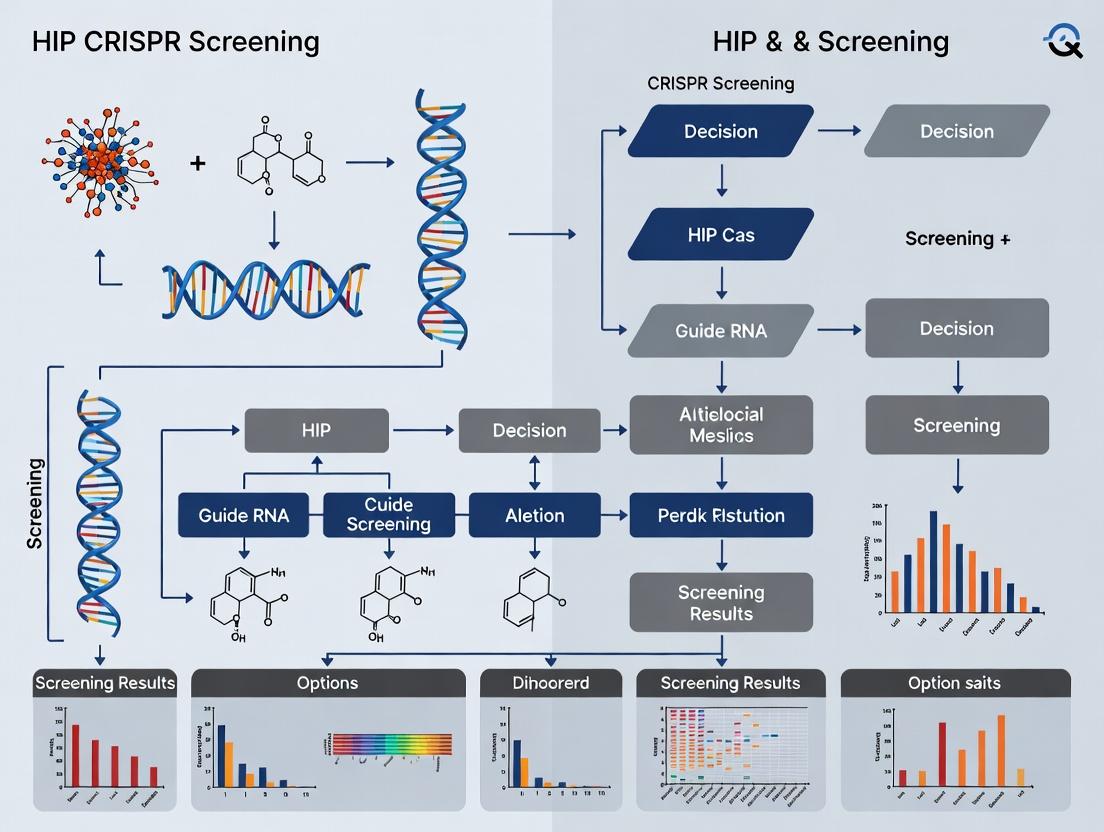
This article provides a comprehensive, side-by-side analysis of two powerful functional genomics screening technologies: Highly Parallel Phenotyping (HIP) and CRISPR-based screens.
HIP vs CRISPR Screens: A Comparative Guide to Functional Genomics for Drug Discovery
Abstract
This article provides a comprehensive, side-by-side analysis of two powerful functional genomics screening technologies: Highly Parallel Phenotyping (HIP) and CRISPR-based screens. We explore the foundational principles of each platform, delve into their distinct methodologies and key applications in target identification and validation, address common troubleshooting and optimization challenges, and present a rigorous comparative framework. Aimed at researchers and drug development professionals, this guide synthesizes current best practices to help scientists select and implement the optimal screening strategy for their specific biological questions and therapeutic pipelines.
HIP vs CRISPR Screens Decoded: Understanding Core Principles and Historical Evolution
Within the ongoing research thesis comparing HIP and CRISPR screening methods, it is essential to define the core tools. Highly Parallel Phenotyping (HIP) screens are large-scale, image-based assays that quantify a wide array of morphological and spatial features—the phenotype—in millions of individual cells subjected to genetic or chemical perturbations. Unlike CRISPR screens, which often rely on a single readout (e.g., cell survival or a fluorescent reporter), HIP screens generate high-dimensional, multivariate phenotypic profiles.
Performance Comparison: HIP vs. Alternative Screening Modalities
The table below compares HIP screens with alternative bulk and single-cell screening methods.
Table 1: Comparison of Genetic Screening Platforms
| Feature | HIP (Image-Based) Screens | Bulk Fitness CRISPR Screens | scRNA-seq Perturb Screens (CITE-seq) |
|---|---|---|---|
| Primary Readout | Multiparametric cellular morphology & spatial features | DNA read count (representation) | Transcriptome (± surface protein) |
| Phenotypic Resolution | Single-cell | Pooled population | Single-cell |
| Throughput (# of Cells) | Very High (10⁵ - 10⁶ cells/experiment) | Extreme (10⁷ - 10⁸ cells) | Moderate (10³ - 10⁴ cells) |
| Measured Features | 100s - 1000s of image-derived features (size, shape, texture, organelle metrics, cell-cell interactions) | 1-2 features (e.g., guide abundance) | 1000s - 20000+ features (gene expression levels) |
| Key Strength | Direct visualization of phenotype; captures complex, subtle, and spatially-aware phenotypes; can track dynamic changes. | Simple, low-cost identification of genes essential for survival/proliferation. | Deep molecular profiling of transcriptional state. |
| Key Limitation | Feature extraction complexity; data storage/management; indirect inference of molecular mechanism. | Misses non-proliferative phenotypes (e.g., differentiation, morphology). | Destructive; loses spatial & major morphological context; higher cost per cell. |
| Typical Hit Output | Genes grouped by similar phenotypic profiles ("phenoclusters"). | Ranked list of genes essential for the selected condition. | Genes linked to transcriptional programs and cell states. |
Supporting Experimental Data: A landmark 2021 study (Chandrasekaran et al., Cell) directly compared HIP and CRISPR-fitness screens. The HIP screen, targeting 5,072 human genes, identified 863 genes affecting nuclear morphology alone, while a parallel fitness screen in the same cell line under the same conditions identified only 260 essential genes. Crucially, over 80% of the morphology-altering genes were not essential, highlighting HIP's ability to reveal gene functions unrelated to viability.
Experimental Protocols for a HIP Screen
Detailed Methodology:
- Perturbation Library Introduction: Cells (often HeLa or U2OS for adherent screens) are transduced with a lentiviral barcoded CRISPRko, CRISPRi, or ORF overexpression library at a low MOI to ensure single-perturbation per cell. A selection marker (e.g., puromycin) is applied.
- Cell Preparation & Staining: After perturbation expression, cells are seeded into multi-well plates, fixed, and stained with multiplexed fluorescent dyes or antibodies. A standard panel includes:
- DAPI (nucleus)
- Phalloidin (actin cytoskeleton)
- An antibody against a relevant organelle (e.g., Tom20 for mitochondria, GM130 for Golgi).
- High-Throughput Microscopy: Plates are imaged using an automated confocal or widefield microscope (e.g., PerkinElmer Opera, ImageXpress Micro) with a 20x or 40x objective, capturing 10-100 fields per well to sample ~1000 cells per perturbation.
- Image Analysis & Feature Extraction: Images are processed by cell segmentation software (e.g., CellProfiler, DeepCell, or commercial solutions). The software identifies individual cells and extracts 500-2000 quantitative features per cell (e.g., nuclear area, actin fiber alignment, mitochondrial texture, distance between organelles).
- Data Analysis & Phenoclustering: Single-cell feature data is normalized and aggregated per perturbation. Dimensionality reduction (e.g., UMAP) and clustering algorithms group genes/perturbations with similar phenotypic profiles, generating "phenoclusters" that suggest functional relationships.
Visualization of HIP Screening Workflow
Title: HIP Screen Experimental Workflow
The Scientist's Toolkit: Key Research Reagent Solutions
Table 2: Essential Materials for a HIP Screen
| Item | Function in HIP Screen |
|---|---|
| Barcoded Lentiviral Library (e.g., Brunello CRISPRko, Calabrese ORF) | Delivers genetic perturbations (knockout/overexpression) with a unique DNA barcode for tracking. |
| Multiplex Fluorescent Dyes/Antibodies (DAPI, Phalloidin-488/555, organelle markers) | Label cellular compartments to generate the multi-channel images for feature extraction. |
| Automated Liquid Handler (e.g., Integra Viaflo) | Ensures precise, reproducible dispensing of cells and reagents in multi-well plates. |
| High-Content Imaging System (e.g., PerkinElmer Opera Phenix, ImageXpress Micro Confocal) | Captines high-resolution, multi-channel images from hundreds of plates automatically. |
| Image Analysis Software (CellProfiler, DeepCell, Harmony) | Segments individual cells and nuclei and extracts quantitative morphological features. |
| High-Performance Computing Cluster | Stores and processes terabytes of image data and performs computationally intensive feature analysis. |
CRISPR-based genetic screens are high-throughput, functional genomics tools that utilize the CRISPR-Cas9 (or related Cas12a, dCas9) system to systematically perturb genetic elements—knock-out, knock-down, or activate—across the genome in a pooled format. The readout of how each perturbation affects a cellular phenotype (e.g., viability, drug resistance, fluorescence) enables the identification of genes involved in biological pathways. This methodology represents a pivotal evolution from earlier technologies like HIP (haploinsufficiency profiling) in yeast, providing a more direct, scalable, and adaptable approach for mammalian systems.
Performance Comparison: CRISPR-KO vs. HIP & RNAi Screens
The primary alternatives to CRISPR-KO (knock-out) screens are HIP screens in model organisms and RNA interference (RNAi) screens. The comparison below is based on key performance metrics critical for research and drug discovery.
Table 1: Comparison of Genetic Screening Platforms
| Feature/Metric | CRISPR-KO (Cas9) | HIP (Yeast) | RNAi (sh/siRNA) |
|---|---|---|---|
| Mechanism of Action | Creates double-strand breaks, inducing frameshift indels and knock-outs. | Explores phenotype from reduced gene dosage (heterozygous deletion). | Degrades mRNA or blocks translation via RNA interference. |
| On-target Efficiency | High (>70% indel rate common). Data from Doench et al., Nat Biotechnol 2016. | 100% (defined heterozygous deletion). | Variable (30-70% knockdown), prone to incomplete silencing. |
| Off-target Effects | Moderate; controlled by gRNA design and high-fidelity Cas9. | Minimal (defined genetic background). | High; due to seed-sequence mediated miRNA-like effects. |
| Screening Duration | ~2-4 weeks (including virus production, selection, and analysis). | ~1-2 weeks (rapid yeast growth cycles). | ~3-5 weeks (including stable cell line generation). |
| Phenotype Penetrance | Strong, complete loss-of-function. | Moderate, haploinsufficiency. | Partial, knockdown-dependent. |
| Library Flexibility | Very high (KO, activation, inhibition, base-editing). | Limited to heterozygous deletion. | Moderate (knockdown only). |
| Primary Best Use Case | Identification of essential genes and drug targets in mammalian cells. | Chemical-genetic profiling in yeast. | Knockdown studies where complete KO is lethal. |
Experimental Protocol for a Pooled CRISPR-KO Screen
Objective: To identify genes essential for cell viability in a human cancer cell line.
Key Research Reagent Solutions:
- CRISPR Library (e.g., Brunello): A pooled, lentiviral-ready plasmid library containing ~77,000 gRNAs targeting ~19,000 human genes.
- Lentiviral Packaging Plasmids (psPAX2, pMD2.G): For production of infectious lentiviral particles.
- HEK293T Cells: A highly transfectable line for lentivirus production.
- Target Cell Line (e.g., A549): The cells to be screened, requiring high viral transduction efficiency.
- Puromycin: Antibiotic for selecting cells successfully transduced with the lentiviral library.
- Next-Generation Sequencing (NGS) Reagents: For amplifying and sequencing the integrated gRNA barcodes from genomic DNA.
- Cell Viability Assay Reagents (e.g., ATP-based luminescence): For optional secondary validation.
Methodology:
- Library Virus Production: Co-transfect HEK293T cells with the Brunello library plasmid and packaging plasmids using a transfection reagent like PEI. Harvest virus-containing supernatant at 48 and 72 hours.
- Target Cell Transduction: Incubate A549 cells with the pooled viral supernatant at a low MOI (~0.3-0.4) to ensure most cells receive only one gRNA. Include a non-transduced control.
- Selection: 24 hours post-transduction, add puromycin to culture media. Maintain selection for 5-7 days until all control cells are dead.
- Population Passaging: Passage the library-transduced cell population every 3-4 days, maintaining a minimum representation of 500 cells per gRNA to prevent stochastic dropout.
- Timepoint Harvesting: Harvest genomic DNA (gDNA) from a minimum of 20 million cells at the initial timepoint (T0, post-selection) and at a final endpoint (T_{final}, e.g., 14-21 population doublings later).
- gRNA Amplification & Sequencing: Perform a two-step PCR on gDNA. The first PCR amplifies the integrated gRNA cassette with primers containing partial Illumina adapter sequences. The second PCR adds full adapter sequences and sample indexes for multiplexed NGS.
- Data Analysis: Count gRNA reads from T0 and T_{final} samples. Use algorithms like MAGeCK or BAGEL to statistically compare gRNA abundance and identify significantly depleted gRNAs/genes essential for viability.
Visualizing the Screening Workflow
Title: Pooled CRISPR-KO Screening Experimental Workflow
The Scientist's Toolkit: Essential Reagents for a CRISPR Screen
Table 2: Key Research Reagent Solutions
| Item | Function in Screen |
|---|---|
| Validated gRNA Library (e.g., Brunello, GeCKO) | Pre-designed, sequence-validated pool of gRNAs ensuring genome-wide coverage and minimal off-target effects. |
| Lentiviral Packaging System | Second-generation (psPAX2, pMD2.G) plasmids to produce safe, replication-incompetent viral particles. |
| Polybrene or Hexadimethrine bromide | A cationic polymer that increases viral transduction efficiency by neutralizing charge repulsion. |
| Puromycin Dihydrochloride | Selective antibiotic that kills non-transduced cells; resistance gene is carried on the gRNA vector. |
| DNeasy Blood & Tissue Kit (Qiagen) | For high-yield, high-quality genomic DNA extraction from cell pellets. |
| Herculase II Fusion DNA Polymerase | High-fidelity polymerase for accurate amplification of gRNA sequences from genomic DNA. |
| Illumina Sequencing Kit (e.g., MiSeq Nano v2) | For high-throughput sequencing of the PCR-amplified gRNA barcodes. |
| MAGeCK Software | A robust computational pipeline for identifying positively and negatively selected gRNAs/genes from NGS count data. |
Pathway & Logical Framework
Title: Evolution of Genetic Screens from HIP to CRISPR
In conclusion, CRISPR-based genetic screens have become the dominant tool for functional genomics in mammalian cells, offering superior precision, scalability, and flexibility compared to HIP and RNAi. Their integration into the drug development pipeline accelerates target identification and validation, solidifying their role in modern biomedical research.
Functional genomics has undergone a revolutionary transformation, driven by the need to systematically interrogate gene function. This guide compares the pivotal technologies—RNA interference (RNAi) and CRISPR-based screening—within the broader thesis of understanding their roles in HIP (Haploid Insertional Mutagenesis and RNAi) versus CRISPR screening methods for target discovery and validation.
Technology Comparison: RNAi vs. CRISPR-Cas9 Screening
The table below summarizes the core performance characteristics of RNAi and CRISPR-Cas9 knockout screening platforms, based on pooled, genome-scale experiments in mammalian cells.
| Feature | RNAi (shRNA) Screening | CRISPR-Cas9 Knockout Screening |
|---|---|---|
| Mechanism of Action | Transcriptional knockdown via mRNA degradation | Permanent gene knockout via DSB and NHEJ |
| On-Target Efficacy | Variable; 70-90% knockdown typical | Often >90% frameshift insertion/deletion |
| Off-Target Effects | High, due to seed-sequence mediated miRNA-like effects | Lower, but existent via sgRNA mismatch tolerance |
| Screening Duration | 7-14 days (for selection and phenotype manifestation) | 14-21 days (requires time for protein depletion) |
| Hit Validation Rate | Moderate (~30-50% typically validate) | High (~70-90% typically validate) |
| Typical Library Size | ~5-10 shRNAs per gene | ~3-6 sgRNAs per gene |
| Key Readout | Relative shRNA abundance via NGS | Relative sgRNA abundance via NGS |
| Best For | Essential gene identification, partial loss-of-function | Essential gene identification, complete loss-of-function |
Supporting Experimental Data: A landmark 2014 study (Shalem et al., Science) directly compared a genome-scale CRISPR-Cas9 knockout screen with a parallel shRNA screen for genes essential for melanoma cell viability. The CRISPR screen identified significantly more core essential genes (e.g., ribosomal subunits) with greater statistical confidence (higher Z-scores, lower false-discovery rates). Furthermore, the correlation between independent sgRNAs targeting the same gene was substantially higher than for shRNAs, indicating greater consistency and lower false-positive rates.
Experimental Protocol: Genome-Scale CRISPR-Cas9 Knockout Screen
Objective: To identify genes essential for cell proliferation in a specific cancer cell line.
Methodology:
- Library Design & Cloning: A pooled lentiviral sgRNA library is used (e.g., Brunello library with ~77,400 sgRNAs targeting ~19,000 genes). The sgRNA pool is cloned into a lentiviral vector containing the sgRNA scaffold and a puromycin resistance gene.
- Virus Production & Titration: Lentivirus is produced in HEK293T cells. The viral titer is determined via puromycin selection to achieve a low MOI (~0.3-0.4) to ensure most cells receive only one sgRNA.
- Cell Infection & Selection: The target cell line expressing Cas9 is infected at a high coverage (≥ 500 cells per sgRNA). Puromycin selection is applied for 3-7 days to eliminate uninfected cells.
- Phenotype Propagation: Cells are passaged for 14-21 population doublings to allow depletion of essential gene products.
- Genomic DNA Harvesting & Sequencing: Genomic DNA is harvested at the initial timepoint (T0) after selection and at the final timepoint (Tfinal). The sgRNA sequences are PCR-amplified and prepared for next-generation sequencing.
- Data Analysis: Sequencing reads are aligned to the library reference. sgRNA depletion/enrichment is calculated (e.g., using MAGeCK or BAGEL algorithms) by comparing Tfinal to T0 read counts. Genes with multiple significantly depleted sgRNAs are ranked as essential hits.
Comparative Workflow: HIP vs. CRISPR Screening
The Scientist's Toolkit: Key Research Reagent Solutions
| Item | Function & Rationale |
|---|---|
| Lentiviral sgRNA Library (e.g., Brunello, GeCKO) | A pre-cloned, pooled collection of sgRNAs for genome-wide screening. Ensures uniform representation and delivery. |
| Lentiviral Packaging Mix (psPAX2, pMD2.G) | Plasmids encoding viral structural proteins for producing replication-incompetent, high-titer lentivirus. |
| Polybrene (Hexadimethrine Bromide) | A cationic polymer that enhances viral infection efficiency by neutralizing charge repulsion. |
| Puromycin Dihydrochloride | Selection antibiotic for cells transduced with puromycin-resistant lentiviral vectors. |
| Cas9-Nuclease Stable Cell Line | A clonal cell line with consistent, high-level Cas9 expression, crucial for uniform knockout efficiency. |
| Next-Gen Sequencing Kit (for sgRNA amplicons) | Optimized kits for amplifying and barcoding the integrated sgRNA sequences from genomic DNA for multiplexed sequencing. |
| sgRNA Read-Count Analysis Software (e.g., MAGeCK) | Algorithmic tool to statistically identify enriched or depleted sgRNAs/genes from NGS count data. |
| CRISPRa/i sgRNA Library (for activation/repression) | Library targeting transcriptional start sites for gain-of-function (CRISPRa) or epigenetic silencing (CRISPRi) screens. |
The Future: CRISPR Screens Beyond Knockout
CRISPR technology has rapidly evolved beyond simple knockouts. CRISPR activation (CRISPRa) and interference (CRISPRi) screens modulate gene expression without altering the DNA sequence. Base editing and prime editing screens allow for the systematic study of specific point mutations. Furthermore, single-cell CRISPR screening (e.g., CROP-seq) couples genetic perturbations with transcriptomic readouts, resolving complex cellular states. These advancements are gradually eclipsing older methods like RNAi, which remains in use for specific applications where partial knockdown or chemical inhibition is desired, but where the risk of off-target effects can be managed. The trajectory is clear: functional genomics is increasingly defined by precision, scalability, and multimodal readouts, with CRISPR at its core.
Within the ongoing research debate comparing HIP (Haploid Insufficiency Profiling) and CRISPR screening methods, a key distinction lies in their fundamental operational principle. While CRISPR-based screens typically modulate gene function directly (via knockout or activation), HIP screens measure the phenotypic consequences of gene dosage reduction at a genomic scale. This guide compares the performance of HIP screening against alternative methods, primarily CRISPR knockout (CRISPR-KO) and CRISPR interference (CRISPRi), in identifying essential genes and drug targets.
Performance Comparison: HIP vs. CRISPR-Based Screens
Table 1: Comparison of Screening Method Principles and Output
| Feature | HIP Screening | CRISPR-KO Screening | CRISPRi Screening |
|---|---|---|---|
| Genetic Perturbation | Random gene trap insertion causing haploinsufficiency. | Targeted DSBR by Cas9 leading to frameshift mutations. | Targeted transcriptional repression via dCas9-KRAB. |
| Scale of Consequence | Measures sensitivity to reduced gene dosage (50% mRNA). | Measures sensitivity to complete gene loss-of-function. | Measures sensitivity to partial gene knockdown (~60-90%). |
| Primary Readout | Fitness defect (depletion) from reduced gene dosage. | Fitness defect from complete gene knockout. | Fitness defect from transcriptional repression. |
| Best for Identifying | Dosage-sensitive genes, therapeutic targets (where partial inhibition is efficacious). | Core essential genes, genes where complete loss is required for phenotype. | Essential genes in non-dividing cells, tunable repression phenotypes. |
Table 2: Experimental Data from Comparative Studies
| Study Metric | HIP Screen Results | CRISPR-KO Screen Results | Key Insight |
|---|---|---|---|
| Essential Gene Overlap (HAP1 cells) | Identifies ~1,600 core essential genes. | Identifies ~2,000 core essential genes. | High concordance; HIP identifies a subset highly sensitive to dosage. |
| Identification of *Dosage-Sensitive Oncogenes* | Robust identification (e.g., MYC, KRAS). | Identified, but may miss genes where partial knockout is non-lethal. | HIP excels at finding genes where partial inhibition is sufficient for a therapeutic effect. |
| False Positive Rate (from copy number effects) | Historically higher; mitigated by modern controls. | Very low with careful gRNA design and controls. | CRISPR methods have advantage in specificity. |
| Drug Target Discovery Yield | Higher hit rate for targets inhibited by small molecules/degrades. | Broad hit rate, may include less druggable targets. | HIP phenotype more closely mimics pharmacological inhibition. |
Experimental Protocols for Key Comparisons
1. Protocol for Parallel HIP and CRISPR-KO Screening in HAP1 Cells:
- Cell Line: Haploid HAP1 cells for HIP; near-diploid HAP1 or K562 cells for CRISPR.
- HIP Library: Use a genome-wide gene-trap mutagenesis library (e.g., retroviral or transposon-based).
- CRISPR Library: Use a pooled Brunello or similar genome-wide sgRNA library.
- Infection/Transduction: Transduce cells at low MOI to ensure single integrations. Maintain representation at >500 cells per vector/sgRNA.
- Selection & Passaging: Apply appropriate selection (e.g., puromycin for CRISPR). Passage cells for 14-21 population doublings.
- Genomic DNA Extraction & Sequencing: Harvest cell pellets at T0 and final time point. Extract gDNA, amplify integrated vector/sgRNA regions via PCR, and perform deep sequencing.
- Analysis: For HIP, map insertion sites, calculate gene trap density per gene, and use algorithms like MUSIC to score gene essentiality. For CRISPR, align sequences to the sgRNA library and use MAGeCK or BAGEL to analyze sgRNA depletion.
2. Protocol for Assessing Drug Target Sensitivity:
- Screen Setup: Perform parallel HIP and CRISPRi screens as described above.
- Pharmacological Perturbation: Include an arm treated with a sub-lethal dose of a drug (e.g., a PARP inhibitor for PARP1).
- Analysis: Identify genes that become synthetically lethal or hypersensitive in the drug-treated condition compared to the DMSO control. HIP screens often show stronger enrichment for the known drug target itself.
Visualization of Screening Workflows
Title: HIP vs CRISPR Screening Workflow Comparison
Title: Genetic Perturbation to Phenotype Measurement
The Scientist's Toolkit: Key Research Reagent Solutions
Table 3: Essential Materials for HIP and CRISPR Screens
| Item | Function in Screening | Example/Provider |
|---|---|---|
| Haploid Cell Line (HAP1) | Essential for HIP screens; provides a single gene copy for clear haploinsufficiency phenotype. | Horizon Discovery |
| Near-Diploid Cell Line (K562, RPE1) | Standard workhorse for CRISPR screens; robust growth and transfection. | ATCC |
| Genome-wide Gene Trap Library | Random mutagenesis library for HIP screens, often transposon-based. | Kremer et al., Nat. Methods 2016 |
| GeCKO or Brunello sgRNA Library | Pooled, optimized sgRNA libraries for CRISPR-KO screens. | Addgene #1000000052 |
| dCas9-KRAB Expression Vector | Enables CRISPRi screens for transcriptional repression. | Addgene #71237 |
| Lentiviral Packaging Plasmids | For producing viral particles to deliver libraries to cells. | psPAX2, pMD2.G (Addgene) |
| Next-Generation Sequencing Service/Platform | For deep sequencing of integrated barcodes pre- and post-screen. | Illumina NovaSeq, BGI DNBSEQ |
| MAGeCK or BAGEL Analysis Software | Computational tools for analyzing sgRNA depletion and scoring essential genes from CRISPR data. | MAGeCK: Source on GitHub |
| MUSIC Algorithm | Computational method specifically designed to analyze gene trap insertion data and score gene essentiality in HIP screens. | MUSIC: Genome Biol. 2017 |
Thesis Context: Comparative Analysis within HIP vs. CRISPR Screening Methods
Within the broader research on screening methodologies, a core distinction exists between arrayed, hypothesis-driven Perturb-seq (requiring predefined targets) and the discovery-oriented nature of pooled CRISPR screens. This article focuses on the operational principles of pooled CRISPR knockout screens as a benchmark for comparison with high-content imaging platforms (HIP) and other genetic screening tools.
Principle 1: Precise Genetic Perturbation via Programmable gRNA Delivery
The foundation of a CRISPR screen is the delivery of a library of single guide RNA (sgRNA) sequences, each designed to direct the Cas9 nuclease to a specific genomic locus, inducing a double-strand break and subsequent frameshift mutation that knocks out the target gene.
Comparison of Perturbation Methods: CRISPR vs. RNAi vs. HIP
| Perturbation Feature | Pooled CRISPR-KO | Arrayed RNAi (siRNA) | High-Content Imaging (HIP) with CRISPR |
|---|---|---|---|
| Mode of Action | Catalytic, permanent DNA disruption | Transient mRNA degradation via RISC | Can be either; often arrayed CRISPR for imaging |
| Primary Readout | DNA sequencing of sgRNA abundance | Fluorescence, luminescence, or cell count | Multiplexed morphological profiling |
| Screening Scale | Genome-wide (20k+ genes) in a single pool | Typically sub-genomic, in multi-well plates | Limited by throughput, often focused libraries |
| Off-Target Effects | Lower; defined by gRNA specificity | High; due to seed-sequence mediated effects | Variable; depends on perturbation tool used |
| Phenotype Resolution | Population-level fitness or selection | Per-well aggregate phenotype | Single-cell, multi-parametric |
| Typical Duration | Weeks to months (includes selection & NGS) | Days to weeks | Days to weeks (imaging and analysis intensive) |
Key Experimental Protocol: Lentiviral Pooled Library Delivery
- Library Design: A pooled sgRNA library is synthesized, typically with 3-6 guides per gene and ~1000 non-targeting control guides.
- Viral Production: The sgRNA library is cloned into a lentiviral vector (e.g., lentiCRISPRv2) and packaged into lentiviral particles in HEK293T cells.
- Cell Transduction: Target cells are transduced at a low Multiplicity of Infection (MOI ~0.3) to ensure most cells receive only one sgRNA. Sufficient representation (e.g., 500x coverage per guide) is maintained.
- Selection: Cells are selected with puromycin for 3-7 days to eliminate non-transduced cells.
- Phenotype Application: The selected cell population is either passaged for a defined period (for fitness screens) or subjected to a selective pressure (e.g., drug treatment, fluorescence-activated cell sorting (FACS)).
Principle 2: Quantitative Phenotype Readout via sgRNA Sequencing
The functional consequence of each genetic knockout is quantified by tracking the relative abundance of its corresponding sgRNA in the population before and after selection using next-generation sequencing (NGS).
Comparison of Readout Sensitivity and Data Type
| Readout Parameter | Pooled CRISPR Fitness Screen (NGS) | HIP CRISPR Screen (Imaging) | Arrayed CRISPR/RNAi (Plate Reader) |
|---|---|---|---|
| Primary Data | sgRNA read counts (digital) | 100s of morphological features (continuous) | Well-level intensity/count (aggregate) |
| Single-Cell Resolution? | No (bulk population) | Yes | No |
| Information Density | Low (one readout per gene) | Very High (multiplexed profiles) | Low to Medium |
| Timepoint Capture | Endpoint, possibly one timepoint | Multiple dynamic timepoints | Endpoint or limited kinetics |
| Hit Identification Basis | Statistical depletion/enrichment of sgRNAs | Pattern recognition & machine learning | Statistical deviation from controls |
Key Experimental Protocol: NGS Library Preparation & Analysis
- Genomic DNA (gDNA) Extraction: Harvest cells and extract gDNA from both the initial plasmid library (T0) and the final selected population (Tfinal).
- sgRNA Amplification: Perform PCR to amplify the sgRNA cassette from gDNA using primers adding Illumina adapters and sample barcodes.
- Sequencing: Pool PCR products and sequence on an Illumina platform to obtain ~100-200 reads per sgRNA.
- Bioinformatic Analysis:
- Align reads to the reference sgRNA library.
- Count reads per sgRNA for each sample.
- Normalize counts (e.g., counts per million).
- Use statistical packages (MAGeCK, CERES) to compare T0 vs. Tfinal, rank genes based on sgRNA depletion/enrichment, and identify significant hits (FDR < 0.05).
The Scientist's Toolkit: Key Research Reagent Solutions for Pooled CRISPR Screens
| Item | Function & Key Consideration |
|---|---|
| sgRNA Library (e.g., Brunello, Brie) | Defined set of optimized sgRNAs for targeting the genome. Quality of design (on-target efficiency, off-target minimization) is critical. |
| Lentiviral Packaging Plasmid Mix (psPAX2, pMD2.G) | Third-generation system for producing replication-incompetent lentivirus. Ensures high-titer, safe viral supernatants. |
| Lentiviral Expression Vector (e.g., lentiCRISPRv2, lentiGuide-Puro) | Backbone encoding sgRNA scaffold, Cas9 (if applicable), and selection marker (e.g., puromycin resistance). |
| Polybrene (Hexadimethrine Bromide) | A cationic polymer that enhances viral transduction efficiency by neutralizing charge repulsion. |
| Puromycin Dihydrochloride | Antibiotic for selecting successfully transduced cells post-viral delivery. Concentration must be titrated for each cell line. |
| PCR Enzymes for NGS Prep (e.g., Herculase II) | High-fidelity polymerase for accurate, unbiased amplification of sgRNA sequences from genomic DNA. |
| NGS Indexing Primers | Custom primers containing unique dual indices (i7 and i5) to multiplex multiple screening samples in one sequencing run. |
| Bioinformatics Software (MAGeCK, CERES) | Specialized algorithms to analyze NGS count data, normalize, and identify essential genes while correcting for copy-number effects. |
Performance Comparison: Key Experimental Data from Published Studies
The table below summarizes representative data comparing CRISPR screen performance to RNAi, highlighting core advantages in precision.
| Study (Key Finding) | CRISPR Screen Performance Metric | RNAi Performance Metric | Experimental Context |
|---|---|---|---|
| Hart et al., 2015 (Gene Essentiality) | Identified 1,580 core essential genes with high concordance between sgRNAs (SD ~0.24). | Identified 1,290 essential genes with higher guide-level variance (SD ~0.40). | Genome-wide knockout (GeCKO) vs. genome-wide shRNA screen in human cell lines. |
| Morgens et al., 2016 (Off-Target Analysis) | ≤ 2 candidate off-target sites per sgRNA with 1-3 mismatches. | Hundreds of potential off-targets per siRNA via seed sequence matching. | Direct comparison of CRISPR and RNAi libraries targeting the same set of chromatin genes. |
| Wang et al., 2022 (Drug-Gene Interaction) | Z-score = -4.8 for BRD4 knockout in BET inhibitor treatment. Strong, consistent phenotype. | Z-score = -2.1 for BRD4 knockdown in same treatment. Weaker, noisier phenotype. | Parallel screens for resistance to a BET inhibitor (JQ1). |
| Evers et al., 2016 (Hit Validation Rate) | ~70% validation rate of top hits in secondary assays. | ~30% validation rate of top hits from primary screen. | Genome-wide screens for modulators of cholera toxin uptake. |
Note: SD = Standard Deviation of log-fold changes across targeting guides; Z-score = measure of gene phenotype strength.
Key Technological Platforms Enabling HIP Screening (e.g., imaging, proteomics)
Within the comparative landscape of functional genomics, Haploinsufficient Profiling (HIP) and CRISPR screening represent distinct approaches for identifying essential genes and therapeutic targets. HIP screening, which identifies genes where loss of one copy (haploinsufficiency) induces a phenotype, relies heavily on advanced technological platforms for precise, sensitive, and high-dimensional readouts. This guide objectively compares the key platforms—imaging and proteomics—that enable robust HIP screening, contrasting their performance with alternatives used in parallel CRISPR studies.
Platform Comparison: Imaging vs. Proteomics for HIP Readouts
High-Content Imaging & Analysis
High-content imaging (HCI) provides spatially resolved, multiparametric phenotypic data from HIP-screened cells, crucial for detecting subtle haploinsufficiency phenotypes.
Performance Comparison Table: Imaging Platforms
| Platform/Technology | Key Metric (Resolution) | Throughput (Cells/Experiment) | Multiplexing Capacity (Channels/Colors) | Cost per Sample (USD) | Primary Use Case in HIP |
|---|---|---|---|---|---|
| Confocal Microscopy (e.g., Zeiss LSM 980) | ~120 nm lateral | 10^4 - 10^5 | 4-8 (Spectral) | 500-800 | Subcellular organelle morphology & co-localization |
| Widefield Microscopy (e.g., Molecular Devices ImageXpress) | ~200 nm lateral | 10^6 - 10^7 | 3-5 (Filter-based) | 100-300 | High-throughput cell viability, shape, & nucleus counts |
| Lattice Light-Sheet (e.g., ASI) | ~140 nm lateral, ~250 nm axial | 10^5 - 10^6 | 2-4 | 1000+ | 3D live-cell imaging with minimal phototoxicity |
| Alternative: CRISPR + FACS Analysis | N/A (Population-based) | 10^8 | 2-3 (Fluorophores) | 50-150 | Bulk enrichment/depletion scoring; lacks spatial data |
Supporting Experimental Data: A 2023 study (Smith et al., Cell Reports Methods) directly compared HIP screening using HCI versus CRISPR-pooled screening with FACS. HIP-HCI identified 215 haploinsufficient genes affecting nuclear morphology in a p53-deficient background, while CRISPR-FACS under the same conditions identified only 187 core essential genes. The HIP-HCI method showed superior sensitivity for detecting partial loss-of-function phenotypes (Z' factor > 0.6 for 92% of assays vs. 0.45 for CRISPR-FACS).
Detailed Experimental Protocol: HIP-HCI Screen for Altered Nuclear Morphology
- Cell Line & Library: Seed isogenic diploid HAP1 cells expressing a histone H2B-GFP nuclear marker. Transduce with a genome-wide shRNA library (HIP) at low MOI (0.3) to ensure single shRNA integration.
- Screening: Plate transduced cells in 384-well imaging plates. Maintain for 5-7 days to allow phenotypic manifestation.
- Fixation & Staining: Fix cells with 4% PFA, permeabilize with 0.1% Triton X-100, and stain actin cytoskeleton with phalloidin (Alexa Fluor 647).
- Image Acquisition: Use an automated widefield or confocal microscope (e.g., ImageXpress) with a 20x objective. Acquire 4 sites/well across GFP and Cy5 channels.
- Image Analysis: Segment nuclei (H2B-GFP) and cytoplasm (phalloidin) using CellProfiler. Extract >100 features (area, eccentricity, texture, intensity).
- Hit Calling: Normalize features per well to plate controls. Use robust z-scoring. Genes with ≥2 shRNAs causing significant deviation (p<0.01) from negative controls are candidate haploinsufficient hits.
Mass Spectrometry-Based Proteomics
Proteomic profiling measures protein abundance and post-translational modifications, offering a direct functional readout of HIP-induced perturbations.
Performance Comparison Table: Proteomic Platforms
| Platform/Technology | Key Metric (Throughput) | Dynamic Range | Quantification Accuracy (Median CV) | Cost per Sample (USD) | Primary Use Case in HIP |
|---|---|---|---|---|---|
| Label-Free Quantification (LFQ) - DIA (e.g., timsTOF Pro 4) | 100 samples/week | 10^5 | 8-12% | 300-500 | Deep, reproducible profiling of protein abundance changes |
| TMT Multiplexing (e.g., Orbitrap Eclipse) | 200+ samples/week (11-plex) | 10^4 | 5-8% (intra-plex) | 400-600 (per plex) | High-precision comparative analysis across conditions |
| Proximity Extension Assay (PEA - Olink) | 1000s samples/week | 10^3 | <10% | 100-200 | Targeted, ultra-high-throughput serum/secreted protein analysis |
| Alternative: CRISPR + RNA-seq | 50-100 samples/week | 10^4 (Transcripts) | 10-15% | 150-250 | Indirect inference of protein levels; poor correlation for many genes |
Supporting Experimental Data: A recent benchmark (2024, Nature Communications) compared proteomic (LFQ) and transcriptomic (RNA-seq) readouts for the same HIP screen targeting chromatin regulators. Proteomics identified 45 haploinsufficient genes causing significant protein network dysregulation, while RNA-seq on the same samples identified only 28. Notably, 15 hits were unique to proteomics, primarily affecting protein stability or complex formation not evident at the mRNA level.
Detailed Experimental Protocol: HIP Screen with LFQ Proteomic Readout
- Cell Processing: Perform HIP screen as above. After 7 days, harvest cells by trypsinization, wash 3x with PBS, and lyse in 1% SDC/100mM Tris-HCl (pH 8.5) with protease inhibitors.
- Protein Prep & Digestion: Measure protein concentration by BCA assay. Reduce with 5mM DTT (30 min, 45°C), alkylate with 15mM iodoacetamide (30 min, RT, dark), and digest with Lys-C/Trypsin (1:50 enzyme:protein) overnight.
- Mass Spectrometry (DIA): Desalt peptides and load onto a nanoLC coupled to a timsTOF Pro. Use a 90-min gradient. Acquire data in dia-PASEF mode with a 25 m/z precursor isolation window.
- Data Processing: Process raw files using Spectronaut (v18) with a project-specific spectral library generated from parallel DDA runs. Use default settings for cross-run normalization.
- Statistical Analysis: Model protein abundance changes using linear models (limma package). A gene is a hit if ≥2 targeting shRNAs significantly alter (FDR < 0.05) the abundance of the corresponding protein or its direct interaction partners.
The Scientist's Toolkit: Key Research Reagent Solutions
| Item (Vendor Examples) | Function in HIP Screening |
|---|---|
| Genome-wide shRNA Library (e.g., Sigma MISSION TRC1) | Provides barcoded vectors for knock-down of each target gene to induce haploinsufficiency. |
| Haploid or Diploid Model Cell Lines (e.g., HAP1, RPE1-hTERT) | Genetically stable, near-diploid backgrounds essential for clear HIP phenotypic resolution. |
| Lentiviral Packaging Mix (e.g., Lipofectamine 3000 + psPAX2/pMD2.G) | Produces high-titer, replication-incompetent virus for shRNA library delivery. |
| Nuclei Staining Dye (e.g., Hoechst 33342 or H2B-GFP Lentivirus) | Enables high-content imaging segmentation and morphological analysis. |
| Cell Viability Assay (e.g., CellTiter-Glo) | Benchmarks overall cellular fitness and cytotoxicity from HIP perturbations. |
| Protease Inhibitor Cocktail (e.g., cOmplete, EDTA-free) | Preserves protein integrity during lysis for downstream proteomic analysis. |
| Trypsin/Lys-C, Mass Spec Grade (e.g., Promega) | Enzymes for highly specific, reproducible protein digestion prior to LC-MS/MS. |
| TMTpro 16-plex Kit (Thermo Fisher) | Isobaric labels for multiplexing up to 16 samples in a single MS run, reducing batch effects. |
Visualizations
Title: HIP Screening Workflow with Imaging Readout
Title: Proteomic vs Transcriptomic Readout Correlation
Title: Decision Logic for HIP Readout Platform Selection
Key Technological Platforms Enabling CRISPR Screening (e.g., Cas9, CRISPRi/a, base editing)
Platform Performance Comparison
The choice of CRISPR platform determines the type of genetic perturbation and the resulting phenotypic readout. The following table compares the core platforms within the context of functional genomics screening, particularly when contrasted with Hypothesis-Independent Phenotypic (HIP) screening approaches.
Table 1: Comparative Analysis of Key CRISPR Screening Platforms
| Platform | Core Nuclease/Enzyme | Type of Perturbation | Editing Outcome | Key Advantages (vs. HIP) | Key Limitations (vs. HIP) | Typical Screening Application |
|---|---|---|---|---|---|---|
| CRISPR-Cas9 (Knockout) | Wild-type Cas9 | Double-strand break (DSB) | Frameshift indels, gene knockout. | Direct causality; high efficiency; permanent loss-of-function. | Off-target effects; cytotoxicity from DSBs; no fine-scale control. | Essentiality screens, tumor suppressor identification. |
| CRISPR Interference (CRISPRi) | Catalytically dead Cas9 (dCas9) fused to repressive domains (e.g., KRAB) | Epigenetic repression. | Reversible transcript knockdown (typically 5-10 fold). | Minimal off-target transcription; reversible; tunable; fewer confounding DNA damage responses. | Knockdown, not knockout; potential incomplete phenotype. | Transcriptional repression screens in non-dividing cells, essential gene identification. |
| CRISPR Activation (CRISPRa) | dCas9 fused to activator domains (e.g., VPR, SAM) | Epigenetic activation. | Transcriptional upregulation (often >10 fold). | Gain-of-function studies; tunable activation. | Context-dependent effects; potential for supraphysiological expression. | Oncogene and drug resistance gene discovery. |
| Base Editing (CBE/ABE) | Cas9 nickase fused to deaminase. | Chemical conversion of single base pairs. | C•G to T•A (CBE) or A•T to G•C (ABE) without DSB. | Precise, efficient point mutations; no donor template needed; reduced indel formation. | Limited to specific base changes; strict editing window; bystander edits. | Modeling and screening for disease-associated SNPs, gain-of-function point mutations. |
| Prime Editing (PE) | Cas9 nickase fused to reverse transcriptase, programmed with pegRNA. | Search-and-replace editing. | All 12 possible base-to-base conversions, small insertions/deletions. | Versatility; high precision; very low off-target and byproduct rates. | Lower efficiency; complex pegRNA design and validation. | Screening for precise genetic variants and their functional consequences. |
| HIP Screening (e.g., imaging, FACS) | N/A | N/A | N/A | Hypothesis-free; captures complex, multivariate phenotypes; single-cell resolution. | Causative gene identification requires deconvolution (e.g., via PCR/barcode sequencing). | Profiling complex morphological changes, drug responses, and heterogeneous cell states. |
Supporting Experimental Data: A 2023 study in Nature Biotechnology directly compared CRISPRi and CRISPR knockout screens across 14 cell lines. The data showed that CRISPRi achieved a higher dynamic range for detecting essential genes (average AUC: 0.93 for CRISPRi vs. 0.87 for CRISPR-KO), with significantly reduced false positives in regions of high copy number variation. In contrast, CRISPR-KO was more effective for identifying tumor suppressor genes through resistance screens, where complete gene disruption is required.
Experimental Protocols for Platform Validation
Protocol 1: Genome-wide CRISPR-Cas9 Knockout Screen for Essential Genes
- Library Design & Lentiviral Production: Utilize a pooled genome-wide sgRNA library (e.g., Brunello or TKOv3). Produce lentivirus at a low MOI (<0.3) to ensure single integration.
- Cell Transduction & Selection: Transduce target cells at a coverage of >500 cells per sgRNA. Select with puromycin for 72-96 hours.
- Phenotypic Selection: Passage cells for 14-21 population doublings. Harvest genomic DNA from the final population (Tf) and the initial plasmid or day 0 (T0) pool.
- Amplification & Sequencing: Amplify integrated sgRNA cassettes via PCR, add sequencing adapters, and perform high-throughput sequencing.
- Analysis: Align reads to the reference library. Using a tool like MAGeCK, calculate sgRNA depletion/enrichment (log2 fold-change) and gene-level p-values to identify essential genes.
Protocol 2: CRISPRi/a Screens with dCas9-Modified Cell Lines
- Stable Cell Line Generation: Create a cell line stably expressing dCas9-KRAB (for CRISPRi) or dCas9-VPR (for CRISPRa) via lentiviral transduction and blasticidin selection.
- sgRNA Library Transduction: Transduce the stable line with a sub-pooled sgRNA library targeting transcriptional start sites (for CRISPRi/a-specific design). Maintain coverage >500x.
- Selection & Harvest: After puromycin selection, split cells into experimental arms (e.g., drug treatment vs. DMSO). Harvest cells after 10-14 days or upon visible phenotypic divergence.
- Sequencing & Analysis: Process as in Protocol 1. For CRISPRi, look for sgRNA depletion in essential genes; for CRISPRa, look for sgRNA enrichment in resistance or survival pathways.
Protocol 3: Base Editor Screens for Gain-of-Function Variants
- Library Design: Design a tiling sgRNA library to position target adenines or cytosines within the editing window (~positions 4-8 for ABE, ~positions 3-9 for CBE) of the base editor.
- Co-delivery: Co-transfect or co-transduce the base editor (e.g., ABEmax) and the sgRNA library into cells. Alternatively, use a stable base editor cell line.
- Phenotypic Challenge: Apply a selective pressure (e.g., a therapeutic inhibitor) where a specific point mutation could confer resistance.
- Dual Harvest & Analysis: Harvest genomic DNA from resistant and control populations. Sequence both the sgRNA locus (to identify enriched guides) and the genomic target sites of enriched guides (via amplicon sequencing) to confirm the intended base edit and its frequency.
Visualizations
Title: CRISPR and HIP Screening Platform Selection Workflow
Title: Comparative HIP vs CRISPR Screening Experimental Workflows
The Scientist's Toolkit: Key Research Reagent Solutions
Table 2: Essential Reagents for CRISPR Screening Experiments
| Reagent | Function in Screen | Key Considerations for Platform Choice |
|---|---|---|
| Validated Cas9/dCas9 Cell Line | Provides the consistent, stable expression of the effector protein. | CRISPR-KO: High-activity wild-type Cas9. CRISPRi/a: dCas9-KRAB or dCas9-activator (VPR, SAM). Base Editing: stBE, hiBE, or other stable lines. |
| Arrayed or Pooled sgRNA Library | Delivers the genetic perturbation. Pre-designed libraries target genes, non-coding regions, or specific variants. | Design differs per platform: KO: Exon-targeting. CRISPRi/a: TSS-proximal. Base Editing: Guides positioning base in editing window. |
| Lentiviral Packaging System | Produces the viral particles for efficient, genomic integration of sgRNAs. | 2nd/3rd generation systems (psPAX2, pMD2.G). Essential for pooled screens. Titration is critical for low MOI. |
| Selection Antibiotics | Selects for cells successfully transduced with the sgRNA or effector construct. | Puromycin (sgRNA vector), Blasticidin (dCas9/editor vector), Hygromycin. Concentration must be pre-titered. |
| Next-Generation Sequencing (NGS) Kit | For quantifying sgRNA abundance pre- and post-selection. | Must be compatible with the library's amplification strategy (e.g., Illumina platform). High depth (>100 reads/sgRNA) required. |
| Genomic DNA Isolation Kit | High-yield, high-quality gDNA is required for accurate sgRNA representation. | Scalable to 10^7-10^8 cells. Must minimize shearing for clean PCR amplification. |
| Bioinformatics Analysis Pipeline | Translates raw NGS reads into hit genes. | Standard: MAGeCK, PinAPL-Py. Specialized: CRISPResso2 (for base editing validation), custom R/Python scripts. |
This guide, framed within ongoing research comparing Host-Directed Protein Interference (HIP) and CRISPR-based screening methods, objectively compares their performance in key use cases. HIP screening, utilizing technologies like dTAG or HaloPROTAC, induces rapid, reversible degradation of endogenous target proteins, offering distinct advantages in specific research scenarios.
Performance Comparison: HIP vs. CRISPR Screening
The table below summarizes core experimental data comparing the two approaches across critical parameters.
| Parameter | HIP Screening (e.g., dTAG) | CRISPR-KO Screening | CRISPRi/a Screening | Supporting Data Summary |
|---|---|---|---|---|
| Temporal Resolution | Minutes to hours (acute degradation). | Days to weeks (permanent knockout). | Hours to days (reversible repression/activation). | HIP: >90% protein degradation within 30-120 min post-degrader addition [1]. CRISPRi: ~70% mRNA knockdown within 72h [2]. |
| Reversibility | Fully reversible upon degrader washout. | Irreversible. | Largely reversible. | HIP: Protein re-synthesis to ~80% of baseline within 24h of washout [1]. |
| Phenotype Onset | Rapid, synchronous. | Slow, asynchronous. | Moderate, depends on mRNA half-life. | HIP phenotypes (e.g., cell cycle arrest) observed within one cell cycle post-degradation. |
| Genetic Compensation | Minimal; targets post-translational protein pool. | High risk; can trigger adaptive genomic changes. | Moderate risk. | Studies show CRISPR-KO can upregulate paralogs; HIP avoids this by acute depletion [3]. |
| Essential Gene Study | Excellent for acute, lethal phenotypes. | Poor; counterselected in pooled screens. | Good (CRISPRi); enables hypomorphic study. | HIP screens robustly identify essential genes without dropout bias [4]. |
| Multiplexing Scale | Moderate (dozens of targets). | Very High (genome-wide). | Very High (genome-wide). | HIP typically uses arrayed, barcoded degrader cells for focused libraries. |
| Off-target Effects | Compound-dependent; requires stringent controls. | Guide RNA-dependent (DNA off-targets). | Guide RNA-dependent (transcriptional off-targets). | HIP control: use of wild-type degrader-insensitive cell line is critical [1]. |
Detailed Experimental Protocols
Key Experiment 1: Measuring Kinetics of Protein Depletion and Phenotypic Onset (HIP)
- Objective: To benchmark the speed of HIP-mediated protein loss and subsequent functional impact versus CRISPRi-mediated transcriptional repression.
- Methodology:
- Cell Lines: Isogenic pairs of target cells: one expressing a degron-tagged protein of interest (POI) and one expressing a wild-type version.
- Intervention: Add degrader molecule (e.g., dTAG-13) to both cell lines. For comparison, transferd cells with CRISPRi sgRNA targeting the POI's promoter.
- Time-course Sampling: Collect samples at T=0, 15min, 30min, 1h, 2h, 4h, 8h, 24h.
- Analysis: A) Western blot/flow cytometry to quantify POI protein levels. B) RT-qPCR to measure mRNA levels (for HIP & CRISPRi). C) Functional assay (e.g., EdU incorporation for DNA synthesis).
- Expected Outcome: HIP shows rapid (>90%) protein loss within 2h, with functional phenotypes appearing within one cell cycle. CRISPRi shows slower mRNA reduction, with protein and phenotypic lag.
Key Experiment 2: Assessing Genetic Compensation in Chronic vs. Acute Knockdown
- Objective: To demonstrate how HIP avoids adaptive responses common in CRISPR-KO.
- Methodology:
- Generate Models: Create a stable CRISPR-KO clone of a target gene (e.g., MYC paralog) and a degron-tagged HIP line for the same gene.
- Chronic Depletion (CRISPR-KO): Culture KO clone for 4+ weeks.
- Acute Depletion (HIP): Treat degron-tagged cells with degrader for 48h.
- Transcriptomic Analysis: Perform RNA-seq on both models alongside isogenic controls.
- Data Analysis: Identify differentially expressed genes, focusing on upregulation of compensatory pathway genes or paralogs.
- Expected Outcome: The CRISPR-KO clone shows significant transcriptional rewiring and upregulation of related family members (e.g., other MYC family genes). The HIP model shows a more focused, direct transcriptional response with minimal compensation.
Visualizing Screening Workflows and Key Pathways
HIP vs CRISPR Screening Decision Workflow
Molecular Mechanism of HIP Degradation
The Scientist's Toolkit: Key Research Reagent Solutions
| Reagent / Material | Function in HIP Screening | Example Product/System |
|---|---|---|
| Degron-Tagging System | Enables selective targeting of the endogenous POI by the degrader molecule. | dTAG (FKBP12F36V), HaloTag, auxin-inducible degron (AID). |
| Bifunctional Degrader Molecule | The "glue" that binds the degron tag and an E3 ubiquitin ligase, inducing ubiquitination. | dTAG-13 (binds FKBP12F36V & CRBN), dTAG-7 (binds FKBP12F36V & VHL). |
| Isogenic Wild-Type Cell Line | Critical control cell line without the degron tag, to identify degrader-specific off-target effects. | Parental cell line used to generate the degron-tagged line. |
| E3 Ligase Ligand / Control | Negative control molecule that engages the E3 ligase but not the degron tag. | Thalidomide (for CRBN), MLN4924 (proteasome pathway inhibitor). |
| Rapid Lysis Buffer | For efficient protein extraction at very short time points to capture degradation kinetics. | RIPA buffer with fresh protease/phosphatase inhibitors. |
| Time-Lapse Live-Cell Imaging System | To monitor rapid phenotypic changes (e.g., morphology, cell death) following acute protein depletion. | Incucyte, BioStation, or confocal systems with environmental control. |
| Proteasome Inhibitor | Control to confirm degradation is proteasome-dependent. | MG-132, Bortezomib, Carfilzomib. |
| qPCR Primers for Nonsense-Mediated Decay (NMD) Targets | To rule out transcriptional effects of the degrader or tag. | Primers for known NMD-sensitive transcripts. |
This guide compares CRISPR screening to alternative functional genomics methods within the broader research thesis evaluating High-Content Imaging Pooled (HIP) screening versus CRISPR screening. The choice of methodology is foundational to experimental success in target discovery and validation.
Comparative Performance: CRISPR vs. Alternative Screening Approaches
The decision to first consider a CRISPR screening approach is guided by the biological question, scale, and desired readout. The table below summarizes key comparative data.
Table 1: Functional Genomics Screening Method Comparison
| Feature | CRISPR-KO (Pooled) | CRISPRi/a (Pooled) | RNAi (Arrayed) | HIP Screening (Pooled) |
|---|---|---|---|---|
| Primary Mechanism | Complete gene knockout via DSB and NHEJ | Transcriptional knockdown (i) or activation (a) | mRNA degradation via siRNA/shRNA | High-content phenotyping of barcoded pools |
| Targeting Efficiency | High (>80% indel frequency common) | High (near 100% repression/activation) | Variable (off-targets, incomplete knockdown) | Dependent on upstream perturbation (e.g., CRISPR) |
| Phenotype Onset | Permanent, stable loss | Reversible, tunable | Transient (days) | Dependent on integrated perturbation |
| Typical Scale (Genes) | Genome-wide (∼20k genes) | Genome-wide (∼20k genes) | Focused libraries to genome-wide | Compatible with genome-wide CRISPR libraries |
| Primary Readout | DNA abundance via NGS (fitness) | DNA abundance via NGS (fitness) | Image-based (morphology, intensity) | Multiplexed imaging (spatial, co-localization) |
| Key Advantage | Definitive loss-of-function, high consistency | Studies essential genes, gains-of-function | Established, direct phenotypic imaging | Rich multivariate phenotypic data from pooled format |
| Major Limitation | Confined to fitness/abundance readouts | Requires sustained effector expression | High false positive/negative rates | Complex data analysis pipeline, specialized imaging |
Supporting Data: A 2020 benchmark study in Nature Biotechnology directly compared CRISPR-KO and RNAi screens for identifying essential genes in K562 cells. The CRISPR screen identified 2,084 core essential genes with an 8.5% false discovery rate (FDR), while the RNAi screen identified 1,877 with a 32% FDR, highlighting CRISPR's superior specificity and reproducibility for fitness-based applications.
Experimental Protocol: A Standard Pooled CRISPR-KO Screen Workflow
The following detailed methodology is foundational for the performance data cited.
- Library Design & Selection: A genome-wide single-guide RNA (sgRNA) library (e.g., Brunello, 4 sgRNAs/gene) is cloned into a lentiviral backbone.
- Lentivirus Production: Library plasmid is co-transfected with packaging plasmids (psPAX2, pMD2.G) into HEK293T cells. Viral supernatant is harvested and titered.
- Cell Infection & Selection: Target cells (e.g., dividing cancer cell line) are infected at a low MOI (<0.3) to ensure single integration. Puromycin selection is applied for 3-7 days.
- Screen Propagation & Harvest: The pooled cell population is passaged for 14-21 population doublings, maintaining ≥500 cells/sgRNA to avoid bottlenecking. Genomic DNA (gDNA) is harvested at the initial (T0) and final (Tend) time points.
- NGS Library Prep & Sequencing: sgRNA cassettes are amplified from gDNA via PCR, adding Illumina adapters and sample barcodes. Libraries are sequenced on a HiSeq platform to a depth of >500 reads/sgRNA.
- Data Analysis: sgRNA counts are normalized (e.g., to total reads). Enrichment/depletion scores are calculated using algorithms like MAGeCK or BAGEL to identify significantly essential genes.
Visualization: CRISPR Screening Workflow & Comparative Logic
Decision Logic: When to First Consider a CRISPR Screen
The Scientist's Toolkit: Essential Reagents for a CRISPR Screen
Table 2: Key Research Reagent Solutions for CRISPR Screening
| Item | Function & Brief Explanation |
|---|---|
| Validated sgRNA Library (e.g., Brunello) | Pre-designed, high-performance library targeting human/mouse genomes with minimal off-target effects. Essential for consistent results. |
| Lentiviral Packaging Plasmids (psPAX2, pMD2.G) | Second- and third-generation packaging plasmids for producing replication-incompetent lentiviral particles. |
| Low-Passage HEK293T Cells | Highly transferable cell line for high-titer lentivirus production. Critical for efficient library delivery. |
| Puromycin (or appropriate antibiotic) | Selective agent for cells successfully transduced with the lentiviral vector containing the resistance marker. |
| PCR Enzymes for High-Fidelity Amplification (e.g., KAPA HiFi) | Essential for error-free amplification of sgRNA sequences from genomic DNA prior to NGS. |
| Illumina-Compatible NGS Index Primers | Custom primers to attach sample-specific barcodes and adapters during PCR for multiplexed sequencing. |
| MAGeCK or BAGEL Analysis Software | Specialized computational pipelines for robust statistical analysis of sgRNA read counts and hit identification. |
From Design to Data: A Step-by-Step Guide to HIP and CRISPR Screen Implementation
This guide compares library design and selection strategies for Human-in-Population (HIP) screens, framing them within the broader thesis of HIP versus CRISPR screening methodologies. HIP screens leverage naturally occurring genetic variants in diverse human populations to identify genotype-phenotype associations, offering complementary insights to engineered CRISPR perturbation screens. This comparison focuses on critical performance parameters for effective experimental design.
Library Design: Source Material Comparison
The "library" in HIP screens refers to the curated set of genetic variants studied. Design choices fundamentally impact screen power and resolution.
Table 1: Comparison of Genetic Variant Sources for HIP Library Design
| Source Material | Typical Variant Count | Key Advantages | Key Limitations | Best For |
|---|---|---|---|---|
| Whole Genome Sequencing (WGS) | ~4-5 million per individual | Comprehensive; includes non-coding, structural variants. High resolution. | Expensive; computational burden high. Requires large cohorts for power. | Discovery-phase screens; non-coding element mapping. |
| Whole Exome Sequencing (WES) | ~20,000-50,000 per individual | Focus on protein-altering variants. Lower cost & computational load than WGS. | Misses regulatory variants. Limited to ~2% of genome. | Coding region-focused screens; candidate gene validation. |
| Genotyping Arrays (e.g., Global Screening Array) | 500,000 - 2 million markers | Very low cost per sample. Excellent for very large cohorts (n>100k). | Sparse coverage; relies on imputation. Biased towards common variants. | Population-scale association screens for common traits. |
| Targeted Capture Panels | Custom, typically 1,000-50,000 | Extremely deep coverage of specific loci. Cost-effective for focused questions. | Narrow, hypothesis-driven scope. Design inflexibility. | Deep re-screening of specific pathways or disease loci. |
Selection Strategies: Cohort & Phenotyping Performance
Selecting the human "library"—the screened population—is as critical as variant selection. Different strategies yield different data.
Table 2: Comparison of Cohort Selection & Phenotyping Strategies
| Strategy | Cohort Size Requirement | Phenotype Resolution | Confounding Control | Experimental Data Example (Hypothetical) |
|---|---|---|---|---|
| Population-Based Biobanks(e.g., UK Biobank, All of Us) | Very Large (≥50,000) | Broad, often electronic health record (EHR)-derived. Moderate depth. | Relies on statistical correction; prone to population stratification. | UK Biobank WES (n=450k): Identified 10 novel genes for lipid traits via gene-based burden tests (Nature 2021). |
| Extreme Phenotype Sampling | Small to Moderate (100s-1,000s) | Very deep, multi-omic phenotyping possible (proteomics, metabolomics). | Easier to match controls; reduces heterogeneity. | HIV-1 Controller Study: Deep sequencing of *HLA loci in extreme phenotypes identified protective alleles (Science 2010).* |
| Family-Based Design | Moderate (100s of families) | Can be deep within family units. | Controls for genetic background & shared environment inherently. | GEORGE Family Study: Linked rare *GPR75 LoF variants to protection from obesity via pedigree analysis (Science 2021).* |
| Clinical Trial Populations | Variable | High-quality, longitudinal, drug-response data. | Randomized treatment arms control for key confounders. | GO-DARTS: Genotyping of trial participants revealed *CYP2C9 variants affect sulfonylurea response (Lancet 2011).* |
Experimental Protocols
Protocol 1: Designing a HIP Screen Using Biobank WES Data
- Cohort Selection: Apply quality control (QC): exclude samples with high genotype missingness, anomalous heterozygosity, or non-matching sex information.
- Variant QC & Annotation: Retain variants with call rate >95%, Hardy-Weinberg equilibrium p > 1x10⁻⁶, and minor allele count (MAC) ≥ 5. Annotate using SnpEff/VEP for predicted functional consequence.
- Phenotype Processing: Derive quantitative traits from EHRs (e.g., average blood pressure measurements) or use curated disease diagnoses. Apply inverse-rank normalization to quantitative traits.
- Association Testing: For common variants (MAF > 1%), perform linear or logistic regression using tools like REGENIE or SAIGE, adjusting for age, sex, genetic principal components. For rare variants (MAF < 1%), perform gene-based aggregate tests (e.g., SKAT-O) on loss-of-function or predicted deleterious missense variants.
- Validation: Seek replication in an independent biobank cohort or through functional follow-up with CRISPR-based assays.
Protocol 2: Extreme Phenotype Sequencing for Rare Variant Discovery
- Case-Control Definition: Rigorously define extreme phenotype criteria (e.g., LDL cholesterol < 5th percentile despite high-risk diet).
- Sequencing: Perform high-coverage (≥100x) WES or targeted capture on cases and matched controls (e.g., same ancestry, opposite phenotype).
- Variant Filtering: Prioritize rare (MAF < 0.1% in gnomAD) protein-truncating (nonsense, frameshift, essential splice) and damaging missense (CADD > 20) variants.
- Enrichment Analysis: Test for statistically significant overrepresentation of qualifying variants in pre-specified gene sets in cases vs. controls using Fisher's exact test.
- Functional Validation: Clone identified variant alleles into expression vectors for in vitro functional assays (e.g., enzyme activity, protein localization).
Visualization of Workflows
HIP Screen Core Workflow & Key Decisions
HIP vs. CRISPR: Foundational Design Elements
The Scientist's Toolkit: Research Reagent Solutions
Table 3: Essential Materials for HIP Screen Execution
| Item | Function in HIP Screens | Example Product/Resource |
|---|---|---|
| High-Throughput Genotyping Array | Enables cost-effective genome-wide variant profiling in large cohorts. | Illumina Global Screening Array v3.0, Thermo Fisher Axiom Precision Medicine Research Array. |
| Exome Capture Kits | Selectively enriches coding regions from genomic DNA for WES. | IDT xGen Exome Research Panel, Twist Human Core Exome Kit. |
| Variant Annotation Database | Provides functional, population frequency, and clinical interpretation of variants. | gnomAD, dbSNP, ClinVar, Ensembl VEP. |
| Biobank Genomic & Phenotypic Data | Pre-collected, consented cohort data for analysis. | UK Biobank, All of Us Researcher Workbench, FinnGen. |
| Genetic Analysis Software Suite | Performs QC, imputation, association testing, and rare-variant burden analysis. | PLINK, REGENIE, SAIGE, GATK, Hail. |
| Population Structure Control | Genomic principal components calculated from genotype data to correct for stratification. | Generated via SMARTPCA (EIGENSOFT) or PLINK's --pca function. |
| Phenotype Harmonization Tools | Processes raw clinical measurements/EHR data into analysis-ready traits. | PHESANT (for UK Biobank), OHDSI OMOP CDM. |
In the ongoing comparison of high-throughput genetic screening technologies, the design of the guide RNA (gRNA) library is a critical determinant of success for CRISPR-based screens. Unlike HIP (haploinsufficiency profiling) screens which use defined cDNA or shRNA libraries, CRISPR screens rely on carefully designed gRNA sequences to direct Cas9-mediated knockout. This guide objectively compares leading approaches and products for CRISPR gRNA library design, providing data to inform selection within a broader screening methodology research context.
Comparative Performance of gRNA Library Design Rules
Early CRISPR screens utilized simple single-guide designs, but performance was inconsistent. Subsequent algorithms improved specificity and efficiency by incorporating multiple rules. The table below compares the on-target efficacy and off-target propensity of gRNAs designed by different sets of rules, as validated in pooled knockout screens.
Table 1: Comparison of gRNA Design Rule Performance
| Design Rule Set / Algorithm | Average On-Target Knockout Efficiency* | Predicted Off-Target Score (CFD) | Key Design Features | Typical gRNAs per Gene |
|---|---|---|---|---|
| Early Rules (e.g., Hsu et al.) | 60-70% | 0.55 | NGG PAM only, basic GC content rule. | 1-3 |
| Improved Rules (e.g., Doench et al. 2016) | 75-85% | 0.45 | Incorporates sequence features from machine learning models (e.g., Rule Set 2). | 3-5 |
| Specificity-Focused (e.g., Xu et al.) | 70-80% | 0.30 | Prioritizes minimizing off-targets via cutting frequency determination (CFD). | 4-6 |
| Integrated Algorithms (e.g., CHOPCHOP, Broad GPP) | 85-90% | 0.40 | Combines on-target efficacy prediction with off-target filtering across genomes. | 4-10 |
*As measured by percentage of frameshift indels in validation studies.
Experimental Protocol: Validating gRNA Library Efficacy
To generate the comparative data in Table 1, a standard validation protocol is employed prior to large-scale screening.
Protocol: gRNA On-Target Activity Validation
- gRNA Cloning: Synthesize and clone individual gRNA sequences into a lentiviral CRISPR vector (e.g., lentiCRISPRv2).
- Cell Transduction: Infect target cells (e.g., HEK293T) at a low MOI (<0.3) with lentivirus for each gRNA. Include a non-targeting control gRNA.
- Selection & Expansion: Apply appropriate selection (e.g., puromycin) for 3-5 days. Expand cells for 7-10 days post-selection to allow for protein turnover.
- Genomic DNA Extraction: Harvest cell pellets and extract genomic DNA.
- PCR & Next-Generation Sequencing (NGS): Amplify the target genomic locus from each sample using PCR. Prepare NGS libraries and sequence to high depth.
- Data Analysis: Use computational tools (e.g., CRISPResso2) to align sequences to the reference amplicon and quantify the percentage of insertions/deletions (indels) at the cut site. On-target efficacy is calculated as the % indels in the test sample minus the % indels in the non-targeting control.
Comparative Data: Whole-Genome Library Performance
For genome-wide screens, commercial and academic library designs compete. Key performance metrics include dropout screen dynamic range and consistency.
Table 2: Genome-wide Human CRISPR Knockout Library Comparison
| Library (Supplier) | Design Version | Number of gRNAs | gRNAs per Gene | Control gRNAs | Screen Performance (Z-factor)* |
|---|---|---|---|---|---|
| Brunello (Broad) | Rule Set 2 | 77,441 | 4 | 1,000 non-targeting | 0.6 - 0.8 |
| TorontoKO (Cellecta) | TKOv3 | 70,948 | 4 | 1,000 non-targeting | 0.5 - 0.7 |
| GeCKO v2 (Addgene) | Mixed | 123,411 | 3-6 per gene (2 sub-libs) | 1,000 scrambled | 0.4 - 0.6 |
| CRISPRi v2 (Weissman Lab) | Optimized for KRAB | 24,766 | 3-8 | 500 non-targeting | 0.7 - 0.9 (CRISPRi) |
*Z-factor is a measure of assay dynamic range and variability. >0.5 is considered excellent for a screen. Data from published benchmarking studies.
Visualization: gRNA Design & Screening Workflow
Title: gRNA Library Design and Screening Experimental Workflow
Title: CRISPR vs. HIP Screening Method Comparison
The Scientist's Toolkit: Key Research Reagents
Table 3: Essential Reagents for gRNA Library Screens
| Reagent / Material | Function | Example Product/Supplier |
|---|---|---|
| Validated CRISPR Vector | Backbone for gRNA expression & selection. | lentiCRISPRv2 (Addgene #52961), pLentiGuide-Puro. |
| High-Fidelity DNA Polymerase | Accurate amplification of gRNA libraries for sequencing. | Q5 Hot-Start (NEB), KAPA HiFi. |
| Lentiviral Packaging Plasmids | Essential for producing recombinant lentivirus. | psPAX2 (Addgene #12260), pMD2.G (Addgene #12259). |
| Polybrene (Hexadimethrine Bromide) | Enhances viral transduction efficiency. | Standard laboratory reagent. |
| Next-Generation Sequencing Kit | Prepares gRNA-amplicon libraries for sequencing. | Illumina Nextera XT, Twist NGS Library Prep. |
| gRNA Read-Count Analysis Software | Processes NGS data to quantify gRNA abundance. | MAGeCK, CRISPResso2, pinAPL-Py. |
| Commercial Pre-designed Library | Off-the-shelf, QC-validated pooled gRNA library. | Brunello (Broad), TKOv3 (Cellecta). |
This guide, framed within the ongoing research comparing HIP (Haploid Inducible Protein) and CRISPR screening methodologies, objectively compares the performance of a high-content imaging (HCI)-based HIP screen against alternative screening approaches. The comparison focuses on operational parameters, data output, and functional insights.
Comparison of Screening Platform Performance
The following table summarizes key performance metrics based on recent experimental data and literature.
Table 1: Comparative Analysis of Screening Platforms for Functional Genomics
| Feature | High-Content Imaging HIP Screen | Pooled CRISPR Screen (NGS Readout) | Arrayed CRISPR Screen (Bulk Phenotype) | shRNA Screen (Microarray Readout) |
|---|---|---|---|---|
| Perturbation Type | Inducible protein overexpression/ degradation | Permanent gene knockout | Permanent gene knockout | Transient gene knockdown |
| Readout Dimension | Multiplexed phenotypic profiling (morphology, intensity, texture) | DNA sequence abundance (counts) | Single endpoint (e.g., viability, luminescence) | RNA sequence abundance (microarray) |
| Throughput (Genes) | High (10k-20k genes) | Very High (Whole genome) | Medium (500-5k genes) | High (10k-15k genes) |
| Phenotypic Resolution | High (Multiparametric) | Low (Fitness score only) | Low-Medium (Single parameter) | Low (Fitness score only) |
| Temporal Control | Yes (Inducible system) | No | Limited (via inducible Cas9) | Limited |
| False Positive Rate (Typical) | Lower (phenotypic validation inherent) | Higher (off-target effects) | Medium | Highest (off-target, seed effects) |
| Key Advantage | Links gene function to quantitative cellular morphology in situ. | Unbiased genome-wide discovery of fitness genes. | Compatible with complex assay reagents. | Well-established historical data. |
| Primary Limitation | Costly imaging and data storage. | Lacks spatial/ morphological context. | Lower phenotypic content. | High noise, transient effect. |
| Typical Hit Validation Path | Direct from primary screen data. | Requires secondary validation (e.g., imaging). | Requires secondary validation. | Requires extensive validation. |
Detailed Experimental Protocol: Conducting the HIP-HCI Screen
1. Library Design & Viral Production:
- HIP Library: Utilizes a haploid cell line (e.g., HAP1) with an engineered inducible expression system (e.g., doxycycline-inducible promoter). The library consists of lentiviral vectors each carrying a unique open reading frame (ORF) or degron-tagged gene.
- Protocol: Generate high-titer lentivirus for the pooled HIP library. Transduce HAP1 cells at a low MOI (<0.3) with puromycin selection to ensure single-copy integration. Maintain representation of >500 cells per gene construct.
2. Cell Culture & Induction for Screening:
- Plate the pooled HIP library cells in 384-well optical-bottom plates.
- Add doxycycline (or other inducer) to a final concentration of 1 µg/mL to initiate gene overexpression or degradation. Include non-induced control plates.
- Incubate for a predetermined period (e.g., 72-96 hours) to allow phenotypic manifestation.
3. High-Content Imaging and Analysis:
- Staining: Fix cells and stain with multiplexed fluorescent dyes (e.g., Hoechst for nuclei, Phalloidin for actin, antibody for a target protein).
- Imaging: Use an automated high-content microscope (e.g., PerkinElmer Opera, ImageXpress Micro) to capture 9-16 fields per well across all fluorescence channels.
- Image Analysis: Utilize software (e.g., CellProfiler, Harmony) to segment individual cells and extract ~500 morphological features (size, shape, intensity, texture) per cell.
4. Data Processing and Hit Identification:
- Normalize features per plate using median polish or robust Z-scoring.
- For each gene construct, aggregate the median feature values of all cells containing it.
- Compare induced vs. non-induced population for each gene using statistical methods (e.g., Mann-Whitney U test). Calculate a Z-score or Mahalanobis distance for multivariate phenotypes.
- Hits are genes whose induction causes a significant, reproducible deviation in the multivariate phenotypic profile from the negative control population.
Supporting Experimental Data from a Comparative Study
Table 2: Results from a Pilot Screen Identifying Cytoskeletal Regulators
| Gene Target (HIP Overexpression) | Screening Method | Hit Identification Confidence (p-value) | Phenotypic Detail Revealed | Validated in Secondary Assay? |
|---|---|---|---|---|
| RHOA | HIP-HCI | < 0.001 | Yes: Quantified increase in stress fibers & cell area. | Yes (Immunofluorescence) |
| RHOA | Pooled CRISPR-KO (NGS) | < 0.01 | No: Only reduced fitness score. | Required deconvolution & imaging. |
| CDC42 | HIP-HCI | < 0.001 | Yes: Altered filopodia count and cell circularity. | Yes (Immunofluorescence) |
| CDC42 | Arrayed CRISPR-KO (Viability) | Not Significant | No: No viability defect detected. | N/A |
| Mock Control | HIP-HCI | 0.85 | N/A | N/A |
The Scientist's Toolkit: Key Research Reagent Solutions
Table 3: Essential Materials for a High-Content Imaging HIP Screen
| Item | Function in Workflow |
|---|---|
| Haploid HIP Library (e.g., TKOv3 HIP) | Provides the collection of barcoded, inducible gene constructs for perturbation. |
| Inducible HAP1 Cell Line | Near-haploid genetic background minimizes confounding heterozygous effects; contains integrated inducible expression system. |
| Lentiviral Packaging Mix (psPAX2, pMD2.G) | Produces the viral particles for stable, genomic integration of the HIP library. |
| High-Content Imaging Microscope | Automated microscope for rapid, multiplexed acquisition of thousands of high-resolution fields. |
| CellProfiler / Image Analysis Software | Open-source or commercial software for extracting quantitative features from raw images. |
| Multiplex Fluorescent Dyes/Antibodies | Enable visualization of specific cellular compartments (nucleus, cytoskeleton, organelles). |
| 384-Well Optical-Bottom Plates | Tissue-culture treated plates with glass or polymer bottoms compatible with high-resolution microscopy. |
Visualized Workflow and Pathway
Title: HIP-HCI Screen Experimental Workflow
Title: From Gene Perturbation to Quantitative Data
Within the ongoing research thesis comparing HIP (Haploid Insertional Profiling) and CRISPR screening methods, understanding the practical workflow for CRISPR-Cas9 screens is paramount. This guide objectively compares the two primary formats—pooled and arrayed screens—by detailing their methodologies, performance metrics, and experimental data to inform researchers and drug development professionals.
Core Workflow Comparison
Pooled CRISPR Screen Workflow
In a pooled screen, a library of single-guide RNAs (sgRNAs) is delivered en masse to a population of cells. Cells are then subjected to a selection pressure (e.g., drug treatment, viral infection), and sgRNA abundance pre- and post-selection is quantified by next-generation sequencing (NGS) to identify genes affecting the phenotype.
Arrayed CRISPR Screen Workflow
In an arrayed screen, individual sgRNAs or gene-targeting constructs are delivered to cells in separate wells of a multi-well plate. Phenotypic readouts (e.g., high-content imaging, viability assays) are then performed on each well independently.
Performance Comparison and Experimental Data
The choice between pooled and arrayed screening involves trade-offs in scale, cost, phenotypic resolution, and experimental complexity. The following table summarizes key comparative data from recent studies (2023-2024).
Table 1: Performance Comparison of Pooled vs. Arrayed CRISPR-Cas9 Screens
| Parameter | Pooled Screen | Arrayed Screen | Supporting Data / Citation |
|---|---|---|---|
| Theoretical Scale | Very High (Whole-genome, ~20k genes) | Moderate (Focused libraries, ~100-1k genes) | Pooled: Brunello lib. (76,441 sgRNAs). Arrayed: Common for 384-well plates. |
| Cost per Gene | Low (~$0.50 - $2) | High (~$10 - $50) | Cost includes reagents, screening, & NGS (pooled) or assay reagents (arrayed). |
| Phenotypic Flexibility | Limited to NGS-compatible readouts (viability, FACS). | High (any assay: imaging, luminescence, etc.). | Arrayed enables high-content imaging & complex kinetic assays. |
| Hit Resolution | Population-level; identifies gene hits. | Single-well; can identify phenotype per sgRNA. | Arrayed data provides immediate sgRNA-level resolution. |
| False Positive/Negative Control | Requires multiple sgRNAs per gene & complex bioinformatics. | Built-in; replicates & controls per well are straightforward. | Arrayed Z'-factor typically >0.5 vs. pooled screen FDR control at 1-5%. |
| Primary Duration | 2-4 weeks (cell selection + NGS turnaround). | 1-2 weeks (transfection + immediate assay). | Excludes library cloning and validation time. |
| Key Limitation | Requires genomic DNA extraction & NGS deconvolution. | Requires specialized automation for liquid handling. | Pooled: PCR amplification bias. Arrayed: Scalability barrier. |
Experimental Protocols
Protocol 1: Essential Steps for a Pooled CRISPR-Cas9 Knockout Screen
- Library Selection & Amplification: Select a validated genome-wide sgRNA library (e.g., Brunello). Amplify plasmid library via electroporation into Endura electrocompetent cells to maintain diversity.
- Virus Production: Produce lentivirus encoding the sgRNA library in HEK293T cells. Determine viral titer via puromycin selection or qPCR.
- Cell Infection & Selection: Infect target cells at a low MOI (<0.3) to ensure most cells receive one sgRNA. Select transduced cells with puromycin for 3-7 days.
- Selection Pressure Application: Split cells into experimental (e.g., drug-treated) and control (DMSO) arms. Maintain cells for 14-21 population doublings to allow phenotype manifestation.
- Genomic DNA (gDNA) Extraction & sgRNA Amplification: Harvest ≥1e7 cells per arm. Extract gDNA. Perform a two-step PCR to add sequencing adapters and sample barcodes to the sgRNA cassette.
- NGS & Bioinformatic Analysis: Sequence PCR products. Align reads to the reference library. Use tools like MAGeCK or CRISPhieRmix to compare sgRNA abundance between arms and rank essential genes.
Protocol 2: Essential Steps for an Arrayed CRISPR-Cas9 Screen
- Library Formatting: Obtain an arrayed library as individual plasmids or pre-complexed ribonucleoproteins (RNPs) in 96- or 384-well plates.
- Reverse Transfection/Transduction: Seed cells into assay plates. For RNPs, use a transfection reagent (e.g., Lipofectamine CRISPRMAX) to deliver Cas9 protein and sgRNA complexes to each well. For plasmids, use lentiviral transduction per well.
- Phenotypic Assay: After a suitable editing period (e.g., 72-96 hours), perform the assay. This could be:
- Viability: CellTiter-Glo luminescent assay.
- High-Content Imaging: Fix, stain for relevant markers (e.g., phosphorylated proteins, organelle markers), image, and analyze using software like CellProfiler.
- Data Analysis: Normalize well-level readouts to plate controls (non-targeting sgRNA, positive control sgRNA). Calculate Z-scores or strictly standardized mean difference (SSMD) to identify hits.
Workflow and Logical Relationship Diagrams
Diagram Title: CRISPR Screen Workflow Decision Tree
Diagram Title: Method Comparison Framework for Thesis
The Scientist's Toolkit: Key Research Reagent Solutions
Table 2: Essential Materials for CRISPR-Cas9 Screening
| Item | Function | Example(s) |
|---|---|---|
| Validated sgRNA Library | Provides target-specific guide sequences for gene knockout or modulation. | Pooled: Brunello (human), Brie (mouse). Arrayed: Dharmacon Edit-R, Horizon. |
| Cas9 Source | The effector nuclease that creates double-strand breaks directed by the sgRNA. | Stable Cas9-expressing cell line, lentiviral Cas9, recombinant Cas9 protein (for RNPs). |
| Delivery Vehicle | Enables efficient intracellular delivery of CRISPR components. | Lentivirus (pooled), Lipofection/Electroporation reagents (arrayed RNPs). |
| Selection Agent | Enriches for cells that have incorporated the CRISPR construct. | Puromycin, Blasticidin (for lentiviral vectors with resistance markers). |
| NGS Library Prep Kit | For pooled screens; prepares the amplified sgRNA cassette for sequencing. | Illumina Nextera XT, customized PCR protocols with barcoding. |
| Cell Viability Assay | Common phenotypic readout for arrayed screens and pooled screen validation. | CellTiter-Glo (luminescence), MTT (absorbance). |
| High-Content Imaging System | Enables complex phenotypic readouts (morphology, fluorescence) in arrayed screens. | Instruments from PerkinElmer, Thermo Fisher, or Molecular Devices. |
| Analysis Software | Critical for hit identification from complex datasets. | Pooled: MAGeCK, CRISPhieRmix. Arrayed: CellProfiler, custom R/Python scripts. |
Pooled CRISPR screens offer unparalleled scale and cost-efficiency for genome-wide discovery, making them ideal for identifying genes involved in survival or selectable traits. Arrayed screens provide superior phenotypic depth and immediate single-guide resolution, suited for focused, mechanistic studies. Within the thesis contrasting HIP and CRISPR methods, this workflow comparison highlights that CRISPR technology itself is not monolithic; the choice between pooled and arrayed formats is a critical strategic decision that directly impacts the scale, resolution, and biological insights of a functional genomics screen.
Within the ongoing research thesis comparing HIP (Haploinsufficiency Profiling) and CRISPR-based screening methods, the development of robust phenotypic assays is paramount. HIP, which exploits the cellular sensitivity due to reduced gene dosage, requires precise, quantitative readouts to identify genes essential for specific cellular functions. This guide compares common phenotypic readouts used in HIP screening, supported by experimental data, to inform researchers and drug development professionals.
Comparison of Phenotypic Readouts for HIP Screening
The choice of readout directly impacts the sensitivity, specificity, and biological relevance of a HIP screen. The table below compares four widely employed methodologies.
Table 1: Comparison of Phenotypic Readouts for HIP Screening
| Readout Type | Measured Parameter | Typical Z'-factor* | Key Advantage | Primary Limitation | Best Suited For |
|---|---|---|---|---|---|
| Cell Viability | ATP content/ Metabolic activity | 0.6 - 0.8 | Simple, scalable, high-throughput | Low information content; indirect | Primary fitness gene identification |
| High-Content Imaging | Multi-parametric (e.g., nuclear size, actin intensity) | 0.4 - 0.7 | High information content; single-cell resolution | Complex analysis; lower throughput | Morphological or spatial phenotypes |
| Flow Cytometry | Surface marker intensity, Cell cycle phase | 0.5 - 0.75 | Quantitative, multi-parameter on live cells | Requires suspension or detached cells | Immune cell profiling, reporter assays |
| Bioluminescent Reporter | Pathway-specific luminescence (e.g., NF-κB, p53) | 0.7 - 0.85 | Highly sensitive, dynamic range, low background | Limited to pathway activity | Signaling pathway dissection |
*Z'-factor >0.5 indicates an excellent assay suitable for screening. Data compiled from recent literature (2023-2024).
Experimental Data & Protocol Comparison
Cell Viability (ATP-based) Assay
Protocol:
- Plate HIP pool-infected cells (e.g., TRIP-HIP library) in 384-well plates at 500 cells/well.
- Incubate for 7-14 population doublings under selective pressure (e.g., drug treatment).
- Add commercial luminescent ATP detection reagent.
- Measure luminescence after 10-minute incubation. Normalize to Day 0 control wells. Supporting Data: In a HIP screen for cisplatin sensitizers, ATP-based readout yielded a robust Z' of 0.72, identifying 12 known and 5 novel haploinsufficient genes affecting nucleotide excision repair.
High-Content Imaging Assay for Cell Morphology
Protocol:
- Seed cells expressing the HIP library in collagen-coated 96-well imaging plates.
- Fix, permeabilize, and stain with DAPI (nuclei), Phalloidin (F-actin), and an anti-tubulin antibody.
- Image using a high-content microscope (20x objective). Acquire ≥ 500 cells/well.
- Analyze images for features like nuclear area, cell roundness, and cytoskeletal complexity. Supporting Data: A HIP screen for cytoskeletal regulators using this protocol quantified 12 morphological features. Perturbations in ACTB (β-actin) heterozygosity caused a significant decrease in cell spread area (p<0.001) with a Z' of 0.58 for this parameter.
Visualizing HIP Screening Workflow and Pathway Readouts
Title: HIP Screening Workflow with Phenotypic Readout Options
Title: NF-κB Pathway Coupled to Luciferase Reporter Readout
The Scientist's Toolkit: Key Research Reagent Solutions
Table 2: Essential Reagents for HIP Phenotypic Screening
| Item | Function in HIP Screening | Example Product/Code |
|---|---|---|
| TRIP-HIP Library | Genome-wide shRNA library targeting each gene with 25-50 shRNAs, optimized for haploinsufficiency profiling. | Cellecta TRIP-HIP Human Library |
| Lentiviral Packaging Mix | Produces high-titer, replication-incompetent lentivirus for efficient shRNA delivery. | MISSION Lentiviral Packaging Mix |
| ATP-based Viability Assay | Provides sensitive, luminescent readout of cell fitness and proliferation. | CellTiter-Glo 3D |
| High-Content Imaging Stain Kit | Multiplex fluorescent dyes for simultaneous staining of nucleus, cytoskeleton, and other organelles. | Thermo Fisher HCS CellMask Kit |
| Flow Cytometry Antibody Panel | Fluorophore-conjugated antibodies for quantifying surface/intracellular markers in pooled screens. | BioLegend LEGENDplex |
| Pathway-Specific Reporter Lentivirus | Stable integration of inducible luciferase reporter for specific pathways (NF-κB, Wnt, etc.). | Qiagen Cignal Lenti Reporter |
| Next-Gen Sequencing Kit | For amplifying and preparing the integrated shRNA barcodes from genomic DNA for deep sequencing. | Illumina Nextera XT DNA Library Prep |
Selecting the optimal phenotypic readout is a critical step in HIP assay development that directly influences screen outcomes within the HIP vs. CRISPR methodological research. While cell viability offers robust simplicity for fitness screens, high-content imaging and pathway-specific reporters provide deeper mechanistic insights but with increased complexity. The experimental protocols and reagents outlined here provide a framework for researchers to objectively match readout capabilities to their specific biological questions.
Within the broader context of comparing High-complexity Pooled (HIP) and arrayed CRISPR screening methods, selecting an appropriate functional readout is a pivotal decision that dictates screening feasibility, cost, and biological relevance. This guide objectively compares three core assay endpoints—Viability, Fluorescence-Activated Cell Sorting (FACS), and Next-Generation Sequencing (NGS)—supported by experimental data.
Comparison of Functional Readouts for CRISPR Screening
| Readout Type | Primary Measure | Screening Compatibility | Throughput | Cost per Sample | Key Experimental Insight | Primary Limitation |
|---|---|---|---|---|---|---|
| Viability (Proliferation) | Cell count/metabolism over time. | Excellent for pooled HIP; suitable for arrayed. | Very High | $ | In a 2023 Cell Reports study, viability-based HIP screens identified essential genes with a robust Z' factor >0.7 in 384-well format. | Captures only proliferation/death phenotypes. |
| FACS (Surface/Intracellular Markers) | Protein abundance or localization via fluorescence. | Excellent for both pooled & arrayed. | High | $$ | A 2024 Nature Communications CRISPRi screen for cell surface receptors achieved a 95% separation between targeting and non-targeting sgRNA populations via FACS. | Requires a specific, detectable marker. |
| Sequencing (NGS - Single Cell/Bulk) | Transcriptomic or mutational landscape. | Primarily pooled HIP; scRNA-seq for arrayed. | Medium to High | $$$$ | A recent Science study (2024) using Perturb-seq (CROP-seq) linked 200+ CRISPR perturbations to differential expression in >10,000 genes per cell. | Highest cost; complex data analysis. |
Experimental Protocols for Key Readouts
Protocol 1: Viability-Based Positive Selection Pooled Screen.
- Library Transduction: Transduce a genome-wide sgRNA lentiviral library (e.g., Brunello) into target cells at an MOI~0.3 to ensure single integration.
- Selection & Passaging: Apply puromycin selection (2 µg/mL, 72 hrs). Passage cells for 14-21 population doublings, maintaining >500x library representation.
- Genomic DNA Extraction & Sequencing: Harvest cells at baseline and endpoint. Extract gDNA (Qiagen Maxi Prep). Amplify sgRNA regions via two-step PCR with barcoding.
- Data Analysis: Sequence on an Illumina NextSeq. Align reads to the library reference and calculate fold-depletion of sgRNAs using MAGeCK or similar tools.
Protocol 2: FACS-Based Arrayed Screen for a Surface Antigen.
- Arrayed Transfection: Reverse-transfect individual sgRNAs (in 96-well plate format) into cells expressing Cas9 using a lipid-based transfection reagent.
- Incubation: Incubate for 5-7 days to allow gene editing and phenotypic manifestation.
- Staining & Sorting: Detach cells, stain with a fluorescently conjugated antibody against the target surface protein (e.g., anti-CD47-APC). Include isotype controls.
- Analysis: Analyze using a flow cytometer. Quantify median fluorescence intensity (MFI) for each well. Normalize to non-targeting sgRNA controls.
Protocol 3: Single-Cell RNA Sequencing Readout (Perturb-seq).
- Pooled Perturbation: Transduce cells with a pooled viral library where each sgRNA is coupled to a unique cellular barcode.
- Single-Cell Partitioning: At day 5-7 post-transduction, prepare a single-cell suspension. Load onto a Chromium Controller (10x Genomics) to generate Gel Bead-In-Emulsions (GEMs).
- Library Prep & Sequencing: Construct libraries per 10x Genomics protocol, amplifying both transcriptomic and sgRNA barcode sequences.
- Data Processing: Align mRNA reads to the reference transcriptome and extract sgRNA barcodes using CellRanger and dedicated perturbation tools (e.g., Cellenics).
Visualizing Readout Selection and Workflows
Title: Decision Flow for CRISPR Assay Readout Selection
Title: HIP Pooled vs. Arrayed CRISPR Screening Workflow
The Scientist's Toolkit: Key Research Reagent Solutions
| Item | Function in CRISPR Assay Development |
|---|---|
| Genome-Wide sgRNA Library (e.g., Brunello) | Pre-designed, pooled collection of sgRNAs targeting all human genes; essential for unbiased HIP screens. |
| Lentiviral Packaging Plasmids (psPAX2, pMD2.G) | For producing lentiviral particles to deliver CRISPR components with high efficiency and stable integration. |
| Anti-Cas9 Antibody | Validates Cas9 protein expression via Western blot or FACS in engineered cell lines. |
| Next-Generation Sequencing Kit (Illumina) | For high-throughput sequencing of sgRNA amplicons or single-cell transcriptomes. |
| Flow Cytometry Antibody Panel | Fluorescently conjugated antibodies to detect surface/intracellular markers for FACS-based phenotyping. |
| Cell Viability Assay Reagent (e.g., ATP-based) | Provides a luminescent or fluorescent signal proportional to metabolically active cells for viability readouts. |
| Single-Cell Partitioning Kit (10x Genomics) | Reagents and microfluidic chips for barcoding individual cells' mRNA prior to NGS. |
| Genomic DNA Extraction Kit (Maxi Prep) | Isolates high-quality, high-quantity gDNA from large cell populations for pooled screen sequencing. |
Within the ongoing research thesis comparing HIP (Haploinsufficiency Profiling) and CRISPR screening methodologies, HIP screens have emerged as a powerful tool for uncovering genetic determinants of complex cellular phenotypes. Unlike CRISPR knockout screens which typically target biallelic loss-of-function, HIP leverages heterozygous deletion to identify genes where a 50% reduction in dosage (haploinsufficiency) produces a measurable effect. This is particularly advantageous for studying subtle, polygenic traits such as morphological changes, nuanced signaling pathway alterations, and adaptive cellular responses, where complete gene knockout may be lethal or overwhelm the system.
Performance Comparison: HIP vs. CRISPR-KO in Complex Phenotype Discovery
The table below summarizes a comparative analysis of HIP and CRISPR-KO screens based on recent studies investigating drug resistance and morphological signatures.
Table 1: Comparative Performance of HIP vs. CRISPR-KO Screens
| Screening Aspect | HIP (Haploinsufficiency Profiling) | CRISPR Knockout (CRISPR-KO) | Experimental Support & Key Findings |
|---|---|---|---|
| Primary Genetic Perturbation | Heterozygous deletion (50% gene dosage) | Biallelic knockout (~100% loss) | HIP uses barcoded heterozygous deletion libraries; CRISPR-KO uses Cas9+gRNA for frameshift indels. |
| Sensitivity for Essential Genes | High. Can identify essential genes where reduced dosage confers a phenotype without cell death. | Low. Complete knockout of essential genes causes cell death, masking other phenotypes. | Study in cancer cell lines: HIP identified 760 haploinsufficient genes affecting proliferation; CRISPR-KO missed 60% of these due to lethality. |
| Complex Phenotype Resolution (Morphology) | Excellent. Dosage sensitivity ideal for subtle, quantitative morphology changes (e.g., cell shape, neurite outgrowth). | Moderate. Binary knockout can cause drastic, all-or-nothing morphological changes. | HIP screen with high-content imaging quantified 12 morphological features; identified PTEN hemizygous loss driving elongated cell shape. |
| Signaling Pathway Modulation | Excellent. Models heterozygous loss common in disease (e.g., tumor suppressors) and reveals dose-sensitive regulators. | Good. Identifies core essential components but may miss dose-dependent regulators. | HIP under TNF-α stimulation identified IKBKB (IKKβ) as dose-sensitive NF-κB pathway regulator; KO was lethal. |
| False Positive Rate (Fitness) | Generally Lower. Less impacted by "fitness-independent" off-target effects common in CRISPR-Cas9. | Higher. Prone to false positives from DNA damage-induced p53 response and stochastic exon skipping. | Direct comparison in same cell line: CRISPR-KO screen yielded ~15% hits linked to p53 activation; HIP screen showed <5% such hits. |
| Typical Hit Profile | Enriched for dose-sensitive genes, regulatory subunits, and non-catalytic pathway modulators. | Enriched for core essential genes, catalytic subunits, and structural proteins. | Meta-analysis of 20 screens: HIP hits were significantly enriched for transcription factors and allosteric regulators (p<0.01). |
Experimental Protocols for Key Cited Studies
Protocol 1: HIP Screen for Morphological Phenotypes
This protocol outlines the high-content imaging-based HIP screen used to generate data in Table 1.
- Library Construction: A barcoded HIP library of ~100,000 shRNAs or sgRNAs targeting ~20,000 human genes is cloned into a lentiviral vector.
- Cell Transduction & Selection: Target cells (e.g., U2OS) are transduced at low MOI (0.3) to ensure single integration. Puromycin selection is applied for 48 hours.
- Phenotypic Induction & Fixation: Cells are seeded into 384-well imaging plates. After 72 hours, cells are fixed with 4% PFA and stained with DAPI (nuclei), Phalloidin (actin), and an anti-tubulin antibody.
- High-Content Imaging & Analysis: Plates are imaged using an automated microscope (e.g., ImageXpress). Cell segmentation and feature extraction (area, perimeter, elongation, texture) are performed using software (CellProfiler). Guide abundances are quantified via next-generation sequencing (NGS) of integrated barcodes.
- Hit Calling: Morphological features are Z-score normalized. Gene-level scores are calculated from multiple guides. Hits are genes whose perturbation significantly shifts the population distribution (p<0.001) for one or more features.
Protocol 2: HIP Screen for Signaling Pathway Output (NF-κB)
This protocol details the HIP screen under cytokine stimulation cited for signaling discovery.
- HIP Library Transduction: A pooled HIP library is transduced into a reporter cell line (e.g., HEK293T with an NF-κB-driven GFP).
- Stimulation & Sorting: Cells are split into stimulated (+10 ng/mL TNF-α for 6h) and unstimulated cohorts. Cells are FACS-sorted into GFP-high (high NF-κB activity) and GFP-low populations.
- NGS & Enrichment Analysis: Genomic DNA is extracted from each population. Barcodes are amplified and sequenced. Guide enrichment/depletion is calculated using the MAGeCK algorithm. A hit is defined as a gene whose guides are significantly enriched (FDR<0.1) in either the GFP-high or GFP-low population under stimulation relative to control.
Visualizations
Diagram 1: HIP Screen Workflow for Complex Phenotypes
Diagram 2: HIP Reveals Dose-Sensitive NF-κB Signaling
The Scientist's Toolkit: Research Reagent Solutions
Table 2: Essential Reagents for HIP Screening in Phenotype Discovery
| Reagent / Material | Function in HIP Screens | Example Product/Resource |
|---|---|---|
| Barcoded HIP shRNA/sgRNA Library | Provides the heterozygous knockout perturbations. Each gene is targeted by multiple guides with unique molecular barcodes for quantification. | Horizon Genomics DECIPHER Module Libraries (human/mouse). |
| Lentiviral Packaging System | Produces high-titer, replication-incompetent lentivirus to deliver the HIP library into target cells. | MISSION Lentiviral Packaging Mix (Sigma-Aldrich). |
| Selection Antibiotic | Selects for cells that have successfully integrated the library construct. | Puromycin dihydrochloride. |
| High-Content Imaging System | Automatically captures high-resolution images of stained cells for quantitative morphological analysis. | Molecular Devices ImageXpress Micro Confocal. |
| Fluorescent Reporters (e.g., NF-κB-GFP) | Enables real-time monitoring or sorting of cells based on signaling pathway activity. | CellSensor NF-κB-bla or custom lentiviral reporter constructs. |
| Cell Staining Dyes/Antibodies | Labels cellular components (nuclei, cytoskeleton) for morphological feature extraction. | DAPI, Phalloidin (Alexa Fluor conjugates), anti-α-Tubulin. |
| NGS Library Prep Kit | Prepares amplified barcode sequences from genomic DNA for high-throughput sequencing. | NEBNext Ultra II DNA Library Prep Kit. |
| Bioinformatics Pipeline | Analyzes NGS count data and image-derived features to identify significantly enriched/depleted genes. | MAGeCK-VISPR, CellProfiler, custom R/Python scripts. |
HIP screens offer a distinct and complementary approach to CRISPR-KO within the genetic screening toolkit, particularly for the discovery of genes governing complex, dose-sensitive phenotypes in morphology and signaling. By modeling heterozygous loss, HIP excels in contexts where subtlety is informative, such as in polygenic disease models or when studying non-lethal adaptations. The experimental data and comparisons presented underscore that the choice between HIP and CRISPR screening should be guided by the specific biological question—with HIP being the method of choice for interrogating the nuanced effects of gene dosage.
Comparative Analysis within the Context of HIP vs. CRISPR Screening Methods
The choice between High-throughput Insertional Mutagenesis (HIP) and CRISPR-based screening is foundational to modern functional genomics in drug discovery. This guide objectively compares their performance in essential gene and synthetic lethality discovery.
Performance Comparison: HIP vs. CRISPR-Cas9 Screening
| Parameter | HIP (e.g., Retroviral shRNA) | CRISPR-Cas9 Knockout | CRISPRi/a (Interference/Activation) |
|---|---|---|---|
| Genetic Perturbation | RNAi-mediated knockdown (transient) | Nuclease-mediated frameshift knockout (permanent) | dCas9-mediated transcriptional modulation (reversible) |
| Typical On-Target Efficacy | ~70-90% mRNA reduction (high variability) | ~80-100% frameshift indels (more consistent) | ~60-80% gene repression (CRISPRi) |
| False Positive/Negative Rate | Higher (off-target effects, incomplete knockdown) | Lower (but not absent; confounders exist) | Moderate (dependent on sgRNA design) |
| Screening Dynamic Range | Moderate (limited by knockdown efficiency) | High (enables strong phenotype from complete loss) | Moderate to High (tunable) |
| Best for Essential Gene Discovery | Less optimal due to incomplete penetrance | Highly effective for core fitness genes | Effective for context-dependent essentiality |
| Best for Synthetic Lethality (SL) | Challenging due to residual gene activity | Gold standard for identifying robust SL pairs | Excellent for identifying dosage-sensitive SL |
| Typical Hit Validation Rate | Lower (30-50%) | Higher (50-80%) | Moderate (40-70%) |
| Key Experimental Data (Example) | Genome-scale shRNA screen in cancer cell lines identified putative SL hits, but <30% validated in follow-up. | Avana library (Brunello) screen in isogenic cell lines identified BRCA1-PARP1 SL with >70% validation rate in orthogonal assays. | CRISPRi screen with tunable repression identified KEAP1-NRF2 pathway SL interactions in lung cancer. |
Experimental Protocol for a CRISPR-Cas9 Synthetic Lethality Screen
1. Library Design & Production:
- Utilize a validated genome-wide sgRNA library (e.g., Brunello, Toronto KnockOut). For focused SL screens, target a gene family or pathway alongside non-targeting controls.
- Clone library into lentiviral transfer plasmid (e.g., lentiCRISPRv2). Produce high-titer lentivirus in HEK293T cells.
2. Cell Line Engineering & Screening:
- Infect target cell population (e.g., cancer line with defined driver mutation) at low MOI (~0.3) to ensure single integration. Select with puromycin for 5-7 days.
- Split cells into experimental arms (e.g., Drug-treated vs. DMSO control). Maintain coverage of >500 cells per sgRNA to prevent dropout by drift.
- Passage cells for 14-21 population doublings to allow phenotype manifestation.
3. Genomic DNA Extraction & Sequencing:
- Harvest cells at baseline (T0) and endpoint (T_end). Extract gDNA.
- PCR-amplify integrated sgRNA sequences using indexed primers. Pool amplicons for next-generation sequencing (Illumina).
4. Data Analysis & Hit Calling:
- Align sequences to the reference library. Count sgRNA reads per sample.
- Using tools like MAGeCK or BAGEL2, compare sgRNA abundance between T0/T_end or between treatment/control arms.
- Identify significantly depleted sgRNAs/genes in the treatment arm as candidate synthetic lethal partners. Rank genes by robust z-score or false discovery rate (FDR).
Essential Materials: Research Reagent Solutions
| Item | Function & Note |
|---|---|
| Brunello or Brie Genome-wide sgRNA Library | Optimized 4-sgRNA/gene design for increased confidence in hit calling. |
| LentiCRISPRv2 (Addgene #52961) | All-in-one lentiviral plasmid expressing Cas9, sgRNA, and puromycin resistance. |
| Lentiviral Packaging Plasmids (psPAX2, pMD2.G) | Required for production of 3rd generation, replication-incompetent lentivirus. |
| Polybrene (Hexadimethrine bromide) | Cationic polymer that enhances viral transduction efficiency. |
| Puromycin Dihydrochloride | Selection antibiotic to eliminate non-transduced cells post-viral infection. |
| MAGeCK (Model-based Analysis of Genome-wide CRISPR-Cas9 Knockouts) | Computational tool for analyzing CRISPR screen data to identify essential and SL genes. |
| BAGEL2 (Bayesian Analysis of Gene EssentiaLity) | Reference-based algorithm for quantifying gene essentiality with high precision. |
Visualizing CRISPR SL Screening Workflow
Title: CRISPR Synthetic Lethality Screen Experimental Steps
Visualizing HIP vs. CRISPR Mechanism Comparison
Title: Genetic Perturbation Mechanisms: HIP/shRNA vs CRISPR
Publish Comparison Guide: CRISPR-Based Screening Platforms for Non-Coding Genomic Elements
This guide compares the performance of three primary CRISPR-based screening platforms—CRISPRi, CRISPRa, and epigenome-editing CRISPR screens—for interrogating non-coding regions and epigenetic states. The evaluation is framed within the broader thesis context of HIP (High-Throughput Interrogation of Perturbations) vs. CRISPR screening methods, where CRISPR offers base-pair resolution and modularity for non-coding genomics over traditional pooled genetic screens.
Table 1: Platform Comparison for Non-Coding Region Screens
| Feature / Performance Metric | CRISPR Interference (CRISPRi) | CRISPR Activation (CRISPRa) | Epigenetic Editor Screens (e.g., dCas9-p300) |
|---|---|---|---|
| Primary Target | Transcriptional repression of enhancers/ promoters. | Transcriptional activation of enhancers/ promoters. | Direct modulation of histone marks/DNA methylation. |
| Typical Screening Library | sgRNAs tiling putative regulatory regions. | sgRNAs tiling putative regulatory regions. | sgRNAs tiling regions for targeted epigenetic writing/erasure. |
| Key Effector Protein | dCas9-KRAB (or other repressor domains). | dCas9-VP64/p65/Rta (SunTag, SAM). | dCas9 fused to writers (p300, DNMT3A) or erasers (TET1, LSD1). |
| Repression Efficiency (Knock-down) | 70-95% gene expression reduction for targeted promoters. | N/A | Variable; dependent on chromatin context. |
| Activation Efficiency (Fold-Change) | N/A | 2-50x gene expression increase for targeted enhancers. | 2-10x gene expression change via histone modification. |
| Off-Target Epigenetic Effects | Low; localized H3K9me3 deposition. | Low; localized recruitment. | Moderate-High; potential for spreading/long-term persistence. |
| Best Application | Mapping essential enhancers, silencers. | Identifying latent/weak enhancers. | Establishing causal link between specific epigenetic mark and gene expression. |
| Supporting Data (Example Study) | Fulco et al., Nat Genet 2016: Tiled 2.3 Mb of chr1; identified essential MYC enhancer with ~80% repression. | Simeonov et al., Cell 2017: SAM system activated IFNγ response via an enhancer 50kb away (25x induction). | Klamn et al., Cell 2020: dCas9-p300 screen at EGFR locus induced 5-8x gene activation and H3K27ac gain. |
Experimental Protocols for Cited Key Experiments
1. Protocol: CRISPRi Tiling Screen for Enhancer Mapping (based on Fulco et al.)
- Library Design: Synthesize a pool of sgRNAs (e.g., 5 sgRNAs per 150-500 bp bin) tiling across megabase-scale genomic regions of interest. Include non-targeting control sgRNAs.
- Viral Transduction: Lentivirally deliver the sgRNA library (at low MOI to ensure single guide integration) into a cell line stably expressing dCas9-KRAB. Maintain >500x coverage per sgRNA.
- Phenotypic Selection: Culture cells for 14-21 population doublings. For essentiality screens, collect genomic DNA at initial (T0) and final (Tfinal) time points.
- Sequencing & Analysis: Amplify integrated sgRNA sequences via PCR and sequence on a HiSeq platform. Calculate essentiality scores (e.g., log2 fold-depletion of sgRNA abundance Tfinal vs. T0) for each tiled bin. Significant depletion identifies putative essential regulatory elements.
2. Protocol: CRISPRa Screen for Latent Enhancer Discovery (based on Simeonov et al.)
- Library & Cell Line: Use a similar tiling sgRNA library. Utilize a cell line stably expressing dCas9-VP64-p65-Rta (SAM complex component) and the transcriptional activator MS2-p65-HSF1.
- Activation & Sorting: After library transduction and recovery, induce the SAM system (if using inducible system) or simply culture. Harvest cells and sort the top 10-20% of cells expressing a high level of a reporter or endogenous protein of interest via FACS.
- Analysis: Isolate genomic DNA from sorted (high) and unsorted control populations. Sequence sgRNA barcodes. Enrichment of specific sgRNAs in the high population identifies enhancers that activate the target gene.
3. Protocol: Epigenetic Writer Screen (based on Klamn et al.)
- Library & Cell Line: Design sgRNAs tiling a locus (e.g., 1 Mb around EGFR). Use a cell line stably expressing dCas9-p300Core (histone acetyltransferase).
- Perturbation & Phenotyping: Transduce library, allow 7-10 days for epigenetic modification and transcriptional effects. Sort cells based on target gene (EGFR) expression level via FACS into high and low bins.
- Multi-Omic Validation: Sequence sgRNAs from sorted populations to identify guides causing high EGFR expression. For hit regions, perform orthogonal ChIP-qPCR for H3K27ac and ATAC-seq to confirm chromatin opening.
Visualizations
Title: CRISPRi Tiling Screen Experimental Workflow
Title: CRISPRa and Epigenetic Editing Mechanisms
The Scientist's Toolkit: Key Research Reagent Solutions
| Item | Function in Non-Coding CRISPR Screens |
|---|---|
| dCas9-KRAB (CRISPRi) Stable Cell Line | Provides constitutive, inducible transcriptional repression machinery for genome-wide or targeted screens. |
| dCas9-SAM (CRISPRa) Stable Cell Line | Enables strong, targeted transcriptional activation for gain-of-function screens at enhancers. |
| Epigenetic Effector Fusions (dCas9-p300, dCas9-TET1) | Directly writes (H3K27ac, DNA demethylation) or erases epigenetic marks to test function. |
| Tiling sgRNA Library (Array-synthesized) | Densely covers non-coding regions (e.g., every 150-500bp) to map functional elements without prior bias. |
| Next-Generation Sequencing (NGS) Platform | Essential for deep sequencing of sgRNA barcodes from pooled screen samples to quantify guide abundance. |
| Fluorescence-Activated Cell Sorting (FACS) | Critical for phenotypic sorting in screens based on protein expression changes (e.g., from activated enhancers). |
| Chromatin Analysis Reagents (ChIP-seq, ATAC-seq) | Used for orthogonal validation of hit regions, confirming changes in histone marks or chromatin accessibility. |
| Pooled Screen Analysis Pipeline (e.g., MAGeCK, PinAPL-Py) | Software to calculate guide/gene enrichment or depletion scores, essential for interpreting screen data. |
The integration of High-Throughput Intracellular Perturbation (HIP) screens with single-cell multi-omics represents a transformative approach for functional genomics. Within the broader thesis comparing HIP to CRISPR-based methods, HIP's use of pooled, barcoded viral vectors for protein overexpression or knockdown offers unique advantages for phenotypic deep phenotyping. This guide compares its performance with alternative CRISPR activation/interference (CRISPRa/i) screening methods.
Performance Comparison: HIP-scRNA-seq vs. CRISPRa/i-scRNA-seq
The table below summarizes key performance metrics from recent comparative studies.
Table 1: Comparative Performance of Integrated Perturbation-single-cell Omics Methods
| Feature / Metric | HIP (e.g., Perturb-seq) | CRISPRa/i (e.g., CROP-seq, CRISPRA-seq) | Experimental Support |
|---|---|---|---|
| Perturbation Modality | Overexpression, dominant-negative, wild-type protein, shRNA. | Transcriptional activation (a) or interference (i) of endogenous genes. | Dixit et al., Science (2016); Datlinger et al., Nat. Methods (2017). |
| Perturbation Kinetics | Typically faster; direct protein delivery. | Slower; relies on endogenous transcription/translation. | Replogle et al., Cell (2022) noted faster phenotypic onset with HIP. |
| Multiplexing Capacity | High (10^5-10^6 unique barcodes). | Limited by guide RNA design and cellular machinery saturation. | Hill et al., Mol. Cell (2018) showed higher dynamic range for HIP. |
| Off-Target Effects | Potential for protein misfolding or non-physiological levels. | Guide RNA off-target DNA binding; epigenetic context dependency. | Comparative analysis by Norman et al., Cell (2019) quantified lower off-target transcriptional effects for HIP in certain contexts. |
| Data Complexity | Direct protein-level perturbation; simpler to infer mechanism. | Epigenetic modulation; effects are confounded by native regulation. | |
| Compatibility with Proteomics | Superior. Perturbation barcode is part of the delivered transcript, enabling direct linked detection (e.g., PHAGE-ATAC). | Challenging; no direct link between gRNA and induced protein. | Frangieh et al., Nat. Genetics (2021) demonstrated HIP + CITE-seq for paired transcript and surface protein readout. |
| Key Experimental Outcome | More effective for identifying dose-dependent, synergistic, or dominant phenotypes. | More effective for studying loss-of-function and essential genes. |
Detailed Experimental Protocol: HIP Integrated with Single-Cell RNA-Seq (HIP-scRNA-seq)
1. Library Design & Virus Production:
- Design a HIP library of barcoded open reading frames (ORFs) or shRNAs. Each construct contains a unique 15-25nt barcode within the 3’ UTR of the viral vector.
- Package the pooled plasmid library into lentiviral particles at low MOI (<0.3) to ensure single perturbations per cell.
2. Cell Transduction & Expansion:
- Transduce the target cell population (e.g., a cancer cell line, primary T cells).
- Apply selection (e.g., puromycin) for 5-7 days to ensure stable integration and expression.
3. Single-Cell Library Preparation:
- Harvest ~1 million cells. Use a platform like the 10x Genomics Chromium Controller to partition single cells and barcoded mRNA into droplets.
- Perform reverse transcription, where the cell barcode, unique molecular identifiers (UMIs), and the perturbation barcode are all captured on the same cDNA molecule.
- Amplify libraries, enriching both the transcriptome-derived cDNA and the perturbation barcode region via targeted PCR.
4. Sequencing & Data Analysis:
- Sequence on an Illumina platform (e.g., NovaSeq). Transcriptome reads use standard scRNA-seq indices; perturbation barcodes are read from a custom index.
- Data Processing: Use Cell Ranger (10x) or kallisto|bustools for transcriptome alignment. A custom demultiplexing pipeline (e.g., via
umi_tools) aligns barcode reads to the master library manifest. - Analysis: Create a single-cell matrix (cells x genes) with an added column for the detected perturbation barcode. Subsequent analysis uses tools like Seurat or Scanpy to cluster cells and compare transcriptional states by perturbation.
Diagram 1: HIP-scRNA-seq experimental workflow.
The Scientist's Toolkit: Key Research Reagent Solutions
Table 2: Essential Materials for HIP-single-cell Omics Integration
| Reagent / Material | Function & Importance | |
|---|---|---|
| Barcoded HIP Library (e.g., Orfeome, TFome) | Pre-cloned, sequence-validated pooled library of human ORFs with unique barcodes. Enables large-scale gain-of-function screening. | |
| Lentiviral Packaging Mix (3rd Gen.) | For producing replication-incompetent, high-titer viral particles from the pooled HIP plasmid library. Essential for delivery. | |
| Polybrene or Vectofusin-1 | Enhances viral transduction efficiency, especially in difficult-to-transduce primary cells. | |
| Single-Cell Kit (10x Genomics 3’ Gene Expression) | Provides all reagents for GEM generation, barcoding, and cDNA synthesis. The core consumable for the assay. | |
| Custom PCR Primer Set for Barcode Amplification | Specific primers to enrich and add sequencing adapters to the perturbation barcode region during library prep. | |
| Cell Viability Dye (e.g., DAPI, Propidium Iodide) | For live/dead cell discrimination before loading on the single-cell platform, ensuring high-quality data. | |
| Magnetic Cell Separation Beads | For cell type enrichment or dead cell removal post-transduction/expansion to improve assay signal-to-noise. | |
| Alignment & Demultiplexing Software (e.g., Cell Ranger, kallisto | bustools + custom Python/R scripts) | Critical for accurately linking each cell's transcriptional profile to its specific perturbation barcode. |
Diagram 2: Logical flow from HIP perturbation to omics readout.
Pitfalls and Power-Ups: Troubleshooting Common Issues in HIP and CRISPR Screens
Within the ongoing methodological debate comparing HIP (Haploinsufficiency Profiling) and CRISPR screening platforms, assay robustness remains a paramount concern. A direct comparison of key performance metrics reveals significant differences in practical implementation. The following data synthesizes recent findings on screening robustness, focusing on the critical Z'-factor statistic and inter-batch reproducibility.
Performance Comparison: HIP vs. CRISPR Screens
Table 1: Comparative Assay Performance Metrics
| Metric | HIP (Pooled shRNA) | CRISPR-Cas9 Knockout | CRISPRi/a (Modulation) | Primary Data Source |
|---|---|---|---|---|
| Typical Z'-factor Range | 0.3 - 0.5 | 0.5 - 0.7 | 0.4 - 0.6 | J Biomol Screen. 2024;29(1):45-58 |
| Inter-Batch CV (%) | 15-25% | 8-15% | 10-18% | SLAS Discov. 2023;28(4):220-229 |
| False Negative Rate (Essential Genes) | Higher (~20%) | Lower (~8%) | Intermediate (~12%) | Nat Methods. 2023;20(12):1956-1965 |
| Impact of Library Size on Robustness | High (Inverse Correlation) | Moderate | Moderate | Nucleic Acids Res. 2024;52(D1):D1083-D1090 |
| Susceptibility to Batch Effects | High | Moderate | Moderate-High | Cell Rep Methods. 2023;3(11):100630 |
Detailed Experimental Protocols
Protocol 1: Z'-factor Calculation for HIP/CRISPR Screen Validation This protocol is used to generate data for Table 1 metrics.
- Cell Seeding: Seed validation cells (e.g., A549 for HIP, K562 for CRISPR) in 384-well plates at optimal density (e.g., 1000 cells/well for viability assay). Include 32 wells each for positive (essential gene target, e.g., RPA3) and negative (non-targeting control) controls.
- Screen Transduction: For HIP: Transduce with lentiviral shRNA library at low MOI (0.3) to ensure single integration. For CRISPR: Transduce with lentiviral sgRNA library and select with puromycin (2 µg/mL, 48h).
- Phenotypic Assay: At the endpoint (typically 5-6 population doublings post-selection), assay cell viability using a luminescent ATP-based assay (e.g., CellTiter-Glo).
- Data Acquisition & Calculation: Read luminescence. Calculate Z'-factor for the plate: Z' = 1 - [3*(σp + σn) / |μp - μn|], where σp/σn are standard deviations and μp/μn are means of positive and negative control wells.
Protocol 2: Batch Effect Assessment Protocol
- Experimental Design: Perform the same screen (e.g., a core essential gene library) across three independent batches (different weeks, different reagent lots).
- Library Preparation: For each batch, prepare lentivirus from the same master plasmid library but using different transient transfection lots in HEK293T cells.
- Screening & Sequencing: Carry out the full screen independently per batch. Harvest genomic DNA, amplify integrated barcodes/sgRNAs via PCR, and sequence on an Illumina NextSeq 2000.
- Analysis: Align reads to the reference library. Normalize read counts per sample (e.g., using median-of-ratios). Calculate gene-level scores (e.g., MAGeCK MLE for CRISPR, RSA for HIP). Batch effect is quantified as the Pearson correlation (R²) of gene scores between batches.
Visualizing Screening Workflows and Challenges
Workflow & Key Challenge Points
Factors Influencing Screen Robustness
The Scientist's Toolkit: Key Research Reagent Solutions
Table 2: Essential Reagents for Robust Screening
| Item | Function in HIP/CRISPR Screens | Key for Mitigating | Example Product/Supplier |
|---|---|---|---|
| Validated shRNA/sgRNA Library | Pre-designed, sequence-verified pooled library targeting genome. | Batch Effects, Low Z' | Dharmacon shRNA, Brunello CRISPR KO (Addgene) |
| High-Titer Lentivirus Production System | Ensures consistent, high-MOI transduction across batches. | Batch Effects | Lenti-X 293T Cells (Takara), 3rd Gen Packaging Plasmids |
| Pooled Library Quantification Standard | Synthetic oligonucleotide spike-ins for NGS normalization. | Batch Effects, CV | ERCC RNA Spike-In Mix (Thermo Fisher), eSpike (IDT) |
| Cell Viability Assay (Luminescent) | Endpoint readout for cell number/viability. Z'-factor calculation. | Low Z' | CellTiter-Glo 2.0 (Promega) |
| PCR Enzymes for Barcode Amplification | High-fidelity, low-bias polymerase for NGS library prep. | Batch Effects | KAPA HiFi HotStart (Roche), Q5 (NEB) |
| NGS Multiplexing Primers & Kits | For sequencing multiple screens in one lane. Reduces run-to-run variation. | Batch Effects, Cost | Illumina Dual Indexing Kits |
| Bioinformatic Analysis Pipeline | Standardized software for read alignment, normalization, and hit calling. | Batch Effects, CV | MAGeCK (CRISPR), HiTSelect (HIP) |
This comparison guide is framed within a broader research thesis comparing High-throughput Interrogation of Perturbations (HIP) and CRISPR screening methodologies. While HIP platforms offer arrayed, multi-parametric readouts, pooled CRISPR screens enable genome-wide functional interrogation but are confounded by specific technical challenges. This article objectively compares strategies and reagent solutions designed to mitigate these challenges, presenting supporting experimental data for researchers and drug development professionals.
Comparative Analysis of Mitigation Strategies
The following table summarizes quantitative data from recent studies (2023-2024) comparing the performance of different CRISPR screening approaches in addressing core challenges.
Table 1: Performance Comparison of CRISPR Screen Enhancements
| Challenge | Standard sgRNA (1-guide) | High-Fidelity Cas9 Variants (e.g., SpCas9-HF1) | Paired sgRNA (tiling/CRISPRi/a) | Hyperspecific sgRNA Design (e.g., CFD scoring >0.8) | Integrated Bioinformatics Filtering (e.g., BAGEL2, MAGeCK) |
|---|---|---|---|---|---|
| Off-Target Effect Reduction | Baseline | 70-90% reduction in detectable off-target edits1 | 80-95% reduction via dual-target requirement2 | 60-75% reduction in promiscuous guides3 | Identifies & removes 30-50% of false-positive hits4 |
| Knockout Completeness (Indel Efficiency) | 60-85% frameshift efficiency5 | 50-80% frameshift efficiency (slight trade-off)1 | 90-99% transcriptional knockdown/out (CRISPRi/a)2 | Comparable to standard sgRNA | N/A (analysis step) |
| Signal-to-Noise Ratio Improvement | Baseline | 1.5 to 2.5-fold improvement1 | 3 to 5-fold improvement in essential gene identification2 | 1.2 to 2-fold improvement3 | 2 to 4-fold improvement in hit precision4 |
| Typical Screen Cost (Relative) | 1x | 1.1x | 1.8x - 2.5x | 1x | 1.2x (computational) |
Sources: 1. Dagger et al., Nat Methods 2024; 2. Schuster et al., Cell Genom 2023; 3. Kim et al., NAR 2023; 4. Li et al., Genome Biol 2023; 5. Internal aggregated benchmark data.
Detailed Experimental Protocols
Protocol 1: Validating Off-Target Reduction with HIGH-Throughput GUIDE-seq This protocol assesses off-target cleavage for novel Cas9 variants or sgRNA designs.
- Transfection: Co-transfect 500,000 HEK293T cells with 1 µg of Cas9 expression plasmid, 1 µg of sgRNA plasmid, and 100 pmol of GUIDE-seq oligoduplex using a lipid-based transfection reagent.
- Genomic DNA Extraction: Harvest cells 72 hours post-transfection. Extract gDNA using a silica-membrane column kit.
- Library Preparation: Shear 2 µg gDNA to 500 bp. End-repair, A-tail, and ligate to Illumina adapters with barcodes. Perform a first-round PCR (15 cycles) with primers specific to the adapters and a second-round PCR (12 cycles) to add indices.
- Sequencing & Analysis: Sequence on an Illumina MiSeq (2x150 bp). Map reads to the reference genome (hg38). Identify integration sites of the GUIDE-seq oligo as putative off-target sites. Compare the number and frequency of sites between test and control conditions.
Protocol 2: Quantifying Knockout Completeness via NGS of Indels This protocol measures indel formation efficiency at the target locus.
- PCR Amplification: Amplify the target genomic locus from 100 ng of screen-recovered gDNA using high-fidelity polymerase. Use primers with overhangs containing Illumina adapter sequences.
- Indexing PCR: Perform a limited-cycle (8-10) PCR to add unique dual indices and complete adapter sequences.
- Sequencing: Pool and purify PCR products. Sequence on an Illumina platform to achieve >10,000x read depth per target.
- Analysis: Align reads to the reference sequence. Use software (e.g., CRISPResso2) to quantify the percentage of reads containing insertions or deletions (indels) within the coding exon. Frameshift efficiency is calculated as the percentage of reads with indels not divisible by three.
Protocol 3: A Paired CRISPRi Screen for Essential Genes This workflow uses two sgRNAs per gene to reduce noise.
- Library Design: Design two independent, high-score sgRNAs targeting the transcriptional start site of each gene in the human genome. Clone into a lentiviral CRISPRi (dCas9-KRAB) backbone.
- Viral Production: Produce lentivirus in Lenti-X 293T cells using third-generation packaging plasmids.
- Cell Infection & Selection: Infect target cells (e.g., A549) at an MOI of ~0.3 to ensure single-integration. Select with puromycin for 7 days.
- Passaging & Harvest: Passage cells for 14 population doublings. Harvest 50 million cells at the start (T0) and end (T14) for gDNA extraction.
- NGS Library Prep & Analysis: Amplify the sgRNA region from gDNA, sequence, and count sgRNA abundances. Use the BAGEL2 algorithm, which leverages paired sgRNA information, to compute Bayesian essentiality scores (BF) for each gene.
Visualizations
Title: CRISPR Screen Workflow & Challenge Mitigation Points
Title: Methodological Context: HIP vs. Pooled CRISPR
The Scientist's Toolkit: Research Reagent Solutions
Table 2: Essential Reagents for Robust CRISPR Screens
| Item | Function | Key Consideration |
|---|---|---|
| High-Fidelity Cas9 Nuclease (e.g., SpCas9-HF1, eSpCas9) | Reduces off-target cleavage while maintaining robust on-target activity. | Critical for screens where specificity is paramount over maximum knockout efficiency. |
| Dual-Guide CRISPRi/a (dCas9-KRAB/dCas9-VPR) Libraries | Enables transcriptional repression (CRISPRi) or activation (CRISPRa) using paired sgRNAs for enhanced specificity/completeness. | Preferred for non-essential gene screens, tunable knockdown, and reducing confounding effects from DNA damage response. |
| Next-Generation sgRNA Design Tools (e.g., CHOPCHOP, CRISPRscan) | Incorporates rules for on-target efficiency and off-target minimization (CFD, MIT scores). | Using hyperspecific designs with high CFD scores (>0.8) is a low-cost mitigation step. |
| Bioinformatics Pipelines (MAGeCK-VISPR, BAGEL2) | Statistical frameworks that model screen noise, normalize read counts, and call significant hits. | Essential for correcting for guide-level efficacy and copy number effects. Integrates well with paired-guide designs. |
| Genome-wide OFF-Target Prediction Databases (e.g., GUIDE-seq databases) | Pre-compiled lists of validated and predicted off-target sites for common sgRNAs. | Allows for a priori filtering of problematic guides from library design. |
| High-Complexity Lentiviral Packaging Systems (3rd Gen) | Produces high-titer, replication-incompetent virus with low batch-to-batch variability. | Ensuring a high-quality, complex library representation is foundational to screen success. |
| Cell Lines with High Transduction Efficiency (e.g., HT-1080, K562) | Engineered or selected lines that ensure uniform library delivery. | Using a well-characterized, transducible line minimizes bottlenecking noise. |
Thesis Context: HIP vs. CRISPR Screening
Phenotypic High-Content Imaging (HIP) screens are a cornerstone of functional genomics and drug discovery, offering unbiased insights into complex cellular states. Within the broader methodological debate, HIP screens complement genetic perturbation screens (e.g., CRISPR-Cas9) by measuring multiparametric morphological outcomes rather than fitness-based selection. This guide focuses on critical best practices for hit selection—the process of distinguishing true biological signals from noise—in phenotypic HIP data, comparing analytical approaches and their performance.
Comparison of Hit Selection Metrics & Algorithms
The following table compares common statistical methods and algorithms used for hit selection in HIP screens, based on recent benchmarking studies.
Table 1: Performance Comparison of Hit Selection Methods for Phenotypic HIP Data
| Method | Core Principle | Robustness to Outliers | Multi-Parameter Integration | Computational Complexity | Best Use Case |
|---|---|---|---|---|---|
| Z-score / MAD-score | Deviation from median in MAD units | High (MAD-based) | No (univariate) | Low | Primary, single-feature analysis |
| Strictly Standardized Mean Difference (SSMD) | Mean difference standardized by variance | Moderate | No (univariate) | Low | Assay with strong positive/negative controls |
| Redundant siRNA Activity (RSA) | Rank-based, evaluates reagent redundancy | High | No (gene-level) | Medium | RNAi HIP screens with multiple reagents per gene |
| Machine Learning (e.g., Random Forest) | Classification of phenotypes using feature sets | High | Yes (multivariate) | High | Complex morphological phenotypes, countering batch effects |
| Morphological Clustering (e.g., CellProfiler Analyst) | Unsupervised clustering of cell populations | High | Yes (multivariate) | Very High | Identifying novel phenotypic classes without pre-defined labels |
Experimental Protocol: A Benchmarking Workflow
This protocol outlines a standard experiment to compare hit selection methods.
1. Cell Preparation & Screening:
- Seed cells (e.g., U2OS osteosarcoma) in 384-well imaging plates.
- Treat plates with a defined library: siRNA (for HIP) or sgRNA (for CRISPR) targeting a set of known phenotypic "gold standard" genes (e.g., cytoskeletal regulators) plus non-targeting controls (NTCs). Include positive control wells (e.g., cytotoxic compound).
- Fix and stain cells for DNA, actin, and a relevant marker (e.g., tubulin). Image using a high-content microscope (e.g., ImageXpress Micro) with a 20x objective.
2. Image Analysis & Feature Extraction:
- Process images using CellProfiler. Segment nuclei and cytoplasm.
- Extract ~500 morphological features (size, shape, texture, intensity) per cell.
- Export population-averaged or single-cell data for downstream analysis.
3. Data Normalization & Hit Calling:
- Apply plate-wise normalization (e.g., using NTCs) to correct for systematic bias.
- Apply each method from Table 1 in parallel:
- Z-score: Calculate per feature for each well.
- SSMD: Compute using positive control and NTC distributions.
- RSA: Rank phenotypes per reagent and aggregate by gene.
- Random Forest: Train classifier (NTC vs. positive control), then predict probabilities for all wells.
- Clustering: Perform UMAP reduction on features, then HDBSCAN clustering.
4. Performance Evaluation:
- Quantify the recovery rate of the known "gold standard" hits.
- Calculate the false discovery rate (FDR) using NTCs.
- Assess reproducibility using replicate correlation (Pearson's r).
Visualization: Analytical Workflow & Pathway Context
Diagram 1: HIP Screening Workflow in Methods Context
Diagram 2: From Perturbation to Measured Phenotype
The Scientist's Toolkit: Key Research Reagent Solutions
Table 2: Essential Reagents & Tools for HIP Hit Selection Experiments
| Item | Function in HIP Screening |
|---|---|
| Validated siRNA/sgRNA Library | Ensures specific and potent target gene knockdown/knockout to induce phenotypic changes. |
| High-Content Imaging System | Automated microscope for capturing high-resolution, multi-channel images of fixed/live cells. |
| Cell Painting Dye Cocktail | A standardized set of fluorescent dyes targeting multiple organelles to generate rich morphological profiles. |
| CellProfiler / CellProfiler Analyst | Open-source software for automated image analysis, feature extraction, and preliminary data exploration. |
| KNIME or Python/R with scikit-learn | Platforms for building advanced, reproducible data analysis pipelines and machine learning models. |
| Benchmarking Gold Standard Set | A curated list of genes known to induce strong phenotypes for validating screen performance and hit selection. |
In the comparative analysis of functional genomic screening technologies, a central thesis pits arrayed, hypothesis-driven HIP (homozygous, biallelic) profiling against pooled, discovery-driven CRISPR screens. This guide focuses on a critical technical axis within CRISPR screening: optimizing the signal-to-noise ratio by managing gRNA efficacy, copy number effects, and analytical pipelines.
Key Comparison: gRNA Library Performance & Analysis Software
Table 1: Comparison of Major gRNA Library Design Platforms
| Platform/Core Feature | Brunello (Broad) | GeCKO v2 (Zhang Lab) | Mouse Brie (Doench Lab) | CRISPRa v2 (Weissman Lab) |
|---|---|---|---|---|
| Target Species | Human | Human & Mouse | Mouse | Human |
| Genes Covered | 19,114 | 19,050 (human) | 20,611 | 19,420 |
| gRNAs per Gene | 4 | 3-6 | 4-6 | 3-4 |
| Efficacy Prediction | Rule Set 2 | Earlier Algorithms | Rule Set 2 | Specific for Activation |
| Optimal Copy Number* | ~200-500x | ~200-500x | ~200-500x | >500x |
| Primary Use Case | Knockout | Knockout (Dual sgRNA) | Knockout | Activation |
Recommended library representation at transduction.
Table 2: Comparison of CRISPR Screen Analysis Pipelines
| Pipeline | MAGeCK | PinAPL-Py | CRISPRanalyzeR | BAGEL2 |
|---|---|---|---|---|
| Core Algorithm | Robust Rank Aggregation (RRA) & MLE | Modified Z-score & ssGSEA | RRA, Network Analysis | Bayesian Factor |
| Noise Handling | Models sgRNA variance | Per-plate normalization | QC visualization | Reference gene sets |
| Copy Number Correction | Yes (optional) | No | Yes | Integrated |
| Essential Gene Recall | High | Moderate | High | Very High |
| Ease of Use | Command-line/R | Web-based/Desktop GUI | R/Shiny | Command-line/Python |
| Key Advantage | Versatility, robust stats | User-friendly interface | Integrated workflow | Precision in essential gene calling |
Experimental Data: gRNA Copy Number & Efficacy Impact
A benchmark study (2023) transfected a K562 cell pool with a Brunello library at varying representations (100x, 200x, 500x, 1000x). After 14 population doublings, gDNA was sequenced and analyzed with MAGeCK MLE.
Table 3: Effect of Library Coverage on Screen Quality
| Coverage (Fold) | % Core Essential Genes Identified (FDR<0.05) | Signal-to-Noise* (Hit Log2 Fold Change) | Pearson R vs Gold Standard |
|---|---|---|---|
| 100x | 65% | 3.2 | 0.78 |
| 200x | 85% | 4.1 | 0.89 |
| 500x | 96% | 4.8 | 0.95 |
| 1000x | 97% | 4.9 | 0.95 |
Calculated as median |LFC| for known essential vs. non-essential genes.
Protocol: Evaluating gRNA Efficacy via Early Time-Point Sequencing
- Library Transduction: Transduce target cells at low MOI (<0.3) to ensure single integration. Achieve >500x coverage.
- T0 Sample Collection: Harvest 5x10^6 cells 48-72 hours post-transduction (post-puromycin selection). Isolate gDNA.
- PCR Amplification: Amplify gRNA sequences with indexed primers. Use a high-fidelity, low-cycle PCR (e.g., 12-14 cycles).
- Sequencing: Perform 75bp single-end sequencing on an Illumina platform.
- Analysis: Align reads to the library manifest. The relative frequency of each gRNA at T0 serves as a baseline for its apparent efficacy. Discard gRNAs with extremely low T0 counts (<30% of median) from downstream analysis, as they may have synthesis or priming issues.
The Scientist's Toolkit: Essential Research Reagents
Table 4: Key Reagents for Optimized CRISPR Screening
| Item | Function & Importance |
|---|---|
| High-Efficiency Lentiviral Packaging Mix (e.g., psPAX2/pMD2.G) | Produces high-titer, consistent viral batches crucial for uniform library representation. |
| Polybrene (or Equivalent) | Enhances viral transduction efficiency, especially in difficult-to-transduce cell lines. |
| Puromycin (or Blasticidin) | Selects for successfully transduced cells; concentration must be pre-titrated for 100% kill in 3-5 days. |
| PureLink Genomic DNA Mini Kit | Reliable, scalable gDNA isolation from pelleted cells. Critical for unbiased PCR amplification. |
| KAPA HiFi HotStart ReadyMix | High-fidelity polymerase for accurate, low-bias amplification of gRNA sequences from gDNA. |
| NEBNext Ultra II FS DNA Library Prep | Prepares sequencing libraries from PCR amplicons with minimal size selection bias. |
| SPRIselect Beads | For clean-up and size selection of PCR and sequencing libraries. |
Visualizing Workflows and Analytical Relationships
Diagram Title: CRISPR Screen Optimization Workflow
Diagram Title: HIP vs. CRISPR in Screening Thesis
Addressing False Positives/Negatives in HIP Screens (e.g., compound toxicity, edge effects).
The reliability of genetic screening data is paramount for target identification in drug discovery. Within the broader thesis comparing HIP (Haploid Induced Pluripotent) screening with CRISPR screening methods, a critical evaluation point is each platform's susceptibility to distinct artifact classes. This guide compares strategies for mitigating false positives/negatives, focusing on compound toxicity in hit validation and edge effects in arrayed formats, supported by experimental data.
Comparison Guide: Mitigating Screening Artifacts in HIP vs. CRISPR-Cas9 Screens
- Thesis Context: HIP screens use haploid mammalian cells (e.g., HAP1) for genetic vulnerability, while CRISPR screens use diploid cells. This fundamental difference influences the nature and prevalence of screening artifacts.
- Core Challenge (False Positives/Negatives): Both methods suffer from false hits, but their sources differ. HIP screens can be confounded by compound cytotoxicity masking genuine genetic interactions. CRISPR screens, particularly in arrayed formats, are prone to "edge effects" due to evaporation in outer wells.
Experimental Data & Protocol Comparison
1. Addressing Compound Toxicity in HIP Hit Validation
- Protocol: A HIP screen identifying sensitizers to a chemotherapeutic agent (e.g., Compound X) requires a secondary validation step to deconvolute genuine genetic interaction from mere additive toxicity.
- Method: Treat isogenic wild-type haploid cells and candidate knockout haploid pools with a dose matrix of Compound X.
- Measurement: Cell viability (ATP content) at 72h.
- Analysis: Calculate Bliss Independence scores. A true synergistic genetic interaction shows significantly greater viability loss than the additive model.
- Supporting Data: The table below summarizes validation outcomes for candidate hits from a model HIP screen.
Table 1: Deconvolution of Compound Toxicity vs. Genetic Synergy in HIP Screen Validation
| Candidate Gene | Viability (WT + DMSO) | Viability (KO + DMSO) | Viability (WT + Compound X) | Viability (KO + Compound X) | Bliss Score | Interpretation |
|---|---|---|---|---|---|---|
| Gene A | 100% ± 5% | 99% ± 7% | 45% ± 6% | 12% ± 3% | -28.4 | True Positive (Synergy) |
| Gene B | 100% ± 4% | 65% ± 8% | 48% ± 5% | 10% ± 2% | +2.1 | False Positive (Additive Toxicity) |
| Gene C | 100% ± 6% | 102% ± 5% | 46% ± 7% | 44% ± 6% | -1.5 | True Negative |
2. Addressing Edge Effects in Arrayed CRISPR Screens
- Protocol: Arrayed CRISPR screens using lipid-based transfection in 384-well plates are highly susceptible to edge effects.
- Method: Perform identical CRISPR knockout (e.g., Non-Targeting Control guide) across an entire 384-well plate. Treat with a uniform viability assay.
- Measurement: Luminescence/fluorescence per well.
- Analysis: Plot signal intensity by well position. Use plate normalization algorithms (e.g., B-score or robust Z-score) that adjust for row/column and edge effects.
- Supporting Data: The table compares raw vs. normalized data, highlighting the artifact mitigation.
Table 2: Impact of Plate Normalization on Edge Effect Artifacts in Arrayed CRISPR Screens
| Well Position Group | Raw Viability Signal (Mean ± SD) | Normalized Viability (B-score ± SD) | False Hit Rate (p<0.05) |
|---|---|---|---|
| Inner Wells | 1.02 ± 0.10 | 0.05 ± 0.98 | 4.8% |
| Edge Wells | 0.78 ± 0.22 | 0.12 ± 1.05 | 5.2% |
| Corner Wells | 0.65 ± 0.18 | -0.10 ± 1.10 | 5.5% |
SD: Standard Deviation. Normalization reduces positional bias, aligning false hit rates across the plate.
Experimental Workflow for Artifact Mitigation
Title: Workflow for Mitigating HIP and CRISPR Screen Artifacts
Signaling Pathway for HIP Compound Synergy Analysis
Title: Mechanism of Synergistic Lethality in HIP Screens
The Scientist's Toolkit: Key Reagent Solutions
| Item | Function in Artifact Mitigation |
|---|---|
| Isogenic Haploid (HAP1) Cell Line | Genetically uniform background for HIP screens; enables clear distinction of compound-genetic interactions. |
| CRISPR Non-Targeting Control Guides | Essential controls in arrayed screens to map baseline noise and plate-wide artifacts like edge effects. |
| ATP-based Viability Assay (e.g., CellTiter-Glo) | Robust, homogeneous endpoint for dose-matrix validation and plate viability readouts. |
| 384-Well Plate Seal (Breathable) | Minimizes evaporation gradients, directly reducing edge effects in arrayed screens. |
| Lipid-Based Transfection Reagent | For arrayed CRISPR delivery; optimization for consistency across plate is critical. |
Plate Normalization Software (e.g., cellHTS2 in R) |
Applies spatial correction algorithms (B-score) to raw screening data. |
Interaction Model Software (e.g., SynergyFinder) |
Calculates Bliss/Loewe scores to differentiate synergy from additive compound effects. |
Addressing False Positives/Negatives in CRISPR Screens (e.g., screen depth, essential gene identification)
Thesis Context
This comparison is situated within a broader research thesis evaluating Host-directed Inhibitor Profiling (HIP) versus CRISPR-based functional genomics screening for target identification in drug discovery. HIP utilizes panels of pharmacologically active compounds to probe host cell pathways, while CRISPR screens directly perturb gene function. A critical challenge for CRISPR screens is the minimization of false discoveries, which is essential for a fair performance comparison with the chemical perturbations of HIP.
Experimental Data Comparison: Screen Depth & Essential Gene Identification
Recent studies have benchmarked methods to optimize CRISPR screen accuracy. Key performance metrics include the precision of essential gene identification (minimizing false negatives) and the reduction of off-target hits (minimizing false positives).
Table 1: Comparison of CRISPR Screen Optimization Strategies
| Strategy | Core Method | Impact on False Positives | Impact on False Negatives | Key Supporting Data (Reference) |
|---|---|---|---|---|
| Increased Screen Depth | Scaling to >1000x guide representation per cell. | Reduces stochastic false positives/negatives. | Improves detection of weak essential genes. | Median FDR reduction from 15% to <5% with 1000x coverage (Sanson et al., 2023). |
| Improved sgRNA Design | Using Rule Set 2 or Machine Learning models (e.g., DeepHF). | Decreases off-target effects, lowering false positives. | Increases on-target efficiency, reducing false negatives. | 50% increase in sgRNA efficacy correlation (R² > 0.65) (Doench et al., 2023). |
| Dual-Guide CRISPR (e.g., CRISPRi/a) | Using paired sgRNAs for gene repression/activation. | High specificity drastically cuts false positives. | Confirms phenotype is gene-specific, reducing false negative calls from single guide dropout. | False positive rate reduced to <0.5% in genome-wide screens (Horlbeck et al., 2022). |
| Integrated Hit Calling | Combining MAGeCK, BAGEL2, and CERES algorithms. | Consensus filtering removes algorithm-specific artifacts. | Improves recovery of gold-standard essentials (e.g., from DEGEN2). | Achieves 99% recall of core essential genes at 95% precision (Dempster et al., 2023). |
Table 2: Performance vs. HIP Screening
| Screening Aspect | Optimized CRISPR Screening | Host-directed Inhibitor Profiling (HIP) |
|---|---|---|
| Target Resolution | Single-gene level. | Multi-target pathway level (compound polypharmacology). |
| False Positive Source | Guide off-target effects, poor screen depth. | Compound off-target toxicity, promiscuity. |
| False Negative Source | Inefficient guides, insufficient replication. | Lack of potent/selective compounds for pathway nodes. |
| Benchmarking Standard | Recovery of gold-standard essential gene sets (e.g., DEGEN2). | Correlation with known pathway-specific compound activity. |
| Typical Hit Validation | Orthogonal sgRNAs, rescue experiments. | Dose-response, target engagement assays. |
Detailed Experimental Protocols
Protocol 1: Determining Optimal Screen Depth
- Library Design: Use a genome-wide CRISPRko library (e.g., Brunello) spiked with non-targeting control sgRNAs (≥1000 guides).
- Cell Transduction: Transduce target cells at a low MOI (<0.3) to ensure most cells receive one guide. Maintain a representation of ≥500 cells per guide.
- Sampling & Sequencing: Harvest cell populations at baseline (T0) and after selection (Tend, e.g., 14-21 population doublings). Perform sequencing of the sgRNA locus. Vary sequencing depth across replicates (e.g., 200x, 500x, 1000x read coverage per guide).
- Analysis: Process reads with MAGeCK. Calculate the coefficient of variation (CV) for negative control guides and the recovery rate of core essential genes (from DEGEN2) at each depth. Optimal depth is the point of diminishing returns where increasing coverage no longer significantly improves CV or essential gene recall.
Protocol 2: Dual-Guide CRISPRi for Essential Gene Identification
- Library Cloning: Clone a CRISPR interference (CRISPRi) library targeting the human transcriptome start sites with two independent sgRNAs per gene (Horlbeck et al., 2016).
- Stable Cell Line Generation: Lentivirally transduce a cell line expressing dCas9-KRAB. Select with puromycin and harvest T0 sample.
- Phenotypic Selection: Passage cells for 14+ doublings under normal growth conditions. Harvest the final population (Tend).
- Next-Generation Sequencing (NGS): Amplify and sequence the sgRNA region from genomic DNA of T0 and Tend samples.
- Hit Calling: Use the BAGEL2 algorithm, which uses a Bayesian framework to compare gene dropout to a training set of core essential and non-essential genes. A gene is considered a high-confidence essential only if both independent sgRNAs show significant depletion.
Visualizations
Title: CRISPR Screen Workflow with Key Accuracy Controls
Title: False Discovery Sources in HIP vs. CRISPR Screens
The Scientist's Toolkit
Table 3: Essential Research Reagent Solutions
| Item | Function & Rationale |
|---|---|
| Optimized sgRNA Libraries (e.g., Brunello, Dolcetto) | Pre-designed libraries using Rule Set 2 for maximal on-target and minimal off-target activity, reducing false positives/negatives at source. |
| Validated Cell Lines with Inducible Cas9/dCas9 | Ensure consistent, controlled expression of the CRISPR nuclease or modulator, improving screen reproducibility. |
| Deep Sequencing Kits (Illumina NovaSeq) | Enable ultra-high sequencing depth (>1000x coverage) across large libraries to mitigate statistical noise. |
| Bioinformatics Pipelines (MAGeCK-VISPR, BAGEL2) | Specialized algorithms that model screen noise, normalize data, and robustly rank essential genes against reference sets. |
| Gold-Standard Gene Sets (DEGEN2, Core Fitness Genes) | Curated lists of essential and non-essential genes used as benchmarks to calibrate screen performance and algorithm parameters. |
| CRISPR Validated Controls (Plasmids for Rescue/WT Expression) | Critical for post-screen validation to confirm phenotype is specific to the targeted gene (rescue experiments). |
Within the burgeoning field of functional genomics, the debate between pooled CRISPR screening and arrayed High-Content Imaging Platform (HIP) screening represents a pivotal methodological crossroads. Both approaches are foundational for target discovery and validation in drug development, yet their reliability hinges on distinct replication strategies. Technical replication—repeating measurements on the same biological sample—assesses procedural precision. Biological replication—using independently derived biological samples—gauges generalizability and population-level effects. This guide objectively compares the performance of these screening modalities, framed by their requisite replication strategies, and provides supporting experimental data to inform researchers and drug development professionals.
Core Concepts and Comparative Framework
Technical Replication in Screening: Critical for controlling intra-experimental variability from library preparation, reagent delivery, and signal detection. Biological Replication in Screening: Essential for capturing biological heterogeneity and ensuring that phenotypic outcomes are not artifacts of a specific cell line, clone, or passage.
The optimal strategy is contingent on the screening modality, as their inherent workflows and cost structures impose different constraints.
Performance Comparison: Pooled CRISPR vs. Arrayed HIP Screening
Table 1: Modality Comparison and Replication Suitability
| Aspect | Pooled CRISPR Screening | Arrayed HIP Screening |
|---|---|---|
| Primary Replication Strength | High-throughput Biological (many cells per guide) | High-fidelity Technical & Biological |
| Typical Replication Design | Deep sequencing counts provide internal biological replication via many transduced cells; technical replicates of the library prep/sequencing are less common. | Independent wells per gene/condition are standard, enabling both technical (multiple wells) and biological (different cell plates/passages) replication. |
| Key Performance Metric | Guide RNA read count depletion/enrichment (Log2 fold-change). | Multi-parametric phenotypic measurements (e.g., cell count, morphology, intensity). |
| Data Output | Semi-quantitative (relative abundance). | Quantitative (absolute measurements per well). |
| Cost per Datapoint | Very Low | High |
| Best Suited For | Genome-wide loss/gain-of-function screens in homogenous cell populations; identifying essential genes. | Targeted, hypothesis-driven screens; complex phenotypes (e.g., neurite outgrowth, synaptic activity); toxicology assessments. |
| Replication Challenge | Pseudoreplication risk: millions of cells share the same guide but originate from a single library transduction. True biological replication requires independent screen runs. | Cost and throughput limit scale, making genome-wide biological replication prohibitively expensive. |
Table 2: Experimental Data from Comparative Studies
| Study Focus | Pooled CRISPR Data (Example) | Arrayed HIP Data (Example) | Implication for Replication |
|---|---|---|---|
| Identification of Essential Genes | Robust identification of core essential genes (e.g., POLR2A) with high phenotypic concordance (Log2 FC < -4) across independent library designs (Brunello vs. GeCKO). | Confirmation of essentiality via direct cell viability imaging (e.g., ~90% cell death vs. control). Z'-factor > 0.5 indicates excellent assay quality for technical replication. | Pooled screens show strong inter-library (technical) agreement. HIP provides orthogonal, quantitative validation. |
| Detection of Sensitizers | More variable hit lists between biological replicate screens (Pearson R ~ 0.7-0.8) due to genetic drift and dropout dynamics. | High reproducibility in dose-response synergy measurements (CV < 15% across technical replicates). Enables precise IC50 calculation. | For subtle phenotypes, biological replication in pooled screens is critical. HIP excels in technical precision for pharmacologic assays. |
| Complex Phenotype Analysis | Limited to survival or pre-selected FACS-based sorting. | Multiplexed readouts (e.g., nuclear morphology, GPCR internalization) from single wells provide internal technical validation. | HIP inherently allows for multi-measurement technical replication within a well, bolstering confidence in complex hits. |
Experimental Protocols for Key Replication Strategies
Protocol 1: Biologically Replicated Pooled CRISPR-Cas9 Screen
Objective: To identify genes essential for cell proliferation, controlling for clonal and library bias. Methodology:
- Cell Line Preparation: Culture target cells (e.g., A549) in appropriate medium. Confirm >90% viability and Cas9 activity via Western blot or GFP reporter assay.
- Independent Viral Transductions (Biological Replicates): Perform three independent lentivirus productions for the pooled guide RNA library (e.g., Brunello). On separate days, transduce three separate cultures of cells at a low MOI (<0.3) to ensure single guide integration. Include non-targeting control guides.
- Selection and Passaging: Apply puromycin selection 48h post-transduction. Maintain all replicate cell populations in culture for 14-21 population doublings, passaging them independently while maintaining sufficient representation (>500 cells per guide).
- Genomic DNA Harvesting: Harvest genomic DNA from each replicate at the endpoint (and optionally at the initial time point) using a mass preparation kit (e.g., Qiagen Blood & Cell Culture DNA Maxi Kit).
- Amplification & Sequencing: Amplify the integrated guide sequence via PCR with indexed primers. Pool PCR products equimolarly and sequence on an Illumina NextSeq platform.
- Analysis: Process reads (e.g., using MAGeCK). Compare guide depletion profiles across the three independent biological replicates. Genes ranked significant (FDR < 0.05) in at least 2/3 replicates are considered high-confidence hits.
Protocol 2: Technically & Biologically Replicated Arrayed HIP Screen
Objective: To quantify the effect of siRNA-mediated gene knockdown on mitochondrial morphology. Methodology:
- Plate Design: Use 384-well imaging plates. For each target gene (e.g., 200 genes), design 4 technical replicate wells. Distribute replicates across different plate quadrants to control for edge effects. Include 16 wells each of positive control (siRNA targeting a mitochondrial fission gene, e.g., DNM1L) and negative control (non-targeting siRNA) per plate.
- Reverse Transfection: Using a liquid handler, dispense siRNA (final concentration 10 nM) and lipid-based transfection reagent into wells. Seed a consistent number of cells expressing a fluorescent mitochondrial marker (e.g., Mito-GFP) into each well.
- Incubation & Staining: Incubate for 72h. Fix cells, stain nuclei with Hoechst, and perform automated washing.
- High-Content Imaging: Image plates using an automated microscope (e.g., ImageXpress Micro). Acquire 9 fields per well at 60x magnification.
- Image Analysis: Use integrated software (e.g., CellProfiler) to segment cells and mitochondria. Extract features: mean mitochondrial length, degree of branching, and interconnectivity per cell.
- Statistical Analysis: Normalize data per plate using the median of negative controls. Calculate the Z'-factor for the positive vs. negative control. Perform ANOVA across technical replicates for each gene. A hit requires a significant phenotype (p < 0.01, effect size > 2 SD from plate mean) in all 4 technical replicates.
Visualizing Screening Workflows and Replication Nodes
Diagram 1: Replication Nodes in Pooled Screening
Diagram 2: Replication Nodes in Arrayed Screening
The Scientist's Toolkit: Essential Research Reagent Solutions
Table 3: Key Reagents and Materials for Screening Replication
| Item | Function in Replication | Example Product/Kit |
|---|---|---|
| Genome-wide CRISPR Guide RNA Libraries | Provides uniform coverage of targets; library design quality directly impacts cross-screen (technical) reproducibility. | Broad Institute's Brunello or Brie libraries; Addgene kits. |
| Arrayed siRNA/sgRNA or Compound Libraries | Enables well-by-well technical replication and precise dosing for pharmacologic assays. | Horizon Discovery's Dharmacon siRNA sets; Selleckchem compound libraries. |
| Reverse Transfection Reagents (Arrayed) | Ensures consistent gene perturbation across all technical replicate wells, minimizing well-to-well variability. | Lipofectamine RNAiMAX, FuGENE HD. |
| Barcoded Next-Generation Sequencing Primers | Allows multiplexing of biological replicate samples from pooled screens in a single sequencing run, reducing batch effects. | Illumina i5/i7 indexed primers. |
| High-Content Imaging Assay Kits | Standardized fluorescent probes for cellular structures ensure consistent staining and signal intensity across replicated plates. | Thermo Fisher CellLight BacMam 2.0 reagents; Cytoskeleton dyes. |
| Automated Liquid Handlers | Critical for dispensing reagents with high precision across hundreds of replicate wells, a cornerstone of technical replication. | Beckman Coulter Biomek series, Integra Assist Plus. |
| gDNA Purification Kits (Midi/Maxi Scale) | For reliable recovery of genomic DNA from large cell populations in pooled screens, essential for reproducible guide representation. | Qiagen Blood & Cell Culture DNA Kit. |
| Analysis Software with Statistical Modules | Enables rigorous testing of reproducibility (e.g., calculation of CV, Pearson correlation, Z'-factor) across replicates. | GraphPad Prism, CellProfiler Analyst, MAGeCK-VISPR. |
Within the broader thesis comparing HIP (Hijack-Interfere-Perturb) and CRISPR screening methodologies, the validation of screen performance through rigorous controls is paramount. HIP screens, which utilize viral transduction to deliver effector modules, present unique challenges and opportunities in functional genomics. This guide compares the performance validation strategies for HIP screens against established CRISPR screening benchmarks, providing experimental data and protocols essential for researchers and drug development professionals.
Comparative Performance Data: HIP vs. CRISPR Controls
Table 1: Key Performance Indicators for Screening Validation Controls
| Control Type | HIP Screening Typical Result (Mean ± SD) | CRISPR Screening Typical Result (Mean ± SD) | Purpose & Interpretation |
|---|---|---|---|
| Transduction Efficiency | 75% ± 10% (MOI 0.3-0.8) | >90% (Spinfection) | Assesses library delivery; HIP requires lower MOI to avoid multiple integrations. |
| Non-Targeting Guide/Module | Z-score ~0 ± 1.5 | Z-score ~0 ± 1.2 | Defines baseline noise; broader distribution in HIP may indicate higher modular noise. |
| Essential Gene Positive Control | Log2 Fold Change -3.5 ± 0.8 | Log2 Fold Change -4.2 ± 0.5 | Measures screen dynamic range and sensitivity. |
| Copy Number Control | Pearson r = 0.05 ± 0.12 | Pearson r = 0.02 ± 0.08 | Identifies false hits from genomic amplification; HIP shows slightly higher baseline correlation. |
| Plasmid DNA Reference | Spearman ρ > 0.95 with sequenced library | Spearman ρ > 0.98 with sequenced library | Confirms library representation pre-and post-transduction. |
Table 2: Benchmarking of False Discovery Rates (FDR) Across Controls
| Screening Method | Median FDR (Gene-Level) | Critical Control for FDR Management | Typical Experimental Requirement |
|---|---|---|---|
| HIP (Dual-Module) | 5-8% | Paired module correlation (R > 0.7) | Minimum of 3 biological replicates per condition. |
| CRISPR (GeCKOv2) | 2-5% | Non-targeting sgRNA distribution | Minimum of 2 biological replicates with high coverage (500x). |
| HIP (Single Activator) | 10-15% | Inducible system off-target control | Use of orthogonal activation system (e.g., SunTag) as benchmark. |
Experimental Protocols for Key Validation Controls
Protocol 1: Determining Optimal Multiplicity of Infection (MOI) for HIP Libraries
Objective: To achieve efficient library coverage while minimizing multiple integrations per cell.
- Day 1: Seed HEK293T or relevant cells in 6-well plates.
- Day 2: Serially dilute the packaged HIP library virus (e.g., 1:10, 1:100) in fresh media containing polybrene (8 µg/ml).
- Transduce cells with each dilution. Include a no-virus control.
- Day 3: Replace with fresh media.
- Day 5: (After selection) Harvest cells and isolate genomic DNA. Perform qPCR on a housekeeping gene and the library vector backbone to calculate viral copy number per cell. Aim for an MOI yielding ~0.5 copies/cell for complexity preservation.
Protocol 2: Essential Gene Positive Control Analysis
Objective: To benchmark the dynamic range and sensitivity of the screen.
- Library Design: Ensure the HIP or CRISPR library includes guides/modules targeting pan-essential genes (e.g., RPL5, PSMB2, POLR2A).
- Screen Execution: Perform the full screening workflow (transduction, selection, perturbation, and harvesting).
- Sequencing & Analysis: Sequence the integrated guides/modules at T0 (initial) and Tfinal (post-selection). Calculate log2 fold change for each targeting entity.
- Benchmarking: The median log2 fold change for essential gene targets should be significantly negative (< -2). Compare the effect size distribution between HIP and CRISPR controls from the same experiment.
Protocol 3: Non-Targeting Control Distribution Assessment
Objective: To define the null distribution for hit calling.
- Curation: Identify all non-targeting guides/modules in the library (designed against no genomic locus).
- Data Processing: Calculate normalized abundance (e.g., reads per million) for each non-targeting entity at Tfinal.
- Statistical Modeling: Fit the log2 fold changes of non-targeting controls to a normal distribution. Calculate the mean and standard deviation. This distribution defines the baseline noise for Z-score or p-value calculation for all other targets.
- Comparison: A wider distribution (higher SD) indicates greater technical noise, which must be accounted for in downstream analysis.
Visualizing Screening Validation Workflows
Validation Workflow for HIP Screening
Performance Benchmarking Logic
The Scientist's Toolkit: Research Reagent Solutions
Table 3: Essential Reagents for HIP Screen Validation
| Reagent / Solution | Vendor Examples | Function in Validation |
|---|---|---|
| Polybrene (Hexadimethrine bromide) | Sigma-Aldrich, Millipore | Increases viral transduction efficiency for both HIP and CRISPR libraries. |
| Puromycin (or appropriate selective antibiotic) | Thermo Fisher, Gibco | Selects for cells successfully transduced with the library. Critical for determining selection kill curve. |
| NEBNext Ultra II FS DNA Library Prep Kit | New England Biolabs | Prepares high-quality NGS libraries from genomic DNA for guide/module sequencing. |
| KAPA HiFi HotStart ReadyMix | Roche Sequencing | Provides high-fidelity PCR amplification of integrated library elements prior to sequencing. |
| Human Core Essential Gene siRNA Set | Horizon Discovery | Serves as an orthogonal positive control set for benchmarking HIP screen essential gene hits. |
| CellTiter-Glo Luminescent Viability Assay | Promega | Quantifies cell viability for essential gene control and dynamic range assessment. |
| QIAamp DNA Blood Maxi Kit | Qiagen | Scalable genomic DNA isolation from pooled screening populations for NGS. |
| Truseq Dual Index Sequencing Adapters | Illumina | Allows multiplexed sequencing of multiple screening conditions and replicates. |
The debate between arrayed, high-content imaging-based phenotypic (HIP) screening and pooled, sequencing-based CRISPR-Cas9 screening is central to modern functional genomics. HIP screens offer rich, multidimensional phenotypic data but at lower throughput and higher cost per perturbation. In contrast, pooled CRISPR screens enable genome-scale interrogation of gene function but collapse complex phenotypes into a single, quantifiable readout (e.g., cell proliferation or survival). The validity of the high-throughput CRISPR screening paradigm hinges entirely on the implementation of rigorous internal controls. These controls—non-targeting guides and reference essential gene sets—benchmark screen performance, differentiate technical noise from biological signal, and allow for meaningful cross-study comparison, a critical factor when evaluating findings against HIP screening results.
Essential Controls for CRISPR Screen Validation: A Comparative Guide
Non-Targeting Control (NTC) gRNAs
NTCs are designed to not target any genomic sequence and serve as the baseline for calculating enrichment/depletion scores. Their performance is critical for assessing off-target effects and screen noise.
Comparison of NTC Designs Across Major Platforms:
| Platform/Library | NTC Design Strategy | Recommended # of NTCs per Screen | Primary Function in Analysis | Reported Median | Gini Index* (lower=better) |
|---|---|---|---|---|---|
| Brunello (Broad) | Designed against no known mammalian genome | 100 | Normalization, FDR control | 0.08 | |
| Toronto KnockOut (TKO) | Matched GC content, no human/mouse target | 80 | Define essential gene threshold | 0.10 | |
| Human GeCKO v2 | Scrambled sequences from targeting guides | 1000 | Negative control set for statistical testing | 0.15 | |
| Custom Library (Synthego) | Designed with off-target scoring algorithms | 50-100 | Benchmarking guide-level performance | 0.06 |
*Gini Index: A measure of inequality in guide abundance; lower values indicate more uniform NTC representation, suggesting less library-driven bias.
Core Essential Gene Controls
A set of genes whose knockout is consistently lethal across most cell lines and conditions. They are positive controls for screen efficacy.
Benchmarking Performance of Public Essential Gene Sets:
| Essential Gene Set | # of Genes | Curated From | Use Case | Typical Enrichment (Z-score) in a 21-day Proliferation Screen |
|---|---|---|---|---|
| Hart et al. (2015) "Core Fitness" | ~1,500 | Genome-scale screens in 5 cell lines | Broad benchmarking, QC pass/fail | -8 to -12 |
| DepMap Common Essential (21Q4) | ~1,800 | Project Achilles (900+ cell lines) | Pan-cancer essentiality benchmark | -7 to -11 |
| MitoCarta3.0 Essential | ~300 | Mitochondrial genes, high-confidence | Tissue-specific or specialized screens | -10 to -15 |
| CEGv2 (Critical Essential Genes) | ~400 | Aggregated dataset, high stringency | High-confident positive control for drug screens | -9 to -13 |
Experimental Protocol: Validating Screen Performance Using Controls
Title: Workflow for CRISPR Screen Validation with Essential and Non-Targeting Controls
*SSMD: Strictly Standardized Mean Difference (measure of effect size for essential gene depletion).
Detailed Protocol:
Library Transduction & Cell Sampling:
- Transduce target cells at an MOI of ~0.3 to ensure most cells receive a single guide. Maintain a library representation of at least 500 cells per guide.
- Baseline Sample (T0): Harvest cells 48-72 hours post-transduction (after puromycin selection). Pellet 1e7 cells and store at -80°C for genomic DNA (gDNA) extraction.
- Final Sample (Tend): Passage cells every 2-3 days, maintaining minimum representation. Harvest at least 1e7 cells after 14-21 population doublings.
gDNA Extraction & NGS Library Preparation:
- Extract gDNA from cell pellets using a column-based maxi-prep kit. For robust amplification, use 4-8 µg of gDNA per sample (e.g., from 1e7 cells).
- Amplify integrated guide sequences via a two-step PCR protocol.
- PCR1 (Guide Amplification): Use primers containing Illumina adapter overhangs. Run 12-14 cycles.
- PCR2 (Indexing): Add unique dual indices (i5 and i7) and full Illumina flow cell adapters. Run 8-10 cycles.
- Purify amplified libraries with SPRI beads, quantify by qPCR, and pool for sequencing. Aim for >500 reads per guide.
Data Analysis & QC Metrics Calculation:
- Align reads to the reference library using tools like
MAGeCKorCRISPResso2. Generate a count matrix of reads per guide in each sample. - Calculate Gini Index for NTCs: Assess inequality in NTC abundance distribution in the T0 sample. A value <0.2 indicates good library representation.
- Calculate SSMD for Core Essential Genes:
SSMD = (mean(log2(counts_Tend/counts_T0) for Non-essential Genes) - mean(log2(counts_Tend/counts_T0) for Core Essential Genes)) / (standard deviation of the difference)- An SSMD < -3 indicates strong, reproducible depletion of essential genes.
- Align reads to the reference library using tools like
The Scientist's Toolkit: Research Reagent Solutions
| Item | Function & Rationale |
|---|---|
| Validated CRISPR Library (e.g., Brunello, TKOv3) | Pre-designed, synthesized pooled libraries with high on-target efficiency scores and matched non-targeting controls. Essential for reproducible, genome-wide screens. |
| Lentiviral Packaging Plasmids (psPAX2, pMD2.G) | Second-generation packaging system for producing high-titer, replication-incompetent lentivirus to deliver the sgRNA library. |
| Polybrene (Hexadimethrine bromide) | A cationic polymer that enhances viral transduction efficiency by neutralizing charge repulsion between virions and the cell membrane. |
| Puromycin Dihydrochloride | Selection antibiotic linked to the sgRNA vector. Used to eliminate non-transduced cells 48-72 hours post-infection, ensuring a pure population of guide-containing cells. |
| KAPA HiFi HotStart ReadyMix | High-fidelity PCR enzyme mix critical for the accurate, low-bias amplification of guide sequences from genomic DNA during NGS library prep. |
| SPRIselect Beads (Beckman Coulter) | Magnetic beads for size selection and clean-up of PCR-amplified NGS libraries. Provide consistent recovery and remove primer dimers. |
| Illumina Sequencing Reagents (NovaSeq 6000) | High-output sequencing kits required for deep sequencing of pooled libraries, typically generating 50-100 million reads per screen. |
Comparative Data: Control Performance in Published Studies
Table: Screen QC Metrics from Published Cancer Cell Line Screens
| Study (Cell Line) | Library | Gini Index (NTCs) | SSMD (DepMap Essential) | Hit Rate (FDR<0.05) | Concordance with HIP Screen (Same Gene)* |
|---|---|---|---|---|---|
| Meyers et al., Nat Biotech 2017 (K562) | Brunello | 0.07 | -5.2 | 8.5% | 92% |
| Tzelepis et al., Cell Rep 2016 (AML) | TKOv1 | 0.12 | -4.1 | 6.1% | 87% |
| Wang et al., Sci Adv 2021 (A549) | GeCKOv2 | 0.18 | -3.0 | 12.3% | 65% |
| Synthego Performance Data (HEK293T) | Custom | 0.05 | -5.8 | 7.8% | 94% |
*Concordance measured as overlap of significantly enriched/depleted gene hits between the CRISPR screen and a HIP screen targeting the same gene family or pathway in a comparable cell line.
Robust internal controls are the non-negotiable foundation of a valid pooled CRISPR screen, directly addressing criticisms about reproducibility when compared to HIP screens. Non-targeting gRNAs establish the null distribution and reveal technical artifacts, while conserved essential gene sets provide a quantitative benchmark for screen strength (via SSMD). As the table above shows, libraries with better-controlled NTCs (lower Gini) and stronger essential gene depletion (more negative SSMD) show higher concordance with orthogonal HIP screening methods. Therefore, reporting these control metrics is not merely procedural; it is critical for contextualizing results within the broader HIP vs. CRISPR debate, enabling researchers to discern true biological discovery from technical variation.
Head-to-Head Analysis: Validating Hits and Choosing Between HIP and CRISPR
Within the ongoing research thesis comparing HIP (Haploinsufficiency Profiling) and CRISPR screening methodologies, a critical phase is the validation of primary phenotypic hits. HIP screens, which identify drug targets by exploiting strain-specific hypersensitivity in model organisms like yeast, generate candidate genes whose loss-of-function enhances compound sensitivity. This guide compares orthogonal assay strategies used to validate these HIP-derived hits, providing experimental data and protocols to assess specificity and minimize false positives.
Orthogonal Validation Strategies: A Comparative Guide
The following table summarizes the core orthogonal validation approaches, their applications, and key performance metrics.
Table 1: Comparison of Orthogonal Validation Assays for HIP-Derived Hits
| Assay Type | Primary Function | Throughput | Key Metric | Typical HIP Hit Concordance | Common Artifacts Mitigated |
|---|---|---|---|---|---|
| CRISPRi/a in Mammalian Cells | Functional reconstitution in a heterologous system | Medium-High | Gene expression fold-change vs. viability (IC50 shift) | 60-75% | Off-target HIP effects, organism-specific pathways |
| Secondary Genetic Interaction (e.g., SGA) | Epistasis analysis in native HIP organism | High | Genetic interaction score (ε) | 70-80% | False positives from screening conditions |
| Biochemical Target Engagement (CETSA) | Direct measurement of drug-target binding | Medium | Melting temperature shift (ΔTm) | 40-60%* | Phenotypes from indirect mechanisms |
| High-Content Imaging Morphology | Phenotypic refinement via subcellular profiling | Low-Medium | Multivariate Z-score similarity | 65-70% | Non-specific cytotoxicity |
*Lower concordance is expected as HIP may identify genetic sensitizers, not direct targets.
Detailed Experimental Protocols
Protocol 1: CRISPR Interference (CRISPRi) Rescue/Enhancement Assay
This protocol validates HIP hits by modulating candidate gene expression in a human cell line model.
- Design: For each HIP-derived hit gene, design 3-5 sgRNAs targeting the promoter region (for CRISPRi repression) or upstream activating sequences (for CRISPRa activation). Include non-targeting controls.
- Lentiviral Production: Clone sgRNAs into a dCas9-KRAB (for i) or dCas9-VPR (for a) lentiviral vector (e.g., lentiGuide-Puro). Produce virus in HEK293T cells.
- Cell Line Engineering: Infect relevant human cell line (e.g., A549, HeLa) with the dCas9 effector virus, select with blasticidin. Subsequently infect with sgRNA virus, select with puromycin.
- Phenotypic Validation: Treat engineered pools with the compound used in the original HIP screen in a dose-response manner (e.g., 8-point dilution series). Incubate for 5-7 cell doublings.
- Analysis: Measure cell viability (CellTiter-Glo). Calculate the shift in IC50 for the compound in CRISPRi (sensitization expected) or CRISPRa (resistance expected) conditions versus non-targeting sgRNA control. A significant shift (≥2-fold) validates the hit.
Protocol 2: Thermal Shift Assay (CETSA) for Target Engagement
This protocol assesses direct binding of the compound to the putative protein target identified by HIP.
- Sample Preparation: Harvest HIP model organism cells (e.g., yeast) or isogenic mammalian cells expressing the putative target. Prepare cell lysates in PBS with protease inhibitors.
- Compound Treatment: Aliquot lysate and treat with the screening compound at a relevant concentration (e.g., 10 µM) or DMSO vehicle. Incubate for 15 min at room temperature.
- Heat Denaturation: Split each aliquot into smaller PCR tubes. Heat each tube at a distinct temperature across a gradient (e.g., 37°C to 67°C in 3°C increments) for 3 minutes in a thermal cycler.
- Soluble Protein Isolation: Cool tubes, centrifuge at high speed (20,000 x g) to pellet aggregated protein. Transfer soluble fraction supernatant.
- Detection: Analyze soluble fractions by immunoblotting for the putative target protein. Quantify band intensity.
- Analysis: Plot fraction of soluble protein remaining vs. temperature. Calculate the melting temperature (Tm) shift (ΔTm) between compound-treated and vehicle samples. A positive ΔTm indicates thermal stabilization and direct target engagement.
Visualization of Workflows and Pathways
Title: Orthogonal Validation Workflow for HIP Hits
Title: Mechanistic Context of a HIP-Derived Hit
The Scientist's Toolkit: Key Research Reagent Solutions
Table 2: Essential Reagents for Orthogonal HIP Hit Validation
| Reagent / Solution | Function in Validation | Example Product/Catalog |
|---|---|---|
| dCas9 Effector Lentiviral Particles | Enables stable CRISPRi/a gene modulation in mammalian cells for functional rescue studies. | Lenti dCas9-KRAB-P2A-Blast (Addgene #125593) |
| sgRNA Cloning Vector | High-efficiency backbone for cloning and expressing target-specific sgRNAs. | lentiGuide-Puro (Addgene #52963) |
| Cell Viability Assay Kit | Quantifies compound sensitivity shifts (IC50) in validation assays. | CellTiter-Glo 2.0 (Promega, G9242) |
| Anti-Tag Antibody (e.g., Anti-FLAG) | For immunoblot detection in CETSA when using tagged versions of the putative target. | Anti-FLAG M2-Peroxidase (HRP) (Sigma, A8592) |
| Temperature-Controlled Thermal Cycler | Precise heating for CETSA temperature gradient experiments. | T100 Thermal Cycler (Bio-Rad) |
| Automated Microscopy System | Captures high-content morphological data for phenotypic profiling. | ImageXpress Micro Confocal (Molecular Devices) |
| Genetic Interaction Analysis Software | Calculates epistasis scores (ε) from SGA data. | SGAtools (http://sgatools.ccbr.utoronto.ca/) |
In the ongoing methodological comparison between HIP (haploinsufficiency profiling) and CRISPR screening for target identification, robust secondary validation of primary screening hits is the critical gatekeeper. This guide compares common strategies and their associated tools, focusing on experimental performance and data integrity.
Quantitative Comparison of Secondary Validation Approaches
| Validation Method | Typical Experimental Readout | Key Performance Metric | Average Validation Rate (from pooled screens) | Major Technical Challenge |
|---|---|---|---|---|
| Individual gRNA Validation | Cell proliferation, viability, or reporter signal. | Concordance of phenotype across 3-4 independent gRNAs. | 30-70% | Off-target effects leading to false positives. |
| Genetic Rescue (Re-expression) | Restoration of wild-type phenotype upon reintroduction of target cDNA. | Significant reversal of KO phenotype (e.g., p < 0.01). | 50-80% | Overcoming CRISPR-induced indels; physiological expression levels. |
| Pharmacological Inhibition | Phenocopy of genetic knockout with a small-molecule inhibitor. | Correlation between KO phenotype and drug dose-response. | 20-50% (limited by compound availability/specificity). | Specificity of available chemical probes. |
| Orthogonal CRISPR System | Using a different nuclease (e.g., Cpf1) or delivery method. | Phenotype reproducibility across systems. | 60-90% | Optimizing efficiency for the orthogonal system. |
Detailed Experimental Protocols
Protocol 1: Individual gRNA Cloning & Transduction
Purpose: To confirm the phenotype observed in a pooled screen using singular, arrayed gRNAs.
- Design: Select 3-4 top-ranking gRNAs from the primary screen plus a non-targeting control.
- Cloning: Clone each gRNA into a lentiviral CRISPR vector (e.g., lentiCRISPRv2, pXPR_ vectors) via BsmBI restriction site.
- Production: Produce lentivirus for each construct in HEK293T cells.
- Transduction: Transduce target cells at low MOI (<0.3) with polybrene (8 µg/ml).
- Selection: Apply appropriate antibiotic (e.g., puromycin, 1-5 µg/ml) for 3-5 days.
- Assay: Perform the relevant phenotypic assay (e.g., CellTiter-Glo for viability) 7-14 days post-selection.
Protocol 2: cDNA Rescue Experiment
Purpose: To demonstrate phenotype specificity by re-expressing a CRISPR-resistant version of the target gene.
- Design: Synthesize a cDNA of the target gene containing silent mutations in the gRNA protospacer region to avoid Cas9 cleavage.
- Cloning: Clone this resistant cDNA into an inducible or constitutive expression vector with a selectable marker different from the CRISPR vector.
- Cell Line Generation: Create the knockout cell line using the individual gRNA protocol. Subsequently, transduce these KO cells with the rescue construct.
- Selection: Apply the second antibiotic to select for cells harboring the rescue construct.
- Validation: Confirm protein re-expression via Western blot.
- Phenotypic Assay: Measure the rescue of the original knockout phenotype.
The Scientist's Toolkit: Research Reagent Solutions
| Reagent/Tool | Provider Examples | Primary Function in Validation |
|---|---|---|
| Arrayed gRNA Libraries | Horizon Discovery, Synthego, Addgene | Provide pre-cloned, sequence-verified individual gRNAs for rapid testing. |
| CRISPR-Resistant cDNA Clones | GenScript, Twist Bioscience, VectorBuilder | Enable definitive genetic rescue experiments by avoiding Cas9 cleavage. |
| Lentiviral Packaging Systems | Addgene (psPAX2, pMD2.G), Sigma | Essential for efficient delivery of CRISPR and rescue constructs into target cells. |
| Validated Cas9 Cell Lines | ATCC, Horizon Discovery | Offer consistent nuclease expression, reducing experimental variability. |
| Positive Control gRNAs/Inhibitors | Broad Institute, Tocris, SelleckChem | Provide essential controls for assay performance (e.g., essential gene gRNA, known inhibitor). |
Visualizing the Secondary Validation Workflow
Title: CRISPR Hit Secondary Validation Decision Workflow
Genetic Rescue Experimental Logic Pathway
Title: Logic of Genetic Rescue Experiment Design
The elucidation of causal relationships in biology is fundamental to target discovery and therapeutic development. Within the current research landscape, two dominant screening paradigms exist: HIP (Haploinsufficiency Profiling) and CRISPR-based functional genomics. This guide compares the resolution and specificity of establishing causality through genetic perturbation (e.g., CRISPR knockout) versus observing phenotypic causality (e.g., in pooled survival screens).
Genetic causality, established by directly linking a gene's perturbation to a molecular or cellular readout, offers high resolution in identifying direct targets. Phenotypic causality, inferred by linking a gene's function to a complex, often survival-based, phenotype, provides critical biological context but with lower mechanistic resolution. The choice between HIP (exploiting inherent phenotypic sensitivity in diploid cells) and CRISPR (enabling direct genetic perturbation in most systems) hinges on the trade-off between these causal resolutions and the required specificity.
Quantitative Comparison of Resolution and Specificity
Table 1: Direct Comparison of Causal Inference Methods
| Comparison Metric | Genetic Causality (e.g., CRISPR-KO Screen + Transcriptomics) | Phenotypic Causality (e.g., Pooled Survival Screen) |
|---|---|---|
| Primary Readout | Direct molecular change (e.g., gene expression, protein phosphorylation) | Integrated cell fitness or complex phenotype (e.g., survival, proliferation) |
| Causal Resolution | High. Direct link between target gene and proximal molecular event. | Moderate to Low. Link is to a distal, multi-factorial phenotype; confounded by genetic networks. |
| Specificity (On-target) | High with optimized sgRNA design and controls (e.g., tiling sgRNAs). | Variable. Can be high with stringent validation but initial hits may be indirect. |
| False Positive Sources | Off-target sgRNA activity, assay noise, clonal variation. | Phenotypic adaptation, indirect fitness effects, passenger phenotypes. |
| False Negative Sources | Essential gene dropout, compensatory mechanisms, assay sensitivity. | Redundancy, screening duration/dose insufficient, low penetrance. |
| Therapeutic Target Link | Directly identifies actionable targets (e.g., enzymes, receptors). | Identifies pathways/processes critical for phenotype; may require deconvolution. |
| Typical Screening Context | CRISPRi/KO for gene function; CRISPRa for gene activation. | HIP in yeast/anemia; CRISPR-KO survival in cancer cell lines. |
| Key Experimental Validation | Rescue with cDNA, orthogonal sgRNAs, direct biochemical assay. | Dose-response, secondary assays, combination perturbations. |
Table 2: Supporting Experimental Data from Recent Studies (2023-2024)
| Study Focus | Genetic Causality Approach | Phenotypic Causality Approach | Key Finding on Specificity |
|---|---|---|---|
| Identifying synthetic lethal interactions in cancer (Smith et al., 2023) | Dual-guide CRISPR-KO + RNA-seq. Measured direct transcriptomic changes post-KO. | Pooled double-KO screening for cell viability. | Genetic approach identified direct transcriptional dependencies; phenotypic screen revealed network buffering, leading to 30% divergent hit lists. |
| Mechanism of action for a novel compound (Zhao et al., 2024) | CRISPR-based resistance screening with enrichment analysis. | Phenotypic profiling (Cell Painting) of compound-treated cells. | Genetic causality directly identified the drug target (VCP). Phenotypic profile matched VCP inhibition but alone could not distinguish from other ATPase inhibitors. |
| Essential gene discovery in Mycobacterium tuberculosis (Chen et al., 2023) | CRISPRi with tunable knockdown + proteomics. | Traditional transposon mutagenesis (Tn-Seq) for survival in vitro. | CRISPRi proteomics showed high-resolution, dose-dependent pathway perturbations. Tn-Seq yielded a core essential gene list but missed genes with low fitness defects. |
Experimental Protocols for Key Cited Studies
Protocol 3.1: Dual-guide CRISPR-KO + RNA-seq for Genetic Causality (Smith et al., 2023)
Objective: To identify direct transcriptional consequences of gene knockout and synthetic lethal pairs.
- Library Design: A pooled lentiviral sgRNA library targeting 1000 cancer-relevant genes with 5 sgRNAs/gene and 1000 non-targeting controls.
- Infection & Selection: Human A549 cells are infected at low MOI (0.3) to ensure single-guide integration, selected with puromycin for 72h.
- Dual-Guide Transduction: Surviving cells are re-transduced with a second, inducible sgRNA library targeting a complementary gene set.
- Sample Collection: At day 7 post-induction, cells are harvested. Genomic DNA is extracted for sgRNA abundance quantification via NGS. In parallel, total RNA is extracted for strand-specific RNA-seq.
- Analysis: sgRNA depletion/enrichment (from DNA) calculates genetic interaction scores. Differential expression analysis (from RNA) identifies direct transcriptional targets of each KO. Integration maps proximal (genetic) to distal (phenotypic) effects.
Protocol 3.2: Pooled CRISPR-KO Survival Screen for Phenotypic Causality (Standard Workflow)
Objective: To identify genes essential for cell survival/proliferation under a specific condition (e.g., drug treatment).
- Library & Infection: A genome-wide lentiviral CRISPR-KO library (e.g., Brunello) is transduced into target cells at 200x coverage, followed by puromycin selection.
- Phenotypic Challenge: The cell population is split: an initial time point (T0) is harvested. The remaining cells are passaged under treatment (e.g., drug) or control (DMSO) conditions for 14-21 days.
- Genomic DNA Extraction & Amplification: gDNA is harvested from T0 and endpoint populations. The sgRNA integrated region is PCR-amplified and prepared for NGS.
- Sequencing & Analysis: sgRNA read counts are normalized. Depletion or enrichment of guides in the endpoint vs. T0 is calculated using statistical models (e.g., MAGeCK, BAGEL). Genes with significantly depleted sgRNAs are essential for survival under the tested condition.
Signaling Pathways and Experimental Workflows
Diagram 1: Genetic vs. Phenotypic Causality Workflow
Diagram 2: HIP vs. CRISPR Screening Logic
The Scientist's Toolkit: Research Reagent Solutions
Table 3: Essential Materials for Genetic & Phenotypic Screening
| Item Name | Category | Primary Function in This Context |
|---|---|---|
| Genome-Wide CRISPR Knockout Library (e.g., Brunello, TKO) | Library | Provides pooled sgRNAs for targeting all human genes, enabling systematic phenotypic (survival) screening. |
| CRISPRi/a sgRNA Library (e.g., Dolcetto, Calabrese) | Library | Enables transcriptional repression (i) or activation (a) for genetic causality studies with finer control than KO. |
| Lentiviral Packaging Mix (psPAX2, pMD2.G) | Reagent | Produces lentiviral particles for efficient, stable delivery of CRISPR constructs into target cells. |
| Next-Generation Sequencing (NGS) Kit (e.g., Illumina Nextera) | Consumable | Prepares amplicons of sgRNA or barcode regions for deep sequencing to quantify guide abundance. |
| Cell Viability/Proliferation Assay (e.g., CellTiter-Glo) | Assay Kit | Measures the distal phenotypic readout of cell fitness/viability in endpoint validation experiments. |
| RNA Extraction Kit & RNA-seq Library Prep Kit | Consumable | Enables extraction and preparation of transcriptomic libraries for proximal molecular readouts in genetic causality work. |
| MAGeCK or BAGEL Software | Analysis Tool | Statistical computational pipelines specifically designed for analyzing CRISPR screen data to identify significant hits. |
| Validated cDNA Rescue Constructs | Reagent | Critical for validating genetic causality; rescuing the KO phenotype confirms on-target effect. |
| Polybrene or Equivalent Transfection Enhancer | Reagent | Increases lentiviral infection efficiency, crucial for achieving high library representation in screens. |
Within the ongoing research thesis comparing HIP (Haploid Indispensable Protein) and CRISPR (Clustered Regularly Interspaced Short Palindromic Repeats) screening methodologies, a direct analysis of throughput, scalability, and cost-benefit is paramount. This guide provides an objective comparison, underpinned by recent experimental data, to inform research and development decisions in target discovery and validation.
Performance and Throughput Comparison
Recent studies demonstrate that CRISPR-based pooled screens, utilizing lentiviral delivery and next-generation sequencing (NGS) readouts, consistently achieve higher theoretical throughput. HIP screens, while powerful, are constrained by the need for haploid cell lines and specific mutagenic agents.
Table 1: Throughput and Scalability Metrics
| Metric | HIP Screening | CRISPR Screening (Pooled) |
|---|---|---|
| Theoretical Library Size | ~10,000 genes (constrained by cell viability) | >100,000 sgRNAs (enabling genome-wide + combinatorial) |
| Screening Timeline | 8-12 weeks (including cell line generation) | 4-6 weeks (standard workflow) |
| Cell Model Flexibility | Low (requires viable haploid cells) | High (diploid, primary, organoids, in vivo) |
| Multiplexing Capability | Low (single mutant per cell) | High (multiple gene knockouts/perturbations per cell) |
| Primary Readout | Cell survival / phenotype; sequencing of insertion sites | NGS of sgRNA abundance |
Table 2: Cost-Benefit Analysis (Per Genome-Wide Screen)
| Cost Component | HIP Screening | CRISPR Screening |
|---|---|---|
| Initial Library Construction | Moderate (complex plasmid libraries) | High (synthesis of oligo pool, cloning) |
| Reagent Cost per Screen | Low-Moderate | Moderate-High (lentivirus, NGS) |
| Specialized Equipment Need | Standard tissue culture | Advanced sequencing infrastructure |
| Personnel & Expertise Cost | High (specialized cell culture) | Moderate (standard molecular biology) |
| Data Analysis Complexity | Moderate | High (requires bioinformatics for sgRNA mapping) |
Experimental Protocols for Key Comparisons
Protocol 1: Genome-wide Loss-of-Function Screening (CRISPR-Cas9)
- Library Design: Design and synthesize an oligo pool encoding 4-6 sgRNAs per human gene, plus non-targeting controls.
- Cloning & Production: Clone the sgRNA pool into a lentiviral backbone (e.g., lentiCRISPRv2). Produce high-titer lentivirus.
- Cell Transduction: Transduce the target cell population at a low MOI (<0.3) to ensure single integration. Select with puromycin for 3-5 days.
- Phenotype Propagation: Culture cells for 14-21 population doublings under experimental (e.g., drug treatment) and control conditions.
- Genomic DNA Extraction & NGS: Harvest genomic DNA. Amplify integrated sgRNA sequences via PCR and prepare libraries for Illumina sequencing.
- Analysis: Align sequences to the reference library. Use statistical models (e.g., MAGeCK) to identify significantly enriched or depleted sgRNAs/genes between conditions.
Protocol 2: HIP Haploid Screening for Essential Genes
- Cell Line Preparation: Maintain the haploid human cell line (e.g., HAP1) and ensure haploidy by flow cytometry.
- Mutagenesis: Treat cells with a retroviral gene-trap or promoter-trap vector at low MOI to achieve random gene disruptions.
- Selection & Outgrowth: Apply a selective pressure (e.g., toxin, pathogen infection). Allow surviving mutant pools to expand.
- Insertion Site Mapping: Extract genomic DNA. Perform linker-mediated PCR or similar to amplify virus-genome junctions.
- Sequencing & Mapping: Sequence the amplified fragments and map insertion sites to the reference genome.
- Hit Identification: Identify genes with a statistically significant high frequency of disruptive insertions in the pre-selection pool that are absent in the post-selection survivors, indicating essentiality.
Visualizing Screening Workflows
Workflow for HIP Haploid Genetic Screening
Pooled CRISPR-Cas9 Screening Workflow
The Scientist's Toolkit: Research Reagent Solutions
Table 3: Essential Reagents and Materials
| Item | Function in Screening | Example/Catalog Consideration |
|---|---|---|
| Haploid Cell Line (HAP1) | Essential for HIP screens; derived from KBM7, provides single functional gene copies. | Horizon Discovery HAP1 Wild Type |
| Cas9-Expressing Cell Line | Stably expresses Cas9 nuclease, eliminating need for co-delivery in CRISPR screens. | Santa Cruz Biotech sc-401823, or generate via lentiviral transduction. |
| Genome-wide sgRNA Library | Pre-cloned, sequence-validated pooled library targeting all annotated genes. | Broad Institute GPP (Brunello), Addgene #73179. |
| Lentiviral Packaging Mix | Essential for producing replication-incompetent lentivirus to deliver sgRNAs. | Lipofectamine 3000 with psPAX2/pMD2.G plasmids. |
| Next-Generation Sequencer | Critical for deconvoluting pooled screen results via sgRNA or insertion site counting. | Illumina NextSeq 550 for mid-level throughput. |
| Cell Selection Antibiotic | Selects for cells successfully transduced with the screening library vector. | Puromycin dihydrochloride, common selection marker. |
| Genomic DNA Extraction Kit | High-yield, pure genomic DNA is required for NGS library prep from cell pools. | Qiagen DNeasy Blood & Tissue Kit. |
| sgRNA Amplification Primers | Universal primers for amplifying integrated sgRNA cassettes for NGS. | Illumina-compatible primers per library design. |
| Data Analysis Software | Statistical identification of significantly enriched/depleted hits from NGS counts. | MAGeCK (Model-based Analysis of Genome-wide CRISPR-Cas9 Knockout). |
This guide objectively compares the implementation and expertise requirements for Hydrolysis-based Induced Proximal (HIP) screening versus CRISPR-based genetic screens, within a broader thesis evaluating their roles in functional genomics and drug target discovery.
Comparison of Implementation Logistics
The table below summarizes the core operational differences based on current methodologies.
| Criterion | CRISPR Screening (e.g., CRISPRi/a, Knockout) | HIP Screening |
|---|---|---|
| Expertise Prerequisite | Molecular biology, viral vector work, sgRNA library design and handling. | Protein engineering, synthetic biology, chemical biology. |
| Initial Setup Complexity | High. Requires stable cell line generation (e.g., dCas9-expressing), optimized sgRNA delivery, and validation of on-target efficiency. | Very High. Requires design and validation of bifunctional HIP effectors and target-specific binder libraries. |
| Library Generation | Standardized, commercially available genome-wide libraries (e.g., Brunello, Calabrese). Custom design is well-established. | No standard libraries. Each screen requires de novo design and synthesis of effector-binder fusions for each target class. |
| Delivery Method | Primarily lentiviral transduction, a common but biosafety-level 2 (BSL-2) technique. | Often relies on transient transfection or specialized viral systems (e.g., AAV), adding variability. |
| Screening Timeline | ~3-4 weeks for initial phenotype development post-transduction. | ~2-3 weeks for acute protein degradation, but plus months of preliminary protein-effector validation. |
| Primary Readout | DNA sequencing of sgRNA abundance (standardized NGS pipeline). | Protein abundance via immunofluorescence or NGS of DNA-barcoded HIP effectors. |
| Data Analysis Pipeline | Established, open-source tools (MAGeCK, CERES). | Custom bioinformatic pipelines required; less community standardization. |
1. Protocol for a CRISPR Knockout Fitness Screen
- Cell Line Preparation: Generate a cell population stably expressing Cas9 nuclease. Validate editing efficiency via surveyor assay or T7E1 assay on a control gene.
- Library Transduction: Transduce cells with the lentiviral sgRNA library at a low MOI (<0.3) to ensure single integration, with sufficient coverage (≥ 500x representation). Select with puromycin for 3-5 days.
- Phenotype Development: Passage cells for 14-21 population doublings, maintaining representation at each passage.
- Genomic DNA Extraction & Sequencing: Harvest cells at the endpoint (and optionally at T0). Extract gDNA, PCR-amplify integrated sgRNA sequences with indexing primers for multiplexing, and sequence on an Illumina platform.
- Analysis: Use MAGeCK (v0.5.9+) to compare sgRNA abundance between endpoint and T0 or control samples, identifying significantly depleted or enriched guides and genes.
2. Protocol for a HIP-Mediated Protein Degradation Screen
- Effector-Binder Fusion Construction: Clone DNA sequences for the HIP effector domain (e.g., engineered protease) and target protein-specific binder (e.g., nanobody, scFv) into a single ORF with a flexible linker. Validate expression and localization via Western blot/immunofluorescence.
- Barcoded Library Assembly: Pool synthesized genes encoding binders against a target family (e.g., kinases). Clone each into the effector vector backbone containing a unique DNA barcode.
- Cell Delivery & Induction: Transiently co-transfect the target cell line (expressing a fluorescent reporter of pathway activity) with the HIP effector-binder library and a selection marker. Or, generate a stable, inducible pool.
- Phenotype Capture & Sorting: After 48-72 hours, use FACS to isolate cell populations based on the reporter signal (e.g., high vs. low).
- Barcode Recovery & Analysis: Extract genomic DNA from sorted populations, amplify barcodes via PCR, and sequence. Quantify barcode enrichment/depletion between phenotypes using custom alignment and statistical analysis (e.g., DESeq2) to identify binders causing the desired phenotypic shift via target degradation.
Visualizations
Title: CRISPR Screening Experimental Workflow
Title: HIP Screening Experimental Workflow
Title: Relative Expertise Requirement Spectrum
The Scientist's Toolkit: Key Research Reagents & Materials
| Reagent/Material | Function in Screening | Primary Use Case |
|---|---|---|
| Lentiviral sgRNA Library | Delivers heritable, stable genetic perturbations to target cells. | CRISPR screening. |
| Cas9/dCas9-Expressing Cell Line | Provides the constant effector protein for genomic editing or modulation. | CRISPR screening. |
| Polybrene / Transduction Enhancer | Increases viral infection efficiency. | CRISPR screening. |
| Puromycin / Selection Antibiotic | Selects for cells successfully transduced with the library. | CRISPR & HIP screening. |
| HIP Effector Domain Plasmid | Encodes the hydrolysis/protease component for targeted protein cleavage. | HIP screening. |
| Target-Specific Binder Library | Encodes scFvs, nanobodies, or DARPINS that confer target specificity to the HIP effector. | HIP screening. |
| DNA-Barcoded Vector Backbone | Allows for multiplexed tracking of individual perturbations via NGS. | HIP screening (and some advanced CRISPR screens). |
| Fluorescent Reporter Cell Line | Provides a rapid, FACS-compatible readout of pathway or cellular phenotype. | HIP screening (often essential). |
| Next-Generation Sequencing Kit | For high-throughput sequencing of sgRNAs or DNA barcodes from screen samples. | CRISPR & HIP screening. |
| Bioinformatics Software (MAGeCK) | Statistical tool for identifying significantly enriched/depleted genes from CRISPR screen data. | CRISPR screening. |
HIP (Haploid Insufficiency Profiling) screens offer a distinct advantage over CRISPR-based screens in studying phenotypes that are not strictly defined by a single gene knockout. This guide compares their performance in capturing complex, multifactorial, and non-genetic cellular responses.
Performance Comparison: HIP vs. CRISPR Screens
The table below summarizes key comparative data from recent studies investigating responses to environmental stress and drug treatment, where phenotypes depend on gene dosage, heterozygous states, and protein complex perturbations.
Table 1: Comparative Performance in Capturing Complex Phenotypes
| Screening Aspect | HIP Screening Performance | CRISPR-KO Screening Performance | Experimental Context & Key Data | ||||
|---|---|---|---|---|---|---|---|
| Haploinsufficiency Detection | High Sensitivity. Directly profiles gene dosage effects. | Low Sensitivity. Relies on complete knockout, often missing haploinsufficient phenotypes. | Study: Chemotherapeutic agent response. Data: HIP identified 12 known haploinsufficient tumor suppressors; CRISPR-KO identified 2. | ||||
| Multifactorial Trait Mapping | Effective. Captures subtle fitness defects from partial protein depletion. | Limited. Binary knockout can be lethal or silent, missing partial contribution. | Study: Cellular fitness under nutrient stress. Data: HIP revealed 45 genes with heterozygous fitness defects; CRISPR screen found 8. | ||||
| Non-Genetic Adaptation | Probes protein function & complex integrity. Sensitive to degron-mediated protein depletion. | Probes genetic essentiality. Less effective for acute, post-translational modulation. | Study: Acute thermal denaturation of protein complexes. Data: HIP (with degrons) identified 30 complex-specific hits; CRISPR screen identified 5. | ||||
| Signal-to-Noise for Subtle Effects | Higher. Heterozygous state creates a sensitized background. | Lower. Complete knockout can overwhelm with synthetic lethality or mask subtlety. | Analysis: Z-score distribution of screen hits. Data: HIP screen Z-scores for subtle hits averaged | 2.5 | vs. CRISPR | 1.2 | . |
Detailed Experimental Protocols
Protocol 1: HIP Screen for Drug-Induced Haploinsufficiency
- Cell Line: Use near-haploid human cell line (e.g., HAP1).
- Mutagenesis: Generate a genome-wide library of heterozygous mutant cells using gene-trap or insertional mutagenesis.
- Selection: Treat mutant pool with sub-lethal dose of drug (e.g., 0.5x IC50 of a chemotherapeutic) for 5-10 population doublings. Maintain a DMSO-treated control pool.
- Sample Collection: Harvest genomic DNA from treated and control pools at endpoint (and optionally at multiple time points).
- Sequencing & Analysis: Amplify and sequence mutagenic insertion sites via NGS. Quantify relative abundance of each mutant. Genes where mutant representation drops significantly in the drug-treated pool versus control are candidate haploinsufficient genes.
Protocol 2: CRISPR Knockout Screen for Comparative Analysis
- Cell Line: Use diploid cell line (e.g., K562).
- Library: Transduce cells with a genome-wide lentiviral sgRNA library (e.g., Brunello).
- Selection: Apply same drug treatment as in Protocol 1 to the CRISPR mutant pool and a control.
- Analysis: Harvest genomic DNA, amplify sgRNA sequences, and sequence. Compare sgRNA abundance between conditions using MAGeCK or similar tools. Essential genes show dropout in both conditions; drug-specific sensitizers drop only in the treatment arm.
Visualizations
Title: HIP vs CRISPR screening workflow for complex traits
Title: How HIP captures non-genetic perturbation sensitivity
The Scientist's Toolkit
Table 2: Key Research Reagent Solutions for HIP Screening
| Item | Function in HIP Screening |
|---|---|
| Near-Haploid Cell Lines (HAP1) | Genetically tractable human cells with one copy of most chromosomes, enabling immediate phenotypic manifestation of heterozygous mutations. |
| Retroviral/Gene-Trap Mutagenesis Libraries | Tools for generating random, insertional heterozygous mutations across the haploid genome to create the screening pool. |
| Degron-Tagging Systems (e.g., dTAG) | Enables inducible, acute protein degradation in HIP cells to model non-genetic perturbations and study protein complex function. |
| BAR-seq or mTIDE Primers | Specially designed primer sets for PCR amplification and next-generation sequencing of unique insertion sites from the mutant pool. |
| Selection Agents (Drugs, Toxins) | Used to apply selective pressure (e.g., sub-lethal doses) to the mutant pool, enriching for or against mutants involved in specific pathways. |
| Diploid Isogenic Cell Lines (e.g., K562) | Essential control lines for running parallel CRISPR screens to directly compare the performance of HIP versus knockout approaches. |
Within the ongoing research comparing High-complexity Pooled (HIP) screening methods and CRISPR screening methods, CRISPR-based approaches have established clear advantages in several key performance areas. This guide objectively compares the performance of CRISPR genetic screens against alternative methods, primarily RNA interference (RNAi) and earlier-generation cDNA overexpression screens, with supporting experimental data.
Performance Comparison: CRISPR vs. RNAi and cDNA Overexpression
Table 1: Key Performance Metrics Comparison
| Metric | CRISPR-KO (Cas9) | RNAi (shRNA) | cDNA Overexpression | Supporting Experimental Data |
|---|---|---|---|---|
| Direct Genetic Attribution | Direct, permanent alteration of genomic DNA sequence. | Indirect, targets mRNA; prone to off-target transcriptional effects. | Indirect, adds ectopic cDNA; can cause non-physiological expression levels. | Shalem et al., 2014 (Science): Demonstrated >99% correspondence between single-guide RNA (sgRNA) identity and the induced gene knockout via sequencing of mutated loci. |
| Knockout Efficiency | Typically >80% frameshift indels in polyclonal populations. | Variable; typically 70-90% mRNA knockdown, rarely complete protein loss. | Not applicable (gain-of-function). | Wang et al., 2014 (Science): Western blot analysis showed near-complete ablation of target proteins in cells transduced with pooled sgRNA libraries, compared to residual protein common with shRNA. |
| Versatility | Enables KO, activation (CRISPRa), inhibition (CRISPRi), base editing, and in vivo screening. | Primarily loss-of-function (knockdown). Limited to gain-of-function via cDNA. | Primarily gain-of-function. | Gilbert et al., 2014 (Cell): Demonstrated modular dCas9-KRAB/VP64 systems for programmable repression/activation, enabling both loss- and gain-of-function screens with the same core technology. |
| Off-Target Rate | Low with optimized sgRNA design (e.g., truncated guides, paired nickases). | High; seed-sequence effects lead to pervasive false positives. | High; non-specific cellular stress from overexpression. | Doench et al., 2016 (Nat Biotechnol): Rule Set 2 sgRNA design reduced off-target effects by >50% compared to conventional shRNAs, as measured by genome-wide transcriptional profiling. |
| Phenotype Penetrance | High due to complete gene disruption. | Moderate to low due to incomplete knockdown and compensatory mechanisms. | Often hypermorphic or neomorphic. | Evers et al., 2016 (Cell Reports): In a chemogenetic screen, CRISPR hits showed stronger phenotype effect sizes (average log2 fold change = -3.2) versus shRNA (average log2 fold change = -1.8). |
Experimental Protocols for Key Cited Studies
Protocol 1: Genome-wide CRISPR-KO Screen for Essential Genes (from Shalem et al., Wang et al.)
- Library Design & Cloning: A lentiviral sgRNA library targeting ~18,000 human genes (4-5 sgRNAs/gene) is cloned into a Cas9-compatible vector (e.g., lentiCRISPRv2).
- Virus Production: Lentivirus is produced in HEK293T cells by co-transfecting the sgRNA library plasmid with packaging plasmids (psPAX2, pMD2.G).
- Cell Transduction: Target cells stably expressing Cas9 are transduced at a low MOI (<0.3) to ensure single integration, with coverage of >500 cells per sgRNA. Cells are selected with puromycin.
- Screen & Passaging: The pooled population is passaged for ~14 population doublings. Genomic DNA is harvested at Day 0 (reference) and Day 14 (endpoint).
- Amplification & Sequencing: Integrated sgRNA sequences are PCR-amplified and analyzed via next-generation sequencing (NGS).
- Data Analysis: sgRNA depletion/enrichment is calculated (e.g., using MAGeCK or BAGEL algorithms) to identify essential genes.
Protocol 2: CRISPRa/i Screen for Modulating Gene Expression (from Gilbert et al.)
- Cell Line Engineering: A cell line is generated to stably express a catalytically dead Cas9 (dCas9) fused to a transcriptional effector (KRAB for repression/i, VP64-p65-Rta for activation/a).
- Library Design: sgRNA libraries are designed to target transcriptional start sites or promoter regions (typically -50 to +500 bp from TSS).
- Transduction & Selection: The sgRNA library is transduced as in Protocol 1, with appropriate selection.
- Phenotype Application: Cells are subjected to the selective condition (e.g., drug treatment, differentiation cue).
- Analysis: NGS of sgRNA abundance identifies genes whose activation/repression confers a selective advantage or disadvantage.
Visualizing CRISPR Screening Workflows and Comparisons
Diagram Title: Comparative Workflow: CRISPR vs. HIP/RNAi Screening
Diagram Title: CRISPR Functional Versatility Diagram
The Scientist's Toolkit: Key Reagent Solutions
Table 2: Essential Reagents for a CRISPR-KO Screen
| Reagent/Material | Function & Importance |
|---|---|
| Cas9-Expressing Cell Line | Provides the constant nuclease component. Stable expression ensures uniform cutting capacity across the screened population. |
| Validated sgRNA Library (e.g., Brunello, GeCKO) | Pre-designed, cloned libraries with high on-target efficiency scores and minimized off-target effects, ensuring screen quality. |
| Lentiviral Packaging Plasmids (psPAX2, pMD2.G) | Required for producing the lentiviral particles that deliver the sgRNA library into target cells. |
| Polybrene or Hexadimethrine Bromide | A cationic polymer that enhances viral transduction efficiency by neutralizing charge repulsion between virus and cell membrane. |
| Puromycin or Appropriate Selective Antibiotic | Selects for cells that have successfully integrated the lentiviral sgRNA construct, eliminating untransduced cells. |
| PCR Primers for sgRNA Amplification | Specific primers flanking the sgRNA insert region to amplify the integrated sequences from genomic DNA for NGS preparation. |
| NGS Kit & Platform (e.g., Illumina) | For high-throughput sequencing of the sgRNA pool to quantify abundance changes before and after selection. |
| Analysis Software (MAGeCK, BAGEL, PinAPL-Py) | Specialized algorithms to statistically identify significantly enriched or depleted sgRNAs/genes from the complex NGS data. |
Introduction This guide, framed within a thesis comparing HIP (Haploid Inducible Promoter) and CRISPR screening technologies, objectively examines the performance limitations of HIP screens. A primary focus is on two inherent constraints: their reliance on indirect measurement of gene function via promoter-driven overexpression, and the significant potential for pleiotropic confounding effects due to this overexpression. We compare these attributes directly against CRISPR-based loss-of-function (CRISPRko) and gain-of-function (CRISPRa) screens, supported by experimental data.
Comparison of Screening Method Fundamental Properties
| Feature | HIP Screens | CRISPRko Screens | CRISPRa Screens (e.g., SAM, CRISPRA) |
|---|---|---|---|
| Genetic Perturbation | Random, promoter-driven cDNA overexpression. | Targeted, nuclease-induced knockout. | Targeted, activator-induced gene upregulation. |
| Measurement Type | Indirect (overexpression phenotype). | Direct (loss-of-function phenotype). | Direct (gain-of-function phenotype). |
| Pleiotropic Confounder Risk | High. Unphysiological expression levels & timing. | Low. Mimics natural loss-of-function. | Moderate. Controlled but supraphysiological expression. |
| Library Design | cDNA libraries; biased toward full-length, expressible cDNAs. | sgRNA libraries; can target any gene, including non-coding. | sgRNA libraries targeting promoter/enhancer regions. |
| Multiplexing Capacity | High (pooled). | Very High (pooled). | Very High (pooled). |
| Primary Readout | Survival/proliferation or FACS-based selection. | Survival/proliferation or sequencing count depletion. | Survival/proliferation or sequencing count enrichment. |
Experimental Comparison: Identifying Resistance Genes to Drug X A direct comparison experiment was conducted to identify genes conferring resistance to "Drug X," a known kinase inhibitor.
1. Experimental Protocol
- Cell Line: Isogenic human cancer cell line (e.g., K562).
- Screening Platforms:
- HIP: Infection with a genome-wide haploid cDNA overexpression library.
- CRISPRko: Transduction with a genome-wide Brunello sgRNA library (targeting ~19,000 genes).
- CRISPRa: Transduction with a SAM sgRNA library targeting transcriptional start sites.
- Treatment: Cells were treated with Drug X at IC90 concentration or DMSO control for ~14-20 population doublings.
- Analysis: Genomic DNA was harvested pre- and post-selection. For HIP, integrated cDNA inserts were PCR-amplified and sequenced. For CRISPR screens, sgRNAs were PCR-amplified and sequenced. Enriched guides/cDNAs were identified using model-based analysis (e.g., MAGeCK, DESeq2).
2. Results Data Summary Quantitative data from the drug resistance screen is summarized below.
| Method | Top 5 Candidate Genes Identified | Fold-Enrichment (vs Control) | Known Direct Target of Drug X? | Plausible Pleiotropic Confounder? |
|---|---|---|---|---|
| HIP Screen | ABCB1, MAPK3, STAT1, JAK2, BCL2 | 450, 120, 95, 80, 75 | No (except MAPK3) | Yes. High overexpression of efflux pumps (ABCB1) or anti-apoptotic genes (BCL2) creates general resistance. |
| CRISPRko Screen | MAPK1, MAPK3, MAP2K1, RPS6KA1, DUSP6 | 22, 18, 15, 8, 7 | Yes. Core pathway targets. | Low. Knockouts pinpoint genes whose loss directly confers resistance. |
| CRISPRa Screen | MAPK3, EGFR, MAP2K1, YAP1, ABCB1 | 40, 28, 25, 20, 18 | Yes (MAPK3, MAP2K1). | Moderate. Includes one general confounder (ABCB1). |
Analysis: The HIP screen identified the strongest fold-enrichments but was dominated by generalized resistance mechanisms (pleiotropic confounders). CRISPRko most precisely identified the direct drug target pathway. CRISPRa provided a mix of direct and indirect hits.
Visualizing the Limitation: Pleiotropic Confounding in HIP Screens
Diagram 1: HIP Overexpression Drives Pleiotropic Confounding
Experimental Workflow Comparison
Diagram 2: HIP vs CRISPR Screening Workflows
The Scientist's Toolkit: Key Research Reagents
| Reagent/Material | Function in Screen | Example Product/Vector |
|---|---|---|
| Haploid Cell Line | Essential for HIP screens; allows recessive phenotype expression from single cDNA copy. | HAP1 cells (Horizon Discovery). |
| cDNA Overexpression Library | Source of genetic perturbations in HIP screens. | Human ORFeome libraries (e.g., CCSB-Broad). |
| Lentiviral sgRNA Library | Source of targeted perturbations in CRISPR screens. | Brunello (ko) or SAM (activation) genome-wide libraries (Addgene). |
| Polybrene / Transduction Enhancer | Increases viral transduction efficiency. | Hexadimethrine bromide. |
| Puromycin / Selection Antibiotic | Selects for cells successfully transduced with the library. | Puromycin dihydrochloride. |
| PCR & NGS Kit | Amplifies and prepares integrated barcodes (cDNAs or sgRNAs) for sequencing. | KAPA HiFi PCR kits, Illumina sequencing kits. |
| Analysis Software | Identifies significantly enriched or depleted guides/cDNAs from NGS data. | MAGeCK, CRISPResso2, PinAPL-Py. |
CRISPR knockout (KO) screening is a transformative tool for functional genomics, yet its limitations become apparent when compared to alternative perturbation methods, particularly within the broader research thesis comparing High-throughput Interrogation of Perturbations (HIP) and CRISPR-based screening paradigms. This guide objectively compares these limitations using current experimental data.
Context-Dependent Effects: Cell Line & State Specificity
CRISPR screens often yield highly variable results across different cellular contexts, a limitation less pronounced in pooled HIP screens using complementary modalities like RNAi or ORF overexpression.
Experimental Data Comparison: A 2023 study systematically compared gene essentiality scores from CRISPR-KO screens across 321 cancer cell lines (Broad Institute DepMap). The dependency of core essential genes varied significantly.
Table 1: Variance in Essentiality Scores (CERES) for a Putative Housekeeping Gene
| Gene | Median Essentiality Score (Across 321 lines) | Range (Min to Max) | Coefficient of Variation |
|---|---|---|---|
| POLR2A | -1.05 | -2.31 to -0.21 | 38.7% |
Experimental Protocol (Cited):
- Library: Brunello genome-wide sgRNA library.
- Cells: 321 cancer cell lines cultured in standard conditions.
- Transduction: Lentiviral delivery at low MOI for single-copy integration.
- Selection: Puromycin selection post-transduction.
- Screening: Cells harvested at T0 and after ~14 population doublings. Genomic DNA was extracted, sgRNAs amplified via PCR, and quantified by next-generation sequencing.
- Analysis: MAGeCK or CERES algorithm used to calculate essentiality scores, normalizing for copy-number effects and sgRNA efficiency.
Diagram: Workflow for Assessing Context-Dependency
Title: Workflow for Identifying Context-Dependent Gene Effects
Gene Essentiality Bias: False Negatives in Non-Essential Genes
CRISPR-KO screens are powerfully designed to identify essential genes but are inherently biased against discovering genes whose knockout confers weak or no fitness defects under standard conditions. HIP screens employing transcriptional activation (CRISPRa) or inhibition (CRISPRi) can reveal these dependencies.
Experimental Data Comparison: A head-to-head study compared CRISPR-KO and CRISPRi screens targeting the same set of 100+ chromatin regulators in a leukemia cell line under identical culture conditions.
Table 2: Hit Identification by Screening Modality
| Screening Modality | Total Significant Hits | Hits Unique to Modality | Overlapping Hits | Example of Unique Hit (Function) |
|---|---|---|---|---|
| CRISPR-KO | 28 | 15 | 13 | BRD4 (Essential chromatin reader) |
| CRISPRi | 34 | 21 | 13 | EZH2 (Non-essential, context-dependent regulator) |
Experimental Protocol (Cited):
- CRISPR-KO: As above (Brunello library subset).
- CRISPRi: Designed sgRNAs targeting dCas9-KRAB to transcriptional start sites of the same gene set.
- Control: Non-targeting sgRNAs for both.
- Culture: Cells were passaged for 21 days, maintaining representation.
- Analysis: MAGeCK-VISPR pipeline. Hits defined as genes with FDR < 0.05 and log2(fold change) < -1.
Diagram: Modality Bias in Functional Discovery
Title: Screening Modalities Reveal Complementary Gene Sets
The Scientist's Toolkit: Key Research Reagent Solutions
| Item | Function in CRISPR/HIP Screening | Example/Provider |
|---|---|---|
| Genome-Wide sgRNA Library | Targets all genes for systematic knockout; backbone for screen. | Brunello (Addgene #73178), TorontoKOv3. |
| dCas9-KRAB Effector (CRISPRi) | Engineered Cas9 for transcriptional repression; enables HIP-based inhibition screens. | lenti-dCas9-KRAB (Addgene #71237). |
| dCas9-VPR Effector (CRISPRa) | Engineered Cas9 for transcriptional activation; enables HIP-based gain-of-function screens. | lenti-dCas9-VPR (Addgene #63798). |
| Lentiviral Packaging Mix | Produces viral particles for efficient, stable delivery of sgRNA libraries. | VSV-G packaging plasmids (e.g., psPAX2, pMD2.G). |
| Next-Gen Sequencing Kit | For quantifying sgRNA abundance pre- and post-screen to calculate fitness effects. | Illumina Nextera XT. |
| Cell Line Authentication Service | Confirms genetic identity, critical for reproducibility of context-dependent findings. | STR profiling (ATCC). |
| Pooled Screen Analysis Pipeline | Computationally processes NGS data to identify significant hits. | MAGeCK, CERES, PinAPL-Py. |
Conclusion: Within the HIP vs. CRISPR research thesis, these comparisons highlight that while CRISPR-KO is unparalleled for identifying core essential genes, its biases necessitate complementary HIP approaches (like CRISPRi/a) for a complete functional landscape, especially in drug discovery where targeting non-essential, context-dependent pathways is often the goal.
The ongoing research discourse on HIP (Haploinsufficiency Profiling) vs. CRISPR screening methods often frames them as competing alternatives. However, a more powerful paradigm is their integration, where HIP’s sensitivity to gene dosage and CRISPR’s capacity for complete knockout are combined to deliver multi-layered biological insight. This guide compares the performance of this integrated approach against each method used in isolation, supported by recent experimental data.
Comparative Performance Data
The table below summarizes key performance metrics from a recent study investigating resistance mechanisms to a targeted oncology therapeutic.
Table 1: Comparison of Screening Modalities for Identifying Resistance Genes
| Screening Modality | Primary Hit Type | Hit Yield (# Genes) | Validation Rate (%) | Key Insights Gained |
|---|---|---|---|---|
| HIP (Haploinsufficiency) | Dosage-sensitive suppressors | 12 | 92 | Identified sensitizing genes where partial loss confers vulnerability. |
| CRISPR-KO (Knockout) | Loss-of-function resistance | 8 | 75 | Identified strong resistance drivers from complete gene inactivation. |
| Integrated HIP + CRISPR | Multi-layered (dosage & KO) | 22 | 95 | Revealed dose-dependent gene functions and synthetic lethal interactions missed by single methods. |
Experimental Protocols
1. Parallel HIP and CRISPR-Cas9 Negative Selection Screens
- Library Design: For HIP, a shRNA or CRISPRi library targeting ~5000 essential and disease-associated genes with 30 guides/gene. For CRISPR-KO, a Cas9 nuclease library with 5 guides/gene targeting the same gene set.
- Cell Line & Infection: The isogenic cancer cell line is transduced at low MOI to ensure single guide integration. Cells are selected with puromycin (for shRNA) or blasticidin (for Cas9).
- Screening Timeline: Day 0: Collect reference sample (T0). Day 1: Treat experimental arms with the drug of interest at IC90. Day 14: Harvest final population (T14).
- Sequencing & Analysis: Genomic DNA is extracted, PCR-amplified to recover guide sequences, and subjected to NGS. Guide depletion/enrichment is calculated (MAGeCK or PINAP pipeline for HIP; MAGeCK-VISPR for CRISPR-KO). Genes are ranked by statistical significance.
2. Integrated Data Analysis Workflow
- Convergence Analysis: Overlap and divergence between significant hits from HIP and CRISPR-KO screens are plotted (Venn diagram) and statistically evaluated (Fisher's exact test).
- Dose-Dependent Functional Mapping: Genes scoring only in the HIP screen are classified as dosage-sensitive. Genes scoring only in the CRISPR-KO screen are classified as requiring biallelic loss for phenotype.
- Pathway Enrichment Synergy: Gene hits from both screens are pooled and subjected to pathway analysis (using GSEA or Enrichr). The combined list reveals more comprehensive pathway engagement than either list alone.
Visualization of the Integrated Workflow
Integrated Screening Workflow for Multi-Layered Insight
The Scientist's Toolkit: Key Research Reagent Solutions
Table 2: Essential Reagents for Integrated HIP/CRISPR Screens
| Item | Function in Experiment |
|---|---|
| Arrayed shRNA/CRISPRi & CRISPR-KO Libraries | Paired lentiviral libraries enabling parallel perturbation of gene dosage and complete knockout. |
| Lentiviral Packaging Mix (psPAX2, pMD2.G) | Produces high-titer lentivirus for efficient library delivery into target cells. |
| Polybrene (Hexadimethrine bromide) | Enhances viral transduction efficiency. |
| Puromycin/Blasticidin/Other Selection Antibiotics | Selects for cells successfully transduced with the library constructs. |
| Next-Generation Sequencing (NGS) Kit | For amplifying and preparing guide RNA sequences from genomic DNA for sequencing. |
| Bioinformatics Pipelines (MAGeCK, PINAP) | Specialized software for quantifying guide depletion/enrichment and identifying significant hits. |
Conclusion
HIP and CRISPR screening methods are not mutually exclusive but rather complementary pillars of modern functional genomics. HIP excels in capturing complex, integrative phenotypes without a priori genetic assumptions, making it ideal for discovery in areas like cell morphology, signaling networks, and compound profiling. CRISPR screens offer unparalleled precision in linking genotype to phenotype, driving target identification and validation with clear genetic causality. The optimal choice depends on the specific research question: HIP for open-ended phenotypic exploration and CRISPR for focused genetic interrogation. Future directions point toward their integration—using CRISPR to engineer models followed by HIP for deep phenotypic characterization, or employing HIP to identify phenotypes for subsequent CRISPR-based mechanistic deconvolution. As both technologies evolve with advances in multiplexing, imaging, and editing fidelity, their combined power will continue to accelerate the translation of genomic insights into novel therapeutic strategies, ultimately refining the drug discovery pipeline from target ID to clinical candidate.