Generative AI for De Novo Molecular Design: 2025 Landscape, Methods, and Clinical Impact
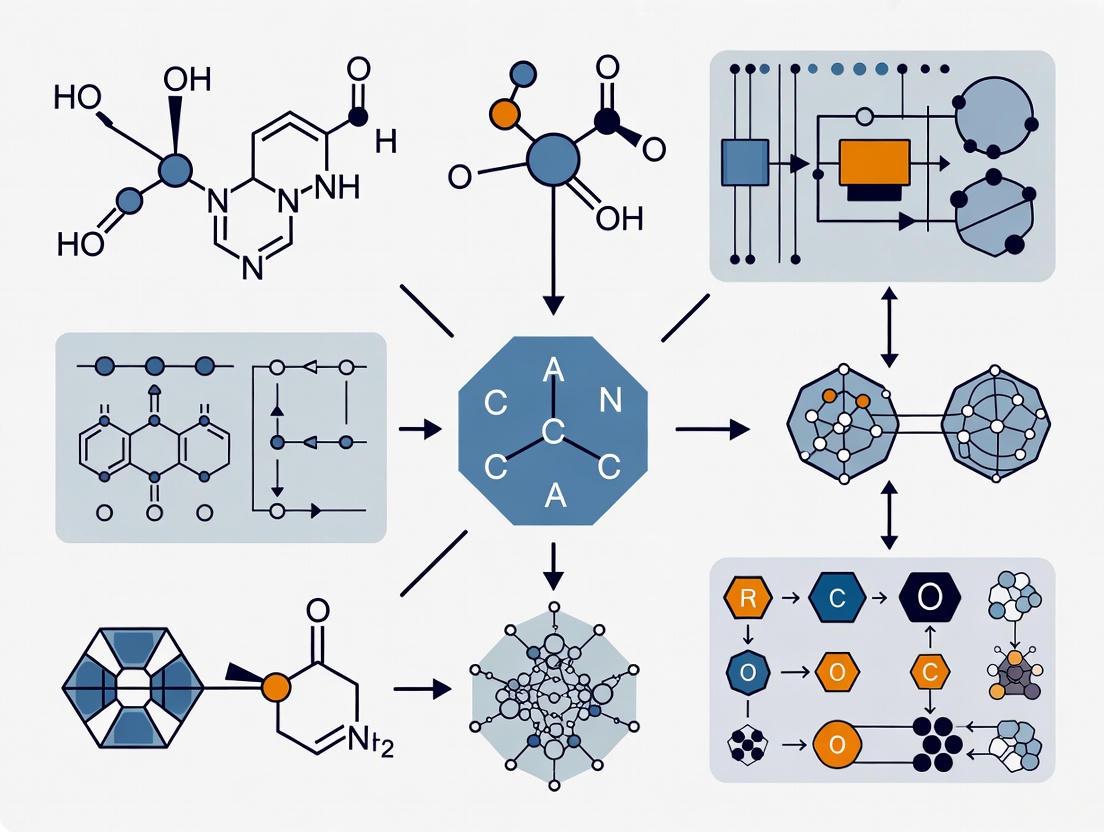
This article provides a comprehensive overview of the transformative role of generative artificial intelligence (AI) in de novo molecular design for drug discovery.
Generative AI for De Novo Molecular Design: 2025 Landscape, Methods, and Clinical Impact
Abstract
This article provides a comprehensive overview of the transformative role of generative artificial intelligence (AI) in de novo molecular design for drug discovery. Tailored for researchers and drug development professionals, it explores the foundational principles establishing generative AI as a paradigm shift from traditional methods. The content delves into the key architectural frameworks—including variational autoencoders, generative adversarial networks, transformers, and diffusion models—and their practical applications in designing novel, optimized molecules. It further addresses critical challenges such as data bias, model interpretability, and synthesizability, offering insights into advanced optimization strategies like reinforcement learning and multi-objective optimization. Finally, the article examines the validation landscape through real-world clinical candidates and benchmarking, synthesizing key takeaways and future directions for integrating generative AI into biomedical research and clinical pipelines.
The New Paradigm: How Generative AI is Reshaping Molecular Discovery
The paradigm of molecular discovery is undergoing a fundamental transformation, shifting from the screening of existing compound libraries to the computational creation of novel biological entities. De novo design represents this core paradigm shift, moving beyond traditional modification of natural templates to the generation of entirely novel molecular structures with predefined functions [1]. This approach leverages generative artificial intelligence to explore vast regions of the biochemical space that remain inaccessible to conventional methods, enabling researchers to design proteins, antibodies, and small molecules with atomic-level precision [2] [3]. The following application notes and protocols detail the methodologies, validation frameworks, and reagent solutions driving this transformative change in biomedical research.
Historical Context and Definition
Traditional drug discovery has relied heavily on screening natural products or modifying existing molecular scaffolds, approaches inherently limited by evolutionary history and experimental throughput [1]. De novo design fundamentally transcends these constraints by enabling the computational creation of molecules from first principles rather than through modification of natural templates [1]. Where conventional methods perform local searches within known biochemical space, de novo design employs generative AI to explore entirely novel regions of the protein functional universe, designing custom biomolecules with tailored architectures and binding specificities [2].
This paradigm shift represents a move from "discovery by luck" to "discovery by design" [4]. The implications are profound: instead of being limited to incremental improvements on natural templates, researchers can now engineer molecular solutions optimized for specific therapeutic challenges, including targets previously considered "undruggable" [3].
Market Trajectory and Adoption
Table 1: Market Growth Indicators for AI in Drug Discovery
| Metric | 2024/2025 Value | 2034 Projection | CAGR | Source |
|---|---|---|---|---|
| Global Generative AI in Drug Discovery Market | $250-318.55 million | $2847.43 million | 27.42% | [5] |
| Broader AI in Pharmaceuticals Market | $1.94 billion | $16.49 billion | 27% | [6] |
| AI-Driven Drug Success Rate (Phase I) | 80-90% | N/A | N/A | [7] [8] |
| Traditional Drug Success Rate (Phase I) | 40-65% | N/A | N/A | [8] |
The remarkable growth trajectory highlighted in Table 1 reflects strong confidence in AI-driven approaches. This investment is fueled by demonstrated efficiencies, including development timelines potentially reduced from 10+ years to 3-6 years and cost reductions of up to 70% through better compound selection [7]. The significantly higher Phase I success rates for AI-designed molecules further validates the de novo approach's ability to generate viable candidates with optimized properties.
Technological Foundations
Key Architectural Frameworks
Generative AI for molecular design employs several specialized architectures, each with distinct advantages for de novo creation:
- Diffusion Models (e.g., RFdiffusion): progressively denoise random structures to generate novel protein backbones and antibody complementarity-determining regions (CDRs) with atomic-level precision [3]. These models can be fine-tuned on specific protein classes and conditioned on framework structures and target epitopes.
- Generative Adversarial Networks (GANs): simultaneously train generator and discriminator networks to create realistic molecular structures, particularly effective for small molecule design and medical image synthesis [9].
- Variational Autoencoders (VAEs): learn compressed representations of molecular space, enabling sampling and optimization in continuous latent spaces [10].
- Transformer-based Architectures: process biological sequences as linguistic data, predicting novel protein sequences and optimizing molecular properties through attention mechanisms [7].
Comparative Analysis: Traditional vs. De Novo Approaches
Table 2: Methodological Comparison in Molecular Design
| Aspect | Traditional Approaches | AI-Driven De Novo Design |
|---|---|---|
| Starting Point | Existing natural templates or compound libraries | First principles and functional specifications |
| Exploration Scope | Local search near known scaffolds | Global search across theoretical biochemical space |
| Throughput | 2,500-5,000 compounds over 5 years | Millions of virtual compounds in hours [7] |
| Primary Constraint | Experimental screening capacity | Computational resources and data quality |
| Typical Output | Optimized versions of existing molecules | Novel molecular architectures not found in nature |
| Dependency | Availability of suitable starting templates | Specification of desired function or properties |
The comparison in Table 2 illustrates the fundamental shift in methodology. De novo design explores the "protein functional universe"—the theoretical space encompassing all possible protein sequences, structures, and biological activities [1]. This universe remains largely unexplored because natural proteins represent only a tiny fraction of what is theoretically possible, constrained by evolutionary history rather than optimized for human therapeutic applications [1].
Application Notes: Success Stories and Methodologies
De Novo Antibody Design with RFdiffusion
Background: Antibody discovery has traditionally relied on immunization, random library screening, or isolation from patients [3]. These methods are laborious, time-consuming, and often fail to identify antibodies interacting with therapeutically relevant epitopes.
Protocol: RFdiffusion-Based Antibody Design
Figure 1: Computational workflow for de novo antibody design.
Step-by-Step Methodology:
Input Specification: Define target epitope coordinates and select antibody framework structure (e.g., humanized VHH framework for single-domain antibodies) [3].
Conditional Generation: Fine-tuned RFdiffusion network corrupts and denoises backbone structures while maintaining framework conditioning through the template track, which provides pairwise distances and dihedral angles as invariant structural references [3].
CDR Sampling: The network designs novel complementarity-determining region (CDR) loops and optimizes rigid-body placement relative to the target epitope. Hotspot residues can be specified to direct binding to specific epitopes [3].
Sequence Design: ProteinMPNN designs sequences for the generated backbone structures, optimizing for stability and expressibility while maintaining structural integrity [3].
In Silico Validation: Fine-tuned RoseTTAFold predicts complex structures between designed antibodies and targets. Designs with high self-consistency (agreement between designed and predicted structures) are prioritized for experimental testing [3].
Experimental Screening: Express designed antibodies using yeast surface display and screen for binding against target antigens. Typical initial affinities range from tens to hundreds of nanomolar Kd [3].
Affinity Maturation: Employ continuous evolution systems like OrthoRep to improve binding affinity while maintaining epitope specificity, potentially achieving single-digit nanomolar affinities [3].
Key Results: This protocol has successfully generated VHH binders targeting influenza haemagglutinin, Clostridium difficile toxin B (TcdB), RSV, SARS-CoV-2 RBD, and IL-7Rα [3]. Cryo-EM structures confirmed atomic-level accuracy of designed CDR loops, with high-resolution data verifying precise molecular recognition.
End-to-End Small Molecule Design
Background: Insilico Medicine's development of ISM001-055 (Rentosertib) for idiopathic pulmonary fibrosis represents the first fully AI-designed drug to reach Phase IIa clinical trials [8] [4].
Protocol: Integrated Target and Molecule Discovery
Figure 2: End-to-end AI drug discovery pipeline.
Step-by-Step Methodology:
Target Identification: PandaOmics AI platform analyzes multi-omic data to identify novel disease targets. For IPF, TNIK (Traf2 and NCK-interacting kinase) was identified as a novel fibrosis driver, previously studied primarily in cancer contexts [8] [4].
Generative Chemistry: Chemistry42 platform employs 30 AI models working in parallel to generate molecular structures optimized for target binding, selectivity, and drug-like properties [8].
Real-Time Optimization: Models share feedback and efficacy scores iteratively, exploring chemical space and refining compounds based on predictive ADMET (absorption, distribution, metabolism, excretion, toxicity) properties [7].
Experimental Validation: Top candidates undergo synthesis and in vitro testing, with results fed back into AI models for continuous improvement.
Key Results: The program advanced from target discovery to preclinical candidate in approximately 18 months and to Phase I trials in under 30 months—roughly half the industry average timeline [8] [4]. Phase IIa trials demonstrated dose-dependent improvement in forced vital capacity (98.4 mL improvement vs. 62.3 mL decline in placebo) [4].
The Scientist's Toolkit: Research Reagent Solutions
Table 3: Essential Research Reagents for AI-Driven De Novo Design
| Reagent/Category | Function | Example Implementations |
|---|---|---|
| Generative Modeling Software | Creates novel molecular structures from scratch | RFdiffusion (antibody/protein design) [3], Chemistry42 (small molecule generation) [8], Chroma [2] |
| Protein Sequence Design Tools | Optimizes amino acid sequences for generated backbones | ProteinMPNN [3], Rosetta sequence design [1] |
| Structure Prediction Networks | Validates designed structures and filters candidates | Fine-tuned RoseTTAFold [3], AlphaFold2 [2], AlphaFold3 [10] |
| Expression Systems | Produces designed proteins for experimental validation | Yeast surface display [3], E. coli expression [3], Mammalian cell systems |
| Affinity Maturation Platforms | Improves binding strength of initial designs | OrthoRep continuous evolution system [3], Phage display |
| Validation Technologies | Confirms structural accuracy and binding modes | Cryo-electron microscopy [3], Surface plasmon resonance [3] |
| Specialized Datasets | Trains and validates AI models | Protein Data Bank structures [3], AlphaFold Protein Structure Database [1], Proprietary binding data |
Discussion and Future Directions
The protocols and application notes presented demonstrate that de novo molecular design has transitioned from theoretical concept to practical toolset. The combination of generative architectures like RFdiffusion with robust experimental validation pipelines enables researchers to create functional proteins and antibodies with atomic-level precision [3]. The success of end-to-end platforms in producing clinical candidates validates the entire paradigm [8] [4].
Nevertheless, significant challenges remain. The "black box" nature of many deep learning models creates interpretability challenges for regulatory submissions [7] [9]. Data quality and scarcity continue to limit model generalizability, particularly for rare targets [5] [10]. The translation from computational design to in vivo efficacy remains non-trivial, as evidenced by failures like Recursion's REC-994 despite promising cellular data [8] [4].
Future developments will likely focus on integrating physicochemical priors through differentiable physical models, overcoming data scarcity via transfer learning, and enabling multimodal fusion of structural, omic, and phenotypic data [10]. As these technical challenges are addressed, de novo design promises to fundamentally expand drug discovery beyond nature's template library, unlocking therapeutic possibilities across previously inaccessible target classes.
The drug discovery and development pipeline is an interdisciplinary process engaging multiple research phases to generate effective therapies, yet it is characterized by lengthy cycle times and high failure rates for drug discovery projects prior to preclinical development [11]. Traditional drug discovery can take over a decade and costs approximately $2.8 billion on average, with nine out of ten therapeutic molecules failing Phase II clinical trials and regulatory approval [12]. This economic burden and temporal inefficiency have created an imperative for accelerated approaches that can reduce both time and cost while maintaining scientific rigor.
Generative artificial intelligence (AI) has recently started to gear up its application in various sectors of the pharmaceutical industry, revolutionizing molecular design by providing advanced tools for generating novel molecular structures tailored to specific functional properties [12] [13]. The integration of AI technologies addresses the vast chemical space comprising >10^60 molecules, which fosters the development of numerous drug molecules but traditionally limits the drug development process due to technological constraints [12]. This review quantifies the economic and temporal drivers necessitating accelerated discovery approaches and provides detailed protocols for implementing these technologies.
Quantitative Landscape of Drug Discovery Economics
The economic challenges in pharmaceutical research and development have prompted increased industrialization, creating a need for precise productivity indicators [14]. The pressure to reduce both costs and development timelines has become a central focus across industry and academia, with emphasis on developing more biologically relevant and diverse approaches to discovering chemical starting points [11].
Table 1: Economic and Temporal Challenges in Traditional Drug Discovery
| Metric | Value | Impact |
|---|---|---|
| Average Development Cost | $2.8 billion | High capital investment with significant risk [12] |
| Development Timeline | >10 years | Extended time-to-market for critical therapies [12] |
| Clinical Trial Attrition Rate | 90% failure in Phase II | High resource waste and inefficiency [12] |
| HTS Daily Sample Analysis | Up to 10,000 reactions/hour | Throughput limitations in lead identification [11] |
| Data Volume Challenges | Overwhelming data generation | Computational bottlenecks in analysis [15] |
The industrialization of drug discovery has evolved through distinct phases of technology maturity, from fluid phases with extensive experimentation to specific phases emphasizing cost reduction [14]. This evolution creates an increased need to measure processes more precisely to gain efficiency, presenting challenges in maintaining researcher motivation and creativity while implementing rigorous performance metrics [14].
High-Throughput Mass Spectrometry: Accelerated Analytical Framework
Recent technological developments in mass spectrometry (MS) and automation have revolutionized the application of MS for high-throughput screens, allowing the targeting of unlabeled biomolecules in high-throughput assays [11]. These label-free MS assays are often cheaper, faster, and more physiologically relevant than competing assay technologies, expanding the breadth of targets for which high-throughput assays can be developed compared to traditional approaches [11].
Acoustic Ejection Mass Spectrometry (AEMS) Protocol
Principle: AEMS combines acoustic droplet ejection with an open port interface (OPI) and electrospray ionization mass spectrometry to achieve ultra-fast, high-throughput screening by transferring nanoliter sample droplets into the mass spectrometer without contact [15].
Materials:
- SCIEX Echo MS+ system or equivalent acoustic droplet ejector
- ZenoTOF 7600 mass spectrometer or equivalent high-speed MS
- 384 or 1536 well source plates
- DMSO-based compound libraries
Procedure:
- Sample Preparation: Prepare compound libraries in DMSO at appropriate concentrations (typically 1-10 mM). AEMS tolerates the presence of water in DMSO samples, permitting analysis of aged compound libraries [15].
- System Calibration: Calibrate acoustic ejector for precise nanoliter volume transfer (typically 2.5-10 nL).
- Plate Loading: Transfer samples to source plates using automated liquid handlers compatible with 384 or 1536 well formats.
- AEMS Analysis: Program the system to operate at one sample per second analysis speed. The system directly aspirates fluidic samples from screening plates, rapidly removes non-volatile assay components in an online fractionation step, and delivers purified analytes to the mass spectrometer [11] [15].
- Data Acquisition: Implement fast polarity switching and MS2 fragmentation capabilities for comprehensive metabolite profiling. The Orbitrap Exploris 240 MS provides sensitive high-resolution accurate mass measurements suitable for this application [16].
- Data Processing: Utilize intelligent data acquisition modes and advanced data processing software (e.g., Thermo Scientific Compound Discoverer) with predefined processing templates to enable metabolite profiling and identification [16].
Figure 1: AEMS Workflow for Ultra-High-Throughput Screening
Affinity Selection Mass Spectrometry (AS-MS) Protocol
Principle: AS-MS is a label-free high-throughput screening technology for hit identification that enables screening of large collections of small molecules, natural products, or peptides in pools of various compressions [17]. This approach allows the simultaneous assessment of multiple compounds, significantly reducing the amount of target required and screening duration [17].
Materials:
- Target protein (typically 0.1-1 µM in assay)
- Compound pools (5-2000 compounds per pool)
- Size exclusion chromatography (SEC) columns
- Automated liquid handling systems
- High-resolution mass spectrometer
Procedure:
- Pool Design: Design compound pools using redundancy-minimizing algorithms to avoid mass redundancy and enable unambiguous hit assignment. The iterative permutation approach involves randomly assembling pools with specified numbers of compounds, scoring and sorting according to mass redundancy, then permuting compounds from pools with highest redundancy until minimum maximum mass redundancy is achieved [17].
- Incubation: Incubate target protein with compound pools (typically 0.1-1 µM per compound, depending on maximal DMSO concentration tolerated in assay) for 30-60 minutes at appropriate temperature.
- Complex Separation: Separate target-ligand complexes from unbound compounds using size exclusion chromatography (SEC), ultrafiltration, or frontal affinity chromatography (FAC).
- Complex Denaturation: For affinity capture methods, denature ligand-target complex and filter to release bound ligands.
- MS Analysis: Analyze filtrate by LC-MS to determine structures of binding ligands. Implement data-independent acquisition MS strategies for global proteomics and phosphoproteomics analysis when required [11].
- Hit Identification: Process data using dedicated AS-MS software (e.g., Virscidian or Mestrelab solutions) to identify true binders before engaging valuable time and resources for hit evaluation [17].
Table 2: Research Reagent Solutions for Accelerated Drug Discovery
| Reagent/Technology | Function | Application Context |
|---|---|---|
| Orbitrap Exploris 240 MS | High-resolution accurate mass measurements | Metabolite identification and lead optimization [16] |
| Thermo Scientific Compound Discoverer | Automated data processing with predefined templates | Metabolite profiling and identification [16] |
| RapidFire System | Automated microfluidic sample collection and purification | High-throughput ESI-MS analysis with cycling times of 2.5s per sample [11] |
| Acoustic Dispensers | Nanoliter volume compound transfer | Generation of high-compression pools with minimal compound consumption [17] |
| ZenoTOF 7600 System | Electron Activated Dissociation (EAD) | Producing distinctive MS/MS fragments for structural elucidation [15] |
Generative AI Framework for De Novo Molecular Design
Generative AI models have emerged as a transformative tool for addressing complex challenges in drug discovery, enabling the design of structurally diverse, chemically valid, and functionally relevant molecules [13]. These approaches are particularly valuable within the context of the economic and temporal imperatives, as they significantly reduce the trial-and-error processes traditionally associated with molecular design.
Property-Guided Molecular Generation Protocol
Principle: Property-guided generation advances molecular design by offering a guided approach to generating molecules with desirable objectives, combining predictive models with generative architectures to direct exploration of chemical space toward regions with higher probabilities of success [13].
Materials:
- Chemical databases (ChEMBL, PubChem, ZINC)
- Hardware: GPU-accelerated computing infrastructure
- Software: Python with PyTorch/TensorFlow, RDKit, deep learning frameworks
Procedure:
- Data Curation: Compile training datasets from public and proprietary sources. Implement rigorous data cleaning to address contamination, standardization, and population bias issues prevalent in public datasets [18] [19].
- Model Selection: Choose appropriate generative architecture based on task requirements:
- Variational Autoencoders (VAEs): Encode input data into lower-dimensional latent representation and reconstruct from sampled points; suitable for smooth latent space exploration [13].
- Generative Adversarial Networks (GANs): Employ generator and discriminator networks in adversarial training; effective for generating novel molecular structures [13].
- Transformer Models: Utilize self-attention mechanisms for sequence-based molecular generation; capable of learning complex dependencies in molecular data [13].
- Model Training: Train selected model on curated dataset. For VAEs, minimize reconstruction loss while enforcing latent space regularization. For GANs, alternate between generator and discriminator updates until equilibrium reached.
- Property Prediction: Integrate property prediction models into the generative process. The Guided Diffusion for Inverse Molecular Design (GaUDI) framework combines an equivariant graph neural network for property prediction with a generative diffusion model, achieving 100% validity in generated structures while optimizing for single and multiple objectives [13].
- Latent Space Exploration: Perform Bayesian optimization in the learned latent space to identify regions with desirable properties. This approach is particularly valuable when dealing with expensive-to-evaluate objective functions such as docking simulations or quantum chemical calculations [13].
- Molecular Generation: Decode promising latent vectors to generate novel molecular structures with optimized properties.
Figure 2: Generative AI Framework for Molecular Design
Reinforcement Learning Optimization Protocol
Principle: Reinforcement learning (RL) has emerged as an effective tool in molecular design optimization, training an agent to navigate through molecular structures toward desirable chemical properties such as drug-likeness, binding affinity, and synthetic accessibility [13].
Materials:
- Molecular environment simulator (e.g., OpenAI Gym customized for chemistry)
- Reward function defining target molecular properties
- RL algorithms (Deep Q-Networks, Policy Gradient methods)
Procedure:
- Environment Setup: Create molecular environment that allows sequential modification of molecular structures through atom or bond additions/removals.
- Reward Function Design: Define comprehensive reward function incorporating multiple objectives:
- Drug-likeness (QED score)
- Target binding affinity (predicted or calculated)
- Synthetic accessibility (SA score)
- Structural similarity constraints when required
- Agent Training: Train RL agent using selected algorithm. The Graph Convolutional Policy Network (GCPN) uses RL to sequentially add atoms and bonds, constructing novel molecules with targeted properties [13].
- Exploration-Exploitation Balance: Implement Bayesian neural networks to manage uncertainty in action selection, combined with techniques like randomized value functions and robust loss functions to enhance the balance between exploring new chemical spaces and refining known high-reward regions [13].
- Multi-objective Optimization: For complex tasks, employ multi-objective reward structures. DeepGraphMolGen exemplifies this approach, employing a graph convolution policy and multi-objective reward to generate molecules with strong binding affinity to specific targets while minimizing off-target interactions [13].
- Validation: Experimentally validate top-generated compounds through synthesis and biochemical assays.
Integrated AI-MS Workflow for Accelerated Discovery
The combination of generative AI with high-throughput mass spectrometry creates a powerful synergistic workflow that addresses both the economic and temporal imperatives in modern drug discovery.
AI-Driven Design with MS Validation Protocol
Principle: This integrated approach leverages AI for rapid molecular design and MS for experimental validation, creating a closed-loop optimization system that significantly reduces design-test cycles.
Materials:
- Generative AI platform
- High-throughput mass spectrometry system
- Automated compound management and sample preparation
- Data integration and analysis pipeline
Procedure:
- AI-Driven Molecular Generation: Use property-guided generative models to design novel compounds targeting specific therapeutic objectives.
- Virtual Screening: Apply multi-parameter optimization to prioritize candidates for synthesis, including predicted affinity, solubility, and metabolic stability.
- Automated Synthesis & Plating: Utilize automated chemistry platforms and acoustic dispensing for efficient compound preparation and plating in appropriate formats for MS analysis.
- High-Throughput MS Screening: Implement AEMS or AS-MS protocols for rapid experimental validation of AI-generated compounds.
- Data Integration & Model Retraining: Feed experimental results back into AI models to improve prediction accuracy and guide subsequent design cycles. This requires statistical discipline in data management to ensure traceability and reproducibility [19].
- Iterative Optimization: Repeat cycles until compounds with desired properties are identified, typically achieving significant reductions in both time and cost compared to traditional approaches.
The economic and temporal imperatives in drug discovery have created an urgent need for accelerated approaches that can reduce both development timelines and costs while maintaining scientific rigor. The integration of generative AI with high-throughput mass spectrometry technologies represents a transformative framework that directly addresses these challenges. Through the implementation of the detailed protocols outlined in this review—including acoustic ejection mass spectrometry, affinity selection mass spectrometry, property-guided molecular generation, and reinforcement learning optimization—researchers can significantly accelerate the discovery and development of novel therapeutic agents. These advanced approaches enable more efficient exploration of chemical space, rapid experimental validation, and continuous model improvement through iterative design-test cycles, ultimately contributing to reduced attrition rates and more efficient translation of discoveries to clinical applications.
The process of drug discovery is undergoing a fundamental transformation, shifting from traditional, labor-intensive trial-and-error workflows to sophisticated, generative artificial intelligence (AI)-driven approaches. This paradigm shift represents nothing less than a redefinition of the speed and scale of modern pharmacology, replacing cumbersome human-driven processes with AI-powered discovery engines capable of compressing timelines and expanding chemical and biological search spaces [20]. Traditional molecular design has long been constrained by computational and experimental limitations, relying on combinatorial synthesis and optimization in a process that typically requires 14.6 years and approximately $2.6 billion to bring a new drug to market [6]. In stark contrast, AI-enabled workflows have demonstrated the potential to reduce the time and cost of bringing a new molecule to the preclinical candidate stage by up to 40% and 30%, respectively, for complex targets [6].
Generative AI (GenAI) has emerged as a transformative tool for addressing the complex challenges of drug discovery, enabling the design of structurally diverse, chemically valid, and functionally relevant molecules [13]. By leveraging sophisticated algorithms trained on vast chemical libraries and experimental data, GenAI models can propose novel molecular structures that satisfy precise target product profiles, including potency, selectivity, and absorption, distribution, metabolism, and excretion properties [20]. This capabilities shift is evidenced by the remarkable compression of early-stage research and development timelines, with multiple AI-derived small-molecule drug candidates reaching Phase I trials in a fraction of the typical ~5 years needed for discovery and preclinical work [20]. For instance, Insilico Medicine's generative-AI-designed idiopathic pulmonary fibrosis drug progressed from target discovery to Phase I in just 18 months, compared to the multi-year timelines characteristic of traditional approaches [20].
Table 1: Key Performance Metrics Comparison Between Traditional and AI-Driven Workflows
| Performance Metric | Traditional Approach | AI-Driven Approach | Improvement Factor |
|---|---|---|---|
| Discovery to Preclinical Timeline | 4-5 years | 12-18 months [20] | 70-80% reduction |
| Cost to Preclinical Candidate | Industry standard | Up to 40% reduction [6] | Significant cost saving |
| Design Cycle Efficiency | Industry baseline | ~70% faster, 10× fewer compounds [20] | Substantial efficiency gain |
| Clinical Success Rate | ~10% candidates succeed | Potential to increase probability [6] | Meaningful improvement |
| Compounds Synthesized | Hundreds to thousands | 10× fewer required [20] | Dramatic reduction |
Fundamental Divergences: Core Philosophical and Methodological Differences
The divergence between traditional and generative AI-driven molecular design extends beyond mere implementation to foundational philosophical and methodological differences. Traditional trial-and-error workflows operate on a sequential "design-make-test-analyze" cycle that is both time-intensive and resource-prohibitive, requiring extensive manual intervention at each stage and limiting the exploration of chemical space to relatively narrow domains [21]. This approach relies heavily on researcher intuition, historical data, and systematic but slow experimental iteration, creating a fundamental bottleneck in molecular optimization.
Generative AI approaches, conversely, embrace a parallelized, multi-parameter optimization strategy that leverages deep learning architectures to explore chemical spaces with unprecedented breadth and depth [13]. These systems employ sophisticated generative models—including Generative Adversarial Networks (GANs), Variational Autoencoders (VAEs), diffusion models, and transformer-based architectures—each with unique characteristics suited to different aspects of molecular generation [13]. Unlike traditional methods that optimize for single parameters sequentially, GenAI models can simultaneously optimize multiple molecular properties, including target binding affinity, solubility, metabolic stability, and synthetic accessibility, through techniques such as reinforcement learning, multi-objective optimization, and Bayesian optimization [13].
This philosophical divergence creates a fundamental shift from "problem-solving" to "solution-generation." Traditional methods typically begin with a known molecular scaffold and iteratively modify it to improve specific properties—a deductive approach. Generative AI, however, operates inductively, using learned chemical principles and structure-property relationships to generate novel molecular structures de novo that inherently possess desired functional characteristics [13]. This represents a transition from human-guided exploration to AI-driven creation, with the algorithm proposing candidate molecules that may exist outside conventional chemical intuition yet still satisfy complex therapeutic requirements.
Technical Architectures: A Comparative Analysis
Traditional Molecular Design Infrastructure
Traditional molecular design relies on established computational chemistry frameworks centered on quantitative structure-activity relationship (QSAR) modeling, molecular docking simulations, and molecular dynamics calculations. These approaches depend heavily on hand-crafted molecular descriptors and force-field parameters that require significant domain expertise to implement effectively [21]. The infrastructure typically involves high-performance computing clusters running specialized software for quantum chemical calculations such as density functional theory (DFT), which provide accurate but computationally expensive predictions of molecular properties [21]. This creates a fundamental scalability limitation, as the exponential growth of chemical space with molecular size makes comprehensive exploration computationally prohibitive.
The traditional workflow employs sequential, modular components with clearly defined interfaces: compound libraries are screened using virtual or physical high-throughput screening, hits are optimized through systematic structural modification, lead compounds undergo experimental validation, and promising candidates advance to preclinical development. Each stage generates data that informs the next, but integration between stages is often manual, creating bottlenecks and discontinuities in the design process. While reliable and well-understood, this architecture fundamentally limits the exploration of novel chemical space and relies heavily on prior knowledge and existing compound libraries.
Generative AI Architecture for Molecular Design
Generative AI architectures for molecular design employ fundamentally different technical frameworks built around deep learning models capable of learning complex chemical representations directly from data. These systems typically utilize several interconnected components: (1) chemical representation layers that encode molecular structures as graphs, strings (SMILES), or 3D coordinates; (2) generative models that create novel molecular structures; (3) predictive models that estimate molecular properties; and (4) optimization algorithms that guide the generation toward desired characteristics [13].
The most advanced implementations create integrated, iterative workflows where these components operate in a tightly coupled fashion. For example, a workflow might employ a VAE to learn a continuous latent representation of chemical space, property prediction networks to estimate target properties for generated molecules, and reinforcement learning or Bayesian optimization to navigate the latent space toward regions containing molecules with optimized property profiles [13]. This creates a closed-loop system where each iteration improves both the generative model and the quality of candidates, progressively focusing on the most promising regions of chemical space.
Table 2: Generative AI Model Architectures and Their Molecular Design Applications
| Model Architecture | Key Characteristics | Molecular Applications | Advantages |
|---|---|---|---|
| Variational Autoencoders (VAEs) | Encodes inputs to latent space; enables smooth interpolation [13] | Inverse molecular design, latent space optimization [13] | Continuous representation; enables optimization in latent space |
| Generative Adversarial Networks (GANs) | Generator-discriminator competition; iterative training [13] | Image synthesis, molecular generation [13] | High-quality sample generation; adversarial training |
| Transformer Models | Self-attention mechanisms; parallelizable architecture [13] | Sequence-based molecular generation [22] | Captures long-range dependencies; transfer learning capability |
| Diffusion Models | Progressive noising and denoising; probabilistic modeling [13] | High-quality molecular generation [13] | State-of-the-art sample quality; stable training |
Diagram 1: Architectural comparison between traditional and AI-driven workflows
Experimental Protocols and Methodologies
Protocol: Traditional Hit-to-Lead Optimization
Objective: To systematically optimize a screening hit compound through iterative structural modification to improve potency, selectivity, and drug-like properties.
Materials and Reagents:
- Primary Reference Compound: Initial hit compound identified from screening
- Analog Libraries: Commercially available or synthetically accessible structural analogs
- Assay Reagents: Cell lines, enzymes, substrates, and buffers for biochemical and cellular assays
- Analytical Instruments: HPLC systems for compound purity analysis, LC-MS for structural characterization
- Computational Tools: Molecular modeling software (e.g., Schrödinger Suite, MOE) for structure-based design
Procedure:
- Initial Compound Characterization: Determine baseline potency (IC50/EC50), selectivity against related targets, and preliminary ADME properties of the hit compound.
- Structure-Activity Relationship (SAR) Analysis: Design and synthesize or acquire structural analogs focusing on systematic modification of different regions of the molecule.
- Iterative Testing Cycle: a. Test compounds in primary assay to establish potency b. Evaluate selective compounds in counter-screens and secondary assays c. Assess promising compounds for early ADME properties (e.g., metabolic stability, permeability) d. Analyze data to identify key structural features driving activity and properties
- Lead Candidate Selection: Advance compounds meeting predefined criteria (e.g., potency <100 nM, selectivity >10-fold, acceptable ADME profile) for further optimization.
- Cycle Repetition: Repeat steps 2-4 until compounds meet lead candidate criteria.
Timeline: Each optimization cycle typically requires 3-6 months, with 4-8 cycles often needed to identify a lead candidate.
Protocol: Generative AI-Driven Molecular Optimization
Objective: To generate novel molecular structures with optimized multi-property profiles using generative AI models.
Materials and Reagents:
- Training Data: Curated datasets of chemical structures with associated properties (e.g., ChEMBL, ZINC, proprietary corporate databases)
- Computational Infrastructure: GPU-accelerated computing resources for model training and inference
- Generative Models: Pre-trained or custom-built generative architectures (VAEs, GANs, diffusion models, or transformers)
- Property Predictors: Machine learning models for predicting molecular properties (e.g., random forests, graph neural networks)
- Validation Assays: High-throughput experimental systems for validating AI-generated compounds
Procedure:
- Model Initialization and Training: a. Preprocess chemical structure data into appropriate representation (e.g., SMILES, molecular graphs) b. Train generative model on chemical library to learn chemical space distribution c. Train property prediction models on structure-property data
- Goal-Directed Generation: a. Define target property profile (e.g., potency range, solubility, metabolic stability) b. Implement optimization strategy (reinforcement learning, Bayesian optimization, or conditional generation) c. Generate candidate molecules satisfying target criteria
- Virtual Screening and Prioritization: a. Filter generated molecules for chemical validity, novelty, and synthetic accessibility b. Apply property predictors to rank candidates by desired profile c. Select top candidates for further evaluation
- Experimental Validation: a. Synthesize or acquire top-priority compounds b. Test in relevant biological assays and ADME models
- Iterative Refinement: a. Incorporate experimental results back into training data b. Retrain or fine-tune models based on new data c. Repeat generation cycle with refined models
Timeline: Initial generation cycle requires 2-4 weeks, with subsequent cycles of 1-2 weeks as models improve with additional data.
Table 3: Research Reagent Solutions for AI-Driven Molecular Design
| Reagent/Category | Specific Examples | Function in Workflow |
|---|---|---|
| Generative Models | GraphVAE, MolGPT, REINVENT | de novo molecular structure generation from learned chemical space |
| Property Predictors | Graph Neural Networks, Random Forests, Support Vector Machines | Rapid prediction of molecular properties without expensive simulations |
| Optimization Methods | Reinforcement Learning, Bayesian Optimization, Multi-objective Optimization | Guided exploration of chemical space toward desired property profiles |
| Molecular Representations | SMILES, SELFIES, Molecular Graphs, 3D Coordinates | Encoding chemical structures for machine learning processing |
| Benchmark Datasets | MOSES, GuacaMol, ChEMBL, ZINC | Training and evaluation of generative models and property predictors |
Quantitative Performance Benchmarking
The quantitative advantages of generative AI approaches over traditional molecular design workflows become evident across multiple performance dimensions. AI-driven platforms report design cycles approximately 70% faster than traditional methods while requiring 10× fewer synthesized compounds to identify viable candidates [20]. This efficiency gain translates to substantial cost reductions, with AI-enabled workflows demonstrating the potential to reduce drug discovery costs by up to 40% and slash development timelines from five years to as little as 12-18 months [6].
Clinical pipeline progression provides further validation of these accelerated timelines. By mid-2025, over 75 AI-derived molecules had reached clinical stages, representing exponential growth from essentially zero AI-designed drugs in human testing at the start of 2020 [20]. Notable examples include Insilico Medicine's Traf2- and Nck-interacting kinase inhibitor (ISM001-055) for idiopathic pulmonary fibrosis, which demonstrated positive Phase IIa results, and the Nimbus-originated TYK2 inhibitor, zasocitinib (TAK-279), which advanced to Phase III clinical trials, exemplifying the transition of AI-designed molecules into late-stage clinical testing [20].
Perhaps most significantly, generative AI approaches demonstrate potential to improve the probability of clinical success—a crucial metric in an industry where traditionally only about 10% of candidates successfully navigate clinical trials [6]. By analyzing large datasets and identifying promising drug candidates with optimized property profiles earlier in the process, AI-driven methods increase the likelihood that molecules entering clinical development will successfully advance through trials. Industry projections suggest that by 2025, 30% of new drugs will be discovered using AI, marking a substantial shift in the drug discovery process [6].
Diagram 2: Performance metrics comparison between traditional and AI-driven approaches
Case Studies: Real-World Validation
Exscientia: Automated Precision Chemistry Platform
Exscientia's AI-driven platform exemplifies the paradigm shift in molecular design through its "Centaur Chemist" approach, which integrates algorithmic creativity with human domain expertise to iteratively design, synthesize, and test novel compounds [20]. The platform employs deep learning models trained on extensive chemical libraries and experimental data to propose molecular structures satisfying precise target product profiles. A distinctive innovation in Exscientia's approach is the incorporation of patient-derived biology into the discovery workflow through the acquisition of Allcyte in 2021, which enables high-content phenotypic screening of AI-designed compounds on real patient tumor samples [20]. This patient-first strategy enhances translational relevance by ensuring candidate drugs demonstrate efficacy not only in conventional in vitro systems but also in ex vivo disease models.
Exscientia achieved a significant milestone in 2020 when its algorithmically generated drug, DSP-1181, became the world's first AI-designed drug to enter Phase I trials for obsessive-compulsive disorder [20]. By 2023, the company had designed eight clinical compounds, both in-house and with partners, reaching development "at a pace substantially faster than industry standards" [20]. These include candidates for immuno-oncology (e.g., A2A receptor antagonist EXS-21546) and oncology (e.g., CDK7 inhibitor GTAEXS-617) [20]. The 2024 merger between Exscientia and Recursion Pharmaceuticals, valued at $688 million, created an integrated platform combining Exscientia's strengths in generative chemistry with Recursion's extensive phenomics and biological data resources, further accelerating the AI-driven drug discovery pipeline [20].
Iterative Deep Learning Workflow for Inverse Molecular Design
A sophisticated implementation of generative AI for molecular design demonstrates the power of iterative deep learning workflows for inverse design of molecules with specific optoelectronic properties [21]. This approach combines (1) the density-functional tight-binding method for dynamic generation of property training data, (2) a graph convolutional neural network surrogate model for rapid and reliable predictions of chemical and physical properties, and (3) a masked language model for molecular generation [21]. The workflow addresses a fundamental challenge in computational molecular design: the prohibitive cost of brute-force screening of entire chemical spaces.
In practice, this iterative workflow begins with the GDB-9 molecular dataset, which is fed into quantum chemical methods to compute target properties like the HOMO-LUMO gap [21]. A graph convolutional neural network surrogate model is then trained to predict these properties based solely on molecular structures, achieving prediction speeds orders of magnitude faster than quantum chemical calculations [21]. The masked language model generates novel molecular structures, which are evaluated by the surrogate model, with promising candidates selected for further iteration. Crucially, the workflow incorporates continuous model refinement, with the surrogate model retrained on newly generated molecules to maintain predictive accuracy as the chemical space expands beyond the initial training distribution [21]. This approach exemplifies the self-improving nature of advanced AI-driven molecular design systems, where each iteration enhances both the generative capabilities and predictive accuracy of the platform.
Implementation Roadmap: Transitioning to AI-Enhanced Workflows
For research organizations transitioning from traditional to AI-enhanced molecular design, a phased implementation strategy maximizes adoption success while managing risk. The roadmap begins with infrastructure assessment and development, evaluating existing computational resources, data quality and accessibility, and team capabilities. This phase typically includes procurement of GPU-accelerated computing resources, implementation of data standardization protocols, and initiation of training programs to build AI literacy across the research organization.
The second phase focuses on pilot program implementation, selecting well-defined projects with clear success metrics for initial AI deployment. Suitable pilot projects have several key characteristics: (1) availability of high-quality training data, (2) established experimental validation assays, (3) clear molecular design objectives, and (4) appropriate scope—neither too trivial to demonstrate value nor too complex to achieve meaningful progress. During this phase, organizations may leverage pre-trained models or established platforms (e.g., Orion, DeepChem) to accelerate initial implementation while building internal expertise.
The third phase involves workflow integration and scaling, incorporating successful AI approaches into standard research processes and expanding application across the portfolio. This requires developing robust pipelines for data generation, model training, compound generation, and experimental validation, with continuous feedback loops to improve model performance. Successful organizations establish cross-functional teams combining domain expertise (medicinal chemists, pharmacologists) with AI specialists to ensure generated molecules satisfy both computational metrics and practical drug discovery constraints.
Finally, continuous improvement and innovation focuses on staying current with rapidly advancing generative AI methodologies while contributing to the field through publication and collaboration. The most advanced implementations feature fully automated design-make-test-analyze cycles, where AI systems not only design molecules but also prioritize synthesis and testing, dynamically reallocating resources based on emerging data. This represents the culmination of the paradigm shift—transitioning from AI as a tool to AI as an active partner in the molecular design process.
The paradigm shift from traditional trial-and-error workflows to generative AI-driven molecular design represents a fundamental transformation in how we discover and optimize therapeutic compounds. The evidence demonstrates that AI approaches offer substantial advantages across multiple dimensions: dramatically compressed timelines, significantly reduced costs, expanded exploration of chemical space, and improved decision-making through multi-parameter optimization. As generative AI models continue to evolve—incorporating more sophisticated architectures, larger and higher-quality training datasets, and more accurate property predictors—their impact on molecular design will likely accelerate.
The future trajectory points toward increasingly integrated and autonomous discovery systems, where generative AI operates seamlessly across target identification, compound design, experimental planning, and clinical development. Emerging trends such as the combination of generative AI with automated synthesis and screening technologies promise to further accelerate the design-make-test cycle, while advances in explainable AI will enhance researcher trust and collaboration with these systems [20]. The organizations that successfully navigate this paradigm shift—embracing AI as a core capability while maintaining essential human expertise and oversight—will be positioned to lead the next era of therapeutic innovation, delivering better medicines to patients faster and more efficiently than ever before.
Artificial intelligence (AI) has progressed from an experimental curiosity to a clinical utility, fundamentally reshaping the landscape of drug discovery and development. By leveraging massive datasets, advanced algorithms, and high-performance computing, AI tools uncover patterns and insights that would be nearly impossible for human researchers to detect unaided [23]. This shift replaces labor-intensive, human-driven workflows with AI-powered discovery engines capable of compressing traditional timelines, expanding chemical and biological search spaces, and redefining the speed and scale of modern pharmacology [20]. The culmination of this progress is the emergence of AI-designed therapeutic candidates now actively progressing through human clinical trials, marking a concrete step forward in bringing AI-enabled drug discovery into the clinic [24]. This application note details the key milestones, experimental protocols, and reagent solutions that underpin this transformative era in pharmaceutical research.
The pipeline of AI-discovered drugs has experienced exponential growth. As of April 2024, at least 31 drugs developed by eight leading AI companies were undergoing human clinical trials [25]. The distribution of these candidates across development phases is summarized in Table 1.
Table 1: Clinical Status of AI-Designed Drug Candidates (as of April 2024)
| Clinical Phase | Number of Candidates | Notable Status Updates |
|---|---|---|
| Phase II/III | 9 | One reporting non-significant findings [25] |
| Phase I/II | 5 | One discontinued [25] |
| Phase I | 17 | One trial ended [25] |
| Completed Phase I (as of Dec 2023) | 21 | Success rate of 80-90%, significantly higher than traditional ~40% [26] |
This clinical progress is reflected in the significant financial investment the sector has attracted. In 2024 alone, global venture funding for AI in drug discovery reached $3.3 billion [27], with nearly $5.6 billion invested in biotech AI the previous year, accounting for nearly 30% of all healthcare startup funding [25].
Profiles of Leading AI Drug Discovery Platforms
Several pioneering AI-native biotech firms have demonstrated tangible progress in reducing development timelines and increasing efficiency. Their approaches and clinical-stage assets are profiled in Table 2.
Table 2: Leading AI Drug Discovery Platforms and Clinical-Stage Assets
| Company (AI Approach) | Key Clinical Candidate | Indication | Reported Milestone & Timeline |
|---|---|---|---|
| Insilico Medicine (Generative AI, Target ID) | ISM001-055 (TNK inhibitor) | Idiopathic Pulmonary Fibrosis (IPF) | Phase IIa in 18 months from target discovery; positive Phase IIa results showing safety and signs of efficacy [24] [20] |
| Exscientia (Generative Chemistry, "Centaur Chemist") | DSP-1181 | Obsessive-Compulsive Disorder (OCD) | First AI-designed molecule to enter human trials (Phase I) [23] [20] |
| Schrödinger (Physics + ML) | Zasocitinib (TAK-279) | Autoimmune Conditions | Phase III; exemplifies physics-enabled design [20] |
| Recursion (Phenomics-first, AI) | REC-994 | Cerebral Cavernous Malformation | Promising Phase II data meeting primary safety/tolerability endpoints [25] |
Experimental Protocols for AI-Driven Molecular Design
The transition of AI-designed molecules to the clinic is underpinned by robust and iterative experimental protocols. The following section details a specific methodology for generative AI workflow integrating active learning.
Protocol: Variational Autoencoder (VAE) with Nested Active Learning (AL) Cycles
This protocol describes a workflow integrating a variational autoencoder with two nested active learning cycles, iteratively refined using chemoinformatics and molecular modeling predictors [28]. Its application has successfully generated novel, diverse, and drug-like molecules with high predicted affinity for targets like CDK2 and KRAS, with experimental validation yielding a high hit rate (8 out of 9 synthesized molecules showed in vitro activity for CDK2) [28].
Materials and Reagents
- Target Protein Structure: PDB file for the protein of interest (e.g., CDK2, KRAS).
- Compound Libraries: For initial training, use large, general-purpose libraries (e.g., ZINC, ChEMBL). For target-specific fine-tuning, use libraries with known actives for your target.
- Software & Computational Tools:
- VAE Framework: A deep learning framework (e.g., PyTorch, TensorFlow) with a configured VAE for molecular SMILES generation.
- Cheminformatics Suite: RDKit or OpenBabel for structure validation, descriptor calculation, and filter application.
- Molecular Docking Software: AutoDock, AutoDock Vina, or Glide.
- Molecular Dynamics (MD) Suite: GROMACS, AMBER, or OpenMM for absolute binding free energy (ABFE) calculations.
- Hardware: High-Performance Computing (HPC) cluster with multiple CPU nodes and high-memory GPU accelerators.
Procedure
Step 1: Data Preparation and Initial VAE Training
- Represent training molecules as SMILES strings.
- Tokenize SMILES strings and convert them into one-hot encoding vectors.
- Train the VAE on a large, general molecular dataset to learn the fundamental rules of chemical structure and validity.
- Perform initial fine-tuning of the pre-trained VAE on a target-specific training set to bias the model towards relevant chemical space.
Step 2: Nested Active Learning Cycles This involves two interconnected loops: an inner cycle focused on chemical properties and an outer cycle focused on target affinity.
- Molecule Generation: Sample the fine-tuned VAE to generate a batch of novel molecular structures.
Inner AL Cycle (Chemical Property Optimization): a. Validation & Filtering: Pass generated molecules through cheminformatic oracles (filters) for: - Chemical Validity (e.g., via RDKit). - Drug-Likeness (e.g., Lipinski's Rule of Five). - Synthetic Accessibility (SA) Score. b. Similarity Assessment: Assess molecular similarity against the cumulative set of molecules that have passed filters in previous cycles to promote diversity. c. Fine-Tuning: Use the molecules that pass all filters (the "temporal-specific set") to further fine-tune the VAE, guiding subsequent generation towards drug-like and synthesizable structures. d. Repeat Steps 1-2 of the Inner AL Cycle for a predefined number of iterations.
Outer AL Cycle (Target Affinity Optimization): a. Molecular Docking: Take the accumulated "temporal-specific set" and run molecular docking simulations against the target protein structure. b. Selection: Transfer molecules that meet a predefined docking score threshold to a "permanent-specific set." c. Fine-Tuning: Use this high-quality, target-specific set to fine-tune the VAE, pushing the generative process towards structures with higher predicted affinity. d. Return to Step 1, initiating a new round of Inner AL cycles, now using the updated "permanent-specific set" for similarity comparisons.
Step 3: Candidate Selection and Experimental Validation
- After multiple Outer AL cycles, apply stringent filtration to the "permanent-specific set."
- Perform advanced molecular modeling (e.g., Monte Carlo simulations with Protein Energy Landscape Exploration (PEL) or Absolute Binding Free Energy (ABFE) calculations) on top-ranked candidates to refine and validate predictions.
- Select final candidates for chemical synthesis and in vitro biological assay (e.g., IC₅₀ determination).
The following workflow diagram illustrates this complex, iterative process:
Diagram 1: VAE with Nested Active Learning for Drug Design. This workflow integrates generative AI with iterative, physics-based refinement to optimize for drug-like properties and target affinity [28].
Property-Guided Generation with Reinforcement Learning (RL)
An alternative or complementary protocol to the VAE-AL approach involves the use of reinforcement learning (RL) for goal-directed molecular generation [13].
Procedure
- Agent and Environment Setup: Define the RL agent (e.g., a graph convolutional policy network) and the environment (the chemical space).
- Action Space Definition: Allow the agent to take actions that modify molecular structure (e.g., adding or removing atoms/bonds).
- Reward Function Shaping: Create a multi-objective reward function to guide the agent. Reward components can include:
- Predicted binding affinity from a surrogate model.
- Drug-likeness and selectivity metrics.
- Synthetic Accessibility (SA) score.
- Penalties for structural similarity to known compounds to encourage novelty.
- Model Training: Train the RL agent to maximize the cumulative reward, iteratively generating molecules that improve against the defined objectives.
- Validation: Subject the top-performing generated molecules to in silico validation (e.g., docking, MD) and subsequent experimental testing.
The Scientist's Toolkit: Essential Research Reagents & Solutions
Successful implementation of the aforementioned protocols relies on a suite of computational and experimental tools. Key components of this "toolkit" are listed below.
Table 3: Essential Research Reagents & Solutions for AI-Driven Molecular Design
| Tool/Reagent Name | Type | Primary Function in Workflow | Key Feature/Benefit |
|---|---|---|---|
| RDKit | Cheminformatics Software | Molecular representation, descriptor calculation, validity/SA filtering [28] | Open-source; provides critical functions for processing and filtering generated molecules |
| AutoDock Vina | Molecular Docking Software | Structure-based virtual screening; provides affinity predictions (docking scores) [29] [28] | Fast, accurate; serves as the "affinity oracle" in active learning cycles |
| AlphaFold2/3 [26], Boltz-2 [30] | Protein Structure Prediction | Generates high-accuracy 3D protein structures for targets with unknown experimental structures | Enables structure-based design without reliance on experimental crystallography |
| PharmBERT | Domain-Specific Large Language Model (LLM) | Extracts pharmacokinetic (ADME) and safety information from textual drug labels [26] | Enhances efficiency of text-related regulatory work and critical information extraction |
| CETSA (Cellular Thermal Shift Assay) | In vitro Target Engagement Assay | Validates direct drug-target binding in intact cells and native tissue environments [29] | Provides physiologically relevant confirmation of mechanistic action, bridging in silico predictions and cellular efficacy |
| GROMACS/AMBER | Molecular Dynamics (MD) Software | Performs Absolute Binding Free Energy (ABFE) calculations and binding pose stability analysis [28] | Provides high-precision, physics-based validation of binding affinity and mode |
The journey of AI-designed molecules from concept to clinic represents a paradigm shift in pharmaceutical R&D. The field has moved beyond proof-of-concept to deliver multiple clinical-stage assets, with early data suggesting potentially higher success rates in early-phase trials [26]. The experimental protocols, such as the integration of generative models with active learning and reinforcement learning, provide a rigorous, data-driven framework for discovering novel therapeutics. While challenges remain—including the need for broader validation across therapeutic areas and the refinement of models to handle extreme biological complexity [23]—the foundational tools and milestones established to date firmly position AI as an indispensable engine for the next generation of drug discovery.
Architectures in Action: A Technical Guide to Generative Models and Their Real-World Applications
Generative artificial intelligence (GenAI) has emerged as a transformative tool in computational molecular design, enabling the exploration of vast chemical spaces estimated to contain up to 10^60 possible molecules [31] [32]. This exploration is crucial for accelerating drug discovery and materials science, where traditional methods face fundamental limitations in efficiently navigating this immense structural diversity [33]. Core generative architectures—including Variational Autoencoders (VAEs), Generative Adversarial Networks (GANs), Transformers, and Diffusion Models—each offer unique mechanisms for addressing the complex challenges of de novo molecular design. These deep learning models have revolutionized computer-aided molecular design (CAMD) by moving beyond virtual screening of existing libraries to the automated generation of novel molecular structures with optimized properties [32] [13]. This article provides a comprehensive overview of these foundational architectures, their performance characteristics, experimental protocols, and implementation frameworks tailored for researchers and drug development professionals working in generative AI for molecular design.
Core Architectural Principles
Variational Autoencoders (VAEs) operate by encoding input data into a lower-dimensional latent representation and then reconstructing it from sampled points in this continuous space. This approach ensures a smooth latent space, enabling realistic data generation and making VAEs particularly valuable for molecular design tasks [13]. The conditional VAE (CVAE) variant incorporates property information directly into both encoding and decoding processes, allowing for explicit control over multiple molecular properties during generation [33].
Generative Adversarial Networks (GANs) employ two competing neural networks: a generator that creates synthetic data and a discriminator that distinguishes real from generated data. This adversarial training process enables the generation of increasingly realistic molecular structures [13].
Transformer networks, originally developed for natural language processing, utilize self-attention mechanisms to process sequential data like SMILES strings. Their architecture includes encoder-decoder structures with multi-head attention and positional encoding, allowing them to capture long-range dependencies in molecular representations [34] [13].
Diffusion models generate data through a progressive denoising process. They work by gradually adding noise to training data and then learning to reverse this process, effectively generating novel structures from random noise [35] [32]. These models have demonstrated remarkable potential across diverse domains of generative AI, including molecular design [32].
Quantitative Performance Comparison
Table 1: Performance benchmarks of generative architectures on molecular design tasks
| Architecture | Representation | Validity Rate | Reconstruction Accuracy | Uniqueness | Novelty | Key Strengths |
|---|---|---|---|---|---|---|
| VAE (NP-VAE) | Graph | 100% [31] | 90.4% [31] | High [31] | High [31] | High interpretability, smooth latent space, property control [31] [33] |
| Transformer | SMILES/Sequence | Varies | - | Moderate [34] | Moderate [34] | Flexible architecture, attention mechanism [34] [13] |
| Diffusion Model | Graph/3D | 100% (GaUDI) [13] | - | High [35] | High [35] | High-quality generation, 3D structure capability [35] [32] |
| GAN (GCPN) | Graph | >90% [13] | - | High [13] | High [13] | Adversarial training, sequential molecular construction [13] |
Table 2: Specialized capabilities across molecular design applications
| Architecture | Large Molecule Handling | 3D Complexity | Multi-property Optimization | Synthetic Accessibility |
|---|---|---|---|---|
| VAE | Excellent (NP-VAE) [31] | Good (chirality support) [31] | Excellent (CVAE) [33] | Moderate |
| Transformer | Moderate | Limited | Good (conditioning) | Moderate |
| Diffusion Model | Good | Excellent (equivariant) [35] [32] | Excellent (guided) [13] | High [32] |
| GAN | Moderate | Limited | Good (RL integration) [13] | High (GCPN) [13] |
Application Notes & Experimental Protocols
Variational Autoencoders for Natural Product-Inspired Design
Protocol 1: NP-VAE for Large Molecular Structures with 3D Complexity
Background: Natural products often possess complex structures with chirality, presenting challenges for conventional generative models. NP-VAE addresses this by combining molecular decomposition into fragment units with tree structures, Extended Connectivity Fingerprints (ECFP), and Tree-LSTM networks [31].
Experimental Workflow:
Step-by-Step Procedure:
Data Preparation:
- Curate datasets from DrugBank and natural product libraries containing large molecular structures (MW > 500)
- Apply stereochemical descriptors to encode chirality using RDKit
- Split data into training (76,000 compounds), validation (5,000), and test sets (5,000) [31]
Model Configuration:
- Implement graph-based VAE with 12 million parameters
- Configure Tree-LSTM encoder with hierarchical attention mechanism
- Set latent dimension to 256 with Gaussian prior
- Initialize fragment vocabulary from training set clusters [31]
Training Protocol:
- Optimize using Adam with learning rate 0.001
- Apply gradient clipping at norm 1.0
- Use batch size of 32 for 100 epochs
- Monitor reconstruction loss and KL divergence [31]
Latent Space Exploration:
- Apply interpolation between known active compounds
- Perform gradient-based optimization for target properties
- Implement novelty screening against training set [31]
Validation Metrics:
- Reconstruction accuracy: >90.4% on test set [31]
- Validity rate: 100% (through fragment-based generation) [31]
- Novelty: >80% unseen structures in generated compounds [31]
- Chirality preservation: >95% in generated stereocenters [31]
Conditional VAEs for Multi-Property Optimization
Protocol 2: CVAE for Simultaneous Multi-Property Control
Background: Molecular properties are often correlated, making independent optimization challenging. CVAE addresses this by incorporating property conditions directly into both encoder and decoder, enabling simultaneous control of multiple properties [33].
Experimental Workflow:
Step-by-Step Procedure:
Condition Vector Formulation:
- Encode continuous properties (MW, LogP, TPSA) with min-max normalization to [-1, 1]
- Represent integer properties (HBD, HBA) as one-hot vectors
- Concatenate all properties into condition vector c [33]
Model Architecture:
- Implement 3-layer LSTM with 500 hidden units for both encoder and decoder
- Set embedding dimension to 300
- Use latent dimension of 128
- Apply stochastic write-out with 100 samples per latent vector [33]
Training Procedure:
- Use cross-entropy loss for reconstruction term
- Apply KL weight annealing from 0 to 1 over first 50 epochs
- Implement teacher forcing with probability 0.5
- Train for 120 epochs with early stopping [33]
Property-Specific Generation:
- Set target property values in condition vector
- Sample from prior distribution N(0,I) for structural diversity
- Apply beam search during decoding for improved validity [33]
Validation Metrics:
- Multi-property satisfaction: >75% for all five target properties [33]
- Structural validity: >85% valid SMILES [33]
- Uniqueness: >90% non-duplicate structures [33]
- Property range achievement: Successful generation beyond training set ranges [33]
Diffusion Models for 3D Molecular Generation
Protocol 3: Equivariant Diffusion for Structure-Based Design
Background: Equivariant diffusion models generate molecules with 3D structural information, maintaining rotational and translational equivariance. This is crucial for structure-based drug design where molecular geometry determines binding affinity [35] [32].
Experimental Workflow:
Step-by-Step Procedure:
Data Preparation:
- Obtain 3D molecular structures from databases like PDBbind
- Align molecules to common coordinate framework
- Compute electron density maps for protein pockets [32]
Diffusion Process Configuration:
- Set noise schedule to cosine-based with 1000 steps
- Implement equivariant graph neural network for score estimation
- Configure rotational and translational invariant features [35]
Conditional Generation Setup:
- Integrate property prediction network for guidance
- Implement classifier-free guidance scale of 2.5
- Set conditioning on protein pocket features [32]
Sampling Procedure:
- Initialize from random noise with protein pocket constraints
- Apply ancestral sampling with 100 steps
- Use correction steps for geometric constraints [35]
Validation Metrics:
- 3D structure validity: >95% with correct bond lengths/angles [35]
- Binding affinity: Improved over baseline methods [32]
- Synthetic accessibility: >80% with retrosynthetic analysis [32]
- Diversity: >70% unique scaffolds in generated set [35]
The Scientist's Toolkit
Table 3: Essential research reagents and computational tools for generative molecular design
| Category | Tool/Resource | Specification | Application Context |
|---|---|---|---|
| Chemical Databases | ZINC [33] | ~5 million drug-like molecules | Training data for generative models |
| DrugBank [31] | Approved drugs with structures | Domain-specific training | |
| Natural Product Libraries [31] | Complex structures with chirality | Specialized model development | |
| Software Libraries | RDKit [31] [33] | Cheminformatics toolkit | Molecular validation, descriptor calculation |
| PyTor [31] | Deep learning framework | Model implementation | |
| TensorFlow [13] | Deep learning framework | Model implementation | |
| Molecular Representations | SMILES [33] | String-based representation | Sequence model input |
| Molecular Graphs [31] | Atom/bond representation | Graph neural network input | |
| ECFP [31] | Extended Connectivity Fingerprints | Structural features for models | |
| Evaluation Metrics | Reconstruction Accuracy [31] | Proportion of accurately reconstructed molecules | Model performance assessment |
| Validity Rate [31] | Chemically valid structures | Generation quality | |
| Novelty [31] | Unseen structures in training set | Generation creativity | |
| Uniqueness [31] | Non-duplicate structures | Generation diversity |
The four core generative architectures—VAEs, GANs, Transformers, and Diffusion Models—each offer distinct advantages for molecular design challenges. VAEs provide interpretable latent spaces and effective property control, particularly through specialized implementations like NP-VAE for complex natural products and CVAE for multi-property optimization. Transformers offer flexible sequence processing but may require careful validation to avoid statistical artifacts without biological learning. Diffusion models excel at high-quality 3D molecular generation with precise spatial control, while GANs enable adversarial training for realistic molecular generation. The optimal architectural selection depends on specific research requirements: latent space exploration (VAEs), 3D structure generation (diffusion models), protein-sequence-based generation (transformers), or adversarial refinement (GANs). Future directions include hybrid architectures, improved integration of domain knowledge, and enhanced synthetic accessibility prediction to bridge the gap between computational generation and experimental realization.
The application of generative artificial intelligence (AI) has transcended beyond small molecule discovery, establishing a new paradigm for the de novo design of complex biomolecules. This evolution marks a critical expansion in computational molecular science, enabling the precise design of proteins, antibodies, and peptides with tailored functions. Where traditional methods relied on immunization, random library screening, or structural analogs, generative AI now enables the atomically accurate, rational design of biomolecules from first principles [3]. This shift is powered by advanced architectures—including diffusion models, transformer networks, and specialized language models—that learn the complex language of biomolecular structure and function [36] [13]. These technologies have matured beyond theoretical potential to demonstrate experimental success, yielding novel bioactive entities validated against challenging disease targets. This document outlines application notes and standardized protocols for leveraging these advanced generative AI tools, providing researchers with practical methodologies for integrating computational design into experimental workflows for developing next-generation biotherapeutics and synthetic proteins.
Application Note: De Novo Antibody Design with RFdiffusion
Background and Principle
The computational design of epitope-specific antibodies represents a monumental challenge due to the complex geometry and sequence diversity of complementarity-determining regions (CDRs). Traditional antibody discovery faces limitations including labor-intensive processes and frequent failure to identify antibodies interacting with therapeutically relevant epitopes [3]. A fine-tuned RFdiffusion network addresses this by enabling the de novo generation of antibody variable heavy chains (VHHs), single-chain variable fragments (scFvs), and full antibodies that bind user-specified epitopes with atomic-level precision [3]. The core innovation lies in conditioning the diffusion model on a fixed antibody framework while allowing CDR loops and rigid-body placement to be designed, ensuring the output targets the specified epitope with novel paratopes.
Key Experimental Results
Recent experimental characterization of VHH binders designed to four disease-relevant epitopes demonstrates the efficacy of this approach. Cryo-electron microscopy confirmed the binding pose of designed VHHs targeting influenza haemagglutinin and Clostridium difficile toxin B (TcdB). A high-resolution structure of the influenza-targeting VHH confirmed atomic accuracy of the designed CDRs [3]. While initial computational designs exhibited modest affinity (tens to hundreds of nanomolar Kd), subsequent affinity maturation using OrthoRep enabled production of single-digit nanomolar binders that maintained intended epitope selectivity [3].
Table 1: Experimentally Validated Antibody Designs Created with RFdiffusion
| Target Protein | Designed Molecule Type | Initial Affinity (Kd) | After Affinity Maturation | Validation Method |
|---|---|---|---|---|
| Influenza Haemagglutinin | VHH | Tens-hundreds of nM | Single-digit nM | Cryo-EM, High-res Structure |
| C. difficile Toxin B (TcdB) | VHH | Tens-hundreds of nM | Single-digit nM | Cryo-EM |
| C. difficile Toxin B (TcdB) | scFv | Tens-hundreds of nM | Not specified | Cryo-EM |
| RSV (Sites I & III) | VHH | Binding confirmed | Not specified | Yeast Display |
| SARS-CoV-2 RBD | VHH | Binding confirmed | Not specified | Yeast Display |
| IL-7Rα | VHH | Binding confirmed | Not specified | SPR Screening |
Protocol: RFdiffusion Antibody Design Workflow
Step 1: Framework and Epitope Specification
- Select a stable, humanized antibody framework (e.g., h-NbBcII10FGLA for VHHs [3]).
- Define the target epitope structure from experimental data or high-confidence prediction.
- Specify "hotspot" residues critical for binding to guide the diffusion process.
Step 2: RFdiffusion Sampling
- Run the fine-tuned RFdiffusion network with framework structure provided as a global-frame-invariant template.
- The network corrupts and denoises backbone frames, generating thousands of candidate structures with diverse CDR conformations and rigid-body orientations.
- Critical Parameter: Use the template track to provide framework structure as a 2D matrix of pairwise distances and dihedral angles.
Step 3: Sequence Design with ProteinMPNN
- Input successful backbone designs into ProteinMPNN for sequence design.
- The graph neural network designs optimal sequences for the generated backbones, maximizing stability and binding.
Step 4: In Silico Filtering with Fine-Tuned RoseTTAFold
- Filter designs using a RoseTTAFold network fine-tuned on antibody structures.
- This specialized network accurately predicts antibody-antigen complex structures when provided with target structure and epitope information.
- Select designs with high predicted confidence and interface quality (e.g., low Rosetta ddG).
Step 5: Experimental Screening
- Clone filtered designs into yeast surface display vectors.
- Screen for binding against the target antigen using flow cytometry.
- Isplicate binders for affinity measurement via surface plasmon resonance.
Diagram 1: RFdiffusion antibody design and validation workflow. The process integrates computational sampling, sequence design, in silico filtering, and experimental validation.
Application Note: Macrocyclic Peptide Design with RFpeptides
Background and Principle
Macrocyclic peptides represent a promising therapeutic modality between small molecules and biologics, offering high specificity with potential for intracellular targets. RFpeptides extends the AI revolution in biology to peptide design by adapting RFdiffusion with key innovations for macrocycle generation [37]. The system designs ring-shaped peptides called macrocycles that bind to disease-associated proteins using only the structure or sequence of a target, departing from traditional methods requiring extensive screening of vast peptide libraries [37]. A crucial innovation ensures the first and last amino acids in a designed molecule can form a chemical bond, creating stable cyclic structures that are more resistant to degradation and possess more rigid structures for higher affinity target binding.
Key Experimental Results
In a demonstration of functionality, researchers designed macrocycles against four proteins implicated in hospital-derived bacterial infection, cancer, and other cellular processes [37]. They synthesized and tested over a dozen designed binders, identifying high-affinity interactions with each target. Notably, the pipeline successfully produced a high-affinity binder for Rhombotarget A, a pathogenic protein with no previously known structure. Starting from just the target's amino acid sequence, researchers predicted its structure using AlphaFold 2 and RoseTTAFold 2, designed peptides to bind those predicted structures, and ultimately solved the first structure of the protein [37]. This demonstrates remarkable robustness and generalization capacity of the generative models.
Protocol: RFpeptides Macrocyclic Peptide Design
Step 1: Target Preparation
- Obtain 3D structure of the target protein from PDB or predict using AlphaFold 2/RoseTTAFold 2 for targets without structures.
- Define the binding site based on known interactions or predicted interface regions.
Step 2: RFpeptides Sampling
- Run the modified RFdiffusion model for peptide generation.
- The model sculpts clouds of disconnected amino acids into plausible cyclic structures.
- Critical Parameter: Constrain generation to enforce N-to-C terminal cyclization.
Step 3: Sequence Design and Filtering
- Use ProteinMPNN to design optimal sequences for generated backbone structures.
- Filter designs based on structural metrics and predicted binding affinity.
Step 4: Chemical Synthesis and Characterization
- Synthesize top-ranking peptide designs using standard Fmoc-solid phase peptide synthesis.
- Purify via reverse-phase HPLC and verify mass by LC-MS.
- Confirm cyclic structure formation using analytical techniques.
Step 5: Binding Affinity Measurement
- Measure binding affinity using surface plasmon resonance or isothermal titration calorimetry.
- For therapeutic candidates, proceed to functional assays and stability testing.
Application Note: De Novo Protein Scaffolds for Artificial Metalloenzymes
Background and Principle
De novo protein design has matured to enable creation of hyper-stable protein scaffolds with tailored binding sites for various small molecules, including synthetic metal cofactors [38]. This capability opens possibilities for designing artificial metalloenzymes (ArMs) that catalyze new-to-nature reactions in biological systems. A recent breakthrough demonstrated the design of an artificial metathase—an ArM for ring-closing metathesis—for whole-cell biocatalysis [38]. The approach integrated a tailored metal cofactor into a hyper-stable, de novo-designed protein, achieving high binding affinity (KD ≤ 0.2 μM) through supramolecular anchoring and optimizing catalytic performance via directed evolution.
Key Experimental Results
Researchers designed 21 de novo closed alpha-helical toroidal repeat proteins (dnTRPs) to bind a customized Hoveyda-Grubbs catalyst (Ru1) [38]. From initial screening, dnTRP18 showed exceptional performance with a turnover number (TON) of 194 ± 6, compared to 40 ± 4 for the free cofactor. Through binding affinity optimization, they created dnTRPR0 (KD = 0.16 ± 0.04 μM) and subsequently applied directed evolution to further enhance catalytic performance [38]. The final evolved ArM exhibited excellent catalytic performance (TON ≥1,000) and biocompatibility, representing a pronounced leap in de novo design of ArMs for abiological catalysis in living systems.
Table 2: Performance Metrics for De Novo Designed Artificial Metathase
| Design Stage | Key Mutations/Features | Binding Affinity (KD) | Turnover Number (TON) | Application Context |
|---|---|---|---|---|
| Initial Design (dnTRP_18) | Wild-type designed scaffold | 1.95 ± 0.31 μM | 194 ± 6 | In vitro buffer |
| Affinity Optimization (dnTRP_R0) | F116W mutation | 0.16 ± 0.04 μM | Not specified | In vitro buffer |
| Directed Evolution (Variant) | Accumulated mutations | Not specified | ≥1,000 | E. coli cytoplasm |
Protocol: De Novo Protein Scaffold Design for Cofactor Binding
Step 1: Cofactor Design and Protein Scaffold Selection
- Design organometallic cofactor with polar motifs for H-bond interactions with protein.
- Select stable, de novo-designed protein scaffold (e.g., dnTRP) with suitably sized binding pocket.
Step 2: Computational Docking and Design
- Use RifGen/RifDock suite to enumerate interacting amino acid rotamers around cofactor.
- Dock ligand with key residues into protein scaffold cavities.
- Optimize protein sequence using Rosetta FastDesign to refine hydrophobic contacts and stabilize key H-bonding residues.
Step 3: Expression and Purification
- Clone designed genes into expression vector with N-terminal hexa-histidine tag.
- Express in E. coli and purify by nickel-affinity chromatography.
- Assess expression yield and solubility by SDS-PAGE.
Step 4: Functional Characterization
- Incubate purified protein with metal cofactor (0.05 equiv. versus protein).
- Assess catalytic activity with prototype substrate (5,000 equiv. versus Ru1).
- Measure binding affinity using tryptophan fluorescence quenching or native mass spectrometry.
Step 5: Directed Evolution
- Establish high-throughput screening in cell-free extracts or whole cells.
- Create mutant libraries via error-prone PCR or DNA shuffling.
- Screen for improved catalytic performance over multiple generations.
Diagram 2: Design and optimization workflow for artificial metalloenzymes (ArMs) using de novo protein scaffolds and directed evolution.
Table 3: Key Research Reagent Solutions for AI-Driven Biomolecular Design
| Tool/Reagent | Function | Application Examples | Key Features |
|---|---|---|---|
| RFdiffusion | De novo protein backbone generation | Antibody design, protein scaffolds [3] | Fine-tunable for specific geometries, epitope targeting |
| RFpeptides | Macrocyclic peptide design | Therapeutic peptides, diagnostic reagents [37] | Enforces cyclization constraints, high-affinity binders |
| ProteinMPNN | Protein sequence design | Sequence optimization for designed backbones [3] [37] | Fast, robust sequence prediction for any backbone |
| RoseTTAFold | Protein structure prediction | Structure validation, complex prediction [3] | Fine-tunable for specific classes (e.g., antibodies) |
| Rosetta | Physics-based modeling & design | Binding site optimization, interface design [38] | Physics-based energy functions, flexible backbone design |
| OrthoRep | In vivo mutagenesis system | Affinity maturation without cloning [3] | Continuous evolution in yeast, high mutation rates |
Technical Considerations and Limitations
Despite remarkable progress, current generative AI methods for biomolecular design face important limitations. A significant challenge is the bias toward idealized geometries in deep learning-generated structures. Recent research demonstrates that RFdiffusion generates more regular geometries with primarily straight helices parallel to underlying beta strands, in contrast to the varied geometries found in natural proteins [39]. This bias extends to structure prediction, where AlphaFold2 and related tools systematically predict structures closer to idealized geometries than the actual designed backbones [39]. This geometric bias may limit the ability to design functional sites requiring precise chemical group positioning.
To address these limitations, researchers have developed fine-tuned versions of structure prediction networks trained on datasets of stable, de novo designed proteins with diverse non-ideal geometries [39]. These specialized models show improved performance in recapitulating geometric diversity and generalizing to unseen fold families. Additional challenges include the need for improved objective functions that better capture the physical principles of atomic packing and hydrogen bonding, as well as enhanced sampling of irregular secondary structure orientations and long loops with unique conformations that are prevalent in natural proteins [39].
Generative AI has fundamentally transformed the landscape of biomolecular design, expanding capabilities far beyond small molecules to encompass antibodies, peptides, and de novo protein scaffolds. The protocols and application notes presented here provide researchers with practical frameworks for leveraging these advanced tools, from RFdiffusion-based antibody design to RFpeptides for macrocycle generation and de novo scaffolds for artificial metalloenzymes. As reflected in the experimental results, these methods have progressed from theoretical potential to producing experimentally validated designs with high affinity and specific functions. While challenges remain in capturing the full geometric diversity of natural proteins, the rapid pace of innovation in generative AI promises continued advancement toward more robust, accurate, and generalizable biomolecular design capabilities. The integration of these computational methods with high-throughput experimental validation and directed evolution creates a powerful ecosystem for accelerating the development of novel biotherapeutics, enzymes, and functional biomaterials.
The paradigm of molecular design is undergoing a revolutionary shift, moving away from traditional, resource-intensive methods towards AI-driven de novo generation. This transition is particularly critical in the field of drug discovery, where the complexity and heterogeneity of diseases like cancer demand therapeutic strategies that can modulate multiple biological targets simultaneously. The conventional "one-drug-one-target" approach frequently faces limitations due to network redundancy, pathway compensation, and adaptive resistance mechanisms [40]. Generative artificial intelligence (AI) presents a powerful alternative, offering scalable platforms for the creation of novel molecular structures from scratch. However, a central challenge persists: how to effectively guide these generative models to produce molecules that optimally satisfy multiple, often conflicting, property objectives—such as high potency, desirable pharmacokinetics, and low toxicity—without compromising chemical validity or synthetic feasibility. This document outlines advanced computational strategies and provides detailed experimental protocols for property-guided and multi-objective optimization within the context of generative AI for de novo molecular design.
Core Methodological Frameworks
The pursuit of molecules with multiple desired characteristics can be framed as a Multi-Objective Optimization Problem (MultiOOP) or a Many-Objective Optimization Problem (ManyOOP), the latter typically involving more than three objectives [41]. In such problems, objectives are often conflicting (e.g., increasing potency may lead to higher toxicity) and non-commensurable (e.g., binding affinity versus synthetic accessibility) [41]. Consequently, there is rarely a single "best" solution. Instead, the goal is to find a set of trade-off solutions known as the Pareto front—the collection of solutions where no single objective can be improved without degrading another [42] [41]. The following frameworks have been developed to navigate this complex landscape.
Constrained Optimization in Diffusion Models (PROUD): The PaRetO-gUided Diffusion model (PROUD) formulates multi-objective generation as a constrained optimization problem. It seeks to minimize the Kullback–Leibler (KL) divergence between the distribution of generated data and the training data (ensuring generation quality), while constraining the generated data distribution to be close to the distribution of Pareto solutions [42]. This is implemented in the denoising process of a diffusion model, where gradients from multiple objectives and the original data likelihood are dynamically and adaptively weighted, moving samples toward the Pareto front while preserving sample quality and realism [42].
Search-Based Optimization (MolSearch): MolSearch employs a practical, search-based approach using a two-stage Monte Carlo Tree Search (MCTS) strategy, avoiding reliance on latent representations [43]. The process begins with existing molecules and modifies them using chemically reasonable transformation rules, or "design moves," derived from large compound libraries.
- HIT-MCTS Stage: Focuses on improving biological properties (e.g., target inhibition).
- LEAD-MCTS Stage: Focuses on optimizing non-biological properties (e.g., drug-likeness QED, synthetic accessibility SA) while maintaining the biological properties above a specified threshold [43]. Different property objectives are considered separately within the tree search rather than being combined into a single score.
Evolutionary Algorithms with Robust Representations: Methods like DeLA-DrugSelf utilize Evolutionary Algorithms (EAs) for multi-objective optimization. A key advancement in such methods is the adoption of SELFIES (SELF-referencing Embedded String) for molecular representation [44]. Unlike SMILES strings, every possible SELFIES string corresponds to a valid chemical structure, preventing the generation of invalid molecules and making the algorithm "collapse-free." The algorithm performs substitutions, insertions, and deletions on the SELFIES string of a starting molecule, guided by a fitness function based on Pareto dominance to optimize user-defined objectives [44].
Table 1: Comparison of Multi-Objective Generative Frameworks
| Framework | Core Methodology | Molecular Representation | Key Advantage |
|---|---|---|---|
| PROUD [42] | Constrained Diffusion Model | Not Specified | Dynamically balances Pareto optimality and generation quality. |
| MolSearch [43] | Two-Stage Monte Carlo Tree Search | Not Specified | High computational efficiency; separates biological and non-biological property optimization. |
| DeLA-DrugSelf [44] | Evolutionary Algorithm | SELFIES | Guarantees 100% molecular validity; enables scaffold decoration and lead optimization. |
| MatterGen [45] | Property-guided Diffusion Model | Crystalline Structure | Directly generates novel, stable materials with desired electronic, magnetic, and mechanical properties. |
Application Notes & Quantitative Performance
The theoretical frameworks described above have been rigorously validated in diverse application domains, from small-molecule drug design to materials science. Performance is typically quantified by the ability to generate novel, valid, and diverse molecules that meet target properties, often benchmarked against state-of-the-art (SOTA) models.
In small-molecule design, the MolSearch framework demonstrated performance comparable or superior to deep learning baselines in success rate, novelty, and diversity, while achieving this within "much less running time" [43]. For material design, MatterGen, a diffusion model for generating crystalline materials, produces structures that are 2.9 times more stable and 17.5 times closer to an energy local minimum than those generated by the SOTA CDVAE model [45]. Furthermore, it can continuously generate novel materials satisfying a target property (e.g., high bulk modulus), whereas database screening methods saturate as suitable candidates are exhausted [45].
Table 2: Quantitative Performance of Generative Models
| Model / Application | Key Performance Metrics | Evaluation Method |
|---|---|---|
| PROUD (General Generation) [42] | Superior generation quality while approaching Pareto optimality across multiple properties. | Experimental evaluation on image and protein generation tasks. |
| MolSearch (Molecular Optimization) [43] | Comparable or better success rate, novelty, and diversity than DL baselines; significantly lower computational time. | Benchmark tasks for multi-objective molecular generation. |
| MatterGen (Materials Design) [45] | Generates 2.9x more stable materials; 17.5x closer to energy minima. | Density Functional Theory (DFT) verification. |
| DeLA-DrugSelf (CB2R Ligands) [44] | Effective data-driven optimization of starting bioactive molecules; substantial advancements in drug-likeness, uniqueness, and novelty. | Quality metrics evaluation; Pareto dominance fitness function. |
Detailed Experimental Protocols
Protocol: Multi-Objective Lead Optimization with MolSearch
This protocol details the procedure for optimizing lead compounds using the MolSearch framework [43].
I. Research Reagent Solutions
- Initial Compound Set: A library of existing "hit" molecules (e.g., 1,000-10,000 compounds) with modest activity against the target of interest.
- Property Prediction Models: Machine learning models (e.g., Random Forest, XGBoost, GNN) for predicting biological activity (e.g., IC50, Ki) and ADMET properties. These models serve as oracles during the search. Example: A model for Q prediction achieved R² = 0.95, and a model for BDE prediction achieved R² = 0.98 [46].
- Design Moves Library: A pre-computed set of chemically reasonable molecular transformation rules derived from large compound libraries like ChEMBL or ZINC [43].
- Computing Infrastructure: Standard high-performance computing (HPC) cluster or a high-end workstation with sufficient RAM (≥64 GB) and multi-core processors.
II. Step-by-Step Workflow
Problem Formulation:
- Define the biological objectives (e.g., maximize binding affinity for targets A and B).
- Define the non-biological objectives (e.g., maximize QED, minimize synthetic accessibility score).
- Set a threshold for biological activity (e.g., Ki < 100 nM) to be maintained during the second stage.
HIT-MCTS Stage:
- Input: The initial set of hit molecules.
- Search: Use the MCTS to explore the chemical space by applying "design moves" from the library.
- Evaluation: For each new molecule generated by a move, use the biological property prediction models to score it.
- Objective: Guide the search to maximize the biological objectives. The tree search policy, based on Equation (1)
Q(s,a) = (1/N(s,a)) * Σ [I_i(s,a) * z_i], estimates the value of actions by averaging the rewards from previous simulations [43]. - Output: A set of molecules with significantly improved biological properties.
LEAD-MCTS Stage:
- Input: The output molecules from the HIT-MCTS stage that meet the pre-defined biological threshold.
- Search & Evaluation: Continue the MCTS, but the reward function now prioritizes the non-biological objectives (QED, SA) while ensuring the biological scores do not fall below the threshold.
- Output: A final, diverse set of lead-like molecules optimized for both activity and drug-likeness.
Validation:
- Select a diverse subset of the final generated molecules for in silico validation using more rigorous methods (e.g., molecular docking).
- Synthesize and test the top candidates in vitro to confirm predicted properties.
Protocol: De Novo Design with a Pareto-Guided Diffusion Model (PROUD)
This protocol describes the application of the PROUD framework for generating novel molecules satisfying multiple objectives directly from a pre-trained diffusion model [42].
I. Research Reagent Solutions
- Pre-trained Unconditional Diffusion Model: A model trained on a large corpus of molecular structures (e.g., from the ZINC database).
- Differentiable Property Predictors: Differentiable functions or neural networks that approximate the property functions of interest (e.g.,
f₁(x)``...f_m(x)for properties like solubility, binding affinity). These must be smooth to allow gradient computation. - Pareto Estimation Subroutine: A computational method for estimating the Pareto front from a set of candidate solutions during the denoising process.
II. Step-by-Step Workflow
Model Setup:
- Begin with a pre-trained unconditional diffusion model that defines the data manifold and ensures generation quality.
- Define the multiple, differentiable property functions
F(x) = [f₁(x), f₂(x), ..., f_m(x)]to be optimized.
Constrained Optimization Formulation:
- The generation process is framed as minimizing the KL divergence from the generated data distribution
P_gto the real data distributionP_data, subject to the constraint thatP_gis close to the distribution of Pareto-optimal solutionsP_pareto[42].
- The generation process is framed as minimizing the KL divergence from the generated data distribution
Pareto-Guided Denoising:
- During the iterative denoising process (from time
t=Ttot=0), the standard diffusion model score estimate is combined with gradients from the multiple property functions. - Key Innovation: Instead of using a fixed linear combination, PROUD dynamically adjusts the weighting of these gradients. This adaptive weighting is derived from the constrained optimization formulation and aims to enhance properties while ensuring the generated sample
xadheres to Pareto optimality and remains on the data manifold [42].
- During the iterative denoising process (from time
Generation and Selection:
- Run the denoising process multiple times to generate a batch of candidate molecules.
- The final output will inherently contain a diverse set of molecules approximating the Pareto front for the specified properties, from which researchers can select based on their specific requirements.
The Scientist's Toolkit: Key Research Reagents
Successful implementation of the protocols above relies on a suite of computational "reagents."
Table 3: Essential Computational Tools for Multi-Objective Molecular Design
| Tool / Resource | Function | Application Example |
|---|---|---|
| SELFIES [44] | Robust molecular representation that guarantees 100% valid chemical structures. | Used in DeLA-DrugSelf to prevent invalid molecule generation during evolutionary operations. |
| Design Moves Library [43] | A set of chemically reasonable transformation rules for modifying molecules. | Provides the action space for the MCTS in MolSearch, ensuring synthetic feasibility. |
| Differentiable Predictors [42] | ML models that provide gradient signals for properties of interest. | Enables gradient-based guidance in diffusion models like PROUD for property optimization. |
| Pareto Front Estimation [42] [46] | Algorithms to identify the set of non-dominated solutions in multi-objective optimization. | Used in PROUD and 2D P[I] screening to select candidates representing the best trade-offs. |
| Density Functional Theory (DFT) [46] [45] | High-accuracy computational method for calculating molecular and material properties. | The ultimate validation for generated materials (MatterGen) or key stability metrics (BDE). |
| DNA-Encoded Library (DEL) Informatics (e.g., DELi) [47] | Open-source software for analyzing DNA-encoded library data to identify hit compounds. | Provides experimental starting points for AI-driven hit-to-lead optimization campaigns. |
The integration of artificial intelligence (AI) into pharmaceutical research represents a fundamental shift from traditional, labor-intensive drug discovery to a computationally-driven, predictive science. AI, particularly generative AI and deep learning, has progressed from an experimental curiosity to a tool with demonstrated clinical utility, compressing discovery timelines that traditionally required decades into mere months or years [20]. This paradigm leverages machine learning (ML) algorithms to analyze vast chemical and biological spaces, enabling the de novo design of molecular structures with optimized pharmacological properties [36] [13]. The culmination of this effort is the emergence of multiple AI-designed drug candidates that have successfully entered human clinical trials, validating the potential of in silico methodologies to generate viable therapeutic compounds [20] [26]. This document details the experimental protocols, key case studies, and essential reagent solutions that underpin this transformative approach, providing a framework for researchers engaged in generative AI for de novo molecular design.
The Clinical Pipeline: A Quantitative Landscape
The growth of AI-driven drug discovery is quantitatively demonstrated by the expanding pipeline of clinical-stage candidates. The following table summarizes key performance metrics and the status of leading AI-derived therapeutics.
Table 1: Clinical Pipeline and Performance Metrics of AI-Designed Drugs
| Metric Category | Traditional Drug Discovery | AI-Driven Drug Discovery | Source |
|---|---|---|---|
| Discovery to Phase I Timeline | ~5 years | 18-24 months (e.g., Insilico Medicine, Exscientia) | [20] |
| Phase I Trial Success Rate | ~40-65% | 80-90% (for AI-developed drugs completed by Dec 2023) | [26] |
| Lead Optimization Efficiency | 2,500-5,000 compounds over ~5 years | ~136 optimized compounds in a single year for specific targets | [7] |
| Cumulative Clinical Candidates | N/A | >75 AI-derived molecules in clinical stages by end of 2024 | [20] |
Table 2: Select Clinical-Stage Candidates from AI Platforms
| Company/Platform | Drug Candidate | Indication | AI Approach | Clinical Status (2025) | Key Achievement |
|---|---|---|---|---|---|
| Insilico Medicine | ISM001-055 | Idiopathic Pulmonary Fibrosis | Generative Chemistry | Phase IIa (positive results) | Target-to-Phase I in 18 months [20] |
| Exscientia | DSP-1181 | Obsessive-Compulsive Disorder | Generative AI Design | Phase I (2020) | First AI-designed drug to enter clinical trials [20] |
| Exscientia | GTAEXS-617 (CDK7 inhibitor) | Solid Tumors | Centaur Chemist / Automated Design | Phase I/II | Internal lead program post-merger [20] |
| Schrödinger | Zasocitinib (TAK-279) | Inflammatory conditions (e.g., psoriasis) | Physics-Enabled ML Design | Phase III | Exemplifies physics-based AI strategy [20] |
| BenevolentAI | Not specified | Glioblastoma | Knowledge-Graph Driven Target Discovery | Preclinical/Clinical | AI-predicted novel targets [48] |
The Scientist's Toolkit: Essential Research Reagent Solutions
The following reagents, software, and data resources are critical for building and executing AI-driven molecular design workflows.
Table 3: Key Research Reagent Solutions for AI-Driven Molecular Design
| Reagent / Solution | Type | Primary Function in Workflow | Example Use Case |
|---|---|---|---|
| Generative Model Architectures | Software | De novo generation of novel molecular structures. | GraphVAE for molecular graph generation; Transformer models for SMILES-based generation [13]. |
| AlphaFold Protein Structure Database | Data | Provides high-accuracy predicted protein structures for targets lacking experimental data. | Structure-based drug design and druggability assessment for novel targets [49]. |
| PDGrapher (Graph Neural Network) | Software | Maps gene/protein/signaling relationships to identify multi-target drug combinations that reverse disease states [50]. | Identifying synergistic targets in complex diseases like cancer and neurodegenerative disorders. |
| Federated Learning Platforms (e.g., Lifebit) | Software/Infrastructure | Enables secure, compliant AI training on distributed, siloed biomedical datasets without moving data. | Multi-institutional model training on sensitive genomic and clinical data [7]. |
| Multi-omics Datasets (Genomics, Proteomics) | Data | Provides the foundational biological data for AI models to identify novel therapeutic targets. | Training ML models on TCGA for oncology target identification [48] [49]. |
| AutomationStudio (Exscientia) | Hardware/Software | Robotic synthesis and testing to create a closed-loop Design-Make-Test-Analyze (DMTA) cycle. | High-throughput validation of AI-designed compounds [20]. |
Experimental Protocols for AI-Driven Drug Discovery
Protocol: Generative AI forDe NovoMolecular Design
This protocol outlines the process for generating and optimizing novel drug-like molecules using generative AI models [36] [13].
I. Model Selection and Setup
- Architecture Choice: Select a generative model architecture based on the design objective.
- Variational Autoencoders (VAEs): For learning a smooth, continuous latent space of molecular structures, facilitating interpolation and optimization [13].
- Generative Adversarial Networks (GANs): For generating highly realistic, novel molecular structures through adversarial training of a generator and discriminator [51] [13].
- Transformers: For sequence-based generation (e.g., SMILES strings), leveraging self-attention to capture long-range dependencies in molecular structure [13].
- Diffusion Models: For high-quality, diverse molecular generation by iteratively denoising from a random state [36] [13].
- Data Preprocessing: Curate a training dataset of known chemical structures (e.g., from ZINC, ChEMBL). Standardize structures, remove duplicates, and convert molecules into the required input format (e.g., SMILES strings, molecular graphs, 3D grids).
II. Model Training and Optimization
- Pre-training: Train the selected model on the broad chemical dataset to learn fundamental chemical rules and structural patterns.
- Conditional Generation & Optimization: Fine-tune the model for specific target properties using one or more of the following techniques [13]:
- Reinforcement Learning (RL): Implement an RL framework (e.g., with the agent as the generative model). Define a reward function that incorporates multiple objectives:
Reward = w1 * p(Activity) + w2 * QED + w3 * SA_score + w4 * (1 - Toxicity)(where w are weights, QED is quantitative estimate of drug-likeness, SA_score is synthetic accessibility). - Bayesian Optimization (BO): Use BO to efficiently navigate the model's latent space or a molecular library, proposing candidates that maximize expected improvement in the desired properties [13].
- Property-Guided Generation: Integrate a property prediction network (e.g., a Graph Neural Network for pIC50 prediction) directly into the generative process, as in the GaUDI framework, to steer generation toward desired attributes [13].
- Reinforcement Learning (RL): Implement an RL framework (e.g., with the agent as the generative model). Define a reward function that incorporates multiple objectives:
III. Output and Validation
- Molecular Generation: Sample the optimized model to generate a library of novel candidate molecules.
- Virtual Screening: Filter the generated library using in silico tools to predict ADMET (Absorption, Distribution, Metabolism, Excretion, Toxicity) properties, binding affinity (via molecular docking), and synthetic accessibility.
- Experimental Validation: Synthesize the top-ranking virtual candidates and subject them to in vitro biochemical and cellular assays to confirm biological activity and preliminary safety.
Diagram 1: Generative AI Molecular Design Workflow (width: 760px)
Protocol: AI-Driven Target Identification and Validation
This protocol describes a multi-modal AI approach to identify and prioritize novel, druggable disease targets [50] [49].
I. Data Integration and Network Construction
- Multi-omics Data Aggregation: Collect and harmonize large-scale genomic, transcriptomic, proteomic, and epigenomic datasets from public sources (e.g., TCGA, GTEx) and proprietary biobanks.
- Knowledge Graph Construction: Build a heterogeneous biological network (graph) where nodes represent entities (genes, proteins, diseases, compounds) and edges represent relationships (interactions, regulations, associations). Use tools like PDGrapher, a graph neural network, to model these complex linkages [50].
II. Causal Inference and Target Prioritization
- Network-Based Analysis: Use graph algorithms to identify key nodes (proteins/genes) that are central to disease-associated sub-networks.
- Causal Inference Modeling: Apply causal ML models to distinguish correlation from causation, identifying genes that are likely drivers of the disease phenotype rather than passive consequences.
- Druggability Assessment: Integrate structural data (e.g., from AlphaFold) to predict whether prioritized targets possess suitable binding pockets for small molecules or biologics [49].
III. Experimental Validation
- In Silico Knockout: Simulate the effect of inhibiting the prioritized target on the overall network state, predicting whether it will revert the diseased cell to a healthy state [50].
- Wet-Lab Validation: Validate top targets using CRISPR-based gene knockout or knockdown in relevant cell lines, followed by phenotypic assays (e.g., proliferation, apoptosis, functional assays) to confirm the predicted biological effect.
Diagram 2: AI-Driven Target Identification Workflow (width: 760px)
The case studies and protocols detailed herein demonstrate that AI-driven drug discovery has matured from a conceptual framework to a productive engine for generating clinical candidates. The significant compression of discovery timelines and the notably higher success rates in early clinical trials underscore the transformative impact of integrating generative AI, predictive modeling, and automated experimentation into the pharmaceutical R&D pipeline [20] [26]. The continued evolution of this field hinges on overcoming persistent challenges related to data quality, model interpretability, and seamless integration of in silico and wet-lab workflows. However, the proven ability of AI to deliver novel candidates against complex targets firmly establishes a new paradigm, shifting the discovery process from a largely empirical endeavor to a more rational and predictive engineering discipline.
The integration of generative artificial intelligence (AI) with retrosynthetic analysis is forging a new paradigm in de novo molecular design, particularly for drug discovery. This synergy addresses a critical bottleneck: the transition from computationally designed, biologically promising molecules to synthetically accessible compounds. Where generative AI can rapidly explore vast chemical spaces to design molecules with optimal properties, retrosynthesis planning ensures these virtual designs are grounded in practical, efficient synthetic reality [52]. This combination is demonstrating tangible impact, with AI-platforms now capable of advancing drug candidates from program initiation to Phase I trials in as little as 12 to 18 months—a fraction of the traditional timeline [52] [20].
The urgency for such integrated approaches is underscored by the soaring costs and high failure rates of traditional drug development, which now often exceeds $2.3 billion per approved drug [52]. This document provides detailed Application Notes and Protocols for implementing these methodologies, providing researchers with the practical tools to bridge the gap between in silico design and laboratory synthesis.
Application Notes: Current Landscape & Quantitative Benchmarks
Leading AI Platforms in Integrated Molecular Design
The following platforms exemplify the current state of integrating generative AI with retrosynthetic planning.
Table 1: Leading AI-Driven Drug Discovery Platforms with Synthesis Capabilities (2025 Landscape)
| Platform Name | Core AI Approach | Retrosynthesis Integration | Reported Performance Metrics | Key Therapeutic Example |
|---|---|---|---|---|
| AIDDISON [52] | Generative AI, ML, CADD, Pharmacophore screening, Molecular docking | Seamless integration with SYNTHIA for synthetic accessibility assessment | Identifies and optimizes thousands of viable molecules; Filters for optimal ADMET profiles | Tankyrase inhibitors (potential anticancer activity) |
| Exscientia Platform [20] | Generative AI, "Centaur Chemist" approach, Patient-derived biology | End-to-end platform from target selection to lead optimization | Design cycles ~70% faster; 10x fewer synthesized compounds than industry norms [20] | DSP-1181 (OCD, Phase I), CDK7 inhibitor GTAEXS-617 (Oncology, Phase I/II) |
| Insilico Medicine [20] | Generative AI for target discovery and molecular design | Integrated target-to-design pipeline | Target discovery to Phase I in 18 months for Idiopathic Pulmonary Fibrosis drug [20] | ISM001-055 (TNK inhibitor for IPF, Phase IIa) |
| Schrödinger [20] | Physics-enabled + Machine Learning design | Physics-based simulations for molecular design and properties | Advancement of de novo designed TYK2 inhibitor to Phase III trials | Zasocitinib (TAK-279, TYK2 inhibitor, Phase III) |
Regulatory and Validation Framework
The regulatory landscape for AI in drug development is evolving rapidly. The U.S. Food and Drug Administration (FDA) has observed a significant increase in drug application submissions using AI components, with over 500 submissions from 2016 to 2023 [53] [54]. The FDA has published draft guidance in 2025 titled “Considerations for the Use of Artificial Intelligence to Support Regulatory Decision Making for Drug and Biological Products,” promoting a flexible, dialog-driven model [53] [54].
Conversely, the European Medicines Agency (EMA) has established a structured, risk-tiered approach, articulated in its 2024 Reflection Paper [54]. This framework mandates strict documentation, pre-specified data curation pipelines, and prohibits incremental learning during clinical trials to ensure evidence integrity [54]. For researchers, early engagement with regulators via the FDA's CDER AI Council or the EMA's Innovation Task Force is critical for navigating this complex environment [53] [54].
Experimental Protocols
This protocol details a typical workflow for generative molecular design coupled with retrosynthetic analysis, using the AIDDISON and SYNTHIA integration as a primary model [52].
Protocol: Integrated AI-Driven Design & Synthesis Planning
Objective: To generate novel, biologically active drug candidates with high predicted synthetic accessibility, starting from a known active compound.
Materials & Software Requirements:
- AIDDISON software (or similar generative AI platform)
- SYNTHIA Retrosynthesis Software (or equivalent)
- Access to chemical databases (e.g., PUBCHEM, ChEMBL)
- High-performance computing (HPC) resources for molecular docking
Procedure:
Input and Generative Expansion:
- Input a known active molecule (e.g., a tankyrase inhibitor) into the AIDDISON platform.
- Configure the generative models to perform a similarity-based search and explore the surrounding chemical space. Use pharmacophore screening and generative models to produce a diverse set of thousands of candidate molecules [52].
In Silico Filtering and Prioritization:
- Apply property-based filtering to remove candidates with undesirable physicochemical properties (e.g., poor solubility, molecular weight beyond acceptable range).
- Perform molecular docking of the remaining candidates against the target protein structure (e.g., tankyrase). Use scoring functions to rank candidates based on predicted binding affinity and shape complementarity [52].
- Apply ADMET prediction models to further prioritize molecules with a high probability of favorable absorption, distribution, metabolism, excretion, and toxicity profiles.
Retrosynthetic Analysis:
- Export the top-ranked virtual hit molecules (e.g., 10-50 compounds) from AIDDISON into SYNTHIA.
- In SYNTHIA, execute a retrosynthetic analysis for each candidate. The software will conceptually disassemble the target molecule into simpler, commercially available starting materials using a database of known chemical reactions [55] [52].
- Assess the synthetic accessibility score and the complexity of the proposed synthetic route for each molecule.
Route Selection and Output:
- Select the final lead candidates based on a combination of high predicted biological activity, optimal ADMET properties, and a straightforward, high-yielding synthetic route identified by SYNTHIA.
- The output is a shortlist of promising, synthetically accessible novel molecules, with detailed synthetic protocols and a list of necessary reagents, ready for laboratory synthesis and testing.
Workflow Visualization
The following diagram illustrates the integrated, closed-loop workflow of AI-driven molecular design and retrosynthesis planning.
Integrated AI Design & Synthesis Workflow
The Scientist's Toolkit: Research Reagent Solutions
Successful execution of the aforementioned protocols relies on a suite of software and data resources.
Table 2: Essential Research Reagent Solutions for AI-Driven Retrosynthesis
| Item Name | Type | Primary Function | Application in Protocol |
|---|---|---|---|
| SYNTHIA Retrosynthesis Software [52] | Software Module | Provides AI-powered retrosynthetic analysis and route prediction. | Disassembles AI-generated molecules to commercially available starting materials, assessing synthetic feasibility. |
| AIDDISON Platform [52] | Software Suite | Combines generative AI, virtual screening, and ADMET prediction. | Generates and optimizes novel molecular structures based on multi-parameter target product profiles. |
| Chemical Building Block Libraries (e.g., eMolecules, ZINC) | Data Resource | Curated databases of commercially available chemical compounds. | Serves as the source of feasible starting materials in the retrosynthetic analysis, ensuring proposed routes are practical. |
| Crystallographic Protein Data (e.g., RCSB PDB) | Data Resource | Repository of 3D protein structures. | Provides the target structure for molecular docking simulations in the lead optimization phase. |
| Reaction Database (e.g., Reaxys, SciFinder) | Data Resource | Databases of known organic chemical reactions and conditions. | Trains and validates the AI models within the retrosynthesis software, ensuring proposed reactions are precedent-based. |
Navigating the Challenges: Data, Design, and Deployment Hurdles in AI-Driven Molecular Design
Confronting Data Scarcity and Bias in Training Sets
The application of generative artificial intelligence (GenAI) in de novo molecular design represents a paradigm shift in drug discovery, enabling the rapid exploration of vast chemical spaces. However, the performance and reliability of these models are fundamentally constrained by two interconnected challenges: data scarcity and inherent biases within training sets [56]. Data scarcity arises from the high cost and complexity of generating high-quality, labeled experimental data, limiting the ability to train robust, generalizable models [56] [57]. Concurrently, biases—such as the underrepresentation of certain demographic groups or molecular classes in training data—can be perpetuated and amplified by AI, leading to skewed predictions, compromised generalizability, and the potential reinforcement of healthcare disparities [58] [59]. This Application Note provides detailed protocols and a structured framework to identify, quantify, and mitigate these critical issues, ensuring the development of more equitable and effective GenAI tools for molecular design.
A systematic evaluation of methods to overcome data scarcity reveals distinct performance characteristics and optimal use cases. The following table summarizes key metrics for contemporary techniques, providing a guide for selecting the appropriate strategy based on specific research constraints and objectives [56].
Table 1: Comparative Analysis of Techniques for Handling Data Scarcity in AI-based Drug Discovery
| Technique | Primary Mechanism | Key Advantages | Common Limitations | Typical Validity/Performance Improvement |
|---|---|---|---|---|
| Transfer Learning (TL) | Transfers knowledge from a related, data-rich task to a data-scarce target task. | Reduces data requirements; accelerates model training. | Risk of negative transfer if source and target tasks are dissimilar. | Varies by domain shift; can significantly improve model convergence. |
| Active Learning (AL) | Iteratively selects the most informative data points for labeling from a pool of unlabeled data. | Optimizes labeling costs; improves model performance with fewer labeled examples. | Requires an oracle or expert for labeling; initial model bias can influence data selection. | Highly efficient for molecular property prediction, optimizing labeling efforts [56]. |
| One-Shot Learning (OSL) | Learns from one or a very few examples per class, often via knowledge transfer. | Enables learning from extremely limited data. | Model performance is highly sensitive to the chosen examples. | Effective for low-data molecular classification tasks [56]. |
| Multi-Task Learning (MTL) | Simultaneously learns multiple related tasks, sharing representations between them. | Improves generalization by leveraging domain-specific information from related tasks. | Requires carefully selected, related tasks to avoid interference. | Robust performance with noisy, limited datasets for related molecular properties [56]. |
| Data Augmentation (DA) | Generates new training samples by applying realistic transformations to existing data. | Increases effective dataset size and model robustness; relatively simple to implement. | Designing valid transformations for molecular data (e.g., SMILES) is non-trivial. | Improves model generalizability; critical for valid molecular graph generation [56] [13]. |
| Data Synthesis (DS) | Generates entirely new, synthetic data samples using generative models or simulations. | Can create data for scenarios where real data is unavailable (e.g., rare diseases). | Risk of propagating biases from the generative model; fidelity to real-world distribution. | Invaluable for rare diseases and exploring under-represented biological scenarios [58] [56]. |
| Federated Learning (FL) | Enables collaborative model training across decentralized data sources without sharing raw data. | Addresses data privacy and silo issues; leverages diverse datasets. | Computational complexity; potential for communication bottlenecks. | Enables collaborative training on distributed molecular data without compromising privacy [56]. |
Experimental Protocols for Mitigation Strategies
Protocol: Bias Auditing in Molecular Datasets
Objective: To systematically identify and quantify representation bias in a molecular dataset intended for training a generative AI model. Background: Bias can manifest as an overrepresentation of certain molecular scaffolds or underrepresentation of specific functional groups, leading to models with limited exploratory power [58] [59].
Materials:
- Molecular dataset (e.g., in SMILES or graph format)
- Cheminformatics library (e.g., RDKit)
- Statistical analysis software (e.g., Python with Pandas, Scikit-learn)
Procedure:
- Data Characterization:
- Calculate key molecular descriptors (e.g., molecular weight, LogP, number of rotatable bonds, topological polar surface area) for all compounds in the dataset.
- Generate molecular fingerprints (e.g., ECFP4) to represent the chemical space.
- Diversity and Representativeness Analysis:
- Perform Principal Component Analysis (PCA) or t-Distributed Stochastic Neighbor Embedding (t-SNE) on the fingerprint vectors to visualize the chemical space coverage.
- Cluster the molecules using a method like k-Means on the PCA-reduced dimensions or directly on fingerprints. Analyze the distribution of molecules across clusters.
- Quantification: Calculate the population skew across clusters. A high skew (e.g., one cluster containing >40% of the data) indicates significant structural bias.
- Demographic Parity Check (for biologically-annotated data):
- If the dataset includes biological activity data across different cell lines or protein variants, stratify the data by these subgroups.
- For each subgroup, calculate the distribution of key molecular properties and compare them using statistical tests (e.g., ANOVA for multiple groups). A significant difference (p < 0.05) suggests a potential bias that could affect model generalizability [59].
Protocol: Implementing Transfer Learning for Low-Data Molecular Property Prediction
Objective: To leverage a pre-trained model on a large, general molecular corpus to predict a specific molecular property with a small, specialized dataset. Background: Transfer learning repurposes features learned from a data-rich source task, significantly improving performance on a low-data target task [56].
Materials:
- Source model (e.g., a pre-trained graph neural network on a large dataset like ChEMBL)
- Small, labeled target dataset for the property of interest (e.g., solubility, binding affinity)
- Deep learning framework (e.g., PyTorch, TensorFlow)
Procedure:
- Model Preparation:
- Obtain a pre-trained model that has learned general molecular representations. This model's early layers encode fundamental chemical rules and structural features.
- Feature Extraction Fine-Tuning:
- Option A: Feature Extraction: Remove the final prediction layer of the pre-trained model. Use the remaining network as a fixed feature extractor for your target dataset. Train a new classifier (e.g., a support vector machine or a shallow neural network) on top of these extracted features.
- Option B: Fine-Tuning: Replace the final layer of the pre-trained model with a new one tailored to your target task. Perform initial training with a very low learning rate, optionally freezing the weights of the early layers initially, then unfreezing for further fine-tuning. This approach allows the model to adapt its general features to the specifics of the new task [56].
- Evaluation:
- Evaluate the transfer-learned model on a held-out test set from your target task using relevant metrics (e.g., ROC-AUC, RMSE). Compare its performance against a model trained from scratch on the small target dataset only to quantify the improvement.
Protocol: Data Augmentation for Molecular Graphs
Objective: To artificially expand a molecular dataset by generating valid, novel analogues of existing compounds. Background: Data augmentation helps mitigate overfitting and improves model robustness by increasing the effective size and diversity of the training set [56] [13].
Materials:
- Set of seed molecular structures
- Computational tool for molecular editing (e.g., RDKit)
Procedure:
- Atomic and Bond Manipulation:
- Atom Substitution: Systematically replace non-core carbon atoms in a scaffold with heteroatoms (e.g., N, O, S) to create analogues.
- Bond Alteration: Change single bonds to double bonds or vice versa in aromatic systems, ensuring the resulting molecule is chemically valid (valency check).
- Scaffold Hopping:
- Use a rule-based or graph-based method to perform molecular fragmentation and reassembly, generating new core structures that retain key functional groups.
- SMILES Augmentation:
- For models that use Simplified Molecular-Input Line-Entry System (SMILES) strings as input, generate multiple valid SMILES representations for the same molecule by starting the string from different atoms. This teaches the model molecular invariance.
- Validation:
- After each augmentation step, validate the chemical correctness of the generated molecule using a toolkit like RDKit. Discard any structures with invalid valencies or unstable functional groups.
Workflow Visualization
The following diagrams, generated with Graphviz, illustrate the logical relationships and standard workflows for the core protocols described in this note.
Diagram 1: Bias Auditing Protocol
Diagram 2: Transfer Learning Workflow
Diagram 3: Data Augmentation Process
The Scientist's Toolkit: Research Reagent Solutions
This section details essential computational tools and data resources that form the foundation for implementing the protocols outlined in this document.
Table 2: Key Research Reagents for Confronting Data Scarcity and Bias
| Category | Tool/Resource | Primary Function | Application in Protocols |
|---|---|---|---|
| Cheminformatics & Data Handling | RDKit | Open-source toolkit for cheminformatics, computation, and ML. | Core to Protocol 3.1 (descriptor calculation, fingerprinting) and Protocol 3.3 (molecular validation, augmentation). |
| Deep Learning Frameworks | PyTorch / TensorFlow | Open-source libraries for developing and training deep learning models. | Essential for implementing Protocol 3.2 (Transfer Learning) and building custom generative models. |
| Pre-trained Models & Benchmarks | ChemBERTa, MoleculeNet | Pre-trained transformer models for molecules; benchmark datasets for molecular ML. | Provides the source model for Protocol 3.2 (Transfer Learning) and standardized data for method evaluation. |
| Bias & Fairness Metrics | AI Fairness 360 (AIF360) | Comprehensive open-source toolkit containing metrics and algorithms to check and mitigate bias in AI models. | Can be integrated into Protocol 3.1 to quantify bias metrics beyond simple statistical skew. |
| Multi-task & Federated Learning Platforms | Substra, NVIDIA Clara | Frameworks designed for developing, orchestrating, and monitoring federated learning workflows. | Provides the infrastructure needed to implement the Federated Learning (FL) strategy summarized in Table 1. |
| Data Synthesis & Generative Models | GuacaMol, MOSES | Benchmarking and training frameworks for generative molecular models. | Used for evaluating the quality and diversity of synthetic data generated via Data Synthesis (DS) in Table 1. |
The application of generative artificial intelligence (AI) in de novo molecular design represents a paradigm shift in drug discovery, enabling the rapid exploration of vast chemical spaces. However, the "black box" nature of many complex AI models, including Graph Neural Networks (GNNs) and Generative Adversarial Networks (GANs), poses a significant barrier to their widespread adoption in regulated pharmaceutical research and development. The inability to understand and trust model predictions hinders scientific acceptance, regulatory approval, and the extraction of chemically intuitive insights for iterative molecular optimization. This document outlines structured strategies and experimental protocols to enhance the interpretability and explainability of AI models in generative molecular design, providing researchers with practical methodologies to bridge the gap between predictive performance and scientific understanding.
Interpretability Strategies and Quantitative Performance
Multiple architectural strategies have emerged to address interpretability in molecular AI. The table below summarizes the core approaches, their methodologies, and key performance metrics as validated in recent literature.
Table 1: Interpretability Strategies for Generative AI in Molecular Design
| Strategy | Core Methodology | Key Performance Findings | Model/Dataset |
|---|---|---|---|
| Kolmogorov-Arnold Networks (KANs) | Replaces MLP weights with learnable univariate functions (e.g., Fourier series, B-splines) on edges, offering inherent interpretability of feature transformations [60]. | Superior parameter efficiency and accuracy; highlights chemically meaningful substructures [60]. | KA-GNN (KA-GCN, KA-GAT) on 7 molecular benchmarks [60]. |
| Fragment-Based Explanation | Decomposes molecules into chemically meaningful fragments (e.g., via BRICS) and attributes model predictions to specific substructures [61]. | Provides more coherent and human-aligned explanations than post-hoc methods; maintains competitive predictive accuracy [61]. | SEAL model on synthetic and real-world molecular datasets [61]. |
| Hybrid Generative Models | Combines generative models (GANs, VAEs) with MLPs for tasks like Drug-Target Interaction (DTI) prediction, improving both diversity and predictive accuracy [62]. | Achieved 96% accuracy, 95% precision, 94% recall, and 94% F1-score on DTI prediction [62]. | VGAN-DTI framework trained on BindingDB [62]. |
| Optimized GAN Architectures | Employs Wasserstein GAN with Graph Convolutional Networks (GCNs) and tailored hyperparameters for stable training and valid molecule generation [63]. | Generated 25% valid molecules, 92% of which were target quinolines; 93% novelty and 95% uniqueness rates [63]. | MedGAN on a customized ZINC15 quinoline dataset [63]. |
Detailed Experimental Protocols
Protocol 1: Implementing Fragment-Based Interpretability with SEAL
This protocol details the procedure for training and interpreting a GNN using the SEAL (Substructure Explanation via Attribution Learning) framework, which attributes predictions to chemically meaningful molecular fragments [61].
Materials and Reagents
- Hardware: A computing workstation with a GPU (e.g., NVIDIA A100 or RTX 4090) is recommended for accelerated deep learning training.
- Software: Python 3.8+, PyTorch 1.12+, PyTorch Geometric, RDKit, and the SEAL codebase (available at https://github.com/gmum/SEAL) [61].
Step-by-Step Procedure
Molecular Graph Preprocessing and Fragmentation:
- Input: Represent each molecule in the dataset as a graph (\mathcal{G} = (\mathcal{V}, \mathcal{E}, X)), where (\mathcal{V}) is the set of atoms (nodes), (\mathcal{E}) is the set of bonds (edges), and (X) is the node feature matrix [61].
- Fragmentation: Apply a modified BRICS algorithm to decompose the molecular graph into (K) distinct fragments ((\mathcal{F}1, \dots, \mathcal{F}K)).
- Algorithm Details: The algorithm isolates side chains from rings, treats non-ring atoms with ≥4 neighbors as separate fragments, and cuts non-ring bonds connecting two rings and all halogen groups [61].
SEAL-GCN Model Training:
- Architecture: Implement the SEAL-GCN layer, which uses separate weight matrices for intra-fragment and inter-fragment edges. This controls information flow and prevents irrelevant message passing between fragments, preserving the locality of learned representations [61].
- Fragment Representation: For each fragment (\mathcal{F}i), obtain its final representation (\bar{\mathbf{h}}i) by summing the representations of all atoms within that fragment: (\bar{\mathbf{h}}i = \sum{vj \in \mathcal{F}i} \mathbf{h}_j) [61].
- Contribution Calculation: Process each fragment representation through a dedicated Multi-Layer Perceptron (MLP) to compute its contribution score: (ci = \operatorname{MLP}(\bar{\mathbf{h}}i)) [61].
- Prediction and Loss: The final model prediction is the sum of all fragment contributions plus a trainable bias term: (\hat{y} = \sum{i=1}^{K} ci + b). Train the model by minimizing the difference between (\hat{y}) and the true property value using a suitable loss function (e.g., Mean Squared Error for regression tasks) [61].
Model Interpretation and Explanation:
- After training, the contribution scores (c_i) for each fragment are directly interpretable as the importance of that substructure to the predicted molecular property.
- Visualize the top contributing fragments alongside the original molecule to provide chemically intuitive explanations for the model's output.
The following diagram illustrates the complete SEAL workflow, from input to explanation.
Protocol 2: Generating and Validating Molecules with an Interpretable KA-GNN
This protocol describes how to use a Kolmogorov-Arnold Graph Neural Network (KA-GNN) for molecular property prediction, leveraging its inherent architectural advantages for interpretability [60].
Materials and Reagents
- Datasets: Standard molecular benchmarking datasets (e.g., QM9, ESOL, FreeSolv) for training and evaluation.
- Software: Python environment with deep learning libraries (PyTorch, PyTorch Geometric) and the KA-GNN implementation.
Step-by-Step Procedure
Model Architecture Selection and Setup:
- Fourier-KAN Layer: Implement a KAN layer that uses Fourier series (sums of sine and cosine functions) as the learnable univariate functions. This is shown to effectively capture both low and high-frequency patterns in molecular data [60].
- KA-GNN Variant: Choose an underlying GNN architecture, such as KA-GCN (KAN-augmented Graph Convolutional Network) or KA-GAT (KAN-augmented Graph Attention Network), and integrate Fourier-KAN layers into its node embedding, message passing, and readout components [60].
Model Training:
- Input Featurization: For each atom (node), input features may include atomic number, radius, etc. For bonds (edges), features may include bond type, length, etc.
- Initialization: In KA-GCN, a node's initial embedding is computed by passing the concatenation of its atomic features and the average of its neighboring bond features through a KAN layer [60].
- Training Loop: Train the model on the labeled molecular dataset to predict the target property (e.g., solubility, binding affinity). The KAN layers' learnable activation functions will adapt to the data distribution during training.
Interpretation and Analysis:
- Substructure Importance: Analyze the learned functions in the KAN layers connected to specific atom and bond features. The sensitivity of the output to these functions can be used to identify influential molecular substructures [60].
- Visualization: Use gradient-based attribution methods or analyze the network's computational graph to highlight atoms and bonds that the model deems most critical for its prediction, yielding chemically interpretable insights.
The workflow for the KA-GNN approach, from feature input to interpretable prediction, is shown below.
The Scientist's Toolkit: Essential Research Reagents & Materials
The following table lists key computational tools and datasets essential for conducting experiments in interpretable generative molecular design.
Table 2: Key Research Reagents and Computational Tools for Interpretable AI in Drug Discovery
| Item Name | Function/Application | Relevance to Interpretable AI |
|---|---|---|
| SEAL Codebase | A PyTorch-based implementation for fragment-wise interpretable GNNs [61]. | Provides the core model architecture and training scripts for implementing Protocol 3.1. |
| BRICS Algorithm | A method for breaking retrosynthetically interesting chemical substructures to decompose molecules into fragments [61]. | The foundational fragmentation method used in SEAL to create chemically meaningful explanation units. |
| KA-GNN Framework | A unified framework integrating Kolmogorov-Arnold Networks (KANs) into GNNs [60]. | Serves as the backbone model for Protocol 3.2, offering inherent interpretability through its architecture. |
| BindingDB | A public database of measured binding affinities for drug-target interactions [62]. | A key dataset for training and validating hybrid models (e.g., VGAN-DTI) for DTI prediction tasks. |
| ZINC15 Database | A free database of commercially-available compounds for virtual screening, often used for training generative models [63]. | Used to curate specialized datasets (e.g., quinoline scaffolds) for training targeted generative models like MedGAN. |
| RDKit | Open-source cheminformatics software [61]. | Used for molecule manipulation, descriptor calculation, fingerprint generation, and visualization across all protocols. |
| PyTorch Geometric | A library for deep learning on graphs and irregular structures [61]. | Provides the essential GNN layers and data loaders required for implementing most molecular GNN architectures. |
In the field of generative AI for de novo molecular design, a fundamental challenge lies in balancing the exploration of novel chemical space with the constraints of chemical reality. The ultimate goal is to generate structures that are not only theoretically innovative and bioactive but also practically synthesizable and endowed with drug-like properties. AI-driven generative models have established their usefulness in medicinal applications, accelerating the identification of potential drug candidates [64]. However, these models can propose molecules that are difficult or impossible to synthesize, highlighting a critical bottleneck in the AI-driven drug discovery pipeline [65]. This document outlines application notes and detailed protocols to address these challenges, ensuring that generative AI outputs are both novel and grounded in chemical reality, thereby reshaping the landscape of modern drug discovery [64].
Quantitative Performance of Generative AI in Drug Discovery
Evaluating the success of generative AI models requires analyzing key performance metrics across different discovery campaign types. The following table summarizes adjusted hit rates and chemical novelty metrics from various AI-driven Hit Identification campaigns, reflecting the challenge of discovering truly novel bioactive compounds.
Table 1: Performance and Novelty Metrics in AI-Driven Hit Identification Campaigns [66]
| Model / Study | Hit Rate (%) | Avg. Similarity to Training Data (Tanimoto) | Avg. Similarity to Known Bioactives (Tanimoto) | Pairwise Diversity of Hits (Tanimoto) |
|---|---|---|---|---|
| ChemPrint (AXL) | 41% | 0.40 | 0.40 | 0.17 |
| ChemPrint (BRD4) | 58% | 0.30 | 0.31 | 0.11 |
| LSTM RNN | 43% | 0.66 | 0.66 | 0.22 |
| Stack-GRU RNN | 27% | 0.49 | 0.55 | 0.19 |
| GRU RNN | 88% | N/A [66] | N/A [66] | 0.28 |
A further breakdown of hit rates by the type of discovery campaign illustrates the inherent difficulty of each phase, with Hit Identification being the most challenging.
Table 2: Hit Rates by Drug Discovery Campaign Type [66]
| Campaign Type | Objective | Difficulty | Typical Hit Rate (AI-Assisted) |
|---|---|---|---|
| Hit Identification | Discover novel bioactive chemistry for a target protein. | Most Challenging | Up to 46% (e.g., ChemPrint) [66] |
| Hit Expansion | Explore chemical space around a known hit (e.g., scaffold hopping). | Moderate | Higher than Hit Identification |
| Hit Optimization | Refine a well-defined lead compound for specific properties. | Least Challenging | Highest hit rate; can be several-fold higher than traditional methods [28] |
Core Methodologies and Experimental Protocols
This section provides detailed protocols for key methodologies that integrate synthesizability and drug-likeness into the generative AI workflow.
Protocol: Nested Active Learning for Generative Molecular Design
This protocol describes a workflow integrating a Variational Autoencoder (VAE) with nested active learning (AL) cycles to iteratively generate and refine molecules with optimized properties [28].
Application Notes: This method is particularly effective for optimizing target engagement and synthetic accessibility (SA) while promoting the generation of novel molecular scaffolds, even for targets with sparse chemical data (e.g., KRAS) [28].
Detailed Procedure:
Molecular Representation and Initial Training:
- Represent training molecules as SMILES strings, which are tokenized and converted into one-hot encoding vectors [64] [28].
- Pre-train the VAE on a large, general molecular dataset (e.g., ZINC, ChEMBL) to learn fundamental chemical grammar and rules [64] [65].
- Fine-tune the pre-trained VAE on a target-specific training set to bias the model towards relevant chemical space [28].
Molecule Generation and Inner AL Cycle (Chemical Optimization):
- Sample the VAE's latent space to generate new molecules.
- Evaluation with Chemoinformatic Oracles: Subject the generated molecules to a series of filters.
- Drug-likeness: Calculate Quantitative Estimate of Drug-likeness (QED) and apply Lipinski's Rule of Five [65].
- Synthetic Accessibility (SA): Compute SAscore and apply a threshold (e.g., ≤ 4.5) [28] [67].
- Novelty: Assess similarity (e.g., Tanimoto coefficient) to the current target-specific set to avoid redundancy and promote novelty [28] [66].
- Molecules passing these filters are added to a "temporal-specific" set, which is used to fine-tune the VAE, creating a feedback loop that reinforces desired chemical properties [28].
Outer AL Cycle (Affinity Optimization):
- After a predefined number of inner cycles, initiate an outer AL cycle.
- Evaluation with Physics-Based Affinity Oracle: Perform molecular docking simulations on the accumulated molecules in the temporal-specific set to predict binding affinity to the target [28].
- Molecules meeting a predefined docking score threshold are transferred to a "permanent-specific" set.
- Use this permanent-specific set to fine-tune the VAE, directly steering the generation towards structures with improved predicted affinity [28].
Candidate Selection and Validation:
- After multiple outer AL cycles, apply stringent filtration to the permanent-specific set.
- Employ advanced molecular modeling simulations (e.g., PELE, Absolute Binding Free Energy calculations) for an in-depth evaluation of binding interactions and stability [28].
- Select top candidates for synthesis and experimental validation in biochemical and cell-based assays [65] [28].
Protocol: AI-Accelerated Virtual Screening of Ultra-Large Libraries
This protocol uses an active learning-powered virtual screening platform to efficiently identify synthesizable hits from multi-billion compound libraries [68].
Application Notes: This method is designed for rapid hit identification, completing the screening of billion-compound libraries in less than seven days. It leverages physics-based docking, which can model receptor flexibility for improved accuracy [68].
Detailed Procedure:
Library and Target Preparation:
Hierarchical Docking with Active Learning:
- Initial Triage (VSX Mode): Use a high-speed docking mode (e.g., RosettaVS's VSX) for an initial rapid screen of the library. This mode may use a rigid receptor for speed [68].
- Neural Network Training: Simultaneously train a target-specific neural network to predict docking scores based on molecular features. This network learns to identify compounds likely to be high-binders as more docking data is generated [68].
- Informed Selection: The active learning algorithm uses the neural network to iteratively select and prioritize the most promising compounds for subsequent, more computationally expensive docking rounds, drastically reducing the number of compounds that need full docking [68].
High-Precision Docking (VSH Mode):
- The top-ranking compounds from the initial triage are subjected to a high-precision docking mode (e.g., RosettaVS's VSH). This mode allows for full receptor side-chain flexibility and limited backbone movement, providing a more accurate prediction of the binding pose and affinity [68].
Post-Docking Filtering and Analysis:
- Apply rule-based filters to the top-ranked docked hits.
- Select a final, synthetically feasible subset of compounds for experimental testing.
Workflow Visualization
The following diagram illustrates the integrated nested active learning workflow for generative molecular design.
Nested Active Learning for Molecular Design
Table 3: Essential Resources for AI-Driven De Novo Molecular Design
| Resource Name / Tool | Type | Primary Function in Workflow |
|---|---|---|
| ZINC Database [64] | Compound Library | A massive public database of commercially available, "drug-like" compounds for pre-training generative models and virtual screening. |
| ChEMBL Database [64] [65] | Bioactivity Database | A manually curated database of bioactive molecules with experimental properties, used for training target-specific generative and predictive models. |
| Enamine REAL Database [64] [68] | Compound Library | An ultra-large library of billions of synthesizable compounds, ideal for training and for virtual screening campaigns aimed at readily accessible chemicals. |
| SAscore [28] [67] | Computational Filter | A synthetic accessibility score used to penalize or filter out generated molecules that are complex or difficult to synthesize. |
| AutoDock Vina / RosettaVS [68] [28] | Docking Software | Physics-based molecular docking programs used to predict the binding pose and affinity of generated molecules to a protein target. |
| ChemTSv2 / ChatChemTS [67] | AI Molecule Generator | An AI-based molecule generation platform and its LLM-powered chatbot interface, which assists in setting up reward functions for desired properties. |
| PELE [28] | Simulation Software | A protein-ligand modeling platform used for advanced validation of binding poses and the study of binding pathways and stability. |
The application of generative artificial intelligence (AI) for de novo molecular design represents a paradigm shift in drug discovery and materials science. This field aims to computationally create novel molecular structures with predefined optimal properties, dramatically accelerating the discovery process. Within this landscape, advanced optimization algorithms are critical for navigating the vast and complex chemical space. This document details the application notes and experimental protocols for two powerful optimization families: Reinforcement Learning (RL) and Bayesian Methods. These techniques enable researchers to move beyond simple generation to the targeted optimization of molecules, balancing multiple, often competing, objectives such as potency, stability, and synthesizability.
Reinforcement Learning for Molecular Optimization
Reinforcement Learning approaches molecular design as a sequential decision-making process. An agent learns to make modifications (actions) to a molecular structure (state) to maximize a cumulative reward signal, which is based on the molecule's computed or predicted properties.
Core Methodological Framework
The molecular optimization process is formally defined as a Markov Decision Process (MDP) [69] [70]:
- State (s ∈ S): Represents the current molecular structure. This can be a graph, a SMILES string, or a latent representation.
- Action (a ∈ A): A valid chemical modification. To ensure 100% chemical validity, actions are restricted to chemically plausible operations, such as:
- Atom Addition: Adding a new atom from a predefined set (e.g., C, N, O) and connecting it with a valence-allowed bond [69].
- Bond Alteration: Increasing or decreasing the bond order between two atoms (e.g., single → double) or removing a bond entirely [69].
- Functional Group Addition: Attaching predefined chemical groups.
- Reward (R): A scalar feedback signal. It is typically based on a weighted sum of desired properties and can include penalty terms. For example:
Reward = w1 * BindingAffinity + w2 * DrugLikeness - w3 * SyntheticDifficulty.
Key Protocols and Agent Architectures
Protocol 1: Implementing a MolDQN-like Agent [69]
MolDQN employs Deep Q-Networks (DQN) to estimate the long-term value of taking a given action in a given state.
- State Representation: Encode the molecule using an extended-connectivity fingerprint (ECFP) or a graph neural network.
- Action Space Definition: Use the RDKit library to enumerate all possible valid atom addition, bond addition, and bond removal actions for the current molecule.
- Q-Network Setup:
- Architecture: A deep neural network that takes the state representation as input and outputs a Q-value for each possible action.
- Input Layer: Size matches the state representation dimension.
- Hidden Layers: 2-3 fully connected layers with ReLU activation.
- Output Layer: Size equals the number of all possible actions across all molecule states (requires a dynamic masking layer to invalidate chemically impossible actions for the current state).
- Training Loop:
- Initialize the agent and the starting molecule.
- For each episode:
- The agent selects an action using an ε-greedy policy (exploration vs. exploitation).
- The action is applied, resulting in a new molecule (new state) and a reward.
- The experience (state, action, reward, new state) is stored in a replay buffer.
- Sample a mini-batch from the replay buffer to train the Q-network by minimizing the mean-squared error between the predicted Q-values and the target Q-values.
Protocol 2: Activity Cliff-Aware RL (ACARL) [71]
This protocol enhances RL to better model complex Structure-Activity Relationships (SAR), specifically activity cliffs where small structural changes cause large activity shifts.
- Activity Cliff Index (ACI) Calculation:
- For a molecule xi, identify its nearest structural neighbor xj in the dataset using Tanimoto similarity.
- Calculate the ACI:
ACI_i = |f(x_i) - f(x_j)| / (1 - TanimotoSimilarity(x_i, x_j)), wherefis the activity function. - Molecules with an ACI above a predefined threshold are labeled as activity cliff compounds.
- Contrastive Loss Integration:
- The standard RL objective is augmented with a contrastive loss that pulls the representations of activity cliff compounds closer to their high-activity neighbors and pushes them away from low-activity neighbors.
- The total loss becomes:
L_total = L_RL + λ * L_contrastive, whereλis a weighting hyperparameter.
Table 1: Representative RL-Based Molecular Optimization Frameworks and Their Reported Performance
| Framework Name | Core Methodology | Key Application / Optimized Properties | Reported Performance |
|---|---|---|---|
| MolDQN [69] | Deep Q-Learning with valid chemical actions | Multi-objective optimization (e.g., drug-likeness & similarity) | Comparable or superior to benchmark methods on standard tasks |
| ACARL [71] | RL with activity cliff index and contrastive loss | Generating high-affinity molecules for protein targets | Superior performance vs. state-of-the-art in generating diverse, high-affinity molecules |
| GCPN [13] | Graph Convolutional Policy Network | Generating molecules with targeted chemical properties | High chemical validity and success in property optimization tasks |
| Reinforcement Learning-inspired [70] | VAE + Latent space diffusion + Genetic Algorithm | Generating diverse molecules under affinity/similarity constraints | Effective generation of novel, biologically active candidate molecules |
Bayesian Methods for Molecular Optimization
Bayesian Optimization (BO) is a sample-efficient strategy for global optimization of expensive black-box functions, making it ideal for optimizing molecular properties that require costly simulations or experiments.
Core Methodological Framework
The typical Bayesian Molecular Design cycle involves [72]:
- Forward Prediction Model: A machine learning model (e.g., Gaussian Process, Random Forest, Neural Network) is trained to predict a molecule's properties
Yfrom its structureS. This is the surrogate model. - Prior Distribution: A prior
p(S)is defined over the chemical space, often informed by a chemical language model to favor realistic, synthesizable structures [72]. - Bayesian Inversion (Backward Prediction): Given a desired property region
U, Bayes' theorem is used to derive the posterior distribution:p(S | Y ∈ U) ∝ p(Y ∈ U | S) * p(S). This posterior represents the probability of a molecule given the desired properties. - Posterior Sampling: Techniques like Sequential Monte Carlo (SMC) are used to explore high-probability regions of this posterior and generate candidate molecules
{S_r}that satisfy the property constraints [72].
Key Protocols
Protocol 3: Bayesian Optimization in Latent Space [72] [13]
This protocol operates in the continuous latent space of a generative model, such as a Variational Autoencoder (VAE).
- Model Setup:
- Train a VAE on a large dataset of molecules (e.g., ChEMBL, ZINC). The encoder maps a molecule
Sto a latent vectorz, and the decoder mapszback to a molecule. - Train a surrogate model
g(z)(e.g., a Gaussian Process) to predict molecular propertyYfrom the latent vectorz.
- Train a VAE on a large dataset of molecules (e.g., ChEMBL, ZINC). The encoder maps a molecule
- Optimization Loop:
- For
t = 1toTiterations:- Select Next Point: Using an acquisition function
a(z)(e.g., Expected Improvement, EI), find the latent pointz_tthat maximizesa(z)based on the current surrogate modelg(z). - Decode and Evaluate: Decode
z_tinto a moleculeS_tand evaluate its true property valuey_tusing the expensive oracle (e.g., a docking simulation). - Update Model: Augment the training data with
(z_t, y_t)and update the surrogate modelg(z).
- Select Next Point: Using an acquisition function
- For
- Output: Return the best-performing molecule found after
Titerations.
Protocol 4: Inverse-QSPR with Chemical Language Model [72]
This method uses a chemical language model as an informed prior to guide the generation of valid SMILES strings.
- Language Model Training: Train a probabilistic model (e.g., an LSTM or Transformer) on a large corpus of SMILES strings. This model learns
p(S), the probability distribution over chemically plausible molecules. - Likelihood Definition: The forward model's predictive distribution
p(Y | S, D)defines the likelihoodp(Y ∈ U | S)for a desired property rangeU[72]. - Sequential Monte Carlo (SMC) Sampling:
- Start with a population of random SMILES strings.
- Iteratively:
- Reweight: Update the weight of each molecule based on its likelihood
p(Y ∈ U | S). - Resample: Select molecules with probability proportional to their weights.
- Mutate: "Move" the selected molecules by mutating their SMILES strings according to proposals generated by the chemical language model, ensuring new proposals are chemically favorable.
- Reweight: Update the weight of each molecule based on its likelihood
Table 2: Essential Research Reagent Solutions for Computational Experiments
| Reagent / Resource | Type | Function / Application | Example Source / Implementation |
|---|---|---|---|
| RDKit | Open-source Cheminformatics Library | Handles molecular I/O, fingerprint generation, chemical validity checks, and reaction operations. | https://www.rdkit.org |
| ChEMBL Database | Public Database | A large, curated bioactivity database used for training predictive models and generative priors. | https://www.ebi.ac.uk/chembl/ |
| PubChem Database | Public Database | A vast repository of chemical structures and bioactivities for virtual screening and validation. | https://pubchem.ncbi.nlm.nih.gov |
| QM9 Dataset | Quantum Chemistry Dataset | Contains quantum mechanical properties for small organic molecules; used for training property predictors. | https://qm9.org |
| Open Babel | Chemical Toolbox | Converts between file formats, performs energy minimization, and handles 3D coordinate generation. | http://openbabel.org |
| AutoDock Vina / Gnina | Docking Software | Provides a scoring function for predicting protein-ligand binding affinity, used as an oracle in optimization. | https://vina.scripps.edu |
Workflow Visualization
Reinforcement Learning and Bayesian Optimization provide powerful, complementary frameworks for the advanced optimization of generative AI models in de novo molecular design. RL excels in sequential, constructive tasks and can incorporate complex, multi-step objectives. In contrast, BO is exceptionally data-efficient, making it ideal for optimizing properties with expensive-to-evaluate functions. The choice between them depends on the specific research problem: RL for complex, constrained design journeys, and BO for the sample-efficient maximization of a critical property. As generative models continue to evolve, the sophisticated integration of these optimization strategies will be paramount to unlocking their full potential in accelerating the discovery of novel therapeutics and materials.
The integration of generative artificial intelligence (AI) into de novo molecular design represents a paradigm shift in drug discovery, enabling the rapid generation of novel chemical entities with desired properties. However, the practical application of these powerful AI models is fraught with challenges that can undermine their predictive validity and real-world utility. Two of the most critical pitfalls include the over-reliance on AI-derived predictions without sufficient experimental validation and the inadequate assessment of off-target effects, which remain major contributors to late-stage clinical failures [73] [74].
Understanding these pitfalls is essential for researchers aiming to harness AI's potential while maintaining scientific rigor. This document provides a structured analysis of these challenges, supported by quantitative data, experimental protocols, and visualization tools to guide risk mitigation in generative AI workflows for molecular design.
The promise of AI to accelerate drug discovery is tempered by significant attrition rates and validation challenges. The following table summarizes key quantitative data on these hurdles.
Table 1: Quantitative Benchmarks and Challenges in AI-Driven Drug Discovery
| Metric | Traditional Drug Discovery | AI-Driven Drug Discovery | References |
|---|---|---|---|
| Time to Preclinical Candidate | 3-6 years | 9-18 months (demonstrated examples) | [73] [48] [6] |
| Cost to Market | ~$2.6 billion | Potential for 30-40% cost reduction | [74] [6] |
| Clinical Success Rate | ~10% | Potential to increase, but limited track record | [73] [6] |
| AI-Discovered Drugs in Clinical Trials (2024) | N/A | 31 molecules (from 8 leading companies) | [73] |
| AI-Discovered Clinically Approved Drugs (2024) | N/A | None (for novel drugs) | [73] |
| Experimental Success Rate for de novo Designed Proteins | N/A | Nearing 20% | [75] |
Despite accelerated timelines, the lack of clinical approvals for novel AI-designed drugs underscores the critical validation gap [73]. Over-reliance on AI predictions often stems from several technical and operational vulnerabilities within research organizations.
The Pitfall of Over-Reliance on AI
Root Causes and Manifestations
Over-reliance occurs when AI predictions are accepted as definitive answers rather than computationally-derived hypotheses. This pitfall is rooted in several interconnected factors:
- "Black Box" Models: Many complex deep learning and generative AI models, such as Generative Adversarial Networks (GANs) and diffusion models, lack inherent interpretability, making it difficult for scientists to understand the rationale behind their predictions [9] [74] [48]. This opacity can obscure flawed logic or reliance on spurious correlations in the training data.
- Data Quality and Bias: AI models are profoundly susceptible to the quality and composition of their training data. Incomplete, noisy, or biased datasets can lead to models that generate flawed molecules or overlook rare pathologies [9] [48]. For instance, generative models trained on public compound libraries may produce molecules that are synthetically non-viable or possess hidden toxicities.
- Underestimation of Biological Complexity: AI models often excel at pattern recognition within their training domain but struggle to generalize to novel biological contexts or account for the full complexity of human physiology, such as metabolic pathways, tissue-specific effects, and polypharmacology [73] [48].
- Mismatched Development Paces: The AI field evolves rapidly, with new models emerging frequently. In contrast, experimental and clinical validation are lengthy processes. An AI model used to design a molecule may be obsolete by the time the molecule reaches preclinical testing, creating a "validation debt" [73].
Consequences for Research Integrity
The failure to mitigate these root causes leads to tangible research setbacks:
- High Attrition in Late Stages: Molecules that perform well in in silico predictions may fail during in vitro or in vivo testing due to unforeseen physicochemical or ADMET (Absorption, Distribution, Metabolism, Excretion, and Toxicity) issues [74] [76].
- Erosion of Trust: Repeated failures stemming from unvalidated AI predictions can foster skepticism among traditional drug hunters, leading to organizational resistance against adopting potentially useful AI tools [73].
- Resource Misallocation: Significant capital and time can be wasted pursuing AI-generated leads that are fundamentally flawed, diverting resources from more promising candidates [73] [6].
The Pitfall of Inadequate Off-Target Effect Prediction
The Complexity of Polypharmacology
Off-target effects occur when a small molecule interacts with unintended proteins or biological pathways, leading to adverse side effects or toxicity. While polypharmacology (drug action on multiple targets) can be therapeutically beneficial, unpredicted off-target interactions are a major cause of preclinical and clinical failure [48] [76]. AI models face specific challenges in predicting these effects:
- Limited Training Data: High-quality, comprehensive data on drug-target interactions, particularly for adverse effects, is often sparse, proprietary, or non-standardized. Models trained on limited datasets fail to capture the full spectrum of potential interactions [74].
- Over-reliance on Structural Data: Many predictive models prioritize structural similarity to known ligands or targets. This can miss off-target interactions that occur through unique or allosteric binding mechanisms not evident from structure alone [48].
- Biological Pathway Blindness: Even if a model correctly predicts a binding event, it may fail to anticipate the downstream biological consequences within complex, interconnected cellular signaling networks [48].
Impact on Drug Safety and Efficacy
Inaccurate off-target predictions directly compromise patient safety and therapeutic efficacy. For example, a drug designed to inhibit a specific kinase in a cancer pathway might unintentionally inhibit a closely related kinase critical for cardiac function, potentially leading to cardiotoxicity [48]. Such outcomes not only harm patients but also result in costly clinical trial terminations and regulatory setbacks, eroding the very value AI promises to deliver.
Experimental Protocols for Mitigating AI Pitfalls
To address these pitfalls, researchers must implement robust, multi-stage experimental protocols to validate AI-generated molecules rigorously.
Protocol 1: ComprehensiveIn VitroValidation of AI-Designed Molecules
Objective: To experimentally confirm the target engagement, selectivity, and preliminary toxicity of molecules generated by de novo AI design.
Table 2: Key Research Reagents for In Vitro Validation
| Research Reagent | Function/Explanation |
|---|---|
| Recombinant Target Protein | Purified protein for binding affinity assays (e.g., SPR, ITC) to confirm direct interaction with the AI-designed molecule. |
| Counter-Screen Protein Panels | A panel of related and unrelated proteins (e.g., kinase panels, GPCR panels) to assess selectivity and identify potential off-target binding. |
| Cell Lines with Target Overexpression | Engineered cell lines to demonstrate on-target functional activity (e.g., reporter assays, pathway modulation). |
| Primary Cell Models | Human primary cells relevant to the disease and potential toxicity sites (e.g., hepatocytes, cardiomyocytes) for more physiologically relevant efficacy and safety data. |
| High-Content Screening (HCS) Systems | Automated microscopy and image analysis to multiparametric cellular phenotypes, including cytotoxicity, organelle health, and unexpected morphological changes. |
Workflow:
- Primary Binding Assay: Confirm direct binding to the intended target using Surface Plasmon Resonance (SPR) or Isothermal Titration Calorimetry (ITC).
- Selectivity Screening: Utilize a broad panel of pharmacologically relevant targets to quantify binding affinity and calculate selectivity indices.
- Functional Cellular Assay: Test the molecule in a disease-relevant cellular model to confirm the intended pharmacological activity (e.g., inhibition of proliferation, modulation of a signaling pathway).
- Cellular Toxicity Profiling: Employ high-content screening in primary human cells to assess early signs of cytotoxicity, genotoxicity, and organ-specific toxicity.
Protocol 2: Profiling for Off-Target Effects in Physiologically Relevant Models
Objective: To identify unanticipated off-target interactions and their functional consequences using proteomic and transcriptomic analyses.
Workflow:
- Cellular Model Treatment: Expose disease-relevant human primary cells or iPSC-derived cells to the AI-designed molecule at a therapeutically relevant concentration.
- Omics Data Acquisition:
- Phosphoproteomics: Use mass spectrometry to analyze global changes in protein phosphorylation, enabling the identification of perturbed signaling pathways and kinase activities.
- Transcriptomics: Perform RNA sequencing to assess genome-wide changes in gene expression, revealing downstream effects of on- and off-target interactions.
- Bioinformatic Integration and Deconvolution:
- Integrate phosphoproteomic and transcriptomic data to build a network of affected pathways.
- Use bioinformatic tools to deconvolute the likely upstream regulators (e.g., kinases) responsible for the observed phenotypic and molecular signatures.
- Hypothesis-Driven Counter-Screening: Based on the omics findings, design specific counter-assays against the newly predicted off-targets to validate the interactions.
A Framework for Responsible AI Integration
Moving beyond specific protocols, fostering a culture of responsible AI integration is paramount. This involves strategic and organizational shifts:
- Establish Transparent Benchmarks: The industry must develop and adhere to standardized benchmarks for comparing AI and traditional approaches based on time, cost, and success rates at each stage from preclinical candidate nomination to clinical approval [73].
- Foster "Frontier and Applied" AI Teams: Dividing AI teams into frontier research (exploring new models) and applied research (integrating validated models into established drug discovery processes) can balance innovation with reliability [73].
- Prioritize Biological Expertise: AI initiatives must be led by experienced drug hunters who understand the standards for high-quality therapeutic assets and the level of validation required. The purpose of AI is to augment, not replace, this deep biological expertise [73] [77].
- Embrace Data-Centric AI: The focus must shift from merely building larger models to curating high-quality, well-annotated, and diverse datasets. Investing in unified data lakes and robust metadata capture is foundational for building trustworthy AI [73] [77].
The pitfalls of over-reliance on AI and inadequate off-target prediction are significant, but they can be systematically managed. The path forward requires a disciplined, integrated approach where state-of-the-art generative AI is viewed as a powerful hypothesis generator that must be subjected to rigorous, multi-faceted experimental validation. By adopting the protocols and frameworks outlined here, researchers can better navigate these challenges, enhancing the probability that AI-driven discoveries will successfully translate into safe and effective medicines.
Proving Value: Benchmarking AI-Designed Molecules and Assessing Clinical Progress
The application of generative artificial intelligence (AI) to de novo molecular design represents a paradigm shift in pharmaceutical research, promising to explore the vast chemical space estimated to contain up to 10^60 drug-like molecules [78]. However, this potential can only be realized through rigorous, standardized evaluation frameworks that accurately assess model performance and output quality. Benchmarks serve as critical tools for comparing different generative approaches, identifying limitations, and guiding methodological improvements [79]. Without comprehensive benchmarking, researchers risk developing models that excel at abstract computational tasks but fail to produce chemically viable, synthetically accessible, and biologically relevant molecules for real-world drug discovery applications.
The complex, multi-objective nature of drug design necessitates evaluation frameworks that extend beyond simple chemical validity to encompass drug-relevant properties, synthetic accessibility, and diversity metrics [79] [78]. This document establishes standardized protocols and metrics for evaluating generative models in de novo molecular design, providing researchers with comprehensive application notes for assessing model performance across key dimensions relevant to pharmaceutical development.
Established Benchmarking Frameworks and Platforms
Several benchmarking frameworks have emerged to standardize the evaluation of generative models for molecular design. These frameworks provide standardized datasets, tasks, and evaluation metrics to enable fair comparison across different algorithmic approaches. Their evolution reflects a growing recognition of the need for biologically relevant assessment beyond abstract computational performance [79].
Table 1: Comparison of Major Molecular Generation Benchmark Frameworks
| Framework | Primary Focus | Key Tasks | Notable Features | Limitations |
|---|---|---|---|---|
| GuacaMol | Molecular optimization | 20 similarity-based objectives | Seminal benchmark suite | ~15/20 tasks easily solved by current models [79] |
| MOSES | Distribution learning | Generating representative molecules | Standardized training set & metrics | Not designed for optimization tasks [79] |
| MolScore | Unified evaluation & custom benchmarks | Drug-design-relevant scoring | Reimplements GuacaMol & MOSES; Highly configurable | Requires configuration setup [79] |
| MolOpt | Sample efficiency | Optimization with limited evaluations | Extends evaluation to 25 approaches | Limited chemistry evaluation [79] |
| TDC | Broad therapeutic applications | GuacaMol suite, docking, SA scores | Wide scope beyond molecular design | Less customizable scoring functions [79] |
MolScore: A Unified Evaluation Framework
MolScore represents a significant advancement in benchmarking infrastructure by providing a flexible, Python-based framework that unifies existing benchmarks while enabling custom evaluation scenarios [79]. Its architecture supports numerous drug-design-relevant scoring functions, including molecular similarity, docking, predictive models, and synthesizability assessments. The platform can be integrated into existing Python scripts with minimal code, enhancing accessibility for researchers [79].
A key innovation of MolScore is its ability to manage multi-parameter optimization through configurable transformation and aggregation functions, standardizing approaches that previously required manual implementation [79]. Additionally, it addresses technical challenges in molecular evaluation through functionality such as ligand preparation for docking (handling protonation states, stereoisomers, and tautomers) and caching of previously scored molecules to reduce computational overhead for frequently generated structures [79].
Key Performance Metrics for Comprehensive Evaluation
Chemical Validity and Basic Quality Metrics
The foundation of generative model evaluation begins with assessing the fundamental chemical validity and quality of generated molecules. These metrics ensure that outputs represent plausible chemical structures before progressing to more advanced pharmaceutical properties.
Table 2: Chemical Validity and Quality Assessment Metrics
| Metric Category | Specific Metrics | Calculation Method | Target Values | Interpretation |
|---|---|---|---|---|
| Chemical Validity | Validity rate | (Valid molecules / Total generated) × 100 | >95% [78] | Percentage of syntactically correct structures |
| Uniqueness | Internal uniqueness | (Unique molecules / Valid molecules) × 100 | Model-dependent | Diversity within a single generation |
| Novelty | External uniqueness | (Novel molecules / Reference set) × 100 | Varies by application | Discovery of previously unknown structures |
| Syntax Compliance | SMILES/SELFIES validity | Syntax rule compliance | ~100% with SELFIES [78] | Robustness of string-based generation |
Drug-Relevant Property Metrics
Beyond basic chemical validity, generated molecules must possess properties consistent with pharmaceutical development requirements. These metrics evaluate how well outputs align with established principles of drug-likeness and synthesizability.
Table 3: Drug-Relevant Molecular Property Metrics
| Property Category | Specific Metrics | Calculation Method | Target Values | Tool Implementation |
|---|---|---|---|---|
| Drug-likeness | QED (Quantitative Estimate of Drug-likeness) | Weighted molecular descriptors | Higher values preferred (0-1 scale) | RDKit, MOSES [79] |
| Synthetic Accessibility | SA Score | Fragment-based complexity assessment | Lower values preferred (1-10 scale) | RDKit, RAscore [79] |
| Physicochemical Properties | Lipinski's Rule of 5 violations | Molecular weight, logP, HBD, HBA | ≤1 violation preferred | RDKit descriptors |
| Structural Filters | Pan-assay interference compounds (PAINS) | Substructure matching | 0 violations preferred | RDKit pattern matching |
Diversity and Distribution Metrics
Effective generative models should produce diverse molecular structures that broadly cover the chemical space of interest rather than collapsing to limited variations of similar structures.
Intra-batch Diversity: Measures the pairwise dissimilarity between molecules within a single generation batch, typically calculated using Tanimoto similarity on molecular fingerprints [79].
Inter-batch Diversity: Assesses variety across multiple generation runs, important for evaluating model consistency over time.
Distribution Learning Metrics: MOSES-derived metrics including Internal Diversity, FCD (Fréchet ChemNet Distance), and SNN (Similarity to Nearest Neighbor) compare the distribution of generated molecules to a reference set [79].
Goal-Oriented and Multi-Parameter Optimization Metrics
For targeted molecular generation, goal-oriented metrics assess how effectively models optimize specific properties while balancing multiple, potentially competing objectives.
Success Rate: Percentage of generated molecules satisfying all predefined criteria thresholds [79].
Objective-Specific Metrics: Including similarity to target molecules, docking scores against protein targets, or predicted activity from QSAR models [79].
Multi-parameter Optimization: Combined metrics that aggregate multiple objectives into a single score, often using desirability functions [79].
Experimental Protocols for Benchmark Implementation
Protocol 1: Standardized Benchmark Comparison
This protocol outlines procedures for comparing generative models against established benchmarks using standardized datasets and metrics.
Experimental Workflow Overview
Step-by-Step Procedure:
Dataset Selection: Choose appropriate standardized training data
- Option A: GuacaMol training set (approximately 1.6 million molecules)
- Option B: MOSES training set (approximately 1.9 million molecules)
- Preprocessing: Apply standardized filtering as specified by benchmark protocols
Model Configuration: Implement or configure generative model architecture
Generation Phase: Produce molecules for evaluation
- Sample Size: Generate minimum of 10,000-30,000 molecules per benchmark task
- Sampling Method: Use standard sampling (non-temperature adjusted) unless testing specific sampling strategies
- Validation: Check basic chemical validity before proceeding to evaluation
Metric Computation: Calculate comprehensive performance metrics
- Implementation: Use MolScore or MOSES evaluation suites for standardized metrics [79]
- Core Metrics: Validity, uniqueness, novelty, FCD, SNN, fragmentation, scaffolds
- Task-Specific Metrics: Success rates for defined objectives (similarity, properties)
Comparison and Reporting: Compare results to established baselines
- Baseline Models: Include reported performance of ORGAN, CharRNN, AAE, VAE, JT-VAE
- Statistical Significance: Perform multiple runs with different random seeds, report mean±std
- Visualization: Create radar plots comparing multiple metrics simultaneously
Protocol 2: Custom Multi-Parameter Optimization Benchmark
This protocol enables researchers to create customized benchmarks reflecting specific drug discovery objectives, such as designing ligands for particular protein targets.
Custom Benchmark Setup Workflow
Step-by-Step Procedure:
Objective Definition: Clearly specify optimization goals
- Example: "Design 5-HT2A antagonists with high predicted activity, favorable drug-like properties, and synthetic accessibility"
- Constraints: Define any molecular constraints (MW < 500, logP < 5, etc.)
Scoring Function Selection: Choose appropriate metrics for MolScore configuration
- Similarity: Tanimoto similarity to known active ligands
- Predictive Models: PIDGINv5 bioactivity prediction for 2,337 ChEMBL31 targets [79]
- Docking: Molecular docking scores with appropriate ligand preparation
- Properties: QED, SA Score, structural alerts
Configuration Setup: Implement JSON configuration for MolScore
- Weight Assignment: Set relative importance of different objectives
- Transformations: Define score normalization (linear, sigmoidal, step)
- Aggregation: Configure desirability functions for combining scores
Model Integration: Connect benchmarking framework to generative model
- Reinforcement Learning: Use scores as rewards for policy gradient methods
- Genetic Algorithms: Apply scores as fitness functions
- Bayesian Optimization: Utilize scores as acquisition functions
Iterative Evaluation: Run optimization campaign
- Run Duration: Typically 500-2,000 epochs depending on complexity
- Batch Size: 50-200 molecules per generation step
- Monitoring: Track performance metrics throughout optimization
Result Analysis: Evaluate success of optimization campaign
- Top Candidates: Identify best-performing molecules across all metrics
- Chemical Space: Visualize explored chemical space compared to starting point
- Multi-objective Tradeoffs: Analyze conflicts between optimization goals
Table 4: Essential Tools for Generative Model Evaluation
| Tool Category | Specific Tools | Primary Function | Application in Evaluation |
|---|---|---|---|
| Benchmarking Frameworks | MolScore [79] | Unified scoring & evaluation | Custom multi-parameter optimization |
| GuacaMol [79] | Standardized benchmark suite | Baseline model comparison | |
| MOSES [79] | Distribution learning metrics | Assessing molecular diversity & quality | |
| Cheminformatics Libraries | RDKit [79] | Molecular manipulation & descriptors | Basic validity, properties, fingerprints |
| PyTorch [79] | Deep learning framework | Model implementation & training | |
| Chemical Representation | SMILES [78] | String-based molecular representation | Language model training & generation |
| SELFIES [78] | Syntax-guaranteed representation | Robust generation of valid structures | |
| Molecular Graphs [78] | Graph-based representation | 3D structure generation & processing | |
| Predictive Models | PIDGINv5 [79] | Bioactivity prediction | 2,337 pre-trained QSAR models |
| ChemProp [79] | Message passing neural networks | Property prediction from molecular structure | |
| Synthetic Accessibility | RAscore [79] | Retrosynthetic accessibility | Synthetic complexity evaluation |
| AiZynthFinder [79] | Retrosynthetic planning | Synthetic route identification |
Implementation Considerations and Best Practices
Technical Implementation Guidelines
Successful implementation of generative model benchmarks requires attention to several technical considerations. For computational efficiency, leverage MolScore's caching mechanism to store and reuse scores for previously generated molecules, particularly valuable when using compute-intensive scoring functions like molecular docking [79]. For large-scale evaluations, utilize distributed computing options such as Dask to parallelize scoring across multiple compute nodes, significantly reducing evaluation time for large molecule sets [79].
When configuring multi-parameter optimization, carefully design score transformations to appropriately balance objectives with different scales and distributions. Sigmoidal transformations often work well for converting raw scores to normalized values between 0-1, with adjustable thresholds and slopes to control stringency [79]. Consider implementing diversity filters like sphere exclusion algorithms to maintain structural diversity throughout optimization runs and prevent early convergence to limited chemical space [79].
Interpretation Caveats and Limitations
While quantitative metrics provide essential evaluation criteria, several caveats require consideration. Benchmarks focusing on single objectives like docking scores may reward molecules with undesirable properties (e.g., excessive molecular weight or lipophilicity) unless appropriately constrained [79]. Current synthetic accessibility scores may not fully capture challenges related to reaction selectivity, stereochemistry, or building block availability, potentially overestimating synthesizability [78].
The limitations of molecular representations should also be acknowledged—SMILES strings may exhibit validity issues, while SELFIES guarantees validity but may present challenges for distribution learning [78]. Additionally, performance in retrospective benchmarks does not guarantee success in prospective applications, as real-world drug discovery involves complexities not fully captured by current evaluation frameworks [78].
Establishing comprehensive benchmarks for generative models in molecular design requires multi-faceted evaluation spanning chemical validity, drug-like properties, diversity metrics, and goal-oriented optimization. Frameworks like MolScore provide unified platforms for implementing standardized benchmarks while enabling customization for specific research objectives [79]. As the field advances, benchmarking methodologies must evolve to address emerging challenges including 3D-aware generation, multi-objective optimization with conflicting goals, and improved assessment of synthetic accessibility [78].
The ongoing "chemical odyssey" of generative molecular design will benefit from more biologically grounded evaluation metrics, integration with experimental validation, and benchmarks that better capture the complex tradeoffs inherent in drug discovery [78]. By adopting rigorous, standardized evaluation practices, researchers can accelerate the development of generative models that effectively contribute to addressing real-world pharmaceutical challenges.
The integration of artificial intelligence (AI) into molecular design represents a fundamental paradigm shift in pharmaceutical research and development. Traditional drug discovery, long reliant on cumbersome trial-and-error approaches, is being transformed by AI-powered discovery engines capable of compressing timelines, expanding chemical and biological search spaces, and redefining the speed and scale of modern pharmacology [20]. This transition from experimental curiosity to clinical utility has resulted in AI-designed therapeutics now advancing through human trials across diverse therapeutic areas, with the global AI in drug discovery market projected to reach $5.1 billion by 2027, growing at a compound annual growth rate of 40% [80]. By 2030, it is projected that as much as 70% of new drugs could be discovered using AI-driven methodologies, signaling a fundamental restructuring of the pharmaceutical research landscape [80].
This application note provides a comprehensive comparative analysis of leading AI-driven drug discovery platforms, evaluating their performance across critical metrics of speed, cost efficiency, and success rates. Framed within the context of generative AI for de novo molecular design research, we examine the technological differentiators, clinical track records, and experimental protocols that define the current state of AI-enabled pharmaceutical research. For researchers, scientists, and drug development professionals navigating this rapidly evolving field, this analysis offers both a strategic overview of the competitive landscape and practical methodological guidance for implementing these transformative technologies.
Quantitative Performance Metrics Across Leading AI Platforms
The promise of AI in drug discovery is quantified through dramatic improvements in research efficiency, cost reduction, and accelerated timelines. AI-powered drug discovery can reduce research and development costs by up to 40% compared to traditional methods, which often exceed $2.6 billion per successful drug [80]. Furthermore, AI-driven drug design has the potential to cut discovery timelines by 50%, compressing a process that traditionally takes 10-15 years down to as little as five years [80]. These efficiency gains are realized through AI's ability to analyze over 10 million compounds per day, compared to traditional methods that process only a few thousand, enabling unprecedented exploration of chemical space [80].
Table 1: Comparative Performance Metrics of Leading AI Drug Discovery Platforms
| Platform | Primary AI Approach | Discovery Timeline Reduction | Key Clinical-Stage Candidates | Synthesis Efficiency |
|---|---|---|---|---|
| Exscientia | Generative Chemistry + Patient-derived Biology | Design cycles ~70% faster; 10× fewer synthesized compounds [20] | DSP-1181 (OCD, Phase I); CDK7 inhibitor GTAEXS-617 (Phase I/II) [20] | Integrated "DesignStudio" with "AutomationStudio" robotics [20] |
| Insilico Medicine | Generative Chemistry + Target Discovery | Target-to-Phase I in 18 months for IPF drug [20] | ISM001-055 (TNKI inhibitor for IPF, Phase IIa) [20] | End-to-end Pharma.AI platform [81] |
| Schrödinger | Physics-based Simulations + ML | Physics-enabled design reaching late-stage clinical trials [20] | TAK-279 (TYK2 inhibitor, Phase III) [20] | Maestro platform for molecular modeling and virtual screening [81] |
| Iktos | Chemistry-aware Generative AI | Not specified in results | Not specified in results | Makya platform guarantees synthetic accessibility [82] |
| Recursion | Phenomic Screening + AI | Not specified in results | Not specified in results | Integrated phenomics with automated chemistry post-merger [20] |
Table 2: AI-Generated Molecule Quality and Efficiency Metrics
| Performance Metric | Traditional Methods | AI-Driven Approaches | Representative Platform |
|---|---|---|---|
| Compounds Analyzed Daily | Few thousand [80] | Over 10 million [80] | Various high-throughput screening platforms |
| Hit Rate Improvement | Baseline | Threefold improvement with deep learning [80] | Deep learning models |
| Virtual Screening Efficiency | Baseline | Reduces lab testing compounds by up to 50% [80] | AI-driven virtual screening |
| Clinical Trial Failure Rate | ~90% failure rate [80] | Up to 30% reduction in failure rate [80] | Predictive modeling platforms |
| Synthetic Feasibility | Variable, often low for generated molecules | Chemistry-aware approaches guarantee synthesizability [82] | Iktos Makya |
The quantitative advantages of AI platforms extend beyond speed to tangible improvements in success probabilities. Deep learning models have improved hit rates in drug discovery by threefold, while AI-driven virtual screening can reduce the number of compounds needed for laboratory testing by up to 50% [80]. Perhaps most significantly, AI shows potential to reduce the failure rate in clinical trials by up to 30%, addressing one of the most costly challenges in pharmaceutical development [80]. Since 2020, AI has contributed to the discovery of at least 50 novel drug candidates, demonstrating the tangible output of these technologies [80].
Platform-Specific Architectural Approaches and Clinical Validation
Exscientia: Generative Chemistry with Patient-Derived Biology
Exscientia has established itself as a pioneer in applying generative AI to small-molecule drug design, developing an end-to-end platform that integrates algorithmic creativity with human domain expertise through its "Centaur Chemist" approach [20]. The platform employs deep learning models trained on extensive chemical libraries and experimental data to propose novel molecular structures satisfying precise target product profiles for potency, selectivity, and ADME properties [20]. A key differentiator is Exscientia's incorporation of patient-derived biology through its acquisition of Allcyte in 2021, enabling high-content phenotypic screening of AI-designed compounds on real patient tumor samples [20]. This patient-first strategy enhances the translational relevance of candidates by ensuring efficacy not just in vitro but in ex vivo disease models.
Exscientia's clinical achievements include developing DSP-1181, the world's first AI-designed drug to enter Phase I trials for obsessive-compulsive disorder in 2020 [20]. By 2023, the company had designed eight clinical compounds, both in-house and with partners, reaching development "at a pace substantially faster than industry standards" [20]. Its current clinical focus includes a CDK7 inhibitor (GTAEXS-617) in Phase I/II trials for solid tumors and an LSD1 inhibitor (EXS-74539) which received IND approval and entered Phase I trials in early 2024 [20]. The company's platform demonstrates particular strength in lead optimization, reporting in silico design cycles approximately 70% faster than industry norms while requiring 10× fewer synthesized compounds [20].
Insilico Medicine: End-to-End Generative AI for Novel Target Discovery
Insilico Medicine has developed a comprehensive AI-driven platform covering the entire drug discovery pipeline from target identification to novel compound design [81]. The company's Pharma.AI platform leverages artificial intelligence and deep learning for in silico drug discovery, including target discovery, compound screening, and biomarker identification [81]. This end-to-end approach exemplifies the potential of generative AI to create novel therapeutics from the ground up, significantly accelerating the early stages of drug discovery.
The most compelling validation of Insilico's platform comes from its development of ISM001-055, a Traf2- and Nck-interacting kinase inhibitor for idiopathic pulmonary fibrosis that progressed from target discovery to Phase I trials in just 18 months [20]. This timeline represents a fraction of the typical 5 years traditionally required for discovery and preclinical work. By mid-2025, this candidate had achieved positive Phase IIa results, representing one of the most advanced clinical validations of an AI-generated therapeutic [20]. The platform's ability to rapidly identify novel targets and generate effective inhibitors demonstrates the potential of generative AI to not only optimize known compounds but to pioneer entirely new therapeutic pathways.
Schrödinger: Physics-Based Simulations Enhanced with Machine Learning
Schrödinger represents a distinct approach in the AI drug discovery landscape, integrating physics-based simulations with machine learning to accelerate drug discovery processes [81]. Founded in 1990, the company brings decades of expertise in computational chemistry, offering a comprehensive suite of software solutions through its Maestro platform that provides a unified environment for molecular modeling, virtual screening, and lead optimization [81]. This physics-enabled design strategy incorporates advanced simulations including molecular dynamics, free energy calculations, and quantum mechanics calculations to provide detailed insights into molecular interactions [81].
The clinical validation of Schrödinger's approach is exemplified by the advancement of the Nimbus-originated TYK2 inhibitor, zasocitinib (TAK-279), into Phase III clinical trials [20]. This late-stage clinical progress represents a significant milestone for computationally-driven drug discovery, demonstrating the potential of physics-based approaches to produce viable drug candidates. Schrödinger's platform is particularly noted for its reliability and depth of functionality, making it widely adopted by pharmaceutical and biotechnology firms [81]. The company's integration of first-principles physics with data-driven machine learning represents a powerful hybrid approach that leverages the strengths of both methodologies.
Iktos: Chemistry-Aware AI for Synthetically Feasible Design
Iktos addresses one of the most significant challenges in AI-driven drug discovery: the synthetic feasibility of generated molecules. The company's flagship platform, Makya, employs a chemistry-first approach that fundamentally differs from string-based generative models [82]. Rather than producing molecules as strings that merely resemble known chemistry, Makya builds molecules step by step using known reactions and real starting materials, performing what CEO Yann Gaston-Mathé describes as "iterative virtual chemistry" [82]. This approach guarantees synthetic accessibility by construction rather than through post-generation filtering.
The practical impact of this chemistry-aware design is demonstrated in benchmarking results showing that Makya outperforms leading open-source approaches such as REINVENT 4 in producing compounds with viable synthetic routes while offering greater scaffold diversity [82]. As Gaston-Mathé notes, "For people running real programmes, two things matter above all: can we make the molecules and do they broaden our options rather than repeat the same idea. That is exactly where Makya's chemistry-aware approach shines" [82]. The platform also emphasizes usability for medicinal chemists, allowing them to impose precise constraints and express chemical intuition, positioning the technology as a co-pilot rather than a replacement for expert scientists [82].
Experimental Protocols for AI-Driven Molecular Design
Protocol 1: Transformer Graph Variational Autoencoder for Molecular Generation
The Transformer Graph Variational Autoencoder (TGVAE) represents an innovative AI model that addresses limitations of traditional string-based molecular generation by employing molecular graphs as input data, more effectively capturing complex structural relationships [83].
Materials and Computational Requirements:
- Hardware: High-performance computing cluster with multiple GPUs (minimum 16GB VRAM)
- Software: Python 3.8+, PyTorch or TensorFlow, RDKit cheminformatics library
- Data: Molecular datasets (e.g., QM9, ZINC) with graph representations
Methodology:
- Molecular Representation: Represent molecules as graphs with atoms as nodes and bonds as edges. Featurize nodes with atomic properties (element type, hybridization, valence) and edges with bond characteristics (type, conjugation, ring membership).
- Encoder Architecture: Implement graph isomorphism network (GIN) encoder to compute permutation-equivariant node embeddings. Apply attention-based aggregation to generate permutation-invariant graph-level latent representation.
- Latent Space Sampling: Utilize variational inference to learn posterior distribution qϕ(z|G) with standard Gaussian prior p(z)=N(0,I). Sample latent vectors z using reparameterization trick.
- Decoder Architecture: Employ transformer-based graph decoder with attention mechanisms for interactions between tokens. Initialize tokens representing fully-connected graph seeded by latent representation.
- Training Objective: Minimize negative evidence lower bound (ELBO) combining reconstruction loss (Lrec) and regularization term (Lreg) to enforce latent space structure: ℒELBO = -𝔼qϕ(z|G)[log pθ(G|z)] + DKL(q_ϕ(z|G)∥p(z)) [84]
Validation Metrics:
- Reconstruction Accuracy: Measure atom and bond matching between input and reconstructed molecules
- Latent Space Quality: Assess smoothness and continuity through interpolation studies
- Generation Diversity: Calculate Tanimoto diversity and novelty scores against training set
- Chemical Validity: Percentage of generated structures that represent valid molecules
Protocol 2: Text-Guided Small Molecule Generation via Diffusion (TextSMOG)
TextSMOG represents a novel approach that integrates language models with diffusion models for text-guided 3D molecule generation, enabling researchers to specify desired properties through natural language descriptions [85].
Materials and Computational Requirements:
- Hardware: GPU cluster with substantial memory (minimum 24GB VRAM)
- Software: Custom TextSMOG implementation, pre-trained language models (e.g., BERT, GPT), quantum chemistry calculation packages
- Data: QM9 dataset augmented with textual descriptions from PubChem
Methodology:
- Multi-Modal Data Preparation: Curate molecule-text pairs by associating molecular structures from QM9 with textual descriptions from PubChem. Augment with template-generated descriptions based on quantum properties.
- Condition Encoder Training: Pre-train condition encoder using contrastive learning framework to align textual descriptions with molecular representations in shared embedding space.
- Reference Geometry Generation: At each denoising step, generate reference geometry through multi-modal conversion module that translates textual conditions into structural constraints.
- Conditional Diffusion Process: Employ equivariant diffusion model (EDM) backbone. Guide denoising process using reference geometry derived from textual conditions to gradually modify molecular geometry while maintaining chemical validity.
- Multi-Property Conditioning: Process complex textual descriptions specifying multiple properties (e.g., "aromatic compound with small HOMO-LUMO gaps and carboxyl group") through language model understanding.
Validation Metrics:
- Property Alignment: Mean absolute error between generated molecule properties and text-specified targets
- Stability Measures: Atom stability and molecule stability scores
- Diversity Metrics: Structural diversity and novelty relative to training data
- Synthetic Accessibility: Synthetic accessibility score (SAS) calculations
Protocol 3: Genotype-to-Drug Diffusion for Personalized Anti-Cancer Molecules
The Genotype-to-Drug Diffusion (G2D-Diff) model addresses the challenge of developing targeted cancer therapeutics by generating small molecule structures conditioned on specific cancer genotypes and desired drug response levels [86].
Materials and Computational Requirements:
- Hardware: High-memory GPU servers for large-scale genomic and chemical data
- Software: G2D-Diff implementation, genomic analysis tools, chemical informatics packages
- Data: Drug response datasets (GDSC, CTRP), cancer genomic data from TCGA, large chemical compound libraries (~1.5 million compounds)
Methodology:
- Chemical VAE Pre-training: Train variational autoencoder on large chemical structure dataset to learn compact latent representation of drug-like compounds. Validate reconstruction accuracy (>99%) and generation quality.
- Genotype Encoding: Process somatic alteration genotypes from clinically relevant genes using attention-based encoders. Avoid gene expression data to enhance clinical applicability.
- Contrastive Pre-training: Implement CLIP-inspired contrastive learning to align genotype-response conditions with drug structural information in shared embedding space.
- Conditional Latent Diffusion: Train diffusion model to generate chemical latent vectors conditioned on genotype-response encodings. Use classifier-free guidance to enhance condition fidelity.
- Response-Stratified Generation: Specify desired drug response levels (very sensitive, sensitive, moderate, resistant, very resistant) to guide generation toward efficacy-optimized compounds.
Validation Metrics:
- Condition Specificity: Odds ratio for condition-matching drug identification
- Chemical Quality: Quantitative estimate of drug-likeness (QED), synthetic accessibility (SAS), and LogP
- Generation Performance: Validity, uniqueness, novelty, and diversity metrics
- Biological Relevance: Attention mechanism analysis to identify critical genes and pathways
Visualization of AI-Driven Molecular Design Workflows
High-Level Workflow for AI-Driven De Novo Molecular Design
AI-Driven Molecular Design Workflow
Architecture of Conditional Diffusion Model for Molecular Generation
Conditional Diffusion Model Architecture
Chemistry-Aware AI Design with Synthetic Feasibility
Chemistry-Aware AI Design Process
Essential Research Reagent Solutions for AI-Driven Molecular Design
Table 3: Key Research Reagent Solutions for AI-Driven Drug Discovery
| Reagent/Resource | Function | Application in AI Workflows |
|---|---|---|
| QM9 Dataset | Standardized quantum chemistry database containing 130k+ molecules with quantum properties and coordinates [85] | Training and benchmarking generative models; property prediction tasks |
| PubChem Annotations | Comprehensive molecular database with extensive textual descriptions aggregated from ChEBI, LOTUS, T3DB [85] | Creating molecule-text pairs for text-conditioned generation models |
| Chemical VAE Latent Space | Pre-trained variational autoencoder creating compressed molecular representations [86] | Latent space exploration and optimization in diffusion models |
| Reaction Libraries | Curated sets of known chemical reactions with mechanisms and conditions [82] | Ensuring synthetic feasibility in chemistry-aware AI design |
| Building Block Catalogs | Commercially available chemical starting materials with metadata [82] | Constraining molecular generation to synthetically accessible structures |
| Drug Response Datasets (GDSC, CTRP) | Cell line drug sensitivity screens with genomic features [86] | Training genotype-conditioned generative models for personalized therapeutics |
The comparative analysis of leading AI platforms reveals a rapidly maturing landscape where computational approaches are delivering tangible improvements in drug discovery efficiency. Platforms specializing in generative chemistry, such as Exscientia and Insilico Medicine, have demonstrated remarkable timeline compression, advancing candidates from concept to clinical trials in timeframes previously considered impossible. Schrödinger's physics-based approach shows the enduring value of first-principles simulation, particularly in late-stage clinical success. Meanwhile, emerging techniques like chemistry-aware design from Iktos address critical translational challenges by guaranteeing synthetic feasibility.
The next frontier for AI in molecular design lies in enhancing clinical predictivity. As Yann Gaston-Mathé of Iktos observes, "The hardest and potentially most transformative frontier is predicting clinical outcomes: understanding how a compound will impact patients in a given disease and identifying the right patient populations most likely to respond" [82]. Advances in multi-modal conditioning, as demonstrated by text-guided and genotype-aware generation platforms, point toward increasingly personalized therapeutic design. Furthermore, the integration of AI throughout the entire drug development pipeline—from target identification to clinical trial optimization—promises to address inefficiencies across the entire value chain.
For researchers and drug development professionals, the current state of AI platforms offers powerful tools for accelerating molecular design while navigating the practical constraints of synthetic feasibility and clinical translation. As these technologies continue to evolve, their impact on pharmaceutical R&D is poised to grow, potentially fundamentally reshaping therapeutic development in the coming decade.
The integration of Artificial Intelligence (AI) into drug discovery has catalyzed a paradigm shift from traditional, labor-intensive processes to automated, data-driven molecular design. Generative AI has emerged as a particularly transformative technology, enabling the de novo design of novel molecular structures with tailored functional properties [36] [13]. This approach leverages deep generative architectures—including variational autoencoders (VAEs), generative adversarial networks (GANs), transformer-based models, and diffusion models—to navigate vast chemical spaces with unprecedented efficiency [13]. The ultimate manifestation of this technological evolution is the compression of the traditional drug discovery timeline, exemplified by programs that have advanced from target identification to clinical-stage candidates in under 30 months, a process that conventionally consumes three to six years [87]. This application note delineates the pipeline for AI-designed clinical candidates, providing detailed protocols and analytical frameworks for tracking their progression from in silico conception to in vivo validation.
Quantitative Landscape of AI-Designed Clinical Candidates
The impact of AI acceleration is quantifiable through key performance indicators spanning discovery timelines, cost efficiency, and clinical pipeline growth. The data, consolidated from leading AI-platform companies, demonstrates a compelling value proposition for generative AI in drug discovery.
Table 1: Performance Metrics of AI-Accelerated vs. Traditional Drug Discovery
| Metric | Traditional Discovery | AI-Accelerated Discovery | Representative Example |
|---|---|---|---|
| Preclinical Timeline | 3-6 years | 1.5-2.5 years | Insilico Medicine (ISM001-055): 18 months from target to preclinical candidate [87] |
| Preclinical Cost | ~$430M (out-of-pocket) | ~$2.6M (specific program cost) | Insilico Medicine's anti-fibrotic program [87] |
| Phase I Readiness | ~5 years | ~2-3 years | Exscientia's DSP-1181: entered Phase I in 2020 [20] |
| Clinical Pipeline | N/A | >75 AI-derived molecules in clinical stages by end of 2024 [20] | Candidates from Exscientia, Insilico, BenevolentAI, Schrödinger [20] |
| Design Cycle Efficiency | Baseline | ~70% faster design cycles, 10x fewer synthesized compounds [20] | Exscientia's platform reporting [20] |
Table 2: Leading AI Drug Discovery Platforms and Key Clinical Candidates
| AI Platform Company | Core AI Technology | Key Clinical Candidate(s) | Therapeutic Area | Latest Reported Phase |
|---|---|---|---|---|
| Insilico Medicine | End-to-end AI (PandaOmics, Chemistry42) | ISM001-055 | Idiopathic Pulmonary Fibrosis (IPF) | Phase IIa (Positive results reported 2024-2025) [20] |
| Exscientia | Generative AI, "Centaur Chemist" | DSP-1181 | Obsessive-Compulsive Disorder (OCD) | Phase I (First AI-designed drug to enter trials) [20] |
| GTAEXS-617 (CDK7 inhibitor) | Oncology (Solid Tumors) | Phase I/II [20] | ||
| Schrödinger | Physics-enabled ML design | Zasocitinib (TAK-279) | Immunology (TYK2 inhibitor) | Phase III [20] |
| BenevolentAI | Knowledge-graph driven target discovery | Not specified in results | Multiple | Multiple candidates in clinical stages [20] |
Experimental Protocols for AI-Driven Molecule Design and Validation
Protocol 1: AI-Driven Target Discovery and Prioritization Using PandaOmics
Principle: This protocol utilizes a target discovery platform (exemplified by Insilico's PandaOmics) to identify and prioritize novel disease targets by integrating multi-omics data and scientific literature through natural language processing (NLP) [87].
Materials:
- Hardware: High-performance computing cluster.
- Software: PandaOmics platform or equivalent with integrated NLP engine and pathway analysis algorithms (e.g., iPANDA) [87].
- Data Sources: Multi-omics datasets (e.g., transcriptomics, proteomics) from diseased tissues, annotated with clinical data (e.g., age, sex). Public databases of patents, grants, and publications [87].
Procedure:
- Data Integration and Curation: Compile and curate multi-omics datasets relevant to the disease pathology (e.g., fibrosis, oncology). Ensure consistent annotation with clinical metadata.
- Target Hypothesis Generation:
- Apply deep feature synthesis and causality inference algorithms to the integrated datasets.
- Utilize the integrated NLP engine to analyze millions of data files (publications, patents, grants, clinical trials) to score targets based on novelty and established disease association [87].
- Perform de novo pathway reconstruction to identify critical regulatory nodes.
- Target Scoring and Prioritization:
- Score and rank candidate targets using a composite score incorporating:
- Pathway Relevance: Importance in disease-implicated and aging-related pathways [87].
- Novelty Assessment: Analysis of publication and patent landscape to prioritize novel, underexplored targets [87].
- Druggability Prediction: In silico assessment of the target's suitability for small-molecule or biologic intervention.
- Output a finalized list of 20 or fewer top-tier targets for experimental validation [87].
- Score and rank candidate targets using a composite score incorporating:
Protocol 2: Generative Molecular Design with Chemistry42 and Optimization Strategies
Principle: This protocol employs a generative chemistry engine to design de novo small molecules against a selected target, followed by AI-driven optimization of the generated hits for desired physicochemical and ADMET properties [87] [13].
Materials:
- Software: Generative chemistry platform (e.g., Chemistry42, GraphAF, GCPN) [87] [13].
- Property Prediction Tools: ADMET prediction models, QSAR/QSPR models [12] [13].
Procedure:
- Generative Model Configuration:
- Select a generative architecture (e.g., GAN, VAE, Transformer, Diffusion model) based on the problem context [13].
- Configure the model's objective function to incorporate target-binding constraints.
De Novo Molecular Generation:
- Input the structure of the prioritized novel target.
- Initiate the generative engine to "imagine" novel molecular structures de novo from scratch, generating a large virtual library of candidate compounds [87].
Multi-Objective Optimization: Guide the generative process using optimization strategies to refine molecules toward drug-like candidates. This is an iterative cycle:
- Property-Guided Generation: Directly condition the generative model on desirable properties (e.g., solubility, lipophilicity) [13]. Frameworks like Guided Diffusion (GaUDI) can achieve high validity rates in generated structures [13].
- Reinforcement Learning (RL): Train an RL agent to optimize molecules against a multi-objective reward function. For example, use a Graph Convolutional Policy Network (GCPN) to sequentially build molecules, rewarding improved binding affinity, drug-likeness (QED), and synthetic accessibility (SA) while penalizing undesirable off-target interactions [13].
- Bayesian Optimization (BO): For computationally expensive properties (e.g., docking scores, DFT calculations), use BO to efficiently search the molecular or latent space. Integrate a VAE with BO to propose latent vectors that decode into molecules with optimal properties [13].
Hit Selection and In Vitro Validation:
- Select top candidate molecules (hits) based on in silico predictions for synthesis.
- Validate hits experimentally through in vitro assays to determine biological activity (e.g., IC50 via target inhibition assays) and preliminary ADMET properties [87].
The following diagram illustrates the closed-loop, autonomous workflow integrating these AI design and optimization components:
Protocol 3: PreclinicalIn VivoValidation and IND-Enabling Studies
Principle: This protocol outlines the key in vivo studies required to establish proof-of-concept efficacy and safety for an AI-designed candidate, supporting an Investigational New Drug (IND) application.
Materials:
- Test Article: AI-designed candidate molecule (e.g., ISM001-055).
- Animal Models: Disease-relevant models (e.g., Bleomycin-induced mouse lung fibrosis model for IPF) [87], healthy animals for toxicology.
- Equipment: LC-MS/MS for PK analysis, clinical pathology analyzers.
Procedure:
- Proof-of-Concept Efficacy Study:
- Utilize a validated disease model (e.g., administer Bleomycin to induce lung fibrosis in mice).
- Treat animals with the candidate molecule at several dose levels.
- Assess primary efficacy endpoints (e.g., histopathological fibrosis score, lung functional measurements) [87].
Pharmacokinetic (PK) and Toxicokinetic Studies:
- Conduct single and repeat-dose PK studies in rodent and non-rodent species.
- Determine key parameters: C~max~, T~max~, AUC, half-life (t~1/2~), volume of distribution (V~d~), and clearance (CL).
- Establish exposure-response and exposure-toxicity relationships.
Dose Range-Finding (DRF) and IND-Enabling GLP Toxicology Studies:
- Perform a 14-day repeated dose DRF study in mice to identify a preliminary safety profile and inform dose levels for pivotal studies [87].
- Execute GLP-compliant, repeat-dose toxicology studies in two mammalian species (rodent and non-rodent) for a duration equivalent to or exceeding the proposed clinical trial period.
- Monitor for clinical observations, clinical pathology, histopathology, and organ toxicities.
- Identify the No Observed Adverse Effect Level (NOAEL) and establish a safety margin for human trials.
The Scientist's Toolkit: Key Research Reagent Solutions
Table 3: Essential Research Reagents and Platforms for AI-Driven Discovery
| Tool/Reagent | Function | Application in AI-Driven Workflow |
|---|---|---|
| PandaOmics Platform | AI-powered target discovery | Identifies and prioritizes novel disease-associated targets from multi-omics and literature data [87]. |
| Chemistry42 Engine | Generative chemistry | Designs novel, synthetically accessible small molecule inhibitors against AI-identified targets [87]. |
| Generative AI Models (VAE, GAN, Diffusion) | De novo molecular design | Generates novel molecular structures from scratch in desired chemical space [36] [13]. |
| Reinforcement Learning (RL) Agent | Multi-parameter optimization | Optimizes generated molecules for potency, selectivity, ADMET, and synthetic accessibility [13]. |
| Bleomycin-induced Fibrosis Model | Preclinical disease modeling | Provides in vivo validation of efficacy for anti-fibrotic candidates like ISM001-055 [87]. |
| ADMET Predictor Software | In silico property prediction | Provides high-throughput predictions of absorption, distribution, metabolism, excretion, and toxicity early in the design cycle [12]. |
The pipeline from in silico design to in vivo validation for AI-designed clinical candidates represents a mature, validated framework that is demonstrably accelerating therapeutic development. The integration of generative AI for target discovery and molecular design, followed by rigorous, AI-optimized experimental validation, has proven capable of compressing pre-clinical timelines from years to months and drastically reducing associated costs [87] [20]. As the field evolves, the convergence of these technologies with automated synthesis and screening in closed-loop systems promises to further enhance the efficiency and success rate of drug discovery, solidifying generative AI's role as a cornerstone of modern molecular design and a critical enabler of precision medicine.
The field of drug discovery is undergoing a profound transformation, driven by the integration of generative artificial intelligence (AI) for de novo molecular design. This technological shift is occurring alongside significant evolution in the clinical trial landscape, characterized by a notable surge in initiations and important regulatory adaptations. For researchers and drug development professionals, understanding this new frontier is essential for leveraging AI-generated therapeutic candidates effectively. The first half of 2025 has demonstrated a clear increase in global clinical trial initiations, marking a distinct shift from the slowdown of recent years [88]. This resurgence is supported by stronger biotech funding, fewer trial cancellations, and more efficient movement from planning to study initiation. Concurrently, regulatory bodies worldwide are issuing updated guidelines to accommodate advanced trial designs and innovative therapies, creating a more responsive environment for the products of AI-driven discovery pipelines. This application note analyzes these developments and provides detailed protocols for integrating generative AI into the clinical translation pathway.
Current Clinical Trial Landscape: Quantitative Analysis
Global Initiation Trends and Regional Growth Patterns
Recent data reveals a dynamic and expanding clinical trial ecosystem, with particular strength in the Asia-Pacific region. The quantitative metrics below illustrate these trends and provide essential context for strategic trial planning.
Table 1: Clinical Trial Initiation Metrics for H1 2025
| Metric | Value | Significance/Context |
|---|---|---|
| Overall Growth in Initiations | Clear increase (vs. recent slowdown) | Driven by stronger funding, lower cancellations, faster planning-to-start timeline [88] |
| Trial Start Date Disclosure Rate | 53% (within correct quarter); 87% (within one year) | 13% of trials remain undisclosed in early stages, leading to underreporting [88] |
| APAC Growth Drivers | China, India, South Korea, Japan, US (Top 5 countries) | These markets are becoming critical to global development strategies [88] |
| Representative CRO Performance (Medpace Q2) | Revenue: Double-digit growth; FY2025 guidance: Raised by 11% | Indicator of sector health; driven by lower cancellations, faster backlog conversion [88] |
Table 2: Regional Clinical Trial Growth Drivers and Advantages
| Region/Country | Key Growth Drivers | Strategic Advantages |
|---|---|---|
| China | Strong Phase II activity; trials across Phases I-III expanding [88] | Adaptive trial designs now permitted under revised regulations; large patient populations [88] [89] |
| India | Ranked in global top 5 for growth [88] | Large patient population, lower costs, increasing focus on high-quality data [88] |
| South Korea | Ranked in global top 5 for growth [88] | Advanced hospital networks, efficient regulatory system [88] |
| Japan | Ranked in global top 5 for growth [88] | Government incentives to encourage trial investment [88] |
| United States | Ranked in global top 5 for growth [88] | Streamlined approval processes (e.g., Breakthrough Therapy), advancing RWE programs [90] [91] |
Implications for AI-Generated Therapeutics
The current trial landscape presents specific opportunities for therapeutics emerging from generative AI platforms:
Efficiency Demands: The trend toward faster trial initiation and reduced cancellation rates aligns well with the accelerated discovery timelines offered by AI. For instance, one academic group using AI-guided generative methods uncovered compounds capable of targeting a critical tuberculosis protein in just six months, achieving a 200-fold potency increase in just a few iterative cycles [47].
Regional Strengths: The APAC region's growth provides optimal pathways for validating AI-designed molecules, particularly for diseases with higher prevalence in Asian populations where regional patient recruitment may be more efficient.
Specialized Trial Networks: The prominence of hospital networks in countries like South Korea offers specialized environments for testing precision therapies designed through AI for specific molecular targets.
Regulatory Framework Evolution
Recent International Regulatory Updates
Regulatory agencies worldwide have implemented significant updates to accommodate technological advances and streamline development processes. The following table summarizes key changes relevant to AI-generated therapeutics.
Table 3: 2025 Regulatory Updates Impacting AI-Generated Therapeutics
| Agency | Update Type | Key Guideline/Change | Relevance to AI-Driven Development |
|---|---|---|---|
| FDA (US) | Final Guidance | ICH E6(R3) Good Clinical Practice (GCP) [89] | Introduces flexible, risk-based approaches; supports modern innovations in trial design [89]. |
| FDA (US) | Draft Guidance | Expedited Programs for Regenerative Medicine Therapies [89] | Details expedited pathways (e.g., RMAT) for serious conditions, relevant to advanced AI-designed therapies. |
| FDA (US) | Draft Guidance | Innovative Trial Designs for Small Populations [89] | Recommends novel designs/endpoints for rare diseases, crucial for targeted AI-developed molecules. |
| EMA (EU) | Draft | Reflection Paper on Patient Experience Data [89] | Encourages inclusion of patient-reported data throughout medicine lifecycle. |
| NMPA (China) | Final Update | Revised Clinical Trial Policies [89] | Accelerates development, shortens approval timelines by ~30%, allows adaptive designs. |
| Health Canada | Draft Update | Biosimilar Biologic Drugs (Revised Draft) [89] | Removes routine requirement for Phase III comparative efficacy trials for biosimilars. |
Strategic Regulatory Considerations for AI-Designed Molecules
Adaptive and Innovative Designs: The FDA's draft guidance on innovative trial designs for small populations and ICH's E20 guideline on adaptive designs provide regulatory pathways for the efficient clinical evaluation of highly specific AI-generated compounds, especially for rare diseases [89] [92].
Early Regulatory Engagement: Given the novel structures often produced by generative AI, early consultation with regulators through existing mechanisms like the FDA's Breakthrough Therapy designation or the EMA's qualification advice procedures is crucial for aligning on required evidence packages [90] [91].
Global Strategy Alignment: The convergence of international GCP standards (ICH E6(R3)) and mutual recognition of trial data across regions enables more efficient global development strategies for AI-discovered drugs [89] [91].
Experimental Protocols for AI-Clinical Translation
Protocol: AI-Guided Hit-to-Lead Optimization
This protocol outlines a systematic approach for transitioning from AI-generated compound identification to lead optimization with clinical translation in mind.
Objective: To rapidly identify and optimize AI-generated hit compounds with desirable pharmacological properties and synthetic feasibility for clinical development.
Materials and Reagents:
- AI-Generated Compound Libraries: Virtual compound libraries generated by models such as SynFormer, which ensures synthetic feasibility [93].
- In Silico Prediction Platforms: ADMET prediction tools, molecular docking software (e.g., DiffDock for binding affinity prediction) [36].
- Chemical Synthesis Resources: Commercially available building blocks (e.g., Enamine's U.S. stock catalog of 223,244 building blocks) and validated reaction templates [93].
- Biological Assay Systems: Target-specific in vitro assays (binding, functional), cell-based efficacy models, and early cytotoxicity screens.
Procedure:
- Virtual Screening and Prioritization:
- Input desired molecular properties (target affinity, ADMET profiles) into the generative AI model.
- Generate initial compound structures using a synthesizable framework (e.g., SynFormer) [93].
- Prioritize compounds based on in silico predicted properties, synthetic accessibility scores, and structural novelty.
Synthetic Pathway Validation:
- For each prioritized compound, analyze the AI-proposed synthetic pathway.
- Validate reaction steps against known chemical transformations and available building blocks.
- Refine synthesis plans with medicinal chemistry expertise to ensure practical feasibility.
Compound Synthesis and Initial Testing:
- Synthesize top candidates (typically 10-20 compounds) following the validated pathways.
- Conduct in vitro testing against the primary target to confirm computational predictions.
- Perform preliminary ADMET profiling (e.g., metabolic stability, permeability, cytotoxicity).
Iterative Optimization Loop:
- Feed experimental results back into the AI model for refinement.
- Generate subsequent compound libraries focused on addressing deficiencies (e.g., improving potency, reducing cytotoxicity).
- Repeat synthesis and testing cycles until lead criteria are met (typically 3-5 iterations).
Validation Criteria:
- Potency: IC50/EC50 ≤ 100 nM for primary target.
- Selectivity: ≥100-fold selectivity against related off-targets.
- Developability: Favorable in vitro ADMET profile including metabolic stability (HLM CLhep < 11 mL/min/kg), low CYP inhibition, and adequate solubility.
Protocol: Clinical Trial Readiness Assessment for AI-Designed Therapeutics
Objective: To evaluate and derisk AI-generated therapeutic candidates before IND submission, incorporating current regulatory expectations.
Materials and Reagents:
- Lead Candidate: Fully characterized AI-designed molecule.
- Analytical Systems: HPLC/MS for purity assessment, physicochemical characterization tools.
- Preclinical Models: Relevant disease models for efficacy confirmation, toxicology species.
- Regulatory Documentation Templates: Pre-IND briefing document template, Investigator's Brochure format.
Procedure:
- Comprehensive CMC Profiling:
- Establish synthetic route suitable for scale-up (≥100g scale).
- Develop and validate analytical methods for identity, potency, and purity assessment.
- Conduct forced degradation studies to understand stability profile.
- Formulate candidate for animal studies and early clinical trials.
Regulatory-Driven Preclinical Package:
- Conduct in vitro secondary pharmacology screening (against standard safety panels).
- Perform in vivo toxicology studies in relevant species, aligned with ICH S and M guidelines.
- Establish proof-of-concept efficacy in clinically predictive models.
- Develop validated bioanalytical methods for PK/PD assessment.
Clinical Development Planning:
- Design Phase I protocol with adaptive elements (e.g., Bayesian dose escalation) where appropriate [92].
- Prepare Diversity Action Plan outlining strategy for enrolling representative population [91].
- Define pharmacodynamic biomarkers for early proof-of-mechanism.
- Plan for use of Real-World Evidence (RWE) where applicable to support natural history understanding.
Regulatory Submission Preparation:
- Compile complete CMC data package per ICH M4 guidance.
- Prepare integrated summary of nonclinical findings.
- Draft clinical protocol aligned with ICH E6(R3) GCP requirements [89].
- Schedule pre-IND meeting with regulatory agency to discuss development plan.
Key Deliverables:
- Complete IND/CTA application package
- Manufactured GMP-compliant drug substance (≥100g)
- Comprehensive Investigator's Brochure
- Finalized Phase I protocol with adaptive design elements
Visualization of Integrated Workflows
AI-Driven Clinical Translation Pathway
The following diagram illustrates the integrated workflow from AI-based molecular discovery to clinical validation, highlighting critical decision points and feedback mechanisms essential for successful development of AI-designed therapeutics.
Regulatory Strategy Decision Framework
This diagram outlines the key regulatory decision points and strategy development for AI-designed therapeutics, incorporating recent 2025 guideline updates.
The Scientist's Toolkit: Essential Research Reagents and Platforms
Table 4: Key Research Reagent Solutions for AI-Driven Drug Discovery
| Tool/Category | Specific Examples | Function in AI-Clinical Pipeline |
|---|---|---|
| Generative AI Platforms | Variational Autoencoders (VAEs), Generative Adversarial Networks (GANs), Diffusion Models (e.g., SynFormer) [36] [93] [64] | De novo molecular generation with optimized properties; synthesizable chemical space exploration [94] [93]. |
| Chemical Building Blocks | Enamine REAL Space (billions of compounds), Commercially available building blocks (223,244 in example set) [93] | Provides synthetic starting points ensuring practical feasibility of AI-designed molecules [93]. |
| Open-Source Analysis Tools | DELi (DNA-Encoded Library informatics platform) [47] | Democratizes access to AI tooling for academic groups; enables analysis of complex screening data [47]. |
| Clinical Trial Management Systems | CTMS with participant engagement platforms, eConsent, eSource, eReg/eISF [91] | Supports decentralized trial elements; streamlines data management and regulatory compliance [90] [91]. |
| Data Resources for Training | ZINC, ChEMBL, GDB-17, PDB [64] | Provides labeled and unlabeled data for training, validation, and testing of generative models [64]. |
The integration of generative AI into molecular design represents a paradigm shift in drug discovery, coinciding with equally transformative changes in the clinical trial landscape. The surge in trial initiations, particularly in the APAC region, creates expanded opportunities for validating AI-generated therapeutics. Concurrently, regulatory modernizations through ICH E6(R3), adaptive design guidelines, and expedited pathways provide frameworks suited to the novel candidates emerging from AI platforms. Success in this new frontier requires researchers to adopt integrated strategies that connect computational design with experimental validation and clinical development planning. The protocols and frameworks presented here provide a roadmap for navigating this complex landscape, emphasizing iterative refinement, regulatory engagement, and global strategic thinking. As generative AI continues to evolve, its integration with clinical development will likely deepen, potentially enabling fully autonomous design-validate cycles that dramatically accelerate the delivery of novel therapeutics to patients.
The integration of artificial intelligence (AI) into life sciences represents a fundamental paradigm shift in therapeutic development, moving the industry from labor-intensive, sequential processes toward data-driven, autonomous discovery ecosystems. By late 2025, AI has progressed from experimental curiosity to clinical utility, with AI-designed therapeutics now advancing through human trials across diverse therapeutic areas [20]. The global market for AI in biotechnology is experiencing explosive growth, projected to expand from $3.8 billion in 2024 to $11.4 billion by 2030, representing a compound annual growth rate (CAGR) of 20% [95]. This growth is fueled by emerging technological capabilities and significant investment flowing into the sector, with U.S. private AI investment alone reaching $109.1 billion in 2024 [96]. This application note provides researchers and drug development professionals with a comprehensive assessment of the economic landscape, quantitative market metrics, and detailed experimental protocols underpinning the rise of AI-driven discovery.
Market Dynamics and Investment Landscape
Global Market Size and Growth Projections
The economic footprint of AI in life sciences spans several interconnected markets, each demonstrating robust growth trajectories driven by accelerated adoption across the pharmaceutical R&D value chain.
Table 1: Global Market Size and Growth Projections for AI in Life Sciences
| Market Segment | 2024/2025 Baseline | 2030/2034 Projection | CAGR | Key Growth Drivers |
|---|---|---|---|---|
| AI in Biotechnology Market [95] | $3.8 billion (2024) | $11.4 billion (2030) | 20.0% | Need for effective drug development, personalized medicine, aging population |
| AI in Drug Discovery Market [97] | $6.93 billion (2025) | $16.52 billion (2034) | 10.10% | Rising chronic diseases, AI adoption in R&D, expanding biotech sector |
| Next-Generation AI in Life Sciences Market [98] | Several hundred million (projected by 2025) | Significant growth through 2034 | ~27-30% (Asia Pacific region) | Foundation models, generative AI, multimodal learning |
Investment Patterns and Regional Distribution
Capital allocation toward AI-driven discovery has intensified, with significant disparities in regional adoption and investment concentration. North America dominates the global landscape, accounting for 50-56% of market revenue across life sciences AI segments as of 2024 [98] [97]. This dominance is attributed to mature healthcare infrastructure, early technology adoption, and concentrated investment in pharmaceutical AI pipelines. The United States alone represents the largest single market, with its AI in drug discovery sector expected to grow from $2.86 billion in 2025 to approximately $6.93 billion by 2034 [97].
The Asia Pacific region emerges as the fastest-growing market, projected to expand at a remarkable CAGR of 24-30% during the forecast period [98] [99]. This growth is fueled by healthcare infrastructure development in economically developing countries like China, India, Japan, and South Korea, alongside increasing government participation in pharmaceutical and biotechnology expansion [97].
Beyond regional analysis, investment patterns reveal a strategic focus on specific technological capabilities. Generative AI attracted $33.9 billion globally in private investment in 2024—an 18.7% increase from 2023 [96]. Corporate investments increasingly target integrated platforms capable of end-to-end drug design rather than point solutions for specific R&D tasks.
Market Segmentation and Application Analysis
The adoption of AI technologies varies significantly across therapeutic areas, development phases, and technological approaches, revealing distinct patterns of market prioritization.
Table 2: AI in Life Sciences Market Segmentation by Application and Technology (2024)
| Segmentation Category | Dominant Segment | Market Share | Fastest-Growing Segment | Projected CAGR |
|---|---|---|---|---|
| By Application | Drug Discovery & Design [98] | 34% | Clinical Trials & Patient Simulation [98] | 30% |
| By AI Technology | Foundation Models & Generative AI [98] | 42% | Generative AI & Foundation Models [98] [99] | 35-37% |
| By Therapeutic Area | Oncology [98] [99] | 36% | Infectious Diseases [98] | 26% |
| By Deployment Type | Cloud-Based Platforms [98] [99] | 58% | Hybrid Architectures [98] | 25% |
| By End-User | Biopharmaceutical Companies [98] [99] | 54-61% | AI Startups & Tech Providers [98] | 28% |
| By Data Source | Genomic & Omics Data [98] | 50% | Imaging & Pathology Data [98] | 29% |
Experimental Protocols for AI-Driven Discovery
Protocol 1: Multi-Agent AI System for End-to-End Molecular Design
The most significant architectural advancement in AI-driven discovery is the shift from single-model solutions to integrated multi-agent systems. These platforms emulate collaborative scientific reasoning across traditionally siloed domains [100].
Methodology:
- System Architecture: Implement a multi-agent large language model (LLM) architecture with specialized modules for target identification, molecular design, preclinical simulation, clinical translation, and regulatory documentation.
- Agent Communication: Establish structured task graphs to enable inter-agent communication, allowing outputs from one agent to contextualize decision-making in downstream agents.
- Data Integration: Create a unified data fabric integrating chemical libraries, omics profiles, clinical outcomes, and manufacturing parameters using standardized ontologies for cross-modal reasoning.
- Iterative Refinement: Implement closed-loop learning where experimental results from automated laboratories continuously refine model parameters and hypotheses.
Key Parameters:
- Model Architecture: Transformer-based foundation models with specialized fine-tuning
- Training Data: Multimodal datasets (chemical, biological, clinical)
- Validation: Cross-agent consistency checks and experimental verification
- Output: Novel drug candidates with associated development pathways
Protocol 2: Generative AI for De Novo Small Molecule Design
Generative AI has demonstrated remarkable capabilities in designing novel molecular structures with optimized drug-like properties, significantly accelerating the early discovery pipeline.
Methodology:
- Molecular Representation: Convert chemical structures into machine-readable representations using SMILES notation, graph-based structures, or 3D molecular descriptors.
- Model Selection: Implement diffusion models, generative adversarial networks (GANs), or transformer architectures trained on vast chemical libraries (e.g., ZINC, ChEMBL).
- Property Optimization: Apply reinforcement learning to optimize generated structures for specific target product profiles including potency, selectivity, solubility, and synthetic feasibility.
- Synthesis Planning: Integrate with retrosynthesis algorithms to evaluate synthetic accessibility and propose viable synthesis routes.
Case Study Implementation: A mid-sized biopharmaceutical company specializing in oncology implemented this protocol, reducing their early screening and molecule-design phases from 18-24 months to just three months. The AI system generated novel small-molecule structures tailored for specific drug-like properties, with predictive models eliminating over 70% of high-risk molecules early in the process [97].
Validation Metrics:
- Novelty: Structural dissimilarity from training set compounds
- Drug-likeness: Quantitative Estimate of Drug-likeness (QED) scores
- Synthetic Accessibility: Synthetic Accessibility Score (SAS)
- Target affinity: Docking scores and free energy calculations
Protocol 3: AI-Enhanced Clinical Trial Simulation and Optimization
AI technologies are transforming clinical development through sophisticated simulation and patient stratification capabilities that enhance trial efficiency and success rates.
Methodology:
- Digital Twin Development: Create computational representations of patient populations using real-world data, electronic health records, and previous trial results.
- Trial Simulation: Implement generative models to simulate trial outcomes across diverse demographic and biomarker-stratified cohorts.
- Protocol Optimization: Use reinforcement learning to optimize inclusion criteria, dosing regimens, and endpoint selection.
- Recruitment Forecasting: Apply predictive analytics to identify sites with highest enrollment potential and anticipate recruitment bottlenecks.
Key Parameters:
- Patient Cohort Size: 10,000-100,000 simulated patients
- Variables: Demographics, biomarkers, comorbidities, concomitant medications
- Outcome Measures: Efficacy endpoints, safety profiles, dropout rates
- Validation: Comparison with historical trial data and ongoing study results
The Scientist's Toolkit: Essential Research Reagents and Platforms
Successful implementation of AI-driven discovery requires specialized computational tools, data resources, and experimental systems that form the modern scientist's toolkit.
Table 3: Essential Research Reagents and Platforms for AI-Driven Discovery
| Tool Category | Specific Solutions | Function | Representative Providers |
|---|---|---|---|
| AI Platforms | Generative Chemistry Engines | De novo molecular design with optimized properties | Exscientia, Insilico Medicine, Schrödinger [20] |
| Data Resources | Multi-omics Databases | Integrated genomic, transcriptomic, proteomic data for target identification | Tempus, Sophia Genetics [95] |
| Computational Infrastructure | Cloud AI Platforms | Scalable computational resources for model training and deployment | AWS, Google Cloud Platform, Microsoft Azure [98] |
| Automation Systems | Robotic Laboratories | Automated synthesis and screening of AI-designed compounds | Recursion, Exscientia AutomationStudio [20] |
| Specialized Hardware | AI Accelerators | High-performance computing for complex model inference | NVIDIA DGX systems, AMD Instinct [99] |
| Simulation Tools | Digital Twin Platforms | Patient-specific simulation for trial optimization and predictive toxicology | Emerging platforms [9] |
The market traction of AI-driven discovery demonstrates a fundamental restructuring of pharmaceutical R&D economics, with measurable impacts on development timelines, costs, and success rates. Organizations that have implemented comprehensive AI strategies report development cycle reductions of 60% or more and cost savings of $50-60 million per candidate in early-stage R&D [97]. As the technology matures, the focus is shifting from isolated applications to integrated ecosystems—multi-agent systems that span the entire drug development continuum from target discovery to manufacturing optimization [100].
Future developments will likely focus on several key areas: (1) enhanced explainability and regulatory acceptance of AI-derived candidates, (2) federated learning approaches that enable collaboration while preserving data privacy, (3) increased integration between AI design and automated experimental validation, and (4) quantum-AI hybrids for molecular simulation [98] [20]. For researchers and drug development professionals, mastering these tools and methodologies is becoming essential for maintaining competitive advantage in an increasingly AI-driven landscape. The organizations that successfully bridge the gap between AI experimentation and enterprise-wide scaling will be best positioned to capture the significant value offered by these transformative technologies.
Conclusion
Generative AI has unequivocally transitioned from a theoretical promise to a tangible force in de novo molecular design, demonstrably compressing discovery timelines and expanding the explorable chemical space. The convergence of advanced architectures, sophisticated optimization strategies, and growing clinical validation signals a fundamental shift in pharmacological R&D. However, the journey from a generated structure to a successful drug necessitates overcoming persistent challenges in data quality, model transparency, and synthesizability. Future progress will hinge on the tighter integration of AI with automated laboratory systems, the development of more robust and explainable models, and the establishment of clear regulatory pathways. As the field matures, the synergy between human expertise and generative AI is poised to co-author the next chapter of therapeutic innovation, enabling the rapid development of precise, personalized, and previously unimaginable treatments for some of the world's most pressing health challenges.
References
- 1. The Role of AI-Driven De Novo Protein Design in the ... [https://pmc.ncbi.nlm.nih.gov/articles/PMC12467925/]
- 2. Review Code to complex: AI-driven de novo binder design [https://www.sciencedirect.com/science/article/pii/S0969212625003119]
- 3. Atomically accurate de novo design of antibodies with ... [https://www.nature.com/articles/s41586-025-09721-5]
- 4. How AI Is Irrevocably Altering the DNA of Drug Development [https://www.drugpatentwatch.com/blog/how-ai-is-already-changing-drug-development/?srsltid=AfmBOoomNtJjUnsHJ00UHxiww646F37Em4XvrWvrkvWZSgy9G5n_PuUk]
- 5. Generative AI in the Drug Discovery Market Size to Attain ... [https://finance.yahoo.com/news/generative-ai-drug-discovery-market-120000622.html]
- 6. AI in Pharma and Biotech: Market Trends 2025 and Beyond [https://www.coherentsolutions.com/insights/artificial-intelligence-in-pharmaceuticals-and-biotechnology-current-trends-and-innovations]
- 7. AI Driven Drug Discovery: 5 Powerful Breakthroughs in 2025 [https://lifebit.ai/blog/ai-driven-drug-discovery/]
- 8. Is AI Hype In Drug Development About To Turn Into Reality? [https://codeblue.galencentre.org/2025/09/is-ai-hype-in-drug-development-about-to-turn-into-reality/]
- 9. Generative AI in clinical (2020–2025): a mini-review of ... - PMC [https://pmc.ncbi.nlm.nih.gov/articles/PMC12620437/]
- 10. Generative AI for the Design of Molecules [https://pubmed.ncbi.nlm.nih.gov/41253282/]
- 11. Advances in high‐throughput mass spectrometry in drug ... [https://pmc.ncbi.nlm.nih.gov/articles/PMC9832828/]
- 12. Artificial intelligence in drug discovery and development - PMC [https://pmc.ncbi.nlm.nih.gov/articles/PMC7577280/]
- 13. Generative artificial intelligence based models optimization ... [https://jcheminf.biomedcentral.com/articles/10.1186/s13321-025-01059-4]
- 14. Drug discovery: are productivity metrics inhibiting ... [https://www.sciencedirect.com/science/article/abs/pii/S1359644608002419]
- 15. How is mass spectrometry enhancing speed and ... [https://www.drugdiscoverynews.com/how-is-mass-spectrometry-enhancing-speed-and-throughput-in-drug-discovery-16563]
- 16. Speed up Drug Development Process With Fit-for-Purpose ... [https://www.thermofisher.com/blog/analyteguru/speed-up-drug-development-process/]
- 17. Affinity selection mass spectrometry speeding drug discovery [https://www.sciencedirect.com/science/article/abs/pii/S1359644623002763]
- 18. Accelerating AI Drug Discovery with Open Source Datasets [https://www.recursion.com/news/accelerating-ai-drug-discovery-with-open-source-datasets]
- 19. Making science run at the speed of thought: the reality of AI ... [https://www.drugtargetreview.com/article/190632/making-science-run-at-the-speed-of-thought-the-reality-of-ai-in-drug-discovery-part-1/]
- 20. Leading AI-Driven Drug Discovery Platforms [https://www.sciencedirect.com/science/article/abs/pii/S0031699725075118]
- 21. Deep learning workflow for the inverse design of molecules ... [https://www.nature.com/articles/s41598-023-45385-9]
- 22. AI In clinical trials in 2025: the edge of tech [https://clinicaltrialrisk.org/clinical-trial-design/ai-in-clinical-trials-the-edge-of-tech/]
- 23. From Lab to Clinic: How Artificial Intelligence (AI) Is ... [https://pmc.ncbi.nlm.nih.gov/articles/PMC12298131/]
- 24. AI-enabled drug discovery reaches clinical milestone [https://www.nature.com/articles/s41591-025-03832-2]
- 25. The AI Revolution in Pharma – Will 2025 Be ... [https://aionlabs.com/the-ai-revolution-in-pharma-will-2025-be-the-breakthrough-year/]
- 26. AI In Action: Redefining Drug Discovery and Development [https://pmc.ncbi.nlm.nih.gov/articles/PMC11800368/]
- 27. How AI is transforming drug discovery [https://www.drugdiscoverynews.com/ai-is-transforming-drug-discovery-16706]
- 28. Optimizing drug design by merging generative AI with a ... [https://www.nature.com/articles/s42004-025-01635-7]
- 29. Top 5 Drug Discovery Trends 2025 Driving Breakthroughs [https://www.pelagobio.com/cetsa-drug-discovery-resources/blog/drug-discovery-trends-2025/]
- 30. AI in Biotech: 2025 Trends, Discoveries, and Game-Changing ... [https://blackthorn.ai/blog/ai-in-biotech-trends-discoveries-and-game-changing-technologies/]
- 31. Variational autoencoder-based chemical latent space for ... [https://www.nature.com/articles/s42004-023-01054-6]
- 32. Computer-aided molecular design by aligning generative ... [https://www.sciencedirect.com/science/article/abs/pii/S0098135424004071]
- 33. Molecular generative model based on conditional variational ... [https://jcheminf.biomedcentral.com/articles/10.1186/s13321-018-0286-7]
- 34. Unraveling learning characteristics of transformer models ... [https://www.sciencedirect.com/science/article/pii/S2666389925002405]
- 35. [2507.08005] Unraveling the Potential of Diffusion Models ... [https://arxiv.org/abs/2507.08005]
- 36. Generative AI for drug discovery and protein design [https://www.sciencedirect.com/science/article/pii/S2590098625000107]
- 37. Introducing RFpeptides - Institute for Protein Design [https://www.ipd.uw.edu/2024/11/introducing-rfpeptides-ai-for-cyclic-peptide-design/]
- 38. De novo design and evolution of an artificial metathase for ... [https://www.nature.com/articles/s41929-025-01436-0]
- 39. An improved model for prediction of de novo designed ... [https://pmc.ncbi.nlm.nih.gov/articles/PMC12157515/]
- 40. Deep Generative AI for Multi-Target Therapeutic Design [https://www.mdpi.com/1422-0067/26/23/11443]
- 41. Multi-and many-objective optimization: present and future ... [https://www.frontiersin.org/journals/chemistry/articles/10.3389/fchem.2023.1288626/full]
- 42. PROUD: PaRetO-gUided Diffusion Model for Multi- ... [https://arxiv.org/html/2407.04493v1]
- 43. MolSearch: Search-based Multi-objective Molecular ... [https://pmc.ncbi.nlm.nih.gov/articles/PMC10097503/]
- 44. DeLA-DrugSelf: Empowering multi-objective de novo ... [https://www.sciencedirect.com/science/article/pii/S0010482524005705]
- 45. MatterGen: Property-guided materials design [https://www.microsoft.com/en-us/research/blog/mattergen-property-guided-materials-design/]
- 46. De novo multi-objective generation framework for energetic ... [https://www.nature.com/articles/s41524-025-01845-6]
- 47. Drug discovery center integrates AI for big impact [https://www.unc.edu/posts/2025/11/24/drug-discovery-center-integrates-ai-for-big-impact/]
- 48. Artificial Intelligence in Cancer Drug Discovery in 2025 [https://oncodaily.com/oncolibrary/artificial-intelligence-in-cancer-drug-discovery]
- 49. Integrating artificial intelligence in drug discovery and early ... [https://biomarkerres.biomedcentral.com/articles/10.1186/s40364-025-00758-2]
- 50. New AI Tool Pinpoints Genes, Drug Combos To Restore ... [https://hms.harvard.edu/news/new-ai-tool-pinpoints-genes-drug-combos-restore-health-diseased-cells]
- 51. Artificial Intelligence (AI) Applications in Drug Discovery and ... [https://pmc.ncbi.nlm.nih.gov/articles/PMC11510778/]
- 52. AI Guide in DDW Fall 2025 [https://www.synthiaonline.com/resources/news/ai-guide-in-ddw-fall-2025]
- 53. Artificial Intelligence for Drug Development [https://www.fda.gov/about-fda/center-drug-evaluation-and-research-cder/artificial-intelligence-drug-development]
- 54. The future of AI regulation in drug development: a comparative ... [https://pmc.ncbi.nlm.nih.gov/articles/PMC12598624/]
- 55. Introduction to Retrosynthesis [https://learn.openochem.org/learn/first-semester-topics/acidsbase-and-reactions/introduction-to-retrosynthesis]
- 56. Current strategies to address data scarcity in artificial ... [https://www.sciencedirect.com/science/article/abs/pii/S0010482524008199]
- 57. Generating synthetic multidimensional molecular time series ... [https://pmc.ncbi.nlm.nih.gov/articles/PMC12342025/]
- 58. Making sense of AI: bias, trust and transparency in pharma ... [https://www.drugtargetreview.com/article/183358/making-sense-of-ai-bias-trust-and-transparency-in-pharma-rd/]
- 59. Bias recognition and mitigation strategies in artificial ... [https://www.nature.com/articles/s41746-025-01503-7]
- 60. Kolmogorov–Arnold graph neural networks for molecular ... [https://www.nature.com/articles/s42256-025-01087-7]
- 61. Fragment-Wise Interpretability in Graph Neural Networks ... [https://arxiv.org/html/2508.15015v1]
- 62. A generative framework for enhancing drug target ... [https://pmc.ncbi.nlm.nih.gov/articles/PMC12518514/]
- 63. MedGAN: optimized generative adversarial network with ... [https://www.nature.com/articles/s41598-023-50834-6]
- 64. Deep generative molecular design reshapes drug discovery - PMC [https://pmc.ncbi.nlm.nih.gov/articles/PMC9797947/]
- 65. Reinventing Drug Discovery with AI De Novo Design [https://ai.creative-biolabs.com/blog/reinventing-drug-discovery-ai-de-novo-design/]
- 66. AI Hit Rates and Novelty [https://modelmedicines.com/newsroom/ai-hit-rate]
- 67. Large language models open new way of AI-assisted molecule design for chemists | Journal of Cheminformatics [https://link.springer.com/article/10.1186/s13321-025-00984-8]
- 68. An artificial intelligence accelerated virtual screening ... [https://www.nature.com/articles/s41467-024-52061-7]
- 69. Optimization of Molecules via Deep Reinforcement Learning [https://www.nature.com/articles/s41598-019-47148-x]
- 70. Reinforcement Learning-Inspired Molecular Generation ... [https://www.sciencedirect.com/science/article/pii/S000925092501396X]
- 71. Activity cliff-aware reinforcement learning for de novo drug ... [https://jcheminf.biomedcentral.com/articles/10.1186/s13321-025-01006-3]
- 72. Bayesian molecular design with a chemical language model [https://pmc.ncbi.nlm.nih.gov/articles/PMC5393296/]
- 73. Progress, Pitfalls, and Impact of AI‐Driven Clinical Trials [https://pmc.ncbi.nlm.nih.gov/articles/PMC11924158/]
- 74. Transformative Role of Artificial Intelligence in Drug ... [https://pmc.ncbi.nlm.nih.gov/articles/PMC12406033/]
- 75. Generative artificial intelligence for de novo protein design [https://www.sciencedirect.com/science/article/pii/S0959440X24000216]
- 76. AI in Drug Discovery 2025: Accelerating Pharma Innovation [https://kanerika.com/blogs/ai-in-drug-discovery/]
- 77. Inside ELRIG's Drug Discovery 2025 [https://www.drugtargetreview.com/article/190237/inside-elrigs-drug-discovery-2025/]
- 78. Generative Deep Learning for de Novo Drug Design A ... [https://pmc.ncbi.nlm.nih.gov/articles/PMC12308806/]
- 79. MolScore: a scoring, evaluation and benchmarking framework ... [https://jcheminf.biomedcentral.com/articles/10.1186/s13321-024-00861-w]
- 80. AI in Drug Discovery: How AI Is Accelerating Pharma ... [https://patentpc.com/blog/ai-in-drug-discovery-how-ai-is-accelerating-pharma-research-key-stats]
- 81. The Best Computational Drug Design Tools and Services ... [https://www.dip-ai.com/use-cases/en/the-best-computational-drug-design]
- 82. Chemistry-aware AI offers new routes in small molecule ... [https://www.drugtargetreview.com/article/189379/chemistry-aware-ai-offers-new-routes-in-small-molecule-design/]
- 83. Transformer graph variational autoencoder for generative ... [https://www.sciencedirect.com/science/article/pii/S0006349525000359]
- 84. Auto-encoding Molecules: Graph-Matching Capabilities ... [https://arxiv.org/html/2503.00426v1]
- 85. Text-guided small molecule generation via diffusion model [https://pmc.ncbi.nlm.nih.gov/articles/PMC11700631/]
- 86. A genotype-to-drug diffusion model for generation of ... [https://www.nature.com/articles/s41467-025-60763-9]
- 87. From Start to Phase 1 in 30 Months [https://insilico.com/phase1]
- 88. Clinical trial initiations surge in 2025 [https://www.clinicaltrialsarena.com/analyst-comment/clinical-trial-initiations-surge-2025/]
- 89. Regulatory Updates, September 2025 [https://www.caidya.com/resources/regulatory-updates-sept-2025/]
- 90. Clinical trial regulations in 2025: navigating the constraints [https://clinicaltrialrisk.org/clinical-trial-design/clinical-trial-regulations-navigating-the-constraints/]
- 91. Regulatory Updates in Clinical Trials: What's New [https://realtime-eclinical.com/2025/01/14/regulatory-updates-in-clinical-trials-whats-new/]
- 92. E20 Adaptive Designs for Clinical Trials September 2025 [https://www.fda.gov/regulatory-information/search-fda-guidance-documents/e20-adaptive-designs-clinical-trials]
- 93. Generative AI for navigating synthesizable chemical space [https://pmc.ncbi.nlm.nih.gov/articles/PMC12541314/]
- 94. Generative molecular design and discovery on the rise [https://www.nature.com/articles/s43588-025-00802-z]
- 95. AI in Biotechnology Market to Reach $11.4 Billion by 2030 [https://www.globenewswire.com/news-release/2025/10/24/3172929/0/en/AI-in-Biotechnology-Market-to-Reach-11-4-Billion-by-2030.html]
- 96. The 2025 AI Index Report | Stanford HAI [https://hai.stanford.edu/ai-index/2025-ai-index-report]
- 97. Artificial Intelligence (AI) in Drug Discovery Market Size ... [https://www.biospace.com/press-releases/artificial-intelligence-ai-in-drug-discovery-market-size-expected-to-reach-usd-16-52-billion-by-2034]
- 98. Next-Generation AI in Life Sciences Market 2025 Drives ... [https://www.towardshealthcare.com/insights/next-generation-ai-in-life-sciences-market-sizing]
- 99. AI and ML in Drug Development Market Size and Key Players [https://www.towardshealthcare.com/insights/ai-and-ml-in-drug-development-market-sizing]
- 100. Generative AI Ecosystems for End-to-End Drug Design [https://www.pharmasalmanac.com/articles/the-rise-of-truly-virtual-pharma-generative-ai-ecosystems-for-end-to-end-drug-design]