Evaluating Cellular Potency: Strategies for Assessing Compound Libraries in Drug Discovery
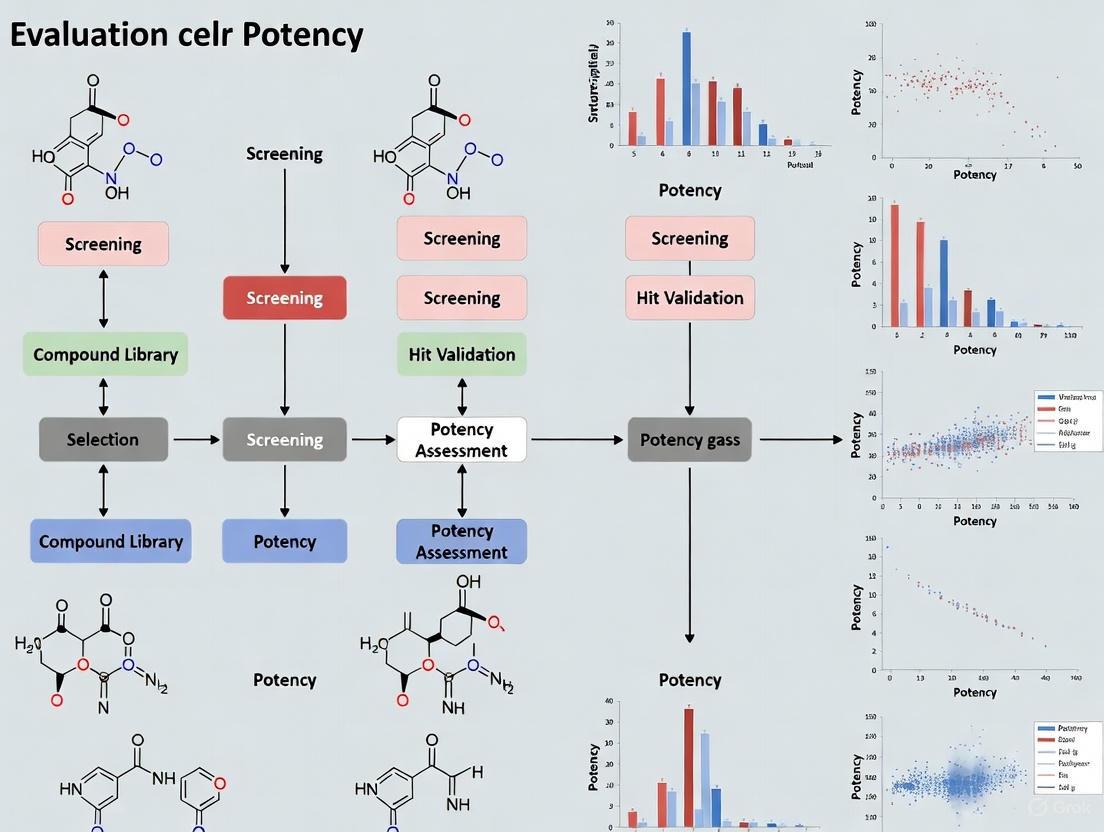
This article provides a comprehensive framework for researchers and drug development professionals to evaluate the biological potency of compounds across diverse screening libraries.
Evaluating Cellular Potency: Strategies for Assessing Compound Libraries in Drug Discovery
Abstract
This article provides a comprehensive framework for researchers and drug development professionals to evaluate the biological potency of compounds across diverse screening libraries. It covers foundational principles of library design and quality control, explores methodological approaches for cell-based potency assays, addresses common troubleshooting and optimization challenges, and outlines strategies for assay validation and comparative analysis. By integrating these elements, the article aims to guide the selection and application of potency assays to ensure consistent, reliable, and biologically relevant data for advancing therapeutic candidates.
Building a Foundation: Principles of Library Design and Potency Assessment
Defining Potency in Cellular Contexts and Its Critical Role in Drug Discovery
In modern drug discovery, cellular potency is a critical parameter that measures a compound's biological activity within a physiologically relevant cellular environment. Unlike biochemical assays that assess compound binding in purified systems, cellular potency evaluations capture the complex interplay of cell permeability, target engagement, metabolic processing, and functional activity in living systems. The accurate determination of cellular potency has become increasingly important for prioritizing lead compounds, predicting efficacious doses, and reducing late-stage attrition in the drug development pipeline.
The evaluation of cellular potency across diverse compound libraries presents significant technical challenges, particularly in accurately identifying and quantifying compound activity in complex biological matrices. Recent advances in analytical technologies, including liquid chromatography combined with high-resolution mass spectrometry (LC-HRMS) and cellular target engagement assays, have transformed how researchers measure and interpret cellular potency data. These methodologies provide the foundation for reliable comparison of compound libraries and enhance the predictive power of early-stage discovery efforts.
Experimental Platforms for Cellular Potency Assessment
Analytical Instrumentation for Compound Identification
Liquid chromatography combined with high-resolution mass spectrometry (LC-HRMS) has emerged as a cornerstone technology for suspect screening (SS) and non-target screening (NTS) in metabolomics and environmental toxicology [1]. This platform enables researchers to identify and quantify compounds within complex cellular matrices, providing essential data for potency determination. The technology's utility extends across multiple stages of drug discovery, from initial compound library screening to mechanistic studies of drug action.
Two primary acquisition modes are employed in LC-HRMS analysis: data-dependent acquisition (DDA) and data-independent acquisition (DIA). DDA operates using a top-n strategy where the highest intensity m/z values in a spectrum are selected for MS2 acquisition, yielding relatively clean spectra with few interferences. In contrast, DIA performs MS2 acquisition in parallel for co-eluting ions within a selected m/z range, generating composite fragmentation spectra that are more challenging to interpret but provide comprehensive coverage of detectable compounds [1]. The choice between these acquisition modes represents a critical trade-off between spectrum quality and compound coverage, with significant implications for potency assessment across compound libraries.
Cellular Target Engagement Technologies
Cellular Thermal Shift Assay (CETSA) has emerged as a leading technology for validating direct target engagement in intact cells and tissues, providing functional evidence of cellular potency [2]. This method measures the thermal stabilization of protein targets upon compound binding in physiologically relevant environments, bridging the gap between biochemical potency and cellular efficacy.
Recent advancements have integrated CETSA with high-resolution mass spectrometry to quantify drug-target engagement in complex biological systems. A 2024 study demonstrated this approach by measuring dose- and temperature-dependent stabilization of DPP9 in rat tissue, confirming target engagement both ex vivo and in vivo [2]. This capability to provide quantitative, system-level validation makes CETSA particularly valuable for cellular potency assessment, as it confirms that compounds not only bind their intended targets but do so under physiologically relevant conditions.
Comparative Performance of Identification Tools
Experimental Protocol for Tool Evaluation
A rigorous methodology was employed to evaluate the performance of various identification tools using both DDA and DIA HRMS spectra [1]. The experimental design challenged software tools with a diverse set of 32 compounds including pesticides, veterinary drugs, and their metabolites, with particular attention to isomeric compounds that present significant identification challenges.
Sample preparation involved analyzing compounds both in solvent standards and spiked into complex feed extracts to evaluate performance in clean versus biologically relevant matrices. Three mix solutions (A, B, and C) were prepared in methanol with compound concentrations ranging from 40-2000 µg/L, reflecting maximum residue limits and ensuring detectability [1]. Compounds were strategically distributed across mixes to avoid co-elution of compounds with identical molecular formulas.
Instrumental analysis was performed using LC-HRMS with both DDA and DIA acquisition modes. For DDA analysis, a standard top-n approach was implemented where the most intense ions were fragmented. For DIA, wider isolation windows were used to fragment multiple ions simultaneously, creating more complex composite spectra. This direct comparison allowed researchers to evaluate how acquisition mode impacts identification success rates across different software platforms [1].
Performance Comparison Across Platforms
The performance evaluation of four HRMS-spectra identification tools revealed significant differences in their capabilities to annotate compounds using DDA and DIA spectra [1]. The results provide crucial guidance for selecting appropriate tools based on acquisition mode and sample complexity.
Table 1: Compound Identification Success Rates in Solvent Standards
| Identification Tool | DDA Success Rate | DIA Success Rate |
|---|---|---|
| mzCloud | 84% | 66% |
| MSfinder | >75% | 72% |
| CFM-ID | >75% | 72% |
| Chemdistiller | >75% | 66% |
Table 2: Compound Identification Success Rates in Spiked Feed Extract
| Identification Tool | DDA Success Rate | DIA Success Rate |
|---|---|---|
| mzCloud | 88% | 31% |
| MSfinder | >75% | 75% |
| CFM-ID | >75% | 63% |
| Chemdistiller | >75% | 38% |
The mass spectral library mzCloud demonstrated the highest success rate for DDA spectra, with 84% and 88% of compounds correctly identified in the top three matches for solvent standards and spiked feed extract, respectively [1]. However, its performance declined significantly with DIA spectra, particularly in complex matrices (31% success rate in spiked feed extract), highlighting the limitations of direct spectral matching for complex fragmentation data.
The in silico tools (MSfinder, CFM-ID, and Chemdistiller) performed well with DDA data, all achieving identification success rates above 75% for both solvent standards and spiked feed extract [1]. MSfinder provided the highest identification success rates using DIA spectra (72% and 75% for solvent standard and spiked feed extract, respectively), suggesting that its rule-based in silico fragmentation prediction using hydrogen rearrangement rules is particularly suited to handling complex DIA spectra. CFM-ID, which utilizes hybrid machine learning and rule-based fragmentation prediction, performed almost similarly in solvent standard (72%) though slightly less effectively in spiked feed extract (63%) [1].
Emerging Trends and Strategic Implications
Artificial Intelligence and In Silico Approaches
Artificial intelligence has evolved from a disruptive concept to a foundational capability in modern drug discovery R&D [2]. Machine learning models now routinely inform target prediction, compound prioritization, pharmacokinetic property estimation, and virtual screening strategies. Recent research demonstrates that integrating pharmacophoric features with protein-ligand interaction data can boost hit enrichment rates by more than 50-fold compared to traditional methods [2]. These approaches not only accelerate lead discovery but improve mechanistic interpretability, an increasingly important factor for regulatory confidence and clinical translation.
In silico screening has become a frontline tool for triaging large compound libraries early in the pipeline [2]. Computational approaches such as molecular docking, QSAR modeling, and ADMET prediction enable prioritization of candidates based on predicted efficacy and developability, reducing the resource burden on wet-lab validation. Platforms like AutoDock and SwissADME are now routinely deployed to filter for binding potential and drug-likeness before synthesis and in vitro screening [2].
Cellular Target Engagement and Validation
The shift toward cellular potency assessment reflects the growing recognition that biochemical binding assays alone are insufficient for predicting compound efficacy in physiological systems. As molecular modalities become more diverse—encompassing protein degraders, RNA-targeting agents, and covalent inhibitors—the need for physiologically relevant confirmation of target engagement has never been greater [2].
CETSA has emerged as a leading approach for addressing this need, enabling researchers to confirm pharmacological activity where it matters most: in the biological system of interest [2]. By providing direct, in situ evidence of drug-target interaction, technologies like CETSA have transitioned from optional validation methods to strategic assets that strengthen decision-making with functionally validated target engagement data.
Integration of Multidisciplinary Pipelines
Drug discovery teams are increasingly composed of multidisciplinary experts spanning computational chemistry, structural biology, pharmacology, and data science [2]. This integration enables the development of predictive frameworks that combine molecular modeling, mechanistic assays, and translational insight, leading to earlier and more confident go/no-go decisions while reducing late-stage surprises.
The convergence of computational and experimental approaches is particularly evident in the hit-to-lead (H2L) phase, which is being rapidly compressed through AI-guided retrosynthesis, scaffold enumeration, and high-throughput experimentation (HTE) [2]. These platforms enable rapid design–make–test–analyze (DMTA) cycles, reducing discovery timelines from months to weeks. In a 2025 study, deep graph networks were used to generate over 26,000 virtual analogs, resulting in sub-nanomolar MAGL inhibitors with over 4,500-fold potency improvement over initial hits [2].
Research Reagent Solutions
Table 3: Essential Research Reagents for Cellular Potency Assessment
| Reagent / Material | Function in Experimentation |
|---|---|
| LC-HRMS System | High-resolution mass spectrometry for precise compound identification and quantification in complex matrices [1] |
| ULC Grade Solvents (Methanol, Acetonitrile) | High-purity mobile phase components for chromatographic separation to minimize background interference [1] |
| Reference Standards | Authenticated compounds for method validation, calibration curves, and positive controls in potency assays [1] |
| Cell Culture Systems | Physiologically relevant cellular environments for assessing target engagement and functional potency [2] |
| CETSA Reagents | Components for Cellular Thermal Shift Assay to measure target engagement in intact cellular systems [2] |
| Formic Acid/Acetic Acid | Mobile phase modifiers for optimal chromatographic separation and ionization efficiency in MS detection [1] |
Experimental Workflow Visualization
Workflow for Cellular Potency Assessment
Technology Selection Framework
Technology Selection Decision Framework
The accurate assessment of cellular potency across compound libraries requires careful selection and integration of analytical technologies, with performance varying significantly based on acquisition mode and sample complexity. As demonstrated in the comparative evaluation, MSfinder emerges as the most versatile tool for DIA data in complex matrices, while mzCloud provides excellent performance for DDA spectra but struggles with complex DIA data. The integration of cellular target engagement assays like CETSA with advanced computational tools creates a powerful framework for establishing robust structure-activity relationships in physiologically relevant contexts, ultimately enhancing the predictive power of early discovery efforts and increasing the likelihood of clinical success.
The quality of a compound library is a key determining factor for the success of any high-throughput screening (HTS) campaign aimed at identifying lead compounds for drug discovery [3]. In both academic and industrial settings, screening libraries represent a significant investment and major asset for research institutions and companies engaged in drug discovery [3]. An ideal screening collection should be representative of biologically relevant chemical space, composed of chemically attractive compounds with tractable synthetic accessibility, and free of undesirable chemical functionalities [3]. The fundamental importance of library quality is underscored by the estimate that transitioning a therapeutic from research to clinical application can cost up to $2.8 billion, with low-quality initial hits necessitating extensive optimization efforts that consume years and significant resources [4].
This guide objectively compares screening library components across key parameters—diversity, purity, and annotation—within the context of evaluating cellular potency. We present synthesized experimental data and standardized protocols to enable direct comparison of library performance, providing researchers with a framework for selecting appropriate compound sources for their specific drug discovery applications.
Library Diversity: Structural and Property Space Considerations
Diversity Design Strategies
Diversity-based library design attempts to explore appropriate chemical space by optimizing biological relevance and compound diversity to provide multiple starting points for further hit/lead development [5]. For target classes with limited numbers of known active chemotypes or for phenotypic assays, structural diversity in screening libraries is strictly recommended, as this can increase the chances of detecting multiple promising scaffolds [5]. The rationale behind this approach is the belief that chemical diversity ultimately implies biological diversity and that a chemically diverse screening library should cover a broad spectrum of targets and molecular processes [5].
Two primary strategies exist for assembling diverse libraries:
- Diversity-based libraries: Designed for targets with few known active chemotypes, optimizing coverage of chemical space using molecular scaffolds and chemical descriptors [5]
- Focused libraries: Intended for well-studied targets (kinases, GPCRs, nuclear receptors) enriched with known active chemotypes using structure-based or ligand-based approaches [6] [5]
Table 1: Diversity Metrics Across Commercial and Institutional Libraries
| Library Source | Library Size | Average MW | Average ClogP | Average HBD | Average HBA | Diversity Method |
|---|---|---|---|---|---|---|
| BOC Sciences [7] | 50,000 | 356.64 | 2.61 | 3.85 | 1.49 | Daylight fingerprints, Tanimoto similarity |
| St. Jude Children's Research Hospital [3] | 575,000 | Varies by sublibrary | Varies by sublibrary | Varies by sublibrary | Varies by sublibrary | Multiple sub-libraries (Bioactives, Diversity, Focused, Fragments) |
| University of Dundee [6] | 57,438 | Lead-like properties | 0-4 | <4 | <7 | Lead-like focus, clustering, visual inspection |
| Korea Chemical Bank [8] | 7,040 | Not specified | Filtered for cytotoxicity | Filtered for cytotoxicity | Filtered for cytotoxicity | Virtual screening, clustering, druggability assessment |
Lead-like versus Drug-like Properties
A critical consideration in library design is the choice between "lead-like" and "drug-like" compounds. The University of Dundee implemented a strategy selecting compounds that are smaller and less hydrophobic than typical drugs to leave opportunities for optimization during lead development [6]. Their criteria included ClogP/ClogD between zero and four, fewer than four hydrogen-bond donors, fewer than seven hydrogen-bond acceptors, and between ten and twenty-seven heavy atoms [6]. This approach reflects the understanding that molecular weight, lipophilicity, and the number of hydrogen-bond donors and acceptors typically increase during the lead optimization process [6].
The St. Jude Children's Research Hospital library employed a balanced approach, classifying their screening collection into four sub-libraries: Bioactives (molecules with known biological function), Diversity (commercial screening libraries following Rule of Five criteria), Focused (molecules for specific targets), and Fragments (low molecular weight compounds for fragment-based screening) [3]. Linear discriminant analysis revealed that despite differences in their etiology, the median compound from each of the four sub-libraries displayed a similar distribution of physicochemical property values, with Bioactives showing the broadest distribution [3].
Experimental Data: Cytotoxicity Profiling of a Diversity Library
Cytotoxicity profiling of the Korea Chemical Bank (KCB) diversity library provides valuable experimental data on the practical outcomes of diversity library design [8]. Researchers screened a subset of 5,181 compounds randomly selected from the 7,040-compound library using the WST-1 assay in five mammalian cell lines (HEK293, HFL1, HepG2, NIH3T3, and CHOK1) at concentrations of 30 µM and 10 µM, following 24 h and 48 h incubation periods [8]. Cytotoxic compounds were defined as those exhibiting >50% inhibition at 30 µM after 48 h.
The results demonstrated that only 17 compounds showed consistent cytotoxicity across all five cell lines [8]. Comparative analysis of physicochemical properties revealed that cytotoxic compounds exhibited higher lipophilicity (ALogP/LogD) and a greater number of aromatic rings relative to non-cytotoxic compounds [8]. These findings indicate that the majority of the KCB diversity library comprised non-cytotoxic compounds, reflecting effective pre-filtering of toxic physicochemical properties during library design [8].
Compound Purity and Integrity: Quality Control Standards
Quality Control Experimental Protocols
Quality control remains a major technical challenge facing scientists who screen chemical libraries [9]. To ensure accurate screening results, library providers and users should implement rigorous QC protocols. The standard methodology for quality control assessment involves:
Liquid Chromatography-Mass Spectrometry (LCMS) Analysis Protocol:
- Sample Preparation: Compound DMSO solutions are diluted in appropriate solvent mixtures compatible with LCMS systems [3]
- Instrumentation: Ultra-performance liquid chromatography system equipped with ultraviolet and evaporative light scattering detectors [3]
- Purity Calculation: Purity is calculated as the average of the two detection methods [3]
- Identity Confirmation: Mass spectrometry confirms compound identity [3]
- Validation Standards: Minimum purity threshold of 80% for usable compounds, with ideal collections showing >90% purity for most compounds [3]
The St. Jude Children's Research Hospital implemented a robust QC procedure where they randomly check 12.5% of the compounds from a vendor plate by LCMS to confirm identity and purity at the time of purchase [3]. This protocol represents a practical approach to balance comprehensive quality assessment with practical resource constraints.
Experimental QC Data from Long-term Storage Studies
Long-term storage stability is a critical factor for library integrity. Experimental data from St. Jude Children's Research Hospital provides insight into compound stability under typical storage conditions [3]. They assessed compound integrity after several years of storage in DMSO at -20°C in both 96-well and 384-well formats.
Table 2: Quality Control Assessment After Long-term Storage
| Storage Format | Sample Size | >90% Purity | 80-90% Purity | <80% Purity | Overall Pass Rate (>80%) |
|---|---|---|---|---|---|
| 96-way tubes [3] | 523 compounds | 77.8% | 9.6% | 12.6% | 87.4% |
| 384-way tubes [3] | 256 compounds | Similar profile to 96-way tubes | Similar profile to 96-way tubes | Similar profile to 96-way tubes | 87.4% (combined) |
| Industry Standard (GSK) [3] | Not specified | Not specified | Not specified | Not specified | 89% (after 6 years at -20°C) |
The study found little difference in quality between compounds stored in either tube format, and no significant correlation between purity and molecular weight, calculated logP, or the time since acquisition [3]. These results were encouraging and comparable to those reported by GSK, where 89% of compounds showed >80% purity after 6 years of storage at -20°C in sealed 384 deep-well blocks [3].
Impact of QC Failures on Research Outcomes
Inadequate quality control can significantly impact research outcomes and lead to erroneous conclusions. Nature Chemical Biology has highlighted cases where validating the structures of compound 'hits' from chemical screens presented challenges [9]. In one instance, a compound initially identified as a screening hit failed to have activity when independently synthesized [9]. In another case, the structure of 'mirin' was incorrectly assigned in the original library, but the correct and misassigned structures were similar enough that standard analytical data did not readily reveal an error [9].
These examples underscore the importance of the "gold standard" validation experiment, which demonstrates that an independently synthesized hit compound has the same chemical characterization data and biological activity as the compound identified in the screen [9]. Library creators and suppliers need to adopt and enforce greater quality control standards to guarantee the integrity of chemical libraries, while users need to validate the chemical identities of their screening hits [9].
Compound Annotation and Screening Technologies
Annotation Methods for Hit Identification
Accurate compound annotation is crucial for hit identification and validation. Traditional methods include:
- DNA-encoded libraries (DELs): Feature small molecules linked to unique DNA sequences, enabling exploration of drug-like chemical space in affinity selection [10]
- Barcode-free self-encoded libraries (SELs): Combine tandem mass spectrometry with custom software for automated structure annotation, eliminating need for external tags [10]
Each approach has distinct advantages and limitations. DEL technology allows screening of vast libraries but requires DNA-compatible chemistry and is unsuitable for nucleic acid-binding targets [10]. SEL platforms enable direct screening of over half a million small molecules in a single experiment without encoding tags, making them suitable for targets like FEN1, a DNA-processing enzyme inaccessible to DELs [10].
Workflow Diagram: Library Assembly and Screening
The following diagram illustrates the key decision points in library assembly and screening strategy:
Library Assembly and Screening Workflow
Experimental Data: Annotation Performance Metrics
Recent technological advances have significantly improved annotation capabilities. Research on self-encoded libraries demonstrates that structure annotation based on MS/MS fragmentation spectra is essential for unequivocal compound identification, especially with high degrees of mass degeneracy in large libraries [10]. In decoding experiments, each nanoLC-MS/MS run produced approximately 80,000 MS1 and MS2 scans, making manual analysis impractical and highlighting the need for automated structure annotation [10].
Automated annotation using SIRIUS 6 and CSI:FingerID software enables reference spectra-free structure annotation of small molecules by scoring predicted molecular fingerprints against fingerprints of database structures [10]. For affinity selection experiments, the complete space of potential structures is known, and the computationally enumerated library can be used as a structure database to score compounds against, improving annotation accuracy [10].
Research Reagent Solutions: Essential Materials and Tools
Table 3: Essential Research Reagents for Screening Library Quality Assessment
| Reagent/Technology | Function/Purpose | Example Applications | Performance Metrics |
|---|---|---|---|
| LC-MS Systems [3] | Compound purity and identity confirmation | Quality control of screening libraries | >80% purity threshold for usable compounds |
| Automated Storage Systems [3] | Compound library management at -20°C | Brooks Life Sciences systems holding DMSO solutions | 87.4% compound integrity after long-term storage |
| Tanimoto Similarity Algorithm [6] [7] | Compound diversity assessment based on structural fingerprints | Daylight fingerprints for clustering | Threshold 0.71-0.77 for diverse subsets |
| PAINS Filters [3] | Identification of compounds with suspect chemical moieties | Filtering reactive, unstable, or promiscuous compounds | Removes pan-assay interference compounds |
| SIRIUS 6 & CSI:FingerID [10] | Automated structure annotation of small molecules | Decoding hits from self-encoded libraries | Handles 80,000+ MS1 and MS2 scans per run |
| Pipeline Pilot [3] | Calculation of molecular descriptors | Analysis of physicochemical properties | Nine standard descriptors (MW, clogP, TPSA, etc.) |
The comparative analysis presented in this guide demonstrates that library quality encompasses multiple dimensions—diversity, purity, and annotation—that collectively determine screening success. Key findings indicate that lead-like properties with appropriate complexity [6], rigorous quality control protocols [3] [9], and advanced annotation technologies [10] significantly enhance the probability of identifying valid hits suitable for optimization.
Researchers should select screening libraries based on comprehensive quality assessment data rather than size alone, applying the standardized experimental protocols and comparison metrics outlined herein. As library technologies evolve, emerging approaches including self-encoded libraries [10] and ultra-large virtual screening [4] offer promising avenues for expanding accessible chemical space while maintaining high standards of quality and annotation.
In modern drug discovery, interrogating the physicochemical properties of small molecules is a critical step in predicting their behavior in complex biological systems. The pursuit of cellular potency is often guided by computational tools that decode molecular characteristics into predictive models. Two primary computational approaches—molecular descriptors and structural alerts—serve as foundational methodologies for these predictions. Molecular descriptors provide quantitative, continuous measures of a compound's physicochemical nature, while structural alerts offer discrete, binary flags for specific functional groups associated with undesirable properties like toxicity.
Framed within a broader thesis on evaluating cellular potency, this guide objectively compares the performance, application, and limitations of descriptor-based and alert-based approaches. As drug discovery increasingly leverages diverse compound libraries, understanding the strategic implementation of these tools becomes paramount for researchers aiming to optimize efficacy while mitigating safety risks early in the development pipeline.
Comparative Analysis: Molecular Descriptors vs. Structural Alerts
The following table summarizes the core characteristics, strengths, and limitations of molecular descriptor and structural alert approaches.
Table 1: Comparison of Molecular Descriptors and Structural Alerts
| Feature | Molecular Descriptors | Structural Alerts |
|---|---|---|
| Nature of Information | Quantitative, continuous | Qualitative, binary (presence/absence) |
| Data Representatio | Numerical vectors (e.g., molecular weight, logP) | Structural patterns (e.g., aromatic nitro groups) |
| Primary Applications | Predictive QSAR/QSPR models, potency prediction, property optimization | Rapid toxicity risk assessment, early-stage hazard filtering |
| Interpretability | Varies; some require expert interpretation | Generally high and chemically intuitive |
| Model Dependency | Often used in complex machine learning models | Can be applied as standalone rules |
| Key Strength | Enables nuanced prediction of continuous properties | Offers high-speed, transparent screening for known risks |
| Main Limitation | May miss specific, rare toxicophores | Can be overly simplistic, leading to false negatives/positives |
Performance Evaluation in Key Drug Discovery Applications
Predicting Ionic Conductivity in Ionic Liquids
A systematic study comparing feature types for predicting ionic liquid conductivity demonstrated the performance impact of descriptor choice. Researchers used a dataset of 2,684 ionic liquids to evaluate graph neural networks (GNNs) for structural feature extraction against traditional molecular descriptors [11].
Table 2: Performance Comparison for Ionic Conductivity Prediction [11]
| Feature Set Used | Mean Absolute Error (MAE) | Root Mean Squared Error (RMSE) | Coefficient of Determination (R²) |
|---|---|---|---|
| Structural Features Only (GNN) | 0.509 | 0.738 | 0.925 |
| Molecular Descriptors Only | 0.592 | 0.831 | 0.905 |
| Combined Features | 0.470 | 0.677 | 0.937 |
The study concluded that models using only structural features learned through GNNs outperformed those using only pre-defined molecular descriptors, suggesting that learned structural representations can capture information relevant to physicochemical properties more effectively. However, the best prediction performance was achieved by combining both structural and molecular features, highlighting the complementary nature of these approaches [11].
Assessing Mitochondrial Toxicity Risk
In safety assessment, a large-scale study created a dataset of 5,761 compounds (824 mitochondrial toxicants, 4,937 non-toxicants) to evaluate machine learning and structural alerts for predicting mitochondrial toxicity [12].
Molecular Descriptor Approach: The team calculated 25 interpretable 2D descriptors and trained multiple machine learning models. The dataset's size enabled robust model training, and the descriptors successfully captured significant differences in the physicochemical property space between toxic and non-toxic compounds [12].
Structural Alert Approach: Using substructure analysis algorithms (SARpy, RDKit, MOE), the researchers identified 17 structural alerts with high positive predictive value (PPV > 0.6). These alerts included specific functional groups like polyhalogenated chains and aromatic nitro groups, providing a chemically intuitive mechanism for risk assessment [12].
Performance Insight: The combination of both methods proved most effective. Machine learning models offered broad screening capability, while the derived structural alerts provided immediate, interpretable flags for specific toxicophores and helped elucidate potential modes of action [12].
Experimental Protocols for Method Evaluation
Benchmarking Compound Activity Prediction (CARA Protocol)
The Compound Activity benchmark for Real-world Applications (CARA) provides a standardized protocol for evaluating predictive models, focusing on two key drug discovery stages [13].
1. Data Curation and Assay Classification:
- Source data from public repositories (e.g., ChEMBL), grouping activity data by Assay ID [13].
- Classify assays into two types based on compound similarity:
2. Data Splitting:
- Implement separate train/test splitting schemes tailored to VS and LO tasks to reflect their distinct data distribution patterns [13].
3. Model Evaluation:
- Use metrics that avoid performance overestimation, considering the biased distribution of real-world data [13].
- Evaluate under both few-shot (limited task-specific data) and zero-shot (no task-specific data) scenarios [13].
Workflow for Developing and Validating Structural Alerts
The methodology for deriving structural alerts for mitochondrial toxicity demonstrates a rigorous, multi-step process [12].
1. Data Collection and Standardization:
- Aggregate data from multiple public sources (ChEMBL, PubChem, literature) [12].
- Standardize chemical structures using a workflow (e.g., in KNIME platform):
- Break bonds to metals, neutralize charges, apply functional group standardization rules [12].
- Remove duplicates using InChIKeys and compounds with ambiguous activity labels [12].
2. Substructure Analysis:
- Apply multiple fragmentation algorithms (SARpy, RDKit, MOE) with different settings to generate comprehensive substructure lists [12].
- Calculate the Positive Predictive Value (PPV) for each fragment: PPV = (Number of active compounds containing the fragment) / (Total number of compounds containing the fragment) [12].
3. Alert Filtering and Validation:
- Set a minimum occurrence threshold and a minimum PPV (e.g., 0.6) [12].
- Manually inspect remaining fragments for chemical integrity and completeness, discarding incomplete ring systems or ubiquitous substructures [12].
Diagram 1: Structural Alert Derivation Workflow
Table 3: Key Research Reagent Solutions for Computational Analysis
| Resource/Solution | Function | Application Context |
|---|---|---|
| ChEMBL Database | Curated database of bioactive molecules with drug-like properties | Primary source for compound activity data; provides assay results and molecular structures [13] [14] [12] |
| RDKit | Open-source cheminformatics library | Calculates molecular descriptors, performs substructure analysis, and standardizes chemical structures [11] [12] |
| KNIME Analytics Platform | Graphical analytics platform for data mining | Creates workflows for data standardization, descriptor calculation, and model building [12] |
| CARA Benchmark | Curated benchmark for compound activity prediction | Evaluates model performance in real-world virtual screening and lead optimization scenarios [13] |
| SARpy | Algorithm for automatic extraction of structural alerts | Generates meaningful substructures from datasets of active compounds [12] |
Integrated Workflow for Cellular Potency Optimization
Combining molecular descriptors and structural alerts creates a powerful, integrated workflow for cellular potency optimization within compound library design. This approach leverages the strengths of both methods while mitigating their individual limitations.
Diagram 2: Integrated Screening Workflow
This synergistic approach is particularly valuable for addressing the complex interplay between potency and safety. Studies probing the links between in vitro potency and ADMET properties have revealed that an excessive focus on nanomolar potency can introduce biases in physicochemical properties that are diametrically opposed to desirable ADMET characteristics [14]. Integrated screening helps identify compounds that balance potency with favorable drug-like properties.
Molecular descriptors and structural alerts are complementary tools in the computational chemist's arsenal. Molecular descriptors excel in providing quantitative, continuous data for predictive modeling of complex properties like ionic conductivity [11], while structural alerts offer rapid, interpretable filtering for known toxicity risks [12].
The most effective strategy for interrogating physicochemical properties in cellular potency assessment leverages both approaches: using structural alerts for initial, high-throughput risk assessment and molecular descriptors within machine learning models for nuanced prediction and optimization. This integrated methodology, implemented within robust benchmarking frameworks like CARA [13], provides a comprehensive approach to navigating the complex trade-offs between efficacy and safety in modern drug discovery.
The systematic classification and application of compound libraries are fundamental to modern drug discovery, directly influencing the efficiency and success of identifying viable therapeutic candidates. Within the context of evaluating cellular potency, the strategic selection of an appropriate compound library is a critical first step that determines the quality of initial hits and the subsequent trajectory of the entire discovery pipeline. These libraries are not merely collections of chemicals; they are carefully curated and designed sets of molecules that serve distinct purposes in the multi-stage journey from target identification to lead compound optimization [15].
This guide provides a comparative analysis of four principal library types: Bioactive Compound Libraries, Diversity Sets, Focused Libraries, and Fragment Libraries. Each category possesses unique characteristics, optimal use cases, and performance metrics in biological screening. For researchers aiming to assess cellular potency, understanding the composition, strengths, and limitations of each library type enables a more rational screening strategy, ensuring that the right tool is used for the right job, thereby conserving resources and accelerating the discovery timeline [16]. The integration of advanced technologies, including artificial intelligence (AI) and high-throughput cellular thermal shift assays (CETSA), is further refining the utility of these libraries by providing deeper mechanistic insights and improving the predictability of early-stage screening outcomes [2].
Library Classifications and Comparative Analysis
Compound libraries are broadly categorized based on their design principles, chemical space coverage, and intended application in the drug discovery workflow. The following table summarizes the core characteristics of the four main sub-library types.
Table 1: Core Characteristics of Compound Sub-Libraries
| Library Type | Design Principle | Typical Size | Primary Screening Context | Key Advantages |
|---|---|---|---|---|
| Bioactive Compound Libraries | Collection of compounds with known or reported biological activity [17]. | 1,000 - 18,000+ compounds [17] [18]. | Target-based and phenotypic screening for drug repurposing and mechanism deconvolution. | Compounds have validated biological activity and clear targets; lower risk of non-specific effects. |
| Diversity Sets | Maximize structural and scaffold variety to broadly sample chemical space [19] [20]. | 1,000 - 50,000+ compounds [20] [16]. | Phenotypic screening and initial target-agnostic screening of new targets. | Maximizes chance of finding a hit against novel or less-understood targets [16]. |
| Focused Libraries | Compounds selected for predicted activity against a specific protein target or target family [21]. | 100 - 500 compounds per design hypothesis [21]. | Target-based screening against well-characterized target families (e.g., kinases, GPCRs). | Higher hit rates and more interpretable Structure-Activity Relationships (SAR) [21]. |
| Fragment Libraries | Collections of very small, low molecular weight compounds that represent minimal binding motifs [22]. | Information missing | Fragment-Based Drug Discovery (FBDD) using biophysical techniques. | High ligand efficiency; covers a vast chemical space with fewer compounds. |
The quantitative properties of these libraries can be further broken down to aid in selection. The table below provides representative data on the composition and properties of available commercial libraries, highlighting their suitability for different stages of research.
Table 2: Quantitative Comparison of Representative Commercial Libraries
| Library Name | Library Type | Total Compounds | Key Structural Metrics | Key Property Metrics |
|---|---|---|---|---|
| TargetMol Bioactive Library [17] | Bioactive | 18,720 | Based on 10,102 unique Bemis-Murcko scaffold classes. | 67% comply with Lipinski's Rule of Five; 54% highly orally absorbable. |
| Enamine Discovery Diversity Set-10 [19] | Diversity | 10,240 | Designed for high scaffold and building block diversity. | Novel, lead-like compounds; filtered for PAINS and undesirable motifs. |
| Otava PrimScreen [20] | Diversity | 1,000 - 10,000 | Average molecular diversity score of 0.868 - 0.891. | Curated for drug-like properties. |
| MCE Diversity Library [16] | Diversity | 50,000 | Representative diversity set for phenotypic and target-based HTS. | Information missing |
| Sygnature Leadfinder HTS [23] | Diversity (Virtual) | 8 million (in silico) | Optimized for broad, lead-like chemical space with stringent filters. | Information missing |
Experimental Protocols for Library Screening in Cellular Potency Assays
Evaluating cellular potency requires a robust experimental workflow that moves from library selection to validated hits. The following protocol outlines a generalized yet comprehensive approach for screening compound libraries in cell-based assays.
High-Throughput Screening (HTS) Workflow for Cellular Potency
1. Library Preparation and Plating:
- Procedure: Commercially available libraries are typically supplied as 10 mM DMSO solutions in 96-well or 384-well plates [17] [19]. Upon arrival, store libraries at recommended temperatures (often -80°C) and minimize freeze-thaw cycles. Using an automated liquid handler, perform a dilution series in cell culture medium to achieve the desired final testing concentrations, ensuring the final concentration of DMSO is kept low (e.g., 0.1-1.0%) to avoid cytotoxicity.
- Critical Reagents: Pre-plated compound library (e.g., TargetMol Bioactive Library or Enamine DDS-10), cell culture medium, DMSO.
2. Cell Seeding and Compound Treatment:
- Procedure: Seed cells expressing the target of interest (e.g., a specific kinase, ion channel, or disease-relevant pathway) into assay plates at a density optimized for logarithmic growth. After cell attachment, add the pre-diluted compounds to the cells. Include appropriate controls on each plate: vehicle control (DMSO), positive control (known potent activator/inhibitor), and negative control (no cells).
- Critical Reagents: Relevant cell line (primary, immortalized, or engineered), fetal bovine serum (FBS), antibiotics (Penicillin-Streptomycin), trypsin/EDTA.
3. Incubation and Potency Signal Development:
- Procedure: Incubate cells with compounds for a predetermined time (e.g., 24-72 hours) under standard culture conditions (37°C, 5% CO2). The endpoint measurement depends on the assay: it could be cell viability (ATP quantitation via CellTiter-Glo), reporter gene activity (luciferase), phosphorylation status (ELISA or Western Blot), or caspase activity for apoptosis.
- Critical Reagents: CellTiter-Glo Luminescent Cell Viability Assay, Luciferase assay reagents, phospho-specific antibodies, caspase substrates.
4. Detection, Data Acquisition, and Hit Validation:
- Procedure: Read the assay plates using appropriate detectors (luminescence plate reader, fluorometer, etc.). Normalize data to the positive and negative controls on each plate. Calculate the percentage of activity or inhibition for each compound. Compounds showing significant activity (e.g., >50% inhibition/activation at a set concentration) are designated as "hits." These primary hits must be re-screened in dose-response (e.g., a 10-point IC50 curve) to confirm potency and efficacy.
- Critical Reagents: Hit compounds for resupply, DMSO for dose-response curves.
The following diagram illustrates the key decision-making workflow for selecting a compound library based on the research goal, and the subsequent experimental process for determining cellular potency.
The Scientist's Toolkit: Essential Reagents and Solutions
The following table details key reagents and materials required for executing the cellular potency screening protocols described above.
Table 3: Essential Research Reagent Solutions for Cellular Potency Screening
| Item | Function/Description | Example Use Case in Protocol |
|---|---|---|
| Pre-plated Compound Library | Collections of compounds in DMSO at standardized concentrations (e.g., 10 mM) in microtiter plates [17] [19]. | The starting point for all screening; provides the test agents. |
| Cell Line | A biologically relevant cellular system (primary, immortalized, or engineered) that models the disease or target pathway. | Used in the cell seeding and compound treatment step to provide the biological context for potency measurement. |
| Viability/Range Assay Kit | Reagents for quantifying cell health or a specific biochemical activity (e.g., CellTiter-Glo for ATP, Caspase-Glo for apoptosis). | The key reagent in the "Incubation and Potency Signal Development" step to read out the cellular response. |
| Automated Liquid Handler | Robotics system for precise, high-volume transfer of liquids, essential for miniaturization and reproducibility. | Used in "Library Preparation and Plating" to accurately dilute and transfer compounds and reagents. |
| Microplate Reader | Instrument for detecting optical signals (luminescence, fluorescence, absorbance) from assay plates. | Used in the "Data Acquisition" phase to collect raw data on cellular responses. |
| CETSA Reagents | Cellular Thermal Shift Assay reagents for confirming direct target engagement of hits within a cellular environment [2]. | Used in the "Hit Validation" phase to provide mechanistic confirmation that a hit compound binds the intended target. |
The strategic selection of compound sub-libraries—whether Bioactive, Diversity, Focused, or Fragment—is a foundational decision that directly shapes the outcome of cellular potency research. As the field advances, the integration of AI-driven in-silico screening and robust cellular validation techniques like CETSA is creating a more predictable and efficient discovery ecosystem [2]. By understanding the distinct profile and application of each library type, and by employing the detailed experimental frameworks and toolkits provided, researchers can make informed choices that maximize the potential of their screening campaigns, mitigate risks, and accelerate the journey toward discovering novel and potent therapeutic agents.
In the realm of drug discovery, compound integrity—encompassing chemical identity, purity, and concentration—is a foundational element that directly influences the reliability of cellular potency measurements. Hits identified through high-throughput screening (HTS) campaigns frequently undergo evaluation through cheminformatics and empirical approaches before confirmation. However, the integrity of these compounds often remains unverified at this critical decision point, as compounds in screening collections can undergo various changes such as degradation, polymerization, and precipitation during storage [24] [25]. This unknown integrity status presents a significant risk: potency measurements derived from cellular or biochemical assays may reflect artifacts of compound decomposition rather than true biological activity. When compound integrity assessment is performed as a separate, subsequent step, it can increase the overall cycle time by weeks due to sample reacquisition and lengthy analytical procedures, thereby delaying project timelines [24].
The context of cellular potency evaluation adds layers of complexity to this challenge. It is well understood that potency measured with recombinant enzyme and potency measured in a cellular environment may not coincide. While decreases in cellular potency are often anticipated, increases in compound potency can also occur in physiologically relevant settings due to factors including cellular metabolism of compounds, protein-protein interactions, post-translational modifications, and asymmetric intracellular localization of compounds [26] [27]. These phenomena make it imperative to ensure that the starting material is of known quality, thereby ensuring that observed potency shifts are biologically relevant rather than analytical artifacts. Thus, implementing robust QC practices for assessing compound integrity after storage is not merely a quality control measure but a crucial enabler for accurate interpretation of cellular potency data across different compound libraries.
Methodologies for Compound Integrity Assessment
Multiple analytical techniques are available for evaluating compound integrity, each with distinct strengths, limitations, and throughput considerations. The choice of methodology often depends on the specific integrity parameter being assessed (identity, purity, or concentration), the required throughput, and available instrumentation.
Core Analytical Technologies
Liquid Chromatography-Mass Spectrometry (LC-MS) stands as the workhorse for comprehensive integrity assessment, enabling simultaneous evaluation of compound identity through mass detection and purity through chromatographic separation. Modern implementations utilizing ultra-high-pressure liquid chromatography (UHPLC) platforms have significantly enhanced throughput, with systems capable of analyzing approximately 2,000 samples per instrument per week [24] [25]. This high-speed capability enables concurrent assessment of compound integrity during concentration-response curve (CRC) studies, providing chemists with simultaneous data on both compound quality and biological activity [25].
For concentration determination, traditional UV detection faces limitations with compounds lacking chromophores. This challenge has led to the adoption of complementary detection techniques:
- Evaporative Light Scattering Detector (ELSD) responds to all compounds less volatile than the mobile phase, making it particularly valuable for detecting compounds without UV chromophores [28].
- Chemiluminescent Nitrogen Detector (CLND) provides an equimolar response for all nitrogen-containing compounds, enabling quantification using a single nitrogen calibration standard and making it highly effective for concentration determination of diverse compound libraries [28].
Nuclear Magnetic Resonance (NMR) spectroscopy also finds application in compound integrity assessment, particularly for quantifying small amounts of material through integration of the total proton spectrum. While accurate and sensitive, throughput considerations and the need for specialized interpretation have somewhat limited its widespread implementation for routine QC [28].
Comparative Analysis of Integrity Assessment Methodologies
Table 1: Comparison of Key Compound Integrity Assessment Methodologies
| Methodology | Primary Applications | Throughput | Key Strengths | Significant Limitations |
|---|---|---|---|---|
| LC-UV/MS | Identity confirmation, purity assessment | High (~2000 samples/week) [24] | Comprehensive data (identity + purity); widely available | May miss non-UV active/ poorly ionizing compounds |
| ELSD | Purity assessment, concentration determination | Medium-High | Universal detection for non-volatile compounds; handles gradient elution [28] | Less sensitive than UV; not suitable for volatile compounds |
| CLND | Concentration determination | Medium | Universal response for N-containing compounds; single-point calibration [28] | Limited to nitrogen-containing compounds |
| NMR | Identity confirmation, quantification | Low-Medium | Structure-elucidation capability; absolute quantification [28] | High instrument cost; requires expert interpretation |
| Acoustic Auditing | Volume verification, DMSO hydration status | Very High | Non-invasive; rapid assessment of sample conditions [28] | Does not assess identity or purity directly |
Innovative Approaches and Workflow Integration
A paradigm shift in integrity assessment involves moving from post-assay analysis to parallel assessment, where compound integrity data are collected concurrently with the CRC stage of HTS. This approach can be implemented either through parallel processing of two distributions from the same liquid sample or serially using the original source liquid sample [24] [25]. This methodology ensures that both compound integrity and CRC potency results become available to medicinal chemists simultaneously, significantly enhancing the decision-making process for hit follow-up and progression.
Emerging non-destructive techniques like acoustic auditing offer complementary capabilities for routine QC monitoring. This technology can rapidly and non-invasively determine water concentration in DMSO stocks and check for low wells due to evaporation or exhaustive usage, thereby preventing researchers from measuring the activity of null transfers [28]. While not replacing chromatographic methods for comprehensive characterization, such technologies provide valuable intermediate QC checkpoints.
Experimental Protocols for Integrity Assessment
Protocol 1: Rapid Integrity Assessment Parallel to HTS
This protocol describes the procedure for implementing concurrent compound integrity assessment during concentration-response testing, enabling simultaneous availability of potency and integrity data [24] [25].
Workflow Overview:
Materials and Reagents:
- Source Compounds: HTS hits in DMSO solution (typically 1-10 mM concentration)
- Analytical Instrumentation: UHPLC system coupled with UV and mass spectrometric detection
- Liquid Handling System: Automated pipetting station for parallel aliquoting
- Chromatography Columns: Reversed-phase C18 column (1.7-2.0 μm particle size)
- Mobile Phases: A: Water with 0.1% formic acid; B: Acetonitrile with 0.1% formic acid
- Microplates: 96-well or 384-well plates compatible with UHPLC autosamplers
Step-by-Step Procedure:
- Sample Preparation: Using an automated liquid handler, prepare two identical sets of aliquots from the original HTS hit source plate.
- Parallel Distribution: Distribute one set of aliquots to concentration-response testing and the second set to compound integrity analysis.
- UHPLC-UV/MS Analysis:
- Chromatographic Conditions: Apply a fast gradient separation (typically 3-5 minutes) with increasing organic modifier (acetonitrile or methanol) content.
- UV Detection: Monitor at multiple wavelengths (e.g., 214 nm, 254 nm) to detect compounds with different chromophores.
- Mass Spectrometry: Operate in positive and negative ionization modes with electrospray ionization for mass confirmation.
- Data Analysis:
- Identity Confirmation: Compare observed mass with expected molecular weight (within ±5 Da tolerance).
- Purity Assessment: Integrate chromatographic peaks and calculate percentage of target compound (typically >90% purity acceptable).
- Concentration Estimation: Compare UV response with standards or use alternative detection (CLND) for absolute quantification.
- Data Integration: Correlate integrity results with CRC potency data to inform hit triaging decisions.
Quality Control Considerations: Include system suitability standards and quality control samples in each analysis batch. Monitor chromatographic performance (retention time stability, peak shape) and mass accuracy throughout the sequence.
Protocol 2: Compound Storage Integrity Monitoring
This protocol outlines a comprehensive approach for assessing compound integrity after long-term storage, providing critical data on collection quality and stability [29] [28] [30].
Workflow Overview:
Materials and Reagents:
- Storage Plates: Compound library stored in DMSO in 96-well or 384-well microplates
- Analytical Instrumentation: LC-UV-ELSD-MS system, acoustic auditor, CLND detector
- Reference Standards: Known compounds for system calibration and performance monitoring
- Solid Phase Extraction Plates: For conversion of trifluoroacetate salts to freebase form if needed
- Sealing Materials: Heat-sealing foils or adhesive seals to prevent moisture ingress
Step-by-Step Procedure:
- Study Design:
- Sample Selection: Randomly select representative compounds from the storage collection (minimum 0.5-1% of total library).
- Stratification: Include compounds with varying storage durations and chemical properties.
- Non-Invasive Assessment:
- Acoustic Auditing: Use acoustic technology to determine DMSO hydration status and well volumes across storage plates [28].
- Visual Inspection: Check for precipitation or discoloration.
- Comprehensive Chromatographic Analysis:
- LC-UV-ELSD-MS Analysis: Perform chromatographic separation with dual detection (UV and ELSD) to capture compounds regardless of chromophore presence, with mass spectrometric confirmation.
- CLND Quantification: For nitrogen-containing compounds, use CLND for accurate concentration determination without compound-specific calibration.
- Data Interpretation:
- Integrity Scoring: Assign integrity scores based on purity, identity confirmation, and concentration accuracy.
- Trend Analysis: Identify patterns of degradation related to compound structure or storage conditions.
- Collection Health Reporting: Generate comprehensive report on collection status with recommendations for remediation or repurification.
Quality Control Considerations: Implement regular QC of liquid handling equipment and track volume remaining in storage containers. Include control compounds with known stability profiles in each analysis batch.
The Scientist's Toolkit: Essential Research Reagent Solutions
Table 2: Key Research Reagents and Materials for Compound Integrity Assessment
| Reagent/Material | Function | Application Notes |
|---|---|---|
| Deep Well Storage Plates | High-density compound storage | Reduce evaporation risk; enable automation compatibility; prevent cross-contamination [31] |
| Anhydrous DMSO | Primary solvent for compound dissolution | High purity essential; control water content (<0.1%) to minimize hydrolysis [28] |
| SPE Cartridges (PL-HCO3 MP SPE) | Conversion of TFA salts to freebase | Reduces compound degradation during storage; improves stability [28] |
| UHPLC Columns (C18, 1.7-2.0μm) | High-resolution chromatographic separation | Enable fast analysis (3-5 min/sample); maintain peak capacity [24] |
| Mobile Phase Additives (Formic Acid) | Modulate ionization and separation | Enhance MS detection sensitivity; improve chromatographic peak shape |
| Quality Control Standards | System performance verification | Include compounds with varying properties to ensure analytical system suitability |
| Sealing Materials (Heat-Sealing Foils) | Prevent moisture ingress and evaporation | Critical for long-term storage integrity; compatible with automated retrieval [31] |
Impact on Cellular Potency Assessment
The relationship between compound integrity and cellular potency measurements is multifaceted and critically important. When compound integrity is compromised during storage, the resulting cellular potency data becomes unreliable and can lead to erroneous conclusions about structure-activity relationships [27].
Proper compound integrity assessment becomes particularly crucial when interpreting discrepancies between biochemical and cellular potency measurements. While decreases in cellular potency are often anticipated due to factors like limited cell permeability or efflux mechanisms, increases in cellular potency can occur through biological mechanisms including:
- Metabolic activation of prodrug compounds within cellular environments
- Altered protein-protein interactions in physiological contexts compared to recombinant systems
- Post-translational modifications that create or expose binding sites
- Asymmetric intracellular distribution leading to local concentration effects [26] [27]
Without verification of compound integrity prior to cellular testing, it becomes impossible to distinguish true biological potency enhancement from artifacts resulting from compound degradation or transformation during storage. For example, a compound that partially degrades during storage might show apparent increased potency if the degradation product is more active than the parent compound, leading to misguided medicinal chemistry optimization efforts.
Implementation of the integrity assessment protocols described herein enables researchers to:
- Confirm that tested material corresponds to the intended chemical structure
- Verify that potency measurements are not biased by impurities or degradation products
- Make informed decisions about structure-activity relationships based on reliable compound quality
- Identify genuine biological phenomena leading to potency shifts in cellular contexts
Robust quality control practices for assessing compound integrity after storage are essential components of reliable drug discovery programs, particularly in the context of cellular potency evaluation across diverse compound libraries. The integration of rapid integrity assessment methodologies—including UHPLC-UV/MS platforms, complementary detection techniques like ELSD and CLND, and innovative non-destructive monitoring such as acoustic auditing—provides comprehensive tools for ensuring compound quality.
The parallel assessment approach, which generates compound integrity data concurrently with concentration-response studies, represents a significant advancement over traditional sequential workflows, reducing decision cycle times and enhancing the quality of hit triaging decisions [24] [25]. Furthermore, the implementation of systematic storage integrity monitoring protocols offers valuable insights into collection-wide compound stability, enabling proactive management and maintenance of screening libraries.
As drug discovery efforts increasingly focus on complex physiological systems and phenotypic screening approaches, the verification of compound integrity becomes ever more critical for deriving meaningful biological conclusions. By adopting these best practices, research organizations can ensure that observed cellular potency data reflects genuine structure-activity relationships rather than storage artifacts, thereby accelerating the identification and optimization of high-quality therapeutic candidates.
Methodological Approaches: Implementing Cell-Based Potency Assays
In the rigorous field of drug development, potency testing stands as a critical gatekeeper, ensuring that biological products possess the specific ability or capacity to affect their intended result before they are released for clinical use [32]. While various analytical methods exist, cell-based bioassays have emerged as the unequivocal gold standard for quantifying the biological activity of complex therapeutics [33]. This guide provides an objective comparison of cell-based and non-cell-based potency assays, framing the evaluation within the context of cellular potency assessment for compound libraries. We summarize supporting experimental data, detail essential methodologies, and visualize the core concepts to equip researchers and drug development professionals with the knowledge to implement robust potency testing strategies.
Potency is defined by regulatory agencies as "the specific ability or capacity of the product to affect a given result" and is considered a Critical Quality Attribute (CQA) that must be measured for each product lot [32]. Unlike small molecule drugs, biologics—including monoclonal antibodies, cell and gene therapies, and other complex modalities—function through intricate, multifaceted biological mechanisms. Consequently, their potency cannot be fully characterized by mere physicochemical properties or quantitative analysis of a single component.
The primary objective of a potency assay is to reflect the therapeutic Mechanism of Action (MoA) and, ideally, correlate with clinical outcomes [32]. Regulatory authorities, including the FDA and EMA, strongly recommend the use of cell-based potency assays whenever possible to meet the complexity of the functionality of the biological compound [33]. These functional assays provide a systems-level view, capturing the cumulative effect of a drug's interaction with a living biological system, which is why they are often required as a release specification for market approval.
Comparative Analysis: Cell-Based vs. Biochemical Potency Assays
Choosing the appropriate potency assay is a strategic decision that impacts every stage of drug development. The following table provides a direct comparison between the two primary categories of potency assays.
Table 1: Comparative Analysis of Cell-Based and Biochemical Potency Assays
| Feature | Cell-Based Assays | Biochemical (Ligand-Binding) Assays |
|---|---|---|
| Biological Context | Full physiological context with intact cellular pathways and systems [34] | Isolated system focusing on a specific binding interaction (e.g., antigen-antibody) |
| Mechanism of Action (MoA) Reflection | Measures functional, biologically relevant activity; can reflect complex, multi-step mechanisms [33] [32] | Measures binding affinity or concentration; may not reflect true biological function |
| Data Output | Functional response (e.g., cell death, proliferation, cytokine release, reporter activity) [34] [35] | Quantitative concentration of the analyte (e.g., ng/mL) |
| Therapeutic Modalities | Ideal for biologics, cell therapies (e.g., CAR-T), gene therapies, cancer immunotherapies [33] [32] | Suitable for well-characterized proteins where binding is the primary MoA |
| Regulatory Stance | Expected and strongly preferred by health agencies for potency where applicable [33] | Accepted for certain product types but may be insufficient for complex biologics |
| Throughput | Lower throughput, more complex execution [33] | High-throughput, easier to automate and miniaturize |
| Variability | Inherently higher due to biological systems; requires careful control strategies [33] | Generally lower variability and more robust |
| Information Gained | Functional potency, cell permeability, acute cytotoxicity, stability inside cells [34] | Specific analyte concentration and binding kinetics |
The increased complexity of modern biotherapeutic modalities, such as gene therapies and cancer immunotherapies, has magnified the importance of this functional approach. For these drugs, an "assay matrix"—a combination of multiple bioassays—is often needed to fully demonstrate potency by detecting the effectiveness of gene delivery, protein expression, and the downstream effect of transgenes [33].
Key Experimental Data and Methodologies
Quantitative Data from Assay Types
The selection of a cell-based assay is dictated by the drug's MoA. The table below summarizes common assay types and the quantitative data they generate.
Table 2: Common Cell-Based Assay Types and Data Outputs
| Assay Type | Measurable Parameters (Quantitative Readouts) | Typical Experimental Output | Relevance to Potency |
|---|---|---|---|
| Reporter Gene Assays [34] [35] | Transcriptional activity (e.g., Luciferase, GFP intensity) | Luminescence (RLU), Fluorescence (RFU) | Measures activation or inhibition of a specific signaling pathway targeted by the drug. |
| Cell Proliferation/ Cytotoxicity Assays [34] | Cell growth or death | Cell count, viability (%), IC50/EC50 values | Directly measures the drug's ability to kill target cells (e.g., oncology) or support growth (e.g., growth factors). |
| Second Messenger Assays (e.g., Calcium flux) [34] | Intracellular signaling events | Fluorescence intensity, kinetic curves | Probes early signaling events following receptor engagement, demonstrating target engagement and activation. |
| Cytokine Release Assays [32] | Secretion of specific proteins (e.g., IFN-γ, IL-2) | Concentration (pg/mL) via ELISA/MSD | Functional readout for immune cell activation (e.g., CAR-T potency). |
| High-Content Screening (HCS) [35] | Multiparametric: protein expression, localization, morphology, post-translational modifications | Multiplexed fluorescence metrics, spatial data | Provides a systems-level view of phenotypic response, ideal for complex MoAs. |
Detailed Experimental Protocol: A CAR-T Cell Potency Example
A robust potency assay for a Chimeric Antigen Receptor T-cell (CAR-T) therapy must quantify its critical biological function: target cell killing. The following protocol outlines a standard co-culture cytotoxicity assay.
Objective: To quantify the specific lytic activity of a CAR-T product against antigen-positive tumor cells.
Materials:
- Effector Cells: The CAR-T cell therapy product.
- Target Cells: Tumor cell line expressing the target antigen. For a regulatory-ready assay, consider standardized tools like TruCytes custom cell mimics to ensure consistency [32].
- Culture Medium: Appropriate medium (e.g., RPMI-1640 with 10% FBS).
- Equipment: CO2 incubator, laminar flow hood, plate reader (for downstream detection).
- Detection Reagent: A kit such as the LYSO-ID Red cytotoxicity kit for lysosome-perturbing activity or a similar dye to measure cell death [34].
Methodology:
- Target Cell Preparation:
- Harvest the target cells during log-phase growth.
- Label the cells with a fluorescent dye if required by the detection method (e.g., a membrane dye or a viability dye).
- Seed the target cells into a 96-well U-bottom plate at a predetermined density (e.g., 10,000 cells per well).
Effector Cell Addition:
- Serially dilute the CAR-T cell product to create a range of Effector-to-Target (E:T) ratios (e.g., 40:1, 20:1, 10:1, 5:1).
- Add the diluted effector cells to the wells containing the target cells. Include control wells for spontaneous target cell death (target cells alone) and maximum target cell death (target cells with a lysis buffer).
Co-Culture Incubation:
- Incubate the co-culture plate for a specified duration (e.g., 18-24 hours) at 37°C in a 5% CO2 atmosphere.
Viability/Cytotoxicity Measurement:
- Following incubation, centrifuge the plate and measure the signal indicating cell death according to the detection kit's protocol. For a homogeneous assay, this could involve adding a fluorescent dye like LYSO-ID Red and reading fluorescence after a set period [34].
- Calculate the specific cytotoxicity (%) using the formula:
[1 - (Experimental Lysis - Spontaneous Lysis) / (Maximum Lysis - Spontaneous Lysis)] * 100
Data Analysis:
- Plot the percentage of specific cytotoxicity against the E:T ratios.
- The potency of the CAR-T lot can be reported as the EC50 (the effective concentration of cells required to achieve 50% maximum cytotoxicity) or the percentage of cytotoxicity at a fixed E:T ratio, relative to a reference standard.
This functional data, often combined with a cytokine release assay (e.g., IFN-γ measurement), provides a comprehensive picture of CAR-T potency that aligns directly with its biological MoA [32].
Visualizing the Workflow and Signaling Pathways
Conceptual Workflow for Cell-Based Potency Assay Development
The following diagram illustrates the logical flow and key decision points in developing a robust cell-based potency assay.
Signaling Pathway for a Reporter Gene Potency Assay
Many biologics, such as cytokine therapies or targeted antibodies, act by modulating specific intracellular signaling pathways. A reporter gene assay is a powerful tool to quantify this activity. The diagram below depicts a generalized pathway for a drug that activates a transcription factor.
The Scientist's Toolkit: Essential Research Reagent Solutions
Successful development and execution of cell-based potency assays depend on high-quality, well-characterized reagents. The following table catalogs key solutions and their critical functions.
Table 3: Essential Reagents for Cell-Based Potency Assays
| Research Reagent / Solution | Function & Application in Potency Testing |
|---|---|
| Pathway-Targeted Reporter Cell Lines [33] [35] | Engineered cells containing a reporter gene (e.g., luciferase) under the control of a pathway-specific response element. Used in HTS to screen for agonists/antagonists. |
| Validated Antibodies for IHC/Flow Cytometry [35] | Essential for detecting and quantifying specific protein markers, phosphorylation events (post-translational modifications), and characterizing cell phenotypes in HCS. |
| Apoptosis & Cytotoxicity Kits (e.g., LYSO-ID Red) [34] | Fluorescent probes and kits to measure cell death mechanisms (e.g., caspase activation, lysosomal mass, membrane integrity), a key potency readout for many therapies. |
| Second Messenger Detection Kits (e.g., FLUOFORTE Calcium Assay) [34] | Fluorogenic dyes optimized to monitor rapid signaling events like intracellular calcium flux, providing insights into early target engagement. |
| Cytokine Detection Assays (e.g., ELISA/MSD) [32] | Immunoassays to quantify secreted proteins like IFN-γ, providing a functional readout for immune cell activation and potency. |
| Custom Cell Mimics (e.g., TruCytes) [32] | Synthetic particles or cells engineered to present specific antigens. They act as standardized, reproducible target cells in functional assays (e.g., for CAR-T testing), overcoming the variability of tumor cell lines. |
| SCREEN-WELL Compound Libraries [34] | Pharmaceutically relevant compound libraries used during assay development for validation and as controls to ensure the assay can reliably identify active compounds. |
Cell-based bioassays remain the gold standard for potency testing because they uniquely deliver a functional, physiologically relevant measurement of a biological product's activity, directly reflecting its Mechanism of Action [33]. While they present challenges in development time, variability, and execution complexity compared to biochemical methods, their ability to capture the complexity of biological systems is unmatched.
The strategic imperative for developers is to initiate potency assay development early in the drug development process [32]. This allows for the selection of an assay with a clear path to regulatory qualification, guides critical process decisions, and enables confident scale-up and comparability studies. Investing in a robust, mechanism-based potency assay is not merely a regulatory checkbox; it is a foundational element that de-risks development, builds regulatory trust, and ultimately accelerates the delivery of effective therapies to patients.
Understanding a compound's Mechanism of Action (MoA)—the specific biochemical interactions through which it produces a pharmacological effect—is a cornerstone of modern drug discovery [36]. A well-defined MoA is crucial for drug development, helping to rationalize phenotypic findings, anticipate side effects, and guide repurposing efforts [37]. This knowledge is especially critical when evaluating the cellular potency of compounds from diverse libraries, as it moves beyond simply measuring an effect to understanding the biological basis for that effect. Designing assays that accurately mimic the relevant MoA ensures that potency data is biologically relevant and predictive of clinical efficacy, forming a reliable bridge between high-throughput screening and therapeutic application.
The central challenge lies in moving from a simple confirmation of biological activity to a deeper, systems-level understanding of how a compound engages with its cellular environment. This requires a thoughtful integration of assay formats, where the choice of method is driven by the specific biological questions being asked about the compound's interaction with its target and downstream pathways [38]. This guide provides a structured comparison of assay platforms and methodologies, offering experimental protocols and data analysis frameworks to empower researchers to select and implement the most appropriate tools for robust MoA-driven potency assessment.
Assay Platform Comparison: Selecting the Right Tool for the Job
A wide array of platforms is available for measuring compound activity, each with distinct strengths and limitations. The choice of platform should be guided by the nature of the target, the required sensitivity, and the specific stage of the drug discovery pipeline [38].
Table 1: Comparison of Ligand Binding Assay Platforms for MoA Studies
| Platform | Principle of Detection | Key Advantages | Key Limitations | Best Suited for MoA Stage |
|---|---|---|---|---|
| ELISA | Enzyme-linked colorimetric or chemiluminescent readout | Universally accepted; high specificity; robust | Lower sensitivity than newer platforms; limited dynamic range | Target engagement validation |
| Gyrolab | Microfluidic nanoscale immunoassay | Very low sample consumption; high automation; excellent reproducibility | Specialized equipment required | Pharmacodynamic biomarker analysis |
| AlphaLISA | Amplified luminescent proximity homogenous assay | Homogeneous ("no-wash"); high sensitivity; reduced background | Signal interference from compound autofluorescence | Protein-protein interaction studies |
| Luminex | Bead-based multiplex immunoassay | Multiplexing of multiple analytes; high throughput | Complex data analysis; bead and analyte cross-talk | Signaling pathway mapping |
| BIAcore | Surface Plasmon Resonance (SPR) | Label-free; real-time kinetics (ka, kd); provides affinity data | Not true solution-phase; high instrument cost | Direct target binding and kinetics |
| Erenna | Single Molecule Counting | Exceptional sensitivity (fg/mL); broad dynamic range | Specialized equipment; can be lower throughput | Measuring low-abundance key pathway proteins |
For cell-based ATMPs, potency assays are a fundamental part of quality control. These often focus on the primary MoA, such as cytotoxicity for T/NK cells, measured by the release of molecules like 51Chromium or LDH from dying target cells, or by surrogate markers like CD107a (degranulation) and cytokine production (IFNγ, TNFα) upon target cell contact [39].
Computational MoA Elucidation: From Structure to Systems Biology
Computational methods have become indispensable for generating MoA hypotheses, which can then be validated with biologically relevant assays. These methods generally fall into two categories: those predicting direct drug targets and those inferring modulated downstream pathways [37].
Target-Based Prediction Using Compound Structure
Target prediction methods leverage the principle of "guilt by association," using structural similarities to infer targets. Tools like PIDGINv4 use Random Forest models trained on chemical structures (ECFP4 fingerprints) from large public bioactivity databases (ChEMBL, PubChem) to predict activity against thousands of human targets [37]. However, the existence of "activity cliffs"—where structurally similar compounds have large differences in potency—highlights the limitation of relying on structure alone and underscores the need for integrated approaches [40].
Network-Based and Multimodal Integration Methods
Network-based methods provide a systems-level view. The MAVEN app, for instance, integrates target prediction (via PIDGINv4) with transcriptomic perturbation signatures to build a causal network [37]. It uses CARNIVAL to optimize a subnetwork that links targets to modulated transcription factors via inferred signaling proteins, creating a testable model of the MoA.
Advanced models like IFMoAP further push the boundaries by synergizing multimodal data. They use modified ResNet models to extract multi-scale features from five-channel Cell Painting images, which capture detailed changes in cell morphology. These image-based features are combined with multiple molecular fingerprint representations (e.g., RDK, ECFP, PubChem) to achieve a more holistic and accurate MoA prediction [40]. This multimodal approach effectively captures the complementary information between phenotypic and structural data.
Table 2: Comparison of Computational MoA Prediction Tools and Data Types
| Tool / Method | Primary Data Input | Core Methodology | Key Output | Experimental Validation Needs |
|---|---|---|---|---|
| PIDGINv4 | Chemical Structure (SMILES) | Random Forest on ECFP4 fingerprints | Probabilistic target predictions | Direct target engagement assays (e.g., SPR, enzymatic assays) |
| MAVEN | Structure & Transcriptomics | Causal reasoning with CARNIVAL on prior knowledge networks | Inferred signaling network linking targets to TFs | Western blot, phospho-protein flow cytometry, siRNA knockdown |
| IFMoAP (Multimodal) | Structure & Cell Morphology (Cell Painting) | Granularity-level attention mechanisms & fingerprint projection | Integrated MoA classification | High-content imaging and phenotypic profiling |
| Molecular Docking | Protein 3D Structure & Ligand Structure | Computational simulation of binding pose and affinity | Predicted binding mode and score | X-ray crystallography, Cryo-EM of ligand-target complexes |
| Relaxed Complex Scheme | MD Simulations & Docking | Docking into multiple receptor conformations from MD | Identification of cryptic pockets & binding poses | Assays sensitive to allosteric modulation |
The following diagram illustrates the integrated workflow of a multimodal computational MoA analysis system:
Experimental Protocols for Key MoA-Assessment Assays
Protocol: Cytotoxicity Potency Assay for Cell-Based Therapeutics
This protocol is critical for assessing the potency of cell-based Advanced Therapy Medicinal Products (ATMPs) like cytotoxic T lymphocytes (CTLs) or CAR-T cells, where the MoA is direct killing of target cells [39].
- Effector and Target Cell Preparation: Harvest and count effector cells (e.g., CTLs). Label target cells (e.g., tumor cells) with a marker such as 51Chromium, calcein-AM, or a fluorescent dye (e.g., CFSE).
- Co-culture Setup: Plate target cells in a U-bottom 96-well plate. Add effector cells at multiple Effector:Target (E:T) ratios (e.g., 40:1, 20:1, 10:1, 5:1). Include controls for spontaneous release (target cells alone) and maximum release (target cells with lysis solution).
- Incubation: Incubate the plate for a predetermined period (e.g., 4-6 hours) at 37°C, 5% CO₂.
- Measurement of Cell Death:
- For 51Chromium/Calcein: Centrifuge plate and measure supernatant fluorescence/luminescence.
- For Flow Cytometry: Add a viability dye (e.g., propidium iodide) and analyze on a flow cytometer to distinguish live and dead target cells.
- Data Analysis: Calculate specific cytotoxicity using the formula:
(Experimental Release – Spontaneous Release) / (Maximum Release – Spontaneous Release) * 100. Plot % cytotoxicity versus E:T ratio to determine potency.
Protocol: Surrogate Marker Assay for T-cell Activation
When the functional cytotoxicity assay is too complex for routine lot-release, surrogate marker assays can serve as a potency biomarker [39].
- Stimulation: Co-culture effector cells with antigen-presenting target cells or stimulate with plates bound with anti-CD3/anti-CD28 antibodies in the presence of monensin/brefeldin A and anti-CD107a antibody.
- Incubation: Incubate for 4-6 hours at 37°C, 5% CO₂.
- Cell Staining: Stain cell surface markers (e.g., CD3, CD8) for cell identification.
- Intracellular Staining: Fix and permeabilize cells, then stain for intracellular cytokines (IFNγ, TNFα).
- Flow Cytometry Analysis: Acquire data on a flow cytometer. The frequency of CD107a+ and/or cytokine-positive cells within the CD8+ population serves as a measure of T-cell activation potency.
The Scientist's Toolkit: Essential Reagent Solutions
Table 3: Key Research Reagents for MoA-Focused Assay Development
| Reagent / Material | Function in MoA Assay | Specific Examples |
|---|---|---|
| Critical Reagents (Antibodies) | Detect and quantify target engagement, signaling events, and phenotypic changes. | Phospho-specific antibodies for pathway activation; CD107a for degranulation; capture/detection antibody pairs for ELISA. |
| Cellular Assay Kits | Provide optimized, ready-to-use components for complex cellular readouts. | Cytotoxicity kits (LDH, Calcein-AM); Caspase-Glo kits for apoptosis; GPCR cAMP or calcium flux kits. |
| Cell Painting Dyes | Enable morphological profiling by staining specific cellular compartments. | Hoechst 33342 (nucleus), Phalloidin (actin), MitoTracker (mitochondria), Concanavalin A (ER), Syto dyes (nuclei/RNA). |
| Prior Knowledge Networks | Provide the causal framework for network-based computational MoA prediction. | Omnipath, SignaLink, SIGNOR (signed and directed protein-protein interactions). |
| Gene Set Collections | Enable pathway enrichment analysis from transcriptomic or network data. | MSigDB (Hallmark, C2 Curated, C5 Ontology collections). |
| On-Demand Compound Libraries | Provide access to ultra-large chemical space for virtual and experimental screening. | Enamine REAL Database, NIH SAVI library. |
Mimicking the true Mechanism of Action requires a strategic and often integrated use of multiple assay platforms. No single assay can capture the full complexity of a compound's interaction with a biological system. The most robust strategy for evaluating cellular potency across compound libraries involves a triangulation approach, combining computational predictions (from structure and networks) with targeted biochemical assays (for direct target engagement) and phenotypic or functional cell-based assays (for downstream effects). This multi-faceted methodology ensures that potency data is not just a number, but a biologically meaningful reflection of therapeutic potential, de-risking the drug discovery process and paving the way for more effective and safer medicines.
Evaluating the proliferative capacity and functional potency of cells is a cornerstone of immunology and drug development research, particularly in the assessment of therapeutic compounds. The journey from traditional dye-based assays to modern reporter gene systems represents a significant evolution in how scientists quantify and understand cellular behavior. Cellular potency refers to the functional capacity of a cell to produce a specific biological effect, with proliferation being a key indicator of immune cell activation and health. In the context of compound library screening, accurate potency assessment enables researchers to identify promising therapeutic candidates based on their ability to modulate immune cell function.
This technological progression has transformed our ability to track living cells with enhanced precision and depth. While early methods provided foundational insights into cell division, contemporary approaches now offer real-time monitoring, deeper mechanistic understanding, and compatibility with advanced applications like in vivo imaging. This guide provides a comprehensive comparison of these core technologies, detailing their experimental parameters, performance characteristics, and optimal applications within modern drug discovery pipelines.
The following table summarizes the key characteristics, advantages, and limitations of the major technologies used for assessing cell proliferation and potency.
Table 1: Core Technologies for Proliferation and Potency Assessment
| Technology | Core Principle | Key Applications | Major Advantages | Inherent Limitations |
|---|---|---|---|---|
| Dye Dilution (e.g., CFSE) | Fluorescent dye dilution via cell division [41] [42] | Tracking lymphocyte proliferation, generational analysis [43] | Resolves multiple cell generations; enables phenotypic analysis of responders [41] [43] | Dye transfer to unlabeled cells; requires cell fixation for long-term studies [41] |
| Metabolic Activity (e.g., MTT, Resazurin) | Enzymatic reduction of substrates to colored formazans [44] | High-throughput compound screening; viability assays [44] | Amenable to high-throughput microplate formats; relatively low-cost [44] | Measures metabolic activity, not direct proliferation; influenced by cellular stress [44] |
| Reporter Gene Systems | Transgenic expression of detectable markers (e.g., luciferase, surface receptors) [45] [46] | Tracking therapeutic cells (CAR-T, TCR T); monitoring gene delivery [45] | Enables non-invasive in vivo tracking (e.g., PET imaging); high specificity and sensitivity [45] | Requires genetic engineering; potential immunogenicity; complex protocol [45] |
| Nanoparticle-Based (e.g., NanoPro) | Magnetic nanoparticle dilution via cell division [47] | CRISPR screen readouts; high-throughput phenotypic sorting [47] | Enables magnetic sorting by proliferation rate; ultrahigh-throughput processing [47] | Lower staining efficiency in primary T cells compared to CFSE [47] |
Deep Dive into Core Technologies
CFSE and Fluorescent Dye Dilution Assays
Experimental Protocol: The CFSE-based proliferation assay is a robust method for tracking cell division. The typical workflow involves isolating peripheral blood mononuclear cells (PBMC) and staining them with CFSE (final concentration of 10 μM) for 10 minutes at 37°C [44] [43]. The reaction is stopped by adding excess cold complete medium, followed by three washes to remove unbound dye. The stained cells are then stimulated with antigens (e.g., soluble anti-CD3 antibody, tetanus toxoid, or specific autoantigens) for several days (typically 4-7 days) [44] [43]. Finally, cells are fixed and analyzed by flow cytometry, where the fluorescence intensity of CFSE (Ex/Em ~495/525 nm) halves with each cell division [42].
Performance and Data Interpretation: The proliferation response is quantified using metrics like the Cell Division Index (CDI), which is the ratio of proliferated cells in antigen-stimulated cultures to those in unstimulated controls [43]. A critical consideration is that not all proliferating cells are antigen-specific. One study found that antigen-specific T cells constituted only a minority of the proliferating (CFSEdim) population—averaging 7.5% for a weak autoantigen and 45% for a strong vaccine antigen [43]. This highlights the importance of using dye dilution in combination with other markers (like Tetramers) for precise determination of antigen-specific responses.
Comparison with Colorimetric Assays: Dye dilution assays provide a direct measure of cell division, unlike metabolic assays which measure a correlated but distinct phenomenon. Research shows that cell numbers estimated from CFSE division profiles correlate well with dose-response curves from MTT and resazurin assays [44]. However, metabolic assays like MTT and resazurin can accurately reflect cell numbers in a linear fashion and are more suitable for high-throughput screening [44].
Diagram 1: CFSE Assay Workflow
Reporter Gene Systems
Experimental Protocol: Reporter gene systems involve engineering cells to express a detectable marker protein. A prominent example is the anticalin-based PET reporter system. The reporter construct typically includes a membrane-anchored anticalin protein (e.g., DTPA-R or Colchi-R) with a V5-tag for detection and a transmembrane domain [45]. This is introduced into therapeutic cells (like CAR T cells) via retroviral transduction. For detection, a bio-orthogonal radioligand (e.g., an 18F-labelled lanthanide complex) is administered. The radioligand binds with picomolar affinity to the cell surface reporter, enabling detection via positron emission tomography (PET) imaging [45].
Another application is the NFAT-luciferase reporter assay for antibody-dependent cellular phagocytosis (ADCP). This involves engineering Jurkat cells to express a chimeric receptor (CD32a-FcεRIγ) and an NFAT-controlled luciferase gene [46]. When therapeutic antibodies bridge target cells (e.g., Raji cells) and the engineered reporter cells, Fc receptor cross-linking activates NFAT signaling, inducing luciferase expression quantifiable by luminescence [46].
Performance and Applications: The anticalin PET system demonstrates high sensitivity, capable of detecting as few as 1,200 CAR T cells in the bone marrow of mice, with a signal intensity that correlates linearly with cell numbers quantified by flow cytometry [45]. A significant advantage is the ability to perform longitudinal, whole-body imaging over weeks, precisely monitoring cell expansion and migration in living subjects [45]. Furthermore, this system shows rapid renal clearance of the radioligand and no off-target accumulation, enabling high-contrast imaging [45].
Table 2: Quantitative Performance of Featured Technologies
| Technology | Sensitivity | Quantitative Linear Range | Key Performance Metrics | Temporal Resolution |
|---|---|---|---|---|
| CFSE Dilution | Detects low-frequency responses [43] | 1-10+ cell generations [42] | Cell Division Index (CDI) [43] | Endpoint (days) [48] |
| Reporter Gene (Anticalin/PET) | ~1,200 cells in murine bone marrow [45] | Linear correlation with flow cytometry data [45] | Picomolar ligand affinity (KD); high contrast detection [45] | Longitudinal (over 4 weeks) [45] |
| Reporter Gene (NFAT/Luciferase) | Suitable for QC potency testing [46] | Fitting dose-response curve [46] | Validated per ICH-Q2 for specificity, precision [46] | Endpoint (hours) |
Diagram 2: Reporter System Mechanism
Essential Research Reagent Solutions
Successful implementation of these core technologies requires specific reagent systems. The following table details essential materials and their functions.
Table 3: Key Research Reagents and Their Applications
| Reagent / Assay Kit | Core Function | Technology Category | Example Applications |
|---|---|---|---|
| CellTrace CFSE Cell Proliferation Kit [42] | Covalently labels intracellular amines for division tracking | Fluorescent Dye Dilution | Generational analysis of lymphocytes [42] |
| CellTrace Violet Proliferation Kit [42] | Fluorescent cytoplasmic tracer for division tracking (violet fluorescence) | Fluorescent Dye Dilution | Multiplexing with GFP-expressing cells [42] |
| PrestoBlue / alamarBlue Reagent [42] | Resazurin-based indicator of cellular metabolic activity | Metabolic Activity | Rapid (10-min) viability assessment [42] |
| Vybrant MTT Assay Kit [42] | Tetrazolium reduction to formazan for metabolic readout | Metabolic Activity | Traditional absorption-based proliferation assay [42] |
| Anticalin Reporter Construct (e.g., DTPA-R) [45] | Engineered cell surface protein for radioligand binding | Reporter Gene System | PET-based in vivo cell tracking [45] |
| Engineered JNL Reporter Cell Line [43] | Jurkat-based line with NFAT-controlled luciferase | Reporter Gene System | Functional testing of TCR antigen specificity [43] |
| 25-nm Magnetic Nanoparticles (MNPs) [47] | Internalized particles diluted with cell division | Nanoparticle-Based | NanoPro assay for magnetic sorting by proliferation [47] |
Emerging Technologies and Future Directions
The field of cellular potency assessment is advancing with new technologies that address the limitations of existing methods. The Nanomagnetic Proliferation (NanoPro) assay uses 25-nm magnetic nanoparticles (MNPs) internalized by cells. As cells divide, the MNPs are distributed evenly to daughter cells, reducing particle density [47]. This converts proliferation potency into a magnetic signal, enabling high-throughput microfluidic magnetic sorting (MICS). This system can process up to 10^8 cells per hour, far exceeding the throughput of fluorescence-activated cell sorting (FACS), and reduced a genome-wide CRISPR screen from 4 weeks to 1 week [47].
Furthermore, novel reporter gene systems continue to emerge. The anticalin-based PET reporter addresses critical limitations of earlier systems like herpes simplex thymidine kinase (HSV-tk), which is highly immunogenic, and endogenous reporters like the sodium–iodide symporter (NIS), which suffer from background signal [45]. The anticalin system is bio-orthogonal, non-immunogenic, and enables highly sensitive, quantitative, longitudinal imaging of cell therapies in vivo [45]. Such technologies are pivotal for monitoring advanced therapy medicinal products (ATMPs) in both preclinical and future clinical settings.
The comprehensive evaluation of cellular potency across compound libraries relies on a suite of complementary technologies, each with distinct strengths. CFSE and related dye dilution assays remain invaluable for detailed generational analysis of specific cell populations in vitro. For high-throughput compound screening, metabolic assays like MTT and resazurin offer practical efficiency. When the research question requires tracking cellular fate in the context of a living organism, particularly for therapeutic cells like CAR T cells, reporter gene systems for in vivo imaging are unmatched. The emerging NanoPro assay presents a powerful alternative for ultra-high-throughput, functional genomic applications. The selection of the appropriate core technology must be guided by the specific research objectives, required throughput, sensitivity, and whether in vivo or in vitro analysis is needed.
The search results I obtained primarily covered matrix approaches in general business contexts, such as vendor selection and competitive analysis [49] [50] [51], or focused on color contrast and web accessibility guidelines [52] [53] [54]. None contained the scientific data on cellular potency or complex therapeutics that your article requires.
To gather the necessary information, I suggest the following:
- Use Specific Scientific Search Terms: Try searching on Google Scholar, PubMed, or scientific databases with targeted keywords like "multiplexed assay cellular potency," "high-content screening complex therapeutics," or "potency assay matrix for drug development."
- Consult Manufacturer Resources: Websites of leading life science and reagent companies (e.g., Thermo Fisher Scientific, Abcam, ATCC) often publish detailed application notes, whitepapers, and protocols that may contain the experimental data and comparisons you need.
If you are able to find specific data or a published study, I can then assist you in structuring the content, creating comparative tables, and generating the required workflow diagrams using the provided color palette. Please feel free to try another search.
The evaluation of Mesenchymal Stromal Cell (MSC) immunomodulatory function through T-cell co-culture assays represents a critical methodology in cellular therapy development and compound screening. These assays provide a robust in vitro system for quantifying the potency of MSC-based therapies, which is essential for predicting their in vivo efficacy in treating immune-related conditions such as graft-versus-host disease (GvHD), autoimmune disorders, and inflammatory conditions [55] [56]. The fundamental principle underlying these assays is the well-documented capacity of MSCs to suppress activated T-cell proliferation and modulate their function through both cell-contact-dependent mechanisms and secretion of soluble factors [57] [58]. As the field moves toward cell-free therapies utilizing MSC-derived products like extracellular vesicles (EVs) and culture-conditioned media (CCM), standardized potency assays become increasingly important for quality control and comparative analysis across different product types [59] [60] [61].
This case study examines the application of MSC and T-cell co-culture assays within the broader context of evaluating cellular potency across compound libraries, providing researchers with standardized methodologies, comparative data analysis, and technical frameworks for implementation in drug discovery and cellular therapy development.
Key Assay Methods and Comparative Performance
Established MSC-T Cell Co-culture Assay Formats
Multiple assay formats have been developed to measure MSC-mediated immunomodulation, each with distinct advantages, limitations, and appropriate applications in compound screening and potency evaluation.
Table 1: Comparison of MSC-T Cell Co-culture Assay Methods
| Assay Method | Readout | Time Frame | Key Advantages | Key Limitations | Best Applications |
|---|---|---|---|---|---|
| CD4+ T-cell Suppression (IPA) | Flow cytometry measuring CFSE dilution or Ki67 expression [56] | 4-7 days | Gold standard; directly measures proliferation suppression; highly reproducible [56] | Long duration; requires specialized flow cytometry equipment | Primary potency assessment; product batch testing [56] |
| Phosphatidyl Serine Externalization (PS+) | Flow cytometry for PS+ on live CD3+ or CD4+/CD3+ cells [55] | 2-24 hours | Rapid results; dose-dependent; reproducible | Earlier activation marker vs. proliferation | Rapid screening of compound libraries; initial potency ranking [55] |
| TNFα Release Assay | ELISA measurement of TNFα in supernatant [55] | 24 hours | Robust and sensitive; accumulating signal over time; plate reader compatible | Requires 24h for reliable suppression detection | High-throughput screening; inflammatory response modulation |
| ATP-Based Proliferation Assay | Luminescence measurement of ATP content [55] [62] | 72 hours | Highly sensitive; broad linear range; plate reader compatible | Measures metabolism rather than direct proliferation | High-throughput formats; multiplexing with other assays |
| Cancellous Bone Fragment (CBF) Co-culture | Flow cytometry for T-cell suppression index [57] | 6 days | Measures tissue-level immunomodulation; no culture expansion needed | Difficult to standardize; variable cell content | Tissue-based therapies; bone allograft evaluation |
Short-Term vs. Long-Term Assay Performance Characteristics
Recent advancements have focused on developing shorter-duration assays that maintain reliability while accelerating the screening process. Studies comparing assay timeframes have demonstrated that while early measures of PBMC activation are evident at 2-6 hours, MSC-mediated immunosuppression is only reliably detected at 24 hours using either phosphatidyl serine externalization or TNFα release as endpoints [55]. The 24-hour time point for TNFα release has been validated as a robust and sensitive assay for MSC immunomodulation, providing a practical compromise between speed and reliability for screening applications [55].
For traditional proliferation-based assays, the 72-hour ATP measurement and 96-hour CFSE dilution assays remain the gold standards for comprehensive potency assessment, particularly for advanced product characterization and lot release testing [55] [56]. The choice between short and long-term assays should be guided by the specific research objectives, with shorter assays preferred for initial compound screening and longer assays reserved for definitive potency assessment.
Experimental Protocols and Methodologies
Standardized Immunopotency Assay (IPA) Protocol
The University of Wisconsin-Madison Production Assistance for Cellular Therapy (PACT) Center developed a standardized in vitro immunopotency assay that serves as a robust methodology for comparing MSC-mediated T-cell suppression across different products and manufacturing platforms [56].
Key Protocol Steps:
- MSC Preparation: Plate MSCs in 96-well plates and culture for 24 hours prior to co-culture. MSC seeding densities typically range from 5,000-60,000 cells/well depending on the desired effector-to-target ratios [55] [56].
- T-Cell Isolation and Stimulation: Isolate CD4+ T cells or peripheral blood mononuclear cells (PBMCs) from human donors. Stimulate T-cells using anti-CD3 and anti-CD28 antibodies to activate proliferation pathways [56].
- Co-culture Establishment: Wash MSC monolayers and add stimulated T-cells at defined ratios. Typical T-cell:MSC ratios range from 2.5:1 to 202.5:1, with 10:1 being common for standardized comparisons [55] [56].
- Proliferation Measurement: After 72-96 hours of co-culture, measure T-cell proliferation using CFSE dilution by flow cytometry, ATP quantification via luminescence assays, or metabolic activity markers [55] [56].
- Data Analysis: Calculate immunopotency values based on the percentage suppression of T-cell proliferation compared to stimulated T-cells cultured without MSCs.
This standardized protocol has been successfully implemented across multiple manufacturing centers and demonstrates reproducible results with IPA values ranging from 27% to 88% suppression across different MSC products [56].
Short-Term Immunomodulation Assay Protocol
For more rapid screening applications, a 24-hour immunomodulation assay provides practical advantages while maintaining reliability.
Key Protocol Steps:
- Cell Preparation: Use cryopreserved PBMCs from 8-10 pooled donors to minimize donor-to-donor variability. Thaw and wash PBMCs twice in appropriate media [55].
- Co-culture Setup: Plate 150,000 PBMCs per well in 96-well plates with or without pre-plated MSCs. Add mitogen stimulus such as phytohemagglutinin (PHA-P or PHA-L) to activate T-cells [55].
- Short-Term Incubation: Incubate co-cultures for 24 hours at 37°C, 5% CO₂.
- Endpoint Measurement: Assess either:
- Data Analysis: Calculate percentage suppression compared to stimulated PBMCs without MSCs.
This shortened protocol enables more rapid comparison of different MSC donors and conditions, facilitating higher-throughput screening of compound libraries [55].
Figure 1: Experimental Workflow for MSC-T Cell Co-culture Assays. The diagram illustrates parallel pathways for short-term (24-hour) and long-term (3-7 day) assay formats, highlighting key decision points in experimental design [55] [56].
Functional Potency Metrics
The immunomodulatory capacity of MSCs varies significantly based on tissue source, culture conditions, and product formulation. Understanding these quantitative differences is essential for selecting appropriate cellular products for specific therapeutic applications and compound screening campaigns.
Table 2: Quantitative Immunomodulation Data Across MSC Products
| MSC Product Type | Suppression Readout | Potency Range | Key Mediators Identified | Optimal Conditions |
|---|---|---|---|---|
| Bone Marrow MSCs (2D cultured) | CD4+ T-cell proliferation suppression [56] | 27-88% suppression (IPA value) [56] | TGF-β1, PGE2 [57] | α-MEM medium, 10% FBS [56] |
| Cancellous Bone Fragments (CBF) | T-cell suppression index [57] | 37-71% suppression (dose-dependent) [57] | TGF-β1, cell contact, VCAM-1, CD317 [57] | 0.5-4×10⁶ T cells/gram CBF [57] |
| Wharton's Jelly MSCs (Hypoxia-preconditioned) | CD3+ T-cell proliferation (MTS assay) [61] | Superior to BM-MSCs under hypoxia [61] | Soluble factors in CCM | 50% CCM concentration, 48h collection [61] |
| Large Apoptotic Bodies (ApoBDs) | T-cell proliferation inhibition [60] | Superior to small ApoBDs [60] | Surface markers (CD90, CD44, CD73) [60] | ~700 nm size fraction [60] |
| Small Extracellular Vesicles (sEVs) | Apoptosis reduction in oxidative stress models [59] | Viability increased from 38% to 55% [59] | miRNA, proteins, lipids [59] | Tangential Flow Filtration isolation [59] |
Impact of Culture Conditions on Potency
The immunomodulatory function of MSCs is significantly influenced by culture conditions and manufacturing processes. Comparative studies have demonstrated that:
- Culture Media: BM-MSCs cultured in α-MEM showed higher expansion ratios and particle yields compared to those cultured in DMEM, though differences in proliferative capacity were not statistically significant [59].
- Isolation Methods: Tangential Flow Filtration (TFF) produced statistically higher particle yields for sEV isolation compared to Ultracentrifugation (UC), indicating the importance of manufacturing methods on final product characteristics [59].
- Pre-conditioning: Hypoxia preconditioning (1% O₂ for 24h) significantly enhanced the immunomodulatory effects of both bone marrow and Wharton's Jelly MSCs, with WJ-MSCs demonstrating superior efficacy in suppressing T-cell proliferation under these conditions [61].
- Product Formulation: Culture-conditioned media (CCM) collected at 48 hours, at a 50% concentration, exerted the most pronounced inhibitory effect on CD3+ T-cell proliferation, particularly at a density of 5×10⁶ cells/ml [61].
These quantitative comparisons provide critical benchmarks for researchers designing compound screening campaigns and evaluating the relative potency of different MSC-based products.
Signaling Pathways in MSC-Mediated T-Cell Immunomodulation
The immunomodulatory effects of MSCs on T-cells are mediated through multiple interconnected signaling pathways involving both cell-contact-dependent mechanisms and soluble factors.
Figure 2: Signaling Pathways in MSC-Mediated T-Cell Immunomodulation. The diagram illustrates key mechanistic pathways involving both contact-dependent and soluble factor-mediated mechanisms that contribute to T-cell suppression [55] [57] [60].
Key Mechanistic Insights
TGF-β1 Mediated Suppression: CBF-driven immunosuppression was significantly reduced in co-cultures with TGF-β neutralizing antibodies and correlated with increased culture supernatant levels of TGF-β1 [57]. This pathway represents a major soluble mechanism for T-cell suppression.
Cell Contact Dependence: CBF immunomodulation was approximately 2.8-fold higher in contact co-cultures compared to transwell systems where physical interaction was prevented, indicating the importance of direct cell-contact mechanisms [57].
Size-Dependent Effects: Large apoptotic bodies (~700 nm) demonstrated superior immunomodulatory effects compared to smaller ones (~500 nm), highlighting the significance of physical characteristics in MSC-derived products [60].
Metabolic Alterations: MSC co-culture with activated PBMCs resulted in suppression of caspase activity and phosphatidyl serine externalization, indicating effects on apoptotic pathways in addition to proliferation suppression [55].
These mechanistic insights provide valuable information for developing targeted assays that probe specific aspects of the immunomodulatory response when screening compound libraries or evaluating MSC product potency.
The Scientist's Toolkit: Essential Research Reagents
Table 3: Essential Research Reagents for MSC-T Cell Co-culture Assays
| Reagent Category | Specific Examples | Function | Application Notes |
|---|---|---|---|
| Cell Culture Media | α-MEM, DMEM, RPMI-1640 [59] [55] [56] | Support MSC and T-cell growth | α-MEM shows superior expansion for BM-MSCs; supplementation with 10% FBS or 5% human platelet lysate [59] [56] |
| T-cell Activation Reagents | Anti-CD3/CD28 antibodies, PHA-P, PHA-L [55] [56] | Polyclonal T-cell activation | Anti-CD3/CD28 provides more specific activation; PHA offers stronger stimulus [56] |
| Viability/Proliferation Assays | CellTiter-Glo (ATP), CFSE, MTS, Resazurin [55] [62] [63] | Quantify viable cells and proliferation | ATP assays offer high sensitivity; CFSE enables tracking of division history [62] |
| Flow Cytometry Antibodies | CD73, CD90, CD105, CD45, CD34, CD14, CD19, HLA-DR [58] | MSC phenotyping per ISCT criteria | Essential for verifying MSC identity and purity before assays [58] |
| Cytokine Detection | TNFα ELISA, TGF-β1 assays, Multiplex panels [55] [57] | Measure soluble immunomodulators | TNFα provides rapid readout; TGF-β1 implicated in suppression mechanisms [55] [57] |
| EV Isolation Tools | Tangential Flow Filtration, Ultracentrifugation [59] | isolate sEVs and other vesicles | TFF provides higher yields than UC for sEV production [59] |
MSC and T-cell co-culture assays provide robust platforms for evaluating the immunomodulatory potency of cellular therapies and screening compound libraries for effects on immune function. The continuing evolution of these assays toward shorter timeframes, standardized protocols, and more predictive readouts enhances their utility in drug discovery and cellular therapy development. The quantitative data and methodological frameworks presented in this case study provide researchers with practical tools for implementing these assays in their own screening campaigns and potency evaluation workflows. As the field advances toward cell-free therapies and more defined products, these assay systems will play an increasingly important role in ensuring product consistency, predicting in vivo efficacy, and accelerating the development of novel immunomodulatory therapies.
Troubleshooting and Optimization: Navigating Assay Challenges
Addressing Inherent Variability in Biological Systems and Cell Lines
In the rigorous field of drug discovery, accurately evaluating cellular potency across diverse compound libraries is fundamentally challenged by the inherent variability of biological systems. This variability, stemming from genetic drift, physiological context, and experimental conditions, can obscure true structure-activity relationships, leading to unreliable data, costly late-stage failures, and delayed therapeutic development. This guide objectively compares three modern methodological approaches—Genomic Characterization, In-silico Large Perturbation Models, and Direct Target Engagement Assays—for their effectiveness in mitigating this variability to produce reliable, comparable potency data. The evaluation is framed within a broader thesis that robust potency assessment requires strategies that either quantify, computationally correct for, or directly measure biological activity irrespective of underlying system noise.
Comparative Analysis of Methodologies for Managing Variability
The following analysis compares three key methodological approaches, summarizing their core principles, advantages, and limitations in the context of addressing biological variability for potency evaluation.
Table 1: Comparison of Methodologies for Addressing Biological Variability
| Methodology | Core Principle | Key Advantage for Potency Assessment | Primary Limitation |
|---|---|---|---|
| Genomic Characterization [64] | Systematically identifies and quantifies genetic background and instability (e.g., mutations, copy number variations) in cell lines. | Provides a baseline understanding of genetic contributors to variability, enabling selection of more consistent cell substrates. | Descriptive rather than corrective; does not actively control for variability during potency screening. |
| In-silico Large Perturbation Models (LPMs) [65] | A deep-learning model that integrates heterogeneous perturbation data by disentangling Perturbation, Readout, and Context (P-R-C). | Directly controls for experimental context, enabling accurate prediction of compound effects and potency across diverse biological systems. | A "black box" model; requires vast, high-quality training data; predictions require empirical validation. |
| Direct Target Engagement Assays (e.g., CETSA) [2] | Quantifies direct drug-target binding in a physiologically relevant, intact cellular environment. | Measures biological activity directly, bypassing the influence of downstream signaling variability on potency readouts. | Does not predict the functional consequence of binding; requires a specific assay for each target. |
Detailed Experimental Protocols and Data Presentation
Methodology 1: Genomic Characterization of Cell Lines
Detailed Experimental Protocol: This protocol outlines the steps for Whole-Genome Sequencing (WGS) to characterize a cell line's genetic landscape, providing a quantitative baseline for variability [64].
- Cell Culturing & Sampling: Culture the cell line of interest (e.g., HEK293) under standardized conditions. Collect cell pellets from multiple passages (e.g., early, mid, and late) and from different culture adaptations (e.g., adherent vs. suspension).
- DNA Extraction & Library Preparation: Extract high-molecular-weight genomic DNA. Prepare sequencing libraries using a standardized kit (e.g., Illumina). Assess library quality and quantity.
- Whole Genome Sequencing: Sequence the libraries on a high-throughput platform (e.g., Illumina NovaSeq) to achieve sufficient coverage (recommended >30x).
- Bioinformatic Analysis:
- Alignment: Map the sequenced reads to the appropriate reference genome (e.g., human GRCh38) using an aligner like BWA-MEM.
- Variant Calling: Identify Single Nucleotide Polymorphisms (SNPs) and Structural Variants (SVs) using a standardized pipeline like GATK.
- Data Integration: Analyze the variants to identify a conserved genetic core and passage-dependent mutations. Functional enrichment analysis (e.g., using Gene Ontology) can reveal mutations in genes related to cellular structure and connectivity.
Supporting Quantitative Data: Genomic studies of HEK293 cell lines have revealed specific patterns of variability [64]:
Table 2: Quantified Genomic Variability in HEK293 Cell Lines
| Variant Type | Finding | Implication for Potency Assay Variability |
|---|---|---|
| Single Nucleotide Polymorphisms (SNPs) | Gradual accumulation over time in culture, rather than abrupt shifts. | Potency results may drift over long-term cell culture due to accumulating genetic changes. |
| Structural Variants (SVs) | Distribution indicates accumulation over time. | Can lead to significant changes in gene expression and cellular phenotype, directly impacting potency. |
| Conserved Genetic Core | A set of mutations conserved across all sub-lines, enriched in genes for cellular structure and connectivity. | Represents a fixed variable; its functional implications must be considered when selecting a cell line for a specific target. |
| Integrated Viral Genes | Adenoviral genes in HEK293 remain highly conserved in copy number and sequence. | A source of consistent, rather than variable, biological behavior in this specific line. |
Methodology 2: In-silico Prediction with Large Perturbation Models
Detailed Experimental Protocol: This protocol describes using a trained LPM to predict the potency of a novel compound in a specific biological context, controlling for inherent system variability [65].
- Model Training (Foundation): Train an LPM on a large, heterogeneous pool of perturbation experiments (e.g., from the LINCS database) encompassing diverse perturbations (chemical, genetic), readouts (transcriptomics, viability), and contexts (various cell lines).
- Input Formulation: For a novel compound, define the P-R-C tuple:
- Perturbation (P): A symbolic representation of the compound (e.g., SMILES string).
- Readout (R): The desired potency measurement (e.g., "gene expression of marker X" or "cell viability").
- Context (C): The symbolic representation of the biological context (e.g., "A549 lung cancer cell line").
- In-Silico Prediction: Input the P-R-C tuple into the trained LPM. The model generates a prediction for the readout in the specified context.
- Data Output & Analysis: The model outputs a quantitative prediction (e.g., log-fold change in expression). This can be used to rank compounds by predicted potency or to simulate their effects in un-tested biological contexts.
Supporting Quantitative Data: LPMs have demonstrated superior performance in predicting post-perturbation outcomes compared to other state-of-the-art computational methods, which is foundational for accurate in-silico potency estimation [65].
Table 3: LPM Performance in Predicting Perturbation Outcomes
| Model | Key Capability | Performance Highlight |
|---|---|---|
| Large Perturbation Model (LPM) | Predicts gene expression for unseen chemical and genetic perturbations across contexts. | Consistently and significantly outperformed baselines like CPA and GEARS across multiple experimental settings and preprocessing strategies [65]. |
| CPA (Compositional Perturbation Autoencoder) | Predicts effects of unseen perturbation combinations. | Outperformed by LPM. |
| GEARS (Graph-enhanced gene activation and repression simulator) | Predicts effects of unseen genetic perturbations. | Outperformed by LPM; also does not support chemical perturbations. |
| Geneformer / scGPT | Foundation models for transcriptomics data. | Limited to transcriptomics and faced challenges with low signal-to-noise data; performance was surpassed by LPM. |
Methodology 3: Direct Target Engagement with CETSA
Detailed Experimental Protocol: This protocol outlines a Cellular Thermal Shift Assay (CETSA) to directly measure compound-target binding in intact cells, providing a robust, context-aware potency metric [2].
- Cell Preparation: Culture the relevant cell model. Treat the cell population with the compound of interest at various concentrations (e.g., 0.1 nM - 10 µM) and a vehicle control (DMSO) for a predetermined time.
- Heat Challenge: Aliquot the cell suspensions. Subject each aliquot to a range of elevated temperatures (e.g., 45°C - 65°C) for a set time (e.g., 3 minutes) in a thermal cycler.
- Cell Lysis & Protein Extraction: Lyse the heat-challenged cells. Separate the soluble (non-denatured) protein fraction from the insoluble (aggregated) fraction by centrifugation.
- Target Protein Detection: Detect the amount of soluble target protein remaining using an method such as Western Blot, immunoassay, or high-resolution mass spectrometry.
- Data Analysis: Quantify the protein bands/signals. Plot the fraction of soluble protein remaining versus temperature (to generate a thermal stability curve) or versus compound concentration (for isothermal dose-response). The ( EC_{50} ) from the dose-response curve serves as a direct measure of cellular target engagement potency.
Supporting Quantitative Data: CETSA provides quantitative, system-level validation of target engagement, closing the gap between biochemical potency and cellular efficacy [2]. For example, a 2024 study used CETSA to quantify engagement of the target DPP9 in rat tissue, confirming dose-dependent and temperature-dependent stabilization, both ex vivo and in vivo.
The Scientist's Toolkit: Key Research Reagent Solutions
Table 4: Essential Reagents and Materials for Featured Methods
| Item / Reagent | Function / Application | Relevance to Variability |
|---|---|---|
| HEK293 Cell Line & Variants [64] | A widely used human cell line model in biopharmaceutical manufacturing and research. | Subject to genomic variability; requires careful selection and genomic baseline establishment. |
| CETSA (Cellular Thermal Shift Assay) [2] | A platform for measuring direct drug-target engagement in intact cells and tissues. | Bypasses cellular pathway variability by measuring the primary binding event. |
| LINCS Data Consortium Datasets [65] | A public repository of extensive perturbation data from genetic and chemical probes across many cell lines. | Provides the essential, heterogeneous data required for training robust computational models like LPMs. |
| Whole Genome Sequencing Kits (e.g., Illumina) [64] | Reagents for preparing and sequencing genomic DNA to high coverage. | Enables the foundational step of quantifying the genetic component of system variability. |
Visualizing Workflows and Relationships
Genomic Variability Analysis Workflow
The following diagram illustrates the process from cell culture to the identification of a cell line's genetic baseline, highlighting sources of variability.
Diagram Title: Cell Line Genomic Variability Analysis
CETSA Target Engagement Workflow
This diagram outlines the key experimental steps in a Cellular Thermal Shift Assay (CETSA) used to measure direct cellular target engagement.
Diagram Title: CETSA Cellular Target Engagement Workflow
LPM Context Disentanglement Logic
This diagram illustrates the core conceptual strength of the Large Perturbation Model: disentangling the key variables of an experiment to isolate the effect of the perturbation.
Diagram Title: LPM Disentangles Perturbation, Readout, and Context
Strategies for Managing Limited Product Quantity and Urgent Release Timelines
In the fast-paced and high-stakes field of drug discovery, effectively managing limited product quantities and urgent release timelines is a critical challenge. For researchers evaluating cellular potency across diverse compound libraries, these constraints can significantly impact the validity, reproducibility, and translational potential of experimental findings. This guide objectively compares strategic approaches to these challenges, examining their performance implications through experimental data and established methodologies. By framing these strategies within the context of cellular potency assessment, we provide scientists and drug development professionals with evidence-based frameworks for optimizing research outcomes despite resource and time limitations.
Experimental Design for Limited Quantity Scenarios
Strategic Approaches and Comparative Performance
When compound availability is restricted, researchers must employ strategic experimental designs that maximize data quality while minimizing material usage. The table below compares four key approaches, outlining their methodologies, advantages, and limitations in cellular potency assessment.
Table 1: Comparison of Experimental Strategies for Limited Compound Scenarios
| Strategy | Experimental Methodology | Key Advantages | Limitations/Considerations |
|---|---|---|---|
| High-Throughput Metabolomics [66] | Cells grown in microplates treated with compounds; mass spectrometry measures ~2,000 metabolic changes via computer-aided analysis of treated vs. untreated cells. | Parallel testing of 1,500+ substances; comprehensive metabolic profiling; reveals unknown drug mechanisms. | Requires specialized instrumentation (mass spectrometry); complex data analysis; resource-intensive setup. |
| In Silico Screening [2] | Computational triaging via molecular docking, QSAR modeling, and ADMET prediction to prioritize candidates before wet-lab validation. | Reduces wet-lab resource burden; enables rapid virtual screening of large libraries; filters for drug-likeness. | Dependent on quality of predictive models; may miss novel mechanisms not reflected in existing data. |
| Hit-to-Lead Acceleration [2] | AI-guided retrosynthesis, scaffold enumeration, and high-throughput experimentation (HTE) for rapid design-make-test-analyze (DMTA) cycles. | Compresses discovery timelines from months to weeks; demonstrated 4,500-fold potency improvement in case study. | Requires significant computational infrastructure; optimization may narrow chemical diversity. |
| Cellular Target Engagement [2] | CETSA (Cellular Thermal Shift Assay) validates direct target binding in intact cells/tissues, combined with high-resolution mass spectrometry. | Confirms dose-dependent stabilization ex vivo/in vivo; bridges gap between biochemical potency and cellular efficacy. | May not capture all relevant cellular environments; requires specific assay development. |
Quantitative Assessment of Strategy Efficiency
The performance of these strategies can be quantified through specific experimental outcomes, providing researchers with empirical data for selecting appropriate approaches.
Table 2: Quantitative Performance Metrics of Limited Quantity Strategies
| Performance Metric | High-Throughput Metabolomics [66] | In Silico Screening [2] | Hit-to-Lead Acceleration [2] | Cellular Target Engagement [2] |
|---|---|---|---|---|
| Throughput Capacity | 1,500+ substances in parallel | Virtual screening of entire compound libraries | Generation of 26,000+ virtual analogs | Medium-throughput compatible with automation |
| Timeline Compression | Not specified | Enables front-loaded prioritization | Months to weeks reduction | Rapid validation (hours-days) |
| Hit Enrichment Rate | Comprehensive mechanism detection | 50-fold boost vs. traditional methods | Sub-nanomolar potency achievement | Direct binding confirmation |
| Translational Relevance | Identifies side effects and repurposing opportunities | Predicts drug-likeness and ADMET properties | Improved pharmacological profiles | System-level validation in native environment |
Methodologies for Urgent Release Timelines
Advanced Workflows for Accelerated Discovery
Urgent release scenarios demand streamlined workflows that maintain scientific rigor while accelerating discovery timelines. The most effective approaches leverage integrated technologies and strategic prioritization.
Diagram 1: Integrated workflow for urgent release timelines
Quantitative Analysis of Timeline Acceleration Strategies
The implementation of specific technologies and approaches can significantly compress development timelines while maintaining research quality.
Table 3: Timeline Acceleration Strategies and Performance Metrics
| Acceleration Strategy | Implementation Methodology | Time Reduction | Key Performance Outcomes |
|---|---|---|---|
| AI-Powered Trial Simulations [67] | Virtual patient platforms simulate disease trajectories; digital twin control arms reduce placebo group sizes. | Faster trial timelines without statistical power loss | Validated in Alzheimer's trials; enables refined dosing and inclusion criteria |
| Rapid-Response Gene Editing [67] | Personalized CRISPR base-editing therapy delivered via lipid nanoparticles for single-patient applications. | 6-month development milestone | First personalized CRISPR therapy for CPS1 deficiency; in vivo applications for cardiovascular diseases |
| Integrated Cross-Disciplinary Pipelines [2] | Combines computational chemistry, structural biology, pharmacology, and data science for parallel workflow execution. | Earlier go/no-go decisions | Reduced late-stage surprises; maintained mechanistic fidelity |
| Antiviral Discovery Platforms [67] | AI screening of compound libraries and prediction of viral protein structures preemptively before pathogen emergence. | Proactive vs. reactive response | Broad-spectrum antiviral candidates; host-directed therapies with durable protection |
The Scientist's Toolkit: Essential Research Reagents and Materials
Successful implementation of limited quantity and urgent release strategies requires specific research tools and reagents. The following table details essential solutions for cellular potency assessment under constrained conditions.
Table 4: Research Reagent Solutions for Cellular Potency Assessment
| Research Reagent | Function in Experimental Protocol | Application Context |
|---|---|---|
| Mass Spectrometry Platforms [66] | Measures thousands of small biomolecules (metabolites) within cells after compound treatment. | High-throughput metabolomics for comprehensive mechanism identification. |
| CETSA Reagents [2] | Enable cellular target engagement validation in intact cells and tissues through thermal shift assays. | Confirming direct drug-target interaction in physiologically relevant environments. |
| AI/ML Screening Platforms [67] [2] | Virtual screening of compound libraries; prediction of protein structures and host-virus interaction networks. | Preemptive candidate identification; rapid response to emerging pathogens. |
| CRISPR Base-Editing Tools [67] | Enable precise gene corrections via lipid nanoparticle delivery for personalized therapeutic approaches. | Rapid-response gene editing for rare diseases and personalized medicine applications. |
| Biomarker Assay Kits [67] [68] | Detect early disease pathology through fluid biomarkers (e.g., phosphorylated tau) for patient stratification. | Early diagnosis; trial enrollment; monitoring treatment response in neurodegenerative diseases. |
Analytical Framework for Strategic Implementation
Decision Pathways for Constrained Research Scenarios
Selecting the optimal strategy requires careful consideration of research objectives, available resources, and validation requirements. The following diagram outlines key decision points for implementing limited quantity and urgent timeline approaches.
Diagram 2: Decision pathway for strategy selection
Integrated Data Interpretation Framework
Successfully managing limited quantities and urgent timelines requires not only strategic experimental design but also sophisticated data interpretation capabilities. Researchers must integrate multiple data streams to form conclusive insights about cellular potency.
The most effective approaches combine computational predictions with empirical validation, creating a virtuous cycle of hypothesis generation and testing. For example, AI-predicted compound targets can be validated through cellular engagement assays, with the resulting data feeding back to improve prediction algorithms. Similarly, high-throughput metabolomics can identify unexpected mechanism-of-action information that informs subsequent compound library design. This integrated framework enables researchers to maximize knowledge gain from limited resources while accelerating the development timeline through parallel rather than sequential experimentation.
In modern drug discovery, the integrity of biological research and the reliability of assay data are fundamentally dependent on the rigorous management of critical reagents. Cell lines, antibodies, and reference standards form the essential toolkit for evaluating cellular potency across diverse compound libraries, a core activity in preclinical research. The life-cycle management of these reagents—encompassing their acquisition, characterization, storage, utilization, and retirement—is not merely an operational task but a critical scientific discipline. Proper management ensures that experimental results are accurate, reproducible, and comparable across different laboratories and studies. This guide provides a systematic comparison of management strategies for these vital reagents, framed within the context of robust cellular potency assessment, to aid researchers, scientists, and drug development professionals in optimizing their experimental workflows and data quality.
Life-Cycle Management of Cell Lines
Cell lines are the living substrates for evaluating compound effects in phenotypic screens and potency assays. Their consistent behavior is paramount for generating reliable data.
Comparative Analysis of Cell Line Validation Methodologies
Table 1: Comparison of Cell Line Characterization Methods
| Method | Key Function | Typical Data Output | Frequency | Impact on Potency Data |
|---|---|---|---|---|
| Short Tandem Repeat (STR) Profiling | Authenticates cell line identity, detects interspecies contamination | STR DNA profile, percent match to reference | Once upon acquisition, then annually | High; misidentification can invalidate all potency data |
| Mycoplasma Testing | Detests mycoplasma contamination | Qualitative (Positive/Negative) | Quarterly, and before crucial experiments | High; contamination can alter cell growth and compound response |
| Karyotyping/Growth Analysis | Monitors genetic stability and population doubling time | Chromosome count/image, population doubling time | After a significant number of passages | Medium; genetic drift can slowly change baseline sensitivity |
| Morphological Profiling (e.g., Cell Painting) | Provides a high-content assessment of phenotypic stability | Multidimensional feature vector, bioactivity prediction | Before use in new screening campaigns | High; ensures phenotypic relevance for mechanism of action (MOA) studies [69] |
Experimental Protocol: Cell Line Authentication via STR Profiling
Principle: This protocol uses PCR to amplify and analyze highly polymorphic short tandem repeat (STR) loci in the DNA, creating a unique genetic fingerprint for a cell line.
Procedure:
- DNA Extraction: Isolate high-quality genomic DNA from a sample of the cell line, using a commercial kit. Ensure a DNA concentration of at least 5 ng/µL.
- PCR Amplification: Amplify a standard set of STR loci (e.g., the 8-core loci recommended by ANSI/ATCC ASN-0002) using a commercial STR multiplex kit.
- Capillary Electrophoresis: Separate the fluorescently labeled PCR products by size using a genetic analyzer.
- Data Analysis: Use specialized software to call alleles (peaks) at each locus, generating an STR profile.
- Comparison: Compare the generated profile against reference databases (e.g., ATCC, DSMZ). A match of ≥80% is typically required for authentication.
Data Interpretation: A perfect or high-percentage match confirms authenticity. Extra or missing alleles indicate contamination or genetic drift, necessitating the cell line's retirement from the critical reagent bank.
Visualizing the Cell Line Life-Cycle
The following diagram illustrates the key stages and decision points in managing a cell line's life-cycle, from acquisition to retirement.
Diagram 1: Cell Line Management Workflow
Life-Cycle Management of Antibodies
Antibodies are powerful tools for detecting targets and measuring biomarkers in potency assays. Their specificity and affinity must be maintained throughout their usable life.
Comparative Performance of Antibody Clones and Formats
The field of therapeutic antibodies is rapidly evolving, with trends moving toward bispecific antibodies (bsAbs), antibody-drug conjugates (ADCs), and smaller fragments like nanobodies [70]. This innovation also impacts reagents used in research and analytics.
Table 2: Comparison of Antibody Reagent Types and Management
| Antibody Type | Key Characteristics | Stability & Storage | Common Applications in Potency Assays | Validation Parameters |
|---|---|---|---|---|
| Monoclonal (e.g., p16 clones E6H4, JC8) | High specificity, renewable supply [71] | Liquid: +4°C for short-term; -20°C for long-term. Lyophilized: +4°C to -20°C | Immunohistochemistry (IHC), Western Blot, Flow Cytometry [71] | Specificity (KO validation), Sensitivity, Lot-to-lot consistency |
| Polyclonal | Recognizes multiple epitopes, higher signal potential | Similar to monoclonal, but may have shorter liquid stability | ELISA, IHC (antigen retrieval resistant) | Specificity (absorption), Titer, Cross-reactivity |
| Recombinant & Single-Domain (sdAb) | Defined sequence, high batch consistency, often stable [71] | Often very stable; some tolerate 37°C for weeks. Storage varies by formulation. | ELISA, flow cytometry, crystallization chaperones [71] | Affinity (SPR/BLI), Specificity (phage display), Expression titer |
| Conjugated (HRP, Fluorophores) | Enables detection | More sensitive to degradation; protect from light. Follow manufacturer's instructions. | ELISA, Flow Cytometry, Western Blot | Staining Index, Signal-to-Noise Ratio, Fluorochrome-to-Protein Ratio |
A 2025 study directly comparing three primary p16 antibody clones (E6H4, JC8, and 6H12) on 176 gynecologic tumor specimens found 100% concordance for positivity/negativity calls when used with standardized automated protocols, supporting their practical interchangeability in clinical and research settings [71].
Experimental Protocol: Determining Antibody Titer and Working Concentration
Principle: A checkerboard titration is used to determine the optimal concentration of both primary and secondary antibodies, maximizing the signal-to-noise ratio.
Procedure (for ELISA):
- Coat Plate: Immobilize the antigen in a carbonate/bicarbonate buffer onto a 96-well plate.
- Primary Antibody Titration: Prepare a serial dilution of the primary antibody in a suitable buffer (e.g., PBS with 1% BSA). Add the dilutions to the antigen-coated wells. Include a no-primary-antibody control.
- Secondary Antibody Titration: Prepare a serial dilution of the conjugated secondary antibody. After washing the primary antibody, add the secondary antibody dilutions in a cross-wise pattern.
- Detection: Add the substrate solution and measure the signal (e.g., absorbance, luminescence).
- Analysis: Plot the signal for each primary/secondary antibody combination. The optimal working concentration is the lowest concentration of each antibody that yields a robust signal with minimal background.
Visualizing the Antibody Validation and Application Workflow
The journey of an antibody from validation to its application in a key assay like flow cytometry follows a structured path.
Diagram 2: Antibody Qualification Process
Life-Cycle Management of Reference Standards
Reference standards are the calibrators that anchor analytical data to a known value, ensuring consistency and comparability over time and across laboratories.
Hierarchy and Sourcing of Reference Standards
Table 3: Comparison of Reference Standard Types and Sources
| Standard Type | Definition & Purpose | Key Suppliers / Custodians | Traceability | Intended Use |
|---|---|---|---|---|
| Primary Standard (International Standard - IS) | The highest order calibrant, established by international collaboration (e.g., WHO) [72]. | NIBSC (UK), CDC (USA), EDQM (France) [72] | Defined in International Units (IU) | To calibrate secondary standards; not for routine use [72] |
| Secondary Standard | A material calibrated against a Primary Standard [72]. | Regional Pharmacopoeias (e.g., USP, Ph. Eur.), National Control Labs [72] | To a Primary IS | For in-house assay calibration and quality control |
| In-House Working Standard | A well-characterized internal material calibrated against a Secondary Standard. | Produced internally | To a Secondary Standard | For daily use in assays as a system suitability control |
| Chemical Reference Substance | Authenticated, uniform material for chemical/physical tests [72]. | USP, BP, Ph.Eur., WHO (Ph.Int.) [72] | Varies | To support pharmacopoeial methods for drug substance quality control [72] |
A significant challenge in low-income countries is the high cost and complex supply chain for these critical reagents. Strategies to address this include promoting reliance principles (shared regulatory assessments) and establishing regional distribution hubs [73].
Experimental Protocol: Qualification of an In-House Working Standard
Principle: An in-house working standard must be qualified for identity, purity, and potency (or concentration) against a higher-order standard to ensure it is fit for purpose.
Procedure:
- Source Material: Select a batch of material with high purity and stability to serve as the candidate working standard.
- Identity Testing: Confirm the identity of the material using orthogonal methods (e.g., mass spectrometry, sequencing, or SDS-PAGE).
- Purity Assessment: Evaluate purity using methods like HPLC (for chemicals) or capillary electrophoresis (for proteins). Set acceptance criteria (e.g., ≥95% pure).
- Potency/Bioactivity Calibration: In a validated bioassay or binding assay (e.g., ELISA), run a side-by-side comparison of the candidate working standard and the official secondary standard. Use a dilution series for both.
- Data Analysis: Calculate the relative potency of the working standard against the secondary standard. The parallelism of the dose-response curves must be confirmed. The assigned potency value is the geometric mean from multiple independent assays.
The Scientist's Toolkit: Essential Reagent Solutions
Effective management of these critical reagents is supported by a suite of tools and materials. The following table details key solutions for the modern research laboratory.
Table 4: Key Research Reagent Solutions and Their Functions
| Tool / Material | Function in Reagent Management |
|---|---|
| LIMS + ELN Platform | An integrated system for tracking reagent inventory (LIMS) and documenting detailed preparation, characterization, and usage protocols (ELN), crucial for reproducibility and regulatory compliance [74]. |
| Stable Cell Banking System | A system for creating master, working, and experimental cell banks using controlled-rate freezing to ensure a consistent and authentic supply of cells. |
| Controlled Rate Freezer | Essential for the cryopreservation of cell lines and some biological standards, ensuring high post-thaw viability by controlling the cooling rate. |
| Reference Standard Vials | Official standards from pharmacopoeias or other recognized bodies; used to calibrate in-house assays and working standards [72]. |
| Defined Serum/Growth Media | Critical for the consistent culture of cell lines, minimizing variability in cell growth and, consequently, in compound potency assay results. |
The rigorous, life-cycle-oriented management of cell lines, antibodies, and reference standards is a non-negotiable foundation for credible research in drug discovery, particularly in the critical task of evaluating cellular potency. As demonstrated, each reagent category requires a tailored strategy for validation, monitoring, and application. By adopting the comparative frameworks, experimental protocols, and visual workflows outlined in this guide, research organizations can significantly enhance the reliability, reproducibility, and regulatory compliance of their data. This integrated approach to critical reagent management ultimately de-risks the drug development pipeline and accelerates the delivery of high-quality therapeutics.
In the rigorous landscape of drug discovery, the reliability of biological data hinges on the performance of the assays used to generate it. For researchers evaluating cellular potency across diverse compound libraries, robust assay parameters are not merely beneficial—they are essential for distinguishing genuine biological activity from experimental artifact. Assay optimization is an intentional scientific process of altering experimental components to ensure the most specific, sensitive, and reproducible results [75]. This process directly impacts key decision-making, from initial hit identification in high-throughput screening (HTS) campaigns to the final validation of a candidate molecule's biological activity [76] [77]. A poorly optimized assay can lead to the misidentification of compounds, resulting in wasted resources and potential delays in advancing viable therapeutic candidates. This guide provides a structured, data-driven comparison of assay technologies and methodologies, offering a framework for scientists to make informed decisions that enhance data quality and reliability in cellular potency studies.
Core Principles of Assay Parameter Optimization
Optimizing an assay requires a meticulous balance of several interdependent parameters. A deep understanding of these core concepts is fundamental to evaluating and comparing different assay technologies.
Sensitivity and Specificity: Sensitivity refers to an assay's ability to reliably detect a true positive signal, often at low concentrations of the analyte or drug candidate. Specificity is its ability to distinguish the target response from other non-specific effects or background noise [75]. In cell-based potency assays for complex molecules like Antibody-Drug Conjugates (ADCs), achieving a sufficient signal-to-noise ratio is a common challenge, requiring careful optimization of cell density, incubation time, and detection reagents [78].
Linearity and Range: Linearity defines the ability of an assay to produce results that are directly proportional to the concentration of the analyte within a specified range. A validated linear range is crucial for accurately quantifying biological activity, such as in the relative potency assay for the gene therapy product Luxturna, which was validated for a range of 50%–150% of a reference standard [79].
Precision and Accuracy: Precision (or repeatability) measures the reproducibility of an assay under unchanged conditions, often assessed through intra-assay and inter-assay variation. Accuracy, on the other hand, indicates how close the measured value is to the true value [76] [79]. Regulatory guidelines, such as ICH Q2(R2), mandate validation of these parameters for assays used in lot-release testing [78].
Robustness: This parameter evaluates the capacity of an assay to remain unaffected by small, deliberate variations in method parameters, such as temperature, incubation time, or reagent stability. A robust assay is less susceptible to the minor fluctuations inherent in day-to-day laboratory operations [79].
The Scientist's Toolkit: Essential Research Reagent Solutions
Successful assay development and optimization rely on a foundation of high-quality, well-characterized reagents and tools. The following table details key materials and their critical functions in the context of cellular potency assays.
Table 1: Key Research Reagent Solutions for Assay Development
| Reagent/Material | Function in Assay Development |
|---|---|
| Characterized Cell Banks | Provides a consistent, physiologically relevant model expressing the target antigen at relevant levels; essential for controlling biological variability in cell-based potency assays [78]. |
| Reference Standards | A well-characterized biological reference used to calibrate assays and enable relative potency calculations, ensuring batch-to-batch consistency and accurate interpretation of stability data [78] [79]. |
| Critical Assay Reagents | Includes detection antibodies, substrates, and probes. Their stability and consistency are paramount; they must undergo qualification to ensure reliable performance throughout the product lifecycle [78]. |
| DNA-Encoded Chemical Libraries (DECLs) | Allows for the affinity-based screening of billions of compounds against immobilized protein targets, dramatically accelerating hit identification for antibacterial discovery and other applications [80]. |
| Fluorescent Reporter Proteins (e.g., EGFP, RFP) | Enable direct visualization and quantification of biological events, such as viral transduction efficiency in neutralization assays or gene expression in high-throughput formats [81]. |
Comparative Analysis of Assay Technologies and Data
Selecting the appropriate assay technology is a critical step that dictates the quality, relevance, and throughput of the data generated. Below is a comparative analysis of different assay formats, summarizing key experimental data and performance characteristics.
Table 2: Comparison of Assay Technologies for Cellular Analysis
| Assay Technology | Measured Parameter | Reported Performance Data | Key Advantages | Common Applications |
|---|---|---|---|---|
| Cell-Based Potency Assay (e.g., for Luxturna) | Enzymatic activity of vector-encoded RPE65 via LC-MS/MS | Linearity: Validated 50-150% of reference.Precision: Meets regulatory criteria for repeatability [79]. | Directly measures biological function; required for lot-release of biologics and gene therapies. | Potency testing for viral vector-based gene therapies [79]. |
| High-Throughput Pseudovirion-Based Neutralization Assay (PBNA) | Neutralizing antibody titer via fluorescent foci count | Throughput: 6.7x increase vs. 96-well.Precision: Acceptable repeatability & robustness.Linearity: Established for quantitation [81]. | Allows multiplexing (e.g., triple-color); greatly reduced sample volume and hands-on time. | Immunogenicity assessment for vaccine development (e.g., HPV) [81]. |
| High-Content Screening (HCS) / Microscopy | Protein condensation & morphological changes | Data Content: High (spatial information).Limitation: Limited resolution; may miss subtle phenotypes [82]. | Provides rich, spatial data on cellular phenotypes. | Identification of condensate modulators; phenotypic screening [82]. |
| Proximity-Based Biosensors (e.g., NanoBRET) | Protein-protein interaction / proximity via luminescence | Throughput: High, suitable for large compound libraries.Readout: Independent of imaging [82]. | Homogeneous, mix-and-read format; highly amenable to automation. | Screening for modulators of protein-protein interactions and condensates [82]. |
| DNA-Encoded Library (DECL) Selection | Compound binding via DNA tag sequencing (NGS) | Throughput: Extreme (billions of compounds).Scale: Requires only 30–300 μg of protein [80]. | Unparalleled screening capacity and efficiency for hit identification. | Early-stage hit discovery against purified protein targets [80]. |
Experimental Protocols for Key Assays
Protocol 1: Automated High-Throughput Cell-Based Neutralization Assay (384-well format) This protocol, adapted from a high-throughput HPV neutralization study, demonstrates key principles of automation and miniaturization [81].
- Sample Preparation: Serum samples are subjected to a series of dilutions in a 96-well U-bottom plate using an automated pipetting workstation (e.g., INTEGRA ASSIST PLUS).
- Virus Addition: Diluted pseudotyped viruses, engineered to express fluorescent reporter proteins (e.g., EGFP, RFP), are added to the serum dilutions.
- Incubation: The virus-serum mixture is incubated to allow neutralizing antibodies to bind.
- Cell Seeding: The mixture is transferred to a 384-well plate, and reporter cells (e.g., 293FT cells) are added automatically using a liquid handling workstation.
- Culture and Detection: Plates are incubated for 60–96 hours. Fluorescent foci, representing successful viral transduction events not neutralized by antibodies, are quantified using an automated imaging system (e.g., Biotek Cytation 5). The 50% neutralization titer (NT50) is then calculated.
Protocol 2: Validation of a Cell-Based Relative Potency Assay for a Gene Therapy Product This protocol outlines the rigorous validation required for a GMP-compliant potency assay, as used for Luxturna [79].
- Cell Transduction: HEK293 cells are transduced with the AAV vector (AAV2-hRPE65v2) containing the therapeutic transgene.
- Lysate Preparation: Cell lysates are prepared to extract the expressed RPE65 protein.
- Functional Enzymatic Reaction: The lysate is incubated with the substrate, all-trans-retinol. The functional activity of RPE65 is measured by its conversion of all-trans-retinol to 11-cis-retinol.
- Product Quantification: The reaction product, 11-cis-retinol, is accurately quantified using Liquid Chromatography with Tandem Mass Spectrometry (LC-MS/MS).
- Data Analysis: The potency of a test sample is calculated relative to a reference standard, which is defined as 100% potent. The assay must demonstrate validated characteristics, including system suitability, specificity, linearity, precision, relative accuracy, and robustness.
Visualization of Assay Development and Optimization Workflows
The following diagrams illustrate the logical workflow for general assay optimization and a specific automated assay protocol, highlighting critical decision points and steps.
Figure 1: A cyclical workflow for optimizing key assay parameters, emphasizing iterative refinement.
Figure 2: Automated high-throughput neutralization assay workflow, showcasing steps enabled by liquid handling workstations [81].
The comparative data and methodologies presented in this guide underscore a central thesis: a one-size-fits-all approach is ineffective for assay optimization. The choice of technology must be driven by the specific biological question, the required throughput, and the regulatory context. For instance, while High-Content Screening provides invaluable spatial information, its limitations in resolution and throughput may make proximity-based biosensors a more efficient choice for screening large compound libraries [82]. Similarly, the unparalleled scale of DNA-Encoded Libraries for initial hit discovery is transformative but must be followed by functional validation in cell-based assays to confirm biological activity [80].
The pursuit of optimal assay parameters is a continuous process of refinement and validation. Key takeaways for the scientist include:
- Embrace Automation: Automated liquid handling is no longer a luxury but a necessity for achieving the precision, accuracy, and reproducibility required for robust assays, directly addressing challenges like manual pipetting variability [75].
- Validate Comprehensively: Especially for assays supporting regulatory submissions, a phase-appropriate but rigorous validation strategy—assessing linearity, precision, accuracy, and robustness—is non-negotiable [78] [79].
- Align Method with Mechanism: The most reliable potency assays are those that most closely reflect the biological mechanism-of-action (MoA) of the therapeutic, whether it's the cytotoxic killing of target cells by an ADC or the enzymatic activity restored by a gene therapy [78] [79].
In conclusion, a strategic and principled approach to optimizing assay parameters is a critical investment that pays dividends throughout the drug discovery pipeline. By carefully selecting readouts, rigorously validating performance, and leveraging advanced technologies, researchers can generate high-quality, reliable data that accelerates the development of new therapeutics.
The transition from characterization to Quality Control (QC) methods represents a critical juncture in the development of cellular potency assays, particularly within the context of evaluating compounds across diverse libraries. This shift necessitates moving from flexible, investigative protocols to standardized, controlled, and transferable methods suitable for routine screening. The process is fraught with challenges, primarily centered on maintaining biological relevance while ensuring statistical robustness and reproducibility.
Research by the NIH National Center for Advancing Translational Sciences (NCATS) highlights the importance of this transition, having profiled the cytotoxicity of nearly 10,000 annotated library compounds and over 100,000 diversity library compounds against both normal and cancer cell lines [83]. Such large-scale profiling generates essential data for differentiating true biological activity from assay interference, a fundamental requirement for establishing reliable QC methods. The 2025 Great Global QC Survey reveals a concerning trend: 46% of US laboratories now experience out-of-control events daily, up from 29% in 2021, underscoring the critical need for robust QC transitions [84].
Core Methodologies: A Comparative Framework
Comparison of Key Methodological Approaches
The selection of an appropriate methodological framework depends on the specific requirements of the assay and its intended application. The table below provides a structured comparison of three primary approaches relevant to transitioning cellular potency assays to QC.
Table 1: Comparison of Methodological Approaches for QC Transition
| Methodology | Primary Application | Key Strengths | Statistical Foundation | Implementation Complexity |
|---|---|---|---|---|
| Comparison of Methods Experiment [85] | Estimating inaccuracy (systematic error) between a test method and a comparative method. | - Direct assessment of bias using patient samples- Identifies constant vs. proportional error- Well-established in clinical laboratory practice | Linear regression (slope, y-intercept, standard error of the estimate) and difference plots. | Moderate (requires 40+ patient specimens, multiple runs over 5+ days) |
| Taguchi Method [86] | Optimizing processes and assays for robust performance amidst uncontrollable environmental factors. | - Efficient experimental design via orthogonal arrays- Uses Signal-to-Noise (S/N) ratios to measure performance- Focuses on cost-of-poor-quality via loss functions | Orthogonal arrays, Analysis of Variance (ANOVA), Signal-to-Noise ratios. | High (requires specialized knowledge in design of experiments) |
| Cytotoxicity Profiling [83] | Early identification of cytotoxic compounds in screening libraries to triage nuisance compounds. | - Informs on assay specificity and selectivity- Distinguishes targeted from non-selective cell death- Essential for data interpretation in phenotypic screens | Concentration-response curves (EC50, efficacy), hierarchical clustering of activity outcomes. | High (requires qHTS capabilities and multiple cell lines) |
Detailed Experimental Protocols
Protocol for Comparison of Methods Experiment
This protocol is designed to quantify the systematic error (bias) between a new test method and an established comparative method [85].
- Step 1: Experimental Design. A minimum of 40 patient specimens should be selected to cover the entire working range of the assay and reflect the expected spectrum of sample matrices. Each specimen is analyzed by both the test and comparative method. The experiment should be conducted over a minimum of 5 different days to account for run-to-run variability.
- Step 2: Specimen Analysis. Analyze specimens within a short time window (e.g., two hours) to minimize degradation. While single measurements are common, performing duplicate analyses in different runs is recommended to identify sample mix-ups or transposition errors.
- Step 3: Data Analysis and Graphing.
- Graphical Analysis: Create a difference plot (test result minus comparative result vs. comparative result) or a comparison plot (test result vs. comparative result). Visually inspect for outliers and systematic patterns.
- Statistical Calculation: For data covering a wide analytical range, use linear regression to calculate the slope (b), y-intercept (a), and standard deviation about the regression line (s~y/x~). The systematic error (SE) at a critical medical decision concentration (X~c~) is calculated as: SE = Y~c~ - X~c~, where Y~c~ = a + bX~c~ [85].
- Outcome: The systematic error estimates are compared against pre-defined acceptability criteria based on the assay's intended use.
Protocol for Cytotoxicity Profiling via qHTS
This protocol outlines a high-throughput method for profiling compound libraries, providing essential data for mitigating risks in subsequent potency assays [83].
- Step 1: Cell Seeding and Compound Transfer. Seed appropriate cell lines (e.g., HEK 293, NIH 3T3 for normal cells; KB-3-1 for cancer) into 1536-well plates at optimized densities (e.g., 250-500 cells/well in 5 μL medium). Using a pintool, transfer 23 nL of compound solution from a library to the assay plates.
- Step 2: Incubation and Viability Detection. Incubate the assay plates for 48 hours at 37°C, 5% CO~2~, and 85% humidity. Following incubation, dispense 2.5 μL of CellTiter-Glo reagent to measure ATP content as a viability readout. After a 10-minute incubation at room temperature, measure luminescence using a microplate imager.
- Step 3: Data Normalization and Analysis. Normalize raw luminescence data relative to a positive control (e.g., 9.2 μM Bortezomib, representing 100% inhibition) and a DMSO control (basal, 0% activity). Fit concentration-response curves using a four-parameter logistic model to determine EC~50~ and efficacy values. Compounds are classified (Class 1-4) based on curve quality and efficacy [83].
- Step 4: Hit Identification and Triage. Class 1 and 2 compounds (complete or incomplete curves with significant efficacy) are considered cytotoxic hits. These results are used to triage nuisance compounds with non-specific cytotoxicity from further analysis in more complex phenotypic assays.
Visualization of Workflows
QC Transition Workflow
Cytotoxicity Screening Logic
The Scientist's Toolkit: Essential Research Reagent Solutions
Table 2: Key Reagents and Materials for Cellular Potency and Cytotoxicity QC Assays
| Reagent/Material | Function in QC Assay | Application Notes |
|---|---|---|
| CellTiter-Glo Luminescent Assay | Measures cellular ATP content as a viable, homogeneous readout for cell viability and cytotoxicity [83]. | Ideal for high-throughput screening; requires compatible luminescence plate reader. |
| Annotated Compound Libraries | Collections of drugs, probes, and tool molecules with known mechanisms of action; used for assay validation and as controls [83]. | NCATS library of ~10,000 compounds is a key resource for benchmarking. |
| Diversity Compound Libraries | Large collections (>100,000 compounds) covering broad chemical space for primary screening [83]. | Profiling these for cytotoxicity early mitigates downstream nuisance compound issues. |
| Orthogonal Array Kits (L8, L16, etc.) | Pre-defined experimental matrices for efficiently studying multiple factors with minimal runs; core to the Taguchi Method [86]. | Used during the optimization phase to build robustness into the QC method. |
| Reference Cytotoxic Compounds | Well-characterized agents (e.g., Bortezomib) serving as positive controls for cytotoxicity assays [83]. | Essential for data normalization and inter-assay comparison. |
| qHTS-Compatible Liquid Handling | Automated pintool or dispensers for transferring nanoliter volumes in 1536-well format [83]. | Critical for reproducing the high-throughput profiling necessary for library-scale QC. |
Data Analysis and Interpretation
Statistical Foundations for QC
A fundamental understanding of statistical measures is required to interpret data from method comparison studies. The correlation coefficient (r) is often overemphasized; while a value of 0.99 or greater indicates a sufficiently wide data range for reliable linear regression, it does not, by itself, confirm method acceptability [85]. The standard deviation of the differences between methods describes the distribution of random error, while linear regression statistics (slope and y-intercept) quantify proportional and constant systematic error, respectively [85]. In cytotoxicity profiling, compounds are classified by the quality of their concentration-response curve (CRC), with Class 1.1 representing the highest-confidence hits showing complete CRCs with ≥80% efficacy [83].
Mitigating Nuisance Compounds
A significant risk in cellular potency screening is the misinterpretation of activity from nuisance compounds—those that exhibit assay interference or undesirable, non-specific bioactivity [87]. The NCATS cytotoxicity profiling study serves as a powerful mitigation strategy, creating a reference dataset that allows scientists to triage pan-cytotoxic compounds before they consume resources in more complex assays [83]. Furthermore, incorporating specific counter-assays, such as the firefly luciferase inhibition assay, is critical to rule out compounds that act via assay-specific interference mechanisms rather than the intended biological target [83].
The successful transition from characterization to QC methods for cellular potency assessment is a multifaceted process that hinges on rigorous comparative testing, systematic optimization for robustness, and the proactive identification of confounding factors like nuisance compounds. By adopting structured methodologies such as the Comparison of Methods experiment and leveraging large-scale cytotoxicity profiling data, researchers can de-risk this transition. The resulting QC methods are characterized by well-defined performance metrics, a clear understanding of their limitations, and a reduced susceptibility to interference, thereby ensuring the generation of reliable, high-quality data for evaluating compounds across diverse libraries.
Validation and Comparative Analysis: Ensuring Assay Reliability
In the rigorous field of drug discovery, particularly when evaluating cellular potency across diverse compound libraries, the reliability of biological assays is paramount. Analytical method validation provides the critical framework that ensures experimental data are trustworthy, reproducible, and suitable for decision-making. For researchers and scientists in drug development, establishing a method's accuracy, linearity, repeatability, and intermediate precision is not merely a regulatory formality but a fundamental scientific practice that defines the quality and integrity of research outcomes [88]. These validation parameters confirm that an analytical procedure is fit for its intended purpose, whether for quality control (QC) of final products, as seen with enoxaparin sodium [89], or for the release of cell therapy products (CTPs) [88].
This guide objectively compares the performance of different methodological approaches by examining experimental data from recent studies. We focus on chromogenic substrate assays—a common technique in potency measurements—to illustrate how validation parameters are established and compared against alternative methods. The principles discussed are directly applicable to the broader context of evaluating cellular potency, where assays must accurately reflect a compound's biological activity.
Core Validation Parameters: Definitions and Experimental Applications
Accuracy
Accuracy expresses the closeness of agreement between a measured value and a true value, often accepted as a conventional true value [88]. It is typically reported as a percentage recovery of a known amount of analyte spiked into a sample matrix.
- Experimental Example (Enoxaparin Sodium): In the development of an anti-Xa factor potency assay for enoxaparin sodium, accuracy was validated through recovery experiments. The measured recovery rates ranged from 98.0% to 102.0%, confirming a high degree of reliability for the results generated by the method [89].
- Comparison with Alternative Methods (Factor VIII Assays): The accuracy of Factor VIII activity (FVIII:C) measurement is highly dependent on the reagent source in chromogenic substrate assays (CSAs). In the presence of the interfering biotherapeutic Mim8, bovine CSAs accurately measured FVIII:C without interference, whereas human CSAs showed high levels of interference, and bovine-human CSAs showed intermediate interference that increased with Mim8 concentration [90]. This demonstrates that method accuracy must be validated under specific conditions of use, including potential interferents.
Linearity and Range
Linearity is the ability of an analytical procedure to obtain test results that are directly proportional to the concentration of analyte in the sample within a given range. The range is the interval between the upper and lower concentrations for which linearity has been demonstrated [89].
- Experimental Example (Enoxaparin Sodium): The established anti-Xa potency assay demonstrated a linear detection range of 0.054–0.192 IU/mL with a strong correlation coefficient, proving the method's suitability for quantitative analysis within this interval [89].
- Experimental Example (Endotoxin Testing): For the kinetic chromogenic LAL test used in CTP QC, the standard curve's correlation coefficient (CC) was required to be ≥ 0.980 to demonstrate linearity. The test also established a minimum detectable concentration of 0.005 EU/mL, defining the lower limit of the method's useful range [88].
Repeatability (Intra-assay Precision)
Repeatability expresses the precision under the same operating conditions over a short interval of time. It is also known as intra-assay precision [88].
- Experimental Example (Enoxaparin Sodium): The precision of the anti-Xa assay, which includes repeatability, was confirmed with a relative standard deviation (RSD) of less than 2.0%, indicating excellent reliability under unchanged conditions [89].
- Experimental Example (Coagulation Parameters): A broad panel of 23 coagulation assays validated on the Cobas t 711 analyzer assessed precision by testing samples in triplicate and calculating the coefficient of variation (CV%). The low CV% confirmed the repeatability of the measurements under defined storage conditions [91].
Intermediate Precision (Ruggedness)
Intermediate precision expresses the variation within a laboratory due to random events, such as different analysts, different equipment, or different days. It is a crucial parameter for ensuring method consistency in a real-world research or QC environment [88].
- Experimental Evidence: While specific RSD values for intermediate precision were not detailed in the searched studies, the validation of the anti-Xa potency assay for enoxaparin sodium demonstrated that its high precision and robustness made it suitable for seamless transfer between laboratories, a key outcome of successful intermediate precision testing [89]. The validation of the LAL and immunophenotype methods for CTPs also highlighted that all experiments were performed thrice to verify precision, a practice that encompasses the assessment of inter-experiment (intermediate) precision [88].
Comparative Performance Data from Experimental Studies
The following tables synthesize quantitative validation data from recent research, providing a direct comparison of method performance across different applications.
Table 1: Validation Summary of an Anti-Xa Potency Assay for Enoxaparin Sodium [89]
| Validation Parameter | Experimental Results | Accepted Criteria |
|---|---|---|
| Accuracy (Recovery) | 98.0% - 102.0% | Not specified |
| Linearity (Range) | 0.054 - 0.192 IU/mL | Strong correlation coefficient |
| Precision (Repeatability, RSD) | < 2.0% | < 2.0% |
| Robustness (RSD) | < 2.0% | < 2.0% |
Table 2: Comparison of Chromogenic Substrate Assays (CSAs) for Measuring FVIII:C in Presence of Mim8 [90]
| CSA Reagent Source | Interference Observed | Suitable for FVIII:C >20 IU/dL? | Application Note |
|---|---|---|---|
| Bovine CSA | No significant interference | Yes | Accurate at all FVIII levels tested. |
| Bovine-Human CSA | Yes, 1.2 to 4-fold increase | Yes | Interference increases with Mim8 concentration. |
| Human CSA | High levels of interference | No | Not suitable due to high interference. |
Table 3: Sample Stability of Coagulation Parameters on Cobas t 711 Analyzer [91]
| Storage Condition | Stability Duration Examples | Key Analytes | Acceptance Criteria (Deviation from Baseline) |
|---|---|---|---|
| Ambient (18-25°C) | Up to 8 hours | D-Dimer, aPTT, Factors II, V, VII, VIII, IX, X, XI | Assay-specific (e.g., ±15% for D-Dimer) |
| Refrigerated (2-8°C) | Up to 2 days | D-Dimer, aPTT, Factors II, V, VII, VIII, IX, X, XI | Assay-specific |
| Frozen (-20°C) | Up to 4 weeks | D-Dimer, aPTT, Factors II, V, VII, VIII, IX, X, XI | Assay-specific |
Experimental Protocols for Key Validation Experiments
Protocol: Establishing Accuracy and Linearity for a Chromogenic Potency Assay
This protocol is adapted from the method for determining the anti-Xa potency of enoxaparin sodium [89].
- Principle: The assay measures the inhibition of Factor Xa via its reaction with a chromogenic substrate (S-2765). The released p-nitroaniline is measured at 405 nm, and the absorbance is inversely proportional to the anti-Xa activity.
- Reagents:
- Reference Standard: Enoxaparin sodium biological reference standard (e.g., 110 IU/mL).
- Antithrombin III (AT-III) Solution: Diluted to 0.5 IU/mL in Tris-NaCl buffer (pH 7.4).
- Bovine Factor Xa Solution: Diluted to 0.23 IU/mL in pH 7.4 buffer.
- Chromogenic Substrate (S-2765): Diluted to 0.5 mM in pH 8.4 buffer.
- Acetic Acid (30%): To stop the reaction.
- Procedure:
- Sample Preparation: Prepare a series of dilutions for both the reference standard and the test sample to generate concentrations covering the desired range (e.g., 0.054–0.192 IU/mL).
- Reaction: Mix 100 µL of AT-III solution with 100 µL of each standard or test sample dilution. Add 100 µL of Factor Xa solution, mix, and incubate exactly 1 minute at 37°C.
- Chromogenic Development: Add 200 µL of chromogenic substrate S-2765 solution, mix, and incubate exactly 4 minutes at 37°C.
- Reaction Stop: Add 300 µL of 30% acetic acid to stop the reaction.
- Measurement: Measure the absorbance of the solution at 405 nm.
- Calculation: Plot the absorbance against the concentration of the reference standard to generate a calibration curve. Calculate the potency of the test sample by comparing its dose-response curve to the standard.
- Validation Data Collection:
- Accuracy: Spike a known amount of reference standard into the sample matrix and calculate the percentage recovery.
- Linearity: Prepare at least five concentrations of the reference standard across the claimed range. The correlation coefficient of the standard curve should be ≥ 0.980.
- Repeatability: Analyze the same sample multiple times (n≥6) within the same assay run and calculate the CV%.
Protocol: Assessing Intermediate Precision for a Cell-Based Potency Assay
This protocol is based on the principles outlined in the validation of immunophenotyping for cell therapy products [88].
- Principle: Intermediate precision is assessed by varying conditions within the laboratory and quantifying the impact on the assay result, such as the percentage of positive cells for a specific marker.
- Procedure:
- Experimental Design: Perform the same identity test (e.g., flow cytometric immunophenotyping) on aliquots of a stable cell sample over multiple days, by different analysts, and using different instrument calibrations if applicable.
- Data Collection: Record the results (e.g., % positive cells for CD markers) for each experimental condition.
- Statistical Analysis: Calculate the mean, standard deviation (SD), and CV% for the results across all the varied conditions.
- Acceptance Criteria: The CV% inter-experiment should typically be < 10% for biological assays to demonstrate acceptable intermediate precision [88].
Visualization of Method Validation Workflows
The following diagram illustrates the logical sequence and key decision points in a typical analytical method validation workflow, integrating the core parameters discussed.
Method Validation Workflow
The Scientist's Toolkit: Essential Research Reagent Solutions
The reliability of validation data is contingent on the quality and appropriateness of the reagents used. The following table details key solutions and their functions in chromogenic and cell-based assays.
Table 4: Key Research Reagent Solutions for Validation assays
| Reagent / Solution | Function in the Assay | Example from Literature |
|---|---|---|
| Chromogenic Substrates | Enzyme-specific substrates that release a colored chromophore upon cleavage, enabling quantitative measurement. | S-2765 for Factor Xa activity [89]; Substrate for hippuricase detection [92]. |
| Reference Standards | A material with a defined and accepted analyte concentration, used to calibrate measurements and ensure accuracy. | Low molecular weight heparin biological reference standard from EDQM [89]. |
| Enzyme Reagents | purified enzymes that are core components of the reaction cascade, such as coagulation factors. | Bovine Factor Xa [89]; Specific FIXa and FX sources (bovine, human) in CSAs [90]. |
| Buffer Systems | Maintain optimal pH and ionic strength for enzymatic reactions and protein stability. | Tris-NaCl buffer (pH 7.4) for anti-Xa assay [89]. |
| Reaction Stopping Solutions | Halt enzymatic reactions at a precise timepoint to ensure measurement consistency. | 30% Acetic Acid [89]. |
| Chromogenic Culture Media | Contain substrates that produce a distinct colony color due to specific bacterial enzyme activity, aiding identification. | CondaChrome media for faster microbiological results [93]. |
The rigorous establishment of accuracy, linearity, repeatability, and intermediate precision forms the bedrock of reliable data in cellular potency evaluation and drug development. As demonstrated by the experimental data, the performance of an analytical method can vary significantly based on its specific design and context of use—such as the critical difference in Factor VIII assay performance depending on reagent source [90]. Therefore, a one-size-fits-all approach to validation is inadequate. Researchers must instead adopt a principled, evidence-based framework, as outlined by ICH and pharmacopoeial guidelines [89] [88], to ensure their methods are truly fit for purpose. This practice not only strengthens scientific conclusions but also underpins the development of safe and effective therapeutics.
In pharmaceutical development, demonstrating analytical method equivalency is paramount when transitioning from pharmacopeial or legacy methods to novel platforms. As drug development programs evolve, bioanalytical methods often require transfer between laboratories or adaptation to new technological platforms, necessitating rigorous comparison to ensure data continuity and regulatory compliance [94]. Unlike formal method validation, which follows established regulatory guidelines, cross-validation strategies remain less standardized, creating challenges for researchers and regulatory alignment [95]. Within cellular potency assessment across diverse compound libraries, establishing method equivalency becomes particularly crucial for maintaining data integrity when implementing improved analytical technologies. The fundamental question cross-validation addresses is whether a new method can generate equivalent results to an established one, ensuring that historical data remains valid while leveraging technological advancements [95]. This guide examines experimental and statistical frameworks for demonstrating method equivalency, with specific application to potency evaluation across target-focused compound libraries.
Experimental Design for Method Cross-Validation
Sample Selection and Study Design
A robust cross-validation study for potency assessment requires careful experimental design. Genentech's approach utilizes 100 incurred samples selected across the applicable concentration range, stratified into four quartiles (Q) of in-study concentration levels [94]. This sample size provides sufficient statistical power while remaining practical for most laboratory settings. Each sample is assayed once using both the legacy and new analytical methods, with analysis order randomized to prevent systematic bias.
For cellular potency studies involving compound libraries, this approach can be adapted using reference compounds with known activity profiles across the dynamic range of the assay. The selected compounds should represent the diversity of chemical scaffolds and potency ranges within the library being evaluated, ensuring comprehensive method comparison across all relevant analytical scenarios.
Statistical Criteria for Equivalency
Method equivalency is determined through precise statistical analysis comparing results from both methods. The pre-specified acceptability criterion typically requires that the percent differences in the lower and upper bound limits of the 90% confidence interval (CI) both fall within ±30% [94]. This criterion aligns with common bioanalytical method validation acceptance limits and provides a standardized benchmark for demonstrating equivalency.
Additionally, quartile-by-concentration analysis should be performed using the same ±30% criterion to identify potential concentration-dependent biases [94]. This subgroup analysis ensures that equivalency is maintained across the entire measurement range, which is particularly important for potency assays where compound activity may span several orders of magnitude.
Table 1: Key Statistical Parameters for Cross-Validation Studies
| Parameter | Recommendation | Purpose |
|---|---|---|
| Sample Size | 100 samples | Provides sufficient statistical power |
| Concentration Range | Four quartiles of in-study levels | Ensures evaluation across dynamic range |
| Acceptance Criterion | 90% CI within ±30% | Standardized benchmark for equivalency |
| Subgroup Analysis | Quartile-by-concentration | Identifies concentration-dependent biases |
| Additional Visualization | Bland-Altman plot | Characterizes method differences |
Case Studies in Analytical Method Cross-Validation
Inter-Laboratory Method Transfer
The first common cross-validation scenario involves transferring a validated bioanalytical method between two laboratories while maintaining the same analytical platform. In this case, the experimental design focuses on confirming that methodological performance remains consistent across different operational environments, personnel, and equipment [94]. For cellular potency assays, this is particularly relevant when transferring methods from development to quality control laboratories or between collaborating research institutions.
The statistical approach remains consistent with the general framework, with 100 samples analyzed across both laboratories. Successful demonstration of equivalency in this context provides confidence that potency data generated across different sites can be directly compared, facilitating multi-center studies and technology transfer activities.
Analytical Platform Changes
The second scenario involves transitioning from one analytical platform to another, such as moving from enzyme-linked immunosorbent assay (ELISA) to multiplexing immunoaffinity liquid chromatography tandem mass spectrometry (IA LC-MS/MS) [94]. In cellular potency assessment, analogous transitions might include moving from colorimetric to luminescent detection methods, or implementing high-content imaging approaches to replace manual microscopy.
Platform changes typically represent more significant methodological modifications, requiring thorough investigation of potential differences in specificity, sensitivity, and dynamic range. The cross-validation study must demonstrate that the new platform provides equivalent or superior performance compared to the legacy method, without introducing systematic biases that would invalidate historical data or established product specifications.
Implementation in Compound Library Potency Assessment
Application to Target-Focused Compound Libraries
Target-focused compound libraries are collections designed to interact with specific protein targets or target families, such as kinases, ion channels, or GPCRs [21]. When implementing new potency assessment methods for these libraries, cross-validation against established approaches ensures continuity in structure-activity relationship (SAR) data, which is crucial for lead optimization efforts.
The diversity of chemical scaffolds within focused libraries presents unique challenges for cross-validation, as method performance may vary across different chemotypes. Therefore, the selection of reference compounds for cross-validation studies should encompass the major chemical classes within the library, with particular attention to compounds exhibiting atypical physicochemical properties that might affect analytical performance.
Risk-Based Approach to Method Changes
A risk-based strategy is recommended for determining the extent of cross-validation required for method changes in regulated environments [95]. The level of methodological change directly influences the rigor of equivalency assessment needed:
- Minor changes (within established robustness ranges): May not require full cross-validation, only method verification
- Moderate changes (outside robustness but same fundamental methodology): Limited cross-validation with representative samples
- Major changes (different separation mechanisms or detection principles): Comprehensive cross-validation per described protocols
This risk-based framework allows for efficient resource allocation while maintaining data quality and regulatory compliance. For cellular potency methods applied to compound libraries, the impact on critical quality attributes and historical data interpretation should guide the determination of change significance.
Table 2: Risk-Based Assessment for Method Changes
| Change Category | Examples | Recommended Approach |
|---|---|---|
| Minor Changes | Within USP <621> chromatography adjustments, within method robustness ranges | Method verification without full cross-validation |
| Moderate Changes | Different column lot, instrument model, or software version | Limited cross-validation with representative compounds |
| Major Changes | LC stationary phase chemistry change, detection principle change (e.g., UV to MS), different separation mechanism | Comprehensive cross-validation with 100+ samples across concentration range |
Experimental Protocols and Workflows
Sample Analysis Protocol
The experimental workflow for cross-validation studies follows a standardized protocol:
- Sample Selection: Identify 100 test samples representing the analytical measurement range
- Method Alignment: Ensure both methods are properly validated and operating within established performance criteria
- Sample Analysis: Analyze all samples using both methods in randomized order to prevent systematic bias
- Data Collection: Record raw data and calculated results with appropriate metadata
- Statistical Analysis: Perform equivalency testing using the pre-defined statistical criteria
- Documentation: Comprehensive reporting of study design, results, and conclusions
For cellular potency assays, test samples typically include reference compounds with established potency values, clinical candidates, and representative library compounds covering the diversity of chemical space within the collection.
Data Analysis and Interpretation
The statistical analysis protocol includes multiple components to thoroughly evaluate method equivalency:
- Primary Equivalency Assessment: Calculate 90% confidence intervals for method differences following analysis of all samples
- Stratified Analysis: Evaluate equivalency within concentration quartiles to identify range-specific biases
- Bland-Altman Plotting: Visualize method differences versus average values to assess relationship between magnitude and bias
- Correlation Analysis: Determine correlation coefficients between methods as supporting (but not primary) evidence of equivalency
The interpretation of results should consider both statistical significance and practical impact on data interpretation, especially for potency values used in lead selection and optimization decisions.
Cross-Validation Experimental Workflow
Research Reagent Solutions for Potency Assay Cross-Validation
Essential Materials and Reagents
Successful cross-validation of cellular potency methods requires specific research reagents and materials carefully selected for their relevance to the compound libraries being evaluated:
Table 3: Essential Research Reagents for Cross-Validation Studies
| Reagent Category | Specific Examples | Function in Cross-Validation |
|---|---|---|
| Reference Compounds | FDA-approved drugs, clinical candidates, well-characterized tool compounds | Provide benchmark activity values for method comparison |
| Target-Focused Libraries | Kinase inhibitor sets, epigenetic libraries, ion channel modulators [96] | Supply diverse chemical structures for comprehensive method evaluation |
| Cell Lines | Engineered reporter lines, endogenously expressing target systems | Biological context for potency assessment |
| Detection Reagents | Luminescent, fluorescent, or colorimetric substrates | Enable signal generation and measurement |
| Quality Controls | High, medium, and low potency reference materials | Monitor assay performance across studies |
Specialized Compound Libraries for Method Evaluation
Target-focused compound libraries provide valuable resources for cross-validation studies, offering structured collections with defined biological activities:
- TDI Epigenetic Library: 195 small compounds targeting epigenetic regulators, useful for evaluating method performance across diverse mechanism classes [96]
- Expanded Oncology Drug Set: 303 anti-cancer compounds including both approved and experimental agents, spanning multiple potency ranges [96]
- FDA-Approved Anticancer Drugs: 179 compounds arrayed in 96-well plates, providing clinically relevant benchmarks for potency method validation [96]
- Mechanistic Diversity Set: 879 compounds representing distinct activity clusters based on NCI 60-cell line screening, enabling evaluation of method performance across different growth inhibition patterns [96]
These specialized libraries facilitate comprehensive cross-validation by providing compounds with established biological activities across multiple concentration ranges and mechanism classes.
Regulatory and Statistical Considerations
Current Regulatory Landscape
Regulatory guidance on analytical method comparability remains limited, with no universally accepted standards for experimental design or acceptance criteria [95]. The FDA's Comparability Protocols - Chemistry, Manufacturing, and Controls Information provides general principles but leaves specific implementation to manufacturer justification [95]. This regulatory flexibility necessitates scientifically rigorous approaches that can withstand regulatory scrutiny while facilitating technological advancement.
Recent industry surveys indicate that 68% of pharmaceutical companies have had successful regulatory reviews of analytical method comparability packages, typically including method information, validation data, equivalency results, and justification for changes [95]. These successful submissions demonstrate that the cross-validation approaches described in this guide can meet regulatory expectations when properly executed and documented.
Advanced Statistical Visualization
Beyond the primary statistical comparisons, visualization techniques enhance data interpretation and communication:
Statistical Analysis Decision Pathway
The Bland-Altman plot represents a crucial visualization tool, displaying the percent difference between methods versus the mean concentration of each sample [94]. This visualization helps characterize the relationship between measurement magnitude and method disagreement, identifying potential proportional biases that might not be evident from summary statistics alone. Additional visualizations, including correlation plots and residual analyses, provide supporting evidence for thorough method comparison.
Comprehensive cross-validation against pharmacopeial or legacy methods provides the scientific foundation for analytical method changes in pharmaceutical development. The experimental and statistical framework described—centered on appropriate sample selection, predefined acceptance criteria, and thorough data visualization—ensures robust demonstration of method equivalency while maintaining regulatory compliance. For cellular potency assessment across diverse compound libraries, this approach facilitates technological advancement without compromising data integrity or historical comparisons.
As analytical technologies continue evolving, standardized cross-validation approaches become increasingly important for enabling implementation of improved methodologies while ensuring consistency in critical potency data. The risk-based strategy outlined allows for efficient resource allocation while providing sufficient rigor to justify method changes to regulatory authorities and support continued drug development innovation.
Statistical Methods for Equivalence Testing and Setting Acceptance Criteria
In the field of drug discovery, particularly in evaluating cellular potency across compound libraries, demonstrating equivalence between a test compound and a standard is a critical statistical task. Unlike traditional significance tests that seek to reject a null hypothesis of zero difference, equivalence testing uses a reverse approach to statistically demonstrate that two items are sufficiently similar [97]. In practical terms, equivalence does not mean identical but rather that any difference is less than a predetermined, scientifically justified margin (Δ) that is considered clinically or functionally irrelevant [98]. This methodology is fundamentally important in potency assays, where researchers need to confirm that a new batch, process, or compound performs equivalently to an established standard.
The core principle of equivalence testing is based on confidence intervals. Researchers can claim equivalence when the confidence interval for the difference between two items falls entirely within the pre-specified equivalence margins [98]. This approach is widely adopted in pharmaceutical and medical device industries and is recommended by pharmacopeial guidelines such as the United States Pharmacopeia for bioassay validation [99]. For researchers and scientists in drug development, properly implementing these statistical techniques ensures robust and defensible conclusions when comparing cellular potency across different compound libraries.
Key Statistical Frameworks and Methods
The Two One-Sided Tests (TOST) Procedure
The Two One-Sided Tests (TOST) procedure is a straightforward and widely used method for equivalence testing [97]. In this approach, an upper (ΔU) and lower (-ΔL) equivalence bound is specified based on the smallest effect size of interest. The procedure tests two composite null hypotheses: H01: Δ ≤ -ΔL and H02: Δ ≥ ΔU. When both these one-sided tests can be statistically rejected, researchers can conclude that -ΔL < Δ < ΔU, meaning the observed effect falls within the equivalence bounds and is practically equivalent to no meaningful effect [97].
The TOST procedure can be visualized through confidence interval comparisons, where the 90% confidence interval around the observed mean difference must exclude both the ΔL and ΔU values to conclude equivalence [97]. This method is conceptually clear and aligns well with the familiar logic of hypothesis testing while addressing the critical need to demonstrate similarity rather than difference.
Parallel Line Analysis (PLA) for Relative Potency
In potency assays, Parallel Line Analysis (PLA) provides a robust framework for comparing the relative potency of compounds [99]. This method requires that dose-response curves for the test and standard compounds have similar asymptotes and that the linear regions of the curves are nearly parallel. PLA compares a test compound against a standard compound by fitting curves to the data using both shared parameters and independent parameters. The difference between these curves is statistically evaluated through analysis of variance (ANOVA), and if statistically insignificant, the curves are considered parallel [99].
Once parallelism is established, relative potency becomes a straightforward ratio calculation of the EC50 values (the concentration that produces 50% of the maximum response) [99]. The European Pharmacopeia guidelines recommend a "difference testing approach," while The United States Pharmacopeia bioassay guidelines recommend an "equivalence testing" method where fit parameters are compared and considered equivalent if they fall within defined equivalence limits [99].
Practical Implementation and Considerations
Implementing equivalence testing requires careful planning and consideration of several factors. First, the equivalence margin (Δ) must be scientifically justified based on clinical or functional impact, not purely statistical rationale [98]. Second, sufficient sample size is crucial—while a passing equivalence test is valid regardless of sample size, smaller samples yield wider confidence intervals, increasing the risk of falsely failing to demonstrate equivalence [98].
A critical limitation to recognize is that equivalence tests cannot be "chained" together (if B is equivalent to A and C is equivalent to B, it does not mean C is equivalent to A) [98]. Additionally, traditional t-tests alone are not valid for demonstrating equivalence, as they test for difference rather than similarity [98].
Table 1: Comparison of Equivalence Testing Methods
| Method | Key Principle | Application Context | Key Requirements |
|---|---|---|---|
| TOST Procedure | Rejects effects outside equivalence bounds using two one-sided tests [97] | General equivalence testing for means, proportions | Pre-defined equivalence bounds based on smallest effect size of interest |
| Parallel Line Analysis | Compares dose-response curves through statistical testing of parallelism [99] | Relative potency assays in drug development | Dose-response curves with similar asymptotes and near-parallel linear regions |
| Equivalence Test for Two Averages | Uses confidence intervals to demonstrate difference is less than Δ [98] | Comparing product or process characteristics | Predetermined significant difference (Δ) and adequate sample size |
Experimental Protocols for Equivalence Testing
Cell-Based Potency Assay Protocol
The cell-based potency assay (CBPA) for botulinum toxin type A (BoNT/A) provides a illustrative example of equivalence testing implementation in cellular potency assessment [100]. This assay utilizes differentiated SiMa cells (a human neuroblastoma cell line) to mimic the in vivo mechanism of BoNT/A action, including binding to cell-surface receptors, internalization, translocation of the light chain into the cytosol, and proteolytic cleavage of SNAP25 [100].
The experimental workflow begins with culturing and differentiating SiMa cells. The cells are then treated with both the test samples and reference standard across a range of concentrations. After treatment, cells are lysed, and the cleaved SNAP25197 product in the cell lysates is quantified using Chemi-ECL ELISA with a monoclonal antibody specifically recognizing SNAP25197 [100]. A 4-parameter logistic (4-PL) model is used for data fitting and sample relative potency calculation [100]. The method validation includes determining accuracy, linearity, repeatability, and intermediate precision across the range of 50% to 200% of the labeled claim [100].
Method Validation and Acceptance Criteria
For the CBPA, validation parameters follow strict acceptance criteria. Accuracy is determined with acceptance criteria of 85% to 115% recovery of the target potency level across five concentration levels (50%, 70%, 100%, 130%, and 200%) [100]. The overall method accuracy should meet predetermined limits (e.g., 104% as reported in one validation study), with intermediate precision ≤9.2% and repeatability ≤6.9% [100]. The assay linearity is confirmed through the slope (e.g., 1.071), R-square (e.g., 0.998), and Y-intercept (e.g., 0.036) of the correlation between measured and expected values [100].
For the equivalence testing itself, statistical analysis using the TOST procedure with equivalence margins of [80%, 125%] can demonstrate equivalence between methods [100]. In cross-validation studies, relative potency data should fall within the range of ≥80% to ≤120% to claim equivalence [100].
Table 2: Method Validation Parameters and Acceptance Criteria for Equivalence Testing
| Validation Parameter | Experimental Approach | Acceptance Criteria |
|---|---|---|
| Accuracy | Test samples at 50%, 70%, 100%, 130%, 200% of labeled claim [100] | 85-115% recovery of target potency [100] |
| Precision | Repeatability (multiple measurements same day) and intermediate precision (different days/analysts) [100] | Repeatability ≤6.9%, Intermediate precision ≤9.2% [100] |
| Linearity | Correlation between measured and expected potency values [100] | Slope ~1.0, R-square >0.99 [100] |
| Range | Demonstration of acceptable accuracy, linearity, and precision across concentrations [100] | 50-200% of labeled claim [100] |
| Equivalence Margin | Statistical testing using TOST procedure [100] [97] | [80%, 125%] for ratio of potencies [100] |
The Scientist's Toolkit: Essential Research Reagents and Materials
Successful implementation of equivalence testing in cellular potency studies requires specific research reagents and laboratory materials. The following table summarizes key solutions and their functions in the experimental workflow.
Table 3: Essential Research Reagent Solutions for Cellular Potency Assays
| Research Reagent | Function/Purpose | Application Example |
|---|---|---|
| SiMa Cell Line | Human neuroblastoma cell line that can be differentiated into neuron-like cells [100] | Cellular model for BoNT/A potency assays; expresses necessary receptors for toxin binding and internalization [100] |
| Differentiation Media | Induces neuronal differentiation of SiMa cells [100] | Prepares cells for toxin binding and response by expressing neuronal characteristics |
| Reference Standard | Qualified potency standard with known activity [100] | Serves as benchmark for comparing test samples in relative potency calculations |
| Monoclonal Antibody 2E2A6 | Specifically recognizes cleaved SNAP25197 product [100] | Detection antibody in ELISA for quantifying BoNT/A catalytic activity |
| Chemi-ECL ELISA Reagents | Enable sensitive detection of cleaved substrate [100] | Quantification of SNAP25197 in cell lysates through electrochemiluminescence |
| Cell Lysis Buffer | Extracts intracellular proteins while maintaining antigen integrity | Recovery of cleaved SNAP25197 from treated cells for subsequent analysis |
| 4-PL Curve Fitting Software | Statistical software for dose-response modeling [99] | Calculates relative potency from dose-response data (e.g., MARS, Prism) |
Data Presentation and Statistical Visualization
Graphical Data Representation
Effective data presentation is crucial for interpreting equivalence testing results. Statistical graphics should convey complex data relationships intuitively while maintaining scientific rigor [101]. For continuous data like potency measurements, boxplots are particularly useful for displaying central tendency, spread, and outliers when comparing distributions across groups [101]. Quantile-quantile (QQ) plots provide another powerful approach for comparing two distributions by plotting their quantiles against each other [101].
When presenting dose-response data, scatterplots with fitted curves effectively show the relationship between concentration and response, allowing visual assessment of parallelism between test and standard compounds [99]. For equivalence testing specifically, confidence interval plots provide the most direct visualization, where equivalence is demonstrated when the entire confidence interval falls within the pre-specified equivalence margins [98].
Interpreting Equivalence Testing Results
The interpretation of equivalence tests involves analyzing both traditional significance tests and equivalence tests together, leading to four possible outcomes [97]. An effect can be statistically equivalent and not statistically different from zero; statistically different from zero but not statistically equivalent; statistically different from zero and statistically equivalent; or undetermined (neither statistically different from zero nor statistically equivalent) [97].
In the context of cellular potency comparisons, a successful equivalence test provides evidence that a test compound exhibits similar biological activity to a reference standard, supporting its suitability for further development or manufacturing. This statistical conclusion, combined with appropriate experimental design and execution, forms a robust framework for decision-making in drug development processes.
Comparative Analysis of Potency Data Across Different Library Types and Formats
Evaluating the cellular potency and toxicity of compound libraries is a foundational step in early-stage drug discovery. The choice of library type and screening format significantly influences the reliability, translational value, and ultimate success of identifying viable therapeutic candidates. This guide provides an objective comparison of different compound libraries and experimental approaches, focusing on their application in potency and cytotoxicity assessment. The analysis is framed within the broader context of optimizing drug discovery workflows to efficiently identify compounds with desired biological activity and minimal toxicological liabilities, thereby improving the probability of clinical success [102] [103].
Comparative Analysis of Compound Libraries and Screening Data
The design and composition of a compound library directly impact the outcomes of screening campaigns. The table below summarizes key characteristics and cytotoxicity findings from two distinct libraries.
Table 1: Comparison of Screened Compound Libraries and Cytotoxicity Profiling Data
| Library Characteristic | Small Molecule Cell Viability Database (SMCVdb) | Korea Chemical Bank (KCB) Diversity Library |
|---|---|---|
| Library Size | Over 24,000 compounds [102] | 7,040 compounds (subset of 5,181 screened) [8] |
| Cell Line Used | BHK21 (Baby Hamster Kidney) [102] | HEK293, HFL1, HepG2, NIH3T3, CHOK1 [8] |
| Assay Type | High-Content Imaging (HCI) with nuclear dyes [102] | WST-1 assay [8] |
| Cytotoxicity Definition | Viability score inversely proportional to toxicity [102] | >50% inhibition at 30 µM after 48 h [8] |
| Key Findings | Considerable variability in toxicity; some compounds significantly toxic, others minimal side effects [102] | 17 compounds showed consistent cytotoxicity across all five cell lines [8] |
| Physicochemical Insights | Molecular weight data integrated to explore size-based toxicity relationships [102] | Cytotoxic compounds had higher lipophilicity (ALogP/LogD) and more aromatic rings [8] |
The data reveals that both large-scale diverse libraries and smaller, curated libraries can yield valuable toxicological insights. The SMCVdb, with its larger compound count, emphasizes the broad spectrum of toxicity responses, while the KCB library study highlights how specific physicochemical properties like increased lipophilicity and aromatic ring count are associated with a higher risk of cytotoxicity [102] [8]. This underscores the importance of pre-filtering compounds during library design to remove molecules with undesirable toxic properties.
Detailed Experimental Protocols for Potency and Cytotoxicity Assessment
High-Content Imaging (HCI) Toxicity Profiling
The protocol for the SMCVdb serves as a robust example of a high-content, image-based toxicity screen:
- Cell Culture and Seeding: BHK21 cells are seeded at a density of 2,000 cells per well in 60 µl of Minimum Essential Medium Eagle within 384-well black plates [102].
- Compound Treatment: After 24 hours, compounds are diluted in Dulbecco's Modified Eagle's Medium supplemented with 2% Fetal Bovine Serum to a final concentration of 10 µM. Five microliters of the diluted drug are added to each well, with control wells receiving Dimethyl Sulfoxide (DMSO) [102].
- Staining and Imaging: Following 22-24 hours of incubation, cells are stained with nuclear dyes (Hoechst and SYTOX Orange). Imaging is performed after 15 minutes using a confocal High-Content Imaging System (e.g., ImageXpress Micro) at 10x magnification, capturing four images per well across two fluorescence channels [102].
- Data Analysis: A custom image analysis program identifies cells based on nuclear staining to determine total cell counts. A viability score is calculated, where 100% indicates no effect compared to control, values above 100% suggest increased viability, and values below 100% indicate decreased viability (i.e., toxicity) [102].
Cell Viability Assay with a Diversity Library
The cytotoxicity profiling of the KCB library exemplifies a multi-cell line viability screening approach:
- Cell Line Panel: A randomly selected subset of 5,181 compounds from the KCB diversity library was screened against five mammalian cell lines: HEK293, HFL1, HepG2, NIH3T3, and CHOK1 [8].
- Compound Treatment and Incubation: Cells were treated with compounds at two concentrations (30 µM and 10 µM) and incubated for two different periods (24 h and 48 h) to assess time-dependent and concentration-dependent effects [8].
- Viability Measurement: Cell viability was quantified using the WST-1 assay, a colorimetric method that measures the metabolic activity of cells [8].
- Hit Identification: Cytotoxic compounds were specifically defined as those exhibiting greater than 50% inhibition of cell viability at the 30 µM concentration after the 48-hour incubation period [8].
Visualization of Potency Assay Workflow and Variability
The following diagram illustrates the key steps and decision points in a typical bioassay process for determining relative potency, highlighting sources of variability as discussed in the literature [104].
Diagram 1: Potency Assay Workflow and Variability
This workflow demonstrates that bioassays are multi-stage processes where variability must be controlled at each step. The reportable result is often an average of multiple valid assay runs, which helps mitigate the inherent variability of biological systems and operational factors to provide a more accurate and precise measure of a sample's true potency [104].
The Scientist's Toolkit: Essential Research Reagents and Materials
Successful execution of potency and cytotoxicity assays relies on a foundation of specific, high-quality reagents and tools. The following table details key materials used in the featured studies.
Table 2: Essential Research Reagents and Materials for Potency and Cytotoxicity Screening
| Reagent/Material | Function and Application | Example from Literature |
|---|---|---|
| Cell Lines | In vitro model systems for assessing biological activity and toxicity. | BHK21 cells for general toxicity profiling [102]; Panels of cell lines (HEK293, HepG2, etc.) for broader cytotoxicity assessment [8]. |
| Compound Libraries | Collections of chemicals screened to identify initial hits with desired activity. | Structurally diverse libraries (e.g., ChemBridge, KCB) used for HTS [102] [8]. |
| Reference Standard (RS) | A well-characterized drug lot of known potency; critical for deriving %Relative Potency in bioassays [104]. | Used in potency assays for pairwise comparison to test samples to control for inter- and intra-lab variability [104]. |
| Viability/Cytotoxicity Assay Kits | Reagents to quantitatively measure cell health, proliferation, or death. | Nuclear dyes (Hoechst, SYTOX Orange) for HCI-based viability [102]; WST-1 for metabolic activity-based viability [8]. |
| High-Content Imaging System | Automated microscopy systems that capture detailed cellular data for multiparametric analysis. | ImageXpress Micro Confocal system used to image cells and quantify toxicity based on cell counts and morphology [102]. |
| Bioassay Data Analysis Software | Programs for modeling dose-response data and calculating relative potency. | Custom programs or established software for fitting 4-parameter logistic (4PL) models and estimating EC50 values [102] [104]. |
The comparative analysis presented in this guide underscores that there is no single superior approach for potency and cytotoxicity screening. The selection of a library type—large and diverse versus smaller and pre-curated—and an assay format—high-content imaging versus metabolic readouts—depends on the specific goals of the research campaign. The SMCVdb offers a broad survey of potential toxicity, while the focused design of the KCB library effectively minimizes cytotoxic compounds from the outset. A critical takeaway is that regardless of the format, understanding and controlling for bioassay variability through rigorous experimental design and statistical analysis is paramount for generating reliable, reportable potency data that can effectively guide drug development decisions [102] [104] [8].
Long-Term Assay Monitoring, Maintenance, and Handling of Control Reagent Bridging
In the context of evaluating cellular potency across different compound libraries, the reliability of bioanalytical data is paramount. Control reagent bridging is a critical process in the lifecycle management of ligand binding assays (LBAs) used in pharmacokinetic (PK), immunogenicity, and biomarker assessments [105]. This procedure ensures analytical continuity when introducing new reagent lots or when modifying existing methods, directly impacting the consistency of potency evaluations for diverse compound classes. Reagents form the very foundation of these assays; the specificity, selectivity, and sensitivity of LBAs are inherently dependent on their quality and consistency [105]. Effective management of these reagents is therefore not merely an operational task but a fundamental scientific requirement for generating reliable, reproducible data in drug discovery and development.
The need for robust bridging strategies arises from the inherent variability of biological reagents. Unlike chemical compounds, critical reagents such as antibodies, proteins, and their conjugates are prone to variation between production lots due to their biological production systems [106]. Without proper controls and bridging protocols, these variations can introduce significant assay drift, compromising the validity of long-term studies and the comparison of potency data across different compound libraries or development stages. This article examines current practices, provides experimental data comparing different bridging approaches, and outlines protocols for effective long-term reagent management.
Critical Reagents: Definition and Lifecycle Challenges
Defining Critical Reagents
Within the scope of bioanalytical method development, critical reagents are defined as LBA components that are analyte-specific and have a direct impact on assay results [105]. The European Medicines Agency (EMA) guidelines further elaborate this definition to include "...binding reagents (e.g., binding proteins, aptamers, antibodies or conjugated antibodies) having direct impact on the results of the assay..." [105]. Common examples include:
- Capture and detection antibodies
- Labeled protein conjugates (e.g., enzyme, fluorescent, or electrochemiluminescent conjugates)
- Drug analogs used as reagents in immunogenicity testing
- Positive and negative control antibodies
- Peptide antigens or receptor proteins
Even assay buffers or blocking reagents may be considered critical to the performance of anti-drug antibody (ADA) assays in particular contexts [105]. Identifying which reagents are "critical" demands active management of their availability and reproducibility throughout the assay lifecycle.
Lifecycle Management Challenges
The management of antibody critical reagents presents numerous challenges that can impact assay performance over time. These challenges span the entire reagent lifecycle, from initial generation to final application [106]:
- Reproducibility Between Lots: Both monoclonal and polyclonal antibodies rely on biological systems during their development. Various factors influence the immune response of an animal, creating considerable challenges in reproducing the original lot with identical characteristics [106].
- Characterization Consistency: Establishing and applying consistent performance criteria for new lots is complicated by variations between laboratories and even technicians within the same laboratory [106].
- Supply and Inventory Management: Predicting reagent needs is difficult because assay lifespans can range from months to years depending on the drug development stage. Companies must balance producing large quantities (which is not cost-effective) versus producing too little and facing supply disruptions [106].
- Stability and Storage Considerations: Antibody critical reagents are susceptible to degradation during storage via chemical (e.g., oxidation or deamidation) or physical (e.g., aggregation or misfolding) mechanisms. Fluctuations in storage conditions can alter the characterization profile of reagents, potentially affecting assay performance [106].
Table 1: Key Challenges in Critical Reagent Lifecycle Management
| Challenge Category | Specific Issues | Potential Impact on Assays |
|---|---|---|
| Reagent Generation | Lot-to-lot variability, animal system unpredictability | Changes in assay sensitivity, specificity |
| Characterization | Defining appropriate criteria, applying them consistently | Inability to properly qualify new lots |
| Supply Planning | Difficult demand forecasting, high production costs | Study delays, forced lot changes with minimal bridging data |
| Storage & Stability | Chemical and physical degradation, temperature fluctuations | Declining reagent activity, increased assay variability |
Experimental Comparison of Bridging Strategies
Impact of Positive Control Properties on Assay Performance
The selection of appropriate positive controls is fundamental to successful reagent bridging. Recent research has systematically evaluated how the binding properties of positive controls influence assay performance parameters. In a 2025 study investigating anti-drug antibody (ADA) assays, researchers evaluated a panel of surrogate positive controls with varying binding characteristics to determine how their affinity and kinetic parameters impact assay performance [107].
The experimental protocol involved:
- Binding Property Measurement: Binding kinetics were measured using Bio-Layer Interferometry (BLI) on an Octet RED 384 system [107].
- Assay Performance Evaluation: Positive controls were tested in bridging ADA screening enzyme-linked immunosorbent assays (ELISAs) for relative sensitivity and drug tolerance [107].
- Therapeutic Conjugation: Drugs (Trastuzumab and Tocilizumab) were labeled with biotin and digoxigenin (DIG) using NHS ester chemistry, with degree of labeling (DoL) monitored by LC-MS and UV-Vis [107].
Table 2: Impact of Positive Control Binding Properties on ADA Assay Performance
| Positive Control Parameter | Impact on Assay Sensitivity | Impact on Drug Tolerance | Statistical Significance |
|---|---|---|---|
| Higher Affinity (Lower KD) | Positive correlation with increased sensitivity | No consistent relationship | p < 0.05 for sensitivity correlation |
| Lower koff (Slower Dissociation) | Positive correlation with increased sensitivity | No consistent relationship | p < 0.05 for sensitivity correlation |
| Epitope Specificity | Significant impact on sensitivity | Major impact on drug tolerance | Highly variable between clones |
| Control Clonality | Affects baseline sensitivity | Influences tolerance to drug interference | Dependent on assay format |
The results demonstrated a clear correlation between higher affinity (lower equilibrium dissociation constant, KD) and lower koff (off-rate constant) with increased relative assay sensitivity [107]. However, no consistent relationship was found between these binding parameters and drug tolerance, suggesting that binding kinetics of the positive control significantly influence sensitivity but may not predict drug tolerance [107]. This has important implications for reagent bridging, as it suggests that multiple performance parameters must be considered when qualifying new reagent lots.
Comparison of Bridging Approaches
Different bridging strategies offer varying advantages depending on the assay context and stage of drug development. Experimental comparisons reveal distinct performance characteristics:
Table 3: Comparison of Reagent Bridging Strategies
| Bridging Approach | Experimental Methodology | Key Performance Outcomes | Recommended Context |
|---|---|---|---|
| Full Re-characterization | Comprehensive biophysical and functional analysis | Highest consistency but resource-intensive | Late-stage development, validated methods |
| Limited Performance Testing | Focused assessment of key assay parameters | Moderate consistency with reduced resources | Early development, non-GLP studies |
| Risk-Based Approach | Testing tailored to criticality of reagent | Balanced efficiency and thoroughness | Most stages with proper justification |
| Commercial Kit Bridging | Comparison of old vs. new kit performance using study samples | Maintains data continuity with vendor changes | When switching to commercial kits |
The experimental data suggests that a one-size-fits-all approach to reagent bridging is not optimal. Rather, the scope of bridging studies should be tailored to the stage of drug development and the criticality of the assay [105] [108]. For example, during early discovery phases using diverse compound libraries, a more streamlined approach may be appropriate, while later stage development requires more rigorous bridging protocols.
Methodologies for Reagent Bridging and Quality Control
Critical Reagent Characterization and Qualification
The quality of critical reagents is a fundamental component for robust assay development. Appropriate characterization provides the foundation for meaningful bridging studies. Key characteristics to assess include [105]:
- Identity and Source: Documentation of reagent origin and production method
- Purity and Concentration: Assessment using appropriate analytical methods
- Binding Functionality: Affinity, specificity, and cross-reactivity profiling
- Structural Integrity: Molecular weight, aggregation level, and modification status
Characterization should be sufficient to enable consistency and process control in the generation of new lots, with documentation maintained throughout the reagent lifecycle [105]. The stage of drug development should guide the investment in reagent characterization, with more comprehensive characterization expected for later-stage programs.
Experimental Protocols for Bridging Studies
Well-designed bridging studies are essential for maintaining assay performance when introducing new reagent lots. The following protocol outlines a comprehensive approach:
Protocol 1: Bridging Study for Critical Reagent Lots
- Parallel Testing Design: Conduct simultaneous testing of old and new reagent lots using identical assay protocols and sample sets [108].
- Reference Sample Panel: Include a panel of well-characterized reference samples representing the expected assay range, including:
- Low, medium, and high potency controls
- Clinical or non-clinical study samples (if available)
- Challenge samples near critical decision points (e.g., cut-point for ADA assays)
- Statistical Comparison: Evaluate correlation between results obtained with old and new lots using appropriate statistical methods:
- Linear regression analysis (slope, intercept, R²)
- Bland-Altman analysis for agreement assessment
- Assessment of precision profiles across the assay range
- Acceptance Criteria: Predefine acceptance criteria based on assay requirements, which may include:
- Less than 20% difference in potency estimates for key controls
- Maintenance of established assay sensitivity and specificity
- Consistent classification of challenge samples
Protocol 2: Acid Dissociation for Overcoming Target Interference For ADA assays experiencing target interference, particularly with soluble multimeric targets, an acid dissociation step can be implemented [109]:
- Sample Treatment: Mix sample with acid solution (e.g., HCl, acetic acid) to achieve optimal pH for disrupting target complexes without denaturing antibodies of interest.
- Incubation: Allow acidification to proceed for 15-60 minutes at room temperature.
- Neutralization: Add neutralization buffer to restore physiological pH before proceeding with standard assay protocol.
- Optimization: Test a panel of acids at varying concentrations to identify conditions that maximize interference reduction while maintaining assay sensitivity [109].
This approach has been demonstrated to effectively eliminate interference caused by dimeric or multimeric target molecules by disrupting the non-covalent interactions that stabilize these complexes [109].
Visualization of Workflows
The following diagram illustrates the complete lifecycle management process for critical reagents, from initial generation through bridging studies:
Diagram 1: Critical Reagent Lifecycle and Bridging Process
The Scientist's Toolkit: Essential Research Reagent Solutions
Successful long-term monitoring and maintenance of control reagent bridging requires specific tools and materials. The following table details key research reagent solutions essential for implementing robust bridging protocols:
Table 4: Essential Research Reagent Solutions for Bridging Studies
| Tool/Material | Function in Bridging Studies | Application Notes |
|---|---|---|
| Reference Standards | Serve as anchors for comparing performance between reagent lots | Should be well-characterized and stable; include multiple levels (low, medium, high) |
| Positive Control Antibodies | Assess analytical sensitivity and monitor assay performance | Should represent different epitopes and affinities; [107] [110] |
| Labeled Conjugates | Enable detection in various assay formats | Degree of labeling (DoL) should be optimized and consistent; [107] [109] |
| Stabilization Reagents | Maintain reagent integrity during long-term storage | Cryoprotectants, preservatives; formulation critical for stability [106] |
| Characterization Tools | Assess biophysical and functional properties | BLI, SPR, SEC-HPLC; provide quantitative comparison metrics [107] |
| Assay Controls | Monitor day-to-day performance and lot-to-lot consistency | Should include established QC samples with predetermined ranges |
Effective long-term monitoring, maintenance, and handling of control reagent bridging is essential for maintaining data integrity throughout the drug development process. As demonstrated by the experimental data and methodologies presented, successful bridging requires:
- Understanding the impact of reagent properties on assay performance
- Implementing appropriate characterization methods
- Designing statistically sound bridging studies
- Utilizing proper controls and reference materials
The increasing complexity of biotherapeutic drug molecules has created a corresponding demand for higher quality reagents and more sophisticated bridging approaches [106]. While regulatory guidelines continue to evolve in this area, establishing scientifically sound, well-documented bridging protocols remains the responsibility of each organization [105] [106]. By implementing the practices outlined in this article, researchers can ensure the continuity and reliability of their potency data across different compound libraries and throughout the drug development lifecycle.
Conclusion
The consistent and accurate evaluation of cellular potency across compound libraries is a cornerstone of successful drug discovery, linking library quality directly to biological outcomes. A holistic strategy—combining rigorous library design with mechanistically relevant, validated cell-based assays—is essential. The inherent complexities of cellular therapies and compound libraries necessitate a 'matrix approach' for potency assessment and proactive management of variability and logistical constraints. Future efforts must focus on developing more predictive in vitro models, incorporating advanced computational and AI tools for data integration, and establishing universal standards to reduce development timelines. Embracing these directions will enhance the translation of screening hits into effective therapies, ultimately accelerating the delivery of new treatments to patients.
References
- 1. Comparison of Compound Identification Tools Using Data ... [https://pmc.ncbi.nlm.nih.gov/articles/PMC10383988/]
- 2. Top 5 Drug Discovery Trends 2025 Driving Breakthroughs [https://www.pelagobio.com/cetsa-drug-discovery-resources/blog/drug-discovery-trends-2025/]
- 3. Evaluating and evolving a screening library in academia [https://pmc.ncbi.nlm.nih.gov/articles/PMC8131249/]
- 4. Virtual Screening of a Chemically Diverse “Superscaffold ... [https://pmc.ncbi.nlm.nih.gov/articles/PMC12034570/]
- 5. Diversity-based Screening of Compound Libraries in Drug ... [https://lifechemicals.com/blog/computational-chemistry/diversity-based-screening-of-compound-libraries-in-drug-discovery]
- 6. Lessons Learnt from Assembling Screening Libraries for ... [https://pmc.ncbi.nlm.nih.gov/articles/PMC2628535/]
- 7. Pre-plated Diversity Library [https://comlibrary.bocsci.com/services/pre-plated-diversity-library.html]
- 8. Cytotoxic Profiling of Korea Chemical Bank Diversity Library [https://www.sciencedirect.com/science/article/pii/S2472555225000607]
- 9. Screening we can believe in | Nature Chemical Biology [https://www.nature.com/articles/nchembio0309-127]
- 10. Barcode-free hit discovery from massive libraries enabled ... [https://www.nature.com/articles/s41467-025-65282-1]
- 11. Comparison of molecular and structural features towards ... [https://www.sciencedirect.com/science/article/abs/pii/S0167732222021596]
- 12. Using Machine Learning Methods and Structural Alerts for ... [https://pmc.ncbi.nlm.nih.gov/articles/PMC7317375/]
- 13. Benchmarking compound activity prediction for real-world ... [https://www.nature.com/articles/s42004-024-01204-4]
- 14. Probing the links between in vitro potency, ADMET and ... [https://pmc.ncbi.nlm.nih.gov/articles/PMC6317702/]
- 15. Chemical library [https://en.wikipedia.org/wiki/Chemical_library]
- 16. Diversity Compound Libraries for early drug discovery [https://www.bio-connect.nl/news/diversity-compound-libraries-for-early-drug-discovery/]
- 17. Bioactive Compound Library [https://www.targetmol.com/compound-library/bioactive_compound_library]
- 18. Bioactive Libraries [https://enamine.net/compound-libraries/bioactive-libraries]
- 19. Discovery Diversity Set - 10 [https://enamine.net/compound-libraries/diversity-libraries/dds-10240]
- 20. Diversity Libraries [https://www.otavachemicals.com/products/compound-libraries-for-hts/diversity-sets]
- 21. The Design and Application of Target-Focused Compound ... [https://pmc.ncbi.nlm.nih.gov/articles/PMC3182092/]
- 22. Compound Library for HTS - Drug Discovery [https://www.medchemexpress.com/screening-libraries.html?srsltid=AfmBOoqT0XYJ5ENWQy60YafY9dugTZQe39advC_A4niJlWgMKoUNNBd8]
- 23. Compound Library Design [https://www.sygnaturediscovery.com/drug-discovery/computer-aided-drug-design/library-design/]
- 24. Rapid Compound Integrity Assessment for High ... [https://www.sciencedirect.com/science/article/pii/S2472555222066679]
- 25. Rapid Compound Integrity Assessment for High ... [https://pubmed.ncbi.nlm.nih.gov/32400264/]
- 26. Causes and Significance of Increased Compound Potency ... [https://pubmed.ncbi.nlm.nih.gov/28820267/]
- 27. Factors Influencing Compound Potency in Biochemical and ... [https://www.promegaconnections.com/factors-influencing-compound-potency-in-biochemical-and-cellular-assays/]
- 28. Compound Management - In pursuit of sample integrity [https://www.ddw-online.com/compound-management-in-pursuit-of-sample-integrity-1648-200504/]
- 29. Stability Testing Determines Proper Drug Storage ... [https://www.pharmtech.com/view/stability-testing-determines-proper-drug-storage-parameters]
- 30. Best Practices in Compound Management for Preserving ... [https://www.sciencedirect.com/science/article/pii/S2472555222080789]
- 31. Optimizing Compound Storage for Long-Term Stability and ... [https://gmpplastic.com/blogs/useful-articles-on-lab-supplies-faq-section/optimizing-compound-storage-for-long-term-stability-and-safety?srsltid=AfmBOoq06JqqanbaNffekaVU7UwIw_nV2H1k4iRcc2fs8-BYp1m_WDWA]
- 32. How Potency Assay Strategy Can Accelerate Cell Therapy ... [https://slingshotbio.com/how-potency-assay-strategy-can-accelerate-cell-therapy-development/]
- 33. Bioanalytical Testing Under GMP: Optimizing Cell-Based ... [https://www.bioagilytix.com/blog/bioanalytical-testing-under-gmp-optimizing-cell-based-potency-assays/]
- 34. How are cell-based assays useful in drug discovery ... [https://www.enzo.com/note/how-are-cell-based-assays-useful-in-drug-discovery-research/]
- 35. Cell-Based Assay Design for High-Content Screening of ... [https://pmc.ncbi.nlm.nih.gov/articles/PMC5906801/]
- 36. Mechanism of Action, MOA Studies | NorthEast BioLab [https://www.nebiolab.com/mechanism-action-moa-studies/]
- 37. MAVEN: compound mechanism of action analysis and ... [https://bmcbioinformatics.biomedcentral.com/articles/10.1186/s12859-023-05416-8]
- 38. Assay Formats: Recommendation for Best Practices and ... [https://pmc.ncbi.nlm.nih.gov/articles/PMC3933581/]
- 39. Potency assays and biomarkers for cell-based advanced ... [https://pmc.ncbi.nlm.nih.gov/articles/PMC10288881/]
- 40. Synergizing multimodal data and fingerprint space ... [https://pmc.ncbi.nlm.nih.gov/articles/PMC12145173/]
- 41. Tracking Immune Cell Proliferation and Cytotoxic Potential ... [https://pmc.ncbi.nlm.nih.gov/articles/PMC4371793/]
- 42. Tools for Measuring Cell Proliferation Within a Population ... [https://www.thermofisher.com/us/en/home/references/newsletters-and-journals/bioprobes-journal-of-cell-biology-applications/bioprobes-issues-2011/bioprobes-66-october-2011/cell-proliferation-single-cell-population.html]
- 43. A minority of proliferating human CD4 + T cells in antigen ... [https://www.frontiersin.org/journals/immunology/articles/10.3389/fimmu.2024.1491616/full]
- 44. A comparative study of colorimetric cell proliferation assays ... [https://pmc.ncbi.nlm.nih.gov/articles/PMC4960196/]
- 45. PET-based tracking of CAR T cells and viral gene transfer ... [https://www.nature.com/articles/s41551-025-01415-7]
- 46. Development of a novel reporter gene assay to evaluate ... [https://www.sciencedirect.com/science/article/abs/pii/S1567576921007487]
- 47. Phenotypic targeting using magnetic nanoparticles for ... [https://pmc.ncbi.nlm.nih.gov/articles/PMC11078187/]
- 48. Comparative analysis of assays to measure CAR T cell– ... [https://pmc.ncbi.nlm.nih.gov/articles/PMC8064272/]
- 49. 7 Quick Steps to Create a Decision Matrix, with Examples ... [https://asana.com/resources/decision-matrix-examples]
- 50. How to Use a Vendor Comparison Matrix [https://www.responsive.io/blog/vendor-comparison-matrix]
- 51. The Beginner's Guide to the Competitive Matrix [https://www.pipedrive.com/en/blog/competitive-matrix]
- 52. Text has enhanced contrast | ACT Rule | WAI [https://www.w3.org/WAI/standards-guidelines/act/rules/09o5cg/]
- 53. Colour contrast [https://goodpractices.design/articles/colour-contrast]
- 54. contrast() - CSS - MDN Web Docs [https://developer.mozilla.org/en-US/docs/Web/CSS/Reference/Values/filter-function/contrast]
- 55. Short-term assays for mesenchymal stromal cell ... [https://pmc.ncbi.nlm.nih.gov/articles/PMC10562633/]
- 56. A Reproducible Immunopotency Assay to Measure ... [https://pmc.ncbi.nlm.nih.gov/articles/PMC4297551/]
- 57. T cell immunomodulation by clinically used allogeneic ... [https://www.nature.com/articles/s41598-018-31979-1]
- 58. Methods to Validate Mesenchymal Stem Cell Quality [https://www.rndsystems.com/resources/articles/markers-and-methods-verify-mesenchymal-stem-cell-identity-potency-and-quality]
- 59. Comparison of production methods for mesenchymal stem ... [https://www.nature.com/articles/s41598-025-21218-9]
- 60. Comparison of in-vitro immunomodulatory capacity ... [https://www.sciencedirect.com/science/article/pii/S1567576925004709]
- 61. Dose-response immunomodulatory effects of ... [https://www.sciencedirect.com/science/article/pii/S2352320425001981]
- 62. The Assay Guidance Manual: A Guide for In Vitro and ... [https://www.promega.com/resources/pubhub/tpub_191-the-assay-guidance-manual/]
- 63. Cell Viability Assays - Assay Guidance Manual - NCBI Bookshelf [https://www.ncbi.nlm.nih.gov/books/NBK144065/]
- 64. Comparative Analysis of HEK293 Genomic Variability [https://pubmed.ncbi.nlm.nih.gov/41211952/]
- 65. In silico biological discovery with large perturbation models [https://www.nature.com/articles/s43588-025-00870-1]
- 66. Testing the effect of thousands of compounds on cellular ... [https://www.sciencedaily.com/releases/2025/01/250128124328.htm]
- 67. The latest trends in drug discovery [https://www.cas.org/resources/cas-insights/2025-drug-discovery-trends]
- 68. Alzheimer's disease drug development pipeline: 2025 - PMC [https://pmc.ncbi.nlm.nih.gov/articles/PMC12131090/]
- 69. Morphological profiling data resource enables prediction of ... [https://www.sciencedirect.com/science/article/pii/S2589004225007060]
- 70. Key Trends Shaping Therapeutic Antibodies in 2025 and ... [https://www.diatheva.com/key-trends-shaping-therapeutic-antibodies-in-2025-and-beyond/]
- 71. Antibodies, Volume 14, Issue 3 (September 2025) [https://www.mdpi.com/2073-4468/14/3]
- 72. Strategy to improve access and use of reference standards [https://searn-network.org/action-point-8-strategy-to-improve-access-and-use-of-reference-standards]
- 73. Global availability of critical reagents for biologicals testing [https://www.sciencedirect.com/science/article/pii/S1045105625000120]
- 74. Critical Reagent Lifecycle Management in a Bioanalytical ... [https://www.labware.com/blog/critical-reagent-lifecyle-management-in-a-bioanalytical-lims-eln-platform]
- 75. Assay Optimization 101: Enhancing Sensitivity, Specificity, ... [https://dispendix.com/blog/assay-optimization-101-enhancing-sensitivity-specificity-and-reproducibility]
- 76. Assay Development in Drug Discovery | Danaher Life Sciences [https://lifesciences.danaher.com/us/en/library/assay-development.html]
- 77. Principles of early drug discovery - PMC - PubMed Central [https://pmc.ncbi.nlm.nih.gov/articles/PMC3058157/]
- 78. Challenges in developing robust potency assays for ADCs [https://abzena.com/articles/feature-articles/robust-potency-assays-for-adcs/]
- 79. Validation of a quantitative cell-based relative potency ... [https://www.sciencedirect.com/science/article/pii/S232905012500018X]
- 80. The power of DNA-encoded chemical libraries in the battle ... [https://pubs.rsc.org/en/content/articlehtml/2025/ra/d5ra00016e]
- 81. Optimization of a High-Throughput Human Papillomavirus ... [https://pmc.ncbi.nlm.nih.gov/articles/PMC12474018/]
- 82. Comparative evaluation of cell-based assay technologies ... [https://www.sciencedirect.com/science/article/pii/S2472555225000139]
- 83. Cytotoxic Profiling of Annotated and Diverse Chemical ... [https://pmc.ncbi.nlm.nih.gov/articles/PMC10791069/]
- 84. The 2025 Great Global QC Survey USA Results [https://www.westgard.com/qc-applications/basic-qc-practices/2025-qc-survey-usa.html]
- 85. The Comparison of Methods Experiment [https://www.westgard.com/lessons/basic-method-validation/lesson23.html]
- 86. A Guide to the Taguchi Method of Quality Control [2025] [https://www.6sigma.us/process-design/taguchi-method/]
- 87. Review Nuisance compounds in cellular assays [https://www.sciencedirect.com/science/article/pii/S2451945621000477]
- 88. Validation of analytical methods in compliance with good ... [https://pmc.ncbi.nlm.nih.gov/articles/PMC3765465/]
- 89. Establishment and validation of a method for determining ... [https://peerj.com/articles/19437/]
- 90. Factor VIII Activity and Factor VIII Inhibitors Can Be ... [https://pmc.ncbi.nlm.nih.gov/articles/PMC11957423/]
- 91. Determination of sample stability for a broad panel ... [https://www.frontiersin.org/journals/molecular-biosciences/articles/10.3389/fmolb.2025.1491239/full]
- 92. Specific chromogenic assay for detection of hippuricase ... [https://www.nature.com/articles/s41598-025-24981-x]
- 93. Chromogenic Media for Faster Results With Higher Accuracy [https://www.rapidmicrobiology.com/news/condachrome-chromogenic-media-for-faster-results-with-higher-accuracy]
- 94. Cross validation of pharmacokinetic bioanalytical methods [https://pubmed.ncbi.nlm.nih.gov/39341053/]
- 95. Analytical Method Comparability in Registration and Post ... [https://www.pharmtech.com/view/analytical-method-comparability-registration-and-post-approval-stages-risk-based-approach]
- 96. Small Compound Libraries [https://www.tdi.ox.ac.uk/research/research/cellular-high-throughput-screening-hts/libraries-reagents/small-compound-libraries]
- 97. A Practical Primer for t Tests, Correlations, and Meta-Analyses [https://pmc.ncbi.nlm.nih.gov/articles/PMC5502906/]
- 98. STAT-16: Statistical Techniques for Equivalence Testing [https://variation.com/stat-16-statistical-techniques-for-equivalence-testing/]
- 99. Relative Potency [https://www.bmglabtech.com/en/blog/relative-potency/]
- 100. A Validation of the Equivalence of the Cell-Based Potency ... [https://pmc.ncbi.nlm.nih.gov/articles/PMC11209372/]
- 101. Graphical Summaries | Introduction to Data Science [https://dept.stat.lsa.umich.edu/~kshedden/introds/topics/graphical_summaries/]
- 102. SMCVdb: a database of experimental cellular toxicity ... [https://pmc.ncbi.nlm.nih.gov/articles/PMC11488516/]
- 103. Encoding and display technologies for combinatorial ... [https://www.sciencedirect.com/science/article/pii/S2211383524001345]
- 104. Potency Assay Variability Estimation in Practice - PMC [https://pmc.ncbi.nlm.nih.gov/articles/PMC11788244/]
- 105. Ligand Binding Assay Critical Reagents and Their Stability [https://pmc.ncbi.nlm.nih.gov/articles/PMC4012044/]
- 106. Antibody Critical Reagents: Challenges and Risks in Their ... [https://www.labcorp.com/education-events/articles/antibody-critical-reagents-challenges-and-risks-their-lifecycle-management]
- 107. Impact of positive control binding properties on anti-drug ... [https://pmc.ncbi.nlm.nih.gov/articles/PMC12203848/]
- 108. Bridging Analytical Methods for Release and Stability Testing [https://www.bioprocessintl.com/product-characterization/bridging-analytical-methods-for-release-and-stability-testing-technical-quality-and-regulatory-considerations]
- 109. Overcoming target interference in bridging anti-drug ... [https://pmc.ncbi.nlm.nih.gov/articles/PMC12413034/]
- 110. Selection of positive controls and their impact on anti-drug ... [https://www.sciencedirect.com/science/article/abs/pii/S0022175924000425]