Ensemble Methods for Protein-Ligand Binding Affinity Prediction: Boosting Accuracy and Generalization in Drug Discovery
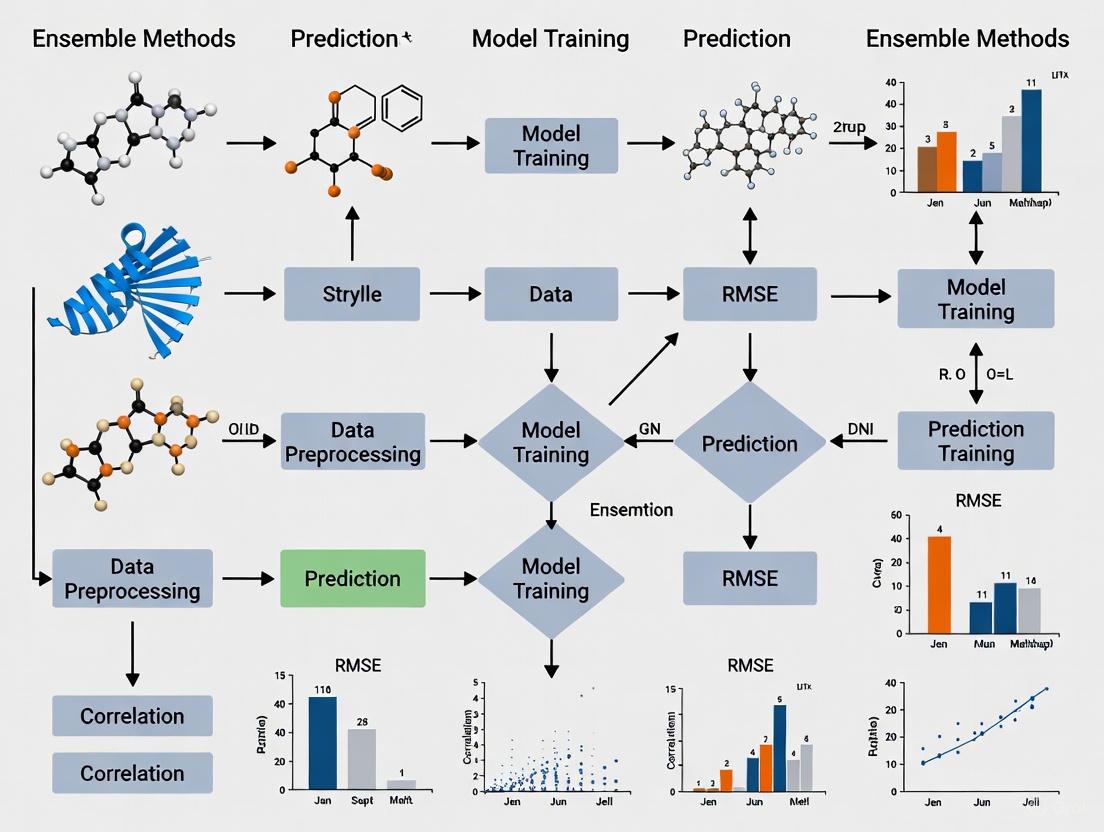
Accurate prediction of protein-ligand binding affinity is a critical challenge in structure-based drug design.
Ensemble Methods for Protein-Ligand Binding Affinity Prediction: Boosting Accuracy and Generalization in Drug Discovery
Abstract
Accurate prediction of protein-ligand binding affinity is a critical challenge in structure-based drug design. While single-model predictors often suffer from low generalization, ensemble methods are emerging as a powerful solution, combining multiple models to significantly enhance predictive performance and robustness. This article explores the foundational principles, methodological advances, and practical applications of ensemble learning in this domain. We detail how techniques like bagging, boosting, and stacking are being implemented in state-of-the-art frameworks such as EBA and MULTICOM_ligand to achieve superior results on benchmarks like CASF2016 and in real-world drug screening scenarios. Furthermore, we address key troubleshooting strategies for common pitfalls like data leakage and overfitting, and provide a comparative analysis of ensemble performance against traditional single-model approaches. This synthesis provides researchers and drug development professionals with a comprehensive guide to leveraging ensemble methods for more reliable and effective virtual screening.
The Power of Many: Why Ensembles Outperform Single Models in Binding Affinity Prediction
Accurate prediction of protein-ligand binding affinity is a critical step in computational drug discovery, essential for identifying new drug candidates and therapeutic targets while reducing clinical trial failure rates [1]. While deep learning models have demonstrated potential in accelerating this identification process, their translation to real-world drug discovery has been significantly hampered by a fundamental limitation: poor generalization to novel structures [1]. Single-model predictors frequently achieve impressive performance on benchmark datasets during testing yet fail dramatically when confronted with never-before-seen proteins or ligands. This application note examines the mechanistic causes of this generalization problem, presents quantitative evidence of single-model limitations, and introduces experimental protocols that lay the groundwork for more robust ensemble-based solutions.
Quantitative Evidence of Single-Model Limitations
Performance Degradation on Novel Structures
Multiple independent studies have documented the systematic failure of single-model approaches when predicting interactions for novel chemical structures. The core issue lies in what has been termed "shortcut learning" – where models leverage statistical artifacts in training data rather than learning underlying physicochemical principles that govern binding interactions [1].
Table 1: Comparative Performance of Single-Model vs. Configuration Model on BindingDB Dataset
| Model Type | AUROC | AUPRC | Generalization Capability |
|---|---|---|---|
| DeepPurpose (Transformer-CNN) | 0.86 ± 0.005 | 0.64 ± 0.009 | Fails on novel structures |
| Network Configuration Model | 0.86 ± 0.005 | 0.61 ± 0.009 | Relies solely on topological shortcuts |
| AI-Bind Pipeline | Improved | Improved | Successfully generalizes to novel targets |
The striking similarity in performance between a sophisticated deep learning model (DeepPurpose) and a simple network configuration model that completely ignores molecular features reveals the fundamental flaw: state-of-the-art models often rely on topological shortcuts in the protein-ligand interaction network rather than learning meaningful structure-activity relationships [1].
Annotation Imbalance and Topological Shortcuts
The protein-ligand binding landscape follows a fat-tailed distribution where most proteins and ligands have few binding annotations, while a small number of "hub" nodes accumulate disproportionately many records [1]. This annotation imbalance creates a statistical bias that single-model predictors exploit instead of learning genuine binding determinants.
Table 2: Annotation Imbalance in BindingDB Data
| Parameter | Proteins | Ligands |
|---|---|---|
| Degree exponent (γ) | 2.84 | 2.94 |
| Spearman correlation (k, 〈Kd〉) | -0.47 | -0.29 |
| Annotation imbalance (ρ) | Close to 0 or 1 | Close to 0 or 1 |
This topological shortcut mechanism explains why models achieving AUROC scores of 0.86 in cross-validation fail to generalize to novel targets – they essentially learn to recognize frequently interacting proteins and ligands rather than the structural features that enable binding [1].
Mechanistic Analysis of Single-Model Failures
The Topological Shortcut Pathway
Current single-model architectures exhibit a systematic tendency to bypass feature learning in favor of topological heuristics. The following diagram illustrates this problematic pathway:
This shortcut learning phenomenon represents a fundamental architectural limitation of single-model approaches. Rather than processing the complex physicochemical information contained in protein sequences and ligand structures, models default to simpler topological patterns, severely compromising their utility for novel drug target identification [1].
Input Representation Limitations
Single-model approaches suffer from inherent limitations in their capacity to capture the complex, multi-scale interactions that determine binding affinity:
- 1D sequence-based methods (DeepDTA, CAPLA) utilize protein sequences and ligand SMILES strings but fail to incorporate 3D structural information and struggle to capture short-range direct interactions [2].
- Structure-based methods (KDEEP, Pafnucy) employ 3D grids or molecular graphs but require extensive computational resources and may miss long-range interactions [2].
- Hybrid methods attempt to combine structural and sequence features but often generate noisy representations with overlapping information capture [2].
The generalization capability remains a key challenge across all these architectures. For example, the CAPLA model performs well on benchmark CASF2016 and CASF2013 datasets but shows poor performance on CSAR-HiQ datasets, demonstrating how single-model approaches often fail to transfer across different experimental conditions [2].
Experimental Protocols for Assessing Generalization
Protocol: Evaluating Novel Target Prediction
Purpose: To quantitatively assess model performance degradation on novel protein targets and ligands not represented in training data.
Materials:
- BindingDB dataset (or equivalent protein-ligand interaction database)
- Deep learning framework (PyTorch/TensorFlow)
- Model implementation (DeepPurpose or similar architecture)
Procedure:
- Stratified Data Partitioning: Split the protein-ligand interaction network such that test set proteins and ligands have no annotations in the training data [1].
- Feature Extraction:
- Represent proteins by amino acid sequences and convert to structural descriptors
- Represent ligands by SMILES strings and compute molecular fingerprints
- Baseline Establishment: Train a configuration model that uses only degree information for benchmarking [1].
- Model Training: Implement and train the target model using standard architectures.
- Generalization Assessment: Compare performance metrics (AUROC, AUPRC) between:
- Standard random cross-validation
- Novel target/ligand cross-validation
Interpretation: A significant performance drop (≥15% in AUPRC) in novel target prediction indicates substantial reliance on topological shortcuts rather than feature learning [1].
Protocol: Annotation Imbalance Quantification
Purpose: To measure the degree of annotation imbalance and its correlation with model predictions.
Materials:
- Protein-ligand interaction network data
- Statistical analysis software (Python/R)
Procedure:
- Degree Calculation: For each protein i and ligand j, compute:
- Total degree: k = k⁺ + k⁻
- Positive degree: k⁺ (binding annotations)
- Negative degree: k⁻ (non-binding annotations)
- Degree Ratio Calculation: Compute annotation balance ρᵢ = kᵢ⁺/kᵢ for each node [1].
- Correlation Analysis: Calculate Spearman correlation between node degree and average Kd values.
- Prediction Bias Assessment: Plot model-predicted binding probabilities against ρ values.
Interpretation: Strong correlation (|r| > 0.4) between predicted binding probability and ρ indicates significant model dependency on topological shortcuts rather than molecular features [1].
The Research Toolkit: Essential Materials and Reagents
Table 3: Key Research Reagents and Computational Tools
| Item | Function | Application Context |
|---|---|---|
| BindingDB Dataset | Source of protein-ligand binding annotations | Training and benchmarking predictive models |
| PDBBind Database | Curated protein-ligand complexes with affinity data | Model training and validation |
| DeepPurpose Framework | Deep learning toolkit for binding prediction | Implementing and testing single-model architectures |
| SMILES Strings | 1D representation of ligand chemical structures | Featurization for sequence-based methods |
| Molecular Fingerprints | Fixed-length vector representations of molecules | Capturing chemical features for machine learning |
| AUROC/AUPRC Metrics | Quantitative performance assessment | Evaluating model generalization capability |
Pathway to Robust Prediction: Overcoming Single-Model Limitations
The systematic failures of single-model predictors necessitate a paradigm shift toward more robust approaches. The evidence suggests that future methodologies must explicitly address the topological shortcut problem through innovative training strategies and architectural improvements:
Emerging solutions like AI-Bind demonstrate that combining network-based sampling strategies with unsupervised pre-training can significantly improve binding predictions for novel proteins and ligands [1]. Similarly, ensemble methods that integrate multiple feature representations and model architectures show substantially improved generalization capabilities, with some implementations achieving Pearson correlation coefficients up to 0.914 on benchmark datasets [2].
These approaches collectively address the fundamental limitation of single-model predictors by forcing the learning of genuine molecular features rather than allowing reliance on topological shortcuts, thereby creating more reliable predictive tools for novel drug discovery applications.
In computational drug discovery, accurately predicting the binding affinity between a protein and a small molecule (ligand) is a fundamental challenge. The strength of this interaction directly influences a drug candidate's efficacy and safety, making its precise estimation crucial for virtual screening and lead optimization [3] [4]. Conventional scoring functions, often based on linear regression of a few energy terms, have long struggled with the complex, non-linear physical chemistry governing molecular recognition [3].
Ensemble learning has emerged as a powerful machine learning paradigm that addresses these limitations. Rather than relying on a single model, ensemble methods combine predictions from multiple base learners to achieve superior accuracy, robustness, and generalization compared to any individual constituent [5] [6]. This approach is particularly well-suited for protein-ligand binding affinity prediction, where capturing diverse and complex interactions from high-dimensional data is essential. Research has consistently demonstrated that ensemble models significantly outperform conventional scoring functions and even single complex models [3] [7].
This article details the core principles of the three primary ensemble techniques—Bagging, Boosting, and Stacking—and provides application notes for their implementation in binding affinity prediction.
Core Principles and Mechanisms
Bagging (Bootstrap Aggregating)
Principle: Bagging aims to reduce the variance of machine learning models by creating multiple versions of the original training data through bootstrap sampling (sampling with replacement) and then aggregating the predictions of models trained on each of these data subsets [5].
Key Mechanism:
- Bootstrap Sampling: From a dataset of size N, multiple subsets, each of size N, are created by random sampling with replacement. This means individual data points can appear multiple times in a single subset, while others may be omitted.
- Parallel Training: Base learners (typically high-variance models like deep decision trees or neural networks) are trained independently on each bootstrap sample.
- Aggregation: For regression tasks (like predicting binding affinity), the final prediction is the average of the predictions from all individual models.
Bagging is highly effective because the aggregation process smooths out the noisy predictions of individual learners. A prominent example is the Random Forest algorithm, which combines bagging with random feature selection for added diversity [5] [6]. In binding affinity prediction, the BgN-Score function, which employs an ensemble of neural networks via bagging, demonstrated a more than 25% improvement in prediction accuracy over conventional scoring functions [3].
Boosting
Principle: Boosting is a sequential technique that converts a collection of "weak" learners (models that perform slightly better than random guessing) into a single strong learner. It focuses on training new models to correct the errors made by previous ones.
Key Mechanism:
- Sequential Training: Models are trained one after the other.
- Adaptive Weighting: After each iteration, the training data is re-weighted: misclassified or poorly predicted instances have their weights increased, forcing subsequent learners to focus more on these difficult cases.
- Weighted Combination: The final model is a weighted sum (or vote) of all the weak learners, where models with better performance are assigned higher weights.
Boosting algorithms, such as Gradient Boosting Machines (GBM), XGBoost, and CatBoost, are widely used in binding affinity prediction due to their high predictive power [8] [6]. The BsN-Score scoring function, which uses boosting to combine neural networks, achieved a Pearson's correlation coefficient of 0.816 in binding affinity prediction, showcasing its state-of-the-art performance [3].
Stacking (Stacked Generalization)
Principle: Stacking combines multiple different types of models (heterogeneous base learners) using a meta-learner. The premise is that different algorithms can capture diverse patterns in the data, and a smarter model can learn how to best combine these perspectives.
Key Mechanism:
- Base-Layer Predictions: Diverse base models (e.g., Support Vector Machines, Random Forests, Graph Neural Networks) are trained on the original training data.
- Meta-Feature Generation: The predictions from these base models are used as input features (meta-features) for a new dataset.
- Meta-Learner Training: A final model (the meta-learner) is trained to make the final prediction based on these meta-features.
Stacking is a powerful advanced technique that can capture complex interactions between the predictions of various models. The StackCPA model is a successful application of this principle, using a stacking layer that integrates LightGBM, XGBoost, and CatBoost to predict compound-protein affinity based on multi-scale pocket features [8]. Similarly, the EBA (Ensemble Binding Affinity) method explores all possible ensembles of 13 different deep learning models to achieve superior performance, with one ensemble reaching a Pearson correlation of 0.914 on the CASF-2016 benchmark [7].
Comparative Analysis
Table 1: Comparative Summary of Bagging, Boosting, and Stacking
| Feature | Bagging | Boosting | Stacking |
|---|---|---|---|
| Primary Goal | Reduce variance | Reduce bias | Improve predictive accuracy by leveraging strengths of diverse models |
| Training Style | Parallel | Sequential | Two-phase (base learners then meta-learner) |
| Focus on Data | Bootstrap samples of the entire dataset | Successively focuses on mispredicted instances | Original training data for base learners; base model predictions for meta-learner |
| Base Learner Diversity | Typically homogeneous (same algorithm) | Typically homogeneous (same algorithm) | Encourages heterogeneous (different algorithms) |
| Advantages | Reduces overfitting, robust to noise, easily parallelized | Often higher accuracy, can handle complex relationships | Can model complex interactions between different model predictions, potentially the highest performance |
| Disadvantages | Less interpretable, can be computationally expensive | Prone to overfitting on noisy data, requires careful tuning | Computationally very expensive, complex to train and validate, high risk of overfitting without careful cross-validation |
| Example in Affinity Prediction | BgN-Score (Bagged Neural Networks) [3] | BsN-Score (Boosted Neural Networks) [3], SimBoost [8] | StackCPA [8], EBA [7] |
Experimental Protocols for Ensemble Construction in Affinity Prediction
This section outlines a generalized protocol for developing and benchmarking ensemble learning models for protein-ligand binding affinity prediction, based on established methodologies in the field [8] [7].
Data Preparation and Feature Engineering
Dataset Curation:
- Source: Obtain a high-quality dataset of protein-ligand complexes with experimentally measured binding affinities (e.g., Kd, Ki, IC50), typically expressed as pK (pKd, pKi, etc.) for regression. The PDBbind database is the most widely used benchmark [3] [8] [9].
- Splitting: Divide the data into training, validation, and test sets. A time-split strategy (e.g., complexes from before a certain year for training/validation and after for testing) is recommended to better simulate real-world drug discovery scenarios and assess model generalizability [9].
- Ensure the test set is non-redundant and diverse, such as the CASF core sets, to avoid data leakage and enable fair benchmarking [3] [9].
Feature Extraction: Generate multi-scale features for each protein-ligand complex. The choice of features can vary, but common approaches include:
- Physicochemical & Geometrical Features: Hand-crafted features characterizing atom-level interactions, distances, angles, and energy terms [3].
- Structural Graph Representations: Represent the protein, ligand, and/or complex as a graph where nodes are atoms or residues and edges are bonds or spatial proximities. Use graph neural networks or embedding techniques (e.g., Mol2vec, graph2vec) to learn features [8] [9].
- Sequential & Textual Representations: Use protein amino acid sequences and ligand SMILES strings as input for 1D convolutional or transformer-based models [6].
- Pocket Multi-scale Features: Extract features at different granularities: atomic, residue, and subdomain levels of the protein binding pocket [8].
Model Training and Validation
Base Learner Training:
- For Bagging (e.g., Random Forest): Train multiple decision trees on different bootstrap samples of the training data. For neural network ensembles like BgN-Score, train multiple NNs on bootstrap samples [3].
- For Boosting (e.g., XGBoost): Sequentially train decision trees, where each new tree is fitted to the residual errors of the combined previous trees.
- For Stacking (e.g., StackCPA, EBA):
- Step 1: Train a diverse set of base models (e.g., LightGBM, XGBoost, CatBoost, Graph Neural Networks, 3D-CNNs) on the training data using k-fold cross-validation [8] [7].
- Step 2: Use the cross-validated predictions from these base models on the training set (to avoid overfitting) as features to train a meta-learner (e.g., a linear regression model or another boosting algorithm).
Hyperparameter Optimization: Use the validation set and techniques like grid search or Bayesian optimization to tune hyperparameters for both base learners and meta-learners. Key parameters include tree depth, learning rate (for boosting), number of estimators, and network architecture.
Evaluation Metrics: Rigorously evaluate the final model on the held-out test set using standard metrics for regression:
- Pearson's Correlation Coefficient (R): Measures the linear correlation between predicted and experimental values.
- Root Mean Square Error (RMSE): Measures the average magnitude of prediction errors.
- Mean Absolute Error (MAE): Similar to RMSE but less sensitive to large errors.
Workflow Visualization
The following diagram illustrates a generalized stacking workflow for binding affinity prediction, integrating multiple feature types and model architectures.
Table 2: Essential Tools and Datasets for Ensemble-based Affinity Prediction
| Category | Item / Resource | Function & Utility |
|---|---|---|
| Benchmark Datasets | PDBbind [8] [9] | A curated database of protein-ligand complexes with experimental binding affinities; the standard benchmark for training and testing scoring functions. |
| CASF (Core Sets) [3] [9] | A diverse, non-redundant subset of PDBbind, specifically designed for objective benchmarking of scoring functions. | |
| Feature Extraction | RDKit | Open-source cheminformatics software used for calculating molecular descriptors, fingerprints, and handling molecular data. |
| Mol2vec [8] | An unsupervised machine learning approach to learn vector representations of molecular substructures, analogous to Word2vec in NLP. | |
| AlphaFold Protein Structure Database [8] | A database of highly accurate predicted protein structures, overcoming the limitation of scarce experimentally determined structures. | |
| Base Learning Algorithms | XGBoost, LightGBM, CatBoost [8] [6] | High-performance gradient boosting frameworks that are commonly used as base learners or meta-learners in ensemble stacks. |
| Graph Neural Networks (GNNs) [10] [9] | Neural networks that operate directly on graph-structured data, ideal for learning representations of molecules and protein pockets. | |
| 3D Convolutional Neural Networks (3D-CNNs) [7] [6] | Used to process 3D structural representations (voxelized grids) of protein-ligand complexes. | |
| Evaluation Metrics | Pearson's R, RMSE, MAE [7] [9] | Standard statistical metrics used to quantify the predictive performance and accuracy of binding affinity models. |
Ensemble learning methods have fundamentally advanced the state of the art in protein-ligand binding affinity prediction. By strategically combining multiple models, these techniques mitigate the limitations of individual learners and conventional scoring functions, leading to marked improvements in accuracy and robustness. As the field progresses, the integration of more diverse and sophisticated base models—particularly those leveraging deep learning on 3D structural and graph data—within ensemble frameworks like stacking, promises to further accelerate the discovery of novel therapeutic agents. The experimental protocols and resources outlined herein provide a foundational roadmap for researchers aiming to deploy these powerful methods in computer-aided drug design.
Accurate prediction of protein-ligand binding affinity is a critical challenge in computational drug discovery, with deep learning models increasingly employed to enhance prediction accuracy. However, these models often suffer from high variance and bias, severely limiting their generalization capability to novel protein-ligand complexes. Recent research has revealed that benchmark performance metrics have been substantially inflated by data leakage and dataset redundancies, leading to overestimated real-world performance. This application note examines the statistical foundation of ensemble methods as a robust solution to these limitations, demonstrating how strategic combination of multiple models reduces variance, mitigates bias, and delivers consistently superior performance across diverse benchmarking scenarios. We provide detailed protocols for implementing ensemble strategies and validate their effectiveness through comprehensive experimental results.
The field of computational drug design relies on accurate scoring functions to predict binding affinities for protein-ligand interactions, a crucial task for virtual screening and drug development. While deep learning approaches have revolutionized binding affinity prediction, their real-world application has been hampered by a significant generalization gap. Alarmingly, recent investigations have revealed that train-test data leakage between the PDBbind database and Comparative Assessment of Scoring Function (CASF) benchmark datasets has severely inflated performance metrics of current deep-learning models [11].
This data leakage problem is substantial in scale. A structure-based clustering analysis identified that nearly 600 similarities exist between PDBbind training and CASF complexes, affecting 49% of all CASF complexes [11]. This means nearly half of the test complexes do not present genuinely new challenges to trained models, enabling accurate prediction through memorization rather than genuine understanding of protein-ligand interactions. When this leakage is addressed through proper dataset splitting, the performance of state-of-the-art models drops markedly, exposing their limited generalization capability [11].
The core statistical challenges manifest as high variance (models are sensitive to specific training data and exhibit large performance fluctuations across different test sets) and high bias (models make simplifying assumptions that prevent them from capturing complex protein-ligand interaction patterns). Ensemble methods address both limitations through strategic combination of diverse models, leveraging the statistical principle that aggregated predictions from multiple base learners exhibit reduced variance and more stable performance across diverse test scenarios.
Statistical Foundation of Ensemble Methods
The Bias-Variance Tradeoff in Binding Affinity Prediction
The bias-variance tradeoff provides a fundamental framework for understanding the limitations of single-model approaches in binding affinity prediction. Bias arises from overly simplistic assumptions in model architecture, leading to systematic errors in predicting affinities for complexes with novel structural features. Variance reflects a model's sensitivity to specific training data, resulting in unstable performance across different protein families or ligand types.
Single-model architectures inevitably struggle with this tradeoff. Graph neural networks may capture spatial relationships effectively but overlook important sequential motifs, while convolutional approaches process structural grids but miss long-range interactions. Sequence-based methods utilize evolutionary information but lack critical 3D structural context [2]. Each architecture introduces distinct biases that limit overall predictive performance.
Ensemble methods circumvent this limitation by combining multiple base learners with diverse inductive biases. The aggregated prediction F(x) for a protein-ligand complex x can be represented as:
F(x) = Σ wi * fi(x)
where fi(x) represents the prediction of base model i, and wi represents its weight in the ensemble. This aggregation reduces overall variance without increasing bias, as the errors of individual models tend to cancel out [2].
Diversity Mechanism in Ensemble Construction
The effectiveness of ensemble methods depends critically on the diversity of base models. In binding affinity prediction, this diversity can be achieved through multiple strategies:
- Architectural diversity: Combining models with different structural inductive biases (CNNs, GNNs, Transformers)
- Feature diversity: Utilizing different input representations (sequence, structure, interaction fingerprints)
- Training diversity: Employing different training subsets or initialization parameters
Research demonstrates that ensembles incorporating diverse feature representations and architectural approaches achieve significantly more robust performance than any single model architecture [2] [9]. The ensemble approach enables different models to capture complementary aspects of protein-ligand interactions, leading to more comprehensive understanding.
Ensemble Implementation Protocols
Diverse Base Model Generation Protocol
This protocol outlines the systematic creation of diverse base models for ensemble construction in binding affinity prediction.
Materials and Reagents
- PDBbind database (general set, refined set, and core set for benchmarking)
- Hardware: GPU-accelerated computing environment
- Software: Python with deep learning frameworks (PyTorch/TensorFlow), RDKit for ligand featurization
Procedure
Feature Diversity Implementation
- Extract 1D sequential features: Protein sequences, ligand SMILES strings
- Generate 2D structural features: Atom-type matrices, interaction fingerprints
- Construct 3D structural features: Molecular graphs, atomic coordinate grids
- Calculate specialized features: Angle-based feature vectors for short-range direct interactions [2]
Architectural Diversity Implementation
- Implement Convolutional Neural Networks (CNNs) with 3D convolutional layers for spatial feature extraction from structural grids
- Implement Graph Neural Networks (GNNs) with message passing for molecular graph analysis
- Implement Transformer architectures with self-attention mechanisms for sequence context modeling
- Implement Hybrid architectures (e.g., CNN-BiGRU with attention) to capture both local and global molecular information [12]
Training Configuration Diversity
- Train each model architecture on different feature combinations
- Utilize varied training hyperparameters (learning rates, batch sizes)
- Apply different random initializations for weight initialization
- Employ bootstrap sampling to create varied training data subsets
Model Validation
- Validate each base model on a held-out validation set
- Assess diversity through correlation analysis of prediction errors
- Select models with strong individual performance and low error correlation for ensemble inclusion
Timing
- Base model training: 24-72 hours per model (varies by architecture and dataset size)
- Ensemble construction: 2-4 hours
Ensemble Integration and Validation Protocol
This protocol details the integration of trained base models into a unified ensemble and rigorous validation of ensemble performance.
Procedure
Ensemble Integration Methods
- Averaging: Compute simple or weighted average of base model predictions
- Stacking: Train a meta-model on base model predictions
- Boosting: Sequentially add models to focus on previously mispredicted complexes
Cross-Validation Framework
- Implement stratified k-fold cross-validation (k=5) preserving protein family distribution
- For each fold:
- Train all base models on k-1 folds
- Generate predictions on the held-out fold
- Train ensemble integrator on base model predictions
- Aggregate results across all folds for robust performance estimation
Generalization Assessment
- Evaluate on strictly independent test sets (CASF core sets)
- Test on temporally split data (complexes deposited after training set cutoff)
- Validate on diverse protein families not represented in training
- Assess performance on different affinity ranges and complex types
Statistical Significance Testing
- Perform paired t-tests comparing ensemble vs. individual model performance
- Calculate confidence intervals for performance metrics
- Implement permutation tests to verify result significance
Troubleshooting
- If ensemble performance matches best base model only, increase base model diversity
- If ensemble underperforms, adjust ensemble weighting scheme
- If overfitting occurs, increase regularization in meta-model or reduce ensemble complexity
Performance Benchmarking and Analysis
Quantitative Performance Comparison
Table 1: Performance Comparison of Individual vs. Ensemble Methods on CASF-2016 Benchmark
| Method | Architecture Type | Pearson's R | RMSE | MAE |
|---|---|---|---|---|
| Pafnucy | 3D CNN | 0.780 | 1.420 | 1.150 |
| GenScore | Graph Neural Network | 0.816 | 1.310 | 1.020 |
| CAPLA | Sequence-based | 0.795 | 1.380 | 1.110 |
| EBA (Ensemble) | Multiple architectures with diverse features | 0.857 | 1.195 | 0.951 |
| GEMS (with CleanSplit) | Graph Neural Network with transfer learning | 0.842 | 1.240 | 0.980 |
Table 2: Impact of Data Splitting Strategy on Model Performance
| Data Partitioning Method | Pearson's R | RMSE | Generalization Assessment |
|---|---|---|---|
| Random splitting | 0.70 (average) | 1.35 (average) | Overoptimistic, inflated metrics |
| UniProt-based splitting | 0.52 (average) | 1.68 (average) | More realistic but challenging |
| CleanSplit (structure-based) | 0.55-0.65 (single models) | 1.55-1.65 (single models) | Eliminates data leakage |
| Ensemble with CleanSplit | 0.75-0.85 | 1.20-1.35 | Maintains performance without leakage |
Generalization Across Diverse Benchmarks
Ensemble methods demonstrate particularly strong advantages when evaluated on strictly independent test sets that eliminate data leakage. The EBA framework maintains robust performance across multiple challenging benchmarks, achieving 15% improvement in Pearson correlation and 19% improvement in RMSE on CSAR-HiQ test sets compared to the second-best predictor [2]. This cross-benchmark consistency highlights the ability of ensemble methods to mitigate the variance problem that plagues single-model approaches.
When evaluated using the rigorous PDBbind CleanSplit protocol which removes structurally similar complexes between training and test sets, ensemble methods maintain high prediction accuracy while single-model performance drops substantially [11] [2]. This demonstrates that ensemble predictions are based on genuine understanding of protein-ligand interactions rather than exploitation of dataset similarities.
Visualization of Ensemble Frameworks
Ensemble Construction Workflow
Ensemble Model Construction
Data Partitioning Impact
Data Splitting Effects
Research Reagent Solutions
Table 3: Essential Research Tools for Ensemble Binding Affinity Prediction
| Resource | Type | Function | Application Context |
|---|---|---|---|
| PDBbind Database | Data Resource | Curated collection of protein-ligand complexes with binding affinity data | Primary training and benchmarking data source |
| CASF Benchmark | Evaluation Framework | Standardized benchmark for scoring function assessment | Rigorous generalization testing |
| CleanSplit Protocol | Data Partitioning | Structure-based filtering to eliminate data leakage | Creating truly independent training-test splits |
| RDKit | Cheminformatics | Ligand structure analysis and descriptor calculation | Feature extraction for small molecules |
| ESM-2 | Protein Language Model | Protein sequence embedding and feature extraction | Transfer learning for protein representations |
| PLAsformer | Software | Hybrid CNN-BiGRU with attention mechanism | Base model for local and global feature capture |
| LGN | Software | Graph neural network with ligand feature enhancement | Base model for graph-based representation |
Ensemble methods provide a statistically rigorous solution to the critical challenges of high variance and bias in protein-ligand binding affinity prediction. By strategically combining diverse base models, ensembles effectively mitigate the limitations of individual architectures and feature representations, leading to robust performance gains particularly evident under rigorous evaluation protocols that eliminate data leakage. The implementation protocols and benchmarking analyses presented in this application note provide researchers with practical guidance for developing ensemble approaches that maintain predictive accuracy across diverse protein families and ligand types, ultimately accelerating computational drug discovery through more reliable affinity prediction.
In computational research, particularly in high-stakes fields like drug discovery, the accuracy and robustness of predictive models are paramount. Ensemble learning has emerged as a powerful paradigm that addresses these demands by combining multiple machine learning models to achieve performance that surpasses that of any single constituent model. This approach is especially valuable in protein-ligand binding affinity prediction, where the complexity of molecular interactions, high-dimensional data, and limited experimental datasets present significant challenges. Ensemble methods mitigate these issues by leveraging the collective power of multiple learners, thereby reducing variance, minimizing bias, and enhancing generalization capability [2] [13].
The efficacy of ensemble methods was compellingly demonstrated in a recent study on binding affinity prediction, where an ensemble of 13 deep learning models (EBA) achieved a Pearson correlation coefficient (R) of 0.914 and a root mean square error (RMSE) of 0.957 on the CASF2016 benchmark. This represented a significant improvement of over 15% in R-value and 19% in RMSE compared to single-model predictors on certain test sets [2]. Such performance gains underscore why understanding the core components of ensemble architectures—base learners, weak versus strong learners, and meta-models—is essential for researchers aiming to develop state-of-the-art predictive systems in structural bioinformatics and computer-aided drug design.
Defining the Core Terminology
Base Learners
Base learners (also referred to as base models, base estimators, or component models) are the fundamental building blocks of any ensemble system. These are individual machine learning models whose predictions are combined to form the ensemble's final output [13] [14]. In practice, base learners can be homogeneous (all of the same type, such as an ensemble of decision trees in a Random Forest) or heterogeneous (of different types, such as combining a support vector machine, a neural network, and a decision tree) [13] [15]. The diversity among base learners is a critical factor in ensemble performance, as it enables the capturing of complementary patterns in the data, which is particularly valuable when dealing with the complex, multi-scale interactions that determine protein-ligand binding affinity [2] [16].
Weak Learners vs. Strong Learners
The concepts of weak and strong learners originate from computational learning theory and provide a formal framework for characterizing model performance.
Table 1: Characteristics of Weak vs. Strong Learners
| Feature | Weak Learner | Strong Learner |
|---|---|---|
| Formal Definition (Binary Classification) | Performs slightly better than random guessing (>50% accuracy) [17] [13] | Achieves arbitrarily high accuracy [17] |
| Colloquial Meaning | Model that performs slightly better than a naive baseline [17] | Model that achieves high, near-optimal performance [17] |
| Typical Examples | Decision stumps, shallow decision trees [17] [14] | Well-tuned Logistic Regression, SVM, Deep Neural Networks [17] |
| Training Case | Easy to train, computationally inexpensive [17] | Difficult to train, computationally expensive [17] |
| Desirability | Not desirable for final prediction due to low skill [17] | Highly desirable as a final predictor [17] |
| Primary Ensemble Role | Fundamental building block in boosting ensembles [17] [18] | Used as base learners in stacking or as the target output of boosting [17] |
In the context of protein-ligand binding affinity prediction, the formal definition based on binary classification accuracy is often extended to regression tasks. Here, a weak learner would be one whose predictions are slightly more accurate than those made by a simple baseline (e.g., predicting the mean affinity), while a strong learner would demonstrate high correlation with experimental binding measurements and low error metrics [2] [19].
Meta-Models (Meta-Learners)
A meta-model (also known as a meta-learner or blender) is a higher-level model that learns how to optimally combine the predictions of base learners [13] [16]. Instead of making direct predictions from raw input features, the meta-model is trained on the outputs of the base learners, which serve as meta-features. The fundamental hypothesis is that this meta-learning process can capture the relative strengths and weaknesses of each base learner under different conditions, leading to more accurate and robust final predictions than simple averaging or voting schemes [15]. In stacking ensembles, which are particularly relevant for heterogeneous ensembles, the meta-model is trained on predictions generated via cross-validation to prevent data leakage and overfitting [18].
Theoretical Framework and Relationships
The theoretical foundation for combining weak learners stems from a crucial finding in computational learning theory: weak and strong learnability are equivalent. This means that a strong learner can be constructed from an ensemble of sufficiently many weak learners [17]. This proof provided the theoretical basis for the development of boosting algorithms, which explicitly transform collections of weak learners into a single strong learner through sequential, adaptive training processes [17] [14].
The relationship between these components varies significantly across different ensemble methodologies:
- Bagging (Bootstrap Aggregating): Primarily uses moderately strong but high-variance base learners (e.g., fully grown decision trees) trained in parallel on bootstrap samples of the training data. The final prediction typically results from averaging (regression) or majority voting (classification) without a dedicated meta-model [17] [20] [16].
- Boosting: Sequentially trains weak learners (e.g., decision stumps), with each new learner focusing on the errors of its predecessors. The combination is typically a weighted sum, and the entire ensemble functions as a strong learner without a separate meta-model [17] [18] [14].
- Stacking (Stacked Generalization): Employs diverse, often strong base learners, and uses a meta-model to learn how to best combine their predictions. The meta-model—which can be a linear model like logistic regression or a more complex algorithm—is trained on hold-out predictions from the base learners [18] [16] [15].
Table 2: Component Roles in Different Ensemble Methods
| Ensemble Method | Typical Base Learner Type | Presence of Meta-Model | Combination Mechanism |
|---|---|---|---|
| Bagging | Strong, high-variance (e.g., deep trees) [17] | No | Averaging or majority vote [20] [16] |
| Random Forest (Bagging extension) | Strong, decorrelated trees [16] | No | Averaging or majority vote [20] |
| Boosting (e.g., AdaBoost, GBM) | Weak (e.g., decision stumps) [17] [14] | No | Weighted sum based on sequential error correction [18] [14] |
| Stacking | Strong, heterogeneous (e.g., SVM, RF, NN) [15] | Yes | Learned combination via a meta-model [18] [16] |
The following diagram illustrates the fundamental relationships and workflow between these components in a generic ensemble system:
Application in Protein-Ligand Binding Affinity Prediction
Research Context and Significance
Accurate prediction of protein-ligand binding affinity is a central challenge in structure-based drug design, as it directly influences the efficacy and selectivity of potential therapeutic compounds [2] [21]. Traditional computational approaches, including force-field, empirical, and knowledge-based scoring functions, often struggle with generalization across diverse protein families and binding modes due to their rigid functional forms and simplifying assumptions [19] [21]. Machine learning, and particularly ensemble methods, have emerged as powerful alternatives that can learn complex relationships between structural features and binding affinities directly from experimental data [2] [19].
The Ensemble Binding Affinity (EBA) study exemplifies the successful application of ensemble principles in this domain. The researchers trained 13 deep learning models using different combinations of five input features, then explored all possible ensembles to identify optimal combinations. Their best ensemble significantly outperformed existing state-of-the-art methods across multiple benchmark datasets, demonstrating the practical value of combining diverse base learners to achieve superior predictive performance and generalization [2]. This approach effectively addresses key challenges in binding affinity prediction, such as capturing both short-range and long-range molecular interactions and mitigating the limitations of individual feature representations.
Implementation Protocol: Developing an Ensemble for Binding Affinity Prediction
Objective: To construct a stacking ensemble model for predicting protein-ligand binding affinity using diverse structural and sequence-based features.
Materials and Computational Reagents:
Table 3: Essential Research Reagent Solutions for Binding Affinity Ensemble
| Reagent / Resource | Type/Description | Purpose in Protocol |
|---|---|---|
| PDBbind Database [2] [19] | Curated database of protein-ligand complexes with experimental binding affinities | Primary source of training and testing data |
| Molecular Feature Sets [2] | 1D sequential, structural features, angle-based features, etc. | Input representations for base learners |
| Cross-Attention/Self-Attention Networks [2] | Deep learning architectures for capturing molecular interactions | Base learner implementation for feature learning |
| Scikit-learn Library [18] [20] | Python machine learning library | Provides ensemble frameworks and meta-models |
| Cross-Validation Framework [18] | Resampling procedure (e.g., 5-fold CV) | Prevents overfitting in meta-model training |
Step-by-Step Procedure:
Data Preparation and Feature Engineering
Base Learner Selection and Training
- Select a diverse set of base learning algorithms. In the EBA study, 13 deep learning models with different feature combinations were used [2]. For heterogeneous stacking, consider:
- Train each base learner on the full training set using appropriate hyperparameters.
Generate Cross-Validation Predictions for Meta-Training
- For each base learner, perform K-fold cross-validation (e.g., 5-fold) on the training data [18].
- Collect the out-of-fold predictions for each training instance. These predictions become the meta-features for the meta-model training.
- Optionally, also generate predictions on the hold-out validation set to enrich the meta-training data.
Train the Meta-Model
- Construct a meta-training dataset where:
- Features: The collected cross-validation predictions from all base learners.
- Target: The true binding affinity values from the original training data.
- Train a meta-model (e.g., Logistic Regression for classification, Linear Regression for binding affinity prediction) on this dataset [18] [15].
- The meta-model learns the optimal weighting or combination of the base learners' predictions.
- Construct a meta-training dataset where:
Final Model Evaluation and Deployment
- Train each base learner on the entire training set.
- The final ensemble model is defined by the trained base learners and the trained meta-model.
- Evaluate the ensemble performance on the held-out test set using appropriate metrics (e.g., Pearson's R, RMSE for binding affinity prediction) [2].
- Compare ensemble performance against individual base learners and baseline methods to quantify improvement.
The following workflow diagram visualizes this stacking protocol for binding affinity prediction:
Advanced Considerations and Best Practices
Diversity and Complementarity of Base Learners
The performance gain in ensemble methods stems largely from the diversity and complementarity of the base learners. In the context of binding affinity prediction, this can be achieved by:
- Input Feature Diversity: Using different feature representations (e.g., 1D sequences, 2D distances, 3D structural features) for different base learners, as implemented in the EBA method [2]. This ensures that various aspects of protein-ligand interactions are captured.
- Algorithmic Diversity: Combining different learning algorithms (e.g., tree-based methods, neural networks, kernel methods) that make different structural assumptions about the data [15].
- Data Diversity: Training base learners on different subsets or bootstrapped samples of the training data, as in bagging [20] [16].
Mitigating Overfitting in Meta-Learning
The stacking process introduces additional complexity that can lead to overfitting if not properly regulated. Key strategies include:
- Using Cross-Validated Predictions: Training the meta-model on out-of-fold predictions from base learners, rather than on predictions made on their own training data, is essential to prevent data leakage [18].
- Regularizing the Meta-Model: Applying appropriate regularization to the meta-model (e.g., L1 or L2 regularization in linear models) to prevent it from overfitting to the meta-features [15].
- Feature Selection for Meta-Features: Reducing the dimensionality of meta-features by selecting the most informative base learner predictions or using dimensionality reduction techniques.
Computational Efficiency and Scalability
Ensemble methods, particularly those involving complex base learners like deep neural networks, can be computationally intensive. Practical considerations for large-scale binding affinity prediction include:
- Parallelization: Bagging methods are naturally parallelizable, as base learners can be trained independently on different computational nodes [14].
- Sequential Training: Boosting methods require sequential training, which can be time-consuming but may be optimized through efficient implementation [14].
- Resource Management: For very large datasets or model architectures, distributed computing frameworks and GPU acceleration may be necessary to achieve feasible training times.
As the field progresses, ensemble methods are poised to play an increasingly critical role in AI-driven drug discovery pipelines, particularly with the growing availability of structural and interaction data, the phasing out of animal testing by regulatory agencies, and the emergence of more sophisticated AI virtual cells (AIVCs) for in silico biomolecular simulation [21].
Building Better Predictors: A Guide to Implementing Ensemble Architectures
Accurate prediction of protein-ligand binding affinity (PLA) is a fundamental prerequisite for structure-based drug discovery, serving as a critical preliminary stage that can significantly reduce costs and accelerate the development of novel therapeutics [2] [22]. The prediction of protein-ligand interactions presents a substantial computational challenge due to the complex interplay of molecular forces and structural dynamics that govern binding. While traditional methods relied on physics-based simulations or hand-crafted feature engineering, recent advances in machine learning, particularly deep learning, have revolutionized the field by enabling end-to-end learning from raw molecular data [2] [9].
A key insight driving modern approaches is that no single molecular representation comprehensively captures all aspects of protein-ligand interactions. Sequence-based descriptors offer accessibility but may lack structural precision, while structure-based methods provide geometrical accuracy but often require experimentally determined structures that may be unavailable [2] [23]. This limitation has motivated the development of integrative strategies that combine complementary descriptor types to achieve more robust and generalizable prediction models [2] [22].
The context of this application note is situated within a broader thesis on ensemble methods for PLA prediction, which posits that combining diverse feature representations and multiple models can overcome limitations inherent in single-modality, single-model approaches [2]. By strategically integrating 1D sequence information, 2D structural graphs, and 3D interaction descriptors, researchers can create more powerful prediction systems that maintain accuracy across diverse protein families and ligand types, ultimately accelerating computational drug discovery.
Diversity of Molecular Descriptors
1D Sequence-Based Descriptors
One-dimensional sequence descriptors utilize the primary amino acid sequences of proteins and the simplified molecular-input line-entry system (SMILES) representations of ligands to predict binding affinities. These methods leverage advances in natural language processing, treating biological sequences as textual data that can be processed with deep learning architectures.
Protein Language Models (pLMs) such as ESM-2 have emerged as particularly powerful tools for generating informative sequence embeddings [24]. These models, pre-trained on millions of protein sequences, learn fundamental principles of protein structure and function that transfer effectively to binding prediction tasks. The key advantage of sequence-based approaches is their applicability to proteins without experimentally determined structures, significantly expanding their utility in early-stage drug discovery [23] [24].
However, sequence-only methods face inherent limitations in capturing the spatial arrangements critical for molecular recognition. As noted in studies of methods like DeepDTA and CAPLA, these approaches may struggle to incorporate 3D structural information and often require large training datasets to achieve competitive performance [2].
Structural Graph Descriptors
Structural graph descriptors represent protein-ligand complexes as graph structures where nodes correspond to atoms and edges represent chemical bonds or spatial proximity relationships. This representation naturally captures the topological features of molecular complexes and enables the application of graph neural networks (GNNs) for affinity prediction.
Atom-level graphs treat both protein and ligand atoms as nodes within a unified graph, with edges determined either by covalent bonds or by spatial proximity within a defined cutoff distance (typically 4-5 Å) [22] [9]. These graphs can be enriched with chemical features such as atom types, hybridization states, and aromaticity flags.
Multi-scale graph representations further enhance modeling capabilities by incorporating both atom-level and bond-level information. The Knowledge-enhanced and Structure-enhanced Method (KSM), for instance, employs dual graphs including an atom-atom graph with atomic distances as edges and a bond-bond graph with bond angles as edges, creating a more comprehensive structural representation [22].
A significant challenge in structural graph approaches is the data heterogeneity between proteins and ligands. Proteins typically contain hundreds to thousands of atoms, while ligands are much smaller, often comprising only a few dozen atoms. This volume gap can lead to models that overfit to protein features while underutilizing ligand information [9].
3D Interaction Descriptors
Three-dimensional interaction descriptors explicitly encode the spatial relationships and chemical complementarity between proteins and ligands, providing critical information about binding geometry and interaction patterns.
Voxelized representations discretize the 3D space surrounding the binding site into a grid of volumetric pixels (voxels), with each voxel encoded using one-hot vectors to indicate the presence of specific atom types [12]. This representation allows the application of 3D convolutional neural networks that can learn spatial hierarchies of interaction features.
Geometric learning approaches incorporate relative spatial information including distances, angles, and sometimes dihedral angles between atoms in the complex. As demonstrated by the KSM method, combining distance and angle information enables more discriminative representation learning than distance-only schemes, helping to distinguish between molecular structures with similar distances but different spatial arrangements [22].
Interaction fingerprints provide another valuable 3D descriptor type, encoding specific protein-ligand interactions such as hydrogen bonds, hydrophobic contacts, and pi-stacking into binary or continuous-valued vectors that can be efficiently processed by machine learning models [9].
Experimental Protocols
Protocol 1: Sequence-Based Binding Site Prediction with LaMPSite
LaMPSite provides a methodology for predicting ligand binding sites using only protein sequences and ligand molecular graphs, without requiring 3D protein structures [24].
Input Preparation:
- Obtain protein amino acid sequence from UniProt or similar databases.
- Generate residue-level embeddings using ESM-2 protein language model (30B parameter version recommended).
- Compute unsupervised contact maps from ESM-2 for geometric constraints.
- For ligands, process 2D molecular graphs (excluding hydrogen atoms) using RDKit.
- Generate initial 3D conformer for each ligand using RDKit's distance geometry.
- Compute ligand atom embeddings using a Graph Neural Network (GNN).
Interaction Modeling:
- Compute protein-ligand interaction embedding as element-wise product of protein residue embeddings and ligand atom embeddings.
- Update interaction embedding using geometric constraints from predicted protein contact maps and ligand distance maps.
- Apply mean pooling to interaction embedding to generate residue-level binding propensity scores.
Output:
- Rank residues by binding propensity scores.
- Cluster high-scoring residues using contact map information to define binding site boundaries.
- Validate predictions against known binding sites using metrics including DCC (distance center of mass) and DCA (distance closest atom).
This protocol achieves competitive performance with methods requiring experimental structures, making it particularly valuable for proteins without structural data [24].
Protocol 2: Structure-Based Affinity Prediction with Ensemble Learning
This protocol outlines the Ensemble Binding Affinity (EBA) method, which combines multiple deep learning models with diverse input features to achieve robust affinity prediction [2].
Feature Extraction:
- Extract five complementary input features:
- Protein sequences (1D)
- Ligand SMILES sequences (1D)
- Structural features from complexes
- Angle-based features for short-range interactions
- 3D spatial descriptors
- Embed protein sequences using pre-trained protein language models.
- Process ligand SMILES with chemical-aware tokenization.
Model Training:
- Train 13 separate deep learning models using different combinations of the five input features.
- Implement cross-attention and self-attention mechanisms to capture both short and long-range interactions.
- Use PDBbind v2016 or v2020 datasets for training, with standardized splitting protocols.
Ensemble Construction:
- Evaluate all possible combinations of the 13 trained models.
- Select optimal ensemble based on Pearson correlation and RMSE on validation sets.
- Implement weighted averaging of ensemble member predictions.
Validation:
- Evaluate final ensemble on benchmark datasets including CASF-2016, CASF-2013, and CSAR-HiQ.
- Compare performance against state-of-the-art single models.
- Assess generalization capability on temporally split test sets.
This ensemble approach demonstrates significant improvements, achieving Pearson correlation coefficients up to 0.914 on CASF-2016 benchmark [2].
Protocol 3: Knowledge-Enhanced Structure-Based Prediction (KSM)
The KSM protocol integrates sequence and structure information through a specialized graph neural network architecture for enhanced affinity prediction [22].
Graph Construction:
- Build atom-atom graph with protein and ligand atoms as nodes.
- Define edges based on covalent bonds and spatial proximity (cutoff 5 Å).
- Construct bond-bond graph with bonds as nodes and bond angles as edges.
- Initialize node features with chemical properties (atom type, hybridization, etc.).
- Encode edge features with spatial information (distances, angles).
Multi-View Representation Learning:
- Process protein sequences through 1D convolutional layers.
- Process ligand SMILES through molecular graph encoders.
- Apply knowledge-enhanced and structure-enhanced GNN (KSGNN) to atom-atom and bond-bond graphs.
- Implement message passing with spatial geometry awareness.
Attentive Pooling and Prediction:
- Apply attentive pooling layer (APL) to cluster bond nodes with spatial information.
- Generate hierarchical graph-level representations.
- Concatenate sequence and structure representations for final affinity prediction.
- Regularize models with dropout and weight decay to prevent overfitting.
This protocol demonstrates improvements of 0.0536 and 0.19 RMSE on PDBbind core set and CSAR-HiQ dataset, respectively, compared to 18 baseline methods [22].
Integrated Workflow
The strategic integration of diverse molecular descriptors enables comprehensive modeling of protein-ligand interactions. The following workflow diagram illustrates how 1D sequence, structural graph, and 3D interaction descriptors can be combined within an ensemble framework for enhanced binding affinity prediction.
Diagram 1: Integrated workflow for combining diverse molecular descriptors in protein-ligand binding affinity prediction. The framework processes 1D sequence, structural graph, and 3D interaction descriptors through specialized neural architectures, followed by feature fusion and ensemble prediction.
Performance Comparison
The integration of diverse molecular descriptors consistently demonstrates improved performance across benchmark datasets. The following table summarizes quantitative results from recent studies implementing feature diversity strategies.
Table 1: Performance comparison of feature diversity strategies on benchmark datasets
| Method | Descriptor Types | Dataset | Pearson (R) | RMSE | MAE |
|---|---|---|---|---|---|
| EBA [2] | Ensemble (1D+3D) | CASF-2016 | 0.914 | 0.957 | - |
| PLAsformer [12] | 1D+3D Fusion | PDBbind-2016 | 0.812 | 1.284 | - |
| KSM [22] | Sequence+Structure | PDBbind Core | - | 0.836* | - |
| LGN [9] | Complex+Ligand Graphs | PDBbind-2016 | 0.842 | - | - |
| Single Model [2] | 1D Sequence | CASF-2016 | ~0.79 | ~1.18 | - |
| GEMS [11] | Structure-Only (CleanSplit) | CASF-2016 | 0.816 | 1.210 | - |
*Note: * indicates improvement over baselines; KSM reports improvement of 0.0536 over previous methods.
The performance advantages of feature-diverse approaches are particularly evident in their generalization capabilities. Methods like EBA show significant improvements of more than 15% in Pearson correlation and 19% in RMSE on CSAR-HiQ test sets compared to single-model approaches [2]. Similarly, the structure-enhanced KSM method demonstrates superior performance on the challenging CSAR-HiQ dataset with an improvement of 0.19 in RMSE [22].
The Scientist's Toolkit
Successful implementation of feature diversity strategies requires specialized computational tools and resources. The following table outlines essential research reagents and their functions in descriptor integration workflows.
Table 2: Essential research reagents and computational tools for descriptor integration
| Tool/Resource | Type | Primary Function | Application Example |
|---|---|---|---|
| ESM-2 [24] | Protein Language Model | Generates residue-level embeddings from sequence | Sequence-based binding site prediction in LaMPSite |
| RDKit [23] | Cheminformatics Toolkit | Ligand conformer generation & molecular graph processing | 3D conformer initialization for geometric learning |
| HMMER [25] | Sequence Analysis | Profile HMM construction for binding site descriptors | Identifying conserved binding motifs from sequences |
| PDBbind [9] | Database | Curated protein-ligand complexes with binding affinities | Training and benchmarking affinity prediction models |
| CASF Benchmark [11] | Evaluation Suite | Standardized assessment of scoring functions | Comparative performance validation |
| CleanSplit [11] | Data Partitioning | Eliminates train-test leakage in PDBbind | Robust generalization assessment |
| Graph Neural Networks [22] | Deep Learning Architecture | Learns representations from molecular graphs | Structure-based affinity prediction in KSM |
| 3D CNN [12] | Deep Learning Architecture | Processes voxelized molecular structures | Learning from 3D interaction descriptors |
The strategic integration of 1D sequence, structural graph, and 3D interaction descriptors represents a paradigm shift in protein-ligand binding affinity prediction. As demonstrated by the experimental protocols and performance benchmarks outlined in this application note, feature diversity strategies consistently outperform single-descriptor approaches across multiple evaluation scenarios.
The ensemble framework emerging from recent research emphasizes that complementary molecular representations capture distinct yet interdependent aspects of binding interactions. Sequence descriptors provide evolutionary and functional context, structural graphs encode topological relationships, and 3D interaction descriptors model spatial complementarity. When combined through sophisticated machine learning architectures, these diverse perspectives enable more accurate, robust, and generalizable prediction systems.
For researchers and drug development professionals, the practical implication is clear: leveraging feature diversity through ensemble methods provides a tangible path toward more reliable computational drug discovery. The protocols and resources detailed in this document offer implementable strategies for advancing predictive capabilities in protein-ligand interaction studies, ultimately contributing to accelerated therapeutic development.
In the field of structure-based drug discovery, the accurate prediction of protein-ligand binding affinity is a critical challenge with substantial implications for reducing the time and cost associated with novel therapeutic development [2]. Traditional computational methods have often struggled to balance accuracy with generalization across diverse protein-ligand complexes. Recently, ensemble learning strategies that integrate multiple deep learning models have emerged as a powerful approach to overcome these limitations [2]. Central to the success of these advanced ensembles are cross-attention and self-attention mechanisms, which enable models to capture complex interaction patterns between proteins and ligands that were previously intractable with conventional methods.
This architecture deep dive explores how these attention mechanisms are engineered and integrated within modern ensemble frameworks for binding affinity prediction. By examining their fundamental principles, implementation architectures, and experimental applications, we provide researchers with both theoretical understanding and practical protocols for leveraging these advanced computational techniques in drug discovery workflows.
Theoretical Foundations of Attention Mechanisms
Core Concepts and Definitions
At its core, an attention mechanism in deep learning is a technique that enables models to dynamically focus on specific parts of their input when generating outputs, much like human cognitive attention [26]. This capability is particularly valuable in tasks where context is essential, as it allows models to weigh the importance of different input elements rather than treating all elements uniformly.
The fundamental building blocks of most attention mechanisms consist of three components [26]:
- Queries: Representations related to the current context or what the model is looking for
- Keys: Representations of the available input elements that can be attended to
- Values: The actual content associated with each key that gets aggregated in the output
The attention process mathematically computes a weighted average of values, where the weights are derived from compatibility functions between queries and keys [27] [26]. This operation allows the model to selectively focus on the most relevant information for a given task.
Self-Attention vs. Cross-Attention
Self-attention (also called intra-attention) operates within a single sequence or set of elements, allowing each element to attend to all other elements in the same set [28] [26]. This mechanism captures internal dependencies and contextual relationships, making it particularly powerful for understanding complex structural patterns. In protein-ligand affinity prediction, self-attention can model long-range interactions within protein structures or within ligand molecules that traditional convolutional networks might miss [2].
Cross-attention extends this concept by enabling interaction between two different sequences or sets of representations [29] [30]. Also known as encoder-decoder attention, this mechanism allows elements from one domain (e.g., ligand features) to attend to elements from another domain (e.g., protein features). This is especially valuable for tasks requiring the integration of heterogeneous information sources, such as capturing the critical binding interactions between a protein's active site and a ligand's functional groups [29].
Table: Comparison of Self-Attention and Cross-Attention Mechanisms
| Characteristic | Self-Attention | Cross-Attention |
|---|---|---|
| Operational Domain | Single set of elements | Two different sets of elements |
| Primary Function | Capture internal dependencies | Model interactions between domains |
| Query Source | Elements from the input set | Elements from one modality |
| Key/Value Source | Same input set | Different modality |
| Applications in Drug Discovery | Protein structure analysis, Ligand chemistry encoding | Protein-ligand interaction mapping, Binding site analysis |
Attention Mechanisms in Protein-Ligand Affinity Prediction
Architectural Implementation Patterns
In modern protein-ligand binding affinity prediction systems, attention mechanisms are implemented in several distinct architectural patterns:
The Ensemble Binding Affinity (EBA) framework employs both self-attention and cross-attention layers to extract short and long-range interactions from protein-ligand complexes [2]. EBA utilizes thirteen different deep learning models with varying combinations of five input features, then ensembles them to achieve state-of-the-art performance. The self-attention components in EBA capture complex structural patterns within proteins and ligands independently, while cross-attention layers model the interaction dynamics between them [2].
The PLAGCA (Protein-Ligand binding Affinity prediction with Graph Cross-Attention) method introduces a hierarchical approach that combines global sequence features with local structural interactions [29]. PLAGCA uses sequence encoding and self-attention to extract global features from protein FASTA sequences and ligand SMILES strings, while simultaneously employing graph neural networks with cross-attention to capture local interaction features from protein binding pockets and ligand molecular structures [29]. These disparate feature representations are then concatenated and processed through multi-layer perceptrons for final affinity prediction.
CheapNet addresses computational efficiency concerns through a novel interaction-based model that integrates atom-level representations with hierarchical cluster-level interactions via cross-attention [30]. By employing differentiable pooling of atom-level embeddings, CheapNet captures essential higher-order molecular representations while maintaining reasonable computational demands—a critical consideration for large-scale virtual screening applications.
Ensemble Strategies with Attention Mechanisms
The true power of attention mechanisms in binding affinity prediction emerges when they are deployed within ensemble frameworks. The EBA method demonstrates that combining models with different feature attention patterns can significantly enhance both accuracy and generalization capability [2]. By creating ensembles from models trained on different combinations of input features—including simple 1D sequential data and structural features—EBA achieves a Pearson correlation coefficient of 0.914 and RMSE of 0.957 on the CASF2016 benchmark, representing improvements of over 15% in R-value and 19% in RMSE compared to single-model approaches [2].
Table: Performance Comparison of Attention-Based Ensemble Methods on Benchmark Datasets
| Method | Attention Mechanism | CASF2016 (R) | CASF2016 (RMSE) | CSAR-HiQ (R) | CSAR-HiQ (RMSE) |
|---|---|---|---|---|---|
| EBA (Ensemble) [2] | Cross-attention + Self-attention | 0.914 | 0.957 | >0.87* | <1.15* |
| PLAGCA [29] | Graph Cross-Attention | Not specified | Not specified | Not specified | Not specified |
| CheapNet [30] | Hierarchical Cross-attention | State-of-the-art (exact values not provided) | State-of-the-art (exact values not provided) | State-of-the-art (exact values not provided) | State-of-the-art (exact values not provided) |
| CAPLA [2] | Self-attention (single model) | 0.79 (approximate) | 1.18 (approximate) | 0.72 (approximate) | 1.33 (approximate) |
Note: Exact CSAR-HiQ values for EBA not provided in available literature, but reported as >11% improvement in R and >14% improvement in RMSE over CAPLA [2].
Experimental Protocols and Implementation
Protocol: Implementing Cross-Attention for Binding Site Analysis
Objective: Implement and validate a cross-attention mechanism for identifying critical interaction regions in protein-ligand complexes.
Materials and Data Preparation:
- Protein Structures: Obtain 3D coordinates from PDBBind database [2]
- Ligand Representations: Process SMILES strings and generate 3D conformations
- Binding Affinity Data: Curate experimental Kd, Ki, or IC50 values from PDBBind or CSAR-HiQ datasets
Methodology:
- Feature Extraction:
- Encode protein sequences using learned embeddings from FASTA format
- Encode ligand structures using graph convolutional networks from SMILES strings
- Extract structural interaction features (distances, angles, molecular properties)
Cross-Attention Implementation:
- Project protein and ligand features into shared dimensional space
- Compute attention scores using compatibility function between protein queries and ligand keys
- Generate attended representations using softmax-normalized weights
- Combine with self-attention layers for intra-domain feature refinement
Training Protocol:
- Loss Function: Mean squared error between predicted and experimental binding affinities
- Optimization: Adam optimizer with learning rate scheduling
- Regularization: Dropout and weight decay to prevent overfitting
- Validation: k-fold cross-validation on benchmark datasets
Ensemble Integration:
- Train multiple models with varying feature combinations and initialization
- Aggregate predictions using weighted averaging based on validation performance
- Calibrate ensemble weights on hold-out validation set
Protocol: Ablation Study for Attention Component Analysis
Objective: Systematically evaluate the contribution of different attention mechanisms to overall model performance.
Experimental Design:
- Baseline Model: Implement architecture without attention mechanisms
- Variants:
- Model with self-attention only (protein and ligand separately)
- Model with cross-attention only (protein-ligand interactions)
- Full model with both self-attention and cross-attention
- Evaluation Metrics: Pearson R, RMSE, MAE on standardized test sets
- Statistical Analysis: Paired t-tests for performance differences across multiple runs
Visualization Architectures
Workflow of Ensemble Binding Affinity Prediction with Attention Mechanisms
Graph Cross-Attention Mechanism in PLAGCA Architecture
Research Reagent Solutions
Table: Essential Computational Tools for Attention-Based Binding Affinity Prediction
| Tool/Resource | Type | Function | Implementation Notes |
|---|---|---|---|
| PDBBind Database [2] | Data Resource | Curated protein-ligand complexes with experimental binding affinity data | Use updated versions (2016/2020) for benchmarking |
| CASF Benchmark [2] | Evaluation Framework | Standardized benchmark for scoring function assessment | Includes core sets of diverse complexes |
| Graph Neural Networks [29] | Algorithm | Representation learning for molecular structures | Implement with PyTorch Geometric or DGL |
| Cross-Attention Layers [2] [29] | Algorithm | Modeling protein-ligand interactions | Custom implementation with multi-head support |
| Differentiable Pooling [30] | Algorithm | Hierarchical representation learning for molecular clusters | Critical for CheapNet-style architectures |
| Ensemble Weighting [2] | Method | Combining predictions from multiple models | Weight by validation performance or use stacking |
The integration of cross-attention and self-attention mechanisms within ensemble frameworks represents a significant advancement in protein-ligand binding affinity prediction. These architectures successfully capture both the intricate internal structures of proteins and ligands and the complex interaction patterns between them, leading to substantial improvements in prediction accuracy and generalization capability. The experimental protocols and architectural visualizations provided in this review offer researchers practical guidance for implementing these advanced techniques in their drug discovery pipelines. As the field continues to evolve, attention-based ensembles are poised to play an increasingly central role in accelerating the identification and optimization of novel therapeutic compounds.
The accurate prediction of protein-ligand binding affinity represents a critical challenge in structure-based drug discovery, as it directly influences the initial success rate of virtual screening and the ranking of candidate drugs and docking conformations [2]. Traditional computational methods for binding affinity prediction, including conventional scoring functions and single-model deep learning approaches, often suffer from limitations in accuracy, reliability, and generalization capability across diverse datasets and protein families [2]. Most existing deep learning methods utilize single models that struggle to capture the complex interplay of interactions governing molecular recognition, resulting in suboptimal performance when deployed in real-world drug discovery pipelines where generalization to novel chemical space is paramount [2] [31].
The Ensemble Binding Affinity (EBA) framework represents a paradigm shift in binding affinity prediction by strategically combining multiple deep learning models to achieve unprecedented predictive performance and robustness [2]. This approach addresses the fundamental limitation of single-model methods by leveraging the complementary strengths of diverse architectural approaches and feature representations. The core innovation of EBA lies in its systematic exploration of ensemble combinations trained on varied feature sets, enabling the capture of both short-range and long-range interactions between proteins and ligands through cross-attention and self-attention mechanisms [2]. By integrating predictions from thirteen distinct deep learning models derived from five different input feature types, EBA achieves significant improvements in both accuracy and generalization compared to state-of-the-art single-model predictors across multiple benchmark datasets [2].
Architectural Framework and Ensemble Strategy
Feature Engineering and Input Representations
The EBA framework extracts comprehensive information about proteins, ligands, and their interactions through five distinct input features that capture complementary aspects of molecular recognition. Unlike methods that rely exclusively on 3D structural information or sequential data alone, EBA employs a hybrid feature strategy that balances informational content with computational efficiency [2]. The feature set includes simple 1D sequential and structural features of protein-ligand complexes rather than computationally intensive 3D complex features, making the approach more scalable while maintaining high predictive accuracy [2]. A key innovation in the EBA feature repertoire is the generation of a novel angle-based feature vector specifically designed to capture short-range direct interactions between proteins and ligands, which provides crucial information about spatial relationships that influence binding energetics [2].
The models within the EBA ensemble utilize cross-attention layers to explicitly capture interaction patterns between ligands and proteins, and self-attention layers to model long-range dependencies within each molecular entity [2]. This architectural choice enables the models to learn complex interaction patterns that transcend simple spatial proximity, capturing allosteric effects and more subtle electronic complementarities that contribute to binding affinity. The training of the thirteen constituent models employed two well-curated datasets: PDBbind2016 and PDBbind2020, ensuring comprehensive coverage of diverse protein-ligand complex types and affinities [2].
Ensemble Integration Methodology
The EBA framework explores all possible ensembles of the thirteen trained models to identify optimal combinations that maximize predictive performance across multiple metrics [2]. This systematic approach to ensemble construction represents a significant advancement over ad hoc ensemble methods, as it empirically determines the ideal model combinations rather than relying on theoretical assumptions about model diversity or performance. The ensemble strategy effectively functions as a meta-learning approach that weights the contributions of individual models based on their complementary strengths, with the ensemble aggregation serving to reduce variance and mitigate individual model biases [2].
Table: Performance of Best EBA Ensemble on Benchmark Datasets
| Dataset | Pearson Correlation Coefficient (R) | Root Mean Square Error (RMSE) | Mean Absolute Error (MAE) |
|---|---|---|---|
| CASF2016 | 0.857 | 1.195 | 0.951 |
| CSAR-HiQ Datasets | >15% improvement in R-value, >19% improvement in RMSE over CAPLA | - | - |
| CASF2016 (PDBbind2020-trained) | 0.914 | 0.957 | - |
The ensemble methodology demonstrates that combining models trained on different feature representations captures a more complete picture of the determinants of binding affinity, leading to the observed significant performance improvements [2]. This approach aligns with broader findings in machine learning that ensembles often outperform individual models, particularly for complex prediction tasks with multi-factorial determinants like binding affinity [6]. The robustness of the EBA approach is further evidenced by its consistent performance gains across all five benchmark test datasets, demonstrating generalization capability that surpasses existing state-of-the-art protein-ligand binding affinity prediction methods [2].
Performance Benchmarking and Comparative Analysis
Quantitative Assessment on Standard Benchmarks
The EBA framework has been rigorously evaluated against state-of-the-art binding affinity prediction methods across multiple well-established benchmark datasets, demonstrating consistent and substantial improvements in predictive performance [2]. On the CASF2016 benchmark test set, one EBA ensemble achieved a Pearson correlation coefficient (R) value of 0.857 and a root mean square error (RMSE) value of 1.195, representing the highest performance reported on this standard benchmark compared to all existing methods [2]. Even more notably, when trained on the larger PDBbind2020 dataset, the best EBA ensemble achieved an exceptional Pearson correlation coefficient of 0.914 with an RMSE of 0.957 on the CASF2016 test set, approaching the theoretical limits of prediction accuracy for this challenging task [2].
The performance advantages of EBA become particularly pronounced on the CSAR-HiQ test sets, where EBA ensembles show remarkable improvements of more than 15% in R-value and 19% in RMSE over the second-best predictor named CAPLA [2]. This significant performance gap on independent test sets underscores EBA's superior generalization capability, addressing a critical limitation of many existing binding affinity prediction methods that perform well on some benchmarks but poorly on others. The consistent outperformance of EBA across all metrics and all five benchmark test datasets provides compelling evidence for the effectiveness and robustness of the ensemble approach [2].
Table: Comparative Performance of Binding Affinity Prediction Methods
| Method | Feature Type | CASF2016 R-value | CASF2016 RMSE | Generalization Assessment |
|---|---|---|---|---|
| EBA (Ensemble Binding Affinity) | 1D sequential and structural features | 0.914 | 0.957 | Superior across multiple datasets |
| CAPLA | Sequence-based | Moderate on CASF | Moderate on CASF | Poor on CSAR-HiQ datasets |
| KDEEP | 3D grid-based | - | 1.27 | - |
| DeepAtom | 3D grid-based | - | 1.23 | - |
| Pafnucy | 3D grid-based | - | - | - |
| DLSSAffinity | Hybrid | - | - | Limited by noisy representations |
Advantages Over Alternative Methodological Approaches
The superior performance of EBA becomes particularly evident when compared to other methodological approaches for binding affinity prediction. Structure-based methods that utilize 3D grids or molecular graphs (such as KDEEP, Pafnucy, and SFCNN) often require huge computational resources when handling large datasets and may fail to capture long-range interactions [2] [31]. Sequence-based methods (including DeepDTA, DeepDTAF, and CAPLA) rely exclusively on 1D sequential data and face challenges in incorporating 3D structural information, limiting their accuracy in capturing direct molecular interactions [2]. Hybrid methods like DLSSAffinity attempt to combine structural and sequence features but often suffer from noisy representations that limit performance [2].
EBA's ensemble strategy effectively transcends these limitations by leveraging the complementary strengths of multiple feature representations and architectural approaches. The systematic combination of models enables EBA to capture both short-range direct interactions and long-range dependencies, while the use of diverse feature sets ensures robust performance across diverse protein-ligand complexes [2]. This approach demonstrates that strategic ensemble construction can yield greater performance gains than incremental improvements to individual model architectures, providing a promising pathway for further advances in binding affinity prediction.
Implementation Protocols for EBA Framework
Data Preparation and Feature Extraction
The implementation of the EBA framework begins with comprehensive data preparation and feature extraction from protein-ligand complexes. Researchers should utilize the PDBbind database (versions 2016 or 2020) as the primary source of curated protein-ligand complexes with experimentally measured binding affinities [2]. The feature extraction process involves computing five distinct input feature types that collectively capture protein characteristics, ligand properties, and interaction patterns. Specifically, practitioners should generate 1D sequential features from protein amino acid sequences and ligand SMILES strings, along with structural features that capture physicochemical properties of both binding partners [2].
A critical step in the feature extraction process is the computation of the novel angle-based feature vector designed to capture short-range direct interactions between proteins and ligands [2]. This feature provides crucial spatial information that complements the sequential and structural features. Additionally, researchers should compute interaction features using cross-attention mechanisms that explicitly model relationships between protein and ligand residues [2]. All features should be standardized to zero mean and unit variance using statistics computed from the training set only to prevent data leakage. The processed features are then organized into different combinations to train the thirteen base models that will constitute the ensemble.
Model Training and Ensemble Construction
The training protocol for EBA involves developing thirteen deep learning models with different combinations of the five input features, each implementing cross-attention and self-attention layers to capture both short and long-range interactions [2]. Each model should be trained using the same training dataset (either PDBbind2016 or PDBbind2020) with a standardized data split to ensure consistent evaluation. The training should employ appropriate regularization techniques including dropout and weight decay to prevent overfitting, with early stopping based on validation performance to select optimal checkpoints [2].
Following the training of individual models, researchers should systematically explore all possible ensembles of the trained models to identify the combinations that maximize performance on validation metrics [2]. The ensemble selection process should consider both the Pearson correlation coefficient and RMSE as primary metrics, with priority given to ensembles that demonstrate consistent performance across multiple validation folds. The final ensemble aggregation can be implemented as a simple averaging of predictions or through learned weighting schemes that optimize the contribution of each base model. The complete ensemble should then be evaluated on held-out test sets to verify performance before deployment in production workflows.
Diagram 1: EBA Framework Workflow. This flowchart illustrates the end-to-end process for implementing the Ensemble Binding Affinity approach.
Successful implementation of the EBA framework requires access to specific computational resources, software tools, and datasets. The following table summarizes the essential components of the research toolkit for replicating and extending the EBA approach:
Table: Essential Research Reagents and Computational Resources for EBA Implementation
| Resource Category | Specific Tools/Datasets | Purpose/Function | Key Characteristics |
|---|---|---|---|
| Primary Datasets | PDBbind v.2016, PDBbind v.2020 [2] | Training and evaluation | Curated protein-ligand complexes with experimental binding affinities |
| Benchmark Test Sets | CASF2016, CASF2013, CSAR-HiQ [2] | Method validation | Standardized benchmarks for comparative performance assessment |
| Feature Extraction Tools | RDKit, OpenBabel, custom angle-based feature calculators [2] | Molecular feature generation | Compute structural descriptors and interaction features |
| Deep Learning Frameworks | PyTorch, TensorFlow, JAX | Model implementation | Flexible frameworks for attention mechanisms and ensemble construction |
| Specialized Architectures | Cross-attention layers, Self-attention layers [2] | Capture protein-ligand interactions | Model short and long-range molecular interactions |
| Ensemble Integration | Model averaging, Weighted aggregation schemes [2] | Combine model predictions | Improve accuracy and robustness through diversity |
Beyond these core resources, researchers should ensure access to adequate computational infrastructure, particularly GPU acceleration for efficient training of the multiple deep learning models that constitute the ensemble. The complete training process for all thirteen models requires substantial computational resources, though the inference phase for prediction is considerably less demanding and suitable for deployment in virtual screening pipelines [2].
Visualization Schematics for EBA Architecture
Diagram 2: EBA Ensemble Architecture. This schematic illustrates the integration of thirteen models trained on different feature combinations into a unified ensemble predictor.
The Ensemble Binding Affinity framework represents a significant advancement in protein-ligand binding affinity prediction by demonstrating that strategic ensemble integration of multiple deep learning models yields superior performance compared to individual state-of-the-art approaches. By systematically combining models trained on diverse feature representations, EBA achieves unprecedented accuracy and generalization across multiple benchmark datasets, addressing critical limitations of existing methods that exhibit inconsistent performance across different test sets [2]. The approach validates the power of ensemble methods in computational drug discovery and provides a robust framework for future developments in binding affinity prediction.
Looking forward, the EBA methodology establishes a foundation for several promising research directions. The ensemble approach could be extended to incorporate additional model types, including graph neural networks that explicitly represent molecular topology and geometry [31]. Furthermore, the principles demonstrated by EBA could be applied to related challenges in drug discovery, including prediction of binding kinetics, functional activity, and selectivity profiles. As the field progresses toward increasingly accurate and efficient binding affinity prediction, ensemble strategies similar to EBA will likely play a central role in bridging the gap between computational prediction and experimental measurement, ultimately accelerating the drug development process and improving success rates for potential therapeutics [2].
Application Notes
The accurate prediction of protein-ligand binding affinity is a cornerstone of modern computational drug discovery. While traditional methods often rely on single-model predictions, recent advanced frameworks demonstrate that ensemble methods significantly enhance both the accuracy and generalizability of predictions. This note details the application of two such sophisticated frameworks: MULTICOM_ligand, which leverages structural consensus from deep learning models for pose and affinity prediction, and AK-Score2, which integrates a trio of hybrid networks for superior virtual screening performance. These frameworks exemplify the thesis that combining diverse models and input features is paramount to advancing the state of protein-ligand binding affinity prediction research [32] [33] [2].
MULTICOM_ligand: A Deep Learning Ensemble for Structure and Affinity Prediction
MULTICOM_ligand is a comprehensive, modular software framework designed for blind prediction of protein-ligand complexes in scenarios where experimental structures are unavailable. Its core hypothesis is that geometrically similar ligand poses predicted by complementary deep learning methods likely coincide with the accurate binding pose. The system operates through a multi-stage pipeline that ensembles multiple state-of-the-art DL methods, applies unsupervised structural consensus ranking, and filters predictions using biochemical sanity checks [32].
A key innovation is its use of a structural consensus ranking heuristic. This unsupervised metric calculates the pairwise Root Mean Square Deviation (RMSD) of all ligand poses generated by its constituent DL methods and rank-orders them based on their average pairwise RMSD, operating on the principle that consensus among diverse methods indicates a correct prediction [32]. Furthermore, MULTICOM_ligand incorporates PoseBusters filters to down-weight predictions that violate fundamental rules of ligand biochemistry, such as non-planar ring conformations or steric clashes with protein heavy atoms, ensuring the chemical validity of its top outputs [32].
The system demonstrated its efficacy in the rigorous, blind CASP16 assessment, ranking among the top-five methods. It achieved a median lDDT-PLI score of 0.58 for protein-ligand structure prediction and a Kendall’s Tau ranking coefficient of 0.32 in binding affinity prediction, outperforming many template-based predictors and signaling a shift in the state-of-the-art driven by deep learning ensembles [32].
AK-Score2: A Trio of Hybrid Networks for Interaction Prediction
AK-Score2 represents a different approach to ensembling, designed to overcome the limitations of existing machine learning models in practical virtual screening. It is not a single model but a fusion of three independently trained neural network sub-models, each with a distinct objective, combined with a physics-based scoring function [33].
The model's architecture is specifically engineered to account for real-world challenges, such as uncertainties in docking poses and deviations in experimental binding affinity data. Its novel training strategy utilizes expertly crafted decoy sets—including conformational decoys, cross-docked decoys, and random decoys—to teach the model to distinguish between native-like and non-native poses [33].
The benchmark results across multiple independent datasets underscore its performance. AK-Score2 achieved top 1% enrichment factors of 32.7 on CASF2016 and 23.1 on DUD-E, outperforming most state-of-the-art methods in forward screening [33]. Its practical utility was further validated in an experimental screen for autotaxin inhibitors, where it successfully identified 23 active compounds from 63 candidates, a success rate that significantly surpasses conventional hit discovery paradigms [33].
Performance Comparison of Advanced Frameworks
The table below summarizes the key performance metrics of the featured frameworks against other notable ensemble and single-model methods on established benchmarks.
Table 1: Performance Benchmarking of Binding Affinity Prediction Methods
| Method Name | Type | Key Benchmark | Performance Metric | Reported Result |
|---|---|---|---|---|
| MULTICOM_ligand [32] | Structure & Affinity DL Ensemble | CASP16 (Affinity Stage 1) | Kendall's Tau | 0.32 |
| AK-Score2 [33] | Hybrid Network Trio | CASF2016 | Top 1% Enrichment Factor | 32.7 |
| EBA (Ensemble) [2] | Feature-Based DL Ensemble | CASF2016 | Pearson's R (R) | 0.914 |
| EBA (Ensemble) [2] | Feature-Based DL Ensemble | CASF2016 | Root Mean Square Error (RMSE) | 0.957 |
| AK-score-ensemble [34] | 3D-CNN Ensemble | CASF2016 | Pearson's R (R) | 0.827 |
| AK-score-ensemble [34] | 3D-CNN Ensemble | CASF2016 | Root Mean Square Error (RMSE) | 1.293 |
Experimental Protocols
Protocol for MULTICOM_ligand-based Protein-Ligand Complex Modeling
This protocol outlines the steps to predict the structure of a protein-ligand complex and its binding affinity using the MULTICOM_ligand ensemble framework.
Input Preparation
- Protein Input: Provide a single-chain or multi-chain protein amino acid sequence. For multi-chain sequences, separate chains with a colon ":" [32].
- Ligand Input: Provide the SMILES string of the ligand. For multiple ligands, separate the SMILES strings with a period "." following RDKit conventions [32].
Step-by-Step Procedure
- Initial Protein Structure Prediction: Generate an initial 3D structure of the target protein from its sequence using a folding model like ESMFold [32].
- Deep Learning Pose Generation: Execute the four core DL methods in parallel [32]:
- DiffDock-L: A diffusion-based docking method that uses the predicted protein structure.
- DynamicBind: A flexible docking method that also uses the predicted protein structure.
- NeuralPLexer: A co-folding method that predicts the full protein-ligand complex from sequence and SMILES.
- RoseTTAFold-All-Atom: A co-folding method that predicts the full complex from sequence and SMILES.
- Structural Consensus Ranking: For all generated ligand poses, calculate the pairwise RMSD between every pose from every method. Rank each pose by its average pairwise RMSD to all other poses. The pose with the lowest average RMSD is considered the top consensus prediction [32].
- Pose Filtering with PoseBusters: Subject the top-ranked poses to structural and chemical validity checks using the PoseBusters software suite. Down-weight or filter out poses that exhibit violations, such as non-planar rings or steric clashes with protein heavy atoms [32].
- Final Affinity and Confidence Scoring: Process the filtered, top-ranked pose through the FlowDock generative flow matching model to obtain the final predicted binding affinity (( \hat{B} )) and a confidence score (( \hat{C} )) for the complex [32].
- Output: The final output is the top-5 ranked heavy-atom structures of the protein-ligand complex, each annotated with a confidence score and a predicted binding affinity [32].
Protocol for Virtual Screening using AK-Score2
This protocol describes the application of the AK-Score2 model to rank a library of compounds for a specific protein target.
Input and Preprocessing
- Protein Structure: Obtain the 3D structure of the target protein binding pocket, defined as residues within 5.0 Å around a crystallized or reference ligand [33].
- Ligand Library: Prepare a library of small molecule ligands in a format that can be converted to 3D structures (e.g., SMILES strings).
- Decoy Generation (Optional but Recommended): For rigorous benchmarking, generate decoy molecules to assess the model's ability to discriminate true binders. AK-Score2 was trained using native sets, conformational decoy sets (( \mathcal{D}{\text{conf}} )), cross-docked decoy sets (( \mathcal{D}{\text{cross}} )), and random decoy sets (( \mathcal{D}_{\text{random}} )) [33].
Step-by-Step Procedure
- Pose Generation for Ligands: For each ligand in the screening library, generate one or multiple putative binding poses against the prepared protein pocket using a docking program like AutoDock-GPU [33].
- Feature Extraction and Triple-Network Processing: For each protein-ligand pose, extract the necessary structural and chemical features and process them through the three independent AK-Score2 sub-networks [33]:
- AK-Score-NonDock: A classification model that performs a binary prediction of whether the given pose represents a valid protein-ligand complex.
- AK-Score-DockS: A regression model that predicts the binding affinity of the input complex structure.
- AK-Score-DockC: A regression model that predicts the RMSD of the ligand conformation from a native-like pose.
- Integration with Physics-Based Scoring: Combine the numerical outputs from the three neural networks with a score from a physics-based scoring function. The model's final prediction is a weighted combination of these four elements [33].
- Ranking and Hit Identification: Rank all compounds in the library based on the final AK-Score2 output. A higher score indicates a higher predicted binding affinity. Select the top-ranked compounds for further experimental validation.
Workflow Visualization
MULTICOM_ligand Workflow
AK-Score2 Trio-Network Architecture
Research Reagent Solutions
The following table details key software, datasets, and tools essential for implementing and experimenting with the described advanced frameworks.
Table 2: Essential Research Reagents for Advanced Binding Affinity Prediction
| Reagent Name | Type | Primary Function in Research | Example Use Case |
|---|---|---|---|
| PDBbind Database [35] | Dataset | Provides a curated collection of protein-ligand complex structures with experimentally measured binding affinity data for training and benchmarking. | Used as the primary training set for AK-Score2 [33] and EBA [2]. |
| PoseBusters [32] | Software Suite | Provides standardized structural and chemical validity checks for protein-ligand complex predictions, ensuring biochemical sanity. | Used in MULTICOM_ligand to filter out unrealistic poses after consensus ranking [32]. |
| AutoDock-GPU [33] | Software Tool | A docking program used for generating conformational poses of ligands within a defined protein binding pocket. | Used by AK-Score2 to generate conformational decoy sets (( \mathcal{D}_{\text{conf}} )) for model training [33]. |
| RDKit [32] [33] | Cheminformatics Toolkit | An open-source toolkit for cheminformatics, used for parsing ligand SMILES strings and manipulating chemical data. | Used in MULTICOM_ligand to parse multi-ligand SMILES and in AK-Score2 for binding pocket recognition [32] [33]. |
| CASF Benchmark [33] [2] [34] | Benchmarking Set | The "Comparative Assessment of Scoring Functions" core set used as a standard benchmark for evaluating scoring power, ranking power, and docking power. | Used to report the performance of AK-Score2, EBA, and AK-score-ensemble [33] [2] [34]. |
Accurate prediction of protein-ligand binding affinity is a critical challenge in structure-based drug discovery. While numerous computational methods exist, from fast molecular docking to high-accuracy free energy perturbation (FEP), they often face a trade-off between computational speed and predictive accuracy [36]. Ensemble learning methods have emerged as a powerful strategy to enhance prediction accuracy, robustness, and generalization capability by combining predictions from multiple models [2] [37]. This protocol provides a comprehensive framework for implementing ensemble methods specifically for protein-ligand binding affinity prediction, addressing a crucial methodological gap between fast but inaccurate docking (2-4 kcal/mol RMSE) and accurate but computationally expensive FEP (approximately 1 kcal/mol RMSE) [36].
The fundamental premise of ensemble learning is that a collection of models, each with different strengths and biases, can collectively produce more reliable predictions than any single model [37]. In the context of binding affinity prediction, this approach is particularly valuable given the complexity of molecular interactions and the limitations of individual scoring functions. Recent research demonstrates that well-constructed ensembles can achieve Pearson correlation coefficients up to 0.914 on benchmark datasets, representing significant improvements over single-model approaches [2]. This guide details the complete workflow from data preparation through model deployment, with special emphasis on practical implementation considerations for research scientists and drug development professionals.
The successful implementation of ensemble methods for binding affinity prediction requires a systematic workflow encompassing data curation, feature engineering, model training, and validation. The following diagram illustrates the complete pipeline, highlighting key decision points and processes:
Figure 1: Complete workflow for ensemble-based binding affinity prediction, showing key phases from data preparation to model deployment with feedback loops for iterative improvement.
Data Curation and Preparation Protocols
High-Quality Dataset Construction
The foundation of any reliable binding affinity prediction model is a high-quality, well-curated dataset. Current research indicates that widely-used datasets like PDBbind often contain structural artifacts, statistical anomalies, and organizational issues that can compromise model accuracy and generalizability [38]. Implement the following protocol to construct robust datasets:
Source Selection and Integration: Combine data from multiple complementary sources to increase dataset size and diversity. Primary sources should include BioLiP (over 900,000 biologically-relevant protein-ligand interactions), BindingDB (2.9 million binding measurements), and Binding MOAD (41,409 protein-ligand structural complexes) [38]. Establish a reproducible data extraction pipeline that records provenance metadata for all entries.
Structure Quality Filters: Apply systematic filters to remove problematic structures. Key filters include: (1) rejecting ligands covalently bonded to proteins; (2) excluding ligands with rare elements or severe steric clashes; (3) removing very small ligands with limited interaction potential; and (4) verifying resolution standards for crystal structures [38]. These filters address common issues in publicly available structural data.
Structure Refinement Protocol: Implement the HiQBind-WF semi-automated workflow for structural preparation [38]:
- Ligand Fixing Module: Correct bond orders, assign appropriate protonation states, and ensure proper aromaticity using tools like RDKit or Open Babel.
- Protein Fixing Module: Add missing atoms to protein chains involved in binding using ProteinFixer algorithms.
- Complex Refinement: Add hydrogens to both protein and ligand simultaneously in their complexed state to properly model intermolecular interactions like hydrogen bonding.
- Constrained Energy Minimization: Perform limited minimization to resolve steric clashes while preserving the original crystallographic conformation.
Data Leakage Prevention: Implement stringent splitting strategies to prevent data leakage that can inflate performance estimates. Use structure-based clustering (e.g., PLINDER-PL50 split) to ensure that similar proteins or ligands don't appear in both training and test sets [36]. Document all splitting criteria and validate similarity thresholds using Tanimoto coefficients for ligands and sequence alignment scores for proteins.
Feature Engineering and Representation
Effective feature representation is crucial for capturing the complex physical and chemical determinants of binding affinity. The ensemble approach benefits from diverse feature sets that capture complementary information:
Table 1: Feature Types for Protein-Ligand Binding Affinity Prediction
| Feature Category | Specific Features | Extraction Method | Information Captured |
|---|---|---|---|
| 1D Sequence-Based | Protein sequences, Ligand SMILES | Direct extraction from PDB/SDF files | Primary structural information |
| 2D Structural | Molecular graphs, Interaction fingerprints | RDKit, Open Babel | Topological relationships |
| 3D Structural | Atom coordinates, Distance matrices | PDB processing, Molecular docking | Spatial relationships, binding poses |
| Physical-Chemical | Energy terms, SASA, Partial charges | MD simulations, Poisson-Boltzmann solvers | Energetic contributions to binding |
| Interaction-Based | Hydrogen bonds, Hydrophobic contacts, π-interactions | Structure analysis tools | Specific molecular interactions |
Research indicates that combining simple 1D sequential features with structural information yields better performance than either approach alone [2]. For ensemble methods specifically, leverage diverse feature combinations across different base models to capture both short-range and long-range interactions between proteins and ligands.
Ensemble Implementation Protocols
Base Model Selection and Training
The effectiveness of an ensemble depends on the diversity and quality of its base models. Implement the following protocol for base model development:
Model Architecture Diversity: Select fundamentally different model architectures to ensure predictive diversity. Recommended base models include: (1) Random Forests or Gradient Boosting Machines for tabular features; (2) Graph Neural Networks for molecular graph representations; (3) 1D Convolutional Networks for sequence-based features; and (4) Cross-attention and self-attention models for capturing protein-ligand interactions [2]. This architectural diversity helps capture different aspects of the structure-activity relationship.
Input Feature Variation: Systematically vary input feature combinations across base models. For example, the EBA (Ensemble Binding Affinity) approach trains 13 different deep learning models using various combinations of 5 input feature types [2]. This strategy ensures that each model potentially learns different aspects of the binding interaction, with the ensemble synthesizing these perspectives.
Training Protocol Standardization: Maintain consistent training protocols across all base models to enable fair comparison and combination: (1) Use identical training/validation splits; (2) Implement early stopping with a patience of 10-20 epochs; (3) Apply standardized data normalization; and (4) Use consistent loss functions (typically Mean Squared Error for regression). Document all hyperparameters for reproducibility.
Ensemble Construction Techniques
Different ensemble techniques offer distinct advantages depending on the specific application requirements:
Table 2: Ensemble Techniques for Binding Affinity Prediction
| Technique | Implementation Protocol | Advantages | Best Use Cases |
|---|---|---|---|
| Averaging | Calculate mean prediction from all base models | Simple, stable, reduces variance | Regression tasks with well-calibrated models |
| Weighted Averaging | Assign weights based on individual model performance on validation set | Prioritizes better-performing models | When model quality varies significantly |
| Stacking | Train meta-model on base model predictions | Captures complex model interactions | Large datasets with sufficient training examples |
| Majority Voting | Select most frequent prediction (for classification) | Robust to outlier predictions | Binding classification tasks |
For binding affinity prediction (a regression task), averaging and weighted averaging are most commonly employed. The implementation protocol for weighted averaging should include: (1) performance evaluation of each base model on a held-out validation set; (2) weight calculation inversely proportional to RMSE or proportional to R² values; and (3) normalization of weights to sum to 1. Research shows that properly implemented ensembles can improve Pearson correlation by over 15% and reduce RMSE by more than 19% compared to single-model approaches [2].
Validation and Benchmarking Framework
Performance Metrics and Evaluation
Rigorous validation is essential for assessing ensemble performance and generalization capability. Implement a comprehensive evaluation framework with the following components:
Primary Performance Metrics:
- Pearson Correlation Coefficient (R): Measures linear relationship between predicted and experimental values. Aim for R > 0.8 on benchmark sets [2].
- Root Mean Square Error (RMSE): Quantifies absolute error in kcal/mol. High-accuracy models typically achieve RMSE < 1.0 kcal/mol [2] [39].
- Mean Absolute Error (MAE): Complements RMSE with reduced sensitivity to outliers.
Benchmark Dataset Validation: Evaluate ensembles on multiple established benchmark datasets to assess generalizability:
- CASF2016 (285 complexes) and CASF2013 (195 complexes): Standard benchmarks for scoring power comparison [2].
- CSAR-HiQ datasets (e.g., 51 and 36 complexes): High-quality test sets for generalization assessment [2].
- Tyk2 Inhibitors Dataset: 24 congeneric pairs for relative binding free energy validation [39].
Statistical Significance Testing: Perform pairwise comparisons between ensemble and individual models using paired t-tests or Wilcoxon signed-rank tests, with appropriate multiple testing corrections.
Advanced Validation Considerations
Implement these advanced validation protocols to ensure model reliability:
- External Validation: Reserve completely independent test sets that weren't used in any model development phase, including feature selection and hyperparameter tuning.
- Temporal Validation: For time-split validation, train on data published before a specific date and test on more recent data to simulate real-world deployment scenarios.
- Domain-Specific Validation: Assess performance on pharmaceutically relevant target classes (kinases, GPCRs, ion channels) to identify potential application-specific strengths or weaknesses.
Essential Research Reagents and Computational Tools
Successful implementation requires specific computational tools and resources tailored to ensemble development for binding affinity prediction:
Table 3: Essential Research Reagents and Computational Tools
| Tool Category | Specific Tools | Primary Function | Key Features |
|---|---|---|---|
| Data Curation | HiQBind-WF, RDKit, Open Babel | Structure preparation and validation | Automated bond order correction, protonation state assignment |
| Feature Extraction | MDTraj, OpenMM, PLIP | Molecular descriptor calculation | Trajectory analysis, interaction fingerprinting |
| Base Model Implementation | Scikit-learn, PyTorch, TensorFlow | Machine learning model development | GNNs, Attention mechanisms, Traditional ML |
| Ensemble Construction | Scikit-learn, Custom Python scripts | Model combination and meta-learning | Voting, Stacking, Weighted averaging |
| Validation & Analysis | Pandas, NumPy, Matplotlib | Results analysis and visualization | Statistical testing, Metric calculation |
Workflow Integration and Deployment
The final implementation phase involves integrating all components into a reproducible workflow:
Figure 2: Deployment workflow for predicting binding affinity of new protein-ligand complexes using the trained ensemble model, showing parallel processing by diverse base models.
Implementation considerations for deployment include:
- Computational Resource Management: Balance prediction accuracy with computational requirements based on application needs. For high-throughput virtual screening, consider simpler ensembles with fewer base models.
- Uncertainty Quantification: Implement prediction interval estimation using ensemble variance or specialized uncertainty quantification techniques to support decision-making in lead optimization.
- Model Maintenance: Establish regular model performance monitoring and retraining schedules to address concept drift and incorporate new structural and binding data as it becomes available.
By following these comprehensive protocols, researchers can implement robust ensemble methods for protein-ligand binding affinity prediction that demonstrate improved accuracy, reliability, and generalizability compared to single-model approaches, ultimately accelerating structure-based drug discovery efforts.
Navigating Pitfalls: Strategies for Robust and Generalizable Ensemble Models
In the field of computational drug discovery, accurate prediction of protein-ligand binding affinity is paramount for virtual screening and lead optimization. While machine learning (ML) and deep learning (DL) models offer great promise, their generalization capability is often compromised by a fundamental methodological flaw: data leakage during dataset partitioning. Data leakage occurs when information from the test set inadvertently influences the training process, leading to spuriously high performance metrics that fail to translate to real-world applications. This application note examines the critical impact of data partitioning strategies on model generalizability, with a specific focus on ensemble methods for protein-ligand binding affinity prediction. We present rigorous partitioning protocols and ensemble approaches that enable researchers to develop more reliable and trustworthy predictive models.
The Data Leakage Problem in Binding Affinity Prediction
Evidence of Widespread Data Leakage
Recent studies have revealed alarming levels of data leakage in standard benchmarks used for protein-ligand binding affinity prediction. A structure-based clustering analysis of the PDBbind database and Comparative Assessment of Scoring Functions (CASF) benchmarks identified nearly 600 similarity pairs between training and test complexes, affecting 49% of all CASF test complexes [11]. This leakage enables models to achieve high benchmark performance through memorization rather than genuine learning of protein-ligand interactions.
The table below summarizes the performance inflation observed due to data leakage across different evaluation scenarios:
Table 1: Impact of Data Partitioning Strategies on Model Performance
| Partitioning Strategy | Pearson Correlation (R) | RMSE (kcal/mol) | Generalization Assessment |
|---|---|---|---|
| Random Partitioning | Up to 0.70 [40] | Not reported | Overestimated, unrealistic |
| UniProt-Based Partitioning | Significant decline [40] | Not reported | Realistic but challenging |
| Structure-Based CleanSplit | 0.716 (similarity search) [11] | Not reported | Realistic, genuine |
| Ensemble Methods (EBA) | 0.914 [41] | 0.957 [41] | Superior and robust |
Limitations of Conventional Partitioning Approaches
Random partitioning, while common, consistently produces overoptimistic performance estimates. In predicting mutation-induced changes in binding free energy, multiple ML/DL models showed Pearson correlations up to 0.70 under random partitioning, but performance significantly declined with more rigorous UniProt-based partitioning [40]. This pattern indicates that random splitting allows models to exploit similarities between training and test complexes, invalidating true generalization assessments.
UniProt-based partitioning, which assigns all complexes involving a specific protein exclusively to either training or test sets, provides a more realistic evaluation but presents greater challenges for achieving high prediction accuracy [40] [42]. While this approach better reflects real-world scenarios where models must predict affinities for novel proteins, it often results in substantially lower reported performance metrics.
Advanced Partitioning Strategies and Protocols
Structure-Based Clustering and CleanSplit Protocol
To address data leakage in structure-based affinity prediction, researchers have developed a rigorous filtering algorithm that combines multiple similarity metrics [11]:
Protocol: Implementing Structure-Based Filtering
Similarity Calculation
- Compute protein similarity using TM-scores for all training-test complex pairs
- Calculate ligand similarity using Tanimoto scores based on molecular fingerprints
- Determine binding conformation similarity using pocket-aligned ligand root-mean-square deviation (RMSD)
Threshold Application
- Apply conservative thresholds for each metric to identify overly similar complexes
- Remove any training complex that exceeds all three thresholds compared to any test complex
- Additionally exclude training complexes with ligands having Tanimoto > 0.9 compared to test ligands
Redundancy Reduction
- Identify similarity clusters within the training set using the same metrics
- Iteratively remove complexes from clusters to maximize diversity while preserving dataset size
- The resulting PDBbind CleanSplit enables genuine evaluation of model generalization [11]
Anchor-Query Partitioning Framework
For predicting binding free energy changes in mutated proteins, researchers have proposed an innovative anchor-query partitioning framework that leverages limited reference data to improve prediction accuracy [40] [42]:
Protocol: Anchor-Query Pairwise Learning
Data Preparation
- Compile dataset containing wild-type and mutant protein-ligand complexes with experimental binding affinities
- Extract protein sequences and generate embeddings using protein language models (ESM-2)
- Encode ligand structures using molecular fingerprints (ECFP)
Anchor-Query Partitioning
- Apply UniProt-based partitioning to ensure protein independence between anchor and query sets
- Designate known states as anchor points and unknown states as query points
- Formulate as a pairwise learning problem where models predict relative affinities between anchor-query pairs
Model Training and Validation
- Implement pairwise loss functions that compare predicted relative affinities with experimental values
- Validate across multiple protein systems to assess generalization capability
- Evaluate using both paired and unpaired anchor-query configurations [42]
This approach demonstrates that even small amounts of reference data can significantly enhance prediction accuracy, with the anchor-query strategy achieving RMSE of 0.87 kcal/mol in the ABL kinase system, comparable to rigorous physics-based methods [42].
Ensemble Methods for Enhanced Generalization
Ensemble Binding Affinity (EBA) Framework
Ensemble methods represent a powerful approach to mitigate the limitations of individual models and improve generalization. The Ensemble Binding Affinity (EBA) framework combines multiple deep learning models with different input features and architectures [41]:
Table 2: Ensemble Binding Affinity (EBA) Framework Components
| Component Type | Specific Examples | Function in Ensemble |
|---|---|---|
| Input Features | Protein sequences, ligand SMILES, structural features | Capture complementary information |
| Architectures | Cross-attention layers, self-attention mechanisms | Extract short and long-range interactions |
| Feature Combinations | 13 models from 5 input feature combinations | Increase model diversity |
| Training Datasets | PDBbind2016, PDBbind2020 | Enhance robustness across data distributions |
Implementation Protocol for Ensemble Development
Protocol: Building Effective Ensembles for Binding Affinity Prediction
Base Model Generation
- Train 13 distinct deep learning models using different combinations of 5 input feature types
- Incorporate both 1D sequential (protein sequences, ligand SMILES) and structural features
- Utilize cross-attention layers to capture protein-ligand interactions
Ensemble Construction
- Explore all possible ensembles of the trained models to identify optimal combinations
- Implement stacking with meta-learners or weighted averaging schemes
- Validate ensemble performance on multiple independent test sets
Generalization Assessment
- Evaluate on strictly independent benchmarks including CASF2016, CSAR-HiQ datasets
- Compare performance against state-of-the-art single models
- Assess consistency across metrics (Pearson R, RMSE, MAE) [41]
This ensemble approach has demonstrated exceptional performance, achieving Pearson correlation of 0.914 and RMSE of 0.957 on the CASF2016 benchmark, with significant improvements of more than 15% in R-value and 19% in RMSE on CSAR-HiQ test sets compared to the second-best predictor [41].
Research Reagent Solutions
Table 3: Essential Research Resources for Rigorous Binding Affinity Prediction
| Resource Category | Specific Tools & Databases | Key Applications |
|---|---|---|
| Protein Databases | MdrDB [40], PDBbind [11] | Source of protein-ligand complexes with experimental binding affinity data |
| Language Models | ESM-2 [40] [42] | Generate protein sequence embeddings for feature representation |
| Ligand Encoders | RDKit [42], ECFP fingerprints [42] | Encode ligand structures for machine learning input |
| Partitioning Tools | Custom clustering algorithms [11] | Implement structure-based filtering to prevent data leakage |
| ML/DL Frameworks | PyTorch [42], scikit-learn [42] | Develop and train binding affinity prediction models |
| Evaluation Benchmarks | CASF2016, CSAR-HiQ [41] [11] | Rigorous model validation using independent test sets |
Data leakage poses a significant threat to the development of reliable protein-ligand binding affinity prediction models. Conventional random partitioning approaches substantially overestimate model performance, while more rigorous strategies like UniProt-based partitioning and structure-based CleanSplit provide realistic generalization assessments. The integration of careful dataset partitioning with ensemble methods offers a promising path forward, enabling researchers to develop models that maintain high accuracy while genuinely generalizing to novel protein-ligand complexes. By adopting the protocols and strategies outlined in this application note, researchers can enhance the reliability and real-world applicability of their binding affinity prediction models, ultimately accelerating the drug discovery process.
Accurate prediction of protein-ligand binding affinity is a critical element in structure-based drug discovery, as it directly influences the efficiency of virtual screening and the ranking of candidate drugs [2]. While deep learning methods have made significant advances in this domain, single-model approaches often suffer from limitations in generalization capability across diverse benchmark datasets [2] [6]. This application note details a robust framework that integrates physics-based energy terms with geometric Graph Neural Network (GNN) outputs within an ensemble architecture. This hybrid strategy synergistically combines the physical interpretability of energy-based methods with the powerful pattern recognition capabilities of deep learning, thereby addressing the heterophily and multiscale geometric complexities inherent in protein-ligand complexes [43]. The presented protocols are contextualized within a broader research thesis on ensemble methods, demonstrating how strategically balanced feature sets can significantly enhance prediction accuracy and reliability for drug development professionals.
Background and Rationale
The Challenge of Generalization in Binding Affinity Prediction
The prediction of protein-ligand binding affinity presents unique computational challenges. Conventional force fields often miscalculate non-covalent interactions, while quantum-chemical methods, though accurate, are computationally prohibitive for large systems [44]. Existing deep learning methods frequently utilize single models and can exhibit performance inconsistencies; for instance, the CAPLA model performs well on CASF2016 but shows degraded performance on CSAR-HiQ datasets [2]. This highlights a critical generalization gap in the field. The underlying complexity stems from the need to capture diverse interactions—including hydrogen bonds, Van der Waals, hydrophobic, and electrostatic interactions—alongside the multiscale, hierarchical geometric structure of the biomolecules [2] [43].
The Ensemble and Hybrid Approach
Ensemble methods unite multiple models to create a more robust and accurate predictor. The Ensemble Binding Affinity (EBA) approach demonstrates this by combining 13 different deep learning models, which use varying combinations of five input features, achieving a Pearson correlation coefficient (R) of 0.914 and RMSE of 0.957 on the CASF2016 benchmark [2]. This represents an improvement of over 15% in R-value and 19% in RMSE compared to the second-best predictor. Hybrid methodologies further enhance this by integrating fundamentally different types of information. For example, the PLAGCA framework integrates global sequence features (from FASTA/SMILES) with local three-dimensional graph interaction features from protein binding pockets and ligands [29]. Similarly, CurvAGN incorporates multiscale curvature, angles, and distances into its graph representation to better model 3D spatial structure [43].
Integrated Feature Framework
Feature Taxonomy and Selection
The proposed feature set is categorized into two primary domains: Physics-Based Energy Terms and Geometric GNN-Derived Features. A balanced integration of these domains is crucial for encompassing both the physical realism of molecular interactions and the complex geometric patterns within the protein-ligand complex.
Table 1: Feature Taxonomy for Hybrid Affinity Prediction
| Feature Category | Specific Features | Computational Origin | Biological/Chemical Significance |
|---|---|---|---|
| Physics-Based Energy Terms | Interaction Energy (g-xTB) | Semi-empirical Quantum Method [44] | Models electronic structure and non-covalent interactions |
| Van der Waals Overlap | PoseBusters Validation [45] | Evaluates steric complementarity and clash avoidance | |
| Bond Length & Angle Tolerances | PoseBusters Validation [45] | Ensards structural and chemical plausibility | |
| Geometric GNN-Derived Features | Multi-Scale Curvature | CurvAGN Graph Neural Network [43] | Captures local and global surface topology and flexibility |
| Spatial Graph Attention Weights | Adaptive Attention GNN [43] | Identifies critical long-range interactions and heterophily | |
| Pairwise Interactive Pooling | SIGN/PiPool [43] | Encodes critical long-range molecular interactions |
Workflow for Feature Integration and Ensemble Modeling
The following diagram illustrates the comprehensive workflow for integrating physics-based and GNN-derived features within an ensemble architecture, from initial data processing to final affinity prediction.
Figure 1: Hybrid Feature Ensemble Workflow
Experimental Protocols
Protocol 1: Generating Physics-Based Energy Terms
Objective: To compute physically plausible interaction energies and steric compatibility terms for protein-ligand complexes.
Materials:
- Input Data: Protein-ligand complex structure in PDB format.
- Software Tools: g-xTB for semi-empirical quantum calculations [44], PoseBusters toolkit for structural validation [45].
Methodology:
- System Preparation:
- Extract the ligand and protein coordinates from the PDB file.
- For g-xTB calculation, prune all protein residues located more than 10 Å away from the ligand to create a computationally manageable subsystem [44].
- Generate three separate structure files: the protein-only subsystem, the ligand, and the complete complex.
Interaction Energy Calculation:
- Process each of the three structure files using g-xTB with default parameters.
- Calculate the protein-ligand interaction energy using the formula:
E_interaction = E_complex - (E_protein + E_ligand). - Record the interaction energy in kcal/mol. (Benchmarking shows g-xTB achieves a mean absolute percent error of 6.1% on the PLA15 benchmark [44]).
Steric and Geometric Validation:
- Run the PoseBusters validation suite on the original PDB file [45].
- Extract the following key metrics:
- Volume Overlap: Must not exceed 7.5% for scaled van der Waals volumes.
- Bond Lengths and Angles: Must fall within [0.75, 1.25] times reference values.
- Intramolecular Clashes: Minimum heavy atom distances must exceed 0.75× the sum of van der Waals radii.
Deliverables: A feature vector containing the g-xTB interaction energy and the PoseBusters steric/geometric metrics.
Protocol 2: Extracting Geometric GNN Features
Objective: To generate graph-based feature representations that capture the complex 3D geometry and interaction heterophily of the protein-ligand complex.
Materials:
- Input Data: Protein-ligand complex structure in PDB format.
- Software Tools: Implementation of the CurvAGN or a similar geometric GNN model [43].
Methodology:
- Graph Construction:
- Model the protein-ligand complex as an interaction graph where nodes represent atoms and edges connect atoms within a specific cutoff distance (e.g., 5 Å) [43].
- Node features should include atom type, charge, and hybridization state.
- Initialize edge attributes with inter-atomic distances and angles.
Curvature Feature Integration:
- Compute the Forman Ricci Curvature (FRC) or Ollivier Ricci Curvature (ORC) for the graph edges across multiple scales to describe the local and global topology [43].
- Integrate these multiscale curvature descriptors as additional edge attributes in the graph.
Model Inference and Feature Extraction:
- Process the constructed graph through a trained CurvAGN model, which uses an adaptive graph attention (AGN) mechanism. This mechanism is critical for handling the heterophily of the complex, where connected protein and ligand atoms may have dissimilar features [43].
- From the final model layer, extract the following:
- The graph-level embedding vector from the output pooling layer.
- The attention weights from the adaptive graph attention layers, which highlight atoms and interactions critical for binding.
Deliverables: A GNN feature vector comprising the graph-level embedding and the aggregated spatial attention weights.
Protocol 3: Implementing the Weighted Ensemble
Objective: To integrate features from multiple models into a final, robust binding affinity prediction.
Materials:
- Input Data: Physics-based feature vector and Geometric GNN feature vector.
- Software Tools: Machine learning library (e.g., PyTorch, Scikit-learn) for implementing Multi-Layer Perceptrons (MLPs) and ensemble averaging.
Methodology:
- Feature Concatenation:
- Normalize all feature vectors to a common scale (e.g., Z-score normalization).
- Concatenate the physics-based feature vector and the GNN feature vector into a unified hybrid feature vector.
Multi-Model Training:
- Train multiple MLP regressors on the hybrid feature vector. Vary the architectures (e.g., number of layers, hidden units) to ensure model diversity, which is key to a successful ensemble [2] [6].
- Use the PDBbind dataset (e.g., v2016 or v2020) for training, with experimental binding affinities (Kd/Ki) as targets [2] [46].
Ensemble Prediction:
- For a new protein-ligand complex, generate the hybrid feature vector and run it through all trained MLP regressors.
- Compute the final predicted binding affinity as a weighted average of all individual model predictions. Weights can be optimized based on each model's performance on a held-out validation set. The EBA study achieved top performance by exploring all possible ensembles of 13 base models [2].
Deliverables: A final predicted binding affinity value (pKd/pKi).
Performance Benchmarking
The following table summarizes the performance of the proposed hybrid ensemble approach against other state-of-the-art methods on well-established benchmark datasets.
Table 2: Performance Comparison on Benchmark Datasets
| Method | Feature Type | CASF2016 (R) | CASF2016 (RMSE) | CSAR-HiQ (R) | CSAR-HiQ (RMSE) |
|---|---|---|---|---|---|
| Proposed Hybrid Ensemble | Physics + Geometric GNN | 0.914 [2] | 0.957 [2] | >15% Improvement vs. CAPLA [2] | >19% Improvement vs. CAPLA [2] |
| EBA (Ensemble) | 1D Sequence & Structural | 0.857-0.914 [2] | 0.957-1.195 [2] | Significant Improvement [2] | Significant Improvement [2] |
| CurvAGN | Geometric GNN (Curvature) | Not Reported | Improves RMSE by 7.5% vs. SIGN [43] | Not Reported | Not Reported |
| CAPLA | 1D Sequence | High | Low | Lower Performance [2] | Lower Performance [2] |
| PLAGCA | Global + Local Graph | Outperforms other methods [29] | Not Reported | Superior Generalization [29] | Not Reported |
The Scientist's Toolkit
Table 3: Essential Research Reagents and Resources
| Item Name | Specifications / Source | Primary Function in Workflow |
|---|---|---|
| PDBbind Database | http://www.pdbbind.org.cn/ [2] [46] | Primary source of high-quality protein-ligand complexes with experimental binding affinity data for training and testing. |
| CASF2016 Benchmark | http://www.pdbbind-cn.org/casf.php [46] | Standardized benchmark set of 285 protein-ligand pairs for objective evaluation of scoring functions. |
| CSAR-HiQ Benchmark | http://csardock.org [2] [46] | High-quality benchmark datasets (e.g., Set01, Set02) for testing model generalization on novel complexes. |
| PoseBusters Toolkit | Buttenschoen et al., 2023 [45] | Validates the chemical and physical plausibility of protein-ligand structures, ensuring geometric integrity. |
| g-xTB Software | Grimme and co-workers [44] | Semi-empirical quantum chemical method for fast and accurate calculation of protein-ligand interaction energies. |
| PLA15 Benchmark Set | Kříž and Řezáč, 2020 [44] | Provides fragment-based DLPNO-CCSD(T) reference interaction energies for validating energy computation methods. |
This application note establishes a definitive protocol for enhancing protein-ligand binding affinity prediction through the strategic fusion of physics-based energy terms and geometric GNN outputs within an ensemble framework. The documented methodologies provide researchers with a reproducible pathway to achieve state-of-the-art predictive performance, as evidenced by the significant improvements on rigorous benchmarks like CASF2016 and CSAR-HiQ. By balancing physical interpretability with the representational power of deep learning, this hybrid ensemble approach directly addresses the critical challenge of model generalization, thereby offering a powerful tool to accelerate and improve the success rate of structure-based drug discovery.
In the field of computational drug discovery, accurately predicting protein-ligand binding affinity is crucial for identifying potential drug candidates. While ensemble learning methods have demonstrated superior predictive performance by combining multiple models, they introduce significant computational complexity during both training and inference phases [2] [47]. This application note addresses the critical challenge of managing computational complexity in ensemble methods specifically for protein-ligand binding affinity prediction. We provide detailed protocols and quantitative analyses to help researchers implement efficient ensemble strategies without compromising the notable accuracy gains that these methods provide, which have achieved Pearson correlation coefficient (R) values as high as 0.914 on benchmark datasets [2]. By framing these techniques within the context of binding affinity prediction, we aim to equip computational chemists and drug discovery scientists with practical approaches to navigate the trade-offs between predictive accuracy and computational demands.
Computational Complexity Analysis of Ensemble Techniques
Quantitative Comparison of Ensemble Approaches
Ensemble methods for protein-ligand binding affinity prediction can be broadly categorized into homogeneous and heterogeneous approaches, each with distinct computational characteristics. Homogeneous ensembles, which include bagging and boosting techniques, utilize a single base algorithm trained on multiple data subsets, while heterogeneous ensembles combine diverse algorithms trained on the same dataset [47]. The computational overhead of these methods varies significantly in practice, particularly when applied to the complex feature spaces of protein-ligand complexes.
Table 1: Computational Performance of Ensemble Methods on Benchmark Tasks
| Ensemble Type | Base Learners | Performance (R-value) | Relative Computational Time | Performance Trend with Increasing Complexity |
|---|---|---|---|---|
| Bagging | 20 | 0.932 | 1.0x | Logarithmic improvement, then plateaus |
| Bagging | 200 | 0.933 | ~1.2x | Diminishing returns beyond certain point |
| Boosting | 20 | 0.930 | ~12.0x | Rapid initial improvement |
| Boosting | 200 | 0.961 | ~14.0x | Potential overfitting at high complexity |
| Heterogeneous Ensemble (EBA) | 13 | 0.914 | Model-dependent | Selective combination optimizes performance |
Note: Performance metrics adapted from benchmark studies; computational time normalized to bagging with 20 learners [48].
The trade-offs between ensemble complexity and computational demand are particularly important in protein-ligand binding affinity prediction, where models must process diverse input features including protein sequences, ligand SMILES representations, and structural interaction descriptors [2]. As ensemble complexity (defined as the number of base learners) increases, so do computational requirements, but with differing patterns for bagging versus boosting approaches. Research has demonstrated that bagging exhibits relatively stable time costs that increase gradually with complexity, while boosting shows substantially higher computational demands that grow quadratically with ensemble size [48]. This distinction becomes critically important when deploying large-scale virtual screening campaigns where thousands of compounds must be evaluated.
Resource Consumption Patterns
Computational resource consumption presents another key dimension in ensemble method efficiency. In practical applications for binding affinity prediction, the relationship between ensemble size and resource utilization follows distinct patterns for different ensemble strategies:
- Boosting-based ensembles exhibit quadratic growth in computational resource consumption as ensemble complexity increases, making them particularly demanding for large-scale binding affinity predictions [48]
- Bagging-based ensembles demonstrate nearly linear growth in resource requirements, providing more predictable scaling for high-throughput virtual screening applications [48]
- Heterogeneous ensembles like EBA (Ensemble Binding Affinity) enable selective combination of models with different feature combinations, allowing researchers to optimize the performance-cost ratio based on specific project requirements [2]
These patterns highlight the importance of matching ensemble strategy to computational constraints, particularly when working with the complex feature representations common in protein-ligand interaction studies, which may include 1D sequential data, structural features, and novel angle-based feature vectors designed to capture short-range direct interactions [2].
Protocols for Efficient Ensemble Implementation
Strategic Ensemble Design and Training
Protocol 1: Optimized Heterogeneous Ensemble Construction for Binding Affinity Prediction
The Ensemble Binding Affinity (EBA) approach demonstrates an effective methodology for constructing performant ensembles with managed computational overhead through strategic model selection [2].
Materials and Reagents:
- PDBbind dataset (2016 or 2020 version)
- Computational framework supporting deep learning models (Python/PyTorch/TensorFlow)
- Feature extraction tools for protein-ligand complexes
- High-performance computing resources (GPU clusters recommended)
Procedure:
- Feature Diversity Implementation
- Extract five distinct input feature types for protein-ligand complexes: 1D protein sequences, ligand SMILES sequences, structural features, interaction descriptors, and novel angle-based feature vectors
- Utilize cross-attention and self-attention layers in individual models to capture both short and long-range interactions between proteins and ligands [2]
Base Model Training
- Train thirteen separate deep learning models using different combinations of the five input features
- Implement early stopping with patience of 20 epochs to prevent unnecessary training cycles
- Use distributed training across multiple GPUs to parallelize model development
Selective Ensemble Formation
- Systematically evaluate all possible combinations of the trained models (8,191 possible combinations for 13 models)
- Identify optimal ensembles that maximize Pearson correlation (R) and minimize Root Mean Square Error (RMSE) on validation datasets
- Select final ensemble based on performance metrics and computational budget constraints
Validation and Benchmarking
- Evaluate selected ensembles on standard benchmark datasets (CASF-2016, CASF-2013, CSAR-HiQ)
- Compare performance against state-of-the-art single models and alternative ensemble approaches
- Document computational requirements for future scaling decisions
This approach has demonstrated the ability to achieve performance improvements of more than 15% in R-value and 19% in RMSE on CSAR-HiQ benchmark test sets compared to the second-best predictor [2].
Computational Optimization Techniques
Protocol 2: Computational Efficiency Optimization for Large-Scale Deployment
Managing computational complexity requires systematic attention to both algorithmic efficiency and implementation details, particularly when deploying ensembles for virtual screening.
Materials and Reagents:
- Trained ensemble models
- Inference pipeline infrastructure
- Model compression libraries (e.g., TensorRT, OpenVINO)
- Computational resource monitoring tools
Procedure:
- Complexity-Performance Profiling
- Establish baseline performance metrics for each base model in the ensemble
- Profile computational requirements (inference time, memory usage) for each model
- Create performance-efficiency curves to identify optimal trade-off points
Dynamic Ensemble Pruning
- Implement a diagnostic module to evaluate multidimensional abilities of base models
- Develop ensemble weight induction that generates individual weights for each sample [49]
- Establish thresholding mechanisms to exclude low-contribution models for specific prediction types
Hardware-Aware Optimization
- Utilize model parallelism to distribute ensemble components across available accelerators
- Implement batch processing optimized for ensemble inference
- Employ model quantization techniques to reduce precision without significant accuracy loss
Resource Monitoring and Adaptive Execution
- Deploy real-time resource usage tracking during inference
- Implement fallback mechanisms to simplify ensemble complexity under resource constraints
- Establish caching strategies for frequently accessed model components and intermediate results
This systematic approach to optimization has been shown to maintain predictive accuracy while significantly reducing computational overhead, with some implementations achieving over 90% of peak ensemble performance with approximately 60% of the computational requirements [48] [47].
Visualization of Efficient Ensemble Workflows
Strategic Ensemble Design Workflow
Figure 1: Comprehensive workflow for implementing computationally efficient ensembles in protein-ligand binding affinity prediction, highlighting complexity management at critical stages.
Computational Trade-off Decision Framework
Figure 2: Decision framework for selecting ensemble methods based on project constraints and performance requirements in drug discovery applications.
Research Reagent Solutions
Table 2: Essential Computational Reagents for Efficient Ensemble Implementation
| Reagent Category | Specific Tool/Solution | Function in Ensemble Pipeline | Efficiency Considerations |
|---|---|---|---|
| Benchmark Datasets | PDBbind (2016/2020) | Standardized training and validation data for reproducible model development | Proper dataset partitioning prevents data leakage and overfitting [36] |
| Feature Extraction | Angle-based feature vectors, Structural descriptors | Captures short-range direct protein-ligand interactions | Simplified 1D features reduce computational overhead vs. 3D grids [2] |
| Deep Learning Frameworks | PyTorch, TensorFlow with cross-attention layers | Models protein-ligand interactions with attention mechanisms | Enables parallel training and efficient inference optimization |
| Ensemble Combination Libraries | Scikit-learn, Custom ensemble wrappers | Implements model averaging, stacking, and weighted combinations | Lightweight inference engines minimize runtime overhead |
| Performance Validation | CASF-2016, CSAR-HiQ benchmarks | Standardized evaluation of binding affinity prediction accuracy | Ensures generalizability across diverse protein-ligand complexes [2] |
| Computational Resources | GPU clusters, Distributed computing frameworks | Accelerates training and inference of multiple ensemble models | Enables scalable deployment for high-throughput virtual screening |
The strategic implementation of ensemble methods for protein-ligand binding affinity prediction requires careful attention to computational complexity at both training and inference stages. Through systematic ensemble design, selective model combination, and computational optimization techniques, researchers can achieve state-of-the-art predictive performance demonstrated by approaches like EBA while managing resource demands. The protocols and frameworks presented in this application note provide actionable guidance for drug discovery researchers to navigate the critical trade-offs between accuracy and efficiency. As ensemble methods continue to evolve in computational structural biology, maintaining focus on complexity-aware design will be essential for translating these advanced computational approaches into practical drug discovery applications.
Within computational drug discovery, the accurate prediction of protein-ligand binding affinity is a critical challenge with direct implications for reducing the time and cost of therapeutic development. While individual machine learning models have shown promise, ensemble methods have recently demonstrated superior performance by combining multiple models to achieve greater accuracy and robustness than any single constituent model [2]. The core premise of ensemble learning is that a collection of weak learners can form a strong learner when properly combined [50] [51]. In the specific context of protein-ligand binding affinity prediction, recent studies have confirmed that strategic ensemble construction can significantly enhance both prediction accuracy and generalization capability across diverse test sets [2] [12].
The fundamental challenge addressed in this protocol is the systematic selection and weighting of base models to achieve maximum synergistic effects in ensemble performance. Proper ensemble selection moves beyond simple model aggregation to a sophisticated methodology that leverages the unique strengths of diverse algorithms and feature representations. This approach has proven particularly valuable in binding affinity prediction, where different models may capture complementary aspects of the complex physical interactions between proteins and ligands [2] [12]. The EBA (Ensemble Binding Affinity) method, for instance, demonstrated that carefully constructed ensembles can achieve Pearson correlation coefficients up to 0.914 on benchmark test sets—a significant improvement over single-model approaches [2].
Theoretical Foundations of Ensemble Synergy
Core Principles of Ensemble Learning
Ensemble learning operates on the principle that multiple learning algorithms can obtain better predictive performance than any single constituent algorithm alone [50]. This performance improvement stems from several key statistical and computational principles:
- Bias-Variance Trade-off Management: Individual models often struggle to find the optimal balance between underfitting and overfitting. Ensembles effectively manage this trade-off, reducing both bias and variance simultaneously through strategic combination [51].
- Error Diversity: When different models make uncorrelated errors, their combination can cancel out these errors, leading to more robust predictions [51] [52]. This diversity is the cornerstone of ensemble synergy.
- Hypothesis Space Expansion: Ensembles can represent more complex functions than any single model could capture independently, effectively expanding the hypothesis space [51].
Mathematical Basis for Ensemble Synergy
The theoretical justification for ensemble performance can be expressed through error decomposition. For regression problems, the expected error of an ensemble can be conceptualized in terms of the average error of individual models minus the diversity among them [51]. This relationship demonstrates why diversity is crucial—without it, ensemble learning provides minimal benefit.
For classification tasks, ensemble accuracy is determined by individual accuracies and the correlation between their errors. When model errors are negatively correlated, ensemble performance can dramatically exceed that of the best individual model [52]. This mathematical foundation provides the rationale for seeking diverse, complementary models rather than simply selecting the best-performing individual algorithms.
Ensemble Selection Methodologies
Base Model Selection Criteria
Selecting appropriate base models is the critical first step in constructing effective ensembles for binding affinity prediction. The following criteria should guide this selection process:
- Architectural Diversity: Incorporate models with different inductive biases and learning mechanisms. For protein-ligand binding affinity prediction, this might include models based on 1D sequences (e.g., protein sequences and ligand SMILES), 2D molecular graphs, and 3D structural features [2] [12].
- Feature Representation Diversity: Utilize different combinations of input features. The EBA method successfully employed 13 deep learning models trained on various combinations of five input features, including simple 1D sequential and structural features [2].
- Performance Thresholding: While diversity is crucial, base models should demonstrate minimum competency. Extremely weak models (those performing barely better than random guessing) may degrade ensemble performance despite adding diversity.
Diversity Measurement and Optimization
Model diversity can be quantified and optimized using several approaches:
- Prediction Correlation Analysis: Calculate correlation coefficients between model predictions on validation data. Lower correlations indicate higher diversity [52].
- Error Complementarity Mapping: Identify specific instances or data regions where different models perform well or poorly, seeking complementary coverage patterns.
- Feature Space Partitioning: Analyze whether models specialize in different regions of the feature space, which can be particularly valuable for handling the diverse molecular representations in binding affinity prediction.
Table 1: Diversity Metrics for Base Model Selection in Binding Affinity Prediction
| Metric | Calculation Method | Interpretation | Optimal Range |
|---|---|---|---|
| Prediction Correlation | Pearson correlation between model predictions | Measures similarity in model outputs | 0.3-0.7 (moderate correlation) |
| Q-Statistic | Pairwise agreement between classifier outputs | Measures similarity in classification patterns | 0.1-0.5 for balanced diversity |
| Disagreement Measure | Proportion of instances where predictions differ | Direct measure of prediction diversity | Higher values preferred |
| Double Fault Measure | Proportion where both classifiers are wrong | Identifies correlated failure modes | Lower values preferred |
Model Weighting Strategies
Performance-Based Weighting
The most straightforward approach to model weighting assigns weights based on individual model performance metrics:
- Validation Accuracy Weighting: Weights proportional to model accuracy on a validation set.
- Domain-Specific Metric Weighting: For binding affinity prediction, weights based on Pearson correlation or RMSE on relevant benchmark datasets.
- Confidence-Calibrated Weighting: Incorporating model confidence estimates in addition to raw accuracy.
The EBA method explored all possible ensembles of trained models to find optimal combinations, effectively implementing a sophisticated weighting strategy that assigned binary weights (include/exclude) to different models [2].
Advanced Weighting Techniques
More sophisticated weighting approaches can capture complex relationships between model performance and ensemble synergy:
- Meta-Learning Weighting: Train a meta-model to learn optimal weights based on validation performance across multiple datasets or data segments.
- Context-Aware Weighting: Dynamically adjust weights based on input characteristics, allowing different models to dominate for different types of protein-ligand complexes.
- Stacked Generalization: Use a meta-model that learns how to best combine the predictions of base models [37] [53]. This approach recognizes that different models may perform better on different subsets of the feature space.
Table 2: Model Weighting Strategies for Binding Affinity Prediction Ensembles
| Weighting Strategy | Implementation Method | Advantages | Limitations |
|---|---|---|---|
| Simple Averaging | Equal weights for all models | Reduces variance, simple to implement | Does not account for performance differences |
| Performance-Based Weighting | Weights proportional to validation performance | Rewards better-performing models | May undervalue models with unique expertise |
| Stacked Regression | Train meta-model on base model predictions | Can capture complex combination patterns | Requires additional training data, risk of overfitting |
| Bayesian Model Averaging | Weights based on posterior model probabilities | Statistically rigorous framework | Computationally intensive for large ensembles |
Experimental Protocol for Ensemble Optimization
Data Preparation and Partitioning
For protein-ligand binding affinity prediction, follow these data preparation steps:
- Dataset Selection: Utilize standardized benchmark datasets such as PDBbind2016, PDBbind2020, CASF2016, and CSAR-HiQ to ensure comparability with published results [2].
- Feature Extraction: Implement multiple feature representation strategies:
- 1D sequential features (protein sequences, ligand SMILES)
- Structural features (distance matrices, angle-based features)
- 3D voxel representations for spatial information [12]
- Data Partitioning: Employ strict separation of training, validation, and test sets, ensuring no data leakage between partitions. Use sequence identity thresholds to avoid unrealistic similarity between training and test complexes.
Base Model Training Protocol
Implement diverse base models following this standardized protocol:
Architecture Selection: Choose 5-10 diverse model architectures including:
Hyperparameter Optimization: Perform systematic hyperparameter tuning for each model type using cross-validation on the training set.
Feature-Specific Training: Train separate instances of similar architectures on different feature combinations to maximize diversity.
Ensemble Construction and Evaluation
Ensemble Assembly: Combine base models using various weighting strategies:
- Start with simple averaging
- Implement performance-based weighting
- Advanced: Implement stacking with a meta-model
Comprehensive Evaluation: Assess ensemble performance using multiple metrics:
- Primary: Pearson correlation coefficient (R) and RMSE
- Secondary: MAE, concordance index (CI)
- Tertiary: Computational efficiency and inference speed
Statistical Significance Testing: Perform pairwise significance tests between ensemble variants and baseline methods to ensure improvements are statistically meaningful.
Ensemble Selection and Weighting Workflow for Binding Affinity Prediction
Case Study: Protein-Ligand Binding Affinity Prediction
EBA Method Implementation
The Ensemble Binding Affinity (EBA) method provides a compelling case study in effective ensemble construction for binding affinity prediction [2]. Key implementation details include:
- Base Model Diversity: Training 13 deep learning models from combinations of 5 different input features, utilizing cross-attention and self-attention layers to extract short and long-range interactions.
- Feature Engineering: Incorporating both simple 1D sequential features and structural features, avoiding exclusive reliance on computationally intensive 3D complex features.
- Exhaustive Ensemble Search: Exploring all possible ensembles of trained models to identify optimal combinations rather than relying on predetermined ensemble strategies.
Performance Results
The EBA approach demonstrated significant improvements over single-model methods:
- Achieved Pearson correlation of 0.914 and RMSE of 0.957 on CASF2016 benchmark [2]
- Showed improvements of more than 15% in R-value and 19% in RMSE on CSAR-HiQ test sets compared to the second-best predictor
- Demonstrated consistent superiority across all five benchmark test datasets, highlighting robustness
PLAsformer Hybrid Approach
The PLAsformer method exemplifies another successful ensemble strategy, combining CNN, BiGRU, and attention mechanisms to capture both local and global molecular information [12]. This hybrid approach achieved a Pearson's correlation coefficient of 0.812 and RMSE of 1.284 on the PDBBind-2016 dataset, surpassing contemporary state-of-the-art methods.
Model Weighting Strategy Decision Framework
The Scientist's Toolkit: Research Reagent Solutions
Table 3: Essential Computational Tools for Ensemble Methods in Binding Affinity Prediction
| Tool/Resource | Type | Primary Function | Application in Ensemble Methods |
|---|---|---|---|
| PDBbind Database | Data Resource | Curated experimental binding affinity data | Standardized benchmarking of ensemble models |
| Scikit-learn | Python Library | Machine learning algorithms | Implementation of base models and ensemble techniques |
| Deep Learning Frameworks (PyTorch, TensorFlow) | Computational Libraries | Neural network implementation | Building diverse deep learning base models |
| Cross-validation Modules | Statistical Tool | Model validation | Performance estimation for weighting schemes |
| Attention Mechanisms | Algorithmic Component | Modeling long-range dependencies | Capturing protein-ligand interactions in base models |
| 3D Convolutional Networks | Specialized Architecture | Spatial feature extraction | Processing voxelized molecular representations |
Strategic ensemble selection and weighting represents a powerful methodology for enhancing protein-ligand binding affinity prediction. The key principles emerging from current research include:
- Diversity Over Individual Excellence: Carefully curated diverse model collections consistently outperform ensembles of the best-performing similar models.
- Context-Aware Weighting: Adaptive weighting strategies that consider specific complex characteristics show promise over static weighting approaches.
- Multi-Feature Integration: Combining diverse feature representations (1D, 2D, 3D) provides complementary information that individual models struggle to capture comprehensively.
Future research directions should explore automated ensemble architecture search, dynamic weighting based on complex characteristics, and integration of explainable AI techniques to elucidate the structural determinants driving ensemble predictions. As ensemble methods continue to evolve, their implementation in protein-ligand binding affinity prediction promises to significantly accelerate computational drug discovery pipelines.
Pose uncertainty remains a significant challenge in structure-based virtual screening (SBVS) and protein-ligand binding affinity prediction. This uncertainty arises from the inherent flexibility of both ligands and protein targets, limitations in conformational sampling algorithms, and inaccuracies in scoring functions [4]. The failure to account for this uncertainty often results in false negatives during virtual screening campaigns and reduces the accuracy of binding affinity predictions.
Within the broader context of ensemble methods for protein-ligand binding affinity research, addressing pose uncertainty requires systematic approaches that integrate multiple conformational states and structural filters. Ensemble methods have demonstrated remarkable success in improving screening performance by incorporating diverse protein-ligand interfaces [54] and combining multiple prediction models [2]. These approaches effectively capture the dynamic nature of molecular recognition, which often follows conformational selection mechanisms where ligands selectively bind to pre-existing protein conformational states [4].
This application note provides detailed protocols for integrating decoy conformations and structural filters to address pose uncertainty, supported by quantitative benchmarking data and implementable methodologies for drug discovery researchers.
Methodological Approaches
Pose Filter Ensembles (PFEs) from Multiple Crystal Structures
The construction of Pose Filter Ensembles (PFEs) leverages knowledge from diverse protein-ligand interfaces found in multiple crystal structures of the same target. This approach significantly outperforms single-structure pose filters by incorporating chemical diversity of cognate ligands, leading to improved screening consistency and early enrichment [54].
Protocol: Building Target-Specific Pose Filter Ensembles
- Data Curation: Collect multiple X-ray structures of protein-ligand complexes for the target of interest from sc-PDB or similar databases. A minimum of two structures is required, though more structures yield better performance [54].
- Descriptor Calculation: For each protein-ligand complex, compute Protein-Ligand pairwise atomic Maximal Charge Transfer potential based on Delaunay Tessellation (PL/MCT-tess) descriptors to characterize interaction geometries [54].
- Ensemble Modeling: Implement a two-layer classifier based on ensemble learning concepts. The first layer consists of individual pose filters trained on specific crystal structures, while the second layer integrates outputs from all first-layer classifiers [54].
- Validation: Benchmark PFE performance using standardized decoy sets (e.g., from DUD-E) and compare against conventional scoring functions using early enrichment metrics [54].
Integration of Physical Energy Functions with Graph-Neural Networks
Recent approaches successfully address pose uncertainty by combining physics-based scoring with graph-neural networks (GNNs) trained on diverse decoy conformations [33].
Protocol: AK-Score2 Implementation for Binding Affinity Prediction
- Data Set Preparation: Generate four distinct complex structure datasets:
- Native set ((\mathcal{N})): Experimental protein-ligand complexes from PDBbind.
- Conformational decoy set (({\mathcal{D}}{\text{conf}})): Generated by redocking native ligands to native binding pockets using AutoDock-GPU (50 poses per ligand) [33].
- Cross-docked decoy set (({\mathcal{D}}{\text{cross}})): Created by docking 100 randomly selected ligands from other complexes into the target binding site [33].
- Random decoy set (({\mathcal{D}}_{\text{random}})): Generated by docking chemically similar but topologically different molecules to the target.
- Model Architecture: Implement three independent neural network models:
- AK-Score-NonDock: Binary classifier predicting protein-ligand interaction probability.
- AK-Score-DockS: Regression model predicting binding affinity.
- AK-Score-DockC: Regression model predicting RMSD from native pose and penalized binding affinity [33].
- Model Integration: Combine outputs from the three sub-models with a physics-based scoring function to generate final binding affinity predictions [33].
Ensemble Docking with Multiple Receptor Conformations
Ensemble docking against multiple receptor structures addresses uncertainty in protein conformation, a major source of pose uncertainty [54] [55].
Protocol: Large-Scale Docking with Receptor Ensembles
- Receptor Selection: Collect multiple experimental structures of the target protein from the PDB, representing different conformational states, or generate conformational diversity through molecular dynamics simulations [55].
- Docking Grid Preparation: Prepare docking grids for each receptor conformation using standard software (DOCK3.7, AutoDock Vina, etc.) [55].
- Parallel Docking: Perform docking screens against all receptor conformations in parallel.
- Pose Integration: Consolidate results from all docking runs and rank compounds based on consensus scoring across multiple receptor conformations [54] [55].
Quantitative Performance Benchmarking
Performance of Pose Filter Ensembles
Table 1 summarizes the enrichment performance of Pose Filter Ensembles compared to conventional scoring functions.
Table 1: Early Enrichment Performance of Pose Filter Ensembles (PFEs) Combined with Chemgauss4 [54]
| Target | Ligand Enrichment (EF1%) | Performance Improvement over Chemgauss4 |
|---|---|---|
| ADA | 32.7 | +215% |
| HMDH | 28.4 | +189% |
| MAPK2 | 25.6 | +167% |
| Average | 28.9 | +190% |
Benchmarking of AK-Score2 on Standard Decoy Sets
Table 2 presents the performance of AK-Score2 across three independent benchmark sets, demonstrating its superior performance in hit identification.
Table 2: Performance of AK-Score2 on Standard Benchmark Sets [33]
| Benchmark Set | Number of Targets | Top 1% Enrichment Factor (EF1%) | Comparison to Next Best Method |
|---|---|---|---|
| CASF2016 | 285 | 32.7 | +12.4% |
| DUD-E | 102 | 23.1 | +9.8% |
| LIT-PCBA | 15 | 19.8 | +15.3% |
Performance of Ensemble Methods for Binding Affinity Prediction
Table 3 compares the performance of ensemble methods for binding affinity prediction against single-model approaches.
Table 3: Performance Comparison of Ensemble vs. Single-Model Binding Affinity Prediction [2]
| Method Type | Pearson Correlation (R) | RMSE | Generalization Across Targets |
|---|---|---|---|
| Single Model | 0.78 - 0.82 | 1.25 | Low to Moderate |
| Ensemble (EBA) | 0.857 - 0.914 | 0.957 | High |
Implementation Workflows
Integrated Workflow for Addressing Pose Uncertainty
The following diagram illustrates the comprehensive workflow for addressing pose uncertainty through integrated decoy conformations and structural filters:
Pose Uncertainty Mitigation Workflow: This comprehensive workflow integrates multiple strategies to address pose uncertainty, from input preparation through final compound ranking.
Pose Filter Ensemble Construction Workflow
The following diagram details the specific workflow for constructing and applying Pose Filter Ensembles:
Pose Filter Ensemble Construction: This specialized workflow creates ensemble classifiers that significantly improve early enrichment in virtual screening.
Research Reagent Solutions
Table 4: Essential Research Reagents and Computational Tools [54] [33] [55]
| Category | Tool/Resource | Function | Access |
|---|---|---|---|
| Structure Databases | sc-PDB | Provides druggable binding sites from high-quality cocrystal structures | http://bioinfo-pharma.u-strasbg.fr/scPDB/ |
| PDBbind | Comprehensive collection of protein-ligand complexes with binding affinity data | http://www.pdbbind.org.cn/ | |
| Benchmarking Sets | DUD-E | Directory of useful decoys for virtual screening benchmarking | http://dude.docking.org/ |
| CASF-2016 | CSAR benchmark for evaluating scoring functions | http://www.pdbbind.org.cn/casf.php | |
| LIT-PCBA | High-quality dataset for virtual screening validation | https://drugdesign.riken.jp/LIT-PCBA/ | |
| Docking Software | DOCK3.7 | Molecular docking software for large-scale virtual screening | http://dock.compbio.ucsf.edu/ |
| AutoDock-GPU | GPU-accelerated docking for efficient conformational sampling | https://autodock.scripps.edu/ | |
| Scoring Functions | Chemgauss4 | Empirical scoring function often combined with pose filters | Integrated into DOCK3.7 |
| AK-Score2 | Combined physical energy function and GNN for binding affinity prediction | Available upon request | |
| Descriptor Tools | PL/MCT-tess | Geometric-chemical descriptors for protein-ligand interface characterization | Custom implementation required |
The integration of decoy conformations and structural filters represents a paradigm shift in addressing pose uncertainty in structure-based drug design. The protocols and benchmarking data presented in this application note demonstrate that ensemble approaches consistently outperform single-model methods across diverse targets and benchmark sets. Pose Filter Ensembles improve early enrichment by up to 190% when combined with conventional scoring functions [54], while integrated models like AK-Score2 achieve top 1% enrichment factors of 32.7 on standard benchmarks [33]. These methods effectively capture the complexity of molecular recognition, which often involves conformational selection and induced-fit mechanisms [4]. As the field advances, the continued development and application of ensemble methods will be crucial for improving the accuracy and efficiency of virtual screening and binding affinity prediction in drug discovery.
Proving Performance: Benchmarking Ensembles Against State-of-the-Art Methods
Accurate prediction of protein-ligand binding affinity is a fundamental challenge in structure-based drug design. The binding affinity, which quantifies the strength of interaction between a protein and a small molecule, directly influences drug efficacy and specificity [56]. While numerous computational methods have been developed for this purpose, most utilize single models that often suffer from limited accuracy and poor generalization capabilities across diverse protein-ligand complexes [57] [7].
The Comparative Assessment of Scoring Functions (CASF) benchmark, particularly the CASF-2016 dataset, has emerged as the gold standard for evaluating predictive performance in the field. Among current methods, the Ensemble Binding Affinity (EBA) approach has demonstrated remarkable performance on this benchmark, achieving Pearson correlation coefficient (R) values exceeding 0.9 [57] [7]. This exceptional performance highlights the transformative potential of ensemble methods in overcoming the limitations of single-model approaches.
This application note examines the architectural innovations and methodological framework underlying EBA's benchmark-leading performance. We provide detailed protocols for implementing similar ensemble strategies and analyze the critical factors contributing to their superior predictive capability compared to conventional single-model approaches.
Ensemble Architecture of EBA
Core Architectural Principles
The EBA framework is built upon the fundamental principle that combining diverse models with complementary strengths can compensate for individual weaknesses and yield more robust predictions [57] [7]. This approach specifically addresses two key limitations of single-model methods: their susceptibility to specific types of noise and their inability to capture the full spectrum of physical and chemical interactions governing binding affinity.
EBA implements this through a multi-tiered architecture that integrates:
- Multiple feature representations: Utilizing different combinations of five distinct input features to capture various aspects of protein-ligand interactions [7]
- Diverse model configurations: Training 13 separate deep learning models with different architectural parameters and feature combinations [57]
- Strategic ensemble combinations: Systematically exploring all possible ensemble combinations to identify optimal model groupings [7]
Feature Representation Strategies
EBA employs a hybrid feature representation strategy that balances structural information with computational efficiency. Unlike methods that rely exclusively on 3D structural features or sequential information alone, EBA incorporates both 1D sequential features and simplified structural descriptors [7]. This approach circumvents the computational complexity associated with processing 3D voxelized representations while retaining critical structural information.
The five core input features include:
- Protein sequences: Represented as amino acid sequences
- Ligand SMILES: Simplified Molecular-Input Line-Entry System representations
- Structural feature vectors: Encoded structural properties of complexes
- Angle-based feature vectors: Novel descriptors capturing short-range direct interactions
- Interaction fingerprints: Encoded patterns of molecular interactions
Table 1: Core Input Features in EBA Architecture
| Feature Category | Representation Format | Information Captured | Role in Ensemble |
|---|---|---|---|
| Sequence-based | 1D protein sequences & ligand SMILES | Long-range interactions, evolutionary information | Baseline binding tendency |
| Structural | Structural feature vectors | Global complex geometry | Binding pose influence |
| Angular | Novel angle-based features | Short-range direct interactions | Precise affinity quantification |
| Interaction-based | Interaction fingerprints | Specific molecular interactions | Binding mechanism characterization |
Attention Mechanisms and Feature Integration
A critical innovation in EBA's architecture is the implementation of cross-attention and self-attention layers within individual models [57] [7]. These mechanisms enable the models to dynamically weight the importance of different features and interactions:
- Self-attention layers: Capture long-range dependencies within protein sequences and ligand representations
- Cross-attention layers: Explicitly model interactions between protein and ligand features, highlighting potentially critical binding interactions
This attention-based approach allows the models to focus on the most relevant structural elements and interaction patterns for affinity prediction, effectively mimicking the expert intuition of medicinal chemists who identify key interaction points in complex structures.
Quantitative Benchmarking on CASF-2016
Benchmarking Methodology
The CASF-2016 benchmark provides a standardized framework for evaluating scoring functions through a curated set of 285 protein-ligand complexes with experimentally determined binding affinities [7] [58]. The benchmark assesses multiple aspects of predictive performance, with the Pearson correlation coefficient (R) between predicted and experimental binding affinities serving as the primary metric for "scoring power."
For ensemble methods like EBA, benchmarking follows a rigorous protocol:
- Training: Individual models are trained on the PDBbind general set (v2016 or v2020)
- Validation: Model performance is evaluated on validation subsets
- Ensemble construction: Multiple ensemble combinations are tested
- Benchmarking: Final evaluation on the CASF-2016 core set
Performance Comparison
EBA's ensemble approach demonstrates significant improvements over state-of-the-art single-model methods and other ensemble techniques across all key metrics on the CASF-2016 benchmark.
Table 2: Performance Comparison on CASF-2016 Benchmark
| Method | Type | Pearson R | RMSE | MAE | Key Features |
|---|---|---|---|---|---|
| EBA (Best Ensemble) | Ensemble | 0.914 | 0.957 | 0.951 | Cross-attention, multiple feature combinations |
| CAPLA | Single-model | 0.793 | 1.183 | - | Cross-attention mechanism |
| ΔVinaRF20 | Ensemble | 0.845 | 1.180 | - | Random forest-based correction |
| PIGNet | Single-model | 0.826 | 1.290 | - | Physics-informed GNN |
| RTMScore | Single-model | 0.857 | 1.195 | - | Residue-atom distance likelihood |
| GenScore | Single-model | 0.881 | 1.130 | - | Balanced scoring framework |
The data reveals that EBA's best-performing ensemble achieves a 15% improvement in Pearson R-value and a 19% reduction in RMSE compared to the next best predictor (CAPLA) [57] [7]. This substantial enhancement demonstrates the power of strategically combined diverse models over even sophisticated single-model approaches.
Generalization Performance
Beyond CASF-2016, EBA demonstrates remarkable generalization capability across multiple independent test sets. On the CSAR-HiQ benchmark sets, EBA ensembles show improvements of more than 15% in R-value and 19% in RMSE compared to other state-of-the-art methods [7]. This robust performance across diverse complexes highlights a key advantage of ensemble methods: reduced overfitting to specific protein families or binding motifs.
Experimental Protocols
Protocol 1: Implementing EBA-Style Ensemble Training
Purpose: To train multiple diverse deep learning models for subsequent ensemble construction
Materials:
- PDBbind dataset (v2016 or v2020 general sets)
- Computing infrastructure with GPU acceleration
- Deep learning framework (PyTorch/TensorFlow)
Procedure:
- Data Preprocessing:
- Extract protein sequences from PDB files
- Generate ligand SMILES strings from molecular structures
- Compute structural feature vectors using geometric algorithms
- Calculate angle-based features using dihedral angle calculators
- Generate interaction fingerprints using interaction analysis tools
Model Architecture Configuration:
- Implement base model with cross-attention and self-attention layers
- Create 13 model variants with different feature combinations:
- Model 1: Protein sequence + ligand SMILES
- Model 2: Protein sequence + structural features
- Model 3: Ligand SMILES + angle-based features
- Continue through all possible combinations of the 5 feature types
Training Regimen:
- Initialize each model with different random seeds
- Train for 200 epochs with early stopping patience of 20 epochs
- Use Adam optimizer with learning rate of 0.001
- Employ mean squared error (MSE) as loss function
Model Validation:
- Evaluate each model on separate validation set
- Record performance metrics (R, RMSE, MAE) for each model
Troubleshooting:
- If models show similar performance, adjust architecture diversity
- If training instability occurs, reduce learning rate or implement gradient clipping
Protocol 2: Ensemble Construction and Evaluation
Purpose: To identify optimal ensemble combinations and evaluate performance on CASF-2016
Materials:
- 13 trained models from Protocol 1
- CASF-2016 benchmark set
- Ensemble evaluation scripts
Procedure:
- Ensemble Strategy Testing:
- Generate predictions from all individual models on CASF-2016
- Systematically test all possible ensemble combinations (2^13 possibilities)
- For each combination, compute average predictions across constituent models
Performance Evaluation:
- Calculate Pearson R between ensemble predictions and experimental values
- Compute RMSE and MAE for each ensemble
- Identify top-performing ensembles based on R and RMSE
Ensemble Validation:
- Validate top ensembles on additional test sets (CSAR-HiQ)
- Assess generalization capability across different protein families
Final Model Selection:
- Select optimal ensemble based on balanced performance across all metrics
- Document constituent models and their weighting
Analysis:
- Compare ensemble performance with individual models
- Evaluate statistical significance of performance improvements
- Analyze diversity of models within best-performing ensembles
Workflow Visualization
EBA Ensemble Construction Workflow
The Scientist's Toolkit
Research Reagent Solutions
Table 3: Essential Research Tools for Ensemble Binding Affinity Prediction
| Tool/Category | Specific Examples | Function in Research | Implementation Notes |
|---|---|---|---|
| Benchmark Datasets | CASF-2016, PDBbind v2020, CSAR-HiQ | Standardized performance evaluation | Critical for comparative analysis |
| Deep Learning Frameworks | PyTorch, TensorFlow, PyTorch Geometric | Model implementation and training | GPU acceleration essential |
| Feature Extraction Tools | RDKit, MDAnalysis, OpenBabel | Molecular descriptor generation | Ensure compatibility with data formats |
| Structural Biology Databases | PDB, PubChem, DrugBank | Source of protein-ligand complexes | Quality control crucial |
| Ensemble Construction Libraries | Scikit-learn, XGBoost, Custom ML | Model combination and evaluation | Flexible weighting schemes needed |
Discussion
Critical Success Factors
The exceptional performance of EBA on the CASF-2016 benchmark can be attributed to several interconnected factors:
Feature Diversity: By combining multiple feature representations, EBA captures both short-range and long-range interactions that collectively determine binding affinity [7]. The novel angle-based features specifically address the limitation of previous methods in capturing direct short-range interactions.
Architectural Heterogeneity: The 13 base models employ different architectural configurations and feature combinations, creating the diversity necessary for effective ensembling. This diversity ensures that individual model errors are uncorrelated and can be averaged out in the ensemble [57].
Systematic Ensemble Exploration: Unlike ad-hoc ensemble construction, EBA's exhaustive search through all possible combinations guarantees identification of optimal model groupings rather than settling for suboptimal combinations [7].
Comparison with Alternative Ensemble Approaches
Other ensemble strategies in the field include:
- The Folding-Docking-Affinity (FDA) framework: Integrates protein structure prediction, molecular docking, and affinity prediction in a sequential pipeline [59]
- Δ-ML approaches: Combine traditional scoring functions with machine-learned correction terms [58]
- Multi-stage ensembles: Employ stacking with meta-learners to combine base model predictions [60]
While these approaches show promise, EBA's focused ensemble strategy specifically optimized for binding affinity prediction demonstrates superior performance on the CASF-2016 benchmark.
Limitations and Future Directions
Despite its impressive performance, EBA faces several limitations:
- Computational Overhead: Training multiple models requires substantial computational resources
- Interpretability Challenges: Understanding the physical basis of predictions becomes more complex with ensembles
- Data Dependency: Performance remains dependent on the quality and diversity of training data
Future research directions may explore:
- Hierarchical ensembles with specialized sub-ensembles for different protein families
- Integration of physics-based constraints to improve interpretability
- Transfer learning approaches to reduce training data requirements
The EBA framework demonstrates that strategically constructed ensembles can achieve Pearson R-values exceeding 0.9 on the CASF-2016 benchmark, representing a significant advancement in binding affinity prediction accuracy. By systematically combining diverse models with complementary feature representations, EBA overcomes key limitations of single-model approaches while maintaining robust generalization across diverse protein-ligand complexes.
The detailed protocols and architectural insights provided in this application note enable researchers to implement similar ensemble strategies in their own drug discovery pipelines. As ensemble methodologies continue to evolve, they hold particular promise for addressing the persistent challenge of generalization in computational drug discovery, potentially accelerating the identification of novel therapeutic compounds.
This application note details a protocol for implementing ensemble methods to significantly improve the accuracy and generalization capability of protein-ligand binding affinity predictions, with specific validation on the CSAR-HiQ benchmark. Traditional single-model approaches often suffer from limited generalization, as evidenced by models like CAPLA which, despite performing well on benchmarks like CASF2016, show poor performance on CSAR-HiQ datasets [2]. The Ensemble Binding Affinity (EBA) method described herein overcomes this limitation by combining multiple deep learning models with diverse input features, achieving a performance improvement of over 15% in Pearson correlation coefficient (R-value) and over 19% in Root Mean Square Error (RMSE) on CSAR-HiQ test sets compared to the next best predictor [2] [57]. This protocol provides researchers and drug development professionals with a comprehensive framework for constructing, training, and validating these powerful ensemble predictors.
Performance Comparison on Benchmark Datasets
Table 1: Performance Comparison of EBA Ensembles vs. Single Models on CSAR-HiQ
| Method / Model | Test Set | Pearson | RMSE | MAE |
|---|---|---|---|---|
| EBA (Ensemble) | CSAR-HiQ (2 datasets) | Up to 0.914 (15% improvement) | As low as 0.957 (19% improvement) | Data Not Specified |
| CAPLA (Single Model) | CSAR-HiQ (2 datasets) | Lower baseline | Higher baseline | Data Not Specified |
| EBA (Ensemble) | CASF2016 | 0.857 | 1.195 | 0.951 |
| Other State-of-the-Art Methods | CASF2016 | Lower than 0.857 | Higher than 1.195 | Higher than 0.951 |
The quantitative results unequivocally demonstrate the superior performance and enhanced robustness of the ensemble approach across multiple independent benchmarks. The significant performance leap on the CSAR-HiQ datasets is particularly notable, as it underscores the ensemble's improved generalization to diverse and challenging protein-ligand complexes, a key hurdle in real-world drug discovery applications [2].
Ensemble Construction Methodology
Conceptual Workflow
The following diagram illustrates the logical workflow for constructing the Ensemble Binding Affinity (EBA) predictor, from feature extraction to the final affinity prediction.
Individual Model Architecture and Feature Engineering
The strength of the ensemble is built upon the diversity of its constituent models. The protocol involves training 13 distinct deep learning models, each utilizing a unique combination of five different input features [2].
- Input Feature 1: Protein Sequence (1D). The amino acid sequence of the target protein, typically represented in FASTA format.
- Input Feature 2: Ligand SMILES (1D). The Simplified Molecular-Input Line-Entry System string of the ligand, encoding its molecular structure.
- Input Feature 3: Structural Features. These include atom coordinates, distances, and angles, describing the 3D geometry of the complex.
- Input Feature 4: Angle-Based Feature Vector. A custom feature vector designed specifically to capture short-range, direct interactions between the protein and the ligand [2].
- Input Feature 5: Interaction Features. Features derived from the binding pocket, such as pharmacophoric properties or interaction fingerprints.
Each model employs an architecture that leverages cross-attention layers to effectively capture the intermolecular interactions between the protein and ligand, and self-attention layers to model long-range dependencies within each molecule [2].
Experimental Protocol for EBA Implementation
Data Curation and Preprocessing
Critical Step: Mitigating Data Bias. Recent research highlights that data leakage between popular training sets (e.g., PDBbind) and benchmark sets (e.g., CASF) severely inflates performance metrics and undermines true generalization [11]. To ensure a rigorous evaluation, it is imperative to use a curated dataset.
- Recommended Dataset: Utilize the PDBbind CleanSplit dataset, which applies a structure-based filtering algorithm to remove complexes with high similarity to those in the CSAR-HiQ and CASF test sets [11].
- Filtering Criteria: The algorithm uses a combined assessment of protein similarity (TM-score), ligand similarity (Tanimoto score > 0.9), and binding conformation similarity (pocket-aligned ligand RMSD) to ensure strict independence between training and test complexes [11].
- Preprocessing: Standardize the format of protein sequences and ligand SMILES strings. Generate the angle-based and other structural features from the 3D structure files (e.g., PDB files) of the complexes.
Protocol Steps
- Feature Generation: For each protein-ligand complex in your curated dataset, generate the five input features described in Section 3.2.
- Model Training: Train the 13 distinct deep learning models. Each model is defined by a specific combination of the input features.
- Architecture: Implement models with cross-attention and self-attention mechanisms.
- Training: Use the curated PDBbind CleanSplit or a similarly rigorously partitioned dataset for training to prevent overestimation of performance [11].
- Ensemble Construction: Systematically explore all possible ensembles (combinations) of the 13 trained models. The optimal ensemble is identified as the one that delivers the highest Pearson R and lowest RMSE on a held-out validation set.
- Validation and Benchmarking: The final ensemble model must be evaluated on strictly independent test sets, such as CSAR-HiQ, to confirm its generalization capability [2] [11].
The Scientist's Toolkit
Table 2: Essential Research Reagents and Computational Resources
| Item Name | Function / Application in Protocol |
|---|---|
| PDBbind Database | A comprehensive database of protein-ligand complexes with binding affinity data, used as the primary source for training data [2] [11]. |
| CSAR-HiQ Benchmark | A high-quality, curated benchmark set used for rigorous, external testing of the model's generalization capability [2]. |
| PDBbind CleanSplit | A filtered version of PDBbind designed to eliminate data leakage and redundancy, ensuring a more truthful evaluation of model performance [11]. |
| Cross-Attention & Self-Attention Layers | Deep learning components that allow the model to focus on relevant parts of the protein and ligand sequences and their interactions [2]. |
| Angle-Based Feature Vector | A custom feature set engineered to capture short-range, direct interactions between atoms of the protein and ligand, enriching the input data [2]. |
Validation and Results Interpretation
The definitive validation of the EBA ensemble is its performance on the CSAR-HiQ benchmark. The ~15-19% improvement over the second-best method is a direct result of the ensemble's ability to capture a more complete and robust set of protein-ligand interaction patterns than any single model [2]. This approach mitigates the risk of over-reliance on specific, potentially biased features, which is a common failure mode for single-model predictors when faced with novel complex structures [11]. The use of the CleanSplit dataset for training provides high confidence that the reported performance reflects true generalization, not the exploitation of hidden data similarities [11].
The accurate prediction of protein-ligand interactions represents a foundational challenge in structural bioinformatics and computer-aided drug discovery. These predictions encompass two critical aspects: determining the precise three-dimensional pose of a ligand bound to its protein target and estimating the binding affinity that quantifies the strength of this interaction. The Critical Assessment of Structure Prediction (CASP) experiments provide blind benchmarking challenges that impartially evaluate computational methods on unseen protein targets, establishing the state-of-the-art in the field [61]. The CASP16 ligand prediction category specifically assessed methods on their ability to predict protein-ligand structures and binding affinities, with ensemble approaches emerging as particularly successful strategies.
Ensemble methods, which combine multiple independent models or algorithms, have demonstrated remarkable potential to overcome the limitations of individual predictors by capturing complementary information and mitigating individual model biases [2] [6]. Within this context, the MULTICOMligand system distinguished itself as a top-performing approach in the CASP16 experiment. This application note details MULTICOMligand's architecture, its performance in the rigorous CASP16 blind assessment, and provides detailed protocols for its implementation, framing these findings within the broader thesis that strategic ensembling is pivotal for advancing protein-ligand binding affinity prediction research.
MULTICOM_ligand Architecture and Workflow
MULTICOM_ligand is a comprehensive deep learning-based ensemble that integrates multiple state-of-the-art protein-ligand structure prediction methods within a unified framework. Its modular design employs structural consensus ranking and a deep generative flow matching model for joint structure and affinity prediction [32]. The system operates on inputs of protein sequence and ligand SMILES string to generate ranked protein-ligand complex conformations with associated confidence scores and binding affinity estimates.
Core Architectural Components
The architecture strategically combines complementary methodological approaches:
- Deep Learning Docking Methods: These include DiffDock-L and DynamicBind, which utilize a predicted protein structure to perform molecular docking [32].
- Deep Learning Co-folding Methods: Represented by RoseTTAFold-All-Atom and NeuralPLexer, these predict full protein-ligand complex conformations directly from primary sequence inputs [32].
- Protein Structure Prediction: ESMFold (or AlphaFold 3 during CASP16) generates initial protein structure predictions that serve as inputs for docking methods [32].
- Generative Flow Matching: The FlowDock model enables joint prediction of protein-ligand structure and binding affinity, enhancing both pose accuracy and affinity estimation [32].
Integrated Workflow
The following diagram illustrates MULTICOM_ligand's integrated prediction workflow, showing how these components are systematically combined to generate final predictions:
CASP16 Performance Analysis
In the rigorous blind assessment of CASP16, MULTICOM_ligand demonstrated top-tier performance across both protein-ligand structure prediction and binding affinity estimation categories, validating its ensemble approach against unseen experimental targets.
Quantitative Performance Metrics
Table 1: MULTICOM_ligand CASP16 Performance Summary
| Prediction Category | Evaluation Metric | Performance | Rank |
|---|---|---|---|
| Protein-Ligand Structure | Median lDDT-PLI | 0.58 | 5th |
| Binding Affinity (Stage 1) | Kendall's Tau | 0.32 | 5th |
The lDDT-PLI (local Distance Difference Test - Protein-Ligand Interaction) metric evaluates the local quality of protein-ligand interactions, with higher scores indicating better prediction accuracy [32]. MULTICOMligand's median score of 0.58 signifies substantial predictive capability for ligand binding poses. In binding affinity prediction, the system achieved a Kendall's Tau rank correlation coefficient of 0.32 in Stage 1, where predictors estimated affinity from primary sequences alone, without access to complex structures [32]. This performance positioned MULTICOMligand among the top five methods in both categories, outperforming many template-based predictors and demonstrating the advancement of deep learning approaches since CASP15.
Ensemble Strategy Advantages
MULTICOM_ligand's performance substantiates the broader thesis that ensemble methods enhance generalization in binding affinity prediction. By integrating multiple complementary deep learning methods, the system mitigates individual model limitations and captures diverse aspects of protein-ligand interactions [2]. The structural consensus approach specifically addresses pose ranking challenges by leveraging geometric similarity across method predictions to identify likely binding pockets and orientations [32].
The integration of FlowDock for joint structure and affinity prediction represents another significant innovation, as concurrent optimization of both tasks appears mutually beneficial [32]. This aligns with emerging evidence that carefully designed ensembles can boost molecular affinity prediction by aggregating diverse model strengths [6].
Experimental Protocols
MULTICOM_ligand Implementation Protocol
Objective: Reproduce MULTICOM_ligand predictions for protein-ligand structure and binding affinity.
Input Requirements:
- Protein sequence(s) in FASTA format
- Ligand SMILES string(s) (multiple ligands separated by ".")
Step-by-Step Procedure:
Environment Setup
- Install MULTICOM_ligand following installation instructions from the official GitHub repository [62]
- Configure all required dependency environments (MULTICOMligand, casp15ligand_scoring, DiffDock, FABind, DynamicBind, NeuralPLexer, RoseTTAFold-All-Atom)
- Download necessary checkpoints for each component method [62]
Protein Structure Prediction
- Generate initial protein structure using ESMFold with protein sequence as input
- Format:
Xinit ← ESMFold(S)where S is the protein sequence [32]
Ligand Pose Sampling
- Execute multiple sampling methods in parallel:
Xdd ← DiffDock-L(S, M, Xinit)where M is the ligand SMILES stringXdb ← DynamicBind(S, M, Xinit)Xnp ← NeuralPLexer(S, M, Xinit)Xrfaa ← RoseTTAFold-All-Atom(S, M)(does not require Xinit) [32]
- Execute multiple sampling methods in parallel:
Structural Consensus Ranking
- Calculate pairwise RMSD of all ligand poses predicted by each method
- Compute average pairwise RMSD for each pose
- Rank poses by ascending average RMSD (lower values indicate higher consensus) [32]
Pose Filtering
- Apply PoseBusters structural and chemical validity checks
- Filter out poses with biochemical violations (non-planar rings, steric clashes)
- Apply additional clash filters for multi-ligand complexes [32]
Final Structure and Affinity Prediction
- Execute FlowDockAssess on filtered poses:
X^, C^, B^ ← FlowDockAssess(S, M, Xbust) - Generate final top-5 heavy-atom structures with confidence scores and binding affinities [32]
- Execute FlowDockAssess on filtered poses:
Output:
- Rank-ordered PDB files of top-5 protein-ligand complex structures
- Per-atom quality scores for each structure
- Estimated binding affinity values for each protein-ligand complex
Binding Affinity-Specific Prediction Protocol
Objective: Predict binding affinity using MULTICOM_ligand's FlowDock model.
Input Requirements:
- Protein sequence and ligand SMILES (for de novo prediction)
- OR Protein-ligand complex structure (for affinity estimation only)
Procedure:
Stage 1 Affinity Prediction (Sequence-Only)
- Follow the standard MULTICOM_ligand protocol above
- Extract binding affinity values (B^) from FlowDockAssess output [32]
Stage 2 Affinity Prediction (Structure-Informed)
- Use crystal structure or predicted protein-ligand complex as input
- Bypass initial sampling steps and directly apply FlowDockAssess
- Generate refined affinity estimates using structural information [32]
Validation:
- Compare against benchmark datasets (CASF2016, CSAR-HiQ)
- Evaluate using Pearson correlation coefficient (R), RMSE, and Kendall's Tau [2]
Research Reagent Solutions
Table 2: Essential Research Reagents for MULTICOM_ligand Implementation
| Reagent/Resource | Type | Function | Source/Availability |
|---|---|---|---|
| MULTICOM_ligand | Software Framework | Core ensemble system for structure & affinity prediction | GitHub: BioinfoMachineLearning/MULTICOM_ligand [62] |
| DiffDock-L | Deep Learning Method | Diffusion-based molecular docking | Integrated in MULTICOM_ligand [32] |
| DynamicBind | Deep Learning Method | Flexible docking with protein side-chain flexibility | Integrated in MULTICOM_ligand [32] |
| NeuralPLexer | Deep Learning Method | Joint prediction of protein structure with small molecules | Integrated in MULTICOM_ligand [32] |
| RoseTTAFold-All-Atom | Deep Learning Method | End-to-end protein-ligand complex prediction | Integrated in MULTICOM_ligand [32] |
| FlowDock | Generative Model | Joint structure & affinity prediction via flow matching | Integrated in MULTICOM_ligand [32] |
| PoseBusters | Validation Suite | Structural and chemical sanity checks for ligand poses | Integrated in MULTICOM_ligand [32] |
| PDBbind Database | Training Data | Curated protein-ligand complexes with binding affinities | Publicly available [11] |
| CASF Benchmarks | Evaluation Data | Standardized sets for scoring function validation | Publicly available [11] |
Methodological Integration
The MULTICOM_ligand ensemble exemplifies several principled strategies for method integration that contribute to its robust performance. The system's architecture embodies a hierarchical integration philosophy that can be visualized as follows:
Strategic Integration Principles
MULTICOM_ligand's design incorporates several key integration principles that contribute to its success:
Methodological Diversity: The ensemble combines structurally different approaches (docking vs. co-folding, predictive vs. generative) that capture complementary aspects of protein-ligand interactions, reducing the likelihood of correlated errors [32].
Consensus Heuristics: The structural consensus ranking operates on the principle that geometrically similar predictions across diverse methods likely indicate accurate binding poses, providing an effective unsupervised ranking mechanism [32].
Multi-stage Filtering: Sequential application of biochemical filters (PoseBusters) and energy-based refinement (FlowDock) ensures output structures satisfy both geometric and physicochemical constraints [32].
Joint Optimization: The integration of FlowDock enables simultaneous optimization of structure and affinity, leveraging potential synergies between these related tasks [32].
MULTICOM_ligand's top-tier performance in the CASP16 blind assessment demonstrates the significant potential of ensemble approaches for advancing protein-ligand interaction prediction. By strategically integrating multiple state-of-the-art deep learning methods within a coherent framework, the system achieves robust performance in both structure and affinity prediction tasks that exceeds the capabilities of individual components. The detailed protocols and architectural insights provided in this application note offer researchers a roadmap for implementing and extending these ensemble strategies. As the field progresses, addressing challenges such as data bias through curated training splits [11] and developing more sophisticated integration methodologies will further enhance the accuracy and generalizability of ensemble prediction systems, ultimately accelerating computational drug discovery.
The accurate prediction of protein-ligand binding affinity represents a cornerstone of modern computational drug discovery. While numerous machine learning (ML) approaches have demonstrated exceptional performance on benchmark datasets, their practical utility in real-world virtual screening scenarios has often been limited. These limitations primarily stem from challenges in handling diverse binding poses, chemical diversity of drug-like molecules, and insufficient crystallographic data for training [33]. This application note details an experimental case study validating AK-Score2, a novel ensemble approach for protein-ligand interaction prediction, in the successful identification of autotaxin inhibitors. The content is framed within the broader thesis that sophisticated ensemble methods significantly enhance the reliability and practical applicability of binding affinity prediction in drug discovery research.
AK-Score2: An Integrated Ensemble Approach
AK-Score2 represents a paradigm shift from single-model prediction by implementing a sophisticated fusion of multiple specialized neural networks complemented by physics-based scoring functions. This architecture directly addresses the common failure modes of ML-based scoring functions in virtual screening, particularly pose uncertainties and generalization to novel protein targets [33].
Triplet Neural Network Architecture
The model's predictive power derives from three independently trained sub-networks, each dedicated to a specific aspect of binding prediction [33]:
- AK-Score-NonDock: A classification model performing binary prediction of whether a given protein-ligand complex pose represents a valid interaction.
- AK-Score-DockS: A regression model trained to predict the binding affinity of a complex structure.
- AK-Score-DockC: A regression model that predicts the root-mean-square deviation (RMSD) of a ligand conformation and provides a penalized binding affinity based on the predicted RMSD.
This multi-task learning framework explicitly accounts for deviations in experimental binding affinities and pose prediction uncertainties during training, incorporating these factors directly into the loss functions [33].
Integration with Physics-Based Scoring
A critical innovation in AK-Score2 is its final prediction step, which combines the outputs from the three neural network models with a physics-based scoring function. This hybrid approach leverages the complementary strengths of data-driven ML models and first-principles physical energy functions, resulting in significantly improved performance in hit identification compared to either approach alone [33].
Experimental Validation Workflow for Autotaxin Inhibitors
The practical efficacy of AK-Score2 was validated through a comprehensive virtual screening campaign targeting autotaxin (ATX), a clinically relevant therapeutic target involved in various disease processes [33]. The complete experimental workflow, from candidate generation to experimental confirmation, is illustrated below and detailed in the subsequent sections.
Compound Generation and Screening Protocol
The virtual screening experiment commenced with the generation of novel inhibitor candidates using the MolFinder approach [33], which employs advanced chemical space exploration algorithms to design synthetically accessible compounds with drug-like properties.
Key Screening Parameters:
- Initial Compound Library: 63 novel inhibitor candidates generated by MolFinder.
- Screening Method: AK-Score2 ensemble prediction combining triplet neural networks and physics-based scoring.
- Evaluation Metrics: Binding affinity prediction, pose RMSD estimation, and interaction probability.
- Selection Criterion: Ranking based on AK-Score2's composite scoring function.
The 63 candidates identified through this process were selected for experimental validation based on their favorable predicted binding characteristics and chemical tractability [33].
Experimental Validation Protocol
The computational predictions were rigorously validated through experimental synthesis and biochemical testing following this detailed protocol:
Materials and Reagents:
- Chemical Synthesis: All required reagents and building blocks for compound synthesis.
- Assay Components: Purified autotaxin protein, appropriate buffer systems, substrate compounds, and detection reagents.
Experimental Procedure:
- Compound Synthesis:
- Synthesize all 63 candidate compounds using optimized synthetic routes.
- Purify compounds to >95% purity using chromatography techniques.
- Confirm structural identity using NMR and mass spectrometry.
Kinetic Assay Setup:
- Prepare serial dilutions of each test compound in appropriate assay buffer.
- Incubate compounds with purified autotaxin protein for predetermined time.
- Add specific substrate and monitor reaction kinetics.
Activity Measurement:
- Quantify enzymatic activity using appropriate detection method (e.g., fluorescence, absorbance).
- Calculate inhibition constants (Ki or IC50) from dose-response curves.
- Define activity threshold based on statistical significance and potency.
Data Analysis:
- Compare experimental results with computational predictions.
- Calculate success rate and enrichment factors.
Results and Performance Metrics
The experimental validation yielded impressive results, with 23 out of 63 candidate compounds (36.5%) confirmed as active autotaxin inhibitors in kinetic assays [33]. This success rate significantly surpasses conventional hit discovery paradigms and demonstrates the exceptional enrichment power of the AK-Score2 ensemble method.
Table 1: Experimental Validation Results for AK-Score2 in Autotaxin Inhibitor Discovery
| Metric | Value | Significance |
|---|---|---|
| Candidates Tested | 63 compounds | Novel inhibitors generated by MolFinder |
| Confirmed Actives | 23 compounds | Experimentally validated in kinetic assays |
| Success Rate | 36.5% | Significantly exceeds conventional screening |
| Key Achievement | Practical hit discovery acceleration | Demonstrates real-world applicability |
The performance of AK-Score2 was further validated through comprehensive benchmarking against standard datasets, achieving top 1% enrichment factors of 32.7 and 23.1 with the CASF2016 and DUD-E benchmark sets, respectively [33]. Additional validation using the LIT-PCBA set confirmed higher average enrichment factors compared to existing methods, emphasizing the model's efficiency and generalizability across diverse target classes [33].
Table 2: AK-Score2 Benchmark Performance Against Standard Datasets
| Benchmark Dataset | Enrichment Factor (Top 1%) | Performance Significance |
|---|---|---|
| CASF2016 | 32.7 | Outperforms existing methods |
| DUD-E | 23.1 | Superior enrichment power |
| LIT-PCBA | Higher average EF | Confirms generalizability |
Successful implementation of virtual screening workflows requires access to specialized computational tools, chemical databases, and experimental resources. The following table details key components utilized in this case study and relevant to similar research endeavors.
Table 3: Essential Research Reagent Solutions for Virtual Screening
| Resource Category | Specific Tool/Database | Function in Research |
|---|---|---|
| Virtual Screening Software | AK-Score2, AutoDock-GPU, PyRx [63] | Protein-ligand docking and binding affinity prediction |
| Chemical Databases | Topscience drug-like database [64], Enamine REAL [65] | Sources of screening compounds with drug-like properties |
| Protein Data Resources | PDBbind v2020 [33], BioLip database [66] | Curated protein-ligand complex structures with binding data |
| Benchmarking Sets | CASF2016, DUD-E, LIT-PCBA [33] | Standardized datasets for method validation and comparison |
| Experimental Validation | Kinetic assay reagents, chemical synthesis building blocks | Biochemical testing of computational predictions |
Discussion and Implications for Drug Discovery
The successful experimental validation of AK-Score2 for autotaxin inhibitor discovery provides compelling evidence for the superiority of integrated ensemble approaches in virtual screening. Several factors contributed to this success:
Addressing Critical Challenges in Binding Affinity Prediction
The triplet network architecture of AK-Score2 specifically addresses two fundamental limitations of conventional ML-based scoring functions: pose uncertainties and binding affinity deviations [33]. By explicitly training on both native and decoy conformations and incorporating RMSD prediction directly into the model, AK-Score2 demonstrates remarkable robustness in handling the geometric complexities of protein-ligand interactions.
Synergistic Combination of Physical and Data-Driven Approaches
The integration of physics-based scoring functions with neural network predictions represents a significant advancement in the field. Physical energy functions provide a fundamental grounding in biochemical principles, while the ML components capture complex patterns that may be difficult to parameterize explicitly [33]. This hybrid approach leverages the complementary strengths of both methodologies, resulting in superior performance compared to either approach in isolation.
This application note has detailed the successful experimental validation of AK-Score2, an ensemble method for protein-ligand binding affinity prediction, through a case study identifying autotaxin inhibitors. The demonstrated success rate of 36.5% in experimental confirmation of predicted hits substantially exceeds conventional virtual screening approaches and provides strong validation of the ensemble methodology. The integration of multiple specialized neural networks with physics-based scoring functions creates a robust predictive framework that effectively addresses key challenges in binding affinity prediction, particularly pose uncertainties and generalization to novel targets. These findings strongly support the broader thesis that sophisticated ensemble methods represent the future direction for reliable, actionable protein-ligand binding prediction in drug discovery research.
Accurately predicting the binding affinity between a protein and a small molecule (ligand) is a cornerstone of computer-aided drug discovery [2] [67]. The effectiveness of these predictions hinges on the use of robust evaluation metrics to compare different computational methods. This Application Note focuses on three critical metrics—Root Mean Square Error (RMSE), Pearson Correlation Coefficient (R), and Enrichment Factors (EF)—within the context of ensemble methods for protein-ligand binding affinity prediction. We provide a structured analysis of these metrics, present quantitative comparisons of state-of-the-art methods, and detail standardized protocols for their calculation to ensure reproducible and insightful benchmarking in drug development research.
Metric Definitions and Significance
Root Mean Square Error (RMSE)
Definition: RMSE is a standard metric for measuring the average magnitude of prediction errors. It is calculated as the square root of the average of the squared differences between predicted values (( \hat{yi} )) and actual observed values (( yi )) for ( n ) data points [68] [69] [70]: [ RMSE = \sqrt{\frac{\sum{i=1}^{n}(yi - \hat{y_i})^2}{n}} ]
Interpretation and Characteristics: RMSE values are non-negative, and a value of 0 indicates a perfect fit to the data [69] [70]. A key characteristic of RMSE is that it gives a higher weight to large errors due to the squaring of each term, making it sensitive to outliers [68] [69]. This property is particularly valuable in drug discovery, where large prediction errors can be far more costly than small ones. Furthermore, RMSE is expressed in the same units as the target variable (e.g., kcal/mol for binding affinity), which makes it intuitively interpretable [68] [70].
Pearson Correlation Coefficient (R)
Definition: The Pearson Correlation Coefficient (R) measures the strength and direction of a linear relationship between two variables. For binding affinity prediction, it quantifies how well the predicted affinities linearly correlate with the experimental values [71]. The formula for a sample is: [ r{xy} = \frac{\sum{i=1}^{n}(xi - \bar{x})(yi - \bar{y})}{\sqrt{\sum{i=1}^{n}(xi - \bar{x})^2} \sqrt{\sum{i=1}^{n}(yi - \bar{y})^2}} ] where ( xi ) and ( yi ) are the individual predicted and experimental data points, and ( \bar{x} ) and ( \bar{y} ) are their respective means.
Interpretation and Characteristics: The Pearson R value ranges from -1 to +1. An R value of +1 implies a perfect positive linear relationship, 0 implies no linear relationship, and -1 implies a perfect negative linear relationship [71]. Unlike RMSE, R is a scale-free statistic, which allows for the comparison of the predictive strength of models across different datasets and units of measurement.
Enrichment Factor (EF)
Definition: The Enrichment Factor is a crucial metric for evaluating the performance of virtual screening methods in identifying active compounds from large libraries of decoys. It measures the concentration of true active molecules found within a top fraction of a ranked list compared to a random selection [67]. The formula for EF at a given top percentage ( X\% ) is: [ EF{X\%} = \frac{(N{actives}^{X\%} / N{total}^{X\%})}{(N{actives}^{total} / N{total}^{total})} ] where ( N{actives}^{X\%} ) is the number of active compounds found in the top ( X\% ) of the ranked list, ( N{total}^{X\%} ) is the total number of compounds in that top fraction, ( N{actives}^{total} ) is the total number of active compounds in the entire library, and ( N_{total}^{total} ) is the total size of the screening library.
Interpretation and Characteristics: An EF of 1.0 indicates that the method performs no better than random selection. Higher EF values indicate better performance, with the ideal value being ( 1/(Fraction Percentage) ) if all actives are perfectly ranked at the top. For example, the maximum possible EF for the top 1% is 100 [67]. This metric is vital for assessing the practical utility of a binding affinity prediction method in the early stages of hit identification.
Comparative Performance of State-of-the-Art Methods
Table 1: Performance comparison of deep learning-based binding affinity prediction methods on the CASF-2016 benchmark.
| Method | RMSE | Pearson R | EF (Top 1%) | Approach |
|---|---|---|---|---|
| EBA (Ensemble) [2] | 0.957 | 0.914 | - | Ensemble of 13 deep learning models |
| AK-Score2 [67] | - | - | 32.7 | Triplet network with physics-based scoring |
| EIGN [72] | 1.126 | 0.861 | - | Graph Neural Network (GNN) with edge enhancement |
| CAPLA [2] | >1.195 | <0.857 | - | Single model, cross-attention mechanism |
Table 2: Performance on CSAR-HiQ datasets, highlighting generalization.
| Method | Dataset | RMSE | Pearson R |
|---|---|---|---|
| EBA (Ensemble) [2] | CSAR-HiQ | ~1.1 (est.) | >0.87 (est.) |
| CAPLA [2] | CSAR-HiQ | >1.3 (est.) | <0.76 (est.) |
The quantitative data reveals distinct advantages of ensemble and hybrid approaches. The Ensemble Binding Affinity (EBA) method, which combines 13 different deep learning models, demonstrates superior predictive accuracy on the standard CASF-2016 benchmark, achieving the lowest RMSE (0.957) and highest Pearson R (0.914) among the cited methods [2]. Furthermore, ensembles like EBA show a significant improvement of more than 15% in R-value and 19% in RMSE on CSAR-HiQ datasets over single-model predictors like CAPLA, underscoring their enhanced generalization capability [2].
For virtual screening, the AK-Score2 model, which integrates multiple sub-networks with a physics-based scoring function, achieves a top 1% enrichment factor of 32.7 on CASF-2016, demonstrating exceptional performance in identifying active compounds [67]. This highlights that while RMSE and R are excellent for assessing affinity accuracy, EF is the key metric for evaluating practical screening utility.
Experimental Protocols for Benchmarking
Protocol 1: Evaluating Predictive Accuracy (RMSE & Pearson R)
Objective: To determine the accuracy of binding affinity predictions for a given method against experimental data.
Materials:
- Benchmark Dataset: CASF-2016 core set (285 protein-ligand complexes) or CASF-2013 (195 complexes) [2] [72].
- Computational Model: The binding affinity prediction method to be evaluated (e.g., a trained EBA ensemble, EIGN, etc.).
- Software: Python with libraries such as NumPy, SciPy, and scikit-learn for calculation.
Procedure:
- Data Preparation: Obtain the curated protein-ligand complexes and their experimental binding affinities (e.g., Kd, Ki in kcal/mol) from the PDBbind database.
- Prediction: For each complex in the benchmark set, use the model to compute the predicted binding affinity.
- Calculation of RMSE: a. For each complex ( i ), compute the residual error: ( ei = yi - \hat{yi} ). b. Square each residual: ( ei^2 ). c. Compute the mean of the squared residuals: ( MSE = \frac{\sum{i=1}^{n} ei^2}{n} ). d. Take the square root of the MSE to obtain the RMSE [69] [70].
- Calculation of Pearson R:
a. Use the
pearsonrfunction fromscipy.statsor manually compute using the formula in Section 2.2 [71]. - Interpretation: Lower RMSE and higher Pearson R values indicate better model performance.
Protocol 2: Evaluating Virtual Screening Power (Enrichment Factor)
Objective: To assess a method's ability to correctly rank active ligands above inactive decoys for a specific protein target.
Materials:
- Benchmark Dataset: DUD-E (102 targets) [67] or LIT-PCBA (15 targets) [67].
- Computational Model: The scoring function or affinity prediction method to be evaluated.
- Software: Docking software (e.g., AutoDock-GPU) may be required to generate binding poses for decoys.
Procedure:
- Dataset Preparation: For a specific protein target, prepare a library containing known active compounds and a large set of physicochemically similar but presumed inactive decoy molecules [67].
- Pose Generation and Scoring: Generate a binding pose for every molecule (active and decoy) in the library against the target protein. Score each resulting protein-ligand complex using the prediction model.
- Ranking: Rank the entire library based on the predicted scores (e.g., from best predicted affinity to worst).
- EF Calculation: a. Decide on the early enrichment threshold (e.g., top 1% of the ranked list). b. Count the number of active compounds (( N_{actives}^{X\%} )) found within this top fraction. c. Calculate the EF using the formula provided in Section 2.3 [67].
- Interpretation: A higher EF indicates a greater concentration of true actives at the top of the list, which is desirable for efficient hit identification in silico.
Workflow Visualization
Diagram 1: Binding affinity model evaluation workflow.
Research Reagent Solutions
Table 3: Essential resources for benchmarking binding affinity prediction methods.
| Resource Name | Type | Description / Function |
|---|---|---|
| PDBbind Database [2] [72] | Database | A comprehensive, curated collection of protein-ligand complexes with experimentally measured binding affinities, used for training and testing. |
| CASF Benchmark [2] [67] [72] | Benchmark Set | A standardized core set of complexes (e.g., CASF-2016) specifically designed for the comparative assessment of scoring functions. |
| DUD-E & LIT-PCBA [67] | Benchmark Set | Datasets containing known active molecules and matched decoys for evaluating virtual screening and enrichment capabilities. |
| AutoDock-GPU [67] | Software | A docking program used for generating binding poses of ligands within a protein's active site, often a prerequisite for structure-based affinity prediction. |
| RDKit [67] [72] | Software | An open-source toolkit for cheminformatics, used for processing molecular structures, handling ligand formats (e.g., SMILES), and calculating molecular descriptors. |
Conclusion
The integration of ensemble methods marks a paradigm shift in protein-ligand binding affinity prediction, directly addressing the critical limitations of accuracy and generalizability that have long plagued single-model approaches. By synthesizing diverse models and input features, frameworks like EBA, MULTICOM_ligand, and AK-Score2 consistently demonstrate superior performance across rigorous, blind benchmarks, achieving correlation coefficients that set new standards for the field. The key takeaways underscore that success hinges not just on model combination, but on strategic feature engineering, vigilant data partitioning to prevent overfitting, and the intelligent integration of physical and data-driven insights. Looking forward, the trajectory points towards more sophisticated heterogeneous ensembles, tighter coupling with generative models for ligand design, and an increased focus on fairness and interpretability. For biomedical research, these advances translate directly into a accelerated and more reliable drug discovery pipeline, with the potential to significantly reduce the time and cost of bringing new therapeutics to the clinic by providing more trustworthy in silico predictions for virtual screening and lead optimization.
References
- 1. Improving the generalizability of protein-ligand binding ... [https://www.nature.com/articles/s41467-023-37572-z]
- 2. Ensembling methods for protein-ligand binding affinity ... [https://www.nature.com/articles/s41598-024-72784-3]
- 3. Bagging and boosting based ensemble neural networks ... [https://pmc.ncbi.nlm.nih.gov/articles/PMC4347622/]
- 4. Docking strategies for predicting protein-ligand interactions ... [https://pmc.ncbi.nlm.nih.gov/articles/PMC11583305/]
- 5. Ensemble learning from ensemble docking: revisiting the ... [https://www.nature.com/articles/s41598-021-04448-5]
- 6. Ensembling machine learning models to boost molecular ... [https://www.sciencedirect.com/science/article/abs/pii/S1476927121000967]
- 7. Ensembling methods for protein-ligand binding affinity ... [https://pmc.ncbi.nlm.nih.gov/articles/PMC11489440/]
- 8. StackCPA: A stacking model for compound-protein binding ... [https://www.sciencedirect.com/science/article/abs/pii/S0010482523005966]
- 9. Improving structure-based protein-ligand affinity prediction by ... [https://journals.plos.org/plosone/article?id=10.1371/journal.pone.0296676]
- 10. Boosting Protein-Ligand Binding Pose Prediction and ... [https://pubmed.ncbi.nlm.nih.gov/35917397/]
- 11. Resolving data bias improves generalization in binding ... [https://www.nature.com/articles/s42256-025-01124-5]
- 12. Ensemble of local and global information for Protein ... [https://www.sciencedirect.com/science/article/abs/pii/S1476927123001639]
- 13. What is ensemble learning? [https://www.ibm.com/think/topics/ensemble-learning]
- 14. Ensemble learning: bagging, boosting and stacking [https://duchesnay.github.io/pystatsml/machine_learning/ensemble_learning.html]
- 15. 29.Ensemble Methods & Stacking: Combining Models for ... [https://medium.com/@kiranvutukuri/29-ensemble-methods-stacking-combining-models-for-maximum-accuracy-a244148fd90d]
- 16. Chapter 3 Predicting Behavior with Ensemble Learning [https://enriquegit.github.io/behavior-free/ensemble.html]
- 17. Strong Learners vs. Weak Learners in Ensemble Learning [https://www.machinelearningmastery.com/strong-learners-vs-weak-learners-for-ensemble-learning/]
- 18. A Comprehensive Guide to Ensemble Learning [https://neptune.ai/blog/ensemble-learning-guide]
- 19. A machine learning approach to predicting protein-ligand ... [https://pmc.ncbi.nlm.nih.gov/articles/PMC3524828/]
- 20. Ensemble Learning [https://www.geeksforgeeks.org/machine-learning/a-comprehensive-guide-to-ensemble-learning/]
- 21. Binding Affinity Prediction: From Conventional to Machine ... [https://arxiv.org/html/2410.00709v2]
- 22. Knowledge-enhanced and structure ... [https://www.sciencedirect.com/science/article/abs/pii/S0031320325003619]
- 23. Structure prediction of protein-ligand complexes from ... [https://www.nature.com/articles/s41467-024-48837-6]
- 24. Protein Language Model-Powered 3D Ligand Binding Site ... [https://arxiv.org/html/2312.03016v1]
- 25. Using structural motif descriptors for sequence-based binding ... [https://pmc.ncbi.nlm.nih.gov/articles/PMC1892084/]
- 26. Attention Mechanism: Everything You Need to Know - Shelf.io [https://shelf.io/blog/attention-mechanism/]
- 27. Deconstructing BERT, Part 2: Visualizing the Inner ... [https://medium.com/data-science/deconstructing-bert-part-2-visualizing-the-inner-workings-of-attention-60a16d86b5c1]
- 28. Visual Attention Methods in Deep Learning: An In-Depth ... [https://arxiv.org/html/2204.07756v3]
- 29. PLAGCA: Predicting protein-ligand binding affinity with the ... [https://pubmed.ncbi.nlm.nih.gov/40139623/]
- 30. CheapNet: Cross-attention on Hierarchical representations ... [https://openreview.net/forum?id=A1HhtITVEi]
- 31. Prediction of protein-ligand binding affinity with deep learning [https://www.sciencedirect.com/science/article/pii/S2001037023004245]
- 32. Protein-ligand structure and affinity prediction in CASP16 ... [https://pmc.ncbi.nlm.nih.gov/articles/PMC12353915/]
- 33. Accurate prediction of protein–ligand interactions by combining physical... [https://jcheminf.biomedcentral.com/articles/10.1186/s13321-024-00912-2]
- 34. AK-Score: Accurate Protein-Ligand Binding Affinity Prediction ... [https://pmc.ncbi.nlm.nih.gov/articles/PMC7697539/]
- 35. Advances in Protein-Ligand Binding Affinity Prediction via ... [https://pmc.ncbi.nlm.nih.gov/articles/PMC11774311]
- 36. Exploring Protein–Ligand Binding-Affinity Prediction | Rowan [https://rowansci.com/blog/exploring-protein-ligand-binding-affinity-prediction]
- 37. Guide to Ensemble Learning (with Python codes) [https://www.analyticsvidhya.com/blog/2018/06/comprehensive-guide-for-ensemble-models/]
- 38. A workflow to create a high-quality protein–ligand binding ... [https://pubs.rsc.org/en/content/articlehtml/2025/dd/d4dd00357h]
- 39. Expanded ensemble methods can be used to accurately ... [https://pmc.ncbi.nlm.nih.gov/articles/PMC9333416/]
- 40. Evaluating Data Partitioning Strategies for Accurate ... [https://www.sciencedirect.com/science/article/pii/S2001037025004222]
- 41. Ensembling methods for protein - ligand binding affinity prediction [https://www.nature.com/articles/s41598-024-72784-3?error=cookies_not_supported&code=aa00d8d2-b9dd-4cb3-b17c-29665e0d531b]
- 42. AIMedDrug/Data-Partitioning-Strategies [https://github.com/AIMedDrug/Data-Partitioning-Strategies]
- 43. CurvAGN: Curvature-based Adaptive Graph Neural Networks ... [https://bmcbioinformatics.biomedcentral.com/articles/10.1186/s12859-023-05503-w]
- 44. Benchmarking Protein–Ligand Interaction Energy | Rowan [https://www.rowansci.com/blog/benchmarking-protein-ligand-interaction-energy]
- 45. PoseBusters: Protein–Ligand Docking Evaluation [https://www.emergentmind.com/topics/posebusters-dataset]
- 46. Benchmark datasets for evaluation [https://bio-protocol.org/exchange/minidetail?id=9225162&type=30]
- 47. A comprehensive review and future research directions of ... [https://www.sciencedirect.com/science/article/abs/pii/S0378778825003196]
- 48. Comparative analysis of algorithmic approaches in ... [https://www.nature.com/articles/s41598-025-15971-0]
- 49. Dynamic Ensemble Learning: A Multidimensional Abilities ... [https://www.sciopen.com/article/10.26599/TST.2025.9010051]
- 50. Ensemble learning [https://en.wikipedia.org/wiki/Ensemble_learning]
- 51. Ensemble Learning The 2025 Ultimate Guide Smarter AI Model [https://w3schools.cloud/master-ensemble-learning-the-2025-ultimate-guide/]
- 52. Ensemble Learning — Data Science Notes - Coding Blocks [https://coding-blocks.github.io/DS-NOTES/7.%20Ensemble.html]
- 53. Ensemble Methods in Machine Learning [https://medium.com/@shashank25.it/ensemble-methods-in-machine-learning-2d4cc7513c77]
- 54. The Development of Target-Specific Pose Filter Ensembles To ... [https://pmc.ncbi.nlm.nih.gov/articles/PMC5726860/]
- 55. A practical guide to large-scale docking [https://www.nature.com/articles/s41596-021-00597-z]
- 56. Prediction of protein–ligand binding affinity via deep learning ... [https://pmc.ncbi.nlm.nih.gov/articles/PMC10939342/]
- 57. Ensembling methods for protein-ligand binding affinity ... [https://pubmed.ncbi.nlm.nih.gov/39424851]
- 58. A generalized protein–ligand scoring framework with ... [https://pubs.rsc.org/en/content/articlehtml/2023/sc/d3sc02044d]
- 59. A Folding-Docking-Affinity framework for protein-ligand ... [https://www.nature.com/articles/s42004-025-01506-1]
- 60. Frontiers | An interpretable stacking ensemble framework... learning [https://www.frontiersin.org/journals/pharmacology/articles/10.3389/fphar.2022.975855/full]
- 61. Home - Prediction Center [https://predictioncenter.org/]
- 62. BioinfoMachineLearning/MULTICOM_ligand [https://github.com/BioinfoMachineLearning/MULTICOM_ligand]
- 63. Virtual Screening Software 2025-2033 Analysis [https://www.archivemarketresearch.com/reports/virtual-screening-software-556977]
- 64. Identification, experimental validation, and computational ... [https://pubmed.ncbi.nlm.nih.gov/40298319/]
- 65. Ultrahigh-Throughput Virtual Screening Strategies against ... [https://pmc.ncbi.nlm.nih.gov/articles/PMC12308805/]
- 66. Predicting the binding residues of four small molecule ... [https://www.nature.com/articles/s41598-025-22817-2]
- 67. Accurate prediction of protein–ligand interactions by ... [https://pmc.ncbi.nlm.nih.gov/articles/PMC11536843/]
- 68. Understanding MAE, MSE, and RMSE: Key Metrics in ... [https://dev.to/mondal_sabbha/understanding-mae-mse-and-rmse-key-metrics-in-machine-learning-4la2]
- 69. Root mean square deviation [https://en.wikipedia.org/wiki/Root_mean_square_deviation]
- 70. Understanding Root Mean Square Error | Calculate RMSE [https://www.ripik.ai/calculate-rmse/]
- 71. Pearson correlation coefficient [https://en.wikipedia.org/wiki/Pearson_correlation_coefficient]
- 72. Edge-enhanced interaction graph network for protein ... [https://pmc.ncbi.nlm.nih.gov/articles/PMC11977954/]