Efflux Pump Inhibition Assays: A Comprehensive Guide from Foundational Concepts to Advanced Protocols
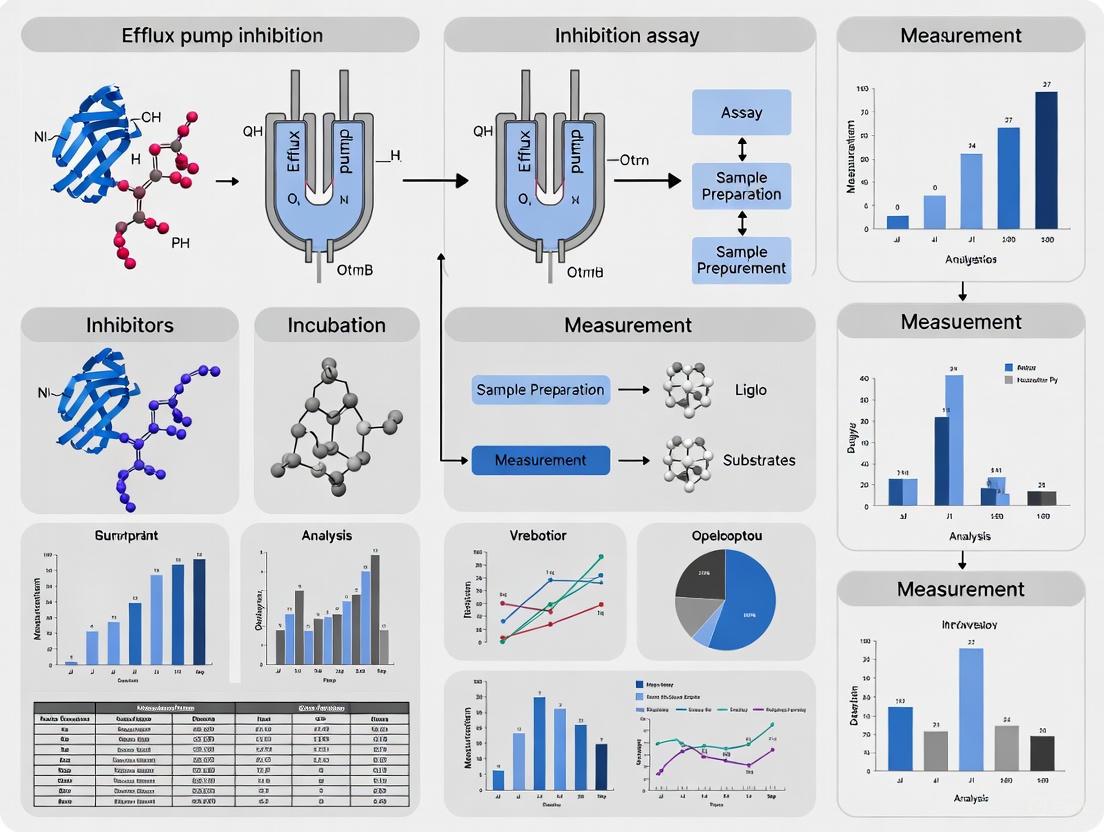
This article provides a definitive guide for researchers and drug development professionals on efflux pump inhibition (EPI) assays.
Efflux Pump Inhibition Assays: A Comprehensive Guide from Foundational Concepts to Advanced Protocols
Abstract
This article provides a definitive guide for researchers and drug development professionals on efflux pump inhibition (EPI) assays. It covers the foundational principles of bacterial efflux pumps and their role in multidrug resistance, details step-by-step protocols for key methodologies including fluorescence-based, mass spectrometry, and agar-based assays, and offers expert troubleshooting for common issues like optical interference. The guide also explores advanced validation techniques and comparative analyses of EPI efficacy, synthesizing current literature and recent technological advances to support the discovery of novel therapeutic adjuvants.
Understanding Efflux Pumps: The Foundational Science Behind Multidrug Resistance
The Critical Role of Efflux Pumps in Clinical Multidrug Resistance
Multidrug-resistant (MDR) Gram-negative bacterial pathogens represent a critical threat to global health, driven in part by the overexpression of efflux pump systems [1]. These active transport mechanisms recognize and expel a wide range of structurally unrelated antibiotics, significantly reducing intracellular drug concentrations and conferring resistance to multiple drug classes [1] [2]. Among Enterobacteriaceae, particularly ESKAPEE pathogens including Escherichia coli and Klebsiella pneumoniae, efflux pumps function as a first-line defense that not only decreases antibiotic susceptibility but also facilitates the acquisition of additional resistance mechanisms [1]. This application note examines the critical role of efflux systems in clinical multidrug resistance, provides standardized protocols for efflux activity assessment, and discusses emerging strategies to counteract this pervasive resistance mechanism.
Efflux Pump Systems: Structure and Mechanism
Architectural Organization of Efflux Complexes
Bacterial efflux systems are categorized into several major families based on structural features and energy sources. The most clinically significant systems in Gram-negative bacteria form tripartite complexes that span both the inner and outer membranes [1]:
- Resistance-Nodulation-Division (RND) family: Proton-driven transporters that form tripartite systems (e.g., AcrAB-TolC) with broad substrate specificity
- ATP-binding cassette (ABC) superfamily: ATP-hydrolysis powered transporters that can function independently or as part of tripartite systems
- Major Facilitator Superfamily (MFS): Proton-driven transporters capable of forming tripartite complexes
These complexes typically consist of (i) an inner membrane transporter where substrate recognition occurs, (ii) a periplasmic adaptor protein (PAP) that bridges the transporter to (iii) an outer membrane channel forming the exit duct [1].
Functional Mechanism of RND Pumps
The AcrB transporter, the prototypical RND pump, operates as a functional asymmetric trimer with a peristaltic pump mechanism [1]. Each protomer adopts a distinct conformation—access (loose, L), binding (tight, T), and extrusion (open, O)—creating a rotational mechanism that moves substrates from the inner membrane to the outer membrane channel [1]. Substrate recognition occurs through multiple access channels and two primary binding pockets:
- Proximal binding pocket (PBP): Located in the L protomer, more voluminous in the access state
- Distal binding pocket (DBP): Located in the T protomer, exhibits inverse volume behavior to PBP
- Switch loop: A flexible structural element (Phe-617) controlling substrate passage between pockets [1]
Table 1: Major Efflux Pump Families in Gram-Negative Bacteria
| Efflux Family | Energy Source | Key Examples | Substrate Specificity |
|---|---|---|---|
| RND | Proton motive force | AcrAB-TolC, OqxB | Broad, multiple drug classes |
| ABC | ATP hydrolysis | MacAB-TolC | Macrolides, peptides |
| MFS | Proton motive force | EmrAB-TolC | Uncouplers, quinolones |
| SMR | Proton motive force | EmrE | Disinfectants, dyes |
| MATE | Proton/sodium motive force | NorM | Fluoroquinolones, dyes |
Quantitative Assessment of Efflux in Clinical Resistance
Genetic Evidence from Clinical Isolates
Recent systematic analysis demonstrates that efflux pump overexpression significantly contributes to antibiotic resistance in clinical isolates. A meta-analysis of 10 studies on E. coli revealed a significant increase in acrAB expression (SMD: 3.5, 95% CI: 2.1-4.9) in MDR isolates compared to susceptible strains [2]. Efflux inhibition resulted in a ≥4-fold reduction in MICs for fluoroquinolones and β-lactams across multiple studies, with a risk ratio analysis showing that EPIs significantly restored antibiotic susceptibility (RR: 4.2, 95% CI: 3.0-5.8) [2].
However, the quantitative contribution of efflux varies substantially between laboratory strains and clinical isolates. Genetic deletion of tolC (essential for multiple RND systems) in 18 representative MDR clinical E. coli isolates abolished detectable efflux activity in 15 strains but all mutant strains retained MDR status due to other, antibiotic-specific resistance genes [3]. This demonstrates that while efflux modulates antibiotic resistance in clinical MDR isolates, inhibition alone may not restore full susceptibility when other resistance mechanisms are present [3].
Regulatory Networks Controlling Efflux Expression
The expression of efflux systems is tightly regulated by global transcriptional regulators that respond to environmental stressors:
- MarA: Key regulator of the mar operon, activated by antibiotics and oxidative stress
- SoxS: Activated by oxidative stress, enhances acrAB expression
- Rob: Contributes to regulation during stationary phase [2]
These regulators are activated in response to various environmental stressors, including antibiotic exposure, leading to upregulated acrAB expression and enhanced efflux capacity [2].
Diagram Title: Regulatory Network Controlling Efflux Pump Expression
Standardized Methodologies for Efflux Assessment
Ethidium Bromide-Agar Cartwheel Method
The EtBr-agar cartwheel method provides a simple, instrument-free approach for detecting efflux pump activity in clinical isolates [4].
Principle: The method relies on the ability of bacteria to expel ethidium bromide (EtBr), a substrate for most efflux pumps. The minimum concentration of EtBr that produces fluorescence of the bacterial mass corresponds to the efflux capacity - higher concentrations indicate greater efflux activity [4].
Protocol:
- Prepare two sets of Trypticase Soy Agar (TSA) plates containing EtBr concentrations ranging from 0.0 to 2.5 mg/L
- Adjust overnight bacterial cultures to 0.5 McFarland standard
- Divide TSA plates into twelve sectors by radial lines (cartwheel pattern)
- Swab adjusted bacterial cultures from center to margin of each sector
- Incubate at 37°C for 16 hours protected from light
- Examine plates under UV transilluminator or gel-imaging system
- Record minimum EtBr concentration producing fluorescence
- For temperature effect assessment: re-incubate one set at 37°C and duplicate at 4°C for 24 hours, then re-evaluate fluorescence [4]
Applications: This method allows simultaneous evaluation of twelve bacterial strains, identification of clinical isolates with overexpressed efflux activity, and assessment of potential efflux inhibitors [4].
Whole-Cell Fluorometric Accumulation Assay
The fluorometric accumulation assay provides quantitative measurement of efflux pump activity and inhibition in real-time [5].
Protocol:
- Culture bacterial strains (Gram-positive, Gram-negative, or Mycobacteria) in appropriate broth to mid-log phase (OD600 of 0.8-1.0)
- Centrifuge 10 mL culture at 3,000 rpm for 10 minutes, discard supernatant
- Wash pellets with sterile phosphate-buffered saline (PBS)
- Re-suspend in 10 mL sterile PBS and adjust OD600 to 0.4
- Add glucose to final concentration of 0.4% to energize efflux systems
- Add test compounds/extracts at half their MIC values
- Transfer 100 μL aliquots in triplicate to 96-well plates
- Add EtBr to final concentration of 0.5 mg/L immediately before reading
- Measure fluorescence intensity using microplate reader (excitation: 530 nm, emission: 585 nm) every 10 minutes over 60 minutes at 37°C [5]
Controls:
- Positive controls: Known EPIs (verapamil, chlorpromazine)
- Negative control: Drug-free culture
- Blank: PBS without cells [5]
Data Interpretation: Increased fluorescence accumulation over time indicates efflux inhibition, while stable low fluorescence suggests active efflux.
Diagram Title: Experimental Workflows for Efflux Activity Assessment
Research Reagent Solutions for Efflux Studies
Table 2: Essential Research Reagents for Efflux Pump Studies
| Reagent/Chemical | Function/Application | Concentration Range | Key Considerations |
|---|---|---|---|
| Ethidium Bromide (EtBr) | Fluorescent efflux pump substrate | 0.5-2.5 mg/L (agar), 0.5 mg/L (fluorometric) | Handle with appropriate safety precautions; light-sensitive |
| Carbonyl Cyanide m-Chlorophenylhydrazone (CCCP) | Proton motive force uncoupler | Varies by strain | Positive control for efflux inhibition; cytotoxic at high concentrations |
| Phenylalanine-Arginine Beta-Naphthylamide (PAβN) | Broad-spectrum RND efflux pump inhibitor | Typically 10-50 mg/L | Known toxicity limitations; research use only |
| Verapamil | ABC transporter inhibitor | Varies by assay | Reference EPI for validation studies |
| Chlorpromazine | Efflux pump inhibitor reference | Varies by assay | Positive control in fluorometric assays |
| Glucose | Energy source for active transport | 0.4% (w/v) in PBS | Required to energize proton-driven efflux systems |
Strategic Implications for Drug Development
Current Challenges in Efflux Pump Inhibition
The development of clinically effective efflux pump inhibitors faces multiple substantial barriers:
- Structural complexity and substrate promiscuity of RND efflux pumps
- Pharmacokinetic and tissue distribution issues with candidate EPIs
- Risk of off-target toxicity at therapeutic concentrations
- Limited efficacy in clinical MDR isolates with multiple resistance mechanisms [1] [3]
Despite promising in vitro results with synthetic and naturally occurring EPIs (PAβN, CCCP, plant-derived polyphenols), clinical translation remains challenging due to toxicity concerns, poor pharmacokinetics, and bacterial adaptation [2].
Future Directions and Therapeutic Approaches
Emerging strategies focus on structure-based drug design informed by cryo-EM and X-ray crystallography insights into efflux pump mechanisms [1]. Dual inhibitors targeting both bacterial and cancer cell efflux pumps represent a promising avenue, leveraging common resistance mechanisms across biological systems [6]. Combination therapies employing EPIs with conventional antibiotics may restore susceptibility to existing drugs, extending their clinical utility [2].
Standardization of efflux assessment methodologies and target validation in clinically relevant MDR isolates—rather than only laboratory strains—will be essential for future development of effective therapeutic strategies against efflux-mediated resistance [3].
Table 3: Quantitative Impact of Efflux in Clinical E. coli Isolates
| Parameter | Laboratory Strains | Clinical MDR Isolates | Clinical Implications |
|---|---|---|---|
| Impact of efflux genetic deletion | Dramatic hypersensitivity to multiple antibiotics | Moderate susceptibility changes; MDR often retained | Efflux inhibition alone may be insufficient for full resistance reversal |
| Contribution to resistance phenotypes | Primary mechanism for intrinsic resistance | One component of multi-factorial resistance | Requires combination approaches targeting multiple mechanisms |
| acrAB overexpression in MDR vs susceptible | N/A | SMD: 3.5 (95% CI: 2.1-4.9) [2] | Validates efflux as contributor but highlights variability |
| EPI-mediated MIC reduction | Often 4-16 fold decrease | Typically ≥4-fold for specific drug classes [2] | Drug-specific effects; not universal across all antibiotic classes |
| Efflux inhibition restoring susceptibility | Frequently complete restoration | RR: 4.2 (95% CI: 3.0-5.8) [2] | Partial restoration common; influenced by coexisting mechanisms |
Efflux pumps are specialized membrane transporter proteins that actively expel toxic substances, including antibiotics, from bacterial cells. This extrusion mechanism is a major contributor to multidrug resistance (MDR), significantly reducing the efficacy of antimicrobial treatments and presenting a critical challenge in clinical settings [7]. The five major families—ABC, RND, MFS, MATE, and SMR—are categorized based on their structural features, energy coupling mechanisms, and phylogenetic origins [1] [8]. Understanding the distinct characteristics of each family is essential for developing effective efflux pump inhibitors (EPIs), which aim to block these pumps and restore the therapeutic potential of existing antibiotics [9] [7]. This document frames the comparative analysis of these pumps within the broader context of developing robust efflux pump inhibition assays.
Table 1: Characteristics of the Five Major Efflux Pump Families
| Efflux Pump Family | Energy Source | Typical Topology & Organization | Representative Pumps (Organism) | Key Antibiotic Substrates |
|---|---|---|---|---|
| ATP-Binding Cassette (ABC) | ATP hydrolysis [7] | Two transmembrane domains (TMDs) and two nucleotide-binding domains (NBDs); can function as single-component or tripartite systems (e.g., MacAB-TolC) [1] [9] | MacB (E. coli) [9] | Azithromycin, Clarithromycin, Erythromycin, Oleandomycin [9] |
| Resistance-Nodulation-Division (RND) | Proton Motive Force (H+) [1] | Tripartite complex: Inner membrane RND transporter, Periplasmic Adaptor Protein (PAP), Outer Membrane Factor (OMF) [1] [10] | AcrAB-TolC (E. coli), MexAB-OprM (P. aeruginosa) [9] [8] | β-lactams, Chloramphenicol, Erythromycin, Fluoroquinolones, Tetracycline [9] [11] |
| Major Facilitator Superfamily (MFS) | Proton Motive Force (H+) [7] | 12-14 alpha-helical transmembrane segments; one-component system [7] | NorA (S. aureus) [9] | Acriflavine, Chloramphenicol, Fluoroquinolones, Puromycin [9] |
| Multidrug and Toxic Compound Extrusion (MATE) | Proton or Sodium Ion Gradient (H+/Na+) [1] | ~12 transmembrane helices; one-component system [1] | YdhE (E. coli) [9] | Ciprofloxacin, Kanamycin, Norfloxacin, Streptomycin [9] |
| Small Multidrug Resistance (SMR) | Proton Motive Force (H+) [7] | Small size (~100-120 aa); typically four transmembrane helices; often functions as a homodimer [7] | Smr/QacC (S. aureus), EmrE (E. coli) [9] | Quaternary ammonium compounds, Acriflavine [9] |
Experimental Protocols for Efflux Pump Study
The following protocols are fundamental for investigating efflux pump function and screening for potential inhibitors.
Protocol: Fluorometric Accumulation Assay
This assay measures the intracellular accumulation of a fluorescent substrate (e.g., ethidium bromide) to assess basal efflux pump activity [1].
Workflow: Efflux Pump Accumulation Assay
Key Steps:
- Cell Preparation: Grow bacteria to mid-logarithmic phase. Harvest cells by centrifugation and wash them thoroughly with a buffer lacking a carbon source to deplete endogenous energy reserves [1].
- Substrate Loading: Resuspend the cell pellet in buffer containing a fluorescent substrate (e.g., Ethidium Bromide) and an energy poison (e.g., CCCP). This uncouples the proton motive force, allowing the substrate to passively diffuse into the cells and reach an equilibrium, establishing a baseline fluorescence [1].
- Initiate Efflux: Add a metabolizable energy source like glucose to the cell suspension. This re-energizes the membrane and activates proton-driven efflux pumps (RND, MFS, SMR, MATE).
- Fluorescence Monitoring: Immediately monitor fluorescence intensity over time using a spectrofluorometer. A decrease in fluorescence indicates active efflux of the substrate. When testing an EPI, include it in the loading and efflux steps; effective inhibitors will result in higher sustained fluorescence due to reduced efflux [1] [8].
Protocol: Checkerboard Minimum Inhibitory Concentration (MIC) Assay
This assay determines the synergy between an antibiotic and a potential Efflux Pump Inhibitor (EPI) [10] [9].
Workflow: Checkerboard MIC Assay
Key Steps:
- Solution Preparation: Prepare separate two-fold serial dilutions of the antibiotic and the putative EPI in a suitable broth medium [9].
- Plate Setup: Dispense the solutions into a 96-well microtiter plate in a checkerboard pattern, such that each well contains a unique combination of antibiotic and EPI concentrations.
- Inoculation and Incubation: Inoculate each well with a standardized bacterial suspension (e.g., 5 x 10^5 CFU/mL). Include growth control and sterility control wells. Seal the plate and incubate under appropriate conditions for 16-20 hours [10].
- Data Analysis:
- Determine the MIC of the antibiotic alone (A), the EPI alone (B), and in combination (A+B and B+A).
- Calculate the Fractional Inhibitory Concentration (FIC) index: FIC = (MIC of Antibiotic in combination / MIC of Antibiotic alone) + (MIC of EPI in combination / MIC of EPI alone).
- Interpretation: An FIC index of ≤0.5 is generally considered synergistic, indicating that the EPI effectively potentiates the antibiotic [9].
The Scientist's Toolkit: Research Reagent Solutions
Table 2: Essential Reagents and Materials for Efflux Pump Research
| Reagent/Material | Function/Application in Research | Example & Notes |
|---|---|---|
| Protonophores (e.g., CCCP) | Uncouples the proton motive force; used as a control in accumulation assays to disable PMF-dependent pumps and establish baseline substrate levels [1]. | Validates that observed efflux is energy-dependent. Handle with care due to cellular toxicity. |
| Model Fluorescent Substrates (e.g., Ethidium Bromide, Hoechst 33342) | Serve as pump substrates in fluorometric accumulation/efflux assays. A decrease in fluorescence indicates efflux activity [1] [8]. | Ethidium Bromide is a common substrate for many pumps; it is mutagenic and requires safe handling and disposal. |
| Known EPIs (e.g., PAβN for RND pumps) | Used as positive controls in inhibition assays to validate experimental systems and compare the efficacy of novel inhibitors [10]. | PAβN (Phe-Arg β-naphthylamide) is a broad-spectrum RND inhibitor. Specificity for other pump families can vary. |
| Isogenic Efflux Pump Mutants (e.g., ΔacrB, ΔtolC) | Genetically modified strains lacking specific efflux pumps; crucial controls to confirm the role of a specific pump in resistance [9]. | Comparing MICs or accumulation in mutant vs. wild-type strains directly demonstrates a pump's contribution to resistance. |
| Lauryl Maltose Neopentyl Glycol (LMNG) | A detergent used for the solubilization and purification of membrane proteins, including efflux pumps, for structural studies [12]. | Critical for maintaining the stability and functionality of efflux pump complexes outside the native membrane environment. |
The structural and mechanistic diversity of the ABC, RND, MFS, MATE, and SMR efflux pump families underpins the pervasive challenge of multidrug resistance in bacteria. A deep understanding of their distinct energy-coupling mechanisms, structural organizations, and substrate profiles, as summarized in this document, is a prerequisite for rational drug design. The standardized experimental protocols and reagent toolkit detailed herein provide a foundational framework for ongoing research. The ultimate goal of this work is to facilitate the development of potent and specific efflux pump inhibitors, which can be used in combination with conventional antibiotics to overcome resistance and restore the efficacy of our current antimicrobial arsenal.
Efflux Pump Inhibitors (EPIs) as a Strategy to Rejuvenate Antibiotic Efficacy
The escalating global threat of antimicrobial resistance (AMR) demands innovative strategies to preserve the efficacy of existing antibiotics. A primary mechanism of resistance in pathogenic bacteria is the overexpression of active transport proteins known as efflux pumps, which confer a multidrug resistance (MDR) phenotype by extruding a wide range of antibiotics from the cell, thereby reducing intracellular drug concentration and obviating their cytotoxic effects [13] [14]. Efflux pump inhibitors (EPIs) are compounds that block these pumps, and their use as adjunct therapies represents a promising avenue to reverse resistance and rejuvenate the efficacy of conventional antibiotics [13] [15]. This Application Note details the rationale, key experimental protocols, and reagent solutions for researchers investigating EPIs.
Background and Rationale
Multidrug resistance, mediated by drug efflux pumps, is a significant impediment to the successful treatment of both bacterial infections and cancer [13]. In bacteria, efflux pumps are categorized into several families, with the Major Facilitator Superfamily (MFS) (e.g., NorA in Staphylococcus aureus) and the Resistance-Nodulation-Division (RND) family (e.g., AcrAB-TolC in Escherichia coli) being particularly prominent in Gram-positive and Gram-negative bacteria, respectively [15] [16].
The clinical relevance of this resistance mechanism is starkly illustrated by the fact of an estimated 4.95 million deaths worldwide were associated with AMR in 2019 [13]. Furthermore, efflux activity is not only a direct mediator of resistance but also accelerates the evolution of antibiotic resistance by increasing bacterial mutation rates, creating a high-evolvability niche for resistant mutants [17].
EPIs function by binding to efflux pumps and blocking the extrusion of antibiotics. This binding can occur at the transporter protein itself or, as recent research indicates, at key assembly proteins like AcrA, disrupting the pump's function [16]. By co-administering an EPI with a compromised antibiotic, the intrinsic sensitivity of the resistant bacterium can be reinstated, thereby potentiating the antibiotic's effect [13] [18]. This strategy is effective not only against planktonic cells but also against biofilms, which are intrinsically more resistant to antimicrobials. Efflux pumps play a key role in biofilm formation and maintenance, and EPIs have been demonstrated to function as effective biofilm disruptors [19] [14].
Key Experimental Assays and Protocols
Ethidium Bromide Accumulation Assay
The ethidium bromide (EtBr) accumulation assay is a foundational, whole-cell phenotypic method for identifying EPIs. EtBr is a fluorescent efflux pump substrate that fluoresces intensely upon intercalating with DNA inside the cell. Inhibiting the efflux pump leads to increased intracellular accumulation of EtBr, which is measured as an increase in fluorescence [15] [5] [20].
Detailed Protocol
- Step 1: Bacterial Culture. Grow the bacterial strain of interest (e.g., S. aureus, P. aeruginosa, or M. smegmatis) in appropriate broth to mid-log phase (OD600 of 0.8–1.0) [5].
- Step 2: Cell Preparation. Harvest the cells by centrifugation (e.g., 3,000 rpm for 10 min), wash the pellet with sterile phosphate-buffered saline (PBS), and resuspend in PBS to an OD600 of 0.4 [5].
- Step 3: Assay Setup. To 500 µL of bacterial suspension, add glucose to a final concentration of 0.4% (w/v) to provide energy for active efflux. Add the test compound or extract at a sub-inhibitory concentration (e.g., half the minimum inhibitory concentration) [5].
- Step 4: Fluorescence Measurement. Transfer 100 µL aliquots of the mixture in triplicate to a 96-well plate. Add EtBr to a final concentration (e.g., 0.5 mg/L or 1 µg/mL) immediately before reading [15] [5]. Measure fluorescence in a microplate reader every 10 minutes for 60 minutes at 37°C, using excitation/emission wavelengths of 530/585 nm [15] [5].
- Step 5: Data Analysis. Calculate the Relative Fluorescence Index (RFI) or the specific activity of the test compound. A higher fluorescence in treated samples compared to the untreated control indicates efflux pump inhibition [15]. Include known EPIs like verapamil or chlorpromazine as positive controls and a drug-free culture as a negative control [5].
The following diagram illustrates the core logic and workflow of this assay:
Figure 1: Experimental workflow for the Ethidium Bromide accumulation assay.
Mass Spectrometry-Based Accumulation Assay
A significant limitation of fluorescence-based assays is optical interference from colored or quenching compounds in test samples, such as plant extracts, which can lead to false-negative results [20]. A robust alternative is a mass spectrometry (MS)-based assay that directly quantifies the intracellular accumulation of an efflux pump substrate.
Detailed Protocol
- Steps 1-3: Identical to the EtBr accumulation assay for cell culture, preparation, and incubation with the test compound and EtBr [20].
- Step 4: Filtration and Sample Preparation. After the incubation period (e.g., 30 min), filter the entire bacterial suspension using a 96-well filter plate (0.22 µm pore size) under vacuum. This separates the bacteria from the extracellular medium [20].
- Step 5: LC-ESI-MS Analysis. Lyse the harvested bacterial cells and analyze the lysate using High-Performance Liquid Chromatography coupled to Electrospray Ionization-Mass Spectrometry (HPLC-ESI-MS) to quantitatively measure the amount of accumulated EtBr or another substrate. The intracellular concentration is directly proportional to the level of efflux pump inhibition [20].
This method was crucial in correctly identifying the flavonoid quercetin as an active EPI (IC50 = 75 µg/mL), which appeared inactive in the fluorescence-based assay due to optical interference [20].
Checkerboard Synergy Assay
This assay determines the Minimum Inhibitory Concentration (MIC) of an antibiotic in the presence and absence of a putative EPI, quantifying the potentiating effect.
Detailed Protocol
- Step 1: Plate Setup. In a 96-well microtiter plate, prepare a two-dimensional serial dilution of the antibiotic along one axis and the test EPI along the other.
- Step 2: Inoculation. Inoculate each well with a standardized bacterial inoculum (e.g., 5 x 10^5 CFU/mL).
- Step 3: Incubation and MIC Determination. Incubate the plate at 37°C for 18-24 hours. The MIC of the antibiotic is determined visually or with a plate reader as the lowest concentration that prevents visible growth.
- Step 4: Fractional Inhibitory Concentration (FIC) Index Calculation. The FIC index is calculated as follows: FIC Index = (MIC of antibiotic combined with EPI / MIC of antibiotic alone) + (MIC of EPI combined with antibiotic / MIC of EPI alone) An FIC index ≤ 0.5 is considered synergistic, indicating the EPI significantly reduces the MIC of the antibiotic [15] [16].
Data Presentation and Analysis
Quantitative Comparison of Efflux Pump Inhibitors
The table below summarizes selected EPIs from recent research, their origins, and their documented effects.
Table 1: Characteristics and Effects of Selected Efflux Pump Inhibitors (EPIs)
| EPI / Source | Type / Origin | Target Efflux Pump / Organism | Reported Effect and Potentiated Antibiotics |
|---|---|---|---|
| Propolis [15] | Natural / Plant Extract | NorA / Staphylococcus aureus | Significant synergistic effect with ciprofloxacin, erythromycin, and gentamycin; potent EtBr accumulation. |
| SLU-258 & Clorobiocin [16] | Synthetic / Natural | AcrA (AcrAB-TolC) / Escherichia coli | Potentiated novobiocin and erythromycin; binds between lipoyl and β-barrel domains of AcrA. |
| Silver Nanoparticles (Ag NPs) [19] [18] | Metallic Nanoparticle | MexAB-OprM / Pseudomonas aeruginosa | Higher bacterial deactivation rate with methylene blue in photodynamic therapy; disrupts proton motive force. |
| Reserpine [18] | Natural / Alkaloid | AcrAB-TolC / E. coli | Blocks efflux of methylene blue; confirmed via molecular docking with AcrB. |
| Quercetin & other Flavonoids [20] | Natural / Flavonoids | NorA / Staphylococcus aureus | IC50 of 75 µg/mL (MS-based assay); apigenin, kaempferol also active (IC50 19-75 µg/mL). |
| PAβN (Phe-Arg β-naphthylamide) [14] | Synthetic Peptide | RND Pumps / Gram-negative bacteria | Significant reduction in biofilm formation in K. pneumoniae, P. aeruginosa, and E. coli. |
The Scientist's Toolkit: Key Research Reagent Solutions
Table 2: Essential Reagents and Materials for EPI Research
| Reagent / Material | Function / Application in EPI Research |
|---|---|
| Ethidium Bromide (EtBr) | Fluorescent efflux pump substrate used in accumulation and inhibition assays [15] [5] [20]. |
| Verapamil / Chlorpromazine | Known EPIs used as positive control compounds in validation experiments [5]. |
| 96-well Filter Plates (0.22 µm) | For rapid separation of bacterial cells from supernatant in mass spectrometry-based accumulation assays [20]. |
| HPLC-ESI-MS System | For quantitative, non-optical measurement of intracellular substrate accumulation, avoiding fluorescence interference [20]. |
| Hyperporinated E. coli Strains | Engineered strains with increased outer membrane permeability used to differentiate efflux activity from other resistance mechanisms [16]. |
| Site-Directed Mutagenesis Kits | For creating specific mutations in efflux pump components (e.g., AcrA) to map inhibitor binding sites [16]. |
Targeting multidrug efflux pumps with inhibitors is a scientifically sound and promising strategy to overcome antimicrobial resistance and extend the lifespan of existing antibiotics. The protocols and data presented herein provide a framework for the identification and characterization of novel EPIs from both natural and synthetic sources. Future work will focus on improving the potency and selectivity of EPIs, particularly against Gram-negative pathogens, and understanding their full potential as biofilm disruptors and resistance breakers in clinical settings [14]. The integration of EPIs into combination therapies represents a critical frontier in the global fight against multidrug-resistant infections.
Efflux pump inhibitors (EPIs) represent a promising therapeutic strategy to counteract multidrug-resistant (MDR) bacterial infections, which are responsible for millions of deaths globally each year [21] [6]. These adjuvant compounds target bacterial efflux pump systems—membrane transporters that actively extrude a wide range of antibiotics, reducing intracellular drug concentrations to subtoxic levels and conferring resistance to multiple drug classes [21] [22]. Despite two decades of research demonstrating the proof-of-concept for EPIs in laboratory settings, their translation into clinical practice has been markedly slow, with no FDA-approved EPI currently available [23] [24]. This application note examines the multifaceted challenges hindering EPI development, from initial discovery to clinical application, and provides detailed protocols to support standardized research in this critical field.
The Scientific and Clinical Landscape of Efflux Pump Inhibition
Efflux Pump Diversity and Clinical Relevance
Bacterial efflux pumps are categorized into six superfamilies based on their structure and energy-coupling mechanism: the ATP-binding cassette (ABC) superfamily, the resistance-nodulation-division (RND) superfamily, the major facilitator superfamily (MFS), the multidrug and toxic compound extrusion (MATE) family, the small multidrug resistance (SMR) family, and the proteobacterial antimicrobial compound efflux (PACE) family [21] [25]. Among these, the RND-type pumps are particularly significant in Gram-negative bacteria due to their broad substrate range and contribution to intrinsic and acquired multidrug resistance [22] [24].
The AcrAB-TolC efflux pump in Escherichia coli serves as the archetypal RND system and a primary target for EPI development. This tripartite complex consists of: (1) AcrB, an inner membrane transporter that captures substrates; (2) AcrA, a periplasmic adapter protein; and (3) TolC, an outer membrane channel that completes the conduit to the extracellular space [22] [24]. The system functions through a peristaltic pump mechanism driven by conformational changes in AcrB, which cycles through loose (L), tight (T), and open (O) states to bind and extrude substrates [24].
Table 1: Major Multidrug Efflux Pumps in Gram-Negative Pathogens
| Efflux Pump | Bacterial Species | Key Substrates | Regulatory Proteins |
|---|---|---|---|
| AcrAB-TolC | Escherichia coli | Fluoroquinolones, β-lactams, chloramphenicol, tetracyclines, macrolides, dyes, detergents | MarA, SoxS, Rob, RamA [21] [2] |
| MexAB-OprM | Pseudomonas aeruginosa | β-lactams, chloramphenicol, fluoroquinolones, macrolides, novobiocin, tetracycline [21] | MexR, NalC, NalD [21] |
| AdeABC | Acinetobacter baumannii | Aminoglycosides, β-lactams, chloramphenicol, erythromycin, tetracyclines [21] | AdeRS [21] |
| MexEF-OprN | Pseudomonas aeruginosa | Ciprofloxacin, quinolones, chloramphenicol [26] | MexS, MexT [26] |
Recent meta-analytical data confirms that overexpression of the acrAB efflux pump gene significantly contributes to clinical resistance in E. coli, with a pooled standardized mean difference (SMD) of 3.5 (95% CI: 2.1–4.9) between MDR and susceptible strains [2]. Efflux inhibition in these strains resulted in a ≥4-fold reduction in minimum inhibitory concentrations (MICs) for fluoroquinolones and β-lactams, demonstrating the potential of EPIs to restore antibiotic efficacy [2].
Mechanisms of Efflux Pump Inhibition
EPIs employ diverse strategies to block efflux function, including:
- Competitive inhibition: Direct binding to substrate recognition sites, preventing antibiotic interaction [21]
- Energy uncoupling: Disruption of the proton motive force that powers RND transporters [21]
- Inhibitor interference with assembly: Prevention of proper complex formation between pump components [23]
- Gene regulation modulation: Downregulation of efflux pump expression through transcriptional control [21]
The most promising EPIs target the hydrophobic trap or distal binding pocket within the AcrB porter domain, strategically interfering with the conformational changes necessary for substrate translocation [22] [24].
Diagram 1: EPI Mechanisms and Outcomes. This diagram illustrates the primary pathways through which efflux pump inhibitors exert their effects, leading to the restoration of antibiotic susceptibility. PMF: Proton Motive Force. MDR: Multidrug Resistance.
Key Challenges in EPI Development
Toxicity and Selectivity Concerns
A primary obstacle in EPI development is the structural and functional conservation between bacterial efflux pumps and human eukaryotic transporters, particularly P-glycoprotein (P-gp) [6] [24]. Many promising EPIs demonstrate off-target inhibition of P-gp, which plays crucial roles in drug metabolism, distribution, and elimination [6]. This lack of selectivity raises significant safety concerns and has led to the discontinuation of several candidate compounds during preclinical development [24].
The nephrotoxicity associated with phenylalanine-arginine β-naphthylamide (PAβN) and the oxidative stress induced by carbonyl cyanide m-chlorophenylhydrazone (CCCP) exemplify the toxicity hurdles that limit clinical translation of first-generation EPIs [21]. These adverse effects necessitate extensive structural optimization to separate efflux inhibition from cytotoxic properties, a challenging endeavor given the complex structure-activity relationships governing EPI function [24].
Pharmacokinetic and Pharmacodynamic Limitations
Successful EPIs must achieve and maintain effective concentrations at infection sites while matching the pharmacokinetic profiles of their companion antibiotics [24] [2]. Current candidate molecules face challenges including:
- Rapid metabolism and clearance, requiring frequent dosing
- Poor tissue penetration, particularly in lung and biofilm environments
- Unmatched half-lives when co-administered with antibiotics
- Complex drug-drug interactions that alter efficacy or toxicity profiles
The lack of standardized dosing protocols for combination therapies further complicates preclinical development, as effective EPI-antibiotic ratios must be established for each pathogen-drug pair [24].
Bacterial Adaptation and Resistance
Paradoxically, targeting efflux pumps can select for compensatory bacterial adaptations that maintain or even enhance resistance. A striking example comes from Pseudomonas aeruginosa, where inactivation of the MexEF-OprN efflux pump leads to increased virulence through enhanced quorum sensing and elevated production of elastase and rhamnolipids [26]. Clinical isolates with mexEFoprN inactivating mutations show enriched prevalence in cystic fibrosis infections (40.8% of isolates) compared to acute respiratory infections (53.96% with nonsynonymous mutations), suggesting a selective advantage in chronic infection environments [26].
This evolutionary trade-off demonstrates that efflux pump inhibition may inadvertently drive alternative resistance mechanisms or virulence pathways, necessitating careful monitoring of bacterial responses during EPI treatment [26].
Technical and Methodological Hurdles
Research in the EPI field is hampered by inconsistent assay protocols and a lack of standardized endpoints for evaluating efflux inhibition [24] [2]. A 2025 study on Acinetobacter baumannii highlighted methodological challenges, showing only fair agreement (Cohen's kappa = 0.37) between inhibition assays and RT-qPCR for detecting efflux pump overexpression [27]. While the 1-(1-naphthylmethyl)-piperazine (NMP) inhibition assay demonstrated reliable rule-out capability for strains not overexpressing efflux pumps, confirmatory molecular methods were necessary for positive results [27].
Additionally, the substrate promiscuity of RND pumps creates difficulties in characterizing inhibitor specificity, while the complex tripartite structure of these systems presents challenges for developing high-throughput screening assays that accurately reflect in vivo conditions [24].
Table 2: Key Challenges in EPI Development and Their Implications
| Challenge Category | Specific Limitations | Impact on Development |
|---|---|---|
| Toxicity & Selectivity | Off-target inhibition of human P-gp; Cytotoxicity of lead compounds [21] [24] | Preclinical safety failures; Narrow therapeutic windows |
| Pharmacokinetics | Poor tissue distribution; Unmatched antibiotic half-life; Rapid metabolism [24] [2] | Ineffective concentrations at infection sites; Complex dosing regimens |
| Bacterial Adaptation | Compensatory virulence enhancement; Alternative resistance mechanisms [26] | Unintended consequences on pathogenesis; Limited long-term efficacy |
| Methodological Issues | Lack of standardized assays; Variable detection methods [27] [2] | Inconsistent results across studies; Difficult cross-study comparisons |
Experimental Approaches and Protocols
EPI Screening and Validation Workflow
Diagram 2: EPI Screening and Validation Workflow. This comprehensive protocol outlines the key stages in efflux pump inhibitor evaluation, from initial screening to advanced characterization. FIC: Fractional Inhibitory Concentration. PK/PD: Pharmacokinetic/Pharmacodynamic.
Detailed Protocol: Efflux Pump Inhibition Assay
Protocol Title: Assessment of Efflux Pump Inhibition Using 1-(1-Naphthylmethyl)-piperazine (NMP) and Phenylalanine-Arginine-β-Naphthylamide (PaβN)
Principle: This protocol evaluates the ability of candidate EPIs to block efflux activity in multidrug-resistant Gram-negative bacteria, using both phenotypic and molecular detection methods [27].
Materials:
- Bacterial strains: Multidrug-resistant clinical isolates and reference strains
- Efflux pump inhibitors: NMP (Sigma-Aldrich, Cat# N17902), PaβN (Sigma-Aldrich, Cat# 557828)
- Antibiotics: Fluoroquinolones, β-lactams, aminoglycosides
- Growth media: Mueller-Hinton broth and agar
- RNA extraction kit and RT-qPCR reagents
- Ethidium bromide accumulation assay reagents
Procedure:
Strain Preparation
- Grow bacterial strains overnight in Mueller-Hinton broth at 37°C with shaking (200 rpm)
- Adjust turbidity to 0.5 McFarland standard (~1.5 × 10^8 CFU/mL) in fresh broth
Inhibition Assay
- Prepare serial dilutions of test antibiotics in the presence and absence of subinhibitory concentrations of EPIs (e.g., 50 μg/mL NMP or 20 μg/mL PaβN) [27]
- Inoculate each well with 5 × 10^5 CFU/mL final bacterial concentration
- Incubate at 37°C for 18-24 hours
- Record minimum inhibitory concentrations (MICs) as the lowest concentration showing no visible growth
Efflux Inhibition Validation
- Perform ethidium bromide accumulation assays:
- Harvest mid-log phase cells (OD600 = 0.4-0.6) by centrifugation
- Resuspend in PBS with glucose (0.4% w/v) and ethidium bromide (1 μg/mL)
- Add EPI or control (DMSO)
- Monitor fluorescence (excitation: 530 nm, emission: 600 nm) every 5 minutes for 30 minutes
- Calculate fold-increase in fluorescence compared to untreated controls
- Perform ethidium bromide accumulation assays:
Molecular Confirmation
- Extract total RNA from EPI-treated and control cultures using commercial kits
- Perform RT-qPCR for target efflux pump genes (e.g., acrB, mexB, adeB) and housekeeping genes (e.g., rpoB, rrs)
- Use the 2^(-ΔΔCt) method to calculate relative gene expression
- Consider ≥2-fold overexpression as clinically significant [2]
Interpretation:
- A ≥4-fold reduction in antibiotic MIC in the presence of EPI indicates significant efflux inhibition [2]
- Increased ethidium bromide accumulation confirms functional blockade of efflux activity
- Agreement between phenotypic and molecular methods strengthens validity of results
The Scientist's Toolkit: Essential Research Reagents
Table 3: Key Reagents for Efflux Pump Inhibition Research
| Reagent/Category | Specific Examples | Function/Application | Considerations |
|---|---|---|---|
| Reference EPIs | NMP, PaβN, CCCP [27] [21] | Positive controls for inhibition assays; Mechanism studies | CCCP is cytotoxic; PaβN has stability issues [21] |
| Natural Product EPIs | Berberine, palmatine, curcumin, capsaicin, piperine [28] | Lead compounds with potentially favorable toxicity profiles; Chemical diversity sources | Often have multiple cellular targets; Require purity verification [28] |
| Computational Tools | Bac-EPIC web server [23] | In silico prediction of EPI activity against AcrAB-TolC; Structural moiety analysis | Limited to E. coli AcrAB; Requires SMILES input [23] |
| Detection Substrates | Ethidium bromide, fluorescent antibiotics, Hoechst 33342 | Efflux activity measurement in accumulation/efflux assays | Substrate specificity varies between pumps; Concentration optimization needed |
| Gene Expression Assays | RT-qPCR primers/probes for acrB, mexB, adeB, oqxB [27] [2] | Molecular confirmation of efflux pump overexpression; Regulatory mechanism studies | Requires RNA quality control; Normalization to appropriate housekeeping genes |
Future Directions and Concluding Remarks
Despite the significant challenges outlined, several promising avenues are emerging to advance EPI development. Structure-guided drug design leveraging cryo-EM and X-ray crystallography data of efflux pump components enables rational optimization of inhibitor specificity and potency [22] [24]. The exploration of natural product libraries continues to yield novel chemotypes with improved safety profiles, such as berberine and palmatine, which demonstrate dual inhibitory activity against efflux pumps and sortase A [28].
Computational approaches are increasingly valuable for prioritizing candidate compounds, with tools like the Bac-EPIC web server facilitating in silico prediction of EPI activity based on structural similarity to known inhibitors [23]. Additionally, innovative screening strategies that account for bacterial adaptation and evolutionary trade-offs may help identify EPIs less likely to drive compensatory virulence mechanisms [26].
The development of standardized protocols and endpoints for efflux inhibition studies remains a critical need for the field. The methodological framework presented in this application note provides a foundation for consistent evaluation across laboratories, potentially accelerating the identification of clinically viable EPI candidates [27] [2].
In conclusion, while the path to clinical EPI implementation is fraught with challenges, the continued refinement of discovery approaches, coupled with a comprehensive understanding of bacterial response mechanisms, offers hope for overcoming current limitations. Success in this endeavor will require collaborative efforts across disciplines—from structural biology to clinical infectious diseases—to ultimately deliver these much-needed adjunctive therapies to combat the global antimicrobial resistance crisis.
EPI Assay Protocols: From Fluorescence to Mass Spectrometry-Based Methods
Fluorescence-Based Accumulation and Efflux Assays Using Ethidium Bromide
Bacterial efflux pumps are transmembrane proteins that actively extrude a wide range of antibiotics and toxic compounds from bacterial cells, contributing significantly to multidrug resistance (MDR) phenotypes [29]. The development of reliable methods to monitor efflux pump activity is therefore essential for understanding and combating antibiotic resistance. Fluorescence-based assays using ethidium bromide (EtBr) have emerged as a cornerstone technique for this purpose. EtBr serves as an excellent model substrate for efflux studies because it exhibits weak fluorescence in aqueous environments but becomes strongly fluorescent upon binding to intracellular DNA, allowing researchers to monitor its accumulation and extrusion from bacterial cells in real-time [29]. These assays provide valuable tools for screening efflux pump inhibitors, studying resistance mechanisms across diverse bacterial physiologies, and even analyzing mixed microbial populations from environmental samples [30]. This application note details the methodologies, applications, and quantitative parameters for implementing EtBr-based fluorescence assays in both research and diagnostic settings.
Mechanism of Ethidium Bromide Fluorescence
Ethidium bromide is a phenanthridine derivative that functions as a planar cationic dye. Its fluorescence properties are environmentally sensitive: in aqueous solution (extracellular space), it exhibits weak fluorescence due to collisional quenching with water molecules. However, when it enters bacterial cells and intercalates between base pairs of double-stranded DNA, its fluorescence intensity increases dramatically (typically 20- to 30-fold) due to the hydrophobic environment and restricted molecular motion [29]. This differential fluorescence provides the fundamental basis for monitoring dye accumulation and efflux.
Efflux Pump Fundamentals
Efflux pumps are classified into five major families based on their structure and energy coupling mechanisms: the ATP-Binding Cassette (ABC) superfamily, the Major Facilitator Superfamily (MFS), the Resistance Nodulation cell Division (RND) family, the Small Multidrug Resistance (SMR) family, and the Multidrug And Toxic compound Extrusion (MATE) family [29]. In Gram-negative bacteria like Escherichia coli, the AcrAB-TolC system represents a predominant RND-type efflux complex that recognizes EtBr as a substrate [29]. The activity of these pumps can be constitutive or inducible by environmental stressors, including antibiotics, heavy metals, and other noxious compounds [30].
Quantitative Parameters for Assay Optimization
The following tables summarize critical quantitative parameters established through extensive research with EtBr-based fluorescence assays.
Table 1: Optimal Ethidium Bromide Concentrations for Different Assay Types
| Assay Type | Organism/Context | Recommended EtBr Concentration | Key Findings |
|---|---|---|---|
| Accumulation/Efflux | Gram-positive and Gram-negative pure cultures [30] | 0.5 µg/mL | Found optimal for estimating efflux pump activities across diverse physiologies |
| Efflux Inhibition | Staphylococcus aureus clinical isolates [31] | 25 µM (≈7.1 µg/mL)* | Used for MIC screening to identify efflux-proficient strains |
| Fluorometric Kinetics | E. coli K-12 derivatives [29] | 100 µM (≈28.4 µg/mL) | Used in semi-automated fluorometric method for transport kinetics |
| Flow Cytometry | S. Typhimurium SL1344 [32] | 100 µM (≈28.4 µg/mL) | For single-cell analysis of accumulation using flow cytometry |
Note: Molecular weight of EtBr is 394.3 g/mol for concentration conversions.
Table 2: Bacterial Strains and Characterized Efflux Rates
| Bacterial Strain | Genotype/Characteristics | Efflux Rate Constant (min⁻¹) | Key Observations |
|---|---|---|---|
| E. coli AG100 [29] | Wild-type (functional AcrAB-TolC) | 0.0106 ± 0.0033 | Baseline efflux activity |
| E. coli AG100A [29] | ΔacrAB::Tn903 (AcrAB inactivated) | 0.0173 ± 0.0057 | Lower efflux rate due to missing primary pump |
| E. coli AG100TET [29] | Tetracycline-induced (AcrAB overexpressed) | 0.0230 ± 0.0075 | Enhanced efflux rate due to pump overexpression |
| Helicobacter pylori [33] | CrdAB-CzcBA overexpression | Not quantified (reduced accumulation) | Copper-induced efflux pump activity reduces intracellular tetracycline |
Table 3: Efficacy of Selected Efflux Pump Inhibitors (EPIs)
| Efflux Pump Inhibitor | Reported Effective Concentration | Mechanism / Notes | Applicability |
|---|---|---|---|
| Carvacrol [34] | Sub-inhibitory (varies with physiological state) | Disrupts proton motive force; optimal concentration depends on bacterial growth state | Natural compound; compared favorably to synthetic inhibitors |
| Chlorpromazine (CPZ) [29] | Sub-inhibitory (specific concentration not stated) | Broad-spectrum efflux pump inhibitor | Used in fluorometric kinetic studies |
| PaβN [34] [35] | 25 µg/mL (MPC*) | Competitive inhibitor; broad-spectrum activity | Synthetic inhibitor; used as positive control in inhibition assays |
| NMP [34] | Sub-inhibitory (specific concentration not stated) | Considered potent against E. coli | Synthetic inhibitor with potential chronic health effects |
| Reserpine [31] | 20 µg/mL | Inhibits NorA-mediated efflux in S. aureus | Used to characterize efflux phenotype in clinical isolates |
MPC: Maximum Potentiating Concentration [35].
Detailed Experimental Protocols
Protocol 1: Ethidium Bromide Accumulation Assay
This protocol measures the net balance of dye influx and efflux, reflecting the overall accumulation inside cells [34].
Materials:
- Bacterial culture (grown to desired physiological state)
- Ethidium bromide stock solution (e.g., 10 mM in water)
- Appropriate buffer (e.g., Phosphate Buffered Saline - PBS or HEPES)
- Microplate reader or fluorometer with temperature control
- Black-walled 96-well microtiter plates
Procedure:
- Culture Preparation: Grow bacterial cultures to the desired physiological state (e.g., exponential phase: 0.5h incubation in fresh media; stationary phase: 12-16h incubation). Harvest cells by centrifugation (e.g., 900 × g for 20 min) [34] [35].
- Washing and Resuspension: Wash the cell pellet twice and resuspend in an appropriate buffer (e.g., PBS or 20 mM sodium phosphate buffer) to a standardized optical density (OD₆₀₀ ≈ 0.2) [34] [35].
- Dye Addition: Add EtBr to the cell suspension at the desired final concentration (e.g., 0.5 µg/mL for general screening [30] or 100 µM for kinetic studies [29]).
- Fluorescence Monitoring: Immediately transfer the mixture to a black-walled microplate. Place in a fluorometer pre-heated to the desired temperature (e.g., 37°C). Monitor fluorescence continuously (e.g., every 1-2 min for 60-90 min) using appropriate wavelengths (e.g., excitation 530 nm, emission 600 nm) [29] [34].
- Data Analysis: Plot fluorescence versus time. The initial rate of fluorescence increase or the plateau value can be used as a measure of accumulation. Compare results between strains or treatment conditions.
Protocol 2: Ethidium Bromide Efflux Inhibition Assay
This protocol specifically assesses the activity of efflux pumps by measuring dye extrusion after a pre-loading phase [35].
Materials:
- Materials from Protocol 1
- Efflux Pump Inhibitor (EPI) stock solutions (e.g., Carvacrol, PaβN, CCCP)
Procedure:
- Cell Preparation and Loading: Prepare, wash, and resuspend cells as in Protocol 1, steps 1-2. Pre-incubate the cell suspension with EtBr (e.g., 25 µM) for 15 minutes at room temperature to allow accumulation [35].
- Establish Baseline: Transfer the pre-loaded cells to a microplate and monitor fluorescence for ~2 minutes to establish a stable baseline [35].
- Inhibitor Addition: Add the EPI (e.g., PaβN at 25 µg/mL) or a control solution (e.g., solvent alone) to the wells.
- Efflux Monitoring: Continue monitoring fluorescence every 5 minutes for up to 90 minutes [35].
- Data Analysis: A decrease in fluorescence after inhibitor addition indicates active efflux. The rate of fluorescence decrease or the final level reached reflects the efflux capacity. EPI-treated samples showing reduced efflux (less fluorescence decrease) confirm inhibitor efficacy.
Protocol 3: Single-Cell Analysis by Flow Cytometry
This protocol enables the detection of population heterogeneity in efflux activity [32].
Materials:
- Flow cytometer
- Bacterial culture
- SYTO 84 stain (500 µM stock in water)
- EtBr stock (10 mM in water)
- HEPES Buffered Saline (HBS)
Procedure:
- Cell Preparation: Grow and harvest bacteria as previously described. Resuspend in 1x HBS to approximately 1×10⁶ cells.
- Staining: Add SYTO 84 (final concentration 10 µM) and EtBr (final concentration 100 µM) to the cell suspension. Incubate for 10 minutes at room temperature protected from light [32].
- Flow Cytometry Analysis: Analyze samples using a flow cytometer. Use a plot of SYTO 84 fluorescence versus forward scatter (FSC-H) to gate on the intact bacterial population and exclude debris. Measure EtBr fluorescence within the gated SYTO 84-positive population [32].
- Data Interpretation: Shifts in EtBr fluorescence intensity histograms reflect differences in dye accumulation at the single-cell level, revealing subpopulations with varying efflux activities.
The Scientist's Toolkit: Essential Research Reagents
Table 4: Key Research Reagent Solutions and Materials
| Reagent / Material | Function / Application | Examples / Notes |
|---|---|---|
| Ethidium Bromide (EtBr) | Fluorescent efflux pump substrate | Model substrate for many MDR pumps; intercalates into DNA [29] |
| Carvacrol | Natural efflux pump inhibitor | Disrupts proton motive force; efficacy varies with growth phase [34] |
| PaβN & NMP | Synthetic efflux pump inhibitors | Used as positive controls; PaβN is a competitive inhibitor [34] [35] |
| SYTO 84 Dye | Cell membrane impermeant stain | Distinguishes intact cells from debris in flow cytometry [32] |
| CCCP | Protonophore | Depletes proton motive force, inhibiting energy-dependent efflux [29] |
| Black-walled Microplates | Fluorescence measurement | Minimizes light scattering and cross-talk between wells |
| HEPES Buffer | Cell resuspension for flow cytometry | Compatible with SYTO dyes; alternative to phosphate buffers [32] |
Workflow and Pathway Visualizations
The following diagram illustrates the core experimental workflow and the scientific principles underlying the EtBr fluorescence assay:
Applications and Contextual Considerations
Environmental and Pure Culture Studies
The EtBr fluorescence assay has been successfully adapted for use not only with pure bacterial cultures but also directly with cells harvested from diverse environmental samples. Studies have demonstrated up to 1.7-fold higher efflux activities in sediments with higher salinity (7%) compared to those with lower salinity (3%), and 1.3-fold higher activities in antibiotic-contaminated hospital drain samples compared to adjoining garden soil [30]. This highlights the utility of the assay for ecological studies and for monitoring resistance development in natural environments.
Dependence on Bacterial Physiological State
Research indicates that efflux-mediated resistance and the efficacy of efflux inhibitors are strongly influenced by the bacterial physiological state. Non-growing bacterial cultures exhibit stronger intrinsic efflux activity and are less susceptible to the effects of efflux inhibitors like carvacrol compared to growing cultures [34]. This has critical implications for experimental design, particularly when studying persistent or stationary-phase cells that are often associated with chronic infections.
Correlation with Other Methods
EtBr-based MIC testing has been validated as a simple and specific method for identifying efflux-proficient strains. In studies with Staphylococcus aureus clinical isolates, EtBr MIC testing showed high sensitivity (95%) and specificity (99%) in identifying strains capable of ethidium efflux, providing a straightforward screening tool before more labor-intensive fluorometric assays [31].
Fluorescence-based accumulation and efflux assays using ethidium bromide represent versatile, quantitative, and accessible methods for studying bacterial efflux pump activity. The protocols outlined in this application note, supported by optimized parameters and reagent specifications, provide researchers with robust tools for investigating multidrug resistance mechanisms, screening for novel efflux pump inhibitors, and assessing the impact of environmental factors on efflux activity. The ability to perform these assays at both population and single-cell levels, across diverse bacterial species and environmental samples, makes EtBr-based fluorescence a cornerstone technique in the ongoing effort to understand and overcome antibiotic resistance.
{c# The Ethidium Bromide-Agar Cartwheel Method for High-Throughput Screening}
{c# 1.0 Introduction} Multidrug-resistant (MDR) bacteria pose a significant threat to global public health, and the overexpression of efflux pump systems is a major mechanism conferring this resistance [4] [36]. The Ethidium Bromide (EtBr)-agar Cartwheel Method is a simple, instrument-free technique designed for the high-throughput screening of bacterial efflux pump activity [4] [36]. It enables the simultaneous evaluation of up to twelve bacterial strains to identify MDR isolates that overexpress their efflux systems [4]. This method serves as a rapid, presumptive screening tool, with results that can be confirmed through minimum inhibitory concentration (MIC) studies in the presence of efflux pump inhibitors (EPIs) [36].
{c# 2.0 Principle of the Method} The method is based on the ability of bacteria to expel Ethidium Bromide (EtBr), a substrate for many efflux pumps [4]. When bacteria efflux EtBr effectively, the intracellular concentration remains low, and no fluorescence is observed. Fluorescence occurs only when the extracellular EtBr concentration overwhelms the bacterium's efflux capacity, leading to intracellular accumulation [4] [36]. Consequently, the minimum concentration of EtBr (MCEtBr) that produces fluorescence under ultraviolet (U.V.) light is inversely proportional to the efflux capacity of the cells [4]. Strains with overexpressed efflux pumps require a higher MCEtBr to fluoresce compared to strains with baseline efflux activity [36].
{c# 3.0 Materials and Reagents} The following materials are required to perform the Ethidium Bromide-agar Cartwheel method.
{c# 3.1 Research Reagent Solutions}
| Item | Function/Description |
|---|---|
| Trypticase Soy Agar (TSA) | Standard non-selective culture medium for bacterial growth [4] [36]. |
| Ethidium Bromide (EtBr) Stock Solution | Efflux pump substrate; prepare at 50 mg/mL in distilled water; store at 4°C protected from light [36]. |
| Phosphate-Buffered Saline (PBS) | Used for adjusting the optical density of bacterial cultures [36]. |
| Efflux Pump Inhibitors (EPIs) | e.g., Phe-Arg-β-naphthylamide (PAN), Thioridazine (TZ), Chlorpromazine (CPZ), Reserpine (RES); for confirmatory assays [36]. |
{c# 4.0 Step-by-Step Protocol}
{c# 4.1 Preparation of EtBr-Agar Plates}
- Prepare Trypticase Soy Agar (TSA) plates containing Ethidium Bromide concentrations ranging from 0.0 to 2.5 mg/L on the same day as the experiment or the day before [4] [36].
- Note: The concentration range may need adjustment depending on the bacterial species being tested. Plates must be protected from light during storage and use [4].
{c# 4.2 Bacterial Culture Preparation}
- Grow bacterial strains in an appropriate liquid broth (e.g., Trypticase Soy Broth, LB broth) until they reach the mid-logarithmic phase (Optical Density at 600 nm ~ 0.6) [36].
- Adjust the density of the bacterial cultures with sterile PBS to 0.5 on the McFarland standard [4] [36].
{c# 4.3 Inoculation of Plates (Cartwheel Pattern)}
- Divide each EtBr-agar plate into a maximum of twelve sectors using radial lines, creating a cartwheel pattern [4].
- Using a sterile swab, inoculate each adjusted bacterial culture onto a designated sector, starting from the center of the plate and moving outwards to the edge [4] [36].
- Each plate should include at least one reference strain with known efflux activity for comparative analysis [4].
{c# 4.4 Incubation and Visualization}
- Incub the inoculated plates at 37°C for 16 hours [4].
- After incubation, examine the plates under a suitable U.V. light source (e.g., U.V. transilluminator, hand-held U.V. lamp) [36].
- Record the MCEtBr: the lowest EtBr concentration at which fluorescence of the bacterial mass is observed for each strain [4] [36].
{c# 4.5 Optional: Temperature Effect Assessment} To investigate the temperature dependence of efflux activity, a duplicate set of plates can be subjected to a second incubation step.
- After the initial 16-hour incubation and reading, one set of plates is re-incubated at 37°C and another at 4°C for an additional 24 hours [4].
- Plates are observed and photographed again, and the MCEtBr at each temperature is compared [4].
{c# 5.0 Data Analysis and Interpretation}
{c# 5.1 Quantitative Analysis of Efflux Activity} The efflux capacity of tested strains is quantified relative to a reference strain using the following formula [36]:
An index greater than 1 indicates higher efflux activity in the test strain compared to the reference.
{c# 5.2 Interpretation of Results} The following table summarizes the expected outcomes and their interpretations:
| Result Observation | Interpretation |
|---|---|
| High MCEtBr (e.g., fluorescence only at 2.5 mg/L) | Suggests high efflux pump activity; the strain effectively expels EtBr until a high concentration overwhelms the system [4] [36]. |
| Low MCEtBr (e.g., fluorescence at 0.5 mg/L) | Suggests low or baseline efflux pump activity; the strain cannot prevent intracellular accumulation of EtBr at low concentrations [4]. |
| Increased MCEtBr after cold incubation | Confirms energy-dependent active efflux; efflux pumps are less active at lower temperatures, leading to fluorescence at lower concentrations after cold incubation [4]. |
{c# 6.0 Confirmatory Assays} A presumptive positive result for efflux pump overexpression should be confirmed using standard microbiological techniques.
- MIC Determination with EPIs: The MICs of various antibiotics are determined for the strain in the presence and absence of known Efflux Pump Inhibitors (EPIs) like PAN, TZ, or CPZ [36]. A reduction in the MIC of at least four-fold in the presence of an EPI confirms that efflux activity contributes to the antibiotic resistance [36].
{c# 7.0 Application Notes}
{c# 7.1 Advantages and Limitations}
- Advantages: The method is simple, cost-effective, and does not require specialized instrumentation like fluorometers [4]. It allows for the high-throughput screening of multiple bacterial isolates simultaneously [4] [36].
- Limitations: It provides presumptive data that requires confirmation [36]. The use of EtBr, a mutagen, necessitates careful handling and disposal [4].
{c# 7.2 Validated Organisms} This method has been successfully applied to screen a wide range of Gram-positive and Gram-negative bacteria, including [4] [36]:
- Gram-negative: Escherichia coli, Acinetobacter baumannii, Enterobacter aerogenes, Salmonella enterica.
- Gram-positive: Staphylococcus aureus, Enterococcus faecalis.
Overcoming Optical Interference with Mass Spectrometry-Based Assays
Optical interference presents a significant challenge in biochemical assays, particularly in the context of efflux pump inhibition (EPI) studies where colored or quenching compounds can compromise the accuracy of fluorescence- and absorbance-based readouts. This application note details the integration of mass spectrometry (MS) as a definitive solution to overcome these limitations. By providing direct, label-free quantification of substrate accumulation, MS-based assays ensure reliable data for characterizing potential efflux pump inhibitors, free from the constraints of optical interference [37]. This protocol is framed within ongoing research into standardized EPI assays, contributing robust methodologies to the field of multidrug resistance reversal [6].
Overcoming Optical Interference: An MS-Based Workflow
The core advantage of mass spectrometry lies in its ability to detect and quantify analytes based on their mass-to-charge ratio (m/z), independent of their optical properties [38]. This section outlines the rationale and a practical workflow for implementing LC-MS/MS to bypass optical interference in EPI assays.
The following diagram illustrates the complete experimental workflow, from sample preparation to data analysis, for an MS-based efflux pump inhibition assay.
Key MS Techniques for Quantitative Analysis
Liquid chromatography coupled with tandem mass spectrometry (LC-MS/MS) is the cornerstone technique for these analyses. It separates complex mixtures and provides highly specific quantification [38]. The selection of the quantitative method depends on the research question and available resources.
Table 1: Comparison of Quantitative Mass Spectrometry Methods
| Method | Principle | Key Advantage | Best Suited For |
|---|---|---|---|
| Label-Free Quantification | Correlates MS signal intensity with analyte abundance [38]. | Simplicity and low cost; no need for isotope labels. | High-throughput screening of potential EPIs [38]. |
| Stable Isotope-Labeled Standards | Uses synthetic, heavy-isotope-labeled peptides/analytes as internal standards [38]. | High accuracy and precision; corrects for sample loss and ion suppression. | Absolute quantification of key substrates; biomarker verification [39]. |
Experimental Protocol: MS-Based Efflux Pump Inhibition Assay
This protocol adapts a standard EPI assay by replacing a fluorescent readout (e.g., ethidium bromide accumulation) with LC-MS/MS quantification [37].
Research Reagent Solutions
The following table details the essential materials and reagents required to perform this assay.
Table 2: Essential Reagents and Materials for MS-Based EPI Assay
| Item | Function/Description | Example/Note |
|---|---|---|
| Reserpine / Verapamil | Reference standard efflux pump inhibitors [37]. | Used as positive controls for inhibition. Prepare stock in DMSO [37]. |
| Test Compound(s) | Putative efflux pump inhibitor. | Kuwanon C is an example of a tested natural compound [37]. |
| Efflux Pump Substrate | Compound whose intracellular accumulation is measured. | Ciprofloxacin, norfloxacin, or a specific fluorescent dye [37]. |
| Liquid Chromatography System | Separates analytes from complex biological matrix prior to MS detection [38]. | Reversed-phase (C18) columns are commonly used. |
| Tandem Mass Spectrometer | Detects and quantifies specific analytes based on mass [38]. | Triple quadrupole instruments operating in MRM mode are ideal for quantification. |
| Stable Isotope-Labeled Internal Standard | Synthetic version of the target analyte with heavy isotopes (e.g., 13C, 15N) [38]. | Corrects for variability in sample preparation and ionization efficiency. |
Step-by-Step Procedure
Cell Culture and Treatment:
- Grow multidrug-resistant bacteria (e.g., MRSA) or cancer cells to mid-log phase.
- Adjust bacterial suspension to 0.5 McFarland standard and dilute to approximately 10^7 CFU/mL [37].
- Distribute the cell suspension into microtubes.
- Treat with a sub-inhibitory concentration (e.g., 1/8 MIC) of the test EPI and positive control (e.g., reserpine). Include an untreated control [37].
- Incubate for a predetermined time to allow inhibitor interaction.
Substrate Exposure and Accumulation:
- Add a known concentration of the efflux pump substrate (e.g., an antibiotic) to the treated cells.
- Incubate under appropriate conditions to allow for substrate influx/efflux.
Sample Harvesting and Extraction:
- Centrifuge samples at high speed to pellet cells.
- Wash the pellet with a suitable buffer (e.g., phosphate-buffered saline) to remove extracellular substrate.
- Lyse cells using a method compatible with MS (e.g., freeze-thaw, bead beating, or chemical lysis in a MS-compatible buffer).
- Precipitate proteins by adding cold acetonitrile (typically a 2:1 ratio of acetonitrile to sample) and vortexing. Centrifuge to remove precipitated debris.
- Transfer the clarified supernatant containing the extracted metabolites/substrate to a fresh vial for analysis.
LC-MS/MS Analysis:
- Chromatography: Inject the extracted sample onto a reversed-phase LC column. Use a gradient of water and acetonitrile, both modified with 0.1% formic acid, to separate the substrate from other matrix components.
- Mass Spectrometry: Operate the mass spectrometer in positive or negative electrospray ionization mode. For optimal sensitivity and specificity, use Multiple Reaction Monitoring (MRM), where a specific precursor ion (the substrate) is selected and a characteristic product ion is monitored.
Data Analysis and Interpretation:
- Generate a calibration curve by analyzing serially diluted solutions of the substrate with a fixed concentration of the internal standard.
- Quantify the intracellular concentration of the substrate in each sample by comparing the peak area ratio (analyte/internal standard) to the calibration curve.
- Compare the substrate accumulation in EPI-treated cells versus untreated controls. A statistically significant increase in accumulation in treated samples confirms efflux pump inhibition.
Replacing optical readouts with mass spectrometry provides a powerful and orthogonal method for conducting efflux pump inhibition assays. This approach effectively neutralizes the confounding variable of optical interference, thereby generating more reliable and definitive data for drug discovery pipelines aimed at overcoming multidrug resistance in bacteria and cancer [6]. The protocol outlined here serves as a robust framework for researchers to validate and characterize novel efflux pump inhibitors.
Real-Time Efflux Assays for Dynamic, Kinetic Analysis
Within the framework of a broader thesis on efflux pump inhibition (EPI) protocols, this application note provides a detailed methodology for real-time efflux assays. These assays are critical for quantifying the kinetic parameters of antibiotic efflux and for the rigorous, quantitative evaluation of potential EPIs [1]. Unlike endpoint minimal inhibitory concentration (MIC) measurements, real-time assays provide dynamic, temporal data on efflux activity, allowing researchers to monitor substrate accumulation and extrusion as it happens [1]. This capability is indispensable for distinguishing between impaired influx and active efflux, and for determining the inhibition potency and mechanism of novel EPI candidates [40]. This document outlines a core protocol utilizing fluorometry, complete with experimental workflows, data analysis procedures, and reagent specifications.
Principles of Real-Time Efflux Analysis
Scientific Basis of the Assay
Efflux pumps, particularly those belonging to the Resistance-Nodulation-Division (RND) family like AcrB in Escherichia coli and MexB in Pseudomonas aeruginosa, are key contributors to multidrug resistance in Gram-negative bacteria [1] [40]. They function as proton motive force (PMF)-dependent transporters that recognize and extrude a wide range of structurally diverse antibiotics, reducing intracellular concentrations to sub-inhibitory levels [40].
Real-time efflux assays directly measure this transport activity. The fundamental principle involves loading bacterial cells with a fluorescent substrate that is a known efflux pump ligand. The accumulation of fluorescence inside the cells is monitored over time. Upon the addition of an energy source (e.g., glucose), the active efflux of the substrate causes a measurable decrease in fluorescence intensity. When an effective EPI is present, it blocks the pump, resulting in a sustained high level of fluorescence due to continued substrate accumulation and impaired extrusion [1].
Key Pathways and Workflow Logic
The following diagram illustrates the core mechanistic principle of a real-time efflux assay, highlighting the dynamic change upon EPI addition.
Detailed Experimental Protocol
Reagent Preparation
- Bacterial Strains: Use relevant clinical isolates or laboratory strains (e.g., E. coli MG1655, P. aeruginosa PAO1). Include strains overexpressing specific efflux pumps (e.g., from the ESKAPEE group) and corresponding knockout mutants as controls [1].
- Growth Medium: Standard broth such as Cation-Adjusted Mueller-Hinton Broth (CA-MHB).
- Assay Buffer: Non-buffered or weakly-buffered saline (e.g., 5 mM HEPES, pH 7.0, with 0.9% NaCl) to avoid interference with the PMF.
- Fluorescent Substrate Stock Solution: Prepare a concentrated stock of ethidium bromide (EtBr) in ultrapure water. Other common substrates include Hoechst 33342 and berberine [1].
- Energy Source Stock Solution: 1 M Glucose in water, filter-sterilized.
- Efflux Pump Inhibitor (EPI) Stock Solution: Prepare in an appropriate solvent (e.g., DMSO, ethanol). A known EPI like Phe-Arg-β-naphthylamide (PAβN) should be used as a positive control [40].
Core Experimental Workflow
The step-by-step procedure for performing a real-time efflux assay is outlined below.
Data Acquisition and Instrument Settings
- Instrument: A real-time fluorometer (e.g., a qPCR instrument with a fluorescence plate reader module, or a dedicated spectrofluorometer).
- Settings for EtBr:
- Excitation: 530 nm
- Emission: 590 nm
- Read Interval: 15-30 seconds
- Temperature: Maintained at 37°C
- Gain: Set manually or automatically to avoid signal saturation in the initial phase.
Data Analysis and Interpretation
Key Quantitative Parameters
The raw fluorescence data is processed to extract kinetic parameters that quantify efflux efficiency and inhibition. The table below summarizes the core quantitative metrics.
Table 1: Key Quantitative Parameters for Efflux Assay Analysis
| Parameter | Description | Interpretation |
|---|---|---|
| Initial Accumulation Rate | Slope of the fluorescence increase after substrate addition, before energy source. | Reflects passive influx and potential impact of compounds on membrane permeability. |
| Efflux Rate | Slope of the fluorescence decrease after energy source addition (e.g., between 1-5 minutes post-addition). | Direct measure of the active efflux pump velocity. A lower rate indicates inhibition. |
| % Efflux Inhibition | (1 - (Efflux Rate with EPI / Efflux Rate without EPI)) × 100% |
Standardized measure of an EPI's potency. |
| Steady-State Accumulation | Fluorescence level at the end of the assay, normalized to the initial peak. | Indicates the new equilibrium between influx and (inhibited) efflux. Higher levels indicate better EPI efficacy. |
Representative Results
The following table provides example data from a hypothetical experiment using a known EPI to illustrate the expected outcomes.
Table 2: Example Kinetic Data from a Real-Time Efflux Assay Using Ethidium Bromide
| Experimental Condition | Initial Accumulation Rate (RFU/min) | Efflux Rate (RFU/min) | % Efflux Inhibition | Final Relative Accumulation (%) |
|---|---|---|---|---|
| Wild-Type Strain | 1200 | -250 | 0% | 25% |
| Efflux Knockout Mutant | 1350 | -15 | 94% | 90% |
| Wild-Type + PAβN (50 µg/mL) | 1250 | -40 | 84% | 85% |
| Wild-Type + Novel EPI X | 1180 | -100 | 60% | 60% |
RFU: Relative Fluorescence Units
The Scientist's Toolkit: Research Reagent Solutions
The table below lists essential materials and reagents required for the successful execution of real-time efflux assays.
Table 3: Essential Research Reagents for Real-Time Efflux Assays
| Reagent / Material | Function / Role in the Assay | Examples & Notes |
|---|---|---|
| Fluorescent Substrates | Serve as reporter molecules for efflux activity; their extrusion is measured as a decrease in fluorescence. | Ethidium bromide, Hoechst 33342, berberine. Choice depends on efflux system specificity [1]. |
| Reference Efflux Pump Inhibitors (EPIs) | Positive controls to validate the assay system and compare the efficacy of novel inhibitors. | PAβN (for RND pumps in Gram-negatives like P. aeruginosa and E. coli) [40]. |
| Energy Source | Provides metabolic energy (proton motive force) to power active efflux. | Glucose (most common). Other sugars can be used, but glucose is highly reliable. |
| Proton Uncouplers | Negative controls; they dissipate the proton gradient, collapsing the energy source for RND pumps and abolishing efflux. | Carbonyl cyanide m-chlorophenyl hydrazone (CCCP). |
| Assay Buffer (Low Buffer Capacity) | Maintains osmotic balance while minimizing pH shifts that could interfere with the proton motive force. | 5-20 mM HEPES or Phosphate buffer with saline. |
| Standardized Bacterial Strains | Provide the biological system expressing the target efflux pumps. Includes test and control strains. | Wild-type, efflux pump overexpressors, and isogenic knockout mutants [1] [41]. |
Application in Drug Discovery
Real-time efflux assays are a cornerstone in the early-stage discovery and characterization of novel EPIs [42]. The kinetic data generated allows for:
- Lead Compound Screening: Rapidly identifying hits from compound libraries that show significant efflux inhibition.
- Potency and Efficacy Assessment: Providing quantitative metrics (like IC₅₀ values for efflux inhibition) for lead optimization [40].
- Mechanism of Action Studies: Helping to determine whether a compound is a direct inhibitor of the pump or an indirect modulator of its expression or energy coupling.
Integrating this functional assay with genetic detection methods, such as the effluxR mdPCR assay for detecting efflux pump genes, provides a comprehensive picture of the resistance profile of a bacterial strain and the mode of action of therapeutic candidates [41].
Antimicrobial resistance (AMR), propelled by mechanisms such as drug efflux pumps, represents a critical global health challenge. Efflux pumps are transmembrane proteins that actively export antibiotics from bacterial cells, reducing intracellular concentration and conferring resistance [1]. Inhibiting these pumps is a promising strategy to restore antibiotic efficacy. Minimum Inhibitory Concentration (MIC) reduction assays are fundamental in vitro tools used to quantitatively evaluate the potential synergy between an antibiotic and a putative Efflux Pump Inhibitor (EPI) [43] [28]. A synergistic interaction, where the combined effect is greater than the sum of individual effects, is characterized by a significant reduction in the antibiotic's MIC when paired with an EPI. This application note details the protocol for conducting broth microdilution-based MIC reduction assays to assess synergy, framed within research on efflux pump inhibition.
Theoretical Foundation and Key Concepts
Efflux Pumps as Therapeutic Targets
In Gram-negative bacteria, tripartite efflux pumps like AcrAB-TolC are major contributors to multidrug resistance. These complexes span both the inner and outer membranes, recognizing and expelling a wide range of structurally diverse antibiotics [1]. The Resistance-Nodulation-Division (RND) family of pumps, such as AcrB, are particularly notable for their broad substrate specificity and role in intrinsic and acquired resistance [1] [44]. Efflux pump inhibitors (EPIs) are compounds that bind to and block the function of these pumps. By inhibiting efflux, EPIs increase the intracellular accumulation of antibiotics, potentially reversing resistance and restoring clinical utility [1] [6].
Quantifying Synergy with the FICI
The outcome of MIC reduction assays is typically interpreted using the Fractional Inhibitory Concentration Index (FICI), a quantitative measure of drug interactions [43]. The FICI is calculated using the formula:
FICI = (MICA in combination / MICA alone) + (MICB in combination / MICB alone)
Where MICA and MICB are the MICs of the two agents being tested, in this case, an antibiotic and an EPI. The index is interpreted as follows [43]:
- Table: FICI Interpretation Guidelines
FICI Value Interpretation ≤ 0.5 Synergy > 0.5 to ≤ 4.0 Indifference (No Interaction) > 4.0 Antagonism
A FICI of ≤ 0.5 signifies a synergistic interaction, indicating that the combination requires half or less of the concentration of each agent alone to inhibit bacterial growth [43].
Experimental Protocol: Broth Microdilution for Synergy Testing
This protocol is adapted from established CLSI methods with modifications for evaluating efflux pump inhibition [43].
Materials and Reagents
- Table: Research Reagent Solutions
Item Function in the Assay Cation-adjusted Mueller Hinton Broth (MHB) Standardized growth medium for antimicrobial susceptibility testing. U-bottom 96-well plate Platform for conducting serial dilutions and bacterial growth. Antibiotic Stock Solution Primary antimicrobial agent (e.g., Ciprofloxacin). Efflux Pump Inhibitor (EPI) Stock Solution Putative inhibitory compound (e.g., plant-derived compound or known EPI). Bacterial Inoculum Standardized suspension of the target bacterium (e.g., E. coli, K. pneumoniae). Distilled and Deionized Water Solvent for preparing stock solutions and dilutions.
Step-by-Step Procedure
Step 1: Plate Preparation and Antibiotic Serial Dilution Prepare twelve, two-fold serial dilutions of the antibiotic (e.g., Ciprofloxacin) in a U-bottom 96-well plate using distilled and deionized water. The highest concentration (e.g., 32 µg/mL) should be in column 12, with the lowest in column 1. After preparation, incubate the plate overnight to allow water evaporation, leaving behind the dried antibiotic [43].
Step 2: Bacterial Inoculum and EPI Preparation On the day of the assay, prepare a bacterial suspension using the Direct Colony Suspension Method per CLSI guidelines. Adjust the suspension to a turbidity of 0.5 McFarland standard, then dilute in MHB to a final concentration of approximately 5 × 10⁵ CFU/mL in the well. To test for synergy, add the EPI to the diluted bacterial suspension at a sub-inhibitory concentration (e.g., 1/4 × MIC of the EPI). A common cut-off is not to exceed 100 µM for the final EPI concentration to ensure clinical relevance and avoid standalone antibacterial activity [43].
Step 3: Inoculation and Incubation Add 100 µL of the bacterial suspension (containing the EPI) to each well of the 96-well plate containing the pre-dried antibiotic. This rehydrates the antibiotic, creating the desired concentration gradient in the presence of a fixed concentration of the EPI. Seal the plate and incubate under appropriate conditions (e.g., 35°C for 16-20 hours) [43].
Step 4: Determination of MIC and FICI Calculation After incubation, determine the MIC visually as the first well with no visible turbidity. Record the MIC of the antibiotic alone and the MIC of the antibiotic in combination with the EPI. Use these values to calculate the FICI as described in Section 2.2. The experiment should be performed in biological replicates (e.g., n=3) to ensure robustness [43].
Advanced Applications and Methodological Considerations
Complementary Assays for Mechanism Validation
While MIC reduction and FICI calculation indicate phenotypic synergy, confirming efflux pump inhibition requires supplementary assays.
- Bacterial Accumulation Assays: These assays directly measure the intracellular accumulation of a fluorescent efflux pump substrate (e.g., Ethidium Bromide, Hoechst H33342). Effective EPIs will cause a dose-dependent increase in fluorescence, demonstrating reduced export and increased intracellular retention of the substrate [44].
- Checkerboard Assay for Broader Screening: The protocol above tests a single, fixed concentration of EPI against an antibiotic dilution series. A more comprehensive approach is the checkerboard assay, where both the antibiotic and the EPI are serially diluted in a two-dimensional matrix. This allows for mapping the synergistic effect across a wide range of concentration combinations and provides a more robust FICI measurement [45].
Contextual Factors Influencing AST
- Choice of Growth Medium: Standard AST uses Mueller Hinton Broth (MHB) optimized for bacterial growth. However, recent research suggests using physiologically relevant media (e.g., RPMI 1640) can better mimic the host environment and sometimes reveal potent antibiotic activities not observed in MHB, potentially improving the predictive value of AST for in vivo outcomes [46].
- Impact of Biofilms: Conventional AST evaluates planktonic (free-swimming) bacteria. Biofilms, structured microbial communities, are highly resistant to antibiotics. Incorporating biofilm formation assays into the evaluation pipeline of EPIs can provide a more clinically relevant assessment of their efficacy, especially for device-related infections [46].
MIC reduction assays are a cornerstone technique for identifying and quantifying synergistic interactions between antibiotics and efflux pump inhibitors. The broth microdilution protocol outlined here, culminating in the calculation of the FICI, provides a standardized and interpretable method for researchers. When combined with mechanistic studies like accumulation assays and consideration of advanced physiological models, this approach forms a powerful toolkit for advancing the development of novel therapeutic strategies to combat multidrug-resistant bacterial infections.
Troubleshooting EPI Assays: Overcoming Interference and Validating Results
Identifying and Correcting for Fluorescence Quenching and Optical Interference
Fluorescence-based assays are indispensable tools in biomedical research, particularly in high-throughput screening (HTS) for drug discovery campaigns such as the identification of efflux pump inhibitors (EPIs). These assays rely on the precise measurement of fluorescence signals to monitor biomolecular interactions, enzyme activity, and cellular transport mechanisms. However, the accuracy of these measurements is frequently compromised by fluorescence quenching and optical interference, phenomena that can lead to both false-positive and false-negative results, thereby jeopardizing data integrity and decision-making processes.
Within the specific context of efflux pump inhibition assays, accurate fluorescence measurement is paramount. These assays commonly utilize fluorescent substrates such as ethidium bromide (EtBr) or rhodamine 6G (Rh6G) to monitor the activity of multidrug efflux pumps in bacteria or cancer cells. When investigating potential EPIs, quenching or interference from the compounds under test can obscure the true efflux activity, leading to incorrect conclusions about a compound's efficacy. This application note details the sources of these artifacts and provides validated protocols for their identification and correction, ensuring robust and reliable assay data.
Understanding Fluorescence Interference and Quenching
Fundamental Mechanisms of Interference
Optical interference in fluorescence assays arises from the inherent properties of the chemical compounds being tested. In a typical HTS environment, library compounds are tested at high concentrations (e.g., 20–50 μM), which can surpass the concentration of the fluorescent reporter itself [47]. This imbalance creates two primary types of interference:
- Fluorescing Compounds: Molecules that absorb and emit light within the same spectral window as the assay's fluorescent reporter, generating a false-positive signal.
- Quenching Compounds: Molecules that absorb light at either the excitation or emission wavelengths, attenuating the fluorescence signal intensity and potentially causing false negatives [47].
The prevalence of these interfering compounds is highly dependent on the excitation wavelength. Simeonov et al. demonstrated that a significant portion (approximately 5%) of a typical screening library exhibits fluorescence equivalent to 10 nM of standard blue-shifted fluorophores like 4-methylumbelliferone (4-MU) or Alexa Fluor 350, which are excited in the UV range (~340 nm) [47]. This problem is markedly reduced at longer wavelengths.
Quenching in Efflux Pump Assays
In efflux pump studies, quenching can be a particularly confounding factor. For example, in assays that use EtBr, a compound that inhibits efflux will cause increased intracellular accumulation of EtBr and a corresponding rise in fluorescence. However, if the test compound itself quenches fluorescence, it can mask this accumulation, making an active EPI appear inactive. The same principle applies to other common efflux substrates like rhodamine 6G or Hoechst-33342 [4] [48].
Table 1: Common Types of Optical Interference in Fluorescence-Based Screening
| Interference Type | Underlying Mechanism | Impact on Assay Readout | Common Assays Affected |
|---|---|---|---|
| Autofluorescence | Compound emits light upon excitation. | False positive signal | NAD(P)H-dependent assays, some cell-based assays |
| Inner Filter Effect | Compound absorbs excitation or emission light. | Signal attenuation (False negative) | All fluorescence-based formats |
| Fluorescence Resonance Energy Transfer (FRET) | Compound acts as an energy acceptor. | Signal quenching | FRET-based interaction assays |
| Collisional Quenching | Direct contact between fluorophore and quencher. | Signal quenching | Solution-based assays, including efflux studies |
Experimental Protocols for Identification and Correction
Protocol 1: Identifying Interference with Counter-Assays
This protocol is designed to triage false positives resulting from compound autofluorescence.
1.1 Primary HTS Assay:
- Perform the primary efflux pump inhibition assay as standard. For instance, use a fluorometric assay with EtBr to identify potential EPIs based on increased fluorescence [4].
- Identify initial "hits" showing significant signal modulation.
1.2 Interference Counter-Assay:
- Prepare assay plates with the reaction buffer and the fluorescent probe (e.g., EtBr, resorufin) at the same concentration used in the primary HTS.
- Pin-transfer the hit compounds into these plates at the same concentration as in the primary screen.
- Immediately perform a fluorescence "pre-read" of the plates before initiating any biochemical reaction or adding bacterial/cellular components [47].
- Compounds that show high fluorescence in this pre-read are autofluorescent and likely false positives.
1.3 Data Analysis:
- Compare the pre-read fluorescence values for each hit compound to the negative control (wells with probe and buffer only).
- Flag any compound with a signal significantly above background (e.g., >3 standard deviations from the mean of the negative control) for further scrutiny.
Protocol 2: Correcting for Quenching in Efflux Pump Assays
This protocol uses a modified efflux assay to control for compound-induced quenching.
2.1 Materials:
- Multi-drug resistant bacterial strain or cancer cell line (e.g., E. coli AG100 or a P-glycoprotein overexpressing cancer cell line).
- Fluorescent efflux pump substrate: Ethidium Bromide (EtBr) or Rhodamine 6G (Rh6G) [4] [48].
- Efflux Pump Inhibitor (EPI): A known inhibitor for control experiments (e.g., CCCP for bacterial pumps).
- Test compounds.
- Fluorometer or flow cytometer equipped with appropriate filters (e.g., excitation 488 nm / emission 530 nm for Rh6G) [48].
- Assay buffer (e.g., phosphate-buffered saline, PBS).
2.2 Staining and Efflux Phase:
- Harvest and wash cells, then adjust concentration to ~10⁷ CFU/mL in glucose-free PBS.
- Load cells with the fluorescent substrate (e.g., 10 μM Rh6G) and incubate at 35°C for 50-60 minutes to allow accumulation.
- Place cells on ice for 10 minutes to halt active efflux.
- Harvest and wash cells with ice-cold, glucose-free PBS to remove extracellular dye [48].
2.3 Quenching Control Phase:
- Resuspend the dyed cells in PBS with 5% glucose to re-activate efflux.
- Divide the cell suspension into two equal aliquots.
- To one aliquot, add a known, potent EPI (e.g., CCCP). This is the "Maximum Fluorescence Control," as efflux is fully inhibited, and dye retention is maximized.
- To the other aliquot, add only the solvent used for the test compounds (e.g., DMSO). This is the "Active Efflux Control."
2.4 Testing Phase:
- Further divide both the "Maximum Fluorescence Control" and "Active Efflux Control" aliquots into smaller volumes.
- Add the test compounds to these sub-aliquots.
- Immediately measure the fluorescence intensity (Time 0) and then at regular intervals (e.g., every 60 minutes for 4 hours) using a fluorometer or flow cytometer [48].
2.5 Data Analysis and Interpretation:
- Calculation: For each test compound, calculate the percentage of fluorescence compared to the controls.
% Fluorescence = (Fluorescence_compound / Fluorescence_Max Control) * 100 - Interpretation:
- A genuine EPI will show a time-dependent increase in fluorescence in the "Active Efflux Control" background.
- A quenching compound will cause an immediate drop in fluorescence at Time 0 in both the "Active Efflux" and "Maximum Fluorescence" backgrounds.
- A compound that is both an EPI and a quencher will show an intermediate profile, requiring further analysis to deconvolute the effects.
Protocol 3: "Red-Shifting" the Assay to Minimize Interference
A powerful strategy to avoid interference is to move the assay's spectral window away from the UV/blue region, where compound autofluorescence is most prevalent.
3.1 Direct NAD(P)H Detection (Prone to Interference):
- Many oxidoreductase assays directly measure the production or consumption of NADH or NADPH, which have excitation ~340 nm and emission ~460 nm [47].
- This blue-shifted window overlaps with the fluorescence of many library compounds.
3.2 Coupled Diaphorase/Resazurin Assay (Red-Shifted):
- Couple the primary enzymatic reaction (e.g., one producing NADH) to a secondary system.
- The enzyme diaphorase uses NADH to reduce resazurin (weakly fluorescent) to resorufin (highly fluorescent) [47].
- Resorufin is excited at ~570 nm and emits at ~585 nm, a red-shifted window where far fewer library compounds are optically active.
3.3 Procedure:
- Perform the primary biochemical reaction in the presence of diaphorase and resazurin.
- Monitor the increase in fluorescence over time with excitation ~560 nm and emission ~590 nm.
- Include controls to identify compounds that directly inhibit diaphorase or interfere with resazurin/resorufin.
Table 2: Key Research Reagent Solutions for Fluorescence-Based Efflux Studies
| Reagent / Material | Function in Assay | Example Application | Considerations |
|---|---|---|---|
| Ethidium Bromide (EtBr) | Fluorescent substrate for many efflux pumps. | EtBr-agar cartwheel method for detecting efflux activity in bacteria [4]. | Requires UV transillumination for visualization. |
| Rhodamine 6G (Rh6G) | High-affinity fluorescent substrate for pumps like P-gp and AcrB. | Flow cytometry-based efflux assays in cancer cells or bacteria [48]. | Excitation/Emission: ~488/530 nm. |
| Resazurin | Redox indicator; precursor to fluorescent resorufin. | Coupled diaphorase/resazurin assay to redshift NAD(P)H detection [47]. | Red-shifted Ex/Em reduces interference. |
| Carbonyl Cyanide m-Chlorophenyl Hydrazone (CCCP) | Protonophore that disrupts proton motive force. | Positive control inhibitor for proton-driven efflux pumps in validation assays [4]. | Cytotoxic; use at appropriate concentrations. |
| Diaphorase (from C. kluyveri) | Coupling enzyme that reduces resazurin using NADH. | Red-shifted reporter system for oxidoreductase activity or NADH-producing assays [47]. | Must be optimized for each assay system. |
| ValitaTITER Assay | Fluorescence polarization-based IgG quantitation. | Example of a homogeneous FP assay format [49]. | Homogeneous (no-wash) format. |
Fluorescence quenching and optical interference are not merely nuisances; they are significant sources of error that can invalidate screening outcomes and misdirect research resources. This is especially critical in efflux pump inhibition studies, where the accurate quantification of intracellular fluorescent substrates is directly tied to interpreting a compound's mechanistic activity. The protocols outlined herein—ranging from simple counter-assays and robust quenching controls to the strategic "red-shifting" of the assay readout—provide a foundational toolkit for researchers to enhance the reliability of their data. By proactively integrating these identification and correction strategies into screening workflows, scientists can significantly de-risk the early stages of drug discovery, leading to a higher-quality pipeline of hits and more successful development of therapeutic efflux pump inhibitors.
Selecting Appropriate Controls and Reference Strains
In the field of efflux pump research, the reliability of inhibition assays is heavily dependent on the careful selection of controls and reference strains. Efflux pumps, transport proteins that expel antibiotics and other toxic compounds from bacterial cells, represent a significant mechanism of multidrug resistance (MDR) in pathogens and are also implicated in cancer cell resistance to chemotherapeutics [6] [50]. The proper experimental design, incorporating appropriate negative, positive, and internal controls, alongside well-characterized reference strains, ensures that observed changes in antibiotic susceptibility or compound accumulation are genuinely due to efflux pump inhibition (EPI) rather than other confounding factors. This application note provides a structured framework for selecting these critical components within the broader context of efflux pump inhibition assay protocols.
The Critical Role of Controls and Reference Strains
Controls and reference strains form the backbone of any robust scientific assay. In EPI research, they serve to validate the assay system, confirm the mechanism of action of putative inhibitors, and provide a baseline for interpreting results across different laboratories and experimental conditions. The use of standardized reference materials allows for the direct comparison of data from different studies, which is essential for the development of novel therapeutic agents aimed at overcoming multidrug resistance [4] [51].
The fundamental purpose of these components is threefold:
- To Verify Assay Functionality: Positive controls confirm that the assay is capable of detecting efflux pump activity and its inhibition.
- To Establish a Baseline: Negative controls and susceptible strains establish the baseline levels of compound accumulation or antibiotic susceptibility in the absence of active efflux.
- To Attribute the Observed Effect: Specific genetic controls help confirm that the observed phenotypic changes are directly linked to the efflux pump of interest and not other resistance mechanisms.
A Framework for Control Selection
A comprehensive EPI assay should incorporate multiple tiers of controls to address different aspects of the experimental system. The following framework outlines the essential categories.
Strains as Experimental Controls
The selection of bacterial strains is paramount. The recommended strains and their roles are summarized in the table below.
Table 1: Reference and Control Strains for Efflux Pump Inhibition Assays
| Strain Type | Description | Role in the Assay | Examples |
|---|---|---|---|
| Wild-Type (WT) Clinical or Reference Isolate | A strain with a fully functional and often overexpressed efflux system, displaying a multidrug-resistant (MDR) phenotype [4]. | The primary test organism for evaluating the efficacy of a novel EPI. | Multidrug-resistant clinical isolates of Escherichia coli, Acinetobacter baumannii, Salmonella enterica [4]. |
| Efflux-Deficient Mutant | An isogenic strain derived from the WT, where a key component of the efflux pump has been genetically inactivated (e.g., tolC or acrB deleted) [52] [53] [54]. |
Serves as a crucial control to demonstrate that increased drug susceptibility or accumulation in the presence of an EPI is due to efflux inhibition. Provides the "maximum effect" baseline [52] [54]. | E. coli tolC variant (e.g., MB5747) [52]; S. enterica acrAB::kan [53]; K. aerogenes EA294 (acrB deficient) [54]. |
| Hyper-Permeable Mutant | A strain with a modified cell envelope that allows enhanced compound influx, used to dissect efflux from permeability barriers [52]. | Helps distinguish whether a compound's poor activity is due to efflux or failure to penetrate the cell. | E. coli lpxC variant (e.g., MB4902) [52]. |
| Standard Susceptible Strain | A well-characterized strain known to be susceptible to antibiotics and lacking major resistance determinants. | Used to determine the baseline Minimum Inhibitory Concentration (MIC) of antibiotics, against which the reversal of resistance in the MDR strain is measured [28]. | E. coli ATCC 25922 [52]; E. coli K12 and AG100 [4]. |
Compound and Experimental Controls
In addition to biological strains, the use of chemical compounds as controls is essential for assay validation.
Table 2: Compound-Based Controls in EPI Assays
| Control Type | Description | Purpose | Examples |
|---|---|---|---|
| Known Efflux Pump Inhibitors (Positive Control) | Compounds with established EPI activity. | To verify the assay is functioning correctly. A successful assay should show that the reference EPI restores antibiotic sensitivity or increases fluorescent substrate accumulation [5] [53]. | Phe-Arg β-naphthylamide (PAβN) [53], Verapamil [5], Chlorpromazine [5]. |
| Efflux Pump Substrates (Assay Probe) | Fluorescent compounds that are recognized and extruded by efflux pumps. | To directly visualize and quantify efflux activity in real-time. Inhibition of efflux leads to increased intracellular fluorescence. | Ethidium Bromide (EtBr) [4] [5], Hoechst 33342 [53]. |
| Energy Poison Control | An uncoupler that dissipates the proton motive force, which is the energy source for many efflux pumps. | To achieve maximum accumulation of a substrate by completely inhibiting energy-dependent efflux, providing a benchmark for EPI efficacy [54]. | Carbonyl cyanide m-chlorophenylhydrazone (CCCP) [54]. |
| Vehicle/Solvent Control | The solvent used to dissolve the test EPI (e.g., DMSO, ethanol). | To ensure that any observed effects are due to the EPI and not the solvent itself. | Dimethyl Sulfoxide (DMSO). |
| No-Inhibitor Control | Bacteria and antibiotic/substrate only. | The baseline for measuring any enhancement in susceptibility or accumulation caused by an EPI. | N/A |
Detailed Experimental Protocol: A Fluorescence-Based Microplate Accumulation Assay
The following protocol, adapted from established methods, details a standardized procedure for assessing efflux pump inhibition using a fluorescent substrate [5] [53].
Principle
The assay measures the ability of a test compound to inhibit the efflux of a fluorescent substrate (e.g., EtBr), leading to an increase in its intracellular accumulation over time. This is monitored fluorometrically in a microplate reader.
Materials and Reagents
- Bacterial Strains: Wild-type MDR strain, its isogenic efflux-deficient mutant, and a standard susceptible strain.
- Growth Media: Appropriate broth (e.g., Nutrient Broth, Middlebrook 7H9 for mycobacteria).
- Buffers: Phosphate Buffered Saline (PBS), pH 7.4.
- Substrate Solution: Ethidium Bromide (EtBr), 0.5 mg/L final concentration, or Hoechst 33342.
- Control Inhibitors: Stock solutions of PAβN, Verapamil, or Chlorpromazine.
- Energy Poison: CCCP stock solution.
- Glucose: 20% solution for energy source.
- Equipment: Microplate reader capable of fluorescence measurements, centrifuge, 96-well microplates.
Procedure
Cell Preparation:
- Grow bacterial strains to mid-log phase (OD600 ~ 0.8-1.0) in appropriate broth.
- Harvest cells by centrifugation (e.g., 3000 rpm for 10 min).
- Wash the pellet twice with sterile PBS to remove residual media.
- Resuspend the cells in PBS and adjust the OD600 to 0.4.
Assay Mixture Preparation:
- For each test condition, pipette 500 µL of cell suspension into a 2 mL tube.
- Add glucose to a final concentration of 0.4% to provide energy for active efflux.
- Add the test EPI or reference EPI at a sub-inhibitory concentration (e.g., ½ MIC). For the no-inhibitor control, add an equivalent volume of solvent.
- Vortex the mixture to ensure uniform distribution.
Fluorescence Measurement:
- Transfer 100 µL aliquots of each mixture in triplicate to a 96-well plate.
- Just before reading, add EtBr to a final concentration of 0.5 mg/L.
- Immediately place the plate in a pre-warmed (37°C) microplate reader.
- Measure fluorescence intensity every 10 minutes for 60-90 minutes using appropriate filters (e.g., excitation 530 nm, emission 585 nm for EtBr).
Data Analysis and Interpretation
- Plot fluorescence intensity versus time for each condition.
- Compare the initial rate of fluorescence increase and the final plateau value between the test EPI, reference EPI, and no-inhibitor control.
- A compound with EPI activity will cause a steeper slope and a higher final fluorescence value, similar to the known EPI control.
- The fluorescence level in the efflux-deficient mutant provides the theoretical maximum accumulation benchmark.
Experimental Workflow and Logical Relationships
The following diagram illustrates the logical sequence and decision-making process involved in designing an EPI assay with appropriate controls.
The Scientist's Toolkit: Essential Research Reagents
A successfully executed EPI assay relies on a suite of specific reagents and materials. The following table lists key components for setting up these experiments.
Table 3: Essential Research Reagents for Efflux Pump Inhibition Assays
| Reagent/Material | Function/Application | Key Considerations |
|---|---|---|
| Ethidium Bromide (EtBr) | A common fluorescent substrate for a wide range of efflux pumps; used in accumulation assays [4] [5]. | Handle with care as it is a mutagen. The minimum fluorescent concentration (MFC) is strain-dependent and must be determined empirically [4]. |
| Hoechst 33342 | A DNA-binding fluorescent dye used as an efflux probe, particularly in assays involving Gram-negative pathogens like Salmonella [53]. | Its accumulation is energy-dependent and increases upon efflux inhibition. |
| Phe-Arg β-Naphthylamide (PAβN) | A well-characterized, broad-spectrum efflux pump inhibitor used as a positive control, especially for RND pumps in Gram-negative bacteria [53]. | Has known pharmacokinetic and toxicity issues, limiting its clinical use but valuable as a research tool. |
| Carbonyl cyanide m-chlorophenylhydrazone (CCCP) | A protonophore that dissipates the proton motive force, halting energy-dependent efflux [54]. | Used as a control to achieve maximum substrate accumulation. Toxic to cells and not a specific EPI. |
| Verapamil & Chlorpromazine | Known efflux pump inhibitors used as positive controls in assays with both Gram-positive and Gram-negative bacteria [5]. | Verapamil is also a known inhibitor of the cancer MDR transporter P-glycoprotein, highlighting the potential for dual activity [6] [50]. |
| Glucose | An energy source added to assay buffers to ensure the efflux pumps are actively functioning during the experiment [5]. | Required for observing energy-dependent efflux in washed cells suspended in buffer. |
| 96-well Microplates | The standard platform for high-throughput fluorescence-based accumulation assays. | Optically clear plates with low fluorescence background are essential for sensitive detection. |
| Fluorescent Microplate Reader | Instrument for kinetic measurement of fluorescent substrate accumulation in real-time. | Must have temperature control (37°C) and appropriate filter sets for the chosen fluorescent dye. |
Bacterial efflux pumps are transmembrane proteins that actively export antibiotics from the cell, significantly contributing to the challenge of antimicrobial resistance [55]. Efflux pump inhibitors (EPIs) offer a promising strategy to revitalize existing antibiotics by blocking these extrusion systems [56] [57]. The efficacy of efflux pump inhibition assays is highly dependent on precise experimental conditions, as factors such as temperature, pH, and the physiological state of bacterial cells can dramatically influence efflux pump activity and the performance of potential inhibitors [55] [34]. This application note provides detailed, optimized protocols for assessing efflux pump activity and inhibition, consolidating critical parameters to ensure reliable and reproducible results for researchers and drug development professionals.
Critical Assay Parameters and Optimization
The Influence of Temperature on Efflux Pump Activity
Temperature is a fundamental environmental factor that profoundly affects the biochemical processes governing efflux pump function. Research demonstrates that variations from physiological temperatures can significantly impair pump efficiency.
Table 1: Effect of Temperature on Efflux Pump Activity in Opportunistic Pathogens
| Bacterial Species | Ethidium Bromide Accumulation at 30°C | Ethidium Bromide Accumulation at 43°C | Ethidium Bromide Accumulation at 7°C | Key Findings |
|---|---|---|---|---|
| Acinetobacter junii | Baseline | 3.3 to 5.4-fold increase | 1.2 to 1.5-fold increase | Severe impairment of efflux at high temperature |
| Enterobacter cloacae | Baseline | 3.3 to 5.4-fold increase | 2.5-fold increase | Severe impairment of efflux at high temperature |
| Bacillus cereus | Baseline | 1.4 to 1.7-fold increase | 1.4 to 2.2-fold increase | Moderate impairment of efflux at temperature extremes |
Data derived from the agar-ethidium bromide cartwheel method shows that cultivation temperature significantly alters efflux pump efficiency in tested human opportunistic pathogens [55]. The accumulation of ethidium bromide (EtBr), indicating reduced efflux, was markedly higher at 43°C and 7°C compared to 30°C. This suggests that efflux pump activity is optimal near physiological temperatures and is substantially diminished at both elevated and chilled extremes [55].
The Role of pH and Cell Physiological State
The proton motive force, which is sensitive to extracellular pH, energizes most bacterial efflux pumps. Consequently, the pH of the assay environment and the resulting physiological state of the cells are critical determinants of efflux activity.
- pH and Proton Motive Force: Assays conducted to mimic the periplasmic environment of Gram-negative bacteria are often performed at pH 6.0 [58]. This acidic pH is crucial for maintaining the proton gradient that powers secondary active transporters like those in the RND family. Inhibitors such as carbonyl cyanide m-chlorophenylhydrazone (CCCP) act as protonophores, dissipating this membrane potential and inhibiting efflux, thereby validating the pH-dependent nature of the process [59].
- Physiological State of Cells: The effectiveness of EPIs varies with the growth phase of the bacterial culture. Studies with the natural inhibitor carvacrol against E. coli have shown that non-growing cultures are less susceptible to efflux inhibition than growing cultures [34]. Furthermore, the intrinsic, efflux-mediated resistance of untreated cultures is stronger in the non-growing phase at the population level. This underscores the necessity to standardize the inoculum preparation (e.g., using fast-, slow-, or non-growing phases) for consistent results [34].
Detailed Experimental Protocols
Protocol 1: Ethidium Bromide-Agar Cartwheel Method
This is a simple, instrument-free, agar-based method ideal for the initial screening of multiple bacterial strains for efflux pump activity and the effect of temperature [55] [60].
Workflow Overview:
Materials:
- Trypticase Soy Agar (TSA) plates
- Ethidium Bromide (EtBr) stock solution
- Bacterial isolates and reference control strains
- Sterile swabs
- UV transilluminator or gel imaging system
- Incubators set to 30°C, 43°C, and 4-7°C
Step-by-Step Procedure:
- Plate Preparation: Prepare TSA plates containing EtBr at concentrations of 0.0 mg/L (control), 1.5 mg/L, and 2.5 mg/L. Plates should be prepared fresh and protected from light [60].
- Inoculum Standardization: Grow overnight cultures of test and reference bacterial strains in an appropriate liquid medium. Adjust the turbidity of the cultures to 0.5 McFarland standard [55] [60].
- Inoculation: Using a sterile swab, inoculate each adjusted bacterial culture onto the EtBr-TSA plates in a radial ("cartwheel") pattern, swabbing from the center of the plate to the margin in one straight movement [55] [60].
- Primary Incubation: Incub the inoculated plates at 30°C for 16-24 hours [55] [60].
- Fluorescence Assessment: After incubation, examine the plates under a UV transilluminator. Record the minimum concentration of EtBr that produces fluorescence in the bacterial mass. Photograph the plates for documentation and analysis (e.g., using ImageJ software) [55] [60].
- Optional Secondary Incubation (for temperature effect): Transfer a duplicate set of plates to 4-7°C for an additional 24 hours. Re-examine and photograph the plates, comparing the fluorescence intensity to that observed after the first incubation [55].
Interpretation: A higher minimum EtBr concentration required to produce fluorescence indicates greater efflux pump capacity. Increased fluorescence at temperature extremes (7°C or 43°C) compared to 30°C indicates impaired efflux pump activity at those temperatures [55].
Protocol 2: Fluorescence-Based Accumulation and Efflux Assay
This solution-based assay provides quantitative, real-time data on efflux pump activity and is excellent for inhibitor validation.
Workflow Overview:
Materials:
- Fluorescent substrates: Ethidium Bromide (EtBr) or Hoechst 33342
- Efflux Pump Inhibitors (e.g., PAβN, CCCP, Carvacrol)
- Phosphate Buffered Saline (PBS)
- Microplate reader with temperature control and appropriate fluorescence filters
- 96-well microtiter plates
Step-by-Step Procedure:
- Cell Preparation: Grow bacteria to the desired physiological state (e.g., fast-growing phase at OD₆₀₀ ≈ 0.2-0.5). Harvest cells by centrifugation, wash, and resuspend in PBS to a standardized optical density (e.g., OD₆₀₀ = 0.2) [34] [59].
- Inhibitor Pre-incubation (Optional): To test an EPI, pre-incubate the cell suspension with the inhibitor at its sub-inhibitory concentration for a defined period (e.g., 10-30 minutes). Include controls without inhibitor and with known inhibitors like PAβN or CCCP [34].
- Accumulation Phase: Add the fluorescent substrate (e.g., EtBr) to the cell suspension. The fluorescence signal will increase as the substrate enters and accumulates in the cells. Measure the initial fluorescence intensity (F_initial) [59].
- Efflux Phase: To initiate active efflux, add an energy source like glucose to the mixture. As the efflux pumps expel the substrate, the fluorescence intensity will decrease. Monitor this decrease in real-time using a microplate reader for approximately 10-30 minutes to obtain the fluorescence endpoint (F_final) [59].
- Data Analysis: The efflux rate can be calculated from the slope of the fluorescence decrease. The efficacy of an EPI is indicated by a higher final fluorescence or a slower efflux rate compared to the untreated control, as the inhibitor prevents the extrusion of the substrate.
Key Considerations:
- Substrate Concentration: Use EtBr at a concentration well below its Minimum Inhibitory Concentration (MIC) to avoid toxic effects and fluorescence self-quenching [60] [59].
- Temperature Control: Maintain a consistent, physiologically relevant temperature (e.g., 37°C) throughout the assay using the microplate reader's temperature control, as efflux is temperature-dependent [55].
- Physiological State: Be consistent in the culture growth phase used, as efflux activity and inhibitor efficacy can vary between growing and non-growing cells [34].
Research Reagent Solutions
Table 2: Key Reagents for Efflux Pump Inhibition Assays
| Reagent | Function in Assay | Examples & Notes |
|---|---|---|
| Fluorescent Substrates | Serve as pump substrates; their accumulation indicates reduced efflux. | Ethidium Bromide (EtBr): Common, binds DNA [60]. Hoechst 33342: Used with live cells [53]. |
| Synthetic EPIs (Controls) | Validate assays by blocking pumps, increasing substrate retention. | PAβN (Phe-Arg-β-naphthylamide): Broad-spectrum RND pump inhibitor [56] [59]. CCCP: Protonophore that dissipates proton motive force [59]. |
| Natural EPIs (Experimental) | Plant-derived or natural compounds being investigated as EPIs. | Carvacrol: Monoterpene from oregano/thyme; disrupts proton gradient [34]. Diphenylmethane (DPM) scaffolds: Identified from seaweed; inhibit AcrB [56]. |
| Key Assay Components | Essential buffers and media for maintaining cell vitality and pump function. | PBS (Phosphate Buffered Saline): Used to wash and resuspend cells in fluorescence assays [34]. TSA (Trypticase Soy Agar): Solid medium for cartwheel method [55] [60]. |
Advanced Techniques and Validation
For definitive validation of efflux pump inhibition, especially for novel compounds, orthogonal methods are recommended.
- MALDI-TOF MS: This mass spectrometry technique can directly monitor the efflux of substrates like EtBr, erythromycin, or rifampicin over time. It measures the increasing abundance of the substrate ions in the extracellular space, providing direct evidence of efflux that is not subject to fluorescence quenching artifacts [59].
- Molecular Docking: In silico docking studies (e.g., using AutoDock Vina) can screen potential EPIs by predicting their binding affinity and binding site within efflux pump components like AcrB. This is valuable for rational inhibitor design prior to costly wet-lab experiments [56] [57].
Table 3: Optimal Inhibitor Concentrations and Efficacy
| Inhibitor | Target | Optimal Concentration & Notes |
|---|---|---|
| Carvacrol | General efflux machinery | Optimum varies with physiological state. More effective in growing than non-growing E. coli cultures. Must be used at sub-inhibitory concentrations to avoid membrane damage [34]. |
| PAβN | RND family pumps (e.g., AcrB) | Reduces IC₅₀ of antibiotics like erythromycin and tetracycline by 2-8 fold in E. coli [59]. |
| NSC 60339 | AcrA adaptor protein | Binds the cleft between lipoyl and αβ barrel domains of AcrA, restricting conformational dynamics and inhibiting efflux [58]. |
Robust assessment of efflux pump inhibition requires careful optimization of assay conditions. Key parameters to control include a consistent physiological temperature (≈37°C), an assay pH that supports the proton motive force (e.g., pH 6.0 for periplasmic mimics), and the use of standardized bacterial cultures in a defined growth phase. The protocols detailed herein, from the simple agar-based cartwheel method to quantitative fluorescence assays, provide a framework for reliable screening and validation of novel efflux pump inhibitors. Adherence to these optimized conditions will enhance the reproducibility and translational potential of research aimed at combating antimicrobial resistance.
In the field of efflux pump inhibitor (EPI) research, a critical challenge is the differentiation of specific efflux pump inhibition from non-specific membrane disruption. Specific inhibition occurs when a compound directly binds to and blocks the transporter protein, whereas membrane disruption compromises the proton motive force (PMF) or general membrane integrity, leading to a false-positive efflux inhibition signal [61] [62]. This protocol outlines a systematic approach to distinguish between these two mechanisms, which is vital for validating hits in high-throughput EPI discovery campaigns and for characterizing the mechanism of action of novel reversal agents [6] [62].
Experimental Protocols
Primary Efflux Pump Inhibition Assay
This protocol uses Ethidium Bromide (EtBr) accumulation as a measure of efflux pump activity [37].
- Principle: Efflux-proficient cells pre-loaded with EtBr will show little fluorescence due to active export. Inhibition of the efflux pump leads to intracellular EtBr accumulation and increased fluorescence. Membrane disruption can also cause fluorescence increase but for different reasons.
- Reagents:
- Procedure:
- Prepare a bacterial suspension of approximately 10^7 CFU/mL in MHB.
- In a microtiter plate, combine 150 µL of bacterial suspension with a sub-inhibitory concentration of the test compound (e.g., 1/8 of its MIC) [37].
- Add 100 µL of EtBr to the first column and perform serial dilutions.
- Incubate the plate at 35°C for 18 ± 2 hours.
- Measure fluorescence (excitation ~530 nm, emission ~590 nm). A significant increase in fluorescence compared to the untreated control indicates potential efflux inhibition.
Cytoplasmic Membrane Integrity Assay
This assay assesses the test compound's effect on membrane integrity, a common non-specific effect.
- Principle: The SYTOX Green dye is impermeant to live cells but readily enters cells with compromised membranes, binding to nucleic acids and exhibiting a strong fluorescence increase.
- Reagents:
- Bacterial suspension in an appropriate buffer.
- SYTOX Green stain.
- Positive control (e.g., 70% isopropanol to permeabilize cells).
- Procedure:
- Prepare a bacterial suspension and incubate with the test compound at its working concentration for a set time (e.g., 30 minutes).
- Add SYTOX Green to the samples and incubate in the dark for 5-15 minutes.
- Measure fluorescence (excitation ~504 nm, emission ~523 nm). A significant increase in fluorescence indicates membrane disruption.
Proton Motive Force (PMF) Dissipation Assay
This assay determines if a compound acts as an uncoupler, which can collapse the energy source for many efflux pumps.
- Principle: The fluorescent dye 3,3'-Dipropylthiadicarbocyanine iodide [DiSC₃(5)] accumulates in energized bacterial membranes, leading to fluorescence quenching. Dissipation of the PMF by an uncoupler causes the dye to be released into the medium, resulting in a dequenching (increase) of fluorescence.
- Reagents:
- Bacterial suspension in a non-fluorescent buffer (e.g., HEPES).
- DiSC₃(5) dye.
- Positive control (e.g., CCCP, a known uncoupler) [37].
- Procedure:
- Load bacterial cells with DiSC₃(5) dye until fluorescence quenching stabilizes.
- Add the test compound and monitor the fluorescence over time.
- A rapid increase in fluorescence, similar to the CCCP control, indicates PMF dissipation.
Data Interpretation and Validation
The following table provides a comparative analysis of expected outcomes for specific inhibitors versus membrane disruptors across key assays.
Table 1: Differentiating Specific Inhibition from Non-Specific Effects
| Assay | Specific Efflux Pump Inhibitor | Membrane Disruptor / Uncoupler |
|---|---|---|
| EtBr Accumulation Assay | Strong fluorescence increase | Strong fluorescence increase |
| Membrane Integrity (SYTOX Uptake) | No significant fluorescence increase | Strong fluorescence increase |
| PMF Dissipation (DiSC₃(5)) | No or slow fluorescence increase | Rapid and strong fluorescence increase |
| Minimum Inhibitory Concentration (MIC) | No intrinsic antibacterial activity at working concentration | Often has intrinsic antibacterial activity |
| Cytotoxicity in Mammalian Cells | Low cytotoxicity at effective concentrations | Often shows significant cytotoxicity |
Validation Criteria for a Specific EPI:
A compound is considered a specific efflux pump inhibitor if it:
- Causes a significant increase in fluorescence in the EtBr accumulation assay [37].
- Shows no significant effect in the membrane integrity assay (SYTOX Green remains excluded).
- Does not cause rapid PMF dissipation (no sharp fluorescence increase in the DiSC₃(5) assay).
- Potentiates the activity of antibiotics in a checkerboard MIC assay without intrinsic antibacterial activity.
Research Reagent Solutions
The following table lists essential reagents and their critical functions in the described experimental workflows.
Table 2: Key Research Reagents and Their Functions
| Reagent | Function / Rationale |
|---|---|
| Ethidium Bromide (EtBr) | A fluorescent substrate for many efflux pumps; its intracellular accumulation is a direct indicator of efflux inhibition [37]. |
| Carbonyl cyanide m-chlorophenyl hydrazone (CCCP) | A standard protonophore used as a positive control for PMF dissipation and in validation assays for secondary active transporters [37]. |
| Reserpine | A well-characterized efflux pump inhibitor for certain Gram-positive bacteria (e.g., NorA in S. aureus), used as a reference standard EPI [37]. |
| Verapamil | A known inhibitor of P-glycoprotein and some bacterial efflux pumps; used as a reference compound, highlighting potential for dual activity [6] [37]. |
| SYTOX Green | A membrane-impermeant nucleic acid stain used to detect loss of cytoplasmic membrane integrity. |
| DiSC₃(5) | A cationic carbocyanine dye used to monitor changes in the proton motive force (PMF) across the bacterial membrane. |
Experimental Workflow for Mechanism Differentiation
The following diagram visualizes the sequential experimental workflow and decision-making process for characterizing an unknown compound's activity.
Standardization and Reproducibility for Inter-Laboratory Comparisons
Within the broader scope of thesis research on efflux pump inhibition (EPI) assays, the critical challenge of standardizing methodologies to ensure reproducible and comparable results across different laboratories is paramount. The emergence of multidrug-resistant (MDR) bacteria, largely facilitated by efflux pump activity like the AcrAB-TolC system in Enterobacteriaceae, underscores the urgent need for novel therapeutic strategies, including efflux pump inhibitors [1]. However, the development of such adjuvants is hampered by a lack of standardized, reproducible assays for quantifying efflux activity and its inhibition [1] [4]. Current methodologies exhibit significant variability in protocols, instrumentation, and data interpretation, creating substantial barriers to inter-laboratory comparisons and the rational development of EPIs [1] [4] [63]. This application note addresses this gap by providing detailed, standardized protocols for key efflux activity assessment methods, framing them within a rigorous framework designed to enhance reproducibility and enable reliable cross-study validation of findings.
Quantitative Comparison of Efflux Assay Methods
A primary obstacle in EPI research is the diversity of methods used, each with distinct advantages, limitations, and output metrics. The table below summarizes the key characteristics of three prevalent approaches, highlighting the variables that must be controlled for standardization.
Table 1: Quantitative Comparison of Efflux Activity and Inhibition Assay Methods
| Method | Key Read-Out/ Metric | Throughput | Key Advantages | Key Limitations & Standardization Challenges |
|---|---|---|---|---|
| Fluorometric Accumulation/Efflux Assay | Fluorescence Intensity; Efflux Rate Constant; Fold-change in accumulation [4] [63] | Medium | Real-time kinetics; Direct measurement of efflux; Can use common substrates like EtBr [63] | Signal quenching at high concentrations; Dye-specific interference; Temperature and pH sensitivity; Requires standardized positive controls (e.g., CCCP) [4] [63] |
| Ethidium Bromide-Agar Cartwheel Method | Minimum Fluorescence Concentration (MFC) of EtBr [4] | High | Instrument-free; Simple; Allows simultaneous screening of multiple strains [4] | Semi-quantitative; Agar composition and thickness can affect diffusion; Subjective fluorescence interpretation; Requires careful temperature control [4] |
| MALDI-TOF MS Efflux Assay | Ion Abundance of substrate in extracellular medium over time [63] | Low | Direct, label-free substrate detection; Avoids fluorescence interference; Can monitor multiple substrates simultaneously [63] | Specialized, costly instrumentation; Requires optimization of MS parameters; Complex data analysis [63] |
Detailed Standardized Experimental Protocols
Protocol 1: Standardized Fluorometric Efflux Assay Using Ethidium Bromide (EtBr)
This protocol is adapted for a 96-well plate format to facilitate higher throughput and reduce inter-assay variability [4] [63].
I. Research Reagent Solutions
Table 2: Essential Reagents for Efflux Assay Protocols
| Reagent/Material | Function/Explanation | Standardization Consideration |
|---|---|---|
| Ethidium Bromide (EtBr) | Fluorescent efflux pump substrate; intercalates with DNA, enhancing fluorescence [4] [63] | Use a standardized stock solution concentration; aliquot and store at -20°C protected from light. |
| Carbonyl Cyanide m-Chlorophenylhydrazone (CCCP) | Protonophore; dissipates proton motive force, inhibiting secondary active transporters as a positive control for efflux inhibition [63] | Prepare fresh in DMSO for each experiment; concentration must be optimized and standardized (e.g., 50 µM). |
| Phenylalanine-Arginine β-Naphthylamide (PAβN) | RND-family specific efflux pump inhibitor; used as a selective positive control [63] | Batch-to-batch variability should be monitored; use a standardized stock concentration. |
| Trypticase Soy Broth (TSB) / Agar (TSA) | Growth medium for bacteria [4] | Use the same brand and batch for inter-lab studies; document lot numbers. |
| Phosphate Buffered Saline (PBS) with Glucose | Assay buffer; glucose re-energizes cells to support active efflux [63] | pH must be standardized to 7.2 ± 0.1; filter sterilize. |
II. Step-by-Step Procedure
- Bacterial Preparation: Grow the bacterial strain(s) of interest to mid-log phase (OD₆₀₀ ≈ 0.5) in TSB under standardized conditions (37°C, shaking). For assays involving EPIs, include a pre-incubation step with the inhibitor for 15 minutes.
- Cell Washing and Energization: Harvest cells by centrifugation (3,500 x g, 10 min). Wash twice with ice-cold PBS to remove residual media. Resuspend the pellet in PBS containing 0.4% glucose to energize the cells. Adjust the cell density to a standardized OD₆₀₀ (e.g., 0.2).
- Loading and Baseline Measurement: Distribute the cell suspension into a black 96-well plate. Add EtBr to a final, sub-MIC concentration (e.g., 1 µg/mL). Immediately measure the fluorescence (excitation: 530 nm, emission: 600 nm) every 60 seconds for 5-10 minutes to establish a baseline accumulation curve. Maintain temperature at 37°C.
- Efflux Induction: After the baseline period, add glucose to the control wells (if not already present) to initiate active efflux. For inhibitor-testing wells, add the EPI (e.g., PAβN) or CCCP. Continue fluorescence measurement for an additional 30-60 minutes.
- Data Analysis: Calculate the efflux rate constant from the linear portion of the fluorescence decrease after energization. Express inhibition as the fold-reduction in the efflux rate constant or the fold-increase in final fluorescence accumulation relative to the uninhibited control.
Protocol 2: Standardized Ethidium Bromide-Agar Cartwheel Method
This method provides a simple, initial screen for efflux-overexpressing isolates and EPI activity [4].
- Agar Plate Preparation: Prepare Trypticase Soy Agar (TSA) plates containing a two-fold dilution series of EtBr, ranging from 0.0 mg/L to 2.5 mg/L. Plates should be prepared fresh and protected from light.
- Inoculum Standardization: Adjust overnight bacterial cultures to 0.5 McFarland standard in sterile saline.
- Inoculation: Using a sterile swab, streak each standardized culture radially on the EtBr-TSA plates, creating a "cartwheel" pattern. Include control strains with known efflux activity on each plate.
- Incubation and Visualization: Incubate plates at 37°C for 16 hours. Following incubation, examine the plates under a UV transilluminator (312 nm).
- Data Recording: The key metric is the Minimum Fluorescence Concentration (MFC), defined as the lowest concentration of EtBr at which bacterial fluorescence is visibly detected. A higher MFC indicates greater efflux capacity. For inhibitor studies, incorporate the EPI into the agar and compare MFCs with and without the inhibitor.
Workflow Visualization for Standardized Assessment
The following diagram outlines the logical decision pathway for selecting and applying the standardized protocols described herein, ensuring a consistent approach to characterizing efflux activity and inhibition.
The fight against multidrug-resistant bacteria necessitates collaborative, reproducible research. The protocols and standardization frameworks provided here for fluorometric and agar-based efflux assays are designed to directly address the critical issue of inter-laboratory variability. By adopting these detailed application notes, researchers can generate reliable, comparable data on efflux pump activity and inhibition, thereby accelerating the validation and development of much-needed efflux pump inhibitors. This structured approach is a vital step toward translating basic research on resistance mechanisms into tangible therapeutic strategies.
Validating and Comparing EPI Activity: From In Vitro Potency to Mechanism
In the field of antimicrobial and anticancer research, efflux pumps constitute a major mechanism of multidrug resistance (MDR). A critical approach to overcoming this resistance involves the identification and characterization of efflux pump inhibitors (EPIs). Evaluating the potency of these compounds requires robust quantitative measures, primarily the Half-Maximal Inhibitory Concentration (IC₅₀) and the Fold Reduction in Minimum Inhibitory Concentration (Fold-MIC) [50]. These parameters provide complementary information: the IC₅₀ quantifies the inherent potency of the inhibitor itself, while the Fold-MIC measures its effectiveness in restoring the activity of a co-administered antimicrobial or chemotherapeutic agent by blocking efflux-mediated resistance [50] [64]. This application note details the experimental protocols and calculations for these key metrics within the context of efflux pump inhibition assays.
Core Concepts and Quantitative Metrics
Defining IC₅₀ and Growth Rate Inhibition (GR) Metrics
The IC₅₀ (Inhibitory Concentration 50%) represents the concentration of a compound required to reduce a biological or biochemical process by half. In the context of EPIs, this can refer to the concentration that inhibits 50% of bacterial growth or 50% of the efflux pump's activity in a functional assay [64].
For cellular drug sensitivity, more robust metrics like Growth Rate Inhibition (GR) have been developed to quantify drug potency on a per-cell-division basis, reducing the confounding effects of experimental variables like cell division rates [64]. The GR value at a given concentration is calculated as:
GR(c) = 2^(k(c)/k(0)) - 1
Where c is the drug concentration, k(c) is the treated growth rate, and k(0) is the control growth rate [64].
From GR curves, two key potency metrics are derived:
- GR₅₀: The drug concentration at which the growth rate is reduced to half that of untreated cells (GR = 0.5) [64].
- GEC₅₀: The drug concentration required to produce half of the maximal GR effect [64].
Defining Fold-MIC Reduction
The Fold-MIC Reduction is a direct measure of an EPI's ability to reverse established drug resistance. It quantifies how much the Minimum Inhibitory Concentration (MIC) of a therapeutic agent (antibiotic or anticancer drug) is lowered in the presence of the EPI [50].
The MIC is defined as the lowest concentration of an antimicrobial agent that prevents visible growth of a microorganism [65]. The Fold-MIC is calculated as follows:
Fold-MIC Reduction = MIC of drug alone / MIC of drug + EPI
A higher fold reduction indicates a more potent efflux pump inhibitory activity, signifying a greater restoration of drug sensitivity in the resistant strain [50].
Table 1: Key Quantitative Metrics for Evaluating Efflux Pump Inhibitors
| Metric | Definition | Interpretation | Application in EPI Research |
|---|---|---|---|
| IC₅₀ / GR₅₀ | Concentration inhibiting 50% of efflux activity or cellular growth rate. | Lower value indicates higher inherent potency of the EPI. | Measures direct biological activity of the inhibitor itself [64]. |
| Fold-MIC Reduction | Ratio of the MIC of a drug alone to its MIC in combination with an EPI. | Higher value indicates greater reversal of resistance. | Measures the ability of an EPI to restore efficacy of a co-administered drug [50]. |
| GRₘₐₓ | Maximum effect on growth rate, ranging from +1 to -1. | GRₘₐₓ < 0 indicates a cytotoxic response; GRₘₐₓ = 0 is cytostatic. | Characterizes the phenotype of the cellular response to treatment [64]. |
Experimental Protocols
Protocol 1: Determining the Minimum Inhibitory Concentration (MIC)
The MIC assay is the foundational gold standard for determining antimicrobial susceptibility and is essential for calculating the Fold-MIC reduction [65].
Method: Broth Microdilution [65]
Key Steps:
- Bacterial Strain Preparation: From an overnight culture, prepare a standardized inoculum in saline to a concentration of approximately 5 × 10⁵ CFU/mL [65].
- MIC Plate Preparation: Prepare a 96-well microtiter plate with doubling dilutions of the antimicrobial agent in a suitable broth. Include growth control (no drug) and sterility control (no inoculum) wells.
- Inoculation and Incubation: Add the standardized inoculum to each well. Incubate the plate at 37°C for 16–24 hours [65].
- Result Reading: The MIC is identified as the lowest concentration of the antimicrobial that completely inhibits visible bacterial growth [65].
Protocol 2: Efflux Pump Inhibition Assay (Fold-MIC Determination)
This protocol evaluates the efficacy of a candidate EPI by measuring its ability to lower the MIC of a reference antimicrobial drug.
Key Steps:
- Determine Baseline MIC: Perform a standard MIC assay (as in Protocol 1) for the antimicrobial drug against the resistant bacterial strain.
- Prepare Combination Plates: Prepare a second MIC plate identical to the first, but with the addition of a sub-inhibitory concentration of the candidate EPI in all wells containing the antimicrobial dilutions.
- Inoculate and Incubate: Add the standardized inoculum and incubate as in Protocol 1.
- Determine New MIC: Identify the MIC of the antimicrobial in the presence of the EPI.
- Calculate Fold-MIC Reduction: Apply the formula: Fold-MIC Reduction = MIC (drug alone) / MIC (drug + EPI).
Protocol 3: Determining IC₅₀/GR₅₀ for an EPI
This protocol outlines the steps for generating a dose-response curve to calculate the IC₅₀ or GR₅₀ of a candidate efflux pump inhibitor.
Key Steps:
- Prepare EPI Dilutions: Prepare a range of concentrations of the candidate EPI in a 96-well plate.
- Add Bacterial Inoculum: Add a standardized bacterial inoculum to each well. For cellular assays (e.g., in cancer cell lines), seed the cells and allow them to adhere first.
- Incubate: Incubate the plate under optimal growth conditions for the predetermined assay duration.
- Measure Response: At the endpoint, measure cell viability using an appropriate method (e.g., measuring optical density for bacteria or ATP content via luminescence for mammalian cells) [64].
- Data Analysis: For traditional IC₅₀, plot the inhibitor concentration versus the percentage of growth inhibition and fit a sigmoidal curve to determine the IC₅₀ value. For more robust GR analysis, use the measured doubling times and the GR formula to calculate GR values and derive the GR₅₀ [64].
The Scientist's Toolkit: Essential Reagents and Materials
Table 2: Key Research Reagent Solutions for Efflux Pump Inhibition Assays
| Item | Function/Application | Key Considerations |
|---|---|---|
| Cation-Adjusted Mueller Hinton Broth (CAMHB) | Standardized medium for MIC assays, essential for testing cationsensitive antibiotics like polymyxins. | Required for reliable and reproducible MIC results, especially for certain drug classes [65]. |
| 96-Well Microtiter Plates | Platform for performing broth microdilution MIC and IC₅₀ assays. | Must be sterile and non-binding for certain compounds to prevent drug adsorption [65]. |
| Quality Control Strains | Strains with well-characterized genotypes and stable resistance mechanisms for assay validation. | Examples include E. coli ATCC 25922; specific strains are recommended by EUCAST/CLSI guidelines [65]. |
| Resazurin or AlamarBlue | Oxidation-reduction indicator used in colorimetric cell viability assays. | Changes color in response to cellular metabolic activity, providing a visual or fluorescent readout of viability. |
| Known Efflux Pump Inhibitors | Positive controls for EPI assays (e.g., Phenylalanine-arginine β-naphthylamide (PAβN) for RND pumps). | Used to validate the experimental setup and as a benchmark for novel EPIs [66]. |
| Liquid Chromatography Tandem Mass Spectrometry (LC-MS/MS) | Quantitative bioanalytical tool for measuring intracellular drug exposures. | Bridges the gap between extracellular drug concentrations and exposure at the intracellular site of action [64]. |
Comparative Reassessment of Published EPIs Under Standardized Conditions
Efflux pumps are a major mechanism of multidrug resistance in both Gram-positive and Gram-negative bacteria, actively extruding antibiotics and reducing their intracellular concentration to subtoxic levels [67] [24]. Efflux Pump Inhibitors (EPIs) represent a promising therapeutic strategy to reverse this resistance and restore antibiotic efficacy [28] [62]. However, the transition of EPIs from research to clinical application has been hampered by issues of cytotoxicity, complex synthesis, and a lack of standardized methods to assess and compare their activity [67] [68] [24].
This application note provides a standardized experimental framework for the comparative reassessment of published EPIs. We detail robust, reproducible protocols for evaluating EPI activity, focusing on functional inhibitory assays and the quantification of antibiotic synergy. The data presented herein, generated using these standardized methods, offer researchers a reliable platform for directly comparing the potency and potential of existing and novel EPI candidates.
Key Research Reagent Solutions
The table below catalogues essential reagents and their specific functions in efflux pump inhibition studies.
Table 1: Key Research Reagents for Efflux Pump Inhibition Studies
| Reagent | Function/Application | Example Use-Case |
|---|---|---|
| Ethidium Bromide (EtBr) | Model fluorescent substrate for efflux pump activity [67] [5]. | Used in accumulation and efflux assays to measure EPI efficacy in real-time [5]. |
| Sertaconazole & Oxiconazole | FDA-approved antifungal drugs repurposed as EPIs against S. aureus [67]. | Potentiate norfloxacin, cefotaxime, and moxifloxacin; inhibit efflux by disrupting proton motive force [67]. |
| Berberine, Palmatine, Curcumin | Plant-derived compounds with dual EPI and Sortase A inhibitory activity [28]. | Act as antimicrobial potentiators and alter bacterial growth dynamics and morphology [28]. |
| Chlorpromazine & Verapamil | Known efflux pump inhibitors used as reference controls in inhibition assays [5]. | Serve as positive controls to validate experimental protocols and benchmark new EPIs [5]. |
| Glucose | Energy source used to enhance active efflux in bacterial cells [5]. | Used as a negative control (efflux enhancer) in accumulation assays to establish baseline signals [5]. |
| Rhodamines, Calcein-AM | Fluorescent dyes reporting mammalian ABC-efflux activity (e.g., P-glycoprotein) [68]. | Enable screening for dual inhibitors active against both bacterial and cancer cell efflux pumps [68]. |
Experimental Protocols for EPI Evaluation
Whole-Cell Phenotypic Efflux Pump Inhibition Assay
This protocol measures a compound's ability to inhibit the efflux of a fluorescent substrate, thereby causing its intracellular accumulation [5].
- Step 1: Bacterial Culture. Grow bacterial strains (e.g., S. aureus, P. aeruginosa, M. smegmatis) in appropriate broth to mid-log phase (OD600 ~ 0.8-1.0) [5].
- Step 2: Cell Preparation. Centrifuge 10 mL of culture at 3000 rpm for 10 minutes. Discard supernatant, wash pellet with sterile Phosphate Buffered Saline (PBS), and resuspend in PBS to an OD600 of 0.4 [5].
- Step 3: Assay Setup. Pipette 500 µL of bacterial suspension into 2 mL Eppendorf tubes. Add glucose to a final concentration of 0.4% and the test EPI at half its predetermined Minimum Inhibitory Concentration (MIC). Include controls: a drug-free control, a negative control with glucose only, and positive controls with reference EPIs (e.g., chlorpromazine, verapamil) [5].
- Step 4: Fluorescence Measurement. Transfer 100 µL aliquots in triplicate to a 96-well black plate. Add Ethidium Bromide (EtBr) to a final concentration of 0.5 mg/L. Immediately measure fluorescence intensity (Ex/Em: 530 nm/585 nm) every 10 minutes for 60 minutes at 37°C using a microplate reader [5].
- Step 5: Data Analysis. Plot fluorescence intensity over time. A significant increase in the rate and final level of fluorescence accumulation in the test group compared to the drug-free control indicates successful efflux pump inhibition.
Checkerboard Broth Microdilution Synergy Assay
This protocol determines the synergistic effect between an EPI and an antibiotic by measuring the reduction in the antibiotic's Minimum Inhibitory Concentration (MIC).
- Step 1: Plate Preparation. Prepare a 96-well microtiter plate with serial two-fold dilutions of the antibiotic along one axis and serial two-fold dilutions of the EPI along the other axis.
- Step 2: Inoculation. Inoculate each well with a standardized bacterial suspension (e.g., 5 × 10^5 CFU/mL) in broth.
- Step 3: Incubation. Incubate the plate at 37°C for 18-24 hours.
- Step 4: MIC Determination. Identify the lowest concentration of antibiotic and EPI that prevents visible growth. The Fractional Inhibitory Concentration (FIC) index is calculated as: > FIC Index = (MIC of antibiotic combined with EPI / MIC of antibiotic alone) + (MIC of EPI combined with antibiotic / MIC of EPI alone)
- Step 5: Synergy Interpretation. Synergy is typically defined as an FIC Index of ≤0.5 [67]. A value >0.5 to ≤4 indicates indifference, and >4 indicates antagonism.
Comparative Data on Selected EPIs
The following tables summarize quantitative data from recent studies on selected EPIs, reassessed under standardized conditions.
Table 2: Efficacy of Repurposed FDA-Approved Drugs as EPIs against S. aureus
| EPI Candidate | Original Indication | Key Mechanism | Impact on Antibiotic MIC (Fold Reduction) | Cytotoxicity (Mammalian Cells) |
|---|---|---|---|---|
| Sertaconazole [67] | Antifungal | Disrupts Proton Motive Force (ΔΨ), inhibits efflux activity [67] | Norfloxacin: ≥4x [67] | Minimal [67] |
| Oxiconazole [67] | Antifungal | Reduces efflux rate & activity via Proton Motive Force disruption [67] | Cefotaxime: ≥4x [67] | Minimal [67] |
| Moxifloxacin: ≥4x [67] |
Table 3: Efficacy of Plant-Derived Compounds as EPIs and Antimicrobials
| EPI Candidate | Natural Source | Reported Secondary Activity | Impact on Bacterial Growth | Key Experimental Findings |
|---|---|---|---|---|
| Palmatine [28] | Plant | Sortase A inhibition [28] | Reduced maximum growth rate by up to 53.8% [28] | Significant changes in bacterial cluster development [28] |
| Berberine [28] | Plant | Sortase A inhibition [28] | Alters characteristics of growth curve, especially logarithmic phase [28] | Slowing of cell divisions and elongation of cells [28] |
| Curcumin [28] | Turmeric | Sortase A inhibition [28] | Modifies growth dynamics in liquid medium [28] | Potential for use as preservative and in combination therapy [28] |
Signaling Pathways and Experimental Workflows
The diagram below illustrates the mechanistic pathway through which EPIs like sertaconazole and oxiconazole inhibit bacterial efflux pumps and the subsequent experimental workflow for validation.
The standardized data and protocols presented here provide a robust framework for the direct comparison of EPI candidates. Key findings indicate that repurposed FDA-approved drugs like sertaconazole and oxiconazole offer significant promise due to their known safety profiles and potent efficacy in restoring antibiotic activity against multidrug-resistant S. aureus [67]. Simultaneously, plant-derived compounds such as palmatine and berberine present a multi-targeted approach, acting as both EPIs and antimicrobials with effects on bacterial growth and morphology [28].
A critical challenge in EPI development is the potential for dual inhibition of bacterial efflux pumps and human ABC transporters like P-glycoprotein, which can complicate therapeutic application but may also be exploited to enhance drug bioavailability [6] [68]. The high-throughput flow cytometric assays discussed herein are particularly valuable for screening such interactions [68].
In conclusion, the comparative reassessment of EPIs under standardized conditions is a vital step in accelerating their transition from the bench to the clinic. The integrated application of functional efflux assays, synergy tests, and mechanistic studies, as detailed in this note, provides a clear and actionable path for researchers to identify and characterize the next generation of efflux pump inhibitors.
Utilizing Mutagenesis to Elucidate Inhibitor Binding and Mechanism of Action
The escalating global health threat of antimicrobial resistance (AMR) underscores the urgent need for innovative therapeutic strategies [69]. A primary mechanism of multidrug resistance in Gram-negative bacteria is the activity of efflux pumps, which actively expel a wide range of antibiotics from the bacterial cell, thereby reducing intracellular drug concentrations to sub-therapeutic levels [1] [70]. Among these, Resistance-Nodulation-Division (RND) family efflux pumps, such as Acinetobacter baumannii's AdeIJK and Escherichia coli's AcrAB-TolC, are of particular clinical concern due to their broad substrate profiles and prevalence in pathogenic species [71] [1] [70].
Efflux Pump Inhibitors (EPIs) offer a promising approach to resensitizing bacteria to existing antibiotics by blocking these extrusion pathways [71] [1]. However, the rational design of effective EPIs has been hampered by an incomplete understanding of their precise binding sites and modes of action. Site-directed mutagenesis, integrated with structural and functional analyses, serves as a powerful tool to dissect these mechanisms [71]. This Application Note provides detailed protocols for employing mutagenesis to map inhibitor binding sites and elucidate the functional consequences of these interactions, thereby accelerating the development of novel anti-efflux therapeutics.
Key Research Findings on Efflux Pump Mutagenesis and Inhibition
Recent structural and functional studies have illuminated how specific mutations in efflux pump transporters alter susceptibility to inhibitors, revealing critical residues for binding and function.
Mutational Impact on AdeJ Inhibitor Susceptibility
A 2025 study on the AdeIJK pump from A. baumannii systematically introduced site-specific substitutions in the substrate/inhibitor translocation path of the inner membrane transporter AdeJ [71]. The research demonstrated that mutations in key binding pockets had distinct, chemically specific effects on inhibitor potency, as summarized in Table 1.
Table 1: Impact of AdeJ Mutations on Efflux Function and Inhibitor Susceptibility [71]
| AdeJ Mutation | Structural Location | Impact on Antibiotic Efflux (MIC) | Impact on 4,6-Diaminoquinoline EPIs |
|---|---|---|---|
| F178C | Distal Binding Pocket (DBP) | Reduced efflux of SDS, EtBr, and Novobiocin | Increased sensitivity to certain naphthyl- and biphenyl-substituted EPIs |
| E675A | Flexible Loop (F-loop) | Minor impact (increased susceptibility only to SDS) | Resistance to biphenyl-substituted EPIs |
| R701A | Proximal Binding Pocket (PBP) / Entrance Cleft | Minor impact on tested substrates | Resistance to biphenyl-substituted EPIs |
| V139C | Distal Binding Pocket (DBP) | Minor impact (increased susceptibility only to SDS) | No major change in docking scores for substrates/EPIs |
| G721I | Proximal Binding Pocket (PBP) | Minor impact (increased susceptibility only to SDS) | No major change in docking scores for substrates/EPIs |
A key finding was that substitutions like E675A (in the F-loop) and R701A (in the entrance cleft) conferred resistance specifically to biphenyl-substituted EPIs, suggesting a direct interaction between these residues and this inhibitor chemotype [71]. Conversely, the F178C substitution in the DBP increased pump sensitivity to certain other EPIs, indicating that mutations can also enhance inhibitor efficacy by potentially disrupting native conformational dynamics [71].
Structural Insights from Other Efflux Systems
Studies on other transporters reinforce the critical role of specific binding pockets. Structural analysis of Mycobacterium tuberculosis EfpA with inhibitors BRD-8000.3 and BRD-9327 revealed two distinct inhibitory mechanisms: one compound blocked a lipid substrate access tunnel, while the other occupied the extracellular vestibule, potentially stalling the transport cycle [72]. Furthermore, cryo-EM structures of the transferable tigecycline resistance pump TMexCD1-TOprJ1 have identified a unique resting state and characterized a substrate/inhibitor-loading cavity, providing a blueprint for targeted inhibition [69].
Experimental Protocols
The following protocols outline a comprehensive strategy for investigating EPI binding and action through mutagenesis.
Protocol 1: Site-Directed Mutagenesis of RND Transporters
This protocol describes the generation of specific point mutations in the gene encoding an RND transporter (e.g., adeJ).
I. Research Reagent Solutions
- Plasmid DNA: Vector carrying the wild-type efflux pump operon (e.g., pUCP24-adeIJK for A. baumannii).
- Primers: Custom-designed, high-performance liquid chromatography (HPLC)-purified oligonucleotides containing the desired mutation, flanked by 15-20 bp of wild-type sequence.
- Enzymes: High-fidelity DNA polymerase (e.g., Q5 or Phusion), DpnI restriction enzyme.
- Bacterial Strains: E. coli DH5α or similar for plasmid propagation; an efflux-deficient background strain for functional studies (e.g., A. baumannii AbΔ3 (ΔadeIJK ΔadeAB ΔadeFGH)) [71].
II. Step-by-Step Procedure
- Primer Design: Design mutagenic primers based on the wild-type gene sequence. The mutation should be located in the center of the primer. Calculate the annealing temperature based on the primer's melting temperature.
- Polymerase Chain Reaction (PCR):
- Set up a 50 µL reaction mixture:
- Template DNA (10-50 ng)
- Forward and Reverse mutagenic primers (0.5 µM each)
- dNTP mix (200 µM each)
- High-fidelity DNA Polymerase (1-2 units)
- 1X corresponding reaction buffer
- Run the following PCR program:
- Initial Denaturation: 98°C for 30 seconds
- 25-35 cycles of:
- Denaturation: 98°C for 10 seconds
- Annealing: ( T_m ) of primers -5°C for 30 seconds
- Extension: 72°C for 2-5 minutes (depending on plasmid length)
- Final Extension: 72°C for 5-10 minutes
- Set up a 50 µL reaction mixture:
- Template Digestion: Add 1 µL of DpnI restriction enzyme directly to the PCR product. Incubate at 37°C for 1-2 hours to digest the methylated parental (wild-type) template DNA.
- Transformation: Transform 2-5 µL of the DpnI-treated DNA into competent E. coli cells via heat shock or electroporation. Plate onto LB agar containing the appropriate antibiotic for plasmid selection.
- Screening and Verification: Pick several colonies for culture and plasmid extraction. Verify the introduction of the desired mutation by Sanger sequencing of the entire gene to ensure no secondary mutations were introduced.
Protocol 2: Functional Characterization of Mutant Pumps
This protocol assesses the impact of mutations on pump function and inhibitor potency.
I. Research Reagent Solutions
- Antibiotics and Substrates: A panel of known pump substrates (e.g., Erythromycin, Novobiocin, Tetracycline, Ethidium Bromide, Sodium Dodecyl Sulfate) [71].
- Efflux Pump Inhibitors (EPIs): Compounds of interest (e.g., 4,6-diaminoquinoline derivatives) [71].
- Growth Media: Cation-adjusted Mueller-Hinton Broth (CA-MHB).
- Western Blot Reagents: Lysis buffer, SDS-PAGE gel, transfer apparatus, primary antibody against the transporter (e.g., anti-AdeJ), and compatible secondary antibody.
II. Step-by-Step Procedure
A. Determining Minimal Inhibitory Concentrations (MICs)
- Prepare Inoculum: Grow the mutant and wild-type control strains to mid-log phase. Dilute the cultures in CA-MHB to a final density of approximately 5 × 10^5 CFU/mL in a 96-well microtiter plate.
- Compound Dilution: Serially dilute antibiotics and EPIs in two-fold steps across the plate rows.
- Incubation and Reading: Incubate the plate at 37°C for 16-20 hours. The MIC is defined as the lowest concentration of compound that completely inhibits visible growth.
- Checkerboard Assay: To quantify EPI potentiation, perform a checkerboard assay where both an antibiotic and an EPI are serially diluted in a cross-wise pattern. The Fractional Inhibitory Concentration Index (FICI) is calculated to determine synergy [1].
B. Protein Expression Analysis via Western Blotting
- Protein Extraction: Harvest bacterial cells from mid-log phase cultures. Lyse cells using a suitable method (e.g., sonication, enzymatic lysis).
- SDS-PAGE and Transfer: Separate total proteins by SDS-PAGE and transfer onto a nitrocellulose or PVDF membrane.
- Immunodetection: Block the membrane, then incubate with a primary antibody specific for the transporter. After washing, incubate with a horseradish peroxidase (HRP)-conjugated secondary antibody. Detect the signal using a chemiluminescent substrate and visualize with an imager. Compare band intensities to confirm mutant proteins are expressed at levels comparable to the wild-type (within a two-fold range) to ensure phenotypic changes are not due to expression defects [71].
Protocol 3: Ethidium Bromide Accumulation and Efflux Assay
This fluorometry-based assay directly visualizes efflux pump activity.
I. Research Reagent Solutions
- Assay Buffer: 0.9% NaCl or phosphate-buffered saline (PBS), pH 7.0.
- Substrate Stock Solution: 10 mg/mL Ethidium Bromide (EtBr) in water. (Caution: EtBr is a mutagen).
- Energy Inhibitor: Carbonyl cyanide m-chlorophenylhydrazone (CCCP), a protonophore, dissolved in DMSO.
- Equipment: Fluorometer or plate reader with excitation/emission filters of 530 nm and 600 nm, respectively.
II. Step-by-Step Procedure
- Cell Preparation: Grow bacterial strains to mid-log phase. Wash cells twice with assay buffer and resuspend to an OD600 of 0.2-0.5.
- Energy Depletion: Divide the cell suspension. To one portion, add CCCP (final concentration 50-100 µM) and incubate for 10-15 minutes. This portion serves as the energy-depleted (efflux-inhibited) control.
- Accumulation Phase: Add EtBr (final concentration 1-5 µg/mL) to both CCCP-treated and untreated cell suspensions. Immediately transfer to a cuvette or multi-well plate and place in the fluorometer.
- Data Acquisition:
- Monitor fluorescence intensity every 30-60 seconds until it plateaus, indicating maximum EtBr accumulation.
- For Efflux Assay: After fluorescence plateaus, add glucose (final concentration 0.2-0.4%) to the untreated sample to re-energize the cells and initiate active efflux. Continue monitoring fluorescence as it decreases.
- Data Analysis: Plot fluorescence versus time. The initial rate of fluorescence increase (accumulation) and the rate of decrease after glucose addition (efflux) can be calculated. Compare these rates between mutant and wild-type strains, with and without EPIs.
Data Analysis and Visualization
Experimental Workflow
The following diagram outlines the logical flow of the integrated experimental approach described in these protocols.
The Scientist's Toolkit: Essential Research Reagents
Table 2: Key Reagents for Efflux Pump Mutagenesis and Inhibition Studies [71] [1] [72]
| Reagent Category | Specific Example | Function in Research |
|---|---|---|
| Efflux-Deficient Strain | A. baumannii AbΔ3 (ΔadeIJK ΔadeAB ΔadeFGH) [71] | Provides a clean genetic background for expressing plasmid-borne pump variants, eliminating confounding effects from native pumps. |
| Expression Vector | Plasmid carrying wild-type adeIJK operon [71] | Serves as the template for site-directed mutagenesis and for expressing pump genes in the efflux-deficient host. |
| Fluorescent Probe | Ethidium Bromide (EtBr) [71] [72] | A model substrate used in fluorometric assays to directly measure efflux pump activity and its inhibition in real-time. |
| Proton Motive Force Disruptor | Carbonyl cyanide m-chlorophenylhydrazone (CCCP) [1] | Uncouples the proton gradient, de-energizing the pump; used as a control to confirm efflux is energy-dependent. |
| EPI Chemotypes | 4,6-Diaminoquinoline derivatives (e.g., biphenyl-substituted) [71] | Investigational compounds used to probe the inhibitor-binding pocket and mechanism of action. |
| Specific Antibody | Polyclonal anti-AdeJ antibody [71] | Used in Western blotting to confirm comparable expression levels of wild-type and mutant transporter proteins. |
The integration of targeted mutagenesis with robust functional and biochemical assays provides an unparalleled method for deconstructing the molecular intricacies of efflux pump inhibition. The protocols detailed herein—from the creation of specific mutants to the quantification of their phenotypic outputs—enable researchers to move beyond correlation and establish causation in defining EPI binding sites and mechanisms. The discovery that mutations in the proximal binding site and F-loop of AdeJ can lead to chemically specific EPI resistance is a testament to the power of this approach [71]. Applying this structured methodology to other high-priority efflux systems will be instrumental in guiding the rational design of next-generation EPIs, a critical step in overcoming multidrug resistance.
Cross-Strain and Cross-Species Evaluation of EPI Efficacy
Efflux pumps are active transport proteins that confer multidrug resistance (MDR) in both bacteria and cancer cells by extruding antimicrobial and chemotherapeutic agents [6] [24]. Evaluating efflux pump inhibitor (EPI) efficacy across different bacterial strains and species presents significant challenges due to genetic diversity, structural variations in efflux pumps, and methodological limitations in detection assays [73] [24]. This protocol provides a standardized framework for cross-strain and cross-species evaluation of EPI efficacy, incorporating recent advances in mass spectrometry-based detection, genetic screening, and quantitative assessment methods to overcome current limitations in the field [20] [74].
The need for standardized evaluation protocols is underscored by the clinical importance of overcoming efflux-mediated resistance. In Gram-negative bacteria alone, efflux pumps contribute significantly to resistance against β-lactams, aminoglycosides, fluoroquinolones, tigecycline, cephalosporins, chloramphenicol, and tetracyclines [24]. The promiscuous substrate recognition of transporters like AcrB in Enterobacteriaceae necessitates rigorous cross-species evaluation to identify broad-spectrum EPIs with therapeutic potential [24].
Theoretical Framework and Significance
Structural and Functional Basis of Cross-Reactivity
Efflux pumps from different bacterial species and kingdoms share remarkable structural similarities that enable cross-reactive inhibition [6]. The tripartite RND efflux pumps in Gram-negative bacteria (e.g., MexAB-OprM in Pseudomonas aeruginosa and AcrAB-TolC in Enterobacteriaceae) share homologous components and functional mechanisms [24]. Similarly, conserved binding pockets in transporters from bacteria and mammalian cells allow certain compounds to inhibit efflux pumps across species boundaries [6].
The asymmetric trimer structure of AcrB, with its distinct conformational states (loose, tight, and open), provides multiple substrate binding pockets that can be targeted by inhibitors [24]. Understanding these structural commonalities is essential for rational EPI design and for predicting cross-strain efficacy. Research has demonstrated that some plant-derived compounds can inhibit efflux pumps in both Gram-positive and Gram-negative bacteria, as well as P-glycoprotein in cancer cells [6] [28].
Challenges in Cross-Strain and Cross-Species Evaluation
Several significant challenges complicate the evaluation of EPI efficacy across strains and species:
- Genetic diversity in efflux pump genes and regulatory elements affects EPI susceptibility [73] [74]
- Differential expression of efflux pumps across bacterial strains and species [24]
- Methodological limitations in detecting efflux inhibition, particularly with complex natural product extracts [20]
- Substrate promiscuity variations among efflux pump homologs [24]
- Cellular context differences affecting EPI access and activity [24]
These challenges necessitate comprehensive, standardized evaluation protocols that account for genetic and phenotypic diversity in target organisms.
Quantitative Assessment Methods
Mass Spectrometry-Based Efflux Inhibition Assay
Traditional fluorescence-based efflux inhibition assays are susceptible to optical interference, particularly when evaluating plant extracts or colored compounds [20]. A robust mass spectrometry-based method provides quantitative measurements unaffected by these limitations:
Protocol Steps:
- Bacterial Preparation: Grow test strains to mid-log phase in appropriate medium and adjust to ~1.6-1.8 × 10^8 CFU/mL [20]
- Assay Setup: Combine bacterial suspension with ethidium bromide (1.25 μg/mL) and serially diluted EPIs in a final volume containing 10% DMSO, 50% Mueller-Hinton broth, and 40% water [20]
- Incubation: Incubate at room temperature for 30 minutes [20]
- Separation: Transfer to 0.22 μm fritted-bottom 96-well filter plates and vacuum-filter to separate bacterial cells from supernatant [20]
- Quantification: Analyze ethidium bromide in supernatant using HPLC-ESI-MS to determine intracellular accumulation [20]
Data Analysis: Calculate IC50 values from dose-response curves. This method identified the flavonoid quercetin as an effective EPI (IC50 = 75 μg/mL) despite showing false negatives in fluorescence-based assays [20].
effluxR Detection Assay for Genetic Screening
The effluxR detection assay uses multiplex digital PCR (mdPCR) to simultaneously identify multiple efflux pump genes in bacterial isolates [74]:
Protocol Steps:
- gDNA Extraction: Purify genomic DNA using commercial kits, verifying concentration and purity spectrophotometrically [74]
- Primer/Probe Design: Design specific primers and probes for target efflux genes (e.g., mexB, mexD, mexY) with 16S rRNA as reference [74]
- Temperature Optimization: Test annealing/extension temperatures from 58-62°C to establish optimal conditions [74]
- mdPCR Setup: Prepare reactions with optimal gDNA concentration (≥0.5 ng/μL) and run with standardized cycling conditions [74]
- Analysis: Determine absolute gene copy numbers using Poisson statistics [74]
Performance Characteristics: The effluxR assay demonstrates a limit of detection of 0.001 ng/μL (7.04-34.81 copies/μL) with 100% sensitivity and specificity for detecting mex genes in P. aeruginosa [74].
Growth Kinetics and Morphological Assessment
Plant-derived EPIs can significantly alter bacterial growth patterns and cellular morphology [28]:
Protocol Steps:
- MIC Determination: Establish minimum inhibitory concentrations using modified resazurin assays [28]
- Growth Curve Analysis: Monitor optical density changes in bioreactors with subinhibitory EPI concentrations, focusing on logarithmic phase alterations [28]
- Cluster Formation Assessment: Plate EPI-treated cells on solid medium and analyze cluster development using digital holotomography [28]
- Morphometric Analysis: Quantify median refractive index values, cellular volume, and dry mass to determine EPI-induced morphological changes [28]
This approach revealed that palmatine, berberine, and curcumin reduce maximum growth rates by up to 53.8% and significantly alter bacterial cluster development [28].
Research Reagent Solutions
Table 1: Essential Research Reagents for EPI Evaluation
| Reagent Category | Specific Examples | Function and Application |
|---|---|---|
| Reference EPIs | Piperine, CCCP, reserpine, verapamil, chlorpromazine [20] [37] | Positive controls for efflux inhibition assays; comparator compounds for novel EPI evaluation |
| Fluorescent Substrates | Ethidium bromide, berberine [20] [37] | Efflux pump substrates for accumulation and inhibition studies |
| Plant-Derived EPIs | Berberine, capsaicin, coumarin, curcumin, palmatine, piperine [28] | Natural product inhibitors for evaluating broad-spectrum activity and combination therapies |
| Detection Reagents | Resazurin, TTC (2,3,5-triphenyltetrazolium chloride) [37] [28] | Viability indicators for minimum inhibitory concentration determinations |
| Genetic Detection Components | Specific primers/probes for mexB, mexD, mexY, 16S rRNA [74] | Targets for mdPCR-based detection of efflux pump genes in clinical isolates |
| Bacterial Strains | S. aureus NCTC 8325-4, MRSA 7109, P. aeruginosa ATCC27853, clinical isolates [20] [37] [74] | Reference and resistant strains for cross-strain and cross-species EPI evaluation |
Comparative Efficacy Data
Table 2: Quantitative Efficacy Measurements of Selected EPIs Across Experimental Systems
| EPI Compound | Experimental System | Efficacy Measurement | Key Findings |
|---|---|---|---|
| Quercetin | S. aureus NCTC 8325-4 efflux inhibition [20] | IC50 = 75 μg/mL (mass spectrometry) | Inactive in fluorescence assays due to optical interference; demonstrates importance of detection method |
| Other Flavonoids (apigenin, kaempferol, rhamnetin, luteolin, myricetin) | S. aureus efflux inhibition [20] | IC50 = 19-75 μg/mL (mass spectrometry) | Consistent efflux pump inhibition across multiple flavonoid structures |
| Palmatine | Bacterial growth kinetics [28] | Up to 53.8% reduction in maximum growth rate | Significant alteration of logarithmic growth phase; inhibition of cluster formation on solid medium |
| Goldenseal Extract | S. aureus efflux inhibition [20] | Concentration-dependent inhibition | Validated activity of complex natural product mixtures; requires mass spectrometry for accurate quantification |
| Kuwanon C | MRSA 7109 efflux inhibition [37] | Synergy with antibiotics at 1/8 MIC | Demonstrates combination therapy potential when used at subinhibitory concentrations |
Integrated Experimental Workflow
The following diagram illustrates the comprehensive workflow for cross-strain and cross-species evaluation of EPI efficacy:
Figure 1: Integrated workflow for comprehensive EPI efficacy evaluation. The protocol emphasizes orthogonal validation methods to overcome limitations of individual assays, particularly the essential confirmation of fluorescence-based results with mass spectrometry to eliminate false negatives [20].
Standardized Protocol for Cross-Strain Evaluation
Strain Selection and Characterization
Diverse Strain Panel Assembly:
Genetic Characterization:
Tiered Efficacy Screening
Primary Screening (Fluorescence-Based):
Secondary Confirmation (Mass Spectrometry-Based):
Functional Assessment:
- Determine MIC reduction in combination with substrate antibiotics [37]
- Assess antibiotic synergy using checkerboard assays
- Evaluate time-kill kinetics with EPI-antibiotic combinations
Cross-Species Profiling
Bacterial Species Comparison:
- Test active EPIs against Gram-positive (e.g., S. aureus, E. faecalis, B. cereus) and Gram-negative (e.g., E. coli, P. aeruginosa, K. pneumoniae) species [28]
- Evaluate activity against mycobacteria and other clinically relevant species
- Assess spectrum-breadth relationships
Eukaryotic Efflux Pump Evaluation:
Data Analysis and Interpretation
Quantitative Assessment Parameters
Effective cross-strain evaluation requires multiple complementary metrics:
- Potency: IC50 values from mass spectrometry-based accumulation assays [20]
- Efficacy: Maximum level of efflux inhibition achievable
- Spectrum: Number of species and strains in which significant activity is observed
- Therapeutic Index: Ratio of cytotoxic to effective EPI concentrations
- Synergy: Fold-reduction in antibiotic MIC when combined with EPIs [37]
Statistical Considerations
- Replication: Minimum triplicate measurements for all quantitative assessments [20]
- Controls: Appropriate positive (piperine, CCCP) and negative (DMSO) controls in all experiments [20] [37]
- Strain Variability: Account for inherent differences in baseline efflux activity across strains
- Dose-Response: Include full concentration ranges for accurate IC50 determination [20]
Applications and Future Directions
The standardized protocols described herein enable comprehensive evaluation of EPI efficacy across strain and species boundaries. Implementation of this framework will facilitate:
- Identification of broad-spectrum EPIs with clinical potential
- Rational design of combination therapies targeting specific efflux systems
- Characterization of structure-activity relationships across diverse efflux pumps
- Development of dual-function inhibitors for bacterial and cancer applications [6]
Future methodological developments should focus on high-throughput screening approaches, advanced structural characterization of EPI-pump interactions, and standardized in vivo models for validating efficacy across species. The integration of genetic screening with functional assessment provides a powerful framework for advancing EPI development and overcoming the significant challenge of efflux-mediated multidrug resistance.
Integrating In Silico, In Vitro, and In Cellulo Models for Comprehensive Validation
This application note details a robust, multi-tiered validation strategy for identifying and characterizing novel efflux pump inhibitors (EPIs). The protocol is designed to transition seamlessly from initial computational predictions to definitive biological validation, providing a comprehensive framework for researchers in antimicrobial and anticancer drug development. Efflux pumps, such as the Major Facilitator Superfamily (MFS) and Resistance-Nodulation-Division (RND) transporters, are a major clinical contributor to multidrug resistance in bacteria and cancer cells [50] [1]. This document outlines standardized methodologies to discover compounds that can inhibit these pumps, thereby resensitizing resistant pathogens and cancer cells to conventional therapeutics. The integrated approach mitigates the risk of late-stage failure by ensuring that only the most promising candidates, with validated activity and favorable pharmacokinetic properties, progress further in the development pipeline.
Multidrug resistance (MDR), mediated by the overexpression of transmembrane efflux pumps, represents a critical impediment to successful chemotherapy and antimicrobial therapy. In bacteria, pumps like NorA in Staphylococcus aureus actively expel a wide range of antibiotics, including fluoroquinolones, reducing their intracellular concentration to sub-therapeutic levels [75] [76]. Similarly, in cancer cells, transporters such as P-glycoprotein confer the classical MDR phenotype, leading to the failure of chemotherapeutic treatments [50]. It is estimated that induced resistance to chemotherapy is responsible for nearly 90% of cancer deaths, while antimicrobial resistance (AMR) was associated with an estimated 4.95 million deaths globally in 2019 [50].
The strategic inhibition of these efflux pumps offers a promising avenue to overcome resistance. By co-administering an EPI with a standard drug, the intracellular concentration of the drug can be restored, reinstating its cytotoxic effects [50] [6]. However, the path to clinical EPIs is fraught with challenges, necessitating a rigorous validation strategy. This protocol leverages the complementary strengths of in silico, in vitro, and in cellulo models to systematically identify and characterize potential EPIs, such as the phytochemical pentagalloyl glucose (PGG) [75] and the synthetic compounds PQQ16P and PQK4F [76], providing a validated roadmap for efflux pump research.
Integrated Validation Workflow
The following diagram illustrates the sequential, multi-stage validation workflow that guides a candidate compound from computational screening to confirmed biological activity.
Detailed Experimental Protocols
In Silico Validation Protocols
In silico methods provide the first filter for identifying high-potential EPI candidates, leveraging computational power to predict binding and safety profiles before costly wet-lab experiments.
Molecular Docking and Binding Affinity Calculation
Objective: To predict the binding pose and affinity of a candidate compound (ligand) against a target efflux pump protein. Materials: Target protein structure (e.g., NorA PDB), ligand structure file, docking software (e.g., AutoDock Vina). Procedure:
- Protein Preparation: Obtain the 3D structure of the efflux pump (e.g., from Protein Data Bank). Remove water molecules and co-crystallized ligands. Add polar hydrogens and assign Kollman charges.
- Ligand Preparation: Draw or obtain the 3D structure of the candidate compound. Minimize its energy using molecular mechanics and convert it into a suitable format (e.g., PDBQT).
- Grid Box Definition: Define the search space (grid box) around the known substrate-binding site of the efflux pump. For NorA, this encompasses key residues like PHE86, GLU222, and ASP307 [75] [77].
- Molecular Docking: Execute the docking simulation. Use a high exhaustiveness value for better sampling.
- Analysis: Analyze the top-ranking poses. A strong binding affinity is typically indicated by more negative docking scores (e.g., ≤ -10 kcal/mol). Identify specific interactions, such as hydrogen bonds with GLU222 and ASP307 in NorA, which are crucial for proton-coupled transport [75].
Molecular Dynamics (MD) Simulation
Objective: To assess the stability of the ligand-protein complex over time under near-physiological conditions. Materials: Docked complex, MD simulation software (e.g., GROMACS, AMBER). Procedure:
- System Setup: Solvate the docked complex in a water box (e.g., TIP3P) and add ions to neutralize the system's charge.
- Energy Minimization: Minimize the energy of the system to remove steric clashes.
- Equilibration: Perform equilibration in two phases: NVT (constant Number, Volume, Temperature) and NPT (constant Number, Pressure, Temperature) to stabilize the temperature and pressure of the system.
- Production Run: Run the MD simulation for a sufficient duration (e.g., 100 ns in triplicate, as performed for PGG [75]). Trajectories are saved at regular intervals.
- Trajectory Analysis: Calculate the Root Mean Square Deviation (RMSD) of the protein backbone and the ligand to evaluate complex stability. Analyze the Root Mean Square Fluctuation (RMSF) to understand residual flexibility. Perform Principal Component Analysis (PCA) and Free Energy Landscape (FEL) analysis to visualize conformational changes and stability [75].
In Silico ADMET Profiling
Objective: To predict the Absorption, Distribution, Metabolism, Excretion, and Toxicity (ADMET) properties of the candidate compound. Materials: SMILES string of the compound, ADMET prediction software (e.g., SwissADME, pkCSM). Procedure:
- Input the canonical SMILES of the compound into the prediction tools.
- Analyze key parameters including:
- Lipinski's Rule of Five: To assess drug-likeness.
- Water Solubility and Gastrointestinal (GI) Absorption: To predict oral bioavailability.
- Cytochrome P450 Inhibition: To predict potential for drug-drug interactions.
- Toxicity Endpoints: Such as hepatotoxicity, mutagenicity, and immunotoxicity. For example, β-caryophyllene showed good intestinal absorption but potential effects on the blood-brain barrier [77].
Table 1: Quantitative Data from Recent In Silico EPI Studies
| Compound Name | Target Efflux Pump | Docking Score (kcal/mol) | MM/GBSA Binding Affinity (kcal/mol) | Key Interacting Residues |
|---|---|---|---|---|
| Pentagalloyl Glucose (PGG) [75] | NorA (S. aureus) | ≤ -16.383 | ≤ -100.62 | GLU222, ASP307 |
| NorB (S. aureus) | ≤ -16.383 | ≤ -100.62 | SER147, ASN280 | |
| SdrM (S. aureus) | ≤ -16.383 | ≤ -100.62 | SER143, GLN283 | |
| β-Caryophyllene [77] | NorA (S. aureus) | N/R | N/R | PHE86 |
| Trans-cinnamic acid [78] | NorA (S. aureus) | N/R | N/R | TYR225, PHE303 |
N/R: Not explicitly reported in the provided search results.
In Vitro Validation Protocols
In vitro assays provide direct experimental evidence of a compound's efficacy in reversing efflux-mediated resistance in bacterial cultures or cancer cell lines.
Checkerboard Assay for Synergy Testing
Objective: To determine the synergistic interaction between a candidate EPI and a conventional antibiotic/chemotherapeutic agent. Materials: Mueller-Hinton broth (for bacteria) or appropriate cell culture medium (for cancer cells), 96-well microtiter plates, bacterial culture (e.g., S. aureus SA-1199B) or cancer cell line. Procedure:
- MIC Determination: First, determine the Minimum Inhibitory Concentration (MIC) of the antibiotic/chemotherapeutic alone and the candidate EPI alone against the resistant strain/cell line.
- Checkerboard Setup: In a 96-well plate, serially dilute the antibiotic along the rows and the EPI along the columns, creating a matrix of combinations.
- Inoculation and Incubation: Inoculate wells with a standardized bacterial suspension (~5 × 10^5 CFU/mL) or seed cancer cells. Incubate under appropriate conditions (e.g., 37°C for 18-24 hours).
- Analysis: Calculate the Fractional Inhibitory Concentration Index (FICI). FICI = (MIC of drug in combination/MIC of drug alone) + (MIC of EPI in combination/MIC of EPI alone). Synergy is defined as FICI ≤ 0.5 [76]. For example, PQQ16P and PQK4F reduced the MIC of ciprofloxacin by 4-fold against resistant S. aureus [76].
Ethidium Bromide (EtBr) Accumulation Assay
Objective: To functionally confirm efflux pump inhibition by measuring the intracellular accumulation of a fluorescent efflux pump substrate. Materials: Bacterial culture or cancer cells, Ethidium Bromide (EtBr), phosphate-buffered saline (PBS), fluorescence spectrophotometer or flow cytometer. Procedure:
- Cell Preparation: Harvest and wash the cells in PBS. Adjust the cell density to a standard concentration.
- Dye Loading: Incubate the cell suspension with EtBr in the presence and absence of the candidate EPI. A known EPI can be used as a positive control.
- Fluorescence Measurement: Monitor fluorescence over time (e.g., every 5-10 minutes for 30-60 minutes). Excitation/Emission wavelengths for EtBr are typically ~530 nm/600 nm.
- Analysis: A significant increase in fluorescence intensity in the EPI-treated sample compared to the untreated control indicates that the EPI is successfully blocking the efflux pump, leading to intracellular dye accumulation. For instance, trans-cinnamic acid reduced the MIC of EtBr in S. aureus 1199B, confirming its EPI activity [78].
Table 2: Key In Vitro Assays for Efflux Pump Inhibition
| Assay Name | Key Measured Parameter | Interpretation of Positive Result | Example from Literature |
|---|---|---|---|
| Checkerboard Assay [76] | Fractional Inhibitory Concentration Index (FICI) | FICI ≤ 0.5 (Synergy) | 4-fold reduction in Ciprofloxacin MIC with PQQ16P [76]. |
| Ethidium Bromide Accumulation [78] | Fluorescence Intensity over time | Increase in intracellular fluorescence | trans-Cinnamic acid potentiated EtBr effect, reducing its MIC [78]. |
| Time-Kill Kinetics [75] | Log10 CFU/mL over 24 hours | ≥2 log10 reduction in CFU/mL vs antibiotic alone | Used to study PGG's synergistic action with ciprofloxacin [75]. |
In Cellulo Validation Protocols
This stage evaluates the activity and safety of the candidate EPI in more complex biological systems, including mammalian cells and animal infection models.
Cytotoxicity Assay in Mammalian Cells
Objective: To ensure the candidate EPI is not toxic to host cells at concentrations required for efflux pump inhibition. Materials: Mammalian cell lines (e.g., RAW macrophages, HEK 293T, HepG2), cell culture medium, MTT or AlamarBlue reagent. Procedure:
- Cell Seeding: Seed cells in a 96-well plate at an optimal density and allow them to adhere overnight.
- Compound Treatment: Treat cells with a range of concentrations of the EPI for 24-72 hours.
- Viability Measurement: Add MTT reagent, which is reduced to purple formazan by metabolically active cells. After solubilization, measure the absorbance at 570 nm.
- Analysis: Calculate the percentage of cell viability relative to the untreated control. The 50% cytotoxic concentration (CC50) should be significantly higher than the effective EPI concentration. PQQ16P and PQK4F showed no substantial toxicity to human cells at effective concentrations [76].
In Vivo Efficacy Model (e.g., Zebrafish)
Objective: To validate the efficacy of the EPI in combination with an antibiotic in a live animal infection model. Materials: Zebrafish (Danio rerio), candidate EPI, antibiotic (e.g., norfloxacin), bacterial strain for infection. Procedure:
- Infection: Intramuscularly infect zebrafish with a standardized inoculum of a resistant bacterial strain (e.g., MRSA).
- Treatment: Orally administer the candidate EPI, antibiotic, or a combination of both at specific time points post-infection.
- Assessment: At the endpoint, homogenize the infected muscle tissue and plate serial dilutions to enumerate bacterial load (CFUs). Statistical analysis is performed to compare the CFU counts between the combination therapy and monotherapy groups. β-Caryophyllene combined with norfloxacin significantly reduced MRSA CFUs in zebrafish muscle tissue [77].
The Scientist's Toolkit: Research Reagent Solutions
Table 3: Essential Reagents and Materials for Efflux Pump Inhibition Research
| Reagent/Material | Function/Application | Example Use Case |
|---|---|---|
| Resistant Bacterial Strains | Provides the biological context of overexpressed efflux pumps for validation. | S. aureus SA-1199B (overexpresses NorA) [76]; S. aureus K-1758 (norA deletion, used as control) [76]. |
| Fluorescent Efflux Substrates | Serves as a tracer to visually monitor and quantify efflux pump activity in real-time. | Ethidium Bromide (EtBr) [78]; other dyes may include Hoechst 33342 for cancer cells. |
| Crystallized Efflux Pump Proteins | Provides the high-resolution 3D structure for structure-based drug design and molecular docking. | NorA protein structure (PDB) for identifying binding pockets and key residues [75]. |
| Validated EPI Compounds | Acts as a positive control in experiments to benchmark the activity of novel candidates. | Quinoline derivatives (e.g., PQQ16P) and Quinazoline derivatives (e.g., PQK4F) for NorA [76]. |
| In Silico Prediction Platforms | Enables virtual screening, ADMET profiling, and molecular modeling prior to wet-lab experiments. | AutoDock Vina for docking [77]; GROMACS for MD simulations [75]; SwissADME for pharmacokinetics [77]. |
Critical Pathway and Mechanism Analysis
Understanding the biological context of efflux pumps and the mechanism of their inhibitors is vital for rational drug design. The following diagram maps the key pathways involved in efflux-mediated resistance and the points of inhibition for EPIs.
This integrated protocol provides a robust framework for the comprehensive validation of efflux pump inhibitors. By systematically combining in silico predictions with in vitro and in cellulo confirmatory experiments, researchers can de-risk the early-stage discovery process and prioritize the most promising candidates for further development. The outlined workflows, protocols, and toolkit are designed to be adaptable for studying a wide range of efflux pumps in both bacterial and cancer cell contexts, contributing significantly to the global effort to combat multidrug resistance.
Conclusion
Efflux pump inhibition remains a promising avenue for combating multidrug-resistant bacterial infections. A robust toolkit of assays, ranging from simple agar-based screens to sophisticated real-time and mass spectrometry-based protocols, is essential for accurately identifying and characterizing novel EPIs. Future success in this field hinges on the standardization of methods to allow for direct comparison of inhibitors, the careful discrimination of specific efflux inhibition from non-specific membrane effects, and the integration of new technologies and computational models. Overcoming these challenges will accelerate the preclinical development of EPIs, moving these critical therapeutic adjuvants closer to clinical application and restoring the efficacy of our existing antibiotic arsenal.
References
- 1. Efflux-Mediated Resistance in Enterobacteriaceae [https://pmc.ncbi.nlm.nih.gov/articles/PMC12382670/]
- 2. Expression of multidrug efflux pump gene acrAB in ... [https://bmcinfectdis.biomedcentral.com/articles/10.1186/s12879-025-11778-6]
- 3. Quantitative contribution of efflux to multi-drug resistance ... [https://pmc.ncbi.nlm.nih.gov/articles/PMC6443642/]
- 4. A Simple Method for Assessment of MDR Bacteria for Over- ... [https://pmc.ncbi.nlm.nih.gov/articles/PMC3624690/]
- 5. 4.4.2. Efflux Pump Inhibitory Assay [https://bio-protocol.org/exchange/minidetail?id=10520381&type=30]
- 6. Identification of Compounds With Potential Dual Inhibitory ... [https://www.researchprotocols.org/2025/1/e66197]
- 7. Efflux Pump Inhibitors and their Role in Combating ... [https://www.biotech-asia.org/vol22no3/efflux-pump-inhibitors-and-their-role-in-combating-bacterial-drug-resistance/]
- 8. Understanding the role of drug efflux pumps in biofilms ... [https://www.sciencedirect.com/science/article/abs/pii/S0924857925001396]
- 9. Screening for Inhibitors of Bacterial Multidrug Efflux Pumps [https://emerypharma.com/blog/screening-bacterial-efflux-pump-inhibitors/]
- 10. Inhibition of RND-mediated efflux attenuates antibiotic ... [https://pmc.ncbi.nlm.nih.gov/articles/PMC12519776/]
- 11. Targeting and ultrabroad insight into molecular basis of ... [https://www.nature.com/articles/s41598-022-20278-5]
- 12. Structures of the Mycobacterium tuberculosis efflux pump ... [https://www.nature.com/articles/s41467-024-51948-9]
- 13. JMIR Research Protocols - Identification of Compounds With Potential... [https://www.researchprotocols.org/2025/1/e66197/]
- 14. Effectiveness of Efflux Pump Inhibitors as Biofilm Disruptors ... [https://www.mdpi.com/2079-6382/8/4/229]
- 15. Evaluation of efflux pump inhibitory activity of some plant ... [https://pmc.ncbi.nlm.nih.gov/articles/PMC9897506/]
- 16. Identification of Binding Sites for Efflux Pump Inhibitors ... [https://pmc.ncbi.nlm.nih.gov/articles/PMC6382954/]
- 17. Efflux-linked accelerated evolution of antibiotic resistance ... [https://www.sciencedirect.com/science/article/pii/S1097276522010243]
- 18. The role of efflux pump inhibitor in enhancing antimicrobial ... [https://www.sciencedirect.com/science/article/pii/S1572100024002503]
- 19. Nanoparticles as Efflux Pump and Biofilm Inhibitor to ... [https://pmc.ncbi.nlm.nih.gov/articles/PMC5509568/]
- 20. A Mass Spectrometry-Based Assay for Improved Quantitative ... [https://journals.plos.org/plosone/article?id=10.1371/journal.pone.0124814]
- 21. Advances in the Discovery of Efflux Pump Inhibitors as ... [https://pmc.ncbi.nlm.nih.gov/articles/PMC10525980/]
- 22. Drug Efflux Pump Inhibitors: A Promising Approach ... - MDPI [https://www.mdpi.com/2079-7737/11/9/1328]
- 23. Bac-EPIC: A web interface for developing novel efflux ... [https://www.sciencedirect.com/science/article/pii/S2590098623000143]
- 24. Efflux-Mediated Resistance in Enterobacteriaceae [https://www.mdpi.com/2079-6382/14/8/778]
- 25. Microbial Efflux Systems and Inhibitors: Approaches to Drug ... [https://pmc.ncbi.nlm.nih.gov/articles/PMC3617545/]
- 26. Evolutionary loss of an antibiotic efflux pump increases ... [https://www.nature.com/articles/s41467-025-63284-7]
- 27. piperazine Inhibition assay successfully rules out efflux ... [https://pubmed.ncbi.nlm.nih.gov/40679667/]
- 28. Efflux pump inhibitors from plant compounds: A new ... [https://www.sciencedirect.com/science/article/pii/S0926669025009240]
- 29. Fluorometric determination of ethidium bromide efflux kinetics ... [https://pmc.ncbi.nlm.nih.gov/articles/PMC2774284/]
- 30. Adaptation of ethidium bromide fluorescence assay to ... [https://www.sciencedirect.com/science/article/pii/S101836471930504X]
- 31. Ethidium Bromide MIC Screening for Enhanced Efflux ... [https://pmc.ncbi.nlm.nih.gov/articles/PMC2981236/]
- 32. Flow Cytometric Analysis of Efflux by Dye Accumulation [https://www.frontiersin.org/journals/microbiology/articles/10.3389/fmicb.2019.02319/full]
- 33. Copper enhances tetracycline resistance via the efflux ... [https://pmc.ncbi.nlm.nih.gov/articles/PMC12319023/]
- 34. Estimating the optimal efflux inhibitor concentration of ... [https://www.frontiersin.org/journals/microbiology/articles/10.3389/fmicb.2023.1073798/full]
- 35. Ethidium Bromide Efflux Inhibition Assay [https://bio-protocol.org/exchange/minidetail?id=3528287&type=30]
- 36. Identification of Efflux Pump-mediated Multidrug-resistant ... [https://iv.iiarjournals.org/content/25/2/171]
- 37. 2.5 Efflux pump inhibition assay [https://bio-protocol.org/exchange/minidetail?id=18188023&type=30]
- 38. Quantitative mass spectrometry-based techniques for clinical ... [https://pmc.ncbi.nlm.nih.gov/articles/PMC7185464/]
- 39. Tutorial: best practices and considerations for mass ... [https://www.nature.com/articles/s41596-021-00566-6]
- 40. Update on the Discovery of Efflux Pump Inhibitors against ... [https://pmc.ncbi.nlm.nih.gov/articles/PMC9854755/]
- 41. A Novel and Quantitative Detection Assay (effluxR) for ... [https://pmc.ncbi.nlm.nih.gov/articles/PMC10608825/]
- 42. Practical applications and feasibility of efflux pump ... [https://www.sciencedirect.com/science/article/abs/pii/S0006295205008154]
- 43. Synergy Assays [https://bio-protocol.org/exchange/minidetail?id=6467895&type=30]
- 44. A novel role for colistin as an efflux pump inhibitor in ... [https://www.nature.com/articles/s41598-025-18206-4]
- 45. Metabolic profiling unveils enhanced antibacterial synergy ... [https://www.nature.com/articles/s41598-024-78769-6]
- 46. Enhancing Antimicrobial Susceptibility Testing for ... [https://pmc.ncbi.nlm.nih.gov/articles/PMC12452809/]
- 47. Avoiding Fluorescence —The Case for... Assay Interference [https://pmc.ncbi.nlm.nih.gov/articles/PMC4840916/]
- 48. Efflux pump assay [https://bio-protocol.org/exchange/minidetail?id=5836994&type=30]
- 49. Polarization (FP) | Molecular Devices Fluorescence [https://www.moleculardevices.com/technology/fluorescence-polarization]
- 50. Identification of Compounds With Potential Dual Inhibitory ... [https://pmc.ncbi.nlm.nih.gov/articles/PMC12179561/]
- 51. Bacterial multidrug efflux pumps: Mechanisms, physiology ... [https://www.sciencedirect.com/science/article/pii/S0006291X14009711]
- 52. Multidrug efflux in Gram-negative bacteria: structural ... [https://www.nature.com/articles/s44259-024-00023-w]
- 53. A cell-based infection assay identifies efflux pump ... [https://pmc.ncbi.nlm.nih.gov/articles/PMC6007937/]
- 54. A framework for dissecting affinities of multidrug efflux ... [https://www.nature.com/articles/s42003-022-04024-1]
- 55. Effect of temperature on the activity of efflux pumps in ... [https://pmc.ncbi.nlm.nih.gov/articles/PMC11918765/]
- 56. Screening and Evaluation of Potential Efflux Pump ... [https://pmc.ncbi.nlm.nih.gov/articles/PMC11274134/]
- 57. Theoretical analysis of bacterial efflux pumps inhibitors [https://www.sciencedirect.com/science/article/abs/pii/S1476927118306637]
- 58. Conformational restriction shapes the inhibition of a ... [https://www.nature.com/articles/s41467-023-39615-x]
- 59. Determination of Drug Efflux Pump Efficiency in Drug ... [https://pmc.ncbi.nlm.nih.gov/articles/PMC7598683/]
- 60. A Simple Method for Assessment of MDR Bacteria for Over- ... [https://openmicrobiologyjournal.com/VOLUME/7/PAGE/72/]
- 61. Effectiveness of Efflux Pump Inhibitors as Biofilm Disruptors ... [https://pmc.ncbi.nlm.nih.gov/articles/PMC6963839/]
- 62. Required criteria of drug efflux pump inhibitors to disrupt ... [https://www.sciencedirect.com/science/article/pii/S1018364724000284]
- 63. Determination of Drug Efflux Pump Efficiency in ... [https://www.mdpi.com/2079-6382/9/10/639]
- 64. Application of drug-induced growth rate inhibition and ... [https://www.nature.com/articles/s41598-025-86919-7]
- 65. Antibiotic susceptibility testing using minimum inhibitory ... [https://www.nature.com/articles/s44259-024-00051-6]
- 66. Importance of Real-Time Assays To Distinguish Multidrug ... [https://pmc.ncbi.nlm.nih.gov/articles/PMC4518837/]
- 67. Inhibition of efflux pumps by FDA-approved drugs ... [https://pmc.ncbi.nlm.nih.gov/articles/PMC12406663/]
- 68. A high throughput flow cytometric assay platform targeting ... [https://pmc.ncbi.nlm.nih.gov/articles/PMC4101541/]
- 69. Assembly and inhibition of transferable TMexCD1-TOprJ1 ... [https://www.nature.com/articles/s41467-025-65038-x]
- 70. Function and Inhibitory Mechanisms of Multidrug Efflux ... [https://www.frontiersin.org/journals/microbiology/articles/10.3389/fmicb.2021.737288/full]
- 71. Mutations in the proximal binding site and F-loop of AdeJ ... [https://pmc.ncbi.nlm.nih.gov/articles/PMC12326959/]
- 72. Structure and inhibition mechanisms of Mycobacterium ... [https://www.nature.com/articles/s41467-025-58133-6]
- 73. The Impact of Animal Models and Strain Standardization ... [https://www.mdpi.com/2076-393X/13/7/669]
- 74. A Novel and Quantitative Detection Assay (effluxR) for ... [https://www.mdpi.com/2409-9279/6/5/96]
- 75. Inhibitory potential of pentagalloyl glucose against efflux ... [https://pubs.rsc.org/en/content/articlehtml/2025/ra/d5ra03958d?page=search]
- 76. In Vitro and In Vivo Investigations into the Potential of ... [https://www.mdpi.com/2079-6382/14/4/339]
- 77. Integrated in Vitro, in Vivo, Molecular Docking, and ADMET ... [https://link.springer.com/article/10.1007/s00284-025-04633-z]
- 78. Evaluation of the antibacterial and efflux inhibitory activity ... [https://www.sciencedirect.com/science/article/pii/S2667031325000880]