Comparative Efficacy of Efflux Pump Inhibitors: A Comprehensive Review for Rescuing Antibiotic Activity
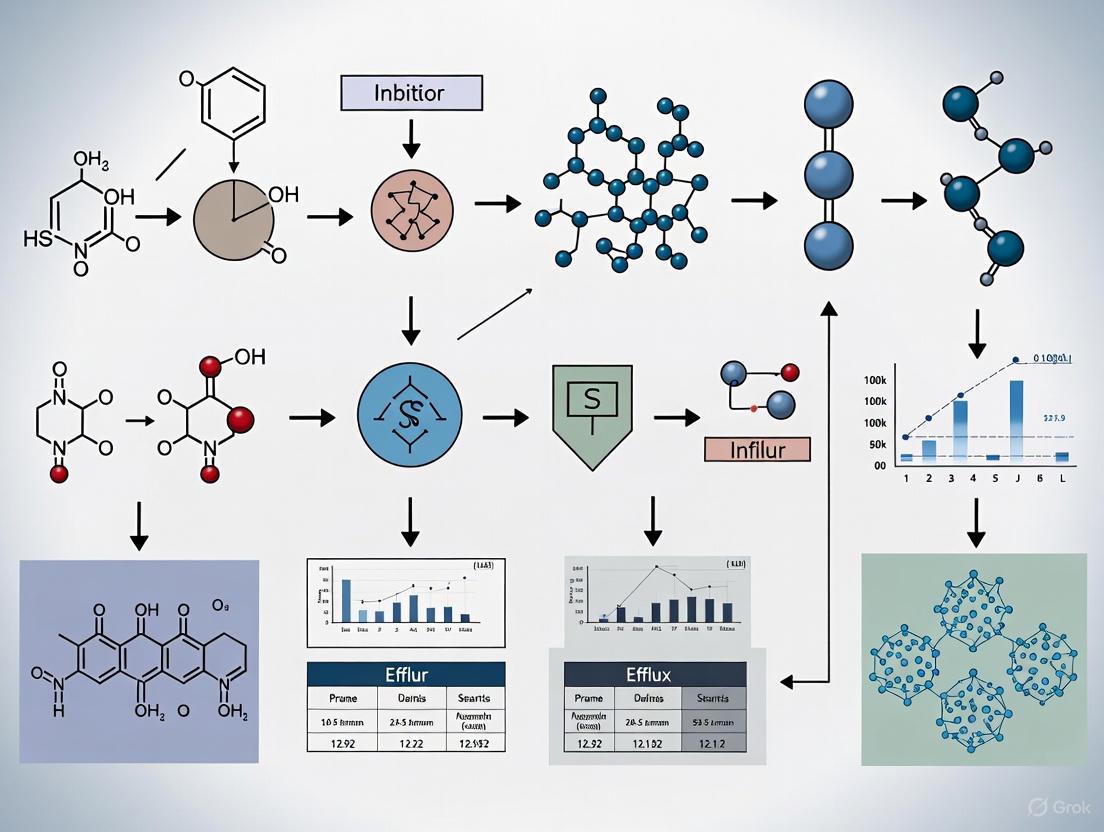
Multidrug-resistant Gram-negative bacteria pose an urgent global health threat, with efflux pumps like AcrB playing a major role in antibiotic failure.
Comparative Efficacy of Efflux Pump Inhibitors: A Comprehensive Review for Rescuing Antibiotic Activity
Abstract
Multidrug-resistant Gram-negative bacteria pose an urgent global health threat, with efflux pumps like AcrB playing a major role in antibiotic failure. This review synthesizes current evidence on the comparative efficacy of efflux pump inhibitors (EPIs), compounds that block these pumps and restore antibiotic susceptibility. We explore the foundational mechanisms of RND-type efflux pumps, methodological approaches for standardized EPI assessment, and troubleshooting strategies for overcoming developmental barriers. A critical comparative analysis of major EPI classes—including pyranopyridines (MBX series), pyridylpiperazines, arylpiperazines, and peptidomimetics—is provided, highlighting their potency, mechanisms, and susceptibility to resistance mutations. This resource is tailored for researchers and drug development professionals seeking to advance EPIs from bench to bedside.
Efflux Pumps and EPIs: Defining the Battlefield Against Multidrug Resistance
The Critical Role of RND Efflux Pumps in Gram-Negative Bacterial Resistance
Resistance-Nodulation-Division (RND) efflux pumps are transmembrane transporter proteins that play a crucial role in conferring multidrug resistance (MDR) to Gram-negative bacteria. These sophisticated molecular machines actively extrude a remarkably broad spectrum of structurally diverse antibiotics from bacterial cells, thereby reducing intracellular drug concentrations to sub-toxic levels [1] [2]. The clinical implication of this substrate promiscuity is the development of multidrug resistance where pathogens display resistance against multiple classes of antimicrobials [2]. The RND efflux systems have a major role in both intrinsic and acquired multi-drug resistance in Gram-negative bacteria, making them critical determinants in the ongoing antimicrobial resistance crisis [3].
Beyond their role in antibiotic resistance, RND efflux pumps are integral to fundamental bacterial physiology. These systems also transport toxins, dyes, detergents, lipids, molecules involved in quorum sensing, and virulence factors [1] [2]. This multifunctional nature means efflux pumps are also significantly associated with bacterial pathogenesis, virulence, and biofilm formation [1] [2] [4]. The importance of these systems in both multidrug resistance and pathogenicity has established RND efflux pumps as attractive targets for new drugs aimed at inhibiting their function [3].
Structural Organization and Molecular Mechanism
Tripartite Assembly
Gram-negative pathogens rely on tripartite protein assemblies that span their double membrane to pump antibiotics from the cell [1] [2]. These complexes consist of three essential components:
- Inner Membrane Protein (IMP): An RND family protein (e.g., AcrB, MexB) located in the inner membrane that catalyzes drug/H+ antiport and is primarily responsible for drug selectivity [1] [2] [4].
- Membrane Fusion Protein (MFP): A periplasmic adaptor protein (e.g., AcrA, MexA) that connects the IMP to the OMF [1] [4].
- Outer Membrane Factor (OMF): An outer membrane porin (e.g., TolC, OprM) that forms a channel through the outer membrane [1] [4].
The best-characterized tripartite drug efflux complexes are the AcrAB-TolC system in Escherichia coli and the MexAB-OprM system in Pseudomonas aeruginosa [1] [2]. The IMPs AcrB and MexB share 86% similarity, and MexB can functionally substitute for AcrB, highlighting the conserved nature of these systems across Gram-negative species [2].
Functional Rotating Mechanism
The RND efflux pumps operate through a sophisticated functional rotating mechanism [2]. The asymmetric structure of the AcrB homotrimer revealed that monomers cycle through three distinct conformational states:
- Loose (L) state: Monomer binds substrate from the periplasm or outer leaflet of the inner membrane
- Tight (T) state: Monomer consolidates substrate binding
- Open (O) state: Monomer releases substrate into the export channel
This concerted mechanism allows for continuous efflux of substrates against concentration gradients, powered by the proton motive force (PMF) [2]. Biochemical and structural analysis has revealed that the periplasmic binding site in AcrB contains both shallow (proximal) and deep (distal) binding pockets separated by a switch loop (G-loop) consisting of residues 614-621 [2]. Conformational flexibility in this loop is essential for moving substrates along the extended binding site, and mutations that alter glycine residues in this loop particularly affect transport of larger macrolide antibiotics [2].
Comparative Analysis of Major RND Efflux Systems
Table 1: Comparison of Major RND Efflux Pumps in Clinically Relevant Gram-Negative Bacteria
| Bacterial Species | Efflux System | Primary Regulator | Key Antibiotic Substrates | Additional Roles |
|---|---|---|---|---|
| Escherichia coli | AcrAB-TolC | AcrR, MarA, SoxS, Rob | β-lactams, fluoroquinolones, chloramphenicol, tetracyclines, macrolides, novobiocin [1] [4] | Bile resistance, virulence, biofilm formation [1] |
| Pseudomonas aeruginosa | MexAB-OprM | MexR | β-lactams, fluoroquinolones, chloramphenicol, trimethoprim, sulfonamides, novobiocin [4] | Virulence, quorum sensing, biofilm formation [4] |
| Pseudomonas aeruginosa | MexCD-OprJ | NfxB | Fluoroquinolones, cefepime, macrolides, tetracyclines [4] | - |
| Pseudomonas aeruginosa | MexXY-OprM | MexZ | Aminoglycosides, tetracyclines, macrolides, fluoroquinolones [4] | - |
| Acinetobacter baumannii | AdeABC | AdeRS | Aminoglycosides, β-lactams, tetracyclines, fluoroquinolones, chloramphenicol [5] | - |
| Klebsiella pneumoniae | AcrAB-TolC | RamA, MarA, SoxS, Rob | β-lactams, fluoroquinolones, chloramphenicol, tetracyclines [5] | - |
| Salmonella enterica | AcrAB-TolC | RamA, MarA, SoxS, Rob | β-lactams, fluoroquinolones, chloramphenicol, tetracyclines [5] | - |
Table 2: RND Efflux Pump Contributions to Resistance Against Novel Beta-Lactam/Beta-Lactamase Inhibitor Combinations
| Antibiotic / Combination | Target Bacteria | Relevant RND Efflux Pumps | Resistance Mechanisms |
|---|---|---|---|
| Ceftazidime/Avibactam (CZA) | P. aeruginosa | MexAB-OprM, MexVW, MexMN-OprM | Overexpression, specific mutations (e.g., MexW E36K) [4] |
| Ceftolozane/Tazobactam (C/T) | P. aeruginosa | MexAB-OprM, MexVW, MexCD-OprJ | Overexpression, porin mutations combined with efflux [4] |
| Imipenem/Relebactam (IMI/REL) | P. aeruginosa | MexAB-OprM | Overexpression [4] |
| Cefepime/Zidebactam (FEP/ZID) | P. aeruginosa | MexAB-OprM, MexCD-OprJ | Overexpression [4] |
| Cefiderocol (FDR) | P. aeruginosa | MexAB-OprM, MexCD-OprJ, MexEF-OprN, MexXY-OprM | Overexpression [4] |
Efflux Pump Inhibition Strategies and Experimental Approaches
Established Efflux Pump Inhibitors
Despite decades of research, no efflux pump inhibitors (EPIs) have progressed to clinical use [1] [5] [2]. However, numerous promising compounds have been identified and characterized in experimental settings:
PAβN (Phenylalanine-Arginine-β-Naphtylamide): Discovered in 1999, PAβN was the first identified inhibitor of RND efflux pumps in Gram-negative bacteria [5]. It was identified through screening of approximately 200,000 compounds in combination with sub-inhibitory concentrations of levofloxacin [5]. Structure-activity relationship (SAR) studies revealed that amino acids in PAβN need to contain both aromatic and basic moieties, though their order could be inverted [5]. Modifications to reduce cytotoxicity included replacing the naphthyl moiety with 3-aminoquinoline [5].
Plant-Derived EPIs: Several natural compounds have demonstrated efflux pump inhibition activity, including berberine, capsaicin, curcumin, palmatine, and piperine [6]. These compounds not only inhibit efflux but also affect bacterial growth dynamics and cluster formation on solid media [6]. Palmatine, curcumin, and berberine have shown particular promise for antimicrobial therapy, potentially as components of combination therapy [6].
Key Experimental Protocols for EPI Evaluation
Efflux Inhibition Assay Protocol:
- Bacterial Strains: Use engineered strains overexpressing specific RND efflux pumps (e.g., P. aeruginosa PAM1032 for MexAB-OprM, PAM1033 for MexCD-OprJ) alongside wild-type and efflux-deficient controls [5].
- Growth Conditions: Culture bacteria in appropriate medium to mid-logarithmic phase [6].
- Compound Preparation: Prepare serial dilutions of EPI candidates in suitable solvent [5] [6].
- Antibiotic Sensitization: Test EPIs in combination with sub-inhibitory concentrations of known efflux pump substrates (e.g., levofloxacin, erythromycin) [5].
- Endpoint Measurement: Determine Minimum Inhibitory Concentrations (MICs) using standardized methods (e.g., broth microdilution, resazurin assay) [6].
- Efflux Verification: Confirm efflux inhibition using fluorescent substrate accumulation assays (e.g., ethidium bromide) with and without EPIs [7].
Structural Modification and SAR Analysis:
- Core Structure Identification: Define essential pharmacophores for activity [5].
- Systematic Modification: Alter specific regions while maintaining core structure [5].
- In Vitro Potency Screening: Test analogs for ability to potentiate antibiotic activity [5].
- Cytotoxicity Assessment: Evaluate mammalian cell toxicity (e.g., hemolysis, cell viability assays) [5].
- Metabolic Stability: Assess compound stability in plasma and physiological conditions [5].
Computational Approaches for EPI Discovery
Bac-EPIC Platform: This web interface facilitates the identification of potential EPIs targeting the AcrAB-TolC pump in E. coli [8]. The platform consists of AcrAIpred and AcrBIpred tools that screen compounds based on structural moieties from literature-reported EPIs [8]. Users can input chemical structures in SMILES format or draw 2D structures to obtain similarity profiles and active moiety information, aiding prioritization for experimental testing [8].
Table 3: Research Reagent Solutions for Efflux Pump Studies
| Reagent / Tool | Specific Example | Application / Function | Experimental Readout |
|---|---|---|---|
| Engineered Bacterial Strains | P. aeruginosa PAM1032 (MexAB-OprM overexpressing) | Pump-specific activity screening | MIC shifts with EPI combination [5] |
| Fluorescent Substrates | Ethidium bromide, Hoechst 33342 | Efflux activity measurement | Accumulation fluorescence [7] |
| EPI Reference Compounds | PAβN, D13-9001, BER, NMP | Positive controls for inhibition | Comparison of potency [5] [6] |
| Computational Prediction Tools | Bac-EPIC webserver | In silico EPI screening | Structural similarity profiling [8] |
| Antibiotic Substrates | Levofloxacin, erythromycin, chloramphenicol | Efflux activity confirmation | MIC changes in pump mutants [5] |
RND efflux pumps represent critical determinants of multidrug resistance in Gram-negative bacteria, with their tripartite structure and functional rotating mechanism enabling extrusion of diverse antimicrobial agents. The comparative analysis of major RND systems across bacterial pathogens reveals both conserved mechanisms and species-specific adaptations that contribute to the challenge of antimicrobial resistance.
The ongoing development of efflux pump inhibitors shows promise for overcoming resistance, though no EPIs have yet reached clinical application [1] [5]. Future research directions should focus on leveraging structural information for rational drug design, optimizing pharmacokinetic properties of lead compounds, and developing combination therapies that exploit synergies between EPIs and conventional antibiotics. The emergence of standardized computational tools and high-throughput screening methodologies provides renewed optimism for translating efflux pump inhibition into clinically viable therapeutic strategies.
As Gram-negative bacteria continue to develop resistance to last-resort antibiotics, including novel beta-lactam/beta-lactamase inhibitor combinations [4], targeting RND efflux pumps remains a promising approach to extend the utility of existing antibiotics and combat the global antimicrobial resistance crisis.
Efflux pumps are transmembrane transporter proteins that actively extrude toxic substances, including a wide range of antibiotics, from bacterial cells and are a major contributor to multidrug resistance (MDR) in pathogenic bacteria [9] [10]. The overexpression of these pumps significantly compromises the efficacy of antimicrobial treatments, leading to therapeutic failure [11] [12]. Among the diverse superfamilies of efflux transporters, the Resistance-Nodulation-Division (RND), Major Facilitator Superfamily (MFS), Multidrug and Toxic Compound Extrusion (MATE), and ATP-Binding Cassette (ABC) families are of paramount clinical importance [10] [11]. This guide provides a comparative analysis of these four major families, focusing on their energy-coupling mechanisms, structural architectures, substrate profiles, and roles in pathogenicity. The objective assessment of efflux pump inhibitors (EPIs), supported by experimental data and standardized methodologies, is crucial for advancing adjunct therapies to rejuvenate the efficacy of existing antibiotics [13] [9].
Table 1: Comparative summary of the major efflux pump families in bacteria.
| Feature | RND | MFS | MATE | ABC |
|---|---|---|---|---|
| Energy Source | Proton Motive Force [11] [12] | Proton Motive Force [11] [12] | Sodium or Proton Gradient [11] [12] | ATP Hydrolysis [10] [11] [14] |
| Typical Architecture | Tripartite Complex (IM, PAP, OMP) [10] [12] | Single-component (12 or 14 TMS) [12] | Single-component (12 TMS) [12] | Two TMDs & Two NBDs [10] [14] |
| Representative Pumps | AcrB (E. coli), MexB (P. aeruginosa) [13] [12] | NorA (S. aureus), TetA (E. coli) [9] [15] | NorM (V. parahaemolyticus) [12] | P-glycoprotein (human), MacAB (E. coli) [11] [12] [14] |
| Substrate Profile | Extremely broad: β-lactams, FQs, macrolides, dyes, detergents [13] [12] | Can be narrow (e.g., tetracyclines) or broad (e.g., FQs, macrolides) [9] [11] | Fluoroquinolones, aminoglycosides [11] | Broad: macrolides, aminoglycosides, chemotherapeutics [12] [14] |
| Primary Role in Resistance | Major intrinsic & acquired MDR in Gram-negatives [13] [10] | MDR in Gram-positives; specific/Gram-negatives [9] [15] | Contributes to MDR in various bacteria [16] [11] | MDR in bacteria and cancer cells [11] [14] |
| Inhibitor Examples | Pyranopyridines (MBX), Pyridylpiperazines (BDM) [13] | Reserpine [9] | Thioridazine, Fluoxetine [16] | Chemical inhibitors, miRNA agents [14] |
Diagram 1: Classification and core characteristics of the four major efflux pump families.
Experimental Assessment of Efflux Pump Inhibitors (EPIs)
Standardized EPI Potency Screening
A critical reassessment of 38 published AcrB (RND family) inhibitors highlights the necessity for standardized methodologies to directly compare EPI potency [13]. The core protocol involves determining the minimum inhibitory concentration (MIC) of various antibiotic substrates in the presence and absence of a sub-inhibitory concentration of the EPI candidate.
Detailed Experimental Protocol:
- Bacterial Strain: Use a defined strain, such as Escherichia coli with stable, overexpression of the wild-type AcrB efflux pump [13].
- Antibiotic Panel: Select a range of antibiotics known to be efflux substrates across different classes (e.g., fluoroquinolones, β-lactams, macrolides, tetracyclines, chloramphenicol) to assess the breadth of potentiation [13].
- EPI Concentration: Test the EPI candidate at a fixed, sub-growth-inhibitory concentration (e.g., 25 µg/mL for MBX2319) [13].
- MIC Determination: Perform broth microdilution assays to determine the MIC of each antibiotic with and without the EPI [13].
- Data Analysis: Calculate the fold reduction in MIC. A fourfold or greater decrease in MIC for multiple antibiotic classes is considered evidence of significant EPI activity [13].
Table 2: Experimental potency data for selected EPIs targeting the RND pump AcrB in E. coli [13].
| EPI | Reported Chemical Class | Test Concentration (µg/mL) | Fold MIC Reduction (for representative antibiotics) |
|---|---|---|---|
| MBX2319 | Pyranopyridine | 9.7 | Levofloxacin: 7-fold, Clindamycin: 8-fold, Cefuroxime: 7-fold |
| PAβN | Peptidomimetic | 25 | Levofloxacin: 4-fold, Clindamycin: 16-fold, Novobiocin: 137-fold |
| NMP | Arylpiperazine | 100 | Linezolid: 31-fold, Clindamycin: 12-fold, Levofloxacin: 8-fold |
| Sertraline | Synthetic antidepressant | 34.3 | Clindamycin: 12-fold, Levofloxacin: 4-fold, Cefuroxime: 4-fold |
| BDM88855 | Pyridylpiperazine | Not Specified | Active, but distinct from MBX susceptibility [13] |
Mutagenesis for Discriminating EPI Mechanism of Action
Beyond potency, specific AcrB mutations can be used to discriminate between different EPI mechanisms [13]. This provides a tool for initial functional classification.
Detailed Experimental Protocol:
- Engineered Strains: Construct isogenic strains harboring specific point mutations in the acrB gene (e.g., G141D_N282Y or V411A) [13].
- Comparative MIC Testing: Repeat the standardized EPI potency screening (as in Section 3.1) using these mutant strains alongside the wild-type AcrB overexpression strain.
- Mechanism Interpretation:
- An EPI whose activity is abolished or diminished in a specific mutant (e.g., MBX2319 losing activity in the G141D_N282Y double mutant) is inferred to depend on that binding pocket for its function [13].
- An EPI that retains activity in a particular mutant (e.g., MBX2319 remaining active in the V411A mutant) likely has a different mode of interaction [13].
Diagram 2: A workflow for the experimental assessment and mechanistic classification of EPIs.
The Scientist's Toolkit: Key Research Reagents and Materials
Table 3: Essential research reagents and their applications in efflux pump studies.
| Reagent / Material | Function and Application in EP Research |
|---|---|
| Defined Overexpression Strains | Strains (e.g., E. coli with stable AcrB overexpression) provide a consistent, high-background system for reliably detecting EPI potentiation effects [13]. |
| Site-Directed Mutant Strains | Isogenic strains with specific efflux pump mutations (e.g., AcrB-G141D_N282Y) are crucial tools for discriminating an EPI's mechanism of action and binding site [13]. |
| Fluorescent Substrate Dyes | Dyes like Hoechst 33342 are used in accumulation/efflux assays. Increased intracellular fluorescence in the presence of an EPI indicates successful efflux inhibition [16]. |
| Proton Motive Force Disruptors | Carbonyl cyanide m-chlorophenyl hydrazone (CCCP) dissipates the proton gradient, disabling secondary active transporters. Used as a control to confirm energy-dependent efflux [9]. |
| Known EPI Pharmacophores | Reference compounds like PAβN, NMP, and MBX2319 serve as positive controls in assays to validate experimental protocols and for direct comparison with novel inhibitors [13] [9]. |
The comparative analysis of RND, MFS, MATE, and ABC efflux families reveals a complex landscape of MDR driven by diverse yet complementary mechanisms. The RND family stands out as a primary target for combating Gram-negative infections due to its broad substrate range and central role in intrinsic resistance [13] [10]. Advances in EPI research, characterized by standardized potency screens and mechanistic studies using defined mutant strains, are paving the way for rational inhibitor design [13]. The ongoing challenge lies in translating potent in vitro EPIs into safe and effective clinical adjuvants that can restore the efficacy of our existing antibiotic arsenal.
Physiological Functions of Efflux Pumps Beyond Antibiotic Resistance
Efflux pumps are membrane transporter proteins renowned for their role in antibiotic resistance, actively extruding antimicrobial agents from bacterial cells. However, their presence across all domains of life and conservation throughout evolution suggests these ancient elements serve fundamental physiological purposes beyond drug extrusion [17]. While antibiotic resistance has dominated scientific attention, researchers are increasingly recognizing that efflux pumps constitute integral components of bacterial survival machinery, mediating critical functions from bacterial communication to stress adaptation and host colonization [9] [18] [17]. This comparative guide systematically evaluates the non-resistance functions of efflux pumps across bacterial pathogens, providing experimental approaches for their study and analyzing implications for efflux pump inhibitor development.
The physiological relevance of efflux pumps is evidenced by several characteristics: their ubiquitous presence across bacterial species, their encoding within core genomes rather than mobile genetic elements, their redundancy within single bacterial cells, and their sophisticated regulatory networks integrating with global bacterial stress responses [17]. Unlike antibiotic-inactivating enzymes or target-modifying resistance mechanisms, efflux pumps represent primordial bacterial infrastructure co-opted for antibiotic extrusion rather than specifically evolved for this purpose [17]. This perspective fundamentally shifts our understanding of efflux pumps from simple resistance mechanisms to multifunctional adaptive systems with direct implications for combating bacterial pathogenesis.
Comparative Analysis of Physiological Functions
Bacterial Virulence and Host-Pathogen Interactions
Efflux pumps contribute significantly to bacterial virulence by mediating interactions with host environments and defense systems. In enteric bacteria including Salmonella and Escherichia coli, efflux systems provide critical bile tolerance essential for intestinal colonization and pathogenesis [9]. Bacterial efflux pumps also enhance survival within host environments by expelling host-produced antimicrobial compounds, including bile salts in enteric bacteria [17]. Additionally, efflux pumps contribute to bacterial virulence factor production; in Pseudomonas aeruginosa, the MexEF-OprN system influences virulence through interconnected regulation with quorum sensing networks [17].
Table 1: Efflux Pump Contributions to Bacterial Virulence
| Efflux Pump | Bacterial Species | Virulence Function | Experimental Evidence |
|---|---|---|---|
| AcrAB-TolC | Salmonella enterica | Intestinal colonization | Knockout mutants show reduced virulence in mouse models [19] |
| MexAB-OprM | Pseudomonas aeruginosa | Survival in host environments | Contributes to intrinsic resistance to host-produced antimicrobials [17] |
| MtrCDE | Neisseria gonorrhoeae | Mucosal colonization | Provides resistance to antimicrobial peptides present on mucosal surfaces [17] |
| Multiple RND pumps | Enteric bacteria | Bile salt resistance | Enables survival in intestinal tract containing bile salts [9] [17] |
Intercellular Communication and Quorum Sensing
Efflux pumps play sophisticated roles in bacterial communication systems, particularly quorum sensing (QS), which coordinates population-level behaviors including virulence factor production. In Pseudomonas aeruginosa, a paradigm for QS research, multiple efflux systems including MexAB-OprM, MexCD-OprJ, and MexGHI-OpmD transport QS signal molecules or their precursors [17]. The MexAB-OprM system exports the Pseudomonas quinolone signal (PQS) precursor 2-heptyl-4-quinolone (HHQ), while MexEF-OprN affects N-acylhomoserine lactone (AHL) accumulation [17]. These transport activities directly influence virulence regulation, as QS controls expression of extracellular toxins, proteases, and other virulence determinants in numerous bacterial pathogens.
The relationship between efflux and QS creates complex regulatory circuits with significant implications. Efflux pump overexpression in antibiotic-resistant mutants can disrupt QS signaling precision by altering signal molecule concentrations in the extracellular environment [17]. This unintended interference potentially diminishes bacterial virulence while simultaneously increasing antibiotic resistance, creating a trade-off with evolutionary implications for pathogen behavior during antimicrobial therapy.
Figure 1: Efflux pumps in quorum sensing pathways and antibiotic-induced disruption. Normal quorum sensing (yellow area) involves signal synthesis, efflux-mediated transport, extracellular accumulation, and virulence activation. Antibiotic exposure (blue area) can cause efflux pump overexpression that disrupts precise signaling, potentially altering virulence.
Biofilm Formation and Community Survival
Efflux pumps significantly contribute to biofilm development, a key virulence determinant enabling chronic infections. Multiple studies demonstrate that efflux pumps transport biofilm matrix components and influence initial attachment and maturation phases [20] [19]. In Escherichia coli and Klebsiella pneumoniae, efflux pump inhibitors reduce biofilm formation, confirming their functional importance in community survival strategies [19]. The physiological role in biofilm formation presents a therapeutic opportunity, as efflux pump inhibitors may compromise both antibiotic resistance and biofilm-associated persistence.
Table 2: Biofilm Inhibition by Combined Antibiotic and EPI Treatment
| Bacterial Strain | Antibiotic Alone | Antibiotic + PAβN EPI | Biofilm Reduction | Experimental Method |
|---|---|---|---|---|
| Acinetobacter baumannii | High MIC values | 4-8 fold MIC reduction | Significant inhibition of early and mature biofilms [20] | Microtiter plate biofilm assay with crystal violet staining [20] |
| Escherichia coli | Moderate biofilm formation | Enhanced inhibition | Up to 70% reduction in biofilm biomass [19] | Continuous flow cell biofilm system with confocal microscopy [19] |
| Klebsiella pneumoniae | Established biofilms | Disruption of mature biofilms | 3-fold decrease in biofilm viability [19] | ATP-based viability assays in biofilm populations [19] |
Metabolic Regulation and Stress Adaptation
Bacterial efflux pumps function as metabolic regulators by expelling toxic metabolic byproducts and facilitating adaptation to environmental stresses. They contribute to oxidative stress tolerance by removing compounds that generate reactive oxygen species or their damaging derivatives [21] [17]. Additionally, efflux systems maintain cellular homeostasis under varying osmotic conditions, with specific pumps activated in response to osmotic stress signals [21]. Their function in detoxification extends to natural plant-derived antimicrobials for plant pathogens and industrial biocides in environmental settings, demonstrating their fundamental role in bacterial environmental persistence independent of clinical antibiotic exposure [17].
Experimental Approaches for Functional Characterization
Molecular Methods for Functional Analysis
Gene Knockout and Complementation Studies Construction of isogenic efflux pump knockout mutants represents a foundational approach for determining physiological functions. Methodologically, this involves amplifying flanking regions of target efflux pump genes, inserting antibiotic resistance cassettes via overlap extension PCR, transforming mutants into susceptible bacterial strains, and verifying mutants by sequencing and phenotypic characterization [17]. Complemented strains, created by reintroducing functional genes on plasmids, control for polar effects and confirm observed phenotypes. Virulence attenuation in knockout mutants in infection models directly demonstrates efflux pump contributions to pathogenesis [19].
Gene Expression Analysis Under Stress Conditions Quantitative RT-PCR and reporter gene fusions measure efflux pump expression in response to various stressors. Experimental protocols involve exposing bacterial cultures to stress conditions (oxidative, osmotic, nitrosative, nutrient limitation), extracting RNA at multiple time points, synthesizing cDNA, and performing qPCR with gene-specific primers [17]. Normalization to housekeeping genes and calculation of fold-change differences identifies stimuli that regulate efflux pump expression, revealing their physiological induction triggers beyond antibiotics.
Biochemical and Phenotypic Assays
Biofilm Formation Assays Standardized biofilm assays evaluate efflux pump contributions to community behaviors. The microtiter plate method involves staining adhered biomass with crystal violet, eluting dye with ethanol-acetate mixture, and measuring absorbance at 570-600nm [20]. Microscopic approaches utilizing confocal laser scanning microscopy with fluorescent dyes (SYTO9/propidium iodide for viability) provide three-dimensional architecture analysis of biofilms grown in flow cell systems [20].
Compound Accumulation and Transport Assays Fluorometric accumulation assays measure intracellular compound retention using fluorescent efflux pump substrates (e.g., ethidium bromide, Hoechst 33342). Methodology includes incubating bacteria with fluorescent substrates with/without efflux pump inhibitors, washing cells to remove extracellular dye, and measuring fluorescence intensity over time [21] [22]. Kinetic analysis reveals transport functionality, while inhibitor studies demonstrate specificity. Mass spectrometry-based approaches provide absolute quantification of antibiotic accumulation, offering direct evidence of efflux activity and inhibition [21].
Virulence Factor Quantification Efflux pump contributions to virulence are quantified by measuring toxin production, protease activity, and motility assays. Protease activity measurements involve growing bacteria in appropriate media, collecting supernatant, adding azocasein substrate, incubating, precipitating undigested substrate with trichloroacetic acid, and measuring absorbance of supernatant at 440nm [17]. Comparison between wild-type and efflux pump mutants establishes virulence regulation roles.
Advanced Computational and Structural Approaches
Computational methods have become indispensable for understanding efflux pump functions and inhibitor interactions. Molecular dynamics simulations probe interactions between efflux pumps, substrates, and inhibitors, analyzing features like proximal/distal binding pockets, hydrophobic traps, switch loops, and external clefts [23]. These approaches explain substrate polyspecificity and guide inhibitor design by identifying critical binding residues. Quantitative structure-activity relationship (QSAR) modeling correlates structural features of compounds with efflux inhibition activity, enabling rational design of improved inhibitors [23]. Structural biology techniques including cryo-electron microscopy and X-ray crystallography provide high-resolution structural data informing mechanistic understanding and therapeutic development [21] [23].
Research Reagent Solutions Toolkit
Table 3: Essential Research Reagents for Efflux Pump Studies
| Reagent Category | Specific Examples | Research Applications | Experimental Considerations |
|---|---|---|---|
| Fluorescent Substrates | Ethidium bromide, Hoechst 33342, Berberine | Accumulation and inhibition assays [21] [22] | Ethidium bromide is carcinogenic; use appropriate safety precautions [22] |
| Model Efflux Pump Inhibitors | PAβN (MC-207,110), CCCP, NMP, Reserpine | Proof-of-concept inhibition studies [9] [20] [19] | CCCP and reserpine exhibit significant cytotoxicity [20] |
| Nanoparticle Inhibitors | Silver nanoparticles, Zinc oxide nanoparticles, Copper nanoparticles | Alternative inhibition strategies, synergy studies [22] | Size, shape, and surface chemistry significantly impact activity [22] |
| Bacterial Strains | Wild-type and efflux pump knockout mutants | Functional comparison studies [17] [19] | Use isogenic strains to ensure genetic background consistency |
| Antibiotic Susceptibility Testing | Cation-adjusted Mueller-Hinton broth, Microdilution trays | MIC determination with/without inhibitors [20] | Standardize inoculum density for reproducible results |
Implications for Efflux Pump Inhibitor Development
The physiological functions of efflux pumps present both challenges and opportunities for therapeutic development. Inhibitors targeting efflux pumps may simultaneously restore antibiotic susceptibility while potentially attenuating bacterial virulence by interfering with quorum sensing, biofilm formation, and stress adaptation [20] [17] [19]. However, potential toxicity concerns arise from structural conservation between bacterial and eukaryotic efflux pumps, necessitating careful selectivity profiling [9] [24].
Strategic inhibitor development should consider several approaches: targeting efflux pumps critical for both resistance and virulence in specific pathogens; developing narrow-spectrum inhibitors that preserve beneficial microbiome functions; and utilizing combination therapies that exploit collateral sensitivity created by efflux pump inhibition [17] [19]. Nanoparticle-based inhibitors offer promising alternatives to small molecules, with demonstrated abilities to disrupt efflux kinetics through membrane potential interference and direct pump binding [22].
Figure 2: Efflux pump inhibitor development pathway incorporating physiological functions. Discoveries about physiological roles inform target selection, with optimization criteria (red connections) now including virulence reduction, selective toxicity, and pharmacokinetic considerations alongside traditional efficacy measures.
Despite significant research investment, no efflux pump inhibitors have reached clinical approval, hampered by challenges including optimal pharmacokinetic properties, tissue distribution, and toxicity profiles [21] [9] [19]. Ongoing efforts focus on developing compounds with improved pharmacological properties, utilizing advanced computational approaches and structural information to design inhibitors with higher affinity and selectivity [23] [19]. The integration of physiological function understanding into inhibitor design represents a promising approach for developing clinically effective adjuvants that address both antibiotic resistance and bacterial virulence.
Efflux pumps represent sophisticated multifunctional systems integral to bacterial physiology, contributing to virulence, cellular communication, community behavior, and stress adaptation alongside their recognized role in antibiotic resistance. Comprehensive understanding of these diverse functions reveals the complex evolutionary pressures maintaining efflux systems in bacterial genomes and informs more sophisticated therapeutic approaches. Future research elucidating the integrated networks connecting efflux activity with global bacterial physiology will enable innovative strategies targeting both resistance and pathogenesis, potentially overcoming current limitations in efflux pump inhibitor development. The comparative data and experimental methodologies presented herein provide researchers with essential tools for advancing this critical frontier in antimicrobial research.
The AcrAB-TolC efflux pump in Escherichia coli represents a paradigm for understanding multidrug resistance (MDR) in Gram-negative bacteria. As a member of the resistance-nodulation-division (RND) superfamily, this tripartite molecular assembly spans the entire cell envelope and actively extrudes a remarkably diverse array of antimicrobial compounds, significantly contributing to intrinsic and acquired antibiotic resistance [11]. The system's capacity to transport compounds with little chemical similarity makes it a major clinical concern and a prime target for innovative therapeutic strategies [25]. This guide provides a comprehensive comparison of the AcrAB-TolC system's structural organization, functional mechanisms, and conformational dynamics, contextualized within ongoing research to develop efflux pump inhibitors (EPIs) that could restore antibiotic efficacy.
Structural Organization of the Tripartite Complex
Component Architecture and Stoichiometry
The AcrAB-TolC pump is composed of three essential components that form a continuous conduit from the bacterial cytoplasm to the extracellular environment. Quantitative structural studies, particularly cryo-electron microscopy (cryo-EM) analyses, have definitively established the pump's stoichiometry as a 3:6:3 assembly of AcrB:AcrA:TolC [25] [26]. This quaternary organization is fundamental to the system's function.
Table 1: Core Components of the AcrAB-TolC Efflux Pump
| Component | Location | Fold/Type | Function in Efflux |
|---|---|---|---|
| AcrB | Inner membrane | RND transporter; homotrimer | Primary active transporter; binds and pumps substrates using proton motive force |
| AcrA | Periplasmic space | Membrane fusion protein; hexamer | Structural adapter; bridges AcrB and TolC, facilitates energy transduction |
| TolC | Outer membrane | Outer membrane protein; homotrimeric β-barrel | Exit duct; forms a channel through the outer membrane |
| AcrZ | Inner membrane | Small peptide (49 residues) | Regulatory subunit; binds AcrB transmembrane domain, modulates substrate specificity [25] |
The structural arrangement reveals that AcrA completely bridges the periplasmic space, with no direct interaction occurring between TolC and AcrB [25]. This architectural principle is conserved across Gram-negative bacteria, with homologous systems such as MexAB-OprM in Pseudomonas aeruginosa following similar organizational patterns [11].
Key Structural Interfaces and Assembly
High-resolution structural studies have illuminated critical interfaces that enable pump assembly and function. The AcrA hexamer forms a funnel-like structure through side-by-side packing of its β-barrel, lipoyl, and helical hairpin domains [25]. The α-helical coiled coils (or 'hairpins') of AcrA pack into a cylinder that interacts specifically with the periplasmic ends of TolC's α-helical coiled coils. Notably, TolC possesses an internal structural repeat, creating six quasi-equivalent contact surfaces that interact with the AcrA hairpins [25] [26].
The membrane proximal domain and β-barrel domain of AcrA engage in defined interactions with AcrB. Structural analyses reveal that adjacent protomers of AcrA interact with AcrB in distinct manners: one protomer bridges the upper regions of subdomains PC1, PC2, and DC of AcrB, while the adjacent protomer shifts its membrane-proximal domain toward the PN2 subdomain of AcrB [25]. This asymmetric engagement is critical for the transduction of conformational changes during the transport cycle.
Functional Mechanism and Conformational Cycling
The Transport Cycle: Asymmetric Rotational Mechanism
The AcrB trimer operates through a sophisticated asymmetric rotational mechanism often described as the "functional rotating" model. During transport, each AcrB protomer cycles consecutively through three distinct conformational states:
- Access (L) state: The protomer is open to the periplasm, allowing substrate entry
- Binding (T) state: The substrate is bound within the deep binding pocket
- Extrusion (O) state: The protomer is open toward the exit funnel, enabling substrate release
This cycling occurs in a strictly coordinated, sequential manner, such that at any moment, the three protomers exist in different conformational states [26]. The process is driven by proton motive force, with proton uptake occurring in the T and O states and proton release in the L state, creating a proton translocation pathway that energizes the conformational changes.
Diagram 1: Conformational Cycling of AcrB Protomers During Drug Transport. The three states (L, T, O) cycle sequentially, powered by proton motive force.
Allosteric Regulation and Channel Opening
Recent near-atomic resolution cryo-EM structures have revealed a quaternary structural switch that allosterically couples initial ligand binding with channel opening [26]. In the resting state (apo structure), the pump adopts a closed channel configuration with TolC in its closed conformational state and AcrB in a symmetric arrangement (LLL) [26]. Upon substrate binding, the system transitions to the transport-activated state, characterized by:
- Asymmetric conformations of AcrB protomers (L, T, O states)
- Opening of the TolC channel
- Structural rearrangements in AcrA that seal the periplasmic gap
- Formation of a continuous conduit from AcrB through TolC
This allosteric mechanism ensures that the channel remains open throughout the transport cycle, even as individual protomers transition between conformational states [26]. The involvement of AcrZ appears to fine-tune this process by allosterically modulating AcrB activity, though the precise mechanism remains under investigation [25].
Comparative Analysis of Efflux Pump Inhibitors
EPI Classes and Mechanisms of Action
Efflux pump inhibitors targeting AcrAB-TolC represent promising adjuvant therapies to combat multidrug resistance. These compounds can be broadly categorized based on their mechanisms and structural characteristics.
Table 2: Comparative Analysis of AcrAB-TolC Efflux Pump Inhibitors
| Inhibitor Class/Compound | Proposed Mechanism | Potency (MPC4) | Cellular Toxicity (CC50) | Development Status |
|---|---|---|---|---|
| Pyranopyridines (MBX2319) | Selective AcrB inhibition [27] | 3.1 µM (parent compound) [27] | >100 µM [27] | Preclinical optimization |
| Pyranopyridine analogs (22d-f, 22i, 22k) | Improved AcrB binding | ~10x more potent than MBX2319 [27] | Similar or improved vs MBX2319 | Preclinical candidate evaluation |
| Repurposed drugs (Flupentixol) | NorA efflux pump inhibition [28] | Synergy with ciprofloxacin demonstrated [28] | Well-established human safety profile | In vitro/In vivo proof-of-concept |
| Plant-derived compounds (Piperine analogs) | QSAR-optimized NorA inhibition [29] | Variable based on structural features [29] | Generally favorable | Early research |
| PAβN | Broad-spectrum EPI | Potentiates multiple antibiotic classes [30] | Cytotoxicity concerns [11] | Research tool |
MPC4: Minimum potentiation concentration that decreases antibiotic MIC by 4-fold
The pyranopyridine class, particularly optimized analogs of MBX2319, demonstrates significant promise due to their drug-like scaffolds, selective AcrB inhibition, and favorable cytotoxicity profiles [27]. Structure-activity relationship (SAR) studies have identified key molecular regions that can be modified to improve potency, metabolic stability, and solubility [27].
Quantitative Structure-Activity Relationships
QSAR analysis of efflux pump inhibitors has revealed critical molecular descriptors correlating with inhibitory activity. Studies on piperine analogs as NorA inhibitors identified three key descriptors:
- Jurs_PNSA-1: Partial negative surface area (positively correlated with activity)
- Shadow_XZ: Area of molecular shadow in XZ plane (inversely correlated with activity)
- Heat of formation: Related to compound stability [29]
These descriptors have enabled the development of highly accurate predictive models (r² = 0.962, q² = 0.917) that can guide the rational design of novel EPIs with improved efficacy [29].
Experimental Approaches and Methodologies
Key Assays for Evaluating Efflux Function and Inhibition
Diagram 2: Experimental Workflow for Evaluating Efflux Pump Structure and Function. Integrated approaches spanning microbiology, biochemistry, and structural biology.
Detailed Protocol: Efflux Inhibition Potentiation Assay
The minimum potentiation concentration (MPC) assay quantifies EPI efficacy through a standardized protocol:
- Bacterial preparation: Grow E. coli to mid-log phase (OD600 ≈ 0.5) in Mueller-Hinton broth
- Microdilution plate setup: Prepare serial two-fold dilutions of test antibiotic (e.g., levofloxacin, piperacillin) in 96-well plates
- EPI addition: Add fixed concentrations of EPI candidate across appropriate concentration range
- Inoculation: Add bacterial suspension to achieve final density of 5 × 10⁵ CFU/mL
- Incubation: 18-24 hours at 37°C
- Endpoint determination:
- Visual growth assessment
- Resazurin dye conversion (colorimetric metabolic indicator) [28]
- MPC4 calculation: Determine the lowest EPI concentration that reduces antibiotic MIC by 4-fold [27]
This assay provides quantitative data on the ability of EPIs to restore antibiotic susceptibility in resistant strains, with MPC4 serving as the primary potency metric for comparative analysis.
Structural Biology Techniques for Conformational Analysis
Advanced structural techniques have been instrumental in elucidating the conformational dynamics of AcrAB-TolC:
- Cryo-EM with GraFix stabilization: Enables visualization of fully assembled pump at near-atomic resolution (3.6 Å) [25] [26]
- Disulfide-crosslinking: Stabilizes specific conformational states for structural analysis [26]
- Focused classification: Identifies distinct conformational states within heterogeneous samples [26]
- Molecular dynamics simulations: Provide insights into substrate transport pathways and energy landscapes [31]
These approaches have revealed critical details of the allosteric transitions and asymmetric conformations that characterize the transport cycle.
Research Reagent Solutions Toolkit
Table 3: Essential Research Reagents for AcrAB-TolC Investigations
| Reagent/Category | Specific Examples | Research Application | Key Function |
|---|---|---|---|
| Reference Antibiotics | Levofloxacin, Ciprofloxacin, Piperacillin | Susceptibility testing, potentiation assays | Substrates for efflux; measure EPI efficacy |
| EPI Reference Compounds | MBX2319, PAβN, NMP, CCCP | Control experiments, mechanism studies | Positive controls for efflux inhibition |
| Bacterial Strains | E. coli ATCC strains, Isogenic efflux mutants, Clinical MDR isolates | Comparative studies, Resistance mechanisms | Provide genetic context for efflux activity |
| Fluorescent Substrates | Ethidium bromide, Hoechst 33342 | Accumulation/efflux assays, Kinetic studies | Direct measurement of efflux activity |
| qPCR Reagents | acrA/B-specific primers, SYBR Green master mix | Gene expression analysis, Regulation studies | Quantify efflux pump expression levels |
| Detergents/Amphipols | n-Dodecyl-β-D-maltopyranoside (DDM), Amphipol A8-35 | Membrane protein purification, Structural studies | Solubilize and stabilize membrane complexes |
| Crosslinkers | GraFix reagents, Disulfide bond engineering | Structural stabilization, Cryo-EM sample prep | Stabilize transient complexes for analysis |
The AcrAB-TolC efflux pump represents a sophisticated molecular machine whose structural and functional complexity underpins its effectiveness in conferring multidrug resistance. The comparative analysis presented herein highlights key aspects of its quaternary organization, asymmetric conformational cycling, and allosteric regulation that collectively enable broad-substrate recognition and transport. Current inhibitor development efforts face significant challenges, including achieving clinical translation while avoiding cytotoxicity and pharmacokinetic limitations [11] [30]. However, emerging strategies—including structure-based drug design targeting AcrB [27] [26], drug repurposing approaches [28], and natural product discovery [6]—offer promising avenues for overcoming these hurdles. Future research directions should prioritize the integration of structural biology with computational approaches to design next-generation EPIs with optimized target engagement and pharmacological properties, ultimately enabling the restoration of antibiotic efficacy against multidrug-resistant Gram-negative pathogens.
Efflux pump inhibitors (EPIs) represent a promising therapeutic strategy to combat multidrug resistance (MDR) in bacteria and cancer cells. By blocking transporter proteins that expel antimicrobial or chemotherapeutic agents, EPIs can restore the efficacy of existing drugs [32]. The journey from early discoveries like phenylalanine-arginine β-naphthylamide (PAβN) to contemporary inhibitors reflects evolving understanding of efflux pump mechanisms and increasingly sophisticated drug design approaches. This review systematically compares the efficacy, mechanisms, and experimental validation of major EPI classes within the broader context of developing effective resistance reversal agents.
The Foundational Role of PAβN
Discovery and Initial Characterization
PAβN (MC-207,110), discovered in 1999, was the first identified inhibitor of Resistance Nodulation Division (RND) efflux pumps in Gram-negative bacteria. Researchers at Microcide Pharmaceuticals and Daiichi Pharmaceutical Company identified it through high-throughput screening of approximately 200,000 compounds for their ability to potentiate levofloxacin activity against Pseudomonas aeruginosa strains overexpressing MexAB-OprM, MexCD-OprJ, or MexEF-OprN efflux systems [5].
Structure-Activity Relationships
Extensive structure-activity relationship (SAR) studies involving over 500 analogs revealed that PAβN's dipeptidic structure requires specific modifications for optimal activity:
- Amino Acid Configuration: Both aromatic and basic moieties are essential, though their order can be inverted [5]
- Side Chain Modifications: L-homo-phenylalanine replacement improved potency 2-fold; ornithine or aminomethylproline served as alternative basic amino side chains [5]
- Cap Group Optimization: 3-aminoquinoline replacement reduced mammalian cell cytotoxicity while maintaining efficacy [5]
Table 1: Evolution of Peptidomimetic EPIs Beyond PAβN
| Compound | Structural Features | Potency vs PAβN | Key Advantages |
|---|---|---|---|
| PAβN | L-Phe-L-Arg-β-naphthylamide | Baseline | Broad-spectrum RND inhibition |
| MC-02,595 | Modified cap group | Comparable | Improved stability |
| MC-04,124 | Optimized amino acids | 2-fold improvement | Reduced cytotoxicity |
Contemporary EPI Classes and Mechanisms
Expanding the Chemical Landscape
Following PAβN, multiple EPI classes have emerged with distinct chemical scaffolds and inhibition mechanisms:
Table 2: Comparative Analysis of Major EPI Classes
| EPI Class | Representative Compounds | Primary Target | Mechanism of Action | Experimental Efficacy (MIC Reduction) |
|---|---|---|---|---|
| Peptidomimetics | PAβN, analogs | RND pumps (AcrB, MexB) | Competitive substrate inhibition [5] | 4-64 fold for various antibiotics [33] |
| Plant-derived | Berberine, curcumin, palmatine | Multiple families | Dual EPI/Sortase A inhibition [6] | Significant growth curve alterations [6] |
| Pyridopyrimidines | D13-9001, analogs | AcrB transmembrane region | Binds deep binding pocket [5] | >100-fold for macrolides [5] |
| Repurposed Antibiotics | Colistin (low concentration) | AcrB transmembrane domain | Binds transmembrane region [34] | 2-4 fold for chloramphenicol, minocycline [34] |
Key Structural Insights Driving Design
Structural biology advances have revealed critical details about EPI binding mechanisms:
- RND Pump Architecture: Tripartite systems span both membranes with inner membrane (AcrB/MexB), periplasmic adaptor (AcrA/MexA), and outer membrane (TolC/OprM) components [35]
- Binding Sites: Pyridopyrimidines target the deep binding pocket; colistin binds transmembrane regions; peptidomimetics often compete in substrate binding sites [5] [34]
- Inhibition Mechanisms: Include obstructing energy supply, preventing substrate binding, and disrupting complex assembly [36]
Experimental Assessment of EPI Efficacy
Standardized Methodological Approaches
Robust assessment of EPI activity requires integrated experimental protocols:
Antibiotic Susceptibility Restoration
- Checkerboard Assays: Determine MIC reductions of antibiotics combined with EPIs [37]
- Time-Kill Kinetics: Evaluate bactericidal activity enhancement by EPI-antibiotic combinations [37]
- Quality Control: Use reference strains (E. coli ATCC 25922) and clinical isolates with characterized resistance mechanisms [33]
Efflux Pump Function Assays
- Fluorometric Accumulation: Measure intracellular dye (NPN, ethidium bromide, Hoechst H33342) accumulation with and without EPIs [34]
- Efflux Inhibition: Pre-load cells with fluorescent substrates, add glucose to initiate efflux, then measure EPI-mediated fluorescence retention [34]
- Gene Expression Analysis: Quantify efflux pump gene expression (e.g., acrAB) via qPCR or RNA-seq in resistant versus susceptible strains [30]
The Scientist's Toolkit: Essential Research Reagents
Table 3: Key Reagents for EPI Research
| Reagent/Category | Specific Examples | Research Application | Experimental Function |
|---|---|---|---|
| Reference EPIs | PAβN, CCCP | Control experiments | Validation of efflux inhibition protocols [5] [34] |
| Fluorescent Substrates | NPN, ethidium bromide, Hoechst H33342 | Efflux activity assays | Visualizing and quantifying pump inhibition [34] |
| Genetically Engineered Strains | Knockout/overexpression mutants (e.g., ΔacrAB) | Target validation | Establishing pump-specific contributions to resistance [34] |
| Molecular Biology Kits | qPCR, RNA-seq | Expression analysis | Quantifying efflux pump gene regulation [30] |
Current Challenges and Future Directions
Barriers to Clinical Translation
Despite promising preclinical results, multiple challenges impede EPI clinical application:
- Toxicity Concerns: Nephrotoxicity of PAβN and oxidative stress from CCCP limit therapeutic utility [36]
- Pharmacokinetic Optimization: Achieving effective tissue concentrations while maintaining safety profiles remains challenging [5]
- Bacterial Adaptation: Potential compensatory mechanisms and resistance development require further study [11]
Innovative Solutions and Emerging Trends
Current research addresses these limitations through multiple approaches:
- Medicinal Chemistry Optimization: EFFORT consortium developed analogs with 20-fold greater potency than PAβN and improved drug-like properties [37]
- Natural Product Exploration: Plant-derived compounds (berberine, curcumin, palmatine) offer lower toxicity profiles and multi-target activity [6]
- Combination Therapies: Sub-nephrotoxic colistin concentrations with conventional antibiotics demonstrate proof-of-concept for adjuvant approaches [34]
- Structural Biology-Guided Design: Cryo-EM and crystallography identify novel binding pockets for next-generation EPIs [37] [35]
The systematic comparison of EPI development from PAβN to contemporary inhibitors reveals a clear trajectory toward more targeted, less toxic, and pharmacokinetically optimized compounds. While early peptidomimetics established proof-of-concept for efflux inhibition, current research leverages structural insights and diverse chemical scaffolds to overcome historical limitations. The ongoing challenge remains translating potent in vitro efficacy into clinical applications through improved candidate selection, combination therapy optimization, and standardized assessment methodologies. As efflux-mediated resistance continues to evolve, dual-targeting approaches and rational drug design based on atomic-level pump structures offer promising avenues for restoring antibiotic efficacy against multidrug-resistant pathogens.
Bench Tools and Models: Standardizing EPI Efficacy Assessment
In the fight against multidrug-resistant (MDR) bacteria, efflux pump inhibitors (EPIs) represent a promising therapeutic strategy to restore antibiotic efficacy. Efflux pumps are membrane transport proteins that actively extrude a broad spectrum of antimicrobial agents from bacterial cells, significantly contributing to the MDR phenotype in pathogens such as Escherichia coli, Klebsiella pneumoniae, Pseudomonas aeruginosa, and Staphylococcus aureus [21] [11]. The comparative evaluation of potential EPIs relies heavily on a suite of key in vitro assays that provide critical data on compound efficacy, mechanism of action, and potential for clinical translation. This guide objectively compares the performance and experimental protocols of three cornerstone methodologies: Minimum Inhibitory Concentration (MIC) reduction assays, fluorometric accumulation assays, and direct efflux studies, framing them within the broader research context of determining the comparative efficacy of EPI candidates.
Core In Vitro Assays for EPI Evaluation
Minimum Inhibitory Concentration (MIC) Reduction Assay
The MIC reduction assay serves as a primary screen for EPI activity by evaluating the compound's ability to lower the effective concentration of a co-administered antibiotic.
Detailed Experimental Protocol:
- Preparation: Dispense the antibiotic in a serially diluted manner across a 96-well microtiter plate containing cation-adjusted Mueller-Hinton broth.
- EPI Addition: Add a sub-inhibitory concentration (typically 0.25× or 0.5× MIC) of the EPI candidate to the antibiotic-containing wells.
- Inoculation: Inoculate all wells with a standardized bacterial suspension (approximately 5 × 10^5 CFU/mL) of the target strain, which can be a clinical isolate or a standard strain known to overexpress specific efflux pumps (e.g., S. aureus SA-1199B overexpressing NorA) [38].
- Incubation and Analysis: Incubate the plate at 35±2°C for 16-20 hours. The MIC is defined as the lowest concentration of antibiotic that completely inhibits visible growth. The fold reduction in the MIC of the antibiotic in the presence of the EPI is calculated.
- Synergy Quantification: The Fractional Inhibitory Concentration Index (FICI) is determined to confirm synergy (FICI ≤ 0.5) using the checkerboard assay method [38].
Key Performance and Comparative Data: Table 1 summarizes quantitative data on the efficacy of various EPIs in MIC reduction assays against different bacterial pathogens, demonstrating the variable performance across compound classes and species.
Table 1: Efficacy of Selected EPIs in MIC Reduction Assays
| EPI Candidate | Bacterial Species/Strain | Antibiotic Tested | MIC Reduction (Fold) | Key Finding |
|---|---|---|---|---|
| PAβN [39] | K. pneumoniae (sensitive) | Ciprofloxacin | 16-fold | Potentiation was pH-dependent, strongest at pH 7-8. |
| Vitamin D [40] | K. pneumoniae ATCC 51503,P. aeruginosa PAO1 | Ciprofloxacin | 64-fold | Demonstrated powerful anti-efflux activity as an adjuvant. |
| Quinazoline (PQK4F) [38] | S. aureus SA-1199B (NorA+) | Ciprofloxacin | 4-fold | Confirmed synergy (FICI ≤0.5) against resistant strain. |
| Thioridazine [39] | K. pneumoniae | Ciprofloxacin | Enhanced activity | Showed pH-dependent enhancement of antibiotic activity. |
Fluorometric Accumulation Assay
This assay directly measures the intracellular buildup of a fluorescent substrate in the presence of an EPI, indicating the inhibition of the pump's extrusion capability.
Detailed Experimental Protocol:
- Cell Preparation: Grow the bacterial strain to mid-log phase, harvest by centrifugation, and wash and resuspend in an appropriate buffer (e.g., PBS or HEPES) with or without an energy source like glucose.
- Loading and Signal Measurement: Load the cells with a fluorescent efflux pump substrate, such as Ethidium Bromide (EtBr) or Berberine. Divide the suspension into aliquots in a 96-well black plate.
- EPI Addition and Kinetics: Add the EPI candidate to the test wells and a control (e.g., CCCP) or blank (buffer) to others. Immediately monitor fluorescence intensity over time (e.g., 30-60 minutes) using a fluorometric microplate reader. For EtBr, typical excitation/emission wavelengths are 530 nm/600 nm.
- Data Analysis: The increase in fluorescence kinetics or the total fluorescence at endpoint in the EPI-treated group compared to the untreated control indicates the extent of efflux inhibition and accumulation [40].
Performance Considerations:
- Sensitivity: The assay is highly sensitive for detecting functional efflux activity.
- Quantification: A semi-automated, real-time fluorometric system allows for quantitative comparison of EPI potency [40].
- Validation: Studies have confirmed that potent EPIs like Vitamin D and omeprazole cause remarkable EtBr accumulation in standard strains of K. pneumoniae and P. aeruginosa [40].
Ethidium Bromide Efflux Assay
The efflux assay directly visualizes the active extrusion capability of the pump by measuring the decrease in fluorescence after pre-loaded cells are energized.
Detailed Experimental Protocol:
- Cell Loading and Energy Depletion: Bacterial cells are loaded with EtBr in the absence of an energy source (e.g., glucose), allowing the dye to enter but not be actively pumped out efficiently.
- Baseline Measurement: Measure the initial fluorescence, which represents the "loaded" state.
- Energy Introduction: Introduce an energy source (e.g., glucose) to re-energize the cells and activate the efflux pumps. The subsequent rapid decrease in fluorescence is monitored in real-time.
- EPI Inhibition Test: To test an EPI, the compound is added prior to the energy source. A slowed or diminished rate of fluorescence decrease compared to the untreated control confirms the compound's activity as an efflux inhibitor [11].
Comparative Insight: This assay is a direct functional test of efflux activity and its inhibition. It complements the accumulation assay; while accumulation shows the net result of influx and inhibited efflux, the efflux assay dynamically captures the active extrusion process.
Research Reagent Solutions
Successful execution of these assays requires specific reagents and materials. The table below details essential items and their functions in EPI research.
Table 2: Key Research Reagents for Efflux Pump Studies
| Reagent/Material | Function in EPI Assays | Specific Examples & Notes |
|---|---|---|
| Fluorescent Substrates | Serve as tracer molecules to monitor efflux pump activity. | Ethidium Bromide (EtBr), Berberine. EtBr is a common substrate for many pumps like NorA in S. aureus [38] and AcrAB-TolC in E. coli [11]. |
| Reference EPIs | Used as positive controls to validate experimental systems. | CCCP (a protonophore) [39] [40], PAβN (for RND pumps in Gram-negatives) [39]. |
| Standard Bacterial Strains | Provide consistent, well-characterized models for efflux studies. | S. aureus SA-1199B (NorA overexpressor) [38], K. pneumoniae ATCC 51503 (AcrB positive) [40], P. aeruginosa PAO1 (MexAB-OprM positive) [40]. |
| Cell Lysis Reagents | Enable rapid release of intracellular contents for drug accumulation quantification. | Critical for precise measurement of intracellular antibiotic concentrations in accumulation studies [41]. |
| Repurposed Drug Candidates | Potential EPIs with known safety profiles, accelerating translational research. | Antidepressants (Sertraline, Fluoxetine) [39], Antipsychotics (Thioridazine) [39], Proton Pump Inhibitors (Omeprazole) [40], Vitamins (D, K) [40]. |
Visualizing Experimental Workflows and Mechanisms
The following diagrams illustrate the logical relationships and workflows central to EPI research, providing a clear visual guide to the experimental processes and underlying biology.
EPI Research Workflow
Efflux Pump Inhibition Mechanism
The comparative efficacy of efflux pump inhibitors is rigorously determined through an integrated application of MIC reduction, fluorometric accumulation, and direct efflux assays. Each method provides a distinct and complementary perspective: MIC reduction demonstrates functional restoration of antibiotic activity, fluorometric accumulation quantifies the intracellular buildup resulting from pump inhibition, and efflux assays directly visualize the inhibition of the active extrusion process. The quantitative data generated, particularly when standardized and presented in clear comparative tables, allows researchers to objectively rank EPI candidates. This multi-assay framework, supported by appropriate controls and reference reagents, forms the foundational toolkit for advancing promising EPIs from in vitro characterization toward preclinical development, addressing the urgent global challenge of antimicrobial resistance.
Standardizing Test Strains and Conditions for Reproducible EPI Screening
The escalating global health threat of multidrug resistance (MDR) in both bacterial infections and cancer treatment has positioned efflux pump inhibitors (EPIs) as a pivotal therapeutic strategy. Overexpression of efflux transporter proteins, such as P-glycoprotein (P-gp) in cancer cells and NorA in Staphylococcus aureus, actively extrudes antimicrobial and chemotherapeutic agents, substantially diminishing their intracellular concentration and cytotoxic efficacy [32] [42]. The core challenge in EPI development lies in the striking lack of standardized research methodologies, leading to irreproducible results and hindering the clinical translation of promising compounds. A recent systematic review protocol highlights this very issue, aiming to synthesize data from disparate in vitro studies by explicitly focusing on the need to document standardized experimental parameters, including bacterial strains, cancer cell lines, and methods for proving reversal activity [32]. This guide provides a detailed, comparative analysis of the essential components for reproducible EPI screening, offering researchers a structured framework to enhance the reliability and cross-study comparability of their findings.
Comparative Analysis of Standardized Experimental Models
The selection of appropriate and well-characterized biological models is the foundational step in any EPI screening pipeline. The models summarized in Table 1 are consistently validated in the literature for their reliable expression of specific efflux pumps and are central to generating reproducible data.
Table 1: Standardized Biological Models for EPI Screening
| Organism/Cell Type | Specific Model Name | Key Efflux Pump(s) | Primary Application & Justification | Supporting Evidence |
|---|---|---|---|---|
| Bacterial Pathogens | Staphylococcus aureus ATCC 25923 | NorA | Screening for antibiotic potentiation in Gram-positive bacteria [28]. | Molecular docking confirmed inhibitor binding to NorA (PDB ID: 7LO8) [28]. |
| Pseudomonas aeruginosa ATCC 9027 | MexA, AcrB | Screening for antibiotic potentiation in Gram-negative bacteria [28]. | In silico studies target MexA (PDB ID: 6IOK) and AcrB (PDB ID: 4CDI) [28]. | |
| Shigella boydii AL 17313 | RND family pumps | In vitro and in vivo (shigellosis mouse model) EPI validation [28]. | Used in a mouse model to confirm in vitro efficacy [28]. | |
| Human Cancer Cell Lines | EPG85.257RDB | P-gp, MRP1 | Investigating chemotherapy resistance in gastric carcinoma [43]. | Daunorubicin IC50 reduced by co-treatment with harmane alkaloids [43]. |
| A2780 | P-gp, MRP1 | Studying MDR reversal in ovarian cancer [43]. | Flow cytometry confirmed impaired efflux function with alkaloid treatment [43]. | |
| Transfected Cell Models | MDCKII-MDR1-BCRP | P-gp (MDR1), BCRP | Assessing compound efflux at the blood-brain barrier (BBB) [44]. | Efflux ratio strongly correlates with in vivo rat brain penetration (Kpuu) [44]. |
| MDCKII-rMdr1a | Rat P-gp | Identifying species-specific differences in efflux transporter activity [44]. | Clarifies discrepancies between human P-gp assay results and rat in vivo data [44]. |
The following workflow outlines the critical decision points for selecting the appropriate standardized model based on the research objective:
Detailed Experimental Protocols for Key Assays
In Vitro Minimum Inhibitory Concentration (MIC) Potentiation Assay (Bacteria)
This broth microdilution method is a cornerstone for quantifying the ability of an EPI to restore the efficacy of an antibiotic against a resistant strain [28].
- Materials: Mueller-Hinton Broth (MHB), 96-well microtiter plate, resazurin dye (0.015%), bacterial inoculum standardized to 0.5 McFarland, test antibiotic, and EPI.
- Procedure:
- Dispense 200 µL of sterile MHB into column 1 and 100 µL into columns 2-12 of the plate.
- In column 1, prepare a solution of the antibiotic with or without the EPI at a fixed, non-inhibitory concentration.
- Perform a two-fold serial dilution from column 1 through column 10, resulting in a range of antibiotic concentrations.
- Add 50 µL of the bacterial inoculum (adjusted to 5 × 10^5 CFU/mL final concentration) to all wells except the sterility controls (column 12).
- Incubate the plate at 37°C for 24 hours.
- Add 50 µL of resazurin dye to each well and incubate for a further 2-4 hours. A color change from blue to pink indicates bacterial growth.
- Data Interpretation: The MIC is the lowest antibiotic concentration that prevents the color change. A significant (e.g., ≥4-fold) decrease in the MIC of the antibiotic in the presence of the EPI compared to the antibiotic alone confirms potentiation and efflux pump inhibition [28].
Chemosensitivity Reversal Assay (Cancer Cell Lines)
This assay measures the reinstatement of chemotherapeutic drug sensitivity in resistant cancer cells upon co-treatment with an EPI.
- Materials: Multidrug-resistant cancer cell line (e.g., EPG85.257RDB), chemotherapeutic drug (e.g., daunorubicin), EPI, MTT reagent (3-(4,5-dimethylthiazol-2-yl)-2,5-diphenyltetrazolium bromide), DMSO.
- Procedure:
- Seed cells into a 96-well plate and allow to adhere overnight.
- Treat cells with a range of concentrations of the chemotherapeutic drug, both alone and in combination with a fixed, non-toxic concentration of the EPI.
- Incubate for a predetermined period (e.g., 72 hours).
- Add MTT reagent and incubate further to allow viable cells to reduce MTT to purple formazan crystals.
- Solubilize the crystals with DMSO and measure the absorbance at a specific wavelength (e.g., 570 nm).
- Data Interpretation: The half-maximal inhibitory concentration (IC50) of the chemotherapeutic is calculated for both conditions. A lower IC50 in the combination treatment group indicates successful reversal of resistance and EPI activity [32] [43].
Efflux Pump Inhibition via Flow Cytometry
This functional assay directly measures the accumulation of a fluorescent substrate within cells, providing direct evidence of efflux pump activity.
- Materials: Resistant and sensitive (control) cells, fluorescent efflux pump substrate (e.g., daunorubicin, which is intrinsically fluorescent), EPI, flow cytometer.
- Procedure:
- Divide cell suspensions into aliquots.
- Pre-treat one aliquot with the EPI and another with a vehicle control.
- Incubate all aliquots with the fluorescent substrate.
- Wash cells to remove excess substrate.
- Analyze the cells immediately using flow cytometry to measure intracellular fluorescence.
- Data Interpretation: A significant increase in the mean fluorescence intensity (MFI) in the EPI-treated resistant cells compared to the untreated resistant cells indicates that the EPI is blocking the efflux pump, leading to intracellular substrate accumulation [43].
The Scientist's Toolkit: Essential Research Reagent Solutions
Table 2: Key Reagents for Reproducible EPI Screening
| Reagent / Solution | Function in EPI Research | Example & Application Notes |
|---|---|---|
| Selective Transporter Inhibitors | Used as positive controls and to deconvolve the contribution of specific transporters in complex systems. | Zosuquidar (10 µM): Selective inhibitor of P-gp. KO143 (1 µM): Selective inhibitor of BCRP. Used in MDCKII-MDR1-BCRP assays to isolate transporter-specific efflux [44]. |
| Reference Efflux Pump Substrates | Validating the functional activity of efflux pumps in cellular models. | Dantrolene: BCRP substrate (ER ~16.3). Quinidine: P-gp substrate (ER ~27.5). Used to quality control transfected cell lines before screening [44]. |
| Validated Chemical Libraries for Screening | Provides a diverse set of compounds with known activity for screening and validation. | Repurposed drug libraries (e.g., containing Flupentixol) offer compounds with known human safety profiles, accelerating translational research [28]. |
| In Silico Prediction Tools | Machine learning models to predict P-gp inhibition, prioritizing compounds for experimental testing. | Support Vector Machine (SVM) models trained on molecular descriptors can achieve high accuracy (e.g., 0.95) in predicting P-gp inhibitors, streamlining the discovery pipeline [45] [46]. |
Data Standardization and Reporting Guidelines
To ensure that data from EPI studies can be compared and integrated across different laboratories, it is critical to report a minimum set of standardized parameters. The following diagram visualizes the key pillars of this standardization framework:
Adhering to this framework addresses major sources of variability. For instance, regulatory agencies suggest that a P-gp inhibitor is defined as a drug causing a ≥1.5-fold increase in the AUC of a probe substrate like digoxin or dabigatran [47]. Applying similar, pre-defined quantitative thresholds in vitro (e.g., a ≥2-fold decrease in MIC or IC50, or an Efflux Ratio ≥2) is essential for consistent compound classification. Furthermore, the field is moving toward more complex models, such as the dual-transfected MDCKII-MDR1-BCRP cell line, which better mimics the human BBB by expressing both key transporters simultaneously [44]. Reporting standardized outcome measures from such models is critical for accurately predicting in vivo brain penetration and other complex pharmacokinetic properties.
Understanding the precise binding sites and mechanisms of Efflux Pump Inhibitors (EPIs) is a cornerstone in the battle against multidrug resistance in cancer and bacterial infections. This guide objectively compares the experimental efficacy of three principal methodological approaches—photoaffinity labeling, cysteine-scanning mutagenesis, and computational docking/molecular dynamics—used to probe the interactions between EPIs and their target, P-glycoprotein (P-gp). P-gp, a 170 kDa ATP-binding cassette (ABC) transporter, is a primary mediator of multidrug resistance whose overexpression in cancer cells significantly reduces intracellular drug concentrations, compromising chemotherapy [48] [49]. The following sections provide a detailed comparison of these techniques, their associated experimental protocols, and the key reagent solutions required for their implementation, framed within the broader context of evaluating comparative efficacy in EPI research.
Comparative Analysis of Methodological Approaches
The following table summarizes the core characteristics, data output, and comparative advantages of the three primary methods discussed in this guide.
Table 1: Comparison of Key Methodologies for Probing EPI Binding Sites
| Method | Key Principle | Primary Data Output | Key Advantages | Key Limitations / Challenges |
|---|---|---|---|---|
| Photoaffinity Labeling [50] | A photoactivatable pharmacophore (e.g., arylcarbonyl group) in a ligand is irradiated, forming a covalent bond with proximal amino acids in the binding site. | Identification of specific labeled peptide fragments via MALDI-TOF Mass Spectrometry. | Direct, experimental identification of contact points between the ligand and the protein. | Requires synthesis of specialized, photoactivatable ligand analogs. Risk of labeling non-specific, proximal residues. |
| Cysteine-Scanning Mutagenesis & Cross-linking [51] [50] | Individual residues in transmembrane helices are mutated to cysteine. Subsequent reaction with sulfhydryl-reactive probes (e.g., MTS-verapamil) tests for binding site disruption. | Mapping of residues critical for ligand binding and transport activity through functional assays (e.g., ATPase activity). | Provides functional validation of specific residues. Can probe conformational changes during the transport cycle. | Technically demanding, requiring extensive mutagenesis and functional screening. Mutation may disrupt protein folding. |
| Computational Docking & Molecular Dynamics (MD) [51] [52] [53] | Computational simulation of ligand binding into a protein structure, often followed by MD to model dynamic interactions and conformational changes over time. | Predicted binding affinity (kcal/mol), key interacting residues (e.g., hydrogen bonds, hydrophobic packing), and conformational dynamics. | Extremely high-throughput screening capabilities (in silico). Provides atomic-level dynamics and energy calculations. | Highly dependent on the accuracy and resolution of the initial protein model. Validation with experimental data is crucial. |
Detailed Experimental Protocols and Data
Photoaffinity Labeling with Mass Spectrometry Analysis
This protocol uses intrinsically photoactivatable ligands based on an arylcarbonyl pharmacophore to covalently tag binding sites.
- Key Reagents: Propafenone-related photoaffinity ligands (e.g., GPV05 to GPV180, BP01, B59, BP11); Purified P-gp (e.g., from baculovirus expression system) [50].
- Experimental Workflow:
- Incubation: The photoaffinity ligand is incubated with purified P-gp in a suitable buffer, allowing it to bind to its specific site(s).
- Photoactivation: The mixture is irradiated at a wavelength of 360 nm. This activates the arylcarbonyl group, generating a highly reactive species that forms a covalent bond with amino acid residues in the immediate binding pocket.
- Digestion: The now ligand-tagged P-gp is denatured and digested with a specific protease (e.g., trypsin) to generate peptide fragments.
- Analysis: The peptide fragments are analyzed using Matrix-Assisted Laser Desorption/Ionization–Time-of-Flight (MALDI-TOF) Mass Spectrometry. The mass shift caused by the covalently attached ligand identifies the specific peptide fragments, and thus the protein regions, involved in binding.
- Efficacy Data: This approach has successfully identified that propafenone-type ligands label fragments from transmembrane segments (TMs) 3, 5, 6, 8, 10, 11, and 12, as well as regions in cytoplasmic loops. This highlights a extensive, multi-region binding domain rather than a single, confined site [50].
Figure 1: Photoaffinity Labeling and MS Analysis Workflow
Cysteine-Scanning Mutagenesis and Molecular Dynamics
This hybrid approach combines site-directed mutagenesis with computational simulations to map binding interactions.
- Key Reagents: Mutant P-gp constructs; Sulfhydryl-reactive probes like MTS-verapamil; Molecular dynamics software (e.g., NAMD); Computational models of P-gp (e.g., mouse P-gp, PDB 3G61) [51] [50].
- Experimental Workflow:
- Mutagenesis: Specific residues within the putative transmembrane helices of P-gp are systematically mutated to cysteine, one at a time.
- Functional Assay: The mutant proteins are expressed, and their transport activity or sensitivity to inhibition by sulfhydryl-reactive ligands is tested. A change in activity upon probe binding indicates the residue is part of or critical to the binding site.
- Computational Modeling & MD: A structural model of P-gp is created and embedded in a simulated lipid bilayer (e.g., POPC). Ligands are docked into the proposed binding pocket.
- Simulation & Analysis: Extensive molecular dynamics simulations (e.g., over 300 ns) are run. The system's stability and drug-protein interactions, such as hydrogen bonding and hydrophobic packing, are analyzed via Root Mean Square Deviation (RMSD) calculations to determine stable docking poses and identify key interacting residues [51].
- Efficacy Data: This methodology has revealed that cardiovascular drugs like verapamil and quinidine do not bind to a single site but interact with a "binding belt" involving multiple transmembrane residues. Key interactions identified include hydrogen bonding, hydrophobic packing, and the formation of a "cage" of aromatic residues around the drug [51].
In Silico Docking for Allosteric Inhibitor Discovery
This protocol uses computational screening to identify inhibitors that target specific domains of P-gp, such as the nucleotide-binding domains (NBDs) for allosteric inhibition.
- Key Reagents: Compound database (e.g., ZINC); Docking software (e.g., AutoDock); Purified P-gp for in vitro validation; ATPase activity assay kit [53] [54].
- Experimental Workflow:
- Target Preparation: A structural model of human P-gp in a specific conformation (e.g., outward-facing) is prepared, often with nucleotides removed.
- Subtractive Docking:
- Primary Screen: Millions of drug-like compounds from a database are docked in silico against the target NBDs.
- Secondary Screen: The top-binding compounds from the first screen are then docked against the drug-binding domains (DBDs). Compounds that bind to the NBDs at least 100-fold more tightly than to the DBDs are selected as candidate allosteric inhibitors.
- Validation: Selected hits are validated experimentally using ATPase activity assays to confirm they inhibit ATP hydrolysis by P-gp, a key step in its efflux function [53].
- Efficacy Data: This method has proven successful in identifying novel allosteric inhibitors. For instance, the compound DMH1 was shown to be a non-competitive, allosteric inhibitor that reduces the maximum rate (Vmax) of P-gp-mediated transport without affecting substrate affinity (Km), and it inhibits ATPase activity dose-dependently [54].
Table 2: Experimentally Determined Binding Regions for Different EPI Classes
| EPI / Inhibitor Class | Key Binding Regions Identified | Primary Method(s) Used for Mapping |
|---|---|---|
| Propafenone-type analogs [50] | Transmembrane segments: TM3, TM5, TM6, TM8, TM10, TM11, TM12; Cytoplasmic loops. | Photoaffinity Labeling / MALDI-TOF MS |
| Cardiovascular drugs (e.g., Verapamil, Quinidine) [51] | A "binding belt" involving multiple residues across transmembrane helices (no distinct site). | Cysteine-Scanning Mutagenesis / Molecular Dynamics |
| Allosteric Inhibitor (DMH1) [54] | Proposed allosteric site in the transmembrane domain, stabilizing an inward-facing conformation. | Kinetic Analysis / Molecular Docking |
Figure 2: EPI Binding Sites and Mechanisms on P-gp
The Scientist's Toolkit: Key Research Reagent Solutions
Table 3: Essential Reagents for EPI Binding Site Analysis
| Reagent / Solution | Function in Research | Example Use-Cases / Notes |
|---|---|---|
| Photoactivatable Ligands (e.g., Propafenone analogs) [50] | Covalently tag binding sites upon irradiation for direct identification. | Must contain a pharmacophoric, photoactivatable group (e.g., arylcarbonyl). |
| MTS-Reactive Probes (e.g., MTS-verapamil) [50] | Act as molecular rulers to probe the solvent accessibility and role of specific cysteine residues in binding pockets. | Used in conjunction with cysteine-scanning mutagenesis. |
| Purified P-gp Protein | Essential substrate for in vitro binding and inhibition assays. | Can be sourced from overexpression systems (e.g., baculovirus). |
| ATPase Activity Assay Kit | Measures the ATP hydrolysis activity of P-gp, a direct indicator of its functional state and a key metric for inhibitor efficacy. | Used for functional validation of potential inhibitors identified in silico [53]. |
| Molecular Dynamics Software (e.g., NAMD) [51] | Simulates the dynamic behavior of P-gp and its interactions with ligands in a near-physiological environment (membrane, solvated). | Requires high-performance computing resources for meaningful simulation timescales. |
| Compound Database (e.g., ZINC) [53] | Provides a vast library of drug-like molecules for high-throughput in silico screening campaigns. | Contains millions of compounds for virtual screening. |
Within the critical field of antimicrobial resistance research, understanding the mode-of-action of efflux pump inhibitors (EPIs) is paramount. EPIs target bacterial multidrug efflux pumps, such as the Resistance-Nodulation-Division (RND) family transporters, which are major contributors to multidrug resistance in pathogens like Acinetobacter baumannii and Pseudomonas aeruginosa by actively extruding a broad spectrum of antibiotics from the cell [55] [12]. Structural biology provides the visual blueprint necessary to comprehend these mechanisms at an atomic level. Two powerful techniques dominate this landscape: X-ray crystallography with co-crystallization and cryo-electron microscopy (cryo-EM). The selection between these methods significantly impacts the approach, timeline, and depth of insight gained in comparative efficacy studies of EPIs. This guide objectively compares the performance of these two techniques, providing the experimental data and protocols needed for researchers to make an informed choice for their structural studies.
Technique Comparison: Co-crystallization vs. Cryo-EM
The following table summarizes the core performance characteristics of co-crystallization and cryo-EM, offering a direct comparison for researchers planning mode-of-action studies.
Table 1: Performance Comparison of Co-crystallization and Cryo-EM for EPI Studies
| Feature | X-ray Crystallography (Co-crystallization) | Single-Particle Cryo-EM |
|---|---|---|
| Typical Resolution | Very high, often atomic (1.5 – 2.5 Å) [56] | Near-atomic to atomic (2 – 3.5 Å); can reach ~2 Å or better [57] [58] |
| Sample Requirement | High concentration (>10 mg/mL), high purity (>95%), large total amount (>5 mg) [59] | Lower concentration (≥2 mg/mL), moderate purity (≥90%), smaller total volume (≥100 µL) [59] |
| Key Limitation | Requires high-quality, diffractable crystals; challenging for flexible or large complexes [60] [56] | Lower throughput; complex data processing; potentially high background noise [59] |
| Sample State | Static, locked in a single conformational state within a crystal lattice [56] | Near-native, frozen-hydrated state in vitreous ice [60] [56] |
| Ideal for EPI Studies | Determining precise atomic interactions in a single, stable state [56] | Capturing multiple conformational states, studying large complexes like full RND efflux pumps, analyzing sensitive samples [56] [59] |
| Typical Timeline | Weeks to months (highly dependent on crystallization success) | Days to weeks after grid optimization (highly dependent on sample and data collection) |
A key consideration is the biological question. Co-crystallization is excellent for obtaining a single, high-resolution "snapshot," such as an EPI bound tightly within the binding pocket of the AcrB transporter in E. coli, revealing precise atomic contacts [12]. In contrast, cryo-EM excels at visualizing dynamic processes. It can capture the same efflux pump in different functional states—resting, substrate-binding, or EPI-inhibited—providing a mechanistic movie of the inhibition process [56]. Furthermore, cryo-EM is particularly suited for studying large, intact complexes like the tripartite RND efflux systems (e.g., AdeABC in A. baumannii), which are often recalcitrant to crystallization [55].
Experimental Protocols for Mode-of-Action Studies
Protocol for Co-crystallization and Structure Determination
This protocol is used to determine the high-resolution structure of an efflux pump protein in complex with an EPI.
- Protein Purification and Complex Formation: The target protein (e.g., a soluble RND transporter domain or a full-length efflux pump engineered for stability) is purified to homogeneity (>95% purity) using affinity and size-exclusion chromatography [59]. The protein is then mixed with a >10-fold molar excess of the EPI and incubated to form a stable complex.
- Crystallization: The protein-EPI complex is concentrated to >10 mg/mL. Crystallization is achieved by screening thousands of conditions using vapor diffusion methods (sitting or hanging drops). The drop contains a mixture of the protein complex and a precipitant solution, equilibrated against a reservoir of the precipitant [61].
- Crystal Harvesting and Cryo-cooling: A single, high-quality crystal is harvested from the drop. For co-crystallization with a small molecule, the EPI (purity >95%) must be soluble (water solubility >10 mM) and provided in sufficient quantity (>0.5 mg) [59]. The crystal is cryo-cooled in liquid nitrogen, often with a cryo-protectant to prevent ice formation.
- Data Collection and Processing: The crystal is exposed to an X-ray beam, typically at a synchrotron source, and the resulting diffraction pattern is collected. The data is processed to determine the unit cell parameters and the resolution of the diffraction, and to generate a set of structure factors [61].
- Phasing, Model Building, and Refinement: The "phase problem" is solved using methods like molecular replacement (if a related structure exists) or experimental phasing. An initial atomic model is built into the electron density map and iteratively refined against the diffraction data to produce the final structure of the protein-EPI complex [61].
Protocol for Single-Particle Cryo-EM Analysis
This protocol is used to determine the structure of an efflux pump complex in the presence of an EPI without the need for crystallization.
- Sample Preparation and Vitrification: The purified protein-EPI complex (at a concentration of ≥2 mg/mL) is applied to an EM grid coated with a holey carbon or graphene-based support (e.g., GraFuture grids) [59]. The grid is blotted with filter paper to create a thin liquid film and plunged into a cryogen (liquid ethane) to rapidly vitrify the sample, preserving it in a near-native state.
- Data Acquisition: The vitrified grid is loaded into a 200-300 kV cryo-electron microscope. Thousands of micrograph movies are collected automatically in a defocused state using a direct electron detector. Technologies like multi-spot or multi-hole acquisition can increase throughput [57] [59].
- Image Pre-processing: The movie frames are aligned to correct for beam-induced motion and compensated for contrast loss due to radiation damage. The contrast transfer function (CTF) of the microscope is estimated for each micrograph [57].
- Particle Picking and 2D/3D Classification: Individual particle images are automatically picked from the micrographs. Millions of particles are subjected to 2D classification to select well-defined, homogeneous particles. Subsequent 3D classification can separate different conformational or compositional states of the efflux pump in complex with the EPI [60] [56].
- Refinement and Map Calculation: The selected particles from a homogeneous class undergo high-resolution 3D refinement. Techniques like CTF refinement and correction of higher-order aberrations (e.g., astigmatism and coma) are applied to push the resolution to near-atomic levels [57]. The final output is a 3D electron density map.
- Atomic Model Building and Fitting: An atomic model is built de novo or a known model is docked and rigidly refined into the cryo-EM density map to interpret the structure and locate the bound EPI.
Diagram Title: Comparative Workflows for Structural Determination
The Scientist's Toolkit: Key Research Reagent Solutions
Successful structural biology studies rely on high-quality materials. The following table details essential reagents and their functions in EPI mode-of-action studies.
Table 2: Essential Research Reagents for Structural Studies of EPIs
| Reagent / Material | Function in Experiment | Key Considerations |
|---|---|---|
| Purified Efflux Pump Protein | The primary target for structural analysis. | Requires high purity (>90-95%), stability, and ideally, a known functional assay to verify EPI binding [59]. |
| Efflux Pump Inhibitor (EPI) | The small molecule whose binding mode and mechanism are being investigated. | Purity must be >95%. Must be soluble (e.g., in water or DMSO) and have demonstrated affinity for the target (e.g., nanomolar level) [59]. |
| Crystallization Screening Kits | Commercial suites of precipitant solutions to identify initial crystal growth conditions. | Essential for finding the first "hit." Requires screening hundreds to thousands of conditions [61]. |
| Cryo-EM Graphene Grids | Sample supports with graphene-based coatings used for vitrification. | Reduce background noise and mitigate issues like preferred particle orientation, crucial for high-resolution reconstruction [59]. |
| Detergent Solutions | Used to solubilize and stabilize membrane proteins like efflux pumps. | Critical for maintaining the stability and monodispersity of membrane protein samples during purification and grid preparation. |
| Synchrotron Beam Time | Access to a high-intensity X-ray source for diffraction data collection. | Often a limited resource; requires well-diffracting crystals and advanced planning for data collection trips [61]. |
Both co-crystallization and cryo-EM are powerful techniques that have revolutionized the study of efflux pump inhibitors. The choice between them is not a matter of which is universally better, but which is most appropriate for the specific stage and question of the research project. Co-crystallization remains the gold standard for obtaining the highest resolution snapshot of an EPI bound to its target, providing unparalleled detail for rational drug design. Cryo-EM, however, offers a powerful and increasingly accessible alternative for studying large, native complexes and capturing the dynamic inhibition process, all without the bottleneck of crystallization. A synergistic approach, using both techniques in tandem, often provides the most comprehensive understanding of EPI mode-of-action, from static atomic contacts to the functional dynamics of inhibition.
Animal Infection Models for Evaluating In Vivo EPI Efficacy and Toxicity
Within the broader context of comparative efficacy research for efflux pump inhibitors (EPIs), in vivo animal infection models represent a critical translational bridge between in vitro discovery and clinical application. These models provide the complex physiological environment necessary to evaluate not only the ability of an EPI to restore antimicrobial efficacy but also to assess its pharmacological behavior and toxicity in a whole-organism system [21] [62]. The pressing global threat of antimicrobial resistance (AMR) underscores the urgency of developing effective therapeutic strategies that include efflux pump inhibition [21] [24]. This guide objectively compares the performance of different animal models and experimental methodologies, providing researchers with a structured overview of the current state of in vivo EPI investigation.
Core Principles of Efflux Pump Inhibition
Efflux pumps are membrane transporter proteins that actively expel a broad range of toxic compounds, including antibiotics, from bacterial and mammalian cells. This activity significantly reduces intracellular drug concentration, leading to multidrug resistance (MDR) [21] [62]. EPIs are chemical compounds that block this extrusion process, potentially restoring the efficacy of existing antimicrobials and chemotherapeutic agents [24] [38].
Major Efflux Pump Families: Bacterial efflux systems are categorized into several superfamilies based on structure and energy source. The most clinically relevant in Gram-negative bacteria are the Resistance-Nodulation-Division (RND) family pumps (e.g., AcrAB-TolC), which form tripartite systems spanning both membranes [21] [35]. In Gram-positive bacteria like Staphylococcus aureus, major facilitator superfamily (MFS) pumps such as NorA are prominent targets [38]. In mammalian cells, ATP-binding cassette (ABC) transporters like P-glycoprotein (P-gp) are crucial in cancer MDR and drug pharmacokinetics [47] [63].
The following diagram illustrates the general workflow for transitioning an EPI candidate from in vitro validation to in vivo efficacy testing in animal models.
Featured In Vivo Models and Experimental Data
The selection of an appropriate animal model is paramount and depends on the pathogen, the infection site, and the EPI's target. The table below summarizes key performance data from recent in vivo studies investigating EPI efficacy.
Table 1: Comparison of In Vivo EPI Efficacy in Animal Infection Models
| Infection Model / Pathogen | EPI Tested | Substrate Drug | Primary Efficacy Outcome | Toxicity Observations |
|---|---|---|---|---|
| Mouse Systemic Infection (S. aureus SA-1199B) [38] | PQQ16P and PQK4F (Quinazoline and Quinoline derivatives) | Ciprofloxacin (CPX) | - Significant in vivo synergism with CPX reported.- Enhanced survival rates and reduced bacterial burden in treated mice. | No substantial toxicity to human cell lines (RAW macrophages, HEK 293T, HepG2) observed in vitro. |
| Mouse Xenograft Model (P-gp positive cancer cells) [63] | PHPMA-b-PPO Diblock Copolymer Micelles | Doxorubicin (Dox) | - Enhanced in vivo antitumor activity of Dox conjugates.- Effective tumor growth inhibition in patient-derived xenograft (PDX) models. | Effect was selective to MDR cells and non-toxic to normal cells. |
| Rat Poisoning Model (Paraquat intoxication) [64] | Glucosamine (GlcN) as P-gp Activator | Paraquat (model toxicant) | - Improved survival rates in poisoned rats.- Pharmacokinetic data showed reduced drug absorption. | GlcN is identified as a safe and effective detoxifying agent based on survival data. |
Detailed Experimental Protocol: Murine Systemic Infection Model
The murine systemic infection model is a cornerstone for evaluating EPIs against bacterial pathogens. The following is a detailed methodology based on published protocols [38].
1. Animal Preparation:
- Strain and Housing: Use female BALB/c mice (e.g., 6-8 weeks old). House animals under standard pathogen-free conditions with free access to food and water. All procedures must receive prior approval from the relevant Institutional Animal Ethics Committee.
- Bacterial Inoculum: Grow the target bacterial strain (e.g., S. aureus SA-1199B, which overexpresses the NorA efflux pump) to mid-log phase in an appropriate broth like Mueller-Hinton. Centrifuge, wash, and resuspend the bacteria in sterile saline. Determine the bacterial concentration spectrophotometrically and confirm by colony-forming unit (CFU) plating. The typical challenge dose is a specific volume of bacterial suspension containing an LD90 (90% lethal dose) concentration, administered via intraperitoneal injection.
2. Treatment Groups: Animals are randomly assigned into groups (typically n≥6) immediately after infection:
- Infection Control: Receives vehicle only.
- Antibiotic Alone: Receives the substrate antibiotic (e.g., ciprofloxacin).
- EPI Alone: Receives the efflux pump inhibitor alone (to assess its inherent antibacterial activity or toxicity).
- Combination Therapy: Receives both the antibiotic and the EPI, often at a fixed ratio based on in vitro synergy data.
3. Dosing and Administration: Treatment usually begins 1-2 hours post-infection to allow for establishment of the infection. Compounds are administered via a relevant route, such as intraperitoneal or intravenous injection, and may continue at set intervals (e.g., every 12 hours) for a defined period (e.g., 24-48 hours).
4. Efficacy and Toxicity Monitoring:
- Primary Efficacy Endpoint: Survival. Monitor mice for mortality over a pre-defined period (e.g., 96 hours). Record survival rates and times. Analyze data using Kaplan-Meier survival curves with a log-rank test for statistical significance.
- Secondary Efficacy Endpoint: Bacterial Burden. At predetermined timepoints, euthanize a subset of mice from each group. Aseptically collect organs (e.g., spleen, liver, kidneys). Homogenize organs in saline and perform serial dilutions to plate on agar for CFU enumeration after overnight incubation. Results are expressed as Log10 CFU per gram of tissue.
- Toxicity Assessment: Monitor animals for signs of acute toxicity throughout the study, including weight loss, lethargy, and behavioral changes. For histological analysis, collect organs at the study's endpoint, preserve in formalin, and process for H&E staining to identify tissue damage.
The Scientist's Toolkit: Essential Research Reagents
Successful in vivo EPI research relies on a suite of well-characterized reagents and tools. The following table details key materials used in the featured experiments.
Table 2: Key Research Reagent Solutions for EPI Investigation
| Reagent / Material | Function in EPI Research | Example from Literature |
|---|---|---|
| Resistant Bacterial Strains | Provide the MDR phenotype for in vitro and in vivo challenge. | S. aureus SA-1199B (overexpresses NorA) [38]. |
| P-gp Positive Cell Lines | Model cancer MDR for in vitro screening and in vivo xenografts. | P-gp positive cancer cells used in patient-derived xenografts [63]. |
| Fluorescent Probe Substrates | Track efflux activity in real-time via cellular accumulation assays. | Rhodamine 123 (Rh123) used in Caco-2 cell assays [64]. |
| Specific Chemical Inhibitors | Positive controls for validating efflux pump inhibition in assays. | Verapamil, used as a standard P-gp inhibitor [64]. |
| Caco-2 Cell Line | An in vitro model of the human intestinal barrier for studying absorption and P-gp interaction. | Used to demonstrate GlcN's activation of P-gp efflux function [64]. |
Analysis of Key Signaling Pathways in Efflux-Mediated Resistance
Understanding the molecular mechanisms of efflux pumps and their modulation is fundamental. The diagram below outlines the functional mechanism of a representative RND-type efflux pump and two key strategies for its inhibition.
The diagram illustrates the functional cycle of a tripartite RND pump like AcrB in E. coli [21]. Antibiotics enter the pump's porter domain via access channels, moving from a proximal binding pocket (PBP) to a distal binding pocket (DBP). Asymmetric conformational changes in the trimer (Loose, Tight, Open states) facilitate a peristaltic motion that extrudes the drug through the outer membrane channel [21] [35]. EPIs can counteract this process through two primary mechanisms: 1) Direct Competitive Inhibition, where the EPI binds to the substrate binding pockets (PBP/DBP), physically blocking antibiotic binding [21] [38]; and 2) Energy Depletion, where compounds like PHPMA-b-PPO diblock copolymers deplete intracellular ATP, crippling the energy source for ABC transporters like P-gp and potentially disrupting the proton motive force for RND pumps [63].
Animal infection models are indispensable for demonstrating the therapeutic potential of EPIs. Current data, as summarized in this guide, confirm that co-administration of EPIs can significantly enhance the efficacy of standard antibiotics and chemotherapeutics in vivo, improving survival and reducing pathogen or tumor burden [63] [38]. The choice of model—whether murine systemic infection for antibacterial EPIs or xenograft models for anticancer MDR—must be aligned with the research question. While current findings are promising, the path to clinical translation requires continued rigorous evaluation. Future work must focus on optimizing EPI pharmacokinetics to ensure co-localization with the antibiotic at the infection site, conducting comprehensive chronic toxicity studies, and combating resistance development against the EPIs themselves. The systematic comparison of experimental data and methodologies provided here offers a foundation for advancing these critical efforts in overcoming multidrug resistance.
Overcoming Hurdles in EPI Development: From Toxicity to Clinical Translation
Addressing Toxicity and Poor Pharmacokinetics of Lead EPI Compounds
Efflux pump inhibitors (EPIs) represent a promising therapeutic class to combat multidrug-resistant (MDR) bacterial infections by blocking bacterial efflux pumps and restoring antibiotic efficacy. However, the clinical translation of lead EPI compounds has been persistently hampered by two interconnected challenges: inherent toxicity and unfavorable pharmacokinetics [65] [35]. Despite demonstrated in vitro efficacy, no EPI has successfully reached clinical application, primarily due to these pharmacological barriers [65] [35]. This guide provides a systematic comparison of leading EPI compounds, focusing on their toxicological profiles and pharmacokinetic limitations, while detailing the experimental methodologies essential for their evaluation in research settings.
Comparative Analysis of Lead EPI Compounds
The development of EPIs has produced several candidate series, each with distinct structural characteristics and pharmacological challenges. The following table summarizes the properties of major EPI classes.
Table 1: Comparative Profile of Major Efflux Pump Inhibitor Classes
| EPI Class/Compound | Primary Target | Reported Efficacy (MIC Reduction) | Toxicity Concerns | Pharmacokinetic Limitations | Development Status |
|---|---|---|---|---|---|
| Peptidomimetics (PAβN) | RND Pumps (e.g., AcrAB-TolC) | ≥4-fold reduction for FQs, β-lactams [30] | Nephrotoxicity (cationic moieties) [65] | Not fully characterized | Preclinical (Development halted) [65] |
| Pyridopyrimidines | MexAB-OprM (P. aeruginosa) | Significant in P. aeruginosa [65] | Specific concerns not published | Not fully characterized | Preclinical (Development appears halted) [65] |
| Pyranopyridines (MBX2319) | RND Pumps (Enterobacteriaceae) | Potent vs. Enterobacteriaceae [65] | Under investigation | Under investigation | Early Lead Optimization [65] |
| Plant-Derived (e.g., Berberine, Curcumin) | Multiple (e.g., AcrAB-TolC, Sortase A) | Modest direct activity; enhances antibiotic efficacy [6] | Generally lower systemic toxicity | Poor bioavailability [6] | Basic Research |
Experimental Protocols for Assessing EPI Toxicity and Efficacy
Evaluating lead EPI compounds requires integrated assays to simultaneously determine their efficacy and safety profiles.
Efflux Inhibition and Antibiotic Potentiation Assay
This core protocol measures the ability of an EPI to restore antibiotic susceptibility in resistant bacteria.
- Bacterial Strains and Growth: Use standardized inocula (e.g., ~10^5 CFU/mL) of MDR clinical or reference strains (e.g., E. coli or K. pneumoniae overexpressing AcrAB-TolC) in appropriate broth (e.g., Mueller-Hinton) [66] [30].
- Compound Preparation: Prepare serial two-fold dilutions of the test antibiotic (e.g., levofloxacin) in a microtiter plate. Add a sub-inhibitory concentration of the EPI (e.g., PAβN at 10-50 µg/mL) to each well [65].
- MIC Determination: Inoculate each well with the bacterial suspension. Include controls: antibiotic alone, EPI alone, growth, and sterility. Incubate at 35±2°C for 16-20 hours [30].
- Data Analysis: The Minimum Inhibitory Concentration (MIC) is the lowest antibiotic concentration that prevents visible growth. A ≥4-fold reduction in the MIC of the antibiotic in the presence of the EPI is considered a positive reversal of resistance [30].
Cytotoxicity Screening for EPIs
This protocol assesses the potential toxicity of EPIs against mammalian cells, a critical hurdle for clinical advancement.
- Cell Culture: Use mammalian cell lines such as human embryonic kidney (HEK-293) or hepatocyte-derived (HepG2) cells. Culture cells in standard media to ~80% confluency [65].
- Compound Exposure: Treat cells with a range of EPI concentrations (e.g., 0-100 µM) in a multi-well plate format. Include a negative control (vehicle only) and a positive control for cell death (e.g., staurosporine). Incubate for 24-72 hours [65].
- Viability Quantification: Assess cell viability using a colorimetric (e.g., MTT, resazurin) or luminescent (e.g., ATP-based) assay. Measure the signal according to the manufacturer's protocol.
- Data Analysis: Calculate the percentage of viable cells relative to the negative control. Determine the 50% cytotoxic concentration (CC₅₀). A high Selectivity Index (SI = CC₅₀ / Effective EPI concentration) is indicative of a promising candidate [65].
Gene Expression Analysis of Efflux Pump Regulation
This molecular technique evaluates whether an EPI acts by downregulating the expression of efflux pump genes.
- RNA Extraction: Grow bacteria under sub-inhibitory antibiotic pressure with and without the EPI. Harvest cells and extract total RNA using a commercial kit, including a DNase digestion step to remove genomic DNA [66].
- cDNA Synthesis: Reverse transcribe purified RNA into complementary DNA (cDNA) using a reverse transcriptase enzyme and random primers.
- Quantitative PCR (qPCR): Perform qPCR reactions with gene-specific primers for target efflux pump genes (e.g., acrB, tolC) and housekeeping genes (e.g., rpoB, gyrB). Use a fluorescent dye (e.g., SYBR Green) to monitor DNA amplification in real-time [66] [30].
- Data Analysis: Calculate the relative gene expression using the comparative Ct (2^–ΔΔCt) method. A significant downregulation of efflux pump genes in EPI-treated samples indicates a possible effect on transcription [66].
Mechanistic Pathways and Workflows
The following diagrams illustrate the mechanistic action of EPIs and the integrated workflow for their evaluation.
EPI Mechanism and Toxicity Pathway
Integrated EPI Evaluation Workflow
The Scientist's Toolkit: Essential Research Reagents
Successful investigation of EPIs requires a suite of specialized reagents and tools. The following table catalogues key materials for this field.
Table 2: Essential Research Reagents for EPI Investigation
| Reagent/Material | Function/Application | Specific Examples |
|---|---|---|
| Reference EPIs | Positive control for efflux inhibition assays | PAβN (Peptidomimetic), CCCP (Protonophore) [65] [30] |
| Genetically Defined Bacterial Strains | To study specific pump contributions; validate target engagement | E. coli K-12 strains; ΔacrB knockout vs. wild-type [65] |
| Fluorescent Substrate Dyes | Direct measurement of efflux activity via accumulation assays | Ethidium Bromide (EtBr), Hoechst 33342 [55] |
| Cell Viability Assay Kits | Quantification of mammalian cell cytotoxicity for safety profiling | MTT, Resazurin, ATP-based Luminescence Kits [65] |
| qPCR Master Mixes & Primers | Analysis of efflux pump gene expression regulation | SYBR Green mixes; primers for acrA, acrB, tolC [66] [30] |
The path to clinically viable Efflux Pump Inhibitors is fraught with challenges, primarily centered on overcoming toxicity and pharmacokinetic limitations. As evidenced by the failure of early lead compounds like the peptidomimetics, a successful development strategy must integrate efficacy and safety assessments from the earliest stages. The experimental frameworks and comparative data provided herein offer a foundational toolkit for researchers to systematically evaluate and optimize novel EPI candidates, with the goal of breaking the current impasse and delivering these much-needed resistance-breaking agents to the clinic.
Strategies to Counteract EPI Susceptibility to Resistance Mutations
Efflux pump inhibitors (EPIs) represent a promising therapeutic strategy to combat multidrug-resistant (MDR) bacterial infections by blocking bacterial efflux pumps and thereby restoring antibiotic efficacy. However, the development of effective EPIs faces a significant challenge: the susceptibility of these inhibitors to resistance mutations. Bacteria can develop resistance to EPIs through various mechanisms, including mutations in the efflux pump components themselves, alterations in regulatory pathways, and overexpression of efflux systems. This review comprehensively compares current strategic approaches to counteract EPI resistance, evaluating their molecular basis, experimental evidence, and potential for clinical translation. Understanding these strategies is crucial for developing durable EPI-based therapies that can withstand evolutionary pressures in bacterial pathogens.
Mechanisms of EPI Resistance and Strategic Countermeasures
Combination Therapies and Multi-Target Inhibition
Rationale and Approach: Combination therapies represent a frontline strategy to prevent resistance by simultaneously targeting multiple bacterial vulnerabilities. This approach reduces the likelihood of resistance development because bacteria would need to acquire multiple concurrent mutations to survive treatment. Research indicates that combining EPIs with conventional antibiotics or with other EPIs targeting different efflux systems creates a higher evolutionary barrier for resistance development [11]. Plant-derived compounds have shown particular promise in this context, with studies demonstrating that berberine, palmatine, and curcumin not only inhibit efflux pumps but also exhibit additional antibacterial activities such as Sortase A inhibition, thereby providing dual mechanisms of action [6].
Experimental Evidence: Studies utilizing bioreactor growth kinetics and digital holotomography have quantified the effects of combination approaches. When EPIs are added to bacterial cultures, significant alterations in growth curve characteristics occur, particularly in the logarithmic phase, with reductions in maximum growth rate up to 53.8% compared to single-agent treatments [6]. Furthermore, analyses of bacterial cluster development on solid media have revealed that combination treatments can completely inhibit cluster formation or significantly slow cellular divisions while causing notable morphological changes such as cell elongation.
Resistance Mitigation Efficacy: The probability of spontaneous resistance mutations to a single EPI has been estimated at approximately 10⁻⁷ to 10⁻⁹, while the probability of simultaneous resistance to two mechanistically distinct EPIs drops dramatically to 10⁻¹⁴ to 10⁻¹⁸, making combination approaches statistically superior for preventing resistance emergence [11].
Table 1: Efficacy of Combination Therapies Against EPI Resistance
| Combination Approach | Experimental Model | Resistance Reduction | Key Findings |
|---|---|---|---|
| EPI + Antibiotic | P. aeruginosa biofilm model | 100-fold decrease in resistant mutants | prevented enrichment of efflux pump mutants |
| Dual EPI targeting RND and MFS pumps | E. coli and S. aureus co-culture | 10⁶-fold decrease in CFU | synergistic effect against Gram-positive and negative bacteria |
| Plant-derived EPI + β-lactam | A. baumannii murine infection | Extended time to resistance emergence | enhanced neutrophil-mediated killing |
Structure-Guided EPI Design
Rationale and Approach: Advancements in structural biology have enabled rational EPI design based on high-resolution efflux pump structures. This strategy focuses on developing inhibitors that target conserved regions of efflux pumps where mutations are more likely to impair function and reduce bacterial fitness. Cryo-electron microscopy and X-ray crystallography studies have revealed detailed conformational dynamics of major efflux systems, particularly the Resistance-Nodulation-Division (RND) family pumps like AcrB in E. coli and AdeB in A. baumannii [21] [55]. These structural insights identify conserved substrate-binding pockets, proton relay networks, and protein-protein interaction interfaces as privileged targets for inhibitor design.
Key Structural Targets: Research on the asymmetric trimer of AcrB has identified two primary binding pockets – the proximal binding pocket (PBP) and distal binding pocket (DBP) – separated by the Phe-617 "switch loop" [21]. The PBP is particularly valuable for EPI design as it contains more conserved residues than the DBP. Additionally, the transmembrane domain (TMD) regions involved in proton translocation represent attractive targets because mutations in these areas often disrupt proton motive force coupling and impair pump function.
Experimental Validation: Structure-based design of pyridopyrimidine derivatives targeting the AcrB PBP has demonstrated reduced frequency of resistance compared to earlier EPIs. In one study, engineered inhibitors maintaining activity against clinically relevant AdeB mutants with single amino acid substitutions showed 64% lower resistance frequency than first-generation EPIs [55]. Similarly, peptide inhibitors derived from antibody fragments have been developed to disrupt essential protein-protein interactions in the tripartite efflux complex, making resistance mutations functionally costly [67].
Figure 1: Structure-Guided EPI Design Workflow - This approach iteratively designs EPIs targeting conserved regions where mutations impose high fitness costs
Targeting Efflux Pump Regulation
Rationale and Approach: Instead of directly inhibiting efflux pumps, this strategy focuses on disrupting their regulatory networks to prevent overexpression, a common resistance mechanism. Bacteria often develop resistance through mutations in regulatory genes that lead to constitutive efflux pump overexpression. By targeting these regulatory pathways, this approach essentially "disarms" the resistance mechanism before it can be deployed [68] [11]. Key regulatory systems include two-component systems (e.g., AdeRS in A. baumannii), transcriptional regulators (e.g., MarA, RamA), and quorum-sensing networks that modulate efflux pump expression in response to environmental signals.
Experimental Evidence: Research on P. aeruginosa has demonstrated that inactivation of the mexEF-oprN efflux pump through regulatory mutations unexpectedly increased virulence by elevating quorum-sensing mediated production of elastase and rhamnolipids [68]. This finding highlights the complex relationship between efflux systems and virulence, suggesting that targeting regulatory networks must be approached carefully to avoid unintended consequences. In A. baumannii, inhibition of the AdeRS two-component system has been shown to reduce AdeABC efflux pump expression and restore antibiotic susceptibility in clinical isolates [55].
Resistance Mitigation Efficacy: Compounds that target regulatory systems rather than the efflux pumps themselves can reduce resistance development by eliminating the selective advantage of pump overexpression. Clinical isolate analysis has shown that regulatory-targeted approaches can decrease spontaneous resistance frequency by 10² to 10³-fold compared to direct EPIs, though their efficacy varies across bacterial species and regulatory networks [68] [55].
Table 2: Regulatory Targets for Countering EPI Resistance
| Regulatory Target | Bacterial Species | Approach | Resistance Impact |
|---|---|---|---|
| AdeRS two-component system | A. baumannii | Small molecule inhibitors | 100-fold reduction in AdeABC-mediated resistance |
| Quorum-sensing systems | P. aeruginosa | Quorum-sensing inhibitors | Reduced mexEF-oprN expression and virulence |
| MarA/RamA global regulators | Enterobacteriaceae | Regulatory pathway disruption | Decreased AcrAB-TolC overexpression |
| BaeSR stress response system | E. coli, A. baumannii | Signal interference | Suppressed efflux pump induction under stress |
EPI Rotation and Cycling Strategies
Rationale and Approach: Inspired by successful antimicrobial cycling programs in clinical settings, this strategy involves the scheduled rotation of EPIs with different mechanisms of action to prevent the establishment of resistant populations. The approach relies on using mechanistically distinct EPIs that select for different resistance mutations, with the rotation schedule designed such that resistance to one EPI confers a fitness cost that increases susceptibility to the next EPI in the cycle [11].
Experimental Models: In vitro studies using serial passage experiments have demonstrated the utility of this approach. When bacterial cultures were exposed to a single EPI for multiple generations, resistant mutants emerged within 10-14 days. In contrast, cultures subjected to a 4-day rotation cycle between three structurally and mechanistically distinct EPIs maintained susceptibility for more than 30 generations [11]. The optimal rotation frequency appears to be pathogen-specific and depends on bacterial generation time and mutation rates.
Implementation Considerations: Effective rotation strategies require a diverse pipeline of EPIs with clearly defined mechanisms and resistance profiles. The development of rapid diagnostic tools to detect emerging resistance is crucial for informing rotation schedules. Additionally, understanding the fitness costs associated with different resistance mutations helps design optimal cycling sequences where resistance to one EPI increases susceptibility to the next.
Exploiting Evolutionary Trade-Offs
Rationale and Approach: This strategy leverages the concept that resistance mutations often incur fitness costs, particularly when they occur in essential structural domains of efflux pumps. By designing EPIs that target regions where mutations impair pump function or bacterial viability, this approach ensures that resistance development is evolutionarily constrained [68]. Research on P. aeruginosa has revealed that strains with inactivating mutations in the mexEF-oprN efflux pump showed enhanced virulence in mouse infection models but exhibited reduced fitness under antibiotic pressure [68].
Experimental Evidence: Genomic analysis of clinical isolates has identified a prevalence of mexEF-oprN inactivating mutations in cystic fibrosis (CF) isolates (40.8%) compared to intensive care unit (ICU) isolates (53.96%), with frameshift and nonsense mutations being significantly enriched in CF isolates [68]. This pattern suggests environment-specific evolutionary trade-offs. Similarly, in A. baumannii, mutations that confer resistance to certain EPIs through alterations in the AdeB transporter often reduce bacterial fitness in the absence of antibiotics, creating a evolutionary disadvantage for resistant strains [55].
Therapeutic Exploitation: The trade-off strategy involves designing EPIs where resistance mutations result in significant fitness defects, such as impaired nutrient uptake, reduced virulence, or decreased membrane integrity. Monitoring for such compensatory evolution is essential when implementing this approach.
Experimental Protocols for Evaluating EPI Resistance
Resistance Frequency Determination
Protocol: This method quantifies the spontaneous emergence of resistant mutants under EPI pressure.
- Inoculate 10⁹ CFU of test strain in triplicate tubes containing broth with sub-MIC concentrations of EPI (typically ¼× to ½× MIC)
- Incubate for 48 hours at appropriate temperature
- Plate 100μL aliquots onto agar plates containing 2×, 4×, and 8× MIC of EPI
- Count colonies after 24-48 hours and calculate resistance frequency as (number of resistant CFU)/(total CFU)
- Include control strains with known resistance frequencies for validation [21] [55]
Serial Passage Assay
Protocol: This experimental evolution approach mimics long-term EPI exposure to monitor resistance development.
- Start with low inoculum (10⁵-10⁶ CFU/mL) of bacterial strain in medium containing sub-inhibitory EPI concentration
- Passage cultures daily by transferring 1% volume to fresh medium with the same or increasing EPI concentrations
- Determine MIC every 3-4 days for 30-50 passages
- Store isolates from each passage for subsequent genomic analysis
- Plot MIC over time to identify resistance trajectories [11]
Fitness Cost Assessment
Protocol: This method evaluates the competitive fitness of EPI-resistant mutants.
- Isplicate isogenic pairs of EPI-sensitive and EPI-resistant strains
- Mix strains at 1:1 ratio in antibiotic-free medium
- Culture for 24-72 hours with daily passages
- Plate dilutions on selective and non-selective media to quantify each strain
- Calculate competitive index as (mutant CFU/wild-type CFU)output ÷ (mutant CFU/wild-type CFU)input
- Values <1 indicate fitness cost of resistance [68] [55]
Figure 2: Assessing Evolutionary Trade-offs of EPI Resistance - This framework evaluates whether resistance mutations carry fitness costs that can be therapeutically exploited
The Scientist's Toolkit: Essential Reagents and Methodologies
Table 3: Key Research Reagents for EPI Resistance Studies
| Reagent/Method | Function | Application in Resistance Studies |
|---|---|---|
| Fluorometric accumulation assays (e.g., ethidium bromide) | Measure intracellular compound accumulation | Detect functional changes in efflux activity of resistant mutants |
| Real-time PCR and RNA-seq | Quantify gene expression | Identify overexpression of efflux pumps in resistant strains |
| Whole genome sequencing | Identify resistance mutations | Map genetic changes conferring EPI resistance |
| Cryo-EM and X-ray crystallography | Structural analysis | Determine molecular basis of resistance mutations |
| Microbial growth rate analyzers | Monitor bacterial fitness | Quantify growth defects in resistant mutants |
| Animal infection models | In vivo efficacy assessment | Evaluate resistance development in host environments |
| Synthetic EPI analogs | Structure-activity relationship studies | Optimize EPI structures to minimize resistance |
The development of strategies to counteract EPI resistance mutations requires a multi-faceted approach that considers bacterial evolution, structural constraints, and physiological trade-offs. Combination therapies employing multiple EPIs with distinct mechanisms or EPIs with conventional antibiotics currently show the most immediate promise for clinical application. Structure-guided design approaches offer the potential for more durable solutions by targeting conserved regions where mutations incur high fitness costs. Meanwhile, emerging strategies focusing on regulatory networks and evolutionary trade-offs provide innovative avenues for future research. The comparative analysis presented herein demonstrates that successful resistance mitigation will likely require integrated approaches that combine these strategies, tailored to specific pathogen profiles and clinical contexts. As EPI development advances, ongoing surveillance for resistance and continued innovation in strategic design will be essential for maintaining the long-term efficacy of this promising class of antimicrobial adjuvants.
Optimizing EPI Specificity to Avoid Off-Target Effects on Human Transporters
Efflux pump inhibitors (EPIs) represent a promising therapeutic strategy to overcome multidrug resistance (MDR) in bacterial pathogens and cancer cells by blocking transporter-mediated drug extrusion. However, a significant challenge in their development lies in achieving selective inhibition of target efflux pumps while avoiding potentially harmful off-target effects on human transporters, particularly those belonging to the ATP-binding cassette (ABC) superfamily [21] [32]. These human transporters, including P-glycoprotein (P-gp/ABCB1) and ABCG2, are constitutively expressed in critical barrier and excretory tissues such as the intestinal epithelium, blood-brain barrier (BBB), liver, and kidneys, where they play essential protective roles by limiting xenobiotic penetration and facilitating metabolic clearance [69] [70]. The inhibition of these human transporters by non-selective EPIs can disrupt physiological functions, leading to altered drug pharmacokinetics, increased tissue penetration of toxins, and potential toxicity [32] [71]. This comparative guide examines the current strategies and experimental approaches for optimizing EPI specificity, providing researchers with methodologies to distinguish effective from problematic inhibition profiles.
Structural and Mechanistic Basis for Specificity Optimization
Fundamental Differences Between Bacterial and Human Efflux Pumps
The structural organization and energy coupling mechanisms of efflux pumps differ significantly between bacterial and human systems, offering potential avenues for selective inhibitor design. Bacterial efflux systems are highly diverse, encompassing five major families: Resistance-Nodulation-Division (RND), Major Facilitator Superfamily (MFS), Small Multidrug Resistance (SMR), Multidrug and Toxic Compound Extrusion (MATE), and ATP-Binding Cassette (ABC) transporters [21] [11]. Among these, the RND family pumps (e.g., AcrAB-TolC in E. coli) form complex tripartite systems that span both inner and outer membranes in Gram-negative bacteria and utilize proton motive force rather than ATP hydrolysis for energy [21]. In contrast, human efflux pumps primarily belong to the ABC transporter superfamily, including P-gp, ABCG2, and MRP proteins, which rely exclusively on ATP hydrolysis to power substrate translocation [69] [70].
Recent structural biology advances, particularly cryo-electron microscopy (cryo-EM), have revealed detailed molecular architectures of these transporters, enabling structure-based inhibitor design. For instance, high-resolution structures of human P-gp and ABCG2 have identified specific substrate and inhibitor binding pockets that differ from those in bacterial transporters [69]. Similarly, structural analyses of bacterial RND pumps like AcrB have revealed asymmetric trimeric organizations with distinct substrate-binding pockets and access channels that are not present in human counterparts [21]. These structural differences provide a blueprint for designing inhibitors that selectively target bacterial-specific features.
Key Structural Features for Selective Targeting
Table 1: Comparative Structural Features of Bacterial and Human Efflux Pumps
| Structural Feature | Bacterial RND Pumps (e.g., AcrB) | Human ABC Transporters (e.g., P-gp) |
|---|---|---|
| Energy Coupling | Proton motive force | ATP hydrolysis |
| Membrane Topology | Tripartite system spanning inner and outer membranes | Single plasma membrane localization |
| Oligomeric State | Functional trimer with asymmetric conformations | Monomer or homodimer |
| Substrate-Binding Pockets | Distal and proximal pockets in porter domain; multiple access channels | Large, flexible, hydrophobic binding cavity with overlapping sites |
| Characteristic Structural Elements | Phe-617 "switch loop"; periplasmic funnel domains; transmembrane helices 7/8 groove | Nucleotide-binding domains (NBDs); transmembrane helix bundles; regulatory motifs |
The identification of autoinhibitory mechanisms in specific human transporters presents additional opportunities for selective intervention. Recent structural studies of hMRP5 (ABCC5) have revealed a unique autoinhibition mechanism mediated by an N-terminal peptide that physically blocks the substrate-binding cavity in the inward-open conformation [72]. This peptide must dissociate before substrate transport can occur, suggesting that mimicking this endogenous regulatory element could enable specific MRP5 inhibition without affecting bacterial transporters. Similarly, bacterial-specific structural elements such as the periplasmic membrane fusion proteins (e.g., AcrA) that connect inner and outer membrane components in Gram-negative tripartite systems represent attractive targets for selective inhibition [21].
Experimental Approaches for Assessing EPI Specificity
Comprehensive Specificity Screening Workflow
Table 2: Key Research Reagents for EPI Specificity Assessment
| Research Reagent/Cell Line | Transporter Target | Experimental Application | Key Characteristics |
|---|---|---|---|
| Caco-2 cells | Endogenously expresses P-gp, BCRP | Intestinal absorption models; transporter inhibition assays | Polarized monolayer formation; predictive for human oral absorption |
| MDCK-MDR1 cells | Overexpressed human P-gp/ABCB1 | Transwell transport assays; inhibitor screening | High P-gp expression; well-characterized for efflux studies |
| hMRP5-overexpressing cell lines | Human ABCC5/MRP5 | Cytotoxicity protection assays; substrate accumulation studies | Validated for anticancer drug resistance (e.g., methotrexate, cisplatin) [72] |
| Membrane vesicles | Various ABC transporters | ATPase activity assays; binding studies | Inside-out orientation enables direct access to substrate-binding sites |
| CRISPR-Cas9 modified cells | Specific transporter knockouts | Control experiments; mechanism confirmation | Isolate specific transporter contributions from background |
| Fluorescent substrates (e.g., calcein-AM, rhodamine 123) | P-gp, BCRP, MRP1 | Accumulation and efflux assays | Non-toxic; high signal-to-noise ratio; suitable for real-time monitoring |
A robust experimental workflow for evaluating EPI specificity must incorporate multiple orthogonal assays to comprehensively assess interactions with both target bacterial pumps and off-target human transporters. The following diagram illustrates a recommended screening cascade:
Detailed Experimental Protocols
Bacterial Efflux Inhibition Assay
Objective: Determine the ability of candidate EPIs to inhibit bacterial efflux pumps and restore antibiotic susceptibility [21] [6].
Methodology:
- Strain Selection: Use clinically relevant multidrug-resistant bacterial strains (e.g., E. coli with overexpressed AcrAB-TolC, S. aureus with NorA) alongside susceptible control strains.
- Checkerboard MIC Assay:
- Prepare serial dilutions of antibiotics and candidate EPIs in Mueller-Hinton broth in 96-well plates.
- Use a standardized inoculum of ~5 × 10^5 CFU/mL.
- Include controls: growth (no compounds), sterility (medium only), and comparator EPIs (e.g., PAβN for RND pumps).
- Incubate at 35°C for 16-20 hours.
- Determine fractional inhibitory concentration (FIC) index: FIC index = (MIC antibiotic with EPI/MIC antibiotic alone) + (MIC EPI with antibiotic/MIC EPI alone).
- Interpret results: FIC index ≤0.5 indicates synergy, >0.5-4 indicates indifference, >4 indicates antagonism.
- Ethidium Bromide Accumulation Assay:
- Harvest mid-log phase bacteria, wash, and resuspend in buffer with glucose.
- Load with ethidium bromide (1-2 μg/mL) in presence/absence of EPIs.
- Monitor fluorescence (excitation 530 nm, emission 585 nm) over 30 minutes.
- Calculate accumulation ratio: (Fluorescence with EPI - autofluorescence)/(Fluorescence without EPI - autofluorescence).
- Values >1 indicate efflux inhibition.
Data Interpretation: A potent EPI should show significant MIC reduction (≥4-fold) for specific antibiotics in resistant strains but not susceptible controls, coupled with increased fluorescent substrate accumulation.
Human Transporter Inhibition Assay
Objective: Evaluate candidate EPI interactions with key human ABC transporters to assess potential off-target effects [32] [69] [70].
Methodology:
- Cell-Based Transport Assays:
- Use polarized monolayers of transporter-overexpressing cells (e.g., MDCK-MDR1, LLC-PK1-BCRP).
- Culture cells on Transwell filters until transepithelial electrical resistance (TEER) >300 Ω·cm².
- Add candidate EPIs to donor compartment with known transporter substrates (e.g., digoxin for P-gp, mitoxantrone for BCRP).
- Sample receiver compartment at 30, 60, 90, and 120 minutes.
- Calculate efflux ratio: (B→A apparent permeability)/(A→B apparent permeability).
- Determine inhibition as reduction in efflux ratio compared to vehicle control.
- ATPase Activity Assay:
- Prepare membrane vesicles from transporter-overexpressing cells.
- Incubate with candidate EPIs in ATPase assay buffer.
- Measure inorganic phosphate release using colorimetric detection.
- Classify compounds as stimulators (increase basal ATPase), inhibitors (decrease stimulated ATPase), or both.
- Cytotoxicity Screening:
- Expose normal human cell lines (e.g., hepatocytes, renal epithelial cells) to EPIs for 48-72 hours.
- Assess viability using MTT or resazurin assays.
- Calculate selectivity index: IC50 normal cells/effective antibacterial concentration.
Data Interpretation: Selective EPIs should demonstrate minimal effect on human transporter function (efflux ratio reduction <50% at bacterially effective concentrations) and high selectivity indices (>10).
Comparative Analysis of Specificity Optimization Strategies
Structural Modification Approaches
Table 3: Specificity Optimization Strategies for EPI Development
| Strategy | Mechanistic Basis | Representative Examples | Experimental Validation |
|---|---|---|---|
| Bacterial-specific structural targeting | Exploit unique bacterial pump elements not present in human transporters | Peptide inhibitors targeting tripartite complex assembly in RND pumps; compounds interacting with AcrB proximal binding pocket | Cryo-EM structures showing binding to bacterial-specific sites; lack of inhibition in human transporter assays [21] [72] |
| Exploitation of energy coupling differences | Target proton motive force dependency in bacteria vs. ATP hydrolysis in humans | Protonophores that dissipate membrane potential; compounds that inhibit proton relay pathways | Selective bacterial efflux inhibition without affecting ATP-dependent transport; differential effects in energy-poisoned cells |
| Species-specific binding pocket optimization | Capitalize on divergent substrate recognition residues between species | Structure-based design targeting non-conserved residues in transport cavities; molecular modeling to enhance bacterial binding affinity | Reduced inhibition of human orthologs in side-by-side assays; mutagenesis studies confirming species-specific interactions |
| Endogenous regulatory mechanism mimicry | Utilize naturally occurring autoinhibitory elements | N-terminal peptide mimetics for MRP inhibition; allosteric modulators that stabilize inactive states | Selective inhibition without substrate competition; reduced toxicity profiles [72] |
| Physicochemical property optimization | Modulate properties to favor bacterial vs. human target engagement | Control molecular weight, lipophilicity, and polar surface area to limit blood-brain barrier penetration | Reduced CNS toxicity; decreased P-gp substrate characteristics; maintained antibacterial potentiation |
Rational design approaches leveraging structural information have demonstrated promising specificity improvements. For instance, the development of peptide inhibitors based on the autoinhibitory N-terminal region of hMRP5 has shown potential for selective MRP inhibition without affecting bacterial transporters [72]. Similarly, targeting the unique asymmetric trimerization interface and substrate transport pathway of AcrB offers opportunities for bacterial-specific inhibition [21]. The following diagram illustrates key structural differences that inform these specificity strategies:
Promising Specific EPI Candidates
Recent research has identified several EPI candidates with improved specificity profiles. Plant-derived compounds such as berberine, palmatine, and curcumin have demonstrated potent efflux inhibition in bacteria like E. coli and B. cereus while showing minimal effects on human cell viability and P-gp function at effective concentrations [6]. These natural compounds typically exhibit multi-target mechanisms, including sortase A inhibition, which may contribute to their selective antibacterial activity. Additionally, synthetic peptide inhibitors designed based on endogenous regulatory elements, such as the N-terminal autoinhibitory peptide of hMRP5, show promise for achieving high specificity through molecular mimicry [72].
The systematic review protocol by Beleva et al. aims to comprehensively identify compounds with demonstrated dual activity against both bacterial and cancer cell efflux pumps, which conversely serves as a valuable resource for recognizing structures to avoid in selective EPI development [32] [24]. Their methodology emphasizes the importance of standardized in vitro screening against both bacterial and mammalian transporters early in the EPI development pipeline.
Optimizing EPI specificity requires a multifaceted approach integrating structural biology, computational modeling, and robust experimental screening. The comparative data presented in this guide demonstrate that strategic targeting of bacterial-specific structural elements, exploitation of fundamental mechanistic differences between prokaryotic and eukaryotic transporters, and rational design based on endogenous regulatory mechanisms can significantly enhance specificity profiles. A comprehensive assessment pipeline incorporating both target engagement and off-target liability screening is essential for advancing selective EPIs toward clinical application. As structural insights continue to emerge and screening technologies advance, the development of EPIs that effectively overcome antimicrobial resistance while sparing protective human transporters represents an achievable goal with significant potential clinical impact.
The escalating global burden of antimicrobial resistance (AMR) necessitates innovative therapeutic strategies that extend beyond conventional antibiotic discovery. A promising approach involves the use of adjuvant therapies that target bacterial defense mechanisms, thereby restoring the efficacy of existing antibiotics [73]. This review focuses on the comparative efficacy of one such strategy: the synergistic combination of efflux pump inhibitors (EPIs) with outer membrane (OM) permeabilizers to overcome the dual-layer resistance mechanisms of Gram-negative pathogens. These bacteria are notoriously difficult to treat due to the synergistic interplay between their impermeable outer membrane, which restricts drug influx, and broadly-specific efflux pumps, which actively export antibiotics that do penetrate [74] [75]. Simultaneously targeting both barriers with combination adjuvants represents a paradigm shift in combating multidrug-resistant (MDR) infections.
The Permeability Barrier and Efflux Synergy in Gram-Negative Bacteria
The formidable resistance of Gram-negative bacteria, such as Pseudomonas aeruginosa and Escherichia coli, is largely attributable to the synergy between two key cellular structures: the asymmetric outer membrane and the resistance-nodulation-division (RND) family of efflux pumps.
- The Outer Membrane Barrier: The Gram-negative outer membrane is a unique asymmetric bilayer. Its outer leaflet is composed primarily of lipopolysaccharides (LPS), which confer a strong negative charge and rigidity. The hydrophilic polysaccharide chains and tight packing of LPS molecules create a formidable barrier to hydrophobic compounds, while the narrow diameter of water-filled porin channels restricts the uptake of hydrophilic molecules, typically to those under 600 Da in Enterobacterales and an even stricter 200 Da in P. aeruginosa [76].
- Efflux Pump Activity: RND-type efflux pumps, such as AcrAB-TolC in E. coli and MexAB-OprM in P. aeruginosa, form tripartite complexes that span the entire cell envelope. These systems act as "hydrophobic vacuum cleaners," actively recognizing and extruding a wide range of structurally unrelated antibiotics from the cell interior and periplasm directly into the external environment [11] [77].
- Synergistic Resistance: These two systems function cooperatively. The reduced influx caused by the OM barrier gives efflux pumps more time to export antibiotics before they reach lethal intracellular concentrations. Even minor reductions in porin expression or increases in efflux pump activity can profoundly impact the intracellular accumulation of antibiotics, leading to clinical resistance [74] [75].
The following diagram illustrates this synergistic relationship and the strategy of dual inhibition.
Comparative Efficacy of Combination Strategies
Quantitative Analysis of Antibiotic Potentiation
The therapeutic potential of disrupting the OM barrier is demonstrated by the significant reduction in Minimum Inhibitory Concentrations (MICs) for various antibiotic classes when combined with permeabilizing agents. The table below summarizes experimental data against P. aeruginosa.
Table 1: Potentiation of Antibiotics by Outer Membrane Permeabilizers in Pseudomonas aeruginosa
| Antibiotic Class | Antibiotic | MIC Alone (mg/L) | MIC with NV716 (mg/L) | Fold Reduction | MIC with EDTA (mg/L) | Fold Reduction |
|---|---|---|---|---|---|---|
| Tetracyclines | Doxycycline | 64 | 0.5 | 128 | 1 | 64 |
| Demeclocycline | 128 | 1 | 128 | 2 | 64 | |
| Minocycline | 32 | 0.25 | 128 | 0.5 | 64 | |
| Amphenicols | Chloramphenicol | 64 | 4 | 16 | 4 | 16 |
| Florfenicol | 256 | 4 | 64 | 16 | 16 | |
| Macrolides | Azithromycin | 128 | 32 | 4 | >128 | - |
| Rifamycin | Rifampicin | 512 | 64 | 8 | 256 | 2 |
Data adapted from [74] [75]. A ≥4-fold MIC reduction is considered significant potentiation. NV716 and EDTA were used at sub-inhibitory concentrations (10 µM and 1 mM, respectively).
Efficacy of Efflux Pump Inhibition
Meta-analyses of gene expression data confirm that overexpression of efflux systems is a major contributor to MDR. A recent systematic review and meta-analysis found that overexpression of the acrAB-tolC system in MDR E. coli isolates was significant (Standardized Mean Difference: 3.5, 95% CI: 2.1–4.9) compared to susceptible strains [78]. The clinical relevance of EPIs is underscored by the finding that efflux inhibition resulted in a ≥4-fold reduction in MICs for fluoroquinolones and β-lactams, and the risk ratio analysis showed that EPIs significantly restored antibiotic susceptibility (RR: 4.2, 95% CI: 3.0–5.8) [78].
Promising Synergistic Combinations
Emerging research highlights the potential of combining EPIs with antibiotics, and by extension, with dual EPI/Permeabilizer strategies.
- Repurposed Drugs as EPIs: The antipsychotic drug flupentixol has demonstrated potent efflux pump inhibition. In vitro studies showed that its combination with ciprofloxacin yielded promising results against P. aeruginosa, S. aureus, and S. boydii. This synergy was supported by in silico molecular docking and dynamics simulations, which confirmed flupentixol's stable binding to the NorA efflux pump over 100 ns [28].
- Dual Inhibitors: A systematic review protocol is underway to identify compounds with dual inhibitory activity against efflux pumps in both resistant cancer cells and bacteria. This approach capitalizes on the structural and functional similarities between efflux systems (like ABC transporters) across biological domains, aiming to develop broad-spectrum chemosensitizers [24].
Experimental Protocols for Evaluating Synergy
Standard Broth Microdilution for MIC and Potentiation Assays
This protocol is fundamental for quantifying the individual and combined efficacy of antibiotics, EPIs, and permeabilizers [78] [28].
- Preparation: Dispense 200 µL of sterile Mueller-Hinton Broth (MHB) into the first column of a 96-well microtiter plate and 100 µL into wells in columns 2-12.
- Compound Dilution: Dissolve the antibiotic in MHB and perform a two-fold serial dilution from column 1 through column 10. This creates an antibiotic concentration gradient.
- Adjuvant Addition: Add sub-inhibitory concentrations of the EPI (e.g., flupentixol) or OM permeabilizer (e.g., 10 µM NV716) to the relevant wells. Include controls for antibiotic alone, adjuvant alone, and growth (media + bacteria).
- Inoculation: Add 50 µL of a standardized bacterial inoculum (adjusted to 5 × 10^5 CFU/mL) to all wells except the sterility control.
- Incubation and Reading: Incubate the plate at 37°C for 24 hours. The MIC is the lowest antibiotic concentration that prevents visible growth. For a more precise endpoint, add resazurin dye (0.015%) after incubation; the MIC is the lowest concentration well that remains blue (indicating no metabolic activity) [28].
Checkerboard Synergy Assay
This protocol is specifically designed to test the interactive effects of two compounds (e.g., an antibiotic and an EPI).
- Plate Setup: Prepare a two-dimensional dilution series. Serially dilute the antibiotic along the x-axis of the microtiter plate and the adjuvant (EPI or permeabilizer) along the y-axis.
- Inoculation: Add a standardized bacterial suspension to all wells, resulting in a final inoculum of 5 × 10^5 CFU/mL.
- Incubation: Incubate the plate at 37°C for 24 hours.
- Data Analysis: Calculate the Fractional Inhibitory Concentration (FIC) Index.
- FIC of Drug A = (MIC of A in combination) / (MIC of A alone)
- FIC of Drug B = (MIC of B in combination) / (MIC of B alone)
- FIC Index = FICA + FICB
- Interpretation: Synergy is typically defined as an FIC Index ≤ 0.5.
The workflow for the synergy assay is as follows.
The Scientist's Toolkit: Key Research Reagents
Table 2: Essential Reagents for Investigating EPI and Permeabilizer Synergy
| Reagent / Assay | Category | Function & Research Application |
|---|---|---|
| NV716 | OM Permeabilizer | Polyaminofarnesyl derivative that binds to LPS and destabilizes the OM; used to potentiate tetracyclines and amphenicols [74]. |
| EDTA (Ethylenediaminetetraacetic acid) | OM Permeabilizer | Chelator of divalent cations (Mg²⁺, Ca²⁺); disrupts LPS integrity by removing ionic bridges, increasing permeability [74] [75]. |
| Flupentixol | Efflux Pump Inhibitor (EPI) | Repurposed antipsychotic drug; inhibits NorA efflux pump in S. aureus and potentiates ciprofloxacin [28]. |
| PAβN (Phe-Arg-β-naphthylamide) | Broad-Spectrum EPI | A well-characterized, broad-spectrum EPI often used as a positive control in efflux inhibition studies [78]. |
| Resazurin Dye | Viability Assay | An oxidation-reduction indicator used in broth microdilution; color change from blue (non-fluorescent) to pink (fluorescent) indicates metabolic activity, providing a clear MIC endpoint [28]. |
| qPCR / RNA-seq | Molecular Assay | Quantifies expression levels of efflux pump genes (e.g., acrB, mexB) in response to antibiotic exposure or in resistant vs. susceptible isolates [78]. |
The strategic combination of efflux pump inhibitors and outer membrane permeabilizers represents a powerful, rational approach to combat multidrug-resistant Gram-negative infections. Quantitative data demonstrates that disrupting the OM barrier can lead to dramatic, >100-fold reductions in the MIC of otherwise ineffective antibiotics [74]. Similarly, EPIs can significantly restore antibiotic susceptibility, as evidenced by clinical meta-analyses [78]. While the path to clinical adoption of these adjuvants faces challenges—particularly regarding the toxicity and pharmacokinetics of early-generation compounds—the continued refinement of EPIs and permeabilizers, coupled with a deeper understanding of their synergistic potential, offers a promising pathway to extend the useful life of our existing antibiotic arsenal. Future research should focus on the development of safer, more potent dual-targeting inhibitors and standardized assays to accurately quantify synergy in both in vitro and in vivo models.
Structure-Activity Relationship (SAR) Studies for Rational EPI Design
Efflux pumps are transmembrane transporter proteins that are recognized as a major mechanism conferring multidrug resistance (MDR) in both bacteria and cancer cells [32]. These active transport systems recognize and expel a wide spectrum of structurally diverse toxic compounds, including multiple classes of antibiotics, thereby reducing intracellular drug concentrations below effective thresholds [21] [77]. In bacteria, particularly Gram-negative pathogens such as Escherichia coli, Klebsiella pneumoniae, and Pseudomonas aeruginosa, efflux pumps contribute significantly to intrinsic and acquired antibiotic resistance [21] [68]. The resistance-nodulation-division (RND) family of efflux pumps, such as AcrAB-TolC in Enterobacteriaceae and MexAB-OprM/MexEF-OprN in P. aeruginosa, are particularly notable for their role in extruding antibiotics and their formation of tripartite complexes that span both the inner and outer membranes [21] [68].
Efflux pump inhibitors (EPIs) are compounds designed to block these extrusion mechanisms, thereby restoring the efficacy of conventional antimicrobials [21] [79]. Unlike other resistance mechanism inhibitors (e.g., β-lactamase inhibitors such as clavulanic acid), no therapeutic EPI has yet reached clinical use, highlighting a significant unmet medical need and an active area of research [21]. Structure-Activity Relationship (SAR) studies are fundamental to rational EPI design, systematically exploring how chemical modifications influence a molecule's biological activity and potency against its efflux pump target. This guide provides a comparative analysis of current SAR knowledge and experimental approaches in the EPI field, offering researchers a framework for evaluating and designing novel efflux pump inhibitors.
Fundamental SAR Principles in EPI Design
SAR studies enable medicinal chemists to identify the key pharmacophoric features essential for efflux pump inhibition. These features typically include specific functional groups, hydrophobic domains, hydrogen bond acceptors/donors, and aromatic rings that contribute to optimal binding within the efflux pump's substrate-binding pocket [79]. Investigations often reveal that even minor structural alterations can profoundly impact inhibitory potency, selectivity, and susceptibility to extrusion by the very pumps being targeted.
The spatial arrangement of these features is critical, as efflux pumps often possess structurally complex and substrate-promiscuous binding pockets [21]. For instance, the prototypical RND transporter AcrB contains multiple substrate-binding pockets and access channels, each with distinct conformational accessibility and substrate preferences [21]. SAR studies must therefore account for the dynamic nature of these transporters during their catalytic cycle. Understanding these fundamental principles allows for the systematic optimization of lead compounds, improving their affinity for the target pump while minimizing undesirable properties such as off-target toxicity or poor pharmacokinetics [21] [79].
Comparative SAR Analysis of Major EPI Scaffolds
Pyrazolobenzothiazine Derivatives as NorA Inhibitors
Staphylococcus aureus NorA efflux pump, a member of the Major Facilitator Superfamily (MFS), confers resistance to fluoroquinolones such as ciprofloxacin. Recent SAR studies on pyrazolo[4,3-c][1,2]benzothiazine 5,5-dioxide derivatives have identified key structural requirements for NorA inhibition [79].
Table 1: SAR of Pyrazolobenzothiazine Derivatives Against S. aureus NorA
| Compound | R-Group Structure | MIC (µg/mL) | EPI Conc. (µg/mL) | CPX MIC Reduction (Fold) | Key SAR Insights |
|---|---|---|---|---|---|
| 1 (Hit) | Phenyl | >50 | 12.5 | 0 | Parent scaffold; minimal synergy with CPX |
| 3 | 2,4-Difluorophenyl | 25 | 12.5 | 8 | Halogen introduction significantly boosts potency |
| 10 | 2-Naphthyl | >50 | 3.12 | 4 | Extended aromatic system enhances activity at lower concentrations |
| 12 | 4-Biphenyl | >50 | 3.12 | 2 | Increased hydrophobicity improves binding affinity |
The SAR analysis revealed that electron-withdrawing substituents like fluorine at the ortho and para positions of the phenyl ring markedly enhanced NorA inhibition and synergy with ciprofloxacin [79]. Furthermore, extending the aromatic system (e.g., naphthyl and biphenyl derivatives) improved activity, suggesting the importance of hydrophobic interactions with the NorA binding pocket. Importantly, these pyrazolobenzothiazine derivatives also demonstrated the ability to reduce biofilm formation in NorA-overexpressing strains when combined with ciprofloxacin, indicating a dual anti-resistance mechanism [79].
Natural Product-Derived EPIs fromRosmarinus officinalis
Crude ethanol extract (CE) of Rosmarinus officinalis L. (rosemary) has demonstrated significant efflux pump inhibitory activity against extensively drug-resistant (XDR) Acinetobacter baumannii clinical strains [80]. Liquid chromatography-mass spectrometry (LC-MS) analysis identified eleven major compounds, with the following distribution:
Table 2: Bioactive Components in R. officinalis with EPI Activity
| Phytochemical | Relative Abundance (%) | Postulated Role in EPI Activity |
|---|---|---|
| Rosmarinic Acid | 55.53 | Primary bioactive component; enhances antibiotic accumulation |
| Cirsimaritin | 11.46 | Flavonoid contributing to membrane perturbation |
| p-Coumaroyl Hexoside Acid | 10.5 | Phenolic compound with adjuvant activity |
| Other Compounds (8) | <10% each | Potential synergistic contributions |
When combined with tetracycline, the crude extract produced a significant synergistic effect, reducing biofilm formation by 21.4% to 57.31% and increasing fluorescence intensity in efflux pump assays by up to 14%, indicating enhanced intracellular accumulation of substrates [80]. The SAR of these natural compounds suggests that phenolic hydroxyl groups and the overall hydrophobic-lipophilic balance are crucial for disrupting efflux pump function, potentially through interactions with membrane-bound components or by dissipating the proton motive force that energizes many efflux systems [80].
Essential Experimental Protocols for EPI Evaluation
Ethidium Bromide Efflux Assay
The Ethidium Bromide (EtBr) efflux assay serves as a primary, rapid screening method for identifying potential EPIs, particularly for pumps like NorA in S. aureus [79].
Protocol:
- Bacterial Preparation: Grow NorA-overexpressing S. aureus strain SA-1199B to mid-log phase (OD~600nm~ = 0.4-0.6).
- Cell Washing: Harvest cells by centrifugation (5,000 × g, 10 min) and wash twice with phosphate-buffered saline (PBS) to remove residual growth medium.
- Energy Depletion: Resuspend cells in PBS containing 20 mM glucose to energize the cells and 1 mM carbonyl cyanide m-chlorophenylhydrazone (CCCP, a protonophore) to deplete energy reserves. Incubate for 10 minutes.
- Dye Loading: Add EtBr to a final concentration of 10 µM and incubate for 30 minutes to allow intracellular accumulation.
- Dye Efflux Measurement: Centrifuge and resuspend cells in fresh PBS with glucose but without CCCP. Transfer to a microtiter plate and monitor fluorescence (excitation: 530 nm, emission: 585 nm) over time using a plate reader.
- Inhibitor Testing: Include test compounds at sub-MIC concentrations during the efflux phase. A reduction in the rate of fluorescence decrease indicates efflux inhibition.
Data Interpretation: Compounds that significantly slow the rate of fluorescence decay compared to the untreated control are considered potential EPIs [79]. This assay provides initial SAR guidance on which chemical modifications preserve or enhance efflux blockade.
Checkerboard Synergy Assay
The checkerboard microdilution technique quantitatively evaluates the synergistic interaction between EPIs and antibiotics, providing crucial data for SAR development [80] [79].
Protocol:
- Plate Setup: Prepare a 96-well microtiter plate with serial two-fold dilutions of an antibiotic along the x-axis and serial two-fold dilutions of the test EPI along the y-axis.
- Inoculation: Add a standardized bacterial inoculum (1 × 10^6^ CFU/mL) to each well.
- Incubation: Incubate plates at 37°C for 18-24 hours.
- MIC Determination: Identify the minimum inhibitory concentration (MIC) of the antibiotic alone (no EPI) and the EPI alone (no antibiotic).
- Fractional Inhibitory Concentration (FIC) Calculation:
- FIC~antibiotic~ = MIC~antibiotic in combination~ / MIC~antibiotic alone~
- FIC~EPI~ = MIC~EPI in combination~ / MIC~EPI alone~
- FIC~Index~ = FIC~antibiotic~ + FIC~EPI~
Interpretation: FIC Index ≤ 0.5 indicates synergy; >0.5 to 4 indicates indifference; and >4 indicates antagonism [80]. This method allows direct comparison of how structural modifications to an EPI scaffold affect its ability to restore antibiotic susceptibility.
Biofilm Inhibition Assay
As efflux pumps contribute to biofilm formation, assessing a compound's impact on biofilm provides additional SAR insights [80] [79].
Protocol:
- Biofilm Formation: Incubate bacterial strains in 96-well flat-bottom plates with appropriate media (e.g., Tryptic Soy Broth) for 24-48 hours at 37°C to allow biofilm formation.
- Treatment: Add sub-inhibitory concentrations of test compounds (alone or in combination with antibiotics).
- Staining: After incubation, carefully remove planktonic cells and stain adherent biofilm with 0.1% crystal violet for 15 minutes.
- Destaining and Quantification: Wash stained biofilms, destain with 95% ethanol, and measure absorbance at 570 nm.
- Calculation: Express biofilm formation as a percentage relative to untreated controls.
Compounds that significantly reduce biofilm formation (e.g., pyrazolobenzothiazine derivative 10 combined with ciprofloxacin) suggest a dual mechanism of action valuable for SAR development [79].
Research Reagent Solutions for EPI Studies
Table 3: Essential Research Reagents for EPI Investigation
| Reagent/Category | Specific Examples | Research Function | SAR Application |
|---|---|---|---|
| Fluorescent Substrates | Ethidium Bromide, Rhodamine-123 | Efflux pump substrate for accumulation assays | Primary screening of novel compounds for EPI activity |
| Proton Motive Force Disruptors | Carbonyl Cyanide m-Chlorophenylhydrazone (CCCP) | Positive control for energy-dependent efflux inhibition | Benchmarking novel EPIs against established disruptors |
| Reference EPIs | Natural compounds (e.g., Rosmarinic acid), Synthetic derivatives (e.g., Pyrazolobenzothiazines) | Comparison compounds for validation studies | Establishing structure-activity relationships for novel scaffolds |
| Bacterial Strains | NorA-overexpressing S. aureus (SA-1199B), XDR A. baumannii clinical strains | Specific efflux pump models for phenotypic testing | Evaluating spectrum of activity and scaffold specificity |
| Cell Lysis & Preparation Reagents | Phosphate-Buffered Saline (PBS), Dimethyl Sulfoxide (DMSO) | Solubilization and preparation of test compounds | Standardizing compound bioavailability in assay systems |
Visualization of EPI Screening Workflow
The following diagram illustrates a comprehensive experimental strategy for evaluating and characterizing novel efflux pump inhibitors, integrating the key protocols discussed:
SAR studies remain indispensable for rational EPI design, bridging the gap between initial lead identification and the development of clinically viable efflux pump inhibitors. The comparative analysis presented here demonstrates that while different EPI scaffolds target diverse efflux systems, common principles emerge—particularly the importance of hydrophobic interactions, specific halogen substitutions, and molecular rigidity in enhancing inhibitory potency.
Future directions in EPI SAR will likely focus on overcoming the pharmacokinetic and toxicity challenges that have hindered clinical translation [21]. Advanced techniques, including high-throughput crystallography of fragment elaborations in crude reaction mixtures, offer promising approaches for rapidly expanding SAR datasets [81]. Additionally, the exploration of dual-target inhibitors that simultaneously block efflux pumps and other resistance mechanisms represents an innovative strategy to combat multidrug resistance [32].
As structural biology advances provide more detailed insights into efflux pump mechanisms and conformational dynamics [21] [79], structure-based drug design will play an increasingly prominent role in SAR studies. This progress, combined with the methodological framework presented in this guide, positions the field to make significant strides toward overcoming efflux-mediated resistance in the coming years.
Head-to-Head: A Comparative Analysis of Major EPI Classes and Their Clinical Potential
Systematic Comparison of EPI Potency Across Standardized Assays
Efflux pump inhibitors (EPIs) represent a promising therapeutic strategy to overcome multidrug resistance (MDR) in both cancer chemotherapy and antimicrobial treatment. By blocking transporter proteins that extrude drugs from cells, EPIs can restore the efficacy of conventional therapeutics. However, significant variability in experimental methodologies has hindered the direct comparison of EPI potency and delayed clinical translation. This review systematically compares half-maximal inhibitory concentration (IC~50~) values obtained from different standardized assays, highlighting how assay selection influences potency measurements and clinical risk assessment for drug-drug interactions. Understanding these methodological impacts is crucial for researchers developing novel EPI compounds and for regulatory decisions in drug development.
Comparative Analysis of EPI Potency Across Assay Formats
Key Assay Methodologies in EPI Research
The quantification of efflux pump inhibition relies primarily on two established in vitro assay formats: bidirectional transport assays using polarized cell lines and membrane vesicle-based assays. Each system possesses distinct characteristics influencing IC~50~ determinations.
Cell-Based Assays: Utilizing cell lines like MDCK-MDR1 or Caco-2, these assays measure the transporter-mediated flux of probe substrates across a confluent cell monolayer. The efflux ratio (basal-to-apical transport divided by apical-to-basal transport) is calculated in the presence and absence of inhibitors. These systems account for cellular context, including passive permeability and intracellular inhibitor concentrations, but may be influenced by endogenous transporters [82] [83].
Vesicle-Based Assays: Employing membrane vesicles isolated from cells overexpressing specific transporters (e.g., HEK293-MDR1), these assays directly measure ATP-dependent uptake of substrates into the vesicular lumen. This system offers a direct measurement of transporter function without confounding factors from cell membranes or paracellular transport, but lacks the physiological context of intact cells [82].
Comparative studies reveal significant IC~50~ discrepancies between these formats. For non-P-gp substrates, correlation between vesicle- and cell-based IC~50~ values is generally good. However, for P-gp substrates, IC~50~ values are often similar or lower in vesicle assays, potentially because efflux activity in whole cells reduces intracellular inhibitor concentrations, leading to higher apparent IC~50~ values in cell-based systems [82].
Quantitative Comparison of Inhibitor Potency
The following table synthesizes IC~50~ data for established inhibitors across different experimental systems, demonstrating the assay-dependent nature of potency measurements.
Table 1: Comparison of EPI Potency (IC~50~) Across Standardized Assay Formats
| Efflux Pump | Inhibitor | Assay Type | Cell Line/System | IC~50~ (µM) | Probe Substrate | Reference |
|---|---|---|---|---|---|---|
| P-gp | Valspodar | Cell-based (Bidirectional) | MDCK-MDR1 | 0.31 | N-Methyl Quinidine (NMQ) | [82] |
| P-gp | Valspodar | Vesicle-based | HEK293-MDR1 | 0.17 | NMQ | [82] |
| P-gp | Zosuquidar | Cell-based (Bidirectional) | MDCK-MDR1 | 0.03 | NMQ | [82] |
| P-gp | Zosuquidar | Vesicle-based | HEK293-MDR1 | 0.02 | NMQ | [82] |
| BCRP | Novobiocin | Cell-based (Accumulation) | MDCKII-BCRP | ~5 (est. from curve) | Prazosin | [84] |
| BCRP | M961 | Cell-based (Fluorescence) | S. cerevisiae (Cdr1p) | Not Specified | Rhodamine 6G | [85] |
| BCRP | Flavonols (e.g., 3,4'-dimethoxyflavone) | Cell-based (Accumulation) | MDCKII-BCRP | < 5 | Prazosin | [84] |
Impact of Assay Selection on Clinical DDI Risk Assessment
Regulatory agencies use a G-value cutoff (>10), calculated as the ratio of estimated gut inhibitor concentration ([I~2~]) to in vitro IC~50~, to determine the need for clinical drug-drug interaction (DDI) studies [82]. The choice of assay format directly impacts this risk assessment.
- Translatability to Clinical Risk: Despite IC~50~ variations, the predictive performance for clinical DDI risk using the [I~2~]/IC~50~ > 10 cutoff is minimally affected by the choice of cell- or vesicle-based assays. This suggests that the cutoff is robust enough to accommodate inter-assay variability for decision-making purposes [82].
- Inter-laboratory Variability: A critical issue is the marked differences in IC~50~ estimates for the same compound tested in different laboratories, with reported discrepancies as high as nearly 800-fold. This variability is attributed to differences in assay methodology, reagent sources, probe substrates, and data analysis methods [82]. Standardization is therefore a significant unmet need in the field.
Structural and Mechanistic Insights into EPI Action
Multimodal Binding Models
Recent structural biology studies have revealed that P-gp inhibition can occur through multimodal binding. Database mining of Protein Data Bank structures shows inhibitors bound in monomeric (e.g., QZ-Leu), dimeric (e.g., Tariquidar), and trimeric (e.g., Elacridar) states. This multimeric binding causes the inhibitor's center of mass to shift downward towards the nucleotide-binding domains as the assembly occupies more space in the central cavity, potentially explaining different mechanisms and potencies [86].
Diagram: Workflow for Systematic EPI Potency Comparison
Experimental Protocols for EPI Assessment
Bidirectional Transport Assay in Cell Monolayers
This protocol is critical for evaluating P-gp and BCRP inhibition in a physiologically relevant context [82] [83].
- Cell Culture and Seeding: Grow polarized cells (e.g., MDCK-MDR1, MDCKII-BCRP, or Caco-2) on permeable membrane supports until fully confluent and differentiated. Verify monolayer integrity by measuring transepithelial electrical resistance.
- Pre-incubation: Wash cell monolayers with pre-warmed transport buffer (e.g., Hanks' Balanced Salt Solution with 10 mM HEPES, pH 7.4). Equilibrate for 15-30 minutes at 37°C.
- Transport Experiment:
- Prepare the probe substrate (e.g., N-methyl quinidine for P-gp, prazosin for BCRP) in transport buffer at a concentration near its K~m~.
- Add the inhibitor at various concentrations (e.g., 0.01-30 µM) to both donor and receiver compartments to determine IC~50~.
- Add the substrate to the donor compartment (e.g., apical for absorption, basal for efflux studies) and blank buffer to the receiver compartment.
- Incubate at 37°C with gentle shaking for a predetermined time (e.g., 2 hours).
- Sample Collection and Analysis: Collect samples from both donor and receiver compartments at the end of the incubation. Quantify substrate concentration using LC-MS/MS or HPLC. Calculate apparent permeability and the efflux ratio.
- IC~50~ Calculation: Plot inhibitor concentration versus the normalized efflux ratio or net flux of the substrate. Fit the data with an appropriate model to determine the IC~50~ value.
Membrane Vesicle Transport Assay
This assay provides a direct measurement of transporter activity [82].
- Vesicle Preparation: Obtain membrane vesicles overexpressing the target efflux pump (e.g., from SOLVO Biotechnology). Quick-thaw and homogenize on ice.
- Uptake Reaction:
- Prepare a reaction mixture containing vesicle suspension, transport buffer, ATP (or AMP as a negative control), Mg²⁺, and the probe substrate (e.g., 0.2 µM N-methyl quinidine).
- Add the inhibitor across a range of concentrations.
- Initiate the reaction by adding the reaction mixture to the vesicles and incubate at 37°C for a time within the linear uptake range (e.g., 1-2 minutes).
- Reaction Termination and Washing: Stop the reaction by adding ice-cold wash buffer and rapidly filtering through a glass fiber filter. Wash multiple times with ice-cold buffer to remove non-specific binding.
- Sample Analysis: Lyse the vesicles on the filter and quantify the accumulated substrate. Calculate ATP-dependent uptake by subtracting uptake in the presence of AMP from uptake in the presence of ATP.
- IC~50~ Determination: Plot inhibitor concentration versus the percentage of inhibited ATP-dependent uptake. Fit the dose-response curve to determine the IC~50~.
The Scientist's Toolkit: Key Research Reagents
Table 2: Essential Reagents for EPI Potency and Transport Assays
| Reagent/Assay Kit | Function/Description | Example Use Case |
|---|---|---|
| MDCK-MDR1 / MDCKII-BCRP Cells | Canine kidney cells stably transfected with human P-gp or BCRP. | Bidirectional transport assays; gold standard for in vitro efflux studies [82]. |
| Caco-2 Cells | Human colon adenocarcinoma cell line that expresses P-gp, BCRP, and other transporters upon differentiation. | Model for intestinal permeability and efflux [83]. |
| HEK293-MDR1 Vesicles | Membrane vesicles prepared from HEK293 cells overexpressing P-gp. | Vesicle-based uptake assays for direct transporter inhibition measurement [82]. |
| hCMEC/D3 Cells | Immortalized human cerebral microvascular endothelial cells. | A model of the human blood-brain barrier to study P-gp/BCRP efflux [87]. |
| Rhodamine 123 / Calcein-AM | Fluorescent P-gp substrates for competitive efflux assays. | Flow cytometry-based inhibition screening (e.g., in CRFK feline kidney cells) [88]. |
| N-Methyl Quinidine (NMQ) | High-affinity fluorescent P-gp substrate. | Probe for vesicle-based and cell-based inhibition assays [82]. |
| WK-X-34 / GF120918 (Elacridar) | Dual P-gp and BCRP inhibitors. | Used to dissect the individual contribution of P-gp and BCRP to total efflux in Caco-2 cells [83]. |
| LY335979 (Zosuquidar) | Selective and potent P-gp inhibitor. | Positive control inhibitor for P-gp-specific assays [82] [83]. |
| Ko143 | Potent and selective BCRP inhibitor. | Positive control inhibitor for BCRP-specific assays [87]. |
Systematic comparison of EPI potency unequivocally demonstrates that IC~50~ values are highly dependent on the assay format, cell system, and laboratory conditions. While vesicle assays often yield lower IC~50~ values for P-gp substrates due to the absence of cellular permeability barriers, cell-based assays provide a more physiologically relevant context. Despite these differences, the regulatory G-value framework demonstrates robustness in predicting clinical DDI risk. Future efforts must focus on standardizing experimental protocols and reporting standards across laboratories to reduce variability and accelerate the development of efflux pump inhibitors as solutions to multidrug resistance.
The rising prevalence of multidrug-resistant (MDR) Gram-negative pathogens presents a critical global health challenge. Efflux pumps of the Resistance-Nodulation-Division (RND) superfamily, particularly the AcrAB-TolC system in Enterobacteriaceae, are major contributors to this resistance by extruding a broad spectrum of antibiotics from the bacterial cell [89] [90]. Efflux pump inhibitors (EPIs) offer a promising strategic approach to combat resistance by potentiating existing antibiotics, thereby extending their therapeutic lifespan.
Among the most advanced EPI classes are the pyranopyridines (exemplified by the MBX series) and the pyridylpiperazines [91]. This guide provides a objective, data-driven comparison of these two classes, focusing on their efficacy, susceptibility to resistance-conferring mutations, and mechanistic actions, providing researchers with a clear framework for experimental design and compound selection.
Comparative Efficacy and Spectrum of Activity
Direct comparative studies reveal distinct profiles for these two EPI classes. A recent reassessment of 38 published EPIs found that pyranopyridines represent some of the most potent inhibitors reported to date [89]. The core pyranopyridine compound, MBX2319, typically potentiates antibiotics at concentrations between 3.1 – 12.5 μM, effectively restoring the susceptibility of Escherichia coli to levels seen in an isogenic ΔacrB strain [92]. Its spectrum covers many Enterobacteriaceae, including Shigella flexneri, Klebsiella pneumoniae, Salmonella enterica serovar Typhimurium, and Enterobacter cloacae [92]. Notably, MBX2319 shows potent activity against Pseudomonas aeruginosa RND pumps only when the outer membrane is permeabilized, indicating that its primary obstacle is penetration rather than intrinsic inhibitory capability [92].
Advanced analogs, such as MBX3132 and MBX3135, demonstrate a 10- to 20-fold improvement in potency over MBX2319 in checkerboard MIC and time-kill assays, interfering with AcrB function at concentrations as low as 10 nM [92].
The pyridylpiperazine class, with the lead compound BDM91288, also effectively potentiates a wide panel of antibiotics against K. pneumoniae and reverts clinically relevant resistance mediated by acrAB-tolC overexpression [90]. Proof-of-concept studies have confirmed that oral administration of BDM91288 significantly enhances the in vivo efficacy of levofloxacin in a murine model of K. pneumoniae lung infection [90]. While pyridylpiperazines are generally less potent against Acinetobacter baumannii, they still show activity, primarily by inhibiting the AdeJ efflux pump [93].
Table 1: Direct Comparison of Pyranopyridines and Pyridylpiperazines
| Feature | Pyranopyridines (MBX Series) | Pyridylpiperazines |
|---|---|---|
| Representative Compound | MBX2319, MBX3132 | BDM91288, BDM91514 |
| Typical Potentiation Concentration | 3.1 - 12.5 μM (MBX2319); <10 nM (advanced analogs) | Data not fully quantified in search results; shown to be effective in vivo |
| Spectrum (Enterobacteriaceae) | E. coli, K. pneumoniae, S. enterica, E. cloacae, S. flexneri [92] | E. coli, K. pneumoniae [90] |
| Spectrum (P. aeruginosa) | Yes (requires OM permeabilization) [92] | Information Missing |
| Spectrum (A. baumannii) | Information Missing | Yes (primarily via AdeJ inhibition) [93] |
| In Vivo Efficacy | Rescued minocycline in murine model (MBX4191) [91] | Potentiated levofloxacin in murine lung infection model (BDM91288) [90] |
Mutation Susceptibility and Resistance
A critical differentiator between EPI classes is their interaction with and susceptibility to specific mutations in the AcrB pump.
Pyranopyridines (MBX series): The activity of pyranopyridines is highly susceptible to the AcrB double-mutation G141D_N282Y [89]. This mutation, located in the periplasmic porter domain, diminishes the drug-enhancing ability of this class. Conversely, their activity is not decreased by the transmembrane region mutation V411A [89].
Pyridylpiperazines: In contrast, the activity of the pyridylpiperazine BDM88855 is eliminated by the V411A mutation but is not decreased by the G141D_N282Y double-mutation [89]. In A. baumannii, resistance to pyridylpiperazines is mediated through specific charged residues (E959 and E963) in the AdeJ pump [93].
Table 2: Impact of AcrB Mutations on EPI Activity
| AcrB Mutation | Impact on Pyranopyridines (MBX Series) | Impact on Pyridylpiperazines |
|---|---|---|
| G141D_N282Y (Porter domain) | Highly susceptible; activity significantly diminished [89] | Not decreased; activity maintained [89] |
| V411A (Transmembrane domain) | Not decreased; activity maintained [89] | Eliminated; activity lost [89] |
| Key Residues in A. baumannii | Information Missing | E959 and E963 in AdeJ [93] |
Mechanisms of Action
Structural biology and mechanistic studies confirm that these two EPI classes inhibit AcrB through entirely distinct mechanisms and binding sites.
Pyranopyridines (MBX series): This class binds to the hydrophobic trap within the deep binding pocket of the AcrB porter domain [92]. They are thought to act as substrate-competitive inhibitors, physically obstructing the binding or extrusion of antibiotics. The binding involves extensive π-π stacking with residue F628 and van der Waals interactions with F178, F615, Y327, and M573 [92].
Pyridylpiperazines: This class binds to a novel allosteric pocket in the transmembrane domain of AcrB, distant from the substrate-binding pocket [90] [94]. Their binding is mediated through interactions with acidic residues in this transmembrane region [94]. By binding here, they are believed to interfere with the energy transduction or conformational cycling of the pump, functioning as allosteric inhibitors [91].
The following diagram visualizes the different binding sites of these two inhibitor classes on the AcrB efflux pump:
Experimental Protocols for Key Assays
To ensure reproducibility and facilitate direct comparison of novel compounds with these established classes, researchers can employ the following standardized experimental protocols.
Checkerboard Minimum Inhibitory Concentration (MIC) Assay
Purpose: To quantify the potentiation of antibiotic activity by an EPI. Protocol:
- Bacterial Strain: Use a well-characterized strain such as E. coli AG100 or K. pneumoniae ATCC 13883, ideally including an isogenic ΔacrB mutant as a control [92] [95].
- Preparation: In a 96-well microtiter plate, create a two-dimensional gradient of the antibiotic and the EPI.
- Inoculation: Dilute an overnight bacterial culture to ~5 × 10^5 CFU/mL in cation-adjusted Mueller-Hinton broth (CAMHB) and add to each well.
- Incubation: Incub the plate at 37°C for 18-20 hours.
- Analysis: Determine the MIC of the antibiotic at each concentration of the EPI. The Minimum Potentiation Concentration (MPC4), defined as the lowest EPI concentration that causes a fourfold reduction in the antibiotic MIC, is a standard metric for comparing potency [95].
Molecular Docking and Mutagenesis Validation
Purpose: To confirm the binding site and mechanism of novel EPIs. Protocol:
- Structural Modeling: Use published crystal structures of E. coli AcrB (e.g., PDB IDs for the porter domain) or cryo-EM structures for homologous pumps. Generate comparative structural models for pumps from other species like A. baumannii [93].
- Docking Studies: Perform molecular docking simulations (e.g., using AutoDock Vina or similar software) to predict the binding pose of the EPI within the target pump.
- Site-Directed Mutagenesis: Based on docking results, introduce point mutations into key binding residues (e.g., F628A for pyranopyridines or V411A/E for pyridylpiperazines) in the bacterial chromosome or an expression plasmid [89] [93].
- Functional Validation: Repeat the checkerboard MIC assay with the mutant strains. A significant loss of EPI potency in the mutant, but not the wild-type strain, validates the proposed binding site and mechanism [89].
The Scientist's Toolkit: Key Research Reagents
Table 3: Essential Reagents for EPI Research
| Reagent / Tool | Function in Research | Examples / Notes |
|---|---|---|
| Checkerboard Assay | Standardized assessment of antibiotic potentiation. | 96-well plates, CAMHB, resazurin for viability staining [90]. |
| EPI Compounds | Reference inhibitors for comparative studies. | Pyranopyridines: MBX2319; Pyridylpiperazines: BDM91288 [92] [90]. |
| Genetically Engineered Strains | Target validation and mechanism elucidation. | E. coli ΔacrB, strains overexpressing wild-type or mutant AcrB/Ade pumps [89] [93]. |
| Hoechst 33342 Dye | Functional assessment of efflux activity. | Accumulation assays measure direct pump inhibition [96]. |
| Molecular Docking Software | In silico prediction of EPI binding mode. | AutoDock Vina, Schrödinger Suite; uses PDB structures of AcrB/MexB [92] [93]. |
| Liver Microsomes | In vitro assessment of metabolic stability. | Pooled mouse or human liver microsomes for early ADMET profiling [95] [94]. |
Pyranopyridines and pyridylpiperazines are two leading EPI classes with complementary strengths. Pyranopyridines represent some of the most potent substrate-competitive inhibitors identified to date but are susceptible to porter domain mutations. Pyridylpiperazines offer a distinct allosteric mechanism, proven in vivo efficacy, and resistance to porter domain mutations, though they are vulnerable to transmembrane domain mutations.
The choice between these classes or the development of new hybrids should be guided by the target pathogen and resistance landscape. The experimental frameworks and tools provided here will assist researchers in characterizing novel inhibitors and advancing the field toward clinically effective EPI-antibiotic combinations.
Efflux pump inhibitors (EPIs) represent a promising therapeutic class in the fight against multidrug resistance (MDR), a critical public health threat that diminishes the efficacy of conventional antibiotics and chemotherapeutic agents [11] [97]. Efflux pumps are membrane transporter proteins that actively extrude a wide range of structurally diverse toxic compounds, including antibiotics, from bacterial and cancer cells, thereby reducing intracellular drug accumulation and conferring resistance [36] [11]. The strategic inhibition of these pumps can restore the effectiveness of existing therapeutic agents. EPIs are broadly categorized into two classes based on their origin: natural products, primarily derived from plants, and synthetic compounds, engineered through chemical synthesis. This guide provides a systematic comparison of natural and synthetic EPIs, focusing on their sources, mechanisms, potency, and therapeutic potential, to inform researchers and drug development professionals in their investigative and development endeavors.
Efflux Pump Families and Their Roles in Resistance
Efflux pumps are classified into several families based on their structure and energy source, which informs the strategies for their inhibition. The table below summarizes the major families and their characteristics.
Table 1: Major Efflux Pump Families and Their Characteristics
| Efflux Pump Family | Energy Source | Representative Organisms | Key Substrates (Examples) |
|---|---|---|---|
| ATP-binding Cassette (ABC) | ATP hydrolysis | Staphylococcus aureus, Mycobacteria [36] [11] | Ciprofloxacin, macrolides, chemotherapeutic agents [36] [11] |
| Resistance-Nodulation-Division (RND) | Proton Motive Force | Escherichia coli, Pseudomonas aeruginosa, Acinetobacter baumannii [36] [11] | β-lactams, fluoroquinolones, tetracycline, chloramphenicol, dyes [36] [11] |
| Major Facilitator Superfamily (MFS) | Proton Motive Force | Staphylococcus aureus, Escherichia coli [36] [11] | Fluoroquinolones, tetracyclines, quaternary ammonium compounds [36] |
| Multidrug and Toxic Compound Extrusion (MATE) | Sodium or Proton Gradient | Staphylococcus aureus, Pseudomonas aeruginosa [36] | Fluoroquinolones, tigecycline, benzalkonium [36] |
| Small Multidrug Resistance (SMR) | Proton Motive Force | Staphylococcus aureus, Escherichia coli [36] | Benzalkonium, ethidium bromide, quaternary ammonium compounds [36] |
The following diagram illustrates the operational mechanism of a tripartite RND efflux pump, a key system in Gram-negative bacteria, and the potential inhibition points for EPIs.
Comparative Analysis: Natural vs. Synthetic EPIs
This section provides a detailed, data-driven comparison of the two primary classes of Efflux Pump Inhibitors.
- Natural EPIs: These are primarily derived from plant secondary metabolites [98] [99]. Key chemical classes include alkaloids (e.g., berberine, reserpine, palmatine), flavonoids (e.g., baicalein), diterpenes, and polyphenols (e.g., curcumin) [98] [6] [99]. Recent research has also identified compounds like catechol, pinene, gingerol, and capsaicin as having EPI potential [98].
- Synthetic EPIs: This category encompasses chemically synthesized molecules, including small molecule inhibitors (SMIs) like phenylalanine-arginine β-naphthylamide (PAβN) and its analogs, 1-(1-naphthylmethyl)-piperazine (NMP), and specific phenylpiperidine selective serotonin re-uptake inhibitors (PSSRIs) [36] [98] [100]. It also includes polymeric compounds such as polyethylene glycols (PEG), pluronics, and other synthetic polymers [101].
Mechanisms of Action
Both natural and synthetic EPIs employ a range of strategies to block efflux pump activity, as detailed in the table below.
Table 2: Comparative Mechanisms of Action of Natural and Synthetic EPIs
| Inhibition Mechanism | Natural EPI Examples | Synthetic EPI Examples |
|---|---|---|
| Energy Disruption | Curcumin [6] | Carbonyl cyanide m-chlorophenylhydrazone (CCCP) [36] |
| Competitive Inhibition / Substrate Interference | Piperine, Capsaicin [98] | Phenylalanine-arginine β-naphthylamide (PAβN) [36] [98] |
| Gene Expression Downregulation | Tannic acid [99] | – |
| Pump Assembly Disruption | – | Specific peptides targeting AcrA-TolC interaction [102] |
Quantitative Potency and Efficacy
The following table summarizes experimental data demonstrating the resistance reversal effects of various EPIs.
Table 3: Experimental Efficacy Data of Selected EPIs
| EPI | Type | Target Efflux Pump / Organism | Experimental Effect |
|---|---|---|---|
| PAβN | Synthetic | MexAB-OprM (P. aeruginosa); AcrAB-TolC (E. coli) [36] [98] [100] | Potentiates activity of macrolides (e.g., 5-O-mycaminosyltylonolide) against MDR P. aeruginosa [100] |
| Peptides (AO1-AO4) | Synthetic | AcrAB-TolC (E. coli TG1, E. amylovora) [102] | 4 to 16-fold reduction in MIC of antibiotic substrates [102] |
| Palmatine, Berberine, Curcumin | Natural | Sortase A & Efflux Pumps (E. faecalis, B. cereus) [6] | Showed antimicrobial activity; altered growth curve and morphology in bacterial clusters [6] |
| Piperine | Natural | NorA (S. aureus) [98] | Significant reduction in MIC of ciprofloxacin against NorA-overexpressing strain [98] |
Experimental Protocols for EPI Research
Standardized methodologies are critical for evaluating EPI activity. Below are two core protocols used in the field.
Checkerboard Assay for Synergy Testing
This standard protocol determines the Fractional Inhibitory Concentration (FIC) Index to assess synergy between an antibiotic and a potential EPI [24].
- Broth Microdilution Setup: Prepare a 96-well microtiter plate with a two-dimensional serial dilution of the test antibiotic along one axis and the candidate EPI along the other.
- Inoculation: Inoculate each well with a standardized suspension of the bacterial test strain (e.g., ~5 × 10^5 CFU/mL).
- Incubation: Incubate the plate at the appropriate temperature (e.g., 37°C) for 16-20 hours.
- MIC Determination: Determine the Minimum Inhibitory Concentration (MIC) of the antibiotic alone and in combination with various concentrations of the EPI. The MIC is defined as the lowest concentration that prevents visible growth.
- FIC Index Calculation: Calculate the FIC index for each combination using the formula:
- FIC Index = (MIC of antibiotic in combination / MIC of antibiotic alone) + (MIC of EPI in combination / MIC of EPI alone).
- Interpretation: Synergy is typically defined as an FIC Index ≤ 0.5.
Ethidium Bromide Accumulation Assay
This fluorometric assay directly measures the intracellular accumulation of a fluorescent efflux pump substrate (e.g., ethidium bromide) in the presence or absence of an EPI [102].
- Cell Preparation: Grow the bacterial culture to mid-log phase, harvest by centrifugation, and wash and resuspend the cells in an appropriate buffer (e.g., PBS).
- Loading and Baseline: Load the cell suspension into a fluorometer cuvette and add ethidium bromide (EtBr). Measure the fluorescence over time until a stable baseline is achieved (indicative of equilibrium between influx and active efflux).
- EPI Addition: Add the candidate EPI to the cuvette.
- Measurement of Accumulation: Immediately monitor the fluorescence intensity over time. An increase in fluorescence compared to the baseline (or a control without EPI) indicates inhibition of the efflux pumps, leading to increased intracellular accumulation of EtBr.
- Data Analysis: The initial rate of fluorescence increase or the total fluorescence after a fixed time can be used to quantify the inhibitory potency of the EPI.
The workflow for these core assays is summarized in the following diagram.
The Scientist's Toolkit: Key Research Reagents
This table lists essential materials and their applications in EPI research, as cited in the literature.
Table 4: Essential Reagents for EPI Research
| Research Reagent | Function / Application in EPI Research |
|---|---|
| Phenylalanine-arginine β-naphthylamide (PAβN) | A well-characterized, broad-spectrum synthetic EPI used as a positive control in assays targeting RND pumps in Gram-negative bacteria like E. coli and P. aeruginosa [36] [98] [100]. |
| Carbonyl cyanide m-chlorophenylhydrazone (CCCP) | A protonophore that disrupts the proton motive force, used to investigate energy-dependent efflux systems. Note: High cytotoxicity limits its therapeutic use [36]. |
| Ethidium Bromide (EtBr) | A fluorescent substrate for many efflux pumps; used in fluorometric accumulation assays to directly visualize and quantify efflux pump activity and its inhibition [102]. |
| Resazurin | An oxidation-reduction indicator used in a modified assay for determining Minimum Inhibitory Concentrations (MICs), providing a colorimetric endpoint for bacterial growth [6]. |
| Berberine, Palmatine, Curcumin | Representative natural product EPIs used in experimental studies to investigate the efficacy and mechanisms of plant-derived inhibitors [6]. |
| Cation-Adjusted Mueller-Hinton Broth (CAMHB) | The standard culture medium recommended by the Clinical and Laboratory Standards Institute (CLSI) for antibiotic susceptibility testing, ensuring reproducible results [100]. |
Therapeutic Prospects and Challenges
The translation of EPI research into clinical therapy faces several hurdles and opportunities.
- Toxicity and Pharmacokinetics: A major challenge for synthetic EPIs like PAβN and CCCP is their excessive toxicity (e.g., nephrotoxicity, oxidative stress) in a clinical setting, which has hindered their development [36] [11]. Natural EPIs are often explored as potentially less toxic alternatives [36] [99].
- Spectrum of Activity: Many first-generation EPIs have a narrow spectrum. A significant research focus is on developing broad-spectrum EPIs effective against multiple pump families across different bacterial species [99].
- Combination Therapy: The primary therapeutic application of EPIs is as adjuvants in combination with conventional antibiotics. This approach aims to resensitize resistant strains and lower the required antibiotic dose [36] [100] [6]. For instance, the combination of a PAβN analog with 5-O-mycaminosyltylonolide showed potent activity against MDR P. aeruginosa [100].
- Beyond Resistance: EPIs also show promise in targeting bacterial virulence and biofilm formation, which are often linked to efflux pump activity. Some natural compounds can inhibit quorum-sensing and biofilm formation, adding another dimension to their therapeutic potential [11] [99].
- Innovative Sources: Research continues to explore novel sources for EPIs, including short synthetic peptides [102] and polymeric inhibitors [101], which may offer new mechanisms of action and improved safety profiles.
In conclusion, while synthetic EPIs often demonstrate high potency and are valuable as research tools, their clinical translation is hampered by toxicity. Natural EPIs present a diverse and potentially safer reservoir of inhibitors but require further validation and standardization. The future of EPI therapy likely lies in the rational design of novel compounds informed by the structural knowledge of efflux pumps and the refinement of combination treatment strategies.
Efflux pumps of the Resistance-Nodulation-Division (RND) family are major contributors to multidrug resistance (MDR) in Gram-negative bacteria [13] [65]. Inhibiting these pumps with efflux pump inhibitors (EPIs) presents a promising strategy to revitalize existing antibiotics; however, no EPI has yet reached clinical use [65] [19]. A significant challenge in EPI development is the potential for bacterial resistance through mutations in the efflux pump proteins themselves [13] [103].
Recent research has identified specific point mutations in the prominent RND transporter AcrB of Escherichia coli that selectively diminish the efficacy of certain EPI classes. The double mutation G141D_N282Y and the transmembrane region mutation V411A have been shown to critically impact the activity of distinct EPIs without broadly affecting the pump's ability to transport antibiotic substrates [13] [103]. This comparative guide synthesizes current experimental data to delineate how these mutations affect various EPI classes, providing researchers with a framework for understanding EPI resistance and designing robust inhibitors.
Key Mutations and Their Structural Impact
Mutation Locations and Functional Roles
The efficacy of an EPI is determined by its precise interaction with the AcrB protomer. The G141D_N282Y and V411A mutations map to functionally critical but distinct regions, affecting inhibitor binding through different mechanisms.
G141D_N282Y Double Mutation: This mutation is located in the distal binding pocket (DBP) of the porter domain [13]. Glycine 141 and Asparagine 282 are part of the deep binding pocket where substrates and some inhibitors like 1-(1-naphthylmethyl)piperazine (NMP) bind [13]. The introduction of aspartic acid (D) and tyrosine (Y) at these positions alters the physicochemical properties of this pocket, likely disrupting key hydrophobic interactions or hydrogen bonding crucial for inhibitor attachment.
V411A Single Mutation: This mutation is situated within the transmembrane domain 4 (TM4) of AcrB [103]. Valine 411 is a key residue in a novel allosteric binding pocket identified for pyridylpiperazine-based inhibitors. The mutation to alanine (A), a smaller amino acid, is believed to disrupt the precise steric and hydrophobic environment required for these inhibitors to bind effectively, thereby abolishing their activity without impairing proton translocation or the conformational cycling of the pump.
The diagram below illustrates the location of these mutations within the AcrB trimer and their proposed impact on the inhibitor binding sites.
Comparative Efficacy of EPIs Against Key Mutations
Quantitative Analysis of Mutational Impact on EPI Potency
The following table summarizes the differential effects of the G141D_N282Y and V411A mutations on the antibiotic-potentiating activity of major EPI classes, as determined by fold-reduction in minimum inhibitory concentration (MIC) assays.
Table 1: Impact of AcrB Mutations on Efflux Pump Inhibitor Efficacy
| EPI Class / Compound | Key Structural Feature | Wild-type AcrB Potency (Fold MIC Reduction) | G141D_N282Y Mutant Impact | V411A Mutant Impact | Proposed Binding Site / Mechanism |
|---|---|---|---|---|---|
| Pyranopyridines (e.g., MBX2319) | Pyranopyridine core [13] | High (4 to 8-fold with multiple antibiotics) [13] | Highly Susceptible (Activity severely diminished) [13] | Unaffected (Activity retained) [13] | Proximal hydrophobic pocket / Substrate binding competition & conformational arrest [13] |
| Pyridylpiperazines (e.g., BDM88855) | Pyridylpiperazine scaffold [103] | High (e.g., 8-fold for chloramphenicol) [103] | Unaffected (Activity retained) [13] | Highly Susceptible (Activity abolished) [13] [103] | Transmembrane domain allosteric site / Disruption of proton relay & protomer cycling [103] |
| Arylpiperazines (e.g., NMP) | 1-(1-naphthylmethyl)-piperazine [13] | Moderate (e.g., 6 to 31-fold) [13] | Susceptible (Activity diminished) [13] | Data Not Available | Distal Binding Pocket (DBP) / Competitive inhibition [13] |
| Peptidomimetics (e.g., PAβN) | Phenylalanine-arginine-β-naphthylamide [65] | Moderate to High (e.g., 4 to 137-fold) [13] | Data Not Available | Data Not Available | Distal Binding Pocket (DBP) / Competitive inhibition [65] |
Experimental Protocols for EPI-Mutation Interaction Studies
Standardized EPI Potency and Mutant Susceptibility Profiling
To generate comparative data as shown in Table 1, researchers employ a suite of standardized in vitro assays. The core protocol involves assessing changes in antibiotic susceptibility in the presence of EPIs against isogenic bacterial strains harboring wild-type or mutant AcrB.
Workflow: Evaluating EPI Efficacy in Wild-type vs. Mutant Strains
Key Methodological Details:
- Strain Construction: Mutant strains are typically generated via recombinase-mediated chromosomal modification to ensure isogenic background, confirming that observed phenotypes are solely due to the introduced acrB mutation [103].
- MIC and Potentiation Assay: Broth microdilution is performed according to CLSI guidelines. A critical step is using a sub-inhibitory concentration of the EPI (e.g., 25 μM for MBX2319, 300 μM for initial pyridylpiperazine hits) to avoid confounding antibacterial effects [13] [103]. The fold potentiation is calculated for a panel of antibiotics from different classes (e.g., fluoroquinolones, tetracyclines, chloramphenicol) known to be AcrB substrates.
- Specificity Controls: Assays should include strains with deletions of acrB or other pump components (ΔacrB, ΔtolC) to confirm that antibiotic potentiation is specifically due to efflux inhibition [103]. Furthermore, the lack of potentiation for non-effluxed antibiotics (e.g., aminoglycosides) serves as an additional control.
Mutant Selection and Genetic Validation
To identify the binding site of novel EPIs, spontaneous resistant mutants can be selected and their genomes interrogated.
- Mutant Selection: Bacteria are plated on media containing a sub-MIC concentration of an antibiotic (e.g., erythromycin) and a high concentration of the EPI candidate. Resistant colonies arise at a low frequency (e.g., ~10⁻⁹) [103].
- Genetic Analysis: The acrB gene from resistant clones is fully sequenced. The identification of recurring, specific single-nucleotide polymorphisms (SNPs) points to the inhibitor's binding site. For the pyridylpiperazine class, mutations conferring resistance (e.g., A446P, S450P) were exclusively found in the transmembrane domain, specifically in TM5, revealing the novel binding site [103]. The causal link is confirmed by reintroducing the identified mutation into a clean genetic background via recombineering and demonstrating the resultant resistance phenotype [103].
The Scientist's Toolkit: Key Research Reagents
Table 2: Essential Reagents for EPI Mechanism of Action Studies
| Reagent / Material | Function in Research | Example & Notes |
|---|---|---|
| Isogenic E. coli Strains | Provide a controlled genetic background to attribute phenotypes directly to acrB mutations. | BW25113 wild-type and ΔacrB; strains with chromosomally encoded G141D_N282Y or V411A mutations [13] [103]. |
| Reference EPIs | Serve as positive controls and benchmarks for new inhibitors. | PAβN (pan-inhibitor), NMP (arylpiperazine representative), MBX2319 (pyranopyridine representative) [13]. |
| AcrB Protein & Mutants | For structural biology (crystallography, Cryo-EM) and biophysical binding assays. | Purified wild-type and mutant AcrB protein for co-crystallization and inhibitor binding studies [103]. |
| EPI Candidate Compounds | The molecules under investigation for their inhibition potency and mechanism. | e.g., BDM88855 (pyridylpiperazine), other synthetic or natural product-derived compounds [13] [103]. |
| Fluorescent Efflux Substrates | Enable real-time, functional assessment of efflux pump activity. | Ethidium Bromide (EtBr), Hoechst 33342; accumulation assays measured via fluorometry [6] [104]. |
The differential susceptibility of EPI classes to the G141D_N282Y and V411A mutations provides powerful evidence for the existence of at least two distinct, critical binding sites on the AcrB transporter: the classical substrate-binding pocket in the porter domain and a novel allosteric site within the transmembrane domain. This distinction is crucial for the rational design of next-generation EPIs. Combining EPIs that target different sites, such as a pyranopyridine with a pyridylpiperazine, could potentially overcome existing and prevent the emergence of new resistance mutations, representing a promising strategy in the ongoing battle against multidrug-resistant Gram-negative infections.
Meta-Analysis of acrAB Expression and EPI-Mediated Antibiotic Susceptibility Restoration
This comparative analysis synthesizes evidence on the role of the AcrAB-TolC efflux pump in conferring multidrug resistance (MDR) in Escherichia coli and evaluates the efficacy of efflux pump inhibitors (EPIs) in restoring antibiotic susceptibility. Quantitative synthesis of 10 studies reveals a significant increase in acrAB expression (SMD: 3.5, 95% CI: 2.1–4.9) in MDR E. coli isolates compared to susceptible strains. EPI intervention demonstrated a substantial restoration of antibiotic susceptibility (RR: 4.2, 95% CI: 3.0–5.8), with a ≥4-fold reduction in minimum inhibitory concentrations (MICs) for fluoroquinolones and β-lactams. This analysis confirms efflux inhibition as a viable strategy for combating MDR E. coli, though clinical translation remains challenged by toxicity and pharmacokinetic limitations of current EPIs.
Multidrug-resistant (MDR) Escherichia coli represents a growing global health crisis, classified by the World Health Organization as a priority pathogen due to its escalating resistance to frontline antibiotics [78]. The AcrAB-TolC efflux pump, a tripartite resistance-nodulation-division (RND) system, plays a pivotal role in intrinsic and adaptive resistance by actively extruding diverse antibiotics from bacterial cells [105]. This system consists of AcrB (an inner membrane transporter), AcrA (a periplasmic adaptor protein), and TolC (an outer membrane channel), working in concert to reduce intracellular drug concentrations [78].
Beyond its established role in antibiotic resistance, emerging evidence indicates that AcrAB contributes significantly to bacterial virulence and pathogenesis. Recent research demonstrates its importance in biofilm formation, host cell adhesion, and survival during infection, particularly in pathogenic E. coli pathotypes such as Enteroaggregative E. coli (EAEC) [106]. This multifunctional role positions AcrAB as both a resistance mechanism and a virulence determinant, amplifying its clinical significance.
Despite consistent documentation of acrAB overexpression in clinical isolates, reported expression levels and regulatory mechanisms show substantial variability across studies, creating ambiguity in clinical interpretation [78]. This meta-analysis systematically consolidates evidence on acrAB expression patterns and evaluates the comparative efficacy of EPIs in re-sensitizing MDR E. coli to conventional antibiotics, providing evidence-based insights for antimicrobial stewardship and future therapeutic development.
Results
Quantitative Synthesis of acrAB Expression in MDR E. coli
Pooled analysis across 10 studies demonstrated a statistically significant increase in acrAB expression in MDR E. coli isolates compared to susceptible strains, with a standardized mean difference (SMD) of 3.5 (95% CI: 2.1–4.9) [78] [107]. Substantial heterogeneity was observed (I² statistic not reported), attributable to methodological variations in expression quantification, differences in bacterial strains, and varied antibiotic exposure conditions across studies.
The expression of the acrAB-tolC operon is tightly regulated by multiple global transcriptional regulators, including MarA, SoxS, and Rob, which are activated in response to environmental stressors such as antibiotic exposure and oxidative stress [78]. MarA, a key regulator of the mar operon, controls expression of several efflux pumps including AcrAB. SoxS, activated by oxidative stress, and Rob, which functions during stationary phase, similarly enhance acrAB expression, creating a complex regulatory network that modulates efflux pump activity in response to environmental cues [78].
Table 1: Meta-Analysis of acrAB Expression in MDR E. coli
| Comparison Group | Number of Studies | Pooled SMD | 95% CI | Heterogeneity Metrics |
|---|---|---|---|---|
| MDR vs. Susceptible Isolates | 10 | 3.5 | 2.1–4.9 | Substantial methodological variation |
EPI-Mediated Restoration of Antibiotic Susceptibility
Risk ratio analysis showed that EPIs significantly restored antibiotic susceptibility (RR: 4.2, 95% CI: 3.0–5.8) across multiple studies [78]. The mean reduction in minimum inhibitory concentration (MIC) values following EPI administration was consistently ≥4-fold for fluoroquinolones and β-lactams, indicating substantial restoration of clinical efficacy for these antibiotic classes [78].
Table 2: EPI Efficacy in Restoring Antibiotic Susceptibility
| Antibiotic Class | Mean MIC Reduction (Fold) | Risk Ratio for Susceptibility Restoration | 95% CI |
|---|---|---|---|
| Fluoroquinolones | ≥4 | 4.2 | 3.0–5.8 |
| β-lactams | ≥4 | 4.2 | 3.0–5.8 |
| Aminoglycosides | Not reported | 4.2 | 3.0–5.8 |
Molecular dynamics studies provide mechanistic insights into EPI activity, demonstrating that inhibitors such as MBX2319 target the AcrB binding pocket, preventing conformational changes necessary for antibiotic efflux [105]. Under increased pressure simulating environmental stress, the AcrAB-TolC complex exhibits increased rigidity, particularly affecting ampicillin efflux and TolC opening, correlating with experimental observations of enhanced ampicillin resistance following aerosolization stress [105].
Comparative Analysis of Efflux Pump Inhibitors
Various EPIs have been investigated for their ability to block AcrAB-TolC function through distinct mechanisms. The comparative efficacy of these inhibitors varies based on their chemical structure, specificity, and mechanism of action.
Table 3: Comparative Analysis of Efflux Pump Inhibitors
| EPI | Class | Mechanism of Action | Efficacy Against AcrAB | Clinical Status |
|---|---|---|---|---|
| PAβN (MC-207,110) | Peptidomimetic | Competitive substrate inhibition, energy dissipation | Potentiates levofloxacin, erythromycin | Preclinical research |
| CCCP | Carbonyl cyanide m-chlorophenylhydrazone | Proton gradient uncoupler | ≥4-fold MIC reduction for ertapenem | Laboratory use only |
| MBX2319 | Pyranopyridine | Inhibits AcrB function | 4-fold MIC reduction for ciprofloxacin | Preclinical development |
| NMP | Non-antibiotic | Membrane permeabilization | 4-fold MIC reduction for levofloxacin | Research use |
| CPZ | Phenothiazine | Multiple mechanisms | 4-fold MIC reduction for amikacin | Investigational |
| Montelukast | FDA-approved drug | Binds MgrA regulator, promotes phosphorylation | Restores moxifloxacin susceptibility (S. aureus) | Repurposing investigation |
While EPIs show promising results in laboratory studies, their clinical translation faces significant challenges. Toxicity concerns, poor pharmacokinetic profiles, and limited serum stability have hindered commercial development of many candidate compounds [9]. For instance, despite its potent efflux inhibition activity, CCCP is unsuitable for clinical use due to cellular toxicity [9]. Recent efforts have focused on developing safer, target-specific inhibitors through structure-based drug design and exploring FDA-approved drugs like Montelukast for repurposing as EPIs [108].
Experimental Protocols and Methodologies
Gene Expression Quantification Methods
Studies included in this analysis employed standardized molecular techniques for acrAB expression quantification:
- qPCR Protocol: Bacterial RNA was extracted during mid-logarithmic growth phase using commercial kits. cDNA synthesis was performed with reverse transcriptase, followed by quantitative PCR using SYBR Green or TaqMan chemistry. Expression levels were normalized to housekeeping genes (e.g.,
rpoB,16S rRNA) and calculated using the 2^(-ΔΔCt) method [78]. - RNA-seq Analysis: Total RNA was subjected to ribosomal RNA depletion, library preparation, and high-throughput sequencing. Differential expression analysis was performed using aligned read counts, with statistical significance determined by negative binomial models [78].
- Microarray Protocol: Fluorescently labeled cDNA was hybridized to oligonucleotide arrays, with signal intensity normalized and background corrected. Significance analysis of microarrays (SAM) identified differentially expressed genes [78].
Efflux Pump Inhibition Assays
Standardized assays evaluated EPI efficacy in restoring antibiotic susceptibility:
- MIC Reduction Assays: Broth microdilution was performed according to CLSI guidelines, with subinhibitory concentrations of EPIs added to antibiotic serial dilutions. A ≥4-fold reduction in MIC following EPI addition was considered significant [78] [109].
- Ethidium Bromide Accumulation Assay: Bacterial cells were incubated with EtBr with and without EPIs. Fluorescence intensity was measured over time, with increased accumulation indicating efflux inhibition [108].
- Checkerboard Assays: Two-dimensional serial dilutions of antibiotics and EPIs identified synergistic combinations, with fractional inhibitory concentration (FIC) indices ≤0.5 indicating synergy [9].
Molecular Dynamics Simulations
Recent studies employed molecular dynamics to visualize AcrAB-TolC interactions with antibiotics:
- System Setup: The tripartite AcrAB-TolC structure was embedded in a lipid bilayer mimicking the E. coli membrane. Simulations were performed under standard (1 atm) and increased pressure (55″ H₂O) to mimic aerosolization stress [105].
- Trajectory Analysis: Root-mean-square deviation (RMSD) and fluctuation (RMSF) measurements assessed protein flexibility. MM-GBSA calculations determined binding free energies between antibiotics and AcrB [105].
- TolC Opening Metrics: Distance measurements between TolC helices quantified efflux pump opening, with larger amplitudes indicating activation [105].
Visualization of Mechanisms and Workflows
AcrAB-TolC Regulation and Efflux Mechanism
Experimental Workflow for EPI Efficacy Assessment
The Scientist's Toolkit: Essential Research Reagents
Table 4: Essential Research Reagents for acrAB-EPI Studies
| Reagent/Category | Specific Examples | Research Application | Key Function |
|---|---|---|---|
| Molecular Biology Kits | RNA extraction kits, cDNA synthesis kits, qPCR master mixes | acrAB expression quantification | RNA isolation, reverse transcription, gene expression analysis |
| EPI Compounds | PAβN, CCCP, MBX2319, NMP, Montelukast | Efflux inhibition studies | Competitive inhibition, proton gradient disruption, AcrB binding |
| Antibiotics | Fluoroquinolones, β-lactams, aminoglycosides | Susceptibility testing | Efflux pump substrates for efficacy assessment |
| Cell Viability Assays | Broth microdilution plates, culture media | MIC determination | Bacterial growth assessment under treatment conditions |
| Fluorescent Probes | Ethidium bromide, other substrate analogs | Efflux activity assays | Visualizing and quantifying efflux pump activity |
| Software Tools | Molecular dynamics software, statistical packages | Data analysis and visualization | Simulation of protein-ligand interactions, meta-analysis |
Discussion
Interpretation of Key Findings
This meta-analysis establishes acrAB overexpression as a major contributor to multidrug resistance in E. coli, consistent across diverse clinical isolates and experimental conditions. The substantial pooled effect size (SMD: 3.5) underscores the clinical significance of efflux-mediated resistance and supports the targeting of AcrAB-TolC as a therapeutic strategy. The observed heterogeneity in expression levels reflects the complex regulatory network controlling acrAB, involving MarA, SoxS, and Rob transcriptional activators that respond to varied environmental cues [78].
The consistent demonstration of EPI-mediated antibiotic susceptibility restoration (RR: 4.2) validates the pharmacological concept of efflux inhibition, particularly for fluoroquinolones and β-lactams. Molecular dynamics simulations provide structural insights into these findings, showing that antibiotic binding to the AcrB distal binding pocket induces conformational changes that promote TolC opening and substrate efflux [105]. EPIs appear to interfere with this process through multiple mechanisms, including competitive binding, energy uncoupling, and potentially allosteric inhibition.
Comparative Efficacy of EPI Strategies
The analysis reveals distinct advantages and limitations among different EPI classes. While broad-spectrum inhibitors like CCCP and PAβN demonstrate potent efflux inhibition in laboratory settings, their clinical potential is limited by cytotoxicity and poor pharmacokinetics [9]. Targeted inhibitors such as MBX2319 offer improved specificity but narrower spectrum activity. The emerging approach of EPI repurposing, exemplified by Montelukast, presents a promising strategy to accelerate clinical translation by leveraging existing safety profiles [108].
Notably, EPI efficacy varies across bacterial species and growth conditions. Molecular dynamics studies indicate that environmental stressors such as increased pressure during aerosolization induce structural rigidity in the AcrAB-TolC complex, potentially affecting inhibitor binding [105]. This highlights the importance of testing EPIs under physiologically relevant conditions that mimic host environments and clinical scenarios.
Research Gaps and Future Directions
Substantial knowledge gaps remain in EPI development. First, the structural basis of inhibitor binding to AcrB requires further elucidation to enable rational drug design. Second, optimal combination regimens (EPI-antibiotic pairs, dosing sequences) need systematic evaluation. Third, the impact of efflux inhibition on bacterial virulence and host-pathogen interactions warrants investigation, particularly given emerging evidence of AcrAB's role in biofilm formation and host cell adhesion [106].
Future research should prioritize the development of standardized assays for efflux pump activity assessment, addressing current methodological heterogeneity. Additionally, innovative approaches such as hybrid antibiotic-EPI conjugates and nanoparticle-based delivery systems may overcome current limitations in inhibitor pharmacokinetics and tissue penetration.
This comprehensive analysis confirms the critical role of AcrAB-TolC overexpression in multidrug-resistant E. coli and demonstrates the proof-of-concept for EPI-mediated resistance reversal. The consistent ≥4-fold MIC reduction across antibiotic classes supports continued investment in efflux inhibition strategies. However, translation to clinical practice requires addressing key challenges in compound toxicity, pharmacokinetic optimization, and diagnostic standardization.
The multifunctional nature of AcrAB in both antibiotic resistance and virulence pathogenesis suggests that dual-benefit inhibitors could simultaneously restore antibiotic susceptibility and attenuate infection. As efflux pump research evolves, combination approaches targeting both resistance mechanisms and virulence factors may offer innovative solutions to the escalating crisis of multidrug-resistant Gram-negative infections.
The escalating global health crisis of antimicrobial resistance (AMR) demands innovative strategies to preserve the efficacy of existing therapeutics [34]. Multidrug-resistant (MDR) Gram-negative pathogens present a particular challenge due to their impermeable outer membranes and the overexpression of energy-dependent efflux pumps that actively expel antibiotics, reducing intracellular drug concentrations below effective thresholds [34] [35]. Among these resistance mechanisms, efflux pumps such as the AcrAB-TolC system in Klebsiella pneumoniae and Escherichia coli contribute significantly to multidrug resistance phenotypes [34] [30].
Colistin (polymyxin E), a cationic polypeptide antibiotic, has resurfaced as a last-line defense against infections caused by MDR Gram-negative bacteria [110] [111]. Its primary mechanism involves disrupting the outer membrane by displacing stabilizing cations from lipopolysaccharide (LPS) molecules [112] [111]. However, emerging research has revealed a novel, secondary role for colistin: the inhibition of multidrug efflux pumps [34] [113]. This article objectively examines the experimental evidence for colistin's efficacy as an efflux pump inhibitor (EPI) compared to other established and investigational EPIs, framing this discovery within the broader context of combating efflux-mediated resistance.
Colistin's Dual Antimicrobial Action: Membrane Disruption and Efflux Inhibition
Traditional Bactericidal Mechanism
Colistin's primary bactericidal action occurs through an electrostatic interaction between its cationic peptide structure and the anionic lipid A component of LPS in the outer membrane of Gram-negative bacteria [111]. This interaction displaces divalent cations (Ca²⁺ and Mg²⁺), destabilizing the membrane and increasing permeability, which leads to cell leakage and death [112] [111]. This mechanism is independent of bacterial metabolism and does not require intracellular penetration [111].
Novel Efflux Pump Inhibitor Activity
Recent groundbreaking research has identified a secondary role for colistin at sub-inhibitory concentrations. Sharma et al. (2025) demonstrated that colistin effectively inhibits the AcrAB-TolC efflux pump in K. pneumoniae [34] [113]. This tripartite resistance-nodulation-division (RND) family pump is a major contributor to multidrug resistance in Enterobacteriaceae, expelling a wide range of antibiotics including beta-lactams, fluoroquinolones, chloramphenicol, and tetracyclines [34] [35].
Molecular docking models indicate that colistin likely binds to the transmembrane region of the AcrB transporter protein, interfering with its function and thereby preventing the extrusion of antimicrobial substrates [34]. Crucially, this efflux inhibition occurs at sub-nephrotoxic concentrations that do not compromise bacterial membrane integrity, as confirmed by scanning electron microscopy [34]. This separation of function suggests a promising therapeutic window for colistin's use as an adjuvant to enhance the efficacy of other antibiotics.
Comparative Efficacy: Colistin vs. Other Efflux Pump Inhibitors
The following tables summarize experimental data comparing colistin's efflux inhibition capabilities with other established and emerging EPIs.
Antibiotic Potentiation Efficacy
Table 1: Comparison of efflux pump inhibitors based on their ability to potentiate antibiotic activity.
| Efflux Pump Inhibitor | Target Bacteria | Potentiated Antibiotics | Fold Reduction in MIC | Key Findings |
|---|---|---|---|---|
| Colistin [34] | K. pneumoniae (AcrAB-overexpressing) | Minocycline, Chloramphenicol | 4-fold, 2-fold | Reversed clinically relevant resistance caused by acrAB overexpression |
| CCCP [110] [112] | A. baumannii, P. aeruginosa, K. pneumoniae, S. maltophilia | Colistin | ≥4-fold | Restored colistin susceptibility in resistant strains; disrupts proton motive force |
| PAβN [110] [30] | E. coli, K. pneumoniae | Fluoroquinolones, β-lactams | ≥4-fold | Significant effects on non-colistin resistant strains; broad-spectrum EPI |
| α-Terpineol [114] | COL-R Gram-negative bacteria | Colistin | 4- to 2,048-fold | Exhibited pronounced synergistic effects with colistin |
| Plant-derived Compounds (Berberine, Palmatine, Curcumin) [6] | E. coli, B. cereus, E. faecalis, P. mirabilis | Not Specified | Not Quantified | Showed antibacterial and efflux pump inhibitory activity; potential for combination therapy |
Efflux Pump Substrate Accumulation
Table 2: Comparison of efflux pump inhibitors using fluorescent substrate accumulation assays.
| Efflux Pump Inhibitor | Experimental Model | Substrates Tested | Effect on Accumulation | Notes |
|---|---|---|---|---|
| Colistin [34] | K. pneumoniae ΔacrAB and overexpressor | NPN, Ethidium Bromide, Hoechst H33342 | Dose-dependent increase in fluorescence | Reached pre-efflux fluorescence levels within 2-4 minutes |
| CCCP [110] [112] | Various Gram-negative bacteria | Not Specified | Increased intracellular concentration | Proton motive force disruptor; used as positive control in many studies |
| PAβN [34] [30] | Colistin-resistant K. pneumoniae (BRKP67) | NPN | 1.5- to 2.8-fold increase vs. control | Used as positive control; showed less efficacy than colistin in specific strains |
| SDS [34] | K. pneumoniae ΔacrAB and overexpressor | NPN | Instant increase surpassing pre-efflux levels | Detergent effect causes membrane lysis; used as control for mechanism study |
Experimental Protocols for Evaluating Efflux Pump Inhibition
Key Methodologies for EPI Validation
Researchers employ several standardized experimental approaches to validate and quantify efflux pump inhibition:
Antimicrobial Susceptibility Testing (Checkerboard Assay)
This standard method determines the Fractional Inhibitory Concentration Index (FICI) to assess synergy between an EPI and antibiotics [114]. Briefly, serial dilutions of the antibiotic and the potential EPI are combined in a matrix. The FICI is calculated as (MIC of antibiotic in combination/MIC of antibiotic alone) + (MIC of EPI in combination/MIC of EPI alone). A FICI ≤ 0.5 indicates synergy, 0.5-4.0 indicates no interaction, and >4.0 indicates antagonism [114].
Fluorescent Substrate Accumulation Assays
These assays directly measure efflux pump activity by tracking fluorescent substrates that accumulate intracellularly when efflux is inhibited [34].
- N-phenyl-1-napthylamine (NPN) Assay: NPN fluoresces weakly in aqueous environments but strongly in hydrophobic environments like bacterial membranes. Cells are loaded with NPN and efflux is initiated by adding glucose. Test compounds are added, and increased fluorescence indicates efflux inhibition [34].
- Ethidium Bromide and Hoechst H33342 Assay: These dyes fluoresce upon binding to DNA. Increased fluorescence intensity correlates with greater intracellular accumulation due to impaired efflux [34].
Molecular Docking Studies
Computational models predict the interaction between potential EPIs and efflux pump proteins. For example, docking studies with colistin and the AcrB transporter of K. pneumoniae identified potential binding sites in the transmembrane region, providing a structural basis for its inhibitory activity [34].
Visualizing the Experimental Workflow
The following diagram illustrates the key experimental steps in validating an efflux pump inhibitor, integrating the methodologies described above:
Experimental Workflow for EPI Validation
The Scientist's Toolkit: Essential Research Reagents
Table 3: Key research reagents and their applications in efflux pump inhibition studies.
| Reagent/Category | Specific Examples | Function/Application in EPI Research |
|---|---|---|
| Efflux Pump Inhibitors | Colistin, CCCP, PAβN, NMP, α-Terpineol | Positive controls; comparative efficacy studies; mechanism analysis [34] [110] [114] |
| Fluorescent Substrates | N-phenyl-1-napthylamine (NPN), Ethidium Bromide, Hoechst H33342 | Direct measurement of efflux pump activity; real-time inhibition monitoring [34] |
| Genetically Engineered Strains | acrAB knockout, acrAB overexpressors | Isolate efflux-specific effects from other resistance mechanisms; validate target engagement [34] |
| Cell Membrane Integrity Probes | SDS, EDTA | Control experiments to distinguish EPI activity from general membrane disruption [34] |
| Molecular Modeling Software | Molecular Docking Programs | Predict binding sites and interactions between EPIs and efflux pump proteins [34] |
The discovery of colistin's secondary function as an efflux pump inhibitor represents a significant advancement in the field of antimicrobial resistance research. Experimental evidence demonstrates that at sub-nephrotoxic concentrations, colistin effectively inhibits the AcrAB-TolC efflux pump in K. pneumoniae, reversing clinically relevant resistance to antibiotics like minocycline and chloramphenicol [34]. When compared to other EPIs, colistin shows a unique combination of direct antibacterial activity and efflux inhibition, potentially offering dual mechanistic advantages in combination therapies.
However, the translational pathway for colistin—and EPIs in general—faces considerable challenges, including potential toxicity at higher concentrations, pharmacokinetic optimization for combination regimens, and the need for standardized diagnostic methods to identify efflux-mediated resistance in clinical isolates [35] [30]. Future research should focus on structural optimization to enhance efflux inhibition while minimizing toxicity, developing reliable biomarkers for patient stratification, and conducting robust clinical trials to validate the efficacy of colistin-EPI combinations against the most problematic multidrug-resistant Gram-negative pathogens.
Conclusion
The comparative assessment of efflux pump inhibitors reveals a dynamic field with several potent candidates, particularly the pyranopyridine class, capable of significantly restoring antibiotic efficacy against multidrug-resistant pathogens. However, the path to clinical application remains obstructed by significant challenges, including toxicity, pharmacokinetic limitations, and the potential for bacterial resistance through specific pump mutations. Future progress hinges on collaborative efforts to standardize efficacy assessments, leverage structural biology for rational inhibitor design, and develop innovative formulations that mitigate toxicity. The promising strategy of reposting existing drugs like colistin for EPI activity, alongside the development of hybrid adjuvant therapies, offers a pragmatic pathway forward. Successfully translating EPIs into clinical practice is imperative to revitalizing our antibiotic arsenal and turning the tide against multidrug-resistant Gram-negative infections.
References
- 1. RND-type drug efflux pumps from Gram-negative bacteria [https://pmc.ncbi.nlm.nih.gov/articles/PMC4412071/]
- 2. RND-type Drug Efflux Pumps from Gram-negative bacteria [https://www.frontiersin.org/journals/microbiology/articles/10.3389/fmicb.2015.00377/full]
- 3. Structure, function and inhibition of RND efflux pumps in ... [https://pubmed.ncbi.nlm.nih.gov/19664953/]
- 4. Efflux pump-mediated resistance to new beta lactam ... [https://www.nature.com/articles/s43856-024-00591-y]
- 5. Update on the Discovery of Efflux Pump Inhibitors against ... [https://pmc.ncbi.nlm.nih.gov/articles/PMC9854755/]
- 6. Efflux pump inhibitors from plant compounds: A new ... [https://www.sciencedirect.com/science/article/pii/S0926669025009240]
- 7. The Structural and Functional Study of Efflux Pumps ... [https://pmc.ncbi.nlm.nih.gov/articles/PMC9030541/]
- 8. Bac-EPIC: A web interface for developing novel efflux ... [https://www.sciencedirect.com/science/article/pii/S2590098623000143]
- 9. Efflux pump inhibitors for bacterial pathogens: From bench ... [https://pmc.ncbi.nlm.nih.gov/articles/PMC6563736/]
- 10. Role of bacterial efflux pumps in antibiotic resistance ... [https://pmc.ncbi.nlm.nih.gov/articles/PMC10268834/]
- 11. Efflux systems driving resistance and virulence across ... [https://peerj.com/articles/20360]
- 12. Function and Inhibitory Mechanisms of Multidrug Efflux ... [https://www.frontiersin.org/journals/microbiology/articles/10.3389/fmicb.2021.737288/full]
- 13. Comparative reassessment of AcrB efflux inhibitors reveals ... [https://pmc.ncbi.nlm.nih.gov/articles/PMC10846202/]
- 14. Efflux ABC transporters in drug disposition and their ... [https://pmc.ncbi.nlm.nih.gov/articles/PMC11303158/]
- 15. Major facilitator superfamily efflux pumps in human ... [https://www.sciencedirect.com/science/article/pii/S2666517424000300]
- 16. Identification and characterisation of two functional ... [https://www.nature.com/articles/s44259-024-00036-5]
- 17. Multidrug Efflux Pumps at the Crossroad between Antibiotic ... [https://www.frontiersin.org/journals/microbiology/articles/10.3389/fmicb.2016.01483/full]
- 18. Bacterial multidrug efflux pumps: Mechanisms, physiology ... [https://www.sciencedirect.com/science/article/pii/S0006291X14009711]
- 19. Recent advances toward a molecular mechanism of efflux ... [https://pmc.ncbi.nlm.nih.gov/articles/PMC4419859/]
- 20. Combining Novel Bacterial Topoisomerase Inhibitors with ... [https://pmc.ncbi.nlm.nih.gov/articles/PMC11591509/]
- 21. Efflux-Mediated Resistance in Enterobacteriaceae [https://pmc.ncbi.nlm.nih.gov/articles/PMC12382670/]
- 22. Role of nanomaterials in deactivating multiple drug ... [https://www.sciencedirect.com/science/article/abs/pii/S0013935121012639]
- 23. Computational approaches in efflux pump inhibitors [https://www.sciencedirect.com/science/article/abs/pii/S1359644620302889]
- 24. Identification of Compounds With Potential Dual Inhibitory ... [https://www.researchprotocols.org/2025/1/e66197]
- 25. Structure of the AcrAB-TolC multidrug efflux pump - PMC [https://pmc.ncbi.nlm.nih.gov/articles/PMC4361902/]
- 26. An allosteric transport mechanism for the AcrAB-TolC ... [https://elifesciences.org/articles/24905]
- 27. Structure-Activity Relationships of a Novel Pyranopyridine ... [https://pmc.ncbi.nlm.nih.gov/articles/PMC4398657/]
- 28. Evaluating the ciprofloxacin potentiation efficacy of ... [https://www.nature.com/articles/s41598-025-24167-5]
- 29. Quantitative structure activity relationship (QSAR) of ... [https://www.sciencedirect.com/science/article/pii/S0223523409002967]
- 30. Expression of multidrug efflux pump gene acrAB in ... [https://bmcinfectdis.biomedcentral.com/articles/10.1186/s12879-025-11778-6]
- 31. Computer simulations of the activity of RND efflux pumps [https://www.sciencedirect.com/science/article/pii/S0923250818300032]
- 32. Identification of Compounds With Potential Dual Inhibitory ... [https://pmc.ncbi.nlm.nih.gov/articles/PMC12179561/]
- 33. Efflux Pump Inhibitor Phenylalanine-Arginine Β ... [https://brieflands.com/journals/jjm/articles/59912]
- 34. A novel role for colistin as an efflux pump inhibitor in ... [https://www.nature.com/articles/s41598-025-18206-4]
- 35. Efflux-Mediated Resistance in Enterobacteriaceae [https://www.mdpi.com/2079-6382/14/8/778]
- 36. Advances in the Discovery of Efflux Pump Inhibitors as ... [https://pmc.ncbi.nlm.nih.gov/articles/PMC10525980/]
- 37. EFFlux pump inhibitors to Overcome antibiotic ResisTance [https://anr.fr/Project-ANR-19-AMRB-0007]
- 38. In Vitro and In Vivo Investigations into the Potential of ... [https://www.mdpi.com/2079-6382/14/4/339]
- 39. Repurposed Drugs and Efflux Pump Inhibitors Against Gram ... [https://pmc.ncbi.nlm.nih.gov/articles/PMC12561020/]
- 40. Antimicrobial and Anti-Efflux Machinery of FDA-Approved ... [https://www.mdpi.com/2076-2607/13/6/1227]
- 41. Accurate antibiotic accumulation in Enterobacteriaceae ... [https://www.sciencedirect.com/science/article/pii/S0005273625000355]
- 42. The Emerging Roles of ATP-Binding Cassette Transporters ... [https://www.sciencedirect.com/science/article/abs/pii/S136876462500113X]
- 43. Investigating of harmane, harmine, and norharman as ... [https://www.nature.com/articles/s41598-025-28479-4]
- 44. Utilizing a Dual Human Transporter MDCKII-MDR1-BCRP ... [https://www.sciencedirect.com/science/article/abs/pii/S0090955624119769]
- 45. Drugs inhibition prediction in P-gp enzyme: a comparative ... [https://www.sciencedirect.com/science/article/abs/pii/S2468111325000040]
- 46. Machine Learning Modeling for ABC Transporter Efflux and ... [https://pmc.ncbi.nlm.nih.gov/articles/PMC12587445/]
- 47. A Systematic Review and Classification of the Effects of P ... [https://pmc.ncbi.nlm.nih.gov/articles/PMC12158833/]
- 48. P-glycoprotein Inhibition for Optimal Drug Delivery - PMC [https://pmc.ncbi.nlm.nih.gov/articles/PMC3762612/]
- 49. P-Glycoprotein as a Therapeutic Target in Hematological ... [https://www.mdpi.com/1422-0067/26/10/4701]
- 50. Identification of Ligand-Binding Regions of P-Glycoprotein ... [https://www.sciencedirect.com/science/article/abs/pii/S0026895X24121281]
- 51. Characterizing the binding interactions between P ... [https://pmc.ncbi.nlm.nih.gov/articles/PMC4324688/]
- 52. Mechanistic insights into P-glycoprotein ligand transport ... [https://www.sciencedirect.com/science/article/pii/S2001037024002071]
- 53. In Silico Screening for Inhibitors of P-Glycoprotein That ... [https://pmc.ncbi.nlm.nih.gov/articles/PMC4244591/]
- 54. Allosteric Inhibition of P-Glycoprotein-Mediated Efflux by ... [https://pmc.ncbi.nlm.nih.gov/articles/PMC12383532/]
- 55. Types and Mechanisms of Efflux Pump Systems and the ... [https://pmc.ncbi.nlm.nih.gov/articles/PMC10974122/]
- 56. Cryo-electron microscopy and X-ray crystallography [https://pmc.ncbi.nlm.nih.gov/articles/PMC5379166/]
- 57. High-resolution cryo-EM performance comparison of two ... [https://www.sciencedirect.com/science/article/pii/S1047847722000752]
- 58. Single-Particle Cryo-EM at Crystallographic Resolution [https://www.sciencedirect.com/science/article/pii/S0092867415003694]
- 59. Cryo-EM vs. X-Ray: Which Structural Method Is Best? [https://shuimubio.com/blogs/cryo-em-vs-x-ray-which-structural-method-is-best]
- 60. Cryo-EM: A Unique Tool for the Visualization of ... [https://pmc.ncbi.nlm.nih.gov/articles/PMC4441764/]
- 61. Comparison of X-ray Crystallography, NMR and EM [https://www.creative-biostructure.com/comparison-of-crystallography-nmr-and-em_6.htm?srsltid=AfmBOopN1lo40HLxWIAzMEePCPHwXYosk2U8CJovWLBJqkVkL091eD0G]
- 62. Microbial Efflux Systems and Inhibitors: Approaches to Drug ... [https://pmc.ncbi.nlm.nih.gov/articles/PMC3617545/]
- 63. Overcoming P-glycoprotein-mediated multidrug resistance ... [https://www.sciencedirect.com/science/article/pii/S0168365925002652]
- 64. Glucosamine activates intestinal P-glycoprotein inhibiting ... [https://www.nature.com/articles/s41467-025-61437-2]
- 65. Recent advances toward a molecular mechanism of efflux ... [https://www.frontiersin.org/journals/microbiology/articles/10.3389/fmicb.2015.00421/full]
- 66. Synergistic effects of antibiotics and efflux pump inhibitors ... [https://pubmed.ncbi.nlm.nih.gov/40613831/]
- 67. Multidrug resistance pump [https://en.wikipedia.org/wiki/Multidrug_resistance_pump]
- 68. Evolutionary loss of an antibiotic efflux pump increases ... [https://www.nature.com/articles/s41467-025-63284-7]
- 69. The roles of the human ATP-binding cassette transporters ... [https://pmc.ncbi.nlm.nih.gov/articles/PMC8730335/]
- 70. ABC Transporters in Multidrug Resistance and ... [https://pmc.ncbi.nlm.nih.gov/articles/PMC6341993/]
- 71. Regulation of P-glycoprotein and other ABC drug transporters ... [https://pmc.ncbi.nlm.nih.gov/articles/PMC2882496/]
- 72. Inhibition and transport mechanisms of the ABC ... [https://www.nature.com/articles/s41467-024-49204-1]
- 73. Small-molecule strategies to combat antibiotic resistance [https://pubs.rsc.org/en/content/articlelanding/2025/ra/d5ra04047g]
- 74. Permeabilize, but Choose Wisely: Selective Antibiotic ... [https://pmc.ncbi.nlm.nih.gov/articles/PMC12563807/]
- 75. Permeabilize, but Choose Wisely: Selective Antibiotic ... [https://www.mdpi.com/1422-0067/26/20/9844]
- 76. Development of polymyxin- and aminoglycoside-based ... [https://www.frontiersin.org/journals/microbiology/articles/10.3389/fmicb.2025.1625300/full]
- 77. Small-molecule strategies to combat antibiotic resistance [https://pubs.rsc.org/en/content/articlehtml/2025/ra/d5ra04047g?page=search]
- 78. Expression of multidrug efflux pump gene acrAB in ... [https://pmc.ncbi.nlm.nih.gov/articles/PMC12539121/]
- 79. NorA Efflux Pump Inhibitors - PubMed Central - NIH [https://pmc.ncbi.nlm.nih.gov/articles/PMC12089509/]
- 80. Antibiotic-potentiating efficacy of Rosmarinus officinalis L. ... [https://www.frontiersin.org/journals/pharmacology/articles/10.3389/fphar.2025.1558611/full]
- 81. Structure-Activity-Relationships can be directly extracted ... [https://chemrxiv.org/engage/chemrxiv/article-details/68304d0a1a8f9bdab564af6d]
- 82. Translatability of in vitro Inhibition Potency to in vivo P ... [https://www.sciencedirect.com/science/article/abs/pii/S0022354923000151]
- 83. The Impact of Breast Cancer Resistance Protein (BCRP ... [https://www.sciencedirect.com/science/article/abs/pii/S009095562407884X]
- 84. Inhibition of breast cancer resistance protein by flavonols [https://www.nature.com/articles/s41598-025-13908-1]
- 85. New High-Throughput Screening Assay To Reveal ... [https://pmc.ncbi.nlm.nih.gov/articles/PMC2663063/]
- 86. Inhibition and Substrate Transport - PMC - PubMed Central [https://pmc.ncbi.nlm.nih.gov/articles/PMC12469845/]
- 87. In‐vitro Assessment of BCRP‐Mediated Efflux ... [https://pmc.ncbi.nlm.nih.gov/articles/PMC12555108/]
- 88. Assessment of clinically relevant drugs as feline P- ... [https://www.frontiersin.org/journals/veterinary-science/articles/10.3389/fvets.2025.1668282/full]
- 89. Comparative reassessment of AcrB efflux inhibitors reveals ... [https://pubmed.ncbi.nlm.nih.gov/38170977/]
- 90. Pyridylpiperazine efflux pump inhibitor boosts in vivo antibiotic ... [https://pmc.ncbi.nlm.nih.gov/articles/PMC10897476/]
- 91. Crippling Gram-negative bacterial efflux of antibiotics [https://revive.gardp.org/crippling-gram-negative-bacterial-efflux-of-antibiotics/]
- 92. Optimization of a novel series of pyranopyridine RND efflux ... [https://pmc.ncbi.nlm.nih.gov/articles/PMC5069128/]
- 93. Characterization of pyridylpiperazine-based efflux pump ... [https://pmc.ncbi.nlm.nih.gov/articles/PMC10594211/]
- 94. Optimization of pyridylpiperazine-based inhibitors of the ... [https://www.sciencedirect.com/science/article/pii/S0223523423005962]
- 95. Structure–activity relationships of a novel pyranopyridine ... [https://www.sciencedirect.com/science/article/abs/pii/S0968089615001832]
- 96. Optimization of Novel Pyranopyridine Efflux Pump Inhibitors [https://www.nal.usda.gov/research-tools/food-safety-research-projects/optimization-novel-pyranopyridine-efflux-pump]
- 97. Efflux Pump Inhibitors: New Hope in Microbial Multidrug ... [https://www.hksmp.com/journals/cai/article/view/77]
- 98. Inhibiting Bacterial Drug Efflux Pumps via Phyto ... [https://www.frontiersin.org/journals/microbiology/articles/10.3389/fmicb.2018.02990/full]
- 99. Efflux pumps as interventions to control infection caused by ... [https://www.sciencedirect.com/science/article/abs/pii/S1359644620303858]
- 100. Efflux pump inhibitor, phenylalanine-arginine beta- ... [https://www.nature.com/articles/s41429-024-00713-7]
- 101. Natural and Synthetic Polymers as Inhibitors of Drug Efflux ... [https://pmc.ncbi.nlm.nih.gov/articles/PMC2265773/]
- 102. Short Synthetic Peptides as Efflux Pump Inhibitors ... [https://link.springer.com/article/10.1007/s10989-024-10629-3]
- 103. Pyridylpiperazine-based allosteric inhibitors of RND-type ... [https://www.nature.com/articles/s41467-021-27726-2]
- 104. Types and Mechanisms of Efflux Pump Systems and the ... [https://www.mdpi.com/2076-0817/13/3/197]
- 105. Escherichia coli resistance mechanism AcrAB-TolC efflux ... [https://www.nature.com/articles/s41598-024-52536-z]
- 106. The AcrAB efflux pump contributes to the virulence of ... [https://www.frontiersin.org/journals/cellular-and-infection-microbiology/articles/10.3389/fcimb.2025.1633585/full]
- 107. Expression of multidrug efflux pump gene acrAB in ... [https://pubmed.ncbi.nlm.nih.gov/41120967/?utm_source=FeedFetcher&utm_medium=rss&utm_campaign=None&utm_content=1R3QZIpFgeaXQJt8K9w8_oRDFOUkgIho18PKxDpWTR1UFZLoNX&fc=None&ff=20251023005157&v=2.18.0.post22+67771e2]
- 108. Efflux pump modulation by Montelukast and its roles in ... [https://www.sciencedirect.com/science/article/pii/S2352396425001021]
- 109. Table 7 Mean difference in MIC before and after efflux inhibition [https://bmcinfectdis.biomedcentral.com/articles/10.1186/s12879-025-11778-6/tables/7]
- 110. Role of efflux pumps, their inhibitors, and regulators in ... [https://pmc.ncbi.nlm.nih.gov/articles/PMC10436536/]
- 111. Current Update on Intrinsic and Acquired Colistin ... [https://www.frontiersin.org/journals/medicine/articles/10.3389/fmed.2021.677720/full]
- 112. Role of efflux pumps, their inhibitors, and regulators in ... [https://www.frontiersin.org/journals/microbiology/articles/10.3389/fmicb.2023.1207441/full]
- 113. A novel role for colistin as an efflux pump inhibitor in multidrug ... [https://agresearch.figshare.com/articles/journal_contribution/A_novel_role_for_colistin_as_an_efflux_pump_inhibitor_in_multidrug-resistant_i_Klebsiella_pneumoniae_i_/30380266]
- 114. combinatorial use of α-terpineol and colistin [https://pmc.ncbi.nlm.nih.gov/articles/PMC12584673/]