Chemoinformatics: The Data-Driven Revolution Reshaping Modern Chemical Research
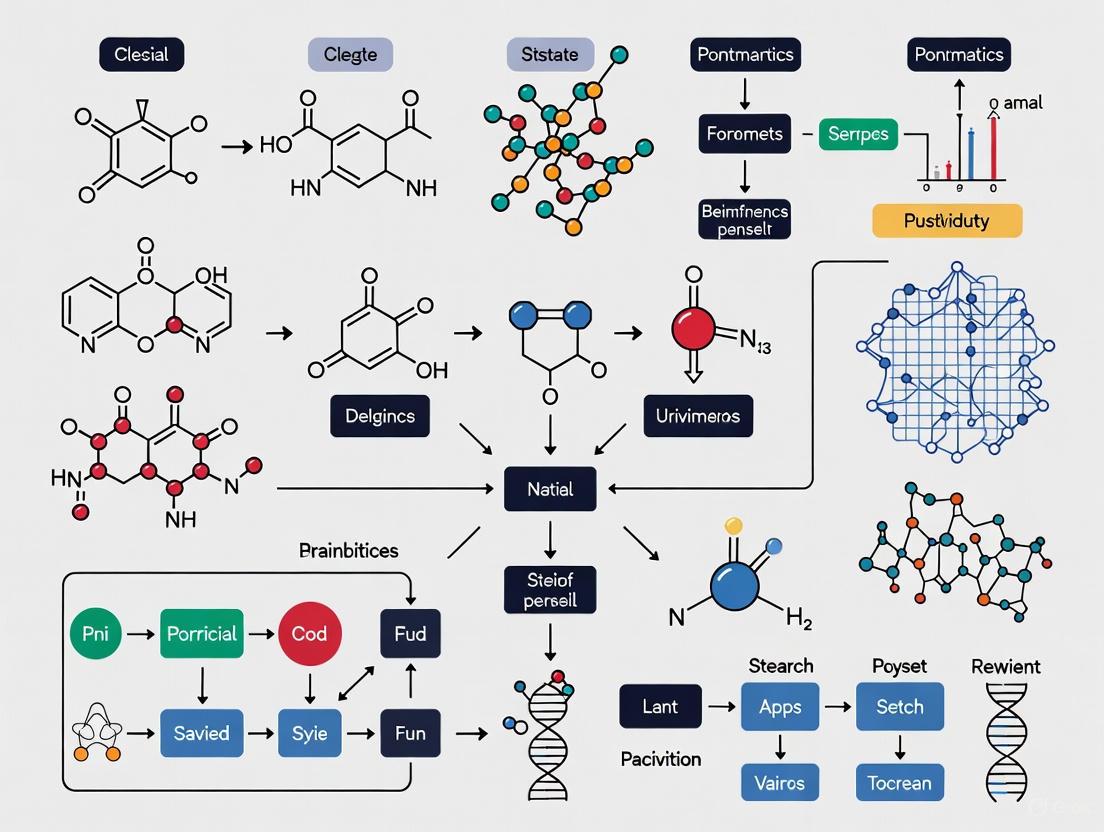
This article explores the transformative role of chemoinformatics as an indispensable pillar of modern chemical research and drug discovery.
Chemoinformatics: The Data-Driven Revolution Reshaping Modern Chemical Research
Abstract
This article explores the transformative role of chemoinformatics as an indispensable pillar of modern chemical research and drug discovery. Tailored for researchers, scientists, and drug development professionals, it details how this interdisciplinary field integrates chemistry, computer science, and data analysis to accelerate innovation. The scope covers foundational concepts, core methodologies and applications in drug and material design, strategies to overcome data integrity and skill gap challenges, and a comparative analysis of leading software platforms. The article concludes by synthesizing key takeaways and forecasting future directions, including the impact of AI, quantum computing, and self-driving labs on biomedical research.
Chemoinformatics Demystified: From Molecules to Manageable Data
Chemoinformatics is an interdisciplinary field that integrates chemistry, computer science, and data analysis to solve complex chemical problems and enhance research efficiency. This technical guide explores the foundational principles, applications, and methodologies of chemoinformatics within the context of modern chemical research. As the volume of chemical data continues to grow exponentially, chemoinformatics has emerged as a critical discipline for managing, analyzing, and extracting valuable insights from chemical information systems. The field leverages computational tools, artificial intelligence, and machine learning to drive innovation across various domains, particularly in drug discovery and materials science. This whitepaper provides a comprehensive overview of the core components of chemoinformatics, detailed experimental protocols, key research reagents and tools, and visual representations of critical workflows. Aimed at researchers, scientists, and drug development professionals, this document underscores the pivotal role of chemoinformatics as an indispensable pillar of contemporary chemical research, enabling data-driven decision-making and accelerating scientific discovery.
Chemoinformatics, defined as "the application of informatics methods to solve chemical problems" [1], represents a transformative intersection of chemistry, computer science, and data analysis. This interdisciplinary field has evolved from its origins in the pharmaceutical industry during the late 1990s into a cornerstone of modern chemical research [1] [2]. The primary impetus behind its development has been the need to manage and extract meaningful patterns from the enormous volumes of chemical data generated by high-throughput screening, automated synthesis, and advanced analytical techniques [1]. As chemical research undergoes digital transformation, chemoinformatics provides the critical computational framework for handling increasing information complexity, thereby accelerating discovery processes across multiple domains.
The significance of chemoinformatics in contemporary research landscapes cannot be overstated. It encompasses a wide array of computational techniques designed to handle chemical data, ranging from molecular modeling to the design of novel compounds and materials [1]. The field has expanded beyond its initial pharmaceutical applications to include data-driven approaches that facilitate the storage, retrieval, and analysis of chemical data on an unprecedented scale [1]. This expansion has been accelerated by initiatives promoting public databases such as PubChem and ChEMBL, which have democratized access to chemical information and fostered global research collaboration [1] [2]. Furthermore, the formal integration of chemoinformatics into university curricula reflects its growing importance in equipping future researchers with essential computational skills for modern chemical problem-solving [1].
The Interdisciplinary Foundation of Chemoinformatics
The structural foundation of chemoinformatics rests upon three interconnected pillars: chemistry, computer science, and information science. This triad forms a synergistic relationship where each discipline contributes essential components to create a robust framework for chemical data analysis and prediction.
Chemistry: The Molecular Basis
The chemical domain provides the fundamental molecular context for all chemoinformatics applications. Key aspects include:
Molecular Modeling: Computational representation of molecular structures, properties, and behaviors using mathematical approaches [1] [3]. This includes techniques such as quantum mechanics, molecular mechanics, and molecular dynamics simulations that enable researchers to predict and visualize molecular characteristics without synthetic experimentation.
Chemical Database Management: Systematic organization, storage, and retrieval of chemical information [3]. This component addresses the challenges of handling diverse chemical data types, including structures, properties, spectra, and biological activities, while ensuring data integrity and accessibility.
Structure-Activity Relationship (SAR) Analysis: Quantitative exploration of the relationships between chemical structures and their biological activities or properties [1] [3]. SAR methodologies enable the prediction of compound behavior based on structural features, guiding the optimization of lead compounds in drug discovery.
Computer Science: The Computational Engine
The computer science pillar provides the algorithmic and software infrastructure necessary for processing chemical information:
Software Development for Chemoinformatics: Creation of specialized applications and tools tailored to chemical data manipulation [3]. This includes the development of open-source platforms such as RDKit and the Chemistry Development Kit (CDK) that provide fundamental cheminformatics functionalities to the research community [2].
Data Mining and Machine Learning Applications: Implementation of advanced algorithms to discover patterns, relationships, and predictive models from large chemical datasets [3]. Machine learning techniques, particularly deep learning, have significantly enhanced the ability to analyze complex chemical data and predict molecular properties [1] [4].
Computational Chemistry Algorithms: Development and optimization of mathematical procedures for solving chemical problems [3]. These algorithms enable tasks such as molecular docking, conformational analysis, and quantum chemical calculations that form the computational core of chemoinformatics applications.
Information Science: The Data Management Framework
The information science component focuses on the systematic handling and interpretation of chemical data:
Data Integration and Analysis: Combining heterogeneous chemical data from multiple sources and extracting meaningful insights [3]. This approach facilitates comprehensive analyses that leverage diverse data types, including chemical structures, assay results, and literature information.
Knowledge Management in Chemical Research: Organizing and preserving chemical knowledge to support research decision-making [3]. This includes the implementation of electronic laboratory notebooks, data standards, and ontology development to capture and formalize chemical expertise.
Information Retrieval Systems for Chemical Data: Designing specialized search and retrieval systems for chemical databases [3]. These systems enable efficient access to chemical information through structure, substructure, similarity, and property-based searching methodologies.
The following diagram illustrates the interconnectedness of these three foundational disciplines and their collective contribution to chemoinformatics applications:
Figure 1: Interdisciplinary Foundation of Chemoinformatics
Key Applications in Modern Chemical Research
Drug Discovery and Development
Chemoinformatics has revolutionized pharmaceutical research by significantly accelerating and de-risking the drug discovery pipeline:
Virtual Screening and Hit Identification: Chemoinformatics streamlines virtual screening by analyzing extensive chemical libraries from sources like ChEMBL and PubChem [5]. Ligand-based (LBVS) and structure-based virtual screening (SBVS) techniques, combined with molecular docking, predict drug-target interactions and rank candidates based on binding affinity. Machine learning enhances these predictions by identifying complex patterns in large datasets that might escape conventional analysis methods. For example, the Exscalate4Cov project demonstrated the power of virtual screening by utilizing high-performance computing to screen vast chemical libraries to identify molecules that could inhibit the SARS-CoV-2 virus [4].
Lead Optimization and ADMET Predictions: Quantitative Structure-Activity Relationship (QSAR) modeling predicts biological activity based on molecular structure, guiding strategic modifications to improve potency and selectivity [5]. ADMET (Absorption, Distribution, Metabolism, Excretion, and Toxicity) predictions assess critical pharmacokinetic parameters, ensuring drug candidates have favorable safety and metabolic profiles. Machine learning models such as Deep-PK, which uses graph neural networks to predict pharmacokinetics and toxicity, exemplify how cheminformatics tools enhance molecular optimization while reducing the risk of late-stage failures [5].
De-risking Drug Development: By predicting compound properties before costly experimental validation, cheminformatics enhances efficiency and resource allocation in drug discovery. This approach is particularly valuable in early-phase research, where computational assessments can prioritize the most promising candidates for synthesis and testing. Real-world applications include the use of cheminformatics to identify brachyury inhibitors for chordoma treatment and to discover disease-modulating compounds for Alzheimer's research [5].
Materials Science and Green Chemistry
Beyond pharmaceutical applications, chemoinformatics plays an increasingly important role in materials design and sustainable chemistry:
Materials Informatics: The application of chemoinformatics principles to design novel materials with tailored properties for specific applications [1]. This includes the development of materials for energy storage, electronics, and nanotechnology through computational prediction of material characteristics based on molecular structure.
Green Chemistry and Sustainability: AI-driven retrosynthesis tools optimize synthetic routes by minimizing waste, reducing reliance on hazardous reagents, and lowering energy consumption [4]. These advanced tools align with global efforts to promote more sustainable chemical practices by identifying environmentally benign synthetic pathways that maintain efficiency while reducing ecological impact.
Polymer and Nanomaterial Design: Chemoinformatics facilitates the design of complex polymeric structures and nanomaterials with precise characteristics. For instance, researchers have applied QSPR (Quantitative Structure-Property Relationship) modeling to predict the cytotoxicity of metal oxide nanoparticles, enabling safer nanomaterial design [4].
Analytical Chemistry and Automation
The integration of chemoinformatics with laboratory automation has transformed chemical research workflows:
High-Throughput Screening (HTS) Enhancement: Chemoinformatics manages large HTS datasets, identifies true active compounds, and reduces false positives [5]. Machine learning models, such as Minimal Variance Sampling Analysis (MVS-A), efficiently identify false positives and prioritize true hits without relying on interference assumptions, processing HTS data in under 30 seconds per assay even on low-resource hardware [5].
Smart Labs and Automated Workflows: The evolution of chemical laboratories into automated, intelligent environments integrates robotics, AI, cheminformatics, and data analytics [4]. These "smart labs" enhance efficiency, accuracy, and safety by performing repetitive tasks with high precision while enabling real-time monitoring and process optimization through advanced sensors.
Analytical Data Interpretation: Chemoinformatics tools assist in interpreting complex analytical data, including spectral information from NMR, MS, and IR spectroscopy. For example, platforms like NMRShiftDB provide open-access databases of NMR chemical shifts that facilitate structural elucidation through comparative analysis [2].
Market Context and Growth Projections
The expanding role of chemoinformatics in chemical research is reflected in its significant market growth and adoption across industries. The following table summarizes key market projections and growth factors:
Table 1: Chemoinformatics Market Size and Growth Projections
| Metric | 2024 Value | 2025 Value | 2029 Projection | 2034 Projection | CAGR (Compound Annual Growth Rate) |
|---|---|---|---|---|---|
| Market Size | USD 3.88 billion [3] | USD 4.36-4.49 billion [3] [6] | USD 5.21 billion [6] | USD 16.69 billion [3] | 15.71% (2025-2034) [3] |
| Software Segment Share | 41% [3] | - | - | - | - |
| Chemical Analysis Application Share | 30% [3] | - | - | - | - |
Table 2: Key Market Growth Drivers and Regional Distribution
| Growth Driver | Significance | Regional Leadership | Fastest-Growing Region |
|---|---|---|---|
| Drug Discovery Demands | Primary driver due to need for efficient pharmaceutical R&D [3] | North America (35% revenue share in 2024) [3] | Asia-Pacific [3] [6] |
| Material Science Applications | Expanding role in designing and optimizing advanced materials [3] | - | - |
| Personalized Medicine | FDA CDER approved 12 personalized medicines (34% of therapeutic NMEs) in 2022 [6] | - | - |
| Technological Advancements | AI and machine learning integration enhancing capabilities [3] | - | - |
This substantial market growth underscores the increasing reliance on chemoinformatics across chemical industries and research institutions. The field's expansion is particularly driven by the pharmaceutical sector's need to improve R&D efficiency and success rates, with 90% of drugs failing during clinical trials (52% due to lack of efficacy and 24% due to safety issues) [5]. Chemoinformatics addresses these challenges by enabling earlier and more accurate prediction of compound properties, thereby reducing late-stage failures.
Essential Methodologies and Experimental Protocols
Molecular Property Prediction Using QSAR
Objective: To predict biological activity or chemical properties based on molecular structure using Quantitative Structure-Activity Relationship (QSAR) modeling.
Protocol:
Dataset Curation:
- Collect a set of chemical structures with associated experimental biological activities or properties.
- Ensure data quality by removing duplicates and correcting erroneous entries.
- Apply chemical standardization (e.g., using RDKit) to normalize structures [4].
- Divide the dataset into training (70-80%), validation (10-15%), and test sets (10-15%).
Molecular Descriptor Calculation:
Model Building:
- Select appropriate machine learning algorithms (e.g., random forest, support vector machines, neural networks).
- Train models using the training set and optimize hyperparameters via cross-validation.
- Validate model performance using the validation set and metrics such as R², RMSE, or AUC.
Model Application:
- Apply the trained model to predict activities or properties for new compounds.
- Utilize applicability domain assessment to evaluate prediction reliability.
Key Considerations: The availability of high-quality negative (inactive) data is essential for improving the reliability and generalizability of QSAR models, particularly in drug discovery where distinguishing between active and inactive compounds enhances virtual screening accuracy [1].
Virtual Screening for Hit Identification
Objective: To computationally identify potential bioactive compounds from large chemical libraries.
Protocol:
Library Preparation:
- Curate a virtual compound library from databases such as ZINC, PubChem, or in-house collections.
- Prepare structures by adding hydrogens, generating tautomers, and enumerating stereoisomers.
- Generate multiple conformations for each molecule using tools like OMEGA or RDKit.
Target Preparation:
- Obtain the three-dimensional structure of the biological target (e.g., from Protein Data Bank).
- Prepare the protein by adding hydrogens, assigning protonation states, and removing water molecules.
- Define the binding site based on known ligand positions or pocket detection algorithms.
Molecular Docking:
Post-processing:
- Apply filters based on drug-likeness (e.g., Lipinski's Rule of Five) and ADMET properties.
- Cluster results to select diverse chemotypes for experimental validation.
- Visually inspect top-ranking complexes to confirm binding mode plausibility.
Key Considerations: Structure-based virtual screening (SBVS) requires high-quality protein structures, while ligand-based approaches (LBVS) depend on known active compounds for similarity searching or pharmacophore modeling [5].
Retrosynthetic Analysis Using AI
Objective: To plan synthetic routes for target molecules using AI-powered retrosynthetic analysis.
Protocol:
Target Input:
- Define the target molecule using SMILES notation or structure drawing.
- Specify constraints such as available starting materials or excluded reagents.
Pathway Generation:
- Utilize AI-powered platforms such as IBM RXN, AiZynthFinder, or ASKCOS [4].
- Generate multiple retrosynthetic pathways through iterative bond disconnections.
- Apply reaction templates and neural network models to predict feasible transformations.
Pathway Evaluation:
- Assess generated routes based on criteria including step count, yield, cost, and safety.
- Prioritize pathways with commercial availability of intermediates and reagents.
- Consider green chemistry principles by minimizing hazardous reagents and waste.
Experimental Validation:
- Select top-ranked synthetic routes for laboratory execution.
- Optimize reaction conditions (catalyst, solvent, temperature) based on predictive models.
- Iteratively refine the route based on experimental outcomes.
Key Considerations: AI-driven retrosynthesis tools can identify unconventional yet viable reaction routes that might be overlooked by human intuition, expanding the accessible synthetic landscape [4].
The following diagram illustrates a generalized chemoinformatics workflow integrating these key methodologies:
Figure 2: Generalized Chemoinformatics Workflow
Successful implementation of chemoinformatics methodologies requires a comprehensive toolkit of software, databases, and computational resources. The following table details essential components of the modern chemoinformatics research environment:
Table 3: Essential Chemoinformatics Research Tools and Resources
| Tool Category | Specific Tools | Function | Access |
|---|---|---|---|
| Cheminformatics Toolkits | RDKit [4] [2], Chemistry Development Kit (CDK) [2], Open Babel [2] | Provides fundamental cheminformatics functionalities including molecular representation, descriptor calculation, and substructure searching | Open Source |
| Molecular Modeling Suites | Schrödinger [4], AutoDock [4] [5], MOE [5] | Enables molecular visualization, docking simulations, and protein-ligand interaction analysis | Commercial |
| Retrosynthesis Platforms | IBM RXN [4], AiZynthFinder [4], ASKCOS [4], Synthia [4] | AI-powered synthesis planning and reaction prediction | Varies (Commercial/Open) |
| Chemical Databases | PubChem [1] [2], ChEMBL [1] [2], ChemSpider [5] | Provides access to chemical structures, properties, and bioactivity data | Open Access |
| Machine Learning Libraries | DeepChem [4], Chemprop [4], kMoL [7] | Specialized ML frameworks for chemical data analysis and property prediction | Open Source |
| Workflow Platforms | KNIME [5] [2], Jupyter Notebooks [2] | Integrates multiple cheminformatics tools into reproducible analytical workflows | Open Source |
| Molecular Representation | SMILES [1], InChI [1] [2], MOL files [1] | Standardized formats for chemical structure encoding and exchange | Open Standards |
The evolution of these tools from proprietary systems to open-source platforms has dramatically democratized access to cheminformatics capabilities. This shift, championed by initiatives such as the Blue Obelisk movement and the adoption of the FAIR principles (Findable, Accessible, Interoperable, Reusable), has fostered collaborative innovation and transparency in chemical research [2]. The development of standardized molecular representations like the International Chemical Identifier (InChI) has further enhanced data interoperability across diverse platforms and databases [1] [2].
Chemoinformatics has established itself as an indispensable discipline at the intersection of chemistry, computer science, and data analysis, fundamentally transforming modern chemical research methodologies. By providing sophisticated computational tools for managing, analyzing, and predicting chemical information, this interdisciplinary field addresses the critical challenges posed by the increasing volume and complexity of chemical data. The integration of artificial intelligence and machine learning has further enhanced the predictive capabilities of chemoinformatics, enabling more accurate molecular design, property prediction, and synthesis planning. As evidenced by its substantial market growth and expanding applications across drug discovery, materials science, and sustainable chemistry, chemoinformatics represents a foundational pillar of contemporary chemical research. For researchers, scientists, and drug development professionals, proficiency in cheminformatics principles and tools is no longer optional but essential for driving innovation and maintaining competitive advantage in an increasingly data-driven scientific landscape. The continued evolution of open science initiatives, collaborative platforms, and advanced computational methodologies will further solidify the role of chemoinformatics as a catalyst for scientific discovery and technological advancement in the chemical sciences.
Quantitative Structure-Activity Relationship (QSAR) modeling represents a cornerstone of computational chemistry and chemoinformatics, providing a critical framework for predicting the biological activity and physicochemical properties of molecules from their structural features. The evolution of QSAR from its conceptual origins in the 19th century to today's artificial intelligence (AI)-driven paradigms encapsulates the broader transformation of chemical research into a data-rich, interdisciplinary science [1]. This journey reflects the expanding role of chemoinformatics—defined as the application of informatics methods to solve chemical problems—in modern chemical research [1] [8].
The development of QSAR has fundamentally reshaped drug discovery and chemical risk assessment, creating a predictive modeling environment that accelerates the identification of therapeutic candidates while reducing reliance on costly experimental screening. This whitepaper traces the technical evolution of QSAR methodologies, examining how the integration of increasingly sophisticated computational approaches has established chemoinformatics as an indispensable pillar of contemporary chemical research and development.
The Foundations: Early QSAR (1860s-1950s)
The conceptual foundations of QSAR emerged from systematic observations of relationships between simple chemical properties and biological effects, long before the formal establishment of the field.
Key Historical Milestones
Table 1: Foundational Developments in Early QSAR
| Year | Researcher(s) | Contribution | Significance |
|---|---|---|---|
| 1868 | Crum-Brown and Fraser | First general QSAR equation: Physiological action = f(Chemical constitution) [9] [10] | Established the fundamental principle that biological activity is a function of chemical structure |
| 1893 | Richet | Inverse relationship between toxicity and aqueous solubility for alcohols, ethers, and ketones [9] [10] | Demonstrated that physicochemical properties could quantitatively predict biological effects |
| 1897-1899 | Meyer and Overton | Correlation between lipophilicity (oil-water partition coefficients) and narcotic activity [9] [10] | Identified hydrophobicity as a critical determinant of biological activity |
| 1935-1937 | Hammett | Developed sigma (σ) constants and the Linear Free-Energy Relationship (LFER) [9] [10] | Provided the first electronic parameters quantifying substituent effects on reactivity |
| 1952 | Taft | Introduced the first steric parameter (Eₛ) and method for separating polar, steric, and resonance effects [10] | Completed the triumvirate of key physicochemical properties: electronic, steric, and hydrophobic |
The earliest quantitative observations established linear relationships between simple physicochemical properties and biological outcomes. These foundational studies introduced the crucial concept that molecular properties could be numerically encoded and correlated with biological activity, setting the stage for more sophisticated modeling approaches [9] [10].
Experimental Protocols in Early QSAR
The experimental determination of key parameters in early QSAR studies followed rigorous methodologies:
Partition Coefficient Measurement: Researchers determined lipophilicity by shaking a compound vigorously between n-octanol and water phases in a separatory funnel, allowing phases to separate, and quantifying the compound concentration in each phase through spectroscopic methods or titration. The partition coefficient (P) was calculated as the ratio of concentrations in the octanol and water phases [10].
Hammett σ Constant Determination: Scientists derived electronic parameters by measuring the dissociation constants (K) of substituted benzoic acids in water at 25°C using potentiometric titration. The σ value for a substituent was calculated as log(K/K₀), where K₀ represents the dissociation constant of unsubstituted benzoic acid [10].
Taft Eₛ Steric Parameter Determination: Researchers determined steric parameters by measuring the hydrolysis rates of substituted aliphatic esters under acidic conditions, comparing them to the hydrolysis rates of reference acetate esters, effectively isolating steric effects from electronic contributions [10].
The Formalization of Modern QSAR (1960s-1990s)
The 1960s marked the critical transition of QSAR from observational correlations to a formalized predictive science, establishing methodological frameworks that remain relevant today.
The Hansch-Fujita Approach
Corwin Hansch and Toshio Fujita pioneered the multiparameter approach that became the foundation of modern QSAR. Their methodology expressed biological activity as a linear function of hydrophobic, electronic, and steric parameters [11] [9]. The general form of the Hansch equation is:
Log(1/C) = a(log P) + b(log P)² + cσ + dEₛ + k [9]
Where C represents the molar concentration producing a defined biological effect, P is the octanol-water partition coefficient, σ represents Hammett electronic constants, Eₛ represents Taft steric parameters, and a-d are coefficients determined by multiple regression analysis [9]. The inclusion of the squared (log P)² term addressed the parabolic relationship often observed between hydrophobicity and biological activity, reflecting transport processes where optimal activity occurs at an intermediate lipophilicity [10].
The Free-Wilson Model
Concurrently, Free and Wilson developed an additive model based on the presence or absence of specific substituents at defined molecular positions. This approach expressed biological activity as:
Where BA is the biological activity, aᵢ represents the contribution of substituent i, xᵢ indicates the presence (1) or absence (0) of that substituent, and μ is the overall average activity [9]. The model was solved using multiple linear regression, with the primary advantage being that it required no explicit physicochemical parameters, relying instead on the structural framework of the molecules themselves [9].
The Mixed Approach
Kubinyi later developed a hybrid approach that combined elements of both the Hansch and Free-Wilson methods:
Log BA = Σaᵢⱼ + Σkᵢφⱼ + k [9]
Where Σ(aᵢⱼ) represents the Free-Wilson component for substituents, and Σkᵢφⱼ represents the Hansch-type contributions of the parent skeleton [9]. This integrated methodology leveraged the strengths of both approaches, providing greater flexibility in model construction.
Classical QSAR Experimental Workflow
The standard workflow for classical QSAR studies involved:
Compound Selection: A series of 20-50 congeneric compounds with varying substituents and measured biological activities was assembled [9].
Descriptor Calculation: Physicochemical parameters (log P, σ, Eₛ) were either experimentally determined or obtained from published values [9].
Model Construction: Multiple linear regression analysis was performed using statistical packages to derive coefficients relating descriptors to biological activity [9].
Model Validation: The correlation coefficient (R²), cross-validated R² (Q²), and standard error of estimate were calculated to assess model robustness [9].
The Computational Revolution: QSAR in the Cheminformatics Era (2000s-2010s)
The emergence of chemoinformatics as a distinct discipline in the late 1990s transformed QSAR from a specialized technique to a high-throughput computational approach [1] [12]. This transition was characterized by several key developments.
Expansion of Molecular Descriptors
The descriptor repertoire expanded dramatically from the classic triumvirate of hydrophobicity, electronic, and steric parameters to thousands of computationally-derived molecular features [11] [1]. These included:
- Topological Descriptors: Encoding molecular connectivity patterns, branching, and shape [11]
- Geometric Descriptors: Capturing 3D molecular dimensions and surface properties [13]
- Quantum Chemical Descriptors: Derived from molecular orbital calculations (HOMO-LUMO energies, electrostatic potentials) [11] [13]
- Electronic Descriptors: Extending beyond Hammett constants to include dipole moments, polarizabilities, and hydrogen-bonding parameters [11]
Software packages such as DRAGON, PaDEL, and RDKit emerged as essential tools for high-throughput descriptor calculation, enabling the numerical representation of chemical structures on an unprecedented scale [13].
Advanced Modeling Techniques
With the expansion of molecular descriptors, QSAR modeling incorporated more sophisticated machine learning algorithms capable of handling high-dimensional, non-linear relationships:
- Support Vector Machines (SVM): Effective for classification tasks and non-linear regression with limited samples [13]
- Random Forests (RF): Ensemble method robust to noisy data and irrelevant descriptors [13]
- Partial Least Squares (PLS): Superior to multiple linear regression for correlated descriptors [13]
Table 2: Evolution of QSAR Modeling Techniques
| Era | Primary Methods | Key Descriptors | Typical Dataset Size | Software/Tools |
|---|---|---|---|---|
| 1960s-1980s (Classical) | Multiple Linear Regression, Hansch Analysis, Free-Wilson | log P, σ, Eₛ | 20-50 compounds | Manual calculation, early statistical packages |
| 1990s-2000s (Chemoinformatics) | PLS, PCA, k-NN, Early SVM | Topological, 3D, quantum chemical descriptors | Hundreds to thousands | DRAGON, SYBYL, MOE |
| 2010s-Present (AI-Driven) | Deep Learning, Random Forest, Gradient Boosting, Graph Neural Networks | Learned representations, molecular graphs, fingerprints | Thousands to millions | RDKit, TensorFlow, PyTorch, DeepChem |
High-Dimensional QSAR Approaches
The era saw the development of dimensionality reduction techniques and higher-dimensional QSAR approaches:
- 3D-QSAR: Techniques like Comparative Molecular Field Analysis (CoMFA) and Comparative Molecular Similarity Index Analysis (CoMSIA) incorporated spatial molecular interaction fields,
- 4D-QSAR: Added an ensemble dimension by considering multiple molecular conformations [13]
- Descriptor Selection: Algorithms like PCA (Principal Component Analysis) and RFE (Recursive Feature Elimination) addressed the "curse of dimensionality" by identifying the most relevant descriptors [13]
The Contemporary Landscape: AI-Integrated QSAR (2010s-Present)
The integration of artificial intelligence, particularly deep learning, has marked the most transformative development in QSAR methodology, enabling the analysis of extremely complex structure-activity relationships across vast chemical spaces.
Deep Learning Architectures in QSAR
Modern AI-driven QSAR employs sophisticated neural network architectures that fundamentally reshape how molecular structures are represented and analyzed:
- Graph Neural Networks (GNNs): Operate directly on molecular graph representations, with atoms as nodes and bonds as edges, automatically learning relevant features through message-passing mechanisms [13]
- SMILES-Based Transformers: Apply natural language processing techniques to Simplified Molecular Input Line Entry System strings, capturing syntactic and semantic patterns in chemical structures [13]
- Convolutional Neural Networks (CNNs): Process grid-based molecular representations such as molecular surfaces or interaction fields [13]
- Autoencoders: Generate compressed, informative molecular representations (deep descriptors) in an unsupervised manner [13]
These approaches enable automatic feature learning, eliminating the need for manual descriptor engineering and capturing complex, hierarchical molecular patterns that traditional descriptors might miss [13].
Integrative Modeling Approaches
Contemporary QSAR increasingly functions within integrated computational workflows that combine multiple methodologies:
Experimental Protocols in AI-Driven QSAR
The methodology for developing AI-integrated QSAR models involves distinct computational phases:
Data Curation and Preprocessing:
Model Training and Validation:
- Implementation of neural architectures using frameworks like TensorFlow or PyTorch [13]
- Hyperparameter optimization via grid search or Bayesian methods [13]
- Rigorous validation using train-validation-test splits and cross-validation [13]
- Application of metrics including AUC-ROC, precision-recall, and Matthews correlation coefficient [13]
Model Interpretation and Explainability:
- Application of SHAP (SHapley Additive exPlanations) and LIME (Local Interpretable Model-agnostic Explanations) to elucidate feature importance [13]
- Attention mechanisms in transformer models to identify structurally significant regions [13]
- Saliency maps for graph neural networks to highlight atoms and bonds critical to activity predictions [13]
Table 3: Key Research Reagents and Computational Tools in QSAR
| Category | Tool/Resource | Specific Examples | Primary Function |
|---|---|---|---|
| Chemical Databases | Public Compound Repositories | PubChem, ChEMBL, ZINC [1] | Source of chemical structures and associated bioactivity data |
| Descriptor Calculation | Cheminformatics Software | RDKit, DRAGON, PaDEL [13] | Generation of molecular descriptors from chemical structures |
| Modeling Frameworks | Machine Learning Libraries | Scikit-learn, TensorFlow, PyTorch [13] | Implementation of machine learning and deep learning algorithms |
| Specialized QSAR | Integrated Platforms | KNIME, Orange, BioSolveIT [12] | End-to-end QSAR workflow management |
| Validation & Analysis | Statistical Analysis Tools | QSARINS, R, Python SciPy [13] | Model validation, statistical analysis, and visualization |
The evolution of QSAR from its origins in simple linear correlations to today's sophisticated AI-integrated approaches exemplifies the transformative impact of chemoinformatics on chemical research. This journey has witnessed several paradigm shifts: from manual to automated descriptor calculation, from linear to complex non-linear models, and from isolated technique to integrated predictive framework. Throughout this evolution, the fundamental principle has remained constant: quantitative relationships connect molecular structure to biological activity.
The integration of artificial intelligence has positioned QSAR at the forefront of data-driven chemical discovery, enabling the analysis of increasingly complex biological endpoints and the exploration of vast chemical spaces. As QSAR continues to evolve, it will undoubtedly face challenges related to model interpretability, regulatory acceptance, and ethical implementation. However, its trajectory suggests an increasingly central role in addressing global challenges through the rational design of therapeutic agents, materials, and environmentally benign chemicals. Within the broader context of chemoinformatics, QSAR stands as a testament to the power of interdisciplinary approaches in advancing chemical research and development.
In modern chemical research, the ability to represent molecular structures in a computer-readable format is foundational. Cheminformatics, which integrates chemistry, computer science, and data analysis, relies on these representations to drive innovation in areas like drug discovery and materials science [1]. Molecular representations translate physical molecular structures into standardized digital formats, enabling the storage, retrieval, analysis, and prediction of chemical properties on a large scale [14]. The core data representations—SMILES, InChI, and molecular fingerprints—serve as the critical bridge between chemical structures and the computational models that accelerate scientific discovery [1] [14]. This guide provides a technical examination of these representations, framing them within the essential role of chemoinformatics in contemporary research.
Technical Deep Dive: SMILES
The Simplified Molecular-Input Line-Entry System (SMILES) is a line notation that uses short ASCII strings to describe the structure of chemical species [15]. Developed in the 1980s by David Weininger and funded by the US Environmental Protection Agency, its design allows molecule editors to convert these strings back into two-dimensional drawings or three-dimensional models [15].
Core Specification Rules
The SMILES syntax is governed by a set of precise rules for encoding molecular graphs:
- Atoms: Atoms are represented by their standard chemical symbols. Atoms in the "organic subset" (B, C, N, O, P, S, F, Cl, Br, I) are typically written without brackets if they are neutral, have implicit hydrogens, and are standard isotopes. All other atoms (e.g.,
[Au]for gold) must be enclosed in square brackets[][15] [16]. Formal charges are indicated with a plus+or minus-sign following the atom symbol within brackets (e.g.,[NH4+]for ammonium). Multiple charges can be represented by a digit or by repeating the sign [15]. - Bonds: Bonds are represented by specific symbols. Single bonds (
-), double bonds (=), triple bonds (#), and aromatic bonds (:) can be explicitly noted. Single bonds between aliphatic atoms are usually omitted for brevity [15] [16]. A "non-bond" (e.g., for ionic compounds) is indicated by a period.[15]. - Branches: Branches are specified by enclosing them in parentheses. For example, isobutyl alcohol can be written as
CC(C)CO[16]. - Rings: Ring structures are defined by breaking a bond in the ring and assigning the same numerical label to the two atoms that form the ring closure. For example, cyclohexane is written as
C1CCCCC1[15] [16]. - Aromaticity: Aromatic rings can be represented in Kekulé form (e.g.,
C1=CC=CC=C1for benzene) or, more commonly, by using lower-case atomic symbols for aromatic atoms (e.g.,c1ccccc1) [15] [16].
Canonical and Isomeric SMILES
A single molecule can have many valid SMILES strings (e.g., CCO, OCC, and C(O)C for ethanol). Canonical SMILES algorithms generate a unique, standardized string for a given molecular structure, which is essential for database indexing and ensuring uniqueness [15]. Isomeric SMILES extend the notation to include stereochemical information, such as configuration at tetrahedral centers and double bond geometry, which cannot be specified by connectivity alone [15].
Technical Deep Dive: InChI
The International Chemical Identifier (InChI) is an open standard developed by IUPAC to provide a non-proprietary, unique identifier for chemical substances [16]. While SMILES is often considered more human-readable, InChI was designed as a standardized representation to facilitate data exchange [15] [1].
The InChI Layers
The strength of InChI lies in its layered structure, which systematically encodes different types of chemical information. The following diagram illustrates the relationship between these layers and the final InChIKey.
The InChI identifier is built from several layers that encode specific structural information [16]:
- Main Layer: Contains the molecular formula and atom connectivity information.
- Charge Layer: Specifies the net charge of the molecule.
- Stereochemical Layer: Encodes double bond and tetrahedral stereochemistry.
- Isotopic Layer: Records isotopic specifications.
- Fixed-H Layer: Describes the positions of fixed hydrogens (e.g., in tautomers).
Technical Deep Dive: Molecular Fingerprints
Molecular fingerprints are another form of representation, but unlike SMILES and InChI, they are not human-readable. They are high-dimensional vectors (often binary bit strings) designed to capture structural or chemical features for efficient computational comparison and machine learning [17] [14].
Types of Fingerprints
Fingerprints can be categorized based on their generation method:
- Path-Based Fingerprints: These enumerate linear or branched atom paths of a given length within a molecule. The RDKit fingerprint and hashed Atom Pair fingerprint are examples of this type [17].
- Circular Fingerprints (ECFP/FCFP): The Extended Connectivity Fingerprint (ECFP) is a widely used circular fingerprint that iteratively captures circular atom environments (topological neighborhoods) around each atom up to a defined radius. It is designed to be invariant to atom numbering. The FCFP variant uses pharmacophoric features instead of atom types [17].
- Predefined Substructure Fingerprints: These fingerprints, such as MACCS keys, use a fixed dictionary of SMARTS patterns (substructural queries). Each bit in the fingerprint indicates the presence or absence of a specific predefined substructure within the molecule [17].
- Topological Torsion Fingerprints: This type encodes sequences of four bonded atoms, providing a local characterization of the molecular structure [17].
Comparative Analysis
The table below provides a consolidated technical comparison of the three core molecular representations.
Table 1: Comparative analysis of SMILES, InChI, and molecular fingerprints
| Feature | SMILES | InChI | Molecular Fingerprints |
|---|---|---|---|
| Representation Type | Line notation (ASCII string) | Layered identifier (string) | Binary bit vector or integer vector |
| Human Readability | High (for simple molecules) | Low | None |
| Primary Design Goal | Compactness and human-input | Standardization and unique identification | Similarity searching and machine learning |
| Canonical Form | Yes (algorithm-dependent) | Yes (standardized) | Not applicable |
| Stereochemistry Support | Yes (isomeric SMILES) | Yes (in separate layers) | Varies by type |
| Key Strength | Compact, intuitive, widely supported | Standardized, non-proprietary, unique | Fast similarity computation, model input |
| Key Limitation | Multiple valid strings per molecule | Less human-readable, complex | Lossy representation; not reversible |
Applications in Modern Cheminformatics & Drug Discovery
These core representations are the bedrock upon which modern, data-driven chemical research is built. Their applications are vast and critical to accelerating discovery.
- Enabling AI and Machine Learning: SMILES and fingerprints are the primary inputs for AI models in drug discovery. Language models, such as Transformers, tokenize SMILES strings to predict molecular properties or generate novel compounds [14]. Graph Neural Networks (GNNs) use graph-based representations, often derived from SMILES, to learn from molecular structure [18] [14]. Molecular fingerprints are extensively used in Quantitative Structure-Activity Relationship (QSAR) modeling to build predictive models for properties like toxicity and bioavailability [19] [14].
- Virtual Screening and Scaffold Hopping: Fingerprints are indispensable for virtual screening, where large chemical libraries are rapidly searched to identify molecules similar to a known active compound [19] [14]. This facilitates scaffold hopping—the discovery of new core structures (scaffolds) that retain biological activity—by identifying molecules that are functionally similar but structurally distinct [14].
- Chemical Database Management: Canonical SMILES and InChI are vital for managing chemical databases. They ensure unique indexing of molecules, prevent duplicates, and enable efficient structure and substructure searching across vast repositories like PubChem and ChEMBL [1] [19].
Experimental Protocol: From Fingerprint to Validated Molecule
The following workflow is common in AI-driven drug discovery for generating and validating novel compounds.
Table 2: Research reagents and tools for generative cheminformatics
| Tool/Reagent | Type | Primary Function in Protocol |
|---|---|---|
| RDKit | Cheminformatics Toolkit | Molecular representation conversion, fingerprint generation, descriptor calculation [19]. |
| ECFP4 | Molecular Fingerprint | Serves as the input representation for the generative model [17]. |
| Transformer Model | AI Architecture | Acts as the Neural Machine Translation (NMT) engine to decode the fingerprint into a SMILES string [17]. |
| SELFIES | Molecular Representation | An alternative to SMILES that guarantees 100% syntactic validity; can be used as an intermediate or output format [17]. |
| ChemProp | Machine Learning Package | Predicts molecular properties (e.g., solubility, toxicity) of the generated SMILES for virtual validation [18]. |
| AutoDock/Gnina | Docking Software | Performs structure-based validation of the generated molecule's binding affinity to a target protein [20] [18]. |
Protocol Steps:
- Input: The process begins with a target molecular fingerprint (e.g., ECFP4) that encodes desired chemical features [17].
- Translation: A pre-trained Neural Machine Translation (NMT) model, often based on the Transformer architecture, decodes the fingerprint representation into a SMILES string. Studies have shown this reconstruction can be achieved with high accuracy, overcoming the traditionally "lossy" nature of fingerprints [17].
- Validity Check: The generated SMILES string is checked for chemical validity and sanity using a toolkit like RDKit. If invalid, the process can be iterated.
- Virtual Validation: The valid SMILES undergoes multi-stage in silico validation:
- Property Prediction: Models like ChemProp predict key ADMET (Absorption, Distribution, Metabolism, Excretion, Toxicity) properties and physicochemical profiles [18].
- Molecular Docking: Tools like Gnina simulate the binding of the generated molecule to a protein target, assessing the binding mode and affinity [18].
- Output: Molecules that pass these virtual validation filters become high-priority candidates for synthesis and experimental testing.
Future Perspectives and Challenges
The field of molecular representation continues to evolve. SELFIES (SELF-referencIng Embedded strings) is a new representation designed to guarantee 100% syntactic validity when generated by AI models, addressing a key limitation of SMILES [17]. Graph-based representations, which natively model atoms as nodes and bonds as edges, are becoming increasingly important for capturing structural information more directly for GNNs [14]. Multimodal and contrastive learning approaches that combine multiple representations (e.g., SMILES, graphs, and 3D information) are emerging as powerful strategies for learning more robust molecular embeddings [14].
Despite these advances, challenges remain. Data quality and standardization are persistent issues, and no single representation is perfect for all tasks [1] [21]. The future will likely see a focus on developing more comprehensive, flexible, and interoperable representations to further improve the predictive power of chemoinformatic models [1] [14]. As these tools mature, their role in enabling autonomous laboratories and accelerating the discovery of new medicines and materials will only grow more profound [4] [21].
Chemical databases constitute the foundational infrastructure of modern chemoinformatics, serving as critical repositories for the structures, properties, and biological activities of molecules. The field of chemoinformatics leverages computational methods to solve chemical problems, and its advancement is intrinsically linked to the quality, scope, and accessibility of underlying chemical data [22]. In the early 2000s, researchers faced a significant dearth of publicly accessible chemistry and bioactivity data [23]. The subsequent emergence of large-scale public resources has transformed the research landscape, enabling data-driven approaches across chemical biology, medicinal chemistry, and drug discovery.
This whitepaper examines three pivotal public chemical databases—PubChem, ChEMBL, and ChemSpider—that capture the majority of open chemical structure records and have become massively enabling resources for the scientific community [24]. These platforms function as meta-portals that subsume and link to a major proportion of public bioactivity data extracted from literature, patents, and screening assays [24]. Understanding their distinct characteristics, content coverage, and specialized functionalities is essential for researchers to effectively leverage their capabilities. The integration of these resources into the chemoinformatics workflow represents a paradigm shift in how chemical information is curated, accessed, and utilized to accelerate scientific discovery.
PubChem
Established in 2004 as a component of the NIH Molecular Libraries Roadmap Initiative, PubChem has evolved into the largest public repository of chemical information [25] [26]. Maintained by the National Center for Biotechnology Information (NCBI), it serves as a key resource for cheminformatics, chemical biology, and drug discovery communities [22] [26]. PubChem organizes its data into three interlinked databases: Substance (depositor-provided chemical descriptions), Compound (unique chemical structures derived from Substance records), and BioAssay (biological screening results and experimental data) [25] [26].
The system employs a submitter-based model where chemical structures conforming to standardization rules are accepted as primary database records assigned to discrete submitters via Substance Identifiers (SIDs) [24]. These are subsequently merged according to PubChem chemistry rules into non-redundant Compound Identifiers (CIDs) [24]. As of 2021, PubChem contained more than 293 million substance descriptions, 111 million unique chemical structures, and 271 million bioactivity data points from 1.2 million biological assays [25]. The resource integrates data from hundreds of sources worldwide, including government agencies, academic institutions, pharmaceutical companies, and chemical vendors [25] [26].
ChEMBL
ChEMBL is a manually curated database of bioactive molecules with drug-like properties, maintained by the European Bioinformatics Institute (EMBL-EBI) [27] [28]. Launched in 2009, it has grown into a Global Core Biodata Resource that provides high-quality, open, and FAIR (Findable, Accessible, Interoperable, Reusable) data on bioactive compounds [27] [29]. Unlike PubChem's submitter-driven model, ChEMBL employs expert curation to extract bioactivity data from medicinal chemistry literature and selected patents, focusing particularly on quantitative measurements of drug-target interactions [27] [29].
The database captures bioactivity data across all stages of drug discovery, with particular strength in containing carefully standardized potency values (e.g., IC₅₀, Kᵢ) that enable direct comparison across experiments [27] [29]. A significant feature introduced in 2013 is the pChEMBL value, which provides a negative logarithmic transformation of potency measurements to facilitate comparative analysis [29]. As of release 33 (2023), ChEMBL contains information extracted from over 88,000 publications and patents, encompassing more than 20.3 million bioactivity measurements for 2.4 million unique compounds [27].
ChemSpider
ChemSpider, managed by the Royal Society of Chemistry, serves as a central hub for chemical structure data, integrating and validating information from hundreds of data sources [24]. While specific current metrics for ChemSpider were not highlighted in the search results, earlier reports indicated it contained 63 million chemical structures as of 2018 [24]. The platform excels in structure-centric integration, providing access to physical property data, spectra, synthetic pathways, and safety information [24].
A key distinguishing feature of ChemSpider is its focus on curation and validation of chemical structures and associated data, employing both automated and community-driven approaches to ensure data quality [24]. The platform serves as a foundational resource for the chemical sciences, linking chemical structures to relevant research articles, patents, and other online resources [24].
Table 1: Key Characteristics of Major Chemical Databases
| Feature | PubChem | ChEMBL | ChemSpider |
|---|---|---|---|
| Primary Focus | Comprehensive chemical repository with bioactivity data | Manually curated bioactivity data from literature | Chemical structure integration and validation |
| Managing Organization | NCBI (NIH, USA) | EMBL-EBI (Europe) | Royal Society of Chemistry (UK) |
| Content Scope | 111M+ compounds, 293M+ substances, 1.2M+ assays [25] | 2.4M+ compounds, 20.3M+ bioactivities [27] | 63M+ structures (2018 estimate) [24] |
| Data Curation Approach | Submitter-driven with standardization | Expert manual curation | Automated and community curation |
| Key Unique Features | Integration with NCBI resources, diverse data types | pChEMBL values, drug annotation | Structure validation, spectral data |
Table 2: Data Content Comparison Across Databases
| Data Category | PubChem | ChEMBL | ChemSpider |
|---|---|---|---|
| Chemical Structures | 111 million unique compounds (2021) [25] | 2.4 million compounds (2023) [27] | 63 million structures (2018) [24] |
| Bioactivity Measurements | 271 million data points (2021) [25] | 20.3 million measurements (2023) [27] | Limited information |
| Biological Assays | 1.25 million assays (2021) [25] | 1.6 million assays (2023) [27] | Not applicable |
| Target Coverage | >10,000 protein target sequences [25] | >17,000 targets (∼10,600 proteins) [27] | Not applicable |
| Contributing Sources | 629 data sources (2018) [25] | 420 deposited datasets, >88,000 documents [27] | 282 sources (2018) [24] |
Research Applications and Experimental Protocols
Typical Research Use Cases
Chemical databases support diverse research applications across multiple domains. Lead identification and optimization represents a primary application, where researchers mine structure-activity relationship (SAR) data to guide medicinal chemistry efforts [22]. For example, PubChem's bioactivity data enables similarity searching for analogs of known active compounds and profiling of selectivity and promiscuity patterns [22].
Chemical biology and target discovery represents another major application area. ChEMBL's curated data on compound-target interactions facilitates polypharmacology studies and the identification of tool compounds for probing novel biological targets [27] [29]. The database has been instrumental in projects such as mapping the "PROTACtable genome" for targeted protein degradation and identifying drug repurposing opportunities for COVID-19 and heart failure [27].
Chemical space analysis leverages the extensive compound collections in these databases to explore structural diversity, scaffold distributions, and property relationships [22]. Researchers have analyzed drug-like and lead-like compounds from PubChem using multiple structural descriptors to visualize and navigate chemical space [22]. Similarly, ChEMBL data has enabled analyses of target and scaffold trends over time, revealing historical patterns in medicinal chemistry research [27].
Experimental Data Access Protocols
Accessing data from chemical databases typically follows standardized protocols:
1. Structure and Identity Searching:
- Exact structure search identifies compounds with identical connectivity, accounting for stereochemistry
- Similarity search employs molecular fingerprints (e.g., PubChem fingerprints) to find structurally analogous compounds [22]
- Substructure search retrieves compounds containing specific molecular frameworks
- Search by identifier using database-specific codes (CID, SID, AID for PubChem; ChEMBL ID for ChEMBL) [22] [25]
2. Bioactivity Data Retrieval:
- Target-centric queries retrieve all bioactive compounds for specific protein targets
- Compound-centric queries extract all bioactivity data for specific compounds across multiple assays
- Assay-centric queries access complete results from specific screening experiments
3. Programmatic Access:
- PubChem provides Power User Gateway (PUG) services for programmatic access [25]
- ChEMBL offers RESTful web services and data downloads in multiple formats
- Most databases provide bulk download options via FTP servers [25]
Diagram 1: Chemical Database Query Workflow (Width: 760px)
Essential Research Reagent Solutions
The effective utilization of chemical databases requires a suite of computational tools and resources that constitute the modern chemoinformatician's toolkit.
Table 3: Essential Research Reagents for Database Mining
| Tool/Resource | Function | Application Example |
|---|---|---|
| Molecular Fingerprints | Structural representation for similarity searching | PubChem fingerprints for compound clustering [22] |
| Standardization Algorithms | Structural normalization for cross-database comparison | Tautomer normalization for consistent registration |
| Programmatic Interfaces | Automated data access via APIs | PUG-REST for batch retrieval from PubChem [25] |
| Cheminformatics Toolkits | Fundamental computational chemistry operations | RDKit for descriptor calculation and scaffold analysis |
| Data Analysis Platforms | Integrated environments for data exploration | ChemMine Tools for PubChem data import and analysis [22] |
| Visualization Tools | Interactive chemical data exploration | Avogadro for structure retrieval and visualization [22] |
Integration in Cheminformatics Workflows
The complementary nature of PubChem, ChEMBL, and ChemSpider enables their integrated use in comprehensive chemoinformatics workflows. A typical research pipeline might begin with structural identity checking in ChemSpider to validate chemical structures, proceed to bioactivity profiling in ChEMBL to gather potency data against relevant targets, and expand to broad activity screening in PubChem to assess promiscuity and off-target effects [24] [30].
This integration is facilitated by cross-database identifiers, particularly the International Chemical Identifier (InChI) system, which provides a standardized representation of chemical structures [24]. The InChI Key serves as a universal fingerprint that enables structure matching across databases, overcoming differences in internal registration systems and curation practices [24].
The role of these databases extends beyond simple data retrieval to enabling predictive modeling and machine learning applications. The large-scale, high-quality bioactivity data in ChEMBL has been instrumental in developing target prediction models based on conformal prediction [27]. Similarly, PubChem's extensive HTS data has supported the development of bioassay ontologies and semantic tools for assay characterization [22].
Diagram 2: Chemical Data Ecosystem and Flow (Width: 760px)
PubChem, ChEMBL, and ChemSpider collectively form an indispensable infrastructure for modern chemoinformatics and drug discovery research. Despite their differing architectures and curation philosophies—with PubChem emphasizing comprehensiveness, ChEMBL focusing on curated bioactivity data, and ChemSpider specializing in structure validation and integration—these resources exhibit powerful complementarity [24] [30]. Their existence has fundamentally transformed the practice of chemical research by providing open access to chemical information that was previously fragmented or inaccessible.
The continued evolution of these databases reflects emerging challenges and opportunities in chemical data science. The growing volume of deposited versus extracted data in ChEMBL, the expanding patent coverage in PubChem, and the increasing sophistication of cross-database integration strategies all point toward a future where chemical knowledge becomes increasingly FAIR (Findable, Accessible, Interoperable, and Reusable) [27] [29]. For researchers in chemical biology and drug discovery, proficiency in leveraging these resources has become an essential competency, enabling more informed experimental design, efficient resource utilization, and accelerated discovery timelines. As the field advances, these databases will continue to serve as both repositories of existing knowledge and platforms for the generation of new insights through large-scale data analysis and integration.
From Data to Discovery: Core Cheminformatics Methods and Real-World Applications
Virtual screening (VS) has emerged as a fundamental computational methodology in early drug discovery, enabling the rapid and cost-effective identification of hit compounds from vast chemical libraries. By leveraging chemoinformatics, artificial intelligence (AI), and molecular modeling, VS allows researchers to prioritize molecules with the highest potential for experimental testing. This technical guide explores the core principles, methodologies, and cutting-edge applications of VS, framed within the critical role of chemoinformatics as the backbone of modern, data-driven chemical research [1] [31].
Chemoinformatics, defined as the application of informatics methods to solve chemical problems, has become a cornerstone of modern chemical research [1]. It provides the essential toolkit for managing, analyzing, and extracting knowledge from the enormous datasets generated in contemporary science. In drug discovery, this translates to powerful applications in virtual screening, quantitative structure-activity relationships (QSAR), and molecular property prediction [4] [1].
The traditional drug discovery pipeline is notoriously time-consuming and expensive. Virtual screening addresses this bottleneck by acting as a computational filter. It is a technique that uses computer programs to search for potential hits from virtual fragment libraries, significantly increasing the hit rate compared to traditional high-throughput screening (HTS) alone [31]. By computationally evaluating vast libraries of compounds, VS helps identify a manageable subset of promising candidates for synthesis and biological testing, saving substantial resources and accelerating the initial phases of research [31].
Core Principles and Types of Virtual Screening
Virtual screening methodologies are broadly classified into two categories, each with distinct approaches and applications.
Structure-Based Virtual Screening (SBVS)
SBVS relies on the three-dimensional structure of a biological target, typically obtained from X-ray crystallography, NMR, or cryo-EM. The core technology is molecular docking, which predicts how a small molecule (ligand) binds to the target's binding site and scores the strength and quality of that interaction [31].
- Process: A library of small molecules is computationally "docked" into the target's binding site.
- Output: Each molecule receives a score predicting its binding affinity.
- Application: Ideal for targets with well-characterized structures, allowing for the identification of novel chemotypes that complement the binding site's topology and chemistry.
Ligand-Based Virtual Screening (LBVS)
LBVS is used when the 3D structure of the target is unknown but information about known active compounds is available. It operates on the principle of molecular similarity, which assumes that structurally similar molecules are likely to exhibit similar biological activities [31].
- Methods:
- 2D Fingerprint Similarity: Compares molecular structures based on the presence or absence of specific substructures.
- Pharmacophore Modeling: Identifies molecules that share a common set of steric and electronic features necessary for biological activity.
- 3D Shape Screening: Overlays and compares the three-dimensional shapes of molecules to find those with similar steric profiles [32] [31].
The following table summarizes the key characteristics of these two approaches.
Table 1: Comparison of Structure-Based and Ligand-Based Virtual Screening
| Feature | Structure-Based Virtual Screening (SBVS) | Ligand-Based Virtual Screening (LBVS) |
|---|---|---|
| Prerequisite | 3D structure of the target protein | Set of known active ligands |
| Core Method | Molecular docking | Molecular similarity, pharmacophore modeling |
| Key Output | Predicted binding pose and affinity | Similarity score to known actives |
| Primary Use Case | Target with a known structure, novel hit identification | Target with unknown structure, scaffold hopping |
| Advantages | Can discover novel scaffolds; provides structural insights | Does not require a protein structure; generally faster |
| Limitations | Dependent on quality and relevance of the protein structure; computationally intensive | Limited by the quality and diversity of known actives |
AI-Enhanced Virtual Screening: A Case Study
Recent advances integrate AI and machine learning (ML) to create hybrid VS pipelines that achieve both efficiency and precision. A seminal study by Ji et al. demonstrates this powerful combination for identifying inhibitors of the understudied GluN1/GluN3A NMDA receptor [32].
Experimental Protocol and Workflow
The researchers employed a multi-stage AI-enhanced method to screen a massive library of 18 million molecules [32]:
- Initial Shape Screening: The library was first ranked using ROCS (Rapid Overlay of Chemical Structures), a 3D shape similarity tool, to identify molecules with shapes similar to a known reference compound [32].
- AI-Driven Refinement: The top-ranking compounds were then processed by a Graph Neural Network (GNN)-based drug-target interaction model. This step enhanced the accuracy of the subsequent docking simulation by incorporating more complex structure-activity relationships [32].
- Molecular Docking: The refined compound set was subjected to molecular docking against the GluN1/GluN3A receptor structure.
- Experimental Validation: The final computational hits were synthesized and tested experimentally using calcium flux assays (FDSS/μCell) and manual patch-clamp recordings for functional validation [32].
Key Findings and Results
This hybrid workflow successfully identified two potent inhibitors with IC~50~ values below 10 μM. One candidate exhibited particularly strong inhibitory activity, with an IC~50~ of 5.31 ± 1.65 μM, a result that was confirmed by patch-clamp electrophysiology [32]. This case highlights how AI can streamline the VS process, enabling the efficient exploration of ultra-large libraries for challenging biological targets.
The workflow for this integrated approach is summarized in the following diagram.
The Chemoinformatics Foundation: Data and Tools
The execution of any virtual screen depends on a robust chemoinformatics infrastructure for handling chemical data and applying computational tools.
Chemical Structure Representation
To be processed by computers, chemical structures must be converted into machine-readable formats [31].
- SMILES (Simplified Molecular Input Line Entry System): A line notation that uses ASCII strings to represent the structure of a molecule. It is compact and widely used for database storage and searching [33] [31].
- Connection Tables: Explicit representations of molecular topology, storing atom types, bond types, and connectivity. Common file formats include SDF (Structure Data File) and MOL2 [31].
- InChI (International Chemical Identifier): A non-proprietary, standardized identifier developed by IUPAC and NIST, designed to provide a unique string representation for each compound [33].
Key Software and Tools
A diverse ecosystem of software tools supports different aspects of the VS workflow.
- For Docking (SBVS): AutoDock, Schrödinger Suite [4] [34].
- For Ligand-Based Methods (LBVS): Tools like ROCS for 3D shape screening [32].
- For Cheminformatics and ML: RDKit (open-source toolkit for cheminformatics), Chemprop (message-passing neural networks for property prediction), and DeepChem [4].
- For Retrosynthesis and Library Design: IBM RXN, AiZynthFinder, and Reactor for enumerating virtual chemical libraries from validated reaction schemes [4] [33].
The Scientist's Toolkit: Essential Research Reagents and Materials
Successful virtual screening campaigns rely on both computational and experimental resources. The following table details key solutions and their functions in the workflow.
Table 2: Key Research Reagent Solutions for Virtual Screening and Hit Identification
| Research Reagent / Solution | Function in the VS Workflow |
|---|---|
| Virtual Compound Libraries (e.g., ZINC, REAL Database) | Large collections of commercially available or easily synthesizable compounds used as the input for screening [33] [31]. |
| Target Protein Structure (e.g., from PDB) | The 3D atomic coordinates of the biological target, essential for structure-based virtual screening and docking studies [31]. |
| Known Active Ligands | A set of compounds with confirmed biological activity against the target; serves as the reference for ligand-based virtual screening [31]. |
| Functional Assay Kits (e.g., Calcium Flux FDSS/μCell) | Cell-based or biochemical assays used for the experimental validation of computational hits and determination of IC~50~ values [32]. |
| Patch-Clamp Electrophysiology Setup | A gold-standard technique for validating the functional activity of hits on ion channel targets, providing detailed mechanistic data [32]. |
Advanced Methodologies: Free Energy Perturbation (FEP)
Beyond standard docking, more sophisticated physics-based methods like Free Energy Perturbation (FEP) are increasingly used for lead optimization. FEP provides highly accurate predictions of the relative binding free energies between closely related ligands [34]. This allows medicinal chemists to prioritize which synthetic analogs are most likely to have improved potency.
- Recent Advances: Improvements in FEP include automated lambda window selection for better efficiency, refined force fields with QM-derived torsional parameters, and better handling of charge changes and water placement within binding sites [34].
- Active Learning FEP: Emerging workflows combine the accuracy of FEP with the speed of ligand-based QSAR methods. FEP is run on a small subset of a virtual library, and the results are used to train a QSAR model that predicts the binding affinity for the entire library, creating an efficient, iterative exploration cycle [34].
- Absolute Binding FEP (ABFE): ABFE calculates the binding free energy of a single ligand without a direct reference molecule, offering potential for virtual screening of diverse compounds, though it is computationally more demanding than relative FEP [34].
Virtual screening, powered by the tools and principles of chemoinformatics, has irrevocably transformed the landscape of early drug discovery. The integration of AI and machine learning, as exemplified by hybrid screening pipelines, is pushing the boundaries of efficiency and success. Furthermore, the advent of more accurate simulation techniques like FEP and the growth of expansive, synthetically accessible virtual libraries are compounding these benefits. As these computational methodologies continue to evolve and integrate more deeply with automated synthesis and smart labs, they will undoubtedly solidify the role of chemoinformatics as a central pillar in accelerating the discovery of new therapeutic agents.
Chemoinformatics has emerged as a cornerstone of modern chemical research, fundamentally transforming how scientists approach the discovery and design of new molecules. Defined as "the application of informatics methods to solve chemical problems," this interdisciplinary field bridges chemistry, computer science, and data analysis [1]. In the context of predictive modeling, chemoinformatics provides the essential framework and tools for managing chemical data on an unprecedented scale, enabling the extraction of meaningful patterns from complex molecular datasets [1] [8]. The integration of artificial intelligence (AI) and machine learning (ML) has significantly advanced this capability, allowing researchers to predict molecular properties and biological activities with remarkable accuracy before synthesis ever begins [1].
Quantitative Structure-Activity Relationship (QSAR) modeling represents one of the most impactful applications of chemoinformatics, establishing quantitative correlations between chemical structures and their biological effects or physicochemical properties [13]. Originally introduced decades ago through classical approaches like Hansch analysis, QSAR has evolved dramatically with the advent of machine learning and deep learning techniques [35]. This evolution has transformed drug discovery from a trial-and-error process to a data-driven science, significantly reducing the time and cost associated with traditional approaches [13] [36]. The emergence of what is now termed "deep QSAR" marks a pivotal advancement, leveraging deep neural networks to automatically learn relevant features from molecular structures without manual descriptor engineering [35]. This technical guide explores the core methodologies, protocols, and applications of QSAR and machine learning within the expanding domain of chemoinformatics, providing researchers with the practical knowledge to implement these approaches in their work.
Molecular Descriptors: The Foundation of QSAR
QSAR modeling depends fundamentally on molecular descriptors—numerical representations that encode various chemical, structural, or physicochemical properties of compounds [13]. These descriptors serve as the input features for machine learning models, creating mathematical relationships between molecular structure and activity or property endpoints.
Classification and Types of Molecular Descriptors
Molecular descriptors are typically categorized based on the dimensionality of the structural information they encode, each offering distinct advantages for different modeling scenarios [13].
Table: Classification of Molecular Descriptors in QSAR Modeling
| Descriptor Type | Description | Examples | Applications |
|---|---|---|---|
| 1D Descriptors | Based on bulk properties and chemical composition | Molecular weight, atom count, bond count, molecular formula | Preliminary screening, simple property prediction |
| 2D Descriptors | Derived from molecular topology and connectivity | Topological indices, connectivity indices, graph-theoretical descriptors | High-throughput virtual screening, toxicity prediction |
| 3D Descriptors | Represent spatial molecular geometry | Surface area, volume, molecular shape, steric/electrostatic parameters | Protein-ligand docking, conformational analysis, 3D-QSAR |
| 4D Descriptors | Incorporate conformational flexibility and ensemble information | Conformer ensembles, interaction pharmacophores | Refined QSAR, ligand-based pharmacophore modeling |
| Quantum Chemical Descriptors | Derived from quantum mechanical calculations | HOMO-LUMO energies, dipole moment, electrostatic potential surfaces | Electronic property prediction, reaction mechanism studies |
| Deep Learning Descriptors | Learned representations from neural networks | Graph neural network embeddings, SMILES-based latent vectors | Data-driven pipelines across diverse chemical spaces |
Beyond these traditional categories, recent advancements have introduced learned molecular representations or "deep descriptors" derived from graph neural networks (GNNs) or autoencoders [13]. These data-driven descriptors capture abstract and hierarchical molecular features without manual engineering, enabling more flexible QSAR pipelines applicable across diverse chemical spaces [13] [35].
Descriptor Calculation and Feature Selection
The process of calculating molecular descriptors relies on specialized software tools. Popular open-source options include RDKit, which provides comprehensive cheminformatics functionality, and PaDEL-Descriptor, which calculates a wide range of molecular descriptors and fingerprints [13]. Commercial packages like DRAGON offer extensive descriptor libraries with validated calculation methods [13].
Given the high dimensionality of descriptor spaces, feature selection techniques are crucial for building robust, interpretable models with reduced overfitting [13]. Principal Component Analysis (PCA) transforms original descriptors into a set of linearly uncorrelated variables, effectively reducing dimensionality while preserving variance [36]. Recursive Feature Elimination (RFE) systematically removes the least important features based on model performance, and LASSO (Least Absolute Shrinkage and Selection Operator) regression performs both feature selection and regularization by penalizing the absolute size of regression coefficients [13]. Mutual information ranking evaluates the statistical dependence between each feature and the target variable, identifying the most relevant descriptors [13].
Evolution of QSAR Methodologies: From Classical to Deep Learning
Classical QSAR Approaches
Classical QSAR methodologies establish statistical correlations between molecular descriptors and biological activity using regression-based techniques [13]. These approaches are valued for their simplicity, interpretability, and computational efficiency, particularly in regulatory settings where model transparency is essential [13].
Multiple Linear Regression (MLR) represents one of the earliest QSAR approaches, modeling the relationship between multiple descriptor variables and a biological response using linear equations [13]. Partial Least Squares (PLS) regression is particularly effective when descriptor variables are highly correlated, projecting the predicted variables and observable into a new space to find a linear regression model [13]. Principal Component Regression (PCR) combines PCA with regression, using principal components as predictor variables to address multicollinearity issues [13].
Despite their advantages, classical models often struggle with highly nonlinear relationships or noisy data that cannot be captured by simple parametric equations [13]. Hybrid approaches that combine classical statistical tools with machine learning methods have emerged to bridge this gap while maintaining interpretability [13].
Machine Learning and Deep Learning in QSAR
Machine learning has significantly expanded the capabilities of QSAR modeling, enabling the capture of complex, nonlinear relationships in high-dimensional chemical datasets [13] [35].
Table: Machine Learning Algorithms for QSAR Modeling
| Algorithm | Principle | Advantages | Limitations |
|---|---|---|---|
| Random Forests (RF) | Ensemble of decision trees using bootstrap aggregation | Robust to noise, built-in feature importance, handles mixed data types | Limited extrapolation capability, memory intensive with large trees |
| Support Vector Machines (SVM) | Finds optimal hyperplane to separate classes in high-dimensional space | Effective in high-dimensional spaces, memory efficient, versatile kernels | Difficult interpretation, sensitive to kernel choice and parameters |
| k-Nearest Neighbors (kNN) | Instance-based learning using similarity measures | Simple implementation, naturally handles multi-class problems | Computationally intensive prediction, sensitive to irrelevant features |
| Graph Neural Networks (GNNs) | Deep learning on graph-structured molecular data | Learns meaningful representations directly from molecular structure | High computational demand, requires large datasets, complex training |
| SMILES-Based Transformers | Natural language processing on string-based molecular representations | Captures syntactic and semantic patterns in molecular sequences | Dependent on SMILES canonicalization, may generate invalid structures |
The transition to deep learning represents the most significant advancement in QSAR methodology, with "deep QSAR" emerging as a distinct subfield [35]. Deep neural networks automatically learn relevant features directly from molecular structures, eliminating the need for manual descriptor engineering [35]. Graph Neural Networks (GNNs) operate directly on molecular graphs, treating atoms as nodes and bonds as edges to learn hierarchical representations [13]. SMILES-based transformers apply natural language processing techniques to molecular string representations, capturing complex syntactic and semantic patterns [13]. Convolutional Neural Networks (CNNs) have been adapted for molecular applications using image-based representations or treating molecular fingerprints as one-dimensional signals [36].
Experimental Protocols and Workflows
Standard QSAR Modeling Protocol
Implementing a robust QSAR modeling workflow requires meticulous attention to data preparation, model training, and validation procedures.
1. Data Curation and Preparation The foundation of any reliable QSAR model is high-quality, well-curated data. Begin by assembling a chemically diverse dataset with experimentally measured biological activities or properties. Critical curation steps include standardizing chemical structures, verifying stereochemistry, removing duplicates, and identifying activity cliffs or outliers [35]. For binary classification models, ensure balanced representation of active and inactive compounds, as the availability of high-quality negative data is essential for model reliability [1]. Represent molecules using appropriate notations: SMILES (Simplified Molecular Input Line Entry System) offers a compact, linear representation ideal for database storage, while InChI (International Chemical Identifier) provides a standardized identifier for data exchange [1].
2. Molecular Representation and Feature Selection Calculate molecular descriptors using cheminformatics tools like RDKit, PaDEL, or DRAGON [13]. Apply feature selection techniques to identify the most relevant descriptors and reduce dimensionality. For deep learning approaches, convert molecules to appropriate input formats: molecular graphs for GNNs, tokenized SMILES strings for transformers, or molecular images for CNNs [36].
3. Dataset Division Split the curated dataset into training, validation, and test sets using rational division methods. Random splitting is appropriate for structurally diverse datasets, while more sophisticated techniques like sphere exclusion or time-based splitting may be necessary for challenging scenarios [35]. Typically, allocate 60-70% for training, 15-20% for validation, and 15-20% for external testing.
4. Model Training and Hyperparameter Optimization Train selected algorithms on the training set, using the validation set to guide hyperparameter optimization. For classical machine learning models, employ grid search or Bayesian optimization to tune parameters [13]. For deep learning models, utilize appropriate optimizers (Adam, SGD), learning rate schedules, and regularization techniques (dropout, weight decay) to prevent overfitting [35].
5. Model Validation and Performance Assessment Rigorously validate models using both internal and external validation techniques. Internal validation includes cross-validation and metrics like Q² (cross-validated R²) [13]. External validation uses the held-out test set to assess generalizability to new compounds. Critical performance metrics include accuracy, sensitivity, specificity for classification models; and R², RMSE (Root Mean Square Error), and MAE (Mean Absolute Error) for regression models [35].
Advanced Protocol: Quantum Machine Learning for QSAR
Recent research has explored quantum machine learning for QSAR prediction, particularly demonstrating advantages in scenarios with limited data availability [36].
1. Molecular Embedding Generation Compute classical molecular representations as input for the quantum pipeline. Morgan fingerprints (Extended-Connectivity Circular Fingerprints) encode molecular structures into binary bit strings representing substructural features [36]. Image-based embeddings, such as those generated by ImageMol, represent compounds as images for visual computing approaches [36].
2. Dimensionality Reduction Apply Principal Component Analysis (PCA) to reduce the dimensionality of molecular embeddings, selecting 2^n features where n is the number of qubits in the quantum circuit [36]. This step mimics realistic scenarios with incomplete data and enhances computational efficiency.
3. Quantum-Classical Hybrid Model Implementation Implement a Parameterized Quantum Circuit (PQC) consisting of quantum bits, rotation gates, and measurements [36]. The learnable parameters control rotation angles and are updated by minimizing a cost function estimated classically. For a 4-qubit circuit, use 16 features from PCA reduction. Collaborate the quantum circuit with a classical neural network to form a hybrid quantum-classical architecture [36].
4. Model Training and Evaluation Train the hybrid model using specialized quantum machine learning libraries or frameworks capable of simulating quantum circuits. Compare performance against purely classical models (e.g., Random Forests, SVMs) using the same dataset and evaluation metrics. Assess generalization power, particularly with limited training samples and reduced feature numbers, where quantum advantages have been demonstrated [36].
Implementing effective QSAR and machine learning approaches requires familiarity with specialized software, databases, and computational resources.
Table: Essential Tools and Resources for QSAR Modeling
| Resource Category | Tool/Database | Key Functionality | Access |
|---|---|---|---|
| Cheminformatics Toolkits | RDKit | Molecular visualization, descriptor calculation, fingerprint generation | Open-source |
| Cheminformatics Toolkits | PaDEL-Descriptor | Calculation of molecular descriptors and fingerprints | Open-source |
| Deep Learning Frameworks | DeepChem | Deep learning pipelines for drug discovery, QSAR modeling | Open-source |
| Deep Learning Frameworks | Chemprop | Message-passing neural networks for molecular property prediction | Open-source |
| Chemical Databases | PubChem | Public repository of chemical compounds and their biological activities | Free access |
| Chemical Databases | ChEMBL | Manually curated database of bioactive molecules with drug-like properties | Free access |
| Molecular Docking | AutoDock | Automated docking of flexible ligands to rigid protein receptors | Open-source |
| Molecular Modeling | Schrödinger Suite | Comprehensive molecular modeling platform with QSAR capabilities | Commercial |
| Retrosynthesis Tools | IBM RXN | AI-powered retrosynthetic analysis and reaction prediction | Freemium |
| Workflow Automation | KNIME | Visual platform for creating data science workflows, including cheminformatics | Open-source & commercial |
Case Studies and Applications
Kinase-Targeted Drug Discovery
Protein kinases represent one of the most successful target classes in drug discovery, with over 80 FDA-approved inhibitors as of 2023 [37]. QSAR modeling has played a crucial role in this success, particularly in addressing the challenge of designing selective inhibitors against kinome complexity. Machine learning-integrated QSAR has significantly improved the design of selective inhibitors for CDKs, JAKs, and PIM kinases [37]. For example, the IDG-DREAM Drug-Kinase Binding Prediction Challenge demonstrated that ML-based approaches could outperform traditional methods for predicting kinase-inhibitor interactions [37]. These models have enabled the development of inhibitors with enhanced selectivity, efficacy, and resistance mitigation, particularly important for cancer therapeutics where kinase inhibitor resistance remains a significant concern [37].
Central Nervous System (CNS) Drug Discovery
The development of blood-brain barrier (BBB)-permeable compounds represents a critical challenge in CNS drug discovery. Researchers have successfully applied 2D-QSAR combined with docking, ADMET prediction, and molecular dynamics to design BBB-permeable BACE-1 inhibitors for Alzheimer's disease [13]. These integrated approaches identified key molecular descriptors influencing blood-brain barrier penetration, enabling the prioritization of candidate compounds with optimal physicochemical properties for CNS activity [13].
Deep Learning for Molecular Property Prediction
Deep QSAR approaches have demonstrated remarkable success in predicting diverse molecular properties. For instance, graph neural networks and SMILES-based transformers have been applied to large chemical datasets to predict solubility, toxicity, and bioactivity profiles with accuracy surpassing traditional methods [35]. These deep learning models automatically learn relevant molecular features from raw structural representations, capturing complex nonlinear relationships that challenge conventional QSAR approaches [35]. The application of these models has accelerated virtual screening campaigns, enabling the evaluation of billions of compounds in silico before experimental validation [13].
Future Directions and Emerging Trends
The field of QSAR modeling continues to evolve rapidly, with several emerging technologies poised to transform computational drug discovery and chemical property prediction.
Quantum Computing for QSAR Quantum machine learning shows particular promise for QSAR applications, especially in scenarios with limited data availability. Research has demonstrated that quantum-classical hybrid models can outperform purely classical approaches when training samples are limited and feature numbers are reduced [36]. These quantum advantages in generalization power may become increasingly significant as quantum hardware advances, potentially revolutionizing QSAR for rare targets with sparse data [36].
Explainable AI (XAI) in QSAR As deep learning models become more complex, enhancing interpretability has emerged as a critical research direction. Techniques such as SHAP (SHapley Additive exPlanations) and LIME (Local Interpretable Model-agnostic Explanations) are being adapted for chemical applications, enabling researchers to understand which molecular features influence model predictions [13]. This transparency is essential for regulatory acceptance and for generating testable hypotheses in medicinal chemistry optimization [35].
Multi-Modal and Transfer Learning Integrating diverse data types represents another frontier in QSAR modeling. Multi-task learning approaches that simultaneously predict multiple biological activities and properties have shown improved performance compared to single-task models [35]. Transfer learning techniques, where models pre-trained on large chemical databases are fine-tuned for specific targets with limited data, are also gaining traction and demonstrating enhanced predictive power in low-data regimes [35].
QSAR modeling has evolved dramatically from its origins in classical statistical approaches to the current era of deep learning and quantum machine learning. This progression has fundamentally transformed its role in chemical research and drug discovery, enabling the prediction of molecular properties and biological activities with unprecedented accuracy and efficiency. The integration of chemoinformatics methodologies throughout this evolution has been instrumental, providing the necessary framework for handling complex chemical data and extracting meaningful insights [1] [8]. As the field advances, emerging technologies including quantum computing, explainable AI, and multi-modal learning promise to further expand the capabilities and applications of QSAR modeling [35] [36]. For researchers and drug development professionals, mastering these computational approaches has become essential for remaining at the forefront of chemical innovation and therapeutic discovery [4]. The continued integration of QSAR and machine learning within the broader context of chemoinformatics will undoubtedly play a pivotal role in addressing complex challenges across chemical sciences, from drug discovery to materials design and environmental chemistry [1].
The field of chemoinformatics, defined as the application of informatics methods to solve chemical problems, has rapidly evolved into a cornerstone of modern chemical research [38]. This interdisciplinary domain integrates chemistry, computer science, and data analysis to manage the increasing complexity and volume of chemical information generated in contemporary research settings [38]. Within this framework, the prediction of absorption, distribution, metabolism, excretion, and toxicity (ADMET) properties represents one of the most impactful applications of chemoinformatics in drug development. Traditional drug discovery has long been plagued by high attrition rates, with approximately 40-45% of clinical failures attributed to unsatisfactory ADMET profiles [39]. This failure rate underscores a critical inefficiency in conventional approaches, which often prioritize target potency while deferring ADMET assessment to later, more costly stages of development.
The integration of in silico ADMET profiling early in the drug discovery pipeline represents a paradigm shift toward data-driven decision-making. By leveraging machine learning (ML) and artificial intelligence (AI), researchers can now predict critical pharmacokinetic and safety endpoints before synthesizing compounds, thereby compressing timelines and reducing reliance on labor-intensive experimental methods [40]. This approach aligns with the broader transformation in chemical research, where computational tools are no longer ancillary but fundamental to accelerating innovation [4]. The ability to virtually screen compound libraries and prioritize candidates with favorable ADMET characteristics exemplifies how chemoinformatics is reshaping pharmaceutical development by addressing the core challenges of efficacy and safety in tandem [38].
Computational Methodologies for ADMET Prediction
The accuracy and reliability of in silico ADMET predictions hinge on the sophisticated computational methodologies that underpin them. Recent advances have moved beyond conventional quantitative structure-activity relationship (QSAR) models toward more nuanced algorithms capable of deciphering complex structure-property relationships.
Machine Learning Algorithms and Molecular Representations
Modern ADMET prediction leverages diverse machine learning approaches, each with distinct strengths for handling chemical data. Graph neural networks (GNNs) have emerged as particularly powerful tools because they operate directly on molecular graph structures, inherently capturing atomic connectivity and bonding patterns that influence biological activity [40]. Ensemble methods combine multiple models to improve predictive accuracy and robustness, while multitask learning frameworks simultaneously predict multiple ADMET endpoints, leveraging shared information across related properties to enhance generalization [40]. The performance of these algorithms depends critically on molecular representation, with traditional chemical fingerprints remaining competitive against newer methods despite decades of use [41].
The foundational elements of effective ADMET modeling follow a clear hierarchy of importance: high-quality training data represents the most critical component, followed by appropriate molecular representations, with specific algorithm selection providing incremental improvements [41]. This hierarchy explains why recent initiatives have focused extensively on curating better datasets rather than solely developing novel algorithms.
Emerging Approaches: Federated Learning and Foundation Models
A significant challenge in ADMET prediction is the limited diversity of most training datasets, which often capture only specific sections of chemical space [39]. Federated learning has emerged as a transformative approach that enables multiple institutions to collaboratively train models on distributed proprietary datasets without sharing confidential information [39]. This technique systematically extends a model's effective domain, with performance improvements scaling with the number and diversity of participants [39]. Studies have demonstrated that federated models consistently outperform local baselines, particularly for pharmacokinetic and safety endpoints where overlapping signals amplify predictive power [39].
Similarly, foundation models pre-trained on large chemical libraries then fine-tuned for specific ADMET endpoints represent another promising direction [41]. These models benefit from broader chemical context but require rigorous validation on high-quality, standardized datasets to realize their full potential [41]. The integration of multimodal data—combining molecular structures with pharmacological profiles and gene expression data—further enhances model robustness and clinical relevance [40].
Practical Implementation: Workflows and Protocols
Implementing a robust in silico ADMET profiling strategy requires careful attention to workflow design, tool selection, and validation protocols. Below is a standardized approach for early-stage drug discovery programs.
Experimental Protocol for Virtual ADMET Screening
Objective: To prioritize lead compounds with favorable ADMET properties before synthesis and experimental testing. Materials: Chemical structures of candidate compounds (in SMILES or SDF format); computational resources; ADMET prediction software/tools.
Compound Preparation:
- Convert chemical structures to standardized format (e.g., SMILES strings).
- Generate 3D conformations using energy minimization.
- Apply molecular descriptors (e.g., molecular weight, logP, topological polar surface area).
Tool Selection and Configuration:
- Select a panel of in silico prediction tools (see Table 2).
- Configure model parameters based on the specific chemical series or project needs.
- For machine learning models, verify the applicability domain to ensure compounds fall within the chemical space of the training data.
Endpoint Prediction:
- Execute predictions for critical ADMET parameters (see Table 1).
- Employ multiple tools for key endpoints (e.g., solubility, metabolic stability, hERG inhibition) to compare results and identify consensus predictions.
Data Integration and Analysis:
- Compile results into a unified data matrix.
- Apply multi-parameter optimization (MPO) to score and rank compounds based on a weighted combination of predicted properties.
- Identify structural trends or alerts associated with unfavorable predictions.
Decision and Iteration:
- Select top-ranked compounds for synthesis and experimental validation.
- Use prediction discrepancies to refine models and inform future design cycles.
- Iterate the design-make-test-analyze cycle using the computational insights.
The following workflow diagram illustrates this integrated computational-experimental process:
Key ADMET Endpoints and Their Predictive Correlates
Table 1: Critical ADMET Endpoints for Early-Stage Prediction
| ADMET Property | Computational Descriptors/Predictors | Experimental Correlates | Target Ranges for Oral Drugs |
|---|---|---|---|
| Absorption | Calculated LogP (cLogP), Topological Polar Surface Area (TPSA), H-bond donors/acceptors, P-gp substrate probability | Caco-2 permeability, PAMPA, MDCK cell lines | High intestinal permeability, low P-gp efflux |
| Distribution | Volume of distribution (Vd), plasma protein binding (PPB), blood-brain barrier (BBB) penetration models | Tissue-plasma ratio, microsomal binding assays, brain-plasma ratio in vivo | Adequate tissue penetration, suitable Vd for desired dosing regimen |
| Metabolism | CYP450 inhibition/induction (1A2, 2C9, 2C19, 2D6, 3A4), metabolic site prediction, structural alerts | Human liver microsomes (HLM) stability, recombinant CYP enzymes, hepatocyte assays | Low CYP inhibition potential, acceptable metabolic stability (half-life) |
| Excretion | Molecular weight, polarity, transporter substrates (OATP, OCT) | Biliary excretion in preclinical models, renal clearance studies | Balanced renal/hepatic clearance |
| Toxicity | hERG inhibition prediction, mutagenicity (Ames) alerts, hepatotoxicity signals, off-target panel profiling | hERG patch clamp, Ames test, in vitro cytotoxicity panels, animal toxicology studies | Low hERG inhibition, no mutagenicity, clean off-target profile |
Table 2: Key Computational Tools and Resources for In Silico ADMET Profiling
| Tool/Resource Name | Type | Key Functionality | Access |
|---|---|---|---|
| OpenADMET [41] | Data & Model Initiative | High-quality, consistently generated ADMET data; community benchmarks; open-source models | Open access |
| Apheris Federated ADMET Network [39] | Platform | Enables collaborative model training across organizations without sharing raw data | Commercial |
| RDKit [4] | Cheminformatics Toolkit | Molecular descriptor calculation, fingerprint generation, cheminformatics fundamentals | Open source |
| ADMET Predictor | Software Suite | Comprehensive ADMET endpoint predictions using machine learning models | Commercial |
| SwissADME [42] | Web Tool | Free prediction of key ADME parameters and drug-likeness | Open access |
| Pro-Tox II | Web Tool | Virtual prediction of rodent and human toxicity endpoints | Open access |
| AutoDock [4] | Docking Software | Molecular docking to predict protein-ligand interactions (e.g., CYP binding, hERG) | Open source |
| Chemprop [4] | ML Framework | Message-passing neural networks for molecular property prediction | Open source |
Current Applications and Impact in Drug Development
The integration of in silico ADMET profiling has moved from theoretical promise to tangible impact across the pharmaceutical industry. Leading AI-driven drug discovery platforms have demonstrated the ability to compress early-stage research timelines dramatically. For instance, Exscientia's platform has reported in silico design cycles approximately 70% faster than traditional methods, requiring 10-fold fewer synthesized compounds to identify clinical candidates [20]. Similarly, Insilico Medicine progressed an idiopathic pulmonary fibrosis drug candidate from target discovery to Phase I trials in just 18 months, a fraction of the typical 5-year timeline for early-stage research [20].
These accelerated timelines stem from the strategic front-loading of ADMET assessment. By identifying potential pharmacokinetic and safety issues before synthesis, researchers can avoid the costly "whack-a-mole" cycle of optimizing one property only to compromise another [41]. This approach specifically targets what Murcko and Fraser term the "avoidome"—the collection of off-target proteins (e.g., hERG, CYP450s) that drug candidates should avoid to prevent adverse effects [41]. Structural insights into these off-target interactions, combined with predictive modeling, enable medicinal chemists to design safer compounds from the outset.
The transition toward federated learning approaches further enhances predictive accuracy by expanding the chemical space covered by training data. Cross-pharma collaborations have demonstrated that federated models systematically outperform isolated modeling efforts, with benefits persisting across heterogeneous data sources and assay protocols [39]. This collaborative framework addresses the fundamental limitation of isolated datasets while preserving intellectual property protection—a critical consideration in competitive drug discovery environments.
Despite significant progress, in silico ADMET profiling faces several persistent challenges that represent opportunities for future development. Data quality and standardization remain fundamental limitations, as models trained on inconsistently generated experimental data show poor correlation and generalizability [41]. Initiatives like OpenADMET are addressing this through targeted generation of high-quality, standardized datasets specifically designed for model development [41]. Model interpretability continues to present obstacles, with many advanced machine learning approaches operating as "black boxes" that offer limited mechanistic insights to guide chemists' design decisions [40]. Emerging explainable AI (XAI) techniques are helping to bridge this gap by illuminating the structural features driving specific ADMET predictions.
The future trajectory of in silico ADMET profiling will likely focus on several key areas. First, the integration of multimodal data—combining chemical structures with bioactivity profiles, gene expression data, and structural biology insights—will enhance model robustness and clinical translatability [40]. Second, the development of prospective validation frameworks through blind challenges, similar to the Critical Assessment of Protein Structure Prediction (CASP) in structural biology, will establish rigorous performance standards [41]. Finally, the democratization of ADMET models through open-source initiatives and user-friendly interfaces will broaden access to state-of-the-art prediction tools beyond computational specialists [41].
In silico ADMET profiling represents a cornerstone application of chemoinformatics that is fundamentally transforming drug discovery. By enabling the early identification of compounds with suboptimal pharmacokinetic and safety profiles, these computational approaches directly address the primary causes of clinical-stage attrition. The integration of machine learning, federated learning, and high-quality data generation creates a virtuous cycle of improving predictive accuracy that compresses development timelines and reduces costs. As these methodologies continue to evolve alongside experimental techniques, they will further solidify the role of chemoinformatics as an indispensable pillar of modern chemical research—driving efficiency, sustainability, and innovation in the ongoing quest to develop safer, more effective therapeutics.
Cheminformatics, traditionally a cornerstone of pharmaceutical research, has rapidly evolved into a critical discipline for innovation across the broader chemical sciences. This transformation is driven by the convergence of big data, artificial intelligence (AI), and sophisticated computational modeling techniques that enable researchers to solve complex problems in materials design and sustainable chemistry. As defined by Gasteiger and Engel, cheminformatics constitutes "the application of informatics methods to solve chemical problems" [1], an approach that now extends far beyond its drug discovery origins. The field has become a fundamental pillar of modern chemical research, providing data-driven insights that accelerate discovery while promoting sustainability through reduced experimental waste and more efficient resource utilization [4] [1].
The integration of cheminformatics with materials science and green chemistry represents a paradigm shift in how researchers approach molecular design and process optimization. By leveraging predictive modeling, virtual screening, and computational analytics, scientists can now explore chemical space with unprecedented efficiency, identifying promising compounds and synthetic pathways before ever entering the laboratory [43]. This whitepaper examines the transformative role of cheminformatics in these emerging applications, detailing specific methodologies, tools, and breakthroughs that are shaping the future of sustainable materials design and environmentally conscious chemical production.
Cheminformatics in Materials Science
Advanced Materials Design and Discovery
The application of cheminformatics in materials science has created new avenues for designing substances with tailored properties for specific applications. Where traditional materials discovery relied heavily on trial-and-error experimentation, cheminformatics enables systematic, data-driven exploration of chemical space through quantitative structure–property relationship (QSPR) modeling and machine learning algorithms. These approaches establish mathematical relationships between a material's chemical structure and its macroscopic properties, allowing researchers to predict behavior and performance computationally [1].
Table 1: Cheminformatics Applications in Materials Science
| Application Area | Specific Uses | Key Cheminformatics Approaches |
|---|---|---|
| Energy Materials | Green energy harvesting and storage materials [7] | Materials informatics, QSPR modeling, virtual screening |
| Electronic Materials | Design of materials with specific electronic, optical, or magnetic properties | Property prediction, multi-scale modeling, quantum chemistry calculations |
| Nanomaterials | Prediction of cytotoxicity in metal oxide nanoparticles [4] | Structural descriptor analysis, machine learning models |
| Gas Sensing Materials | Development of advanced sensor materials for environmental monitoring [44] | Computational characterization, structure-property relationships |
One notable example is the prediction of cytotoxicity in metal oxide nanoparticles, where cheminformatics models help identify structural features correlated with biological activity, enabling safer material design [4]. In gas sensing applications, cheminformatics tools facilitate the development of advanced materials for environmental monitoring, with the global gas sensor market projected to reach USD 5.34 billion by 2030 [44]. The expansion of open-access databases and collaborative platforms has further accelerated materials discovery by providing researchers worldwide with access to chemical data and computational resources [1].
Materials Informatics Workflow
The standard workflow for materials informatics integrates multiple cheminformatics components into a cohesive discovery pipeline. The process begins with data acquisition from diverse sources including chemical databases, scientific literature, and experimental measurements. Subsequent steps involve structure representation, feature calculation, model building, and property prediction, culminating in the selection of promising candidates for experimental validation.
Figure 1: Materials Informatics Workflow
Foundation models and AI-driven approaches are revolutionizing materials discovery by enabling more accurate property predictions and generative design [45]. These models, often based on transformer architectures similar to those used in natural language processing, can learn complex patterns from large-scale materials data and apply this knowledge to predict properties of novel compounds. Current research focuses on overcoming limitations in 3D structure representation and developing models that can effectively integrate multimodal data from texts, images, and spectral information [45].
Cheminformatics in Green Chemistry
Principles and Synergies
Green chemistry principles envision the design of chemical products and processes that reduce or eliminate the use and generation of hazardous substances [43]. Cheminformatics provides critical support for this goal through computational tools that enable molecular design and reaction optimization before synthesis, significantly reducing the environmental footprint of chemical research and production. The synergies between computational chemistry and green chemistry represent a natural alignment of methodologies, with computational approaches providing the predictive capability necessary for designing benign substances and sustainable processes [43].
The concept of "benign by design" lies at the heart of this integration, where maximizing environmental compatibility becomes an essential criterion in molecular design. Cheminformatics supports this approach through computer-aided molecular design (CAMD), which allows researchers to predict properties of not-yet-synthesized molecules and select the most promising candidates for experimental testing [43]. This strategy yields significant environmental benefits by reducing chemical waste from laboratory research and minimizing resource consumption through targeted synthesis.
Table 2: Cheminformatics Applications in Green Chemistry
| Application Area | Cheminformatics Role | Environmental Benefits |
|---|---|---|
| Solvent Selection | Identifying green solvents with reduced toxicity and environmental impact [43] | Reduced environmental contamination, improved safety |
| Reaction Optimization | Predicting optimal conditions to maximize yield and minimize waste [4] | Reduced energy consumption, fewer byproducts |
| Catalyst Design | Computational design of efficient catalysts for sustainable processes | Lower catalyst loading, improved selectivity |
| Toxicology Assessment | Predicting environmental fate and toxicity of chemicals [1] | Early identification of hazardous compounds |
Sustainable Process Design Framework
The integration of cheminformatics into green chemistry follows a systematic framework that addresses multiple aspects of process design. This framework begins with molecular-level design of safer chemicals, proceeds through reaction optimization and solvent selection, and culminates in comprehensive environmental impact assessment.
Figure 2: Green Chemistry Design Framework
AI-driven retrosynthesis tools have become particularly valuable for green chemistry applications in 2025, as they can optimize synthetic routes to minimize waste, reduce reliance on hazardous reagents, and lower energy consumption [4]. Platforms such as IBM RXN and AiZynthFinder enable chemists to rapidly generate and evaluate alternative synthetic pathways, selecting those that align with green chemistry principles while maintaining efficiency and economy [4]. These tools continuously evolve through incorporation of new reaction data and improvements in prediction algorithms, further enhancing their utility for sustainable process design.
Experimental Protocols and Methodologies
QSPR Modeling for Material Properties
Quantitative Structure-Property Relationship (QSPR) modeling represents a fundamental methodology in materials informatics. The following protocol outlines the standard approach for developing QSPR models to predict material properties:
Dataset Curation: Compile a comprehensive dataset of known materials with associated property data from experimental measurements or high-fidelity simulations. Ensure chemical diversity and representative coverage of the chemical space of interest.
Molecular Representation: Convert molecular structures into machine-readable formats using representations such as SMILES (Simplified Molecular Input Line Entry System), SELFIES, or molecular graphs. For complex materials, incorporate 3D structural information where available [45].
Descriptor Calculation: Compute molecular descriptors that encode relevant structural features using tools like RDKit or Dragon. Descriptors may include electronic, topological, geometrical, or hybrid parameters that potentially correlate with the target property.
Feature Selection: Apply statistical methods (e.g., genetic algorithms, stepwise selection) or machine learning approaches to identify the most relevant descriptors, reducing dimensionality and minimizing overfitting.
Model Training: Employ machine learning algorithms such as random forest, support vector machines, or neural networks to establish mathematical relationships between selected descriptors and the target property. Implement cross-validation to optimize model parameters.
Model Validation: Assess model performance using external validation sets not included in training. Apply stringent statistical metrics including R², Q², and RMSE to evaluate predictive accuracy [1].
Application to Novel Compounds: Utilize the validated model to predict properties of unsynthesized compounds, prioritizing candidates with desired characteristics for experimental verification.
This protocol emphasizes the importance of data quality, appropriate validation, and domain knowledge interpretation to ensure reliable predictions. The expansion of open-access databases has significantly enhanced the data available for QSPR modeling, though challenges remain in standardizing data formats and ensuring consistency across sources [1].
Green Solvent Selection Methodology
The selection of environmentally benign solvents represents a critical application of cheminformatics in green chemistry. The following methodology provides a systematic approach for identifying green solvents using computational tools:
Property Profiling: Define required solvent properties based on process needs, including polarity, boiling point, vapor pressure, and solubility parameters. Establish acceptable ranges for each property.
Toxicity Assessment: Employ predictive toxicology models to evaluate potential health and environmental hazards. Utilize QSAR models for endpoints such as aquatic toxicity, biodegradability, and carcinogenicity [43].
Database Mining: Search chemical databases for candidate solvents meeting the property criteria. Filter results based on green chemistry principles, prioritizing renewable feedstocks and biodegradable structures.
Life Cycle Analysis: Integrate life cycle assessment data where available to evaluate environmental impact across the solvent's production, use, and disposal phases.
Performance Verification: Conduct computational simulations of key process steps using candidate solvents to verify performance characteristics, including reaction rates, separation efficiency, and product purity.
Experimental Validation: Synthesize and test top-ranked candidates to confirm predicted properties and process compatibility.
This methodology demonstrates how cheminformatics enables the proactive design of green alternatives rather than retrospective assessment of existing chemicals. The approach aligns with the "benign by design" philosophy that is central to modern green chemistry [43].
Essential Research Tools and Databases
The Cheminformatics Toolkit
Successful implementation of cheminformatics in materials science and green chemistry requires familiarity with specialized software, databases, and computational resources. The following table summarizes key tools and their applications in non-pharmaceutical domains.
Table 3: Essential Cheminformatics Resources
| Tool/Database | Type | Primary Applications | Key Features |
|---|---|---|---|
| RDKit [4] | Open-source software | Molecular visualization, descriptor calculation, chemical structure standardization | Provides key functionalities for handling chemical data, ensures data consistency across databases |
| PubChem [1] [45] | Open-access database | Chemical compound information, property data, biological activities | Extensive repository of chemical structures and associated data |
| ChEMBL [1] [45] | Database | Bioactive molecules with drug-like properties, now expanding to materials | Manually curated database of bioactive molecules with binding and functional assay data |
| DeepChem [4] | Machine learning library | Predictive modeling of molecular properties, material characteristics | Deep learning framework specifically designed for chemical data |
| Gaussian/ORCA [4] | Computational chemistry software | Reaction modeling, prediction of activation energies and mechanisms | Quantum chemistry calculations for detailed molecular analysis |
| AutoDock [4] | Molecular docking software | Virtual screening of molecular interactions, binding affinity prediction | Automated docking tools for predicting molecular interactions |
| ChemNLP [4] | Natural Language Processing tool | Automated literature mining, data extraction from scientific texts | Extracts valuable insights from vast collections of scientific papers |
The integration of AI and machine learning into these platforms has significantly enhanced their capabilities for materials and green chemistry applications. Tools like DeepChem and Chemprop utilize advanced neural network architectures to predict crucial molecular properties such as solubility, toxicity, and electronic characteristics, streamlining the identification of promising candidates for various applications [4]. The growing emphasis on open-source platforms and collaborative development models further accelerates innovation in the field, making powerful computational tools accessible to researchers across academia and industry.
Future Perspectives and Challenges
The continued evolution of cheminformatics in materials science and green chemistry faces both significant opportunities and challenges. Emerging technologies, particularly quantum computing, hold promise for revolutionizing the field by offering unprecedented capabilities for simulating and optimizing chemical processes [1]. The integration of foundation models trained on massive chemical datasets will further enhance predictive accuracy and enable more sophisticated generative design approaches [45].
However, several challenges must be addressed to fully realize the potential of cheminformatics in these domains. Data quality and standardization remain critical issues, particularly in the consistent representation of molecular structures and reaction information [1]. The accurate encoding of complex chemical phenomena, including reaction conditions, stereochemistry, and dynamic molecular interactions, presents ongoing difficulties with current representation systems [1]. Additionally, the integration of cheminformatics tools into traditional laboratory workflows requires effective collaboration between chemists, computer scientists, and data analysts, highlighting the need for interdisciplinary education and training.
The market growth for chemoinformatics tools reflects the increasing adoption of these approaches across chemical industries. The global chemoinformatics market is projected to expand from USD 4.49 billion in 2025 to approximately USD 16.69 billion by 2034, representing a compound annual growth rate of 15.71% [3]. This growth is driven not only by pharmaceutical applications but increasingly by materials science demands, green chemistry initiatives, and agricultural applications [3]. As the field continues to evolve, cheminformatics is poised to play an ever more central role in addressing global challenges through the design of sustainable materials and environmentally benign chemical processes.
Cheminformatics has transcended its pharmaceutical origins to become an indispensable tool for innovation in materials science and green chemistry. By enabling data-driven molecular design, predictive property modeling, and sustainable process optimization, cheminformatics approaches are accelerating discovery while reducing environmental impact. The integration of artificial intelligence and machine learning has further enhanced these capabilities, opening new possibilities for generative design and inverse materials engineering.
As the field advances, the synergies between computational chemistry, materials informatics, and green chemistry principles will continue to strengthen, driven by improvements in algorithms, expansion of chemical databases, and growing recognition of sustainability imperatives. The continued development of open-access resources and interdisciplinary training programs will be essential for maximizing the impact of cheminformatics across the chemical sciences. For researchers in materials science and green chemistry, embracing cheminformatics methodologies is no longer optional but essential for remaining at the forefront of scientific innovation and environmental stewardship.
Cheminformatics, defined as the application of informatics methods to solve chemical problems, has evolved from a niche discipline to a cornerstone of modern medicinal chemistry and pharmaceutical research [1] [21]. This interdisciplinary field integrates chemistry, computer science, and data analysis to manage the increasing complexity and volume of chemical information generated by contemporary research technologies [1]. The digital transformation of chemical research has positioned cheminformatics as an essential framework for addressing one of drug discovery's most persistent challenges: the efficient exploration of chemical space to identify novel, synthetically accessible therapeutic compounds [1] [46].
The traditional drug discovery pipeline is characterized by escalating costs, now exceeding $2.3 billion per marketed drug, with development timelines often stretching beyond a decade and a 90% failure rate in clinical trials [47]. This inefficiency stems partly from the confined regions of chemical space traditionally explored, limiting molecular novelty and therapeutic potential [46]. Within this context, the integration of artificial intelligence (AI), particularly for de novo molecular design and retrosynthesis planning, represents a paradigm shift [47] [48]. These technologies enable researchers to move beyond established chemical territories and investigate novel molecular structures with optimal properties [46].
AI-powered de novo molecular design generates novel molecular structures from atomic building blocks with no a priori relationships, while retrosynthesis planning computationally identifies viable synthetic routes for these target compounds [49] [50]. Together, they form a powerful complementary workflow: de novo design proposes novel bioactive molecules, and retrosynthesis planning assesses and enables their practical realization in the laboratory [47]. This integrated approach is transforming the drug discovery landscape, with Deloitte's 2024 survey indicating that 62% of biopharma executives believe AI could reduce early discovery timelines by at least 25% [47]. Notably, AI-designed molecules have progressed to Phase I clinical trials within just 12 months of program initiation—a dramatic acceleration compared to conventional approaches [47].
Core Methodologies and Experimental Protocols
AI-Driven De Novo Molecular Design
De novo drug design refers to the computational generation of novel molecular structures guided by specific constraints, without using a starting template [49]. These methodologies fall into two primary categories: structure-based and ligand-based approaches, both leveraging advanced sampling methods and evaluation frameworks to explore chemical space efficiently.
Structure-Based De Novo Design
Structure-based approaches utilize the three-dimensional structure of a biological target, obtained through X-ray crystallography, NMR, or electron microscopy [49]. The protocol begins with defining the target's active site and generating interaction maps that identify favorable regions for hydrogen bonding, electrostatic, and hydrophobic interactions [49]. Tools like HSITE, LUDI, and PRO_LIGAND employ rule-based methods to create these interaction maps, while grid-based approaches calculate interaction energies using probe atoms or fragments at grid points within the active site [49]. The Multiple-Copy Simultaneous Search (MCSS) method randomly docks functional groups into the active site, followed by energy minimization to determine favorable positions and orientations [49].
Molecular sampling then proceeds through either atom-based or fragment-based approaches. Fragment-based sampling is generally preferred as it generates more synthetically tractable structures by assembling predefined chemical fragments and linkers [49]. Algorithms like SPROUT and CONCERTS utilize this approach, docking an initial fragment as a seed and systematically building the molecule through fragment addition [49]. The generated structures are evaluated using scoring functions—including force fields, empirical scoring, and knowledge-based functions—that predict binding affinity and other molecular properties [49].
Ligand-Based De Novo Design
When the three-dimensional structure of a biological target is unavailable, ligand-based approaches utilize known active binders to guide molecular design [49]. The experimental protocol begins with compiling a set of active compounds from databases like ChEMBL or proprietary screening data [49]. Researchers then develop a pharmacophore model that identifies essential structural features responsible for biological activity [49]. This model can create a pseudo-receptor or directly guide similarity-based design using tools such as TOPAS, SYNOPSIS, and DOGS [49]. A quantitative structure-activity relationship (QSAR) model is often developed in parallel to evaluate the generated structures and refine the pharmacophore hypothesis [49].
AI and Machine Learning Approaches
Modern de novo design has been revolutionized by artificial intelligence, particularly deep learning architectures [49] [48]. These include Generative Adversarial Networks (GANs), Variational Autoencoders (VAEs), autoregressive transformers, and diffusion models [48]. These models learn the underlying probability distribution of chemical space from existing molecular databases and generate novel structures that optimize specific properties such as target affinity, ADMET profiles, and synthetic accessibility [48].
Deep reinforcement learning combines artificial neural networks with reinforcement learning architectures, enabling the generation of molecules that optimize complex, multi-objective reward functions [49]. For instance, Reinforcement Learning (RL) frameworks can be trained to maximize predicted binding affinity while maintaining drug-likeness according to established rules like Lipinski's Rule of Five [49]. These AI approaches can explore chemical space more comprehensively than traditional methods, identifying novel molecular scaffolds with enhanced therapeutic potential [46].
Retrosynthesis Prediction and Planning
Retrosynthesis prediction aims to identify appropriate reactant sets and synthetic pathways for target molecules, a fundamental task in computer-assisted synthetic planning [51] [50]. Recent advances in machine learning have transformed this field from template-based approaches to more flexible, data-driven methods.
Template-Based Methods
Template-based approaches rely on reaction templates—encoded transformation rules derived from known reactions—to decompose target molecules into potential precursors [51]. The experimental protocol involves several steps: first, a comprehensive database of reaction templates is constructed, either through manual encoding or automated extraction from reaction databases using subgraph isomorphism algorithms [51]. The target molecule is then encoded, typically using molecular fingerprints like Extended-Connectivity Fingerprints (ECFPs), and a machine learning model, such as a multi-layer perceptron or expansion policy network, recommends applicable templates [51]. Finally, the selected templates are applied to the target molecule to generate potential reactant sets [51].
While template-based methods benefit from clear chemical interpretability, they face limitations in exploring novel chemical transformations beyond predefined templates and require complex subgraph isomorphism calculations [51].
Template-Free and Semi-Template Methods
To overcome template limitations, template-free and semi-template methods have emerged, leveraging deep learning architectures for more flexible retrosynthesis prediction [51]. These approaches generally fall into two categories: sequence-based and graph-based methods.
Sequence-based approaches represent molecules using linearized notations like SMILES (Simplified Molecular-Input Line-Entry System) and frame retrosynthesis as a sequence-to-sequence translation task [51]. Models such as Transformer-based architectures and MolBART employ an encoder-decoder structure, where the encoder processes the product SMILES string and the decoder generates reactant SMILES strings [51]. These models often benefit from large-scale self-supervised pretraining on extensive chemical databases before fine-tuning on reaction data [51]. While effective, these approaches can suffer from invalid syntax generation and limited structural information capture [51].
Graph-based approaches represent molecules as graph structures and typically employ a two-stage paradigm: Reaction Center Prediction (RCP) and Synthon Completion (SC) [51]. In the RCP stage, graph neural networks (GNNs) like Relational Graph Convolutional Networks (R-GCNs) or Graph Attention Networks (GATs) identify potential bond disconnections in the target molecule [51]. The SC stage then completes the resulting synthons into realistic reactants, using either sequence-based or graph-based methods [51]. Frameworks like G2G, RetroXpert, and GraphRetro implement variations of this paradigm with increasingly sophisticated GNN architectures [51].
Advanced Interpretable Frameworks
Recent research has focused on developing more interpretable and robust retrosynthesis frameworks. RetroExplainer, for instance, formulates retrosynthesis as a molecular assembly process guided by chemical knowledge and deep learning [51]. This approach incorporates three key units: a Multi-Sense and Multi-Scale Graph Transformer (MSMS-GT) for comprehensive molecular representation learning, Structure-Aware Contrastive Learning (SACL) for capturing molecular structural information, and Dynamic Adaptive Multi-Task Learning (DAMT) for balanced multi-objective optimization [51].
The molecular assembly process in RetroExplainer provides transparent decision-making through energy decision curves that break down predictions into multiple stages with substructure-level attributions [51]. This interpretability allows researchers to understand the model's reasoning and identify potential biases [51]. When extended to multi-step retrosynthesis planning using algorithms like Retro*, RetroExplainer has demonstrated high reliability, with 86.9% of its predicted single-step reactions corresponding to literature-reported reactions [51].
Table 1: Performance Comparison of Retrosynthesis Approaches on USPTO-50K Dataset
| Method | Type | Top-1 Accuracy (%) | Top-3 Accuracy (%) | Top-5 Accuracy (%) | Top-10 Accuracy (%) |
|---|---|---|---|---|---|
| RetroExplainer | Graph-based | 53.8 (Known) / 46.2 (Unknown) | 71.9 (Known) / 64.0 (Unknown) | 77.2 (Known) / 68.8 (Unknown) | 81.5 (Known) / 73.5 (Unknown) |
| LocalRetro | Graph-based | 52.5 | 71.4 | 76.8 | 81.7 |
| R-SMILES | Sequence-based | 46.2 | 63.3 | 68.1 | 74.1 |
| G2G | Graph-based | 48.9 | 67.6 | 72.5 | 76.5 |
| GraphRetro | Graph-based | 45.3 | 60.2 | 64.5 | 69.5 |
| Transformer | Sequence-based | 43.7 | 60.0 | 65.2 | 70.7 |
Note: Accuracy values are separated for scenarios with reaction class known and unknown where available. Adapted from performance comparisons on USPTO-50K dataset [51].
Integrated Workflows and Practical Implementation
Unified De Novo Design and Retrosynthesis Platforms
The true potential of AI in molecular design emerges when de novo design and retrosynthesis prediction are integrated into unified workflows. These platforms bridge the critical gap between virtual molecular design and practical laboratory synthesis, ensuring that generated molecules are not only theoretically promising but also synthetically feasible [47].
Commercial platforms like AIDDISON and SYNTHIA exemplify this integrated approach [47]. AIDDISON combines AI/machine learning with computer-aided drug design to accelerate the identification and optimization of new drug candidates [47]. Its workflow begins with generative models that produce thousands of viable molecule ideas using similarity searches, pharmacophore screening, and generative AI [47]. These candidates undergo rigorous filtering based on properties, molecular docking, and shape-based alignment to prioritize molecules with the highest probability of biological activity and optimal ADMET profiles [47].
The most promising structures are then seamlessly passed to SYNTHIA Retrosynthesis Software, which assesses synthetic accessibility and generates practical synthesis routes [47]. This integration empowers chemists to innovate faster and with greater confidence by providing immediate feedback on which theoretically promising molecules can be practically synthesized [47].
Schrödinger's De Novo Design Workflow represents another integrated approach, combining cloud-based compound enumeration with advanced filtering and accurate potency predictions [52]. This workflow employs multi-stage enumeration strategies followed by an advanced filtering cascade based on physical properties, amenability to free energy perturbation (FEP+) calculations, intellectual property considerations, and docking performance [52]. A key innovation is the use of machine learning models trained on project-specific FEP+ data to efficiently score millions of compounds with highly accurate binding affinity predictions [52].
Case Study: Tankyrase Inhibitor Development
A recent application note on tankyrase inhibitors demonstrates the power of integrated AI-driven molecular design [47]. Tankyrases are enzymes with potential anticancer activity, making them attractive therapeutic targets [47]. The workflow began with a known tankyrase inhibitor as a starting point for AIDDISON's generative models and virtual screening, which explored vast chemical space to produce diverse candidate molecules [47].
These candidates underwent rigorous filtering and molecular docking to the tankyrase binding site, identifying structures with predicted high affinity and selectivity [47]. The most promising candidates were then submitted to SYNTHIA for retrosynthetic analysis, which evaluated synthetic accessibility and identified necessary reagents and pathways for laboratory synthesis [47]. This integrated workflow accelerated the identification of novel, synthetically accessible tankyrase inhibitors while enabling a more thorough exploration of chemical space than traditional medicinal chemistry approaches [47].
The Scientist's Toolkit: Essential Research Reagents and Platforms
Table 2: Key Research Reagent Solutions in AI-Driven Molecular Design
| Tool/Platform | Type | Primary Function | Application in Workflow |
|---|---|---|---|
| AIDDISON | Software Platform | AI/ML-driven molecule generation and optimization | De novo molecular design using generative models, virtual screening, and property-based filtering [47] |
| SYNTHIA | Retrosynthesis Software | Retrosynthesis planning and synthetic accessibility assessment | Evaluating and planning synthesis routes for designed molecules [47] |
| Schrödinger De Novo Design Workflow | Software Platform | Cloud-based chemical space exploration and refinement | Combining compound enumeration with FEP+ scoring and active learning for lead optimization [52] |
| RetroExplainer | Algorithmic Framework | Interpretable retrosynthesis prediction | Molecular assembly-based retrosynthesis with transparent decision-making [51] |
| ChEMBL | Database | Bioactive molecule data with drug-like properties | Source of known active binders for ligand-based design and training data for AI models [49] |
| PubChem | Database | Chemical substances and their biological activities | Chemical information resource for similarity searching and property prediction [1] |
Challenges and Future Directions
Despite significant progress, AI-powered molecular design and retrosynthesis face several persistent challenges that represent opportunities for future development.
Data Quality and Standardization
The performance of AI models heavily depends on data quality and standardization [1]. Challenges include consistent representation of molecular structures using notations like SMILES and InChI, which can struggle with complex chemical information such as stereochemistry, metal complexes, and dynamic molecular interactions [1]. The limited reporting of negative data (inactive compounds) in literature and databases creates biases in training datasets, reducing model reliability [1]. The adoption of FAIR data principles (Findable, Accessible, Interoperable, Reusable) and development of more comprehensive molecular representations are crucial for addressing these challenges [47] [1].
Synthetic Accessibility and Novelty Balance
A fundamental tension exists between molecular novelty and synthetic accessibility [46]. While AI models can generate structurally novel compounds, these may be difficult or impossible to synthesize with current methodologies [46] [49]. Future research directions include developing more accurate synthetic accessibility scoring functions, integrating real-time synthetic feasibility assessment directly into generative models, and creating more diverse benchmark datasets that better represent synthesizable chemical space [46].
Interpretability and Trust
The "black box" nature of many deep learning models remains a barrier to widespread adoption, particularly in highly regulated fields like pharmaceutical development [51]. Approaches like RetroExplainer that provide substructure-level attributions and transparent decision-making processes represent important steps toward interpretable AI [51]. The development of explainable AI techniques that provide chemical insights alongside predictions will be essential for building trust and facilitating collaboration between AI systems and human chemists [51] [21].
Integration and Validation
Future advancements will focus on tighter integration between molecular design, synthesis planning, and experimental validation [48]. This includes closed-loop automation systems where AI-designed molecules are automatically synthesized and tested, with results feeding back to improve the models [48]. Large-scale experimental validation of AI-designed molecules remains relatively scarce but is essential for demonstrating real-world impact and building confidence in these approaches [46].
Emerging technologies like quantum computing hold promise for revolutionizing molecular simulation and optimization, while the convergence of generative AI with Bayesian retrosynthesis planners and multimodal omics data integration will likely define the next frontier in AI-driven molecular science [1] [48].
AI-powered de novo molecular design and retrosynthesis planning represent a transformative advancement in cheminformatics and drug discovery. These technologies enable systematic exploration of chemical space beyond traditionally confined regions, leading to novel therapeutic candidates with optimized properties [46]. The integration of generative molecular design with synthetic feasibility assessment creates closed-loop workflows that dramatically accelerate the discovery process, potentially reducing early-stage timelines from years to months [47] [52].
The role of cheminformatics as the foundational framework for these developments cannot be overstated [1] [21]. By providing the computational infrastructure, data standards, and algorithmic approaches necessary to navigate chemical space, cheminformatics has evolved from a specialized niche to an indispensable discipline in modern chemical research [1] [21]. As the field continues to advance, the synergy between AI methodologies and cheminformatics principles will likely yield even more sophisticated tools for molecular design and synthesis planning.
Ultimately, these technologies serve to augment rather than replace human expertise [47]. The most effective implementations leverage AI's ability to explore vast chemical spaces and identify non-obvious solutions while retaining the chemist's intuition and creative problem-solving capabilities [47]. This collaborative human-AI approach promises to unlock new therapeutic possibilities, enabling researchers to address previously intractable diseases and bring better medicines to patients more efficiently [47]. As AI-powered molecular design continues to mature, it will undoubtedly play an increasingly central role in shaping the future of chemical research and drug development.
Navigating the Challenges: Data Integrity, Workflows, and Skill Gaps
Addressing Data Quality and Standardization Hurdles
In modern chemical research, chemoinformatics serves as a critical discipline that integrates chemistry, computer science, and data analysis to solve complex chemical problems, particularly in drug discovery and materials science [1]. The field has evolved from its pharmaceutical industry roots to become a cornerstone of data-driven chemical research [53]. However, its effectiveness hinges entirely on the quality and standardization of the underlying chemical data. The digital transformation of chemistry has led to an unprecedented deluge of chemical information, creating significant challenges in data management, analysis, and interpretation [1]. Issues of data inconsistency, inadequate representation, and non-standardized experimental reporting continue to hamper the development of reliable predictive models and the reproducibility of research findings.
The reliability of any chemoinformatic analysis is fundamentally constrained by the principle of "garbage in, garbage out." Despite technological advancements, the field continues to grapple with basic questions of data quality, as evidenced by a recent paper comparing cases where the same compounds were tested in the "same" assay by different research groups. The study found almost no correlation between the IC₅₀ values reported in different publications, highlighting a critical reproducibility crisis in chemical data [41]. This technical guide examines the core data quality and standardization challenges in chemoinformatics and provides detailed methodologies for addressing these hurdles in modern research environments.
Core Data Quality Challenges in Chemoinformatics
Inconsistent and Non-Reproducible Experimental Data
The foundation of any robust chemoinformatic analysis is high-quality experimental data, yet significant inconsistencies plague publicly available chemical data. A recent comparative analysis revealed disturbingly low correlation between IC₅₀ values for the same compounds tested in nominally identical assays across different laboratories [41]. This lack of reproducibility stems from several factors:
- Variability in experimental protocols across research groups
- Differences in assay conditions and implementation
- Inconsistent reporting standards for experimental parameters
- Absence of negative data publication, leading to reporting bias
This problem is particularly acute for ADMET (Absorption, Distribution, Metabolism, Excretion, and Toxicity) properties, where inconsistent data quality directly impacts drug discovery success rates [41]. Approximately 40% of development candidates fail due to ADMET problems, highlighting the critical need for improved predictive models built on reliable data [54].
Limitations in Molecular Representation and Encoding
Accurate representation of chemical structures is fundamental to chemoinformatics, yet current systems face significant limitations in capturing complex chemical information:
Table 1: Limitations of Current Molecular Representation Systems
| Representation System | Primary Strengths | Key Limitations | Impact on Data Quality |
|---|---|---|---|
| SMILES (Simplified Molecular Input Line Entry System) | Compact, linear representation ideal for database storage [1] | Limited capability for complex stereochemistry, tautomerism, and metal complexes [1] | Inconsistent canonicalization leads to duplicate entries |
| InChI (International Chemical Identifier) | Standardized, non-proprietary identifier facilitating data exchange [1] | Challenges with organometallics, non-covalent complexes, and reaction conditions [1] | Hinders interoperability between databases |
| Molecular Graphs | Intuitive representation of atomic connectivity | Varying implementations across platforms | Inconsistent feature calculation and similarity assessment |
These limitations directly impact data interoperability and predictive modeling performance, as identical chemical entities may be represented differently across systems [1]. The accurate representation of complex chemical information, including reaction conditions, stereochemistry, and dynamic molecular interactions, remains a persistent challenge due to fundamental limitations in current encoding systems [1].
Insufficient Metadata and Contextual Information
Beyond molecular structure, chemical data requires rich contextual metadata to be scientifically meaningful and reusable. Common deficiencies include:
- Incomplete experimental parameter documentation
- Missing assay condition details (pH, temperature, buffer composition)
- Inadequate description of measurement protocols
- Absence of uncertainty estimates for reported values
- Lack of instrumental calibration information
These deficiencies severely limit data reusability and integration across different studies, violating core FAIR (Findable, Accessible, Interoperable, Reusable) principles for scientific data management [55].
Standardization Frameworks and Methodologies
Experimental Data Standardization Protocol
Standardizing experimental data generation requires rigorous implementation of consistent protocols throughout the data lifecycle:
Table 2: Experimental Data Standardization Framework
| Stage | Standardization Action | Implementation Tool | Quality Outcome |
|---|---|---|---|
| Experimental Design | Pre-register assay protocols with detailed parameters | Electronic Lab Notebooks (ELNs) with templates [55] | Reduced procedural variability |
| Data Collection | Implement standardized data capture formats | Instrument integration with ELNs [55] | Automated, consistent data recording |
| Metadata Annotation | Use controlled vocabularies and ontologies | Ontology services (e.g., ChEBI, RxNorm) [55] | Enhanced interoperability and searchability |
| Data Publication | Include both positive and negative results | Community-driven schemas and extensions [55] | Reduced publication bias |
The implementation of this framework requires both technical infrastructure and cultural adoption within research organizations. Tools like the LabIMotion extension for Chemotion ELN provide customizable components structured across three levels—Elements, Segments, and Datasets—enabling flexible, hierarchical organization and reuse of data [55]. Through the integration of links to ontologies, such systems ensure precise, machine-readable data, promoting interoperability and adherence to FAIR principles [55].
Molecular Representation and Canonicalization Workflow
Establishing consistent molecular representations requires implementation of standardized processing workflows:
Diagram 1: Molecular standardization workflow.
This workflow should be implemented using robust cheminformatics toolkits with the following specific processing steps:
Structure Standardization: Normalize functional group representation, explicit hydrogen handling, and charge representation using tools like RDKit [19] or Open Babel [19].
Validity Checking: Apply chemical validity rules to identify and flag impossible structures, inappropriate valences, or unstable tautomers.
Canonicalization: Generate unique representation through canonical atom ordering to ensure one structure corresponds to exactly one representation [54].
Multi-Format Representation Generation: Output standardized representations in multiple formats (SMILES, InChI, InChIKey, molecular graph) to support different use cases [1].
Implementing FAIR Data Principles in Chemical Research
The FAIR principles provide a comprehensive framework for enhancing data quality and reusability. Implementation in chemoinformatics requires specific technical approaches:
Diagram 2: FAIR implementation framework for chemical data.
Practical implementation of each FAIR component requires specific technical solutions:
Findable: Assign persistent identifiers (e.g., DOIs) to datasets and register them in searchable resources like PubChem [1] or Chemotion repository [55]. Implement rich metadata using community-approved schemas.
Accessible: Provide standard communication protocols (HTTP, REST APIs) for data retrieval while maintaining protection of sensitive data where appropriate.
Interoperable: Use standardized data formats and vocabularies. Implement semantic enrichment through ontology linking [55].
Reusable: Provide comprehensive provenance information, detailed methodological descriptions, and clear usage licenses.
Essential Research Reagents and Computational Tools
Implementing robust data quality and standardization protocols requires specific computational tools and resources:
Table 3: Essential Research Reagent Solutions for Data Quality Management
| Tool Category | Specific Solutions | Primary Function | Data Quality Impact |
|---|---|---|---|
| Electronic Lab Notebooks | Chemotion ELN with LabIMotion extension [55] | Experimental documentation with semantic annotation | Standardizes data capture and ensures metadata completeness |
| Cheminformatics Toolkits | RDKit [19] [53], Open Babel [19] | Molecular standardization, descriptor calculation, and representation | Ensures consistent molecular representation and feature generation |
| Chemical Databases | PubChem [19] [1], ChEMBL [53], BindingDB [53] | Reference data sources with curated structures and activities | Provides standardized reference data for model training and validation |
| Ontology Services | ChEBI, RxNorm [55] | Semantic annotation using controlled vocabularies | Enhances data interoperability and machine-actionability |
| Workflow Management | KNIME [19], Pipeline Pilot [19] | Pipeline implementation for standardized data processing | Ensures reproducible data transformation and analysis |
These tools collectively enable researchers to implement comprehensive data quality management throughout the research lifecycle, from experimental design to data publication and reuse.
Case Study: OpenADMET - A Community-Driven Approach to Data Quality
The OpenADMET initiative represents a comprehensive approach to addressing data quality challenges through targeted, consistently generated experimental data. This open science initiative combines high-throughput experimentation, computation, and structural biology to enhance the understanding and prediction of ADMET properties [41]. The project implements several key strategies relevant to data quality:
Experimental Protocol for High-Quality ADMET Data Generation
The OpenADMET methodology employs a rigorous, standardized protocol for data generation:
Targeted Data Generation: Compounds are selected based on their relevance to drug discovery projects and screened against a standardized panel of ADMET-related assays [41].
Structural Characterization: Protein-ligand structures are determined using X-ray crystallography and cryoEM to provide structural insights for data interpretation [41].
Machine Learning Integration: Assay data, ML models, and structural information are combined to better understand outliers and model limitations [41].
Blind Challenge Validation: Regular blind challenges are hosted where teams receive datasets and submit predictions that are compared to ground truth data, following the model of successful initiatives like CASP (Critical Assessment of Protein Structure Prediction) [41].
This integrated approach addresses fundamental limitations of traditional literature data, which is often curated from dozens of publications using different experimental methods, resulting in inconsistent quality and poor reproducibility [41].
Addressing data quality and standardization hurdles requires a multifaceted approach combining technical solutions, community standards, and cultural change within chemical research. The increasing integration of artificial intelligence and machine learning in chemoinformatics makes these issues even more critical, as ML models are exceptionally sensitive to data quality issues [1]. Future progress will depend on widespread adoption of FAIR data principles, development of more sophisticated molecular representations, and creation of community-driven standardization initiatives similar to OpenADMET [41].
The technical protocols and frameworks outlined in this guide provide a foundation for researchers to enhance data quality in their chemoinformatics workflows. By implementing robust standardization procedures, leveraging appropriate computational tools, and participating in community-driven data quality initiatives, researchers can significantly improve the reliability and reproducibility of chemoinformatic analyses, ultimately accelerating drug discovery and materials development.
Optimizing Computational Workflows for 'Big Data' in Chemistry
Chemoinformatics, defined as the application of informatics methods to solve chemical problems, has evolved from a niche specialty into a cornerstone of modern chemical research [1]. This transformation is driven by the exponential growth of chemical data generated from diverse sources including digitized patents, academic publications, high-throughput screening, and automated synthesis platforms [4] [1]. The field integrates chemistry, computer science, and data analysis to manage, analyze, and extract knowledge from these massive datasets, thereby accelerating discovery across drug development, materials science, and environmental chemistry [1]. The central role of chemoinformatics in contemporary research is fundamentally rooted in its ability to convert vast, complex data into predictive models and actionable insights, moving the chemical sciences beyond traditional trial-and-error approaches toward efficient, data-driven decision-making [4] [1].
The challenge of "Big Data" in chemistry is not merely one of volume but also of complexity and heterogeneity. Chemical data encompasses structural information, reaction conditions, spectroscopic data, and biological activity profiles, all requiring specialized computational methods for effective integration and analysis [1]. This technical guide provides a comprehensive framework for optimizing computational workflows to handle this data deluge, with detailed methodologies, essential tools, and visualization strategies designed for researchers, scientists, and drug development professionals engaged in the modern chemical data lifecycle.
Core Components of a Optimized Cheminformatics Workflow
An efficient computational workflow for chemical big data consists of several interconnected components, each requiring specific tools and strategic implementation. The foundation lies in robust data management and standardization, where molecular structures are consistently represented using standardized notations like SMILES (Simplified Molecular Input Line Entry System) or InChI (International Chemical Identifier) to ensure data interoperability and reliability for subsequent analysis [1]. The RDKit toolkit is particularly valuable for chemical structure standardization, descriptor calculation, and ensuring data consistency across chemical databases [4].
The analytical core of the workflow employs machine learning and artificial intelligence to build predictive models from the standardized chemical data. Methods such as Random Forest, Support Vector Machines, and Graph Neural Networks (e.g., ChemProp) have proven effective for predicting molecular properties, biological activities, and reaction outcomes [4] [56] [18]. These models learn a mapping function that connects feature vectors (molecular descriptors) to the property of interest, a process fundamental to quantitative structure-activity relationship (QSAR) modeling [56]. For the final stage, validation and interpretation, techniques like applicability domain analysis and uncertainty quantification are critical for assessing model reliability and guiding experimental verification [41] [18].
Table 1: Essential Cheminformatics Tools and Their Applications in Big Data Workflows
| Tool Name | Primary Function | Key Application in Workflow |
|---|---|---|
| RDKit [4] | Open-source cheminformatics | Molecular visualization, descriptor calculation, chemical structure standardization |
| ChemProp [4] [18] | Message-passing neural networks | Predicting molecular properties like solubility and toxicity |
| IBM RXN [4] | AI-powered synthesis planning | Predicts reaction outcomes and optimizes synthetic pathways |
| AutoDock [4] [18] | Molecular docking | Virtual screening of molecular libraries against protein targets |
| ChEMBL/PubChem [1] [5] | Open-access chemical databases | Source of chemical and bioactivity data for model training |
Experimental Protocols for Key Cheminformatics Applications
Protocol 1: Virtual Screening for Hit Identification
Objective: To computationally screen large chemical libraries to identify molecules with high probability of binding to a therapeutic target.
Detailed Methodology:
- Target Preparation: Obtain the 3D structure of the target protein (e.g., from PDB). Remove water molecules and cofactors, add hydrogen atoms, and assign partial charges using a tool like Gaussian or ORCA [4].
- Ligand Library Preparation: Curate a library of candidate molecules from databases like PubChem or ZINC. Standardize structures using RDKit, generate plausible 3D conformations, and minimize energy [4] [5].
- Molecular Docking: Execute docking simulations using software such as AutoDock Gnina or Schrödinger Suite. The updated Gnina (v1.3) incorporates convolutional neural networks for pose scoring and includes specialized functions for covalent docking [4] [18].
- Post-Docking Analysis: Rank compounds based on docking scores. Critically analyze the top-ranking poses for correct binding geometry and key protein-ligand interactions. Methods like AGL-EAT-Score can further predict binding affinity using algebraic graph learning on 3D protein-ligand complexes [18].
- Experimental Validation: Select top candidates for synthesis or purchase and validate binding through experimental assays such as surface plasmon resonance (SPR) or high-throughput screening (HTS) [5].
Protocol 2: Developing a QSAR Model for Toxicity Prediction
Objective: To build a predictive model that relates molecular structure to a toxicological endpoint (e.g., hERG inhibition).
Detailed Methodology:
- Data Curation and Cleaning: Collect a dataset of compounds with reliable experimental data for the endpoint. The dataset must include both active and inactive compounds to ensure model balance. Data from focused initiatives like OpenADMET, which generates consistent, high-quality experimental data, is crucial for reliable models [41].
- Descriptor Calculation and Feature Selection: Encode molecules using computational descriptors. These can be 2D molecular fingerprints (e.g., ECFP) or 3D descriptors. Use feature selection algorithms (e.g., Principal Component Analysis (PCA)) to reduce dimensionality and eliminate correlated or irrelevant descriptors [56].
- Model Training and Validation: Split the data into training and test sets. Use a rigorous splitting strategy such as a UMAP split or scaffold split to create a more challenging and realistic benchmark for model evaluation [18]. Train a machine learning algorithm (e.g., Random Forest, Attentive FP [AttenhERG], or Graph Neural Networks like ChemProp) on the training set [56] [18].
- Model Interpretation and Applicability Domain: Interpret the model to identify structural features associated with toxicity. For instance, AttenhERG uses an attention mechanism to highlight atoms contributing most to hERG toxicity [18]. Define the model's applicability domain to understand its scope and limitations for new compounds [41].
Diagram 1: QSAR modeling workflow
Visualization of Cheminformatics Data and Workflows
Effective visualization is critical for interpreting complex chemical data and understanding computational workflows. The following diagrams, created using the specified color palette, map key processes in chemoinformatics.
From Molecular Structure to Predictive Model
The foundational process in chemoinformatics involves converting a molecular structure into a predictive model through a two-stage process of encoding and mapping [56]. The encoding stage transforms the molecular graph into a feature vector (descriptors), while the mapping stage uses machine learning to discover the function that relates these features to the target property.
Diagram 2: Encoding and mapping
Integrated Drug Discovery Workflow
Modern drug discovery leverages an integrated, cyclical workflow that combines computational predictions with experimental validation. This workflow allows for rapid iteration and optimization of drug candidates, significantly accelerating the research and development process [4] [5].
Diagram 3: Drug discovery workflow
The Scientist's Toolkit: Essential Research Reagents and Computational Solutions
A well-equipped cheminformatics toolkit is vital for executing the protocols and workflows described. This includes both software libraries and data resources.
Table 2: Key Research Reagent Solutions for Cheminformatics
| Category | Item/Software | Function and Application |
|---|---|---|
| Cheminformatics Libraries | RDKit [4] | Open-source toolkit for Cheminformatics: descriptor calculation, molecular operations, and machine learning. |
| Machine Learning Packages | ChemProp [4] [18] | Message-passing neural network for accurate molecular property prediction. |
| DeepChem [4] | Deep learning framework specifically designed for drug discovery and materials science. | |
| Retrosynthesis Tools | IBM RXN [4] | AI-powered platform for predicting chemical reaction outcomes and retrosynthetic pathways. |
| AiZynthFinder [4] | Tool for retrosynthesis planning using a policy network and reusable reaction templates. | |
| Chemical Databases | PubChem/ChEMBL [1] [5] | Public repositories of chemical molecules and their biological activities for model training. |
| Docking & Modeling | AutoDock Gnina [4] [18] | Molecular docking software with machine learning-based scoring functions. |
| Schrödinger Suite [4] | Comprehensive molecular modeling platform for drug discovery. |
The integration of optimized computational workflows is no longer optional but essential for navigating the complexities of big data in modern chemical research. By systematically implementing the strategies outlined—from data standardization and rigorous machine learning protocols to the use of specialized tools for visualization and analysis—researchers can fully leverage the power of chemoinformatics. This approach transforms overwhelming data volumes into predictive insights, accelerating innovation in drug discovery, materials science, and beyond. The continued evolution of these workflows, particularly with advances in AI and the increasing availability of high-quality, open-access data, promises to further solidify the role of chemoinformatics as a fundamental pillar of chemical research in the 21st century.
Chemoinformatics has emerged as a cornerstone of modern chemical research, defined as "the application of informatics methods to solve chemical problems" [1]. This interdisciplinary field integrates chemistry, computer science, and data analysis to address complex challenges across drug discovery, materials science, and environmental chemistry [1] [8]. The digital transformation of scientific research has generated unprecedented volumes of chemical data, necessitating sophisticated computational tools for effective management and analysis [1]. Within this context, collaboration between chemists and data scientists has evolved from a beneficial arrangement to an essential component of research success. This whitepaper examines the critical role of chemoinformatics in fostering these collaborations, providing a comprehensive framework for building effective interdisciplinary teams capable of addressing the most pressing challenges in modern chemical research.
The historical development of chemoinformatics reveals a pattern of increasing integration between computational and experimental approaches. From its origins in the pharmaceutical industry focused on quantitative structure-activity relationships (QSAR) and molecular docking, the field has expanded to encompass data-driven approaches across multiple chemical disciplines [1]. The advent of high-throughput screening, automated synthesis, and advanced analytical techniques has accelerated this integration, creating both opportunities and challenges that demand collaborative solutions [1]. Today, the convergence of artificial intelligence (AI), machine learning (ML), and big data analytics with traditional chemical research has positioned chemoinformatics as a crucial enabler of innovation, with the potential to significantly accelerate discovery timelines and enhance research outcomes [1] [4].
Current Landscape: The Expanding Role of Chemoinformatics
Foundational Concepts and Disciplinary Integration
Chemoinformatics serves as a bridge between chemical research and data science, providing the theoretical framework and practical tools necessary for managing and extracting knowledge from chemical information. The field encompasses a wide array of computational techniques designed to handle chemical data, ranging from molecular modeling to the design of novel compounds and materials [1]. As the volume and complexity of chemical data have grown, chemoinformatics has become indispensable for storing, retrieving, and analyzing chemical information on an unprecedented scale [1].
The interdisciplinary nature of chemoinformatics creates natural opportunities for collaboration between chemists and data scientists. Chemists contribute domain expertise—understanding molecular behavior, reaction mechanisms, and experimental constraints—while data scientists provide expertise in algorithm development, statistical analysis, and computational infrastructure [1] [57]. This synergy enables research teams to tackle problems that would be intractable for either discipline alone, such as predicting molecular properties before synthesis, designing novel compounds with specific characteristics, or optimizing complex reaction pathways [4] [58].
Key Application Areas Demonstrating Collaborative Value
Several application areas highlight the transformative potential of collaboration between chemists and data scientists:
Drug Discovery and Development: Cheminformatics plays a pivotal role in modern pharmaceutical research, enabling virtual screening of compound libraries, predicting biological activity, and optimizing lead compounds [1] [19]. For example, AI-driven approaches can design novel drug candidates and predict their properties, significantly accelerating the early stages of drug discovery [58] [57]. At UNC Eshelman School of Pharmacy's drug discovery center, collaborative teams combining chemical and computational expertise have developed compounds targeting critical tuberculosis proteins with dramatically reduced timelines, achieving a 200-fold potency improvement in just a few iterations [57].
Materials Science and Sustainable Chemistry: Computational approaches enable the design of new materials with tailored properties by establishing relationships between molecular structure and material characteristics [1] [4]. Collaborative projects between companies like Covestro and informatics specialists at ACD/Labs have produced AI-powered solvent recommendation tools that enhance research efficiency while supporting sustainability goals [59]. These tools help chemists select optimal solvents based on multiple criteria, including environmental impact, demonstrating how data-driven approaches can advance green chemistry initiatives [59].
Retrosynthesis and Reaction Optimization: AI-powered tools such as IBM RXN and AiZynthFinder have revolutionized synthetic planning by generating viable synthetic pathways in minutes rather than weeks [4] [58]. These systems leverage reaction databases and machine learning algorithms to suggest routes that human researchers might overlook, including one documented case that reduced a complex drug synthesis from 12 steps to just 3 [58]. Such advances require close collaboration between synthetic chemists who understand reaction feasibility and data scientists who develop and train the predictive models.
The following table summarizes key quantitative benefits observed in collaborative chemoinformatics projects:
Table 1: Documented Impact of Collaborative Chemoinformatics Approaches
| Application Area | Traditional Approach | Collaborative Approach | Documented Improvement |
|---|---|---|---|
| Drug Candidate Identification | Experimental screening of compound libraries | AI-guided generative methods with experimental validation | Identified promising TB drug candidates in 6 months vs. years [57] |
| Synthetic Route Planning | Manual retrosynthetic analysis | AI-powered retrosynthesis tools (e.g., Synthia, IBM RXN) | Reduction from 12 to 3 steps in complex synthesis [58] |
| Solvent Selection | Trial-and-error or limited precedent | AI-powered solvent recommendation systems | Broader solvent choices with improved sustainability profiles [59] |
| Molecular Property Prediction | Quantitative Structure-Activity Relationship (QSAR) models | Machine learning with graph neural networks (e.g., Chemprop) | Improved accuracy for solubility, toxicity, and bioactivity predictions [4] [58] |
Identifying the Gap: Key Challenges in Interdisciplinary Collaboration
Technical and Methodological Barriers
Despite the clear benefits, several significant challenges impede effective collaboration between chemists and data scientists:
Data Representation and Standardization: The accurate representation of complex chemical information presents substantial challenges due to limitations in current encoding systems [1]. While notations such as SMILES (Simplified Molecular Input Line Entry System), InChI (International Chemical Identifier), and MOL file formats are widely used, they often struggle with representing complex chemical scenarios such as reaction conditions, stereochemistry, metal complexes, and dynamic molecular interactions [1]. The need for comprehensive and flexible molecular representations is critical for improving data interoperability and predictive modeling performance [1].
Data Quality and Availability: The curation of high-quality, well-balanced datasets remains a significant challenge, particularly the availability of "negative data" (compounds with undesirable properties) essential for training reliable machine learning models [1]. Many predictive models in chemoinformatics require balanced training datasets that include both active and inactive compounds to accurately distinguish between them [1]. However, limited reporting of inactive compounds, potential biases in screening assays, and lack of standardization across chemical domains hamper model reliability and generalizability [1].
Computational Infrastructure and Accessibility: Advanced chemoinformatics tools often require significant computational resources and specialized expertise to implement effectively [1]. While cloud computing and open-source initiatives have improved accessibility, disparities in computational resources between research groups can create barriers to adoption [4] [2]. Furthermore, integration of these tools into traditional laboratory workflows requires careful planning and specialized knowledge [1].
Cultural and Communication Barriers
Beyond technical challenges, significant cultural and communication barriers often hinder collaboration:
Disciplinary Terminology and Mindset Differences: Chemists and data scientists often employ different specialized terminologies and conceptual frameworks, leading to misunderstandings and misaligned expectations [57]. As noted by Konstantin Popov from UNC Eshelman School of Pharmacy, "AI can accelerate the early stages of drug discovery dramatically, but it only works in the right hands—when scientists bring their knowledge of chemistry and biology to guide the process" [57]. Without this cross-disciplinary understanding, data scientists may develop models that are computationally elegant but chemically infeasible, while chemists may lack understanding of model capabilities and limitations.
Academic Recognition and Reward Structures: Traditional academic structures often prioritize individual disciplinary achievements over collaborative contributions, creating disincentives for interdisciplinary work [21]. Additionally, intellectual property concerns and competitive pressures can inhibit the data sharing and transparency essential for effective collaboration [2].
Educational Gaps and Training Limitations: Despite the growing importance of computational skills in chemistry, many traditional chemistry programs offer limited training in data science fundamentals [1] [21]. Similarly, data science programs rarely provide substantial exposure to chemical concepts and research challenges. This educational gap creates professionals who may excel in their own domains but lack the integrated perspective needed for effective collaboration [21].
Building Bridges: Methodologies for Effective Collaboration
Integrated Workflow Design
Successful collaboration requires thoughtfully designed workflows that integrate chemical and computational expertise throughout the research process. The following diagram illustrates a robust collaborative workflow for AI-driven molecular design:
Diagram 1: Collaborative Molecular Design Workflow
This workflow emphasizes continuous interaction between chemical and computational expertise, with regular feedback loops that enable iterative improvement. Each stage involves distinct but overlapping responsibilities for chemists and data scientists:
Problem Definition: Collaborative specification of research goals, success criteria, and constraints, ensuring alignment between chemical relevance and computational feasibility [57].
Data Collection & Curation: Joint efforts to gather, clean, and annotate chemical data, with chemists providing domain context and data scientists implementing standardization and preprocessing pipelines [19].
Model Development & Training: Data scientists lead algorithm selection and training, while chemists contribute feature selection guidance and validation of chemical plausibility [58] [19].
Molecular Design & Optimization: Interactive exploration of the chemical space, with computational tools generating candidates and chemists evaluating synthetic feasibility and potential liabilities [57] [19].
Synthesis & Experimental Validation: Experimental verification of computational predictions, providing crucial ground-truth data for model refinement [57].
Data Feedback & Model Refinement: Incorporation of experimental results into subsequent computational cycles, progressively improving model accuracy and chemical relevance [57] [19].
Collaborative Experimental Protocols
Protocol 1: AI-Guided Drug Discovery Pipeline
This protocol outlines a collaborative approach for identifying and optimizing novel therapeutic candidates, based on methodologies successfully implemented at research centers like UNC Eshelman School of Pharmacy [57]:
Target Identification and Compound Library Preparation
- Chemist Responsibilities: Define target product profile including potency, selectivity, and ADMET (Absorption, Distribution, Metabolism, Excretion, Toxicity) requirements. Curate known active compounds and relevant chemical series for training data.
- Data Scientist Responsibilities: Assemble compound libraries from public databases (PubChem, ChEMBL, ZINC) and proprietary collections. Implement chemical standardization using RDKit or similar tools [19].
- Collaborative Deliverable: Annotated chemical library with associated biological data, ready for model training.
Predictive Model Development and Validation
- Data Scientist Responsibilities: Train machine learning models (e.g., graph neural networks using Chemprop) to predict target activity and key properties [58] [19]. Implement cross-validation and benchmark against established methods.
- Chemist Responsibilities: Evaluate chemical space coverage and assess model predictions for chemical plausibility. Identify potential false positives/negatives based on structural features.
- Collaborative Deliverable: Validated predictive models with documented performance characteristics and applicability domains.
Virtual Screening and Compound Selection
- Data Scientist Responsibilities: Execute large-scale virtual screening of compound libraries. Apply multi-parameter optimization to balance activity, selectivity, and developability criteria.
- Chemist Responsibilities: Review top-ranked compounds for synthetic feasibility, potential intellectual property position, and structural novelty. Select compounds for experimental testing.
- Collaborative Deliverable: Prioritized list of compounds for synthesis or acquisition.
Iterative Design-Make-Test-Analyze Cycles
- Chemist Responsibilities: Synthesize or acquire selected compounds. Characterize structures and perform biological testing.
- Data Scientist Responsibilities: Incorporate new experimental data to refine predictive models. Apply generative approaches to design optimized compounds based on structure-activity relationships.
- Collaborative Deliverable: Progressively improved compound series with demonstrated activity and optimized properties.
Protocol 2: Reaction Optimization and Solvent Selection
This protocol addresses the challenge of optimizing chemical reactions, incorporating AI-assisted solvent selection as demonstrated in the ACD/Labs and Covestro collaboration [59]:
Reaction Data Collection and Featurization
- Chemist Responsibilities: Define reaction scope and success metrics (yield, purity, etc.). Provide historical reaction data and literature precedents.
- Data Scientist Responsibilities: Develop appropriate reaction representations (e.g., reaction fingerprints, condition features). Implement data preprocessing and augmentation as needed.
- Collaborative Deliverable: Structured reaction dataset with standardized representation of substrates, reagents, solvents, and outcomes.
AI-Assisted Condition Recommendation
- Data Scientist Responsibilities: Train models to predict reaction outcomes based on input conditions. For solvent selection, implement recommendation systems similar to the ACD/Labs-Covestro tool [59].
- Chemist Responsibilities: Evaluate recommended conditions for practical feasibility, safety considerations, and cost implications.
- Collaborative Deliverable: Ranked list of recommended reaction conditions with predicted outcomes.
Experimental Validation and Model Refinement
- Chemist Responsibilities: Execute reactions using recommended conditions, with appropriate controls. Document outcomes and observations thoroughly.
- Data Scientist Responsibilities: Analyze experimental results to identify prediction successes/failures. Update models with new data.
- Collaborative Deliverable: Validated reaction conditions and refined predictive models.
Essential Collaborative Tools and Infrastructure
Effective collaboration requires shared tools and platforms that bridge disciplinary workflows. The following table catalogs key resources that facilitate collaboration between chemists and data scientists:
Table 2: Essential Toolkits for Collaborative Chemoinformatics Research
| Tool Category | Representative Examples | Primary Function | Collaborative Utility |
|---|---|---|---|
| Chemical Databases | PubChem, ChEMBL, ZINC15 | Open-access repositories of chemical structures and properties | Provide standardized chemical data for model training and validation [1] [2] |
| Cheminformatics Toolkits | RDKit, CDK, Open Babel | Open-source libraries for chemical informatics | Enable chemical structure manipulation, descriptor calculation, and format conversion [4] [2] |
| AI/ML Platforms | DeepChem, Chemprop | Specialized machine learning for chemical data | Provide pre-built models for molecular property prediction [4] [58] |
| Retrosynthesis Tools | IBM RXN, AiZynthFinder, Synthia | AI-powered synthetic route planning | Generate feasible synthetic pathways for target molecules [4] [58] |
| Workflow Management | KNIME, Jupyter Notebooks | Visual programming and computational notebooks | Create reproducible, documented analysis pipelines [2] |
| Collaboration Platforms | Git, Open Science Framework | Version control and project management | Facilitate code sharing, documentation, and reproducible research [2] |
Implementing Collaborative Frameworks: Organizational Strategies
Team Structure and Communication Practices
Successful interdisciplinary collaboration requires intentional organizational structures and communication practices:
Cross-Functional Team Composition: Research teams should include both chemistry and data science expertise from project inception rather than as sequential contributions [57]. The UNC Eshelman School of Pharmacy's center exemplifies this approach, integrating medicinal chemistry, chemical biology, and computational biophysics groups within a unified organizational structure [57].
Regular Synchronization Meetings: Establish standing meetings with agendas that address both chemical and computational aspects of projects. These should include technical deep-dives on specific challenges as well as high-level progress reviews.
Shared Documentation Practices: Maintain collaborative documentation that captures both chemical rationale and computational methodologies. Platforms like electronic laboratory notebooks (ELNs) with computational integration can provide unified records of experimental and computational work.
Cross-Training Initiatives: Implement regular knowledge-sharing sessions where team members explain key concepts from their disciplines. For example, data scientists might provide tutorials on machine learning fundamentals, while chemists might explain reaction mechanisms or synthetic principles.
Data Management and Sharing Protocols
Robust data management practices are essential for collaborative success:
FAIR Data Implementation: Adopt Findable, Accessible, Interoperable, and Reusable (FAIR) principles for all research data [2]. This includes using standardized chemical identifiers (InChI, SMILES), rich metadata schemas, and appropriate data repositories.
Open Science Practices: Where possible, embrace open science approaches including pre-registration of studies, sharing of negative results, and use of open-source tools [2]. Initiatives like the Open Chemistry Challenge have demonstrated how open approaches can accelerate validation and method improvement [2].
Version Control for Models and Data: Implement rigorous version control for both computational models and chemical datasets, enabling reproducibility and tracking of iterative improvements.
The following diagram illustrates an optimal information architecture for collaborative chemoinformatics projects:
Diagram 2: Collaborative Data Management Architecture
Future Directions: Evolving Collaborative Paradigms
Emerging Technologies and Methodologies
Several emerging technologies promise to further enhance collaboration between chemists and data scientists:
Quantum Computing: Quantum computers offer potential for dramatically accelerating molecular simulations and solving complex quantum chemistry problems that are currently intractable [1]. Early exploration of quantum machine learning algorithms may open new avenues for molecular design and property prediction.
Explainable AI (XAI): As AI systems become more involved in chemical decision-making, developing interpretable models that provide chemical insights rather than black-box predictions will be crucial for building chemist trust and enabling true collaboration [21].
Automated Workflows and Self-Driving Laboratories: Increasing integration of AI with robotic synthesis and characterization platforms will create closed-loop systems that automatically propose, execute, and analyze experiments [4] [58]. These systems will require deep collaboration to define objectives and interpret results.
Educational and Cultural Evolution
Addressing the interdisciplinary gap long-term requires evolution in both educational approaches and scientific culture:
Integrated Curricula: Chemistry programs should incorporate fundamental data science and programming skills, while data science programs should offer domain specializations in chemical sciences [21]. Institutions like Neovarsity are already offering specialized cheminformatics certification programs to address this need [4].
New Funding Models: Funding agencies are increasingly recognizing the value of interdisciplinary research, with programs like the Data Science Collaborative Research Programme specifically supporting synergistic collaborations between data scientists and domain experts [60].
Recognition and Reward Structures: Academic institutions and research organizations should develop career advancement metrics that value collaborative contributions alongside traditional individual achievements.
Chemoinformatics serves as a powerful bridge between chemistry and data science, enabling collaborations that drive innovation across drug discovery, materials science, and sustainable chemistry. Successful collaboration requires addressing both technical challenges—such as data standardization and model reliability—and cultural barriers, including communication gaps and disciplinary silos. By implementing structured collaborative workflows, shared toolkits, and intentional organizational practices, research teams can harness the complementary strengths of chemical and computational expertise. As the field evolves, embracing emerging technologies and evolving educational approaches will further enhance these collaborations, accelerating the development of solutions to pressing global challenges. The future of chemical research lies not in isolated disciplinary advances, but in the synergistic integration of expertise across chemistry and data science.
Chemoinformatics, defined as the application of informatics methods to solve chemical problems, has evolved from a niche specialty into a cornerstone of modern chemical research [1]. This interdisciplinary field integrates chemistry, computer science, and data analysis to manage, analyze, and predict chemical information on an unprecedented scale [1]. As the chemical sciences undergo rapid digital transformation, chemoinformatics now plays a pivotal role in driving innovation across diverse sectors including drug discovery, materials science, and environmental chemistry [1] [21]. However, this transformation has created a critical disconnect between technological advancement and workforce capabilities. According to reports cited by the World Economic Forum, 63% of employers now identify skill gaps as the primary barrier to successful transformation in knowledge-intensive industries [4]. This skills gap represents a fundamental challenge that threatens to impede scientific progress and innovation across the chemical sciences.
The urgency of addressing this challenge is underscored by remarkable market growth projections. The global chemoinformatics market is estimated to be valued at USD 5.03 billion in 2025 and is expected to grow at a compound annual growth rate (CAGR) of 15.2% to reach USD 13.54 billion by 2032 [61]. This expansion is predominantly driven by increasing R&D expenditure in pharmaceutical and biotechnology sectors, where cheminformatics tools have become indispensable for managing the complexity and volume of chemical data [4] [61]. North America currently dominates the market with a 35% share, followed by Europe at 25%, with the Asia-Pacific region emerging as the fastest-growing market [61]. This growth trajectory highlights the increasing economic importance of chemoinformatics while simultaneously emphasizing the pressing need for a workforce equipped with the necessary computational and data science skills to leverage these technologies effectively.
The Scope of the Challenge: Quantifying the Chemoinformatics Skills Gap
Interdisciplinary Nature of Required Skills
The skills gap in chemoinformatics is inherently multidimensional, spanning computational, analytical, and domain-specific competencies. Modern researchers require integrated knowledge across chemistry, computer science, statistics, and data management [1] [21]. The field has expanded beyond its origins in pharmaceutical research to encompass materials science, environmental chemistry, and agrochemicals, each with specialized requirements [1]. This interdisciplinary creates significant challenges for traditional educational pathways, which often operate within disciplinary silos. As noted in the special collection "Milestones in Cheminformatics," there is a growing need for structured cheminformatics curricula and interdisciplinary competencies to prepare the next generation of researchers [21].
Industry Demand and Academic Response
The demand for chemists with expertise in AI, big data, and machine learning has surged dramatically, making cheminformatics a crucial skill in both industry and academia [4]. A Deloitte report on "The Future of Work in Chemicals" emphasizes the growing importance of technology-driven skills in the workforce, particularly in chemical engineering and materials science [4]. However, 85% of employers plan to upskill their workforce between 2025–2030, indicating widespread recognition of the current skills deficit [4]. Academic institutions are responding by rapidly adopting AI-powered research methods and integrating cheminformatics into curricula, though progress remains uneven across institutions [4] [21]. Universities are establishing dedicated programs in AI and robotics for chemistry, while funding agencies like the National Science Foundation (NSF) are prioritizing projects that leverage computational chemistry and cheminformatics [4].
Essential Chemoinformatics Competencies and Tools
Bridging the skills gap requires a clear understanding of the specific technical competencies and tools essential for modern chemical research. The following table summarizes core skill domains and representative technologies currently transforming the field.
Table 1: Core Chemoinformatics Competencies and Essential Tools
| Competency Domain | Key Applications | Representative Tools & Techniques |
|---|---|---|
| Chemical Data Analysis | Predictive modeling of molecular properties, toxicity assessment, chemical space exploration [4] [19] | QSAR modeling, Chemprop, RDKit, DeepChem [4] [19] |
| Virtual Screening & Molecular Docking | Identifying potential drug candidates from large chemical libraries, predicting drug-target interactions [19] [62] | AutoDock, Schrödinger Suite, Ligand-Based Virtual Screening (LBVS), Structure-Based Virtual Screening (SBVS) [4] [19] |
| Retrosynthesis & Reaction Prediction | Planning synthetic routes, predicting reaction outcomes, optimizing for green chemistry [4] | IBM RXN, AiZynthFinder, ASKCOS, Synthia [4] |
| Chemical Data Management | Structuring and preprocessing chemical data for AI models, managing chemical libraries [19] | SMILES/InChI representations, RDKit, PubChem, DrugBank, ZINC15 [1] [19] |
| Programming & Machine Learning | Developing custom models, automating workflows, data analysis [4] [19] | Python, machine learning libraries, message-passing neural networks (MPNNs) [4] [19] |
The Research Toolkit: Essential Software and Platforms
Successful implementation of chemoinformatics requires familiarity with a suite of specialized software tools and platforms. The following table provides an overview of key resources that constitute the modern chemoinformatics toolkit.
Table 2: Essential Chemoinformatics Software and Platforms
| Tool/Platform | Type | Primary Function | Application in Research |
|---|---|---|---|
| RDKit | Open-source toolkit | Molecular visualization, descriptor calculation, chemical structure standardization [4] | Ensuring data consistency across chemical databases; fundamental research [4] |
| Schrödinger Suite | Commercial software | Comprehensive molecular modeling, simulation, and analysis [4] | Virtual screening, drug design, materials science [4] |
| AutoDock | Docking software | Predicting how small molecules bind to a receptor of known 3D structure [4] | Virtual screening for drug discovery [4] |
| IBM RXN | Web platform | AI-based prediction of chemical reaction outcomes and retrosynthetic pathways [4] | Planning organic synthesis; educational purposes [4] |
| PubChem | Public database | Repository of chemical molecules and their activities against biological assays [1] [19] | Chemical information retrieval; initial screening [19] |
Educational Frameworks and Upskilling Methodologies
Integrated Learning Strategies
Effective chemoinformatics education requires moving beyond traditional lecture-based approaches to embrace integrated, experiential learning models. A successful strategy implemented at the Centre for Crystallographic Studies demonstrates the value of a three-part educational plan that includes laboratory visits, structured courses, and advanced application training [63]. This approach begins with hands-on laboratory experiences where students bring their own crystals, following a demonstration–experiment–lecture format that connects theoretical concepts with practical application [63]. For novice learners, this practical engagement precedes theoretical lectures, creating memorable learning experiences and generating excitement when students obtain three-dimensional models of their molecules [63]. This methodology demonstrates how integrating fundamental concepts with practical skills can build both competence and confidence [63].
Advanced training incorporates case-based learning to address complex concepts and potential pitfalls in data interpretation [63]. These case studies require active engagement from all students and cover topics ranging from crystal symmetry and space groups to structure factors and problematic structure refinement [63]. The success of this approach is evident in measurable outcomes including undergraduate publications, scholarship awards, and successful independent research projects [63]. Furthermore, the integration of interactive technologies like Wooclap, an Audience Response System, has been shown to significantly enhance student engagement and understanding of complex theoretical concepts in chemical engineering education [64]. Implementation across 12 courses revealed that 84% of students recommended the tool for use in other courses, particularly theoretical ones [64].
Experimental Protocol: Implementing a Cheminformatics-Enhanced Research Workflow
The following workflow illustrates a typical cheminformatics-enhanced protocol for drug discovery, demonstrating the integration of computational and experimental approaches:
Title: Drug Discovery Cheminformatics Workflow
Step 1: Data Collection and Preprocessing
- Data Collection: Gather chemical data from diverse sources including PubChem, ChEMBL, and in-house databases, encompassing molecular structures, properties, and reaction data [19].
- Initial Preprocessing: Remove duplicates, correct errors, and standardize formats using tools like RDKit to ensure data consistency and quality [19].
- Molecular Representation: Convert structures into machine-readable formats (SMILES, InChI, molecular graphs) using specialized toolkits [1] [19].
- Feature Extraction: Calculate molecular descriptors, fingerprints, and other structural characteristics to serve as inputs for AI models [19].
Step 2: Virtual Screening and Molecular Docking
- Ligand-Based Virtual Screening (LBVS): Use known active molecules to identify structurally similar compounds through molecular similarity searches and machine learning models [19].
- Structure-Based Virtual Screening (SBVS): Employ molecular docking with tools like AutoDock and Schrödinger Suite to predict binding affinities between compounds and target proteins [4] [19].
- Filtering and Prioritization: Apply filters based on physicochemical properties, drug-likeness, and other criteria to narrow the candidate pool, significantly reducing experimental requirements [19].
Step 3: Experimental Validation and Iterative Optimization
- Biological Functional Assays: Conduct in vitro and in vivo assays (enzyme inhibition, cell viability) to validate computational predictions and provide empirical insights into compound behavior [65].
- Structure-Activity Relationship (SAR) Analysis: Analyze relationships between chemical structures and biological activity to guide rational molecular design [4] [65].
- Iterative Refinement: Use feedback from experimental results to refine computational models and design improved compound analogs through multiple optimization cycles [65].
Pathways Forward: Strategic Recommendations for Bridging the Skills Gap
Institutional and Organizational Strategies
Addressing the chemoinformatics skills gap requires coordinated efforts across academic institutions, industry, and professional organizations. The following strategic recommendations provide a framework for developing comprehensive solutions:
Curriculum Modernization: Academic institutions should integrate cheminformatics competencies throughout chemistry curricula rather than treating them as specialized electives [21]. This includes incorporating case studies that reflect real-world research challenges and utilizing active learning technologies that enhance engagement and conceptual understanding [64] [63].
Industry-Academia Partnerships: Collaborative programs between educational institutions and industry partners can ensure that training remains aligned with evolving workforce needs [4] [61]. Such partnerships can provide access to proprietary tools and datasets while offering valuable practical experience through internships and collaborative projects.
Modular Upskilling Programs: For current professionals, organizations should implement modular, just-in-time training programs focused on specific competency gaps [4]. These might include specialized workshops on AI-driven drug design, virtual screening methodologies, or chemical data management.
Open-Source Resource Development: Expanding access to open-source tools and public databases reduces barriers to entry and facilitates broader adoption of cheminformatics approaches [1] [21]. Support for platforms like RDKit and public databases like PubChem should be prioritized.
The Future Landscape
The integration of artificial intelligence and machine learning with chemoinformatics is expected to continue revolutionizing the field, enhancing predictive modeling capabilities, automating data analysis, and accelerating the discovery of new compounds and materials [1] [61]. Emerging technologies, including quantum computing, hold promise for further transforming the simulation and optimization of chemical processes [1]. However, realizing this potential depends critically on addressing the human factor—ensuring that researchers possess the necessary skills to leverage these technological advancements. The institutions and organizations that prioritize integrated education and strategic upskilling will be best positioned to lead innovation in the coming decades. As emphasized in the special collection "Milestones in Cheminformatics," transparency, collaboration, and interdisciplinary interactions are poised to become key drivers of future developments in the field [21].
Toolkit Showdown: Validating Methods and Comparing Leading Cheminformatics Platforms
Chemoinformatics, defined as the application of informatics methods to solve chemical problems, has evolved from a niche specialty into a cornerstone of modern chemical research [1]. This interdisciplinary field integrates chemistry, computer science, and data analysis to manage the increasing complexity and volume of chemical information generated by contemporary scientific endeavors [1]. The digital transformation of chemistry, accelerated by high-throughput screening and automated synthesis, has made chemoinformatics an indispensable tool for extracting meaningful insights from vast datasets [1] [4].
The role of chemoinformatics now extends far beyond its pharmaceutical origins into materials science, environmental chemistry, and agrochemicals [1]. This expansion necessitates robust frameworks for evaluating chemoinformatics tools across three critical dimensions: screening performance for identifying active compounds, modeling accuracy for predicting molecular properties, and usability for integration into research workflows. This guide establishes comprehensive criteria across these domains, providing researchers with standardized methodologies for assessing the tools that drive modern chemical innovation.
Evaluating Screening Performance
Virtual screening represents one of the most impactful applications of chemoinformatics, enabling researchers to prioritize compounds for experimental testing from libraries containing billions of molecules [19] [66]. Traditional evaluation metrics often fail to account for the practical constraints of laboratory testing, where only a tiny fraction of screened compounds can be experimentally validated [66]. Consequently, a paradigm shift in performance assessment is underway, moving from global classification accuracy to metrics that emphasize early enrichment.
Key Performance Metrics for Virtual Screening
The following table summarizes the essential metrics for evaluating screening performance, with particular emphasis on their utility in real-world discovery campaigns.
Table 1: Key Metrics for Evaluating Virtual Screening Performance
| Metric | Formula/Calculation | Interpretation | Advantages | Limitations |
|---|---|---|---|---|
| Positive Predictive Value (PPV) | ( \text{TP} / (\text{TP} + \text{FP}) ) | Proportion of true actives among predicted actives | Directly measures hit rate in top nominations; highly relevant for practical screening [66] | Does not account for false negatives |
| Balanced Accuracy (BA) | ( (\text{Sensitivity} + \text{Specificity}) / 2 ) | Average accuracy across active and inactive classes | Useful when both classes are equally important [66] | Can be misleading for imbalanced datasets common in HTVS |
| Area Under ROC Curve (AUROC) | Area under the ROC curve | Overall ability to rank actives higher than inactives | Provides a global performance overview; threshold-independent | Overemphasizes overall ranking rather than early enrichment [66] |
| Boltzmann-Enhanced Discrimination of ROC (BEDROC) | Weighted AUROC with emphasis on early enrichment | Early enrichment capability | Specifically designed to emphasize early recognition [66] | Requires parameter (α) tuning; difficult to interpret [66] |
| Enrichment Factor (EF) | ( \frac{(\text{Hits}{\text{sampled}} / N{\text{sampled}})}{(\text{Hits}{\text{total}} / N{\text{total}})} ) | Enrichment of actives in a selected subset | Intuitive measure of performance gain over random selection | Highly dependent on the chosen cutoff point |
Experimental Protocol for Assessing Screening Performance
Objective: To evaluate and compare the performance of QSAR models in a virtual screening campaign for identifying novel active compounds against a specific biological target.
Materials:
- Chemical Libraries: Ultra-large screening libraries (e.g., ZINC15, ChEMBL, Enamine REAL Space) [19] [66].
- Software: Cheminformatics toolkits (e.g., RDKit, Open Babel) for descriptor calculation and model building [4] [2].
- Computing Resources: High-performance computing cluster for processing large datasets.
Methodology:
- Dataset Curation: Compile a bioactivity dataset from public repositories (e.g., PubChem BioAssay) with known active and inactive compounds against the target [1] [19].
- Model Training:
- Train models on imbalanced datasets reflecting the natural ratio of actives to inactives (often 1:100 or higher) [66].
- For comparison, train models on balanced datasets created via down-sampling.
- Virtual Screening Execution: Apply trained models to screen an external ultra-large chemical library (e.g., 1 million+ compounds) [66].
- Performance Assessment:
- Primary Metric: Calculate the PPV for the top N compounds, where N represents the practical testing capacity (e.g., 128 compounds fitting a single 1536-well plate) [66].
- Secondary Metrics: Compute BA, AUROC, and BEDROC for comprehensive comparison.
- Validation: Experimentally test the top N compounds ranked by each model to determine the true hit rate and compare it against the PPV predictions.
This protocol emphasizes practical utility, ensuring that models are evaluated based on their performance in nominating the most promising candidates for the limited number of experimental tests available in real-world drug discovery [66].
Figure 1: Experimental workflow for evaluating virtual screening performance, highlighting the parallel training on imbalanced and balanced datasets.
Evaluating Modeling Accuracy
The predictive power of chemoinformatics models extends beyond bioactivity to encompass molecular properties, toxicity, and pharmacokinetic profiles [1] [19]. Accurate modeling is crucial for de-risking the drug discovery process, where late-stage failures due to poor pharmacokinetics or toxicity account for significant financial losses [5]. The evaluation of modeling accuracy requires a multifaceted approach that considers statistical performance, applicability domain, and prospective validation.
Critical Considerations for Model Assessment
- Data Quality and Curation: The foundation of any reliable model is high-quality, consistently generated experimental data [41]. Studies have shown significant variability in assay results for the same compounds across different laboratories, undermining model reliability [41]. Initiatives like OpenADMET aim to generate dedicated, high-quality datasets for building better models [41].
- Molecular Representation: The method used to represent chemical structures (e.g., SMILES, molecular fingerprints, graphs) significantly influences model performance [1] [41]. Robust evaluations should compare different representations on the same task to identify the most informative one.
- Applicability Domain: A model's accuracy is confined to its applicability domain—the chemical space defined by its training data. Evaluation protocols must assess model performance on both internal and external test sets, and quantify the model's confidence for novel compounds [41].
Experimental Protocol for ADMET Model Validation
Objective: To develop and validate a machine learning model for predicting human oral bioavailability (HOB) using structured chemical data.
Materials:
- Dataset: A standardized dataset of molecules with experimentally determined HOB values (e.g., the dataset of 1,157 molecules used to train HobPre) [5].
- Software: Cheminformatics toolkit (e.g., RDKit) for descriptor calculation and machine learning libraries (e.g., scikit-learn, DeepChem) [4].
Methodology:
- Data Preprocessing and Representation:
- Standardization: Standardize molecular structures using RDKit (e.g., neutralization, salt removal) [19].
- Representation: Convert structures into numerical representations. Test multiple representations:
- Molecular Descriptors: Calculate physicochemical descriptors (e.g., molecular weight, logP, topological surface area).
- Fingerprints: Generate structural fingerprints (e.g., ECFP, MACCS keys).
- Graph Representations: Create molecular graphs for graph neural networks [5].
- Model Training and Validation:
- Data Splitting: Split data into training (70%), validation (15%), and hold-out test (15%) sets. Use scaffold splitting to assess generalization to novel chemotypes.
- Algorithm Selection: Train and compare multiple algorithms:
- Hyperparameter Tuning: Optimize model parameters using the validation set via cross-validation.
- Performance Assessment:
- For regression tasks (predicting continuous values like HOB), use: Mean Absolute Error (MAE), Root Mean Squared Error (RMSE), and R².
- For classification tasks (e.g., active/inactive), use metrics from Table 1, prioritizing PPV for early screening.
- Prospective Validation: The gold standard for model validation is a prospective challenge where the model is used to predict the properties of novel, untested compounds, which are then synthesized and assayed to establish ground truth [41].
Table 2: Essential Research Reagent Solutions for Cheminformatics Modeling
| Reagent Category | Specific Examples | Primary Function |
|---|---|---|
| Cheminformatics Toolkits | RDKit, Chemistry Development Kit (CDK), Open Babel | Core programming libraries for manipulating chemical structures, calculating descriptors, and handling file formats [4] [2]. |
| Molecular Modeling Suites | Schrödinger Suite, OpenEye Toolkits, Molecular Operating Environment (MOE) | Comprehensive platforms for advanced molecular modeling, docking, and simulation [67] [5]. |
| AI/ML Libraries | DeepChem, Chemprop, scikit-learn | Specialized frameworks for building and training machine learning models on chemical data [4] [19]. |
| Chemical Databases | PubChem, ChEMBL, ZINC15, CSD | Open-access repositories for chemical structures, bioactivity data, and crystallographic information [1] [19] [2]. |
| Workflow Platforms | KNIME, Pipeline Pilot, Jupyter Notebooks | Environments for building, executing, and sharing reproducible cheminformatics data pipelines [19] [2]. |
Evaluating Usability and Interoperability
The theoretical performance of a chemoinformatics tool is irrelevant if it cannot be effectively integrated into research workflows. Usability encompasses data interoperability, ease of integration, computational efficiency, and accessibility to domain experts who may not be computational specialists.
Criteria for Usability Assessment
Data Standardization and FAIR Principles:
- Evaluation: Tools should support standard molecular representations (SMILES, InChI, InChIKey) and file formats (SDF, MOL) to ensure interoperability [1] [2].
- Compliance: Adherence to the FAIR (Findable, Accessible, Interoperable, Reusable) principles is a key indicator of robust data management, enhancing reproducibility and collaboration [2].
Integration and Workflow Capabilities:
- API Access: Availability of a well-documented Application Programming Interface (API) for programmatic access and integration with other tools [67].
- Workflow Integration: Compatibility with workflow systems like KNIME or Jupyter Notebooks allows for the creation of automated, reproducible analysis pipelines [19] [2].
Computational Efficiency and Scalability:
- Benchmarking: Tools should be evaluated on their ability to process large chemical datasets (e.g., millions of compounds) in a reasonable time frame using manageable computational resources [1].
- Deployment Options: Support for cloud-based deployment is increasingly important for scalable and collaborative research [67].
Figure 2: A standardized, reusable cheminformatics workflow, from data ingestion to deployment, ensuring reproducibility and ease of use.
The evaluation of chemoinformatics tools requires a balanced, tripartite focus on screening performance, modeling accuracy, and practical usability. The field is moving away from single-metric assessments toward a more nuanced understanding that aligns evaluation criteria with real-world research contexts. This is exemplified by the shift from balanced accuracy to Positive Predictive Value for virtual screening, which directly correlates with the success of experimental hit identification campaigns [66].
As cheminformatics continues to evolve, embracing open science principles, high-quality public data initiatives, and standardized evaluation frameworks will be crucial for advancing its role in modern chemical research [41] [2]. By adopting the comprehensive evaluation criteria outlined in this guide—rigorous screening metrics, robust validation protocols for predictive models, and stringent usability standards—researchers can make informed decisions about tool selection and implementation, ultimately accelerating the discovery of novel compounds and materials to address global challenges.
In the contemporary data-driven research environment, chemoinformatics has emerged as a crucial pillar of modern chemical research, integrating chemistry, computer science, and data analysis to solve complex chemical problems [1]. This interdisciplinary field leverages computational tools and large datasets to drive innovation across various disciplines, including drug discovery and materials science [1]. Within this ecosystem, RDKit, a robust open-source cheminformatics toolkit, has established itself as a foundational instrument for researchers and developers. It provides core data structures and algorithms that empower scientists to handle, analyze, and extract knowledge from chemical data efficiently. By enabling tasks ranging from simple molecular representation to complex machine learning and reaction analysis, RDKit plays a pivotal role in advancing the goals of chemoinformatics: enhancing the speed, efficiency, and predictive power of chemical research [4].
The following analysis provides an in-depth examination of RDKit's technical architecture, its extensive capabilities, and the vibrant community that sustains it. This review is framed within the broader thesis that chemoinformatics is indispensable for managing the complexity and volume of modern chemical information, facilitating data-driven discovery, and accelerating the development of new compounds and materials [1] [4].
Core Architecture and Technical Foundations
RDKit is engineered as a collection of high-performance data structures and algorithms designed for cheminformatics. Its architecture is built for flexibility and performance, making it suitable for both academic research and industrial applications.
- License and Development Model: RDKit operates under a business-friendly BSD license, allowing for unrestricted use in both open-source and proprietary software [68]. The project follows a structured release cycle, with major releases every six months and minor updates approximately once a month, ensuring a steady stream of improvements and bug fixes [68].
- Core Implementation: The toolkit's core is implemented in C++, ensuring high computational efficiency [68]. This core is then exposed to higher-level programming languages through automatically generated wrappers. Python 3.x wrappers are created using Boost.Python, making RDKit a first-class citizen in the Python data science stack, while Java and C# wrappers are generated with SWIG [68]. This multi-language support drastically broadens its applicability across different development environments.
- Integration and Extensibility: A key strength of RDKit is its design for integration with other established open-source projects. It features a molecular database cartridge for PostgreSQL, enabling powerful chemical searches directly within a relational database [68]. Furthermore, it offers seamless integration with workflow tools like KNIME via dedicated nodes, and web frameworks like Django [68] [69]. The
Contribdirectory, included in the standard distribution, provides a platform for community-contributed code, fostering a collaborative extension of its capabilities [68].
Table 1: Core Technical Specifications of RDKit
| Feature Category | Specific Implementation |
|---|---|
| License | Business-friendly BSD |
| Core Language | C++ |
| Primary Wrapper | Python 3.x (via Boost.Python) |
| Additional Wrappers | Java, C# (via SWIG), JavaScript |
| Database Integration | PostgreSQL cartridge |
| Workflow Integration | KNIME nodes, Django |
| Release Cycle | Major releases every 6 months |
Core Capabilities and Functionalities
RDKit provides a comprehensive suite of functionalities that cover the essential workflows in cheminformatics. Its capabilities can be broadly categorized into molecular handling, descriptor calculation, similarity analysis, and chemical reaction processing.
Molecular Representation and Manipulation
The foundation of any cheminformatics tool is its ability to represent and manipulate molecular structures. RDKit excels in this area by supporting multiple molecular input formats. A common starting point is the Simplified Molecular-Input Line-Entry System (SMILES), a string notation that allows for the concise representation of molecular structures [70]. The Chem.MolFromSmiles() function is used to convert a SMILES string into an RDKit molecule object, which is the primary data structure for subsequent operations [71] [70]. For example, methane is created with methane = Chem.MolFromSmiles("C") [70]. The toolkit also supports other formats, including SMARTS for substructure patterns, and molecular file formats like SDF and MOL.
Once a molecule is loaded, RDKit allows for detailed inspection and manipulation. Researchers can iterate over atoms and bonds to retrieve information such as atomic symbol, mass, and bond type [71] [70]. A critical aspect of molecular handling is the management of hydrogens; by default, RDKit works with molecules that have only "heavy atoms" (non-hydrogens) specified. The Chem.AddHs() function can be used to add hydrogen atoms explicitly, which is essential for accurate geometry and property calculations [70]. The GetNumAtoms() method can be used with the onlyExplicit=False parameter to count all atoms, including hydrogens [70].
Molecular Descriptor Calculation and Fingerprinting
A primary application of RDKit is the calculation of molecular descriptors, which are numerical representations of molecular properties that can be used for statistical analysis and machine learning [70]. The Descriptors module provides access to a wide array of these properties.
Table 2: Key Molecular Descriptors Available in RDKit
| Descriptor Name | Function in RDKit | Typical Use Case |
|---|---|---|
| Molecular Weight | Descriptors.MolWt(mol) |
Predicting bioavailability & compound solubility [71] |
| Number of H-Bond Acceptors | Descriptors.NumHAcceptors(mol) |
Predicting membrane permeability & solubility |
| Number of H-Bond Donors | Descriptors.NumHDonors(mol) |
Predicting membrane permeability & solubility |
| Number of Aromatic Rings | Descriptors.NumAromaticRings(mol) |
Characterizing molecular planarity & rigidity |
| Topological Polar Surface Area | Descriptors.TPSA(mol) |
Predicting cell permeability & drug-likeness [4] |
Beyond predefined descriptors, RDKit generates molecular fingerprints, which are bit vectors that encode molecular structure. These are crucial for similarity searching and machine learning. Key fingerprint types include:
- Morgan Fingerprints (Circular Fingerprints): These are computed using the Morgan algorithm and are highly effective for similarity searches and as features in machine learning models. The radius parameter (typically 2) defines the level of atomic environment detail [72].
- Atom-Pair and Topological Torsion Fingerprints: These path-based fingerprints provide alternative representations of molecular structure and are also widely used for similarity and reaction analysis [72].
Figure 1: Workflow for generating molecular fingerprints in RDKit.
Chemical Reaction Analysis and Substructure Search
RDKit's functionality extends beyond single molecules to chemical reactions. It can load and represent chemical reactions, enabling the calculation of reaction fingerprints [72]. A common method is to create a difference fingerprint by subtracting the combined fingerprint of the reactants from the combined fingerprint of the products (pFP - rFP) [72]. This allows for the quantification of reaction similarity, which is valuable for classifying reactions and predicting outcomes. The Tanimoto similarity coefficient can then be used to compare these difference fingerprints [72].
Another powerful feature is substructure searching. The GetSubstructMatches() method allows a researcher to determine if one molecule (e.g., a benzene ring) is present within another, more complex molecule (e.g., phenylalanine) [70]. This is fundamental for identifying functional groups and pharmacophores in large chemical datasets.
Experimental Protocols and Methodologies
This section outlines detailed methodologies for two key experiments that leverage RDKit's capabilities: calculating molecular similarity and analyzing reaction fingerprints.
Protocol 1: Calculating Molecular Similarity using Morgan Fingerprints
Objective: To quantify the structural similarity between two or more molecules, a common task in virtual screening and lead optimization [19].
Required Research Reagent Solutions:
- RDKit Library: The core cheminformatics library (
rdkitpackage in Python) [68]. - Molecular Structures: Compounds of interest, represented as SMILES strings or in a structure file format.
- Python Environment: A working Python environment (3.x) with RDKit and
DataStructsmodule installed.
Table 3: Essential Materials for Molecular Similarity Analysis
| Item | Function/Description |
|---|---|
| SMILES Strings | Text-based input for defining molecular structures for RDKit [70]. |
| rdkit.Chem Module | Core module for reading molecules and handling chemical data [70]. |
| rdkit.Chem.AllChem Module | Module containing the Morgan fingerprinting function GetMorganFingerprint [72]. |
| rdkit.DataStructs Module | Module for comparing fingerprints (e.g., TanimotoSimilarity) [72]. |
Step-by-Step Procedure:
- Import Modules: Begin by importing the necessary RDKit modules.
- Create Molecule Objects: Define the molecules to be compared using their SMILES strings and convert them into RDKit molecule objects.
- Generate Fingerprints: Calculate the Morgan fingerprints for each molecule. A radius of 2 is a standard and effective choice.
- Calculate Similarity: Compute the Tanimoto similarity coefficient between the two fingerprints. This metric ranges from 0 (no similarity) to 1 (identical fingerprints).
Protocol 2: Analyzing Reaction Similarity with Difference Fingerprints
Objective: To measure the similarity between two chemical reactions, which is useful for reaction classification and predicting enzymatic activity [72].
Required Research Reagent Solutions:
- RDKit Library: Includes the
AllChemmodule for reaction handling. - Reaction SMARTS: Representations of the chemical reactions to be analyzed.
- Custom Fingerprint Function: A function to build a reaction fingerprint from its components.
Step-by-Step Procedure:
- Define Helper Functions: Implement a function to build a reaction fingerprint. This function creates a summed fingerprint for reactants and products separately, then returns their difference.
- Load Chemical Reactions: Convert reaction SMARTS into RDKit reaction objects.
- Generate Difference Fingerprints: Use the helper function to create a fingerprint that represents the structural change enacted by the reaction.
- Compare Reactions: Calculate the Tanimoto similarity between the difference fingerprints of the two reactions to quantify their similarity.
Figure 2: Analytical workflow for reaction similarity analysis.
The RDKit Community and Ecosystem
The vitality of an open-source project is largely determined by the strength and activity of its community. RDKit boasts a dynamic and collaborative ecosystem that supports its ongoing development and widespread adoption.
- Support and Communication Channels: The project maintains several key channels for user support and discussion. The GitHub repository serves as the central hub for code, issue tracking, and discussions [68]. For more detailed questions, the project hosts mailing lists (on SourceForge) such as
rdkit-discussandrdkit-devel, which have searchable archives [68]. Additionally, the community is active on social platforms including LinkedIn and Mastodon [68]. - Commercial Support: For organizations requiring guaranteed professional support, T5 Informatics GmbH offers commercial backing and services for the RDKit [73]. This dual model of community and commercial support makes RDKit a low-risk, enterprise-ready choice.
- Community Engagement: The project maintainers foster engagement through a dedicated blog that shares tips, tricks, and updates, and a Slack workspace for real-time communication (invite required) [68]. The presence of a "Contrib" directory explicitly encourages and accommodates code contributions from the community, which are then distributed as part of the standard RDKit package [68]. A welcome post on GitHub Discussions explicitly encourages users to "Ask questions you’re wondering about" and "Share ideas," highlighting the project's open and welcoming culture [72].
RDKit stands as a testament to the power and maturity of open-source software in advancing scientific fields. Its robust technical architecture, comprehensive cheminformatics capabilities, and thriving community make it an invaluable asset for researchers and professionals in drug discovery, materials science, and beyond. As outlined in this review, its role in enabling key chemoinformatics tasks—from molecular property prediction and virtual screening to reaction analysis—directly supports the broader thesis that chemoinformatics is a crucial enabler of modern, data-driven chemical research [1] [4]. The field's continued growth, driven by AI and big data analytics, will undoubtedly be supported by reliable, versatile, and accessible tools like RDKit [1]. By lowering the barrier to entry for sophisticated computational methods, it empowers a wider range of scientists to contribute to the accelerating pace of chemical innovation, ultimately helping to address global challenges through faster and more efficient research.
In the landscape of modern chemical research, chemoinformatics has evolved from a niche specialty into a cornerstone of innovation, particularly in drug discovery and materials science. This evolution is powered by sophisticated software platforms that enable the management, analysis, and prediction of chemical data at scale. Among these, commercial suites like ChemAxon and Schrödinger have established distinct and critical roles. ChemAxon excels in providing robust, enterprise-scale chemical data management and streamlined application development, while Schrödinger specializes in high-fidelity, physics-based simulations for predictive molecular modeling. This whitepaper provides a technical analysis of their core strengths, illustrating how these platforms cater to complementary needs within the research workflow and collectively advance the capabilities of chemoinformatics in tackling complex scientific challenges.
Chemoinformatics is an interdisciplinary field that applies computational methods to solve chemical problems, fundamentally transforming how research is conducted in areas like drug discovery and materials science [1]. It provides the essential toolkit for managing the explosion of chemical data, allowing researchers to navigate chemical space, predict molecular properties, and design novel compounds with desired characteristics [74].
The chemoinformatics software ecosystem ranges from open-source toolkits to comprehensive commercial suites. Open-source tools like RDKit offer tremendous flexibility and have become a de facto standard for many core cheminformatics functions due to their comprehensive functionality and active community [75]. However, for large-scale industrial R&D, commercial platforms like ChemAxon and Schrödinger offer distinct advantages, including enterprise-grade support, validated and scalable algorithms, integrated workflows, and sophisticated user interfaces that enhance productivity and ensure reliability in regulated environments.
Core Strengths of Leading Commercial Platforms
ChemAxon: Enterprise Data Management and Application Development
ChemAxon's suite is engineered for enterprise-level chemical data management and the deployment of end-user applications. Its strengths lie in robust, scalable infrastructure and a focus on chemical intelligence.
Strength 1: Sophisticated Chemical Representation and Similarity Search A core strength of ChemAxon is its advanced methodology for identifying "substantially similar" molecules, a critical task for applications like regulatory compliance. Its approach overcomes key challenges in chemical similarity detection by employing a consensus model that integrates multiple fingerprint types. This includes the Extended Connectivity Fingerprint (ECFP) for structural environment capture, its count-based variant to correct for inflated similarity in symmetric molecules, and a fragment-based pharmacophore fingerprint to account for functional group similarities. This multi-faceted approach, validated against medicinal chemist judgments, significantly reduces false positives and provides a reliable similarity assessment for real-world decision-making [76].
Strength 2: Integrated Machine Learning and Ecosystem ChemAxon's Trainer Engine provides a seamless, end-to-end workflow for building and deploying predictive machine learning models directly within its ecosystem. It supports the entire model lifecycle—from data preparation and structure standardization to model training, validation, and deployment via REST APIs. This capability allows researchers to predict a wide range of molecular properties, from physicochemical parameters to ADMET endpoints and on-target assay results, thereby enriching chemical data with actionable insights [77]. Furthermore, ChemAxon's tools are designed for interoperability, creating a unified environment for early-stage discovery project and hypothesis management [77].
Table 1: Key Research Reagent Solutions in the ChemAxon Suite
| Solution Name | Primary Function | Application in Research |
|---|---|---|
| JChem | Chemical database management | Enables enterprise-scale storage, search, and retrieval of chemical structures in SQL databases. |
| Compliance Checker | Analog identification & regulatory screening | Uses a consensus fingerprint model to identify controlled substance analogues as per the US Federal Analogue Act [76]. |
| Trainer Engine | Machine Learning Model Development | Provides a complete workflow for building, validating, and deploying predictive QSAR/QSPR models [77]. |
| Marvin | Chemical structure drawing & property calculation | Used for sketching molecules, calculating properties (e.g., logP, pKa), and predicting NMR spectra. |
Schrödinger: Predictive Physics-Based Simulations
Schrödinger's platform is distinguished by its deep commitment to leveraging first-principles physics for highly accurate predictive modeling, particularly in structure-based drug design.
Strength 1: Advanced Molecular Dynamics and Free Energy Calculations Schrödinger provides sophisticated molecular dynamics (MD) simulation capabilities, such as those implemented in GROMACS, which offer profound insights into molecular interactions. These simulations move beyond static models to capture critical dynamic events, including transient binding pockets, protein conformational shifts, and detailed energetic landscapes. This provides researchers with a more realistic and comprehensive understanding of how potential drug candidates interact with their biological targets [78].
Strength 2: Integrated Structure-Based Drug Design (SBDD) Schrödinger excels in integrating multiple computational disciplines into a cohesive SBDD workflow. Its platform combines bioinformatics and cheminformatics to revolutionize processes like virtual screening and fragment-based drug design (FBDD). It uses protein-ligand docking methods with sophisticated sampling algorithms and machine learning to rank compounds, enabling the identification of novel candidates and optimal docking conformations. The platform also supports higher-throughput free energy perturbation (FEP) calculations, which provide precise predictions of binding affinity, a critical factor in accelerating lead optimization [78].
The following workflow diagram illustrates a typical advanced simulation protocol within Schrödinger's ecosystem for lead optimization.
Comparative Analysis and Practical Protocols
Side-by-Side Platform Comparison
Table 2: Comparative Analysis of Cheminformatics Platforms
| Feature | ChemAxon | Schrödinger | RDKit (Open-Source Reference) |
|---|---|---|---|
| Primary Strength | Chemical data management, similarity, & ML application development | High-accuracy, physics-based molecular simulations & SBDD | Comprehensive, flexible programming toolkit for cheminformatics [75] |
| Similarity Search | Consensus model (ECFP, count-based ECFP, pharmacophore) [76] | Not a primary focus, though ligand-based methods are available | Multiple fingerprints (e.g., Morgan/ECFP, RDKit) & similarity metrics [75] |
| Machine Learning | Integrated Trainer Engine for in-platform model lifecycle [77] | AI-driven models for binding affinity, molecular generation, etc. | Foundation for computing descriptors/fingerprints for use with external ML libraries (e.g., scikit-learn) [75] |
| Molecular Modeling | Core focus on 2D/3D structure handling and property calculation | Advanced MD simulations, FEP, and docking workflows [78] | Basic 3D conformer generation and shape alignment; no internal docking engine [75] |
| Deployment & Integration | Strong enterprise data integration (e.g., PostgreSQL cartridge), REST APIs | Integrated desktop & high-performance computing (HPC) environments | Python/C++ library; integrates into scripts and workflow tools like KNIME [75] |
| Licensing Model | Commercial | Commercial | Open-Source (BSD) [75] |
Detailed Experimental Protocols
Protocol 1: ChemAxon-based Workflow for Identifying Substantially Similar Molecules
This protocol is designed for regulatory compliance screening or intellectual property analysis [76].
Input Standardization:
- Input: Raw molecular structures (e.g., SMILES, SDF).
- Procedure: Process all input and controlled compound structures through a standardization pipeline.
- Strip salts and neutralize the main fragment.
- Normalize functional groups.
- Select dominant tautomer forms.
- Eliminate stereo information, unless required for specific regulated classes (e.g., morphine-related).
- Reagent: ChemAxon Standardizer.
Multi-Fingerprint Generation:
- Procedure: Generate a consensus of molecular descriptors.
- Calculate the Extended Connectivity Fingerprint (ECFP). Optimize the vector length and diameter for the dataset.
- Generate the count-based version of ECFP to mitigate inflated similarity for symmetric molecules.
- Calculate a fragment-based pharmacophore fingerprint to capture functional group similarities.
- Reagent: ChemAxon's fingerprinting algorithms.
- Procedure: Generate a consensus of molecular descriptors.
Similarity Calculation and Consensus Scoring:
- Procedure:
- Calculate similarity against a database of controlled substances (e.g., using the Tanimoto coefficient).
- Apply a heuristic weighting function to balance the intrinsic bias of the coefficient toward smaller molecules.
- Combine the similarity scores from the multiple fingerprint representations into a single consensus score.
- Output: A ranked list of potential analogues, with a high consensus score indicating a "substantially similar" molecule.
- Procedure:
Protocol 2: Schrödinger-based Workflow for Binding Affinity Prediction via Free Energy Perturbation
This protocol is used for lead optimization in drug discovery to prioritize synthetic efforts [78].
System Preparation:
- Input: High-resolution protein structure (from X-ray, Cryo-EM, or AlphaFold2), and ligand structures.
- Procedure:
- Prepare the protein structure by adding hydrogens, assigning bond orders, and optimizing side-chain orientations.
- Preprocess ligands: generate ionization and tautomeric states at physiological pH.
- Solvate the protein-ligand complex in an explicit water model and add ions to neutralize the system.
- Reagent: Schrödinger's "Protein Preparation Wizard" and "Ligand Preparation" tools.
Molecular Dynamics for Ensemble Generation:
- Procedure:
- Run an all-atom molecular dynamics simulation of the prepared system.
- Parameters: NPT ensemble, physiological temperature (310 K), neutral pH.
- Simulate for a sufficient duration (e.g., >100 ns) to achieve equilibrium and capture relevant conformational dynamics.
- Analyze the trajectory to extract a conformational ensemble of the protein-ligand complex.
- Reagent: Schrödinger's MD simulation tools (e.g., incorporating GROMACS) [78].
- Procedure:
Free Energy Perturbation (FEP) Calculation:
- Procedure:
- Select representative protein conformations from the MD ensemble.
- Set up a FEP+ calculation for a series of related ligands. This involves defining a transformation path between a reference ligand and its derivatives.
- Run the FEP+ simulation to calculate the relative binding free energy (ΔΔG) for each ligand pair.
- Reagent: Schrödinger's FEP+ module.
- Procedure:
Analysis and Prediction:
- Output: The primary output is the predicted ΔΔG value, which directly correlates with the change in binding affinity. A negative ΔΔG indicates a more potent ligand. These predictions are used to select the most promising candidates for synthesis and experimental testing.
The role of chemoinformatics in modern chemical research is indispensable, serving as the engine for data-driven discovery. Commercial platforms like ChemAxon and Schrödinger are pivotal in this landscape, not as mutually exclusive choices, but as complementary forces that address different critical aspects of the research and development pipeline.
ChemAxon provides the essential data backbone for the modern chemical enterprise, offering reliable, scalable tools for managing, searching, and deriving intelligence from massive chemical databases. Its strengths in chemical representation, similarity analysis, and integrated machine learning make it invaluable for informatics-driven research and regulatory compliance. In contrast, Schrödinger pushes the boundaries of predictive accuracy by grounding its methods in rigorous physical principles. Its advanced simulations provide deep mechanistic insights into molecular interactions, enabling a more rational and efficient design process for novel drugs and materials.
Together, these platforms encapsulate the dual nature of modern chemoinformatics: the need to manage vast chemical information (ChemAxon) and the desire to accurately predict molecular behavior (Schrödinger). Their continued evolution, particularly with the integration of AI and machine learning, will further solidify the role of chemoinformatics as a cornerstone of innovation in chemical research.
The field of chemoinformatics, defined as the application of informatics methods to solve chemical problems, has become a cornerstone of modern chemical research [1]. This interdisciplinary domain integrates chemistry, computer science, and data analysis to manage the increasing complexity and volume of chemical information generated by contemporary technologies [1]. Within this context, statistical methods and computational tools have emerged as critical components for extracting meaningful insights from complex chemical data, particularly in areas like drug discovery and environmental health.
The central challenge for researchers is no longer a lack of methodological options, but rather the strategic selection of appropriate tools aligned with specific scientific questions. With an exploding landscape of statistical learning methods, practitioners often face significant analytical complexity that can overwhelm core scientific goals [79]. This guide provides a structured framework for navigating this methodological landscape, offering empirical evidence and practical protocols for matching analytical tools to research objectives in chemoinformatics.
Analytical Framework: Aligning Methods with Research Goals
The selection of analytical methods in chemoinformatics should be driven primarily by the specific research question rather than methodological novelty alone. Based on comprehensive simulation studies and empirical evaluations, we can categorize the primary research objectives in chemical mixtures analysis and match them with optimally performing statistical methods [79].
Key Research Objectives and Method Selection
| Research Objective | Recommended Methods | Key Performance Characteristics |
|---|---|---|
| Identifying Important Mixture Components | Elastic Net (Enet) [79], Bayesian Kernel Machine Regression (BKMR) [79], Random Forest (RF) [79] | Stable selection accuracy across varying sample sizes and correlation structures. |
| Detecting Interactions Between Components | Lasso for Hierarchical Interactions (HierNet) [79], Selection of Nonlinear Interactions via Forward stepwise algorithm (SNIF) [79] | High true positive rates for interaction detection with controlled false discovery rates. |
| Risk Stratification & Prediction | Super Learner (SL) [79], Environmental Risk Score (ERS) [79] | Superior prediction accuracy and ability to identify high-risk mixture strata. |
| Quantitative Structure-Activity Relationship (QSAR) Modeling | Quantitative Structure-Activity Relationship (QSAR) models [80] [1], Graph Neural Networks [5] | High predictivity for physicochemical and toxicokinetic properties (Average R² = 0.717 for PC properties) [80]. |
| Virtual Screening & Hit Identification | Molecular Docking [5] [81], Structure-Based Virtual Screening (SBVS) [5] | Efficient exploration of ultralarge chemical libraries (billions of compounds) [81]. |
Decision Workflow for Method Selection
The following diagram illustrates a systematic workflow for selecting analytical methods based on research goals, data characteristics, and practical constraints:
Experimental Protocols for Method Benchmarking
To ensure reliable and reproducible results in chemoinformatics, standardized experimental protocols for method validation are essential. The following sections detail rigorous methodologies for benchmarking computational tools.
Protocol for Validating Statistical Mixtures Methods
This protocol outlines procedures for evaluating statistical methods used in chemical mixtures analysis, based on established simulation frameworks [79].
Data Generation and Simulation
- Define Data Characteristics: Specify sample sizes (n = 100 to 1000), number of mixture components (p = 10 to 50), and correlation structures between components to reflect realistic exposure scenarios.
- Generate Synthetic Data: Implement simulation engines that create synthetic datasets with known underlying truth, including:
- Pre-specified active mixture components with defined effect sizes
- Interaction effects between specific components
- Various noise structures and error distributions
- Both continuous and binary health outcomes
- Incorporate Real Data Features: Where possible, use parameter estimates from real studies (e.g., the PROTECT birth cohort) to ensure simulated data reflects realistic chemical distributions and associations.
Method Implementation and Evaluation
- Apply Multiple Methods: Implement a diverse set of statistical methods on each simulated dataset, including:
- Penalized regression approaches (Lasso, Elastic Net, Group Lasso)
- Machine learning methods (Random Forest, BKMR)
- Interaction detection methods (HierNet, SNIF)
- Summary measure approaches (WQS, Q-gcomp, ERS)
- Compute Performance Metrics: Calculate evaluation metrics for each method:
- Variable Selection: Sensitivity, specificity, false discovery rate
- Interaction Detection: True positive rate, false positive rate
- Prediction Accuracy: Mean squared error (continuous outcomes), AUC (binary outcomes)
- Computational Efficiency: Computation time, memory requirements
- Compare Performance: Conduct head-to-head comparisons across methods for each performance metric, identifying optimal approaches for specific research questions and data characteristics.
Protocol for QSAR Model Validation
This protocol provides guidelines for rigorous validation of QSAR models predicting physicochemical and toxicokinetic properties [80].
Data Curation and Preprocessing
- Data Collection: Gather experimental data from diverse sources including public databases (PubChem, ChEMBL) and literature mining using automated web scraping tools.
- Structural Standardization: Standardize chemical structures using RDKit Python package, including:
- Neutralization of salts
- Removal of inorganic and organometallic compounds
- Elimination of duplicates at SMILES level
- Handling of stereochemistry
- Data Curation: Identify and address data quality issues:
- Remove intra-outliers using Z-score method (Z-score > 3)
- Resolve inter-outliers across datasets by removing compounds with standardized standard deviation > 0.2
- Average experimental values for duplicates with differences below threshold
Model Training and External Validation
- Data Splitting: Implement appropriate data splitting techniques, ensuring chemical diversity and representative property distributions in training and test sets.
- Applicability Domain Assessment: Define and apply applicability domain criteria to determine the chemical space where models provide reliable predictions.
- External Validation: Evaluate model performance on fully external datasets not used in model training or parameter selection.
- Performance Metrics: Calculate relevant metrics including:
- R² values for regression models
- Balanced accuracy for classification models
- Sensitivity and specificity analyses
Successful implementation of chemoinformatics approaches requires access to specialized computational resources, software tools, and chemical databases. The following table details essential components of the modern chemoinformatics toolkit.
| Resource Category | Specific Tools/Frameworks | Function and Application |
|---|---|---|
| Statistical Analysis Platforms | R package "CompMix" [79], Python scikit-learn | Comprehensive implementation of statistical methods for mixtures analysis; variable selection, interaction detection, risk score construction. |
| Chemical Databases | PubChem [1], ChEMBL [1], ZINC20 [81] | Public repositories of chemical structures, properties, and biological activities; enable virtual screening and model training. |
| Molecular Representation | SMILES [1], InChI [1], Molecular fingerprints | Standardized notations for encoding molecular structure; facilitate chemical similarity searching and machine learning. |
| QSAR Modeling Software | RDKit [80], DataWarrior [5], KNIME [5] | Open-source cheminformatics toolkits for predictive model development, molecular descriptor calculation, and data analysis. |
| Virtual Screening Platforms | Molecular docking software [81], Ultra-large library screening tools [81] | Structure-based drug discovery platforms for screening billions of compounds against protein targets. |
Performance Benchmarking Results
Comprehensive benchmarking studies provide empirical evidence for selecting methods based on their demonstrated performance across various tasks and data scenarios.
Performance of Statistical Methods for Chemical Mixtures
| Method Category | Variable Selection Accuracy | Interaction Detection | Prediction Performance | Computational Efficiency |
|---|---|---|---|---|
| Penalized Regression (Enet) | High sensitivity and specificity [79] | Limited unless explicitly modeled [79] | Good for linear associations [79] | High [79] |
| Machine Learning (BKMR) | Moderate with nonlinear selection [79] | Excellent for complex interactions [79] | Superior for nonlinear systems [79] | Moderate to Low [79] |
| Ensemble Methods (Super Learner) | Variable importance measures [79] | Limited unless specifically included [79] | Excellent prediction accuracy [79] | Varies with library [79] |
| Summary Measures (WQS/Q-gcomp) | Group selection capability [79] | Limited [79] | Good for risk stratification [79] | High [79] |
Performance of QSAR Tools for Property Prediction
Recent benchmarking of twelve QSAR software tools for predicting physicochemical and toxicokinetic properties revealed important performance patterns [80]:
| Property Type | Best Performing Models | Average Performance (R²/Balanced Accuracy) |
|---|---|---|
| Physicochemical Properties (LogP, Water Solubility, etc.) | Tools with ensemble approaches and extended connectivity fingerprints [80] | R² average = 0.717 [80] |
| Toxicokinetic Properties (Caco-2 permeability, Bioavailability, etc.) | Methods incorporating molecular descriptors and machine learning [80] | Balanced accuracy = 0.780 [80] |
The strategic selection of analytical methods represents a critical success factor in modern chemoinformatics research. Rather than relying on a single methodological approach, practitioners should match tools to specific research objectives, leveraging empirical evidence from comprehensive benchmarking studies. The findings consistently indicate that method performance is highly context-dependent, with optimal tool selection varying based on whether the goal is variable selection, interaction detection, prediction, or risk stratification.
As the field continues to evolve, several emerging trends are likely to influence future method development and selection. The integration of artificial intelligence and machine learning with traditional chemoinformatics approaches is already enhancing predictive modeling and automating data analysis [1]. The expansion of ultra-large chemical libraries containing billions of synthesizable compounds is driving the development of more efficient virtual screening methods [81]. Furthermore, increasing emphasis on data quality, standardization, and interoperability through initiatives like the FDA's Chemical Informatics and Modeling Interest Group workshop will continue to shape methodological best practices [82].
By adopting the structured framework presented in this guide—aligning methods with research questions, implementing rigorous validation protocols, and leveraging appropriate computational resources—researchers can navigate the complex landscape of chemoinformatics tools more effectively, ultimately accelerating the discovery of novel chemicals and materials with desired properties and safety profiles.
Conclusion
Chemoinformatics has unequivocally evolved from a niche specialty into a cornerstone of modern chemical research, fundamentally accelerating the pace of discovery from drug design to materials science. The integration of AI and machine learning has enhanced predictive accuracy, while open-access databases and sophisticated modeling techniques have democratized data-driven innovation. However, the field's continued growth hinges on overcoming persistent challenges in data standardization, computational demands, and interdisciplinary collaboration. Looking ahead, emerging technologies like quantum computing for simulation and the rise of fully autonomous 'self-driving' laboratories promise to further revolutionize the field. For biomedical and clinical research, this progression signifies a future where cheminformatics enables more rapid development of personalized therapeutics, a deeper understanding of complex diseases, and a more efficient, sustainable path from hypothesis to clinical application.
References
- 1. the emerging impact of chemoinformatics in chemistry - PMC [https://pmc.ncbi.nlm.nih.gov/articles/PMC12333164/]
- 2. The evolution of open science in cheminformatics: a journey ... [https://jcheminf.biomedcentral.com/articles/10.1186/s13321-025-00990-w]
- 3. Chemoinformatics Market Size and Forecast 2025 to 2034 [https://www.precedenceresearch.com/chemoinformatics-market]
- 4. Why Cheminformatics is Important for Organic Chemists in ... [https://neovarsity.org/blogs/cheminformatics-for-organic-chemists]
- 5. Top 9 Applications of Cheminformatics in the Biopharma ... [https://neovarsity.org/blogs/cheminformatics-applications-biopharma-2025]
- 6. Chemoinformatics Market Report 2025 | 1.6% CAGR ... [https://www.globenewswire.com/news-release/2025/04/08/3057387/28124/en/Chemoinformatics-Market-Report-2025-1-6-CAGR-Experienced-During-2024-2025-4-5-CAGR-Projected-Through-2025-2029.html]
- 7. 9th Autumn School on Chemoinformatics 2025 [http://www-dsc.naist.jp/dsc_naist/en/autumn-school-2025/]
- 8. the emerging impact of chemoinformatics in chemistry [https://pubmed.ncbi.nlm.nih.gov/40775368/]
- 9. Historical Development of QSAR - Hansch Analysis, Free- ... [https://www.pharmacy180.com/article/historical-development-of-qsar-2088/]
- 10. HISTORY IN THE REVOLUTION OF QSAR: A REVIEW [https://www.pharmatutor.org/articles/history-revolution-of-qsar-quantitative-structural-activity-relationship]
- 11. QSAR: then and now - PubMed - NIH [https://pubmed.ncbi.nlm.nih.gov/12470285/]
- 12. QSAR - Biotech Encyclopedia [https://anilocus.com/encyclopedia/qsar/?srsltid=AfmBOorKz2LIODWrEoR6nnLjZasPqaR6TiiGI0HOXAMk8NLj3izBVT8D]
- 13. AI-Integrated QSAR Modeling for Enhanced Drug Discovery [https://www.mdpi.com/1422-0067/26/19/9384]
- 14. Recent advances in molecular representation methods and ... [https://www.nature.com/articles/s44386-025-00017-2]
- 15. Simplified Molecular Input Line Entry System [https://en.wikipedia.org/wiki/Simplified_Molecular_Input_Line_Entry_System]
- 16. 5.8: Line Notation (SMILES and InChI) [https://chem.libretexts.org/Courses/Fordham_University/Chem1102%3A_Drug_Discovery_-_From_the_Laboratory_to_the_Clinic/05%3A_Organic_Molecules/5.08%3A_Line_Notation_(SMILES_and_InChI)]
- 17. Reconstruction of lossless molecular representations from ... [https://pmc.ncbi.nlm.nih.gov/articles/PMC9948316/]
- 18. Advanced machine learning for innovative drug discovery [https://jcheminf.biomedcentral.com/articles/10.1186/s13321-025-01061-w]
- 19. How Cheminformatics is Used in Drug Discovery in 2025? [https://neovarsity.org/blogs/how-cheminformatics-is-used-in-drug-discovery]
- 20. Leading AI-Driven Drug Discovery Platforms [https://www.sciencedirect.com/science/article/abs/pii/S0031699725075118]
- 21. Milestones in cheminformatics [https://jcheminf.biomedcentral.com/articles/10.1186/s13321-025-01054-9]
- 22. PubChem applications in drug discovery: a bibliometric analysis [https://pmc.ncbi.nlm.nih.gov/articles/PMC4252728/]
- 23. Parallel Worlds of Public and Commercial Bioactive ... [https://pmc.ncbi.nlm.nih.gov/articles/PMC4360371/]
- 24. Assessing Differences between Major Chemistry Databases [https://pmc.ncbi.nlm.nih.gov/articles/PMC5900829/]
- 25. PubChem [https://en.wikipedia.org/wiki/PubChem]
- 26. PubChem - an overview [https://www.sciencedirect.com/topics/medicine-and-dentistry/pubchem]
- 27. The ChEMBL Database in 2023: a drug discovery platform ... [https://pmc.ncbi.nlm.nih.gov/articles/PMC10767899/]
- 28. ChEMBL [https://www.ebi.ac.uk/chembl/]
- 29. Fifteen years of ChEMBL and its role in cheminformatics ... [https://pmc.ncbi.nlm.nih.gov/articles/PMC11895189/]
- 30. Assessing the public landscape of clinical-stage ... [https://www.sciencedirect.com/science/article/abs/pii/S1359644618302587]
- 31. Virtual Screening - an overview [https://www.sciencedirect.com/topics/chemistry/virtual-screening]
- 32. AI-enhanced virtual screening approach to hit identification ... [https://pubmed.ncbi.nlm.nih.gov/40858884/]
- 33. Chemoinformatics-based enumeration of chemical libraries [https://jcheminf.biomedcentral.com/articles/10.1186/s13321-020-00466-z]
- 34. FEP in 2025: We're Going to Need a Bigger Drug Discovery ... [https://cresset-group.com/science/science-resources/fep-in-2025/]
- 35. Integrating QSAR modelling and deep learning in drug discovery: the emergence of deep QSAR | Nature Reviews Drug Discovery [https://www.nature.com/articles/s41573-023-00832-0]
- 36. Enhancing Drug Discovery: Quantum Machine Learning for QSAR Prediction with Incomplete Data [https://arxiv.org/html/2501.13395v1]
- 37. Tracking protein kinase targeting advances: integrating QSAR into machine learning for kinase-targeted drug discovery - PMC [https://pmc.ncbi.nlm.nih.gov/articles/PMC11980485/]
- 38. From molecules to data: the emerging impact of ... [https://jcheminf.biomedcentral.com/articles/10.1186/s13321-025-00978-6]
- 39. Federated Learning for ADMET Prediction [https://www.apheris.com/resources/blog/federated-learning-for-admet-prediction-expanding-model-applicability]
- 40. Machine learning approaches for next-generation ADMET ... [https://www.sciencedirect.com/science/article/abs/pii/S1359644625002004]
- 41. Time For a New Adventure - Practical Cheminformatics [https://patwalters.github.io/Time-For-a-New-Adventure/]
- 42. Open access in silico tools to predict the ADMET profiling ... [https://pubmed.ncbi.nlm.nih.gov/32735147/]
- 43. Green chemistry and computational chemistry: A wealth of ... [https://www.sciencedirect.com/science/article/abs/pii/S2352554123001857]
- 44. 2025 Symposia | Pacifichem 2025 [https://pacifichem.org/scientific-program/technical-symposia/]
- 45. Foundation models for materials discovery – current state ... [https://www.nature.com/articles/s41524-025-01538-0]
- 46. Tackling the issue of confined chemical space with AI ... [https://pubmed.ncbi.nlm.nih.gov/40887314/]
- 47. AI Guide in DDW Fall 2025 [https://www.synthiaonline.com/resources/news/ai-guide-in-ddw-fall-2025]
- 48. Generative AI for drug discovery and protein design [https://www.sciencedirect.com/science/article/pii/S2590098625000107]
- 49. Advances in De Novo Drug Design: From Conventional to ... [https://pmc.ncbi.nlm.nih.gov/articles/PMC7915729/]
- 50. Machine learning-assisted retrosynthesis planning [https://www.sciencedirect.com/science/article/pii/S1004954124003720]
- 51. Retrosynthesis prediction with an interpretable deep- ... [https://www.nature.com/articles/s41467-023-41698-5]
- 52. De Novo Design Workflow | Schrödinger Machine Learning ... [https://www.schrodinger.com/platform/products/de-novo-design-workflow/]
- 53. Milestones in chemoinformatics: global view of the field [https://jcheminf.biomedcentral.com/articles/10.1186/s13321-024-00922-0]
- 54. Chemoinformatics and Drug Discovery - PMC - PubMed Central [https://pmc.ncbi.nlm.nih.gov/articles/PMC6146447/]
- 55. Addressing standardization and semantics in an electronic lab ... [https://jcheminf.biomedcentral.com/articles/10.1186/s13321-025-01021-4]
- 56. Machine learning methods in chemoinformatics - PMC [https://pmc.ncbi.nlm.nih.gov/articles/PMC4180928/]
- 57. Drug discovery center integrates AI for big impact [https://www.unc.edu/posts/2025/11/24/drug-discovery-center-integrates-ai-for-big-impact/]
- 58. AI Revolutionizes Chemistry Research (Part 1) [https://www.dsgains.pitt.edu/ai-revolutionizes-chemistry-research-part-1]
- 59. ACD/Labs and Covestro Announce Collaboration ... [https://www.acdlabs.com/resource/acd-labs-and-covestro-announce-collaboration-delivering-ai-supported-solvent-selection-at-physchem-forum-2025/]
- 60. Data Science Collaborative Research Programme 2025 [https://novonordiskfonden.dk/en/grant/621509/]
- 61. Cheminformatics Market Size and YoY Growth Rate, 2025- ... [https://www.coherentmarketinsights.com/industry-reports/cheminformatics-market]
- 62. Chemoinformatics Market Size & Share Analysis [https://www.mordorintelligence.com/industry-reports/chemoinformatics-market]
- 63. (IUCr) Integrating fundamental concepts with practical skills [https://journals.iucr.org/j/issues/2025/01/00/gj5312/]
- 64. Advancing chemical engineering education: Amplifying ... [https://www.sciencedirect.com/science/article/pii/S1749772825000168]
- 65. From Patterns to Pills: How Informatics Is Shaping Medicinal ... [https://pmc.ncbi.nlm.nih.gov/articles/PMC12114992/]
- 66. One size does not fit all: revising traditional paradigms for ... [https://jcheminf.biomedcentral.com/articles/10.1186/s13321-025-00948-y]
- 67. Chemoinformatics in the Real World: 5 Uses You'll Actually ... [https://www.linkedin.com/pulse/chemoinformatics-real-world-5-uses-ljqef/]
- 68. The RDKit 2025.09.2 documentation » An overview of ... [https://www.rdkit.org/docs/Overview.html]
- 69. RDKit Nodes Feature [https://hub.knime.com/manuelschwarze/extensions/org.rdkit.knime.feature/latest]
- 70. Introduction to RDKit — Python for Data Science in Chemistry [https://education.molssi.org/python-data-science-chemistry/rdkit_descriptors/rdkit.html]
- 71. Intro to Cheminformatics with RDKIT - chemistry [https://www.insilicochemistry.io/tutorials/foundations/intro-to-cheminformatics-with-rdkit]
- 72. Welcome to RDKit Discussions! #3560 [https://github.com/rdkit/rdkit/discussions/3560]
- 73. RDKit [https://www.rdkit.org/]
- 74. Progress on open chemoinformatic tools for expanding and ... [https://pmc.ncbi.nlm.nih.gov/articles/PMC8211976/]
- 75. A Comparative Analysis of Cheminformatics Platforms [https://intuitionlabs.ai/articles/cheminformatics-platforms-comparison]
- 76. Challenges in implementing a reliable highly-similar ... [https://chemaxon.com/blog/controlled-substance-analogue-detection-algorithm?hsLang=en]
- 77. Introduction [https://docs.chemaxon.com/display/docs/trainer-engine_introduction.md]
- 78. Unlocking the Potential of Bioinformatics and ... [https://www.desertsci.com/2025/05/19/unlocking-the-potential-of-bioinformatics-and-cheminformatics-in-structure-based-drug-design/]
- 79. Statistical Methods for Chemical Mixtures - PMC - NIH [https://pmc.ncbi.nlm.nih.gov/articles/PMC12178341/]
- 80. Comprehensive benchmarking of computational tools for ... [https://pmc.ncbi.nlm.nih.gov/articles/PMC11674477/]
- 81. Computational approaches streamlining drug discovery [https://www.nature.com/articles/s41586-023-05905-z]
- 82. Cheminformatics Resources of U.S. Governmental ... [https://www.fda.gov/news-events/fda-meetings-conferences-and-workshops/cheminformatics-resources-us-governmental-organizations-2026-workshop-01052026]