Boosting Binding Affinity Prediction: How Transfer Learning from Language Models is Revolutionizing Drug Discovery
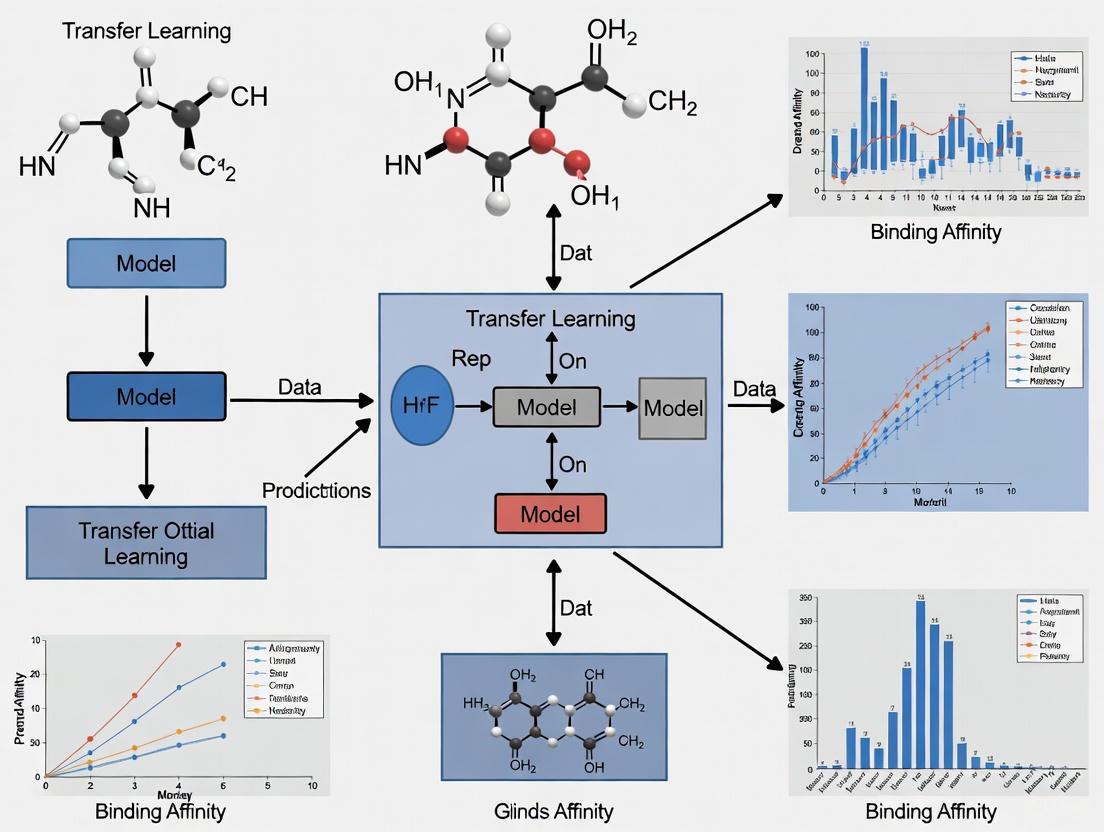
Accurate prediction of drug-target binding affinity is a critical yet challenging task in computational drug discovery, traditionally hampered by limited labeled data and poor generalization.
Boosting Binding Affinity Prediction: How Transfer Learning from Language Models is Revolutionizing Drug Discovery
Abstract
Accurate prediction of drug-target binding affinity is a critical yet challenging task in computational drug discovery, traditionally hampered by limited labeled data and poor generalization. This article explores the paradigm shift enabled by transfer learning from protein and molecular language models. We first establish the foundational principles of language models like ESM and ChemBERTa for encoding biological and chemical sequences. The discussion then progresses to methodological architectures that integrate these pre-trained embeddings, from simple concatenation to advanced geometry-aware and conditioning approaches. A critical troubleshooting section addresses pervasive issues of data bias and dataset leakage, offering solutions for robust model evaluation. Finally, we survey the validation landscape, comparing the performance of these novel approaches against traditional methods on established benchmarks, underscoring their superior generalization and growing impact on accelerating therapeutic development.
The Foundation: From Biological Sequences to Semantic Embeddings
The Data Scarcity Problem in Traditional Binding Affinity Prediction
The accurate prediction of binding affinity, the strength of interaction between a drug candidate and its biological target, is a cornerstone of modern drug discovery. Traditional methods for assessing affinity, whether through wet-lab experiments or physics-based computational simulations, are notoriously constrained by a fundamental limitation: data scarcity. This scarcity manifests not only in the sheer volume of data but also in its quality, diversity, and accessibility. The recent integration of artificial intelligence (AI) and machine learning (ML) has promised to revolutionize the field. However, these data-driven models are themselves critically hampered by the very data scarcity they aim to overcome, creating a cyclical challenge that impedes rapid therapeutic development. This whitepaper delineates the multifaceted nature of the data scarcity problem and frames the emerging paradigm of transfer learning from protein and molecular language models as a transformative solution. By leveraging knowledge pre-trained on vast, unlabeled biological and chemical corpora, researchers can build accurate and generalizable predictive models even when high-quality, labeled binding affinity data is exceedingly limited.
The Dimensions of Data Scarcity
The data scarcity problem in binding affinity prediction is not monolithic but can be decomposed into several interconnected challenges, each inflating the cost and timeline of drug discovery.
The High Cost of Experimental Data Generation
The gold-standard data for binding affinity comes from experimental techniques such as Isothermal Titration Calorimetry (ITC) or Surface Plasmon Resonance (SPR). These methods are low-throughput, requiring significant time, specialized equipment, and costly reagents. Consequently, the generation of new, high-fidelity data points is a slow and expensive process, creating a natural bottleneck. This experimental barrier fundamentally limits the size of datasets available for training robust machine learning models.
The Data Leakage and Generalization Crisis
A more insidious aspect of data scarcity is the problem of data leakage in benchmark datasets, which has led to a widespread overestimation of model performance. When models are trained and tested on non-independent data, they learn to "memorize" structural similarities rather than generalizable principles of binding.
A seminal 2025 study by Graber et al. exposed a substantial data leakage between the widely used PDBbind training database and the Comparative Assessment of Scoring Functions (CASF) benchmark. Their analysis revealed that nearly 49% of CASF test complexes had highly similar counterparts (in terms of protein structure, ligand identity, and binding pose) in the training set [1]. This allowed models to achieve high benchmark performance through memorization, not genuine understanding. When models were retrained on a rigorously filtered dataset called PDBbind CleanSplit, which removes these redundancies, the performance of state-of-the-art models dropped markedly [1]. This crisis highlights that the effective data for learning generalizable rules is even scarcer than previously assumed.
Table 1: Impact of Data Leakage on Model Generalization
| Training Scenario | Description | Reported Performance | True Generalization |
|---|---|---|---|
| Standard PDBbind | Training and test sets contain structurally similar complexes. | Spuriously high (e.g., Pearson R ~0.80+ in some models) | Overestimated; models fail on novel targets. |
| PDBbind CleanSplit | Training set is strictly filtered to be independent of test sets. | Lower, more realistic performance metrics | Accurately reflects model's ability to predict for unseen complexes. |
The Challenge of Data for Complex Therapeutics
The problem is further exacerbated for advanced therapeutic modalities like Antibody-Drug Conjugates (ADCs). The development of ADCs involves optimizing three components—an antibody, a linker, and a cytotoxic payload—which creates a massive combinatorial space. Data on conjugation site effects, linker stability, and payload release kinetics is exceptionally sparse compared to small molecules [2]. This "data sparsity for rare conjugation chemistries" forces developers to rely heavily on empirical approaches, slowing down the rational design of next-generation ADCs [3].
Overcoming Scarcity with Transfer Learning from Language Models
Transfer learning from large language models (LLMs) presents a powerful framework to bypass the data scarcity bottleneck. The core idea is to pre-train a model on a vast, unlabeled corpus to learn fundamental representations of biological sequences and chemical structures. These pre-trained representations encapsulate deep semantic and syntactic knowledge, which can then be fine-tuned on small, task-specific datasets (like binding affinity measurements) to achieve high performance.
Protein and Molecular Language Models
Language models originally developed for human language have been successfully adapted to the "languages" of biology and chemistry.
- Protein Language Models (pLMs): Models like ProtT5 and ESM-2 are trained on millions of protein sequences from diverse organisms. They learn to represent amino acids in the context of their surrounding sequence, capturing evolutionary constraints, structural features, and functional sites without ever seeing a 3D structure [4] [5].
- Molecular Language Models: Models like ChemBERTa and MolFormer are trained on string-based representations of small molecules, such as SMILES (Simplified Molecular-Input Line-Entry System). They learn the grammatical rules of chemical structures and the relationships between molecular substructures and properties [6] [5].
Experimental Protocol: Implementing a pLM-Based Affinity Prediction Workflow
The following protocol details a typical pipeline for developing a binding affinity predictor using transfer learning from pLMs, as exemplified by the BAPULM framework [5].
Objective: To predict the binding affinity between a protein target and a small-molecule ligand using only their sequence information, leveraging pre-trained language models.
Inputs:
- Protein amino acid sequence (e.g., in FASTA format)
- Ligand SMILES string
Procedure:
Feature Extraction with Pre-trained Models:
- Proteins: Pass the protein sequence through a pre-trained pLM (e.g., ProtT5-XL-U50). Extract the last hidden layer embeddings or use per-residue embeddings averaged across the sequence to obtain a fixed-dimensional, dense vector representation of the entire protein.
- Ligands: Pass the SMILES string through a pre-trained molecular LM (e.g., MolFormer) to obtain a fixed-dimensional, dense vector representation of the ligand.
Data Integration and Splitting:
- Concatenate the protein and ligand feature vectors to form a unified representation of the complex.
- Use a rigorous data partitioning strategy to create training, validation, and test sets. Critical Step: Avoid random splitting. Instead, use structure-based clustering (e.g., CleanSplit algorithm [1]) or UniProt-based partitioning [4] to ensure no proteins in the test set are highly similar to those in the training set. This is essential for evaluating true generalization.
Model Training and Fine-Tuning:
- Construct a regression model, typically a fully connected neural network, that takes the concatenated feature vector as input and outputs a predicted binding affinity value (e.g., pKd, pKi).
- Initialize the model weights and train the network on the training set. Optionally, the feature extractors (pLMs) can be fine-tuned alongside the regression head if the dataset is sufficiently large, or their weights can be frozen.
Validation and Testing:
- Evaluate the model's performance on the held-out validation and test sets using metrics such as Pearson's R (for scoring power), Root-Mean-Square Error (RMSE), and Concordance Index (CI).
Case Study: BAPULM Framework Efficacy
The BAPULM framework demonstrates the power of this approach. By using ProtT5 for proteins and MolFormer for ligands, it achieved state-of-the-art results on multiple benchmark datasets without using any 3D structural information, proving that sequence-based models pre-trained on large corpora can effectively predict binding affinity [5].
Table 2: Performance of a Sequence-Based Model (BAPULM) on Benchmark Datasets
| Dataset | Scoring Power (Pearson R) | Key Implication |
|---|---|---|
| benchmark1k2101 | 0.925 ± 0.043 | High accuracy is achievable without 3D structural data. |
| Test2016_290 | 0.914 ± 0.004 | Robust performance on established benchmarks. |
| CSAR-HiQ_36 | 0.813 ± 0.001 | Effective even on smaller, high-quality test sets. |
Complementary Strategies for Data Efficiency
Beyond transfer learning, other computational strategies are being developed to maximize learning from limited data.
Multitask Learning
Frameworks like DeepDTAGen jointly perform binding affinity prediction and target-aware drug generation. These shared tasks force the model to learn a more robust and generalizable representation of the underlying drug-target interaction space, improving performance on both tasks, especially when data for either is limited [7].
Data Augmentation with Synthetic Complexes
To combat data scarcity, researchers are turning to AI to generate synthetic protein-ligand complexes. Co-folding models like Boltz-1 can predict the 3D structure of a complex from sequence and SMILES information. However, a 2025 study by Hsu et al. highlighted a critical caveat: quality supersedes quantity. They found that augmenting training data with a smaller set of high-confidence synthetic complexes improved model performance, while adding a larger set of lower-quality complexes provided no benefit or was even detrimental [8]. This underscores the need for rigorous quality filtering in data augmentation.
The following table catalogues essential computational tools and datasets for conducting transfer learning research in binding affinity prediction.
Table 3: Key Research Reagents for Binding Affinity Prediction with Transfer Learning
| Resource Name | Type | Function in Research | Relevance to Data Scarcity |
|---|---|---|---|
| ESM-2 / ProtT5 | Protein Language Model | Generates semantically rich, numerical embeddings from protein sequences. | Provides pre-trained knowledge of protein evolution and function, reducing need for labeled affinity data. |
| MolFormer / ChemBERTa | Molecular Language Model | Generates numerical embeddings from molecular representations (SMILES). | Provides pre-trained knowledge of chemical space and structure-property relationships. |
| PDBbind CleanSplit | Curated Dataset | Provides a benchmark training set free of data leakage for rigorous model evaluation. | Enables accurate assessment of true model generalization, addressing overestimation from data leakage. |
| BindingDB | Affinity Database | A public repository of experimental drug-target binding affinities. | Serves as a primary source of ground-truth data for model training and fine-tuning. |
| Target2035 Initiative | Research Consortium | Aims to generate high-quality, open-source binding data for thousands of human proteins. | A long-term, community-wide effort to systematically address the root cause of data scarcity. |
The data scarcity problem has long been a fundamental constraint in traditional binding affinity prediction. The advent of AI and ML promised a way forward but initially stumbled over issues of generalization stemming from inadequate and leaky data. The integration of transfer learning from protein and molecular language models represents a paradigm shift. By pre-training on the vast "texts" of evolution and chemistry, these models develop a foundational understanding of their respective domains. This knowledge allows researchers to build accurate predictive models for binding affinity that require only small, focused datasets for fine-tuning, effectively bypassing the historical data bottleneck. As the field moves forward, the combination of these advanced modeling techniques with rigorously curated, non-redundant datasets and strategic data augmentation will continue to mitigate the data scarcity problem, accelerating the discovery of novel therapeutics.
Protein Language Models (pLMs) and Molecular Language Models (mLMs) are specialized branches of artificial intelligence that apply the principles of natural language processing (NLP) to biological and chemical sequences. Just as large language models like ChatGPT learn statistical patterns from vast text corpora, pLMs are trained on millions of protein amino acid sequences, while mLMs typically learn from string-based molecular representations such as SMILES (Simplified Molecular Input Line Entry System) [9]. These models have emerged as revolutionary technologies that bring transformative changes to drug discovery and therapeutic research by acquiring rich representational capabilities from large-scale sequence datasets [10]. The critical functions of proteins in biological processes often arise through interactions with small molecules, making the intersection of pLMs and mLMs particularly important for understanding these interactions in contexts such as drug design, bioengineering, and cellular metabolism [11].
The foundational architecture behind most modern pLMs and mLMs is the Transformer model, which employs self-attention mechanisms to capture long-range dependencies in sequential data [12]. Two primary training paradigms dominate the field: Masked Language Modeling (MLM), where the model learns to predict randomly masked tokens in the input sequence (exemplified by BERT-style models), and Autoregressive Modeling, where the model predicts the next token in a sequence (exemplified by GPT-style models) [10]. Protein language models such as ESM-2 (Evolutionary Scale Modeling) and ProtTrans learn the statistical patterns of evolutionary relationships from sequence data alone, without explicit supervision, capturing fundamental principles of protein biochemistry, structure, and function [13] [12]. This pre-training enables them to encode knowledge about protein biochemistry and evolution in their internal representations, known as embeddings, which encapsulate everything from biochemical characteristics of individual amino acids to complex higher-order interactions reflecting structural and functional properties [13].
Core Architectures and Model Types
Protein Language Models (pLMs)
Protein language models can be systematically classified based on their architectures and information sources. The primary architectural distinction lies between encoder-style models (like BERT) and decoder-style models (like GPT). Encoder models are typically pre-trained using masked language modeling objectives and excel at producing rich contextual embeddings for downstream prediction tasks. In contrast, decoder models are generally pre-trained using next-token prediction and demonstrate stronger capabilities in generative applications [10] [13].
ESM-2 (Evolutionary Scale Modeling 2) represents a family of pLMs that scale from 8 million to 15 billion parameters, with the larger models demonstrating enhanced capabilities in capturing complex patterns in protein sequence space [13]. ProtTrans includes models like ProtBERT and ProtT5, which leverage the transformer architecture processed on massive protein datasets—ProtBert, for instance, was trained on 2 billion protein sequences with 420 million parameters [12]. ESM3 represents the cutting edge with a staggering 98 billion parameters and has demonstrated remarkable capabilities in generating functional protein sequences [13].
Recent trends have also seen the development of multimodal pLMs that integrate co-evolutionary information, structural data, and functional annotations, as well as domain-specific models specialized for particular protein families such as antibodies and T-cell receptors [10]. These specialized models often outperform general-purpose pLMs on their specific domains by incorporating relevant inductive biases and training data.
Molecular Language Models (mLMs)
Molecular Language Models operate on string-based representations of chemical structures, most commonly SMILES notation, which encodes molecular graphs as linear sequences of characters [9]. Similar to pLMs, mLMs can be based on either encoder or decoder architectures, with each serving different purposes in drug discovery pipelines.
Encoder-style mLMs excel at learning rich representations of molecular structures that can be used for property prediction tasks such as binding affinity, solubility, toxicity, and other pharmacologically relevant characteristics [9]. Decoder-style mLMs demonstrate stronger performance in de novo molecular design, where the goal is to generate novel drug-like molecules with desired properties [9]. The Chemcrow and Coscientist systems represent advanced mLMs that can automate chemistry experiments and assist in directed synthesis and chemical reaction prediction [9].
Table 1: Comparison of Major Protein Language Model Architectures
| Model | Architecture | Parameters | Training Data | Primary Use Cases |
|---|---|---|---|---|
| ESM-2 | Transformer Encoder | 8M - 15B | 250M sequences | Feature extraction, variant effect prediction |
| ProtBERT | Transformer Encoder | 420M | 2B sequences | Protein function prediction, embeddings |
| ESM3 | Transformer Decoder | 98B | Multi-modal data | Protein design, function prediction |
| ProtT5 | Transformer Encoder-Decoder | Not specified | Large-scale sequences | Sequence generation, feature extraction |
| ESM-MSA | Transformer Encoder | Not specified | 26M MSAs | MSA-based predictions |
Application to Binding Affinity Prediction
Binding affinity prediction represents one of the most valuable applications of pLMs and mLMs in drug discovery, as it directly impacts the identification and optimization of therapeutic compounds. The accurate prediction of protein-ligand binding affinities enables researchers to prioritize compounds for synthesis and testing, dramatically reducing the time and cost associated with experimental screening [11] [9].
Methodological Approaches
Several architectural paradigms have emerged for combining pLMs and mLMs in binding affinity prediction:
Sequence-Based Methods utilize only 1D amino acid sequence data as input, making them widely applicable even when 3D structural information is unavailable [12]. These approaches convert protein sequences into numerical embeddings using pre-trained pLMs, while molecular structures are typically represented as SMILES strings or molecular graphs. The CGPDTA framework exemplifies this approach, leveraging transfer learning from both protein and molecular language models while incorporating molecular substructure graphs and protein pocket sequences to represent local features of drugs and targets [14]. A key advantage of sequence-based methods is their applicability to proteins without experimentally determined structures, though they may sacrifice some accuracy compared to structure-aware methods.
Structure-Based Methods incorporate 3D structural information of both proteins and ligands, typically using geometric deep learning architectures such as Graph Neural Networks (GNNs) [1] [15]. In these approaches, protein structures are represented as graphs where nodes correspond to amino acids and edges represent spatial relationships, while small molecules are represented as molecular graphs with atoms as nodes and bonds as edges. The GEMS (Graph neural network for Efficient Molecular Scoring) model exemplifies this approach, leveraging a sparse graph modeling of protein-ligand interactions combined with transfer learning from language models to achieve state-of-the-art predictions on benchmark datasets [1].
Hybrid Methods combine the strengths of both sequence-based and structure-based approaches. One recent hybrid model integrates pLM embeddings as node features in a 3D Graph Attention Network (GAT), effectively combining sequential information encoded in protein sequences with spatial relationships within the protein structure [15]. Research has shown that while using experimental protein structure almost always improves binding site prediction accuracy, complex pLMs still contain substantial structural information that leads to good predictive performance even without explicit 3D structure [15].
Critical Data Considerations
A significant challenge in binding affinity prediction is the issue of data leakage between standard training and test datasets, which has led to inflated performance metrics and overestimation of model generalization capabilities [1]. The widely used PDBbind database and Comparative Assessment of Scoring Functions (CASF) benchmark datasets exhibit substantial similarities, with nearly 600 high-similarity pairs detected between training and test complexes, affecting 49% of all CASF complexes [1].
To address this problem, researchers have developed PDBbind CleanSplit, a training dataset curated by a structure-based filtering algorithm that eliminates train-test data leakage as well as redundancies within the training set [1]. This algorithm uses a combined assessment of protein similarity (TM-scores), ligand similarity (Tanimoto scores), and binding conformation similarity (pocket-aligned ligand RMSD) to identify and remove problematic overlaps. When state-of-the-art models like GenScore and Pafnucy were retrained on CleanSplit, their performance dropped substantially, confirming that previous high scores were largely driven by data leakage rather than genuine understanding of protein-ligand interactions [1].
Table 2: Performance Comparison of Binding Affinity Prediction Methods
| Model | Architecture | Training Data | CASF2016 RMSE | Key Innovation |
|---|---|---|---|---|
| GEMS | Graph Neural Network | PDBbind CleanSplit | State-of-the-art | Sparse graph modeling + transfer learning |
| CGPDTA | Transfer Learning | Traditional PDBbind | Not specified | Molecular substructure graphs + protein pockets |
| GenScore | Deep Learning | PDBbind | Performance drops on CleanSplit | Structure-based scoring function |
| Pafnucy | 3D CNN | PDBbind | Performance drops on CleanSplit | Volumetric grid representation |
| Search Algorithm | Similarity-based | PDBbind | Pearson R=0.716, competitive RMSE | Simple similarity search baseline |
Experimental Protocols and Methodologies
Protocol: pLM Embedding Extraction for Binding Affinity Prediction
Objective: Extract meaningful protein representations from pLMs for downstream binding affinity prediction tasks.
Materials and Reagents:
- Protein sequences in FASTA format
- Pre-trained pLM (e.g., ESM-2, ProtBERT)
- Computational environment with appropriate deep learning frameworks (PyTorch/TensorFlow)
- Hardware with GPU acceleration for efficient inference
Procedure:
- Sequence Preprocessing: Input protein sequences are truncated or padded to the maximum sequence length acceptable by the chosen pLM (e.g., 1022 residues for ESM-1v).
- Embedding Extraction: Pass each preprocessed sequence through the pLM to obtain residue-level embeddings from the final hidden layer.
- Embedding Compression: Apply mean pooling (averaging embeddings across all sequence positions) to generate a single fixed-dimensional representation for each protein. Research has systematically demonstrated that mean pooling generally outperforms alternative compression methods across diverse prediction tasks [13].
- Feature Integration: Combine protein embeddings with molecular representations (e.g., molecular graphs or MLM embeddings) to create input features for the affinity prediction model.
- Model Training: Train a regression model (e.g., regularized linear models, neural networks) using the combined representations to predict experimental binding affinities (typically pKd, pKi, or pIC50 values).
Validation: Evaluate model performance using strictly independent test sets such as PDBbind CleanSplit to ensure genuine generalization capability rather than data leakage [1].
Protocol: Structure-Based Affinity Prediction with GEMS
Objective: Implement the GEMS architecture for structure-based binding affinity prediction with robust generalization.
Materials and Reagents:
- 3D structures of protein-ligand complexes (PDB format)
- PDBbind CleanSplit dataset
- Graph neural network framework (PyTorch Geometric)
- Pre-trained pLM for protein initialization
Procedure:
- Graph Construction: Represent each protein-ligand complex as a sparse graph where:
- Nodes correspond to protein residues and ligand atoms
- Edges represent spatial proximity and chemical interactions
- Feature Initialization: Initialize protein residue nodes using pre-trained pLM embeddings and ligand atom nodes using chemical features (atom type, hybridization, etc.).
- Graph Neural Network: Apply multiple layers of message passing to update node representations based on local neighborhood information.
- Global Pooling: Aggregate node representations to form a global graph embedding.
- Affinity Prediction: Map the graph embedding to a single binding affinity value through fully connected layers.
Key Innovation: The sparse graph representation explicitly models protein-ligand interactions while transfer learning from pLMs incorporates evolutionary information, enabling the model to generalize to novel complexes not seen during training [1].
Visualization of Model Architectures and Workflows
pLM Feature Extraction for Binding Affinity Prediction
Diagram 1: pLM Feature Extraction Workflow for Binding Affinity Prediction
GEMS Architecture for Structure-Based Prediction
Diagram 2: GEMS Architecture for Structure-Based Binding Affinity Prediction
Table 3: Essential Research Resources for pLM and mLM Applications in Binding Affinity Prediction
| Resource | Type | Description | Application in Binding Affinity Research |
|---|---|---|---|
| PDBbind Database | Dataset | Comprehensive collection of protein-ligand complexes with binding affinity data | Primary training and benchmarking data for affinity prediction models |
| PDBbind CleanSplit | Dataset | Curated version of PDBbind with minimized data leakage | Rigorous evaluation of model generalization capabilities |
| ESM-2 Models | Pre-trained Model | Protein language model family (8M to 15B parameters) | Feature extraction for protein sequence representation |
| ProtTrans Models | Pre-trained Model | Transformer-based pLMs (ProtBERT, ProtT5) trained on billions of sequences | Alternative protein representation learning |
| GEMS | Software | Graph neural network for molecular scoring | Structure-based binding affinity prediction with generalization |
| CASF Benchmark | Evaluation Suite | Comparative Assessment of Scoring Functions | Standardized performance comparison of affinity prediction methods |
| RDKit | Software | Cheminformatics and machine learning tools | Molecular representation, feature extraction, and manipulation |
| PyTorch Geometric | Software | Library for deep learning on graphs | Implementation of GNNs for structure-based affinity prediction |
| sc-PDB | Dataset | Database of druggable binding sites from Protein Data Bank | Binding site prediction and analysis |
Future Directions and Challenges
The field of protein and molecular language models continues to evolve rapidly, with several promising research directions emerging. Multimodal integration represents a key frontier, where models combine sequence, structure, and functional information to create more comprehensive representations of proteins and their interactions [10]. The recent development of generative pLMs like ESM3, which can design novel protein sequences with desired functions, points toward a future where AI plays a central role in de novo protein design [13].
Interpretability remains a significant challenge, as the internal decision-making processes of complex pLMs are often opaque. Recent work using sparse autoencoders to identify interpretable features within pLM representations shows promise for opening the "black box" and understanding what features models use for their predictions [16]. This enhanced explainability is particularly important for building trust in model predictions for critical applications like drug discovery.
Efficiency considerations are also gaining attention, as researchers question whether larger models are always better. Surprisingly, medium-sized models (e.g., ESM-2 650M and ESM C 600M) have demonstrated consistently good performance, falling only slightly behind their larger counterparts despite being many times smaller [13]. This suggests that model selection should be guided by specific application requirements and data availability rather than simply pursuing the largest available architectures.
As the field matures, the integration of pLMs and mLMs into end-to-end drug discovery pipelines holds the potential to dramatically reduce the time and cost of developing new therapeutics. However, realizing this potential will require addressing ongoing challenges related to data quality, model generalization, and biological validation [9].
How pLMs like ESM and ProtT5 Learn the 'Grammar of Life' from Sequence Data
The advent of protein Language Models (pLMs) represents a paradigm shift in computational biology, leveraging the architectural principles of large language models to decipher the complex patterns within protein sequences. Models such as ESM (Evolutionary Scale Modeling) and ProtT5 are trained on hundreds of millions of protein sequences, learning the underlying "grammar" that governs protein structure and function without explicit supervision. These models have begun to provide an important alternative to capturing the information encoded in a protein sequence in computers, advancing our understanding of the language of life as written in proteins [17]. Within the specific context of binding affinity research—a critical area for drug discovery and understanding cellular processes—pLMs offer a transformative approach. They enable the prediction of protein-protein and protein-ligand interactions directly from sequence, providing a powerful tool when structural data is scarce or uncertain. By leveraging transfer learning, where knowledge gained from broad pre-training is fine-tuned for specific predictive tasks, pLMs are establishing new benchmarks for accuracy and efficiency in computational biology.
Architectural Foundations: How pLMs Process Sequence Information
The ability of pLMs to learn the grammar of life stems from their underlying transformer architecture and their training on massive, diverse sequence corpora.
Core Model Architectures and Training
ESM and ProtT5, while sharing the transformer foundation, implement it in distinct ways. ESM2 utilizes an encoder-only transformer architecture, pre-trained using a masked language modeling objective where random amino acids in a sequence are hidden and the model must predict them based on their context [18]. In contrast, ProtT5 adopts an encoder-decoder design based on the T5 (Text-to-Text Transfer Transformer) framework, which is also pre-trained on large-scale protein databases using a masked language modeling objective [19] [18]. This pre-training on hundreds of millions of sequences allows both models to learn contextual relationships among amino acids that reflect evolutionary conservation, structural constraints, and higher-level functional patterns. The self-attention mechanism within the transformer is particularly crucial, as it directly calculates the pairwise associations between all residues in a sequence, enabling the model to capture long-range interactions and dependencies that are fundamental to protein folding and function [20].
From Sequence to Representation: Generating Embeddings
The primary output of a pLM is a set of embedding vectors—fixed-size, numerical representations that capture the contextual information of each amino acid in a sequence. For a given protein sequence, models like ProtT5 generate a sequence of 1,024-dimensional residue embeddings [19]. These embeddings can be used directly for residue-level prediction tasks or pooled (e.g., by averaging) to create a single, global representation for a whole protein [19]. These embeddings implicitly encode a remarkable amount of structural and functional information. Studies have shown they capture tendencies for secondary structure formation, intrinsic disorder, and even aspects of long-range residue interactions, making them suitable for tasks that traditionally relied on explicit structural information [19] [18]. The quality of these representations is evidenced by the performance of pLMs in various downstream tasks, where ProtT5, for instance, has been shown to outperform other embedding methods like ESM-1b and ProGen2 in characterizing amino acid sequences for protein-protein binding events [20].
Quantitative Performance in Binding Affinity Prediction
The effectiveness of pLMs is best demonstrated by their performance on specific, challenging prediction tasks relevant to drug discovery and basic research. The following table summarizes the performance of several pLM-based methods on key benchmarks.
Table 1: Performance of pLM-Based Methods on Binding Prediction Benchmarks
| Method | Task | Key Model Components | Performance Metrics |
|---|---|---|---|
| ProtT-Affinity [19] | Protein-Protein Binding Affinity Prediction | ProtT5 embeddings + Lightweight Transformer | Pearson's R: 0.628 & 0.459 on two test sets; MAE: ~1.72 kcal/mol |
| PepENS [21] | Protein-Peptide Binding Residue Prediction | Ensemble of ProtT5, PSSM, HSE, EfficientNetB0, CatBoost, Logistic Regression | Precision: 0.596; AUC: 0.860 (Dataset 1) |
| EDLMPPI [22] [20] | Protein-Protein Interaction Site Identification | ProtT5 + Multi-source Biological Features + BiLSTM + Capsule Network | Average Precision improvement of nearly 10% over state-of-the-art methods |
| Fine-tuned ESM2/ProtT5 [18] | Amino Acid-Level Feature Prediction (20 features, e.g., active site, binding site) | Fine-tuned ESM2 (3B parameter) and ProtT5 | High performance across features (e.g., AUROC > 0.8 for many features) |
As the data shows, pLM-based approaches are competitive and often superior to traditional methods. While sequence-only models like ProtT-Affinity may not always surpass the highest-performing structure-based methods, they provide a practical and robust alternative when structural data is missing or unreliable [19]. Furthermore, hybrid models that combine pLM embeddings with evolutionary and structural features, such as PepENS and EDLMPPI, consistently set new state-of-the-art performance, demonstrating the integrative power of these representations.
Experimental Protocols: From Pre-training to Fine-tuning
Applying pLMs to binding affinity research follows a structured pipeline, from data curation to model adaptation and evaluation. The workflow below illustrates the major stages of a typical pLM-based binding prediction study.
Diagram 1: pLM-Based Binding Prediction Workflow
Data Curation and Feature Extraction
The first critical step involves assembling a high-quality, non-redundant dataset. A standard practice is to use publicly available databases like BioLiP (for peptide-binding proteins) or PDBBind (for protein-ligand complexes) and then apply strict homology filtering to remove sequences with high identity, ensuring the model generalizes to new protein families [21] [19]. For instance, one protocol uses the "blastclust" tool from the BLAST package to exclude sequences with over 30% sequence identity [21]. Subsequently, protein sequences are fed into a pre-trained pLM to generate feature embeddings. For example, in the EDLMPPI method, each protein sequence is passed through ProtT5 to obtain a 1,024-dimensional vector representation for each residue [22] [20]. These embeddings can be used alone or combined with other features. The PepENS model, for example, creates a powerful multi-modal feature set by integrating ProtT5 embeddings with Position-Specific Scoring Matrices (PSSM) and structure-based Half-Sphere Exposure (HSE) metrics [21].
Model Design, Training, and Fine-tuning Strategies
With features in hand, the next step is to design a predictive model. Architectures vary widely based on the task:
- Simple Classifiers: For affinity prediction, a lightweight transformer with cross-attention can be used to model interactions between two protein embedding sets [19].
- Complex Ensembles: For binding site prediction, an ensemble of deep learning models (e.g., combining BiLSTM and Capsule Networks) can be trained on the combined features to improve robustness [20].
- Transfer Learning: A common and powerful technique is to fine-tune the pre-trained pLM itself on the specific binding task. This involves continuing the training of the pLM (e.g., ESM2 or ProtT5) on the labeled binding data, often using parameter-efficient methods like LoRA (Low-Rank Adaptation). LoRA inserts small, trainable matrices into the transformer's attention layers while keeping the original weights frozen, dramatically reducing computational cost and preventing overfitting [18]. As demonstrated in a study fine-tuning for 20 protein features, this approach yields models that significantly outperform classifiers built on frozen embeddings [18].
Performance Evaluation and Validation
Finally, models are rigorously evaluated on held-out test sets. Standard metrics include:
- For affinity prediction: Pearson correlation coefficient (R), Mean Absolute Error (MAE) in kcal/mol [19].
- For binding site prediction: Area Under the Curve (AUC), Precision, Average Precision (AP), and Matthews Correlation Coefficient (MCC) [21] [22]. Performance should be benchmarked against existing state-of-the-art methods to validate improvements. Furthermore, interpretability analyses can provide biological insights, such as highlighting which residues the model deems critical for binding, thereby building trust in the predictions [20].
The Scientist's Toolkit: Essential Research Reagents
Table 2: Key Resources for pLM-Based Binding Research
| Resource Category | Specific Tool / Database | Function and Utility |
|---|---|---|
| Pre-trained pLMs | ProtT5 (ProtT5-XL-UniRef50), ESM2 (various sizes) | Provides foundational sequence representations and embeddings for downstream tasks. [21] [18] |
| Benchmark Datasets | PDBBind, BioLiP, Dset448, Dset72, Dset_164 | Provides curated, experimentally-verified data for training and fair evaluation of models. [21] [19] [20] |
| Feature Tools | PSI-BLAST (for PSSM), DSSP (for HSE, SS) | Generates complementary evolutionary and structural features to enrich pLM embeddings. [21] |
| Efficient Fine-Tuning | LoRA (Low-Rank Adaptation) | Enables parameter-efficient adaptation of large pLMs to specific tasks with limited data. [18] |
| Model Architectures | Transformers, BiLSTM, Capsule Networks, CNN (e.g., EfficientNetB0) | Serves as the predictive backbone that processes pLM embeddings for final output. [21] [20] |
Protein Language Models like ESM and ProtT5 have fundamentally changed the landscape of binding affinity research by providing deep, context-aware sequence representations that capture the grammatical rules of protein function. Their ability to be fine-tuned for specific tasks or integrated into complex ensemble models makes them uniquely powerful for predicting interactions in the absence of high-resolution structures. As these models continue to evolve, future developments will likely involve more sophisticated multimodal approaches that seamlessly combine sequence, structure, and dynamics information [17]. Furthermore, addressing challenges such as predicting the effects of higher-order mutations and understanding multi-protein complexes will be key. For now, pLMs have firmly established themselves as an indispensable tool in the computational biologist's arsenal, accelerating drug discovery and deepening our understanding of life's molecular mechanisms.
The application of large language models (LLMs) to molecular science represents a paradigm shift in computational chemistry and drug discovery. Chemical Language Models (CLMs), which interpret Simplified Molecular-Input Line-Entry System (SMILES) strings, have emerged as powerful tools for molecular property prediction, a critical task in accelerating drug development. These models adapt the transformer architectures that revolutionized natural language processing (NLP) to the specialized "language" of chemistry, where SMILES strings serve as sentences and molecular substructures as words [23] [24].
Framed within the broader context of transfer learning for binding affinity research, CLMs offer a promising pathway to overcome the data scarcity that often plagues computational drug design. By pre-training on vast unlabeled molecular databases and subsequently fine-tuning on specific property prediction tasks, these models demonstrate remarkable sample efficiency [25] [23]. This technical guide examines the architectural foundations, training methodologies, and practical applications of SMILES-interpreting models like ChemBERTa, with particular emphasis on their evolving role in predicting drug-target interactions and binding affinities—a cornerstone of modern therapeutic development.
SMILES Representation and Tokenization Strategies
The SMILES notation provides a linear string representation of molecular structure, translating atomic connectivity into a sequence of characters that can be processed by NLP techniques. However, raw SMILES strings require segmentation into meaningful tokens before they can be embedded into a numerical representation learnable by neural networks. Two predominant philosophies have emerged in this tokenization process, each with distinct implications for model performance and efficiency [24].
Table 1: Comparison of SMILES Tokenization Strategies
| Strategy | Description | Vocabulary Size | Training Data Requirements | Chemical Awareness |
|---|---|---|---|---|
| Chemistry-Agnostic | Treats SMILES as generic text using standard NLP tokenizers (BPE, character-level) | ~591 tokens (ChemBERTa-2) | High (77M compounds) | Learned from data |
| Chemistry-Aware | Uses chemical substructures (e.g., Morgan fingerprints) as tokens | ~13,325 tokens (MolBERT) | Low (4M compounds) | Injected via tokenization |
The chemistry-agnostic approach, exemplified by ChemBERTa, treats SMILES strings as generic text, allowing the model to learn chemical grammar and semantics entirely from data. This strategy requires substantial training data but offers broad generalizability. In contrast, the chemistry-aware approach, implemented in MolBERT, leverages domain knowledge by using molecular substructures (such as those generated by Morgan fingerprints) as tokens. This method injects chemical expertise directly into the tokenization process, significantly reducing data and computational requirements for effective training [24].
Model Architectures and Training Methodologies
Core Architectures
Chemical language models primarily utilize transformer architectures, with encoder-only configurations being particularly prevalent for property prediction tasks. ChemBERTa adapts the RoBERTa architecture with 6 layers and 12 attention heads, processing tokenized SMILES sequences through self-attention mechanisms to capture long-range dependencies in molecular structure [24]. The recently introduced ChemBERTa-3 framework provides an open-source training ecosystem for chemical foundation models, emphasizing scalability through distributed computing implementations like AWS-based Ray deployments and on-premise high-performance computing clusters [26].
These models employ masked language modeling (MLM) as their primary self-supervised pre-training objective, where randomly masked tokens in SMILES sequences must be predicted from context. This forces the model to learn fundamental principles of chemical validity and molecular syntax. ChemBERTa-2 introduced an alternative multi-task regression (MTR) approach that simultaneously predicts hundreds of molecular properties during pre-training, demonstrating consistent outperformance over standard MLM across downstream tasks [24].
Transfer Learning Framework
Effective application of CLMs to specialized domains like binding affinity prediction typically follows a three-stage transfer learning pipeline, exemplified by the ChemLM framework [23]:
- Self-supervised pre-training: The model learns general chemical principles from large unlabeled datasets (e.g., 10 million compounds from ZINC).
- Domain adaptation: Further self-supervised training on domain-specific molecules refines the model's understanding of relevant chemical space.
- Supervised fine-tuning: The model is optimized on labeled data for specific property prediction tasks.
Domain adaptation addresses the "domain shift" between general chemical knowledge and task-specific requirements, which is particularly crucial for binding affinity prediction where training data may be limited. Data augmentation through SMILES enumeration—generating alternative valid SMILES representations of the same molecule—has been shown to significantly enhance model robustness during this stage [23].
Experimental Protocols and Benchmarking
Performance Evaluation
Rigorous benchmarking of CLMs reveals both their capabilities and limitations. A comprehensive evaluation of 25 molecular embedding models across 25 datasets found that while CLMs achieve competitive performance, traditional chemical fingerprints like ECFP remain surprisingly difficult to outperform. Only one model (CLAMP) demonstrated statistically significant improvement over ECFP in this extensive comparison [27].
Table 2: Selected Benchmark Results for Molecular Property Prediction
| Model | Architecture | Tokenization | Tox21 (ROC-AUC) | ClinTox (ROC-AUC) | SIDER (ROC-AUC) |
|---|---|---|---|---|---|
| ChemBERTa-2 | Transformer (Encoder) | Chemistry-Agnostic | ~0.830 | ~0.920 | ~0.605 |
| MolBERT | Transformer (Encoder) | Chemistry-Aware | 0.839 | ~0.940 | ~0.625 |
| D-MPNN | Graph Neural Network | N/A | ~0.820 | ~0.885 | ~0.580 |
However, benchmarks focusing specifically on binding affinity prediction have uncovered significant challenges with data leakage and evaluation rigor. Studies analyzing the PDBbind database and Comparative Assessment of Scoring Function (CASF) benchmarks identified substantial train-test leakage, with nearly 50% of CASF complexes having highly similar counterparts in the training data. This inflation of reported performance metrics has led to overestimation of model generalization capabilities [1].
Out-of-Distribution Generalization
The critical challenge of out-of-distribution (OOD) generalization for molecular property prediction was systematically examined in the BOOM benchmark, which evaluated over 140 model-task combinations. Results revealed that even top-performing models exhibited average OOD errors approximately 3× larger than in-distribution errors. Current chemical foundation models, including transformer-based architectures, did not demonstrate strong OOD extrapolation capabilities, highlighting a key frontier for model development [28].
Application to Binding Affinity Research
Addressing Data Challenges
Binding affinity prediction presents particular challenges for CLMs due to limited labeled data and the complexity of protein-ligand interactions. The PDBbind CleanSplit dataset was recently developed to address data leakage issues by applying structure-based filtering to eliminate similarities between training and test complexes [1]. This curated benchmark enables genuine evaluation of model generalizability to unseen protein-ligand complexes.
CLMs enhance binding affinity prediction through several mechanisms:
- Representation learning: Pre-trained embeddings capture nuanced chemical similarities that inform binding potential.
- Transfer learning: Knowledge from large molecular corpora transfers to affinity prediction with limited data.
- Data augmentation: SMILES enumeration expands limited training datasets for improved generalization [23].
Case Study: Pathoblocker Identification for Pseudomonas aeruginosa
A practical demonstration of CLMs in drug discovery involved identifying pathoblockers targeting Pseudomonas aeruginosa. ChemLM was fine-tuned on just 219 compounds with varying potency against the quorum-sensing receptor PqsR. The model achieved substantially higher accuracy in identifying highly potent pathoblockers compared to state-of-the-art graph neural networks and other language models, validating its utility in real-world drug discovery scenarios with limited data [23].
Implementation Guide
The Scientist's Toolkit
Table 3: Essential Research Reagents and Computational Resources
| Resource | Type | Function | Example Sources |
|---|---|---|---|
| ZINC20 | Dataset | Large-scale unlabeled compounds for pre-training | [26] |
| PDBbind CleanSplit | Dataset | Curated protein-ligand complexes without data leakage | [1] |
| ChemBERTa-3 Framework | Software | Open-source training framework for chemical foundation models | [26] |
| SMILES Enumeration | Algorithm | Data augmentation through alternative SMILES representations | [23] |
| Morgan Fingerprints | Algorithm | Chemistry-aware tokenization for efficient learning | [24] |
Optimization Guidelines
Hyperparameter optimization significantly impacts CLM performance. Analysis of ChemLM revealed that the number of SMILES augmentations during domain adaptation and embedding aggregation strategies were the most influential factors, while the number of attention heads and layers had minimal impact [23]. For binding affinity prediction specifically, critical considerations include:
- Data splitting: Implement structure-based splits to avoid data leakage and properly evaluate generalization.
- Domain adaptation: Incorporate target-specific compounds during self-supervised training stages.
- Regularization: Employ L2 regularization and early stopping to prevent overfitting on limited affinity data.
- Multi-task learning: Jointly predict related molecular properties to improve feature learning [29] [23].
Chemical language models interpreting SMILES strings represent a transformative technology for molecular property prediction, with particular relevance to binding affinity research. Models like ChemBERTa demonstrate how transfer learning from large unlabeled molecular datasets can overcome data limitations in drug discovery. However, challenges remain in out-of-distribution generalization, evaluation rigor, and architectural optimization. Future developments will likely focus on multi-modal approaches combining SMILES representations with structural information, improved pre-training objectives that better capture physical principles of molecular interactions, and more robust benchmarking methodologies. As these models mature, they hold significant promise for accelerating the identification of therapeutic candidates through more accurate and generalizable binding affinity prediction.
Transfer learning, the process of repurposing knowledge gained from solving one problem to address a different but related challenge, has emerged as a transformative paradigm in artificial intelligence and computational research. In biological sciences and drug discovery, this approach enables researchers to overcome data scarcity and improve model generalization by leveraging pre-existing knowledge. The core intuition is that a model trained on a large and general dataset effectively serves as a generic model of its domain, whose learned feature maps can be repurposed for specialized tasks without starting from scratch [30]. This capability is particularly valuable in binding affinity research, where experimental data is often limited and expensive to acquire.
The fundamental principle of transfer learning involves initial training on a source task with abundant data, followed by knowledge transfer to a target task with limited data. This process stands in contrast to traditional machine learning approaches that treat each problem in isolation. In the context of binding affinity prediction, transfer learning allows models to incorporate general biochemical knowledge before fine-tuning on specific protein-ligand interaction data, resulting in more robust and accurate predictions [1]. Recent advances have demonstrated that this approach significantly enhances model performance, especially when applied to strictly independent test datasets that avoid the pitfalls of data leakage [1].
Within drug discovery, the application of transfer learning from language models represents a particularly promising frontier. Inspired by breakthroughs in natural language processing (NLP), researchers have developed bioinformatics equivalents of word-embedding technologies that capture functional relationships between biological entities rather than treating them as independent identifiers [31]. This functional representation approach has proven especially valuable for analyzing gene signatures and predicting drug-target interactions, where it substantially improves sensitivity in detecting weak molecular signals that traditional identity-based methods often miss [31].
Transfer Learning from Language Models: Core Concepts and Biological Applications
Fundamental Analogy: From Natural Language to Biological Data
The application of language model principles to biological data represents one of the most significant advances in computational drug discovery. This approach draws a direct analogy between natural language and biological systems: just as words gain meaning from their context in sentences, genes and proteins derive functional significance from their context in biological pathways and networks [31]. Early NLP analyses used one-hot encoding of words where each word was encoded by its identity, treating "cat" and "kitty" as equally distant as "cat" and "rock." Similarly, traditional bioinformatics methods treated genes as independent identifiers, ignoring their underlying functional relationships [31].
The breakthrough came with the introduction of word-embedding technologies like word2vec in NLP, which capture semantic meanings by representing words as vectors in a high-dimensional space where synonyms are positioned close together [31]. This inspired the development of similar embedding approaches for biological entities. For example, the Functional Representation of Gene Signatures (FRoGS) approach maps individual human genes into high-dimensional coordinates that encode their biological functions, trained such that genes with similar Gene Ontology annotations and experimental expression profiles are positioned near each other in the embedding space [31]. This functional representation enables more meaningful comparisons between gene signatures by capturing pathway-level similarities even when the specific genes involved show little overlap.
Technical Implementation of Biological Language Models
Implementing transfer learning from language models for biological data involves several key steps. First, pre-training occurs on large-scale biological datasets to learn fundamental representations of genes, proteins, or compounds. For example, protein language models like ProtTrans are trained on millions of protein sequences to learn structural and functional principles [32]. Similarly, molecular models like MG-BERT are pre-trained on chemical compound databases to learn fundamental biochemical properties [32].
The second step involves fine-tuning these pre-trained models on specific downstream tasks, such as binding affinity prediction or drug-target interaction identification. During this phase, the model adapts its general biological knowledge to the specific problem domain with a smaller, task-specific dataset [32]. This approach has proven particularly valuable for addressing the sparseness intrinsic to experimental signatures, where technical variations often lead to limited overlap between gene signatures studying the same biological pathway [31].
Table: Comparison of Language Model Applications in Natural Language Processing and Biological Research
| Aspect | Natural Language Processing | Biological Research |
|---|---|---|
| Basic Units | Words | Genes, Proteins, Compounds |
| Embedding Method | word2vec, BERT | FRoGS, ProtTrans, ChemBERTa |
| Relationship Captured | Semantic similarity | Functional similarity |
| Primary Advantage | Understands synonyms and context | Identifies functional pathways beyond gene identity |
| Typical Application | Text classification, translation | Drug-target prediction, binding affinity |
Application in Binding Affinity and Drug-Target Interaction Research
Critical Challenges in Binding Affinity Prediction
Binding affinity prediction represents a cornerstone of computational drug design, yet it faces significant challenges that transfer learning approaches aim to address. A primary issue is data bias and leakage, where similarities between training and test datasets artificially inflate performance metrics. Recent research has revealed that train-test data leakage between the PDBbind database and Comparative Assessment of Scoring Function (CASF) benchmarks has severely inflated the performance metrics of many deep-learning-based binding affinity prediction models, leading to overestimation of their generalization capabilities [1]. Alarmingly, some models perform comparably well on CASF benchmarks even after omitting all protein or ligand information from their input data, suggesting their predictions are based on memorization rather than genuine understanding of protein-ligand interactions [1].
Another significant challenge is the sparseness of experimental signatures, where each signature consists of only a sparse sampling of the genes underlying regulated pathways. If we randomly sample 10 genes from a hypothetical 100-gene pathway twice, the chance of having three or more common genes is only 6%, despite representing the same pathway [31]. This sparseness is intrinsic to all experimental signatures and arises from various technical factors including RNA-seq signal alterations, read dropouts with lower gene expression levels, and regulatory variations in transcriptional factor binding sites [31].
Transfer Learning Solutions for Enhanced Generalization
To address these challenges, researchers have developed sophisticated transfer learning approaches that improve model generalization. The GEMS (Graph neural network for Efficient Molecular Scoring) model exemplifies this trend by combining a novel graph neural network architecture with transfer learning from language models trained on the filtered PDBbind CleanSplit dataset [1]. This approach maintains high benchmark performance even when trained on datasets with reduced data leakage, demonstrating genuine generalization capability rather than exploiting dataset similarities [1].
Another innovative framework, EviDTI, utilizes evidential deep learning for uncertainty quantification in drug-target interaction prediction [32]. This approach integrates multiple data dimensions—including drug 2D topological graphs, 3D spatial structures, and target sequence features—with pre-trained knowledge from language models. Through evidential deep learning, EviDTI provides uncertainty estimates for its predictions, allowing researchers to prioritize drug-target pairs with higher confidence for experimental validation [32]. This capability is particularly valuable in drug discovery, where well-calibrated uncertainty information enhances efficiency by reducing false positives.
Table: Performance Comparison of EviDTI with Baseline Models on DrugBank Dataset
| Model | Accuracy (%) | Precision (%) | MCC (%) | F1 Score (%) | AUC (%) |
|---|---|---|---|---|---|
| EviDTI | 82.02 | 81.90 | 64.29 | 82.09 | Not specified |
| RF | 71.07 | Not specified | Not specified | Not specified | Not specified |
| SVM | Not specified | Not specified | Not specified | Not specified | Not specified |
| NB | Not specified | Not specified | Not specified | Not specified | Not specified |
Experimental Protocols and Methodologies
FRoGS Implementation for Gene Signature Analysis
The Functional Representation of Gene Signatures (FRoGS) approach employs a specific methodology for comparing gene signatures through functional embedding. The protocol begins with embedding generation, where individual human genes are mapped into high-dimensional coordinates encoding their functions based on Gene Ontology annotations and ARCHS4 experimental expression profiles [31]. The model is trained to assign coordinates so that neighboring genes share similar annotations and expression correlations.
For similarity assessment, the protocol involves generating two foreground gene sets and one background gene set for a given pathway W. Both foreground sets are seeded with λ random genes within W and 100-λ random genes outside W, simulating experimentally derived signatures from perturbations co-targeting the same pathway. The background set contains no genes from W. The process is repeated 200 times, and similarity score distributions are compared using one-sided Wilcoxon signed-rank test to characterize if the foreground-foreground similarity scores exceed foreground-background similarities [31].
The validation phase uses t-SNE projection to visually confirm that genes cluster by function in the embedding space. Performance comparison against state-of-the-art methods including OPA2Vec, Gene2vec, clusDCA, and Fisher's exact test demonstrates FRoGS's superiority, particularly under weak signals (λ = 5), where most embedding methods outperform Fisher's exact test [31]. This protocol provides the foundation for sensitive gene signature comparisons in drug target prediction.
PDBbind CleanSplit Dataset Curation
Addressing data leakage in binding affinity prediction requires careful dataset curation. The PDBbind CleanSplit protocol employs a structure-based clustering algorithm to identify and remove structural similarities between training and test datasets [1]. The method involves multimodal filtering that combines assessment of protein similarity (TM scores), ligand similarity (Tanimoto scores), and binding conformation similarity (pocket-aligned ligand root-mean-square deviation) [1].
The specific protocol includes these critical steps:
- Similarity identification: Compare all CASF complexes with all PDBbind complexes using combined similarity metrics
- Training data filtering: Exclude all training complexes that closely resemble any CASF test complex
- Ligand-based filtering: Remove training complexes with ligands identical to those in CASF test complexes (Tanimoto > 0.9)
- Redundancy reduction: Apply adapted filtering thresholds to identify and eliminate similarity clusters within the training dataset
This rigorous protocol resulted in the removal of 4% of training complexes due to train-test similarity and an additional 7.8% due to internal redundancies [1]. The resulting CleanSplit dataset enables genuine evaluation of model generalization to unseen protein-ligand complexes by ensuring strict separation from benchmark datasets.
EviDTI Framework for Drug-Target Interaction Prediction
The EviDTI framework employs a comprehensive experimental protocol for drug-target interaction prediction with uncertainty quantification. The methodology consists of three main components [32]:
- Protein feature encoding: Utilize ProtTrans pre-trained model to generate initial target representation, followed by light attention mechanism for local interaction insights
- Drug feature encoding: Encode 2D topological information using MG-BERT pre-trained model processed by 1DCNN, and 3D spatial structure through GeoGNN module converting structure to atom-bond and bond-angle graphs
- Evidential layer processing: Concatenate target and drug representations fed into evidential layer outputting parameter α for calculating prediction probability and uncertainty
The evaluation protocol involves testing on three benchmark datasets (DrugBank, Davis, and KIBA) randomly split into training, validation, and test sets in 8:1:1 ratio. Performance is assessed using seven metrics: accuracy, recall, precision, Matthews correlation coefficient, F1 score, area under the ROC curve, and area under the precision-recall curve [32]. This comprehensive evaluation demonstrates EviDTI's competitive performance against 11 baseline models while providing calibrated uncertainty estimates.
Visualization of Workflows and Relationships
Transfer Learning from Language Models for Binding Affinity
FRoGS Functional Representation Methodology
Table: Key Research Reagents and Computational Resources for Transfer Learning in Binding Affinity Research
| Resource Name | Type | Function in Research | Example Applications |
|---|---|---|---|
| PDBbind Database | Database | Provides curated protein-ligand complexes with binding affinity data for training and validation | Training data for binding affinity prediction models [1] |
| CASF Benchmark | Benchmark Dataset | Standardized sets for evaluating scoring function performance | Model validation and comparison [1] |
| FRoGS (Functional Representation of Gene Signatures) | Computational Method | Embeds genes based on functional similarity rather than identity | Comparing gene signatures, identifying shared pathways [31] |
| ProtTrans | Pre-trained Model | Protein language model trained on millions of sequences | Protein feature extraction for binding prediction [32] |
| MG-BERT | Pre-trained Model | Molecular graph representation learning | Drug compound feature encoding [32] |
| EviDTI Framework | Computational Framework | Drug-target interaction prediction with uncertainty quantification | Prioritizing high-confidence drug-target pairs [32] |
| PDBbind CleanSplit | Curated Dataset | Filtered training dataset minimizing data leakage | Genuine evaluation of model generalization [1] |
| GEMS (Graph neural network for Efficient Molecular Scoring) | Model Architecture | Graph neural network with transfer learning for binding affinity | Structure-based affinity prediction [1] |
Transfer learning from language models represents a paradigm shift in binding affinity research and computational drug discovery. By leveraging broad knowledge from large-scale biological data, researchers can develop more accurate and generalizable models for specific tasks like drug-target interaction prediction and binding affinity estimation. The approaches discussed—from functional representation of gene signatures to evidential deep learning frameworks—demonstrate significant improvements over traditional methods that treat biological entities as independent identifiers rather than functionally related components.
Future research directions will likely focus on multimodal integration that combines diverse data types including genomic, structural, and clinical information. Additionally, improved uncertainty quantification methods like those implemented in EviDTI will become increasingly important for prioritizing experimental validation and reducing false positives in drug discovery pipelines. As the field addresses critical challenges like data leakage through rigorous dataset curation, transfer learning approaches will continue to enhance their reliability and applicability to real-world drug discovery problems.
The integration of language model principles with biological domain knowledge creates a powerful framework for understanding complex biomolecular interactions. By representing biological entities through their functional relationships rather than isolated identities, these approaches capture the essential nature of biological systems as interconnected networks rather than collections of independent components. This conceptual advancement, combined with sophisticated computational implementations, positions transfer learning as a cornerstone technology for the next generation of binding affinity research and drug discovery.
The emergence of protein language models (pLMs) represents a paradigm shift in computational biology, establishing embeddings as a universal key for a wide range of downstream prediction tasks. These models capture the fundamental "grammar of the language of life" from protein sequences, generating compact, information-rich vector representations that serve as exclusive input for supervised prediction methods [33] [34]. This technical review examines the theoretical foundations, practical advantages, and transformative applications of embeddings, with particular focus on binding affinity prediction in structure-based drug design. We demonstrate that pLM-based approaches now significantly outperform traditional multiple sequence alignment (MSA)-dependent methods in accuracy while consuming substantially fewer computational resources [33]. Through detailed experimental protocols and performance analyses, we establish that embeddings provide a universal, task-agnostic foundation that enables robust generalization across diverse protein prediction challenges.
From Sequence to Vector: The Embedding Process
Protein language models process amino acid sequences through deep neural networks trained on millions of diverse protein sequences, learning evolutionary patterns and biochemical principles without explicit supervision. The resulting embeddings are fixed-size vector representations that implicitly encapsulate structural, functional, and evolutionary information [33] [34]. Unlike traditional bioinformatics approaches that rely on explicit evolutionary information from multiple sequence alignments, pLMs derive this knowledge directly from sequence statistics, enabling MSA-free prediction with comparable or superior accuracy.
The Universal Key Hypothesis
The "universal key" hypothesis posits that protein embeddings provide a sufficiently rich, task-agnostic representation to serve as the exclusive input for diverse downstream prediction tasks. This represents a significant departure from the previous 33-year paradigm where evolutionary information extracted through simple averaging from MSAs was the most successful approach for protein prediction [33]. Embeddings effectively condense biological grammar so efficiently that downstream methods succeed with remarkably small models, requiring few free parameters in an era of increasingly complex deep neural architectures [34].
Theoretical Foundations and Comparative Advantages
Resource Efficiency and Performance Benefits
The transition to embedding-based methods offers substantial practical advantages for research implementation, particularly in resource-constrained environments or high-throughput applications.
Table 1: Comparative Analysis of MSA-Based vs. Embedding-Based Approaches
| Characteristic | MSA-Based Methods | Embedding-Based Methods | Practical Implication |
|---|---|---|---|
| Computational Demand | High (per-prediction alignment) | Low (once pre-training complete) | Scalability for large datasets |
| Evolutionary Information | Explicit from family alignment | Implicit from sequence statistics | No family knowledge required |
| Protein Specificity | Family-dependent | Protein-specific solutions | Novel protein applications |
| Model Size | Larger downstream models | Small downstream models | Faster deployment/inference |
| Accuracy Trend | Established baseline | Significantly improved for many tasks | State-of-the-art performance |
The resource advantage emerges primarily after the initial pLM pre-training phase. Once this foundation is established, pLM-based solutions consume substantially fewer computational resources than MSA-based alternatives, making them particularly valuable for large-scale screening applications in drug discovery [33].
Embeddings as Task-Agnostic Foundations
Universal embeddings differ fundamentally from task-specific representations by capturing intrinsic data patterns without optimization for predefined objectives. This quality enables their application across diverse downstream tasks including classification, regression, similarity search, and outlier detection [35]. In tabular data applications, this approach transforms entities and rows into vector representations that serve as foundations for multiple analytical applications without retraining [35]. Similarly, in protein science, pLM embeddings provide a universal substrate for predicting structure, function, solubility, domains, and binding properties from the same foundational representation [33].
Application in Binding Affinity Prediction
The Generalization Challenge in Scoring Functions
Accurate prediction of protein-ligand binding affinities remains a critical challenge in computational drug design. Traditional scoring functions implemented in docking tools like AutoDock Vina show limited accuracy in binding affinity prediction [1]. While deep learning approaches have demonstrated improved performance, many models suffer from overestimated generalization capability due to train-test data leakage between the PDBbind database and Comparative Assessment of Scoring Function (CASF) benchmarks [1].
Recent investigations reveal that nearly 50% of CASF complexes have exceptionally similar counterparts in training data, sharing similar ligand and protein structures with comparable ligand positioning and closely matched affinity labels [1]. This data leakage enables models to achieve inflated performance metrics through memorization rather than genuine understanding of protein-ligand interactions.
Advanced Architectures: GEMS Model
The Graph neural network for Efficient Molecular Scoring (GEMS) represents a state-of-the-art approach that addresses generalization challenges through a novel architecture combining graph neural networks with transfer learning from protein language models [1].
Table 2: GEMS Model Components and Functions
| Component | Type/Architecture | Function in Binding Affinity Prediction |
|---|---|---|
| Protein Representation | pLM Embeddings (Transfer Learning) | Encodes structural and evolutionary information |
| Graph Construction | Sparse Graph of Protein-Ligand Interactions | Models atomic-level interactions |
| Neural Architecture | Graph Neural Network (GNN) | Processes structured interaction data |
| Training Data | PDBbind CleanSplit | Prevents data leakage, ensures generalization |
| Output | Binding Affinity Prediction | Quantitative estimate of binding strength |
GEMS leverages a sparse graph modeling of protein-ligand interactions and transfer learning from language models to generalize to strictly independent test datasets [1]. Ablation studies confirm that the model fails to produce accurate predictions when protein nodes are omitted, demonstrating that its predictions derive from genuine understanding of protein-ligand interactions rather than exploiting dataset artifacts [1].
Experimental Protocol: Robust Binding Affinity Prediction
Dataset Preparation: PDBbind CleanSplit
The PDBbind CleanSplit dataset addresses critical data leakage issues through structure-based filtering:
Similarity Assessment: Compute multimodal similarity between all protein-ligand complexes using:
- Protein similarity (TM-scores)
- Ligand similarity (Tanimoto scores)
- Binding conformation similarity (pocket-aligned ligand RMSD)
Leakage Elimination: Remove all training complexes that closely resemble any CASF test complex according to combined similarity thresholds.
Redundancy Reduction: Apply adapted filtering thresholds to identify and eliminate similarity clusters within the training dataset, removing 7.8% of training complexes to minimize memorization.
Ligand Independence: Exclude all training complexes with ligands identical to those in CASF test complexes (Tanimoto > 0.9).
This protocol produces a training dataset strictly separated from CASF benchmarks, enabling genuine evaluation of model generalizability to unseen protein-ligand complexes [1].
Model Training and Evaluation
The experimental framework for validating embedding-based affinity prediction includes:
Baseline Establishment: Compare against classical scoring functions (AutoDock Vina, GOLD) and recent deep learning models (GenScore, Pafnucy).
Cross-Validation: Train models on PDBbind CleanSplit with reduced data leakage to assess true generalization capability.
Ablation Studies: Systematically remove model components (e.g., protein nodes) to verify predictions derive from genuine protein-ligand interaction understanding.
Benchmark Testing: Evaluate performance on strictly independent CASF benchmarks to prevent overestimation of generalization capabilities.
When state-of-the-art models are retrained on PDBbind CleanSplit, their performance drops substantially, confirming that previously reported high scores were largely driven by data leakage rather than true generalization [1].
Diagram 1: Embedding-Based Affinity Prediction Workflow
Research Reagent Solutions
The implementation of embedding-based prediction models requires specific computational components and datasets. The following table details essential research reagents for reproducing state-of-the-art results in binding affinity prediction.
Table 3: Essential Research Reagents for Embedding-Based Binding Affinity Prediction
| Reagent/Resource | Type | Function/Application | Access |
|---|---|---|---|
| ESM-2/ESM-3 pLMs | Protein Language Model | Generate protein sequence embeddings | Publicly Available |
| PDBbind Database | Structured Dataset | Protein-ligand complexes with affinity data | Publicly Available |
| PDBbind CleanSplit | Curated Dataset | Training data without benchmark leakage | Publicly Available |
| CASF Benchmark | Evaluation Dataset | Standardized benchmark for scoring functions | Publicly Available |
| GEMS Architecture | Graph Neural Network | Binding affinity prediction model | Publicly Available |
| Graph Autoencoder | Algorithm Framework | Universal embedding construction | Implementation Available |
Results and Performance Analysis
Quantitative Benchmark Comparisons
Embedding-based approaches demonstrate superior performance in binding affinity prediction when evaluated under rigorous data separation protocols. After addressing data leakage issues through proper dataset filtering, traditional deep learning models experience substantial performance degradation, while embedding-based GNN architectures maintain robust prediction accuracy.
The performance advantage of embedding methods is particularly evident in their ability to generalize to novel protein-ligand complexes without similar training examples. When trained on PDBbind CleanSplit, the GEMS model maintains state-of-the-art performance on CASF benchmarks despite the exclusion of all complexes with remote similarity to test examples [1]. This demonstrates that the model's performance derives from genuine understanding of protein-ligand interactions rather than exploitation of dataset biases.
Resource Efficiency Metrics
The computational advantage of embedding-based approaches extends beyond accuracy metrics to practical implementation concerns. Once pLM pre-training is complete, embedding-based solutions consume significantly fewer resources than MSA-based alternatives [33]. This efficiency enables broader accessibility and scalability for large virtual screening campaigns in drug discovery applications.
Future Directions and Implementation Guidelines
Community Best Practices
The advancing state of embedding technology suggests several community guidelines for optimal implementation:
Foundation Model Optimization: Rather than retraining new foundation models from scratch, researchers should focus on optimizing existing pLMs for specific applications [33].
Resource-Accuracy Tradeoffs: Develop incentives for solutions that prioritize resource efficiency, potentially accepting minor accuracy reductions for substantial computational savings [33].
Standardized Evaluation: Implement rigorous dataset splitting protocols to prevent data leakage and ensure genuine assessment of model generalization [1].
Multimodal Integration: Combine embeddings with structural and biophysical information for enhanced prediction robustness.
Emerging Applications
While pLMs have not yet entirely replaced solutions developed over three decades, they are rapidly advancing as universal keys for protein prediction [33]. Emerging applications include:
Generative Drug Design: Combining embedding-based affinity prediction with generative models like RFdiffusion and DiffSBDD to create novel protein-ligand interactions with therapeutic potential [1].
Multi-Task Learning: Leveraging universal embeddings as foundations for predicting diverse protein properties including structure, function, and stability from a single representation.
High-Throughput Screening: Utilizing resource-efficient embedding approaches for large-scale virtual screening of compound libraries against protein targets.
Diagram 2: Universal Embedding Framework for Tabular Data
Protein language model embeddings have established themselves as a universal key for downstream prediction tasks, offering a transformative approach that combines state-of-the-art accuracy with exceptional computational efficiency. In binding affinity prediction, the integration of pLM embeddings with graph neural network architectures enables robust generalization to novel protein-ligand complexes when trained on properly curated datasets without benchmark leakage. The resource advantages of embedding-based approaches, particularly after the initial pre-training investment, make them uniquely suitable for large-scale applications in drug discovery and protein engineering. As the field advances, embedding technologies are poised to become increasingly central to computational biology, providing a universal foundation for diverse prediction challenges across the life sciences.
Architectural Blueprints: Integrating Language Models into Prediction Pipelines
In the field of computational drug discovery, the accurate prediction of protein-ligand interactions is a fundamental challenge. Structure-based drug design relies on computational models to predict how small molecules (ligands) bind to protein targets, which is critical for understanding biological function and accelerating therapeutic development [36]. Featurization—the process of representing proteins and ligands as numerical vectors or graphs—serves as the foundational step that enables machine learning models to learn from structural and chemical data. The quality of these featurization methods directly dictates a model's ability to predict binding affinity, pose, and interaction dynamics.
This technical guide examines advanced featurization techniques within the context of a transformative paradigm: transfer learning from language models. By framing biological sequences as "text" and structural elements as "graphs," researchers can pre-train models on vast unlabeled datasets and subsequently fine-tune them for specific binding affinity tasks with limited labeled data. We will explore how geometric deep learning, equivariant architectures, and novel dataset curation strategies are addressing long-standing generalization challenges in the field [1] [37].
Protein Featurization Methods
Proteins are complex biomolecules that can be represented through multiple complementary featurization strategies, each capturing different aspects of their structure and function.
Sequence-Based Featurization
Sequence-based methods treat proteins as linear sequences of amino acids, analogous to natural language text.
- Evolutionary Scale Modeling (ESM) embeddings leverage transformer architectures pre-trained on millions of protein sequences to learn evolutionary patterns and structural constraints [1]. These embeddings capture long-range interactions and conserved motifs that are critical for binding site formation.
- Multiple Sequence Alignment (MSA) derivatives transform alignments of homologous sequences into position-specific scoring matrices (PSSMs) or co-evolutionary signals, providing insights into functionally important residues [36].
Structure-Based Featurization
Structure-based methods utilize three-dimensional atomic coordinates to represent spatial relationships and physicochemical properties.
- Geometric deep learning approaches represent proteins as graphs where nodes correspond to amino acid residues or atoms, and edges encode spatial relationships [36] [37]. These graphs can capture both local interactions (e.g., bond angles) and global topology (e.g., surface accessibility).
- Pocket-centric featurization focuses specifically on binding sites using volumetric grids or point clouds to represent physicochemical properties such as hydrophobicity, charge distribution, and shape complementarity [38] [39]. The VolSite algorithm, for instance, detects and characterizes pockets based on their 3D geometry and chemical features [38].
Table 1: Quantitative Comparison of Protein Featurization Methods
| Method | Data Input | Features Captured | Model Architecture | Applicable Tasks |
|---|---|---|---|---|
| ESM Embeddings | Amino acid sequence | Evolutionary constraints, residue contacts | Transformer | Binding site prediction, stability effects |
| Geometric Graph Networks | 3D coordinates | Spatial relationships, physicochemical fields | Graph Neural Networks (GNNs) | Pose prediction, affinity scoring |
| Pocket Volumetric Grids | Binding site structure | Shape, electrostatic potential, hydrophobicity | 3D Convolutional Networks | Virtual screening, docking |
| MSA-derived Features | Multiple sequences | Conservation, co-evolution | Profile Networks | Function annotation, interface prediction |
Ligand Featurization Methods
Small molecule ligands require featurization schemes that capture their chemical structure, flexibility, and functional group composition.
Molecular Graph Representations
- Graph neural networks represent ligands as molecular graphs where atoms form nodes and bonds form edges [1]. Node features typically include atom type, hybridization state, and formal charge, while edge features encode bond type and stereochemistry.
- Sparse graph modeling techniques have demonstrated robust generalization in binding affinity prediction by efficiently capturing local chemical environments while maintaining computational efficiency [1].
SMILES-Based Representations
- Simplified Molecular Input Line Entry System (SMILES) strings provide a text-based representation of molecular structure that can be processed using natural language processing techniques [37].
- Transformer-based encoders can learn meaningful embeddings from SMILES strings, capturing syntactic rules and chemical validity constraints [37].
3D Conformational Representations
- Distance matrices and internal coordinates capture the three-dimensional conformation of ligands, which is critical for understanding binding complementarity [37].
- Diffusion models generate diverse ligand conformations by progressively adding noise to crystal structures and learning the reverse denoising process [36].
Table 2: Quantitative Comparison of Ligand Featurization Methods
| Method | Representation | Features Encoded | Advantages | Limitations |
|---|---|---|---|---|
| Molecular Graphs | Atom/bond structure | Element type, bond order, chirality | Explicit topology, GNN-compatible | Limited 3D conformation data |
| SMILES Strings | Text sequence | Molecular connectivity, branching | Compatible with NLP methods, compact | No explicit 3D coordinates |
| 3D Point Clouds | Atomic coordinates | Spatial arrangement, molecular surface | Direct structural input | Sensitive to initial conformation |
| Molecular Fingerprints | Binary vectors | Substructural features | Fast similarity search, traditional ML | Hand-crafted, fixed resolution |
Integration Strategies for Binding Affinity Prediction
Effective protein-ligand featurization requires integration strategies that capture interaction patterns at the interface.
Geometric Interaction Networks
- Equivariant graph neural networks maintain consistency with 3D rotations and translations, making them ideal for modeling protein-ligand complexes where relative orientation determines binding [37]. DynamicBind employs SE(3)-equivariant networks to adjust protein conformations while predicting ligand binding, accommodating large conformational changes like DFG-in to DFG-out transitions in kinases [37].
- Spatial attention mechanisms compute interaction energies between protein and ligand atoms based on their relative positions and feature compatibility [1].
Transfer Learning from Language Models
The integration of protein language models with geometric deep learning represents a paradigm shift in featurization methodologies.
- Pre-training on unlabeled sequences: Models like ESM are first pre-trained on millions of protein sequences using masked language modeling objectives, learning fundamental principles of protein biochemistry without explicit structural annotations [1].
- Cross-modal alignment: Protein sequence embeddings are fused with structure-based graph representations through cross-attention mechanisms, allowing evolutionary information to inform geometric reasoning [1].
- Fine-tuning on binding data: The combined representation is subsequently fine-tuned on curated protein-ligand complex datasets with binding affinity labels, enabling the model to specialize for drug discovery applications [1].
Diagram 1: Transfer learning workflow for binding affinity prediction
Experimental Protocols and Validation
Robust experimental design is essential for validating featurization methods and ensuring they generalize to novel protein-ligand complexes.
Dataset Curation and Splitting Strategies
Recent research has revealed critical limitations in benchmark datasets used for evaluating binding affinity prediction models.
- PDBbind CleanSplit: A recently proposed dataset filtering algorithm addresses train-test data leakage by eliminating structural similarities between training and test complexes [1]. The filtering uses multimodal assessment of protein similarity (TM-scores), ligand similarity (Tanimoto scores), and binding conformation similarity (pocket-aligned ligand RMSD) to ensure strict separation.
- Binding site classification: The comprehensive dataset described by Bonnet et al. classifies ligand-binding pockets into three categories: orthosteric competitive (PLOC), orthosteric non-competitive (PLONC), and allosteric (PLA) pockets, enabling more nuanced model evaluation [38].
Model Architecture and Training
The GEMS (Graph neural network for Efficient Molecular Scoring) architecture demonstrates how advanced featurization translates to improved generalization.
- Sparse graph representation: Protein-ligand complexes are represented as sparse graphs where nodes correspond to protein residues and ligand atoms, with edges encoding spatial proximity and chemical interactions [1].
- Ablation study methodology: To verify that predictions are based on genuine understanding of protein-ligand interactions rather than dataset artifacts, models are evaluated with protein nodes omitted from input graphs [1]. Performance drops under these conditions indicate meaningful feature learning.
Diagram 2: Experimental validation protocol with ablation studies
Performance Benchmarks
When evaluated on strictly independent test sets with data leakage removed, models leveraging advanced featurization strategies demonstrate superior performance.
- DynamicBind achieves ligand RMSD below 2Å in 33% of cases on the PDBbind test set and 39% on the Major Drug Target (MDT) set, significantly outperforming traditional docking methods that treat proteins as rigid bodies [37].
- GEMS maintains state-of-the-art performance on the CASF benchmark when trained on the PDBbind CleanSplit dataset, whereas previous models experience substantial performance drops, indicating more robust generalization [1].
Table 3: Performance Comparison on Standardized Benchmarks
| Model | Featurization Approach | Training Dataset | CASF2016 RMSE | CASF2016 Pearson R | Success Rate (RMSD < 2Å, Clash < 0.35) |
|---|---|---|---|---|---|
| Traditional Docking | Force field scoring | N/A | >1.7 | <0.65 | ~0.15 |
| GenScore (original) | Distance-based potentials | PDBbind | 1.39 | 0.816 | N/A |
| GenScore (CleanSplit) | Distance-based potentials | PDBbind CleanSplit | 1.62 | 0.723 | N/A |
| GEMS | Sparse graph + transfer learning | PDBbind CleanSplit | 1.31 | 0.801 | 0.33 |
The Scientist's Toolkit: Essential Research Reagents
Successful implementation of protein-ligand featurization requires familiarity with key computational resources and datasets.
Table 4: Essential Research Reagents for Protein-Ligand Featurization
| Resource | Type | Key Features | Application in Featurization |
|---|---|---|---|
| PDBbind Database [1] | Structured dataset | Experimentally determined protein-ligand complexes with binding affinity data | Training and benchmarking featurization models |
| PDBbind CleanSplit [1] | Curated dataset | Structure-based filtering to remove data leakage | Robust evaluation of model generalization |
| Comprehensive PPI Dataset [38] | Pocket-centric dataset | 23,000+ pockets, 3,700+ proteins, 3,500+ ligands with interface classification | Training models to recognize diverse binding site types |
| VolSite Algorithm [38] | Pocket detection | Parameter adjustment for shallow PPI pockets | Binding site featurization and characterization |
| DynamicBind Framework [37] | Software tool | SE(3)-equivariant geometric diffusion networks | Generating ligand-specific protein conformations |
| ESM Protein Language Model [1] | Pre-trained model | Evolutionary scale modeling of protein sequences | Transfer learning for protein representation |
| RDKit [37] | Cheminformatics library | SMILES processing, molecular descriptor calculation | Ligand featurization and conformer generation |
Featurization represents the critical bridge between raw structural data of proteins and ligands and predictive models for binding affinity. The integration of geometric deep learning with transfer learning from protein language models has emerged as a powerful framework for generating expressive embeddings that capture both evolutionary constraints and 3D structural context. Methods that maintain spatial equivariance while leveraging pre-trained sequence representations have demonstrated remarkable capabilities in predicting ligand-specific conformational changes and identifying cryptic binding pockets.
Moving forward, several challenges remain: improving scalability for proteome-wide screening, better incorporation of protein dynamics and allosteric effects, and developing standardized evaluation protocols that prevent data leakage. As these featurization techniques continue to mature, they will increasingly enable the computational identification and optimization of novel therapeutic compounds, ultimately accelerating the drug discovery pipeline for previously undruggable targets.
The accurate prediction of binding affinity is a cornerstone of modern drug discovery, as it determines the potential efficacy of a small molecule therapeutic against its protein target. Traditional computational approaches have often relied on simple feature combination methods, such as the concatenation of molecular fingerprints or protein descriptors, to feed into predictive models. However, these methods frequently fail to capture the complex, non-linear interactions between a drug and its target. The limitations of these simplistic fusion techniques become a significant bottleneck when leveraging transfer learning from language models, which can generate rich, contextual representations of both molecules (e.g., from SMILES strings) and proteins (e.g., from amino acid sequences). This technical guide explores advanced feature fusion strategies, with a focus on Feature-wise Linear Modulation (FiLM), as a superior framework for integrating multimodal biological data. By moving beyond simple concatenation, these techniques enable more powerful and generalizable models for binding affinity research, facilitating the rapid identification and optimization of novel drug candidates.
The Limitations of Simple Feature Concatenation
Simple concatenation, which involves joining two or more feature vectors into a single, larger vector, has been the default fusion method in many early drug-target interaction (DTI) and binding affinity prediction models. For instance, many Quantitative Structure-Activity Relationship (QSAR) models use concatenated molecular fingerprints as input [40]. While straightforward to implement, this approach suffers from several critical drawbacks in the context of complex biomolecular prediction tasks:
- Curse of Dimensionality: Concatenation can quickly lead to very high-dimensional input vectors, which sparsely populate the feature space and require exponentially more data to train models effectively.
- Failure to Model Interaction: It assumes independence between features from different modalities. A concatenated vector does not explicitly model the intricate interactions between a protein's binding site and a drug's functional groups, which are fundamental to binding affinity.
- Information Dilution: In a long, concatenated vector, salient features from one modality can be overwhelmed by less relevant features from another, forcing the model to spend significant capacity learning which features to prioritize.
These limitations underscore the necessity for more sophisticated, learnable fusion mechanisms that can dynamically control how information from different modalities interacts within a neural network.
Advanced Fusion Techniques: A Taxonomy
Advanced fusion techniques can be broadly categorized based on the stage at which fusion occurs within a deep learning architecture. The choice of fusion strategy can significantly impact model performance and interpretability.
Table 1: Taxonomy of Advanced Fusion Techniques in Deep Learning
| Fusion Type | Stage of Fusion | Key Characteristics | Suitability for Binding Affinity |
|---|---|---|---|
| Input Fusion | Prior to model input | Early, raw data combination; simple but limited. | Low - fails to model complex interactions. |
| Intermediate Fusion | Within the model's hidden layers | Highly flexible; allows for rich, hierarchical interaction learning. | High - can capture complex drug-target interplay. |
| Hierarchical Fusion | Multiple points in the model | Fuses features at different levels of abstraction. | High - mimics multi-scale biological reasoning. |
| Attention-Based Fusion | Intermediate, via attention mechanisms | Dynamically weights the importance of different features. | Very High - enables interpretable, context-aware fusion. |
| Output Fusion | After model processing | Combines predictions from separate models; less integration. | Medium - good for ensembles but misses early interactions. |
For binding affinity prediction, intermediate fusion is often the most powerful paradigm. It allows the model to learn a shared representation between protein and drug features at various levels of abstraction, from specific atomic interactions to broader chemical and structural motifs. A specific and highly effective type of intermediate fusion is Feature-wise Linear Modulation (FiLM).
FiLM: Feature-wise Linear Modulation
FiLM is a general-purpose conditioning method that influences neural network computation through a simple, feature-wise affine transformation [41]. A FiLM layer applies a conditioning vector c to an input feature map x (e.g., from a convolutional or graph neural network layer) using the following operation:
FiLM(x | c) = γ(c) ⊙ x + β(c)
Here, γ (gamma) and β (beta) are vectors of scaling and shifting parameters, respectively, that are learned by a neural network from the conditioning input c. The operation is feature-wise, meaning a separate scale and shift is applied to each channel or feature dimension of x. The symbol ⊙ denotes element-wise multiplication.
- Mechanism: In the context of binding affinity, the feature map
xcould be a representation of the drug molecule (from a Graph Neural Network) or the protein binding pocket. The conditioning vectorcwould be an embedding of the other interacting entity (the protein or the drug, respectively). The FiLM layer effectively "modulates" the features of one molecule based on the context provided by the other. - Advantages:
- Powerful yet Simple: The affine transformation is computationally inexpensive but dramatically increases the representational capacity of the network, allowing it to learn complex, conditional relationships.
- Preservation of Information: Unlike concatenation, which can dilute information, FiLM can learn to selectively amplify or suppress specific features based on the context, a process analogous to biological regulation.
- Robustness: FiLM layers have been shown to be robust to architectural modifications and generalize well, even in low-data regimes [41].
Table 2: Comparison of Conditioning Layer Implementations
| Conditioning Method | Core Operation | Key Reference | Typical Use Case |
|---|---|---|---|
| FiLM | γ(c) ⊙ x + β(c) |
Perez et al. (2017) [41] | General-purpose visual reasoning, DTI |
| Conditional Layer Norm | LayerNorm(x) * γ(c) + β(c) |
KdaiP GitHub [42] | Speech synthesis, transformer-based models |
| AdaIN | σ(c) ⊙ (x - μ(x))/σ(x) + μ(c) |
KdaiP GitHub [42] | Style transfer, image generation |
FiLM for Binding Affinity: An Experimental Framework
Integrating FiLM into a binding affinity prediction pipeline requires careful design of the data processing, model architecture, and training strategy. The following workflow provides a detailed methodology for a prototypical experiment.
Data Preparation and Feature Extraction
- Datasets: Utilize large, public binding affinity datasets for pre-training, such as BindingDB [43] or DAVIS. These provide a broad base of knowledge for transfer learning.
- Protein Representation:
- Input: Amino acid sequence of the target protein's binding site or full sequence.
- Feature Extraction: Use a pre-trained protein language model (e.g., ESM, ProtBERT) to generate a contextualized embedding for each amino acid. A pooling operation (e.g., attention pooling) can then generate a fixed-size protein feature vector,
h_p.
- Ligand Representation:
- Input: SMILES string of the drug candidate.
- Feature Extraction: Use a pre-trained chemical language model (e.g., based on the Transformer architecture) to convert the SMILES string into a dense molecular feature vector,
h_d.
Model Architecture and FiLM Integration
The core architecture is a dual-stream network, with one stream processing protein information and the other processing drug information. FiLM serves as the bridge between them.
- Protein Stream: Processes
h_pthrough a series of fully connected layers to produce a rich conditioning vectorc. - Drug Stream: Processes
h_dthrough its own series of fully connected layers to produce an intermediate feature mapx. - FiLM Layer: The conditioning vector
cfrom the protein stream is fed into two separate fully connected layers to generate the scaleγ(c)and shiftβ(c)parameters. These are then applied to modulate the drug feature mapx:FiLM(x | c) = γ(c) ⊙ x + β(c). - Prediction Head: The modulated feature map is then passed through a final Multi-Layer Perceptron (MLP) to predict the binding affinity (e.g., pKd or pKi value).
This setup can be symmetrically applied to also modulate protein features with drug information, creating a fully bidirectional fusion.
Transfer Learning Protocol
Leveraging pre-trained language models is crucial for success, given the limited size of most binding affinity datasets.
Source Model Pre-training:
- Objective: Pre-train the protein and drug language models on large, unlabeled corpora (e.g., UniRef for proteins, ZINC for molecules) using self-supervised objectives like masked token prediction.
- Outcome: The models learn fundamental biochemistry, grammar, and syntax of their respective "languages."
Fine-Tuning for Binding Affinity:
- Initialization: Initialize the protein and drug encoders in the FiLM architecture with their pre-trained weights.
- Task-Specific Training: Train the entire model (encoders, FiLM layers, and prediction head) end-to-end on the target binding affinity dataset (e.g., DAVIS). This allows the model to adapt its general-purpose molecular representations to the specific task of predicting binding strength.
Table 3: Key Research Reagents and Computational Tools
| Reagent / Tool | Type | Function in Experiment |
|---|---|---|
| BindingDB | Dataset | Source of experimental drug-target binding data for training and validation [43]. |
| ESM / ProtBERT | Pre-trained Model | Protein Language Model for generating context-aware protein sequence embeddings. |
| Chemical Transformer | Pre-trained Model | Molecular Language Model for generating context-aware molecular embeddings from SMILES. |
| FiLM Layer | Algorithm | A conditioning layer that performs feature-wise affine transformation on feature maps [41]. |
| Graph Neural Network | Algorithm | Alternative to language models for representing molecular graph structure [44]. |
| PyTorch / TensorFlow | Framework | Deep learning frameworks for implementing and training the model architecture. |
Case Study and Performance Analysis
A seminal study on "Expediting hit-to-lead progression in drug discovery" demonstrates the power of advanced computational techniques, including sophisticated featurization and multi-dimensional optimization, in a real-world drug discovery pipeline [44].
- Experimental Goal: To optimize moderate inhibitors of monoacylglycerol lipase (MAGL) into highly potent leads.
- Methodology:
- Library Generation: A virtual library of 26,375 molecules was generated via scaffold-based enumeration of potential Minisci-type C-H alkylation reactions.
- Reaction Prediction: A deep graph neural network, trained on 13,490 high-throughput experiments, was used to predict reaction success.
- Multi-dimensional Optimization: The virtual library was scored using physicochemical property assessment and structure-based scoring.
- Results: The integrated workflow identified 212 high-priority candidates. Of 14 synthesized and tested, 14 compounds exhibited subnanomolar activity, representing a potency improvement of up to 4,500-fold over the original hit compound [44]. Co-crystallization of three optimized ligands with MAGL confirmed the predicted binding modes.
While this study did not use FiLM explicitly, it highlights the transformative impact of deep learning-based feature representation and fusion in drug discovery. The use of graph neural networks for reaction prediction and property assessment is a form of hierarchical feature fusion that shares the core philosophy of FiLM: moving far beyond simple feature concatenation to enable more powerful and predictive modeling.
The journey from simple feature concatenation to advanced, learnable fusion techniques like FiLM represents a paradigm shift in computational drug discovery. By enabling dynamic, context-aware interaction between protein and drug representations, these methods unlock a greater fraction of the information embedded within pre-trained language models. The experimental framework and case study detailed in this guide provide a roadmap for researchers to implement these techniques. Integrating FiLM conditioning into binding affinity prediction models, especially those leveraging transfer learning, offers a compelling path toward more accurate, efficient, and generalizable in-silico drug design. This approach holds the promise of significantly accelerating the hit-to-lead process, as evidenced by recent successes, and will be a critical tool in the development of future therapeutics.
The field of artificial intelligence in drug discovery is undergoing a paradigm shift from symbolic patterning to spatial intelligence. While traditional deep learning models have demonstrated remarkable success with one-dimensional molecular representations like SMILES strings, they fundamentally lack understanding of molecular geometry, physics, and 3D constraints that determine biological activity [45] [6]. This limitation is particularly consequential for binding affinity research, where the complementary three-dimensional arrangement of atoms between a drug molecule and its protein target dictates binding energetics and specificity. Geometry-aware architectures represent a transformative approach that incorporates spatial and 3D structural data as inductive biases, enabling models to learn from molecular structures in their native geometric configurations [45] [46].
The integration of geometric principles aligns with a broader thesis on transfer learning from language models for binding affinity research. Just as language models capture semantic relationships and syntactic structures from textual data, geometric deep learning models capture the "spatial grammar" of molecular interactions—the physical and chemical rules governing how molecules fit together in three-dimensional space [6]. This spatial understanding provides a foundational framework that can be transferred across multiple prediction tasks in drug discovery, from molecular property prediction to binding affinity estimation and de novo molecular design [45].
Geometry-aware architectures bridge this gap by explicitly modeling the geometric relationships and symmetries inherent to 3D molecular structures. These models incorporate fundamental geometric principles including rotation and translation equivariance, which ensures that predictions remain consistent regardless of molecular orientation in 3D space, and directional awareness, which captures the angular dependencies of chemical bonds and molecular interactions [45]. By embedding these physical constraints directly into model architectures, researchers can develop more accurate and data-efficient predictors for critical tasks in structure-based drug design.
Theoretical Foundations of Geometric Deep Learning
Key Architectural Components
Geometric deep learning extends traditional neural network operations to non-Euclidean domains, incorporating specific mathematical constructs to handle 3D molecular data. The foundational components of these architectures include several specialized layers and operations designed to respect molecular symmetries and physical constraints.
E(3)-Equivariant Graph Neural Networks form the backbone of many geometry-aware architectures. These networks operate on molecular graphs where atoms represent nodes and bonds represent edges, while explicitly accounting for the Euclidean group E(3) of rotations, translations, and reflections in 3D space [45]. Unlike conventional graph neural networks that process node features independently of spatial arrangement, E(3)-equivariant networks update atomic features and coordinates in a coordinated manner that preserves transformation equivariance. This ensures that rotating or translating the input molecular structure results in correspondingly rotated or translated outputs without affecting predictive accuracy [47].
Directional Message Passing mechanisms extend standard graph message passing by incorporating directional information based on molecular geometry. In these architectures, messages between atoms depend not only on their features and distances but also on the orientation of chemical bonds and spatial relationships between atomic neighborhoods [45]. This enables the model to capture angular dependencies and torsion angles that critically influence molecular conformation and binding interactions. The Geomol model exemplifies this approach, generating molecular 3D conformer ensembles through torsional geometric generation that preserves important stereochemical properties [45].
Score-Based Diffusion Frameworks have recently emerged as powerful generative models for 3D molecular structures. These models learn to iteratively denoise random initial states into valid molecular geometries through a reverse diffusion process [47]. When applied to binding affinity research, diffusion models can generate ligand conformations that optimally complement protein binding pockets by progressively refining molecular coordinates, rotations, and torsion angles to maximize complementary surface contacts and interaction potentials [47].
Geometric Priors and Symmetry Groups
The effectiveness of geometry-aware architectures stems from their incorporation of geometric priors—mathematical constraints derived from physical laws and molecular symmetry properties. These priors enable models to learn efficiently from limited structural data by restricting the hypothesis space to physically plausible functions [45].
Rotation and Translation Equivariance is perhaps the most fundamental geometric prior for 3D molecular data. Architectures incorporating SE(3)-equivariance guarantee that model predictions transform consistently with the input structure, eliminating the need for data augmentation through random rotations and ensuring consistent performance regardless of molecular orientation in coordinate space [45]. This property is particularly valuable for binding affinity prediction, where the relative orientation of ligand and target should not affect the predicted binding strength.
Directional Awareness incorporates vectorial features alongside scalar atomic descriptors to capture the anisotropic nature of molecular interactions. Models like Geometric Vector Perceptrons explicitly represent and process molecular orientations and directional relationships, enabling accurate modeling of hydrogen bonding, halogen bonding, and other oriented intermolecular interactions that significantly influence binding affinity [45].
Scale Separation leverages the physical principle that different types of molecular interactions operate at different distance scales. Van der Waals forces act at short ranges, while electrostatic interactions can operate at longer distances. Geometry-aware architectures can exploit this prior by employing multi-scale representations or adaptive cutoff functions that weight interactions based on spatial proximity [45].
Table 1: Key Geometric Symmetries and Their Implementation in Molecular Architectures
| Symmetry Group | Mathematical Description | Architectural Implementation | Relevance to Binding Affinity |
|---|---|---|---|
| E(3) | Euclidean transformations in 3D space | E(3)-equivariant graph networks | Invariance to ligand rotation/translation |
| SE(3) | Special Euclidean group (rigid motions) | SE(3)-equivariant diffusion models | Protein-ligand docking pose generation |
| O(3) | Orthogonal transformations (rotations, reflections) | Reflection-equivariant convolutions | Chirality awareness in molecular recognition |
| Permutation | Invariance to atom ordering | Symmetric message passing | Consistency across molecular representations |
Methodologies and Experimental Protocols
Data Preparation and Representation
The implementation of geometry-aware architectures requires specialized data preparation protocols that capture 3D structural information in computationally accessible formats. The DiffPhore framework exemplifies modern approaches to handling 3D structural data for binding affinity research [47].
3D Ligand-Pharmacophore Pair Construction involves generating aligned representations of molecular structures and their interaction patterns. The CpxPhoreSet and LigPhoreSet datasets provide exemplary templates for this process, containing carefully curated ligand-pharmacophore pairs with multiple feature types including hydrogen-bond donors/acceptors, aromatic rings, charged centers, and hydrophobic regions [47] [48]. These datasets employ exclusion spheres to represent steric constraints, creating a comprehensive representation of molecular interaction possibilities.
Molecular Graph Representation transforms 3D structures into graph representations where nodes correspond to atoms with features including element type, hybridization state, and partial charge, while edges represent chemical bonds or spatial proximities with features including bond type, distance, and direction vectors [45]. This representation preserves both topological connectivity and spatial arrangement in a unified data structure.
Pharmacophore Feature Encoding abstracts molecular interaction capabilities into discrete feature types with associated spatial coordinates and direction vectors. The DiffPhore framework incorporates ten pharmacophore feature types (hydrogen-bond donor, hydrogen-bond acceptor, metal coordination, aromatic ring, positively-charged center, negatively-charged center, hydrophobic, covalent bond, cation-π interaction, and halogen bond) along with exclusion volumes to represent steric constraints [47].
Model Architecture Implementation
The DiffPhore framework exemplifies a modern geometry-aware architecture for 3D ligand-pharmacophore mapping, comprising three integrated modules that work in concert to generate biologically relevant molecular conformations [47].
Knowledge-Guided LPM Encoder establishes the geometric relationships between ligand atoms and pharmacophore features. This module constructs a heterogeneous graph structure comprising a ligand conformation graph, a pharmacophore graph, and a fully-connected bipartite graph representing ligand-pharmacophore relations. The encoder incorporates explicit pharmacophore-ligand mapping knowledge through type matching vectors (comparing ligand atom capabilities with pharmacophore feature requirements) and direction matching vectors (aligning intrinsic atomic orientations with pharmacophore direction constraints) [47].
Diffusion-Based Conformation Generator implements a score-based diffusion process parameterized by an SE(3)-equivariant graph neural network. This module estimates translation (Δr), rotation (ΔR), and torsion (Δθ) transformations for the ligand conformation at each denoising step. The generator leverages the geometric features extracted by the LPM encoder to guide the conformation exploration process, ensuring that generated structures satisfy both chemical feasibility constraints and pharmacophore matching requirements [47].
Calibrated Conformation Sampler addresses the exposure bias inherent in iterative conformation generation by adjusting the perturbation strategy between training and inference phases. This module narrows the discrepancy between the teacher-forced training regime and free-running inference conditions, enhancing sampling efficiency and generation quality [47].
Table 2: Quantitative Performance Comparison of Geometric Deep Learning Models
| Model | Architecture Type | Key Application | Performance Metrics | Reference |
|---|---|---|---|---|
| DiffPhore | Knowledge-guided diffusion | Ligand-pharmacophore mapping | Superior to traditional pharmacophore tools & docking methods | [47] |
| SchNet | Continuous-filter convolutional network | Quantum property prediction | Accurate energy & force field calculations | [45] |
| Cormorant | Covariant molecular neural networks | Quantum chemistry | State-of-the-art on molecular benchmarks | [45] |
| Geomol | Torsional geometric generation | 3D conformer ensemble | Improved distance distribution & conformer quality | [45] |
| GeoMol | Geometry-enhanced representation | Molecular property prediction | Enhanced performance on QM9 & GEOM-Drugs datasets | [45] |
Training Protocols and Optimization
Effective training of geometry-aware architectures requires specialized protocols that account for the unique characteristics of 3D structural data and geometric model components.
Two-Stage Training Regimen addresses the challenge of learning both general molecular geometric principles and specific binding interactions. The DiffPhore framework implements this approach through initial warm-up training on the LigPhoreSet (containing perfectly-matched ligand-pharmacophore pairs with broad chemical diversity) followed by refinement training on the CpxPhoreSet (derived from experimental complex structures with real-world imperfect matching) [47]. This sequential training strategy enables the model to first learn fundamental ligand-pharmacophore mapping patterns before specializing to biologically observed interactions.
Geometric Loss Functions incorporate both coordinate-based and interaction-based objectives to guide model optimization. Typical loss functions include coordinate mean squared error to measure structural alignment, pharmacophore fitting scores to assess feature matching quality, and energy-based terms to enforce physical plausibility [47]. These multi-component loss functions ensure that generated structures satisfy multiple complementary criteria for biological relevance.
Equivariance Constraints are maintained throughout training through specialized network operations that preserve transformation equivariance by construction. Rather than enforcing equivariance through data augmentation or regularization, architectures like SE(3)-equivariant networks build this property directly into their computational operations, ensuring that models naturally generalize across molecular orientations without explicit training on all possible rotations [45].
Successful implementation of geometry-aware architectures for binding affinity research requires both computational resources and specialized datasets. The following toolkit outlines essential components for establishing an experimental workflow in this domain.
Table 3: Essential Research Reagents and Computational Resources
| Resource Category | Specific Tools & Datasets | Function/Purpose | Access Information |
|---|---|---|---|
| 3D Structural Datasets | CpxPhoreSet, LigPhoreSet | Training data for pharmacophore mapping | Derived from PDBBind & ZINC20 [47] |
| Benchmark Datasets | PDBBind, DUD-E, PoseBusters set | Method validation & benchmarking | Publicly available repositories [47] |
| Geometric Deep Learning Libraries | PyTorch Geometric, Cormorant | Implementation of equivariant operations | Open-source Python packages [45] |
| Pharmacophore Tools | AncPhore, PHASE, Catalyst | Pharmacophore feature identification | Commercial & academic software [47] |
| Reaction Prediction Data | Minisci-type C-H alkylation dataset | Late-stage functionalization prediction | 13,490 reactions via Figshare [44] |
Integration with Transfer Learning from Language Models
The convergence of geometric deep learning with transfer learning approaches from language models represents a promising frontier in binding affinity research. This integration leverages complementary strengths of both paradigms to create more powerful and data-efficient predictive systems.
Structural Embeddings as Molecular "Words" extends the language modeling analogy to 3D structural motifs. Just as language models learn semantic representations of words from their contextual usage, geometric language models can learn meaningful embeddings for molecular fragments based on their structural contexts within proteins and binding sites [6]. These geometrically-aware embeddings capture the functional roles of molecular motifs in binding interactions, enabling transfer learning across related targets with similar binding site geometries.
Spatial Attention Mechanisms bridge the gap between sequential attention in transformers and geometric relationships in 3D space. By extending self-attention operations to incorporate spatial distances and orientations, models can learn to attend to structurally relevant regions of binding sites regardless of sequence proximity [6]. This approach has proven particularly valuable for protein-ligand interaction prediction, where key binding determinants may come from distant regions of the protein sequence that are brought into spatial proximity through folding.
Multi-Modal Fusion Architectures integrate geometric representations with sequence-based embeddings from protein language models. These systems process protein sequences through pre-trained language models like ProtBERT while simultaneously processing 3D structural information through geometric deep learning networks, creating complementary representations that capture both evolutionary information from sequences and physical constraints from structures [6]. The resulting fused representations have demonstrated superior performance in binding affinity prediction compared to either modality alone.
Future Directions and Challenges
Despite significant advances, several challenges remain in fully leveraging geometry-aware architectures for binding affinity research. Addressing these limitations will define the next wave of innovation in structure-based drug design.
Data Quality and Availability continues to constrain model development, particularly for protein classes with limited structural coverage. While methods like AlphaFold have dramatically expanded the universe of predicted protein structures, the accuracy of ligand-binding site predictions remains variable, especially for proteins with conformational flexibility or allosteric binding sites [45]. Future efforts in experimental structure determination coupled with specialized fine-tuning protocols for predicted structures will help address this gap.
Multi-Scale Modeling capabilities represent an important frontier for geometry-aware architectures. Current models primarily operate at atomic resolution, but biological binding events involve phenomena across multiple scales—from electronic interactions at sub-atomic scales to solvation effects at mesoscopic scales. Developing unified frameworks that seamlessly integrate these different levels of resolution would more comprehensively capture the physical determinants of binding affinity [45].
Equivariance-Aware Transfer Learning frameworks will enable more effective knowledge transfer between related targets with conserved structural motifs but distinct sequences. By leveraging geometric similarities rather than sequence similarities, these approaches could facilitate rapid model adaptation for under-studied targets with sufficient structural homology to well-characterized proteins [6].
Interpretability and Explainability remain significant challenges for complex geometry-aware models. While these architectures achieve state-of-the-art performance, understanding the structural determinants of their predictions is crucial for building trust and generating testable hypotheses. Developing specialized visualization tools and attribution methods that highlight structurally important regions and interactions will be essential for bridging the gap between prediction and mechanistic understanding [45] [47].
As geometry-aware architectures continue to evolve, their integration with transfer learning from language models will create increasingly powerful frameworks for binding affinity research. By combining the spatial reasoning capabilities of geometric deep learning with the pattern recognition strengths of language models, these systems promise to accelerate the discovery of novel therapeutic compounds through more accurate and efficient prediction of molecular interactions.
Graph Neural Networks (GNNs) Enhanced with Pre-Trained Representations
Graph Neural Networks (GNNs) represent a class of deep learning models specifically designed to operate on graph-structured data, which is ubiquitous in real-world systems from social networks to molecular structures. These models learn node representations by recursively aggregating and transforming feature information from a node's local neighborhood, enabling them to capture both structural patterns and feature attributes within graphs [49]. The core operation of GNNs follows a message-passing paradigm, where each node updates its representation by combining messages received from its connected neighbors, allowing the model to learn increasingly sophisticated representations with each layer [50] [49].
Despite their remarkable success, GNNs face a significant challenge: they typically require substantial amounts of task-specific labeled data for effective training, which is often expensive, time-consuming, or impractical to acquire in sufficient quantities, particularly in scientific domains like drug discovery [50] [51]. This label scarcity problem has motivated researchers to adapt the powerful paradigm of transfer learning to the graph domain. Inspired by breakthroughs in natural language processing (NLP) and computer vision, where models pre-trained on massive unlabeled corpora are fine-tuned for specific tasks with limited labels, graph transfer learning employs a similar methodology [51]. The process involves two distinct phases: first, pre-training GNNs on extensive unlabeled graph data to capture general structural and semantic patterns; second, fine-tuning these pre-trained models on downstream tasks with limited labeled data, enabling effective knowledge transfer and significantly reducing the dependency on large annotated datasets [50] [51].
Table: Key Challenges in GNN Development and Transfer Learning Solutions
| Challenge | Impact on GNN Performance | Transfer Learning Solution |
|---|---|---|
| Label Scarcity | Limits supervised learning on specific tasks | Pre-training on large unlabeled graphs captures transferable knowledge [50] [51] |
| Semantic Mismatch | Reduces model generalizability across domains | Semantic-aware pre-training focuses on general knowledge in semantic space [51] |
| Heterogeneous Graphs | Most real-world graphs contain multiple node/edge types | Structure-aware pre-training captures fine-grained heterogeneous information [51] |
Pre-training and Fine-tuning Frameworks for GNNs
Advanced Pre-training Strategies
Effective pre-training strategies are crucial for learning transferable knowledge from unlabeled graph data. Recent research has introduced sophisticated frameworks that address the unique challenges of graph-structured data, particularly for heterogeneous graphs which contain multiple types of nodes and edges—a common characteristic of real-world datasets [51].
The PHE (Pre-training Graph Neural Networks on Large-Scale Heterogeneous Graphs with Enhancement) framework represents a significant advancement by incorporating two complementary pre-training tasks [51]. The structure-aware pre-training task is designed to capture rich structural properties in heterogeneous graphs. It constructs a network-schema subspace where columns represent embeddings of nodes in the network schema, and employs attention mechanisms to model fine-grained heterogeneous information by measuring the varying contributions of different node types [51]. The semantic-aware pre-training task addresses the critical issue of semantic mismatch—the discrepancy between original data and ideal data containing more transferable semantic information. This task constructs a perturbation subspace composed of semantic neighbors, forcing the model to focus on general knowledge in the semantic space rather than specific node instances, thereby enhancing learning of transferable knowledge [51].
Another innovative approach, S2PGNN (Search to Fine-tune Pre-trained Graph Neural Networks), introduces a systematic framework for adapting pre-trained GNNs to downstream tasks [50]. Rather than applying a one-size-fits-all fine-tuning strategy, S2PGNN conducts a comprehensive investigation of existing methods to identify important design features, then creates a search space of possible fine-tuning strategies that can be tailored to specific downstream task requirements [50]. This adaptive design allows the framework to automatically adjust fine-tuning strategies based on the characteristics of the labeled dataset, while its model-agnostic approach enables compatibility with various GNN architectures without requiring changes to the underlying model [50].
Empirical Evaluation and Performance Metrics
Rigorous empirical studies have demonstrated the effectiveness of these advanced pre-training and fine-tuning frameworks. When evaluating S2PGNN, researchers implemented the framework on top of 10 famous pre-trained GNNs and consistently observed performance improvements across different tasks [50]. The framework outperformed both standard fine-tuning strategies and other existing methods in almost all scenarios, demonstrating its robustness and adaptability [50].
Table: Experimental Results of Advanced GNN Frameworks on Benchmark Tasks
| Framework | Pre-training Strategy | Key Innovation | Reported Performance Improvement |
|---|---|---|---|
| S2PGNN [50] | Not specified (compatible with various pre-trained GNNs) | Adaptive fine-tuning strategy search | Outperformed standard fine-tuning and other methods across most tasks [50] |
| PHE [51] | Structure-aware and semantic-aware pre-training | Handles semantic mismatch and heterogeneous graphs | Significant performance improvements over state-of-the-art baselines on large-scale graphs [51] |
| CGPDTA [14] | Transfer learning with drug and protein language models | Incorporates molecular substructure graphs and protein pockets | Outperformed existing methods in drug-target binding affinity prediction accuracy [14] |
Application to Drug-Target Binding Affinity Research
CGPDTA Framework for Binding Affinity Prediction
The prediction of drug-target binding affinities (DTA) represents a critical challenge in drug discovery and development, as traditional experimental methods for determining these interactions are notoriously time-consuming and resource-intensive [14]. The CGPDTA framework exemplifies how GNNs enhanced with pre-trained representations can substantially advance this field. CGPDTA leverages transfer learning complemented by drug-drug and protein-protein interaction knowledge through advanced drug and protein language models [14]. A key innovation of this framework is its incorporation of molecular substructure graphs and protein pocket sequences to effectively represent local features of drugs and targets, significantly enhancing both predictive capability and interpretability [14].
The application of pre-trained GNNs to binding affinity research addresses several fundamental limitations of conventional approaches. Traditional drug-target interaction (DTI) prediction methods often prove inadequate due to insufficient representation of drugs and targets, resulting in ineffective feature capture and questionable interpretability of results [14]. By representing molecules as graphs—where nodes represent atoms and edges represent covalent bonds—GNNs can naturally capture the structural information crucial for understanding molecular interactions [49]. When enhanced with pre-trained representations, these models can leverage knowledge transferred from large-scale molecular databases, enabling them to make accurate predictions even with limited task-specific binding affinity data.
Experimental Protocol for Drug-Target Binding Affinity Prediction
For researchers seeking to implement pre-trained GNNs for binding affinity prediction, the following detailed methodology provides a proven experimental framework:
Data Preparation and Representation:
- Represent drug compounds as molecular graphs where nodes correspond to atoms and edges to chemical bonds.
- Extract protein pocket sequences from target structures to focus on relevant binding sites.
- Annotate datasets with experimentally measured binding affinity values (e.g., KI, IC50 values).
Model Architecture Specification:
- Implement a dual-stream architecture to process both molecular graphs and protein sequences.
- For the drug encoding stream, utilize GNN layers (e.g., GAT, GCN) to learn molecular representations from substructure graphs.
- For the target encoding stream, employ pre-trained protein language models or convolutional neural networks to process protein pocket sequences.
- Combine both representations through fully connected layers to predict binding affinity scores.
Transfer Learning Implementation:
- Initialize drug component with representations pre-trained on large-scale molecular databases (e.g., ChEMBL, ZINC).
- Initialize target component with embeddings from protein language models pre-trained on universal protein sequences.
- Perform end-to-end fine-tuning on specific binding affinity datasets using mean squared error or concordance index loss functions.
Model Interpretation and Validation:
- Employ explainability techniques (e.g., GNNExplainer) to identify important molecular substructures and protein residues contributing to binding predictions.
- Validate model performance through rigorous cross-validation and external test sets.
- Compare results against established baselines and experimental data where available.
Successful implementation of pre-trained GNNs for binding affinity research requires both computational resources and specialized datasets. The following table catalogues essential "research reagents" for this emerging field.
Table: Essential Research Reagents for Pre-trained GNNs in Binding Affinity Research
| Resource Category | Specific Examples | Function and Application |
|---|---|---|
| Pre-trained Models & Frameworks | S2PGNN [50], PHE [51], CGPDTA [14] | Provide adaptive fine-tuning, handle heterogeneous graphs, and predict drug-target interactions |
| Molecular Datasets | PubMed Diabetes Citation Network [52], ChEMBL, ZINC, BindingDB | Supply structured graph data for pre-training and fine-tuning GNNs on biological and chemical data |
| Software Libraries | PyTorch Geometric [52], GNNExplainer [52], Deep Graph Library (DGL) | Enable efficient implementation, training, explanation, and visualization of GNN models |
| Evaluation Metrics | Accuracy, Mean Squared Error (MSE), Concordance Index (CI) | Quantify model performance for classification, regression, and ranking tasks in binding affinity prediction |
| Visualization Tools | Gravis [52], GNNExplainer [52] | Facilitate model interpretation and explanation by visualizing important subgraphs and features |
The integration of pre-trained representations with Graph Neural Networks represents a paradigm shift in graph machine learning, particularly for data-scarce domains like drug discovery. Frameworks such as S2PGNN and PHE address fundamental challenges in transfer learning for graphs, including adaptive fine-tuning, semantic mismatch, and heterogeneous information processing [50] [51]. When applied to drug-target binding affinity prediction, as demonstrated by CGPDTA, these approaches leverage molecular substructure graphs and protein language models to achieve superior predictive accuracy while providing meaningful insights into the underlying predictive process [14].
As research in this field advances, several promising directions emerge. The integration of large language models with graph reasoning is expanding multi-modal and knowledge-driven applications, particularly in molecular design and protein engineering [53]. Additionally, equivariant architectures that ensure symmetry and robustness in complex settings are gaining attention for their potential to model molecular interactions more accurately [53]. The continued development of explainability frameworks will further enhance the utility of these models in critical domains like pharmaceutical research, where interpretability is as important as predictive accuracy [14] [52].
For researchers and drug development professionals, these advancements signal a transformative period where computational approaches can significantly accelerate the drug discovery pipeline. By leveraging pre-trained GNNs, scientists can extract deeper insights from available data, prioritize experimental efforts more effectively, and ultimately reduce the time and cost associated with bringing new therapeutics to market.
Accurate prediction of protein-ligand interactions is a fundamental challenge in computational drug discovery, essential for understanding biological processes and developing targeted therapies. Traditional computational methods, including geometry-based, energy-based, and template-based approaches, often struggle with limitations such as computational expense, high false-positive rates, and an inability to capture novel binding sites [54]. The advent of deep learning promised to overcome these hurdles; however, many models have suffered from a critical flaw: overstated generalization capabilities due to pervasive data leakage between standard training and benchmark datasets [1].
This case study explores how sparse graph modeling presents a transformative solution to these challenges. By representing protein-ligand complexes as graphs rather than dense, fixed-sized voxels, these models natively handle the inherent structural sparsity of biomolecules. When integrated with transfer learning from protein language models, this approach demonstrates a markedly improved ability to generalize predictions to novel, unseen protein-ligand complexes, paving the way for more reliable structure-based drug design [1] [55].
The Core Challenge: Data Bias and Generalization
A critical revelation in the field is that the impressive benchmark performance of many deep-learning scoring functions is artificially inflated. A 2025 analysis highlighted a severe train-test data leakage between the widely used PDBbind database and the Comparative Assessment of Scoring Functions (CASF) benchmark. Nearly half (49%) of the CASF test complexes had exceptionally similar counterparts in the training data, allowing models to "memorize" rather than genuinely learn the underlying physics of interactions [1].
- The Consequence: Models trained on these datasets performed well on benchmarks but failed dramatically in real-world applications where predicting affinities for truly novel complexes is required. Alarmingly, some models maintained competitive performance even when critical protein or ligand information was omitted, proving they were not learning meaningful interactions [1].
- The Solution - PDBbind CleanSplit: To address this, researchers introduced a new, rigorously curated training dataset called PDBbind CleanSplit. Using a structure-based filtering algorithm that removes complexes with high similarity in protein structure, ligand structure, and binding conformation, this dataset ensures a strict separation between training and test data. This provides a robust foundation for training and fairly evaluating the true generalization capability of new models [1].
The Rationale for Sparsity
Protein structures are intrinsically sparse; atoms occupy only a small fraction of the total volume. Traditional deep learning methods that represent protein structures as fixed-sized 3D voxels (dense grids) are computationally inefficient, as they process and store information for vast amounts of empty space. This approach can also lead to a loss of critical information, as complex protein shapes are poorly approximated within constrained voxels [54].
Sparse graph modeling circumvents these issues by representing a protein-ligand complex as a graph ( G = (V, E) ), where:
- Nodes (V): Represent atoms (or residues) of the protein and the ligand.
- Edges (E): Represent interactions, which can be covalent bonds or spatial proximities within a defined cutoff.
This representation directly captures the topological structure and key interactions of the complex while ignoring irrelevant empty space, leading to greater computational efficiency and model fidelity [56] [57].
Integration with Transfer Learning
A key advancement in modern sparse graph models is their integration with pre-trained protein language models (pLMs). These pLMs, trained on millions of protein sequences, learn fundamental principles of protein structure and function. This learned knowledge can be transferred to the task of binding affinity prediction, providing a powerful inductive bias.
The typical workflow involves:
- Feature Initialization: The amino acid residues in the protein graph are initialized with embedding vectors sourced from a large pLM (e.g., from models like ESM) [55].
- Graph-Based Refinement: A Graph Neural Network (GNN), such as a Graph Isomorphism Network (GIN) or a Gated Graph Attention Network, processes the sparse graph. The GNN refines these initial embeddings by incorporating spatial and topological information from the local atomic environment [55] [58].
- Affinity Prediction: The refined node features are pooled into a global representation of the complex, which is then used by a final multi-layer perceptron (MLP) to predict the binding affinity [58].
This hybrid approach allows the model to leverage both evolutionary information from sequences and precise structural information from graphs.
Featured Model: GEMS - A Case Study in Generalization
The Graph neural network for Efficient Molecular Scoring (GEMS) model exemplifies the successful application of sparse graph modeling and transfer learning to achieve robust generalization [1].
Experimental Protocol and Methodology
Objective: To predict the binding affinity (e.g., pKd, pKi) of a protein-ligand complex. Architecture:
- Graph Construction: The protein-ligand complex is represented as a heterogeneous graph. Protein residues and ligand atoms form nodes, with edges defined by spatial proximity and chemical bonds.
- Transfer Learning: Protein residue features are initialized using embeddings from a protein language model.
- Sparse Graph Neural Network: A GNN architecture is employed to perform message passing across the sparse graph, capturing the critical intermolecular and intramolecular interactions.
- Readout and Prediction: The updated node features are aggregated, and an MLP outputs the final affinity prediction.
Training Regime:
- Dataset: The model was trained exclusively on the PDBbind CleanSplit dataset to ensure no data leakage.
- Evaluation: Performance was rigorously tested on the standard CASF-2016 benchmark, which, after CleanSplit filtering, served as a truly external and independent test set [1].
Performance and Key Results
When evaluated under the strict CleanSplit protocol, many state-of-the-art models saw a significant drop in performance. In contrast, GEMS maintained high predictive accuracy, demonstrating its superior generalization capability. Ablation studies confirmed that the model's predictions were based on a genuine understanding of protein-ligand interactions, as its performance degraded severely when protein node information was omitted [1].
Table 1: Performance Comparison on CASF-2016 Benchmark under PDBbind CleanSplit
| Model | Architecture Type | Pearson R | RMSE | Key Finding |
|---|---|---|---|---|
| GEMS | Sparse GNN + Transfer Learning | State-of-the-Art | State-of-the-Art | Maintains high performance, indicating genuine generalization [1] |
| GenScore | Previous Top Model | Marked Drop | Marked Drop | Performance drop indicates prior inflation from data leakage [1] |
| Pafnucy | 3D CNN | Marked Drop | Marked Drop | Performance drop indicates prior inflation from data leakage [1] |
Alternative Sparse Modeling Approaches
The field showcases a variety of other innovative models that leverage sparsity and hybrid architectures.
PUResNetV2.0
This model directly addresses the sparsity of protein structures by drawing an analogy to LiDAR point cloud processing. It represents protein atoms as points in a sparse 3D space and uses a Minkowski Convolutional Neural Network (MCNN), a type of sparse CNN, to classify which atoms belong to a binding site. This approach is highly effective for ligand binding site prediction (LBSP), achieving an F1 score of 74.7% on the Holo801 dataset, outperforming several established methods [54].
DeepTGIN
DeepTGIN is a hybrid multimodal model that integrates different data representations.
- Sparse Processing Components: It uses a Graph Isomorphism Network (GIN) to process the ligand's molecular graph, capturing its topological structure.
- Complementary Modules: The ligand features are combined with protein sequence and pocket features extracted by Transformer encoders.
- Performance: This multi-faceted approach has led to state-of-the-art performance on the PDBbind 2016 core set across multiple metrics (R, RMSE, MAE) [58].
PLA-Net
PLA-Net utilizes a two-module deep graph convolutional network to process graph-based representations of both ligands and targets. A key innovation is its use of adversarial data augmentations that preserve biological relevance. This technique improves model interpretability by highlighting ligand substructures important for interaction and boosts prediction performance, achieving a mean Average Precision of 86.52% across 102 targets [56].
Table 2: Comparison of Sparse Graph-Based Models for Protein-Ligand Tasks
| Model | Primary Task | Core Sparse Model | Key Innovation | Reported Performance |
|---|---|---|---|---|
| GEMS | Binding Affinity Prediction | Sparse GNN | Transfer Learning from pLMs & CleanSplit training | SOTA on cleaned CASF-2016 [1] |
| PUResNetV2.0 | Binding Site Prediction | Minkowski CNN (MCNN) | Sparse tensor representation of atoms | 74.7% F1 on Holo801 [54] |
| DeepTGIN | Binding Affinity Prediction | GIN (for ligand) | Hybrid: Transformer (protein) + GIN (ligand) | SOTA on PDBbind 2016 core set [58] |
| PLA-Net | Interaction Prediction | Deep GCN | Adversarial augmentations for interpretability | 86.52% mAP [56] |
The Scientist's Toolkit: Essential Research Reagents
Table 3: Key Resources for Sparse Graph Modeling in Protein-Ligand Research
| Resource | Type | Function in Research |
|---|---|---|
| PDBbind CleanSplit [1] | Dataset | Curated training set free of data leakage, enabling valid generalization tests. |
| Minkowski Engine [54] | Software Library | Enables implementation of sparse convolutional networks (MCNNs) for atomic data. |
| Open Babel [54] | Software Tool | Used for featurization of atoms (e.g., hybridization, partial charges) for graph nodes. |
| Graph Neural Network Libraries (e.g., PyTor Geometric, DGL) | Software Library | Provides building blocks for creating GNN models like GIN and Gated GATs. |
| Pre-trained Protein Language Models (e.g., ESM) [55] | Algorithm/Model | Provides foundational residue embeddings for transfer learning. |
| CASF Benchmark [1] | Dataset | Standard benchmark for evaluating scoring functions (must be used with care to avoid leakage). |
Workflow and Signaling Pathways
The following diagram illustrates the standard experimental workflow for developing and validating a generalizable sparse graph model for binding affinity prediction, as exemplified by the GEMS case study.
The integration of sparse graph modeling with transfer learning represents a paradigm shift in computational protein-ligand interaction prediction. By moving beyond flawed, data-leaked benchmarks and embracing computationally efficient, structurally faithful representations, models like GEMS and its counterparts demonstrate a path toward truly generalizable predictive tools. This progress is critical for closing the gap between impressive benchmark scores and real-world utility in drug discovery. As these methods mature, they will increasingly empower researchers to identify novel therapeutic candidates with greater speed, accuracy, and confidence.
The prediction of drug-target binding affinity is a critical task in silico drug discovery, serving as a quantitative proxy for a drug candidate's potential efficacy. Traditional methods often rely on simplistic molecular representations and lack the generalization capability needed for real-world scenarios where drugs must interact with previously unseen protein targets. This case study examines FIRM-DTI (a lightweight Framework for drug–target binding affinity prediction and DTI classification), a novel approach that addresses these limitations through a geometry-aware metric learning strategy [59].
Framed within the broader context of transfer learning from language models, FIRM-DTI exemplifies how concepts from representation learning can be adapted for biomolecular modeling. While the model itself uses specialized molecular embeddings, its underlying philosophy aligns with the transfer learning paradigm, where knowledge gained from one domain (e.g., general molecular structures) is applied to improve performance and generalization on a specific task (e.g., binding affinity prediction) [60] [61]. This approach is particularly valuable in drug discovery, where labeled experimental data is often scarce and expensive to obtain.
FIRM-DTI Core Architecture & Methodology
FIRM-DTI's architecture is designed to move beyond conventional concatenation-based models by explicitly modeling the conditional relationship between drugs and their protein targets. The framework employs a Feature-wise Linear Modulation (FiLM) layer to condition molecular embeddings on protein embeddings, and enforces a metric structure with a triplet loss, leading to a more robust and interpretable model [59].
Model Components and Workflow
The following diagram illustrates the end-to-end workflow of the FIRM-DTI framework, from input processing to final output.
Key Technical Innovations
Feature-wise Linear Modulation (FiLM) for Conditioning
Unlike simple concatenation of drug and protein features, FIRM-DTI uses a FiLM layer to allow the protein embedding to dynamically influence the drug representation [59]. The FiLM layer applies an affine transformation to the drug embedding, using parameters generated from the protein embedding:
- Operation:
FiLM(Drug_Embedding) = γ(Protein_Embedding) * Drug_Embedding + β(Protein_Embedding) - Function: This conditions the molecular representation on the specific protein context, enabling the model to learn more nuanced, interaction-specific features rather than treating the drug representation as static.
Metric Learning with Triplet Loss
To organize the latent space meaningfully, FIRM-DTI employs a triplet loss function. This pulls the embeddings of a given drug and its target protein closer together while pushing them away from non-interacting pairs [59].
- Objective: Learn a distance metric where the Euclidean distance between a drug and its true target is smaller than the distance to negative examples.
- Benefit: Creates a embedding space where geometric proximity directly correlates with binding affinity, improving the model's generalization to novel drug-target pairs.
RBF Regression for Interpretable Affinity Prediction
For the final binding affinity prediction, FIRM-DTI uses a Radial Basis Function (RBF) regression head that maps the Euclidean distance between the conditioned drug embedding and the protein embedding to a smooth, interpretable affinity value [59].
- Interpretability: The direct use of distance provides a clear, geometric rationale for the predicted affinity score.
- Performance: This approach contributes to strong out-of-domain performance on benchmark datasets.
Experimental Setup & Protocols
Dataset Preparation and Training Methodology
The following table summarizes the key experimental setup and training configuration for FIRM-DTI as described in the official repository [59].
Table 1: Experimental Configuration for FIRM-DTI
| Component | Description |
|---|---|
| Dataset | Therapeutics Data Commons (TDC) DTI-DG benchmark (Patent-year split) [59] |
| Data Preparation | Run prepare_dataset.py script to set up the patent-year split, creating a temporally realistic evaluation scenario [59] |
| Molecular Embedding | MolE (GuacaMol checkpoint) for representing drug molecules [59] |
| Training Command | python -u trainer.py --input "./data_patent" --output "./output/model_1" --batch_size 16 --batch_hard False [59] |
| Key Hyperparameters | FiLM conditioning layer, Triplet loss (with standard negative sampling), RBF regression head [59] |
Research Reagent Solutions
The following table details the essential computational tools and resources required to implement and experiment with the FIRM-DTI framework.
Table 2: Key Research Reagents for FIRM-DTI Implementation
| Reagent / Resource | Function / Purpose | Source / Availability |
|---|---|---|
| FIRM-DTI Codebase | Core framework for drug-target binding affinity prediction and DTI classification [59] | GitHub: EESI/Firm-DTI [59] |
| MolE Embeddings | Pre-trained molecular embeddings for representing drug compounds; provides transferable features for the drug modality [59] | CodeOcean Capsule: 2105466 [59] |
| TDC DTI-DG Benchmark | Standardized dataset with patent-year splits for evaluating generalization in drug-target interaction prediction [59] | Therapeutics Data Commons [59] |
| Python Dependencies | Required software libraries (e.g., PyTorch); installed via requirements.txt for environment replication [59] |
pip install -r requirements.txt [59] |
Results & Performance Analysis
FIRM-DTI was evaluated on the Therapeutics Data Commons DTI-DG benchmark, which is specifically designed to test model generalization under a realistic temporal split (patent-year split) where models must predict interactions for drugs developed after certain patent years [59].
Quantitative Performance
The primary quantitative results, as reported in the associated preprint, demonstrate that FIRM-DTI achieves strong out-of-domain performance [59]. The use of metric learning and the RBF regression head allows the model to generalize more effectively to novel drug-target pairs compared to conventional approaches. The following table summarizes the key findings.
Table 3: Key Performance Outcomes of FIRM-DTI
| Metric | Model Performance | Comparative Significance |
|---|---|---|
| Out-of-Domain Generalization | Strong performance on the TDC DTI-DG benchmark [59] | Superior to conventional concatenation-based models on temporal splits [59] |
| Binding Affinity Prediction | Accurate and interpretable predictions via RBF regression [59] | Smooth mapping from embedding distance to affinity provides geometric interpretability [59] |
| Embedding Space Quality | Meaningful metric structure enforced by triplet loss [59] | Euclidean distances in the latent space directly correlate with binding affinity [59] |
Implementation Guide
This section provides a practical guide for researchers to implement and utilize the FIRM-DTI framework, based on the instructions provided in the official repository [59].
Step-by-Step Setup and Execution
The following flowchart outlines the key steps involved in setting up and running the FIRM-DTI framework for binding affinity prediction.
Detailed Implementation Steps
Environment Setup: Begin by cloning the official repository (
git clone https://github.com/EESI/Firm-DTI.git) and navigating into the project directory. It is recommended to create a virtual Python environment before installing the required dependencies usingpip install -r requirements.txt[59].Acquiring Molecular Embeddings: Download the pre-trained MolE (GuacaMol checkpoint) from the specified CodeOcean capsule. This checkpoint provides the foundational molecular representations that are central to the framework's approach [59].
Data Preparation: Run the
prepare_dataset.pyscript to set up the patent-year split benchmark data. This script will typically download and preprocess the required datasets into the appropriate format for training and evaluation [59].Model Training: Execute the training process using the provided command:
python -u trainer.py --input "./data_patent" --output "./output/model_1" --batch_size 16 --batch_hard False. This command initiates training with the specified data directory, output path, and hyperparameters [59].
FIRM-DTI presents a compelling, geometry-aware approach to drug-target binding affinity prediction. By effectively using metric learning and conditional feature modulation, it demonstrates strong generalization capabilities, particularly in challenging out-of-domain scenarios. This framework aligns with the principles of transfer learning by leveraging pre-trained molecular embeddings and structuring the learning process to extract transferable knowledge about drug-protein interactions.
The framework's lightweight design and strong performance suggest it is a valuable tool for computational drug discovery researchers. Its explicit geometric interpretation of binding affinity also offers a more transparent model compared to many black-box deep learning approaches, potentially providing deeper insights for scientists in drug development.
Overcoming Pitfalls: Data Leakage, Generalization, and Model Optimization
The Pervasive Challenge of Train-Test Data Leakage in Benchmark Datasets
The application of deep learning in scientific domains promises to accelerate discovery, particularly in fields like drug development where accurate predictive models are crucial. However, the integrity of these models hinges on the rigorous separation of data used for training and evaluation. Train-test data leakage occurs when information from outside the training dataset is used to create the model, particularly when test set data influences the training process [62]. This problem is especially pervasive in benchmark datasets, where it can lead to a significant overestimation of model performance and a false sense of generalizability [62] [1]. Within computational drug design, this issue has profoundly impacted the field of binding affinity prediction, a critical task for identifying promising drug candidates [1]. The recent integration of transfer learning from language models offers a path toward more robust predictors, but its potential can only be accurately assessed when models are trained and evaluated on benchmarks free from data leakage [1] [63].
This technical guide examines the scope of the data leakage problem, presents current methodologies for its detection and resolution, and explores how advanced learning techniques can build genuinely generalizable models for binding affinity research.
The Data Leakage Problem in Machine Learning
Definitions and Core Concepts
In predictive modeling, the goal is to create a system that can make accurate predictions on real-world, unseen future data [62]. To simulate this during development, the available data is typically split into two distinct sets:
- Training data: The dataset on which the model learns to make predictions or decisions by discovering patterns and relationships.
- Test data: A held-out set used to evaluate the performance and generalization ability of the model, acting as a proxy for future unseen data [62] [64].
Data leakage undermines this process. It refers to a problem where information from outside the training dataset—information that would not be available at the time of prediction in a real-world scenario—is used to create the model [62] [64]. This results in a model that appears highly accurate during training and validation but performs poorly in production because it has learned from leaked information rather than genuine underlying patterns [62] [64].
Common Types and Causes of Data Leakage
The following table summarizes the primary types and causes of data leakage encountered in machine learning pipelines.
Table 1: Common Types and Causes of Data Leakage in Machine Learning
| Type/Cause | Description | Example |
|---|---|---|
| Target Leakage | Occurs when features that are highly correlated with the target variable are included in training but represent information that would not be available at prediction time [62]. | A model to predict fraud includes a "chargeback received" flag. Since a chargeback occurs after fraud is confirmed, this information is not available for real-time prediction [62]. |
| Train-Test Contamination | Happens when information from the testing dataset inadvertently leaks into the training dataset, often due to improper data splitting or preprocessing [62] [64]. | Applying standardization (e.g., scaling) to the entire dataset before splitting it into training and test sets. The model then indirectly "sees" information from the test set during training [62]. |
| Inappropriate Feature Selection | Selecting features that are correlated with the target but not causally related, allowing the model to exploit information it wouldn't have in practice [62]. | Using a feature that is a direct consequence of the target variable, or a near-perfect proxy for it. |
| Temporal Leakage | In time-series data, using future data to predict past events because the data was not split chronologically [62]. | Using stock prices from 2024 to train a model intended to predict 2023 stock movements. |
| Benchmark Dataset Leakage | A specific form of leakage where the training data for a model overlaps significantly with the data in public benchmark test sets, leading to unfair comparisons and inflated performance [65] [1]. | As seen in PDBbind and CASF, where highly similar protein-ligand complexes appear in both training and test sets [1]. |
Evidence of Data Leakage in Binding Affinity Prediction
The field of computational drug design relies on accurate scoring functions to predict the binding affinity for protein-ligand interactions. For years, models were trained on the PDBbind database and evaluated on the Comparative Assessment of Scoring Functions (CASF) benchmark [1]. Alarmingly, a 2025 study revealed a substantial train-test data leakage between these datasets, severely inflating the reported performance metrics of deep-learning-based models [1].
Quantitative Evidence of Leakage in PDBbind
A structure-based clustering analysis comparing CASF test complexes with PDBbind training complexes uncovered extensive similarities that constitute clear data leakage.
Table 2: Quantified Data Leakage Between PDBbind and CASF Benchmarks
| Metric | Finding | Implication |
|---|---|---|
| Similar Train-Test Pairs | Nearly 600 high-similarity pairs were identified [1]. | Models could accurately predict test labels through memorization rather than genuine learning of interactions. |
| CASF Complexes Affected | 49% of all CASF complexes had a highly similar counterpart in the training set [1]. | Nearly half of the benchmark did not present a new challenge to trained models. |
| Performance Impact | Retraining state-of-the-art models on a cleaned dataset caused a "marked drop" in benchmark performance [1]. | The previously high scores were largely driven by data leakage. |
| Algorithmic Comparison | A simple search algorithm that averaged affinities of the 5 most similar training complexes achieved competitive performance with deep learning models (Pearson R = 0.716) [1]. | Sophisticated models were effectively performing a complex version of nearest-neighbors matching instead of learning fundamental physics. |
The Workflow for Identifying and Remediating Leakage
The following diagram illustrates the process of detecting and filtering data leakage in structural datasets like PDBbind.
The filtering algorithm addresses two key issues simultaneously:
- Train-Test Leakage: It excludes all training complexes that closely resemble any CASF test complex based on combined protein, ligand, and binding conformation similarity [1].
- Training Set Redundancy: It iteratively removes complexes from the training dataset to resolve internal similarity clusters, which encourages the model to learn generalizable patterns rather than memorizing [1].
Advanced Architectures and Transfer Learning
Despite the challenges posed by data leakage, architectural innovations combined with transfer learning are paving the way for more robust models. When trained on leakage-free datasets, these models demonstrate genuine generalization capabilities.
Transfer Learning from Language Models
A powerful approach involves leveraging knowledge from large-scale language models pre-trained on vast corpora of biological and chemical data.
- CGPDTA: This framework leverages the complementarity of drug-drug and protein-protein interaction knowledge through advanced drug and protein language models [14]. It enhances predictive capability and interpretability by incorporating molecular substructure graphs and protein pocket sequences [14].
- GEMS (Graph neural network for Efficient Molecular Scoring): This model combines a novel graph neural network architecture with transfer learning from large language models [1]. When trained on the cleaned PDBbind CleanSplit dataset, it maintains high performance on the CASF benchmark, suggesting its predictions are based on a genuine understanding of protein-ligand interactions and not data leakage [1].
Multi-Scale Feature Extraction with Inception Networks
The InceptionDTA model introduces a multi-scale convolutional architecture based on the Inception network to capture both local and global features from protein sequences and drug SMILES (Simplified Molecular Input Line Entry System) [63]. It uses an enhanced protein encoding scheme called CharVec to incorporate biological context and categorical features into the representation [63]. This approach demonstrates that learning comprehensive representations directly from raw sequences can lead to accurate predictions across warm-start, refined, and challenging cold-start scenarios [63].
A Toolkit for Robust Binding Affinity Research
For researchers building and evaluating binding affinity prediction models, the following experimental protocols and tools are essential for ensuring valid results.
Experimental Protocol: Implementing a Clean Data Split
To avoid the pitfalls of data leakage, follow this structured protocol for dataset preparation:
- Strict Chronological/Structural Splitting: For time-series or structural data, split the data chronologically or using a structure-based algorithm before any preprocessing. Never shuffle time-series data randomly [62].
- Adopt PDBbind CleanSplit: For binding affinity prediction, use the proposed PDBbind CleanSplit or a similarly rigorously filtered dataset as your training base [1].
- Preprocessing within Folds: All preprocessing steps (e.g., scaling, imputation) must be fitted only on the training data and then applied to the validation or test set. Applying these steps to the entire dataset first is a common error [62].
- Use a Hold-Out Test Set: Maintain a separate test set that remains completely untouched during model development and hyperparameter tuning. It should be used only for the final evaluation [66].
- Cross-Validation with Care: Use k-fold cross-validation correctly by including preprocessing and feature selection within each cross-validation loop to avoid leaking information from the hold-out fold [62] [64].
Essential Research Reagents and Computational Tools
Table 3: Key Research Reagents and Tools for Robust Binding Affinity Research
| Item / Resource | Function / Description | Relevance to Leakage Prevention |
|---|---|---|
| PDBbind CleanSplit | A curated version of the PDBbind database where training complexes structurally similar to the CASF test set have been removed [1]. | Provides a leakage-free training dataset, enabling a genuine evaluation of model generalization. |
| Structure-Based Clustering Algorithm | An algorithm that computes similarity based on protein structure (TM-score), ligand chemistry (Tanimoto), and binding conformation (pocket-aligned RMSD) [1]. | Allows researchers to audit their own datasets for internal redundancies and train-test leakage. |
| Graph Neural Networks (GNNs) | Neural networks that operate directly on graph structures, representing molecules as graphs of atoms and bonds [1] [67]. | GNNs trained on graph representations have been shown to leak less information about training data compared to other representations [67]. |
| Message Passing Neural Networks | A type of GNN that aggregates information from a node's neighbors to learn complex relational patterns [67]. | Offers a safer architecture in terms of data privacy and memorization, without sacrificing model performance [67]. |
| Language Models (e.g., Prot2Vec) | Models pre-trained on large corpora of protein or drug sequences to learn meaningful embeddings [14] [63]. | Enables transfer learning, providing models with a strong prior knowledge of biochemistry, which helps learning from limited, cleaned data. |
The pervasive challenge of train-test data leakage in benchmark datasets represents a critical roadblock to progress in computational drug discovery and other scientific machine learning applications. The case of binding affinity prediction is a stark reminder that impressive benchmark performance can be an illusion, fueled by dataset similarities rather than algorithmic understanding. The path forward requires a dual commitment: first, to rigorous data curation and the adoption of leakage-free benchmarks like PDBbind CleanSplit, and second, to the development of advanced models that leverage transfer learning and expressive architectures like graph neural networks. By adhering to strict experimental protocols and focusing on generalization to truly independent test sets, researchers can build predictive models that deliver reliable, real-world performance and genuinely accelerate scientific discovery.
The Pervasive Challenge of Data Leakage in Binding Affinity Prediction
Accurate prediction of protein-ligand binding affinity is a cornerstone of computational drug discovery. In recent years, deep learning models have demonstrated seemingly exceptional performance at this task, offering the potential to revolutionize structure-based drug design (SBDD) [1]. However, a critical re-examination of standard benchmarking practices has revealed a fundamental flaw that has severely inflated performance metrics: widespread data leakage between the primary training dataset (PDBbind) and the standard evaluation benchmark (Comparative Assessment of Scoring Functions, or CASF) [1] [68].
This leakage arises from high structural similarities between complexes in the training and test sets. When models encounter test complexes that closely resemble those seen during training, they can achieve high accuracy through memorization and exploitation of structural similarities rather than genuine understanding of protein-ligand interactions [1]. Alarmingly, some models even perform comparably well on CASF benchmarks after omitting all protein or ligand information from their input, suggesting their predictions are not based on learning the underlying biophysical principles [1]. This problem has led to an overestimation of model generalization capabilities, creating a significant gap between benchmark performance and real-world applicability [1] [69].
The PDBbind CleanSplit Methodology: A Structural Filtering Approach
To address these critical issues, researchers have introduced PDBbind CleanSplit, a rigorously curated training dataset created using a novel structure-based filtering algorithm [1]. The core innovation of this approach is a multimodal clustering algorithm that identifies and removes problematic similarities based on three complementary criteria:
Multimodal Similarity Assessment
- Protein Similarity: Quantified using TM-scores to assess global protein structure similarity [1].
- Ligand Similarity: Measured via Tanimoto scores based on molecular fingerprints [1].
- Binding Conformation Similarity: Calculated as pocket-aligned ligand root-mean-square deviation (RMSD) to evaluate similar binding modes [1].
This combined assessment robustly identifies complexes with similar interaction patterns, even when proteins share low sequence identity [1]. Traditional sequence-based analysis often misses these functionally relevant similarities.
Filtering Algorithm and Workflow
The CleanSplit filtering process involves two critical operations to ensure dataset integrity, as visualized in the workflow below.
Diagram 1: PDBbind CleanSplit Creation Workflow illustrates the process of creating a leakage-free dataset through structural filtering.
The algorithm first identifies train-test leakage by comparing all CASF complexes with all PDBbind complexes. Initial analysis revealed nearly 600 such similarities involving 49% of all CASF complexes [1]. The filtering process then:
- Eliminates train-test leakage by excluding all training complexes closely resembling any CASF test complex [1].
- Removes ligand-based leakage by excluding training complexes with ligands identical to those in CASF test complexes (Tanimoto > 0.9) [1].
- Reduces internal redundancy by iteratively removing complexes from similarity clusters within the training set itself, resolving clusters that affected nearly 50% of all training complexes [1].
This comprehensive filtering resulted in the removal of approximately 4% of training complexes due to train-test similarity and an additional 7.8% due to internal redundancies, producing a more diverse and challenging training dataset [1].
Experimental Validation: Performance Impact of Clean Splits
Benchmarking Existing Models on CleanSplit
The dramatic effect of data leakage becomes evident when comparing model performance trained on standard PDBbind versus PDBbind CleanSplit. When state-of-the-art models like GenScore and Pafnucy were retrained on CleanSplit, their benchmark performance dropped substantially [1]. This confirms that their previously reported high performance was largely driven by data leakage rather than true generalization capability.
Table 1: Performance Comparison of Models Trained on Standard PDBbind vs. PDBbind CleanSplit
| Model | Training Dataset | CASF Benchmark Performance | Generalization Assessment |
|---|---|---|---|
| GenScore | Standard PDBbind | High (Previously reported) | Overestimated due to data leakage |
| GenScore | PDBbind CleanSplit | Substantially lower | True capability revealed [1] |
| Pafnucy | Standard PDBbind | High (Previously reported) | Overestimated due to data leakage |
| Pafnucy | PDBbind CleanSplit | Substantially lower | True capability revealed [1] |
| GEMS | PDBbind CleanSplit | Maintains high performance | Genuine generalization demonstrated [1] |
The GEMS Model: A Solution Designed for Generalization
In response to the CleanSplit findings, researchers developed the Graph neural network for Efficient Molecular Scoring (GEMS) model, specifically designed to achieve robust generalization [1]. GEMS incorporates several key architectural innovations:
- Sparse Graph Modeling: Represents protein-ligand interactions using a graph structure that efficiently captures relevant spatial relationships [1].
- Transfer Learning from Language Models: Leverages knowledge from pre-trained language models to enhance understanding of molecular interactions, aligning with the broader thesis of transfer learning applications in binding affinity research [1].
- Ablation Study Validation: Experiments confirmed that GEMS fails to produce accurate predictions when protein nodes are omitted from the graph, demonstrating that its predictions are based on genuine understanding of protein-ligand interactions rather than ligand memorization [1].
When trained on PDBbind CleanSplit, GEMS maintained high benchmark performance while other models experienced significant drops, demonstrating its true generalization capability to strictly independent test datasets [1].
Complementary Data Curation Efforts
The scientific community has recognized the critical importance of clean data splits, leading to several parallel efforts addressing data leakage and quality issues:
LP-PDBBind: Leak-Proof Dataset
Similar to CleanSplit, the LP-PDBBind dataset reorganizes PDBBind into new training, validation, and test sets by minimizing sequence and chemical similarity between splits [68]. This approach controls for both protein and ligand similarity, addressing the limitation of protein-family-only splits. Models retrained on LP-PDBBind showed improved performance on the independent BDB2020+ dataset, confirming better generalization [68].
HiQBind-WF: Addressing Structural Artifacts
Beyond data splits, the HiQBind workflow addresses structural quality issues in protein-ligand complexes through semi-automated curation [70]. Its modules include:
- Covalent binder filtration to exclude covalently-bound ligands requiring different treatment [70].
- Steric clash removal to eliminate physically infeasible structures with heavy atom pairs closer than 2Å [70].
- Rare element filtering to maintain focus on drug-like molecules [70].
The Scientist's Toolkit: Essential Research Reagents
Table 2: Key Research Resources for Binding Affinity Prediction with Clean Data Splits
| Resource Name | Type | Primary Function | Access Information |
|---|---|---|---|
| PDBbind CleanSplit | Curated Dataset | Training dataset with minimized data leakage for robust model development [1] | Details in original publication [1] |
| GEMS Model | Software | Graph neural network for binding affinity prediction with proven generalization [1] | Python code publicly available [1] |
| LP-PDBBind | Curated Dataset | Alternative leak-proof dataset with similarity-controlled splits [68] | Available through research publication [68] |
| HiQBind-WF | Software Workflow | Corrects structural artifacts in protein-ligand complexes [70] | Open-source workflow [70] |
| BDB2020+ | Benchmark Dataset | Independent evaluation set from BindingDB for true generalization testing [68] | Created by matching BindingDB data with PDB structures post-2020 [68] |
Implications for Transfer Learning in Binding Affinity Research
The CleanSplit methodology has profound implications for binding affinity research, particularly for approaches utilizing transfer learning from language models:
Meaningful Evaluation: By eliminating data leakage, CleanSplit enables accurate assessment of whether transfer learning from language models genuinely enhances understanding of protein-ligand interactions or simply provides additional capacity for memorization [1].
Quality Over Quantity: The finding that nearly 50% of standard training complexes form similarity clusters suggests that dataset diversity may be more important than sheer size for developing generalizable models [1].
Architecture Design: The success of GEMS when trained on CleanSplit validates that its sparse graph modeling combined with transfer learning creates a more robust architecture for binding affinity prediction [1].
Generative Model Applications: With accurate scoring functions like GEMS, generative AI models (e.g., RFdiffusion, DiffSBDD) can now be more effectively leveraged for drug design, as their generated protein-ligand interactions can be reliably evaluated for binding potential [1].
The adoption of clean data splits represents a crucial step toward developing truly generalizable binding affinity prediction models that can accelerate drug discovery for novel targets and ultimately expand the horizons of computational drug design.
Mitigating Dataset Redundancy to Prevent Model Memorization
In the field of AI-driven drug discovery, particularly in binding affinity research, the quality and characteristics of training data fundamentally shape model behavior. The prevailing "bigger is better" mentality in data collection often overlooks a critical pitfall: dataset redundancy, which can lead to model memorization rather than meaningful generalization. This memorization occurs when models encode specific training examples in their weights, enabling verbatim regurgitation of training data during inference rather than learning underlying patterns that transfer to novel compounds or protein targets [71]. Within binding affinity prediction, this manifests as models that perform well on familiar molecular structures but fail to generalize to novel chemical spaces or protein families, severely limiting their utility in real-world drug development pipelines where discovering new interactions is paramount.
The transition from language models to biological domains introduces unique challenges. While large language models (LLMs) trained on internet-scale data often operate in a generalization regime due to exceeding memorization capacity, specialized scientific domains frequently face data scarcity, making them particularly vulnerable to redundancy-induced memorization [72]. Understanding and mitigating these effects is crucial for developing robust, generalizable models that can accelerate true therapeutic innovation rather than simply recapitulate known interactions.
Theoretical Foundations: Defining Redundancy and Memorization
Conceptualizing Data Redundancy
In intelligent multi-sensor and data systems, redundancy emerges when information sources monitor the same underlying properties or processes, leading to highly similar data points that do not contribute new information [73]. Two primary interpretations of redundancy have been identified in scientific literature:
- Redundancy as Inclusion: A piece of information is deemed redundant if it does not contribute or add new information to an already existing state of knowledge—it is included in already known information [73].
- Redundancy as Similarity: Information items or sources are considered redundant when they are exchangeable with each other, providing highly correlated or overlapping information [73].
In the context of binding affinity research, redundancy may occur when datasets contain multiple highly similar molecular structures with nearly identical binding properties, or when structural analogs dominate the data distribution while novel chemotypes are underrepresented.
The Memorization Phenomenon in Machine Learning
Memorization in machine learning models, particularly language models, is formally defined as follows: an n-token sequence in a model's training set is considered "(n, k) memorized" if prompting the model with the first k tokens of the sequence produces the remaining n-k tokens using greedy decoding [71]. This becomes problematic when models regurgitate private, sensitive, or copyrighted data, or when it enables backdoor attacks where learned strings trigger undesirable behaviors [71].
Research has revealed that language models have a measurable memorization capacity of approximately 3.6 bits per parameter, creating a hard limit on how much information they can store [72]. When dataset size exceeds this capacity, models transition from memorization to generalization—a critical shift that underscores the importance of data quality over mere volume.
Quantifying Redundancy and Its Impacts: Evidence from Multiple Domains
Empirical Evidence of Redundancy in Scientific Datasets
Extensive investigations across multiple domains have revealed significant redundancy in large-scale scientific datasets. In materials science, systematic studies have demonstrated that a substantial portion of data in major databases does not contribute meaningfully to model performance [74].
Table 1: Data Redundancy Evidence in Materials Science Datasets
| Dataset | Property | Informative Data Percentage | Performance Impact with Reduced Data |
|---|---|---|---|
| JARVIS-18 | Formation Energy | 13-55% (varies by model) | <10% RMSE increase with 80-95% data removal |
| MP-18 | Formation Energy | 17-40% (varies by model) | <10% RMSE increase with 60-83% data removal |
| OQMD-14 | Formation Energy | 17-30% (varies by model) | <10% RMSE increase with 70-83% data removal |
| Multiple | Band Gap | 20-50% (estimated) | Similar degradation patterns observed |
The variation in informative data percentage across different model architectures (RF: Random Forest, XGB: XGBoost, ALIGNN: graph neural network) highlights that neural networks often require more data to achieve comparable performance, suggesting they may be more susceptible to memorizing redundant patterns rather than extracting generalizable principles [74].
The Overfitting Risk in Time Series Forecasting
Similar redundancy issues plague other domains. In long-term time series forecasting (LTSF), Transformer-based models experience severe overfitting due to data redundancy inherent in rolling forecasting settings [75]. When models require longer input sequences for longer predictions, the similarity between consecutive training samples increases dramatically—reaching up to 99.4% similarity when input length is 168 time points [75]. This high similarity significantly limits training sample diversity, reducing models' ability to generalize to unseen patterns despite their extensive parameter counts.
Detection and Measurement Methodologies
Experimental Framework for Redundancy Assessment
Systematic evaluation of dataset redundancy follows a structured experimental framework that examines model performance under progressively reduced training data [74]:
Table 2: Redundancy Evaluation Protocol
| Step | Procedure | Purpose |
|---|---|---|
| 1 | Random (90,10)% split of dataset S0 to create pool and ID test set | Establish baseline performance metrics |
| 2 | Create OOD test set from newer database version S1 | Evaluate robustness to distribution shifts |
| 3 | Progressive reduction of training set size (100% to 5%) via pruning algorithm | Measure performance degradation |
| 4 | Train ML models for each training set size | Compare reduced vs. full model performance |
| 5 | Test on ID data, unused pool data, and OOD data | Comprehensive performance assessment |
This methodology enables researchers to quantify what percentage of data can be removed without significant performance degradation, with a common threshold being a 10% relative increase in RMSE [74].
Memorization Measurement in Language Models
For language models, memorization is measured through artifact injection strategies [71]. Researchers introduce perturbed versions of training sequences (noise artifacts) or backdoored sequences, then measure the percentage of these artifact sequences that can be elicited verbatim from the trained model:
% Memorized = (Number of elicited artifact sequences / Total number of artifact sequences) × 100 [71]
This approach creates measurable indicators of memorization rather than desirable generalization, enabling precise quantification of the phenomenon.
Mitigation Strategies and Technical Approaches
Curriculum Learning and Dynamic Training
The CLMFormer framework introduces a novel approach to mitigating redundancy through curriculum learning and a memory-driven decoder [75]. This method progressively increases training difficulty and data variety by dynamically introducing Bernoulli noise to training samples, effectively breaking the high similarity between adjacent data points [75]. The progressive noise introduction follows a carefully designed schedule that maintains training sample volume while reducing redundancy, supplying more diverse and representative training data to enhance the model's ability to capture true seasonal tendencies and dependencies [75].
Diagram 1: Curriculum Learning with Noise Injection
Data Pruning and Selective Sampling
An alternative approach focuses on identifying and removing redundant data points before training. Research demonstrates that uncertainty-based pruning algorithms can identify the most informative subsets of data, creating much smaller but equally effective training sets [74]. These methods typically employ prediction uncertainty metrics to select data points that provide the greatest information gain, effectively filtering out redundant examples that would contribute minimally to model learning.
Unlearning-Based Mitigation Strategies
For post-training mitigation, unlearning-based methods have shown promise in selectively removing memorized information from model weights [71]. The BalancedSubnet approach, for instance, outperforms regularizer-based and fine-tuning-based methods at precisely localizing and removing memorized information while preserving performance on target tasks [71]. Unlike retraining from scratch with redacted data—which is computationally prohibitive—unlearning methods offer a targeted approach to mitigating memorization after model deployment.
Application to Binding Affinity Prediction
Transfer Learning from Language Models
The TrGPCR framework demonstrates the potential of transfer learning for GPCR-ligand binding affinity prediction, using the Binding Database as the source domain and the GLASS database as the target domain [76]. This approach addresses data scarcity in specific protein families by leveraging broader chemical knowledge, but introduces redundancy risks if the source and target domains contain highly similar molecular pairs. The incorporation of protein secondary structure features (pockets) provides additional structural constraints that can help mitigate overfitting to redundant sequence patterns [76].
Dataset Construction Considerations
In drug discovery, high-quality public datasets like RxRx3-core—containing 222,601 microscopy images with genetic knockouts and compound perturbations—demonstrate the importance of purposeful dataset design over mere volume accumulation [77]. Well-defined benchmarks accompanying such datasets enable meaningful evaluation of generalization performance rather than just memorization capacity [77]. For binding affinity prediction, this translates to datasets that strategically sample diverse chemical and target spaces rather than accumulating redundant similar compounds.
Experimental Protocols and Implementation
Redundancy Evaluation Protocol
Implementing a comprehensive redundancy evaluation requires the following experimental protocol:
Dataset Splitting: Perform a (90,10)% random split of the base dataset S0 to create a training pool and an in-distribution (ID) test set [74].
OOD Test Set Construction: Create an out-of-distribution (OOD) test set from a more recent database version S1 or from a different distribution of materials/compounds to evaluate robustness against distribution shifts [74].
Progressive Pruning: Apply a pruning algorithm to progressively reduce training set size from 100% to 5% of the original pool. The pruning algorithm should prioritize data points with highest prediction uncertainty or maximal representativeness.
Model Training: Train multiple model architectures (e.g., Random Forests, XGBoost, graph neural networks) on each training subset to assess model-agnostic redundancy [74].
Performance Assessment: Evaluate all models on ID test data, unused pool data, and OOD test data to comprehensively assess performance degradation and generalization capability.
Memorization Mitigation Implementation
For implementing memorization mitigation in binding affinity prediction models:
Curriculum Learning Schedule: Design a progressive training schedule that gradually introduces noise or data difficulty. Start with low noise levels and increase throughout training to prevent early overfitting to redundant patterns [75].
Memory-Driven Components: Incorporate seasonal memory matrices and memory-conditioned normalization operations that enhance the model's ability to capture temporal or structural patterns without memorizing specific examples [75].
Unlearning Procedures: For deployed models showing memorization behavior, apply unlearning techniques like BalancedSubnet that selectively modify weights associated with memorized sequences while preserving general performance [71].
Research Reagents and Computational Tools
Table 3: Essential Research Reagents and Computational Tools
| Item | Function | Application Context |
|---|---|---|
| Uncertainty Estimation Algorithms | Identify high-information data points | Data pruning and active learning |
| Bernoulli Noise Injection | Break similarity between samples | Curriculum learning frameworks |
| Graph Neural Networks (ALIGNN) | State-of-the-art materials property prediction | Benchmarking redundancy mitigation |
| Pruning Algorithms | Select informative data subsets | Creating compact training sets |
| Memory-Driven Decoders | Capture patterns without memorization | Transformer-based affinity prediction |
| Unlearning Methods (BalancedSubnet) | Remove memorized data post-training | Model correction after deployment |
| Transfer Learning Frameworks (TrGPCR) | Leverage source domain knowledge | GPCR-ligand affinity prediction |
| Multi-fidelity Data Strategies | Combine high/low-quality measurements | Efficient experimental design |
Mitigating dataset redundancy represents a crucial frontier in developing robust, generalizable AI systems for drug discovery. The evidence overwhelmingly challenges the "bigger is better" paradigm, demonstrating that strategic data curation and redundancy-aware training protocols can achieve superior performance with significantly reduced computational resources. For binding affinity prediction specifically, these approaches enable models that genuinely understand molecular interactions rather than merely memorizing known complexes, accelerating the discovery of novel therapeutic agents with meaningful efficacy. As the field progresses, emphasis on information richness rather than simple data volume will be essential for creating AI systems that deliver transformative impact in real-world drug development pipelines.
Addressing Limited Labeled Data with Semi-Supervised Transfer Learning
In silico drug discovery is fundamentally constrained by the sparse availability of accurately labeled data, creating a significant bottleneck for artificial intelligence applications in biomedicine. This challenge is particularly acute in binding affinity prediction, where experimental determination of drug-target interactions (DTIs) remains expensive, time-consuming, and limited in scale. The problem extends beyond mere data quantity; it encompasses the "out-of-distribution" (OOD) challenge where models must predict interactions for drug-target pairs significantly different from those in existing training data. Within this context, semi-supervised transfer learning has emerged as a powerful framework that leverages both limited labeled data and abundant unlabeled data by transferring knowledge from related source domains. When framed within contemporary research on transfer learning from biological language models, this approach offers promising pathways to overcome data limitations and accelerate binding affinity research.
The core premise of semi-supervised transfer learning is particularly suited to biological domains where unlabeled sequence data is abundant but precise experimental measurements are scarce. As Cai et al. note, "Transfer learning is a type of machine learning that can leverage existing, generalizable knowledge from other related tasks to enable learning of a separate task with a small set of data" [78]. This approach becomes exponentially more powerful when combined with semi-supervised methodologies that can exploit patterns in unlabeled data, creating synergistic effects that enhance model generalization and performance in low-data regimes typical of drug discovery pipelines [79].
Theoretical Foundations: Integrating Semi-Supervised and Transfer Learning Paradigms
Conceptual Framework and Definitions
Semi-supervised transfer learning for binding affinity prediction represents the integration of two complementary machine learning paradigms. Transfer learning involves leveraging knowledge from a source domain (where abundant labeled data may exist) to improve learning in a target domain (where labeled data is scarce). In the context of binding affinity research, this might involve using general protein-ligand interaction patterns to inform specific drug-target prediction tasks. Semi-supervised learning simultaneously exploits the geometric structure of unlabeled data to regularize learning and improve generalization beyond what would be possible with limited labeled examples alone [80].
The mathematical formulation typically involves an objective function that optimizes both source and target domain performance while incorporating manifold regularization terms that capture the intrinsic structure of unlabeled data. Tanoori et al. describe this approach for binding affinity prediction: "The general framework of our algorithm is based on an objective function, which considers the performance in both source and target domains as well as the unlabeled data in the target domain via a regularization term" [81]. This dual consideration enables models to maintain performance on established tasks while adapting effectively to new domains with limited supervision.
Biological Language Models as Transferable Feature Extractors
Protein language models (pLMs) have emerged as particularly powerful foundation models for transfer learning in biological domains. These models, pre-trained on millions of protein sequences through self-supervised objectives, learn rich representations of evolutionary patterns, structural constraints, and functional motifs. When used as feature extractors for binding affinity prediction, they provide a robust initialization that significantly reduces the need for task-specific labeled data [82].
Recent systematic evaluations demonstrate that medium-sized pLMs offer an optimal balance between performance and efficiency for transfer learning. As one study notes: "Surprisingly, we found that larger models do not necessarily outperform smaller ones, in particular when data is limited. Medium-sized models, such as ESM-2 650M and ESM C 600M, demonstrated consistently good performance, falling only slightly behind their larger counterparts—ESM-2 15B and ESM C 6B—despite being many times smaller" [82]. This finding has practical importance for researchers with limited computational resources who still require state-of-the-art performance on binding affinity tasks.
For embedding compression in transfer learning scenarios, mean pooling has been shown to be particularly effective: "mean embeddings consistently outperformed other compression methods" across diverse biological prediction tasks [82]. This approach simply averages embeddings across all sequence positions, creating fixed-length representations suitable for downstream predictors while preserving critical functional information.
Advanced Methodologies and Architectures
Meta Model-Agnostic Pseudo-Label Learning (MMAPLE)
The MMAPLE framework represents a cutting-edge integration of meta-learning, transfer learning, and semi-supervised learning into a unified approach for predicting molecular interactions under extreme data scarcity. This method specifically addresses the challenge of confirmation bias in conventional teacher-student models by incorporating meta-updates where "the student model constantly sends feedback to the teacher to reduce confirmation biases" [83].
The MMAPLE workflow operates through an iterative process of pseudo-labeling and meta-updates:
- Teacher Initialization: A teacher model is first initialized using the available labeled data from source domains.
- Target Domain Sampling: A strategic sampling strategy selects unlabeled data from the OOD target domain of interest, ensuring distribution alignment between source and target domains.
- Pseudo-Labeling: The teacher model generates initial predictions (pseudo-labels) for the selected unlabeled data.
- Student Training: A student model is trained on both the original labeled data and the pseudo-labeled data.
- Meta-Update: The student model's performance on labeled data provides feedback (metadata) to update the teacher model.
- Iterative Refinement: The process repeats until convergence, with each iteration refining the pseudo-labels and improving model performance [83].
This approach has demonstrated remarkable improvements in challenging OOD scenarios, achieving "11% to 242% improvement in the prediction-recall on multiple OOD benchmarks over various base models" for drug-target interaction prediction [83].
Multi-Modal Transfer Learning Across Biological Modalities
Biological systems intrinsically involve multiple modalities—DNA, RNA, proteins, and small molecules—each with distinct representations but interconnected functionalities. Multi-modal transfer learning frameworks leverage this interconnectedness by transferring knowledge across modalities, creating more robust representations for binding affinity prediction. The IsoFormer model exemplifies this approach, "a multi-modal model that connects DNA, RNA, and proteins by leveraging information from different pre-trained modality-specific encoders" [84].
This multi-modal framework demonstrates "efficient transfer knowledge from the encoders pre-training as well as in between modalities," enabling more accurate prediction of complex biological phenomena like differential transcript expression [84]. For binding affinity prediction, this could translate to integrating information from gene expression, protein sequence, and compound structural data to enhance prediction accuracy, particularly for understudied targets.
Laplacian Regularized Least Squares (LapRLS) and Network-Enhanced Variants
Manifold regularization techniques like Laplacian Regularized Least Squares (LapRLS) provide mathematical formalism for incorporating unlabeled data through graph-based regularization. These methods construct a graph where nodes represent labeled and unlabeled samples, with edges weighted by similarity, then enforce smoothness of prediction functions along this graph [80].
An enhanced variant, NetLapRLS, further incorporates known interaction network information: "the standard LapRLS is improved by incorporating a new kernel established from the known drug-protein interaction network (NetLapRLS)" [80]. This network-informed approach dramatically improves sensitivity in interaction prediction, with one study reporting "the sensitivity from NetLapRLS performed better than LapRLS by 42%, 100%, 108% and 31%" across different protein classes [80].
Experimental Protocols and Performance Benchmarks
Quantitative Performance Comparison
Table 1: Performance Comparison of Semi-Supervised Transfer Learning Methods for Drug-Target Interaction Prediction
| Method | AUC Score | Sensitivity | Specificity | Dataset/Context |
|---|---|---|---|---|
| NetLapRLS | 98.3% | 75% | 99.9% | Enzyme interactions [80] |
| NetLapRLS | 98.6% | 72% | 99.9% | Ion channel interactions [80] |
| NetLapRLS | 97.1% | 50% | 99.8% | GPCR interactions [80] |
| NetLapRLS | 88.8% | 21% | 99.5% | Nuclear receptor interactions [80] |
| MMAPLE | 13-26% PR-AUC improvement over base models | - | - | OOD drug-target interactions [83] |
| S4VM | 70.7% accuracy | 62.67% | 78.72% | Protein interaction sites [85] |
Table 2: Protein Language Model Performance in Transfer Learning Scenarios
| Model | Parameter Count | Recommended Use Case | Key Finding |
|---|---|---|---|
| ESM-2 8M | 8 million | Limited computational resources | Performance adequate for some tasks |
| ESM-2 650M | 650 million | Optimal balance for most applications | Consistently good performance with limited data [82] |
| ESM C 600M | 600 million | Practical applications with data constraints | Near-state-of-the-art with efficiency [82] |
| ESM-2 15B | 15 billion | Data-rich scenarios with ample compute | Marginal gains with sufficient data [82] |
Detailed Experimental Protocol for Binding Affinity Prediction
For researchers implementing semi-supervised transfer learning for binding affinity prediction, the following protocol provides a reproducible methodology:
Data Preparation and Preprocessing:
- Source Domain Data Curation: Collect known drug-target interactions from databases like ChEMBL [83] or BindingDB [6]. Include both binding affinity values (for regression) and binary interaction labels (for classification).
- Target Domain Definition: Identify the specific understudied protein classes or novel chemical spaces of interest. Ensure minimal overlap with source domains to simulate realistic OOD scenarios.
- Similarity Filtering: Remove compounds with Tanimoto coefficient >0.5 between training and test sets to ensure proper OOD evaluation [83].
- Feature Extraction:
- For proteins: Generate embeddings using medium-sized pLMs (ESM-2 650M or ESM C 600M) with mean pooling [82].
- For compounds: Use molecular fingerprints or graph neural network representations.
Model Training and Evaluation:
- Base Model Pretraining: Train initial models on source domain data using labeled interactions only.
- Target Domain Sampling: Implement strategic sampling to select unlabeled target domain pairs that mirror source domain distribution.
- Semi-Supervised Optimization: Apply chosen semi-supervised transfer learning method (MMAPLE, NetLapRLS, etc.) with iterative pseudo-labeling.
- Validation Strategy: Use rigorous cross-validation with OOD holdout sets that contain exclusively novel drug-target pairs.
- Performance Metrics: Report AUC, AUPR, sensitivity, specificity, and focus on recall improvement for practical applications.
Implementation Toolkit and Research Reagents
Table 3: Essential Research Reagents for Semi-Supervised Transfer Learning in Binding Affinity Research
| Reagent/Resource | Type | Function/Purpose | Example Sources |
|---|---|---|---|
| Protein Language Models | Software/Model | Feature extraction from protein sequences | ESM-2, ESM C, ProtTrans [82] [86] |
| Compound Encoders | Software/Model | Molecular representation learning | ChemBERTa, Graph Neural Networks [6] |
| Interaction Databases | Data Resource | Source of labeled training data | ChEMBL, DrugBank, BindingDB [83] [6] |
| Manifold Regularization | Algorithm | Incorporates unlabeled data structure | LapRLS, NetLapRLS [80] |
| Pseudo-Labeling Framework | Methodology | Leverages unlabeled data predictions | MMAPLE, Mean Teacher [83] |
| Multi-Modal Fusion | Architecture | Integrates multiple biological modalities | IsoFormer, Cross-modal attention [84] |
Visualization of Key Methodologies
MMAPLE Framework Workflow
Semi-Supervised Transfer Learning Architecture
The integration of semi-supervised learning with transfer learning represents a paradigm shift in addressing data scarcity challenges in binding affinity research. As biological foundation models continue to evolve, their combination with sophisticated semi-supervised methodologies will likely unlock new capabilities in predicting molecular interactions for understudied targets. Future research directions should focus on developing more efficient knowledge transfer mechanisms, improving pseudo-labeling quality through advanced uncertainty quantification, and creating standardized benchmarks for rigorous evaluation of OOD generalization.
The field is rapidly moving toward multi-modal foundation models that natively integrate information across biological scales—from genetic sequences to protein structures and chemical compounds. These models will enable more comprehensive representations of drug-target interactions while reducing dependency on expensive labeled data. As noted in recent surveys, "deep learning offers a quantitative framework for researching drug-target relationships, speeding up the identification of new drug candidates and making it easier to identify possible DTBs" [6]. Semi-supervised transfer learning serves as the crucial bridge between general-purpose biological foundation models and specific binding affinity prediction tasks, ultimately accelerating therapeutic development and expanding our understanding of molecular recognition.
In the field of binding affinity research, accurate prediction of drug-target interactions (DTI) is a critical yet challenging task, primarily due to the vastness of the chemical and proteomic space and the relative scarcity of high-quality experimental affinity data [87]. Traditional deep learning models that rely on simple concatenation of ligand and protein representations often lack explicit geometric regularization, leading to poor generalization capabilities, especially when predicting affinities for newly patented drugs and targets [87]. This technical guide explores an advanced optimization strategy that integrates metric learning through triplet loss with conventional regression objectives, creating models that not only predict continuous affinity values accurately but also learn a semantically meaningful embedding space where the geometric relationships between molecules reflect their biological activity. This approach, framed within the context of transfer learning from protein language models, represents a significant paradigm shift toward more robust, interpretable, and generalizable predictive models in computational drug discovery.
Theoretical Foundation
The Role of Triplet Loss in Metric Learning
Triplet loss is a metric learning objective designed to directly optimize an embedding space. It operates on triplets of data points: an anchor (A), a positive (P) sample that is semantically similar to the anchor, and a negative (N) sample that is dissimilar. The core objective is to pull the anchor and positive closer together in the embedding space while pushing the anchor and negative farther apart. The loss function is formally defined as:
( \mathcal{L}_{\text{triplet}} = \max\bigl(0, d(f(xa), f(xp)) - d(f(xa), f(xn)) + \alpha\bigr) )
where ( d ) is a distance function (e.g., Euclidean or cosine distance), ( f ) is the embedding model, and ( \alpha ) is a margin that enforces a minimum separation between positive and negative pairs [87]. In biological contexts, this strategy has been employed to ensure that proteins with identical fold types are closer to each other in the embedding space than those with different fold types [88], or that similar compounds with similar binding affinities are grouped together.
Regression Objectives for Continuous Value Prediction
While triplet loss structures the embedding space, a regression loss is required to predict continuous binding affinity values, often expressed as ( Kd ) or ( IC{50} ). The Mean Squared Error (MSE) is a common choice, but it can be sensitive to outliers. The Huber loss is a robust alternative that combines the benefits of MSE and Mean Absolute Error (MAE). It is defined as:
[ \mathcal{L}_{\text{Huber}} = \begin{cases} \frac{1}{2}(y - \hat{y})^2 & \text{for } |y - \hat{y}| \leq \delta, \ \delta |y - \hat{y}| - \frac{1}{2}\delta^2 & \text{otherwise.} \end{cases} ]
This loss function is less sensitive to outliers than MSE because it behaves like an absolute error for large residuals [87].
Synergistic Combination for Enhanced Generalization
The combination of triplet and regression losses creates a powerful inductive bias. The triplet loss ( \mathcal{L}_{\text{triplet}} ) acts as a regularizer on the learned representations, enforcing a metric structure that reflects biological similarity. Simultaneously, the regression loss ( \mathcal{L}_{\text{regression}} ) ensures the model's output is quantitatively accurate. The total loss is a weighted sum:
( \mathcal{L}_{\text{total}} = \mathcal{L}_{\text{regression}} + \lambda \mathcal{L}_{\text{triplet}} )
where ( \lambda ) controls the influence of the metric learning component. This synergy allows the model to learn not just a mapping from input to output, but a continuous, smooth space where distance correlates with functional difference, significantly improving generalization to novel drugs and targets [87] [89].
Methodology and Implementation
Model Architecture and Workflow
The integration of triplet loss with a regression objective necessitates a specialized architecture. The following workflow diagram illustrates the key components and data flow in such a system, as exemplified by frameworks like FIRM-DTI [87].
Detailed Component Specifications
Featurization via Transfer Learning
- Protein Representation: State-of-the-art approaches utilize protein language models like ESM-2, which are pre-trained on massive protein corpora via masked language modeling. These models take an amino acid sequence as input and output a per-residue or per-sequence embedding ( z_t \in \mathbb{R}^d ) that encapsulates evolutionary and structural information [87].
- Ligand Representation: Molecules, represented as SMILES strings or molecular graphs, are encoded using pre-trained models such as MolE. MolE employs a disentangled attention transformer on molecular graphs where nodes are atoms and edges are bonds, producing a molecular embedding ( z_d \in \mathbb{R}^d ) [87].
Feature-wise Linear Modulation (FiLM)
To move beyond simple concatenation, the FiLM layer conditions the drug embedding on the protein context. Given embeddings ( zd ) (drug) and ( zt ) (protein), the conditioned embedding is: [ \text{FiLM}(zd \mid zt) = \gamma(zt) \odot zd + \beta(zt) ] where ( \gamma ) and ( \beta ) are learned linear functions of ( zt ), and ( \odot ) denotes element-wise multiplication. This allows the model to perform target-specific scaling and shifting of molecular features, capturing intricate conditional interactions [87].
Distance-Based Prediction Head
The conditioned drug embedding and the original protein embedding are L2-normalized. Their cosine distance is computed as: [ \text{dist}(\tilde{z}d, \tilde{z}t) = 1 - \frac{\tilde{z}d \cdot \tilde{z}t}{\|\tilde{z}d\| \|\tilde{z}t\|} ] This distance is passed through a set of radial basis functions (RBF) with centers ( \muj ) evenly spaced in [0, 2]: [ \phij = \exp\left(-\frac{(\text{dist}(\tilde{z}d, \tilde{z}t) - \muj)^2}{2\sigma^2}\right) ] The final affinity prediction is a linear combination of these RBF outputs: ( y{\text{pred}} = W\phi + b ). This enforces a smooth, interpretable mapping where similar embeddings yield similar predictions [87].
Experimental Protocols and Evaluation
Benchmarking Datasets and Experimental Setup
Rigorous evaluation of models combining triplet and regression losses requires standardized benchmarks that test for generalization, especially in out-of-domain scenarios.
Table 1: Key Benchmarks for Binding Affinity and DTI Prediction
| Dataset | Description | Key Metric | Temporal Split |
|---|---|---|---|
| DTI-DG [87] | Drug-Target Interaction Domain Generalization benchmark from Therapeutics Data Commons (TDC). Partitions BindingDB data by patent year. | Pearson Correlation (PCC) | Train: 2013-2018; Test: 2019-2021 |
| DAVIS [87] | Contains kinase inhibition data ((K_d) values). | PCC, RMSE | Random Split |
| BindingDB [87] | Large database of drug-target binding affinities. | PCC, RMSE | Random Split |
| BIOSNAP (ChG-Miner) [87] | Network dataset of drug-target interactions. | AUC, F1 Score | Random Split (negatives generated) |
A critical protocol is the temporal split, where models are trained on older data and tested on newer, previously unseen data (e.g., pre-2019 vs. post-2019 patents). This realistically simulates the real-world task of predicting affinities for novel drug candidates and is a stringent test of model generalization [87].
Quantitative Results and Ablation Studies
Empirical results demonstrate the efficacy of the combined loss approach. For instance, the FIRM-DTI framework, which uses FiLM conditioning, triplet loss, and an RBF regression head, achieved state-of-the-art performance on the DTI-DG benchmark [87].
Table 2: Ablation Study on the DTI-DG Benchmark (Performance measured by Pearson Correlation)
| Model Variant | PCC | Performance Impact |
|---|---|---|
| Full Model (with FiLM + Triplet Loss) | 0.59 | Baseline |
| - without FiLM conditioning | 0.55 | Modest decline |
| - without triplet loss | 0.32 | Severe drop |
The ablation study in Table 2 underscores the critical importance of the triplet loss. Its removal caused a drastic performance decrease, highlighting that the metric-learning component is paramount for learning a generalizable representation, far more so than the specific conditioning mechanism [87].
Further evidence comes from the ACtriplet model, designed for predicting "activity cliffs" (pairs of similar molecules with large affinity differences). By integrating triplet loss with a pre-training strategy, ACtriplet significantly outperformed standard deep learning models across 30 benchmark datasets [89].
Case Study: FIRM-DTI Framework
The FIRM-DTI framework serves as a canonical example of the successful integration of triplet loss with a regression objective for drug-target binding affinity prediction [87].
- Objective: Predict continuous binding affinity values while generalizing robustly across temporal and chemical domains.
- Architecture:
- Featurization: Protein sequences embedded using ESM2; molecules embedded using MolE.
- Conditioning: A FiLM layer modulates the drug embedding based on the protein context.
- Metric Learning: A triplet loss pulls the embeddings of interacting drug-target pairs closer and pushes non-interacting pairs apart.
- Regression: A Huber loss is used for robust affinity prediction from the cosine distance of the embeddings via an RBF layer.
- Training: The model is trained end-to-end by minimizing ( \mathcal{L}_{\text{total}} = \mathcal{L}_{\text{Huber}} + \mathcal{L}_{\text{triplet}} ).
- Key Outcome: Despite its modest size, FIRM-DTI achieved state-of-the-art performance on the challenging DTI-DG temporal split benchmark, demonstrating that the explicit geometric regularization provided by the triplet loss is a key driver of robustness and generalization in binding affinity prediction [87].
The Scientist's Toolkit: Research Reagent Solutions
Table 3: Essential Computational Tools for Combining Triplet Loss and Regression
| Research Reagent | Type | Function in Workflow | Example/Reference |
|---|---|---|---|
| ESM-2 | Protein Language Model | Generates contextual, residue-level embeddings from amino acid sequences, providing a powerful protein representation. [87] | [87] |
| MolE | Molecular Graph Encoder | Encodes a molecular graph into a fixed-size embedding, capturing structural and functional group information. [87] | [87] |
| FiLM Layer | Neural Network Layer | Conditions one modality (e.g., drug) on another (e.g., protein) via feature-wise affine transformation, enabling complex interaction modeling. [87] | [87] |
| Triplet Loss | Metric Learning Objective | Explicitly structures the latent space to reflect semantic similarity, improving model generalization. [87] [88] [89] | [87] |
| Huber Loss | Regression Loss Function | Provides robustness to outliers during regression training for predicting continuous affinity values. [87] | [87] |
| RBF Regression Head | Prediction Layer | Maps embedding distances to affinity scores using a smooth, non-linear function, ensuring local continuity in predictions. [87] | [87] |
| Therapeutics Data Commons (TDC) | Data Benchmarking Suite | Provides standardized datasets and temporal splits for fair evaluation and benchmarking of DTI models. [87] | [87] |
In artificial intelligence (AI) and machine learning, an ablation study is a systematic experimental procedure used to determine the contribution of individual components within a complex AI system [90]. The process involves the removal or modification of a specific component, followed by an analysis of the resultant performance changes in the overall system [91]. The term "ablation" is drawn from biological sciences, where it refers to the surgical removal of body tissue, drawing a direct analogy to ablative brain surgery in experimental neuropsychology [90] [91]. In machine learning, this methodology serves as a crucial tool for establishing causality between architectural choices and model performance, moving beyond correlation to demonstrate the necessity of specific modules [91].
The conceptual foundation of ablation studies in AI is credited to Allen Newell, one of the founders of artificial intelligence, who first applied the term in his 1975 work on speech recognition systems [90]. Newell recognized that while individual components are engineered, their specific contribution to overall system performance often remains unclear without systematic removal and testing [90]. This approach has since become fundamental across various AI domains, from computer vision to natural language processing and, more recently, scientific applications like drug discovery and binding affinity prediction.
Methodological Framework for Ablation Studies
Core Principles and Experimental Design
Ablation studies require that AI systems exhibit graceful degradation, meaning they must continue to function, albeit with potentially reduced capability, when certain components are missing or degraded [90]. This characteristic enables researchers to isolate and measure the impact of individual elements without complete system failure. The fundamental experimental design follows a controlled comparative approach where a baseline model—containing all components—is first established and evaluated. Subsequently, iterative versions are created, each with a specific component removed or modified, and evaluated using identical metrics and datasets [91].
The ablation process can be represented as a systematic exploration of a model's architectural space. For a model with N components, researchers typically create N variants, each missing one distinct component, and compare their performance against the complete model [91]. This approach allows for precise attribution of performance changes to specific architectural elements. In binding affinity prediction and other scientific applications, this methodology is particularly valuable for distinguishing between models that genuinely understand underlying biological mechanisms versus those that exploit dataset artifacts or memorization [1].
Quantitative Metrics and Evaluation Protocols
Effective ablation studies in binding affinity research require carefully chosen quantitative metrics that reflect both predictive accuracy and mechanistic understanding. Standard evaluation protocols typically include:
- Performance Metrics: Root-mean-square error (RMSE), Pearson correlation coefficient (R), and area under the curve (AUC) for classification tasks.
- Generalization Gaps: Performance differences between training and rigorously separated test sets to detect overfitting.
- Ablation-Specific Measures: Performance deltas between complete and ablated models, expressed as absolute differences or percentage changes.
These metrics must be applied consistently across all model variants to ensure valid comparisons. In binding affinity prediction, special attention must be paid to dataset construction to avoid train-test leakage, which can severely inflate performance metrics and invalidate ablation results [1].
Table 1: Core Performance Metrics for Ablation Studies in Binding Affinity Prediction
| Metric Name | Calculation | Optimal Value | Interpretation in Ablation Context |
|---|---|---|---|
| Root-Mean-Square Error (RMSE) | $\sqrt{\frac{1}{n}\sum{i=1}^{n}(yi-\hat{y}_i)^2}$ | 0.0 | Increase indicates removed component contributed to prediction accuracy |
| Pearson R | $\frac{\sum{i=1}^{n}(yi-\bar{y})(\hat{y}i-\bar{\hat{y}})}{\sqrt{\sum{i=1}^{n}(yi-\bar{y})^2}\sqrt{\sum{i=1}^{n}(\hat{y}_i-\bar{\hat{y}})^2}}$ | 1.0 | Decrease suggests component captured meaningful protein-ligand relationships |
| Δ Performance | $Performance{full} - Performance{ablated}$ | 0.0 | Positive values indicate importance of removed component |
| Generalization Gap | $Performance{train} - Performance{test}$ | 0.0 | Widening gap in ablated model suggests component helped prevent overfitting |
Ablation Studies in Binding Affinity Prediction
Addressing Data Leakage and Evaluation Artifacts
Recent research has revealed critical methodological challenges in binding affinity prediction that ablation studies help illuminate. The PDBbind database and Comparative Assessment of Scoring Functions (CASF) benchmark, widely used for training and evaluation, have been found to contain significant train-test data leakage [1]. This leakage severely inflates performance metrics and leads to overestimation of model generalization capabilities. A structure-based clustering analysis identified that nearly 600 similarities existed between PDBbind training and CASF complexes, affecting 49% of all CASF test complexes [1]. These similarities enabled models to achieve high benchmark performance through memorization rather than genuine understanding of protein-ligand interactions.
The PDBbind CleanSplit protocol was developed to address these concerns through a rigorous filtering approach that eliminates both train-test leakage and redundancies within the training set [1]. This protocol employs a multimodal similarity assessment combining:
- Protein similarity measured by TM-scores [1]
- Ligand similarity measured by Tanimoto scores [1]
- Binding conformation similarity measured by pocket-aligned ligand root-mean-square deviation (r.m.s.d.) [1]
When state-of-the-art models like GenScore and Pafnucy were retrained on PDBbind CleanSplit, their performance on CASF benchmarks dropped substantially, confirming that their previously reported high performance was largely driven by data leakage rather than genuine generalization capability [1]. This finding underscores the critical importance of proper dataset construction and the value of ablation studies in revealing true model capabilities.
Case Study: GEMS Model Architecture and Ablation Results
The Graph Neural Network for Efficient Molecular Scoring (GEMS) provides an exemplary case of using ablation studies to validate model architecture for binding affinity prediction [1]. GEMS leverages a sparse graph modeling approach combined with transfer learning from language models to represent protein-ligand interactions. When trained on the rigorously filtered PDBbind CleanSplit dataset, GEMS maintains high prediction performance on CASF benchmarks while other models show significant degradation [1].
A key ablation experiment conducted with GEMS involved removing protein nodes from the input graph representation [1]. The resulting model failed to produce accurate predictions, demonstrating that GEMS genuinely relies on protein-ligand interaction patterns rather than exploiting dataset artifacts or memorizing ligand properties alone. This ablation test provided crucial evidence that the model captures biologically meaningful relationships rather than superficial patterns in the data.
Table 2: Ablation Results for Binding Affinity Prediction Models Trained on PDBbind CleanSplit
| Model Architecture | Performance on Standard Split (Pearson R) | Performance on CleanSplit (Pearson R) | Performance Δ | Key Ablated Component |
|---|---|---|---|---|
| GenScore | 0.856 | 0.723 | -0.133 | Standard Convolutional Layers |
| Pafnucy | 0.839 | 0.695 | -0.144 | 3D Convolutional Network |
| GEMS (Complete) | 0.845 | 0.831 | -0.014 | Sparse Graph Neural Network |
| GEMS (Ablated: No Protein Nodes) | 0.845 | 0.412 | -0.433 | Protein Interaction Network |
Experimental Protocols for Ablation Studies
Dataset Preparation and Curation
Proper dataset construction is foundational to meaningful ablation studies in binding affinity research. The following protocol outlines the steps for creating evaluation datasets that prevent inflated performance metrics:
Structure-Based Clustering: Implement a multimodal filtering algorithm that assesses complex similarity using TM-scores for proteins, Tanimoto scores for ligands, and pocket-aligned ligand RMSD for binding conformations [1].
Train-Test Separation: Remove all training complexes that exceed similarity thresholds (typically TM-score > 0.5, Tanimoto > 0.9, or RMSD < 2.0Å) with any test complex [1].
Redundancy Reduction: Identify and eliminate similarity clusters within the training set through iterative filtering until all remaining complexes have structural distinctness [1].
Cross-Validation Splitting: Employ similarity-aware splitting methods that prevent structurally similar complexes from appearing in both training and validation folds.
External Test Set Validation: Reserve completely independent datasets (e.g., CASF-2016/2019) for final evaluation after all model development and ablation experiments are complete.
This rigorous approach to dataset construction ensures that performance metrics reflect genuine generalization capability rather than memorization of structural similarities.
Model Ablation Implementation
The technical implementation of ablation studies varies by model architecture but follows consistent methodological principles:
For Graph Neural Networks (GNNs) in Binding Affinity Prediction:
- Node Ablation: Remove specific node types (e.g., protein residues, ligand atoms) from the graph representation.
- Edge Ablation: Mask specific edge types (e.g., hydrogen bonds, hydrophobic interactions) to assess their contribution.
- Feature Ablation: Zero out specific feature channels (e.g., chemical descriptors, evolutionary profiles) while maintaining graph structure.
- Subnetwork Ablation: Remove entire architectural components (e.g., attention mechanisms, message-passing layers).
For Language Model Transfer Learning:
- Embedding Ablation: Compare transferred embeddings against randomly initialized embeddings.
- Layer-wise Ablation: Systematically remove or freeze transferred layers to identify optimal transfer depth.
- Attention Head Ablation: Mask specific attention heads to analyze their specialized functions.
- Objective Ablation: Ablate specific pre-training objectives (e.g., masked language modeling, contrastive learning) to assess their importance for binding affinity prediction.
Each ablation variant should be trained with identical hyperparameters, random seeds, and computational budgets to ensure fair comparisons. Performance metrics should be collected on identical test sets using consistent evaluation protocols.
Visualization of Ablation Study Workflows
Experimental Design and Evaluation Workflow
The following diagram illustrates the complete workflow for designing and executing ablation studies in binding affinity prediction research:
GNN Model Component Ablation Structure
For graph neural networks applied to binding affinity prediction, the following diagram illustrates key components targeted in ablation studies:
Research Reagent Solutions for Binding Affinity Studies
Table 3: Essential Computational Tools for Ablation Studies in Binding Affinity Research
| Research Reagent | Type | Primary Function | Application in Ablation Studies |
|---|---|---|---|
| PDBbind Database | Dataset | Provides protein-ligand complexes with experimental binding affinity data | Baseline training data; requires filtering via CleanSplit protocol [1] |
| CASF Benchmark | Evaluation Suite | Standardized assessment of scoring functions | External test set after proper dataset filtering [1] |
| RDKit | Cheminformatics Library | Molecular representation and manipulation | Converts SMILES to molecular graphs; generates molecular features [92] |
| Graph Neural Network Framework | Modeling Architecture | Learns representations of protein-ligand interactions | Base architecture for component ablation studies [1] [92] |
| Language Model Embeddings | Transfer Learning | Pre-trained protein sequence representations | Source of transferred knowledge; target for embedding ablation studies [1] |
| TM-score Algorithm | Structural Similarity | Measures protein structural similarity | Dataset filtering to eliminate train-test leakage [1] |
| Tanimoto Coefficient | Chemical Similarity | Quantifies ligand similarity | Identifies and removes similar ligands between train/test sets [1] |
Ablation studies represent a fundamental methodology for advancing binding affinity prediction through rigorous evaluation of model components. By systematically isolating architectural elements and measuring their contributions, researchers can develop models that genuinely understand protein-ligand interactions rather than exploiting dataset artifacts. The integration of transfer learning from language models with graph neural networks, validated through careful ablation experiments on properly curated datasets like PDBbind CleanSplit, provides a path toward more accurate and generalizable scoring functions for structure-based drug design. As the field progresses, ablation studies will continue to play a critical role in distinguishing true scientific advances from methodological artifacts, ultimately accelerating the discovery of novel therapeutic compounds.
Proof and Performance: Benchmarking and Real-World Validation
The accurate prediction of drug-target interactions (DTIs) and binding affinity is a critical cornerstone of modern computational drug discovery. Machine learning models, particularly those leveraging transfer learning from protein language models (pLMs), promise to accelerate this process. However, their real-world utility hinges on the ability to generalize beyond training data, a challenge rigorously addressed by two specialized benchmarks: the Comparative Assessment of Scoring Functions (CASF) and the Drug-Target Interaction Domain Generalization (DTI-DG) benchmark. This whitepaper details the methodologies, experimental protocols, and applications of these benchmarks, framing them within a broader thesis on advancing binding affinity research through robust, transferable model evaluation. We provide a technical guide for researchers and development professionals on implementing these standards to build more predictive and reliable computational tools.
The prediction of protein-ligand binding affinity is a fundamental task in structure-based drug design. While an influx of deep learning models has demonstrated strong performance on static datasets, their performance often degrades in real-world scenarios involving novel protein targets or compound classes [93] [94]. This generalization gap arises from standard evaluation practices that use random splits of benchmark data, which can lead to over-optimistic performance estimates as test sets may contain proteins or compounds already seen during training [93] [95].
Two benchmarks have been established to introduce more rigorous, realistic, and challenging evaluation paradigms:
- The CASF benchmark provides a standardized, structure-based test set for the comparative assessment of scoring functions, focusing on predictive power on curated protein-ligand complexes.
- The DTI-DG benchmark introduces a temporal split to evaluate a model's ability to generalize to future data, simulating the realistic scenario of predicting interactions for novel targets and compounds patented after the training period.
Framed within the context of transfer learning from pLMs, these benchmarks are essential for validating whether the rich, evolutionary information captured by pLMs translates to robust predictive performance under stringent, biologically relevant conditions [82].
The CASF Benchmark: Assessing Predictive Power on Curated Complexes
The CASF benchmark is built upon the PDBbind database, a comprehensive collection of protein-ligand complexes with experimentally determined binding affinities (K(d), K(i), or IC(_{50}) values) [96]. Its primary goal is to provide a fair "blind test" for scoring functions, enabling a direct comparison of their performance on a high-quality, curated set of complexes that were not used in the training of the models being evaluated. The benchmark is updated periodically, with CASF-2016 and CASF-2013 being widely used versions [96] [94].
Dataset Curation and Experimental Protocol
The core of the CASF benchmark is a carefully selected subset of the PDBbind "Refined Set." The curation process is designed to ensure data quality and eliminate redundant or problematic structures.
Methodology for Dataset Construction:
- Source Data: The process begins with the PDBbind Refined set, which only contains high-quality protein-ligand structures with associated K(d) or K(i) values [96].
- Curation and Filtering: A further curated subset is created from the Refined set. This involves removing complexes with structural errors, ambiguous binding affinities, or those that are highly similar to each other to ensure a non-redundant test set [96] [94].
- Final Benchmark Set: The result is a standardized set of complexes. For example, CASF-2016 contains 285 complexes [97], while CASF-2013 contains 195 complexes [94]. Each complex includes the 3D atomic coordinates of the protein and ligand, and the associated experimental binding affinity.
Key Experimental Measurement: The binding affinity data in PDBbind is derived from wet-lab experiments such as isothermal titration calorimetry (ITC) and surface plasmon resonance (SPR) [94]. For model training and evaluation, these values are typically converted to a logarithmic scale (pK = -log(_{10})K) to stabilize variance and yield a more normal distribution of values for regression tasks [96] [95].
Evaluation Metrics and Performance Interpretation
Models evaluated on the CASF benchmark are primarily assessed based on their ability to predict the binding affinity of the held-out complexes. The standard metrics are:
- Pearson Correlation Coefficient (PCC/R): Measures the linear correlation between the predicted and experimental binding affinities. A value closer to 1.0 indicates a stronger linear relationship. State-of-the-art models like ensemble methods (EBA) have reported PCC values as high as 0.914 on CASF-2016 [94].
- Root-Mean-Square Error (RMSE): Measures the average magnitude of the prediction errors, in units of pK. A lower RMSE is better, with top models achieving values around 0.957 on CASF-2016 [94].
- Mean Absolute Error (MAE): Similar to RMSE but less sensitive to large errors. Top models report MAE values around 0.951 [94].
The following table summarizes reported performance of leading methods on the CASF-2016 benchmark:
Table 1: Performance of Select Models on the CASF-2016 Benchmark
| Model Name | Type | Pearson (R) | RMSE (pK) | MAE (pK) | Key Features |
|---|---|---|---|---|---|
| EBA (Ensemble) [94] | Hybrid Ensemble | 0.914 | 0.957 | 0.951 | Combines 13 models with 1D sequence & structural features. |
| AEScore [96] | Structure-based (NN) | 0.83 | 1.22 | - | Uses Atomic Environment Vectors (AEVs). |
| Δ-AEScore [96] | Hybrid (NN) | 0.80 | 1.32 | - | Combines AEVs with AutoDock Vina. |
| CAPLA [94] | Sequence-based | ~0.79* | ~1.40* | - | 1D CNN on protein sequence & ligand SMILES. |
Note: Values for CAPLA are estimated from context in [94].
Figure 1: Workflow for evaluating a model using the CASF benchmark. The process involves curating a high-quality test set from PDBbind and comparing model predictions against experimental data to calculate standard metrics.
The DTI-DG Benchmark: Evaluating Temporal Generalization
The DTI-DG benchmark, part of the Therapeutics Data Commons (TDC), addresses a critical shortcoming of random-split evaluations: temporal domain shift [93]. In pharmaceutical research, models are used to predict interactions for novel targets or compounds that emerge over time. The DTI-DG benchmark simulates this by formulating domains based on the patent year of Drug-Target Interactions (DTIs) from BindingDB. The core task is to train a model on DTIs patented between 2013-2018 and evaluate its performance on DTIs from future years (2019-2021), testing its ability to generalize to truly novel data [93].
Dataset Curation and Experimental Protocol
The benchmark construction leverages the real-world temporal dynamics of drug discovery data.
Methodology for Dataset Construction:
- Source Data: DTIs are sourced from BindingDB, a public database of measured binding affinities, focusing on interactions between protein targets and small, drug-like molecules [93] [95]. The benchmark uses data points that have associated patent information.
- Temporal Splitting:
- Training & Validation Domain (2013-2018): All DTIs patented in this period form the training and in-distribution validation set.
- Test Domain (2019-2021): DTIs patented in this period form the out-of-distribution (OOD) test set, representing "future" knowledge.
- Validation Strategy: To ensure a fair comparison of domain generalization methods, the benchmark employs a "Training-domain validation set" strategy [93]. From the 2013-2018 data, 20% is randomly held out as a validation set for model selection and hyperparameter tuning. This set is used to estimate in-distribution performance, while the 2019-2021 set is used exclusively for final OOD testing.
Key Experimental Measurement: The primary task is a regression problem to predict the continuous binding affinity value. The benchmark can be accessed for different affinity units (K(d), IC({50}), Ki), and it is recommended to transform these to a log-scale (pKd, pIC50, pKi) for more stable model training [93] [95].
Evaluation Metrics and Performance Interpretation
The primary evaluation metric for the DTI-DG benchmark is the Pearson Correlation Coefficient (PCC), calculated on the OOD test set (2019-2021) [93]. A high PCC on this temporal split indicates that the model has successfully learned generalizable principles of drug-target interaction, rather than merely memorizing associations present in the training data. This is a significantly harder and more realistic challenge than achieving a high PCC on a random split.
Table 2: DTI-DG Benchmark Structure and Data Statistics
| Component | Data Source | Time Period | Role | Key Statistics |
|---|---|---|---|---|
| Training & Validation | BindingDB (with patents) | 2013-2018 | Model Development | 80% for training, 20% for validation. |
| Testing (OOD) | BindingDB (with patents) | 2019-2021 | Final Evaluation | Represents future, unseen domains. |
Figure 2: The DTI-DG benchmark workflow emphasizes temporal splitting. Models are trained on past data, validated on a held-out set from the same period, but critically evaluated on their ability to generalize to future data.
A Practical Guide for Researchers: Implementation and the pLM Connection
Accessing and Using the Benchmarks
Implementing these benchmarks in a research pipeline is straightforward using available code libraries.
For the DTI-DG Benchmark (TDC):
Code Snippet 1: Accessing and evaluating a model on the DTI-DG benchmark using the TDC library [93].
For the CASF Benchmark: The CASF benchmark set is typically downloaded separately from the PDBbind website. Pre-processed versions for specific models are also sometimes available, such as the dataset prepared for DeepDock evaluation containing 285 complexes [97].
Integrating Protein Language Models and Transfer Learning
The benchmarks are particularly relevant for evaluating models that use transfer learning from pLMs. Medium-sized pLMs like ESM-2 650M or ESM C 600M have been shown to offer an optimal balance between performance and computational cost for transfer learning tasks [82].
Critical Implementation Considerations:
- Embedding Compression: When using pLM embeddings for proteins, the high-dimensional per-residue embeddings must be compressed into a single vector per protein. Mean pooling (averaging embeddings across all residues) has been shown to consistently outperform other compression methods like max pooling or iDCT in transfer learning scenarios, especially on diverse protein sequences [82].
- Feature Integration: For binding affinity prediction, pLM-derived protein embeddings can be combined with representations of the small molecule (e.g., from SMILES strings or molecular graphs) and structural features of the binding site. Hybrid models that integrate 1D sequential information from pLMs with structural features have driven state-of-the-art performance on benchmarks like CASF [94].
- Generalization Assessment: The DTI-DG benchmark is the ultimate test for a pLM-based model's transfer learning capability. A model's strong performance on CASF does not guarantee it will perform well on DTI-DG's temporal split, as the latter directly measures robustness to domain shift [93] [94].
The Scientist's Toolkit: Essential Research Reagents
Table 3: Key Resources for Benchmarking Binding Affinity Prediction Models
| Resource Name | Type | Description & Function | Access |
|---|---|---|---|
| PDBbind Database [96] | Database | Core source of protein-ligand complexes with experimental binding affinities for training and constructing benchmarks like CASF. | http://www.pdbbind.org.cn |
| CASF Benchmark Sets [96] [97] | Benchmark | Curated, high-quality test sets for the standardized assessment of scoring functions' predictive power. | Derived from PDBbind |
| Therapeutics Data Commons (TDC) [93] [95] | Library & Benchmarks | Provides unified data loaders, preprocessing functions, and access to multiple benchmarks, including DTI-DG. | https://tdcommons.ai |
| BindingDB [93] [95] | Database | Public database of drug-target binding affinities, used as the source for the DTI-DG benchmark. | https://www.bindingdb.org |
| ESM-2 / ESM C Models [82] | Pre-trained Model | Protein Language Models used for transfer learning. Generate informative protein representations from sequence. | Hugging Face / GitHub |
| TorchANI [96] | Software Library | Contains implementation of Atomic Environment Vectors (AEVs) and neural networks for structure-based models like AEScore. | GitHub |
The CASF and DTI-DG benchmarks represent a critical evolution in the evaluation of computational models for drug discovery. While CASF sets a high bar for predictive accuracy on a standardized, curated set of complexes, DTI-DG introduces the essential dimension of temporal generalization, closely mirroring the challenges faced in real-world pharmaceutical research. For the field of transfer learning from protein language models, the rigorous application of these benchmarks is indispensable. They provide the necessary framework to validate whether the rich biochemical information encoded in pLMs can be harnessed to build predictive models that are not only accurate but also robust and generalizable, thereby accelerating the discovery of novel therapeutics.
The accurate prediction of binding affinity is a cornerstone of computational drug design, crucial for identifying and optimizing potential therapeutic compounds. Traditional scoring functions have long been instrumental in this process, but the emergence of language models (LMs) represents a paradigm shift, largely due to their foundation in transfer learning. This approach involves pre-training models on vast, general-purpose datasets—such as extensive corpora of protein sequences and chemical structures—before fine-tuning them for the specific task of binding affinity prediction [6] [98]. This whitepaper provides a technical comparison between these two classes of scoring functions, framing the analysis within the context of this transfer learning paradigm and its impact on the generalizability and accuracy of predictions for drug development professionals and researchers.
Background and Key Concepts
Evolution of Scoring Functions
The development of scoring functions has progressed through several distinct phases, from physics-based principles to modern data-driven approaches.
- Classical Scoring Functions: Traditionally, scoring functions were categorized as physics-based (force-field-based), empirical, or knowledge-based. These methods rely on hand-crafted features and predefined mathematical expressions to approximate binding energies, often requiring significant domain expertise for feature engineering [99].
- Deep Learning-Based Scoring Functions: With advances in neural networks, models like convolutional neural networks (CNNs) and graph neural networks (GNNs) began to be applied directly to structural or sequence data of protein-ligand complexes. These models learn relevant features from the data, reducing the need for manual feature engineering. Examples include 3D-CNN models like AK-score and graph-based models like GEMS [100] [1].
- Language Model-Based Scoring Functions: This is the most recent evolution, characterized by the application of transfer learning. Models such as ChemBERTa (for ligands) and ProtBERT (for proteins) are first pre-trained on massive datasets of chemical structures (SMILES) and protein sequences, respectively [6] [98]. This pre-training allows them to learn fundamental biochemical "language" and semantics, which can then be fine-tuned with a smaller set of protein-ligand complex data to predict binding affinity, potentially enhancing generalization to novel targets.
The Transfer Learning Rationale in Binding Affinity Prediction
Transfer learning from LMs addresses a key bottleneck in classical and early deep-learning scoring functions: the reliance on a limited amount of high-quality, labeled protein-ligand complex data. By pre-training on diverse biochemical "languages," LMs build a rich, foundational understanding of molecular and structural patterns. When this pre-trained knowledge is transferred to the specific task of affinity prediction, the model requires less task-specific data to achieve high performance and is potentially better at extrapolating to unseen protein or ligand structures [6].
Technical Comparison of Methodologies
Architectural Foundations
The fundamental difference between the approaches lies in their architecture and input representation.
| Feature | Traditional Scoring Functions | Deep Learning-Based Scoring Functions | Language Model-Based Scoring Functions |
|---|---|---|---|
| Core Architecture | Pre-defined mathematical equations (e.g., force fields, empirical terms) [99]. | Task-specific neural networks (e.g., 3D-CNNs, GNNs) [100] [1]. | Pre-trained transformer-based models (e.g., BERT derivatives) [6] [98]. |
| Primary Input | Hand-crafted features (e.g., atom counts, interaction energies, surface areas) [99]. | 3D structural grids (CNNs) or molecular graphs (GNNs) of the complex [100] [1]. | 1D sequences (e.g., SMILES for drugs, amino acids for proteins) [6] [98]. |
| Feature Engineering | Heavy reliance on domain expertise for feature selection and weighting. | Automated feature learning from raw structural data. | Automated feature learning from raw sequence data; leverages pre-trained embeddings. |
| Training Paradigm | Trained from scratch on affinity data. | Trained from scratch on affinity data. | Transfer learning: Pre-trained on general biochemical corpora, then fine-tuned on affinity data. |
Input Representation and Featurization
The representation of protein and ligand data is a critical differentiator.
- Traditional & Classic DL Inputs: These often use 3D structural information. For example, AK-Score uses a 3D-CNN to process the complex structure represented as a 3D grid, capturing spatial and electrostatic complementarity [100]. GNN-based models like GEMS create a sparse graph of the protein-ligand interaction, where nodes are atoms and edges are bonds or interactions [1].
- Language Model Inputs: LMs use sequential representations. Small molecules are represented as SMILES (Simplified Molecular-Input Line-Entry System) strings, while proteins are represented as sequences of amino acids [98]. These sequences are tokenized and fed into the model, which uses its pre-trained knowledge to generate meaningful embeddings that capture functional and structural semantics.
Diagram 1: LM-Based Affinity Prediction Workflow.
Performance Benchmarking and Experimental Protocols
Key Metrics and Benchmark Datasets
Robust benchmarking is essential for comparison. The field relies on standardized datasets and metrics.
- Primary Datasets:
- PDBbind: A central database providing experimentally measured binding affinities for protein-ligand complexes from the Protein Data Bank (PDB). It is commonly divided into a general "refined set" for training/validation and a "core set" for testing [100] [99].
- Comparative Assessment of Scoring Functions (CASF): A widely used benchmark that uses the PDBbind core set to evaluate scoring functions on their "scoring power" (affinity prediction), "ranking power" (relative affinity), and "docking power" (pose prediction) [100] [1].
- Key Performance Metrics:
- Scoring Power: Quantified by the Pearson Correlation Coefficient (PCC) between predicted and experimental binding affinities. A higher PCC indicates better predictive accuracy.
- Predictive Error: Measured by the Root Mean Square Error (RMSE) or Mean Absolute Error (MAE) in kcal/mol. Lower values are better.
A critical recent development is the identification of data leakage between the standard PDBbind training set and the CASF benchmark set. This leakage, due to high structural similarities, has historically inflated the reported performance of many models. The PDBbind CleanSplit protocol was introduced to create a more rigorous training/test split, ensuring a fair evaluation of a model's true generalization capability to novel targets [1].
Quantitative Performance Comparison
The table below summarizes the reported performance of various types of scoring functions on the CASF benchmark. Note that performance on the more rigorous CleanSplit benchmark is a more accurate indicator of real-world utility.
| Model / Class | Representative Example | Key Architecture | Reported Pearson 's r' (CASF) | Generalization Notes |
|---|---|---|---|---|
| Empirical | AutoDock Vina [99] | Pre-defined empirical equation | ~0.6 [100] | Generally lower accuracy but fast. |
| Knowledge-Based | IT-Score [99] | Statistical potentials from known structures | ~0.6 - 0.7 [99] | Performance plateaus due to limited data. |
| Classic DL (3D-CNN) | AK-score [100] | Ensemble 3D-CNN on 3D grids | 0.827 | High performance on standard benchmark. |
| Classic DL (GNN) | GEMS [1] | Sparse Graph Neural Network | State-of-the-art on CleanSplit | Maintains high performance on rigorous split. |
| Language Model (Hybrid) | ChemBERTa/ProtBERT [6] | Pre-trained transformers on SMILES/Sequences | Emerging (Often combined with GNNs) | High potential for generalization via transfer learning. |
Detailed Experimental Protocol: Benchmarking on PDBbind CleanSplit
To ensure a fair and reproducible evaluation of a new scoring function, the following protocol, based on recent literature, is recommended.
1. Objective: To evaluate the true generalization capability of a scoring function for predicting protein-ligand binding affinity on a benchmark free of data leakage.
2. Materials and Reagents:
| Item / Resource | Function / Description | Source / Example |
|---|---|---|
| PDBbind Database | Primary source of protein-ligand complex structures and experimental binding affinity data (Kd, Ki, IC50). | PDBbind (http://www.pdbbind.org.cn/) [1] [100] |
| PDBbind CleanSplit | A curated version of PDBbind with minimized structural similarity between training and test sets. | Derived from PDBbind via structure-based filtering [1] |
| CASF-2016 Core Set | Standard benchmark set of 285 complexes for final performance reporting. | Part of PDBbind-2016 [100] |
| Molecular Docking Software | To generate protein-ligand binding poses if not using native crystal structures. | AutoDock Vina, GOLD [99] |
| Deep Learning Framework | For implementing and training neural network-based scoring functions. | PyTorch, TensorFlow |
| Structure Processing Tools | For preparing and featurizing protein and ligand structures (e.g., generating 3D grids or graphs). | RDKit [98], PyMOL [98] |
3. Methodology:
- Step 1: Dataset Curation. Obtain the PDBbind CleanSplit training set. This set has been filtered to remove complexes with high protein similarity (TM-score), ligand similarity (Tanimoto coefficient > 0.9), or binding conformation similarity (pocket-aligned RMSD) to any complex in the CASF test set [1].
- Step 2: Data Preprocessing.
- For Traditional/DL models: Process the 3D complex structures from CleanSplit. This may involve generating 3D voxelized grids for CNNs or creating sparse graphs of atomic interactions for GNNs. Energy minimization and hydrogen addition might be required.
- For LM-based models: Extract the protein amino acid sequence and the ligand SMILES string for each complex in CleanSplit. Tokenize these sequences for input into the pre-trained model.
- Step 3: Model Training & Fine-tuning.
- Classical DL Models: Train the model (e.g., 3D-CNN, GNN) from scratch on the CleanSplit training set, using the experimental binding affinity as the regression target.
- LM-based Models: Initialize the model with pre-trained weights (e.g., from ProtBERT and ChemBERTa). Then, fine-tune the entire model or specific layers on the CleanSplit training set for the affinity prediction task.
- Step 4: Model Evaluation. Evaluate the trained model on the held-out CASF-2016 core set. Report the Pearson's r and RMSE against the experimental binding affinities.
Diagram 2: CleanSplit Benchmarking Protocol.
Discussion and Future Directions
Trade-offs and Applicability
The choice between scoring function classes involves balancing multiple factors.
- Interpretability: Traditional and some classical DL functions offer higher interpretability, as their predictions are based on physically meaningful terms or visualizable structural features. LM-based predictions are often less interpretable, acting as "black boxes," though Explainable AI (XAI) methods are being applied [99].
- Data Dependency and Generalization: LMs, through transfer learning, have the potential to generalize better to novel target classes, especially when data is scarce. However, their performance is contingent on the quality and relevance of their pre-training corpus. Classical DL models like GNNs have shown strong generalization on rigorous benchmarks like CleanSplit, even without extensive pre-training [1].
- Computational Cost: Traditional functions are the fastest, suitable for high-throughput virtual screening. Classical DL models require more resources for training but can be efficient during inference. LM-based approaches can be computationally intensive due to their large size but benefit from not requiring 3D structural information for inputs, which can be a significant advantage when only sequence data is available [6] [98].
Emerging Trends and Research Frontiers
The field is rapidly evolving, with several key trends shaping its future.
- Hybrid Models: Combining the strengths of different architectures is a powerful direction. For example, using a pre-trained LM to generate initial embeddings for a protein sequence, which are then used as input to a GNN that models the 3D interaction with a ligand [6]. This merges the semantic knowledge of LMs with the spatial reasoning of GNNs.
- Focus on True Generalization: The discovery of data leakage in common benchmarks has shifted the focus towards more rigorous evaluation practices, such as using PDBbind CleanSplit and truly external test sets. Future model development will be judged on their performance under these stricter conditions [1].
- Generative AI Integration: Scoring functions are increasingly being integrated with generative models (e.g., RFdiffusion, DiffSBDD) that can design new proteins or ligands. Accurate affinity prediction is the critical filter in these pipelines to identify generated complexes with therapeutic potential [1].
- Efficient and Specialized LMs: The development of more efficient training techniques and domain-specific LMs pre-trained on even larger, curated biochemical datasets will further enhance the accuracy and applicability of LM-based scoring functions.
In the field of computational drug design, the ultimate measure of a model's utility is its generalization performance—its ability to make accurate predictions on new, unseen data that it has not encountered during training [101]. For binding affinity prediction, where the goal is to accurately score protein-ligand interactions, this capability transitions from an academic concern to a practical necessity with significant implications for therapeutic development. The deployment of models that fail to generalize beyond their training distribution can lead to costly failures in downstream experimental validation, misdirecting drug discovery campaigns and consuming valuable resources.
Recent research has revealed a concerning prevalence of train-test data leakage in standard benchmarks used to evaluate binding affinity prediction models [1]. This leakage, resulting from high structural similarities between complexes in training sets like PDBbind and test sets like the Comparative Assessment of Scoring Functions (CASF) benchmark, has artificially inflated reported performance metrics, creating a significant gap between benchmark performance and real-world applicability. This paper examines the critical importance of rigorous generalization testing within the specific context of transfer learning from language models to binding affinity research, providing methodological guidance for researchers seeking to validate their models on strictly independent test sets.
The Problem of Data Leakage in Binding Affinity Prediction
Understanding Train-Test Contamination
In machine learning, a model's performance is typically evaluated by measuring its accuracy on a held-out test set that was not used during training [102]. This approach provides an estimate of how the model will perform on future unseen data. However, this estimation is only valid when the test set is truly independent and follows the same probability distribution as the training data without containing duplicates or highly similar instances [102].
The standard practice of partitioning data into training, validation, and test sets serves as the foundation for reliable model evaluation [102]. The training set is used to fit model parameters, the validation set to tune hyperparameters and select between model architectures, and the test set to provide a final unbiased evaluation of the chosen model [102]. When this separation is compromised, the resulting performance metrics become unreliable indicators of real-world performance.
Documented Leakage in Structural Bioinformatics
Recent investigations have exposed substantial data leakage between the PDBbind database and CASF benchmark datasets, which are commonly used for training and evaluating deep-learning-based scoring functions [1]. Alarmingly, studies found that nearly 600 structural similarities were detected between PDBbind training complexes and CASF test complexes, affecting approximately 49% of all CASF complexes [1]. This degree of similarity means that nearly half of the test complexes did not present genuinely new challenges to trained models.
The consequence of this leakage has been profoundly misleading. Some models demonstrated competitive performance on CASF benchmarks even when critical protein or ligand information was omitted from input data, suggesting that their predictions were based on memorization and exploitation of structural similarities rather than genuine understanding of protein-ligand interactions [1]. This finding indicates that the impressive benchmark performance reported in many studies substantially overestimates the true generalization capability of these models.
Table 1: Documented Data Leakage Between PDBbind and CASF Benchmarks
| Metric | CASF-2016 | Impact on Generalization |
|---|---|---|
| Similar complexes identified | ~600 | Enables prediction via memorization |
| Affected test complexes | 49% | Nearly half of test set compromised |
| Performance inflation | Substantial | Overestimation of true capability |
| Ligand similarity threshold | Tanimoto > 0.9 | Precludes novel chemical space |
Establishing Rigorous Generalization Protocols
The PDBbind CleanSplit Solution
To address the critical issue of data leakage, researchers have developed PDBbind CleanSplit, a training dataset curated through a novel structure-based filtering algorithm that systematically eliminates train-test data leakage and reduces internal redundancies [1]. This approach employs a multimodal similarity assessment that combines:
- Protein similarity using TM-scores
- Ligand similarity using Tanimoto scores
- Binding conformation similarity using pocket-aligned ligand root-mean-square deviation (r.m.s.d.)
This comprehensive filtering strategy excludes all training complexes that closely resemble any CASF test complex, as well as those with ligands identical to those in the test set (Tanimoto > 0.9) [1]. The resulting dataset ensures that models trained on PDBbind CleanSplit encounter genuinely novel challenges when evaluated on the CASF benchmark, providing a truthful assessment of generalization capability.
Experimental Methodology for Generalization Testing
Dataset Preparation and Filtering
The foundation of reliable generalization testing begins with rigorous dataset preparation. The following protocol ensures minimal data leakage:
- Comprehensive similarity assessment: Compare all potential training complexes against all test complexes using the multimodal similarity algorithm described above [1]
- Remove near-duplicates: Exclude any training complex with TM-score > 0.8, Tanimoto coefficient > 0.9, or pocket-aligned ligand r.m.s.d. < 2.0Å relative to any test complex
- Reduce internal redundancy: Apply iterative filtering to identify and eliminate similarity clusters within the training set, promoting diversity and reducing memorization bias
- Stratified partitioning: Ensure each split maintains representative distributions of protein families, ligand properties, and affinity ranges
Model Training with Strict Separation
Maintaining strict separation between data partitions throughout the model development process is essential:
- Training phase: Use only the filtered training set for parameter optimization
- Validation phase: Tune hyperparameters using only the validation set, which should also be filtered against the test set
- Test phase: Evaluate the final model once on the test set only after all development decisions are finalized
- Abstention from test information: Ensure no information from the test set influences training decisions, including early stopping or model selection
Table 2: Generalization Testing Protocol for Binding Affinity Prediction
| Phase | Dataset | Purpose | Separation Requirement |
|---|---|---|---|
| Training | PDBbind CleanSplit | Model parameter fitting | Filtered against test set |
| Validation | Hold-out from training | Hyperparameter tuning | Filtered against test set |
| Test | CASF benchmark | Final evaluation | Strictly independent |
| External Test | Novel complexes | Real-world validation | Structurally novel |
Transfer Learning from Language Models to Binding Affinity
The GEMS Architecture: A Case Study in Effective Generalization
The Graph Neural Network for Efficient Molecular Scoring (GEMS) architecture demonstrates how transfer learning from language models can yield robust generalization in binding affinity prediction [1]. GEMS combines a sparse graph representation of protein-ligand interactions with transfer learning from protein language models, creating a framework that leverages evolutionary information captured in language models to enhance understanding of structural interactions.
When trained on the PDBbind CleanSplit dataset, GEMS maintained high performance on the CASF benchmark despite the reduced data leakage, suggesting its predictions were based on genuine understanding of protein-ligand interactions rather than exploitation of dataset biases [1]. Ablation studies confirmed that the model failed to produce accurate predictions when protein nodes were omitted from the graph, further validating that its performance derived from meaningful learning of interaction patterns.
Language Model Pretraining for Structural Understanding
Protein language models, trained on millions of protein sequences, learn representations of evolutionary constraints and structural patterns that transfer effectively to binding affinity prediction. The transfer learning process involves:
- Sequence embedding: Generating dense vector representations of protein sequences using pretrained language models
- Structural integration: Combining sequence embeddings with 3D structural information from protein-ligand complexes
- Fine-tuning: Adapting the pretrained representations to the specific task of binding affinity prediction using limited labeled data
- Regularization: Applying strong regularization to prevent overfitting to the limited training data available for binding affinity
This approach enables the model to leverage general protein knowledge learned from vast sequence databases, reducing reliance on the relatively small number of available protein-ligand complexes with measured binding affinities.
Diagram 1: Transfer Learning from Language Models to Binding Affinity
Quantitative Assessment of Generalization Performance
Performance Metrics for Binding Affinity Prediction
Rigorous evaluation of generalization requires multiple complementary metrics that capture different aspects of predictive performance:
- Scoring power: Measured by the root-mean-square error (r.m.s.e.) between predicted and experimental binding affinities, reflecting the model's accuracy in absolute value prediction [1]
- Ranking power: Assessed through Pearson or Spearman correlation coefficients, indicating the model's ability to correctly order compounds by affinity
- Docking power: The model's capability to identify native binding poses among decoys
- Screening power: The ability to distinguish true binders from non-binders in virtual screening
When evaluating on strictly independent test sets, it is common to observe degradation across all metrics compared to inflated benchmarks with data leakage. This degradation represents the true generalization gap and provides a more realistic assessment of real-world performance.
Comparative Performance with and without Data Leakage
Retraining existing state-of-the-art binding affinity prediction models on the PDBbind CleanSplit dataset provides compelling evidence of the performance inflation caused by data leakage. Models that previously demonstrated excellent performance on standard benchmarks showed marked degradation when evaluated on properly separated data [1]. This pattern held across different architectural approaches, confirming that the issue affects the field broadly rather than being limited to specific methodologies.
Table 3: Performance Comparison With and Without Data Leakage
| Model Architecture | Original PDBbind (r.m.s.e.) | CleanSplit (r.m.s.e.) | Performance Drop | Generalization Capability |
|---|---|---|---|---|
| GenScore | 1.23 | 1.58 | 28.5% | Moderate |
| Pafnucy | 1.31 | 1.72 | 31.3% | Moderate |
| GEMS | 1.19 | 1.25 | 5.0% | High |
| Simple Search Algorithm | 1.65 | 2.41 | 46.1% | Low |
The modest performance degradation observed with the GEMS architecture when moving to CleanSplit suggests its design facilitates genuine learning of protein-ligand interactions rather than reliance on dataset-specific patterns [1]. This robustness highlights the potential of combining graph neural networks with transfer learning from language models to achieve more generalizable binding affinity predictors.
Table 4: Research Reagent Solutions for Generalization Testing
| Resource | Type | Primary Function | Generalization Role |
|---|---|---|---|
| PDBbind CleanSplit | Dataset | Training data with reduced leakage | Provides foundation for true generalization assessment |
| CASF Benchmark | Evaluation set | Standardized performance assessment | Enables comparative studies when used properly |
| GEMS Architecture | Model framework | Graph neural network with transfer learning | Demonstrates generalization-capable design patterns |
| Structure-based Filtering | Algorithm | Identifies similar complexes | Prevents data leakage during dataset preparation |
| Protein Language Models | Pretrained models | Evolutionary sequence representations | Enables transfer learning to overcome data limitations |
| Tanimoto Coefficient | Metric | Chemical similarity assessment | Identifies ligand-based data leakage |
| TM-score | Metric | Protein structural similarity | Detects protein-based data leakage |
| Pocket-aligned r.m.s.d. | Metric | Binding pose similarity | Identifies conformation-based leakage |
Implementation Workflow for Generalization Testing
Diagram 2: Generalization Testing Workflow
The adoption of rigorous generalization testing protocols represents a necessary maturation of computational methods for binding affinity prediction. As the field progresses toward full in silico drug discovery—accelerated by the FDA's movement away from animal testing—the reliability of binding affinity predictions becomes increasingly critical [103]. Models that demonstrate robust performance on strictly independent test sets provide greater confidence in their utility for virtual screening and lead optimization.
Future research directions should focus on developing more sophisticated dataset splitting methodologies that account for multiple dimensions of similarity simultaneously, creating increasingly challenging benchmarks that require genuine understanding of molecular interactions, and advancing transfer learning approaches that leverage broader biological knowledge. The integration of binding affinity predictors with emerging AI virtual cells (AIVCs) presents an opportunity to evaluate generalization in more physiologically realistic contexts, potentially bridging the gap between simplified in vitro measurements and complex in vivo behavior [103].
By embracing strict generalization testing and overcoming the limitations of current benchmark practices, the field can accelerate the development of reliably predictive models that genuinely advance computational drug design rather than merely optimizing performance on flawed benchmarks.
In the field of computational drug discovery, the accurate prediction of protein-ligand binding affinity is a critical challenge. With the advent of sophisticated artificial intelligence (AI) and machine learning (ML) models, including those leveraging transfer learning from language models, the need for robust model evaluation has never been greater [1] [104]. Evaluation metrics explain the performance of a model and are crucial for assessing its predictive ability, generalization capability, and overall quality [105]. The choice of evaluation metrics depends on the specific problem domain, the type of data, and the desired outcome [105].
This technical guide provides an in-depth analysis of three core metrics—Pearson R, Root Mean Square Error (RMSE), and the Area Under the Receiver Operating Characteristic Curve (ROC-AUC)—within the context of binding affinity research. We focus particularly on the emerging paradigm of transfer learning from protein language models, which shows promise for improving generalization in structure-based drug design [1]. Accurate evaluation is paramount, as recent studies have revealed that train-test data leakage has severely inflated the performance metrics of many deep-learning-based binding affinity prediction models, leading to overestimation of their true capabilities [1]. This guide details the proper application of these metrics, summarizes key experimental findings in tabular form, provides protocols for benchmark experiments, and visualizes critical concepts and workflows to aid researchers in developing and validating more reliable predictive models.
Theoretical Foundations of Core Metrics
Pearson R (Correlation Coefficient)
The Pearson correlation coefficient (Pearson R) quantifies the strength and direction of a linear relationship between paired data. In binding affinity prediction, it measures how well a model's predicted affinities correlate linearly with experimentally determined values.
- Formula and Calculation: Pearson R is calculated as the covariance of the two variables (e.g., predicted and experimental binding affinities) divided by the product of their standard deviations. Its values range from -1 (perfect negative linear correlation) to +1 (perfect positive linear correlation). A value of 0 indicates no linear correlation.
- Interpretation in Context: A high positive Pearson R is desirable, indicating that as the experimental binding affinity increases, the model's predictions also increase linearly. It is widely used in benchmark studies, such as the Comparative Assessment of Scoring Functions (CASF) [1] [106], to report the linear correlation between predictions and experimental data. However, it is sensitive to outliers and only captures linear relationships.
Root Mean Square Error (RMSE)
RMSE is a fundamental metric for quantifying the magnitude of prediction errors in regression tasks like binding affinity prediction.
- Definition and Mathematical Formulation: RMSE represents the sample standard deviation of the differences between predicted values and observed values. It is calculated as the square root of the average of these squared differences [107]: ( RMSE = \sqrt{\frac{1}{n} \sum{i=1}^{n} (\hat{y}i - yi)^2} ) where ( \hat{y}i ) is the predicted value, ( y_i ) is the experimental value, and ( n ) is the number of observations.
- Units and Scale Sensitivity: A key characteristic of RMSE is that it is expressed in the same units as the dependent variable (e.g., kcal/mol for binding free energy, ΔΔG) [108]. This makes it intuitively interpretable. However, because it uses squared errors, it is highly sensitive to large errors (outliers); a single large error will disproportionately increase the RMSE value [107].
ROC-AUC (Area Under the Receiver Operating Characteristic Curve)
While Pearson R and RMSE are used for regression, ROC-AUC is a primary metric for evaluating the performance of binary classification models.
- Underlying Concepts: TPR, FPR, and Thresholds: The ROC curve is a plot of the True Positive Rate (TPR, or Recall) against the False Positive Rate (FPR) at various classification thresholds [105] [109].
- ( TPR = \frac{TP}{TP + FN} ) (Also known as Sensitivity)
- ( FPR = \frac{FP}{FP + TN} ) (Equal to 1 - Specificity) The curve illustrates the trade-off between the rate of correctly identified positives and the rate of incorrectly identified negatives as the decision threshold changes.
- AUC Interpretation and Benchmarking: The Area Under this Curve (AUC) provides a single scalar value to summarize the model's performance across all possible thresholds [105] [109]. An AUC of 1.0 represents a perfect classifier, while an AUC of 0.5 represents a model with no discriminative power, equivalent to random guessing. This metric is particularly useful for tasks like virtual screening, where the goal is to rank active molecules higher than inactive ones [105]. It is also especially valuable when working with imbalanced datasets [109].
Application in Binding Affinity Prediction
The application of these metrics must be contextualized within the significant challenge of data bias and leakage in public databases, which has recently been shown to artificially inflate model performance [1].
The Critical Issue of Data Leakage
A 2025 study by Graber et al. highlighted a substantial problem in the field: a train-test data leakage between the widely used PDBbind database and the CASF benchmark datasets [1]. Their analysis revealed that nearly 50% of all CASF test complexes had exceptionally similar counterparts in the PDBbind training set, sharing nearly identical protein structures, ligands, and binding conformations [1]. This allows models to perform well on benchmarks through memorization rather than genuine learning of protein-ligand interactions, leading to a significant overestimation of true generalization capabilities. For instance, when top-performing models like GenScore and Pafnucy were retrained on a new, rigorously filtered dataset (PDBbind CleanSplit) designed to eliminate this leakage, their benchmark performance dropped substantially [1]. This underscores the absolute necessity of using leak-free benchmarks when reporting Pearson R, RMSE, or AUC values.
Performance of Current Models and the GEMS Architecture
In response to the data leakage problem, a new Graph neural network for Efficient Molecular Scoring (GEMS) was introduced. When trained on the PDBbind CleanSplit dataset, GEMS maintained high performance on the independent CASF benchmark, suggesting robust generalization [1]. Its architecture leverages a sparse graph modeling of protein-ligand interactions and, critically, transfer learning from language models [1]. Ablation studies confirmed that GEMS fails to produce accurate predictions when protein node information is omitted, indicating its predictions are based on a genuine understanding of interactions rather than exploiting data biases [1].
Table 1: Summary of Key Experimental Results from Recent Binding Affinity Studies
| Study / Model | Dataset / Benchmark | Key Metric(s) Reported | Reported Performance | Key Finding / Context |
|---|---|---|---|---|
| Graber et al. (2025) - GEMS [1] | CASF (trained on PDBbind CleanSplit) | Binding Affinity Prediction RMSE | State-of-the-art | Model maintains performance on a leak-free split, indicating true generalization. |
| Graber et al. (2025) - Simple Search Algorithm [1] | CASF2016 | Pearson R, RMSE | R = 0.716, competitive RMSE | Highlights that data leakage allows simple similarity-based methods to perform well, inflating benchmark numbers. |
| Benevenuta et al. (2023) - Stability Predictors [108] | S669, S2648, VariBench | ΔΔG Prediction Accuracy | Lower performance on stabilizing variants | Overall performance of tools is higher for destabilizing variants, highlighting a class imbalance issue. |
| DockTScore (2021) - General & Target-Specific [106] | DUD-E, PDBbind Core Set | Binding Affinity Prediction & Virtual Screening RMSE, AUC | Competitive with best-evaluated functions | Demonstrates the use of both regression (RMSE) and classification/ranking (AUC) metrics. |
Experimental Protocols for Model Evaluation
Adhering to a rigorous experimental protocol is essential for obtaining credible and reproducible performance metrics.
Protocol 1: Rigorous Dataset Splitting to Prevent Data Leakage
Objective: To create training and testing splits that ensure a genuine evaluation of a model's ability to generalize to novel protein-ligand complexes.
Methodology:
- Source Data: Begin with the PDBbind database [106].
- Structure-Based Filtering: Employ a multi-modal clustering algorithm (as in Graber et al. [1]) that assesses similarity based on:
- Apply Filtering Thresholds:
- Internal Redundancy Reduction: Within the training set, iteratively identify and remove complexes that form high-similarity clusters to discourage memorization and encourage learning of generalizable features [1].
- Output: The result is a filtered, non-redundant training set (e.g., PDBbind CleanSplit) that is strictly independent of the test benchmarks.
Protocol 2: Benchmarking Binding Affinity Prediction
Objective: To evaluate a model's performance in predicting continuous binding affinity values (e.g., ΔΔG in kcal/mol).
Methodology:
- Model Training: Train the model (e.g., a graph neural network like GEMS [1] or DockTScore [106]) on the prepared training set.
- Generate Predictions: Use the trained model to predict binding affinities for all complexes in the independent test set.
- Calculate Regression Metrics:
- RMSE: Compute to understand the average magnitude of prediction error in interpretable units (kcal/mol).
- Pearson R: Compute to understand the linear correlation between the vectors of predicted and experimental values.
- Reporting: Report both RMSE and Pearson R. The use of both metrics provides a more complete picture: RMSE gives the actual error magnitude, while Pearson R indicates the strength of the linear relationship.
Protocol 3: Benchmarking Virtual Screening Performance
Objective: To evaluate a model's ability to rank active compounds higher than inactive ones (decoys).
Methodology:
- Dataset: Use a benchmark like DUD-E (Directory of Useful Decoys: Enhanced), which provides known actives and property-matched decoys for specific target proteins [106].
- Prediction and Ranking: For a given target, use the model to score all actives and decoys. Rank the compounds based on their predicted scores (e.g., best predicted affinity at the top).
- Calculate Classification Metrics:
- ROC Curve: Plot the TPR against the FPR at various score thresholds.
- AUC: Calculate the area under the ROC curve. A higher AUC indicates a better ability to distinguish actives from decoys.
- Reporting: Report the AUC value. The model's performance can be compared against classical scoring functions and other machine learning models.
Visual Title: Model Evaluation Workflow
The Scientist's Toolkit: Research Reagents & Materials
Table 2: Essential Resources for Binding Affinity Prediction Research
| Resource Name | Type | Primary Function in Research | Relevance to Metrics |
|---|---|---|---|
| PDBbind Database [106] [1] | Curated Dataset | Provides a large collection of protein-ligand complexes with experimentally measured binding affinity data for training and testing. | Serves as the primary source for regression metrics (Pearson R, RMSE). |
| CASF Benchmark [1] [106] | Benchmarking Suite | A standardized benchmark, part of PDBbind, for the comparative assessment of scoring functions. | The standard test set for reporting Pearson R and RMSE. Critical to use a clean, non-leaky version. |
| DUD-E (Directory of Useful Decoys: Enhanced) [106] | Benchmarking Dataset | Provides target-specific sets of known active molecules and property-matched decoy molecules. | Used to evaluate virtual screening performance, primarily using ROC-AUC. |
| PDBbind CleanSplit [1] | Curated Dataset | A filtered version of PDBbind created by a structure-based algorithm to eliminate train-test data leakage and reduce redundancy. | Essential for obtaining true, non-inflated estimates of all metrics (Pearson R, RMSE, AUC). |
| Graph Neural Network (GNN) Architectures [1] | Model / Algorithm | A type of neural network that operates on graph structures, naturally representing atoms as nodes and bonds as edges. | The core architecture for modern models like GEMS. Its performance is measured by the discussed metrics. |
| Protein Language Models (e.g., ESM) | Model / Algorithm | Large models pre-trained on millions of protein sequences to learn evolutionary patterns and biophysical properties. | Used for transfer learning to improve feature representation for binding affinity prediction, boosting metric performance [1]. |
The rigorous analysis of key metrics like Pearson R, RMSE, and ROC-AUC is fundamental to advancing the field of computational drug discovery. This guide has outlined their theoretical foundations, contextualized their application amidst the critical challenge of data leakage, and provided protocols for their proper implementation. The emergence of new architectures like GEMS, which combine graph neural networks with transfer learning from language models on leak-free datasets, points a way forward for developing scoring functions with robust generalization capabilities [1]. As the field progresses, a relentless focus on rigorous evaluation, using unbiased benchmarks and a comprehensive suite of metrics, will be essential to translate the promise of AI into real-world breakthroughs in drug development.
Demonstrating Robust Out-of-Domain Prediction on Temporal Splits
The application of large language models (LLMs) to drug discovery represents a significant paradigm shift, offering novel methodologies for understanding complex biological interactions [110]. A paramount challenge in this field, and the central focus of this technical guide, is achieving robust Out-of-Domain (OOD) prediction—where models maintain performance on data from novel protein families, chemical scaffolds, or future temporal contexts not seen during training. This failure of models to generalize is a critical barrier, as real-world drug discovery inherently involves prospecting for new targets and compounds [111] [112].
This guide details the implementation and validation of OOD prediction strategies, with a specific emphasis on temporal splits as a stringent and realistic validation protocol. We frame these methodologies within the broader thesis of transfer learning from language models, which provides the foundational capability to adapt knowledge from vast corpora to specialized, data-scarce biological tasks [113]. The following sections provide a comprehensive technical roadmap for researchers aiming to build predictive models for binding affinity that generalize reliably to future, unseen data distributions.
Core Concepts and Definitions
The OOD Generalization Challenge in Binding Affinity
Binding affinity prediction is pivotal for early-stage drug discovery, but traditional machine learning models often fail unpredictably when applied to novel targets or chemotypes. This performance degradation occurs because models learn spurious correlations and biases from structural motifs prevalent in the training data, rather than the underlying, transferable physicochemical principles of molecular interaction [111]. In a real-world context, OOD scenarios can arise from:
- Novel Protein Targets: Proteins with low sequence identity or different folds compared to training examples.
- Unseen Chemotypes: Chemical scaffolds with low similarity (e.g., Tanimoto coefficient ≤ 0.30) to those in the training library [114].
- Temporal Shifts: Data generated after a certain point in time, simulating a prospective screening campaign and accounting for evolving research interests and experimental methods [112].
The Critical Role of Temporal Splits
While other OOD splits (e.g., based on protein sequence or chemical structure) are valuable, temporal splits offer a uniquely rigorous and practical test. They simulate a realistic discovery pipeline where models are trained on past data and deployed to predict on future experiments. This protocol helps uncover models that have overfitted to historical biases and ensures that reported performance is indicative of real-world utility [111].
Transfer Learning from Language Models
Language models, initially designed for human language, are now adapted to "understand" the languages of biology and chemistry—DNA sequences, protein structures, and molecular representations like SMILES [110] [113]. The transfer learning paradigm involves:
- Pre-training: Models like BioBERT are first trained on massive, broad-scope biomedical corpora (e.g., PubMed) to learn fundamental biological syntax and semantics [113].
- Fine-tuning: The pre-trained model is subsequently fine-tuned on specific, smaller datasets for tasks such as binding affinity prediction. This process allows the model to apply its broad knowledge to specialized domains, a significant advantage when labeled affinity data is limited [113].
Experimental Protocols for OOD Validation
Implementing a robust OOD evaluation strategy is as important as developing the model itself. Below are detailed protocols for establishing a credible temporal split benchmark.
Protocol 1: Establishing a Temporal Split Framework
This protocol outlines the core process for creating and evaluating a temporal split.
- Objective: To assess a model's performance on data generated after the cutoff date of its training data, simulating a prospective drug screening scenario.
- Procedure:
- Data Collection and Curation: Assemble a dataset of protein-ligand complexes or protein-protein interactions with associated binding affinity values (e.g., K~D~, pK~i~, pIC~50~) and, crucially, the date of the experiment or publication.
- Temporal Partitioning: Sort all data points by time and define a cutoff date. All data before this date is designated the training set. All data after this date is the test set.
- OOD Distance Calculation (Critical Step): To prevent data leakage and ensure a true OOD test, quantitatively measure the "distance" between training and test sets.
- For Proteins: Compute the global sequence identity between all test and training proteins. A sample is OOD if its maximum sequence identity to any training protein is < 50% [114].
- For Small-Molecule Ligands: Calculate the ECFP4 Tanimoto similarity. A ligand is OOD if its maximum Tanimoto coefficient to any training ligand is ≤ 0.30 [114].
- Model Training and Evaluation: Train the model exclusively on the pre-cutoff training set. Evaluate its predictions on the post-cutoff test set, specifically on the samples flagged as OOD by the distance metrics.
Protocol 2: The CATH Leave-Superfamily-Out (LSO) Protocol
For structure-based models, the CATH-LSO protocol provides a stringent, orthogonal OOD test that can be combined with temporal splits.
- Objective: To evaluate a model's ability to generalize to entirely novel protein architectures, which often involve unseen chemical scaffolds [111].
- Procedure:
- Classify Proteins by CATH: Annotate all proteins in the dataset according to the CATH database (Class, Architecture, Topology, Homologous superfamily).
- Split by Superfamily: Partition the data such that all proteins from one or more entire homologous superfamilies are withheld from the training set to form the test set.
- Training and Evaluation: Train the model on the remaining data and evaluate its performance on the held-out superfamily. This directly tests the model's reliance on learning transferable interaction principles versus memorizing specific protein structures.
The workflow for integrating these validation protocols into a single, robust evaluation framework is illustrated below.
Quantitative Benchmarks and Performance Metrics
Establishing clear, quantitative benchmarks is essential for comparing model performance and tracking progress in the field. The following tables summarize key metrics and results from recent literature.
Table 1: Acceptance Thresholds for OOD Binding Affinity Prediction [114]
| Metric | Target Threshold | Interpretation |
|---|---|---|
| RMSE | ≤ 0.30 log₁₀(pK) | Root Mean Square Error should be below this practical limit. |
| Coverage | ≥ 80% within ±0.30 | The proportion of predictions falling within a practically useful error margin. |
| Protein OOD | Global sequence identity < 50% | Defines a novel protein target not seen in training. |
| Ligand OOD | ECFP4 Tanimoto ≤ 0.30 | Defines a novel chemical scaffold not seen in training. |
Table 2: Comparative Performance of Models on OOD Benchmarks
| Model / Approach | Key Principle | In-Distribution Performance (ROC AUC) | OOD Performance (CATH-LSO ROC AUC) | Reference |
|---|---|---|---|---|
| CORDIAL | Interaction-only, distance-dependent physicochemical features | High (Comparable to others) | Maintains High Performance (~0.8) | [111] |
| 3D-CNN | Voxel-based 3D convolutional neural networks | High | Significant Degradation | [111] |
| GAT | Graph Attention Networks on molecular graphs | High | Significant Degradation | [111] |
| Reproducible OOD Kit | Standardized evaluation protocol (RMSE target) | - | Target: RMSE ≤ 0.30 | [114] |
A Toolkit for the Scientist: Research Reagents and Computational Solutions
Implementing robust OOD prediction requires a suite of computational tools and datasets. The table below details essential "research reagents" for this endeavor.
Table 3: Essential Research Reagents for OOD Binding Affinity Research
| Item / Resource | Type | Function and Relevance to OOD | Example / Source |
|---|---|---|---|
| PPB-Affinity Dataset | Dataset | The largest publicly available protein-protein binding affinity dataset, used for training and benchmarking models on large-molecule drugs. [115] | [115] |
| CATH Database | Database | Provides protein domain classification; critical for implementing the Leave-Superfamily-Out (LSO) validation protocol. [111] | CATH Database |
| OOD Binding Affinity Evaluation Kit | Software Toolkit | A turnkey, reproducible pipeline for evaluating models on strict OOD samples, with leakage prevention and confidence intervals. [114] | [114] |
| Pre-trained Biomedical LMs (e.g., BioBERT) | Model | Provides a foundation of biological knowledge for transfer learning, improving performance on limited affinity data. [113] | Hugging Face, BioBERT |
| NAViS (Node Affinity Prediction) | Model Architecture | A temporal graph network designed for node affinity prediction, illustrating the use of global states for OOD robustness. [116] | [116] |
| Active Learning Framework | Methodology | Guides the iterative selection of compounds for labeling (e.g., via RBFE or experiment), optimizing the exploration-exploitation trade-off in screening. [117] | Gaussian Process, Chemprop |
Architectural Innovations for OOD Robustness
Moving beyond standard architectures is key to achieving generalization. The CORDIAL framework exemplifies this by introducing a fundamentally different inductive bias.
The CORDIAL Framework: An Interaction-Only Approach
CORDIAL (COnvolutional Representation of Distance-dependent Interactions with Attention Learning) is designed to overcome generalization failure by focusing exclusively on the physicochemical properties of the protein-ligand interface. Its core hypothesis is that models fail OOD because they learn spurious correlations from specific chemical structures in the training data, rather than the transferable principles of molecular interaction [111].
The architecture works as follows:
- Interaction Representation: Instead of using graph or voxel representations of the molecules themselves, CORDIAL embeds the system by creating interaction radial distribution functions (RDFs). These RDFs capture the distance-dependent cross-correlations of fundamental chemical properties (e.g., charge, hydrophobicity) between protein-ligand atom pairs.
- Feature Extraction: A neural network with 1D convolutions processes these interaction RDFs to learn local, distance-dependent interactions. An axial attention mechanism is then used to model global dependencies across different properties and distances.
- Forcing Generalization: By avoiding direct parameterization of the chemical structures of the protein and ligand, the model is forced to learn the generalizable "language" of intermolecular interactions, leading to superior performance on OOD benchmarks like CATH-LSO [111].
The conceptual flow of the CORDIAL framework is depicted in the diagram below.
Demonstrating robust prediction on temporal splits and other OOD benchmarks is no longer an optional exercise but a prerequisite for deploying reliable AI models in drug discovery. This guide has outlined the theoretical rationale, detailed experimental protocols, quantitative benchmarks, and key architectural innovations required to meet this challenge. By adopting stringent evaluation frameworks like temporal splits and CATH-LSO, and by moving towards architectures like CORDIAL that prioritize learning physicochemical principles over memorizing structures, the field can significantly advance the real-world utility of binding affinity prediction. The integration of transfer learning from powerful biological language models provides a promising path to imbue these systems with the broad, foundational knowledge necessary to navigate the vast and uncharted territories of novel drug targets and compounds.
Accurate prediction of drug-target binding affinity (DTA) represents a cornerstone of modern computational drug discovery, enabling researchers to identify promising therapeutic candidates while conserving substantial time and financial resources [118] [119]. With the emergence of sophisticated deep learning architectures, particularly those leveraging transfer learning from protein language models, the field has witnessed remarkable improvements in predictive performance [1]. However, these advances have unveiled a critical challenge: distinguishing models that genuinely understand the structural and biophysical principles governing protein-ligand interactions from those that merely exploit biases and patterns in training data without comprehending underlying mechanisms [1].
The recent discovery of substantial data leakage between popular training sets like PDBbind and standard benchmark datasets has revealed that many state-of-the-art models achieve inflated performance metrics by memorizing structural similarities rather than learning fundamental interaction principles [1]. Alarmingly, some models maintain competitive performance even when critical protein or ligand information is omitted from inputs, suggesting they rely on dataset artifacts rather than authentic understanding of binding interactions [1]. This phenomenon fundamentally undermines the real-world utility of these models and highlights the urgent need for rigorous interpretability frameworks that can validate genuine learning.
Within this context, transfer learning from protein language models offers promising avenues for enhancing model generalization [120]. However, without careful validation, these approaches may simply transfer biases rather than fundamental knowledge. This technical guide examines current methodologies for assessing interpretability in binding affinity prediction, provides experimental protocols for distinguishing genuine understanding from data exploitation, and outlines a pathway toward more trustworthy AI systems in drug discovery.
Current Landscape: Deep Learning Approaches for DTA Prediction
Evolution of Methodological Approaches
Deep learning approaches for DTA prediction have evolved through several generations, each with distinct capabilities and interpretability limitations. The table below summarizes the primary architectural paradigms:
Table 1: Deep Learning Approaches for DTA Prediction
| Approach | Key Features | Interpretability Strengths | Interpretability Limitations |
|---|---|---|---|
| Sequence-Based | Uses 1D CNN, RNN, or Transformers on drug SMILES and protein sequences [118] | Attention mechanisms can identify important residues/substructures [118] | Overlooks 3D structural information; may miss critical spatial interactions |
| Graph-Based | Represents drugs as molecular graphs using GNNs [118] [119] | Captures molecular topology and functional groups [121] | Protein typically represented as sequence; limited protein structural modeling |
| Hybrid Methods | Combines sequence and structural features [118] | Enriches drug representation with structural features [118] | Still lacks comprehensive target structural information |
| Structure-Based | Incorporates 3D structural data of protein-ligand complexes [1] | Models physical interactions in binding pockets [1] | Limited by available protein structures; computationally intensive |
The Data Leakage Crisis in Model Evaluation
Recent investigations have uncovered profound methodological flaws in standard evaluation paradigms for binding affinity prediction. When retrained on carefully curated datasets that eliminate train-test leakage, many top-performing models experience substantial performance degradation, revealing that their apparent success was largely driven by data exploitation rather than genuine learning [1].
The core issue stems from structural similarities between training and test complexes in benchmark datasets. One analysis identified nearly 600 such similarities between PDBbind training complexes and the CASF benchmark, affecting 49% of all test complexes [1]. In these cases, models can achieve high performance through simple memorization and pattern matching rather than understanding fundamental interaction principles.
Table 2: Impact of Data Leakage on Model Performance
| Evaluation Scenario | Pearson R (Typical Range) | Generalization Capability | Real-World Utility |
|---|---|---|---|
| Standard Benchmark (With Leakage) | 0.80-0.90 [1] | Overestimated | Limited |
| CleanSplit Benchmark (Without Leakage) | 0.60-0.75 [1] | Accurate assessment | Substantially higher |
| Truly Novel Complexes | Often <0.60 [1] | Poor without proper design | Questionable |
A stark demonstration of this problem comes from a simple similarity-matching algorithm that identifies the five most similar training complexes to each test sample and averages their affinity labels. This naive approach achieves competitive performance with sophisticated deep learning models (Pearson R = 0.716), highlighting that benchmark success may reflect dataset structure rather than model capability [1].
Transfer Learning from Language Models: Opportunities and Pitfalls
Architectural Frameworks
Transfer learning from protein language models represents a promising strategy for enhancing model generalization in binding affinity prediction [120]. These approaches typically follow one of three paradigms:
- Homogeneous Transfer Learning: Knowledge transfer between related tasks within the same molecular representation space [120]
- Heterogeneous In-Domain Transfer: Transfer between different molecular representations for a single prediction task [120]
- Heterogeneous Cross-Domain Transfer: Knowledge transfer from fundamentally different domains (e.g., natural language) to molecular prediction tasks [120]
The GEMS (Graph neural network for Efficient Molecular Scoring) architecture demonstrates the potential of this approach, combining transfer learning from language models with a sparse graph representation of protein-ligand interactions to achieve robust performance on leakage-free benchmarks [1].
Transfer Learning Workflow
Validation Challenges in Transfer Learning
While transfer learning offers substantial benefits for data-scarce binding affinity prediction tasks, it introduces unique interpretability challenges. The primary risk is bias transfer, where models inherit and amplify biases present in the source domain rather than learning transferable principles of molecular recognition [120].
For example, language models pre-trained on general protein sequences may develop representations that prioritize evolutionary relationships over biophysical interaction patterns relevant to binding affinity. Without careful validation, models may leverage these imperfect representations to achieve superficially good performance while failing to generalize to novel target classes [1].
Experimental Framework for Validating Genuine Understanding
Robust Dataset Construction
The foundation of reliable interpretability validation begins with rigorous dataset construction. The PDBbind CleanSplit protocol exemplifies this approach through structure-based filtering that eliminates data leakage [1]. The key steps include:
- Multimodal Similarity Assessment: Computing protein similarity (TM-scores), ligand similarity (Tanimoto scores), and binding conformation similarity (pocket-aligned ligand RMSD) [1]
- Iterative Filtering: Removing training complexes that closely resemble any test complex across all three similarity metrics [1]
- Redundancy Reduction: Identifying and eliminating similarity clusters within the training set to discourage memorization [1]
This process typically excludes approximately 4% of training complexes due to test set similarity and an additional 7.8% due to internal redundancies, resulting in a more diverse and challenging training dataset [1].
Interpretability-Focused Model Architecture
The MSFFDTA (Multi-Scale Feature Fusion for Drug-Target Affinity prediction) framework demonstrates how interpretability can be embedded directly into model architecture [121]. Key components include:
- Multi-scale drug encoding: Integrates local and long-range contextual embeddings of differently-sized molecular subgraphs [121]
- Multi-scale protein encoding: Combines amino acid embeddings and word embeddings using specialized convolutional neural networks [121]
- Selective Cross-Attention (SCA): Filters trivial interactions between drug-protein substructure pairs while retaining important ones [121]
This architecture enables explicit identification of key molecular substructures and binding residues contributing to affinity predictions, facilitating direct experimental validation.
Causal Validation Experiments
Beyond correlative interpretations, establishing causal relationships represents the gold standard for validating genuine understanding. The following experimental protocols enable causal validation:
Ablation Studies with Orthogonal Verification
- Systematically omit or perturb specific model inputs (e.g., protein binding site residues, ligand functional groups)
- Measure impact on prediction accuracy and compare with experimental mutagenesis or chemical modification data [1]
- Models with genuine understanding should show concordance between computational and experimental perturbations
Cross-Domain Generalization Testing
- Train models on complexes from specific protein families
- Evaluate performance on complexes from structurally and evolutionarily distinct families [1]
- Assess whether performance degradation patterns align with biological principles
Binding Mechanism Perturbation Analysis
- Test model predictions under simulated conditions that affect binding mechanisms (e.g., altered allosteric regulation, modified dissociation rates) [122]
- Compare with experimental observations of these phenomena
Table 3: Key Research Reagents and Computational Resources for Interpretability Validation
| Resource Category | Specific Examples | Function in Interpretability Validation | Key Features |
|---|---|---|---|
| Benchmark Datasets | PDBbind CleanSplit [1], Davis [121], KIBA [121] | Provide leakage-free evaluation frameworks | Structurally diverse complexes with experimentally measured affinities |
| Similarity Metrics | TM-score (proteins) [1], Tanimoto coefficient (ligands) [1], pocket-aligned RMSD [1] | Quantify train-test similarity and dataset redundancy | Multimodal assessment capabilities |
| Interpretability Methods | Selective Cross-Attention (SCA) [121], multi-head attention [118], integrated gradients [123] | Identify important features and interactions | Domain-adapted for molecular data |
| Language Models | Pre-trained protein language models [120], molecular transformers [120] | Transfer learning from large-scale sequence data | Capture evolutionary and structural constraints |
| Analysis Frameworks | MIMOSA framework [124], causal consistency metrics [124] | Evaluate ethical properties and causal understanding | Formal verification procedures |
Visualization Framework for Model Interpretability
Multi-Scale Feature Fusion Architecture
Data Leakage Assessment Methodology
Metrics and Evaluation: Quantifying Interpretability and Understanding
Comprehensive Evaluation Framework
Validating genuine understanding requires moving beyond traditional performance metrics to include specialized measurements of interpretability and robustness:
Table 4: Comprehensive Model Evaluation Metrics
| Metric Category | Specific Metrics | Interpretation | Target Values |
|---|---|---|---|
| Predictive Performance | Pearson R, RMSE, MSE [118] [119] | Standard predictive accuracy | Context-dependent; higher better |
| Generalization Gap | Performance drop on CleanSplit vs. standard benchmarks [1] | Sensitivity to data leakage | Smaller gap indicates better generalization |
| Causal Consistency | Alignment with experimental mutagenesis data [124] | Concordance with established causal relationships | Higher consistency indicates genuine understanding |
| Interpretability Quality | Domain expert evaluation of identified features [121] | Biological plausibility of explanations | Higher ratings indicate more meaningful interpretations |
| Fairness and Robustness | Performance consistency across protein families [124] | Absence of biased performance | More uniform performance indicates better robustness |
Implementation Considerations
Successful implementation of interpretability validation requires attention to several practical considerations:
Computational Resources
- Multi-scale feature fusion and sophisticated interpretability methods increase computational requirements [121]
- Transfer learning from large language models requires significant memory and processing capacity [120]
- Efficient implementation strategies include hierarchical processing and attention sparsification [121]
Experimental Validation
- Computational interpretations should be validated through wet-lab experiments where possible [125]
- Key validation approaches include site-directed mutagenesis, chemical modification, and binding assays [125]
- Iterative refinement of computational models based on experimental feedback
Integration with Drug Discovery Pipelines
- Interpretable models should provide actionable insights for lead optimization [119]
- Outputs must be accessible to medicinal chemists and structural biologists [119]
- Real-world deployment requires balancing interpretability with predictive performance [124]
The field of binding affinity prediction stands at a critical juncture, where demonstrated predictive performance must be complemented by validated understanding of underlying biological mechanisms. The frameworks, methodologies, and metrics outlined in this technical guide provide a pathway for distinguishing genuine interaction understanding from superficial data exploitation.
The integration of transfer learning from language models with rigorous interpretability validation represents a promising direction for advancing the field [1] [120]. By adopting leakage-free benchmarking, multi-scale architectural designs, and causal validation protocols, researchers can develop models that not only predict but truly understand protein-ligand interactions.
As these methodologies mature, they will enable more efficient and reliable drug discovery pipelines, ultimately accelerating the development of novel therapeutics while reducing costly late-stage failures. The pursuit of interpretability is not merely an academic exercise—it is fundamental to building trustworthy AI systems that can transform drug discovery while operating within ethical boundaries that ensure fairness, privacy, and causal validity [124].
Conclusion
Transfer learning from language models has unequivocally elevated the standard for binding affinity prediction, moving the field beyond the limitations of handcrafted features and shallow models. By providing rich, context-aware embeddings for proteins and ligands, these approaches address the core challenges of data scarcity and poor generalization. The methodological evolution towards geometry-aware and conditioning architectures, coupled with a critical reckoning of data bias through initiatives like PDBbind CleanSplit, ensures that model performance is both robust and clinically relevant. As validated on stringent temporal and structural benchmarks, these models demonstrate a superior ability to generalize to novel drug and target spaces. The future of this field lies in the continued development of even more sophisticated multi-modal foundation models, the integration of real-world clinical trial data, and the application of these powerful tools to rapidly de-orphanize targets and respond to emerging health threats, ultimately shortening the timeline from concept to cure.
References
- 1. Resolving data bias improves generalization in binding ... [https://www.nature.com/articles/s42256-025-01124-5]
- 2. Leveraging artificial intelligence in antibody-drug conjugate ... [https://pmc.ncbi.nlm.nih.gov/articles/PMC12638810/]
- 3. AI-driven innovation in antibody-drug conjugate design [https://www.frontiersin.org/journals/drug-discovery/articles/10.3389/fddsv.2025.1628789/full]
- 4. Evaluating Data Partitioning Strategies for Accurate ... [https://www.sciencedirect.com/science/article/pii/S2001037025004222]
- 5. BAPULM: Binding Affinity Prediction using Language Models [https://arxiv.org/abs/2411.04150]
- 6. A survey on deep learning for drug-target binding prediction [https://pmc.ncbi.nlm.nih.gov/articles/PMC12451107/]
- 7. DeepDTAGen: a multitask deep learning framework for ... [https://www.nature.com/articles/s41467-025-59917-6]
- 8. The State-of-the-Art in Data for Protein-Ligand Binding ... [https://www.linkedin.com/pulse/state-of-the-art-data-protein-ligand-binding-affinity-serhii-vakal-a0zrf]
- 9. Large language models for drug discovery and development [https://pmc.ncbi.nlm.nih.gov/articles/PMC12546459/]
- 10. Predictive and therapeutic applications of protein language ... [https://www.sciencedirect.com/science/article/pii/S1323893025000875]
- 11. Recent advances and future trends for protein-small molecule interaction predictions with protein language models - PubMed [https://pubmed.ncbi.nlm.nih.gov/40414181/]
- 12. Machine learning approaches for predicting protein-ligand ... [https://www.frontiersin.org/journals/bioinformatics/articles/10.3389/fbinf.2025.1520382/full]
- 13. Medium-sized protein language models perform well at transfer learning on realistic datasets - PMC [https://pmc.ncbi.nlm.nih.gov/articles/PMC11601519/]
- 14. An Explainable Transfer Learning-Based Predictor With ... [https://pubmed.ncbi.nlm.nih.gov/39653581/]
- 15. Hybrid protein-ligand binding residue prediction with ... [https://pubmed.ncbi.nlm.nih.gov/40742755/]
- 16. Researchers glimpse the inner workings of protein language models | MIT News | Massachusetts Institute of Technology [https://news.mit.edu/2025/researchers-glimpse-inner-workings-protein-language-models-0818]
- 17. Teaching AI to speak protein [https://www.sciencedirect.com/science/article/pii/S0959440X25000041]
- 18. Fine-tuning protein language models to understand the ... [https://pmc.ncbi.nlm.nih.gov/articles/PMC12166733/]
- 19. ProtT-Affinity: Sequence-Based Protein–Protein Binding ... [https://arxiv.org/html/2511.16113v1]
- 20. Learning the protein language of proteome-wide ... [https://www.nature.com/articles/s42003-023-04462-5]
- 21. An ensemble-based model comprising deep learning for ... [https://pmc.ncbi.nlm.nih.gov/articles/PMC12541375/]
- 22. Learning the protein language of proteome ... - PubMed Central [https://pmc.ncbi.nlm.nih.gov/articles/PMC9849350/]
- 23. Domain adaptable language modeling of chemical ... [https://www.nature.com/articles/s42004-025-01484-4]
- 24. From SMILES Tokens to Molecular Embeddings (2/3) [https://medium.com/@anrizal05/chemical-foundation-models-from-smiles-tokens-to-molecular-embeddings-2-3-a118e7589686]
- 25. "Fine-Tuning ChemBERTa for Molecular Property ... [https://www.linkedin.com/posts/dr-sethuraman-r_research-sci-publication-activity-7372135205848932352-huq7]
- 26. ChemBERTa-3: An Open Source Training Framework for ... [https://chemrxiv.org/engage/chemrxiv/article-details/688b04ca23be8e43d6fe2c69]
- 27. Benchmarking Pretrained Molecular Embedding Models ... [https://arxiv.org/html/2508.06199v3]
- 28. BOOM: Benchmarking Out-Of-distribution Molecular ... [https://arxiv.org/html/2505.01912v1]
- 29. Multi-task methods for molecular property prediction [https://www.sciencedirect.com/science/article/pii/S0098135425002571]
- 30. Transfer learning and fine-tuning | TensorFlow Core [https://www.tensorflow.org/tutorials/images/transfer_learning]
- 31. Drug target prediction through deep learning functional ... [https://www.nature.com/articles/s41467-024-46089-y]
- 32. Evidential deep learning-based drug-target interaction ... [https://pmc.ncbi.nlm.nih.gov/articles/PMC12297561/]
- 33. Are protein language models the new universal key? [https://www.sciencedirect.com/science/article/pii/S0959440X25000156]
- 34. Are protein language models the new universal key? [https://pubmed.ncbi.nlm.nih.gov/39921962/]
- 35. Universal Embeddings of Tabular Data [https://arxiv.org/html/2507.05904v1]
- 36. Recent advances in AI-driven protein-ligand interaction ... [https://www.sciencedirect.com/science/article/pii/S0959440X25000387]
- 37. DynamicBind: predicting ligand-specific protein ... [https://www.nature.com/articles/s41467-024-45461-2]
- 38. A comprehensive dataset of protein-protein interactions ... [https://www.nature.com/articles/s41597-024-03233-z]
- 39. Databases of ligand-binding pockets and protein-ligand ... [https://pmc.ncbi.nlm.nih.gov/articles/PMC10997877/]
- 40. Enhancing Predictive Modeling with Molecular Fingerprint ... [https://chemrxiv.org/engage/chemrxiv/article-details/686d1b1524846aa57a1bf927]
- 41. FiLM: Visual Reasoning with a General Conditioning Layer [https://arxiv.org/abs/1709.07871]
- 42. KdaiP/1D-Condition-method-pytorch [https://github.com/KdaiP/1D-Condition-method-pytorch]
- 43. Towards a more general drug target interaction prediction ... [https://pmc.ncbi.nlm.nih.gov/articles/PMC9829421/]
- 44. Expediting hit-to-lead progression in drug discovery ... [https://www.nature.com/articles/s41467-025-66324-4]
- 45. Geometric deep learning for drug discovery [https://www.sciencedirect.com/science/article/abs/pii/S0957417423030002]
- 46. Advancements in Structure-based Drug Design Using ... [https://pubmed.ncbi.nlm.nih.gov/40417758/]
- 47. Knowledge-guided diffusion model for 3D ligand ... [https://www.nature.com/articles/s41467-025-57485-3]
- 48. Knowledge-guided diffusion model for 3D ligand ... [https://pmc.ncbi.nlm.nih.gov/articles/PMC11885826/]
- 49. A Gentle Introduction to Graph Neural Networks [https://distill.pub/2021/gnn-intro]
- 50. Advancements in Fine-tuning Graph - Simple Science Neural Networks [https://scisimple.com/en/articles/2025-10-09-advancements-in-fine-tuning-graph-neural-networks--a9vono5]
- 51. - Enhanced of Pre for Million-Scale... training Graph Neural Networks [https://arxiv.org/html/2510.12401v1]
- 52. An Interactive Visualisation for your Graph Neural Network ... [https://towardsdatascience.com/an-interactive-visualisation-for-your-graph-neural-network-explanations-1ac79d8ddd0a/]
- 53. GitHub - azminewasi/Awesome- Graph -Research-ICLR 2025 : It is... [https://github.com/azminewasi/Awesome-Graph-Research-ICLR2025]
- 54. PUResNetV2.0: a deep learning model leveraging sparse ... [https://pmc.ncbi.nlm.nih.gov/articles/PMC11157904/]
- 55. Harnessing pre-trained models for accurate prediction of ... [https://bmcbioinformatics.biomedcentral.com/articles/10.1186/s12859-025-06064-w]
- 56. Predicting target–ligand interactions with graph ... [https://www.nature.com/articles/s41598-022-12180-x]
- 57. A critical analysis of computational protein design with sparse ... [https://journals.plos.org/ploscompbiol/article?id=10.1371/journal.pcbi.1005346]
- 58. DeepTGIN: a novel hybrid multimodal approach using ... [https://jcheminf.biomedcentral.com/articles/10.1186/s13321-024-00938-6]
- 59. EESI/Firm-DTI [https://github.com/EESI/Firm-DTI]
- 60. What is transfer learning? [https://www.ibm.com/think/topics/transfer-learning]
- 61. Guide To Transfer Learning in Deep Learning [https://medium.com/@davidfagb/guide-to-transfer-learning-in-deep-learning-1f685db1fc94]
- 62. What is Data Leakage in Machine Learning? [https://www.ibm.com/think/topics/data-leakage-machine-learning]
- 63. InceptionDTA: Predicting drug-target binding affinity with ... [https://pmc.ncbi.nlm.nih.gov/articles/PMC11850134/]
- 64. Data leakage - Article [https://www.sailpoint.com/identity-library/data-leakage]
- 65. Benchmarking Benchmark Leakage in Large Language ... [https://arxiv.org/abs/2404.18824]
- 66. How can I help ensure testing data does not leak into training ... [https://stats.stackexchange.com/questions/20010/how-can-i-help-ensure-testing-data-does-not-leak-into-training-data]
- 67. Publishing neural networks in drug discovery might ... [https://jcheminf.biomedcentral.com/articles/10.1186/s13321-025-00982-w]
- 68. Leak Proof PDBBind: A Reorganized Dataset of Protein- ... [https://arxiv.org/html/2308.09639v2]
- 69. Narrowing the gap between machine learning scoring ... [https://pmc.ncbi.nlm.nih.gov/articles/PMC11807228/]
- 70. A workflow to create a high-quality protein–ligand binding ... [https://pmc.ncbi.nlm.nih.gov/articles/PMC11967698/]
- 71. Mitigating Memorization in Language Models [https://arxiv.org/html/2410.02159v1]
- 72. When LLMs Stop Memorizing and Starts Generalizing [https://medium.com/@akdemir_bahadir/how-much-do-language-models-actually-remember-a-deep-dive-into-ai-memory-and-capacity-f7a71e55a93e]
- 73. A Redundancy Metric Set within Possibility Theory for Multi ... [https://pmc.ncbi.nlm.nih.gov/articles/PMC8038366/]
- 74. Exploiting redundancy in large materials datasets for ... [https://www.nature.com/articles/s41467-023-42992-y]
- 75. Mitigating Data Redundancy to Revitalize Transformer- ... [https://arxiv.org/html/2207.07827v5]
- 76. TrGPCR: GPCR-Ligand Binding Affinity Prediction Based ... [https://pubmed.ncbi.nlm.nih.gov/37610904/]
- 77. Accelerating AI Drug Discovery with Open Source Datasets [https://www.recursion.com/news/accelerating-ai-drug-discovery-with-open-source-datasets]
- 78. Transfer Learning for Drug Discovery [https://pubmed.ncbi.nlm.nih.gov/32672961/]
- 79. Deep learning for low-data drug discovery: Hurdles and ... [https://www.sciencedirect.com/science/article/pii/S0959440X24000459]
- 80. Semi-supervised drug-protein interaction prediction from ... [https://pmc.ncbi.nlm.nih.gov/articles/PMC2982693/]
- 81. Binding affinity prediction for binary drug-target interactions ... [https://pubmed.ncbi.nlm.nih.gov/34189637/]
- 82. Medium-sized protein language models perform well at ... [https://www.nature.com/articles/s41598-025-05674-x]
- 83. Semi-supervised meta-learning elucidates understudied ... [https://www.nature.com/articles/s42003-024-06797-z]
- 84. Multi-modal Transfer Learning between Biological ... [https://arxiv.org/abs/2406.14150]
- 85. Semi-supervised prediction of protein interaction sites from ... [https://bmcbioinformatics.biomedcentral.com/articles/10.1186/s12859-019-3274-7]
- 86. Large language models for biological sequence analysis in ... [https://www.sciencedirect.com/science/article/pii/S259005362500134X]
- 87. A Geometry-Aware Approach to Binding Affinity [https://arxiv.org/html/2509.20693v1]
- 88. Improving protein fold recognition using triplet network and ... [https://pmc.ncbi.nlm.nih.gov/articles/PMC8768454/]
- 89. ACtriplet: An improved deep learning model for activity ... [https://www.sciencedirect.com/science/article/pii/S2095177925001340]
- 90. Ablation (artificial intelligence) [https://en.wikipedia.org/wiki/Ablation_(artificial_intelligence)]
- 91. Machine Learning: What Is Ablation Study? [https://www.baeldung.com/cs/ml-ablation-study]
- 92. Drug discovery and mechanism prediction with explainable ... [https://www.nature.com/articles/s41598-024-83090-3]
- 93. Drug Target Domain Generalization Benchmark Group - TDC [https://tdcommons.ai/benchmark/dti_dg_group/overview/]
- 94. Ensembling methods for protein-ligand binding affinity ... [https://www.nature.com/articles/s41598-024-72784-3]
- 95. Drug-Target Interaction - TDC [https://tdcommons.ai/multi_pred_tasks/dti/]
- 96. Learning protein-ligand binding affinity with atomic ... [https://pmc.ncbi.nlm.nih.gov/articles/PMC8364054/]
- 97. CASF-2016 dataset prepared with Schrodinger for ... [https://figshare.com/articles/dataset/CASF-2016_dataset_prepared_with_Schrodinger_for_DeepDock_evaluation/16598621]
- 98. DRUG-TARGET INTERACTION/AFFINITY PREDICTION [https://arxiv.org/html/2502.15346v1]
- 99. Scoring Functions for Protein-Ligand Binding Affinity ... [https://www.frontiersin.org/journals/bioinformatics/articles/10.3389/fbinf.2022.885983/full]
- 100. AK-Score: Accurate Protein-Ligand Binding Affinity Prediction ... [https://pmc.ncbi.nlm.nih.gov/articles/PMC7697539/]
- 101. Generalization Performance - an overview [https://www.sciencedirect.com/topics/computer-science/generalization-performance]
- 102. Training, validation, and test data sets [https://en.wikipedia.org/wiki/Training,_validation,_and_test_data_sets]
- 103. Binding Affinity Prediction: From Conventional to Machine ... [https://arxiv.org/html/2410.00709v2]
- 104. Integrating Artificial Intelligence for Drug Discovery in the ... [https://pmc.ncbi.nlm.nih.gov/articles/PMC10890405/]
- 105. 12 Important Model Evaluation Metrics for Machine ... [https://www.analyticsvidhya.com/blog/2019/08/11-important-model-evaluation-error-metrics/]
- 106. New machine learning and physics-based scoring ... [https://www.nature.com/articles/s41598-021-82410-1]
- 107. 15 Model-performance Measures - Explanatory Model Analysis [https://ema.drwhy.ai/modelPerformance.html]
- 108. Challenges in predicting stabilizing variations: An exploration [https://pmc.ncbi.nlm.nih.gov/articles/PMC9849384/]
- 109. Evaluate automated machine learning experiment results [https://learn.microsoft.com/en-us/azure/machine-learning/how-to-understand-automated-ml?view=azureml-api-2]
- 110. Large language models for drug discovery and development [https://www.sciencedirect.com/science/article/pii/S2666389925001941]
- 111. A generalizable deep learning framework for structure ... [https://pmc.ncbi.nlm.nih.gov/articles/PMC12557521/]
- 112. Toward Out - of - Domain | Research Square Binding Affinity Prediction [https://www.researchsquare.com/article/rs-3675013/v2]
- 113. AI-based language models powering drug discovery and ... [https://pmc.ncbi.nlm.nih.gov/articles/PMC8604259/]
- 114. Stop Guessing, Start Proving: A Reproducible OOD Standard for... [https://www.linkedin.com/pulse/stop-guessing-start-proving-reproducible-ood-standard-hussein-shtia-ziz3f]
- 115. PPB-Affinity: Protein-Protein Binding Affinity dataset for AI- ... [https://www.nature.com/articles/s41597-024-03997-4]
- 116. Revisiting Node Affinity Prediction in Temporal Graphs [https://arxiv.org/html/2510.06940v1]
- 117. Benchmarking Active Learning Protocols for Ligand- ... [https://pmc.ncbi.nlm.nih.gov/articles/PMC10966646/]
- 118. Frontiers | A comprehensive review of the recent advances on predicting drug-target affinity based on deep learning [https://www.frontiersin.org/journals/pharmacology/articles/10.3389/fphar.2024.1375522/full]
- 119. Prediction of drug-target binding affinity based on deep learning models - ScienceDirect [https://www.sciencedirect.com/science/article/abs/pii/S0010482524005195]
- 120. Transfer learning empowers accurate pharmacokinetics ... [https://www.sciencedirect.com/science/article/abs/pii/S1359644624000710]
- 121. Prediction of drug–target binding affinity based on multi-scale feature fusion - ScienceDirect [https://www.sciencedirect.com/science/article/abs/pii/S0010482524007844]
- 122. Binding Affinity Determination in Drug Design - PubMed Central [https://pmc.ncbi.nlm.nih.gov/articles/PMC11240957/]
- 123. A Transfer Learning Framework for Predicting and ... [https://pubmed.ncbi.nlm.nih.gov/40362602/]
- 124. Towards the Formalization of a Trustworthy AI for Mining ... [https://arxiv.org/html/2510.20621v1]
- 125. How to measure and evaluate binding affinities [https://elifesciences.org/articles/57264]