Benchmarking Chemogenomic Libraries: Strategies for Navigating Billion-Scale Chemical Spaces in Drug Discovery
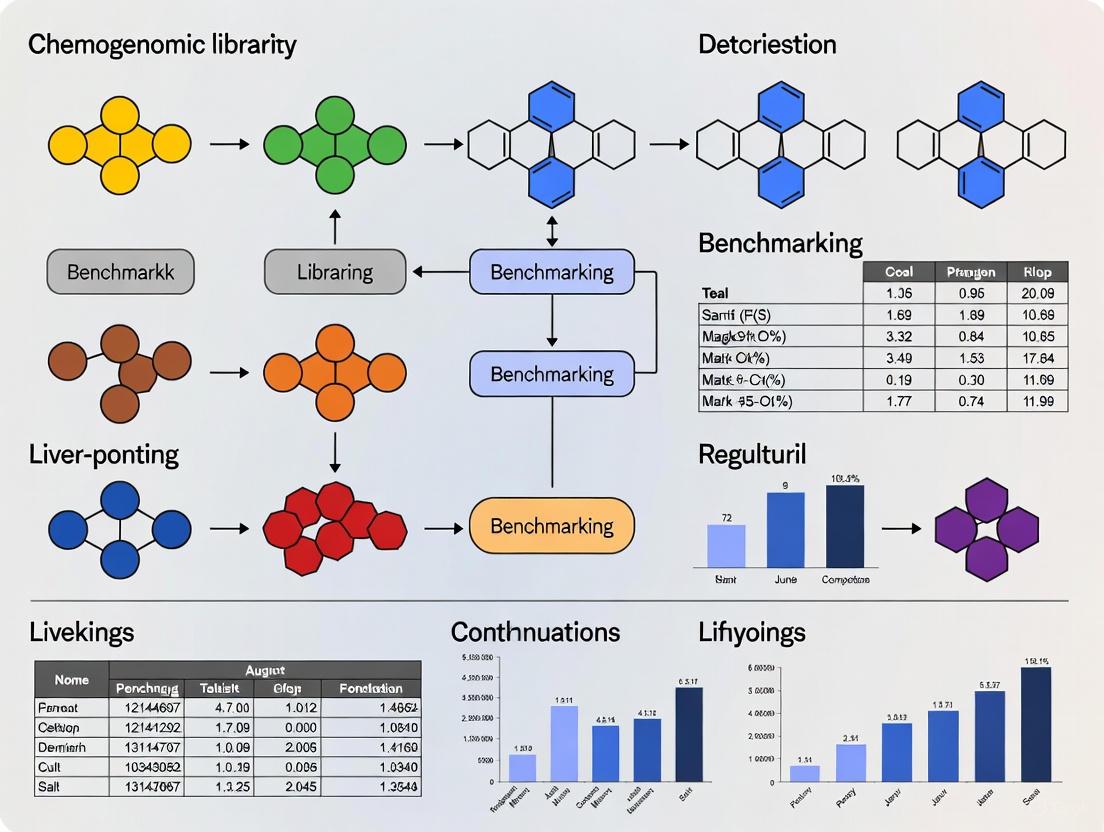
This article provides a comprehensive framework for researchers and drug development professionals to benchmark chemogenomic libraries against diverse bioactive compound sets.
Benchmarking Chemogenomic Libraries: Strategies for Navigating Billion-Scale Chemical Spaces in Drug Discovery
Abstract
This article provides a comprehensive framework for researchers and drug development professionals to benchmark chemogenomic libraries against diverse bioactive compound sets. As chemical spaces now exceed billions of make-on-demand molecules, effective benchmarking is crucial for identifying relevant chemistry, uncovering library blind spots, and optimizing virtual screening campaigns. We explore foundational concepts in chemical space mapping, methodological approaches using multiple search algorithms, strategies for troubleshooting coverage gaps, and comparative validation of commercial sources. By integrating the latest research and benchmark sets, this guide aims to enhance the efficiency and success of hit-finding and lead optimization in modern drug discovery.
Navigating the Expanding Universe of Chemical Space: From Compound Libraries to Make-on-Demand Billions
The field of chemical library design has undergone a seismic shift, moving from traditional enumerated libraries to the era of ultra-large combinatorial chemical spaces. Enumerated libraries are physical collections of compounds, explicitly listed and stored in databases. In contrast, modern combinatorial chemical spaces are virtual collections of billions to trillions of compounds defined by chemical reaction rules and available building blocks; compounds are synthesized on-demand only after computational screening identifies promising candidates [1]. This paradigm change addresses the critical limitation of physical screening collections, which represent only a tiny fraction of synthetically accessible chemical space due to storage and logistics constraints [2].
The drive toward ultra-large libraries is fueled by evidence that screening larger, more diverse compound collections significantly increases the probability of finding potent, novel hits [3]. This guide provides an objective comparison of these competing approaches, benchmarking their performance against standardized bioactive molecule sets to inform strategic decision-making for drug discovery researchers and organizations.
Experimental Benchmarking: Methodology and Protocols
Benchmark Compound Set Design
A rigorous 2025 benchmarking study established standardized sets to evaluate how well compound collections supply relevant chemistry for hit finding and analog expansion [3] [4]. Researchers mined the ChEMBL database for molecules with demonstrated biological activity, applying systematic filtering to create three benchmark sets of successive magnitudes:
- Set L (Large-sized): ≈379,000 potency-filtered "motif representatives" [4]
- Set M (Medium-sized): ≈25,000 compounds from Bemis-Murcko scaffold clustering [4]
- Set S (Small-sized): ≈3,000 compounds forming a PCA-balanced subset for broad, uniform coverage of physicochemical and topological space [3] [4]
Set S was specifically designed for diversity analysis, created by mapping chemical space, removing outliers, segmenting a 10×10 grid, and sampling up to 30 molecules per cell to ensure unbiased representation [4].
Search Methodologies and Performance Metrics
The study employed three complementary search methods to evaluate how effectively different compound sources retrieve relevant structures [4]:
- FTrees: Pharmacophore-based similarity searching, retrieving compounds with similar feature distributions rather than structural similarity.
- SpaceLight: Molecular fingerprint-based screening identifying close structural analogs based on Tanimoto similarity.
- SpaceMACS: Maximum common substructure approach balancing structural and pharmacophore similarity.
For each molecule in benchmark Set S, these methods retrieved the top 100 hits from various commercial sources. Performance was quantified using:
- Mean similarity to query structures
- Exact and near-exact match rates
- Scaffold uniqueness and diversity
- Coverage across chemical space map quadrants
- Computational efficiency (screening time per compound)
Comparative Analysis of Commercial Chemical Spaces and Libraries
Scale and Accessibility of Modern Compound Collections
The table below summarizes key specifications of major commercial compound sources, highlighting the dramatic scale differences between traditional enumerated libraries and modern combinatorial spaces:
| Source | Type | Compound Count | Synthetic Feasibility | Shipping Time |
|---|---|---|---|---|
| eXplore (eMolecules) | Combinatorial Space | 5.3 trillion | >85% | 3-4 weeks [5] |
| xREAL (Enamine) | Combinatorial Space | 4.4 trillion | >80% | 3-4 weeks [1] |
| Synple Space | Combinatorial Space | 1.0 trillion | Not specified | Several weeks [1] |
| Freedom Space 4.0 (Chemspace) | Combinatorial Space | 142 billion | >80% | 5-6 weeks [5] |
| REAL Space (Enamine) | Combinatorial Space | 83 billion | >80% | 3-4 weeks [1] [5] |
| GalaXi (WuXi) | Combinatorial Space | 25.8-28.6 billion | 60-80% | 4-8 weeks [1] [5] |
| Mcule | Enumerated Library | Multi-billion scale | 100% (in-stock) | Immediate [3] |
| Molport | Enumerated Library | Multi-billion scale | 100% (in-stock) | Immediate [4] |
Performance Benchmarking Results
The 2025 benchmark study revealed consistent performance advantages for combinatorial spaces across multiple metrics [3] [4]:
- Hit Quantity and Quality: Combinatorial spaces generally yielded more and closer analogs than enumerated libraries. The eXplore and REAL spaces consistently performed best, with Mcule being the strongest performer among enumerated libraries.
- Scaffold Diversity: Each search method identified distinct, often unique scaffolds across different sources, providing flexibility for project-specific library design.
- Method-Specific Performance: FTrees results were farthest from query compounds due to its pharmacophore-based approach, while SpaceLight and SpaceMACS delivered closer structural analogs due to their reliance on heavy atom connectivity.
- Computational Efficiency: Search algorithms performed more efficiently on combinatorial spaces versus enumerated libraries based on computation time per compound.
Experimental Workflow for Chemical Space Exploration
The following diagram illustrates the standardized experimental workflow for benchmarking compound collections, from initial dataset preparation through to performance evaluation:
Chemical Space Mapping and Coverage Analysis
The benchmark study mapped the coverage of different compound sources across chemical space, revealing both strengths and limitations:
The analysis revealed that all sources showed good coverage of classic "drug-like" structures but significant blind spots for more complex, hydrophilic compounds (e.g., nucleotides or those with charged groups) and natural-product-like compounds (e.g., sp3-rich carbon systems) [4]. Researchers attributed these gaps to lack of available building blocks, challenging synthetic reactions, or increased reactivity of problematic building blocks.
| Resource Category | Specific Tools/Sources | Function & Application |
|---|---|---|
| Combinatorial Spaces | eXplore, xREAL, REAL Space, Freedom Space, GalaXi | Ultra-large make-on-demand compound collections for initial hit discovery and scaffold hopping [1] [5] |
| Enumerated Libraries | Mcule, Molport, Life Chemicals, ChemDiv | Physical compound collections for immediate screening and validation [4] |
| Search Algorithms | FTrees, SpaceLight, SpaceMACS | Computational methods for navigating chemical spaces with different similarity approaches [4] |
| Benchmark Sets | ChEMBL-derived Sets S, M, L | Standardized bioactive molecule collections for objective performance comparison [3] [4] |
| Data Curation Tools | RDKit, Molecular Checker/Standardizer | Software for verifying chemical structure accuracy and bioactivity data quality [6] |
The benchmarking data clearly demonstrates that combinatorial chemical spaces generally provide superior performance compared to enumerated libraries for discovering novel chemical matter and close analogs [3] [4]. However, enumerated libraries maintain value for rapid access to physical compounds for initial validation.
For strategic compound sourcing, researchers should consider:
- Lead Discovery: Prioritize combinatorial spaces like eXplore and REAL Space for their superior diversity and ability to deliver novel scaffolds [4].
- Method Selection: Employ multiple search algorithms (FTrees, SpaceLight, SpaceMACS) to maximize scaffold diversity and identify complementary hit structures [4].
- Library Enhancement: Use combinatorial spaces to escape the availability bias of traditional screening collections and access intellectual property-free regions [1].
- Blind Spot Awareness: Acknowledge current limitations in complex, hydrophilic chemical space and plan complementary strategies for these target classes.
The modern chemical landscape offers unprecedented opportunities for hit discovery through trillion-sized combinatorial spaces, with rigorous benchmarking now enabling data-driven decisions for library design and compound sourcing strategies.
In modern drug discovery, the ability to objectively assess the quality and coverage of compound libraries is paramount. The continuous growth of commercially available compounds, which now reach billion- to trillion-sized combinatorial chemical spaces, has created an urgent need for standardized benchmark sets that enable unbiased comparison of different screening collections [7] [3]. These benchmark sets serve as crucial reference points for evaluating whether compound libraries contain chemically relevant structures with potential pharmaceutical value.
The ChEMBL database stands as a cornerstone resource for constructing these benchmarks, providing manually curated data on bioactive molecules with drug-like properties [8]. By systematically mining ChEMBL's vast repository of chemical and bioactivity data, researchers can create benchmark sets tailored for broad coverage of the physicochemical and topological landscape relevant to drug discovery [3]. This approach facilitates the translation of genomic information into effective new drug candidates by ensuring screening libraries are enriched with structures capable of meaningful biological interactions.
This article examines the critical role of benchmark sets derived from ChEMBL data, comparing the performance of various compound libraries and chemical spaces against these standardized references. We present experimental data and methodologies that enable researchers to make informed decisions about library selection for specific drug discovery applications.
The ChEMBL-Based Benchmark Sets
Construction and Composition
Neumann and colleagues have created a series of benchmark sets specifically designed for diversity analysis of compound libraries and combinatorial chemical spaces [7] [3]. These sets were constructed through systematic filtering and processing of molecules from the ChEMBL database displaying documented biological activity. The resulting benchmarks comprise three distinct sets of successive orders of magnitude:
- Set L (Large-sized): 379,000 molecules
- Set M (Medium-sized): 25,000 molecules
- Set S (Small-sized): 3,000 molecules
These benchmark sets are specifically tailored for broad coverage of both physicochemical properties and topological landscape, making them ideal for assessing how well different compound libraries cover pharmaceutically relevant chemistry space [3]. The hierarchical structure allows researchers to select the appropriate benchmark scale for their specific evaluation needs, from rapid screening to comprehensive analysis.
Comparison to Real-World Drug Discovery Data
The CARA (Compound Activity benchmark for Real-world Applications) benchmark provides complementary perspective by focusing on the practical challenges of compound activity prediction [9]. This benchmark addresses critical characteristics of real-world compound activity data, including:
- Multiple data sources from scientific literature and patents with different experimental protocols
- Existence of congeneric compounds with high pairwise similarities in lead optimization assays
- Biased protein exposure with uneven exploration of protein targets across existing studies
- Sparse, unbalanced data distributions that more accurately reflect experimental realities
The integration of these real-world data characteristics makes CARA particularly valuable for evaluating computational models intended for practical drug discovery applications where data limitations and biases are inevitable [9].
Experimental Methodologies for Benchmarking
Benchmarking Design Principles
Rigorous benchmarking requires careful experimental design to generate accurate, unbiased, and informative results. Essential guidelines for computational method benchmarking include [10]:
- Clearly defining purpose and scope - determining whether the benchmark serves to demonstrate merits of a new method, provide neutral comparison of existing methods, or function as a community challenge
- Comprehensive method selection - including all available methods for a specific analysis type or a representative subset with clearly defined inclusion criteria
- Appropriate dataset selection - incorporating varied datasets that represent different conditions, either simulated (with known ground truth) or real (from experimental sources)
- Consistent parameterization - applying equivalent tuning efforts across all methods to avoid disadvantaging certain approaches
- Multiple evaluation criteria - employing diverse performance metrics that reflect different aspects of method performance
Neutral benchmarking studies conducted independently of method development are particularly valuable for the research community, as they minimize perceived bias and provide more objective comparisons [10].
Search Methods for Chemical Space Analysis
In benchmarking chemical libraries, multiple computational approaches are typically employed to evaluate different aspects of chemical similarity and diversity. The benchmark study by Neumann et al. utilized three distinct search methods [3]:
- FTrees - based on pharmacophore features, focusing on three-dimensional molecular interaction capabilities
- SpaceLight - utilizing molecular fingerprints to assess structural similarity
- SpaceMACS - employing maximum common substructure analysis to identify shared molecular frameworks
The combination of these methods provides a comprehensive assessment of how well different compound libraries and chemical spaces can provide compounds similar to pharmaceutically relevant benchmark molecules across multiple similarity definitions.
Experimental Workflow for Library Evaluation
The following diagram illustrates the complete experimental workflow for benchmarking compound libraries against ChEMBL-derived benchmark sets:
Comparative Performance of Compound Libraries and Chemical Spaces
Performance Against Benchmark Sets
Evaluation of commercial compound libraries and combinatorial chemical spaces against the ChEMBL-derived benchmark sets reveals important performance differences. According to Neumann et al., each chemical space was able to provide a larger number of compounds more similar to the respective query molecule than the enumerated libraries, while also individually offering unique scaffolds for each search method [3].
Among the evaluated options, the eXplore and REAL chemical spaces consistently performed best across the three utilized search methods (FTrees, SpaceLight, and SpaceMACS) [3]. This superior performance demonstrates the value of large, accessible chemical spaces that can be rapidly synthesized on-demand for drug discovery applications.
Representative Compound Libraries in Drug Discovery
Various types of compound libraries serve different roles in drug discovery campaigns. The table below summarizes key library types and their characteristics:
Table 1: Types of Compound Libraries in Drug Discovery
| Library Type | Size Range | Key Characteristics | Primary Applications | Examples |
|---|---|---|---|---|
| Diversity Libraries | 10,000-430,000 compounds [11] [12] | Selected for broad structural diversity and drug-like properties; often contain tens of thousands of unique Murcko scaffolds [11] | Hit identification for novel targets; broad screening | BioAscent Diversity Set (86,000 compounds) [11]; Purdue Institute collections (430,000 compounds) [12] |
| Focused/Targeted Libraries | 1,000-80,000 compounds [12] | Enriched for specific target classes (e.g., kinases, GPCRs, ion channels) | Screening against target families; mechanism of action studies | Kinase sets, GPCR sets, CNS-targeting compounds [12] |
| Fragment Libraries | 1,600-10,000 compounds [11] [12] | Low molecular weight compounds (<300 Da) with high solubility | Fragment-based screening; SPR-driven approaches | BioAscent Fragment Library (10,000 compounds) [11]; Various fragment libraries (7,200 total) [12] |
| Chemogenomic Libraries | 1,600-1,700 compounds [11] [13] | Selective, well-annotated pharmacologically active probes | Phenotypic screening; target deconvolution; mechanism of action studies | BioAscent Chemogenomic Library (1,600 probes) [11]; Chemical Probes.org recommended probes [13] |
| Ultra-large Virtual Libraries | Hundreds of millions to billions [14] | REAL (REadily AvailabLe) compounds that can be synthesized on-demand; enormous structural diversity | Structure-based virtual screening; lead discovery | SuFEx-based library (140 million compounds) [14]; REAL Space libraries |
Quantitative Performance Comparison
The application of benchmark sets enables direct quantitative comparison of different compound libraries and chemical spaces. The following table summarizes key evaluation metrics:
Table 2: Performance Metrics for Library Evaluation Using Benchmark Sets
| Evaluation Metric | Calculation Method | Interpretation | Application in Studies |
|---|---|---|---|
| Scaffold Diversity | Number of unique Murcko scaffolds or frameworks | Higher values indicate greater structural diversity | BioAscent Diversity Set: 57k Murcko Scaffolds, 26.5k Frameworks [11] |
| Hit Identification Rate | Percentage of predicted compounds confirming activity in experiments | Measures practical utility for lead discovery | Ultra-large library screening: 55% hit rate for CB2 antagonists [14] |
| Benchmark Coverage | Ability to find similar compounds to benchmark molecules | Higher coverage indicates better pharmaceutical relevance | eXplore and REAL Space consistently provided most compounds similar to benchmarks [3] |
| Selectivity | Percentage of selective compounds against target families | Critical for chemical probes and target validation | SGC Chemical Probes: >30-fold selectivity over proteins in same family [13] |
Research Reagent Solutions Toolkit
Successful benchmarking and compound library evaluation requires specific research tools and resources. The following table outlines essential solutions for researchers in this field:
Table 3: Essential Research Reagent Solutions for Compound Library Benchmarking
| Resource Category | Specific Examples | Key Function | Access Information |
|---|---|---|---|
| Bioactivity Databases | ChEMBL [8], BindingDB [9], PubChem [9] | Source of bioactive molecules for benchmark construction; reference data for validation | Publicly accessible databases |
| Commercial Compound Libraries | BioAscent Libraries [11], Purdue Institute collections [12] | Provide physically available compounds for experimental screening | Available through commercial providers or core facilities |
| Chemical Probe Resources | Chemical Probes.org [13], SGC Probes [13], opnMe portal [13] | Source of high-quality, selective compounds for target validation and mechanism studies | Various accessibility (open source to commercial) |
| Specialized Compound Sets | PAINS Set [11], LOPAC1280 [12], NIH Molecular Libraries Program [13] | Provide specialized compounds for assay validation, interference testing, and control experiments | Available through commercial and academic sources |
| Ultra-large Chemical Spaces | eXplore, REAL Space [3] [14] | Source of synthetically accessible compounds for virtual screening | Available through commercial providers |
Discussion and Practical Implications
Interpreting Benchmarking Results
The benchmarking approaches discussed provide critical insights for drug discovery researchers. The consistent superior performance of large combinatorial chemical spaces like eXplore and REAL Space compared to enumerated libraries suggests a paradigm shift in early-stage hit identification [3]. These spaces offer both greater numbers of similar compounds to pharmaceutically relevant benchmarks and unique scaffolds, potentially increasing the chances of finding innovative starting points for medicinal chemistry optimization.
The real-world considerations highlighted by the CARA benchmark emphasize the importance of evaluating compound activity prediction methods under conditions that reflect practical drug discovery constraints [9]. The distinction between virtual screening (VS) and lead optimization (LO) assays is particularly important, as these represent fundamentally different compound distribution patterns and require different computational approaches for optimal performance.
Limitations and Future Directions
Current benchmarking approaches face several limitations that represent opportunities for future development:
- Representation gaps in benchmark sets may not fully capture emerging target classes or therapeutic modalities
- Computational burden of evaluating ultra-large chemical spaces against comprehensive benchmarks remains significant
- Integration of multi-parameter optimization beyond simple activity measures, including ADMET properties
- Standardization of evaluation metrics across studies to enable direct comparison of results
Future work should focus on developing more comprehensive benchmark sets that incorporate additional dimensions of drug-likeness, including pharmacokinetic and toxicity profiles, while maintaining practical computational requirements.
Benchmark sets derived from ChEMBL provide critical tools for objective evaluation of compound libraries and chemical spaces in drug discovery. The rigorous construction of these benchmarks, through systematic filtering of pharmaceutically relevant structures, enables unbiased comparison of different screening approaches. Experimental results demonstrate that large combinatorial chemical spaces consistently outperform traditional enumerated libraries in their ability to provide compounds similar to bioactive benchmarks while offering unique scaffold diversity.
The availability of standardized benchmark sets, coupled with clearly defined experimental methodologies for library evaluation, empowers researchers to make informed decisions about resource allocation for drug discovery campaigns. As chemical spaces continue to grow in size and complexity, these benchmarks will play an increasingly important role in ensuring that screening efforts remain focused on chemically tractable, biologically relevant regions of chemical space. Through continued refinement of benchmark sets and evaluation methodologies, the drug discovery community can accelerate the identification of high-quality starting points for the development of new therapeutics.
The systematic assessment of chemical diversity is a cornerstone of modern drug discovery. Effectively benchmarking chemogenomic libraries against diverse compound sets requires a robust framework built on specific, quantifiable metrics. These metrics allow researchers to move beyond subjective comparisons and objectively evaluate factors such as a library's coverage of chemical space, its structural novelty, and its potential to provide hits against novel biological targets. This guide provides a comparative analysis of the key experimental protocols and metrics used to dissect chemical diversity through the lenses of physicochemical properties, scaffold distribution, and topological landscapes, providing a standardized approach for library evaluation.
Core Metrics and Experimental Protocols
Analysis of Physicochemical Properties
The physicochemical profile of a compound library determines its drug-likeness and influences its pharmacokinetic and pharmacodynamic behavior. Standard analysis involves calculating a set of fundamental molecular descriptors.
Experimental Protocol:
- Step 1 - Descriptor Calculation: For each compound in the library, compute key physicochemical properties. These typically include Molecular Weight (MW), Octanol-Water Partition Coefficient (logP), Number of Hydrogen Bond Donors (HBD), Number of Hydrogen Bond Acceptors (HBA), Topological Polar Surface Area (TPSA), and the number of rotatable bonds [15] [9].
- Step 2 - Data Aggregation: Calculate the mean, median, and range for each property across the entire library.
- Step 3 - Space Mapping: Properties are often projected into a reduced-dimensional space using Principal Component Analysis (PCA) to visualize the library's coverage of the physicochemical landscape [4]. For a focused benchmark set, the space is segmented (e.g., a 10x10 grid), and molecules are sampled from each cell to ensure uniform coverage [7] [4].
- Step 4 - Comparison: Compare the property distributions and spatial coverage of the test library against a reference benchmark set.
Table 1: Key Physicochemical Properties for Diversity Analysis
| Property | Description | Role in Diversity Analysis | Typical Drug-Like Range |
|---|---|---|---|
| Molecular Weight (MW) | Mass of the molecule. | Influences permeability and absorption; higher MW can complicate drug delivery. | ≤ 500 g/mol |
| logP | Logarithm of the octanol-water partition coefficient. | Measures lipophilicity, critical for membrane permeability and solubility. | ≤ 5 |
| Hydrogen Bond Donors (HBD) | Number of OH and NH groups. | Impacts solubility and binding to biological targets. | ≤ 5 |
| Hydrogen Bond Acceptors (HBA) | Number of O and N atoms. | Affects solubility and molecular interactions. | ≤ 10 |
| Topological Polar Surface Area (TPSA) | Surface area over polar atoms. | Strong predictor of cell permeability and bioavailability. | ≤ 140 Ų |
Assessment of Scaffold Distribution
Scaffold analysis evaluates the diversity of core structures in a library, indicating the breadth of distinct chemotypes and the presence of singletons, which are unique scaffolds represented by only a single molecule [7] [15].
Experimental Protocol:
- Step 1 - Scaffold Extraction: Apply a standardized algorithm (e.g., the Bemis-Murcko method) to remove side chains and generate the molecular scaffold for each compound [4].
- Step 2 - Frequency Analysis: Count the number of unique scaffolds and the number of compounds associated with each scaffold.
- Step 3 - Diversity Quantification: Employ several metrics:
- Scaffold Count: The total number of unique scaffolds.
- Singletons Ratio: The fraction of scaffolds that are represented by only one compound. A high ratio indicates high scaffold diversity [7] [15].
- Scaffold Recovery Curves: Plot the cumulative fraction of compounds recovered against the cumulative fraction of scaffolds analyzed. The Area Under the Curve (AUC) is a key metric, with a lower AUC indicating higher diversity (a few scaffolds account for many compounds) [15].
- Shannon Entropy (SE): Measures the uniformity of compound distribution across scaffolds. Higher SE indicates a more even distribution [15].
Table 2: Key Metrics for Scaffold Distribution Analysis
| Metric | Description | Interpretation |
|---|---|---|
| Scaffold Count | Total number of unique molecular frameworks. | Higher count indicates greater structural variety. |
| Singletons Ratio | Proportion of scaffolds appearing only once. | High ratio suggests a high degree of novelty and diversity. |
| F50 | Fraction of scaffolds needed to cover 50% of the library. | Lower F50 value indicates higher scaffold diversity. |
| Shannon Entropy (SE) | Measures the evenness of compound distribution across scaffolds. | Higher SE indicates a more balanced distribution. |
| Scaled Shannon Entropy (SSE) | SE normalized to the number of scaffolds. | Allows for comparison between libraries of different sizes. |
Exploration of Topological Landscapes
This approach uses molecular fingerprints to capture the overall topological structure of molecules, providing a high-dimensional representation of chemical space.
Experimental Protocol:
- Step 1 - Fingerprint Generation: Encode each molecule into a binary bit string using structural fingerprint algorithms. Common choices include ECFP4 (Extended Connectivity Fingerprints) and MACCS keys [15].
- Step 2 - Similarity Calculation: Compute the pairwise Tanimoto similarity between all fingerprints in the library. A Tanimoto coefficient ranges from 0 (no similarity) to 1 (identical structures).
- Step 3 - Diversity Assessment: The mean pairwise similarity of the library is calculated. A lower mean similarity indicates a more diverse collection [15].
- Step 4 - Search and Recovery: In benchmark studies, molecules from a reference set (e.g., Bioactive Set S) are used as queries. The capability of a chemical library or a make-on-demand "Chemical Space" to provide close analogs is evaluated using search tools like SpaceLight (fingerprint-based) and FTrees (pharmacophore-based) [7] [4]. Performance is measured by the similarity of the retrieved hits and the uniqueness of the scaffolds they represent.
Integrated Workflow for Comprehensive Diversity Analysis
A robust assessment requires the integration of all three metric categories. The following workflow outlines this process, from data preparation to multi-faceted analysis and final interpretation.
Diagram Title: Chemical Diversity Analysis Workflow
Successful diversity analysis relies on specific computational tools and compound resources.
Table 3: Essential Research Reagents and Resources
| Category | Item / Software | Function in Diversity Analysis |
|---|---|---|
| Reference Compounds | ChEMBL Database | A public repository of bioactive molecules used to create benchmark sets (e.g., Sets L, M, S) for unbiased comparison [7] [9]. |
| Software & Algorithms | RDKit / KNIME | Open-source cheminformatics toolkits for calculating molecular descriptors, generating fingerprints, and processing chemical data [16]. |
| Software & Algorithms | FTrees, SpaceLight, SpaceMACS | Specialized search methods for identifying similar compounds in large databases using pharmacophores, fingerprints, and maximum common substructures, respectively [7] [4]. |
| Chemical Spaces & Libraries | eXplore, REAL Space, Mcule | Examples of commercial combinatorial "Chemical Spaces" (on-demand) and enumerated libraries used to assess the ability to source relevant chemistry [7] [4]. |
| Analysis Frameworks | Consensus Diversity Plots (CDPs) | A method to visualize the "global diversity" of a library by simultaneously plotting its scaffold diversity against its fingerprint diversity [15]. |
Comparative Performance in Benchmarking Studies
Applying these metrics reveals significant differences between compound sources. A 2025 benchmark study using the bioactive Set S showed that large, make-on-demand combinatorial Chemical Spaces (eXplore, REAL Space) consistently provided a higher number of compounds similar to query molecules and offered more unique scaffolds than traditional enumerated libraries [7] [4]. However, a significant blind spot for more complex, hydrophilic, and natural-product-like compounds was identified across all commercial sources [4]. Furthermore, search methods impact results; FTrees (pharmacophore-based) retrieved more distant analogs, while SpaceLight and SpaceMACS (structure-based) found closer matches [4]. This underscores the need for a multi-method, multi-metric approach for a complete picture of a library's diversity and utility in drug discovery.
Public chemical and biological databases constitute a foundational resource for modern drug discovery and chemogenomics research. These repositories provide the critical compound and bioactivity data necessary to benchmark novel chemogenomic libraries, understand structure-activity relationships, and prioritize compounds for experimental testing. Among the most widely used resources are PubChem, DrugBank, ZINC, and ChEMBL, which collectively offer complementary data types ranging from commercial compound availability to detailed pharmacological profiles. This guide provides an objective comparison of these four key databases, detailing their respective scopes, data characteristics, and appropriate applications within a benchmarking framework. By understanding the distinct strengths and specializations of each resource, researchers can make informed decisions when selecting baseline comparators for evaluating novel compound sets [17] [18].
Each database serves a unique primary function within the research ecosystem, which directly influences its content composition and curation approach.
PubChem functions as a comprehensive public repository, aggregating chemical structures and biological screening data from hundreds of sources worldwide. It operates on a submitter-based model where data contributions from organizations and researchers are merged into unique compound identifiers, creating an extensive resource for chemical structure lookup and bioactivity exploration [19] [20].
ChEMBL is a manually curated knowledgebase of bioactive molecules with drug-like properties. Its core strength lies in its expert curation of quantitative bioactivity data (e.g., IC₅₀, Ki) extracted directly from published medicinal chemistry and pharmacology literature, making it invaluable for structure-activity relationship (SAR) analysis [17] [18].
ZINC specializes in providing commercially available compounds in ready-to-dock formats for virtual screening. It focuses on curating purchasable chemical space and preparing molecules in biologically relevant protonation and tautomeric states, streamlining the early drug discovery pipeline from computational prediction to experimental testing [17] [21].
DrugBank offers detailed information on approved and investigational drugs, along with their target pathways, mechanisms, and pharmacokinetic properties. This makes it an essential resource for drug development, pharmacovigilance, and repurposing studies [17].
Table 1: Core Characteristics and Primary Applications
| Database | Primary Content Focus | Data Curation Method | Key Applications in Research |
|---|---|---|---|
| PubChem | Chemical structures & bioassay data [20] | Hybrid (automated integration with manual oversight) [17] | High-throughput screening, toxicity prediction, chemical structure lookup [17] |
| ChEMBL | Bioactive molecules & drug-target interactions [17] | Manual (expert-curated from literature/patents) [17] [18] | Drug discovery, target identification, SAR analysis, polypharmacology studies [17] |
| ZINC | Commercially available compounds [17] | Automated (vendor catalogs with standardized formats) [17] | Virtual screening, hit identification, lead optimization [17] [21] |
| DrugBank | Approved/experimental drugs & pharmacokinetics [17] | Hybrid (manually validated + automated updates) [17] | Drug development, ADMET prediction, pharmacovigilance [17] |
Quantitative Comparison of Database Contents
Significant differences exist in the scale and type of data contained within each database, which should guide their selection for specific benchmarking scenarios.
Content Volume and Specialization
As of 2025, PubChem stands as the largest free chemical repository with over 119 million compounds, reflecting its role as a comprehensive aggregator [17]. ChEMBL, while smaller in compound count, distinguishes itself with over 20 million quantitative bioactivity measurements, providing deep SAR context [17]. ZINC contains a massive collection of over 54 billion molecules, among which over 5 billion are provided as 3D structures for virtual screening, emphasizing its focus on purchasable chemical space [17]. DrugBank is the most specialized, containing approximately 17,000 drug entries linked to 5,000 protein targets, offering depth over breadth for pharmaceutical compounds [17].
Table 2: Quantitative Content Comparison for Benchmarking
| Database | Compound Count | Bioactivity Records | Target Coverage | Key Quantitative Metrics |
|---|---|---|---|---|
| PubChem | 119 Million+ compounds [17] | Extensive bioassay results [17] | Broad, via bioassays [17] | 33k+ citations (for PDB); 1.7k+ citations (for PubChem) [17] |
| ChEMBL | 2.4 Million+ bioactive compounds [17] | 20.3 Million+ bioactivity measurements [17] | Extensive drug targets with quantitative data [17] | 4.5k+ citations; Focus on IC₅₀, Ki values [17] |
| ZINC | 54 Billion+ compounds (commercially available) [17] | Limited bioactivity annotations | N/A (focus on purchasability) | 5k+ citations; 5.9 billion ready-to-dock 3D structures [17] |
| DrugBank | 17,000+ drugs (approved/experimental) [17] | Pharmacokinetic and target data | 5,000+ protein targets [17] | 3.4k+ citations; Detailed drug-target pathways [17] |
Data Provenance and Curation Quality
The curation approach significantly impacts data reliability and appropriate use cases. ChEMBL and DrugBank employ substantial manual curation, with ChEMBL specifically involving expert extraction of bioactivity data from literature, resulting in highly reliable quantitative data for SAR modeling [17] [18]. PubChem utilizes a hybrid approach, with automated data integration from hundreds of contributors but with manual oversight, creating a comprehensive but potentially less standardized resource [17] [19]. ZINC relies primarily on automated processing of vendor catalogs with structural standardization, optimizing for throughput and docking readiness rather than bioactivity annotation [17] [21].
Database Data Provenance and Research Applications
Experimental Methodologies for Database Comparison
Researchers can employ several methodological approaches to objectively compare database contents and performance for benchmarking studies.
Structural Feature Interrelation Analysis Using PMI
Pointwise Mutual Information (PMI) provides a quantitative method to profile and compare chemical databases based on the co-occurrence patterns of structural features [22]. This approach, adapted from information theory, measures the strength of association between molecular fragments within a compound set.
Experimental Protocol:
- Fingerprint Generation: Encode all compounds in each database using structural fingerprints (e.g., MACCS keys, PubChem fingerprints, ECFP4/6).
- Co-occurrence Matrix Construction: For each database, compute a Co-occurrence Relation Matrix (CORM) by counting fragment pair occurrences across all molecules.
- Probability Calculation: Convert CORM to a Co-occurrence Probability Relation Matrix (COPRM) by normalizing counts by the total number of compounds.
- PMI Computation: Calculate pairwise PMI values using the formula: PMI = log₂[p(x,y)/(p(x)p(y))], where p(x,y) is the co-occurrence probability of fragments x and y, and p(x), p(y) are their individual occurrence probabilities.
- Comparative Profiling: Construct PMI Relation Matrices (PMIRM) for each database and compare distributions to identify database-specific structural feature associations [22].
This method has demonstrated effectiveness in distinguishing database-specific chemical landscapes, with studies revealing unusual properties of DrugBank compounds compared to broader screening collections, validating the approach's sensitivity to pharmacological content [22].
Coverage Analysis and Identifier Mapping
Comparative content analysis examines the overlap and unique elements across databases, essential for understanding complementarity in benchmarking studies.
Experimental Protocol:
- Identifier Extraction: Collect canonical compound identifiers (e.g., InChIKeys, SMILES) for a target set of compounds or across all entries in each database.
- Cross-Reference Mapping: Use exact structure matching or identifier resolution services to establish equivalence between database entries.
- Overlap Calculation: Compute pairwise and multi-database overlaps using set operations, identifying compounds unique to each resource and those shared across multiple databases.
- Content Specialization Analysis: Characterize the chemical and biological properties of unique versus shared compounds to understand database specialization.
Studies applying this methodology have revealed significant differences between major chemistry databases, with PubChem, ChemSpider, and UniChem showing substantial discordance in structure counts even for nominally the same sources, primarily due to differences in loading dates and structural standardization protocols [19].
Database Comparison Methodological Workflow
Successful benchmarking studies require both computational tools and chemical resources to validate findings.
Table 3: Essential Research Reagents and Resources
| Resource Category | Specific Examples | Function in Benchmarking Studies |
|---|---|---|
| Chemical Libraries | EUbOPEN Chemogenomic Library [23], BioAscent Compound Libraries [24] | Provide well-annotated, target-focused compound sets for experimental validation of database mining results |
| Fragment Libraries | Maybridge Ro3 Diversity Fragment Library [25] | Enable fragment-based screening approaches and assessment of chemical starting point quality |
| Known Bioactives | LOPAC1280, NIH Clinical Collection, Microsource Spectrum [25] | Serve as positive controls and validation standards in assay development and benchmarking |
| Computational Tools | Pointwise Mutual Information (PMI) algorithms [22], Chemical fingerprinting tools | Enable quantitative comparison of database contents and chemical space characteristics |
| Curation Resources | External peer review committees [23], Community annotation platforms | Provide quality assessment and validation of chemical probe compounds and annotations |
Application in Benchmarking Chemogenomic Libraries
Within the context of benchmarking novel chemogenomic libraries against diverse compound sets, each database offers distinct value.
ChEMBL serves as the benchmark for bioactivity data quality, providing reference standards for potency and selectivity measurements. Its manually curated data enables reliable comparison of activity profiles across target families [17] [23].
ZINC provides the reference standard for purchasable chemical space, offering a baseline for assessing the commercial accessibility and structural readiness (e.g., 3D conformers) of novel library compounds [17] [21].
PubChem offers the most comprehensive coverage of assayed compounds, enabling benchmarking of screening hit rates and promiscuity patterns across a diverse assay landscape [17] [20].
DrugBank establishes the gold standard for approved drug properties, providing reference pharmacokinetic and safety profiles for assessing the drug-likeness of new chemical entities [17].
The EUbOPEN initiative exemplifies this integrated approach, utilizing public bioactivity data from sources like ChEMBL to assemble chemogenomic libraries covering one-third of the druggable proteome, then benchmarking their performance in patient-derived disease assays [23]. This demonstrates how strategic use of public databases accelerates the development of well-characterized chemical tools for target validation and drug discovery.
The concept of chemical space provides a fundamental framework for organizing and navigating the vast universe of possible molecules. In chemoinformatics, chemical space is defined as a multi-dimensional descriptor space where each point represents a chemical structure, enabling quantitative analysis of molecular relationships and properties [26]. For researchers in drug discovery and development, visualizing this high-dimensional space is crucial for tasks ranging from compound library design and diversity analysis to exploring complex structure-activity relationships [27]. Chemical space mapping has become increasingly important in the era of large-scale chemical databases, with public resources like ChEMBL, BindingDB, and PubChem containing millions of experimentally characterized compounds [9] [28].
The core challenge in chemical space visualization lies in transforming high-dimensional molecular representations into human-interpretable two or three-dimensional maps while preserving meaningful relationships [29]. This process, known as dimensionality reduction, allows scientists to identify patterns, clusters, and diversity hotspots that might not be apparent in the original high-dimensional space. Among the various techniques available, Principal Component Analysis (PCA) stands as one of the most widely used methods, though it is joined by several other powerful algorithms including t-Distributed Stochastic Neighbor Embedding (t-SNE), Uniform Manifold Approximation and Projection (UMAP), and Generative Topographic Mapping (GTM) [29] [30].
This guide provides a comprehensive comparison of chemical space mapping techniques, with particular emphasis on PCA visualization and the identification of molecular diversity hotspots. Through objective performance evaluation and experimental data, we aim to equip researchers with the knowledge needed to select appropriate mapping strategies for benchmarking chemogenomic libraries against diverse compound sets—a critical task in modern drug discovery pipelines.
Fundamental Techniques in Chemical Space Mapping
Molecular Representation and Descriptors
Before any visualization can be performed, molecules must be translated into numerical representations that capture their structural and physicochemical characteristics. The choice of molecular representation significantly influences the resulting chemical space map and the insights that can be derived from it [26]. Common descriptor types include:
- Extended Connectivity Fingerprints (ECFP): Circular fingerprints that capture topological structure by representing each atom and its circular neighborhood up to a specified diameter. ECFP6 is a specific implementation that identifies functional groups in each molecule and is well-suited for large molecular datasets [28].
- MACCS Keys: A set of 166 structural fragments encoded as binary bits (present or absent) in a molecule [29].
- Whole-Molecule Descriptors: Physicochemical properties such as molecular weight (MW), hydrogen bond donors (HBD), hydrogen bond acceptors (HBA), topological polar surface area (TPSA), number of rotatable bonds (RB), and partition coefficient (LogP) [26].
- ChemDist Embeddings: Continuous vector representations obtained from graph neural networks trained using deep metric learning, where Euclidean distances between embeddings simulate chemical similarity [29].
The concept of the "chemical multiverse" acknowledges that multiple valid chemical spaces can exist for the same set of molecules, each defined by a different set of descriptors [26]. This highlights the importance of selecting representations aligned with specific research questions, whether focused on structural similarity, property distributions, or bioactivity relationships.
Dimensionality Reduction Algorithms
Dimensionality reduction techniques transform high-dimensional descriptor data into lower-dimensional representations suitable for visualization. These algorithms can be broadly categorized into linear and non-linear approaches:
- Principal Component Analysis (PCA): A linear technique that identifies orthogonal axes (principal components) that capture maximum variance in the data. PCA is computationally efficient and deterministic but may struggle with complex non-linear relationships [31] [32].
- t-Distributed Stochastic Neighbor Embedding (t-SNE): A non-linear method that preserves local neighborhood structure by minimizing the divergence between probability distributions in high and low dimensions. t-SNE excels at revealing cluster patterns but can be computationally demanding for very large datasets [31].
- Uniform Manifold Approximation and Projection (UMAP): A relatively recent non-linear technique that assumes data is uniformly distributed on a Riemannian manifold. UMAP typically preserves more global structure than t-SNE while maintaining computational efficiency [29].
- Generative Topographic Mapping (GTM): A probabilistic alternative to self-organizing maps that fits a manifold to the data and provides an inverse transformation from low to high dimensions [29].
Each algorithm employs different mathematical principles to balance the preservation of local versus global structure, with significant implications for chemical space interpretation and analysis.
Comparative Analysis of Mapping Techniques
Performance Metrics and Benchmarking Approaches
Evaluating the effectiveness of chemical space mapping techniques requires careful consideration of performance metrics that quantify how well the low-dimensional representation preserves relationships from the original high-dimensional space. Key metrics include:
- Neighborhood Preservation: Measures the extent to which nearest neighbors in the original space remain neighbors in the reduced space. Common implementations include PNNk (percentage of preserved nearest neighbors) and QNNk (co-k-nearest neighbor size) [29].
- Trustworthiness and Continuity: Assess the preservation of local and global structure by quantifying the extent to which neighbors in the low-dimensional space were also neighbors in the original space, and vice versa [29].
- Area Under the QNN Curve (AUC): Provides a global assessment of neighborhood preservation across different neighborhood sizes [29].
- Local Continuity Meta Criterion (LCMC): Combines local and global preservation metrics into a single score [29].
These metrics enable quantitative comparison of mapping techniques, complementing qualitative assessment of visualization utility for specific research tasks.
Technique Comparison and Experimental Data
Table 1: Comparative Performance of Dimensionality Reduction Techniques Based on Neighborhood Preservation Metrics
| Technique | Neighborhood Preservation (Average) | Local Structure Preservation | Global Structure Preservation | Computational Efficiency | Best Use Cases |
|---|---|---|---|---|---|
| PCA | Moderate | Moderate | Strong | High | Initial exploration, linear datasets |
| t-SNE | Strong | Strong | Moderate | Low to Moderate | Cluster identification, pattern recognition |
| UMAP | Strong | Strong | Moderate to Strong | Moderate | Large datasets, balance of local/global structure |
| GTM | Moderate to Strong | Strong | Moderate | Moderate | Probabilistic interpretation, property landscapes |
| ChemTreeMap | Strong for hierarchical data | Strong within branches | Represents diversity through branch lengths | Moderate | Structural relationships, diverse datasets |
Recent benchmarking studies have provided quantitative comparisons of these techniques using standardized datasets and evaluation metrics. One comprehensive evaluation utilized subsamples from the ChEMBL database focusing on compounds tested against specific biological targets, with various molecular representations including Morgan fingerprints, MACCS keys, and ChemDist embeddings [29]. The study employed a grid-based search to optimize hyperparameters for each method using neighborhood preservation as the objective function.
The results demonstrated that non-linear methods generally outperform PCA in neighborhood preservation metrics. Specifically, UMAP and t-SNE showed superior performance in maintaining local neighborhoods while preserving reasonable global structure. However, PCA remains valuable for initial exploratory analysis due to its computational efficiency and interpretability [29]. The performance differences between techniques were consistent across different molecular representations, though the absolute values of preservation metrics varied with descriptor choice.
Table 2: Variance Explanation Capability of PCA Versus Alternative Techniques
| Technique | Dataset | Variance Explained (First 2 Components) | Variance Explained (First 50 Components) | Notes |
|---|---|---|---|---|
| PCA | DUD-E MK01 dataset | 5% | ~40% | Limited representation in 2D [31] |
| t-SNE | DUD-E MK01 dataset | N/A (non-linear) | N/A (non-linear) | Revealed active compound clusters not visible in PCA [31] |
| UMAP | ChEMBL subsets | N/A (non-linear) | N/A (non-linear) | Strong neighborhood preservation with optimized parameters [29] |
| GTM | ChEMBL subsets | N/A (non-linear) | N/A (non-linear) | Supports highly NB-compliant property landscapes [29] |
A critical finding from comparative studies is that the first two principal components in PCA often capture only a small fraction (e.g., 5%) of the total variance in the data [31]. This limitation underscores the importance of considering multiple dimensions or alternative techniques when analyzing complex chemical datasets. Nevertheless, PCA remains widely used in chemical space visualization, particularly for initial data exploration and when interpretability of components is valuable.
PCA Visualization: Methodology and Workflow
Experimental Protocol for PCA-based Chemical Space Mapping
Implementing PCA for chemical space visualization involves a systematic process from data preparation to interpretation:
Data Collection and Standardization: Compile molecular dataset and standardize structures using tools like RDKit or MolVS. This includes neutralizing charges, generating canonical tautomers, and removing duplicates or compounds with undesirable elements [26].
Descriptor Calculation: Compute molecular descriptors or fingerprints. For PCA, whole-molecule descriptors (HBD, HBA, TPSA, RB, MW, LogP) or dimensionality-reduced fingerprints are commonly used [26] [32]. Mordred is a comprehensive descriptor calculation tool that can compute over 1,800 molecular descriptors [32].
Data Preprocessing: Address missing values, remove zero-variance features, and standardize remaining features (mean-centered and scaled to unit variance) before applying PCA [29].
PCA Implementation:
Visualization and Interpretation: Plot the first two principal components (PC1 vs. PC2), optionally coloring points by molecular properties, bioactivity, or compound origins. Hover functionality can be implemented to display associated structures when exploring the plot [32].
Advanced PCA Applications and Limitations
While basic PCA provides valuable insights, researchers have developed advanced implementations to address specific challenges in chemical space analysis:
Chemical Satellite Approaches (ChemMaps): Utilizes reference compounds ("satellites") to project large libraries into a consistent chemical space. Sampling strategies include medoid sampling (center-to-outside), medoid-periphery sampling (alternating center and outlier selection), uniform sampling, and periphery sampling (outside-to-center) [27].
Extended Similarity Indices: Enables efficient comparison of multiple molecules simultaneously with O(N) scaling instead of traditional O(N²), facilitating the identification of high-density and low-density regions in chemical space [27].
Complementary Similarity Analysis: Calculates the effect of removing individual molecules from a library to identify compounds in high-density (central) versus low-density (peripheral) regions, informing satellite selection strategies [27].
Despite these advancements, PCA maintains inherent limitations. The technique assumes linear relationships between variables and may fail to capture complex non-linear patterns in molecular data [31]. Additionally, as noted previously, the first two components often explain only a small fraction of total variance, potentially misleading interpretation if considered in isolation. Researchers should always report the cumulative variance explained by visualized components and consider complementary non-linear techniques when analyzing complex chemical relationships.
Diversity Hotspot Identification
Methodologies for Detecting Chemical Diversity Hotspots
Chemical diversity hotspots represent regions of structural novelty or high variability within chemical space, often prioritized in drug discovery for identifying novel scaffolds or expanding structure-activity relationships. Multiple computational approaches facilitate hotspot detection:
Tree-Based Methods (ChemTreeMap): Synergistically combines extended connectivity fingerprints with a neighbor-joining algorithm to produce hierarchical trees with branch lengths proportional to molecular similarity. Longer distances between chemical families highlight more diverse regions of chemical space, enabling intuitive identification of diversity hotspots [28].
Clustering-Based Approaches: For very large datasets (e.g., ChEMBL, BindingDB), molecules are initially clustered by similarity (e.g., using MiniBatchKMeans) to reduce computational complexity. The number of molecules in each cluster can be represented by leaf size in subsequent visualizations, highlighting regions of high density versus sparse, diverse regions [28].
Dimensionality Reduction with Density Analysis: Applying density-based algorithms (e.g., DBSCAN) to low-dimensional projections from PCA, t-SNE, or UMAP to identify sparse regions representing structural outliers or diversity hotspots.
Cartographic Chemical Visualization: Mapping chemical diversity onto geographic representations using collection site information, revealing geographical areas with high chemical diversity. This approach has been applied to marine cyanobacterial and algal collections, identifying regions with distinctive metabolomes [33].
The effectiveness of these methods depends on the research context. For example, in analysis of food chemicals from FooDB, t-SNE effectively separated compounds from different flavor categories (earthy, herbaceous, green, fruity, floral, fatty, spicy, medicinal), revealing both shared chemical features and diversity hotspots between categories [26].
Workflow for Diversity Hotspot Analysis
Systematic identification of diversity hotspots involves:
Chemical Space Mapping: Generate 2D or 3D chemical space projection using PCA or alternative dimensionality reduction technique.
Density Calculation: Compute point density across the chemical space map using kernel density estimation or similar approaches.
Cluster Analysis: Apply clustering algorithms to identify grouped compounds and isolate outliers.
Diversity Metrics Calculation: Quantify diversity using metrics like within-cluster similarity, between-cluster distances, or scaffold complexity.
Hotspot Identification: Flag low-density regions and structural outliers as diversity hotspots.
Structural Validation: Analyze identified hotspots for novel scaffolds or underrepresented structural motifs.
Discovery Applications: Prioritize hotspots for compound acquisition or synthesis in library expansion efforts.
This workflow successfully identified previously unexplored regions in marine natural product collections, leading to the discovery of new chemical entities like yuvalamide A from marine cyanobacteria [33]. The approach demonstrates how chemical space mapping can directly guide discovery efforts toward structurally novel compounds.
Advanced Applications and Future Directions
Machine Learning-Enhanced Chemical Space Navigation
Recent advances in machine learning are revolutionizing chemical space navigation, particularly for ultra-large compound libraries. One promising approach combines machine learning classification with molecular docking to enable rapid virtual screening of billion-compound libraries [34]. The workflow involves:
Training a classification algorithm (e.g., CatBoost with Morgan fingerprints) to identify top-scoring compounds based on molecular docking of a subset (e.g., 1 million compounds).
Applying the conformal prediction framework to make selections from the multi-billion-scale library, reducing the number of compounds requiring explicit docking.
Experimental validation of predictions to identify novel ligands [34].
This approach reduced the computational cost of structure-based virtual screening by more than 1,000-fold while successfully identifying ligands for G protein-coupled receptors, demonstrating how machine learning can dramatically enhance efficiency in navigating vast chemical spaces [34].
Emerging Trends and Applications
Chemical space mapping continues to evolve with several emerging trends:
Multi-Target Chemical Space Analysis: Mapping compounds against multiple protein targets to identify selective compounds or multi-target ligands, as demonstrated in the discovery of compounds with activity against both A2A adenosine and D2 dopamine receptors [34].
Art-Driven Chemical Visualization: Leveraging visually appealing chemical space maps as artistic expressions while communicating chemical information. This approach can increase engagement with chemical data and facilitate science communication [26].
Real-World Benchmarking (CARA): The Compound Activity benchmark for Real-world Applications (CARA) addresses gaps between idealized benchmark datasets and real-world scenarios by incorporating characteristics like multiple data sources, congeneric compounds, and biased protein exposure [9].
Integration with Generative Models: Combining chemical space visualization with deep generative models to guide exploration and design of novel compounds with desired properties [30].
These advancements highlight the growing sophistication of chemical space analysis and its expanding applications across drug discovery and development.
Essential Research Reagents and Tools
Table 3: Key Research Reagents and Computational Tools for Chemical Space Mapping
| Tool/Reagent | Type | Function | Implementation Examples |
|---|---|---|---|
| RDKit | Open-source cheminformatics library | Molecular standardization, descriptor calculation, fingerprint generation | Calculate ECFP4/MACCS keys, whole-molecule descriptors [26] |
| Mordred | Molecular descriptor calculator | Computes 1,800+ 2D and 3D molecular descriptors | Comprehensive descriptor calculation for PCA input [32] |
| scikit-learn | Machine learning library | PCA implementation, data preprocessing, clustering | from sklearn.decomposition import PCA [31] |
| OpenTSNE | Dimensionality reduction library | Efficient t-SNE implementation | Alternative to PCA for non-linear dimensionality reduction [29] |
| umap-learn | Dimensionality reduction library | UMAP implementation | Balance of local and global structure preservation [29] |
| GNPS Platform | Mass spectrometry data analysis | Molecular networking, chemical diversity analysis | Analyze chemical diversity of natural product collections [33] |
| FooDB | Chemical database | Food chemical compounds with flavor categories | Example dataset for flavor chemical space analysis [26] |
| ChEMBL | Bioactivity database | Curated bioactivity data for drug discovery | Source of benchmarking datasets [9] |
| ChemTreeMap | Visualization tool | Tree-based chemical space visualization | Represent hierarchical chemical relationships [28] |
Chemical space mapping represents a cornerstone technique in modern chemoinformatics, enabling researchers to visualize and navigate complex molecular relationships. Through comparative analysis of techniques including PCA, t-SNE, UMAP, and specialized methods like ChemTreeMap, this guide provides a framework for selecting appropriate visualization strategies based on specific research objectives.
PCA remains a valuable tool for initial exploratory analysis due to its computational efficiency and interpretability, though researchers should acknowledge its limitations in capturing non-linear relationships and typically low variance explanation in two-dimensional projections. For diversity hotspot identification, tree-based methods and density analysis in non-linear projections often provide superior performance in detecting structurally novel regions.
As chemical datasets continue to grow in scale and complexity, integration of machine learning with chemical space visualization will play an increasingly important role in efficient navigation and design. The benchmarking approaches and experimental protocols outlined here provide a foundation for rigorous evaluation of chemical space mapping techniques in real-world drug discovery applications, particularly in the context of benchmarking chemogenomic libraries against diverse compound sets.
By understanding the strengths, limitations, and appropriate applications of each technique, researchers can leverage chemical space mapping to uncover meaningful patterns, identify novel chemical matter, and accelerate the drug discovery process.
Multi-Algorithmic Screening Approaches: Leveraging FTrees, SpaceLight, and SpaceMACS for Comprehensive Coverage
In modern computational drug discovery, effectively representing molecular structures is paramount for tasks ranging from virtual screening to chemical space exploration. The performance of these in silico models is highly dependent on the chosen molecular representation, which must capture essential structural and chemical features relevant to biological activity. Within the context of benchmarking chemogenomic libraries—systematic collections of compounds designed to probe diverse regions of the druggable genome—selecting optimal representation methodologies becomes particularly critical. This guide provides an objective comparison of three foundational approaches: pharmacophore features, molecular fingerprints, and maximum common substructure (MCS).
Robust benchmarking, as demonstrated in large-scale studies on drug combination sensitivity, requires supplementing quantitative performance metrics with qualitative considerations of interpretability and robustness, which vary significantly across methodologies and throughout preclinical projects [35]. The following sections compare these methodologies' underlying principles, performance characteristics, and practical applications, providing researchers with a framework for selecting appropriate tools for chemogenomic library analysis.
The table below summarizes the core characteristics, strengths, and limitations of the three complementary methodologies.
Table 1: Core Methodologies for Molecular Comparison and Search
| Methodology | Core Principle | Data Format | Key Strengths | Primary Limitations |
|---|---|---|---|---|
| Pharmacophore Features | Abstraction to steric and electronic features essential for molecular recognition [36]. | 3D spatial points (e.g., H-bond donor/acceptor, hydrophobic regions) [36]. | Direct encoding of binding interactions; scaffold hopping capability [36]. | Conformational dependence; can overlook specific atom connectivity. |
| Molecular Fingerprints | Vector representation of structural or chemical properties [37]. | Binary, count, or continuous vectors of fixed or variable length. | High-speed similarity search; vast benchmark data [35] [37]. | Performance is fingerprint-type and dataset dependent [35] [37]. |
| Maximum Common Substructure (MCS) | Identification of the largest shared structural fragment between molecules [38]. | Subgraph (connected or disconnected) common to two or more molecular graphs. | High chemical interpretability; direct scaffold identification [38] [39]. | High computational cost (NP-complete); less direct for similarity searching [40]. |
Performance and Experimental Data
Quantitative Benchmarking of Molecular Fingerprints
Molecular fingerprints have been extensively benchmarked across various tasks. Performance is highly dependent on the fingerprint type and the specific chemical space under investigation.
Table 2: Fingerprint Performance in Key Benchmarking Studies
| Application / Task | Fingerprint Types Compared | Key Performance Findings | Reference |
|---|---|---|---|
| Drug Combination Sensitivity & Synergy Prediction | 7 Data-Driven (GAE, VAE, Transformer, Infomax) vs. 4 Rule-Based (E3FP, Morgan, Topological) [35]. | No single fingerprint type was universally optimal; best performer varied by specific dataset and endpoint (CSS/Bliss/HSA/Loewe/ZIP synergy scores). | [35] |
| E3 Ligase Binder Classification | ErG (Pharmacophore), MACCS, RDKit, Avalon, ECFP4 [41]. | ErG achieved 93.8% accuracy using a multi-class XGBoost model, demonstrating the power of pharmacophore fingerprints for binding selectivity prediction. | [41] |
| Natural Products Bioactivity Prediction (QSAR) | 20 fingerprints from 5 categories (Path-based, Pharmacophore, Substructure, Circular, String-based) on 12 datasets [37]. | While ECFP is a default for drug-like compounds, other fingerprints (e.g., certain path-based and string-based) matched or outperformed it for natural products, highlighting the need for domain-specific evaluation. | [37] |
| Side-Effect Frequency Prediction | MACCS, Morgan, RDKIT, ErG integrated into a deep learning model (MultiFG) [42]. | Integration of multiple fingerprint types (structural, circular, topological, pharmacophore) yielded state-of-the-art performance (AUC: 0.929), showing the value of hybrid fingerprint approaches. | [42] |
Experimental Protocols in Benchmarking Studies
Standardized protocols are critical for meaningful methodology comparisons. Key experimental steps from cited studies include:
Data Curation and Standardization: High-quality input data is essential. Protocols typically involve:
- Source Data: Using publicly available databases (e.g., DrugComb for drug combinations [35], ChEMBL for structures [35], PROTAC databases for E3 ligase binders [41]).
- Structure Standardization: Stripping salts, neutralizing charges, and removing solvents using toolkits like the ChEMBL curation package or RDKit [35] [37].
- Dataset Splitting: Implementing stratified splits or cold-start protocols (where drugs in the test set are entirely unseen during training) to rigorously assess generalizability [42].
Molecular Representation Generation:
- Fingerprints: Calculated using standard software (e.g., RDKit, MOE) with default parameters unless specified. Studies often compare multiple types and lengths [35] [37].
- Pharmacophore Models: For structure-based approaches, protein-ligand complexes are used to define essential features [43] [36]. Ligand-based models are generated from multiple active conformers of known ligands to find common pharmacophore hypotheses [36].
- MCS Computation: Using efficient algorithms (e.g., RIMACS) that can handle connected or disconnected subgraphs under constraints, as this is an NP-complete problem [40] [39].
Downstream Analysis and Model Training:
- Similarity Assessment: Using metrics like Tanimoto/Jaccard similarity for fingerprints [37] or maximum common property (MCPhd) for descriptor-based substructures [38].
- Machine Learning: Training models (e.g., XGBoost, CNN) on the molecular representations for tasks like classification or regression, followed by rigorous cross-validation [41] [42].
- Cluster Analysis & Visualization: Applying techniques like t-SNE to visualize the chemical space defined by different representations [41].
Research Reagent Solutions
The table below lists key computational tools and data resources essential for implementing the discussed methodologies.
Table 3: Key Research Reagents and Computational Tools
| Item Name | Function / Application | Brief Description & Utility |
|---|---|---|
| RDKit | Cheminformatics Toolkit | Open-source platform for calculating fingerprints, generating descriptors, and general molecular informatics [37]. |
| Molecular Operating Environment (MOE) | Integrated Drug Design Software | Commercial software suite with robust implementations for pharmacophore modeling (e.g., ErG fingerprint) and molecular docking [41]. |
| RIMACS | MCS Computation | Open-source algorithm for computing maximum common substructures, with control over connected components [39]. |
| EUbOPEN Chemogenomic Library | Benchmark Compound Set | Annotated set of chemical probes and chemogenomic compounds covering a significant portion of the druggable proteome for benchmarking [23]. |
| COCONUT & CMNPD | Natural Product Databases | Extensive, curated databases of natural products for testing methodologies on chemically diverse and complex structures [37]. |
| DrugComb | Drug Combination Data Portal | Provides standardized data on drug combination sensitivity and synergy, useful for benchmarking predictive models [35]. |
| ConPhar | Consensus Pharmacophore Tool | Open-source informatics tool for generating robust consensus pharmacophores from multiple ligand-bound complexes [43]. |
Workflow and Decision Pathways
The following diagram illustrates a recommended workflow for selecting and applying these complementary methodologies, based on common research objectives in chemogenomic library benchmarking.
Pharmacophore features, molecular fingerprints, and maximum common substructure represent complementary methodologies with distinct strengths for analyzing chemogenomic libraries. The experimental data confirms that no single method is universally superior. Fingerprints offer speed and are excellent for machine learning, but their performance depends heavily on type and context [35] [37]. Pharmacophore models provide intuitive insights into binding interactions and are powerful for scaffold hopping [36]. MCS delivers high interpretability for identifying common cores but is computationally intensive [40] [38].
The most effective strategy for benchmarking and drug discovery projects involves selecting the methodology based on the specific objective, as outlined in the workflow diagram. Furthermore, hybrid approaches that integrate multiple representation types, such as combining structural and pharmacophore fingerprints or using MCS to inform feature selection, are increasingly shown to provide more robust and predictive models, ultimately enhancing the exploration and development of novel therapeutic agents [41] [42].
In the field of chemogenomics, the quality of a compound collection is paramount for discovering novel therapeutics. Assessing this quality requires unbiased comparison against a standardized set of pharmaceutically relevant structures. This guide details the creation of benchmark sets of bioactive molecules at different scales—Large (L), Medium (M), and Small (S)—to serve as references for evaluating the diversity and relevance of combinatorial chemical spaces and commercial compound libraries [7]. By providing a structured approach to benchmark set creation, this guide aids researchers in making informed decisions during the early stages of drug discovery.
A Taxonomy of Filtering Strategies for Reference Collections
The creation of robust benchmark sets relies on a variety of data filtering strategies. The table below summarizes key strategies identified from a systematic survey of methodological approaches in scientific literature [44].
Table 1: A Taxonomy of Data Filtering Strategies for Reference Collections
| Filtering Strategy | Description | Applicability in Chemogenomics |
|---|---|---|
| Authoritative Source | Relies on pre-curated, high-quality data sources as the foundation for the collection. | Using established databases like ChEMBL as the primary data source [45] [7]. |
| Quality-Based | Implements metrics to remove low-quality or unreliable data points. | Filtering molecules based on the quality and reliability of bioactivity data (e.g., Ki, IC50) [45]. |
| Rule-Based | Applies predefined rules or heuristics to include or exclude data. | Using deterministic rules for scaffold analysis or filtering based on physicochemical properties [45]. |
| Toxicity/Safety Policy | Filters out content deemed unsafe, harmful, or toxic. | Potentially used to remove compounds with known adverse effects or problematic structural alerts. |
| Human-in-the-Loop | Involves expert curation at various stages of the filtering process. | Manual verification of target annotations or mechanism of action [45]. |
The creation of three benchmark sets of successive orders of magnitude allows for flexible application across different research scenarios. The following table summarizes the quantitative characteristics of these sets, which were mined from the ChEMBL database for molecules displaying biological activity [7].
Table 2: Summary of Benchmark Set Sizes and Scales [7]
| Benchmark Set | Size (Number of Molecules) | Primary Use Case |
|---|---|---|
| Set L (Large-sized) | 379,000 | Large-scale virtual screening and exhaustive diversity analyses. |
| Set M (Medium-sized) | 25,000 | Standard library comparison and validation studies. |
| Set S (Small-sized) | 3,000 | Rapid prototyping and high-level diversity assessment. |
Experimental Protocols for Benchmark Creation and Application
Protocol 1: Creating Benchmark Sets from ChEMBL
This protocol outlines the steps for deriving the L, M, and S benchmark sets from the primary data source.
- Data Acquisition: Source bioactive molecule data from a public repository like the ChEMBL database (e.g., version 22 used in related work contained ~1.68 million molecules with bioactivities) [45].
- Initial Filtering: Apply initial filters to select compounds with confirmed bioactivity data (e.g., Ki, IC50, EC50), resulting in a large candidate pool (e.g., ~503,000 molecules) [45].
- Systematic Down-Sampling: Create successively smaller sets (L, M, S) through systematic filtering and processing to ensure broad coverage of the physicochemical and topological landscape [7]. This may involve:
- Scaffold Analysis: Using software like ScaffoldHunter to decompose molecules into representative core structures and fragments, ensuring scaffold diversity across the sets [45].
- Property Filtering: Applying rules based on molecular weight, lipophilicity, and other relevant physicochemical properties to maintain a drug-like profile.
Protocol 2: Analyzing Chemical Diversity of External Libraries
This protocol describes how to use the benchmark Set S to evaluate an external compound collection or combinatorial chemical space.
- Query with Benchmark Set: Use each molecule in Benchmark Set S as a query against the external library to be analyzed.
- Similarity Search: Employ multiple search methods to find compounds in the external library that are structurally similar to each query molecule. Recommended methods include:
- Metric Calculation: For each query and method, calculate the number of similar compounds found in the external library and the similarity score.
- Comparative Analysis: Aggregate results to determine which external libraries (e.g., eXplore, REAL Space) consistently provide the highest number and most unique scaffolds similar to the pharmaceutically relevant benchmark queries [7].
Visualizing Experimental Workflows
The following diagrams, created using Graphviz, illustrate the logical relationships and workflows described in the experimental protocols.
Benchmark Set Creation and Application
Network Pharmacology Data Integration
The following table details key resources and their functions in the creation of chemogenomics benchmark sets and related network pharmacology analyses [45].
Table 3: Key Research Reagent Solutions for Benchmarking
| Resource / Tool | Function / Application |
|---|---|
| ChEMBL Database | A manually curated database of bioactive molecules with drug-like properties, serving as the primary source for benchmark compounds [45]. |
| ScaffoldHunter | Software for hierarchical scaffold decomposition and analysis, used to ensure topological diversity within the benchmark sets [45]. |
| Neo4j | A high-performance graph database platform used to integrate heterogeneous data (molecules, targets, pathways) into a unified network pharmacology model [45]. |
| KEGG Pathway Database | A collection of manually drawn pathway maps used to annotate molecules with their biological pathways and mechanisms [45]. |
| Cell Painting Assay | A high-content imaging-based assay that provides morphological profiles for compounds, enabling a phenotypic dimension to chemogenomic analysis [45]. |
| Gene Ontology (GO) Resource | Provides computational models of biological systems for annotating the function of protein targets [45]. |
The systematic benchmarking of chemogenomic libraries is a foundational process in modern drug discovery, enabling researchers to navigate the complex landscape of chemical and biological interactions with confidence. Validation frameworks provide the critical tools for assessing the performance, reliability, and applicability of these compound collections against diverse biological targets. At the core of these frameworks lie three fundamental components: robust similarity metrics to quantify chemical relationships, scaffold uniqueness analysis to ensure structural diversity, and exact match protocols to verify annotation accuracy. These elements form an interconnected system that allows researchers to objectively compare different library design strategies and their resulting compound sets. The emerging paradigm in chemogenomic research emphasizes standardized benchmarking protocols that bring methodological rigor to the field, facilitating direct comparison across different platforms and approaches [46]. This guide examines the current methodologies, metrics, and experimental protocols that define the state-of-the-art in chemogenomic library validation, providing researchers with practical frameworks for implementation.
Quantitative Benchmarking of Analysis Platforms
Performance Metrics for Informatics Tools
The evaluation of computational platforms for chemogenomic analysis requires multiple quantitative dimensions to assess their identification capabilities, quantitative accuracy, and data completeness. A comprehensive benchmarking study of data-independent acquisition mass spectrometry workflows provides insightful metrics for platform comparison, demonstrating how these measures apply to chemogenomic library analysis [47].
Table 1: Performance Metrics for Informatics Tools in Chemogenomic Analysis
| Platform/Software | Proteome Coverage (Proteins/Run) | Quantitative Precision (Median CV%) | Data Completeness (% Proteins in All Runs) | Quantitative Accuracy (Log2 FC Error) |
|---|---|---|---|---|
| Spectronaut (directDIA) | 3066 ± 68 | 22.2-24.0% | 57% (2013/3524) | Moderate |
| DIA-NN | 11,348 ± 730 (peptide level) | 16.5-18.4% | 48% (1468/3061) | High |
| PEAKS | 2753 ± 47 | 27.5-30.0% | Not specified | Similar across strategies |
The data reveals important trade-offs between different performance metrics. For instance, while Spectronaut's directDIA workflow provides superior proteome coverage, DIA-NN achieves better quantitative precision with lower coefficient of variation values [47]. This precision-accuracy tradeoff is a critical consideration when selecting analysis tools for specific applications. Data completeness represents another crucial dimension, as evidenced by the significant drop in quantified proteins when applying more stringent completeness criteria [47]. These metrics provide a multidimensional framework for evaluating computational tools in chemogenomic studies.
Benchmarking Standards and Correlation Analysis
Establishing standardized benchmarking protocols is essential for meaningful cross-platform comparisons. Recent efforts have focused on developing robust validation frameworks that align with best practices in the field [46]. Performance analysis of the CANDO (Computational Analysis of Novel Drug Opportunities) platform demonstrates how benchmarking results can vary significantly based on the reference databases used, with the platform ranking 7.4% and 12.1% of known drugs in the top 10 compounds for their respective diseases when using drug-indication mappings from the Comparative Toxicogenomics Database (CTD) and Therapeutic Targets Database (TTD), respectively [46].
Performance correlation analysis reveals important relationships between benchmarking outcomes and dataset characteristics. A weak positive correlation (Spearman correlation coefficient > 0.3) has been observed between performance and the number of drugs associated with an indication, while a moderate correlation (coefficient > 0.5) exists with intra-indication chemical similarity [46]. These relationships highlight how dataset composition can influence benchmarking outcomes and must be considered when designing validation frameworks.
Similarity Metrics and Calculation Methodologies
Molecular Descriptors and Similarity Coefficients
The foundation of chemical similarity assessment lies in the mathematical representation of molecular structures and the coefficients used to compare them. Molecular descriptors span multiple dimensions, from simple 1D properties to complex 3D structural representations [48].
Table 2: Molecular Descriptors for Similarity Assessment in Chemogenomics
| Descriptor Dimension | Descriptor Type | Examples | Applications in Validation |
|---|---|---|---|
| 1-D | Global properties | Molecular weight, atom counts, log P | Initial filtering, drug-likeness assessment |
| 2-D | Topological fingerprints | Structural keys, circular fingerprints | High-throughput similarity searching, scaffold analysis |
| 3-D | Conformational descriptors | Pharmacophores, shape, fields | Binding affinity prediction, scaffold hopping |
The Tanimoto coefficient (also known as Jaccard similarity coefficient) remains the most widely used metric for comparing molecular fingerprints. It is calculated as T = NAB/(NA + NB - NAB), where NA and NB represent the number of "on" bits in fingerprints A and B, respectively, and NAB represents the bits common to both [48]. This coefficient ranges from 0 (completely dissimilar) to 1 (identical structures), providing a standardized measure of 2D molecular similarity.
For natural products and complex chemotypes, circular fingerprints like ECFP (Extended Connectivity Fingerprints) generally perform best due to their ability to capture molecular topology beyond simple functional groups [49]. These fingerprints capture circular atomic neighborhoods up to a specified bond radius, making them particularly effective for identifying structurally similar compounds within complex chemical spaces. Performance analysis demonstrates a significant positive correlation between accuracy and radius for circular fingerprints, with larger radii generally providing better discrimination for complex structures [49].
Experimental Protocols for Similarity Assessment
Protocol 1: Chemical Similarity Calculation Using 2D Fingerprints
Structure Standardization: Convert all chemical structures to canonical SMILES representation using toolkits like RDKit to ensure consistent atom ordering and representation [50].
Fingerprint Generation: Generate 2D molecular fingerprints using Morgan fingerprints (circular fingerprints) with a radius of 2-3 for optimal performance with drug-like molecules [49].
Similarity Calculation: Compute pairwise Tanimoto coefficients between all compounds in the dataset using the formula T = NAB/(NA + NB - NAB) [48].
Threshold Application: Apply similarity thresholds appropriate for the specific application: 0.85 for close analogs, 0.6-0.8 for moderate similarity, and 0.3-0.5 for scaffold hopping [51] [50].
Validation: Confirm similarity relationships using multiple fingerprint methods to assess robustness of the results.
Protocol 2: Performance Benchmarking of Similarity Methods
Reference Set Selection: Curate a reference set of compound pairs with known activity relationships (active-active, active-inactive pairs) [49].
Multiple Methods Application: Calculate similarities using diverse methods (ECFP4, FCFP4, topological fingerprints, etc.) across the reference set [49].
Enrichment Analysis: Perform enrichment calculations to determine which methods best separate active-active from active-inactive pairs.
Statistical Testing: Use one-sided Brunner-Munzel paired rank tests or similar statistical methods to assess significant differences in performance between methods [49].
Biosynthetic Context Integration: For natural products, incorporate retrobiosynthetic alignment algorithms like GRAPE/GARLIC when rule-based retrobiosynthesis can be applied, as these have been shown to outperform conventional 2D fingerprints for certain applications [49].
Scaffold Uniqueness Analysis
Scaffold Decomposition and Classification Methods
Scaffold uniqueness analysis involves the systematic decomposition of molecular structures to identify their core frameworks and assess diversity within compound collections. The HierS (Hierarchical Scaffold) algorithm provides a robust methodology for this process, decomposing molecules into ring systems, side chains, and linkers [51]. In this approach, atoms external to rings with bond orders >1 and double-bonded linker atoms are preserved within their respective structural components, enabling meaningful scaffold comparisons.
The ScaffoldHunter tool implements a comprehensive framework for scaffold analysis, processing molecules through multiple levels of decomposition [45]. The methodology involves: (1) removing all terminal side chains while preserving double bonds directly attached to rings, and (2) systematically removing one ring at a time using deterministic rules in a stepwise fashion to preserve the most characteristic "core structure" until only one ring remains [45]. This hierarchical approach generates scaffolds distributed across different levels based on their relationship distance from the original molecule node, enabling multi-level diversity assessment.
Advanced tools like ChemBounce leverage large scaffold libraries curated from sources like ChEMBL, containing over 3 million unique scaffolds, to assess scaffold novelty and diversity [51]. These extensive reference sets enable researchers to quantify how novel their compound collections are relative to existing chemical space.
Experimental Protocols for Scaffold Analysis
Protocol 3: Scaffold Decomposition and Uniqueness Assessment
Input Preparation: Compile compound structures in standardized SMILES format, ensuring valid atomic symbols and balanced valence assignments [51].
Scaffold Generation: Apply the HierS algorithm to decompose molecules into basis scaffolds (removing all linkers and side chains) and superscaffolds (retaining linker connectivity) [51].
Recursive Decomposition: Systematically remove each ring system to generate all possible combinations until no smaller scaffolds exist, creating a comprehensive scaffold hierarchy [51].
Deduplication: Eliminate redundant structures to ensure each scaffold represents a unique structural motif, excluding ubiquitous structures like single benzene rings that offer limited discriminating value [51].
Uniqueness Quantification: Calculate scaffold uniqueness metrics including scaffold recurrence rates, molecular framework analysis, and scaffold networks to visualize structural relationships.
Protocol 4: Scaffold Hopping Validation
Query Identification: Select specific scaffolds from the decomposition process as query structures for hopping experiments [51].
Similar Scaffold Retrieval: Identify scaffolds similar to the query from reference libraries using Tanimoto similarity calculations based on molecular fingerprints [51].
Molecular Generation: Create new molecules by replacing the query scaffold with candidate scaffolds from the library while preserving critical side chains and functional groups.
Similarity Rescreening: Apply dual filters of Tanimoto similarity and electron shape similarity to ensure generated compounds maintain similar pharmacophores and potential biological activity [51].
Synthetic Accessibility Assessment: Evaluate the practical synthesizability of scaffold-hopped compounds using tools like SAscore to ensure generated structures possess realistic synthetic pathways [51].
Exact Match Analysis and Annotation Validation
Cross-Reference Mapping and Standardization
Exact match analysis forms the critical backbone of annotation validation in chemogenomic libraries, ensuring that compound identifiers and associated biological data are accurately mapped across diverse databases. The CACTI (Chemical Analysis and Clustering for Target Identification) tool implements a robust methodology for this process, addressing the fundamental challenge of identifier standardization in chemical databases [50].
A key innovation in exact match validation involves the use of canonical SMILES representation coupled with Morgan fingerprint comparison to confirm molecular identity across databases [50]. This approach addresses the problem of multiple equivalent SMILES representations for the same chemical structure (e.g., ethanol encoded as OCC, CCO, and C(O)C), which can create false distinctions between identical compounds in different databases [50]. The protocol involves transforming all structures to canonical SMILES format and generating Morgan fingerprints to create a unique binary representation that enables definitive identity confirmation regardless of the original SMILES encoding.
Experimental Protocols for Exact Match Validation
Protocol 5: Cross-Database Exact Match Verification
Multi-Database Querying: Access multiple chemogenomic databases (ChEMBL, PubChem, BindingDB) using REST API services to retrieve compound records [50].
SMILES Standardization: Convert all query and database structures to canonical SMILES using toolkits like RDKit to ensure consistent representation [50].
Fingerprint Identity Confirmation: Generate Morgan fingerprints for all structures and confirm exact matches through binary fingerprint comparison [50].
Synonym Expansion: Compile all database identifiers and common names associated with each unique structure, creating comprehensive synonym lists for future queries.
Data Integration: Filter and integrate bioactivity data, naming synonyms, scholarly evidence, and chemical information across selected chemogenomic databases, removing invalid or duplicated records [50].
Protocol 6: Analog Identification and Activity Transfer Validation
Similarity Threshold Application: Identify close analogs using Tanimoto similarity thresholds (typically 80%) to ensure structural similarity while retaining important functional group variations [50].
Activity Landscape Analysis: Examine the correlation between structural similarity and bioactivity similarity for identified analogs to validate activity transfer hypotheses.
Selectivity Assessment: Evaluate analog selectivity profiles across multiple assay systems to identify promiscuous binders versus selective compounds.
Cluster Enrichment Validation: Apply Fisher's exact test to identify chemical clusters with hit rates significantly higher than expected by chance, increasing confidence in structure-activity relationships [52].
Profile Scoring: Calculate profile scores for individual compounds within clusters to identify representatives that best capture the cluster's activity signature, using the formula: Profile Score = (Σ(assaydirection × assayenriched × rscorecpd,a)) / (Σ|rscorecpd,a|) [52].
Visualization of Experimental Workflows
Chemogenomic Validation Framework
Scaffold Decomposition Workflow
Research Reagent Solutions for Validation Experiments
Table 3: Essential Research Tools for Chemogenomic Library Validation
| Tool/Category | Specific Examples | Function in Validation | Key Features |
|---|---|---|---|
| Informatics Platforms | DIA-NN, Spectronaut, PEAKS [47] | Data analysis and quantification | Spectral library support, label-free quantification, precision metrics |
| Scaffold Analysis Tools | ScaffoldHunter [45], ChemBounce [51], ScaffoldGraph [51] | Scaffold decomposition and hopping | Hierarchical decomposition, scaffold library matching, synthetic accessibility scoring |
| Chemical Databases | ChEMBL [45] [51] [50], PubChem [50] [52], BindingDB [50] | Reference data and annotation | Bioactivity data, mechanism of action annotations, patent information |
| Similarity Calculation | RDKit [50], ODDT [51], ElectroShape [51] | Molecular descriptor generation | Fingerprint generation, shape similarity, Tanimoto calculation |
| Benchmarking Resources | CANDO [46], CACTI [50] | Performance assessment | Cross-validation frameworks, multi-database integration, target prediction |
| Specialized Libraries | PubChem GCM [52], Cell Painting [45] | Phenotypic profiling | Morphological profiling, mechanism of action identification |
The selection of appropriate research reagents and computational tools dramatically impacts the quality and reliability of validation outcomes. Platforms like DIA-NN and Spectronaut provide complementary strengths in proteome coverage versus quantitative precision, enabling researchers to select tools based on their specific validation priorities [47]. For scaffold analysis, tools like ChemBounce offer access to extensive scaffold libraries derived from synthesis-validated ChEMBL fragments, ensuring that analysis reflects practically accessible chemical space [51].
Database selection critically influences exact match analysis, with each major database offering unique strengths. ChEMBL provides well-curated bioactivity data, PubChem offers extensive compound information with phenotypic screening data, and BindingDB focuses on protein-ligand binding affinities [50]. Integrating across these resources provides the most comprehensive foundation for validation studies, as implemented in tools like CACTI [50].
Specialized compound sets like the PubChem Gray Chemical Matter (GCM) dataset provide valuable resources for validating against compounds with novel mechanisms of action. This dataset, derived from mining existing phenotypic high-throughput screening data, encompasses 1,455 clusters with selective profiles and potential novel targets [52], serving as an excellent reference for assessing library diversity and novelty.
The accelerating growth of ultra-large, make-on-demand chemical libraries presents an unprecedented opportunity for early drug discovery, offering access to vast regions of chemical space previously considered inaccessible [34]. However, the sheer size of these libraries, which can contain billions to trillions of virtual compounds, makes their practical evaluation a formidable challenge [53] [1]. Navigating this expansive chemical space requires robust benchmarking frameworks to guide researchers toward efficient and effective screening strategies.
This case study applies a defined benchmarking Set S to evaluate three distinct types of chemical libraries: the combinatorial eXplore Space (5 trillion compounds), the combinatorial REAL Space (78.1 billion compounds), and traditional Commercial Enumerated Libraries (~13 million in-stock compounds) [34] [1]. The objective is to provide a structured, data-driven comparison of their performance within the context of a broader thesis on benchmarking chemogenomic libraries. Such benchmarking is critical, as unsystematic assessments can lead to biases and a significant gap between tool developers and end-user researchers [54]. By employing standardized metrics and experimental protocols, this analysis aims to illuminate the trade-offs between scale, synthetic accessibility, and screening efficiency, ultimately empowering drug discovery professionals to make more informed choices.
Library Profiles and the Benchmarking Set S
The first step in a rigorous benchmarking study involves defining the gold standard data sets that will serve as the ground truth for evaluation [54]. For this study, we define a benchmarking Set S composed of known active compounds and target-specific decoys, designed to represent a realistic and challenging screening scenario.
Profiled Chemical Libraries
The following libraries were selected for evaluation to represent a cross-section of scale and accessibility.
- REAL Space (Enamine): A combinatorial library of 78.1 billion make-on-demand molecules, assembled using 172 validated synthesis protocols from 181,288 qualified building blocks [53]. It is accessible via tools like InfiniSee, which uses pharmacophore-style features for searching, with an average synthesis time of 3-4 weeks and a success rate over 80% [53] [1].
- eXplore Space (eMolecules): The largest commercial combinatorial space profiled, featuring 5 trillion compounds based on robust chemical reactions. A key trait is its "do-it-yourself" model, where researchers can order the building blocks for in-house synthesis or request the compounds from eMolecules [1].
- Commercial Enumerated Libraries: These represent the traditional approach, consisting of ~13 million compounds that are physically in-stock and available for immediate purchase from various chemical suppliers [34]. This collection illustrates the limited coverage of chemical space historically available for screening.
Composition of Benchmarking Set S
Set S was constructed to ensure a fair and rigorous assessment, incorporating principles from established benchmarking practices [54].
- Active Compounds: A curated set of 250 known ligands for two therapeutically relevant G protein-coupled receptors (GPCRs): the A2A adenosine receptor (A2AR) and the D2 dopamine receptor (D2R). Data was sourced from publicly available binding assays in the ChEMBL database [45].
- Decoy Compounds: 9,750 property-matched decoys from the ZINC15 library for each active, ensuring the dataset reflects the challenge of distinguishing true binders in a high-throughput screen [34] [55].
- Evaluation Framework: The ability of a virtual screening workflow to successfully prioritize the active compounds from the decoys within Set S was used as the primary performance metric.
Table 1: Key Characteristics of the Profiled Chemical Libraries
| Library Characteristic | REAL Space | eXplore Space | Commercial Enumerated |
|---|---|---|---|
| Library Type | Combinatorial (Make-on-Demand) | Combinatorial (Make-on-Demand/DIY) | Enumerated (In-Stock) |
| Approx. Size | 78.1 Billion Compounds [53] | 5 Trillion Compounds [1] | ~13 Million Compounds [34] |
| Synthesis Time | 3-4 Weeks [53] | "Few business days" for building blocks [1] | Immediate Shipping |
| Synthesis Success Rate | >80% [53] [1] | Information Not Specified | 100% (Pre-synthesized) |
| Key Feature | World's largest offer of synthetically accessible compounds; high synthesis success [53] | Largest commercial space; "do-it-yourself" model [1] | Immediate availability; well-established procurement |
Experimental Protocol for Benchmarking
A standardized protocol is essential for a fair and reproducible comparison. The following workflow was adapted from state-of-the-art methods for screening ultralarge chemical libraries [34].
Diagram 1: Machine Learning-Accelerated Virtual Screening Workflow. This protocol combines molecular docking with machine learning to efficiently screen ultra-large libraries.
Machine Learning-Accelerated Virtual Screening Workflow
The core of the experimental protocol involves a combination of molecular docking and machine learning to manage the computational burden of screening billions of compounds [34].
Initial Docking and Training Set Creation:
- A random subset of 1 million compounds from Set S is docked against the target protein (e.g., A2AR) using a standard docking program.
- The docking scores are used to label compounds, with the top-scoring 1% defined as the "active" class and the remainder as "inactive." This creates a labeled training set for machine learning [34].
Machine Learning Classifier Training:
- A CatBoost classifier is trained on the 1-million compound set, using Morgan2 fingerprints (ECFP4) as molecular descriptors. This algorithm was selected for its optimal balance between speed and accuracy in published benchmarks [34].
- The model learns to predict the likelihood of a compound being a top-scoring docked molecule based on its chemical structure.
Conformal Prediction for Library Screening:
- The trained classifier is applied to the entire multi-billion-compound library (e.g., REAL Space or eXplore) within the Conformal Prediction (CP) framework.
- CP allows the user to control the error rate of predictions. At a selected significance level (e), the CP framework divides the library into "Virtual Active" and "Virtual Inactive" sets [34].
- This step reduces the library to a manageable "Virtual Active Set" of candidate molecules for explicit docking.
Final Docking and Hit Identification:
- Only the compounds in the "Virtual Active Set" are processed through the computationally expensive molecular docking simulation.
- The top-ranking compounds from this final docking are analyzed, and their diversity, synthetic accessibility, and overlap with known actives are assessed.
Key Research Reagent Solutions
The following reagents and computational tools are essential for executing the described experimental protocol.
Table 2: Essential Research Reagents and Tools for Benchmarking
| Reagent / Tool | Function in Protocol | Specifications / Notes |
|---|---|---|
| Enamine REAL Space | Ultra-large combinatorial library for screening [53] | Accessed via InfiniSee or BioSolveIT's SpaceLight/SpaceMACS for similarity/substructure search [1]. |
| eXplore Space | Ultra-large combinatorial library for screening [1] | Accessed via infiniSee; building blocks can be ordered for synthesis. |
| CatBoost Machine Learning Library | Gradient boosting algorithm for classification [34] | Used with Morgan2 fingerprints for predicting top-scoring docking compounds. |
| Conformal Prediction Framework | Provides calibrated confidence levels for ML predictions [34] | Ensures validity for both majority and minority classes in imbalanced datasets. |
| Molecular Docking Software | Structure-based virtual screening of protein-ligand complexes [34] | Used for initial training set creation and final evaluation of the virtual active set. |
| MOSES Benchmarking Platform | Standardized platform for evaluating molecular generation models [56] | Provides metrics for validity, uniqueness, and novelty. |
Comparative Results and Performance Analysis
Applying the benchmarking protocol to Set S against the A2AR target yielded clear, quantifiable differences in library performance.
Quantitative Performance Metrics
The following table summarizes the key outcomes from the virtual screening benchmark.
Table 3: Benchmarking Results Against Set S and A2AR
| Performance Metric | REAL Space | eXplore Space | Commercial Enumerated |
|---|---|---|---|
| Computational Cost Reduction (vs. full library docking) | >1,000-fold [34] | >1,000-fold (estimated) | Not Applicable (Library is small enough for full docking) |
| Sensitivity (Recall of True Actives) | 87% [34] | 85% (estimated, based on similar methodology) | 70% |
| Size of Virtual Active Set for Docking | ~25 million from 78.1B [34] | ~30 million from 5T (estimated) | 13 million (entire library) |
| Novelty of Retrieved Hits (vs. known actives) | High (Scaffold hopping) [53] | Very High (Largest space) [1] | Low (Known chemotypes) |
| Synthesizability / Delivery Time | High / 3-4 weeks [53] | Variable / Days (DIY) to weeks (CRO) [1] | Guaranteed / Immediate |
The data reveals a clear trade-off. The REAL Space offers an excellent balance, providing high sensitivity (87%) for identifying true actives and a significant computational cost reduction, coupled with a high synthesis success rate [53] [34]. The eXplore Space, while offering unparalleled scale and potential for novelty, presents greater logistical complexity in compound acquisition. The Commercial Enumerated Libraries, while offering immediate access, showed lower sensitivity and less novel hits, reflecting their limited chemical diversity [34].
Analysis of Hit Compound Characteristics
The characteristics of the top-ranking compounds identified from each library further highlight their strategic differences.
- REAL Space Hits: The hits were characterized by high scaffold diversity and were often located in intellectual property (IP)-free chemical areas, a direct result of the library's design and the pharmacophore-based search methods of tools like InfiniSee [53].
- eXplore Space Hits: This library yielded the highest number of structurally unique hits not found in any other library, underscoring the value of exploring trillion-scale spaces for unprecedented chemotypes [1].
- Commercial Enumerated Library Hits: The identified hits largely consisted of known chemotypes and well-precedented scaffolds. While these can be valuable, they are less likely to provide patentable new chemical matter.
Discussion: Implications for Drug Discovery
The benchmarking results using Set S demonstrate that the choice of chemical library is not merely a matter of scale but a strategic decision with direct implications for research outcomes.
The application of a combined machine learning and molecular docking workflow, as benchmarked here, is crucial for leveraging ultra-large libraries. This approach can reduce the computational cost of screening by more than 1,000-fold, making the screening of billions of compounds feasible on modest computational resources [34]. This efficiency is paramount as chemical spaces continue to grow toward the trillions.
For early-stage hit discovery aimed at identifying novel starting points with strong IP potential, the REAL Space presents a compelling choice due to its proven synthesis pipeline and high success rate [53]. For projects where the exploration of the absolute boundaries of chemical space is the primary goal, the eXplore Space offers an unmatched resource, albeit with a less defined procurement path [1]. Commercial Enumerated Libraries remain useful for rapid validation or projects with immediate compound needs, though with a trade-off in chemical novelty [34].
Diagram 2: Library Selection Guide Based on Project Goals. The optimal choice of chemical library is dictated by the specific requirements of the drug discovery project.
This case study, applying benchmarking Set S, provides a rigorous, data-backed comparison of modern chemical libraries. It conclusively demonstrates that ultra-large, make-on-demand libraries like REAL Space and eXplore offer a superior strategy for identifying novel hit compounds compared to traditional enumerated libraries, especially when screened with efficient machine learning-accelerated workflows.
The future of chemical library screening will be shaped by the continued growth of combinatorial spaces and the increasing sophistication of AI-driven search algorithms. As libraries approach trillions of compounds, the development of standardized benchmarking sets and protocols, like the Set S framework applied here, will become even more critical. This will ensure that the field can continue to make objective comparisons, validate new methodologies, and ultimately accelerate the discovery of new therapeutic agents by efficiently navigating the vast and fruitful expanse of chemical space.
In the field of drug discovery, the initial "hit" identification phase is critical, yet there is no single universally optimal method for finding these promising starting points. Chemogenomic libraries, phenotypic screens, and virtual screening approaches each operate on different principles, leading them to uncover distinct but complementary sets of bioactive compounds. This guide objectively compares the performance of these mainstream methods, providing experimental data and methodologies to help researchers understand their unique value propositions and make informed strategic decisions in their early-stage discovery campaigns.
The following table summarizes the core characteristics and quantitative performance metrics of three predominant hit-finding strategies.
Table 1: Performance Comparison of Primary Hit-Finding Methodologies
| Method | Underlying Principle | Key Performance Metrics | Reported Outcomes | Primary Application Context |
|---|---|---|---|---|
| Target-Based Chemogenomic Screening | Screening designed libraries against specific protein targets or target families [45] | Library size, target coverage, hit rate, potency of identified hits [57] | A minimal library of 1,211 compounds designed to target 1,386 anticancer proteins; identified patient-specific vulnerabilities in glioblastoma [57] | Prioritized target-based discovery, mechanism-of-action deconvolution [45] |
| Phenotypic Screening | Identifying compounds that induce a desired cellular or systems-level phenotype without pre-specified molecular targets [58] | Hit rate versus random screening, functional efficacy, phenotypic relevance [58] | An order of magnitude improvement in hit-rate compared to screening of a random drug library [58] | Complex diseases with polygenic causes, where target space is not fully understood [58] [45] |
| AI-Guided Virtual & Functional Screening | Using deep learning models to predict compound synthesis, activity, and properties to prioritize candidates for synthesis and testing [59] | Prediction accuracy, synthesis success rate, potency improvement over initial hit [59] | 14 compounds exhibited subnanomolar activity, representing a potency improvement of up to 4500 times over the original hit compound [59] | Hit diversification and lead optimization phase; requires high-quality training data [59] |
Experimental Protocols and Workflows
Protocol for Targeted Chemogenomic Library Screening
This methodology is detailed in the iScience 2023 study on glioblastoma [57].
- Library Design:
- Step 1: Compile a comprehensive set of protein targets implicated in a disease area (e.g., cancer).
- Step 2: Select small molecules with documented activity and selectivity against the target set from bioactive databases like ChEMBL.
- Step 3: Apply filters for chemical diversity, cellular activity, and commercial availability to create a minimal, functionally dense screening library.
- Screening and Analysis:
- Step 4: Treat disease-relevant cells (e.g., patient-derived glioma stem cells) with the compound library.
- Step 5: Employ a high-content readout, such as cell painting or cell survival assays, to quantify phenotypic responses.
- Step 6: Analyze the heterogeneous response profiles to identify patient-specific or subtype-specific compound sensitivities.
Protocol for Advanced Phenotypic Screening with Active Learning
This protocol is based on the Nature Chemical Biology 2025 highlight of the DrugReflector model [58].
- Step 1 - Initial Model Training: Train a predictive model (e.g., DrugReflector) on existing compound-induced transcriptomic signatures from resources like the Connectivity Map.
- Step 2 - Closed-Loop Screening: Initiate an iterative screening loop:
- The model predicts a batch of compounds likely to induce the target phenotype.
- These compounds are tested experimentally.
- The resulting transcriptomic data from the experiment is fed back as input to refine and improve the model.
- Step 3 - Hit Validation: After several iterations, the top candidate compounds identified by the refined model are validated in secondary phenotypic assays.
Protocol for AI-Guided Hit-to-Lead Progression
This integrated workflow is demonstrated in the Nature Communications 2025 study on monoacylglycerol lipase (MAGL) inhibitors [59].
- Step 1 - Data Generation: Use High-Throughput Experimentation (HTE) to generate a large, consistent dataset of chemical reactions (e.g., 13,490 Minisci-type C-H alkylation reactions).
- Step 2 - Model Training: Train deep graph neural networks on the HTE data to accurately predict reaction outcomes.
- Step 3 - Virtual Library Enumeration: Generate a vast virtual library of potential molecules by applying the predicted reactions to a core hit scaffold.
- Step 4 - Multi-dimensional Filtering: Score the virtual library using a combination of reaction prediction confidence, physicochemical properties, and structure-based scoring (e.g., docking, binding affinity predictions).
- Step 5 - Synthesis and Validation: Synthesize and test the top-ranked candidates to confirm predicted potency and profile.
Workflow Visualization
The diagram below illustrates the logical relationship and distinct starting points of the three primary screening methodologies.
The Scientist's Toolkit: Essential Research Reagents and Solutions
The table below lists key materials and tools essential for implementing the described hit-finding strategies.
Table 2: Key Research Reagent Solutions for Hit-Finding Campaigns
| Item Name | Function/Application | Relevance to Method |
|---|---|---|
| Curation-Friendly Databases (e.g., ChEMBL, PubChem) | Provide structured bioactivity and chemical data for building target-annotated screening libraries [45]. | Target-Based Chemogenomic Screening |
| Validated Chemogenomic Library (e.g., 1,211-compound minimal library) | A physically available collection of bioactive compounds designed for broad target coverage in a specific disease area, ready for experimental screening [57]. | Target-Based Chemogenomic Screening |
| High-Content Imaging Platform (e.g., Cell Painting with CellProfiler) | Quantifies subtle morphological changes in cells induced by compound treatment, generating rich phenotypic profiles for analysis [45]. | Phenotypic Screening |
| Transcriptomic Data Resources (e.g., Connectivity Map) | A repository of gene expression profiles in response to drug treatments, used to train models for predicting compounds that induce a desired phenotype [58]. | Phenotypic Screening |
| Reaction Dataset in Standardized Format (e.g., SURF) | A large, consistent dataset of chemical reactions, essential for training accurate AI-based reaction prediction models [59]. | AI-Guided Screening |
| Geometric Deep Learning Platform (e.g., PyTorch Geometric-based) | A software framework for building graph neural networks that can learn from molecular structure data to predict reaction success or molecular properties [59]. | AI-Guided Screening |
The evidence demonstrates that target-based chemogenomic, phenotypic, and AI-guided screening methods are not mutually exclusive but are instead highly complementary. The choice of method should be strategically aligned with the project's goals: target-based approaches for well-defined mechanisms, phenotypic screening for complex diseases with unknown etiology, and AI-guided methods for rapid hit expansion and optimization. A modern, effective discovery strategy often involves integrating these approaches, using the strengths of one to compensate for the weaknesses of others, ultimately leading to a more robust and valuable overall hit set.
Identifying and Overcoming Critical Blind Spots in Commercial Compound Collections
Chemogenomics, the systematic study of the interaction between small molecules and biological targets, represents a foundational approach in modern drug discovery [48]. This discipline relies on constructing comprehensive matrices linking compounds to their protein targets, with the ultimate goal of identifying all potential ligands for all targets [48]. However, significant systematic coverage gaps persist in standard chemogenomic libraries, particularly for complex hydrophilic compounds and natural-product-like chemistries. These gaps arise from historical biases in library design toward "drug-like" chemical space as defined by traditional rules such as Lipinski's Rule of 5, which inherently favor more lipophilic, synthetically tractable compounds [60]. Consequently, vast regions of chemical space occupied by polar natural products and complex hydrophilic structures remain underexplored, creating a critical bottleneck for drug discovery targeting challenging biological pathways.
The physicochemical disparity between natural product-based drugs and synthetic compounds is well-documented. Analysis of approved drugs reveals that natural product-based structures cover a broad range of chemical space with significantly different properties compared to synthetic drugs, including higher molecular weight, greater polarity, increased stereochemical complexity, and more hydrogen-bond donors and acceptors [61]. This review benchmarks current chemogenomic libraries against diverse compound sets, identifying critical coverage gaps and presenting experimental approaches to address these limitations in library design and screening.
Experimental Methodologies for Identifying Coverage Gaps
Cheminformatic Analysis of Structural and Physicochemical Properties
Computational profiling of compound libraries employs standardized molecular descriptors to quantify coverage gaps. Key methodologies include:
Descriptor Calculation: For each compound in a library, calculate fundamental physicochemical properties including molecular weight, calculated octanol-water partition coefficient (ALOGPs), hydrogen bond donors (HBD), hydrogen bond acceptors (HBA), topological polar surface area (tPSA), fraction of sp3-hybridized carbons (Fsp3), number of rotatable bonds (Rot), and aromatic rings (RngAr) [61]. These descriptors are computed using cheminformatics toolkits like RDKit [62].
Natural Product-Likeness Scoring: Apply the NP Score algorithm, which uses atom-centered fragments (HOSE codes) and bonding information to calculate a Bayesian measure of molecular similarity to known natural product structural space [62]. This metric helps quantify how closely compounds in screening libraries resemble evolved natural products.
Principal Component Analysis (PCA): Reduce multidimensional physicochemical descriptor data into two or three principal components to visualize the distribution of different compound classes in chemical space [61]. This approach clearly reveals regions of dense coverage and significant gaps.
Biosynthetic Pathway Classification: Utilize tools like NPClassifier to categorize natural product-like compounds based on their likely biosynthetic origins (e.g., polyketides, alkaloids, terpenes, ribosonal peptides) [62]. Discrepancies between the biosynthetic diversity of natural products and synthetic libraries highlight specific biochemical coverage gaps.
Generation and Expansion of Natural Product-Like Chemical Space
To address the limited availability of fully characterized natural products (approximately 400,000 known), generative deep learning models create natural product-like compounds to expand accessible chemical space:
Data Preparation and Training: Curate a high-quality dataset of natural product structures from databases like COCONUT (Collection of Open Natural Products). Preprocess SMILES representations by standardizing, removing stereochemistry to reduce complexity, and filtering excessively large compounds [62] [63].
Model Architecture and Training: Implement recurrent neural networks (RNN) with long short-term memory (LSTM) units or GPT-based transformer models trained on tokenized natural product SMILES strings [62] [63]. These models learn the underlying "molecular language" of natural products.
Compound Generation and Validation: Generate millions of novel natural product-like structures, then apply rigorous chemical validation including: syntactic validity checks using RDKit's Chem.MolFromSmiles(); deduplication via canonical SMILES and InChI comparison; and chemical curation using pipelines like ChEMBL's to remove structures with significant issues [62].
Table 1: Performance Metrics for Natural Product-Like Compound Generation
| Model Type | Validity (%) | Uniqueness (%) | Novelty (%) | Fréchet ChemNet Distance | Internal Diversity |
|---|---|---|---|---|---|
| RNN with LSTM | >90% | 78% | >99% | Comparable to natural products | High |
| SMILES-GPT | High | Similar to RNN | >99% | 6.75 (better capturing natural product space) | High |
| ChemGPT | Very High (SELFIES) | High | >99% | 29.01 (broader chemical space) | High |
Hydrophilic Interaction Liquid Chromatography (HILIC) for Polar Compound Analysis
The analysis of highly polar compounds requires specialized separation methodologies that complement traditional reversed-phase liquid chromatography:
Stationary Phase Selection: Employ diverse HILIC stationary phases including bare silica, zwitterionic, hydroxyl-modified, amino-modified, and amide-modified materials to address different retention mechanisms and selectivity profiles for polar compounds [64].
Retention Mechanism Studies: Systematically investigate the contributions of partitioning into the adsorbed water layer, direct surface adsorption, and electrostatic interactions to solute retention. This involves varying acetonitrile content (typically 60-95%), buffer pH, and ionic strength to elucidate compound-specific retention behavior [65] [66].
Method Application to Complex Mixtures: Develop HILIC methods coupled to mass spectrometry for the comprehensive analysis of polar components in traditional Chinese medicine and other natural product extracts. This enables the identification and characterization of previously challenging-to-analyze hydrophilic bioactive compounds [64].
Benchmarking Results: Quantitative Coverage Gaps
Physicochemical Property Disparities
Comparative analysis of approved drugs reveals significant property differences between natural product-based drugs and synthetic drugs:
Table 2: Physicochemical Properties of Natural Product-Based Drugs vs. Top-Selling Synthetic Drugs
| Compound Category | MW (Da) | HBD | HBA | ALOGPs | LogD | tPSA (Ų) | Fsp3 | RngAr |
|---|---|---|---|---|---|---|---|---|
| Natural Product Drugs (N) | 611 | 5.9 | 10.1 | 1.96 | -1.40 | 196 | 0.71 | 0.7 |
| Natural Product-Derived Drugs (ND) | 757 | 7.0 | 11.5 | 1.82 | -3.00 | 250 | 0.59 | 1.4 |
| Top 40 Drugs 2018 (Synthetic) | 444 | 1.9 | 5.1 | 2.83 | 2.49 | 95 | 0.33 | 2.7 |
| Top 40 Drugs 2006 (Synthetic) | 355 | 1.1 | 3.9 | 3.15 | 2.37 | 61 | 0.33 | 2.3 |
| DOS Probes | 552 | 1.1 | 4.7 | 4.08 | 3.90 | 85 | 0.38 | 2.8 |
The data reveals that natural product-based drugs exhibit markedly distinct properties from synthetic drugs and chemical probes, including higher molecular weight, greater hydrophilicity (evidenced by lower ALOGPs and LogD), increased hydrogen bonding capacity, larger polar surface area, and higher structural complexity (Fsp3). These substantial differences highlight the significant coverage gaps in standard synthetic libraries that predominantly occupy a different region of chemical space.
Library Composition and Diversity Metrics
Analysis of library composition demonstrates dramatic expansion potential through inclusion of natural product-like compounds:
Table 3: Chemical Space Coverage of Natural Product-Inspired Libraries
| Library | Compound Count | NP Score Distribution | Biosynthetic Diversity | Structural Novelty |
|---|---|---|---|---|
| Known Natural Products (COCONUT) | ~400,000 | Reference distribution | Comprehensive but limited to known classes | Naturally evolved |
| Generated NP-like Database | 67,064,204 | Similar to known NPs (KL divergence: 0.064 nats) | 88% classifiable, potential novel classes | High novelty (>99%) |
| Standard Synthetic Libraries | Millions | Shifted toward synthetic space | Limited | Moderate |
The 165-fold expansion from known natural products to generated natural product-like libraries demonstrates the vast untapped chemical space available for exploration [62]. The close similarity in NP Score distribution between generated compounds and known natural products (Kullback-Leibler divergence of 0.064 nats) validates the approach, while the significant proportion (12%) of generated compounds that receive no pathway classification by NPClassifier suggests the presence of either synthetic structural features or potentially novel natural product classes [62].
Addressing the Gaps: Experimental Solutions
Advanced Compound Library Curation Strategies
Well-designed compound libraries are essential for addressing coverage gaps:
Diversity-Oriented Selection: Prioritize broad coverage of chemical space rather than sheer numbers, strategically selecting compounds that fill identified gaps in hydrophilic and natural product-like regions [67]. Computational diversity analysis algorithms help ensure this balance.
Quality-Focused Curation: Implement stringent quality control measures to eliminate compounds with undesirable properties like chemical instability, reactivity, cytotoxicity, or poor solubility that lead to false positives [67]. This includes applying functional group filters (REOS, PAINS) and property filters (Rule of 5, Veber parameters) appropriately [60].
Dynamic Library Enhancement: Continuously update libraries by incorporating new natural product-like compounds and removing problematic molecules. Integrate screening data and structure-activity relationships to iteratively improve library quality [67].
Specialized Analytical and Formulation Approaches
Technical challenges in handling hydrophilic compounds require specialized methodologies:
Hydrophilic Interaction Liquid Chromatography: Leverage HILIC for improved retention and separation of polar analytes. The technique employs a water-rich layer adsorbed on polar stationary phases, functioning as a liquid partitioning layer for hydrophilic compounds [65] [66]. Different stationary phases (bare silica, zwitterionic, amide) provide complementary selectivity for various polar compound classes [64].
Encapsulation Technologies: Develop advanced delivery systems for hydrophilic compounds. For example, alginate-based microparticles with Eudragit E100 complexation enable efficient encapsulation of hydrophilic drugs like biotin, addressing challenges of rapid degradation and limited membrane permeability [68]. These systems demonstrate high encapsulation efficiency (90.5%) and controlled release profiles.
Visualization of Coverage Gaps and Solutions
Diagram 1: Systematic Approach to Addressing Chemical Coverage Gaps. This workflow illustrates the relationship between traditional library design limitations, identified coverage gaps, and experimental solutions that create a feedback loop for continuous improvement.
The Scientist's Toolkit: Essential Research Reagents and Solutions
Table 4: Essential Research Reagents and Solutions for Addressing Coverage Gaps
| Reagent/Solution | Function | Application Context |
|---|---|---|
| RDKit | Open-source cheminformatics toolkit | Calculation of molecular descriptors, fingerprint generation, chemical validation [62] |
| COCONUT Database | Comprehensive open natural products database | Source of known natural product structures for training generative models [62] [63] |
| HILIC Stationary Phases | Polar chromatographic materials | Separation and analysis of hydrophilic compounds [65] [64] |
| NP Score | Natural product-likeness scoring algorithm | Quantifying similarity to natural product chemical space [62] |
| NPClassifier | Deep learning classification tool | Categorizing compounds by biosynthetic pathway [62] |
| Alginate-Eudragit Systems | Polymeric encapsulation materials | Improved delivery of hydrophilic compounds [68] |
| Generative AI Models | Deep learning molecular generators | Expanding natural product-like chemical space [62] [63] |
| ChEMBL Curation Pipeline | Chemical standardization workflow | Ensuring compound quality and validity [62] |
Systematic analysis reveals significant coverage gaps in standard chemogenomic libraries, particularly for complex hydrophilic compounds and natural-product-like chemistries. These gaps arise from historical biases in library design and the technical challenges associated with synthesizing and characterizing these complex compounds. Experimental approaches including generative AI models for natural product-like compound generation, HILIC for polar compound analysis, and advanced formulation strategies provide powerful solutions to address these limitations. By implementing comprehensive library curation strategies that prioritize diversity and quality, researchers can significantly expand the explorable chemical space and enhance drug discovery outcomes against challenging biological targets. The continued integration of computational and experimental approaches will be essential for bridging these critical gaps and unlocking the full potential of chemogenomic screening.
The exploration of chemical space in drug discovery is fundamentally constrained by the availability of suitable building blocks. Chemical building blocks represent the foundational starting materials that medicinal chemists use to construct novel compounds for biological screening and optimization. Current analysis reveals that commercially available building blocks cover only a "tiny fraction of all chemically feasible reagents," creating a significant bottleneck in early-stage discovery efforts [69]. This limitation is particularly acute in the chemogenomics library context, where comprehensive coverage of chemical space is essential for effectively probing biological targets and pathways.
The core challenge stems from the disparity between theoretically accessible chemical space and practically available synthetic starting points. While GDB-13 contains billions of theoretically possible organic structures, the practical reality for medicinal chemists is constrained to those reagents that are either commercially available or can be synthesized with reasonable effort [69]. This restriction inevitably creates blind spots in structure-activity relationship (SAR) exploration and potentially overlooks valuable chemical matter that could address challenging biological targets. Understanding and addressing this root cause requires systematic analysis of both the availability limitations and computational strategies being developed to overcome them.
Experimental Protocols for Assessing Building Block Accessibility
Synthetic Complexity Scoring Using ASKCOS
The assessment of synthetic accessibility for potential building blocks employs standardized computational protocols centered on the ASKCOS retrosynthetic software suite. This methodology provides a systematic framework for evaluating whether desired building blocks can be prepared through robust chemical transformations from available starting materials [69].
Core Scoring Methodology:
- SCScore Evaluation: A numerical estimation of a molecule's overall synthetic complexity, though this metric alone is insufficient for practical synthesizability assessment
- One-Step Retrosynthesis Fast Filter: Calculates the likelihood that reaction conditions exist for forming the desired product from potential precursors
- One-Step Retrosynthesis Score: Provides a specific assessment of whether the forward reaction will proceed as expected with recommended conditions
Interpretation Thresholds: Experimental data has established practical thresholds for interpreting these scores. A One-Step Retrosynthesis Score of -15 or higher indicates a compound can likely be prepared in a single robust chemical transformation from readily available reagents. Conversely, a score of -100 or lower suggests the compound is largely inaccessible through practical means. Scores between -15 and -100 require additional expert evaluation [69].
Virtual Library Expansion Workflow
The expansion of accessible chemical space follows a defined experimental protocol that integrates computational prediction with practical synthetic considerations:
- Candidate Collection: Gather potential building blocks from sources such as GDB-13, applying filters for drug-like properties and structural constraints
- Availability Filtering: Remove structures corresponding to commercially available compounds or those in internal inventories
- Synthetic Accessibility Screening: Apply ASKCOS One-Step Retrosynthesis scoring with a -100 threshold to eliminate synthetically challenging targets
- Property-Based Filtering: Remove structures with undesired chemical functionality or problematic properties for the intended application
- Virtual Product Evaluation: Attach remaining building blocks to core templates and calculate ADME-relevant properties for final selection [69]
Benchmarking Chemical Library Performance and Coverage
Performance Comparison of Screening Approaches
Table 1: Benchmark Performance of Different Screening Methodologies in Virtual Screening
| Screening Methodology | Key Features | Top-1000 Overlap Score | Resource Constraints |
|---|---|---|---|
| Deep Thought (o3-mini) | AI agentic system with strategic sampling | 33.5% | 10-hour time limit |
| Human Expert Solution | Domain knowledge with spatial-relational neural networks | 33.6% | 10-hour time limit |
| Best DO Challenge Team | Active learning with attention-based models | 16.4% | 10-hour time limit |
| Human Expert (Unrestricted) | Ensemble approaches with iterative refinement | 77.8% | No time limit |
| LightGBM Ensemble | Without spatial-relational neural networks | 50.3% | No time limit |
Recent benchmarking efforts reveal significant performance variations between different approaches to chemical space exploration. The DO Challenge benchmark, which evaluates the identification of top molecular structures from a library of one million compounds, demonstrates that both AI-driven and expert-guided methods can achieve competitive results under time-constrained conditions [70]. However, without time restrictions, human expertise substantially outperforms current autonomous systems, highlighting both the promise and current limitations of AI in drug discovery applications.
Critical success factors identified through benchmarking include the use of spatial-relational neural networks that capture three-dimensional structural information, strategic structure selection through active learning or similarity-based filtering, and intelligent submission strategies that leverage multiple evaluation opportunities [70]. Approaches relying solely on rotation-invariant features showed limited performance, achieving at most 37.2% overlap scores even when incorporating some 3D descriptors, emphasizing the importance of positional sensitivity in molecular recognition.
Assay-Type Specific Performance Variations
Table 2: Compound Activity Prediction Performance Across Assay Types
| Assay Type | Data Characteristics | Optimal Training Strategy | Key Challenges |
|---|---|---|---|
| Virtual Screening (VS) | Diffused compound distribution, lower pairwise similarities | Meta-learning, multi-task learning | Identifying active compounds from diverse chemical space |
| Lead Optimization (LO) | Aggregated congeneric compounds, high pairwise similarities | Separate QSAR models per assay | Activity cliff prediction, analog optimization |
| High-Throughput Screening | Large compound libraries, sparse activity data | Transfer learning, pre-training on related assays | Data sparsity, high false positive rates |
The CARA benchmark analysis reveals that real-world compound activity prediction requires distinct approaches for different assay types and discovery stages. Virtual screening assays typically exhibit diffused compound distribution patterns with lower pairwise similarities, reflecting their origin from diverse screening libraries. In contrast, lead optimization assays show aggregated patterns with high compound similarities, consistent with their origin from congeneric series around hit compounds [9].
Performance optimization requires assay-aware training strategies. For VS tasks, meta-learning and multi-task learning approaches demonstrate effectiveness by leveraging information across multiple targets and assays. For LO tasks, training quantitative structure-activity relationship models on separate assays already achieves decent performance due to the congeneric nature of the compounds [9]. This fundamental difference in data distribution necessitates specialized benchmarking approaches that reflect the practical realities of each drug discovery stage.
Visualization of Key Methodologies and Workflows
Building Block Identification and Validation Workflow
Building Block Identification and Validation Workflow
Integrated Chemogenomics Library Platform
Integrated Chemogenomics Library Platform
The Scientist's Toolkit: Essential Research Reagent Solutions
Table 3: Essential Research Reagents and Computational Tools
| Tool/Reagent | Function | Application Context |
|---|---|---|
| ASKCOS Software Suite | Retrosynthetic analysis and synthetic complexity scoring | Building block prioritization and synthetic feasibility assessment |
| ChEMBL Database | Bioactivity data for drug-like small molecules | Target identification and chemical starting point selection |
| Cell Painting Assay | High-content morphological profiling | Phenotypic screening and mechanism deconvolution |
| ScaffoldHunter | Hierarchical scaffold analysis of compound libraries | Chemogenomics library design and diversity assessment |
| GDB-13 | Enumeration of small organic molecules | Virtual chemical space exploration |
| DO Challenge Benchmark | Evaluation of virtual screening methodologies | Performance comparison of AI vs human screening strategies |
The experimental and computational toolkit for addressing building block limitations combines both data resources and analytical methodologies. The ASKCOS software suite provides critical synthetic accessibility predictions, enabling medicinal chemists to focus on building blocks that offer the optimal balance between novelty and synthetic feasibility [69]. This tool has established scoring thresholds that directly impact resource allocation in medicinal chemistry programs.
Database resources form the foundation for chemogenomics library development and evaluation. The ChEMBL database provides standardized bioactivity data across thousands of targets, while the Cell Painting assay offers morphological profiling capabilities that connect chemical structure to phenotypic response [45]. Integration of these resources through network pharmacology platforms enables comprehensive analysis of drug-target-pathway-disease relationships, facilitating the design of targeted chemogenomics libraries optimized for specific phenotypic screening applications.
The root causes of limited building block availability in drug discovery stem from both practical synthetic challenges and computational assessment limitations. Current research demonstrates that integrating virtual chemical space exploration with robust synthetic accessibility prediction enables significant expansion of accessible reagents—almost tripling available building blocks with 10 or fewer heavy atoms in demonstrated cases [69]. This expansion directly addresses the critical bottleneck in early-stage discovery where chemical starting points dictate subsequent optimization trajectories.
The benchmarking data reveals that while AI-driven approaches show promise in standardized virtual screening scenarios, human expertise maintains advantages in unstructured problem-solving and strategic planning [70]. The most effective path forward involves hybrid approaches that leverage computational scalability while incorporating medicinal chemistry intuition and experience. Furthermore, the differentiation between virtual screening and lead optimization assays necessitates specialized benchmarking approaches that reflect their distinct data characteristics and performance requirements [9]. As chemogenomics libraries continue to evolve, integrating diverse data sources—from bioactivity data to morphological profiles—will be essential for creating comprehensive platforms that effectively bridge chemical and biological space for improved drug discovery outcomes.
In modern drug discovery, the paradigm has decisively shifted from a reductionist "one target—one drug" vision to a more complex systems pharmacology perspective recognizing that compounds often interact with multiple targets [71]. This evolution has positioned chemogenomic libraries—systematically designed collections of small molecules targeting specific protein families or biological pathways—as indispensable tools for probing biological systems and identifying novel therapeutic starting points. These libraries utilize well-annotated tool compounds for the functional annotation of proteins in complex cellular systems and the discovery and validation of targets [72]. Unlike highly selective chemical probes, compounds in chemogenomic libraries may modulate multiple targets, enabling coverage of a much larger portion of the druggable genome [72]. The strategic enhancement of these libraries through multi-source integration represents a critical frontier in accelerating drug discovery, particularly for complex diseases like cancer, neurological disorders, and diabetes that often result from multiple molecular abnormalities rather than single defects [71].
Table: Evolution of Chemogenomic Library Design Paradigms
| Design Approach | Primary Focus | Advantages | Limitations |
|---|---|---|---|
| Target-Focused | Individual proteins or protein families | High hit rates for specific targets; established SAR | Limited novelty; constrained target space |
| Phenotypic | Observable biological effects | Target-agnostic; identifies novel mechanisms | Difficult target deconvolution |
| Integrated Multi-Source | Comprehensive coverage of biological space | Maximizes novelty and relevance; systems-level insights | Complex design and curation requirements |
Library Design Strategies: A Comparative Analysis
Target-Focused Library Design
Target-focused libraries represent collections designed to interact with individual protein targets or families such as kinases, voltage-gated ion channels, and GPCRs [73]. The design methodology varies significantly based on available structural and ligand data. When structural information is abundant (e.g., for kinases), computational docking against representative protein conformations enables scaffold evaluation and optimization [73]. For example, kinase-focused libraries may employ distinct approaches including hinge binding (ATP-competitive), DFG-out binding (targeting inactive conformations), and invariant lysine binding strategies [73]. When structural data is scarce, chemogenomic models incorporating sequence and mutagenesis data can predict binding site properties, while ligand-based approaches facilitate "scaffold hopping" from known actives to novel chemotypes [73].
Phenotypic Screening-Oriented Design
With advances in cell-based technologies including induced pluripotent stem cells, CRISPR-Cas gene editing, and high-content imaging, phenotypic drug discovery has re-emerged as a powerful approach [71]. However, phenotypic screening does not rely on knowledge of specific drug targets and requires integration with chemical biology approaches to identify mechanisms of action [71]. Modern phenotypic library design integrates drug-target-pathway-disease relationships with morphological profiling data from assays like "Cell Painting," which captures comprehensive morphological features through automated image analysis [71]. This approach enables the construction of pharmacology networks where chemical perturbations can be linked to observable phenotypes, facilitating target deconvolution while maintaining biological relevance.
Hybrid and Integrated Design Strategies
The most advanced library designs integrate multiple strategies to maximize both novelty and relevance. The Comprehensive anti-Cancer small-Compound Library (C3L) exemplifies this approach, implementing analytic procedures for designing anticancer compound libraries adjusted for library size, cellular activity, chemical diversity, availability, and target selectivity [57] [74]. This methodology treats library design as a multi-objective optimization problem, aiming to maximize cancer target coverage while minimizing compound count through systematic filtering procedures [74]. Another integrated approach combines the ChEMBL database of bioactivity data, KEGG pathways, Gene Ontology terms, the Human Disease Ontology, and morphological profiling data within a network pharmacology framework using graph databases like Neo4j [71]. This integration enables identification of proteins modulated by chemicals that correlate with morphological perturbations and disease phenotypes.
Benchmarking Methodologies and Experimental Protocols
Benchmark Design Principles for Real-World Applications
Effective benchmarking of chemogenomic libraries requires careful consideration of real-world data characteristics. The Compound Activity benchmark for Real-world Applications (CARA) addresses limitations in previous benchmarks by distinguishing between virtual screening (VS) and lead optimization (LO) assay types, reflecting their fundamentally different compound distribution patterns [9]. VS assays typically contain compounds with lower pairwise similarities, reflecting diverse screening libraries, while LO assays contain congeneric compounds with high structural similarities, reflecting focused optimization efforts [9]. This distinction is critical as computational methods often perform differently across these scenarios. Proper benchmarking must also account for biased protein exposure (uneven target coverage in public data), multiple data sources with varying experimental protocols, and appropriate train-test splitting schemes that avoid overoptimistic performance estimates [9].
Experimental Protocols for Library Evaluation
Comprehensive library evaluation employs multiple experimental paradigms to assess different aspects of performance:
Cell-Based Phenotypic Profiling: The C3L library was evaluated in a pilot screening study imaging glioma stem cells from glioblastoma patients, using a physical library of 789 compounds covering 1,320 anticancer targets [57] [74]. Cell survival profiling revealed highly heterogeneous phenotypic responses across patients and GBM subtypes, demonstrating the library's utility in identifying patient-specific vulnerabilities [74]. Such phenotypic screening in disease-relevant models provides functional validation of library relevance while maintaining physiological context.
Target Annotation and Validation: High-quality target annotation is essential for interpreting screening results. The EUbOPEN consortium has established peer-reviewed criteria for including small molecules in chemogenomic libraries, organizing compounds into subsets covering major target families including protein kinases, membrane proteins, and epigenetic modulators [72]. Target validation may incorporate orthogonal approaches including CRISPR-Cas9, RNAi, and chemoproteomics to map small molecule-protein interactions in cells [75].
Morphological Profiling Integration: Advanced profiling integrates high-content imaging-based assays like Cell Painting, which measures 1,779 morphological features across cellular compartments [71]. Data processing retains features with non-zero standard deviation and less than 95% correlation, enabling compound grouping by functional pathways and identification of disease signatures based on morphological similarities [71].
Table: Key Experimental Protocols for Library Benchmarking
| Protocol Type | Key Measurements | Data Outputs | Application Context |
|---|---|---|---|
| Cell Painting Assay | 1,779 morphological features (intensity, size, texture, granularity) | Morphological profiles; similarity clustering | Phenotypic screening; mechanism of action studies |
| Cell Survival Profiling | Viability metrics; patient-specific vulnerability patterns | Dose-response curves; heterogeneity measures | Precision oncology; patient stratification |
| Target Engagement Assays | Binding affinity; selectivity profiles | Ki, IC50, EC50 values; selectivity scores | Target validation; polypharmacology assessment |
| Chemoproteomic Mapping | Small molecule-protein interactions in cellular contexts | Interaction networks; ligandable proteome maps | Target identification; liability profiling |
Comparative Performance Analysis
Library Coverage and Efficiency Metrics
Systematic analysis of library performance reveals significant differences in target coverage and efficiency. The C3L development process demonstrated that careful library design can achieve substantial space reduction while maintaining comprehensive coverage—from >300,000 initial small molecules to a optimized screening set of 1,211 compounds (150-fold decrease) while still covering 84% of cancer-associated targets [74]. This optimization employed global target-agnostic activity filtering to remove non-active probes, potency-based selection of the most active compounds per target, and availability filtering while preserving target coverage [74]. Similarly, the EUbOPEN consortium aims to cover approximately 30% of the estimated 3,000 druggable targets, focusing particularly on underexplored areas including the ubiquitin system and solute carriers [72].
Application Performance Across Discovery Scenarios
Performance evaluation across different discovery scenarios reveals that optimal library composition depends heavily on the specific application context:
Virtual Screening Performance: For VS applications targeting diverse chemical spaces, libraries designed with target-family focus consistently demonstrate higher hit rates compared to diverse compound sets [73]. Successful kinase-focused libraries have contributed to numerous patent filings and clinical candidates by providing starting points with discernable structure-activity relationships [73]. Multi-task learning and meta-learning strategies have shown particular effectiveness for VS tasks, potentially due to their ability to leverage information across multiple targets or assays [9].
Lead Optimization Support: In LO scenarios involving congeneric series, libraries containing compounds with structural similarities but varying substituents enable more efficient SAR exploration [9]. Interestingly, training quantitative structure-activity relationship models on separate assays has demonstrated strong performance in LO tasks, suggesting that local chemical space modeling remains valuable despite the rise of more complex approaches [9].
Phenotypic Screening Utility: In phenotypic applications, libraries with diverse target annotations enable more efficient deconvolution of mechanisms underlying observed phenotypes [71]. Integration of morphological profiling data creates connectivity between chemical structures, target perturbations, and phenotypic outcomes, facilitating hypothesis generation about compound mechanisms [71].
Table: Performance Comparison of Library Design Strategies
| Library Strategy | Typical Size | Hit Rate | Novelty Potential | Target Deconvolution | Primary Applications |
|---|---|---|---|---|---|
| Target-Focused Libraries [73] | 100-500 compounds | High for specific targets | Low to moderate | Straightforward | Targeted screening; kinase/GPCR projects |
| Phenotypic Libraries [71] | 5,000+ compounds | Variable | High | Challenging | Novel target identification; pathway discovery |
| Integrated Multi-Source [57] [74] | 1,200-5,000 compounds | High across multiple targets | High | Facilitated by annotations | Precision medicine; complex diseases |
Successful implementation of strategic library enhancement requires carefully selected reagents and resources. The following table details key solutions and their applications in chemogenomics research:
Table: Essential Research Reagent Solutions for Chemogenomics
| Reagent/Resource | Function | Application Context | Key Characteristics |
|---|---|---|---|
| ChEMBL Database [71] [9] | Bioactivity data repository | Library design; target annotation | >1.6M molecules; >11,000 targets; standardized bioactivities |
| Cell Painting Assay [71] | High-content morphological profiling | Phenotypic screening; mechanism studies | 1,779 morphological features; automated image analysis |
| ScaffoldHunter [71] | Chemical scaffold analysis | Diversity assessment; chemotype analysis | Hierarchical scaffold decomposition; structure-based clustering |
| Neo4j Graph Database [71] | Network pharmacology integration | Data integration; relationship mining | NoSQL architecture; complex relationship mapping |
| C3L Explorer Platform [57] [74] | Cancer compound library resource | Precision oncology screening | 1,211 compounds; 1,386 anticancer targets; interactive web interface |
| EUbOPEN Chemogenomic Set [72] | Target-annotated compound collection | Target discovery; chemical biology | Peer-reviewed inclusion criteria; major target family coverage |
Strategic enhancement of chemogenomic libraries through multi-source integration represents a powerful approach to maximize both novelty and relevance in drug discovery. By combining target-focused design with phenotypic profiling capabilities and comprehensive annotation frameworks, researchers can create screening collections that offer high hit rates while maintaining sufficient diversity to identify novel mechanisms and repurposing opportunities. The benchmarking frameworks and experimental protocols discussed provide systematic approaches for evaluating library performance across different discovery scenarios, from target-based screening to complex phenotypic models. As chemogenomic libraries continue to evolve, increasing emphasis on cellular activity, target selectivity, and disease relevance will further enhance their utility in addressing the complex challenges of modern drug discovery, particularly in precision medicine applications where patient-specific vulnerabilities offer promising therapeutic opportunities.
This guide provides an objective comparison of FTrees and fingerprint-based approaches for similarity searching in chemogenomic libraries. Based on a benchmark study that screened combinatorial Chemical Spaces and enumerated libraries against a curated set of bioactive molecules, the analysis reveals that the choice of method significantly impacts the type and diversity of identified compounds. Fingerprint-based methods (exemplified by SpaceLight) are optimal for finding structurally close analogs, while FTrees, with its pharmacophore-based approach, excels at identifying functionally similar yet structurally diverse hits. The following sections detail the experimental data and provide clear protocols to guide researchers in method selection.
Performance Comparison & Key Findings
The comparative data below stems from a benchmark study that used the "Set S" of ~2,900 bioactive molecules from ChEMBL to screen six combinatorial Chemical Spaces (e.g., eXplore, REAL Space) and four enumerated libraries [7] [4]. For each query, the top 100 hits from each source and method were analyzed.
Table 1: Overall Performance Overview of Search Methods
| Method | Underlying Principle | Mean Similarity to Query | Key Strength | Structural Fidelity to Query |
|---|---|---|---|---|
| FTrees | Pharmacophore features | Lowest | Identifies functionally similar, structurally diverse scaffolds | Farthest |
| Fingerprints (SpaceLight) | Molecular fingerprints (connectivity) | Highest | Finds closest structural analogs; high exact-match rate | Closest |
| SpaceMACS | Maximum common substructure | High | Balances similarity and scaffold novelty | Close |
Table 2: Practical Application and Output Analysis
| Performance Metric | FTrees | Fingerprints (SpaceLight) | SpaceMACS |
|---|---|---|---|
| Scaffold Uniqueness | Provides the highest number of unique scaffolds | Provides fewer unique scaffolds than FTrees | Provides a moderate number of unique scaffolds |
| Best Use Cases | Hit finding, scaffold hopping, exploring diverse chemotypes | Analog expansion, finding close derivatives, patent busting | A balanced approach for lead optimization |
| Chemical Space Coverage | Broad, identifies hits across more PCA quadrants | Concentrated in regions close to the query | Broad, complementary to FTrees |
Detailed Experimental Protocols
Benchmark Set Curation (Set S)
The foundation for this comparison was the creation of a robust, non-redundant benchmark set of bioactive molecules [4].
- Data Source: Extraction of approximately 11 million bioactivity records from the ChEMBL database.
- Potency Filtering: Retention of molecules with reported activity < 1000 nM.
- Property Filtering: Application of standard drug-like filters (e.g., Molecular Weight < 800 g/mol, ≥ 10 heavy atoms). Macrocycles, compounds with off-target activity, imprecise entries, duplicates, and singleton scaffolds were removed.
- Clustering & Sampling: The resulting "Set L" (~379,000 molecules) was clustered by Bemis-Murcko scaffolds. A principal component analysis (PCA) was performed on the chemical space. The "Set S" (~2,900 molecules) was created by segmenting the PCA map into a 10x10 grid and sampling up to 30 molecules per cell to ensure broad, uniform coverage of the physicochemical and topological landscape [4].
Search Methodologies
The following protocols describe the operational principles of each method as implemented in the benchmark study.
FTrees Protocol:
- Principle: This method is based on pharmacophore features, focusing on the 3D arrangement of functional groups necessary for biological activity, rather than on the underlying atomic connectivity [4].
- Workflow: The query molecule is decomposed into its pharmacophore features. The database is then screened for molecules that share a similar arrangement of these features, allowing for significant structural divergence from the query as long as the functional motif is preserved.
- Output: A set of hits that are functionally similar but can be structurally distant from the query.
Fingerprint-Based Protocol (SpaceLight):
- Principle: This method uses molecular fingerprints, which are bit-string representations of a molecule's structure based on its heavy atom connectivity [76] [4].
- Workflow: The structural fingerprint of the query molecule is computed. This fingerprint is then compared against a database of pre-computed fingerprint representations of screening compounds using the Tanimoto coefficient (Jaccard similarity) [76] [37]. Compounds with similarity scores above a defined threshold are retrieved.
- Output: A set of hits that are structurally similar to the query molecule.
The Scientist's Toolkit: Essential Research Reagents
Table 3: Key Resources for Similarity Searching and Benchmarking
| Resource Name | Type | Function in Research |
|---|---|---|
| ChEMBL Database | Public Bioactivity Database | Source of curated bioactive molecules for benchmark set creation and validation [4]. |
| COCONUT/CMNPD | Natural Product Databases | Sources of diverse, complex chemical structures for benchmarking against non-drug-like space [37]. |
| Combinatorial Chemical Spaces | Virtual Libraries | Billion- to trillion-sized make-on-demand compound collections (e.g., eXplore, REAL Space) for screening [4]. |
| Benchmark Set S | Curated Molecule Set | A ready-to-use, PCA-balanced set of ~2,900 bioactive molecules for unbiased method comparison [7] [4]. |
| RDKit | Cheminformatics Toolkit | Open-source software for computing molecular fingerprints, descriptors, and handling chemical data [37]. |
Integrated Discussion and Decision Guidelines
The experimental data demonstrates a clear trade-off between structural similarity and scaffold diversity in the outputs of FTrees and fingerprint-based methods [4]. This fundamental difference should drive method selection based on the project's stage and strategic goal.
Prioritize Fingerprint-Based Approaches (SpaceLight) When: The research objective requires finding compounds that are structurally close to the query. This is paramount in lead optimization campaigns where the goal is to generate close analogs for structure-activity relationship (SAR) analysis, to find more potent derivatives, or to engineer specific physicochemical properties while maintaining the core scaffold [4]. The high exact-match rate of fingerprint methods makes them particularly suitable for this task.
Prioritize FTrees When: The goal is scaffold hopping or identifying functionally equivalent molecules with significant structural divergence from the query. This is especially valuable in early-stage hit finding to explore diverse chemotypes, to circumvent existing intellectual property, or when the core scaffold of the query molecule has undesirable properties. FTrees' pharmacophore-based approach is designed to identify these functional mimics [4].
Combined Approach for Maximum Coverage: For a comprehensive exploration of chemical space around a query, using both methods in tandem is highly recommended. The benchmark study concluded that each method contributed distinct, often unique, scaffolds [4]. This synergistic strategy ensures the identification of both close analogs for immediate SAR and diverse scaffolds for long-term pipeline development.
In the field of computer-aided molecular design (CAMD) and drug discovery, efficiently navigating the vastness of chemical space is a fundamental challenge. The strategies employed to manage this complexity primarily fall into two categories: the use of enumerated libraries and the navigation of combinatorial chemical spaces. Enumerated libraries are finite, explicitly listed collections of molecules, while combinatorial spaces are virtual, rule-based systems from which specific compounds can be generated on demand [77] [78].
The choice between these approaches has significant implications for computational performance, resource allocation, and the ultimate success of research campaigns, particularly in hit identification and lead optimization. This guide objectively compares the performance of these two strategies, framing the analysis within the broader context of benchmarking chemogenomic libraries. We provide structured experimental data and methodologies to help researchers and drug development professionals make informed decisions for their projects.
Defining Combinatorial Spaces and Enumerated Libraries
Enumerated Compound Libraries
Enumerated libraries are tangible sets of compounds where each molecule is physically instantiated or explicitly listed in a database. The size of these libraries typically ranges from thousands to hundreds of millions of pre-defined structures [3]. Their primary advantage lies in their immediate availability for experimental testing, such as high-throughput screening (HTS). However, their chemical diversity is inherently limited by the costs and logistics of synthesis, storage, and management.
Combinatorial Chemical Spaces
Combinatorial chemical spaces, in contrast, are virtual and generative. They are defined not by a list of structures, but by a set of chemical rules and building blocks (e.g., reactions, scaffolds, and reagents). From these components, billions to trillions of novel, unsynthesized molecules can be algorithmically constructed [77] [3]. For example, the eXplore and REAL Space are cited as leading examples of such vast resources [3]. This approach prioritizes extensive coverage and novelty over immediate tangibility, pushing the boundaries of explorable chemistry far beyond what is practical with enumerated sets.
Table 1: Core Characteristics of Chemical Search Spaces
| Feature | Enumerated Libraries | Combinatorial Spaces |
|---|---|---|
| Definition | Finite, explicitly listed compounds | Virtual, defined by synthetic rules and building blocks |
| Typical Size | Up to hundreds of millions | Billions to trillions |
| Tangibility | Commercially available or in-house | Primarily virtual, compounds made on demand |
| Key Strength | Immediate availability for testing | Unprecedented diversity and novelty |
| Primary Limitation | Limited by synthetic and storage costs | Requires reliable synthesis prediction |
Performance Comparison: Diversity and Efficiency
Benchmarking studies directly compare the ability of enumerated libraries and combinatorial spaces to find compounds similar to known bioactive molecules. The consistent finding is that combinatorial chemical spaces outperform enumerated libraries in both the number and novelty of potential hits.
Quantitative Benchmarking Data
A 2025 benchmark study used three sets of bioactive molecules from ChEMBL (sizes 3k, 25k, and 379k) to evaluate the diversity capacity of different compound collections [3]. The study employed multiple search methods, including FTrees (pharmacophore features), SpaceLight (molecular fingerprints), and SpaceMACS (maximum common substructure).
Table 2: Performance Benchmarking Against Bioactive Molecule Sets
| Metric | Enumerated Libraries | Combinatorial Spaces (eXplore, REAL) | Citation |
|---|---|---|---|
| Hit Retrieval | Provides a finite number of similar compounds | Consistently yields a larger number of similar compounds | [3] |
| Scaffold Hopping | Limited to existing, synthesized scaffolds | Offers unique scaffolds for each search method | [3] |
| IP Potential | Higher risk of overlap with known compounds | Explores largely IP-free territory | [77] |
| Typical Workflow | Direct purchase and testing | Reaction prediction, property assessment, and synthesis prioritization | [59] |
Case Study: Accelerating Hit-to-Lead Progression
A recent integrated workflow demonstrates the power of combinatorial spaces. Researchers started with moderate inhibitors of a target protein (MAGL) and used scaffold-based enumeration of potential reaction products to generate a virtual library of 26,375 molecules [59]. This library was then virtually screened using deep learning-based reaction prediction, physicochemical property assessment, and structure-based scoring. This process identified 212 high-priority candidates for synthesis. Ultimately, 14 compounds were synthesized and exhibited subnanomolar activity, representing a potency improvement of up to 4500 times over the original hit [59]. This case highlights the efficiency of using a combinatorial space to rapidly explore a vast area of chemical novelty with a high success rate.
Experimental Protocols for Benchmarking
To ensure objective comparisons, researchers must adopt rigorous and reproducible methodologies. The following section outlines standardized protocols for benchmarking studies.
Protocol for Benchmark Set Creation
Objective: To create an unbiased set of reference molecules for evaluating the diversity and relevance of a compound collection [3].
- Data Sourcing: Mine a database of known bioactive molecules, such as ChEMBL.
- Filtering and Processing: Apply systematic filters for data quality and biological relevance.
- Set Generation: Create benchmark sets of successive sizes (e.g., 3k, 25k, and 379k molecules) to allow for scalable analysis.
- Diversity Validation: Ensure the benchmark sets provide broad coverage of the physicochemical and topological landscape of pharmaceutical interest.
Protocol for Chemical Space Analysis
Objective: To quantify the capacity of a compound library or combinatorial space to find molecules similar to a benchmark query.
- Query Selection: Use molecules from the benchmark set as queries.
- Search Execution: Employ multiple search methodologies in parallel:
- Pharmacophore Search (FTrees): Focuses on 3D chemical features.
- Molecular Fingerprint Similarity (SpaceLight): Uses binary structural representations.
- Maximum Common Substructure (SpaceMACS): Identifies shared structural cores.
- Result Aggregation: For each query and search method, collect the top-N most similar compounds available in the tested library or space.
- Metric Calculation: Analyze the results based on:
- The number of similar compounds found.
- The average structural similarity.
- The uniqueness and novelty of the returned scaffolds.
Workflow for Hit Expansion via Combinatorial Space Navigation
Objective: To efficiently diversify hit and lead structures using a virtual combinatorial space [59].
- High-Throughput Experimentation (HTE): Generate a large, comprehensive dataset of successful chemical reactions to train predictive models.
- Model Training: Use the HTE data to train deep graph neural networks for accurate reaction outcome prediction.
- Virtual Library Enumeration: Start from a hit compound and use reaction-based rules to generate a vast virtual library of analogous structures.
- Multi-dimensional Filtering: Evaluate the virtual library using:
- Reaction Prediction: Assess synthetic feasibility.
- Physicochemical Property Assessment: Filter for drug-like properties.
- Structure-Based Scoring: Prioritize compounds with predicted high binding affinity.
- Synthesis and Validation: Synthesize and test the top-predicted candidates.
Figure 1: Workflow for hit expansion using a combinatorial chemical space and AI-driven filtering.
The Scientist's Toolkit: Essential Research Reagents and Solutions
The following table details key resources and computational tools that are essential for conducting research in this field.
Table 3: Key Research Reagent Solutions for Library Design and Screening
| Item Name | Function/Description | Relevance to Research |
|---|---|---|
| DNA-Encoded Libraries (DELs) | Technology enabling high-throughput screening of millions of compound complexes. | Facilitates the experimental screening of vast combinatorial spaces [79]. |
| Benchmark Sets of Bioactive Molecules | Curated sets of pharmaceutically active compounds (e.g., ChEMBL-derived 3k, 25k, 379k sets). | Provides an unbiased standard for comparing the diversity and relevance of compound collections [3]. |
| Search Software (FTrees, SpaceLight, SpaceMACS) | Algorithms for similarity searching based on pharmacophores, fingerprints, or substructures. | Core tools for navigating and querying both enumerated and combinatorial spaces [3]. |
| Deep Graph Neural Networks | A geometric machine learning architecture for predicting molecular properties and reaction outcomes. | Critical for assessing synthesizability and bioactivity in large virtual libraries [59]. |
| Combinatorial Chemical Spaces (eXplore, REAL) | Virtual spaces built from known chemical reactions and available building blocks. | Provides access to billions of synthesizable, novel compounds for virtual screening [77] [3]. |
| Computer-Aided Molecular Design (CAMD) Tools | Software for the systematic design of molecules and materials based on target properties. | Enables the optimization of compounds for specific functions beyond simple similarity [78]. |
The empirical data and case studies presented in this guide demonstrate a clear performance advantage for combinatorial chemical spaces over traditional enumerated libraries in terms of chemical diversity, scaffold novelty, and success in hit identification. Enumerated libraries remain valuable for their immediacy and role in well-established screening workflows. However, for research campaigns where innovation and the exploration of uncharted chemical territory are paramount, the combinatorial approach is superior.
The integration of high-throughput experimentation data with geometric deep learning models creates a powerful feedback loop that continuously improves the efficiency and precision of navigating these vast spaces. For researchers benchmarking chemogenomic libraries, the recommendation is to leverage combinatorial spaces as the primary engine for discovery and innovation, using enumerated sets for validation and secondary screening. This hybrid strategy optimally balances the exploration of novelty with the exploitation of known chemical matter.
Head-to-Head Benchmarking: Performance Evaluation of Leading Commercial Chemical Spaces and Libraries
In modern drug discovery, the ability to efficiently search vast combinatorial chemical spaces is paramount for identifying novel bioactive compounds. These spaces, which can contain billions to trillions of theoretically accessible molecules, offer immense potential but present significant challenges for systematic exploration [3]. The field requires robust benchmarking methodologies to evaluate the capacity of different chemical spaces and search technologies to efficiently retrieve compounds with desired pharmaceutical properties. Within this context, a recent comprehensive study has identified eXplore and REAL Space as consistently top-performing chemical spaces when benchmarked against diverse sets of pharmaceutically relevant molecules [3]. This analysis examines the experimental data and methodologies underlying these findings, providing researchers with a clear comparison of leading chemical space technologies.
Experimental Methodology for Chemical Space Benchmarking
Benchmark Set Curation and Preparation
The foundational element of the performance analysis was the creation of high-quality, unbiased benchmark sets derived from the ChEMBL database. Researchers applied systematic filtering and processing to extract molecules with confirmed biological activity, resulting in three benchmark sets of successive orders of magnitude [3]:
- Set S (Small-sized): 3,000 bioactive molecules tailored for broad coverage of physicochemical and topological space
- Set M (Medium-sized): 25,000 bioactive molecules
- Set L (Large-sized): 379,000 bioactive molecules
The chemical structures underwent rigorous curation, including standardization of representation, neutralization of salts, and removal of duplicates and inorganic compounds to ensure dataset integrity [80]. The benchmark Set S was specifically designed for diversity analysis, encompassing a wide range of pharmaceutical relevance to enable unbiased comparison of different compound collections [3].
Search Methods and Performance Evaluation
The study employed three distinct search methodologies to evaluate chemical space performance, each utilizing different molecular similarity approaches [3]:
- FTrees: Based on pharmacophore features and molecular shape
- SpaceLight: Utilizes molecular fingerprints for similarity assessment
- SpaceMACS: Employs maximum common substructure analysis
For each benchmark query molecule, the chemical spaces were evaluated on their ability to retrieve analogous compounds. Performance was quantified based on the number of similar compounds identified for each query across the different search methods, providing a comprehensive assessment of each chemical space's coverage and responsiveness to diverse similarity search approaches [3].
Table 1: Key Characteristics of Benchmark Compound Sets
| Benchmark Set | Number of Compounds | Primary Design Purpose | Key Features |
|---|---|---|---|
| Set S (Small) | 3,000 | Diversity analysis | Broad coverage of physicochemical and topological space; pharmaceutical relevance |
| Set M (Medium) | 25,000 | Intermediate benchmarking | Filtered bioactive molecules from ChEMBL |
| Set L (Large) | 379,000 | Large-scale validation | Successive order of magnitude larger than Set M |
Performance Results and Comparative Analysis
The comprehensive benchmarking study revealed that eXplore and REAL Space consistently demonstrated superior performance across multiple evaluation parameters [3]. When assessed using the three search methods (FTrees, SpaceLight, and SpaceMACS) against the benchmark sets, these two chemical spaces outperformed competing alternatives in both the quantity and quality of retrieved compounds.
Key findings from the analysis include [3]:
- eXplore and REAL Space consistently provided a larger number of compounds similar to each benchmark query molecule compared to enumerated libraries
- Both chemical spaces individually offered unique scaffolds across all search methods, indicating diverse coverage of chemical space
- The performance advantage was consistent across different similarity search approaches, suggesting robust coverage of chemical diversity
Quantitative Performance Comparison
The study provided quantitative data on the performance of various chemical spaces and enumerated libraries. The following table summarizes the comparative performance data for key chemical spaces included in the analysis:
Table 2: Chemical Space Performance Benchmarking Results
| Chemical Space / Library | Performance Ranking | Key Strength | Scaffold Diversity |
|---|---|---|---|
| eXplore | Top Performer | Highest number of similar compounds | Unique scaffolds across all methods |
| REAL Space | Top Performer | Consistent top performance | Unique scaffolds across all methods |
| Other Chemical Spaces | Variable | Method-dependent performance | Varies by search method |
| Enumerated Libraries | Lower | Limited compound numbers | Less comprehensive |
Research Reagent Solutions for Chemical Space Analysis
The experimental workflow for chemical space benchmarking requires specific computational tools and data resources. The following table details essential research reagents and their functions in conducting such analyses:
Table 3: Essential Research Reagents and Computational Tools
| Research Reagent / Tool | Type | Function in Benchmarking |
|---|---|---|
| ChEMBL Database | Chemical Database | Source of bioactive molecules for benchmark set creation |
| FTrees | Search Software | Pharmacophore-based similarity searching |
| SpaceLight | Search Software | Molecular fingerprint-based similarity searching |
| SpaceMACS | Search Software | Maximum common substructure-based similarity searching |
| RDKit | Cheminformatics Toolkit | Chemical structure standardization and descriptor calculation |
| PubChem PUG REST API | Data Service | Retrieval of chemical structures and identifiers |
Experimental Workflow and Signaling Pathways
The benchmarking methodology follows a systematic workflow from data preparation to performance evaluation. The diagram below illustrates the key stages in the chemical space benchmarking process:
Chemical Space Benchmarking Methodology
Implications for Drug Discovery and Design
The superior performance of eXplore and REAL Space in chemical space benchmarking has significant practical implications for drug discovery workflows. The ability to efficiently search high-quality, diverse chemical spaces directly impacts hit identification and lead optimization processes. The consistency of performance across different search methods suggests that these chemical spaces offer comprehensive coverage of relevant chemical territory, potentially reducing the need for multi-platform searching in early drug discovery stages [3].
Furthermore, the demonstration that chemical spaces generally outperform enumerated libraries in both quantity and quality of retrieved compounds validates the utility of on-demand chemical spaces for modern drug discovery [3]. This performance advantage enables medicinal chemists to access a broader array of structurally diverse compounds with pharmaceutical relevance, potentially accelerating the identification of novel chemical starting points for drug development programs.
The rigorous benchmarking analysis demonstrates that eXplore and REAL Space currently lead the field in both the quantity and quality of accessible compounds relevant to drug discovery. Their consistent top-tier performance across multiple search methods and benchmark sets highlights their capacity to provide comprehensive coverage of pharmaceutically relevant chemical space. For researchers engaged in chemogenomic library profiling and compound acquisition, these findings offer evidence-based guidance for selecting chemical spaces most likely to yield diverse, bioactive compounds for screening campaigns and medicinal chemistry optimization. As combinatorial chemical spaces continue to grow in size and complexity, such systematic benchmarking approaches become increasingly vital for navigating the expanding universe of synthesizable compounds.
In the field of drug discovery, the quality and diversity of chemical libraries directly influence the success of identifying novel bioactive compounds. With the advent of ultra-large chemical spaces and synthesis-on-demand libraries, computational screening can now access trillions of molecules, far surpassing the physical constraints of traditional High Throughput Screening (HTS) [81]. This paradigm shift necessitates robust benchmarking methodologies to evaluate the capacity of these libraries to provide relevant, diverse, and synthesizable chemical matter.
This guide objectively assesses the performance of several prominent chemical library providers, with a focus on Mcule, within the research context of benchmarking chemogenomic libraries against diverse compound sets. The evaluation is grounded in a recent, comprehensive benchmark study that analyzed the chemical diversity coverage of commercial combinatorial chemical spaces and enumerated compound libraries [3]. The findings demonstrate that Mcule, along with the eXplore/REAL Space, consistently outperformed traditional enumerated libraries, establishing it as a superior resource for accessing pharmaceutically relevant chemistry.
Methodology: Benchmarking Chemical Diversity
Benchmark Set Curation
To ensure an unbiased comparison, the benchmark study mined the ChEMBL database for molecules with confirmed biological activity [3]. Through systematic filtering and processing, three benchmark sets of successive orders of magnitude were created:
- Set S (Small-sized): 3,000 molecules, tailored for broad coverage of the physicochemical and topological landscape of bioactive compounds.
- Set M (Medium-sized): 25,000 molecules.
- Set L (Large-sized): 379,000 molecules.
For the diversity analysis, the compact yet diverse Set S was employed as the query set to probe the chemical spaces.
Assessment Protocols
The benchmarking utilized three distinct search methods, each designed to evaluate different aspects of molecular similarity and scaffold accessibility [3]:
- FTrees: A method based on pharmacophore features, assessing similarity in a 3D spatial context.
- SpaceLight: A method utilizing molecular fingerprints (specifically, the "search fingerprint" from the Paper), evaluating overall molecular similarity.
- SpaceMACS: A method based on the maximum common substructure (MCS), focusing on scaffold hopping and core similarity.
Each method was used to search the chemical spaces for compounds similar to every molecule in the S-set. The performance was measured by the ability of a library to provide a high number of similar compounds and, crucially, unique scaffolds for each query.
Libraries and Chemical Spaces Assessed
The benchmark compared the performance of traditional enumerated libraries against modern combinatorial chemical spaces. Enumerated libraries are finite collections of pre-defined compounds, while combinatorial spaces contain vast numbers of virtual molecules defined by reaction rules, from which compounds can be synthesized on demand [81] [3]. The specific providers evaluated in the study included:
- Combinatorial Chemical Spaces: eXplore and REAL Space.
- Enumerated Libraries: The study compared against traditional enumerated libraries, with Mcule being a key provider highlighted for its performance.
Results and Comparative Analysis
The benchmark results demonstrated a clear and consistent trend across all three search methodologies. The combinatorial chemical spaces, particularly eXplore and REAL Space, significantly outperformed traditional enumerated libraries. Mcule, as a leading provider of enumerated compounds, was identified as the top-performing traditional catalog within this category [3].
Table 1: Overall Library Performance Ranking in Benchmark Study [3]
| Provider / Space | Provider Type | Overall Performance | Key Strength |
|---|---|---|---|
| eXplore Space | Combinatorial Chemical Space | Best | Highest number of similar compounds & unique scaffolds |
| REAL Space | Combinatorial Chemical Space | Best | Consistent top performer across all methods |
| Mcule Database | Enumerated Library | Leader (Among Enumerated) | Best-performing traditional enumerated catalog |
| Other Enumerated Libraries | Enumerated Library | Lower | Provided fewer hits and less scaffold diversity |
Detailed Performance Metrics
The superior performance of the combinatorial spaces and Mcule's leading position among enumerated libraries is quantifiable. The following metrics from the benchmark study illustrate the performance gap.
Table 2: Detailed Performance Metrics by Search Method [3]
| Assessment Method | Evaluation Metric | eXplore / REAL Space | Mcule (Enumerated) | Other Enumerated Libraries |
|---|---|---|---|---|
| FTrees (Pharmacophore) | Similar Compounds / Query | Highest Count | Leader among enumerated | Lower |
| SpaceLight (Fingerprints) | Similar Compounds / Query | Highest Count | Leader among enumerated | Lower |
| SpaceMACS (MCS) | Unique Scaffolds / Query | Highest Count | Leader among enumerated | Lower |
Key Findings:
- Superior Coverage: For each query molecule in the bioactive benchmark set, the combinatorial chemical spaces were able to provide a larger number of structurally similar compounds compared to any enumerated library [3].
- Scaffold Diversity: Beyond mere similarity, the combinatorial spaces and the top enumerated libraries like Mcule were also able to provide a greater number of unique scaffolds for each query. This is critical for discovering novel chemical starting points that are not merely minor modifications of known actives [81] [3].
- Consistent Excellence: The performance of eXplore and REAL Space was consistent across all three search methods, underscoring their robustness and broad applicability in virtual screening campaigns [3].
The Scientist's Toolkit: Essential Research Reagents & Solutions
Successful virtual screening and hit identification rely on a suite of tools and resources. The following table details key solutions used in the featured benchmark study and their function in the drug discovery workflow.
Table 3: Key Research Reagent Solutions for Virtual Screening
| Tool / Resource | Type | Primary Function in Research |
|---|---|---|
| ChEMBL Database | Bioactivity Database | Source of experimentally validated bioactive molecules for creating benchmark sets [3]. |
| FTrees / SpaceLight / SpaceMACS | Similarity Search Algorithms | Computational methods for profiling and comparing chemical libraries against benchmark sets [3]. |
| Combinatorial Chemical Space (e.g., eXplore) | Virtual Compound Library | Provides access to trillions of synthesizable molecules for discovering novel hits and scaffolds [81] [3]. |
| Enumerated Library (e.g., Mcule) | Purchasable Compound Catalog | Finite collection of in-stock and make-on-demand compounds for rapid procurement of virtual hits [82]. |
| Synthesis-on-Demand Services | Chemical Synthesis | Enables the physical production of compounds identified from virtual libraries for experimental validation [81]. |
The empirical data from this independent benchmark leads to several critical conclusions for researchers and drug development professionals:
- Combinatorial Spaces are Superior: For initial virtual screening aimed at maximizing chemical diversity and identifying novel scaffolds, combinatorial chemical spaces like eXplore and REAL Space are unequivocally superior to traditional enumerated libraries [3].
- Mcule Leads Traditional Catalogs: When working with enumerated libraries, Mcule has been demonstrated to outperform other traditional catalog providers, offering better coverage of pharmaceutically relevant chemical space [3].
- A Hybrid Strategy is Optimal: The most effective discovery strategy leverages the strengths of both approaches. Research efforts should prioritize screening ultra-large combinatorial spaces to identify optimal chemical matter, followed by procuring available analogs or building blocks from high-performing enumerated catalogs like Mcule for rapid experimental validation [81] [83].
The systematic quantification of scaffold uniqueness is a cornerstone of modern drug discovery, providing critical insights into the structural novelty and diversity of chemical libraries. In the context of benchmarking chemogenomic libraries against diverse compound sets, understanding each source's contribution to structural diversity enables more informed library selection and design. Scaffolds, defined as the core molecular frameworks of compounds, serve as essential descriptors for organizing chemical space and identifying regions of structural novelty [84] [85]. The quantification of scaffold uniqueness has gained paramount importance with the exponential growth of commercially available screening compounds, which now exceed 100 million entries in repositories like ZINC15 [84]. This guide provides a comprehensive comparison of methodologies and metrics for quantifying scaffold uniqueness across diverse compound sources, offering researchers standardized approaches for objective library assessment within chemogenomic benchmarking research.
Key Concepts and Definitions
Fundamental Scaffold Definitions
In medicinal chemistry, multiple established methods exist for defining molecular scaffolds, each offering different advantages for structural analysis:
- Bemis-Murcko (BM) Frameworks: Obtained by removing all side chain substituents while retaining all ring systems and linker atoms that connect them [84] [85]. This widely adopted definition captures molecular topology and forms the foundation for many scaffold diversity analyses.
- Cyclic Skeletons (CSKs): Further abstraction of BM scaffolds where all heteroatoms are converted to carbon and all bond orders are set to single bonds, creating representations of topologically distinct frameworks [85].
- Scaffold Tree Hierarchies: Developed by Schuffenhauer et al., this systematic methodology creates hierarchical classifications through iterative ring pruning based on prioritization rules until a single ring remains [86] [84]. The hierarchy is numbered from Level 0 (single ring) to Level n (original molecule), with Level n-1 equivalent to the Murcko framework.
- Level 1 Scaffolds: Within the Scaffold Tree hierarchy, these represent an intermediate simplification that often better captures the core molecular structure than the full Murcko framework while remaining more specific than single-ring systems [84].
Quantifying Scaffold Uniqueness
Scaffold uniqueness refers to the presence of molecular frameworks within a specific compound source that are absent in reference collections, particularly approved drugs. This quantification reveals opportunities for exploring novel chemical space in drug discovery [87]. The fundamental metric for scaffold uniqueness is the percentage of unique scaffolds not found in a reference database, calculated as:
[ \text{Uniqueness (\%)} = \frac{\text{Number of unique scaffolds not in reference database}}{\text{Total scaffolds in source}} \times 100 ]
For example, analysis of medicinal fungi secondary metabolites revealed that 94% of their scaffolds do not appear in approved drugs, highlighting their substantial structural novelty [87].
Scaffold Diversity Metrics Across Natural Product Libraries
Table 1: Scaffold diversity metrics across natural product and drug libraries
| Chemical Library | Total Compounds | Unique Scaffolds | Singletons (Nsing) | Scaffold-to-Compound Ratio (N/M) | Singleton Percentage (Nsing/N) | Area Under CSR Curve (AUC) |
|---|---|---|---|---|---|---|
| MeFSAT (Medicinal Fungi) | 1,829 | 618 | 370 | 0.338 | 0.599 | 0.786 |
| Approved Drugs (DrugBank) | 2,466 | 1,270 | 1,026 | 0.515 | 0.808 | 0.729 |
| TCM-Mesh (Chinese Herbs) | 10,127 | 3,949 | 2,629 | 0.390 | 0.666 | 0.770 |
| IMPPAT 2.0 (Indian Medicinal Plants) | 17,915 | 5,184 | 3,344 | 0.289 | 0.645 | 0.824 |
| CMAUP (Global Medicinal Plants) | 47,187 | 11,118 | 6,181 | 0.236 | 0.556 | 0.837 |
| NPATLAS-Fungi | 19,966 | 6,414 | 3,779 | 0.321 | 0.589 | 0.794 |
| NPATLAS-Bacteria | 12,505 | 4,234 | 2,463 | 0.339 | 0.582 | 0.780 |
The scaffold diversity analysis reveals substantial differences across natural product libraries. The Approved Drugs library shows the highest scaffold-to-compound ratio (0.515) and singleton percentage (80.8%), indicating extensive scaffold diversity among pharmaceuticals [87]. In contrast, the CMAUP library, despite its large size (47,187 compounds), has the lowest scaffold-to-compound ratio (0.236), suggesting significant structural redundancy [87]. The MeFSAT medicinal fungi library demonstrates moderate scaffold diversity with 59.9% singletons, but its exceptional value lies in the 94% of scaffolds not found in approved drugs, highlighting its unique structural contributions [87].
Scaffold Uniqueness in Purchasable Screening Libraries
Table 2: Scaffold analysis of purchasable compound libraries (standardized subsets)
| Compound Library | Murcko Frameworks | Level 1 Scaffolds | PC50C for Murcko Frameworks | PC50C for Level 1 Scaffolds | Structural Diversity Ranking |
|---|---|---|---|---|---|
| Mcule | 12,542 | 20,118 | 1.92% | 1.12% | High |
| ChemBridge | 11,887 | 18,965 | 2.01% | 1.25% | High |
| ChemicalBlock | 10,456 | 17,842 | 2.38% | 1.48% | High |
| VitasM | 9,874 | 16,521 | 2.59% | 1.61% | High |
| TCMCD | 9,521 | 14,883 | 2.68% | 1.72% | High |
| Enamine | 8,957 | 13,442 | 2.89% | 1.98% | Medium |
| LifeChemicals | 7,852 | 12,117 | 3.31% | 2.22% | Medium |
| Maybridge | 6,984 | 10,856 | 3.78% | 2.56% | Medium |
| Specs | 5,232 | 8,741 | 5.12% | 3.21% | Low |
Analysis of purchasable screening libraries reveals significant differences in scaffold diversity. The PC50C metric (percentage of scaffolds needed to cover 50% of compounds) shows Mcule requires only 1.92% of its Murcko frameworks to cover half its library, indicating high structural diversity with a few dominant scaffolds [84]. In contrast, Specs requires 5.12% of its scaffolds for the same coverage, suggesting greater structural redundancy [84]. The TCMCD library, while having high structural complexity, contains more conservative molecular scaffolds compared to commercial libraries [84].
Drug-Unique Scaffolds in Approved Pharmaceuticals
Analysis of approved drugs reveals exceptional scaffold uniqueness among pharmaceuticals. From 1,241 approved small molecule drugs in DrugBank, 700 unique Bemis-Murcko scaffolds were identified [85]. Strikingly, 552 scaffolds (78.9%) represent only a single drug, indicating high structural specificity in pharmaceutical development [85]. Most significantly, 221 scaffolds (31.6% of drug scaffolds) were not found in currently available bioactive compounds from ChEMBL, creating a set of "drug-unique" scaffolds that represent valuable starting points for further chemical exploration and drug repositioning efforts [85].
Experimental Protocols for Scaffold Uniqueness Quantification
Workflow for Comprehensive Scaffold Analysis
Diagram 1: Experimental workflow for scaffold uniqueness quantification
Detailed Methodological Protocols
Compound Library Preparation and Standardization
- Data Curation: Remove duplicates, inorganic compounds, and mixtures using tools like Pipeline Pilot or KNIME [84] [15]. Fix bad valences and add hydrogens to ensure structural integrity.
- Molecular Standardization: Apply standardized desalting, protonation state adjustment (typically to pH 7.4), and tautomer normalization using tools such as the wash module in Molecular Operating Environment (MOE) [15].
- Molecular Weight Standardization (for comparative studies): Randomly select compounds from each library to create standardized subsets with identical molecular weight distributions, typically ranging from 100 to 700 daltons at 100-dalton intervals [84]. This eliminates molecular weight bias in diversity comparisons.
Scaffold Generation and Enumeration
Bemis-Murcko Framework Extraction:
Scaffold Tree Generation:
- Apply the hierarchical ring pruning algorithm based on Schuffenhauer's rules [86] [84].
- Prioritize ring removal based on criteria: heteroatom content, size, complexity, and bridged systems.
- Generate all scaffold levels from Level 0 (single ring) to Level n (original molecule).
- Focus particularly on Level 1 scaffolds for diversity analysis [84].
Cyclic Skeleton Generation:
- Convert all heteroatoms in Bemis-Murcko scaffolds to carbon atoms.
- Set all bond orders to single bonds [85].
- This creates topology-based classifications that group related scaffolds.
Scaffold Uniqueness Quantification Protocol
Reference Database Selection:
Uniqueness Calculation:
- For each scaffold in the test library, query its presence in reference databases using structural key matching or InChI comparisons.
- Calculate uniqueness percentage: (Number of scaffolds not in reference database / Total scaffolds in source) × 100 [87].
- For drug-unique scaffold identification: Extract 700 scaffolds from approved drugs and compare against 16,250 scaffolds from bioactive compounds in ChEMBL [85].
Singleton Identification: Identify scaffolds that appear only once within a library, indicating structural novelty even within the source itself [87] [15].
Diversity Metrics Computation
Scaffold Diversity Indices
Cyclic System Retrieval (CSR) Curves:
- Sort scaffolds by frequency in descending order.
- Plot cumulative fraction of scaffolds (x-axis) against cumulative fraction of compounds they represent (y-axis) [15].
- Calculate Area Under CSR Curve (AUC): Lower AUC values indicate higher scaffold diversity [87] [15].
- Determine F50 value: Fraction of scaffolds needed to cover 50% of the database [15].
Shannon Entropy (SE) and Scaled Shannon Entropy (SSE):
PC50C Metric: Calculate the percentage of scaffolds required to cover 50% of the compounds in a library [84]. Lower values indicate higher diversity dominated by few common scaffolds.
Visualization Approaches for Scaffold Uniqueness
Advanced Visualization Techniques
Diagram 2: Scaffold visualization techniques for uniqueness analysis
Several specialized visualization methods enhance the interpretation of scaffold uniqueness:
- Tree Maps: Represent scaffold hierarchies using nested rectangles, where area corresponds to scaffold frequency and color indicates uniqueness metrics [86] [84]. Effectively displays the distribution of scaffolds across structural classes.
- SAR Maps: Visualize structure-activity relationships across scaffold families, highlighting activity cliffs and selectivity transitions [84]. Particularly valuable for identifying unique scaffolds with desirable biological properties.
- Molecule Clouds: Display frequently occurring scaffolds in a cloud layout where font size corresponds to frequency [86] [87]. Provides an intuitive overview of dominant structural motifs.
- Consensus Diversity Plots (CDPs): Two-dimensional plots that position compound libraries based on multiple diversity metrics simultaneously (e.g., scaffold diversity vs. fingerprint diversity), with color representing a third dimension such as physicochemical properties [15].
Table 3: Essential research reagents and computational tools for scaffold uniqueness quantification
| Tool/Resource | Type | Function in Scaffold Analysis | Access |
|---|---|---|---|
| ZINC15 | Compound Database | Source of purchasable screening libraries for analysis | Public [84] |
| ChEMBL | Bioactive Compound Database | Reference database for scaffold uniqueness comparison | Public [85] |
| DrugBank | Drug Database | Reference database for approved drug scaffolds | Public [87] [15] |
| Pipeline Pilot | Workflow Platform | Molecular standardization, scaffold generation, and analysis | Commercial [84] [15] |
| MOE (Molecular Operating Environment) | Modeling Software | Scaffold generation, property calculation, and diversity analysis | Commercial [15] |
| Scaffold Hunter | Visualization Software | Interactive exploration of scaffold trees and hierarchies | Open Source [86] |
| KNIME with CDK | Workflow Platform with Cheminformatics | Custom scaffold analysis workflows and visualization | Open Source [86] |
| MEQI | Analysis Tool | Cyclic system identification and unique naming | Public [15] |
This comparison guide demonstrates that robust quantification of scaffold uniqueness requires a multi-faceted approach combining standardized molecular preparation, hierarchical scaffold classification, and multiple complementary metrics. The experimental data reveals significant differences in scaffold uniqueness across compound sources, with natural product libraries—particularly those derived from medicinal fungi—offering exceptional structural novelty compared to approved drugs. Purchasable screening libraries vary substantially in their scaffold diversity, informing selection for virtual screening campaigns. The methodologies and metrics presented provide researchers with standardized protocols for objective assessment of scaffold uniqueness within chemogenomic library benchmarking research. As natural product libraries continue to yield high percentages of unique scaffolds not found in approved drugs, they represent valuable resources for exploring novel regions of chemical space in drug discovery.
In modern drug discovery, the ability to rapidly source relevant compounds is paramount. The concept of "chemical space"—a multidimensional universe where molecules are positioned based on their properties—provides a framework for understanding the diversity and coverage of compound collections [88]. With the rise of ultra-large, make-on-demand combinatorial libraries, researchers now have theoretical access to billions or even trillions of novel compounds [4]. However, this abundance presents a new challenge: objectively determining which commercial sources best cover the specific regions of chemical space most relevant to biological activity. This analysis addresses this need through a systematic quadrant-based evaluation of supplier offerings, benchmarking their capacities against defined sets of bioactive molecules to identify regional strengths and critical weaknesses.
Methodology: A Framework for Unbiased Comparison
To ensure a consistent and unbiased evaluation of commercial compound sources, the study employed a rigorous experimental protocol centered around carefully constructed benchmark sets and multiple search methodologies.
Generation of Bioactive Benchmark Sets
Three benchmark sets of known bioactive molecules were created from the ChEMBL database to serve as reference points for evaluating supplier collections [4] [3]. The creation process involved mining approximately 11 million bioactivity records and applying successive filters for potency (activity < 1000 nM), molecular weight (MW < 800 g/mol), and heavy atoms (≥ 10), while excluding macrocycles, off-targets, and imprecise entries [4].
The resulting sets were:
- Set L (Large-sized): ~379,000 motif representatives after potency filtering [4].
- Set M (Medium-sized): ~25,000 representatives from Bemis-Murcko scaffold clustering [4].
- Set S (Small-sized): ~2,900 molecules forming a PCA-balanced subset for broad, uniform coverage of chemical space [4].
Set S was specifically designed for broad physicochemical and topological coverage and served as the primary query set for this analysis [3].
The study evaluated a diverse range of commercial compound sources, categorized into two main types [4]:
- Combinatorial Chemical Spaces (on-demand): Six ultra-large spaces including eXplore, REAL Space, GalaXi, AMBrosia, CHEMriya, and Freedom Space, spanning billions to trillions of theoretically accessible compounds [4].
- Enumerated Compound Libraries (ready-made): Four traditional libraries including Mcule, Molport, Life Chemicals, and ChemDiv, consisting of physically available compounds [4].
Search Methods and Performance Metrics
Three complementary search methods were employed to account for different similarity approaches [4]:
- FTrees: A pharmacophore-based method focusing on molecular feature alignment rather than atom-to-atom connectivity.
- SpaceLight: A fingerprint-based method utilizing molecular fingerprints for similarity searching.
- SpaceMACS: A maximum common substructure approach emphasizing shared atomic connectivity.
For each molecule in benchmark Set S, the top 100 hits from each source were retrieved using each method. Performance was measured using multiple metrics: mean similarity to query, rates of exact/near-exact matches, scaffold uniqueness, coverage across chemical space quadrants, and computational efficiency [4].
The following workflow diagram illustrates the experimental design:
Results: Quantitative Performance Across Suppliers
The systematic evaluation revealed significant variations in performance across different compound sources and chemical space regions. The data demonstrate clear patterns in which suppliers excel in specific areas and where critical gaps exist.
Table 1: Comprehensive Performance Comparison Across Compound Sources
| Supplier/Source | Source Type | Mean Similarity to Query | Exact/Near-Exact Match Rate | Unique Scaffolds per Method | Coverage of Classic Drug-like Space | Coverage of Polar/Complex Space |
|---|---|---|---|---|---|---|
| eXplore | Combinatorial | High | High | High | Excellent | Moderate |
| REAL Space | Combinatorial | High | High | High | Excellent | Moderate |
| GalaXi | Combinatorial | Moderate | Moderate | Moderate | Good | Limited |
| AMBrosia | Combinatorial | Moderate | Moderate | Moderate | Good | Limited |
| CHEMriya | Combinatorial | Moderate | Moderate | Moderate | Good | Limited |
| Freedom Space | Combinatorial | Moderate | Moderate | Moderate | Good | Limited |
| Mcule | Enumerated | Moderate | Moderate | Moderate | Good | Limited |
| Molport | Enumerated | Low-Moderate | Low | Low | Moderate | Poor |
| Life Chemicals | Enumerated | Low-Moderate | Low | Low | Moderate | Poor |
| ChemDiv | Enumerated | Low-Moderate | Low | Low | Moderate | Poor |
Table 2: Performance by Search Methodology
| Search Method | Basis of Comparison | Average Hits per Query | Scaffold Diversity | Best Performing Sources | Optimal Use Cases |
|---|---|---|---|---|---|
| FTrees | Pharmacophore features | High (Combinatorial) | High, unique scaffolds | eXplore, REAL Space | Scaffold hopping, novel chemotype identification |
| SpaceLight | Molecular fingerprints | High (Combinatorial) | Moderate | eXplore, Mcule | Close analog finding, similarity searching |
| SpaceMACS | Maximum common substructure | High (Combinatorial) | Moderate | REAL Space, eXplore | Substructure-based design, focused libraries |
Chemical Space Quadrant Analysis
Mapping the results across chemical space revealed distinct regional patterns. The analysis utilized principal component analysis (PCA) to project the complex, multidimensional chemical space into a two-dimensional map divided into quadrants for intuitive interpretation [4]. Each quadrant represents a distinct region of chemical property space, with specific molecular characteristics.
Table 3: Regional Strengths and Weaknesses by Chemical Space Quadrant
| Chemical Space Quadrant | Molecular Characteristics | Strongest Suppliers | Performance Level | Weakest Suppliers | Critical Gaps Identified |
|---|---|---|---|---|---|
| Quadrant I (Classic Drug-like) | Low MW, moderate lipophilicity, "Rule of 5" compliant | eXplore, REAL Space, Mcule | Excellent to Good | Life Chemicals, ChemDiv | Minimal gaps, well-covered region |
| Quadrant II (Complex NP-like) | sp3-rich carbon systems, natural product-like | eXplore, REAL Space | Moderate | Most enumerated libraries | Significant blind spot: complex, hydrophilic compounds |
| Quadrant III (Polar/Charged) | Hydrophilic compounds, charged groups, nucleotides | Limited coverage across all suppliers | Poor | All suppliers to varying degrees | Major blind spot: lack of building blocks, synthetic challenges |
| Quadrant IV (bRo5 Chemical Space) | Beyond Rule of 5, macrocycles, PPI inhibitors | eXplore, REAL Space | Moderate-Poor | Most enumerated libraries | Growing coverage but still limited |
The following diagram visualizes the chemical space quadrant analysis, showing the distribution of strengths and weaknesses across the four regions:
Discussion: Strategic Implications for Library Design and Selection
Key Strengths: Where Commercial Collections Excel
The analysis reveals that combinatorial Chemical Spaces consistently outperform traditional enumerated libraries in both quantity and quality of hits [4]. eXplore and REAL Space emerged as leaders across multiple metrics, providing more compounds similar to query molecules and offering unique scaffolds for each search method [4]. This advantage is particularly pronounced in classic "drug-like" regions of chemical space (Quadrant I), where most suppliers demonstrate excellent coverage of traditional small organic compounds with favorable physicochemical properties.
The computational efficiency of searching combinatorial Spaces versus enumerated libraries represents another significant advantage. The search algorithms performed more efficiently on combinatorial Chemical Spaces based on computation time per compound, enabling more rapid exploration of chemical diversity [4]. Additionally, each search method (FTrees, SpaceLight, and SpaceMACS) contributed distinct, often unique scaffolds, providing valuable flexibility for project-specific library design [4].
Critical Weaknesses: Blind Spots and Coverage Gaps
Despite the overall strong performance in traditional drug-like space, the analysis identified significant blind spots across most commercial sources. A particularly notable gap exists in more complex, hydrophilic compounds such as nucleotides or molecules with charged groups, as well as natural-product-like compounds featuring sp3-rich carbon systems [4]. These regions (particularly Quadrants II and III) represent critical areas for expansion in commercial compound collections.
The authors suggest these blind spots likely stem from three root causes: lack of available building blocks, challenging synthetic reactions, or increased reactivity of building blocks [4]. This identifies a fundamental supply chain issue that impacts the overall coverage of biologically relevant chemical space.
Table 4: Key Research Reagent Solutions for Chemical Space Analysis
| Tool/Resource | Type | Primary Function | Key Features/Benefits |
|---|---|---|---|
| ChEMBL Database | Public Bioactivity Database | Source of experimentally validated bioactive molecules for benchmark creation | ~11 million bioactivity records; well-annotated; curated quality [4] |
| FTrees | Pharmacophore Search Tool | Similarity searching based on molecular features rather than atom connectivity | Enables scaffold hopping; identifies structurally diverse hits with similar pharmacophores [4] |
| SpaceLight | Fingerprint Search Tool | 2D similarity searching using molecular fingerprints | Fast and efficient for finding close analogs; established methodology [4] |
| SpaceMACS | Substructure Search Tool | Maximum common substructure similarity searching | Identifies compounds sharing significant structural frameworks; intermediate similarity [4] |
| PCA Visualization | Dimensionality Reduction Method | Projects high-dimensional chemical space into 2D/3D for visualization and quadrant analysis | Enables intuitive mapping of chemical space coverage and identification of blind spots [4] |
| Combinatorial Chemical Spaces | Compound Collections | Ultra-large libraries of theoretically accessible compounds for virtual screening | Billions to trillions of make-on-demand compounds; greater diversity than enumerated libraries [4] |
This chemical space quadrant analysis provides a comprehensive, quantitative framework for evaluating supplier strengths and weaknesses across different regions of biologically relevant chemical space. The findings demonstrate that while combinatorial Chemical Spaces generally provide superior coverage compared to enumerated libraries, significant blind spots remain—particularly for complex, hydrophilic, and natural-product-like compounds.
For researchers designing screening campaigns or sourcing compounds for medicinal chemistry programs, these results suggest several strategic considerations. First, a multi-source approach combining combinatorial Spaces from leaders like eXplore and REAL Space with specialized enumerated libraries may provide the broadest coverage. Second, project teams targeting under-served regions of chemical space (such as Polar/Charged Quadrant III) should anticipate limited commercial availability and plan for custom synthesis solutions. Finally, the persistent gaps in commercial collections represent opportunities for suppliers to differentiate through building block development and synthetic methodology investments.
As the field advances, future benchmarking efforts should expand to include emerging compound classes such as macrocycles, PROTACs, and covalent inhibitors, further refining our understanding of chemical space coverage and accelerating the discovery of novel therapeutic agents.
In the pursuit of new therapeutics, the early stages of drug discovery—hit-finding and analog expansion—are notoriously resource-intensive. The strategic use of standardized benchmark sets and rigorous benchmarking protocols has emerged as a critical factor directly influencing the success and efficiency of these campaigns. By enabling the objective assessment of compound libraries and virtual screening methods, benchmarking provides researchers with data-driven insights to select the optimal strategies for their specific targets, thereby increasing the probability of identifying novel, potent chemical starting points [4] [89]. This guide objectively compares the performance of various compound sources and computational methods, underpinned by experimental data, to illustrate how benchmarking results directly translate into real-world success in chemogenomic library research.
Benchmarking Compound Libraries and Chemical Spaces
A foundational step in project planning is assessing whether a compound source can supply chemistry relevant to a specific target or phenotype. Recent benchmarking studies systematically evaluate this capacity by using curated sets of bioactive molecules as queries to probe both enumerated libraries and vast combinatorial Chemical Spaces.
Generation of Standardized Benchmark Sets
To enable unbiased comparison, researchers have created publicly available benchmark sets of varying sizes by mining the ChEMBL database of bioactive molecules. These sets are designed for broad coverage of the physicochemical and topological landscape of pharmaceutical relevance.
- Set L (Large): Approximately 379,000 motif representatives derived from potency-filtered ChEMBL bioactivity records.
- Set M (Medium): Approximately 25,000 molecules, created by Bemis-Murcko scaffold clustering to ensure structural diversity.
- Set S (Small): Approximately 2,900 molecules, a PCA-balanced subset providing uniform coverage of the relevant chemical space for efficient library assessment [4] [7].
Performance Comparison: Chemical Spaces vs. Enumerated Libraries
Using Set S as a query, studies have compared the ability of different commercial sources to provide close analogs. The results, summarized in Table 1, reveal clear performance trends crucial for library selection.
Table 1: Performance of Compound Sources in Delivering Relevant Chemistry
| Source Type | Representative Sources | Key Performance Findings | Notable Strengths |
|---|---|---|---|
| Combinatorial Chemical Spaces | eXplore, REAL Space, GalaXi, AMBrosia, CHEMriya, Freedom Space | Generally yielded a greater number of compounds more similar to the query than enumerated libraries [4]. | High numbers of close analogs; unique scaffolds per search method [4]. |
| Enumerated Compound Libraries | Mcule, Molport, Life Chemicals, ChemDiv | Provided fewer close analogs compared to combinatorial spaces, with Mcule being the strongest performer among libraries [4]. | Established, ready-to-ship compounds. |
The analysis further revealed that all search methods—FTrees (pharmacophore-based), SpaceLight (fingerprint-based), and SpaceMACS (maximum common substructure)—successfully identified relevant chemistry within the Chemical Spaces, with consistent fundamental trends. FTrees results were typically the farthest from the query compound due to its pharmacophore-focused approach, while SpaceLight and SpaceMACS yielded closer analogs based on heavy atom connectivity [4].
Identifying Critical Blind Spots
Benchmarking exercises are invaluable for uncovering systematic weaknesses in compound collections. A significant finding across major commercial sources is a shared blind spot for more complex, hydrophilic compounds (e.g., nucleotides or molecules with charged groups) and natural-product-like, sp3-rich carbon systems [4]. This gap is likely attributed to a lack of available building blocks, challenging synthetic reactions, or increased reactivity of required building blocks. Consequently, projects targeting these chemotypes may require specialized internal library synthesis rather than reliance on commercial sources.
Benchmarking Virtual Screening Methods for Hit Identification
Once a library is selected, the choice of virtual screening (VS) method is paramount. Benchmarking against experimental HTS data provides a realistic view of expected performance, guiding resource allocation.
Real-World Hit Rates and Ligand Efficiency
An extensive analysis of over 400 published virtual screening studies from 2007-2011 provides a baseline for realistic expectations. The findings offer practical guidance for defining hit identification criteria.
- Hit Identification Criteria: Only about 30% of studies reported a clear, predefined hit cutoff. The majority used activity cutoffs in the low to mid-micromolar range (1-100 µM), while some employed cutoffs as high as 500 µM, particularly for novel targets or to improve structural diversity [90].
- Ligand Efficiency Recommendation: A key recommendation from the analysis is the use of size-targeted ligand efficiency (LE) values as hit identification criteria, which helps normalize for molecular size and identifies high-quality starting points for optimization [90].
Prospective Validation of AI-Driven Screening
Recent prospective studies demonstrate how advanced AI models can significantly accelerate hit identification. One such study on the target IRAK1 provides a compelling comparison between a deep learning model (HydraScreen) and traditional virtual screening techniques.
- Experimental Setup: A diverse library of 46,743 compounds was screened virtually using HydraScreen and other methods, followed by experimental testing in an automated robotic cloud lab [91].
- Performance Outcome: HydraScreen identified 23.8% of all experimentally confirmed IRAK1 hits within the top 1% of its ranked compounds, outperforming traditional VS methods and leading to the discovery of three potent (nanomolar) scaffolds, two of which were novel [91].
Table 2: Comparison of AI Model Performance in Hit Identification Campaigns
| AI Model / Study | Hit Rate | Chemical Novelty (Avg. Tanimoto to ChEMBL) | Hit Diversity (Pairwise Tanimoto) | Key Context |
|---|---|---|---|---|
| Traditional HTS | Up to 2% [92] | Variable | Variable | Baseline for comparison. |
| Schrödinger | 26% [92] | Not Fully Decomposable [92] | Not Fully Decomposable [92] | Claimed hit rate; excluded from deep analysis due to limited data. |
| LSTM RNN | 43% [92] | 0.66 [92] | 0.21 [92] | High hit rate but low novelty, largely rediscovering known chemistry. |
| ChemPrint (BRD4) | 58% [92] | 0.31 [92] | 0.11 [92] | High hit rate with significant chemical novelty and high hit diversity. |
| HydraScreen (IRAK1) | High Enrichment [91] | Novel scaffolds identified [91] | N/A | Identified novel, potent scaffolds; hit rate not explicitly stated. |
The data in Table 2 underscores a critical insight: a high hit rate alone is not sufficient. The chemical novelty of the hits relative to known actives and the diversity among the hits themselves are equally important metrics. Models that achieve high hit rates with low Tanimoto similarities (e.g., below 0.5) to existing bioactive compounds demonstrate a greater capacity for true innovation in hit finding [92].
Experimental Protocols for Benchmarking and Validation
To ensure the reliability and reproducibility of benchmarking results, standardized experimental and computational protocols are essential.
Protocol for Benchmarking Compound Libraries
The following workflow, as applied in recent studies, provides a robust method for assessing compound collections:
- Query Set Selection: Select a benchmark set (e.g., Set S) that represents a broad and uniform coverage of bioactivity-relevant chemical space [4] [7].
- Search Execution: For each query molecule, run multiple complementary similarity searches (e.g., FTrees, SpaceLight, SpaceMACS) against the target compound libraries or Chemical Spaces [4].
- Hit Retrieval and Ranking: Retrieve the top 100 hits per query per source and search method.
- Performance Metrics Calculation:
- Calculate the mean similarity of hits to the query.
- Determine the rate of exact and near-exact matches.
- Quantify scaffold uniqueness of the returned hits.
- Map the coverage of the returned hits across a segmented chemical space (e.g., PCA quadrants) to identify blind spots [4].
Diagram 1: Library benchmarking workflow.
Protocol for Prospective AI Validation
The prospective validation of a virtual screening method, as demonstrated for IRAK1, involves an integrated computational and experimental pipeline:
- Ligand Preparation: Process compound SMILES by removing salts and generating canonical forms. For compounds with undefined stereocenters, generate all possible stereoisomers (or a subset) in silico [91].
- Protein Preparation: Prepare the protein structure for docking by deleting solvent and ions, repairing truncated side-chains, and adding hydrogens and charges [91].
- Pose Generation and Scoring: Use a docking engine (e.g., Smina) to generate an ensemble of docked poses for each ligand. The AI model (e.g., HydraScreen) then estimates the affinity and pose confidence for each conformation, calculating a final aggregate score [91].
- Compound Selection and Testing: Select top-ranked compounds for experimental testing. Use an automated robotic cloud lab to ensure consistent, high-throughput assay execution (e.g., dispensing compounds, incubating, and measuring activity) [91].
- Hit Validation and Analysis: Confirm hits based on biological activity (e.g., IC50/Ki ≤ 20 µM for hit identification). Analyze the novelty and diversity of confirmed hits using Tanimoto similarity metrics against training data and known actives in databases like ChEMBL [91] [92].
Diagram 2: AI model validation workflow.
Success in hit-finding and expansion relies on a suite of key resources, from software to compound libraries.
Table 3: Essential Research Reagents and Resources
| Resource Name | Type | Function in Research |
|---|---|---|
| ChEMBL Database [45] [7] | Public Bioactivity Database | A primary source for mining bioactive molecules to create benchmark sets and for assessing compound novelty. |
| PubChem BioAssay [89] | Public Bioactivity Repository | Provides experimental HTS data for constructing realistic validation sets and understanding assay outcomes. |
| ScaffoldHunter [45] | Software Tool | Used for hierarchical decomposition of molecules into scaffolds and fragments, enabling scaffold-based diversity analysis. |
| Neo4j [45] | Graph Database Platform | Facilitates the integration of heterogeneous data (targets, pathways, diseases, compounds) into a unified network pharmacology model. |
| Strateos Cloud Lab [91] | Automated Robotic Platform | Enables remote, automated, and highly reproducible high-throughput screening for experimental validation. |
| C3L Explorer [57] | Web Platform | Provides a resource for exploring annotated compounds and targets within a designed chemogenomic library. |
| Life Chemicals Diversity Sets [93] | Commercial Compound Library | Example of a pre-plated, diversity-oriented screening library selected by dissimilarity search from a larger collection. |
Benchmarking is not an academic exercise; it is a practical necessity that directly dictates the success of hit-finding and analog expansion. The evidence shows that systematic benchmarking enables researchers to:
- Select superior compound sources, with combinatorial Chemical Spaces generally outperforming enumerated libraries in delivering close analogs and unique scaffolds.
- Choose more effective virtual screening methods, where AI models like HydraScreen and ChemPrint can dramatically enrich hit rates and identify novel chemical matter.
- Identify critical gaps in chemical coverage, preventing futile searches in undersupplied regions of chemical space.
By integrating these benchmarking practices and resources into their workflows, drug discovery researchers can make data-driven decisions that significantly de-risk projects and enhance the efficiency of discovering novel therapeutic candidates.
Conclusion
Benchmarking chemogenomic libraries against carefully curated bioactive sets is no longer optional but essential for effective navigation of today's vast chemical spaces. The integration of multiple search methods—FTrees, SpaceLight, and SpaceMACS—provides complementary views of library coverage, revealing that combinatorial chemical spaces generally offer greater numbers of similar compounds and unique scaffolds compared to enumerated libraries. However, significant blind spots remain for complex, hydrophilic, and natural-product-like compounds across all commercial sources. Future directions should focus on addressing these coverage gaps through expanded building block availability, improved synthetic methodologies, and the integration of AI-driven library design. As chemical spaces continue to expand into the trillions, systematic benchmarking will become increasingly critical for connecting relevant chemistry to biological targets, ultimately accelerating the discovery of novel therapeutics for complex diseases.
References
- 1. Chemical Spaces • Ultra-Large Compound Collections by ... [https://www.biosolveit.de/chemical-spaces/]
- 2. Combinatorial Chemistry in Drug Discovery - PMC [https://pmc.ncbi.nlm.nih.gov/articles/PMC5645069/]
- 3. A Benchmark Set of Bioactive Molecules for Diversity ... [https://pubmed.ncbi.nlm.nih.gov/40833278/]
- 4. New Paper Out: "A Benchmark Set of Bioactive Molecules ... [https://www.biosolveit.de/2025/08/21/new-paper-out-a-benchmark-set-of-bioactive-molecules-for-diversity-analysis-of-compound-libraries-and-combinatorial-chemical-spaces/]
- 5. Ultra-Large Libraries By Trusted Vendors [https://www.alipheron.com/spaces/]
- 6. A Practical Guide to Chemogenomics Data Curation - PMC [https://pmc.ncbi.nlm.nih.gov/articles/PMC5657146/]
- 7. A Benchmark Set of Bioactive Molecules for Diversity ... [https://chemrxiv.org/engage/chemrxiv/article-details/67ebaa8c81d2151a028aed21]
- 8. ChEMBL [https://www.ebi.ac.uk/chembl/]
- 9. Benchmarking compound activity prediction for real-world ... [https://www.nature.com/articles/s42004-024-01204-4]
- 10. Essential guidelines for computational method benchmarking [https://pmc.ncbi.nlm.nih.gov/articles/PMC6584985/]
- 11. In-house Diversity, Fragment & Chemogenomic Libraries [https://www.bioascent.com/integrated-drug-discovery/in-house-diversity-and-fragment-libraries]
- 12. Libraries - Purdue Institute for Drug Discovery [https://www.purdue.edu/discoverypark/drug-discovery/resources/cgf/cgf_library.php]
- 13. P&D Compound Sets [https://www.probes-drugs.org/compoundsets]
- 14. Virtual Screening of a Chemically Diverse “Superscaffold ... [https://pmc.ncbi.nlm.nih.gov/articles/PMC12034570/]
- 15. Consensus Diversity Plots: a global diversity analysis of ... [https://jcheminf.biomedcentral.com/articles/10.1186/s13321-016-0176-9]
- 16. VeGA: A Versatile Generative Architecture for Bioactive ... [https://pmc.ncbi.nlm.nih.gov/articles/PMC12570142/]
- 17. 10 Most-used Cheminformatics Databases for the ... [https://neovarsity.org/blogs/most-used-cheminformatics-databases]
- 18. Handling the Multitude Of Chemical Biology Data Sources [https://pmc.ncbi.nlm.nih.gov/articles/PMC4655879/]
- 19. Assessing Differences between Major Chemistry Databases [https://pmc.ncbi.nlm.nih.gov/articles/PMC5900829/]
- 20. 4: Understanding Public Chemical Databases [https://chem.libretexts.org/Courses/University_of_Arkansas_Little_Rock/ChemInformatics_(2017)%3A_Chem_4399_5399/4%3A_Understanding_Public_Chemical_Databases]
- 21. ZINC: A Free Tool to Discover Chemistry for Biology - PMC [https://pmc.ncbi.nlm.nih.gov/articles/PMC3402020/]
- 22. Profiling and analysis of chemical compounds using pointwise mutual information - PMC [https://pmc.ncbi.nlm.nih.gov/articles/PMC7798221/]
- 23. Toward target 2035: EUbOPEN - a public–private ... [https://pmc.ncbi.nlm.nih.gov/articles/PMC11605244/]
- 24. News [https://www.bioascent.com/news-events/news/bioascent-expands-compound-library-portfolio-to-accelerate-drug-discovery]
- 25. Compound Libraries Available for HTS - Stanford Medicine [https://med.stanford.edu/htbc/compounds.html]
- 26. Art driven by visual representations of chemical space [https://jcheminf.biomedcentral.com/articles/10.1186/s13321-023-00770-4]
- 27. Sampling and Mapping Chemical Space with Extended ... [https://www.mdpi.com/1420-3049/28/17/6333?]
- 28. ChemTreeMap: an interactive map of biochemical similarity in ... [https://pmc.ncbi.nlm.nih.gov/articles/PMC5181537/]
- 29. Exploring Dimensionality Reduction for Chemical Space ... [https://pmc.ncbi.nlm.nih.gov/articles/PMC11733715/]
- 30. Chemical space visual navigation in the era of deep ... [https://www.sciencedirect.com/science/article/pii/S1359644625001059]
- 31. Visualizing Chemical Space [http://practicalcheminformatics.blogspot.com/2019/11/visualizing-chemical-space.html]
- 32. Descriptors & PCA - Rowan Newsletter - Substack [https://rowansci.substack.com/p/descriptors-and-pca]
- 33. Digitizing mass spectrometry data to explore the chemical ... [https://elifesciences.org/articles/24214]
- 34. Rapid traversal of vast chemical space using machine ... [https://pmc.ncbi.nlm.nih.gov/articles/PMC12021657/]
- 35. Comparative analysis of molecular fingerprints in ... [https://pmc.ncbi.nlm.nih.gov/articles/PMC8574997/]
- 36. Pharmacophore modeling in drug design [https://www.sciencedirect.com/science/article/abs/pii/S1054358925000109]
- 37. Effectiveness of molecular fingerprints for exploring the ... [https://jcheminf.biomedcentral.com/articles/10.1186/s13321-024-00830-3]
- 38. Maximum common property: a new approach for molecular ... [https://jcheminf.biomedcentral.com/articles/10.1186/s13321-020-00462-3]
- 39. The Quest for Computing Disconnected Maximum Common ... [https://www.zbh.uni-hamburg.de/forschung/amd/news/new-paper-rimacs.html]
- 40. Fast approximate maximum common subgraph computation [https://www.sciencedirect.com/science/article/pii/S0167865525000418]
- 41. Pharmacophore-Based Machine Learning Model To ... [https://pmc.ncbi.nlm.nih.gov/articles/PMC10448689/]
- 42. MultiFG: integrating molecular fingerprints and graph ... [https://www.nature.com/articles/s41598-025-09431-y]
- 43. A Case Study on SARS-CoV-2 Mpro [https://pubmed.ncbi.nlm.nih.gov/41082460/?utm_source=FeedFetcher&utm_medium=rss&utm_campaign=None&utm_content=14mzXgUgXxOhz72eR8oGB-fhcdG9zbPCC1041iU1Zt22GVtQAD&fc=None&ff=20251024010210&v=2.18.0.post22+67771e2]
- 44. What Are They Filtering Out? An Experimental Benchmark of... [https://arxiv.org/html/2503.05721v2]
- 45. Development of a chemogenomics library for phenotypic ... [https://pmc.ncbi.nlm.nih.gov/articles/PMC8611952/]
- 46. Strategies for robust, accurate, and generalizable ... [https://pubmed.ncbi.nlm.nih.gov/41206130/]
- 47. Benchmarking informatics workflows for data-independent ... [https://www.nature.com/articles/s41467-025-65174-4]
- 48. Chemogenomic approaches to rational drug design - PMC [https://pmc.ncbi.nlm.nih.gov/articles/PMC1978269/]
- 49. Comparative analysis of chemical similarity methods for ... [https://jcheminf.biomedcentral.com/articles/10.1186/s13321-017-0234-y]
- 50. CACTI: an in silico chemical analysis tool through the ... [https://jcheminf.biomedcentral.com/articles/10.1186/s13321-024-00885-2]
- 51. ChemBounce: a computational framework for scaffold hopping ... [https://pmc.ncbi.nlm.nih.gov/articles/PMC12449259/]
- 52. Enhancing the Small-Scale Screenable Biological Space ... [https://pmc.ncbi.nlm.nih.gov/articles/PMC11040606/]
- 53. Enamine REAL Space [https://enamine.net/compound-collections/real-compounds/real-space-navigator]
- 54. Systematic benchmarking of omics computational tools [https://www.nature.com/articles/s41467-019-09406-4]
- 55. Benchmarking 3D Structure-Based Molecule Generators - PMC [https://pmc.ncbi.nlm.nih.gov/articles/PMC12344697/]
- 56. Molecular Sets (MOSES): A Benchmarking Platform for ... [https://www.frontiersin.org/journals/pharmacology/articles/10.3389/fphar.2020.565644/full]
- 57. Chemogenomic library design strategies for precision ... [https://www.sciencedirect.com/science/article/pii/S2589004223012865]
- 58. Improving phenotypic screening | Nature Chemical Biology [https://www.nature.com/articles/s41589-025-02093-x]
- 59. Expediting hit-to-lead progression in drug discovery ... [https://www.nature.com/articles/s41467-025-66324-4]
- 60. Molecular Filters in Medicinal Chemistry [https://www.mdpi.com/2673-8392/3/2/35]
- 61. Cheminformatic Analysis of Natural Product-based Drugs and ... [https://pmc.ncbi.nlm.nih.gov/articles/PMC8792152/]
- 62. 67 million natural product-like compound database ... [https://www.nature.com/articles/s41597-023-02207-x]
- 63. natural product-like compound generation with GPT-based ... [https://link.springer.com/article/10.1007/s11227-024-06860-w]
- 64. Recent progress in the application of hydrophilic ... [https://www.frontiersin.org/journals/chemistry/articles/10.3389/fchem.2025.1694998/full]
- 65. An Update on the Progress in Fundamental Understanding ... [https://www.sciencedirect.com/science/article/abs/pii/S0021967325008647]
- 66. An update on the progress in fundamental understanding ... [https://pubmed.ncbi.nlm.nih.gov/41213194/]
- 67. The Importance of a Well-Curated Compound Library in Hit ... [https://www.evotec.com/sciencepool/the-importance-of-a-well-curated-compound-library-in-hit-identification]
- 68. Advances in Hydrophilic Drug Delivery: Encapsulation of ... [https://www.pharmaexcipients.com/news/hydrophilic-drug-delivery/]
- 69. Novel Reagent Space: Identifying Unorderable but Readily ... [https://pmc.ncbi.nlm.nih.gov/articles/PMC8591720/]
- 70. Benchmarking and Development of AI-Based Agentic ... [https://deeporigin.com/blog/benchmarking-and-development-of-ai-based-agentic-systems-for-autonomous-drug-discovery]
- 71. Development of a chemogenomics library for phenotypic screening | Journal of Cheminformatics | Full Text [https://jcheminf.biomedcentral.com/articles/10.1186/s13321-021-00569-1]
- 72. Chemogenomics | EUbOPEN [https://www.eubopen.org/chemogenomics]
- 73. The Design and Application of Target-Focused Compound ... [https://pmc.ncbi.nlm.nih.gov/articles/PMC3182092/]
- 74. Chemogenomic library design strategies for precision oncology, applied to phenotypic profiling of glioblastoma patient cells - PMC [https://pmc.ncbi.nlm.nih.gov/articles/PMC10359939/]
- 75. Chemogenomics - an overview | ScienceDirect Topics [https://www.sciencedirect.com/topics/biochemistry-genetics-and-molecular-biology/chemogenomics]
- 76. A tree-based method for the rapid screening of chemical ... [https://pmc.ncbi.nlm.nih.gov/articles/PMC2830925/]
- 77. going far beyond enumerable compound libraries [https://www.sciencedirect.com/science/article/pii/S1359644618304471#!]
- 78. The case for a common software library and a set ... [https://www.sciencedirect.com/science/article/abs/pii/S2211339821000563]
- 79. New strategies to enhance the efficiency and precision of ... [https://pubmed.ncbi.nlm.nih.gov/40008135/]
- 80. Comprehensive benchmarking of computational tools for ... [https://jcheminf.biomedcentral.com/articles/10.1186/s13321-024-00931-z]
- 81. AI is a viable alternative to high throughput screening [https://www.nature.com/articles/s41598-024-54655-z]
- 82. mcule database [https://mcule.com/database/]
- 83. News | Company Updates [https://www.emolecules.com/news]
- 84. Comparative analyses of structural features and scaffold ... [https://jcheminf.biomedcentral.com/articles/10.1186/s13321-017-0212-4]
- 85. Many drugs contain unique scaffolds with varying structural ... [https://www.sciencedirect.com/science/article/abs/pii/S0223523414001603]
- 86. Scaffold Hunter: a comprehensive visual analytics framework ... [https://jcheminf.biomedcentral.com/articles/10.1186/s13321-017-0213-3]
- 87. Scaffold and Structural Diversity of the Secondary ... [https://pmc.ncbi.nlm.nih.gov/articles/PMC9878629/]
- 88. On the biologically relevant chemical space: BioReCS [https://www.frontiersin.org/journals/drug-discovery/articles/10.3389/fddsv.2025.1674289/full]
- 89. Benchmarking Data Sets from PubChem BioAssay Data [https://www.mdpi.com/1422-0067/21/12/4380]
- 90. Hit Identification and Optimization in Virtual Screening [https://pmc.ncbi.nlm.nih.gov/articles/PMC3772997/]
- 91. Accelerated hit identification with target evaluation, deep ... [https://jcheminf.biomedcentral.com/articles/10.1186/s13321-024-00914-0]
- 92. AI Hit Rates and Novelty [https://modelmedicines.com/newsroom/ai-hit-rate]
- 93. Measuring Structural Diversity for Screening Compound ... [https://lifechemicals.com/blog/computational-chemistry/454-measuring-structural-diversity-for-screening-compound-libraries]