Single-Cell NGS in Chemogenomics: Revolutionizing Drug Discovery from Target to Clinic
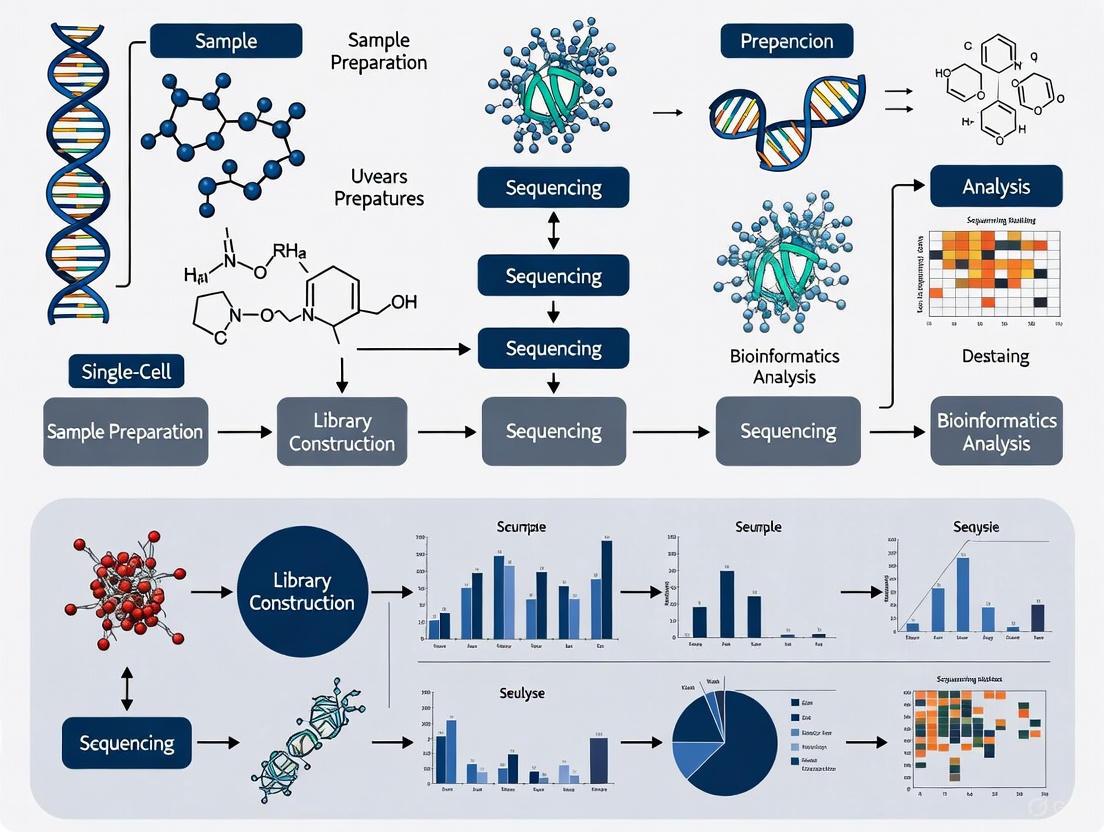
This article explores the transformative impact of single-cell Next-Generation Sequencing (sc-NGS) on chemogenomics, the study of genome-wide compound interactions.
Single-Cell NGS in Chemogenomics: Revolutionizing Drug Discovery from Target to Clinic
Abstract
This article explores the transformative impact of single-cell Next-Generation Sequencing (sc-NGS) on chemogenomics, the study of genome-wide compound interactions. Aimed at researchers and drug development professionals, it details how sc-NGS technologies like single-cell RNA sequencing (scRNA-seq) are providing unprecedented resolution to decipher cellular heterogeneity in drug responses. We cover foundational principles, methodological advances for target identification and validation, and practical solutions for technical challenges. The article also provides a comparative analysis of computational tools for data interpretation and concludes with the future clinical implications of integrating single-cell multi-omics and artificial intelligence into the drug discovery pipeline.
The Single-Cell Revolution: Core Principles and Its Entry into Chemogenomics
The advent of single-cell next-generation sequencing (NGS) has fundamentally transformed biomedical research by enabling the detailed molecular characterization of individual cells. Traditional bulk sequencing methods average signals across thousands to millions of cells, effectively masking critical cell-to-cell variations that underlie development, disease progression, and therapeutic response [1] [2]. The single-cell approach has revealed that even seemingly homogeneous cell populations exhibit substantial heterogeneity at genomic, transcriptomic, and epigenomic levels, with profound implications for understanding biological systems [3] [4].
Single-cell RNA sequencing (scRNA-seq), first described in 2009, marked the beginning of this revolution by allowing researchers to profile gene expression in individual cells [5] [6]. Since then, the field has rapidly expanded beyond transcriptomics to encompass a diverse array of molecular profiling techniques, collectively known as single-cell multi-omics. These technologies enable simultaneous measurement of multiple molecular layers within the same cell, providing unprecedented insights into the complex regulatory networks governing cellular function [5] [1]. In 2019, single-cell multimodal omics was rightfully selected as Method of the Year, highlighting its transformative potential [5].
In chemogenomics research, which focuses on the systematic identification of drug targets and understanding compound mechanisms of action, single-cell NGS technologies offer powerful tools for dissecting drug response heterogeneity, identifying rare resistant cell populations, and understanding how genetic perturbations translate to phenotypic outcomes [7] [2]. This application note provides a comprehensive overview of the single-cell NGS landscape, with particular emphasis on practical protocols and applications relevant to drug discovery and development.
Foundational Single-Cell Sequencing Approaches
Single-cell sequencing technologies have evolved from specialized, low-throughput methods to high-throughput, commercially accessible platforms that can process thousands of cells in parallel. The core principle underlying all scRNA-seq methods involves isolating individual cells, capturing polyadenylated mRNA molecules, reverse transcribing them to cDNA, amplifying the cDNA, and preparing sequencing libraries [8] [4]. Critical technical innovations that have enabled this progress include unique molecular identifiers (UMIs) to account for amplification bias, microfluidic partitioning systems for high-throughput processing, and advanced barcoding strategies for multiplexing [6] [1].
The following diagram illustrates the general workflow and key decision points in single-cell RNA sequencing experiments:
Table 1: Major scRNA-seq Technologies and Their Characteristics
| Technology | Read Coverage | Throughput | UMIs | Key Applications |
|---|---|---|---|---|
| 10X Genomics Chromium [1] | 3' counting | High (10,000-100,000 cells) | Yes | Large-scale cell atlas projects, tumor heterogeneity |
| Smart-seq2 [4] | Full-length | Low (96-384 cells) | No | Alternative splicing, SNP detection, rare cell characterization |
| CEL-Seq2 [1] | 3' counting | Medium to High | Yes | Developmental biology, time-course experiments |
| MARS-Seq [8] | 3' counting | High | Yes | Large-scale screening, immune profiling |
| Drop-seq [1] | 3' counting | High | Yes | Cost-effective large-scale studies |
| SPLiT-seq [1] | 3' counting | Very High (>1 million cells) | Yes | Fixed samples, large-scale atlas construction |
The choice of scRNA-seq method involves important trade-offs between throughput, sensitivity, and information content. High-throughput 3' counting methods like 10X Genomics Chromium and Drop-seq enable researchers to profile tens of thousands of cells, making them ideal for comprehensive cell atlas projects and identifying rare cell populations within heterogeneous samples [1] [8]. In contrast, full-length transcript methods like Smart-seq2 provide complete coverage of transcript sequences, enabling detection of alternative splicing, single-nucleotide polymorphisms, and allele-specific expression, albeit at lower throughput [4]. The incorporation of UMIs has been particularly valuable for accurate transcript quantification, as they enable distinction between biological duplicates and PCR amplification artifacts [6] [8].
Single-Cell Multi-Omics Integration
Single-cell multi-omics technologies represent the cutting edge of the field, allowing simultaneous measurement of multiple molecular modalities within the same cell. This capability is particularly valuable for establishing causal relationships between genomic variation, epigenetic regulation, transcription, and protein expression [5] [2]. By capturing layered information from individual cells, researchers can move beyond correlative observations to mechanistic understanding of cellular behavior and drug responses.
The following diagram illustrates the conceptual framework for single-cell multi-omics integration and its applications in biomedicine:
Table 2: Single-Cell Multi-Omics Technologies and Their Applications
| Technology/Approach | Molecular Modalities | Key Applications in Chemogenomics |
|---|---|---|
| CITE-seq [5] | RNA + Surface Proteins | Immune profiling, cell surface target validation, immunophenotyping |
| scTCR-seq/scBCR-seq [5] | RNA + Immune Receptors | T/B cell clonality tracking, immunotherapy development |
| SHARE-seq [1] | Chromatin Accessibility + RNA | Regulatory network inference, enhancer-promoter mapping |
| 10X Genomics Multiome | Chromatin Accessibility + RNA | Gene regulatory mechanisms in drug response |
| TEA-seq [2] | RNA + Protein + Epigenetics | Comprehensive cellular profiling for therapeutic target ID |
| SCoPE2 [7] | RNA + Protein | Direct correlation of transcript and protein abundance |
The simultaneous measurement of genomic, transcriptomic, and proteomic information from the same cell enables direct correlation between biomolecular layers, moving beyond statistical correlations derived from separate experiments [2]. For example, researchers can directly observe how a specific DNA mutation impacts gene expression and subsequent protein translation within individual cells, providing unprecedented insight into disease mechanisms and drug mode of action. Multi-omics approaches are particularly valuable for identifying rare cell subclones that drive disease progression and therapeutic resistance, as they can detect and characterize populations representing as little as 0.1% of cells that might be missed by conventional bulk sequencing [2].
Experimental Protocols and Methodologies
Standard scRNA-seq Workflow Using 10X Genomics Platform
The 10X Genomics Chromium system has emerged as one of the most widely used platforms for high-throughput scRNA-seq due to its robustness, commercial availability, and ability to process thousands of cells in a single run. The following protocol describes a standard workflow for sample preparation through library construction:
Sample Preparation and Cell Isolation (Day 1)
- Tissue Dissociation: Prepare single-cell suspension from fresh or preserved tissue using appropriate enzymatic or mechanical dissociation methods. For difficult-to-dissociate tissues, consider nuclear isolation (snRNA-seq) as an alternative [3].
- Cell Viability and Concentration Assessment: Determine cell viability using trypan blue exclusion or fluorescent viability dyes. Viability should exceed 80% for optimal performance. Quantify cell concentration using a hemocytometer or automated cell counter.
- Cell Suspension Preparation: Adjust cell concentration to 700-1,200 cells/μL in phosphate-buffered saline or culture medium containing serum or protein (0.04-1.0% BSA). Avoid excessive EDTA or calcium chelators that might interfere with droplet formation.
- Chip Loading and Partitioning: Combine cells, Master Mix, and Partitioning Oil on the Chromium Chip according to manufacturer's instructions. Target cell recovery between 500-10,000 cells per sample, anticipating a multiplet rate of approximately 1% when following the 10X Genomics recovery guidelines.
Library Preparation (Day 1-3)
- Gel Bead-in-Emulsion (GEM) Formation: Within each droplet, individual cells are co-partitioned with a barcoded gel bead. Cells are lysed upon encapsulation, and polyadenylated RNA molecules hybridize to the poly(dT) primers containing cell barcodes and UMIs [1] [8].
- Reverse Transcription: Perform reverse transcription in a thermal cycler (53°C for 45 min, then 85°C for 5 min) to generate barcoded cDNA. The resulting cDNA shares a common barcode for all transcripts originating from the same cell.
- cDNA Amplification: Break emulsions and purify cDNA using DynaBeads MyOne Silane Beads. Amplify cDNA with PCR (12 cycles) to generate sufficient material for library construction.
- Library Construction: Fragment the amplified cDNA and add sample indices and sequencing adapters through End Repair, A-tailing, Adaptor Ligation, and PCR (12 cycles). The final libraries contain P5 and P7 primers for cluster generation on Illumina sequencers, sample index for multiplexing, and the cell barcode and UMI information [8].
Quality Control and Sequencing
- Library QC: Assess library quality using Agilent Bioanalyzer or TapeStation (expect peak at ~400-500 bp) and quantify by qPCR (Kapa Biosystems).
- Sequencing: Load libraries onto an Illumina sequencer (NovaSeq 6000, NextSeq 500, or HiSeq 4000). For 10X 3' v3 libraries, sequence to a depth of 20,000-50,000 reads per cell using the following read configuration: Read 1: 28 cycles, i7 Index: 10 cycles, i5 Index: 10 cycles, Read 2: 90 cycles [8].
CITE-seq for Combined Transcriptome and Protein Profiling
Cellular Indexing of Transcriptomes and Epitopes by Sequencing (CITE-seq) enables simultaneous measurement of gene expression and surface protein abundance in single cells by using oligonucleotide-labeled antibodies [5] [9]. This protocol can be integrated with the 10X Genomics platform:
Antibody Conjugation and Validation (Pre-experiment)
- Antibody Selection: Choose purified antibodies against surface proteins of interest. Avoid antibodies containing carrier proteins or stabilizers that might interfere with conjugation.
- Oligo Conjugation: Conjugate antibodies to oligonucleotides containing PCR handles, barcodes, and poly(A) sequences using maleimide chemistry. Validate conjugation efficiency by HPLC or mass spectrometry.
- Titration and Validation: Titrate conjugated antibodies on relevant cell lines to determine optimal staining concentration. Validate specificity using knockout cell lines or isotype controls.
Cell Staining and Processing (Day 1)
- Cell Staining: Wash cells with PBS + 0.04% BSA and incubate with titrated antibody cocktail for 30 minutes on ice. Include a hashing antibody (if sample multiplexing is desired) and a viability antibody (e.g., TotalSeq-C) for dead cell exclusion.
- Cell Washing: Wash cells 3 times with PBS + 0.04% BSA to remove unbound antibodies.
- Cell Counting and Viability Assessment: Determine cell concentration and viability, then proceed to 10X Genomics library preparation as described in section 3.1.
Library Preparation and Sequencing (Day 1-3)
- Separate Library Construction: Following the standard 10X Genomics workflow, prepare two separate libraries: (1) the gene expression library following the standard protocol, and (2) the antibody-derived tag (ADT) library using a separate PCR with primers specific to the antibody oligo sequences.
- Differential Amplification: For ADT library, use 10-14 PCR cycles depending on antibody signal strength. For gene expression library, follow standard amplification conditions.
- Sequencing: Pool libraries at an appropriate ratio (typically 10:1 gene expression:ADT library) and sequence on an Illumina platform. The ADT library requires significantly fewer reads (1,000-5,000 reads per cell) compared to gene expression library.
Computational Analysis Pipeline
The analysis of single-cell sequencing data requires specialized bioinformatics tools to handle its high dimensionality, technical noise, and sparsity [5] [10]. A standard analytical workflow includes:
Quality Control and Preprocessing
- Raw Data Processing: Use Cell Ranger (10X Genomics) or STARsolo to demultiplex raw sequencing data, align reads to the reference genome, and generate gene-cell count matrices with cell barcodes and UMIs.
- Quality Control: Filter out low-quality cells using tools like Seurat or Scanpy based on the following criteria [9]:
- Cells with unusually high or low numbers of detected genes (potential multiplets or empty droplets)
- Cells with high mitochondrial read percentage (>10-20%), indicating stress or apoptosis
- Cells with low number of total UMIs/transcripts
- Normalization and Scaling: Normalize counts using methods like SCTransform (Seurat) or log(CP10K+1) to account for sequencing depth variation. Regress out confounding factors like mitochondrial percentage and cell cycle stage.
Dimensionality Reduction and Clustering
- Feature Selection: Identify highly variable genes (1,000-5,000) that drive biological heterogeneity.
- Dimensionality Reduction: Perform principal component analysis (PCA) on scaled data, then use the top principal components (typically 10-30) for non-linear dimensionality reduction with UMAP or t-SNE.
- Clustering: Apply graph-based clustering algorithms (Louvain or Leiden) to identify cell populations. Resolution parameters may need optimization based on the biological context.
Cell Type Annotation and Differential Expression
- Cell Annotation: Identify cluster-specific marker genes using differential expression tests (Wilcoxon rank-sum test) and annotate cell types based on canonical markers and reference databases [9].
- Reference Mapping: For improved annotation, map datasets to established references like the Human Cell Atlas using tools like Seurat's label transfer or SCTransform-based integration.
- Differential Analysis: Identify differentially expressed genes between conditions (e.g., treated vs. control) within specific cell types, using methods that account for the unique characteristics of single-cell data (e.g., MAST, DESingle).
Advanced Analyses
- Trajectory Inference: Reconstruct developmental or transition trajectories using tools like Monocle3, PAGA, or Slingshot to order cells along pseudotemporal axes [5].
- RNA Velocity: Analyze spliced vs. unspliced mRNA ratios to predict future cell states using scVelo or Velocyto [5].
- Cell-Cell Communication: Infer ligand-receptor interactions between cell types using tools like CellChat or NicheNet [9].
- Regulatory Network Analysis: Identify gene regulatory networks using SCENIC based on co-expression and transcription factor binding motifs [5].
Essential Research Reagents and Tools
Successful single-cell sequencing experiments require careful selection of reagents and tools throughout the workflow. The following table outlines key solutions and their applications:
Table 3: Essential Research Reagents for Single-Cell Sequencing
| Reagent Category | Specific Examples | Function and Application |
|---|---|---|
| Cell Viability Assays | Trypan blue, Propidium iodide, Fluorescent viability dyes (Calcein AM, DAPI) | Assessment of cell viability and integrity before processing; critical for data quality |
| Dissociation Reagents | Collagenase, Trypsin-EDTA, Accutase, Liberase, Tumor Dissociation Kits | Tissue-specific enzymatic blends for generating high-quality single-cell suspensions |
| Surface Protein Staining | TotalSeq antibodies (BioLegend), CITE-seq antibodies | Oligo-conjugated antibodies for simultaneous protein detection in scRNA-seq |
| Cell Hashing Reagents | TotalSeq-H antibodies, MULTI-seq lipid-modified barcodes | Sample multiplexing to reduce batch effects and costs by pooling samples before processing |
| Bead-Based Cleanup | SPRIselect beads, DynaBeads MyOne Silane | Size selection and purification of nucleic acids during library preparation |
| Amplification Reagents | KAPA HiFi HotStart ReadyMix, SMARTer reagents | High-fidelity PCR amplification of limited cDNA from single cells |
| Library Preparation Kits | 10X Genomics Chromium Next GEM Kits, Parse Biosciences kits | Commercial solutions for preparing barcoded single-cell libraries |
| QC Instruments | Agilent Bioanalyzer/TapeStation, Qubit fluorometer, Automated cell counters | Quality assessment of input cells, RNA, and final libraries |
| Single-Cell Analysis Software | Seurat, Scanpy, Cell Ranger, Partek Flow | Bioinformatics tools for processing, analyzing, and visualizing single-cell data |
Applications in Chemogenomics and Drug Discovery
Single-cell NGS technologies have emerged as powerful tools in chemogenomics research, enabling unprecedented resolution in understanding drug mechanisms, identifying novel targets, and characterizing therapeutic resistance. Three key applications demonstrate their transformative potential:
Elucidating Heterogeneous Drug Responses Single-cell RNA sequencing enables researchers to move beyond population-averaged drug responses to characterize how individual cells within a population respond differently to compound treatment. This is particularly valuable for understanding partial efficacy, biphasic responses, and identifying resistant subpopulations [7]. For example, in cancer drug screening, scRNA-seq has revealed distinct transcriptional programs in persistent cells following targeted therapy, including upregulated survival pathways, stress response programs, and dormant states that may serve as reservoirs for disease recurrence [3]. By profiling these rare subpopulations, researchers can identify novel combination therapy strategies to prevent or overcome resistance.
Target Identification and Validation Single-cell multi-omics approaches provide powerful methods for target identification by linking genetic variation to phenotypic consequences at unprecedented resolution. In oncology, combined scDNA-seq and scRNA-seq can identify how specific mutations influence transcriptional programs and cellular phenotypes within the context of tumor heterogeneity [2]. Similarly, in immunology, CITE-seq enables comprehensive profiling of immune cell states and surface protein expression, facilitating identification of novel immunotherapy targets [9]. The ability to simultaneously measure chromatin accessibility and gene expression (e.g., through SHARE-seq or 10X Multiome) further enables identification of regulatory elements and transcription factors driving disease-relevant cell states.
Characterizing Cellular Mode of Action Single-cell technologies enable comprehensive characterization of how small molecules and biologics perturb cellular networks by profiling thousands of individual cells following treatment. This approach can reveal on-target and off-target effects, identify biomarkers of response, and delineate heterogeneous mechanisms of action [7]. For cell and gene therapies, single-cell multi-omics provides rigorous characterization of therapeutic products, enabling quality control and assessment of product consistency [2]. In one application, combined scRNA-seq and scTCR-seq has been used to track clonal dynamics of T-cell populations following immunotherapy, linking specific TCR sequences to transcriptional states associated with clinical response [5].
The single-cell NGS landscape has evolved from specialized transcriptomic profiling to a sophisticated toolkit for multi-omic characterization of individual cells. These technologies provide unprecedented resolution for exploring cellular heterogeneity, tracing developmental trajectories, and understanding complex biological systems. In chemogenomics and drug discovery, single-cell approaches are transforming target identification, mechanism of action studies, and resistance characterization by revealing how cellular heterogeneity influences drug response.
As single-cell technologies continue to advance, several trends are shaping the field. Computational methods, particularly machine learning approaches, are playing an increasingly important role in analyzing complex multi-omic datasets and extracting biological insights [10]. Spatial transcriptomic technologies are adding crucial spatial context to single-cell data, enabling researchers to understand how cellular organization influences function and drug response [5] [9]. Meanwhile, ongoing efforts to reduce costs and increase throughput are making these powerful technologies more accessible for broader applications.
For researchers implementing single-cell approaches, success depends on careful experimental design, appropriate technology selection, and robust analytical strategies. Matching the right single-cell method to the biological question, ensuring high-quality sample preparation, and applying appropriate computational analyses are all critical for generating meaningful results. As these technologies continue to mature and integrate, they promise to further accelerate the pace of discovery in chemogenomics and therapeutic development.
In the pursuit of personalized cancer therapeutics, accurately predicting how tumors respond to drugs remains a formidable challenge. Traditional drug response prediction methods have largely relied on bulk RNA sequencing, which provides an average gene expression profile across all cells in a sample. While valuable for population-level insights, this approach fundamentally obscures a critical biological reality: tumors are not homogeneous masses of identical cells, but complex ecosystems composed of diverse cell subtypes with distinct transcriptional profiles and functional states. This limitation becomes particularly problematic in drug discovery, where the presence of rare, pre-existing resistant cell populations can dictate treatment outcomes yet remain undetectable in bulk measurements. The averaging effect of bulk sequencing masks the very cellular heterogeneity that drives variable treatment responses, creating a significant blind spot in therapeutic development [11] [12] [13].
The emergence of single-cell RNA sequencing (scRNA-seq) has fundamentally altered this landscape by enabling researchers to probe transcriptomic profiles at the resolution of individual cells. This technological shift reveals the cellular composition and interaction networks within tumors, providing unprecedented insights into the mechanisms underlying drug sensitivity and resistance. By capturing the full spectrum of cellular states present in a tumor ecosystem, scRNA-seq allows for the identification of specific cell subpopulations that survive treatment and ultimately drive disease recurrence [11] [14]. This application note explores the technical limitations of bulk sequencing in resolving cellular heterogeneity, presents experimental frameworks for single-cell pharmacotranscriptomics, and highlights how these advanced approaches are transforming drug discovery pipelines.
The Technical Divide: Bulk vs. Single-Cell RNA Sequencing
Fundamental Methodological Differences
The fundamental difference between bulk and single-cell RNA sequencing begins at the sample preparation stage and extends throughout the entire experimental workflow. In bulk RNA-seq, the entire biological sample is digested to extract RNA from a pooled population of cells, resulting in a single, averaged gene expression profile that represents the entire cell population [13]. This approach effectively treats complex tissues as uniform entities, blurring critical biological distinctions between cell types and states. In contrast, single-cell RNA sequencing requires the generation of a viable single-cell suspension, followed by the partitioning of individual cells into micro-reaction vessels where each cell's transcriptome is uniquely barcoded before sequencing [13]. This preservation of cellular identity throughout the sequencing process enables the reconstruction of individual transcriptomic profiles for each cell within the original sample.
The implications of these methodological differences extend throughout the data generation and analysis pipeline. Bulk sequencing workflows are generally lower in cost, have simpler sample preparation requirements, and generate data that can be analyzed with more straightforward computational approaches [13]. Single-cell protocols, while typically more resource-intensive, generate massively multiplexed datasets that require specialized bioinformatic tools for processing and interpretation but offer unparalleled resolution of cellular heterogeneity [11] [13]. The choice between these approaches therefore represents a trade-off between practical considerations and biological resolution, with single-cell methods providing the necessary granularity to identify rare cell populations and continuous cellular transitions that are invisible in bulk data.
Quantitative Limitations of Bulk Sequencing in Heterogeneous Samples
Table 1: Comparative Limitations of Bulk vs. Single-Cell RNA Sequencing in Drug Response Studies
| Aspect | Bulk RNA-Seq Limitations | Single-Cell RNA-Seq Advantages |
|---|---|---|
| Resolution of Cellular Heterogeneity | Provides only population-average data, masking rare cell types (<5% abundance) [13] | Identifies rare cell populations down to 0.1-1% abundance and distinct cell states [11] [13] |
| Detection of Resistance Mechanisms | Cannot identify pre-existing resistant subclones; resistance signatures diluted by sensitive cells [15] [16] | Reveals pre-treatment resistant subpopulations and tracks their expansion post-treatment [15] [14] |
| Characterization of Transitional States | Obscures continuous cellular transitions (e.g., epithelial-to-mesenchymal transition) [12] | Maps continuous trajectories and transitional states using pseudotime algorithms [11] |
| Identification of Cell-Type Specific Responses | Cannot attribute gene expression changes to specific cell types; cell-type specific signals are confounded [17] [13] | Precisely links drug response signatures to specific cell subtypes and states within complex mixtures [14] |
| Analysis of Tumor Microenvironment | Fails to resolve complex cell-cell interaction networks between tumor and stromal/immune cells [14] | Enables comprehensive characterization of tumor ecosystem and cell-cell communication [11] [14] |
The quantitative limitations of bulk sequencing become particularly evident when analyzing highly heterogeneous samples like tumors. The averaging effect means that gene expression signals from rare cell populations (generally those representing less than 5-10% of the total population) become diluted below reliable detection thresholds [13]. In the context of drug response, this is particularly problematic as pre-existing resistant subclones often represent only a small fraction of the total tumor cell population before treatment but ultimately determine therapeutic outcome. Bulk sequencing cannot resolve these critical minority populations, whereas single-cell approaches can identify rare cell types representing as little as 0.1-1% of the total population [11] [13].
Furthermore, bulk sequencing fundamentally cannot resolve continuous biological processes such as cellular differentiation trajectories or state transitions that occur along biological continua. In cancer, these transitions—such as the emergence of drug-tolerant persister cells or epithelial-to-mesenchymal transition—represent critical mechanisms of adaptation and resistance. Single-cell technologies can capture these continuous processes through pseudotime analysis, revealing the transcriptional programs that enable cells to transition from sensitive to resistant states [15] [11]. This capability provides insights into the dynamic nature of tumor evolution under therapeutic pressure that are completely inaccessible through bulk profiling approaches.
Diagram 1: Workflow comparison between bulk and single-cell RNA sequencing approaches, highlighting where cellular heterogeneity information is lost versus preserved.
Case Study: ATSDP-NET - Overcoming Bulk Sequencing Limitations Through Transfer Learning
Experimental Framework and Protocol
The ATSDP-NET (Attention-based Transfer Learning for Enhanced Single-cell Drug Response Prediction) framework represents a sophisticated computational approach that directly addresses the limitations of bulk sequencing while leveraging existing bulk data resources [15] [16]. This method employs a transfer learning strategy that pre-trains a deep learning model on large-scale bulk RNA-seq datasets from resources like the Cancer Cell Line Encyclopedia (CCLE) and Genomics of Drug Sensitivity in Cancer (GDSC), then fine-tunes the model on smaller scRNA-seq datasets for single-cell drug response prediction [15] [16]. The protocol involves several key stages:
1. Data Collection and Preprocessing:
- Bulk RNA-seq data: Curate drug response data from CCLE and GDSC databases containing genomic profiles and drug sensitivity measurements (IC50 values) across hundreds of cancer cell lines [15] [16].
- Single-cell RNA-seq data: Collect scRNA-seq data from tumor cells pre- and post-drug treatment across multiple cancer types (e.g., oral squamous cell carcinoma with cisplatin, prostate cancer with docetaxel, AML with I-BET-762) [15] [16].
- Response labeling: Assign binary response labels (sensitive=1, resistant=0) to individual cells based on post-treatment viability assays, using established thresholds from original datasets or quantile-based binarization of continuous response values [15] [16].
2. Model Architecture and Training:
- Implement a multi-head attention mechanism within a deep neural network to identify gene expression patterns predictive of drug response at single-cell resolution [15] [16].
- Address class imbalance in labeled datasets using SMOTE oversampling for DATA1 and standard oversampling for DATA2-DATA4 [15] [16].
- Perform model validation using recall, ROC curves, and average precision (AP) metrics on held-out test sets [15] [16].
3. Interpretation and Visualization:
- Identify critical genes associated with drug responses through attention weight analysis [15] [16].
- Visualize the dynamic transition of cells from sensitive to resistant states using Uniform Manifold Approximation and Projection (UMAP) [15] [16].
- Validate predictions through differential gene expression scoring and correlation analysis with actual response values [15] [16].
Key Findings and Performance Metrics
Table 2: ATSDP-NET Performance Metrics Across Single-Cell Drug Response Datasets
| Dataset | Cancer Type | Treatment | Key Performance Metrics | Biological Validation |
|---|---|---|---|---|
| DATA1 | Human Oral Squamous Cell Carcinoma | Cisplatin | High correlation for sensitivity gene scores (R=0.888, p<0.001) [15] [16] | Accurate prediction of cisplatin sensitivity/resistance patterns [15] [16] |
| DATA2 | Human Oral Squamous Cell Carcinoma | Cisplatin | Consistent performance across technical replicates [15] [16] | Confirmation of heterogeneous response within tumor [15] [16] |
| DATA3 | Human Prostate Cancer | Docetaxel | Superior to existing methods in ROC and AP metrics [15] [16] | Identification of taxane resistance mechanisms [15] [16] |
| DATA4 | Murine Acute Myeloid Leukemia | I-BET-762 | High correlation for resistance gene scores (R=0.788, p<0.001) [15] [16] | Accurate mapping of sensitive-to-resistant transition states [15] [16] |
The ATSDP-NET framework demonstrated superior performance compared to existing methods across all evaluation metrics, including recall, ROC curves, and average precision [15] [16]. More importantly, it successfully identified critical genes associated with drug responses and visualized the dynamic process of cells transitioning from sensitive to resistant states—capabilities that are impossible with bulk sequencing approaches. The high correlation between predicted sensitivity gene scores and actual values (R=0.888, p<0.001), along with significant correlation for resistance gene scores (R=0.788, p<0.001), confirms the model's ability to capture biologically meaningful signals at single-cell resolution [15] [16].
The multi-head attention mechanism proved particularly valuable for interpretability, allowing researchers to pinpoint specific gene expression patterns driving drug sensitivity and resistance in different cellular subpopulations [15] [16]. This represents a significant advance over "black box" prediction models, as it provides biological insights into the mechanisms underlying treatment failure while simultaneously offering accurate response predictions. The framework effectively bridges the gap between large-scale bulk sequencing resources and the high-resolution insights provided by newer single-cell technologies, demonstrating a practical path forward for leveraging existing investments in bulk profiling while embracing the future of single-cell analysis.
Advanced Experimental Framework: Multiplexed Single-Cell Pharmacotranscriptomics
High-Throughput Pipeline for Drug Discovery
A recently published advanced pipeline for pharmacotranscriptomic profiling demonstrates how single-cell technologies are being scaled for comprehensive drug discovery applications [14]. This approach combines live-cell barcoding using antibody-oligonucleotide conjugates with 96-plex single-cell RNA sequencing to enable high-throughput screening of transcriptional responses to drug treatments. The experimental workflow includes:
1. Sample Preparation and Drug Treatment:
- Isolate and culture primary cancer cells (e.g., high-grade serous ovarian cancer models) at early passages to maintain phenotypic identity [14].
- Treat cells with a diverse library of 45 drugs covering 13 distinct mechanisms of action (including PI3K-AKT-mTOR inhibitors, Ras-Raf-MEK pathway inhibitors, epigenetic modifiers, and DNA damage agents) [14].
- Use DMSO as a control and employ drug concentrations above the half-maximal effective concentration based on preliminary drug sensitivity and resistance testing (DSRT) screens [14].
2. Multiplexing and Single-Cell Profiling:
- Label cells from each treatment condition with unique pairs of anti-β2 microglobulin (B2M) and anti-CD298 antibody-oligonucleotide conjugates (Hashtag oligos or HTOs) [14].
- Pool samples for multiplexed scRNA-seq processing, dramatically reducing batch effects and technical variability while increasing throughput [14].
- Sequence using 10X Chromium technology, processing 36,016 high-quality cells across 288 samples with a median of 122-140 cells per treatment condition [14].
3. Data Analysis and Interpretation:
- Demultiplex cells based on HTO barcodes and perform quality control to remove doublets and low-quality cells [14].
- Conduct unsupervised clustering using Leiden algorithm to identify drug-responsive cell states across different mechanisms of action [14].
- Perform gene set variation analysis (GSVA) to evaluate activity of biological processes and pathways affected by different drug classes [14].
Key Insights from Multiplexed Pharmacotranscriptomic Screening
This multiplexed approach revealed several critical insights that would be inaccessible through bulk sequencing methods. First, it uncovered significant heterogeneity in drug responses even within supposedly homogeneous cancer cell lines, with different cells exhibiting distinct transcriptional programs after identical drug treatments [14]. Second, the analysis identified previously unknown resistance mechanisms, including a feedback loop whereby PI3K-AKT-mTOR inhibitors induced upregulation of caveolin 1 (CAV1), leading to activation of receptor tyrosine kinases like EGFR—a resistance mechanism that could be mitigated through combination therapy targeting both pathways [14].
Perhaps most importantly, the single-cell resolution enabled researchers to observe that cells treated with different classes of inhibitors exhibited distinct clustering patterns: those treated with PI3K-AKT-mTOR, Ras-Raf-MEK-ERK, and multikinase inhibitors showed milder, model-specific transcriptional shifts, while cells treated with BET, HDAC, and CDK inhibitors formed distinct clusters enriched with cells from all three tested models, suggesting more consistent cross-lineage effects [14]. This type of comparative analysis across mechanisms of action and cancer models provides invaluable insights for drug development prioritization and combination therapy design.
Diagram 2: High-throughput multiplexed single-cell pharmacotranscriptomics workflow for comprehensive drug response profiling.
Table 3: Key Research Reagent Solutions for Single-Cell Drug Response Studies
| Category | Specific Product/Technology | Function in Experimental Pipeline |
|---|---|---|
| Single-Cell Platform | 10X Genomics Chromium System [14] [13] | Enables high-throughput single-cell partitioning and barcoding using microfluidics technology |
| Multiplexing Reagents | Cell Hashing Antibodies (Anti-B2M, Anti-CD298) [14] | Allow sample multiplexing through antibody-oligonucleotide conjugates that label live cells |
| Reference Databases | Cancer Cell Line Encyclopedia (CCLE) [15] [16] | Provides bulk RNA-seq and drug response data for transfer learning approaches |
| Reference Databases | Genomics of Drug Sensitivity in Cancer (GDSC) [15] [16] | Offers comprehensive drug sensitivity data across cancer cell lines for model training |
| Computational Tools | ATSDP-NET Framework [15] [16] | Implements attention mechanisms and transfer learning for single-cell drug response prediction |
| Computational Tools | MrVI (Multi-Resolution Variational Inference) [18] | Enables exploratory and comparative analysis of multi-sample single-cell studies |
| Visualization Tools | UMAP (Uniform Manifold Approximation and Projection) [15] [16] | Visualizes high-dimensional single-cell data in two dimensions for interpretation |
| Analysis Suites | scvi-tools [18] | Provides scalable probabilistic models for single-cell omics data analysis |
Successful implementation of single-cell drug response studies requires both wet-lab reagents and computational resources. The 10X Genomics Chromium platform has emerged as a widely adopted solution for high-throughput single-cell partitioning and barcoding, offering robust, instrument-enabled workflows that reduce technical variability [14] [13]. For multiplexing experiments, cell hashing technologies using antibody-oligonucleotide conjugates against ubiquitously expressed surface markers like B2M and CD298 enable massive parallelization of drug treatment conditions while controlling for batch effects [14].
On the computational side, leveraging existing reference databases like CCLE and GDSC provides the foundational bulk data necessary for transfer learning approaches that overcome limitations in single-cell dataset sizes [15] [16]. Specialized computational frameworks like ATSDP-NET incorporate multi-head attention mechanisms to simultaneously predict drug responses and identify predictive gene patterns [15] [16], while tools like MrVI (Multi-Resolution Variational Inference) enable sophisticated analysis of sample-level heterogeneity in large-scale single-cell studies without requiring predefined cell states [18]. The integration of these wet-lab and computational tools creates a powerful ecosystem for advancing single-cell pharmacotranscriptomics in both basic research and clinical translation.
The limitations of bulk RNA sequencing in resolving cellular heterogeneity represent more than just a technical shortcoming—they constitute a fundamental barrier to understanding the complex biology of drug response in cancer and other diseases. As the case studies presented here demonstrate, single-cell technologies are already overcoming these limitations by revealing the cellular subpopulations and transitional states that determine therapeutic outcomes. The integration of these approaches with advanced computational methods like transfer learning and attention mechanisms creates a powerful framework for predicting drug responses while simultaneously generating biologically interpretable insights into resistance mechanisms.
Looking forward, the field is moving toward even more sophisticated multi-omic approaches that combine single-cell transcriptomics with spatial context, genetic perturbations, and proteomic measurements [19] [20]. The ongoing development of specialized computational tools like MrVI for analyzing multi-sample single-cell studies further enhances our ability to extract meaningful biological insights from these complex datasets [18]. As these technologies continue to mature and become more accessible, they will undoubtedly transform drug discovery pipelines and clinical translation, ultimately enabling more effective, personalized therapeutic strategies that account for the profound heterogeneity inherent in cancer and other complex diseases.
The advent of single-cell technologies has fundamentally transformed pharmacological research, enabling the dissection of cellular heterogeneity and its profound implications for drug discovery and development. Traditional bulk sequencing methods, which average signals across thousands to millions of cells, inevitably obscure rare cell populations, transient cellular states, and subtle but therapeutically significant transcriptional differences. Single-cell RNA sequencing (scRNA-seq), first described in 2009, initiated a paradigm shift by allowing researchers to investigate gene expression profiles at the individual cell level [10] [8]. This technological revolution has since expanded to encompass multi-omic approaches that simultaneously probe the genome, epigenome, transcriptome, and proteome within single cells, providing unprecedented insights into cellular mechanisms of disease and therapeutic response [1].
In the context of chemogenomics research, which seeks to understand the complex interactions between biological systems and chemical compounds, single-cell technologies offer particularly powerful applications. By revealing how individual cells within a tissue or tumor respond to chemical perturbations, these methods accelerate target identification, validate mechanism of action, and stratify patient populations for precision medicine. The integration of single-cell technologies with pharmacological research has created a new frontier where drug discovery is increasingly guided by deep molecular understanding of cellular heterogeneity, leading to more effective and targeted therapeutic strategies [21].
Historical Trajectory: Milestones in Single-Cell Technology Development
The evolution of single-cell technologies represents a remarkable journey of innovation, marked by key methodological breakthroughs that have progressively enhanced our ability to probe cellular complexity. The timeline of development reflects a consistent drive toward higher throughput, multi-parameter analysis, and clinical translation.
Table 1: Key Milestones in Single-Cell Technology Development
| Year | Technological Milestone | Significance for Pharmacological Research |
|---|---|---|
| 2009 | First scRNA-seq protocol described [8] | Enabled transcriptomic analysis of individual cells, revealing cellular heterogeneity in disease contexts |
| 2013 | Single-cell epigenome sequencing developed [22] | Allowed investigation of epigenetic mechanisms in drug response and resistance |
| 2015 | High-throughput droplet-based scRNA-seq (Drop-Seq, inDrop) [10] [8] | Scaled analysis to thousands of cells, enabling comprehensive atlas projects and rare cell population detection |
| 2015-2016 | First single-cell multi-omics assays [22] | Enabled correlated analysis of genomic, transcriptomic, and epigenomic features within single cells |
| 2016 | Spatial transcriptomics methods published [22] | Preserved spatial context of cellular interactions relevant to drug distribution and activity |
| 2020s | Automated, integrated multi-omics platforms [23] [19] | Streamlined workflow for applied drug discovery and clinical translation |
The initial single-cell transcriptomic approaches, while groundbreaking, were limited by low throughput and high costs. The development of droplet-based microfluidics in 2015 represented a pivotal advance, dramatically increasing the number of cells that could be profiled in a single experiment while reducing per-cell costs [8]. This scalability enabled researchers to capture rare cell types and transitional states that are often crucial in disease progression and treatment response. The subsequent emergence of single-cell multi-omics further expanded analytical capabilities by allowing simultaneous measurement of multiple molecular layers within the same cell, providing insights into coordinated regulatory mechanisms that underlie drug sensitivity and resistance [22] [1].
More recently, spatial transcriptomics has addressed a fundamental limitation of early single-cell methods—the loss of anatomical context. By preserving and mapping the spatial organization of cells within tissues, these techniques have revealed how cellular microenvironment influences drug response, particularly in complex tissues like tumors [22]. The ongoing integration of these technological streams—high-throughput sequencing, multi-omic profiling, and spatial context—creates an increasingly powerful platform for pharmacological investigation, enabling researchers to build comprehensive models of drug action across diverse cellular contexts.
Current Applications in Pharmacological Research
Single-cell technologies have matured from specialized research tools to essential components of the drug discovery pipeline, impacting multiple stages from target identification to clinical trial design. The ability to resolve cellular heterogeneity at molecular scale has proven particularly valuable in oncology, immunology, and neuroscience, where disease mechanisms often involve complex interactions between diverse cell populations.
Target Identification and Validation
The initial stage of drug discovery depends critically on identifying and validating molecular targets with strong causal links to disease processes. Single-cell technologies excel in this domain by enabling cell-type-specific resolution of gene expression patterns across entire tissues. A 2024 retrospective analysis conducted by researchers at the Wellcome Institute demonstrated that drugs targeting genes with cell-type-specific expression in disease-relevant tissues showed significantly higher success rates in progressing from Phase I to Phase II clinical trials [21]. This approach allows researchers to focus on targets with greater biological relevance and potentially fewer off-target effects.
The combination of scRNA-seq with CRISPR screening has emerged as a particularly powerful method for functional target validation. In one landmark application, researchers profiled approximately 250,000 primary CD4+ T cells to systematically map regulatory element-to-gene interactions and functionally interrogate non-coding regulatory elements at single-cell resolution [21]. This integrated approach not only identifies potential drug targets but also elucidates their functional mechanisms within native cellular contexts, derisking subsequent development stages.
Drug Screening and Mechanism of Action Studies
Beyond target identification, single-cell technologies are transforming conventional drug screening paradigms. Traditional screening approaches typically rely on bulk readouts like cell viability or limited marker expression, providing insufficient information about heterogeneous responses across cell types. High-throughput scRNA-seq now enables detailed, cell-type-specific gene expression profiling across multiple drug doses and experimental conditions, capturing complex response dynamics that would be masked in bulk analyses [21].
The power of this approach was demonstrated in a pioneering study that measured 90 cytokine perturbations across 18 immune cell types from twelve donors, resulting in nearly 20,000 observed perturbations captured in a 10 million-cell dataset [21]. This unprecedented resolution revealed that while certain cell types shared overall response patterns to cytokines like IFN-omega, individual cells exhibited distinct behaviors and reactions—a level of biological nuance that would have been undetectable in smaller datasets. Such insights are invaluable for understanding both intended therapeutic effects and potential off-target consequences during early drug development.
Biomarker Discovery and Patient Stratification
The translation of drug candidates from preclinical models to clinical success depends heavily on identifying robust biomarkers that can guide patient selection and monitor treatment response. Single-cell approaches have demonstrated particular utility in defining more accurate biomarkers and disease classifications based on cellular heterogeneity. In colorectal cancer, for instance, scRNA-seq has enabled new molecular classifications with subtypes distinguished by unique signaling pathways, mutation profiles, and transcriptional programs [21].
These refined stratification schemes support more precise targeting of therapeutic interventions to patient subgroups most likely to respond. Furthermore, single-cell analysis of liquid biopsies and longitudinal tissue samples provides opportunities to monitor dynamic changes in cellular populations during treatment, enabling early detection of resistance mechanisms and adaptive treatment strategies. The resulting cellular biomarkers offer greater specificity than tissue-level measurements, potentially improving clinical trial success rates through better patient stratification and response monitoring [21].
Table 2: Single-Cell Technology Applications in Drug Development Pipeline
| Drug Development Stage | Single-Cell Application | Impact |
|---|---|---|
| Target Identification | Cell-type-specific gene expression mapping in diseased tissues | Identifies targets with higher clinical success potential [21] |
| Target Validation | CRISPR-scRNA-seq perturbation screening | Elucidates functional mechanisms and regulatory networks [21] |
| Lead Optimization | High-throughput multi-dose scRNA-seq screening | Reveals cell-type-specific responses and off-target effects [21] |
| Preclinical Toxicology | Cellular heterogeneity assessment in tissues | Identifies subpopulation-specific toxicities [21] |
| Clinical Trial Design | Biomarker discovery and patient stratification | Enriches for responders and monitors treatment resistance [21] |
| Companion Diagnostics | Rare cell population detection in liquid biopsies | Enables non-invasive monitoring of treatment response [23] |
Experimental Protocols and Methodologies
The successful application of single-cell technologies requires careful consideration of experimental design, protocol selection, and analytical approaches. This section outlines core methodologies and their implementation in pharmacological research contexts.
Core Single-Cell RNA Sequencing Workflow
The standard scRNA-seq workflow encompasses multiple critical steps, each requiring specific methodological considerations to ensure data quality and biological relevance.
Figure 1: Single-Cell RNA Sequencing Core Workflow. Key steps from cell isolation to data analysis with critical reagents and platforms.
Single-Cell Isolation and Capture
The initial step of isolating individual cells from tissues or culture systems represents a critical foundation for subsequent analysis. The choice of isolation method depends on tissue type, cell abundance, and experimental objectives:
Fluorescence-Activated Cell Sorting (FACS): Enables selection of specific cell populations based on surface markers or fluorescent reporters, with the ability to simultaneously analyze cells according to size, granularity, and multiple fluorescence parameters [1]. However, FACS requires sufficient cell density and may affect viability through rapid flow and fluorescence exposure.
Microfluidic Droplet-Based Systems: Platforms such as 10x Genomics Chromium utilize nanoliter-scale droplets to encapsulate individual cells with barcoded beads, enabling high-throughput processing of thousands to millions of cells [8] [1]. These systems offer significantly reduced reagent costs and hands-on time compared to plate-based methods.
Magnetic-Activated Cell Sorting (MACS): Employed for isolation based on surface markers using magnetic beads, offering a gentler alternative to FACS that preserves cell viability, though with lower specificity [1].
Single-Nucleus RNA Sequencing (snRNA-seq): Used when tissue dissociation is challenging or samples are frozen, as nuclei are more resistant to isolation stresses. This approach has enabled single-cell analysis of previously intractable tissues like neuronal brain regions [8].
For pharmacological applications involving drug-treated samples, consideration of dissociation-induced stress responses is critical, as these can confound drug response signatures. Rapid processing or fixation protocols may be necessary to preserve authentic transcriptional states.
Molecular Barcoding and Library Preparation
Following cell isolation, the implementation of robust barcoding strategies enables multiplexing and accurate quantification:
Cellular Barcodes: Short DNA sequences added during reverse transcription that uniquely label each cell, allowing pooled sequencing of multiple cells while maintaining individual identity during computational analysis [1].
Unique Molecular Identifiers (UMIs): Random nucleotide tags added to each mRNA molecule during reverse transcription, enabling precise quantification by correcting for amplification biases and distinguishing biological duplicates from technical PCR duplicates [8].
Amplification Methods: Either polymerase chain reaction (PCR) or in vitro transcription (IVT) amplification is employed to generate sufficient material for sequencing. PCR-based methods (e.g., SMART-seq2) typically provide better coverage across transcript length, while IVT methods (e.g., CEL-Seq2) offer reduced amplification bias [8].
Protocol selection depends on specific research questions—full-length transcript protocols (SMART-seq3, FLASH-seq) enable isoform analysis and variant detection, while 3'-end counting methods (10x Genomics, Drop-seq) provide more cost-effective cellular profiling [8] [1].
Advanced Multi-Omic Profiling Protocols
The integration of multiple molecular modalities within single cells provides a more comprehensive view of cellular responses to pharmacological interventions.
Single-Cell Multi-Omic Integration
Combined measurement of transcriptome and epigenome in individual cells enables researchers to connect regulatory mechanisms with functional responses:
CITE-seq (Cellular Indexing of Transcriptomes and Epitopes): Simultaneously measures mRNA expression and surface protein abundance using antibody-derived tags, providing complementary information about cellular identity and functional state [1].
ATAC-seq + RNA-seq: Combines assay for transposase-accessible chromatin with transcriptome profiling to link chromatin accessibility patterns with gene expression programs [22].
SPLiT-seq: A split-pool ligation-based method that enables scalable single-cell transcriptomic profiling without specialized equipment, particularly useful for large-scale drug screening applications [8].
For chemogenomics research, these multi-omic approaches can reveal how drug treatments simultaneously alter epigenetic states, transcriptional programs, and surface protein expression, providing mechanistic insights into both efficacy and resistance.
Spatial Transcriptomics in Pharmacological Research
Preserving spatial context is particularly valuable for understanding drug distribution, target engagement, and microenvironmental influences on treatment response:
Sequential Fluorescence in Situ Hybridization (seqFISH/MERFISH): Uses sequential hybridization with fluorescent probes to map hundreds to thousands of RNA species within intact tissue sections, revealing how cellular neighborhoods influence drug sensitivity [22].
In Situ Capturing (Visium/XYZ): Captures RNA from tissue sections on spatially barcoded arrays, allowing correlation of histopathological features with global transcriptional patterns in response to treatment [22] [24].
In Situ Sequencing: Directly sequences cDNA amplicons within tissue sections, providing both spatial localization and sequence information for transcript identification [22].
These spatial methods are particularly powerful when applied to preclinical models treated with drug candidates, as they can reveal heterogeneous drug effects across different tissue regions and cellular microenvironments.
The Scientist's Toolkit: Essential Reagents and Platforms
Successful implementation of single-cell technologies requires careful selection of reagents, instruments, and computational tools tailored to specific pharmacological research questions.
Table 3: Essential Research Reagent Solutions for Single-Cell Pharmacology
| Reagent/Platform Category | Specific Examples | Function in Workflow | Pharmacological Application |
|---|---|---|---|
| Cell Isolation Kits | MACS Microbeads, FACS antibodies | Isolation of specific cell populations from complex tissues | Target cell enrichment from diseased tissue [1] |
| Single-Cell Library Prep Kits | 10x Genomics Chromium, Parse Biosciences Evercode | Barcoding, reverse transcription, cDNA amplification | High-throughput drug screening across cell types [21] [23] |
| Viability Stains | Propidium iodide, DAPI, Calcein AM | Discrimination of live/dead cells during isolation | Ensure analysis of healthy, drug-affected cells [1] |
| Cell Lysis Buffers | Commercial lysis buffers, homebrew formulations | Release of RNA while preserving integrity | Maintain RNA quality for accurate expression profiling [8] |
| UMIs and Barcoded Oligos | Custom-designed UMIs, template-switch oligos | Molecular tagging for quantification and multiplexing | Accurate measurement of drug-induced expression changes [8] |
| Amplification Reagents | SMART-Seq3, MATQ-Seq kits | cDNA amplification from single cells | Detect low-abundance transcripts affected by treatment [8] |
| Spatial Transcriptomics Kits | 10x Visium, MERFISH reagents | Spatial mapping of gene expression in tissue | Localization of drug effects within tissue architecture [22] [24] |
| Multi-omics Assays | Tapestri Mission Bio, CITE-seq antibodies | Simultaneous measurement of multiple molecular layers | Comprehensive view of drug mechanism of action [23] [1] |
The selection of appropriate platforms and reagents should be guided by specific research objectives, with considerations for cell throughput, molecular coverage, and integration with existing laboratory workflows. Commercial platforms from established vendors like 10x Genomics, Parse Biosciences, and Mission Bio offer standardized, validated workflows particularly valuable for regulated environments, while more customizable academic protocols may provide advantages for specialized applications [21] [23].
Computational Analysis Framework
The enormous datasets generated by single-cell technologies—routinely encompassing millions of cells and thousands of genes—require sophisticated computational approaches for meaningful biological interpretation. The analysis pipeline typically progresses through several stages, each with specific methodological considerations for pharmacological applications.
Figure 2: Single-Cell Data Analysis Computational Workflow. Key computational steps with representative tools for each stage.
Core Analytical Workflow
The foundational analysis pipeline transforms raw sequencing data into biologically interpretable results through sequential processing steps:
Quality Control and Filtering: Removal of low-quality cells based on metrics like total counts, detected genes, and mitochondrial percentage, which often indicate compromised viability or sequencing quality. For drug treatment studies, consistent filtering thresholds across conditions are essential to avoid technical biases [8].
Normalization and Batch Correction: Adjustment for technical variations in sequencing depth and composition, followed by integration of datasets across multiple batches or experimental runs. Methods like SCTransform and ComBat effectively remove technical artifacts while preserving biological signals, including drug response signatures [10].
Dimensionality Reduction: Projection of high-dimensional gene expression data into lower-dimensional spaces using techniques like Principal Component Analysis (PCA), t-Distributed Stochastic Neighbor Embedding (t-SNE), or Uniform Manifold Approximation and Projection (UMAP) to visualize and explore cellular heterogeneity [10].
Clustering and Cell Type Annotation: Identification of distinct cellular populations using graph-based clustering algorithms (Louvain, Leiden), followed by annotation based on canonical marker genes or reference datasets. In pharmacological contexts, this enables detection of treatment effects on specific cell types [10].
Differential Expression Analysis: Statistical identification of genes with significant expression changes between conditions (e.g., treated vs. control) using methods like MAST or DESeq2 that account for the unique characteristics of single-cell data [10].
Advanced Analytical Approaches for Pharmacology
Beyond the standard workflow, several specialized analytical techniques offer particular value for pharmacological research:
Trajectory Inference and Pseudotime Analysis: Reconstruction of dynamic cellular processes like differentiation or treatment response along inferred temporal trajectories. Tools like Monocle3 and PAGA can model how drug treatments alter cellular state transitions, revealing mechanisms of action and resistance development [10].
Gene Regulatory Network Analysis: Inference of transcription factor activities and regulatory relationships from scRNA-seq data, identifying key regulators affected by drug treatments that might represent novel therapeutic targets or resistance mechanisms [10].
Machine Learning for Drug Response Prediction: Application of random forest, deep learning, and other ML models to predict treatment outcomes based on single-cell profiles. These approaches can identify predictive biomarkers and molecular signatures of drug sensitivity [10].
The integration of artificial intelligence and machine learning represents a particularly promising frontier, with demonstrated capabilities in pattern recognition across large, complex single-cell datasets to uncover subtle but therapeutically relevant cellular responses [10] [19].
Future Perspectives and Concluding Remarks
The evolution of single-cell technologies continues to accelerate, driven by both methodological innovations and expanding applications in pharmacological research. Several emerging trends are poised to further transform chemogenomics research in the coming years:
Multi-omic Integration will increasingly become the standard approach for comprehensive drug profiling, with technologies enabling simultaneous measurement of genomic, epigenomic, transcriptomic, and proteomic features from the same single cells [1] [19]. This holistic view will provide unprecedented insights into coordinated molecular responses to therapeutic interventions, revealing complex mechanism-of-action networks rather than isolated targets.
Spatial Multi-omics represents another frontier, combining spatial context with multi-layer molecular profiling to preserve tissue architecture while analyzing drug effects. The anticipated growth in 3D spatial studies will enable researchers to comprehensively assess cellular interactions within native tissue microenvironments and their influence on treatment efficacy [22] [19]. This is particularly relevant for solid tumors and complex tissues where cellular neighborhood effects significantly impact drug response.
Artificial Intelligence and Advanced Analytics will play an increasingly central role in extracting biological insights from the enormous datasets generated by single-cell technologies. As noted by industry leaders, "AI and machine learning will have a profound impact on our industry in helping to accelerate biomarker discoveries, identify new pathways for drug development and offer a more defined path towards precision medicine" [19]. The training of AI models on large, application-specific datasets will provide critical insights for researchers to dramatically accelerate biomarker discovery and guide development of more effective, targeted therapies.
The ongoing technology commoditization and cost reduction will further democratize access to single-cell approaches, moving them beyond specialized core facilities to become routine tools in pharmaceutical research and development. Sequencing cost reductions—with the $100 genome now in sight—combined with streamlined workflows will enable more widespread adoption across the drug discovery pipeline [25] [19].
In conclusion, single-cell technologies have evolved from specialized research tools to essential components of modern pharmacological research, providing unprecedented resolution into cellular heterogeneity and its implications for therapeutic development. As these technologies continue to mature and integrate with advanced computational approaches, they promise to accelerate the development of more effective, precisely targeted therapies while improving the efficiency and success rates of the drug discovery process. For researchers in chemogenomics and drug development, mastery of these single-cell approaches is no longer optional but essential for remaining at the forefront of therapeutic innovation.
Single-cell next-generation sequencing (scNGS) technologies have revolutionized chemogenomics research by enabling the dissection of cellular heterogeneity and its profound impact on drug response. Unlike bulk sequencing methods that average signals across cell populations, single-cell approaches reveal the distinct transcriptomic, genomic, and epigenomic states of individual cells within a complex biological sample [26] [27]. This resolution is critical for understanding the varied mechanisms of drug action, resistance, and toxicity across different cell types and states in a population. The integration of these technologies into the drug discovery pipeline provides unprecedented insights into cellular responses to chemical perturbations, accelerating the identification and validation of novel therapeutic targets and biomarkers [28] [27]. This application note outlines core applications and provides detailed protocols for implementing single-cell technologies in drug discovery workflows.
Core Applications of Single-Cell NGS in Drug Discovery
The application of single-cell technologies spans the entire drug discovery and development workflow, from initial target identification to clinical trials. The table below summarizes the core applications, their descriptions, and key technological platforms.
Table 1: Core Applications of Single-Cell NGS in Drug Discovery
| Application Area | Description | Key Single-Cell Technologies |
|---|---|---|
| Target Identification & Validation | Discovers novel drug targets by identifying key genes and pathways driving disease in specific cell subpopulations. | scRNA-seq, scATAC-seq, Multiome (scRNA-seq + scATAC-seq) |
| Pharmacotranscriptomic Profiling | Elucidates heterogeneous transcriptional responses to drug treatments at single-cell resolution, defining mechanisms of action (MoA). | Multiplexed scRNA-seq (e.g., with live-cell barcoding) [14] |
| Cell Cycle State Analysis | Deeply phenotypes how drugs perturb canonical and non-canonical cell cycle states using multiplexed protein measurements. | Mass Cytometry (CyTOF) with expanded antibody panels [29] |
| Drug Resistance Mechanisms | Uncovers pre-existing or acquired rare cell subpopulations and transcriptional programs that confer resistance to therapies. | scRNA-seq, Single-cell DNA sequencing |
| Biomarker Discovery | Identifies expression signatures specific to cell types or states that predict drug sensitivity, resistance, or patient stratification. | scRNA-seq, CITE-seq (RNA + surface protein) |
Detailed Experimental Protocols
Protocol for Multiplexed Single-Cell RNA-Seq Pharmacotranscriptomic Profiling
This protocol enables high-throughput screening of transcriptional drug responses by combining live-cell barcoding with scRNA-seq, allowing for the pooling and simultaneous processing of up to 96 drug treatment conditions [14].
Table 2: Key Steps for Pharmacotranscriptomic Profiling
| Step | Procedure | Critical Parameters |
|---|---|---|
| 1. Cell Preparation & Drug Treatment | Plate live epithelial cancer cells (e.g., primary HGSOC cells) and treat with a library of compounds for 24 hours. Use DMSO as a control. | Drug concentration should be above the half-maximal effective concentration (EC50) to elicit a transcriptional response. |
| 2. Live-Cell Barcoding (Cell Hashing) | Label cells in each well with unique pairs of antibody-oligonucleotide conjugates (Hashtag Oligos, HTOs) against surface markers (e.g., B2M, CD298). | Antibody concentration and incubation time must be optimized to ensure specific binding and minimal cell loss. |
| 3. Cell Pooling & Library Preparation | Pool all barcoded cells into a single suspension. Proceed with standard droplet-based single-cell 3' RNA-seq library preparation (e.g., 10x Genomics). | Ensure cell viability >80% and target a recovery of 100-150 cells per treatment condition after quality control. |
| 4. Sequencing & Data Analysis | Sequence libraries to a depth of ~20,000 reads per cell. Demultiplex cells by HTOs and transcriptomes using tools like Seurat or Scanpy for downstream analysis. | Bioinformatics analysis includes gene set variation analysis (GSVA) to evaluate activity of biological processes post-treatment. |
Protocol for a Deep Single-Cell Mass Cytometry Approach to Cell Cycle
This protocol uses an expanded panel of metal-tagged antibodies to deeply phenotype the diversity of cell cycle states at the single-cell level, capturing both canonical and non-canonical states beyond standard phase definitions [29].
Table 3: Key Steps for Deep Cell Cycle Phenotyping
| Step | Procedure | Critical Parameters |
|---|---|---|
| 1. Cell Preparation & Stimulation | Culture suspension/adherent cell lines or primary cells (e.g., human T cells). Apply cell cycle perturbations if needed (e.g., CDK inhibitors). | Include a DNA label (IdU) for 30-60 minutes to mark S-phase cells prior to fixation. |
| 2. Cell Staining & Barcoding | Fix and permeabilize cells. Stain with a pre-optimized panel of 48 metal-tagged antibodies against CC-related molecules. Use palladium barcoding for multiplexing. | Antibody panel should include "minimal" (checkpoint proteins), "core" (with DNA content), and "complete" (with chromatin state) targets. |
| 3. Data Acquisition on CyTOF | Acquire single-cell data on a mass cytometer (CyTOF). | Use event length, DNA intercalators (e.g., Ir), and standard gating to remove doublets, debris, and dead cells during acquisition. |
| 4. High-Dimensional Data Analysis | Analyze data using dimensionality reduction (e.g., PHATE) and graph-based approaches to quantify CC state diversity. | Compare molecular patterns across cell lines and perturbations to identify aberrant, non-canonical CC states. |
Protocol for scCLEAN: Enhanced scRNA-seq Sensitivity
This protocol describes single-cell CRISPRclean (scCLEAN), a method to enhance the detection of low-abundance transcripts in scRNA-seq libraries by using CRISPR/Cas9 to remove highly abundant and uninformative molecules, thereby redistributing sequencing reads [30].
Table 4: Key Steps for scCLEAN Protocol
| Step | Procedure | Critical Parameters |
|---|---|---|
| 1. Library Preparation & Guide RNA Design | Generate a full-length cDNA library from single cells (e.g., using 10x Genomics). Design sgRNA arrays against targets. | Targets include genomic-derived intervals, rRNAs, and a pre-defined panel of 255 low-variance, protein-coding genes (NVGs). |
| 2. CRISPR/Cas9 Cleavage | Incubate the dsDNA sequencing library with Cas9 protein and the pooled sgRNA array to cleave target sequences. | Optimization of Cas9 concentration and digestion time is crucial for efficient cleavage without excessive library degradation. |
| 3. Library Purification & Sequencing | Purify the digested library to remove the cleaved fragments. Proceed with standard sequencing. | Use solid-phase reversible immobilization (SPRI) beads for size selection and purification. |
| 4. Data Analysis | Process sequencing data through standard scRNA-seq pipelines (e.g., Cell Ranger). | Expect a ~2-fold increase in reads aligning to the informative (non-targeted) transcriptome, enhancing signal-to-noise ratio. |
The Scientist's Toolkit: Key Research Reagent Solutions
Successful implementation of single-cell technologies in drug discovery relies on a suite of specialized reagents and tools. The following table details essential solutions for the featured applications.
Table 5: Essential Research Reagent Solutions for Single-Cell Drug Discovery
| Reagent / Solution | Function | Application Context |
|---|---|---|
| Hashtag Oligos (HTOs) | Antibody-oligonucleotide conjugates that label live cells from different experimental conditions (e.g., drug treatments) with unique barcodes prior to pooling. | Multiplexed pharmacotranscriptomic screens [14]. |
| Expanded Cell Cycle MC Panel | A pre-configured set of 48 metal-tagged antibodies targeting cyclins, phospho-proteins, DNA licensing factors, and cell cycle regulators. | Deep phenotyping of cell cycle states and drug-induced aberrancies via Mass Cytometry [29]. |
| scCLEAN sgRNA Array | A pooled library of single-guide RNAs (sgRNAs) designed to target and remove highly abundant ribosomal, mitochondrial, and non-variable gene transcripts from scRNA-seq libraries. | Enhancing detection sensitivity of low-abundance, biologically relevant transcripts in any scRNA-seq library [30]. |
| Viability Stains (e.g., Live/Dead Fixable Stains) | Fluorescent dyes that distinguish live cells from dead cells and debris during fluorescence-activated cell sorting (FACS), critical for generating high-quality cell suspensions. | Sample preparation for all single-cell protocols requiring viable single-cell suspensions [31]. |
| Palladium Barcoding Kits | Stable metal-tagged reagents that allow unique labeling of individual samples, enabling sample multiplexing and reduction of technical variation in Mass Cytometry experiments. | Multiplexing up to 20+ samples in a single CyTOF run for robust comparative analysis [29]. |
From Bench to Dataset: sc-NGS Workflows for Target ID, Validation, and Mechanism Elucidation
This application note details a high-throughput pharmacotranscriptomic pipeline that integrates multiplexed single-cell RNA sequencing (scRNA-seq) with live-cell barcoding for the systematic identification of drug response mechanisms at single-cell resolution. The protocol is presented within the broader context of applying single-cell next-generation sequencing (NGS) in chemogenomics research to deconvolute cellular heterogeneity and identify novel therapeutic vulnerabilities.
In chemogenomics and drug discovery, a major bottleneck has been the notable variability in drug responses due to cancer heterogeneity, which imposes genetic, transcriptomic, epigenetic, and phenotypic changes at the level of individual patient cells [14]. High-throughput pharmacotranscriptomic profiling addresses this by moving beyond bulk cell viability assays to characterize the full spectrum of transcriptional responses induced by compound libraries across heterogeneous cell populations [14] [11]. The workflow described herein leverages live-cell barcoding to physically multiplex up to 96 drug-treated samples in a single scRNA-seq run, enabling the cost-efficient and time-efficient generation of perturbation signatures from primary patient-derived cells, a capability critical for advancing personalized oncology [14].
Experimental Workflow and Protocol
The following diagram and detailed protocol outline the core pipeline for high-throughput pharmacotranscriptomic screening.
Detailed Step-by-Step Protocol
Step 1: Cell Preparation and Drug Treatment
- Primary Cell Culture: Culture epithelial cancer cells from ex vivo models of patient-derived tumor cells (PDCs) at early passages to avoid loss of phenotypic identity [14].
- Drug Library Preparation: Prepare a library of compounds covering distinct mechanisms of action (MOAs). An example library may include 45 drugs from 13 classes, such as PI3K-AKT-mTOR inhibitors, Ras-Raf-MEK-ERK inhibitors, CDK inhibitors, HDAC inhibitors, and PARP inhibitors [14].
- Drug Treatment: Distribute cells into a 96-well plate and treat each well with a single drug from the library. Include DMSO-treated wells as controls. Treat cells for a defined period (e.g., 24 hours) using a drug concentration above the half-maximal effective concentration (EC50) as determined from prior Drug Sensitivity and Resistance Testing (DSRT) screens [14].
Step 2: Live-Cell Barcoding with Improved ClickTags
This critical step enables the multiplexing of multiple drug-treated samples.
- Reagent Preparation: Synthesize pure Tetrazine-modified DNA oligonucleotides (Tz-oligos) featuring a poly-A capture sequence, a unique sample barcode (15 bp), and a 5' PCR handle. Strict quality control via LC-MS is essential [32].
- Cell Surface Labelling:
- Prepare "ClickTags" by premixing Tz-oligos (e.g., 25 µM) with NHS-ester-trans-cyclooctene (NHS-TCO, e.g., 25 µM) in an aqueous buffer [32].
- Incubate the live, drug-treated cells from each well with a unique ClickTag combination for 15-30 minutes at room temperature [32].
- Alternative Method (Antibody-Conjugate Barcoding): As an alternative to ClickTags, cells can be labelled with unique pairs of anti-β2 microglobulin (B2M) and anti-CD298 antibody–oligonucleotide conjugates (Hashtag Oligos, HTOs) [14] [33]. The combination of these two ubiquitously expressed surface proteins ensures robust barcoding across diverse cell types [33].
Step 3: Sample Pooling and scRNA-Seq Processing
- Pooling: After barcoding, wash all cells to remove excess reagents. Pool cells from all 96 wells into a single suspension [14] [32].
- Single-Cell Partitioning and Library Prep: Load the pooled cell suspension onto a commercial scRNA-seq platform (e.g., 10X Genomics). In each droplet or microwell, a single bead with cell-barcoded oligo-dT primers captures the poly-A tails of both endogenous mRNAs and the synthetic barcode oligonucleotides [32]. Proceed with reverse transcription, cDNA amplification, and library construction following standard protocols [11] [34].
Step 4: Bioinformatic Demultiplexing and Analysis
- Sequencing and Pre-processing: Sequence the libraries and use tools like Cell Ranger to align reads and generate a feature-barcode matrix [11] [34].
- Sample Demultiplexing: Assign each cell to its original well of origin based on the unique combination of HTO or ClickTag barcodes using deconvolution algorithms (e.g., with a cutoff of 0.1 and Mahalanobis distance of 30) [14] [33]. Cells with ambiguous barcode combinations are classified as multiplets and removed.
- Downstream Analysis:
- Clustering and Visualization: Perform unsupervised clustering (Leiden algorithm) and dimensionality reduction (UMAP) on the gene expression data [14] [34].
- Differential Expression: Identify differentially expressed genes between drug-treated and control cells, or between different clusters.
- Pathway Analysis: Conduct Gene Set Variation Analysis (GSVA) to evaluate the activity of biological processes and signaling pathways [14].
Key Findings and Data Outputs
Application of this pipeline to high-grade serous ovarian cancer (HGSOC) models yielded quantitative insights into heterogeneous drug responses.
Representative Drug Response Data from HGSOC Screening
| Metric | Finding / Value | Experimental Context |
|---|---|---|
| Throughput | 288 samples (45 drugs + DMSO control, in duplicate) | 3 HGSOC models (1 cell line, 2 PDCs) [14] |
| Cells Analyzed | 36,016 high-quality cells | Post-demultiplexing data yield [14] |
| Cells per Well | Median: 122-140 cells | JHOS2 (140), PDC2 (122), PDC3 (122) [14] |
| Demultiplexing Success | 40-50% cell retention post double-HTO labeling | Attributed to variable CD298 expression and drug effects on conjugates [14] |
| Key Discovery | PI3K-AKT-mTOR inhibitor-induced feedback loop mediated by CAV1 upregulation | Identified via differential expression and pathway analysis [14] |
| Therapeutic Validation | Synergistic action of PI3K-AKT-mTOR + EGFR inhibitors | Mitigated resistance feedback loop in CAV1/EGFR+ HGSOC [14] |
Identifying Signaling Pathways and Resistance Mechanisms
The analytical power of this workflow lies in its ability to move from clustering to mechanistic insight. As exemplified by the discovery of a CAV1-mediated resistance pathway, the data can reveal unexpected signaling rewiring. The following diagram summarizes this key finding.
The Scientist's Toolkit: Essential Research Reagents
Successful implementation of this workflow relies on key biological and chemical reagents.
Research Reagent Solutions
| Reagent / Solution | Function in the Protocol |
|---|---|
| Patient-Derived Cells (PDCs) | Biologically relevant ex vivo model that retains tumor heterogeneity and is cultured at early passages [14]. |
| ClickTags (Tz-oligo + NHS-TCO) | A live-cell barcoding system based on "click chemistry" that covalently attaches unique DNA barcodes to cell surfaces without methanol fixation [32]. |
| Antibody-Oligo Conjugates (e.g., anti-B2M, anti-CD298) | Alternative barcoding reagents (Hashtag Oligos) that target ubiquitously expressed surface proteins for robust sample multiplexing [14] [33]. |
| Viability Probe (e.g., Palladium-based covalent dye) | A compatible viability reagent to label and filter out dead cells prior to barcoding and pooling, improving data quality [33]. |
| Drug Library (MOA-based) | A curated collection of compounds covering distinct mechanistic classes to profile diverse pharmacological perturbations [14]. |
The integration of high-throughput drug screening with live-cell barcoding and multiplexed scRNA-seq provides a powerful, scalable framework for pharmacotranscriptomic profiling. This pipeline enables the unbiased discovery of drug response and resistance mechanisms at single-cell resolution directly in primary patient samples, thereby accelerating target credentialling and the development of personalized combination therapies within chemogenomics research [14] [11] [27].
Identifying Novel Therapeutic Targets through Rare Cell Population and Disease Subtype Analysis
Single-cell next-generation sequencing (scNGS) has revolutionized chemogenomics research by enabling the precise dissection of cellular heterogeneity at unprecedented resolution. The application of scNGS technologies allows researchers to move beyond bulk tissue analysis and identify rare cell populations that often play critical roles in disease pathogenesis, treatment resistance, and therapeutic targeting. These rare populations—including drug-resistant cancer subclones, rare immune cell subtypes, and specialized tissue-resident cells—frequently constitute less than 1% of the total cellular material yet can drive clinically significant outcomes [35] [36]. The ability to characterize these populations and their transcriptomic signatures provides unprecedented opportunities for identifying novel therapeutic targets that may be overlooked in conventional bulk analyses [37].
The technological advances in single-cell genomics have been particularly transformative for understanding complex biological systems and disease mechanisms. As the field progresses, key questions emerge about how to best analyze the behavior of thousands to millions of single cells, integrate multimodal datasets, understand cell-cell interactions, and ultimately translate these findings into clinical diagnostics and therapeutic strategies [38]. This application note outlines standardized protocols and analytical frameworks designed specifically to address these challenges within chemogenomics research, with particular emphasis on rare cell population characterization and its implications for drug discovery and development.
Experimental Design Considerations for Rare Cell Studies
Strategic Planning and Power Analysis
Careful experimental design is paramount for successful rare cell population analysis. Before initiating scRNA-seq experiments, researchers must define key parameters including species, sample origin, and experimental design configuration [39]. For clinical studies involving human samples, case-control designs are commonly employed, though prospective cohort studies with nested case-control designs or sample multiplexing may be necessary for larger-scale investigations [39]. Statistical power calculations are essential for determining the appropriate number of cells to sequence; tools such as powsimR can perform these calculations to estimate the total cells required for robust rare population detection [35]. Sequencing depth must also be optimized based on the transcriptional activity of target cells—approximately 500,000 reads per cell often suffices for detecting most genes, though greater depth may be required for genes with low expression [35].
Sample Processing and Quality Control
Sample preparation protocols must be tailored to the specific tissue type and research question. For easily dissociated immunological tissues (blood, spleen, lymph nodes), standard dissociation protocols are adequate, but complex solid tissues like tumors often require mechanical or enzymatic dissociation with careful attention to minimizing cellular stress and transcriptional changes [35]. The use of cold-active proteases can help minimize dissociation-induced artifacts [35]. Quality control metrics must be rigorously applied, focusing on three primary parameters: total UMI count (count depth), number of detected genes, and the fraction of mitochondria-derived counts per cell barcode [39]. Low numbers of detected genes and low count depth typically indicate damaged cells, while high values may signal doublets; elevated mitochondrial counts often characterize dying cells [39].
Table 1: Experimental Design Considerations for Rare Cell Population Studies
| Design Factor | Options | Considerations for Rare Cells |
|---|---|---|
| Sample Origin | PBMCs, solid tissues, patient-derived organoids | Accessibility, dissociation protocol, cellular stress minimization |
| Cell Identification Approach | Surface markers, fluorescent reporters, microanatomical location | Well-characterized markers vs. discovery-based approaches; spatial context preservation |
| Cell Isolation Method | FACS, microfluidics, droplet-based | Yield, viability, throughput requirements; FACS enables precise selection of rare populations |
| Sample Processing | Fresh, cryopreserved, fixed | Batch effect minimization; cryopreserved cells show similar profiles to fresh [35] |
| Sequencing Depth | 50,000 - 1,000,000 reads/cell | Increased depth enhances rare transcript detection; balance with cost constraints |
Specialized Methodologies for Rare Cell Population Analysis
Cell Isolation and Single-Cell RNA Sequencing
The isolation of viable single cells represents the most critical step in the scRNA-seq workflow [37]. For rare cell populations, fluorescence-activated cell sorting (FACS) provides a robust method for precise isolation when well-characterized surface markers are available. However, for discovery-based approaches where markers are unknown, more agnostic isolation strategies that preserve cellular heterogeneity are preferable [35]. Emerging technologies such as photolabeling using photoactivatable-GFP or photoconvertible proteins (Kikume, Kaede) enable precise optical marking of rare cells in their native microanatomical niches, allowing subsequent isolation and analysis [35]. Methods like NICHE-seq have successfully applied this approach to characterize cellular composition within specific immune niches [35].
Following cell isolation, several commercial platforms are available for scRNA-seq library preparation. Droplet-based systems (10x Genomics Chromium, ddSEQ from Bio-Rad, InDrop from 1CellBio) can encapsulate thousands of single cells in individual partitions, making them ideal for large-scale studies where many cells need to be processed to capture rare populations [37]. Plate-based methods provide higher sensitivity per cell but at lower throughput. The selection between these approaches depends on the specific research objectives, with droplet-based methods generally preferred for comprehensive rare cell detection due to their ability to process tens of thousands of cells in a single experiment [37].
Computational Detection of Rare Cell Populations
Traditional clustering methods often fail to identify rare cell populations comprising less than 1% of total cells [36]. To address this limitation, specialized computational tools have been developed. CellSIUS (Cell Subtype Identification from Upregulated gene Sets) represents a significant advancement specifically designed for sensitive and specific detection of rare cell populations from complex scRNA-seq data [36]. This method employs a two-step approach: an initial coarse clustering step followed by application of the CellSIUS algorithm to identify rare cell subtypes within each major cluster based on upregulated gene sets [36]. Benchmarking studies demonstrate that CellSIUS outperforms existing algorithms in both specificity and selectivity for rare cell type identification and simultaneously reveals transcriptomic signatures indicative of rare cell function [36].
The implementation of CellSIUS involves analyzing the expression values of N cells grouped into M clusters. For each cluster, the algorithm identifies candidate marker genes that show significantly higher expression in small subsets of cells within the cluster compared to the remaining cells [36]. These genes are then grouped into co-expressed gene sets, and cells expressing these gene sets are identified as potential rare subpopulations. This approach has successfully identified rare populations such as choroid plexus lineage cells in human pluripotent stem cell-derived cortical cultures, which were missed by conventional clustering methods [36].
Data Analysis Workflow for Rare Population Identification
Standardized Analytical Pipeline
The analysis of scRNA-seq data for rare population identification follows a structured workflow encompassing multiple stages. Following raw data processing using tools such as Cell Ranger (10x Genomics) or CeleScope (Singleron), which handle sequencing read QC, read mapping, cell demultiplexing, and UMI-count table generation, the focus shifts to quality control and preprocessing [39]. This includes filtering damaged cells, dying cells, and doublets based on established QC metrics [39]. Batch effect correction is particularly critical for rare cell studies, as technical artifacts can easily obscure true biological signals in small populations.
Dimensionality reduction represents a crucial step for visualizing and understanding cellular relationships. Multiple methods are available, each with distinct strengths: UMAP effectively visualizes both local and global relationships, t-SNE emphasizes local cellular relationships and fine population structure, while PCA displays primary sources of variation across components [40]. For comprehensive analysis, employing multiple dimensionality reduction methods in parallel provides complementary insights and validates population identification [40].
Diagram 1: Analytical workflow for rare cell population identification (Title: Rare Cell Analysis Workflow)
Advanced Analytical Techniques for Rare Populations
Beyond standard clustering, several advanced analytical techniques provide crucial insights into rare population biology. Differential expression analysis between identified rare populations and abundant cell types helps identify potential therapeutic targets [40]. For this purpose, the Wilcoxon Rank Sum test is commonly employed to generate pairwise statistical comparisons between clusters [40]. Gene Set Enrichment Analysis (GSEA) further identifies enriched or depleted pathways using multiple gene set databases including Reactome, Wikipathways, and Gene Ontology [40]. Trajectory inference methods can reconstruct developmental lineages and reveal relationships between rare populations and more abundant cell types, providing insights into cellular differentiation pathways and potential intervention points [39] [37].
Cell-cell communication (CCC) analysis represents another powerful approach for understanding the functional impact of rare populations. By inferring communication networks between cell types based on ligand-receptor interactions, researchers can identify how rare cells might influence the broader cellular ecosystem—particularly relevant in tumor microenvironments where rare cell populations may drive resistance or immune evasion [39]. Visualization tools such as violin plots effectively display the distribution of key marker genes across clusters, while UMAP plots with gene expression overlays can spatially contextualize rare populations within the broader cellular landscape [40].
Table 2: Key Analytical Techniques for Rare Cell Population Characterization
| Analytical Method | Primary Application | Tools/Approaches |
|---|---|---|
| Dimensionality Reduction | Visualization of cellular relationships | UMAP, t-SNE, PCA [40] |
| Differential Expression Analysis | Identification of marker genes | Wilcoxon Rank Sum test, MAST, DESeq2 [40] |
| Gene Set Enrichment Analysis | Pathway and functional annotation | GSEA with Reactome, WikiPathways, GO [40] |
| Trajectory Inference | Developmental lineage reconstruction | Monocle, PAGA, Slingshot [39] |
| Cell-Cell Communication | Intercellular signaling networks | NicheNet, CellChat [39] |
| Rare Population Detection | Identification of rare subpopulations | CellSIUS [36] |
Implementation and Visualization in Biomedical Research
Practical Implementation Guidelines
Successful implementation of rare cell analysis workflows requires careful consideration of several practical factors. For researchers new to scRNA-seq, taking advantage of core facility services or commercial service providers can help overcome initial technical barriers [39]. These services typically handle sample processing, library preparation, and initial data processing, allowing researchers to focus on downstream biological analysis. However, advanced data analysis for specific research questions generally requires custom computational approaches [39]. Online resources such as the Satija Lab's Single Cell Genomics Day workshops provide valuable educational opportunities for researchers at all levels [41].
Experimental validation remains essential for confirming computational predictions about rare populations. For CellSIUS-identified populations, validation approaches might include fluorescence in situ hybridization for signature genes, immunostaining for protein markers, or functional assays tailored to the predicted biology of the rare population [36]. In studies of human pluripotent stem cell-derived cortical neurons, CellSIUS-identified rare choroid plexus cells were successfully validated through confocal microscopy and comparison with primary human data [36]. Such validation strengthens confidence in computational predictions and facilitates translation toward therapeutic applications.
Data Visualization and Interpretation
Effective visualization is critical for interpreting complex single-cell datasets and communicating findings. The National Cancer Institute's GDC Single Cell RNA Visualization platform exemplifies best practices for scRNA-seq data exploration, providing four primary analytical tabs: Samples (for sample selection), Plots (for dimensionality reduction visualization), Gene Expression (for examining individual gene patterns), and Differential Expression (for comparative analysis) [40]. Customizable visualization parameters including dot size, opacity, and color scales enable optimization for highlighting specific features such as rare population density or transition zones between cellular states [40].
Diagram 2: Data visualization workflow for rare populations (Title: Rare Cell Visualization Strategy)
Contour mapping features are particularly valuable for rare population analysis, as they enable density-based visualization weighted by gene expression values [40]. By adjusting contour bandwidth (default 15, with smaller values capturing more data variation) and threshold parameters (default 10, with smaller values producing lighter coloring), researchers can optimize visualization to highlight rare population locations and expression patterns [40]. These visualization approaches help identify population centers, transition zones between cellular states, and the precise localization of rare cell types within the broader cellular landscape.
Table 3: Essential Research Reagents and Computational Tools for Rare Cell Analysis
| Category | Specific Tools/Reagents | Function/Purpose |
|---|---|---|
| Commercial Platforms | 10x Genomics Chromium, BD Rhapsody, Singleron | High-throughput single-cell partitioning and barcoding [39] [37] |
| Cell Isolation Methods | FACS, magnetic-activated sorting, microfluidics | Rare population enrichment based on surface markers [35] |
| Specialized Reagents | Photoactivatable fluorescent proteins (PA-GFP, Kikume) | Optical marking of rare cells in native niches [35] |
| Analysis Pipelines | Cell Ranger, CeleScope, Seurat, Scanpy | Raw data processing and initial analysis [39] |
| Rare Cell Detection | CellSIUS | Specific identification of rare transcriptomic signatures [36] |
| Visualization Tools | GDC Single Cell Visualization, SCope | Interactive exploration of single-cell data [40] |
| Reference Databases | Azimuth, CellMarker, Human Cell Atlas | Cell type annotation and reference mapping [41] |
The integration of single-cell NGS technologies with specialized analytical methods for rare population detection represents a powerful approach for identifying novel therapeutic targets in chemogenomics research. The protocols and methodologies outlined in this application note provide a standardized framework for detecting, characterizing, and validating rare cell populations across diverse disease contexts. As the field continues to evolve, emerging technologies including spatial transcriptomics, multimodal single-cell assays, and artificial intelligence-driven analysis promise to further enhance our ability to uncover therapeutically relevant cellular targets within rare populations. The systematic application of these approaches will accelerate the translation of single-cell genomics into meaningful therapeutic advances for complex diseases.
Functional genomics has been revolutionized by the convergence of single-cell RNA sequencing (scRNA-seq) and CRISPR-based screening technologies. This integration enables the systematic interrogation of gene function at an unprecedented resolution, allowing researchers to link genetic perturbations to transcriptional outcomes in individual cells. Single-cell CRISPR screens represent a powerful methodological framework for target credentialing—the process of establishing causal relationships between genes and disease-relevant phenotypes. Within chemogenomics research, this approach provides an unbiased platform for identifying and validating novel therapeutic targets, understanding drug mechanisms of action, and deciphering complex cellular responses to chemical probes [42] [43].
The fundamental principle underlying single-cell CRISPR screens involves coupling pooled CRISPR-mediated genetic perturbations with whole-transcriptome profiling of individual cells. Pioneering methods such as Perturb-seq, CROP-seq, and CRISPR Detect have established robust experimental and computational workflows for simultaneously capturing guide RNA (gRNA) identities and gene expression profiles from thousands of single cells [43] [44] [45]. This multi-modal data capture enables the direct mapping of transcriptional networks controlled by specific genes, moving beyond simple viability readouts to reveal complex molecular phenotypes including pathway activation, cell state transitions, and heterogeneous responses to perturbations.
For drug development professionals, this technological integration addresses critical challenges in target validation by providing high-content phenotypic data directly as part of the screening process. By observing how individual gene perturbations reshape the transcriptional landscape in disease-relevant models, researchers can prioritize targets with greater confidence, identify biomarkers of target engagement, and predict potential resistance mechanisms early in the drug discovery pipeline [42] [46].
Key Technological Frameworks and Experimental Designs
Core Screening Modalities
Single-cell CRISPR screening encompasses three principal modalities for genetic manipulation, each with distinct mechanisms and applications in target credentialing. The choice of modality depends on the biological question, with each system offering unique advantages for probing different aspects of gene function.
Table 1: Core CRISPR Screening Modalities for Target Credentialing
| Modality | Mechanism | Key Applications | Advantages |
|---|---|---|---|
| CRISPRko (Knockout) | Cas9-induced double-strand breaks cause frameshift mutations and gene disruption [47] | Identification of essential genes; loss-of-function studies [46] | Complete gene inactivation; strong phenotypic signals |
| CRISPRi (Interference) | dCas9 fused to transcriptional repressors (e.g., KRAB) blocks transcription [47] | Fine-tuning gene expression; essential gene screening; regulatory element mapping | Reversible suppression; reduced off-target effects |
| CRISPRa (Activation) | dCas9 fused to transcriptional activators (e.g., SAM) enhances gene expression [47] | Gain-of-function studies; non-coding RNA functional characterization | Controlled overexpression; physiological relevance |
The CRISPRko approach remains the most widely used method for loss-of-function screening due to its ability to generate strong, penetrant phenotypic effects. However, CRISPRi and CRISPRa offer complementary advantages for probing dosage-sensitive genes and deciphering transcriptional regulatory networks. In chemogenomics applications, CRISPRi is particularly valuable for mimicking pharmacological inhibition, while CRISPRa can model pathway hyperactivation or identify resistance mechanisms [47].
Advanced Screening Applications
Recent methodological advances have expanded the phenotypic depth and scalability of single-cell CRISPR screens. Perturb-seq exemplifies this evolution by combining droplet-based scRNA-seq with CRISPR barcoding strategies, enabling the parallel profiling of hundreds of genetic perturbations with rich transcriptional phenotyping [43]. This platform has been successfully applied to dissect complex biological processes such as the mammalian unfolded protein response (UPR), revealing how different ER stress sensors activate distinct transcriptional programs and how combinatorial perturbations reveal genetic interactions [43].
For target credentialing, the ability to move beyond simple viability readouts to multiparametric phenotypic assessment represents a significant advantage. Single-cell CRISPR screens can capture diverse phenotypic dimensions including:
- Cell state transitions: Identification of perturbations that drive differentiation or cell fate decisions
- Pathway activity: Mapping of signaling pathway activation or repression through transcriptional signatures
- Heterogeneity analysis: Resolution of cell-to-cell variability in perturbation responses
- Compound synergy: Elucidation of genetic interactions that modulate drug sensitivity [43] [44]
These advanced applications make single-cell CRISPR screening particularly valuable for contextualizing target biology within complex disease models and identifying patient stratification biomarkers for precision medicine approaches.
Experimental Protocol for Single-Cell CRISPR Screening
Library Design and Delivery
The foundation of a successful single-cell CRISPR screen lies in careful experimental design, beginning with the selection of an appropriate gRNA library and delivery system.
A. Library Selection and Design:
- For genome-wide screens, employ optimized sgRNA libraries (e.g., Brunello, Calabrese) designed with multiple guides per gene to enhance coverage and robustness [46]. These libraries incorporate design principles that maximize on-target efficiency while minimizing off-target effects through careful computational prediction [42].
- Include positive and negative controls: Non-targeting controls (NTCs) establish baseline distributions, while essential gene targeting controls validate screening sensitivity.
- For focused screens, select gene sets based on pathway membership, disease association, or prior screening hits to increase screening depth and statistical power.
B. Vector Design and Delivery:
- Utilize lentiviral delivery systems optimized for consistent transduction efficiency and stable gRNA expression. The Perturb-seq vector incorporates both a Pol II-driven guide barcode (GBC) expression cassette and a Pol III-driven sgRNA expression cassette to enable simultaneous perturbation and tracking [43].
- For combinatorial perturbations, implement multiplexed sgRNA vectors with tandem sgRNA expression cassettes using differentiated polymerase III promoters (e.g., U6, H1, 7SK) to minimize recombination and ensure uniform expression [43].
- Determine optimal multiplicity of infection (MOI) to ensure the majority of cells receive a single perturbation, typically aiming for MOI ≤ 0.3 to minimize multiple infections.
Single-Cell Profiling and Guide Detection
A. Cell Preparation and Sequencing:
- Transduce cells with the sgRNA library and maintain for sufficient duration (typically 5-14 days) to allow phenotypic manifestation, with optional inclusion of selection markers (e.g., puromycin) to enrich for successfully transduced cells.
- For single-cell profiling, prepare single-cell suspensions with viability >80% to ensure high-quality library preparation. Cell fixation protocols (e.g., Evercode Fixation) can pause cellular processes and enable batch processing without compromising RNA integrity [45].
- Utilize combinatorial barcoding (e.g., Evercode Whole Transcriptome) or droplet-based encapsulation (e.g., 10x Genomics) to partition individual cells and label transcripts with cell barcodes (CBCs) and unique molecular identifiers (UMIs) [43] [45].
- Implement guide-specific enrichment methods (e.g., CRISPR Detect) to enhance sgRNA capture efficiency, particularly important for large libraries where sgRNA transcripts may be rare compared to endogenous mRNAs [45].
B. Sequencing Configuration:
- Allocate sequencing depth based on library complexity and cell numbers, typically targeting 20,000-50,000 reads per cell for gene expression and ensuring sufficient coverage for sgRNA detection.
- Employ paired-end sequencing with custom read structures to simultaneously capture gene expression (Read 1), cell barcodes (i7), and guide barcodes (i5) in a single run [43] [45].
Single-Cell CRISPR Screening Workflow
Bioinformatics Analysis Pipeline
The analysis of single-cell CRISPR screen data requires specialized computational methods to address the unique statistical challenges of linking sparse perturbation events to high-dimensional transcriptional phenotypes.
Core Analysis Workflow
A. Preprocessing and Quality Control:
- Sequence demultiplexing: Assign reads to cells based on cell barcodes (CBCs) and to perturbations based on guide barcodes (GBCs). Filter cells with low UMI counts, high mitochondrial percentage, or ambiguous GBC assignments (e.g., multiple dominant perturbations) [43] [44].
- Normalization: Address technical confounders including library size effects and batch variations. Methods like Normalisr employ Bayesian estimation and nonlinear covariate regression to remove technical artifacts while preserving biological signals [48].
- Perturbation assignment: Confidently assign cells to perturbation groups based on GBC UMI counts, typically requiring a minimum threshold (e.g., ≥10 UMIs) for high-confidence assignment [43].
B. Differential Expression Testing:
- Association testing: Identify genes whose expression changes significantly in response to specific perturbations. The SCEPTRE method combines negative binomial models with resampling frameworks to provide calibrated false discovery rate control, addressing the problem of "double dipping" that arises from testing many gene-perturbation pairs [44].
- Multi-condition designs: For chemogenomic applications involving drug treatments, methods like MAGeCK-VISPR and DrugZ enable the identification of genetic modifiers of drug sensitivity through specialized statistical models that account for chemical-genetic interactions [47].
Table 2: Key Bioinformatics Tools for Single-Cell CRISPR Screen Analysis
| Tool | Primary Function | Statistical Approach | Key Features |
|---|---|---|---|
| MAGeCK | Gene-level enrichment analysis | Negative binomial distribution + Robust Rank Aggregation (RRA) [47] | First specialized workflow for CRISPR screens; pathway analysis |
| SCEPTRE | Single-cell association testing | Negative binomial regression with resampling [44] | Calibrated FDR control; computational efficiency |
| Normalisr | Normalization and association | Bayesian estimation + linear models [48] | Unified framework for DE, co-expression, and CRISPR analysis |
| scMAGeCK | Single-cell CRISPR screen analysis | RRA or linear regression [47] | Designed for CROP-seq data; gene ranking |
Advanced Analytical Approaches
Beyond primary differential expression testing, several advanced analytical frameworks extract additional biological insights from single-cell CRISPR screen data:
A. Gene Regulatory Network Inference: Single-cell CRISPR screens enable the reconstruction of causal gene regulatory networks by treating perturbations as instrumental variables. Methods like MIMOSCA (used with Perturb-seq) apply linear models to quantify the effects of perturbations on entire transcriptional programs, enabling the mapping of regulatory hierarchies and pathway relationships [43].
B. Functional Clustering and Pathway Analysis: The high-dimensional phenotypic profiles from single-cell screens enable sophisticated clustering of genes based on functional similarity. By comparing the transcriptional responses across different perturbations, researchers can group genes into functional modules and identify novel pathway components. This approach was successfully applied to dissect the mammalian unfolded protein response, revealing distinct functional clusters corresponding to different ER stress sensors and their downstream targets [43].
C. Heterogeneity Analysis: Single-cell resolution enables the investigation of cell-to-cell variability in perturbation responses. This can reveal bifurcated responses where the same perturbation drives distinct transcriptional states in different cells, potentially reflecting underlying biological variability or multistable regulatory systems [43].
Application to Target Credentialing in Chemogenomics
The integration of single-cell CRISPR screens into chemogenomics research has transformed the target credentialing process by providing multi-dimensional evidence for target-disease relationships. Below, we highlight key application areas with specific experimental frameworks.
Mechanism of Action Deconvolution
Single-cell CRISPR screens enable systematic mapping of drug-target interactions by identifying genetic perturbations that modify cellular responses to compounds.
Protocol: CRISPR Chemogenetic Screening
- Library Design: Select a targeted sgRNA library focusing on genes encoding potential drug targets, pathway components, or resistance mechanisms.
- Compound Treatment: Transduce cells with the sgRNA library, then split into treated and untreated conditions with appropriate compound concentrations (typically IC20-IC30 for sensitization screens).
- Single-Cell Profiling: After 5-14 days of compound exposure, harvest cells for single-cell RNA sequencing with guide detection.
- Analysis: Apply specialized tools (e.g., DrugZ) to identify sgRNAs enriched or depleted in treated versus control conditions, highlighting genetic modifiers of compound sensitivity [47].
This approach was exemplified by a study identifying synthetic lethal interactions in cancer, where combinatorial CRISPR screening revealed gene pairs whose co-inactivation synergistically inhibited cell growth, presenting opportunities for combination therapies [42].
Functional Characterization of Non-coding Genomes
Single-cell CRISPR screens have expanded target credentialing beyond protein-coding genes to include non-coding regulatory elements.
Protocol: Non-coding Element Screening
- Library Design: Design sgRNAs targeting putative regulatory elements (enhancers, promoters, non-coding RNAs) identified through GWAS or epigenomic profiling.
- CRISPRi/a Implementation: Utilize CRISPR interference or activation to modulate regulatory element activity rather than CRISPR knockout.
- Single-Cell Readout: Profile transcriptional consequences at single-cell resolution, focusing both on local (cis) and distal (trans) effects.
- Association Testing: Implement methods like SCEPTRE with specifically constructed cis/trans pair sets to connect regulatory perturbations to target gene expression changes [44].
This framework has enabled the systematic functional annotation of non-coding genomes, linking disease-associated genetic variants to their target genes and revealing novel therapeutic opportunities beyond conventional protein-coding targets [42].
Cell State-Specific Essentiality Mapping
Target credentialing benefits from understanding context-dependent gene essentiality, particularly in heterogeneous systems like tumors or developing tissues.
Protocol: Cell State-Resolved Screening
- Perturbation and Profiling: Conduct a standard single-cell CRISPR screen without pre-sorting cell populations.
- Cell Type Identification: Apply clustering and annotation approaches to identify distinct cell states or subtypes based on transcriptional profiles.
- Stratified Analysis: Perform essentiality analysis separately within each cell state, identifying genes required specifically in defined subpopulations.
- Validation: Use complementary approaches (e.g., FACS sorting followed by bulk sequencing) to confirm state-specific essentiality hits.
This approach reveals therapeutic targets that specifically vulnerable disease-relevant cell states while sparing healthy tissues, improving therapeutic index predictions during target selection [43] [44].
Single Cell CRISPR Analysis Workflow
Research Reagent Solutions
Successful implementation of single-cell CRISPR screens requires carefully selected reagents and tools. The following table outlines essential materials and their functions in screen execution.
Table 3: Essential Research Reagents for Single-Cell CRISPR Screens
| Reagent Category | Specific Examples | Function | Considerations |
|---|---|---|---|
| CRISPR Libraries | Brunello, Calabrese, SAM | Comprehensive gene coverage; optimized sgRNA design [42] | Select library size based on screening goals; ensure multiple sgRNAs per gene |
| Delivery Systems | Lentiviral vectors (Perturb-seq) [43] | Efficient sgRNA delivery; stable integration | Optimize MOI to minimize multiple integrations; include selection markers |
| Single-Cell Kits | 10x Genomics Feature Barcode; Parse Biosciences Evercode [45] | Partitioning cells; barcoding transcripts | Consider scalability and cost; fixation enables workflow flexibility |
| Guide Detection | CRISPR Detect [45] | Enhanced sgRNA capture | Critical for large libraries; improves sensitivity |
| Cell Lines | K562; iPSCs; primary cells [43] | Screening context; biological relevance | Match model system to research question; consider transduction efficiency |
| Analysis Platforms | Cell Ranger; SCEPTRE; MAGeCK [47] [44] | Data processing; statistical analysis | Plan computational resources; use calibrated methods for association testing |
Single-cell CRISPR screens represent a transformative methodology for target credentialing in functional genomics and chemogenomics research. By simultaneously capturing genetic perturbations and their transcriptional consequences at single-cell resolution, this integrated approach provides unprecedented insight into gene function, pathway organization, and disease mechanisms. The experimental and computational frameworks outlined in this Application Note establish a robust foundation for implementing these powerful methods in target identification and validation workflows. As screening technologies continue to evolve toward greater scalability and multimodal phenotyping, single-cell CRISPR approaches will play an increasingly central role in bridging the gap between genetic target identification and therapeutic development, ultimately accelerating the discovery of novel medicines for complex diseases.
Elucidating Drug Mechanisms of Action (MOA) and Predicting Resistance Pathways
Single-cell next-generation sequencing (scNGS) has revolutionized chemogenomics research by enabling the dissection of complex drug responses at unprecedented resolution. Unlike bulk sequencing methods that average signals across cell populations, single-cell RNA sequencing (scRNA-seq) captures the transcriptional heterogeneity within tumors, revealing rare cell subtypes and dynamic resistance pathways that were previously masked [49] [37]. This technological advancement provides a powerful framework for elucidating precise drug mechanisms of action (MOA) and predicting clinical resistance mechanisms early in the drug discovery pipeline.
The application of scNGS in chemogenomics allows researchers to move beyond traditional, population-averaged drug sensitivity metrics. By profiling how individual cells within a tumor ecosystem respond to therapeutic perturbations, scientists can identify heterogeneous transcriptional signatures and cellular states that precede and drive treatment resistance [14] [50]. This approach is particularly valuable for understanding why targeted therapies often show limited durability despite initial efficacy, as it reveals the complex adaptation strategies employed by cancer cells under therapeutic pressure.
Multiplexed Single-Cell Pharmacotranscriptomic Profiling Pipeline
Experimental Design and Workflow
The core pipeline for elucidating drug MOA involves multiplexed single-cell RNA-Seq combined with high-throughput drug screening. This integrated approach enables simultaneous profiling of transcriptional responses to dozens of compounds across multiple cancer models at single-cell resolution. The workflow, as demonstrated in recent studies on high-grade serous ovarian cancer (HGSOC), systematically combines drug perturbation with advanced barcoding technologies to create a comprehensive pharmacotranscriptomic atlas [14].
A key innovation in this pipeline is the implementation of live-cell barcoding using antibody-oligonucleotide conjugates targeting surface markers like β2 microglobulin (B2M) and CD298. This approach, known as Cell Hashing, allows samples from multiple drug treatment conditions to be pooled before scRNA-seq, significantly reducing technical variability and costs while increasing throughput [14] [51]. The typical workflow processes 36,000-45,000 cells across 288 samples (96-plexing), providing sufficient statistical power to detect rare resistant subpopulations that may constitute only a small fraction of the tumor ecosystem [14] [52].
Protocol: Multiplexed scRNA-Seq for Drug MOA Studies
Sample Preparation and Drug Treatment:
- Isolate and culture primary patient-derived cancer cells (PDCs) or established cell lines in ex vivo conditions, maintaining phenotypic relevance by using early passages [14] [37].
- Plate cells in 96-well format and treat with compounds from a targeted library covering multiple mechanism-of-action classes. Include DMSO controls in replicates.
- Select drug concentrations based on prior sensitivity screening (DSS scores), using concentrations above the half-maximal effective concentration (EC50) to ensure robust transcriptional responses [14].
- Incubate for 24 hours - a timepoint sufficient to capture early transcriptional changes without excessive cell death.
Cell Hashing and Multiplexing:
- Prepare antibody-oligonucleotide conjugates (Hashtag oligos, HTOs) targeting ubiquitously expressed surface markers (anti-B2M and anti-CD298) [14].
- Label cells in each well with a unique pair of HTOs (12 column and 8 row barcodes for 96-plexing) following drug treatment.
- Pool all samples after labeling, creating a single cell suspension for scRNA-seq processing.
- Process pooled samples using droplet-based scRNA-seq platforms (10X Genomics Chromium or similar) to capture 100-150 cells per condition on average [14] [26].
Library Preparation and Sequencing:
- Generate barcoded cDNA libraries using standard scRNA-seq protocols, incorporating unique molecular identifiers (UMIs) to account for amplification bias and enable accurate transcript quantification [6] [37].
- Sequence libraries on Illumina platforms to a depth sufficient to detect ~1,000-2,000 genes per cell, ensuring coverage of both highly and lowly expressed transcripts.
- Demultiplex samples bioinformatically using HTO barcodes, assigning each cell to its original treatment condition before downstream analysis [14].
Analytical Framework for MOA Deconvolution and Resistance Prediction
Bioinformatics and Computational Analysis Pipeline
The computational analysis of multiplexed scRNA-seq data requires specialized approaches to extract meaningful insights about drug MOA and resistance mechanisms. The analytical workflow progresses through several key stages, each addressing specific challenges in interpreting single-cell pharmacotranscriptomic data [26].
Data Preprocessing and Quality Control:
- Cell Ranger or similar pipelines align sequencing reads to reference genomes and generate feature-barcode matrices [26].
- Doublet detection algorithms identify and remove multiplets - droplets containing more than one cell - which are common in multiplexed experiments.
- Quality filtering removes low-quality cells based on metrics like number of genes detected, UMIs per cell, and mitochondrial percentage.
- HTO demultiplexing assigns cells to original samples based on hashtag oligonucleotide counts, with typical success rates of 40-50% due to variable surface marker expression and drug effects on epitopes [14].
Dimensionality Reduction and Clustering:
- Principal component analysis (PCA) identifies major sources of transcriptional variation in the dataset.
- Uniform Manifold Approximation and Projection (UMAP) visualizes high-dimensional single-cell data in two dimensions, revealing population structure and treatment effects [14].
- Leiden clustering identifies transcriptionally distinct cell populations, which may represent different cell states, lineages, or drug response phenotypes [14].
Differential Expression and Pathway Analysis:
- Pseudobulk approaches aggregate counts within treatment groups to boost power for detecting differential expression while accounting for the single-cell nature of the data.
- Gene set variation analysis (GSVA) evaluates activity of biological processes and signaling pathways in individual cells, revealing how drug treatments alter cellular states [14].
- Trajectory inference algorithms (PAGA, Monocle3) reconstruct cellular transitions, potentially revealing resistance development paths or differentiation trajectories influenced by drug treatment [37].
Identifying Resistance Mechanisms through UNRES Cell Line Analysis
A powerful approach for predicting resistance pathways involves analyzing Unexpectedly RESistant (UNRES) cell populations - those that fail to respond to a drug despite harboring sensitivity biomarkers [50]. This method effectively stratifies intrinsic resistance from general non-response, enabling discovery of rare resistance mechanisms that might be missed by conventional association studies.
UNRES Identification Protocol:
- Define sensitivity biomarkers for each drug using ANOVA models on pharmacogenomic datasets (e.g., GDSC, CTRP), focusing on cancer functional events (CFEs) with significant associations to drug response [50].
- Calculate resistance metrics by measuring the standard deviation of drug-response values (e.g., IC50, AUC) in cell lines with sensitivity biomarkers.
- Identify UNRES outliers by iteratively testing how much the standard deviation decreases when excluding the most resistant cell lines, using bootstrap estimation to assess significance [50].
- Prioritize candidate resistance biomarkers by analyzing unique genetic, transcriptional, or epigenetic features present in UNRES cell lines but absent in sensitive counterparts.
- Validate resistance mechanisms using CRISPR essentiality screens (DepMap data) to confirm genetic dependencies and identify potential combination therapy targets [50].
Case Study: Resistance Pathway Mapping in KRAS-Mutant Cancers
KRAS Inhibitor Resistance Mechanisms
The development of KRAS G12C inhibitors represents a landmark achievement in targeted therapy, but rapid resistance limits their clinical efficacy. Single-cell approaches have been instrumental in mapping the diverse resistance mechanisms that emerge following KRAS inhibition [53]. The resistance landscape encompasses multiple molecular pathways that can be systematically categorized and targeted with rational combination therapies.
Secondary KRAS Mutations:
- On-target mutations like R68S, Y96C, and H95D/Q directly interfere with drug binding while maintaining KRAS signaling activity [53].
- Amplification of the KRAS G12C allele increases mutant KRAS expression, overwhelming inhibitor capacity.
- Alternative KRAS mutations at positions G12, G13, or Q61 reactivate KRAS signaling through drug-insensitive mutants.
Bypass Signaling Activation:
- Receptor tyrosine kinase (RTK) activation (EGFR, MET, FGFR) reactivates MAPK signaling downstream or parallel to KRAS.
- PI3K-AKT-mTOR pathway upregulation provides survival signals independent of KRAS-MAPK axis.
- NRAS or HRAS activation through mutations or increased expression compensates for inhibited KRAS G12C.
Cellular State Transitions:
- Lineage plasticity enables epithelial-to-mesenchymal transition (EMT) or transformation to different histological subtypes.
- Therapy-induced stem-like states emerge with enhanced self-renewal capacity and drug tolerance.
- Metabolic reprogramming alters dependency on different energy sources and biosynthetic pathways.
Experimental Protocol: Tracking Resistance Evolution
Longitudinal Single-Cell Resistance Monitoring:
- Establish treatment models using KRAS G12C-mutant cell lines (NCI-H358, MIA PaCa-2) or patient-derived organoids.
- Treat with KRAS G12C inhibitors at clinically relevant concentrations (e.g., 100 nM adagrasib) in triplicate cultures.
- Harvest cells at multiple timepoints (24h, 72h, 1 week, 2 weeks, 4 weeks) to capture dynamic adaptation processes.
- Process samples for scRNA-seq using 10X Genomics platform, sequencing to depth of ≥50,000 reads per cell.
- Analyze data for population structure shifts using clustering and trajectory analysis to identify emerging resistant states.
- Validate candidate resistance mechanisms using CRISPRi/a or small molecule inhibitors in combination studies.
Research Reagent Solutions
Table 1: Essential research reagents for single-cell MOA and resistance studies
| Reagent Category | Specific Products | Application in Workflow |
|---|---|---|
| Single-Cell Isolation | 10X Genomics Chromium, BD Rhapsody, Dolomite Bio μEncapsulator | Partitioning single cells with barcoded beads for high-throughput sequencing [6] [26] |
| Cell Hashing Reagents | TotalSeq Antibodies (BioLegend), CELLply Multiplexing Kit (CELLply) | Sample multiplexing through antibody-oligonucleotide conjugates against ubiquitous surface markers [14] |
| Library Preparation | NEBNext Ultra II DNA Library Prep Kit (NEB), SMARTer PCR cDNA Synthesis Kit (Takara) | Generating sequencing-ready libraries from single-cell cDNA with minimal bias [52] |
| Single-Cell Analysis | Seurat, Scanpy, Cell Ranger | Processing, analyzing, and visualizing single-cell data including dimensionality reduction and differential expression [26] |
| Pathway Analysis | AUCell, Vision, GSVA | Assessing pathway activity from single-cell transcriptomes to infer functional changes [14] |
Integration with Chemogenomics Research
The integration of single-cell NGS into chemogenomics frameworks represents a paradigm shift in how we understand drug actions and resistance. This approach moves beyond static genomic biomarkers to capture the dynamic transcriptional adaptations that underlie treatment failure. By profiling drug responses at single-cell resolution across diverse compound libraries, researchers can build comprehensive pharmacotranscriptomic maps that connect chemical structures to cellular responses through their effects on transcriptional networks [14] [49].
The application of these technologies within chemogenomics enables mechanism-based drug classification, where compounds are grouped by their effects on single-cell transcriptional programs rather than just their intended targets. This functional classification can reveal unexpected similarities between structurally diverse compounds and identify off-target effects that contribute to both efficacy and toxicity. Furthermore, by mapping how different drug classes reshape the tumor ecosystem at single-cell resolution, researchers can design intelligent combination therapies that preemptively counter resistance mechanisms while maximizing therapeutic efficacy [14] [53].
The future of single-cell chemogenomics lies in integrating multi-omic measurements - combining transcriptomic, epigenomic, and proteomic readouts from the same single cells. Emerging technologies like CITE-seq (cellular indexing of transcriptomes and epitopes by sequencing) already enable simultaneous measurement of RNA and protein, providing a more comprehensive view of cellular states and drug effects. As these methods mature and become more accessible, they will further transform our ability to elucidate complex drug mechanisms of action and predict clinical resistance pathways, ultimately accelerating the development of more effective and durable cancer therapies [51] [49].
The complex, multi-component nature of Traditional Chinese Medicine (TCM) presents significant challenges for modern scientific investigation. This application note explores how single-cell next-generation sequencing (scNGS) technologies are revolutionizing the study of TCM by providing unprecedented resolution to decipher multi-target mechanisms. By enabling high-resolution analysis of cellular heterogeneity and dynamic responses to complex formulas, single-cell multiomics offers a powerful framework for identifying active constituents, characterizing synergistic effects, and elucidating pharmacological mechanisms. We present comprehensive protocols, analytical workflows, and case studies demonstrating how researchers can leverage these cutting-edge technologies to bridge traditional medical knowledge with contemporary biomedical science, ultimately advancing TCM modernization and global integration.
Traditional Chinese Medicine represents a sophisticated system of herbal therapy with a 3,000-year history of clinical application, yet its complex multi-component compositions and intricate mechanisms of action have posed significant challenges for modern pharmacological research [54] [55]. Unlike single-compound Western drugs that typically target specific pathways, TCM formulas comprise multiple medicinal ingredients combined in precise ratios to exert synergistic effects through multi-target, holistic regulation of physiological systems [54]. The theoretical foundations of TCM emphasize dynamic balance and the unity of body and environment, concepts that align conceptually with systems biology but differ fundamentally in origin and interpretation [54].
The emergence of single-cell multiomics technologies represents a transformative approach for addressing these complexities. These methods enable high-throughput, unbiased profiling of genomic, transcriptomic, proteomic, and metabolomic landscapes at single-cell resolution, thereby revealing cellular heterogeneity and specific cellular responses that are obscured in bulk tissue analyses [54] [1]. For TCM research, this resolution is crucial for identifying distinct cell types, functional states, and transitions during therapeutic intervention, ultimately clarifying how complex formulas achieve their systematic effects [54].
Within chemogenomics research, single-cell multiomics provides a powerful framework for understanding how complex herbal formulations interact with biological systems. By resolving cell-type-specific target engagement and network perturbations, these approaches offer mechanistic insights into the multi-component, multi-target features of classical formulas [54]. This application note details experimental and computational strategies for applying single-cell technologies to decipher TCM mechanisms, with particular emphasis on protocol optimization, data integration, and translation to drug discovery.
Experimental Design and Workflow
A successful single-cell multiomics study of TCM mechanisms requires careful experimental design that accounts for the complexity of both the intervention and the biological system. The fundamental strategy involves exposing relevant model systems (e.g., primary cell cultures, organoids, or animal models) to TCM interventions, followed by single-cell profiling to capture cell-type-specific responses. Key considerations include:
- TCM Preparation Standardization: Complex herbal formulas must be standardized using quality control measures such as chemical fingerprinting to ensure batch-to-batch consistency [55].
- Appropriate Model Systems: The selection of biologically relevant model systems is crucial. Primary human tissues, patient-derived organoids, or animal models that recapitulate human disease pathophysiology are preferred.
- Time-Course Experiments: Capturing dynamic responses through multiple time points is essential for understanding the temporal sequence of TCM-induced changes.
- Multiomics Integration: Planning for integrated data collection across multiple molecular layers (transcriptome, epigenome, proteome) provides a more comprehensive view of mechanisms.
Table 1: Key Considerations for Single-Cell Multiomics Experimental Design in TCM Research
| Design Factor | Considerations | Recommended Approach |
|---|---|---|
| TCM Standardization | Multi-component complexity, batch variability | Chemical fingerprinting, reference compounds, quality control markers [55] |
| Cell Source | Relevance to TCM indication, cellular heterogeneity | Primary tissues, patient-derived organoids, disease-specific animal models |
| Replication | Biological and technical variability | 3-5 biological replicates, multiple sequencing batches |
| Multiomics Modalities | Complementary molecular information | scRNA-seq + scATAC-seq, CITE-seq, or spatial transcriptomics |
| Controls | Baseline reference for intervention effects | Vehicle-treated controls, time-matched samples |
Comprehensive Workflow Integration
The following diagram illustrates the integrated workflow for applying single-cell multiomics to TCM mechanism studies, from sample preparation through data integration and mechanistic validation:
Detailed Methodologies
Sample Preparation and Single-Cell Isolation
TCM Treatment Conditions: Prepare TCM extracts according to standardized protocols [55]. For cell culture models, determine appropriate concentrations through dose-response studies measuring cell viability and relevant functional readouts. Include vehicle controls matched for extraction solvents.
Single-Cell Suspension Preparation:
- Tissue Dissociation: Use gentle enzymatic dissociation protocols optimized for specific tissues of interest. For fragile cells or complex tissues, consider single-nucleus RNA-seq as an alternative [8].
- Viability Assessment: Confirm cell viability >85% using trypan blue exclusion or fluorescent viability dyes.
- Cell Sorting (Optional): For rare cell populations of interest, employ Fluorescence-Activated Cell Sorting (FACS) or Magnetic-Activated Cell Sorting (MACS) for enrichment [1].
Single-Cell Isolation Methods:
- Droplet-Based Microfluidics: 10X Genomics Chromium system provides high-throughput encapsulation of single cells with barcoded beads [6] [1]. Process 5,000-10,000 cells per sample as recommended for optimal cell recovery and doublet rates.
- Plate-Based Methods: SMART-Seq2 provides full-length transcript coverage beneficial for isoform analysis [8]. Well-based platforms are ideal for low-input samples or when combining with functional assays.
- Combinatorial Indexing: SPLiT-seq and related methods use split-pool barcoding without specialized equipment, enabling processing of millions of cells [1].
Single-Cell Multiomics Library Preparation
Simultaneous scRNA-seq + scATAC-seq:
- SHARE-Seq Protocol: This high-throughput method simultaneously profiles chromatin accessibility and transcriptome in the same cell [56] [57].
- Cell Permeabilization: Optimize permeabilization time (typically 5-15 minutes) to maintain RNA integrity while allowing Tn5 transposase access to chromatin.
- Tagmentation Reaction: Incubate with custom-loaded Tn5 transposase (37°C for 30-60 minutes) to fragment accessible chromatin regions.
- Reverse Transcription: Perform reverse transcription in bulk using template-switching oligos to preserve full-length transcript information.
- Library Amplification: Amplify ATAC and RNA libraries separately with distinct barcodes for multiplexing.
Cellular Indexing of Transcriptomes and Epitopes by Sequencing (CITE-seq):
- Surface Protein Profiling: Label cells with oligonucleotide-tagged antibodies (TotalSeq-B antibodies) against 10-200 surface proteins of interest.
- Multimodal Capture: Co-encapsulate antibody-labeled cells with barcoded beads in droplet microfluidics system.
- Library Construction: Generate separate libraries for transcriptome and antibody-derived tags (ADTs) from the same cells [57].
Table 2: Single-Cell Multiomics Methods for TCM Research
| Method | Omics Layers | Throughput | Key Applications in TCM | Considerations |
|---|---|---|---|---|
| SHARE-seq [56] [57] | Chromatin accessibility + Transcriptome | High (10,000+ cells) | Linking regulatory changes to gene expression | Computational complexity for integration |
| CITE-seq [57] | Transcriptome + Surface proteins | High (5,000-10,000 cells) | Immune cell profiling, cell type identification | Antibody panel optimization required |
| SPLIT-seq [1] | Transcriptome | Very High (1,000,000+ cells) | Large-scale screening of TCM effects | Lower sequencing depth per cell |
| SCEPTRE [57] | Chromatin accessibility + Transcriptome + Surface proteins | Medium (1,000-5,000 cells) | Comprehensive multi-modal profiling | Technical expertise required |
Computational Analysis Pipeline
Data Preprocessing and Quality Control:
- FASTQ Processing: Use Cell Ranger (10X Genomics) or similar pipelines for demultiplexing, barcode processing, and read alignment [58].
- Quality Metrics: Filter cells based on unique molecular identifiers (UMIs) per cell (>500-1000), genes per cell (>200-500), and mitochondrial percentage (<10-20%) [58] [8].
- Doublet Detection: Employ Scrublet or DoubletFinder to identify and remove multiplets, particularly important for complex tissues.
Multiomics Data Integration:
- GLUE Framework: Graph-linked unified embedding (GLUE) enables effective integration of unpaired multiomics data by modeling regulatory interactions across omics layers [56].
- Batch Correction: Apply Harmony or Seurat's integration methods to correct for technical variation across samples and batches [58].
- Cell Type Annotation: Combine automated (Azimuth, scType) and manual annotation using marker genes from reference databases (PanglaoDB, CellMarker) [58].
TCM-Specific Analytical Approaches:
- Differential Response Analysis: Identify cell-type-specific responses to TCM treatment using pseudobulk methods (DESeq2, limma) or mixed models.
- Network Pharmacology Integration: Map TCM component targets to cell-type-specific gene expression patterns to identify relevant mechanisms.
- Trajectory Inference: Use Monocle3, PAGA, or Slingshot to reconstruct cellular differentiation trajectories and how TCM interventions alter these processes [58].
Key Research Applications and Findings
Elucidating Multi-Target Mechanisms of Classical Formulas
Single-cell multiomics has enabled unprecedented insights into how classical TCM formulas exert their multi-target effects. For example, studies on Chaihu Shugan San—traditionally used for liver Qi stagnation—have revealed how its multi-component composition modulates distinct cellular targets within the liver and gut-brain axis [54]. At single-cell resolution, researchers observed formula-induced changes in hepatocyte metabolism, Kupffer cell inflammatory responses, and stellate cell activation states, providing a systems-level understanding of its therapeutic effects on functional dyspepsia and mood disorders [54].
Similarly, investigation of Baizhu Shaoyao decoction demonstrated its mechanism in restoring intestinal barrier function and rebalancing the brain-gut axis in diarrhea-predominant irritable bowel syndrome [54]. Single-cell transcriptomics revealed specific effects on intestinal epithelial cell subtypes, goblet cell differentiation, and enteroendocrine cell signaling, illustrating how multi-target interventions can coordinately regulate complex physiological systems.
Identifying Active Constituents and Synergistic Effects
The multi-component nature of TCM formulas creates challenges in identifying active constituents and understanding their synergistic actions. Single-cell technologies address this by enabling researchers to track how individual components affect specific cell populations. For instance, by profiling immune cells from treated animals at single-cell resolution, researchers can identify which cell subtypes respond to specific herbal components and how these responses integrate to produce overall therapeutic effects [54] [57].
Recent work on PuRenDan illustrated how single-cell approaches can elucidate mechanisms in type 2 diabetes mellitus by revealing how the formula modulates gut microbiota and host immune cell interactions [54]. The integration of microbial genomics with host single-cell transcriptomics provided a comprehensive view of how TCM interventions simultaneously target multiple aspects of complex diseases.
Bridging TCM Theory with Molecular Phenotypes
Single-cell multiomics offers unique opportunities to connect traditional TCM concepts with modern molecular understanding. For example, unsupervised clustering of single-cell transcriptomes enables identification of functional cellular subsets that potentially correspond to TCM zheng patterns, providing a biological basis for syndrome classification [54]. This approach helps validate TCM diagnostic categories through molecular heterogeneity, creating bridges between traditional medical knowledge and contemporary biomedical science.
Studies integrating single-cell data with TCM syndrome differentiation have begun to reveal how distinct molecular subtypes of disease align with different TCM pattern diagnoses, potentially enabling more personalized application of TCM principles [54]. This alignment represents a significant step toward the global integration and modernization of TCM.
The Scientist's Toolkit
Essential Research Reagent Solutions
Table 3: Key Research Reagents for Single-Cell Multiomics in TCM Studies
| Reagent Category | Specific Examples | Function | Application Notes |
|---|---|---|---|
| Cell Viability Assays | Trypan blue, Propidium iodide, Calcein AM | Assessment of cell viability post-dissociation | Critical for ensuring high-quality input material [1] |
| Dissociation Enzymes | Collagenase IV, Trypsin-EDTA, Liberase | Tissue dissociation to single cells | Optimize cocktail for specific tissue type [8] |
| Barcoded Beads | 10X Gel Beads, BD Rhapsody Cartridge | Cell barcoding and mRNA capture | Platform-specific selection [6] [1] |
| Tagmentation Enzymes | Tn5 transposase (custom-loaded) | Chromatin tagmentation for scATAC-seq | Quality critical for library complexity [56] [57] |
| Antibody-Oligo Conjugates | TotalSeq-B antibodies, CITE-seq antibodies | Surface protein profiling | Panel design based on cell types of interest [57] |
| Reverse Transcriptase | Maxima H-, SmartScribe | cDNA synthesis from single cells | High processivity and strand-switching activity essential [8] |
Computational Tools and Platforms
The computational analysis of single-cell multiomics data requires specialized tools and platforms. Key resources include:
- Processing Pipelines: Cell Ranger (10X Genomics), STARsolo, and KB-python provide standardized processing of raw sequencing data into count matrices [58].
- Quality Control: FASTQC, MultiQC, and Scater enable comprehensive quality assessment at multiple stages of analysis [58].
- Integration Methods: GLUE, Seurat, Harmony, and LIGER facilitate the integration of multiple omics datasets and batch correction [56] [58].
- Visualization Platforms: UCSC Cell Browser, ASAP, and cellxgene provide interactive exploration of single-cell datasets.
Advanced Analytical Framework
Multiomics Data Integration Strategy
The integration of multiple omics layers is essential for comprehensive understanding of TCM mechanisms. The following diagram illustrates the analytical framework for integrating single-cell multiomics data to decipher TCM mechanisms:
Signaling Pathway Analysis
TCM formulas typically modulate multiple signaling pathways across different cell types. The following diagram illustrates how to map TCM-induced perturbations to specific signaling pathways at cellular resolution:
Single-cell multiomics technologies represent a transformative approach for deciphering the complex, multi-target mechanisms of Traditional Chinese Medicines. By providing unprecedented resolution to observe how complex herbal formulations perturb cellular networks in a cell-type-specific manner, these methods bridge the gap between traditional holistic concepts and modern molecular pharmacology. The protocols and applications detailed in this document provide researchers with a comprehensive framework for designing studies, executing experiments, and analyzing data to uncover the mechanistic basis of TCM efficacy. As these technologies continue to evolve, they promise to accelerate the modernization and global integration of traditional medicines by providing rigorous scientific validation of their therapeutic effects and mechanisms of action.
Navigating Technical Variability: Best Practices for Robust sc-NGS Experiments
Single-cell RNA sequencing (scRNA-seq) has revolutionized chemogenomics research by enabling the dissection of cellular heterogeneity and revealing drug response mechanisms at an unprecedented resolution. However, the full potential of single-cell next-generation sequencing (scNGS) is often constrained by technical noise, which can obscure genuine biological signals and compromise data interpretation. For drug development professionals, distinguishing technical artifacts from true cell-to-cell variation is critical for identifying novel drug targets, understanding resistance mechanisms, and evaluating compound efficacy. This Application Note details the major sources of technical noise—cell isolation, amplification bias, and dropout events—and provides validated protocols to mitigate these challenges, thereby enhancing the reliability of scNGS data in chemogenomics applications.
Cell Isolation Techniques and Associated Noise
The initial step of single-cell isolation introduces significant technical variability, as the method chosen impacts cell viability, recovery, and the representation of distinct cellular subpopulations.
Comparative Analysis of Single-Cell Isolation Methods
The performance of cell isolation technologies is characterized by efficiency (throughput), purity, and recovery. The table below summarizes the key techniques used in the field.
Table 1: Comparison of Single-Cell Isolation Techniques
| Technique | Throughput | Principle | Advantages | Disadvantages | Impact on Data |
|---|---|---|---|---|---|
| Fluorescence-Activated Cell Sorting (FACS) | High | Cell surface markers detected by fluorescent antibodies [59] | High specificity; multi-parametric analysis [59] | Requires large cell input; can damage cell viability [59] | Altered transcriptomes due to cellular stress; potential loss of rare cells. |
| Magnetic-Activated Cell Sorting (MACS) | High | Magnetic beads conjugated to antibodies [59] | Cost-effective; simple protocol [59] | Limited to surface markers; non-specific cell capture [59] | Cannot separate cells based on expression levels; reduced purity affects downstream clustering. |
| Laser Capture Microdissection (LCM) | Low | Directly isolates cells from intact tissue [59] | Preserves spatial context | Low throughput; high skill requirement; potential contamination [59] | RNA degradation if not optimized; introduces technical artifacts in transcriptome data. |
| Microfluidic Platforms | High | Physical confinement or droplet-based isolation [59] | Low sample consumption; integrated workflows [59] | Requires dissociated cells; can be complex [59] | High purity and viability, but platform-specific biases may be introduced. |
Protocol: Optimizing Cell Dissociation and FACS for scRNA-seq
Application: Isolating live, specific cell types from solid tissues (e.g., tumor biopsies for chemogenomic profiling).
Reagents & Equipment:
- Gentle Cell Dissociation Enzyme Mix (e.g., collagenase IV/DNase I)
- Fluorescence-conjugated antibodies against target cell surface markers (e.g., CD45, EpCAM)
- FACS sorter (e.g., BD FACSAria III)
- Nuclease-free Phosphate-Buffered Saline (PBS) with Bovine Serum Albumin (BSA)
Procedure:
- Tissue Dissociation: Mince approximately 1 cm³ of tissue finely with a scalpel and incubate with 5 mL of pre-warmed enzyme mix for 15-20 minutes at 37°C with gentle agitation.
- Quenching and Filtration: Quench the reaction with 10 mL of ice-cold PBS-BSA. Pass the cell suspension through a 40 µm cell strainer to obtain a single-cell suspension.
- Staining: Centrifuge the cells at 400 x g for 5 minutes. Resuspend the pellet in 100 µL of PBS-BSA containing pre-optimized concentrations of fluorescent antibodies. Incubate for 20 minutes on ice in the dark.
- Washing and Resuspension: Wash cells with 5 mL of PBS-BSA, centrifuge, and resuspend in 1-2 mL of PBS-BSA for sorting. Keep the tube on ice.
- FACS Gating and Sorting:
- Create a scatter gate to exclude debris based on FSC-A vs. SSC-A.
- Select single cells using FSC-H vs. FSC-A.
- Apply a viability dye (e.g., DAPI) to gate live (DAPI-negative) cells.
- Finally, gate and sort the target population based on the fluorescence markers.
- Collect sorted cells into a tube containing collection medium.
Critical Considerations for Chemogenomics:
- Viability: Maintain cells on ice throughout the process to minimize stress-induced transcriptional changes.
- Controls: Include a negative control (unstained cells) and a fluorescence minus one (FMO) control to accurately set sorting gates.
- Speed: Process cells quickly post-sorting for downstream scRNA-seq library preparation to preserve RNA integrity.
Amplification Bias and Background Noise
The minimal starting RNA in a single cell necessitates amplification, a process fraught with inefficiencies and biases that distort true expression levels.
Traditional scRNA-seq methods rely on reverse transcription (RT) and second-strand synthesis (SSS), which have limited efficiency and introduce substantial technical noise, compromising the accurate quantification of transcripts, especially those lowly expressed [60]. In droplet-based scRNA-seq, background noise from ambient RNA (leaked from broken cells) or barcode swapping events can constitute 3-35% of the total UMIs per cell, blurring cell type boundaries and reducing the detectability of marker genes [61]. This is particularly problematic in chemogenomics when seeking to identify rare, drug-resistant subpopulations.
Protocol: Utilizing Unique Molecular Identifiers (UMIs) and Spike-Ins to Quantify Noise
Application: Accurately quantifying transcript abundance and distinguishing technical noise from biological variation in drug-treated vs. control cells.
Reagents & Equipment:
- External RNA Control Consortium (ERCC) spike-in mix
- scRNA-seq kit with UMI incorporation (e.g., 10x Genomics, CEL-seq2)
- Bioinformatics tools for UMI deduplication and noise modeling (e.g., CellBender)
Procedure:
- Spike-in Addition: Prior to cell lysis, add a known quantity of ERCC spike-in RNA to the cell suspension. The number of spike-in molecules should be titrated to be within the range of endogenous mRNA counts.
- Library Preparation: Proceed with your chosen scRNA-seq protocol. Ensure that the protocol incorporates UMIs during the reverse transcription step, tagging each original mRNA molecule with a unique barcode.
- Sequencing and UMI Processing: After sequencing, bioinformatic pipelines are used to collapse reads with identical UMIs and mapping locations into a single count, correcting for PCR amplification bias.
- Background Noise Correction: Use computational tools like CellBender, which leverages the profile of empty droplets and the known spike-in concentrations to model and subtract background noise. CellBender has been shown to provide the most precise estimates of background noise levels [61].
Critical Considerations for Chemogenomics:
- Spike-in Normalization: Use spike-ins to normalize gene expression counts across samples, which is crucial for identifying true differential expression in response to compound treatment.
- Quality Control: Monitor the correlation between input spike-in copy numbers and detected UMIs as a quality metric for the experiment's technical performance.
Emerging Solution: LAST-seq for Reduced Amplification Bias
The recently developed LAST-seq method bypasses the inefficient RT/SSS steps by directly amplifying the original single-stranded RNA molecules using T7 in vitro transcription [60]. This approach demonstrates a higher single-molecule capture efficiency and lower technical noise compared to SMART-seq and CEL-seq2, offering a promising path for more accurate transcriptome quantification in single cells [60].
Dropout Events: Characterization and Imputation
Dropout events are a predominant feature of scRNA-seq data, where a transcript is expressed in a cell but fails to be detected, resulting in a false zero count.
Understanding and Quantifying Dropouts
Dropouts occur due to the stochastic nature of gene expression combined with technical limitations like inefficient mRNA capture and amplification [62] [63]. The excessive zero counts create a zero-inflated, highly sparse data matrix. High dropout rates can break the assumption that similar cells are close in expression space, thereby destabilizing clustering and hindering the identification of rare cell states, a key challenge in chemogenomics [64]. It is also established that scRNA-seq algorithms systematically underestimate the true level of biological noise (e.g., transcriptional bursting) compared to gold-standard methods like single-molecule RNA FISH (smFISH) [65].
Protocol: Imputing Dropout Events Using DrImpute
Application: Recovering missing gene expression signals to improve cell clustering, visualization, and the identification of drug-response gene modules.
Reagents & Equipment:
- Normalized scRNA-seq count matrix (e.g., after UMI correction)
- R statistical software environment
- DrImpute R package
Procedure:
- Data Input: Load the preprocessed and normalized scRNA-seq count matrix into R. The matrix should have genes as rows and cells as columns.
- Run DrImpute: Use the
DrImpute()function to impute the data. By default, DrImpute performs the following steps [63]:- Clusters cells multiple times using a range of cluster numbers (e.g., k=10 to 15) and different distance metrics (Pearson and Spearman correlation).
- Within each cluster for each clustering result, it imputes zero values by averaging the expression of the same gene in other cells from the same cluster.
- The final imputed value for each gene in each cell is the average of all imputations across all clustering results.
- Downstream Analysis: Use the imputed matrix for subsequent analyses like clustering with SC3 or trajectory inference with Monocle. DrImpute has been shown to significantly improve the performance of these tools [63].
Critical Considerations for Chemogenomics:
- Selective Imputation: Note that some methods, like scImpute, first attempt to identify which zeros are likely dropouts before imputation, which can be more conservative [63].
- Validation: Always compare the biological conclusions (e.g., number of clusters, marker genes) from imputed and non-imputed data to ensure imputation does not introduce spurious signals.
The Scientist's Toolkit: Essential Reagents and Materials
Table 2: Key Research Reagent Solutions for scRNA-seq Noise Mitigation
| Item | Function | Example Use Case |
|---|---|---|
| ERCC RNA Spike-In Mix | A set of synthetic RNA controls at known concentrations used to model technical noise and normalize data [66]. | Quantifying capture efficiency and benchmarking noise-removal algorithms like CellBender [61]. |
| Unique Molecular Identifiers (UMIs) | Short random barcodes that tag individual mRNA molecules pre-amplification, allowing for digital counting and correction of amplification bias [60]. | Accurately quantifying absolute transcript counts in droplet-based protocols (e.g., 10x Genomics). |
| Viability Dyes (e.g., DAPI) | Fluorescent dyes that selectively stain dead cells (with compromised membranes). | Gating and excluding dead cells during FACS sorting to reduce ambient RNA background [59]. |
| CellBender Software | A computational tool that uses a deep generative model to estimate and remove background noise from droplet-based scRNA-seq data [61]. | Improving marker gene detection and data clarity in complex samples like tumor microenvironments. |
| DrImpute Software | An imputation algorithm that uses clustering to estimate and recover expression values for dropout events [63]. | Enhancing cell cluster resolution and lineage trajectory reconstruction in developmental studies. |
Workflow Diagram: An Integrated Strategy to Mitigate Technical Noise
The following diagram illustrates a recommended workflow that integrates the protocols and solutions discussed to minimize technical noise at each stage of a scRNA-seq experiment.
Diagram Title: Integrated scRNA-seq Noise Mitigation Workflow
Technical noise in single-cell RNA sequencing presents a formidable challenge in chemogenomics research, where accurately profiling heterogeneous cellular responses to compounds is paramount. By understanding the key sources of noise—from cell isolation and amplification to dropout events—and implementing the detailed protocols and solutions outlined here, researchers can significantly enhance the quality and reliability of their data. The strategic integration of wet-lab techniques like optimized FACS and UMIs with advanced computational tools like CellBender and DrImpute provides a robust framework to distill genuine biological insight from technical artifact, ultimately empowering more confident decision-making in drug discovery and development.
In the context of chemogenomics research, where understanding the precise mechanism of action of chemical compounds on specific cell types is paramount, the quality of single-cell next-generation sequencing (scNGS) data is foundational. A critical, yet often overlooked, determinant of this quality is the initial sample preparation phase. Dissociation-induced stress represents a significant challenge, as the mechanical and enzymatic processes required to create single-cell suspensions can alter cellular transcriptomes, potentially introducing artifacts that confound the interpretation of drug-induced responses [67] [68]. This application note details evidence-based strategies and protocols designed to preserve native cellular states, thereby ensuring that the resulting data accurately reflects the biological reality of the chemogenomic interaction under investigation.
Principles of Minimizing Cellular Stress
The overarching goal of tissue dissociation is to maximize the yield of viable, unperturbed single cells while preserving their native molecular profiles. Achieving this balance requires an understanding of key principles.
- Viability Thresholds: For successful scRNA-seq, a cell viability of >70% is typically recommended to ensure that the transcriptomic data is not dominated by stress responses or artifacts from dying cells [69].
- Mechanical and Enzymatic Balance: Excessive mechanical force can lead to cell rupture and activation of stress pathways, while overly aggressive or inappropriate enzymatic digestion can damage cell surface receptors and alter gene expression. The process must be optimized to gently disrupt the extracellular matrix and intercellular connections with minimal harm to the cells themselves [68].
- Temporal and Temperature Control: Prolonged processing times and suboptimal temperatures can exacerbate cellular stress. Workflows should be streamlined and performed at controlled, typically chilled, temperatures whenever possible to minimize metabolic activity and stress-induced transcriptional changes [67].
Experimental Protocols for Tissue Dissociation
The following protocols provide detailed methodologies for different sample types, emphasizing strategies to mitigate dissociation-induced stress.
General Workflow for Fresh Tissue Dissociation
This protocol is adaptable for a wide range of soft tissues (e.g., spleen, liver, lung) and is designed to be completed within approximately 50 minutes to limit stress [68].
Key Materials:
- Multi-Tissue Dissociation Kit: A proprietary blend of enzymes designed for a broad range of tissues (e.g., Precellys Multi-Tissue Dissociation Kit) [68].
- Homogenizer: An instrument with variable speed control for consistent mechanical shearing (e.g., Precellys Evolution Touch Homogenizer) [68].
- Shearing Beads: Inert beads that provide gentle, consistent mechanical disruption [68].
Procedure:
- Tissue Collection and Transportation: Immediately after extraction, place the tissue in a chilled, oxygenated preservation buffer (e.g., Hibernate media) to maintain viability.
- Initial Mincing: Transfer the tissue to a petri dish with a small volume of cold dissociation buffer. Using sterile scalpels, mince the tissue into fine fragments (approximately 1-2 mm³).
- Bead-Based Homogenization: Transfer the minced tissue and buffer into a tube containing the shearing beads. Homogenize using a predefined, tissue-specific program on the homogenizer. Optimization Note: The speed and duration of homogenization must be empirically determined for each tissue type to balance yield against cell damage [68].
- Enzymatic Digestion: Incubate the homogenate with the multi-tissue enzyme mix. Use a warm water bath or thermal mixer set to 37°C, with gentle agitation. The incubation time should be optimized (e.g., 15-30 minutes).
- Reaction Termination and Filtration: Neutralize the enzymatic reaction by adding a cold buffer containing serum or a specific enzyme inhibitor. Pass the cell suspension through a 30-70 µm cell strainer to remove undigested tissue and clumps.
- Cell Washing and Resuspension: Centrifuge the filtrate and carefully resuspend the cell pellet in a cold, protein-rich buffer (e.g., PBS with 0.04% BSA). Perform a cell count and viability assessment using a trypan blue exclusion assay or an automated cell counter.
Gentle Dissociation for Sensitive Tissues
For more complex or sensitive tissues like tumors or neural tissue, a gentler, often longer, cold-active enzyme protocol is preferable.
Key Materials:
- Cold-Active Proteases: Enzymes such as subtilisin A or collagenase/nuclease mixtures that are active at lower temperatures (e.g., 4-6°C) [67].
- Dispersion Tools: Gentle tools like Dounce homogenizers or wide-bore pipettes.
Procedure:
- Cold Enzymatic Digestion: Following mincing, incubate the tissue fragments in a cold-active enzyme solution for an extended period (e.g., 1-2 hours at 4-6°C). This slow digestion helps preserve cell integrity [67].
- Gentle Mechanical Dispersion: During and after incubation, gently disperse the tissue using a loose-fitting Dounce homogenizer (10-15 strokes) or by trituration with a wide-bore pipette tip. Avoid vortexing or vigorous pipetting.
- Debris Removal: Use a density gradient centrifugation (e.g., Percoll or Ficoll) to separate live cells from dead cells and debris, which is particularly effective for samples with high fat or extracellular matrix content.
Table 1: Enzymatic Dissociation Reagents and Their Applications
| Enzyme | Function/Target | Tissue Examples | Considerations |
|---|---|---|---|
| Trypsin/TrypLE | Cleaves peptide bonds; effective for cell-cell junctions | Cell cultures, soft tissues | Can damage surface proteins; requires precise timing [67] |
| Collagenase | Degrades collagen (Type I-IV) in extracellular matrix | Tumors, heart, muscle | Essential for fibrous tissues; often blended with other enzymes [67] |
| Elastase | Degrades elastin fibers | Lungs, blood vessels, skin | Used for elastic tissues [67] |
| Subtilisin A | Broad-spectrum, cold-active protease | Sensitive tissues (e.g., neural) | Enables gentler, low-temperature digestion [67] |
| Papain | Cysteine protease; gentle digestion | Neural tissues, embryos | Suitable for delicate cell types [67] |
| DNase I | Degrades extracellular DNA | All tissues (as an additive) | Reduces clumping caused by released DNA [67] |
The Scientist's Toolkit: Research Reagent Solutions
Table 2: Essential Materials for Minimizing Dissociation-Induced Stress
| Item | Function | Example |
|---|---|---|
| Multi-Tissue Dissociation Kit | Standardized enzyme blends for consistent dissociation across tissue types | Precellys Multi-Tissue Dissociation Kit [68] |
| Cold-Active Proteases | Enzymes for gentle, low-temperature digestion to preserve cell viability and transcriptomes | Subtilisin A [67] |
| Cell Preservation Buffer | Chilled, oxygenated buffer to maintain tissue viability post-collection | Hibernate Media |
| Shearing Beads & Homogenizer | Provides controlled, consistent mechanical disruption | Precellys Evolution Touch Homogenizer [68] |
| Viability Stain | To assess cell membrane integrity and count live/dead cells | Trypan Blue, Propidium Iodide, AO/PI on automated counters |
| Cell Strainers | Removal of cell clumps and undigested tissue debris | 30 µm, 40 µm, 70 µm nylon mesh strainers [67] |
| Dounce Homogenizer | Gentle mechanical dispersion for sensitive tissues | Glass Dounce homogenizer with loose pestle [67] |
Workflow Visualization and Quality Control
The following diagram illustrates the critical decision points and stress-mitigation strategies in a sample preparation workflow.
Sample Prep Workflow
Quality Control Assessment
Rigorous QC is non-negotiable. Key parameters include:
- Viability: Assessed using trypan blue or fluorescent viability dyes (e.g., propidium iodide). The target is >70% viability for scRNA-seq [69].
- Cell Count and Yield: Use an automated cell counter or hemocytometer to ensure an adequate number of cells for the chosen platform (e.g., 500-20,000 cells for 10x Genomics) [69].
- Morphology and Clumping: Visually inspect the suspension under a microscope. A good preparation will have predominantly single cells with minimal debris or doublets. The presence of clumps indicates incomplete dissociation and risks generating multiplets in droplet-based systems [67] [70].
Application in Chemogenomics
In chemogenomics, where the goal is to link chemical perturbations to specific cellular responses and transcriptomic changes, minimizing dissociation artifacts is critical for data fidelity. High-quality single-cell suspensions enable:
- Accurate Cell Typing: Unbiased identification of all cell types and states within a treated sample, ensuring that drug effects are correctly attributed to their true cellular targets [26] [13].
- Rare Cell Population Analysis: Reliable detection and characterization of rare, drug-resistant, or stem-like cells that could be missed or whose signatures could be diluted in bulk analyses or poor-quality preps [67] [13].
- Robust Biomarker Discovery: Confidence that discovered biomarkers of drug response or resistance are genuine and not an artifact of the sample preparation process.
By implementing these strategies for effective sample preparation, researchers in chemogenomics can ensure that their scNGS data provides a true and actionable representation of cellular heterogeneity and drug mechanism of action.
Combatting Batch Effects and Improving Data Quality through Standardized Protocols
In single-cell next-generation sequencing (sc-NGS), particularly in chemogenomics research where precise measurement of cellular responses to chemical compounds is paramount, batch effects present a fundamental challenge. These are technical variations introduced when samples are processed in different batches, sequences, or platforms, which can confound true biological signals and lead to erroneous conclusions in drug discovery pipelines [71] [72]. The integration of multiple scRNA-seq datasets has become standard practice, enabling cross-condition comparisons and population-level analysis that reveal insights unattainable from individual datasets [73] [74]. However, technical and biological differences between samples complicate these analyses, and computational methods must effectively harmonize datasets across diverse systems such as species, organoids versus primary tissue, or different scRNA-seq protocols including single-cell and single-nuclei RNA sequencing [73] [74].
The need for robust batch effect correction (BEC) is especially critical in chemogenomics, where researchers aim to identify compound-specific transcriptional signatures across cell types. Overcorrection—the excessive removal of technical variation that also erases true biological signals—represents a significant risk, potentially leading to false biological discoveries and misdirected drug development efforts [71]. This application note outlines standardized protocols and evaluation frameworks to combat batch effects while preserving biological integrity, specifically contextualized for single-cell NGS applications in chemogenomics research.
Systematic Workflow for Batch Effect Management
A standardized workflow for managing batch effects encompasses experimental design, quality control, computational correction, and rigorous evaluation. The following diagram illustrates the integrated framework for batch effect combatting in single-cell chemogenomics studies:
Figure 1: Comprehensive workflow for batch effect management in single-cell chemogenomics studies.
Experimental Design and Quality Control
Proactive experimental design is the first defense against batch effects. For chemogenomics studies involving compound treatments, randomization of samples across batches is essential. Whenever possible, all replicates for a given condition should not be processed in the same batch, and reference samples should be included across batches to monitor technical variation [75] [69].
Rigorous quality control of starting materials is critical, as poor RNA quality significantly impacts downstream analyses. Key QC metrics include:
- RNA Integrity Number (RIN): A score ranging from 1 (low integrity) to 10 (high integrity) that assesses RNA quality, with values >7 generally recommended [75].
- A260/A280 ratios: Approximately 1.8 for DNA and 2.0 for RNA indicate high purity [75].
- Cell viability: >70% viability is recommended for single-cell assays [69].
Following sequencing, raw read data in FASTQ format should be evaluated using tools such as FastQC to assess per-base sequence quality, GC content, adapter contamination, and duplication rates [75]. Quality scores above Q20 are generally acceptable, while Q30 indicates high-quality data. Low-quality bases and adapter sequences should be trimmed using tools like CutAdapt or Trimmomatic before alignment [75].
Batch Effect Correction Methods
Multiple computational approaches exist for batch effect correction, each with distinct methodologies, strengths, and limitations. Selection of an appropriate method depends on the specific data structure and research objectives. The table below summarizes key batch correction methods and their characteristics:
Table 1: Comparison of single-cell RNA-seq batch effect correction methods
| Method | Input Data | Correction Approach | Output | Considerations for Chemogenomics |
|---|---|---|---|---|
| Harmony [72] | Normalized count matrix | Soft k-means with linear correction in embedded space | Corrected embedding | Preserves biological variation; recommended for maintaining drug response signals |
| sysVI [73] | Raw count matrix | Conditional VAE with VampPrior and cycle-consistency | Corrected embedding & count matrix | Effective for cross-system integration (e.g., organoid vs. tissue) |
| Seurat [71] [72] | Normalized count matrix | Canonical Correlation Analysis (CCA) alignment | Corrected count matrix | Can introduce artifacts; requires careful parameter tuning |
| ComBat [72] | Normalized count matrix | Empirical Bayes linear correction | Corrected count matrix | May over-correct when batch effects are mild |
| scVI [72] | Raw count matrix | Variational autoencoder modeling batch effects | Corrected embedding & imputed counts | Scalable to large datasets; models batch effect in latent space |
| BBKNN [72] | k-NN graph | Graph-based correction on merged neighborhood | Corrected k-NN graph | Does not alter count matrix; fast for large datasets |
In chemogenomics applications, where preserving subtle compound-induced transcriptional changes is critical, methods that balance batch mixing with biological preservation are preferable. Harmony has demonstrated consistent performance with minimal artifacts, while sysVI specifically addresses challenging integration scenarios across different biological systems [73] [72].
Protocol: Batch Effect Correction Using Reference-Informed Evaluation
Materials and Reagents
Table 2: Essential research reagents and computational tools for batch effect correction
| Category | Item | Specification/Version | Purpose |
|---|---|---|---|
| Wet Lab Reagents | Single-cell suspension | >70% viability, >1×10⁵ cells/mL | Input material for scRNA-seq |
| Fixation reagent | PFA or Glyoxal | Cell preservation for specific protocols | |
| Library preparation kit | 10x Genomics Chromium, Illumina Single Cell Prep, or Parse Biosciences | Library construction | |
| RNA quality assessment | Agilent TapeStation or Bioanalyzer | RNA integrity evaluation | |
| Computational Tools | FastQC | v0.11.9 | Raw read quality control |
| CutAdapt/Trimmomatic | v4.0+/v0.39+ | Read trimming and adapter removal | |
| Harmony | v1.2.0 | Batch effect correction | |
| RBET | As published in [71] | Batch effect evaluation | |
| Seurat | v5+ | ScRNA-seq analysis and integration | |
| Scanorama | v1.7.3 | Batch integration alternative |
Step-by-Step Procedure
Preprocessing and Quality Control
Sample Preparation and Sequencing
- Prepare single-cell suspensions according to platform-specific requirements (e.g., 10x Genomics Chromium system) [69].
- Perform library preparation using validated kits, incorporating unique molecular identifiers (UMIs) to account for amplification bias.
- Sequence libraries with appropriate parameters (e.g., 28-10-10-90 bp read structure for 10x Genomics, aiming for >20,000 reads per cell) [69].
Raw Data Quality Assessment
- Run FastQC on raw FASTQ files to evaluate sequence quality, GC content, and adapter contamination.
- Trim low-quality bases and adapter sequences using CutAdapt:
- Align reads to the appropriate reference genome using STAR or CellRanger.
Expression Matrix Generation
- Generate count matrices using platform-specific tools (e.g., CellRanger for 10x Genomics data).
- Filter cells with low unique gene counts (<200 genes) or high mitochondrial content (>20%), which may represent damaged cells.
- Normalize data using standard methods (e.g., log-normalization with 10,000 reads per cell).
Batch Effect Correction Using Harmony
Data Preparation
- Create a combined Seurat object containing all batches to be integrated.
- Normalize and identify highly variable features using the
FindVariableFeaturesfunction.
Dimensionality Reduction
- Scale the data and run PCA on the variable features:
Harmony Integration
- Run Harmony to integrate datasets while preserving biological variance:
- Visualize integrated data using UMAP plots colored by batch and cell type.
Evaluation Using RBET Framework
Reference Gene Selection
- Identify housekeeping genes with stable expression across cell types and conditions. Use tissue-specific reference genes where available [71].
- For pancreas tissue, validated housekeeping genes include TBP, GAPDH, and PGK1 [71].
- Alternatively, select genes with stable expression both within and across phenotypically different clusters from the dataset itself.
Batch Effect Assessment
- Apply the RBET statistical framework to evaluate residual batch effects after correction:
- Compare RBET values across different correction methods, where lower values indicate better batch mixing.
Biological Preservation Validation
- Cluster the integrated data and calculate clustering metrics (Silhouette Coefficient, Adjusted Rand Index) to ensure cell type separation is maintained.
- Verify that known cell-type marker genes remain differentially expressed after correction.
- For chemogenomics applications, confirm that compound-specific transcriptional responses are preserved in the corrected data.
Troubleshooting and Optimization
- Overcorrection Indicators: Erroneous merging of distinct cell types (e.g., merging acinar and immune cells in pancreatic data) suggests overcorrection [73]. If observed, reduce the integration strength parameter in Harmony or try an alternative method.
- Insufficient Correction: Persistent batch-specific clustering indicates inadequate correction. Consider increasing dimensionality in Harmony or trying a different method like sysVI for challenging integrations [73].
- Reference Gene Stability: Validate that selected reference genes truly show stable expression across batches in your specific dataset before relying on RBET evaluation [71].
Evaluation Framework for Batch Effect Correction
The evaluation of batch effect correction success should address both technical mixing and biological preservation. The following diagram illustrates the key steps in the reference-informed evaluation process:
Figure 2: RBET evaluation framework for assessing batch effect correction with overcorrection awareness.
Quantitative Metrics for Evaluation
Table 3: Comprehensive metrics for evaluating batch effect correction performance
| Metric | Interpretation | Optimal Range | Application in Chemogenomics |
|---|---|---|---|
| RBET Score [71] | Lower values indicate better integration | Minimize while preserving biology | Ensures compound effects are distinguishable from batch effects |
| iLISI [73] | Batch mixing in local neighborhoods | >5 for good mixing | Confirms technical artifacts removed |
| NMI/ARI [73] [71] | Biological preservation compared to ground truth | >0.7 for high preservation | Validates cell type identity after correction |
| Silhouette Coefficient [71] | Cluster separation quality | >0.5 for good separation | Ensures distinct cell populations remain separable |
| Differential Expression Concordance | Preservation of known marker genes | High log-fold changes maintained | Confirms biological signals retained |
The RBET framework is particularly valuable for chemogenomics applications as it specifically addresses overcorrection sensitivity—a critical consideration when studying subtle compound-induced transcriptional changes [71]. Unlike metrics such as kBET or LISI, RBET maintains discrimination capacity even with large batch effect sizes and can detect when correction methods begin to erase true biological variation [71].
Validation in Downstream Analyses
For chemogenomics research, validation of successful batch correction should extend to domain-specific analyses:
- Compound Signature Preservation: Verify that established compound signatures remain detectable after integration.
- Dose-Response Relationships: Confirm that expected transcriptional dose-response relationships are maintained across integrated batches.
- Pathway Enrichment Consistency: Ensure that pathway enrichment patterns for reference compounds are consistent with literature expectations.
Systematic application of these evaluation metrics provides confidence that batch correction has successfully removed technical artifacts without compromising the biological signals essential for chemogenomics discovery.
Implementing standardized protocols for combatting batch effects in single-cell NGS data is essential for generating reliable, reproducible results in chemogenomics research. Through rigorous quality control, appropriate method selection (with particular consideration for Harmony and sysVI based on current evidence), and comprehensive evaluation using reference-informed frameworks like RBET, researchers can effectively mitigate technical variation while preserving critical biological signals. This approach ensures that compound-induced transcriptional changes can be confidently distinguished from technical artifacts, ultimately strengthening the validity of chemogenomics findings and supporting robust drug discovery efforts.
In chemogenomics research, single-cell Next-Generation Sequencing (scNGS) has become an indispensable tool for elucidating the complex mechanisms of drug action, identifying novel therapeutic targets, and understanding cellular responses to chemical compounds at unprecedented resolution. However, the analytical power of scRNA-seq is constrained by two pervasive technical challenges: dropout events (missing gene expression data) and batch effects (non-biological variations between experiments) [76] [73]. These artifacts can obscure true biological signals, potentially leading to misinterpretation of drug responses or cellular heterogeneity.
Computational correction methods have emerged as essential solutions to these challenges, enabling researchers to distinguish technical noise from genuine biological variation. This article provides a comprehensive overview of contemporary imputation and batch integration tools, with a specific focus on their applications in chemogenomics research. We present structured comparisons, detailed experimental protocols, and visualization frameworks to guide researchers in selecting and implementing appropriate computational strategies for their drug discovery pipelines.
Advanced Imputation Tools for Single-Cell Data
Imputation addresses the "dropout" problem in scRNA-seq data, where genes expressed in a cell are not detected due to technical limitations. This section examines cutting-edge imputation methodologies with particular relevance to chemogenomics applications.
Table 1: Comparison of Advanced Single-Cell Imputation Tools
| Tool | Core Methodology | Key Features | Reported Performance | Chemogenomics Applications |
|---|---|---|---|---|
| SmartImpute [76] | Targeted imputation; Multi-task GAIN | Focuses on predefined marker genes; preserves biological zeros; scalable to >1M cells | Improves clustering, cell type annotation, and trajectory inference | Identifying cell-type-specific drug responses; mapping perturbation effects |
| SpaIM [77] | Style transfer learning | Leverages scRNA-seq to impute spatial transcriptomics; disentangles content and style | PCC: 0.70±0.02 on breast cancer data; outperforms 12 benchmark methods | Enhancing spatial context of drug distribution studies; tumor microenvironment analysis |
| SDR-seq [78] | Joint single-cell DNA-RNA sequencing | Experimental imputation via multi-omic profiling; links genotypes to transcriptomes | Detects 80% of gDNA targets in >80% of cells; low cross-contamination (<0.16%) | Functional phenotyping of genomic variants in response to chemical perturbations |
SmartImpute: Targeted Imputation Framework
SmartImpute employs a targeted approach that focuses computational resources on biologically informative marker genes, making it particularly valuable for chemogenomics studies where specific pathways or cell types are of interest.
Experimental Protocol: Implementing SmartImpute for Drug Response Studies
Input Data Preparation
- Format raw UMI count matrix from scRNA-seq experiment (10X Genomics, Drop-seq, etc.)
- Prepare predefined marker gene panel relevant to the study (e.g., drug targets, pathway genes)
- For chemogenomics applications: include genes known to respond to compound classes under investigation
Model Configuration
- Set parameters for the multi-task Generative Adversarial Imputation Network (GAIN)
- Adjust discriminator settings to preserve biological zeros (critical for true negative signals)
- Configure batch size and learning rate for dataset scale (default: 0.001 learning rate)
Imputation Execution
- Run SmartImpute on high-performance computing node with GPU acceleration
- Process predefined marker genes with prioritized imputation
- Generate completed expression matrix with imputed values
Quality Control and Validation
- Compare clustering results pre- and post-imputation using Silhouette scores
- Validate preservation of biological zeros in negative control genes
- Assess trajectory inference improvements in time-course drug treatment experiments
Batch Integration Methods for Multi-Study Analysis
Batch effects pose significant challenges in chemogenomics when integrating data from multiple experiments, drug screens, or model systems. Advanced integration methods are essential for robust meta-analyses across diverse experimental conditions.
Table 2: Comparison of Batch Integration Tools for scRNA-seq Data
| Tool | Core Methodology | Key Features | Strengths | Limitations |
|---|---|---|---|---|
| sysVI [73] | cVAE with VampPrior + cycle-consistency | Integrates datasets with substantial batch effects; preserves biological signals | Effective for cross-species, organoid-tissue, and protocol integration | Complex implementation; requires parameter tuning |
| scExtract [79] | LLM-guided + prior-informed integration | Automates annotation using LLMs; incorporates prior knowledge | Reduces manual annotation effort; improves cross-dataset alignment | Dependent on literature accuracy; computational intensive |
| Adversarial Methods [73] | Adversarial learning (e.g., GLUE) | Aligns batch distributions in latent space | Strong batch mixing capability | May remove biological signals; mixes unrelated cell types |
sysVI: Handling Substantial Batch Effects
The sysVI framework represents a significant advancement for integrating datasets with substantial technical and biological variations, such as combining primary tissue with organoid models or cross-species comparisons in preclinical studies.
Experimental Protocol: Multi-Study Integration with sysVI
Data Collection and Preprocessing
- Collect raw count matrices from multiple studies, conditions, or systems
- Perform standard quality control on each dataset independently
- Align feature spaces (genes) across datasets, handling non-overlapping genes
System-specific Configuration
- Define batch covariates (study, protocol, species, etc.)
- Set cycle-consistency constraints for cross-system alignment
- Configure VampPrior (Variational Mixture of Posteriors) parameters
Model Training and Integration
- Train conditional Variational Autoencoder (cVAE) with VampPrior initialization
- Apply cycle-consistency loss to preserve biological variation
- Iterate until batch mixing metrics stabilize while preserving cell type distinctions
Integration Quality Assessment
- Calculate iLISI (graph integration Local Inverse Simpson's Index) scores: target >0.7
- Evaluate biological preservation using normalized mutual information (NMI)
- Visualize integration with UMAP, coloring by batch and cell type simultaneously
Integrated Computational Pipeline for Chemogenomics
Combining imputation and batch integration creates a powerful analytical pipeline for chemogenomics applications. This section outlines protocols for unified implementation.
Complete Workflow for Multi-Study Drug Response Profiling
Comprehensive Protocol: From Raw Data to Integrated Analysis
Stage 1: Data Acquisition and Quality Control
- Obtain scRNA-seq datasets from multiple drug screening studies
- Quality control metrics:
- Minimum 500 genes/cell
- Mitochondrial content <20%
- Doublet detection and removal
- Format consistent feature names across studies
Stage 2: Sequential Imputation and Integration
- Perform targeted imputation using SmartImpute with drug pathway genes
- Apply sysVI integration with study conditions as batch covariates
- Validate preservation of drug response signatures post-integration
Stage 3: Chemogenomics-Specific Analysis
- Identify conserved vs. context-specific drug responses
- Project new drug screening data into integrated reference
- Characterize cell-type-specific sensitivity patterns
Table 3: Research Reagent Solutions for Computational Chemogenomics
| Resource Type | Specific Tools/Platforms | Function in Analysis Pipeline | Implementation Considerations |
|---|---|---|---|
| Sequencing Platforms | DNBSEQ-T1+, DNBSEQ-G99 [80] | Generate scRNA-seq data for drug-treated samples | Varying throughput (40M-400M reads); flexibility for different study scales |
| Bioinformatics Suites | OmicsNest [80], scvi-tools [73] | End-to-end analysis workflows; specialized for single-cell data | Docker-based deployment; cloud compatibility |
| Multi-omics Integration | SDR-seq [78] | Joint DNA-RNA profiling for mechanism of action studies | Targeted panels (120-480 loci); high coverage requirements |
| Workflow Management | Nextflow, Snakemake [81] | Reproducible pipeline execution across compute environments | Version control essential; containerization support |
| AI-Assisted Annotation | scExtract with LLMs [79] | Automated cell type annotation using published literature | Dependent on literature corpus quality; manual validation recommended |
Applications in Chemogenomics Research
The integration of advanced computational correction methods enables several high-impact applications in drug discovery and development.
Enhanced Drug Mechanism Elucidation
Spatial imputation methods like SpaIM allow researchers to map drug response patterns within tissue architecture, revealing compartment-specific effects in complex tissues such as tumors [77]. This is particularly valuable for understanding the distribution and efficacy of chemical compounds in different tissue microenvironments.
Cross-Model Validation of Compound Effects
Substantial batch integration tools like sysVI enable direct comparison of drug responses across different model systems (e.g., organoids vs. primary tissue, mouse vs. human) [73], strengthening the validation of candidate compounds by confirming conserved mechanisms despite technical variations.
High-Resolution Biomarker Discovery
Multi-omic approaches like SDR-seq facilitate the identification of genomic variants that influence drug sensitivity at single-cell resolution [78], enabling the development of precision medicine strategies based on both genetic makeup and transcriptional responses to chemical perturbations.
Computational correction methods have evolved from mere quality control steps to essential components of robust chemogenomics research. The current generation of tools—including targeted imputation approaches like SmartImpute, style-transfer methods like SpaIM for spatial data, and advanced batch integration systems like sysVI—provide powerful capabilities for extracting biologically meaningful signals from complex, multi-study scRNA-seq datasets. As these methods continue to mature, with increasing integration of AI and multi-omic data streams, they promise to accelerate drug discovery by enabling more accurate, reproducible, and integrative analysis of chemical-biological interactions at single-cell resolution.
Optimizing Sequencing Depth and Library Preparation for Cost-Effective Study Design
In chemogenomics research, where high-throughput screening of chemical compounds against cellular models is paramount, next-generation sequencing (NGS) provides powerful insights into drug mechanisms of action, resistance pathways, and cellular heterogeneity. Single-cell RNA sequencing (scRNA-seq) has emerged as a transformative technology in this field, enabling researchers to dissect complex transcriptional responses to compound treatments at unprecedented resolution. However, the transition from bulk to single-cell analyses introduces substantial cost and complexity challenges, particularly in library preparation and sequencing depth optimization. This application note provides a structured framework for designing cost-effective single-cell NGS studies without compromising data quality, specifically tailored for chemogenomics applications in drug discovery and development.
The economic landscape of NGS has evolved dramatically, with the cost of whole-genome sequencing dropping from approximately $5,000 per genome in 2009 to sub-$100 genomes by 2024 [82]. Despite these reductions, sequencing expenses remain a significant barrier for large-scale chemogenomics studies, especially when analyzing hundreds of samples across multiple compound treatments. Library preparation has consequently emerged as a dominant cost factor, particularly for single-cell methodologies that require specialized reagents and processing [83] [84]. This note addresses these challenges through systematic optimization of sequencing depth and library preparation protocols, enabling researchers to maximize scientific return on investment in their chemogenomics research programs.
Quantitative Framework for Sequencing Strategy Selection
Comparative Analysis of Sequencing Strategies
Table 1: Cost and Performance Comparison of Sequencing Strategies
| Sequencing Strategy | Cost Relative to WES | Optimal Application | Coding Variant Detection | Non-Coding Region Coverage | Sample Multiplexing Capacity |
|---|---|---|---|---|---|
| High-Depth WGS (30X) | 1.8-2.1× more expensive | Comprehensive variant discovery | Excellent | Complete genome | Standard (no plexing) |
| Standard WES (100X) | Reference cost | Coding region focus | Gold standard | Minimal | Standard (no plexing) |
| WEGS (Combined Approach) | 1.7-2.0× cheaper | Cost-effective comprehensive | Similar to WES | Moderate (better than imputation) | High (up to 8-plex) |
| Low-Pass WGS (0.1-4X) | Similar to genotyping arrays | Imputation-based studies | Poor without imputation | Dependent on reference panel | High (varies by protocol) |
The Whole Exome Genome Sequencing (WEGS) approach represents a particularly balanced solution for chemogenomics applications, combining low-depth whole-genome sequencing (2-5X) with high-depth whole-exome sequencing (100X) in a multiplexed format [85]. This hybrid strategy provides 1.7-2.0-fold cost savings compared to standard WES and 1.8-2.1-fold savings compared to high-depth WGS, while maintaining similar precision and recall rates for detecting rare coding variants [85]. For chemogenomics researchers, this translates to the ability to process nearly twice as many samples within the same budget, significantly increasing statistical power for detecting compound-specific transcriptional signatures.
Library Preparation Method Economics
Table 2: Performance and Cost Comparison of Library Preparation Methods
| Library Prep Method | Hands-On Time | Cost Per Sample | Input DNA Flexibility | Fragmentation Specificity | Best Applications |
|---|---|---|---|---|---|
| Sonication-Based | High | $15-50 | Rigid (often 1μg) | Near-random | Gold standard applications |
| Tagmentation | Moderate | $20-60 | Moderate | Sequence bias observed | High-throughput scRNA-seq |
| Enzymatic Fragmentation | Low to Moderate | $9-40 | High (1ng-1μg) | Kits vary in bias | Cost-sensitive large studies |
| Ligation-Based with Internal Barcodes | Moderate | ~$15 | 500ng or higher | Blunt-end ligation bias | Multiplexed target capture |
Recent evaluations of enzymatic fragmentation-based library preparation kits demonstrate they are viable, cost-effective alternatives to tagmentation-based methods, offering reproducible results with flexible DNA inputs, quicker workflows, and lower prices [86]. The most cost-effective library preparation methods can achieve approximately $15 per sample when implemented at scale, with technician time adding approximately $3 per sample when processing 480 libraries weekly [83]. For single-cell chemogenomics studies, where hundreds to thousands of libraries may be prepared, these savings become substantial, potentially reducing total library preparation costs by 50-70% compared to commercial kit-based approaches.
Experimental Protocols for Optimized Single-Cell Chemogenomics
Cost-Effective Single-Cell Library Preparation Protocol
The following protocol adapts established single-cell methodologies with specific modifications for cost containment in chemogenomics applications, leveraging insights from recent methodological comparisons [26] [86].
Materials Required:
- Single-cell suspension (viability >90%)
- Appropriate scRNA-seq kit (e.g., 10x Genomics Chromium, Smart-Seq2)
- DNase/RNase-free water
- Magnetic bead-based cleanup reagents (SPRIselect or equivalent)
- PCR reagents and index primers
- Quality control instrumentation (Bioanalyzer, Tapestation, or Fragment Analyzer)
Procedure:
- Cell Preparation and Viability Assessment
- Prepare single-cell suspension from compound-treated cultures using appropriate dissociation method
- Assess cell viability using trypan blue or fluorescent viability dyes
- Adjust cell concentration to 700-1,200 cells/μL for targeted cell recovery
Single-Cell Partitioning and Library Preparation
- For droplet-based methods: Utilize 10x Genomics Chromium system with target cell recovery of 5,000-10,000 cells per sample
- For plate-based methods: Use FACS sorting into 96- or 384-well plates containing lysis buffer
- Perform cell lysis, reverse transcription, and cDNA amplification according to manufacturer protocols
Library Construction and Amplification
- Fragment amplified cDNA to target size of 300-400 bp
- Perform end-repair, A-tailing, and adapter ligation using cost-effective enzyme mixes
- Amplify libraries with index primers using minimal PCR cycles (8-12 cycles) to maintain complexity
- Cleanup using magnetic bead-based selection (0.6-0.8X ratio) to remove short fragments
Quality Control and Pooling
- Quantify libraries using fluorometric methods (Qubit or equivalent)
- Assess library size distribution using capillary electrophoresis (Bioanalyzer or equivalent)
- Pool libraries equimolarly based on quality control results
Sequencing
- Sequence on appropriate Illumina platform (NovaSeq, NextSeq, or equivalent)
- Utilize 28-50 bp read 1 (cell barcode and UMI), 8 bp i7 index, and 90-150 bp read 2 (transcript)
Critical Optimization Parameters:
- Cell Number Input: Balance between capturing population heterogeneity (requiring more cells) and cost containment
- Sequencing Depth: Target 30,000-60,000 reads per cell for compound response studies
- Multiplexing: Incorporate sample multiplexing using cell hashing or genetic barcoding where possible
- Reagent Optimization: Validate reduced reagent volumes where possible without impacting efficiency
DNA Extraction Method Evaluation for Bacterial Chemogenomics
For chemogenomics studies involving bacterial pathogens or microbiome models, the following comparative DNA extraction protocol enables cost-effective whole-genome sequencing:
DNA Extraction Methods Compared:
- Automated Nucleic Acid Extraction (EZ1 Advanced, Qiagen) with and without additional AMPure bead purification
- Heat Shock Lysis - single colony resuspended in molecular grade water, heated at 100°C for 10 minutes, immediately placed on ice, centrifuged, and supernatant collected
- Glass Bead Disruption - single colony resuspended with glass beads (425-600 μm) in DNA-free water (1:3 bead-to-water ratio), vortexed at maximum speed for 5 minutes, centrifuged, and supernatant collected
Library Preparation Kits Evaluated:
- Illumina DNA Prep (tagmentation-based)
- Illumina Nextera XT (tagmentation-based)
- KAPA HyperPlus (enzymatic fragmentation)
- NEBNext Ultra II FS (enzymatic fragmentation)
Evaluation Metrics:
- Sequencing depth evenness across chromosome and plasmids
- GC bias quantification
- Genome assembly quality (contig number, N50, genome fraction)
- Percentage of mismatches in aligned sequences
- Cost per sample for each combination
Recent comparisons demonstrate that glass bead disruption coupled with enzymatic fragmentation-based library prep (KAPA HyperPlus or NEBNext Ultra II FS) provides an optimal balance of cost and quality for Gram-positive and Gram-negative bacterial species [87].
Visual Workflows for Experimental Design
Single-Cell Chemogenomics Workflow
Single-Cell Chemogenomics Workflow
Cost-Optimized Library Preparation Strategy
Library Preparation and Sequencing Strategy
The Scientist's Toolkit: Essential Research Reagents and Solutions
Table 3: Essential Research Reagents for Cost-Effective Single-Cell NGS
| Reagent Category | Specific Products | Function | Cost-Saving Considerations |
|---|---|---|---|
| Cell Partitioning | 10x Genomics Chromium, Drop-seq, inDrop | Single-cell isolation and barcoding | Evaluate cells recovered per dollar; consider open-source alternatives |
| Library Preparation | Illumina DNA Prep, KAPA HyperPlus, NEBNext Ultra II FS | Fragmentation, adapter ligation, amplification | Enzymatic fragmentation often more cost-effective than tagmentation |
| Sample Multiplexing | Illumina Index Primers, IDT for Illumina Tagment | Sample pooling and demultiplexing | Maximize multiplexing capacity; implement internal barcoding strategies |
| Target Enrichment | IDT xGen Panels, Twist Panels, NimbleGen SeqCap | Genomic region selection | Consider WGS when target > 2-3 Mb; evaluate capture efficiency |
| Nucleic Acid Cleanup | AMPure XP Beads, SPRIselect | Size selection and purification | Implement homemade SPRI-style bead solutions for large studies |
| Quality Control | Bioanalyzer, TapeStation, Fragment Analyzer | QC assessment pre-sequencing | Essential for preventing costly sequencing failures |
Implementation in Chemogenomics Research
The optimized workflows described in this application note enable chemogenomics researchers to design studies that maximize biological insights while maintaining fiscal responsibility. For a typical study screening 100 compounds with triplicate replicates and multiple time points (total ~1,000 samples), implementation of the WEGS strategy with optimized library preparation can reduce total sequencing costs by 40-60% compared to conventional approaches [85] [88]. This cost savings can be redirected to increase biological replicates, incorporate additional time points, or expand compound libraries – all critical factors in robust chemogenomics study design.
Specific applications in chemogenomics include:
- Compound Mechanism of Action Studies: Identification of transcriptional signatures and pathway activation through scRNA-seq of treated cell populations
- Resistance Mechanism Mapping: Characterization of heterogeneous resistance development in bacterial or cancer models
- Structure-Activity Relationship (SAR) Analysis: Linking compound structural features to cellular transcriptional responses
- Toxicity Profiling: Early detection of adverse cellular responses to compound treatment
Future directions in cost-optimized single-cell chemogenomics will likely include increased integration of multiomic approaches, with emerging technologies enabling simultaneous profiling of transcriptome, surface proteins, and chromatin accessibility from the same single cells [19]. The continuous reduction in NGS costs, potentially reaching the sub-$50 genome in coming years, will further transform the scale and scope of feasible chemogenomics studies [82]. By implementing the optimized strategies outlined in this application note, research teams can position themselves to leverage these advancing technologies while maintaining cost-effective operational frameworks.
Benchmarking Tools and Techniques: Ensuring Analytical Rigor in Single-Cell Data
Comparative Analysis of Single-Cell Clustering Algorithms for Transcriptomic and Proteomic Data
Single-cell next-generation sequencing (sc-NGS) has revolutionized chemogenomics research by enabling the dissection of cellular heterogeneity in drug responses at unprecedented resolution. A critical step in this analysis is clustering, which identifies distinct cell populations and states from high-dimensional transcriptomic and proteomic data. The choice of clustering algorithm directly impacts the ability to discern biologically and therapeutically relevant cell subtypes. However, significant differences in data distribution, feature dimensions, and quality between these modalities pose substantial challenges for clustering method selection and application [89]. This application note provides a structured comparative analysis and detailed protocols to guide researchers in selecting and implementing optimal clustering strategies for single-cell multi-omics data in chemogenomics applications.
Performance Benchmarking of Clustering Algorithms
Comprehensive Algorithm Evaluation
A recent large-scale benchmarking study evaluated 28 computational clustering algorithms across 10 paired single-cell transcriptomic and proteomic datasets [89]. Performance was assessed using multiple metrics including Adjusted Rand Index (ARI), Normalized Mutual Information (NMI), clustering accuracy, purity, peak memory usage, and running time [89]. The evaluation revealed that while many methods were originally developed for specific omics types, their performance varies significantly when applied across different modalities and integration scenarios.
Table 1: Top-Performing Clustering Algorithms Across Omics Modalities
| Algorithm | Transcriptomics Rank | Proteomics Rank | Overall Recommendation | Key Strengths |
|---|---|---|---|---|
| scAIDE | 2 | 1 | Top performance across omics | High accuracy, robust |
| scDCC | 1 | 2 | Top performance, memory efficient | Balanced performance, memory efficient |
| FlowSOM | 3 | 3 | Top performance, excellent robustness | Robustness, speed |
| CarDEC | 4 | >15 | Transcriptomics specialist | Optimized for gene expression |
| PARC | 5 | >15 | Transcriptomics specialist | Graph-based performance |
| TSCAN | >15 | >15 | Time efficiency | Fast processing |
| SHARP | >15 | >15 | Time efficiency | Fast processing |
| MarkovHC | >15 | >15 | Time efficiency | Fast processing |
Modality-Specific Performance Considerations
The benchmarking results demonstrated that top-performing algorithms for transcriptomic data maintained strong performance when applied to proteomic data, though with some ranking variations [89]. Notably, scAIDE, scDCC, and FlowSOM consistently achieved top rankings across both modalities, with scAIDE ranking first for proteomic data and second for transcriptomic data [89]. This cross-modal consistency suggests these methods possess strong generalization capabilities for different data types encountered in chemogenomics research.
Specialist algorithms optimized for transcriptomics, such as CarDEC and PARC, showed significant performance degradation when applied to proteomic data, dropping outside the top 15 performers [89]. This highlights the importance of selecting modality-appropriate methods, particularly for proteomic analysis where data characteristics differ substantially from transcriptomic data.
Resource Efficiency Considerations
For large-scale chemogenomics studies, computational efficiency is a practical concern:
- Memory-efficient options: scDCC and scDeepCluster are recommended for memory-constrained environments [89]
- Time-efficient options: TSCAN, SHARP, and MarkovHC provide fastest processing times [89]
- Balanced approaches: Community detection-based methods offer a reasonable balance between performance and resource utilization [89]
Experimental Protocols for Clustering Analysis
Standardized Workflow for Single-Cell Clustering
Diagram: Standard scRNA-seq Clustering Workflow
Protocol 1: Basic Clustering with Leiden Algorithm
The Leiden algorithm has emerged as the preferred method for graph-based clustering of single-cell data, outperforming earlier approaches like Louvain in guaranteeing well-connected communities [90].
Materials:
- Processed single-cell data (AnnData object in Python)
- Scanpy toolkit (v1.9.0 or higher)
- Python 3.8+
Procedure:
Data Preparation: Load preprocessed data containing normalized expression matrices
Neighborhood Graph Construction: Compute K-nearest neighbor graph on reduced dimensions
Leiden Clustering Execution: Apply algorithm with appropriate resolution parameter
Multi-resolution Clustering: Explore different cluster granularities
Result Visualization: Project clusters onto UMAP embedding
Technical Notes: The resolution parameter critically influences cluster number and granularity. Lower values (0.2-0.6) yield broader cell classes, while higher values (1.0-2.0) identify finer subtypes. For chemogenomics applications targeting rare cell states, higher resolution parameters are recommended [90].
Protocol 2: Assessing Clustering Consistency with scICE
Clustering inconsistency due to algorithmic stochasticity represents a significant challenge in reproducible single-cell analysis. The recently developed scICE framework addresses this by systematically evaluating clustering reliability [91].
Materials:
- scICE Python package (v0.1.0)
- Processed single-cell data
- Multi-core computing environment
Procedure:
Environment Setup: Install and import scICE package
Data Preprocessing: Perform quality control and dimensionality reduction
Consistency Evaluation: Execute scICE across multiple resolutions
Result Interpretation: Identify optimal stable clustering resolutions
Technical Notes: scICE achieves up to 30-fold speed improvement compared to conventional consensus clustering methods like multiK and chooseR, making it practical for large datasets exceeding 10,000 cells [91]. An Inconsistency Coefficient (IC) threshold of ≤1.05 typically indicates reliable clustering.
Protocol 3: Multi-Omics Data Integration and Clustering
Integrated analysis of transcriptomic and proteomic data from CITE-seq experiments provides a more comprehensive view of cellular identity, particularly valuable for characterizing surface markers relevant to drug targeting [92].
Materials:
- Paired scRNA-seq and protein abundance data (CITE-seq)
- Integration tools: scTEL, Seurat, totalVI, or MOFA+
- Antibody-derived tag (ADT) normalization reagents
Procedure:
Multi-Omics Data Preprocessing: Normalize RNA and protein counts separately
Data Integration: Employ integration frameworks
Joint Clustering: Apply clustering to integrated representation
Multi-Omics Validation: Assess clustering quality using both modalities
Technical Notes: The scTEL framework, based on Transformer encoder layers, has demonstrated superior performance for integrating multiple CITE-seq datasets with partially overlapping protein panels, effectively addressing a key limitation in multi-omics data integration [92].
Advanced Applications in Chemogenomics
Proteomics-Based Patient Stratification
Beyond cellular heterogeneity, clustering algorithms applied to proteomic data enable patient stratification with direct clinical implications. A recent study demonstrated that proteomics-based clustering of heart failure patients identified three distinct subgroups with dramatically different clinical outcomes, while clinical characteristic-based clustering failed to reveal meaningful subgroups [93].
Table 2: Research Reagent Solutions for Single-Cell Multi-Omics
| Reagent/Resource | Function | Application in Chemogenomics |
|---|---|---|
| CITE-seq antibodies | Simultaneous protein and RNA measurement | Surface marker profiling in drug-treated cells |
| SomaScan proteomic platform | High-throughput protein quantification | Patient stratification biomarker discovery |
| 10x Genomics Feature Barcoding | Multiplexed protein detection | Immune cell profiling in clinical trials |
| CiteFuse R package | CITE-seq data integration | Multi-omics biomarker identification |
| TotalVI | Probabilistic RNA-protein integration | Bayesian analysis of drug response |
| Cell hashing antibodies | Sample multiplexing | High-throughput drug screening |
The rapidly progressing cluster identified through proteomic analysis showed hazard ratios of 5.84 for major cardiovascular events and 8.58 for cardiovascular death compared to the slowly progressing cluster [93]. This demonstrates the power of proteomic clustering to identify distinct disease endotypes with differential drug response potential.
Addressing Clustering Challenges in Chemogenomics
Batch Effect Mitigation: When analyzing drug-treated versus control cells, batch effects can confound clustering results. Experimental design should include:
- Sample multiplexing using cell hashing technologies
- Integration methods that preserve biological variation while removing technical artifacts
- Balanced experimental designs across treatment conditions
Rare Cell Population Detection: For identifying drug-resistant subpopulations:
- Implement multi-resolution clustering with sub-clustering approaches
- Use density-based algorithms optimized for rare cell detection
- Apply scICE consistency evaluation to verify rare population stability [91]
Multi-Omics Biomarker Discovery: Integrated clustering facilitates:
- Identification of coordinated RNA-protein biomarkers
- Surface protein targets for antibody-drug conjugates
- Mechanistic insights into drug mode of action
The Scientist's Toolkit
Diagram: Multi-Omics Clustering Decision Framework
Implementation Recommendations for Chemogenomics
Based on the comprehensive benchmarking and methodological advances:
For standard transcriptomic clustering: Implement scDCC for its balanced performance and memory efficiency [89]
For proteomic data analysis: Select scAIDE as the top-performing specialized algorithm [89]
For multi-omics integration: Utilize scTEL framework, which outperforms existing methods in protein expression prediction and cell type identification [92]
For ensuring reproducibility: Incorporate scICE consistency evaluation in all clustering workflows, particularly when identifying rare cell populations in drug treatment studies [91]
For clinical translation applications: Prioritize proteomic clustering when available, as it has demonstrated superior patient stratification capability compared to clinical variable-based approaches [93]
These guidelines provide a robust foundation for implementing single-cell clustering in chemogenomics research, enabling more reliable identification of cell populations and drug-responsive subtypes across transcriptomic and proteomic modalities.
In chemogenomics research, understanding how cells respond to chemical perturbations at a molecular level is paramount. Single-cell RNA sequencing (scRNA-seq) provides an unparalleled view of this cellular heterogeneity, revealing how subpopulations of cells respond differently to drug treatments. A critical step in interpreting this complex data is single-cell gene set analysis (scGSA), which quantifies the activity of molecular pathways and functions within individual cells. The choice of scGSA method can profoundly impact the biological conclusions, especially in dose-response studies and mechanism-of-action investigations. This Application Note benchmarks contemporary single-cell pathway scoring methods, focusing on their sensitivity, specificity, and false positive rates to guide their application in drug discovery pipelines.
Pathway scoring methods transform high-dimensional gene expression data from single cells into interpretable scores that represent the activity of predefined biological pathways, such as those involved in stress response, apoptosis, or specific signaling cascades. These methods can be broadly categorized into two types: ranking-based and count-based approaches [94].
- Ranking-based methods, such as AUCell, UCell, and ssGSEA, operate on the rank of gene expression within each cell. They are generally robust to variations in technical factors like sequencing depth but can be sensitive to the size and composition of the gene set.
- Count-based methods, such as Seurat's AddModuleScore and SCSE, aggregate normalized expression values of genes within a set. Their performance can be more directly affected by data sparsity and normalization techniques.
A novel method, single-cell Pathway Score (scPS), employs a hybrid strategy. It uses principal component analysis (PCA) on the gene set's expression matrix, and the final score is a weighted sum of the principal components, incorporating the average gene set expression. This approach aims to prioritize genes that contribute most to the variation within the gene set at the single-cell level [94].
Another innovative tool, GSDensity, takes a different pathway-centric approach. Instead of first clustering cells, it uses multiple correspondence analysis (MCA) to co-embed cells and genes into a latent space. It then quantifies pathway activity by estimating the density of pathway genes in this space and calculates Pathway Activity Levels (PALs) for each cell via network propagation on a cell-gene graph [95].
Section 2: Comparative Performance Benchmarking
A rigorous comparative analysis of seven scGSA methods (scPS, AUCell, UCell, ssGSEA, JASMINE, AddModuleScore, and SCSE) was conducted using two simulation strategies: Splatter simulated data (SSD) and real-world simulated data (RWSD). The evaluation focused on several key performance metrics under varying conditions, including cell count, gene set size, noise level, and the presence of condition-specific genes [94].
Table 1: Impact of Technical and Biological Factors on Method Performance
| Factor | Performance Impact | Top Performing Methods | Key Findings |
|---|---|---|---|
| Gene Set Size | Performance generally decreases with smaller gene sets. | scPS, Pagoda2, PLAGE | Larger gene sets (>50 genes) provide more stable and accurate scores [94] [96]. |
| Data Noise & Dropouts | High dropout rates can obscure biological signals and distort scores. | scPS (with imputation), GSDensity | Zero-imputation (e.g., with scImpute) significantly improves performance for most methods [94]. GSDensity's MCA co-embedding alleviates noise [95]. |
| Condition-Specific Genes | Methods must distinguish true pathway signals from genes expressed only in a condition. | scPS | scPS demonstrated a lower false positive rate in scenarios with condition-specific genes not part of the core pathway [94]. |
| Overall Accuracy & Stability | Trade-offs often exist between raw accuracy and stability across datasets. | Pagoda2, scPS, PLAGE | An independent benchmark found Pagoda2 had the best overall accuracy and scalability, while PLAGE showed the highest stability [96]. |
A critical finding from the benchmarking was that the scPS method detected fewer false positives compared to other methods across multiple tested scenarios. This is a vital characteristic for chemogenomics, where accurately identifying a drug's true target pathway, without spurious off-target associations, is essential [94].
Table 2: Summary of Benchmarking Results for scGSA Methods
| Method | Type | Sensitivity | Specificity / False Positives | Key Strengths & Weaknesses |
|---|---|---|---|---|
| scPS | PCA-based | High | Fewer false positives [94] | Robust to noise; performance improves with imputation. |
| AUCell | Ranking-based | Moderate | Moderate | Fast; suitable for large datasets; sensitive to gene set size. |
| UCell | Ranking-based | Moderate | Moderate | Fast; robust to dataset size. |
| ssGSEA | Ranking-based | Moderate | Moderate | Widely adopted from bulk RNA-seq; can be sensitive to dropouts. |
| AddModuleScore | Count-based | Moderate | Lower (higher false positives) | Integrated in Seurat; uses control gene sets. |
| PLAGE | Count-based | Moderate | High stability [96] | Simple and stable; good for cross-dataset comparisons. |
| Pagoda2 | Count-based | High accuracy [96] | High | High scalability and overall performance. |
| GSDensity | MCA/Network-based | High (for coordinated sets) | High (for coordinated sets) [95] | Cluster-independent; directly evaluates pathway heterogeneity. |
Section 3: Experimental Protocols for Benchmarking
To ensure reproducibility in chemogenomics studies, the following protocols detail the key experimental and computational procedures for benchmarking pathway scoring methods.
Protocol 1: Generating a Real-World Simulated Dataset (RWSD) with Ground Truth
This protocol creates a benchmark dataset from a real scRNA-seq experiment where the "ground truth" is known, allowing for precise calculation of sensitivity and specificity [94].
Data Acquisition and Preprocessing:
- Obtain a publicly available scRNA-seq dataset (e.g., 10X Genomics data from GEO accession GSE164381).
- Load data into R using Seurat and perform standard quality control: filter out cells with high mitochondrial gene percentage and low feature counts.
- Normalize the data using a standard method like
LogNormalize.
Simulation of Experimental Conditions:
- Randomly partition the filtered cells into two groups: "Control" and "Treatment."
- To simulate a drug response, introduce a defined signal to a specific set of genes in the "Treatment" group. For instance, induce a 20% mean increase in the expression of a pre-defined set of "pathway genes" [94].
- To test specificity, create scenarios where non-pathway genes (noise) are also differentially expressed.
Data Imputation (Optional but Recommended):
- To mitigate the impact of dropouts, apply a zero-preserving imputation algorithm such as
scImpute(using a dropout threshold of 0.5) to the simulated dataset [94].
- To mitigate the impact of dropouts, apply a zero-preserving imputation algorithm such as
Protocol 2: Evaluating scGSA Method Performance
This protocol outlines the steps to calculate and compare pathway scores from different algorithms.
Gene Set Definition:
- Define gene sets of various sizes (e.g., from 10 to 500 genes) from the signal genes used in Protocol 1.
- To evaluate robustness to noise, create "contaminated" gene sets by replacing a percentage (e.g., 20%, 50%) of the true signal genes with non-signal genes.
Score Calculation:
- Apply each scGSA method (e.g., scPS, AUCell, UCell) to the simulated dataset (both raw and imputed) to calculate pathway activity scores for each cell.
- For scPS, the specific calculation involves applying PCA to the gene set matrix and computing the score as a variance-weighted sum of the principal components that explain 50% of the cumulative variance, plus the mean gene set expression [94].
Statistical Testing and Metric Calculation:
- Use a non-parametric test (e.g., Wilcoxon rank-sum test) to identify significant differences in pathway scores between the "Control" and "Treatment" groups for each gene set and method.
- Calculate performance metrics:
- Sensitivity: Proportion of true positive gene sets (those with induced signal) correctly identified as significant.
- False Positive Rate: Proportion of negative control gene sets (those with no signal or high noise) incorrectly identified as significant.
Section 4: Visualization of Methodologies and Workflows
Diagram 1: scPS Computational Workflow
Title: scPS Scoring Pipeline
Diagram 2: GSDensity Pathway-Centric Analysis
Title: GSDensity Analysis Flow
Diagram 3: Benchmarking Experimental Design
Title: Benchmarking Simulation Strategy
Section 5: The Scientist's Toolkit
Table 3: Essential Research Reagents and Computational Tools
| Item | Function / Application in scGSA |
|---|---|
| Seurat R Toolkit | A comprehensive R package for single-cell genomics. Its AddModuleScore function is a commonly used count-based method for pathway scoring, and it provides the environment for data handling and visualization [94]. |
| AUCell R Package | A ranking-based method that calculates the area under the recovery curve of the gene set, assessing whether a set of genes is enriched in the expressed genes of each cell [94]. |
| UCell R Package | A ranking-based method that uses Mann-Whitney U statistics for fast and robust gene signature scoring, particularly useful for large datasets [94] [95]. |
| scPS Scripts | Custom R scripts (based on the method described in PMC11420841) that implement the PCA-based pathway scoring algorithm, noted for its low false positive rate [94]. |
| GSDensity R Package | A tool for pathway-centric analysis that evaluates pathway heterogeneity and activity without requiring cell clustering, using MCA and network propagation [95]. |
| scImpute Software | An algorithm used to impute dropout values in scRNA-seq data before pathway scoring, which has been shown to improve the performance of many scGSA methods [94]. |
| MSigDB Gene Sets | A curated collection of annotated gene sets from Broad Institute, representing known biological pathways and processes, used as input for all scGSA methods. |
The rigorous benchmarking of single-cell pathway scoring methods reveals that performance is highly context-dependent. For chemogenomics applications where minimizing false discoveries is critical, the scPS method is recommended due to its lower false positive rate. For analyses requiring high stability across diverse datasets, PLAGE is a strong candidate, while Pagoda2 offers superior overall accuracy and scalability. The emerging GSDensity framework provides a powerful alternative for a direct, cluster-free, pathway-centric interrogation of single-cell data. The consistent finding that data imputation enhances performance underscores the importance of preprocessing steps. By adopting these standardized benchmarking protocols and selecting methods aligned with specific research goals—be it high-throughput compound screening or deep investigation into drug mechanism of action—researchers can more reliably extract biological insights from single-cell transcriptomic data, thereby accelerating the drug development process.
In the field of chemogenomics research, where the goal is to understand the complex interactions between chemical compounds and biological systems, single-cell next-generation sequencing (sc-NGS) has become an indispensable tool. However, a significant limitation of traditional single-cell transcriptomics is the loss of crucial spatial context, as it requires tissue dissociation. The rapid emergence of spatial transcriptomics (ST) technologies is revolutionizing our understanding of tissue spatial architecture and biology by enabling comprehensive gene expression profiling while preserving spatial information [97]. For researchers aiming to validate compound effects, identify novel drug targets, or understand mechanisms of action, the integration of ST with other omics layers provides an unprecedented opportunity to connect cellular molecular profiles with their native tissue microenvironment. This integration is a nontrivial task due to tissue heterogeneity, technical variability, and differences in experimental protocols [98]. This application note outlines practical validation strategies and detailed protocols for robust integration of spatial transcriptomics with other omics data, specifically framed within chemogenomics research applications.
The Integration Landscape: Categories and Computational Tools
The integration of ST data, whether with other omics layers or across multiple tissue slices, is essential for robust statistical power and a comprehensive understanding of biological mechanisms in the context of chemogenomics. This process can be broadly categorized into several computational approaches, each with distinct strengths and applications relevant to drug discovery.
Categorization of Integration Methods
Table 1: Categories of Spatial Transcriptomics Integration and Alignment Methods
| Category | Description | Representative Tools | Primary Applications in Chemogenomics |
|---|---|---|---|
| Statistical Mapping | Utilizes Bayesian inference, optimal transport, and other statistical models for data alignment. | Splotch, GPSA, PASTE, PASTE2, PRECAST [98] | Spatial differential expression analysis for drug response, 3D tissue mapping for compound distribution studies. |
| Image Processing & Registration | Employs landmark-based or landmark-free image registration techniques to align tissue sections. | STIM, STalign, STUtility [98] | Cross-platform data integration, aligning tissue sections from different treatment groups. |
| Graph-Based | Leverages graph neural networks and contrastive learning to model spatial relationships and integrate datasets. | SpatiAlign, STAligner, Graspot, SLAT [98] [99] | Identifying spatially resolved cell-cell communication altered by compounds, clustering cell states in the tissue context. |
| Deep Generative Models | Uses models like variational autoencoders to learn underlying data distributions and impute or enhance data resolution. | SpatialScope [97] | Enhancing seq-based ST to single-cell resolution, inferring transcriptome-wide data for image-based ST, predicting ligand-receptor interactions. |
Benchmarking Insights for Tool Selection
A comprehensive benchmark of clustering, alignment, and integration methods provides critical guidance for selecting the optimal tool. The performance of these tools can vary significantly based on the dataset's size, technology, and complexity [99]. For instance, when working with widely used 10x Visium data from human brain tissue (e.g., DLPFC dataset), tools like STAligner and GraphST have demonstrated robust performance in integration and clustering tasks, respectively. For alignment tasks, particularly in constructing 3D tissue architectures, PASTE and PASTE2 are frequently employed. When the research goal involves deconvoluting spot-level data to single-cell resolution—a common need in chemogenomics to pinpoint a drug's specific cellular target—SpatialScope has shown significant utility by leveraging deep generative models [97].
Detailed Experimental Protocol: Integrating ST with scRNA-seq using SpatialScope
The following protocol details the steps for integrating seq-based ST data (e.g., 10x Visium) with single-cell RNA sequencing (scRNA-seq) data using the SpatialScope tool to achieve single-cell resolution spatial mapping, a common requirement in chemogenomics for validating cell-type-specific drug responses.
The following diagram illustrates the logical workflow for integrating spatial transcriptomics and single-cell data using a deep generative model.
Materials and Reagents
Table 2: Research Reagent Solutions for ST and scRNA-seq Integration
| Item | Function/Description | Example Product/Catalog Number |
|---|---|---|
| 10x Visium Spatial Gene Expression Slide & Reagents | For capturing whole-transcriptome spatial data from tissue sections. | 10x Genomics (e.g., Visium Spatial Gene Expression Slide) |
| Chromium Single Cell 3' or 5' Reagent Kits | For generating scRNA-seq reference data from dissociated tissue. | 10x Genomics (e.g., Chromium Next GEM Single Cell 3' Reagent Kit v3.1) |
| Tissue Preservation Solution | For preserving RNA integrity in fresh-frozen tissues for both ST and scRNA-seq. | RNAlater Stabilization Solution |
| Nucleic Acid Stain | For visualizing tissue morphology on the Visium slide. | Hematoxylin and Eosin (H&E) Staining Kit |
| SpatialScope Software Package | Computational tool for integrating ST and scRNA-seq via deep generative models. | Available from: https://github.com/ [97] |
Step-by-Step Procedure
Step 1: Sample Preparation and Data Generation
- Tissue Processing: Obtain fresh-frozen tissue samples of interest. For the ST data, section the tissue onto a 10x Visium slide following the manufacturer's protocol, including H&E staining and imaging. For the scRNA-seq reference data, dissociate a contiguous piece of the same tissue into a single-cell suspension.
- Library Preparation and Sequencing: Generate ST libraries from the Visium slide and scRNA-seq libraries from the cell suspension using the standard 10x Genomics protocols. Sequence the libraries on an Illumina platform to obtain FASTQ files.
Step 2: Data Preprocessing and Batch Correction
- ST Data Processing: Use the 10x Genomics Space Ranger pipeline to align sequencing reads to the relevant reference genome (e.g., GRCh38 for human) and generate a feature-spot matrix containing raw counts for each gene at each spatially barcoded spot.
- scRNA-seq Data Processing: Use the 10x Genomics Cell Ranger pipeline to process the scRNA-seq data, producing a gene-cell count matrix. Perform standard quality control (QC) to remove low-quality cells and doublets.
- Data Integration Preprocessing: The key challenge is to correct for batch effects between the ST and scRNA-seq data, which arise from technical differences between the platforms. SpatialScope internally handles this, but ensuring that the scRNA-seq reference is a comprehensive representation of the cell types expected in the ST data is critical for success [97].
Step 3: Model Training and Spot Deconvolution with SpatialScope
- Input Data: Load the preprocessed ST data (feature-spot matrix and spatial coordinates) and the scRNA-seq reference data (gene-cell count matrix with cell-type annotations) into SpatialScope.
- Model Configuration: The core of SpatialScope is a deep generative model that learns the gene expression distribution for each cell type from the scRNA-seq reference. The model is based on Langevin dynamics, which allows it to sample from the posterior distribution of single-cell expressions that constitute a given spot's aggregate signal [97].
- Running the Deconvolution: Execute the SpatialScope decomposition algorithm. For a spot with expression vector y believed to contain cells of types k₁ and k₂, the method iteratively samples single-cell expressions x₁ and x₂ using the following rule derived from Langevin dynamics: ( {X}^{(t+1)} = {X}^{(t)} + \eta \left( {\nabla}{{X}} \log p({y} | {X}^{(t)}) + \begin{bmatrix} {\nabla}{{x}1} \log p({x}1^{(t)} | k1) \ {\nabla}{{x}2} \log p({x}2^{(t)} | k_2) \end{bmatrix} \right) + \sqrt{2\eta} \, {\varepsilon}^{(t)} ) where ( {\varepsilon}^{(t)} \sim \mathcal{N}(0, I) ) and ( \eta ) is the step size [97]. This process effectively decomposes the spot-level data y into single-cell level expressions x₁ and x₂.
Step 4: Downstream Analysis and Validation
- Output Data: The primary output is a new, high-resolution spatial dataset where each original spot is resolved into its constituent single cells, each with an inferred transcriptome and spatial location.
- Chemogenomics Applications:
- Spatial Cell-Type Localization: Precisely map the location of specific cell types, including rare populations that might be primary drug targets.
- Spatially Resolved Differential Expression: Identify genes that are differentially expressed in specific tissue regions (e.g., tumor core vs. invasive margin) in response to compound treatment.
- Ligand-Receptor Interaction Analysis: Infer cell-cell communication networks that are disrupted or activated by a drug candidate, using the single-cell resolution data to localize these interactions within the tissue architecture [97].
Downstream Validation and Quality Control
Successful integration requires rigorous validation to ensure biological fidelity rather than technical artifacts.
Data Quality Assurance: Prior to integration, perform thorough QC on both ST and scRNA-seq datasets. This includes checking for duplicates, setting thresholds for missing data, and identifying anomalies, as is standard for quantitative data analysis [100]. For ST data specifically, assess metrics like the number of genes/spot, counts/spot, and spatial coherence of quality metrics.
Validation Strategies:
- Spatial Coherence: Validate that the integrated results or deconvoluted cell types form spatially contiguous domains, as expected for most tissue structures.
- Benchmarking: Where ground truth data is available (e.g., a tissue with known, well-defined anatomical layers like the human DLPFC), use quantitative metrics like alignment accuracy, clustering accuracy, and label mapping dice scores to validate the integration output [98] [99].
- Biological Plausibility: The ultimate validation in a chemogenomics context is whether the integrated data generates a biologically plausible and testable hypothesis about compound mechanism, which can be subsequently validated using orthogonal techniques such as multiplexed immunofluorescence.
The integration of spatial transcriptomics with other omics layers represents a powerful validation paradigm in modern chemogenomics research. By moving beyond single-cell sequencing alone, researchers can contextualize drug responses within the native tissue architecture, leading to more confident target identification and a deeper understanding of compound mechanisms. While the computational challenges are non-trivial, a growing suite of robust tools, including deep generative models like SpatialScope and graph-based methods like STAligner, now provide practical pathways for this integration. Adhering to the detailed protocols and validation strategies outlined in this application note will empower drug development professionals to robustly leverage these advanced technologies, ultimately accelerating the discovery of novel therapeutics.
Evaluating Computational Frameworks for Drug Perturbation Prediction and Repurposing
In the field of chemogenomics, the ability to predict how cells will respond to chemical perturbations is a cornerstone of modern drug discovery and repurposing efforts. The advent of single-cell next-generation sequencing (sc-NGS) has provided an unprecedented, high-resolution view of cellular heterogeneity and drug-induced transcriptional changes [101]. However, the vast, high-dimensional data generated by these technologies demands sophisticated computational frameworks to translate observations into actionable therapeutic insights. This application note evaluates state-of-the-art computational frameworks for drug perturbation prediction and repurposing, detailing their methodologies, performance, and practical implementation within a single-cell NGS research context. We provide structured comparisons, detailed experimental protocols, and essential resource toolkits to guide researchers and drug development professionals in selecting and applying these powerful tools.
Several advanced computational frameworks have been developed to model transcriptional responses to chemical perturbations. The table below summarizes the primary frameworks, their core methodologies, and key applications.
Table 1: Key Computational Frameworks for Drug Perturbation Prediction
| Framework Name | Core Methodology | Key Application in Drug Discovery | Data Input Requirements |
|---|---|---|---|
| PRnet [102] | Perturbation-conditioned deep generative model (Encoder-decoder architecture with Perturb-adapter) | Predicts transcriptional responses to novel compounds; enables in-silico screening for 233 diseases. | Compound SMILES strings, dosage, unperturbed transcriptional profiles (bulk or single-cell). |
| Multiplex scRNA-Seq Pharmacotranscriptomics Pipeline [14] | Live-cell barcoding with antibody-oligonucleotide conjugates for 96-plex scRNA-Seq. | High-throughput profiling of heterogeneous drug responses in primary cancer cells; identifies resistance mechanisms. | Primary cells or cell lines, drug library, Hashtag oligos (HTOs) for multiplexing. |
| Network-Based Multi-Omics Integration [103] | Integrates multi-omics data using network propagation, graph neural networks, etc. | Drug target identification, drug response prediction, and drug repurposing. | Multiple omics data types (genomics, transcriptomics, proteomics), biological network data (PPI, DTI). |
| Single-Cell Foundation Models (scFMs) [104] | Large-scale transformer models pre-trained on massive single-cell datasets. | Generalizable cell representation learning for downstream tasks like perturbation prediction. | Large-scale single-cell transcriptomics data for pre-training; task-specific data for fine-tuning. |
Performance Benchmarking and Comparative Analysis
Evaluating the performance of these frameworks is crucial for selection. The table below synthesizes benchmarking results from relevant studies.
Table 2: Performance and Resource Benchmarking of Computational Methods
| Method / Aspect | Reported Performance | Computational Resource Considerations |
|---|---|---|
| PRnet [102] | Outperformed alternative methods in predicting responses to novel compounds, pathways, and cell lines in bulk and single-cell data. | Model trained on ~100 million bulk and tens of millions of single-cell observations; requires significant resources for training. |
| Clustering Algorithms for Single-Cell Data [89] | Top performers: scAIDE, scDCC, and FlowSOM showed top performance and generalization across transcriptomic and proteomic data. | Memory-efficient: scDCC, scDeepCluster. Time-efficient: TSCAN, SHARP, MarkovHC. |
| AI-Powered Framework (Cellarity) [101] | Demonstrated a 13- to 17-fold improvement in recovering phenotypically active compounds vs. traditional screening. | Integrates active, lab-in-the-loop deep learning with high-throughput transcriptomics. |
Application Protocols
Protocol 1: Utilizing PRnet for Novel Drug Candidate Screening
This protocol details the steps for using the PRnet framework to predict transcriptional responses and screen for novel drug repurposing candidates.
Input Data Preparation:
- Compound Representation: Obtain or generate Simplified Molecular Input Line Entry System (SMILES) strings for the compounds of interest. PRnet's Perturb-adapter uses RDKit to convert SMILES into rescaled Functional-Class Fingerprints (rFCFP) embeddings, scaled by dosage [102].
- Transcriptional Profiles: Prepare the unperturbed (control) transcriptional profiles (bulk or single-cell RNA-seq) for the cell line or tissue of interest. For bulk data, 978 landmark genes are used, with predictions transformed to 12,328 genes. For single-cell data, use 5000 Highly Variable Genes (HVGs) [102].
Model Execution and Prediction:
- Feed the prepared inputs into PRnet. The model's Perturb-encoder maps the chemical perturbation effect on the unperturbed state into a latent space. The Perturb-decoder then estimates the distribution of the perturbed transcriptional profile [102].
- Perform conditioned sampling from the output distribution to generate specific predicted transcriptional responses for the novel chemical perturbation.
Candidate Identification and Validation:
- Gene Signature Reversal: Compare the predicted perturbed profile to a disease-specific gene signature. The goal is to identify compounds whose predicted response "reverses" the disease signature [102].
- Gene Set Enrichment Analysis (GSEA): Use GSEA to assess the potential efficacy of compounds against the disease based on the predicted profiles [102].
- Experimental Validation: Prioritize top candidate compounds for in-vitro validation using cell viability assays (e.g., DSS) on relevant disease cell lines to confirm predicted activity [102] [14].
Protocol 2: Multiplexed Single-Cell RNA-Seq for Pharmacotranscriptomic Profiling
This protocol outlines the experimental and computational workflow for high-throughput drug perturbation screening at single-cell resolution, as exemplified in HGSOC studies [14].
Experimental Setup and Live-Cell Barcoding:
- Cell Culture: Plate primary patient-derived cancer cells or relevant cell lines.
- Drug Treatment: Treat cells in a 96-well plate format with a library of compounds (e.g., 45 drugs across 13 mechanisms of action) and appropriate controls (e.g., DMSO). Use a concentration above the half-maximal effective concentration (EC50) to ensure a detectable transcriptional response [14].
- Cell Hashing: After treatment, label the cells in each well with a unique pair of antibody-oligonucleotide conjugates (Hashtag Oligos, HTOs) targeting ubiquitous surface proteins (e.g., anti-B2M and anti-CD298). This allows samples from all 96 wells to be pooled for a single scRNA-Seq run [14].
Library Preparation and Sequencing:
- Pool all labeled cells and proceed with standard single-cell RNA-Seq library preparation using a platform like 10x Genomics.
- Sequence the libraries to obtain both gene expression (GEX) and HTO data.
Computational Data Analysis:
- Preprocessing and Demultiplexing: Use tools like Cell Ranger and Seurat to align sequences, count genes and HTOs, and assign each cell to its original well based on HTO counts. Filter out cells with low-quality or ambiguous HTO signals [14].
- Clustering and Differential Expression: Perform clustering (e.g., Leiden algorithm) on the high-quality gene expression matrix to identify distinct cell states or populations. Identify differentially expressed genes between drug-treated and control cells within clusters [14].
- Pathway and Signature Analysis: Conduct Gene Set Variation Analysis (GSVA) or similar enrichment analyses to uncover biological pathways altered by drug treatments. This can reveal drug-specific effects and potential resistance mechanisms, such as feedback loops [14].
Successful implementation of the aforementioned protocols requires a suite of key reagents, computational tools, and datasets.
Table 3: Key Research Reagent Solutions and Resources
| Category | Item / Tool | Function / Application | Example / Note |
|---|---|---|---|
| Wet-Lab Reagents | Hashtag Oligos (HTOs) | Antibody-oligonucleotide conjugates for multiplexing samples in single-cell RNA-Seq. | Anti-B2M and anti-CD298 conjugates used for live-cell barcoding [14]. |
| Drug Libraries | Collections of compounds with known mechanisms for high-throughput screening. | Libraries covering PI3K-AKT-mTOR, Ras-Raf-MEK, CDK, HDAC inhibitors, etc. [14]. | |
| scRNA-Seq Kits | Reagents for single-cell partitioning, barcoding, reverse transcription, and library construction. | 10x Genomics Single Cell Gene Expression kits. | |
| Computational Tools & Datasets | PRnet | Deep generative model for predicting transcriptional responses to novel chemicals. | Available from the associated publication; requires SMILES input [102]. |
| RDKit | Open-source cheminformatics software. | Used by PRnet to convert SMILES strings to chemical fingerprints [102]. | |
| Clustering Algorithms (e.g., scAIDE, scDCC) | Identifying cell types and states from single-cell data. | Benchmarking studies recommend these for top performance across omics [89]. | |
| Public Data Repositories | Sources of training data and reference signatures. | CZ CELLxGENE, Human Cell Atlas, NCBI GEO, SPDB [104] [89]. | |
| Deconvolution Algorithms (e.g., Cell2location) | Inferring cell type composition from spatial transcriptomics spots. | Essential for integrating spatial context [105]. |
Analysis of a Key Signaling Pathway in Drug Response
A pharmacotranscriptomic study in high-grade serous ovarian cancer (HGSOC) uncovered a key drug-induced feedback loop. Treatment with a subset of PI3K, AKT, and mTOR inhibitors led to an unexpected upregulation of Caveolin 1 (CAV1), which in turn activated receptor tyrosine kinases (RTKs) like the epithelial growth factor receptor (EGFR), creating a resistance mechanism [14]. This pathway can be targeted synergistically, as shown in the diagram below.
In the field of chemogenomics research, where understanding the complex interactions between chemical compounds and biological systems is paramount, single-cell Next-Generation Sequencing (sc-NGS) has emerged as a transformative technology. It enables the dissection of cellular heterogeneity and the identification of novel drug targets and biomarkers with unprecedented resolution [106]. However, the inherent technical noise and biological variability of single-cell data necessitate rigorous validation of findings to ensure reliability and reproducibility. This is where public data resources and international consortia play an indispensable role. They provide the large-scale, annotated datasets and standardized frameworks essential for validating and contextualizing research findings, thereby accelerating the translation of single-cell discoveries into actionable insights for drug development [107] [108]. This article details how scientists can leverage these resources to bolster the credibility of their single-cell research within a chemogenomics context.
A wealth of public data resources exists, each with distinct strengths, scopes, and data types. For chemogenomics, resources that aggregate data from diverse tissues, disease states, and—crucially—perturbation experiments are particularly valuable.
The table below summarizes key public databases and their relevance to single-cell validation and chemogenomics research:
Table 1: Key Public Single-Cell Data Resources for Validation
| Database Name | Key Features & Scope | Relevance to Validation & Chemogenomics |
|---|---|---|
| Human Cell Atlas (HCA) [107] | A global effort to build comprehensive reference maps of all human cells from healthy donors. | Provides a foundational "normal" reference to identify disease-associated cell states and validate the specificity of new cell type markers [108]. |
| Cancer Single-cell Expression Map (CancerSCEM) [107] | Integrates and visualizes scRNA-seq data from human cancers, with analyses like metabolic profiling. | Enables validation of tumor heterogeneity observations and candidate biomarkers across multiple cancer datasets. |
| Tumor Immune Single-cell Hub (TISCH2) [107] | Provides detailed single-cell annotations of immune and stromal populations across many cancer types. | Ideal for validating immune cell compositions and gene expression patterns within the tumor microenvironment. |
| Single Cell Expression Atlas (SCEA) [107] | A cross-species repository with uniformly processed scRNA-seq data. | Facilitates cross-species validation and comparison of gene expression patterns. |
| Perturbation Atlas (e.g., Perturb-seq, Arc Virtual Cell Atlas: Tahoe-100M) [107] | Systematically compiles scRNA-seq data from genetic and chemical perturbations (e.g., ~60,000 drug experiments in Tahoe-100M). | Directly relevant for chemogenomics; allows researchers to validate drug mechanism-of-action by comparing cellular responses to a vast repository of known perturbations. |
| DISCO [107] | Aggregates over 100 million cells from public datasets, harmonized for consistent analysis. | Offers massive sample sizes for validating the robustness and prevalence of a discovered cell state or signature. |
| Gene Expression Omnibus (GEO) / Sequence Read Archive (SRA) [109] | General-purpose repositories hosting author-submitted data, including a vast number of scRNA-seq datasets. | A primary source for finding data from specific diseases or conditions for targeted validation. |
Advantages and Limitations in a Validation Context
Leveraging these databases offers several key advantages for validation [107]:
- Data Reuse and Discovery: Researchers can instantly query whether a cell type or condition of interest has been previously profiled, avoiding redundant experiments and using existing data as a validation cohort.
- Large Sample Sizes: Integrating many studies provides enormous aggregate cell counts, boosting statistical power to detect rare cell populations or subtle expression changes that might be missed in a single study.
- Domain-Specific Insights: Disease-focused (e.g., TISCH2) and perturbation-focused (e.g., Perturbation Atlas) databases allow for direct validation of findings within the relevant biological context.
However, researchers must also be aware of limitations [107]:
- Data Processing Heterogeneity: Different databases use different processing pipelines, which can introduce batch effects and complicate integration. Resources like the Single Cell Expression Atlas and the Arc Virtual Cell Atlas that apply uniform reprocessing are often preferable for validation.
- Metadata Variability: The quality of cell type and condition annotations can vary, potentially leading to misinterpretation. AI-curated resources and those enforcing ontological standards (e.g., HCA) help mitigate this.
- Computational Demands: Analyzing datasets with millions of cells requires significant computational resources and bioinformatics expertise.
Methodologies for Validating Single-Cell Findings Using Public Data
The following protocols outline a systematic approach for using public resources to validate single-cell findings, a critical step before proceeding to functional assays in drug discovery pipelines.
Protocol: Cross-Dataset Validation of a Novel Cell State
Objective: To confirm the existence and gene signature of a putative rare cell state discovered in a primary scRNA-seq study using independent public datasets.
Materials:
- Computing Environment: R or Python with single-cell analysis toolkits (Seurat, Scanpy).
- Primary Data: Processed Seurat or AnnData object containing the novel cell cluster and its marker genes.
- Public Data: A relevant dataset from a repository like HCA, DISCO, or GEO [107] [109].
Procedure:
- Dataset Selection and Download: Identify a suitable validation dataset from a public portal. The advanced search functions of GEO DataSets or SRA can be used to find studies with similar tissues, conditions, and technology platforms [109]. Download the raw count matrix and metadata.
- Data Preprocessing and Integration: Process the public dataset using a standardized workflow, including quality control, normalization, and scaling. Use data integration algorithms (e.g., Seurat's CCA, SCTransform; Scanpy's
sc.pp.highly_variable_genes,sc.tl.ingest) to harmonize the public dataset with the primary data, correcting for technical batch effects [110] [9]. - Label Transfer and Visualization: Transfer cell type labels from the primary dataset to the public dataset using classification or label transfer methods. Project the integrated data into a low-dimensional space (UMAP) to visually assess if cells from the public dataset co-embed with the novel cell state from the primary data.
- Marker Gene Validation: Check the expression of the putative marker genes for the novel state in the public dataset. Generate feature plots and violin plots to confirm these genes are specifically and consistently expressed in the matching cell population within the validation set [9].
- Differential Expression Confirmation: Perform differential expression analysis on the corresponding cluster in the public dataset. A successful validation is supported by a significant overlap between the marker genes found in the primary and public datasets.
Protocol: Validating Drug Mechanism-of-Action with Perturbation Data
Objective: To contextualize and validate the transcriptional response of a cell type to a novel compound by comparing it to profiles from a public perturbation atlas.
Materials:
- Primary Data: scRNA-seq data from cells treated with a novel compound versus control.
- Public Data: A large-scale perturbation database such as the Arc Virtual Cell Atlas: Tahoe-100M or the Perturbation Atlas [107].
Procedure:
- Differential Signature Generation: From the primary data, generate a robust differential gene expression signature for the cell type of interest following treatment with the novel compound.
- Database Query: Query the public perturbation atlas using this gene signature. Many portals allow for signature similarity searches against thousands of genetic and chemical perturbations.
- Similarity Analysis: Calculate similarity scores (e.g., using cosine similarity, gene set enrichment analysis) between the query signature and the reference perturbation profiles in the database.
- Interpretation: A high similarity to the profile of a compound with a known molecular target strongly suggests a shared mechanism-of-action (MoA). Similarly, similarity to a genetic perturbation (e.g., CRISPR knockout of a specific gene) can implicate that gene or pathway in the novel compound's MoA, providing a validated hypothesis for further testing.
Diagram: Logical workflow for validating single-cell findings using public data resources.
The Scientist's Toolkit: Essential Research Reagents and Materials
The following table lists key reagents and computational tools essential for conducting the validation protocols described above.
Table 2: Essential Research Reagent Solutions for Single-Cell Validation
| Item / Tool Name | Function / Application | Relevance to Protocol |
|---|---|---|
| 10x Genomics Chromium [26] [111] | A droplet-based platform for high-throughput single-cell RNA-seq library preparation. | Commonly used to generate primary data; understanding its specifics aids in selecting compatible public data for validation. |
| Smart-seq2 [26] | A plate-based, full-length scRNA-seq protocol offering high sensitivity for detecting low-abundance transcripts. | Useful for validating gene isoforms or detecting weakly expressed markers discovered with other platforms. |
| Seurat R Toolkit [110] [9] | A comprehensive R package for single-cell genomics data analysis, including data integration, clustering, and differential expression. | The primary software for executing the cross-dataset validation protocol (data integration, label transfer, visualization). |
| Scanpy Python Toolkit [107] [9] | A scalable Python-based toolkit for analyzing single-cell gene expression data, comparable to Seurat. | An alternative platform for performing all computational steps in the validation protocols, especially for very large datasets. |
| SCENIC [110] | A computational tool for inferring gene regulatory networks (GRNs) and transcription factor activity from scRNA-seq data. | Can be used to validate whether the regulatory networks inferred from primary data are recapitulated in public datasets. |
| CellxGene [107] | An interactive, user-friendly platform for exploring and visualizing pre-processed public single-cell datasets. | Allows for rapid, initial qualitative validation of gene expression patterns without requiring extensive coding. |
| SRA Toolkit [109] | A set of command-line tools for accessing and downloading data from the Sequence Read Archive. | Essential for retrieving raw sequencing data from public repositories like SRA for downstream re-analysis. |
In the rigorous field of chemogenomics, the path from a single-cell observation to a validated, druggable target is fraught with challenges. Public data resources and the consortia that steward them are no longer merely archival; they have become active, indispensable validation engines. By providing standardized, large-scale reference data—from healthy atlases to deep perturbation maps—they empower researchers to confirm the robustness, specificity, and clinical relevance of their findings. The methodologies outlined herein provide a framework for integrating these resources directly into the research workflow, ensuring that single-cell discoveries in chemogenomics are not just intriguing, but are solid, reproducible, and ready to inform the next generation of therapeutics.
Conclusion
Single-cell NGS has unequivocally positioned itself as a cornerstone of modern chemogenomics, transforming drug discovery by revealing the intricate cellular heterogeneity underlying disease and treatment response. By enabling precise target identification, illuminating complex drug mechanisms, and providing insights into resistance, these technologies are paving the way for more effective and personalized therapeutic strategies. Future progress hinges on overcoming persistent technical challenges, such as cost and data integration, through continued innovation. The convergence of sc-NGS with advanced computational methods, particularly artificial intelligence and deeper multi-omic integration, promises to further accelerate the development of novel therapeutics and solidify the role of single-cell analysis in clinical decision-making.
References
- 1. Advances in single-cell omics and multiomics for high- ... [https://www.nature.com/articles/s12276-024-01186-2]
- 2. What is single-cell multi-omics? [https://missionbio.com/company/blog/what-is-single-cell-multi-omics/]
- 3. Single-cell sequencing techniques from individual to ... [https://www.nature.com/articles/s12276-020-00499-2]
- 4. Single-cell RNA sequencing technologies and ... [https://www.nature.com/articles/s12276-018-0071-8]
- 5. Single-cell sequencing to multi-omics - PubMed Central - NIH [https://pmc.ncbi.nlm.nih.gov/articles/PMC11438019/]
- 6. Single-Cell Applications of Next-Generation Sequencing - PMC [https://pmc.ncbi.nlm.nih.gov/articles/PMC6771363/]
- 7. Single cell analysis for medicine research: A review [https://www.sciencedirect.com/science/article/abs/pii/S0026265X25029960]
- 8. Navigating single-cell RNA-sequencing: protocols, tools ... [https://genomicsinform.biomedcentral.com/articles/10.1186/s44342-025-00044-5]
- 9. Single-cell RNA-seq data analysis [https://geneviatechnologies.com/bioinformatics-analyses/single-cell-rna-seq-data-analysis/]
- 10. Global trends in machine learning applications for single-cell ... [https://hereditasjournal.biomedcentral.com/articles/10.1186/s41065-025-00528-y]
- 11. Applications of single-cell RNA sequencing in drug discovery ... [https://pmc.ncbi.nlm.nih.gov/articles/PMC10141847/]
- 12. Single-cell vs. bulk sequencing: Which one to use when? [https://lizard.bio/knowledge-hub/single-cell-vs-bulk-sequencing]
- 13. Bulk vs. single cell RNA-seq: Experimental differences and ... [https://www.10xgenomics.com/blog/bulk-vs-single-cell-RNA-seq-experimental-differences-and-advantages-of-single-cell-resolution]
- 14. A multiplex single-cell RNA-Seq pharmacotranscriptomics ... [https://www.nature.com/articles/s41589-024-01761-8]
- 15. A drug response prediction method for single-cell tumors ... [https://www.frontiersin.org/journals/medicine/articles/10.3389/fmed.2025.1631898/full]
- 16. A drug response prediction method for single-cell tumors ... [https://pmc.ncbi.nlm.nih.gov/articles/PMC12408664/]
- 17. Unveiling tissue heterogeneity through genomic interaction ... [https://www.sciencedirect.com/science/article/pii/S0002929725003556]
- 18. Deep generative modeling of sample-level heterogeneity ... [https://www.nature.com/articles/s41592-025-02808-x]
- 19. 2025 Trends: NGS [https://www.genengnews.com/topics/genome-editing/2025-trends-ngs/]
- 20. Advances in single-cell omics: Transformative applications ... [https://www.sciencedirect.com/science/article/pii/S0955067425000869]
- 21. Single Cell Sequencing and The Future of Drug Discovery [https://www.parsebiosciences.com/blog/single-cell-sequencing-and-the-future-of-drug-discovery/]
- 22. Single-cell technologies: From research to application - PMC [https://pmc.ncbi.nlm.nih.gov/articles/PMC9637996/]
- 23. Single Cell Sequencing Market Grows at 15.05% CAGR ... [https://www.towardshealthcare.com/insights/single-cell-sequencing-market-sizing]
- 24. Single-cell technologies: From research to application [https://www.sciencedirect.com/science/article/pii/S2666675822001382]
- 25. United States Next Generation Sequencing (NGS) Market ... [https://crisprmedicinenews.com/press-release-service/card/united-states-next-generation-sequencing-ngs-market-research-2025-2033-personalized-medicine-res/]
- 26. Navigating single-cell RNA-sequencing: protocols, tools ... [https://pmc.ncbi.nlm.nih.gov/articles/PMC12085826/]
- 27. Single-cell technology for drug discovery and development [https://www.frontiersin.org/journals/drug-discovery/articles/10.3389/fddsv.2024.1459962/full]
- 28. The applications of single-cell multiomics in drug screening [https://www.sciencedirect.com/science/article/pii/S2773216925000285]
- 29. A deep single cell mass cytometry approach to capture ... [https://www.nature.com/articles/s41467-025-63883-4]
- 30. A CRISPR/Cas9-based enhancement of high-throughput ... [https://www.nature.com/articles/s41467-025-59880-2]
- 31. Establishing single cell RNA transcriptomics: a brief guide [https://frontiersinzoology.biomedcentral.com/articles/10.1186/s12983-025-00579-x]
- 32. Improved ClickTags enable live-cell barcoding for highly ... [https://pmc.ncbi.nlm.nih.gov/articles/PMC9347365/]
- 33. A Universal Live Cell Barcoding-Platform for Multiplexed ... [https://www.nature.com/articles/s41598-018-28791-2]
- 34. Single-cell sequencing to multi-omics - Biomarker Research [https://biomarkerres.biomedcentral.com/articles/10.1186/s40364-024-00643-4]
- 35. Single Cell RNA Sequencing of Rare Immune ... [https://www.frontiersin.org/journals/immunology/articles/10.3389/fimmu.2018.01553/full]
- 36. CellSIUS provides sensitive and specific detection of rare cell ... [https://genomebiology.biomedcentral.com/articles/10.1186/s13059-019-1739-7]
- 37. A practical guide to single-cell RNA-sequencing for ... [https://genomemedicine.biomedcentral.com/articles/10.1186/s13073-017-0467-4]
- 38. Single cell genomics 2025 | SCG 2025 [https://conferences.weizmann.ac.il/SCG2025/]
- 39. Data analysis guidelines for single-cell RNA-seq in ... [https://mmrjournal.biomedcentral.com/articles/10.1186/s40779-022-00434-8]
- 40. scRNA Visualization - GDC Docs - National Cancer Institute [https://docs.gdc.cancer.gov/Data_Portal/Users_Guide/scRNA/]
- 41. Single Cell Genomics Day | Satija Lab [https://satijalab.org/scgd25/]
- 42. High-content CRISPR screening [https://www.nature.com/articles/s43586-021-00093-4]
- 43. A multiplexed single-cell CRISPR screening platform enables ... [https://pmc.ncbi.nlm.nih.gov/articles/PMC5315571/]
- 44. Single-cell CRISPR screen analysis with sceptre [https://www.10xgenomics.com/analysis-guides/single-cell-crispr-screen-analysis-with-sceptre]
- 45. Single Cell Pooled CRISPR Screens [https://www.parsebiosciences.com/products/crispr-detect/]
- 46. CRISPR Screens: Approaches, Strategies, and Workflow [https://www.synthego.com/guide/crispr-methods/crispr-screen/]
- 47. Bioinformatics approaches to analyzing CRISPR screen data [https://pmc.ncbi.nlm.nih.gov/articles/PMC10019185/]
- 48. Single-cell normalization and association testing unifying ... [https://www.nature.com/articles/s41467-021-26682-1]
- 49. Applications of single-cell technologies in drug discovery ... [https://www.sciencedirect.com/science/article/pii/S2589004224017115]
- 50. Identification of Intrinsic Drug Resistance and Its ... [https://pmc.ncbi.nlm.nih.gov/articles/PMC7660407/]
- 51. Single cell analytic tools for drug discovery and development [https://pmc.ncbi.nlm.nih.gov/articles/PMC4883669/]
- 52. Application Notes [https://www.neb.com/en-us/application-notes?srsltid=AfmBOor_C5Cy_D9FkiqtKwOEq_ds3tco-UglocJVRFwU6pSZD8nBsXQv]
- 53. Advances in biomarkers of resistance to KRAS mutation- ... [https://link.springer.com/article/10.1007/s12672-025-03569-x]
- 54. Single-cell omics reveal the mechanisms of traditional ... [https://www.sciencedirect.com/science/article/abs/pii/S0944711325008438]
- 55. Multi-omics research strategies in traditional Chinese ... [https://pmc.ncbi.nlm.nih.gov/articles/PMC12582753/]
- 56. Multi-omics single-cell data integration and regulatory ... [https://www.nature.com/articles/s41587-022-01284-4]
- 57. Single-cell multiomics: a new frontier in drug research and ... [https://www.frontiersin.org/journals/drug-discovery/articles/10.3389/fddsv.2024.1474331/full]
- 58. A Guide to Single-Cell Multiomics Data Analysis [https://www.bdbiosciences.com/en-us/learn/science-thought-leadership/blogs/single-cell-multiomics-data-analysis-guide]
- 59. Single Cell Isolation and Analysis - PMC - PubMed Central [https://pmc.ncbi.nlm.nih.gov/articles/PMC5078503/]
- 60. LAST-seq: single-cell RNA sequencing by direct amplification ... [https://genomebiology.biomedcentral.com/articles/10.1186/s13059-023-03025-5]
- 61. The effect of background noise and its removal on the analysis ... [https://genomebiology.biomedcentral.com/articles/10.1186/s13059-023-02978-x]
- 62. Embracing the dropouts in single-cell RNA-seq analysis [https://www.nature.com/articles/s41467-020-14976-9]
- 63. imputing dropout events in single cell RNA sequencing data [https://pmc.ncbi.nlm.nih.gov/articles/PMC5994079/]
- 64. The impact of dropouts in scRNAseq dense neighborhood ... [https://www.sciencedirect.com/science/article/pii/S2001037025001023]
- 65. Single-cell RNA sequencing algorithms underestimate ... [https://pmc.ncbi.nlm.nih.gov/articles/PMC11704610/]
- 66. Characterizing noise structure in single-cell RNA-seq ... [https://www.nature.com/articles/ncomms9687]
- 67. Single-cell sequencing: an introduction to decoding cellular ... [https://www.integra-biosciences.com/united-states/en/blog/article/single-cell-sequencing-introduction-decoding-cellular-diversity]
- 68. Optimizing Tissue Dissociation for High-Yield Single Cell ... [https://www.the-scientist.com/optimizing-tissue-dissociation-for-high-yield-single-cell-recovery-72399]
- 69. Single-Cell Sequencing - Center for Genetic Medicine [https://www.cgm.northwestern.edu/cores/nuseq/services/next-generation-sequencing/single-cell-seq.html]
- 70. Mastering Single-Cell Sequencing: From Library ... [https://www.cellenion.com/mastering-single-cell-sequencing-from-library-preparation-to-sequencing/]
- 71. Reference-informed evaluation of batch correction for ... [https://www.nature.com/articles/s42003-025-07947-7]
- 72. Batch correction methods used in single-cell RNA sequencing ... [https://pmc.ncbi.nlm.nih.gov/articles/PMC12315870/]
- 73. Integrating single-cell RNA-seq datasets with substantial ... [https://bmcgenomics.biomedcentral.com/articles/10.1186/s12864-025-12126-3]
- 74. Integrating single-cell RNA-seq datasets with substantial ... [https://pmc.ncbi.nlm.nih.gov/articles/PMC12577435/]
- 75. How-to: NGS Quality Control [https://frontlinegenomics.com/how-to-ngs-quality-control/]
- 76. SmartImpute is a targeted imputation framework for single- ... [https://www.sciencedirect.com/science/article/pii/S2667237525001584]
- 77. single-cell spatial transcriptomics imputation via style transfer [https://www.nature.com/articles/s41467-025-63185-9]
- 78. Functional phenotyping of genomic variants using joint ... [https://www.nature.com/articles/s41592-025-02805-0]
- 79. scExtract: leveraging large language models for fully ... [https://pubmed.ncbi.nlm.nih.gov/40537825/]
- 80. Complete Genomics Highlights Clinical Research ... [https://www.prnewswire.com/news-releases/complete-genomics-highlights-clinical-research-sequencing-solutions-and-partnerships-at-amp-2025-302610501.html]
- 81. Top NGS Data Analysis Tools of 2025 [https://www.dromicsedu.com/blog-details/revolutionizing-genomics-top-ngs-data-analysis-tools-of-2025]
- 82. Next-Generation Sequencing Costs: The Sub $100 Genome [https://www.completegenomics.com/next-generation-sequencing-costs/]
- 83. Cost-effective, high-throughput DNA sequencing libraries ... [https://pmc.ncbi.nlm.nih.gov/articles/PMC3337438/]
- 84. Library preparation for next generation sequencing [https://www.sciencedirect.com/science/article/pii/S0734975020300343]
- 85. A cost-effective sequencing method for genetic studies ... [https://www.nature.com/articles/s41525-024-00390-3]
- 86. Optimization of enzymatic fragmentation is crucial to maximize ... [https://bmcgenomics.biomedcentral.com/articles/10.1186/s12864-022-08316-y]
- 87. Rapid, user-friendly, cost-effective DNA and library ... [https://pmc.ncbi.nlm.nih.gov/articles/PMC12020097/]
- 88. Assessing the Cost-Effectiveness of Next-Generation ... [https://www.sciencedirect.com/science/article/pii/S109830152402357X]
- 89. Comparative benchmarking of single-cell clustering ... [https://genomebiology.biomedcentral.com/articles/10.1186/s13059-025-03719-y]
- 90. 10. Clustering [https://www.sc-best-practices.org/cellular_structure/clustering.html]
- 91. scICE: enhancing clustering reliability and efficiency of ... [https://www.nature.com/articles/s41467-025-60702-8]
- 92. A joint analysis of single cell transcriptomics and ... [https://www.nature.com/articles/s41540-024-00484-9]
- 93. Proteomics-based clustering outperforms clinical ... [https://www.nature.com/articles/s43856-025-01213-x]
- 94. Comparative analysis of single-cell pathway scoring ... [https://pmc.ncbi.nlm.nih.gov/articles/PMC11420841/]
- 95. Pathway centric analysis for single-cell RNA-seq and ... [https://pmc.ncbi.nlm.nih.gov/articles/PMC10728201/]
- 96. Benchmarking algorithms for pathway activity ... [https://www.sciencedirect.com/science/article/pii/S2001037020304293]
- 97. Integrating spatial and single-cell transcriptomics data ... [https://www.nature.com/articles/s41467-023-43629-w]
- 98. A comprehensive review of spatial transcriptomics data ... [https://pmc.ncbi.nlm.nih.gov/articles/PMC12199153/]
- 99. Benchmarking clustering, alignment, and integration methods ... [https://genomebiology.biomedcentral.com/articles/10.1186/s13059-024-03361-0]
- 100. Quantitative Data Quality Assurance, Analysis and Presentation [https://pmc.ncbi.nlm.nih.gov/articles/PMC12056448/]
- 101. How AI and cell data combine to make drug discovery faster [https://www.drugtargetreview.com/news/189880/how-ai-and-cell-data-combine-to-make-drug-discovery-faster/]
- 102. Predicting transcriptional responses to novel chemical ... [https://www.nature.com/articles/s41467-024-53457-1]
- 103. Network-based multi-omics integrative analysis methods in ... [https://pmc.ncbi.nlm.nih.gov/articles/PMC11954193/]
- 104. Single-cell foundation models: bringing artificial ... [https://www.nature.com/articles/s12276-025-01547-5]
- 105. From pixels to cell types - PubMed Central - NIH [https://pmc.ncbi.nlm.nih.gov/articles/PMC12577344/]
- 106. Recent progress and applications of single-cell ... [https://www.frontiersin.org/journals/genetics/articles/10.3389/fgene.2024.1417415/full]
- 107. Public Single-Cell RNA-Seq Databases: A Comprehensive ... [https://www.nygen.io/resources/blog/public-single-cell-rna-seq-databases]
- 108. An era of single-cell genomics consortia [https://www.nature.com/articles/s12276-020-0409-x]
- 109. Leveraging Public scRNA-seq Data: A Guide to ... [https://www.biomage.net/blog/public-scrna-seq-data]
- 110. Single-cell RNA-seq public data reveal the gene regulatory ... [https://pmc.ncbi.nlm.nih.gov/articles/PMC10627007/]
- 111. Single Cell Analysis | Applications [https://www.hamiltoncompany.com/applications/genomics/single-cell-analysis?srsltid=AfmBOoqrTdgTxWIJ87luRTmjE9Ps83-lA1gmhYy1XiHCO1iI11j33yII]