Chromosomally Encoded Antibiotic Resistance: Molecular Mechanisms, Genomic Analysis, and Clinical Implications
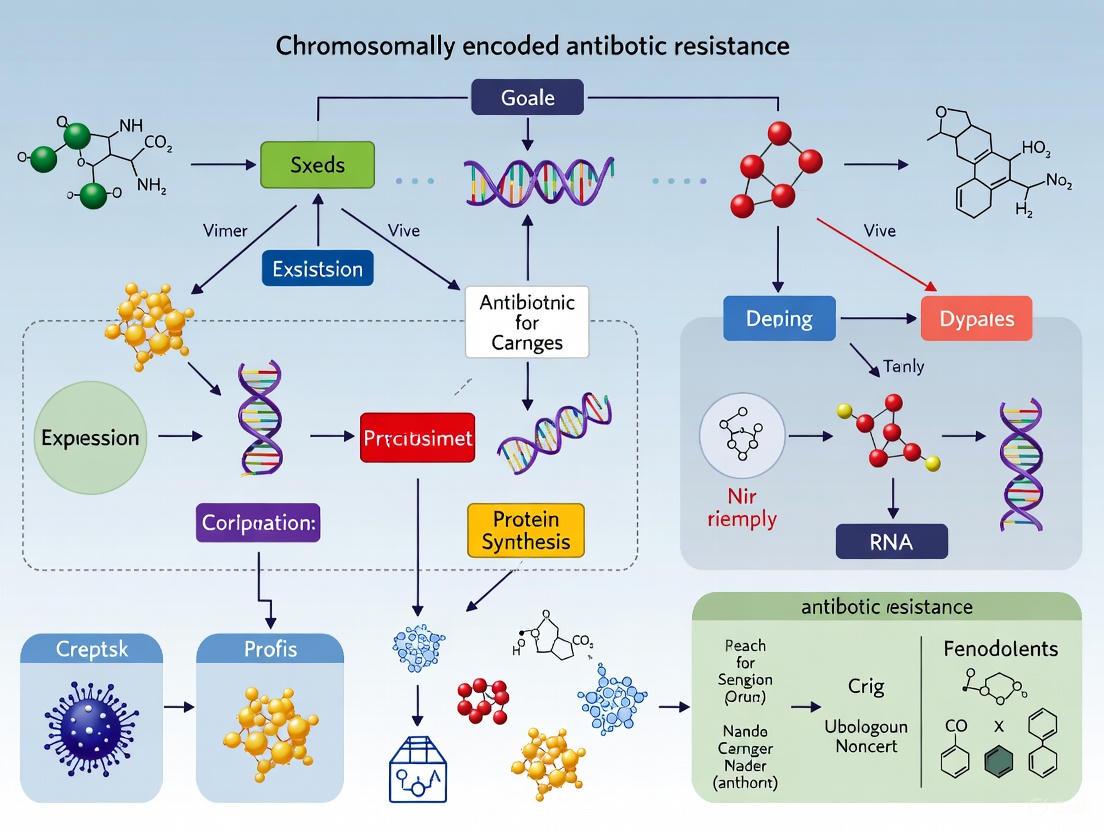
This article provides a comprehensive analysis of chromosomally encoded antibiotic resistance, a critical driver of multidrug-resistant infections.
Chromosomally Encoded Antibiotic Resistance: Molecular Mechanisms, Genomic Analysis, and Clinical Implications
Abstract
This article provides a comprehensive analysis of chromosomally encoded antibiotic resistance, a critical driver of multidrug-resistant infections. Aimed at researchers, scientists, and drug development professionals, it explores the foundational genetic and biochemical mechanisms, including mutational adaptations and efflux pump systems. It further delves into cutting-edge methodological approaches such as whole-genome sequencing and machine learning for resistance prediction. The content addresses current challenges in diagnostics and treatment optimization and validates findings through comparative genomic analyses of high-priority pathogens. By synthesizing insights across these four intents, this review aims to inform the development of next-generation antimicrobial strategies and surveillance programs to combat this pressing global health threat.
The Genetic and Biochemical Basis of Chromosomal Resistance
Defining Chromosomal vs. Acquired Resistance Mechanisms
Antimicrobial resistance (AMR) represents a severe global health threat, projected to cause 10 million deaths annually by 2050 if left unaddressed [1]. Understanding the genetic foundations of resistance is paramount for developing effective countermeasures. Resistance mechanisms broadly fall into two categories: chromosomal resistance, arising from mutations in the bacterial chromosome or integration of foreign genes into it, and acquired resistance, primarily mediated by mobile genetic elements like plasmids. This distinction is critical for tracking resistance transmission and developing targeted therapies. The World Health Organization reports that one in six bacterial infections globally are now resistant to standard antibiotics, with resistance rising in over 40% of pathogen-antibiotic combinations monitored between 2018 and 2023 [2] [3]. This technical guide examines the molecular basis, experimental characterization, and clinical implications of these distinct yet interconnected resistance pathways.
Molecular Mechanisms of Resistance
Chromosomal Resistance Mechanisms
Chromosomal resistance results from genetic changes within the bacterial chromosome itself. These include:
Point Mutations: Single nucleotide changes in chromosomal genes encoding antibiotic targets can reduce drug binding affinity. For example, mutations in genes encoding DNA gyrase (gyrA) and topoisomerase IV (parC) confer resistance to fluoroquinolones, while alterations in RNA polymerase (rpoB) confer rifampin resistance [1].
Gene Amplification: Duplication of chromosomal regions containing resistance genes can increase gene dosage and expression levels, enhancing resistance.
Integrative Elements: Mobile genetic elements like transposons and integrons can insert resistance genes into the chromosome, creating stable, heritable resistance. A recent study documented the first chromosomal co-occurrence of blaAFM-3 and blaIMP-45 carbapenemase genes in a multidrug-resistant Pseudomonas aeruginosa isolate [4]. The identified multidrug-resistant (MDR) region shared high homology with plasmid-borne Tn6485e and was flanked by IS26 elements, suggesting IS26-facilitated plasmid-chromosome recombination [4].
Acquired Resistance Mechanisms
Acquired resistance involves the horizontal transfer of resistance determinants between bacteria via mobile genetic elements:
Plasmids: Self-replicating extrachromosomal DNA elements often carry multiple resistance genes. A 2025 study demonstrated that Escherichia coli can gain multiple resistance mechanisms in a single step through acquisition of multidrug-resistant plasmids encoding extended-spectrum β-lactamase (ESBL) or carbapenemase enzymes [5].
Transposons: Mobile DNA segments that can "jump" between chromosomes and plasmids, facilitating dissemination of resistance cassettes.
Integrons: Genetic elements capable of capturing and expressing gene cassettes, frequently associated with multiple drug resistance. In the chromosomally-integrated MDR region of P. aeruginosa YB1, blaIMP-45 was located within a conserved type I integron structure (IntI-aac(6')-Ib-blaIMP-45-blaOXY-1-catB3-△qacE-sul1) [4].
Table 1: Comparative Features of Chromosomal and Acquired Resistance Mechanisms
| Feature | Chromosomal Resistance | Acquired Resistance |
|---|---|---|
| Genetic Basis | Mutations or gene integration in chromosome | Mobile genetic elements (plasmids, transposons) |
| Transfer Mechanism | Vertical inheritance to daughter cells | Horizontal gene transfer (conjugation, transformation, transduction) |
| Stability | Generally stable, often irreversible | May be lost without selective pressure |
| Spread Rate | Clonal expansion within lineage | Rapid dissemination across species barriers |
| Typical Examples | Target site mutations, porin loss, efflux pump regulation | ESBL genes, carbapenemases, plasmid-borne resistance |
Quantitative Resistance Data
Surveillance data reveals alarming trends in resistance prevalence across major bacterial pathogens. The following table summarizes key resistance statistics from recent global reports:
Table 2: Global Antibiotic Resistance Prevalence in Common Bacterial Pathogens
| Pathogen | Resistance Pattern | Prevalence Rate | Regional Variations |
|---|---|---|---|
| Klebsiella pneumoniae | Third-generation cephalosporin resistance | >55% globally | Exceeds 70% in African Region [2] |
| Escherichia coli | Third-generation cephalosporin resistance | >40% globally | Exceeds 70% in African Region [2] [3] |
| Neisseria gonorrhoeae | Ceftriaxone and azithromycin resistance | Increasing globally | First untreatable cases reported in UK [1] |
| Carbapenem-resistant Enterobacterales (CRE) | Carbapenem resistance | 12,700 infections annually in U.S. | NDM-CRE infections increased 460% 2019-2023 [6] |
Experimental Protocols for Characterizing Resistance Mechanisms
Whole Genome Sequencing of Resistant Isolates
Purpose: To identify chromosomal mutations and acquired resistance genes in bacterial pathogens.
Methodology:
- Isolate Genomic DNA from bacterial cultures using commercial extraction kits.
- Prepare Sequencing Libraries with fragmentation and adapter ligation.
- Perform Whole Genome Sequencing using Illumina or Nanopore platforms.
- Bioinformatic Analysis:
- Assemble reads into contigs using SPAdes or similar assemblers
- Annotate resistance genes using databases like CARD and ResFinder
- Identify chromosomal mutations by comparison to reference genomes
- Detect plasmid origins through mobility gene analysis
Application: This approach identified a 71,600-bp chromosomal fragment containing six β-lactamase genes (blaPER-1, blaOXA-1, blaIMP-45, blaAFM-3, blaOXA-488, and blaPAO-1) in P. aeruginosa YB1, flanked by IS26 elements with 14-bp inverted repeats, demonstrating plasmid-chromosome recombination [4].
In Vitro Evolution and Mutant Selection
Purpose: To study how chromosomal mutations facilitate resistance development under antibiotic pressure.
Methodology:
- Culture Bacteria in laboratory media with subinhibitory antibiotic concentrations.
- Serial Passaging over multiple generations to allow mutation accumulation.
- Selective Pressure with specific antibiotics like streptonigrin to enrich for resistant mutants.
- Whole Genome Sequencing of evolved clones to identify resistance mutations.
- Functional Validation through gene knockout or complementation studies.
Application: Northwestern Medicine scientists used this approach to identify a mutation in the hpaC gene that promotes antimicrobial resistance in N. gonorrhoeae by affecting flavin reductase function and iron homeostasis [7].
Plasmid Conjugation and Fitness Assays
Purpose: To evaluate acquisition and stability of plasmid-borne resistance genes.
Methodology:
- Conjugation Setup between donor (plasmid-carrying) and recipient (plasmid-naive) strains.
- Selection of Transconjugants using appropriate antibiotics.
- Growth Curve Analysis to measure fitness costs of plasmid acquisition.
- Antibiotic Susceptibility Testing to determine resistance profiles.
- Genomic Analysis of adaptative mutations in transconjugants.
Application: Research demonstrated that E. coli rapidly gained parallel chromosomal mutations affecting OmpF porin or its regulators (OmpR, EnvZ) after acquiring pOXA-48 plasmid, synergistically enhancing carbapenem resistance [5].
Signaling Pathways and Resistance Networks
The following diagrams visualize key molecular relationships and resistance pathways identified in recent studies.
Chromosomal Mutation & Plasmic Acquisition Synergy
IS26-Facilitated Plasmid-Chromosome Recombination
Iron Homeostasis Resistance Network in N. gonorrhoeae
Research Reagent Solutions
The following table outlines essential research tools for investigating chromosomal and acquired resistance mechanisms.
Table 3: Essential Research Reagents for Resistance Mechanism Studies
| Reagent/Category | Specific Examples | Research Application | Key Features |
|---|---|---|---|
| Sequencing Platforms | Illumina NovaSeq, Oxford Nanopore | Whole genome sequencing of resistant isolates | High-throughput, long-read capability for resolving repetitive regions |
| Bioinformatics Tools | CARD, ResFinder, SPAdes | Annotation of resistance genes and mutations | Curated databases, automated analysis pipelines |
| Culture Media | Mueller-Hinton broth, LB broth | Antimicrobial susceptibility testing, in vitro evolution | Standardized for reproducible results |
| Selection Antibiotics | Streptonigrin, carbapenems, cephalosporins | Mutant selection, conjugation experiments | Various classes for different resistance mechanisms |
| Molecular Kits | Plasmid extraction kits, genomic DNA kits | Isolation of nucleic acids from bacterial isolates | High purity, suitable for sequencing |
| Cloning Systems | CRISPR-Cas9, Gibson Assembly | Genetic manipulation for functional validation | Precise genome editing, pathway reconstruction |
Discussion and Future Directions
The distinction between chromosomal and acquired resistance mechanisms is becoming increasingly blurred as research reveals complex interactions between these pathways. Chromosomal mutations can facilitate plasmid acquisition and enhance plasmid-encoded resistance, as demonstrated by the rapid emergence of OmpF mutations in E. coli acquiring pOXA-48 [5]. Similarly, plasmid-borne elements like IS26 can mediate the stable chromosomal integration of resistance genes, creating heritable resistance determinants that no longer require plasmid maintenance [4].
Future research should focus on several critical areas:
- Evolutionary Dynamics: Tracking how resistance mechanisms transition between mobile and chromosomal locations over time
- Diagnostic Development: Creating rapid tests that distinguish chromosomal from acquired resistance to guide treatment decisions
- Therapeutic Strategies: Developing combination therapies that target both chromosomal mutations and horizontal gene transfer mechanisms
- One Health Surveillance: Implementing integrated monitoring across human, animal, and environmental sectors to track resistance transmission
The sharp rise in NDM-CRE infections (460% increase from 2019-2023) underscores the urgent need for improved understanding of these resistance mechanisms [6]. As WHO warns of widespread resistance to common antibiotics worldwide [2] [3], elucidating the intricate relationships between chromosomal and acquired resistance represents a critical frontier in preserving antibiotic efficacy for future generations.
Antimicrobial resistance (AMR) represents one of the most pressing global health challenges of the 21st century, with projections indicating it may cause 10 million deaths annually by 2050 [1]. Within this crisis, chromosomally encoded resistance mechanisms—particularly mutational adaptations and efflux pump overexpression—constitute fundamental drivers that enable bacterial pathogens to survive antibiotic exposure. Unlike horizontally acquired resistance genes, these chromosomal adaptations emerge through selective pressure on existing genetic elements, presenting distinct challenges for both detection and therapeutic countermeasures [8] [1]. The clinical relevance of these mechanisms is species-, drug-, and infection-dependent, yet their contribution to multidrug resistance spans virtually all significant bacterial pathogens [8]. This technical review examines the molecular basis, experimental methodologies, and research tools essential for investigating these key resistance drivers, providing a foundation for developing novel intervention strategies.
Molecular Mechanisms of Chromosomal Resistance
Efflux Pump Systems: Architecture and Regulation
Multidrug efflux pumps are integral membrane proteins that actively transport antimicrobial compounds out of bacterial cells, reducing intracellular concentrations to subtoxic levels. These systems are present in both antibiotic-susceptible and antibiotic-resistant bacteria, with overexpression frequently mediating clinically significant resistance [8]. The major families of chromosomally encoded efflux pumps include the Resistance Nodulation Division (RND) family, Major Facilitator Superfamily (MFS), Staphylococcal Multiresistance (SMR) family, and Multidrug and Toxic Compound Extrusion (MATE) family [8].
RND family pumps in gram-negative bacteria are particularly clinically relevant due to their tripartite organization and broad substrate specificity. These systems consist of three components: an inner membrane transporter (e.g., AcrB in E. coli, MexB in P. aeruginosa), a periplasmic accessory protein (e.g., AcrA, MexA), and an outer membrane protein channel (e.g., TolC, OprM) [8]. This complex spans the entire cell envelope, efficiently extruding substrates directly into the external medium. These pumps are proton antiporters, utilizing the proton gradient across the membrane to power efflux through exchange of one H+ ion for one drug molecule [8].
Enhanced efflux pump expression can occur through multiple genetic mechanisms:
- Mutations in local repressor genes
- Mutations in global regulatory genes
- Promoter region mutations in transporter genes
- Insertion elements upstream of transporter genes [8]
Mutational Adaptations: Target Modification and Beyond
Chromosomally encoded antibiotic resistance frequently arises through mutations that alter drug targets, reduce membrane permeability, or modulate cellular physiology. These mutational adaptations work synergistically with efflux mechanisms to create multidrug-resistant phenotypes [1].
Target site modifications represent a common resistance strategy. In Mycobacterium tuberculosis, mutations in the rpoB gene encoding RNA polymerase confer resistance to rifamycins [1]. Similarly, mutations in DNA gyrase (gyrA, gyrB) and topoisomerase IV (parC, parE) genes confer fluoroquinolone resistance across multiple bacterial species [1]. Methicillin-resistant Staphylococcus aureus (MRSA) carries the mecA gene encoding PBP2a, a modified penicillin-binding protein with low affinity for β-lactams, though regulatory mutations affecting its expression also contribute to resistance [1].
Metabolic adaptations accompanying antibiotic resistance development represent an emerging research focus. Integrated experimental and computational analyses of antibiotic-resistant P. aeruginosa lineages have revealed that resistance evolution results in system-level changes to growth dynamics and metabolic phenotype [9]. These adaptations frequently involve mutations affecting catabolic function and central metabolism, suggesting that metabolic fitness costs associated with resistance may be compensated through specific mutational pathways [9].
Table 1: Major Chromosomally Encoded Antibiotic Resistance Mechanisms
| Mechanism Category | Molecular Targets | Antibiotic Classes Affected | Example Pathogens |
|---|---|---|---|
| Efflux Pump Overexpression | Broad substrate recognition | Multiple classes (fluoroquinolones, β-lactams, macrolides, tetracyclines) | Pseudomonas aeruginosa, Escherichia coli, Campylobacter jejuni |
| Target Site Modification | RNA polymerase, DNA gyrase, topoisomerase IV, ribosomal subunits | Rifamycins, fluoroquinolones, aminoglycosides, oxazolidinones | Mycobacterium tuberculosis, Staphylococcus aureus, Enterococcus spp. |
| Enzymatic Inactivation | Drug activation pathways | Aminoglycosides, chloramphenicol | Mycobacterium tuberculosis, Staphylococcus aureus |
| Membrane Permeability | Porins, lipid transporters | β-lactams, carbapenems, polymyxins | Pseudomonas aeruginosa, Klebsiella pneumoniae, Acinetobacter baumannii |
| Metabolic Adaptation | Central metabolism, stress response | Multiple classes through indirect mechanisms | Pseudomonas aeruginosa, Escherichia coli |
Experimental Approaches and Methodologies
Genomic and Transcriptomic Profiling
Modern investigations into chromosomally encoded resistance mechanisms leverage high-throughput sequencing technologies to identify mutational patterns and expression profiles associated with resistant phenotypes. Whole-genome sequencing of lab-evolved antibiotic-resistant lineages and clinical isolates provides comprehensive data on mutations underlying resistance [9]. Transcriptomic profiling across hundreds of clinical isolates enables the identification of gene expression signatures predictive of resistance phenotypes [10].
A recent study demonstrated that machine learning frameworks applied to transcriptomic data from 414 clinical P. aeruginosa isolates can predict antibiotic resistance with 96-99% accuracy using minimal gene sets (35-40 genes) [10]. The automated pipeline combined genetic algorithm-based feature selection with automated machine learning to identify compact, predictive gene subsets for meropenem, ciprofloxacin, tobramycin, and ceftazidime resistance.
Figure 1: Machine Learning Workflow for Resistance Prediction from Transcriptomic Data [10]
Growth Phenotyping and Metabolic Profiling
Functional characterization of resistant strains extends beyond genomic analysis to include systematic growth phenotyping. Integrated experimental and computational approaches have quantified growth dynamics of antibiotic-resistant P. aeruginosa across 190 unique carbon sources, revealing that resistance evolution results in system-level changes to metabolic functionality [9].
These studies combine empirical growth data with genome-scale metabolic network reconstruction to predict genes contributing to observed metabolic changes. Experimental validation of computational predictions then identifies specific mutations affecting catabolic function in resistant pathogens [9]. This approach has revealed shared metabolic phenotypes between lab-evolved and clinical isolates with similar mutational landscapes, suggesting convergent evolutionary pathways to resistance.
Efflux Pump Characterization Methods
Investigating efflux pump activity and regulation requires specialized methodologies:
- Real-time efflux assays using fluorescent substrates quantify pump activity
- Gene expression analysis via RT-qPCR or RNA-seq measures pump overexpression
- Genetic manipulation through knockout or complementation validates pump contribution to resistance
- Bioinformatic analysis identifies regulatory elements and mutations controlling expression
The clinical relevance of efflux-mediated resistance must be established through correlation of pump expression levels with minimum inhibitory concentrations (MICs) against clinically achievable antibiotic concentrations [8].
Essential Research Tools and Reagents
Table 2: Research Reagent Solutions for Investigating Resistance Mechanisms
| Reagent/Resource | Application | Function/Utility |
|---|---|---|
| PanRes Dataset [11] | Genomic analysis | Consolidated AMR gene sequences from multiple databases for computational analyses |
| CARD (Comprehensive Antibiotic Resistance Database) [10] | Gene annotation | Curated repository of known antibiotic resistance genes and mutations |
| Genome-Scale Metabolic Models [9] | Metabolic analysis | Computational reconstruction of metabolic networks for predicting genotype-phenotype relationships |
| iModulons [10] | Transcriptomic analysis | Independently modulated gene sets derived from independent component analysis for regulatory insights |
| Automated ML (AutoML) Platforms [10] | Predictive modeling | Streamlined machine learning for high-dimensional transcriptomic data analysis |
| Tripartite Efflux Pump Components [8] | Mechanistic studies | Purified RND pump proteins for structural and functional characterization |
Data Analysis and Computational Modeling
Unsupervised Learning for Pattern Discovery
Unsupervised machine learning techniques have revealed novel patterns in AMR gene data, offering insights beyond supervised approaches. Analysis of the PanRes dataset comprising 12,267 AMR genes using K-means clustering and Principal Component Analysis (PCA) has identified distinct clusters based on gene length and resistance class associations [11]. These patterns provide insights into the structural and functional properties of resistance genes, particularly the role of gene length in different resistance pathways.
Dimensionality reduction through PCA enables clearer visualization of relationships among gene groupings, revealing latent structures within high-dimensional AMR data [11]. These approaches facilitate the discovery of previously unrecognized associations between genetic features and resistance phenotypes without predefined labels.
Quantitative Framework for Resistance Evolution
A quantitative understanding of antibiotic resistance evolution requires integration of multiple data types and modeling approaches. Key factors influencing resistance trajectories include:
- Dose-response characteristics of drugs that shape the distribution of fitness effects
- Temporal and spatial antibiotic gradients that determine selective pressures
- Accessibility of mutational paths to resistance revealed through fitness landscape mapping [12]
Recent advances combine highly controlled experimental evolution with computational modeling to quantify the dynamics of resistance emergence and predict evolutionary trajectories [12].
Discussion and Future Directions
Chromosomally encoded mutational adaptations and efflux pump overexpression represent fundamental challenges in combating antimicrobial resistance. These mechanisms facilitate the emergence of multidrug-resistant phenotypes through alterations of existing cellular components rather than acquisition of foreign genetic material. The clinical impact is particularly severe for efflux-mediated resistance in gram-negative pathogens, where RND-type pumps contribute to intrinsic and acquired resistance to multiple antibiotic classes [8].
Future research directions should prioritize:
- Development of efflux pump inhibitors that could restore antibiotic efficacy
- Integration of multi-omics data to capture the full complexity of resistance mechanisms
- Advanced predictive models that incorporate evolutionary trajectories and fitness landscapes
- Point-of-care diagnostics based on minimal gene signatures for rapid resistance detection [10]
The limited overlap (2-10%) between machine learning-identified predictive gene sets and known resistance genes in databases like CARD highlights significant knowledge gaps in our current understanding of AMR [10]. This suggests that resistance acquisition is associated with changes in diverse regulatory and metabolic genes beyond canonical resistance markers. Mapping these genes onto independently modulated gene sets (iModulons) has revealed transcriptional adaptations across diverse genetic regions, indicating system-wide cellular adjustments in resistant strains [10].
Overcoming the threat of chromosomally encoded resistance will require continued interdisciplinary approaches that combine experimental microbiology, genomic technologies, and computational modeling. Only through such integrated strategies can we hope to address the escalating AMR crisis and develop effective countermeasures against resistant pathogens.
Antimicrobial resistance (AMR) represents a critical challenge to global public health, with chromosomally encoded mechanisms forming the foundation of bacterial defense systems. These intrinsic resistance mechanisms are genetically embedded within the bacterial chromosome and exist independently of external genetic material acquisition. Within the context of antibacterial drug development, understanding these core mechanisms—enzymatic degradation, target modification, and reduced permeability—is paramount for designing effective therapeutic strategies against multidrug-resistant pathogens.
The intrinsic resistance of bacteria is established by a variety of genetically encoded mechanisms that allow survival under antimicrobial pressure [13]. In clinical settings, resistant strains are systematically classified as multidrug-resistant (MDR), extensively drug-resistant (XDR), and pandrug-resistant (PDR), with MDR defined as non-susceptibility to ≥1 agent in ≥3 antimicrobial categories, XDR when susceptibility is limited to ≤2 antimicrobial categories, and PDR as non-susceptibility to all antimicrobial categories [13]. This review examines the molecular basis of major chromosomally encoded resistance mechanisms, providing researchers with both theoretical frameworks and practical methodologies for investigating these phenomena in laboratory settings.
Enzymatic Degradation of Antibiotics
Biochemical Principles and Key Enzymes
Enzymatic degradation represents one of the most prevalent mechanisms of antibiotic resistance, wherein bacteria produce enzymes that chemically modify or destroy antimicrobial compounds before they reach their cellular targets. These enzymes catalyze specific biochemical reactions that compromise the structural integrity of antibiotics, rendering them ineffective against their molecular targets [13] [14].
The major classes of antibiotic-inactivating enzymes include:
- β-lactamases: These enzymes hydrolyze the β-lactam ring in penicillins, cephalosporins, carbapenems, and monobactams. Chromosomally encoded AmpC cephalosporinases (Class C) and OXA enzymes (Class D) are particularly significant in Gram-negative pathogens [13].
- Aminoglycoside-modifying enzymes: These include phosphotransferases (APHs), acetyltransferases (AACs), and nucleotidyltransferases (ANTs) that catalyze the modification of specific functional groups on aminoglycoside molecules [13].
- Enzymes targeting other antibiotic classes: Such as chloramphenicol acetyltransferases (CATs) and Fos enzymes that inactivate fosfomycin [13].
Molecular Genetics and Regulation
The expression of chromosomally encoded antibiotic-inactivating enzymes is often tightly regulated. For instance, the AmpC β-lactamase in Pseudomonas aeruginosa is inducible in the presence of certain β-lactam antibiotics [13]. The regulatory pathways frequently involve sophisticated sensing and response systems that modulate enzyme production based on antimicrobial exposure. Gene amplification events can also lead to increased enzyme production, as multiple copies of resistance genes result in elevated expression levels [15].
Table 1: Major Classes of Antibiotic-Inactivating Enzymes and Their Substrates
| Enzyme Class | Specific Examples | Antibiotic Substrates | Genetic Location | Resistance Mechanism |
|---|---|---|---|---|
| Class C β-lactamases | AmpC cephalosporinases | Penicillins, Cephalosporins | Chromosome | β-lactam ring hydrolysis |
| Class D β-lactamases | OXA enzymes | β-lactams | Chromosome/Plasmid | β-lactam ring hydrolysis |
| Aminoglycoside-modifying enzymes | AAC, APH, ANT | Aminoglycosides | Chromosome/Plasmid | Amino or hydroxyl group modification |
| Fosfomycin-inactivating enzymes | FosA, FosB, FosX | Fosfomycin | Chromosome/Plasmid | Epoxide ring opening |
Experimental Protocols for Enzyme Characterization
Protocol 1: β-Lactamase Activity Assay
Principle: This spectrophotometric method measures the hydrolysis of β-lactam antibiotics by detecting decrease in absorbance as the β-lactam ring is opened [13].
Reagents:
- Nitrocefin solution (0.5 mM in phosphate buffer, pH 7.0)
- Bacterial cell lysate or purified enzyme preparation
- Phosphate buffer (50 mM, pH 7.0)
- Positive control (known β-lactamase preparation)
- Negative control (heat-inactivated enzyme)
Procedure:
- Prepare bacterial cell lysate by sonication of mid-log phase culture followed by centrifugation at 12,000 × g for 15 minutes.
- Dilute nitrocefin substrate to working concentration in phosphate buffer.
- Add 100 μL of enzyme preparation to 900 μL of nitrocefin solution.
- Immediately measure absorbance at 486 nm every 30 seconds for 10 minutes.
- Calculate enzyme activity using the molar extinction coefficient for nitrocefin (Δε = 17,400 M⁻¹cm⁻¹).
- One unit of enzyme activity is defined as the amount hydrolyzing 1 μmol of nitrocefin per minute at 25°C.
Data Interpretation: Compare hydrolysis rates between test and control samples. Confirm β-lactamase activity by inhibition with clavulanic acid (Class A) or boronic acid (Class C).
Target Site Modification
Genetic and Structural Basis
Target site modification occurs when mutations in genes encoding antibiotic targets reduce drug binding affinity while maintaining the target's biological function. This mechanism represents a sophisticated evolutionary adaptation that directly compromises antibiotic efficacy [14].
Key examples include:
- DNA gyrase and topoisomerase IV mutations: Confer resistance to fluoroquinolones by altering drug-binding pockets in GrlA and GrlB subunits [13] [14].
- RNA polymerase modifications: Mutations in rpoB gene leading to rifampicin resistance [16].
- Alterations in penicillin-binding proteins (PBPs): Modifying target sites for β-lactam antibiotics [16].
- Ribosomal RNA methylation: Mediated by erm genes, resulting in macrolide resistance [17].
Experimental Protocols for Target Analysis
Protocol 2: Detection of Target Gene Mutations via PCR and Sequencing
Principle: Amplification and sequencing of genes encoding antibiotic targets to identify resistance-conferring mutations [13].
Reagents:
- Bacterial genomic DNA
- PCR primers specific for target genes (e.g., gyrA, gyrB, grlA, grlB for fluoroquinolone resistance)
- PCR master mix with high-fidelity DNA polymerase
- Agarose gel electrophoresis reagents
- DNA sequencing reagents
Procedure:
- Design primers flanking the quinolone resistance-determining regions (QRDRs) of target genes:
- gyrA-F: 5'-TCGCGTACTCTACGCCATGA-3'
- gyrA-R: 5'-GTTCCATCAGCCCTTCAAAC-3'
- grlA-F: 5'-CAGCATCCTACGGCGTTATC-3'
- grlA-R: 5'-GTACGCGATGTGGGTTTCTG-3'
- Perform PCR amplification with the following conditions:
- Initial denaturation: 95°C for 5 minutes
- 35 cycles of: 95°C for 30 seconds, 55°C for 30 seconds, 72°C for 1 minute
- Final extension: 72°C for 7 minutes
- Analyze PCR products by agarose gel electrophoresis.
- Purify PCR products and perform Sanger sequencing.
- Align sequences with reference strains to identify mutations.
Data Interpretation: Common resistance mutations include S83L and D87N in GyrA, and S80I and E84K in GrlA for fluoroquinolone resistance. Correlate identified mutations with MIC data to establish resistance associations.
Reduced Permeability and Efflux Systems
Structural and Functional Aspects
Reduced antibiotic permeability encompasses two primary mechanisms: decreased influx through porin modifications and increased efflux via pump systems. These mechanisms significantly limit intracellular antibiotic accumulation, effectively protecting cellular targets from antimicrobial activity [13] [14].
Porin-Mediated Resistance:
- OprD porin loss: Confers resistance to carbapenems, particularly imipenem, in P. aeruginosa by preventing antibiotic entry [13].
- General porin deficiencies: Reduce permeability to multiple antibiotic classes, including β-lactams and fluoroquinolones [13].
Efflux Pump Systems:
- Resistance-Nodulation-Division (RND) family: Includes MexAB-OprM, MexXY-OprM, MexCD-OprJ, and MexEF-OprN in P. aeruginosa that export diverse antibiotics [13].
- Major Facilitator Superfamily (MFS): Includes NorA in S. aureus that mediates fluoroquinolone resistance [15].
- ATP-Binding Cassette (ABC) transporters: Such as PatAB in Streptococcus pneumoniae [15].
Experimental Protocols for Permeability Studies
Protocol 3: Efflux Pump Activity Assay Using Ethidium Bromide Accumulation
Principle: This fluorometric assay measures efflux pump activity by quantifying the accumulation of ethidium bromide (EtBr) in bacterial cells with and without efflux pump inhibitors [13].
Reagents:
- Bacterial cultures in logarithmic growth phase
- Ethidium bromide stock solution (1 mg/mL)
- Efflux pump inhibitor (e.g., Carbonyl Cyanide m-Chlorophenyl hydrazone/CCCP, 100 μM)
- Phosphate-buffered saline (PBS, pH 7.4)
- Positive control strain with known efflux pump activity
Procedure:
- Harvest bacterial cells by centrifugation (5,000 × g, 10 minutes) and wash twice with PBS.
- Resuspend cells to an OD₆₀₀ of 0.4 in PBS containing 0.4% glucose.
- Divide cell suspension into two aliquots:
- Pre-treated group: Incubate with CCCP (final concentration 50 μM) for 10 minutes
- Control group: No CCCP treatment
- Add EtBr to both groups (final concentration 1 μg/mL).
- Immediately transfer 200 μL aliquots to black 96-well plates.
- Measure fluorescence every 2 minutes for 60 minutes (excitation: 530 nm, emission: 600 nm).
- Calculate EtBr accumulation rates from fluorescence increase.
Data Interpretation: Higher fluorescence in CCCP-treated cells indicates active efflux in untreated cells. Compare accumulation rates between strains to assess relative efflux activities.
Table 2: Major Bacterial Efflux Pump Systems and Their Substrates
| Efflux System | Bacterial Species | Transporter Family | Antibiotic Substrates | Regulatory Genes |
|---|---|---|---|---|
| MexAB-OprM | Pseudomonas aeruginosa | RND | β-lactams, Fluoroquinolones, Tetracyclines, Chloramphenicol | mexR, nalB |
| MexXY-OprM | Pseudomonas aeruginosa | RND | Aminoglycosides, Macrolides, Tetracyclines | mexZ |
| AcrAB-TolC | Escherichia coli | RND | β-lactams, Tetracyclines, Chloramphenicol, Fluoroquinolones | acrR, marA, soxS |
| NorA | Staphylococcus aureus | MFS | Fluoroquinolones | - |
| PatAB | Streptococcus pneumoniae | ABC | Fluoroquinolones | - |
Advanced Research Methodologies
Integrative Approaches for Resistance Mechanism Investigation
Contemporary research on chromosomal resistance mechanisms employs multidisciplinary methodologies that combine genetic, biochemical, and computational approaches. These integrated strategies provide comprehensive insights into the complex interplay between different resistance determinants [18] [19].
Functional Metagenomics for Resistance Gene Discovery:
- Construction of metagenomic libraries from diverse microbiomes (human gut, soil, clinical samples)
- Functional screening for resistance phenotypes following cloning into susceptible hosts
- Sequencing and annotation of resistance-conferring DNA fragments [19]
Adaptive Laboratory Evolution (ALE) Studies:
- Experimental evolution of bacterial populations under antibiotic pressure
- Genomic analysis of evolved strains to identify resistance mutations
- Assessment of resistance stability and fitness costs [19]
The Scientist's Toolkit: Essential Research Reagents
Table 3: Key Research Reagent Solutions for Resistance Mechanism Studies
| Reagent/Category | Specific Examples | Research Application | Technical Considerations |
|---|---|---|---|
| β-Lactamase Substrates | Nitrocefin, CENTA | Enzyme activity quantification | Nitrocefin provides colorimetric readout; CENTA offers fluorometric option |
| Efflux Pump Inhibitors | CCCP, PaβN, Verapamil | Efflux system characterization | CCCP uncouples proton motive force; consider cytotoxicity controls |
| Gene Expression Analysis | RT-qPCR primers for resistance genes | Transcriptional regulation studies | Normalize to housekeeping genes; validate primer specificity |
| Antibiotic Susceptibility Testing | Cation-adjusted Mueller-Hinton broth, Agar dilution materials | MIC determination | Follow CLSI/EUCAST guidelines for reproducibility |
| Molecular Cloning Tools | Plasmid vectors, Competent cells, Recombinase systems | Genetic manipulation | Use suicide vectors for chromosomal modifications; verify recombination |
The ongoing challenge of antimicrobial resistance necessitates continuous investigation into the fundamental mechanisms that enable bacterial survival under antibiotic pressure. Chromosomally encoded resistance mechanisms—particularly enzymatic degradation, target modification, and reduced permeability—represent core defensive strategies that pathogens employ against antimicrobial agents. Understanding these mechanisms at molecular, genetic, and structural levels provides crucial insights for developing novel therapeutic approaches that circumvent existing resistance determinants.
Future research directions should focus on the interplay between different resistance mechanisms, the evolution of resistance in clinical settings, and the development of innovative anti-infective strategies that target resistance mechanisms themselves. Promising approaches include dual-targeting antibiotics that simultaneously attack membrane integrity and intracellular targets [19], efflux pump inhibitors that restore antibiotic susceptibility [13], and computational methods leveraging artificial intelligence for antibiotic discovery and resistance prediction [16] [20]. As the molecular intricacies of resistance mechanisms continue to be unraveled, this knowledge will undoubtedly inform the next generation of antibacterial therapies capable of overcoming the formidable challenge of antimicrobial resistance.
The Role of Global Regulatory Networks in Resistance Development
Antimicrobial resistance (AMR) represents one of the most severe threats to global public health, undermining the efficacy of life-saving treatments and placing populations at heightened risk from common infections and routine medical interventions [21] [22]. The emergence and rapid dissemination of resistance mechanisms are driven not only by genetic mutations but also by sophisticated, chromosomally encoded regulatory networks that allow pathogens to adapt and survive under antimicrobial pressure. These networks function as master switches, coordinating complex bacterial responses to environmental stresses, including antibiotic exposure [22].
Within the context of chromosomally encoded antibiotic resistance, regulatory networks enable pathogens to fine-tune the expression of resistance and virulence genes, optimizing their fitness and survival in hostile environments [23] [22]. This technical guide examines the architecture and function of these global regulatory systems, detailing the molecular mechanisms that facilitate resistance development and providing researchers with advanced methodological approaches for their investigation. Understanding these networks is paramount for developing novel therapeutic strategies that can circumvent resistance by targeting its regulatory underpinnings rather than merely addressing its phenotypic manifestations.
Molecular Mechanisms of Regulatory Networks in AMR
Bacterial pathogens employ an arsenal of sophisticated regulatory systems to control gene expression in response to antibiotic exposure. These networks integrate environmental signals with intracellular signaling cascades to modulate the expression of resistance determinants, efflux pumps, and virulence factors.
Two-Component Signal Transduction Systems
Two-component systems (TCSs) represent one of the primary mechanisms by which bacteria sense and respond to environmental stresses, including antibiotic presence [23]. These systems typically consist of a membrane-associated sensor histidine kinase and a cytoplasmic response regulator. Upon detection of a specific signal, such as antibiotic-induced membrane perturbation, the sensor kinase autophosphorylates at a conserved histidine residue and subsequently transfers this phosphate group to an aspartate residue on the response regulator [23]. The phosphorylated response regulator then binds to specific DNA sequences, activating or repressing target genes involved in resistance mechanisms.
In glycopeptide-resistant enterococci, the VanS/VanR TCS exemplifies this elegant regulatory mechanism. When vancomycin is detected in the environment, VanS autophosphorylates and phosphorylates VanR, which then activates transcription of the vanHAXYZ operon [23]. This operon encodes enzymes that reprogram peptidoglycan synthesis, replacing the vancomycin target D-Ala-D-Ala with D-Ala-D-Lac, to which glycopeptides exhibit low binding affinity [23]. The remarkable efficiency of this system allows enterococci to rapidly deploy resistance mechanisms only when needed, conserving energy while maintaining susceptibility in the absence of antibiotic pressure.
Accessory Regulatory Mechanisms
Beyond TCSs, bacteria employ additional regulatory layers that fine-tune resistance gene expression. Small non-coding RNAs (sRNAs) function as post-transcriptional regulators that can rapidly modulate mRNA stability and translation, enabling quick adaptive responses to antibiotic stress [22]. Quorum sensing (QS) systems allow bacterial populations to coordinate resistance gene expression in a cell-density-dependent manner, effectively acting as a collective defense mechanism when population thresholds are reached [22].
Global transcription factors, such as the Crp/Fnr family regulator ArcR in Staphylococcus aureus, further expand the regulatory repertoire. ArcR enhances bacterial resistance to fluoroquinolones by mitigating oxidative stress through activation of the catalase gene katA [22]. When arcR is mutated, S. aureus demonstrates increased susceptibility to fluoroquinolones due to impaired oxidative stress response, highlighting the crucial role of these master regulators in connecting metabolic adaptation with antibiotic resistance [22].
Key Resistance-Regulating Networks and Their Targets
Table 1: Characterized Regulatory Networks in Antimicrobial Resistance
| Regulatory System | Bacterial Species | Antibiotic Target | Molecular Mechanism | Gene Targets |
|---|---|---|---|---|
| VanS/VanR | Enterococci (VanA, VanB phenotypes) | Glycopeptides (vancomycin, teicoplanin) | Inducible expression of vanHAXYZ operon for peptidoglycan precursor alteration | vanH, vanA, vanX, vanY, vanZ |
| ArcR (Crp/Fnr family) | Staphylococcus aureus | Fluoroquinolones | Activation of oxidative stress response genes | katA (catalase gene) |
| AdeRS TCS | Acinetobacter baumannii | Carbapenems, multiple drug classes | Regulation of AdeABC efflux pump expression | adeA, adeB, adeC |
| QS Systems | Multiple pathogens (e.g., Pseudomonas) | Multiple classes | Cell-density-dependent coordination of resistance mechanisms | Various efflux pumps, β-lactamases |
Experimental Approaches for Investigating Regulatory Networks
Phenotypic Susceptibility Profiling
Establishing baseline antimicrobial susceptibility profiles is fundamental before investigating regulatory mechanisms. The minimum inhibitory concentration (MIC) and minimum bactericidal concentration (MBC) provide quantitative measures of bacterial susceptibility to antimicrobial agents [24].
Protocol: Broth Microdilution for MIC Determination
- Prepare doubling dilutions of the antimicrobial agent in a suitable broth medium in 96-well microtiter plates [24].
- Standardize bacterial inoculum to approximately 1 × 10^8 CFU/mL and add 50μL to each well [24].
- Incubate plates at 37°C for 24 hours [24].
- The MIC is defined as the lowest concentration of antimicrobial agent that completely inhibits visible bacterial growth [24].
- For MBC determination, subculture 20μL from wells showing no growth onto antibiotic-free medium; the MBC is the lowest concentration yielding ≥99.9% kill [24].
This methodology generates reproducible data on resistance development risk while remaining cost-effective (<1 euro per microbicide-bacterium combination tested in triplicate) [24].
Molecular Analysis of Regulatory Components
Protocol: Transcriptional Analysis of Regulator Activity
- RNA Isolation and Reverse Transcription: Extract total RNA from bacterial cultures exposed to subinhibitory antibiotic concentrations and controls. Perform reverse transcription to generate cDNA.
- Quantitative PCR: Design primers targeting regulatory genes (e.g., vanR, vanS) and their downstream targets (e.g., vanA, vanX). Use housekeeping genes for normalization.
- Expression Kinetics: Analyze temporal expression patterns following antibiotic exposure to establish regulatory hierarchies and kinetics.
- Promoter Binding Assays: Perform electrophoretic mobility shift assays (EMSAs) with purified response regulators to confirm direct binding to promoter regions of target genes.
This multi-faceted approach allows researchers to delineate the complete regulatory pathway from signal perception to gene expression changes.
Visualization of Regulatory Networks
Figure 1: Two-Component System-Mediated Resistance Activation
Figure 2: Experimental Workflow for Network Analysis
The Scientist's Toolkit: Essential Research Reagents
Table 2: Key Reagents for Investigating Resistance Regulatory Networks
| Reagent/Category | Specific Examples | Research Application | Technical Considerations |
|---|---|---|---|
| Bacterial Strains | Reference strains (ATCC), Clinical isolates with defined resistance profiles | Baseline studies, Validation of mechanisms | Limit subculturing (<2 passages from stock) to maintain genetic stability [24] |
| Antimicrobial Agents | Vancomycin, Carbapenems, Fluoroquinolones, Colistin | Induction of resistance responses | Prepare fresh dilutions; use clinically relevant concentrations including sub-MIC levels |
| Molecular Biology Reagents | RNA isolation kits, Reverse transcriptase, qPCR master mixes, EMSA components | Gene expression analysis, Protein-DNA interactions | Include appropriate controls (housekeeping genes, competition assays) |
| Culture Media & Supplements | Tryptone Soya Broth (TSB), Mueller-Hinton Agar, Neutralizers (Tween 80, Asolectin) | Phenotypic assays, MIC determinations, Quenching antimicrobial activity | Validate neutralizer efficacy and non-toxicity for accurate susceptibility testing [24] |
| Specialized Assay Systems | 96-well microtiter plates, Automated susceptibility testing systems (VITEK 2, Sensititre) | High-throughput screening, Standardized MIC determination | Follow CLSI or EUCAST guidelines for interpretation; note potential discrepancies between standards [25] |
Chromosomally encoded regulatory networks represent sophisticated adaptive systems that enable bacterial pathogens to survive antibiotic challenge through coordinated gene expression changes. The investigation of these networks—particularly two-component systems, global transcription factors, and quorum sensing mechanisms—provides crucial insights into the fundamental biology of antimicrobial resistance. The experimental frameworks outlined in this technical guide offer researchers comprehensive methodologies for dissecting these complex systems, from initial phenotypic characterization to detailed molecular analyses of regulator-target interactions.
As resistance mechanisms continue to evolve, understanding these regulatory networks will be paramount for developing next-generation antimicrobial strategies that disrupt pathogen adaptability and resensitize resistant strains to conventional antibiotics. Future research should focus on mapping the complete regulons of key resistance controllers, identifying critical network vulnerabilities, and translating these findings into novel therapeutic approaches that can be deployed against multidrug-resistant pathogens.
Antimicrobial resistance (AMR) represents one of the most severe threats to global public health, with infections caused by multidrug-resistant pathogens resulting in substantial morbidity and mortality worldwide [26]. Among resistance mechanisms, intrinsic resistance—conferred by chromosomally encoded elements present in all or most members of a bacterial species—poses a fundamental challenge to antimicrobial therapy. This form of resistance is distinct from acquired resistance, which occurs through horizontal gene transfer or mutations, and often renders entire classes of antibiotics ineffective from the outset of treatment [27] [26].
Two high-priority pathogens exemplifying clinically significant intrinsic resistance are Pseudomonas aeruginosa and Elizabethkingia anophelis. P. aeruginosa, a Gram-negative opportunistic pathogen, is a leading cause of nosocomial infections in immunocompromised individuals, cystic fibrosis patients, and those with burn wounds [28] [27]. Its remarkable capacity to resist antibiotics stems from a complex interplay of intrinsic mechanisms that have been extensively studied, though they continue to evolve [29]. In contrast, E. anophelis, an emerging Gram-negative pathogen of the Flavobacteriaceae family, has more recently been recognized for its ability to cause severe healthcare-associated infections with mortality rates reaching up to 70% in vulnerable populations [30] [31]. This bacterium demonstrates a striking pattern of pan-resistance to most conventional antibiotic classes, creating therapeutic dilemmas for clinicians [32].
Understanding the molecular basis of intrinsic resistance in these pathogens is not merely an academic exercise but a pressing clinical necessity. This whitepaper delineates the principal mechanisms of intrinsic resistance in P. aeruginosa and E. anophelis, contextualized within the broader framework of chromosomally encoded antibiotic resistance research. By synthesizing current knowledge and highlighting experimental approaches, we aim to provide researchers and drug development professionals with a comprehensive technical resource to guide the development of novel therapeutic strategies against these formidable pathogens.
Intrinsic Resistance Mechanisms in Pseudomonas aeruginosa
Pseudomonas aeruginosa employs a multifaceted arsenal of intrinsic resistance mechanisms that collectively limit antibiotic penetration, actively remove antimicrobial agents, and modulate cellular targets to evade treatment. These constitutive defenses contribute significantly to its profile as a notoriously difficult-to-treat pathogen.
Impermeable Outer Membrane and Efflux Systems
The P. aeruginosa outer membrane exhibits notably low permeability, approximately 12-100 times lower than that of E. coli, creating a formidable physical barrier to antibiotic entry [27]. This intrinsic characteristic is complemented by broadly specific efflux pumps that actively export antibiotics from the periplasmic space or cytoplasm back into the external environment.
The MexAB-OprM system represents the most significant and constitutively expressed resistance-nodulation-division (RND) efflux pump in P. aeruginosa. This tripartite complex spans the entire cell envelope and demonstrates a remarkably broad substrate profile that includes β-lactams (particularly ticarcillin, aztreonam, and certain cephalosporins), fluoroquinolones, tetracyclines, chloramphenicol, novobiocin, and various dyes and detergents [27] [33]. The critical role of MexAB-OprM in intrinsic resistance is powerfully demonstrated by studies with temocillin, a β-lactam antibiotic considered intrinsically inactive against P. aeruginosa. Research has shown that mutations in mexA or mexB genes—occurring naturally in cystic fibrosis isolates—can reverse this intrinsic resistance, reducing MICs from >512 mg/L to clinically achievable concentrations of 2-128 mg/L [33]. These mutations include nucleotide insertions/deletions, premature termination codons, tandem repeats, nonstop mutations, and missense mutations that collectively impair pump function.
Beyond MexAB-OprM, P. aeruginosa possesses several other RND efflux systems that contribute to its intrinsic resistance profile, though their expression is typically inducible rather than constitutive:
- MexXY-OprM: This system demonstrates specificity for aminoglycosides, erythromycin, tetracycline, and certain β-lactams, with expression often induced by ribosome-targeting antibiotics [27].
- MexCD-OprJ and MexEF-OprN: These systems contribute to resistance to fluoroquinolones, chloramphenicol, trimethoprim, and β-lactams when overexpressed through mutational deregulation [27].
Table 1: Major RND Efflux Systems in P. aeruginosa and Their Substrate Profiles
| Efflux System | Primary Substrates | Regulatory Features |
|---|---|---|
| MexAB-OprM | β-lactams (ticarcillin, aztreonam), fluoroquinolones, tetracycline, chloramphenicol, novobiocin | Constitutively expressed, repressed by MexR |
| MexXY-OprM | Aminoglycosides, erythromycin, tetracycline, certain β-lactams | Inducible by ribosome-targeting antibiotics |
| MexCD-OprJ | Fluoroquinolones, chloramphenicol, trimethoprim, fourth-generation cephalosporins | Normally repressed, overexpressed in nfxB mutants |
| MexEF-OprN | Fluoroquinolones, chloramphenicol, trimethoprim, imipenem | Normally repressed, overexpressed in nfxC mutants |
Chromosomal β-Lactamases
Pseudomonas aeruginosa possesses two chromosomally encoded β-lactamases that significantly contribute to its intrinsic β-lactam resistance:
AmpC: This class C cephalosporinase represents the most clinically significant chromosomal β-lactamase in P. aeruginosa. AmpC is inducible by certain β-lactams (e.g., benzylpenicillin, imipenem, cefoxitin) but not by others such as aztreonam, piperacillin, and ceftazidime [27]. In clinical settings, mutational derepression of ampC occurs frequently, resulting in stably derepressed strains that hyperproduce AmpC and exhibit resistance to broad-spectrum cephalosporins (e.g., ceftazidime), penicillins (e.g., ticarcillin), and monobactams [27]. Recent reports have identified extended-spectrum AmpC (ESAC) variants with mutations that further expand the enzyme's substrate specificity to include cefepime and carbapenems, particularly when combined with porin deficiencies [27].
PoxB: This class D oxacillinase has been detected in laboratory mutants lacking AmpC, though its clinical significance remains uncertain compared to AmpC [27].
Accessory Resistance Mechanisms
Beyond the primary mechanisms described above, P. aeruginosa employs additional intrinsic resistance strategies:
Porin-mediated permeability: The outer membrane protein OprD facilitates the uptake of basic amino acids, peptides, and carbapenems (particularly imipenem). Reduced expression or mutations in oprD represent a major pathway to carbapenem resistance, occurring independently or in conjunction with other mechanisms [27]. Notably, anion-specific porins OpdK and OpdF appear to play only a marginal role in temocillin influx, reducing MICs by approximately just one two-fold dilution when expressed [33].
Adaptive resistance: This inducible phenotype includes biofilm-mediated resistance, where bacteria encased in an extracellular polymeric matrix exhibit up to 1000-fold increased tolerance to antibiotics, and the formation of multidrug-tolerant persister cells that contribute to chronic and relapsing infections [28].
The coordination of these diverse mechanisms creates a powerful defensive network that explains why P. aeruginosa ranks among the most formidable bacterial pathogens in healthcare settings worldwide.
Intrinsic Resistance Mechanisms in Elizabethkingia anophelis
Elizabethkingia anophelis exhibits a dramatic pattern of intrinsic resistance that effectively neutralizes most conventional antibiotic classes, creating substantial therapeutic challenges. This resistance profile stems primarily from a combination of chromosomally encoded β-lactamases, efflux systems, and possibly other underexplored mechanisms.
Chromosomal β-Lactamase Arsenal
Unlike most Gram-negative bacteria, E. anophelis possesses not one but three distinct chromosomally encoded β-lactamase genes that collectively confer resistance to nearly all β-lactam antibiotics:
blaB-1: This gene encodes a subclass B1 metallo-β-lactamase (MBL) that hydrolyzes a broad spectrum of β-lactams, including carbapenems, but not aztreonam [30]. Functional cloning studies have demonstrated that BlaB-1 expression in E. coli significantly increases MICs to cephalosporins, carbapenems, and ceftazidime-avibactam, though not to aztreonam [30].
blaGOB-26: This gene encodes another subclass B1 MBL with similar substrate specificity to BlaB-1. The presence of two distinct MBLs provides redundant carbapenemase activity and potentially expands the range of hydrolyzable substrates [30].
blaCME-2: This gene encodes a class A extended-spectrum β-lactamase (ESBL) that confers resistance to extended-spectrum cephalosporins and aztreonam, effectively complementing the MBLs to create a comprehensive β-lactam resistance profile [30].
The simultaneous presence of these three enzymes creates a nearly insurmountable barrier to β-lactam therapy. Notably, this resistance extends to novel β-lactam-β-lactamase inhibitor combinations such as ceftazidime-avibactam, which remain vulnerable to hydrolysis by the MBLs [30]. Even the combination of aztreonam with ceftazidime-avibactam has demonstrated limited efficacy against clinical isolates, highlighting the formidable nature of this enzymatic arsenal [30].
Additional Resistance Determinants
Beyond its impressive β-lactamase complement, E. anophelis possesses other chromosomally encoded resistance mechanisms:
Efflux pump systems: Genomic analyses have identified various genes encoding efflux pumps that likely contribute to the intrinsic resistance profile, though these systems are less well-characterized than in P. aeruginosa [31] [32].
Antibiotic modification enzymes: Chromosomally encoded genes for enzyme-degrading and enzyme-modifying enzymes provide resistance to aminoglycosides and other antibiotic classes [31].
Biofilm formation: Like P. aeruginosa, E. anophelis can form biofilms that confer increased tolerance to antimicrobial agents and host immune responses [31].
Table 2: Key Chromosomal β-Lactamases in E. anophelis and Their Substrate Profiles
| β-Lactamase | Ambler Class | Molecular Class | Primary Substrates | Inhibited by |
|---|---|---|---|---|
| BlaB-1 | B | Metallo-β-lactamase (MBL) | Carbapenems, cephalosporins, ceftazidime-avibactam | EDTA, not avibactam |
| blaGOB-26 | B | Metallo-β-lactamase (MBL) | Carbapenems, cephalosporins | EDTA, not avibactam |
| CME-2 | A | Extended-spectrum β-lactamase (ESBL) | Extended-spectrum cephalosporins, aztreonam | Clavulanate, avibactam |
Genomic Plasticity and Resistance Dissemination
Large-scale genomic analyses of E. anophelis have revealed an open and diverse pan-genome characterized by numerous accessory genes that enhance adaptability [31]. Notably, mobilome analysis has identified a dynamic landscape of mobile genetic elements, including:
Genetic islands and Integrative and Conjugative Elements (ICEs): These elements frequently carry antimicrobial resistance genes and can facilitate their horizontal transfer between strains [31]. A recent study of Vietnamese clinical isolates identified a novel ICE shared by three isolates from different lineages that contained nine different resistance genes, highlighting the role of these elements in resistance dissemination [32].
Prophage elements: These bacteriophage-derived sequences contribute to genomic plasticity and may occasionally carry resistance determinants [31].
Plasmids: While less common than other mobile elements, plasmids have been identified in some E. anophelis strains and may contribute to resistance gene acquisition and spread [31].
The presence of these mobile elements, combined with the observation of hypermutator phenotypes in outbreak strains (e.g., through disruption of DNA repair genes by ICE insertion), creates a perfect storm for the rapid evolution and dissemination of resistance determinants in E. anophelis populations [31].
Comparative Analysis of Resistance Patterns
When comparing the intrinsic resistance profiles of P. aeruginosa and E. anophelis, both convergent and divergent evolutionary strategies emerge, reflecting their distinct phylogenetic positions and ecological niches.
Table 3: Comparative Analysis of Intrinsic Resistance Mechanisms in P. aeruginosa and E. anophelis
| Resistance Mechanism | Pseudomonas aeruginosa | Elizabethkingia anophelis |
|---|---|---|
| Primary β-lactamases | Class C (AmpC), Class D (PoxB) | Class A (CME), Class B (BlaB, GOB) |
| Carbapenem resistance | Porin loss (OprD) + AmpC derepression | MBL production (BlaB, GOB) |
| Efflux systems | RND-type (MexAB-OprM, MexXY-OprM) | Multiple families (less characterized) |
| Aminoglycoside resistance | MexXY-OprM efflux, modest modification | Extensive modification enzymes |
| Porin permeability | Low intrinsic permeability | Largely unexplored |
| Mobile genetic elements | Plasmids, transposons, integrons | ICEs, genomic islands, prophages |
| Therapeutic vulnerabilities | Colistin, limited β-lactams | Minocycline, cefoperazone-sulbactam(?), trimethoprim-sulfamethoxazole(?) |
Despite their phylogenetic distance, both pathogens employ multiple complementary mechanisms that create synergistic barriers to antibiotic penetration and activity. P. aeruginosa relies heavily on its impermeable outer membrane combined with potent efflux systems, while E. anophelis utilizes an arsenal of diverse β-lactamases that effectively hydrolyze most β-lactam agents. Both organisms demonstrate substantial genomic plasticity through mobile genetic elements, though the specific elements differ—with P. aeruginosa more frequently utilizing plasmids and transposons, while E. anophelis shows a preference for ICEs and genomic islands.
The therapeutic implications of these distinct resistance architectures are profound. For P. aeruginosa, resistance often develops through progressive mutational events that enhance existing mechanisms (e.g., ampC derepression, oprD inactivation, efflux pump overexpression). In contrast, E. anophelis presents with near-pan-resistance as a baseline characteristic, leaving extremely limited options for targeted therapy. This distinction reflects their different evolutionary histories—P. aeruginosa as a versatile environmental organism capable of opportunistic pathogenesis, versus E. anophelis as an emerging specialist with potentially recently acquired pathogenicity.
Experimental Methodologies for Investigating Intrinsic Resistance
Elucidating intrinsic resistance mechanisms requires a multidisciplinary approach combining phenotypic assessments with genotypic and functional analyses. This section outlines key methodologies cited in resistance studies of both pathogens.
Antimicrobial Susceptibility Testing (AST)
Reference Broth Microdilution (BMD) represents the gold standard for AST according to Clinical and Laboratory Standards Institute (CLSI) guidelines [30]. This method involves:
- Preparing two-fold serial dilutions of antibiotics in cation-adjusted Mueller-Hinton broth
- Inoculating wells with standardized bacterial suspensions (~5×10^5 CFU/mL)
- Incubating for 16-20 hours at 35±2°C
- Determining MIC as the lowest concentration completely inhibiting visible growth
Disk Diffusion Assays provide a complementary approach for rapid susceptibility screening [30]:
- Applying antibiotic-impregnated disks to Mueller-Hinton agar plates seeded with standardized inocula
- Measuring inhibition zone diameters after incubation
- Interpreting results using CLSI breakpoints (where available)
For non-fermenters like E. anophelis, where CLSI breakpoints may not be established, interpretation often relies on criteria for "Other Non-Enterobacteriaceae" or related species such as Acinetobacter spp. [32].
Mechanism-Based Susceptibility Testing (MBST)
Double and Triple Antibiotic Combination Disk Diffusion assays help elucidate specific resistance mechanisms [30]:
- β-lactamase inhibition assays: Combining β-lactams with mechanism-based inhibitors (e.g., clavulanate [CLA], avibactam [AVI], relebactam [REL], vaborbactam [VAB]) can identify enzyme-mediated resistance
- Efflux pump inhibition assays: Incorporating broad-spectrum efflux pump inhibitors like Phe-Arg-β-naphthylamide (PAβN) can demonstrate efflux contribution to resistance
- Triple combinations: Adding aztreonam to ceftazidime-avibactam disks tests efficacy against MBL-producing strains
Checkerboard Synergy Testing quantitatively evaluates antibiotic interactions:
- Preparing two-dimensional arrays of antibiotic combinations in microtiter plates
- Calculating fractional inhibitory concentration indices (FICI) to classify interactions as synergistic (FICI≤0.5), additive (0.5
Molecular Characterization of Resistance Determinants
Whole-Genome Sequencing (WGS) provides comprehensive insights into resistance genotypes:
- DNA extraction using commercial kits (e.g., MasterPure Gram Positive DNA purification kit, DNeasy PowerLyzer Microbial Kit) [30] [32]
- Library preparation with Illumina Nextera XT for short-read sequencing and Oxford Nanopore Rapid Barcoding for long-read sequencing [30] [32]
- Sequence assembly using SPAdes for short reads and hybrid assembly approaches for combining short and long reads [30]
- Annotation via NCBI Prokaryotic Genome Annotation Pipeline and specialized tools like PATRIC for resistome analysis [30] [31]
Functional Validation of Resistance Genes confirms their contribution to phenotypic resistance:
- Gene cloning: Amplifying target genes (e.g., blaBlaB-1) with PCR and cloning into phagemid vectors (e.g., pBCSK-) [30]
- Transformation: Introducing recombinant plasmids into susceptible hosts (e.g., E. coli DH10B) [30]
- Phenotypic confirmation: Comparing MICs between transformants and empty-vector controls to quantify resistance contribution [30]
Efflux Pump Characterization employs multiple complementary approaches:
- Real-time efflux assays: Monitoring fluorescence of pump substrates (e.g., N-phenyl-1-naphthylamine, NPN) in the presence and absence of competitors or inhibitors [33]
- Gene expression analysis: Quantifying mRNA levels of efflux pump components via RT-qPCR or transcriptomic sequencing [10]
- Mutational analysis: Sequencing efflux pump genes (e.g., mexA, mexB) to identify loss-of-function mutations associated with hypersusceptibility [33]
Experimental Workflow for Investigating Intrinsic Resistance
The Scientist's Toolkit: Essential Research Reagents and Methodologies
Investigating intrinsic resistance requires specialized reagents and methodologies tailored to the distinct biological characteristics of each pathogen. The table below outlines key resources cited in contemporary resistance studies.
Table 4: Essential Research Reagents and Methodologies for Intrinsic Resistance Studies
| Category | Specific Reagent/Method | Application | Key Considerations |
|---|---|---|---|
| Identification | VITEK 2 (BioMérieux) | Rapid phenotypic identification | May misidentify E. anophelis as E. meningoseptica |
| MALDI-TOF MS | Protein-based identification | Requires updated databases for accurate E. anophelis identification | |
| 16S rRNA sequencing | Definitive species identification | Gold standard for Elizabethkingia species discrimination | |
| Susceptibility Testing | Broth microdilution | Reference MIC determination | CLSI guidelines available for P. aeruginosa but not E. anophelis |
| Disk diffusion | Rapid susceptibility screening | Enables mechanism-based testing with inhibitor combinations | |
| E-test strips | MIC approximation and synergy screening | Not validated for all antibiotic combinations | |
| Molecular Analysis | Whole-genome sequencing | Comprehensive resistome analysis | Hybrid assembly (short+long reads) enables complete genome closure |
| PATRIC platform | Resistome analysis and phylogenetics | Identifies known AMR genes using curated database | |
| PlasmidFinder | Plasmid detection | Screens for plasmid replicons in assembly data | |
| Functional Studies | pBCSK(-) phagemid | Cloning resistance genes | Enables heterologous expression in E. coli |
| E. coli DH10B | Heterologous expression host | Susceptible background for testing resistance gene function | |
| PAβN | Efflux pump inhibition | Broad-spectrum inhibitor; demonstrates efflux contribution | |
| Specialized Assays | NPN efflux assay | MexAB-OprM activity measurement | Real-time fluorescence-based efflux quantification |
| Checkerboard BMD | Synergy quantification | Calculates FICI to classify drug interactions |
The intrinsic resistance mechanisms of P. aeruginosa and E. anophelis represent formidable barriers to effective antimicrobial therapy, albeit through distinct evolutionary paths. P. aeruginosa employs a coordinated defensive network combining low outer membrane permeability, powerful multidrug efflux systems, and inducible chromosomal β-lactamases. In contrast, E. anophelis utilizes an extensive arsenal of diverse chromosomal β-lactamases that collectively neutralize most β-lactam antibiotics, complemented by additional resistance determinants often carried on mobile genetic elements.
From a research perspective, these distinct resistance architectures necessitate tailored investigative approaches. While AST forms the foundation of resistance studies in both pathogens, the interpretation standards differ substantially, with well-established CLSI guidelines available for P. aeruginosa but not for E. anophelis. Mechanistic studies of P. aeruginosa frequently focus on efflux pump characterization and porin mutations, whereas E. anophelis research prioritizes β-lactamase diversity and mobile genetic element dynamics.
The progressive refinement of resistance mechanisms in both pathogens underscores the critical importance of continued research into intrinsic resistance. As conventional antibiotics increasingly fail against these organisms, innovative therapeutic approaches—including novel β-lactamase inhibitors, efflux pump blockers, and targeted antimicrobials—represent promising avenues for future investigation. Understanding the fundamental biology of intrinsic resistance provides not only insights for drug development but also a framework for diagnosing and managing these challenging infections in clinical settings.
Advanced Genomic and Computational Tools for Resistance Profiling
Whole-Genome Sequencing for Identifying Resistance Determinants
Whole-genome sequencing (WGS) has emerged as a foundational tool in the fight against antimicrobial resistance (AMR), providing unprecedented resolution for identifying resistance mechanisms, particularly those encoded chromosomally. The rapid decline in sequencing costs and advancements in technology have positioned WGS as an essential method for elucidating the complex genetic basis of resistance, moving beyond mobile genetic elements to include chromosomal mutations and core genomic resistance determinants [34] [35]. For researchers and drug development professionals, WGS offers a powerful approach to decipher the complete genetic repertoire of bacterial pathogens, enabling the discovery of resistance-conferring mutations in real-time during the course of treatment.
Chromosomally encoded resistance mechanisms represent a particularly challenging frontier in AMR research. Unlike plasmid-borne resistance that can transfer rapidly between strains, chromosomal resistance often arises through mutations in essential genes or regulatory regions and can become fixed in bacterial populations through selective pressure during antibiotic therapy. Pseudomonas aeruginosa exemplifies this challenge, with its ability to rapidly develop resistance during treatment through chromosomally encoded mechanisms including the AmpC cephalosporinase, alterations in the OprD porin, and upregulated multidrug efflux pumps [36]. WGS provides the necessary resolution to identify these subtle genetic changes that underlie treatment failure.
The application of WGS extends across the entire spectrum of AMR research and clinical management. It facilitates the development of novel antibiotics through rapid identification of resistance mechanisms and their targets, enhances surveillance of resistant outbreaks, enables the study of resistance emergence in real-time, and increasingly serves as a primary diagnostic tool for predicting resistance profiles [34]. As the technology continues to evolve, WGS is poised to become the gold standard for characterizing the complex landscape of chromosomally encoded antibiotic resistance.
Sequencing Technologies and Methodological Approaches
Next-Generation Sequencing Platforms
The selection of appropriate sequencing technologies is crucial for successful identification of resistance determinants. Currently, two main classes of sequencers dominate the field: short-read and long-read platforms, each with distinct advantages for AMR research [34] [35].
Illumina sequencing (short-read technology) employs a sequencing-by-synthesis approach that generates high-accuracy reads (error rate <1%) with typical lengths ranging from 50-250 base pairs. The main advantage of Illumina platforms is their high throughput and low cost per genome (approximately $65 per bacterial genome), making them ideal for large-scale surveillance studies and applications requiring high sequence accuracy [34]. However, the short read lengths present challenges for resolving repetitive regions and structural variations often associated with resistance mechanisms.
Long-read technologies from Oxford Nanopore (ONT) and Pacific Biosciences (PacBio) overcome the limitations of short reads by generating sequences spanning thousands to millions of base pairs. Nanopore sequencing is particularly notable for its portability, with some devices operating via USB connection to a standard laptop, enabling field applications. The main drawbacks of long-read technologies include higher error rates (approximately 5% for Nanopore) and the requirement for high molecular weight DNA [35]. For comprehensive resistance determinant identification, many researchers now employ hybrid approaches that combine the accuracy of Illumina data with the structural resolution of long reads.
Experimental Workflow: From Sample to Sequence
The experimental pipeline for WGS-based resistance determinant identification involves multiple critical steps, each requiring rigorous quality control to ensure reliable results. The following diagram illustrates the complete workflow:
Sample Preparation and DNA Extraction
The initial phase begins with culturing bacterial isolates under appropriate conditions. For chromosomal resistance studies, it is crucial to establish pure cultures with well-characterized phenotypic resistance profiles for subsequent genotype-phenotype correlations. High-quality DNA extraction is paramount, particularly for long-read sequencing which requires intact, high molecular weight DNA. For organisms with complex cell walls such as Mycobacterium tuberculosis, specialized extraction protocols incorporating mechanical disruption may be necessary to obtain sufficient DNA yield [37] [32].
Library Preparation and Sequencing
Library preparation involves fragmenting DNA and attaching platform-specific adapters. For Illumina systems, this results in fragments with attached oligo adapters necessary for sequencing by synthesis. For Nanopore sequencing, the Rapid Barcoding Kit (SQK-RBK004) is commonly used, enabling multiplexing of samples [32]. The selection of read length and sequencing depth depends on the research objectives; for resistance detection, a minimum coverage of 30-50x is generally recommended, though higher coverage (80-100x) improves mutation detection sensitivity [37].
Bioinformatics Pipeline for Resistance Detection
The bioinformatics workflow transforms raw sequencing data into interpretable information about resistance determinants. This multi-step process requires specialized tools and databases tailored to AMR research.
Quality Control and Preprocessing
Raw sequencing data in FASTQ format must undergo rigorous quality assessment using tools such as FastQC, which generates comprehensive reports on sequence quality, adapter contamination, GC content, and other critical metrics [38] [35]. For large-scale studies, MultiQC aggregates quality metrics across multiple samples into a single report, facilitating rapid quality assessment. Quality trimming and adapter removal are performed using tools like Cutadapt or Trimmomatic to eliminate low-quality sequences that could compromise downstream analyses.
Genome Assembly and Annotation
For reference-based approaches, quality-controlled reads are aligned to a reference genome using aligners such as BWA (Burrows-Wheeler Aligner) or Bowtie2, producing SAM/BAM format alignments [38]. For de novo assembly, overlapping reads are assembled into contigs using tools like SPAdes or Velvet, which are then ordered into scaffolds [38]. Genome annotation identifies coding sequences and other genomic features using pipelines such as PROKKA or RAST, providing the foundational gene catalog for resistance determinant identification [38].
specialized Resistance Detection
The core analytical phase employs specialized tools to identify known resistance genes and mutations. The Resistance Gene Identifier (RGI) from the Comprehensive Antibiotic Resistance Database (CARD) predicts resistomes based on homology and SNP models [39]. ARG-ANNOT (Antibiotic Resistance Gene-ANNOTation) provides a local BLAST-based tool for detecting both known and putative novel resistance genes, with demonstrated capability to identify new resistance determinants through permissive similarity thresholds [40]. For tuberculosis, specialized pipelines like Mykrobe and TB Profiler incorporate mutation catalogs specific to MTBC resistance markers [37].
Key Bioinformatics Tools and Databases
The accurate identification of resistance determinants relies on specialized bioinformatics tools and curated databases that connect genetic features to resistance phenotypes. The field has evolved from general-purpose annotation pipelines to specialized resources optimized for AMR research.
Table 1: Bioinformatics Tools for Resistance Determinant Identification
| Tool/Database | Type | Primary Function | Advantages |
|---|---|---|---|
| CARD & RGI [39] | Database with analysis tool | Predicts resistomes from protein or nucleotide data | Based on curated homology and SNP models; includes strict significance thresholds |
| ARG-ANNOT [40] | Database with local BLAST | Detects existing and putative new AR genes | Can identify novel genes through permissive similarity thresholds; detects point mutations |
| Mykrobe [37] | Species-specific tool | Predicts resistance in M. tuberculosis and S. aureus | Optimized for clinical isolates; incorporates lineage-specific mutations |
| TB Profiler [37] | Species-specific tool | Identifies MTBC resistance mutations | Uses WHO mutation catalog; improves sensitivity for certain drugs |
| ResFinder [40] | Web-based tool | Focuses on acquired resistance genes | User-friendly interface; regularly updated |
| FastQC [38] [35] | Quality control tool | Assesses sequencing read quality | Comprehensive quality metrics; identifies technical issues |
These tools employ different approaches for resistance gene detection. CARD and RGI use a curated database of resistance mechanisms and include strict cutoff values based on bitscores to minimize false positives [39]. ARG-ANNOT employs a local BLAST approach that offers greater flexibility for identifying divergent resistance genes and includes chromosomal mutations associated with resistance [40]. The selection of tools should be guided by the research context, with many laboratories implementing complementary pipelines to maximize detection sensitivity.
Experimental Protocols for Key Applications
Protocol 1: Comprehensive Resistance Gene Detection in Gram-Negative Pathogens
This protocol outlines the procedure for identifying chromosomal resistance determinants in Gram-negative bacteria such as Pseudomonas aeruginosa and Elizabethkingia anophelis, which frequently employ chromosomally encoded resistance mechanisms.
Sample Preparation and Sequencing:
- Culture isolates on appropriate media (e.g., Blood Agar for Elizabethkingia) at 37°C until sufficient growth is obtained [32].
- Extract genomic DNA using commercial kits (e.g., DNeasy PowerLyzer Microbial Kit), with optional mechanical disruption for organisms with complex cell walls.
- Assess DNA quality and quantity using spectrophotometry (A260/A280 ratio ~1.8-2.0) and fluorometry.
- Prepare sequencing libraries using platform-specific kits. For Illumina, use the TruSeq DNA PCR-Free Library Prep Kit to avoid amplification bias. For Nanopore, use the Rapid Barcoding Kit (SQK-RBK004) [32].
- Sequence on an appropriate platform. For Illumina, aim for 2×150 bp paired-end reads with at least 100x coverage. For Nanopore, target a minimum of 50x coverage with read N50 >10 kb.
Bioinformatics Analysis:
- Perform quality control on raw FASTQ files using FastQC and MultiQC.
- Trim adapters and low-quality bases using Trimmomatic (parameters: LEADING:20 TRAILING:20 SLIDINGWINDOW:4:20 MINLEN:50).
- Assemble genomes using Unicycler for hybrid assembly or SPAdes for Illumina-only data.
- Annotate assemblies using PROKKA to identify coding sequences.
- Analyze resistance genes using RGI with the CARD database (strict criteria) and ARG-ANNOT with local BLAST.
- Confirm chromosomal location by mapping contigs to reference genomes and checking for integration sites.
Validation:
- Correlate genotypic predictions with phenotypic susceptibility testing using CLSI or EUCAST guidelines.
- Perform PCR and Sanger sequencing to verify key chromosomal mutations.
- For novel mechanisms, consider gene knockout/complementation studies to establish causality.
Protocol 2: Detection of Chromosomal Mutations in Mycobacterium tuberculosis
This specialized protocol addresses the unique challenges of identifying resistance determinants in MTBC, where chromosomal mutations predominantly confer resistance to first-line drugs.
Sample Preparation and Sequencing:
- Culture isolates in Middlebrook 7H9 broth or on Lowenstein-Jensen slants until adequate growth is obtained.
- Extract DNA using optimized protocols for mycobacteria, incorporating enzymatic lysis and mechanical disruption.
- Prepare libraries using methods that accommodate high GC content. For Illumina, use the Nextera XT DNA Library Preparation Kit with modified fragmentation conditions.
- Sequence on Illumina platforms to achieve minimum 50x coverage, or use Nanopore for rapid turnaround [37].
Bioinformatics Analysis:
- Process raw reads through quality control as described in Protocol 1.
- Align reads to the H37Rv reference genome (NC_000962.3) using BWA-MEM.
- Call variants using GATK HaplotypeCaller or specialized tuberculosis tools.
- Analyze resistance mutations using TB Profiler, which incorporates the WHO mutation catalog, and Mykrobe for tuberculosis.
- Focus on known resistance-associated genes: rpoB (rifampin), katG, inhA, ahpC (isoniazid), embB (ethambutol), pncA (pyrazinamide), and gyrA, gyrB (fluoroquinolones) [37].
- Interpret mutations using confidence grading based on established associations with resistance.
Validation and Reporting:
- Compare predictions with phenotypic drug susceptibility testing (DST) using critical concentrations.
- Report mutations along with their confidence level based on WHO categorization.
- For discordant results, review sequencing coverage in the relevant gene and consider retesting phenotypically.
Performance Validation and Interpretation Framework
The accuracy of WGS for predicting resistance varies by organism, antibiotic class, and the completeness of reference databases. Establishing rigorous validation frameworks is essential for translating genomic findings into clinically meaningful information.
Table 2: Performance Metrics of WGS for Predicting Resistance to First-Line Drugs in M. tuberculosis [37]
| Antimicrobial | Pipeline | Sensitivity (%) | Specificity (%) | PPV (%) | NPV (%) |
|---|---|---|---|---|---|
| Isoniazid | Mykrobe | 86.71 | 99.41 | 93.94 | 98.62 |
| Isoniazid | Mykrobe + TB Profiler | 92.31 | 99.63 | 96.35 | 99.20 |
| Rifampin | Mykrobe | 100.00 | 99.45 | 84.62 | 100.00 |
| Ethambutol | Mykrobe | 100.00 | 98.73 | 42.42 | 100.00 |
| Pyrazinamide | Mykrobe | 47.78 | 99.85 | 95.56 | 96.61 |
| Pyrazinamide | Mykrobe + TB Profiler | 57.78 | 99.93 | 98.11 | 97.24 |
Performance metrics demonstrate that WGS excels for certain drug-bug combinations but has limitations for others. The high sensitivity and specificity for rifampin resistance detection (100% and 99.45%, respectively) make it particularly valuable for rapid MDR-TB screening [37]. In contrast, the lower sensitivity for pyrazinamide (47.78-57.78%) highlights gaps in our understanding of the genetic basis of resistance for this drug and underscores the need for phenotypic confirmation in some cases.
The following diagram illustrates the decision-making process for interpreting WGS results in the context of resistance detection:
Addressing Discordance Between Genotype and Phenotype
Discordant results between WGS predictions and phenotypic testing require systematic investigation. Genotype-phenotype discordance may arise from several factors:
- Novel resistance mechanisms: Unexplained resistance may indicate novel mechanisms not yet included in reference databases. For example, synonymous mutations that create internal promoters can upregulate resistance genes, as demonstrated in M. tuberculosis where a synonymous mutation in mabA created a promoter for inhA, conferring isoniazid resistance [34].
- Technical limitations: Low sequencing coverage in key genomic regions, poor DNA quality, or bioinformatics errors can lead to false negative results.
- Phenotypic testing variability: Differences in inoculum size, growth conditions, or drug concentrations can affect phenotypic results.
- Heteroresistance: Subpopulations with different resistance profiles may not be detected by either genotypic or phenotypic methods alone.
For reliable interpretation, laboratories should establish validation protocols that include periodic comparison with phenotypic methods, especially when introducing new analytical pipelines or for drugs with known performance limitations.
The Scientist's Toolkit: Essential Research Reagents and Materials
Successful implementation of WGS for resistance determinant identification requires access to specialized reagents, bioinformatics tools, and reference materials. The following table compiles essential resources for establishing a robust research pipeline.
Table 3: Essential Research Reagents and Tools for WGS-Based Resistance Detection
| Category | Specific Product/Tool | Application/Function | Considerations |
|---|---|---|---|
| DNA Extraction | DNeasy PowerLyzer Microbial Kit (Qiagen) | High-quality DNA extraction from bacteria | Effective for Gram-negative and Gram-positive organisms; includes mechanical disruption |
| Library Preparation | Illumina DNA Prep Kit | Library preparation for Illumina platforms | Optimized for microbial genomes; compatible with low inputs |
| Library Preparation | Nanopore Rapid Barcoding Kit (SQK-RBK004) | Fast library prep for Nanopore sequencing | Enables multiplexing; suitable for rapid turnaround applications |
| Sequencing Platforms | Illumina MiSeq | Benchtop sequencing | Fast turnaround (<24h for multiple genomes); higher cost per genome |
| Sequencing Platforms | Oxford Nanopore MinION | Portable long-read sequencing | Enables real-time analysis; suitable for field applications |
| Quality Control | FastQC | Quality assessment of sequencing reads | Identifies adapter contamination, low-quality bases |
| Read Processing | Trimmomatic/Cutadapt | Adapter trimming and quality filtering | Removes technical sequences; improves downstream analysis |
| Genome Assembly | SPAdes | De novo genome assembly | Effective for bacterial genomes; includes mismatch correction |
| Alignment | BWA (Burrows-Wheeler Aligner) | Mapping reads to reference genomes | Standard for Illumina data; produces SAM/BAM format output |
| Variant Calling | GATK | Identification of SNPs and indels | Includes base quality recalibration; reduces false positives |
| Resistance Detection | CARD & RGI [39] | Comprehensive resistance gene identification | Curated database; includes strict significance thresholds |
| Resistance Detection | ARG-ANNOT [40] | Detection of known and novel resistance genes | Local BLAST-based; identifies putative new resistance genes |
Whole-genome sequencing has fundamentally transformed our approach to identifying chromosomally encoded antibiotic resistance determinants, providing resolution that extends from single-nucleotide changes to large-scale genomic rearrangements. As sequencing technologies continue to evolve and costs decrease, WGS is poised to become the standard method for resistance detection in both research and clinical settings. The integration of long-read technologies will further enhance our ability to resolve complex genomic contexts and detect structural variations associated with resistance.
Future advancements will likely focus on improving reference databases to include more diverse resistance mechanisms, developing standardized validation frameworks for genotype-phenotype correlations, and creating automated analysis pipelines that provide clinically actionable results in real-time. For researchers and drug development professionals, WGS offers not only a powerful diagnostic tool but also a means to uncover novel resistance mechanisms that can inform the development of next-generation antimicrobial agents. As our understanding of the genetic basis of resistance expands, WGS will play an increasingly central role in mitigating the global threat of antimicrobial resistance.
Machine Learning and AI for Predicting Resistance Phenotypes from Genomic and Transcriptomic Data
Antimicrobial resistance (AMR) represents a critical global health threat, with chromosomally encoded resistance mechanisms playing a pivotal role in treatment failure. Unlike plasmid-mediated resistance, which can transfer rapidly between bacteria, chromosomal resistance arises from mutations or acquired genes integrated into the bacterial chromosome, leading to stable, heritable resistance phenotypes. These mechanisms include target site modifications, efflux pump upregulation, and chromosomally encoded resistance genes that confer inherent resistance to specific antibiotic classes [8] [41]. The complex, non-linear interactions between these genetic determinants make predicting resistance phenotypes particularly challenging using traditional statistical methods.
Artificial intelligence (AI) and machine learning (ML) have emerged as transformative technologies for deciphering the complex genotype-phenotype relationships in antibiotic resistance. By analyzing high-dimensional genomic and transcriptomic data, ML models can identify subtle patterns and interactions that elude conventional analysis. These approaches are especially valuable for understanding chromosomally encoded multidrug resistance, where multiple genetic contributors interact in complex ways to produce the final resistance phenotype [42] [11]. The integration of AI into antimicrobial resistance research enables researchers to move beyond simple gene detection toward predictive models that can inform clinical decision-making and drug development strategies.
Biological Foundations of Chromosomal Resistance Mechanisms
Key Chromosomal Resistance Determinants
Chromosomally encoded antibiotic resistance arises through several well-characterized molecular mechanisms that alter drug-target interactions, reduce drug accumulation, or modify antibiotic compounds. Understanding these mechanisms is essential for developing accurate predictive models:
Genetic Mutations in Target Sites: Single nucleotide polymorphisms (SNPs) in genes encoding antibiotic targets represent a primary chromosomal resistance mechanism. Mutations in genes encoding penicillin-binding proteins (PBPs), DNA gyrase (gyrA/B), and topoisomerase IV (parC/E) can reduce antibiotic binding affinity without compromising essential cellular functions. For example, in Gram-positive bacteria, mutations in PBP genes alter protein structure, reducing beta-lactam antibiotic affinity and conferring resistance [41].
Efflux Pump Systems: Chromosomally encoded multidrug efflux pumps belonging to the Resistance-Nodulation-Division (RND) family, Major Facilitator Superfamily (MFS), and Multidrug and Toxic Compound Extrusion (MATE) family contribute significantly to intrinsic and acquired resistance. These systems expel multiple antibiotic classes from bacterial cells, effectively reducing intracellular concentrations. Notably, RND systems like AcrAB-TolC in Escherichia coli form tripartite complexes that span both membrane layers in Gram-negative bacteria [8].
Enzymatic Inactivation and Modification: Some bacteria possess chromosomal genes encoding antibiotic-modifying enzymes such as aminoglycoside-modifying enzymes and beta-lactamases. While often plasmid-encoded, these genes can become integrated into chromosomes, creating stable resistance determinants. For instance, Gram-negative bacteria may develop resistance through mutations in genes encoding chromosomal beta-lactamases like ampC, particularly when combined with regulatory mutations that increase enzyme expression [41].
Membrane Permeability Barriers: Changes in outer membrane permeability through porin mutations represent another chromosomal resistance strategy. Reductions in porin number or alterations in porin structure limit antibiotic penetration into bacterial cells, effectively protecting intracellular targets [41].
Mobile Genetic Elements Facilitating Chromosomal Integration
While this whitepaper focuses on chromosomally encoded resistance, it is important to recognize that mobile genetic elements (MGEs) play a crucial role in introducing resistance genes into bacterial chromosomes. Elements such as transposons, insertion sequences (IS), and integrative and conjugative elements (ICEs) can facilitate the integration of resistance genes into chromosomal DNA, where they become stable genetic features [17].
These elements employ specific mechanisms for chromosomal integration:
- IS26-mediated recombination: Insertion sequences like IS26 flank resistance genes and facilitate their excision and integration into chromosomes through homologous recombination [43].
- Integron systems: Chromosomal integrons can capture resistance gene cassettes and incorporate them into bacterial chromosomes, creating stable resistance determinants [17].
- Composite transposons: These consist of resistance genes flanked by insertion sequences that enable chromosomal integration and potential subsequent mobilization [17].
Table 1: Key Chromosomal Antibiotic Resistance Mechanisms and Their Genetic Determinants
| Resistance Mechanism | Genetic Determinants | Antibiotic Classes Affected | Example Organisms |
|---|---|---|---|
| Target Site Modification | gyrA, parC, rpoB, pbp genes | Fluoroquinolones, Rifampicins, β-lactams | Mycobacterium tuberculosis, Streptococcus pneumoniae |
| Efflux Pump Upregulation | marR, acrR, mexR, regulon genes | Multiple classes including tetracyclines, macrolides | Escherichia coli, Pseudomonas aeruginosa |
| Enzymatic Inactivation | ampC, blaEC, aac(6')-Ib | β-lactams, Aminoglycosides | Enterobacter cloacae, Acinetobacter baumannii |
| Membrane Permeability | ompF, ompC, oprD porin genes | β-lactams, Carbapenems, Chloramphenicol | Klebsiella pneumoniae, Pseudomonas aeruginosa |
Machine Learning Approaches for Resistance Prediction
The development of robust ML models for predicting antibiotic resistance requires diverse, high-quality datasets that capture the complex relationship between genetic determinants and phenotypic outcomes:
Genomic Data Features: Whole genome sequencing data provides the foundation for resistance prediction, with k-mer frequencies, gene presence/absence matrices, and single nucleotide polymorphisms (SNPs) serving as key input features. The PanRes dataset, which synthesizes comprehensive data on AMR genes from various genomic databases, represents a valuable resource for training and validation [11].
Transcriptomic Profiling: RNA-Seq data reveals gene expression dynamics under antibiotic stress, capturing regulatory responses that contribute to resistance. Differentially expressed genes, particularly those involved in stress response, efflux systems, and cell wall modification, provide crucial features for phenotype prediction [44].
Antibiotic Susceptibility Testing (AST) Results: Large-scale surveillance programs like the Pfizer ATLAS database provide phenotypic validation data, with over 917,000 bacterial isolates tested against panels of antibiotics. These datasets enable model training with known resistance outcomes interpreted as susceptible, intermediate, or resistant (S/I/R) [45].
Patient Demographic and Clinical Data: When available, metadata including patient demographics, sample collection details, and prior antibiotic exposure can enhance model performance by capturing contextual factors influencing resistance development [45].
Machine Learning Algorithms and Model Selection
Different ML algorithms offer distinct advantages for resistance prediction, with optimal selection depending on data characteristics and prediction goals:
Tree-Based Ensemble Methods: The XGBoost algorithm has demonstrated exceptional performance in resistance prediction, achieving AUC values of 0.96 for phenotype-only models and 0.95 for genotype-enriched models in the Pfizer ATLAS dataset. These models effectively handle mixed data types and capture complex feature interactions [45] [42].
Deep Neural Networks (DNNs): For high-dimensional genomic and transcriptomic data, DNNs can automatically learn relevant features and model non-linear relationships without extensive manual feature engineering. Their hierarchical structure enables detection of complex patterns across genetic loci [42] [41].
Random Forests (RF): As an ensemble method, RF provides robust performance with built-in feature importance metrics, offering insights into which genetic determinants contribute most significantly to resistance predictions [11].
Unsupervised Learning Approaches: Techniques like K-means clustering and Principal Component Analysis (PCA) enable exploratory analysis of resistance gene patterns without predefined labels, revealing intrinsic structures in AMR gene data that may inform supervised models [11].
Table 2: Performance Comparison of Machine Learning Algorithms for AMR Prediction
| Algorithm | Best Use Cases | Advantages | Limitations | Reported Performance (AUC) |
|---|---|---|---|---|
| XGBoost | Large surveillance datasets with mixed data types | Handles missing data, provides feature importance, high performance | Less interpretable than simpler models | 0.96 (Phenotype-Only) [45] |
| Random Forest | Genomic feature selection and importance analysis | Robust to outliers, implicit feature selection | Can overfit with noisy data | 0.87-0.94 (varies by organism) [11] |
| Deep Neural Networks | Raw sequence data and complex feature interactions | Automatic feature learning, high representational power | Requires large datasets, computationally intensive | 0.89-0.93 (genotype-based) [41] |
| Logistic Regression | Interpretable models with limited features | Highly interpretable, computationally efficient | Limited capacity for complex interactions | 0.82-0.88 (limited feature sets) [42] |
Experimental Design and Methodological Workflows
Genomic Data Processing Pipeline
A standardized workflow for processing genomic data ensures reproducible resistance predictions:
Genomic Data Processing Workflow
Quality Control and Preprocessing: Begin with raw sequencing data (FASTQ format) and perform quality assessment using tools like FastQC. Implement trimming and filtering to remove low-quality reads and adapter sequences [11].
Genome Assembly: Process quality-filtered reads using de novo or reference-based assembly algorithms. SPAdes and other robust assemblers generate contigs for subsequent analysis. For complex datasets, hybrid approaches combining Illumina short-read and Nanopore long-read sequencing improve assembly completeness [43].
Gene Annotation and Variant Calling: Annotate assembled genomes using RAST or Prokka to identify coding sequences, including known resistance genes. Perform variant calling to identify SNPs and indels in key resistance determinants [43].
Feature Extraction: Generate machine-learning-ready features including:
- Gene presence/absence matrix for known resistance determinants
- k-mer frequency profiles from raw sequencing data
- SNP profiles for key resistance-associated genes
- Phylogenetic informative markers for population context [11]
Transcriptomic Analysis for Resistance Mechanisms
Transcriptomic data reveals dynamic responses to antibiotic exposure and regulatory adaptations contributing to resistance:
Transcriptomic Analysis Workflow
Experimental Design for Transcriptomics: Culture bacterial isolates under sub-inhibitory antibiotic concentrations and collect samples at multiple time points (e.g., 0, 30, 60, 120 minutes). Include biological replicates and appropriate controls to ensure statistical power [44].
RNA Extraction and Sequencing: Extract high-quality RNA using commercial kits with DNase treatment. Assess RNA quality using Bioanalyzer or similar systems. Prepare stranded RNA-Seq libraries and sequence with sufficient depth (typically 20-30 million reads per sample) [44].
Differential Expression Analysis: Process raw RNA-Seq data through alignment (using Bowtie2 or STAR), quantitation (featureCounts or HTSeq), and normalization (DESeq2 or edgeR). Identify significantly differentially expressed genes under antibiotic stress compared to untreated controls [44].
Pathway and Network Analysis: Perform functional enrichment analysis to identify overrepresented biological pathways among differentially expressed genes. Construct gene co-expression networks to identify regulatory modules associated with resistance phenotypes [44].
Implementation Protocols for Predictive Modeling
Model Training and Validation Framework
A rigorous framework for model training and validation ensures reliable resistance predictions:
Data Partitioning: Split data into training (70%), validation (15%), and test (15%) sets, maintaining consistent resistance phenotype distributions across splits. Use stratified sampling to preserve class proportions, particularly for rare resistance phenotypes [45].
Feature Selection: Apply filter methods (correlation analysis), wrapper methods (recursive feature elimination), or embedded methods (Lasso regularization) to identify the most predictive features. For genomic data, focus on known resistance-associated genes and mutations while allowing discovery of novel determinants [42].
Handling Class Imbalance: Address unequal representation of resistance phenotypes using techniques like SMOTE (Synthetic Minority Over-sampling Technique), class weighting, or under-sampling majority classes. Data balancing techniques have been shown to notably increase recall for rare resistance phenotypes [45].
Hyperparameter Optimization: Systematically tune model hyperparameters using grid search or Bayesian optimization with cross-validation. For XGBoost, key parameters include learning rate, maximum tree depth, and regularization terms [45].
Cross-Validation: Implement k-fold cross-validation (typically k=5 or 10) to assess model stability and performance generalization. For temporal surveillance data, use time-series cross-validation to prevent data leakage [45].
Model Interpretation and Explainability
Interpretability is crucial for clinical adoption and biological insight:
SHAP Analysis: Apply SHapley Additive exPlanations to quantify feature importance and direction of effect. In resistance prediction models, SHAP summary plots reveal the relative contribution of different genetic features to resistance outcomes [45].
Partial Dependence Plots: Visualize the relationship between feature values and predicted resistance probability, revealing threshold effects and non-linear relationships [42].
Model-Specific Interpretation: For tree-based models, use built-in feature importance metrics. For neural networks, employ layer-wise relevance propagation or integrated gradients to attribute predictions to input features [42].
Research Reagents and Computational Tools
Table 3: Essential Research Reagents and Computational Tools for AMR Prediction Studies
| Category | Specific Tools/Reagents | Application Purpose | Key Features |
|---|---|---|---|
| Sequencing Technologies | Illumina NovaSeq, Nanopore MinION | Whole genome and transcriptome sequencing | Hybrid assembly approaches improve completeness [43] |
| Bioinformatics Tools | SPAdes, RAST, CLC Genomics Workbench | Genome assembly and annotation | Integration of short and long-read data [43] |
| ML Frameworks | Scikit-learn, XGBoost, TensorFlow | Model development and training | Wide algorithm selection, scalability [45] [11] |
| Data Visualization | Matplotlib, Seaborn, SHAP | Exploratory analysis and model interpretation | Create publication-quality figures [45] [11] |
| Curated Databases | Pfizer ATLAS, PanRes, CARD | Training data and resistance gene reference | Standardized resistance phenotypes [45] [11] |
Future Directions and Implementation Challenges
While AI approaches show tremendous promise for predicting antibiotic resistance, several challenges must be addressed for successful clinical implementation:
Data Quality and Standardization: Inconsistent data quality, missing values, and non-standardized resistance testing protocols across surveillance programs complicate model development. The heatmap visualization in one ATLAS dataset analysis showed significant missingness in genetic marker data, highlighting this challenge [45].
Model Interpretability and Clinical Translation: The "black box" nature of complex ML models remains a barrier to clinical adoption. Developing interpretable ML models that maintain biological plausibility while providing accurate predictions is an ongoing research priority [42].
Geographic and Temporal Generalization: Models trained on data from specific regions or time periods may not generalize well due to geographic variation in resistance mechanisms and the evolving nature of resistance. Significant underrepresentation of data from low- and middle-income countries in current datasets further exacerbates this issue [45].
Integration of Multi-Omics Data: Effectively combining genomic, transcriptomic, and proteomic data remains technically challenging but offers the potential for more comprehensive resistance prediction. Multi-modal learning approaches that leverage complementary data types represent a promising future direction [44].
The integration of AI and machine learning into chromosomally encoded antibiotic resistance research marks a paradigm shift in our approach to combating antimicrobial resistance. By leveraging these powerful computational approaches, researchers can move beyond descriptive genetics toward predictive models that accurately anticipate resistance phenotypes from genomic and transcriptomic data. This capability has profound implications for clinical practice, drug development, and public health interventions aimed at preserving antibiotic efficacy.
Transcriptomic Profiling to Uncover Novel Resistance Signatures
Antimicrobial resistance (AMR) poses a critical global health threat, projected to cause 10 million deaths annually by 2050 if left unchecked [10] [46]. While traditional genomics has identified many acquired resistance genes, chromosomally encoded resistance mechanisms remain insufficiently characterized, particularly those involving complex transcriptional reprogramming. Transcriptomic profiling enables a functional view of bacterial adaptation by capturing genome-wide expression changes that occur in response to antibiotic exposure, revealing regulatory networks and metabolic adaptations that confer resistance beyond canonical resistance genes.
Recent advances in machine learning (ML) and transcriptomic analysis have demonstrated that minimal gene expression signatures can accurately predict resistance phenotypes, uncovering novel chromosomal determinants not previously associated with AMR [10]. This technical guide provides researchers with comprehensive methodologies for identifying and validating novel chromosomally encoded resistance signatures through transcriptomic profiling, with emphasis on analytical frameworks applicable within clinical and research settings.
Key Transcriptomic Findings in Antimicrobial Resistance
Performance of Machine Learning Classifiers in Resistance Prediction
Recent studies have established that transcriptomic profiles enable highly accurate prediction of antibiotic resistance. Research on Pseudomonas aeruginosa demonstrated that machine learning classifiers trained on transcriptomic data achieve exceptional performance across multiple antibiotic classes [10] [47].
Table 1: Performance Metrics of Transcriptomic-Based Resistance Classifiers for P. aeruginosa
| Antibiotic | Accuracy | F1 Score | Key Predictive Genes | Reference |
|---|---|---|---|---|
| Meropenem | 96-99% | 0.93-0.99 | mexA, mexB, and 35-40 additional genes | [10] |
| Ciprofloxacin | 96-99% | 0.93-0.99 | ~35-40 gene signature | [10] |
| Tobramycin | ~96% | Not specified | ~35-40 gene signature | [10] |
| Ceftazidime | ~96% | Not specified | ~35-40 gene signature | [10] |
| Multiple antibiotics | 0.8-0.9 sensitivity | High predictive values | gyrA, ampC, oprD, efflux pumps | [47] |
Novel Chromosomal Resistance Signatures
Transcriptomic analyses consistently reveal that predictive gene signatures extend far beyond known resistance determinants. In P. aeruginosa, only 2-10% of genes in minimal predictive signatures overlap with those cataloged in the Comprehensive Antibiotic Resistance Database (CARD) [10]. This striking finding indicates that current knowledge captures just a fraction of the genetic repertoire involved in resistance expression.
These novel chromosomal signatures frequently involve:
- Metabolic pathway genes [10]
- Regulatory elements [10]
- Stress response systems [10] [48]
- Genes of unknown function [10]
Multi-omics profiling of ceftazidime-avibactam (CZA) and meropenem (MEM) resistance in P. aeruginosa further confirmed that resistant strains exhibit heterogeneous molecular responses, with transcriptomic and proteomic changes affecting membrane transport, protein secretion, and cellular localization pathways [48].
Experimental Framework for Transcriptomic Profiling
Strain Selection and Growth Conditions
Robust transcriptomic profiling begins with careful experimental design. The included methodology outlines critical steps from bacterial culture to RNA sequencing, ensuring capture of meaningful gene expression data.
Bacterial Isolates and Resistance Profiling
- Strain selection: Utilize clinical isolates with comprehensive phenotypic characterization. Studies typically employ 135-414 clinical isolates from diverse geographical locations and infection sites to capture natural variation [49] [47].
- Phenotypic validation: Determine MIC (Minimum Inhibitory Concentration) values for antibiotics of interest using standardized methods (e.g., broth microdilution according to CLSI/EUCAST guidelines) [49].
- Control strains: Include reference strains (e.g., P. aeruginosa PA14 or PAO1) for normalization and comparison [49].
Antibiotic Exposure and RNA Stabilization
- Growth conditions: Culture isolates in appropriate media (e.g., LB broth) at 37°C with shaking to mid-exponential phase (OD₆₀₀ ≈ 0.5-0.8) [49].
- Antibiotic treatment: Expose bacteria to sub-inhibitory concentrations (typically 0.5× MIC) of target antibiotics for standardized durations (e.g., 1-4 hours) to capture early transcriptional responses [48].
- RNA stabilization: Immediately preserve gene expression profiles by adding RNA-stabilizing reagents (e.g., RNAprotect, Qiagen) followed by rapid centrifugation at 4°C [49].
RNA Sequencing and Data Processing
Library Preparation and Sequencing
- RNA extraction: Use commercial kits (e.g., Qiagen RNeasy) with on-column DNase treatment to eliminate genomic DNA contamination [49] [50].
- Quality control: Verify RNA integrity using Bioanalyzer or similar systems (RIN > 8.0 recommended) [50].
- Library construction: Prepare barcoded RNA-seq libraries using Illumina-compatible protocols, with ribosomal RNA depletion rather than poly-A selection for bacterial transcripts [49] [50].
- Sequencing parameters: Perform paired-end sequencing (2×150 bp) on Illumina platforms (NovaSeq 6000 or similar) to a depth of 10-20 million reads per sample [50].
Bioinformatic Processing Pipeline
- Quality control: Assess read quality with FastQC (v0.11.9), then trim adapters and low-quality bases using Trim Galore (v0.6.7) [50].
- Read alignment: Map processed reads to reference genomes using appropriate aligners (STAR, HISAT2, or Bowtie2 for bacteria) [49].
- Quantification: Generate count matrices for each gene feature using featureCounts or similar tools [49] [50].
- Differential expression: Identify significantly differentially expressed genes using DESeq2 or edgeR packages in R, applying multiple testing correction (FDR < 0.05) [49].
Computational Analysis of Resistance Signatures
Machine Learning Framework for Signature Identification
The identification of minimal, predictive gene signatures from transcriptomic data requires specialized machine learning approaches that handle high-dimensional data while maintaining biological interpretability.
Feature Selection with Genetic Algorithms
- Algorithm initialization: Begin with randomly generated subsets of 35-40 genes from the full transcriptome (∼6,000 genes in P. aeruginosa) [10].
- Iterative optimization: Evolve gene subsets over 300 generations using genetic algorithm (GA) operations:
- Consensus generation: Execute 1,000 independent GA runs, then rank genes by selection frequency across runs to derive consensus signatures [10].
Classifier Training and Validation
- Model selection: Implement multiple classifier types (SVM, logistic regression, random forests) using AutoML frameworks to optimize performance [10].
- Validation strategy: Employ nested cross-validation with strict separation of training (80%) and test (20%) sets to prevent overfitting [47].
- Performance metrics: Evaluate classifiers using accuracy, F1-score, ROC-AUC, with clinical utility thresholds (e.g., >90% accuracy for diagnostic applications) [10] [47].
Biological Interpretation of Resistance Signatures
Functional Annotation and Pathway Analysis
- Database integration: Compare identified genes against known resistance databases (CARD, MEGARes) to distinguish novel from known determinants [10].
- Pathway enrichment: Perform GO, KEGG, and COG analyses to identify biological processes and pathways disproportionately represented in signature gene sets [50].
- Operon mapping: Analyze whether predictive genes cluster in operons, suggesting co-regulation and functional relationships [10].
Multi-omics Integration
- Proteomic correlation: Validate transcriptomic findings with proteomic data (e.g., SWATH-MS) to identify concordantly regulated genes and proteins [50].
- Genomic context: Integrate WGS data to distinguish transcriptional changes driven by mutations from those resulting from regulatory adaptations [48] [47].
- iModulon analysis: Map transcriptomic signatures to independently modulated gene sets (iModulons) to elucidate higher-order regulatory architecture [10].
Validation of Candidate Resistance Mechanisms
Experimental Validation Workflow
Genetic Manipulation
- CRISPR-Cas9 genome editing: Introduce specific mutations into candidate genes in susceptible strains to validate their role in resistance [48]. For example, mutations in dacB, ampD, and mexR were confirmed to directly affect CZA resistance in P. aeruginosa [48].
- Gene knockout/complementation: Delete putative resistance genes in resistant strains or express them in susceptible backgrounds, then reassess antibiotic susceptibility profiles [48].
Phenotypic Characterization
- MIC determination: Measure changes in antibiotic susceptibility following genetic manipulation using standardized broth microdilution or Etest methods [48].
- Growth kinetics: Monitor bacterial growth in the presence of antibiotics to assess fitness costs associated with resistance mechanisms [48].
- Time-kill assays: Evaluate bactericidal activity of antibiotics against engineered strains to determine how identified signatures impact antibiotic efficacy [48].
Transcriptomic Validation
- Independent cohort validation: Test predictive performance of identified gene signatures on completely independent clinical isolate sets [10] [47].
- Cross-resistance profiling: Assess whether identified signatures confer resistance to multiple antibiotic classes or exhibit specificity [48].
- Orthogonal expression measurement: Confirm transcriptomic findings using qRT-PCR for high-priority genes across diverse genetic backgrounds [49].
Research Reagent Solutions
Table 2: Essential Research Reagents for Transcriptomic Resistance Profiling
| Reagent/Category | Specific Examples | Function/Application | Technical Notes |
|---|---|---|---|
| RNA Stabilization | RNAprotect (Qiagen) | Immediate stabilization of bacterial transcriptomes | Critical for accurate expression profiling; add directly to culture |
| RNA Extraction Kits | RNeasy Mini Kit (Qiagen) | High-quality total RNA extraction | Include on-column DNase treatment to remove genomic DNA |
| rRNA Depletion Kits | MICROBExpress, Ribo-Zero | Remove ribosomal RNA prior to sequencing | Essential for bacterial transcriptomics; alternative to poly-A selection |
| Library Prep Kits | Illumina Stranded Total RNA | Preparation of sequencing libraries | Compatible with ribodepleted RNA |
| Sequencing Platforms | Illumina NovaSeq 6000 | High-throughput transcriptome sequencing | 150bp paired-end reads recommended; 10-20M reads/sample |
| Genetic Manipulation | CRISPR-Cas9 systems | Targeted gene editing for validation | Confirm role of candidate genes in resistance [48] |
Discussion and Future Perspectives
Transcriptomic profiling has emerged as a powerful approach for uncovering novel chromosomally encoded antibiotic resistance mechanisms that evade traditional genomic analyses. The identification of minimal, highly predictive gene signatures through machine learning demonstrates that resistance is a systems-level property emerging from diverse genetic pathways rather than just a handful of canonical resistance genes.
Future directions in this field should focus on:
- Single-cell transcriptomics to resolve heterogeneity in resistance expression within bacterial populations
- Temporal resolution of transcriptional adaptations throughout antibiotic exposure
- Integration of metabolic modeling to connect transcriptional changes to functional resistance outcomes
- Cross-species comparative analyses to distinguish pathogen-specific from conserved resistance pathways
- Point-of-care diagnostic development based on minimal transcriptomic signatures for rapid resistance detection
The methodological framework presented here provides a comprehensive roadmap for researchers to identify and validate novel resistance determinants, ultimately contributing to improved diagnostic strategies and therapeutic interventions against multidrug-resistant pathogens.
Analyzing the Environmental Resistome and Mobilization of Genetic Elements
The environmental resistome constitutes a vast, dynamic reservoir of antibiotic resistance genes (ARGs) existing across diverse ecosystems, including soil, water, wildlife, and human-engineered systems [51]. Within the context of chromosomally encoded antibiotic resistance research, a critical focus lies in understanding how previously silent or chromosomally integrated ARGs gain mobility through association with mobile genetic elements (MGEs). This mobilization facilitates their horizontal transfer across bacterial populations and species, ultimately enabling their entry into human pathogens [52] [53]. The environment acts as a complex network where constant genetic exchange occurs, driven by anthropogenic pressures such as antibiotic pollution, metals, and other stressors that select for and amplify these resistance traits [51] [54].
This whitepaper provides a technical guide for researchers and drug development professionals, focusing on contemporary methodologies for analyzing the environmental resistome, quantifying ARG mobility, and investigating the conditions that prompt the mobilization of chromosomal ARGs. A key paradigm shift in the field is the move beyond simply cataloging ARG abundance towards assessing their mobility potential and host context, which are more accurate predictors of risk to human health than mere presence [52]. This is particularly relevant for tracking the emergence of resistance to last-resort antibiotics, such as carbapenems and colistin, where environmental origins and mobilization events have been clearly documented [55].
Environmental Significance and Surveillance Frameworks
Key Environmental Compartments and Hotspots
Environmental surveillance has identified specific compartments as significant reservoirs and hotspots for the exchange and amplification of ARGs. The following table summarizes critical environmental compartments and their documented resistome characteristics.
Table 1: Key Environmental Compartments and Their Resistome Characteristics
| Compartment | Key Findings | Dominant ARGs & MGEs | Significance |
|---|---|---|---|
| Wastewater Systems | Municipal wastewaters are hotspots for origin species of mobile ARGs; incomplete removal in treatment plants [53] [54]. | blaTEM, blaCTX-M-32, sul1, intI1, transposases (tnpA) [54]. |
Acts as a mixing vessel for ARGs from human, animal, and industrial sources, facilitating HGT. |
| Food Production | >70% of known ARGs circulate in food chains; processing surfaces show higher load than raw materials [56]. | tet(S), tet(M), str, aph genes, β-lactamases; ~40% associated with MGEs [56]. |
Direct exposure route for consumers; biocides and processing drive co-selection. |
| Wildlife Gut Microbiome | Wild rodent guts harbor 8119 ARG ORFs; strong correlation between MGEs and ARGs [57]. | Elfamycin resistance genes, tetracycline (tet(Q), tet(W)), multidrug efflux pumps [57]. |
Wildlife as mobile vectors disseminating ARGs across landscapes. |
| Agricultural Settings | Open Air Laboratories show clonal transmission of resistant Enterobacter across water, soil, animals, and humans [55]. | blaFRI-8, blaIMI-6, mcr-10.1, qnrE1, located on IncFII plasmids [55]. |
Demonstrates interconnectedness of One Health compartments. |
A Tiered Framework for Risk-Based Surveillance
Current research advocates for a tiered surveillance framework that balances practicality with informational depth to accurately assess the risk posed by the environmental resistome [52]. This framework is visualized in the following workflow, which progresses from broad screening to context-rich analysis.
Methodological Approaches for Resistome and Mobilome Analysis
Core Molecular and Bioinformatics Techniques
A suite of advanced techniques is required to move beyond simple ARG quantification and characterize their genomic context and mobility potential.
Table 2: Core Methodologies for Resistome and Mobilome Analysis
| Method Category | Specific Techniques | Key Applications | Critical Considerations |
|---|---|---|---|
| Sequencing-Based | Short-read (Illumina) and long-read (Oxford Nanopore, PacBio) WGS; Metagenomic assembly [52] [57]. | ARG identification, host assignment, phylogenetic analysis; detection of ARG-MGE linkages on contigs [57] [55]. | Long-reads are superior for resolving repetitive MGE regions and assembling complete plasmids [52]. |
| Mobility Assessment | Exogenous plasmid capture; epicPCR; Inverse PCR; Bioinformatic screening of MGE markers (IS, integrons, transposases) [52]. | Directly links an ARG to its host bacterium (epicPCR); captures conjugative plasmids; identifies co-localization with MGEs [52]. | Methods vary in throughput and complexity; often used as Tier 2/3 validation [52]. |
| Functional Screening | High-throughput qPCR; Culturing on selective media; Antibiotic susceptibility testing (AST) [58] [55]. | High-sensitivity quantification of pre-selected ARGs; isolation of live ARB; phenotypic resistance confirmation [57] [58]. | qPCR is sensitive but targeted; culturing captures viable/functional ARB but is biased [52]. |
| Bioinformatic Tools & Databases | CARD, ResFinder, MGE-specific databases, Random Forest classifiers for origin prediction [57] [53]. | ARG annotation; MGE identification; prediction of ARG origins and potential for mobility [53]. | Database choice and quality critically impact results; machine learning is emerging for prediction [53]. |
Detailed Experimental Protocol: Tracking Mobilizable Chromosomal ARGs
The following workflow provides a detailed protocol for a comprehensive analysis of the environmental resistome, with a focus on identifying chromosomal ARGs associated with MGEs.
Workflow Steps:
- Sample Collection and Pre-processing: Collect environmental samples (e.g., water, soil, sediment, biofilm) using sterile protocols. For water samples, concentrate biomass via filtration (e.g., 0.22µm membranes). Preserve samples immediately at -80°C or proceed with DNA extraction [54] [55].
- Total DNA Extraction: Use commercial kits (e.g., DNeasy PowerSoil Pro Kit) optimized for diverse environmental matrices to achieve high-yield, high-purity metagenomic DNA. This minimizes bias against Gram-positive bacteria [57] [56].
- Sequencing Library Preparation:
- Short-read (Illumina): Prepare libraries with standard fragmentation and adapter ligation protocols. This provides high-accuracy data for ARG quantification and initial assembly [57].
- Long-read (Oxford Nanopore): Prepare libraries using ligation kits without fragmentation (e.g., LSK114). This is crucial for spanning repetitive MGE regions and resolving complex plasmid structures [52] [55].
- Bioinformatic Analysis:
- Hybrid Assembly: Assemble sequencing reads using hybrid assemblers (e.g., Unicycler, OPERA-MS) to generate high-quality, complete metagenome-assembled genomes (MAGs) and plasmids [57].
- ARG and MGE Annotation: Annotate assembled contigs using tools like PROKKA and compare against specialized databases:
- Mobility Risk Assessment: Identify contigs where ARGs are physically co-localized with MGE markers (e.g., within 10-50kbp). This genetic linkage is a primary indicator of mobilization potential [52] [57]. A contig carrying a
blaFRI-8gene flanked by IS3 family transposases within an IncFII(Yp) plasmid scaffold, as found in E. vonholyi, represents a confirmed high-risk mobile unit [55].
The Scientist's Toolkit: Essential Research Reagents and Materials
Table 3: Essential Reagents and Kits for Resistome Analysis
| Item Name | Function/Application | Example Use Case |
|---|---|---|
| DNeasy PowerSoil Pro Kit (QIAGEN) | High-yield DNA extraction from complex environmental samples. | Standardized DNA extraction from soil, sediment, and sludge for metagenomics [57]. |
| Oxford Nanopore Ligation Sequencing Kit (SQK-LSK114) | Prepares genomic DNA for long-read sequencing on MinION/GridION platforms. | Resolving complete plasmid structures harboring carbapenemase genes like blaIMI-6 and blaFRI-8 [55]. |
| MacConkey Agar with Carbapenems | Selective culture medium for isolating live carbapenem-resistant Enterobacterales (CRE). | Isolation of CRE (e.g., Enterobacter spp.) from wastewater or animal feces for WGS and AST [55]. |
| VITEK 2 System (bioMérieux) / MicroScan (Beckman Coulter) | Automated antimicrobial susceptibility testing (AST). | Phenotypic confirmation of resistance patterns in bacterial isolates from environmental sources [58] [55]. |
| ResFinder / CARD Database | Bioinformatics databases for annotating antibiotic resistance genes. | In silico identification and characterization of ARGs (e.g., tet(Q), vanG) from WGS/metagenomic data [57] [56]. |
Data Analysis and Risk Interpretation
Quantitative Analysis of ARG and MGE Abundance
Robust statistical analysis of ARG and MGE data is critical for identifying patterns and drivers of resistance. The following table summarizes quantitative findings from recent large-scale environmental studies, providing a reference for researchers.
Table 4: Quantitative ARG and MGE Profiles from Recent Environmental Studies
| Study Focus | Total ARGs Identified | Most Abundant ARG Classes | Key MGE Findings | Reference |
|---|---|---|---|---|
| Wild Rodent Gut Microbiome | 8,119 ORFs (518 distinct ARGs) | Elfamycin (49.9%), Multidrug (39.2%), Tetracycline (7.9%) [57]. | Transposable elements (49.2% of MGEs), ISCR (26.1%), Integrase (11.8%). Strong correlation between MGEs and ARGs [57]. | [57] |
| Food Processing Facilities | 528 ARG clusters (72.8% of known clusters) | Tetracyclines, β-lactams, Aminoglycosides [56]. | ~40% of AMRGs associated with MGEs, mainly plasmids. Surfaces showed highest MGE/ARG load [56]. | [56] |
| Urban Wastewater & Drinking Water | Dominated by blaTEM and blaCTX-M-32 |
β-lactams | High prevalence of intI1 and transposase genes (tnpA) across all water systems [54]. |
[54] |
Integrating Mobility into Quantitative Microbial Risk Assessment (QMRA)
A primary goal of analyzing the environmental resistome is to feed data into Quantitative Microbial Risk Assessment (QMRA) frameworks. The key advancement is integrating ARG mobility as a critical parameter, moving beyond simple abundance measures [52]. The standard QMRA steps are:
- Hazard Identification: Identify high-risk ARG-MGE combinations based on:
- Exposure Assessment: Estimate the likelihood of human exposure to these high-risk genetic elements via pathways like contaminated water, food, or air [54] [55].
- Dose-Response Analysis: Establish the probability of colonization or infection upon exposure. This is complex for ARGs, as it depends on transfer efficiency to human commensals or pathogens.
- Risk Characterization: Integrate the above data to quantify the public health risk, often expressed as probability of infection or colonization per exposure event.
For example, finding the mcr-10.1 gene on a conjugative IncFII plasmid in an Enterobacter roggenkampii isolate from a farm environment [55] represents a much higher quantifiable risk than finding the same gene chromosomally encoded in a non-pathogenic environmental bacterium without mobility markers.
Case Study: Emergence of FRI-8 Carbapenemase in a One Health Context
A 2025 study by Teixeira et al. provides a powerful case study on tracking the mobilization of a chromosomally encoded ARG in the environment [55]. The research, conducted in a Portuguese Open Air Laboratory (OAL), monitored Enterobacter spp. across 12 interconnected compartments (human, animal, plant, environment) over one year.
Key Findings and Workflow Application:
- Genomic Epidemiology: 61 Enterobacter isolates spanning nine species and 32 sequence types were recovered from nine compartments, demonstrating the wide dissemination of this genus [55].
- Detection of Novel Carbapenemases: The study documented the first emergence of the
blaFRI-8carbapenemase gene in European environmental settings. It was identified in all E. vonholyi isolates (n=17) [55]. - Mobilization Analysis: Bioinformatic analysis revealed that
blaFRI-8was not fixed in the chromosome but was located on four distinct IncFII(Yp) plasmids. This plasmid scaffold showed high similarity to globally disseminated plasmids, indicating a high potential for horizontal gene transfer [55]. - One Health Transmission: Core-genome analysis identified genetic clusters of the same bacterial strain across different compartments (e.g., from river water to pigs or farmers), providing direct evidence of clonal transmission of resistant bacteria within the environment [55].
This case study successfully applied the methodologies outlined in Section 3.2, from sample collection and WGS to the critical final step of identifying a high-risk ARG-MGE unit—the blaFRI-8 gene on a mobilizable plasmid—within a complex environmental network. It underscores the environment's role not just as a reservoir but as an active site for the evolution and dissemination of clinically relevant resistance.
Chromosomally encoded antibiotic resistance in Pseudomonas aeruginosa represents a critical frontier in the battle against antimicrobial resistance (AMR). This opportunistic pathogen's genome exhibits remarkable plasticity, allowing it to develop resistance through chromosomal mutations and the strategic acquisition of resistance genes via mobile genetic elements [60] [61]. The emergence of difficult-to-treat-resistance (DTR) P. aeruginosa strains—defined as resistance to all first-line anti-pseudomonal agents including piperacillin-tazobactam, ceftazidime, cefepime, aztreonam, meropenem, imipenem-cilastatin, ciprofloxacin, and levofloxacin—has created urgent clinical challenges, particularly in intensive care settings [62].
Traditional, culture-based antimicrobial susceptibility testing (AST) requires at least 24-48 hours, creating dangerous delays in initiating effective therapy. Recent advances demonstrate that minimal gene signatures—compact sets of 35-40 genes identified through machine learning—can predict resistance phenotypes with 96-99% accuracy, potentially revolutionizing diagnostic timelines and enabling personalized treatment strategies [63] [64]. This case study explores the integration of genomic and transcriptomic approaches to define these predictive signatures, with particular emphasis on chromosomally-encoded resistance mechanisms.
The Genomic Landscape of P. aeruginosa Resistance
Chromosomal Resistance Mechanisms
P. aeruginosa employs multiple intrinsic and acquired chromosomal strategies to evade antimicrobial activity, with the acquisition of genetic material occurring through transformation, transposition, and conjugation (horizontal gene transfer) [60]. The primary mechanisms include:
- Reduced drug uptake via outer membrane permeability barriers, particularly in gram-negative bacteria [60]
- Drug target modification through chromosomal mutations that alter antibiotic binding sites [60]
- Enzymatic drug inactivation via acquired resistance genes [60]
- Active drug efflux through multidrug-efflux pumps that expel antibiotics [60]
Recent surveillance studies reveal alarming resistance patterns in clinical settings. Analysis of 309 P. aeruginosa strains from hospitalized patients showed significant differences in resistance profiles between ICU and non-ICU settings, with piperacillin-tazobactam resistance higher in ICU patients (36% vs. 22%) [62]. The prevalence of DTR P. aeruginosa was concerningly similar between both groups (21% in ICU and 19% in non-ICU patients) [62].
Table 1: Comparative Resistance Patterns in P. aeruginosa Clinical Isolates
| Antibiotic Class | Specific Agent | ICU Resistance (%) | Non-ICU Resistance (%) | p-value |
|---|---|---|---|---|
| Fluoroquinolones | Ciprofloxacin | 15 | 64 | 0.0001 |
| β-lactam/β-lactamase inhibitors | Piperacillin-tazobactam | 36 | 22 | 0.012 |
| Carbapenems | Imipenem | 48 | 50 | NS |
| Aminoglycosides | Amikacin | 16 | 16 | NS |
Emerging Resistance Gene Combinations
Chromosomal co-occurrence of multiple resistance genes presents a particularly challenging scenario. A 2025 study documented the first report of simultaneous chromosomal presence of blaAFM-3 and blaIMP-45 genes in a multidrug-resistant P. aeruginosa clinical isolate [65]. This strain demonstrated resistance to carbapenems, cephalosporins, quinolones, and aminoglycosides, remaining susceptible only to colistin [65].
The genetic analysis revealed six β-lactamase genes on the chromosome: blaPER-1, blaOXA-1, blaIMP-45, and blaAFM-3 located within the multidrug-resistant region, with blaOXA-488 and blaPAO-201 positioned outside it [65]. The study identified that IS26 flanked a 71,600-bp chromosomal fragment encompassing the MDR region, suggesting potential IS26-facilitated plasmid-chromosome recombination events that enhance heritable resistance [65].
Methodological Framework for Minimal Gene Signature Identification
Machine Learning Pipeline for Signature Discovery
The identification of minimal gene signatures employs a sophisticated computational workflow that combines genetic algorithms with automated machine learning (AutoML). Shahreen et al. (2025) detailed a framework that achieves 96-99% accuracy in predicting resistance to meropenem, ciprofloxacin, tobramycin, and ceftazidime [63] [64]. The methodology involves several critical stages:
Table 2: Key Stages in Minimal Gene Signature Identification
| Stage | Process | Outcome |
|---|---|---|
| 1. Sample Collection | 414 clinical P. aeruginosa isolates | Comprehensive resistance phenotype database |
| 2. RNA Sequencing | Transcriptomic profiling | Genome-wide expression data |
| 3. Genetic Algorithm | Feature selection from transcriptomic data | Identification of 35-40 predictive genes |
| 4. AutoML Classification | Model training with multiple algorithms | Optimized classifiers for each antibiotic |
| 5. Validation | Testing on holdout datasets | Performance metrics (accuracy, F1 scores) |
Algorithmic Approach and Validation
The genetic algorithm employed in this process explores the vast feature space of approximately 5,500 P. aeruginosa genes to identify compact, highly predictive subsets [64]. Remarkably, the research revealed that multiple distinct, non-overlapping gene subsets could achieve comparable predictive performance, suggesting that resistance acquisition broadly impacts the expression of diverse regulatory and metabolic genes [63].
Validation studies demonstrated exceptional performance metrics across multiple antibiotic classes:
- Accuracy: 96-99% on test data
- F1 scores: 0.93-0.99
- Clinical applicability: Surpassed deployment thresholds for rapid diagnostics [64]
The discovered gene signatures were mapped onto independently modulated gene sets (iModulons), revealing transcriptional adaptations across diverse genetic regions and highlighting the complex regulatory networks governing resistance phenotypes [64].
Experimental Protocols for Signature Validation
Bacterial Isolate Collection and Preparation
Protocol 1: Strain Selection and Identification
- Collect clinical P. aeruginosa isolates from diverse infection sources (respiratory, blood, urinary, etc.)
- Perform species identification using Matrix-Assisted Laser Desorption/Ionization Time-of-Flight Mass Spectrometry (MALDI-TOF MS) [61]
- Conduct antimicrobial susceptibility testing using automated systems (BD Phoenix M50) following CLSI guidelines [61]
- Categorize strains into susceptibility groups: susceptible (SPA), multidrug-resistant (MDR), extensively drug-resistant (XDR), and carbapenem-resistant (CRPA) based on established criteria [61]
Protocol 2: Definition of Resistance Categories
- MDR: Resistance to ≥3 classes of anti-pseudomonal agents [61]
- XDR: Resistance to all anti-pseudomonal agents except colistin [61]
- DTR: Resistance to piperacillin-tazobactam, ceftazidime, cefepime, aztreonam, meropenem, imipenem-cilastatin, ciprofloxacin, and levofloxacin [62]
Genomic and Transcriptomic Analysis
Protocol 3: Targeted Next-Generation Sequencing (tNGS)
- Extract DNA from bacterial isolates using commercial kits (BayBiopure Magnetic Pathogenic Microorganisms Nucleic Acid Kit) [61]
- Employ tNGS with 2,320 specific primers to detect 276 pathogens, including P. aeruginosa-specific primers [61]
- Sequence using MGISEQ-200RS High Throughput Sequencing Kit [61]
- Analyze sequences for virulence and resistance genes using specialized bioinformatics pipelines
Protocol 4: Transcriptomic Profiling for Signature Identification
- Extract RNA from clinical isolates under standardized growth conditions
- Perform RNA sequencing to generate genome-wide expression profiles
- Apply genetic algorithm for feature selection to identify minimal gene sets
- Train automated machine learning classifiers (AutoML) on expression data
- Validate predictive accuracy through cross-validation and independent testing [64]
Diagram 1: Experimental workflow for identifying minimal gene signatures that predict antibiotic resistance in P. aeruginosa
Key Resistance Mechanisms and Their Genetic Determinants
Chromosomally-Encoded β-Lactam Resistance
The molecular basis of carbapenem resistance frequently involves chromosomal mechanisms. Recent research has identified several critical pathways:
- Porin mutations: Loss of OprD porin function, often combined with efflux pump activity [62]
- AmpC β-lactamase overproduction: With or without enhanced efflux pump expression [62]
- Carbapenemase production: Genes such as VIM, IMP, NDM, and GES, sometimes combined with ESBL or AmpC overproduction [62] [65]
- Combined mechanisms: AmpC overproduction with concurrent OprD porin loss [62]
Wei et al. (2025) demonstrated that specific resistance genes correlate with phenotypic resistance patterns. The aminoglycoside acetyltransferase gene aac(6')aac(3') and the aminoglycoside resistance methyltransferase gene armA showed statistically significant associations with tobramycin resistance [61].
Integrative Genomic-Phenotypic Correlations
Advanced sequencing approaches have revealed important connections between virulence factors and resistance patterns. The exoenzyme Y gene (exoY), part of the type III secretion system, was detected in 77.1% of P. aeruginosa isolates and associated with significantly higher resistance to cefepime (32.1% vs 4.2%) and piperacillin-tazobactam (33.3% vs 8.3%) [61].
Table 3: Key Resistance Genes and Their Phenotypic Correlations
| Genetic Element | Function/Type | Detection Frequency | Phenotypic Correlation |
|---|---|---|---|
| exoY | Type III secretion system effector | 77.1% | Higher resistance to cefepime and piperacillin-tazobactam |
| aac(6')aac(3') | Aminoglycoside acetyltransferase | 6.7% | Tobramycin resistance |
| armA | Aminoglycoside resistance methyltransferase | 4.8% | Tobramycin resistance |
| blaIMP-45 | Metallo-β-lactamase | Rare | Carbapenem resistance |
| blaAFM-3 | Metallo-β-lactamase | Rare | Carbapenem resistance (novel) |
The Scientist's Toolkit: Essential Research Reagents
Table 4: Key Research Reagents for P. aeruginosa Resistance Signature Studies
| Reagent/Kit | Specific Product | Application | Function |
|---|---|---|---|
| Identification System | MALDI-TOF MS | Bacterial identification | Species verification through protein profiling |
| AST System | BD Phoenix M50 | Antimicrobial susceptibility testing | Phenotypic resistance profiling |
| DNA Extraction Kit | BayBiopure Magnetic Pathogenic Microorganisms Nucleic Acid Kit | Nucleic acid extraction | DNA isolation for sequencing |
| tNGS Panel | Custom 2,320-primer panel | Targeted next-generation sequencing | Detection of pathogens, resistance, and virulence genes |
| Sequencing Platform | MGISEQ-200RS | High-throughput sequencing | Targeted NGS library sequencing |
| RNA Extraction Kit | Not specified in sources | Transcriptomic profiling | RNA isolation for expression analysis |
Clinical Implications and Diagnostic Translation
Therapeutic Decision Support
The identification of minimal gene signatures has direct implications for clinical management of P. aeruginosa infections. Research indicates that for patients in settings where local DTR P. aeruginosa prevalence exceeds 25%, empirical treatment should include newer β-lactams such as ceftolozane-tazobactam, ceftazidime-avibactam, or imipenem-cilastatin-relebactam [62]. When these newer antibiotics are unavailable, combination therapy with traditional anti-pseudomonal agents plus aminoglycoside, colistin, or fosfomycin should be considered [62].
Resistance Prediction in Clinical Workflows
Integration of gene signature-based prediction into diagnostic workflows promises to significantly improve patient outcomes. The 96-99% accuracy demonstrated by Shahreen et al. surpasses typical clinical deployment thresholds, suggesting readiness for implementation in clinical microbiology laboratories [64]. The discovery that multiple distinct gene subsets can achieve comparable performance indicates robustness in the approach and provides flexibility in assay design [63].
Diagram 2: Relationship between minimal gene signatures, resistance mechanisms, and phenotypic outcomes in P. aeruginosa
The development of minimal gene signatures for predicting P. aeruginosa antibiotic resistance represents a paradigm shift in clinical microbiology. By focusing on chromosomally encoded resistance mechanisms and employing advanced machine learning methodologies, researchers have demonstrated that compact sets of 35-40 genes can accurately predict resistance phenotypes, potentially reducing diagnostic time from days to hours.
Future research directions should include:
- Prospective clinical validation of signature-based prediction in diverse healthcare settings
- Expansion to additional antibiotic classes beyond the currently validated agents
- Integration into point-of-care diagnostic platforms for rapid treatment guidance
- Exploration of pan-resistance signatures that predict MDR/XDR phenotypes regardless of specific resistance mechanisms
The chromosomal co-occurrence of resistance genes, as demonstrated by the blaAFM-3 and blaIMP-45 case, underscores the dynamic evolution of P. aeruginosa and the necessity for sophisticated genomic approaches to track and predict resistance patterns [65]. As antimicrobial resistance continues to escalate, these minimal gene signatures offer a promising pathway toward personalized antibiotic therapy and improved patient outcomes.
Overcoming Clinical and Diagnostic Challenges
Addressing Limitations of Culture-Based Susceptibility Testing
Culture-based antibiotic susceptibility testing (AST) has long been the cornerstone of clinical microbiology, providing essential data for guiding antimicrobial therapy. However, within the specific context of chromosomally encoded antibiotic resistance research, these conventional methods reveal significant limitations that can impede scientific progress and clinical understanding. Chromosomally encoded resistance, arising from spontaneous mutations or the upregulation of intrinsic resistance genes, represents a fundamental bacterial survival strategy that often precedes and facilitates the acquisition of more mobile resistance elements [66] [67]. Traditional AST, which typically requires 2-5 days to yield results, generates phenotypic data on a binary scale—susceptible or resistant—while obscuring the underlying genetic mechanisms and the complex evolutionary pathways bacteria undertake to achieve resistance [68]. This whitepaper examines the specific shortcomings of culture-based methods in basic and translational research settings, and details advanced methodologies that provide deeper, more mechanistic insights into the dynamics of chromosomal resistance.
Core Limitations of Traditional Culture-Based AST in Resistance Research
Traditional culture-based methods, while useful for routine clinical diagnostics, present several critical bottlenecks for research focused on understanding and combating chromosomally encoded resistance.
Temporal Delays and Throughput Constraints
The protracted timeline of culture-based AST, spanning from initial isolation to definitive result, represents a major impediment to research efficiency. Traditional methods require 3-5 days to deliver clinically actionable information, creating significant lag times in experimental workflows [68]. This slow turnaround directly constrains experimental throughput, limiting the number of conditions, replicates, or evolutionary timepoints that can be practically investigated within a given research timeline.
Mechanistic Opacity of Resistance Genotypes
A fundamental limitation of phenotypic AST is its inability to elucidate the specific genetic determinants underlying a resistant phenotype. Chromosomal resistance can emerge through:
- Point mutations in target genes (e.g., in rpoB for rifampin, gyrA/parC for fluoroquinolones) [66].
- Overexpression of native efflux pumps [1].
- Mutational alterations in promoter regions regulating intrinsic resistance genes [66]. Culture-based methods detect the phenotypic consequence of these changes but provide no information about the specific molecular lesion, making it difficult to trace evolutionary lineages or understand the biochemical basis of resistance.
Inadequate Resolution for Detecting Heteroresistance
Bacterial populations often contain sub-populations with varying levels of antibiotic susceptibility, a phenomenon known as heteroresistance. Conventional AST, which typically reports an aggregate result like a Minimum Inhibitory Concentration (MIC), frequently fails to detect these minority resistant subpopulations [69]. These sub-populations can serve as a genetic reservoir for the emergence of full resistance, and their undetected presence can compromise the interpretation of experimental outcomes and evolutionary studies.
Table 1: Key Limitations of Culture-Based AST in Chromosomal Resistance Research
| Limitation | Impact on Research | Consequence |
|---|---|---|
| Prolonged Turnaround Time (2-5 days) [68] | Slows experimental iteration and data acquisition | Reduced throughput for evolutionary studies; delayed hypothesis testing |
| Lack of Genotypic Resolution | Fails to identify specific mutations or resistance mechanisms | Incomplete understanding of resistance pathways and evolutionary trajectories |
| Inability to Detect Heteroresistance | Overlooks minority resistant subpopulations within a culture | Underestimation of resistance potential; flawed interpretation of selection experiments |
| Population-Averaged Readouts | Obscures single-cell variations and dynamics | Misses early events in resistance development and population heterogeneity |
Advanced Methodologies for Elucidating Chromosomal Resistance
To overcome the constraints of traditional AST, researchers are increasingly adopting a suite of advanced technologies that provide faster, more detailed, and more mechanistic data.
Genomic Sequencing Approaches
High-throughput sequencing technologies have revolutionized the capacity to identify the genetic foundations of chromosomally encoded resistance directly from bacterial genomes.
Whole Genome Sequencing (WGS) provides a comprehensive profile of all genetic determinants within a bacterial isolate. It enables researchers to:
- Identify single nucleotide polymorphisms (SNPs) associated with resistance.
- Detect insertions, deletions, and amplifications of chromosomal genes.
- Predict resistance phenotypes from genotype and elucidate underlying molecular mechanisms [70].
- WGS is particularly powerful for tracking the evolutionary dynamics of resistance during experimental adaptation studies [69].
Metagenomic Sequencing (mNGS) allows for the unbiased detection of resistance genes and pathogens directly from complex samples (e.g., mock community microbiomes, environmental samples), without the need for prior cultivation. This is crucial for:
- Diagnosing polymicrobial infections and uncovering uncultivable pathogens.
- Discovering novel chromosomal resistance mutations and genes in their natural context [70].
- Studying the population dynamics of resistant clones within a community.
Microbial Single-Cell RNA Sequencing (scRNA-seq) decodes the transcriptome of individual bacterial cells. This emerging technology can:
- Reveal heterogeneity in gene expression within an isogenic population under antibiotic stress.
- Identify subpopulations that upregulate efflux pumps or stress responses prior to acquiring genetic mutations.
- Uncover the transcriptional programs that precede and facilitate the fixation of resistant mutants [70].
Adaptive Laboratory Evolution (ALE) for Forecasting Resistance
ALE is a powerful experimental protocol for studying the real-time evolution of antibiotic resistance under controlled conditions, directly addressing how chromosomal mutations drive adaptation [69].
Protocol: ALE under Antibiotic Selection
- Inoculum Preparation: Start with a clonal, susceptible bacterial population (e.g., Escherichia coli K12 MG1655).
- Selection Regime: Propagate multiple independent lineages in the presence of a sub-inhibitory or progressively increasing concentration of an antibiotic. Different regimes can be applied:
- Gradient Method: Expose populations to a 2-fold antibiotic gradient in deep-well plates, daily transferring cells from the highest concentration showing growth to a fresh gradient [69].
- Increment Method: Daily transfer populations into media with a fixed relative increase in drug concentration (e.g., 25%, 50%, or 100%) [69].
- Monitoring: Measure optical density (OD600) daily to monitor growth adaptation.
- Sampling and Archiving: Regularly archive population samples (in 20% glycerol at -80°C) and isolate single colonies from populations that grow at or above the clinical breakpoint concentration.
- Downstream Analysis: Subject evolved lineages to WGS to identify causative mutations and to phenotypic profiling (e.g., MIC determination, growth rate analysis, collateral sensitivity testing) [69].
This protocol allows researchers to map evolutionary pathways, identify key resistance mutations, and study associated fitness costs—data that are largely inaccessible through endpoint culture-based AST alone.
Table 2: Advanced Methodologies for Chromosomal Resistance Research
| Methodology | Primary Application | Key Advantage over Culture-Based AST | Considerations |
|---|---|---|---|
| Whole Genome Sequencing (WGS) [70] | Comprehensive identification of all resistance mutations in an isolate | Reveals the complete genotypic basis of resistance; enables evolutionary tracking | Requires pure cultures; longer turnaround than rapid methods |
| Metagenomic Sequencing (mNGS) [70] | Unbiased detection of pathogens and ARGs directly from complex samples | Bypasses cultivation bias; discovers novel genes | High cost; complex bioinformatics analysis |
| Single-Cell RNA-Seq [70] | Profiling transcriptional heterogeneity in response to antibiotics | Reveals pre-adaptive states and population heterogeneity at the transcriptome level | Technically challenging; low bacterial mRNA yield |
| Adaptive Laboratory Evolution (ALE) [69] | Experimental evolution of resistance under defined selective pressures | Models and forecasts resistance development in real-time | Labor-intensive; requires careful experimental design |
The Scientist's Toolkit: Essential Research Reagent Solutions
Implementing the advanced protocols described requires a specific set of reagents and tools. The following table details key solutions for a research program focused on chromosomally encoded resistance.
Table 3: Research Reagent Solutions for Chromosomal Resistance Studies
| Reagent / Tool | Function in Research | Specific Example / Note |
|---|---|---|
| Mueller-Hinton Broth II (MHBII) [69] | Standardized culture medium for antibiotic susceptibility and evolution experiments | Ensures reproducible and comparable results for MIC determination and ALE |
| Clinical-Grade Antibiotics | Selective pressure in evolution experiments and for phenotypic confirmation | Use USP-grade powders; prepare stock solutions in appropriate solvent (e.g., water) and store at -20°C [69] |
| 96-Deep-Well Plates | High-throughput cultivation for ALE experiments and dose-response curves | Enables parallel evolution of multiple lineages and gradient-based selection [69] |
| Glycerol Stock Solution | Long-term archival of evolved bacterial lineages and intermediate populations | 20% final concentration for storage at -80°C preserves genetic material for subsequent genomic analysis [69] |
| DNA Extraction Kits | Preparation of high-purity genomic DNA for WGS and mNGS | Critical for achieving high-quality sequencing data; should efficiently handle Gram-positive and Gram-negative bacteria |
| Metagenomic DNA/RNA Kits | Extraction of nucleic acids from complex samples (e.g., biofilms, microbial communities) for mNGS | Must be optimized for low biomass and to inhibit co-purification |
| SPLiT-seq Reagents [70] | Barcoding and library preparation for microbial single-cell RNA sequencing | Enables high-throughput transcriptomic profiling of thousands of individual bacterial cells |
Visualizing Experimental and Conceptual Workflows
The following diagrams, generated using Graphviz DOT language, illustrate core experimental workflows and conceptual relationships in chromosomal resistance research.
Diagram 1: ALE Experimental Workflow
This diagram outlines the key steps in an Adaptive Laboratory Evolution experiment to study the emergence of antibiotic resistance.
Diagram 2: Chromosomal Resistance Mechanisms
This diagram categorizes the primary mechanisms by which chromosomal mutations confer antibiotic resistance.
Diagram 3: AST Methodology Decision Workflow
This workflow guides the selection of appropriate susceptibility testing and analysis methods based on research objectives.
The limitations of culture-based susceptibility testing are no longer a barrier that researchers must simply accept. The integration of genomic, metagenomic, and single-cell technologies with traditional phenotyping provides a powerful, multi-dimensional framework for investigating chromosomally encoded antibiotic resistance. Methods like ALE allow for the direct observation of evolutionary processes, while sequencing technologies uncover the full genetic and transcriptional landscape of the resistant cell. By adopting this integrated, genotypically-aware approach, the research community can accelerate the discovery of resistance mechanisms, forecast evolutionary trajectories, and contribute to the development of novel countermeasures against the escalating threat of antimicrobial resistance.
Strategies for Overcoming Multidrug Efflux in Gram-Negative Bacteria
Multidrug efflux pumps represent a fundamental component of antimicrobial resistance in Gram-negative bacteria, significantly contributing to the challenge of treating resistant infections. This technical guide examines the molecular mechanisms of efflux-mediated resistance and explores innovative strategies to counteract this threat. By integrating recent structural insights, computational analyses of efflux avoidance, and the development of efflux pump inhibitors, this review provides a comprehensive framework for researchers and drug development professionals. The content is situated within the broader context of chromosomally encoded antibiotic resistance research, with particular emphasis on tripartite RND-type efflux systems that dominate resistance phenotypes in clinically significant pathogens. Experimental methodologies for quantifying efflux activity and evaluating inhibitor efficacy are detailed to support ongoing research efforts in this critical field.
The escalating crisis of antimicrobial resistance represents one of the most pressing global health challenges, with Gram-negative bacteria posing a particularly serious threat due to their complex cell envelope architecture and sophisticated defense mechanisms [71]. The World Health Organization has classified several Gram-negative species as priority pathogens, emphasizing the urgent need for novel therapeutic approaches [71]. Among the various resistance mechanisms, active drug efflux stands out as a major contributor to multidrug resistance (MDR), enabling bacteria to expel diverse antibiotic classes before they reach their intracellular targets [72] [73].
Efflux pump genes and proteins are present in both antibiotic-susceptible and antibiotic-resistant bacteria, indicating they serve fundamental physiological functions beyond antibiotic resistance [8]. In Gram-negative bacteria, these pumps are organized into tripartite systems that span both the inner and outer membranes, working in concert to transport substrates directly from the cell interior or periplasmic space to the external environment [74] [8]. The resistance-nodulation-division (RND) family of transporters is particularly significant in clinical settings due to its broad substrate range and prevalence in major pathogens [8] [72].
From a clinical perspective, efflux-mediated resistance contributes to treatment failures in multiple ways: it confers intrinsic resistance to entire antibiotic classes, enables acquired resistance through pump overexpression, and provides a protective mechanism that allows bacteria to survive long enough to develop more specific resistance mutations [8]. The development of strategies to overcome multidrug efflux therefore represents a critical frontier in the battle against antimicrobial resistance, requiring deep understanding of pump structure, function, and regulation.
Molecular Architecture and Mechanisms of Efflux Pumps
Classification and Structural Organization
Multidrug efflux pumps in Gram-negative bacteria are categorized into several families based on their structure, energy coupling mechanism, and phylogenetic relationships [8] [75]. The major families include:
- Resistance-Nodulation-Division (RND) family: Proton motive force-driven transporters that form tripartite complexes spanning the entire cell envelope [8]
- Major Facilitator Superfamily (MFS): Secondary transporters that utilize proton antiport mechanisms [8]
- Multidrug and Toxic Compound Extrusion (MATE) family: Transporters that use either proton or sodium ion gradients [8]
- ATP-Binding Cassette (ABC) family: Primary active transporters that hydrolyze ATP [8] [75]
- Small Multidrug Resistance (SMR) family: Small homo-oligomeric transporters with four transmembrane helices [75]
- Proteobacterial Antimicrobial Compound Efflux (PACE) family: Recently discovered family involved in biocidal resistance [75]
Among these, the RND-type pumps are clinically most significant in Gram-negative pathogens due to their broad substrate specificity and high-level contribution to multidrug resistance [8] [72].
Tripartite RND Efflux System Structure
The archetypal RND efflux system in Gram-negative bacteria consists of three essential components that form a contiguous channel across both membranes:
Inner membrane RND transporter (e.g., AcrB in E. coli, MexB in P. aeruginosa): This component is responsible for substrate recognition and energy transduction, using the proton motive force to drive transport [8]. AcrB forms a homotrimer, with each monomer containing transmembrane domains and large periplasmic domains that participate in substrate binding.
Periplasmic membrane fusion protein (e.g., AcrA, MexA): This adapter protein forms a bridge between the inner and outer membrane components, facilitating the assembly and stability of the complex [8].
Outer membrane factor (e.g., TolC, OprM): This trimeric channel protein provides an exit pathway through the outer membrane, allowing substrates to be expelled directly into the extracellular space [8].
The crystal structures of these components have been resolved, providing unprecedented insights into their assembly and functional mechanisms [8]. The transporter component AcrB exhibits a unique rotating mechanism where each monomer assumes a different conformational state (loose, tight, open) in a cyclic manner, effectively pumping substrates through the periplasm into the TolC channel [72].
Figure 1: Architecture of Gram-Negative Tripartite Efflux Pump. The system spans both membranes, directly expelling antibiotics from the cell.
Substrate Recognition and Transport Mechanism
RND efflux pumps exhibit remarkably broad substrate specificity, recognizing and transporting antibiotics across multiple classes including β-lactams, fluoroquinolones, tetracyclines, macrolides, chloramphenicol, and many others [75]. Structural studies have revealed that these pumps contain flexible substrate-binding pockets with multiple binding sites that can accommodate structurally diverse compounds [72]. The transport process occurs through a functionally rotating mechanism in which each proton of the AcrB trimer sequentially undergoes conformational changes that effectively push substrates through the complex in a peristaltic manner [72].
This multisite drug recognition capability explains how a single efflux system can confer resistance to multiple antibiotic classes simultaneously, making RND pumps a major contributor to the multidrug resistance phenotype in Gram-negative pathogens [8] [72]. The ability of these pumps to capture substrates from both the periplasm and the cytoplasmic membrane further enhances their effectiveness in protecting bacterial cells from antimicrobial agents [8].
Computational Analysis of Efflux Pump Avoidance
Molecular Determinants of Efflux Recognition
Recent large-scale computational analyses have substantially advanced our understanding of the molecular features that influence compound recognition by efflux pumps. A comprehensive study quantitatively analyzed the activity of 73,737 compounds from the CO-ADD database across three strains of E. coli: wild-type, efflux-deficient tolC mutant, and hyper-permeable lpxC mutant [74]. This systematic approach enabled researchers to identify specific physicochemical properties and structural features that promote or reduce efflux recognition.
The findings revealed that alongside collective physicochemical properties, the presence or absence of specific chemical groups substantially influences the probability of efflux avoidance [74]. Compounds with particularly low logD (distribution coefficient) were shown to be less susceptible to efflux, confirming the importance of hydrophilicity in evading pump recognition [74]. Additionally, molecular features such as resonant structure count emerged as significant determinants of efflux susceptibility in machine learning models [74].
Matched Molecular Pair Analysis for Efflux Avoidance
Matched Molecular Pair Analysis (MMPA) has identified specific structural modifications that can convert efflux pump substrates into efflux evaders [74]. This approach systematically compares pairs of compounds that differ only by a single structural transformation, enabling researchers to pinpoint precise chemical changes that significantly impact efflux susceptibility while maintaining antibacterial activity.
Table 1: Efflux Susceptibility Based on Compound Classification in E. coli
| Compound Classification | Activity in WT E. coli | Activity in tolC mutant | Number of Compounds | Implied Efflux Relationship |
|---|---|---|---|---|
| Efflux Evaders | Active (GI ≥ μ + 4σ) | Active (GI ≥ μ + 4σ) | 200 | Activity independent of TolC-mediated efflux |
| Efflux Substrates | Inactive | Active (GI ≥ μ + 4σ) | 760 | Activity suppressed by efflux in WT |
| Generally Inactive | Inactive | Inactive | 72,724 | Lack of activity not primarily due to efflux |
| WT-only Active | Active (GI ≥ μ + 4σ) | Inactive | 53 | Possible interaction with efflux machinery |
The data in Table 1, derived from a systematic analysis of 73,737 compounds, demonstrates that only a small fraction (approximately 1.3%) of the screened compounds showed activity patterns specifically linked to efflux relationships, highlighting the challenge of designing antibiotics that evade efflux recognition [74].
Strategic Approaches to Bypass Efflux-Mediated Resistance
Efflux Pump Inhibitors (EPIs)
One of the most direct approaches to counter efflux-mediated resistance involves the development of efflux pump inhibitors that interfere with the function of these transport systems [76]. EPIs can target various components of the efflux machinery through different mechanisms:
- Competitive inhibitors: Bind to substrate recognition sites, blocking antibiotic binding without being transported
- Energy uncouplers: Disrupt the proton motive force that powers RND transporters
- Assembly disruptors: Interfere with the formation of the tripartite complex
- Gene expression modulators: Downregulate the expression of efflux pump components
Despite significant research efforts, no EPI has yet reached clinical application, primarily due to challenges with toxicity, pharmacokinetic interactions, and the complexity of efflux pump regulation [76]. However, several promising inhibitor classes have been identified, including plant alkaloids, peptidomimetics, and synthetic small molecules that target specific pump components [8] [76].
Table 2: Major Classes of Efflux Pump Inhibitors and Their Characteristics
| Inhibitor Class | Representative Compounds | Proposed Target | Development Status | Major Challenges |
|---|---|---|---|---|
| Plant Alkaloids | Reserpine, Berberine | MFS pumps | Preclinical research | Toxicity, low potency |
| Peptidomimetics | PAβN, NMP | RND pumps | Lead optimization | Cytotoxicity, stability issues |
| Arylpiperazines | MBX2319 | AcrB | Preclinical development | Specificity, pharmacological properties |
| Natural Derivatives | Carnosic acid, Curcumin | Multiple targets | Early research | Poor bioavailability, unknown targets |
| Synthetic Small Molecules | SAS, D13-9001 | MexB, AcrB | Lead identification | Optimization required |
Chemical Modification of Existing Antibiotics
An alternative to inhibiting efflux pumps involves designing antibiotics that inherently avoid efflux recognition [74] [77]. This approach has proven successful in the development of newer tetracycline derivatives such as tigecycline, eravacycline, and omadacycline, which maintain potent antibacterial activity against strains expressing tetracycline-specific efflux pumps [77].
Structural modifications that have demonstrated effectiveness in evading efflux recognition include:
- Addition of bulky substituents: Groups like the glycyl moiety in tigecycline sterically hinder binding to efflux pumps
- Modification of ionizable groups: Altering pKa values to reduce pump recognition while maintaining target binding
- Strategic fluorination: Introducing fluorine atoms to block metabolic soft spots while modulating physicochemical properties
- Rigidification of flexible structures: Reducing conformational flexibility to minimize interaction with promiscuous binding pockets
The success of this approach is evidenced by the activity of newer tetracyclines against bacterial strains expressing tet(A) and tet(B) efflux pumps, which confer resistance to earlier generation tetracyclines [77]. Similarly, modifications to fluoroquinolones and macrolides have yielded compounds with reduced affinity for RND efflux pumps.
Nanotechnology-Based Delivery Systems
Advanced nanotechnology platforms offer promising strategies to overcome efflux-mediated resistance by enhancing drug accumulation intracellularly [78]. These approaches include:
- Lipid-based nanoparticles: Can fuse with bacterial membranes, directly delivering antibiotics intracellularly
- Polymeric nanoparticles: Provide sustained release of antibiotics, maintaining concentrations above efflux capacity
- Inorganic nanoparticles: Can be functionalized with targeting ligands to enhance bacterial uptake
- Efflux pump-triggered release systems: Designed to release antibiotic payload specifically in response to efflux activity
Nanocarriers can potentially bypass efflux mechanisms by altering uptake pathways, delivering higher local drug concentrations, or co-delivering antibiotics with efflux inhibitors [78]. This multi-pronged approach shows particular promise for enhancing the efficacy of existing antibiotics against multidrug-resistant Gram-negative pathogens.
Experimental Methods for Studying Efflux Activity
Efflux Inhibition Assays
Several standardized methods exist for evaluating efflux pump activity and inhibition:
Fluorometric Accumulation Assays These assays measure intracellular accumulation of fluorescent substrates (e.g., ethidium bromide, Hoechst 33342) in the presence and absence of potential inhibitors. The protocol involves:
- Growing bacterial cultures to mid-log phase
- Loading cells with fluorescent substrate in energy-depleted conditions
- Re-energizing cells to initiate efflux
- Measuring fluorescence over time with and without inhibitors
- Calculating accumulation ratios and inhibitor potency (IC50 values)
Checkerboard Synergy Tests This method evaluates the combination of antibiotics with potential EPIs:
- Preparing two-fold serial dilutions of both antibiotic and inhibitor in microtiter plates
- Inoculating with standardized bacterial suspension
- Incubating and determining minimum inhibitory concentrations (MICs)
- Calculating fractional inhibitory concentration (FIC) indices to quantify synergy
Real-Time Efflux Monitoring Advanced techniques using spectrophotometric or mass spectrometric approaches enable real-time monitoring of compound extrusion [76]. These methods provide kinetic parameters for efflux activity and inhibitor effects.
Molecular Characterization Methods
Structural Biology Techniques
- X-ray crystallography of pump components and inhibitor complexes
- Cryo-electron microscopy for visualizing full tripartite complexes
- Nuclear Magnetic Resonance (NMR) for studying dynamics of inhibitor binding
Computational Approaches
- Molecular docking studies to predict inhibitor binding sites
- Molecular dynamics simulations to understand pump flexibility and inhibitor interactions
- Quantitative Structure-Activity Relationship (QSAR) modeling to identify efflux avoidance features
Figure 2: Experimental Workflow for Fluorometric Efflux Inhibition Assay. This protocol measures intracellular compound accumulation to quantify efflux activity.
The Scientist's Toolkit: Essential Research Reagents
Table 3: Key Research Reagents for Efflux Pump Studies
| Reagent/Category | Specific Examples | Function/Application | Key Considerations |
|---|---|---|---|
| Bacterial Strains | E. coli ATCC 25922 (WT), MB5747 (tolC), MB4902 (lpxC) | Isogenic strains for efflux comparison [74] | Enables differentiation of efflux vs. permeability effects |
| Fluorescent Substrates | Ethidium bromide, Hoechst 33342, Nile red | Efflux activity measurement | Vary in substrate specificity for different pumps |
| Proton Motive Force Disruptors | Carbonyl cyanide m-chlorophenyl hydrazone (CCCP) | Positive control for efflux inhibition | Toxic, use at appropriate concentrations |
| Known EPIs | Phenylalanine-arginine β-naphthylamide (PAβN), 1-(1-naphthylmethyl)-piperazine (NMP) | Reference compounds for inhibition studies | Vary in specificity for different RND pumps |
| Antibiotic Controls | Tetracycline, ciprofloxacin, chloramphenicol | Substrates for efflux validation | Use at sub-MIC concentrations for accumulation assays |
| Growth Media | Cation-adjusted Mueller-Hinton broth, LB broth | Standardized conditions for susceptibility testing | Affects expression of efflux components |
| Gene Expression Tools | qPCR primers for acrB, tolC, marA, soxS, rob | Quantifying pump expression levels | Normalize to housekeeping genes |
Multidrug efflux represents a formidable barrier to effective antibiotic therapy against Gram-negative pathogens, but recent advances in structural biology, computational analysis, and chemical design are illuminating promising pathways forward. The integration of structural insights with large-scale compound activity data has begun to reveal the molecular principles governing efflux recognition, enabling more rational design of evasion strategies [74] [72].
For researchers in this field, several key priorities emerge: First, the translation of efflux pump inhibitors from laboratory tools to clinical adjuvants remains an urgent challenge that requires addressing issues of specificity, toxicity, and pharmacological compatibility [76]. Second, the continued refinement of efflux avoidance principles through computational analysis of expanding chemical libraries will provide increasingly sophisticated design rules for new antibiotics [74]. Finally, understanding the natural physiological functions of efflux pumps and their regulation in infection environments may reveal novel vulnerabilities that can be therapeutically exploited [8] [75].
As the global threat of antimicrobial resistance continues to escalate, strategies targeting multidrug efflux pumps will play an increasingly crucial role in preserving the efficacy of existing antibiotics and guiding the development of new therapeutic agents. The integration of structural, computational, and mechanistic approaches outlined in this review provides a multidisciplinary framework for advancing these efforts and addressing one of the most challenging aspects of Gram-negative bacterial resistance.
The Problem of Heteroresistance and Persistent Infections
Bacterial heteroresistance represents a significant challenge in clinical microbiology and antibiotic therapy. It is defined as a phenomenon where subpopulations within an isogenic bacterial strain exhibit significantly reduced antibiotic susceptibility compared to the main population [79] [80]. Unlike homogeneous resistance, where all bacterial cells display uniform resistance patterns, heteroresistance involves the coexistence of susceptible and resistant subpopulations within the same strain [79]. This heterogeneity creates a "hidden" resistance profile that often evades standard antimicrobial susceptibility testing (AST), as the overall minimal inhibitory concentration (MIC) typically appears within the susceptible range [79] [81].
Within the broader context of chromosomally encoded antibiotic resistance research, heteroresistance is increasingly recognized as a critical intermediate stage in the evolutionary progression from full susceptibility to stable resistance [79] [80]. The clinical significance of this phenomenon stems from its association with increased treatment failure rates and the potential for resistant subpopulations to proliferate during antibiotic exposure, ultimately leading to recalcitrant infections [82] [80]. As David Weiss, Director of the Emory Antibiotic Resistance Center, emphasizes, heteroresistance represents "the next frontier in the fight against antibiotic resistance," with potential to significantly exacerbate the already substantial mortality attributed to antimicrobial resistance [80].
The instability of heteroresistance further complicates its clinical management. In the absence of antibiotic pressure, susceptible cells typically outcompete resistant subpopulations due to fitness costs associated with resistance mechanisms. However, when antibiotics are introduced, this dynamic reverses, allowing resistant subpopulations to dominate [80]. This transience creates a diagnostic dilemma, as resistant subpopulations may be undetectable in standard AST conducted without selective pressure, leading to inappropriate antibiotic selection and subsequent treatment failure [80].
Mechanisms of Heteroresistance: Chromosomal Foundations
The molecular mechanisms underlying heteroresistance primarily involve chromosomally encoded processes that generate phenotypic diversity within clonal bacterial populations. While these mechanisms mirror conventional resistance pathways, their differentiated expression among subpopulations creates the heteroresistant phenotype.
Gene Amplification and Fluctuation
A prominent mechanism for unstable heteroresistance, particularly in Gram-negative bacteria, involves the amplification of resistance genes [80] [81]. This process leads to an increased copy number of genes encoding resistance determinants, such as β-lactamases, providing temporary enhanced protection against antibiotics [80]. The dynamic nature of gene amplification contributes to the instability of heteroresistance, as amplified gene arrays may be lost without continuous selective pressure. This mechanism represents a rapid adaptive strategy that does not require permanent genetic changes, allowing bacterial populations to respond flexibly to antibiotic challenges.
Mutational Heterogeneity
Mutations in chromosomal genes represent another fundamental mechanism for heteroresistance development. These include point mutations, insertions, and deletions in genes encoding antibiotic targets, transporters, or regulatory elements [81]. The stability of heteroresistance resulting from mutational events depends on the associated fitness cost and the potential for compensatory mutations [81]. In contrast to stable resistance mutations that persist through generations, heteroresistance often involves transient genetic changes that may revert in the absence of selective pressure.
Regulation of Efflux Systems
Differential expression of chromosomally encoded efflux pumps represents a key mechanism for heteroresistance, particularly in Gram-negative pathogens like Pseudomonas aeruginosa [83]. The regulation of these multi-component systems, which may include elements from the Resistance-Nodulation-Division (RND) superfamily, varies among subpopulations, leading to divergent antibiotic susceptibility profiles [83] [26]. For instance, the CmeABC multidrug efflux system in Campylobacter jejuni demonstrates how variations in efflux component expression or function can significantly impact resistance levels to multiple antibiotic classes [26].
Modulation of Membrane Permeability
Alterations in outer membrane permeability, often mediated through changes in porin expression or function, contribute significantly to heteroresistance phenotypes [83]. In P. aeruginosa, for example, reduced expression of the OprD porin limits carbapenem uptake, creating resistant subpopulations within predominantly susceptible strains [83]. These modifications may occur through regulatory mutations or epigenetic mechanisms that differentially influence gene expression across subpopulations.
Table 1: Key Chromosomal Mechanisms in Bacterial Heteroresistance
| Mechanism | Genetic Basis | Stability | Example |
|---|---|---|---|
| Gene Amplification | Increased copy number of resistance genes | Unstable, reversible | β-lactamase gene amplification |
| Mutational Heterogeneity | Point mutations, insertions, deletions | Variable, dependent on fitness cost | Target site modifications |
| Efflux System Regulation | Differential expression of efflux pumps | Semi-stable, regulated | RND pump overexpression |
| Membrane Permeability | Altered porin expression/function | Variable | OprD porin downregulation |
Detection Methodologies: Technical Approaches and Protocols
Accurate detection of heteroresistance remains challenging due to its transient nature and the limitations of conventional antimicrobial susceptibility testing. The gold standard and alternative methodologies each present distinct advantages and limitations for researchers investigating this phenomenon.
Population Analysis Profiling (PAP) - The Gold Standard
Population Analysis Profiling represents the reference method for heteroresistance detection, providing quantitative data on the frequency and resistance level of bacterial subpopulations [79] [80] [81]. The protocol involves the following detailed steps:
Bacterial Culture Preparation: Grow overnight cultures of the bacterial isolate in appropriate broth medium under standard conditions [82].
Serial Dilution Preparation: Perform serial 10-fold dilutions of the bacterial culture (typically from 10⁸ to 10² CFU/mL) in sterile phosphate-buffered saline or broth [82].
Agar Plate Preparation: Prepare Mueller-Hinton agar plates containing two-fold increasing concentrations of the target antibiotic, including a drug-free control plate [82] [81]. Antibiotic concentrations should extend to at least 8× the MIC of the main population [81].
Inoculation and Incubation: Spot aliquots (typically 10-20 μL) of each bacterial dilution onto antibiotic-containing plates and drug-free control plates. Incubate at 37°C for 24-48 hours [82].
Colony Enumeration and Analysis: Count viable colonies on each plate following incubation. Plot log₁₀ CFU/mL against antibiotic concentration to generate the population analysis profile [79] [81].
Interpretation Criteria: An isolate is classified as heteroresistant when a subpopulation of cells (frequency >1×10⁻⁷) grows at antibiotic concentrations ≥8× the MIC of the main population [81].
Despite its quantitative precision, PAP is labor-intensive and time-consuming, requiring several days to complete, which limits its clinical utility [80]. Additionally, the method demands careful standardization of inoculum size and growth conditions to ensure reproducible results.
Emerging and Alternative Detection Methods
To address the limitations of PAP, several alternative approaches have been developed:
Molecular Detection Methods: Techniques including droplet digital PCR and whole genome sequencing offer genotypic detection of heteroresistance by identifying genetic markers associated with resistant subpopulations [80]. While these methods provide rapid results, they depend on comprehensive knowledge of genotype-phenotype correlations, which remains incomplete for many antibiotic-bacterium combinations [80].
Machine Learning Approaches: Advanced computational methods applied to transcriptomic data can predict heteroresistance with high accuracy. Recent research has identified minimal gene signatures (35-40 genes) capable of distinguishing resistant from susceptible strains with 96-99% accuracy for multiple antibiotics [10]. These classifiers surpass clinical deployment thresholds while offering insights into the transcriptional adaptations underlying heteroresistance.
Modified Conventional AST: Simple modifications to disk diffusion or E-test methodologies, such as examining for inner colonies within inhibition zones, can provide preliminary evidence of heteroresistance [81]. While less quantitative than PAP, these approaches offer practical screening tools for clinical laboratories.
Table 2: Comparison of Heteroresistance Detection Methods
| Method | Principle | Time Requirement | Advantages | Limitations |
|---|---|---|---|---|
| Population Analysis Profiling (PAP) | Quantitative culture on antibiotic gradients | 3-5 days | Considered gold standard, provides frequency data | Labor-intensive, not clinically practical |
| Molecular Methods (ddPCR, WGS) | Detection of genetic resistance markers | 1-2 days | Rapid, high sensitivity | Dependent on known genotype-phenotype correlations |
| Machine Learning/Transcriptomics | Gene expression pattern analysis | 1-2 days | High accuracy, predictive | Requires specialized computational resources |
| Modified AST (E-test, disk diffusion) | Screening for resistant subpopulations in inhibition zones | 1-2 days | Clinically accessible, low cost | Non-quantitative, may miss low-frequency subpopulations |
Quantitative Epidemiology and Clinical Impact
Understanding the prevalence and distribution of heteroresistance across bacterial species and antibiotic classes is essential for appreciating its clinical significance. Recent studies have revealed that heteroresistance is considerably more common than previously recognized, with important implications for treatment outcomes.
Prevalence Across Bacterial Pathogens
Comprehensive surveillance studies demonstrate that heteroresistance varies substantially among bacterial species and antibiotic classes:
Klebsiella pneumoniae: A 2025 study of 201 clinical isolates revealed that 97% exhibited heteroresistance to at least one of 16 tested antibiotics, while 72.1% were heteroresistant to at least two drugs [82]. Prevalence rates ranged from 1.5% for imipenem to 85.1% for polymyxin B [82]. Carbapenem-resistant K. pneumoniae (CR-Kp) isolates showed higher rates of heteroresistance to last-line antibiotics including ceftazidime/avibactam (26.9% vs. 7.2%) and tigecycline (48.1% vs. 30.9%) compared to carbapenem-susceptible strains [82].
Staphylococcus aureus: Heterogeneous vancomycin-intermediate S. aureus (hVISA) prevalence varies geographically, with studies reporting rates of 20.0% in South Korea, 12.4% in India, 5.10% in Japan, and 2.19% in Malaysia [79]. Ceftaroline heteroresistance has been documented in 21.1% of United States hospital isolates [79].
Acinetobacter baumannii: Significant heteroresistance to colistin has been observed, with one study of colistin-susceptible clinical isolates reporting a 93.7% heteroresistance rate [79]. Another investigation of carbapenem-resistant isolates found 89.7% exhibited heteroresistance to polymyxin B [79].
Escherichia coli: Heteroresistance to ertapenem has been documented in 27.3-35% of clinical isolates, while meropenem and imipenem heteroresistance appears less common [79].
Association with Treatment Failure
Accumulating clinical evidence demonstrates a strong correlation between heteroresistance and unfavorable treatment outcomes:
A retrospective analysis of pediatric leukemia patients with S. epidermidis bloodstream infections found that vancomycin heteroresistance increased treatment failure risk and poor clinical response [80].
In animal models, colistin failed to rescue mice infected with heteroresistant strains of carbapenem-resistant K. pneumoniae, highlighting the therapeutic limitations against these infections [80].
Mathematical modeling supports the clinical observations, indicating that heteroresistant subpopulations can proliferate during antibiotic therapy, leading to treatment failure even when conventional AST indicates susceptibility [80].
Host immune responses may indirectly select for resistant subpopulations during infection, even in the absence of antibiotic treatment, potentially explaining some cases of unexpected treatment failure [80].
Research Toolkit: Essential Reagents and Methodologies
Investigating heteroresistance requires specialized experimental approaches and reagents. The following toolkit outlines critical components for designing robust studies in this field.
Table 3: Essential Research Reagents and Methodologies for Heteroresistance Studies
| Category | Specific Items | Function/Application | Technical Notes |
|---|---|---|---|
| Culture Media | Mueller-Hinton Broth/Agar | Standardized growth medium for PAP | Must adhere to CLSI/EUCAST standards for reproducibility |
| Antibiotic Stocks | Lyophilized reference standards | Preparation of concentration gradients for PAP | Stability testing recommended; store at appropriate conditions |
| Reference Strains | ATCC quality control strains (e.g., E. coli ATCC 25922) | Quality control for susceptibility testing | Essential for method validation and inter-laboratory comparison |
| Molecular Biology Reagents | PCR/ddPCR reagents, sequencing kits | Genotypic characterization of resistant subpopulations | Enable detection of resistance mechanisms and genetic stability studies |
| Automated Susceptibility Testing | VITEK 2 Compact, broth microdilution panels | Initial susceptibility screening | Provides baseline MIC data before heteroresistance assessment |
| Specialized Software | Machine learning algorithms, population analysis tools | Data analysis and heteroresistance classification | Enables detection of subtle patterns in complex datasets |
Future Directions and Therapeutic Strategies
Addressing the challenge of heteroresistance requires innovative approaches to both detection and treatment. Promising strategies are emerging from recent research that may help mitigate the clinical impact of this phenomenon.
Novel Detection Platforms
Future diagnostic approaches aim to overcome the limitations of conventional methods through technological innovation:
Machine Learning Integration: Combining transcriptomic profiling with automated machine learning (AutoML) classifiers can identify minimal gene signatures predictive of resistance with high accuracy (96-99%) [10]. These approaches can detect resistance-associated patterns beyond canonical resistance genes, offering insights into previously underexplored determinants [10].
Single-Cell Analysis: Advanced microscopy coupled with artificial intelligence enables classification of susceptible and resistant phenotypes at the single-cell level, potentially revealing heteroresistance that would be obscured by population-level averaging [80].
Rapid Molecular Diagnostics: Development of point-of-care platforms for detecting genetic heteroresistance markers could bridge the gap between genotypic and phenotypic testing, providing clinically actionable results within hours rather than days [80].
Therapeutic Approaches
Given the limitations of monotherapy against heteroresistant infections, combination strategies represent the most promising direction:
Rational Combination Therapy: Dual PAP experiments and time-kill assays demonstrate that appropriate antibiotic combinations can achieve enhanced killing effects and prevent regrowth of resistant subpopulations [82]. For instance, pairwise combinations of four drugs against a multidrug-heteroresistant K. pneumoniae isolate achieved a reduction of 3-6 logs within 6 hours while preventing resistant subpopulation regrowth [82].
Precision Medicine Approaches: Tailoring combination regimens based on the specific heteroresistance profile of an infecting strain may optimize therapeutic outcomes while minimizing selection for resistance [80].
Novel Anti-Persistence Agents: Developing compounds that specifically target resistant bacterial subpopulations could complement conventional antibiotics and address the heterogeneity within heteroresistant infections [81].
Visualizing Heteroresistance: Conceptual and Methodological Frameworks
The following diagrams illustrate key concepts and experimental workflows in heteroresistance research, providing visual representations of the complex relationships and processes involved.
Diagram 1: Heteroresistance Concept and Detection Workflow
Diagram 2: Chromosomal Amplification Mechanism
Optimizing Treatment against Pathogens with Intrinsic Multidrug Resistance
The escalating crisis of antimicrobial resistance (AMR) presents a formidable challenge to global public health, with intrinsic multidrug resistance constituting a particularly recalcitrant problem. Unlike acquired resistance, which develops through mutation or horizontal gene transfer, intrinsic resistance is an innate, chromosomally encoded characteristic of a bacterial species, rendering it impervious to certain antibiotic classes from the outset [14]. This review frames the challenge of optimizing treatments within the context of chromosomally encoded antibiotic resistance research, focusing on the molecular mechanisms that define intrinsic multidrug resistance and the contemporary strategies being deployed to overcome them. The World Health Organization (WHO) has classified several Gram-negative bacteria possessing significant intrinsic resistance mechanisms as critical-priority pathogens, including carbapenem-resistant Acinetobacter baumannii (CRAB), carbapenem-resistant Pseudomonas aeruginosa (CR-PA), and extended-spectrum β-lactamase (ESBL)-producing Enterobacterales [84] [59]. Infections caused by these pathogens are associated with substantial morbidity and mortality, with AMR directly causing an estimated 1.27 million deaths globally in 2019 and contributing to nearly 5 million more [85] [26]. Tackling these pathogens requires a deep understanding of their innate defense systems and a innovative approach to drug discovery and treatment optimization.
Core Mechanisms of Intrinsic Multidrug Resistance
Intrinsic multidrug resistance in bacteria is mediated by a confluence of chromosomally encoded mechanisms that operate synergistically to protect the cell. These are innate characteristics universally shared within a bacterial species, independent of prior antibiotic exposure or the acquisition of foreign genetic material [14]. The primary mechanisms include reduced membrane permeability, powerful efflux pump systems, and the natural production of inactivating enzymes.
Impermeable Outer Membranes and Efflux Pumps
The structure of the bacterial cell envelope, particularly in Gram-negative bacteria, is a major determinant of intrinsic resistance. The asymmetric outer membrane, rich in lipopolysaccharides (LPS), presents a formidable barrier to a wide range of antimicrobials, including many glycopeptides [14]. This impermeability is often complemented by the activity of constitutive efflux pumps. These protein complexes are embedded in the cell envelope and function to actively extrude toxic compounds, including multiple, structurally unrelated antibiotic classes, from the cell before they can reach their targets [26]. Key systems include the Resistance-Nodulation-Division (RND) family of transporters, such as the MexAB-OprM system in P. aeruginosa and the AcrAB-TolC system in E. coli [10]. Recent research has also highlighted the role of other proteins, such as the BON (bacterial OsmY and nodulation) domain-containing proteins, which appear to form pore-shaped channels and exhibit an efflux pump-like "one-in, one-out" mechanism for transporting antibiotics like carbapenems out of the cell [26].
Chromosomal β-Lactamases and Enzymatic Inactivation
Many bacterial species possess innate, chromosomally encoded genes for enzymes that inactivate antibiotics. A classic example is the presence of AmpC β-lactamases in organisms like Enterobacter cloacae, Citrobacter freundii, and Pseudomonas aeruginosa [59]. The basal production of these enzymes confers intrinsic resistance to ampicillin, amoxicillin-clavulanate, ampicillin-sulbactam, and early-generation cephalosporins [59]. Furthermore, the expression of these genes can be de-repressed or induced upon exposure to certain antibiotics, leading to high-level resistance. Similarly, intrinsic resistance to aminoglycosides in anaerobic bacteria is due to a lack of the oxidative metabolism required for drug uptake, while aerobic bacteria are intrinsically resistant to metronidazole because they cannot reduce the drug to its active form [14].
Table 1: Key Mechanisms of Intrinsic Multidrug Resistance in Priority Pathogens
| Bacterial Pathogen | Key Intrinsic Resistance Mechanism | Antibiotic Classes Affected |
|---|---|---|
| Gram-negative Bacteria | Impermeable outer membrane (LPS); RND efflux pumps (e.g., MexAB-OprM) | Aminoglycosides, many β-lactams, Glycopeptides (e.g., Vancomycin) |
| Pseudomonas aeruginosa | Chromosomal AmpC β-lactamase; Efflux pumps; Low membrane permeability | Penicillins, Cephalosporins, Aminoglycosides, Fluoroquinolones |
| Acinetobacter baumannii | Natural efflux systems; Enzymatic modification | Aminoglycosides, Cephalosporins |
| Enterobacter spp. | Chromosomal AmpC β-lactamase | Penicillins, 1st/2nd/3rd generation Cephalosporins |
| Anaerobic Bacteria | Lack oxidative metabolism for drug uptake | Aminoglycosides |
| Aerobic Bacteria | Inability to reduce drug to active form | Metronidazole |
Current and Emerging Treatment Strategies
The therapeutic landscape for managing infections caused by pathogens with intrinsic multidrug resistance is evolving rapidly, driven by a critical need to overcome these sophisticated defense systems. Current strategies, as outlined in the 2024 IDSA Guidance, emphasize the use of novel antibiotic combinations and recently approved agents, while research explores innovative approaches that move beyond traditional bactericidal activity [59].
Novel β-Lactam and β-Lactamase Inhibitor Combinations
A primary strategy to counter intrinsic resistance mediated by β-lactamases has been the development of new β-lactamase inhibitors (BLIs) with activity against a broader spectrum of enzymes. These are combined with established β-lactam antibiotics to restore their efficacy.
- Sulbactam-Durlobactam: This combination, approved in 2023, is a preferred regimen for CRAB infections. Sulbactam itself has intrinsic activity against Acinetobacter by targeting penicillin-binding proteins, while durlobactam is a diazabicyclooctane (DBO) BLI that protects sulbactam from inactivation by class A, C, and D β-lactamases [84] [59].
- Cefepime-Enmetazobactam: Approved in 2024, this combination pairs a fourth-generation cephalosporin with a novel penicillanic acid sulfone BLI. It is effective against ESBL-producing Enterobacterales, as enmetazobactam potently inhibits ESBL-type class A β-lactamases [84].
- Aztreonam-Avibactam: This recently approved (2025) combination is critical for treating metallo-β-lactamase (MBL)-producing Enterobacterales. Aztreonam, a monobactam, is stable against MBLs (class B), while avibactam (a DBO BLI) protects it from co-produced serine β-lactamases (class A and D) [84] [59].
New Chemical Classes and Innovative Approaches
Beyond β-lactams, new agents with novel mechanisms of entry and action have been developed.
- Cefiderocol: This is a siderophore cephalosporin that exploits the bacteria's own iron-uptake systems. It binds to ferric iron and is actively transported across the outer membrane, evading porin-channel and efflux-pump mediated resistance. It is approved for CRAB, CRPA, and CRE [84].
- Host-Directed Therapeutics: This strategy aims to modulate the host's immune response to enhance clearance of the pathogen. This includes enhancing phagocytic cell functions or modulating inflammatory pathways to limit tissue damage [86].
- Pathogen-Directed Non-Antibiotic Approaches: These therapies target bacterial virulence without directly killing the pathogen, thereby reducing selective pressure for resistance. Strategies include neutralizing virulence factors (e.g., toxins), blocking epithelial adherence, interfering with quorum sensing, and sensitizing pathogens to innate immune clearance [86].
Table 2: Selected New Antibiotics and Combinations for Intrinsically Resistant Pathogens (2017-2025)
| Antibiotic/Combination | Class/Type | Key Target Pathogens | Mechanism of Action |
|---|---|---|---|
| Sulbactam-Durlobactam | β-lactam-β-lactamase inhibitor / DBO BLI | CRAB | Inhibits cell wall synthesis & protects from serine β-lactamases (Class A, C, D) |
| Cefiderocol | Cephalosporin (Siderophore) | CRAB, CRPA, CRE | Siderophore-antibiotic conjugate; uses iron transport for entry, then inhibits cell wall synthesis |
| Aztreonam-Avibactam | Monobactam / DBO BLI | CRE (especially MBL-producers) | Inhibits cell wall synthesis; stable to MBLs, protected from other β-lactamases |
| Cefepime-Enmetazobactam | Cephalosporin / BLI | ESBL-E | Inhibits cell wall synthesis & protected from ESBL-type β-lactamases |
| Meropenem-Vaborbactam | Carbapenem / Boronic acid BLI | CRE (KPC producers) | Inhibits cell wall synthesis & protected from class A (KPC) β-lactamases |
Advanced Research Methodologies and Experimental Protocols
Cutting-edge research into intrinsic resistance mechanisms and new therapeutic interventions relies on a suite of advanced technologies, from machine learning-driven biomarker discovery to sophisticated molecular and bioinformatic techniques.
Machine Learning for Transcriptomic Resistance Prediction
A significant recent advancement is the use of machine learning (ML) to predict antibiotic resistance from bacterial gene expression data, moving beyond traditional genomic markers. A 2025 study on P. aeruginosa exemplifies this approach [10].
Experimental Protocol: GA-AutoML Pipeline for Resistance Gene Identification
- Transcriptomic Data Collection: Isolate RNA from a large collection (e.g., 414 isolates) of clinical P. aeruginosa strains with defined antibiotic susceptibility profiles (e.g., to meropenem, ciprofloxacin, tobramycin, ceftazidime).
- Sequencing and Preprocessing: Perform high-throughput RNA sequencing (RNA-seq). Map reads to a reference genome and normalize gene counts to generate a transcriptomic expression matrix.
- Feature Selection via Genetic Algorithm (GA):
- Initialization: Generate a large population of random subsets of genes (e.g., 40 genes per subset).
- Evaluation: Train simple classifiers (e.g., Support Vector Machine, Logistic Regression) on each gene subset. Evaluate performance using metrics like ROC-AUC and F1-score on a hold-out validation set.
- Evolution: For hundreds of generations, select the best-performing subsets. Create new subsets through genetic operations (crossover, mutation) to "evolve" towards increasingly predictive gene sets.
- Automated Machine Learning (AutoML) Model Training: Use the top-performing, minimal gene sets (typically 35-40 genes) identified by the GA to train and validate final, optimized classifiers using an AutoML framework.
- Biological Validation: Compare the ML-identified gene signatures to known resistance databases (e.g., CARD) and analyze their operon structures and regulatory networks (e.g., via iModulon analysis) to infer biological relevance.
This methodology successfully identified minimal gene signatures that predicted resistance with 96-99% accuracy, remarkably finding that these signatures had limited overlap with known resistance genes in CARD, suggesting pervasive, multifactorial transcriptomic adaptations underlie the resistant phenotype [10].
Figure 1: Machine learning workflow for identifying transcriptomic signatures of antibiotic resistance.
Bioinformatics and Database Interrogation
The identification of acquired resistance genes and their associated mobile genetic elements (MGEs) is crucial for distinguishing them from intrinsic mechanisms. This relies on specialized bioinformatics tools and curated databases [87].
Experimental Protocol: Annotation of Antimicrobial Resistance Genes (ARGs)
- Data Input: Use whole genome sequencing (WGS) or metagenomic data as input for the analysis pipeline.
- Database Selection: Choose appropriate, up-to-date ARG databases. Key resources include:
- CARD (Comprehensive Antibiotic Resistance Database): Contains genes, proteins, and mutations associated with both acquired and intrinsic resistance [87] [10].
- ResFinder/PointFinder: Focuses on acquired resistance genes and chromosomal point mutations conferring resistance [87].
- NDARO (NCBI's National Database of Antibiotic Resistant Organisms): A centralized resource integrating ARG data from multiple sources [87].
- Analysis with Annotation Tools: Run the sequence data through annotation tools (e.g., RGI for CARD, the ResFinder web tool) that use homology-based methods (BLAST, hidden Markov models) to identify ARGs.
- Mobility Analysis: Use tools that can identify MGEs (plasmids, transposons, integrons) flanking the detected ARGs to assess their potential for horizontal transfer versus chromosomal integration [17] [87].
- Interpretation and Reporting: Correlate the detected ARG profile with the organism's known intrinsic resistances and phenotypic susceptibility testing results.
Research into intrinsic resistance and drug development requires a specific set of reagents, databases, and tools.
Table 3: Key Research Reagent Solutions for Investigating Intrinsic Resistance
| Resource/Reagent | Category | Function and Application |
|---|---|---|
| CARD Database [87] [10] | Bioinformatics Database | Curated resource linking ARGs, their products, and mechanisms; used for in silico identification of resistance determinants. |
| ResFinder/PointFinder [87] | Bioinformatics Tool | Identifies acquired ARGs and chromosomal mutations from WGS data; helps distinguish acquired vs. intrinsic traits. |
| IDSA AMR Guidance [59] | Clinical Guideline | Provides up-to-date, evidence-based treatment recommendations for MDR infections, informing preclinical research directions. |
| Clinical Isolates with DTR/MDR Phenotypes | Biological Material | Well-characterized bacterial strains (e.g., CRAB, DTR-P. aeruginosa) are essential for validating resistance mechanisms and testing new compounds. |
| Genetic Algorithm (GA) & AutoML Software [10] | Computational Tool | Enables identification of minimal, predictive gene signatures from high-dimensional transcriptomic data. |
| Specialized Growth Media | Laboratory Reagent | Media for inducing stress (e.g., sub-inhibitory antibiotics) to study adaptive resistance and biofilm formation. |
| iModulon Database [10] | Bioinformatics Resource | Provides independently modulated gene sets for systems-level analysis of transcriptomic regulation in bacteria. |
Optimizing treatment against pathogens with intrinsic multidrug resistance demands a multifaceted approach that leverages a deep understanding of chromosomally encoded resistance mechanisms. While the development of novel β-lactam/BLI combinations and antibiotics with novel entry mechanisms like cefiderocol represents significant progress, the battle is far from over. The dynamic nature of AMR necessitates continuous surveillance, as evidenced by the 20% increase in hospital-onset resistant infections during the COVID-19 pandemic [85]. The future of this field lies in embracing innovative strategies. These include the application of artificial intelligence and machine learning to discover novel, non-canonical resistance signatures from transcriptomic data [10], the development of pathogen-directed and host-directed therapeutics that circumvent traditional resistance pathways [86], and a renewed focus on disrupting the fundamental physiology that underpins intrinsic resistance, such as efflux pump function and membrane integrity. A sustained commitment to basic research on chromosomal resistance determinants, coupled with the intelligent design of clinical treatment guidelines, is paramount to stemming the tide of these formidable pathogens.
Developing Efflux Pump Inhibitors and Combination Therapies
Bacterial antibiotic resistance, particularly the chromosomally encoded variety, represents a formidable public health threat. Within this landscape, multidrug efflux pumps are key contributors to intrinsic resistance. These transporter proteins, embedded in the bacterial cell envelope, actively export a wide range of structurally unrelated antibiotics from the cell, thereby reducing intracellular drug accumulation to subtoxic levels [75] [88]. In an era of dwindling novel antibiotic discovery, the strategic inhibition of these efflux systems offers a promising therapeutic avenue to rejuvenate the efficacy of existing antibiotics [89] [88]. This whitepaper provides an in-depth technical guide to the mechanisms, development, and assessment of efflux pump inhibitors (EPIs) and combination therapies, framed within the context of chromosomally encoded resistance research.
Efflux pumps are not exclusively agents of resistance; they play vital physiological roles in bacterial survival and pathogenicity. Their functions include the expulsion of endogenous toxins, bile salt tolerance, bacterial virulence, biofilm formation, and interbacterial communication [90] [75]. This dual role complicates the resistance landscape. Many efflux pumps are chromosomally encoded and constitutively expressed at low levels, providing a baseline of intrinsic resistance. However, mutations in regulatory genes, often selected for by antibiotic pressure, can lead to pump overexpression, resulting in a multidrug-resistant (MDR) phenotype [90] [88]. For pathogens like Acinetobacter baumannii and members of the Enterobacteriaceae, overexpression of Resistance-Nodulation-Division (RND) family efflux pumps is a primary driver of multidrug resistance, contributing to the emergence of pan-drug resistant strains [90] [91].
Scientific Background: Efflux Pump Families and Mechanisms
Classification of Major Efflux Pump Families
Bacterial efflux pumps are classified into several families based on their structure, energy coupling mechanism, and phylogenetic origin. The most clinically significant families, particularly in Gram-negative bacteria, are detailed below [75] [88].
Table 1: Major Families of Bacterial Multidrug Efflux Pumps
| Family | Energy Source | Representative Pump | Key Organisms | Notable Substrates |
|---|---|---|---|---|
| RND | Proton Motive Force | AdeABC, AcrAB-TolC | A. baumannii, E. coli, P. aeruginosa | Aminoglycosides, Fluoroquinolones, β-lactams, Tetracyclines, Macrolides [90] [91] |
| MFS | Proton Motive Force | NorA, EmrAB-TolC | S. aureus, E. coli | Fluoroquinolones, Tetracycline, Chloramphenicol [91] [88] |
| MATE | Proton/Sodium Ion Gradient | NorM | V. parahaemolyticus, E. coli | Fluoroquinolones, Aminoglycosides [75] |
| ABC | ATP Hydrolysis | MacAB-TolC | E. coli, S. enterica | Macrolides, Peptides [91] [75] |
| SMR | Proton Motive Force | EmrE | E. coli, S. aureus | Disinfectants, Dyes [75] |
| PACE | Proton Motive Force | AceI | A. baumannii | Chlorhexidine, Acriflavine [90] |
The RND Tripartite Complex: A Structural Deep Dive
In Gram-negative bacteria, the RND family pumps are of paramount clinical importance due to their broad substrate profile and formation of complex tripartite systems that span the entire cell envelope [90] [91]. The archetypal structure comprises three components:
- An Inner Membrane RND Transporter (e.g., AcrB, AdeB): This protein is responsible for substrate recognition and energy-coupled transport. It typically contains 12 transmembrane segments and a large periplasmic porter domain. The porter domain contains proximal and distal binding pockets, which accommodate diverse substrates through hydrophobic and aromatic interactions [91].
- A Periplasmic Membrane Fusion Protein (MFP) (e.g., AcrA, AdeA): This protein acts as an adapter, structurally bridging the inner membrane transporter to the outer membrane channel.
- An Outer Membrane Factor (OMF) (e.g., TolC, AdeC): This trimeric protein forms a long, tubular channel that traverses the outer membrane, providing an exit duct for substrates to the extracellular environment [91] [75].
The transport mechanism, particularly for AcrB, is described by the "functional rotating" or "peristaltic pump" model. The trimeric AcrB complex operates asymmetrically, with each protomer cycling sequentially through three conformational states:
- Loose (L) state: The protomer binds a substrate from the periplasm or the inner membrane outer leaflet.
- Tight (T) state: The substrate is trapped and occluded within the binding pocket.
- Open (O) state: The substrate is released into the funnel domain of the OMF for extrusion. This cyclic, concerted motion ensures a continuous efflux of substrates, driven by the proton motive force [91].
Developing Efflux Pump Inhibitors (EPIs)
Core Mechanisms of Efflux Inhibition
EPIs can be categorized based on their molecular mechanism of action. The primary strategies involve direct competition with antibiotic substrates or disruption of the energy source powering the efflux process [88].
- Competitive Inhibition: These inhibitors bind directly to the substrate binding pockets within the RND transporter (e.g., the distal pocket of AcrB), physically blocking antibiotics from binding. The pyranopyridine inhibitor MBX2319 is believed to act through this mechanism, selectively inhibiting AcrB in Enterobacteriaceae [92].
- Energy Dissipation: This class of EPIs, such as Carbonyl Cyanide m-Chlorophenyl Hydrazone (CCCP), collapses the proton motive force across the inner membrane. Since RND, MFS, and SMR pumps are proton antiporters, this effectively de-energizes them and halts efflux. While highly effective in laboratory settings, this lack of specificity poses challenges for therapeutic development due to potential host toxicity [88].
Key Chemical Scaffolds and Structure-Activity Relationships (SAR)
The search for potent, drug-like EPIs has identified several promising chemical scaffolds.
Pyranopyridines (e.g., MBX2319): This novel scaffold is structurally distinct from earlier EPIs like PAβN and NMP. SAR studies on MBX2319, which has a core structure of 3,3-dimethyl-5-cyano-8-morpholino-6-(phenethylthio)-3,4-dihydro-1H-pyrano[3,4-c]pyridine, have mapped its pharmacophore [92]:
- The gem-dimethyl group on the pyran ring is critical for maintaining ring conformation and potency.
- The morpholino group can be replaced with other amines like N-methylpiperazine without significant loss of activity, allowing for tuning of physicochemical properties.
- The phenethylthioether side chain is essential for activity. Extending the alkyl linker or replacing the phenyl ring with heteroaromatics can improve potency and metabolic stability.
- The nitrile group is sterically hindered but can be converted to an N-hydroxyamidine to enhance solubility [92].
Piperine Analogs: Derived from black pepper, piperine and its analogs inhibit the MFS pump NorA in Staphylococcus aureus. A Quantitative Structure-Activity Relationship (QSAR) model revealed that inhibitory activity correlates strongly with:
- Jurs_PNSA-1 (Partial Negative Surface Area): A larger exposed partial negative surface area increases activity.
- Shadow_XZ (Molecular Shadow in the XZ plane): A smaller molecular footprint in the XZ plane is associated with higher activity.
- Heat of Formation: This thermodynamic descriptor also contributes to the activity prediction, informing the design of more effective synthetic analogs [93].
The Scientist's Toolkit: Key Research Reagent Solutions
Table 2: Essential Reagents for EPI Research
| Reagent / Material | Function in Research | Specific Examples & Notes |
|---|---|---|
| Model Bacterial Strains | Used for initial screening and mechanistic studies. | E. coli MG1655; S. aureus 1199B (NorA-overexpressing); Isogenic efflux pump knockout mutants (e.g., ΔacrB) for controls [92] [93]. |
| Reference EPIs | Positive controls for inhibition assays. | PAβN (for RND in GNB); CCCP (energy poison control); Reserpine (for MFS in GPB) [88]. |
| Fluorescent Efflux Substrates | Probes for real-time efflux activity measurement. | Ethidium Bromide (EtBr); Hoechst 33342; Acridine Orange. Used in fluorometric accumulation/efflux assays [90] [91]. |
| Checkerboard Assay Kit | Standardized format for synergy testing. | 96-well microtiter plates for performing broth microdilution of antibiotics and EPIs in combination [92] [93]. |
| Cell-Based Viability Assay | Assessment of EPI cytotoxicity for therapeutic potential. | MTT or XTT assays on mammalian cell lines (e.g., HeLa, HEK-293). CC50 (50% cytotoxic concentration) is a key parameter [92]. |
Experimental Protocols for EPI Evaluation
Protocol 1: Checkerboard Synergy Assay
This standard method determines the synergistic interaction between an EPI and an antibiotic [93].
- Prepare Stock Solutions: Dissolve the antibiotic and EPI candidate in appropriate solvents (e.g., DMSO, water) and sterilize by filtration.
- Broth Microdilution: In a 96-well microtiter plate, prepare a two-dimensional serial dilution series.
- Columns 1-10: Create a two-fold serial dilution of the antibiotic in Mueller-Hinton Broth (MHB).
- Rows A-H: Create a two-fold serial dilution of the EPI in MHB.
- This creates a matrix with varying concentrations of both compounds.
- Inoculation: Inoculate each well with a standardized bacterial suspension (e.g., (5 \times 10^5) CFU/mL) of the target strain, such as NorA-overexpressing S. aureus 1199B.
- Incubation and Reading: Incubate the plate at (37^\circ)C for 16-20 hours. Determine the Minimum Inhibitory Concentration (MIC) of the antibiotic in the absence and presence of increasing concentrations of the EPI.
- Data Analysis: Calculate the Fractional Inhibitory Concentration Index (FICI). ( \text{FICI} = \frac{\text{MIC of antibiotic with EPI}}{\text{MIC of antibiotic alone}} + \frac{\text{MIC of EPI with antibiotic}}{\text{MIC of EPI alone}} ) Interpretation: FICI ≤ 0.5 indicates synergy; >0.5 to 4.0 indicates no interaction; >4.0 indicates antagonism [93].
Protocol 2: Ethidium Bromide (EtBr) Accumulation Assay
This fluorometric assay directly measures efflux pump activity and its inhibition.
- Cell Preparation: Grow the bacterial test strain to mid-logarithmic phase. Harvest cells by centrifugation, wash, and resuspend in an appropriate buffer (e.g., PBS with glucose) to an optical density (OD~600~) of 0.5.
- Loading and Baseline: Add EtBr (a fluorescent efflux pump substrate) to the cell suspension at a final subinhibitory concentration (e.g., 0.5-2.0 µg/mL). Incubate to allow EtBr influx. Measure the initial fluorescence (excitation ~530 nm, emission ~600 nm) as a baseline.
- Energy Blockade (Optional Control): Add an energy poison like CCCP to a final concentration of 50 µM to one aliquot of cells. This completely inhibits proton motive force-dependent efflux, providing a maximum fluorescence value (100% accumulation).
- Efflux Measurement: Add the test EPI to another aliquot of cells. Monitor the increase in fluorescence over time (e.g., 10-30 minutes). A control with no EPI should show minimal fluorescence increase due to active efflux.
- Data Analysis: The relative fluorescence increase in the EPI-treated sample compared to the CCCP-treated control provides a quantitative measure of efflux inhibition [91].
Combination Therapy Strategies Exploiting Chromosomal Resistance
Leveraging Collateral Sensitivity
Collateral sensitivity is a phenotypic trade-off where a genetic mutation conferring resistance to one antibiotic simultaneously increases susceptibility to a second, unrelated antibiotic [89]. This phenomenon can be strategically exploited in combination or alternating therapy regimens to constrain resistance evolution.
- Mechanisms: For example, mutations or regulatory changes that upregulate RND efflux pumps may increase resistance to fluoroquinolones and β-lactams but can sensitize bacteria to other drug classes like azithromycin or colistin, potentially by remodeling the cell envelope [89].
- Therapeutic Application: Robust, bidirectional collateral sensitivity networks (where drug A selects for resistance that is sensitive to drug B, and vice versa) can be used to design alternating antibiotic cycles. This "evolutionary trap" can potentially suppress the emergence of multidrug resistance, as demonstrated in Pseudomonas aeruginosa and Staphylococcus aureus [89].
Clinical Evidence and Meta-Analysis of Combination Therapy
The clinical impact of antibiotic combinations on resistance development is complex and context-dependent. A 2024 systematic review and meta-analysis of 29 randomized controlled trials investigated the effect of combination therapy on within-patient acquisition of resistance [94].
- Overall Finding: The combined odds ratio (OR) for acquisition of resistance when using a higher number of antibiotics versus fewer was 1.23 (95% CI 0.68–2.25). This indicates that, overall, the evidence is compatible with either a slight benefit or harm from combination therapy, with substantial heterogeneity between studies (I² = 77%) [94].
- Interpretation: This underscores that the success of combination therapy is not universal. It depends on specific factors such as the pathogen, the specific antibiotics used, the infection site, and whether the combination can prevent resistance through mechanisms like collateral sensitivity or simultaneous essential target blockade, rather than merely applying broader selective pressure [94] [89].
The development of efflux pump inhibitors and intelligent combination therapies represents a promising frontier in the battle against chromosomally encoded multidrug resistance. While significant progress has been made in understanding pump structures, identifying novel inhibitor scaffolds, and devising evolutionary-informed treatment strategies, the path to clinical translation remains challenging. Future efforts must prioritize the optimization of lead EPIs for improved potency, safety, and pharmacokinetic properties. Furthermore, the integration of rapid diagnostic tools with knowledge of collateral sensitivity networks will be crucial for personalizing combination therapies, ensuring the right evolutionary constraints are applied to outmaneuver bacterial adaptation. By moving beyond traditional monotherapy, this multi-pronged research holds the key to extending the lifespan of our existing antibiotic arsenal.
Validating Mechanisms through Pathogen-Specific Genomic Analysis
Comparative Genomic Analysis of Resistant Clinical Isolates
The escalating global health crisis of antimicrobial resistance (AMR) necessitates advanced molecular surveillance techniques to understand the evolution and dissemination of resistant pathogens. Comparative genomic analysis provides a powerful framework for deciphering the genetic underpinnings of resistance, particularly for chromosomally encoded mechanisms that may be overlooked in plasmid-centric studies. This technical guide outlines comprehensive methodologies for conducting comparative genomic analyses of resistant clinical isolates, with emphasis on chromosomal determinants within a One Health framework. The protocols detailed herein enable researchers to identify resistance mutations, characterize clonal lineages, and uncover evolutionary pathways that contribute to the persistence and spread of AMR in healthcare settings and beyond.
Experimental Design and Sample Selection
Strain Selection Criteria
Robust comparative genomics requires strategic strain selection to maximize phylogenetic diversity while addressing specific research questions. Specimen collection should prioritize clinical isolates with comprehensive metadata, including patient demographics, specimen type, collection date, and antimicrobial susceptibility testing (AST) profiles. A minimum of 20-50 isolates is recommended for meaningful comparative analyses, though larger cohorts (n>100) provide greater statistical power for association studies [95] [96].
Inclusion criteria:
- Phenotypic resistance: Select isolates demonstrating resistance to clinically relevant antimicrobial classes (e.g., cephalosporins, carbapenems, fluoroquinolones)
- Temporal distribution: Include isolates collected across multiple time points to assess evolutionary trajectories
- Geographic diversity: Incorporate isolates from different wards, hospitals, or regions to distinguish local versus global transmission patterns
- Phylogenetic representation: Ensure diversity across sequence types (STs) to avoid clonal overrepresentation
During a survey of SAC holdings in Germany, researchers selected 39 Escherichia coli strains based on holding origin, MLVA profile, and antimicrobial resistance profile to ensure maximum diversity [95]. Similarly, a recent clinical study employed a retrospective design analyzing 2,098 patient cases to investigate resistance patterns [96].
Metadata Collection Standards
Comprehensive metadata is essential for contextualizing genomic findings. Standardized collection should include:
- Patient information: Age, sex, comorbidities, healthcare exposure
- Clinical context: Specimen type (urine, blood, sputum), infection site, hospitalization status
- Temporal data: Collection date, duration of hospitalization prior to culture
- Antimicrobial exposure: Recent antibiotic use (class, duration, timing)
- Phenotypic susceptibility: Minimum inhibitory concentrations (MICs) or disk diffusion results for a standardized antibiotic panel
Wet-Lab Methodologies
Genomic DNA Extraction
High-quality, high-molecular-weight DNA is prerequisite for robust whole-genome sequencing. The following protocol ensures DNA suitable for both short- and long-read sequencing platforms.
Materials:
- DNeasy UltraClean Microbial Kit (Qiagen) or equivalent [95]
- Luria-Bertani broth for bacterial culture
- NanoDrop spectrophotometer or Qubit fluorometer for quantification
- Agarose gel equipment for quality assessment
Protocol:
- Inoculate single bacterial colonies in 5 mL Luria-Bertani broth and incubate overnight at 37°C with shaking (200 rpm)
- Harvest 1-2 mL of culture by centrifugation at 8,000 × g for 5 minutes
- Extract genomic DNA using commercial kit according to manufacturer's instructions
- Assess DNA purity spectrophotometrically (A260/A280 ratio of 1.8-2.0)
- Verify DNA integrity by 0.8% agarose gel electrophoresis (sharp, high-molecular-weight band >20 kb)
- Quantify DNA using fluorometric methods (Qubit) for accurate concentration determination
- Adjust concentration to ≥20 ng/μL and store at -20°C until library preparation
Whole-Genome Sequencing
Both short-read and long-read technologies offer complementary advantages for bacterial genomics. The following table compares sequencing approaches:
Table 1: Comparison of Sequencing Platforms for Bacterial Genomics
| Platform | Read Length | Advantages | Limitations | Best Applications |
|---|---|---|---|---|
| Illumina NovaSeq | 150-250 bp | High accuracy (>99.9%), low cost per Gb, high throughput | Short reads limit assembly continuity | SNP detection, gene presence/absence, large comparative studies |
| PacBio HiFi | 10-25 kb | Long reads enable complete genomes, detects structural variants | Higher cost, lower throughput | Complete genome assembly, phage insertion sites, repeat regions |
| Oxford Nanopore | 10 kb->100 kb | Real-time sequencing, extremely long reads, epigenetic detection | Higher error rate (~5-15%) | Hybrid assembly, structural variant detection, outbreak investigation |
Library Preparation and Sequencing:
- Fragment DNA to appropriate size (350-550 bp for Illumina) using acoustic shearing
- Prepare sequencing libraries using platform-specific kits (e.g., Illumina DNA Prep)
- Perform quality control using Bioanalyzer or TapeStation to verify fragment size distribution
- Sequence on appropriate platform to achieve minimum 50-100× coverage
- Validate data quality using FastQC (v. 0.11.7) to assess per-base quality, GC content, and adapter contamination [95]
Bioinformatics Workflows
Genome Assembly and Quality Control
Raw sequencing reads require processing to generate contiguous sequences (contigs) for downstream analysis.
Quality Control and Assembly Workflow:
Protocol:
- Quality assessment: Run FastQC (v. 0.11.7) on raw reads to identify quality issues [95]
- Read trimming: Use Trimmomatic (v. 0.39) or fastp to remove adapters and low-quality bases
- Genome assembly: Perform de novo assembly using SPAdes (v. 3.15) with careful parameter optimization [95]
- Assembly evaluation: Assess assembly quality with QUAST (v. 5.0.2) focusing on:
- Number of contigs (aim for <500 for bacterial genomes)
- N50 length (higher indicates better assembly)
- Total assembly length (should match expected genome size)
- Presence of expected single-copy genes (CheckM) [95]
- Genome annotation: Annotate assemblies using Prokka (v. 1.14.5) or the NCBI Prokaryotic Genome Annotation Pipeline [95]
Comparative Genomics Analyses
Multiple complementary approaches provide insights into evolutionary relationships and genomic variation.
Core Genome Analysis:
- Core genome identification: Use Roary (v. 3.13.0) or Panaroo to identify genes present in all isolates (core genome)
- Alignment: Create core genome alignment using PRANK or MAFFT
- Phylogenetic inference: Construct maximum-likelihood trees with IQ-TREE or RAxML
- Visualization: Annotate phylogenetic trees with metadata using ggtree (R package)
Variant Calling:
- Reference mapping: Map reads to appropriate reference genome using BWA-MEM or Bowtie 2
- Variant identification: Call SNPs and indels using Snippy or Breseq
- Variant annotation: Predict functional consequences with SnpEff
Population Structure Analysis:
- Multi-locus sequence typing (MLST): Assign sequence types using mist (v. 2.16.1) with automatic scheme detection [95]
- Core genome MLST (cgMLST): Perform high-resolution typing using schemes from Enterobase or PubMedST
- Phylogroup assignment: Determine E. coli phylogroups using EzClermont (v. 0.6.3) [95]
Resistance Gene Identification
Comprehensive resistome characterization requires multiple complementary approaches.
Resistance Analysis Workflow:
Protocol:
- Gene-based resistance detection:
Mutation detection:
- Screen for chromosomal mutations in key resistance determinants (e.g., gyrA, parC for fluoroquinolones) using PointFinder [97]
- Identify mutations in regulatory regions (e.g., ampC promoters) using custom BLAST databases
Mobile genetic element analysis:
- Identify plasmid replicons using PlasmidFinder
- Reconstruct plasmid sequences using mobsuite or hyAsP
- Detect integrons and transposons using IntegronFinder and ISfinder
Virulence assessment:
Data Interpretation and Validation
Statistical Integration of Genotypic and Phenotypic Data
Correlating genetic determinants with resistance phenotypes is essential for confirming mechanism-function relationships.
Table 2: Resistance Profiles of Major Gram-Negative Pathogens from Clinical Studies
| Organism | Specimen Source | Resistance Genes | Resistance Rates to Key Antibiotics | Study |
|---|---|---|---|---|
| Escherichia coli (n=1198) | Urine (72.9%), Blood (9.7%) | blaCTX-M-1 (38.1%), blaOXA-48 (25.3%), blaNDM (22.7%) | Piperacillin (75.5%), Ciprofloxacin (74.9%), Ampicillin/Sulbactam (72.0%) | [96] |
| Klebsiella pneumoniae (n=2132) | Respiratory (61.6%), Urine (22.9%) | Carbapenemase genes increasing annually | CRE detection: 7.2% (2020) → 14.4% (2022) | [98] |
| Enterobacteriaceae (n=890) | Urine (79.3%), Blood (8.4%) | ESBL, carbapenemase genes | Cefotaxime (16.0%), Ampicillin (15.6%), Ciprofloxacin (13.2%) | [99] |
Analysis Approaches:
- Association testing: Use Fisher's exact tests or chi-square tests to identify significant associations between genetic markers and resistance phenotypes
- Machine learning: Implement random forest or gradient boosting models to predict resistance from genetic features [97]
- Phylogenetic convergence: Test for parallel evolution of resistance mutations in independent lineages using PhyloTypeR or similar tools
- Selective pressure analysis: Calculate dN/dS ratios using PAML or HyPhy to identify genes under positive selection
Chromosomal Resistance Mechanisms
Focus on chromosomally encoded resistance provides insights into evolutionary adaptations that may be stable and vertically inherited.
Key Chromosomal Mechanisms:
- Target site modifications: Mutations in drug targets (e.g., gyrA, rpoB)
- Regulatory mutations: Upregulation of efflux systems (e.g., marA, soxS)
- Promoter alterations: Mutations increasing expression of chromosomal β-lactamases (e.g., ampC)
- Membrane permeability: Loss of porins (e.g., ompK35, ompK36 in K. pneumoniae)
Research Reagent Solutions
Table 3: Essential Research Reagents and Computational Tools for Comparative Genomic Analysis
| Category | Specific Tool/Reagent | Function | Application Notes |
|---|---|---|---|
| Wet-Lab Supplies | DNeasy UltraClean Microbial Kit | High-quality microbial DNA extraction | Suitable for both Gram-positive and Gram-negative bacteria [95] |
| Luria-Bertani broth | Bacterial culture medium | Standard growth medium for Enterobacteriaceae [95] | |
| Illumina DNA Prep kits | Library preparation | Optimized for microbial whole-genome sequencing | |
| Bioinformatics Tools | SPAdes (v. 3.15) | Genome assembly | Particularly effective for bacterial genomes [95] |
| AMRFinderPlus (v. 3.10) | AMR gene detection | Detects both genes and point mutations [95] [97] | |
| Abricate (v. 1.0.1) | Screening against resistance databases | Supports multiple databases simultaneously [95] | |
| Kleborate | Species-specific analysis | Specialized for K. pneumoniae complex [97] | |
| Prokka (v. 1.14.5) | Genome annotation | Rapid microbial genome annotation [95] | |
| Reference Databases | CARD | Comprehensive resistance database | Includes mechanistic and ontology information [97] [100] |
| ResFinder | Antibiotic resistance gene database | Focused on acquired resistance genes [95] | |
| VFDB | Virulence factor database | Catalog of bacterial virulence factors [95] | |
| PointFinder | Resistance mutation database | Specialized for chromosomal mutations [97] |
Comparative genomic analysis of resistant clinical isolates provides unprecedented insights into the evolution and spread of antimicrobial resistance. The integrated methodologies described in this guide—from strategic sample selection through advanced bioinformatics analyses—enable comprehensive characterization of both chromosomal and acquired resistance determinants. By applying these standardized protocols, researchers can generate comparable datasets that illuminate the complex interplay between bacterial genetics, resistance phenotypes, and clinical outcomes. This approach is fundamental for advancing our understanding of resistance emergence and transmission, ultimately informing evidence-based interventions to combat the global AMR crisis.
Validating Efflux Pump Gene Expression and Its Clinical Relevance
Within the broader context of chromosomally encoded antibiotic resistance research, efflux pumps represent a fundamental first-line defense mechanism for bacteria. These protein complexes, embedded in the cell envelope, actively extrude a wide range of structurally unrelated antibiotics, reducing intracellular drug accumulation and conferring a multidrug-resistant (MDR) phenotype [101] [102]. In Gram-negative bacteria, Resistance-Nodulation-Division (RND) family efflux pumps, most notably the AcrAB-TolC system in Escherichia coli, are major contributors to intrinsic and acquired resistance [103] [104]. The clinical relevance of these systems is profound, as their overexpression is directly linked to treatment failures in bacterial infections [103] [26].
However, validating efflux pump gene expression and definitively establishing its clinical relevance present significant challenges. These include substantial heterogeneity in reported expression levels, the influence of complex regulatory networks, and methodological variations across studies [103]. This whitepaper provides an in-depth technical guide for researchers and drug development professionals, synthesizing current evidence, standardizing experimental protocols, and outlining a pathway for translating basic research on efflux pumps into clinically actionable insights.
Efflux Pump Biology and Regulation
Efflux Pump Structure and Classification
Bacterial efflux pumps are classified into five major superfamilies based on their amino acid sequence and energy source [102]. The following table summarizes their key characteristics.
Table 1: Major Bacterial Efflux Pump Superfamilies
| Superfamily | Energy Source | Primary Organisms | Key Features |
|---|---|---|---|
| ATP-binding Cassette (ABC) | ATP Hydrolysis | Gram-positive & Gram-negative | Primary active transporters; often importers but can export drugs [101] [102] |
| Resistance-Nodulation-Division (RND) | Proton Motive Force | Primarily Gram-negative | Tripartite structure; major role in multidrug resistance; e.g., AcrAB-TolC [101] [104] |
| Major Facilitator Superfamily (MFS) | Proton Motive Force | Gram-positive & Gram-negative | Largest superfamily; mostly secondary active transporters [101] [102] |
| Multidrug and Toxic Compound Extrusion (MATE) | Sodium or Proton Gradient | Gram-positive & Gram-negative | Diverse substrate specificity [102] |
| Small Multidrug Resistance (SMR) | Proton Motive Force | Gram-positive & Gram-negative | Small size; minimal genetic footprint [102] |
The RND family pumps, particularly AcrAB-TolC in E. coli, are tripartite systems consisting of an inner membrane transporter (AcrB), a periplasmic adaptor protein (AcrA), and an outer membrane channel (TolC) [103] [104]. This structure forms a conduit that spans the entire cell envelope, allowing direct export of substrates from the cell interior or the periplasm to the extracellular environment.
Transcriptional Regulation of Efflux Pumps
The expression of efflux pumps is tightly regulated by chromosomal genes that respond to environmental stress. The AcrAB-TolC system is primarily controlled by global transcriptional regulators, which are activated in response to antibiotic exposure and other insults [103].
Figure 1: Transcriptional Regulation of the AcrAB-TolC Efflux Pump. Regulatory proteins MarA, SoxS, and Rob respond to environmental stressors and bind to the acrAB-tolC operon, leading to pump overexpression and a multidrug resistance phenotype [103].
Quantitative Evidence and Clinical Impact
A recent systematic review and meta-analysis consolidates evidence linking acrAB overexpression to clinical resistance. The analysis included 10 studies and demonstrated a significant increase in acrAB expression in MDR E. coli isolates compared to susceptible strains, with a pooled standardized mean difference (SMD) of 3.5 (95% CI: 2.1–4.9) [103]. This quantitative evidence firmly establishes overexpression as a key resistance mechanism.
The clinical impact of efflux pumps extends beyond mere antibiotic expulsion. They are implicated in:
- Biofilm Formation: Contributing to surface adherence and physical barriers against antimicrobials [101] [105].
- Virulence and Pathogenesis: Enhancing bacterial adhesion to and invasion of host cells [101].
- Stress Response: Providing protection against host-derived compounds like bile acids [102].
Methodologies for Validating Efflux Pump Expression and Function
A robust validation strategy requires a combination of gene expression quantification and functional assays.
Gene Expression Analysis
Molecular techniques are essential for directly quantifying efflux pump mRNA levels.
Table 2: Key Methodologies for Efflux Pump Gene Expression Analysis
| Method | Principle | Key Considerations | Application in Validation |
|---|---|---|---|
| Quantitative PCR (qPCR) | Reverse transcription followed by fluorescent-based quantification of PCR amplicons. | Requires stable reference genes; provides relative or absolute quantification. | Gold standard for targeted expression analysis of genes like acrAB [103]. |
| RNA Sequencing (RNA-Seq) | High-throughput sequencing of cDNA from total RNA. | Unbiased, genome-wide expression profile; identifies novel regulators. | Discovers differential expression across the entire transcriptome under antibiotic pressure [103]. |
| Microarrays | Hybridization of labeled cDNA to gene-specific probes on a chip. | Limited to predefined probes; less sensitive than RNA-Seq. | Historical use for expression profiling; largely superseded by RNA-Seq [103]. |
Functional Validation Assays
Confirming that elevated gene expression results in increased efflux activity is critical.
Figure 2: Workflow for Functional Validation of Efflux Pump Activity. Minimum Inhibitory Concentration (MIC) determination and direct efflux assays are performed with and without Efflux Pump Inhibitors (EPIs). A significant reduction in MIC or efflux upon EPI addition confirms functional pump activity [103] [105].
- Minimum Inhibitory Concentration (MIC) Analysis: Isolates with overexpressed efflux pumps exhibit elevated MICs for multiple antibiotic classes. The meta-analysis by [103] showed that efflux inhibition resulted in a ≥4-fold reduction in MICs for fluoroquinolones and β-lactams.
- Efflux Pump Inhibitor (EPI) Studies: Compounds like Phenylalanine-Arginine Beta-Naphthylamide (PAβN) block efflux activity. Restoration of antibiotic susceptibility upon co-administration with an EPI is direct evidence of efflux-mediated resistance. The risk ratio for EPIs restoring susceptibility was 4.2 (95% CI: 3.0–5.8) [103].
- Dye Efflux Assays: Fluorometric dyes like Rhodamine 6G are substrates for efflux pumps. A significant increase in dye retention in the presence of an EPI, as demonstrated in a study on Candida albicans [105], confirms active efflux functionality.
The Researcher's Toolkit
Table 3: Essential Research Reagents and Resources for Efflux Pump Studies
| Reagent/Resource | Function/Description | Application Example |
|---|---|---|
| Efflux Pump Inhibitors (EPIs) | Chemical compounds that block efflux activity. | PAβN, CCCP; used in MIC and dye efflux assays to confirm pump function [103]. |
| Fluorometric Dyes | Substrates for efflux pumps whose accumulation can be measured. | Rhodamine 6G; used in real-time efflux assays to quantify pump activity [105]. |
| qPCR Reagents | Kits for reverse transcription and quantitative PCR. | SYBR Green or TaqMan probes; for quantifying acrAB mRNA expression levels [103]. |
| Bac-EPIC Web Server | An in silico tool for predicting EPIs targeting E. coli [106]. | Screening chemical compounds for potential inhibitory activity before experimental testing [106]. |
| mCNN-GenEfflux | A deep learning framework for classifying efflux pump proteins and their superfamilies [107]. | Identifying and annotating putative efflux pump sequences in genomic data [107]. |
Challenges and Future Perspectives
Despite clear evidence, translating this knowledge into clinical practice faces hurdles. Substantial heterogeneity (I² statistic) exists among studies due to differences in bacterial strains, antibiotic exposure conditions, and quantification methods [103]. Furthermore, current EPIs like PAβN and CCCP have toxicity concerns and poor pharmacokinetics, preventing their clinical use [103] [108].
Future research must focus on:
- Standardizing Assays: Developing universal protocols for expression quantification and functional analysis to enable direct cross-study comparisons [103].
- Developing Novel EPIs: Utilizing structure-based drug design and AI-driven platforms like Bac-EPIC [106] and mCNN-GenEfflux [107] to discover safer, more effective inhibitors.
- Understanding Conformational Dynamics: Recent cryo-EM studies reveal that phylogenetic clusters of RND pumps have distinct conformational states, impacting substrate specificity [104]. Exploiting these differences could lead to highly targeted therapies.
- Exploring Dual Inhibitors: Research is underway to identify compounds that can inhibit efflux pumps in both bacteria and cancer cells, offering a strategic approach to combat multidrug resistance across domains [108].
Validating efflux pump gene expression and its clinical relevance is a multi-faceted process requiring integrated molecular and functional approaches. Consolidated evidence confirms that overexpression of chromosomally encoded pumps like AcrAB-TolC is a significant driver of multidrug resistance in E. coli and other pathogens. While challenges in standardization and inhibitor toxicity remain, emerging technologies in structural biology, bioinformatics, and artificial intelligence offer promising pathways for developing novel therapeutic strategies that overcome efflux-mediated resistance. For researchers in the field, a consistent and comprehensive validation framework is essential to accurately define the role of efflux pumps in antibiotic treatment failure and to guide the development of much-needed adjuvant therapies.
Elizabethkingia anophelis is an emerging global human pathogen, responsible for severe healthcare-associated infections with reported mortality rates ranging from 24% to 70% [109] [31]. This aerobic, non-fermentative, Gram-negative bacillus poses a formidable clinical challenge due to its intrinsic resistance to multiple classes of antibiotics, a trait primarily mediated by its unique complement of chromosomally encoded beta-lactamases [30] [110] [111]. The genus Elizabethkingia is distinguished as the only known microorganism to possess multiple chromosome-borne metallo-β-lactamase (MBL) genes, rendering it resistant to nearly all β-lactam antibiotics, including carbapenems [110].
Understanding the molecular mechanisms of resistance in E. anophelis is crucial for the development of effective therapeutic strategies and informs broader research into chromosomally encoded antibiotic resistance. This case study provides a comprehensive technical analysis of the chromosomal beta-lactamases in E. anophelis, detailing their genetic diversity, biochemical properties, and experimental approaches for their characterization, framed within the context of antimicrobial resistance research.
Genetic Landscape of Resistance
The multidrug-resistant phenotype of E. anophelis is largely attributable to its innate arsenal of three distinct β-lactamase genes: two metallo-β-lactamases (MBLs) and one extended-spectrum β-lactamase (ESBL) [30] [31].
Key Beta-Lactamase Genes
- blaBlaB and blaGOB (Metallo-β-Lactamases, MBLs): These genes encode Class B carbapenemases that utilize Zn²⁺ ions at their active site to hydrolyze a broad spectrum of β-lactams, including penicillins, cephalosporins, and carbapenems [110] [112]. Crucially, they are unaffected by commonly used β-lactamase inhibitors like avibactam and clavulanic acid [110] [112]. The coexistence of two distinct MBL genes on the chromosome is a hallmark of the Elizabethkingia genus [110] [112].
- blaCME (Class A Extended-Spectrum β-Lactamase, ESBL): This gene encodes a serine-based β-lactamase that confers resistance to extended-spectrum cephalosporins and aztreonam [30] [111].
Table 1: Chromosomal Beta-Lactamases in Elizabethkingia anophelis
| Beta-Lactamase | Ambler Class | Cofactor | Hydrolysis Spectrum | Inhibitor Susceptibility |
|---|---|---|---|---|
| BlaB | B (MBL) | Zn²⁺ | Penicillins, Cephalosporins, Carbapenems [112] | Not inhibited by avibactam, clavulanate [110] |
| GOB | B (MBL) | Zn²⁺ | Penicillins, Cephalosporins, Carbapenems [112] | Not inhibited by avibactam, clavulanate [110] |
| CME | A (ESBL) | Serine-active site | Extended-spectrum Cephalosporins, Aztreonam [30] | Inhibited by clavulanate (varies) [30] |
Genomic Diversity and Distribution
Large-scale genomic analyses reveal significant diversity within the blaBlaB and blaGOB gene families. A 2020 bioinformatic screening of 109 Elizabethkingia genomes identified 23 novel blaBlaB and 32 novel blaGOB variants, which were phylogenetically classified into 12 and 15 distinct clusters, respectively [110]. This remarkable diversity underscores the evolutionary adaptability of these resistance determinants. The distribution of these variants does not always align with species-specific clades, suggesting a history of inter-species horizontal gene transfer within the genus [110]. The pan-genome of E. anophelis is considered "open" and diverse, with accessory genes often associated with mobile genetic elements like integrative and conjugative elements (ICEs), which facilitate the dynamic acquisition and dissemination of resistance traits [31].
Experimental Characterization and Methodologies
A combination of genomic, phenotypic, and molecular cloning techniques is essential for characterizing the resistance profile and functional expression of beta-lactamases in E. anophelis.
Workflow for Molecular Characterization
The following diagram outlines a standard experimental pipeline for the identification and functional validation of beta-lactamase genes in a clinical isolate.
Key Experimental Protocols
1. Whole-Genome Sequencing and Resistome Analysis
- Methodology: Genomic DNA is extracted using commercial kits (e.g., MasterPure Gram Positive DNA kit). Libraries are prepared (e.g., Illumina Nextera XT kit) and sequenced on platforms such as Illumina NextSeq. The resulting reads are assembled de novo using SPAdes. Species identification is confirmed via Average Nucleotide Identity (ANI) analysis [30] [113].
- Resistome Analysis: The assembled genome is annotated using the NCBI Prokaryotic Genome Annotation Pipeline (PGAP) or PROKKA. Resistance genes are identified by querying databases such as PATRIC, ARDB, or CARD using BLAST [30] [111]. PlasmidFinder can be used to screen for plasmids, though resistance genes in Elizabethkingia are typically chromosomal [30].
2. Phenotypic Antimicrobial Susceptibility Testing (AST)
- Standard AST: Performed via broth microdilution (BMD) or disk diffusion according to Clinical and Laboratory Standards Institute (CLSI) guidelines. Due to intrinsic resistance, testing often includes non-standard antibiotics like minocycline, rifampin, and trimethoprim-sulfamethoxazole [30] [109].
- Synergy Testing: To assess the potential of β-lactam/β-lactamase inhibitor combinations, double-disk synergy tests or checkerboard BMD can be employed. For example, the combination of aztreonam (ATM) with ceftazidime-avibactam (CAZ-AVI) can be tested by adding ATM directly to CAZ-AVI disks and measuring zones of inhibition [30]. The Fractional Inhibitory Concentration Index (FICI) is calculated from checkerboard assays, where FICI ≤0.5 indicates synergy [30].
3. Cloning and Functional Expression of MBL Genes
- Gene Amplification and Cloning: Target MBL genes (e.g., blaBlaB-1) are amplified via PCR from genomic DNA using specific primers. The amplicon is cloned into a phagemid vector (e.g., pBCSK(-)) using TA-topo cloning or restriction enzyme (e.g., EcoRI) digestion and ligation [30] [110].
- Functional Validation: The recombinant plasmid is transformed into a susceptible host like Escherichia coli DH10B or DH5α. An empty vector is transformed as a control. The minimum inhibitory concentrations (MICs) of the transformant to a panel of β-lactams are determined and compared to the control to confirm the functional contribution of the cloned gene to the resistance profile [30] [110].
4. Biochemical Characterization of Recombinant Enzymes
- Recombinant Protein Expression: The target gene (e.g., blaGOB-38) is cloned into an expression vector (e.g., pET series) and expressed in E. coli using systems like T7 expression. The recombinant protein is then purified [112].
- Enzyme Kinetics: The substrate profile and catalytic efficiency ((k{cat}/Km)) of the purified enzyme are determined against a wide range of β-lactam antibiotics (penicillins, cephalosporins, carbapenems) using spectrophotometric methods [112]. The effect of Zn²⁺ concentration on activity can also be investigated.
Research Reagent Solutions
Table 2: Essential Reagents and Tools for Experimental Characterization
| Category | Item / Reagent | Function / Application |
|---|---|---|
| Identification & AST | VITEK MS (MALDI-TOF MS) [109] | Rapid microbial identification to the species level. |
| VITEK 2 System [111] | Automated antimicrobial susceptibility testing. | |
| Cation-adjusted Mueller-Hinton Broth/Agar [30] | Standardized medium for AST. | |
| Molecular Biology | MasterPure Gram Positive DNA Purification Kit [30] | Genomic DNA extraction for WGS. |
| Illumina Nextera XT Kit; Ion Torrent PGM [30] [113] | Library preparation for next-generation sequencing. | |
| SPAdes Assembler [30] [113] | De novo genome assembly from sequencing reads. | |
| pBCSK(-) phagemid, pACYC184 [30] [110] | Cloning vectors for gene expression in E. coli. | |
| E. coli DH10B, DH5α [30] [110] | Cloning and protein expression hosts. | |
| Bioinformatics | NCBI PGAP, PROKKA [30] [111] | Automated genome annotation. |
| PATRIC, ARDB [30] [111] | Databases for identifying antibiotic resistance genes. | |
| BLAST [30] | Tool for comparing gene and protein sequences. |
Resistance Profile and Therapeutic Implications
The constitutive expression of multiple beta-lactamases results in a predictable and extensive drug resistance profile for E. anophelis.
Table 3: Characteristic Antimicrobial Susceptibility Profile of E. anophelis
| Antibiotic Class | Example Agents | Typical Phenotype | Primary Resistance Mechanism |
|---|---|---|---|
| Penicillins | Ampicillin, Piperacillin | Resistant [31] [111] | Hydrolysis by BlaB, GOB, CME |
| Cephalosporins | Ceftazidime, Cefepime | Resistant [30] [111] | Hydrolysis by BlaB, GOB, CME |
| Carbapenems | Imipenem, Meropenem | Resistant [30] [113] | Hydrolysis by MBLs (BlaB, GOB) |
| Monobactams | Aztreonam | Resistant [30] [31] | Hydrolysis by CME (ESBL) |
| β-Lactam/Inhibitor | CAZ-AVI, PIP-TAZ | Often Resistant [30] [109] | MBLs not inhibited by avibactam, tazobactam |
| Aminoglycosides | Gentamicin, Tobramycin | Resistant [113] [31] | Presence of [ant(6)-I] genes, efflux pumps |
| Fluoroquinolones | Levofloxacin, Ciprofloxacin | Variable (High resistance reported) [109] | Mutations in target sites, efflux pumps |
| Potentially Active | Minocycline | Susceptible [109] [111] | Not a substrate for common resistance enzymes |
| Rifampin | Susceptible [113] [109] | Not a substrate for common resistance enzymes | |
| Trimethoprim-Sulfamethoxazole | Variable [113] [109] | Presence of dfrE gene can confer resistance |
Therapeutic options are severely limited. Minocycline and rifampin consistently demonstrate the highest in vitro susceptibility and are often considered key therapeutic agents, sometimes used in combination [109]. The novel siderophore cephalosporin, cefiderocol, has also shown activity in some studies [30]. Treatment decisions must be guided by confirmed antimicrobial susceptibility testing due to the potential for variable resistance patterns.
Elizabethkingia anophelis represents a paradigm of intrinsic, chromosomally encoded multidrug resistance. Its unique complement of two MBL genes (blaBlaB and blaGOB) alongside an ESBL gene (blaCME) provides a robust defense mechanism against nearly the entire β-lactam arsenal. The significant genetic diversity of these beta-lactamase genes and their association with a dynamic mobilome highlight the adaptive potential of this pathogen. For the research community, combating E. anophelis requires continued genomic surveillance to track the evolution of resistance alleles, coupled with mechanistic studies to understand the regulation and expression of its beta-lactamases. The development of novel inhibitors targeting MBLs, in particular, is a critical frontier in the broader battle against antimicrobial resistance. This case study underscores that E. anophelis is not merely a clinical curiosity but a model organism for studying the complexities of chromosomal resistance and a urgent warning of the need for innovative antibacterial strategies.
Cross-Species Comparison of Resistance Nodulation Division (RND) Efflux Systems
Resistance Nodulation Division (RND) efflux pumps are chromosomally encoded tripartite transporter systems that contribute significantly to intrinsic and acquired multidrug resistance in Gram-negative bacteria [8] [114]. These ubiquitous membrane proteins are ancient elements present in bacterial genomes long before the clinical use of antibiotics, suggesting their primary functions extend beyond mediating antibiotic resistance [114]. As the global threat of antimicrobial resistance intensifies, understanding the molecular architecture, regulation, and cross-species functionality of RND systems has become crucial for developing novel therapeutic strategies that counteract efflux-mediated resistance [115] [116].
This technical review examines the core structural components, genetic organization, and physiological roles of RND efflux systems across clinically relevant bacterial pathogens, with particular emphasis on Escherichia coli, Pseudomonas aeruginosa, and Acinetobacter baumannii. By integrating quantitative data on efflux pump contributions to resistance phenotypes and detailing experimental methodologies for studying these systems, we aim to provide researchers with a comprehensive resource for investigating chromosomally encoded efflux mechanisms within the broader context of antibiotic resistance research.
Core Components and Tripartite Architecture
RND efflux pumps function as multiprotein complexes that span the entire Gram-negative cell envelope. The minimal functional unit consists of three essential components: an inner membrane RND transporter that provides substrate specificity and energy coupling; a periplasmic membrane fusion protein (MFP) that structurally links the inner and outer membrane components; and an outer membrane factor (OMF) that forms a channel for substrate exit from the cell [8] [116].
Table 1: Core Components of Characterized RND Efflux Systems Across Bacterial Species
| Bacterial Species | RND Transporter | Membrane Fusion Protein | Outer Membrane Factor | Primary Regulators |
|---|---|---|---|---|
| Escherichia coli | AcrB | AcrA | TolC | AcrR, AcrS, MarA, SoxS, Rob |
| Pseudomonas aeruginosa | MexB | MexA | OprM | MexR, NfxB, MexZ |
| Acinetobacter baumannii | AdeB | AdeA | AdeC | AdeR, AdeS, AdeL |
| Neisseria gonorrhoeae | MtrD | MtrC | MtrE | MtrR |
| Campylobacter jejuni | CmeB | CmeA | CmeC | CmeR |
These tripartite systems demonstrate remarkable structural conservation across species while exhibiting distinct substrate profiles and regulatory mechanisms [8]. The RND transporter itself (e.g., AcrB in E. coli, MexB in P. aeruginosa) typically forms a homotrimer with each monomer containing twelve transmembrane helices and large periplasmic domains that participate in substrate recognition and translocation [116] [114]. The MFP (e.g., AcrA, MexA) forms oligomeric complexes that bridge the inner and outer membrane components, while the OMF (e.g., TolC, OprM) creates a continuous channel through the outer membrane, allowing direct extrusion of substrates into the extracellular environment [8].
Diagram 1: Tripartite structure of RND efflux pump
The energy for substrate extrusion is derived from the proton motive force, with RND transporters functioning as proton-drug antiporters that exchange one proton for one drug molecule [8]. These systems can capture their substrates from either the cytoplasm or the periplasm, allowing for the efflux of a remarkably diverse array of compounds including antibiotics, heavy metals, detergents, bile salts, and quorum-sensing molecules [116] [114].
Genetic Organization and Regulatory Networks
The genes encoding RND efflux systems typically follow conserved organizational patterns, though significant variations exist between species. In many cases, the genes for the RND transporter and MFP are organized in an operon, while the gene for the OMF may be located elsewhere on the chromosome [8] [114].
Table 2: Quantitative Impact of Efflux Pump Disruption on Antibiotic Susceptibility in Clinical Isolates
| Bacterial Species | Genetic Modification | Antibiotic | Fold Change in MIC | Reference Strain/Study |
|---|---|---|---|---|
| E. coli | ΔtolC | Multiple classes | 2-8 fold decrease | Clinical MDR isolates [115] |
| P. aeruginosa | ΔoprM | Multiple classes | Variable (strain-dependent) | Clinical MDR isolates [115] |
| P. aeruginosa | tmexD knockdown | Tigecycline | 4-fold decrease | Pseudomonas spp. [117] |
| Proteus spp. | tmexD knockdown | Tigecycline | 4-fold decrease | Proteus spp. [117] |
| A. baumannii | adeB overexpression | Carbapenems | 6.1-fold increase | CnSAB strains [118] |
In E. coli, the acrAB genes encoding the RND transporter and MFP are organized in an operon with their local repressor acrR located upstream, while tolC is encoded at a distant chromosomal location [116]. In contrast, some P. aeruginosa RND systems like mexAB-oprM contain all three structural genes in a single operon, while others like mexXY utilize an OMF (oprM) encoded by a separate operon [114]. This genetic flexibility allows for sophisticated regulatory networks and functional integration between different efflux systems.
Expression of RND efflux pumps is controlled by multilayered regulatory networks that respond to various environmental signals. Local repressors (e.g., AcrR, MexR) typically maintain basal expression levels, while global regulators (e.g., MarA, Rob, SoxS in E. coli) can upregulate expression in response to stress signals [116] [114]. Additionally, two-component systems like AdeRS in A. baumannii provide stimulus-responsive control over efflux pump expression [118].
Diagram 2: Regulatory networks controlling RND efflux pump expression
Natural effectors that induce RND pump expression include bile salts in enteric bacteria, which trigger acrAB expression through relief of MarA-mediated repression, and antimicrobial peptides in P. aeruginosa, which induce mexXY expression via the ParRS two-component system [114]. Understanding these regulatory circuits is essential for deciphering the physiological functions of RND pumps and their contribution to resistance in clinical settings.
Methodological Approaches for Studying RND Systems
Genetic Manipulation in Clinical Isolates
Studying RND efflux pumps in multidrug-resistant clinical isolates requires specialized genetic tools. A recently developed method utilizes tellurite resistance as a selectable marker for gene deletion in MDR strains [115]. The protocol involves:
Marker Selection: A thiopurine-S-methyltransferase (tpm) gene from Acinetobacter baylyi is used as a positive selection marker, conferring resistance to tellurite oxyanion (TeO₃²⁻) when expressed from a strong constitutive promoter.
Gene Deletion: The target efflux pump gene (e.g., tolC, oprM) is replaced with the tpm cassette via homologous recombination using a suicide vector system.
Counter-Selection: The sacB gene from Bacillus subtilis is used for negative selection on sucrose-containing media to facilitate excision of the selection marker.
Mutant Verification: Deletion mutants are verified through PCR amplification and sequencing of the modified locus.
This approach has been successfully applied to generate efflux-deficient mutants in 18 representative MDR clinical E. coli isolates and several P. aeruginosa strains, enabling quantitative assessment of efflux contribution to resistance phenotypes [115].
Efflux Pump Gene Expression Analysis
Quantitative assessment of RND efflux pump expression is typically performed using quantitative real-time PCR (qRT-PCR) with the following methodology [118]:
RNA Extraction: Bacterial cultures are grown to mid-logarithmic phase under appropriate conditions, and total RNA is extracted using commercial kits with DNase treatment to remove genomic DNA contamination.
cDNA Synthesis: High-quality RNA is reverse transcribed to cDNA using random hexamers or gene-specific primers.
qPCR Amplification: Gene expression is quantified using SYBR Green or TaqMan chemistry with primers specific to efflux pump genes (e.g., adeB, adeJ, adeG for A. baumannii systems).
Data Analysis: Expression levels are normalized to housekeeping genes (e.g., 16S rRNA) using the 2^(-ΔΔCt) method, with reference to an appropriate control strain.
This methodology allows researchers to correlate expression levels with resistance phenotypes and identify regulatory mutations that lead to pump overexpression in clinical isolates [118].
CRISPR Interference for Functional Analysis
For functional characterization of RND efflux pumps, an isopropyl-β-D-thiogalactoside (IPTG)-inducible CRISPR interference (CRISPRi) system can be employed to knock down target gene expression [117]:
Vector Construction: A plasmid expressing a catalytically dead Cas9 (dCas9) and single-guide RNA (sgRNA) targeting the efflux pump gene of interest is introduced into the target strain.
Gene Knockdown: Expression of dCas9 and sgRNA is induced with IPTG, forming a complex that blocks transcription of the target gene.
Phenotypic Assessment: Minimum inhibitory concentrations (MICs) are determined for relevant antibiotics before and after knockdown to quantify the contribution of the efflux pump to resistance.
This approach demonstrated that knockdown of tmexD in Pseudomonas spp. and Proteus spp. resulted in a four-fold decrease in tigecycline MIC, confirming the role of this mobile RND efflux pump in antibiotic resistance [117].
Research Reagent Solutions
Table 3: Essential Research Reagents for RND Efflux Pump Studies
| Reagent/Category | Specific Examples | Function/Application |
|---|---|---|
| Genetic Tools | Tellurite resistance cassette (tpm), sacB counter-selection marker, CRISPRi system with dCas9 | Genetic manipulation in clinical isolates; gene deletion; knockdown studies |
| Molecular Biology Kits | Maxwell 16 DNA extraction system, RNA extraction kits with DNase treatment, cDNA synthesis kits | Nucleic acid purification; gene expression analysis |
| Sequencing Technologies | Illumina MiSeq (2 × 300 bp V3), Oxford Nanopore MinION (1D barcoded library) | Whole-genome sequencing; plasmid closure; mutation detection |
| Bioinformatics Tools | CLC Genomics Workbench, SeqSphere+, ResFinder, PointFinder | Genomic analysis; resistance gene identification; mutation detection |
| Antibiotic Susceptibility Testing | VITEK 2 system, Gram-negative susceptibility cards | Automated MIC determination; resistance profiling |
| Efflux Pump Inhibitors | Plant alkaloids (e.g., PAβN), synthetic compounds | Functional assessment of efflux contribution; combination therapy studies |
| Specialized Growth Media | Tellurite-containing plates, NaCl-free sucrose media | Selection of recombinants; counter-selection in genetic engineering |
RND efflux systems represent sophisticated molecular machines that contribute significantly to multidrug resistance in clinically important Gram-negative pathogens. Their conservation across species, coupled with species-specific variations in genetic organization and regulatory networks, highlights the evolutionary importance of these systems in bacterial physiology and defense mechanisms. The experimental methodologies detailed herein provide researchers with robust tools for investigating efflux-mediated resistance, while the quantitative data presented establishes benchmarks for assessing the contribution of specific pumps to resistance phenotypes across bacterial species.
As the search for novel antimicrobial strategies continues, targeting RND efflux pumps either through direct inhibition or by circumventing their substrate recognition profiles represents a promising approach for revitalizing existing antibiotics and combating multidrug-resistant infections. However, recent evidence suggests that efflux inhibition alone may be insufficient to restore full antibiotic susceptibility in clinical isolates harboring additional resistance mechanisms, underscoring the need for combination therapies that address the multifactorial nature of bacterial resistance [115]. Future research should focus on elucidating the structural basis of substrate recognition, deciphering regulatory networks in clinical isolates, and developing potent efflux pump inhibitors that can be translated to clinical practice.
Linking Genotypic Predictions to Phenotypic Resistance Outcomes
Antimicrobial resistance (AMR) represents an urgent global public health threat, associated with nearly 5 million deaths annually and incurring substantial healthcare costs exceeding $4.6 billion each year in the United States alone [85]. The rapid emergence and dissemination of resistance mechanisms among bacterial pathogens have fundamentally complicated infectious disease management worldwide. Within this crisis, a critical scientific challenge has emerged: accurately linking genotypic predictions to phenotypic resistance outcomes, particularly in the context of chromosomally encoded resistance mechanisms.
The relationship between genetic determinants of resistance and their phenotypic expression is complex and multifaceted. While molecular diagnostic panels can simultaneously identify pathogens and detect significant AMR genes directly from specimens with turnaround times of 1-5 hours—compared to 2-3 days for conventional phenotypic methods—significant discrepancies often arise between predicted and observed resistance profiles [119]. For bacterial pathogens, resistance can be acquired through chromosomal mutations or via horizontal gene transfer of mobile genetic elements (MGEs) carrying resistance genes [17] [26]. Chromosomal mutations conferring resistance typically occur in housekeeping genes encoding antibiotic targets and often result in profound physiological changes that may indirectly influence other cellular functions, including interactions with horizontally acquired resistance elements [120].
This technical guide examines the current state of genotype-to-phenotype correlation in antibiotic resistance, with particular emphasis on chromosomally encoded resistance mechanisms. We explore the underlying biological complexities, methodological frameworks for resolving discrepancies, and experimental approaches for elucidating the functional consequences of resistance mutations in clinical and laboratory settings.
Fundamental Mechanisms of Antibiotic Resistance
Bacteria employ diverse molecular strategies to overcome antibiotic pressure, encompassing both intrinsic and acquired resistance mechanisms. These sophisticated adaptations follow several well-established paradigms while continuously evolving new variations.
Primary Resistance Mechanisms
The molecular mechanisms of antibiotic resistance generally fall into five principal categories [26]:
- Efflux pump-mediated resistance: Specialized transport systems actively export antibiotics from bacterial cells, reducing intracellular concentrations. These include the Major Facilitator Superfamily (MFS), ATP-binding cassette (ABC) superfamily, and Resistance-Nodulation-Division (RND) superfamily among others.
- Enzymatic inactivation or modification: Bacteria produce enzymes that chemically modify or degrade antibiotics before they reach their targets, exemplified by β-lactamases that hydrolyze β-lactam antibiotics.
- Target modification: Mutations or enzymatic alterations to antibiotic target sites reduce drug binding affinity, as seen in rRNA methylation conferring resistance to macrolides or gyrase mutations conferring fluoroquinolone resistance.
- Reduced membrane permeability: Modifications to outer membrane porins or lipid composition limit antibiotic entry into bacterial cells.
- Target protection: Proteins bind to antibiotic targets without inhibiting their normal cellular functions, physically shielding them from antibiotic activity.
Chromosomal versus Acquired Resistance
A critical distinction exists between chromosomally encoded and horizontally acquired resistance mechanisms. Chromosomal resistance typically arises through mutations in housekeeping genes that alter antibiotic targets or cellular physiology. In contrast, acquired resistance involves the assimilation of exogenous DNA, primarily through mobile genetic elements (MGEs) such as plasmids, transposons, and integrons that act as vectors for resistance gene transfer [17]. These elements can transfer between and within DNA molecules, facilitating the rapid dissemination of resistance traits across bacterial populations through horizontal gene transfer (HGT) [17].
Table 1: Characteristics of Chromosomal versus Acquired Resistance Mechanisms
| Feature | Chromosomal Resistance | Acquired Resistance |
|---|---|---|
| Genetic Basis | Mutations in chromosomal genes | Horizontal acquisition of resistance genes via MGEs |
| Transmission | Vertical inheritance to daughter cells | Horizontal transfer between bacteria |
| Spread Rate | Relatively slow | Rapid dissemination |
| Common Mechanisms | Target site mutations, efflux pump regulation | Enzymatic inactivation, specialized efflux pumps |
| Stability | Typically stable without selective pressure | May be lost without selective pressure |
| Examples | gyrA mutations (ciprofloxacin), rpsL mutations (streptomycin) | blaCTX-M-15 (cephalosporins), mecA (methicillin) |
Experimental Approaches for Genotype-Phenotype Correlation
Establishing robust correlations between genetic markers and phenotypic resistance requires integrated methodological approaches that combine molecular diagnostics with functional validation.
Standardized Methodological Framework
Clinical laboratories employ standardized protocols for antimicrobial susceptibility testing (AST) to ensure reproducible genotype-phenotype correlations. The Clinical and Laboratory Standards Institute (CLSI) and European Committee on Antimicrobial Susceptibility Testing (EUCAST) provide established guidelines for phenotypic testing methods, including broth microdilution, disk diffusion, and gradient diffusion [119]. These growth-dependent methods assess bacterial susceptibility by determining minimum inhibitory concentrations (MICs) or zone diameters after 18-24 hours of incubation.
Concurrently, genotypic detection utilizes various technologies including PCR, microarrays, and DNA hybridization to identify specific resistance determinants. Modern syndromic molecular panels can simultaneously detect pathogens and relevant AMR markers directly from clinical specimens, dramatically reducing turnaround times [119]. However, these genotypic methods are inherently limited by their predetermined target lists and may fail to detect novel or unexpected resistance mechanisms.
Resolving Genotype-Phenotype Discrepancies
Three primary scenarios can emerge when comparing genotypic and phenotypic resistance profiles [119]:
- Concordant results: Genotype correlates with phenotype, requiring no further investigation.
- Genotype-positive/phenotype-susceptible: Resistance gene detected but isolate appears phenotypically susceptible.
- Genotype-negative/phenotype-resistant: No resistance genes detected but isolate demonstrates phenotypic resistance.
Discordant results necessitate systematic investigation to resolve. For genotype-positive/phenotype-suscentible discrepancies, potential explanations include silent genes lacking expression, gene-inactivating mutations, or insufficient expression levels to confer resistance. For genotype-negative/phenotype-resistant scenarios, unexplained resistance may stem from off-panel mechanisms, novel resistance genes, chromosomal mutations, or complex multifactorial resistance.
Table 2: Common Scenarios of Genotype-Phenotype Discordance in Key Pathogens
| Organism | Antibiotic Class | Genotypic Target | Discordance Scenario | Potential Explanations |
|---|---|---|---|---|
| Staphylococcus aureus | β-lactams | mecA | Genotype+/Phenotype- | mecA deletion or mutation |
| Enterococcus faecium | Glycopeptides | vanA/vanB | Genotype-/Phenotype+ | Off-panel van genes (vanC, vanD) |
| Gram-negative bacilli | Cephalosporins | blaCTX-M | Genotype-/Phenotype+ | Plasmid-mediated AmpC, porin mutations |
| Gram-negative bacilli | Carbapenems | blaKPC | Genotype-/Phenotype+ | Other carbapenemases (NDM, OXA-48), efflux pumps |
| Various species | Multiple classes | Multiple | Genotype+/Phenotype- | Gene silencing, low expression |
Fitness Cost Assessments in Resistant Mutants
Recent research has revealed intriguing interactions between chromosomal resistance mutations and plasmid-borne resistance genes that complicate genotype-phenotype predictions. When 13 clinical plasmids were introduced into susceptible and resistant Escherichia coli strains with chromosomal mutations (ΔnfsAB for nitrofurantoin resistance, gyrA S83L for ciprofloxacin resistance, and rpsL K42N for streptomycin resistance), a striking pattern emerged: while plasmids typically conferred fitness costs in susceptible strains, these costs were frequently mitigated in the resistant mutants [120].
In several cases, this differential fitness effect resulted in a competitive advantage for resistant strains over susceptible strains when both carried the same plasmid, even in antibiotic-free environments. This suggests that bacteria carrying chromosomal resistance mutations may serve as preferential reservoirs for resistance plasmids, potentially accelerating the evolution of multidrug-resistant pathogens [120].
The following workflow diagram illustrates the experimental approach for evaluating fitness costs in resistant mutants:
Diagram 1: Fitness cost assessment workflow for resistant mutants. Critical experimental steps (yellow nodes) involve generating defined mutants, introducing diverse plasmids, and conducting competitive fitness assays to determine how chromosomal mutations influence plasmid fitness costs.
Chromosomal Mutation-Mediated Resistance Mechanisms
Chromosomal mutations represent a fundamental pathway for antibiotic resistance development, with distinct implications for bacterial physiology and evolutionary trajectories.
Common Chromosomal Resistance Mutations
Clinically relevant chromosomal mutations frequently occur in genes encoding essential cellular functions that serve as antibiotic targets. These include:
- gyrA mutations: Alter DNA gyrase target site, reducing fluoroquinolone binding affinity [120]
- rpsL mutations: Modify ribosomal protein S12, conferring streptomycin resistance through target modification [120]
- rpoB mutations: Change RNA polymerase structure, leading to rifampin resistance
- katG mutations: Compromise activation of the prodrug isoniazid in Mycobacterium tuberculosis
Beyond target modifications, chromosomal mutations can also regulate expression of efflux systems or membrane permeability, resulting in multidrug resistance phenotypes. For instance, mutations in marR, which represses the MarA regulon, can lead to overexpression of the AcrAB-TolC efflux system in E. coli, conferring resistance to multiple antibiotic classes [26].
Emerging Resistance Proteins and Mechanisms
Recent research has identified novel proteins contributing to antibiotic resistance through diverse mechanisms. These include:
BON domain-containing proteins: Function as efflux pump-like proteins with high affinity for carbapenem antibiotics. These proteins can undergo self-assembly into trimer complexes, forming pore-shaped channels that transport antibiotics out of bacterial cells through a proposed "one-in, one-out" mechanism [26]. A conserved WXG motif appears essential for substrate transport function and oligomeric pore formation.
CmeABC multidrug efflux system variants: Tripartite efflux systems in Campylobacter jejuni consisting of CmeA (membrane fusion protein), CmeB (transporter), and CmeC (outer membrane channel). Recent identification of the RE-CmeABC variant demonstrates enhanced resistance to multiple antibiotics and expanded mutational selectivity to ciprofloxacin [26].
The following diagram illustrates the mechanism of emerging resistance proteins:
Diagram 2: Mechanisms of emerging resistance proteins. BON domain proteins (left) trimerize to form export channels, while the CmeABC system (right) uses proton motive force for active transport. Critical functional elements (red and green ovals) enable these resistance mechanisms.
The Scientist's Toolkit: Essential Research Reagents and Materials
Cutting-edge research into genotype-phenotype correlations requires specialized reagents and methodologies. The following table details essential research tools for investigating chromosomally encoded antibiotic resistance mechanisms.
Table 3: Essential Research Reagents for Chromosomal Resistance Studies
| Reagent/Material | Specifications | Research Application | Experimental Function |
|---|---|---|---|
| Clinical Plasmids | 13 multi-resistant plasmids (70-214 kb) with defined resistance genes [120] | Fitness cost assessment | Determine plasmid-host interactions in different genetic backgrounds |
| Congenic Mutant Strains | E. coli MG1655 with defined resistance mutations (gyrA S83L, rpsL K42N, ΔnfsAB) [120] | Host genetics studies | Isolate effects of specific mutations without confounding genetic variation |
| Growth Media | Glucose minimal media for fitness cost determinations [120] | Physiological assessments | Measure bacterial growth rates under standardized nutrient conditions |
| Antibiotic Stocks | Nitrofurantoin, ciprofloxacin, streptomycin at clinical concentrations [120] | Selective pressure applications | Maintain selective pressure for resistance determinants |
| Molecular Cloning Tools | Restriction enzymes, ligases, transformation equipment | Genetic manipulation | Introduce or remove specific genetic elements |
| Gene Expression Systems | Reporter constructs, inducible promoters | Regulation studies | Assess gene expression under different conditions |
| MIC Determination Kits | Broth microdilution panels, Etest strips | Phenotypic testing | Quantify resistance levels precisely |
| Genomic Sequencing Tools | Next-generation sequencing platforms | Mutation identification | Characterize genetic changes comprehensively |
| Protein Purification Systems | Affinity tags, chromatography equipment | Structural studies | Isolate resistance proteins for functional analysis |
| Bioinformatics Software | COPLA for plasmid classification, ISfinder for insertion sequences [17] | Computational analysis | Classify and analyze genetic elements |
The critical challenge of accurately linking genotypic predictions to phenotypic resistance outcomes remains a central focus in antimicrobial resistance research. Chromosomally encoded resistance mechanisms, while historically considered less transferable than plasmid-borne determinants, play crucial roles in resistance development and profoundly influence bacterial interactions with mobile genetic elements. The surprising finding that chromosomal resistance mutations can mitigate plasmid fitness costs reveals unexpected evolutionary synergies that may accelerate the emergence of multidrug-resistant pathogens [120].
Future progress will require integrated approaches that combine deep genomic analysis with functional validation of resistance mechanisms. Enhanced surveillance systems, such as the WHO Global Antimicrobial Resistance and Use Surveillance System (GLASS), which now incorporates data from 110 countries, provide essential frameworks for monitoring resistance trends globally [121]. Simultaneously, basic research must continue to elucidate novel resistance proteins like BON domain-containing proteins and CmeABC variants that expand our understanding of the resistance landscape [26].
For researchers and drug development professionals, recognizing the complex interplay between chromosomal mutations and acquired resistance elements is paramount. As diagnostic technologies evolve toward more comprehensive genotypic profiling, the scientific community must concurrently advance our understanding of how these genetic determinants manifest phenotypically across diverse bacterial species and genetic backgrounds. Only through such integrated approaches can we hope to outpace the remarkable adaptive capabilities of bacterial pathogens and preserve the efficacy of antimicrobial therapies for future generations.
Conclusion
Chromosomally encoded antibiotic resistance represents a formidable and complex challenge, underpinned by a diverse arsenal of genetic and physiological adaptations. The integration of foundational knowledge with advanced genomic and machine learning methodologies is paramount for accurately predicting resistance and understanding its evolution. While significant hurdles remain in clinical diagnostics and treatment, the insights gained from comparative genomic analyses and pathogen-specific studies provide a clear roadmap for future action. The fight against antimicrobial resistance demands a multifaceted approach, including enhanced global surveillance, the development of novel therapeutic agents that circumvent common resistance pathways, and the continued refinement of rapid, genotypic diagnostic tools. By focusing on the chromosomal core of resistance, researchers and drug developers can target the resilient foundation upon which many multidrug-resistant infections are built.
References
- 1. The Global Challenge of Antimicrobial Resistance [https://pmc.ncbi.nlm.nih.gov/articles/PMC12284435/]
- 2. WHO warns of widespread resistance to common ... [https://www.who.int/news/item/13-10-2025-who-warns-of-widespread-resistance-to-common-antibiotics-worldwide]
- 3. Antibiotic resistance surges globally, UN health agency warns [https://news.un.org/en/story/2025/10/1166087]
- 4. First report of chromosomal co-occurrence of bla AFM-3 ... [https://www.sciencedirect.com/science/article/pii/S2213716525001961]
- 5. Chromosomal resistance mutations facilitate acquisition of ... [https://pubmed.ncbi.nlm.nih.gov/40996783/]
- 6. CDC Report Finds Sharp Rise in Dangerous Drug ... [https://www.cdc.gov/media/releases/2025/2025-cdc-report-finds-sharp-rise-in-dangerous-drug-resistant-bacteria.html]
- 7. Genetic Mechanisms Promote Antimicrobial Resistance in ... [https://news.feinberg.northwestern.edu/2025/11/24/genetic-mechanisms-promote-antimicrobial-resistance-in-gonorrhea/]
- 8. Clinically Relevant Chromosomally Encoded Multidrug ... [https://pmc.ncbi.nlm.nih.gov/articles/PMC1471989/]
- 9. Integrated Experimental and Computational Analyses ... [https://www.sciencedirect.com/science/article/pii/S2405471218304769]
- 10. Minimal gene signatures enable high-accuracy prediction ... [https://www.nature.com/articles/s41540-025-00584-0]
- 11. Data-Driven Approaches in Antimicrobial Resistance [https://pmc.ncbi.nlm.nih.gov/articles/PMC11590962/]
- 12. Toward a quantitative understanding of antibiotic ... [https://www.sciencedirect.com/science/article/pii/S0958166916302142]
- 13. Resistance mechanisms and therapeutic strategies for ... [https://pmc.ncbi.nlm.nih.gov/articles/PMC12576158/]
- 14. Mechanism of antibacterial resistance, strategies and next- ... [https://www.frontiersin.org/journals/pharmacology/articles/10.3389/fphar.2024.1444781/full]
- 15. Antibiotic resistance mediated by gene amplifications [https://www.nature.com/articles/s44259-024-00052-5]
- 16. Antibiotic Resistance: A Genetic and Physiological Perspective [https://pmc.ncbi.nlm.nih.gov/articles/PMC12579171/]
- 17. Unraveling the role of mobile genetic elements in antibiotic ... [https://www.frontiersin.org/journals/systems-biology/articles/10.3389/fsysb.2025.1557413/full]
- 18. Antimicrobial resistance: Linking molecular mechanisms to ... [https://www.sciencedirect.com/science/article/pii/S2472555225000255]
- 19. Exploring the principles behind antibiotics with limited ... [https://www.nature.com/articles/s41467-025-56934-3]
- 20. GSK and Fleming Initiative scientists unite to target AMR ... [https://www.gsk.com/en-gb/media/press-releases/gsk-and-fleming-initiative-scientists-unite-to-target-amr-with-advanced-ai/]
- 21. Global antibiotic resistance surveillance report 2025 [https://www.who.int/publications/i/item/9789240116337]
- 22. Editorial: The role of regulatory networks in virulence and ... [https://www.frontiersin.org/journals/microbiology/articles/10.3389/fmicb.2024.1370093/full]
- 23. Modes and Modulations of Antibiotic Resistance Gene ... [https://pmc.ncbi.nlm.nih.gov/articles/PMC1797629/]
- 24. Development of a Protocol for Predicting Bacterial ... [https://pmc.ncbi.nlm.nih.gov/articles/PMC4375328/]
- 25. Rapid Methods for Antimicrobial Resistance Diagnostics - PMC [https://pmc.ncbi.nlm.nih.gov/articles/PMC7924329/]
- 26. Emerging antibiotic resistance by various novel proteins ... [https://pmc.ncbi.nlm.nih.gov/articles/PMC12241128/]
- 27. Pseudomonas Aeruginosa: Resistance to the Max - PMC [https://pmc.ncbi.nlm.nih.gov/articles/PMC3128976/]
- 28. in Antibiotic : resistance ... Pseudomonas aeruginosa mechanisms [https://pubmed.ncbi.nlm.nih.gov/30500353/]
- 29. Antibiotic resistance in Pseudomonas aeruginosa [https://www.sciencedirect.com/science/article/pii/S0734975018301976]
- 30. Elizabethkingia anophelis—Exploring the Scope of ... [https://pmc.ncbi.nlm.nih.gov/articles/PMC9938519/]
- 31. Large-scale genomic analysis of Elizabethkingia anophelis [https://bmcgenomics.biomedcentral.com/articles/10.1186/s12864-024-10921-y]
- 32. Whole-genome sequence and resistance determinants of ... [https://www.nature.com/articles/s41598-024-57564-3]
- 33. of Mechanisms and acquired susceptibility of... intrinsic resistance [https://www.nature.com/articles/srep40208?error=cookies_not_supported]
- 34. Whole-genome sequencing to control antimicrobial resistance [https://pmc.ncbi.nlm.nih.gov/articles/PMC4156311/]
- 35. 1.1 Introduction to Whole Genome Sequencing (WGS) [https://avantonder.github.io/Ghana_course/materials/01-intro_wgs/1.1-intro_wgs.html]
- 36. Antibacterial-resistant Pseudomonas aeruginosa - PubMed [https://pubmed.ncbi.nlm.nih.gov/19822890/]
- 37. Evaluation of Whole Genome Sequencing-Based ... [https://pmc.ncbi.nlm.nih.gov/articles/PMC11172968/]
- 38. Bioinformatics Workflow for Whole Genome Sequencing [https://www.cd-genomics.com/bioinformatics-workflow-for-whole-genome-sequencing.html]
- 39. RGI Resistance Gene Identifier [https://card.mcmaster.ca/analyze/rgi]
- 40. ARG-ANNOT, a New Bioinformatic Tool To Discover ... [https://pmc.ncbi.nlm.nih.gov/articles/PMC3910750/]
- 41. Implications of Artificial Intelligence in Addressing ... [https://pmc.ncbi.nlm.nih.gov/articles/PMC11200959/]
- 42. Towards an interpretable machine learning model for ... [https://www.sciencedirect.com/science/article/pii/S221371652500195X]
- 43. Transmission of Chromosomal MDR DNA Fragment ... [https://www.frontiersin.org/journals/microbiology/articles/10.3389/fmicb.2020.556227/full]
- 44. Genomic and Transcriptomic Insights into ESKAPE ... [https://www.frontiersin.org/research-topics/72932/genomic-and-transcriptomic-insights-into-eskape-pathogens-antimicrobial-resistanceundefined]
- 45. Prediction of antibiotic resistance from ... [https://www.nature.com/articles/s41598-025-14078-w]
- 46. Acquired Bacterial Resistance to Antibiotics and ... [https://www.mdpi.com/2079-6382/14/3/222]
- 47. Predicting antimicrobial resistance in Pseudomonas ... [https://pmc.ncbi.nlm.nih.gov/articles/PMC7059009/]
- 48. Multi-omics profiling of cross-resistance between ... [https://pmc.ncbi.nlm.nih.gov/articles/PMC12239554/]
- 49. Transcriptome Profiling of Antimicrobial Resistance in ... [https://pmc.ncbi.nlm.nih.gov/articles/PMC4958182/]
- 50. An integrated proteo-transcriptomics approach reveals ... [https://www.frontiersin.org/journals/microbiology/articles/10.3389/fmicb.2025.1531739/full]
- 51. Beyond the Resistome: Molecular Insights, Emerging ... [https://pmc.ncbi.nlm.nih.gov/articles/PMC12561093/]
- 52. Towards the integration of antibiotic resistance gene ... [https://www.nature.com/articles/s44259-025-00154-8]
- 53. Unraveling the origins of mobile antibiotic resistance genes ... [https://www.sciencedirect.com/science/article/pii/S0160412025001254]
- 54. Investigating the antibiotic resistance genes and mobile ... [https://www.sciencedirect.com/science/article/abs/pii/S0013935125000659]
- 55. Genomic epidemiology and resistome dynamics of ... [https://www.frontiersin.org/journals/microbiology/articles/10.3389/fmicb.2025.1593872/full]
- 56. The food-associated resistome is shaped by processing ... [https://pmc.ncbi.nlm.nih.gov/articles/PMC12313530/]
- 57. Comprehensive genome catalog analysis of the resistome ... [https://www.nature.com/articles/s41522-025-00746-2]
- 58. Antibiotic Resistance Microbiology Dataset (ARMD) [https://www.nature.com/articles/s41597-025-05649-7]
- 59. IDSA 2024 Guidance on the Treatment of Antimicrobial ... [https://www.idsociety.org/practice-guideline/amr-guidance/]
- 60. An overview of the antimicrobial resistance mechanisms ... [https://pmc.ncbi.nlm.nih.gov/articles/PMC6604941/]
- 61. The relationship between virulence and drug resistance ... [https://www.frontiersin.org/journals/cellular-and-infection-microbiology/articles/10.3389/fcimb.2025.1563741/full]
- 62. Comparison of antimicrobial resistance in Pseudomonas ... [https://www.nature.com/articles/s41598-025-90791-w]
- 63. Minimal Gene Signatures Enable High-Accuracy Prediction of ... [https://pubmed.ncbi.nlm.nih.gov/40654765/]
- 64. Minimal gene signatures enable high-accuracy prediction of ... [https://pubmed.ncbi.nlm.nih.gov/41038842/]
- 65. First report of chromosomal co-occurrence of bla AFM-3 ... [https://pubmed.ncbi.nlm.nih.gov/40876631/]
- 66. Genetics of Antimicrobial Resistance - NCBI - NIH [https://www.ncbi.nlm.nih.gov/books/NBK216503/]
- 67. Emerging challenges in antimicrobial resistance [https://www.frontiersin.org/journals/microbiology/articles/10.3389/fmicb.2024.1403168/full]
- 68. Barriers to implementation of rapid identification and ... [https://pmc.ncbi.nlm.nih.gov/articles/PMC11412235/]
- 69. Adaptive Laboratory Evolution of Antibiotic Resistance ... [https://pmc.ncbi.nlm.nih.gov/articles/PMC5425606/]
- 70. What Are Antibiotic Resistance Genes (ARGs)? [https://www.cd-genomics.com/resource-args.html]
- 71. Evaluation of Antibiotic Resistance Mechanisms in Gram ... [https://pmc.ncbi.nlm.nih.gov/articles/PMC10668847/]
- 72. Multidrug efflux pumps: structure, function and regulation [https://www.nature.com/articles/s41579-018-0048-6]
- 73. Multidrug efflux pumps: structure, function and regulation [https://pubmed.ncbi.nlm.nih.gov/30002505/]
- 74. Multidrug efflux in Gram-negative bacteria - Nature [https://www.nature.com/articles/s44259-024-00023-w]
- 75. Function and Inhibitory Mechanisms of Multidrug Efflux ... [https://www.frontiersin.org/journals/microbiology/articles/10.3389/fmicb.2021.737288/full]
- 76. Efflux-Mediated Resistance in Enterobacteriaceae [https://pubmed.ncbi.nlm.nih.gov/40867973/]
- 77. Tetracycline Antibiotics and Resistance - PMC - PubMed Central [https://pmc.ncbi.nlm.nih.gov/articles/PMC4817740/]
- 78. Combating Gram-negative infections: The role of ... [https://www.sciencedirect.com/science/article/pii/S2590006425009524]
- 79. Epidemiology, mechanisms, and clinical impact of bacterial ... [https://pmc.ncbi.nlm.nih.gov/articles/PMC11775119/]
- 80. Heteroresistance: An Insidious Form of Antibiotic Resistance [https://asm.org/articles/2024/july/heteroresistance-an-insidious-form-of-antibiotic-r]
- 81. Antibiotic heteroresistance and persistence: an additional ... [https://pmc.ncbi.nlm.nih.gov/articles/PMC11552482/]
- 82. Overview of heteroresistance to multiple antibiotics in clinical ... [https://pmc.ncbi.nlm.nih.gov/articles/PMC12070040/]
- 83. Antibacterial-Resistant Pseudomonas aeruginosa: Clinical ... [https://pmc.ncbi.nlm.nih.gov/articles/PMC2772362/]
- 84. New Antibiotics for Treating Infections Caused by Multidrug ... [https://pmc.ncbi.nlm.nih.gov/articles/PMC12561554/]
- 85. Antimicrobial Resistance Facts and Stats [https://www.cdc.gov/antimicrobial-resistance/data-research/facts-stats/index.html]
- 86. Current Treatment Strategies Against Multidrug-Resistant ... [https://pmc.ncbi.nlm.nih.gov/articles/PMC9633024/]
- 87. Review and Comparison of Antimicrobial Resistance Gene ... [https://pmc.ncbi.nlm.nih.gov/articles/PMC8944830/]
- 88. Efflux pump inhibitors for bacterial pathogens: From bench ... [https://pmc.ncbi.nlm.nih.gov/articles/PMC6563736/]
- 89. Drug combinations targeting antibiotic resistance [https://www.nature.com/articles/s44259-024-00047-2]
- 90. Types and Mechanisms of Efflux Pump Systems and the ... [https://pmc.ncbi.nlm.nih.gov/articles/PMC10974122/]
- 91. Efflux-Mediated Resistance in Enterobacteriaceae [https://pmc.ncbi.nlm.nih.gov/articles/PMC12382670/]
- 92. Structure-Activity Relationships of a Novel Pyranopyridine ... [https://pmc.ncbi.nlm.nih.gov/articles/PMC4398657/]
- 93. Quantitative structure activity relationship (QSAR) of ... [https://www.sciencedirect.com/science/article/pii/S0223523409002967]
- 94. The effect of combining antibiotics on resistance: A systematic ... [https://pmc.ncbi.nlm.nih.gov/articles/PMC10370225/]
- 95. Comparative Genomic Analysis of Antimicrobial-Resistant ... [https://pmc.ncbi.nlm.nih.gov/articles/PMC9501560/]
- 96. Antimicrobial resistance and beta-lactamase gene ... [https://www.nature.com/articles/s41598-025-08445-w]
- 97. Comparative assessment of annotation tools reveals ... [https://www.nature.com/articles/s41598-025-24333-9]
- 98. Distribution and Antibiotic Resistance Analysis of 13,048 ... [https://pmc.ncbi.nlm.nih.gov/articles/PMC11869759/]
- 99. Antimicrobial Resistance Profiles of Clinically Relevant ... [https://www.mdpi.com/2079-6382/14/9/899]
- 100. Improved annotation of antibiotic resistance determinants ... [https://pmc.ncbi.nlm.nih.gov/articles/PMC4274418/]
- 101. Role of bacterial efflux pumps in antibiotic resistance ... [https://pmc.ncbi.nlm.nih.gov/articles/PMC10268834/]
- 102. Efflux pump [https://en.wikipedia.org/wiki/Efflux_pump]
- 103. Expression of multidrug efflux pump gene acrAB in ... [https://pmc.ncbi.nlm.nih.gov/articles/PMC12539121/]
- 104. Conformational plasticity across phylogenetic clusters of ... [https://www.nature.com/articles/s41467-025-66751-3]
- 105. Overexpression of efflux pump and biofilm associated ... [https://www.nature.com/articles/s41598-025-17359-6]
- 106. Bac-EPIC: A web interface for developing novel efflux ... [https://www.sciencedirect.com/science/article/pii/S2590098623000143]
- 107. mCNN-GenEfflux: enhanced predicting Efflux protein and ... [https://www.sciencedirect.com/science/article/abs/pii/S1476927125002567]
- 108. Identification of Compounds With Potential Dual Inhibitory ... [https://www.researchprotocols.org/2025/1/e66197]
- 109. Multidrug-Resistant Elizabethkingia anophelis Bacteremia ... [https://pmc.ncbi.nlm.nih.gov/articles/PMC12399793/]
- 110. Molecular diversity of chromosomal metallo-β-lactamase ... [https://www.sciencedirect.com/science/article/abs/pii/S0924857920301357]
- 111. Clinical manifestations, antimicrobial resistance and genomic ... [https://ann-clinmicrob.biomedcentral.com/articles/10.1186/s12941-024-00691-6]
- 112. Biochemical properties and substrate specificity of GOB-38 ... [https://www.nature.com/articles/s41598-024-82748-2]
- 113. Draft genome sequence of carbapenem-resistant ... [https://pubmed.ncbi.nlm.nih.gov/32330579/]
- 114. RND multidrug efflux pumps: what are they good for? [https://www.frontiersin.org/journals/microbiology/articles/10.3389/fmicb.2013.00007/full]
- 115. Quantitative contribution of efflux to multi-drug resistance ... [https://pmc.ncbi.nlm.nih.gov/articles/PMC6443642/]
- 116. The ins and outs of RND efflux pumps in Escherichia coli - PMC [https://pmc.ncbi.nlm.nih.gov/articles/PMC4462101/]
- 117. Distribution and spread of the mobilised RND efflux pump ... [https://www.sciencedirect.com/science/article/pii/S266652472200221X]
- 118. Comparative analysis of carbapenemases, RND family efflux ... [https://bmcinfectdis.biomedcentral.com/articles/10.1186/s12879-021-06529-2]
- 119. The Genotype-to-Phenotype Dilemma: How Should ... [https://pmc.ncbi.nlm.nih.gov/articles/PMC8316082/]
- 120. chromosomal resistance mutations mitigate fitness costs ... [https://pmc.ncbi.nlm.nih.gov/articles/PMC11064507/]
- 121. Global antibiotic resistance surveillance report 2025 [https://www.who.int/publications/i/item/B09585]