Advanced Enrichment Strategies for Chemogenomic NGS Libraries: A Guide for Drug Discovery Professionals
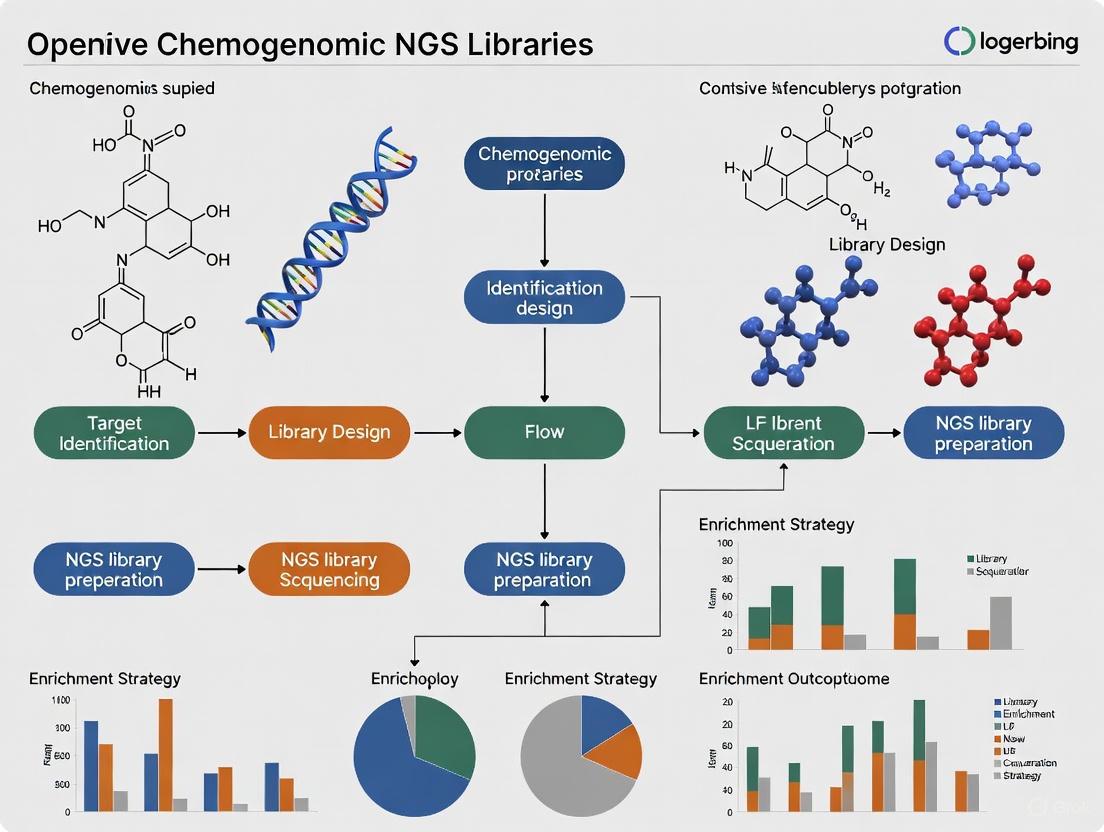
This article provides a comprehensive guide to enrichment strategies for chemogenomic next-generation sequencing (NGS) libraries, tailored for researchers, scientists, and drug development professionals.
Advanced Enrichment Strategies for Chemogenomic NGS Libraries: A Guide for Drug Discovery Professionals
Abstract
This article provides a comprehensive guide to enrichment strategies for chemogenomic next-generation sequencing (NGS) libraries, tailored for researchers, scientists, and drug development professionals. It covers the foundational principles of NGS library preparation and its critical role in modern drug discovery. The scope extends to detailed methodological approaches, including hybridization capture and amplicon-based techniques, their practical applications in target identification and mechanism of action studies, and essential troubleshooting and optimization protocols to overcome common challenges like host DNA background and amplification bias. Finally, it outlines rigorous validation frameworks and comparative analyses of different enrichment methods, ensuring data reliability and clinical translatability in accordance with emerging regulatory standards.
The Foundation of Chemogenomic NGS: Principles, Market Landscape, and Strategic Value in Drug Discovery
Defining Chemogenomic NGS and Its Role in Modern Drug Development
Chemogenomics represents a powerful integrative strategy in modern drug discovery, combining large-scale genomic characterization with functional drug response profiling. At its core, chemogenomics utilizes targeted next-generation sequencing (tNGS) to identify molecular alterations in disease models and patient samples, while parallel ex vivo drug sensitivity and resistance profiling (DSRP) assesses cellular responses to therapeutic compounds [1]. This dual approach creates a comprehensive functional genomic landscape that links specific genetic alterations with therapeutic vulnerabilities, enabling more precise treatment strategies for complex diseases including acute myeloid leukemia (AML) and other malignancies [1].
The chemogenomic framework has emerged as a solution to one of the fundamental challenges in precision medicine: while genomic data can identify "actionable mutations," this information alone provides limited predictive value for treatment success [1]. Many targeted therapies used as monotherapies produce short-lived responses due to emergent drug resistance, necessitating combinations that target multiple pathways simultaneously [1]. By functionally testing dozens of drug compounds against patient-derived cells in rigorous concentration-response formats, researchers can identify effective therapeutic combinations tailored to individual patient profiles, potentially overcoming the limitations of genomics-only approaches [1].
Key Enrichment Strategies for Chemogenomic NGS Libraries
The foundation of any robust chemogenomic NGS workflow depends on effective target enrichment strategies to focus sequencing efforts on genomic regions of highest research and clinical relevance. The two primary enrichment methodologies—hybridization capture and amplicon-based approaches—offer distinct advantages and limitations that researchers must consider based on their specific application requirements [2] [3].
Hybridization Capture-Based Enrichment
Hybridization capture utilizes biotinylated oligonucleotide probes (baits) that are complementary to genomic regions of interest. These probes hybridize to target sequences within randomly sheared genomic DNA fragments, followed by magnetic pulldown to isolate the captured regions prior to sequencing [2] [4]. This method begins with random fragmentation of input DNA via acoustic shearing or enzymatic cleavage, generating overlapping fragments that provide comprehensive coverage of target regions [3]. The use of long oligonucleotide baits (typically RNA or DNA) allows for tolerant binding that captures all alleles equally, even in the presence of novel variants [3].
Key advantages of hybridization capture include:
- Superior uniformity of coverage across target regions [3]
- Reduced false positives from PCR artefacts due to minimal amplification [3]
- Comprehensive variant detection including single nucleotide variants, insertions/deletions, copy number variations, and gene fusions [2]
- Enhanced discovery power for novel variants beyond known polymorphisms [4]
This method is particularly suited for larger target regions (typically >50 genes) including whole exome sequencing and comprehensive cancer panels, where its robust performance with challenging samples such as formalin-fixed, paraffin-embedded (FFPE) tissue offsets its longer workflow duration [3] [4].
Amplicon-Based Target Enrichment
Amplicon-based enrichment employs multiplexed polymerase chain reactions (PCR) with primers flanking genomic regions of interest to amplify targets thousands of fold [2]. Through careful primer design and reaction optimization, hundreds to thousands of primers can work simultaneously in a single multiplexed PCR reaction to enrich all target genomic regions [2]. Specialized variations including long-range PCR, anchored multiplex PCR, and COLD-PCR have expanded the applications of amplicon-based approaches for particular research needs [2].
Advantages of amplicon-based methods include:
- Rapid workflow with fewer steps and faster turnaround [3]
- Lower DNA input requirements, often as little as 10ng [3]
- Compatibility with degraded samples including FFPE material [2]
- Cost-effectiveness for smaller target regions (<50 genes) [4]
However, amplicon approaches face challenges including primer competition, non-uniform amplification efficiency across regions with varying GC content, and potential allelic dropout when variants occur in primer binding sites [2] [3]. These limitations make amplicon methods less ideal for discovery-oriented applications where novel variant detection is prioritized.
Table 1: Comparison of Key Enrichment Methodologies for Chemogenomic NGS
| Parameter | Hybridization Capture | Amplicon-Based |
|---|---|---|
| Ideal Target Size | Large regions (>50 genes), whole exome | Small, well-defined regions (<50 genes) |
| Variant Detection Range | Comprehensive (SNVs, indels, CNVs, fusions) | Optimal for SNVs and small indels |
| Workflow Duration | Longer (can be streamlined to single day) | Shorter (few hours) |
| DNA Input Requirements | Higher (typically ~500ng, can be reduced) | Lower (as little as 10ng) |
| Uniformity of Coverage | Superior, especially for GC-rich regions | Variable, affected by GC content and amplicon length |
| Ability to Detect Novel Variants | Excellent | Limited by primer design |
| Multiplexing Capacity | High | Challenging at large scale |
| Cost Consideration | Cost-effective for larger regions | Cost-effective for smaller regions |
Selection Criteria for Enrichment Strategy
Choosing between hybridization and amplicon-based enrichment requires careful consideration of several experimental factors:
- Target region size and complexity: Hybridization capture excels for larger genomic regions, while amplicon approaches are ideal for smaller, well-defined targets [3] [4]
- Sample quality and quantity: Amplicon methods tolerate lower quality and quantity inputs, while hybridization capture requires sufficient high-quality DNA [3]
- Variant detection requirements: Hybridization capture provides more comprehensive variant profiling across all variant types [4]
- Turnaround time needs: Amplicon workflows offer faster results, while hybridization provides more robust data [3]
- Budget constraints: Amplicon approaches are generally more affordable for smaller target regions [3]
For chemogenomic applications specifically, where both known and novel variants may have therapeutic implications, hybridization capture often provides the optimal balance of comprehensive coverage and accurate variant detection [3] [4] [1].
Experimental Design and Protocols
Chemogenomic Workflow for Drug Discovery
Implementing a robust chemogenomic workflow requires meticulous planning and execution across both genomic and functional screening components. The following workflow diagram illustrates the integrated approach:
The typical chemogenomic protocol encompasses the following key stages:
Sample Collection and Nucleic Acid Extraction
- Obtain patient-derived samples (blood, bone marrow, or tumor tissue) [1]
- Extract high-quality DNA using standardized kits (e.g., Illumina DNA Prep) [4]
- For FFPE samples, incorporate DNA repair steps to address formalin-induced damage [3]
- Quantify DNA using fluorometric methods and assess quality via fragment analysis
Targeted NGS Library Preparation
- Fragment DNA to desired size (200-500bp) via acoustic shearing or enzymatic cleavage [2] [4]
- For hybridization capture: Perform end-repair, A-tailing, and adapter ligation [2]
- For amplicon approaches: Design and optimize multiplex primer panels [2]
- Incorporate sample barcodes to enable multiplex sequencing [5]
Target Enrichment
- For hybridization: Hybridize with biotinylated probes, capture with streptavidin beads, and wash [2] [4]
- For amplicon: Perform multiplex PCR with target-specific primers [2]
- Validate enrichment efficiency via qPCR or capillary electrophoresis
Next-Generation Sequencing
- Pool enriched libraries in equimolar ratios
- Sequence on appropriate platform (Illumina, Ion Torrent, etc.) [6]
- Achieve sufficient depth (>500x for somatic variants in heterogeneous samples) [3]
Variant Analysis and Interpretation
- Process raw data through bioinformatic pipeline (alignment, variant calling, annotation) [7]
- Filter and prioritize variants based on quality metrics and functional impact
- Identify "actionable mutations" with therapeutic implications [1]
Ex Vivo Drug Sensitivity and Resistance Profiling
Parallel to genomic analysis, functional drug screening provides essential complementary data:
Sample Processing
- Isolate viable cells from patient specimens (e.g., peripheral blood mononuclear cells) [1]
- Cryopreserve cells if not testing immediately, ensuring consistent viability across batches
Drug Panel Preparation
- Curate drug library encompassing targeted therapies, chemotherapeutics, and experimental compounds [1]
- Include clinically relevant combinations in addition to single agents
- Prepare serial dilutions to establish concentration-response curves
Ex Vivo Drug Exposure
- Plate cells in multi-well formats with precision liquid handling systems
- Add drug compounds across concentration ranges (typically 5-8 concentrations)
- Incubate for 72-96 hours under physiologically relevant conditions [1]
Viability Assessment
- Measure cell viability using ATP-based, resazurin reduction, or apoptotic assays
- Include appropriate controls (vehicle-only, maximal cell death)
- Perform technical replicates to ensure data robustness
Data Analysis
- Calculate half-maximal effective concentration (EC50) values for each drug [1]
- Normalize responses across patients using Z-score transformation: Z = (patient EC50 - mean EC50 of reference population) / standard deviation [1]
- Establish response thresholds (e.g., Z-score < -0.5 indicates sensitivity) [1]
Chemogenomic Data Integration
The power of chemogenomics emerges from integrating genomic and functional data:
Multidisciplinary Review
- Convene molecular biologists, clinicians, and pharmacologists to review integrated datasets [1]
- Correlate specific genomic alterations with drug sensitivity patterns
- Identify outlier responses that may reveal novel biomarker-drug relationships
Treatment Strategy Formulation
- Prioritize drugs demonstrating exceptional sensitivity in functional screening [1]
- Validate mechanistic connections between actionable mutations and drug responses
- Design combination strategies that target multiple vulnerability pathways simultaneously [1]
- Consider drug accessibility, potential toxicities, and clinical feasibility
Clinical Translation
- Generate patient-specific report with ranked therapeutic options [1]
- Document evidence supporting each recommendation (genomic and functional)
- Facilitate treatment decisions by clinical care teams
Table 2: Key Reagents and Solutions for Chemogenomic Studies
| Reagent Category | Specific Examples | Function in Workflow |
|---|---|---|
| Nucleic Acid Extraction | Qiagen DNA extraction kits, FFPE DNA repair mixes | Obtain high-quality DNA from various sample types, repair damage in archived specimens [3] |
| Library Preparation | Illumina DNA Prep, IDT xGen reagents | Fragment DNA, add platform-specific adapters, and incorporate sample barcodes [4] |
| Target Enrichment | OGT SureSeq panels, Illumina enrichment kits, Integrated DNA Technologies primers | Hybridization baits or PCR primers to enrich genomic regions of interest [2] [3] [4] |
| Sequencing Reagents | Illumina sequencing kits, Oxford Nanopore flow cells | Platform-specific chemistries to perform massively parallel sequencing [6] |
| Drug Screening Compounds | Targeted therapies (FLT3, IDH inhibitors), chemotherapeutics | Expose patient-derived cells to therapeutic agents for sensitivity profiling [1] |
| Cell Viability Assays | ATP-based luminescence kits, resazurin reduction assays | Quantify cellular viability after drug exposure to determine efficacy [1] |
Applications in Drug Development
Personalized Therapy Selection
Chemogenomic approaches have demonstrated particular utility in advancing personalized treatment strategies for aggressive malignancies. In a prospective study of relapsed/refractory AML, researchers implemented a tailored treatment strategy (TTS) guided by parallel tNGS and DSRP [1]. The approach successfully identified personalized treatment options for 85% of patients (47/55), with 36 patients receiving recommendations based on both genomic and functional data [1]. Notably, this chemogenomic strategy yielded results within 21 days for 58.3% of patients, meeting clinically feasible timelines for aggressive diseases [1].
The clinical implementation revealed several important patterns:
- Individual patients exhibited distinct sensitivity profiles, with 3-4 potentially active drugs identified per patient on average [1]
- Only five patient samples demonstrated resistance to all tested drugs in the panel [1]
- For the 17 patients who received TTS-guided treatment, objective responses included four complete remissions, one partial remission, and five instances of decreased peripheral blast counts [1]
- The multimodal approach proved particularly valuable when either genomics or functional data alone provided insufficient guidance [1]
Drug Repurposing and Combination Strategy Development
Beyond matching known drug-gene relationships, chemogenomics enables drug repurposing by uncovering unexpected sensitivities unrelated to obvious genomic markers. Systematic correlation of mutation patterns with drug response profiles across patient cohorts can reveal novel biomarker associations, expanding the therapeutic utility of existing agents [1]. This approach is especially valuable for rare mutations where clinical trial evidence is lacking.
Additionally, chemogenomic data provides rational basis for combination therapy development by identifying drugs that target complementary vulnerability pathways. This is particularly important for preventing or overcoming resistance, as single-agent therapies often produce transient responses in complex malignancies [1].
Clinical Trial Optimization
Chemogenomic approaches significantly enhance clinical trial design through:
- Biomarker discovery: Identifying genetic signatures that predict drug response or adverse effects [7] [8]
- Patient stratification: Selecting patient cohorts based on molecular profiles to improve trial success rates [8]
- Pharmacogenomic optimization: Tailoring dosages using variants in drug-metabolizing enzymes (e.g., CYP450 genes) [8]
The integration of portable NGS technologies like Oxford Nanopore MinION further enables real-time genomic analysis in decentralized trial settings, expanding patient access and accelerating recruitment [8].
Emerging Trends and Future Perspectives
The field of chemogenomics continues to evolve rapidly, driven by technological advancements and increasing clinical validation. Several key trends are shaping its future applications in drug development:
Technological Innovations
Sequencing Platform Advancements
- Long-read technologies (Pacific Biosciences, Oxford Nanopore) enable resolution of complex structural variants and repetitive regions [6]
- Single-cell sequencing reveals tumor heterogeneity and resistant subclones [7]
- Portable sequencers facilitate real-time genomic analysis in resource-limited settings [8]
Functional Screening Enhancements
- High-content imaging provides multiparameter readouts beyond simple viability
- Microfluidic platforms enable high-throughput screening with minimal sample input
- CRISPR-based functional genomics systematically identifies genes essential for drug response [7]
Analytical and Computational Advances
Artificial Intelligence Integration
- Machine learning algorithms uncover complex patterns in multi-dimensional chemogenomic data [7]
- Deep learning approaches improve variant calling accuracy (e.g., Google's DeepVariant) [7]
- Predictive modeling of drug response based on integrated molecular profiles
Multi-Omics Integration
- Combining genomics with transcriptomics, proteomics, and epigenomics provides comprehensive molecular context [7]
- Spatial transcriptomics maps gene expression within tissue architecture, revealing microenvironmental influences [7]
- Time-resolved analyses capture dynamic adaptations to therapeutic pressure
Clinical Implementation Challenges
Despite promising advances, several challenges remain for widespread chemogenomic implementation:
Operational Hurdles
- Turnaround time requirements for aggressive diseases necessitate streamlined workflows [1]
- Sample quality and quantity limitations, particularly for rare cancers or pediatric malignancies
- Cost-effectiveness demonstrations needed for healthcare system adoption
Analytical Validation
- Standardization of bioinformatic pipelines and functional assay protocols
- Quality control metrics for both genomic and functional data components
- Interpretative frameworks for reconciling discordant genomic and functional findings
Regulatory and Ethical Considerations
- Validation of NGS-based biomarkers for regulatory approval [8]
- Data privacy and security for sensitive genetic information [7]
- Equitable access to avoid exacerbating healthcare disparities [7]
The ongoing development of chemogenomic approaches represents a paradigm shift in drug development, moving from population-level averages to individualized therapeutic strategies. As technologies mature and validation accumulates, chemogenomics is poised to become an integral component of precision medicine across diverse therapeutic areas.
Market Dynamics and Growth Catalysts in the NGS Library Preparation Sector
In the evolving landscape of precision medicine and functional genomics, next-generation sequencing (NGS) library preparation has emerged as a critical determinant of sequencing success, influencing data quality, variant detection accuracy, and ultimately, the reliability of scientific conclusions in chemogenomic research. The global NGS library preparation market, valued at USD 1.79-2.07 billion in 2024-2025, is projected to expand at a compound annual growth rate (CAGR) of 13.30-13.47% to reach USD 4.83-6.44 billion by 2032-2034 [9] [10]. This remarkable growth is catalyzed by escalating demand for precision genomics, widespread adoption of NGS in oncology and infectious disease testing, and technological innovations that continuously improve workflow efficiency and cost-effectiveness. For researchers focused on chemogenomic library enrichment strategies, understanding these market dynamics and their interplay with experimental protocols is no longer a supplementary consideration but a fundamental component of strategic research planning and implementation.
The preparation of sequencing libraries represents the crucial interface between biological samples and sequencing instrumentation, with an estimated over 50% of sequencing failures or suboptimal runs tracing back to library preparation issues [11]. In chemogenomics, where researchers systematically study the interactions between small molecules and biological systems, the integrity of library preparation directly influences the detection of genetic variants, gene expression changes, and epigenetic modifications critical for understanding drug-gene interactions. As the market evolves toward more automated, efficient, and specialized solutions, researchers gain unprecedented opportunities to enhance the quality and throughput of their chemogenomic investigations while navigating an increasingly complex landscape of commercial options and methodological approaches.
Market Analysis: Quantitative Landscape and Growth Trajectories
Global Market Size and Projections
The NGS library preparation market demonstrates robust growth globally, with variations in valuation reflecting different methodological approaches to market sizing across analyst firms. Table 1 summarizes the key market metrics and growth projections from comprehensive market analyses.
Table 1: Global NGS Library Preparation Market Size and Growth Projections
| Metric | 2024-2025 Value | 2032-2034 Projected Value | CAGR (%) | Source |
|---|---|---|---|---|
| Global Market Size | USD 1.79 billion (2024) | USD 4.83 billion (2032) | 13.30% (2025-2032) | SNS Insider [9] |
| Global Market Size | USD 2.07 billion (2025) | USD 6.44 billion (2034) | 13.47% (2025-2034) | Precedence Research [10] |
| U.S. Market Size | USD 0.58 billion (2024) | USD 1.54 billion (2032) | 12.99% (2024-2032) | SNS Insider [9] |
| U.S. Market Size | USD 652.65 million (2024) | USD 2,237.13 million (2034) | 13.11% (2025-2034) | Biospace/Nova One Advisor [12] |
| Automated Systems (Global) | - | USD 895 million (2025) | 11.5% (2025-2033) | Market Report Analytics [13] |
Regional analysis reveals that North America dominated the market in 2024 with a 44% share, attributed to advanced genomic research facilities, well-established healthcare infrastructure, and the presence of major market players [10]. The Asia Pacific region is expected to be the fastest-growing market, projected to grow at a CAGR of 14.42-15% from 2025 to 2034, driven by rapidly expanding healthcare systems, rising investments in biotech and genomics research, and supportive government initiatives [9] [10].
Market Segmentation and Application Analysis
The NGS library preparation market exhibits distinct segmentation patterns across sequencing types, products, applications, and end-users, with particular relevance to chemogenomic research applications. Table 2 provides a detailed breakdown of market segmentation and dominant categories.
Table 2: NGS Library Preparation Market Segmentation Analysis (2024)
| Segmentation Category | Dominant Segment | Market Share (%) | Fastest-Growing Segment | Projected CAGR (%) |
|---|---|---|---|---|
| Sequencing Type | Targeted Genome Sequencing | 63.2% | Whole Exome Sequencing | Significant [9] |
| Product | Reagents & Consumables | 78.4% | Instruments | 13.99% [9] |
| Application | Drug & Biomarker Discovery | 65.12% | Disease Diagnostics | Notable [9] |
| End User | Hospitals & Clinical Laboratories | 35.4-42% | Pharmaceutical & Biotechnology Companies | 13% [9] [10] |
| Library Preparation Type | Manual/Bench-Top | 55% | Automated/High-Throughput | 14% [10] |
The dominance of targeted genome sequencing (63.2% market share) reflects its cost-effectiveness, sensitivity, and targeted approach in identifying specific genetic variants, making it particularly valuable for chemogenomic applications focused on specific gene families or pathways [9]. The drug & biomarker discovery segment captured 65.12% market share in 2024, underscoring the critical role of NGS in pharmaceutical development and biomarker identification [9]. The anticipated rapid growth of the automated library preparation segment (14% CAGR) highlights the ongoing market shift toward high-throughput, reproducible workflows essential for large-scale chemogenomic screens [10].
Key Market Drivers and Industry Catalysts
Technological Innovations and Workflow Advancements
The NGS library preparation market is being transformed by continuous technological innovations that address longstanding challenges in workflow efficiency, sample quality, and data reliability. Automation of workflows represents a pivotal trend, reducing manual intervention while increasing throughput efficiency and reproducibility [10]. Automated systems can process hundreds of samples simultaneously at high-throughput sequencing facilities, significantly cutting expenses and turnaround times while minimizing human error [14]. The global market for automated NGS library preparation systems is projected to reach $895 million by 2025, expanding at a CAGR of 11.5% through 2033 [13].
The integration of microfluidics technology has revolutionized library preparation by enabling precise microscale control of sample and reagent volumes [10]. This technology supports miniaturization, conserves precious reagents, and guarantees consistent, scalable results across multiple samples – particularly valuable for chemogenomic libraries where reagent costs can be prohibitive at scale. Additionally, advancements in single-cell and low-input library preparation kits now allow high-quality sequencing from minimal DNA or RNA quantities, expanding applications in oncology, developmental biology, and personalized medicine [10]. These innovations offer deep insights into cellular diversity and rare genetic events central to understanding heterogeneous drug responses.
The emergence of tagmentation-based approaches (exemplified by Illumina's Nextera technology) combines fragmentation and adapter tagging into a single step, dramatically reducing processing time [15] [16]. This technology utilizes a transposase enzyme to simultaneously fragment DNA and insert adapter sequences, significantly streamlining the traditional multi-step workflow [15]. The development of unique molecular identifiers (UMIs) and unique dual indexes (UDIs) provides powerful solutions for multiplexing and accurate demultiplexing, enabling researchers to differentiate true variants from errors introduced during library preparation or amplification [14].
Expanding Applications in Precision Medicine and Drug Development
The growing adoption of NGS across diverse clinical and research applications represents a fundamental driver of market expansion. Precision medicine initiatives worldwide are accelerating demand for robust library preparation solutions, as clinicians and researchers increasingly rely on genomic insights to guide therapy decisions for cancer, rare genetic disorders, and infectious diseases [9]. The United States maintains its leadership position partly due to "rising demand for precision medicine, with extensive genomic research in oncology, rare diseases, and reproductive health" [10].
In pharmaceutical and biotechnology research, NGS library preparation technologies are essential for target identification, validation, and biomarker discovery. The pharmaceutical and biotech R&D segment is expected to grow at a notable CAGR of 13.5%, "driven by the adoption of NGS library preparation technologies, accelerated by increasing investments in clinical trials, personalized therapies, and drug discovery" [10]. For chemogenomic libraries specifically, which aim to comprehensively profile compound-gene interactions, the reliability of library preparation directly impacts the quality of insights into drug mechanisms, toxicity profiles, and potential therapeutic applications.
The rising clinical adoption of NGS-based diagnostics represents another significant growth catalyst. The disease diagnostics segment is poised to witness substantial growth during the forecast period, "with the increasing adoption of NGS in clinical diagnostics for cancer, rare genetic conditions, infectious diseases, and prenatal screening" [9]. This clinical translation generates demand for more robust, reproducible, and efficient library preparation methods that can deliver reliable results in diagnostic settings.
Technical Protocols: NGS Library Preparation Methodologies
Core Workflow for DNA Library Preparation
The fundamental process of preparing DNA sequencing libraries involves a series of meticulously optimized steps to convert genomic DNA into sequencing-ready fragments. The following protocol outlines the standard workflow, with special considerations for chemogenomic applications where preserving the complexity of heterogeneous compound-treated samples is paramount.
Step 1: Nucleic Acid Extraction and Quantification
- Input Material: Isolate high-quality genomic DNA from biological samples (cell cultures, tissues, or blood). For chemogenomic studies involving compound treatments, ensure consistent cell numbers and viability across conditions.
- Quality Assessment: Evaluate DNA integrity using fluorometric quantification (e.g., Qubit) and fragment analysis (e.g., Bioanalyzer, TapeStation). The absorbance ratio (A260/280) should be 1.8-2.0, indicating minimal protein or solvent contamination [17] [14].
- Critical Consideration: For formalin-fixed paraffin-embedded (FFPE) samples common in translational research, implement additional DNA repair steps using specialized enzyme mixes (e.g., SureSeq FFPE DNA Repair Mix) to reverse cross-linking artifacts that can cause false mutation calls [14].
Step 2: DNA Fragmentation
- Objective: Generate DNA fragments within optimal size distribution (typically 200-600 bp for Illumina platforms) [11].
- Methods:
- Mechanical Shearing: Using acoustic focusing technology (e.g., Covaris instruments) for unbiased fragmentation with tight size distributions. Parameters are tuned to achieve desired fragment size [15] [11].
- Enzymatic Fragmentation: Employing non-specific endonucleases (e.g., Fragmentase) or transposase-based "tagmentation" (e.g., Illumina Nextera) that combines fragmentation and adapter tagging in a single step [15].
- Optimization Tip: "Over-fragmentation vs under-fragmentation must be optimized... to avoid fragments that are too short (leading to adapter dimer dominance) or too long (causing poor clustering)" [11].
Step 3: End Repair and A-Tailing
- End Repair: Convert heterogeneous fragment ends (5' or 3' overhangs) to blunt, phosphorylated ends using T4 DNA polymerase (fills 5' overhangs, chews back 3' overhangs) and T4 polynucleotide kinase (phosphorylates 5' ends) [15] [11].
- A-Tailing: Add single adenine nucleotide to 3' ends using Taq polymerase or Klenow exo- fragment, creating complementary overhangs for subsequent adapter ligation [15] [11].
- Protocol Conditions: Typically 30 minutes at 20°C for end repair, followed by 30 minutes at 65°C for A-tailing. Modern kits often combine these steps into a single reaction [11].
Step 4: Adapter Ligation
- Adapter Design: Y-shaped adapters containing platform-specific sequences, unique dual indexes (UDIs) for sample multiplexing, and binding sites for sequencing primers [15] [14].
- Ligation Reaction: Incubate A-tailed fragments with adapter mix using T4 DNA ligase (30 minutes to 2 hours at 20-25°C). Maintain optimal adapter:fragment ratio (~10:1 molar ratio) to maximize ligation efficiency while minimizing adapter dimer formation [15] [11].
- Critical Consideration: Using unique dual indexes (UDIs) where "each library has a completely unique i7 and i5" enables more accurate demultiplexing and prevents index hopping artifacts in multiplexed chemogenomic screens [14].
Step 5: Library Cleanup and Size Selection
- Purification Methods: Use magnetic bead-based cleanups (e.g., AMPure XP beads) to remove enzymes, salts, and short fragments. For precise size selection or when working with small RNAs, implement agarose gel extraction [15].
- Size Selection Parameters: Target library sizes appropriate for your sequencing application. For whole genome sequencing, 350-600 bp inserts are common; for targeted panels, 200-350 bp may be optimal [15].
Step 6: Library Amplification (Optional)
- PCR Amplification: When input DNA is limited (<50 ng), amplify adapter-ligated fragments using high-fidelity DNA polymerases with minimal sequence bias [15] [11].
- Cycle Optimization: "Reduce PCR cycles" to minimize amplification biases, particularly for GC-rich regions. "Increasing the amount of starting material and optimising your extraction steps" can reduce required amplification cycles [14].
- Condition Recommendations: Typically 4-12 cycles using primers complementary to adapter sequences. Include unique molecular identifiers (UMIs) during this step to correct for amplification duplicates and detect low-frequency variants [14].
Step 7: Library Quantification and Quality Control
- Quantification Methods:
- Quality Assessment: Analyze library size distribution using Bioanalyzer or TapeStation systems. Ensure adapter dimer contamination is <5% of total signal [15] [11].
Target Enrichment Strategies for Chemogenomic Applications
For chemogenomic studies focused on specific gene families or pathways, target enrichment following library preparation enables deeper sequencing of genomic regions of interest. The two primary approaches—hybridization capture and amplicon-based enrichment—offer distinct advantages for different research scenarios. Table 3 compares these fundamental target enrichment methodologies.
Table 3: Comparison of Target Enrichment Approaches for NGS
| Parameter | Hybridization Capture | Amplicon-Based |
|---|---|---|
| Principle | Solution-based hybridization with biotinylated probes (RNA or DNA) to genomic regions of interest followed by magnetic pull-down [2] | PCR amplification of target regions using target-specific primers [2] |
| Advantages | Better uniformity of coverage; fewer false positives; superior for detecting structural variants; compatible with degraded samples (FFPE) [2] [14] | Fast, simple workflow; requires less input DNA; higher sensitivity for low-frequency variants; lower cost [2] |
| Disadvantages | More complex workflow; higher input DNA requirements; longer hands-on time; higher cost [2] | Limited multiplexing capability; amplification biases; primer-driven artifacts; poor uniformity [2] [14] |
| Best For | Comprehensive variant detection; large target regions (>1 Mb); structural variant analysis; degraded samples [2] | Small target panels (<50 genes); low-frequency variant detection; limited sample quantity; rapid turnaround needs [2] |
Hybridization Capture Protocol:
- Library Pooling: Combine up to 96 uniquely indexed libraries in equimolar ratios (total 500-1000 ng DNA).
- Hybridization: Incubate library pool with biotinylated probes (1-16 hours at 65°C) in hybridization buffer containing blocking oligonucleotides to prevent repetitive sequence capture.
- Capture and Wash: Bind probe-library hybrids to streptavidin-coated magnetic beads, followed by stringent washes to remove non-specifically bound fragments.
- Amplification: PCR-amplify captured libraries (8-12 cycles) to generate sufficient material for sequencing.
- Specialized Variant: For RNA baits, note that "RNA baits provide better hybridization specificity and higher stability when bound to the DNA ROIs" but require careful handling due to RNA's labile nature [2].
Amplicon-Based Enrichment Protocol:
- Primer Design: Design target-specific primers flanking regions of interest, with possible incorporation of unique molecular identifiers (UMIs) for error correction.
- Multiplex PCR: Optimize primer concentrations and cycling conditions to ensure uniform amplification across all targets. "Hundreds to thousands of primers [may need] to work in unison under similar PCR conditions" [2].
- Library Construction: Ligate sequencing adapters to amplicons or use tailed primers containing adapter sequences.
- Advanced Approach: Consider anchored multiplex PCR, which "is open-ended: only one side of the ROI sequence is targeted using a target-specific primer (anchor), while the other end is targeted with a universal primer" – particularly valuable for detecting novel fusions without prior knowledge of partners [2].
Essential Research Reagents and Solutions
Successful implementation of NGS library preparation protocols requires carefully selected reagents and materials optimized for each workflow step. The following toolkit outlines critical components for establishing robust library preparation processes, particularly in the context of chemogenomic applications.
Table 4: Essential Research Reagent Solutions for NGS Library Preparation
| Reagent Category | Specific Examples | Function | Application Notes |
|---|---|---|---|
| Fragmentation Enzymes | Tagmentase (Illumina), Fragmentase (NEB) | Simultaneously fragments DNA and adds adapter sequences via transposition [15] | Reduces hands-on time; ideal for high-throughput chemogenomic screens |
| End Repair & A-Tailing Mix | T4 DNA Polymerase, Klenow Fragment, T4 PNK, Taq Polymerase | Converts fragment ends to phosphorylated, blunt-ended or A-tailed molecules [11] | Master mixes combining multiple enzymes streamline workflow |
| Ligation Reagents | T4 DNA Ligase, PEG-containing Buffers | Catalyzes attachment of adapters to A-tailed DNA fragments [15] | High PEG concentrations increase ligation efficiency |
| Specialized Clean-up Beads | AMPure XP, SPRIselect | Size-selective purification of library fragments; removal of adapter dimers [15] [14] | Bead-to-sample ratio determines size selection stringency |
| Library Amplification Mix | High-Fidelity Polymerases (Q5, KAPA HiFi) | PCR amplification of adapter-ligated fragments with minimal bias [14] | "High-fidelity polymerases are preferred to reduce error and bias" [11] |
| Unique Dual Indexes | Illumina CD Indexes, IDT for Illumina | Sample multiplexing with unique combinatorial barcodes [14] | Prevents index hopping; essential for pooled chemogenomic screens |
| Quality Control Kits | Qubit dsDNA HS, Bioanalyzer HS DNA | Accurate quantification and size distribution analysis [14] | qPCR-based quantification most accurately measures amplifiable libraries |
| FFPE Repair Mix | SureSeq FFPE DNA Repair Mix | Enzymatic repair of formalin-induced DNA damage [14] | Critical for working with archival clinical specimens in translational research |
Optimization Strategies and Troubleshooting Guide
Achieving high-quality sequencing libraries requires careful optimization and proactive troubleshooting throughout the preparation process. The following evidence-based strategies address common challenges in NGS library preparation, with particular emphasis on maintaining library complexity and minimizing biases in chemogenomic applications.
Minimizing Amplification Bias: "Reduce PCR cycles" whenever possible, as excessive amplification "can cause a significant drop in diversity and a large skew in your dataset" [14]. When amplification is necessary for low-input samples (a common scenario in primary cell chemogenomic screens), select library preparation kits with "high-efficiency end repair, 3' end 'A' tailing and adaptor ligation as this can help minimise the number of required PCR cycles" [14]. Additionally, consider hybridization-based enrichment strategies over amplicon approaches, as they yield "better uniformity of coverage, fewer false positives, and superior variant detection due to the requirement of fewer PCR cycles" [14].
Addressing Contamination Risks: Implement rigorous laboratory practices including "one room or area... dedicated for pre-PCR testing" to separate nucleic acid extraction and post-amplification steps [17]. Utilize "unique molecular identifiers (UMIs)" to uniquely tag each molecule in a sample library, enabling differentiation between true variants and errors introduced during library preparation or amplification [14]. For automated workflows, ensure "automated systems are often equipped with real-time monitoring capabilities and integrated QC checks to flag any deviations or potential issues" [13].
Optimizing for Challenging Samples: For FFPE samples common in translational chemogenomics, implement specialized repair steps using enzyme mixes "optimised to remove a broad range of damage that can cause artefacts in sequencing data" [14]. For low-input samples (e.g., rare cell populations after compound treatment), consider "advancement in single-cell and low-input library preparation kits [that] now allow high-quality sequencing from minimal DNA or RNA quantities" [10]. Enzymatic fragmentation methods typically "accommodate lower input and fragmented DNA" compared to mechanical shearing approaches [11].
Ensuring Accurate Quantification: Employ multiple quantification methods appropriate for different quality control checkpoints. While fluorometric methods (e.g., Qubit) are useful for assessing total DNA, "qPCR methods are extremely sensitive and only measure adaptor ligated-sequences," providing the most accurate assessment of sequencing-ready libraries [14]. Proper quantification is critical as "overestimating your library concentration will result in loading the sequencer with too little input and in turn, reduced coverage," while "underestimating your library concentration, you can overload the sequencer and reduce its performance" [14].
The NGS library preparation sector continues to evolve at a remarkable pace, driven by synergistic advancements in market availability, technological innovation, and expanding application horizons. For researchers focused on chemogenomic library enrichment strategies, understanding these dynamics provides not only a competitive advantage but also a framework for making informed methodological decisions that enhance research outcomes. The projected market growth to USD 4.83-6.44 billion by 2032-2034 reflects the increasing centrality of high-quality sequencing library preparation across basic, translational, and clinical research domains [9] [10].
Future directions in the sector point toward increased automation, with the automated NGS library preparation system market projected to reach $895 million by 2025 [13]. This automation trend aligns with the needs of chemogenomic research for high-throughput, reproducible screening capabilities. Additionally, the ongoing development of more efficient enzymatic methods, improved unique dual indexing strategies, and specialized solutions for challenging sample types will continue to expand the experimental possibilities for researchers studying compound-gene interactions.
The convergence of market growth, technological innovation, and methodological refinement in NGS library preparation creates unprecedented opportunities for chemogenomic research. By leveraging these advancements while maintaining rigorous optimization and quality control practices, researchers can generate increasingly reliable, comprehensive, and biologically meaningful data to advance the understanding of how small molecules modulate biological systems – ultimately accelerating the development of novel therapeutic strategies.
In chemogenomic research, which explores the complex interactions between chemical compounds and biological systems, the quality of next-generation sequencing (NGS) data is paramount. The journey from raw biological sample to a sequenced chemogenomic library is a critical pathway where each step introduces potential biases and artifacts that can compromise data integrity. Sample preparation, encompassing nucleic acid extraction and library construction, is no longer a mere preliminary step but a determinant of experimental success. This process transforms mixtures of nucleic acids from diverse biological samples into sequencing-ready libraries, with specific considerations for chemogenomic applications where accurately capturing variant populations and subtle transcriptional changes is essential [17].
Challenging samples—such as those treated with bioactive compounds, limited cell populations, or fixed specimens—demand robust and optimized preparation protocols. Inefficient library construction can lead to decreased data output, increased chimeric fragments, and biased representation of genomic elements. Furthermore, contamination risks and the substantial costs associated with library preparation necessitate careful planning and execution [17]. This document details the core components and methodologies for establishing a reliable workflow from nucleic acid extraction to library preparation, framed within the context of enrichment strategies for chemogenomic NGS libraries.
Core Component 1: Nucleic Acid Extraction
The initial step in every NGS sample preparation protocol is the isolation of pure, high-quality nucleic acids. The success of all downstream applications, including variant calling and transcriptome analysis in chemogenomics, hinges on this foundational step [17] [14].
Sample Types and Considerations
The optimal sample type for nucleic acid extraction is a homogenous population of cells, such as those from an in vitro culture. However, chemogenomic studies often involve more complex samples, including primary cells, fixed tissues, or samples with limited material from high-throughput chemical screens. The quality of extracted nucleic acids is directly dependent on the quality and appropriate storage of the starting material, with fresh material always recommended but often substituted by properly frozen or cooled samples [17]. Formalin-fixed, paraffin-embedded (FFPE) samples present a particular challenge due to chemical crosslinking that binds nucleic acids to proteins, resulting in impure, degraded, and fragmented samples. This damage can lead to lost information and false conclusions, such as difficulty distinguishing true low-frequency mutations from damage-induced artifacts [14].
Extraction Methodologies and Comparative Performance
The choice of extraction method can significantly impact sequencing outcomes. The basic steps involve cell disruption, lysis, and nucleic acid purification. A comparative study evaluating different DNA extraction procedures, library preparation protocols, and sequencing platforms found that the investigated extraction procedures did not significantly affect de novo assembly statistics and the number of single nucleotide polymorphisms (SNPs) and antimicrobial resistance genes (ARGs) detected [18]. This suggests that multiple standardized commercial methods can be effective, though optimization for specific sample types is always advised.
Table 1: Comparison of Nucleic Acid Extraction Kits and Their Performance
| Kit Name | Sample Type | Key Features | Impact on Downstream NGS |
|---|---|---|---|
| DNeasy Blood & Tissue Kit [18] | Bacterial cultures | Standardized silica-membrane protocol | Reliable performance for microbial WGS |
| ChargeSwitch gDNA Mini Bacteria Kit [18] | Bacterial cultures | Magnetic bead-based purification | Reliable performance for microbial WGS |
| Easy-DNA Kit [18] | Purified DNA samples | Organic extraction method | Suitable for pre-extracted DNA |
| Not specified (FFPE repair) [14] | FFPE tissue | Includes enzymatic repair mix | Reduces sequencing artifacts from damaged DNA |
For challenging FFPE samples, a dedicated repair step is recommended. Using a mixture of enzymes optimized to remove a broad range of DNA damage can preserve original complexity and deliver high-quality sequencing data, which is critical for accurate variant detection in chemogenomic studies [14].
Core Component 2: Library Preparation Kits and Strategies
Library preparation is the process of converting purified nucleic acids into a format compatible with NGS platforms. This involves fragmenting the DNA or cDNA, attaching platform-specific adapters, and often includes a PCR amplification step [17].
Library Preparation Workflow and Kit Options
The general workflow for DNA library preparation involves three core steps after fragmentation: End Repair & dA-Tailing, Adapter Ligation, and Library Amplification [17] [19]. Multiple commercial kits are available, optimized for different sequencing platforms like Illumina, and offer varying features to streamline this process.
Table 2: Overview of Commercial Library Preparation Kits
| Kit Name | Fragmentation Method | Input DNA Range | Key Features | Workflow Time |
|---|---|---|---|---|
| Illumina Library Prep Kits [20] | Various | Various | Optimized for Illumina platforms; support diverse throughput needs | Varies by kit |
| Invitrogen Collibri PS DNA Library Prep Kit [21] | Not specified | Not specified | Visual feedback for reagent mixing; reduced bias in WGS | ~1.5 hours (PCR-free) |
| Twist Library Preparation EF Kit [19] | Enzymatic | 1 ng – 1 µg | Single-tube reaction; tunable fragment sizes; ideal for automation | Under 2.5 hours |
| Twist Library Preparation Kit [19] | Mechanical (pre-sheared) | Wide range | Accommodates varying DNA input types; minimizes start/stop artifacts | Under 2.5 hours |
| Nextera XT DNA Library Prep Kit [18] | Enzymatic (Tagmentation) | Low input (e.g., 1 ng) | Simultaneous fragmentation and adapter tagging via tagmentation | Not specified |
| TruSeq Nano DNA Library Prep Kit [18] | Acoustic shearing | High input (1–4 µg) | Random fragmentation reduces uneven sequencing depth | Not specified |
Two main fragmentation approaches are used: mechanical (e.g., acoustic shearing) and enzymatic (e.g., tagmentation). Mechanical methods are known for random fragmentation, which reduces unevenness in sequencing coverage [18]. Enzymatic fragmentation, particularly tagmentation which combines fragmentation and adapter ligation into a single step, significantly reduces hands-on time and costs [17] [19].
Mitigating Bias in Library Preparation
A critical consideration in library preparation, especially for chemogenomics, is the introduction of bias. Amplification via PCR is often necessary for low-input samples but is prone to biases such as PCR duplicates and uneven coverage of GC-rich regions [17] [14]. To minimize this:
- Reduce PCR Cycles: Optimize the workflow to use the minimum number of PCR cycles necessary. This can be achieved by increasing starting material where possible and selecting kits with high-efficiency end repair and ligation to minimize the required amplification [14].
- Utilize Unique Molecular Identifiers (UMIs): UMIs are short sequences that uniquely tag each original molecule prior to amplification. This allows for the bioinformatic discrimination of true biological variants from errors introduced during PCR and sequencing, which is vital for detecting low-frequency variants [14].
- Choose Hybridization Over Amplicon Enrichment: For targeted sequencing, a hybridization-based capture strategy is preferable to amplicon-based approaches as it requires fewer PCR cycles, yields better coverage uniformity, and results in fewer false positives [14].
Comparative Analysis: Extraction and Library Prep Impact on Data
Empirical studies have compared the impact of different pre-sequencing choices on final data quality. One study found that three different DNA extraction procedures and two library preparation protocols (Nextera XT and TruSeq Nano) did not significantly affect de novo assembly statistics, SNP calling, or ARG identification for bacterial genomes. A notable exception was observed for two duplicates associated with one PCR-based library preparation kit, highlighting that amplification can be a significant variable [18].
Another comparative analysis of metagenomic NGS (mNGS) on clinical body fluid samples provides insights relevant to complex samples. This study compared whole-cell DNA (wcDNA) mNGS to microbial cell-free DNA (cfDNA) mNGS. The mean proportion of host DNA in wcDNA mNGS was 84%, significantly lower than the 95% observed in cfDNA mNGS. Using culture results as a reference, the concordance rate for wcDNA mNGS was 63.33%, compared to 46.67% for cfDNA mNGS. This demonstrates that wcDNA mNGS had significantly higher sensitivity for pathogen detection, although its specificity was compromised, necessitating careful data interpretation [22].
Table 3: Performance Comparison of mNGS Approaches in Clinical Samples
| Sequencing Approach | Mean Host DNA Proportion | Concordance with Culture | Sensitivity | Specificity |
|---|---|---|---|---|
| Whole-Cell DNA (wcDNA) mNGS [22] | 84% | 63.33% (19/30) | 74.07% | 56.34% |
| Cell-Free DNA (cfDNA) mNGS [22] | 95% | 46.67% (14/30) | Not specified | Not specified |
Furthermore, a comparison of two sequencing platforms, Illumina MiSeq and Ion Torrent S5 Plus, for analyzing antimicrobial resistance genes showed that despite different sequencing chemistries, the platforms performed almost equally, with results being closely comparable and showing only minor differences [23]. This suggests that the wet-lab preparation steps may have a more pronounced impact on results than the choice of sequencing platform itself.
The Scientist's Toolkit: Essential Reagents and Materials
A successful NGS library preparation workflow relies on a suite of specialized reagents and materials. The following table details key solutions used in the process.
Table 4: Essential Research Reagent Solutions for NGS Library Preparation
| Item | Function | Key Considerations |
|---|---|---|
| Nucleic Acid Extraction Kit [17] [18] | Isolates DNA/RNA from biological samples. | Choose based on sample type (e.g., bacterial, FFPE) and required yield/quality. |
| FFPE DNA Repair Mix [14] | Enzymatically reverses cross-links and repairs DNA damage in FFPE samples. | Critical for reducing artifacts and improving variant calling accuracy from archived tissues. |
| Library Preparation Kit [21] [19] | Contains enzymes and reagents for fragmentation, end repair, dA-tailing, adapter ligation, and amplification. | Select based on input amount, fragmentation method (enzymatic/mechanical), and need for automation. |
| Unique Molecular Identifiers (UMIs) [14] | Short barcodes that tag individual molecules before amplification. | Enables accurate detection of low-frequency variants and removal of PCR duplicates. |
| Size Selection Beads [17] | Purify and select nucleic acid fragments within a specific size range. | Improves sequencing efficiency by removing too large or too small fragments. |
| Library Quantification Kit [14] | Accurately measures the concentration of the final library. | qPCR-based methods are sensitive and measure only adapter-ligated molecules. |
Detailed Protocol: An Optimized Workflow for DNA Library Preparation
This protocol outlines a generalized workflow for preparing sequencing-ready libraries from double-stranded DNA, incorporating best practices to minimize bias and ensure quality—a crucial consideration for chemogenomic applications.
Materials and Reagents
- Purified genomic DNA (e.g., extracted using a kit from Table 1)
- Selected Library Preparation Kit (e.g., from Table 2)
- Magnetic stand suitable for 1.5 mL microcentrifuge tubes
- Freshly prepared 80% ethanol
- Nuclease-free water
- Agarose gel equipment or bioanalyzer
- Library quantification kit (qPCR-based recommended)
Step-by-Step Procedure
DNA Fragmentation and Size Selection
- Mechanical Method: Fragment DNA using an acoustic shearer according to the manufacturer's instructions. Optimize the shearing time to achieve the desired fragment size distribution (e.g., 200-500 bp for whole-genome sequencing).
- Enzymatic Method: If using an enzymatic fragmentation kit, combine DNA with the fragmentation enzyme mix in a single tube. Incubate at the recommended temperature and time to achieve tunable fragment sizes [19].
- Clean-up and Size Selection: Purify the fragmented DNA using size selection beads. Adjust the bead-to-sample ratio to selectively bind fragments within the desired size range. Elute in nuclease-free water [17].
End Repair and dA-Tailing
- Combine the fragmented DNA with end repair and dA-tailing master mix. This step creates blunt-ended, 5'-phosphorylated fragments with a single 'A' overhang at the 3' ends, preparing them for adapter ligation [19].
- Incubate in a thermal cycler according to the kit specifications. Some advanced kits combine fragmentation, end repair, and dA-tailing into a single reaction to minimize handling and bias [14].
Adapter Ligation
- Add sequencing adapters containing platform-specific sequences and sample indexes (barcodes) to the 'A'-tailed fragments. Using Unique Dual Indexes (UDIs) is critical for accurate sample multiplexing and to prevent index hopping errors [14].
- Incubate the ligation reaction to allow the adapters to ligate to the insert DNA. Using high-efficiency ligation enzymes can minimize the number of PCR cycles needed later [14].
Library Amplification and Clean-up
- If amplification is required, perform a limited-cycle PCR to enrich for adapter-ligated fragments. Use a polymerase known to minimize amplification bias [17]. The goal is to maximize library complexity while minimizing PCR duplicates. Reduce PCR cycles as much as possible (e.g., 4-10 cycles) based on input DNA [14].
- Perform a final clean-up using magnetic beads to remove excess primers, enzymes, and adapter dimers. Elute the purified library in nuclease-free water or the provided elution buffer.
Quality Control and Quantification
- Fragment Analysis: Assess the library's size distribution and profile using an agarose gel or, preferably, a bioanalyzer/fragment analyzer. The optimal library size is application-dependent [17].
- Accurate Quantification: Quantify the final library concentration using a qPCR-based method. This method is highly sensitive and specifically quantifies fragments that have functional adapters on both ends, ensuring accurate loading on the sequencer. Avoid over- or underestimating concentration, as both can lead to poor sequencing performance and data quality [14].
The path from nucleic acid extraction to a finalized sequencing library is a multi-step process where each component—the extraction method, the library preparation kit, and the enzymatic treatments—plays a vital role in determining the quality, accuracy, and reliability of the resulting NGS data. For chemogenomic research, where discerning true biological signals from noise is essential, adopting strategies to minimize bias (such as using UMIs, reducing PCR cycles, and selecting appropriate kits) is non-negotiable. By following optimized protocols, utilizing the tools and reagents outlined in this guide, and adhering to rigorous quality control, researchers can ensure that their library preparation workflow provides a solid foundation for robust and meaningful chemogenomic discovery.
The field of chemogenomic Next-Generation Sequencing (NGS) is undergoing a transformative shift driven by three interconnected technological pillars: advanced automation, sophisticated microfluidics, and high-resolution single-cell analysis. This convergence is directly addressing the core challenge of chemogenomics—understanding the complex interactions between chemical compounds and genomic targets—by enabling the creation of enriched, complex, and information-rich libraries from minimal input material. The integration of these technologies allows researchers to move beyond bulk cell analysis, uncovering heterogeneous cellular responses to compounds and enabling the discovery of novel drug targets with unprecedented precision. These shifts are not merely incremental improvements but represent foundational changes in how NGS library preparation is conceptualized and implemented for drug discovery applications.
The Technological Landscape: Quantitative Market and Adoption Trends
The adoption of automated, microfluidics-enabled single-cell technologies is reflected in the rapidly evolving NGS library preparation market. This growth is quantified by recent market analysis and demonstrates the strategic direction of the field.
Table 1: Key Market Trends in NGS Library Preparation (2025-2034)
| Trend Category | Specific Metric | 2024/2025 Status | Projected Growth & Trends |
|---|---|---|---|
| Overall Market | Global Market Size | USD 2.07 billion (2025) | USD 6.44 billion by 2034 (CAGR 13.47%) [10] |
| Automation Shift | Automated Preparation Segment | - | Fastest growing segment (CAGR 14%) [10] |
| Product Trends | Library Preparation Kits | 50% market share (2024) | Dominant product type [10] |
| Automation Instruments | - | Rapid growth (13% CAGR) driven by high-throughput demand [10] | |
| Regional Adoption | North America | 44% market share (2024) | Largest market [10] |
| Asia-Pacific | - | Fastest growing region (CAGR 15%) [10] | |
| Technology Platform | Illumina Kits | 45% market share (2024) | Broad compatibility and high accuracy [10] |
| Oxford Nanopore | - | Rapid growth (14% CAGR) for real-time, long-read sequencing [10] |
The data demonstrates a clear industry-wide shift toward automated, high-throughput solutions. The rapid growth of the automated preparation segment, at a 14% compound annual growth rate (CAGR), significantly outpaces the overall market, indicating a strategic prioritization of workflow efficiency and reproducibility [10]. This is further reinforced by the expansion of the automation instruments segment, as labs invest in hardware to enable large-scale genomics projects. The dominance of library preparation kits underscores their central, enabling role in modern NGS workflows. Regionally, the accelerated growth in the Asia-Pacific market suggests a broader, global dissemination of these advanced technologies beyond established research hubs [10].
Core Protocol 1: High-Throughput Single-Cell RNA Sequencing for Compound Response Profiling
This protocol details the use of droplet-based microfluidics to capture transcriptomic heterogeneity in cell populations treated with chemogenomic library compounds, enabling the identification of distinct cellular subtypes and their specific response pathways.
Application Note
This method is designed for the unbiased profiling of cellular responses to chemical perturbations at single-cell resolution. It is particularly valuable in chemogenomics for identifying rare, resistant cell subpopulations, understanding mechanism-of-action, and discovering novel biomarker signatures of compound efficacy or toxicity. The protocol leverages microfluidic encapsulation to enable the parallel processing of thousands of cells, making it feasible to detect low-frequency events and build a comprehensive picture of a compound's transcriptional impact [24] [25].
Experimental Workflow
The following diagram illustrates the complete single-cell RNA sequencing workflow, from cell preparation to data analysis.
Step-by-Step Methodology
Step 1: Sample Preparation and Compound Treatment
- Procedure: Prepare a single-cell suspension from your model system (e.g., cell line, primary cells). Treat cells with the chemogenomic compound(s) of interest at appropriate concentrations and time points. Include a DMSO or vehicle control.
- Critical Parameters: Cell viability must exceed 90% before loading onto the microfluidic device. Use viability dyes (e.g., Propidium Iodide) for accurate assessment. Optimize cell density to achieve a target capture of 5,000-10,000 cells per run [24] [26].
Step 2: Microfluidic Single-Cell Isolation and Barcoding
- Procedure: Load the single-cell suspension, reverse transcription reagents, and barcoded gel beads onto a commercial droplet-based system (e.g., 10x Genomics Chromium). Run the instrument to co-encapsulate single cells with a single barcoded bead in a water-in-oil emulsion droplet [25] [26].
- Critical Parameters: The cell concentration should be titrated to maximize the percentage of droplets containing exactly one cell and one bead, minimizing doublets and empty droplets. The Poisson distribution dictates that a concentration yielding ~10% cell-containing droplets is often optimal [25].
Step 3: Cell Lysis and Reverse Transcription
- Procedure: Within each droplet, the cell membrane is lysed upon contact with the bead. The poly-T oligonucleotides on the beads capture poly-A mRNA molecules. The reverse transcription reaction occurs inside the droplet, producing barcoded, cell-specific cDNA [24] [25].
- Critical Parameters: Ensure the oil and surfactant system is stable to prevent droplet coalescence or breakdown, which leads to cross-contamination [25].
Step 4: cDNA Amplification and NGS Library Preparation
- Procedure: Break the emulsion and pool the barcoded cDNA. Amplify the cDNA via PCR. Subsequently, construct the sequencing library by fragmenting the cDNA, adding adapters, and performing a final index PCR.
- Critical Parameters: Minimize PCR cycle numbers to reduce amplification bias. Use library quantification methods like qPCR for accurate sizing and molarity determination before sequencing [17].
Step 5: Sequencing and Data Analysis
- Procedure: Sequence the libraries on an appropriate NGS platform (e.g., Illumina). Use a standardized bioinformatics pipeline (e.g., Cell Ranger) for demultiplexing, alignment, and UMI counting. Perform downstream analysis (clustering, differential expression) using tools like Seurat or Scanpy [27].
- Critical Parameters: Sequence to a sufficient depth (e.g., 50,000 reads per cell) to confidently detect both highly and lowly expressed genes. Carefully filter data based on metrics like genes per cell, UMIs per cell, and mitochondrial read percentage to remove low-quality cells and doublets [27].
The Scientist's Toolkit: Research Reagent Solutions
Table 2: Essential Reagents and Kits for Droplet-Based scRNA-seq
| Item | Function/Description | Application Note |
|---|---|---|
| Single-Cell 3' Gel Bead Kit | Contains barcoded oligo-dT gel beads for mRNA capture and cellular barcoding. | The core reagent for partitioning and barcoding; essential for multiplexing [10]. |
| Partitioning Oil & Reagent Kit | Forms stable water-in-oil emulsion for nanoscale reactions. | Stability is critical to prevent cross-contamination between cells [25]. |
| Reverse Transcriptase Enzyme | Synthesizes cDNA from captured mRNA templates inside droplets. | High-processivity enzymes improve cDNA yield from low-input RNA [17]. |
| SPRIselect Beads | Perform post-RT cleanup and size selection for library preparation. | Used for efficient purification and removal of enzymes, primers, and short fragments [17]. |
| Dual Index Kit | Adds sample-specific indexes during library amplification. | Allows for multiplexing of multiple samples in a single sequencing lane [17]. |
Core Protocol 2: Automated, Low-Input NGS Library Preparation for Chemogenomic Screens
This protocol describes an automated, microplate-based workflow for preparing sequencing libraries from limited samples, such as cells sorted from specific populations after a chemogenomic screen or material from microfluidic chambers.
Application Note
Automation in NGS library preparation is critical for ensuring reproducibility, scalability, and throughput in chemogenomic research, where screens often involve hundreds of samples. This protocol minimizes human error and inter-sample variability while enabling the processing of low-input samples that are typical in functional genomics follow-up experiments [17] [10]. The integration of microfluidics or liquid handling in a plate-based format is a key enabler of this shift.
Experimental Workflow
The automated library preparation workflow is a sequential process managed by a robotic liquid handler.
Step-by-Step Methodology
Step 1: Automated Nucleic Acid Normalization and Fragmentation
- Procedure: Use a robotic liquid handler (e.g., from Hamilton, Agilent, or Beckman) to transfer and normalize the input DNA or RNA to a defined volume and concentration in a 96-well or 384-well microplate. For DNA, proceed with enzymatic or acoustic shearing. For RNA, proceed with fragmentation during cDNA synthesis.
- Critical Parameters: Ensure the liquid handler is calibrated for precise nanoliter-volume dispensing. Use a fluorometric method (e.g., Qubit) for accurate quantification of low-concentration samples over spectrophotometry [17].
Step 2: Robotic Adapter Ligation and Cleanup
- Procedure: The liquid handler adds sequencing adapters, along with ligation master mix, to the fragmented DNA. For RNA libraries, it adds adapters during the cDNA synthesis step. Following incubation, the system performs a magnetic bead-based cleanup (e.g., using SPRI beads) to remove excess adapters and reagents.
- Critical Parameters: Efficient A-tailing of DNA fragments is crucial for successful adapter ligation and preventing chimera formation [17]. The bead-to-sample ratio must be precisely controlled by the robot for consistent size selection and yield across all wells.
Step 3: Library Amplification and Indexing
- Procedure: The robot adds a PCR master mix containing primers with unique dual indexes (UDIs) to each well. The PCR enriches for adapter-ligated fragments and adds the sample indexes.
- Critical Parameters: Use a high-fidelity, low-bias polymerase. Limit the number of PCR cycles to the minimum required to generate sufficient material for sequencing to avoid skewing representation and introducing duplicate reads [17].
Step 4: Quality Control and Pooling
- Procedure: The automated system can aliquot a small volume from each well for quality control. After QC validation, it pools equal volumes or masses of each indexed library into a single tube for sequencing.
- Critical Parameters: Automated QC systems (e.g., Fragment Analyzer or TapeStation) can be integrated. Normalize libraries based on qPCR quantification for the most accurate pooling, as it measures amplifiable library fragments rather than total DNA [17].
The Scientist's Toolkit: Research Reagent Solutions
Table 3: Essential Reagents for Automated NGS Library Prep
| Item | Function/Description | Application Note |
|---|---|---|
| Lyophilized NGS Library Prep Kit | Pre-dispensed, room-temperature-stable enzymes and buffers. | Eliminates cold-chain shipping and freezer storage; ideal for automation and improving reproducibility [10]. |
| Magnetic SPRI Beads | Solid-phase reversible immobilization beads for nucleic acid purification and size selection. | The backbone of automated cleanup steps; particle uniformity is key for consistent performance [17]. |
| Unique Dual Index (UDI) Plates | Pre-arrayed, unique barcode combinations in a microplate. | Essential for multiplexing many samples while preventing index hopping artifacts [17]. |
| Low-Bias PCR Master Mix | Enzymes and buffers optimized for uniform amplification of diverse sequences. | Critical for maintaining sequence representation in low-input and enriched libraries [17]. |
The integration of automation, microfluidics, and single-cell analysis represents a paradigm shift in the preparation and enrichment of chemogenomic NGS libraries. These protocols provide a framework for leveraging these technological shifts to achieve higher throughput, greater sensitivity, and deeper biological insight. By adopting automated and miniaturized workflows, researchers can overcome the limitations of sample input and scale, while single-cell technologies make it possible to deconvolve the heterogeneous effects of chemical compounds directly within complex biological systems. The strategic implementation of these tools will be a key determinant of success in future drug discovery and functional genomics research.
Aligning Library Preparation Strategies with Chemogenomic Research Objectives
Next-generation sequencing (NGS) has revolutionized genomics, becoming an indispensable tool in both research and clinical diagnostics. Within the field of chemogenomics—which utilizes phenotypic profiling of biological systems under chemical or environmental perturbations to identify gene functions and map biological pathways—the initial sample and library preparation steps are particularly critical. The quality of library preparation directly influences the accuracy and reliability of downstream sequencing data, which in turn affects the ability to draw meaningful biological conclusions from chemogenomic screens. These screens systematically measure phenotypes such as microbial fitness, biofilm formation, and colony morphology to establish functional links between genetic perturbations and chemical conditions [28].
The process of preparing a sequencing library involves transforming extracted nucleic acids (DNA or RNA) into a format compatible with NGS platforms through fragmentation, adapter ligation, and optional amplification [17] [29]. In chemogenomic research, the choice between different library preparation strategies—such as metagenomic NGS (mNGS), amplification-based targeted NGS (tNGS), and capture-based tNGS—must be carefully aligned with the specific experimental objectives, whether for pathogen identification in infectious disease models, variant discovery in antimicrobial resistance genes, or comprehensive functional annotation [30]. Recent advancements have seen these methods become more efficient, accurate, and adaptable, enabling researchers to customize workflows based on project size, scope, and desired outcomes [31] [32].
Key Library Preparation Methods and Their Strategic Selection
Selecting the appropriate library preparation method is a foundational decision in chemogenomic research. The three primary approaches offer distinct advantages and are suited to different experimental goals. Metagenomic NGS (mNGS) provides a hypothesis-free, comprehensive sequencing of all nucleic acids in a sample, making it ideal for discovering novel or unexpected pathogens. In contrast, targeted NGS (tNGS) methods enrich specific genomic regions of interest prior to sequencing, thereby increasing sensitivity and reducing costs for focused applications. Targeted approaches primarily branch into two methodologies: capture-based tNGS, which uses probes to hybridize and pull down target sequences, and amplification-based tNGS, which employs multiplex PCR to amplify specific targets [30].
The strategic selection among these methods involves careful consideration of several factors. mNGS is particularly valuable when the target pathogens are unknown or when a broad, unbiased overview of the microbial community is required. However, this comprehensive approach comes with higher costs and longer turnaround times. Targeted methods, while requiring prior knowledge of the targets, offer significantly higher sensitivity for detecting low-abundance pathogens and can be more cost-effective for large-scale screening studies. Each method exhibits different performance characteristics in terms of sensitivity, specificity, turnaround time, and cost, making them suited to different phases of chemogenomic research [30].
Comparative Performance of NGS Methods
A recent comparative study of 205 patients with suspected lower respiratory tract infections provided quantitative insights into the performance characteristics of these three NGS methods, offering evidence-based guidance for method selection in infectious disease applications of chemogenomics [30].
Table 1: Comparative Performance of NGS Methods in Pathogen Detection
| Method | Total Species Identified | Accuracy (%) | Sensitivity (%) | Specificity for DNA Viruses (%) | Cost (USD) | Turnaround Time (Hours) |
|---|---|---|---|---|---|---|
| Metagenomic NGS (mNGS) | 80 | N/A | N/A | N/A | $840 | 20 |
| Capture-based tNGS | 71 | 93.17 | 99.43 | 74.78 | N/A | N/A |
| Amplification-based tNGS | 65 | N/A | N/A | 98.25 | N/A | N/A |
Note: N/A indicates data not available in the cited study [30].
The data reveals that capture-based tNGS demonstrated the highest overall diagnostic performance with exceptional sensitivity, making it suitable for routine diagnostic testing where detecting the presence of pathogens is critical. Amplification-based tNGS showed superior specificity for DNA viruses, making it valuable in scenarios where false positives must be minimized. However, it exhibited poor sensitivity for both gram-positive (40.23%) and gram-negative bacteria (71.74%), limiting its application in comprehensive bacterial detection. Meanwhile, mNGS identified the broadest range of species, confirming its utility for detecting rare or unexpected pathogens, albeit at a higher cost and longer turnaround time [30].
Experimental Protocols for Chemogenomic Applications
Protocol for Metagenomic NGS (mNGS) Library Preparation
The mNGS approach provides an unbiased survey of all microorganisms in a sample, making it particularly valuable for chemogenomic studies aimed at discovering novel microbial responses to chemical compounds or identifying unculturable organisms. The following protocol is adapted from methodologies used in lower respiratory infection studies [30]:
- Nucleic Acid Extraction: Extract DNA and RNA from 1 mL of sample (e.g., bronchoalveolar lavage fluid, bacterial cultures) using a QIAamp UCP Pathogen DNA Kit or similar. Include Benzonase and Tween-20 treatment to remove human host DNA. For RNA extraction, use the QIAamp Viral RNA Kit and remove ribosomal RNA using a Ribo-Zero rRNA Removal Kit.
- Reverse Transcription: Convert extracted RNA to cDNA using reverse transcriptase and amplify using systems such as the Ovation RNA-Seq system.
- Library Construction: Fragment the combined DNA and cDNA using a Covaris sonicator or similar mechanical shearing device. Construct libraries using the Ovation Ultralow System V2. Include negative controls (e.g., peripheral blood mononuclear cells from healthy donors, sterile deionized water) processed identically to clinical samples.
- Sequencing: Quantify the library concentration using Qubit and sequence on an Illumina Nextseq 550Dx or similar platform, generating at least 20 million single-end 75-bp reads per sample.
- Bioinformatic Analysis: Process raw sequencing data through Fastp to remove adapters and low-quality reads. Remove human sequence data by mapping to the hg38 reference genome using Burrows-Wheeler Aligner. Align microbial reads to a comprehensive pathogen database using SNAP v1.0. Apply thresholds for positive detection (e.g., RPM ratio ≥10 for pathogens with background in negative controls) [30].
Protocol for Targeted NGS (tNGS) Library Preparation
Targeted NGS methods enrich specific genetic regions of interest, making them ideal for chemogenomic studies focusing on known antimicrobial resistance genes, virulence factors, or specific metabolic pathways. The following protocol compares both capture-based and amplification-based approaches:
Capture-Based tNGS
- Library Preparation: Prepare DNA libraries using the MGI Universal DNA Library Prep Set or similar under consistent fragmentation conditions (e.g., Covaris sonicator). Perform size selection to obtain fragments with a peak length of 250 bp.
- Quality Control: Measure library concentrations using Qubit Flex with dsDNA HS Assay Kit and assess quality using the High Sensitivity DNA assay on a Bioanalyzer System.
- Target Enrichment: Perform hybridization with exome or targeted panels (e.g., Agilent SureSelect, Roche KAPA HyperExome, Vazyme VAHTS, Nanodigmbio NEXome) following manufacturer protocols. Use unique dual indices to enable multiplexing.
- Sequencing: Circularize enriched libraries and sequence on platforms such as DNBSEQ-G400 in paired-end mode to achieve desired coverage (e.g., 100x) [33].
Amplification-Based tNGS
- Nucleic Acid Extraction: Liquefy samples (e.g., with dithiothreitol) and extract total nucleic acid using kits such as the MagPure Pathogen DNA/RNA Kit.
- Library Construction: Use targeted detection kits (e.g., Respiratory Pathogen Detection Kit) with two rounds of PCR amplification. In the first round, use 198 microorganism-specific primers for ultra-multiplex PCR amplification to enrich target pathogen sequences.
- Purification and Indexing: Purify PCR products using beads, then amplify with primers containing sequencing adapters and distinct barcodes.
- Quality Control and Sequencing: Evaluate library quality using fragment analyzers and quantify with fluorometers. Sequence on Illumina MiniSeq or similar platforms, generating approximately 0.1 million reads per library with single-end 100-bp reads [30].
Table 2: Key Research Reagent Solutions for NGS Library Preparation
| Reagent Type | Example Products | Primary Function | Application Notes |
|---|---|---|---|
| Library Prep Kits | Illumina DNA Prep [34], xGen DNA Library Prep MC Kit [29] | Fragment DNA, add adapters, prepare for sequencing | Kits with bead-linked transposome tagmentation offer more uniform reactions [34]; Enzymatic fragmentation reduces equipment needs [29] |
| Target Enrichment Panels | Agilent SureSelect v8, Roche KAPA HyperExome, Twist Exome [33] | Enrich specific genomic regions via hybridization | Recent kits target ~30 Mb; Roche shows most uniform coverage; Nanodigmbio has highest on-target reads [33] |
| Amplification Kits | KingCreate Respiratory Pathogen Detection Kit [30] | Ultra-multiplex PCR for target enrichment | Uses 198 pathogen-specific primers; suitable for situations requiring rapid results with limited resources [30] |
| Nucleic Acid Extraction | QIAamp UCP Pathogen DNA Kit [30], MagPure Pathogen DNA/RNA Kit [30] | Isolate DNA/RNA from various sample types | Include host DNA removal steps; treatment with Benzonase and Tween-20 reduces human background [30] |
| Target Capture Chemistry | IDT xGen Hybridization and Wash Reagents [29] | Facilitate probe hybridization and washing | Even slight changes in buffer composition can significantly impact hybridization efficiency and capture performance [33] |
Workflow Integration and Automation Strategies
Streamlining Chemogenomic Workflows
Implementing an efficient and automated workflow is essential for chemogenomic studies that often involve processing hundreds to thousands of samples. The integration of automation technologies significantly enhances the reproducibility, efficiency, and throughput of NGS library preparation. Automated systems address critical challenges related to reproducibility and throughput that have long constrained manual protocols, making them indispensable in both research and clinical diagnostics [35].
Laboratories seeking to accelerate genomic discovery and improve outcomes are increasingly investing in turnkey automation solutions that seamlessly interface with laboratory information management systems. Advanced robotics and modular instrument architectures now enable parallel processing of hundreds of samples with minimal hands-on time, effectively shifting the bottleneck from library preparation to data analysis. Moreover, the flexibility of software-driven method customization empowers scientists to adapt to evolving assay requirements without extensive retraining or manual intervention [35]. When establishing a chemogenomic screening workflow, researchers should develop a comprehensive automation strategy at the project's outset, considering how future research priorities might shift and ensuring the selected systems are vendor-agnostic and designed with flexibility in mind [32].
Workflow Visualization and Decision Pathways
The following workflow diagram illustrates the key decision points and procedures for aligning library preparation strategies with chemogenomic research objectives:
Diagram 1: Library preparation workflow decision pathway for chemogenomic research
Automation and Quality Control Considerations
The integration of automation technologies throughout the NGS workflow is crucial for maintaining consistency, especially in large-scale chemogenomic screens. Automated systems can handle liquid dispensing, incubation, purification, and normalization steps with minimal human intervention, significantly reducing technical variability and potential contamination [35] [32]. Recent innovations such as iconPCR's AutoNormalization system have demonstrated efficiencies that can reduce manual processing inefficiencies by more than 95%, addressing a significant bottleneck in scaling to current sequencing outputs [36].
Quality control measures must be implemented at multiple stages of the library preparation process. Key QC checkpoints include:
- Nucleic Acid Quality Assessment: Verify the quantity and quality of input DNA/RNA using fluorometric methods and fragment analyzers.
- Library Qualification: Assess final libraries for proper fragment size distribution and adapter incorporation before sequencing.
- Process Monitoring: Include positive and negative controls throughout the workflow to monitor for contamination and ensure enrichment efficiency.
- Automated QC Integration: Implement systems that leverage real-time quality control metrics and adaptive error correction algorithms to dynamically adjust reagent volumes and reaction conditions, maximizing yield and uniformity [35] [17].
For chemogenomic applications involving large mutant libraries or diverse chemical conditions, establishing standardized plate pouring protocols with consistent media volumes and drying times is essential to minimize systematic pinning biases and ensure uniform colony growth for accurate phenotypic observations [28].
The strategic alignment of library preparation methods with specific chemogenomic research objectives is fundamental to generating meaningful biological insights. As this application note has detailed, the selection between mNGS, capture-based tNGS, and amplification-based tNGS involves careful consideration of trade-offs between breadth of detection, sensitivity, specificity, cost, and turnaround time. The continuous evolution of library preparation technologies—including improved enrichment solutions, automated workflows, and integrated quality control systems—promises to further enhance the precision and efficiency of chemogenomic studies. By applying the structured protocols, performance comparisons, and workflow strategies outlined herein, researchers can optimize their NGS approaches to more effectively map biological pathways, identify novel drug targets, and confront pressing challenges such as antimicrobial resistance, ultimately accelerating the translation of genomic data into functional biological understanding.
Methodologies in Action: Implementing Hybridization and Amplicon-Based Enrichment for Chemogenomics
Target enrichment is a foundational step in chemogenomic next-generation sequencing (NGS) that enables researchers to selectively isolate specific genomic regions of interest, thereby increasing sequencing efficiency and reducing costs compared to whole-genome approaches [37] [38]. For researchers and drug development professionals investigating genetic variations in the context of drug response and discovery, selecting the appropriate enrichment strategy is paramount to experimental success. The two principal methods for target enrichment are hybridization capture and amplicon-based sequencing, each with distinct technical paradigms, performance characteristics, and applications in translational research [37] [39].
This application note provides a comprehensive comparative analysis of these two dominant target enrichment strategies, framed within the context of chemogenomic library research. We present structured quantitative data, detailed experimental protocols, and analytical frameworks to guide scientists in selecting and implementing the optimal enrichment methodology for their specific research objectives, whether focused on variant discovery, oncology biomarker validation, or pharmacogenomic profiling.
Fundamental Principles
Hybridization capture utilizes biotinylated oligonucleotide probes (typically 50-150 nucleotides) that are complementary to genomic regions of interest [39] [4]. These probes hybridize to fragmented genomic DNA in solution, and the target-probe complexes are subsequently isolated using streptavidin-coated magnetic beads [38] [40]. This method originally developed for whole exome sequencing, enables the capture of large genomic regions through a hybridization and pulldown process that preserves the original DNA context with minimal amplification-induced errors [4] [40].
Amplicon sequencing employs polymerase chain reaction (PCR) with target-specific primers to directly amplify genomic regions of interest [39] [38]. Through multiplex PCR, numerous targets can be amplified simultaneously from the same DNA sample, creating amplified sequences (amplicons) that are subsequently converted into sequencing libraries [39]. This method leverages precise primer binding to flank target sequences, resulting in highly specific enrichment through enzymatic amplification rather than physical capture [41].
Performance Characteristics and Applications
Table 1: Comparative Analysis of Hybridization Capture and Amplicon-Based Enrichment
| Feature | Hybridization Capture | Amplicon Sequencing |
|---|---|---|
| Number of Steps | More steps, complex workflow [37] [38] | Fewer steps, streamlined workflow [37] [41] |
| Number of Targets per Panel | Virtually unlimited [37]; suitable for panels >50 genes [4] | Flexible but usually <10,000 amplicons [37]; typically <50 genes [4] |
| Total Time | More time required [37] | Less time [37]; as little as 3 hours for some systems [41] |
| Cost per Sample | Higher due to additional reagents [38] | Generally lower cost per sample [37] [38] |
| Input DNA Requirements | Higher input (1-250 ng for library prep, 500 ng into capture) [39] | Lower input (10-100 ng) [39] |
| On-Target Rate | Variable, dependent on probe design [38] | Higher due to specific primers [37] [38] |
| Coverage Uniformity | Greater uniformity [37] [42] | Lower uniformity due to PCR bias [42] [38] |
| Variant Detection Profile | Comprehensive for all variant types [4]; better for rare variant identification [37] | Ideal for SNVs and indels [4]; known fusions [37] |
| Error Profile | Lower risk of artificial variants [38] | Risk of amplification errors [38] |
| Best-Suited Applications | Exome sequencing, large panels, rare variant detection, oncology research [37] [39] [4] | Small gene panels, germline SNPs/indels, known fusions, CRISPR validation [37] [39] [38] |
The selection between these methodologies hinges on specific research goals. Hybridization capture excels in discovery-oriented applications where comprehensive variant profiling is required, while amplicon sequencing provides a more efficient solution for focused screening of established variants [4]. For chemogenomic applications, this distinction becomes critical when balancing the need for novel biomarker discovery against high-throughput screening of known pharmacogenomic variants.
Diagram 1: Comparative Workflows for Target Enrichment Methods. Hybridization capture involves more steps including fragmentation and hybridization, while amplicon sequencing uses a more direct PCR-based approach with background cleaning [42] [41] [38].
Experimental Protocols
Hybridization Capture Protocol
The following protocol for hybridization capture-based target enrichment is adapted from established methods using commercially available kits such as Agilent SureSelect and Illumina DNA Prep with Enrichment [42] [4].
3.1.1 DNA Fragmentation and Library Preparation
- Begin with 1-3 μg of high-quality genomic DNA in TE buffer or nuclease-free water [42].
- Fragment DNA to a target size of 150-300 bp using a focused-ultrasonicator (e.g., Covaris S220) according to manufacturer's specifications [42].
- Convert fragmented DNA into a sequencing library using platform-specific kits (e.g., Illumina TruSeq DNA Kit). This process includes end repair, A-tailing, and adapter ligation [42] [17].
- Purify the library using magnetic beads and quantify using fluorometric methods (e.g., Qubit dsDNA HS Assay) [42].
3.1.2 Target Enrichment by Hybridization
- Denature the library DNA and hybridize with biotinylated RNA or DNA probes (SureSelect or SeqCap) for 16-24 hours at 65°C [42] [43].
- Capture the probe-target hybrids using streptavidin-coated magnetic beads with incubation for 30-45 minutes [38] [40].
- Wash the bead-bound complexes stringently to remove non-specifically bound DNA [43] [40].
- Amplify the captured library using 14 cycles of PCR with indexing primers to enable sample multiplexing [42].
- Validate the final enriched library quality using capillary electrophoresis (e.g., Agilent Bioanalyzer) [42].
Amplicon Sequencing Protocol
This protocol outlines the amplicon-based target enrichment approach, representative of methods such as Ion AmpliSeq and CleanPlex technology [42] [41].
3.2.1 Multiplex PCR Amplification
- Dilute 10-250 ng of genomic DNA in nuclease-free water [42] [39].
- Design and pool target-specific primers using proprietary algorithms (e.g., ParagonDesigner) to minimize primer-dimers and ensure uniform amplification [41].
- Perform multiplex PCR amplification using a high-fidelity DNA polymerase with the following typical conditions:
- Initial denaturation: 95°C for 2 minutes
- 15-20 cycles of: 95°C for 15 seconds, 60°C for 15 seconds, 68°C for 30 seconds
- Final extension: 68°C for 2 minutes [41]
- For degraded samples such as FFPE-derived DNA, increase cycle number to 25-30 [41].
3.2.2 Library Purification and Preparation
- Treat PCR products with a background cleaning reagent to remove primer-dimers and non-specific amplification products [41].
- For technologies without integrated adapters, perform a second indexing PCR to add platform-specific adapters and barcodes [39] [41].
- Purify the final library using magnetic bead-based clean up systems [41] [17].
- Quantify the library using fluorometric methods and assess size distribution via capillary electrophoresis [42].
Performance Assessment and Data Analysis
Quality Metrics for Enrichment Efficiency
The performance of target enrichment methods should be evaluated using multiple quantitative metrics to ensure data quality and experimental validity [42] [43].
Table 2: Key Performance Metrics for Target Enrichment Methods
| Metric | Definition | Acceptable Range | Impact on Data Quality |
|---|---|---|---|
| On-Target Rate | Percentage of sequencing reads mapping to target regions [43] | Hybridization: >50% [43]Amplicon: >80% [37] [41] | Higher rates increase sequencing efficiency and reduce costs [41] |
| Coverage Uniformity | Variation in sequence depth across targets [42] | >80% of targets at 0.2× mean coverage [41] | Affects variant calling sensitivity; critical for detecting heterogeneous variants [42] |
| Specificity | Ratio of on-target to off-target reads [43] | Varies by panel size; higher for larger panels [43] | Impacts required sequencing depth and cost [43] [40] |
| Sensitivity | Ability to detect variants at low allele frequencies [40] | >95% for 5% VAF with sufficient coverage [40] | Crucial for cancer and mosaic variant detection [39] [40] |
| Duplicate Rate | Percentage of PCR duplicate reads [17] | <20% recommended [17] | High rates indicate low library complexity and can affect variant calling accuracy [17] |
Variant Calling and Bioinformatics Considerations
Variant detection performance differs significantly between enrichment methods. Amplicon-based methods demonstrate higher on-target rates but may exhibit coverage dropouts in regions with challenging sequence composition [42] [38]. Hybridization capture provides more uniform coverage but typically requires additional sequencing to achieve comparable depth in targeted regions [42].
For amplicon-based data, special attention must be paid to avoiding false positives resulting from PCR errors, particularly when using degraded DNA templates [38]. Implementing unique molecular identifiers (UMIs) during library preparation can help distinguish technical artifacts from true biological variants [40]. For hybridization capture data, analysis should account for the presence of off-target reads, which can still provide valuable genomic context despite not being the primary target [43].
Diagram 2: Bioinformatics Pipelines for Different Enrichment Methods. Each enrichment technology requires specific bioinformatic processing steps to ensure accurate variant detection, with key differences in duplicate marking and primer handling [42] [17].
Research Reagent Solutions
Successful implementation of target enrichment strategies requires carefully selected reagents and tools optimized for each methodology.
Table 3: Essential Research Reagents and Tools for Target Enrichment
| Reagent Category | Specific Examples | Function | Considerations for Selection |
|---|---|---|---|
| Enrichment Kits | Agilent SureSelect [42], Roche SeqCap [42], Illumina DNA Prep with Enrichment [4] | Provide probes, buffers, and enzymes for hybridization capture | Panel size, target regions, compatibility with sequencing platform [43] |
| Amplicon Panels | Ion AmpliSeq [42], CleanPlex [41], HaloPlex [42] | Predesigned primer pools for specific genomic targets | Number of amplicons, coverage uniformity, input DNA requirements [41] |
| Library Prep Kits | Illumina TruSeq [42], NEBNext Direct [40] | Convert DNA into sequencing-ready libraries | Input DNA range, workflow time, compatibility with automation [40] [17] |
| Target Capture Beads | Streptavidin-coated magnetic beads [38] [40] | Bind biotinylated probe-target complexes for isolation | Binding capacity, non-specific binding, lot-to-lot consistency [40] |
| High-Fidelity Polymerases | PCR enzymes with proofreading activity [41] [17] | Amplify targets with minimal errors | Error rate, amplification bias, GC-rich region performance [41] |
| DNA Quantification Tools | Qubit fluorometer [42], Bioanalyzer [42] | Precisely measure DNA concentration and quality | Sensitivity, required sample volume, accuracy for fragmented DNA [42] |
Application Notes for Chemogenomic Research
Within chemogenomic NGS library research, the selection between hybridization capture and amplicon-based enrichment should be guided by specific project goals, sample characteristics, and resource constraints.
For drug target discovery applications requiring comprehensive variant profiling across large genomic regions (e.g., entire gene families or pathways), hybridization capture provides the necessary breadth and ability to detect novel variants [37] [4]. The superior uniformity and lower false positive rates make it particularly valuable when investigating heterogeneous samples or searching for rare variants in pooled compound screens [37] [40].
For pharmacogenomic profiling and clinical validation of established biomarkers, amplicon sequencing offers a cost-effective, rapid solution with lower input requirements [39] [38]. This is particularly advantageous when processing large sample cohorts for clinical trials or when working with limited material such as fine-needle biopsies or circulating tumor DNA [39] [38].
Emerging technologies such as CRISPR-Cas9 mediated enrichment present promising alternatives that combine aspects of both methods, enabling amplification-free target isolation with precise boundaries [44]. These approaches show particular promise for detecting structural variants and navigating complex genomic regions that challenge conventional enrichment methods [44].
When designing target enrichment strategies for chemogenomic applications, researchers should consider panel scalability, as hybridization capture panels can be more readily expanded to include newly discovered genomic regions of pharmacological interest without complete redesign [37] [40]. Additionally, the integration of unique molecular identifiers (UMIs) is particularly valuable for applications requiring precise quantification of variant allele frequencies in drug response studies [40].
Workflow Automation and Integration for High-Throughput Screening
The expansion of chemogenomic libraries, which link chemical compounds to genetic targets, presents a significant bottleneck in drug discovery if processed manually. High-throughput screening (HTS) of these libraries requires the rapid and reproducible testing of thousands of interactions. Workflow automation and integration have therefore become critical for accelerating discovery timelines, improving data quality, and managing immense datasets [45] [46]. Within this framework, targeted enrichment strategies for Next-Generation Sequencing (NGS) are essential for focusing resources on genomic regions of high therapeutic interest, making the entire process from sample to sequence both economically and technically viable [47] [4]. This document outlines automated protocols and integrated systems specifically designed for the enrichment and analysis of chemogenomic NGS libraries.
Selecting the appropriate enrichment method is a foundational decision in HTS project design. The choice impacts cost, hands-on time, and the types of variants that can be detected. The table below summarizes the core characteristics of three primary enrichment techniques, providing a basis for informed decision-making.
Table 1: Comparison of Key Targeted Enrichment Techniques for NGS
| Feature | Hybrid Capture | Multiplex PCR | Molecular Inversion Probes (MIPs) |
|---|---|---|---|
| Ideal Target Size | Large (> 50 genes / 1-50 Mb) [4] [48] | Small to Medium (< 50 genes / up to 5 Mb) [47] [48] | Small to Medium (0.1 - 5 Mb) [47] |
| Variant Detection | Comprehensive (SNPs, Indels, CNVs, SVs) [4] [48] | Ideal for SNPs and Indels [4] | High specificity for targeted points [47] |
| On-Target Reads (%) | 53.3 - 60.7% [48] | ~95% [48] | Data not specified in results |
| Coverage Uniformity | 92.96 - 100% [48] | 80 - 100% [48] | Reduced uniformity [48] |
| Input DNA | Medium to High ( <1 - 3 µg for in-solution) [47] [48] | Low [47] [48] | Low (< 1 µg) [47] |
| Key Advantage | Large target capability, detection of novel variants [4] | Fast, simple workflow; high specificity [47] [48] | Simple workflow; library prep incorporated [47] |
| Key Limitation | Longer hands-on time, can struggle with high-GC regions [47] [4] | PCR bias; SNPs can interfere with primer binding [48] | Costly probe design; reduced uniformity [48] |
Automated Protocol for Hybrid-Capture-Based Target Enrichment
This protocol details an automated workflow for targeted enrichment using in-solution hybrid capture, a method suitable for large-scale chemogenomic projects like whole-exome sequencing or large gene panels. The protocol is designed for integration with liquid handling robots such as the SPT Labtech firefly+ or Tecan Veya systems, which can automate the liquid transfer steps to enhance reproducibility [45].
Research Reagent Solutions
Table 2: Essential Reagents for Automated Hybrid Capture Workflow
| Item | Function | Example Product |
|---|---|---|
| Liquid Handler | Automates pipetting, mixing, and reagent transfers to minimize manual error and increase throughput. | SPT Labtech firefly+, Tecan Veya [45] |
| Library Prep Kit with Transposomes | Prepares sequencing libraries via "tagmentation" (fragmentation and adapter tagging in a single step), streamlining the initial workflow. | Illumina DNA Prep [4] |
| Biotinylated Probe Library | Synthetic DNA probes complementary to target regions; biotin tag enables magnetic pulldown of captured fragments. | Agilent SureSelect, Roche NimbleGen SeqCap EZ [47] [45] |
| Streptavidin Magnetic Beads | Binds biotin on probe-target hybrids, allowing physical isolation ("pulldown") of targeted fragments from solution. | Component of SureSelect and SeqCap kits |
| Indexing Adapters | Unique DNA barcodes added to each sample library, enabling multiplexing of dozens of samples in a single sequencing run. | Illumina TruSeq, IDT for Illumina [47] |
Step-by-Step Protocol
Step 1: Automated Library Preparation
- Input: Normalize genomic DNA samples to a consistent concentration (e.g., 50-100 ng/µL) in a 96-well plate.
- Tagmentation: Using the liquid handler, dispense bead-linked transposomes to each sample. This enzyme complex simultaneously fragments the DNA and adds adapter sequences [4].
- Purification: Perform magnetic bead-based cleanups on the deck to remove enzyme and buffer contaminants.
- Indexing PCR: Add a unique dual index (UDI) pair to each sample via a PCR reaction. The robot assembles the reactions, and the plate is transferred to a thermocycler. Post-PCR, perform a final bead-based cleanup [47] [4].
Step 2: Automated Target Enrichment (Hybridization & Capture)
- Pooling: Combine the individually indexed libraries into a single pool in a new tube. This allows for the simultaneous enrichment of all samples.
- Hybridization: The liquid handler adds the biotinylated probe library and hybridization buffer to the pooled libraries. The mixture is incubated on the deck (or a connected incubator) at 65°C for 16-24 hours, allowing the probes to bind to their complementary target sequences [47] [45].
- Magnetic Capture: a. Transfer the hybridization reaction to a plate containing streptavidin magnetic beads. b. Incubate to allow the biotinylated probe-target hybrids to bind to the beads. c. Use the robot's magnet to immobilize the beads and perform a series of wash steps with predefined buffers to remove non-specifically bound DNA.
- Elution: Finally, add a low-salt elution buffer to release the purified, enriched target libraries from the beads. The eluate is collected for sequencing [4].
Step 3: Sequencing and Analysis
- QC: Quantify the final enriched library using a fluorometric method (e.g., Qubit) and assess size distribution (e.g., Bioanalyzer).
- Sequencing: Load the library onto an NGS sequencer, such as an Illumina NextSeq 1000/2000 system.
- Data Analysis: Process the raw sequence data through an automated bioinformatics pipeline for demultiplexing, alignment, variant calling, and annotation. GPU-accelerated computing can speed up alignment and analysis by up to 50x [46].
Decision Framework for Enrichment Method Selection
The choice of enrichment method is not one-size-fits-all and depends heavily on the project's specific goals and constraints. The following decision tree provides a logical pathway for selecting the most appropriate technique.
The integration of automation into high-throughput screening workflows for chemogenomic NGS is no longer optional but a necessity for modern, competitive drug discovery. By automating protocols for robust enrichment methods like hybrid capture, laboratories can achieve the reproducibility, speed, and data quality required to decipher complex biological interactions. As the field advances, the synergy between automated wet-lab systems, AI-driven data analysis, and biologically relevant models will continue to shorten the path from genetic insight to therapeutic intervention [45] [46]. The frameworks and protocols provided here serve as a foundation for implementing these efficient and integrated workflows.
Application in Target Deconvolution and Mechanism of Action Studies
Target deconvolution, the process of identifying the direct molecular targets of bioactive compounds, is a critical challenge in modern drug development. This process is essential for understanding a drug's mechanism of action (MoA), rational drug design, reducing side effects, and facilitating drug repurposing [49]. In the context of chemogenomic NGS libraries, enrichment strategies have revolutionized this field by enabling the systematic identification of drug-target interactions on a genomic scale. These approaches are particularly valuable for addressing complex biological systems, such as the p53 pathway, where traditional methods face significant challenges in identifying effective pathway activators due to intricate regulation by myriad stress signals and regulatory elements [49].
The limitations of conventional target-based and phenotype-based screening approaches have driven innovation in computational and experimental methods. Target-based approaches focused on specific proteins like MDM2, MDMX, and USP7 require separate systems for each target and may miss multi-target compounds. Conversely, phenotype-based screening can reveal new targets but involves a lengthy process to elucidate mechanisms, sometimes taking many years as was the case with PRIMA-1, discovered in 2002 but with mechanisms only revealed in 2009 [49]. Advanced enrichment strategies for chemogenomic NGS libraries now provide powerful alternatives that integrate multiple technological approaches to overcome these limitations.
Technological Frameworks and Computational Approaches
Knowledge Graph-Integrated Deconvolution
Protein-protein interaction knowledge graphs (PPIKG) represent a transformative computational framework for target deconvolution. This approach combines artificial intelligence with molecular docking techniques to systematically narrow candidate targets. In one implementation, PPIKG analysis reduced candidate proteins from 1088 to 35, significantly saving time and cost in the identification process [49]. The knowledge graph framework is particularly suitable for knowledge-intensive scenarios with few labeled samples, offering strengths in link prediction and knowledge inference to address the challenges of target deconvolution [49].
The integration of knowledge graphs with experimental validation creates a powerful multidisciplinary approach. In a case study focusing on p53 pathway activators, researchers utilized a biological phenotype-based high-throughput luciferase reporter drug screening system to identify UNBS5162 as a potential p53 pathway activator. They then analyzed signaling pathways and node molecules related to p53 activity and stability using a p53_HUMAN PPIKG system, and finally combined these systems with a p53 protein target-based computerized drug virtual screening system. This integrated approach identified USP7 as a direct target of UNBS5162 and provided experimental verification [49].
AI-Enhanced NGS Data Analysis
Artificial intelligence (AI) and machine learning (ML) have become indispensable tools for analyzing the complex datasets generated by chemogenomic NGS libraries. AI-driven tools enhance every aspect of NGS workflows—from experimental design and wet-lab automation to bioinformatics analysis of generated raw data [50]. Key applications of AI integration in NGS include variant calling, epigenomic profiling, transcriptomics, and single-cell sequencing, where AI models such as convolutional neural networks (CNNs), recurrent neural networks (RNNs), and hybrid architectures outperform traditional methods [50].
In the pre-wet-lab phase, AI-driven computational tools play a pivotal role in strategic planning of experiments, assisting researchers in predicting outcomes, optimizing protocols, and anticipating potential challenges. Tools like Benchling, DeepGene, and LabGPT employ AI to help researchers efficiently design experiments, optimize protocols, and manage lab data [50]. For the analysis phase, platforms such as Illumina BaseSpace Sequence Hub and DNAnexus enable bioinformatics analyses without requiring advanced programming skills, incorporating AI/ML to perform analysis of complex genomic and biomedical data [50].
Figure 1: Computational Framework for Target Deconvolution Integrating Knowledge Graphs and AI
Experimental Methodologies and Protocols
Photo-affinity Labeling (PAL) for Direct Target Identification
Photo-affinity Labeling (PAL) technology serves as a powerful chemical proteomics tool for target deconvolution that incorporates photoreactive groups into small molecule probes. These probes form irreversible covalent linkages with neighboring target proteins under specific wavelengths of light, effectively "capturing" transient molecular interactions [51]. The technique offers unique advantages including high specificity, high throughput, and the ability to provide irrefutable evidence of direct physical binding between small molecules and targets, making it highly suitable for unbiased target discovery [51].
The design principles of photo-affinity probes involve two critical components: a photo-reactive group and a click chemistry handle for target enrichment. Common photo-reactive groups include benzophenones, aryl azides, and diazirines, each generating different reactive intermediates upon photoactivation [51]. Upon incubation with biological systems, the photo-reactive group is activated by UV irradiation to generate highly reactive intermediates that form covalent cross-links with target proteins. Subsequent click chemistry reactions at the alkyne terminus enable biotin/fluorescein conjugation for isolation and identification of the target [51].
Protocol: Photo-affinity Labeling for Target Deconvolution
Probe Design and Synthesis
- Modify the compound of interest with a photo-reactive group (benzophenone, aryl azide, or diazirine) and an alkyne handle for click chemistry
- Validate probe functionality through activity assays comparing modified and unmodified compounds
Cellular Treatment and Photo-crosslinking
- Incubate cells with the photo-affinity probe (typical concentrations: 1-10 μM) for predetermined time based on pharmacokinetics
- Wash cells with cold PBS to remove unbound probe
- Irradiate with UV light at optimal wavelength (varies by photo-reactive group) for 5-15 minutes on ice to initiate cross-linking
Cell Lysis and Click Chemistry
- Lyse cells in RIPA buffer supplemented with protease and phosphatase inhibitors
- Perform copper-catalyzed azide-alkyne cycloaddition (CuAAC) reaction with biotin-azide or fluorescent-azide tags for 1-2 hours at room temperature
Target Enrichment and Identification
- Incubate labeled lysates with streptavidin beads for 2 hours at 4°C with gentle rotation
- Wash beads extensively with lysis buffer followed by PBS
- Elute bound proteins with SDS-PAGE loading buffer or on-bead trypsin digestion
- Analyze by western blotting or mass spectrometry for target identification
RNA Sequencing for Mechanism of Action Studies
RNA sequencing (RNA-Seq) has become an integral component of mechanism of action studies throughout the drug discovery process, providing comprehensive transcriptomic read-outs that elucidate molecular responses to therapeutic compounds [52]. The technology enables researchers to investigate drug effects on a transcriptome-wide scale, identifying pathway activation/inactivation, potential toxicity signals, and heterogeneous responses in complex model systems.
Dose-dependent RNA-Seq represents a particularly powerful approach for understanding compound MoA. This method allows researchers to investigate drug effects in a concentration-dependent manner directly on affected pathways, providing information on both the efficiency of target engagement (lower effective concentrations indicating higher efficiency) and potential toxicological profiles when certain threshold concentrations are reached [52]. The approach was effectively demonstrated in a study by Eckert et al., where 3' mRNA-Seq (QuantSeq) was used for dose-dependent RNA sequencing to decipher the mechanism of action for selected compounds previously identified by proteomics [52].
Protocol: Dose-Dependent RNA-Seq for MoA Deconvolution
Experimental Design and Compound Treatment
- Culture appropriate cell models (cell lines, primary cells, or organoids) under standard conditions
- Treat with compound across a 8-point dilution series (typically spanning 3-4 logs of concentration) including DMSO vehicle control
- Include biological replicates (n=3-4) for each concentration point
- Harvest cells after predetermined exposure time (typically 6-24 hours)
RNA Extraction and Quality Control
- Extract total RNA using silica membrane-based columns or magnetic beads
- Assess RNA quality using Bioanalyzer or TapeStation (recommended RIN > 8.0)
- Quantify RNA using fluorometric methods (Qubit) for accurate concentration determination
Library Preparation and Sequencing
- Use 3' mRNA-Seq methods (e.g., QuantSeq) for cost-effective, high-throughput library preparation
- Fragment RNA and reverse transcribe to cDNA with addition of unique molecular identifiers (UMIs)
- Amplify libraries with limited PCR cycles (12-15) to minimize amplification bias
- Perform quality control using fragment analyzer and quantitative PCR
- Sequence on appropriate NGS platform (typically 1-5 million reads per sample for 3' sequencing)
Bioinformatic Analysis
- Align reads to reference genome using splice-aware aligners (STAR, HISAT2)
- Generate count matrices using featureCounts or similar tools
- Perform differential expression analysis across dose series (DESeq2, edgeR)
- Conduct pathway enrichment analysis (GSEA, GSVA) to identify affected biological processes
- Develop dose-response models for significantly altered genes and pathways
Functional Proteomics for Target Activation Assessment
Functional proteomics approaches, particularly Reverse Phase Protein Array (RPPA), provide direct measurement of protein expression and activation states that often more accurately predict therapeutic response than genomic or transcriptomic profiling alone [53]. This technology quantifies the abundance and phosphorylation status of actionable protein drug targets, offering critical insights into pathway activation that complements NGS-based genomic profiling.
The integration of laser microdissection (LMD) with RPPA enables selective enrichment of tumor epithelium from heterogeneous tissue samples, addressing the significant challenge of cellular admixture in bulk tumor analyses [53]. This hyphenated LMD-RPPA workflow can be completed within a therapeutically permissible timeframe (median of 9 days for the proteomic component), making it feasible for real-time application in molecular tumor boards and clinical decision-making [53].
Table 1: Comparison of Target Deconvolution Methodologies
| Method | Principle | Resolution | Throughput | Key Applications | Limitations |
|---|---|---|---|---|---|
| Knowledge Graph + AI | Network analysis and link prediction | Molecular pathway | High | Early target hypothesis generation | Requires validation; dependent on knowledge base completeness |
| Photo-affinity Labeling | Covalent capture of direct binding partners | Single protein | Medium | Direct target identification; mapping binding sites | Requires chemical modification; may miss indirect interactions |
| RNA Sequencing | Transcriptome-wide expression profiling | Whole transcriptome | High | Mechanism of action; pathway analysis; toxicity assessment | Indirect measure of protein activity |
| Functional Proteomics (RPPA) | Quantification of protein/phosphoprotein levels | Defined protein panel | Medium | Target activation status; therapy selection | Limited to predefined targets; requires specific antibodies |
Advanced Applications and Case Studies
Targeted Protein Degradation for "Undruggable" Targets
Targeted protein degradation represents a promising new therapeutic modality based on drugs that destabilize proteins by inducing their proximity to E3 ubiquitin ligases. Molecular glues, a class of degraders, can potentially target the approximately 80% of the proteome considered "undruggable" by conventional approaches that require high-affinity binding to functional sites [52]. These compounds destabilize proteins by inducing proximity to E3 ubiquitin ligases, leading to ubiquitination and proteasomal degradation of target proteins.
A groundbreaking study by Mayor-Ruiz et al. developed a scalable strategy for molecular glue discovery based on chemical screening in hyponeddylated cells coupled to a multi-omics target deconvolution campaign [52]. This approach identified compounds that induce ubiquitination and degradation of cyclin K by prompting an interaction of CDK12-cyclin K with a CRL4B ligase complex. Whole transcriptome RNA-Seq was utilized throughout the study to validate the destabilization of cyclin K, and in conjunction with proteomics, drug-affinity chromatography and biochemical reconstitution experiments, elucidated the complete mode of action leading to ubiquitination and proteasomal degradation [52].
Single-Cell Multiomics for Heterogeneity Analysis
Single-cell multiomics technologies have revolutionized our ability to dissect cellular heterogeneity in complex biological systems, particularly in the context of drug response and resistance mechanisms. These approaches allow for the concurrent measurement of multiple biomolecular layers from the same cell, providing an integrative perspective valuable for understanding cellular heterogeneity in complex tissues, disease microenvironments, and developmental processes [54].
Single-cell RNA sequencing (scRNA-seq) and single-nuclei RNA sequencing (snRNA-seq) enable researchers to trace lineage relationships, map cell fate decisions, and identify novel biomarkers with greater precision than bulk sequencing methods [54]. Single-cell lineage analysis has been shown to help explain drug resistance in glioblastoma and clarify which chronic lymphocytic leukemia lineages respond to treatment using combined transcriptome and methylome data [54]. The application of these technologies to organoid models has been particularly valuable for understanding heterogeneous treatment responses, as demonstrated in pancreatic ductal adenocarcinoma where single-organoid analysis identified treatment-resistant, invasive subclones [52].
Figure 2: Single-Cell Multiomics Workflow for Heterogeneity Analysis in Drug Response Studies
Integrative Multi-Omic Approaches in Molecular Tumor Boards
The integration of multiple omics technologies in clinical decision-making represents the cutting edge of precision oncology. Molecular Tumor Boards (MTBs) increasingly rely on combining genomic, transcriptomic, and proteomic data to identify optimal therapeutic strategies for cancer patients [53]. Research has demonstrated that incorporating CLIA-based reverse phase protein array (RPPA) drug target mapping into precision oncology MTBs significantly increases both actionability frequency and patient outcomes [53].
In a feasibility study examining the incorporation of LMD-RPPA proteomic analysis into MTB discussions, the hyphenated workflow was performed within a therapeutically permissive timeframe with a median dwell time of nine days [53]. The RPPA-generated data supported additional and/or alternative therapeutic considerations for 54% of profiled patients following review by the MTB, demonstrating that integrating proteomic/phosphoproteomic data with NGS-based genomic data creates opportunities to further personalize clinical decision-making for precision oncology [53].
Table 2: Key Research Reagent Solutions for Target Deconvolution Studies
| Reagent/Category | Specific Examples | Function in Workflow | Application Notes |
|---|---|---|---|
| Photo-reactive Groups | Benzophenones, Aryl azides, Diazirines | Covalent cross-linking to target proteins | Diazirines offer smaller size; benzophenones have higher reactivity |
| Click Chemistry Handles | Alkyne tags, Biotin-azide, Fluorophore-azide | Target enrichment and detection | Biotin-azide enables streptavidin pulldown; fluorophores allow visualization |
| NGS Library Prep Kits | QuantSeq, QIAseq Multimodal DNA/RNA Kit | RNA/DNA library preparation for sequencing | QuantSeq ideal for 3' mRNA sequencing; multimodal kits allow DNA/RNA from same sample |
| Single-Cell Isolation | 10x Genomics, Drop-seq | Partitioning individual cells for sequencing | Enables heterogeneity analysis in complex samples |
| Protein Profiling | RPPA antibodies, Luminex assays | Quantifying protein/phosphoprotein levels | Direct measurement of drug target activation status |
| Automation Systems | Tecan Fluent, Opentrons OT-2 | Liquid handling and workflow automation | Improves reproducibility; enables high-throughput screening |
Target deconvolution and mechanism of action studies have been transformed by enrichment strategies for chemogenomic NGS libraries, evolving from single-method approaches to integrated multi-omic frameworks. The combination of computational approaches like knowledge graphs and AI with experimental methods including photo-affinity labeling, functional proteomics, and advanced sequencing technologies provides a powerful toolkit for elucidating the complex interactions between small molecules and their biological targets.
Future developments in this field will likely focus on several key areas. The integration of AI and machine learning will continue to advance, with improvements in predictive modeling for target identification and enhanced analysis of multi-omic datasets [50]. The growing application of single-cell and spatial multiomics technologies will provide unprecedented resolution for understanding drug effects in heterogeneous systems [54]. Additionally, the translation of these advanced target deconvolution methods into clinical practice through molecular tumor boards will further personalize cancer therapy and improve patient outcomes [53]. As these technologies mature and become more accessible, they will undoubtedly accelerate the drug discovery process and enhance our ability to develop precisely targeted therapeutics for complex diseases.
Leveraging CRISPR-Cas Systems for Novel Targeted Enrichment
In the context of chemogenomic Next-Generation Sequencing (NGS) library research, efficient target enrichment is a critical step that enables focused, cost-effective sequencing of specific genomic regions. While traditional enrichment methods like hybridization capture and amplicon sequencing have been widely adopted, CRISPR-Cas systems have emerged as powerful tools for precise, amplification-free target enrichment. These systems act as auxiliary tools to improve NGS analytical performance by enabling direct isolation of native large DNA fragments from disease-related genomic regions [44]. This approach is particularly valuable for assessing genetic and epigenetic composition in cancer precision medicine and for identifying complex mutation types, including structural variants, short tandem repeats, and fusion genes that are challenging to capture with conventional methods.
Key Advantages of CRISPR-Cas Enrichment
CRISPR-based enrichment offers several distinct advantages over traditional methods for chemogenomic NGS library preparation:
- Amplification-Free Targeting: CRISPR-Cas systems can isolate target regions without PCR amplification, preserving native molecular configurations and enabling more accurate representation of genomic content [44].
- Structural Variant Detection: By modifying CRISPR-based enrichment protocols, researchers can identify different types of mutations that are difficult to detect with short-read sequencing, including structural variants, short tandem repeats, fusion genes, and mobile elements [44].
- Wild-Type Suppression: The Cas9 nuclease can specifically eliminate wild-type sequences, enabling enrichment and detection of small amounts of variant DNA fragments among highly heterogeneous backgrounds of wild-type DNA [44]. This is particularly valuable for detecting low-frequency somatic variants in cancer research.
- Long-Read Compatibility: The CRISPR-Cas system enhances the possibility of separating native large fragments from disease-related genomic regions, making it compatible with long-read sequencing technologies that can span complex genomic regions [44].
CRISPR-Cas Targeted Enrichment Protocol
The following diagram illustrates the core workflow for CRISPR-Cas mediated targeted enrichment:
Detailed Experimental Methodology
Step 1: Guide RNA Design and Complex Formation
- Design guide RNAs targeting flanks of genomic regions of interest. For chemogenomic libraries, focus on genes involved in drug response pathways, metabolic enzymes, and regulatory elements.
- Prepare ribonucleoprotein (RNP) complexes by incubating purified Cas9 nuclease with synthesized guide RNAs at 37°C for 10-15 minutes in an appropriate buffer system.
- Critical Parameters: Guide RNA specificity must be verified using tools like BLAST to minimize off-target effects. For regions with high homology, use high-fidelity Cas9 variants [55].
Step 2: Genomic DNA Preparation and Cleavage
- Extract high-molecular-weight genomic DNA from target cells using methods that minimize shearing (e.g., phenol-chloroform extraction with gentle handling).
- Incubate DNA with RNP complexes in a reaction buffer containing NEBuffer 3.1 at 37°C for 2-4 hours. Optimal DNA input ranges from 100ng to 1μg depending on target size and complexity.
- Reaction Termination: Use EDTA or heat inactivation to stop the cleavage reaction.
Step 3: Target Fragment Isolation
- Size-based purification: Use magnetic bead-based cleanups (AMPure XP beads) or column-based methods to isolate fragments of desired size range.
- Alternative approach: Implement biotin-streptavidin pull-down by incorporating biotinylated adapters during library preparation for more specific enrichment.
- Quality Assessment: Verify enrichment success using agarose gel electrophoresis or Bioanalyzer before proceeding to library preparation.
Step 4: NGS Library Preparation and Sequencing
- Convert enriched fragments to sequencing-ready libraries using ligation-based or tagmentation-based methods [56].
- Amplify libraries with 8-12 PCR cycles using indexing primers for multiplexing.
- Sequence on appropriate NGS platforms with coverage depth adjusted based on enrichment efficiency and application requirements.
Performance Comparison of Enrichment Methods
Table 1: Comparison of Targeted Enrichment Methods for NGS Library Preparation
| Method | Enrichment Efficiency | Hands-on Time | Cost per Sample | Variant Detection Capability | Best Applications |
|---|---|---|---|---|---|
| CRISPR-Cas Enrichment | High (≥80% on-target) [44] | Moderate (6-8 hours) | $$ | SNPs, Indels, SVs, fusions [44] | Complex mutation profiling, low-frequency variant detection |
| Hybridization Capture | Moderate-High (60-80%) | Long (2-3 days) | $$$ | SNPs, Indels, CNVs | Large target regions, exome sequencing |
| Amplicon Sequencing | Very High (≥90%) | Short (3-4 hours) | $ | SNPs, small Indels | Small target regions, low DNA input |
| Ligation-based | Variable | Moderate (1 day) | $$ | SNPs, Indels | Whole genome, metagenomic sequencing |
Research Reagent Solutions
Table 2: Essential Reagents for CRISPR-Cas Targeted Enrichment
| Reagent/Category | Specific Examples | Function in Protocol | Considerations for Chemogenomics |
|---|---|---|---|
| Cas Nucleases | Wild-type Cas9, HiFi Cas9 [55], Cas12a | Target DNA cleavage | HiFi Cas9 reduces off-target effects in complex genomes |
| Guide RNA Synthesis | Custom synthesized crRNAs, in vitro transcription kits | Target recognition and specificity | Design for drug target genes and regulatory elements |
| Enrichment Beads | AMPure XP beads, Streptavidin magnetic beads | Size selection and target isolation | Optimize bead-to-sample ratio for fragment size retention |
| Library Prep Kits | xGen NGS DNA Library Preparation Kit [56] | Adapter ligation and library amplification | Ensure compatibility with CRISPR-cleaved DNA fragments |
| Detection Reagents | PCR-CRISPR-Cas12a platform [57] | Validation of enrichment efficiency | Enables sensitive detection of point mutations at single-cell level |
Advanced Applications in Chemogenomics
Detection of Low-Frequency Variants
The CRISPR-Cas system significantly enhances detection of minor allele fractions in heterogeneous samples. A novel PCR-CRISPR-Cas12a platform has demonstrated sensitive detection of EGFR point mutations at the single-cell level, achieving mutation detection at 0.1% frequency in just 1.02 ng of DNA with accuracy matching next-generation sequencing [57]. This capability is crucial for identifying resistant subclones in cancer therapy and understanding population heterogeneity in drug response.
Structural Variation Analysis
CRISPR enrichment enables identification of large-scale genomic alterations that impact drug response. When combined with long-read sequencing technologies, CRISPR-Cas systems can isolate native large fragments containing structural variants that are often missed by short-read approaches [44]. This is particularly relevant for studying gene amplifications, deletions, and rearrangements that affect drug target expression and function.
Epigenetic Modification Profiling
Modified CRISPR-Cas systems can enrich for specific epigenetic marks when coupled with appropriate antibodies or binding proteins. This application allows simultaneous assessment of genetic and epigenetic composition from the same sample, providing comprehensive profiling of regulatory mechanisms influencing drug response [44].
Safety Considerations and Limitations
Recent studies have revealed that CRISPR-Cas editing can induce large structural variations, including chromosomal translocations and megabase-scale deletions, particularly in cells treated with DNA-PKcs inhibitors [55]. These findings highlight the importance of:
- Comprehensive genomic integrity assessment following CRISPR-based enrichment
- Appropriate controls to distinguish natural structural variants from method-induced artifacts
- Utilization of specialized analysis tools like CAST-Seq and LAM-HTGTS to detect large-scale aberrations [55]
Traditional short-read amplicon sequencing may fail to detect extensive deletions or genomic rearrangements that delete primer-binding sites, potentially leading to overestimation of editing efficiency and underestimation of indels [55]. Therefore, orthogonal validation methods are recommended for critical applications.
Emerging Methodologies and Future Directions
The field of CRISPR-based enrichment continues to evolve with several promising developments:
Co-selection Methods: New approaches enrich for cells with high base editing activity to overcome cell-to-cell variability that typically reduces the effectiveness of CRISPR base editing screens [57]. This modular selection strategy enhances the resolution and reliability of functional genomics applications.
Fixed-Cell Compatibility: Recent protocols enable iterative enrichment of integrated sgRNAs from genomic DNA of phenotypically sorted fixed cells, offering advantages including reduced epigenetic drift and lower contamination risk [58].
Combination Approaches: Integrating data from both CRISPR-Cas9 and RNAi screens using statistical frameworks like casTLE (Cas9 high-Throughput maximum Likelihood Estimator) improves performance in identifying essential genes and provides more robust determination of gene phenotype [59].
CRISPR-Cas systems represent a transformative approach for targeted enrichment in chemogenomic NGS libraries, offering precision, flexibility, and compatibility with various sequencing platforms. As the technology matures, ongoing refinements in guide design, nuclease specificity, and detection methodologies will further enhance its utility for drug discovery and development applications.
Next-Generation Sequencing (NGS) has revolutionized pharmacogenomics (PGx) by enabling comprehensive analysis of genetic variants that influence individual drug responses. Pharmacogenomics integrates genomics and pharmacology to understand how a person's genetic makeup affects their response to drugs, with the goal of selecting the right drug at the right dose for each patient [60] [61]. The application of NGS in this field moves therapeutic decision-making from a traditional "one-size-fits-all" approach to a personalized medicine model that tailors treatments based on individual genetic variability [60] [62].
The core value of NGS in PGx lies in its ability to simultaneously analyze multiple pharmacogenes from a single sample, providing a more complete picture than single-gene testing methods. This capability is critical because drug response often involves complex interactions between multiple genes. For researchers and clinical laboratories, NGS-based PGx profiling offers a powerful tool for identifying genetic biomarkers associated with drug metabolism, efficacy, and toxicity, ultimately supporting the development of safer and more effective personalized therapies [63].
Current Landscape and Market Trends
The adoption of NGS in pharmacogenomics is accelerating, reflected in the growing market for NGS library preparation technologies. The global NGS library preparation market was valued at USD 2.07 billion in 2025 and is projected to reach approximately USD 6.44 billion by 2034, expanding at a compound annual growth rate (CAGR) of 13.47% [10].
Key technological shifts are shaping this landscape, including increased automation of workflows to reduce manual intervention and improve reproducibility, integration of microfluidics technology for precise microscale control of samples and reagents, and significant advancements in single-cell and low-input library preparation kits that enable high-quality sequencing from minimal DNA or RNA quantities [10].
Table 1: Global NGS Library Preparation Market Analysis (2025-2034)
| Market Aspect | Statistics and Trends |
|---|---|
| Market Size (2025) | USD 2.07 Billion [10] |
| Projected Market Size (2034) | USD 6.44 Billion [10] |
| CAGR (2025-2034) | 13.47% [10] |
| Dominating Region (2024) | North America (44% share) [10] |
| Fastest Growing Region | Asia Pacific (CAGR: 15%) [10] |
| Largest Segment by Product Type | Library Preparation Kits (50% share) [10] |
| Fastest Growing Segment by Product Type | Automation & Library Prep Instruments (13% CAGR) [10] |
From an application perspective, the clinical research segment dominated the market with a 40% share in 2024, driven by increasing demand for precision medicine and biomarker discovery. The pharmaceutical and biotech R&D segment is expected to be the fastest-growing application area, with a CAGR of 13.5% during the forecast period, fueled by growing investments in clinical trials and personalized therapies [10].
NGS Library Preparation: Core Principles and Protocols
Fundamental Workflow
Sample preparation for NGS is a critical process that transforms nucleic acids from biological samples into sequencing-ready libraries. This process involves several key steps that must be carefully optimized to ensure successful sequencing outcomes [17]. The general workflow consists of:
- Nucleic Acid Extraction: The initial step involving isolation of DNA or RNA from various biological samples such as blood, cultured cells, tissue selections, or urine [17] [14].
- Library Preparation: A series of steps to convert extracted nucleic acids into an appropriate format for sequencing, including fragmentation of targeted sequences to desired lengths and attachment of specific adapter sequences to fragment ends [17].
- Amplification: An optional but often necessary step to increase the amount of DNA, particularly for samples with limited starting material [17].
- Purification and Quality Control: A critical final step to remove unwanted material that could hinder sequencing, with methods including magnetic bead-based clean-up or agarose gels [17].
Key Technical Considerations
Several technical factors significantly impact the quality and reliability of NGS libraries for pharmacogenomics applications. The extraction method must ensure high-quality nucleic acids, as inadequate cell lysis can result in insufficient yields, while carried-over contaminants can detrimentally affect downstream enzymatic steps like ligation [14]. For challenging samples such as Formalin-Fixed, Paraffin-Embedded (FFPE) tissues, additional steps like DNA repair mixes may be necessary to address chemical crosslinking that can bind nucleic acids to proteins and other strands [14].
PCR amplification requires careful optimization, as excessive PCR cycles can introduce bias, particularly for AT-rich or GC-rich regions. Reducing PCR cycles whenever possible and selecting library preparation kits with high-efficiency end repair, 3' end 'A' tailing, and adapter ligation can help minimize these biases [14]. For variant detection, hybridisation enrichment strategies generally yield better uniformity of coverage, fewer false positives, and superior variant detection compared to amplicon approaches due to their requirement for fewer PCR cycles [14].
Incorporating Unique Molecular Identifiers (UMIs) and Unique Dual Indexes (UDIs) is recommended for accurate variant calling and multiplexing. UMIs act as molecular barcodes that uniquely tag each molecule in a sample library, enabling differentiation between true variants and errors introduced during library preparation or sequencing. UDIs involve ligating two different index barcodes (i5 and i7) to every sequence molecule, allowing more accurate demultiplexing and preventing index hopping [14].
Diagram 1: NGS Library Preparation Workflow for PGx. The process transforms raw samples into clinical reports through defined steps with key library components.
Accurate library quantification is essential before sequencing. Overestimating library concentration can result in reduced coverage, while underestimating can lead to sequencer overloading and performance reduction. Fluorometric methods risk overestimation by measuring all double-stranded DNA, whereas qPCR methods are more sensitive and specifically measure adapter-ligated sequences [14].
Targeted Enrichment Strategies for PGx NGS Libraries
Targeted enrichment is a fundamental aspect of NGS library preparation for pharmacogenomics, allowing researchers to focus sequencing efforts on specific genomic regions of interest. The two primary methods for target enrichment are amplicon-based and hybridization-capture approaches, each with distinct advantages and applications in PGx research [17].
Amplicon-Based Enrichment
Amplicon-based NGS, such as the CleanPlex technology, offers one of the most efficient and scalable approaches for pharmacogenomic profiling. This method uses polymerase chain reaction (PCR) with primers designed to target specific genes involved in drug metabolism, efficacy, and toxicity [63]. The CleanPlex PGx Panel demonstrates key advantages for PGx applications, including ultra-low PCR background that enhances variant calling accuracy and reduces sequencing costs, a rapid workflow completed in just three hours with only 75 minutes of hands-on time, platform-agnostic design compatible with major sequencing systems, and automation-friendly protocols that can be integrated into high-throughput applications [63].
Hybridization-Capture Enrichment
Hybridization-capture approaches use biotinylated probes to selectively capture genomic regions of interest from fragmented DNA libraries. While generally more complex and time-consuming than amplicon methods, hybridization-capture typically yields better uniformity of coverage, fewer false positives, and superior variant detection due to the requirement for fewer PCR cycles [14]. This method is particularly advantageous when analyzing regions with high GC content or complex genomic structures that may challenge amplification-based approaches.
Table 2: Comparison of NGS Enrichment Strategies for Pharmacogenomics
| Parameter | Amplicon-Based Enrichment | Hybridization-Capture |
|---|---|---|
| Workflow Simplicity | Simple, fast workflow (e.g., 3 hours for CleanPlex) [63] | More complex, longer procedure |
| Hands-On Time | Minimal (e.g., 75 minutes for CleanPlex) [63] | Significant hands-on time |
| Uniformity of Coverage | Good | Superior [14] |
| False Positive Rate | Low with UMIs/UDIs | Lower [14] |
| Variant Detection | Good for known variants | Superior, especially for complex regions [14] |
| PCR Cycles Required | Higher | Lower [14] |
| Customization Flexibility | High - easy panel customization [63] | Moderate |
| Multiplexing Capacity | High - ultra-high amplicon multiplexing [63] | High |
Selection Criteria for PGx Applications
Choosing the appropriate enrichment strategy depends on several factors, including the number of targets, sample type and quality, required sensitivity and specificity, throughput requirements, and available resources. For focused PGx panels targeting known pharmacogenes, amplicon-based methods often provide the optimal balance of performance, efficiency, and cost. For broader panels or when exploring novel variants, hybridization-capture may be more appropriate despite its additional complexity [17] [14].
Implementation of PGx NGS in Clinical Practice
Regulatory and Evidence Framework
The implementation of PGx NGS in clinical practice operates within an evolving regulatory landscape. The U.S. Food and Drug Administration (FDA) has developed resources to support PGx implementation, including a Table of Pharmacogenetic Associations that provides transparency into the evidence supporting clinically available tests [62]. This resource helps clarify where evidence is sufficient to support therapeutic management recommendations for patients with certain genetic variants that alter drug metabolism or therapeutic effects [62].
Internationally, the Clinical Pharmacogenetics Implementation Consortium (CPIC) plays a pivotal role in creating freely available, evidence-based pharmacogenetic prescribing guidelines. Established in 2009 as a collaboration between the Pharmacogenomics Research Network (PGRN), the Pharmacogenomics Knowledgebase (PharmGKB), and PGx experts, CPIC guidelines help healthcare providers understand how genetic test results should be used to optimize drug therapy [64] [61]. As of 2025, CPIC has produced 28 clinical practice guidelines addressing key drug-gene pairs [64].
Clinical PGx Testing Panels
Comprehensive PGx NGS panels have been developed to simultaneously analyze multiple pharmacogenes. For example, Fulgent Genetics' PGx Comprehensive Panel includes 49 genes with relevance to drug response, covering key pharmacogenes such as CYP2D6, CYP2C19, CYP2C9, DPYD, TPMT, and HLA genes [65]. This panel achieves 99% coverage at 50x sequencing depth and includes the minimum set of alleles for PGx testing in accordance with Association for Molecular Pathology (AMP) recommendations as of February 2025 [65].
Similarly, the Paragon Genomics CleanPlex PGx NGS Panel targets 28 key pharmacogenes and is designed to fulfill regulatory requirements and professional guideline recommendations. The panel offers comprehensive gene coverage, cost-effectiveness, and a streamlined workflow suitable for various sample types including blood, extracted DNA, buccal swabs, or saliva [63].
Diagram 2: PGx Test Result Interpretation Framework. Genetic findings are translated into clinical actions through defined metabolic and risk categories.
Clinical Decision Support and Implementation Challenges
Successful implementation of PGx testing requires integration with electronic health records (EHRs) and clinical decision support (CDS) tools to provide timely guidance to healthcare providers at the point of care. Significant challenges remain in this domain, including EHR data structure limitations and portability issues, as well as the need for comparative effectiveness and cost-effectiveness data for competing CDS strategies [64].
Other implementation barriers include clinician knowledge gaps, limited post-graduate training opportunities in pharmacogenomics, and the absence of gold-standard resources for patient-friendly educational materials [64]. Additionally, concerns about test costs and reimbursement, particularly for patients from marginalized communities and those of lower socioeconomic status, present significant equity challenges that must be addressed for broad implementation [64].
Research Reagent Solutions for PGx NGS
Table 3: Essential Research Reagents and Solutions for PGx NGS Library Preparation
| Reagent Category | Specific Examples | Function and Importance |
|---|---|---|
| Nucleic Acid Extraction Kits | Various commercial kits for DNA/RNA extraction | Initial isolation of genetic material from samples; critical for obtaining high-quality, uncontaminated nucleic acids [17] [14] |
| Library Preparation Kits | CleanPlex PGx NGS Panel [63], OGT's Universal NGS Complete Workflow [14] | Convert extracted nucleic acids to sequencing-ready libraries; include enzymes for end repair, A-tailing, adapter ligation [63] [14] |
| Target Enrichment Reagents | CleanPlex technology [63], SureSeq targeted cancer panels [14] | Enable selective capture or amplification of genomic regions of interest; critical for focusing sequencing on relevant pharmacogenes [63] [14] |
| DNA Repair Mixes | SureSeq FFPE DNA Repair Mix [14] | Repair damaged DNA, particularly important for challenging samples like FFPE tissues; removes artifacts that cause sequencing errors [14] |
| Quantification Kits | Fluorometric assays, qPCR kits [14] | Accurate measurement of library concentration before sequencing; essential for achieving optimal sequencing performance [14] |
| Purification Reagents | AMPure XP beads [14] | Clean-up steps to remove enzymes, primers, and other contaminants; improve library quality and sequencing efficiency [14] |
| UMI/Indexing Solutions | Unique Molecular Identifiers (UMIs), Unique Dual Indexes (UDIs) [14] | Enable multiplexing and accurate variant calling; help distinguish true variants from artifacts [14] |
Case Study: NGS for High-Risk Drug Reaction Prevention
Carbamazepine, an antiepileptic medication listed on the World Health Organization's essential medicines list, provides a compelling case study for the clinical application of PGx NGS. This drug is strongly associated with HLA-B*15:02, an allele that predisposes patients to severe cutaneous adverse reactions (SCARs) including Stevens-Johnson syndrome and toxic epidermal necrolysis (SJS/TEN) - conditions with mortality rates up to 10% for SJS and 50% for TEN [61].
The HLA-B*15:02 allele demonstrates significant ethnic variation in prevalence, occurring in 5-15% of Han Chinese populations in Taiwan, Hong Kong, Malaysia, and Singapore, 12-15% among Malays in Malaysia and Singapore, and 8-27% among Thais. Conversely, it is predominantly absent in individuals not of Asian origin, including Caucasians, African Americans, Hispanics, and Native Americans [61]. This ethnic distribution highlights the importance of population-specific PGx testing strategies.
Another allele, HLA-A*31:01, is moderately associated with CBZ hypersensitivity reactions across multiple ethnic groups, with prevalence exceeding 15% in Japanese, Native American, Southern Indian, and some Arabic populations, and lower frequencies in other groups [61]. The comprehensive analysis capabilities of NGS enable simultaneous testing for both alleles, along with other relevant variants, providing a complete genetic risk assessment before drug initiation.
Internationally, regulatory approaches to CBZ PGx testing vary, though all examined countries recognize genetic variation in carbamazepine response within their guidelines. The United States stands out for its comprehensive pharmacogenomics policy framework, which extends to clinical and industry settings, serving as a model for other regions developing their own PGx implementation strategies [61].
Emerging Trends and Future Directions
The field of NGS in pharmacogenomics continues to evolve rapidly, with several emerging trends shaping its future development. The FDA has recently outlined a "Plausible Mechanism" (PM) pathway that may enable certain bespoke, personalized therapies to obtain marketing authorization based on different evidence standards than traditional therapies. This pathway is intended for conditions with a known and clear molecular or cellular abnormality with a direct causal link to the disease presentation, particularly focusing on rare diseases that are fatal or associated with severe disability in children [66].
The movement toward proteoformics - the study of different molecular forms of protein products from a single gene - represents another frontier in personalized therapy. Rather than targeting canonical proteins, drug development is increasingly focusing on specific proteoforms, which may demonstrate varying responses to pharmaceutical interventions. This approach requires sophisticated analytical techniques, including advanced mass spectrometry and two-dimensional gel electrophoresis, to identify, characterize, and quantitatively measure different proteoforms and their functions [60].
Automation and workflow optimization continue to advance, with the automated/high-throughput preparation segment representing the fastest-growing segment in the NGS library preparation market. This growth is driven by increasing demand for large-scale genomics, standardized workflows, and reduction of human error [10]. The integration of artificial intelligence and machine learning in data analysis is also accelerating, providing new tools for interpreting complex PGx data and developing more accurate predictive models for drug response [60].
Equity and inclusion remain significant challenges, as underrepresented populations in biomedical research face limited evidence for clinical validity and utility of PGx tests in their communities. Initiatives like the All of Us Research Program, which has enrolled nearly a million participants with majority representation from groups typically underrepresented in biomedical research, represent important steps toward addressing these disparities and advancing equitable pharmacogenomics implementation [64].
Optimizing Performance and Overcoming Challenges in NGS Library Preparation
A significant obstacle in the application of next-generation sequencing (NGS) to clinical samples, particularly in the context of chemogenomic research, is the overwhelming abundance of host DNA. In samples like blood, human DNA can constitute over 99% of the total DNA, drastically reducing the sequencing coverage available for pathogen or microbial DNA and impairing the sensitivity of detection [67] [68]. This high background poses a substantial challenge for identifying infectious agents in sepsis, studying the human microbiome, and detecting low-frequency oncogenic mutations. Consequently, the development of robust host depletion and pathogen enrichment strategies has become a critical focus in molecular diagnostics and biomedical research [67]. This application note details novel methodologies, with a focus on filtration-based techniques, that effectively deplete host DNA, thereby enhancing the sensitivity and diagnostic yield of NGS-based assays for chemogenomic library preparation.
Comparative Analysis of Host Depletion Techniques
Various host depletion strategies have been developed, operating either before DNA extraction (pre-extraction) or after (post-extraction). These methods aim to physically remove host cells or selectively degrade host DNA, thereby enriching the relative abundance of microbial genetic material.
Table 1: Comparison of Host Depletion and Microbial Enrichment Methods
| Method | Working Principle | Key Advantages | Limitations | Reported Efficacy |
|---|---|---|---|---|
| ZISC-based Filtration [68] | Pre-extraction; Coating that selectively binds host leukocytes without clogging. | >99% WBC removal; preserves microbial integrity; low labor intensity. | Not applicable to cell-free DNA (cfDNA). | >10-fold increase in microbial RPM vs. unfiltered; 100% detection in clinical samples. |
| Differential Lysis [68] | Pre-extraction; Selective lysis of human cells followed by centrifugation. | Commercially available in kit form. | Can be labor-intensive; may not efficiently lyse all cell types. | Lower efficiency compared to novel filtration. |
| CpG-Methylated DNA Removal [68] | Post-extraction; Enzymatic degradation of methylated host DNA. | Works on extracted DNA, including cfDNA. | Does not preserve intact microbes for other analyses. | Lower efficiency compared to novel filtration. |
| Tn5 Transposase Tagmentation [69] [70] | Library preparation; Hyperactive transposase fragments DNA and adds adapters simultaneously. | Highly efficient for low-input DNA (from 20 pg); fast and scalable. | Can introduce sequence-specific bias and higher duplicate rates at very low inputs. | Enables library prep from picogram quantities of input DNA. |
The Zwitterionic Interface Ultra-Self-assemble Coating (ZISC)-based filtration represents a significant advancement in pre-extraction methods. This device functions by selectively binding and retaining host leukocytes and other nucleated cells as whole blood is passed through it, allowing microbes to pass through unimpeded regardless of the filter's pore size [68]. Validation studies have demonstrated >99% white blood cell (WBC) removal across various blood volumes while allowing unimpeded passage of bacteria like Escherichia coli, Staphylococcus aureus, and viruses such as feline coronavirus [68]. When integrated into a genomic DNA (gDNA)-based metagenomic NGS (mNGS) workflow, this filtration method achieved an average microbial read count of 9,351 reads per million (RPM), a more than tenfold enrichment compared to unfiltered samples (925 RPM), and detected all expected pathogens in clinical sepsis samples [68].
In contrast, post-extraction methods like the CpG-methylated DNA enrichment kit target the differential methylation patterns between host and microbial DNA. This method enzymatically removes CpG-methylated host DNA, which is prevalent in human genomes, while leaving non-methylated microbial DNA intact [68]. While this method is applicable to cell-free DNA (cfDNA), it was found to be less efficient and did not significantly enhance the sensitivity of cfDNA-based mNGS in comparative studies [68].
For ultralow-input samples, such as those from fine-needle biopsies or single-cell studies, Tn5 transposase-based "tagmentation" is a valuable tool. This method uses a hyperactive transposase enzyme to simultaneously fragment DNA and ligate adapter sequences in a single reaction, dramatically streamlining library preparation [69] [70]. While not a direct host-depletion technique, its high efficiency allows for the creation of sequencing libraries from as little as 20 picograms (pg) of input DNA, making it indispensable for analyzing samples with minimal microbial or target DNA [70]. A consideration with this method is the potential for increased PCR duplicate reads at very low input levels, which can be mitigated by using higher DNA inputs or specialized bioinformatics tools [70].
Detailed Experimental Protocols
Protocol 1: ZISC-based Filtration for Host Cell Depletion from Whole Blood
This protocol is designed for the processing of whole blood samples to deplete host white blood cells prior to microbial DNA extraction and mNGS library construction [68].
Workflow Overview:
Materials:
- Fresh whole blood sample (e.g., 4-13 mL collected in EDTA tubes).
- Novel ZISC-based fractionation filter (e.g., Devin filter, Micronbrane).
- Luer-lock syringe (volume appropriate for sample size).
- Centrifuge and compatible tubes.
- Phosphate-Buffered Saline (PBS).
Step-by-Step Procedure:
- Sample Preparation: Gently invert the blood collection tube several times to ensure homogeneity. If necessary, dilute the blood with an equal volume of PBS.
- Syringe Loading: Transfer the blood sample into the barrel of a Luer-lock syringe. Avoid introducing air bubbles.
- Filter Assembly: Securely attach the ZISC-based filtration device to the tip of the syringe.
- Filtration: Slowly depress the syringe plunger at a steady, controlled rate. Apply gentle and consistent pressure to pass the entire blood sample through the filter into a sterile 15 mL collection tube. Note: Do not force the plunger if resistance is encountered.
- Pellet Enrichment: Centrifuge the filtrate at 400g for 15 minutes at room temperature to separate the plasma from any remaining cells.
- Plasma Transfer: Carefully transfer the supernatant (plasma) to a new centrifuge tube.
- Microbial Concentration: Centrifuge the plasma at high speed (16,000g) to pellet microbial cells. The resulting pellet is now enriched for microbes and depleted of host cells, and is ready for DNA extraction using a standard microbial DNA extraction kit.
Protocol 2: Low-Input DNA Library Preparation using Tn5 Transposase
This protocol is adapted for preparing sequencing libraries from picogram quantities of DNA, common in samples after host depletion or from limited source material [69] [70].
Materials:
- Purified DNA sample (20 pg - 100 ng).
- Hyperactive Tn5 transposase (commercially available or purified in-house [69]).
- Custom adapter oligonucleotides containing the 19-bp mosaic end (ME) sequence and inline barcodes.
- PCR reagents: DNA polymerase, dNTPs, and index primers.
- Magnetic beads for purification (e.g., SPRI beads).
- Thermocycler.
Step-by-Step Procedure:
- Tagmentation Reaction:
- Assemble the reaction mixture containing your DNA sample, Tn5 transposase, and the required reaction buffer. The ratio of Tn5 to DNA should be optimized for the desired fragment size distribution [69].
- Incubate at 55°C for 5-15 minutes. The optimal time depends on the Tn5 construct and desired fragment size.
- Stop the reaction by adding a stop solution (e.g., containing SDS) and incubating at room temperature for 5 minutes.
PCR Amplification and Barcoding:
- Directly add a PCR master mix containing primers that bind to the adapter sequences introduced by the Tn5 transposase. These primers should also include sample index barcodes to enable multiplexing.
- Perform PCR amplification with the following typical cycling conditions:
- Initial denaturation: 72°C for 3 min.
- 98°C for 30 s.
- Then, 10-15 cycles of:
- 98°C for 10 s.
- 63°C for 30 s.
- 72°C for 1 min.
- Final extension: 72°C for 5 min.
Library Purification:
- Purify the amplified library using magnetic beads to remove primers, enzymes, and very short fragments.
- Elute the purified library in water or TE buffer.
Quality Control:
- Assess the library concentration using a fluorescence-based assay (e.g., Qubit).
- Analyze the fragment size distribution using a bioanalyzer or tapestation.
The Scientist's Toolkit: Essential Research Reagents
Table 2: Key Reagents and Materials for Host Depletion and Low-Input NGS
| Item | Function/Application | Example Product/Note |
|---|---|---|
| ZISC-based Filtration Device | Pre-extraction depletion of host leukocytes from whole blood. | Devin filter (Micronbrane) [68]. |
| Hyperactive Tn5 Transposase | Simultaneous fragmentation and adapter ligation for efficient, low-input library prep. | Can be purified in-house to reduce costs [69]. |
| DNA Extraction Kit (Microbial) | Optimized for lysis of diverse pathogens (bacterial, fungal, viral) from enriched pellets. | Various commercial kits available. |
| Magnetic Beads (SPRI) | Size-selective purification and cleanup of DNA fragments post-amplification. | AMPure XP beads or equivalent. |
| Fluorometric DNA Quantitation Kit | Accurate quantification of low-concentration DNA samples, essential for low-input workflows. | Qubit dsDNA HS Assay; critical for measuring pg/μL levels [70]. |
| Microbial Community Standard | Spike-in control to monitor host depletion efficiency, DNA extraction yield, and sequencing performance. | ZymoBIOMICS D6320/D6331 [68]. |
The integration of novel host depletion methods, such as ZISC-based filtration, into NGS workflows represents a paradigm shift in the sensitivity and clinical utility of sequencing-based diagnostics for chemogenomic applications. By effectively overcoming the barrier of high host DNA background, these protocols enable more precise pathogen detection, facilitate the study of low-biomass microbiomes, and support the analysis of rare genomic variants. The synergistic use of physical depletion methods with advanced molecular techniques like Tn5 tagmentation provides a powerful toolkit for researchers confronting the challenges of complex biological samples. As these technologies continue to evolve, they promise to further unlock the potential of NGS in personalized medicine and infectious disease management.
In the context of chemogenomic NGS libraries research, achieving uniform sequence representation is paramount for accurate target identification and validation in drug development. Polymerase Chain Reaction (PCR) is an indispensable step for amplifying library materials, yet it introduces significant amplification bias, preferentially amplifying GC-neutral and smaller fragments over larger or extreme GC-content sequences [71]. This bias skews abundance data, compromising the accuracy and sensitivity of subsequent analyses [72]. The exponential nature of PCR means even small, sequence-specific differences in amplification efficiency are drastically compounded with each cycle, leading to substantial under-representation or even complete dropout of sequences [72]. Consequently, a primary strategy for bias mitigation is the minimization of PCR cycle numbers. This Application Note details practical, evidence-based protocols to maximize library yield and uniformity with the fewest possible cycles, ensuring chemogenomic screens truly reflect the underlying biological reality.
The Impact of PCR Cycles on Amplification Bias
The relationship between PCR cycle number and bias is non-linear. During initial cycles, amplification is relatively unbiased. However, as cycles progress, small differences in per-cycle efficiency between sequences lead to an exponential divergence in their final abundances. Research on synthetic DNA pools demonstrates that PCR amplification progressively skews coverage distributions, with a considerable fraction of amplicon sequences becoming severely depleted or lost altogether after as few as 60 cycles [72]. This sequence-specific amplification efficiency is a reproducible property, independent of pool diversity, and is not solely explained by GC content [72]. For quantitative applications like chemogenomic library preparation, keeping cycle numbers low (e.g., 12-15 cycles for NGS library amplification) is critical to prevent this skew from reaching a plateau phase where by-products accumulate and reaction components are depleted [71] [73].
Key Strategies for Cycle Minimization
Primer Design and Optimization
Careful primer design is the first line of defense against inefficiency and bias. Primers with self-complementary regions or complementarity to each other can form primer dimers, a major source of nonspecific amplification that consumes reagents and reduces the yield of the desired product [74].
- Application Protocol: In-silico Primer Design and Validation
- Objective: To design highly specific primers with minimized dimerization potential.
- Procedure:
- Sequence Input: Input your target sequences into a reputable primer design software (e.g., tools from Genemod or equivalent).
- Parameter Setting: Set parameters to avoid self-complementarity and 3'-end complementarity between primers. Aim for a primer melting temperature (Tm) of 50-65°C.
- Specificity Check: Use BLAST to verify primer specificity against the relevant genome.
- Dimer Check: Analyze all primer pairs for potential cross-dimerization using oligonucleotide analysis tools.
- Validation: Test primer specificity using a conventional PCR protocol with gel electrophoresis to confirm a single product of the expected size.
Selection of High-Fidelity, Bias-Minimizing Polymerases
The choice of DNA polymerase is arguably the most critical factor in controlling amplification bias. Standard polymerases can introduce extreme bias, but enzymes specifically formulated for NGS applications demonstrate superior performance.
- Application Protocol: Evaluating Polymerases for Library Amplification
- Objective: To empirically identify the best polymerase for uniform amplification of a chemogenomic library.
- Procedure:
- Library Template Preparation: Prepare a standardized, adapter-ligated library from a control genome (e.g., sheared human genomic DNA) using your standard protocol.
- Reaction Setup: Aliquot a fixed amount (e.g., 1 ng) of the library template into separate PCR reactions containing 25 µl of 2X master mix from different candidate enzymes.
- PCR Cycling: Perform a low-cycle number PCR (e.g., 14 cycles) on a calibrated thermocycler, using the annealing and extension parameters recommended by each manufacturer [71].
- Post-PCR Purification: Clean and size-select the PCR products using a 0.7:1 ratio of SPRI beads to sample [71].
- Analysis: Quantify libraries by real-time PCR and sequence on an Illumina platform. Analyze data for genome coverage uniformity, e.g., by calculating the Low Coverage Index (LCI) [75].
The following table summarizes quantitative data from a recent systematic evaluation of over 20 commercial enzymes, providing a benchmark for selection.
Table 1: Performance of Selected PCR Enzymes in NGS Library Amplification
| Polymerase | Coverage Uniformity (Low Coverage Index) | Performance in GC-rich/AT-rich Genomes | Suitability for Long Amplicons |
|---|---|---|---|
| Quantabio RepliQa Hifi Toughmix | Minimal bias, comparable to PCR-free data [71] | Consistent performance across genomes [71] | Best performer for long fragment amplification [71] |
| Watchmaker 'Equinox' | Minimal bias, comparable to PCR-free data [71] | Consistent performance across genomes [71] | Information not specified |
| Takara Ex Premier | Minimal bias, comparable to PCR-free data [71] | Consistent performance across genomes [71] | Information not specified |
| Terra Polymerase (Takara) | Information not specified | Information not specified | Good genome coverage for long templates [75] |
Optimization of PCR Cycling Parameters
Fine-tuning thermal cycling conditions enhances efficiency, allowing for fewer cycles to achieve sufficient yield.
- Application Protocol: Three-Step PCR Optimization
- Objective: To establish the most efficient cycling conditions for a given library and polymerase.
- Procedure:
- Initial Denaturation: For complex or GC-rich templates, use a longer initial denaturation (1-3 min at 98°C) to ensure complete strand separation [73].
- Annealing Temperature Optimization:
- Extension Time: Adjust based on polymerase speed and amplicon length. For a "fast" enzyme, use ~1 min/kb; for a "slow" high-fidelity enzyme, use ~2 min/kb [73].
Table 2: Key PCR Cycling Parameters for Bias Minimization
| Parameter | Consideration | Recommended Starting Point | Optimization Strategy |
|---|---|---|---|
| Initial Denaturation | DNA complexity & GC-content | 98°C for 30 sec (simple templates) to 3 min (complex/GC-rich) [73] | Increase time/temperature if yield is low |
| Denaturation | --- | 98°C for 10-30 sec [73] | --- |
| Annealing | Primer Tm, buffer additives | 3-5°C below the lowest primer Tm [73] | Use a temperature gradient; increase if nonspecific, decrease if no product |
| Extension | Polymerase speed, amplicon length | 1-2 min/kb [73] | Increase for long amplicons or "slow" polymerases |
| Cycle Number | Template input, desired yield | 25-35 cycles (general PCR); 12-15 cycles (NGS library) [71] [73] | Use the minimum number required for sufficient yield; avoid >45 cycles |
| Final Extension | Amplicon completion | 72°C for 5 min [73] | Increase to 30 min if TA-cloning is required |
Advanced Techniques: Color Cycle Multiplex Amplification (CCMA)
For diagnostic applications within chemogenomics, such as screening for multiple pathogen targets, advanced multiplexing techniques can reduce the number of required reactions. Color Cycle Multiplex Amplification (CCMA) is a novel qPCR approach that significantly increases multiplexing capacity in a single tube by using a time-domain strategy. In CCMA, each DNA target elicits a pre-programmed permutation of fluorescence increases across multiple channels, distinguished by cycle thresholds using rationally designed oligonucleotide blockers [76]. This method can theoretically discriminate up to 136 distinct targets with 4 fluorescence channels, drastically improving screening efficiency [76].
The Scientist's Toolkit: Research Reagent Solutions
Table 3: Essential Reagents for Minimizing PCR Amplification Bias
| Reagent / Solution | Function & Rationale | Example Products |
|---|---|---|
| High-Fidelity NGS Polymerase | Amplifies diverse library fragments with minimal bias and high accuracy, enabling fewer cycles. | Quantabio RepliQa Hifi Toughmix; Watchmaker Equinox; Takara Ex Premier [71] |
| Hot-Start Polymerase | Remains inactive at room temperature, preventing nonspecific amplification and primer-dimer formation during reaction setup. | Included in most high-fidelity NGS polymerases [74] |
| Magnetic SPRI Beads | For post-PCR clean-up and size selection; removes primer dimers and concentrates the library. | AMPure XP Beads [71] |
| Universal Adapters & Index Primers | Ensure uniform ligation and amplification efficiency across all library fragments during NGS library prep. | IDT for Illumina unique dual index adapters [71] |
| Additives for GC-Rich Targets | Destabilize DNA secondary structure, improving amplification efficiency of difficult templates. | Betaine, DMSO [73] |
Workflow for Bias-Minimized PCR
The following diagram illustrates the integrated workflow for minimizing amplification bias, from initial primer design to final library quantification.
Minimizing PCR amplification bias through strategic cycle reduction is a cornerstone of robust chemogenomic NGS research. This is achieved not by a single intervention, but through a synergistic approach: employing intelligent primer design, selecting high-performance polymerases validated for minimal bias, meticulously optimizing reaction conditions, and strictly limiting cycle numbers. By adopting the detailed protocols and reagent recommendations outlined in this Application Note, researchers and drug development professionals can generate chemogenomic library data of the highest quantitative accuracy, ensuring that discoveries in target identification and validation are built upon a reliable molecular foundation.
In chemogenomic Next-Generation Sequencing (NGS) research, the success of downstream enrichment strategies and data interpretation is fundamentally dependent on the initial quality of the nucleic acid input. Sample preparation is the process of getting DNA ready for NGS and, if performed poorly, will prevent the acquisition of successful sequencing results, regardless of the sophistication of subsequent enrichment or analytical protocols [17]. This application note details best practices for preserving sample integrity during nucleic acid extraction from complex, challenging matrices commonly encountered in drug discovery and development research. The guidelines herein are designed to help researchers generate high-quality, reproducible NGS libraries for reliable chemogenomic insights.
Key Challenges and Principles of High-Quality Extraction
Common Challenges in Sample Preparation
Working with complex matrices presents several significant hurdles that can compromise nucleic acid integrity:
- Limited and Low-Quality Input Material: Many samples, such as fine-needle biopsies or liquid biopsies, provide minimal starting material, necessitating amplification steps that can introduce bias [17].
- Sample Contamination: Separate libraries prepared in parallel are susceptible to cross-contamination, particularly during pre-amplification steps [17].
- Inhibitors and Degradation: Complex samples like Formalin-Fixed Paraffin-Embedded (FFPE) tissue often contain PCR inhibitors and exhibit nucleic acid damage, such as nicks, gaps, and base deamination [3].
- Inefficient Library Construction: This is reflected by a low percentage of fragments with correct adapters, leading to decreased data output and increased chimeric fragments [17].
Core Principles for Ensuring Integrity
To overcome these challenges, adhere to the following principles:
- Maximize Yield and Purity: The goal is to obtain a high quantity of pure nucleic acid, free of contaminants like proteins, salts, and other inhibitors that can interfere with downstream enzymatic steps in library prep and target enrichment [77].
- Minimize Bias and Degradation: Protocols should be optimized to prevent the introduction of sequence-dependent bias and to avoid shearing genomic DNA, especially when aiming for High Molecular Weight (HMW) DNA for long-read sequencing applications [77].
- Implement Stringent Quality Control (QC): Confirming the quality and quantity of DNA before proceeding is essential for improving the confidence of sequencing data. This is particularly critical given the time-consuming and expensive nature of downstream NGS experiments [17].
Optimized Extraction Protocols for Complex Matrices
The following protocols leverage magnetic bead-based solid-phase extraction, which is recommended for its scalability, automation compatibility, and ability to deliver high purity and yields across diverse sample types [78] [77].
Rapid, High-Yield DNA Extraction Using SHIFT-SP
This protocol, adapted from a recently published method, is designed for speed and maximum recovery, ideal for precious samples where yield is critical [78].
Methodology:
- Lysis: Prepare a sample lysate using a chaotropic Lysis Binding Buffer (LBB), such as guanidine hydrochloride or guanidine thiocyanate, to denature proteins and inactivate nucleases.
- Binding:
- Buffer: Use LBB at an acidic pH of ~4.1. This reduces the negative charge on silica beads, minimizing electrostatic repulsion with the negatively charged DNA backbone and enhancing binding efficiency [78].
- Mixing: Employ a rapid "tip-based" mixing method, where the binding mix is aspirated and dispensed repeatedly using a pipette. This exposes beads efficiently to the sample, achieving ~85% binding within 1 minute, compared to ~61% with orbital shaking for the same duration [78].
- Bead Quantity: Scale the volume of magnetic silica beads according to input DNA. For 1000 ng of input DNA, using 30-50 µL of beads can achieve >90% binding efficiency within 2 minutes [78].
- Incubation: Perform binding at 62°C for 1-2 minutes.
- Washing: Perform two washes with a standardized wash buffer (e.g., 70-80% ethanol) to remove salts, solvents, and other impurities without degrading the bead-bound DNA.
- Elution:
- Buffer: Use a low-salt elution buffer (e.g., 1X TE buffer or nuclease-free water) with a slightly alkaline pH (e.g., 8.0-8.5) to facilitate efficient release of DNA from the beads.
- Temperature and Time: Elute by incubating the beads in the elution buffer at 65-70°C for 2-5 minutes to increase final DNA yield [78].
- Volume: Use a small elution volume (as low as 20-50 µL) to yield a high-concentration DNA eluate suitable for direct use in NGS library preparation.
Sequential DNA/RNA Extraction from FFPE and Hematological Samples
For maximal data generation from unique samples, a sequential protocol to isolate both DNA and RNA from a single specimen is recommended.
Methodology:
- Deparaffinization: For FFPE samples, begin with a robust deparaffinization step. Systems like the AutoLys offer solvent-free, rapid deparaffinization while minimizing tissue loss [77].
- Proteinase K Digestion: Digest the sample extensively with Proteinase K to reverse formaldehyde cross-links and release nucleic acids.
- Sequential Binding:
- The lysate is first exposed to binding conditions that selectively capture RNA onto magnetic beads. The RNA-bound beads are magnetically separated, and the supernatant, containing DNA, is retained.
- The supernatant is then mixed with a fresh binding buffer and magnetic beads to selectively bind DNA [77].
- Washing and Elution: Both the RNA-bound and DNA-bound beads are washed thoroughly with appropriate buffers. Genomic DNA and total RNA are then eluted in separate, ready-to-use eluates [77].
Critical Data and Performance Metrics
The table below summarizes key quantitative data from the discussed methods, providing benchmarks for expected performance.
Table 1: Performance Metrics of Optimized Extraction Methods
| Extraction Method | Processing Time | DNA Yield (Relative) | Key Advantages | Ideal Application in Chemogenomics |
|---|---|---|---|---|
| SHIFT-SP [78] | 6-7 minutes | ~96% (High) | Extreme speed, very high yield, automation-compatible | Rapid screening of compound-treated cell lines; processing many samples in high-throughput screens |
| Bead-Based (Commercial) [78] | ~40 minutes | ~96% (High) | High purity, proven robustness, high-throughput | Standard extraction from cell cultures, tissues, and blood for robust WGS or targeted sequencing |
| Column-Based (Commercial) [78] | ~25 minutes | ~48% (Medium) | Simplicity, accessibility | When high yield is not the primary concern and smaller sample numbers are processed |
| Sequential DNA/RNA [77] | Varies | High (Separate Eluates) | Multi-analyte data from single sample, preserves sample resources | Comprehensive analysis of FFPE tumor samples or hematological specimens for integrated genomic/transcriptomic profiling |
Table 2: Impact of Extraction Quality on Downstream NGS Enrichment [3] [79]
| Extraction & QC Parameter | Impact on Hybridization-Based Enrichment | Impact on Amplicon-Based Enrichment |
|---|---|---|
| High DNA Integrity (HMW) | Superior for large targets (>50 genes); enables uniform coverage | Less critical for short amplicons |
| High Purity (A260/A280) | Essential for efficient hybridization and ligation | Critical for PCR amplification efficiency |
| FFPE Repair | Significantly improves mean target coverage [3] | Reduces PCR artifacts and improves variant calling |
| Low Input DNA (<100 ng) | Possible but increases PCR duplication rates; requires more sequencing depth [3] | More tolerant of very low inputs (e.g., 10 ng) but increases risk of amplification bias [3] |
The Scientist's Toolkit: Essential Reagents and Solutions
Table 3: Research Reagent Solutions for Nucleic Acid Extraction
| Reagent / Kit | Function | Application Note |
|---|---|---|
| Magnetic Silica Beads | Solid matrix for binding nucleic acids via electrostatic interactions in chaotropic salts | Core component of SHIFT-SP and MagMAX kits; enables automation and high-throughput processing [78] [77] |
| Chaotropic Lysis Binding Buffer (LBB) | Denatures proteins, inactivates nucleases, and facilitates nucleic acid binding to silica | Guanidine thiocyanate-based buffers are highly effective for inhibitor removal and nuclease inactivation [78] |
| MagMAX FFPE DNA/RNA Ultra Kit | Sequential isolation of DNA and RNA from a single FFPE tissue sample | Integrated solution for multi-omic analysis of archived clinical specimens [77] |
| SureSeq FFPE DNA Repair Mix | Enzymatic mix to repair nicks, gaps, and base damage in FFPE-derived DNA | Upstream repair step that substantially improves mean target coverage and library complexity from degraded samples [3] |
| MagMAX Cell-Free DNA Isolation Kit | Purification of cell-free DNA (cfDNA) from plasma, serum, or urine | Essential for liquid biopsy applications in oncology and non-invasive cancer monitoring [77] |
Workflow Visualization
The following diagram illustrates the decision-making workflow for selecting the appropriate nucleic acid extraction protocol based on sample type and research objectives.
The integrity of nucleic acids extracted from complex matrices is a non-negotiable prerequisite for generating reliable and meaningful data in chemogenomic NGS research. By adopting the optimized protocols and best practices outlined in this application note—such as leveraging rapid, high-yield magnetic bead-based methods, implementing specialized kits for challenging samples like FFPE and cfDNA, and adhering to stringent QC—researchers can ensure that their enrichment strategies are built upon a foundation of high-quality input material. This diligence directly translates into more accurate variant calling, more confident interpretations of chemogenomic interactions, and ultimately, more successful drug development outcomes.
In the context of chemogenomic NGS libraries, where accurately profiling genetic variants in response to chemical perturbations is paramount, barcoding strategies are indispensable for achieving high-precision data. Next-generation sequencing enables massively parallel analysis, but this capability is coupled with technical errors introduced during library preparation, amplification, and sequencing. Unique Molecular Identifiers (UMIs) and Unique Dual Indexes (UDIs) are two critical barcoding technologies designed to mitigate these errors, each serving a distinct function in the sequencing workflow. UMIs are short, random nucleotide sequences used to uniquely tag each individual DNA or RNA molecule in a sample library before any PCR amplification occurs [80]. This allows bioinformatics tools to distinguish true biological variants from errors introduced during amplification and sequencing by grouping reads that originate from the same original molecule (forming a "UMI family") [81]. In contrast, UDIs are used for sample-level multiplexing, where each library in a pool is tagged with a unique combination of two indexes (i7 and i5), enabling precise demultiplexing and reducing index hopping-related cross-talk between samples [82].
The implementation of these barcoding strategies is particularly crucial in chemogenomic research, which often involves screening thousands of chemical compounds against complex mutant libraries. In these experiments, the accurate detection of low-frequency variants and the precise assignment of sequence reads to the correct sample are fundamental for identifying genetic determinants of drug sensitivity or resistance. UMI-based error correction enhances the sensitivity and specificity of variant calling, especially for detecting low-abundance mutations, while UDI ensures that the vast amount of data generated is correctly attributed to each sample in a multiplexed run [81] [82].
Core Concepts: UMIs and UDIs
Unique Molecular Identifiers (UMIs)
UMIs are random or semi-random nucleotide sequences, typically 4-12 bases in length, that are incorporated into sequencing adapters and ligated to each DNA fragment in a library at the very beginning of the workflow, prior to any PCR amplification [80]. The core function of a UMI is to provide a unique tag for each original molecule, creating a family of reads after PCR amplification that all share the same UMI sequence. During bioinformatic analysis, reads with the same UMI are grouped together, and a consensus sequence is generated for each UMI family. This process effectively filters out low-frequency artefacts, as PCR and sequencing errors will appear in only a subset of reads within a family and can be voted out, whereas true biological variants will be present in all reads of the family [81] [80]. This is exceptionally powerful for applications where variant allele frequency is low, such as in detecting circulating tumour DNA (ctDNA) for cancer biomarker discovery or in identifying rare clones in a chemogenomic pool [81].
Unique Dual Indexes (UDIs)
UDIs represent an advanced strategy for sample multiplexing. Traditional combinatorial dual indexing (CDI) reuses the same i5 and i7 indexes in different combinations, whereas UDI requires that each i5 and i7 index in a pool is itself unique [82]. In a UDI system, no single index sequence is ever reused in a given sequencing pool. This design provides a robust defence against index hopping, a phenomenon on patterned flow cell platforms where a small percentage of reads are misassigned to the wrong sample due to the incorrect combination of i5 and i7 indexes [82]. With UDIs, any read pair with an i5/i7 combination that does not match a predefined, expected pair can be automatically identified and filtered out during demultiplexing, thus preserving the integrity of the data for each sample. This is critical for quantitative applications, such as gene expression counting or precise allele frequency measurement in pooled chemogenomic screens, where even minor cross-contamination can skew results.
Table 1: Core Differences Between UMIs and UDIs
| Feature | Unique Molecular Identifiers (UMIs) | Unique Dual Indexes (UDIs) |
|---|---|---|
| Primary Function | Error correction; distinguishing PCR duplicates from unique molecules | Sample multiplexing; preventing index hopping |
| Level of Tagging | Tags each molecule within a sample library | Tags an entire sample library |
| Sequence Nature | Random or semi-random sequences | Fixed, predefined sequences from a curated set |
| Key Bioinformatics Operation | Consensus calling within UMI families | Demultiplexing based on i5/i7 index pairs |
| Impact on Data Quality | Increases variant calling sensitivity & specificity; reduces false positives | Prevents sample cross-talk; ensures sample identity |
Experimental Design and Workflow Integration
Strategic Placement in the NGS Workflow
Integrating UMIs and UDIs effectively requires a clear understanding of their sequential placement in the NGS library preparation workflow. The process begins with fragmented genomic DNA extracted from the cells or tissues subjected to chemogenomic screening. The first barcoding event is the addition of UMIs. This is typically achieved by using adapters that already contain a random UMI sequence during the initial ligation step, thereby labelling every molecule before the first PCR cycle [80] [82]. Following UMI incorporation, the library undergoes a target enrichment step, which, for chemogenomic libraries, could be either amplicon-based or hybrid capture-based. Amplicon-based methods, such as the CleanPlex technology, use multiplex PCR with primers flanking the regions of interest and are noted for their simple workflow, low input requirements, and effectiveness with challenging samples [41]. Hybrid capture-based methods use biotinylated probes to enrich for target sequences and are better suited for very large genomic regions [2].
Once the target-enriched library is prepared, the next step is the addition of sample indexes. For UDI, this involves a second PCR or ligation step where a unique combination of i5 and i7 indexes is added to each sample's library [82]. Finally, the individually indexed libraries are pooled in equimolar ratios and sequenced on a platform such as Illumina. The resulting sequencing data undergoes a multi-stage bioinformatic process: first, demultiplexing based on UDIs to assign reads to the correct sample, and second, UMI-based consensus generation and variant calling to identify true genetic variants with high confidence.
Diagram 1: Integrated UMI and UDI NGS Workflow. This diagram outlines the key steps for implementing both UMI (for error correction) and UDI (for sample multiplexing) in a targeted sequencing workflow, culminating in bioinformatic processing.
Comparison of Target Enrichment Methodologies
The choice of target enrichment method directly impacts the performance and applicability of the barcoding strategies. For chemogenomic studies, which may focus on a predefined set of genes or variants, both amplicon and hybrid capture approaches are viable, each with distinct advantages.
Table 2: Comparison of Target Enrichment Methods for Barcoded NGS
| Parameter | Amplicon-Based Enrichment | Hybrid Capture-Based Enrichment |
|---|---|---|
| Workflow | Fast, simple (e.g., 3-hour CleanPlex protocol) [41] | Time-consuming, complex [41] |
| Input DNA | Low (effective with FFPE, liquid biopsies) [41] | High [41] |
| Panel Size | Ideal for small to large panels (up to 20,000-plex) [41] | Ideal for very large panels (e.g., whole exome) [2] |
| Uniformity | High uniformity with advanced chemistries [41] | Good uniformity [2] |
| Integration with UMIs/UDIs | Seamless; UMI adapters ligated before multiplex PCR; UDIs added during indexing PCR [41] | Compatible; UMI adapters ligated before capture; UDIs can be added before or after capture |
Wet-Lab Protocols
Protocol A: UMI Adapter Ligation and CleanPlex Target Enrichment
This protocol is adapted for a custom chemogenomic panel using amplicon-based enrichment, ideal for scenarios with limited input DNA.
Research Reagent Solutions:
- CleanPlex Custom NGS Panel (Paragon Genomics): An ultra-high multiplex PCR-based target enrichment system featuring a background cleaning chemistry for high performance and uniformity [41].
- UMI Adapter Kit (e.g., Illumina): Provides adapters with random bases in the UMI positions for ligation to fragmented DNA.
- UDI Indexing Kit (e.g., seqWell purePlex): Provides a set of unique i5 and i7 index primers for the indexing PCR, minimizing index hopping [82].
Procedure:
- DNA Fragmentation and Quality Control: Fragment high-quality genomic DNA to a size of 100-500 bp using acoustic shearing or enzymatic fragmentation. Quantify the fragmented DNA using a fluorometric method.
- End-Repair and A-Tailing: Perform standard enzymatic reactions to create blunt-ended, 5'-phosphorylated fragments with a single A-overhang, preparing them for adapter ligation.
- UMI Adapter Ligation: Ligate the UMI-containing adapters to the A-tailed DNA fragments using a DNA ligase. Critical: This step must be performed before any PCR amplification to ensure each molecule is uniquely tagged. Clean up the reaction using solid-phase reversible immobilization (SPRI) beads.
- CleanPlex Multiplex PCR:
- Set up the multiplex PCR reaction using the CleanPlex primer pool, designed to target your chemogenomic regions of interest. The proprietary PCR mix minimizes GC bias [41].
- Amplify using the following cycling conditions (optimize as needed):
- Initial Denaturation: 95°C for 5 min.
- Cycles (x25-35): 95°C for 15 sec, 60°C for 1 min, 72°C for 30 sec.
- Final Extension: 72°C for 5 min.
- Hold at 4°C.
- Background Cleaning: Add the CleanPlex digestion reagent to the PCR product to remove primer dimers and non-specific amplification products. This crucial step dramatically increases the on-target rate and library quality [41]. Incubate at the recommended temperature for 15-30 minutes.
- UDI Indexing PCR:
- Use the cleaned multiplex PCR product as the template.
- Set up the indexing PCR with a UDI primer mix, assigning a unique i5/i7 combination to each sample.
- Amplify with a limited cycle PCR (e.g., 8-12 cycles) to append the flow cell binding sites and the UDIs.
- Library Purification and QC: Purify the final library using SPRI beads. Quantify the library using fluorometry and assess the size distribution and purity with a Bioanalyzer or TapeStation. A clean, single peak should be visible with minimal background [41].
- Pooling and Sequencing: Pool the libraries in equimolar ratios based on quantification data. Sequence on an Illumina platform with a paired-end run that is long enough to cover the UMI sequence, the insert, and both indexes.
Protocol B: UMI and UDI Integration with Hybrid Capture
This protocol is suited for larger genomic targets, such as sequencing entire gene families involved in a chemogenomic response.
Procedure:
- Library Preparation with UMI Adapters: Follow Steps 1-3 from Protocol A to generate a UMI-tagged, adapter-ligated library.
- Pre-Capture PCR Amplification: Perform a low-cycle (e.g., 4-6 cycles) PCR to amplify the UMI-ligated library using primers that contain platform-specific universal sequences but no sample indexes.
- Hybridization Capture:
- Mix the pre-captured library with biotinylated DNA or RNA probes targeting your regions of interest.
- Denature and hybridize for 16-24 hours to allow the probes to bind to the target sequences.
- Capture the probe-bound complexes using streptavidin-coated magnetic beads and perform stringent washes to remove non-specifically bound DNA.
- Elution and UDI Indexing PCR: Elute the captured target DNA from the beads. Use this eluate as a template in a post-capture indexing PCR with a UDI primer set to add the unique i5 and i7 indexes.
- Final Purification, QC, and Sequencing: Purify the final captured and indexed library. Quality control, pooling, and sequencing are performed as in Protocol A.
Bioinformatics Data Processing
The raw sequencing data must be processed through a specialized pipeline to leverage the power of UMIs and UDIs.
Diagram 2: Bioinformatics Pipeline for UMI and UDI Data. The workflow begins with demultiplexing using UDIs, followed by UMI-aware processing to generate consensus sequences for accurate variant calling.
- Demultiplexing with UDIs: The first step uses the i5 and i7 index sequences to demultiplex the pooled sequencing data into individual sample-specific FASTQ files. Bioinformatics tools (e.g., bcl2fastq, Illumina) are configured with a sample sheet containing the expected UDI combinations. Any read pairs with non-matching index pairs are typically discarded, effectively mitigating index hopping [82].
- UMI Extraction and Alignment: For each sample's FASTQ file, bioinformatic tools (e.g., fgbio, UMI-tools) are used to extract the UMI sequence from each read and append it to the read header. The reads are then aligned to a reference genome using aligners like BWA-MEM or STAR [81].
- UMI Grouping and Consensus Generation: Aligned reads are grouped into families based on their genomic coordinates and UMI sequence. For each family, a consensus sequence is generated. This step corrects for errors by requiring that a base be present in a majority (or a defined high threshold) of reads within the family to be called in the consensus [81] [80]. This process collapses PCR duplicates and filters out a significant proportion of sequencing artefacts.
- Variant Calling: Standard variant callers (e.g., Mutect2, bcftools) are run on the final set of consensus reads, which represent the original molecules. This dramatically increases the signal-to-noise ratio, leading to fewer false positives and enhanced detection of low-frequency variants [81].
Performance Benchmarking and Validation
Rigorous benchmarking is essential to validate the performance gains offered by UMI/UDI implementation. A 2024 study benchmarking variant callers on ctDNA data—a context with very low variant allele frequencies analogous to detecting rare clones in a chemogenomic pool—provides quantitative evidence for the utility of UMIs [81].
Table 3: Benchmarking Variant Callers with UMI Data [81]
| Variant Caller | Type | Key Finding in Synthetic UMI Data |
|---|---|---|
| Mutect2 | Standard | Showed a balance between high sensitivity and specificity in UMI-encoded data. |
| bcftools | Standard | Not specified in detail in the provided context. |
| LoFreq | Standard | Not specified in detail in the provided context. |
| FreeBayes | Standard | Not specified in detail in the provided context. |
| UMI-VarCal | UMI-aware | Detected fewer putative false positive variants than all other callers in synthetic datasets. |
| UMIErrorCorrect | UMI-aware | Demonstrated the potential of UMI-aware callers to improve sensitivity and specificity. |
The study concluded that UMI-aware variant callers have the potential to significantly improve both sensitivity and specificity in calling low-frequency variants compared to standard tools [81]. This underscores the importance of selecting a bioinformatic pipeline that is optimized to handle UMI data, as the method of generating the consensus can greatly impact the final results.
The Scientist's Toolkit
Table 4: Essential Research Reagent Solutions for UMI/UDI Implementation
| Item | Function / Application |
|---|---|
| CleanPlex Custom NGS Panels (Paragon Genomics) | Ultra-high multiplex PCR-based target enrichment. Ideal for creating custom panels for chemogenomic targets with a simple, fast workflow and low input DNA requirements [41]. |
| seqWell purePlex Library Prep Kit | A library preparation kit that uses transposase-based tagging and includes UDI to reduce workflow burden and mitigate index hopping [82]. |
| Illumina UMI Adapters | Adapters containing random nucleotide positions for incorporating unique molecular identifiers during library ligation. |
| Fgbio Toolkit | A widely used, open-source Java library and command-line tool for processing NGS data, with extensive functionalities for UMI handling and consensus generation [81]. |
| UMI-aware Variant Callers (e.g., UMI-VarCal) | Specialized variant calling software that natively processes UMI sequences, often outperforming standard callers in accuracy for low-frequency variants [81]. |
The implementation of integrated UMI and UDI barcoding strategies represents a cornerstone of robust and reliable NGS for chemogenomic research. UMIs provide a powerful mechanism for bioinformatic error correction, enabling the confident detection of low-frequency variants that are critical for understanding heterogeneous cellular responses to chemical perturbations. UDIs offer a robust solution for sample multiplexing integrity, ensuring that data from large-scale screens is free from cross-contamination. When combined with an optimized target enrichment method and a validated bioinformatics pipeline, these technologies provide researchers with a comprehensive framework for achieving the high levels of accuracy and precision required to advance drug discovery and development. The continued development and refinement of UMI-aware analytical tools will be essential to fully realize the potential of these approaches for early detection and accurate profiling in precision medicine applications [81].
In chemogenomic next-generation sequencing (NGS) research, where experiments often involve precious samples and aim to discover novel drug-target interactions, the steps of library quantification and normalization represent the final critical gateway to data integrity. These processes directly determine the success of enrichment strategies by ensuring balanced representation of all library elements during sequencing. Inaccurate quantification can lead to misleading results in chemogenomic screens, where understanding compound-genetic interactions relies on precise measurement of relative abundance across experimental conditions [83].
Proper normalization ensures that each sample in a multiplexed run contributes equally to the data output, preventing one over-represented library from consuming a disproportionate share of sequencing resources and compromising the detection of true biological signals [83]. For chemogenomic libraries specifically, which often involve complex pooled samples following enrichment, failure at these final preparation stages can invalidate extensive prior experimental work and obscure critical findings about chemical-genetic interactions.
Library Quantification: Principles and Methods
The Necessity of Accurate Quantification
Accurate NGS library quantification is fundamental to loading the optimal cluster density onto the sequencing flow cell. Both overloading and underloading can severely impact data quality and yield [83]. Overloading leads to overcrowded clusters, resulting in phasing/pre-phasing errors and decreased signal intensity, while underloading wastes sequencing capacity and reduces overall data output, increasing costs per sample. For chemogenomic applications where detecting subtle abundance changes is critical, improper cluster density can compromise the ability to distinguish true biological signals from technical artifacts.
Comparison of Quantification Methods
The table below summarizes the primary methods available for NGS library quantification, each with distinct advantages and limitations:
| Method | Principle | Key Instrumentation | Advantages | Limitations |
|---|---|---|---|---|
| Fluorometric | Fluorescent dyes binding dsDNA; intensity correlates with concentration | Qubit Fluorometer | Specific for dsDNA; reduced contamination impact from RNA/ssDNA; detects low concentrations | Potential dye inhibition by contaminants; overestimates concentration by measuring all dsDNA [83] [84] |
| qPCR | Amplification of adapter sequences with real-time product detection | NEB Library Quantification Kit | High accuracy, sensitivity, and wide dynamic range; measures only adapter-ligated fragments; considered gold standard | Requires additional equipment; more time-consuming than fluorometric methods [83] [84] |
| Capillary Electrophoresis | Size separation and fluorescence intensity measurement of DNA fragments | Agilent Bioanalyzer, Qsep Plus | Provides both concentration and size distribution information | Less accurate for concentration alone; expensive equipment and consumables; time-consuming [83] |
For chemogenomic libraries, where accurate representation of all elements is paramount, qPCR is generally recommended as the gold standard because it specifically quantifies fragments competent for cluster generation—only those with properly ligated adapters [83]. Fluorometric methods may overestimate functional library concentration by including adapter dimers and other non-ligated fragments, which can subsequently lead to sequencing failures or reduced useful data output [84].
Library Normalization: Ensuring Equitable Representation
The Normalization Process
Library normalization adjusts individual library concentrations to a uniform level before pooling, ensuring approximately equal representation of each sample during the sequencing run [83]. This process is particularly critical in chemogenomic studies where multiple conditions or compound treatments are compared, as it prevents any single library from dominating the sequencing output and enables valid cross-condition comparisons.
Without proper normalization, significant variation in read depth across samples occurs, compromising the ability to detect subtle abundance changes in genetic elements resulting from chemical perturbations. This imbalance can obscure critical chemogenomic interactions and potentially lead to false conclusions about compound mechanism of action.
Automated Normalization Systems
Automated liquid handling systems significantly improve normalization consistency and accuracy compared to manual methods. Platforms like the Myra liquid handling system incorporate level-sensing capabilities that detect air pockets in wells—a common challenge that can lead to inaccurate volume transfers in other platforms [83]. This precision is particularly valuable for chemogenomic libraries where sample material may be limited after multiple processing steps.
The Ramaciotti Centre for Genomics demonstrated the effectiveness of automated normalization, achieving less than 5% coefficient of variation in read depth across samples and multiple sequencing runs on Illumina NovaSeq X Plus instruments following normalization and pooling using Myra [83]. This level of consistency provides high confidence in downstream quantitative analyses for chemogenomic applications.
Experimental Protocols
Protocol: qPCR-Based Library Quantification
This protocol describes the quantification of NGS libraries using qPCR methods, specifically targeting the adapter sequences to ensure only properly constructed fragments are quantified [83].
Materials Required:
- Quantification kit (e.g., NEB NGS Library Quantification Kit)
- qPCR instrument
- Dilution buffer (TE or low EDTA TE buffer)
- NGS libraries to be quantified
Procedure:
- Library Dilution: Perform serial dilutions (typically 1:1000 to 1:100,000) of NGS libraries in dilution buffer to fall within the quantitative range of the standard curve.
- Standard Curve Preparation: Prepare dilutions of the provided standard according to kit instructions to generate a standard curve spanning the expected concentration range.
- Reaction Setup: Combine diluted libraries or standards with qPCR master mix containing SYBR Green dye and library-specific primers in qPCR plates or tubes.
- Amplification: Run qPCR program according to manufacturer's specifications, typically including:
- Initial denaturation: 95°C for 30 seconds
- 35-40 cycles of: 95°C for 10 seconds, 60-65°C for 30-60 seconds
- Melt curve analysis: 65°C to 95°C in 0.5°C increments
- Data Analysis: Calculate library concentrations based on the standard curve, adjusting for dilution factors. Verify amplification efficiency (90-110%) and melt curve profile for specificity.
Technical Notes:
- Include a no-template control to detect contamination.
- Perform technical replicates for each library to assess variability.
- For chemogenomic libraries with unique composition, validate quantification with spike-in controls if necessary.
Protocol: Library Normalization and Pooling
This protocol outlines the process for normalizing library concentrations and pooling samples for multiplexed sequencing [83].
Materials Required:
- Accurately quantified NGS libraries
- Normalization buffer (low EDTA TE or commercial buffer)
- Automated liquid handler (e.g., Myra) or manual pipetting system
- Pooling tube
Procedure:
- Concentration Verification: Confirm all library concentrations using a quantitative method (preferably qPCR).
- Calculation of Normalization Volumes:
- Determine the target concentration for normalization (typically 2-10 nM depending on application).
- Calculate the volume of each library required to achieve equal molar representation in the final pool using the formula: [ \text{Volume (μL)} = \frac{\text{Target amount (nmol)}}{\text{Library concentration (nM)}} ]
- Normalization:
- Transfer calculated volumes of each library to individual wells or tubes.
- Add normalization buffer to each library to equalize volumes if necessary.
- Pooling:
- Combine equal volumes (or molar amounts) of each normalized library into a single pooling tube.
- Mix thoroughly by pipetting or vortexing at low speed.
- Final Quality Control:
- Quantify the pooled library to confirm expected concentration.
- Assess pool size distribution if needed (e.g., using Bioanalyzer/TapeStation).
Technical Notes:
- For automated systems: Import sample names and concentrations into software, select target normalization concentration, and specify samples per pool [83].
- For manual methods: Use master mixes when possible to reduce pipetting error.
- For chemogenomic applications: Maintain detailed records of library identities and pooling scheme for accurate demultiplexing.
Common Pitfalls and Troubleshooting
Despite careful execution, several issues can compromise quantification and normalization effectiveness:
- Adapter Dimer Contamination: Adapter dimers form efficient clusters despite lacking insert sequences, consuming sequencing capacity without generating useful data [15]. Remediation includes gel-based size selection or bead-based cleanups with optimized ratios.
- PCR Amplification Bias: Excessive PCR cycles during library preparation can alter library representation, particularly for GC-rich regions [84]. Minimize cycles through high-efficiency end repair, A-tailing, and adapter ligation steps.
- Pipetting Inaccuracy: Manual pipetting errors as small as 5% can cause significant variation in template DNA amount [85]. Implement automated liquid handling, use master mixes, and maintain calibrated pipettes.
- Incorrect Method Selection: Using fluorometric quantification alone may overestimate functional library concentration due to inclusion of adapter dimers and non-ligated fragments [83] [84]. For critical applications, combine fluorometric with qPCR or capillary electrophoresis.
For chemogenomic libraries, these pitfalls are particularly consequential as they can introduce systematic biases that mimic or obscure true chemical-genetic interactions, potentially leading to erroneous conclusions about compound activity.
The Researcher's Toolkit: Essential Reagents and Equipment
| Item | Function/Application | Examples/Specifications |
|---|---|---|
| Library Quantification Kits | Accurate measurement of library concentration | NEB NGS Library Quantification Kit (qPCR-based) [83] |
| Automated Liquid Handlers | Precise normalization and pooling with minimal error | Myra system with level-sensing capability [83] |
| Fluorometric Assays | dsDNA-specific quantification with contaminant resistance | Qubit Fluorometer with dsDNA HS Assay Kit [83] |
| Capillary Electrophoresis Systems | Simultaneous assessment of concentration and size distribution | Agilent Bioanalyzer, Qsep Plus [83] |
| Unique Dual Index Adapters | Multiplexing with reduced index hopping | Illumina index adapters [34] |
| Normalization Buffers | Diluent for bringing libraries to uniform concentration | Low EDTA TE buffer, commercial normalization buffers |
| Bead-Based Cleanup Kits | Size selection and purification to remove adapter dimers | SPRIselect, AMPure XP beads [15] |
Workflow and Process Relationships
In chemogenomic NGS research, where the investment in sample preparation and enrichment is substantial, rigorous attention to library quantification and normalization protocols provides essential protection against sequencing failures at the final experimental stage. Implementation of qPCR-based quantification, combined with precise normalization techniques—preferably automated—ensures balanced representation of all library elements and maximizes the return on experimental effort. These steps transform potentially compromised data into reliable, publication-ready results that accurately reflect the biological phenomena under investigation, particularly critical when elucidating complex chemical-genetic interactions for drug discovery applications.
Ensuring Rigor: Validation Frameworks and Comparative Analysis of Enrichment Techniques
Establishing a Quality Management System (QMS) for NGS Workflows
Implementing a robust Quality Management System (QMS) is fundamental for clinical and public health laboratories utilizing Next-Generation Sequencing (NGS) to generate high-quality, reproducible, and reliable data. The inherent complexity of NGS workflows—from variable sample types and intricate library preparation to evolving bioinformatics tools—is further compounded when validations are governed by regulations such as the Clinical Laboratory Improvement Amendments of 1988 (CLIA) [86]. A well-structured QMS enables continual improvement and proper document management, helping laboratories navigate this complex landscape. The Next-Generation Sequencing Quality Initiative (NGS QI), established by the Centers for Disease Control and Prevention (CDC) and the Association of Public Health Laboratories (APHL), addresses these challenges by providing tools to build a robust QMS, supporting laboratories in implementing NGS effectively within an evolving technological and regulatory environment [86]. This is particularly crucial for chemogenomic NGS libraries, where the integrity of enrichment strategies directly impacts the discovery of novel drug targets and therapeutic compounds.
QMS Framework and Key Documentation
The foundation of a QMS is its documentation, which provides standardized procedures for all aspects of the testing process. The NGS QI has developed and crosswalked its documents with regulatory, accreditation, and professional bodies to ensure they provide current and compliant guidance [86].
Table 1: Essential NGS QMS Documents and Their Applications
| Document Name | Primary Function | Application in the NGS Workflow |
|---|---|---|
| QMS Assessment Tool | Evaluates the overall effectiveness of the quality management system. | Provides a baseline assessment for continual improvement across all Quality System Essentials (QSEs). |
| NGS Method Validation Plan | Outlines the strategy and protocols for validating a specific NGS assay. | Guides laboratories in generating a standard template containing NGS-related metrics, reducing validation burden [86]. |
| NGS Method Validation SOP | Detailed, step-by-step instructions for performing the validation. | Ensures the validation is executed consistently and in accordance with the predefined plan. |
| Identifying and Monitoring NGS Key Performance Indicators (KPIs) SOP | Establishes metrics to monitor the performance of NGS workflows. | Enables proactive detection of process drift in areas such as sequencing coverage or enrichment efficiency. |
| Bioinformatics Employee Training SOP | Standardizes training for personnel managing and analyzing NGS data. | Addresses challenges in staff training and competency assessment for specialized roles [86]. |
| Bioinformatician Competency Assessment SOP | Provides a framework for evaluating the competency of bioinformatics staff. | Ensures personnel maintain proficiency, crucial for the accurate analysis of complex chemogenomic data. |
A critical principle of a modern QMS is adaptability. The NGS QI conducts a cyclic review of its products every three years to ensure they remain current with technology, standard practices, and regulations [86]. This is vital given the rapid pace of innovation in NGS, such as new kit chemistries from Oxford Nanopore Technologies that use CRISPR for targeted sequencing and improved basecaller algorithms using artificial intelligence [86].
QMS-Governed NGS Wet-Lab Protocols
Nucleic Acid Extraction and Quality Control
The initial step of sample preparation is crucial, as the quality of extracted nucleic acids directly impacts the success of all downstream sequencing and enrichment processes [17].
- Procedure:
- Cell Disruption: Lyse cells from the starting biological material (e.g., cell lines, fresh tissue, or FFPE samples) using appropriate mechanical or enzymatic methods [17].
- Nucleic Acid Purification: Isolate DNA or RNA from the lysate. For chemogenomic studies involving transcriptomics, RNA is extracted and then reverse transcribed to complementary DNA (cDNA) due to its greater stability [17] [34].
- Quality Control (QC): Confirm the quality and quantity of the nucleic acids using methods such as fluorometry or spectrophotometry. Tight QC at this stage is imperative, as subsequent experiments are time-consuming and expensive [17].
Library Preparation for Targeted Enrichment
In the context of chemogenomics, targeted sequencing allows for the focused, cost-effective analysis of specific genomic regions of interest (ROIs), such as genes involved in drug response [17] [2]. Library preparation must be highly controlled to minimize bias.
Procedure (Hybrid Capture-Based Method):
- Fragmentation: Fragment the purified genomic DNA by acoustic shearing (sonication) or enzymatic cleavage [2].
- Adapter Ligation: Ligate synthetic DNA adapters, which include sample barcodes for multiplexing, to the fragmented DNA [2].
- Hybridization: Denature the adapter-ligated library and hybridize it with biotin-labeled DNA or RNA probes (baits) that are complementary to the ROIs [2].
- Capture: Recover the probe-bound target fragments using streptavidin-coated magnetic beads [2].
- Amplification (Optional but Common): Amplify the enriched library using a polymerase chain reaction (PCR) with primers complementary to the adapters. This step is often essential for samples with limited starting material but must be carefully controlled to minimize PCR amplification bias and duplicates [17] [2].
Procedure (Amplicon-Based Method):
Key Research Reagent Solutions
The selection of reagents is critical for the success and reproducibility of NGS workflows.
Table 2: Essential Reagents for NGS Library Preparation and Enrichment
| Reagent / Kit | Function | QMS Consideration |
|---|---|---|
| Nucleic Acid Extraction Kits | Purify DNA/RNA from various sample types (e.g., blood, FFPE). | Must be validated for each sample type used in the laboratory [17]. |
| Fragmentase/Shearing Enzymes | Enzymatically fragment DNA to desired size distributions. | Lot-to-lot performance must be monitored as a key performance indicator (KPI). |
| Library Preparation Kits | Provide enzymes and buffers for end-repair, A-tailing, and adapter ligation. | Kits should be selected based on input requirements and compatibility with the lab's sequencers [34]. |
| Target-Specific Probes (for Hybrid Capture) | Biotin-labeled oligonucleotides to hybridize and enrich genomic ROIs. | The design and specificity of probes are central to enrichment efficiency and require rigorous validation [2]. |
| Target-Specific Primers (for Amplicon) | Primer pools for multiplex PCR amplification of ROIs. | Uniformity of amplification across all targets must be ensured to prevent coverage bias [2]. |
| Unique Dual Index (UDI) Adapters | Adapters containing unique barcode sequences for sample multiplexing. | UDIs are essential for accurate sample demultiplexing and preventing index hopping [34]. |
| Unique Molecular Identifiers (UMIs) | Random nucleotide tags used to uniquely label individual DNA molecules prior to amplification. | UMIs provide error correction and increase variant detection sensitivity by correcting for PCR duplicates and sequencing errors [34]. |
Quality Monitoring, Data Analysis, and Continuous Improvement
Once established, the QMS must actively monitor performance and facilitate continuous improvement.
Establishing and Monitoring Key Performance Indicators (KPIs)
The NGS QI's "Identifying and Monitoring NGS Key Performance Indicators SOP" is a widely used resource for this purpose [86]. Essential KPIs include:
- Enrichment Efficiency: The percentage of sequencing reads that map to the targeted regions.
- Coverage Uniformity: The evenness of sequence coverage across all targeted bases.
- PCR Duplication Rate: A high rate indicates potential amplification bias and may necessitate library preparation modifications [17].
- On-Target Rate: Critical for targeted sequencing, indicating the specificity of the enrichment process.
Bioinformatics Pipeline Validation and Control
The bioinformatics pipeline is a critical component of the NGS workflow and must be locked down once validated [86]. The QMS should include:
- Standard Operating Procedures (SOPs) for pipeline execution and version control.
- Competency Assessment for bioinformaticians, as provided by NGS QI tools like the Bioinformatician Competency Assessment SOP [86].
- Use of Control Materials to ensure the pipeline consistently and accurately calls variants.
Implementing a comprehensive QMS for NGS workflows is not a one-time task but a dynamic process of continuous improvement. As NGS technologies evolve with improvements in chemistry, platforms, and bioinformatic algorithms, the QMS must adapt through regular review cycles [86]. For research focused on enrichment strategies for chemogenomic NGS libraries, a robust QMS provides the necessary framework to ensure that the data generated is of the highest quality, reproducibility, and reliability, thereby solidifying the foundation for impactful discovery in drug development.
The application of Next-Generation Sequencing (NGS) in clinical research and drug development operates within a complex regulatory ecosystem designed to ensure test accuracy, reliability, and patient safety. In the United States, this framework is primarily governed by the Clinical Laboratory Improvement Amendments (CLIA) of 1988 and regulations enforced by the Food and Drug Administration (FDA) [87]. For researchers developing chemogenomic NGS libraries—where the interaction between chemical compounds and genomic targets is studied—understanding this landscape is crucial for translating discoveries into clinically actionable insights. The regulatory requirements directly influence multiple aspects of the NGS workflow, from personnel qualifications and analytical validation to proficiency testing and quality control measures.
The roles of the key regulatory agencies are distinct yet complementary. The Centers for Medicare & Medicaid Services (CMS) issues laboratory certificates, collects fees, conducts inspections, and enforces compliance [87]. The FDA categorizes tests based on complexity and reviews requests for CLIA waivers, while the Centers for Disease Control and Prevention (CDC) provides technical assistance, develops standards, and monitors proficiency testing practices [87]. For laboratories performing NGS-based tests, the complexity categorization determines the specific CLIA requirements that must be met, with most NGS applications falling under high-complexity testing specifications.
Table 1: Agency Roles in the CLIA Program
| Agency | Primary Responsibilities |
|---|---|
| CMS | Issues laboratory certificates, conducts inspections, enforces compliance, monitors proficiency testing |
| FDA | Categorizes test complexity, reviews CLIA waiver requests, develops categorization rules/guidance |
| CDC | Develops technical standards, conducts quality improvement studies, monitors PT practices, provides educational resources |
Recent regulatory updates have significant implications for NGS laboratories. Effective January 2025, CMS enacted revised CLIA regulations that updated personnel qualifications, defined key terms, and modified proficiency testing requirements [88] [89]. Simultaneously, the FDA's evolving approach to Laboratory Developed Tests (LDTs) underscores the dynamic nature of the oversight environment, though recent legal developments have impacted the implementation timeline [90]. This application note examines these evolving standards within the context of enrichment strategies for chemogenomic NGS libraries, providing researchers with practical protocols for maintaining regulatory compliance while advancing precision medicine initiatives.
Recent Regulatory Updates and Implications
CLIA Personnel Qualification Changes
The 2025 CLIA regulations introduced significant modifications to personnel qualifications, particularly affecting laboratories performing high-complexity testing such as NGS. A critical change for research directors overseeing chemogenomic NGS libraries is the removal of the "equivalency" pathway, which previously allowed candidates to demonstrate qualifications equivalent to stated CLIA requirements through board certifications or other means [88]. This change mandates stricter adherence to defined educational and experience pathways.
For Laboratory Directors specializing in high-complexity testing, new requirements include 20 continuing education (CE) hours in laboratory practice covering director responsibilities, in addition to two years of experience directing or supervising high-complexity testing [88]. The regulations also refined the definition of "doctoral degree" to distinguish it from MD, DO, and DPM programs, requiring earned post-baccalaureate degrees with at least three years of graduate-level study including research related to clinical laboratory testing or medical technology [88]. These changes ensure that personnel directing NGS operations possess specific, relevant training in laboratory sciences.
Technical supervisors and testing personnel also face updated qualification standards. The regulations now explicitly require that "laboratory training or experience" must be obtained in a facility subject to and meeting CLIA standards that performs nonwaived testing [88]. This emphasizes the importance of hands-on experience with the pre-analytic, analytic, and post-analytic phases of testing, which is particularly relevant for the multi-step NGS library preparation process. The updated requirements also removed "physical science" as a permitted degree for several positions, focusing specifically on chemical, biological, clinical, or medical laboratory science degrees [88].
Table 2: Key CLIA Personnel Qualification Changes (Effective January 2025)
| Position | Key Regulatory Changes | Impact on NGS Operations |
|---|---|---|
| Laboratory Director | Removal of equivalency pathway; 20 CE hours required for MD/DO directors; Revised doctoral degree definition | Ensures directors have specific laboratory science training relevant to NGS technologies |
| Technical Supervisor | Experience must be obtained in CLIA-compliant facilities; Physical sciences degrees no longer qualifying | Strengthens requirement for hands-on experience with complex testing methodologies |
| Testing Personnel | Expanded degree equivalency options with specific course requirements; Updated training requirements | Provides clearer pathways for qualifying staff while ensuring appropriate scientific background |
Proficiency Testing and Analytical Requirements
Proficiency Testing (PT) represents a cornerstone of CLIA compliance, with significant updates effective January 2025 that affect NGS-based testing. The revised regulations added 29 new regulated analytes while deleting five existing ones, expanding the scope of required PT [89]. For chemogenomic applications, understanding these changes is essential for maintaining compliance while exploring compound-genome interactions.
A critical modification affects hematology and immunology testing, where the criteria for acceptable performance in unexpected antibody detection has been tightened to 100% accuracy, a significant increase from the previous 80% threshold [89]. This heightened standard emphasizes the need for rigorous validation of NGS-based approaches for biomarker detection. Furthermore, conventional troponin I and troponin T are now regulated, requiring PT enrollment, while high-sensitivity troponin assays, though not CLIA-regulated, continue to require PT enrollment under CAP Accreditation Programs [89]. This distinction is important for cardiac-focused chemogenomic research.
The updated regulations also provide clarity on performance goals, stating that "CMS does not intend that the CLIA PT acceptance limits be used as the criteria to establish validation or verification performance goals in clinical laboratories" [89]. Instead, goals for accuracy and precision should be based on clinical needs and manufacturers' FDA-approved labeling. This guidance is particularly relevant for researchers developing novel NGS-based enrichment strategies for chemogenomic libraries, as it allows for the establishment of method-specific performance criteria appropriate for the research context while maintaining analytical rigor.
NGS Library Preparation: Regulatory and Methodological Considerations
Sample Preparation and Quality Control
The foundation of any reliable NGS assay begins with proper sample preparation, a step with significant regulatory implications under CLIA. Sample preparation transforms nucleic acids from biological samples into libraries ready for sequencing and typically involves four critical steps: (1) nucleic acid extraction, (2) library preparation, (3) amplification, and (4) purification and quality control [17]. Each step must be carefully controlled and documented to meet regulatory standards for analytical validity.
Nucleic acid extraction represents the first potential source of variability or bias in chemogenomic NGS libraries. The quality of extracted nucleic acids depends fundamentally on the quality of the starting material and the extraction methodology employed [17]. For chemogenomic applications involving compound treatments, ensuring complete cell lysis is particularly important, as inadequate lysis can result in insufficient yields and introduce bias into the dataset [14]. This is especially critical when comparing genomic responses across multiple compound treatments, where consistent lysis efficiency is necessary for valid comparisons.
Quality control metrics for DNA and RNA samples provide critical documentation for regulatory compliance. For DNA samples, spectrophotometric assessment should reveal 260/280 ratios between 1.8 to 2.0 and 260/230 ratios higher than 2.0, while RNA samples should demonstrate 260/280 ratios between 1.8 and 2.1 and 260/230 ratios higher than 1.5 [91]. Values outside these ranges indicate contamination that could compromise downstream NGS library preparation and sequencing results. Fluorometric quantification methods (e.g., Qubit, PicoGreen) are preferred over spectrophotometry for nucleic acid quantification due to their greater precision and specificity [91].
Diagram 1: NGS Library Preparation Workflow with Quality Control Gates
Library Preparation and Target Enrichment Strategies
Library preparation constitutes a pivotal phase in NGS workflows where regulatory requirements and research objectives converge. A high-quality sequencing library is characterized by purified target sequences with appropriate size distribution, proper adapter ligation, and sufficient concentration for the sequencing platform [14]. For chemogenomic libraries, where the focus is on understanding compound-genome interactions, the choice between enrichment strategies has significant implications for data quality and regulatory compliance.
Adapter ligation represents a key step with both technical and regulatory importance. Adapters containing unique dual indexes (UDIs) and unique molecular identifiers (UMIs) enable accurate sample multiplexing and demultiplexing while providing error correction capabilities [14]. The implementation of UDIs, where each library receives completely unique i7 and i5 indexes, helps prevent index hopping and allows more accurate demultiplexing—a critical consideration for ensuring sample identity throughout the testing process [14]. From a regulatory perspective, proper sample identification is fundamental to CLIA compliance, particularly when screening multiple compounds against genomic targets.
Target enrichment strategies for chemogenomic NGS libraries generally fall into two categories: amplicon-based and hybridization capture-based approaches. While amplicon approaches offer simpler and faster workflows, hybridization capture is recognized as a more robust technique that yields better uniformity of coverage, fewer false positives, and superior variant detection due to the requirement of fewer PCR cycles [14]. This distinction is particularly important for regulatory compliance, as excessive PCR amplification can introduce biases and artifacts that compromise test accuracy. Emerging approaches, including CRISPR-Cas9 targeted enrichment, offer promising alternatives by enabling amplification-free target enrichment through specific cleavage and isolation of genomic regions of interest [44].
PCR amplification control represents another critical aspect of library preparation with regulatory implications. While often necessary for samples with limited starting material, PCR cycles increase the risk of introducing bias, particularly in GC-rich regions common in certain genomic targets [17] [14]. Technical solutions include using high-efficiency enzymes for end repair, 3' end 'A' tailing, and adapter ligation to minimize the number of required PCR cycles [14]. From a regulatory standpoint, documentation of PCR optimization and duplicate management demonstrates attention to potential sources of analytical error, supporting the validity of results from chemogenomic screens.
Experimental Protocols for Compliant NGS Library Preparation
Protocol: DNA Library Preparation with Quality Control Checkpoints
This protocol outlines the preparation of DNA libraries for chemogenomic NGS applications, incorporating essential quality control checkpoints to ensure regulatory compliance and analytical validity.
Materials and Reagents:
- Purified genomic DNA (minimum 25 ng, depending on kit specifications)
- Library preparation kit (e.g., Illumina DNA Prep [34])
- Magnetic beads for clean-up steps
- Unique Dual Index (UDI) adapters
- PCR reagents (if amplification required)
- Freshly prepared 70% ethanol
- Nuclease-free water
Procedure:
DNA Fragmentation and End Repair
- Fragment input DNA to desired size (typically 200-600 bp) using enzymatic or physical methods. Note: Some modern kits combine fragmentation and end-repair into a single "on-bead" step [34].
- Perform end-repair to generate blunt-ended fragments, essential for efficient adapter ligation.
- Quality Note: Document fragmentation method and size distribution, as this affects library complexity and sequencing efficiency.
3' Adenylation and Adapter Ligation
- Add a single 'A' nucleotide to the 3' ends of blunt fragments to prevent dimerization and facilitate ligation to adapters with complementary 'T' overhangs.
- Ligate UDI adapters to both ends of each fragment. UDIs are critical for accurate sample multiplexing and prevention of index hopping [14].
- Regulatory Note: Maintain records of adapter and index sequences for each sample to ensure traceability.
Size Selection and Cleanup
- Purify the adapter-ligated DNA using magnetic bead-based cleanups to remove excess adapters, enzymes, and buffer components.
- Perform size selection to remove fragments that are too short or too long. Optimal library size is platform-dependent but typically ranges from 300-700 bp [91].
- Technical Tip: Using freshly prepared 70% ethanol for washes is critical, as ethanol concentration decreases through evaporation, potentially leading to DNA loss [14].
Library Amplification (if required)
- Amplify the library using a minimal number of PCR cycles (typically 4-10) to obtain sufficient material for sequencing while minimizing duplication rates and amplification bias [14].
- Use PCR enzymes demonstrated to minimize amplification bias, particularly for GC-rich regions.
- Quality Control: Assess amplification by comparing pre- and post-PCR yields. High amplification rates may indicate insufficient starting material.
Final Library Quantification and Quality Assessment
- Quantify the final library using appropriate methods. While fluorometric methods measure all double-stranded DNA, qPCR methods only measure adapter-ligated sequences, providing a more accurate assessment of sequencer-loadable library [14].
- Assess library size distribution using appropriate instrumentation (e.g., Bioanalyzer, TapeStation).
- Documentation Requirement: Record quantification method, results, and dilution calculations as part of the quality management system.
Protocol: RNA Library Preparation for Transcriptomic Applications in Chemogenomics
This protocol describes the preparation of strand-specific RNA sequencing libraries for assessing transcriptional responses in chemogenomic studies, with emphasis on critical regulatory checkpoints.
Materials and Reagents:
- High-quality RNA (minimum 10 ng for standard quality; 25-1000 ng for optimal performance)
- RNA library preparation kit with ribosomal RNA depletion or poly-A selection (e.g., Illumina Stranded Total RNA Prep [34])
- Reverse transcription reagents for cDNA synthesis
- Magnetic beads for clean-up steps
- Unique Dual Index (UDI) adapters specific for RNA applications
- RNase decontamination reagents
Procedure:
RNA Quality Assessment and rRNA Depletion
- Assess RNA quality using appropriate methods (e.g., RIN score). Degraded RNA can introduce bias in transcript abundance measurements.
- Deplete ribosomal RNA or perform poly-A selection to enrich for mRNA. Ribosomal depletion is preferred for total RNA analysis, including non-coding species.
- Regulatory Note: Document RNA quality metrics as part of the test system validation, especially when working with challenging sample types like FFPE tissues.
cDNA Synthesis and Fragmentation
- Synthesize first-strand cDNA using reverse transcriptase with random hexamers or oligo-dT primers.
- Generate second-strand cDNA using DNA polymerase, incorporating dUTP in place of dTTP to maintain strand specificity.
- Fragment cDNA to appropriate size (typically 200-300 bp) using enzymatic or physical methods.
- Technical Tip: Work in RNase-free environments and use aerosol barrier tips to prevent RNA degradation, which can significantly impact library complexity [14].
Library Construction and Amplification
- Perform end-repair, adenylation, and adapter ligation following principles similar to DNA library preparation.
- Conduct library amplification with strand-specific preservation. The incorporated dUTPs allow degradation of the second strand before amplification, maintaining strand orientation.
- Use UDI adapters to enable multiplexing of multiple compound treatment conditions.
- Quality Note: Minimize PCR cycles to reduce bias, particularly for low-input samples. Consider using Unique Molecular Identifiers (UMIs) to correct for amplification artifacts when working with limited RNA [14].
Library QC and Quantification
- Quantify the final library using qPCR-based methods for most accurate representation of sequencer-loadable molecules.
- Verify library size distribution and absence of adapter dimers through appropriate sizing methods.
- Documentation Requirement: Maintain records of all QC metrics, including pre- and post-amplification yields, size distribution, and quantification results for regulatory compliance.
The Scientist's Toolkit: Essential Reagents and Solutions
The following table outlines critical reagents and materials for NGS library preparation, with particular emphasis on their function in maintaining quality and regulatory compliance for chemogenomic applications.
Table 3: Essential Research Reagents for NGS Library Preparation
| Reagent/Material | Function | Regulatory/Quality Considerations |
|---|---|---|
| Unique Dual Index (UDI) Adapters | Enable sample multiplexing and prevent index hopping | Essential for sample identification traceability; UDIs provide more accurate demultiplexing than combinatorial indexing [14] |
| Magnetic Beads | Size selection and purification of nucleic acids | Consistent bead quality critical for reproducible size selection; lot-to-lot validation recommended |
| High-Fidelity PCR Enzymes | Amplification of libraries with minimal bias | Selection of enzymes with demonstrated low bias particularly important for GC-rich regions; documentation of enzyme lot numbers supports troubleshooting |
| Unique Molecular Identifiers (UMIs) | Molecular barcoding of individual fragments | Enable discrimination of PCR duplicates from true biological variants; especially valuable for low-frequency variant detection in mixed cell populations [14] [34] |
| FFPE DNA/RNA Repair Mix | Repair of damage from formalin fixation | Critical for restoring sequence fidelity in archived clinical specimens; use documented in sample processing records [14] |
| Fresh 70% Ethanol | Washing magnetic beads during clean-up steps | Must be prepared daily to maintain correct concentration; evaporation changes concentration leading to sample loss [14] |
| Library Quantification Standards | Accurate quantification of sequencing libraries | Traceable standards required for reliable inter-run comparisons; method selection (fluorometric vs. qPCR) affects loading accuracy [14] |
Regulatory Compliance in NGS Workflows
Quality Management and Documentation
Implementing robust quality management systems is fundamental to CLIA compliance for NGS-based chemogenomic assays. Pre-analytical controls begin with sample acceptance criteria, including minimum requirements for DNA/RNA quantity and quality [91]. Documentation should include sample source, extraction method, quantification results, and storage conditions. For chemogenomic libraries involving compound treatments, detailed records of treatment conditions, concentrations, and duration are essential for experimental reproducibility and result interpretation.
Analytical phase documentation must capture all aspects of the NGS library preparation process. This includes lot numbers for all reagents, equipment calibration records, and deviation logs. Particularly important for NGS workflows is documentation of library quantification methods, as overestimation or underestimation of library concentration can lead to sequencing failures or suboptimal data [14]. The implementation of Unique Molecular Identifiers (UMIs) should be documented, as they provide a mechanism to address PCR amplification errors, which is particularly valuable for detecting low-frequency variants in heterogeneous samples [14] [34].
Post-analytical processes including data analysis, variant calling, and interpretation also require careful quality control. Bioinformatics pipelines must be validated and version-controlled, with clear documentation of any modifications. For chemogenomic applications, where multiple compounds are screened against genomic targets, establishing criteria for hit identification and validation is essential. Maintaining these comprehensive records demonstrates a commitment to quality management. The CLIA regulations emphasize the importance of documenting the pre-analytic, analytic, and post-analytic phases of testing [88], which aligns perfectly with the complete NGS workflow from sample to result.
Addressing Regulatory Challenges in NGS
NGS technologies present unique regulatory challenges that require specific strategies to ensure compliance while maintaining scientific innovation. Library complexity represents a key consideration, as low-complexity libraries with excessive PCR duplicates can lead to uneven sequencing coverage and unreliable results [17]. From a regulatory perspective, monitoring duplication rates and implementing procedures to maximize library complexity demonstrates attention to potential sources of analytical error. Solutions include optimizing input DNA quantities, minimizing PCR cycles, and using enzymatic fragmentation methods that provide more uniform coverage than physical methods [17] [14].
Contamination control is another critical area with significant regulatory implications. The complex, multi-step nature of NGS library preparation creates multiple opportunities for sample contamination or cross-contamination. Regulatory solutions include establishing dedicated pre-amplification areas separate from post-amplification activities, implementing unidirectional workflow patterns, and using laminar flow hoods for sensitive steps [17] [14]. For chemogenomic applications screening multiple compounds, physical separation of sample processing areas or temporal staggering of library preparation for different compound classes can reduce cross-contamination risk.
Personnel competency directly impacts test quality and represents a focus of CLIA inspections. The updated CLIA regulations emphasize that "laboratory training or experience" must be obtained in facilities meeting CLIA standards [88]. For NGS technologies, this necessitates specialized training in the unique aspects of library preparation, including fragmentation optimization, adapter ligation efficiency, and quality control measurement. Documentation of training for specific techniques, such as handling low-input samples or FFPE specimens, provides evidence of competency for regulatory purposes while ensuring the generation of high-quality data for chemogenomic discovery.
Diagram 2: Regulatory Compliance Framework Relationship
Within chemogenomic next-generation sequencing (NGS) research, effective enrichment strategies are paramount for success, particularly in infectious disease diagnostics and drug development. The choice between whole-cell DNA (wcDNA) and cell-free DNA (cfDNA) as the source material for metagenomic NGS (mNGS) significantly impacts the sensitivity, specificity, and overall diagnostic yield. wcDNA protocols extract total DNA from intact microbial and host cells, potentially offering comprehensive genomic coverage. In contrast, cfDNA protocols selectively isolate microbial DNA from the cell-free fraction of body fluids, which may reduce host background and improve detection of certain pathogens. This application note provides a structured benchmark of these two approaches, delivering quantitative comparisons and detailed protocols to guide researchers in selecting and optimizing enrichment strategies for specific experimental and clinical objectives.
Quantitative Performance Benchmarking
Evaluation of 125 clinical body fluid samples (including pleural, pancreatic, drainage, ascites, and cerebrospinal fluid) demonstrated significant performance differences between wcDNA and cfDNA mNGS approaches when compared against culture results.
Table 1: Overall Diagnostic Performance of wcDNA-mNGS vs. cfDNA-mNGS
| Performance Metric | wcDNA-mNGS | cfDNA-mNGS | Context |
|---|---|---|---|
| Sensitivity | 74.07% | Not Reported | Compared to culture in body fluids [92] |
| Specificity | 56.34% | Not Reported | Compared to culture in body fluids [92] |
| Concordance with Culture | 63.33% (19/30) | 46.67% (14/30) | Direct comparison in 30 body fluid samples [92] |
| Host DNA Proportion | 84% (mean) | 95% (mean) | Significantly lower host DNA in wcDNA (p<0.05) [92] |
| Detection Rate | 83.1% | 91.5% | In BALF from pulmonary infection patients [93] |
| Total Coincidence Rate | 63.9% | 73.8% | Against clinical diagnosis in pulmonary infections [93] |
Pathogen-Type Detection Performance
The relative performance of wcDNA and cfDNA methods varies considerably across different pathogen types, influenced by microbial cellular structure and pathogenesis mechanisms.
Table 2: Pathogen-Type Specific Detection Performance
| Pathogen Type | wcDNA-mNGS Advantage | cfDNA-mNGS Advantage | Key Findings |
|---|---|---|---|
| Bacteria | 70.7% consistency with culture [92] | Lower detection rate for most bacteria [93] | wcDNA shows superior performance for most bacterial pathogens [92] |
| Fungi | Detected in conventional protocols [94] | 31.8% (21/66) detected exclusively by cfDNA [93] | cfDNA demonstrates enhanced sensitivity for fungal detection [93] |
| Viruses | Standard detection capability [95] | 38.6% (27/70) detected exclusively by cfDNA [93] | cfDNA superior for viral pathogen identification [93] [95] |
| Intracellular Microbes | Baseline detection performance [93] | 26.7% (8/30) detected exclusively by cfDNA [93] | cfDNA more effective for obligate intracellular pathogens [93] |
Experimental Protocols
Sample Processing and DNA Extraction
wcDNA Extraction Protocol
Principle: Comprehensive lysis of all cells (microbial and host) followed by total DNA extraction.
Workflow:
- Sample Preparation: Begin with 1-5 mL of body fluid (BALF, pleural fluid, etc.)
- Centrifugation: Centrifuge at 20,000 × g for 15 minutes at 4°C. Retain the precipitate [92]
- Cell Lysis: Add two 3-mm nickel beads to the precipitate and shake at 3,000 rpm for 5 minutes for mechanical disruption [92]
- DNA Extraction: Use Qiagen DNA Mini Kit according to manufacturer's protocol [92]
- DNA Quantification: Measure DNA concentration using Qubit 4.0 Fluorometer [93]
- Quality Assessment: Verify DNA integrity by agarose gel electrophoresis [96]
Critical Steps: Mechanical beating time must be optimized to ensure complete microbial lysis while minimizing DNA shearing.
cfDNA Extraction Protocol
Principle: Selective isolation of microbial nucleic acids from cell-free supernatant.
Workflow:
- Sample Preparation: Begin with 1-5 mL of body fluid
- Centrifugation: Centrifuge at 20,000 × g for 15 minutes at 4°C. Carefully collect the supernatant without disturbing the pellet [92]
- cfDNA Extraction: Extract from 400 μL supernatant using VAHTS Free-Circulating DNA Maxi Kit [92]
- Binding: Add 25 μL Proteinase K, 800 μL Buffer L/B, and 15 μL magnetic beads. Incubate at room temperature for 5 minutes [92]
- Washing: Place tube on magnetic rack, discard supernatant, wash beads twice [92]
- Elution: Elute DNA in 50 μL elution buffer [92]
- Quantification: Measure DNA concentration using Qubit 3.0 Fluorometer [96]
Critical Steps: Avoid cross-contamination from the cellular pellet during supernatant collection.
Library Preparation and Sequencing
Universal mNGS Library Preparation Workflow:
Protocol Details:
Fragmentation
End Repair & A-Tailing
Adapter Ligation
Cleanup & Size Selection
Library Amplification (Optional)
Library QC & Quantification
Integrated Workflow and Performance Relationship
The relationship between sample type, processing method, and resulting performance characteristics follows a predictable pattern that can guide methodological selection.
Research Reagent Solutions
Table 3: Essential Research Reagents for wcDNA/cfDNA-mNGS Workflows
| Reagent/Kits | Primary Function | Application Notes |
|---|---|---|
| Qiagen DNA Mini Kit [92] | Total DNA extraction from cell pellets | Optimal for wcDNA protocols; includes mechanical lysis |
| VAHTS Free-Circulating DNA Maxi Kit [92] | Cell-free DNA extraction | Specialized for cfDNA from supernatant |
| QIAamp DNA Micro Kit [93] [96] | Dual-purpose nucleic acid extraction | Suitable for both wcDNA and cfDNA protocols |
| QIAseq Ultralow Input Library Kit [93] [96] | Library preparation from low DNA inputs | Critical for cfDNA applications |
| VAHTS Universal Pro DNA Library Prep Kit [92] | Standard library construction | Compatible with Illumina platforms |
| AMPure XP Beads [11] | Library cleanup and size selection | Critical for adapter dimer removal |
| ZymoBIOMICS Spike-in Control [94] | Process control and normalization | Monitors extraction efficiency and potential inhibition |
Discussion and Strategic Implementation
Performance Interpretation
The benchmarking data reveals a complex performance landscape where neither wcDNA nor cfDNA universally outperforms the other. wcDNA-mNGS demonstrates superior overall sensitivity (74.07% vs. unspecified for cfDNA) and higher concordance with culture (63.33% vs. 46.67%) in body fluid samples [92]. However, cfDNA-mNGS exhibits particular advantages for specific pathogen types, detecting 31.8% of fungi, 38.6% of viruses, and 26.7% of intracellular microbes exclusively in pulmonary infection samples [93].
The higher host DNA proportion in cfDNA-mNGS (95% vs. 84% in wcDNA-mNGS) presents a significant challenge, potentially reducing microbial sequencing efficiency [92]. However, methodological advances like the ZISC-based filtration device can achieve >99% host cell removal, significantly enriching microbial content [94].
Implementation Framework
For chemogenomic NGS library research, selection between wcDNA and cfDNA approaches should consider:
Pathogen Targets: Prioritize wcDNA for bacterial pathogens and abdominal infections, while cfDNA is superior for fungal, viral, and intracellular pathogens [92] [93]
Sample Characteristics: High-host background samples benefit from wcDNA with host depletion methods, while cfDNA performs better in low microbial biomass samples [95] [94]
Diagnostic Context: For clinical applications with undefined etiology, combined wcDNA and cfDNA approaches provide the highest diagnostic efficacy (ROC AUC: 0.8583 combined vs. 0.8041 cfDNA alone vs. 0.7545 wcDNA alone) [95]
The optimized workflow integrates selective sample processing with pathogen-targeted enrichment strategies, enabling researchers to maximize detection sensitivity for specific experimental needs within chemogenomic research programs.
In Silico Approaches for Bioinformatic Pipeline Validation
The expansion of chemogenomic next-generation sequencing (NGS) libraries presents a significant challenge for ensuring the analytical validity of bioinformatic pipelines. Traditional validation methods, which rely on physical reference materials with well-characterized variants, are increasingly insufficient due to the vast and growing landscape of clinically relevant genomic alterations [97]. For widely tested genes, publicly available physical reference materials cover only approximately 29.4% of clinically important variants, creating a critical validation gap [97]. In silico approaches provide a powerful, scalable solution by using computational methods to generate synthetic or manipulated NGS data, enabling comprehensive pipeline validation against a bespoke set of variants relevant to specific chemogenomic research interests [98] [99] [100]. These methods allow researchers to simulate a wide range of genomic alterations—including single nucleotide variants (SNVs), insertions and deletions (indels), and copy number variants (CNVs)—at precise allele fractions and in challenging genomic contexts, thereby thoroughly stress-testing bioinformatic pipelines before they are deployed on real experimental data [98] [97].
Types of In Silico Data and Their Applications
In silico data for NGS pipeline validation generally falls into two primary categories, each with distinct strengths and applications for chemogenomic research.
- Pure Simulated Data: This type is computationally generated from a reference genome, simulating sequencing reads, coverage depths, and instrument-specific sequencing artifacts. It is particularly valuable for testing fundamental pipeline components and evaluating performance on idealized data.
- Manipulated Empirical Data: This approach involves bioinformatically inserting ("spiking-in") or removing variants from existing, real NGS data files (e.g., BAM or FASTQ). This method preserves the natural noise and biases of actual sequencing runs, providing a more realistic validation context that accounts for wet-lab procedural variability [98] [100].
The table below summarizes the core characteristics, strengths, and limitations of these two approaches.
Table 1: Comparison of In Silico Data Types for Pipeline Validation
| Data Type | Description | Strengths | Limitations |
|---|---|---|---|
| Pure Simulated Data | Reads are computationally generated from a reference genome [98]. | - Perfectly known ground truth.- Can simulate any variant, region, or coverage depth.- Unconstrained by physical sample availability. | - May not fully capture real-world sequencing errors and artifacts.- Lacks the procedural noise of wet-lab processes [101]. |
| Manipulated Empirical Data | Variants are inserted into reads from real sequencing experiments [98] [97]. | - Preserves the authentic noise and bias of a real sequencing run.- More accurately reflects typical laboratory output. | - Ground truth is limited to the introduced variants.- Underlying sample's native variants must be known or characterized.- Technical challenges in ensuring variants are inserted at correct genomic positions [101]. |
The application of these in silico data types enables a tiered validation strategy. Tier 1 validation uses physical samples to establish baseline wet-lab and analytical performance. Tier 2 leverages in silico data, particularly manipulated empirical data, to extend validation to a comprehensive set of pathogenic or chemogenomically-relevant variants not present in physical controls, ensuring the bioinformatics pipeline can detect them accurately [97].
Experimental Protocols for In Silico Validation
Protocol 1: In Silico Mutagenesis of Empirical NGS Data
This protocol details the process of generating manipulated empirical data by introducing specific variants into existing FASTQ files, creating in silico reference materials for targeted pipeline validation [97].
Methodology:
- Variant Selection and Curation: Compile a list of target variants relevant to your chemogenomic library. This list should include SNVs, indels of various sizes, and CNVs. Authoritative sources like ClinVar or expert-curated lists (e.g., from ACMG/ClinGen) should be used to ensure clinical and research relevance [97].
- Base Data File Preparation: Select a high-quality, deeply sequenced empirical NGS dataset (FASTQ or BAM) from a well-characterized sample, such as one from the Genome in a Bottle (GIAB) consortium. The native variants of this sample should be known to avoid confusion with the introduced variants [97].
- In Silico Mutagenesis Execution: Use a bioinformatics tool (e.g.,
insiM) to introduce the curated variants into the base empirical data. The process involves:- Specifying the target variant list (VCF format).
- Providing the base empirical data (FASTQ/BAM).
- Running the mutagenesis tool, which alters sequencing reads at the specified genomic coordinates to create a new, synthetic FASTQ file.
- Pipeline Processing and Analysis: Process the newly generated, mutagenized FASTQ file through the bioinformatic pipeline under validation using standard parameters.
- Validation and Performance Assessment: Compare the pipeline's variant call output (VCF) against the known list of introduced variants. Calculate performance metrics such as analytical sensitivity, specificity, precision, and false-negative/positive rates. This step often reveals pipeline limitations, for instance, with specific variant types like splice-site variants (e.g.,
MSH2 c.942+3A>T) which may be missed and require pipeline optimization [97] [101].
Protocol 2: Analytical Validation using Mutagenized Data
This protocol describes the use of in silico mutagenized data to conduct a blinded proof-of-concept validation study, assessing a pipeline's ability to detect a panel of known variants.
Methodology:
- Blinded Study Design: A set of variants is introduced into base empirical data using Protocol 1. The resulting mutagenized files are provided to testing laboratories without disclosing the identity or location of the introduced variants.
- Pipeline Execution: Participating laboratories process the provided files through their standard clinical or research NGS bioinformatics pipelines.
- Result Consolidation and Analysis: Laboratories return their variant call files (VCFs) for centralized analysis. Results are unblinded, and detection rates are calculated. A proof-of-concept study using this methodology demonstrated a high detection rate, with participating labs successfully identifying 41 out of 42 introduced variants, highlighting both the utility of the approach and the critical importance of testing challenging variants [97].
- Troubleshooting and Optimization: Investigate any false negatives or positives to identify weaknesses in the pipeline's alignment or variant calling algorithms. This may involve adjusting parameters for indel realignment or improving sensitivity for low-complexity regions.
Workflow Visualization
The following diagram illustrates the logical workflow and decision process for implementing an in silico validation strategy, integrating both pure simulated and manipulated empirical data.
The Scientist's Toolkit: Research Reagent Solutions
Successful implementation of in silico validation strategies requires a set of key bioinformatic reagents and resources. The following table details essential components and their functions.
Table 2: Essential Research Reagents and Resources for In Silico Validation
| Item | Function & Application | Key Characteristics |
|---|---|---|
| High-Quality Baseline Data (e.g., from GIAB consortium) [97] | Provides the empirical sequencing data (FASTQ/BAM) that serves as the foundation for in silico mutagenesis. | - Highly characterized genome.- Known variant set.- High sequencing depth and quality. |
In Silico Mutagenesis Tool (e.g., insiM) [97] |
Software designed to bioinformatically introduce specific variants into existing NGS data files. | - Accepts a list of target variants (VCF).- Outputs a synthetic FASTQ/BAM file. |
| Expert-Curated Variant Lists [97] | Defines the "must-test" set of variants for validating pipelines targeting specific diseases or chemogenomic libraries. | - Sourced from authoritative databases (e.g., ClinVar) or expert groups (e.g., ACMG, ClinGen).- Includes diverse variant types (SNV, indel, CNV). |
| Spike-In Control Materials (e.g., Sequins) [101] | Artificial DNA sequences spiked into physical samples before sequencing. They undergo the entire wet-lab process and provide a ground-truth for ongoing quality control, complementing in silico methods. | - Captures wet-lab variability and biases.- Used for run-level quality control. |
| Benchmarking Resources (e.g., NIST GIAB Genome Benchmarks) [97] | Provides a high-confidence set of variant calls for well-characterized genomes, used to establish a baseline for pipeline accuracy during initial validation (Tier 1). | - Community-adopted standards.- Includes difficult-to-call regions. |
Data Presentation: Quantitative Insights
The adoption and effectiveness of in silico methods are supported by quantitative data from both market research and validation studies. The table below summarizes key metrics that underscore the growth and utility of these approaches.
Table 3: Quantitative Data on In Silico Trials and Validation
| Metric | Data Point | Context & Significance |
|---|---|---|
| Market Valuation (2023) | US$3.76 Billion [102] [103] | Indicates significant and established investment in in-silico approaches across the life sciences. |
| Projected Market Valuation (2033) | US$6.39 Billion [102] [103] | Reflects the anticipated rapid growth and increased adoption of these methodologies. |
| Public RM Availability | 29.4% [97] | Highlights the critical gap in physical reference materials (RMs) for clinically important variants, underscoring the need for in silico solutions. |
| Validation Success Rate | 41/42 variants detected [97] | Demonstrates the high efficacy of in silico mutagenesis in a proof-of-concept blinded study, validating the technical approach. |
| Dominant Model Type | PK/PD Models (39.3% share) [103] | Shows the prevalence of pharmacokinetic/pharmacodynamic models within the broader in-silico clinical trials market, informing model selection. |
In silico approaches have transitioned from a niche option to an indispensable component of a robust bioinformatic pipeline validation strategy, particularly within chemogenomic NGS research. By enabling scalable, comprehensive, and cost-effective testing against vast variant sets, these methods directly address the critical scarcity of physical reference materials. The structured protocols and tools outlined provide a actionable framework for researchers to enhance the accuracy, reliability, and performance of their pipelines, thereby strengthening the foundation for drug discovery and development. As regulatory acceptance grows and computational tools advance, the integration of in silico validation will become a standard, indispensable practice in molecular diagnostics and genomics research.
Next-generation sequencing (NGS) library preparation is a foundational step in modern genomics, converting genetic material into sequencer-ready libraries. Within chemogenomic research, selecting the optimal enrichment strategy is crucial for balancing data quality, throughput, and cost-efficiency. The global NGS library preparation market, valued at USD 2.07 billion in 2025 and projected to reach USD 6.44 billion by 2034, reflects the critical importance and growing investment in these technologies [10]. This application note provides a structured framework for evaluating the return on investment (ROI) of different genomic enrichment platforms, enabling informed decision-making for researchers and drug development professionals.
The selection of an enrichment method directly impacts experimental outcomes through parameters such as sensitivity, specificity, uniformity, and operational workflow. Studies have demonstrated that while different enrichment methods can achieve >99.84% accuracy compared to established genotyping standards, their sensitivities for a fixed amount of sequence data can vary significantly—from 70% to 91% across platforms [104]. This technical evaluation translates directly to economic impact through reagent consumption, personnel requirements, and sequencing efficiency, forming the basis for a comprehensive ROI analysis.
Market and Technology Landscape
Market Growth and Segmentation
The NGS library preparation market exhibits robust growth driven by increasing adoption in precision medicine, oncology, and pharmaceutical R&D. Market analysis reveals a compound annual growth rate (CAGR) of 13.47% from 2025 to 2034, with significant regional variations [10]. North America dominated the market in 2024 with a 44% share, while the Asia-Pacific region is emerging as the fastest-growing market with a CAGR of 15%, reflecting shifting global patterns in genomic research investment [10].
Table 1: NGS Library Preparation Market Overview
| Metric | 2024-2025 Value | 2032-2034 Projection | CAGR |
|---|---|---|---|
| Global Market Size | USD 1.79-2.07 billion [10] [9] | USD 4.83-6.44 billion [10] [9] | 13.30%-13.47% [10] [9] |
| U.S. Market Size | USD 0.58-0.68 billion [10] [9] | USD 1.54-2.16 billion [10] [9] | 12.99%-13.67% [10] [9] |
| Library Preparation Kits Segment Share | 50% [10] | - | - |
| Automated Instruments Segment Growth | - | - | 13% [10] |
Product segmentation analysis reveals library preparation kits dominated the market with a 50% share in 2024, while automation and library preparation instruments represent the fastest-growing segment at a 13% CAGR [10]. This trend toward automation reflects the industry's prioritization of workflow efficiency and reproducibility, particularly in high-throughput chemogenomic applications.
Key Technological Shifts
Three significant technological shifts are reshaping the enrichment platform landscape and influencing ROI calculations:
Automation of Workflows: Automated systems reduce manual intervention, increase throughput efficiency, and enhance reproducibility. Platforms like SPT Labtech's firefly+ with Agilent's SureSelect protocols demonstrate how automation addresses bottlenecks in sequencing workflows, enabling hands-off library preparation with increased reproducibility and reduced error rates [105].
Integration of Microfluidics Technology: Microfluidics enables precise microscale control of sample and reagent volumes, supporting miniaturization and reagent conservation while ensuring consistent, scalable results across multiple samples [10].
Advancement in Single-Cell and Low-Input Kits: Innovations in single-cell and low-input technologies now allow high-quality sequencing from minimal DNA or RNA quantities, expanding applications in oncology, developmental biology, and personalized medicine [10].
Comparative Analysis of Enrichment Platforms
Platform Performance Metrics
Direct comparative studies provide critical performance data for ROI calculations. A systematic comparison of three enrichment methods—Molecular Inversion Probes (MIP), Solution Hybrid Selection (SHS), and Microarray-based Genomic Selection (MGS)—evaluated against a common 2.61 Mb target region revealed distinct performance characteristics [104].
Table 2: Enrichment Platform Performance Comparison
| Platform | Sensitivity (at 400 Mb sequence) | Accuracy vs. SNP Array | Key Technical Differentiators |
|---|---|---|---|
| Molecular Inversion Probes (MIP) | 70% [104] | >99.84% [104] | Requires segregated probe sets to avoid artifacts; higher sequence data requirements |
| Solution Hybrid Selection (SHS - Agilent SureSelect) | 84% [104] | >99.84% [104] | Solution-based capture; commercial kits available with optimized chemistry |
| Microarray-based Genomic Selection (MGS - Roche NimbleGen) | 91% [104] | >99.84% [104] | Solid-phase DNA-oligonucleotide hybridization; compatible with sample multiplexing |
The MGS platform demonstrated the highest sensitivity, efficiently capturing 91% of targeted bases with 400 Mb of sequence data, while MIP showed lower sensitivity (70%) for equivalent sequencing output [104]. All methods maintained exceptional accuracy (>99.84%) when compared to Infinium 1M SNP BeadChip-derived genotypes, indicating that platform choice involves trade-offs between sensitivity and resource requirements rather than fundamental quality differences [104].
Library Preparation Methodologies
NGS library preparation encompasses distinct methodological approaches, primarily categorized as Library Preparation (LP) and Enzymatic Preparation (EP) workflows [106]:
Diagram 1: Library preparation methodologies comparison.
The LP method requires separate DNA fragmentation (mechanical or enzymatic) before a series of enzymatic treatments, while the EP method integrates fragmentation into the initial enzymatic step, creating a more streamlined workflow [106]. The choice between these approaches impacts labor requirements, hands-on time, and protocol flexibility—all significant factors in total cost calculations.
Experimental Protocols for Platform Evaluation
Automated Target Enrichment Protocol
Automated target enrichment protocols represent the current state-of-the-art for high-throughput genomic workflows. The following protocol, developed through collaboration between SPT Labtech and Agilent Technologies, optimizes the SureSelect Max DNA Library Prep Kit for the firefly+ platform [105]:
Protocol: Automated Target Enrichment for High-Throughput Sequencing
Principle: This protocol combines Agilent's SureSelect chemistry with SPT Labtech's firefly+ liquid handling to automate library preparation and target enrichment, reducing variability and increasing reproducibility for clinical research applications.
Materials:
- SPT Labtech firefly+ platform with integrated thermocycler
- Agilent SureSelect Max DNA Library Prep Kit
- Agilent Target Enrichment panels (e.g., Exome V8)
- Quality-controlled DNA samples (10-100ng input)
- Library quantification reagents (Qubit dsDNA HS Assay)
Procedure:
- Platform Setup: Download the target enrichment protocol from the firefly community cloud and install on the firefly+ system according to manufacturer specifications.
- Reagent Preparation: Dilute and plate all reagents as specified in the Agilent SureSelect Max protocol, ensuring compatibility with firefly+ liquid handling specifications.
- DNA Normalization: Normalize all DNA samples to the recommended input concentration (typically 10-100ng in 50μL) using the firefly+ liquid handling system.
- Automated Library Prep: Initiate the automated protocol encompassing:
- DNA fragmentation and size selection
- End repair and A-tailing
- Adaptor ligation with unique dual indexing
- Post-ligation cleanup
- Library amplification with index incorporation
- Post-amplification cleanup
- Target Enrichment: Transfer prepared libraries to the hybridization reaction with SureSelect target enrichment probes following automated temperature cycling:
- 95°C for 5 minutes (denaturation)
- 65°C for 16-24 hours (hybridization)
- Captured Library Recovery: Implement automated streptavidin bead-based capture of biotinylated probe-target complexes with washing to remove non-specific binding.
- Amplification of Enriched Libraries: Perform PCR amplification of captured libraries using the integrated thermocycler module.
- Quality Control: Automatically transfer final enriched libraries to output plates for quantification and quality assessment.
Validation: Assess library quality using fragment analysis (e.g., Agilent TapeStation) and quantify using fluorometric methods (e.g., Qubit). Validate enrichment efficiency via qPCR of target-specific regions compared to non-target regions.
This automated protocol reduces hands-on time by approximately 75% compared to manual processing while improving reproducibility and minimizing cross-contamination risks [105].
Multiplexed MGS with Sample Pooling Protocol
Microarray-based Genomic Selection enables cost-effective processing through sample multiplexing. The following protocol adapts the original MGS method to incorporate pre-capture barcoding for sample pooling [104]:
Protocol: Multiplexed Microarray-based Genomic Selection with Pre-capture Barcoding
Principle: This approach enables simultaneous processing of multiple samples on a single MGS array by incorporating unique molecular barcodes during library preparation, significantly reducing per-sample costs while maintaining target coverage uniformity.
Materials:
- Roche NimbleGen MGS array (384K format)
- Indexed paired-end library preparation reagents
- Hybridization system (NimbleGen Hybridization System)
- Wash buffers (NimbleGen Wash Buffer Kit)
- Quality-controlled genomic DNA
Procedure:
- Library Preparation with Barcoding: Prepare individually indexed paired-end libraries for each genomic DNA sample using 6-base molecular barcodes.
- Sample Pooling: Combine equal masses of each barcoded library (up to 12 samples) into a single pool.
- Array Hybridization: Denature the pooled library and hybridize to the MGS array using standard NimbleGen conditions:
- 42°C for 64-72 hours
- Appropriate rotation speed for hybridization oven
- Post-Hybridization Washes: Perform stringent washes to remove non-specifically bound DNA:
- First wash: NimbleGen wash buffer I at room temperature
- Second wash: NimbleGen wash buffer II at 42°C
- Third wash: NimbleGen wash buffer III at room temperature
- Elution of Captured DNA: Elute specifically bound DNA from the array using elution buffer preheated to 95°C.
- Amplification of Captured Libraries: PCR-amplify eluted DNA using primers complementary to the adaptor sequences.
- Sequencing Preparation: Quantify the final enriched library pool and prepare for sequencing on the appropriate platform.
Validation: Following sequencing, assign reads to individual samples by matching the 6-base barcode sequences with ≤1 mismatch. Evaluate sample uniformity by ensuring the difference between the highest and lowest represented samples is less than twofold [104].
ROI Analysis Framework
Cost-Benefit Calculation Methodology
A comprehensive ROI analysis for enrichment platforms must account for both direct and indirect costs alongside performance benefits. The following framework provides a structured approach to this evaluation:
Table 3: Enrichment Platform ROI Calculation Framework
| Cost Category | Calculation Components | Platform-Specific Considerations |
|---|---|---|
| Capital Investment | Instrument purchase price, Service contracts, Installation costs | Higher for automated systems; can be amortized over projected lifespan |
| Consumable Costs | Per-sample reagent costs, Target capture panels, Library preparation kits | Varies by platform: MIP probes vs. SHS baits vs. MGS arrays |
| Personnel Expenses | Hands-on time, Protocol complexity, Training requirements | Automated systems reduce technical hands-on time by up to 75% [105] |
| Sequencing Efficiency | Data yield per sequencing run, Target specificity, Enrichment uniformity | Higher specificity reduces sequencing costs for equivalent target coverage |
| Operational Impact | Turnaround time, Multiplexing capacity, Sample failure rates | MGS pooling enables 12-plex processing; improved turnaround from 2-4 weeks [104] [107] |
The ROI calculation should incorporate both quantitative financial metrics and qualitative operational benefits:
Where:
- Benefits include reduced sequencing requirements (due to higher specificity), labor savings, improved throughput revenue, and publication/value of accelerated research timelines
- Costs encompass capital investment, consumables, personnel time, and platform-specific training
Operational Impact and Scalability Considerations
Beyond direct financial metrics, operational factors significantly influence the realized ROI of enrichment platforms:
Turnaround Time Optimization: Implementation of automated, optimized workflows can reduce turnaround times by 2-4 weeks compared to external CRO services or manual processes [107]. This acceleration directly impacts research cycles and therapeutic development timelines.
Multiplexing Capacity: Advances in multiplexing technology have dramatically increased throughput while reducing per-sample costs. Leading core facilities have increased multiplexing capacity from 384 to 1,536 samples per run, with plans to reach 2,304, enabled by reagent miniaturization and customized barcoding strategies [107].
Throughput Scaling: Process optimization enables substantial throughput increases, with facilities reporting capacity of up to 18,000 libraries per month with continued growth potential to meet increasing demand [107].
The Scientist's Toolkit: Essential Research Reagents
Table 4: Essential Research Reagents for NGS Enrichment Platforms
| Reagent Solution | Function | Application Notes |
|---|---|---|
| Library Prep Kits (e.g., Agilent SureSelect, Celemics LP/EP Kits) | Convert DNA/RNA into sequencing-compatible libraries | Kit selection depends on sequencing platform (Illumina, MGI, Ion Torrent) and sample type [106] |
| Target Enrichment Panels | Capture specific genomic regions of interest | Available as MIP probes, SHS baits, or MGS arrays; compatibility with automation protocols varies [104] [105] |
| Molecular Barcodes/Indexes | Enable sample multiplexing and pool sequencing | Critical for cost reduction; 6-base indexes allow 12-plex pooling with >99% assignment accuracy [104] |
| Fragmentation Enzymes | Shear DNA to appropriate sizes for sequencing | EP kits integrate fragmentation with end repair; LP kits require separate mechanical or enzymatic fragmentation [106] |
| Hybridization Buffers | Facilitate specific probe-target binding | Buffer composition impacts capture specificity and uniformity across target regions |
| Solid-Phase Capture Beads | Recover biotinylated probe-target complexes | Magnetic bead-based workflows enable automation compatibility and high-throughput processing [105] |
The ROI analysis of enrichment platforms reveals a complex landscape where no single solution dominates across all applications. Platform selection must align with specific research requirements, scale, and operational constraints:
For large-scale genomic studies requiring high sensitivity and sample throughput, MGS with sample pooling provides favorable economics despite higher per-array costs, particularly when processing hundreds to thousands of samples [104].
For focused target sets and clinical research applications, solution-based SHS methods offer balanced performance with increasing automation compatibility, reducing hands-on time while maintaining high sensitivity and specificity [105].
For specialized applications requiring extremely high multiplexing in discovery research, MIP approaches provide advantages despite lower overall sensitivity, particularly when integrated with automated liquid handling systems [104].
Implementation should follow a phased approach, beginning with pilot studies to validate platform performance for specific research questions, followed by economic modeling that incorporates both direct costs and operational impacts. The rapidly evolving landscape of NGS technologies necessitates periodic re-evaluation of these economic models as new platforms and methodologies emerge.
Diagram 2: Enrichment platform selection workflow.
Conclusion
The successful application of chemogenomic NGS libraries in drug discovery hinges on a synergistic approach that combines robust foundational knowledge, strategic methodological selection, meticulous optimization, and rigorous validation. The integration of advanced host depletion methods, automation, and innovative barcoding is crucial for generating high-quality, reliable data. As the field evolves, future progress will be driven by the increased use of AI and machine learning for data analysis, the development of fully automated end-to-end workflows, and the creation of more sophisticated in silico validation tools. Adherence to these principles and anticipation of these trends will empower researchers to fully leverage NGS, accelerating the development of novel therapeutics and the advancement of precision medicine.
References
- 1. A chemogenomic approach to identify personalized ... [https://www.nature.com/articles/s41408-020-0330-5]
- 2. Target Enrichment Approaches for Next-Generation ... [https://pmc.ncbi.nlm.nih.gov/articles/PMC9318977/]
- 3. Selecting the best NGS enrichment assay for your needs [https://www.ogt.com/us/resources/ngs-resources-and-support/ngs-resources/selecting-the-best-ngs-enrichment-assay-for-your-needs/]
- 4. Target Enrichment | NGS-based hybrid capture method [https://www.illumina.com/techniques/sequencing/dna-sequencing/targeted-resequencing/target-enrichment.html]
- 5. How Next Generation Sequencing Works: Beginner's Guide [https://www.idtdna.com/page/support-and-education/decoded-plus/what-is-next-generation-sequencing/]
- 6. Next-Generation Sequencing Technology: Current Trends ... [https://pmc.ncbi.nlm.nih.gov/articles/PMC10376292/]
- 7. 2025 and Beyond: The Future of Genomic Data Analysis ... [https://blog.crownbio.com/2025-and-beyond-the-future-of-genomic-data-analysis-and-innovations-in-genomics-services]
- 8. Next-Generation Sequencing in Drug Development [https://dscnextconference.com/next-generation-sequencing-in-drug-development-accelerating-precision-and-innovation/]
- 9. Next Generation Sequencing Library Preparation Market to [https://www.globenewswire.com/news-release/2025/11/17/3189266/0/en/Next-Generation-Sequencing-Library-Preparation-Market-to-Reach-USD-4-83-Billion-by-2032-as-Demand-for-Precision-Genomics-Accelerates-SNS-Insider.html]
- 10. Next-generation Sequencing Library Preparation Market ... [https://www.precedenceresearch.com/next-generation-sequencing-library-preparation-market]
- 11. NGS Library Preparation [https://www.cd-genomics.com/resource-library-preparation-for-ngs.html]
- 12. U.S. Next-generation Sequencing Library Preparation ... [https://www.biospace.com/press-releases/u-s-next-generation-sequencing-library-preparation-market-size-to-surpass-usd-2-237-13-million-by-2034]
- 13. Automated NGS Library Preparation System Market Drivers ... [https://www.marketreportanalytics.com/reports/automated-ngs-library-preparation-system-268119]
- 14. NGS: Six top tips to improve your sequencing library [https://www.ogt.com/resources/ngs-resources-and-support/ngs-resources/ngs-six-top-tips-to-improve-your-sequencing-library/]
- 15. Library construction for next-generation sequencing [https://pmc.ncbi.nlm.nih.gov/articles/PMC4351865/]
- 16. RNA Library Preparation [https://www.illumina.com/techniques/sequencing/ngs-library-prep/rna.html]
- 17. Sample Preparation for NGS – A Comprehensive Guide [https://frontlinegenomics.com/sample-preparation-for-ngs-a-comprehensive-guide/]
- 18. Application of different DNA extraction procedures, library ... [https://pmc.ncbi.nlm.nih.gov/articles/PMC6838873/]
- 19. NGS Library Preparation Kits [https://www.twistbioscience.com/products/ngs/library-preparation/ngs-library-preparation-kits]
- 20. Library Preparation Kits | Optimized for Illumina sequencers [https://www.illumina.com/products/by-type/sequencing-kits/library-prep-kits.html]
- 21. NGS Library Preparation Kits for Illumina Systems [https://www.thermofisher.com/us/en/home/life-science/sequencing/next-generation-sequencing/ngs-library-preparation-illumina-systems.html]
- 22. Comparative analysis of metagenomic next-generation ... [https://pmc.ncbi.nlm.nih.gov/articles/PMC11934473/]
- 23. Comparative analysis of two next-generation sequencing ... [https://www.sciencedirect.com/science/article/pii/S2213716522002089]
- 24. Microfluidics applications for high-throughput single cell ... [https://jnanobiotechnology.biomedcentral.com/articles/10.1186/s12951-021-01045-6]
- 25. Microfluidic design in single-cell sequencing and ... [https://pmc.ncbi.nlm.nih.gov/articles/PMC10545941/]
- 26. Microfluidic Single-Cell Manipulation and Analysis [https://www.mdpi.com/2072-666X/10/2/104]
- 27. Best Practices for Single-Cell Analysis Across Modalities [https://elveflow.com/blog/best-practices-for-single-cell-analysis-across-modalities/]
- 28. High-Throughput Chemical Genomic Screening: A Step-by ... [https://www.preprints.org/manuscript/202507.1369]
- 29. Ligation based library | IDT | Integrated DNA Technologies preparation [https://www.idtdna.com/pages/technology/next-generation-sequencing/library-preparation/ligation-based-library-prep]
- 30. Comparative diagnostic performance of metagenomic and ... [https://www.nature.com/articles/s41598-025-11834-w]
- 31. And Target Library For Next Generation... Preparation Enrichment [https://www.linkedin.com/pulse/library-preparation-target-enrichment-next-generation-7mpuc]
- 32. Key Strategies for Optimizing NGS Workflows [https://www.technologynetworks.com/genomics/articles/key-strategies-for-optimizing-ngs-workflows-395232]
- 33. Agilent, Roche, Vazyme and Nanodigmbio | BMC Genomics [https://bmcgenomics.biomedcentral.com/articles/10.1186/s12864-024-11196-z]
- 34. - 3 Key Technologies | Illumina NGS Library Preparation [https://www.illumina.com/techniques/sequencing/ngs-library-prep.html]
- 35. Automated NGS Library Preparation System Market 2025- ... [https://www.360iresearch.com/library/intelligence/automated-ngs-library-preparation-system]
- 36. Higher quality and larger scale high throughput library prep [https://www.news-medical.net/whitepaper/20251022/Higher-quality-and-larger-scale-high-throughput-library-prep.aspx]
- 37. Hybridization capture vs amplicon sequencing | IDT [https://www.idtdna.com/page/support-and-education/decoded-plus/targeted-sequencing-hybridization-capture-or-amplicon-sequencing/]
- 38. Understanding the Differences Between Amplicon-Based ... [https://diagnostech.co.za/understanding-the-differences-between-amplicon-based-and-hybrid-capture-based-ngs-target-enrichment/]
- 39. Amplicon Sequencing vs. Hybridization Capture [https://www.cd-genomics.com/diseasepanel/amplicon-sequencing-vs-hybridization-capture-the-comparison-of-target-enrichment-methods-for-disease-panel.html]
- 40. Overcoming the challenges of applying target enrichment ... [https://www.neb.com/en-us/tools-and-resources/feature-articles/overcoming-the-challenges-of--applying-target-enrichment-for--translational-research?srsltid=AfmBOoq49kDF8tB_ZjLFVuMXlT12UACY9VXJRDoVv3-G4Zrp2CISV5Xt]
- 41. NGS target enrichment method comparison [https://www.paragongenomics.com/cleanplex-technology-ultra-fast-simple-and-scalable-targeted-sequencing-solution-for-illumina-ion-torrent-and-mgiseq/]
- 42. Evaluation of Hybridization Capture Versus Amplicon‐ ... [https://pmc.ncbi.nlm.nih.gov/articles/PMC4832303/]
- 43. Comparison of Commercially Available Target Enrichment ... [https://pmc.ncbi.nlm.nih.gov/articles/PMC3605921/]
- 44. CRISPR-Cas9 Targeted Enrichment and Next-Generation ... [https://www.sciencedirect.com/science/article/pii/S1525157823000296]
- 45. Inside ELRIG's Drug Discovery 2025 [https://www.drugtargetreview.com/article/190237/inside-elrigs-drug-discovery-2025/]
- 46. How GPUs Can Accelerate High Throughput Screening ... [https://www.exxactcorp.com/blog/molecular-dynamics/how-gpus-can-accelerate-high-throughput-screening-research]
- 47. Targeted enrichment of genomic DNA regions for next-generation... [https://pmc.ncbi.nlm.nih.gov/articles/PMC3245553/]
- 48. Techniques for Targeted Region Current - CD Genomics Enrichment [https://www.cd-genomics.com/current-techniques-for-targeted-region-enrichment.html]
- 49. A novel approach for target deconvolution from phenotype ... [https://www.nature.com/articles/s41598-025-86166-w]
- 50. Integrating Artificial Intelligence in Next-Generation Sequencing [https://pmc.ncbi.nlm.nih.gov/articles/PMC12191491/]
- 51. Discovery of Anti-tumor Targets Based on Photo-affinity ... [https://www.sciencedirect.com/science/article/abs/pii/S022352342501013X]
- 52. Applications and Showcases of RNA Sequencing ... [https://www.lexogen.com/blog/applications-and-showcases-of-rna-sequencing-throughout-the-drug-discovery-process/]
- 53. Real-time functional proteomics enhances therapeutic ... [https://www.nature.com/articles/s41698-025-00868-y]
- 54. Precision Oncology: Current Landscape, Emerging Trends ... [https://pmc.ncbi.nlm.nih.gov/articles/PMC12651332/]
- 55. The hidden risks of CRISPR/Cas: structural variations and ... [https://www.nature.com/articles/s41467-025-62606-z]
- 56. Preparation | IDT | Integrated DNA Technologies NGS Library [https://sg.idtdna.com/pages/technology/next-generation-sequencing/library-preparation]
- 57. CMN Weekly (17 October 2025) [https://crisprmedicinenews.com/news/cmn-weekly-17-october-2025-your-weekly-crispr-medicine-news/]
- 58. Protocol for iterative enrichment of integrated sgRNAs via derivative... [https://pmc.ncbi.nlm.nih.gov/articles/PMC11697544/]
- 59. Systematic comparison of CRISPR-Cas9 and RNAi ... [https://pmc.ncbi.nlm.nih.gov/articles/PMC4900911/]
- 60. Personalized Drug Therapy: Innovative Concept Guided With ... [https://pmc.ncbi.nlm.nih.gov/articles/PMC10950891/]
- 61. Pharmacogenomics in drug therapy: global regulatory ... [https://www.nature.com/articles/s41431-025-01950-6]
- 62. Individualized Therapeutics and Precision Medicine [https://www.fda.gov/science-research/focus-areas-regulatory-science-report/focus-area-individualized-therapeutics-and-precision-medicine]
- 63. Paragon Genomics Introduces New CleanPlex® NGS ... [https://www.biospace.com/press-releases/paragon-genomics-introduces-new-cleanplex-ngs-panel-for-pharmacogenomics-profiling-at-amp-2025]
- 64. Progress in Pharmacogenomics Implementation in the ... [https://pmc.ncbi.nlm.nih.gov/articles/PMC12439016/]
- 65. PGx Comprehensive NGS Panel [https://www.fulgentgenetics.com/pgx-comprehensive]
- 66. FDA Outlines “Plausible Mechanism” Approval Pathway for ... [https://www.ropesgray.com/en/insights/alerts/2025/11/fda-outlines-plausible-mechanism-approval-pathway-for-personalized-therapies-but-significant]
- 67. Advances in Host Depletion and Pathogen Enrichment ... [https://www.sciencedirect.com/science/article/pii/S1525157824001284]
- 68. Optimization of Metagenomic Next-Generation Sequencing ... [https://pmc.ncbi.nlm.nih.gov/articles/PMC12436562/]
- 69. Large-Scale Low-Cost NGS Library Preparation Using a ... [https://pmc.ncbi.nlm.nih.gov/articles/PMC5765368/]
- 70. Preparation of high-quality next-generation sequencing ... [https://pmc.ncbi.nlm.nih.gov/articles/PMC3246199/]
- 71. Identifying the best PCR enzyme for library amplification in NGS [https://pmc.ncbi.nlm.nih.gov/articles/PMC11092157/]
- 72. Predicting sequence-specific amplification efficiency in ... [https://www.nature.com/articles/s41467-025-64221-4]
- 73. PCR Cycling Parameters—Six Key Considerations for ... [https://www.thermofisher.com/us/en/home/life-science/cloning/cloning-learning-center/invitrogen-school-of-molecular-biology/pcr-education/pcr-reagents-enzymes/pcr-cycling-considerations.html]
- 74. PCR Optimization: Strategies To Minimize Primer Dimer [https://genemod.net/blog/pcr-optimization]
- 75. Optimize your NGS: work with a polymerase that works [https://www.takarabio.com/about/bioview-blog/research-news/amplify-ngs-libraries-without-bias?srsltid=AfmBOoofEdg75TfA06gR8ZFu5tFSDQYYNmZDVgIof2NfMR1WKhI27DCm]
- 76. Advancing quantitative PCR with color cycle multiplex ... [https://pmc.ncbi.nlm.nih.gov/articles/PMC11417387/]
- 77. Automated Nucleic ... | Thermo Fisher Scientific - US Acid Extraction [https://www.thermofisher.com/us/en/home/life-science/dna-rna-purification-analysis/automated-purification-extraction/automated-magmax-kits-nucleic-acid-extraction.html]
- 78. A rapid and high-yield method for nucleic | Scientific... acid extraction [https://www.nature.com/articles/s41598-025-95226-0?error=cookies_not_supported&code=e9fc88e8-b0f9-48ba-9f79-0654dc23ea1c]
- 79. Assessment of the latest NGS enrichment capture methods ... [https://www.nature.com/articles/srep20948]
- 80. Unique Molecular Identifiers (UMIs) - Sequencing [https://www.illumina.com/techniques/sequencing/ngs-library-prep/multiplexing/unique-molecular-identifiers.html]
- 81. Benchmarking UMI-aware and standard variant callers for ... [https://pmc.ncbi.nlm.nih.gov/articles/PMC11370058/]
- 82. Getting a Read on NGS Barcodes [https://seqwell.com/getting-a-read-on-ngs-barcodes/]
- 83. NGS Quantification, Normalization & Pooling | Myra ... [https://biomolecularsystems.com/applications/ngs-quantification-normalisation-and-pooling/]
- 84. NGS: Six top tips to improve your sequencing library [https://www.ogt.com/ca/resources/ngs-resources-and-support/ngs-resources/ngs-six-top-tips-to-improve-your-sequencing-library/]
- 85. Avoid Costly Errors in NGS Sample Handling and Library ... [https://seqwell.com/avoid-costly-errors-in-ngs-sample-handling-and-library-prep/]
- 86. The Next-Generation Sequencing Quality Initiative and ... [https://wwwnc.cdc.gov/eid/article/31/13/24-1175_article]
- 87. Clinical Laboratory Improvement Amendments (CLIA) [https://www.fda.gov/medical-devices/ivd-regulatory-assistance/clinical-laboratory-improvement-amendments-clia]
- 88. CMS Enacts New CLIA Regulations Effective January 2025 [https://www.bakerdonelson.com/cms-enacts-new-clia-regulations-effective-january-2025]
- 89. Get Ready for the PT CLIA Changes:… [https://www.cap.org/calendar/webinars/get-ready-for-the-pt-clia-changes-stay-ahead-stay-compliant]
- 90. Laboratory Developed Tests [https://www.fda.gov/medical-devices/in-vitro-diagnostics/laboratory-developed-tests]
- 91. NGS Library Construction | DNA Technologies Core - UC Davis [https://dnatech.ucdavis.edu/ngs-library-construction]
- 92. Comparative analysis of metagenomic next-generation ... [https://bmcmicrobiol.biomedcentral.com/articles/10.1186/s12866-025-03887-8]
- 93. Comparison of metagenomic next-generation sequencing ... [https://www.frontiersin.org/journals/cellular-and-infection-microbiology/articles/10.3389/fcimb.2022.1042945/full]
- 94. Optimization of Metagenomic Next-Generation Sequencing ... [https://link.springer.com/article/10.1007/s40291-025-00797-3]
- 95. Clinical evaluation of cell-free and cellular metagenomic ... [https://www.sciencedirect.com/science/article/pii/S2090123223000681]
- 96. The value of metagenomic next-generation sequencing with ... [https://pmc.ncbi.nlm.nih.gov/articles/PMC11317373/]
- 97. From expert knowledge to validation resources [https://pmc.ncbi.nlm.nih.gov/articles/PMC12398403/]
- 98. Recommendations for the Use of in ... Silico Approaches for [https://pubmed.ncbi.nlm.nih.gov/36244574/]
- 99. Recommendations for the Use of in Silico Approaches ... [https://www.sciencedirect.com/science/article/pii/S1525157822002872]
- 100. Recommendations for the Use of In Next... | NIST silico Approaches for [https://www.nist.gov/publications/recommendations-use-silico-approaches-next-generation-sequencing-bioinformatic-pipeline]
- 101. In silico reference materials for NGS validation [https://www.linkedin.com/posts/sophie-octavia-8378b11a_wgs-clinicalgenomics-referencematerials-activity-7370935216837750784-SGl6]
- 102. In-Silico Clinical Trials Market to hit $6.39B by 2033 [https://www.einpresswire.com/article/868133151/in-silico-clinical-trials-market-to-hit-6-39b-by-2033-key-growth-drivers-outlook-2025]
- 103. In-Silico Clinical Trials Market Growth, Trends & Forecast ... [https://www.datamintelligence.com/research-report/in-silico-clinical-trials-market]
- 104. Systematic comparison of three genomic enrichment ... [https://pmc.ncbi.nlm.nih.gov/articles/PMC2945191/]
- 105. New Automated Target Enrichment Protocols Support High ... [https://clpmag.com/diagnostic-technologies/molecular-diagnostics/new-automated-target-enrichment-protocols-support-high-throughput-genomic-workflows/]
- 106. NGS Library Preparation Kit: Differences Between LP and EP [https://www.celemics.com/resources/blogs/ngs-library-preparation-kit-differences-between-lp-and-ep/]
- 107. ElevateBio's Next-Generation Sequencing Core [https://elevate.bio/elevated-insights/elevatebios-next-generation-sequencing-core-meeting-the-challenges-of-cost-time-and-data-quality-with-expertise-and-collaboration/]